SB 819: Electrical and gas corporations: rates.
- Session Year: 2017-2018
- House: Senate
- Latest Version Date: 2018-08-31
Under existing law, the Public Utilities Commission has regulatory authority over public utilities, including electrical corporations and gas corporations. Existing law authorizes the commission to establish rules for all public utilities, subject to control by the Legislature. Existing law authorizes the commission to fix the rates and charges for every public utility and requires that those rates and charges be just and reasonable. Existing law prohibits a gas corporation from recovering any fine or penalty in any rate approved by the commission.
This bill would additionally prohibit an electrical corporation from recovering a fine or penalty through a rate approved by the commission and would make related nonsubstantive changes.
The Public Utilities Act authorizes the commission to ascertain and fix just and reasonable standards, classifications, regulations, practices, measurements, or service to be furnished, imposed, observed, and followed by specified public utilities, including all electrical corporations and gas corporations. If the commission finds, after a hearing, that the rules, practices, equipment, appliances, facilities, or service of any public utility, or the methods of manufacture, distribution, transmission, storage, or supply employed by the public utility, are unjust, unreasonable, unsafe, improper, inadequate, or insufficient, the act requires that the commission determine and, by order or rule, fix the rules, practices, equipment, appliances, facilities, service, or methods to be observed, furnished, constructed, enforced, or employed.
This bill would prohibit an electrical corporation or gas corporation from recovering through a rate approved by the commission costs or expenses arising from damages caused by the electrical corporations electric plant or the gas corporations gas plant if the commission determines that the electrical or gas corporation, or its agent, did not reasonably construct, maintain, manage, control, or operate the plant and this unreasonable act or omission by the electrical or gas corporation, or its agent, increased the risk of the plant causing those damages. The bill would authorize the commission, for an electrical or gas corporations rate application to recover costs or expenses, to authorize the recovery of those costs or expenses, in full or in part, and would specify that only those costs or expenses that are just and reasonable, which may comprise only a portion of those costs or expenses, are recoverable. The bill would state the intent of the Legislature and make legislative findings and declarations regarding the commissions rate recovery functions.
Under existing law, the Public Utilities Commission has regulatory authority over public utilities, including electrical corporations and gas corporations. Existing law authorizes the commission to establish rules for all public utilities, subject to control by the Legislature. Existing law authorizes the commission to fix the rates and charges for every public utility and requires that those rates and charges be just and reasonable. Existing law prohibits a gas corporation from recovering any fine or penalty in any rate approved by the commission.
This bill would additionally prohibit an electrical corporation from recovering a fine or penalty through a rate approved by the commission and would make related nonsubstantive changes.
The Public Utilities Act authorizes the commission to ascertain and fix just and reasonable standards, classifications, regulations, practices, measurements, or service to be furnished, imposed, observed, and followed by specified public utilities, including all electrical corporations and gas corporations. If the commission finds, after a hearing, that the rules, practices, equipment, appliances, facilities, or service of any public utility, or the methods of manufacture, distribution, transmission, storage, or supply employed by the public utility, are unjust, unreasonable, unsafe, improper, inadequate, or insufficient, the act requires that the commission determine and, by order or rule, fix the rules, practices, equipment, appliances, facilities, service, or methods to be observed, furnished, constructed, enforced, or employed.
This bill would prohibit an electrical corporation or gas corporation from recovering through a rate approved by the commission costs or expenses arising from damages caused by the electrical corporations electric plant or the gas corporations gas plant if the commission determines that the electrical or gas corporation, or its agent, did not reasonably construct, maintain, manage, control, or operate the plant and this unreasonable act or omission by the electrical or gas corporation, or its agent, increased the risk of the plant causing those damages. The bill would authorize the commission, for an electrical or gas corporations rate application to recover costs, costs or expenses, to authorize the recovery of those costs, costs or expenses, in full or in part, and would specify that only those costs or expenses that are just and reasonable, which may comprise only a portion of those costs, costs or expenses, are recoverable. The bill would state the intent of the Legislature and make legislative findings and declarations regarding the commissions rate recovery functions.
Under existing law, the Public Utilities Commission has regulatory authority over public utilities, including electrical corporations and gas corporations. Existing law authorizes the commission to establish rules for all public utilities, subject to control by the Legislature. Existing law authorizes the commission to fix the rates and charges for every public utility and requires that those rates and charges be just and reasonable. Existing law prohibits a gas corporation from recovering any fine or penalty in any rate approved by the commission.
This bill would additionally prohibit an electrical corporation from recovering a fine or penalty through a rate approved by the commission and would make related nonsubstantive changes.
The Public Utilities Act authorizes the commission to ascertain and fix just and reasonable standards, classifications, regulations, practices, measurements, or service to be furnished, imposed, observed, and followed by specified public utilities, including all electrical corporations and gas corporations. If the commission finds, after a hearing, that the rules, practices, equipment, appliances, facilities, or service of any public utility, or the methods of manufacture, distribution, transmission, storage, or supply employed by the public utility, are unjust, unreasonable, unsafe, improper, inadequate, or insufficient, the act requires that the commission determine and, by order or rule, fix the rules, practices, equipment, appliances, facilities, service, or methods to be observed, furnished, constructed, enforced, or employed.
This bill would prohibit an electrical corporation or gas corporation from recovering through a rate approved by the commission an uninsured expense resulting costs arising from damages caused by the electrical corporations electric plant or the gas corporations gas plant if the commission determines that the electrical or gas corporation, or its agent, did not reasonably construct, maintain, manage, control, or operate the plant and this unreasonable act or omission by the electrical or gas corporation, or its agent, increased the risk of the plant causing those damages. The bill would authorize the commission, for an electrical or gas corporations rate application to recover costs or expenses, costs, to authorize the recovery of those costs or expenses, costs, in full or in part, and would specify that only those costs or expenses that are just and reasonable, which may comprise only a portion of those costs or expenses, costs, are recoverable. The bill would state the intent of the Legislature and make legislative findings and declarations regarding the commissions rate recovery functions.
Under existing law, the Public Utilities Commission has regulatory authority over public utilities, including electrical corporations and gas corporations. Existing law authorizes the commission to establish rules for all public utilities, subject to control by the Legislature. Existing law authorizes the commission to fix the rates and charges for every public utility and requires that those rates and charges be just and reasonable. Existing law prohibits a gas corporation from recovering any fine or penalty in any rate approved by the commission.
This bill would additionally prohibit an electrical corporation from recovering a fine or penalty through a rate approved by the commission and would make related nonsubstantive changes.
The Public Utilities Act authorizes the commission to ascertain and fix just and reasonable standards, classifications, regulations, practices, measurements, or service to be furnished, imposed, observed, and followed by specified public utilities, including all electrical and gas corporations. If the commission finds, after a hearing, that the rules, practices, equipment, appliances, facilities, or service of any public utility, or the methods of manufacture, distribution, transmission, storage, or supply employed by the public utility, are unjust, unreasonable, unsafe, improper, inadequate, or insufficient, the act requires that the commission determine and, by order or rule, fix the rules, practices, equipment, appliances, facilities, service, or methods to be observed, furnished, constructed, enforced, or employed.
This bill would prohibit an electrical corporation or gas corporation from recovering through a rate approved by the commission an uninsured expense resulting from damages caused by the electrical corporations electric plant or the gas corporations gas plant if the commission determines that the electrical or gas corporation, or its agent, did not reasonably construct, maintain, manage, control, or operate the plant. plant and this unreasonable act or omission by the electrical or gas corporation, or its agent, increased the risk of the plant causing those damages. The bill would authorize the commission, for an electrical or gas corporations rate application to recover costs or expenses, to authorize the recovery of those costs or expenses, in full or in part, and would specify that only those costs or expenses that are just and reasonable, which may comprise only a portion of those costs or expenses, are recoverable. The bill would state the intent of the Legislature and make legislative findings and declarations regarding the commissions rate recovery functions.
Under existing law, the Public Utilities Commission has regulatory authority over public utilities, including electrical corporations and gas corporations. Existing law authorizes the commission to establish rules for all public utilities, subject to control by the Legislature. Existing law authorizes the commission to fix the rates and charges for every public utility and requires that those rates and charges be just and reasonable. Existing law prohibits a gas corporation from recovering any fine or penalty in any rate approved by the commission.
This bill would additionally prohibit an electrical corporation from recovering a fine or penalty through a rate approved by the commission. commission and would make related nonsubstantive changes.
The Public Utilities Act authorizes the commission to ascertain and fix just and reasonable standards, classifications, regulations, practices, measurements, or service to be furnished, imposed, observed, and followed by specified public utilities, including all electrical and gas corporations. If the commission finds, after a hearing, that the rules, practices, equipment, appliances, facilities, or service of any public utility, or the methods of manufacture, distribution, transmission, storage, or supply employed by the public utility, are unjust, unreasonable, unsafe, improper, inadequate, or insufficient, the act requires that the commission determine and, by order or rule, fix the rules, practices, equipment, appliances, facilities, service, or methods to be observed, furnished, constructed, enforced, or employed.
This bill would prohibit an electrical corporation or gas corporation from recovering through a rate approved by the commission an uninsured expense resulting from damages caused by the electrical corporations, or its agents, commission-regulated facility corporations electric plant or the gas corporations gas plant if the commission determines that the electrical or gas corporation, or its agent, did not reasonably construct, maintain, manage, control, or operate the facility. plant. The bill would authorize the commission, for an electrical or gas corporations rate application to recover costs or expenses, to authorize the recovery of those costs or expenses, in full or in part, and would specify that only those costs or expenses that are just and reasonable, which may comprise only a portion of those costs or expenses, are recoverable. The bill would state the intent of the Legislature and make legislative findings and declarations regarding the commissions rate recovery functions.
Under existing law, the Public Utilities Commission has regulatory authority over public utilities, including electrical corporations and gas corporations. Existing law authorizes the commission to establish rules for all public utilities, subject to control by the Legislature. Existing law authorizes the commission to fix the rates and charges for every public utility and requires that those rates and charges be just and reasonable. Existing law prohibits a gas corporation from recovering any fine or penalty in any rate approved by the commission.
This bill would prohibit an electrical corporation from recovering a fine or penalty through a rate approved by the commission.
The Public Utilities Act authorizes the commission to ascertain and fix just and reasonable standards, classifications, regulations, practices, measurements, or service to be furnished, imposed, observed, and followed by specified public utilities, including all electrical corporations. If the commission finds, after a hearing, that the rules, practices, equipment, appliances, facilities, or service of any public utility, or the methods of manufacture, distribution, transmission, storage, or supply employed by the public utility, are unjust, unreasonable, unsafe, improper, inadequate, or insufficient, the act requires that the commission determine and, by order or rule, fix the rules, practices, equipment, appliances, facilities, service, or methods to be observed, furnished, constructed, enforced, or employed.
This bill would prohibit an electrical corporation from recovering through a rate approved by the commission an uninsured expense resulting from damages caused by the electrical corporations, or its agents, commission-regulated facility if the commission determines that the electrical corporation, or its agent, did not reasonably construct, maintain, manage, control, or operate the facility.
(a)An electrical corporation or gas corporation shall not recover through a rate approved by the commission either of the following:
(1)A fine or penalty.
(2)Costs or expenses resulting from damages caused by an electrical corporations electric plant or a gas corporations gas plant, if the commission determines that the electrical or gas corporation, or its agent, if applicable, did not reasonably construct, maintain, manage, control, or operate the plant and this unreasonable act or omission by the electrical or gas corporation, or its agent, increased the risk of the plant causing those damages. The commissions determination of whether those damages were caused by the electric plant or gas plant shall not be admissible in a court action for damages brought against the electrical or gas corporation, or its agent, as applicable.
(b)For any rate application to recover costs or expenses filed by an electrical or gas corporation, the commission may authorize recovery of those costs or expenses, in full or in part. Only those costs or expenses that are just and reasonable, which may comprise only a portion of the costs or expenses contained in the application, may be recovered.
(c)(1)It is the intent of the Legislature that this section not limit or alter the commissions authority or obligations under the Public Utilities Act, including to require that all charges be just and reasonable and that each electrical corporation and gas corporation demonstrate to the commission that all costs or expenses that the corporation seeks to recover from customers through a rate approved by the commission have been reasonably and prudently incurred.
(2)The Legislature finds and declares that, as of the operative date of this section, for rate recovery purposes, the commission was already authorized to calculate liability and to allocate costs or expenses in full or in part, if the full or partial approval of the costs or expenses was just and reasonable, when the commission ruled on an application by an electrical or gas corporation seeking to recover costs or expenses.
SEC. 2.Section 959 of the Public Utilities Code is amended to read:959.Each gas corporation shall demonstrate to the satisfaction of the commission, in its general rate case proceeding, that the requested revenue requirements will be sufficient to enable the gas corporation to fund those projects and activities necessary to maintain safe and reliable service and to meet federal and state safety requirements applicable to its gas plant in a cost-effective manner.
(a)An electrical corporation or gas corporation shall not recover through a rate approved by the commission either of the following:
(1)A fine or penalty.
(2)Costs arising or expenses resulting from damages caused by an electrical corporations electric plant or a gas corporations gas plant, if the commission determines that the electrical or gas corporation, or its agent, if applicable, did not reasonably construct, maintain, manage, control, or operate the plant and this unreasonable act or omission by the electrical or gas corporation, or its agent, increased the risk of the plant causing those damages. The commissions determination of whether those damages were caused by the electric plant or gas plant shall not be admissible in a court action for damages brought against the electrical or gas corporation, or its agent, as applicable.
(b)For any rate application to recover costs or expenses filed by an electrical or gas corporation, the commission may authorize recovery of those costs, costs or expenses, in full or in part. Only those costs or expenses that are just and reasonable, which may comprise only a portion of the costs or expenses contained in the application, may be recovered.
(c)(1)It is the intent of the Legislature that this section not limit or alter the commissions authority or obligations under the Public Utilities Act, including to require that all charges be just and reasonable and that each electrical corporation and gas corporation demonstrate to the commission that all costs or expenses that the corporation seeks to recover from customers through a rate approved by the commission have been reasonably and prudently incurred.
(2)The Legislature finds and declares that, as of the operative date of this section, for rate recovery purposes, the commission was already authorized to calculate liability and to allocate costs or expenses in full or in part, if the full or partial approval of the costs or expenses was just and reasonable, when the commission ruled on an application by an electrical or gas corporation seeking to recover costs. costs or expenses.
SEC. 2.Section 959 of the Public Utilities Code is amended to read:959.Each gas corporation shall demonstrate to the satisfaction of the commission, in its general rate case proceeding, that the requested revenue requirements will be sufficient to enable the gas corporation to fund those projects and activities necessary to maintain safe and reliable service and to meet federal and state safety requirements applicable to its gas plant in a cost-effective manner.
(a)An electrical corporation or gas corporation shall not recover through a rate approved by the commission either of the following:
(1)A fine or penalty.
(2)An uninsured expense resulting Costs arising from damages caused by an electrical corporations electric plant or a gas corporations gas plant, if the commission determines that the electrical or gas corporation, or its agent, if applicable, did not reasonably construct, maintain, manage, control, or operate the plant and this unreasonable act or omission by the electrical or gas corporation, or its agent, increased the risk of the plant causing those damages. The commissions determination of whether those damages were caused by the electric plant or gas plant shall not be admissible in a court action for damages brought against the electrical or gas corporation corporation, or its agent, as applicable.
(b)For any rate application to recover costs or expenses filed by an electrical or gas corporation, the commission may authorize recovery of those costs or expenses, costs, in full or in part. Only those costs or expenses that are just and reasonable, which may comprise only a portion of the costs or expenses contained in the application, may be recovered.
(c)(1)It is the intent of the Legislature that this section not limit or alter the commissions authority or obligations under the Public Utilities Act, including to require that all charges be just and reasonable and that each electrical corporation and gas corporation demonstrate to the commission that all costs that the corporation seeks to recover from customers through a rate approved by the commission have been reasonably and prudently incurred.
(2)The Legislature finds and declares that, as of the operative date of this section, for rate recovery purposes, the commission was already authorized to calculate liability and to allocate costs or expenses in full or in part, if the full or partial approval of the costs or expenses was just and reasonable, when the commission ruled on an application by an electrical or gas corporation seeking to recover costs or expenses. costs.
SEC. 2.Section 959 of the Public Utilities Code is amended to read:959.Each gas corporation shall demonstrate to the satisfaction of the commission, in its general rate case proceeding, that the requested revenue requirements will be sufficient to enable the gas corporation to fund those projects and activities necessary to maintain safe and reliable service and to meet federal and state safety requirements applicable to its gas plant in a cost-effective manner.
(a)An electrical corporation or gas corporation shall not recover through a rate approved by the commission either of the following:
(1)A fine or penalty.
(2)An uninsured expense resulting from damages caused by an electrical corporations electric plant or a gas corporations gas plant, if the commission determines that the electrical or gas corporation, or its agent, if applicable, did not reasonably construct, maintain, manage, control, or operate the plant. plant and this unreasonable act or omission by the electrical or gas corporation, or its agent, increased the risk of the plant causing those damages. The commissions determination of whether those damages were caused by the electric plant or gas plant shall not be admissible in a court action for damages brought against the electrical or gas corporation or its agent, as applicable.
(b)For any rate application to recover costs or expenses filed by an electrical or gas corporation, the commission may authorize recovery of those costs or expenses, in full or in part. Only those costs or expenses that are just and reasonable, which may comprise only a portion of the costs or expenses contained in the application, may be recovered.
(c)(1)It is the intent of the Legislature that this section not limit or alter the commissions authority or obligations under the Public Utilities Act, including to require that all charges be just and reasonable and that each electrical corporation and gas corporation demonstrate to the commission that all costs that the corporation seeks to recover from customers through a rate approved by the commission have been reasonably and prudently incurred.
(2)The Legislature finds and declares that, as of the operative date of this section, for rate recovery purposes, the commission was already authorized to calculate liability and to allocate costs or expenses in full or in part, if the full or partial approval of the costs or expenses was just and reasonable, when the commission ruled on an application by an electrical or gas corporation seeking to recover costs or expenses.
SEC. 2.Section 959 of the Public Utilities Code is amended to read:959.Each gas corporation shall demonstrate to the satisfaction of the commission, in its general rate case proceeding, that the requested revenue requirements will be sufficient to enable the gas corporation to fund those projects and activities necessary to maintain safe and reliable service and to meet federal and state safety requirements applicable to its gas plant in a cost-effective manner.
(a)An electrical corporation or gas corporation shall not recover through a rate approved by the commission either of the following:
(1)A fine or penalty.
(2)An uninsured expense resulting from damages caused by the electrical corporations, or its agents, commission-regulated facility an electrical corporations electric plant or a gas corporations gas plant, if the commission determines that the electrical or gas corporation, or its agent, if applicable, did not reasonably construct, maintain, manage, control, or operate the facility. plant. The commissions determination of whether those damages were caused by the facility electric plant or gas plant shall not be admissible in a court action for damages brought against the electrical or gas corporation or its agent. agent, as applicable.
(b)For any rate application to recover costs or expenses filed by an electrical or gas corporation, the commission may authorize recovery of those costs or expenses, in full or in part. Only those costs or expenses that are just and reasonable, which may comprise only a portion of the costs or expenses contained in the application, may be recovered.
(b)(c)(1)It is the intent of the Legislature that this section not limit or alter the commissions authority or obligations under the Public Utilities Act, including to require that all charges be just and reasonable and that each electrical corporation and gas corporation demonstrate to the commission that all costs that the electrical corporation seeks to recover from customers through a rate approved by the commission have been reasonably and prudently incurred.
(2)The Legislature finds and declares that, as of the operative date of this section, for rate recovery purposes, the commission was already authorized to calculate liability and to allocate costs or expenses in full or in part, if the full or partial approval of the costs or expenses was just and reasonable, when the commission ruled on an application by an electrical or gas corporation seeking to recover costs or expenses.
SEC. 2.Section 959 of the Public Utilities Code is amended to read:959.(a)A gas corporation shall not recover any fine or penalty in any rate approved by the commission.(b)Each 959.Each gas corporation shall demonstrate to the satisfaction of the commission, in its general rate case proceeding, that the requested revenue requirements will be sufficient to enable the gas corporation to fund those projects and activities necessary to maintain safe and reliable service and to meet federal and state safety requirements applicable to its gas plant, plant in a cost-effective manner.
(a)An electrical corporation shall not recover through a rate approved by the commission either of the following:
(1)A fine or penalty.
(2)An uninsured expense resulting from damages caused by the electrical corporations, or its agents, commission-regulated facility if the commission determines that the electrical corporation, or its agent, did not reasonably construct, maintain, manage, control, or operate the facility. The commissions determination of whether those damages were caused by the facility shall not be admissible in a court action for damages brought against the electrical corporation or its agent.
(b)It is the intent of the Legislature that this section not limit or alter the commissions authority or obligations under the Public Utilities Act, including to require that all charges be just and reasonable and that each electrical corporation demonstrate to the commission that all costs that the electrical corporation seeks to recover from customers through a rate approved by the commission have been reasonably and prudently incurred.
|
Date
|
Status
|
|---|---|
| Sep 21, 2018 | In Senate. Consideration of Governor's item veto pending. |
| Sep 21, 2018 | Vetoed by the Governor. |
| Sep 5, 2018 | Enrolled and presented to the Governor at 3:30 p.m. |
| Aug 28, 2018 | Assembly amendments concurred in. (Ayes 39. Noes 0.) Ordered to engrossing and enrolling. |
| Aug 28, 2018 | In Senate. Concurrence in Assembly amendments pending. |
| Aug 27, 2018 | Read third time. Passed. Ordered to the Senate. |
| Aug 20, 2018 | Read third time and amended. |
| Aug 16, 2018 | From consent calendar. |
| Aug 9, 2018 | Read second time. Ordered to consent calendar. |
| Aug 8, 2018 | From committee: Do pass. Ordered to consent calendar. (Ayes 17. Noes 0.) (August 8). |
| Jun 27, 2018 | Read second time and amended. Re-referred to Com. on APPR. |
| Jun 26, 2018 | From committee: Do pass as amended and re-refer to Com. on APPR. (Ayes 9. Noes 0.) (June 26). |
| Jun 21, 2018 | From committee: Do pass and re-refer to Com. on JUD. (Ayes 15. Noes 0.) (June 20). Re-referred to Com. on JUD. |
| Jun 13, 2018 | From committee with author's amendments. Read second time and amended. Re-referred to Com. on U. & E. |
| May 31, 2018 | Referred to Coms. on U. & E. and JUD. |
| May 21, 2018 | In Assembly. Read first time. Held at Desk. |
| May 21, 2018 | Read third time. Passed. (Ayes 39. Noes 0.) Ordered to the Assembly. |
| May 15, 2018 | Read second time. Ordered to third reading. |
| May 14, 2018 | From committee: Be ordered to second reading pursuant to Senate Rule 28.8. |
| May 4, 2018 | Set for hearing May 14. |
| Apr 25, 2018 | From committee: Do pass and re-refer to Com. on APPR. (Ayes 6. Noes 0.) (April 24). Re-referred to Com. on APPR. |
| Apr 19, 2018 | Set for hearing April 24. |
| Apr 18, 2018 | From committee: Do pass and re-refer to Com. on JUD. (Ayes 10. Noes 0.) (April 17). Re-referred to Com. on JUD. |
| Apr 9, 2018 | From committee with author's amendments. Read second time and amended. Re-referred to Com. on E., U. & C. |
| Mar 12, 2018 | Set for hearing April 17. |
| Jan 16, 2018 | Referred to Coms. on E., U. & C. and JUD. |
| Jan 4, 2018 | From printer. May be acted upon on or after February 3. |
| Jan 3, 2018 | Introduced. Read first time. To Com. on RLS. for assignment. To print. |
|
Date
|
Description
|
Location
|
Votes
|
|
|---|---|---|---|---|
| Aug 28, 2018 | Unfinished Business SB819 Hill et al. Concurrence | Senate Floor |
Passed |
|
| Aug 27, 2018 | SB 819 Hill Senate Third Reading By EGGMAN | Assembly Floor |
Passed |
|
| Aug 8, 2018 | Do pass. To Consent Calendar. | Assembly Standing Committee on Appropriations |
Passed |
|
| Jun 26, 2018 | Do pass as amended and be re-referred to the Committee on [Appropriations] | Assembly Standing Committee on Judiciary |
Passed |
|
| Jun 20, 2018 | Do pass and be re-referred to the Committee on [Judiciary] | Assembly Standing Committee on Utilities and Energy |
Passed |
|
| May 21, 2018 | Senate 3rd Reading SB819 Hill et al. | Senate Floor |
Passed |
|
| Apr 24, 2018 | Do pass, but first be re-referred to the Committee on [Appropriations] | Senate Standing Committee on Judiciary |
Passed |
|
| Apr 24, 2018 | [04-25-2018] set for [First] hearing: Reconsideration of favorable vote granted | Senate Standing Committee on Judiciary |
Passed |
|
| Apr 24, 2018 | Do pass, but first be re-referred to the Committee on [Appropriations] | Senate Standing Committee on Judiciary |
Passed |
|
| Apr 17, 2018 | Do pass, but first be re-referred to the Committee on [Judiciary] | Senate Standing Committee on Energy, Utilities and Communications |
Passed |
This list shows positions taken on this bill by organizations on the date displayed, which is linked to the original source.
Positions by individuals are not included.
|
Organization
|
Position
|
Date
|
|---|---|---|
| California Coalition of Utility Employees | * Against | Apr 17, 2018 |
| California State Association Of Counties | ** Support | Oct 4, 2018 |
| Consumer Attorneys Of California | ** Support | Oct 4, 2018 |
| Pacific Gas & Electric Company | * Indeterminate | Apr 24, 2018 |
| The Utility Reform Network | ** Support | Oct 4, 2018 |
Office of Senate Floor Analyses (916) 651-1520 Fax: (916) 327-4478 | SB |
VETO
Bill No: SB 819
:
SENATE ENERGY, U. & C. COMMITTEE: 10-0, 4/17/18
AYES: Hueso, Morrell, Bradford, Cannella, Hertzberg, Hill, McGuire, Skinner, Stern, Vidak
NO VOTE RECORDED: Wiener
SENATE JUDICIARY COMMITTEE: 7-0, 4/24/18
AYES: Jackson, Moorlach, Anderson, Hertzberg, Monning, Stern, Wieckowski
SENATE APPROPRIATIONS COMMITTEE: Senate Rule 28.8
SENATE FLOOR: 39-0, 5/21/18
AYES: Allen, Anderson, Atkins, Bates, Beall, Berryhill, Bradford, Cannella, De León, Dodd, Fuller, Gaines, Galgiani, Glazer, Hernandez, Hertzberg, Hill, Hueso, Jackson, Lara, Leyva, McGuire, Mitchell, Monning, Moorlach, Morrell, Newman, Nguyen, Nielsen, Pan, Portantino, Roth, Skinner, Stern, Stone, Vidak, Wieckowski, Wiener, Wilk
SENATE FLOOR: 39-0, 8/28/18
AYES: Allen, Anderson, Atkins, Bates, Beall, Bradford, Cannella, Chang, De León, Delgado, Dodd, Fuller, Gaines, Galgiani, Glazer, Hernandez, Hertzberg, Hill, Hueso, Jackson, Lara, Leyva, McGuire, Mitchell, Monning, Moorlach, Morrell, Nguyen, Nielsen, Pan, Portantino, Roth, Skinner, Stern, Stone, Vidak, Wieckowski, Wiener, Wilk
NO VOTE RECORDED: Berryhill
ASSEMBLY FLOOR: 79-0, 8/27/18 - See last page for vote
DIGEST:
This bill prohibits an electrical corporation from recovering a fine or penalty through a rate approved by the California Public Utilities Commission (CPUC). This bill also prohibits an electrical corporation or gas corporation from recovering through a rate approved by the CPUC costs or expenses resulting from damages caused by the utility’s electric facilities or gas facilities, if the CPUC determines that the electrical corporation did not reasonably construct, maintain, manage, control, or operate the facility and the utility’s, or their agent’s, unreasonable act or omission increased the risk of the plant causing those damages. This bill also clarifies that the CPUC is authorized to apportion costs between ratepayers and shareholders.
Existing law:
- Authorizes the CPUC to fix rates, establish rules, examine records, issue subpoenas, administer oaths, take testimony, punish for contempt, and prescribe a uniform system of accounts for all public utilities, including electrical and gas corporations, subject to its jurisdiction. (Article 12 of the California Constitution)
- Requires that all charges demanded or received by any public utility for any product, commodity or service be just and reasonable, and that every unjust or unreasonable charge is unlawful. (Public Utilities Code §451)
- Provides the CPUC with general, broad authority to regulate every public utility in the state. (Public Utilities Code §701)
- Requires the CPUC if, after a hearing, it finds that the rates charged or collected by any public utility are insufficient, unlawful, unjust, unreasonable, discriminatory, or preferential, to determine and fix, by order, the just, reasonable, or sufficient rates, classifications, rules, practices, or contracts to be thereafter observed and in force. (Public Utilities Code §728)
- Authorizes the CPUC to require a public utility to correct any rates, practices, equipment or behavior that is unjust, unreasonable, unsafe, improper, inadequate, or insufficient. (Public Utilities Code §761)
- Prohibits a gas corporation from recovering any fine or penalty in any rate approved by the CPUC. (Public Utilities Code §959)
- Generally prevents the CPUC from distributing, expending, or encumbering any moneys received by the CPUC as a result of any commission proceeding or judicial action until the CPUC has notified the Director of Finance and the Director of Finance provides notice to the chairpersons of the appropriate legislative budget subcommittees, except where statute expressly provides how the monies are to be paid or used. Requires penalties be deposited in the General Fund. (Public Utilities Code §2100 et seq.)
- Requires any public utility that violates or fails to comply with any provision of the Constitution of this state or of this part, or that fails or neglects to comply with any part of provision of any order, decision, decree, rule, direction, demand, or requirement of the CPUC in a case in which a penalty has not otherwise been provided, is subject to a penalty of not less than five hundred dollars ($500), nor more than fifty thousand dollars ($50,000) for each offense. (Public Utilities Code §2107)
This bill:
- Prohibits an electrical corporation or gas corporation from recovering in rates either:
- A fine or penalty.
- Costs or expenses resulting from damages caused by the electrical corporation’s or gas corporation’s (or its agent’s) plant if the CPUC determines that the electrical or gas corporation (or its agent’s) did not reasonably construct, maintain, manage, control, or operate the facility and the failure of the utility from operating the plant reasonably increased the risk of the plant causing those damages. Prohibits the CPUC’s determination of whether those damages were caused by the facility from being admissible in a court action for damages brought against the electrical corporation or its agent.
- Authorizes the CPUC to recover any of those costs or expenses, in full or in part, for any rate application to recover costs or expenses filed by an electrical or gas corporation. Authorizes recovery of only those costs or expenses that are just and reasonable, which may comprise only a portion of the costs or expenses contained in the application.
- States that it is the intent of the Legislature that this section not limit or alter the CPUC’s authority or obligations under the Public Utilities Act, including to require that all charges be just and reasonable and that each electrical corporation demonstrate to the CPUC that all costs that the electrical corporation seeks to recover from customers through a rate approved by the CPUC have been reasonably and prudently incurred.
Background
Fines and penalties. Fines and penalties are issued by the CPUC to CPUC-regulated utilities when they violate CPUC general orders, rules or other procedures. Fines and penalties are issued after an investigation of the action and utilized as enforcement mechanisms. While in general practice, fines and penalties are paid by utility shareholders, this bill would explicitly prohibit the CPUC from allowing a utility to pay for the costs of a fine or penalty assessed on them with ratepayer recovered funds. Statute already prohibits gas corporations from using ratepayer funds to pay for fines or penalties. This bill expands the prohibition to include electrical corporations.
Cost recovery of expenses. CPUC-regulated utilities routinely submit requests for cost recovery related to their operations, including expanding their infrastructure, paying for operation expenses, etc. As required by statute in Public Utilities Code §451, the CPUC may only approve a utility’s request for cost recovery that is deemed just and reasonable. Review of utility expenses to ensure they are just and reasonable is the principal purpose of the CPUC’s existence and the main task of the agency as an economic regulator. Uninsured expenses, just as other expenses related to the operation of a utility, must be reviewed by the CPUC to ensure they meet the requirements that they are just and reasonable.
Balancing and memorandum accounts. Both balancing accounts and memorandum accounts are employed by the CPUC to ensure the accurate recovery of the actual costs of a regulatory program. However, balancing accounts have an associated expectation of recovery since they have been pre-authorized by the CPUC, and it is the amounts – not the creation of the accounts themselves – that the CPUC review for reasonableness. In contrast, memorandum accounts are accounts in which the utilities record amounts for tracking purposes. However, their recovery is not guaranteed with memorandum accounts, instead utilities may later ask for recovery and the CPUC reviews to ensure the expenses are just and reasonable. In the case of uninsured expenses, the utility files an application with the CPUC requesting authorization to have ratepayer funds collected to recover the costs associated with the uninsured expense. The CPUC opens a rate-setting proceeding to allow parties to weigh in on the matter and develop an evidentiary record to review the expenses with the CPUC making a final determination based on the merits found in the record. In the case of uninsured expenses, the burden is on the utility to demonstrate through a preponderance of the evidence that it acted prudently and reasonable in order to receive approval for cost recovery through ratepayer funding.
SB 819. This bill expands the prohibition on rate recovery for fines and penalties to additionally apply to electric corporations, as the prohibition already applies to gas corporations. The language in this bill is consistent with language in SB 901 that prohibits an electrical or gas corporation from recovering fines or penalties in rates approved by the CPUC. Additionally, this bill attempts to clarify the CPUC’s existing authority in reviewing utility requests for cost recovery associated with costs and expenses derived from damages caused by a utility’s plant where the utility failed to operate the plant reasonably. This bill clarifies that the CPUC has the ability to authorize the recovery of a partial or full part of the costs of the application that is considered just and reasonable. The question of the CPUC’s authority to provide partial or full cost recovery surfaced in a concurrence document filed by two CPUC commissioners (including the president) in a decision denying a request for cost recovery by San Diego Gas & Electric for $379 million of uninsured expenses related to the 2007 San Diego wildfires (Application 15-09-010). The concurrence document stated: “The ability to do a more nuanced assessment of fault could be a helpful regulatory tool and we respectfully ask the Legislature to consider this issue.” This bill attempts to clarify the CPUC’s authority to provide a nuanced decision that allows for partial cost recovery, to the extent the portion that is recovered is just and reasonable. Essentially, this provision is intended to prevent costs arising from unreasonable conduct on the part of the investor-owned utilities (IOUs) from being recovered in rates. The author asserts that this provision states existing CPUC authority and practice, and this bill would simply clarify the existing authority.
Related/Prior Legislation
SB 901 (Dodd, Chapter 626, Statutes of 2018) addresses numerous issues concerning wildfire prevention, response and recovery, including funding for mutual aid, fuel reduction and forestry policies, wildfire mitigation plans by electric utilities, and cost recovery by electric corporations of wildfire-related damages.
AB 56 (Hill, Chapter 519, Statutes of 2011) implemented numerous safety-related measures regarding the operation of natural gas pipeline facilities regulated by the CPUC, including prohibiting a gas corporation from recovering through rates any fines or penalties.
FISCAL EFFECT: Appropriation: Fiscal Com.: Local:
According to the Assembly Appropriations Committee, there are negligible state costs, if any.
California State Association of Counties
Consumer Attorneys of California
The Utility Reform Network
OPPOSITION: (Verified 9/24/18)
None received
ARGUMENTS IN SUPPORT: According to the author:
“SB 819 ensures California’s electric corporations cannot pass costs borne by utility negligence to ratepayers. Fines and penalties are already not recoverable in rates for gas corporations; this bill extends these protections to electric ratepayers. This bill goes further by affirming the CPUC’s authority to apply a reasonableness review to utility requests for cost recovery. The reasonableness review is a historical practice at the CPUC, and protects ratepayers from utility negligence while incentivizing utilities to invest in safe equipment and operations.”
The California State Association of Counties states it supports this bill “because it incorporates fairness and transparency in the rate making process which protects constituent consumers across California.” The Consumers Attorneys support SB 819 because it “ensures California’s electrical corporations cannot pass costs borne through negligent utility practices to ratepayers. This policy makes sense; utilities have the ability to pass on costs when the CPUC determines the costs are just and reasonable and due to prudent management.”
GOVERNOR'S VETO MESSAGE:
I am returning Senate Bill 819 without my signature.
This bill confirms existing rules for the California Public Utilties Comission to allow electric and gas corporations to recover costs from ratepayers and prohibits the recovery of fines and penalites.
I recently signed SB 901, which, among other things, establishes specific cost recovery rules for catastrophic wildfire damages incurred by electric corporations and ensures neither electric corportations nor gas corporations can recover fines and penalties from ratepayers.
This bill is inconsistent with SB 901.
ASSEMBLY FLOOR: 79-0, 8/27/18
AYES: Acosta, Aguiar-Curry, Travis Allen, Arambula, Baker, Berman, Bigelow, Bloom, Bonta, Brough, Burke, Caballero, Calderon, Carrillo, Cervantes, Chau, Chen, Chiu, Choi, Chu, Cooley, Cooper, Cunningham, Dahle, Daly, Eggman, Flora, Fong, Frazier, Friedman, Gabriel, Gallagher, Cristina Garcia, Eduardo Garcia, Gipson, Gloria, Gonzalez Fletcher, Gray, Grayson, Harper, Holden, Irwin, Jones-Sawyer, Kalra, Kamlager-Dove, Kiley, Lackey, Levine, Limón, Low, Maienschein, Mathis, Mayes, McCarty, Medina, Melendez, Mullin, Muratsuchi, Nazarian, Obernolte, O'Donnell, Patterson, Quirk, Quirk-Silva, Reyes, Rivas, Rodriguez, Rubio, Salas, Santiago, Steinorth, Mark Stone, Thurmond, Ting, Voepel, Waldron, Weber, Wood, Rendon
NO VOTE RECORDED: Chávez
10/4/18 12:41:12
**** END ****
Office of Senate Floor Analyses (916) 651-1520 Fax: (916) 327-4478 | SB |
UNFINISHED BUSINESS
Bill No: SB 819
:
SENATE ENERGY, U. & C. COMMITTEE: 10-0, 4/17/18
AYES: Hueso, Morrell, Bradford, Cannella, Hertzberg, Hill, McGuire, Skinner, Stern, Vidak
NO VOTE RECORDED: Wiener
SENATE JUDICIARY COMMITTEE: 7-0, 4/24/18
AYES: Jackson, Moorlach, Anderson, Hertzberg, Monning, Stern, Wieckowski
SENATE APPROPRIATIONS COMMITTEE: Senate Rule 28.8
SENATE FLOOR: 39-0, 5/21/18
AYES: Allen, Anderson, Atkins, Bates, Beall, Berryhill, Bradford, Cannella, De León, Dodd, Fuller, Gaines, Galgiani, Glazer, Hernandez, Hertzberg, Hill, Hueso, Jackson, Lara, Leyva, McGuire, Mitchell, Monning, Moorlach, Morrell, Newman, Nguyen, Nielsen, Pan, Portantino, Roth, Skinner, Stern, Stone, Vidak, Wieckowski, Wiener, Wilk
ASSEMBLY FLOOR: 79-0, 8/27/18 - See last page for vote
DIGEST:
This bill prohibits an electrical corporation from recovering a fine or penalty through a rate approved by the California Public Utilities Commission (CPUC). This bill also prohibits an electrical corporation or gas corporation from recovering through a rate, approved by the CPUC, costs or expenses resulting from damages caused by the utility’s electric facilities or gas facilities, if the CPUC determines that the electrical corporation did not reasonably construct, maintain, manage, control, or operate the facility and the utility’s, or their agent’s, unreasonable act or omission increased the risk of the plant causing those damages. This bill also clarifies that the CPUC is authorized to apportion costs between ratepayers and shareholders.
Assembly Amendments
clarify that the expenses or costs from damages can not be recovered where the utility’s failure to operate their plant reasonably increased the risk of the plant causing the damages. The amendments also replace the reference to uninsured expenses to costs or expenses.
Existing law:
- Authorizes the CPUC to fix rates, establish rules, examine records, issue subpoenas, administer oaths, take testimony, punish for contempt, and prescribe a uniform system of accounts for all public utilities, including electrical and gas corporations, subject to its jurisdiction. (Article 12 of the California Constitution)
- Requires that all charges demanded or received by any public utility for any product, commodity or service be just and reasonable, and that every unjust or unreasonable charge is unlawful. (Public Utilities Code §451)
- Provides the CPUC with general, broad authority to regulate every public utility in the state. (Public Utilities Code §701)
- Requires the CPUC if, after a hearing, it finds that the rates charged or collected by any public utility are insufficient, unlawful, unjust, unreasonable, discriminatory, or preferential, to determine and fix, by order, the just, reasonable, or sufficient rates, classifications, rules, practices, or contracts to be thereafter observed and in force. (Public Utilities Code §728)
- Authorizes the CPUC to require a public utility to correct any rates, practices, equipment or behavior that is unjust, unreasonable, unsafe, improper, inadequate, or insufficient. (Public Utilities Code §761)
- Prohibits a gas corporation from recovering any fine or penalty in any rate approved by the CPUC. (Public Utilities Code §959)
- Generally prevents the CPUC from distributing, expending, or encumbering any moneys received by the CPUC as a result of any commission proceeding or judicial action until the CPUC has notified the Director of Finance and the Director of Finance provides notice to the chairpersons of the appropriate legislative budget subcommittees, except where statute expressly provides how the monies are to be paid or used. Requires penalties be deposited in the General Fund. (Public Utilities Code §2100 et seq.)
- Requires any public utility that violates or fails to comply with any provision of the Constitution of this state or of this part, or that fails or neglects to comply with any part of provision of any order, decision, decree, rule, direction, demand, or requirement of the CPUC in a case in which a penalty has not otherwise been provided, is subject to a penalty of not less than five hundred dollars ($500), nor more than fifty thousand dollars ($50,000) for each offense. (Public Utilities Code §2107)
This bill:
- Prohibits an electrical corporation or gas corporation from recovering in rates either:
- A fine or penalty.
- Costs or expenses resulting from damages caused by the electrical corporation’s or gas corporation’s (or its agent’s) plant if the CPUC determines that the electrical or gas corporation (or its agent’s) did not reasonably construct, maintain, manage, control, or operate the facility and the failure of the utility from operating the plant reasonably increased the risk of the plant causing those damages. Prohibits the CPUC’s determination of whether those damages were caused by the facility from being admissible in a court action for damages brought against the electrical corporation or its agent.
- Authorizes the CPUC to recover any of those costs or expenses, in full or in part, for any rate application to recover costs or expenses filed by an electrical or gas corporation. Authorizes recovery of only those costs or expenses that are just and reasonable, which may comprise only a portion of the costs or expenses contained in the application.
- States that it is the intent of the Legislature that this section not limit or alter the CPUC’s authority or obligations under the Public Utilities Act, including to require that all charges be just and reasonable and that each electrical corporation demonstrate to the CPUC that all costs that the electrical corporation seeks to recover from customers through a rate approved by the CPUC have been reasonably and prudently incurred.
Background
Fines and penalties. Fines and penalties are issued by the CPUC to CPUC-regulated utilities when they violate CPUC general orders, rules or other procedures. Fines and penalties are issued after an investigation of the action and utilized as enforcement mechanisms. While in general practice, fines and penalties are paid by utility shareholders, this bill would explicitly prohibit the CPUC from allowing a utility to pay for the costs of a fine or penalty assessed on them with ratepayer recovered funds. Statute already prohibits gas corporations from using ratepayer funds to pay for fines or penalties. This bill expands the prohibition to include electrical corporations.
Cost recovery of expenses. CPUC-regulated utilities routinely submit requests for cost recovery related to their operations, including expanding their infrastructure, paying for operation expenses, etc. As required by statute in Public Utilities Code §451, the CPUC may only approve a utility’s request for cost recovery that is deemed just and reasonable. Review of utility expenses to ensure they are just and reasonable is the principal purpose of the CPUC’s existence and the main task of the agency as an economic regulator. Uninsured expenses, just as other expenses related to the operation of a utility, must be reviewed by the CPUC to ensure they meet the requirements that they are just and reasonable.
Balancing and memorandum accounts. Both balancing accounts and memorandum accounts are employed by the CPUC to ensure the accurate recovery of the actual costs of a regulatory program. However, balancing accounts have an associated expectation of recovery since they have been pre-authorized by the CPUC, and it is the amounts – not the creation of the accounts themselves – that the CPUC review for reasonableness. In contrast, memorandum accounts are accounts in which the utilities record amounts for tracking purposes. However, their recovery is not guaranteed with memorandum accounts, instead utilities may later ask for recovery and the CPUC reviews to ensure the expenses are just and reasonable. In the case of uninsured expenses, the utility files an application with the CPUC requesting authorization to have ratepayer funds collected to recover the costs associated with the uninsured expense. The CPUC opens a rate-setting proceeding to allow parties to weigh in on the matter and develop an evidentiary record to review the expenses with the CPUC making a final determination based on the merits found in the record. In the case of uninsured expenses, the burden is on the utility to demonstrate through a preponderance of the evidence that it acted prudently and reasonable in order to receive approval for cost recovery through ratepayer funding.
This bill. This bill expands the prohibition on rate recovery for fines and penalties to additionally apply to electric corporations, as the prohibition already applies to gas corporations. Additionally, this bill attempts to clarify the CPUC’s existing authority in reviewing utility requests for cost recovery associated with costs and expenses derived from damages caused by a utility’s plant where the utility failed to operate the plant reasonably. This bill clarifies that the CPUC has the ability to authorize the recovery of a partial or full part of the costs of the application that is considered just and reasonable. The question of the CPUC’s authority to provide partial or full cost recovery surfaced in a concurrence document filed by two CPUC commissioners (including the president) in a decision denying a request for cost recovery by San Diego Gas & Electric for $379 million of uninsured expenses related to the 2007 San Diego wildfires (Application 15-09-010). The concurrence document stated: “The ability to do a more nuanced assessment of fault could be a helpful regulatory tool and we respectfully ask the Legislature to consider this issue.” This bill attempts to clarify the CPUC’s authority to provide a nuanced decision that allows for partial cost recovery, to the extent the portion that is recovered is just and reasonable. Essentially, this provision is intended to prevent costs arising from unreasonable conduct on the part of the investor-owned utilities (IOUs) from being recovered in rates. The author asserts that this provision states existing CPUC authority and practice, and this bill would simply clarify the existing authority.
Related/Prior Legislation
SB 901 (Dodd, 2018) would implement the provisions adopted by the Conference Committee on Wildfire Preparedness and Response.
AB 56 (Hill, Chapter 519, Statutes of 2011) implemented numerous safety-related measures regarding the operation of natural gas pipeline facilities regulated by the CPUC, including prohibiting a gas corporation from recovering through rates any fines or penalties.
FISCAL EFFECT: Appropriation: Fiscal Com.: Local:
According to the Assembly Committee on Appropriations, there are negligible state costs, if any.
California State Association of Counties
Consumer Attorneys of California
The Utility Reform Network
OPPOSITION: (Verified 8/13/18)
None received
ARGUMENTS IN SUPPORT: According to the author:
“SB 819 ensures California’s electric corporations cannot pass costs borne by utility negligence to ratepayers. Fines and penalties are already not recoverable in rates for gas corporations; this bill extends these protections to electric ratepayers. This bill goes further by affirming the CPUC’s authority to apply a reasonableness review to utility requests for cost recovery. The reasonableness review is a historical practice at the CPUC, and protects ratepayers from utility negligence while incentivizing utilities to invest in safe equipment and operations.”
The California State Association of Counties states it supports this bill “because it incorporates fairness and transparency in the rate making process which protects constituent consumers across California.” The Consumers Attorneys support SB 819 because it “ensures California’s electrical corporations cannot pass costs borne through negligent utility practices to ratepayers. This policy makes sense; utilities have the ability to pass on costs when the CPUC determines the costs are just and reasonable and due to prudent management.”
ASSEMBLY FLOOR: 79-0, 8/27/18
AYES: Acosta, Aguiar-Curry, Travis Allen, Arambula, Baker, Berman, Bigelow, Bloom, Bonta, Brough, Burke, Caballero, Calderon, Carrillo, Cervantes, Chau, Chen, Chiu, Choi, Chu, Cooley, Cooper, Cunningham, Dahle, Daly, Eggman, Flora, Fong, Frazier, Friedman, Gabriel, Gallagher, Cristina Garcia, Eduardo Garcia, Gipson, Gloria, Gonzalez Fletcher, Gray, Grayson, Harper, Holden, Irwin, Jones-Sawyer, Kalra, Kamlager-Dove, Kiley, Lackey, Levine, Limón, Low, Maienschein, Mathis, Mayes, McCarty, Medina, Melendez, Mullin, Muratsuchi, Nazarian, Obernolte, O'Donnell, Patterson, Quirk, Quirk-Silva, Reyes, Rivas, Rodriguez, Rubio, Salas, Santiago, Steinorth, Mark Stone, Thurmond, Ting, Voepel, Waldron, Weber, Wood, Rendon
NO VOTE RECORDED: Chávez
8/28/18 9:36:27
**** END ****
SENATE THIRD READING
STR Bill Id:SB 819
Author:(Hill, et al.)
As Amended Ver:August 20, 2018
Majority vote
SENATE VOTE: 39-0
Committee | Votes | Ayes | Noes |
Utilities | 15-0 | Holden, Patterson, Burke, Chen, Cunningham, Eggman, Gallagher, Eduardo Garcia, Mayes, Muratsuchi, Quirk, Reyes, Santiago, Ting, Friedman | |
Judiciary | 9-0 | Mark Stone, Cunningham, Chau, Chiu, Holden, Kalra, Maienschein, Reyes, Gabriel | |
Appropriations | 17-0 | Gonzalez Fletcher, Bigelow, Bloom, Bonta, Brough, Calderon, Carrillo, Chau, Eggman, Fong, Friedman, Gallagher, Eduardo Garcia, Nazarian, Obernolte, Quirk, Reyes |
|
SUMMARY: Prescribes the recovery in rates for the liability costs and expenses, fines, and penalties of an electrical or gas investor-owned utility (IOU). Specifically, this bill:
- Prohibits an IOU from obtaining rate recovery for a fine or penalty.
- Prohibits an IOU from obtaining rate recovery for uninsured costs and expenses that are incurred as a result of the IOU's failure to reasonably construct, maintain, manage, control, or operate an IOU electric or gas plant, and, the unreasonable act or omission by the IOU increased the risk of the plant causing those damages.
- Restricts a CPUC determination of whether an IOU incurred damages because of its failure to act reasonably from admissibility in a court action for damages brought against the IOU.
- Permits an IOU to receive rate recovery for all, or a portion of, costs and expenses deemed just and reasonable.
FISCAL EFFECT: According to the Assembly Appropriations Committee, negligible state costs, if any.
COMMENTS:
Purpose. The author's stated intent in this bill is to codify the standard of review used by the CPUC to determine if any costs or expenses of liability are just and reasonable and therefore recoverable in rates. It also specifies that the CPUC can allow partial recovery of liability costs or expenses in response to an opinion of two CPUC commissioners that they lack this authority. The result is that ratepayer exposure to absorbing the costs and expenses of liability could be increased under the principle of inverse condemnation and where the CPUC finds that the utility acted prudently to some degree.
Impacts of Inverse Condemnation – The California Constitution provides the basis for recovery against government entities and public utilities via the theory of inverse condemnation. That section requires that just compensation be paid when private property is taken or damaged for public use. The policy underlying the concept of inverse condemnation is that the costs and expenses of a public improvement benefiting the community should be spread among those receiving the benefit, as opposed to being allocated to a single person within a community.
Unlike negligence, inverse condemnation does not require a showing of fault, the breach of a standard of care or foreseeability of harm. Instead, any actual physical injury to real property proximately caused by a public improvement as deliberately designed and constructed is compensable under the California Constitution, whether or not the injury was foreseeable. Thus, a governmental agency is strictly liable, irrespective of fault, where a public improvement constitutes a substantial cause of plaintiff's damages. The courts have expanded inverse condemnation liability to include privately owned public utility companies transmitting power.
Because an IOU will ultimately be held responsible for all damages caused by its distribution or transmission lines (gas or electric), the trial courts do not generally consider whether the IOU acted reasonably (was negligent). Instead, the IOU is held strictly liable for all property damages and attorney's fees.
The San Diego Fires – The issue of inverse condemnation has been applied to utilities for decades but the issue was elevated this year due to the tragic coincidence of the 2017 wildfires and a 2017 CPUC decision on fire liability stemming from 2007 fires in San Diego.
Last fall the CPUC issued a final decision resulting from an application filed by San Diego Gas & Electric (SDG&E) seeking to recover $387 million from ratepayers. This represented a portion of a total $2.4 billion in costs and legal fees incurred by SDG&E to resolve third-party damage claims arising from the Witch, Guejito and Rice wildfires in San Diego in 2007. When translated into typical residential rates, the costs would have resulted in an increase of $1.67 per month, per customer when amortized over six years. Inverse condemnation was applied to the cases. The courts did not consider whether SDG&E acted reasonably.
Review of IOU expenses by the CPUC uses the long-standing statutory standard of "just and reasonable" to gauge whether the expense should be recoverable in rates. For recovery of expenses incurred as a result of third-party litigation, the CPUC also determines whether building that outside cost recovery is just and reasonable. CPUC practice (via historical decisions) has further clarified this reasonableness review to hinge on two points: 1) the burden of proof is on the IOUs; and, 2) the IOUs must show that they were "exercising best practices of the era, and using well-trained, well-informed and conscientious employees who are performing their jobs properly." "Best practices" is often an elusive term, which the IOUs claim is a perfection standard, but is based upon cost effectiveness, safety, and expedition. The CPUC, in their role as judges, exercises the authority and considers "best practices" on a case-by-case basis.
Utilizing this "best practices" standard which has also been referred to as "prudent manager" the CPUC in the fall of 2017 rejected cost recovery for SDG&E of $387 million from the 2007 fires. The scoping ruling specifically referenced a prior decision in which the CPUC held that for costs to be found reasonable, the IOU must prove that they were:
…prudently incurred by competent management exercising the best practices of the era, and using well-trained, well-informed and conscientious employees who are performing their jobs properly…[T]he Commission can and must disallow those costs: that is unjust and unreasonable costs must not be recovered in rates from ratepayers.
The scoping ruling further stated that this standard is consistent with the CPUC's obligation under current law to ensure that resulting rates will be just and reasonable and that service is provided in a safe manner.
Analysis Prepared by: Kellie Smith / U. & E. / (916) 319-2083 FN: 0004299
SENATE THIRD READING
STR Bill Id:
Author:()
As Amended Ver:
Majority vote
SENATE VOTE: 39-0
Committee | Votes | Ayes | Noes |
Utilities | 15-0 | Holden, Patterson, Burke, Chen, Cunningham, Eggman, Gallagher, Eduardo Garcia, Mayes, Muratsuchi, Quirk, Reyes, Santiago, Ting, Friedman | |
Judiciary | 9-0 | Mark Stone, Cunningham, Chau, Chiu, Holden, Kalra, Maienschein, Reyes, Gabriel | |
Appropriations | 17-0 | Gonzalez Fletcher, Bigelow, Bloom, Bonta, Brough, Calderon, Carrillo, Chau, Eggman, Fong, Friedman, Gallagher, Eduardo Garcia, Nazarian, Obernolte, Quirk, Reyes |
|
SUMMARY: Prescribes the recovery in rates for the liability costs, fines, and penalties of an electrical or gas investor-owned utility (IOU). Specifically, this bill:
- Prohibits an IOU from obtaining rate recovery for a fine or penalty.
- Prohibits an IOU from obtaining rate recovery for uninsured costs that are incurred as a result of the IOU's failure to reasonably construct, maintain, manage, control, or operate an IOU electric or gas plant, and, the unreasonable act or omission by the IOU increased the risk of the plant causing those damages.
- Restricts a CPUC determination of whether an IOU incurred damages because of its failure to act reasonably from admissibility in a court action for damages brought against the IOU.
- Permits an IOU to receive rate recovery for all, or a portion of, costs deemed just and reasonable.
FISCAL EFFECT: According to the Assembly Appropriations Committee, negligible state costs, if any.
COMMENTS:
Purpose. The author's stated intent in this bill is to codify the standard of review used by the CPUC to determine if any costs of liability are just and reasonable and therefore recoverable in rates. It also specifies that the CPUC can allow partial recovery of liability costs in response to an opinion of two CPUC commissioners that they lack this authority. The result is that ratepayer exposure to absorbing the costs of liability could be increased under the principle of inverse condemnation and where the CPUC finds that the utility acted prudently to some degree.
Impacts of Inverse Condemnation – The California Constitution provides the basis for recovery against government entities and public utilities via the theory of inverse condemnation. That section requires that just compensation be paid when private property is taken or damaged for public use. The policy underlying the concept of inverse condemnation is that the costs of a public improvement benefiting the community should be spread among those receiving the benefit, as opposed to being allocated to a single person within a community.
Unlike negligence, inverse condemnation does not require a showing of fault, the breach of a standard of care or foreseeability of harm. Instead, any actual physical injury to real property proximately caused by a public improvement as deliberately designed and constructed is compensable under the California Constitution, whether or not the injury was foreseeable. Thus, a governmental agency is strictly liable, irrespective of fault, where a public improvement constitutes a substantial cause of plaintiff's damages. The courts have expanded inverse condemnation liability to include privately owned public utility companies transmitting power.
Because an IOU will ultimately be held responsible for all damages caused by its distribution or transmission lines (gas or electric), the trial courts do not generally consider whether the IOU acted reasonably (was negligent). Instead, the IOU is held strictly liable for all property damages and attorney's fees.
The San Diego Fires – The issue of inverse condemnation has been applied to utilities for decades but the issue was elevated this year due to the tragic coincidence of the 2017 wildfires and a 2017 CPUC decision on fire liability stemming from 2007 fires in San Diego.
Last fall the CPUC issued a final decision resulting from an application filed by San Diego Gas & Electric (SDG&E) seeking to recover $387 million from ratepayers. This represented a portion of a total $2.4 billion in costs and legal fees incurred by SDG&E to resolve third-party damage claims arising from the Witch, Guejito and Rice wildfires in San Diego in 2007. When translated into typical residential rates, the costs would have resulted in an increase of $1.67 per month, per customer when amortized over six years. Inverse condemnation was applied to the cases. The courts did not consider whether SDG&E acted reasonably.
Review of IOU expenses by the CPUC uses the long-standing statutory standard of "just and reasonable" to gauge whether the expense should be recoverable in rates. For recovery of expenses incurred as a result of third-party litigation, the CPUC also determines whether building that outside cost recovery is just and reasonable. CPUC practice (via historical decisions) has further clarified this reasonableness review to hinge on two points: 1) the burden of proof is on the IOUs; and, 2) the IOUs must show that they were "exercising best practices of the era, and using well-trained, well-informed and conscientious employees who are performing their jobs properly." "Best practices" is often an elusive term, which the IOUs claim is a perfection standard, but is based upon cost effectiveness, safety, and expedition. The CPUC, in their role as judges, exercises the authority and considers "best practices" on a case-by-case basis.
Utilizing this "best practices" standard which has also been referred to as "prudent manager" the CPUC in the fall of 2017 rejected cost recovery for SDG&E of $387 million from the 2007 fires. The scoping ruling specifically referenced a prior decision in which the CPUC held that for costs to be found reasonable, the IOU must prove that they were:
…prudently incurred by competent management exercising the best practices of the era, and using well-trained, well-informed and conscientious employees who are performing their jobs properly…[T]he Commission can and must disallow those costs: that is unjust and unreasonable costs must not be recovered in rates from ratepayers.
The scoping ruling further stated that this standard is consistent with the CPUC's obligation under current law to ensure that resulting rates will be just and reasonable and that service is provided in a safe manner.
Analysis Prepared by: Kellie Smith / U. & E. / (916) 319-2083 FN: 0004243
Date of Hearing: August 8, 2018
ASSEMBLY COMMITTEE ON APPROPRIATIONS
Lorena Gonzalez Fletcher, Chair
SBPCA Bill Id:SB 819
Author:(Hill) – As Amended Ver:June 27, 2018
Policy Committee: | Utilities and Energy | Vote: | 15 - 0 |
Judiciary | 9 - 0 | ||
|
|
Urgency: No State Mandated Local Program: No Reimbursable: No
SUMMARY:
This bill addresses the ability of an electrical or gas investor-owned utility (IOU) to recover the costs of damages from ratepayers. Specifically, this bill:
- Prohibits an IOU from recovering through rates (a) a fine or penalty or (b) cost arising from damages caused by an IOU’s facilities or equipment if the California Public Utilities Commission (CPUC) determines the IOU did not reasonably manage its facility or equipment.
- Authorizes the CPUC to allow an IOU recover costs in whole or in part and only to the extent those costs are just and reasonable, and declares the CPUC is already authorized to do so.
FISCAL EFFECT:
Negligible state costs, if any.
COMMENTS:
- Purpose. The author and proponents describe this bill as a reaffirmation of a principle that has governed CPUC ratemaking: that costs incurred as a result of a utility’s unreasonable, negligent, or otherwise imprudent behavior are not to be recovered in rates. The author and proponents note that several utilities have challenged a recent CPUC decision to not allow San Diego Gas and Electric (SDG&E) to recover in rates costs associated with wildfires in 2007 because, the CPUC found, SDG&E’s imprudent management of its facilities led to the wildfires.
- Background. Statute requires that charges made by publicly utilities be just and reasonable. As a corollary, statute declares unlawful every unjust or unreasonable charge demanded or received for a public utility product, commodity, or service. The California Constitution and state law charge the CPUC with ensuring the rates charged by the state’s public utilities are just and reasonable.
As a matter of practice, The CPUC does not allow a public utility of any type to recover in rates the cost of a penalty or fine imposed on the utility by the CPUC. According to the CPUC, recovery of such costs would not be just and reasonable.
Following the explosion of a PG&E natural gas pipeline in 2010 in the City of San Bruno, which killed eight people, the Legislature prohibited in law the ability of a gas corporation to recover in rates a penalty or fine imposed by the CPUC. This bill prohibits either a gas utility or an electrical utility from recovering in rates a penalty or fine imposed by the CPUC, thereby aligning the law with CPUC practice, at least as it concerns electrical and gas utilities.
Similarly, the CPUC generally does not allow a public utility to recover costs arising from the utility’s failure to reasonably manage its facilities and operations. A prominent example occurred last year when the CPUC denied an application by San Diego Gas and Electric (SDG&E) to recover from ratepayers $379 million in costs resulting from damage caused by several wildfires that burned in 2007. The CPUC’s rationale for its decision was that SDG&E “did not reasonably manage and operate its facilities prior to the 2007 Southern California Wildfires.”
Aside from the CPUC decision to deny SDG&E’s request for cost recovery, two CPUC commissioners—President Picker and Commissioner Guzman Acevez—released a “joint concurrence” in which they expressed “concern” over the CPUC’s decision, despite their support of that decision. The commissioners’ concern was what they viewed as the necessity of a “binary choice of determining prudency in the aggregate” that did not allow “a more nuanced assessment of fault.”
It is unclear why the commissioners felt themselves obligated to make such a binary choice—that is, all or nothing, either the utility acted prudently and could recover costs or it acted imprudently and therefore could recover no costs. After all, the commission is authorized to approve rates that are just and reasonable. Presumably, in any case, the commissioners urged the Legislature to “affirmatively address the issues of liability calculation and cost allocation in instances when utility infrastructure is implicated in private property loss.”
This bill affirms the CPUC’s authority to allow cost recovery, in whole or in part, when conducting a reasonableness review.
Analysis Prepared by: Jay Dickenson / APPR. / (916) 319-2081
Date of Hearing: June 26, 2018
ASSEMBLY COMMITTEE ON JUDICIARY
Mark Stone, Chair
SBPCA Bill Id:SB 819
Author:(Hill) – As Amended Ver:June 13, 2018
As Proposed to be Amended
SENATE VOTE: 39-0
SUBJECT: Electrical and gas corporations: rates
KEY ISSUES:
- SHOULD PRIVATE INVESTOR-OWNED GAS OR ELECTRIC CORPORATIONS BE PROHIBITED FROM RECOVERING FINES AND PENALTIES FROM RATEPAYERS VIA THE CALIFORNIA PUBLIC UTILITIES COMMISSION’S RATEMAKING PROCESS?
- SHOULD PRIVATE INVESTOR-OWNED GAS OR ELECTRIC CORPORATIONS BE PROHIBITED from recovering, through a rate approved by the CALIFORNIA PUBLIC UTILITIES COMMISSION, COSTS from damages caused by the utility’s INFRASTRUCTURE IF THE CALIFORNIA PUBLIC UTILITIES COMMISSION DETERMINES SUCH RECOVERY WOULD NOT BE JUST AND REASONABLE?
SYNOPSIS
This bill, as proposed to be amended, seeks to clarify and codify several standards utilized by the California Public Utilities Commission (CPUC) for assessing the validity of costs incurred by private investor-owned utility companies as a result of the utility companies’ infrastructure causing damage to properties owned by third parties. This bill is one of several pieces of legislation introduced this year in the wake of the catastrophic wildfires that struck in California’s wine country and Central Coast in 2017. There is little doubt that these deadly conflagrations were made worse by the impacts of climate change, decades of unchecked urban sprawl into the wildland-urban interface, and California’s historic drought. Notwithstanding the environmental factors that aided the rapid spread of many of the fires, to date, the California Department of Forestry and Fire Protection has determined that more than a dozen of the 2017 wildfires were ignited by electric utility infrastructure that was not properly maintained and have referred the investigations to local district attorneys for investigation and possible criminal prosecution. Even if none of the 2017 wildfires result in criminal liability, damages to property from the fires is estimated to cost more than $10 billion. Under California’s existing law, utility companies are likely to be held liable for much of this damage. However, the CPUC permits some of these losses to be passed on to ratepayers under specific circumstances.
This bill would clarify and codify the existing CPUC standards for evaluating the legality of passing on costs incurred by utility companies as a result of damage, including by starting fires that destroy public and private property, caused by their infrastructure. This bill codifies the CPUC’s existing standard holding that utility companies can only assess ratepayers, as opposed to shareholders, for costs that are incurred through the company’s just and reasonable action. Additionally, this bill clarifies that gas and electric utilities cannot seek recovery of fines and penalties from ratepayers. This measure receives strong support from consumer organizations, including the Toward Utility Reform Network and the Consumer Attorneys of California, in addition to the California State Association of Counties, which has several member counties that were severely impacted by the fires. This bill has no known opposition, although several large utilities, including the Pacific Gas and Electric Company and Southern California Edison, have voiced concerns about it. These utilities are seeking a broader legislative solution that would relieve them of some of their liability related to utility started wildfires. This bill passed the Senate 39-0 and was recently approved by the Assembly Committee on Utilities and Energy on a 15-0 vote.
SUMMARY: In the wake of the catastrophic 2017 wildfires, and other public emergencies related to utility infrastructure in recent years, this bill seeks to clarify and codify existing CPUC standards into the Public Utilities Code. Specifically, this bill:
- Prohibits an electrical corporation or gas corporation from recovering through a rate approved by the CPUC either of the following:
- A fine or penalty, or
- Costs arising from damages caused by an electrical corporation’s electric plant or a gas corporation’s gas plant, if the CPUC determines that the electrical or gas corporation, did not reasonably construct, maintain, manage, control, or operate the plant and this unreasonable act or omission by the electrical or gas corporation, or its agent, increased the risk of the plant causing those damages. Provides that the CPUC’s determination of whether those damages were caused by the electric plant or gas plant shall not be admissible in a court action for damages brought against the electrical or gas corporation or its agent.
- Provides that in any rate application to recover costs filed by an electrical or gas corporation, the CPUC may authorize recovery of those costs , in full or in part, but only for those costs that are just and reasonable, which may comprise only a portion of the costs or expenses contained in the application.
- States the intent of the Legislature that this bill does not limit or alter the CPUC’s authority or obligations under the Public Utilities Act, including to require that all charges be just and reasonable and that each electrical corporation and gas corporation demonstrate to the commission that all costs that the corporation seeks to recover from customers through a rate approved by the commission have been reasonably and prudently incurred.
- States that the Legislature finds and declares that for rate recovery purposes, the CPUC was already authorized to calculate liability and to allocate costs in full or in part, if the full or partial approval of the costs or expenses was just and reasonable, when the CPUC ruled on an application by an electrical or gas corporation seeking to recover costs.
- Revises and recasts existing provisions related to a gas corporation’s recovery of fines and penalties in rate cases before the CPUC.
EXISTING LAW:
- Defines, for the purpose of the Public Utilities Act, the following:
- “Electric Plant” means all real estate fixtures and personal property owned, controlled, operated, or managed in connection with or to facilitate the production, generation, transmission, delivery, or furnishing of electricity for light, heat, or power, and all conduits, ducts, or other devices, materials, apparatus, or property for containing, holding, or carrying conductors used or to be used for the transmission of electricity for light, heat, or power (Public Utilities Code Section 217);
- “Electrical Corporation” means every corporation or person owning, controlling, operating, or managing any electric plant for compensation within this state, except where electricity is generated on or distributed by the producer through private property solely for its own use or the use of its tenants and not for sale or transmission to others (Public Utilities Code Section 218);
- “Gas Plant” means all real estate, fixtures, and personal property, owned, controlled, operated, or managed in connection with or to facilitate the production, generation, transmission, delivery, underground storage, or furnishing of gas, natural or manufactured, except propane, for light, heat, or power (Public Utilities Code Section 221);
- “Gas Corporation” means every corporation or person owning, controlling, operating, or managing any gas plant for compensation within this state, except where gas is made or produced on and distributed by the maker or producer through private property alone solely for his own use or the use of his tenants and not for sale to others (Public Utilities Code Section 222).
- Establishes the CPUC and authorizes it to fix rates, establish rules, examine records, issue subpoenas, administer oaths, take testimony, punish for contempt, and prescribe a uniform system of accounts for all public utilities subject to its jurisdiction. (California Constitution, Article XII, Sections 1, 6.)
- Provides that private corporations and persons that own, operate, control, or manage a line, plant, or system for, among other things, the production, generation, transmission, or furnishing of heat, light, water, power, storage, or wharfage directly or indirectly to or for the public, and common carriers, are public utilities subject to control by the Legislature. (California Constitution, Article XII, Section 3.)
- Authorizes the CPUC to supervise and regulate all public utilities in California, and to do all things which are necessary and convenient in the exercise of such power and jurisdiction. (Public Utilities Code Section 701.)
- Provides that all charges demanded or received by any public utility or utilities for any product or commodity furnished or to be furnished, or any service rendered or to be rendered, shall be just and reasonable. (Public Utilities Code Section 451.)
- States that an unjust or unreasonable charge demanded or received for such product or commodity or service is unlawful. Requires every public utility to furnish and maintain adequate, efficient, just, and reasonable service, instrumentalities, equipment, and facilities, as are necessary to promote the safety, health, comfort, and convenience of its patrons, employees, and the public, and requires all rules made by a public utility affecting or pertaining to its charges or service to the public shall be just and reasonable. (Public Utilities Code Section 451.)
- Provides that whenever the CPUC, after a hearing, finds that the rates or classifications, demanded, observed, charged, or collected by any public utility for or in connection with any service, product, or commodity, or the rules, practices, or contracts affecting such rates or classifications are insufficient, unlawful, unjust, unreasonable, discriminatory, or preferential, the CPUC shall determine and fix, by order, the just, reasonable, or sufficient rates, classifications, rules, practices, or contracts to be thereafter observed and in force. (Public Utilities Code Section 728.)
- Provides that an electrical corporation may condemn any property necessary for the construction and maintenance of its electric plant. (Public Utilities Code Section 612.)
- Provides that a gas corporation may condemn any property necessary for the construction and maintenance of its gas plant. (Public Utilities Code Section 613.)
- Provides that private property may be taken or damaged for a public use only when just compensation, ascertained by a jury unless waived, has first been paid to, or into court for, the owner. (California Constitution, Article I, Section 19.)
- Prohibits a gas corporation from recovering any fine or penalty in any rate approved by the CPUC. (Public Utilities Code Section 959.)
- Provides for the imposition of fines and penalties on public utilities for violations of the Public Utilities Code. (Public Utilities Code Section 2100 et seq.)
- Requires the CPUC to see that the provisions of the Constitution and statutes of this state affecting public utilities are enforced and obeyed, and that violations thereof are promptly prosecuted and penalties due the state therefor recovered and collected, and to this end it may sue in the name of the people of the State of California. Upon the request of the CPUC, the Attorney General or the district attorney of the proper county or city and county shall aid in any investigation, hearing, or trial had under the provisions of this part, and shall institute and prosecute actions or proceedings for the enforcement of the provisions of the Constitution and statutes of this state affecting public utilities and for the punishment of all violations thereof. (Public Utilities Code Section 2101.)
- Requires all operators of gas storage wells to adhere to a mechanical integrity testing regime specified by the Division of Oil, Gas, and Geothermal Resources within the Department of Conservation. (Public Resources Code Section 3180 (b).)
- Establishes standards for the design, construction, and maintenance of all gas storage wells to ensure that any integrity concerns with a gas storage well are identified and addressed before they can become a threat to life, health, property, the climate, or natural resources, and that no single point of well failure poses an immediate threat of loss of control of fluids. (Public Resources Code Section 3180 (d).)
- Requires the operators of underground gas storage facilities to develop, and submit to the State Oil and Gas Supervisor, a risk management plan to identify and plan for mitigation of all threats and hazards and potential threats and hazards associated with gas storage well operation in order to ensure internal and external mechanical integrity of a well, including site-specific information. The risk management plan shall provide for regular review and revision, as needed, to ensure the plan appropriately reflects current conditions. (Public Resources Code Section 3181.)
- Provides that any person that owns, controls, operates, or maintains any electrical transmission or distribution line upon any mountainous land, or forest-covered land, brush-covered land, or grass-covered land shall, during such times and in such areas as are determined to be necessary by the Director of the Department of Forestry and Fire Protection or the agency which has primary responsibility for fire protection of such areas, maintain around and adjacent to any pole or tower which supports a switch, fuse, transformer, lightning arrester, line junction, or dead end or corner pole, a firebreak which consists of a clearing of not less than 10 feet in each direction from the outer circumference of such pole or tower. (Public Resources Code Section 4292.)
- Notwithstanding 17), the Director of the Department of Forestry and Fire Protection or the agency which has primary fire protection responsibility for the protection of such areas may permit exceptions from the requirements of 17) which are based upon the specific circumstances involved. (Id.)
- Requires any person that owns, controls, operates, or maintains any electrical transmission or distribution line upon any mountainous land, or in forest-covered land, brush-covered land, or grass-covered land shall, during such times and in such areas as are determined to be necessary by the Director of the Department of Forestry and Fire Protection or the agency which has primary responsibility for the fire protection of such areas, to maintain a clearance in all directions between all vegetation and all conductors which are carrying electric current as follows:
- For any line which is operating at 2,400 or more volts, but less than 72,000 volts, four feet;
- For any line which is operating at 72,000 or more volts, but less than 110,000 volts, six feet; and
- For any line which is operating at 110,000 or more volts, 10 feet. (Public Resources Code Section 4293.)
- Notwithstanding the specific clearances provided in 19), in every case, such distance shall be sufficiently great to furnish the required clearance at any position of the wire, or conductor when the adjacent air temperature is 120 degrees Fahrenheit, or less. Dead trees, old decadent or rotten trees, trees weakened by decay or disease and trees or portions thereof that are leaning toward the line which may contact the line from the side or may fall on the line shall be felled, cut, or trimmed so as to remove such hazard. (Id.)
FISCAL EFFECT: As currently in print this bill is keyed fiscal.
COMMENTS: In the wake of several recent large scale public calamities that were caused, at least in part, by the infrastructure owned, operated, and maintained by private/investor-owned electric and gas utilities regulated by the CPUC, this bill seeks to impose additional restrictions on such a utility’s ability to recover fines or penalties from ratepayers. Further, this bill intends to clarify the law regarding a private/investor-owned utility’s ability to recover other costs for these incidents from ratepayers.
The catastrophic 2017 wildfires were the latest in a series of incidents caused by utility infrastructure in the past decade. Although the 2017 wildfires were the impetus for the introduction of this measure, those fires were simply the latest in a string of large scale emergencies caused by utility infrastructure that have resulted in significant potential liability for utility companies. In 2007, power lines operated by the San Diego Gas and Electric Company ignited three wildfires in a wind-driven fire storm that swept across San Diego County. Those fires generated billions of dollars in liability for the company. In 2010, the public’s attention was again focused on utility infrastructure following the explosion of a Pacific Gas and Electric Company pipeline in the City of San Bruno. That explosion leveled an entire neighborhood and resulted in the death of eight people. Following that explosion, and the significant penalties imposed on the Pacific Gas and Electric Company as a result, the Legislature enacted AB 56 (Hill, Chap. 519, Stats. 2011) to prohibit a gas utility from recovering any regulatory fine or penalties from ratepayers under any circumstances.
In 2015, California’s natural gas infrastructure was once again at the center of a public emergency following a catastrophic blowout at the SS-25 well used to inject and withdraw natural gas from the Southern California Gas Company’s Aliso Canyon Storage Facility. That gas leak emitted 91,000 metric tons of methane and other chemicals into the atmosphere and forced residents of the Porter Ranch neighborhood in Los Angeles County to leave their homes for the nearly four months it took to plug the leak. Although no property was damaged, the Southern California Gas Company spent millions of dollars to remediate the leak, is currently litigating legal claims filed by residents of Porter Ranch, and has been forced by the Division of Oil, Gas, and Geothermal Resources to spend tens of millions of dollars overhauling the entire facility.
The significant liability posed by these past disasters pales in comparison to the potential liability faced by Pacific Gas and Electric Company and Southern California Edison as a result of the 2017 wildfires. At this point in the investigations into those conflagrations, the California Department of Forestry and Fire Protection has concluded that over a dozen fires across Northern California are the result of Pacific Gas and Electric’s power lines and related infrastructure and has referred the investigations to local district attorneys for investigation and possible criminal prosecution. Even if none of the 2017 wildfires result in criminal liability, damages to property from the fires is estimated to cost more than $10 billion.
Existing law permits public utilities to charge ratepayers for costs that are “just and reasonable.” Existing law, essentially, permits private/investor-owned utilities to operate as localized monopolies within their service territory. The state has permitted such an arrangement because the significant costs associated with creating the infrastructure necessary to deliver electrical and gas service to customers serves as a barrier for new competition to enter the market. To ensure that these companies do not abuse their market power, state law grants the CPUC broad authority to regulate these private/investor-owned public utilities. At the core of the CPUC’s regulatory mission is the duty to regulate the rates that these utilities may charge their customers (the ratepayers), while ensuring that the utilities can cover the costs necessary to operate California’s utility system. Accordingly, the Public Utilities Code details the processes that enable the utility companies to submit requests to the CPUC to recover their costs in the form of rates.
Existing law tasks the CPUC with ensuring that utility rates charged to customers are “just and reasonable.” To achieve this goal, the CPUC requires private/investor-owned utility companies to take part in a formal proceeding known as a general rate case, which is used to evaluate the costs of operating and maintaining the utility system and to allocate those costs among customer classes. As a part of a general rate case, utilities submit to the CPUC forecasts of their expenses and needed revenues over a future period, and the CPUC determines which costs can be recovered from ratepayers. Rate cases may also include reasonableness reviews for costs associated with unexpected or catastrophic events, including accidents, wildfires, or costly design and construction mistakes. These unexpected costs are subjected to a separate review, and may only be included in rates if they are found to be reasonable as a part of the separate prudence review. To address the need to establish rates in a dynamic industry, the CPUC requires public utility companies to submit to a general rate case proceeding every three years.
The applicability of inverse condemnation to publically traded utility companies. Investor-owned utility companies, like most large publically-traded private corporations, may face legal liability for a host of reasons, ranging from workplace issues to automobile accidents caused by negligent field staff. However, due to their status as state-sanctioned monopolies, investor-owned utilities are also subject to liability in ways that other corporate entities are not. Existing law provides investor-owned utility companies with the ability to condemn private property, when necessary, to construct and operate their gas and electrical infrastructure. This power is, generally, reserved to only the government itself.
Similar to the Takings Clause in the Fifth Amendment of the United States Constitution, Article I, Section 19 of the California Constitution provides that, “Private property may be taken or damaged for a public use and only when just compensation, ascertained by a jury unless waived, has first been paid to, or into court for, the owner.” Typically, this provision applies to the taking of one’s property to construct a project that the government deems necessary for the public good, such as building a freeway or bridge across private land. In such a case, the California Constitution dictates that the government, and by extension the taxpayers, must pay that person for the value of their land that was taken for public use. This is based on the long-held notion that if the community as a whole benefits, the community should share the cost of the benefit and the negatively impacted individual should not be forced to bear the cost alone. Similarly, a utility condemning private property for the purpose of deploying infrastructure necessary to operate the utility system must compensate impacted landowners for that condemnation. The cost of compensating landowners for property taken for the purpose of utility infrastructure, insofar as they tend to promote the prudent operation of the utility system, are generally held to be just and reasonable, thereby permitting the cost of such takings to be passed onto ratepayers.
In addition to providing for compensation if one’s land is “taken” for public use, California’s Constitution also requires that compensation be made if private property is “damaged” for a public use. This provision accordingly may give rise to a legal action for inverse condemnation. The California Supreme Court has long held that the requirement in the California Constitution to compensate for property owners for the damage caused to their property was designed to ensure that parties could be compensated in the event a public improvement did not physically take the property, but rather caused tangential harm to the property and losses to the property owner. In its ruling against the City of San Francisco after a sewer construction project on a city right-of-way displaced the foundation of a home located on privately held property, the California Supreme Court noted that, “if the word ‘damaged’ only embraced physical invasions of property, the right secured by this word would add nothing to the guaranty.” (Reardon v. San Francisco (1885) 66 Cal. 492, 501.)
Establishing that a physical invasion of a property is not necessary for a finding of inverse condemnation is just one of the many aspects of the doctrine of inverse condemnation which has been heavily litigated. For example, “public use” has been defined in case law as, “a use which concerns the whole community or promotes the general interest in its relation to any legitimate object of government.” (See Bauer v. County of Ventura (1955) 45 Cal.2d 276, 284; Yox v. City of Whittier (1986) 182 Cal.App.3d 347, 352; Council of San Benito County Governments v. Hollister Inn, Inc. (2012) 209 Cal.App.4th 473, 494.) Of particular note to this bill, case law limits the doctrine to a “physical injury” to real property caused by a public “improvement as deliberately designed and constructed” (Holtz v. Superior Court of San Francisco (1970) 3 Cal.3d 296, 311), and requires that the foreseeability of harm to the private property is irrelevant to the determination of whether an inverse condemnation took place. (Albers v. County of Los Angeles (1965) 62 Cal. 2d 250, 263-264.) Finally, the courts have held that fault on the part of the public entity is not necessary to finding that an inverse condemnation occurred and hold that the entity is liable. (Ibid.)
For much of the lengthy jurisprudential history of inverse condemnation law in California, investor-owned utility companies were not held responsible for the same degree of potential liability imposed by inverse condemnation that applied to public entities, despite having the power to condemn private property for public use. However, in 1979, the California Supreme Court held that an investor-owned utility was more like a government entity than a private employer and that, “the nature of the California regulatory scheme demonstrates that the state generally expects a public utility to conduct its affairs more like a governmental entity than like a private corporation.” (Gay Law Students Association v. Pacific Telephone & Telegraph Co. (1979) 24 Cal.3d 458, 469.) Within due time, the notion that a “public utility may not properly claim the prerogatives of private autonomy that may attach to a purely private business enterprise” (Id. at p. 470) would be extended.
As government bodies, municipally-owned/public utilities have long been held liable under inverse condemnation actions if their utility infrastructure starts a wildfire that damages a plaintiff’s property. (Marshall v. Department of Water and Power of the City of Los Angeles (1990) 219 Cal.App.3d 1124.) However, it was not until 1999 that an investor-owned/private utility company was held liable for damage related to a wildfire under an inverse condemnation theory. In evaluating potential recovery for property owners who suffered losses as a result of a wind-driven fire that was sparked by a Southern California Edison power line, the court evaluated whether or not the company was a public agency that damaged the property for a public use. The court focused on the Public Utilities Code provisions granting the utility the power to condemn land and then compared Southern California Edison’s case to the aforementioned case against the Department of Water and Power of the City of Los Angeles, noting that, as applied to wildfires started by electrical utility lines, “we are not convinced that any significant differences exist regarding the operation of publically versus privately owned electric utilities. (Barham v. Southern California Edison Company (1999) 74 Cal.App.4th 744.) In the years since the Barham case, multiple state appellate courts have upheld the application of inverse condemnation to investor-owned electrical utilities. (See. Pacific Bell Telephone Company v. Southern California Edison Company (2012) 208 Cal.App.4th 1400.)
As a result of the acceptance of inverse condemnation as a theory of liability applicable to wildfires started by utility companies, the investor-owned utility companies are increasingly likely to settle large fire-related litigation rather than seek a judgment in court. If a case reached the jury (or judge, in the case of a court trial), inverse condemnation would be required to apply as a matter of law, so that the only findings left for the finder of fact would relate to the amount of total compensation payable to the property owner. Because of the strict liability imposed in inverse matters, fault would not be apportioned as it would be in a typical tort action under California’s joint and several liability laws. Given that courts would not make findings of fact regarding negligence in such cases, there is virtually no case law to establish the circumstances under which utility companies are negligent. Therefore, when utility companies seek to recover costs related to a wildfire started by their infrastructure in a CPUC general rate case, described above, the CPUC has little clarity from the courts regarding the actual misconduct of the utility company.
Utility costs related to inverse condemnation and the CPUC’s prudent manager standard. In the event that a municipal/publically-owned utility is held liable for damages caused by its infrastructure during a wildfire via inverse condemnation, the costs incurred would fall exclusively to the utility’s ratepayers: generally residents of the jurisdiction operating the utility, as the government entity has no other source of revenue. Unlike municipal/publically-owned utility companies, the private/investor-owned utilities regulated by the CPUC have shareholders who, pursuant to California law, are entitled to a reasonable return on that investment which is paid by the approved rates charged to ratepayers for the services provided by the utility. In the event that a private/investor-owned utility company is found liable for damages by inverse condemnation, the CPUC must determine whether passing the cost onto the ratepayer is “just and reasonable,” or if shareholders must shoulder the burden of the company’s liability.
The CPUC’s November 2018 decision regarding San Diego Gas and Electric Company’s request to recoup $379 million in costs associated with the 2007 San Diego County fires restates the “just and reasonable” standard well, holding that:
Commission practice and precedent, and common sense, all essentially require that before ratepayers bear any costs incurred by the utility, that those costs must be just and reasonable. That is, the costs must have been prudently incurred by competent management exercising the best practices of the era, and using well-trained, well-informed and conscientious employees and contractors who are performing their jobs properly. When that occurs, the commission can find the costs incurred by the utility to be just and reasonable and therefore, they can be recovered from ratepayers. When this is not the case however, the Commission can and must disallow those costs: that is unjust or unreasonable costs must not be recovered in rates from ratepayers. (D.17-11-033, citing D. 14-06-007, at 31.)
Furthermore, in the San Diego Gas and Electric Company decision, the CPUC succinctly states that the “reasonable and prudent” standard means:
That at a particular time any of the practices, methods and acts engaged in by a utility follows the exercise of reasonable judgment in light of the facts known or which should have been known at the time the decision was made. The act or decision is expected by the utility to accomplish the desired result at the lowest reasonable cost consistent with good utility practices. Good utility practices are based upon cost effectiveness, safety and expedition. (D.17-11-033 at 10.)
As applied in CPUC proceedings, the burden of proof is on the utility to demonstrate that it operated its system in a reasonable and prudent manner and that its recovery of costs from ratepayers is, in fact, just and reasonable. In practice, this is a somewhat difficult legal bar to meet, especially given that the CPUC is frequently forced to examine matters without an actual court finding of any potential negligence on the part of the utility. Further complicating an evaluation of the standard is the fact that utility company conduct in many of these cases would likely be deemed negligent in court. For example, the 2007 Guejito Fire in San Diego County was started by a San Diego County Gas and Electric Company power line that came into contact with a cable television transmission line that was a little more than three feet away. A CPUC General Order requires a minimum of six feet of clearance between lines. (General Order 95 at Table 2.) By only maintaining half of the legally required line clearance, the San Diego Gas and Electric Company would likely have been held negligent in court because of its failure to meet a standard of care established via an existing regulation (thus constituting negligence per se). However, because of inverse condemnation, such a finding was never made in court. In finding that such behavior was not reasonable and prudent, the CPUC had to review the facts of the fire on its own. (D.17-11-033 at 31.)
Seeking clarity on the process, in concurring with the findings in the San Diego Gas and Electric Company rate case, two CPUC Commissioners openly requested legislative assistance in clarifying the law. CPUC Chairman Michael Picker and Commissioner Martha Guzman Aceves noted that, “[W]e respectfully urge the California Legislature to affirmatively address the issues of liability calculation and cost allocation in instances when utility infrastructure is implicated in private property loss.” This bill seeks to serve as a vehicle for addressing some of these concerns.
This bill seeks to prohibit the recovery of fines or penalties imposed on electrical utilities. Following the explosion of a Pacific Gas and Electric Company pipeline in San Bruno in 2010 for which the PUC fined the utility $1.6 billion, which the utility then tried to recover from its ratepayers, the Legislature moved to prohibit natural gas utilities from recovering regulatory fines and penalties as a part of a general rate case. However, no such prohibition was imposed on electric utilities. The existing law, accordingly, sets up an imbalanced approach where, for example, the Southern California Gas Company cannot seek ratepayer recovery for fines and penalties for the gas leak in Aliso Canyon, but should a Southern California Edison power line spark a brush fine in the same Southern California canyon, they may be able to recover fines and penalties.
Accordingly, this bill seeks to treat all investor-owned utility companies alike. Because all fines and penalties are likely the result of utility company malfeasance, this bill would state that no regulatory fine or penalty can be recovered from ratepayers by any publically traded utility company regulated by the CPUC.
This bill would clarify the apportionment of damages caused by a utility company’s infrastructure. In order to clarify the standards utilized by the CPUC in evaluating a utility’s costs associated with liability stemming from damages incurred by electrical or gas infrastructure, the bill restates that costs may only be passed by an investor-owned utility to rate payers if they are just and reasonable. Presumably, this would leave the CPUC’s “reasonable and prudent” standard intact. Additionally, the bill clarifies that the CPUC may apportion costs between shareholders and ratepayers. This reflects the notion that for some utility infrastructure-related emergencies the utility infrastructure may not be wholly at fault. Although strict liability would apportion all damages caused by utility infrastructure to a utility, this bill appears to permit the CPUC to apportion the percentage of the costs attributable to a utility’s negligence to the shareholders, while permitting the remaining costs to be borne by ratepayers.
By permitting apportionment of costs, this bill would encourage the CPUC to recognize the original intent of inverse condemnation: that the public is, in fact, responsible for compensating private parties for the losses incurred when private property is damaged for a public use. There is little denying that all Californians benefit from a reliable gas and electricity distribution system. To the extent that those utility systems, operating as intended, cause damage to property, existing law would ensure that the property owner is compensated, while this bill would ensure that the burden of those costs is distributed across all of the public beneficiaries of the utility’s services. Additionally, this bill recognizes that investor-owned utilities also provide private financial benefit for its shareholders and that those costs should be borne by the shareholders who financially benefit from the company’s operations, at least to the extent that private property losses are incurred because of a utility company’s negligent or imprudent operations. This bill properly provides the CPUC the clear authority to balance these interests to establish a just and reasonable utility rate structure.
This bill is one of several measures seeking to address utility rates and liability related to damages to third parties caused by utility infrastructure. Seeking to address the massive losses incurred during the wildfires of 2017, the Legislature has considered several measures to address utility company liability and rate reviews at the CPUC. While this measure, generally, seeks to clarify the existing law and specify that the CPUC may apportion costs, other measures take dramatically different approaches. Of note, SB 1088 (Dodd, 2018), would require utility companies to develop safety, reliability, and resiliency plans. Once those plans were approved by the CPUC, a utility need only substantially comply with those plans to have its performance, operations, management, and investments addressed in the plan be deemed reasonable and prudent for purposes of any subsequent commission proceeding. That bill would essentially permit the cost for any third party damages incurred as a result of a utility’s infrastructure to be passed to ratepayers so long as the utility was substantially compliant with its safety plan.
Both SB 1088 and this measure passed the Assembly Utilities and Energy Committee, despite their potentially conflicting standards for CPUC review. Although the Assembly Utilities and Energy Committee astutely proposed amendments to SB 1088 that would have lessened the conflict between the bills, those amendments were not adopted. Both bills have since advanced to separate committees with separate jurisdictional focuses, and will likely need to be reconciled at some point in the future, prior to final passage.
In addition to reconciling the potential conflicts between the existing bills, additional clarity is also needed from the Executive Branch. Beyond the initial request for legislative action regarding utility liability in the San Diego Gas and Electric Company decision, the CPUC has provided little additional input as to how the liability standard should be clarified. Given the significant body of law developed within the CPUC, any changes enacted by the Legislature will have significant consequences for the law related to investor-owned utility companies. Should the CPUC weigh in, this bill is almost certain to be amended to reflect that standard. However, as of this Committee’s hearing on this measure, the CPUC has not taken an official position on the legislation. Accordingly, it is unclear to this Committee whether the clarity the CPUC sought was specific to a “just and reasonable standard,” codification of the “reasonable and prudent” standard, or some other legislative action. Without greater insight into the CPUC’s intention, any modification to the existing law, beyond what is provided in the bill as it is now in print, seems imprudent.
Minor technical amendments seek to align terminology related to utility costs. As noted this bill recently passed the Assembly Committee on Utilities and Energy, where it was rightly highlighted that the bill, as currently in print, seems to use the terms cost, expenses, and damages interchangeably. Due to the pending legislative deadline, the author opted to take clarifying amendments in this Committee that seek to focus the terms of the bill around the recovery of costs for damages that result caused by utility infrastructure. Accordingly, the author proposes the following amendments to the proposed Section 748 of the Public Utilities Code:
(a) An electrical corporation or gas corporation shall not recover through a rate approved by the commission either of the following:
(1) A fine or penalty.
(2) Costs arising An uninsured expense resulting from damages caused by an electrical corporation’s electric plant or a gas corporation’s gas plant, if the commission determines that the electrical or gas corporation, or its agent, if applicable, did not reasonably construct, maintain, manage, control, or operate the plant and this unreasonable act or omission by the electrical or gas corporation, or its agent, increased the risk of the plant causing those damages. The commission’s determination of whether those damages were caused by the electric plant or gas plant shall not be admissible in a court action for damages brought against the electrical or gas corporation or its agent, as applicable.
(b) For any rate application to recover costs or expenses filed by an electrical or gas corporation, the commission may authorize recovery of those costs or expenses, in full or in part. Only those costs or expenses that are just and reasonable, which may comprise only a portion of the costs or expenses contained in the application, may be recovered.
(c) (1) It is the intent of the Legislature that this section not limit or alter the commission’s authority or obligations under the Public Utilities Act, including to require that all charges be just and reasonable and that each electrical corporation and gas corporation demonstrate to the commission that all costs that the corporation seeks to recover from customers through a rate approved by the commission have been reasonably and prudently incurred.
(2) The Legislature finds and declares that, as of the operative date of this section, for rate recovery purposes, the commission was already authorized to calculate liability and to allocate costs or expenses in full or in part, if the full or partial approval of the costs or expenses was just and reasonable, when the commission ruled on an application by an electrical or gas corporation seeking to recover costs or expenses.
ARGUMENTS IN SUPPORT: In support of this measure a coalition of consumer organizations and utility ratepayer advocates applaud this bill’s efforts to codify long held principles of CPUC jurisprudence. Advocating this point, in support of the measure, the Utility Reform Network states:
This sort of bedrock principle of public utilities ratemaking would not ordinarily warrant such reaffirmation in statute. However, recent events have demonstrated that the principle seems not so clear in the eyes of the regulated electric utilities. The CPUC recently issued its decision regarding damages from three wildfires in San Diego Gas and Electric Company’s service territory, where the utility had failed to demonstrate the reasonableness of its operation and management of the facilities in question. The agency correctly determined that under such circumstances it must deny rate recovery of claims and legal expenses resulting from those wildfires. The San Diego Gas and Electric Company, as well as Southern California Edison Company and Pacific Gas and Electric, have challenged this decision and seem poised to seek further judicial review. Therefore the Legislature’s reaffirmation would be a timely and forceful reminder that cost recovery from ratepayers is limited to costs associated with reasonable operation and management of the utility’s facilities.
STATEMENTS OF CONCERN: Although not formally opposing this measure, both the Pacific Gas and Electric Company and Southern California Edison have provided statements of concern regarding this bill. Both companies argue that this bill is not broad enough and does not provide the, “comprehensive solution our state’s needs,” specifically reducing utility company liability pursuant to an inverse condemnation claim. Additionally, the Pacific Gas and Electric Company notes that this bill:
Creates as much uncertainty as it resolves with respect to partial cost recover, ignores the pressing need for the CPUC to consider causation, and misses an opportunity to establish confidence in the financial markets regarding the reasonableness standard to be applied by the CPUC.
Although not formally stated in letters addressing the bill as currently in print, both companies noted in prior letters of concern that they would not take any formal positions on bills addressing the 2017 wildfires until a more comprehensive approach, including addressing potential utility liability, was adopted by the Legislature.
REGISTERED SUPPORT / OPPOSITION:
Support
California State Association of Counties
Consumer Attorneys of California
The Utility Reform Network
Concerns
Pacific Gas and Electric Company
Southern California Edison
Analysis Prepared by: Nicholas Liedtke / JUD. / (916) 319-2334
Date of Hearing: June 20, 2018
ASSEMBLY COMMITTEE ON UTILITIES AND ENERGY
Chris Holden, Chair
SBPCA Bill Id:SB 819
Author:(Hill) – As Amended Ver:June 13, 2018
SENATE VOTE: 39-0
SUBJECT: Electrical and gas corporations: rates
SUMMARY: Prohibits an electrical or gas corporation (IOU) from recovering fines, penalties and specified liability expenses through rates. Specifically, this bill:
- Prohibits an IOU from obtaining rate recovery for a fine or penalty.
- Prohibits an IOU from obtaining rate recovery for uninsured expenses that are incurred as a result of the IOU’s failure to reasonably construct, maintain, manage, control, or operate an IOU electric or gas plant, and, the unreasonable act or omission by the IOU increased the risk of the plant causing those damages.
- Restricts a CPUC determination of whether an IOU incurred damages because of its failure to act reasonably from admissibility in a court action for damages brought against the IOU.
- Permits an IOU to receive rate recovery for all, or a portion of, costs or expenses deemed just and reasonable.
- Expresses the intent of the Legislature that:
- The bill not limit or alter the CPUC’s authority or obligations under current law including the authority to require that all charges be just and reasonable and that each IOU demonstrate to the CPUC that all costs that the IOU seeks to recover have been reasonably and prudently incurred; and
- When the bill takes effect, the CPUC was already authorized to calculate liability and to allocate costs or expenses in full or in part, if the full or partial approval of the costs or expenses was just and reasonable, when the CPUC ruled on an application by an IOU seeking to recover costs or expenses.
- The bill not limit or alter the CPUC’s authority or obligations under current law including the authority to require that all charges be just and reasonable and that each IOU demonstrate to the CPUC that all costs that the IOU seeks to recover have been reasonably and prudently incurred; and
EXISTING LAW:
- Requires that all charges demanded or received by any public utility for any product, commodity or service be just and reasonable, and that every unjust or unreasonable charge is unlawful. (Public Utilities Code § 451)
- Provides the CPUC with general, broad authority to regulate every public utility in the state. (Public Utilities Code § 701)
- Requires the CPUC if, after a hearing, it finds that the rates charged or collected by any public utility are insufficient, unlawful, unjust, unreasonable, discriminatory, or preferential, to determine and fix, by order, the just, reasonable, or sufficient rates, classifications, rules, practices, or contracts to be thereafter observed and in force. (Public Utilities Code § 728)
- Provides for the imposition of fines and penalties on public utilities for various violations of the Public Utilities Code. (Public Utilities Code § 2100 et seq.)
- Prohibits a gas corporation from recovering any fine or penalty in any rate approved by the CPUC. Each gas corporation is required to demonstrate to the satisfaction of the CPUC, in its general rate case proceeding, that the requested revenue requirements will be sufficient to enable the gas corporation to fund those projects and activities necessary to maintain safe and reliable service and to meet federal and state safety requirements applicable to its gas plant, in a cost-effective manner. (Public Utilities Code § 959)
- Restricts an order or recommendation arising from a CPUC investigation of an accident, or the accident report filed by an IOU with the CPUC, from being admitted as evidence in any action for damages based on or arising out of loss of life, or injury to person or property. (Public Utilities Code § 315)
- Defines a gas plant as including all real estate, fixtures, and personal property, owned, controlled, operated, or managed in connection with or to facilitate the production, generation, transmission, delivery, underground storage, or furnishing of gas, natural or manufactured, except propane, for light, heat, or power. (Public Utilities Code § 217)
- Defines an electric plant as including all real estate, fixtures and personal property owned, controlled, operated, or managed in connection with or to facilitate the production, generation, transmission, delivery, or furnishing of electricity for light, heat, or power, and all conduits, ducts, or other devices, materials, apparatus, or property for containing, holding, or carrying conductors used or to be used for the transmission of electricity for light, heat, or power. (Public Utilities Code § 217)
FISCAL EFFECT: According to the Senate Appropriations Committee, under Senate Rule 28.8 the bill was found to cause no significant reduction in revenues or additional state costs are not significant and do not require the appropriation of additional state funds.
BACKGROUND:
Impacts of Inverse Condemnation – The California Constitution provides the basis for recovery against government entities and public utilities via the theory of inverse condemnation. That section requires that just compensation be paid when private property is taken or damaged for public use. The policy underlying the concept of inverse condemnation is that the costs of a public improvement benefiting the community should be spread among those receiving the benefit, as opposed to being allocated to a single person within a community.
Unlike negligence, inverse condemnation does not require a showing of fault, the breach of a standard of care or foreseeability of harm. Instead, any actual physical injury to real property proximately caused by a public improvement as deliberately designed and constructed is compensable under the California Constitution, whether or not the injury was foreseeable. Thus, a governmental agency is strictly liable, irrespective of fault, where a public improvement constitutes a substantial cause of plaintiff’s damages. The courts have expanded inverse condemnation liability to include privately owned public utility companies transmitting power.
Because an IOU will ultimately be held responsible for all damages caused by its distribution or transmission lines (gas or electric), the trial courts do not generally consider whether the IOU acted reasonably (was negligent). Instead, the IOU is held strictly liable for all property damages and attorney’s fees.
The San Diego Fires – The issue of inverse condemnation has been applied to utilities for decades but the issue was elevated this year due to the tragic coincidence of the 2017 wildfires and a 2017 CPUC decision on fire liability stemming from 2007 fires in San Diego.
Last fall the CPUC issued a final decision resulting from an application filed by San Diego Gas & Electric (SDG&E) seeking to recover $387 million from ratepayers. This represented a portion of a total $2.4 billion in costs and legal fees incurred by SDG&E to resolve third-party damage claims arising from the Witch, Guejito and Rice wildfires in San Diego in 2007. When translated into typical residential rates, the costs would have resulted in an increase of $1.67 per month, per customer when amortized over six years. Inverse condemnation was applied to the cases. The courts did not consider whether SDG&E acted reasonably.
Review of IOU expenses is routine by the CPUC which uses the long-standing statutory review of whether the expense was “just and reasonable” to gauge whether the expense should be recoverable in rates. For recovery of expenses incurred as a result of third-party litigation, the CPUC also determines whether building that outside cost recovery is just and reasonable. CPUC practice (via historical deicsions) has further clarified this reasonableness review to hinge on two points: 1) the burden of proof is on the IOUs; and, 2) the IOUs must show that they were “exercising best practices of the era, and using well-trained, well-informed and conscientious employees who are performing their jobs properly.” “Best practices” is often an elusive term, which the IOUs claim is a perfection standard, but is based upon cost effectiveness, safety, and expedition. The CPUC, in their role as judges, exercises the authority and considers “best practices” on a case-by-case basis.
Utilizing this “best practices” standard which has also been referred to as “prudent manager” the CPUC in the fall of 2017 rejected cost recovery for SDG&E of $387 million from the 2007 fires. The scoping ruling specifically referenced a prior decision[1] in which the CPUC held that for costs to be found reasonable, the IOU must prove that they were:
…prudently incurred by competent management exercising the best practices of the era, and using well-trained, well-informed and conscientious employees who are performing their jobs properly…[T]he Commission can and must disallow those costs: that is unjust and unreasonable costs must not be recovered in rates from ratepayers.
The scoping ruling further stated that this standard is consistent with the CPUC’s obligation under current law to ensure that resulting rates will be just and reasonable and that service is provided in a safe manner.
COMMENTS:
- Author’s Statement. SB 819 ensures California’s electric corporations cannot pass costs borne by utility negligence to ratepayers. Fines and penalties are already not recoverable in rates for gas corporations; this bill extends these protections to electric ratepayers. This bill goes further by affirming the CPUC’s authority to apply a reasonableness review to utility requests for cost recovery. The reasonableness review is a historical practice at the CPUC, and protects ratepayers from utility negligence while incentivizing utilities to invest in safe equipment and operations.
- Liability Exposure. The issue of utility liability and inverse condemnation has been elevated due to the tragic coincidence of the fall decision which reviewed SDG&E cost recovery and the many wildfires in 2017. The IOUs are likely to have extensive financial liability due to the application of inverse condemnation in the event that the fires were caused by utility distribution or transmission lines, regardless of negligence. Review of IOU expenses is routine by the CPUC which uses the long-standing review of whether the expense was “just and reasonable” to gauge whether the expense should be recoverable in rates.
The CPUC discussed inverse condemnation in its decision on the SDG&E proceeding. Two commissioners filed a concurrence in that decision with the following comment:
We respectfully urge the California Legislature to affirmatively address the issues of liability calculation and cost allocation in instances when utility infrastructure is implicated in private property loss. We also respectfully urge the California Courts of Appeal to carefully consider the rationale for applying inverse condemnation in these types of cases.
- Words Matter. The author states his intent is to codify the CPUC’s existing practice of review of just and reasonable when evaluating whether it should allow liability costs, generally stemming from the application of inverse condemnation, to ratepayers. Current practice by the CPUC uses what they frame as a “prudent manager standard” to consider…It provides that:
The IOU must prove that the costs were prudently incurred by competent management exercising the best practices of the era, and using well-trained, well-informed and conscientious employees who are performing their jobs properly…[T]he Commission can and must disallow those costs: that is unjust and unreasonable costs must not be recovered in rates from ratepayers.
The author represents that this bill codifies the standard used but the standard in the bill looks nothing like the prudency standard used by the CPUC. Although it also expresses legislative intent that this bill is not intended to change the CPUC’s standard, a plain reading of bill leaves a different impression.
The CPUC has yet to comment on this bill. If the bill is approved by this committee, it will be referred to the Assembly Judiciary Committee for its consideration. Going forward, the author should work with learned counsel and the CPUC to determine whether he has accurately captured his intent which we understand to be to codify the CPUC’s current standards of review when considering the impact on ratepayers stemming from civil litigation.
- Binary Choice. But at least two commissioners opine that the CPUC’s current standard of review leaves them with an up or down vote on approving all costs or none, stating that they find this “to be a binary choice of determining prudency in the aggregate, [which] could be improved upon to explicitly allow a more nuanced assessment of fault.”
The complexity of that decision reflected in the record in this case demonstrates the challenge of applying a prudency standard, which requires us to consider in the aggregate whether SDG&E acted reasonably and make what we consider to be a binary choice whether SDG&E should be able to recover all or none of the costs. The ability to do a more nuanced assessment of fault could be a helpful regulatory tool and we respectfully ask the legislature to consider this issue.
The author’s stated intent in this bill is to codify the standard used but allow the CPUC to allow partial recovery of liability costs. The result is that ratepayer exposure to absorbing the costs of liability would be increased under the principle of inverse condemnation and where the CPUC finds that the utility acted prudently.
- Which Dollars? The bill uses several terms to refer to the financial impacts of liability which generally carry different meaning. Damages are generally construed as arising from liability and limited to those costs incurred by third parties. Costs could be damages but could also be the litigation expenses incurred by the IOU, for example attorney fees. The bill uses damages, costs, expenses, and charges. Going forward, the author should clarify his intent.
- There’s a Connection. Senate Bill 1088 (Dodd) also before the committee today, consolidates existing maintenance and safety programs into one application filed by IOUs. Once approved by the CPUC, if an IOU is deemed to be in:
…substantial compliance with its approved plan, the commission, to the extent the commission finds it is consistent with the ratepayer protection duties established …shall find that the utility’s performance, operations, management, and investments addressed in the plan are reasonable and prudent for purposes of any subsequent commission proceeding.
It appears that when that action of the CPUC is coupled with the “partial” recovery provisions of this bill, it would be easier for an IOU to pass the costs liability under inverse condemnation onto ratepayers.
- Not Cooked Yet. Like SB 1088, the regulating agency has yet to formalize comments or a position on how these bills would affect programs.
- Related Legislation.
SB 901 (Dodd) Requires a wildfire mitigation plan prepared by an electrical corporation, and wildfire mitigation measures prepared by a local publicly owned electric utility or electrical cooperative, to include: (1) a description of the factors the entity uses to determine when it may be necessary to deenergize its electrical lines and deactivate its reclosers, and (2) procedures for notifying customers, including, critical first responders, who may be impacted by the deenergizing of electrical lines. Status: Set in Assembly Utilities & Energy Committee June 27th
SB 1088, Dodd, 2018 (referred to Com. on Utilities and Energy) Among its other provisions, mandates that once the CPUC determines “substantial compliance” with an approved utility plan the utility’s “performance, operations, management, and investments addressed in the plan are reasonable and prudent for purposes of any subsequent commission proceeding. Status: Set in Assembly Utilities & Energy Committee June 20th
- Prior Legislation.
AB 56, Hill, Chapter 519, Statutes of 2011—among its other provisions, ensured fines or penalties levied on gas corporations could not be recovered in rates. |
REGISTERED SUPPORT / OPPOSITION:
Support
California State Association of Counties
Consumer Attorneys of California
The Utility Reform Network
Opposition
None on file.
Letter of Concern
Southern California Edison
Pacific Gas and Electric
Analysis Prepared by: Kellie Smith / U. & E. /
See D.14-06-007. ↑
Office of Senate Floor Analyses (916) 651-1520 Fax: (916) 327-4478 | SB |
THIRD READING
Bill No: SB 819
:
SENATE ENERGY, U. & C. COMMITTEE: 10-0, 4/17/18
AYES: Hueso, Morrell, Bradford, Cannella, Hertzberg, Hill, McGuire, Skinner, Stern, Vidak
NO VOTE RECORDED: Wiener
SENATE JUDICIARY COMMITTEE: 7-0, 4/24/18
AYES: Jackson, Moorlach, Anderson, Hertzberg, Monning, Stern, Wieckowski
SENATE APPROPRIATIONS COMMITTEE: Senate Rule 28.8
DIGEST:
This bill prohibits an electrical corporation from recovering a fine or penalty through a rate approved by the California Public Utilities Commission (CPUC). This bill also prohibits an electrical corporation or gas corporation from recovering through a rate, approved by the CPUC, an uninsured expense from damages caused by the utility’s electric facilities or gas facilities, if the CPUC determines that the electrical corporation did not reasonably construct, maintain, manage, control, or operate the facility. This bill also clarifies that the CPUC is authorized to apportion costs between ratepayers and shareholders.
Existing law:
- Authorizes the CPUC to fix rates, establish rules, examine records, issue subpoenas, administer oaths, take testimony, punish for contempt, and prescribe a uniform system of accounts for all public utilities, including electrical and gas corporations, subject to its jurisdiction. (Article 12 of the California Constitution)
- Requires that all charges demanded or received by any public utility for any product, commodity or service be just and reasonable, and that every unjust or unreasonable charge is unlawful. (Public Utilities Code §451)
- Provides the CPUC with general, broad authority to regulate every public utility in the state. (Public Utilities Code §701)
- Requires the CPUC if, after a hearing, it finds that the rates charged or collected by any public utility are insufficient, unlawful, unjust, unreasonable, discriminatory, or preferential, to determine and fix, by order, the just, reasonable, or sufficient rates, classifications, rules, practices, or contracts to be thereafter observed and in force. (Public Utilities Code §728)
- Authorizes the CPUC to require a public utility to correct any rates, practices, equipment or behavior that is unjust, unreasonable, unsafe, improper, inadequate, or insufficient. (Public Utilities Code §761)
- Prohibits a gas corporation from recovering any fine or penalty in any rate approved by the CPUC. (Public Utilities Code §959)
- Generally prevents the CPUC from distributing, expending, or encumbering any moneys received by the CPUC as a result of any commission proceeding or judicial action until the CPUC has notified the Director of Finance and the Director of Finance provides notice to the chairpersons of the appropriate legislative budget subcommittees, except where statute expressly provides how the monies are to be paid or used. Requires penalties be deposited in the General Fund. (Public Utilities Code §2100 et seq.)
- Requires any public utility that violates or fails to comply with any provision of the Constitution of this state or of this part, or that fails or neglects to comply with any part of provision of any order, decision, decree, rule, direction, demand, or requirement of the CPUC in a case in which a penalty has not otherwise been provided, is subject to a penalty of not less than five hundred dollars ($500), nor more than fifty thousand dollars ($50,000) for each offense. (Public Utilities Code §2107)
This bill:
- Prohibits an electrical corporation or gas corporation from recovering in rates either:
- A fine or penalty.
- An uninsured expense resulting from damages caused by the electrical corporation’s (or its agent’s) plant if the CPUC determines that the electrical or gas corporation did not reasonably construct, maintain, manage, control, or operate the facility. Prohibits the CPUC’s determination of whether those damages were caused by the facility from being admissible in a court action for damages brought against the electrical corporation or its agent.
- Authorizes the CPUC to recover any of those costs or expenses, in full or in part, for any rate application to recover costs or expenses filed by an electrical or gas corporation. Authorizes recovery of only those costs or expenses that are just and reasonable, which may comprise only a portion of the costs or expenses contained in the application.
- States that it is the intent of the Legislature that this section not limit or alter the CPUC’s authority or obligations under the Public Utilities Act, including to require that all charges be just and reasonable and that each electrical corporation demonstrate to the CPUC that all costs that the electrical corporation seeks to recover from customers through a rate approved by the CPUC have been reasonably and prudently incurred.
Background
Fines and penalties. Fines and penalties are issued by the CPUC to CPUC-regulated utilities when they violate CPUC general orders, rules or other procedures. Fines and penalties are issued after an investigation of the action and utilized as enforcement mechanisms. While in general practice, fines and penalties are paid by utility shareholders, this bill would explicitly prohibit the CPUC from allowing a utility to pay for the costs of a fine or penalty assessed on them with ratepayer recovered funds. Statute already prohibits gas corporations from using ratepayer funds to pay for fines or penalties. This bill expands the prohibition to include electrical corporations.
Cost recovery of expenses. CPUC-regulated utilities routinely submit requests for cost recovery related to their operations, including expanding their infrastructure, paying for operation expenses, etc. As required by statute in Public Utilities Code §451, the CPUC may only approve a utility’s request for cost recovery that is deemed just and reasonable. Review of utility expenses to ensure they are just and reasonable is the principal purpose of the CPUC’s existence and the main task of the agency as an economic regulator. Uninsured expenses, just as other expenses related to the operation of a utility, must be reviewed by the CPUC to ensure they meet the requirements that they are just and reasonable.
Balancing and memorandum accounts. Both balancing accounts and memorandum accounts are employed by the CPUC to ensure the accurate recovery of the actual costs of a regulatory program. However, balancing accounts have an associated expectation of recovery since they have been pre-authorized by the CPUC, and it is the amounts – not the creation of the accounts themselves – that the CPUC review for reasonableness. In contrast, memorandum accounts are accounts in which the utilities record amounts for tracking purposes. However, their recovery is not guaranteed with memorandum accounts, instead utilities may later ask for recovery and the CPUC reviews to ensure the expenses are just and reasonable. In the case of uninsured expenses, the utility files an application with the CPUC requesting authorization to have ratepayer funds collected to recover the costs associated with the uninsured expense. The CPUC opens a rate-setting proceeding to allow parties to weigh in on the matter and develop an evidentiary record to review the expenses with the CPUC making a final determination based on the merits found in the record. In the case of uninsured expenses, the burden is on the utility to demonstrate through a preponderance of the evidence that it acted prudently and reasonable in order to receive approval for cost recovery through ratepayer funding.
This bill. This bill expands the prohibition on rate recovery for fines and penalties to additionally apply to electric corporations, since the prohibition already applies to gas corporations. Additionally, this bill attempts to clarify the CPUC’s existing authority in reviewing utility requests for cost recovery associated with uninsured expenses. This bill clarifies that the CPUC has the ability to authorize the recovery of a partial or full part of the costs of the application that is considered just and reasonable. The question of the CPUC’s authority to provide partial or full cost recovery surfaced by a concurrence document submitted by two CPUC commissioners (including the president) responding to a decision denying a request for cost recovery by San Diego Gas & Electric for $379 million of uninsured expenses related to the 2007 San Diego wildfires (Application 15-09-010). The concurrence document stated: “The ability to do a more nuanced assessment of fault could be a helpful regulatory tool and we respectfully ask the Legislature to consider this issue.” This bill attempts to clarify the CPUC’s authority to provide a nuanced decision that allows for partial cost recovery, to the extent the portion that is recovered is just and reasonable. Essentially, this provision is intended to prevent costs arising from unreasonable conduct on the part of the investor-owned utilities (IOUs) from being recovered in rates. The author asserts that this provision states existing CPUC authority and practice, and this bill would simply clarify the existing authority. Pacific Gas and Electric Company (PG&E) argues that the language of this provision should be further clarified that the utility’s unreasonable act was the proximate cause of the uninsured damages for which the utility is requesting cost recovery from ratepayers.
Related/Prior Legislation
AB 56 (Hill, Chapter 519, Statutes of 2011) implemented numerous safety-related measures regarding the operation of natural gas pipeline facilities regulated by the CPUC, including prohibiting a gas corporation from recovering through rates any fines or penalties.
FISCAL EFFECT: Appropriation: Fiscal Com.: Local: No
California State Association of Counties
Consumer Attorneys of California
The Utility Reform Network
OPPOSITION: (Verified 5/15/18)
None received
ARGUMENTS IN SUPPORT: According to the author:
“SB 819 ensures California’s electric corporations cannot pass costs borne by utility negligence to ratepayers. Fines and penalties are already not recoverable in rates for gas corporations; this bill extends these protections to electric ratepayers. This bill goes further by affirming the CPUC’s authority to apply a reasonableness review to utility requests for cost recovery. The reasonableness review is a historical practice at the CPUC, and protects ratepayers from utility negligence while incentivizing utilities to invest in safe equipment and operations.”
The California State Association of Counties states it supports this bill “because it incorporates fairness and transparency in the rate making process which protects constituent consumers across California.” The Consumers Attorneys support SB 819 because it “ensures California’s electrical corporations cannot pass costs borne through negligent utility practices to ratepayers. This policy makes sense; utilities have the ability to pass on costs when the CPUC determines the costs are just and reasonable and due to prudent management.”
5/16/18 16:45:21
**** END ****
Senator Hannah-Beth Jackson, Chair
2017-2018 Regular Session
Bill No: SB 819 (Author:Hill)
Version: April 9, 2018
Hearing Date: April 24, 2018
Fiscal: Yes
Urgency: No
Consultant: CK
SUBJECT
Electrical and gas corporations: rates
DESCRIPTION
This bill would prohibit an electrical corporation from recovering a fine or penalty through a rate approved by the Public Utilities Commission (PUC). This bill would also prohibit an electrical corporation or gas corporation from recovering, through a rate approved by the PUC, an uninsured expense from damages caused by the utility’s plant, if the PUC determines that the electrical or gas corporation did not reasonably construct, maintain, manage, control, or operate the facility. This bill would also make clear that the PUC is authorized to apportion costs between ratepayers and shareholders.
BACKGROUND
California recently suffered through one of the worst fire seasons in its history, causing unprecedented levels of damage and destruction. Some have begun calling the increased incidence of wildfires “the new normal.” Appropriately, the Legislature has turned an eye toward the many policy issues that this touches upon.
One of those issues is how California should cover the costs of the resultant damage, which is heavily dependent on a number of factors. This bill arises out of one such scenario that has presented itself in recent past, where wildfires are caused by public utilities. One example was the 2007 San Diego Wildfires that caused extensive damage. It was found that San Diego Gas and Electric’s (SDG&E) facilities were involved in the ignition of three different fires. SDG&E settled with various affected parties. The utility was able to offset much of the liability by seeking indemnification from other parties responsible for causing the fires and through its own insurance coverage. SDG&E then filed an application with the CPUC seeking to recover $379 million in remaining costs and legal fees resulting from third-party damage claims that were not otherwise covered. This past November, the PUC issued a decision denying the request based on a finding the utility acted unreasonably in incurring those expenses.
The incident highlighted the need to clarify how damages caused by public utilities are absorbed and when they can be passed along to ratepayers. This bill would prohibit uninsured expenses being recovered through rates where the utility failed to reasonably construct, maintain, manage, control, or operate its plant, as well as prohibit the recovery of any fines and penalties. However, it would make clear that the PUC has the authority to apply a more nuanced approach to apportion costs between ratepayers and shareholders of the utilities, where such apportionment is just and reasonable.
This bill passed out of the Senate Energy, Utilities, and Communications Committee on a 10-0 vote.
CHANGES TO EXISTING LAW
Existing law, the California Constitution, establishes the Public Utilities Commission (PUC) and authorizes it to fix rates, establish rules, examine records, issue subpoenas, administer oaths, take testimony, punish for contempt, and prescribe a uniform system of accounts for all public utilities subject to its jurisdiction. (Cal. Const., art. XII, Secs. 1, 6.)
Existing law, the California Constitution, provides that private corporations and persons that own, operate, control, or manage a line, plant, or system for, among other things, the production, generation, transmission, or furnishing of heat, light, water, power, storage, or wharfage directly or indirectly to or for the public, and common carriers, are public utilities subject to control by the Legislature. The Legislature is authorized to prescribe that additional classes of private corporations or other persons are public utilities. (Cal Const., art. XII, Sec. 3.)
Existing law authorizes the PUC to supervise and regulate every public utility in the State and to do all things which are necessary and convenient in the exercise of such power and jurisdiction. (Pub. Util. Code Sec. 701.)
Existing law provides that all charges demanded or received by any public utility, or by any two or more public utilities, for any product or commodity furnished or to be furnished, or any service rendered or to be rendered, shall be just and reasonable. Every unjust or unreasonable charge demanded or received for such product or commodity or service is unlawful. Every public utility shall furnish and maintain such adequate, efficient, just, and reasonable service, instrumentalities, equipment, and facilities, as are necessary to promote the safety, health, comfort, and convenience of its patrons, employees, and the public. All rules made by a public utility affecting or pertaining to its charges or service to the public shall be just and reasonable. (Pub. Util. Code Sec. 451.)
Existing law provides that whenever the PUC, after a hearing, finds that the rates or classifications, demanded, observed, charged, or collected by any public utility for or in connection with any service, product, or commodity, or the rules, practices, or contracts affecting such rates or classifications are insufficient, unlawful, unjust, unreasonable, discriminatory, or preferential, the PUC shall determine and fix, by order, the just, reasonable, or sufficient rates, classifications, rules, practices, or contracts to be thereafter observed and in force. (Pub. Util. Code Sec. 728.)
Existing law, the Public Utilities Act, provides the following definitions:
- “gas corporation” includes every corporation or person owning, controlling, operating, or managing any gas plant for compensation within this state, except where gas is made or produced on and distributed by the maker or producer through private property alone solely for his own use or the use of his tenants and not for sale to others (Pub. Util. Code Sec. 222.);
- “gas plant” includes all real estate, fixtures, and personal property, owned, controlled, operated, or managed in connection with or to facilitate the production, generation, transmission, delivery, underground storage, or furnishing of gas, natural or manufactured, except propane, for light, heat, or power (Pub. Util. Code Sec. 221.);
- “electrical corporation” includes every corporation or person owning, controlling, operating, or managing any electric plant for compensation within this state, except where electricity is generated on or distributed by the producer through private property solely for its own use or the use of its tenants and not for sale or transmission to others (Pub. Util. Code Sec. 218.); and
- “electric plant” includes all real estate fixtures and personal property owned, controlled, operated, or managed in connection with or to facilitate the production, generation, transmission, delivery, or furnishing of electricity for light, heat, or power, and all conduits, ducts, or other devices, materials, apparatus, or property for containing, holding, or carrying conductors used or to be used for the transmission of electricity for light, heat, or power (Pub. Util. Code Sec. 217.).
Existing law authorizes electrical and gas corporations to condemn any property necessary for the construction and maintenance of their plants. (Pub. Util. Code Secs. 612, 613.)
Existing law, the California Constitution, provides that private property may be taken or damaged for a public use and only when just compensation, ascertained by a jury unless waived, has first been paid to, or into court for, the owner. (Cal. Const., art. I, Sec. 19.)
Existing law prohibits a gas corporation from recovering any fine or penalty in any rate approved by the PUC. Each gas corporation is required to demonstrate to the satisfaction of the PUC, in its general rate case proceeding, that the requested revenue requirements will be sufficient to enable the gas corporation to fund those projects and activities necessary to maintain safe and reliable service and to meet federal and state safety requirements applicable to its gas plant, in a cost-effective manner. (Pub. Util. Code Sec. 959.)
Existing law provides for the imposition of fines and penalties on public utilities for various violations of the Public Utilities Code. (Pub. Util. Code Sec. 2100 et seq.)
Existing law requires the PUC to see that the provisions of the Constitution and statutes of this State affecting public utilities are enforced and obeyed, and that violations thereof are promptly prosecuted and penalties due the State therefor recovered and collected, and to this end it may sue in the name of the people of the State of California. Upon the request of the PUC, the Attorney General or the district attorney of the proper county or city and county shall aid in any investigation, hearing, or trial had under the provisions of this part, and shall institute and prosecute actions or proceedings for the enforcement of the provisions of the Constitution and statutes of this State affecting public utilities and for the punishment of all violations thereof. (Pub. Util. Code Sec. 2101.)
This bill would prohibit an electrical or gas corporation from recovering through a rate approved by the PUC either of the following:
- a fine or penalty; or
- an uninsured expense resulting from damages caused by an electrical corporation’s electric plant or a gas corporation’s gas plant, if the PUC determines that the electrical or gas corporation, or its agent, if applicable, did not reasonably construct, maintain, manage, control, or operate the plant. The PUC’s determination of whether such damages were caused by the electric plant or gas plant would not be admissible in a court action for damages brought against the electrical or gas corporation or its agent, as applicable.
This bill would provide that for any rate application to recover costs or expenses filed by an electrical or gas corporation, the PUC may authorize recovery of those costs or expenses, in full or in part. Only those costs or expenses that are just and reasonable, which may comprise only a portion of the costs or expenses contained in the application, may be recovered.
This bill would state it is the intent of the Legislature that the provisions of this bill not limit or alter the PUC’s authority or obligations under the Public Utilities Act, including to require that all charges be just and reasonable and that each electrical corporation and gas corporation demonstrate to the PUC that all costs that the corporation seeks to recover from customers through a rate approved by the PUC have been reasonably and prudently incurred.
This bill would provide a finding that, as of its operative date, for rate recovery purposes, the PUC was already authorized to calculate liability and to allocate costs or expenses in full or in part, if the full or partial approval of the costs or expenses was just and reasonable, when the PUC ruled on an application by an electrical or gas corporation seeking to recover costs or expenses.
COMMENT
1. Stated need for the bill
According to the author:
SB 819 ensures California’s electric corporations cannot pass costs borne by utility negligence to ratepayers. Fines and penalties are already not recoverable in rates for gas corporations; this bill extends these protections to electric ratepayers. This bill goes further by affirming the CPUC’s authority to apply a reasonableness review to utility requests for cost recovery. The reasonableness review is a historical practice at the CPUC, and protects ratepayers from utility negligence while incentivizing utilities to invest in safe equipment and operations.
2. Recovering costs through rates at the PUC
The California Constitution establishes the Public Utilities Commission (PUC) and authorizes it to fix rates, establish rules, examine records, issue subpoenas, administer oaths, take testimony, punish for contempt, and prescribe a uniform system of accounts for all public utilities subject to its jurisdiction. (Cal. Const., art. XII, Secs. 1, 6.) Statutory law grants the PUC broad authority to regulate investor-owned utilities (IOUs) in this state, including privately-owned gas and electrical corporations. (Cal. Const., art. XII, Sec. 3; Pub. Util. Code Secs. 216, 218, 222, 701.) As a core function, the PUC regulates the rates that IOUs may charge their customers, the ratepayers. The Public Utilities Code lays out the various processes by which IOUs can submit requests to recover their costs in the form of rates.
The ultimate determination made by the PUC when considering cost recovery requests is whether those costs are “just and reasonable.” (Pub. Util. Code Sec. 451.) The PUC subjects all requests to recover costs through rates to a “reasonableness review.” Generally, a proceeding is conducted by an administrative law judge to establish an evidentiary record, allowing the IOU and other interested parties to submit evidence and present their cases. The PUC then determines whether the record establishes that the IOU has met its burden in proving it has satisfied the applicable “reasonable and prudent manager standard.” A recent decision in such a matter provides an overview of the inquiry and the standards applied by the PUC:
The appropriate standard in a ratesetting matter is preponderance of the evidence. As the Applicant, [the IOU] bears the burden of proof. . . . The Commission’s standard for reasonableness reviews, reaffirmed in a series of decisions, is as follows:
The term reasonable and prudent means that at a particular time any of the practices, methods and acts engaged in by a utility follows the exercise of reasonable judgment in light of the facts known or which should have been known at the time the decision was made. The act or decision is expected by the utility to accomplish the desired result at the lowest reasonable cost consistent with good utility practices. Good utility practices are based upon cost effectiveness, safety and expedition.
(Cal. P.U.C. Dec. No. 17-11-033, 2017 Cal. PUC LEXIS 513, *13-14 (Cal. P.U.C. November 30, 2017).)
The standard applied has been developed by the PUC through the body of its own case law. It should be noted that the only statutory guidance regarding such determinations is that the rates must be just and reasonable, arguably affording the PUC broad discretion in whether to approve cost-recovery requests.
This bill would place some restrictions on the costs that could be recovered by IOUs through rates and would provide additional guidance to the PUC in regards to its reasonableness review. Arguably, much of the bill would be declaratory of existing law, or at least would be codifying existing practice. Its provisions will be discussed in turn.
3. Prohibiting the recovery of fines and penalties
One set of costs, or liabilities, that an IOU takes on is in the form of fines and penalties. The PUC may impose various fines and penalties on IOUs for various violations of the Public Utilities Code. (Pub. Util. Code Sec. 2100 et seq.) This authorization empowers the PUC to carry out its mandated duty to see that “the provisions of the Constitution and statutes of this State affecting public utilities are enforced and obeyed, and that violations thereof are promptly prosecuted and penalties due the State therefor recovered and collected.” (Pub. Util. Code Sec. 2101.) Existing law permits the PUC to sue in the name of the people of the State of California and to request the Attorney General or a district attorney to aid in any investigation, hearing, or trial, as it institutes and prosecutes actions or proceedings for proper enforcement.
In the wake of the tragic San Bruno gas explosion, AB 56 (Hill, Ch. 519, Stats. 2011) was enacted. It implemented numerous safety-related measures regarding the operation of natural gas pipeline facilities regulated by the PUC. Relevant here, it specifically prohibited gas corporations from recovering any fines or penalties in any rate approved by the PUC. (See Pub. Util. Code Sec. 959.)
Subsequent to the passage of AB 56, which was codified, in part, in Section 959 of the Public Utilities Code, PG&E was found to have failed to operate its gas transmission system safely, resulting in the pipeline rupture in San Bruno in 2010. The PUC imposed a $1.6 billion penalty on the company. Section 959(a) prevented that penalty from being recovered through rates paid by the ratepayers. This prevented PG&E from passing along the costs of its misconduct to ratepayers and forced its shareholders to cover these costs instead. The PUC issued a press release regarding the penalty, detailing this process:
The California Public Utilities Commission (CPUC) today imposed the largest penalty it has ever assessed by ordering Pacific Gas and Electric Company (PG&E) shareholders to pay $1.6 billion for the unsafe operation of its gas transmission system, including the pipeline rupture in San Bruno, Calif., in 2010.
. . .
“PG&E failed to uphold the public’s trust. The CPUC failed to keep vigilant. Lives were lost. Numerous people were injured. Homes were destroyed. We must do everything we can to ensure that nothing like this happens again,” said President Picker. “Our decision commits a significant portion of the shareholder-funded penalty – one of the biggest utility sanctions in U.S. history – to making PG&E’s gas transmission system as safe as possible for the public, consumers, utility workers, and the environment.”
. . .
Penalties and remedies assessed against PG&E must be paid by shareholders and are not recoverable from PG&E’s customers.
PUC, CPUC Penalizes PG&E $1.6 billion for Pipeline Violations (Apr. 9, 2015) <http://docs .cpuc.ca.gov/PublishedDocs/Published/G000/M151/K034/151034091.PDF> [as of Apr. 15, 2018].)
This bill would ensure that just as with gas corporations, electric corporations are not authorized to recover fines and penalties in any rate approved by the PUC. Fines and penalties are incurred as a result of improper management practices of the relevant utility. Therefore, it is arguably sound public policy to require such corporations to shoulder the burden for such mismanagement rather than allowing such costs to be borne by the ratepayers. This extension to the fines and penalties of electrical corporations is arguably existing practice. Section 451 requires all charges demanded or received by a public utility to be “just and reasonable.” Any conduct for which the PUC has found it appropriate to level fines and penalties is unlikely to satisfy the prudent manager standard. Therefore, “costs” arising from fines and penalties imposed upon IOUs for misconduct would inherently fail the prudent manager test.
4. “Just and Reasonable”: determining who should bear the burden for utility-caused damages and other costs and expenses
Generally, costs of insurance, maintenance of infrastructure, and other safety measures are deemed “just and reasonable” and allowed to be recovered by IOUs through rates. A more complicated reasonableness review is triggered when uninsured expenses resulting from damages caused by IOUs is sought to be recovered. Currently, as indicated, the PUC is only mandated to ensure that such costs are just and reasonable before passing them through to ratepayers in the form of increased utility bills. This bill would provide that any “uninsured expense resulting from damages caused by an electrical corporation’s electric plant or a gas corporation’s gas plant” shall not be recovered in rates “if the commission determines that the electrical or gas corporation, or its agent, if applicable, did not reasonably construct, maintain, manage, control, or operate the plant.”
Essentially, this provision is intended to prevent costs arising from unreasonable conduct on the part of the IOUs from being recovered in rates. The author asserts that this provision states existing PUC practice, and this bill would simply codify that practice. Pacific Gas and Electric Company (PG&E) argues the language of this provision requires further clarity to ensure a connection between the unreasonable conduct and the expenses at issue.
In addition, the author indicates that, although it is not the intent, certain stakeholders will point to this provision as a basis upon which to overturn the application of inverse condemnation to IOUs. The author points to relevant arguments that have been asserted by IOUs in various court proceedings. In a “Letter of Concern,” PG&E also touches on the doctrine of inverse condemnation, calling for legislation “to address the unsustainable application of the strict liability standard to public and investor-owned utilities for property damages caused during natural disasters.” In order to address the possible interplay between the provisions of this bill and the doctrine of inverse condemnation, an overview of the doctrine and its application to IOUs is required.
- Inverse condemnation: a Constitutional doctrine
Article I, Section 19 of the California Constitution provides: “Private property may be taken or damaged for a public use and only when just compensation, ascertained by a jury unless waived, has first been paid to, or into court for, the owner.” Analogous to the takings clause of the Fifth Amendment to the United States Constitution, this provision provides the government the right to take private property when deemed necessary for the public interest and requires it to provide just compensation in return. The more well-known exercise of this right is through eminent domain actions, whereby government entities bring suit against a property owner to condemn the relevant property and convert it for a public purpose.
However, this provision also provides a right of action for inverse condemnation. Such a claim can be brought against a public entity for conduct that results in damage to private property for public use. “‘An inverse condemnation action is an eminent domain proceeding initiated by the property owner rather than the condemner. The principles which affect the parties’ rights in an inverse condemnation suit are the same as those in an eminent domain action.’” (Customer Co. v. City of Sacramento (1995) 10 Cal.4th 368, 377, fn. 4, internal citations omitted.)
Many of the parameters of this provision have been well-litigated. Generally the issue of liability for an inverse condemnation cause of action can be determined by the court, but the determination of “just compensation” must be determined by a jury, unless waived, pursuant to the California Constitution.
“Public use” has been defined in case law as “a use which concerns the whole community or promotes the general interest in its relation to any legitimate object of government.” (Bauer v. County of Ventura (1955) 45 Cal.2d 276, 284; Yox v. City of Whittier (1986) 182 Cal.App.3d 347, 352; Council of San Benito County Governments v. Hollister Inn, Inc. (2012) 209 Cal.App.4th 473, 494.)
The inverse condemnation doctrine deals with compensation for damages to real property with the courts making clear that a property owner is entitled to recover compensation for “any physical injury to real property proximately caused by [a public] improvement as deliberately designed and constructed.” (Holtz v. Superior Court of San Francisco (1970) 3 Cal.3d 296, 311.)
It should be noted that the foreseeability of the harm is irrelevant to the determination, and there need not be a finding of fault on the part of the public entity. (Id.; Albers v. County of Los Angeles (1965) 62 Cal. 2d 250, 263-264.) It should also be noted that in practice, even when claims based on inverse condemnation are brought alongside claims based on negligence, the latter claims are often mooted or abandoned after a finding of liability on an inverse condemnation basis, and thus, there is no determination of “fault” being made by the courts. “The fundamental justification for inverse liability is that the government, acting in furtherance of public objectives, is taking a calculated risk that private property may be damaged.” (Arreola v. County of Monterey (2002) 99 Cal.App.4th 722, 742.) One appellate court outlines the relevant determination:
In order to establish an actionable “taking,” the plaintiff must demonstrate a causal relationship between governmental activity and the property loss complained of. Typically, this element is referred to as “proximate cause.” Unlike the corresponding element in negligence cases, however, foreseeability is not a consideration for inverse condemnation. Instead, a governmental entity may be held strictly liable, irrespective of fault, where a public improvement constitutes a substantial cause of the plaintiff’s damages even if only one of several concurrent causes.
(Marshall v. Dep’t of Water & Power (1990) 219 Cal.App.3d 1124, 1139, internal citations omitted.)
Inverse condemnation actions have consistently been brought against public utilities. In Marshall v. Dep’t of Water & Power (1990) 219 Cal.App.3d 1124, several property owners and insurance companies successfully brought a cause of action against the Department of Water and Power of the City of Los Angeles for property damage resulting from a wildfire caused, in part, by downed power lines.
The application of inverse condemnation to privately owned utilities dates back nearly two decades and has been addressed squarely in two major California Appellate Court opinions, Barham v. Southern Cal. Edison Co. (1999) 74 Cal.App.4th 744 and Pacific Bell Telephone Co. v. Southern California Edison Co. (2012) 208 Cal.App.4th 1400.
- Barham v. Southern California Edison Company
In Barham, a group of plaintiffs filed suit against Southern California Edison Company (SCE) for damages they sustained as the result of a wildfire that they alleged resulted from a failure in SCE’s overhead power line equipment. (Barham v. Southern Cal. Edison Co. (1999) 74 Cal.App.4th 744, 747.) The Barhams, individual property owners, stated causes of action for negligence, nuisance, trespass, and inverse condemnation. Judgment was entered in their favor on all counts except for inverse condemnation; the Barhams appealed this latter ruling.
The appellate court found that there was substantial evidence to support the verdict finding SCE’s negligence was a substantial cause of damage to the Barhams’ property and turned to the Barhams’ cause of action for inverse condemnation against SCE, an IOU. The court framed the question before them as whether SCE was a “public agency” that damaged the relevant property for a “public use.” (Id. at 751-752.)
The court analyzed the Public Utilities Code and found that condemning private property for the transmission of electrical power is a public use. The Court reasoned:
The evidence reflects the circuit, of which the subject pole and transmission wires were a part, provides electric service to more than 1,000 households. Based upon the above cited authority, we must conclude that the transmission of electric power through the facilities that caused damage to the Barhams’ property was for the benefit of the public. Thus, the Barhams’ property was “taken or damaged” for a public use.
(Id. at 754, citing Slemons v. Southern California Edison Co. (1967) 252 Cal.App.2d 1022, 1026 [“Electric power lines for the transmission and distribution of electric energy are clearly a public use of property for eminent domain purposes.”].) The court also made clear that the relevant fire damage arose out of the “functioning of the public improvement as deliberately conceived, altered and maintained.” (Id. at 755.)
The court looked to the principles underlying inverse condemnation in order to determine whether SCE should be treated as a public entity for these purposes: “The fundamental policy underlying the concept of inverse condemnation is to spread among the benefiting community any burden disproportionately borne by a member of that community, to establish a public undertaking for the benefit of all. (Belair v. Riverside County Flood Control Dist. (1988) 47 Cal. 3d 550, 558.)” (Barham, at 752.) The court pointed to cases in which the courts were willing to hold public utilities to the standards imposed on public entities rather than those applying to private corporations.
SCE strongly urged that inverse condemnation principles should not apply in this case because SCE is a privately owned public utility, not a public entity. However, the court disagreed:
Were we to adopt SCE’s position, we would be required to differentiate between damage resulting from the operation of a utility based solely upon whether the utility is operated by a governmental entity or by a privately owned public utility. Publicly owned electric utilities have been held liable in inverse condemnation in situations virtually identical to this case. We are not convinced that any significant differences exist regarding the operation of publicly versus privately owned electric utilities as applied to the facts in this case and find there is no rational basis upon which to found such a distinction. We conclude, under the factual scenario here present, SCE may be liable in inverse condemnation as a public entity. Further, article I, section 19 of the California Constitution and the cases which interpret and apply it have as their principal focus the concept of public use, as opposed to the nature of the entity appropriating the property.
(Barham, at 752-753.)
- Pacific Bell Telephone Co. v. Southern California Edison Co.
In Pacific Bell Telephone Co. v. Southern California Edison Co. (2012) 208 Cal.App.4th 1400, Pacific Bell brought suit against SCE, stating negligence and inverse condemnation causes of action. The matter arose from an incident in which a bird landed on SCE’s power lines causing a burst of electricity to travel through Pacific Bell’s telephone cables, damaging them. Pacific Bell dropped the negligence claim but was awarded stipulated damages under an inverse condemnation theory based on Barham. SCE appealed, making two main arguments: (1) Barham wrongly applied inverse condemnation to a privately operated utility; and (2) a reasonableness standard should apply rather than one based on strict liability.
The court analyzed the underlying concepts and principles of Article I, Section 19 of the California Constitution as laid out by the California Supreme Court:
The construction of the public improvement is a deliberate action of the state or its agency in furtherance of public purposes. If private property is damaged thereby the state or its agency must compensate the owner therefor, whether the damage was intentional or the result of negligence on the part of the governmental agency.
(Pacific Bell, at 1404, quoting Albers v. County of Los Angeles (1965) 62 Cal.2d 250, 258.)
As the Barham court had done, it looked to the reasoning in Gay Law Students Ass’n v. Pac. Tel. & Tel. Co. (1979) 24 Cal.3d 458 (GLSA). In GLSA, the California Supreme Court reasoned that the utility was “in many respects more akin to a governmental entity than to a purely private employer” and “the breadth and depth of governmental regulation of a public utility’s business practices inextricably ties the state to a public utility’s conduct, both in the public’s perception and in the utility’s day-to-day activities.” The Pacific Bell court found this of particular significance because a public utility’s “monopolistic or quasi-monopolistic authority” derives directly from its exclusive franchise provided by the state. Furthermore, the monopoly is “guaranteed and safeguarded by the state Public Utilities Commission, which possesses the power to refuse to issue certificates of public convenience and necessity to permit potential competition to enter” the market. (Pacific Bell, at 1406, quoting GLSA, at 471.) The court found:
[T]he government has chosen to grant a franchise and delegate the furnishing of electricity to Edison rather than operating the utility itself. Such a delegation does not remove the policy justifications underlying inverse condemnation liability: that individual property owners should not have to contribute disproportionately to the risks from public improvements made to benefit the community as a whole.
(Pacific Bell, at 1407.)
The court rejected SCE’s argument that because it did not have taxing authority and required approval before raising rates that this loss-spreading rationale did not apply. The court pointed to the absurdity of applying different standards to private versus public utilities:
For an owner whose property is damaged by the operation of a utility, he or she suffers a disproportionate share of the cost of the public improvement regardless of whether the utility is governmentally or privately owned. We do not believe the happenstance of which type of utility operates in an area should foreclose a property owner’s right to just compensation under inverse condemnation for the damage, interest and attorney fees and should limit the property owner to traditional tort remedies. We therefore conclude that Edison may be liable for inverse condemnation . . . .
(Pacific Bell, at 1406.)
Next, SCE argued that the reasonableness standard that is applied in certain flood control contexts should be applied in this context. The court disagreed and found the strict liability standard was appropriate. It differentiated the unique context of flood control cases:
[T]here is no indication from these cases that the Supreme Court intended to replace the strict liability standard in inverse condemnation cases with a reasonableness test outside the flood control context. The language of the flood control cases highlights the unique policy concerns relevant to a “common enemy” or natural disaster that threatens property even without the existence of a public improvement. In contrast, here it is the public improvement, not nature, that creates the risk of disaster.
(Pacific Bell, at 1410.)
- Inverse condemnation and reasonableness review
The cases discussed above establish that the doctrine of inverse condemnation applies to IOUs pursuant to the California Constitution. However, existing statutory law allows the liabilities absorbed by utilities through the application of inverse condemnation to be included in applications for cost recovery at the PUC.
The argument made in various court cases and highlighted by the author is that if IOUs are made to absorb liability through the doctrine of inverse condemnation, then they must be allowed to pass through such costs to ratepayers. Essentially, the argument is that guaranteed socialization through rates is a necessary component of the doctrine. Inversely, if automatic pass-through to ratepayers is not allowed, then inverse condemnation should not apply to IOUs. It is this latter scenario that is implicated by this bill because it would definitively prohibit certain uninsured costs from being passed through to ratepayers regardless of whether it was taken on by the IOU based on a finding of liability under inverse condemnation.
The above analysis of the case law makes clear that the fundamental principle underlying inverse condemnation is that the few should not be disproportionately burdened for a benefit enjoyed by the many. (See Pacific Bell at 1407 [“individual property owners should not have to contribute disproportionately to the risks from public improvements”].) The core tenet is thusly focused on the protection of the homeowner or business that is negatively impacted by the public improvement, rather than being primarily concerned with how the costs are otherwise absorbed. Clearly, the equitable socialization of the costs is, as a general matter, the preferred method to alleviate the burden on the affected property owners.
However, there is nothing in the doctrine, its application, or its Constitutional underpinnings that requires the costs to be socialized. The Pacific Bell court briefly touches on the subject in a footnote:
We also note that the Supreme Court has stated that, although the Legislature has chosen not to do so, nothing in the Constitution prevents the Legislature from placing municipally owned utilities under the regulations of the Public Utilities Commission, including regulation of rates. We do not believe such regulation would immunize municipal utilities from inverse condemnation liability under the theory that they were no longer able to spread the cost of public improvements.
(Pacific Bell Telephone Co. v. Southern California Edison Co. (2012) 208 Cal.App.4th 1400, 1407, fn. 6.) In fact, it is arguably sound public policy to say that where the few are burdened by the unreasonable conduct of certain parties, it should be the unreasonable parties that are held accountable rather than allowing for socialization of costs unreasonably incurred.
Under the asserted premise, there are only two outcomes: (1) the Constitution should be amended so that inverse condemnation does not apply to IOUs, leaving the burden for public improvements to fall on the unlucky residents who happen to be, for instance, in the path of an IOU-caused fire; or (2) inverse condemnation applies, but all expenses incurred by the IOUs through the doctrine, regardless of whether the underlying damages were caused by extreme carelessness or neglect on the part of the IOU, must be borne by the ratepayers, with no questions asked. However, the options for absorbing such costs are not so limited.
In fact, existing law provides multiple options to diffuse these costs. When an IOU’s plant is a substantial cause of damage to personal property, inverse condemnation allows affected homeowners and businesses to expeditiously secure the resources to rebuild and make themselves whole again. Although IOUs initially take on 100 percent of this liability, their shareholders are not forced to cover it all. IOUs can, and often do, seek indemnification from parties who are also responsible for the damages. For instance, in the 2007 wildfires in San Diego, San Diego Gas and Electric settled with injured plaintiffs after a preliminary ruling regarding inverse condemnation did not go in its favor. However, they were able to secure a $444 million settlement with a telecommunications company, which operated equipment found to have contributed to the emergency. (Jeff McDonald, Judges: Reject SDG&E bid to charge customers for $379 million in wildfire costs (Aug. 23, 2017) San Diego Union-Tribune <http://www.sandiego uniontribune.com/news/watchdog/sd-me-wildfire-costs-20170823-story.html> [as of Apr. 17, 2018].) In addition, IOUs generally have sufficient insurance coverage to offset such costs. In the 2007 wildfires, insurance covered approximately $1.1 billion of the utility’s settlement amount.
Finally, and most relevant here, the IOUs have the ability to apply to the PUC to recover the remaining uninsured expenses in rates. As this bill would make clear, it is only when such costs were incurred because the IOU “did not reasonably construct, maintain, manage, control, or operate [its] plant” that recovery in rates is prohibited.
A number of groups have argued that the reasonableness review is a “perfection standard” and that IOUs are often forced to take on all of this remaining liability. They argue the review is harsh because it is binary, either allowing all costs to be recovered, or none of them.
First, there have been no examples found where an IOU was actually found liable in inverse condemnation and not been allowed to recover the costs through rates. Secondly, the reasonableness review is not binary. As repeatedly mentioned, the requested rates must simply be just and reasonable. This allows for the PUC to apportion costs presented in an application as it deems just and reasonable. To further clarify the discretion that exists in current law, this bill would explicitly state that the PUC may authorize recovery of costs and expenses “in full or in part.” It would further state that “those costs or expenses that are just and reasonable, which may comprise only a portion of the costs or expenses contained in the application, may be recovered.” The bill would make clear that the PUC has the authority to issue a nuanced decision that allows partial recovery in rates if warranted by the facts of the specific situation. The bill would provide that this is declaratory of existing law.
In this nuanced approach, the PUC is free to determine the totality of the circumstances and to apply concepts involved in doctrines existing in the civil court’s negligence regime. For instance, the PUC could apply principles akin to comparative negligence if it were to determine that although an IOU acted unreasonably, it is still just and reasonable to pass along a portion of the costs that were likely the result of the unreasonable conduct of the injured property owner.
This nuanced approach ensures that an IOU is not saddled with all of the liability for damages caused by its plant where it would not be just and reasonable. However, it still maintains the incentives for IOUs to remain vigilant and proactive in preventing damages, especially as the threat of increased wildfires grows.
5. Admissibility of the PUC’s determination
This bill would also provide that the determination of whether damages were caused by the IOU’s plant as a result of the IOU’s failure to “reasonably construct, maintain, manage, control, or operate [its] plant” is not “admissible in a court action for damages brought against the electrical or gas corporation or its agent.” The reasonableness review process does not have the same evidentiary standards as civil cases, does not seek to apply the same standard, and likely does not involve the same parties that would be involved in a civil action. These are all bases for which to exclude such information from a civil action. Courts are routinely forced to make determinations about the credibility, relevance, and admissibility of evidence, allowing such evidence at their discretion. Therefore, in practice, these determinations would likely often not be admissible.
The provision would not categorically exclude all evidence from a reasonableness review and cost recovery action, only the ultimate determination by the PUC.
It should be noted that there is some precedent for restricting the admissibility of certain determinations at the PUC. Section 315 of the Public Utilities Code provides that neither the order nor determination of the PUC in connection with investigations of accidents occurring upon the property of a public utility or directly or indirectly arising from or connected with its maintenance or operation, resulting in loss of life or injury to person or property shall be admitted as evidence in any action for damages.
Support: California State Association of Counties; Consumer Attorneys of California; The Utility Reform Network
Opposition: None Known
HISTORY
Source: Author
Related Pending Legislation: SB 1088 (Dodd, 2018) would require each electrical corporation or gas corporation, to submit a safety, reliability, and resiliency plan to the CPUC every two years, require the CPUC to approve the submitted plan, and authorize recovery of the costs of implementing the plan through rates. This bill would provide that if the CPUC determines that the corporation is in substantial compliance with its plan, that the CPUC deem the performance, operations, management, and investment addressed in the plan to be reasonable and prudent. This bill is currently in the Senate Governmental Organization Committee.
Prior Legislation: AB 56 (Hill, Ch. 519, Stats. 2011) implemented numerous safety-related measures regarding the operation of natural gas pipeline facilities regulated by the Public Utilities Commission. Specifically, it prohibited gas corporations from recovering any fines or penalties in any rate approved by the PUC.
Prior Vote: Senate Energy, Utilities, and Communications (Ayes 10, Noes 0)
**************
SENATE COMMITTEE ON ENERGY, UTILITIES AND COMMUNICATIONS
Senator Ben Hueso, Chair
2017 - 2018 Regular
Bill No: SB 819 Hearing Date: 4/17/2018
Author: | Hill | ||
Version: | 4/9/2018 As Amended | ||
Urgency: | No | Fiscal: | Yes |
Consultant: | Nidia Bautista | ||
SUBJECT: Electrical and gas corporations: rates
DIGEST: This bill would prohibit an electrical corporation from recovering a fine or penalty through a rate approved by the CPUC. This bill would also prohibit an electrical corporation or gas corporation from recovering through a rate approved by the CPUC an uninsured expense from damages caused by the utility’s electric facilities or gas facilities, if the CPUC determines that the electrical corporation did not reasonably construct, maintain, manage, control, or operate the facility.
ANALYSIS:
Existing law:
- Authorizes the California Public Utilities Commission (CPUC) to fix rates, establish rules, examine records, issue subpoenas, administer oaths, take testimony, punish for contempt, and prescribe a uniform system of accounts for all public utilities, including electrical and gas corporations, subject to its jurisdiction. (Article 12 of the California Constitution)
- Requires that all charges demanded or received by any public utility for any product, commodity or service be just and reasonable, and that every unjust or unreasonable charge is unlawful. (Public Utilities Code §451)
- Provides the CPUC with general, broad authority to regulate every public utility in the state. (Public Utilities Code §701)
- Requires the CPUC if, after a hearing, it finds that the rates charged or collected by any public utility are insufficient, unlawful, unjust, unreasonable, discriminatory, or preferential, to determine and fix, by order, the just, reasonable, or sufficient rates, classifications, rules, practices, or contracts to be thereafter observed and in force. (Public Utilities Code §728)
- Authorizes the CPUC to require a public utility to correct any rates, practices, equipment or behavior that is unjust, unreasonable, unsafe, improper, inadequate, or insufficient. (Public Utilities Code §761)
- Prohibits a gas corporation from recovering any fine or penalty in any rate approved by the CPUC. (Public Utilities Code §959)
- Generally prevents the CPUC from distributing, expending, or encumbering any moneys received by the CPUC as a result of any commission proceeding or judicial action until the CPUC has notified the Director of Finance and the Director of Finance provides notice to the chairpersons of the appropriate legislative budget subcommittees, except where statute expressly provides how the monies are to be paid or used. Requires penalties be deposited in the General Fund. (Public Utilities Code §2100 et seq.)
- Requires any public utility that violates or fails to comply with any provision of the Constitution of this state or of this part, or that fails or neglects to comply with any part of provision of any order, decision, decree, rule, direction, demand, or requirement of the CPUC in a case in which a penalty has not otherwise been provided, is subject to a penalty of not less than five hundred dollars ($500), nor more than fifty thousand dollars ($50,000) for each offense. (Public Utilities Code §2107)
This bill:
- Prohibits an electrical corporation or gas corporation from recovering in rates either:
- A fine or penalty.
- An uninsured expense resulting from damages caused by the electrical corporation’s (or its agent’s) plant if the CPUC determines that the electrical or gas corporation did not reasonably construct, maintain, manage, control, or operate the facility. Prohibits the CPUC’s determination of whether those damages were caused by the facility from being admissible in a court action for damages brought against the electrical corporation or its agent.
- Authorizes the CPUC to recover any of those costs or expenses, in full or in part, for any rate application to recover costs or expenses filed by an electrical or gas corporation. Authorizes recovery of only those costs or expenses that are just and reasonable, which may comprise only a portion of the costs or expenses contained in the application.
- States that it is the intent of the Legislature that this section not limit or alter the CPUC’s authority or obligations under the Public Utilities Act, including to require that all charges be just and reasonable and that each electrical corporation demonstrate to the CPUC that all costs that the electrical corporation seeks to recover from customers through a rate approved by the CPUC have been reasonably and prudently incurred.
Background
Fines and penalties. Fines and penalties are issued by the CPUC to CPUC-regulated utilities when they violate CPUC general orders, rules or other procedures. Fines and penalties are issued after an investigation of the action and utilized as enforcement mechanisms. While in general practice, fines and penalties are paid by utility shareholders, this bill would explicitly prohibit the CPUC from allowing a utility to pay for the costs of a fine or penalty assessed on them with ratepayer recovered funds. Statute already prohibits gas corporations from using ratepayer funds to pay for fines or penalties. This bill expands the prohibition to include electrical corporations.
Cost recovery of expenses. CPUC-regulated utilities routinely submit requests for cost recovery related to their operations, including expanding their infrastructure, paying for operation expenses, etc. As required by statute in Public Utilities Code §451, the CPUC may only approve a utility’s request for cost recovery that is deemed just and reasonable. Review of utility expenses to ensure they are just and reasonable is the principle purpose of the CPUC’s existence and the main task of the agency as an economic regulator. Uninsured expenses, just as other expenses related to the operation of a utility, must be reviewed by the CPUC to ensure they meet the requirements that they are just and reasonable.
Balancing and memorandum accounts. Both balancing accounts and memorandum accounts are employed by the CPUC to ensure the accurate recovery of the actual costs of a regulatory program. However, balancing accounts have an associated expectation of recovery since they have been pre-authorized by the CPUC, and it is the amounts – not the creation of the accounts themselves – that the CPUC review for reasonableness. In contrast, memorandum accounts are accounts in which the utilities record amounts for tracking purposes. However, their recovery is not guaranteed with memorandum accounts, instead utilities may later ask for recovery and the CPUC reviews to ensure the expenses are just and reasonable. In the case of uninsured expenses, the utility files an application with the CPUC requesting authorization to have ratepayer funds collected to recover the costs associated with the uninsured expense. The CPUC opens a rate-setting proceeding to allow parties to weigh in on the matter and develop an evidentiary record to review the expenses with the CPUC making a final determination based on the merits found in the record. In the case of uninsured expenses, the burden is on the utility to demonstrate through a preponderance of the evidence that it acted prudently and reasonable in order to receive approval for cost recovery through ratepayer funding.
This bill. This bill expands the prohibition on rate recovery for fines and penalties to additionally apply to electric corporations, since the prohibition already applies to gas corporations. Additionally, this bill attempts to clarify the CPUC’s existing authority in reviewing utility requests for cost recovery associated with uninsured expenses. This bill clarifies that the CPUC has the ability to authorize the recovery of a partial or full part of the costs of the application that is considered just and reasonable. The question of the CPUC’s authority to provide partial or full cost recovery surfaced by a concurrence document submitted by two CPUC commissioners (including the president) regarding a decision surrounding $379 million of uninsured expenses related to the 2007 San Diego wildfires (Application 15-09-010). The concurrence document stated: “The ability to do a more nuanced assessment of fault could be a helpful regulatory tool and we respectfully ask the legislature to consider this issue.” This bill attempts to clarify the CPUC’s authority to provide a nuanced decision that allows for partial cost recovery, to the extent the part that is recovered is just and reasonable.
Double referral. Should this bill be approved by this committee, it will be re-referred to the Senate Committees on Judiciary for their consideration.
Prior/Related Legislation
AB 56 (Hill, Chapter 519, Statutes of 2011) implemented numerous safety-related measures regarding the operation of natural gas pipeline facilities regulated by the CPUC, including prohibiting a gas corporation from recovering through rates any fines or penalties.
FISCAL EFFECT: Appropriation: No Fiscal Com.: Yes Local: No
SUPPORT:
California State Association of Counties (CSAC)
Consumer Attorneys of California
The Utility Reform Network
OPPOSITION:
None received
ARGUMENTS IN SUPPORT: According to the author:
“SB 819 ensures California’s electric corporations cannot pass costs borne by utility negligence to ratepayers. Fines and penalties are already not recoverable in rates for gas corporations; this bill extends these protections to electric ratepayers. This bill goes further by affirming the CPUC’s authority to apply a reasonableness review to utility requests for cost recovery. The reasonableness review is a historical practice at the CPUC, and protects ratepayers from utility negligence while incentivizing utilities to invest in safe equipment and operations.”
CSAC states it supports this bill “because it incorporates fairness and transparency in the rate making process which protects constituent consumers across California.” The Consumers Attorneys support SB 819 because it “ensures California’s electrical corporations cannot pass costs borne through negligent utility practices to ratepayers. This policy makes sense; utilities have the ability to pass on costs when the CPUC determines the costs are just and reasonable and due to prudent management.”
-- END --
Discussed in Hearing
 1MIN
Senate Floor
 1MIN
Assembly Floor
 35SEC
Assembly Floor
 2MIN
Senate Floor
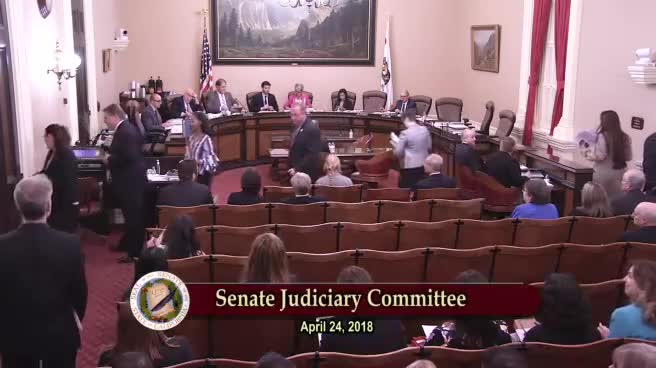 6MIN
Senate Standing Committee on Judiciary
 8MIN






