SB 834: State lands: leasing: oil and gas.
- Session Year: 2017-2018
- House: Senate
- Latest Version Date: 2018-09-08
Existing law vests exclusive jurisdiction over ungranted tidelands and submerged lands owned by the state to the State Lands Commission. Existing law confers the powers of the commission as to leasing or granting of rights or privileges to lands owned by the state upon a local trustee of granted public trust lands to which those lands have been granted. Existing law authorizes the commission to let leases for the extraction of oil and gas from coastal tidelands or submerged lands in state waters and beds of navigable rivers and lakes within the state in accordance with specified provisions of law.
Existing law, notwithstanding those provisions or any other provision of law, prohibits a state agency or state officer from entering into any new lease for the extraction of oil or gas from the California Coastal Sanctuary, which includes certain state waters subject to tidal influence, unless either (1) the President of the United States has found a severe energy supply interruption and has ordered distribution of the Strategic Petroleum Reserve, the Governor finds that the energy resources of the sanctuary will contribute significantly to the alleviation of that interruption, and the Legislature subsequently acts to amend the law to allow the extraction, or (2) the commission determines that the oil or gas deposits are being drained by means of producing wells upon adjacent federal lands and the lease is in the best interest of the state.
This bill would prohibit the commission or a local trustee, as defined, of granted public trust lands from entering into any new lease or other conveyance authorizing new construction of oil- and gas-related infrastructure upon tidelands and submerged lands within state waters associated with Pacific Outer Continental Shelf leases issued after January 1, 2018. The bill would require the commission or a local trustee when approving or disapproving any lease renewal, extension, amendment, or modification authorizing new construction of oil- and gas-related infrastructure upon tidelands and submerged lands within state waters associated with Pacific Outer Continental Shelf leases issued after January 1, 2018, to follow a specified process. The bill would provide that these provisions do not prevent specified activities, including, among others, issuance by the commission of leases pursuant to exceptions applicable to the California Coastal Sanctuary described above. The bill would authorize the commission to establish regulations for the implementation of these provisions. By adding to the duties of local agencies when approving or disapproving leases, this bill would impose a state-mandated local program.
The California Constitution requires the state to reimburse local agencies and school districts for certain costs mandated by the state. Statutory provisions establish procedures for making that reimbursement.
This bill would provide that, if the Commission on State Mandates determines that the bill contains costs mandated by the state, reimbursement for those costs shall be made pursuant to the statutory provisions noted above.
Existing law vests exclusive jurisdiction over ungranted tidelands and submerged lands owned by the state to the State Lands Commission. Existing law confers the powers of the commission as to leasing or granting of rights or privileges to lands owned by the state upon a local trustee of granted public trust lands to which those lands have been granted. Existing law authorizes the commission to let leases for the extraction of oil and gas from coastal tidelands or submerged lands in state waters and beds of navigable rivers and lakes within the state in accordance with specified provisions of law.
Existing law, notwithstanding those provisions or any other provision of law, prohibits a state agency or state officer from entering into any new lease for the extraction of oil or gas from the California Coastal Sanctuary, which includes certain state waters subject to tidal influence, unless either (1) the President of the United States has found a severe energy supply interruption and has ordered distribution of the Strategic Petroleum Reserve, the Governor finds that the energy resources of the sanctuary will contribute significantly to the alleviation of that interruption, and the Legislature subsequently acts to amend the law to allow the extraction, or (2) the commission determines that the oil or gas deposits are being drained by means of producing wells upon adjacent federal lands and the lease is in the best interest of the state.
This bill would prohibit the commission or a local trustee, as defined, of granted public trust lands from entering into any new lease or other conveyance authorizing new construction of oil- and gas-related infrastructure upon tidelands and submerged lands within state waters associated with Pacific Outer Continental Shelf leases issued after January 1, 2018. The bill would prohibit require the commission or a local trustee from entering into when approving or disapproving any lease renewal, extension, amendment, or modification authorizing new construction of oil- and gas-related infrastructure that authorizes a lessee to engage in any activity upon tidelands and submerged lands within state waters associated with Outer Continental Shelf leases issued after January 1, 2018. 2018, to follow a specified process. The bill would provide that these provisions do not prevent specified activities, including, among others, issuance by the commission of leases pursuant to exceptions applicable to the California Coastal Sanctuary described above. The bill would authorize the commission to establish regulations for the implementation of these provisions. By adding to the duties of local agencies when approving or disapproving leases, this bill would impose a state-mandated local program.
The California Constitution requires the state to reimburse local agencies and school districts for certain costs mandated by the state. Statutory provisions establish procedures for making that reimbursement.
This bill would provide that, if the Commission on State Mandates determines that the bill contains costs mandated by the state, reimbursement for those costs shall be made pursuant to the statutory provisions noted above.
Existing law vests exclusive jurisdiction over ungranted tidelands and submerged lands owned by the state to the State Lands Commission. Existing law confers the powers of the commission as to leasing or granting of rights or privileges to lands owned by the state upon a local trustee of granted public trust lands to which those lands have been granted. Existing law authorizes the commission to let leases for the extraction of oil and gas from coastal tidelands or submerged lands in state waters and beds of navigable rivers and lakes within the state in accordance with specified provisions of law.
Existing law, notwithstanding those provisions or any other provision of law, prohibits a state agency or state officer from entering into any new lease for the extraction of oil or gas from the California Coastal Sanctuary, which includes certain state waters subject to tidal influence, unless either (1) the President of the United States has found a severe energy supply interruption and has ordered distribution of the Strategic Petroleum Reserve, the Governor finds that the energy resources of the sanctuary will contribute significantly to the alleviation of that interruption, and the Legislature subsequently acts to amend the law to allow the extraction, or (2) the commission determines that the oil or gas deposits are being drained by means of producing wells upon adjacent federal lands and the lease is in the best interest of the state.
This bill would prohibit the commission and the or a local trustees trustee, as defined, of granted public trust lands from entering into any new lease or other conveyance authorizing new construction of oil- and gas-related infrastructure upon tidelands and submerged lands within state waters associated with Outer Continental Shelf leases issued after January 1, 2018. The bill would prohibit the commission and the or a local trustees of granted public trust lands trustee from entering into any lease renewal, extension, amendment, or modification authorizing new construction of oil- and gas-related infrastructure that authorizes a lessee to engage in any activity upon tidelands and submerged lands within state waters that would facilitate new or additional exploration, development, or production of oil or natural gas from associated with Outer Continental Shelf leases issued after January 1, 2018. The bill would provide that these provisions do not prevent specified activities, including, among others, issuance by the commission of leases pursuant to exceptions applicable to the California Coastal Sanctuary described above. The bill would authorize the commission to establish regulations for the implementation of these provisions.
Existing law vests exclusive jurisdiction over ungranted tidelands and submerged lands owned by the state to the State Lands Commission. Existing law confers the powers of the commission as to leasing or granting of rights or privileges to lands owned by the state upon a local trustee of granted public trust lands to which those lands have been granted. Existing law authorizes the commission to let leases for the extraction of oil and gas from coastal tidelands or submerged lands in state waters and beds of navigable rivers and lakes within the state in accordance with specified provisions of law.
Existing law, notwithstanding those provisions or any other provision of law, prohibits a state agency or state officer from entering into any new lease for the extraction of oil or gas from the California Coastal Sanctuary, which includes certain state waters subject to tidal influence, unless either (1) the President of the United States has found a severe energy supply interruption and has ordered distribution of the Strategic Petroleum Reserve, the Governor finds that the energy resources of the sanctuary will contribute significantly to the alleviation of that interruption, and the Legislature subsequently acts to amend the law to allow the extraction, or (2) the commission determines that the oil or gas deposits are being drained by means of producing wells upon adjacent federal lands and the lease is in the best interest of the state.This bill would prohibit the commission and the local trustees of granted public trust lands from entering into any new lease or other conveyance or from entering into any lease renewal, extension, or modification that authorizes a lessee to engage in new or additional exploration, development, or production of oil or natural gas upon lands owned by the state and under the jurisdiction of the commission that are located seaward of the ordinary high water mark for tidal waterways and the ordinary low water mark for navigable nontidal waterways that would result in the increase of oil or natural gas production from federal waters. The bill would apply the exceptions applicable to the California Coastal Sanctuary to these provisions. authorizing new construction of oil- and gas-related infrastructure upon tidelands and submerged lands within state waters associated with Outer Continental Shelf leases issued after January 1, 2018. The bill would prohibit the commission and the local trustees of granted public trust lands from entering into any lease renewal, extension, or modification that authorizes a lessee to engage in any activity upon tidelands and submerged lands within state waters that would facilitate new or additional exploration, development, or production of oil or natural gas from Outer Continental Shelf leases issued after January 1, 2018. The bill would authorize the commission to establish guidelines regulations for the implementation of these provisions.
Existing law vests exclusive jurisdiction over ungranted tidelands and submerged lands owned by the state to the State Lands Commission. Existing law confers the powers of the commission as to leasing or granting of rights or privileges to lands owned by the state upon a local trustee of granted public trust lands to which those lands have been granted. Existing law authorizes the commission to let leases for the extraction of oil and gas from coastal tidelands or submerged lands in state waters and beds of navigable rivers and lakes within the state in accordance with specified provisions of law.
Existing law, notwithstanding those provisions or any other provision of law, prohibits a state agency or state officer from entering into any new lease for the extraction of oil or gas from the California Coastal Sanctuary, which includes certain state waters subject to tidal influence, unless either (1) the President of the United States has found a severe energy supply interruption and has ordered distribution of the Strategic Petroleum Reserve, the Governor finds that the energy resources of the sanctuary will contribute significantly to the alleviation of that interruption, and the Legislature subsequently acts to amend the law to allow the extraction, or (2) the commission determines that the oil or gas deposits are being drained by means of producing wells upon adjacent federal lands and the lease is in the best interest of the state.
This bill would prohibit the commission and the local trustees of granted public trust lands from entering into any new lease or other conveyance or from entering into any lease renewal, extension, or modification that authorizes a lessee to engage in new or additional exploration, development, or production of oil or natural gas upon lands owned by the state and under the jurisdiction of the commission that are located seaward of the ordinary high water mark for tidal waterways and the ordinary low water mark for navigable nontidal waterways that would result in the increase of oil or natural gas production from federal waters. The bill would apply the exceptions applicable to the California Coastal Sanctuary to these provisions. The bill would authorize the commission to establish guidelines for the implementation of these provisions.
(a)Except as provided in subdivision (e), the commission or a local trustee shall not enter into any new lease or other conveyance authorizing new construction of oil- and gas-related infrastructure upon tidelands and submerged lands within state waters associated with Pacific Outer Continental Shelf leases issued after January 1, 2018.
(b)(1)Upon receipt of an application for a lease renewal, extension, amendment, or modification to authorize new construction of oil- and gas-related infrastructure upon tidelands and submerged lands within state waters associated with Pacific Outer Continental Shelf leases issued after January 1, 2018, the commission or local trustee shall provide notice of this application by including it as a separate informational item on the agenda of the commissions or local trustees next duly noticed public meeting. Summary information about the requested lease renewal, extension, amendment, or modification shall be included in the agenda summary.
(2)Notwithstanding the Permit Streamlining Act (Chapter 4.5 (commencing with Section 65920) of Division 1 of Title 7 of the Government Code), the commission or local trustee shall take no further action to approve the requested lease renewal, extension, amendment, or modification until 180 days after the notification required in paragraph (1).
(c)Prior to approving any lease renewal, extension, amendment, or modification to authorize new construction of oil- and gas-related infrastructure upon tidelands and submerged lands within state waters associated with Pacific Outer Continental Shelf leases issued after January 1, 2018, the commission or local trustee shall consider, at a minimum, the following:
(1)Whether the lease renewal, extension, amendment, or modification is necessary to protect the marine environment or to ensure human health and safety.
(2)Whether the lease renewal, extension, amendment, or modification provides a benefit to the state beyond additional lease revenues.
(3)Whether the lease renewal, extension, amendment, or modification will impact the volume of oil and gas that may be transported across state waters.
(d)(1)Any lease renewal, extension, amendment, or modification that will increase the volume of oil and gas conveyed across state waters shall not be approved at the same properly noticed public meeting at which the lease renewal, extension, amendment, or modification is first presented.
(2)The commission or local trustee shall accept public comments at the same meeting at which it votes to approve or disapprove any lease renewal, extension, amendment, or modification that will increase the volume of oil and gas conveyed across state waters. Any lease subject to this section shall be approved by a vote of the commission or the governing board of the local trustee.
(e)Nothing in this section shall prohibit any of the following:
(1)The commission from issuing leases pursuant to Section 6243 or 6244.
(2)Any activity undertaken to repair or maintain any pipeline or other infrastructure used to convey oil or natural gas or any other activity necessary to ensure the safe operation of infrastructure used in the exploration, development, or production of oil or natural gas.
(3)Any activity undertaken to convey oil or natural gas produced from state waters.
(f)The commission may establish regulations for the implementation of this section.
(g)For the purposes of this section, the following terms have the following meanings:
(1)Local trustee means a local trustee of granted public trust lands that is a county, city, or district, including water, sanitary, regional park, port, or harbor districts, or any other local political or corporate subdivision that has been granted public trust lands through a legislative grant.
(2)Pacific Outer Continental Shelf means all submerged lands lying seaward of California, Hawaii, Oregon, and Washington and outside of the area of lands beneath navigable waters, as set forth by the federal Submerged Lands Act (43 U.S.C. Sec. 1331), and all of which appertain to the United States and are subject to its jurisdiction and control.
(3)State waters has the same meaning as defined in Section 36108.
SEC. 2.If the Commission on State Mandates determines that this act contains costs mandated by the state, reimbursement to local agencies and school districts for those costs shall be made pursuant to Part 7 (commencing with Section 17500) of Division 4 of Title 2 of the Government Code.
(a)Except as provided in subdivision (c), (e), the commission or a local trustee shall not enter into any new lease or other conveyance authorizing new construction of oil- and gas-related infrastructure upon tidelands and submerged lands within state waters associated with Pacific Outer Continental Shelf leases issued after January 1, 2018.
(b)Except as provided in subdivision (c), the commission or a local trustee shall not enter into any lease renewal, extension, amendment, or modification authorizing new construction of oil- and gas-related infrastructure that authorizes a lessee to engage in any activity upon tidelands and submerged lands within state waters associated with Outer Continental Shelf leases issued after January 1, 2018.(b)(1)Upon receipt of an application for a lease renewal, extension, amendment, or modification to authorize new construction of oil- and gas-related infrastructure upon tidelands and submerged lands within state waters associated with Pacific Outer Continental Shelf leases issued after January 1, 2018, the commission or local trustee shall provide notice of this application by including it as a separate informational item on the agenda of the commissions or local trustees next duly noticed public meeting. Summary information about the requested lease renewal, extension, amendment, or modification shall be included in the agenda summary.
(2)Notwithstanding the Permit Streamlining Act (Chapter 4.5 (commencing with Section 65920) of Division 1 of Title 7 of the Government Code), the commission or local trustee shall take no further action to approve the requested lease renewal, extension, amendment, or modification until 180 days after the notification required in paragraph (1).
(c)Prior to approving any lease renewal, extension, amendment, or modification to authorize new construction of oil- and gas-related infrastructure upon tidelands and submerged lands within state waters associated with Pacific Outer Continental Shelf leases issued after January 1, 2018, the commission or local trustee shall consider, at a minimum, the following:
(1)Whether the lease renewal, extension, amendment, or modification is necessary to protect the marine environment or to ensure human health and safety.
(2)Whether the lease renewal, extension, amendment, or modification provides a benefit to the state beyond additional lease revenues.
(3)Whether the lease renewal, extension, amendment, or modification will impact the volume of oil and gas that may be transported across state waters.
(d)(1)Any lease renewal, extension, amendment, or modification that will increase the volume of oil and gas conveyed across state waters shall not be approved at the same properly noticed public meeting at which the lease renewal, extension, amendment, or modification is first presented.
(2)The commission or local trustee shall accept public comments at the same meeting at which it votes to approve or disapprove any lease renewal, extension, amendment, or modification that will increase the volume of oil and gas conveyed across state waters. Any lease subject to this section shall be approved by a vote of the commission or the governing board of the local trustee.
(c)(e)Nothing in this section shall prohibit any of the following:
(1)The commission from issuing leases pursuant to Section 6243 or 6244.
(2)Any activity undertaken to repair or maintain any pipeline or other infrastructure used to convey oil or natural gas or any other activity necessary to ensure the safe operation of infrastructure used in the exploration, development, or production of oil or natural gas.
(3)Any activity undertaken to convey oil or natural gas produced from state waters.
(d)(f)The commission may establish regulations for the implementation of this section.
(e)(g)For the purposes of this section, the following terms have the following meanings:
(1)Commission means the State Lands Commission.(2)(1)Local trustee means a local trustee of granted public trust lands that is a county, city, or district, including water, sanitary, regional park, port, or harbor districts, or any other local political or corporate subdivision that has been granted public trust lands through a legislative grant.
(3)(2)Outer Pacific Outer Continental Shelf means all submerged lands lying seaward of California, Hawaii, Oregon, and Washington and outside of the area of lands beneath navigable waters, as set forth by the federal Submerged Lands Act (43 U.S.C. Sec. 1331), and all of which appertain to the United States and are subject to its jurisdiction and control.
(4)(3)State waters has the same meaning as defined in Section 36108.
SEC. 2.If the Commission on State Mandates determines that this act contains costs mandated by the state, reimbursement to local agencies and school districts for those costs shall be made pursuant to Part 7 (commencing with Section 17500) of Division 4 of Title 2 of the Government Code.
(a)Except as provided in subdivision (c), the commission or a local trustee shall not enter into any new lease or other conveyance authorizing new construction of oil- and gas-related infrastructure upon tidelands and submerged lands within state waters associated with Outer Continental Shelf leases issued after January 1, 2018.
(b)Except as provided in subdivision (c), the commission or a local trustee shall not enter into any lease renewal, extension, amendment, or modification authorizing new construction of oil- and gas-related infrastructure that authorizes a lessee to engage in any activity upon tidelands and submerged lands within state waters that would facilitate new or additional exploration, development, or production of oil or natural gas from the Outer Continental Shelf. associated with Outer Continental Shelf leases issued after January 1, 2018.
(c)Nothing in this section shall prohibit any of the following:
(1)The commission from issuing leases pursuant to Section 6243 or 6244.
(2)Any activity undertaken to repair or maintain any pipeline or other infrastructure used to convey oil or natural gas or any other activity necessary to ensure the safe operation of existing infrastructure used in the exploration, development, or production of oil or natural gas.
(3)Any activity undertaken to convey oil or natural gas produced from state waters.
(d)The commission may establish regulations for the implementation of this section.
(e)For the purposes of this section, the following terms have the following meanings:
(1)Commission means the State Lands Commission.
(2)Local trustee means a local trustee of granted public trust lands that is a county, city, or district, including water, sanitary, regional park, port, or harbor districts, or any other local political or corporate subdivision that has been granted public trust lands through a legislative grant.
(3)New or additional exploration, development, or production of oil or natural gas means activities undertaken to increase the capacity of any infrastructure used to convey, transport, or process oil or natural gas from Outer Continental Shelf leases issued after January 1, 2018.(4)(3)Outer Continental Shelf means all submerged lands lying seaward and outside of the area of lands beneath navigable waters, as set forth by the federal Submerged Lands Act (43 U.S.C. Sec. 1331), and all of which appertain to the United States and are subject to its jurisdiction and control.
(7)(4)State waters has the same meaning as defined in Section 36108.
(a)Except as provided in subdivision (c), the commission or a local trustee shall not enter into any new lease or other conveyance that authorizes the exploration for, or the development and production of, oil or natural gas upon lands owned by the state and under the jurisdiction of the commission that are located seaward of the ordinary high water mark for tidal waterways and the ordinary low water mark for navigable nontidal waterways that would result in the increase of oil or natural gas production from federal waters. authorizing new construction of oil- and gas-related infrastructure upon tidelands and submerged lands within state waters associated with Outer Continental Shelf leases issued after January 1, 2018.
(b)Except as provided in subdivision (c), the commission or a local trustee shall not enter into any lease renewal, extension, or modification that authorizes a lessee to engage in new or additional exploration, development, or production of oil or natural gas upon lands owned by the state and under the jurisdiction of the commission that are located seaward of the ordinary high water mark for tidal waterways and the ordinary low water mark for navigable nontidal waterways that would result in the increase of oil or natural gas production from federal waters. any activity upon tidelands and submerged lands within state waters that would facilitate new or additional exploration, development, or production of oil or natural gas from the Outer Continental Shelf.
(c)Subdivisions (a) and (b) shall not apply if either of the following occur:(1)The President of the United States has found a severe energy supply interruption and has ordered distribution of the Strategic Petroleum Reserve pursuant to Section 6241(d) of Title 42 of the United States Code, the Governor finds that the energy resources subject to subdivision (a) or (b) will contribute significantly to the alleviation of that interruption, and the Legislature subsequently acts to amend this chapter to allow for the leasing or other conveyance or the lease renewal, extension, or modification, as applicable.(2)The commission determines that oil or gas deposits subject to a lease impacted by subdivision (a) or (b) are being drained by means of producing wells upon adjacent federal lands and the lease or other conveyance, as applicable, is in the best interests of the state.(c)Nothing in this section shall prohibit any of the following:
(1)The commission from issuing leases pursuant to Section 6243 or 6244.
(2)Any activity undertaken to repair or maintain any pipeline or other infrastructure used to convey oil or natural gas or any other activity necessary to ensure the safe operation of existing infrastructure used in the exploration, development, or production of oil or natural gas.
(3)Any activity undertaken to convey oil or natural gas produced from state waters.
(d)The commission may establish guidelines regulations for the implementation of this section.
(e)For the purposes of this section, the following terms have the following meanings:
(1)Commission means the State Lands Commission or a local trustee of granted public trust lands, as defined pursuant to Section 6306. Commission.
(2)Development means those activities taking place following the discovery of oil and natural gas, including geophysical activity, drilling, platform construction, pipeline construction, and operation of all onshore support facilities that are performed for the purpose of ultimately producing the resources discovered.(3)Exploration means the process of searching for oil and natural gas, including any drilling, whether on or off known geological structures, including the drilling of a well in which a discovery of oil or natural gas is made and the drilling of any additional delineation well after the discovery that is needed to delineate any reservoir and to enable a lessee to determine whether to proceed with the development and production.(4)Federal waters means those waters and submerged lands lying seaward to the state waters of California that appertain to the United States and are subject to federal jurisdiction and control.(2)Local trustee means a local trustee of granted public trust lands that is a county, city, or district, including water, sanitary, regional park, port, or harbor districts, or any other local political or corporate subdivision that has been granted public trust lands through a legislative grant.
(5)(A) New(3)New or additional exploration, development, or production of oil or natural gas includes any activity undertaken to increase the capacity of any pipeline or other infrastructure used to convey oil or natural gas from federal waters. means activities undertaken to increase the capacity of any infrastructure used to convey, transport, or process oil or natural gas from Outer Continental Shelf leases issued after January 1, 2018.
(B)New or additional exploration, development, or production of oil or natural gas does not include either of the following:(i)Any activity undertaken to repair, replace, or maintain any pipeline or other infrastructure used to convey oil or natural gas or any other activity necessary to ensure the safe operation of infrastructure used in the exploration, development, or production of oil or natural gas.(ii)Any activity undertaken to convey oil or natural gas produced from state waters.(6)Production means those activities that take place after the successful completion of any means for the removal of oil and natural gas, including that removal, field operations, transfer of resources to shore, operation monitoring, maintenance, and workover drilling. Producing means undertaking those activities.(4)Outer Continental Shelf means all submerged lands lying seaward and outside of the area of lands beneath navigable waters, as set forth by the federal Submerged Lands Act (43 U.S.C. Sec. 1331), and all of which appertain to the United States and are subject to its jurisdiction and control.
(7)State waters means the zone in which the United States has released to adjacent coastal states title, ownership, and the right to manage natural resources, has the same meaning as defined pursuant to in Section 36108.
(a)Except as provided in subdivision (c), the commission shall not enter into any new lease or other conveyance that authorizes the exploration for, or the development and production of, oil or natural gas upon lands owned by the state and under the jurisdiction of the commission that are located seaward of the ordinary high water mark for tidal waterways and the ordinary low water mark for navigable nontidal waterways that would result in the increase of oil or natural gas production from federal waters.
(b)Except as provided in subdivision (c), the commission shall not enter into any lease renewal, extension, or modification that authorizes a lessee to engage in new or additional exploration, development, or production of oil or natural gas upon lands owned by the state and under the jurisdiction of the commission that are located seaward of the ordinary high water mark for tidal waterways and the ordinary low water mark for navigable nontidal waterways that would result in the increase of oil or natural gas production from federal waters.
(c)Subdivisions (a) and (b) shall not apply if either of the following occur:
(1)The President of the United States has found a severe energy supply interruption and has ordered distribution of the Strategic Petroleum Reserve pursuant to Section 6241(d) of Title 42 of the United States Code, the Governor finds that the energy resources subject to subdivision (a) or (b) will contribute significantly to the alleviation of that interruption, and the Legislature subsequently acts to amend this chapter to allow for the leasing or other conveyance or the lease renewal, extension, or modification, as applicable.
(2)The commission determines that oil or gas deposits subject to a lease impacted by subdivision (a) or (b) are being drained by means of producing wells upon adjacent federal lands and the lease or other conveyance, as applicable, is in the best interests of the state.
(d)The commission may establish guidelines for the implementation of this section.
(e)For the purposes of this section, the following terms have the following meanings:
(1)Commission means the State Lands Commission or a local trustee of granted public trust lands, as defined pursuant to Section 6306.
(2)Development means those activities taking place following the discovery of oil and natural gas, including geophysical activity, drilling, platform construction, pipeline construction, and operation of all onshore support facilities that are performed for the purpose of ultimately producing the resources discovered.
(3)Exploration means the process of searching for oil and natural gas, including any drilling, whether on or off known geological structures, including the drilling of a well in which a discovery of oil or natural gas is made and the drilling of any additional delineation well after the discovery that is needed to delineate any reservoir and to enable a lessee to determine whether to proceed with the development and production.
(4)Federal waters means those waters and submerged lands lying seaward to the state waters of California that appertain to the United States and are subject to federal jurisdiction and control.
(5)(A)New or additional exploration, development, or production of oil or natural gas includes any activity undertaken to increase the capacity of any pipeline or other infrastructure used to convey oil or natural gas from federal waters.
(B)New or additional exploration, development, or production of oil or natural gas does not include either of the following:
(i)Any activity undertaken to repair, replace, or maintain any pipeline or other infrastructure used to convey oil or natural gas or any other activity necessary to ensure the safe operation of infrastructure used in the exploration, development, or production of oil or natural gas.
(ii)Any activity undertaken to convey oil or natural gas produced from state waters.
(6)Production means those activities that take place after the successful completion of any means for the removal of oil and natural gas, including that removal, field operations, transfer of resources to shore, operation monitoring, maintenance, and workover drilling. Producing means undertaking those activities.
(7)State waters means the zone in which the United States has released to adjacent coastal states title, ownership, and the right to manage natural resources, as defined pursuant to Section 36108.
|
Date
|
Status
|
|---|---|
| Sep 8, 2018 | Chaptered by Secretary of State. Chapter 309, Statutes of 2018. |
| Sep 8, 2018 | Approved by the Governor. |
| Sep 5, 2018 | Enrolled and presented to the Governor at 3:30 p.m. |
| Aug 29, 2018 | Assembly amendments concurred in. (Ayes 28. Noes 7.) Ordered to engrossing and enrolling. |
| Aug 28, 2018 | In Senate. Concurrence in Assembly amendments pending. |
| Aug 27, 2018 | Read third time. Passed. Ordered to the Senate. |
| Aug 24, 2018 | Read third time and amended. |
| Aug 20, 2018 | Read second time. Ordered to third reading. |
| Aug 16, 2018 | From committee: Do pass. (Ayes 12. Noes 5.) (August 16). |
| Aug 8, 2018 | August 8 set for first hearing. Placed on suspense file. |
| Jun 26, 2018 | From committee: Do pass and re-refer to Com. on APPR. (Ayes 7. Noes 3.) (June 25). Re-referred to Com. on APPR. |
| Jun 11, 2018 | Referred to Com. on NAT. RES. |
| May 31, 2018 | In Assembly. Read first time. Held at Desk. |
| May 30, 2018 | Read third time. Passed. (Ayes 24. Noes 8.) Ordered to the Assembly. |
| May 29, 2018 | Read second time. Ordered to third reading. |
| May 25, 2018 | From committee: Do pass as amended. (Ayes 5. Noes 1.) (May 25). |
| May 18, 2018 | Set for hearing May 25. |
| Apr 30, 2018 | April 30 hearing: Placed on APPR. suspense file. |
| Apr 24, 2018 | Set for hearing April 30. |
| Apr 18, 2018 | Read second time and amended. Re-referred to Com. on APPR. |
| Apr 17, 2018 | From committee: Do pass as amended and re-refer to Com. on APPR. (Ayes 6. Noes 2.) (April 16). |
| Mar 14, 2018 | Set for hearing April 16. |
| Jan 16, 2018 | Referred to Com. on N.R. & W. |
| Jan 5, 2018 | From printer. May be acted upon on or after February 4. |
| Jan 4, 2018 | Introduced. Read first time. To Com. on RLS. for assignment. To print. |
|
Date
|
Description
|
Location
|
Votes
|
|
|---|---|---|---|---|
| Aug 29, 2018 | Unfinished Business SB834 Jackson et al. Concurrence | Senate Floor |
Passed |
|
| Aug 27, 2018 | SB 834 Jackson Senate Third Reading By MURATSUCHI | Assembly Floor |
Passed |
|
| Aug 16, 2018 | Do pass. | Assembly Standing Committee on Appropriations |
Passed |
|
| Jun 25, 2018 | Do pass and be re-referred to the Committee on [Appropriations] | Assembly Standing Committee on Natural Resources |
Passed |
|
| May 30, 2018 | Senate 3rd Reading SB834 Jackson et al. | Senate Floor |
Passed |
|
| May 25, 2018 | Do pass as amended | Senate Standing Committee on Appropriations |
Passed |
|
| Apr 30, 2018 | Placed on suspense file | Senate Standing Committee on Appropriations |
Passed |
|
| Apr 16, 2018 | Do pass as amended, but first amend, and re-refer to the Committee on [Appropriations] | Senate Standing Committee on Natural Resources and Water |
Passed |
This list shows positions taken on this bill by organizations on the date displayed, which is linked to the original source.
Positions by individuals are not included.
|
Organization
|
Position
|
Date
|
|---|---|---|
| 350 Bay Area | ** Support | Aug 28, 2018 |
| 350 Silicon Valley | ** Support | Aug 28, 2018 |
| 350 South Bay Los Angeles | ** Support | Aug 28, 2018 |
| 75 Individuals | ** Support | Jun 22, 2018 |
| Audobon California | ** Support | Aug 28, 2018 |
| Autobahn California | * Support | Apr 30, 2018 |
| Azul | ** Support | Aug 28, 2018 |
| Benioff Ocean Initiative | ** Support | Aug 28, 2018 |
| California Chamber Of Commerce | ** Against | Aug 28, 2018 |
| California Coastal Protection Network | ** Support | Aug 28, 2018 |
| California Coastkeeper Alliance | ** Support | Aug 28, 2018 |
| California Independent Petroleum Association | ** Against | Aug 28, 2018 |
| California League Of Conservation Voters | ** Support | Aug 28, 2018 |
| California Nurses Association | ** Support | Jun 22, 2018 |
| California State Pipe Trades Council | ** Against | Aug 28, 2018 |
| Californians for Western Wilderness | ** Support | Aug 28, 2018 |
| Carpinteria Valley Association | ** Support | Aug 28, 2018 |
| Center For Biological Diversity | ** Support | Aug 28, 2018 |
| Central Coastal Alliance United For A Sustainable Economy | ** Support | Aug 28, 2018 |
| Cities Association of Santa Clara County | ** Support | Jun 22, 2018 |
| Citizens for Responsible Oil & Gas | ** Support | Aug 28, 2018 |
| Citizens Planning Association | ** Support | Aug 28, 2018 |
| City of Capitola | ** Support | Aug 28, 2018 |
| City of Culver City | ** Support | Aug 28, 2018 |
| City of Dana Point | ** Support | Aug 28, 2018 |
| City of Goleta | ** Support | Aug 28, 2018 |
| City of Hermosa Beach | ** Support | Aug 28, 2018 |
| City of Manhattan Beach | ** Support | Aug 28, 2018 |
| City of West Hollywood | ** Support | Aug 28, 2018 |
| Clean Seas Coalition | * Support | Apr 16, 2018 |
| Clean Water Action | ** Support | Aug 28, 2018 |
| Climate Hawks Vote | ** Support | Aug 28, 2018 |
| Coast Alliance | ** Support | Aug 28, 2018 |
| Coastwalk California | ** Support | Aug 28, 2018 |
| Community Environmental Council | ** Support | Aug 28, 2018 |
| Cordell Marine Sanctuary Foundation | ** Support | Aug 28, 2018 |
| County of Santa Barbara | ** Support | Aug 28, 2018 |
| Defenders Of Wildlife | ** Support | Aug 28, 2018 |
| Dozens Of Individuals | ** Support | May 29, 2018 |
| East Bay Regional Park District | ** Support | Aug 28, 2018 |
| Environment California | ** Support | Aug 28, 2018 |
| Environmental Action Committee of West Marin | ** Support | Aug 28, 2018 |
| Environmental Defense Center | ** Support | Aug 28, 2018 |
| Environmental Defense Fund | ** Support | Aug 28, 2018 |
| Environmental Protection Information Center | ** Support | Aug 28, 2018 |
| Food & Water Watch | ** Support | Aug 28, 2018 |
| Fossil Free California | ** Support | Aug 28, 2018 |
| Friends Of The Earth - U.S. | ** Support | Aug 28, 2018 |
| Fund for Santa Barbara | ** Support | Aug 28, 2018 |
| Get Oil Out! | ** Support | Aug 28, 2018 |
| Great Old Broads For Wilderness | ** Support | Aug 28, 2018 |
| Greater Farallones Association | ** Support | Aug 28, 2018 |
| Heal The Bay | ** Support | Aug 28, 2018 |
| Herself | * Support | Apr 16, 2018 |
| Humboldt Baykeeper | ** Support | Aug 28, 2018 |
| Idle No More SF Bay | ** Support | Aug 28, 2018 |
| Indivisible Marin | ** Support | Aug 28, 2018 |
| Inland Ocean Coalition & Colorado Ocean Coalition | ** Support | Aug 28, 2018 |
| Institute For Fisheries Resources | ** Support | Aug 28, 2018 |
| Klamath Forest Alliance | ** Support | Aug 28, 2018 |
| League Of Women Voters Of California | ** Support | Aug 28, 2018 |
| Long Beach 350 | ** Support | Aug 28, 2018 |
| Los Angeles Waterkeeper | ** Support | Aug 28, 2018 |
| Marine Conservation Institute | ** Support | Aug 28, 2018 |
| Monterey Coastkeeper & The Otter Project | ** Support | Aug 28, 2018 |
| NAT. RES. | ** Against | Jun 22, 2018 |
| National Nurses Organizing Committee, National Nurses United | ** Support | Jun 22, 2018 |
| Natural Resources Defense Council | ** Support | Aug 28, 2018 |
| Nature Rights Council | ** Support | Aug 28, 2018 |
| NextGen California | ** Support | Aug 28, 2018 |
| O'Neill Sea Odyssey | ** Support | Aug 28, 2018 |
| Ocean Conservancy | ** Support | Aug 28, 2018 |
| Ocean Conservation Research | ** Support | Aug 28, 2018 |
| Oceana | ** Support | Aug 28, 2018 |
| Orange County Coastkeeper & Inland Empire Waterkeeper | ** Support | Aug 28, 2018 |
| Pacific Coast Federation of Fishermen's Association | ** Support | Aug 28, 2018 |
| Pacific Environment | ** Support | Aug 28, 2018 |
| Plastic Pollution Coalition | ** Support | Aug 28, 2018 |
| Russian Riverkeeper | ** Support | Aug 28, 2018 |
| San Diego 350 | ** Support | Aug 28, 2018 |
| San Diego Coastkeeper | ** Support | Aug 28, 2018 |
| San Francisco Baykeeper | ** Support | Aug 28, 2018 |
| San Gabriel Valley Economic Partnership | ** Against | Aug 28, 2018 |
| Santa Barbara Channelkeeper | ** Support | Aug 28, 2018 |
| Save Our Shores | ** Support | Aug 28, 2018 |
| Seventh Generation Advisors | ** Support | Aug 28, 2018 |
| Sierra Club California | ** Support | Aug 28, 2018 |
| SoCal 350 Climate Action | ** Support | Aug 28, 2018 |
| Social Compassion In Legislation | * Support | Apr 16, 2018 |
| Sonoma County Board of Supervisors | ** Support | Aug 28, 2018 |
| South Bay Cities Council of Governments | ** Support | Aug 28, 2018 |
| South Yuba River Citizens League | ** Support | Aug 28, 2018 |
| Surfrider Foundation | ** Support | Aug 28, 2018 |
| The 5 Gyres Institute | ** Support | Aug 28, 2018 |
| The Center for Oceanic Awareness, Research, and Education | ** Support | Aug 28, 2018 |
| The Last Plastic Straw | ** Support | Aug 28, 2018 |
| the league of california cities | ** Support | Aug 28, 2018 |
| The Nature Conservancy | ** Support | Aug 28, 2018 |
| The North Coast Stream Flow Coalition | ** Support | Aug 28, 2018 |
| the ocean foundation | ** Support | Aug 28, 2018 |
| Turtle Island Restoration Network | ** Support | Aug 28, 2018 |
| UNITE HERE, AFL-CIO | ** Support | Aug 28, 2018 |
| Ventura County Board of Supervisors | ** Support | Aug 28, 2018 |
| Ventura County Economic Development Association | ** Against | Aug 28, 2018 |
| Voices for Progress | ** Support | Aug 28, 2018 |
| west marin standing together | ** Support | Aug 28, 2018 |
| Western State Patrol Association | * Against | Apr 16, 2018 |
| Western States Petroleum Association | ** Against | Aug 28, 2018 |
| Wholly H2O | ** Support | Aug 28, 2018 |
| Wildcoast | ** Support | Aug 28, 2018 |
| Wishtoyo Chumash Foundation | ** Support | Aug 28, 2018 |
| Zero Waste USA | ** Support | Aug 28, 2018 |
Office of Senate Floor Analyses (916) 651-1520 Fax: (916) 327-4478 | SB |
UNFINISHED BUSINESS
Bill No: SB 834
:
SENATE NATURAL RES. & WATER COMMITTEE: 6-2, 4/16/18
AYES: Hertzberg, Allen, Jackson, McGuire, Monning, Stern
NOES: Stone, Vidak
NO VOTE RECORDED: Hueso
SENATE APPROPRIATIONS COMMITTEE: 5-1, 5/25/18
AYES: Lara, Beall, Bradford, Hill, Wiener
NOES: Nielsen
NO VOTE RECORDED: Bates
SENATE FLOOR: 24-8, 5/30/18
AYES: Allen, Atkins, Beall, Bradford, Dodd, Galgiani, Glazer, Hernandez, Hertzberg, Hill, Jackson, Lara, Leyva, McGuire, Mitchell, Monning, Newman, Pan, Portantino, Roth, Skinner, Stern, Wieckowski, Wiener
NOES: Anderson, Berryhill, Fuller, Gaines, Morrell, Nielsen, Stone, Vidak
NO VOTE RECORDED: Bates, Cannella, De León, Hueso, Moorlach, Nguyen, Wilk
ASSEMBLY FLOOR: 45-25, 8/27/18 - See last page for vote
SUBJECT: State lands: leasing: oil and gas
SOURCE: Environmental Defense Center
DIGEST:
This bill bars the State Lands Commission (commission) or a local trustee of public trust lands from entering into any new lease or conveyance to authorize new construction of oil- and gas-related infrastructure upon state tide and submerged lands associated with federal Pacific Outer Continental Shelf leases issued after January 1, 2018 (new federal leases), with certain exceptions. This bill also imposes public notice, comment and process requirements should the commission or a local trustee consider a lease renewal, extension, amendment or modification to authorize the new construction of oil- and gas-related infrastructure associated with new federal leases.
Assembly Amendments
revise provisions related to lease renewal, extension, amendment or modification and make technical and clarifying changes.
Existing federal law:
- Establishes the Outer Continental Shelf Lands Act (OCSLA)(43 U.S.C. §§1331 et seq.) that defines the OCS as all submerged lands lying between the seaward extent of the state jurisdiction and the seaward extent of federal jurisdiction.
- Declares, pursuant to the OCSLA, among other things, that it is the national policy that the OCS is a vital national resource reserve held by the federal government for the public, which should be made available for expeditious and orderly development, subject to environmental safeguards, as specified.
- Requires the Department of Interior (DOI) to prepare, periodically revise, and maintain an oil and gas leasing program that consists of a schedule or proposed lease sales indicating, as precisely as possible, the size, timing, and location of leasing activity that DOI determines will best meet national energy needs for the five-year period following its approval or re-approval.
Existing state law:
- Establishes the commission in the Natural Resources Agency. The commission has exclusive jurisdiction over ungranted tidelands and submerged lands owned by the state, including leasing for oil and gas production offshore. The commission also issues right-of-way leases for pipelines necessary to support offshore oil and gas infrastructure.
- Confers the powers of the commission as to the leasing or granting of rights or privileges to lands owned by the state upon a local trustee of granted public trust lands to which those lands have been granted (local trustee).
- Establishes the California Coastal Sanctuary Act of 1994 (Public Resources Code (PRC) §§6240 et seq.) which removed the authority of the commission to issue new oil and gas leases for unleased tide and submerged lands underlying the Pacific Ocean with limited exceptions – in the event of an energy supply emergency resulting in certain government actions, as specified, and if a state oil and gas reservoir is being drained from federal waters.
This bill:
- Modifies the California Coastal Sanctuary Act.
- The commission or a local trustee are prohibited from entering into any new lease or conveyance to authorize new construction of oil- and gas-related infrastructure upon state tide and submerged lands associated with federal Pacific OCS leases issued after January 1, 2018.
- The commission or a local trustee are required to do the following if an application for a lease renewal, extension, amendment, or modification to authorize new construction of oil- and gas-related infrastructure upon state tide and submerged lands associated with federal Pacific OCS leases issued after January 1, 2018:
- Provide notice of the application on the agenda of the next public meeting, as specified.
- No further action to approve the lease renewal, extension, amendment or modification shall be taken until 180 days after the notice is provided.
- Consider, at a minimum, the following prior to approving the lease renewal, extension, amendment, or modification:
- Whether it is necessary to protect the marine environment or to ensure human health and safety,
- Whether it provides a benefit to the state beyond additional lease revenues, and
- Whether it will impact the volume of oil and gas transported across state waters.
- Shall not approve any lease renewal, extensions, amendment, or modification that will increase the volume of oil and gas conveyed across state waters at the same public meeting where it is first presented.
- Accept public comments at the meeting where it votes to approve or disapprove any lease renewal, extension, amendment, or modification that increases the volume of oil and gas conveyed across state waters.
- Approve the lease renewal, extension, amendment, or modification only by vote of the commission or governing board of the local trustee, as applicable.
- Provide notice of the application on the agenda of the next public meeting, as specified.
- Exceptions to these leasing limitations include for the repair or maintenance of pipelines or other infrastructure necessary for safe operations, any activity to convey oil or gas produced from state waters, and those already allowed under the Act.
- The commission is authorized to establish regulations for implementation of these new requirements, and certain relevant terms are defined.
Background
California is a major oil and gas producing state from both onshore and offshore fields under its jurisdiction and from federal waters adjacent to the state. In general, state waters extend out 3 miles from the state’s coastline, and federal waters are beyond that.
Beginning in 1921 and repeatedly since, the Legislature has passed laws that exclude offshores areas of the state from oil and gas leasing. The state has repeatedly foregone additional potential revenue from the exploitation offshore oil and gas. No new OCS leases have been issued off of California since the mid-1980s.
However, in January 2018, the Trump Administration announced plans to reopen the current federal leasing plan and specifically included all of the California OCS in its initial proposal.
Comments
Is a new tidelands lease always required to support new federal Pacific OCS leases? It is likely that any new federal OCS leases sought would be located in southern California near existing oil- and gas-production related infrastructure in state and federal waters. It is unclear that a new tidelands lease or conveyance for new construction would necessarily be required in this circumstance, and the public process and transparency requirements in this bill would ensure the public is aware and informed about any changes to existing leases.
The state has few options to inhibit new OCS leasing and, it is important to note, that existing leases remain in effect that may have excess capacity available.
A strong majority of Californians oppose oil and gas drilling off the coast.
According to a recent Public Policy Institute of California poll, 69% of Californians opposed drilling off the California Coast.
Related/Prior Legislation
AB 1775 (Muratsuchi, 2018) and this bill contain identical language.
FISCAL EFFECT: Appropriation: Fiscal Com.: Local: Yes
According to the Assembly Appropriations Committee, the fiscal impacts are as follows:
- Potential unknown future forgone GF revenue, however unlikely, since the Commission has not approved a new offshore lease since 1968.
- GF revenue losses of millions of dollars resulting from lost compensation from right-of-way lease revenue and early termination of existing oil and natural gas leases.
- Increased ongoing annual GF costs of several hundreds of thousands of dollars (2 PY) to review and analyze oil and natural gas volume in pipelines and to determine whether a proposed lease renewal, extension or modification involves an increase in oil or natural gas exploration, new construction, production or development within state waters associated with OCS leases issued after January 1, 2018.
- Potential GF costs associated with increased risks of litigation by lessees and entities seeking to condemn state lands in lieu of requesting a right-of-way lease, or suing the Commission for lost property rights or profit.
Environmental Defense Center (source)
350 Bay Area
350 Silicon Valley
350 South Bay Los Angeles
Audobon California
Azul
Benioff Ocean Initiative
California Coastal Protection Network
California Coastkeeper Alliance
California League of Conservation Voters
Californians for Western Wilderness
Carpinteria Valley Association
Center for Biological Diversity
Central Coastal Alliance United for a Sustainable Economy
Citizens for Responsible Oil & Gas
Citizens Planning Association
City of Capitola
City of Culver City
City of Dana Point
City of Goleta
City of Hermosa Beach
City of Manhattan Beach
City of West Hollywood
Clean Water Action
Climate Hawks Vote
COAST Alliance
Coastwalk California
Community Environmental Council
Cordell Marine Sanctuary Foundation
County of Santa Barbara
Defenders of Wildlife
East Bay Regional Park District
Environment California
Environmental Action Committee of West Marin
Environmental Defense Fund
Environmental Protection Information Center
Food & Water Watch
Fossil Free California
Friends of the Earth – U.S.
Fund for Santa Barbara
Get Oil Out!
Great Old Broads for Wilderness
Greater Farallones Association
Heal the Bay
Humboldt Baykeeper
Idle No More SF Bay
Indivisible Marin
Inland Ocean Coalition & Colorado Ocean Coalition
Institute for Fisheries Resources
Klamath Forest Alliance
League of Women Voters of California
Long Beach 350
Los Angeles Waterkeeper
Marine Conservation Institute
Monterey Coastkeeper & The Otter Project
Natural Resources Defense Council
Nature Rights Council
NextGen California
O’Neill Sea Odyssey
Ocean Conservancy
Ocean Conservation Research
Oceana
Orange County Coastkeeper & Inland Empire Waterkeeper
Pacific Coast Federation of Fishermen’s Association
Pacific Environment
Plastic Pollution Coalition
Russian Riverkeeper
San Diego 350
San Diego Coastkeeper
San Francisco Baykeeper
Santa Barbara Channelkeeper
Save Our Shores
Seventh Generation Advisors
Sierra Club California
SoCal 350 Climate Action
Sonoma County Board of Supervisors
South Bay Cities Council of Governments
South Yuba River Citizens League
Surfrider Foundation
The 5 Gyres Institute
The Center for Oceanic Awareness, Research, and Education
The Last Plastic Straw
The League of California Cities
The Nature Conservancy
The North Coast Stream Flow Coalition
The Ocean Foundation
Turtle Island Restoration Network
UNITE HERE, AFL-CIO
Ventura County Board of Supervisors
Voices for Progress
West Marin Standing Together
Wholly H2O
Wildcoast
Wishtoyo Chumash Foundation
Yak Tityu Tityu Yak Tilhini Northern Chumash Tribe of San Luis Obispo County
Zero Waste USA
OPPOSITION: (Verified 8/28/18)
California Chamber of Commerce
California Independent Petroleum Association
California State Pipe Trades Council
San Gabriel Valley Economic Partnership
Ventura County Economic Development Association
Western States Petroleum Association
ARGUMENTS IN SUPPORT: According to the author, “California has a proud and long-standing tradition of protecting its marine environment and coasts, including decades of pioneering legislation after the 1969 Santa Barbara oil spill. We have taken great care to enact nation-leading comprehensive programs that conserve our ocean environments, preserve our fisheries, and protect our coasts – all of which sustain our ocean-based economy, from our season industry to our world-class tourism and recreation. Yet all of this hard work can be undone from one catastrophic oil spill, as my constituents have been reminded of time and time again. We cannot let this Administration’s rash decision to exploit federal waters threaten and imperil the great progress made by this state to the broad support of Californians from north to south, from our coastal to inland communities.”
ARGUMENTS IN OPPOSITION: Writing in opposition to an earlier version of the bill, the Western States Petroleum Association (WSPA) notes that “[s]pecifically this bill repeals existing authority from the [commission] to issue, renew, modify, or extend a lease or conveyance for oil and natural gas production if the lease would result in an increase of production from federal waters.” WSPA argues that SB 834 takes authority away from the commission on state tidelands leases, and that SB 834 could force unintended environmental and fiscal consequences by avoiding the use of safer pipelines to transport oil, potential revenues losses and litigation expense.
The California Independent Petroleum Association also notes that “[u]tilizing domestic energy supplies by producing oil and gas under California’s strict environmental laws and regulations is better for the State rather than depending upon foreign oil.”
ASSEMBLY FLOOR: 45-25, 8/27/18
AYES: Aguiar-Curry, Arambula, Baker, Berman, Bloom, Bonta, Burke, Caballero, Calderon, Carrillo, Chau, Chávez, Chiu, Chu, Eggman, Friedman, Gabriel, Cristina Garcia, Eduardo Garcia, Gipson, Gloria, Gonzalez Fletcher, Holden, Irwin, Jones-Sawyer, Kalra, Kamlager-Dove, Levine, Limón, Low, Maienschein, McCarty, Mullin, Muratsuchi, Nazarian, Quirk, Reyes, Rivas, Santiago, Mark Stone, Thurmond, Ting, Weber, Wood, Rendon
NOES: Acosta, Travis Allen, Bigelow, Brough, Chen, Choi, Cooley, Dahle, Flora, Fong, Gallagher, Gray, Harper, Kiley, Lackey, Mathis, Mayes, Melendez, Obernolte, Patterson, Quirk-Silva, Salas, Steinorth, Voepel, Waldron
NO VOTE RECORDED: Cervantes, Cooper, Cunningham, Daly, Frazier, Grayson, Medina, O'Donnell, Rodriguez, Rubio
8/28/18 22:21:03
SENATE THIRD READING
STR Bill Id:SB 834
Author:(Jackson and Lara)
As Amended Ver:August 24, 2018
Majority vote
SENATE VOTE: 24-8
Committee | Votes | Ayes | Noes |
Natural Resources | 7-3 | Muratsuchi, Chau, Eggman, Limón, McCarty, Mark Stone, Reyes | Acosta, Flora, Melendez |
Appropriations | 12-5 | Gonzalez Fletcher, Bloom, Bonta, Calderon, Carrillo, Chau, Eggman, Friedman, Eduardo Garcia, Nazarian, Quirk, Reyes | Bigelow, Brough, Fong, Gallagher, Obernolte |
SUMMARY: Prohibits the State Lands Commission (SLC) or a local trustee from entering into any new lease or entering into any lease renewal, extension, or modification authorizing new construction of oil-and-gas-related infrastructure upon tidelands and submerged lands within state waters associated with Pacific Outer Continental Shelf (POCS) leases issued after January 1, 2018.
EXISTING LAW:
- Requires the SLC to be the steward and manager of the state's public trust lands. SLC has direct administrative control over the state's public trust lands and oversight authority over public trust lands granted by the Legislature to local governments.
- Grants, in trust, public trust lands to over 70 local public agencies (local trustees) to be managed for the benefit of all the people of the state pursuant to the Public Trust Doctrine and terms of the applicable granting statutes.
- Authorizes lands owned by the state and under the jurisdiction of SLC to be leased by SLC for purposes such as grazing leases and leases for commercial, industrial, and recreational purposes.
- Pursuant to the California Coastal Sanctuary Act (CCSA):
- Makes findings and declarations that offshore oil and gas production in certain areas of state waters poses an unacceptably high risk of damage and disruption to the marine environment of the state. (State waters generally extend out three nautical miles from the shore.)
- Establishes the California Coastal Sanctuary, which includes all state waters subject to tidal influence west of the Carquinez Bridge, except oil or gas leases in effect on January 1, 1995, unless the lease is deeded or otherwise reverts to the state after that date.
- Generally prohibits a state agency or state officer from entering into any new lease for the extraction of oil or gas from the Sanctuary.
- Authorizes SLC to enter into any lease for the extraction of oil or gas from state-owned tide and submerged lands in the Sanctuary if SLC determines that those oil or gas deposits are being drained by means of producing wells upon adjacent federal lands and the lease is in the best interest of the state.
- Authorizes SLC to adjust the boundaries of an existing offshore oil and gas lease to encompass all of an oil and gas field partially contained in the lease.
- Pursuant to the Outer Continental Shelf (OCS) Lands Act,
- Defines the OCS as all submerged lands lying between the seaward extent of the state jurisdiction and the seaward extent of federal jurisdiction.
- Defines the POCS as all submerged lands lying between the seaward extent of California, Hawaii, Oregon and Washington and outside the area of lands beneath navigable waters.
- Declares, among other things, that it is the United States (U.S.) policy that the OCS is a vital national resource reserve held by the federal government for the public, which should be made available for expeditious and orderly development, subject to environmental safeguards, in a manner that is consistent with the maintenance of competition and other national needs.
- Requires the Department of the Interior (Interior) to prepare, periodically revise, and maintain an oil and gas leasing program that consists of a schedule of proposed lease sales indicating, as precisely as possible, the size, timing, and location of leasing activity that the Interior determines will best meet national energy needs for the five-year period following its approval or reapproval. Gives priority leasing consideration to areas where the combination of previous experience; local, state, and national laws and policies; and, expressions of industry interest indicate that potential leasing and development activities could be expected to proceed in an orderly manner.
THIS BILL:
- Prohibits SLC or a local trustee from entering into any new lease authorizing new construction of oil-and-gas-related infrastructure upon tidelands and submerged lands within state waters associated with POCS leases issued after January 1, 2018.
- Specifies that the prohibition does not apply to existing oil and gas produced from state waters and that SLC retains the authority to issue new leases in state waters under certain circumstances outlined in the CCSA.
- Specifies that the prohibition does not apply to activities to repair or maintain pipelines or other existing infrastructure used to convey oil and gas, including ensuring the safe operation of existing infrastructure.
- Authorizes SLC to establish regulations for the implementation of these provisions.
- Requires upon receipt of an application for a lease renewal, extension, amendment, or modification to new construction of oil-and-gas-related infrastructure upon tidelands and submerged lands within state waters associated with POCS leases issued after January 1, 2018 the SLC to notify the public, allow public comment, hold a public hearing on the matter and consider the impacts and necessity of the application.
- Defines Pacific Outer Continental Shelf to mean all submerged lands lying seaward of California, Hawaii, Oregon and Washington and outside of the area of lands beneath state navigable waters.
FISCAL EFFECT: According to the Assembly Appropriations Committee:
- Potential unknown future forgone General Fund (GF) revenue, however unlikely, since SLC has not approved a new offshore lease since 1968.
- GF revenue losses of millions of dollars resulting from lost compensation from right-of-way lease revenue and early termination of existing oil and natural gas leases.
- Increased ongoing annual GF costs of several hundreds of thousands of dollars (2 PY) to review and analyze oil and natural gas volume in pipelines and to determine whether a proposed lease renewal, extension or modification involves an increase in oil or natural gas exploration, new construction, production or development within state waters associated with OCS leases issued after January 1, 2018.
- Potential GF costs associated with increased risks of litigation by lessees and entities seeking to condemn state lands in lieu of requesting a right-of-way lease, or suing SLC for lost property rights or profit.
COMMENTS:
- Offshore Oil. Since 1938, SLC has had jurisdiction over the leasing of oil and gas from offshore state lands. Between 1938 and 1968, over 50 offshore oil and gas leases were issued by SLC. In a manner common to most oil and gas leases, the leases that SLC issued were either devoid of a fixed end date or were subsequently amended to remove an end date. The lease terms typically provide that the leases last as long as oil and gas is being produced in paying or commercial quantities. Once production ceases, the leases are to be quitclaimed back to SLC.
Two August 1968 leases, one to Continental Oil Company and the other to Standard Oil Company, were the last new offshore oil and gas leases that SLC entered into prior to the January 1969 Santa Barbara oil spill. The spill was the result of a well drilling blow-out at an offshore platform located in the federal OCS off the coast of Santa Barbara County. The cause was inadequate protective wellpipe casing. The event lasted 11 days and spilled between 80,000 and 100,000 barrels of crude oil. Two hundred square miles of ocean and 35 miles of California coastline were oiled and thousands of animals were killed.
At its February 1969 meeting, SLC deferred the acceptance of outstanding bids for new leases and subsequently deferred deadlines for additional drilling from existing leases. Since then, the SLC has not entered into any new offshore oil and gas leases. In 1994, the CCSA removed all state lands underlying the Pacific Ocean from SLC's oil and gas general leasing authority. The CCSA contains two limited exceptions that allow SLC to approve new offshore oil and gas production in state waters. One exception is if SLC determines that state oil or gas deposits are being drained by means of producing wells upon adjacent federal lands and a new oil and gas lease is in the best interests of the state. The other exception allows SLC to adjust the boundaries of an existing offshore oil and gas lease to encompass all of an oil and gas field partially contained in the lease.
Generally, state lands extend three miles from the coast; beyond this distance is under federal jurisdiction. The federal government imposed a moratorium on new leases in federal waters off of California in 1984; in 1990, President George H.W. Bush used section 12(a) of the OCS Lands Act to prevent leases for 10 years off the coast of California and other states. This freeze on leases was extended through 2012 by President Bill Clinton. President George W. Bush terminated the freeze in 2008, but no new leases were issued off the California coast following this termination. President Barack Obama issued an Executive Order extending the moratorium on new leases from December of 2016 through 2022 under section 12(a) of the OCS Lands Act.
Existing oil and gas production continues to negatively impact California's coast. In 1997, a pipeline owned by Houston-based Nuevo Energy off the Santa Barbara County coast ruptured due to a faulty weld and spilled crude oil into the ocean about two and a half miles from the shore. The oil spread approximately four miles, oiling wildlife and killing hundreds of seabirds. In 2015, a pipeline owned by Houston-based Plains All American Pipeline ruptured, spilling up to 140,000 gallons of heavy crude oil along the Gaviota coast in Santa Barbara County. It is estimated that as much as 21,000 gallons of the oil went down a storm culvert onto cliffs and into the Pacific Ocean, ultimately stretching over nine miles of California coastline. These events highlight the persistent risk of existing oil infrastructure in the state.
In January 2018, the Trump Administration announced its plan to lift the moratorium put in place by President Obama, opening 90% of federal waters, including off the California's coast, to new drilling leases. In a tweet, United States Secretary of the Interior Ryan Zinke (Secretary Zinke) indicated that Florida could be exempted from new leases due to concerns about impacts on the tourism industry, but this decision has not been reflected in the Bureau Of Ocean Energy Management's (BOEM) proposed OCS oil and gas leasing plan. Secretary Zinke also testified at a U.S. Senate Energy Committee that he doubts oil and gas explorations would occur in the Pacific region and indicated that would be reflected in the next draft of BOEM's proposed OCS oil and gas leasing plan. The next draft has not yet been released. According to a recent Public Policy Institute of California poll, 69% of Californians opposed drilling off the California Coast.
- Rights-of-ways. Currently, SLC and local trustees have 19 right-of-way leases to allow pipelines that transport oil and natural gas produced in federal waters across state waters. Once onshore, the oil or gas can be processed and transported to a refinery to be turned into transportation fuels. If new oil and gas leases are issued by the federal government, the product would need to be transported for processing, refinement, and to market. This bill prohibits SLC from issuing a new right-of-way lease or renewing an existing lease if that action will result in the increase of oil or natural gas production from federal waters. Many of the current leases have expiration dates, and these dates extend to 2031. Existing pipelines that have a valid lease and spare capacity may still be able to transport increased oil or natural gas production from federal waters. In addition, oil or natural gas could be barged to shore. However, that would add significantly to the cost of production. Finally, the federal government could condemn the necessary land to construct the pipeline. That action would likely be lengthy and costly as well. While this bill would not cut off every possible avenue to increase oil and gas production, it would provide significant roadblocks, which may deter potential lease holders if the POCS is opened for new leases.
Ahead of the Trump Administration's only public hearing in California to discuss the revised federal offshore drilling plan on February 8, SLC sent a letter to the federal government condemning both the plan and the public participation process, while stating unequivocally that California will not approve new pipeline or allow use of existing pipelines to transport oil from new leases ashore. This statement is consistent with the intent of this bill.
Analysis Prepared by: Michael Jarred / NAT. RES. / (916) 319-2092 FN: 0004865
SENATE THIRD READING
STR Bill Id:SB 834
Author:(Jackson and Lara)
As Amended Ver:May 25, 2018
Majority vote
SENATE VOTE: 24-8
Committee | Votes | Ayes | Noes |
Natural Resources | 7-3 | Muratsuchi, Chau, Eggman, Limón, McCarty, Mark Stone, Reyes | Acosta, Flora, Melendez |
Appropriations | 12-5 | Gonzalez Fletcher, Bloom, Bonta, Calderon, Carrillo, Chau, Eggman, Friedman, Eduardo Garcia, Nazarian, Quirk, Reyes | Bigelow, Brough, Fong, Gallagher, Obernolte |
SUMMARY: Prohibits the State Lands Commission (SLC) or a local trustee from entering into any new lease or entering into any lease renewal, extension, or modification authorizing new construction of oil-and-gas-related infrastructure upon tidelands and submerged lands within state waters associated with Outer Continental Shelf (OCS) leases issued after January 1, 2018.
EXISTING LAW:
- Requires the SLC to be the steward and manager of the state's public trust lands. SLC has direct administrative control over the state's public trust lands and oversight authority over public trust lands granted by the Legislature to local governments.
- Grants, in trust, public trust lands to over 70 local public agencies (local trustees) to be managed for the benefit of all the people of the state pursuant to the Public Trust Doctrine and terms of the applicable granting statutes.
- Authorizes lands owned by the state and under the jurisdiction of SLC to be leased by SLC for purposes such as grazing leases and leases for commercial, industrial, and recreational purposes.
- Pursuant to the California Coastal Sanctuary Act (CCSA):
- Makes findings and declarations that offshore oil and gas production in certain areas of state waters poses an unacceptably high risk of damage and disruption to the marine environment of the state. (State waters generally extend out three nautical miles from the shore.)
- Establishes the California Coastal Sanctuary, which includes all state waters subject to tidal influence west of the Carquinez Bridge, except oil or gas leases in effect on January 1, 1995, unless the lease is deeded or otherwise reverts to the state after that date.
- Generally prohibits a state agency or state officer from entering into any new lease for the extraction of oil or gas from the Sanctuary.
- Authorizes SLC to enter into any lease for the extraction of oil or gas from state-owned tide and submerged lands in the Sanctuary if SLC determines that those oil or gas deposits are being drained by means of producing wells upon adjacent federal lands and the lease is in the best interest of the state.
- Authorizes SLC to adjust the boundaries of an existing offshore oil and gas lease to encompass all of an oil and gas field partially contained in the lease.
- Pursuant to the OCS Lands Act,
- Defines the OCS as all submerged lands lying between the seaward extent of the state jurisdiction and the seaward extent of federal jurisdiction.
- Declares, among other things, that it is the United States (U.S.) policy that the OCS is a vital national resource reserve held by the federal government for the public, which should be made available for expeditious and orderly development, subject to environmental safeguards, in a manner that is consistent with the maintenance of competition and other national needs.
- Requires the Department of the Interior (Interior) to prepare, periodically revise, and maintain an oil and gas leasing program that consists of a schedule of proposed lease sales indicating, as precisely as possible, the size, timing, and location of leasing activity that the Interior determines will best meet national energy needs for the five-year period following its approval or reapproval. Gives priority leasing consideration to areas where the combination of previous experience; local, state, and national laws and policies; and, expressions of industry interest indicate that potential leasing and development activities could be expected to proceed in an orderly manner.
THIS BILL:
- Prohibits SLC or a local trustee from entering into any new lease or entering into any lease renewal, extension, or modification authorizing new construction of oil-and-gas-related infrastructure upon tidelands and submerged lands within state waters associated with OCS leases issued after January 1, 2018.
- Specifies that the prohibition does not apply to existing oil and gas produced from state waters and that SLC retains the authority to issue new leases in state waters under certain circumstances outlined in the CCSA.
- Specifies that the prohibition does not apply to activities to repair or maintain pipelines or other existing infrastructure used to convey oil and gas, including ensuring the safe operation of existing infrastructure.
- Authorizes SLC to establish regulations for the implementation of these provisions.
- Defines "Outer Continental Shelf" to mean all submerged lands lying seaward and outside of the area of lands beneath navigable water, as set forth by the federal Submerged Lands Act, and all of which appertain to the United States and are subject to it jurisdiction and control.
FISCAL EFFECT: According to the Senate Appropriations Committee:
- Potential unknown future forgone general fund (GF) revenue, however unlikely, since SLC has not approved a new offshore lease since 1968.
- GF revenue losses of millions of dollars resulting from lost compensation from right-of-way lease revenue and early termination of existing oil and natural gas leases.
- Increased ongoing annual GF costs of several hundreds of thousands of dollars (2 PY) to review and analyze oil and natural gas volume in pipelines and to determine whether a proposed lease renewal, extension or modification involves an increase in oil or natural gas exploration, new construction, production or development within state waters associated with OCS leases issued after January 1, 2018.
- Potential GF costs associated with increased risks of litigation by lessees and entities seeking to condemn state lands in lieu of requesting a right-of-way lease, or suing SLC for lost property rights or profit.
COMMENTS:
- Offshore Oil. Since 1938, SLC has had jurisdiction over the leasing of oil and gas from offshore state lands. Between 1938 and 1968, over 50 offshore oil and gas leases were issued by SLC. In a manner common to most oil and gas leases, the leases that SLC issued were either devoid of a fixed end date or were subsequently amended to remove an end date. The lease terms typically provide that the leases last as long as oil and gas is being produced in paying or commercial quantities. Once production ceases, the leases are to be quitclaimed back to SLC.
Two August 1968 leases, one to Continental Oil Company and the other to Standard Oil Company, were the last new offshore oil and gas leases that SLC entered into prior to the January 1969 Santa Barbara oil spill. The spill was the result of a well drilling blow-out at an offshore platform located in the federal OCS off the coast of Santa Barbara County. The cause was inadequate protective wellpipe casing. The event lasted 11 days and spilled between 80,000 and 100,000 barrels of crude oil. Two hundred square miles of ocean and 35 miles of California coastline were oiled and thousands of animals were killed.
At its February 1969 meeting, SLC deferred the acceptance of outstanding bids for new leases and subsequently deferred deadlines for additional drilling from existing leases. Since then, the SLC has not entered into any new offshore oil and gas leases. In 1994, the CCSA removed all state lands underlying the Pacific Ocean from SLC's oil and gas general leasing authority. The CCSA contains two limited exceptions that allow SLC to approve new offshore oil and gas production in state waters. One exception is if SLC determines that state oil or gas deposits are being drained by means of producing wells upon adjacent federal lands and a new oil and gas lease is in the best interests of the state. The other exception allows SLC to adjust the boundaries of an existing offshore oil and gas lease to encompass all of an oil and gas field partially contained in the lease.
Generally, state lands extend three miles from the coast; beyond this distance is under federal jurisdiction. The federal government imposed a moratorium on new leases in federal waters off of California in 1984; in 1990, President George H.W. Bush used section 12(a) of the OCS Lands Act to prevent leases for 10 years off the coast of California and other states. This freeze on leases was extended through 2012 by President Bill Clinton. President George W. Bush terminated the freeze in 2008, but no new leases were issued off the California coast following this termination. President Barack Obama issued an Executive Order extending the moratorium on new leases from December of 2016 through 2022 under section 12(a) of the OCS Lands Act.
Existing oil and gas production continues to negatively impact California's coast. In 1997, a pipeline owned by Houston-based Nuevo Energy off the Santa Barbara County coast ruptured due to a faulty weld and spilled crude oil into the ocean about two and a half miles from the shore. The oil spread approximately four miles, oiling wildlife and killing hundreds of seabirds. In 2015, a pipeline owned by Houston-based Plains All American Pipeline ruptured, spilling up to 140,000 gallons of heavy crude oil along the Gaviota coast in Santa Barbara County. It is estimated that as much as 21,000 gallons of the oil went down a storm culvert onto cliffs and into the Pacific Ocean, ultimately stretching over nine miles of California coastline. These events highlight the persistent risk of existing oil infrastructure in the state.
In January 2018, the Trump Administration announced its plan to lift the moratorium put in place by President Obama, opening 90% of federal waters, including off the California's coast, to new drilling leases. In a tweet, United States Secretary of the Interior Ryan Zinke (Secretary Zinke) indicated that Florida could be exempted from new leases due to concerns about impacts on the tourism industry, but this decision has not been reflected in the Bureau Of Ocean Energy Management's (BOEM) proposed OCS oil and gas leasing plan. Secretary Zinke also testified at a U.S. Senate Energy Committee that he doubts oil and gas explorations would occur in the Pacific region and indicated that would be reflected in the next draft of BOEM's proposed OCS oil and gas leasing plan. The next draft has not yet been released. According to a recent Public Policy Institute of California poll, 69% of Californians opposed drilling off the California Coast.
- Rights-of-ways. Currently, SLC and local trustees have 19 right-of-way leases to allow pipelines that transport oil and natural gas produced in federal waters across state waters. Once onshore, the oil or gas can be processed and transported to a refinery to be turned into transportation fuels. If new oil and gas leases are issued by the federal government, the product would need to be transported for processing, refinement, and to market. This bill prohibits SLC from issuing a new right-of-way lease or renewing an existing lease if that action will result in the increase of oil or natural gas production from federal waters. Many of the current leases have expiration dates, and these dates extend to 2031. Existing pipelines that have a valid lease and spare capacity may still be able to transport increased oil or natural gas production from federal waters. In addition, oil or natural gas could be barged to shore. However, that would add significantly to the cost of production. Finally, the federal government could condemn the necessary land to construct the pipeline. That action would likely be lengthy and costly as well. While this bill would not cut off every possible avenue to increase oil and gas production, it would provide significant roadblocks, which may deter potential lease holders if the Pacific OCS is opened for new leases.
Ahead of the Trump Administration's only public hearing in California to discuss the revised federal offshore drilling plan on February 8, SLC sent a letter to the federal government condemning both the plan and the public participation process, while stating unequivocally that California will not approve new pipeline or allow use of existing pipelines to transport oil from new leases ashore. This statement is consistent with the intent of this bill.
Analysis Prepared by: Michael Jarred / NAT. RES. / (916) 319-2092 FN: 0004197
Date of Hearing: August 8, 2018
ASSEMBLY COMMITTEE ON APPROPRIATIONS
Lorena Gonzalez Fletcher, Chair
SBPCA Bill Id:SB 834
Author:(Jackson) – As Amended Ver:May 25, 2018
Policy Committee: | Natural Resources | Vote: | 7 - 3 |
|
| ||
|
|
Urgency: No State Mandated Local Program: No Reimbursable: No
SUMMARY:
This bill prohibits the State Lands Commission (SLC) or local trustees from entering into any lease or other conveyance authorizing new construction of oil-and-gas related infrastructure upon tidelands and submerged lands within state waters associated with Outer Continental Shelf (OCS) leases issued after January 1, 2018. This bill also prohibits SLC or local trustees from entering into any lease renewal, extension, amendment or modification authorizing new construction of oil-and-gas related infrastructure that authorizes a lessee to engage in any activity upon tidelands and submerged lands within state waters associated with OCS leases issued after January 1, 2018.
This bill specifies the prohibitions do not apply to any of the following:
- SLC or local trustees entering into new leases if the United States President finds a severe energy supply disruption, the California Governor finds the energy resources of the sanctuary will contribute significantly to the alleviation of the disruption, and the California Legislature acts to allow the extraction.
- SLC determines oil and gas deposits are being drained by means of producing wells upon adjacent federal lands and the lease is in the best interests of the state.
- Any activities undertaken to repair or maintain any pipeline or infrastructure used to convey oil or natural gas or any other activity necessary for the safe operation of infrastructure used in the exploration, development, or production of oil or natural gas.
- Any activity undertaken to convey oil or natural gas produced from state waters.
This bill authorizes SLC to establish regulations for the implementations of these provisions.
FISCAL EFFECT:
- Potential unknown future forgone GF revenue, however unlikely, since SLC has not approved a new offshore lease since 1968.
- GF revenue losses of millions of dollars resulting from lost compensation from right-of-way lease revenue and early termination of existing oil and natural gas leases.
- Increased ongoing annual GF costs of several hundreds of thousands of dollars (2 PY) to review and analyze oil and natural gas volume in pipelines and to determine whether a proposed lease renewal, extension or modification involves an increase in oil or natural gas exploration, new construction, production or development within state waters associated with OCS leases issued after January 1, 2018.
- Potential GF costs associated with increased risks of litigation by lessees and entities seeking to condemn state lands in lieu of requesting a right-of-way lease, or suing SLC for lost property rights or profit.
COMMENTS:
- Background. The California Coastal Sanctuary (Sanctuary) includes all state waters subject to tidal influence west of the Carquinez Bridge, except oil or gas leases in effect on January 1, 1995, unless the lease is deeded or otherwise reverts to the state after that date. Existing law generally prohibits a state agency or state officer from entering into any new lease for the extraction of oil or gas from the Sanctuary. However, SLC may enter into a lease for the extraction of oil or gas from state-owned tide and submerged lands in the Sanctuary if SLC determines that those oil or gas deposits are being drained by wells from adjacent federal lands and the lease is in the best interest of the state.
Since 2001, SLC has adopted several resolutions opposing the resumption or expansion of federal offshore oil and gas lease sales in the OCS. The foundation for each resolution was the same: the danger of an oil spill like the 1969 Santa Barbara oil spill was too high and oil development and potential spills would adversely affect fishing, tourism, and environmental, recreational, economic, scenic, and other values. The resolutions are also based on and expressive of the state’s policy and practice of not issuing new offshore leases. The Obama administration prohibited offshore drilling in the Pacific OCS until 2022.
However, on April 28, 2017, the current occupant of the Whitehouse issued Executive Order 13795 that included direction to Secretary of the Interior to revise the Obama administration’s prohibition. In January 2018, the Trump Administration announced its plan to open up 90% of the OCS nationwide for new oil and gas production, including six new leases in the federal waters off the California coast.
- Purpose. Currently, SLC and local trustees have 19 right-of-way leases to allow pipelines that transport oil and natural gas produced in federal waters across state waters. Once onshore, the oil or gas can be processed and transported to refineries to become transportation fuels. If new oil and gas leases are issued by the federal government, the product would need to be transported for processing and refinement, then to market.
According to the author, “Additional offshore oil and gas development in California poses a serious risk of oil spills, jeopardizing our air and water quality, as well as our marine resources and wildlife, including threatened species.”
- Similar Legislation. AB 1775 (Muratsuchi) prohibits SLC or local trustees from entering into any new lease or other conveyance authorizing new construction of oil-and-gas-related infrastructure upon tidelands and submerged lands within state waters associated with OCS leases issued after January 1, 2018. AB 1775 is pending is the Senate Appropriations Committee. The main difference between AB 1775 and AB 834 is AB 1775 applies to new leases—while SB 834 applies to new and existing leases.
SB 188 (Jackson) prohibits SLC or local trustees from entering into any lease or other conveyance that would result in increased oil or natural gas production from federal waters. The bill also prohibits SLC or local trustees from entering into any lease renewal, extension, or modification that authorizes a lessee to engage in activities that would result in increased oil or natural gas production from federal waters. This bill was held in this committee on suspense. SB 188 and SB 834 are substantially similar.
Analysis Prepared by: Jennifer Galehouse / APPR. / (916) 319-2081
Date of Hearing: June 25, 2018
ASSEMBLY COMMITTEE ON NATURAL RESOURCES
Al Muratsuchi, Acting Chair
SBPCA Bill Id:SB 834
Author:(Jackson) – As Amended Ver:May 25, 2018
SENATE VOTE: 24-8
SUBJECT: State lands: leasing: oil and gas
SUMMARY: Prohibits the State Lands Commission (SLC) or a local trustee from entering into any new lease or entering into any lease renewal, extension, or modification authorizing new construction of oil-and-gas-related infrastructure upon tidelands and submerged lands within state waters associated with Outer Continental Shelf (OCS) leases issued after January 1, 2018.
EXISTING LAW:
- Requires the SLC to be the steward and manager of the state's public trust lands. SLC has direct administrative control over the state's public trust lands and oversight authority over public trust lands granted by the Legislature to local governments.
- Grants, in trust, public trust lands to over 70 local public agencies (local trustees) to be managed for the benefit of all the people of the state pursuant to the Public Trust Doctrine and terms of the applicable granting statutes.
- Authorizes lands owned by the state and under the jurisdiction of SLC to be leased by SLC for purposes such as grazing leases and leases for commercial, industrial, and recreational purposes.
- Pursuant to the California Coastal Sanctuary Act (CCSA):
- Makes findings and declarations that offshore oil and gas production in certain areas of state waters poses an unacceptably high risk of damage and disruption to the marine environment of the state. (State waters generally extend out three nautical miles from the shore.)
- Establishes the California Coastal Sanctuary, which includes all state waters subject to tidal influence west of the Carquinez Bridge, except oil or gas leases in effect on January 1, 1995, unless the lease is deeded or otherwise reverts to the state after that date.
- Generally prohibits a state agency or state officer from entering into any new lease for the extraction of oil or gas from the Sanctuary.
- Authorizes SLC to enter into any lease for the extraction of oil or gas from state-owned tide and submerged lands in the Sanctuary if SLC determines that those oil or gas deposits are being drained by means of producing wells upon adjacent federal lands and the lease is in the best interest of the state.
- Authorizes SLC to adjust the boundaries of an existing offshore oil and gas lease to encompass all of an oil and gas field partially contained in the lease.
- Pursuant to the OCS Lands Act,
- Defines the OCS as all submerged lands lying between the seaward extent of the state jurisdiction and the seaward extent of federal jurisdiction.
- Declares, among other things, that it is the United States (U.S.) policy that the OCS is a vital national resource reserve held by the federal government for the public, which should be made available for expeditious and orderly development, subject to environmental safeguards, in a manner that is consistent with the maintenance of competition and other national needs.
- Requires the Department of the Interior (Interior) to prepare, periodically revise, and maintain an oil and gas leasing program that consists of a schedule of proposed lease sales indicating, as precisely as possible, the size, timing, and location of leasing activity that the Interior determines will best meet national energy needs for the five-year period following its approval or reapproval. Gives priority leasing consideration to areas where the combination of previous experience; local, state, and national laws and policies; and, expressions of industry interest indicate that potential leasing and development activities could be expected to proceed in an orderly manner.
THIS BILL:
- Prohibits SLC or a local trustee from entering into any new lease or entering into any lease renewal, extension, or modification authorizing new construction of oil-and-gas-related infrastructure upon tidelands and submerged lands within state waters associated with OCS leases issued after January 1, 2018.
- Specifies that the prohibition does not apply to existing oil and gas produced from state waters and that SLC retains the authority to issue new leases in state waters under certain circumstances outlined in the CCSA.
- Specifies that the prohibition does not apply to activities to repair or maintain pipelines or other existing infrastructure used to convey oil and gas, including ensuring the safe operation of existing infrastructure.
- Authorizes SLC to establish regulations for the implementation of these provisions.
- Defines “Outer Continental Shelf” to mean all submerged lands lying seaward and outside of the area of lands beneath navigable water, as set forth by the federal Submerged Lands Act, and all of which appertain to the United States and are subject to it jurisdiction and control.
FISCAL EFFECT: According to the Senate Appropriations Committee, unknown loss of revenue, potentially in the millions of dollars to the SLC due to the non-renewal or disapproval of leases related to the exploration or production of oil and gas in the OCS.
COMMENTS:
- Author's statement:
After over 30 years of bipartisan consensus to keep new drilling out of federal waters off California, in April 2017, the Trump administration issued an Executive Order directing federal agencies to seriously consider the production of offshore oil and gas in U.S. waters. Just months later, on January 4th, 2018, the administration announced an aggressive policy to open up over 90% of OCS nationwide to new leasing for oil & gas production, starting in 2019.
In the announcement, Interior Secretary Ryan Zinke made clear his department would push to open drilling at an unprecedented scale. Six of a total seven West Coast leases (excluding Alaska) were proposed off of California alone, along the entire length of the coast.
Additional offshore oil and gas development in California poses a serious risk of oil spills, jeopardizing our air and water quality, as well as our marine resources and wildlife, including threatened species.
Expanded offshore oil and gas production also directly threatens the health of California’s ocean-based economy, which produces approximately $44.5 billion in GDP each year, and employs almost half a million people in the state. According to the National Oceanic and Atmospheric Administration, California’s coastal regions generated $662 billion in wages and $1.7 trillion in GDP in 2012. We cannot risk harming one of the world’s largest economic engines by reversing course on 30 years of bipartisan agreement that has kept California’s coast off limits to oil and gas exploration
- Offshore Oil. Since 1938, SLC has had jurisdiction over the leasing of oil and gas from offshore state lands. Between 1938 and 1968, over 50 offshore oil and gas leases were issued by SLC. In a manner common to most oil and gas leases, the leases that SLC issued were either devoid of a fixed end date or were subsequently amended to remove an end date. The lease terms typically provide that the leases last as long as oil and gas is being produced in paying or commercial quantities. Once production ceases, the leases are to be quitclaimed back to SLC.
Two August 1968 leases, one to Continental Oil Company and the other to Standard Oil Company, were the last new offshore oil and gas leases that SLC entered into prior to the January 1969 Santa Barbara oil spill. The spill was the result of a well drilling blow-out at an offshore platform located in the federal OCS off the coast of Santa Barbara County. The cause was inadequate protective wellpipe casing. The event lasted 11 days and spilled between 80,000 and 100,000 barrels of crude oil. Two hundred square miles of ocean and 35 miles of California coastline were oiled and thousands of animals were killed.
At its February 1969 meeting, SLC deferred the acceptance of outstanding bids for new leases and subsequently deferred deadlines for additional drilling from existing leases. Since then, the SLC has not entered into any new offshore oil and gas leases. In 1994, the CCSA removed all state lands underlying the Pacific Ocean from SLC's oil and gas general leasing authority. The CCSA contains two limited exceptions that allow SLC to approve new offshore oil and gas production in state waters. One exception is if SLC determines that state oil or gas deposits are being drained by means of producing wells upon adjacent federal lands and a new oil and gas lease is in the best interests of the state. The other exception allows SLC to adjust the boundaries of an existing offshore oil and gas lease to encompass all of an oil and gas field partially contained in the lease.
Generally, state lands extend three miles from the coast; beyond this distance is under federal jurisdiction. The federal government imposed a moratorium on new leases in federal waters off of California in 1984; in 1990, President George H.W. Bush used section 12(a) of the OCS Lands Act to prevent leases for 10 years off the coast of California and other states. This freeze on leases was extended through 2012 by President Bill Clinton. President George W. Bush terminated the freeze in 2008, but no new leases were issued off the California coast following this termination. President Barack Obama issued an Executive Order extending the moratorium on new leases from December of 2016 through 2022 under section 12(a) of the OCS Lands Act.
Existing oil and gas production continues to negatively impact California's coast. In 1997, a pipeline owned by Houston-based Nuevo Energy off the Santa Barbara County coast ruptured due to a faulty weld and spilled crude oil into the ocean about two and a half miles from the shore. The oil spread approximately four miles, oiling wildlife and killing hundreds of seabirds. In 2015, a pipeline owned by Houston-based Plains All American Pipeline ruptured, spilling up to 140,000 gallons of heavy crude oil along the Gaviota coast in Santa Barbara County. It is estimated that as much as 21,000 gallons of the oil went down a storm culvert onto cliffs and into the Pacific Ocean, ultimately stretching over nine miles of California coastline. These events highlight the persistent risk of existing oil infrastructure in the state.
In January 2018, the Trump Administration announced its plan to lift the moratorium put in place by President Obama, opening 90% of federal waters, including off the California's coast, to new drilling leases. In a tweet, United States Secretary of the Interior Ryan Zinke (Secretary Zinke) indicated that Florida could be exempted from new leases due to concerns about impacts on the tourism industry, but this decision has not been reflected in the Bureau Of Ocean Energy Management's (BOEM) proposed OCS oil and gas leasing plan. Secretary Zinke also testified at a U.S. Senate Energy Committee that he doubts oil and gas explorations would occur in the Pacific region and indicated that would be reflected in the next draft of BOEM's proposed OCS oil and gas leasing plan. The next draft has not yet been released. According to a recent Public Policy Institute of California poll, 69% of Californians opposed drilling off the California Coast.
- Rights-of-ways. Currently, SLC and local trustees have 19 right-of-way leases to allow pipelines that transport oil and natural gas produced in federal waters across state waters. Once onshore, the oil or gas can be processed and transported to a refinery to be turned into transportation fuels. If new oil and gas leases are issued by the federal government, the product would need to be transported for processing, refinement, and to market. This bill prohibits SLC from issuing a new right-of-way lease or renewing an existing lease if that action will result in the increase of oil or natural gas production from federal waters. Many of the current leases have expiration dates, and these dates extend to 2031. Existing pipelines that have a valid lease and spare capacity may still be able to transport increased oil or natural gas production from federal waters. In addition, oil or natural gas could be barged to shore. However, that would add significantly to the cost of production. Finally, the federal government could condemn the necessary land to construct the pipeline. That action would likely be lengthy and costly as well. While this bill would not cut off every possible avenue to increase oil and gas production, it would provide significant roadblocks, which may deter potential lease holders if the Pacific OCS is opened for new leases.
Ahead of the Trump Administration's only public hearing in California to discuss the revised federal offshore drilling plan on February 8, SLC sent a letter to the federal government condemning both the plan and the public participation process, while stating unequivocally that California will not approve new pipeline or allow use of existing pipelines to transport oil from new leases ashore. This statement is consistent with the intent of this bill.
- Related/Prior legislation.
SB 188 (Jackson, 2017) would have prohibited the SLC or local trustees from entering into any lease or other conveyance that would result in increased oil or natural gas production from federal waters. SB 188 would have prohibited the SLC or local trustees from entering into any lease renewal, extension, or modification that authorizes a lessee to engage in activities that would result in increased oil or natural gas production from federal waters. SB 188 was held in the Assembly Appropriations Committee.
AJR 29 (Limón), Chapter 19, Statutes of 2018, declares the Legislature's opposition to expanded offshore drilling in federal waters off the California coast. This resolution requests Secretary Zinke to remove California from the proposed BOEM oil and gas leasing plan.
AB 1775 (Muratsuchi) is substantially similar to this bill and will be heard on June 26, 2018 in the Senate Natural Resources and Water Committee.
Support
350 Bay Area
350 Silicon Valley
350 South Bay Los Angeles
Audubon California
Azul
Benioff Ocean Initiative
California Coastal Protection Network
California Coastkeeper Alliance
California League of Conservation Voters
Californians for Western Wilderness
California Nurses Association/National Nurses Organizing Committee, National Nurses United
California Voices for Progress
Carpinteria Valley Association
Center for Biological Diversity
Central Coastal Alliance United for a Sustainable Economy
Cities Association of Santa Clara County
Citizens for Responsible Oil & Gas
Citizens Planning Association
City of West Hollywood
Clean Water Action
Climate Hawks Vote
COAST Alliance
Coastwalk California
Community Environmental Council
Cordell Marine Sanctuary Foundation
County of Santa Barbara
Defenders of Wildlife
East Bay Regional Park District
Environment California
Environmental Action Committee of West Marin
Environmental Defense Center
Environmental Defense Fund
Environmental Protection Information Center
Food & Water Watch
Fossil Free California
Friends of the Earth – U.S.
Fund for Santa Barbara
Get Oil Out!
Great Old Broads for Wilderness
Greater Farallones Association
Heal the Bay
Humboldt Baykeeper
Idle No More SF Bay
Inland Ocean Coalition & Colorado Ocean Coalition
Institute for Fisheries Resources
Klamath Forest Alliance
League of California Cities
League of Women Voters of California
Long Beach 350
Los Angeles Waterkeeper
Marine Conservation Institute
Monterey Coastkeeper & The Otter Project
Natural Resources Defense Council
Nature Rights Council
NextGen California
O’Neill Sea Odyssey
Ocean Conservancy
Ocean Conservation Research
Oceana
Orange County Coastkeeper & Inland Empire Waterkeeper
Pacific Coast Federation of Fishermen’s Association
Pacific Environment
Plastic Pollution Coalition
Russian Riverkeeper
San Diego 350
San Diego Coastkeeper
San Francisco Baykeeper
Santa Barbara Channelkeeper
Save Our Shores
Seventh Generation Advisors
Sierra Club California
SoCal 350 Climate Action
South Bay Cities Council of Governments
South Yuba River Citizens League
Surfrider Foundation
The 5 Gyres Institute
The Center for Oceanic Awareness, Research, and Education
The Last Plastic Straw
The Nature Conservancy
The North Coast Stream Flow Coalition
The Ocean Foundation
Turtle Island Restoration Network
UNITE HERE, AFL-CIO
West Marin Standing Together
Wholly H2O
Wildcoast
Wishtoyo Chumash Foundation
Yak Tityu Tityu Yak Tilhini Northern Chumash Tribe of San Luis Obispo County
Zero Waste USA
75 Individuals
Opposition
Western States Petroleum Association
Analysis Prepared by: Michael Jarred / NAT. RES. /
Office of Senate Floor Analyses (916) 651-1520 Fax: (916) 327-4478 | SB |
THIRD READING
Bill No: SB 834
:
SENATE NATURAL RES. & WATER COMMITTEE: 6-2, 4/16/18
AYES: Hertzberg, Allen, Jackson, McGuire, Monning, Stern
NOES: Stone, Vidak
NO VOTE RECORDED: Hueso
SENATE APPROPRIATIONS COMMITTEE: 5-1, 5/25/18
AYES: Lara, Beall, Bradford, Hill, Wiener
NOES: Nielsen
NO VOTE RECORDED: Bates
SOURCE: Environmental Defense Center
DIGEST:
This bill bars the State Lands Commission from both entering into new leases for new oil- and gas-related construction; and renewing, modifying or extending an existing lease for any activity that would facilitate new or additional exploration, development, or production of oil and gas, in state tide and submerged lands to support new offshore oil and gas leases in federal waters, subject to certain exceptions. The same restrictions apply to local trustees of granted state tide and submerged lands.
Existing federal law:
- Defines, in the federal Outer Continental Shelf Lands Act (OCSLA) (43. U.S.C. §§1331 et seq.), the outer continental shelf (OCS) as all submerged lands lying between the seaward extent of the state jurisdiction and the seaward extent of federal jurisdiction.
- State waters generally extend out to three miles from shore.
- The OCSLA declares, among other things, that it is the national policy that the OCS is a vital national resource reserve held by the federal government for the public, which should be made available for expeditious and orderly development, subject to environmental safeguards, in a manner that is consistent with the maintenance of competition and other national needs.
Existing state law:
- Vests exclusive jurisdiction over ungranted tidelands and submerged lands owned by the state to the State Lands Commission (commission).
- Confers the powers of the commission as to leasing or granting of rights or privileges to lands owned by the state upon a local trustee of granted public trust lands to which those lands have been granted.
- Establishes the California Coastal Sanctuary Act of 1994 (Public Resources Code (PRC) §§6240 et seq.) extended the California coastal sanctuary which removed the authority of the commission to issue new oil and gas leases for unleased tide and submerged lands underlying the Pacific Ocean with limited exceptions. Legislative findings state that “offshore oil and gas production in certain areas of state waters poses an unacceptably high risk of damage and disruption to the marine environment of the state.” (PRC §6241)
- Authorizes the commission to let leases for the extraction of oil and gas from coastal tidelands or submerged lands in state waters and beds of navigable rivers and lakes within the state in accordance with specified provisions of law, including the California Coastal Sanctuary Act of 1994.
This bill:
- Bars the commission or a local trustee from entering into a new lease or other conveyance authorizing new construction of oil-and gas-related infrastructure on tidelands and submerged lands within state waters associated with Outer Continental Shelf leases issued after January 1, 2018.
- Bars the commission or a local trusteed from entering into a lease renewal, extension, amendment, or modification authorizing new construction of oil- and gas-related infrastructure upon tidelands and submerged lands within state waters associated with Outer Continental Shelf for leases issued after January 1, 2018.
- Provides for exceptions to the above restrictions for the existing exceptions to the California Coastal Sanctuary Act, for repair and maintenance of pipelines and other infrastructure to ensure safe operation, as specified, and for the conveyance of oil or gas produced from state waters.
- Authorizes the commission to promulgate implementing regulations.
- Provides appropriate and relevant definitions.
Background
California is a major oil and gas producing state from both onshore and offshore fields under its jurisdiction and from federal waters adjacent to the state. In 2016, 11.5 million barrels of oil were produced from the state’s offshore fields and an additional 6.1 million barrels of oil from federal OCS waters offshore California.
The Legislature, beginning in 1921 and repeatedly since, has passed laws that exclude offshore areas of the state from oil and gas leasing.
There are 38 existing active oil and gas leases under the OCSLA in federal waters offshore California. The leases cover almost 189,000 acres and include 23 oil and gas platforms and 213 miles of pipeline. All 23 of the platforms are located off southern California (primarily offshore Santa Barbara, but also Ventura, Los Angeles, and Orange Counties).
There are no locations offshore California in the current five-year federal leasing schedule/plan (2017 – 2022), and, no new ones have been offered for decades. However, in January 2018, the Trump Administration announced plans to reopen the current federal leasing plan and specifically included all of the California OCS in its initial proposal. While the Secretary of the U.S. Department of Interior has testified that he doubts that oil and gas exploration would occur in the Pacific region, the proposed 2019 – 2024 OCS oil and gas leasing plan has not yet been updated to reflect that (if it will).
The potential reopening of federal OCS oil and gas leasing off the coast generated considerable immediate resistance in California. Numerous state entities (including, for example, the Secretary of California Natural Resources Agency, the commission, the Attorney General, the Ocean Protection Council and the California Coastal Commission) opposed the proposed leasing, as did Governor Brown. Both of the state’s U.S. Senators, many members of its Congressional delegation and members of the Legislature also publicly oppose new leasing.
Comments
Deliberate government actions have repeatedly foregone offshore oil and gas revenue. The policy of various levels of state government – including the Legislature - over many years has been to purposefully limit or seek to limit oil and gas revenue to the state from offshore sources in both state and federal waters.
Options are limited for the state to inhibit new OCS leasing. The commission and local trustees currently have 19 right-of-way leases for pipelines to transport oil and gas produced in federal waters across state waters to shore. If new OCS leases are issued, the product would typically need to be transported onshore for processing. This bill would prevent that to the extent that transport is intended to be by pipeline. Otherwise the state has very limited authority over OCS activities.
According to news reports, New Jersey and New York have similarly sought to inhibit interest in offshore OCS oil and gas leases off its coast by limiting issuance of right-of-way leases for any pipelines.
A strong majority of Californians oppose oil and gas drilling off the coast. According to a recent Public Policy Institute of California poll, 69% of Californians opposed drilling off the California Coast.
Related/Prior Legislation
SR 73 (McGuire, 2018) urges the President and the U.S. Congress to permanently protect the California coast and supports the current moratorium on offshore leasing in federal waters. The resolution is enrolled.
AB 1775 (Muratsuchi/Limón, 2018) would bar the commission from issuing new leases or renewing existing leases to facilitate oil or gas exploration, development and production in federal waters. The bill is on the Assembly floor.
AJR 29 (Limón, Chapter 19, Statutes of 2018) stated the Legislature’s support for the current moratorium on offshore leasing in federal waters.
SB 188 (Jackson, 2017) would have barred the commission from issuing new leases or renewing existing leases to facilitate oil or gas exploration, development and production in federal waters. The bill was held on the Assembly Appropriations Committee suspense file.
FISCAL EFFECT: Appropriation: Fiscal Com.: Local:
According to the Senate Appropriations Committee:
Unknown loss of revenue, potentially in the millions of dollars (Land Bank Fund) to the commission due the non-renew or disapproval of leases related to the exploration or production of oil and gas in the OCS.
Environmental Defense Center (source)
350 Bay Area
350 Silicon Valley
350 South Bay Los Angeles
Audobon California
Azul
Benioff Ocean Initiative
California Coastal Protection Network
California Coastkeeper Alliance
California League of Conservation Voters
Californians for Western Wilderness
Carpinteria Valley Association
Center for Biological Diversity
Central Coastal Alliance United for a Sustainable Economy
Citizens for Responsible Oil & Gas
Citizens Planning Association
City of Capitola
City of Culver City
City of Dana Point
City of Goleta
City of Hermosa Beach
City of Manhattan Beach
City of West Hollywood
Clean Water Action
Climate Hawks Vote
COAST Alliance
Coastwalk California
Community Environmental Council
Cordell Marine Sanctuary Foundation
County of Santa Barbara
Defenders of Wildlife
East Bay Regional Park District
Environment California
Environmental Action Committee of West Marin
Environmental Defense Fund
Environmental Protection Information Center
Food & Water Watch
Fossil Free California
Friends of the Earth – U.S.
Fund for Santa Barbara
Get Oil Out!
Great Old Broads for Wilderness
Greater Farallones Association
Heal the Bay
Humboldt Baykeeper
Idle No More SF Bay
Indivisible Marin
Inland Ocean Coalition & Colorado Ocean Coalition
Institute for Fisheries Resources
Klamath Forest Alliance
League of Women Voters of California
Long Beach 350
Los Angeles Waterkeeper
Marine Conservation Institute
Monterey Coastkeeper & The Otter Project
Natural Resources Defense Council
Nature Rights Council
NextGen California
O’Neill Sea Odyssey
Ocean Conservancy
Ocean Conservation Research
Oceana
Orange County Coastkeeper & Inland Empire Waterkeeper
Pacific Coast Federation of Fishermen’s Association
Pacific Environment
Plastic Pollution Coalition
Russian Riverkeeper
San Diego 350
San Diego Coastkeeper
San Francisco Baykeeper
Santa Barbara Channelkeeper
Save Our Shores
Seventh Generation Advisors
Sierra Club California
SoCal 350 Climate Action
Sonoma County Board of Supervisors
South Bay Cities Council of Governments
South Yuba River Citizens League
Surfrider Foundation
The 5 Gyres Institute
The Center for Oceanic Awareness, Research, and Education
The Last Plastic Straw
The League of California Cities
The Nature Conservancy
The North Coast Stream Flow Coalition
The Ocean Foundation
Turtle Island Restoration Network
UNITE HERE, AFL-CIO
Ventura County Board of Supervisors
Voices for Progress
West Marin Standing Together
Wholly H2O
Wildcoast
Wishtoyo Chumash Foundation
Yak Tityu Tityu Yak Tilhini Northern Chumash Tribe of San Luis Obispo County
Zero Waste USA
Dozens of individuals
OPPOSITION: (Verified 5/25/18)
California Chamber of Commerce
California Independent Petroleum Association
San Gabriel Valley Economic Partnership
Ventura County Economic Development Association
Western States Petroleum Association
ARGUMENTS IN SUPPORT: According to the author, “California has a proud and long-standing tradition of protecting its marine environment and coasts, including decades of pioneering legislation after the 1969 Santa Barbara oil spill. We have taken great care to enact nation-leading comprehensive programs that conserve our ocean environments, preserve our fisheries, and protect our coasts – all of which sustain our ocean-based economy, from our season industry to our world-class tourism and recreation. Yet all of this hard work can be undone from one catastrophic oil spill, as my constituents have been reminded of time and time again. We cannot let this Administration’s rash decision to exploit federal waters threaten and imperil the great progress made by this state to the broad support of Californians from north to south, from our coastal to inland communities.”
ARGUMENTS IN OPPOSITION: Writing in opposition to an earlier version of the bill, the Western States Petroleum Association (WSPA) notes that “[s]pecifically this bill repeals existing authority from the [commission] to issue, renew, modify, or extend a lease or conveyance for oil and natural gas production if the lease would result in an increase of production from federal waters.” WSPA argues that:
SB 834 takes authority away from the commission on state tidelands leases.
- SB 834 contains undefined, overbroad language ending existing production on existing leases (and notes the uncertainty over how an “increase” in production would be determined).
- SB 834 could force unintended environmental and fiscal consequences by avoiding the use of safer pipelines to transport oil, potential revenues losses and litigation expense.
The California Independent Petroleum Association also notes that “[u]tilizing domestic energy supplies by producing oil and gas under California’s strict environmental laws and regulations is better for the State rather than depending upon foreign oil. Yet, California currently imports a significant amount of crude oil from other countries, including the Middle East and Central America to make up the State’s demand.”
5/29/18 14:06:25
**** END ****
SENATE COMMITTEE ON
Senator Ricardo Lara, Chair
2017 - 2018 Regular Session
SB 834 (Jackson) - State lands: leasing: oil and gas
Version: | Policy Vote: |
Urgency: | Mandate: |
Hearing Date: | Consultant: |
Bill Summary:
SB 834 prohibits, after January 1, 2018, the State Lands Commission (Commission) or a local trustee (trustee) from entering into, renewing, extending, or modifying any lease that facilitates the exploration or production of oil and gas or authorizes the construction of related infrastructure on state tidelands and submerged lands associated with Outer Continental Shelf (OCS).
*********** ANALYSIS ADDENDUM – SUSPENSE FILE ***********
The following information is revised to reflect amendments
adopted by the committee on May 25, 2018
Fiscal Impact:
Unknown loss of revenue, potentially in the millions of dollars (Land Bank Fund) to the Commission due the non-renew or disapproval of leases related to the exploration or production of oil and gas in the OCS.
Author Amendments:
Amendments clarify the restrictions related to leases or conveyances that authorize new construction of oil and gas related infrastructure.
-- END --
SENATE COMMITTEE ON
Senator Ricardo Lara, Chair
2017 - 2018 Regular Session
SB 834 (Jackson) - State lands: leasing: oil and gas
Version: | Policy Vote: |
Urgency: | Mandate: |
Hearing Date: | Consultant: |
This bill meets the criteria for referral to the Suspense File.
Bill Summary:
SB 834 prohibits, after January 1, 2018, the State Lands Commission (Commission) or a local trustee (trustee) from entering into, renewing, extending, or modifying any lease that facilitates the exploration or production of oil and gas or authorizes the construction of related infrastructure on state tidelands and submerged lands associated with Outer Continental Shelf (OCS).
Fiscal Impact:
Unknown loss of revenue, potentially in the millions of dollars (Land Bank Fund) to the Commission due the non-renew or disapproval of leases related to the exploration or production of oil and gas in the OCS. (See staff comments)
Background:
Outer Continental Shelf Lands Act (Act). The Act defines the OCS as all submerged lands lying seaward of state coastal waters (3 miles offshore) which are under U.S. jurisdiction and charges the Secretary of the Interior (Secretary) with administering OCS mineral exploration and development programs (program). The Act also empowers the Secretary to grant leases to the highest qualified responsible bidder on the basis of sealed competitive bids and to formulate regulations as necessary to carry out its provisions. Under the Act, the Bureau of Ocean Energy Management (Bureau) implements a program that, as of March 2017, provides the nation with 18 percent of its domestic oil production and 4 percent of its domestic natural gas production. Since its original enactment in 1953, the Act has been amended several times, most recently as a result of the Energy Policy Act of 2005. Amendments have included the establishment of an oil spill liability fund and the distribution of a portion of the receipts from the leasing of mineral resources from the OCS to coastal states.
The State Lands Commission. Existing law establishes the State Lands Commission (Commission) in the Natural Resources Agency as an independent Commission comprised of the Lieutenant Governor, the State Controller, and the Director of Finance.The Commission has exclusive jurisdiction over ungranted tidelands and submerged lands owned by the state. It has also maintained exclusive jurisdiction over the leasing of offshore state lands for oil and gas production since 1938 as well as issuing right-of-way leases for pipelines necessary to support offshore oil and gas infrastructure. Onshore oil and gas infrastructure located in tidelands may also require a Commission lease. The Legislature, beginning in 1921, has repeatedly passed laws that exclude offshore areas of the state from oil and gas leasing.
The Commission manages the state’s 4 million acres of tidelands, submerged lands, and the beds of navigable waters (often referred to as sovereign or Public Trust lands). In the marine context, the Commission has broad authority over sovereign lands including rivers and sloughs, lakes, tidelands, and submerged lands. It manages energy and mineral resource development through leases, oversees oil spill prevention at marine oil terminals and offshore platforms, and prevents the spread of invasive species from large ocean-going vessels.
Offshore oil production in California. California is a major producer of oil and gas from both onshore and offshore fields. Offshore fields may fall under the State’s jurisdiction or be situated in adjacent federal waters. In 2016, 11.5 million barrels were produced from the state’s offshore fields; an additional 6.1 million from OCS waters. According to the Commission, more than 50 offshore oil and gas leases were issued between 1938 and 1968. In general, lease terms remain in effect as long as oil and gas production continues and lease terms are met. When production ceases, a lease should be quitclaimed back to the Commission after the infrastructure has been removed and the lease terms satisfied.
In January 1969 a blowout occurred on a well drilled from one of the platforms in federal waters off of Santa Barbara which resulted in a spill of approximately 80,000 – 100,000 barrels of crude oil. This spill oiled two hundred square miles of ocean and thirty-five miles of state coastline, and killed thousands of animals. The Commission has not issued any new oil and gas leases since.
Threats to the California Coastal Sanctuary Act (Sanctuary Act). Upon finding that “offshore oil and gas production in certain areas of state waters poses an unacceptably high risk of damage and disruption to the marine environment of the state,” the Legislature, in the Sanctuary Act, removed the Commission’s authority to issue new oil and gas leases with limited exceptions.
In January 2018, the Trump Administration announced plans to reopen the current federal leasing of, among others, the California OCS. Secretary Zinke stated in testimony before the U.S. Senate that he doubted that oil and gas exploration would occur in the Pacific region. However, the Bureau’s proposed 2019 – 2024 OCS oil and gas leasing plan does not reflect this.
The potential reopening of federal OCS oil and gas leasing off the coast provoked considerable resistance in California. Numerous state entities (including, among others, the Secretary of California Natural Resources Agency, the Commission, and the Attorney General) opposed the proposed leasing, as did Governor Brown, both U.S. Senators representing California, many members of its Congressional delegation, and members of the Legislature. They cite as reasons for their opposition, flaws in the federal authorities’ leasing process, the significant risks to the environment and the coastal economy—now valued at $44.5 billion annually—without a commensurate benefit, and an apparent lack of interest from industry, among others.
Proposed Law:
This bill:
Prohibits the Commission or a trustee from entering into any new lease or other conveyance authorizing new construction of oil- and gas-related infrastructure on tidelands and submerged lands within state waters associated with OCS leases issued after January 1, 2018.
Prohibits the Commission or a trustee from entering into any lease renewal, extension, or modification that authorizes a lessee to engage in any activity upon tidelands and submerged lands within state waters that would facilitate new or additional exploration, development, or production of oil or natural gas from the OCS.
Specifies that the bill does not prevent the Commission from issuing leases for the following reasons: pursuant to PRC Section 6243 or 6244 (in case of an energy emergency or removal of state oil resources through federal waters); to ensure the safe operation equipment (e.g., maintenance or repair of pipelines or other infrastructure); and any activity undertaken to convey oil or natural gas produced from state waters.
Allows the Commission to establish regulations to implement the bill.
Defines terms for the purposes of the bill.
Related Legislation:
SB 1147 (Hertzberg, 2018) would create a fund to pay for the decommissioning of abandoned offshore oil and gas infrastructure, among other things. Pending hearing in the Senate Appropriations Committee.
SR 73 (McGuire, 2018) urges the President and the U.S. Congress to permanently protect the California coast and supports the current moratorium on offshore leasing in federal waters. Enrolled February 6, 2018.
AB 1775 (Muratsuchi/Limón, 2018) would bar the Commission from issuing new leases or renewing existing leases to facilitate oil or gas exploration, development and production in federal waters. Pending hearing in the Assembly Appropriations Committee.)
AJR 29 (Limón, Chapter 19, Statutes of 2018) states the Legislature’s support for the current moratorium on offshore leasing in federal waters.
HR 70 (Baker, 2018) urges the President and the U.S. Congress to permanently protect the California coast and supports the current moratorium on offshore leasing in federal waters. (No action has been taken on this resolution as of April 10, 2018.)
SB 188 (Jackson, 2017) would have barred the Commission from issuing new leases or renewing existing leases to facilitate oil or gas exploration, development and production in federal waters. (This bill was held on the Assembly Appropriations Committee suspense file.)
SR 51 (McGuire, 2017) urges the President and the U.S. Congress to permanently protect the California coast and supports the current moratorium on offshore leasing in federal waters. Enrolled July 20, 2017
SR 35 (Jackson, 2017) urges the President and the U.S. Congress to permanently protect the California coast and supports the current moratorium on offshore leasing in federal waters. Enrolled May 5, 2017.
Staff Comments:
Staff notes and concurs with the following concerns expressed in the Policy Committee analysis:
- The bill language is broad and may result in unintended limitations on the Commission’s authority. The committee may wish to consider requiring as a condition of passage out of the committee that the author work with policy committee consultants and stakeholders to develop more focused language.
- Deliberate government actions have repeatedly foregone offshore oil and gas revenue. As noted above, the Legislature started restricting development almost 100 years ago. In the last twenty years, the Legislature has repeatedly sought moratoria on federal leasing for offshore OCS oil and gas development (AJR 51 (Nava, Chapter 146, Statutes of 2008), AJR 55 (Nava, Chapter 137, Statutes 0of 2006), AJR 14 (Yee, Chapter 94, Statutes of 2005), SJR 2 (Alpert, Chapter 86, Statutes of 1999)) in addition to recent resolutions passed in response to the current threat. Most of these resolutions passed with bipartisan support. The Committee may wish to consider whether the benefits of these policies outweigh the costs.
This bill will result in General Fund impacts. This bill will likely result in revenue losses to the Kapiloff Land Bank Fund—a General Fund-fungible account. Since funds may be transferred between these accounts, any costs or revenue losses associated with implementation of this bill will have a direct effect on General Fund.
SENATE COMMITTEE ON NATURAL RESOURCES AND WATER
Senator Robert Hertzberg, Chair
2017 - 2018 Regular
Bill No: SB Hearing Date: April 16, 2018
Author: | Jackson | ||
Version: | January 4, 2018 | ||
Urgency: | No | Fiscal: | Yes |
Consultant: | Katharine Moore | ||
Subject: State lands: leasing: oil and gas
BACKGROUND AND EXISTING LAW
- California is a major oil and gas producing state from both onshore and offshore fields under its jurisdiction and from federal waters adjacent to the state. In 2016, 11.5 million barrels were produced from the state’s offshore fields and an additional 6.1 million barrels from federal Outer Continental Shelf (OCS) waters offshore California. In general, state waters extend out 3 miles from the state’s coastline, and federal waters are beyond that.
- Existing law establishes the State Lands Commission (commission) in the Natural Resources Agency. The commission has exclusive jurisdiction over ungranted tidelands and submerged lands owned by the state. The commission has had exclusive jurisdiction over the leasing of offshore state lands for oil and gas production since 1938. The commission also issues right-of-way leases for pipelines necessary to support offshore oil and gas infrastructure, and onshore oil and gas infrastructure located in tidelands may also require a commission lease.
- Existing law confers the powers of the commission as to the leasing or granting of rights or privileges to lands owned by the state upon a local trustee of granted public trust lands to which those lands have been granted.
- The Legislature, beginning in 1921 and repeatedly since, has passed laws that exclude offshore areas of the state from oil and gas leasing.
- According to the commission, it issued over fifty offshore oil and gas leases between 1938 and 1968. In general, lease terms provide for the leases to remain in effect so long as oil and gas production continues in paying or commercial quantities. When production ceases, a lease should be quitclaimed back to the commission once the infrastructure has been removed and the lease terms satisfied.
- In January 1969 a blowout occurred on a well drilled from one of the platforms in federal waters off of Santa Barbara which resulted in a spill of approximately 80,000 – 100,000 barrels of crude oil. This spill oiled two hundred square miles of ocean and thirty-five miles of state coastline, and killed thousands of animals. The commission has not issued any new oil and gas leases since.
- The California Coastal Sanctuary Act of 1994 (Public Resources Code (PRC) §§6240 et seq.) extended the California coastal sanctuary which removed the authority of the commission to issue new oil and gas leases for unleased tide and submerged lands underlying the Pacific Ocean with limited exceptions – in the event of an energy supply emergency resulting in certain government actions, as specified, and if a state oil and gas reservoir is being drained from federal waters. Legislative findings state that “offshore oil and gas production in certain areas of state waters poses an unacceptably high risk of damage and disruption to the marine environment of the state.” (PRC §6241)
- The federal Outer Continental Shelf Lands Act (OCSLA)(43. U.S.C. §§1331 et seq.) defines the OCS as all submerged lands lying between the seaward extent of the state jurisdiction and the seaward extent of federal jurisdiction.
- The OCSLA declares, among other things, that it is the national policy that the OCS is a vital national resource reserve held by the federal government for the public, which should be made available for expeditious and orderly development, subject to environmental safeguards, in a manner that is consistent with the maintenance of competition and other national needs.
- There are 38 existing active oil and gas leases under the OCSLA in federal waters offshore California. The leases cover almost 189,000 acres and include 23 oil and gas platforms and 213 miles of pipeline. Of the 23 platforms, 20 are used for oil and gas production, one is used for processing and two (Gail and Grace) are beginning the process of decommissioning. All 23 of the platforms are located off southern California (primarily offshore Santa Barbara, but also Ventura, Los Angeles, and Orange Counties).
- The Department of Interior (DOI) is required to prepare, periodically revise, and maintain an oil and gas leasing program that consists of a schedule or proposed lease sales indicating, as precisely as possible, the size, timing, and location of leasing activity that DOI determines will best meet national energy needs for the five-year period following its approval or re-approval.
- Priority leasing considerations are provided to areas where the combination of previous experience; local, state and national laws and policies; and expressions of industry interest indicate that potential leasing and development activities could be expected to proceed in an orderly manner.
- The federal government imposed a moratorium on new leases in federal waters off of California in 1984. In 1990, President George H. W. Bush prevented leases from being issued in federal OCS waters offshore California and other states for 10 years under the OCSLA. President Bill Clinton extended this freeze through 2012. President George W. Bush, however, terminated the freeze in 2008, but no new leases were subsequently issued. President Barack Obama instituted a moratorium on new leases under the OCSLA from December 2016 through 2022.
- As a result, there are no locations offshore California in the current five-year federal leasing schedule/plan (2017 – 2022).
- However, in January 2018, the Trump Administration announced plans to reopen the current federal leasing plan and specifically included all of the California OCS in its initial proposal. DOI Secretary Zinke stated in testimony before the U.S. Senate that he doubted that oil and gas exploration would occur in the Pacific region. However, the Bureau of Ocean Energy Management’s (BOEM’s) proposed 2019 – 2024 OCS oil and gas leasing plan has not yet been updated to reflect that (if it will).
- The potential reopening of federal OCS oil and gas leasing off the coast generated considerable immediate resistance in California. Numerous state entities (including, for example, the Secretary of California Natural Resources Agency, the commission, the Attorney General, the Ocean Protection Council and the California Coastal Commission) opposed the proposed leasing, as did Governor Brown. Both of the state’s U.S. Senators, many members of its Congressional delegation and members of the Legislature also publicly oppose new leasing.
- Many factors are cited in opposing renewed oil and gas operations offshore in the federal OCS. These include identified flaws in the process currently being following by federal authorities, insignificant benefit of increased OCS oil and gas production to the state, significant risks to the coastal economy now valued at $44.5 billion annually (including to tourism, recreation, and fisheries, among other things), significant risks to the environment (including marine protected areas), and scenic and other values, lack of apparent industry interest, changes to the energy markets, and climate change, among other things.
PROPOSED LAW
This bill would modify the California Coastal Sanctuary Act to bar the commission from entering into new or renewing existing leases to authorize new or additional oil or natural gas exploration, development, or production, as provided, in federal waters. Specifically, this bill would:
- Bar the commission from entering into any new lease or other conveyance that authorizes the exploration for, or the development and production of, oil or natural gas upon lands owned by the state and under the jurisdiction of the commission seaward of the ordinary high water mark for tidal waterways and the ordinary low water mark for navigable nontidal waterways that would result in the increase of oil or natural gas production from federal waters.
- Bar the commission from entering into any lease renewal, extension, or modification that authorizes a lessee to engage in new or additional exploration, development, or production of oil of natural gas on those same lands as described above that would result in the increase of oil or natural gas production from federal waters.
- Allow exceptions to the bans described above for the two instances specified in the California Coastal Sanctuary Act – in the event of a severe energy supply interruption resulting in certain government actions, as specified, and if state oil and gas deposits are being drained from federal leases, as specified.
- Authorize the commission to establish guidelines for implementation.
- Define certain relevant terms.
- Additionally authorize activities undertaken to repair, replace, or maintain any pipeline or other infrastructure used to convey oil or natural gas or any other activity necessary to ensure the safe operation of infrastructure, and activities undertaken to convey oil or natural gas produced from state waters.
ARGUMENTS IN SUPPORT
According to the author, “California has a proud and long-standing tradition of protecting its marine environment and coasts, including decades of pioneering legislation after the 1969 Santa Barbara oil spill. We have taken great care to enact nation-leading comprehensive programs that conserve our ocean environments, preserve our fisheries, and protect our coasts – all of which sustain our ocean-based economy, from our season industry to our world-class tourism and recreation. Yet all of this hard work can be undone from one catastrophic oil spill, as my constituents have been reminded of time and time again. We cannot let this Administration’s rash decision to exploit federal waters threaten and imperil the great progress made by this state to the broad support of Californians from north to south, from our coastal to inland communities.”
ARGUMENTS IN OPPOSITION
Writing in opposition, the Western States Petroleum Association (WSPA) notes that “[s]pecifically this bill repeals existing authority from the [commission] to issue, renew, modify, or extend a lease or conveyance for oil and natural gas production if the lease would result in an increase of production from federal waters.” WSPA argues that:
- SB 834 takes authority away from the commission on state tidelands leases.
- SB 834 contains undefined, overbroad language ending existing production on existing leases (and notes the uncertainty over how an “increase” in production would be determined).
- SB 834 could force unintended environmental and fiscal consequences by avoiding the use of safer pipelines to transport oil, potential revenues losses and litigation expense.
COMMENTS
This bill is a work-in-progress. The author’s intent is clear, and the premise motivating the bill -- to inhibit exploration, development and production of oil or natural gas on any new federal oil and gas leases offshore California – is also clear. Considerable recent effort by the author’s office, the commission, and certain stakeholders has recast and refined the bill’s language to more directly and specifically achieve the author’s intentions. In particular, limitations on the commission’s ability to lease were narrowed to activities under the commission’s jurisdiction. The existing framework and respect for the existing exceptions to the California Coastal Sanctuary Act are maintained. The more focused language should address opposition concerns about vague and overbroad language and potential impacts to existing oil and gas production. The Committee may wish to amend the recast and refined language into the bill and direct Committee staff to continue working with the author’s office as efforts continue to further refine the language. [Amendment 1]
Deliberate government actions have repeatedly foregone offshore oil and gas revenue. The policy of various levels of state government over many years has been to purposefully limit or seek to limit oil and gas revenue to the state from offshore sources in both state and federal waters. As noted above, the Legislature started restricting development almost 100 years ago. In the last twenty years, the Legislature has repeatedly sought moratoria on federal leasing for offshore OCS oil and gas development (AJR 51 (Nava, Chapter 146, Statutes of 2008), AJR 55 (Nava, Chapter 137, Statutes of 2006), AJR 14 (Yee, Chapter 94, Statutes of 2005), SJR 2 (Alpert, Chapter 86, Statutes of 1999)) in addition to recent resolutions passed in response to the current threat. Most of these resolutions passed with bipartisan support. The Legislature has also kept the California Coastal Sanctuary Act in place. The commission as well has repeatedly through the years passed resolutions opposed to the resumption or expansion of federal offshore oil development and production. Governor Brown has also repeatedly publicly sought moratoria on offshore California OCS oil and gas leasing.
Options are limited for the state to inhibit new OCS leasing. The commission and local trustees currently have 19 right-of-way leases for pipelines to transport oil and gas produced in federal waters across state waters to shore. (There is no direct-to-ship oil and gas production offshore California.) If new OCS leases are issued, the product would typically need to be transported onshore for processing. This bill would prevent that to the extent that transport is intended to be by pipeline. While it is possible that the federal government could undertake condemnation proceedings to obtain the necessary land for a new pipeline, it is likely this action would be contested. Therefore, this bill presents a roadblock which may help to deter interest in new OCS development. That written, there are purpose-built ships to receive crude oil and the Obama Administration relaxed export limitations on crude oil (and U.S. crude oil exports have since increased sharply).
Otherwise, generally speaking, the state’s authority does not extend into the OCS, although the Air Resources Board, due to a specific set of circumstances, does have authority to regulate ocean-going vessel fuel use.
According to news reports, New Jersey has similarly sought to inhibit interest in offshore OCS oil and gas leases off its coast by limiting issuance of right-of-way leases for any pipelines.
Keeping the commission to its word. The commission wrote a letter to BOEM in February 2018 that, among other things, indicated that it would take the actions proposed by this bill – not issue new leases or modify existing leases to facilitate development of new oil and gas development, exploration and production for any new federal OCS leases offshore California.
Existing leases remain in effect. The revised and recast language allows existing oil and gas and right-of-way leases to be renewed and modified and equipment serviced and repaired. Any excess capacity in existing pipelines serving the OCS – which staff discussions with regulatory staff suggest may be considerable – would remain available for use. The existing right-of-way leases that Committee staff has reviewed do not limit the source of oil or gas in the pipeline.
A strong majority of Californians oppose oil and gas drilling off the coast. According to a recent Public Policy Institute of California poll, 69% of Californians opposed drilling off the California Coast. Poll respondents who indicated that the condition of the ocean and beaches were very important to the economy and quality of life for California’s future were overwhelmingly opposed across all political, demographic and regional groups.
Does new leasing off the coast of California make economic sense? According to Reuters, recent lease sales in the Gulf of Mexico have stuck near where existing infrastructure is in place – not explored new locations. In a recent auction, only 1% of the offered locations in the Gulf of Mexico were purchased. The high cost of offshore development is seen as a deterrent given the current price of oil and the boom in domestic onshore production. Additionally, newly available potential reserves in other countries may be more attractive.
Recent history of offshore oil and gas production. Oil and gas production from the state’s tidelands peaked in the 1960s and has been more or less monotonically declining since. Over the last five years (2011 – 2016), total state oil production has been about 200 million barrels annually on average and the offshore component of that has been about 6 – 7% or 13 – 14 million barrels. Oil and gas production from the federal OCS off of California, in contrast, started to increase in the early 1980s with a relatively sharp peak in oil production in the early 1990s (about 70 million barrels of oil in 1995) before steadily falling from about 30 million barrels of oil in 2003 to 18 million barrels in 2014. The failure of Line 901 in May 2015 resulted in the Refugio oil spill and took the principal pipeline bringing oil from nearby federal and state waters onshore offline where it remains. As a result federal OCS oil production was only 6.1 million barrels in 2016.
Recent related legislation
SB 1147 (Hertzberg, 2018) would create a fund to pay for the decommissioning of abandoned offshore oil and gas infrastructure, among other things. (This bill is before the Senate Natural Resources and Water Committee.)
SR 73 (McGuire, 2018) urges the President and the U.S. Congress to permanently protect the California coast and supports the current moratorium on offshore leasing in federal waters. (This resolution is enrolled.)
AB 1775 (Muratsuchi/Limón, 2018) would bar the commission from issuing new leases or renewing existing leases to facilitate oil or gas exploration, development and production in federal waters. (This bill is before the Assembly Appropriations Committee.)
AJR 29 (Limón, Chapter 19, Statutes of 2018) states the Legislature’s support for the current moratorium on offshore leasing in federal waters.
HR 70 (Baker, 2018) urges the President and the U.S. Congress to permanently protect the California coast and supports the current moratorium on offshore leasing in federal waters. (No action has been taken on this resolution as of April 10, 2018.)
SB 188 (Jackson, 2017) would bar the commission from issuing new leases or renewing existing leases to facilitate oil or gas exploration, development and production in federal waters. (This bill was held on the Assembly Appropriations Committee suspense file.)
SR 51 (McGuire, 2017) urges the President and the U.S. Congress to permanently protect the California coast and supports the current moratorium on offshore leasing in federal waters. (This resolution is enrolled.)
SR 35 (Jackson, 2017) urges the President and the U.S. Congress to permanently protect the California coast and supports the current moratorium on offshore leasing in federal waters. (This resolution is enrolled.)
SUGGESTED AMENDMENTS
AMENDMENT 1
Recast the bill language as shown in the mock-up below to improve clarity and focus the bill on the commission’s jurisdiction.
SB 834 (Jackson) mock-up
SECTION 1. Section 6245 is added to the Public Resources Code, to read:
6245. (a) Except as provided in subdivision (c), the commission or a local trustee shall not enter into any new lease or other conveyance authorizing new construction of oil and gas related infrastructure upon tidelands and submerged lands within state waters associated with Outer Continental Shelf leases issued after January 1, 2018. that authorizes the exploration for, or the development and production of, oil or natural gas upon lands owned by the state and under the jurisdiction of the commission that are located seaward of the ordinary high water mark for tidal waterways and the ordinary low water mark for navigable nontidal waterways that would result in the increase of oil or natural gas production from federal waters.
(b) Except as provided in subdivision (c), the commission or a local trustee shall not enter into any lease renewal, extension, or modification that authorizes a lessee to engage in any activity upon tidelands and submerged lands within state waters that would facilitate new or additional exploration, development, or production of oil or natural gas from the Outer Continental Shelf. new or additional exploration, development, or production of oil or natural gas upon lands owned by the state and under the jurisdiction of the commission that are located seaward of the ordinary high water mark for tidal waterways and the ordinary low water mark for navigable nontidal waterways that would result in the increase of oil or natural gas production from federal waters.
(c) Nothing in this section shall prohibit any of the following: Subdivisions (a) and (b) shall not apply if either of the following occur:
(1) The commission from issuing leases pursuant to Section 6243 or 6244. The President of the United States has found a severe energy supply interruption and has ordered distribution of the Strategic Petroleum Reserve pursuant to Section 6241(d) of Title 42 of the United States Code, the Governor finds that the energy resources subject to subdivision (a) or (b) will contribute significantly to the alleviation of that interruption, and the Legislature subsequently acts to amend this chapter to allow for the leasing or other conveyance or the lease renewal, extension, or modification, as applicable.
(2) Any activity undertaken to repair or maintain any pipeline or other infrastructure used to convey oil or natural gas or any other activity necessary to ensure the safe operation of existing infrastructure used in the exploration, development, or production of oil or natural gas. The commission determines that oil or gas deposits subject to a lease impacted by subdivision (a) or (b) are being drained by means of producing wells upon adjacent federal lands and the lease or other conveyance, as applicable, is in the best interests of the state.
(3) Any activity undertaken to convey oil or natural gas produced from state waters.
(d) The commission may establish guidelines regulations for the implementation of this section.
(e) For the purposes of this section, the following terms have the following meanings:
(1) “Commission” means the State Lands Commission. or a local trustee of granted public trust lands, as defined pursuant to Section 6306.
(2) “Local trustee” means a local trustee of granted public trust lands that is a county, city, or district, including water, sanitary, regional park, port, or harbor districts, or any other local political or corporate subdivision that has been granted public trust lands through a legislative grant.
(2) “Development” means those activities taking place following the discovery of oil and natural gas, including geophysical activity, drilling, platform construction, pipeline construction, and operation of all onshore support facilities that are performed for the purpose of ultimately producing the resources discovered.
(3) “Exploration” means the process of searching for oil and natural gas, including any drilling, whether on or off known geological structures, including the drilling of a well in which a discovery of oil or natural gas is made and the drilling of any additional delineation well after the discovery that is needed to delineate any reservoir and to enable a lessee to determine whether to proceed with the development and production.
(4) “Federal waters” means those waters and submerged lands lying seaward to the state waters of California that appertain to the United States and are subject to federal jurisdiction and control.
(5) (A) (3) “New or additional exploration, development, or production of oil or natural gas” means those activities undertaken to increase the capacity of any infrastructure used to convey, transport, or process oil or natural gas from Outer Continental Shelf leases issued after January 1, 2018. includes any activity undertaken to increase the capacity of any pipeline or other infrastructure used to convey oil or natural gas from federal waters.
(B) “New or additional exploration, development, or production of oil or natural gas” does not include either of the following:
(i) Any activity undertaken to repair, replace, or maintain any pipeline or other infrastructure used to convey oil or natural gas or any other activity necessary to ensure the safe operation of infrastructure used in the exploration, development, or production of oil or natural gas.
(ii) Any activity undertaken to convey oil or natural gas produced from state waters.
(6) “Production” means those activities that take place after the successful completion of any means for the removal of oil and natural gas, including that removal, field operations, transfer of resources to shore, operation monitoring, maintenance, and workover drilling. “Producing” means undertaking those activities.
(4) “Outer Continental Shelf” means all submerged lands lying seaward and outside of the area of lands beneath navigable waters, as set forth by the Submerged Lands Act (43 U.S.C. Section 1331), and all of which appertain to the United States and are subject to its jurisdiction and control.
(5) (7) “State waters” means the zone in which the United States has released to adjacent coastal states title, ownership, and the right to manage natural resources, as is defined pursuant to Section 36108 of the Public Resources Code.
SUPPORT
Environmental Defense Center (Sponsor)
The 5 Gyres Institute
350 Bay Area
350 Silicon Valley
350 South Bay Los Angeles
Azul
Audobon California
Benioff Ocean Initiative
California Coastal Protection Network
California Coastkeeper Alliance
California League of Conservation Voters
Californians for Western Wilderness
City of Capitola
Carpinteria Valley Association
Center for Biological Diversity
The Center for Oceanic Awareness, Research, and Education (COARE)
Central Coastal Alliance United for a Sustainable Economy (CAUSE)
Citizens for Responsible Oil & Gas (CFROG)
Citizens Planning Association
Clean Water Action
Climate Hawks Vote
COAST Alliance
Coastwalk California
Community Environmental Council
Cordell Marine Sanctuary Foundation
Defenders of Wildlife
Environment California
Environmental Action Committee of West Marin
Environmental Defense Fund
Environmental Protection Information Center
Food & Water Watch
Friends of the Earth – U.S.
Fund for Santa Barbara
Get Oil Out!
City of Goleta
Greater Farallones Association
East Bay Regional Park District
Environmental Defense Center
Fossil Free California
Great Old Broads for Wilderness
Heal the Bay
City of Hermosa Beach
Humboldt Baykeeper
Indivisible Marin
Idle No More SF Bay
Inland Ocean Coalition & Colorado Ocean Coalition
Institute for Fisheries Resources
Klamath Forest Alliance
The Last Plastic Straw
League of California Cities
League of Women Voters of California
Long Beach 350
Los Angeles Waterkeeper
City of Manhattan Beach
Marine Conservation Institute
Monterey Coastkeeper & the Otter Project
Natural Resources Defense Council
The Nature Conservancy
Nature Rights Council
NextGen California
The North Coast Stream Flow Coalition
Ocean Conservancy
Ocean Conservation Research
The Ocean Foundation
Oceana
O’Neill Sea Odyssey
Orange County Coastkeeper & Inland Empire Waterkeeper
Pacific Coast Federation of Fishermen’s Association
Pacific Environment
Plastic Pollution Coalition
Russian Riverkeeper
San Diego 350
San Diego Coastkeeper
San Francisco Baykeeper
Santa Barbara Channelkeeper
Save Our Shores
Seventh Generation Advisors
Sierra Club California
SoCal 350 Climate Action
South Bay Cities Council of Governments
South Yuba River Citizens League
Surfrider Foundation
Turtle Island Restoration Network
UNITE HERE, AFL-CIO
Voices for Progress
West Marin Standing Together
Wholly H2O
Wildcoast
Wishtoyo Chumash Foundation
Yak Tityu Tityu Yak Tilhini Northern Chumash Tribe of San Luis Obispo County
Zero Waste USA
Dozens of individuals
OPPOSITION
California Chamber of Commerce
California Independent Petroleum Association
San Gabriel Valley Economic Partnership
Ventura County Economic Development Association
Western States Petroleum Association
-- END --
Discussed in Hearing
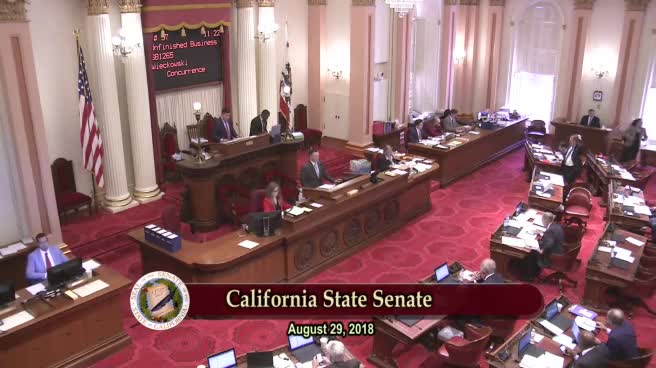 2MIN
Senate Floor
 2MIN
Assembly Floor
 1H
Assembly Standing Committee on Appropriations
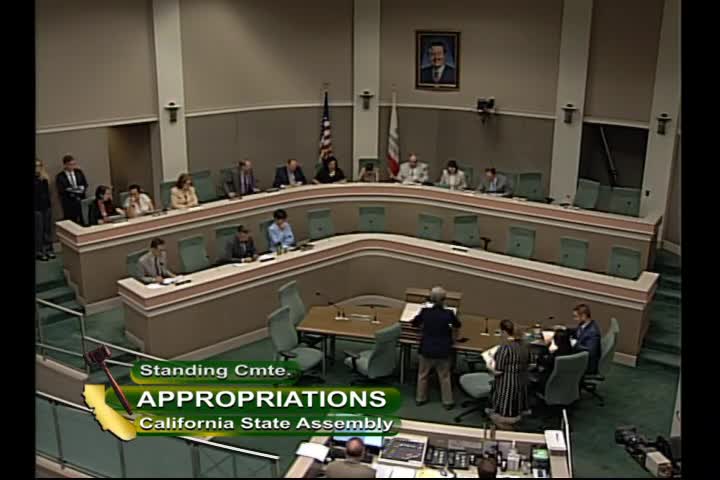 4MIN
Assembly Standing Committee on Appropriations
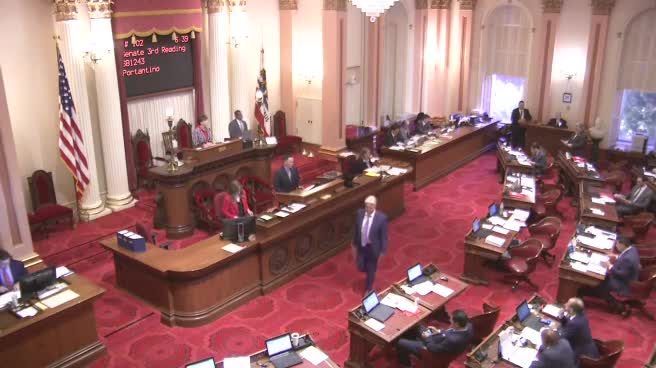 11MIN
Senate Floor
 10MIN
Senate Standing Committee on Appropriations
 19MIN