SB 836: State beaches: smoking ban.
- Session Year: 2017-2018
- House: Senate
- Latest Version Date: 2018-09-05
Existing law makes it an infraction punishable by a fine of $250 for a person to smoke a cigarette, cigar, or other tobacco-related product within 25 feet of a playground or tot lot sandbox area.
This bill would make it an infraction punishable by a fine of up to $25 for a person to smoke, as defined, on a state coastal beach or to dispose of used cigar or cigarette waste on a state coastal beach unless the disposal is made in an appropriate waste receptacle. The bill would establish a state-mandated local program by creating a new crime.
This bill would require the Department of Parks and Recreation to develop and post signs at entrances or strategic locations, as determined by the Director of Parks and Recreation, of state coastal beaches to provide notice of the smoking prohibition. The bill would require the smoking prohibition to be enforced only after signs have been posted. The bill would authorize the Director of Parks and Recreation to designate, by posted order, areas within state coastal beaches as exempt from the smoking prohibition, as specified.
The California Constitution requires the state to reimburse local agencies and school districts for certain costs mandated by the state. Statutory provisions establish procedures for making that reimbursement.
This bill would provide that no reimbursement is required by this act for a specified reason.
Existing law makes it an infraction punishable by a fine of $250 for a person to smoke a cigarette, cigar, or other tobacco-related product within 25 feet of a playground or tot lot sandbox area.
This bill would make it an infraction punishable by a fine of up to $25 for a person to smoke, as defined, on a state coastal beach or to dispose of used cigar or cigarette waste on a state coastal beach. beach unless the disposal is made in an appropriate waste receptacle. The bill would establish a state-mandated local program by creating a new crime.
This bill would require the Department of Parks and Recreation to develop and post signs at entrances or strategic locations, as determined by the Director of Parks and Recreation, of state coastal beaches to provide notice of the smoking prohibition. The bill would require the smoking prohibition to be enforced only after signs have been posted. The bill would authorize the Director of Parks and Recreation to designate, by posted order, areas within state coastal beaches as exempt from the smoking prohibition, as specified.
The California Constitution requires the state to reimburse local agencies and school districts for certain costs mandated by the state. Statutory provisions establish procedures for making that reimbursement.
This bill would provide that no reimbursement is required by this act for a specified reason.
Existing law makes it an infraction punishable by a fine of $250 for a person to smoke a cigarette, cigar, or other tobacco-related product within 25 feet of a playground or tot lot sandbox area.
This bill would make it an infraction punishable by a fine of up to $25 for a person to smoke, as defined, on a state coastal beach or to dispose of used cigar or cigarette waste on a state coastal beach. The bill would establish a state-mandated local program by creating a new crime.
This bill would require the Department of Parks and Recreation to develop and post signs at entrances or strategic locations, as determined by the Director of Parks and Recreation, of state coastal beaches to provide notice of the smoking prohibition. The bill would require the smoking prohibition to be enforced only after signs have been posted. The bill would authorize the Director of Parks and Recreation to designate, by posted order, areas within state coastal beaches as exempt from the smoking prohibition, as specified.
The California Constitution requires the state to reimburse local agencies and school districts for certain costs mandated by the state. Statutory provisions establish procedures for making that reimbursement.
This bill would provide that no reimbursement is required by this act for a specified reason.
The Legislature finds and declares that making it an infraction punishable by a fine of up to $25 for a person to smoke on a state coastal beach or to dispose of used cigar or cigarette waste on a state coastal beach is a matter of statewide concern in recognition of the importance of public health and environmental quality for the people of this state.
SEC. 2.Section 5008.9 is added to the Public Resources Code, to read:5008.9.(a)For purposes of this section, the following definitions apply:
(1)Cigar has the same meaning as defined in Section 104550 of the Health and Safety Code and, for purposes of this section, may contain any other weed or plant as an alternative or supplement to tobacco or nicotine.
(2)Cigarette has the same meaning as defined in Section 104556 of the Health and Safety Code and, for purposes of this section, may contain any other weed or plant as an alternative or supplement to tobacco or nicotine.
(3)Smoke or smoking means inhaling, exhaling, burning, or carrying any lighted or heated cigar, cigarette, or pipe, or any other lighted or heated tobacco or plant product intended for inhalation, whether natural or synthetic, in any manner or in any form. Smoke or smoking includes the use of an electronic smoking device that creates an aerosol or vapor, in any manner or in any form, or the use of any oral smoking device for the purpose of circumventing a prohibition on smoking. Smoke or smoking does not include the use of a cigar, cigarette, or pipe, or any other lighted or heated tobacco or plant product used as a prop in a motion picture, television program, or similar filmed audiovisual work, provided filming is properly permitted by the California Film Commission, the active film set is closed to the general public, and any waste is immediately removed from the beach. Smoke or smoking does not include the use of a cigar, cigarette, or pipe, or any other lighted or heated tobacco or plant product used in connection with the good faith practice of a religious belief or ceremony.
(4)State coastal beach means an area that is owned by, operated by, or under the jurisdiction of the department and that adjoins the ocean, a bay, or an estuary.
(b)A person shall not smoke on a state coastal beach.
(c)A person shall not dispose of used cigar or cigarette waste on a state coastal beach unless the disposal of the cigar or cigarette waste is made in an appropriate waste receptacle.
(d)A person who violates this section is guilty of an infraction and shall be punished by a fine of up to twenty-five dollars ($25).
(e)The department shall develop and post signs at entrances or strategic locations, as determined by the director, of state coastal beaches to provide notice of the smoking prohibition set forth in subdivision (b). Subdivision (b) shall be enforced on state coastal beaches only after signs have been posted.
(f)Notwithstanding any other provision of this section, the director may designate, by posted order, areas within state coastal beaches as exempt from the provisions of this section. The director shall consider public health and safety implications and potential fire risk when designating an area as exempt pursuant to this subdivision.
SEC. 3.No reimbursement is required by this act pursuant to Section 6 of Article XIIIB of the California Constitution because the only costs that may be incurred by a local agency or school district will be incurred because this act creates a new crime or infraction, eliminates a crime or infraction, or changes the penalty for a crime or infraction, within the meaning of Section 17556 of the Government Code, or changes the definition of a crime within the meaning of Section 6 of Article XIIIB of the California Constitution.
The Legislature finds and declares that making it an infraction punishable by a fine of up to $25 for a person to smoke on a state coastal beach or to dispose of used cigar or cigarette waste on a state coastal beach is a matter of statewide concern in recognition of the importance of public health and environmental quality for the people of this state.
SEC. 2.Section 5008.9 is added to the Public Resources Code, to read:5008.9.(a)For purposes of this section, the following definitions apply:
(1)Cigar has the same meaning as defined in Section 104550 of the Health and Safety Code and, for purposes of this section, may contain any other weed or plant as an alternative or supplement to tobacco or nicotine.
(2)Cigarette has the same meaning as defined in Section 104556 of the Health and Safety Code and, for purposes of this section, may contain any other weed or plant as an alternative or supplement to tobacco or nicotine.
(3)Smoke or smoking means inhaling, exhaling, burning, or carrying any lighted or heated cigar, cigarette, or pipe, or any other lighted or heated tobacco or plant product intended for inhalation, whether natural or synthetic, in any manner or in any form. Smoke or smoking includes the use of an electronic smoking device that creates an aerosol or vapor, in any manner or in any form, or the use of any oral smoking device for the purpose of circumventing a prohibition on smoking. Smoke or smoking does not include the use of a cigar, cigarette, or pipe, or any other lighted or heated tobacco or plant product used as a prop in a motion picture, television program, or similar filmed audiovisual work, provided filming is properly permitted by the California Film Commission, the active film set is closed to the general public, and any waste is immediately removed from the beach. Smoke or smoking does not include the use of a cigar, cigarette, or pipe, or any other lighted or heated tobacco or plant product used in connection with the good faith practice of a religious belief or ceremony.
(4)State coastal beach means an area that is owned by, operated by, or under the jurisdiction of the department and that adjoins the ocean, a bay, or an estuary.
(b)A person shall not smoke on a state coastal beach.
(c)A person shall not dispose of used cigar or cigarette waste on a state coastal beach. beach unless the disposal of the cigar or cigarette waste is made in an appropriate waste receptacle.
(d)A person who violates this section is guilty of an infraction and shall be punished by a fine of up to twenty-five dollars ($25).
(e)The department shall develop and post signs at entrances or strategic locations, as determined by the director, of state coastal beaches to provide notice of the smoking prohibition set forth in subdivision (b). Subdivision (b) shall be enforced on state coastal beaches only after signs have been posted.
(f)Notwithstanding any other provision of this section, the director may designate, by posted order, areas within state coastal beaches as exempt from the provisions of this section. The director shall consider public health and safety implications and potential fire risk when designating an area as exempt pursuant to this subdivision.
SEC. 3.No reimbursement is required by this act pursuant to Section 6 of Article XIIIB of the California Constitution because the only costs that may be incurred by a local agency or school district will be incurred because this act creates a new crime or infraction, eliminates a crime or infraction, or changes the penalty for a crime or infraction, within the meaning of Section 17556 of the Government Code, or changes the definition of a crime within the meaning of Section 6 of Article XIIIB of the California Constitution.
The Legislature finds and declares that making it an infraction punishable by a fine of up to $25 for a person to smoke on a state coastal beach or to dispose of used cigar or cigarette waste on a state coastal beach is a matter of statewide concern in recognition of the importance of public health and environmental quality for the people of this state.
SEC. 2.Section 5008.9 is added to the Public Resources Code, to read:5008.9.(a)For purposes of this section, the following definitions apply:
(1)Cigar has the same meaning as defined in Section 104550 of the Health and Safety Code and, for purposes of this section, may contain any other weed or plant as an alternative or supplement to tobacco or nicotine.
(2)Cigarette has the same meaning as defined in Section 104556 of the Health and Safety Code and, for purposes of this section, may contain any other weed or plant as an alternative or supplement to tobacco or nicotine.
(3)Smoke or smoking means inhaling, exhaling, burning, or carrying any lighted or heated cigar, cigarette, or pipe, or any other lighted or heated tobacco or plant product intended for inhalation, whether natural or synthetic, in any manner or in any form. Smoke or smoking includes the use of an electronic smoking device that creates an aerosol or vapor, in any manner or in any form, or the use of any oral smoking device for the purpose of circumventing a prohibition on smoking. Smoke or smoking does not include the use of a cigar, cigarette, or pipe, or any other lighted or heated tobacco or plant product used as a prop in a motion picture, television program, or similar filmed audiovisual work, provided filming is properly permitted by the California Film Commission, the active film set is closed to the general public, and any waste is immediately removed from the beach. Smoke or smoking does not include the use of a cigar, cigarette, or pipe, or any other lighted or heated tobacco or plant product used in connection with the good faith practice of a religious belief or ceremony.
(4)State coastal beach means an area that is owned, operated, owned by, operated by, or under the jurisdiction of the department and that adjoins the ocean, a bay, or an estuary.
(b)A person shall not smoke on a state coastal beach.
(c)A person shall not dispose of used cigar or cigarette waste on a state coastal beach.
(d)A person who violates this section is guilty of an infraction and shall be punished by a fine of up to twenty-five dollars ($25).
(e)The department shall develop and post signs at entrances or strategic locations, as determined by the director, of state coastal beaches to provide notice of the smoking prohibition set forth in subdivision (b). Subdivision (b) shall be enforced on state coastal beaches only after signs have been posted.
(f)Notwithstanding any other provision of this section, the director may designate, by posted order, areas within state coastal beaches as exempt from the provisions of this section. The director shall consider public health and safety implications and potential fire risk when designating an area as exempt pursuant to this subdivision.
SEC. 3.No reimbursement is required by this act pursuant to Section 6 of Article XIIIB of the California Constitution because the only costs that may be incurred by a local agency or school district will be incurred because this act creates a new crime or infraction, eliminates a crime or infraction, or changes the penalty for a crime or infraction, within the meaning of Section 17556 of the Government Code, or changes the definition of a crime within the meaning of Section 6 of Article XIIIB of the California Constitution.
The Legislature finds and declares that making it an infraction punishable by a fine of up to $25 for a person to smoke on a state coastal beach or to dispose of used cigar or cigarette waste on a state coastal beach is a matter of statewide concern in recognition of the importance of public health and environmental quality for the people of this state.
SECTION 1.SEC. 2.Section 5008.9 is added to the Public Resources Code, to read:5008.9.(a)For purposes of this section, the following definitions apply:
(1)Cigar has the same meaning as defined in Section 104550 of the Health and Safety Code and, for purposes of this section, may contain any other weed or plant as an alternative or supplement to tobacco or nicotine.
(2)Cigarette has the same meaning as defined in Section 104556 of the Health and Safety Code and, for purposes of this section, may contain any other weed or plant as an alternative or supplement to tobacco or nicotine.
(3)Smoke or smoking means inhaling, exhaling, burning, or carrying any lighted or heated cigar, cigarette, or pipe, or any other lighted or heated tobacco or plant product intended for inhalation, whether natural or synthetic, in any manner or in any form. Smoke or smoking includes the use of an electronic smoking device that creates an aerosol or vapor, in any manner or in any form, or the use of any oral smoking device for the purpose of circumventing a prohibition on smoking. Smoke or smoking does not include the use of a cigar, cigarette, or pipe, or any other lighted or heated tobacco or plant product used as a prop in a motion picture, television program, or similar filmed audiovisual work, provided filming is properly permitted by the California Film Commission, the active film set is closed to the general public, and any waste is immediately removed from the beach. Smoke or smoking does not include the use of a cigar, cigarette, or pipe, or any other lighted or heated tobacco or plant product used in connection with the good faith practice of a religious belief or ceremony.
(4)State coastal beach means an area that is owned, operated, or under the jurisdiction of the state, an agency of the state, or a department of the state department and that adjoins the ocean, a bay, or an estuary.
(b)A person shall not smoke on a state coastal beach.
(c)A person shall not dispose of used cigar or cigarette waste on a state coastal beach.
(d)A person who violates this section is guilty of an infraction and shall be punished by a fine of up to twenty-five dollars ($25).
(e)The department shall develop and post signs at entrances or strategic locations, as determined by the director, of state coastal beaches to provide notice of the smoking prohibition set forth in subdivision (b). Subdivision (b) shall be enforced on state coastal beaches only after signs have been posted.
(f)Notwithstanding any other provision of this section, the director may designate, by posted order, areas within state coastal beaches as exempt from the provisions of this section. The director shall consider public health and safety implications and potential fire risk when designating an area as exempt pursuant to this subdivision.
SEC. 2.SEC. 3.No reimbursement is required by this act pursuant to Section 6 of Article XIIIB of the California Constitution because the only costs that may be incurred by a local agency or school district will be incurred because this act creates a new crime or infraction, eliminates a crime or infraction, or changes the penalty for a crime or infraction, within the meaning of Section 17556 of the Government Code, or changes the definition of a crime within the meaning of Section 6 of Article XIIIB of the California Constitution.
(a)For purposes of this section, the following definitions apply:
(1)Cigar has the same meaning as defined in Section 104550 of the Health and Safety Code and, for purposes of this section, may contain any other weed or plant as an alternative or supplement to tobacco or nicotine.
(2)Cigarette has the same meaning as defined in Section 104556 of the Health and Safety Code and, for purposes of this section, may contain any other weed or plant as an alternative or supplement to tobacco or nicotine.
(3)Smoke or smoking means inhaling, exhaling, burning, or carrying any lighted or heated cigar, cigarette, or pipe, or any other lighted or heated tobacco or plant product intended for inhalation, whether natural or synthetic, in any manner or in any form. Smoke or smoking includes the use of an electronic smoking device that creates an aerosol or vapor, in any manner or in any form, or the use of any oral smoking device for the purpose of circumventing a prohibition on smoking. Smoke or smoking does not include the use of a cigar, cigarette, or pipe, or any other lighted or heated tobacco or plant product used as a prop in a motion picture, television program, or similar filmed audiovisual work, provided filming is properly permitted by the California Film Commission, the active film set is closed to the general public, and any waste is immediately removed from the beach. Smoke or smoking does not include the use of a cigar, cigarette, or pipe, or any other lighted or heated tobacco or plant product used for ceremonial purposes by a federally recognized Native American tribe or by a nonfederally recognized California Native American tribe listed on the California Tribal Consultation List maintained by the Native American Heritage Commission. in connection with the good faith practice of a religious belief or ceremony.
(4)State coastal beach means an area that is owned, operated, or under the jurisdiction of the state, an agency of the state, or a department of the state and that adjoins the ocean, a bay, or an estuary.
(b)A person shall not smoke on a state coastal beach.
(c)A person shall not dispose of used cigar or cigarette waste on a state coastal beach.
(d)A person who violates this section is guilty of an infraction and shall be punished by a fine of up to twenty-five dollars ($25).
(e)The department shall develop and post signs at entrances or strategic locations, as determined by the director, of state coastal beaches to provide notice of the smoking prohibition set forth in subdivision (b). Subdivision (b) shall be enforced on state coastal beaches only after signs have been posted.
(f)Notwithstanding any other provision of this section, the director may designate, by posted order, areas within state coastal beaches as exempt from the provisions of this section. The director shall consider public health and safety implications and potential fire risk when designating an area as exempt pursuant to this subdivision.
SEC. 2.No reimbursement is required by this act pursuant to Section 6 of Article XIIIB of the California Constitution because the only costs that may be incurred by a local agency or school district will be incurred because this act creates a new crime or infraction, eliminates a crime or infraction, or changes the penalty for a crime or infraction, within the meaning of Section 17556 of the Government Code, or changes the definition of a crime within the meaning of Section 6 of Article XIIIB of the California Constitution.
(a)For purposes of this section, the following definitions apply:
(1)Cigar has the same meaning as defined in Section 104550 of the Health and Safety Code and, for purposes of this section, may contain any other weed or plant as an alternative or supplement to tobacco or nicotine.
(2)Cigarette has the same meaning as defined in Section 104556 of the Health and Safety Code and, for purposes of this section, may contain any other weed or plant as an alternative or supplement to tobacco or nicotine.
(3)Smoke or smoking means inhaling, exhaling, burning, or carrying any lighted or heated cigar, cigarette, or pipe, or any other lighted or heated tobacco or plant product intended for inhalation, whether natural or synthetic, in any manner or in any form. Smoke or smoking includes the use of an electronic smoking device that creates an aerosol or vapor, in any manner or in any form, or the use of any oral smoking device for the purpose of circumventing a prohibition on smoking. Smoke or smoking does not include the use of a cigar, cigarette, or pipe, or any other lighted or heated tobacco or plant product used as a prop in a motion picture, television program, or similar filmed audiovisual work, provided filming is properly permitted by the California Film Commission, the active film set is closed to the general public, and any waste is immediately removed from the beach. Smoke or smoking does not include the use of a cigar, cigarette, or pipe, or any other lighted or heated tobacco or plant product used for ceremonial purposes by a federally recognized Native American tribe or by a nonfederally recognized California Native American tribe listed on the California Tribal Consultation List maintained by the Native American Heritage Commission.
(4)State coastal beach means an area that is owned, operated, or under the jurisdiction of the state, an agency of the state, or a department of the state and that adjoins the ocean, a bay, or an estuary.
(b)A person shall not smoke on a state coastal beach.
(c)A person shall not dispose of used cigar or cigarette waste on a state coastal beach.
(d)A person who violates this section is guilty of an infraction and shall be punished by a fine of up to twenty-five dollars ($25).
(e)The department shall develop and post signs at entrances or strategic locations, as determined by the director, of state coastal beaches to provide notice of the smoking prohibition set forth in subdivision (b). Subdivision (b) shall be enforced on state coastal beaches only after signs have been posted.
(f)Notwithstanding any other provision of this section, the director may designate, by posted order, areas within state coastal beaches as exempt from the provisions of this section. The director shall consider public health and safety implications and potential fire risk when designating an area as exempt pursuant to this subdivision.
SEC. 2.No reimbursement is required by this act pursuant to Section 6 of Article XIIIB of the California Constitution because the only costs that may be incurred by a local agency or school district will be incurred because this act creates a new crime or infraction, eliminates a crime or infraction, or changes the penalty for a crime or infraction, within the meaning of Section 17556 of the Government Code, or changes the definition of a crime within the meaning of Section 6 of Article XIIIB of the California Constitution.
(a)For purposes of this section, the following definitions apply:
(1)Cigar has the same meaning as defined in Section 104550 of the Health and Safety Code and, for purposes of this section, may contain any other weed or plant as an alternative or supplement to tobacco or nicotine.
(2)Cigarette has the same meaning as defined in Section 104556 of the Health and Safety Code and, for purposes of this section, may contain any other weed or plant as an alternative or supplement to tobacco or nicotine.
(3)Smoke or smoking means inhaling, exhaling, burning, or carrying any lighted or heated cigar, cigarette, or pipe, or any other lighted or heated tobacco or plant product intended for inhalation, whether natural or synthetic, in any manner or in any form. Smoke or smoking includes the use of an electronic smoking device that creates an aerosol or vapor, in any manner or in any form, or the use of any oral smoking device for the purpose of circumventing a prohibition on smoking. Smoke or smoking does not include the use of a cigar, cigarette, or pipe, or any other lighted or heated tobacco or plant product used as a prop in a motion picture, television program, or similar filmed audiovisual work, provided filming is properly permitted by the California Film Commission, the active film set is closed to the general public, and any waste is immediately removed from the beach. Smoke or smoking does not include the use of a cigar, cigarette, or pipe, or any other lighted or heated tobacco or plant product used for ceremonial purposes by a federally recognized Native American tribe or a nonfederally recognized California Native American tribe listed on the California Tribal Consultation List maintained by the Native American Heritage Commission.
(4)State coastal beach means an area that is owned, operated, or under the jurisdiction of the state, an agency of the state, or a department of the state and that adjoins the ocean, a bay, or an estuary.
(b)A person shall not smoke on a state coastal beach.
(c)A person shall not dispose of used cigar or cigarette waste on a state coastal beach.
(d)A person who violates this section is guilty of an infraction and shall be punished by a fine of up to twenty-five dollars ($25).
(e)The department shall develop and post signs at entrances or strategic locations, as determined by the director, of state coastal beaches to provide notice of the smoking prohibition set forth in subdivision (b). Subdivision (b) shall be enforced on state coastal beaches only after signs have been posted.
(f)Notwithstanding any other provision of this section, the director may designate, by posted order, areas within state coastal beaches as exempt from the provisions of this section. The director shall consider public health and safety implications and potential fire risk when designating an area as exempt pursuant to this subdivision.
SEC. 2.No reimbursement is required by this act pursuant to Section 6 of Article XIIIB of the California Constitution because the only costs that may be incurred by a local agency or school district will be incurred because this act creates a new crime or infraction, eliminates a crime or infraction, or changes the penalty for a crime or infraction, within the meaning of Section 17556 of the Government Code, or changes the definition of a crime within the meaning of Section 6 of Article XIIIB of the California Constitution.
|
Date
|
Status
|
|---|---|
| Sep 29, 2018 | In Senate. Consideration of Governor's veto pending. |
| Sep 29, 2018 | Vetoed by the Governor. |
| Sep 10, 2018 | Enrolled and presented to the Governor at 4 p.m. |
| Aug 30, 2018 | Assembly amendments concurred in. (Ayes 25. Noes 11.) Ordered to engrossing and enrolling. |
| Aug 29, 2018 | In Senate. Concurrence in Assembly amendments pending. |
| Aug 29, 2018 | Read third time. Passed. Ordered to the Senate. |
| Aug 23, 2018 | Read third time and amended. |
| Aug 21, 2018 | Read second time. Ordered to third reading. |
| Aug 20, 2018 | Read second time and amended. Ordered to second reading. |
| Aug 16, 2018 | From committee: Do pass as amended. (Ayes 12. Noes 5.) (August 16). |
| Jun 27, 2018 | June 27 set for first hearing. Placed on APPR. suspense file. |
| Jun 12, 2018 | From committee: Do pass and re-refer to Com. on APPR. (Ayes 10. Noes 5.) (June 12). Re-referred to Com. on APPR. |
| Jun 4, 2018 | Referred to Com. on W.,P., & W. |
| May 29, 2018 | In Assembly. Read first time. Held at Desk. |
| May 29, 2018 | Read third time. Passed. (Ayes 27. Noes 11.) Ordered to the Assembly. |
| May 25, 2018 | From committee: Do pass. (Ayes 5. Noes 2.) (May 25). |
| May 18, 2018 | Set for hearing May 25. |
| May 15, 2018 | From committee with author's amendments. Read second time and amended. Re-referred to Com. on APPR. |
| Apr 16, 2018 | April 16 hearing: Placed on APPR. suspense file. |
| Apr 9, 2018 | Set for hearing April 16. |
| Mar 20, 2018 | Read second time and amended. Re-referred to Com. on APPR. |
| Mar 19, 2018 | From committee: Do pass as amended and re-refer to Com. on APPR. (Ayes 6. Noes 2.) (March 13). |
| Mar 5, 2018 | From committee with author's amendments. Read second time and amended. Re-referred to Com. on N.R. & W. |
| Feb 23, 2018 | Set for hearing March 13. |
| Jan 16, 2018 | Referred to Com. on N.R. & W. |
| Jan 5, 2018 | From printer. May be acted upon on or after February 4. |
| Jan 4, 2018 | Introduced. Read first time. To Com. on RLS. for assignment. To print. |
|
Date
|
Description
|
Location
|
Votes
|
|
|---|---|---|---|---|
| Aug 30, 2018 | Unfinished Business SB836 Glazer et al. Concurrence | Senate Floor |
Passed |
|
| Aug 29, 2018 | SB 836 Glazer Senate Third Reading By LEVINE | Assembly Floor |
Passed |
|
| Aug 16, 2018 | Do pass as amended. | Assembly Standing Committee on Appropriations |
Passed |
|
| Jun 12, 2018 | Do pass and be re-referred to the Committee on [Appropriations] | Assembly Standing Committee on Water, Parks, and Wildlife |
Passed |
|
| May 29, 2018 | Senate 3rd Reading SB836 Glazer et al. | Senate Floor |
Passed |
|
| May 25, 2018 | Do pass | Senate Standing Committee on Appropriations |
Passed |
|
| Apr 16, 2018 | Placed on suspense file | Senate Standing Committee on Appropriations |
Passed |
|
| Mar 13, 2018 | Do pass as amended, but first amend, and re-refer to the Committee on [Appropriations] | Senate Standing Committee on Natural Resources and Water |
Passed |
This list shows positions taken on this bill by organizations on the date displayed, which is linked to the original source.
Positions by individuals are not included.
|
Organization
|
Position
|
Date
|
|---|---|---|
| 5 Gyres Institute | ** Support | Oct 2, 2018 |
| 651-4116 | ** Against | Aug 30, 2018 |
| American Academy of Pediatrics | ** Support | Oct 2, 2018 |
| Association of California Healthcare Districts | ** Support | Oct 2, 2018 |
| Audubon California | * Support | Mar 13, 2018 |
| Breathe California | ** Support | Oct 2, 2018 |
| California Fire Chiefs Association | ** Support | Jun 8, 2018 |
| California Fire Chiefs Association California Optometric Association | ** Support | Oct 2, 2018 |
| California Park & Recreation Society | ** Support | Oct 2, 2018 |
| California State Firefighters' Association | ** Support | Oct 2, 2018 |
| California State Park Rangers Association | ** Support | Oct 2, 2018 |
| California State Parks Foundation | ** Support | Oct 2, 2018 |
| California Statewide Law Enforcement Association | ** Support | Oct 2, 2018 |
| Californians Against Waste | ** Support | Oct 2, 2018 |
| californians for tobacco harm reduction | ** Against | Oct 2, 2018 |
| Central California Environmental Justice Network | ** Support | Oct 2, 2018 |
| Central Coast State Parks Association | ** Support | Oct 2, 2018 |
| Chico Bag | ** Support | Oct 2, 2018 |
| Cigar Association Of America | ** Against | Oct 2, 2018 |
| City of Santa Monica | ** Support | Oct 2, 2018 |
| Clean Water Action | ** Support | Oct 2, 2018 |
| Coalition For Clean Air | ** Support | Oct 2, 2018 |
| County Health Executives Association Of California | ** Support | Oct 2, 2018 |
| Defenders Of Wildlife | ** Support | Oct 2, 2018 |
| Fire Districts Association Of California | ** Support | Oct 2, 2018 |
| Gfwc California Federation Of Women'S Club | ** Support | Jun 8, 2018 |
| Gfwc California Federation Of Women'S Clubs | ** Support | Oct 2, 2018 |
| Heal The Bay | ** Support | Oct 2, 2018 |
| Los Angeles Waterkeeper | ** Support | Oct 2, 2018 |
| March of Dimes in California | ** Support | Oct 2, 2018 |
| Mission Blue | ** Support | Oct 2, 2018 |
| Mount Diablo Audubon Society | ** Support | Oct 2, 2018 |
| N.R. & W. | ** Against | Aug 30, 2018 |
| Northcoast Environmental Center | ** Support | Jun 8, 2018 |
| Plastic Pollution Coalition | ** Support | Oct 2, 2018 |
| Prepared By: Katharine Moore | ** Against | Aug 30, 2018 |
| Recyclesmart | ** Support | Oct 2, 2018 |
| Save Our Shores | ** Support | Oct 2, 2018 |
| Save The Bay | ** Support | Oct 2, 2018 |
| Seventh Generation Advisors | ** Support | Oct 2, 2018 |
| Surfrider Foundation | ** Support | Oct 2, 2018 |
| The Environmental Center Of San Luis Obispo | ** Support | Oct 2, 2018 |
| The Last Plastic Straw | ** Support | Oct 2, 2018 |
| The Nature Conservancy | * Support | Mar 13, 2018 |
| The Northcoast Environmental Center | ** Support | Oct 2, 2018 |
| The Trust For Public Land | ** Support | Oct 2, 2018 |
| UPSTREAM | ** Support | Oct 2, 2018 |
| Wishtoyo Chumash Foundation | ** Support | Oct 2, 2018 |
Office of Senate Floor Analyses (916) 651-1520 Fax: (916) 327-4478 | SB |
VETO
Bill No: SB 836
:
SENATE NATURAL RES. & WATER COMMITTEE: 6-2, 3/13/18
AYES: Hertzberg, Allen, Jackson, McGuire, Monning, Stern
NOES: Stone, Vidak
NO VOTE RECORDED: Hueso
SENATE APPROPRIATIONS COMMITTEE: 5-2, 5/25/18
AYES: Lara, Beall, Bradford, Hill, Wiener
NOES: Bates, Nielsen
SENATE FLOOR: 27-11, 5/29/18
AYES: Allen, Atkins, Beall, Bradford, De León, Dodd, Galgiani, Glazer, Hernandez, Hertzberg, Hill, Hueso, Jackson, Lara, Leyva, McGuire, Mitchell, Monning, Newman, Nguyen, Pan, Portantino, Roth, Skinner, Stern, Wieckowski, Wiener
NOES: Anderson, Bates, Cannella, Fuller, Gaines, Moorlach, Morrell, Nielsen, Stone, Vidak, Wilk
NO VOTE RECORDED: Berryhill
SENATE FLOOR: 26-11, 8/30/18
AYES: Allen, Atkins, Beall, Bradford, De León, Delgado, Dodd, Galgiani, Glazer, Hernandez, Hertzberg, Hill, Hueso, Jackson, Lara, Leyva, McGuire, Monning, Nguyen, Pan, Portantino, Roth, Skinner, Stern, Wieckowski, Wiener
NOES: Anderson, Bates, Cannella, Chang, Fuller, Gaines, Moorlach, Morrell, Stone, Vidak, Wilk
NO VOTE RECORDED: Berryhill, Mitchell, Nielsen
ASSEMBLY FLOOR: 54-25, 8/29/18 - See last page for vote
DIGEST:
This bill prohibits smoking and the disposal of used cigar or cigarette waste in a beach that is part of the state park system with limited exception. Violation is an infraction punishable by a fine of up to $25, and enforcement will not start until appropriate signage is installed, as specified.
ANALYSIS:
Existing law:
- Establishes the Department of Parks and Recreation (State Parks) within the California Natural Resources Agency.
- Requires State Parks to administer and protect state park properties for the use and enjoyment of the public.
- Allows State Parks to prohibit smoking in certain locations or under certain conditions, such as in buildings, on trails and specific guided walks, and upon a finding of extreme fire hazard.
- Makes it an infraction punishable by a fine of $250 for a person to smoke a cigarette, cigar, or other tobacco-related product within 25 feet of a playground or sandbox area.
- Prohibits smoking inside a public building, in a state-owned vehicle, or in an outdoor area within 20 feet of a main entrance, exit or window.
- Makes it an infraction to litter or cause something to be littered upon public or private property, as specified.
- Allows cities, counties and colleges to adopt more restrictive ordinances prohibiting smoking.
This bill implements a ban on smoking and disposing of used smoking waste, as defined, at State Parks’ beaches. Specifically, this bill:
- Prohibits a person from smoking or disposing of used cigar or cigarette waste at a state coastal beach, as defined, that is part of the state park system.
- A state coastal beach is an area that is owned by, operated by, or under the jurisdiction of the department and that adjoins the ocean, a bay, or an estuary.
- Establishes that a violation of these prohibitions is an infraction with a fine of up to $25.
- Provides that the prohibition will not be enforced until State Parks has developed and posted signs at entrances or strategic locations, as specified, to provide notice of the smoking prohibition.
- Authorizes the director of State Parks to exempt areas within state parks from these prohibitions.
- Defines “cigar,” “cigarette” and “smoke” or “smoking” for the purposes of this bill:
- Cigars and cigarettes, as defined, may include any other weed or plant as an alternative or supplement to tobacco or nicotine.
- Smoke or smoking includes the use of electronic cigarettes.
- Excludes from the prohibition smoke or smoking on an active film set, as defined, or in connection with the good faith practice of a religious belief or ceremony.
Background
The health risks from smoking and from exposure to secondhand smoke are well documented and include both acute and chronic effects. There is secondhand aerosol exposure for others present when an electronic smoking device (or “e-cigarette”) is being used as well. There are risks associated with that aerosol.
The American Lung Association reports that tobacco still kills over 40,000 Californians every year, sickens thousands more and costs the state more than $23 billion in health care and lost productivity. According to the California Department of Public Health (CDPH), smoking prevalence among adults in California has declined from 23.7% in 1988 to 10.5% in 2015 – second lowest among the 50 states.
With respect to youth smoking, the CDPH recently reported that “youth are using electronic smoking devices who would otherwise not have smoked cigarettes or used other tobacco products. Adolescent electronic smoking device users are also more likely to start smoking traditional cigarettes versus non-electronic smoking device users. […] Flavored tobacco products are a gateway for many children and young adults to become regular smokers.”
In January 2018, the National Academies released a consensus study report on the public health consequences of e-cigarettes. They found that e-cigarettes are likely to be far less harmful than traditional cigarettes, but that the absolute risks of e-cigarette use and associated long-term health impacts cannot be unambiguously determined as of now. Additionally, the study found that further work is needed to adequately assess how well e-cigarettes work as effective smoking cessation aids, among other things.
In recent years, the Legislature has repeatedly tightened restrictions on smoking, including the use of e-cigarettes. There is also a long history of legislative efforts to prohibit tobacco smoking in state parks and/or state beaches.
In the current legislative session, SB 386 (Glazer, 2017) would have banned smoking tobacco, as specified, from state parks and state coastal beaches and established a fine of up to $100 for the infraction. Governor Brown vetoed that bill and his message stated in part:
Last year I vetoed Senate Bill 1333, a similar measure, because I believed that such a far-reaching prohibition in every state park and on every state beach was too broad. In addition, the fine prescribed in this bill for lighting one cigarette is excessive: $485 dollars, after the mandatory assessments.
If people can't smoke even on a deserted beach, where can they? There must be some limit to the coercive power of government.
Last year, Governor Brown also vetoed AB 725 (Levine, 2017) which was virtually identical to SB 386 except the maximum fine was reduced to $50. His veto message was very similar to that for SB 386.
There are approximately 280 units (or parks) within the state park system and many units are or include beaches. State Parks’ mission is “to provide for the health, inspiration and education of the people of California by helping to preserve the state’s extraordinary biological diversity, protecting its most valued natural and cultural resources, and creating opportunities for high-quality outdoor recreation.”
Many local jurisdictions have already banned smoking in some locations. For example, the Counties of Los Angeles, San Francisco, and San Mateo and the Cities of San Diego, Los Angeles, Huntington Beach, Pasadena, Carson, and Davis, among others, ban smoking at parks or beaches.
Comments
This is one of a pair of bills by the author. Senator Glazer has introduced two bills – SB 835 and SB 836 that more-or-less split in two last year’s SB 386 – this bill applies to state park coastal beaches and SB 835 applies to the units of the state park system except for state coastal beaches. Assembly Member Levine has also reintroduced the language of AB 725 – although modified to reduce the fine and limited to applicable picnic areas – as AB 1097.
If the fine in SB 386 is $100, why did the Governor’s veto message use $485? According to the 2018 edition of Uniform Bail and Penalty Schedule (Schedule) published by the Judicial Council of California, a “base bail” of $100 can result in a “total bail” of up to $485 in some instances for violations of the Public Resources Code applicable to State Parks. Existing law authorizes additional penalties and surcharges to be added to the base bail for criminal offenses to help fund state court construction, and county bond indebtedness for court facilities, among other things. Thus the total bail can readily exceed the base bail. Bail and penalty schedules may vary by county, and judges retain discretion over the amount assessed in each individual case.
The $25 fine (base bail) imposed by this bill corresponds to a maximum total bail of approximately $200 ($192 - $197 based upon the Uniform Bail and Penalty Schedule).
Related/Prior Legislation
SB 835 (Glazer, 2018) would have prohibited smoking of cigarettes, cigars, pipes and other tobacco-products in state parks, as specified, and would have established that a violation is an infraction with a fine of up to $25. The bill was vetoed by Governor Brown.
SB 386 (Glazer, 2017) would have prohibited the smoking of cigarettes, cigars, pipes and other tobacco products at state parks and state coastal beaches, as specified, and would have established that a violation is an infraction with a fine of up to $100. The bill was vetoed by Governor Brown.
AB 1097 (Levine, 2017) would have prohibited smoking at state parks and coastal beaches, as specified, and would have established that a violation is an infraction with a fine of up to $50. The bill was vetoed by Governor Brown.
AB 725 (Levine, 2017) would have prohibited smoking of tobacco products on state coastal beaches and at state parks, as specified, and would have established that a violation is an infraction with a fine of up to $50. The bill was vetoed by Governor Brown.
FISCAL EFFECT: Appropriation: Fiscal Com.: Local:
According to the Assembly Appropriations Committee:
- Increased one-time costs estimated to be $248,000 (GF) for the purchase and installation of signage. State Parks estimates each sign will cost $200. (The smoking ban would apply to 62 state beaches, with an estimated 20 signs per park.)
- Additionally, if the California Environmental Quality Act or Coastal Commission development permits are determined to be necessary, the average cost per state coastal beach unit would be $2,500 for the Act and $2,000 per coastal development permit. (It is unknown it the Coastal Commission will require coastal development permits for all signage.)
SUPPORT: (Verified 10/1/18)
5 Gyres Institute
American Academy of Pediatrics
Association of California Healthcare Districts
Breathe California
California Fire Chiefs Association
California Optometric Association
California Park & Recreation Society
California State Firefighters’ Association
California State Park Rangers Association
California State Parks Foundation
California Statewide Law Enforcement Association
Californians Against Waste
Central California Environmental Justice Network
Central Coast State Parks Association
Chico Bag
City of Santa Monica
Clean Water Action
Coalition for Clean Air
County Health Executives Association of California
Defenders of Wildlife
Fire Districts Association of California
GFWC California Federation of Women’s Clubs
Heal the Bay
Honorable Paul Koretz, Los Angeles City Council, 5th District
Los Angeles Waterkeeper
March of Dimes in California
Mission Blue
Mount Diablo Audubon Society
Plastic Pollution Coalition
RecycleSmart
Save Our Shores
Save the Bay
Seventh Generation Advisors
Surfrider Foundation
The Environmental Center of San Luis Obispo
The Last Plastic Straw
The Northcoast Environmental Center
The Trust for Public Land
UPSTREAM
Wishtoyo Chumash Foundation
One individual
OPPOSITION: (Verified 10/1/18)
Californians for Tobacco Harm Reduction
Cigar Association of America
ARGUMENTS IN SUPPORT: According to the author, “[t]he consequences of smoking are immense. Smoking is the leading contributing factor to lung cancer and heart disease.”
“Various nonprofit organizations and numerous studies have consistently found that discarded cigarette butts are the number one waste item found on beaches. According to a study by the California Ocean Protection Council, about 40% of debris collected at the California Coastal Cleanup day in 2010 was from smoking-related activities.
“Improperly discarded cigarette butts and cigarette-related waste don’t just cause fires; they also pollute the environment – creating serious health hazards for land and marine animals when ingested. Even when not directly ingested by animals, the chemicals contained within cigarette butts can enter the water supply and be deadly to fish and marine life. Research conducted by the U.S. National Oceanic and Atmospheric Administration estimated that cigarette debris is responsible for killing at least one million sea birds and 100,000 mammals annually.
“A recent study by Stanford University showed that a non-smoker standing downwind from a smoker outdoors can be exposed to substantial levels of toxic, second-hand cigarette smoke. Banning smoking at state coastal beaches is the next step in addressing the public health and safety concerns associated with smoking.”
The California Statewide Law Enforcement Association adds “[o]ur state beaches are treasured resources for the people of California and millions of yearly tourists that are being negatively impacted by air pollution and littering attributable to cigarette and cigar smoking. Visitors often seeking to escape poor air quality should not be subject to the odors and toxins which cigarette, cigar and electronic smoking devices create.”
ARGUMENTS IN OPPOSITION: Californians for Tobacco Harm Reduction writing in opposition state, “SB 836 overlooks the positive effect of e-cigarettes in reduction tobacco product harm. E-cigarettes have been proved to be 95% less harmful than the average tobacco product, and are conducive to encouraging decreased tobacco use, and can help tobacco users quit. Furthermore, investigations by the California Department of Public Health have shown that second-hand vaping appears to have minimal exposure to toxins or chemicals, and does not appear to show any health risks.
“SB 836 disregards the distinct difference between traditional tobacco products and electronic cigarettes, and does not take into account electronic cigarette’s positive impact on the reduction of tobacco harm and minimal exposure of second-hand toxins, minimizing health risks. These products should not be included in the products banned from state coastal beaches under this legislation…”
The Cigar Association of America writing in opposition notes that littering on public property is already against the law, State Parks has authority to and does prohibit smoking in certain situations, and that smoking bans are more appropriately addressed at the local level.
GOVERNOR'S VETO MESSAGE:
I am returning Senate Bill 836 without my signature.
This bill prohibits smoking on state coastal beach and requires the Department of Parks and Recreation to post signs to notify the public of the smoking ban.
Third time is not always the charm. This will be the third consecutive year that I veto a similar measure. My opinion on the matter has not changed- this far-reaching prohibition goes too far. I am reluctant to add yet another law to our statutes.
ASSEMBLY FLOOR: 54-25, 8/29/18
AYES: Aguiar-Curry, Arambula, Baker, Berman, Bloom, Bonta, Burke, Caballero, Calderon, Carrillo, Cervantes, Chau, Chiu, Choi, Chu, Cooley, Cooper, Cunningham, Daly, Eggman, Friedman, Gabriel, Cristina Garcia, Eduardo Garcia, Gipson, Gloria, Gonzalez Fletcher, Grayson, Holden, Jones-Sawyer, Kalra, Kamlager-Dove, Levine, Limón, Low, Maienschein, McCarty, Mullin, Muratsuchi, Nazarian, O'Donnell, Quirk, Quirk-Silva, Reyes, Rivas, Rodriguez, Rubio, Santiago, Mark Stone, Thurmond, Ting, Weber, Wood, Rendon
NOES: Acosta, Travis Allen, Bigelow, Brough, Chávez, Chen, Dahle, Flora, Fong, Frazier, Gallagher, Gray, Harper, Irwin, Kiley, Lackey, Mathis, Mayes, Melendez, Obernolte, Patterson, Salas, Steinorth, Voepel, Waldron
NO VOTE RECORDED: Medina
10/2/18 14:32:22
**** END ****
Office of Senate Floor Analyses (916) 651-1520 Fax: (916) 327-4478 | SB |
UNFINISHED BUSINESS
Bill No: SB 836
:
SENATE NATURAL RES. & WATER COMMITTEE: 6-2, 3/13/18
AYES: Hertzberg, Allen, Jackson, McGuire, Monning, Stern
NOES: Stone, Vidak
NO VOTE RECORDED: Hueso
SENATE APPROPRIATIONS COMMITTEE: 5-2, 5/25/18
AYES: Lara, Beall, Bradford, Hill, Wiener
NOES: Bates, Nielsen
SENATE FLOOR: 27-11, 5/29/18
AYES: Allen, Atkins, Beall, Bradford, De León, Dodd, Galgiani, Glazer, Hernandez, Hertzberg, Hill, Hueso, Jackson, Lara, Leyva, McGuire, Mitchell, Monning, Newman, Nguyen, Pan, Portantino, Roth, Skinner, Stern, Wieckowski, Wiener
NOES: Anderson, Bates, Cannella, Fuller, Gaines, Moorlach, Morrell, Nielsen, Stone, Vidak, Wilk
NO VOTE RECORDED: Berryhill
ASSEMBLY FLOOR: Not available
DIGEST:
This bill prohibits smoking and the disposal of used cigar or cigarette waste in a beach that is part of the state park system with limited exception. Violation is an infraction punishable by a fine of up to $25, and enforcement will not start until appropriate signage is installed, as specified.
Assembly Amendments
make technical and clarifying changes.
Existing law:
- Establishes the Department of Parks and Recreation (State Parks) within the California Natural Resources Agency.
- Requires State Parks to administer and protect state park properties for the use and enjoyment of the public.
- Allows State Parks to prohibit smoking in certain locations or under certain conditions, such as in buildings, on trails and specific guided walks, and upon a finding of extreme fire hazard.
- Makes it an infraction punishable by a fine of $250 for a person to smoke a cigarette, cigar, or other tobacco-related product within 25 feet of a playground or sandbox area.
- Prohibits smoking inside a public building, in a state-owned vehicle, or in an outdoor area within 20 feet of a main entrance, exit or window.
- Makes it an infraction to litter or cause something to be littered upon public or private property, as specified.
- Allows cities, counties and colleges to adopt more restrictive ordinances prohibiting smoking.
This bill implements a ban on smoking and disposing of used smoking waste, as defined, at State Parks’ beaches. Specifically, this bill:
- Prohibits a person from smoking or disposing of used cigar or cigarette waste at a state coastal beach, as defined, that is part of the state park system.
- A state coastal beach is an area that is owned by, operated by, or under the jurisdiction of the department and that adjoins the ocean, a bay, or an estuary.
- Establishes that a violation of these prohibitions is an infraction with a fine of up to $25.
- Provides that the prohibition will not be enforced until State Parks has developed and posted signs at entrances or strategic locations, as specified, to provide notice of the smoking prohibition.
- Authorizes the director of State Parks to exempt areas within state parks from these prohibitions.
- Defines “cigar,” “cigarette” and “smoke” or “smoking” for the purposes of this bill:
- Cigars and cigarettes, as defined, may include any other weed or plant as an alternative or supplement to tobacco or nicotine.
- Smoke or smoking includes the use of electronic cigarettes.
- Excludes from the prohibition smoke or smoking on an active film set, as defined, or in connection with the good faith practice of a religious belief or ceremony.
Background
The health risks from smoking and from exposure to secondhand smoke are well documented and include both acute and chronic effects. There is secondhand aerosol exposure for others present when an electronic smoking device (or “e-cigarette”) is being used as well. There are risks associated with that aerosol.
The American Lung Association reports that tobacco still kills over 40,000 Californians every year, sickens thousands more and costs the state more than $23 billion in health care and lost productivity. According to the California Department of Public Health (CDPH), smoking prevalence among adults in California has declined from 23.7% in 1988 to 10.5% in 2015 – second lowest among the 50 states.
With respect to youth smoking, the CDPH recently reported that “youth are using electronic smoking devices who would otherwise not have smoked cigarettes or used other tobacco products. Adolescent electronic smoking device users are also more likely to start smoking traditional cigarettes versus non-electronic smoking device users. […] Flavored tobacco products are a gateway for many children and young adults to become regular smokers.”
In January 2018, the National Academies released a consensus study report on the public health consequences of e-cigarettes. They found that e-cigarettes are likely to be far less harmful than traditional cigarettes, but that the absolute risks of e-cigarette use and associated long-term health impacts cannot be unambiguously determined as of now. Additionally, the study found that further work is needed to adequately assess how well e-cigarettes work as effective smoking cessation aids, among other things.
In recent years, the Legislature has repeatedly tightened restrictions on smoking, including the use of e-cigarettes. There is also a long history of legislative efforts to prohibit tobacco smoking in state parks and/or state beaches.
In the current legislative session, SB 386 (Glazer, 2017) would have banned smoking tobacco, as specified, from state parks and state coastal beaches and established a fine of up to $100 for the infraction. Governor Brown vetoed that bill and his message stated in part:
Last year I vetoed Senate Bill 1333, a similar measure, because I believed that such a far-reaching prohibition in every state park and on every state beach was too broad. In addition, the fine prescribed in this bill for lighting one cigarette is excessive: $485 dollars, after the mandatory assessments.
If people can't smoke even on a deserted beach, where can they? There must be some limit to the coercive power of government.
Last year, Governor Brown also vetoed AB 725 (Levine, 2017) which was virtually identical to SB 386 (Glazer, 2017) except the maximum fine was reduced to $50. His veto message was very similar to that for SB 386 (Glazer, 2017).
There are approximately 280 units (or parks) within the state park system and many units are or include beaches. State Parks’ mission is “to provide for the health, inspiration and education of the people of California by helping to preserve the state’s extraordinary biological diversity, protecting its most valued natural and cultural resources, and creating opportunities for high-quality outdoor recreation.”
Many local jurisdictions have already banned smoking in some locations. For example, the Counties of Los Angeles, San Francisco, and San Mateo and the Cities of San Diego, Los Angeles, Huntington Beach, Pasadena, Carson, and Davis, among others, ban smoking at parks or beaches.
Comments
This is one of a pair of bills by the author. Senator Glazer has introduced two bills – SB 835 and SB 836 that more-or-less split in two last year’s SB 386 – this bill applies to state park coastal beaches and SB 835 applies to the units of the state park system except for state coastal beaches. Assembly Member Levine has also reintroduced the language of AB 725 – although modified to reduce the fine and limited to applicable picnic areas – as AB 1097.
If the fine in SB 386 (Glazer, 2017) is $100, why did the Governor’s veto message use $485? According to the 2018 edition of Uniform Bail and Penalty Schedule (Schedule) published by the Judicial Council of California, a “base bail” of $100 can result in a “total bail” of up to $485 in some instances for violations of the Public Resources Code applicable to State Parks. Existing law authorizes additional penalties and surcharges to be added to the base bail for criminal offenses to help fund state court construction, and county bond indebtedness for court facilities, among other things. Thus the total bail can readily exceed the base bail. Bail and penalty schedules may vary by county, and judges retain discretion over the amount assessed in each individual case.
The $25 fine (base bail) imposed by this bill corresponds to a maximum total bail of approximately $200 ($192 - $197 based upon the Uniform Bail and Penalty Schedule).
Related/Prior Legislation
SB 835 (Glazer, 2018) prohibits smoking of cigarettes, cigars, pipes and other tobacco-products in state parks, as specified, and establishes that a violation is an infraction with a fine of up to $25. The bill is on the Senate Floor.
SB 386 (Glazer, 2017) would have prohibited the smoking of cigarettes, cigars, pipes and other tobacco products at state parks and state coastal beaches, as specified, and would have established that a violation is an infraction with a fine of up to $100. The bill was vetoed by Governor Brown.
AB 1097 (Levine, 2017) prohibits smoking at state parks and coastal beaches, as specified, and established that a violation is an infraction with a fine of up to $50. The bill is before the Senate Natural Resources and Water Committee.
AB 725 (Levine, 2017) would have prohibited smoking of tobacco products on state coastal beaches and at state parks, as specified, and would have established that a violation is an infraction with a fine of up to $50. The bill was vetoed by Governor Brown.
FISCAL EFFECT: Appropriation: Fiscal Com.: Local:
According to the Assembly Appropriations Committee:
- Increased one-time costs estimated to be $248,000 (GF) for the purchase and installation of signage. State Parks estimates each sign will cost $200. (The smoking ban would apply to 62 state beaches, with an estimated 20 signs per park.)
- Additionally, if CEQA or Coastal Commission development permits are determined to be necessary, the average cost per state coastal beach unit would be $2,500 for CEQA and $2,000 per coastal development permit. (It is unknown it the Coastal Commission will require coastal development permits for all signage.)
5 Gyres Institute
American Academy of Pediatrics
Association of California Healthcare Districts
Breathe California
California Fire Chiefs Association
California Optometric Association
California Park & Recreation Society
California State Firefighters’ Association
California State Park Rangers Association
California State Parks Foundation
California Statewide Law Enforcement Association
Californians Against Waste
Central California Environmental Justice Network
Central Coast State Parks Association
Chico Bag
City of Santa Monica
Clean Water Action
Coalition for Clean Air
County Health Executives Association of California
Defenders of Wildlife
Fire Districts Association of California
GFWC California Federation of Women’s Clubs
Heal the Bay
Honorable Paul Koretz, Los Angeles City Council, 5th District
Los Angeles Waterkeeper
March of Dimes in California
Mission Blue
Mount Diablo Audubon Society
Plastic Pollution Coalition
RecycleSmart
Save Our Shores
Save the Bay
Seventh Generation Advisors
Surfrider Foundation
The Environmental Center of San Luis Obispo
The Last Plastic Straw
The Northcoast Environmental Center
The Trust for Public Land
UPSTREAM
Wishtoyo Chumash Foundation
One individual
OPPOSITION: (Verified 8/28/18)
Californians for Tobacco Harm Reduction
Cigar Association of America
ARGUMENTS IN SUPPORT: According to the author, “[t]he consequences of smoking are immense. Smoking is the leading contributing factor to lung cancer and heart disease.”
“Various nonprofit organizations and numerous studies have consistently found that discarded cigarette butts are the number one waste item found on beaches. According to a study by the California Ocean Protection Council, about 40% of debris collected at the California Coastal Cleanup day in 2010 was from smoking-related activities.
“Improperly discarded cigarette butts and cigarette-related waste don’t just cause fires; they also pollute the environment – creating serious health hazards for land and marine animals when ingested. Even when not directly ingested by animals, the chemicals contained within cigarette butts can enter the water supply and be deadly to fish and marine life. Research conducted by the U.S. National Oceanic and Atmospheric Administration estimated that cigarette debris is responsible for killing at least one million sea birds and 100,000 mammals annually.
“A recent study by Stanford University showed that a non-smoker standing downwind from a smoker outdoors can be exposed to substantial levels of toxic, second-hand cigarette smoke. Banning smoking at state coastal beaches is the next step in addressing the public health and safety concerns associated with smoking.”
The California Statewide Law Enforcement Association adds “[o]ur state beaches are treasured resources for the people of California and millions of yearly tourists that are being negatively impacted by air pollution and littering attributable to cigarette and cigar smoking. Visitors often seeking to escape poor air quality should not be subject to the odors and toxins which cigarette, cigar and electronic smoking devices create.”
ARGUMENTS IN OPPOSITION: Californians for Tobacco Harm Reduction writing in opposition state, “SB 836 overlooks the positive effect of e-cigarettes in reduction tobacco product harm. E-cigarettes have been proved to be 95% less harmful than the average tobacco product, and are conducive to encouraging decreased tobacco use, and can help tobacco users quit. Furthermore, investigations by the California Department of Public Health have shown that second-hand vaping appears to have minimal exposure to toxins or chemicals, and does not appear to show any health risks.
“SB 836 disregards the distinct difference between traditional tobacco products and electronic cigarettes, and does not take into account electronic cigarette’s positive impact on the reduction of tobacco harm and minimal exposure of second-hand toxins, minimizing health risks. These products should not be included in the products banned from state coastal beaches under this legislation…”
The Cigar Association of America writing in opposition notes that littering on public property is already against the law, State Parks has authority to and does prohibit smoking in certain situations, and that smoking bans are more appropriately addressed at the local level.
8/30/18 0:10:12
**** END ****
SENATE THIRD READING
STR Bill Id:SB 836
Author:(Glazer)
As Amended Ver:August 23, 2018
Majority vote
SENATE VOTE: 27-11
Committee | Votes | Ayes | Noes |
Water | 10-5 | Eduardo Garcia, Carrillo, Choi, Chu, Friedman, Gloria, Kalra, Levine, Rubio, Wood | Gallagher, Bigelow, Harper, Mathis, Salas |
Appropriations | 12-5 | Gonzalez Fletcher, Bloom, Bonta, Calderon, Carrillo, Chau, Eggman, Friedman, Eduardo Garcia, Nazarian, Quirk, Reyes | Bigelow, Brough, Fong, Gallagher, Obernolte |
SUMMARY: Prohibits smoking, or disposing of used cigarette waste at a beach that is part of the state park system. Specifically, this bill:
- Prohibits a person from smoking or disposing of used cigar or cigarette waste at a beach, as defined, that is part of the state park system. Disposal of cigar or cigarette waste is allowed if made in an appropriate waste receptacle.
- Makes a violation of this bill an infraction, punishable by a fine of up to $25.
- Provides that the prohibition will not be enforced until the Department of Parks and Recreation (DPR) has developed and posted signs at entrances or strategic locations, as specified, to provide notice of the smoking prohibition.
- Authorizes the director of the DPR to exempt areas within state parks from these prohibitions.
- Defines "cigar," "cigarette" and "smoke" or "smoking" for the purposes of this bill:
- Cigars and cigarettes, as defined, may include any other weed or plant as an alternative or supplement to tobacco or nicotine.
- Smoke or smoking includes the use of electronic cigarettes.
- Excludes from the prohibition smoke or smoking on an active film set, as defined, or in connection with the good faith practice of a religious belief or ceremony.
EXISTING LAW:
- Establishes the DPR within the California Natural Resources Agency.
- Makes it an infraction to smoke a cigarette, cigar or other tobacco-related product within 25 feet of a playground or sandbox, punishable by a fine of $250 per incident.
- Prohibits smoking inside a public building, in a state-owned vehicle, or in an outdoor area within 20 feet of a main entrance, exit or window.
- Allows cities, counties and colleges to adopt more restrictive ordinances prohibiting smoking.
- Makes it an infraction to litter or cause something to be littered upon public or private property, as specified.
- Requires the DPR to administer and protect state park properties for the use and enjoyment of the public. Prohibits smoking in state parks upon a finding of extreme fire hazard by the DPR, except as allowed in designated areas.
FISCAL EFFECT: According to the Assembly Appropriations Committee:
Increased one-time costs estimated to be $248,000 (General Fund) for the purchase and installation of signage. DPR estimates each sign will cost $200. (The smoking ban would apply to 62 state beaches, with an estimated 20 signs per park.)
Additionally, if California Environmental Quality Act (CEQA) or Coastal Commission development permits are determined to be necessary, the average cost per state coastal beach unit would be $2,500 for CEQA and $2,000 per coastal development permit. (It is unknown if the Coastal Commission will require coastal development permits for all signage.)
COMMENTS: This bill would prohibit smoking at state park beaches. A companion bill, SB 835 (Glazer) would prohibit smoking in units of the state park system.
Background: The DPR currently prohibits smoking in state park buildings, on trails, on specific guided walks, and during high fire seasons. The state park system includes 300 miles of state beaches and 280 state park units covering a total of 1.3 million acres.
According to data compiled by the Ocean Conservancy from coastal clean-up collection efforts nationwide, cigarette litter continues to be the most commonly found waste item. In 2015, over two million pieces of cigarette butt litter were retrieved from United States (U.S.) beaches. Cigarette butts have been the most common type of trash found during coastal cleanup days for the past 30 years. Cigarette litter has been found in the stomachs of fish, birds, whales and other marine animals who mistake them for food. Cigarette filters also contain cellulose acetate, a type of plastic that breaks down slowly and never fully decomposes. According to information provided by the Surfrider Foundation, the toxic chemicals in used cigarette filters also leak out into the aquatic environment when submerged in water. The Surfrider Foundation estimates that Americans discard more than 175 million pounds of cigarette butts every year. In addition to the litter problems associated with cigarettes, smoking poses forest fire hazards and was the cause of four of the 25 worst wildfires in California between 1929 and 1999, causing the state billions of dollars. In recent years, less than one percent of wildfires were started by cigarettes, burning less than 15 acres.
In addition to the litter problems and fire hazards created by smoking, the author notes the hazards of secondhand smoke. Tobacco smoking causes an estimated 443,000 deaths per year, of which 73,000 are nonsmokers, according to data provided by the Centers for Disease Control. The U.S. Surgeon General has concluded there is no risk-free level of exposure to secondhand smoke, and the California Air Resources Board has categorized secondhand smoke as a toxic air contaminant.
Other studies have found that the non-biodegradable plastic in cigarette butt filters can be toxic when consumed by marine wildlife. Toxic chemicals leached from discarded cigarette butts have also been found to present a biohazard to water fleas, which play an important role in aquatic ecosystems by transferring energy and organic matter from primary producers such as algae to higher consumers such as fishes. The Ocean Protection Council's Implementation Strategy on Marine Debris recommends that smoking be prohibited on state beaches.
Prior and Related Legislation.
SB 835 (Glazer) of the current legislative session, is substantially similar to this bill except it applies only to state parks.
AB 725 (Levine) of the current legislative session, was substantially similar to this bill except the maximum fine was $50. The Governor vetoed this bill. AB 1097 (Levine) has been introduced in this session and is nearly identical to AB 725.
SB 386 (Glazer) of the current legislative session, was substantially similar to this bill, except that it established a fine of $100 and included state coastal beaches in the prohibition. The Governor vetoed this bill, stating in his veto message:
Last year I vetoed Senate Bill 1333, a similar measure, because I believed that such a far-reaching prohibition in every state park and on every state beach was too broad. In addition, the fine prescribed in this bill for lighting one cigarette is excessive: $485 dollars, after the mandatory assessments."
If people can't smoke even on a deserted beach, where can they? There must be some limit to the coercive power of government.
AB 1142 (Bloom) of 2014, and SB 1333 (Block) of 2016, were substantially similar to this bill. AB 1142 failed passage in the Assembly Governmental Organization Committee and SB 1333 was vetoed by the Governor. According to the Governor, "The complete prohibition in all parks and beaches is too broad. A more measured – and less punitive – approach might be warranted."
Clarification. According to the Senate Natural Resources Committee: If the fine in SB 386 (Glazer) of 2017, is $100, why did the Governor’s veto message use $485? According to the 2018 edition of Uniform Bail and Penalty Schedule (Schedule) published by the Judicial Council of California, a "base bail" of $100 can result in a "total bail" of up to $485 in some instances for violations of the Public Resources Code applicable to State Parks. Existing law authorizes additional penalties and surcharges to be added to the base bail for criminal offenses to help fund state court construction, and county bond indebtedness for court facilities, among other things. Thus the total bail can readily exceed the base bail. Bail and penalty schedules may vary by county, and judges retain discretion over the amount assessed in each individual case.
The $25 fine (base bail) imposed by this bill corresponds to a maximum total bail of approximately $200 ($192 - $197 based upon the Uniform Bail and Penalty Schedule).
Analysis Prepared by: Catherine Freeman / W., P., & W. / (916) 319-2096 FN: 0004525
SENATE THIRD READING
STR Bill Id:SB 836
Author:(Glazer)
As Amended Ver:August 20, 2018
Majority vote
SENATE VOTE: 27-11
Committee | Votes | Ayes | Noes |
Water | 10-5 | Eduardo Garcia, Carrillo, Choi, Chu, Friedman, Gloria, Kalra, Levine, Rubio, Wood | Gallagher, Bigelow, Harper, Mathis, Salas |
Appropriations | 12-5 | Gonzalez Fletcher, Bloom, Bonta, Calderon, Carrillo, Chau, Eggman, Friedman, Eduardo Garcia, Nazarian, Quirk, Reyes | Bigelow, Brough, Fong, Gallagher, Obernolte |
SUMMARY: Prohibits smoking, or disposing of used cigarette waste at a beach that is part of the state park system. Specifically, this bill:
- Prohibits a person from smoking or disposing of used cigar or cigarette waste at a beach, as defined, that is part of the state park system.
- Makes a violation of this bill an infraction, punishable by a fine of up to $25.
- Provides that the prohibition will not be enforced until the Department of Parks and Recreation (DPR) has developed and posted signs at entrances or strategic locations, as specified, to provide notice of the smoking prohibition.
- Authorizes the director of the DPR to exempt areas within state parks from these prohibitions.
- Defines "cigar," "cigarette" and "smoke" or "smoking" for the purposes of this bill:
- Cigars and cigarettes, as defined, may include any other weed or plant as an alternative or supplement to tobacco or nicotine.
- Smoke or smoking includes the use of electronic cigarettes.
- Excludes from the prohibition smoke or smoking on an active film set, as defined, or in connection with the good faith practice of a religious belief or ceremony.
EXISTING LAW:
- Establishes the DPR within the California Natural Resources Agency.
- Makes it an infraction to smoke a cigarette, cigar or other tobacco-related product within 25 feet of a playground or sandbox, punishable by a fine of $250 per incident.
- Prohibits smoking inside a public building, in a state-owned vehicle, or in an outdoor area within 20 feet of a main entrance, exit or window.
- Allows cities, counties and colleges to adopt more restrictive ordinances prohibiting smoking.
- Makes it an infraction to litter or cause something to be littered upon public or private property, as specified.
- Requires the DPR to administer and protect state park properties for the use and enjoyment of the public. Prohibits smoking in state parks upon a finding of extreme fire hazard by the DPR, except as allowed in designated areas.
FISCAL EFFECT: According to the Assembly Appropriations Committee:
Increased one-time costs estimated to be $248,000 (General Fund) for the purchase and installation of signage. DPR estimates each sign will cost $200. (The smoking ban would apply to 62 state beaches, with an estimated 20 signs per park.)
Additionally, if California Environmental Quality Act (CEQA) or Coastal Commission development permits are determined to be necessary, the average cost per state coastal beach unit would be $2,500 for CEQA and $2,000 per coastal development permit. (It is unknown if the Coastal Commission will require coastal development permits for all signage.)
COMMENTS: This bill would prohibit smoking at state park beaches. A companion bill, SB 835 (Glazer) would prohibit smoking in units of the state park system.
Background: The DPR currently prohibits smoking in state park buildings, on trails, on specific guided walks, and during high fire seasons. The state park system includes 300 miles of state beaches and 280 state park units covering a total of 1.3 million acres.
According to data compiled by the Ocean Conservancy from coastal clean-up collection efforts nationwide, cigarette litter continues to be the most commonly found waste item. In 2015, over two million pieces of cigarette butt litter were retrieved from United States (U.S.) beaches. Cigarette butts have been the most common type of trash found during coastal cleanup days for the past 30 years. Cigarette litter has been found in the stomachs of fish, birds, whales and other marine animals who mistake them for food. Cigarette filters also contain cellulose acetate, a type of plastic that breaks down slowly and never fully decomposes. According to information provided by the Surfrider Foundation, the toxic chemicals in used cigarette filters also leak out into the aquatic environment when submerged in water. The Surfrider Foundation estimates that Americans discard more than 175 million pounds of cigarette butts every year. In addition to the litter problems associated with cigarettes, smoking poses forest fire hazards and was the cause of four of the 25 worst wildfires in California between 1929 and 1999, causing the state billions of dollars. In recent years, less than one percent of wildfires were started by cigarettes, burning less than 15 acres.
In addition to the litter problems and fire hazards created by smoking, the author notes the hazards of secondhand smoke. Tobacco smoking causes an estimated 443,000 deaths per year, of which 73,000 are nonsmokers, according to data provided by the Centers for Disease Control. The U.S. Surgeon General has concluded there is no risk-free level of exposure to secondhand smoke, and the California Air Resources Board has categorized secondhand smoke as a toxic air contaminant.
Other studies have found that the non-biodegradable plastic in cigarette butt filters can be toxic when consumed by marine wildlife. Toxic chemicals leached from discarded cigarette butts have also been found to present a biohazard to water fleas, which play an important role in aquatic ecosystems by transferring energy and organic matter from primary producers such as algae to higher consumers such as fishes. The Ocean Protection Council's Implementation Strategy on Marine Debris recommends that smoking be prohibited on state beaches.
Prior and Related Legislation.
SB 835 (Glazer) of the current legislative session, is substantially similar to this bill except it applies only to state parks.
AB 725 (Levine) of the current legislative session, was substantially similar to this bill except the maximum fine was $50. The Governor vetoed this bill. AB 1097 (Levine) has been introduced in this session and is nearly identical to AB 725.
SB 386 (Glazer) of the current legislative session, was substantially similar to this bill, except that it established a fine of $100 and included state coastal beaches in the prohibition. The Governor vetoed this bill, stating in his veto message:
Last year I vetoed Senate Bill 1333, a similar measure, because I believed that such a far-reaching prohibition in every state park and on every state beach was too broad. In addition, the fine prescribed in this bill for lighting one cigarette is excessive: $485 dollars, after the mandatory assessments."
If people can't smoke even on a deserted beach, where can they? There must be some limit to the coercive power of government.
AB 1142 (Bloom) of 2014 and SB 1333 (Block) of 2016, were substantially similar to this bill. AB 1142 failed passage in the Assembly Governmental Organization Committee and SB 1333 was vetoed by the Governor. According to the Governor, "The complete prohibition in all parks and beaches is too broad. A more measured – and less punitive – approach might be warranted."
Clarification. According to the Senate Natural Resources Committee: If the fine in SB 386 (Glazer, 2017) is $100, why did the Governor’s veto message use $485? According to the 2018 edition of Uniform Bail and Penalty Schedule (Schedule) published by the Judicial Council of California, a "base bail" of $100 can result in a "total bail" of up to $485 in some instances for violations of the Public Resources Code applicable to State Parks. Existing law authorizes additional penalties and surcharges to be added to the base bail for criminal offenses to help fund state court construction, and county bond indebtedness for court facilities, among other things. Thus the total bail can readily exceed the base bail. Bail and penalty schedules may vary by county, and judges retain discretion over the amount assessed in each individual case.
The $25 fine (base bail) imposed by this bill corresponds to a maximum total bail of approximately $200 ($192 - $197 based upon the Uniform Bail and Penalty Schedule).
Analysis Prepared by: Catherine Freeman / W., P., & W. / (916) 319-2096 FN: 0004144
Date of Hearing: June 27, 2018
ASSEMBLY COMMITTEE ON APPROPRIATIONS
Lorena Gonzalez Fletcher, Chair
SBPCA Bill Id:SB 836
Author:(Glazer) – As Amended Ver:May 15, 2018
Policy Committee: | Water, Parks and Wildlife | Vote: | 10 - 5 |
|
| ||
|
|
Urgency: No State Mandated Local Program: Yes Reimbursable: No
SUMMARY:
This bill prohibits smoking or disposing of used cigar or cigarette waste on a state coastal beach. Specifically, this bill:
- Prohibits a person from smoking on a state coastal beach under the jurisdiction of the Department of Parks and Recreation (DPR). The prohibition applies to cigars or cigarettes containing tobacco or any other weed or plant used as an alternative or supplement to tobacco or nicotine, and also includes electronic and vapor cigarettes. Exempts smoking of props used for filming under specified conditions and in the good faith practice of a religious belief or ceremony.
- Prohibits a person from disposing of used cigar or cigarette waste on a state coastal beach.
- Allows the director of DPR to exempt areas within state coastal beaches from the smoking prohibition after considering public health and safety and potential fire risk.
- Requires DPR to post signs providing notice of the smoking prohibition. Provides that the smoking prohibition will be enforced only after signs have been posted.
- Makes a violation of this bill an infraction, punishable by a fine of up to $25.
FISCAL EFFECT:
Increased one-time costs estimated to be $248,000 (GF) for the purchase and installation of signage. DPR estimates each sign will cost $200. (The smoking ban would apply to 62 state beaches, with an estimated 20 signs per park.)
Additionally, if CEQA or Coastal Commission development permits are determined to be necessary, the average cost per state coastal beach unit would be $2,500 for CEQA and $2,000 per coastal development permit. (It is unknown it the Coastal Commission will require coastal development permits for all sinage.)
COMMENTS:
- Purpose. This bill prohibits smoking in state coastal beaches under the jurisdiction of DPR. According to the author:
A recent study by Stanford University showed that a non-smoker standing downwind from a smoker outdoors can be exposed to substantial levels of toxic, second-hand cigarette smoke. Banning smoking at state parks is the next step in addressing the public health and safety concerns associated with smoking.
- Background. DPR currently prohibits smoking in state park buildings, on trails, on specific guided walks, and during high fire seasons. The state park system includes 300 miles of state beaches and 280 state park units covering a total of 1.3 million acres.
- Related Legislation. SB 835 (Glazer) bans smoking in all state park units. SB 835 will be heard today in this committee. AB 1097 (Levine) bans smoking on state parks and beaches. AB 1097 is pending in the Senate Appropriations Committee.
- Prior Legislation. AB 1142 (Bloom) of the 2013-14 Legislative Session, SB 1333 (Block) of 2015-16 Legislative Session, and AB 725(Levine) and SB 386 (Glazer) of this session were substantially similar to this bill.
AB 1142 failed passage in the Assembly Governmental Organization Committee and SB 1333 passed this committee but was vetoed by Governor Brown. According to the governor on SB 1333, “The complete prohibition in all parks and beaches is too broad. A more measured – and less punitive – approach might be warranted.”
Both AB 725 and SB 386 were also vetoed by Governor Brown. According to the governor on AB 725, “the fine prescribed in this bill for lighting one cigarette is excessive: over $250, after the mandatory assessments.” This bill lowers the fine to up to $25.
According to the governor on both AB 725 and SB 386, “If people can’t smoke even on a deserted beach, where can they? There must be some limit to the coercive power of government.”
Analysis Prepared by: Jennifer Galehouse / APPR. / (916) 319-2081
Date of Hearing: June 12, 2018
ASSEMBLY COMMITTEE ON WATER, PARKS, AND WILDLIFE
Eduardo Garcia, Chair
SBPCA Bill Id:SB 836
Author:(Glazer) – As Amended Ver:May 15, 2018
SENATE VOTE: 27-11
SUBJECT: State beaches: smoking ban
SUMMARY: Prohibits smoking, or disposing of used cigarette waste at a beach that is part of the state park system. Specifically, this bill:
- Prohibits a person from smoking or disposing of used cigar or cigarette waste at a beach, as defined, that is part of the state park system.
- Makes a violation of this bill an infraction, punishable by a fine of up to $25.
- Provides that the prohibition will not be enforced until the Department of Parks and Recreation (DPR) has developed and posted signs at entrances or strategic locations, as specified, to provide notice of the smoking prohibition.
- Authorizes the director of the DPR to exempt areas within state parks from these prohibitions.
- Defines “cigar,” “cigarette” and “smoke” or “smoking” for the purposes of this bill:
- Cigars and cigarettes, as defined, may include any other weed or plant as an alternative or supplement to tobacco or nicotine.
- Smoke or smoking includes the use of electronic cigarettes.
- Excludes from the prohibition smoke or smoking on an active film set, as defined, or in connection with the good faith practice of a religious belief or ceremony.
EXISTING LAW:
- Establishes the DPR within the California Natural Resources Agency.
- Makes it an infraction to smoke a cigarette, cigar or other tobacco-related product within 25 feet of a playground or sandbox, punishable by a fine of $250 per incident.
- Prohibits smoking inside a public building, in a state-owned vehicle, or in an outdoor area within 20 feet of a main entrance, exit or window.
- Allows cities, counties and colleges to adopt more restrictive ordinances prohibiting smoking.
- Makes it an infraction to litter or cause something to be littered upon public or private property, as specified.
- Requires the DPR to administer and protect state park properties for the use and enjoyment of the public. Prohibits smoking in state parks upon a finding of extreme fire hazard by the DPR, except as allowed in designated areas.
FISCAL EFFECT: Unknown
COMMENTS: This bill would prohibit smoking at state park beaches. A companion bill, SB 835 (Glazer) would prohibit smoking in units of the state park system.
Background: The DPR currently prohibits smoking in state park buildings, on trails, on specific guided walks, and during high fire seasons. The state park system includes 300 miles of state beaches and 280 state park units covering a total of 1.3 million acres.
According to data compiled by the Ocean Conservancy from coastal clean-up collection efforts nationwide, cigarette litter continues to be the most commonly found waste item. In 2015, over 2 million pieces of cigarette butt litter were retrieved from United States (U.S.) beaches. Cigarette butts have been the most common type of trash found during coastal cleanup days for the past 30 years. Cigarette litter has been found in the stomachs of fish, birds, whales and other marine animals who mistake them for food. Cigarette filters also contain cellulose acetate, a type of plastic that breaks down slowly and never fully decomposes. According to information provided by the Surfrider Foundation, the toxic chemicals in used cigarette filters also leak out into the aquatic environment when submerged in water. The Surfrider Foundation estimates that Americans discard more than 175 million pounds of cigarette butts every year. In addition to the litter problems associated with cigarettes, smoking poses forest fire hazards and was the cause of four of the 25 worst wildfires in California between 1929 and 1999, causing the state billions of dollars. In recent years, less than one percent of wildfires were started by cigarettes, burning less than 15 acres.
In addition to the litter problems and fire hazards created by smoking, the author notes the hazards of secondhand smoke. Tobacco smoking causes an estimated 443,000 deaths per year, of which 73,000 are nonsmokers, according to data provided by the Centers for Disease Control. The U.S. Surgeon General has concluded there is no risk-free level of exposure to secondhand smoke, and the California Air Resources Board has categorized secondhand smoke as a toxic air contaminant.
Other studies have found that the non-biodegradable plastic in cigarette butt filters can be toxic when consumed by marine wildlife. Toxic chemicals leached from discarded cigarette butts have also been found to present a biohazard to water fleas, which play an important role in aquatic ecosystems by transferring energy and organic matter from primary producers such as algae to higher consumers such as fishes. The Ocean Protection Council's Implementation Strategy on Marine Debris recommends that smoking be prohibited on state beaches.
Prior and Related Legislation.
SB 835 (Glazer), of this session, is substantially similar to this bill except it applies only to state parks.
AB 725 (Levine), of this session, was substantially similar to this bill except the maximum fine was $50. The Governor vetoed this bill. AB 1097 (Levine) has been introduced in this session and is nearly identical to AB 725.
SB 386 (Glazer), of this session, was substantially similar to this bill, except that it established a fine of $100 and included state coastal beaches in the prohibition. The Governor vetoed this bill, stating in his veto message:
“Last year I vetoed Senate Bill 1333, a similar measure, because I believed that such a far-reaching prohibition in every state park and on every state beach was too broad. In addition, the fine prescribed in this bill for lighting one cigarette is excessive: $485 dollars, after the mandatory assessments.”
“If people can't smoke even on a deserted beach, where can they? There must be some limit to the coercive power of government.”
AB 1142 (Bloom), of the 2014 Legislative Session, and SB 1333 (Block), of the 2016 Legislative Session, were substantially similar to this bill. AB 1142 failed passage in the Assembly Governmental Organization Committee and SB 1333 was vetoed by the Governor. According to the Governor, "The complete prohibition in all parks and beaches is too broad. A more measured – and less punitive – approach might be warranted."
Clarification. According to the Senate Natural Resources Committee: If the fine in SB 386 (Glazer, 2017) is $100, why did the Governor’s veto message use $485? According to the 2018 edition of Uniform Bail and Penalty Schedule (Schedule) published by the Judicial Council of California, a “base bail” of $100 can result in a “total bail” of up to $485 in some instances for violations of the Public Resources Code applicable to State Parks. Existing law authorizes additional penalties and surcharges to be added to the base bail for criminal offenses to help fund state court construction, and county bond indebtedness for court facilities, among other things. Thus the total bail can readily exceed the base bail. Bail and penalty schedules may vary by county, and judges retain discretion over the amount assessed in each individual case.
The $25 fine (base bail) imposed by this bill corresponds to a maximum total bail of approximately $200 ($192 - $197 based upon the Uniform Bail and Penalty Schedule).
REGISTERED SUPPORT / OPPOSITION:
Support
5 Gyres Institute, The
American Academy of Pediatrics, California
California Fire Chiefs Association
California Optometric Association
California Park & Recreation Society
California State Firefighters’ Association
California State Parks Foundation
Californians Against Waste
Chico Bag
Clean Water Action
Coalition for Clean Air
County Health Executives Association of California
Defenders of Wildlife
Fire Districts Association of California
GFWC California Federation of Women’s Club
Gwen Goodmanlowe, Ph.D., Marine Biology Undergraduate Advisor, CSU-Long Beach
Heal the Bay
Last Plastic Straw, The
Los Angeles Waterkeeper
Mission Blue
Mount Diablo Audubon Society
Northcoast Environmental Center
Paul Koretz, Council Member, 5th District, Los Angeles City Council
Plastic Pollution Coalition
Plastic Pollution Coalition
RecycleSmart
Save Our Shores
Save The Bay
Seventh Generation Advisors
Surfrider Foundation
Trust for Public Land, The
UPSTREAM
Wishtoyo Chumash Foundation
Opposition
Californians for Tobacco Harm Reduction
Cigar Association of America
Analysis Prepared by: Catherine Freeman / W., P., & W. / (916) 319-2096
Office of Senate Floor Analyses (916) 651-1520 Fax: (916) 327-4478 | SB |
THIRD READING
Bill No: SB 836
:
SENATE NATURAL RES. & WATER COMMITTEE: 6-2, 3/13/18
AYES: Hertzberg, Allen, Jackson, McGuire, Monning, Stern
NOES: Stone, Vidak
NO VOTE RECORDED: Hueso
SENATE APPROPRIATIONS COMMITTEE: 5-2, 5/25/18
AYES: Lara, Beall, Bradford, Hill, Wiener
NOES: Bates, Nielsen
SUBJECT: State beaches: smoking ban
DIGEST:
This bill prohibits smoking and the disposal of used cigar or cigarette waste in a beach that is part of the state park system with limited exception. Violation is an infraction punishable by a fine of up to $25, and enforcement will not start until appropriate signage is installed, as specified.
Existing law:
- Establishes the Department of Parks and Recreation (State Parks) within the California Natural Resources Agency.
- Requires State Parks to administer and protect state park properties for the use and enjoyment of the public.
- Allows State Parks to prohibit smoking in certain locations or under certain conditions, such as in buildings, on trails and specific guided walks, and upon a finding of extreme fire hazard.
- Makes it an infraction punishable by a fine of $250 for a person to smoke a cigarette, cigar, or other tobacco-related product within 25 feet of a playground or sandbox area.
- Prohibits smoking inside a public building, in a state-owned vehicle, or in an outdoor area within 20 feet of a main entrance, exit or window.
- Makes it an infraction to litter or cause something to be littered upon public or private property, as specified.
- Allows cities, counties and colleges to adopt more restrictive ordinances prohibiting smoking.
This bill implements a ban on smoking and disposing of used smoking waste, as defined, at State Parks’ beaches. Specifically, this bill:
- Prohibits a person from smoking or disposing of used cigar or cigarette waste at a beach, as defined, that is part of the state park system.
- Establishes that a violation of these prohibitions is an infraction with a fine of up to $25.
- Provides that the prohibition will not be enforced until State Parks has developed and posted signs at entrances or strategic locations, as specified, to provide notice of the smoking prohibition.
- Authorizes the director of State Parks to exempt areas within state parks from these prohibitions.
- Defines “cigar,” “cigarette” and “smoke” or “smoking” for the purposes of this bill:
- Cigars and cigarettes, as defined, may include any other weed or plant as an alternative or supplement to tobacco or nicotine.
- Smoke or smoking includes the use of electronic cigarettes.
- Excludes from the prohibition smoke or smoking on an active film set, as defined, or in connection with the good faith practice of a religious belief or ceremony.
Background
The health risks from smoking and from exposure to secondhand smoke are well documented and include both acute and chronic effects. There is secondhand aerosol exposure for others present when an electronic smoking device (or “e-cigarette”) is being used as well. There are risks associated with that aerosol.
The American Lung Association reports that tobacco still kills over 40,000 Californians every year, sickens thousands more and costs the state more than $23 billion in health care and lost productivity. According to the California Department of Public Health (CDPH), smoking prevalence among adults in California has declined from 23.7% in 1988 to 10.5% in 2015 – second lowest among the 50 states.
With respect to youth smoking, the CDPH recently reported that “youth are using electronic smoking devices who would otherwise not have smoked cigarettes or used other tobacco products. Adolescent electronic smoking device users are also more likely to start smoking traditional cigarettes versus non-electronic smoking device users. […] Flavored tobacco products are a gateway for many children and young adults to become regular smokers.”
In January 2018, the National Academies released a consensus study report on the public health consequences of e-cigarettes. They found that e-cigarettes are likely to be far less harmful than traditional cigarettes, but that the absolute risks of e-cigarette use and associated long-term health impacts cannot be unambiguously determined as of now. Additionally, the study found that further work is needed to adequately assess how well e-cigarettes work as effective smoking cessation aids, among other things.
In recent years, the Legislature has repeatedly tightened restrictions on smoking, including the use of e-cigarettes. There is also a long history of legislative efforts to prohibit tobacco smoking in state parks and/or state beaches.
In the current legislative session, SB 386 (Glazer, 2017) would have banned smoking tobacco, as specified, from state parks and state coastal beaches and established a fine of up to $100 for the infraction. Governor Brown vetoed that bill and his message stated in part:
Last year I vetoed Senate Bill 1333, a similar measure, because I believed that such a far-reaching prohibition in every state park and on every state beach was too broad. In addition, the fine prescribed in this bill for lighting one cigarette is excessive: $485 dollars, after the mandatory assessments.
If people can't smoke even on a deserted beach, where can they? There must be some limit to the coercive power of government.
Last year, Governor Brown also vetoed AB 725 (Levine, 2017) which was virtually identical to SB 386 (Glazer, 2017) except the maximum fine was reduced to $50. His veto message was very similar to that for SB 386 (Glazer, 2017).
There are approximately 280 units (or parks) within the state park system and many units are or include beaches. State Parks’ mission is “to provide for the health, inspiration and education of the people of California by helping to preserve the state’s extraordinary biological diversity, protecting its most valued natural and cultural resources, and creating opportunities for high-quality outdoor recreation.”
Many local jurisdictions have already banned smoking in some locations. For example, the Counties of Los Angeles, San Francisco, and San Mateo and the Cities of San Diego, Los Angeles, Huntington Beach, Pasadena, Carson, and Davis, among others, ban smoking at parks or beaches.
Comments
This is one of a pair of bills by the author. Senator Glazer has introduced two bills – SB 835 and SB 836 that more-or-less split in two last year’s SB 386 – this bill applies to state park beaches and SB 835 applies to all units of the state park system. Assembly Member Levine has also reintroduced the language of AB 725 as AB 1097.
If the fine in SB 386 (Glazer, 2017) is $100, why did the Governor’s veto message use $485? According to the 2018 edition of Uniform Bail and Penalty Schedule (Schedule) published by the Judicial Council of California, a “base bail” of $100 can result in a “total bail” of up to $485 in some instances for violations of the Public Resources Code applicable to State Parks. Existing law authorizes additional penalties and surcharges to be added to the base bail for criminal offenses to help fund state court construction, and county bond indebtedness for court facilities, among other things. Thus the total bail can readily exceed the base bail. Bail and penalty schedules may vary by county, and judges retain discretion over the amount assessed in each individual case.
The $25 fine (base bail) imposed by this bill corresponds to a maximum total bail of approximately $200 ($192 - $197 based upon the Uniform Bail and Penalty Schedule).
Related/Prior Legislation
SB 835 (Glazer, 2018) prohibits smoking of cigarettes, cigars, pipes and other tobacco-products in state parks, as specified, and establish that a violation is an infraction with a fine of up to $25. The bill is on the Senate floor.
SB 386 (Glazer, 2017) would have prohibited the smoking of cigarettes, cigars, pipes and other tobacco products at state parks and state coastal beaches, as specified, and established that a violation is an infraction with a fine of up to $100. The bill was vetoed by Governor Brown.
AB 1097 (Levine, 2017) prohibits smoking at state parks and coastal beaches, as specified, and established that a violation is an infraction with a fine of up to $50. The bill is before the Senate Natural Resources and Water Committee.
AB 725 (Levine, 2017) would have prohibited smoking of tobacco products on state coastal beaches and at state parks, as specified, and established that a violation is an infraction with a fine of up to $50. The bill was vetoed by Governor Brown.
FISCAL EFFECT: Appropriation: Fiscal Com.: Local:
According to the Senate Appropriations Committee:
- One-time cost of $186,000 to $248,000 (General Fund) for the State Parks to purchase and install signage as required in this bill. These funds may be expended in one fiscal year or over several years. (See Staff comments).
- Unknown, likely minor annual costs to enforce violations and maintain signage.
- Unknown, potentially significant, penalty revenue (General Fund and various special funds).
5 Gyres Institute
American Academy of Pediatrics
Association of California Healthcare Districts
California Fire Chiefs Association
California Optometric Association
California Park & Recreation Society
California State Firefighters’ Association
California State Parks Foundation
California Statewide Law Enforcement Association
Californians Against Waste
Chico Bag
Clean Water Action
Coalition for Clean Air
County Health Executives Association of California
Defenders of Wildlife
Fire Districts Association of California
GFWC California Federation of Women’s Clubs
Heal the Bay
Honorable Paul Koretz, Los Angeles City Council, 5th District
Los Angeles Waterkeeper
March of Dimes in California
Mission Blue
Mount Diablo Audubon Society
Plastic Pollution Coalition
RecycleSmart
Save Our Shores
Save the Bay
Seventh Generation Advisors
Surfrider Foundation
The Last Plastic Straw
The Northcoast Environmental Center
The Trust for Public Land
UPSTREAM
Wishtoyo Chumash Foundation
OPPOSITION: (Verified 5/25/18)
Californians for Tobacco Harm Reduction
Cigar Association of America
ARGUMENTS IN SUPPORT: According to the author:
The consequences of smoking are immense. Smoking is the leading contributing factor to lung cancer and heart disease.
Various nonprofit organizations and numerous studies have consistently found that discarded cigarette butts are the number one waste item found on beaches. According to a study by the California Ocean Protection Council, about 40% of debris collected at the California Coastal Cleanup day in 2010 was from smoking-related activities.
Improperly discarded cigarette butts and cigarette-related waste don’t just cause fires; they also pollute the environment – creating serious health hazards for land and marine animals when ingested. Even when not directly ingested by animals, the chemicals contained within cigarette butts can enter the water supply and be deadly to fish and marine life. Research conducted by the U.S. National Oceanic and Atmospheric Administration estimated that cigarette debris is responsible for killing at least one million sea birds and 100,000 mammals annually.
A recent study by Stanford University showed that a non-smoker standing downwind from a smoker outdoors can be exposed to substantial levels of toxic, second-hand cigarette smoke. Banning smoking at state coastal beaches is the next step in addressing the public health and safety concerns associated with smoking.
The California Statewide Law Enforcement Association adds “[o]ur state beaches are treasured resources for the people of California and millions of yearly tourists that are being negatively impacted by air pollution and littering attributable to cigarette and cigar smoking. Visitors often seeking to escape poor air quality should not be subject to the odors and toxins which cigarette, cigar and electronic smoking devices create.”
ARGUMENTS IN OPPOSITION: Californians for Tobacco Harm Reduction writing in opposition state:
SB 836 overlooks the positive effect of e-cigarettes in reduction tobacco product harm. E-cigarettes have been proved to be 95% less harmful than the average tobacco product, and are conducive to encouraging decreased tobacco use, and can help tobacco users quit. Furthermore, investigations by the California Department of Public Health have shown that second-hand vaping appears to have minimal exposure to toxins or chemicals, and does not appear to show any health risks.
SB 836 disregards the distinct difference between traditional tobacco products and electronic cigarettes, and does not take into account electronic cigarette’s positive impact on the reduction of tobacco harm and minimal exposure of second-hand toxins, minimizing health risks. These products should not be included in the products banned from state coastal beaches under this legislation…
The Cigar Association of America writing in opposition notes that littering on public property is already against the law, State Parks has authority to and does prohibit smoking in certain situations, and that smoking bans are more appropriately addressed at the local level.
5/26/18 15:07:17
**** END ****
SENATE COMMITTEE ON APPROPRIATIONS
Senator Ricardo Lara, Chair
2017 - 2018 Regular Session
SB 836 (Glazer) - State beaches: smoking ban
Version: March 20, 2018 | Policy Vote: N.R. & W. 6 - 2 |
Urgency: No | Mandate: Yes |
Hearing Date: April 16, 2018 | Consultant: Narisha Bonakdar |
This bill meets the criteria for referral to the Suspense File.
Bill Summary:
- SB 836 prohibits smoking and the disposal of used cigar or cigarette waste on state beaches, and specifies that a violation is an infraction punishable by a fine up to $25.
Fiscal Impact:
One-time cost of $186,000 to $248,000 (General Fund) for the Department of Parks and Recreation (Parks) to purchase and install signage as required in the bill. These funds may be expended in one fiscal year or over several years. (See Staff comments).
Unknown, likely minor annual costs to enforce violations and maintain signage.
Unknown, potentially significant, penalty revenue (General Fund and various special funds).
Background: Current law prohibits smoking inside a public building, in a state-owned vehicle, or in an outdoor area within 20 feet of a main entrance, exit, or window. However, there is no prohibition against smoking in an outdoor area of a public building unless otherwise prohibited by state law or local ordinance and adequate signage is posted. Many local entities and colleges (including San Francisco County and the cities of Los Angeles, Huntington Beach, and Pasadena) have adopted more restrictive ordinances that prohibit smoking. Similarly, Parks currently prohibits smoking in certain situations, such as specific guided walks, buildings, trails, and areas with high fire dangers.
Proposed Law:
This bill:
- Defines terms for the purposes of the bill.
- Prohibits smoking or the disposal of used cigar or cigarette waste on state beaches.
- Specifies that a violation is an infraction punishable by up to $25 fine.
- Requires Parks to develop and post signs at entrances or strategic locations on properties to provide notice of the smoking prohibition, and prohibits enforcement of the ban until signs have been posted.
- Authorizes the director to designate smoking areas on Parks lands and requires consideration of public health, safety, and potential fire risk when exempting an area from the ban.
- Specifically excludes smoking “in connection with the good faith practice of a religious belief or ceremony” from the prohibition.
Related Legislation:
SB 835 (Glazer, 2018) prohibits smoking or disposing of a used cigar or cigarette waste in a unit of the state park system, and establishes a maximum fine of up to $25 for a violation. The bill also requires Parks to post signs indicating that smoking is prohibited. This bill is pending hearing in the Senate Appropriations Committee.
AB 725 (Levine, 2017) would have prohibited smoking or disposing of a used cigar or cigarette waste on a state beach or in a unit of the state park system, and would have established a maximum fine of $50 for a violation of this law. The bill would have also required Parks to post signs indicating that smoking is prohibited. This bill was vetoed by Governor Brown.
SB 386 (Glazer, 2017) would have prohibited smoking or disposing of a used cigar or cigarette waste on a state beach or in a unit of the state park system, and would have established a maximum fine of $100 for a violation of this law. The bill would have also required Parks to post signs indicating that smoking is prohibited. This bill was vetoed by Governor Brown.
SB 1333 (Glazer, 2016) would have prohibited smoking or disposing of a used cigar or cigarette waste on a state beach or in a unit of the state park system, and would have established a maximum fine of $250 for a violation of this law. The bill would have also required Parks to post signs indicating that smoking is prohibited. This bill was vetoed by Governor Brown.
AB 1142 (Bloom, 2013) would have prohibited smoking at state parks and beaches and would have established a fine of $250 for a violation. Died in Assembly Governmental Organization Committee.
SB 4 (Oropeza, 2009) would have prohibited smoking at state parks and beaches and established a fine of $100 for a violation. It also included an exemption for designated campsites at state beaches, and stated that the ban would go into effect after signs were posted. Vetoed by the Governor.
Staff Comments:
Parks’ Fiscal. The smoking ban would apply to 62 state beaches, each requiring approximately 20 signs. Parks estimates that each sign will cost between $150 and $200 (excluding additional permitting costs such as those associated with CEQA). Assuming $150 to $200 per sign and the need for roughly 20 signs at each of the 62 state beaches, implementation of this bill will cost between $184,000 and $248,000. Staff notes that this estimate does not include enforcement and maintenance costs, which over time may become significant. Staff also notes that the bill does not specify a date by which the ban must be phased in. As such, implementation could occur over several years to minimize fiscal impacts. Parks indicates that it cannot use existing resources to cover implementation costs. As such, this bill would have General Fund implications.
Veto Message. The prohibition and penalties outlined in this bill are similar to those outlined in several bills considered by the Legislature and Governor Brown over the past several years (see Legislative History). Governor Brown vetoed each of the bills. In his veto message, he indicated that “the prohibition in all parks and beaches is too broad. A more measured - and less punitive - approach might be warranted.” This bill potentially addresses these concerns by reducing the penalty to $25 per violation (from the higher amounts in previous bills) and authorizing the Director to exempt certain areas of subjected lands from the smoking prohibition.
Penalty Revenue. Staff notes that the statutory $25 penalty represents a base fee upon which impacted state and local entities assess additional fees per violation. These fees can increase the total penalty collected to more than four times the base fee (e.g., the $25 penalty outlined in the bill would cost a violator around $100 in fines which would be dispersed to various state and local entities including the courts and Parks).
State Mandate. This bill constitutes a state mandate. However, under the California Constitution, costs associated legislation defining a new crime or changing an existing definition of a crime are not reimbursable.
SENATE COMMITTEE ON NATURAL RESOURCES AND WATER
Senator Robert Hertzberg, Chair
2017 - 2018 Regular
Bill No: SB 836 Hearing Date: March 13, 2018
Author: | |||
Version: | March 5, 2018 | ||
Urgency: | Fiscal: | ||
Consultant: | |||
Subject: State beaches: smoking ban
BACKGROUND AND EXISTING LAW
Existing law:
- Establishes the Department of Parks and Recreation (State Parks) within the California Natural Resources Agency. There are approximately 280 units (or parks) within the state park system and many units are or include beaches. State Parks’ mission is “to provide for the health, inspiration and education of the people of California by helping to preserve the state’s extraordinary biological diversity, protecting its most valued natural and cultural resources, and creating opportunities for high-quality outdoor recreation.”
- Requires State Parks to administer and protect state park properties for the use and enjoyment of the public. It also prohibits smoking in state park properties upon a finding of extreme fire hazard by State Parks, except as allowed in designated areas.
- Allows State Parks to prohibit smoking in certain locations or under certain conditions, such as in buildings, and on trails and specific guided walks.
- Makes it an infraction punishable by a fine of $250 for a person to smoke a cigarette, cigar, or other tobacco-related product within 25 feet of a playground or sandbox area.
- Prohibits smoking inside a public building, in a state-owned vehicle, or in an outdoor area within 20 feet of a main entrance, exit or window.
- Makes it an infraction to litter or cause something to be littered upon public or private property, as specified.
- Allows cities, counties and colleges to adopt more restrictive ordinances prohibiting smoking. Many have done so. For example, the Counties of Los Angeles, San Francisco, and San Mateo and the Cities of San Diego, Los Angeles, Huntington Beach, Pasadena, Carson, and Davis, among others, ban smoking at parks or beaches.
The health risks from smoking and from secondhand smoke are well documented. Smokers are at higher risk for many chronic diseases including cancer, cardiovascular disease, emphysema, chronic obstructive pulmonary disease, pneumonia, diabetes and rheumatoid arthritis. Exposure to tobacco smoke also is a risk factor for chronic disease, and secondhand smoke is considered a human carcinogen. Acute effects of secondhand smoke can be serious and include numerous forms of respiratory distress. The American Lung Association reports that tobacco still kills over 40,000 Californians every year, sickens thousands more and costs the state more than $23 billion in health care and lost productivity. According to the California Department of Public Health (CDPH), smoking prevalence among adults in California has declined from 23.7% in 1988 to 10.5% in 2015 – second lowest among the 50 states.
The CDPH also recently reported that “youth are using electronic smoking devices who would otherwise not have smoked cigarettes or used other tobacco products. Adolescent electronic smoking device users are also more likely to start smoking traditional cigarettes versus non-electronic smoking device users. […] Flavored tobacco products are a gateway for many children and young adults to become regular smokers.”
There is secondhand aerosol exposure for others present when an electronic smoking device (or “e-cigarette”) is being used. There are risks associated with that aerosol. For example, according to CDPH, secondhand e-cigarette aerosol contains at least ten chemicals on the Proposition 65 list of chemicals known to cause cancer, birth defects or other reproductive harm. Recent work published in the prestigious journal Environmental Health Perspectives found metals in the aerosol. Additionally, CDPH reports that “people exposed to e-cigarette aerosol absorb nicotine at least comparable to people exposed to secondhand smoke. E-cigarette emissions also contain volatile organic compounds and fine/ultrafine particles that can travel deep in the lungs where they get trapped and may lead to tissue inflammation.”
In recent years, the Legislature has repeatedly tightened restrictions on smoking, including the use of e-cigarettes. For example, SBX2 5 (Leno, Chapter 7, Statutes of 2016) mandated that electronic smoking devices be regulated as a tobacco product, SBX2 7 (Hernandez, Chapter 8, Statutes of 2016) raised the minimum age to purchase tobacco from 18 to 21, as specified, and ABX2 7 (M. Stone, Chapter 4, Statutes of 2016) extended the workplace smoking ban, among other things, to address secondhand smoke.
There is a long history of legislative efforts in previous sessions to prohibit tobacco smoking in state parks and/or state beaches. AB 454 (Yee, 2004), AB 1583 (Koretz, 2004), SB 4 (Oropeza, 2007), SB 1418 (Oropeza, 2008), SB 4 (Oropeza, 2010), AB 1142 (Bloom, 2013) and SB 1333 (Block, 2016) all failed to become law. SB 4 (Oropeza, 2010) and SB 1333 (Block, 2016) were vetoed by Governors Schwarzenegger and Brown, respectively. Governor Brown’s SB 1333 veto message stated in part:
“This bill bans smoking at state beaches and parks. The complete prohibition in all parks and beaches is too broad. A more measured – and less punitive – approach might be warranted.”
In the current legislative session, SB 386 (Glazer, 2017) would have banned smoking tobacco, as specified, from state parks and state coastal beaches and established a fine of up to $100 for the infraction. Governor Brown also vetoed that bill and his message stated in part:
“Last year I vetoed Senate Bill 1333, a similar measure, because I believed that such a far-reaching prohibition in every state park and on every state beach was too broad. In addition, the fine prescribed in this bill for lighting one cigarette is excessive: $485 dollars, after the mandatory assessments.”
“If people can't smoke even on a deserted beach, where can they? There must be some limit to the coercive power of government.”
Last year, Governor Brown also vetoed AB 725 (Levine, 2017) which was virtually identical to SB 386 (Glazer, 2017) except the maximum fine was reduced to $50. His veto message was very similar to that for SB 386 (Glazer, 2017).
PROPOSED LAW
This bill would implement a ban on smoking and disposing of tobacco products, as defined, at state coastal beaches. Specifically, this bill would:
- Prohibit a person from smoking or disposing of used cigar or cigarette waste at a state coastal beach.
- Establish that a violation of these prohibitions is an infraction with a fine of up to $25.
- Provide that the prohibition will not be enforced until State Parks has developed and posted signs at entrances or strategic locations, as specified, to provide notice of the smoking prohibition.
- Authorize the director of State Parks to exempt areas within state coastal beaches from these prohibitions.
- Define “cigar,” “cigarette” and “smoke” or “smoking” for the purposes of this bill:
- Cigar means any roll of tobacco wrapped in leaf tobacco or in any substance containing tobacco, as defined, and may contain any other weed or plant as an alternative or supplement to tobacco or nicotine.
- Cigarette means any product that contains nicotine, is intended to be burned or heated under ordinary conditions of use, and consists of or contains (1) any roll of tobacco wrapped in paper or in any substance not containing tobacco; (2) tobacco, in any form, that is functional in the product, which because of its appearance, the type of tobacco used in the filler, or its packaging and labeling, is likely to be offered to, or purchased by, consumers as a cigarette; or (3) any roll of tobacco wrapped in any substance containing tobacco which is likely to be offered to, or purchased by, consumers as a cigarette, as specified. “Cigarette” also includes “roll-your-own” tobacco, as specified. Additionally, a cigarette may contain any other weed or plant as an alternative or supplement to tobacco or nicotine.
- “Smoke” or “smoking” means inhaling, exhaling, burning, or carrying any lighted or heated cigar, cigarette, or pipe, or any other lighted or heated tobacco or plant product intended for inhalation, whether natural of synthetic, in any manner or in any form. This includes the use of an electronic smoking device, as specified.
- Smoke or smoking on an active film set, as defined, is excluded from the prohibition. Additionally, smoke or smoking for ceremonial purposes by a federally recognized Native American tribe or by a nonfederally recognized California Native American tribe, as specified, is also excluded from the prohibition.
ARGUMENTS IN SUPPORT
According to the author, “The consequences of smoking are immense. Smoking is the leading contributing factor to lung cancer and heart disease.”
“Various nonprofit organizations and numerous studies have consistently found that discarded cigarette butts are the number one waste item found on beaches. According to a study by the California Ocean Protection Council, about 40% of debris collected at the California Coastal Cleanup day in 2010 was from smoking-related activities.”
“Each year hundreds of acres are burned, people are displaced from their homes, and animals are injured or killed because of cigarette waste.” The author notes that cigarette butts have caused many wildfires “including the 1999 Oakland Hills fire, which left 10,000 homeless, destroyed almost 4,000 homes, and estimated to have caused around $1.5 billion in damage.”
“Improperly discarded cigarette butts and cigarette-related waste don’t just cause fires; they also pollute the environment – creating serious health hazards for land and marine animals when ingested. Even when not directly ingested by animals, the chemicals contained within cigarette butts can enter the water supply and be deadly to fish and marine life. Research conducted by the U.S. National Oceanic and Atmospheric Administration estimated that cigarette debris is responsible for killing at least one million sea birds and 100,000 mammals annually.”
“A recent study by Stanford University showed that a non-smoker standing downwind from a smoker outdoors can be exposed to substantial levels of toxic, second-hand cigarette smoke. Banning smoking at state coastal beaches is the next step in addressing the public health and safety concerns associated with smoking.”
The California Statewide Law Enforcement Association adds “[o]ur state beaches are treasured resources for the people of California and millions of yearly tourists that are being negatively impacted by air pollution and littering attributable to cigarette and cigar smoking. Visitors often seeking to escape poor air quality should not be subject to the odors and toxins which cigarette, cigar and electronic smoking devices create.”
ARGUMENTS IN OPPOSITION
Californians for Tobacco Harm Reduction writing in opposition state “SB 836 overlooks the positive effect of e-cigarettes in reduction tobacco product harm. E-cigarettes have been proved to be 95% less harmful than the average tobacco product, and are conducive to encouraging decreased tobacco use, and can help tobacco users quit. Furthermore, investigations by the California Department of Public Health have shown that second-hand vaping appears to have minimal exposure to toxins or chemicals, and does not appear to show any health risks.”
“SB 836 disregards the distinct difference between traditional tobacco products and electronic cigarettes, and does not take into account electronic cigarette’s positive impact on the reduction of tobacco harm and minimal exposure of second-hand toxins, minimizing health risks. These products should not be included in the products banned from state coastal beaches under this legislation…”
The Cigar Association of America writing in opposition notes that littering on public property is already against the law, State Parks has authority to and does prohibit smoking in certain situations, and that smoking bans are more appropriately addressed at the local level.
COMMENTS
This is one of a pair of bills by the author. Senator Glazer has introduced two bills – SB 835 and SB 836 that essentially split in two last year’s SB 386. SB 835 applies to state parks and this bill applies to state coastal beaches. Assembly Member Levine has also reintroduced the language of AB 725 as AB 1097.
Response to the Governor’s veto message. SB 836 appears to respond to Governor Brown’s veto message in at least two ways. First, this bill includes only state coastal beaches so the physical extent of the proposed smoking ban is smaller compared to SB 386 (Glazer, 2017). Second, the maximum fine is reduced from $100 to $25 to reduce the total amount assessed to a violator (which ought to be on the order of $200 as described in the comment below). As before, State Parks is provided the discretion to exempt certain locations from enforcement and enforcement in an area does not start until signage is up.
Additional religions use tobacco for certain ceremonies. The bill provides an exemption from the smoking ban provided for ceremonies conducted by members of certain specified Native American tribes. However, tobacco use as a form of religious ceremonial expression is apparently more widespread and includes additional peoples indigenous to the Americas as well as Santeríans and others. In order to avoid discriminating between religions, the Committee may wish to generalize the religious exemption language in this bill. [Amendment 1]
Electronic smoking devices are being used outdoors in parks. A 2017 CDPH survey of adults found that more reported exposure to secondhand aerosol from electronic smoking devices (13.1%) compared to secondhand smoke from cigarettes (11.6%) in outdoor recreation areas.
The latest science regarding electronic smoking devices. In January 2018, the National Academies released a consensus study report Public Health Consequences of E-Cigarettes. The report states:
“Laboratory tests of e-cigarettes ingredients, in vitro toxicological tests, and short-term human studies suggest that e-cigarettes are likely to be far less harmful that combustible tobacco cigarettes. However, the absolute risks of the products cannot be unambiguously determined at this time. Long-term health effects, of particular concern for youth who become dependent on them, are not yet clear.”
The scientists additionally found that e-cigarettes
“might also increase adult cessation of combustible tobacco cigarettes. If e-cigarette use by adult smokers leads to long-term abstinence from combustible tobacco cigarettes, the benefit to public health could be considerable. Without that health benefit for adult smokers, e-cigarette use could cause considerable harm to public health in the short-and long-term due both to the inherent harms of exposures to e-cigarettes toxicants and to the harms related to subsequent combustible tobacco use by those who begin using e-cigarettes in their youth.”
The report further noted that additional research is necessary to more specifically determine the conditions where e-cigarettes serve as effective smoking cessation aids.
Enforcement could be a challenge. As noted above, it is already illegal to litter on state coastal beaches, yet beach cleanups regularly pick up a significant number of cigarette butts.
If the fine in SB 386 (Glazer, 2017) is $100, why did the Governor’s veto message use $485? According to the 2018 edition of Uniform Bail and Penalty Schedule (Schedule) published by the Judicial Council of California, a “base bail” of $100 can result in a “total bail” of up to $485 in some instances for violations of the Public Resources Code applicable to State Parks. Existing law authorizes additional penalties and surcharges to be added to the base bail for criminal offenses to help fund state court construction, and county bond indebtedness for court facilities, among other things. Thus the total bail can readily exceed the base bail. The Judicial Council publishes the Schedule to promote uniformity in the handling of certain violations of law related to traffic, boating, forestry, fish and game, public utilities, parks and recreation and business licensing. Trial court judges must give consideration to the Schedule when annually establishing countywide bail and penalty schedules. Bail and penalty schedules may vary by county, and judges retain discretion over the amount assessed in each individual case.
The $25 fine (base bail) imposed by this bill corresponds to a maximum total bail of approximately $200 ($192 - $197 based upon the Uniform Bail and Penalty Schedule).
Work in progress. Should the bill pass the Committee, the author may wish to consider addressing artifacts associated with splitting SB 386 (Glazer, 2016) into two separate bills. Specifically, the definition of state coastal beaches appears to apply – through the jurisdiction of the Bay Conservation and Development Commission and the California Coastal Commission – to all coastal beaches statewide, regardless of public or private ownership. Additionally, if a state coastal beach is not a unit of the State Park system, State Parks may not be the most appropriate authority to post signage, be responsible for enforcement or determine whether the beach should be exempt from the smoking ban. Further, it may be useful to give some consideration to the personnel or entity appropriate to perform enforcement or other role required by the language.
Cigarettes may be causing fewer fires. According to CalFIRE, carelessly discarded cigarettes caused more than 5,000 fires in California over the last 10 years with over 5,000 acres burned annually. However, while California-specific data are limited, a 2014 paper in the International Journal of Wildland Fire found that cigarette-caused wildfires have decreased from 2000 – 2011 in national forests which may in part be due to a reduction in the number of smokers, less fire-prone cigarettes and better identification of fire sources.
Recent related legislation
SB 835 (Glazer, 2018) would prohibit smoking of cigarettes, cigars, pipes and other tobacco-products in state parks, as specified, and establish that a violation is an infraction with a fine of up to $25. This bill is before the Senate Natural Resources and Water Committee.
AB 2308 (M. Stone, 2018) would ban the sale of single-use filters for cigarettes. This bill is pending before the Assembly Governmental Organization Committee.
SB 386 (Glazer, 2017) would have prohibited the smoking of cigarettes, cigars, pipes and other tobacco products at state parks and state coastal beaches, as specified, and established that a violation is an infraction with a fine of up to $100. This bill was vetoed by Governor Brown.
AB 1097 (Levine, 2017) would prohibit smoking at state parks and coastal beaches, as specified, and establish that a violation is an infraction with a fine of up to $50. This bill is pending referral in the Senate.
AB 725 (Levine, 2017) would have prohibited smoking of tobacco products on state coastal beaches and at state parks, as specified, and established that a violation is an infraction with a fine of up to $50. This bill was vetoed by Governor Brown.
SB 1333 (Block, 2016) would have prohibited smoking of tobacco products on state coastal beaches and at state parks, as specified, and established that a violation is an infraction with a fine of up to $250. This bill was vetoed by Governor Brown.
SB X2 7 (Hernandez, Chapter 8, Statutes of 2016) raised the age to 21 for the purchase of tobacco products, among other things.
SB X2 5 (Leno, Chapter 7, Statutes of 2016) added electronic cigarettes and their component parts to the Stop Tobacco Access to Kids Enforcement Act, among other things.
ABX2 7 (M. Stone, Chapter 4, Statutes of 2016) extended the workplace-smoking ban and closed loopholes, among other things, to address secondhand smoke.
AB 1504 (M. Stone, 2014) would have banned the sale of single-use filters for cigarettes. This bill failed in the Assembly Governmental Organization Committee.
AB 1142 (Bloom, 2013) would have prohibited smoking at state parks and beaches, as specified, and established that a violation is an infraction with a fine of up to $250. This bill failed before the Assembly Governmental Organization Committee.
SB 4 (Oropeza, 2010) would have prohibited smoking in state parks and beaches. This bill was vetoed by Governor Schwarzenegger.
SB 882 (Corbett, Chapter 312, Statutes of 2010) provides that it is unlawful to provide electronic cigarettes to minors.
SB 1418 (Oropeza, 2008) would have prohibited smoking of tobacco products on state coastal beaches and at state parks, as specified, and established that a violation is an infraction with a fine of up to $250. This bill died before the Senate Natural Resources and Water Committee.
SB 4 (Oropeza, 2007) would have prohibited smoking of tobacco products on state coastal beaches and at state parks, as specified, and established that a violation is an infraction with a fine of up to $250. This bill died before the Senate Natural Resources and Water Committee.
AB 1503 (Koretz/Vargas, 2004) would have prohibited the smoking of cigarettes, cigars and pipes on a coastal state beach, as specified. This bill failed on the Senate floor.
AB 454 (Yee, 2004) would have restricted smoking on public beaches. This bill failed in the Senate Natural Resources and Water Committee.
SUGGESTED AMENDMENTS
AMENDMENT 1
Page 2, lines 28 – 30 and page 3 lines 1- 2:
Replace “for ceremonial purposes by a federally recognized Native American tribe or by a nonfederally recognized California Native American tribe listed on the California Tribal Consultation List maintained by the Native American Heritage Commission.” with
“in connection with the good faith practice of a religious belief or for ceremonial purposes.”
SUPPORT
American Academy of Pediatrics
Association of California Healthcare Districts
California Fire Chiefs Association
California Optometric Association
California Park & Recreation Society
California Statewide Law Enforcement Association
Californians Against Waste
Chico Bag
Clean Water Action
Coalition for Clean Air
County Health Executives Association of California
Defenders of Wildlife
Fire Districts Association of California
Heal the Bay
Mount Diablo Audubon Society
Plastic Pollution Coalition
Save the Bay
Seventh Generation Advisors
Surfrider Foundation
The 5 Gyres Institute
The Honorable Paul Koretz, Los Angeles City Council, 5th District
The Last Plastic Straw
The Trust for Public Land
UPSTREAM
Wishtoyo Chumash Foundation
OPPOSITION
Californians for Tobacco Harm Reduction
Cigar Association of America
-- END --
Discussed in Hearing
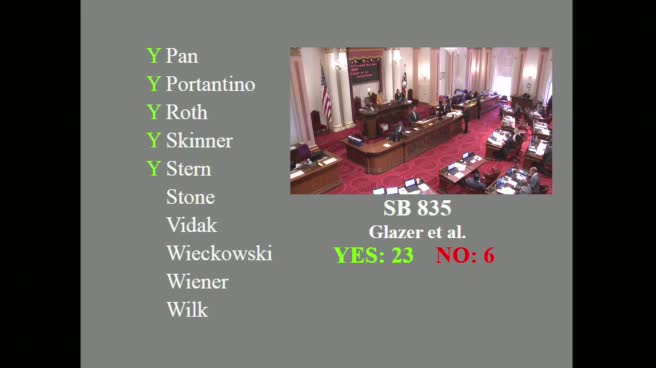 2MIN
Senate Floor
 4MIN
Assembly Floor
 1H
Assembly Standing Committee on Appropriations
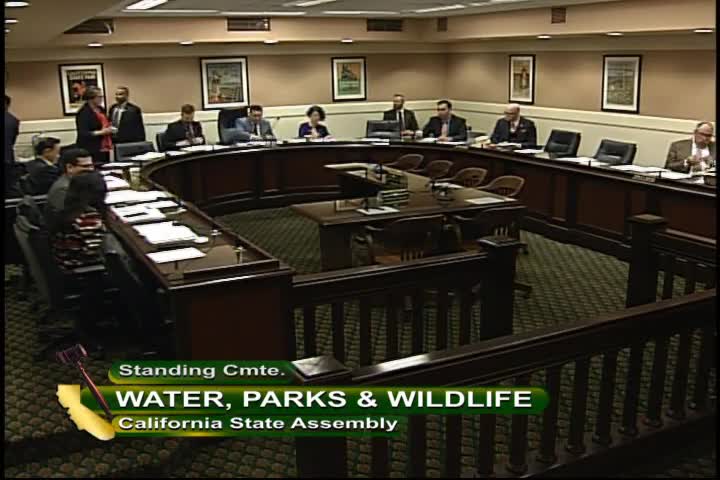 5MIN
Assembly Standing Committee on Water, Parks, and Wildlife
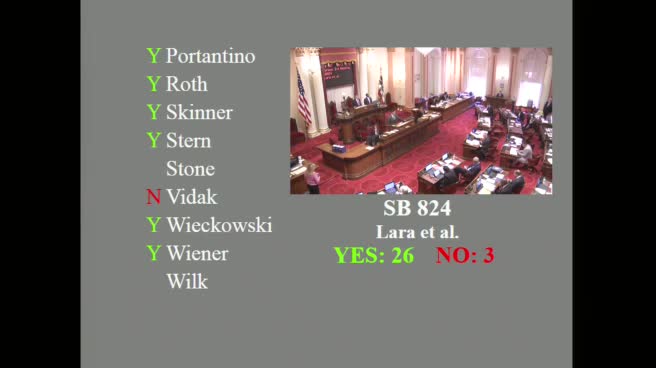 5MIN
Senate Floor
 7MIN
Senate Standing Committee on Natural Resources and Water
Bill Author





