SB 892: Lunar New Year.
- Session Year: 2017-2018
- House: Senate
- Latest Version Date: 2018-08-24
Existing law designates particular days each year as having special significance and encourages all public schools and educational institutions to observe those days and to conduct suitable commemorative exercises on those days. Existing law also requires the Governor to proclaim certain days each year for specified reasons.
This bill would require the Governor to annually proclaim a specified date as the Lunar New Year, would designate and set this date apart each year as a day having special significance, and would encourage all public schools and educational institutions to, on Lunar New Year, conduct exercises recognizing the traditions and cultural significance of the Lunar New Year, among other things.
The Legislature finds and declares all of the following:
(a)The Lunar New Year, a time of feasting and renewal of family and community ties, falls annually between January 21 and February 20 on the second new moon following the winter solstice, or the third new moon following the winter solstice should an intercalary month intervene.
(b)Lunar New Year is predominantly celebrated by millions of Asian and Pacific Islander Californians of Chinese, Korean, Singaporean, and Vietnamese descent.
(c)California is a major destination for tourists from a variety of Asian countries and the San Francisco Bay areas Lunar New Year celebrations, among other factors, make it the leading destination for Asian tourists in the entire United States of America.
(d)The celebration of Lunar New Year events and programming in communities throughout California illustrates the states rich cultural history and commitment to ethnic and cultural diversity.
(e)Many jurisdictions around California and the United States, including the City and County of San Francisco and the City of New York, have designated Lunar New Year as an official school holiday.
(f)The History-Social Science Framework for California Public Schools, Kindergarten Through Grade Twelve, adopted by the State Board of Education on July 14, 2016, highlighted Lunar New Year as a festival of special relevance in its Development of the Local Community: Change Over Time curriculum for third grade.
(g)The celebration of Lunar New Year holds a special meaning for the people of California and is of interest to students of all ages.
SEC. 2.Section 37222.19 is added to the Education Code, to read:37222.19.(a)The date corresponding with the second new moon following the winter solstice of each year, or the third new moon following the winter solstice should an intercalary month intervene, is designated and set apart as the Lunar New Year, a day having special significance pursuant to Section 37222.
(b)On the Lunar New Year, all public schools and educational institutions are encouraged to conduct exercises recognizing the traditions and cultural significance of the Lunar New Year, the contributions of Asian and Pacific Islander Californians to the state, and any local festivities and celebrations of the occasion.
(c)It is the intent of the Legislature that the exercises encouraged in this section be integrated into the regular school program and be conducted by the public school or educational institution within the amount of time otherwise budgeted for educational programs.
SEC. 3.Section 6730 is added to the Government Code, to read:6730.The Governor shall annually proclaim the date corresponding with the second new moon following the winter solstice, or the third new moon following the winter solstice should an intercalary month intervene, as the Lunar New Year.
The Legislature finds and declares all of the following:
(a)The Lunar New Year, a time of feasting and renewal of family and community ties, falls annually between January 21 and February 20 on the second new moon following the winter solstice solstice, or the third new moon following the winter solstice should an intercalary month intervene.
(b)Lunar New Year is predominantly celebrated by millions of Asian and Pacific Islander Californians of Chinese, Korean, Singaporean, and Vietnamese descent.
(c)California is a major destination for tourists from a variety of Asian countries and the San Francisco Bay Areas areas Lunar New Year celebrations, among other factors, make it the leading destination for Asian tourists in the entire United States of America.
(d)The celebration of Lunar New Year events and programming in communities throughout California illustrates the states rich cultural history and commitment to ethnic and cultural diversity.
(e)Many jurisdictions around California and the United States, including the City and County of San Francisco and the City of New York, have designated Lunar New Year as an official school holiday.
(f)The History-Social Science Framework for California Public Schools, Kindergarten Through Grade Twelve, adopted by the State Board of Education on July 14, 2016, highlighted Lunar New Year as a festival of special relevance in its Development of the Local Community: Change Over Time curriculum for third grade.
(g)The celebration of Lunar New Year holds a special meaning for the people of California and is of interest to students of all ages.
SEC. 2.Section 37222.19 is added to the Education Code, to read:37222.19.(a)The date corresponding with the second new moon following the winter solstice of each year, or the third new moon following the winter solstice should an intercalary month intervene, is designated and set apart as the Lunar New Year, a day having special significance pursuant to Section 37222.
(b)On the Lunar New Year, all public schools and educational institutions are encouraged to conduct exercises recognizing the traditions and cultural significance of the Lunar New Year, the contributions of Asian and Pacific Islander Californians to the state, and any local festivities and celebrations of the occasion.
(c)It is the intent of the Legislature that the exercises encouraged in this section be integrated into the regular school program and be conducted by the public school or educational institution within the amount of time otherwise budgeted for educational programs.
SEC. 3.Section 6728 6730 is added to the Government Code, to read:6728.6730.The Governor shall annually proclaim the date corresponding with the second new moon following the winter solstice, or the third new moon following the winter solstice should an intercalary month intervene, as the Lunar New Year.
The Legislature finds and declares all of the following:
(a)The Lunar New Year, a time of feasting and renewal of family and community ties, falls annually between January 21 and February 20 on the second new moon following the winter solstice or the third new moon following the winter solstice should an intercalary month intervene.
(b)Lunar New Year is predominantly celebrated by millions of Asian and Pacific Islander Californians of Chinese, Korean, Singaporean, and Vietnamese descent.
(c)California is a major destination for tourists from a variety of Asian countries and the San Francisco Bay Areas Lunar New Year celebrations, among other factors, make it the leading destination for Asian tourists in the entire United States of America.
(d)The celebration of Lunar New Year events and programming in communities throughout California illustrates the states rich cultural history and commitment to ethnic and cultural diversity.
(e)Many jurisdictions around California and the United States, including the City and County of San Francisco and the City of New York, have designated Lunar New Year as an official school holiday.
(f)The History-Social Science Framework for California Public Schools, Kindergarten Through Grade Twelve, adopted by the State Board of Education on July 14, 2016, highlighted Lunar New Year as a festival of special relevance in its Development of the Local Community: Change Over Time curriculum for third grade.
(g)The celebration of Lunar New Year holds a special meaning for the people of California and is of interest to students of all ages.
SEC. 2.Section 37222.19 is added to the Education Code, to read:37222.19.(a)The date corresponding with the second new moon following the winter solstice of each year, or the third new moon following the winter solstice should an intercalary month intervene, is designated and set apart as the Lunar New Year, a day having special significance pursuant to Section 37222.
(b)On the Lunar New Year, all public schools and educational institutions are encouraged to conduct exercises recognizing the traditions and cultural significance of the Lunar New Year, the contributions of Asian and Pacific Islander Californians to the state, and any local festivities and celebrations of the occasion.
(c)It is the intent of the Legislature that the exercises encouraged in this section be integrated into the regular school program and be conducted by the public school or educational institution within the amount of time otherwise budgeted for educational programs.
SEC. 3.Section 6728 is added to the Government Code, to read:6728.The Governor shall annually proclaim the date corresponding with the second new moon following the winter solstice, or the third new moon following the winter solstice should an intercalary month intervene, as the Lunar New Year.
The Legislature finds and declares all of the following:
(a)The Lunar New Year, a time of feasting and renewal of family and community ties, falls annually between January 21 and February 20 on the second new moon following the winter solstice or the third new moon following the winter solstice should an intercalary month intervene.
(b)Lunar New Year is predominantly celebrated by millions of Asian and Pacific Islander Californians of Chinese, Korean, Singaporean, and Vietnamese descent.
(c)California is a major destination for tourists from a variety of Asian countries and the San Francisco Bay Areas Lunar New Year celebrations, among other factors, make it the leading destination for Asian tourists in the entire United States of America.
(d)The celebration of Lunar New Year events and programming in communities throughout California illustrates the states rich cultural history and commitment to ethnic and cultural diversity.
(e)Many jurisdictions around California and the United States, including the City and County of San Francisco and the City of New York, have designated Lunar New Year as an official school holiday.
(f)The History-Social Science Framework for California Public Schools, Kindergarten Through Grade Twelve, adopted by the State Board of Education on July 14, 2016, highlighted Lunar New Year as a festival of special relevance in its Development of the Local Community: Change Over Time curriculum for third grade.
(g)The celebration of Lunar New Year holds a special meaning for the people of California and is of interest to students of all ages.
SEC. 2.Section 37222.19 is added to the Education Code, to read:37222.19.(a)The date corresponding with the second new moon following the winter solstice of each year, or the third new moon following the winter solstice should an intercalary month intervene, is designated and set apart as the Lunar New Year, a day having special significance pursuant to Section 37222.
(b)On the Lunar New Year, all public schools and educational institutions are encouraged to conduct exercises recognizing the traditions and cultural significance of the Lunar New Year, the contributions of Asian and Pacific Islander Californians to the state, and any local festivities and celebrations of the occasion.
(c)It is the intent of the Legislature that the exercises encouraged in this section be integrated into the regular school program and be conducted by the public school or educational institution within the amount otherwise budgeted for educational programs.
SEC. 3.Section 6728 is added to the Government Code, to read:6728.The Governor shall annually proclaim the date corresponding with the second new moon following the winter solstice, or the third new moon following the winter solstice should an intercalary month intervene, as the Lunar New Year.
|
Date
|
Status
|
|---|---|
| Aug 24, 2018 | Chaptered by Secretary of State. Chapter 199, Statutes of 2018. |
| Aug 24, 2018 | Approved by the Governor. |
| Aug 15, 2018 | Enrolled and presented to the Governor at 4 p.m. |
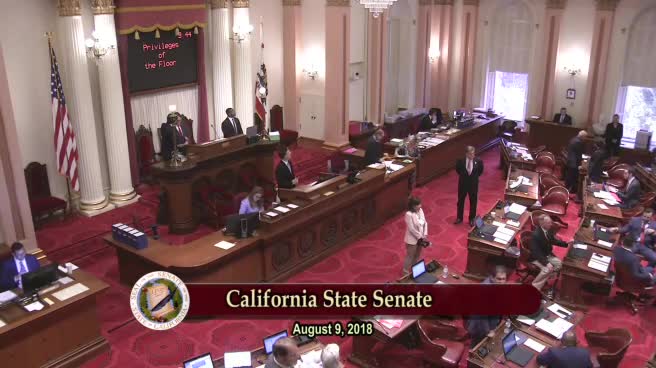
| Aug 9, 2018 | Assembly amendments concurred in. (Ayes 37. Noes 0.) Ordered to engrossing and enrolling. |
| Aug 6, 2018 | In Senate. Concurrence in Assembly amendments pending. |
| Aug 6, 2018 | Read third time. Passed. Ordered to the Senate. |
| Jul 3, 2018 | Read second time. Ordered to consent calendar. |
| Jul 2, 2018 | Read second time and amended. Ordered to second reading. |
| Jun 28, 2018 | From committee: Do pass as amended. Ordered to consent calendar. (Ayes 7. Noes 0.) (June 27). |
| Jun 21, 2018 | From committee: Do pass and re-refer to Com. on ED. with recommendation: To consent calendar. (Ayes 19. Noes 0.) (June 20). Re-referred to Com. on ED. |
| Apr 30, 2018 | Referred to Coms. on G.O. and ED. |
| Apr 23, 2018 | In Assembly. Read first time. Held at Desk. |
| Apr 23, 2018 | Read third time. Passed. (Ayes 38. Noes 0.) Ordered to the Assembly. |
| Apr 12, 2018 | Read second time. Ordered to consent calendar. |
| Apr 11, 2018 | From committee: Do pass. Ordered to consent calendar. (Ayes 6. Noes 0.) (April 11). |
| Mar 16, 2018 | Set for hearing April 11. |
| Mar 14, 2018 | From committee with author's amendments. Read second time and amended. Re-referred to Com. on ED. |
| Mar 13, 2018 | From committee: Do pass and re-refer to Com. on ED. with recommendation: To consent calendar. (Ayes 10. Noes 0.) (March 13). Re-referred to Com. on ED. |
| Feb 22, 2018 | Set for hearing March 13. |
| Jan 24, 2018 | Referred to Coms. on G.O. and ED. |
| Jan 12, 2018 | From printer. May be acted upon on or after February 11. |
| Jan 11, 2018 | Introduced. To Com. on RLS. for assignment. To print. |
|
Date
|
Description
|
Location
|
Votes
|
|
|---|---|---|---|---|
| Aug 9, 2018 | Unfinished Business SB892 Pan et al. Concurrence | Senate Floor |
Passed |
|
| Aug 6, 2018 | SB 892 Pan Consent Calendar Second Day | Assembly Floor |
Passed |
|
| Jun 27, 2018 | Do pass as amended. To Consent Calendar. | Assembly Standing Committee on Education |
Passed |
|
| Jun 20, 2018 | Do pass and be re-referred to the Committee on [Education] with recommendation: To Consent Calendar | Assembly Standing Committee on Governmental Organization |
Passed |
|
| Apr 23, 2018 | Consent Calendar SB892 | Senate Floor |
Passed |
|
| Apr 11, 2018 | Do pass and be ordered to the Consent Calendar | Senate Standing Committee on Education |
Passed |
|
| Mar 13, 2018 | Do pass, but first be re-referred to the Committee on [Education] with the recommendation: To Consent Calendar | Senate Standing Committee on Governmental Organization |
Passed |
This list shows positions taken on this bill by organizations on the date displayed, which is linked to the original source.
Positions by individuals are not included.
|
Organization
|
Position
|
Date
|
|---|---|---|
| California Asian Pacific Chamber Of Commerce | ** Support | Aug 8, 2018 |
| Chinese Chamber Of Commerce | ** Support | Aug 8, 2018 |
| Chinese Culture Center | ** Support | Aug 8, 2018 |
| Chinese Culture Foundation Of San Francisco | ** Support | Jun 25, 2018 |
| San Francisco Chamber of Commerce | ** Support | Apr 13, 2018 |
Office of Senate Floor Analyses (916) 651-1520 Fax: (916) 327-4478 | SB |
UNFINISHED BUSINESS
Bill No: SB 892
:
SENATE GOVERNMENTAL ORG. COMMITTEE: 10-0, 3/13/18
AYES: Dodd, Bradford, Cannella, Gaines, Galgiani, Glazer, Hill, Lara, Portantino, Vidak
NO VOTE RECORDED: Berryhill, Hueso
SENATE EDUCATION COMMITTEE: 6-0, 4/11/18
AYES: Allen, Wilk, Galgiani, Leyva, Pan, Vidak
SENATE FLOOR: 38-0, 4/23/18 (Consent)
AYES: Allen, Anderson, Atkins, Bates, Beall, Berryhill, Bradford, Cannella, De León, Dodd, Fuller, Gaines, Galgiani, Glazer, Hernandez, Hertzberg, Hill, Hueso, Jackson, Lara, Leyva, McGuire, Mitchell, Monning, Moorlach, Newman, Nguyen, Nielsen, Pan, Portantino, Roth, Skinner, Stern, Stone, Vidak, Wieckowski, Wiener, Wilk
NO VOTE RECORDED: Morrell
ASSEMBLY FLOOR: 75-0, 8/6/18 (Consent) - See last page for vote
DIGEST:
This bill requires the Governor to annually proclaim the day of Lunar New Year, which occurs between January 21 and February 20, and encourages all public schools and educational institutions to conduct exercises recognizing the traditions and cultural significance of the Lunar New Year.
Assembly Amendments
are technical and non-substantive.
ANALYSIS: Existing law requires the Governor to proclaim various days in honor of a person, status, or event. These days include:
- September 28th as “Cabrillo Day.”
- January 15th as “Dr. Martin Luther King, Jr., Day.”
- March 7th as “Arbor Day.”
- February 19th as “A Day of Remembrance: Japanese American Evacuation.”
- Fourth Friday in September as “Native American Day.”
- First Sunday in October as “Stepparents Day.”
- April 21st as “John Muir Day.”
- March 30th as “Welcome Home Vietnam Veterans Day.”
- December 7th as “Pearl Harbor Day.”
- March 31st as “Cesar Chavez Day.”
- Month of February as “Black History Month.”
- Third Saturday in June as “Juneteenth National Freedom Day: A Day of Observance.”
- April 24th as “California Day of Remembrance of the Armenian Genocide.”
- May 22nd as “Harvey Milk Day.”
- January 30th as “Fred Korematsu Day of Civil Liberties and the Constitution.”
- February 6th as “Ronald Reagan Day.”
- January 23rd as “Ed Roberts Day.”
- October 25th as “Larry Itliong Day.”
- First Friday in May as “Space Day.”
- The day of the astronomical Northward equinox, which usually occurs on March 20th or the following day as “Nowrūz Day.”
This bill:
- Requires the Governor to annually proclaim the date corresponding with the second new moon following the winter solstice, or the third new moon following the winter solstice, as the Lunar New Year.
- Encourages all public schools and educational institutions to conduct exercises recognizing the traditions and cultural significance of the Lunar New Year, the contributions of Asian and Pacific Islander (API) Californians to the state, and any local festivities and celebrations of the occasion.
- Makes legislative findings and declarations pertaining to the significance of the Lunar New Year.
Background
Purpose of the bill. According to the author, “although Lunar New Year has been established since the mid-1800s, it still has not received formal state-wide recognition. SB 892 is a big step forward in recognizing the importance of the contributions, such as Lunar New Year, made by API communities. As the most important holiday to many APIs, SB 892 establishes Lunar New Year as a day of great significance to the state and encourages all schools to teach about its values and the many impacts made by API communities.”
Lunar New Year. Lunar New Year represents the most significant and festive holiday for many of the more than 6 million API Californians. The annual date of the holiday follows the traditional Chinese lunisolar calendar, falling between January 21 and February 20, on the second new moon after the winter solstice or the third new moon after the winter solstice when an intercalary, or “leap”, month intervenes.
Many schools throughout the state organize related activities, and at least one school district, the San Francisco Unified School District, closes its schools in observance of the Lunar New Year. This bill encourages, but does not require, public schools and educational institutions to conduct exercises recognizing the traditions and cultural significance of the Lunar New Year, the contributions of API Californians to the state, and any local festivities and celebrations of the occasion.
Related/Prior Legislation
AB 2644 (Reyes, Chapter 130, Statutes of 2018) required the Governor to annually proclaim April 10 as Dolores Huerta Day.
AB 2969 (Low, Chapter 105, Statutes of 2018) required the Governor to annually proclaim the month of June as Lesbian, Gay, Bisexual, and Transgender (LGBT) Pride Month.
AB 2598 (Ting, 2016) was substantially similar to this bill, and would have required the Governor to annually proclaim the date corresponding with the start of the lunar calendar as Lunar New Year’s Day. The bill would have encouraged public schools and educational institutions to observe the date by conducting culturally appropriate activities and exercises. (Never heard in Senate Education Committee)
SB 616 (Huff, 2015) was substantially similar to this bill, and would have required the Governor, each year, to designate the date corresponding with the start of the Asian lunar calendar as Asian Lunar New Year’s Day. The bill would have encouraged all public schools and educational institutions to conduct exercises observing the Asian Lunar New Year with appropriate activities and programs. (Failed passage in Assembly Education Committee)
FISCAL EFFECT: Appropriation: Fiscal Com.: Local:
California Asian Pacific Chamber of Commerce
Chinese Chamber of Commerce
Chinese Culture Center
None received
ARGUMENTS IN SUPPORT: The California Asian Pacific Chamber of Commerce writes, “Lunar New Year represents a very special time within the Asian American community, with millions of Californians of Asian descent celebrating the holiday every year. The Lunar New Year is a time for families to come together to celebrate the arrival of a new year in hopes of prosperity and success. This holiday is one of the most important cultural identifiers of the Asian American community.”
ASSEMBLY FLOOR: 75-0, 8/6/18
AYES: Acosta, Aguiar-Curry, Travis Allen, Arambula, Baker, Berman, Bigelow, Bloom, Bonta, Brough, Burke, Caballero, Calderon, Cervantes, Chau, Chávez, Chen, Chiu, Choi, Chu, Cooley, Cooper, Cunningham, Dahle, Daly, Eggman, Flora, Fong, Frazier, Friedman, Gabriel, Gallagher, Cristina Garcia, Eduardo Garcia, Gipson, Gloria, Gonzalez Fletcher, Gray, Grayson, Harper, Holden, Irwin, Jones-Sawyer, Kalra, Kamlager-Dove, Kiley, Lackey, Levine, Limón, Low, Maienschein, Mathis, Mayes, McCarty, Medina, Muratsuchi, Nazarian, Obernolte, O'Donnell, Patterson, Quirk, Quirk-Silva, Reyes, Rodriguez, Rubio, Salas, Santiago, Steinorth, Mark Stone, Thurmond, Ting, Voepel, Waldron, Weber, Wood
NO VOTE RECORDED: Carrillo, Melendez, Mullin, Rivas, Rendon
8/8/18 10:21:44
**** END ****
Date of Hearing: June 27, 2018
ASSEMBLY COMMITTEE ON EDUCATION
Patrick O'Donnell, Chair
SBPCA Bill Id:SB 892
Author:(Pan) – As Amended Ver:March 14, 2018
[Note: This bill was double referred to the Committee on Governmental Organization and was be heard by that Committee with regard to issues in its jurisdiction.]
SENATE VOTE: 38-0
SUBJECT: Lunar New Year
SUMMARY: Requires the Governor to annually recognize the Lunar New Year and encourages all public schools and educational institutions to conduct exercises recognizing the traditions and cultural significance of the Lunar New Year, the contributions of Asian and Pacific Islander Californians to the state, and any local festivities and celebrations of the occasion. Specifically, this bill:
- States that the date corresponding with the second new moon following the winter solstice of each year, or the third new moon following the winter solstice should an intercalary month intervene, is designated and set apart as the Lunar New Year, a day having special significance.
- Encourages all public schools and educational institutions to conduct exercises recognizing the traditions and cultural significance of the Lunar New Year, the contributions of Asian and Pacific Islander Californians to the state, and any local festivities and celebrations of the occasion.
- States the intent of the Legislature that the exercises encouraged in this section be integrated into the regular school program and be conducted by the public school or educational institution within the amount of time otherwise budgeted for educational programs.
- Requires the Governor shall annually proclaim the date corresponding with the second new moon following the winter solstice, or the third new moon following the winter solstice should an intercalary month intervene, as the Lunar New Year.
EXISTING LAW:
- Designates a number of days as days of special significance to the public schools and educational institutions, and encourages them to observe that day and to conduct suitable commemorative exercises. Those recognizing individuals are John Muir Day (April 21), Harvey Milk Day (May 22), Fred Korematsu Day (January 30), Ronald Reagan Day (February 6), and Ed Roberts Day (January 23).
- Requires public schools to close on a number of holidays, including January 1, Dr. Martin Luther King, Jr. Day, Lincoln Day, Washington Day, Memorial Day, July 4, Labor Day, Veterans Day, Thanksgiving Day, December 25, all days appointed by the Governor or the President of the United States for a public fast, thanksgiving or holiday, and any other day designated as a holiday by the governing board of the school district.
- Requires, for some specified holidays for which schools are required to close (Dr. Martin Luther King Day, Lincoln Day, Washington Day), that schools conduct exercises in commemoration.
- Authorizes public schools to close on two other days if the governing board, pursuant to a collective bargaining agreement, agrees to close schools for that purpose. These days are César Chávez (March 31) and Native American Day (fourth Friday in September).
- Requires public schools to remain open on specified days (unless otherwise closed to mark a holiday by decision of the governing board), and to celebrate the significance of those days with appropriate commemorative exercises. These days are the anniversary of the adoption of the U.S. Constitution, the birthdays of Luther Burbank (March 7) and Susan B. Anthony (February 15), and the death of Crispus Attucks (March 5).
- Requires the State Board of Education to ensure that state curriculum on César Chávez and the history of the farm labor movement in the United States include information on the role of immigrants, including Filipino Americans, in that movement.
- Designates October 25th of each year as Larry Itliong Day, a day of special significance, and requires the Governor to annually proclaim October 25th of each year as Larry Itliong Day. Encourages all public schools and educational institutions to observe this day and conduct exercises remembering the life and contributions of Larry Itliong.
FISCAL EFFECT: This bill is keyed non-fiscal.
COMMENTS:
Need for the bill. The author’s office states, “Although Lunar New Year was established in the mid-1800s, it still has not received formal state-wide recognition. SB 892 is a big step forward in recognizing the importance of the contributions, such as Lunar New Year, made by API communities. As the most important holiday to many in Asian and Pacific Islander (API) communities in California, SB 892 establishes Lunar New Year as a day of great significance to the state and encourages all schools to teach about its values and the many impacts made by API communities.”
Lunar New Year’s Day. The Lunar New Year typically occurs in late January or early February and is a significant cultural event for Chinese, Korean, Vietnamese, and some other Asian ethnic groups. The San Francisco Unified School District closes its schools in observance of the lunar new year, and in 2017 the New York City Department of Education did the same. This bill encourages, but does not require, public schools and educational institutions to conduct exercises celebrating the occasion.
Prior legislation. AB 2598 (Ting) of the 2015-16 Session would have encouraged all public schools and educational institutions to conduct culturally appropriate activities and exercises observing the Lunar New Year and requires the Governor to annually proclaim the date corresponding with the start of the lunar calendar as Lunar New Year’s Day.
SB 616 (Huff and Nguyen) of the 2015-16 Session would have required the Governor, each year, to designate the date corresponding with the start of the Asian lunar calendar as Asian Lunar New Year’s Day, a day having special significance and encourage all public schools and educational institutions to conduct exercises observing the Asian Lunar New Year with appropriate activities and programs.
Recommended amendment. Staff recommends an amendment to avoid chaptering out another bill.
REGISTERED SUPPORT / OPPOSITION:
Support
California Asian Pacific Chamber of Commerce
Chinese Chamber of Commerce
Chinese Culture Foundation of San Francisco
Opposition
None on file
Analysis Prepared by: Tanya Lieberman / ED. / (916) 319-2087
Date of Hearing: June 20, 2018
ASSEMBLY COMMITTEE ON GOVERNMENTAL ORGANIZATION
Adam Gray, Chair
SBPCA Bill Id:SB 892
Author:(Pan) – As Amended Ver:March 14, 2018
SENATE VOTE: 38-0
SUBJECT: Lunar New Year
SUMMARY: Requires the Governor to annually proclaim the day of Lunar New Year, which occurs between January 21 and February 20. Specifically, this bill:
1) Requires the Governor to annually proclaim the date corresponding with the second new moon following the winter solstice, or the third new moon following the winter solstice, as the Lunar New Year.
2) Encourages all public schools and educational institutions to conduct exercises recognizing the traditions and cultural significance of the Lunar New Year, the contributions of Asian and Pacific Islander (API) Californians to the state, and any local festivities and celebrations of the occasion.
3) Makes legislative findings and declarations pertaining to the significance of the Lunar New Year.
EXISTING LAW:
1) Requires the Governor to Proclaim the following days or months each year as follows:
a) September 28 as “Cabrillo Day.”
b) January 15 as “Dr. Martin Luther King, Jr., Day.”
c) March 7 as “Arbor Day.”
d) February 19 as “A Day of Remembrance: Japanese American Evacuation.”
e) Fourth Friday in September as “Native American Day.”
f) First Sunday in October as “Stepparents Day.”
g) April 21 as “John Muir Day.”
h) March 30 as “Welcome Home Vietnam Veterans Day.”
i) December 7 as “Pearl Harbor Day.”
j) March 31 as “Cesar Chavez Day.”
k) Month of February as “Black History Month.”
l) Third Saturday in June as “Juneteenth National Freedom Day: A Day of Observance.”
m) April 24 as “California Day of Remembrance of the Armenian Genocide.”
n) May 22 as “Harvey Milk Day.”
o) January 30 as “Fred Korematsu Day of Civil Liberties and the Constitution.”
p) February 6 as “Ronald Reagan Day.”
q) January 23 as “Ed Roberts Day.”
r) October 25 as “Larry Itliong Day.”
s) First Friday in May as “Space Day”
t) March 20, or the following day, as “Nowrūz Day”.
FISCAL EFFECT: This bill is keyed non-fiscal by Legislative Counsel.
COMMENTS:
Purpose of the bill: According to the author, “although Lunar New Year has been established since the mid-1800s, it still has not received formal state-wide recognition. SB 892 is a big step forward in recognizing the importance of the contributions, such as Lunar New Year, made by API communities. As the most important holiday to many APIs, SB 892 establishes Lunar New Year as a day of great significance to the state and encourages all schools to teach about its values and the many impacts made by API communities.”
Lunar New Year: Lunar New Year represents the most significant and festive holiday for many of the more than 6 million API Californians. The annual date of the holiday follows the traditional Chinese lunisolar calendar, falling between January 21 and February 20, on the second new moon after the winter solstice or the third new moon after the winter solstice when an intercalary, or “leap”, month intervenes.
Many schools throughout the state organize related activities, and at least one school district, the San Francisco Unified School District, closes its schools in observance of the Lunar New Year. This bill encourages, but does not require, public schools and educational institutions to conduct exercises recognizing the traditions and cultural significance of the Lunar New Year, the contributions of API Californians to the state, and any local festivities and celebrations of the occasion.
Support: The California Asian Pacific Chamber of Commerce writes, “the Lunar New Year represents a very special time within the Asian American community, with millions of Californians of Asian descent celebrating the holiday every year. The Lunar New Year is a time for families to come together to celebrate the arrival of a new year in hopes of prosperity and success. This holiday is one of the most important cultural identifiers of the Asian American community.”
Prior/Related Legislation: AB 2969 (Low) of 2017-2018 Legislative Session. Would require the Governor annually to proclaim the month of June as LGBT Pride Month. (Pending on Senate Third Reading)
AB 88 (Nazarian), Chapter 30, Statutes of 2017. Requires the Governor to annually proclaim March 20, or the following day as Nowrūz Day.
AB 7 (Bonta), Chapter 29, Statutes of 2015. Requires the Governor to annually proclaim October 25 as Larry Itliong Day.
AB 1775 (Furutani), Chapter 241, Statutes of 2010. Requires the Governor to annually proclaim January 30 as Fred Korematsu Day of Civil Liberties and the Constitution.
SB 944 (Runner), Chapter 114, Statutes of 2010. Requires the Governor to annually proclaim February 6 as Ronald Reagan Day.
SB 1256 (Hancock), Chapter 115, 2010. Requires the Governor to annually proclaim January 23 as Ed Roberts Day.
SB 572 (Leno), Chapter 626, Statutes of 2009. Requires the Governor to annually proclaim May 22 as Harvey Milk Day.
AB 717 (Cook), Chapter 158, Statutes of 2009. Requires the Governor to annually proclaim March 30 as Welcome Home Vietnam Veterans Day.
REGISTERED SUPPORT / OPPOSITION:
Support
California Asian Pacific Chamber of Commerce (CalAsian)
Chinese Chamber of Commerce
Chinese Culture Center
Opposition
None on file.
Analysis Prepared by: Kenton Stanhope / G.O. / (916) 319-2531
Date of Hearing: June 13, 2018
ASSEMBLY COMMITTEE ON EDUCATION
Patrick O'Donnell, Chair
SBPCA Bill Id:SB 892
Author:(Pan) – As Amended Ver:March 14, 2018
SENATE VOTE: 38-0
SUBJECT: Lunar New Year
SUMMARY: Requires the Governor to annually recognize the Lunar New Year and encourages all public schools and educational institutions to conduct exercises recognizing the traditions and cultural significance of the Lunar New Year, the contributions of Asian and Pacific Islander Californians to the state, and any local festivities and celebrations of the occasion. Specifically, this bill:
- States that the date corresponding with the second new moon following the winter solstice of each year, or the third new moon following the winter solstice should an intercalary month intervene, is designated and set apart as the Lunar New Year, a day having special significance.
- Encourages all public schools and educational institutions to conduct exercises recognizing the traditions and cultural significance of the Lunar New Year, the contributions of Asian and Pacific Islander Californians to the state, and any local festivities and celebrations of the occasion.
- States the intent of the Legislature that the exercises encouraged in this section be integrated into the regular school program and be conducted by the public school or educational institution within the amount of time otherwise budgeted for educational programs.
- Requires the Governor shall annually proclaim the date corresponding with the second new moon following the winter solstice, or the third new moon following the winter solstice should an intercalary month intervene, as the Lunar New Year.
EXISTING LAW:
- Designates a number of days as days of special significance to the public schools and educational institutions, and encourages them to observe that day and to conduct suitable commemorative exercises. Those recognizing individuals are John Muir Day (April 21), Harvey Milk Day (May 22), Fred Korematsu Day (January 30), Ronald Reagan Day (February 6), and Ed Roberts Day (January 23).
- Requires public schools to close on a number of holidays, including January 1, Dr. Martin Luther King, Jr. Day, Lincoln Day, Washington Day, Memorial Day, July 4, Labor Day, Veterans Day, Thanksgiving Day, December 25, all days appointed by the Governor or the President of the United States for a public fast, thanksgiving or holiday, and any other day designated as a holiday by the governing board of the school district.
- Requires, for some specified holidays for which schools are required to close (Dr. Martin Luther King Day, Lincoln Day, Washington Day), that schools conduct exercises in commemoration.
- Authorizes public schools to close on two other days if the governing board, pursuant to a collective bargaining agreement, agrees to close schools for that purpose. These days are César Chávez (March 31) and Native American Day (fourth Friday in September).
- Requires public schools to remain open on specified days (unless otherwise closed to mark a holiday by decision of the governing board), and to celebrate the significance of those days with appropriate commemorative exercises. These days are the anniversary of the adoption of the U.S. Constitution, the birthdays of Luther Burbank (March 7) and Susan B. Anthony (February 15), and the death of Crispus Attucks (March 5).
- Requires the State Board of Education to ensure that state curriculum on César Chávez and the history of the farm labor movement in the United States include information on the role of immigrants, including Filipino Americans, in that movement.
- Designates October 25th of each year as Larry Itliong Day, a day of special significance, and requires the Governor to annually proclaim October 25th of each year as Larry Itliong Day. Encourages all public schools and educational institutions to observe this day and conduct exercises remembering the life and contributions of Larry Itliong.
FISCAL EFFECT: This bill is keyed non-fiscal.
COMMENTS:
Need for the bill. The author’s office states, “Although Lunar New Year was established in the mid-1800s, it still has not received formal state-wide recognition. SB 892 is a big step forward in recognizing the importance of the contributions, such as Lunar New Year, made by API communities. As the most important holiday to many in Asian and Pacific Islander (API) communities in California, SB 892 establishes Lunar New Year as a day of great significance to the state and encourages all schools to teach about its values and the many impacts made by API communities.”
Lunar New Year’s Day. The Lunar New Year typically occurs in late January or early February and is a significant cultural event for Chinese, Korean, Vietnamese, and some other Asian ethnic groups. The San Francisco Unified School District closes its schools in observance of the lunar new year, and in 2017 the New York City Department of Education did the same. This bill encourages, but does not require, public schools and educational institutions to conduct exercises celebrating the occasion.
Prior legislation. AB 2598 (Ting) of the 2015-16 Session would have encouraged all public schools and educational institutions to conduct culturally appropriate activities and exercises observing the Lunar New Year and requires the Governor to annually proclaim the date corresponding with the start of the lunar calendar as Lunar New Year’s Day.
SB 616 (Huff and Nguyen) of the 2015-16 Session would have required the Governor, each year, to designate the date corresponding with the start of the Asian lunar calendar as Asian Lunar New Year’s Day, a day having special significance and encourage all public schools and educational institutions to conduct exercises observing the Asian Lunar New Year with appropriate activities and programs.
REGISTERED SUPPORT / OPPOSITION:
Support
California Asian Pacific Chamber of Commerce
Chinese Chamber of Commerce
Chinese Culture Foundation of San Francisco
Opposition
None on file
Analysis Prepared by: Tanya Lieberman / ED. / (916) 319-2087
Office of Senate Floor Analyses (916) 651-1520 Fax: (916) 327-4478 | SB |
CONSENT
Bill No: SB 892
:
SENATE GOVERNMENTAL ORG. COMMITTEE: 10-0, 3/13/18
AYES: Dodd, Bradford, Cannella, Gaines, Galgiani, Glazer, Hill, Lara, Portantino, Vidak
NO VOTE RECORDED: Berryhill, Hueso
SENATE EDUCATION COMMITTEE: 6-0, 4/11/18
AYES: Allen, Wilk, Galgiani, Leyva, Pan, Vidak
DIGEST:
This bill requires the Governor to annually proclaim the day of Lunar New Year, which occurs between January 21 and February 20, and encourages all public schools and educational institutions to conduct exercises recognizing the traditions and cultural significance of the Lunar New Year.
Existing law requires the Governor to proclaim various days in honor of a person, status, or event. These days include:
- September 28th as “Cabrillo Day.”
- January 15th as “Dr. Martin Luther King, Jr., Day.”
- March 7th as “Arbor Day.”
- February 19th as “A Day of Remembrance: Japanese American Evacuation.”
- Fourth Friday in September as “Native American Day.”
- First Sunday in October as “Stepparents Day.”
- April 21st as “John Muir Day.”
- March 30th as “Welcome Home Vietnam Veterans Day.”
- December 7th as “Pearl Harbor Day.”
- March 31st as “Cesar Chavez Day.”
- Month of February as “Black History Month.”
- Third Saturday in June as “Juneteenth National Freedom Day: A Day of Observance.”
- April 24th as “California Day of Remembrance of the Armenian Genocide.”
- May 22nd as “Harvey Milk Day.”
- January 30th as “Fred Korematsu Day of Civil Liberties and the Constitution.”
- February 6th as “Ronald Reagan Day.”
- January 23rd as “Ed Roberts Day.”
- October 25th as “Larry Itliong Day.”
- First Friday in May as “Space Day.”
- The day of the astronomical Northward equinox, which usually occurs on March 20th or the following day as “Nowrūz Day.”
This bill:
- Requires the Governor to annually proclaim the date corresponding with the second new moon following the winter solstice, or the third new moon following the winter solstice, as the Lunar New Year.
- Encourages all public schools and educational institutions to conduct exercises recognizing the traditions and cultural significance of the Lunar New Year, the contributions of Asian and Pacific Islander (API) Californians to the state, and any local festivities and celebrations of the occasion.
- Makes legislative findings and declarations pertaining to the significance of the Lunar New Year.
Background
Purpose of the bill. According to the author, “although Lunar New Year has been established since the mid-1800s, it still has not received formal state-wide recognition. SB 892 is a big step forward in recognizing the importance of the contributions, such as Lunar New Year, made by API communities. As the most important holiday to many APIs, SB 892 establishes Lunar New Year as a day of great significance to the state and encourages all schools to teach about its values and the many impacts made by API communities.”
Lunar New Year. Lunar New Year represents the most significant and festive holiday for many of the more than 6 million API Californians. The annual date of the holiday follows the traditional Chinese lunisolar calendar, falling between January 21 and February 20, on the second new moon after the winter solstice or the third new moon after the winter solstice when an intercalary, or “leap”, month intervenes.
Many schools throughout the state organize related activities, and at least one school district, the San Francisco Unified School District, closes its schools in observance of the Lunar New Year. This bill encourages, but does not require, public schools and educational institutions to conduct exercises recognizing the traditions and cultural significance of the Lunar New Year, the contributions of API Californians to the state, and any local festivities and celebrations of the occasion.
Related/Prior Legislation
ACR 168 (Chu, 2018) recognizes February 16, 2018, as the beginning of the Lunar New Year, the Year of the Dog, and extends best wishes for a peaceful and prosperous Lunar New Year to all Californians. (Pending in Senate Rules Committee)
AB 88 (Nazarian, Chapter 30, Statutes of 2017) required the Governor to annually proclaim the day of the astronomical Northward equinox, which usually occurs on March 20 or the following day, as Nowrūz Day.
AB 2598 (Ting, 2016) was substantially similar to this bill, and would have required the Governor to annually proclaim the date corresponding with the start of the lunar calendar as Lunar New Year’s Day. The bill would have encouraged public schools and educational institutions to observe the date by conducting culturally appropriate activities and exercises. (Never heard in Senate Education Committee)
SB 616 (Huff, 2015) was substantially similar to this bill, and would have required the Governor, each year, to designate the date corresponding with the start of the Asian lunar calendar as Asian Lunar New Year’s Day. The bill would have encouraged all public schools and educational institutions to conduct exercises observing the Asian Lunar New Year with appropriate activities and programs. (Failed passage in Assembly Education Committee)
FISCAL EFFECT: Appropriation: Fiscal Com.: Local:
California Asian Pacific Chamber of Commerce
Chinese Culture Center
San Francisco Chamber of Commerce
OPPOSITION: (Verified 4/12/18)
None received
ARGUMENTS IN SUPPORT: The California Asian Pacific Chamber of Commerce writes, “Lunar New Year represents a very special time within the Asian American community, with millions of Californians of Asian descent celebrating the holiday every year. The Lunar New Year is a time for families to come together to celebrate the arrival of a new year in hopes of prosperity and success. This holiday is one of the most important cultural identifiers of the Asian American community.”
4/13/18 9:56:20
**** END ****
SENATE COMMITTEE ON EDUCATION
Senator Benjamin Allen, Chair
2017 - 2018 Regular
Bill No: SB 892 Hearing Date: April 11, 2018
Author: | |||
Version: | March 14, 2018 | ||
Urgency: | No | Fiscal: | No |
Consultant: | Brandon Darnell | ||
Subject: Lunar New Year
SUMMARY
This bill requires the Governor to annually proclaim a specific date as the Lunar New Year, sets that day apart as a day having special significance, and encourages all public schools and educational institutions to observe that day and to conduct suitable commemorative exercises.
BACKGROUND
Existing law:
1) Encourages all public schools and educational institutions are to observe each day designated and set apart as a day having special significance and to conduct suitable commemorative exercises. (Education Code § 37222)
2) States the intent of the Legislature that the exercises encouraged for each day having special significance be integrated into the regular school program, and be conducted by the school or institution within the amount of time otherwise budgeted for educational programs. (EC § 37222)
3) Designates and sets apart the following days as days of special significance for purposes of encouraging all public schools and educational institutions to observe and conduct suitable commemorative exercises:
a January 23rd as “Ed Roberts Day.” (EC § 37222.17)
b) January 30th as “Fred Korematsu Day of Civil Liberties and the Constitution.” (EC § 37222.15)
c) February 6th as “Ronald Reagan Day.” (EC § 37222.16)
d) March 30th as “Welcome Home Vietnam Veterans Day.” (EC § 37222.14)
e) April 6th as “California Poppy Day.” (EC § 37222.12)
f) April 21st as “John Muir Day.” (EC § 37222.11)
g) The second Wednesday of May as “the Day of the Teacher.”
(EC § 37222.10
h) May 22nd as “Harvey Milk Day.” (EC § 37222.13)
i) October 25th as “Larry Itliong Day.” (EC § 37222.18)
4) Requires the Governor to annually proclaim each of the following:
a) January 15th as “Dr. Martin Luther King, Jr., Day.” (GC § 6709)
b) January 23rd as “Ed Roberts Day.” (GC § 6724)
c) January 30th as “Fred Korematsu Day of Civil Liberties and the Constitution.” (GC § 6722)
d) The month of February as “Black History Month.” (GC § 6718)
e) February 6th as “Ronald Reagan Day.” (GC § 6723)
f) February 19th as “A Day of Remembrance: Japanese American Evacuation.” (GC § 6711)
g) March 7th as “Arbor Day.” (GC § 6710)
h) The day of the astronomical Northward equinox, which usually occurs on March 20th or the following day, as “Nowrūz Day.” (GC § 6727)
i) March 30th as “Welcome Home Vietnam Veterans Day.” (GC § 6715)
j) March 31st as “Cesar Chavez Day.” (GC § 6717)
k) April 21st as “John Muir Day.” (GC § 6714)
l) April 24th as “California Day of Remembrance of the Armenian Genocide.” (GC § 6720)
m) The first Friday of May as “Space Day.” (GC § 6726)
n) May 22nd as “Harvey Milk Day.” (GC § 6721)
o) Third Saturday in June as “Juneteenth National Freedom Day: A Day of Observance.” (GC § 6719)
p) Fourth Friday in September as “Native American Day.” (GC § 6712)
q) September 28th as “Cabrillo Day.” (Government Code § 6708)
r) First Sunday in October as “Stepparents Day.” (GC § 6713)
s) October 25th as “Larry Itliong Day.” (GC § 6725)
t) December 7th as “Pearl Harbor Day.” (GC § 6716)
ANALYSIS
This bill requires the Governor to annually proclaim a specific date as the Lunar New Year, designates and sets that day apart as a day having special significance, and encourages all public schools and educational institutions to observe that day and to conduct suitable commemorative exercises. Specifically, this bill:
1) States Legislative findings and declarations relating to the Lunar New Year.
2) Designates and sets apart the date corresponding with the second new moon following the winter solstice of each year, or the third new moon following the winter solstice should an intercalary month intervene, as the Lunar New Year, a day having special significance.
3) Encourages all public schools and educational institutions to conduct exercises on the Lunar New Year recognizing the traditions and cultural significance of the Lunar New Year, the contributions of Asian and Pacific Islander Californians to the state, and any local festivities and celebrations of the occasion.
4) States the intent of the Legislature that the exercises be integrated into the regular school program and be conducted by the public school or educational institution within the amount of time otherwise budgeted for educational programs.
5) Requires the Governor to annually proclaim the date corresponding with the second new moon following the winter solstice, or the third new moon following the winter solstice should an intercalary month intervene, as the Lunar New Year.
STAFF COMMENTS
- Need for the bill. According to the author’s office, “Although Lunar New Year has been established since the mid-1800s, it still has not received formal statewide recognition. SB 892 is a big step forward in recognizing the importance of the contributions, such as Lunar New Year, made by Asian and Pacific Islander (API) communities. As the most important holiday to many APIs, SB 892 establishes Lunar New Year as a day of great significance to the state and encourages all schools to teach about its values and the many impacts made by API communities.”
- Lunar New Year. Lunar New Year traditionally occurs in late January or early February and is one of the most significant cultural holidays for Chinese, Korean, Vietnamese, and other Asian ethnic groups to welcome the new year. According to the author’s office, “Each culture puts their own unique twists on the festivities but it is generally a time for families and friends to eat traditional foods, reflect on the past, and prepare for the year.”
With Asian-American communities in all regions across the state, the holiday is a popular annual celebration in California. As such, many schools organize related activities and at least one California school district, San Francisco Unified, observes the tradition by closing its schools for the day. Additionally, the Lunar New Year is an official holiday in the City and County of San Francisco. In fact, the San Francisco Chinese New Year Festival and Parade, which dates back to 1858, had approximately 1 million attendees this year.
3) These are discretionary activities. The bill encourages, but does not require, all public schools and educational institutions to conduct exercises on the Lunar New Year recognizing the traditions and cultural significance of the Lunar New Year, the contributions of Asian and Pacific Islander Californians to the state, and any local festivities and celebrations of the occasion.
The encouraged activities are similar to other activities that are encouraged for other days of special significance in the Education Code. For example, on John Muir Day, all public schools and educational institutions are encouraged to conduct exercises “stressing the importance that an ecologically sound natural environment plays in the quality of life for all of us, and emphasizing John Muir’s significant contributions to the fostering of that awareness and the indelible mark he left on the State of California,” and on Ed Roberts Day, all public schools and educational institutions are encouraged to conduct exercises “remembering the life of Ed Roberts, recognizing his accomplishments as well as the accomplishments of other Californians with disabilities, and familiarizing pupils with the contributions that Ed Roberts and other Californians with disabilities have made to this state.”
Additionally, the most recently adopted History—Social science Framework for California Public Schools, Kindergarten Through Grade Twelve (https://www.cde.ca.gov/ci/hs/cf/documents/hssframeworkwhole.pdf), which was adopted by the State Board of Education on July 14, 2016, recognizes the cultural significance of Lunar New Year. In a section about the development of local communities over time in California, it suggests that students may compare how Asian Lunar New Year is celebrated in their local communities and how it connects people today to traditions from the past” and that these types of classroom discussions and activities might help “build a greater sense of community and understanding.”
4) Related legislation. ACR 168 (Chu, 2018) recognizes February 16, 2018, as the beginning of the Lunar New Year, the Year of the Dog, and extends best wishes for a peaceful and prosperous Lunar New Year to all Californians. ACR 168 is pending in the Senate Rules Committee.
5) Previous legislation. ACR 4 (Ting, Resolution Chapter 7, Statutes of 2017) recognized January 28, 2017, as the beginning of the Lunar New Year, the Year of the Rooster, and extended best wishes for a peaceful and prosperous Lunar New Year to all Californians.
SCR 13 (Pan, Resolution Chapter 11, Statutes of 2017) recognized January 28, 2017, as the beginning of the Lunar New Year, the Year of the Rooster, and extended best wishes for a peaceful and prosperous Lunar New Year to all Californians.
AB 88 (Nazarian, Chapter 30, Statutes of 2017) required the Governor to annually proclaim the day of the astronomical Northward equinox, which usually occurs on March 20 or the following day, as Nowrūz Day.
AB 2598 (Ting, 2016) was substantially similar to this bill and SB 616 (Huff, 2015) and would have required the Governor to annually proclaim the date corresponding with the start of the lunar calendar as Lunar New Year’s Day and would have encouraged public schools and educational institutions to observe the date by conducting culturally appropriate activities and exercises. AB 2598 was initially set but ultimately not heard in this committee.
SB 1138 (Hueso, Chapter 196, Statutes of 2016), among other things, required the Governor to proclaim the first Friday in May of each year as Space Day.
AB 7 (Bonta, Chapter 29, Statutes of 2015), among other things, required the Governor to annually proclaim October 25 as Larry Itliong Day.
SB 616 (Huff, 2015) was substantially similar to this bill and would have required the Governor, each year, to designate the date corresponding with the start of the Asian lunar calendar as Asian Lunar New Year’s Day and would have encouraged all public schools and educational institutions to conduct exercises observing the Asian Lunar New Year with appropriate activities and programs. SB 616 failed passage in the Assembly Education Committee.
SUPPORT
California Asian Pacific Chamber of Commerce
Chinese Chamber of Commerce
Chinese Culture Foundation of San Francisco
OPPOSITION
None received
-- END --
SENATE COMMITTEE ON GOVERNMENTAL ORGANIZATION
Senator Bill Dodd
Chair
2017 - 2018 Regular
Bill No: SB Hearing Date: 3/13/18
Author: | Pan, et al. | ||
Version: | Introduced | ||
Urgency: | Fiscal: | ||
Consultant: | Brian Duke | ||
SUBJECT:
DIGEST: This bill requires the Governor to annually proclaim the day of Lunar New Year, which occurs between January 21 and February 20, and encourages all public schools and educational institutions to conduct exercises recognizing the traditions and cultural significance of the Lunar New Year.
ANALYSIS:
Existing law requires the Governor to proclaim various days in honor of a person, status, or event. These days include:
- September 28th as “Cabrillo Day.”
- January 15th as “Dr. Martin Luther King, Jr., Day.”
- March 7th as “Arbor Day.”
- February 19th as “A Day of Remembrance: Japanese American Evacuation.”
- Fourth Friday in September as “Native American Day.”
- First Sunday in October as “Stepparents Day.”
- April 21st as “John Muir Day.”
- March 30th as “Welcome Home Vietnam Veterans Day.”
- December 7th as “Pearl Harbor Day.”
- March 31st as “Cesar Chavez Day.”
- Month of February as “Black History Month.”
- Third Saturday in June as “Juneteenth National Freedom Day: A Day of Observance.”
- April 24th as “California Day of Remembrance of the Armenian Genocide.”
- May 22nd as “Harvey Milk Day.”
- January 30th as “Fred Korematsu Day of Civil Liberties and the Constitution.”
- February 6th as “Ronald Reagan Day.”
- January 23rd as “Ed Roberts Day.”
- October 25th as “Larry Itliong Day.”
- First Friday in May as “Space Day.”
- The day of the astronomical Northward equinox, which usually occurs on March 20th or the following day as “Nowrūz Day.”
This bill:
- Requires the Governor to annually proclaim the date corresponding with the second new moon following the winter solstice, or the third new moon following the winter solstice, as the Lunar New Year.
- Encourages all public schools and educational institutions to conduct exercises recognizing the traditions and cultural significance of the Lunar New Year, the contributions of Asian and Pacific Islander (API) Californians to the state, and any local festivities and celebrations of the occasion.
- Makes legislative findings and declarations pertaining to the significance of the Lunar New Year.
Background
Purpose of the bill. According to the author, “although Lunar New Year has been established since the mid-1800s, it still has not received formal state-wide recognition. SB 892 is a big step forward in recognizing the importance of the contributions, such as Lunar New Year, made by API communities. As the most important holiday to many APIs, SB 892 establishes Lunar New Year as a day of great significance to the state and encourages all schools to teach about its values and the many impacts made by API communities.”
Lunar New Year. Lunar New Year represents the most significant and festive holiday for many of the more than 6 million API Californians. The annual date of the holiday follows the traditional Chinese lunisolar calendar, falling between January 21 and February 20, on the second new moon after the winter solstice or the third new moon after the winter solstice when an intercalary, or “leap”, month intervenes.
Many schools throughout the state organize related activities, and at least one school district, the San Francisco Unified School District, closes its schools in observance of the Lunar New Year. This bill encourages, but does not require, public schools and educational institutions to conduct exercises recognizing the traditions and cultural significance of the Lunar New Year, the contributions of API Californians to the state, and any local festivities and celebrations of the occasion.
Prior/Related Legislation
ACR 168 (Chu, 2018) recognizes February 16, 2018, as the beginning of the Lunar New Year, the Year of the Dog, and extends best wishes for a peaceful and prosperous Lunar New Year to all Californians. (Pending in Senate Rules Committee)
ACR 4 (Ting, Resolution Chapter 7, Statutes of 2017) recognized January 28, 2017, as the beginning of the Lunar New Year, the Year of the Rooster, and extended best wishes for a peaceful and prosperous Lunar New Year to all Californians.
SCR 13 (Pan, Resolution Chapter 11, Statutes of 2017) recognized January 28, 2017, as the beginning of the Lunar New Year, the Year of the Rooster, and extended best wishes for a peaceful and prosperous Lunar New Year to all Californians.
AB 88 (Nazarian, Chapter 30, Statutes of 2017) required the Governor to annually proclaim the day of the astronomical Northward equinox, which usually occurs on March 20 or the following day, as Nowrūz Day.
AB 2598 (Ting, 2016) was substantially similar to this bill, and would have required the Governor to annually proclaim the date corresponding with the start of the lunar calendar as Lunar New Year’s Day. The bill would have encouraged public schools and educational institutions to observe the date by conducting culturally appropriate activities and exercises. (Never heard in Senate Education Committee)
SB 1138 (Hueso, Chapter 196, Statutes of 2016) among other things, required the Governor to proclaim the first Friday in May of each year as Space Day.
AB 7 (Bonta, Chapter 29, Statutes of 2015) among other things, required the Governor to annually proclaim October 25 as Larry Itliong Day.
SB 616 (Huff, 2015) was substantially similar to this bill, and would have required the Governor, each year, to designate the date corresponding with the start of the Asian lunar calendar as Asian Lunar New Year’s Day. The bill would have encouraged all public schools and educational institutions to conduct exercises observing the Asian Lunar New Year with appropriate activities and programs. (Failed passage in Assembly Education Committee)
FISCAL EFFECT: Appropriation: No Fiscal Com.: No Local: No
SUPPORT:
California Asian Pacific Chamber of Commerce (CalAsian)
Chinese Culture Center
OPPOSITION:
None received
ARGUMENTS IN SUPPORT: The California Asian Pacific Chamber of Commerce writes, “the Lunar New Year represents a very special time within the Asian American community, with millions of Californians of Asian descent celebrating the holiday every year. The Lunar New Year is a time for families to come together to celebrate the arrival of a new year in hopes of prosperity and success. This holiday is one of the most important cultural identifiers of the Asian American community.”
DUAL REFERRAL: Senate Education Committee


Bill Co-Author(s):