SB 933: Visual and performing arts education: grant program.
- Session Year: 2017-2018
- House: Senate
- Latest Version Date: 2018-08-31
Existing law establishes a system of public elementary and secondary schools in this state, and authorizes school districts and other local educational agencies to provide instruction to pupils in kindergarten and grades 1 to 12, inclusive. Existing law requires the adopted course of study for grades 1 to 6, inclusive, and grades 7 to 12, inclusive, to include, among other subjects, visual and performing arts.
This bill, contingent upon an appropriation made for these purposes, would establish the Arts for Every Student Incentive Grant Program, to be administered by the State Department of Education, to encourage and maintain the delivery of high-quality visual and performing arts education programs, provide a jump start for underserved local educational agencies that lack the capacity to provide access to a visual and performing arts education to every pupil, and provide opportunities for pupils who are individuals with exceptional needs to participate in arts education programs and curricula, as specified. The bill would require the department to provide grants to eligible applicants for the purposes of the program, to give special consideration to specified applicants, to award grants based on an appropriate scoring system that is based on a demonstrated commitment to high-quality visual and performing arts education and equity, and to consult with persons and entities that have expertise in visual and performing arts education, as specified.
Existing law establishes a system of public elementary and secondary schools in this state, and authorizes school districts and other local educational agencies to provide instruction to pupils in kindergarten and grades 1 to 12, inclusive. Existing law requires the adopted course of study for grades 1 to 6, inclusive, and grades 7 to 12, inclusive, to include, among other subjects, visual and performing arts.
This bill, contingent upon an appropriation made for these purposes, would establish the Arts for Every Student Incentive Grant Program, to be administered by the State Department of Education, to encourage and maintain the delivery of high-quality visual and performing arts education programs and programs, provide a jump start for underserved local educational agencies lacking that lack the capacity to provide access to a visual and performing arts education to every pupil, and provide opportunities for pupils who are individuals with exceptional needs to participate in arts education programs and curricula, as specified. The bill would require the department to provide grants to eligible applicants for the purposes of the program, to give special consideration to specified applicants, to award grants based on an appropriate scoring system that is based on a demonstrated commitment to high-quality visual and performing arts education and equity, and to consult with persons and entities that have expertise in visual and performing arts education, as specified.
Existing law establishes a system of public elementary and secondary schools in this state, and authorizes school districts and other local educational agencies to provide instruction to pupils in kindergarten and grades 1 to 12, inclusive. Existing law requires the adopted course of study for grades 1 to 6, inclusive, and grades 7 to 12, inclusive, to include, among other subjects, visual and performing arts.
This bill bill, contingent upon an appropriation made for these purposes, would establish the Arts for Every Student Incentive Grant Program, to be administered by the State Department of Education, to encourage and maintain the delivery of high-quality visual and performing arts education programs and provide a jump start for local educational agencies lacking the capacity to provide access to a visual and performing arts education to every pupil, as specified. The bill would require the department to provide grants to eligible applicants for the purposes of the program, to give special consideration to specified applicants, to award grants based on an appropriate scoring system that is based on a demonstrated commitment to high-quality visual and performing arts education and equity, and to consult with persons and entities that have expertise in visual and performing arts education, as specified.
Existing law establishes a system of public elementary and secondary schools in this state, and authorizes school districts and other local educational agencies to provide instruction to pupils in kindergarten and grades 1 to 12, inclusive. Existing law requires the adopted course of study for grades 1 to 6, inclusive, and grades 7 to 12, inclusive, to include, among other subjects, visual and performing arts.
This bill would establish the Arts for Every Student Incentive Grant Program, to be administered by the State Department of Education, to encourage and maintain the delivery of high-quality visual and performing arts education programs and provide a jump start for school districts local educational agencies lacking the capacity to provide access to a visual and performing arts education to every pupil, as specified. The bill would require the department to provide grants to eligible applicants for the purposes of the program, to give special consideration to specified applicants, to award grants based on an appropriate scoring system that is based on a demonstrated commitment to high-quality visual and performing arts education and equity, and to consult with persons and entities that have expertise in visual and performing arts education, as specified.
Existing law establishes a system of public elementary and secondary schools in this state, and authorizes school districts and other local educational agencies to provide instruction to pupils in kindergarten and grades 1 to 12, inclusive. Existing law requires the adopted course of study for grades 1 to 6, inclusive, and grades 7 to 12, inclusive, to include, among other subjects, visual and performing arts.
This bill would express the intent of the Legislature to enact the California Arts Education Act and would make related findings and declarations.This bill would establish the Arts for Every Student Incentive Grant Program, to be administered by the State Department of Education, to encourage and maintain the delivery of high-quality visual and performing arts education programs and provide a jump start for school districts lacking the capacity to provide access to a visual and performing arts education to every pupil, as specified. The bill would require the department to provide grants to eligible applicants for the purposes of the program, to give special consideration to specified applicants, to award grants based on an appropriate scoring system that is based on a demonstrated commitment to high-quality visual and performing arts education and equity, and to consult with persons and entities that have expertise in visual and performing arts education, as specified.
Existing law establishes a system of public elementary and secondary schools in this state, and authorizes school districts and other local educational agencies to provide instruction to pupils in kindergarten and grades 1 to 12, inclusive. Existing law requires the adopted course of study for grades 1 to 6, inclusive, and grades 7 to 12, inclusive, to include, among other subjects, visual and performing arts.
This bill would express the intent of the Legislature to enact the California Arts Education Act and would make related findings and declarations.
The Legislature finds and declares all of the following:
(a)The visual and performing arts are an essential part of a well-rounded education for the states pupils.
(b)Pupils with access to visual and performing arts are more likely to graduate from high school. Pupils with the most intensive arts experiences show the lowest risk of dropping out, and pupils with little to no arts experience are five times more likely to drop out.
(c)Pupils with access to visual and performing arts pursue higher education. Pupils with arts education experiences are more likely than their peers without arts education experiences both to attend postsecondary school and to earn a four-year degree.
(d)Visual and performing arts increase and improve 21st century skills, such as perseverance, grit, and collaboration. The arts build the capacity for sustained attention, completing complex tasks, and working as a productive member of a group or team.
(e)Visual and performing arts strengthen problem-solving ability. The arts encourage the development of the reasoning and analytical skills that help solve complex problems.
(f)Visual and performing arts build leadership capacity. Learning in and through the arts develops decisionmaking, planning, and strategy skills, as well as a greater sense of confidence and identity.
(g)Visual and performing arts improve critical thinking. The arts help develop pupils ability to understand multiple viewpoints, hypothesize, compare facts, and critique.
(h)Visual and performing arts help increase academic achievement in reading and mathematics. Pupils who participate in the arts become better readers and writers and outperform their peers on mathematics assessments. These benefits of an arts education are highest for low-income pupils and English language learners.
(i)Visual and performing arts motivate pupils to learn and to be engaged in school. The arts allow pupils to connect new knowledge to personal experience and to share that knowledge with others. Pupils involved in the arts are more likely to come to school and to participate.
(j)Visual and performing arts promote cross-cultural understanding. Arts learning experiences encourage prosocial behavior and tolerance that prepare pupils for life in a global and diverse society.
(k)Pupils with access to visual and performing arts are civically engaged. Pupils who have had an arts education are more likely to feel engaged and to volunteer in their communities.
(l)While the benefits of visual and performing arts are most pronounced for pupils at the highest risk of failure, those same pupils have the least access to arts education. In California, only 38 percent of pupils are enrolled in an arts course.
(m)Statistics indicate the arts have lagged behind other subjects in funding and administrative support, despite improvements in overall school funding.
SEC. 2.Chapter 17 (commencing with Section 53080) is added to Part 28 of Division 4 of Title 2 of the Education Code, to read:17.Arts for Every Student Incentive Grant Program53080.(a)For purposes of this chapter, the following terms have the following meanings:
(1)Grant program means the Arts for Every Student Incentive Grant Program established pursuant to this chapter.
(2)Local educational agency means a school district, county office of education, or charter school.
(b)(1)The Arts for Every Student Incentive Grant Program is hereby established, to be administered by the department, as a state education, access, and equity initiative with the goal of providing pupils in prekindergarten, kindergarten, and grades 1 to 12, inclusive, with the knowledge and skills to be successful in school, work, and life and to close the gap in access to visual and performing arts education that exists in communities across the state, particularly the most underresourced. The grant program shall encourage and maintain the delivery of high-quality visual and performing arts education programs, provide a jump start for underserved local educational agencies that lack the capacity to provide access to a visual and performing arts education to every pupil, and provide opportunities for pupils who are individuals with exceptional needs to participate in arts education programs and curricula.
(2)It is the intent of the Legislature that the grant program provide a one-time investment to establish models of best practice, leading to sustained funding over time through the local control funding formula.
(c)When awarding grants pursuant to the grant program, the department shall give special consideration to both of the following:
(1)Socioeconomically disadvantaged local educational agencies with limited access to visual and performing arts education, in which funding may be used to create new opportunities or supplement existing programs.
(2)Local educational agencies that have demonstrated commitment to visual and performing arts education by meeting either of the following criteria:
(A)Including visual and performing arts education in the local educational agencys existing local control and accountability plan.
(B)Articulating a plan for the sustained provision of visual and performing arts education.
(d)(1)An applicants grant program application shall include a plan describing how it will use the grant to increase the participation of all pupils, including pupils who are individuals with exceptional needs, in arts educational opportunities.
(2)The department shall give favorable consideration to plans that expend appropriate grant resources on effective visual and performing arts education supports, including on any of the following:
(A)Offering high-quality curriculum and instruction in all five disciplines aligned with the states visual and performing arts content standards for sequential, standards-based arts education, provided by credentialed visual and performing arts teachers and qualified community arts providers. Community arts providers shall supplement instructional opportunities under the direct supervision of an assigned credentialed teacher.
(B)Offering professional learning opportunities for credentialed visual and performing arts teachers to enhance educator quality and preparation, and offering credentialed teachers in other disciplines professional learning opportunities to facilitate the integration of the visual and performing arts into their teaching.
(C)Collecting and reporting appropriate data for the evaluation of the grant program.
(D)Making public and private direct and indirect investments in mentorship and training for credentialed teachers.
(E)Building awareness and public will through community engagement and mobilization.
(F)Identifying and utilizing community cultural and linguistic resources.
(e)(1)The department shall award grants pursuant to the grant program based on an appropriate scoring system that is based on a demonstrated commitment to high-quality visual and performing arts education and equity.
(2)A grant recipient may consist of one or more, or any combination of, local educational agencies.
(f)In developing and administering the grant program, the department shall consult with persons and entities that have expertise in visual and performing arts education, including the following:
(1)Higher education institutions with certificated visual and performing arts programs.
(2)Statewide professional visual and performing arts education organizations representing dance, theater, music, visual arts, and media arts.
(3)Community cultural organizations.
(4)Local educational agency personnel.
(5)Creative industry business leaders.
(6)Credentialed visual and performing arts teachers who collectively have expertise in the five artistic disciplines of dance, music, theater, visual arts, and media arts.
(7)Parents.
(8)Visual and performing arts education policy experts.
53081.This chapter shall be implemented only upon the enactment of an appropriation in the annual Budget Act or other statute for purposes of this chapter.
The Legislature finds and declares all of the following:
(a)The visual and performing arts are an essential part of a well-rounded education for the states pupils.
(b)Pupils with access to visual and performing arts are more likely to graduate from high school. Pupils with the most intensive arts experiences show the lowest risk of dropping out, and pupils with little to no arts experience are five times more likely to drop out.
(c)Pupils with access to visual and performing arts pursue higher education. Pupils with arts education experiences are more likely than their peers without arts education experiences both to attend postsecondary school and to earn a four-year degree.
(d)Visual and performing arts increase and improve 21st century skills, such as perseverance, grit, and collaboration. The arts build the capacity for sustained attention, completing complex tasks, and working as a productive member of a group or team.
(e)Visual and performing arts strengthen problem-solving ability. The arts encourage the development of the reasoning and analytical skills that help solve complex problems.
(f)Visual and performing arts build leadership capacity. Learning in and through the arts develops decisionmaking, planning, and strategy skills, as well as a greater sense of confidence and identity.
(g)Visual and performing arts improve critical thinking. The arts help develop pupils ability to understand multiple viewpoints, hypothesize, compare facts, and critique.
(h)Visual and performing arts help increase academic achievement in reading and mathematics. Pupils who participate in the arts become better readers and writers and outperform their peers on mathematics assessments. These benefits of an arts education are highest for low-income pupils and English language learners.
(i)Visual and performing arts motivate pupils to learn and to be engaged in school. The arts allow pupils to connect new knowledge to personal experience and to share that knowledge with others. Pupils involved in the arts are more likely to come to school and to participate.
(j)Visual and performing arts promote cross-cultural understanding. Arts learning experiences encourage prosocial behavior and tolerance that prepare pupils for life in a global and diverse society.
(k)Pupils with access to visual and performing arts are civically engaged. Pupils who have had an arts education are more likely to feel engaged and to volunteer in their communities.
(l)While the benefits of visual and performing arts are most pronounced for pupils at the highest risk of failure, those same pupils have the least access to arts education. In California, only 38 percent of pupils are enrolled in an arts course.
(m)Statistics indicate the arts have lagged behind other subjects in funding and administrative support, despite improvements in overall school funding.
SEC. 2.Chapter 17 (commencing with Section 53080) is added to Part 28 of Division 4 of Title 2 of the Education Code, to read:17.Arts for Every Student Incentive Grant Program53080.(a)For purposes of this chapter, the following terms have the following meanings:
(1)Grant program means the Arts for Every Student Incentive Grant Program established pursuant to this chapter.
(2)Local educational agency means a school district, county office of education, or charter school.
(b)(1)The Arts for Every Student Incentive Grant Program is hereby established, to be administered by the department, as a state education, access, and equity initiative with the goal of providing pupils in prekindergarten, kindergarten, and grades 1 to 12, inclusive, with the knowledge and skills to be successful in school, work, and life and to close the gap in access to visual and performing arts education that exists in communities across the state, particularly the most underresourced. The grant program shall encourage and maintain the delivery of high-quality visual and performing arts education programs and programs, provide a jump start for underserved local educational agencies lacking that lack the capacity to provide access to a visual and performing arts education to every pupil. pupil, and provide opportunities for pupils who are individuals with exceptional needs to participate in arts education programs and curricula.
(2)It is the intent of the Legislature that the grant program provide a one-time investment to establish models of best practice, leading to sustained funding over time through the local control funding formula.
(c)When awarding grants pursuant to the grant program, the department shall give special consideration to both of the following:
(1)Socioeconomically disadvantaged local educational agencies with limited access to visual and performing arts education, in which funding may be used to create new opportunities or supplement existing programs.
(2)Local educational agencies that have demonstrated commitment to visual and performing arts education by meeting either of the following criteria:
(A)Including visual and performing arts education in the local educational agencys existing local control and accountability plan.
(B)Articulating a plan for the sustained provision of visual and performing arts education.
(d)(1)An applicants grant program application shall include a plan describing how it will use the grant. The grant to increase the participation of all pupils, including pupils who are individuals with exceptional needs, in arts educational opportunities.
(2)The department shall give favorable consideration to plans that expend appropriate grant resources on effective visual and performing arts education supports, including on any of the following:
(1)(A)Offering high-quality curriculum and instruction in all five disciplines aligned with the states visual and performing arts content standards for sequential, standards-based arts education, provided by certificated credentialed visual and performing arts educators teachers and qualified community arts providers. Community arts providers may shall supplement instructional opportunities, but a community arts provider shall work in cooperation with the opportunities under the direct supervision of an assigned credentialed teacher.
(2)(B)Offering visual and performing arts education and integration professional learning opportunities for credentialed visual and performing arts teachers to enhance educator quality, preparation, and professional learning in the visual and performing arts. quality and preparation, and offering credentialed teachers in other disciplines professional learning opportunities to facilitate the integration of the visual and performing arts into their teaching.
(3)(C)Collecting and reporting appropriate data for the evaluation of the grant program.
(4)(D)Making public and private direct and indirect investments in mentorship and training. training for credentialed teachers.
(5)(E)Building awareness and public will through community engagement and mobilization.
(6)(F)Identifying and utilizing community cultural and linguistic resources.
(e)(1)The department shall award grants pursuant to the grant program based on an appropriate scoring system that is based on a demonstrated commitment to high-quality visual and performing arts education and equity.
(2)A grant recipient may consist of one or more, or any combination of, local educational agencies.
(f)In developing and administering the grant program, the department shall consult with persons and entities that have expertise in visual and performing arts education, including the following:
(1)Higher education institutions with certificated visual and performing arts programs.
(2)Statewide professional visual and performing arts education organizations representing dance, theater, music, and visual arts. visual arts, and media arts.
(3)Community cultural organizations.
(4)Local educational agency personnel.
(5)Creative industry business leaders.
(6)Credentialed visual and performing arts teachers. teachers who collectively have expertise in the five artistic disciplines of dance, music, theater, visual arts, and media arts.
(7)Parents.
(8)Visual and performing arts education policy experts.
53081.This chapter shall be implemented only upon the enactment of an appropriation in the annual Budget Act or other statute for purposes of this chapter.
The Legislature finds and declares all of the following:
(a)The visual and performing arts are an essential part of a well-rounded education for the states pupils.
(b)Pupils with access to visual and performing arts are more likely to graduate from high school. Pupils with the most intensive arts experiences show the lowest risk of dropping out, and pupils with little to no arts experience are five times more likely to drop out.
(c)Pupils with access to visual and performing arts pursue higher education. Pupils with arts education experiences are more likely than their peers without arts education experiences both to attend postsecondary school and to earn a four-year degree.
(d)Visual and performing arts increase and improve 21st century skills, such as perseverance, grit, and collaboration. The arts build the capacity for sustained attention, completing complex tasks, and working as a productive member of a group or team.
(e)Visual and performing arts strengthen problem-solving ability. The arts encourage the development of the reasoning and analytical skills that help solve complex problems.
(f)Visual and performing arts build leadership capacity. Learning in and through the arts develops decisionmaking, planning, and strategy skills, as well as a greater sense of confidence and identity.
(g)Visual and performing arts improve critical thinking. The arts help develop pupils ability to understand multiple viewpoints, hypothesize, compare facts, and critique.
(h)Visual and performing arts help increase academic achievement in reading and mathematics. Pupils who participate in the arts become better readers and writers and outperform their peers on mathematics assessments. These benefits of an arts education are highest for low-income pupils and English language learners.
(i)Visual and performing arts motivate pupils to learn and to be engaged in school. The arts allow pupils to connect new knowledge to personal experience and to share that knowledge with others. Pupils involved in the arts are more likely to come to school and to participate.
(j)Visual and performing arts promote cross-cultural understanding. Arts learning experiences encourage prosocial behavior and tolerance that prepare pupils for life in a global and diverse society.
(k)Pupils with access to visual and performing arts are civically engaged. Pupils who have had an arts education are more likely to feel engaged and to volunteer in their communities.
(l)While the benefits of visual and performing arts are most pronounced for pupils at the highest risk of failure, those same pupils have the least access to arts education. In California, only 38 percent of pupils are enrolled in an arts course.
(m)Statistics indicate the arts have lagged behind other subjects in funding and administrative support, despite improvements in overall school funding.
SEC. 2.Chapter 17 (commencing with Section 53080) is added to Part 28 of Division 4 of Title 2 of the Education Code, to read:17.Arts for Every Student Incentive Grant Program53080.(a)For purposes of this chapter, the following terms have the following meanings:
(1)(1)Grant program means the Arts for Every Student Incentive Grant Program established pursuant to this chapter.
(2)Local educational agency means a school district, county office of education, or charter school.
(b)(1)The Arts for Every Student Incentive Grant Program is hereby established, to be administered by the department, as a state education, access, and equity initiative with the goal of providing pupils in prekindergarten, kindergarten, and grades 1 to 12, inclusive, with the knowledge and skills to be successful in school, work, and life and to close the gap in access to visual and performing arts education that exists in communities across the state, particularly the most underresourced. The grant program shall encourage and maintain the delivery of high-quality visual and performing arts education programs and provide a jump start for local educational agencies lacking the capacity to provide access to a visual and performing arts education to every pupil.
(2)It is the intent of the Legislature that the grant program provide a one-time investment to establish models of best practice, leading to sustained funding over time through the local control funding formula.
(c)When awarding grants pursuant to the grant program, the department shall give special consideration to all both of the following:
(1)Socioeconomically disadvantaged local educational agencies with limited access to visual and performing arts education, in which funding may be used to create new opportunities. opportunities or supplement existing programs.
(2)Local educational agencies with a that have demonstrated commitment to visual and performing arts education, in which funding may be used to match local investment for specific programs. education by meeting either of the following criteria:
(3)Local educational agencies demonstrating commitment throughout the local educational agency to visual and performing arts education in their existing local control and accountability plans.(4)Local educational agencies that articulate a plan for the sustained provision of visual and performing arts education.(A)Including visual and performing arts education in the local educational agencys existing local control and accountability plan.
(B)Articulating a plan for the sustained provision of visual and performing arts education.
(d)An applicants grant program application shall include a plan describing how it will use the grant. The department shall give favorable consideration to plans that expend appropriate grant resources on effective visual and performing arts education supports, including on any of the following:
(1)Offering high-quality curriculum and instruction in all five disciplines aligned with the states visual and performing arts content standards for sequential, standards-based arts education, provided by certificated visual and performing arts educators and qualified community arts providers. Community arts providers may supplement instructional opportunities, but a community arts provider shall work in cooperation with the assigned credentialed teacher.
(2)Offering visual and performing arts education and integration professional learning for credentialed teachers to enhance educator quality, preparation, and professional learning in the visual and performing arts.
(3)Collecting and reporting appropriate data for the evaluation of the grant program.
(4)Making public and private direct and indirect investments in mentorship and training.
(5)Building awareness and public will through community engagement and mobilization.
(6)Identifying and utilizing community cultural and linguistic resources.
(e)(1)The department shall award grants pursuant to the grant program based on an appropriate scoring system that is based on a demonstrated commitment to high-quality visual and performing arts education and equity.
(2)A grant recipient may consist of one or more, or any combination of, local educational agencies.
(f)In developing and administering the grant program, the department shall consult with persons and entities that have expertise in visual and performing arts education, including the following:
(1)Higher education institutions with certificated visual and performing arts programs.
(2)Statewide professional visual and performing arts education organizations representing dance, theater, music, and visual arts.
(2)(3)Community cultural organizations.
(3)(4)Local educational agency personnel.
(4)(5)Creative industry business leaders.
(5)Teachers.(6)Credentialed visual and performing arts teachers.
(6)(7)Parents.
(7)(8)Visual and performing arts education policy experts.
(8)Statewide professional visual and performing arts organizations.53081.This chapter shall be implemented only upon the enactment of an appropriation in the annual Budget Act or other statute for purposes of this chapter.
The Legislature finds and declares all of the following:
(a)The visual and performing arts are an essential part of a well-rounded education for the states pupils.
(b)Pupils with access to visual and performing arts are more likely to graduate from high school. Pupils with the most intensive arts experiences show the lowest risk of dropping out, and pupils with little to no arts experience are five times more likely to drop out.
(c)Pupils with access to visual and performing arts pursue higher education. Pupils with arts education experiences are more likely than their peers without arts education experiences both to attend postsecondary school and to earn a four-year degree.
(d)Visual and performing arts increase and improve 21st century skills, such as perseverance, grit, and collaboration. The arts build the capacity for sustained attention, completing complex tasks, and working as a productive member of a group or team.
(e)Visual and performing arts strengthen problem-solving ability. The arts encourage the development of the reasoning and analytical skills that help solve complex problems.
(f)Visual and performing arts build leadership capacity. Learning in and through the arts develops decisionmaking, planning, and strategy skills, as well as a greater sense of confidence and identity.
(g)Visual and performing arts improve critical thinking. The arts help develop pupils ability to understand multiple viewpoints, hypothesize, compare facts, and critique.
(h)Visual and performing arts help increase academic achievement in reading and mathematics. Pupils who participate in the arts become better readers and writers and outperform their peers on mathematics assessments. These benefits of an arts education are highest for low-income pupils and English language learners.
(i)Visual and performing arts motivate pupils to learn and to be engaged in school. The arts allow pupils to connect new knowledge to personal experience and to share that knowledge with others. Pupils involved in the arts are more likely to come to school and to participate.
(j)Visual and performing arts promote cross-cultural understanding. Arts learning experiences encourage prosocial behavior and tolerance that prepare pupils for life in a global and diverse society.
(k)Pupils with access to visual and performing arts are civically engaged. Pupils who have had an arts education are more likely to feel engaged and to volunteer in their communities.
(l)While the benefits of visual and performing arts are most pronounced for pupils at the highest risk of failure, those same pupils have the least access to arts education. In California, only 38 percent of pupils are enrolled in an arts course.
(m)Statistics indicate the arts have lagged behind other subjects in funding and administrative support, despite improvements in overall school funding.
SEC. 2.Chapter 17 (commencing with Section 53080) is added to Part 28 of Division 4 of Title 2 of the Education Code, to read:17.Arts for Every Student Incentive Grant Program53080.(a)For purposes of this chapter, grant the following terms have the following meanings:
(1)Grant program means the Arts for Every Student Incentive Grant Program established pursuant to this chapter.
(2)Local educational agency means a school district, county office of education, or charter school.
(b)(1)The Arts for Every Student Incentive Grant Program is hereby established, to be administered by the department, as a state education, access, and equity initiative with the goal of providing pupils in prekindergarten, kindergarten, and grades 1 to 12, inclusive, with the knowledge and skills to be successful in school, work, and life and to close the gap in access to visual and performing arts education that exists in communities across the state, particularly the most underresourced. The grant program shall encourage and maintain the delivery of high-quality visual and performing arts education programs and provide a jump start for school districts local educational agencies lacking the capacity to provide access to a visual and performing arts education to every pupil.
(2)It is the intent of the Legislature that the grant program provide a one-time investment to establish models of best practice, leading to sustained funding over time through the local control funding formula.
(c)When awarding grants pursuant to the grant program, the department shall give special consideration to all of the following:
(1)Socioeconomically disadvantaged school districts local educational agencies with limited access to visual and performing arts education, in which funding may be used to create new opportunities.
(2)School districts Local educational agencies with a demonstrated commitment to visual and performing arts education, in which funding may be used to match local investment for specific programs.
(3)School districts Local educational agencies demonstrating districtwide commitment throughout the local educational agency to visual and performing arts education in their existing local control and accountability plans.
(4)School districts Local educational agencies that articulate a plan for the sustained provision of visual and performing arts education.
(d)An applicants grant program application shall include a plan describing how it will use the grant. The department shall give favorable consideration to plans that expend appropriate grant resources on effective visual and performing arts education supports, including on any of the following:
(1)Offering high-quality curriculum and instruction in all five disciplines aligned with the states visual and performing arts content standards for sequential, standards-based arts education, provided by certificated visual and performing arts educators and qualified community arts providers.
(2)Offering visual and performing arts education and integration professional learning for teachers to enhance educator quality, preparation, and professional learning in the visual and performing arts.
(3)Collecting and reporting appropriate data for the evaluation of the grant program.
(4)Making public and private direct and indirect investments in mentorship and training.
(5)Building awareness and public will through community engagement and mobilization.
(6)Identifying and utilizing community cultural and linguistic resources.
(e)(1)The department shall award grants pursuant to the grant program based on an appropriate scoring system that is based on a demonstrated commitment to high-quality visual and performing arts education and equity.
(2)A grant recipient may consist of one or more, or any combination of, of the following: combination of, local educational agencies.
(A)A school district.(B)A county office of education.(C)A charter school.(f)In developing and administering the grant program, the department shall consult with persons and entities that have expertise in visual and performing arts education, including the following:
(1)Higher education institutions with certificated visual and performing arts programs.
(2)Community cultural organizations.
(3)School district Local educational agency personnel.
(4)Creative industry business leaders.
(5)Teachers.
(6)Parents.
(7)Visual and performing arts education policy experts.
(8)Statewide professional visual and performing arts organizations.
The Legislature finds and declares all of the following:
(a)The visual and performing arts are an essential part of a well-rounded education for the states pupils.
(b)Pupils with access to visual and performing arts are more likely to graduate from high school. Pupils with the most intensive arts experiences show the lowest risk of dropping out, and pupils with little to no arts experience are five times more likely to drop out.
(c)Pupils with access to visual and performing arts pursue higher education. Pupils with arts education experiences are more likely than their peers without arts education experiences both to attend postsecondary school and to earn a four-year degree.
(d)Visual and performing arts increase and improve 21st century skills, such as perseverance, grit, and collaboration. The arts build the capacity for sustained attention, completing complex tasks, and working as a productive member of a group or team.
(e)Visual and performing arts strengthen problem-solving ability. The arts encourage the development of the reasoning and analytical skills that help solve complex problems.
(f)Visual and performing arts build leadership capacity. Learning in and through the arts develops decisionmaking, planning, and strategy skills, as well as a greater sense of confidence and identity.
(g)Visual and performing arts improve critical thinking. The arts help develop pupils ability to understand multiple viewpoints, hypothesize, compare facts, and critique.
(h)Visual and performing arts help increase academic achievement in reading and mathematics. Pupils who participate in the arts become better readers and writers and outperform their peers on mathematics assessments. These benefits of an arts education are highest for low-income pupils and English language learners.
(i)Visual and performing arts motivate pupils to learn and to be engaged in school. The arts allow pupils to connect new knowledge to personal experience and to share that knowledge with others. Pupils involved in the arts are more likely to come to school and to participate.
(j)Visual and performing arts promote cross-cultural understanding. Arts learning experiences encourage prosocial behavior and tolerance that prepare pupils for life in a global and diverse society.
(k)Pupils with access to visual and performing arts are civically engaged. Pupils who have had an arts education are more likely to feel engaged and to volunteer in their communities.
(l)While the benefits of visual and performing arts are most pronounced for pupils at the highest risk of failure, those same pupils have the least access to arts education. In California, only 38 percent of pupils are enrolled in an arts course.
(m)Statistics indicate the arts have lagged behind other subjects in funding and administrative support, despite improvements in overall school funding.
SEC. 2.Chapter 17 (commencing with Section 53080) is added to Part 28 of Division 4 of Title 2 of the Education Code, to read:17.Arts for Every Student Incentive Grant Program53080.(a)For purposes of this chapter, grant program means the Arts for Every Student Incentive Grant Program established pursuant to this chapter.
(b)(1)The Arts for Every Student Incentive Grant Program is hereby established, to be administered by the department, as a state education, access, and equity initiative with the goal of providing pupils in prekindergarten, kindergarten, and grades 1 to 12, inclusive, with the knowledge and skills to be successful in school, work, and life and to close the gap in access to visual and performing arts education that exists in communities across the state, particularly the most underresourced. The program shall encourage and maintain the delivery of high-quality visual and performing arts education programs and provide a jump start for school districts lacking the capacity to provide access to a visual and performing arts education to every pupil.
(2)It is the intent of the Legislature that the grant program provide a one-time investment to establish models of best practice, leading to sustained funding over time through the local control funding formula.
(c)When awarding grants pursuant to the grant program, the department shall give special consideration to all of the following:
(1)Socioeconomically disadvantaged school districts with limited access to visual and performing arts education, in which funding may be used to create new opportunities.
(2)School districts with a demonstrated commitment to visual and performing arts education, in which funding may be used to match local investment for specific programs.
(3)School districts demonstrating districtwide commitment to visual and performing arts education in their existing local control and accountability plans.
(4)School districts that articulate a plan for the sustained provision of visual and performing arts education.
(d)An applicants grant program application shall include a plan describing how it will use the grant. The department shall give favorable consideration to plans that expend appropriate grant resources on effective visual and performing arts education supports, including on any of the following:
(1)Offering high-quality curriculum and instruction in all five disciplines aligned with the states visual and performing arts content standards for sequential, standards-based arts education, provided by certificated visual and performing arts educators and qualified community arts providers.
(2)Offering visual and performing arts education and integration professional learning for teachers to enhance educator quality, preparation, and professional learning in the visual and performing arts.
(3)Collecting and reporting appropriate data for the evaluation of the grant program.
(4)Making public and private direct and indirect investments in mentorship and training.
(5)Building awareness and public will through community engagement and mobilization.
(6)Identifying and utilizing community cultural and linguistic resources.
(e)(1)The department shall award grants pursuant to the grant program based on an appropriate scoring system that is based on a demonstrated commitment to high-quality visual and performing arts education and equity.
(2)A grant recipient may consist of one or more, or any combination of, of the following:
(A)A school district.
(B)A county office of education.
(C)A charter school.
(f)In developing and administering the grant program, the department shall consult with persons and entities that have expertise in visual and performing arts education, including the following:
(1)Higher education institutions with certificated visual and performing arts programs.
(2)Community cultural organizations.
(3)School district personnel.
(4)Creative industry business leaders.
(5)Teachers.
(6)Parents.
(7)Visual and performing arts education policy experts.
(8)Statewide professional visual and performing arts organizations.
SECTION 1.(a)The Legislature finds and declares all of the following:(1)Visual and performing arts help increase academic achievement in reading and mathematics. Pupils who participate in the arts become better readers and writers and outperform their peers on mathematics assessments. These benefits of an arts education are highest for low-income pupils and English language learners.(2)Visual and performing arts increase and improve 21st-century skills such as perseverance, grit, and collaboration. The arts build the capacity for sustained attention, completing complex tasks, and working as a productive member of a group or team.(3)Visual and performing arts strengthen problem-solving ability. The arts encourage the development of the reasoning and analytical skills that help solve complex problems.(4)Visual and performing arts build leadership capacity. Learning in and through the arts develops decisionmaking, planning, and strategy skills, as well as a greater sense of confidence and identity.(5)Visual and performing arts improve critical thinking. The arts help develop pupils abilities to understand multiple viewpoints, hypothesize, compare facts, and critique.(6)Visual and performing arts motivate pupils to learn and to be engaged in school. The arts allow pupils to connect new knowledge to personal experience, and to share that knowledge with others. Pupils involved in the arts are more likely to come to school and to participate.(7)Visual and performing arts promote cross-cultural understanding. Arts learning experiences encourage prosocial behavior and tolerance that prepare pupils for life in a global and diverse society.(8)Pupils with access to visual and performing arts are more likely to graduate from high school. Pupils with the most intensive arts experiences show the lowest risk of dropping out, and pupils with little to no arts experience are five times more likely to drop out.(9)Pupils with access to visual and performing arts pursue higher education. Pupils with arts education experiences are more likely than their peers without arts education experiences both to attend postsecondary school and to earn a four-year degree.(10)Pupils with access to visual and performing arts are civically engaged. Pupils who have had an arts education are more likely to feel engaged and to volunteer in their communities.(11)While the benefits of visual and performing arts are most pronounced for pupils at the highest risk of failure, those same pupils have the least access to arts education. In California, only 38 percent of pupils are enrolled in an arts course.(b)It is the intent of the Legislature to enact the California Arts Education Act.(a)The Legislature finds and declares all of the following:
(1)Visual and performing arts help increase academic achievement in reading and mathematics. Pupils who participate in the arts become better readers and writers and outperform their peers on mathematics assessments. These benefits of an arts education are highest for low-income pupils and English language learners.
(2)Visual and performing arts increase and improve 21st-century skills such as perseverance, grit, and collaboration. The arts build the capacity for sustained attention, completing complex tasks, and working as a productive member of a group or team.
(3)Visual and performing arts strengthen problem-solving ability. The arts encourage the development of the reasoning and analytical skills that help solve complex problems.
(4)Visual and performing arts build leadership capacity. Learning in and through the arts develops decisionmaking, planning, and strategy skills, as well as a greater sense of confidence and identity.
(5)Visual and performing arts improve critical thinking. The arts help develop pupils abilities to understand multiple viewpoints, hypothesize, compare facts, and critique.
(6)Visual and performing arts motivate pupils to learn and to be engaged in school. The arts allow pupils to connect new knowledge to personal experience, and to share that knowledge with others. Pupils involved in the arts are more likely to come to school and to participate.
(7)Visual and performing arts promote cross-cultural understanding. Arts learning experiences encourage prosocial behavior and tolerance that prepare pupils for life in a global and diverse society.
(8)Pupils with access to visual and performing arts are more likely to graduate from high school. Pupils with the most intensive arts experiences show the lowest risk of dropping out, and pupils with little to no arts experience are five times more likely to drop out.
(9)Pupils with access to visual and performing arts pursue higher education. Pupils with arts education experiences are more likely than their peers without arts education experiences both to attend postsecondary school and to earn a four-year degree.
(10)Pupils with access to visual and performing arts are civically engaged. Pupils who have had an arts education are more likely to feel engaged and to volunteer in their communities.
(11)While the benefits of visual and performing arts are most pronounced for pupils at the highest risk of failure, those same pupils have the least access to arts education. In California, only 38 percent of pupils are enrolled in an arts course.
(b)It is the intent of the Legislature to enact the California Arts Education Act.
|
Date
|
Status
|
|---|---|
| Sep 23, 2018 | In Senate. Consideration of Governor's veto pending. |
| Sep 23, 2018 | Vetoed by the Governor. |
| Sep 5, 2018 | Enrolled and presented to the Governor at 3:30 p.m. |
| Aug 28, 2018 | Assembly amendments concurred in. (Ayes 39. Noes 0.) Ordered to engrossing and enrolling. |
| Aug 28, 2018 | In Senate. Concurrence in Assembly amendments pending. |
| Aug 27, 2018 | Read third time. Passed. Ordered to the Senate. |
| Aug 20, 2018 | Read second time. Ordered to third reading. |
| Aug 16, 2018 | From committee: Do pass. (Ayes 15. Noes 0.) (August 16). |
| Aug 8, 2018 | August 8 set for first hearing. Placed on suspense file. |
| Jul 5, 2018 | Read second time and amended. Re-referred to Com. on APPR. |
| Jul 3, 2018 | From committee: Do pass as amended and re-refer to Com. on APPR. (Ayes 7. Noes 0.) (June 27). |
| Jun 7, 2018 | Referred to Com. on ED. |
| May 31, 2018 | In Assembly. Read first time. Held at Desk. |
| May 30, 2018 | Read third time. Passed. (Ayes 34. Noes 0.) Ordered to the Assembly. |
| May 29, 2018 | Read second time. Ordered to third reading. |
| May 25, 2018 | From committee: Do pass as amended. (Ayes 7. Noes 0.) (May 25). |
| May 18, 2018 | Set for hearing May 25. |
| Apr 23, 2018 | April 23 hearing: Placed on APPR. suspense file. |
| Apr 13, 2018 | Set for hearing April 23. |
| Apr 11, 2018 | Read second time and amended. Re-referred to Com. on APPR. |
| Apr 10, 2018 | From committee: Do pass as amended and re-refer to Com. on APPR. (Ayes 6. Noes 0.) (April 4). |
| Mar 20, 2018 | Set for hearing April 4. |
| Mar 15, 2018 | Re-referred to Com. on ED. |
| Mar 1, 2018 | From committee with author's amendments. Read second time and amended. Re-referred to Com. on RLS. |
| Feb 8, 2018 | Referred to Com. on RLS. |
| Jan 26, 2018 | From printer. May be acted upon on or after February 25. |
| Jan 25, 2018 | Introduced. Read first time. To Com. on RLS. for assignment. To print. |
|
Date
|
Description
|
Location
|
Votes
|
|
|---|---|---|---|---|
| Aug 28, 2018 | Unfinished Business SB933 Allen et al. Concurrence | Senate Floor |
Passed |
|
| Aug 27, 2018 | SB 933 Allen Senate Third Reading By O'DONNELL | Assembly Floor |
Passed |
|
| Aug 16, 2018 | Do pass. | Assembly Standing Committee on Appropriations |
Passed |
|
| Jun 27, 2018 | Do pass as amended and be re-referred to the Committee on [Appropriations] | Assembly Standing Committee on Education |
Passed |
|
| May 30, 2018 | Senate 3rd Reading SB933 Allen et al. | Senate Floor |
Passed |
|
| May 25, 2018 | Do pass as amended | Senate Standing Committee on Appropriations |
Passed |
|
| Apr 23, 2018 | Placed on suspense file | Senate Standing Committee on Appropriations |
Passed |
|
| Apr 4, 2018 | Do pass as amended, but first amend, and re-refer to the Committee on [Appropriations] | Senate Standing Committee on Education |
Passed |
This list shows positions taken on this bill by organizations on the date displayed, which is linked to the original source.
Positions by individuals are not included.
|
Organization
|
Position
|
Date
|
|---|---|---|
| Alfred Music | ** Support | Oct 2, 2018 |
| American Civil Liberties Union | ** Support | Jun 25, 2018 |
| Angels Gate Cultural Center | ** Support | Oct 2, 2018 |
| Arcata Arts Institute | ** Support | Oct 2, 2018 |
| Art Theater Entertainment Magnet High School | ** Support | Oct 2, 2018 |
| Art=Opportunity | ** Support | Oct 2, 2018 |
| arts bridging the gap | ** Support | Oct 2, 2018 |
| Arts Council Santa Cruz County | ** Support | Oct 2, 2018 |
| Arts Education Alliance Of The Bay Area | ** Support | Oct 2, 2018 |
| Arts for LA | ** Support | Oct 2, 2018 |
| Arts Orange County | ** Support | Oct 2, 2018 |
| Artspiration | ** Support | Oct 2, 2018 |
| Bolton & Company | ** Support | Oct 2, 2018 |
| Calarts Community Arts Partnership | ** Support | Oct 2, 2018 |
| California Alliance For Arts Education | ** Support | Oct 2, 2018 |
| California Arts Advocates | ** Support | Oct 2, 2018 |
| California Association For Health, Physical Education, Recreation & Dance | * Support | Apr 4, 2018 |
| California Association For The Gifted | ** Support | Oct 2, 2018 |
| California Association Of Museums | ** Support | Oct 2, 2018 |
| California Desert Arts Council | ** Support | Oct 2, 2018 |
| California Educational Theatre Association | ** Support | Oct 2, 2018 |
| California Federation Of Teachers | ** Support | Jun 25, 2018 |
| California Music Educators Association | * For If Amend | Apr 4, 2018 |
| California Shakespeare Theater | ** Support | Oct 2, 2018 |
| Ciari Guitars | ** Support | Oct 2, 2018 |
| City and County of San Francisco | ** Support | Oct 2, 2018 |
| City Of Los Angeles, Department Of Cultural Affairs | ** Support | Oct 2, 2018 |
| City Of Sacramento Mayor And Council | ** Support | Jun 25, 2018 |
| Coaching+Color | ** Support | Oct 2, 2018 |
| Compton Unified School District | ** Support | Jun 25, 2018 |
| Conscious Youth Media Crew | ** Support | Oct 2, 2018 |
| Constellation Music Instruments | ** Support | Oct 2, 2018 |
| County of Santa Barbara | ** Support | Oct 2, 2018 |
| Drama Education Network | ** Support | Oct 2, 2018 |
| Dynamount, Llc | ** Support | Oct 2, 2018 |
| E. Clara Raley Studios For The Performing Arts | ** Support | Oct 2, 2018 |
| Enchanted Studio Props, Llc | ** Support | Oct 2, 2018 |
| Freestyle Academy | ** Support | Oct 2, 2018 |
| Get Lit - Words Ignite | * Support | Apr 4, 2018 |
| Humboldt County Office Of Education | ** Support | Oct 2, 2018 |
| inner-city arts | ** Support | Oct 2, 2018 |
| Inside Track Int'L | ** Support | Oct 2, 2018 |
| La Quinta Arts Foundation | ** Support | Oct 2, 2018 |
| Little Kids Rock | ** Support | Oct 2, 2018 |
| Los Angeles County Arts Commission | ** Support | Oct 2, 2018 |
| Los Angeles County Office Of Education | ** Support | Oct 2, 2018 |
| Los Angeles Philharmonic | ** Support | Oct 2, 2018 |
| Love And A .38 | ** Support | Oct 2, 2018 |
| Love And A 38 | ** Support | Jun 25, 2018 |
| Monterey Jazz Festival | ** Support | Oct 2, 2018 |
| Montgomery High School, Santa Rosa City Schools | ** Support | Oct 2, 2018 |
| Morgan Hill Unified School District | ** Support | Oct 2, 2018 |
| Music For Minors | ** Support | Oct 2, 2018 |
| National Association of Music Merchants | ** Support | Oct 2, 2018 |
| Nick Rail Music | ** Support | Jun 25, 2018 |
| P.S. Arts | ** Support | Oct 2, 2018 |
| Pasadena Unified School District | ** Support | Oct 2, 2018 |
| Performing Arts Workshop | ** Support | Oct 2, 2018 |
| Recording Academy | ** Support | Oct 2, 2018 |
| Rockin' Kidz Music Co. | ** Support | Oct 2, 2018 |
| San Diego County Office of Education | ** Support | Oct 2, 2018 |
| San Diego Music Studio | ** Support | Oct 2, 2018 |
| San Francisco Unified School District | ** Support | Oct 2, 2018 |
| San Mateo County Office Of Education | ** Support | Oct 2, 2018 |
| Sanchez Art Center | ** Support | Oct 2, 2018 |
| Santa Barbara Education Foundation | ** Support | Oct 2, 2018 |
| Santa Clara County Office Of Education | ** Support | Oct 2, 2018 |
| Santa Rosa City Schools | ** Support | Oct 2, 2018 |
| self | * Support | Apr 4, 2018 |
| Side Street Projects | ** Support | Oct 2, 2018 |
| South Pasadena Arts Council | ** Support | Oct 2, 2018 |
| Standard Property Company | ** Support | Oct 2, 2018 |
| Stockton Unified School District | ** Support | May 29, 2018 |
| Stockton Unified School District Vapa Department | ** Support | Oct 2, 2018 |
| Techno Empire, Inc. | ** Support | Oct 2, 2018 |
| The Academies Charter Management Organization | ** Support | Oct 2, 2018 |
| The Actors Fund | ** Support | Oct 2, 2018 |
| Tim'S Music | ** Support | Oct 2, 2018 |
| Turnaround Arts: California | ** Support | Oct 2, 2018 |
| Visalia Fox Theatre | ** Support | Oct 2, 2018 |
| Windsor Unified School District | ** Support | Oct 2, 2018 |
| Wonderful Company | ** Support | Oct 2, 2018 |
| Woodshop Rocks | ** Support | Oct 2, 2018 |
| Yamaha Corporation Of America | ** Support | Oct 2, 2018 |
| Yerba Buena Center for the Arts | ** Support | Oct 2, 2018 |
| Young Storytellers | ** Support | Oct 2, 2018 |
Office of Senate Floor Analyses (916) 651-1520 Fax: (916) 327-4478 | SB 933 |
VETO
Bill No: SB 933
Amended: 7/5/18
SENATE EDUCATION COMMITTEE: 6-0, 4/4/18
AYES: Allen, Wilk, Galgiani, Leyva, Pan, Vidak
SENATE APPROPRIATIONS COMMITTEE: 7-0, 5/25/18
AYES: Lara, Bates, Beall, Bradford, Hill, Nielsen, Wiener
SENATE FLOOR: 37-0, 5/30/18
AYES: Allen, Anderson, Atkins, Bates, Beall, Berryhill, Bradford, Cannella, Dodd, Fuller, Gaines, Galgiani, Glazer, Hernandez, Hertzberg, Hill, Hueso, Jackson, Lara, Leyva, McGuire, Mitchell, Monning, Morrell, Newman, Nguyen, Nielsen, Pan, Portantino, Roth, Skinner, Stern, Stone, Vidak, Wieckowski, Wiener, Wilk
NO VOTE RECORDED: De León, Moorlach
SENATE FLOOR: 39-0, 8/28/18
AYES: Allen, Anderson, Atkins, Bates, Beall, Bradford, Cannella, Chang, De León, Delgado, Dodd, Fuller, Gaines, Galgiani, Glazer, Hernandez, Hertzberg, Hill, Hueso, Jackson, Lara, Leyva, McGuire, Mitchell, Monning, Moorlach, Morrell, Nguyen, Nielsen, Pan, Portantino, Roth, Skinner, Stern, Stone, Vidak, Wieckowski, Wiener, Wilk
NO VOTE RECORDED: Berryhill
ASSEMBLY FLOOR: 75-3, 8/27/18 - See last page for vote
SUBJECT: Visual and performing arts education: grant program
SOURCE: California Alliance for Arts Education
DIGEST:
This bill, contingent on an appropriation for its purposes, establishes the Arts for Every Student Incentive Grant Program, to be administered by the California Department of Education (CDE).
Existing law:
1) Continues implementation of the Local Control Funding Formula (LCFF), which was enacted as part of the 2013-14 Budget Act. The LCFF was a significant reform to the state’s system of financing K-12 public schools. It replaces the prior system of revenue limits and restricted funding for a multitude of categorical programs with a new funding formula that provides targeted base funding levels tied to four grade spans for the core educational needs of all students and supplemental funding for the additional educational needs of low-income students, English learners, and foster youth. With the implementation of the LCFF, the vast majority of categorical programs were eliminated and their funding was redirected into the LCFF. Because LCFF funds have limited spending restrictions, local education agencies have considerable flexibility to direct LCFF resources to best meet their students’ needs, as outlined in their local control and accountability plan. (Education Code § 42238 et seq.)
2) Requires the adopted course of study for grades 1 to 6, inclusive, to include instruction, beginning in grade 1 and continuing through grade 6, in certain areas of study, including visual and performing arts, including instruction in the subjects of dance, music, theatre, and visual arts, aimed at the development of aesthetic appreciation and the skills of creative expression. (EC § 51210(a)(5))
3) Requires the adopted course of study for grades 7 to 12, inclusive, to offer courses in certain areas of study, including visual and performing arts, including dance, music, theater, and visual arts, with emphasis upon development of aesthetic appreciation and the skills of creative expression. (EC § 51220(b)(g))
4) Specifies the course requirements to receive a diploma of graduation from high school, including one course in visual or performing arts, foreign language, or, until July 1, 2022, career technical education.
This bill, contingent on an appropriation for its purposes, establishes the Arts for Every Student Incentive Grant Program, to be administered by the CDE. Specifically, this bill:
1) Establishes the Arts for Every Student Incentive Grant to be administered by the CDE, as a state education, access, and equity initiative with the goal of providing pupils in prekindergarten, kindergarten, and grades 1 to 12, inclusive, with the knowledge and skills to be successful in school, work, and life and to close the gap in access to visual and performing arts education that exists in communities across the state, particularly the most underresourced.
2) Requires the program to encourage and maintain the delivery of high-quality visual and performing arts education programs, provide a jump start for underserved local educational agencies that lack the capacity to provide access to a visual and performing arts education to every pupil, and provide opportunities for pupils who are individuals with exceptional needs to participate in arts education programs and curricula.
3) States the intent of the Legislature that the grant program provide a one-time investment to establish models of best practice, leading to sustained funding over time through the local control funding formula.
4) Requires the CDE, when awarding grants pursuant to the grant program, to give special consideration to both of the following:
a) Socioeconomically disadvantaged local educational agencies with limited access to visual and performing arts education, in which funding may be used to create new opportunities or supplement existing programs.
b) Local educational agencies that have demonstrated commitment to visual and performing arts education by meeting either of the following criteria:
i) Including visual and performing arts education in the local educational agency’s existing local control and accountability plan.
ii) Articulating a plan for the sustained provisions of visual and performing arts education.
5) Requires an applicant’s grant program application to include a plan describing how it will use the grant to increase the participation of all pupils, including pupils who are individuals with exceptional needs, in arts educational opportunities.
6) Requires the CDE to give favorable consideration to plans that expend appropriate grant resources on effective visual and performing arts education supports, including on any of the following:
a) Offering high-quality curriculum and instruction in all five disciplines aligned with the state’s visual and performing arts content standards for sequential, standards-based arts education, provided by credentialed visual and performing arts teachers and qualified community arts providers, who shall supplement instructional opportunities under the direct supervision of an assigned credentialed teacher.
b) Offering professional learning opportunities for credentialed visual and performing arts teachers to enhance educator quality and preparation, and offering credentialed teachers in other disciplines professional learning opportunities to facilitate the integration of the visual and performing arts into their teaching.
c) Collecting and reporting appropriate data for the evaluation of the grant program.
d) Making public and private direct and indirect investments in mentorship and training for credentialed teachers.
e) Building awareness and public will through community engagement and mobilization.
f) Identifying and utilizing community cultural and linguistic resources.
7) Requires the CDE to award grants pursuant to the grant program based on an appropriate scoring system that is based on a demonstrated commitment to high-quality visual and performing arts education and equity.
8) Specifies that a grant recipient may consist of one or more, or any combination of local educational agencies, which is defined to include school districts, county offices of education, or charter schools.
9) Requires the CDE, in developing and administering the grant program, to consult with persons and entities that have expertise in visual and performing arts education, including the following:
a) Higher education institutions with certificated visual and performing arts programs.
b) Statewide professional visual and performing arts education organizations representing dance, theater, music, visual arts, and media arts.
c) Community cultural organizations.
d) Local educational agency personnel.
e) Creative industry business leaders.
f) Credentialed visual and performing arts teachers who collectively have expertise in the five artistic disciplines of dance, music, theater, visual arts, and media arts.
g) Parents.
h) Visual and performing arts education policy experts.
10) States legislative findings and declarations relating to visual and performing arts.
11) Specifies that its provisions shall be implemented only upon the enactment of an appropriation in the annual budget Act or another statute for its purposes.
Comments
1) Need for the bill. According to the author, “California requires that students in grade K through 12 receive arts education that includes elements of dance, music, visual arts, and theater. According to the California Arts Data Project, 86% of California schools provide at least one course in an arts discipline, but only 12% offer all four disciplines. During the 2016-17 school year, only 39% of California students were enrolled in an arts course. The majority of students were enrolled in visual arts and music courses, with theater and dance lagging behind. In order to graduate from high school, a student must have one course of visual/performing arts, foreign language, or career technical education. This permits California students to fulfill high school graduation requirements without taking any arts courses. A strong body of academic research has shown that arts instruction and arts integrated educated engages students and increase learning achievement in non-arts subjects.”
2) Equity in arts education. According to data from the California Arts Data project, arts enrollment is impacted by the number of students who qualify for free or reduced-price meals in a school. Specifically, schools with low numbers of students that qualify for free or reduced-price meals have arts enrollment that is approximately 19 percent higher than schools with high numbers of students that qualify for free or reduced-price meals. Taken together with a 2012 UCLA study that found that teenagers from low-income backgrounds who have a history of in-depth arts involvement have better academic outcomes and higher rates of college enrollment and attainment, the lower level of arts enrollment for students that qualify for free or reduced-price meals has an impact beyond the arts.
3) LCFF and categorical programs. In recent years, the state has transitioned to the LCFF and the utilization of Local Control and Accountability Plans to empower local school boards with the ability to tailor important educational decisions to the unique circumstances of their schools and communities. The LCFF eliminated most categorical programs, but this bill seeks to create a new visual and performing arts categorical program, albeit with the stated intent that the grant program “provide a one-time investment to establish models of best practice, leading to sustained funding over time through the local control funding formula.” Importantly, according to data from the California Arts Education Data Project, enrollment in arts courses has remained relatively flat since 2014, with only 46,943 additional enrollments.
4) Newly authorized single subject credentials in dance and theatre. Legislation passed in 2016 (SB 916, Allen, Chapter 652, Statutes of 2016) required the California Commission on Teacher Credentialing (CTC) to issue single subject teaching credentials in dance and theatre. While the CTC is still in the process of establishing these new single subject credentials, once they become available local educational agencies will see an increase in the number of teachers credentialed in dance and theatre, and thus could have the staffing available to offer new, or expand existing dance and theatre opportunities.
FISCAL EFFECT: Appropriation: Fiscal Com.: Local:
According to the Assembly Appropriations Committee, the bill creates one-time Proposition 98 General Fund or federal fund cost pressures, likely in the tens of millions of dollars, to fund the arts education grant program, and annual General Fund costs of $353,000 for two positions at CDE to develop and administer the new grant program. Total cost would depend on the duration of the grant program, which is not specified in the bill.
California Alliance for Arts Education (source)
Alfred Music
Angels Gate Cultural Center
Arcata Arts Institute
ART=OPPORTUNITY
Arts Bridging the Gap
Arts Council Santa Cruz County
Arts Education Alliance of the Bay Area
Arts for LA
Arts Orange County
Artspiration
Art Theater Entertainment Magnet High School
Bolton & Company
CalArts Community Arts Partnership
California Arts Advocates
California Association for Health, Physical Education, Recreation and Dance
California Association for the Gifted
California Association of Museums
California Desert Arts Council
California Educational Theatre Association
California Shakespeare Theater
Ciari Guitars
City and County of San Francisco
City of Los Angeles, Department of Cultural Affairs
Coaching+Color
Conscious Youth Media Crew
Constellation Music Instruments
County of Santa Barbara
Davis Senior High School, Davis Joint Union School District
Drama Education Network
DynaMount, LLC
E. Clara Raley Studios for the Performing Arts
Enchanted Studio Props, LLC
Freestyle Academy
Humboldt County Office of Education
Inner-City Arts
Inside Track Int’l
La Quinta Arts Foundation
Little Kids Rock
Los Angeles County Arts Commission
Los Angeles County Office of Education
Los Angeles Philharmonic
Love and a .38
Monterey Jazz Festival
Montgomery High School, Santa Rosa City Schools
Morgan Hill Unified School District
Music for Minors
National Association of Music Merchants
Pasadena Unified School District
Performing Arts Workshop
P.S. Arts
Rockin’ Kidz Music Co.
Recording Academy
Sanchez Art Center
San Diego County Office of Education
San Diego Music Studio
San Francisco Unified School District
San Mateo County Office of Education
Santa Barbara Education Foundation
Santa Clara County Office of Education
Santa Rosa City Schools
Side Street Projects
South Pasadena Arts Council
Standard Property Company
Stockton Unified School District VAPA Department
Techno Empire, Inc.
The Academies Charter Management Organization
The Actors Fund
Tim’s Music
Turnaround Arts: California
Visalia Fox Theatre
Wonderful Company
Woodshop Rocks
Windsor Unified School District
Yamaha Corporation of America
Yerba Buena Center for the Arts
Young Storytellers
OPPOSITION: (Verified 9/25/18)
None received
GOVERNOR'S VETO MESSAGE:
I am returning Senate Bill 933 without my signature.
This bill establishes a competitive grant program for visual and performing arts programs in public schools.
Nurturing creativity is certainly one of the most important responsibilities of teachers and local schools. But under our philosophy of local control, this is a matter best handled by individuals at the school level, not at state headquarters.
ASSEMBLY FLOOR: 75-3, 8/27/18
AYES: Acosta, Aguiar-Curry, Arambula, Baker, Berman, Bloom, Bonta, Brough, Burke, Caballero, Calderon, Carrillo, Cervantes, Chau, Chen, Chiu, Choi, Chu, Cooley, Cooper, Cunningham, Dahle, Daly, Eggman, Flora, Fong, Frazier, Friedman, Gabriel, Gallagher, Cristina Garcia, Eduardo Garcia, Gipson, Gloria, Gonzalez Fletcher, Gray, Grayson, Holden, Irwin, Jones-Sawyer, Kalra, Kamlager-Dove, Kiley, Lackey, Levine, Limón, Low, Maienschein, Mathis, Mayes, McCarty, Medina, Melendez, Mullin, Muratsuchi, Nazarian, Obernolte, O'Donnell, Patterson, Quirk, Quirk-Silva, Reyes, Rivas, Rodriguez, Rubio, Salas, Santiago, Steinorth, Mark Stone, Thurmond, Ting, Waldron, Weber, Wood, Rendon
NOES: Travis Allen, Chávez, Voepel
NO VOTE RECORDED: Bigelow, Harper
Prepared by: Brandon Darnell / ED. /
10/2/18 14:32:20
**** END ****
Office of Senate Floor Analyses (916) 651-1520 Fax: (916) 327-4478 | SB |
UNFINISHED BUSINESS
Bill No: SB 933
:
SENATE EDUCATION COMMITTEE: 6-0, 4/4/18
AYES: Allen, Wilk, Galgiani, Leyva, Pan, Vidak
SENATE APPROPRIATIONS COMMITTEE: 7-0, 5/25/18
AYES: Lara, Bates, Beall, Bradford, Hill, Nielsen, Wiener
SENATE FLOOR: 37-0, 5/30/18
AYES: Allen, Anderson, Atkins, Bates, Beall, Berryhill, Bradford, Cannella, Dodd, Fuller, Gaines, Galgiani, Glazer, Hernandez, Hertzberg, Hill, Hueso, Jackson, Lara, Leyva, McGuire, Mitchell, Monning, Morrell, Newman, Nguyen, Nielsen, Pan, Portantino, Roth, Skinner, Stern, Stone, Vidak, Wieckowski, Wiener, Wilk
NO VOTE RECORDED: De León, Moorlach
ASSEMBLY FLOOR: 75-3, 8/27/18 - See last page for vote
SOURCE: California Alliance for Arts Education
DIGEST:
This bill, contingent on an appropriation for its purposes, establishes the Arts for Every Student Incentive Grant Program, to be administered by the California Department of Education (CDE).
Assembly Amendments
require the grant program to also provide opportunities for pupils who are individuals with exceptional needs to participate in arts education programs and curricula; require an applicant’s grant program application to describe how it will use the grant to increase the participation of all pupils, including pupils who are individuals with exceptional needs, in arts educational opportunities; require community arts providers to supplement instructional opportunities under the direct supervision of an assigned credentialed teacher; clarify and expand the use of grant moneys for professional learning opportunities; and clarify the persons and entities that the CDE is required to consult with in developing and administering the grant program.
Existing law:
1) Continues implementation of the Local Control Funding Formula (LCFF), which was enacted as part of the 2013-14 Budget Act. The LCFF was a significant reform to the state’s system of financing K-12 public schools. It replaces the prior system of revenue limits and restricted funding for a multitude of categorical programs with a new funding formula that provides targeted base funding levels tied to four grade spans for the core educational needs of all students and supplemental funding for the additional educational needs of low-income students, English learners, and foster youth. With the implementation of the LCFF, the vast majority of categorical programs were eliminated and their funding was redirected into the LCFF. Because LCFF funds have limited spending restrictions, local education agencies have considerable flexibility to direct LCFF resources to best meet their students’ needs, as outlined in their local control and accountability plan. (Education Code § 42238 et seq.)
2) Requires the adopted course of study for grades 1 to 6, inclusive, to include instruction, beginning in grade 1 and continuing through grade 6, in certain areas of study, including visual and performing arts, including instruction in the subjects of dance, music, theatre, and visual arts, aimed at the development of aesthetic appreciation and the skills of creative expression. (EC § 51210(a)(5))
3) Requires the adopted course of study for grades 7 to 12, inclusive, to offer courses in certain areas of study, including visual and performing arts, including dance, music, theater, and visual arts, with emphasis upon development of aesthetic appreciation and the skills of creative expression. (EC § 51220(b)(g))
4) Specifies the course requirements to receive a diploma of graduation from high school, including one course in visual or performing arts, foreign language, or, until July 1, 2022, career technical education.
This bill, contingent on an appropriation for its purposes, establishes the Arts for Every Student Incentive Grant Program, to be administered by the CDE. Specifically, this bill:
1) Establishes the Arts for Every Student Incentive Grant to be administered by the CDE, as a state education, access, and equity initiative with the goal of providing pupils in prekindergarten, kindergarten, and grades 1 to 12, inclusive, with the knowledge and skills to be successful in school, work, and life and to close the gap in access to visual and performing arts education that exists in communities across the state, particularly the most underresourced.
2) Requires the program to encourage and maintain the delivery of high-quality visual and performing arts education programs, provide a jump start for underserved local educational agencies that lack the capacity to provide access to a visual and performing arts education to every pupil, and provide opportunities for pupils who are individuals with exceptional needs to participate in arts education programs and curricula.
3) States the intent of the Legislature that the grant program provide a one-time investment to establish models of best practice, leading to sustained funding over time through the local control funding formula.
4) Requires the CDE, when awarding grants pursuant to the grant program, to give special consideration to both of the following:
a) Socioeconomically disadvantaged local educational agencies with limited access to visual and performing arts education, in which funding may be used to create new opportunities or supplement existing programs.
b) Local educational agencies that have demonstrated commitment to visual and performing arts education by meeting either of the following criteria:
i) Including visual and performing arts education in the local educational agency’s existing local control and accountability plan.
ii) Articulating a plan for the sustained provisions of visual and performing arts education.
5) Requires an applicant’s grant program application to include a plan describing how it will use the grant to increase the participation of all pupils, including pupils who are individuals with exceptional needs, in arts educational opportunities
6) Requires the CDE to give favorable consideration to plans that expend appropriate grant resources on effective visual and performing arts education supports, including on any of the following:
a) Offering high-quality curriculum and instruction in all five disciplines aligned with the state’s visual and performing arts content standards for sequential, standards-based arts education, provided by credentialed visual and performing arts teachers and qualified community arts providers, who shall supplement instructional opportunities under the direct supervision of an assigned credentialed teacher.
b) Offering professional learning opportunities for credentialed visual and performing arts teachers to enhance educator quality and preparation, and offering credentialed teachers in other disciplines professional learning opportunities to facilitate the integration of the visual and performing arts into their teaching.
c) Collecting and reporting appropriate data for the evaluation of the grant program.
d) Making public and private direct and indirect investments in mentorship and training for credentialed teachers.
e) Building awareness and public will through community engagement and mobilization.
f) Identifying and utilizing community cultural and linguistic resources.
7) Requires the CDE to award grants pursuant to the grant program based on an appropriate scoring system that is based on a demonstrated commitment to high-quality visual and performing arts education and equity.
8) Specifies that a grant recipient may consist of one or more, or any combination of local educational agencies, which is defined to include school districts, county offices of education, or charter schools.
9) Requires the CDE, in developing and administering the grant program, to consult with persons and entities that have expertise in visual and performing arts education, including the following:
a) Higher education institutions with certificated visual and performing arts programs.
b) Statewide professional visual and performing arts education organizations representing dance, theater, music, visual arts, and media arts.
c) Community cultural organizations.
d) Local educational agency personnel.
e) Creative industry business leaders.
f) Credentialed visual and performing arts teachers who collectively have expertise in the five artistic disciplines of dance, music, theater, visual arts, and media arts.
g) Parents.
h) Visual and performing arts education policy experts.
10) States legislative findings and declarations relating to visual and performing arts.
11) Specifies that its provisions shall be implemented only upon the enactment of an appropriation in the annual budget Act or another statute for its purposes.
Comments
1) Need for the bill. According to the author, “California requires that students in grade K through 12 receive arts education that includes elements of dance, music, visual arts, and theater. According to the California Arts Data Project, 86% of California schools provide at least one course in an arts discipline, but only 12% offer all four disciplines. During the 2016-17 school year, only 39% of California students were enrolled in an arts course. The majority of students were enrolled in visual arts and music courses, with theater and dance lagging behind. In order to graduate from high school, a student must have one course of visual/performing arts, foreign language, or career technical education. This permits California students to fulfill high school graduation requirements without taking any arts courses. A strong body of academic research has shown that arts instruction and arts integrated educated engages students and increase learning achievement in non-arts subjects.”
2) Equity in arts education. According to data from the California Arts Data project, arts enrollment is impacted by the number of students who qualify for free or reduced-price meals in a school. Specifically, schools with low numbers of students that qualify for free or reduced-price meals have arts enrollment that is approximately 19 percent higher than schools with high numbers of students that qualify for free or reduced-price meals. Taken together with a 2012 UCLA study that found that teenagers from low-income backgrounds who have a history of in-depth arts involvement have better academic outcomes and higher rates of college enrollment and attainment, the lower level of arts enrollment for students that qualify for free or reduced-price meals has an impact beyond the arts.
3) LCFF and categorical programs. In recent years, the state has transitioned to the LCFF and the utilization of Local Control and Accountability Plans to empower local school boards with the ability to tailor important educational decisions to the unique circumstances of their schools and communities. The LCFF eliminated most categorical programs, but this bill seeks to create a new visual and performing arts categorical program, albeit with the stated intent that the grant program “provide a one-time investment to establish models of best practice, leading to sustained funding over time through the local control funding formula.” Importantly, according to data from the California Arts Education Data Project, enrollment in arts courses has remained relatively flat since 2014, with only 46,943 additional enrollments.
4) Newly authorized single subject credentials in dance and theatre. Legislation passed in 2016 (SB 916, Allen, Chapter 652, Statutes of 2016) required the California Commission on Teacher Credentialing (CTC) to issue single subject teaching credentials in dance and theatre. While the CTC is still in the process of establishing these new single subject credentials, once they become available local educational agencies will see an increase in the number of teachers credentialed in dance and theatre, and thus could have the staffing available to offer new, or expand existing dance and theatre opportunities.
FISCAL EFFECT: Appropriation: Fiscal Com.: Local:
According to the Assembly Appropriations Committee, the bill creates one-time Proposition 98 General Fund or federal fund cost pressures, likely in the tens of millions of dollars, to fund the arts education grant program, and annual General Fund costs of $353,000 for two positions at CDE to develop and administer the new grant program. Total cost would depend on the duration of the grant program, which is not specified in the bill.
California Alliance for Arts Education (source)
Alfred Music
Angels Gate Cultural Center
Arcata Arts Institute
ART=OPPORTUNITY
Arts Bridging the Gap
Arts Council Santa Cruz County
Arts Education Alliance of the Bay Area
Arts for LA
Arts Orange County
Artspiration
Art Theater Entertainment Magnet High School
Bolton & Company
CalArts Community Arts Partnership
California Arts Advocates
California Association for Health, Physical Education, Recreation and Dance
California Association for the Gifted
California Association of Museums
California Desert Arts Council
California Educational Theatre Association
California Shakespeare Theater
Ciari Guitars
City and County of San Francisco
City of Los Angeles, Department of Cultural Affairs
Coaching+Color
Conscious Youth Media Crew
Constellation Music Instruments
County of Santa Barbara
Davis Senior High School, Davis Joint Union School District
Drama Education Network
DynaMount, LLC
E. Clara Raley Studios for the Performing Arts
Enchanted Studio Props, LLC
Freestyle Academy
Humboldt County Office of Education
Inner-City Arts
Inside Track Int’l
La Quinta Arts Foundation
Little Kids Rock
Los Angeles County Arts Commission
Los Angeles County Office of Education
Los Angeles Philharmonic
Love and a .38
Monterey Jazz Festival
Montgomery High School, Santa Rosa City Schools
Morgan Hill Unified School District
Music for Minors
National Association of Music Merchants
Pasadena Unified School District
Performing Arts Workshop
P.S. Arts
Rockin’ Kidz Music Co.
Recording Academy
Sanchez Art Center
San Diego County Office of Education
San Diego Music Studio
San Francisco Unified School District
San Mateo County Office of Education
Santa Barbara Education Foundation
Santa Clara County Office of Education
Santa Rosa City Schools
Side Street Projects
South Pasadena Arts Council
Standard Property Company
Stockton Unified School District VAPA Department
Techno Empire, Inc.
The Academies Charter Management Organization
The Actors Fund
Tim’s Music
Turnaround Arts: California
Visalia Fox Theatre
Wonderful Company
Woodshop Rocks
Windsor Unified School District
Yamaha Corporation of America
Yerba Buena Center for the Arts
Young Storytellers
OPPOSITION: (Verified 8/27/18)
None received
ASSEMBLY FLOOR: 75-3, 8/27/18
AYES: Acosta, Aguiar-Curry, Arambula, Baker, Berman, Bloom, Bonta, Brough, Burke, Caballero, Calderon, Carrillo, Cervantes, Chau, Chen, Chiu, Choi, Chu, Cooley, Cooper, Cunningham, Dahle, Daly, Eggman, Flora, Fong, Frazier, Friedman, Gabriel, Gallagher, Cristina Garcia, Eduardo Garcia, Gipson, Gloria, Gonzalez Fletcher, Gray, Grayson, Holden, Irwin, Jones-Sawyer, Kalra, Kamlager-Dove, Kiley, Lackey, Levine, Limón, Low, Maienschein, Mathis, Mayes, McCarty, Medina, Melendez, Mullin, Muratsuchi, Nazarian, Obernolte, O'Donnell, Patterson, Quirk, Quirk-Silva, Reyes, Rivas, Rodriguez, Rubio, Salas, Santiago, Steinorth, Mark Stone, Thurmond, Ting, Waldron, Weber, Wood, Rendon
NOES: Travis Allen, Chávez, Voepel
NO VOTE RECORDED: Bigelow, Harper
8/28/18 12:36:27
**** END ****
SENATE THIRD READING
STR Bill Id:SB 933
Author:(Allen)
As Amended Ver:July 5, 2018
Majority vote
SENATE VOTE: 37-0
Committee | Votes | Ayes | Noes |
Education | 7-0 | O'Donnell, Kiley, Kalra, McCarty, Steinorth, Thurmond, Weber | |
Appropriations | 15-0 | Gonzalez Fletcher, Bloom, Bonta, Calderon, Carrillo, Chau, Eggman, Fong, Friedman, Gallagher, Eduardo Garcia, Nazarian, Obernolte, Quirk, Reyes |
|
SUMMARY: Establishes the Arts for Every Student Incentive Grant Program, to be administered by the California Department of Education (CDE), to encourage and maintain the delivery of high-quality visual and performing arts (VAPA) education programs, and provide a jump start for local educational agencies (LEAs) lacking the capacity to provide every pupil with access to VAPA education. Specifically, this bill:
- States legislative findings and declarations relating to VAPA education.
- Establishes the Arts for Every Student Incentive Grant to be administered by the CDE, as a state education, access, and equity initiative with the goal of providing pupils in prekindergarten, kindergarten, and grades one to 12, inclusive, with the knowledge and skills needed to be successful in school, work, and life, and to close the gap in access to VAPA education that exists in communities across the state, particularly the most under-resourced.
- Requires the program to encourage and maintain the delivery of high-quality VAPA education programs, provide a jump start for underserved school districts that lack the capacity to provide access to VAPA education for every pupil, and provide opportunities for pupils with disabilities to participate in VAPA programs and curricula.
- States the intent of the Legislature for the grant program to provide a one-time investment to establish models of best practice, leading to sustained funding over time through the Local Control Funding Formula (LCFF).
- Requires the CDE, when awarding grants pursuant to the grant program, to give special consideration to both of the following:
- Socioeconomically disadvantaged LEAs with limited access to VAPA education, in which funding may be used to create new opportunities or supplement existing programs.
- LEAs that have demonstrated a commitment to VAPA education by meeting either of the following criteria:
- Including VAPA education in the LEA's existing Local Control and Accountability Plan (LCAP).
- Articulating a plan for the sustained provision of VAPA education.
- Requires grant applications to contain a plan describing how the grant will be used to increase the participation of all pupils, including pupils with disabilities, in arts educational opportunities.
- Requires the CDE to give favorable consideration to plans that expend appropriate grant resources on effective VAPA education supports, including on any of the following:
- Offering high quality curriculum and instruction in all five artistic disciplines in alignment with the state's VAPA content standards for sequential, standards-based arts education, provided by credentialed VAPA educators and qualified community arts providers, who shall supplement instructional opportunities only under the direct supervision of an assigned credentialed teacher.
- Offering VAPA professional learning opportunities for credentialed VAPA teachers to enhance educator quality and preparation, and offering credentialed teachers in other disciplines professional learning opportunities to facilitate integration of VAPA into their teaching.
- Collecting and reporting data that are appropriate for evaluating the grant program.
- Making public and private, direct and indirect investments in mentorship and training for credentialed teachers.
- Building awareness and public will through community engagement and mobilization.
- Identifying and utilizing community cultural and linguistic resources.
- Requires the CDE to award grants using an appropriate scoring system that is based on a demonstrated commitment to high quality VAPA education and equity.
- Specifies that a grant recipient may consist of one or more, or any combination of, LEAs.
- Requires the CDE, in developing and administering the grant program, to consult with persons and entities that have expertise in VAPA education, including the following:
- Higher education institutions with certificated VAPA programs
- Statewide professional VAPA education organizations representing dance, theater, music, visual arts, and media arts.
- Community cultural organizations
- LEA personnel
- Creative industry business leaders
- Credentialed VAPA teachers who collectively have expertise in the five artistic disciplines of dance, music, theater, visual arts, and media arts.
- Parents
- VAPA education policy experts
- Specifies that this chapter's provisions shall be implemented only upon the enactment of an appropriation in the annual Budget Act or another statute for its purposes.
- Defines "local educational agency" to mean a school district, county office of education, or charter school.
FISCAL EFFECT: According to the Assembly Appropriations Committee:
- One-time Proposition 98 General Fund or federal fund cost pressures, likely in the tens of millions of dollars, to fund the arts education grant program.
- Annual General Fund costs of $353,000 for two positions at CDE to develop and administer the new grant program. Total cost would depend on the duration of the grant program, which is not specified in the bill.
COMMENTS:
Need for the bill. The author's office states: "California requires that students in grades K-12 receive arts education that includes elements of dance, music, visual arts, and theater. According to the California Arts Education Data Project, 86% of California schools provide at least one course in an arts discipline, but only 12% offer all four disciplines. During the 2016-17 school year, only 39% of California students were enrolled in an arts course. The majority of students were enrolled in visual arts and music courses, with theater and dance lagging behind. In order to graduate from high school, a student must have one course of visual/performing arts, foreign language, or career technical education. This permits California students to fulfill high school graduation requirements without taking any arts courses. A strong body of academic research has shown that arts instruction and arts integrated education engages students and increases learning in non-arts subjects."
Analysis Prepared by: Naomi Ondrasek / ED. / (916) 319-2087 FN: 0004115
Date of Hearing: August 8, 2018
ASSEMBLY COMMITTEE ON APPROPRIATIONS
Lorena Gonzalez Fletcher, Chair
SBPCA Bill Id:SB 933
Author:(Allen) – As Amended Ver:July 5, 2018
Policy Committee: | Education | Vote: | 7 - 0 |
|
| ||
|
|
Urgency: No State Mandated Local Program: No Reimbursable: No
SUMMARY:
This bill, contingent on an appropriation of funds, creates a one-time grant program to encourage schools to provide high-quality visual and performing arts education. It requires the California Department of Education (CDE) to administer the program and requires CDE to provide priority for grant money based on an applicant’s commitment to providing standards-based arts education with consideration of the socioeconomic status of the applicant’s students.
FISCAL EFFECT:
- One-time Proposition 98 General Fund or federal fund cost pressures, likely in the tens of millions of dollars, to fund the arts education grant program.
- Annual General Fund costs of $353,000 for two positions at CDE to develop and administer the new grant program. Total cost would depend on the duration of the grant program, which is not specified in the bill.
COMMENTS:
- Purpose. According to the author, “A strong body of academic research has shown that arts instruction and arts integrated educated engages students and increase learning achievement in non-arts subjects.”
- Visual and Performing Arts Model Curriculum Standards. California’s public school curricula are based on content standards in various subjects, including English-language arts, mathematics, science, history-social science, physical education, and career technical education. These standards are developed by the Instructional Quality Commission (IQC) through a public process and are adopted by the State Board of Education (SBE). The state has long had visual and performing arts (VAPA) model curriculum standards for kindergarten through grade twelve.
AB 2862 (O’Donnell), Chapter 647, Statutes of 2016, and AB 37 (O’Donnell), Chapter 102, Statutes of 2017, required the IQC to update, and the SBE to adopt the VAPA content standards in five artistic disciplines (dance, theater, music, visual arts, and media arts) by January 31, 2019. A draft of the revised standards will become available to the public later this year.
- Arts Requirements for Students. In order to graduate, the state requires a high school student to have completed one arts, foreign language, or career technical education course. However, individual school districts may adopt higher graduation requirements. According to the author’s office, in the 2016-17 school year, 86% of California schools provide at least one course in an arts discipline and about 40% of California students were enrolled in an arts course.
In order to qualify for the University of California or California State University systems, high school students must adequately complete certain courses known as “a-g requirements.” Under these requirements, students must complete at least one course in visual and performing arts, known as their “f” requirement.
- Local Control Funding Formula. The state reformed K-12 funding through the Local Control Funding Formula (LCFF) in 2013. LCFF eliminated most categorical programs, and instead provided funding to school districts based on their demographics, with significantly more funding going to schools with higher portions of disadvantaged students than school districts with lower portions of disadvantaged students. Schools may use LCFF funds towards educational strategies that meet their communities’ unique circumstances. In 2017-18, total LCFF funding was about $60 billion.
- Staff Comments. The 2018-19 state budget includes $165 million one-time federal Every Student Succeeds Act (ESSA) Title IV funding for academic enrichment. Specifically, schools may use the funding to improve (1) educational opportunities outside of core instructional areas, (2) school conditions for student learning, and (3) use of technology in schools. Of the $165 million, CDE is to distribute $121 million to schools based on their share of existing federal ESSA Title I funding. (Title I funding generally is provided to schools with high portions of disadvantaged students.) CDE is to distribute the remaining funds competitively. While the budget specifies CDE is to prioritize the competitive awards to schools that plan to use funds for visual and performing arts education or expanding access to physical and mental health care, it does not specify that the funding be used to support the grant program proposed by this bill.
- Prior Legislation. SB 916 (Allen), Chapter 652, Statutes of 2016, added dance and theatre to the list of subjects for which the Commission on Teacher Credentialing may issue a single subject teaching credential.
AB 2862 (O’Donnell), Chapter 647, Statutes of 2016, requires the Superintendent of Public Instruction (SPI), in consultation with the IQC, to recommend to the SBE revisions to the VAPA standards, and requires the SBE to adopt, reject, or modify any revisions by January 31, 2019.
AB 37 (O’Donnell), Chapter 102, Statutes of 2017, requires the SPI, in consultation with the IQC, to recommend VAPA content standards in the subject of media arts to the SBE for action by January 31, 2019.
Analysis Prepared by: Natasha Collins / APPR. / (916) 319-2081
Office of Senate Floor Analyses (916) 651-1520 Fax: (916) 327-4478 | SB 933 |
THIRD READING
Bill No: SB 933
Amended: 5/25/18
SENATE EDUCATION COMMITTEE: 6-0, 4/4/18
AYES: Allen, Wilk, Galgiani, Leyva, Pan, Vidak
SENATE APPROPRIATIONS COMMITTEE: 7-0, 5/25/18
AYES: Lara, Bates, Beall, Bradford, Hill, Nielsen, Wiener
SUBJECT: Visual and performing arts education: grant program
SOURCE: California Alliance for Arts Education
DIGEST:
This bill, contingent on an appropriation for its purposes, establishes the Arts for Every Student Incentive Grant Program, to be administered by the California Department of Education (CDE), to encourage and maintain the delivery of high-quality visual and performing arts education programs, and provide a jump start for local educational agencies lacking the capacity to provide access to a visual and performing arts education to every pupil.
Existing law:
1) Continues implementation of the Local Control Funding Formula (LCFF), which was enacted as part of the 2013-14 Budget Act. The LCFF was a significant reform to the state’s system of financing K-12 public schools. It replaces the prior system of revenue limits and restricted funding for a multitude of categorical programs with a new funding formula that provides targeted base funding levels tied to four grade spans for the core educational needs of all students and supplemental funding for the additional educational needs of low-income students, English learners, and foster youth. With the implementation of the LCFF, the vast majority of categorical programs were eliminated and their funding was redirected into the LCFF. Because LCFF funds have limited spending restrictions, local education agencies have considerable flexibility to direct LCFF resources to best meet their students’ needs, as outlined in their local control and accountability plan. (Education Code § 42238 et seq.)
2) Requires the adopted course of study for grades 1 to 6, inclusive, to include instruction, beginning in grade 1 and continuing through grade 6, in certain areas of study, including visual and performing arts, including instruction in the subjects of dance, music, theatre, and visual arts, aimed at the development of aesthetic appreciation and the skills of creative expression. (EC § 51210(a)(5))
3) Requires the adopted course of study for grades 7 to 12, inclusive, to offer courses in certain areas of study, including visual and performing arts, including dance, music, theater, and visual arts, with emphasis upon development of aesthetic appreciation and the skills of creative expression. (EC § 51220(b)(g))
4) Specifies the course requirements to receive a diploma of graduation from high school, including one course in visual or performing arts, foreign language, or, until July 1, 2022, career technical education.
This bill, contingent on an appropriation for its purposes, establishes the Arts for Every Student Incentive Grant Program, to be administered by the CDE, to encourage and maintain the delivery of high-quality visual and performing arts education programs, and provide a jump start for local educational agencies lacking the capacity to provide access to a visual and performing arts education to every pupil. Specifically, this bill:
1) Establishes the Arts for Every Student Incentive Grant to be administered by the CDE, as a state education, access, and equity initiative with the goal of providing pupils in prekindergarten, kindergarten, and grades 1 to 12, inclusive, with the knowledge and skills to be successful in school, work, and life and to close the gap in access to visual and performing arts education that exists in communities across the state, particularly the most underresourced.
2) Requires the program to encourage and maintain the delivery of high-quality visual and performing arts education programs and provide a jump start for school districts lacking the capacity to provide access to a visual and performing arts education to every pupil.
3) States the intent of the Legislature that the grant program provide a one-time investment to establish models of best practice, leading to sustained funding over time through the local control funding formula.
4) Requires the CDE, when awarding grants pursuant to the grant program, to give special consideration to both of the following:
a) Socioeconomically disadvantaged local educational agencies with limited access to visual and performing arts education, in which funding may be used to create new opportunities or supplement existing programs.
b) Local educational agencies that have demonstrated commitment to visual and performing arts education by meeting either of the following criteria:
i) Including visual and performing arts education in the local educational agency’s existing local control and accountability plan.
ii) Articulating a plan for the sustained provisions of visual and performing arts education.
5) Requires an applicant’s grant program application to include a plan describing how it will use the grant.
6) Requires the CDE to give favorable consideration to plans that expend appropriate grant resources on effective visual and performing arts education supports, including on any of the following:
a) Offering high-quality curriculum and instruction in all five disciplines aligned with the state’s visual and performing arts content standards for sequential, standards-based arts education, provided by certificated visual and performing arts educators and qualified community arts providers, who may supplement instruction opportunities, but a community arts provider must work in cooperation with the assigned credential teacher.
b) Offering visual and performing arts education and integration professional learning for credentialed teachers to enhance educator quality, preparation, and professional learning in the visual and performing arts.
c) Collecting and reporting appropriate data for the evaluation of the grant program.
d) Making public and private direct and indirect investments in mentorship and training.
e) Building awareness and public will through community engagement and mobilization.
f) Identifying and utilizing community cultural and linguistic resources.
7) Requires the CDE to award grants pursuant to the grant program based on an appropriate scoring system that is based on a demonstrated commitment to high-quality visual and performing arts education and equity.
8) Specifies that a grant recipient may consist of one or more, or any combination of local educational agencies, which is defined to include school districts, county offices of education, or charter schools.
9) Requires the CDE, in developing and administering the grant program, to consult with persons and entities that have expertise in visual and performing arts education, including the following:
a) Higher education institutions with certificated visual and performing arts programs.
b) Statewide professional visual and performing arts education organizations representing dance, theater, music, and visual arts.
c) Community cultural organizations.
d) Local educational agency personnel.
e) Creative industry business leaders.
f) Credentialed visual and performing arts teachers.
g) Parents.
h) Visual and performing arts education policy experts.
10) States legislative findings and declarations relating to visual and performing arts.
11) Specifies that its provisions shall be implemented only upon the enactment of an appropriation in the annual budget Act or another statute for its purposes.
Comments
1) Need for the bill. According to the author, “California requires that students in grade K through 12 receive arts education that includes elements of dance, music, visual arts, and theater. According to the California Arts Data Project, 86% of California schools provide at least one course in an arts discipline, but only 12% offer all four disciplines. During the 2016-17 school year, only 39% of California students were enrolled in an arts course. The majority of students were enrolled in visual arts and music courses, with theater and dance lagging behind. In order to graduate from high school, a student must have one course of visual/performing arts, foreign language, or career technical education. This permits California students to fulfill high school graduation requirements without taking any arts courses. A strong body of academic research has shown that arts instruction and arts integrated educated engages students and increase learning achievement in non-arts subjects.”
2) Equity in arts education. According to data from the California Arts Data project, arts enrollment is impacted by the number of students who qualify for free or reduced-price meals in a school. Specifically, schools with low numbers of students that qualify for free or reduced-price meals have arts enrollment that is approximately 19 percent higher than schools with high numbers of students that qualify for free or reduced-price meals. Taken together with a 2012 UCLA study that found that teenagers from low-income backgrounds who have a history of in-depth arts involvement have better academic outcomes and higher rates of college enrollment and attainment, the lower level of arts enrollment for students that qualify for free or reduced-price meals has an impact beyond the arts. This bill helps remedy this inequity by requiring the CDE to give special consideration to socioeconomically disadvantaged local educational agencies with limited access to visual and performing arts education, in which funding may be used to create new opportunities or supplement existing programs.
3) LCFF and categorical programs. In recent years, the state has transitioned to the LCFF and the utilization of Local Control and Accountability Plans to empower local school boards with the ability to tailor important educational decisions to the unique circumstances of their schools and communities. The LCFF eliminated most categorical programs, but this bill seeks to create a new visual and performing arts categorical program, albeit with the stated intent that the grant program “provide a one-time investment to establish models of best practice, leading to sustained funding over time through the local control funding formula.” Importantly, according to data from the California Arts Education Data Project, enrollment in arts courses has remained relatively flat since 2014, with only 46,943 additional enrollments.
4) Newly authorized single subject credentials in dance and theatre. Legislation passed in 2016 (SB 916, Allen, Chapter 652, Statutes of 2016) required the California Commission on Teacher Credentialing (CTC) to issue single subject teaching credentials in dance and theatre. Previously, the CTC only offered art and music specialized single subject credentials for the visual and performing arts. In order to teach dance or theatre, teachers had to be credentialed in physical education or English, respectively. While the CTC is still in the process of establishing these new single subject credentials, once they become available local educational agencies will see an increase in the number of teachers credentialed in dance and theatre, and thus could have the staffing available to offer new, or expand existing dance and theatre opportunities. In an era of concern over teacher shortages, these newly credentialed teachers could be a welcomed resource.
FISCAL EFFECT: Appropriation: No Fiscal Com.: Yes Local: No
According to the Senate Appropriations Committee, by establishing the Arts for Every Student Incentive Grant Program, this bill is estimated to result in Proposition 98 General Fund cost pressure in the tens of millions of dollars for the state to fund the program. However, the program would only be implemented if an appropriation is included in the Budget Act or another statute for that purpose. The CDE estimates ongoing General Fund costs of approximately $353,000 and two positions to develop and administer the new grant program. This estimate includes costs for CDE to convene stakeholders with expertise in arts education in developing the program.
California Alliance for Arts Education (source)
Alfred Music
Angels Gate Cultural Center
Arcata Arts Institute
ART=OPPORTUNITY
Arts Bridging the Gap
Arts Council Santa Cruz County
Arts Education Alliance of the Bay Area
Arts for LA
Arts Orange County
Artspiration
Art Theater Entertainment Magnet High School
Bolton & Company
CalArts Community Arts Partnership
California Arts Advocates
California Association for Health, Physical Education, Recreation and Dance
California Association for the Gifted
California Association of Museums
California Desert Arts Council
California Educational Theatre Association
California Shakespeare Theater
Ciari Guitars
City and County of San Francisco
City of Los Angeles
Coaching+Color
Conscious Youth Media Crew
Constellation Music Instruments
County of Santa Barbara
Davis Senior High School, Davis Joint Union School District
Drama Education Network
DynaMount, LLC
E. Clara Raley Studios for the Performing Arts
Enchanted Studio Props, LLC
Freestyle Academy
Humboldt County Office of Education
Inner-City Arts
Inside Track Int’l
La Quinta Arts Foundation
Little Kids Rock
Los Angeles County Arts Commission
Los Angeles County Office of Education
Los Angeles Philharmonic
Love and a .38
Monterey Jazz Festival
Montgomery High School, Santa Rosa City Schools
Morgan Hill Unified School District
Music for Minors
National Association of Music Merchants
Pasadena Unified School District
Performing Arts Workshop
P.S. Arts
Rockin’ Kidz Music Co.
Recording Academy
Sanchez Art Center
San Diego County Office of Education
San Diego Music Studio
San Francisco Unified School District
San Mateo County Office of Education
Santa Barbara Education Foundation
Santa Clara County Office of Education
Santa Rosa City Schools
Side Street Projects
South Pasadena Arts Council
Standard Property Company
Stockton Unified School District
Techno Empire, Inc.
The Academies Charter Management Organization
The Actors Fund
Tim’s Music
Turnaround Arts: California
Visalia Fox Theatre
Wonderful Company
Woodshop Rocks
Windsor Unified School District
Yamaha Corporation of America
Yerba Buena Center for the Arts
Young Storytellers
OPPOSITION: (Verified 5/25/18)
Prepared by: Brandon Darnell / ED. /
5/29/18 10:54:27
SENATE COMMITTEE ON APPROPRIATIONS
Senator Ricardo Lara, Chair
2017 - 2018 Regular Session
SB 933 (Allen) - Visual and performing arts education: grant program
Version: April 11, 2018 | Policy Vote: ED. 6 - 0 |
Urgency: No | Mandate: No |
Hearing Date: May 25, 2018 | Consultant: Lenin Del Castillo |
Bill Summary:
This bill establishes the Arts for Every Student Incentive Grant Program, to be administered by the California Department of Education (CDE), to encourage and maintain the delivery of high-quality visual and performing arts education programs.
*********** ANALYSIS ADDENDUM – SUSPENSE FILE ***********
The following information is revised to reflect amendments
adopted by the committee on May 25, 2018
Fiscal Impact:
- By establishing the Arts for Every Student Incentive Grant Program, this bill is estimated to result in Proposition 98 General Fund cost pressure in the tens of millions of dollars for the state to fund the program. However, the program would only be implemented if an appropriation is included in the Budget Act or another statute for that purpose.
- The CDE estimates ongoing General Fund costs of approximately $353,000 and two positions to develop and administer the new grant program. This estimate includes costs for CDE to convene stakeholders with expertise in arts education in developing the program.
Author Amendments:
Make clarifying and technical changes.
Committee Amendments:
Provide that the program shall be implemented contingent upon an appropriation in the annual Budget Act or another statute for that purpose.
-- END --
SENATE COMMITTEE ON
Senator Ricardo Lara, Chair
2017 - 2018 Regular Session
SB 933 (Allen) - Visual and performing arts education: grant program
Version: | Policy Vote: |
Urgency: | Mandate: |
Hearing Date: | Consultant: |
This bill meets the criteria for referral to the Suspense File.
Bill Summary:
This bill establishes the Arts for Every Student Incentive Grant Program, to be administered by the California Department of Education (CDE), to encourage and maintain the delivery of high-quality visual and performing arts education programs.
Fiscal Impact:
- By establishing the Arts for Every Student Incentive Grant Program, this bill is estimated to result in Proposition 98 General Fund cost pressure in the tens of millions of dollars for the state to fund the program.
- The CDE estimates ongoing General Fund costs of approximately $353,000 and two positions to develop and administer the new grant program. This estimate includes costs for CDE to convene stakeholders with expertise in arts education in developing the program.
Background:
Existing law requires the adopted course of study for grades 1 to 6, inclusive, to include instruction, beginning in grade 1 and continuing through grade 6, in certain areas of study, including visual and performing arts aimed at the development of aesthetic appreciation and the skills of creative expression.
Existing law requires the adopted course of study for grades 7 to 12, inclusive, to offer courses in certain areas of study, including visual and performing arts, including dance, music, theater, and visual arts, with emphasis upon development of aesthetic appreciation and the skills of creative expression.
Further, existing law specifies the course requirements to receive a diploma of graduation from high school, including one course in visual or performing arts, foreign language, or, until July 1, 2022, career technical education.
Proposed Law:
This bill establishes the Arts for Every Student Incentive Grant to be administered by the CDE, as a state education, access, and equity initiative with the goal of providing pupils in prekindergarten, and grades kindergarten to 12, inclusive, with the knowledge and skills to be successful in school, work, and life and to close the gap in access to visual and performing arts education that exists in communities across the state, particularly the most under resourced.
This bill requires the program to encourage and maintain the delivery of high-quality visual and performing arts education programs and provide a jump start for local educational agencies (LEAs) lacking the capacity to provide access to a visual and performing arts education to every pupil.
This bill requires the CDE, when awarding grants pursuant to the grant program, to give special consideration to all of the following:
- Socioeconomically disadvantaged LEAs with limited access to visual and performing arts education, in which funding may be used to create new opportunities.
- LEAs with a demonstrated commitment to visual and performing arts education, in which funding may be used to match local investment for specific programs.
- LEAs demonstrating districtwide commitment to visual and performing arts education in their existing local control and accountability plans.
- LEAs that articulate a plan for the sustained provision of visual and performing arts education.
The bill also requires grant applications to include a plan describing how it will use the grant.
Further, the bill requires the CDE to give favorable consideration to plans that expend appropriate grant resources on effective visual and performing arts education supports, including on any of the following:
- Offering high-quality curriculum and instruction in all five disciplines aligned with the state’s visual and performing arts content standards for sequential, standards-based arts education, provided by certificated visual and performing arts educators and qualified community arts providers.
- Offering visual and performing arts education and integration professional learning for teachers to enhance educator quality, preparation, and professional learning in the visual and performing arts.
- Collecting and reporting appropriate data for the evaluation of the grant program.
- Making public and private direct and indirect investments in mentorship and training.
- Building awareness and public will through community engagement and mobilization.
- Identifying and utilizing community cultural and linguistic resources.
This bill requires the CDE to award grants based on an appropriate scoring system that is based on a demonstrated commitment to high-quality visual and performing arts education and equity, and specifies that a grant recipient may consist of one or more, or any combination of, a school district, county office of education, or charter school.
This bill requires the CDE, in developing and administering the grant program, to consult with persons and entities that have expertise in visual and performing arts education, as specified.
Staff Comments:
This bill requires the CDE to award grants using an appropriate scoring system that is based on a commitment to high-quality visual and performing arts education and equity. The bill does not limit the amount of the grant awards and appears to provide much discretion to recipients in what the funds can be spent on, as long as they include a plan describing how the grant funds will be used. However, the bill does require the CDE to give favorable consideration to plans that expend appropriate funds on effective visual and performing arts education supports which include the offering of high-quality curriculum and instruction in all five disciplines aligned with the state’s visual and performing arts content standards by certificated visual and performing arts educators and qualified community arts providers and the offering of visual and performing arts education and integration professional learning for teachers to enhance educator quality, preparation, and professional learning in the visual and performing arts.
This bill does not include an appropriation for its purpose and presumably, would require funding in the Budget Act or another statute for implementation.
-- END --
SENATE COMMITTEE ON EDUCATION
Senator Benjamin Allen, Chair
2017 - 2018 Regular
Bill No: SB 933 Hearing Date: April 4, 2018
Author: | |||
Version: | March 1, 2018 | ||
Urgency: | No | Fiscal: | Yes |
Consultant: | Brandon Darnell | ||
Subject: Visual and performing arts education: grant program
SUMMARY
This bill establishes the Arts for Every Student Incentive Grant Program, to be administered by the California Department of Education, to encourage and maintain the delivery of high-quality visual and performing arts education programs, and provide a jump start for school districts lacking the capacity to provide access to a visual and performing arts education to every pupil.
BACKGROUND
Existing law:
1) Continues implementation of the Local Control Funding Formula (LCFF), which was enacted as part of the 2013-14 Budget Act. The LCFF was a significant reform to the state’s system of financing K-12 public schools. It replaces the prior system of revenue limits and restricted funding for a multitude of categorical programs with a new funding formula that provides targeted base funding levels tied to four grade spans for the core educational needs of all students and supplemental funding for the additional educational needs of low-income students, English learners, and foster youth. With the implementation of the LCFF, the vast majority of categorical programs were eliminated and their funding was redirected into the LCFF. Because LCFF funds have limited spending restrictions, local education agencies have considerable flexibility to direct LCFF resources to best meet their students’ needs, as outlined in their local control and accountability plan. (Education Code § 42238 et seq.)
2) Requires the adopted course of study for grades 1 to 6, inclusive, to include instruction, beginning in grade 1 and continuing through grade 6, in certain areas of study, including visual and performing arts, including instruction in the subjects of dance, music, theatre, and visual arts, aimed at the development of aesthetic appreciation and the skills of creative expression. (EC § 51210(a)(5))
3) Requires the adopted course of study for grades 7 to 12, inclusive, to offer courses in certain areas of study, including visual and performing arts, including dance, music, theater, and visual arts, with emphasis upon development of aesthetic appreciation and the skills of creative expression. (EC § 51220(b)(g))
4) Specifies the course requirements to receive a diploma of graduation from high school, including one course in visual or performing arts, foreign language, or, until July 1, 2022, career technical education.
ANALYSIS
This bill establishes the Arts for Every Student Incentive Grant Program, to be administered by the California Department of Education (CDE), to encourage and maintain the delivery of high-quality visual and performing arts education programs, and provide a jump start for school districts lacking the capacity to provide access to a visual and performing arts education to every pupil. Specifically, this bill:
1) Establishes the Arts for Every Student Incentive Grant to be administered by the CDE, as a state education, access, and equity initiative with the goal of providing pupils in prekindergarten, kindergarten, and grades 1 to 12, inclusive, with the knowledge and skills to be successful in school, work, and life and to close the gap in access to visual and performing arts education that exists in communities across the state, particularly the most underresourced.
2) Requires the program to encourage and maintain the delivery of high-quality visual and performing arts education programs and provide a jump start for school districts lacking the capacity to provide access to a visual and performing arts education to every pupil.
3) States the intent of the Legislature that the grant program provide a one-time investment to establish models of best practice, leading to sustained funding over time through the local control funding formula.
4) Requires the CDE, when awarding grants pursuant to the grant program, to give special consideration to all of the following:
a) Socioeconomically disadvantaged school districts with limited access to visual and performing arts education, in which funding may be used to create new opportunities.
b) School districts with a demonstrated commitment to visual and performing arts education, in which funding may be used to match local investment for specific programs.
c) School districts demonstrating districtwide commitment to visual and performing arts education in their existing local control and accountability plans.
d) School districts that articulate a plan for the sustained provision of visual and performing arts education.
5) Requires an applicant’s grant program application to include a plan describing how it will use the grant.
6) Requires the CDE to give favorable consideration to plans that expend appropriate grant resources on effective visual and performing arts education supports, including on any of the following:
a) Offering high-quality curriculum and instruction in all five disciplines aligned with the state’s visual and performing arts content standards for sequential, standards-based arts education, provided by certificated visual and performing arts educators and qualified community arts providers.
b) Offering visual and performing arts education and integration professional learning for teachers to enhance educator quality, preparation, and professional learning in the visual and performing arts.
c) Collecting and reporting appropriate data for the evaluation of the grant program.
d) Making public and private direct and indirect investments in mentorship and training.
e) Building awareness and public will through community engagement and mobilization.
f) Identifying and utilizing community cultural and linguistic resources.
7) Requires the CDE to award grants pursuant to the grant program based on an appropriate scoring system that is based on a demonstrated commitment to high-quality visual and performing arts education and equity.
8) Specifies that a grant recipient may consist of one or more, or any combination of, a school district, county office of education, or charter school.
9) Requires the CDE, in developing and administering the grant program, to consult with persons and entities that have expertise in visual and performing arts education, including the following:
a) Higher education institutions with certificated visual and performing arts programs.
b) Community cultural organizations.
c) School district personnel.
d) Creative industry business leaders.
e) Teachers.
f) Parents.
g) Visual and performing arts education policy experts.
h) Statewide professional visual and performing arts organizations.
10) States Legislative findings and declarations relating to visual and performing arts.
STAFF COMMENTS
1) Need for the bill. According to the author, “California requires that students in grade K through 12 receive arts education that includes elements of dance, music, visual arts, and theater. According to the California Arts Data Project, 86% of California schools provide at least one course in an arts discipline, but only 12% offer all four disciplines. During the 2016-17 school year, only 39% of California students were enrolled in an arts course. The majority of students were enrolled in visual arts and music courses, with theater and dance lagging behind. In order to graduate from high school, a student must have one course of visual/performing arts, foreign language, or career technical education. This permits California students to fulfill high school graduation requirements without taking any arts courses. A strong body of academic research has shown that arts instruction and arts integrated educated engages students and increase learning achievement in non-arts subjects.”
2) Equity in arts education. According to data from the California Arts Data project, arts enrollment is impacted by the number of students who qualify for free or reduced-price meals in a school. Specifically, schools with low numbers of students that qualify for free or reduced-price meals have arts enrollment that is approximately 19 percent higher than schools with high numbers of students that qualify for free or reduced-price meals. (http://www.createca.dreamhosters.com/interactive-dashboard/) Taken together with the 2012 UCLA study referenced the author’s office that found that teenagers from low-income backgrounds who have a history of in-depth arts involvement have better academic outcomes and higher rates of college enrollment and attainment, the lower level of arts enrollment of students that qualify for free or reduced-price meals has an impact beyond the arts.
In fact, this bill seeks to remedy this inequity by requiring the California Department of Education to give special consideration to socioeconomically disadvantaged school districts with limited access to visual and performing arts education, in which funding may be used to create new opportunities. However, the bill also provides special consideration to other types of programs, including:
a) School districts with a demonstrated commitment to visual and performing arts education, in which funding may be used to match local investment for specific programs.
b) School districts demonstrating districtwide commitment to visual and performing arts education in their existing local control and accountability plans.
c) School districts that articulate a plan for the sustained provision of visual and performing arts education.
As the bill moves forward, the author may wish to consider whether the number of different types of arts programs that bill seeks to prioritize may diminish its ability to adequately prioritize those socioeconomically disadvantaged school districts with limited access to visual and performing arts education, in which funding may be used to create new opportunities. The author may also wish to consider whether the prioritization for socioeconomically disadvantaged schools districts with limited access to visual and performing arts education should be limited to creating new opportunities, as increasing access within existing programs would still result in increased access.
3) Local Control Funding Formula (LCFF) and categorical programs. In recent years, the state has transitioned to the LCFF and the utilization of Local Control and Accountability Plans (LCAPs) to empower local school boards with the ability to tailor important educational decisions to the unique circumstances of their schools and communities. The LCFF eliminated most categorical programs, but this bill seeks to create a new visual and performing arts categorical program, albeit with the stated intent that the grant program “provide a one-time investment to establish models of best practice, leading to sustained funding over time through the local control funding formula.” The committee may wish to consider whether the strategies proposed by this bill can be incorporated in a school district's LCAP and funded locally, either independently or through public-private partnerships. However, according to data from the California Arts Education Data Project, enrollment in arts courses has remained relatively flat since 2014, with only 46,943 additional enrollments. (http://www.createca.dreamhosters.com/interactive-dashboard/)
4) Newly authorized single subject credentials in dance and theatre. Legislation passed in 2016 (SB 916, Allen) requires the California Commission on Teacher Credentialing (CTC) to issue single subject teaching credentials in dance and theatre. Previously, the CTC only offered art and music specialized single subject credentials for the visual and performing arts. In order to teach dance or theatre, teachers had to be credentialed in physical education or English, respectively. While the CTC is still in the process of establishing these new single subject credentials, once they become available local educational agencies will see an increase in the number of teachers credentialed in dance and theatre, and thus could have the staffing available to offer new, or expand existing dance and theatre opportunities. In an era of concern over teacher shortages, these newly credentialed teachers could be a welcome resource to satisfy staffing needs and potentially even graduation requirements.
5) Technical amendment. This bill specifies that a grant recipient may consist of one or more, or any combination of, a school district, county office of education, or charter school. However, provisions in the bill relating to prioritization and consultation reference school districts only. Staff recommends that the bill be amended to change those references to “local educational agencies,” as defined to include a school district, county office of education, or charter school.
6) Previous and related legislation.
RELATED
AB 1743 (O’Donnell, et al; 2018) Extends funding for the Career Technical Education Incentive Grant (CTEIG) Program at $500 million per year and establishes funding of $12 million per year for regional technical assistance. AB 1743 is pending in the Assembly Appropriations Committee.
AB 2683 (Gipson, 2018) Creates the California Student Author Art and Literacy Project as a grant program for the benefit of pupils from extremely low-income communities. The bill would appropriate $1,000,000 from the General Fund to the Arts Council in the 2018–19 fiscal year for purposes of providing grant awards to nonprofit organizations for purposes of the program. AB 2683 is pending in the Assembly Education Committee.
PREVIOUS
AB 418 (Chau, 2017) would have required the Superintendent of Public Instruction to establish a computer science education grant pilot program to increase participation in computer science courses, particularly for students historically underrepresented in the field of computer science, and to provide professional development for teachers in computer science. AB 418 died in the Assembly Appropriations Committee.
SB 494 (Hueso, 2017) would have established the Golden State Reading grant program for the purpose of assisting local educational agencies in ensuring that all students meet reading standards and language progressive skills by the end of grade 3. SB 494 was vetoed by the Governor, who stated:
“Local educational agencies already have the flexibility under the Local Control Funding Formula to provide students the support they need to ensure that appropriate reading and language skills are achieved.”
AB 104 (Education Omnibus Trailer Bill; Chapter 13, Statutes of 2015) established the California Career Technical Education Incentive Grant Program, a competitive grant program administered by the CDE to provide support for career technical education in grades K-12, and provides $400 million in 2015-16, $300 million in 2016-17, and $200 million in 2017-18 for this program.
SUPPORT
Alfred Music
Angels Gate Cultural Center
Arcata Arts Institute
ART=OPPORTUNITY
Arts Bridging the Gap
Arts Council Santa Cruz County
Arts Education Alliance of the Bay Area
Arts for LA
Arts Orange County
Artspiration
Art Theater Entertainment Magnet High School
Bolton & Company
CalArts Community Arts Partnership
California Alliance for Arts Education
California Arts Advocates
California Association of Museums
California Desert Arts Council
California Educational Theatre Association
California Music Educators Association
California Shakespeare Theater
Ciari Guitars
City of Los Angeles
Coaching+Color
Conscious Youth Media Crew
Constellation Music Instruments
Davis Senior High School, Davis Joint Union School District
Drama Education Network
DynaMount, LLC
E. Clara Raley Studios for the Performing Arts
Enchanted Studio Props, LLC
Freestyle Academy
Humboldt County Office of Education
Inside Track Int’l
La Quinta Arts Foundation
Los Angeles County Arts Commission
Los Angeles Philharmonic
Love and a .38
Monterey Jazz Festival
Montgomery High School, Santa Rosa City Schools
Morgan Hill Unified School District
Music for Minors
National Association of Music Merchants
Pasadena Unified School District
Performing Arts Workshop
P.S. Arts
Rockin’ Kidz Music Co.
Recording Academy
Sanchez Art Center
San Diego County Office of Education
San Diego Music Studio
San Francisco Unified School District
Santa Barbara Education Foundation
Santa Clara County Office of Education
Santa Rosa City Schools
Side Street Projects
South Pasadena Arts Council
Standard Property Company
Stockton Unified School District
Techno Empire, Inc.
The Academies Charter Management Organization
The Actors Fund
Turnaround Arts: California
Visalia Fox Theatre
Woodshop Rocks
Windsor Unified School District
Yamaha Corporation of America
Yerba Buena Center for the Arts
Young Storytellers
OPPOSITION
None received
-- END --

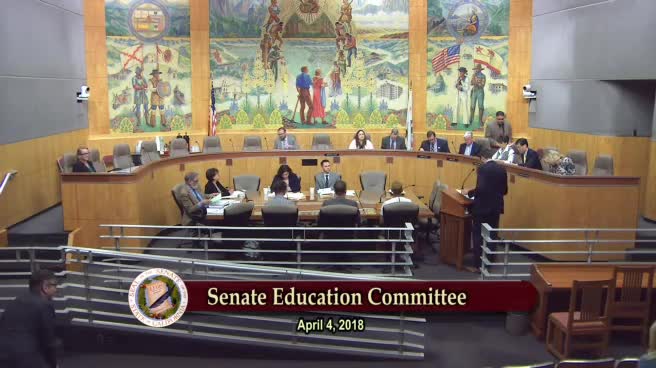
Bill Author

Bill Co-Author(s):
