SB 957: Vehicles: high-occupancy vehicle lanes.
- Session Year: 2017-2018
- House: Senate
- Latest Version Date: 2018-09-13
Existing state law authorizes the Department of Transportation to designate certain lanes for the exclusive use of high-occupancy vehicles (HOVs). Existing law also authorizes, until January 1, 2019, ultra-low emission vehicles (ULEVs), and until September 30, 2025, or until the date federal authorization expires, or until the Secretary of State receives a specified notice, whichever occurs first, super ultra-low emission vehicles (SULEVs), enhanced advanced technology partial zero-emission vehicles (enhanced AT PZEVs), or transitional zero-emission vehicles (TZEVs), as specified, that display a valid identifier issued by the Department of Motor Vehicles to use these HOV lanes. Existing law makes it a crime to drive one of those vehicles in an HOV lane without properly displaying the issued identifier and having the vehicle registration with the vehicle, or to operate or own a vehicle displaying an identifier if the identifier was not issued for that vehicle. Existing law makes identifiers for ULEVs valid until January 1, 2019, and makes identifiers for SULEVs, enhanced AT PEZEVs, and TZEVs valid until January 1, 2019, January 1, 2022, or January 1 of the 4th year after the year in which they were issued, as specified. Existing law, except as specified, prohibits a vehicle from being issued an identifier more than once.
This bill would authorize an identifier to be issued commencing January 1, 2020, until January 1, 2024, to SULEVs, enhanced AT PEZEVs, and TZEVs for a vehicle that had previously been issued an identifier and would make that identifier valid until January 1, 2024, if the applicant for the identifier has a household income at or below 80% of the state median income. The bill would require the Department of Motor Vehicles to report to the Legislature the number of identifiers issued pursuant to those provisions, and would require the report to be issued after January 1, 2023, but before June 1, 2023. The bill would prohibit a person who obtained an identifier for a vehicle prior to January 1, 2017, from obtaining another identifier pursuant to those provisions, notwithstanding the persons qualifying income. The bill would also make a conforming change and technical, nonsubstantive changes.
Existing state law authorizes the Department of Transportation to designate certain lanes for the exclusive use of high-occupancy vehicles (HOVs). Existing law also authorizes, until January 1, 2019, ultra-low emission vehicles (ULEVs), and until September 30, 2025, or until the date federal authorization expires, or until the Secretary of State receives a specified notice, whichever occurs first, super ultra-low emission vehicles (SULEVs), enhanced advanced technology partial zero-emission vehicles (enhanced AT PZEVs), or transitional zero-emission vehicles (TZEVs), as specified, that display a valid identifier issued by the Department of Motor Vehicles to use these HOV lanes. Existing law makes it a crime to drive one of those vehicles in an HOV lane without properly displaying the issued identifier and having the vehicle registration with the vehicle, or to operate or own a vehicle displaying an identifier if the identifier was not issued for that vehicle. Existing law makes identifiers for ULEVs valid until January 1, 2019, and makes identifiers for SULEVs, enhanced AT PEZEVs, and TZEVs valid until January 1, 2019, January 1, 2022, or January 1 of the 4th year after the year in which they were issued, as specified. Existing law, except as specified, prohibits a vehicle from being issued an identifier more than once.
This bill would authorize an identifier to be issued commencing January 1, 2019, 2020, until January 1, 2023, 2024, to SULEVs, enhanced AT PEZEVs, and TZEVs for a vehicle that had previously been issued an identifier and would make that identifier valid until January 1, 2023, 2024, if the applicant for the identifier has a household income at or below 80% of the state median income. The bill would require the Department of Motor Vehicles to report to the Legislature the number of identifiers issued pursuant to those provisions, and would require the report to be issued after January 1, 2022, 2023, but before June 1, 2022. 2023. The bill would prohibit a person who obtained an identifier for a vehicle prior to January 1, 2017, from obtaining another identifier pursuant to those provisions, notwithstanding the persons qualifying income. The bill would also make a conforming change and technical, nonsubstantive changes.
Existing state law authorizes the Department of Transportation to designate certain lanes for the exclusive use of high-occupancy vehicles (HOVs). Existing law also authorizes, until January 1, 2019, ultra-low emission vehicles (ULEVs), and until September 30, 2025, or until the date federal authorization expires, or until the Secretary of State receives a specified notice, whichever occurs first, super ultra-low emission vehicles (SULEVs), enhanced advanced technology partial zero-emission vehicles (enhanced AT PZEVs), or transitional zero-emission vehicles (TZEVs), as specified, that display a valid identifier issued by the Department of Motor Vehicles to use these HOV lanes. Existing law makes it a crime to drive one of those vehicles in an HOV lane without properly displaying the issued identifier and having the vehicle registration with the vehicle, or to operate or own a vehicle displaying an identifier if the identifier was not issued for that vehicle. Existing law makes identifiers for ULEVs valid until January 1, 2019, and makes identifiers for SULEVs, enhanced AT PEZEVs, and TZEVs valid until January 1, 2019, January 1, 2022, or January 1 of the 4th year after the year in which they were issued, as specified. Existing law, except as specified, prohibits a vehicle from being issued an identifier more than once.
This bill would authorize an identifier to be issued commencing January 1, 2019, until January 1, 2023, to SULEVs, enhanced AT PEZEVs, and TZEVs for a vehicle that had previously been issued an identifier and would make that identifier valid until January 1, 2023, if the applicant for the identifier has a household income at or below 80% of the state median income. The bill would require the Department of Motor Vehicles to report to the Legislature the number of identifiers issued pursuant to those provisions, and would require the report to be issued after January 1, 2023, 2022, but before June 1, 2023. 2022. The bill would prohibit a person who obtained an identifier for a vehicle prior to January 1, 2017, from obtaining another identifier pursuant to those provisions, notwithstanding the persons qualifying income. The bill would also make a conforming change and technical, nonsubstantive changes.
Existing state law authorizes the Department of Transportation to designate certain lanes for the exclusive use of high-occupancy vehicles (HOVs). Existing law also authorizes, until January 1, 2019, ultra-low emission vehicles (ULEVs), and until September 30, 2025, or until the date federal authorization expires, or until the Secretary of State receives a specified notice, whichever occurs first, super ultra-low emission vehicles (SULEVs), enhanced advanced technology partial zero-emission vehicles (enhanced AT PZEVs), or transitional zero-emission vehicles (TZEVs), as specified, that display a valid identifier issued by the Department of Motor Vehicles to use these HOV lanes. Existing law makes it a crime to drive one of those vehicles in an HOV lane without properly displaying the issued identifier and having the vehicle registration with the vehicle, or to operate or own a vehicle displaying an identifier if the identifier was not issued for that vehicle. Existing law makes identifiers for ULEVs valid until January 1, 2019, and makes identifiers for SULEVs, enhanced AT PEZEVs, and TZEVs valid until January 1, 2019, January 1, 2022, or January 1 of the 4th year after the year in which they were issued, as specified. Existing law, except as specified, prohibits a vehicle from being issued an identifier more than once.
This bill would authorize an identifier to be issued commencing January 1, 2019, until January 1, 2023, to SULEVs, enhanced AT PEZEVs, and TZEVs for a vehicle that had previously been issued an identifier and would make that identifier valid until January 1 of the 4th year after the year in which the identifier was issued January 1, 2023, if the applicant for the identifier has a household income at or below 80% of the statewide median income, or at or below a specified threshold designated as low income. state median income. The bill would require the Department of Motor Vehicles to report to the Legislature the number of identifiers issued pursuant to those provisions, and would require the report to be issued after January 1, 2023, but before June 1, 2023. The bill would prohibit a person who obtained an identifier for a vehicle prior to January 1, 2017, from obtaining another identifier pursuant to those provisions, notwithstanding the persons qualifying income. The bill would also make a conforming change and technical, nonsubstantive changes.
Existing state law authorizes the Department of Transportation to designate certain lanes for the exclusive use of high-occupancy vehicles (HOVs). Existing law also authorizes, until January 1, 2019, ultra-low emission vehicles (ULEVs), and until September 30, 2025, or until the date federal authorization expires, or until the Secretary of State receives a specified notice, whichever occurs first, super ultra-low emission vehicles (SULEVs), enhanced advanced technology partial zero-emission vehicles (enhanced AT PZEVs), or transitional zero-emission vehicles (TZEVs), as specified, that display a valid identifier issued by the Department of Motor Vehicles to use these HOV lanes. Existing law makes it a crime to drive one of those vehicles in an HOV lane without properly displaying the issued identifier and having the vehicle registration with the vehicle, or to operate or own a vehicle displaying an identifier if the identifier was not issued for that vehicle. Existing law makes identifiers for ULEVs valid until January 1, 2019, and makes identifiers for SULEVs, enhanced AT PEZEVs, and TZEVs valid until January 1, 2019, January 1, 2022, or January 1 of the 4th year after the year in which they were issued, as specified. Existing law, except as specified, prohibits a vehicle from being issued an identifier more than once.
This bill would authorize an identifier to be issued to SULEVs, enhanced AT PEZEVs, and TZEVs for a vehicle that had previously been issued an identifier and would make that identifier valid until January 1 of the 4th year after the year in which the identifier was issued if the applicant for the identifier has a household income at or below 80% of the statewide median income, or at or below a specified threshold designated as low income. The bill would also make a conforming change and technical, nonsubstantive changes.
(a)(1)For purposes of implementing Section 21655.9, the department shall make available for issuance, for a fee determined by the department to be sufficient to reimburse the department for the reasonable costs incurred pursuant to this section, and pursuant to the eligibility provisions in subdivision (b), distinctive decals, labels, and other identifiers that clearly distinguish the following vehicles from other vehicles:
(A)A vehicle that meets the states super ultra-low emission vehicle (SULEV) standard for exhaust emissions and the federal inherently low-emission vehicle (ILEV) evaporative emission standard, as defined in Part 88 (commencing with Section 88.101-94) of Title 40 of the Code of Federal Regulations.
(B)A vehicle that was produced during the 2004 model year or earlier and meets the states ultra-low emission vehicle (ULEV) standard for exhaust emissions and the federal ILEV standard. A decal, label, or other identifier issued pursuant to this paragraph is valid until January 1, 2019.
(C)A vehicle that meets the states enhanced advanced technology partial zero-emission vehicle (enhanced AT PZEV) standard or transitional zero-emission vehicle (TZEV) standard.
(2)(A)A decal, label, or other identifier issued pursuant to subparagraph (A) or (C) of paragraph (1) before January 1, 2017, is valid until January 1, 2019.
(B)(i)A decal, label, or other identifier issued pursuant to subparagraph (A) or (C) of paragraph (1) on or after January 1, 2017, and before March 1, 2018, is valid until January 1, 2019.
(ii)A decal, label, or other identifier issued pursuant to subparagraph (A) or (C) of paragraph (1) between March 1, 2018, and January 1, 2019, is valid until January 1, 2022.
(iii)A decal, label, or other identifier issued pursuant to subparagraph (A) or (C) of paragraph (1) on or after March 1, 2018, for a vehicle that had been issued a decal, label, or other identifier pursuant to subparagraph (A) or (C) of paragraph (1) between January 1, 2017, and March 1, 2018, is valid until January 1, 2022.
(C)Except as provided in clause (iii) of subparagraph (B), a decal, label, or other identifier issued pursuant to subparagraph (A) or (C) of paragraph (1) on or after January 1, 2019, is valid until January 1 of the fourth year after the year of issuance.
(3)(A)Notwithstanding the validity timeframe specified in clause (iii) of subparagraph (B) of paragraph (2), commencing January 1, 2020, and until January 1, 2024, a decal, label, or other identifier may be issued pursuant to subparagraph (A) or (C) of paragraph (1) for a vehicle that had previously been issued a decal, label, or other identifier, and the decal, label, or other identifier shall be valid until January 1, 2024, if the applicant for the decal, label, or other identifier has a household income at or below 80 percent of the state median income, as designated by the Department of Housing and Community Developments list of state income limits adopted pursuant to Section 50093 of the Health and Safety Code. The determination of income eligibility shall be made by a governmental or nonprofit entity selected by the department, in a format prescribed by the department.
(B)A person who obtained a decal, label, or other identifier for a vehicle prior to January 1, 2017, shall not be issued another decal, label, or other identifier pursuant to this paragraph, notwithstanding the persons qualifying income.
(C)The department shall report to the Legislature the number of decals, labels, and other identifiers issued pursuant to this paragraph. The report shall be issued after January 1, 2023, but before June 1, 2023.
(4)Except as provided in clause (iii) of subparagraph (B) of paragraph (2) and paragraph (3), a vehicle shall not be issued a decal, label, or other identifier more than once.
(b)(1)The department shall not issue a decal, label, or other identifier to an applicant who has received a consumer rebate pursuant to the Clean Vehicle Rebate Project, established as part of the Air Quality Improvement Program pursuant to Article 3 (commencing with Section 44274) of Chapter 8.9 of Part 5 of Division 26 of the Health and Safety Code, for a vehicle purchased on or after January 1, 2018, unless the rebate was issued to a buyer whose gross annual income falls below one hundred fifty thousand dollars ($150,000) for a person who files a tax return as a single person, two hundred four thousand dollars ($204,000) for a person who files a tax return as a head of household, and three hundred thousand dollars ($300,000) for a person who files a joint tax return.
(2)The department shall collaborate with the State Air Resources Board to establish procedures to implement this subdivision, including, but not limited to, all of the following:
(A)The application form for a decal, label, or other identifier issued pursuant to this section and the application for a rebate under the Clean Vehicle Rebate Project shall include a statement indicating that the applicant cannot participate in both programs unless the applicant meets the income restrictions in paragraph (1). Each application shall require the applicant to provide a signature to confirm that the applicant understands this condition.
(B)Notify consumers of the eligibility criteria and conditions using existing education and outreach efforts.
(C)Establish appropriate compliance and enforcement measures.
(D)Establish information sharing between the department and the board to implement the requirements of this subdivision.
(c)The department shall include a summary of the provisions of this section on each motor vehicle registration renewal notice, or on a separate insert, if space is available and the summary can be included without incurring additional printing or postage costs.
(d)The Department of Transportation shall remove individual HOV lanes, or portions of those lanes, during periods of peak congestion from the access provisions provided in subdivision (a), following a finding by the Department of Transportation as follows:
(1)The lane, or portion of the lane, exceeds a level of service C, as discussed in subdivision (b) of Section 65089 of the Government Code.
(2)The operation or projected operation of the vehicles described in subdivision (a) in these lanes, or portions of those lanes, will significantly increase congestion.
(3)The finding shall also demonstrate the infeasibility of alleviating the congestion by other means, including, but not limited to, reducing the use of the lane by noneligible vehicles or further increasing vehicle occupancy.
(e)The State Air Resources Board shall publish and maintain a list of all vehicles eligible for participation in the programs described in this section. The board shall provide that list to the department.
(f)(1)For purposes of subdivision (a), the Department of the California Highway Patrol and the department, in consultation with the Department of Transportation, shall design and specify the placement of the decal, label, or other identifier on the vehicle. Each decal, label, or other identifier issued for a vehicle shall display a unique number, which shall be printed on, or affixed to, the vehicle registration.
(2)Except as provided in clause (iii) of subparagraph (B) of paragraph (2) of subdivision (a), decals, labels, or other identifiers issued pursuant to subparagraph (A) or (C) of paragraph (1) of subdivision (a) before January 1, 2019, shall be distinguishable from the decals, labels, or other identifiers issued on or after January 1, 2019.
(g)If the Metropolitan Transportation Commission, serving as the Bay Area Toll Authority, grants toll-free and reduced-rate passage on toll bridges under its jurisdiction to a vehicle pursuant to Section 30102.5 of the Streets and Highways Code, it shall also grant the same toll-free and reduced-rate passage to a vehicle displaying a valid identifier issued by the department pursuant to subparagraph (A) or (B) of paragraph (1) of subdivision (a).
(h)(1)Notwithstanding Section 21655.9, and except as provided in paragraph (2), a vehicle described in subdivision (a) that displays a valid decal, label, or identifier issued pursuant to this section shall be granted a toll-free or reduced-rate passage in high-occupancy toll lanes as described in Section 149.7 of the Streets and Highways Code unless prohibited by federal law.
(2)(A)Paragraph (1) does not apply to the imposition of a toll imposed for passage on a toll road or toll highway, that is not a high-occupancy toll lane as described in Section 149.7 of the Streets and Highways Code.
(B)Paragraph (1) does not apply to the imposition of a toll charged for crossing a state-owned bridge.
(i)If the Director of Transportation determines that federal law does not authorize the state to allow vehicles that are identified by distinctive decals, labels, or other identifiers on vehicles described in subdivision (a) to use highway lanes or highway access ramps for high-occupancy vehicles regardless of vehicle occupancy, the Director of Transportation shall submit a notice of that determination to the Secretary of State.
(j)This section shall become inoperative on the date the federal authorization pursuant to Section 166 of Title 23 of the United States Code expires, or the date the Secretary of State receives the notice described in subdivision (i), whichever occurs first.
(k)If this section becomes inoperative pursuant to subdivision (j) the driver of a vehicle with an otherwise valid decal, label, or other identifier issued pursuant to this section shall not be cited for a violation of Section 21655.9 within 60 days of the date that this section becomes inoperative.
(l)This section is repealed as of September 30, 2025.
SEC. 2.Section 21655.9 of the Vehicle Code is amended to read:21655.9.(a)(1)Whenever the Department of Transportation or a local authority authorizes or permits exclusive or preferential use of highway lanes or highway access ramps for high-occupancy vehicles pursuant to Section 21655.5, the use of those lanes or ramps shall also be extended to vehicles that are issued distinctive decals, labels, or other identifiers pursuant to Section 5205.5 regardless of vehicle occupancy or ownership.
(2)A local authority during periods of peak congestion shall suspend for a lane the access privileges extended pursuant to paragraph (1) for those vehicles issued distinctive decals, labels, or other identifiers pursuant to Section 5205.5, if a periodic review of lane performance by that local authority discloses both of the following factors regarding the lane:
(A)The lane, or a portion of the lane, exceeds a level of service C, as described in subdivision (b) of Section 65089 of the Government Code.
(B)The operation or projected operation of vehicles in the lane, or a portion of the lane, will significantly increase congestion.
(b)A person shall not drive a vehicle described in subdivision (a) of Section 5205.5 with a single occupant upon a high-occupancy vehicle lane pursuant to this section unless the decal, label, or other identifier issued pursuant to Section 5205.5 is properly displayed on the vehicle, and the vehicle registration described in Section 5205.5 is with the vehicle.
(c)A person shall not operate or own a vehicle displaying a decal, label, or other identifier, as described in Section 5205.5, if that decal, label, or identifier was not issued for that vehicle pursuant to Section 5205.5. A violation of this subdivision is a misdemeanor.
(d)If the provisions in Section 5205.5 authorizing the department to issue decals, labels, or other identifiers to hybrid and alternative fuel vehicles become inoperative, vehicles displaying those decals, labels, or other identifiers shall not access high-occupancy vehicle lanes without meeting the occupancy requirements otherwise applicable to those lanes.
(e)(1)This section shall become inoperative on the date the federal authorization pursuant to Section 166 of Title 23 of the United States Code expires, or the date the Secretary of State receives the notice described in subdivision (i) of Section 5205.5, whichever occurs first.
(2)With respect to a vehicle described in subparagraph (B) of paragraph (1) of subdivision (a) of Section 5205.5, this section shall become inoperative on January 1, 2019.
(f)(1)The Department of Transportation shall prepare and submit a report to the Legislature on or before December 1, 2017, on the degradation status of high-occupancy vehicle lanes on the state highway system.
(2)The requirement that a report be submitted pursuant to paragraph (1) shall be inoperative on December 1, 2021, pursuant to Section 10231.5 of the Government Code.
(3)A report submitted pursuant to paragraph (1) shall be submitted in compliance with Section 9795 of the Government Code.
(g)This section is repealed as of September 30, 2025.
(a)(1)For purposes of implementing Section 21655.9, the department shall make available for issuance, for a fee determined by the department to be sufficient to reimburse the department for the reasonable costs incurred pursuant to this section, and pursuant to the eligibility provisions in subdivision (b), distinctive decals, labels, and other identifiers that clearly distinguish the following vehicles from other vehicles:
(1)(A)A vehicle that meets the states super ultra-low emission vehicle (SULEV) standard for exhaust emissions and the federal inherently low-emission vehicle (ILEV) evaporative emission standard, as defined in Part 88 (commencing with Section 88.101-94) of Title 40 of the Code of Federal Regulations.
(2)(B)A vehicle that was produced during the 2004 model year or earlier and meets the states ultra-low emission vehicle (ULEV) standard for exhaust emissions and the federal ILEV standard. A decal, label, or other identifier issued pursuant to this paragraph is valid until January 1, 2019.
(3)(C)A vehicle that meets the states enhanced advanced technology partial zero-emission vehicle (enhanced AT PZEV) standard or transitional zero-emission vehicle (TZEV) standard.
(4)(2)(A)A decal, label, or other identifier issued pursuant to subparagraph (A) or (C) of paragraph (1) or (3) before January 1, 2017, is valid until January 1, 2019.
(5)(A)A(B)(i)A decal, label, or other identifier issued pursuant to subparagraph (A) or (C) of paragraph (1) or (3) on or after January 1, 2017, and before March 1, 2018, is valid until January 1, 2019.
(B)(ii)A decal, label, or other identifier issued pursuant to subparagraph (A) or (C) of paragraph (1) or (3) between March 1, 2018, and January 1, 2019, is valid until January 1, 2022.
(C)(iii)A decal, label, or other identifier issued pursuant to subparagraph (A) or (C) of paragraph (1) or (3) on or after March 1, 2018, for a vehicle that had been issued a decal, label, or other identifier pursuant to subparagraph (A) or (C) of paragraph (1) or (3) between January 1, 2017, and March 1, 2018, is valid until January 1, 2022.
(6)(C)Except as provided in subparagraph (C) of paragraph (5), clause (iii) of subparagraph (B), a decal, label, or other identifier issued pursuant to subparagraph (A) or (C) of paragraph (1) or (3) on or after January 1, 2019, is valid until January 1 of the fourth year after the year of issuance.
(3)(A)Notwithstanding the validity timeframe specified in clause (iii) of subparagraph (B) of paragraph (2), commencing January 1, 2020, and until January 1, 2024, a decal, label, or other identifier may be issued pursuant to subparagraph (A) or (C) of paragraph (1) for a vehicle that had previously been issued a decal, label, or other identifier, and the decal, label, or other identifier shall be valid until January 1, 2024, if the applicant for the decal, label, or other identifier has a household income at or below 80 percent of the state median income, as designated by the Department of Housing and Community Developments list of state income limits adopted pursuant to Section 50093 of the Health and Safety Code. The determination of income eligibility shall be made by a governmental or nonprofit entity selected by the department, in a format prescribed by the department.
(B)A person who obtained a decal, label, or other identifier for a vehicle prior to January 1, 2017, shall not be issued another decal, label, or other identifier pursuant to this paragraph, notwithstanding the persons qualifying income.
(C)The department shall report to the Legislature the number of decals, labels, and other identifiers issued pursuant to this paragraph. The report shall be issued after January 1, 2023, but before June 1, 2023.
(7)(4)Except as provided in subparagraph (C) of paragraph (5), clause (iii) of subparagraph (B) of paragraph (2) and paragraph (3), a vehicle shall not be issued a decal, label, or other identifier more than once.
(b)(1)The department shall not issue a decal, label, or other identifier to an applicant who has received a consumer rebate pursuant to the Clean Vehicle Rebate Project, established as part of the Air Quality Improvement Program pursuant to Article 3 (commencing with Section 44274) of Chapter 8.9 of Part 5 of Division 26 of the Health and Safety Code, for a vehicle purchased on or after January 1, 2018, unless the rebate was issued to a buyer whose gross annual income falls below one hundred fifty thousand dollars ($150,000) for a person who files a tax return as a single person, two hundred four thousand dollars ($204,000) for a person who files a tax return as a head of household, and three hundred thousand dollars ($300,000) for a person who files a joint tax return.
(2)The department shall collaborate with the State Air Resources Board to establish procedures to implement this subdivision, including, but not limited to, all of the following:
(A)The application form for a decal, label, or other identifier issued pursuant to this section and the application for a rebate under the Clean Vehicle Rebate Project shall include a statement indicating that the applicant cannot participate in both programs unless the applicant meets the income restrictions in paragraph (1). Each application shall require the applicant to provide a signature to confirm that the applicant understands this condition.
(B)Notify consumers of the eligibility criteria and conditions using existing education and outreach efforts.
(C)Establish appropriate compliance and enforcement measures.
(D)Establish information sharing between the department and the board to implement the requirements of this subdivision.
(c)The department shall include a summary of the provisions of this section on each motor vehicle registration renewal notice, or on a separate insert, if space is available and the summary can be included without incurring additional printing or postage costs.
(d)The Department of Transportation shall remove individual HOV lanes, or portions of those lanes, during periods of peak congestion from the access provisions provided in subdivision (a), following a finding by the Department of Transportation as follows:
(1)The lane, or portion of the lane, exceeds a level of service C, as discussed in subdivision (b) of Section 65089 of the Government Code.
(2)The operation or projected operation of the vehicles described in subdivision (a) in these lanes, or portions of those lanes, will significantly increase congestion.
(3)The finding shall also demonstrate the infeasibility of alleviating the congestion by other means, including, but not limited to, reducing the use of the lane by noneligible vehicles or further increasing vehicle occupancy.
(e)The State Air Resources Board shall publish and maintain a list of all vehicles eligible for participation in the programs described in this section. The board shall provide that list to the department.
(f)(1)For purposes of subdivision (a), the Department of the California Highway Patrol and the department, in consultation with the Department of Transportation, shall design and specify the placement of the decal, label, or other identifier on the vehicle. Each decal, label, or other identifier issued for a vehicle shall display a unique number, which shall be printed on, or affixed to, the vehicle registration.
(2)Except as provided in subparagraph (C) of paragraph (5) clause (iii) of subparagraph (B) of paragraph (2) of subdivision (a), decals, labels, or other identifiers issued pursuant to subparagraph (A) or (C) of paragraph (1) or (3) of subdivision (a) before January 1, 2019, shall be distinguishable from the decals, labels, or other identifiers issued on or after January 1, 2019.
(g)If the Metropolitan Transportation Commission, serving as the Bay Area Toll Authority, grants toll-free and reduced-rate passage on toll bridges under its jurisdiction to a vehicle pursuant to Section 30102.5 of the Streets and Highways Code, it shall also grant the same toll-free and reduced-rate passage to a vehicle displaying a valid identifier issued by the department pursuant to subparagraph (A) or (B) of paragraph (1) or (2) of subdivision (a).
(h)(1)Notwithstanding Section 21655.9, and except as provided in paragraph (2), a vehicle described in subdivision (a) that displays a valid decal, label, or identifier issued pursuant to this section shall be granted a toll-free or reduced-rate passage in high-occupancy toll lanes as described in Section 149.7 of the Streets and Highways Code unless prohibited by federal law.
(2)(A)Paragraph (1) does not apply to the imposition of a toll imposed for passage on a toll road or toll highway, that is not a high-occupancy toll lane as described in Section 149.7 of the Streets and Highways Code.
(B)Paragraph (1) does not apply to the imposition of a toll charged for crossing a state-owned bridge.
(i)If the Director of Transportation determines that federal law does not authorize the state to allow vehicles that are identified by distinctive decals, labels, or other identifiers on vehicles described in subdivision (a) to use highway lanes or highway access ramps for high-occupancy vehicles regardless of vehicle occupancy, the Director of Transportation shall submit a notice of that determination to the Secretary of State.
(j)This section shall become inoperative on the date the federal authorization pursuant to Section 166 of Title 23 of the United States Code expires, or the date the Secretary of State receives the notice described in subdivision (i), whichever occurs first.
(k)If this section becomes inoperative pursuant to subdivision (j) the driver of a vehicle with an otherwise valid decal, label, or other identifier issued pursuant to this section shall not be cited for a violation of Section 21655.9 within 60 days of the date that this section becomes inoperative.
(l)This section is repealed as of September 30, 2025.
SEC. 2.Section 21655.9 of the Vehicle Code is amended to read:21655.9.(a)(1)Whenever the Department of Transportation or a local authority authorizes or permits exclusive or preferential use of highway lanes or highway access ramps for high-occupancy vehicles pursuant to Section 21655.5, the use of those lanes or ramps shall also be extended to vehicles that are issued distinctive decals, labels, or other identifiers pursuant to Section 5205.5 regardless of vehicle occupancy or ownership.
(2)A local authority during periods of peak congestion shall suspend for a lane the access privileges extended pursuant to paragraph (1) for those vehicles issued distinctive decals, labels, or other identifiers pursuant to Section 5205.5, if a periodic review of lane performance by that local authority discloses both of the following factors regarding the lane:
(A)The lane, or a portion of the lane, exceeds a level of service C, as described in subdivision (b) of Section 65089 of the Government Code.
(B)The operation or projected operation of vehicles in the lane, or a portion of the lane, will significantly increase congestion.
(b)A person shall not drive a vehicle described in subdivision (a) of Section 5205.5 with a single occupant upon a high-occupancy vehicle lane pursuant to this section unless the decal, label, or other identifier issued pursuant to Section 5205.5 is properly displayed on the vehicle, and the vehicle registration described in Section 5205.5 is with the vehicle.
(c)A person shall not operate or own a vehicle displaying a decal, label, or other identifier, as described in Section 5205.5, if that decal, label, or identifier was not issued for that vehicle pursuant to Section 5205.5. A violation of this subdivision is a misdemeanor.
(d)If the provisions in Section 5205.5 authorizing the department to issue decals, labels, or other identifiers to hybrid and alternative fuel vehicles become inoperative, vehicles displaying those decals, labels, or other identifiers shall not access high-occupancy vehicle lanes without meeting the occupancy requirements otherwise applicable to those lanes.
(e)(1)This section shall become inoperative on the date the federal authorization pursuant to Section 166 of Title 23 of the United States Code expires, or the date the Secretary of State receives the notice described in subdivision (i) of Section 5205.5, whichever occurs first.
(2)With respect to a vehicle described in subparagraph (B) of paragraph (1) of subdivision (a) of Section 5205.5, this section shall become inoperative on January 1, 2019.
(f)(1)The Department of Transportation shall prepare and submit a report to the Legislature on or before December 1, 2017, on the degradation status of high-occupancy vehicle lanes on the state highway system.
(2)The requirement that a report be submitted pursuant to paragraph (1) shall be inoperative on December 1, 2021, pursuant to Section 10231.5 of the Government Code.
(3)A report submitted pursuant to paragraph (1) shall be submitted in compliance with Section 9795 of the Government Code.
(g)This section is repealed as of September 30, 2025.
(a)(1)For purposes of implementing Section 21655.9, the department shall make available for issuance, for a fee determined by the department to be sufficient to reimburse the department for the reasonable costs incurred pursuant to this section, and pursuant to the eligibility provisions in subdivision (b), distinctive decals, labels, and other identifiers that clearly distinguish the following vehicles from other vehicles:
(A)A vehicle that meets the states super ultra-low emission vehicle (SULEV) standard for exhaust emissions and the federal inherently low-emission vehicle (ILEV) evaporative emission standard, as defined in Part 88 (commencing with Section 88.101-94) of Title 40 of the Code of Federal Regulations.
(B)A vehicle that was produced during the 2004 model year or earlier and meets the states ultra-low emission vehicle (ULEV) standard for exhaust emissions and the federal ILEV standard. A decal, label, or other identifier issued pursuant to this paragraph is valid until January 1, 2019.
(C)A vehicle that meets the states enhanced advanced technology partial zero-emission vehicle (enhanced AT PZEV) standard or transitional zero-emission vehicle (TZEV) standard.
(2)(A)A decal, label, or other identifier issued pursuant to subparagraph (A) or (C) of paragraph (1) before January 1, 2017, is valid until January 1, 2019.
(B)(i)A decal, label, or other identifier issued pursuant to subparagraph (A) or (C) of paragraph (1) on or after January 1, 2017, and before January 1, 2019, is valid until January 1, 2019.
(ii)A decal, label, or other identifier issued pursuant to subparagraph (A) or (C) of paragraph (1) on or after January 1, 2019, for a vehicle that had been issued a decal, label, or other identifier pursuant to subparagraph (A) or (C) of paragraph (1) between January 1, 2017, and January 1, 2019, is valid until January 1, 2022.
(C)Except as provided in clause (ii) of subparagraph (B), a decal, label, or other identifier issued pursuant to subparagraph (A) or (C) of paragraph (1) on or after January 1, 2019, is valid until January 1 of the fourth year after the year of issuance.
(3)(A)Notwithstanding the validity time frame timeframe specified in clause (ii) of subparagraph (B) of paragraph (2), commencing January 1, 2019, and until January 1, 2023, a decal, label, or other identifier may be issued pursuant to subparagraph (A) or (C) of paragraph (1) for a vehicle that had previously been issued a decal, label, or other identifier, and the decal, label, or other identifier shall be valid until January 1, 2023, if the applicant for the decal, label, or other identifier has a household income at or below 80 percent of the state median income, as designated by the Department of Housing and Community Developments list of state income limits adopted pursuant to Section 50093 of the Health and Safety Code. The determination of income eligibility shall be made by a governmental or nonprofit entity selected by the department, in a format prescribed by the department.
(B)A person who obtained a decal, label, or other identifier for a vehicle prior to January 1, 2017, shall not be issued another decal, label, or other identifier pursuant to this paragraph, notwithstanding the persons qualifying income.
(C)The department shall report to the Legislature the number of decals, labels, and other identifiers issued pursuant to this paragraph. The report shall be issued after January 1, 2023, 2022, and before June 1, 2023. 2022.
(4)Except as provided in clause (ii) of subparagraph (B) of paragraph (2) and paragraph (3), a vehicle shall not be issued a decal, label, or other identifier more than once.
(b)(1)The department shall not issue a decal, label, or other identifier to an applicant who has received a consumer rebate pursuant to the Clean Vehicle Rebate Project, established as part of the Air Quality Improvement Program pursuant to Article 3 (commencing with Section 44274) of Chapter 8.9 of Part 5 of Division 26 of the Health and Safety Code, for a vehicle purchased on or after January 1, 2018, unless the rebate was issued to a buyer whose gross annual income falls below one hundred fifty thousand dollars ($150,000) for a person who files a tax return as a single person, two hundred four thousand dollars ($204,000) for a person who files a tax return as a head of household, and three hundred thousand dollars ($300,000) for a person who files a joint tax return.
(2)The department shall collaborate with the State Air Resources Board to establish procedures to implement this subdivision, including, but not limited to, all of the following:
(A)Amend the application form for a decal, label, or other identifier issued pursuant to this section and the application for a rebate under the Clean Vehicle Rebate Project to include a statement indicating that the applicant cannot participate in both programs unless the applicant meets the income restrictions in paragraph (1). Each application shall require the applicant to provide a signature to confirm that the applicant understands this condition.
(B)Notify consumers of the eligibility criteria and conditions using existing education and outreach efforts.
(C)Establish appropriate compliance and enforcement measures.
(D)Establish information sharing between the department and the board to implement the requirements of this subdivision.
(c)The department shall include a summary of the provisions of this section on each motor vehicle registration renewal notice, or on a separate insert, if space is available and the summary can be included without incurring additional printing or postage costs.
(d)The Department of Transportation shall remove individual HOV lanes, or portions of those lanes, during periods of peak congestion from the access provisions provided in subdivision (a), following a finding by the Department of Transportation as follows:
(1)The lane, or portion of the lane, exceeds a level of service C, as discussed in subdivision (b) of Section 65089 of the Government Code.
(2)The operation or projected operation of the vehicles described in subdivision (a) in these lanes, or portions of those lanes, will significantly increase congestion.
(3)The finding shall also demonstrate the infeasibility of alleviating the congestion by other means, including, but not limited to, reducing the use of the lane by noneligible vehicles or further increasing vehicle occupancy.
(e)The State Air Resources Board shall publish and maintain a list of all vehicles eligible for participation in the programs described in this section. The board shall provide that list to the department.
(f)(1)For purposes of subdivision (a), the Department of the California Highway Patrol and the department, in consultation with the Department of Transportation, shall design and specify the placement of the decal, label, or other identifier on the vehicle. Each decal, label, or other identifier issued for a vehicle shall display a unique number, which shall be printed on, or affixed to, the vehicle registration.
(2)Decals, labels, or other identifiers designed pursuant to this subdivision for a vehicle described in subparagraph (C) of paragraph (1) of subdivision (a) and issued before January 1, 2019, shall be distinguishable from the decals, labels, or other identifiers that are designed for vehicles described in subparagraphs (A) and (B) of paragraph (1) of subdivision (a).
(3)Decals, labels, or other identifiers issued pursuant to subparagraph (A) or (C) of paragraph (1) of subdivision (a) before January 1, 2019, shall be distinguishable from the decals, labels, or other identifiers issued on or after January 1, 2019.
(g)If the Metropolitan Transportation Commission, serving as the Bay Area Toll Authority, grants toll-free and reduced-rate passage on toll bridges under its jurisdiction to a vehicle pursuant to Section 30102.5 of the Streets and Highways Code, it shall also grant the same toll-free and reduced-rate passage to a vehicle displaying a valid identifier issued by the department pursuant to subparagraph (A) or (B) of paragraph (1) of subdivision (a).
(h)(1)Notwithstanding Section 21655.9, and except as provided in paragraph (2), a vehicle described in subdivision (a) that displays a valid decal, label, or identifier issued pursuant to this section shall be granted a toll-free or reduced-rate passage in high-occupancy toll lanes as described in Section 149.7 of the Streets and Highways Code unless prohibited by federal law.
(2)(A)Paragraph (1) does not apply to the imposition of a toll imposed for passage on a toll road or toll highway, that is not a high-occupancy toll lane as described in Section 149.7 of the Streets and Highways Code.
(B)Paragraph (1) does not apply to the imposition of a toll charged for crossing a state-owned bridge.
(i)If the Director of Transportation determines that federal law does not authorize the state to allow vehicles that are identified by distinctive decals, labels, or other identifiers on vehicles described in subdivision (a) to use highway lanes or highway access ramps for high-occupancy vehicles regardless of vehicle occupancy, the Director of Transportation shall submit a notice of that determination to the Secretary of State.
(j)This section shall become inoperative on the date the federal authorization pursuant to Section 166 of Title 23 of the United States Code expires, or the date the Secretary of State receives the notice described in subdivision (i), whichever occurs first.
(k)If this section becomes inoperative pursuant to subdivision (j) the driver of a vehicle with an otherwise valid decal, label, or other identifier issued pursuant to this section shall not be cited for a violation of Section 21655.9 within 60 days of the date that this section becomes inoperative.
(l)This section is repealed as of September 30, 2025.
SEC. 2.Section 21655.9 of the Vehicle Code is amended to read:21655.9.(a)(1)Whenever the Department of Transportation or a local authority authorizes or permits exclusive or preferential use of highway lanes or highway access ramps for high-occupancy vehicles pursuant to Section 21655.5, the use of those lanes or ramps shall also be extended to vehicles that are issued distinctive decals, labels, or other identifiers pursuant to Section 5205.5 regardless of vehicle occupancy or ownership.
(2)A local authority during periods of peak congestion shall suspend for a lane the access privileges extended pursuant to paragraph (1) for those vehicles issued distinctive decals, labels, or other identifiers pursuant to Section 5205.5, if a periodic review of lane performance by that local authority discloses both of the following factors regarding the lane:
(A)The lane, or a portion of the lane, exceeds a level of service C, as described in subdivision (b) of Section 65089 of the Government Code.
(B)The operation or projected operation of vehicles in the lane, or a portion of the lane, will significantly increase congestion.
(b)A person shall not drive a vehicle described in subdivision (a) of Section 5205.5 with a single occupant upon a high-occupancy vehicle lane pursuant to this section unless the decal, label, or other identifier issued pursuant to Section 5205.5 is properly displayed on the vehicle, and the vehicle registration described in Section 5205.5 is with the vehicle.
(c)A person shall not operate or own a vehicle displaying a decal, label, or other identifier, as described in Section 5205.5, if that decal, label, or identifier was not issued for that vehicle pursuant to Section 5205.5. A violation of this subdivision is a misdemeanor.
(d)If the provisions in Section 5205.5 authorizing the department to issue decals, labels, or other identifiers to hybrid and alternative fuel vehicles become inoperative, vehicles displaying those decals, labels, or other identifiers shall not access high-occupancy vehicle lanes without meeting the occupancy requirements otherwise applicable to those lanes.
(e)(1)This section shall become inoperative on the date the federal authorization pursuant to Section 166 of Title 23 of the United States Code expires, or the date the Secretary of State receives the notice described in subdivision (i) of Section 5205.5, whichever occurs first.
(2)With respect to a vehicle described in subparagraph (B) of paragraph (1) of subdivision (a) of Section 5205.5, this section shall become inoperative on January 1, 2019.
(f)(1)The Department of Transportation shall prepare and submit a report to the Legislature on or before December 1, 2017, on the degradation status of high-occupancy vehicle lanes on the state highway system.
(2)The requirement that a report be submitted pursuant to paragraph (1) shall be inoperative on December 1, 2021, pursuant to Section 10231.5 of the Government Code.
(3)A report submitted pursuant to paragraph (1) shall be submitted in compliance with Section 9795 of the Government Code.
(g)This section is repealed as of September 30, 2025.
(a)(1)For purposes of implementing Section 21655.9, the department shall make available for issuance, for a fee determined by the department to be sufficient to reimburse the department for the reasonable costs incurred pursuant to this section, and pursuant to the eligibility provisions in subdivision (b), distinctive decals, labels, and other identifiers that clearly distinguish the following vehicles from other vehicles:
(A)A vehicle that meets the states super ultra-low emission vehicle (SULEV) standard for exhaust emissions and the federal inherently low-emission vehicle (ILEV) evaporative emission standard, as defined in Part 88 (commencing with Section 88.101-94) of Title 40 of the Code of Federal Regulations.
(B)A vehicle that was produced during the 2004 model year or earlier and meets the states ultra-low emission vehicle (ULEV) standard for exhaust emissions and the federal ILEV standard. A decal, label, or other identifier issued pursuant to this paragraph is valid until January 1, 2019.
(C)A vehicle that meets the states enhanced advanced technology partial zero-emission vehicle (enhanced AT PZEV) standard or transitional zero-emission vehicle (TZEV) standard.
(2)(A)A decal, label, or other identifier issued pursuant to subparagraph (A) or (C) of paragraph (1) before January 1, 2017, is valid until January 1, 2019.
(B)(i)A decal, label, or other identifier issued pursuant to subparagraph (A) or (C) of paragraph (1) on or after January 1, 2017, and before January 1, 2019, is valid until January 1, 2019.
(ii)A decal, label, or other identifier issued pursuant to subparagraph (A) or (C) of paragraph (1) on or after January 1, 2019, for a vehicle that had been issued a decal, label, or other identifier pursuant to subparagraph (A) or (C) of paragraph (1) between January 1, 2017, and January 1, 2019, is valid until January 1, 2022.
(C)Except as provided in clause (ii) of subparagraph (B), a decal, label, or other identifier issued pursuant to subparagraph (A) or (C) of paragraph (1) on or after January 1, 2019, is valid until January 1 of the fourth year after the year of issuance.
(3)(A)Notwithstanding the validity time frame specified in clause (ii) of subparagraph (B) of paragraph (2), commencing January 1, 2019, and until January 1, 2023, a decal, label, or other identifier may be issued pursuant to subparagraph (A) or (C) of paragraph (1) for a vehicle that had previously been issued a decal, label, or other identifier, and the decal, label, or other identifier shall be valid for the time frame specified in subparagraph (C) of paragraph (2), until January 1, 2023, if the applicant for the decal, label, or other identifier has a household income at or below 80 percent of the statewide median income, or at or below the threshold designated as low income state median income, as designated by the Department of Housing and Community Developments list of state income limits adopted pursuant to Section 50093 of the Health and Safety Code. The determination of income eligibility shall be made by a governmental or nonprofit entity selected by the department, in a format prescribed by the department.
(B)A person who obtained a decal, label, or other identifier for a vehicle prior to January 1, 2017, shall not be issued another decal, label, or other identifier pursuant to this paragraph, notwithstanding the persons qualifying income.
(C)The department shall report to the Legislature the number of decals, labels, and other identifiers issued pursuant to this paragraph. The report shall be issued after January 1, 2023, and before June 1, 2023.
(4)Except as provided in clause (ii) of subparagraph (B) of paragraph (2) and paragraph (3), a vehicle shall not be issued a decal, label, or other identifier more than once.
(b)(1)The department shall not issue a decal, label, or other identifier to an applicant who has received a consumer rebate pursuant to the Clean Vehicle Rebate Project, established as part of the Air Quality Improvement Program pursuant to Article 3 (commencing with Section 44274) of Chapter 8.9 of Part 5 of Division 26 of the Health and Safety Code, for a vehicle purchased on or after January 1, 2018, unless the rebate was issued to a buyer whose gross annual income falls below one hundred fifty thousand dollars ($150,000) for a person who files a tax return as a single person, two hundred four thousand dollars ($204,000) for a person who files a tax return as a head of household, and three hundred thousand dollars ($300,000) for a person who files a joint tax return.
(2)The department shall collaborate with the State Air Resources Board to establish procedures to implement this subdivision, including, but not limited to, all of the following:
(A)Amend the application form for a decal, label, or other identifier issued pursuant to this section and the application for a rebate under the Clean Vehicle Rebate Project to include a statement indicating that the applicant cannot participate in both programs unless the applicant meets the income restrictions in paragraph (1). Each application shall require the applicant to provide a signature to confirm that the applicant understands this condition.
(B)Notify consumers of the eligibility criteria and conditions using existing education and outreach efforts.
(C)Establish appropriate compliance and enforcement measures.
(D)Establish information sharing between the department and the board to implement the requirements of this subdivision.
(c)The department shall include a summary of the provisions of this section on each motor vehicle registration renewal notice, or on a separate insert, if space is available and the summary can be included without incurring additional printing or postage costs.
(d)The Department of Transportation shall remove individual HOV lanes, or portions of those lanes, during periods of peak congestion from the access provisions provided in subdivision (a), following a finding by the Department of Transportation as follows:
(1)The lane, or portion of the lane, exceeds a level of service C, as discussed in subdivision (b) of Section 65089 of the Government Code.
(2)The operation or projected operation of the vehicles described in subdivision (a) in these lanes, or portions of those lanes, will significantly increase congestion.
(3)The finding shall also demonstrate the infeasibility of alleviating the congestion by other means, including, but not limited to, reducing the use of the lane by noneligible vehicles or further increasing vehicle occupancy.
(e)The State Air Resources Board shall publish and maintain a list of all vehicles eligible for participation in the programs described in this section. The board shall provide that list to the department.
(f)(1)For purposes of subdivision (a), the Department of the California Highway Patrol and the department, in consultation with the Department of Transportation, shall design and specify the placement of the decal, label, or other identifier on the vehicle. Each decal, label, or other identifier issued for a vehicle shall display a unique number, which shall be printed on, or affixed to, the vehicle registration.
(2)Decals, labels, or other identifiers designed pursuant to this subdivision for a vehicle described in subparagraph (C) of paragraph (1) of subdivision (a) and issued before January 1, 2019, shall be distinguishable from the decals, labels, or other identifiers that are designed for vehicles described in subparagraphs (A) and (B) of paragraph (1) of subdivision (a).
(3)Decals, labels, or other identifiers issued pursuant to subparagraph (A) or (C) of paragraph (1) of subdivision (a) before January 1, 2019, shall be distinguishable from the decals, labels, or other identifiers issued on or after January 1, 2019.
(g)If the Metropolitan Transportation Commission, serving as the Bay Area Toll Authority, grants toll-free and reduced-rate passage on toll bridges under its jurisdiction to a vehicle pursuant to Section 30102.5 of the Streets and Highways Code, it shall also grant the same toll-free and reduced-rate passage to a vehicle displaying a valid identifier issued by the department pursuant to subparagraph (A) or (B) of paragraph (1) of subdivision (a).
(h)(1)Notwithstanding Section 21655.9, and except as provided in paragraph (2), a vehicle described in subdivision (a) that displays a valid decal, label, or identifier issued pursuant to this section shall be granted a toll-free or reduced-rate passage in high-occupancy toll lanes as described in Section 149.7 of the Streets and Highways Code unless prohibited by federal law.
(2)(A)Paragraph (1) does not apply to the imposition of a toll imposed for passage on a toll road or toll highway, that is not a high-occupancy toll lane as described in Section 149.7 of the Streets and Highways Code.
(B)Paragraph (1) does not apply to the imposition of a toll charged for crossing a state-owned bridge.
(i)If the Director of Transportation determines that federal law does not authorize the state to allow vehicles that are identified by distinctive decals, labels, or other identifiers on vehicles described in subdivision (a) to use highway lanes or highway access ramps for high-occupancy vehicles regardless of vehicle occupancy, the Director of Transportation shall submit a notice of that determination to the Secretary of State.
(j)This section shall become inoperative on the date the federal authorization pursuant to Section 166 of Title 23 of the United States Code expires, or the date the Secretary of State receives the notice described in subdivision (i), whichever occurs first.
(k)If this section becomes inoperative pursuant to subdivision (j) the driver of a vehicle with an otherwise valid decal, label, or other identifier issued pursuant to this section shall not be cited for a violation of Section 21655.9 within 60 days of the date that this section becomes inoperative.
(l)This section is repealed as of September 30, 2025.
SEC. 2.Section 21655.9 of the Vehicle Code is amended to read:21655.9.(a)(1)Whenever the Department of Transportation or a local authority authorizes or permits exclusive or preferential use of highway lanes or highway access ramps for high-occupancy vehicles pursuant to Section 21655.5, the use of those lanes or ramps shall also be extended to vehicles that are issued distinctive decals, labels, or other identifiers pursuant to Section 5205.5 regardless of vehicle occupancy or ownership.
(2)A local authority during periods of peak congestion shall suspend for a lane the access privileges extended pursuant to paragraph (1) for those vehicles issued distinctive decals, labels, or other identifiers pursuant to Section 5205.5, if a periodic review of lane performance by that local authority discloses both of the following factors regarding the lane:
(A)The lane, or a portion of the lane, exceeds a level of service C, as described in subdivision (b) of Section 65089 of the Government Code.
(B)The operation or projected operation of vehicles in the lane, or a portion of the lane, will significantly increase congestion.
(b)A person shall not drive a vehicle described in subdivision (a) of Section 5205.5 with a single occupant upon a high-occupancy vehicle lane pursuant to this section unless the decal, label, or other identifier issued pursuant to Section 5205.5 is properly displayed on the vehicle, and the vehicle registration described in Section 5205.5 is with the vehicle.
(c)A person shall not operate or own a vehicle displaying a decal, label, or other identifier, as described in Section 5205.5, if that decal, label, or identifier was not issued for that vehicle pursuant to Section 5205.5. A violation of this subdivision is a misdemeanor.
(d)If the provisions in Section 5205.5 authorizing the department to issue decals, labels, or other identifiers to hybrid and alternative fuel vehicles become inoperative, vehicles displaying those decals, labels, or other identifiers shall not access high-occupancy vehicle lanes without meeting the occupancy requirements otherwise applicable to those lanes.
(e)(1)This section shall become inoperative on the date the federal authorization pursuant to Section 166 of Title 23 of the United States Code expires, or the date the Secretary of State receives the notice described in subdivision (i) of Section 5205.5, whichever occurs first.
(2)With respect to a vehicle described in subparagraph (B) of paragraph (1) of subdivision (a) of Section 5205.5, this section shall become inoperative on January 1, 2019.
(f)(1)The Department of Transportation shall prepare and submit a report to the Legislature on or before December 1, 2017, on the degradation status of high-occupancy vehicle lanes on the state highway system.
(2)The requirement that a report be submitted pursuant to paragraph (1) shall be inoperative on December 1, 2021, pursuant to Section 10231.5 of the Government Code.
(3)A report submitted pursuant to paragraph (1) shall be submitted in compliance with Section 9795 of the Government Code.
(g)This section is repealed as of September 30, 2025.
(a)(1)For purposes of implementing Section 21655.9, the department shall make available for issuance, for a fee determined by the department to be sufficient to reimburse the department for the reasonable costs incurred pursuant to this section, and pursuant to the eligibility provisions in subdivision (b), distinctive decals, labels, and other identifiers that clearly distinguish the following vehicles from other vehicles:
(1)(A)A vehicle that meets the states super ultra-low emission vehicle (SULEV) standard for exhaust emissions and the federal inherently low-emission vehicle (ILEV) evaporative emission standard, as defined in Part 88 (commencing with Section 88.101-94) of Title 40 of the Code of Federal Regulations.
(2)(B)A vehicle that was produced during the 2004 model year or earlier and meets the states ultra-low emission vehicle (ULEV) standard for exhaust emissions and the federal ILEV standard. A decal, label, or other identifier issued pursuant to this paragraph is valid until January 1, 2019.
(3)(C)A vehicle that meets the states enhanced advanced technology partial zero-emission vehicle (enhanced AT PZEV) standard or transitional zero-emission vehicle (TZEV) standard.
(4)(2)(A)A decal, label, or other identifier issued pursuant to paragraph (1) or (3) subparagraph (A) or (C) of paragraph (1) before January 1, 2017, is valid until January 1, 2019.
(5)(A)(B)(i)A decal, label, or other identifier issued pursuant to paragraph (1) or (3) subparagraph (A) or (C) of paragraph (1) on or after January 1, 2017, and before January 1, 2019, is valid until January 1, 2019.
(B)(ii)A decal, label, or other identifier issued pursuant to paragraph (1) or (3) subparagraph (A) or (C) of paragraph (1) on or after January 1, 2019, for a vehicle that had been issued a decal, label, or other identifier pursuant to paragraph (1) or (3) subparagraph (A) or (C) of paragraph (1) between January 1, 2017, and January 1, 2019, is valid until January 1, 2022.
(6)(C)Except as provided in subparagraph (B) of paragraph (5), clause (ii) of subparagraph (B), a decal, label, or other identifier issued pursuant to paragraph (1) or (3) subparagraph (A) or (C) of paragraph (1) on or after January 1, 2019, is valid until January 1 of the fourth year after the year of issuance.
(3)Notwithstanding the validity time frame specified in clause (ii) of subparagraph (B) of paragraph (2), a decal, label, or other identifier may be issued pursuant to subparagraph (A) or (C) of paragraph (1) for a vehicle that had previously been issued a decal, label, or other identifier, and the decal, label, or other identifier shall be valid for the time frame specified in subparagraph (C) of paragraph (2), if the applicant for the decal, label, or other identifier has a household income at or below 80 percent of the statewide median income, or at or below the threshold designated as low income by the Department of Housing and Community Developments list of state income limits adopted pursuant to Section 50093 of the Health and Safety Code.
(7)(4)Except as provided in subparagraph (B) of paragraph (5), clause (ii) of subparagraph (B) of paragraph (2) and paragraph (3), a vehicle shall not be issued a decal, label, or other identifier more than once.
(b)(1)The department shall not issue a decal, label, or other identifier to an applicant who has received a consumer rebate pursuant to the Clean Vehicle Rebate Project, established as part of the Air Quality Improvement Program pursuant to Article 3 (commencing with Section 44274) of Chapter 8.9 of Part 5 of Division 26 of the Health and Safety Code, for a vehicle purchased on or after January 1, 2018, unless the rebate was issued to a buyer whose gross annual income falls below one hundred fifty thousand dollars ($150,000) for a person who files a tax return as a single person, two hundred four thousand dollars ($204,000) for a person who files a tax return as a head of household, and three hundred thousand dollars ($300,000) for a person who files a joint tax return.
(2)The department shall collaborate with the State Air Resources Board to establish procedures to implement this subdivision, including, but not limited to, all of the following:
(A)Amend the application form for a decal, label, or other identifier issued pursuant to this section and the application for a rebate under the Clean Vehicle Rebate Project to include a statement indicating that the applicant cannot participate in both programs unless the applicant meets the income restrictions in paragraph (1). Each application shall require the applicant to provide a signature to confirm that the applicant understands this condition.
(B)Notify consumers of the eligibility criteria and conditions using existing education and outreach efforts.
(C)Establish appropriate compliance and enforcement measures.
(D)Establish information sharing between the department and the board to implement the requirements of this subdivision.
(c)The department shall include a summary of the provisions of this section on each motor vehicle registration renewal notice, or on a separate insert, if space is available and the summary can be included without incurring additional printing or postage costs.
(d)The Department of Transportation shall remove individual HOV lanes, or portions of those lanes, during periods of peak congestion from the access provisions provided in subdivision (a), following a finding by the Department of Transportation as follows:
(1)The lane, or portion of the lane, exceeds a level of service C, as discussed in subdivision (b) of Section 65089 of the Government Code.
(2)The operation or projected operation of the vehicles described in subdivision (a) in these lanes, or portions of those lanes, will significantly increase congestion.
(3)The finding shall also demonstrate the infeasibility of alleviating the congestion by other means, including, but not limited to, reducing the use of the lane by noneligible vehicles or further increasing vehicle occupancy.
(e)The State Air Resources Board shall publish and maintain a list of all vehicles eligible for participation in the programs described in this section. The board shall provide that list to the department.
(f)(1)For purposes of subdivision (a), the Department of the California Highway Patrol and the department, in consultation with the Department of Transportation, shall design and specify the placement of the decal, label, or other identifier on the vehicle. Each decal, label, or other identifier issued for a vehicle shall display a unique number, which shall be printed on, or affixed to, the vehicle registration.
(2)Decals, labels, or other identifiers designed pursuant to this subdivision for a vehicle described in paragraph (3) subparagraph (C) of paragraph (1) of subdivision (a) and issued before January 1, 2019, shall be distinguishable from the decals, labels, or other identifiers that are designed for vehicles described in paragraphs (1) and (2) subparagraphs (A) and (B) of paragraph (1) of subdivision (a).
(3)Decals, labels, or other identifiers issued pursuant to subparagraph (A) or (C) of paragraph (1) or (3) of subdivision (a) before January 1, 2019, shall be distinguishable from the decals, labels, or other identifiers issued on or after January 1, 2019.
(g)If the Metropolitan Transportation Commission, serving as the Bay Area Toll Authority, grants toll-free and reduced-rate passage on toll bridges under its jurisdiction to a vehicle pursuant to Section 30102.5 of the Streets and Highways Code, it shall also grant the same toll-free and reduced-rate passage to a vehicle displaying a valid identifier issued by the department pursuant to subparagraph (A) or (B) of paragraph (1) or (2) of subdivision (a).
(h)(1)Notwithstanding Section 21655.9, and except as provided in paragraph (2), a vehicle described in subdivision (a) that displays a valid decal, label, or identifier issued pursuant to this section shall be granted a toll-free or reduced-rate passage in high-occupancy toll lanes as described in Section 149.7 of the Streets and Highways Code unless prohibited by federal law.
(2)(A)Paragraph (1) does not apply to the imposition of a toll imposed for passage on a toll road or toll highway, that is not a high-occupancy toll lane as described in Section 149.7 of the Streets and Highways Code.
(B)Paragraph (1) does not apply to the imposition of a toll charged for crossing a state-owned bridge.
(i)If the Director of Transportation determines that federal law does not authorize the state to allow vehicles that are identified by distinctive decals, labels, or other identifiers on vehicles described in subdivision (a) to use highway lanes or highway access ramps for high-occupancy vehicles regardless of vehicle occupancy, the Director of Transportation shall submit a notice of that determination to the Secretary of State.
(j)This section shall become inoperative on the date the federal authorization pursuant to Section 166 of Title 23 of the United States Code expires, or the date the Secretary of State receives the notice described in subdivision (i), whichever occurs first.
(k)If this section becomes inoperative pursuant to subdivision (j) the driver of a vehicle with an otherwise valid decal, label, or other identifier issued pursuant to this section shall not be cited for a violation of Section 21655.9 within 60 days of the date that this section becomes inoperative.
(l)This section is repealed as of September 30, 2025.
SEC. 2.Section 21655.9 of the Vehicle Code is amended to read:21655.9.(a)(1)Whenever the Department of Transportation or a local authority authorizes or permits exclusive or preferential use of highway lanes or highway access ramps for high-occupancy vehicles pursuant to Section 21655.5, the use of those lanes or ramps shall also be extended to vehicles that are issued distinctive decals, labels, or other identifiers pursuant to Section 5205.5 regardless of vehicle occupancy or ownership.
(2)A local authority during periods of peak congestion shall suspend for a lane the access privileges extended pursuant to paragraph (1) for those vehicles issued distinctive decals, labels, or other identifiers pursuant to Section 5205.5, if a periodic review of lane performance by that local authority discloses both of the following factors regarding the lane:
(A)The lane, or a portion of the lane, exceeds a level of service C, as described in subdivision (b) of Section 65089 of the Government Code.
(B)The operation or projected operation of vehicles in the lane, or a portion of the lane, will significantly increase congestion.
(b)A person shall not drive a vehicle described in subdivision (a) of Section 5205.5 with a single occupant upon a high-occupancy vehicle lane pursuant to this section unless the decal, label, or other identifier issued pursuant to Section 5205.5 is properly displayed on the vehicle, and the vehicle registration described in Section 5205.5 is with the vehicle.
(c)A person shall not operate or own a vehicle displaying a decal, label, or other identifier, as described in Section 5205.5, if that decal, label, or identifier was not issued for that vehicle pursuant to Section 5205.5. A violation of this subdivision is a misdemeanor.
(d)If the provisions in Section 5205.5 authorizing the department to issue decals, labels, or other identifiers to hybrid and alternative fuel vehicles become inoperative, vehicles displaying those decals, labels, or other identifiers shall not access high-occupancy vehicle lanes without meeting the occupancy requirements otherwise applicable to those lanes.
(e)(1)This section shall become inoperative on the date the federal authorization pursuant to Section 166 of Title 23 of the United States Code expires, or the date the Secretary of State receives the notice described in subdivision (i) of Section 5205.5, whichever occurs first.
(2)With respect to a vehicle described in paragraph (2) subparagraph (B) of paragraph (1) of subdivision (a) of Section 5205.5, this section shall become inoperative on January 1, 2019.
(f)(1)The Department of Transportation shall prepare and submit a report to the Legislature on or before December 1, 2017, on the degradation status of high-occupancy vehicle lanes on the state highway system.
(2)The requirement that a report be submitted pursuant to paragraph (1) shall be inoperative on December 1, 2021, pursuant to Section 10231.5 of the Government Code.
(3)A report submitted pursuant to paragraph (1) shall be submitted in compliance with Section 9795 of the Government Code.
(g)This section is repealed as of September 30, 2025.
|
Date
|
Status
|
|---|---|
| Sep 13, 2018 | Chaptered by Secretary of State. Chapter 367, Statutes of 2018. |
| Sep 13, 2018 | Approved by the Governor. |
| Sep 6, 2018 | Enrolled and presented to the Governor at 4 p.m. |
| Aug 30, 2018 | Assembly amendments concurred in. (Ayes 32. Noes 4.) Ordered to engrossing and enrolling. |
| Aug 29, 2018 | In Senate. Concurrence in Assembly amendments pending. |
| Aug 29, 2018 | Read third time. Passed. Ordered to the Senate. |
| Aug 21, 2018 | Read second time. Ordered to third reading. |
| Aug 20, 2018 | Read second time and amended. Ordered to second reading. |
| Aug 16, 2018 | From committee: Do pass as amended. (Ayes 13. Noes 3.) (August 16). |
| Aug 8, 2018 | August 8 set for first hearing. Placed on suspense file. |
| Jun 26, 2018 | From committee: Do pass and re-refer to Com. on APPR. (Ayes 9. Noes 1.) (June 25). Re-referred to Com. on APPR. |
| Jun 12, 2018 | From committee with author's amendments. Read second time and amended. Re-referred to Com. on TRANS. |
| Jun 4, 2018 | Referred to Com. on TRANS. |
| May 31, 2018 | In Assembly. Read first time. Held at Desk. |
| May 30, 2018 | Read third time. Passed. (Ayes 29. Noes 5.) Ordered to the Assembly. |
| May 25, 2018 | From committee: Do pass. (Ayes 7. Noes 0.) (May 25). |
| May 18, 2018 | Set for hearing May 25. |
| May 14, 2018 | May 14 hearing: Placed on APPR. suspense file. |
| May 8, 2018 | Set for hearing May 14. |
| May 7, 2018 | May 7 hearing postponed by committee. |
| Apr 27, 2018 | Set for hearing May 7. |
| Apr 25, 2018 | From committee: Do pass and re-refer to Com. on APPR. (Ayes 11. Noes 0.) (April 24). Re-referred to Com. on APPR. |
| Apr 17, 2018 | From committee with author's amendments. Read second time and amended. Re-referred to Com. on T. & H. |
| Apr 17, 2018 | Set for hearing April 24. |
| Feb 8, 2018 | Referred to Com. on T. & H. |
| Jan 31, 2018 | From printer. May be acted upon on or after March 2. |
| Jan 30, 2018 | Introduced. Read first time. To Com. on RLS. for assignment. To print. |
|
Date
|
Description
|
Location
|
Votes
|
|
|---|---|---|---|---|
| Aug 30, 2018 | Unfinished Business SB957 Lara et al. Concurrence | Senate Floor |
Passed |
|
| Aug 29, 2018 | SB 957 Lara Senate Third Reading By CERVANTES | Assembly Floor |
Passed |
|
| Aug 16, 2018 | Do pass as amended. | Assembly Standing Committee on Appropriations |
Passed |
|
| Jun 25, 2018 | Do pass and be re-referred to the Committee on [Appropriations] | Assembly Standing Committee on Transportation |
Passed |
|
| May 30, 2018 | Senate 3rd Reading SB957 Lara et al. | Senate Floor |
Passed |
|
| May 25, 2018 | Do pass | Senate Standing Committee on Appropriations |
Passed |
|
| May 14, 2018 | Placed on suspense file | Senate Standing Committee on Appropriations |
Passed |
|
| Apr 24, 2018 | Do pass, but first be re-referred to the Committee on [Appropriations] | Senate Standing Committee on Transportation and Housing |
Passed |
This list shows positions taken on this bill by organizations on the date displayed, which is linked to the original source.
Positions by individuals are not included.
|
Organization
|
Position
|
Date
|
|---|---|---|
| Advance Energy Economy | ** Support | Jun 22, 2018 |
| Alliance Of Automobile Manufacturers | ** Support | Aug 30, 2018 |
| Asian Pacific Environmental Network | ** Support | Aug 30, 2018 |
| Auto Alliance | * Support | Apr 24, 2018 |
| California Electric Transportation Coalition | ** Support | Aug 30, 2018 |
| California Environmental Justice Alliance | ** Support | Aug 30, 2018 |
| California Environmental Justice Association | ** Support | Jun 22, 2018 |
| Central California Asthma Collaborative | ** Support | Aug 30, 2018 |
| Coalition For Clean Air | ** Support | Aug 30, 2018 |
| Communities for a Better Environment | ** Support | Aug 30, 2018 |
| Greenlining Institute | ** Support | Aug 30, 2018 |
| Metropolitan Transportation Commission | ** Against | Aug 30, 2018 |
Office of Senate Floor Analyses (916) 651-1520 Fax: (916) 327-4478 | SB |
UNFINISHED BUSINESS
Bill No: SB 957
: 8/20/18 in Senate
SENATE TRANS. & HOUSING COMMITTEE: 11-0, 4/24/18
AYES: Beall, Cannella, Allen, Dodd, Gaines, Galgiani, McGuire, Roth, Skinner, Vidak, Wiener
NO VOTE RECORDED: Morrell, Wieckowski
SENATE APPROPRIATIONS COMMITTEE: 7-0, 5/25/18
AYES: Lara, Bates, Beall, Bradford, Hill, Nielsen, Wiener
SENATE FLOOR: 32-5, 5/30/18
AYES: Allen, Atkins, Bates, Beall, Berryhill, Bradford, Cannella, De León, Dodd, Gaines, Galgiani, Glazer, Hernandez, Hertzberg, Hill, Hueso, Jackson, Lara, Leyva, McGuire, Mitchell, Newman, Nguyen, Pan, Portantino, Roth, Skinner, Stern, Stone, Vidak, Wiener, Wilk
NOES: Anderson, Fuller, Moorlach, Morrell, Nielsen
NO VOTE RECORDED: Monning, Wieckowski
ASSEMBLY FLOOR: 53-18, 8/29/18 - See last page for vote
SUBJECT: Vehicles: high-occupancy vehicle lanes
DIGEST:
This bill allows for a new Clean Air Vehicle (CAV) sticker to be issued to a vehicle whose sticker has expired, if the owner meets income qualifications.
Assembly Amendments delay implementation of the program until January 1, 2020.
Existing law:
Clean Air Vehicle (CAV) program
- Exempts certain clean, alternative-fuel vehicles from high-occupancy vehicle (HOV) lane occupancy requirements, so that a single-occupant vehicle may use an HOV lane if it displays a green or white sticker issued by the state Department of Motor Vehicles (DMV) under the CAV program:
- White stickers are issued to pure battery electric vehicles, dedicated compressed natural gas or liquid petroleum gas vehicles, and hydrogen fuel cell electric vehicles, such as the Chevrolet Bolt, Fiat 500e, Honda Clarity Hydrogen Fuel Cell, Nissan Leaf, Tesla Model S and Model X, and Toyota Mirai, among others. State law has never limited the number of white stickers.
- Green stickers are issued to plug-in hybrid electric vehicles, including the BMW 530e, Chevrolet Volt, Chrysler Pacifica Hybrid, Ford Fusion Energi, Hyundai Ioniq Plug-In Hybrid, and Toyota Prius Prime, among others. State law has at times placed a cap on the number of green stickers that DMV may issue, but 2016 legislation removed the cap.
- Provides the CAV program was due to sunset on January 1, 2019, meaning that all green and white stickers would expire on that date. However, under AB 544 (Bloom, Chapter 630, Statutes of 2017), only stickers issued prior to January 1, 2017 will expire on January 1, 2019. AB 544 allows holders of stickers issued in 2017 and 2018 to apply for a new sticker that will be valid until January 1, 2022. Accordingly, in March 2018, DMV began issuing a new single-color red decal for qualifying vehicles. The new red decal will be valid until January 1, 2022, and is issued to vehicles in place of green or white stickers. As of August 22, 2018, DMV has issued a total of 363,309 green, white, and red stickers.
- Establishes, via AB 544, a new program, effective January 1, 2019, under which stickers will be valid until January 1 of the fourth year after issuance. Under the new program, an individual who has received a rebate under the Clean Vehicle Rebate Project (CVRP) will only be eligible for a sticker if his or her income falls below the following income limits: $150,000 for single filer, $204,000 for a head-of-household filer, or $300,000 for a joint filer. The new CAV program will sunset on September 30, 2025. See the table below for a breakdown of sticker validity.
Sticker Issuance Date | Sticker Expiration Date |
Prior to January 1, 2017 | January 1, 2019 |
January 1, 2017 – February 28, 2018 | January 1, 2019* |
March 1, 2018 – December 31, 2019 | January 1, 2022 |
January 1, 2019 – December 31, 2019 | January 1, 2023 |
January 1, 2020 – December 31, 2020 | January 1, 2024 |
January 1, 2021 – December 31, 2021 | January 1, 2025 |
January 1, 2022 – December 31, 2022 | September 30, 2025 |
January 1, 2023 – December 31, 2023 | September 30, 2025 |
January 1, 2024 – December 31, 2024 | September 30, 2025 |
January 1, 2025 – September 30, 2025 | September 30, 2025 |
*Must apply for new sticker on or after January 1, 2019, which will be valid until January 1, 2022.
Clean Vehicle Rebate Project (CVRP)
- Provides rebates to incentivize the purchase or lease of clean vehicles: $5,000 for a hydrogen fuel cell vehicle; $2,500 for a battery electric vehicle; $1,500 for a plug-in hybrid electric vehicle; or $900 for a zero-emission motorcycle. If an individual’s gross annual income is above specified limits ($150,000 for single filers, $204,000 for head of household filers, or $300,000 for joint filers), he or she cannot obtain a CVRP rebate, but can obtain a CAV sticker. An individual with income below the specified limits can obtain both a CVRP rebate and a CAV sticker. In addition, individuals with household incomes below 300% of the federal poverty level are eligible for an additional CVRP rebate of $2,000. As of August 14, 2018, CVRP had issued 252,197 rebates ($562 million), primarily in the Bay Area and South Coast air districts. Of the total rebates issued, 8,753 ($34.4 million) were increased rebates to low-income applicants.
This bill:
Allows, beginning January 1, 2020, allows a clean vehicle owner to obtain a CAV sticker for a vehicle whose sticker has expired if:
The owner’s household income is at or below 80% of state median income.
The owner has not previously obtained a CAV sticker for the same vehicle.
- Provides that CAV stickers issued pursuant to this bill shall expire on January 1, 2024.
- Requires DMV to report to the Legislature by June 1, 2023 as to how many owners obtained CAV stickers pursuant to this bill.
Comments
- Purpose. The author states that California’s progress toward zero-emission transportation is not shared by the average Californian. Low-income commuters are making longer and longer commutes to live in affordable housing that is far from their work. Pew Research has found that the share of Californians who commute 90 minutes or more per day increased 40% between 2010 and 2015. The state needs to give HOV lane access to these “supercommuters,” many of whom are teachers, janitors, and others who cannot afford to purchase a new ZEV. This bill provides a pathway for low-income households to apply for a sticker on a used car that has already received a sticker, thereby incentivizing a used market for ZEVs. This bill will help build interest in clean technologies among moderate and low-income drivers, who often live in the communities that experience the most adverse effects of vehicle pollution.
- HOV lane congestion. Federal law deems that an HOV lane is degraded if vehicles operating in the lane fail to maintain a minimum average operating speed (generally 45 mph) during 90% of the time over a consecutive 180-day period during morning or evening weekday peak-hour periods. If an HOV lane is considered degraded, the state must limit or discontinue the use of the lane by exempted vehicles (e.g., CAVs) or take other actions to bring performance up to the federal standard within 180 days. Caltrans must submit an HOV lane degradation report to the Federal Highway Administration (FHWA) each year. According to Caltrans’ 2016 HOV lane degradation report, submitted to FHWA in October 2017, approximately 65% of HOV lanes in California were degraded during the first half of the year and 68% during the second half of the year – an increase of 3% over the prior year. Caltrans is not considering prohibitions on clean vehicles in HOV lanes because “The connection between exempted vehicles and degradation has yet to be established.” However, one of the strategies proposed by Caltrans in the report is no longer allowing non-HOV vehicles to use HOV lanes.
- ZEV goals: how are we doing? Executive Order B-48-18, signed by Governor Brown in January, establishes a new target of five million ZEVs in the state by 2030. The executive order states that there are more than 350,000 ZEVs on California’s roads today. In order to meet the 2023 goals, the state will need to put more than 600,000 additional ZEVs on the road over the next five years. Automakers are working to develop these technologies in response to the federal Corporate Average Fuel Economy (CAFÉ) and greenhouse gas emissions standards, which aim to increase fuel economy to the equivalent of 54.5 miles per gallon for cars and light-duty trucks by 2025. Automakers argue, however, that producing the cars does no good if consumers are not motivated to buy them; the CAV program provides an incentive to do so.
- More than 300,000 CAVs in HOV lanes. As of August 22, 2018, DMV has issued a total of 363,309 green, white, and red stickers. Of these, the vast majority were issued in the nine-county Bay Area and in Los Angeles County. Clearly, stickers constitute a key incentive in congested urban areas. By the same token, however, stickered vehicles create more congestion in HOV lanes by violating the carpool principle of more than one person per car. In addition, CAV cars are often mistaken by other drivers for “cheaters,” causing additional frustration on congested freeways.
- Proof of income. This bill limits eligibility for a “re-sticker” to owners at or below 80% of state median income ($73,300). CVRP is administered by the Center for Sustainable Energy (CSE), a nonprofit which contracts with the Air Resources Board. CSE requires CVRP applicants to submit a completed and signed IRS Form 4506-T or alternative documentation as specified. This bill would authorize DMV to work with a nonprofit such as CSE to establish a similar process for income verification to implement this bill.
- Undoing a deal? AB 544 extended the sunset on the CAV program and instituted significant changes. Pursuant to AB 544, all vehicles with stickers issued prior to 2017 will be forced to exit the HOV lanes on January 1, 2019. From that date forward, new stickers issued will be valid for four years after the date of issuance. These changes address concerns about overly congested HOV lanes by establishing a four-year “rolling” program rather than allowing stickers to be valid for the entire life of the program. For that reason, AB 544 included an explicit prohibition on issuing a sticker to a vehicle whose sticker has expired.
This bill, however, enables vehicles with expired stickers to obtain a new sticker to get back in the carpool lane; for example, the original owner might sell the vehicle at the end of the three-year lease and/or when the sticker expires, and then a low-income person might purchase it. The author states that the increase in used ZEVs re-entering the carpool lanes pursuant to this bill will be offset by the number of ZEVs leaving carpool lanes as their stickers expire under the current program. However, if every ZEV with an expired sticker gets re-sold to a low-income individual who then applies for a new sticker, there could potentially be little or no offset. In addition, the intent of the CAV program is to incentivize the purchase of ZEVs; issuing a second sticker to someone purchasing a used ZEV would not result in putting any additional ZEVs on the road. To help address these concerns, this bill is limited to owners at or below 80% of state median income, who have not previously obtained a sticker for the same vehicle.
FISCAL EFFECT: Appropriation: Fiscal Com.: Local:
According to the Assembly Appropriations Committee:
- One-time costs (Motor Vehicle Account [MVA]), in the low hundreds of thousands of dollars, for DMV to modify forms, promulgate regulations, and update information technology systems.
- Ongoing costs (MVA), likely in excess of $300,000 annually, for DMV to process decal requests, including contracting with a vendor to verify incomes of applicants.
Alliance of Automobile Manufacturers
Asian Pacific Environmental Network
California Electric Transportation Coalition
California Environmental Justice Alliance
Central California Asthma Collaborative
Coalition for Clean Air
Communities for a Better Environment
Greenlining Institute
OPPOSITION: (Verified 8/27/18)
Metropolitan Transportation Commission
ARGUMENTS IN SUPPORT: The Alliance of Automobile Manufacturers states that this bill aligns with the state’s goals of improving local air quality and reducing greenhouse gas emissions.
ARGUMENTS IN OPPOSITION: The Metropolitan Transportation Commission states that bill would undo a key provision of last year’s major overhaul of the CAV program and would further erode the incentive to carpool or ride transit rather than drive alone.
ASSEMBLY FLOOR: 53-18, 8/29/18
AYES: Acosta, Aguiar-Curry, Arambula, Berman, Bloom, Bonta, Burke, Caballero, Calderon, Carrillo, Cervantes, Chau, Chen, Chiu, Chu, Cooley, Cunningham, Eggman, Fong, Friedman, Cristina Garcia, Eduardo Garcia, Gipson, Gloria, Gonzalez Fletcher, Gray, Grayson, Holden, Irwin, Jones-Sawyer, Kalra, Kamlager-Dove, Levine, Limón, Low, McCarty, Medina, Mullin, Muratsuchi, Nazarian, Quirk-Silva, Reyes, Rivas, Rodriguez, Rubio, Salas, Santiago, Mark Stone, Thurmond, Ting, Weber, Wood, Rendon
NOES: Travis Allen, Baker, Bigelow, Brough, Chávez, Dahle, Gallagher, Harper, Kiley, Lackey, Maienschein, Mathis, Mayes, Melendez, Obernolte, Steinorth, Voepel, Waldron
NO VOTE RECORDED: Choi, Cooper, Daly, Flora, Frazier, Gabriel, O'Donnell, Patterson, Quirk
8/30/18 10:22:07
**** END ****
SENATE THIRD READING
STR Bill Id:SB 957
Author:(Lara)
As Amended Ver:August 20, 2018
Majority vote
SENATE VOTE: 32-5
Committee | Votes | Ayes | Noes |
Transportation | 9-1 | Fong, Aguiar-Curry, Berman, Chu, Daly, Friedman, Gipson, Medina, O'Donnell | Harper |
Appropriations | 13-3 | Gonzalez Fletcher, Bloom, Bonta, Calderon, Carrillo, Chau, Eggman, Fong, Friedman, Eduardo Garcia, Nazarian, Quirk, Reyes | Bigelow, Brough, Obernolte |
SUMMARY: Allows the Department of Motor Vehicles (DMV) to issue a Clean Air Vehicle (CAV) decal which allows a single occupant vehicle access to high-occupancy vehicle (HOV) lanes for a CAV that has previously been issued a decal, if the owner of the vehicle is low-income and has not obtained a CAV decal prior to January 1, 2017. Specifically, this bill:
- Expands the eligibility for the CAV program to allow for the issuance of a decal for a vehicle that had previously been issued a decal, if the applicant's household income is at or below 80% of the state median income.
- Prohibits issuance of the aforementioned decal if a person obtained a decal for a vehicle prior to January 1, 2017.
- Allows DMV to issue decals that would expire in 2024 to eligible applicants from January 1, 2020 until January 1, 2024.
- Requires DMV to report to the Legislature by June 1, 2023, on the number of decals issued pursuant to this bill.
- Requires DMV to select a governmental or nonprofit entity for the determination of income eligibility.
EXISTING LAW:
- Directs DMV to issue CAV decals until January 1, 2019, as follows:
- White decals are available for an unlimited number of vehicles that meet California's super ultra-low emission vehicle standard for exhaust emissions and the federal inherently low-emission vehicle evaporative emission standard. Vehicles that meet these requirements are certified pure zero-emission vehicles (ZEV) (100% battery electric or hydrogen fuel cell). Liquefied petroleum gas (LPG) and compressed natural gas (CNG) fueled vehicles also qualify for white CAV decals.
- Green decals are available for vehicles that meet California's enhanced advanced technology partial zero-emission vehicle (AT PZEV) requirement or transitional zero-emission vehicles (TZEV) standard. Vehicles that meet these requirements are usually plug-in Hybrids.
- Requires white and green decals that were issued prior to January 1, 2017, to expire on January 1, 2019.
- Provides that a decal for a CAV (that has the same emission standards as the white and green decal vehicles) that has been issued between January 1, 2017, and January 1, 2019, to be valid until January 1, 2022.
- Provides that a decal for a CAV (that has the same emission standards as the white and green decal vehicles) that has been issued on or after January 1, 2019, to be valid until January 1st of the fourth year after issuance.
- Sunsets the CAV program on September 30, 2025.
- Authorizes drivers of CAVs displaying a CAV decal to use HOV lanes and freeway ramps, regardless of occupancy level, until such time as the Department of Transportation (Caltrans) determines that federal law does not authorize the state to allow these vehicles to use HOV lanes or ramps.
- Requires Caltrans to remove individual HOV lanes, or HOV lane segments, during periods of peak congestion from these CAVs access provisions if it finds that the lane exceeds a level of service C (generally meaning at or near free-flowing traffic with minimal delays) and that the operation or projected operation of CAVs will significantly increase HOV lane congestion.
- Requires that, if Caltrans determines HOV lane access is no longer authorized for CAVs under federal law, Caltrans is to notify the Secretary of State; subsequently, the authority to access HOV lanes by these vehicles will become inoperative; federal authority for HOV lane access by CAVs is set to expire September 2025.
FISCAL EFFECT: According to the Assembly Appropriations Committee:
- Onetime costs (Motor Vehicle Account [MVA]), in the low hundreds of thousands of dollars, for DMV to modify forms, promulgate regulations, and update information technology systems.
- Ongoing costs (MVA), likely in excess of $300,000 annually, for DMV to process decal requests, including contracting with a vendor to verify incomes of applicants.
COMMENTS: The state has created various incentives to entice motorists to buy clean cars, including the ability for a driver to use HOV lanes without meeting occupancy requirements, in order to better achieve Legislature's goal of placing 1 million ZEVs on California's roadways by 2023, the Governor's 2012 goal of placing 1.5 million ZEVs on California's roadways by 2025 (Executive Order B-16-12) and the Governor's new goal of 5 million ZEVs on the road by 2030 (Executive Order B-48-18).
An HOV lane, commonly referred to as a "carpool" or "diamond" lane, is part of a traffic management strategy designed to provide an incentive for commuters to form carpools by offering reduced travel times. In order to drive in an HOV lane, a driver must typically have 2 or more occupants in their car. By promoting carpooling, HOV lanes decrease congestion and reduce vehicular pollution. Existing federal law authorizes states to allow CAVs and toll-paying vehicles to access HOV lanes without meeting occupancy requirements. States that allow these vehicles to access HOV lanes must monitor and report on the performance of the lanes to the Federal Highway Administration to ensure the integrity of the lane is not degraded. Recent Caltrans data shows 65 and 68 percent of HOV lanes were degraded in the first and second half of 2016 respectively.
Cognizant of the potential impacts of the CAV program on HOV lanes, the Legislature passed and Governor Brown signed AB 544 (Bloom), Chapter 630, Statutes of 2017. AB 544 retained the January 1, 2019, sunset date for decals (green and white decals) that were issued prior to January 1, 2017, and only allowed holders of decals issued in 2017 and 2018 to apply for a new decal that is valid until January 1, 2022. To reduce the administrative burden of DMV reissuing decals, the enactment of recent budget trailer bill language, SB 848 (Budget), Chapter 46, Statutes of 2018, authorized decals issued by DMV between March 1, 2018, and January 1, 2019, (red decals) to be valid until January 1, 2022. DMV will only have to reissue decals for the decals that were issued between January 1, 2017, and March 1, 2018. AB 544 also established a new CAV program, until the expiration of federal authorization on September 30, 2025, under which decals issued in 2019 and later will have staggered expiration dates on January 1 of the fourth year after the year of issuance. Existing law does not allow DMV to issue a CAV decal to a person who buys a used CAV. The author has introduced this bill to incentivize the purchase of these vehicles for low-income applicants and notes that a costly purchase of a new vehicle creates barriers for an individual to take advantage of this incentive. The author further reasons that this bill will help reduce emissions from long-distance commuters and in impacted communities.
Committee Comments and Concerns: DMV indicates that there are approximately 300,000 vehicles that will be eligible to be re-issued a decal pursuant to this bill. Of this pool of decals, it is unknown how many low-income households will take advantage of this incentive. However, what is known is that the potential of adding more vehicles to our already degraded HOV lanes will only exacerbate congestion in these lanes, especially in areas with already congested freeways and a high issuance of decals, such as the Bay and Los Angeles area. AB 544 made significant changes to the CAV program in order to alleviate concerns with HOV lane degradation. Starting in 2019, owners whose vehicles were issued a green or white decal prior to January 1, 2017 will be unable to access HOV lanes unless they meet occupancy requirements and owners whose eligible vehicles will be issued a decal post 2019 will have access to HOV lanes for four years. The staggered four year access allows for an automatic "rolling" program, meaning that every year a certain number of CAV decals will expire. For that reason, AB 544 included an explicit prohibition on issuing a decal to a vehicle whose sticker has expired. Given the recent enactment of AB 544 and the unknown nexus between CAV access and HOV lane degradation, the Legislature may wish to pause to balance against our state goals of advanced CAV sales and the potential cost of increased congestion on our HOV lanes.
Please see the policy committee analysis for full discussion of this bill.
Analysis Prepared by: Cynthia Alvarez / TRANS. / (916) 319-2093 FN: 0004172
Date of Hearing: August 8, 2018
ASSEMBLY COMMITTEE ON APPROPRIATIONS
Lorena Gonzalez Fletcher, Chair
SBPCA Bill Id:SB 957
Author:(Lara) – As Amended Ver:June 12, 2018
Policy Committee: | Transportation | Vote: | 9 - 1 |
|
| ||
|
|
Urgency: No State Mandated Local Program: No Reimbursable: No
SUMMARY:
This bill allows the Department of Motor Vehicles (DMV) to issue a clean-air vehicle decal, which allows a single occupant vehicle access to high-occupancy vehicle (HOV) lanes for a vehicle that has previously been issued a decal, if the owner of the vehicle is low-income and has not obtained a decal prior to January 1, 2017. This bill specifies that these decals will be valid until January 1, 2023.
FISCAL EFFECT:
- Onetime costs (Motor Vehicle Account [MVA]), in the low hundreds of thousands of dollars, for DMV to modify forms, promulgate regulations, and update information technology systems.
- Ongoing costs (MVA), likely in excess of $300,000 annually, for DMV to process decal requests, including contracting with a vendor to verify incomes of applicants.
COMMENTS:
- Background and purpose. Under current law, owners of certain clean-air vehicles can obtain a decal from DMV that allows the vehicle to use HOV lanes even when the car has a single occupant. Once a decal expires, current law does not allow DMV to issue a new decal. This means that a new owner of a clean air vehicle may be ineligible for the HOV decal when purchasing a used clean-air vehicle. The author is concerned that lower-income drivers may be unable to access the benefits of having an HOV decal if they purchase a used vehicle. This bill will allow low-income owners of certain clean-air vehicles to obtain a new HOV decal that will be valid for four years.
- Prior Legislation. AB 544 (Bloom), Chapter 630, Statutes of 2017, modifies the clean air vehicle HOV decal program and creates a new program to take effect when the program sunsets in 2019.
Analysis Prepared by: Jessica Peters / APPR. / (916) 319-2081
Date of Hearing: June 25, 2018
ASSEMBLY COMMITTEE ON TRANSPORTATION
Jim Frazier, Chair
SBPCA Bill Id:SB 957
Author:(Lara) – As Amended Ver:June 12, 2018
SENATE VOTE:
SUBJECT: Vehicles: high-occupancy vehicle lanes.
SUMMARY: Allows the Department of Motor Vehicles (DMV) to issue a Clean Air Vehicle (CAV) decal which allows a single occupant vehicle access to high-occupancy vehicle (HOV) lanes for a CAV that has previously been issued a decal, if the owner of the vehicle is low-income and has not obtained a CAV decal prior to January 1, 2017. Specifically, this bill:
- Expands the eligibility for the CAV program to allow for the issuance of a decal for a vehicle that had previously been issued a decal, if the applicant’s household income is at or below 80% of the state median income.
- Prohibits issuance of the aforementioned decal if a person obtained a decal for a vehicle prior to January 1, 2017.
- Allows DMV to issue decals that would expire in 2023 to eligible applicants from January 1, 2019 until January 1, 2023.
- Requires DMV to report to the Legislature by June 1, 2022, on the number of decals issued pursuant to this bill.
- Requires DMV to select a governmental or nonprofit entity for the determination of income eligibility.
EXISTING LAW:
1) Directs DMV to issue CAV decals until January 1, 2019, as follows:
- White decals are available for an unlimited number of vehicles that meet California’s super ultra-low emission vehicle standard for exhaust emissions and the federal inherently low-emission vehicle evaporative emission standard. Vehicles that meet these requirements are certified pure zero-emission vehicles (ZEV) (100% battery electric or hydrogen fuel cell). Liquefied petroleum gas (LPG) and compressed natural gas (CNG) fueled vehicles also qualify for white CAV decals.
- Green decals are available for vehicles that meet California's enhanced advanced technology partial zero-emission vehicle (AT PZEV) requirement or transitional zero-emission vehicles (TZEV) standard. Vehicles that meet these requirements are usually plug-in Hybrids.
- Requires white and green decals that were issued prior to January 1, 2017, to expire on January 1, 2019.
- Provides that a decal for a CAV (that has the same emission standards as the white and green decal vehicles) that has been issued between January 1, 2017, and January 1, 2019, to be valid until January 1, 2022.
- Provides that a decal for a CAV (that has the same emission standards as the white and green decal vehicles) that has been issued on or after January 1, 2019, to be valid until January 1st of the fourth year after issuance.
- Sunsets the CAV program on September 30, 2025.
- Authorizes drivers of CAVs displaying a CAV decal to use HOV lanes and freeway ramps, regardless of occupancy level, until such time as the Department of Transportation (Caltrans) determines that federal law does not authorize the state to allow these vehicles to use HOV lanes or ramps.
- Requires Caltrans to remove individual HOV lanes, or HOV lane segments, during periods of peak congestion from these CAVs access provisions if it finds that the lane exceeds a level of service C (generally meaning at or near free-flowing traffic with minimal delays) and that the operation or projected operation of CAVs will significantly increase HOV lane congestion.
- Requires that, if Caltrans determines HOV lane access is no longer authorized for CAVs under federal law, Caltrans is to notify the Secretary of State; subsequently, the authority to access HOV lanes by these vehicles will become inoperative; federal authority for HOV lane access by CAVs is set to expire September 2025.
- Establishes the Charge Ahead California Initiative pursuant to SB 1275 (de León), Chapter 530, Statutes of 2014, that, among other things, includes the goal of placing at least one million ZEV and near-zero emission vehicles into service by January 1, 2023, and increasing access to these vehicles for disadvantaged, low-income, and moderate-income communities and consumers.
FISCAL EFFECT: Unknown
COMMENTS: To reduce mobile source pollution and meet our climate goals, the state is reducing its reliance on gasoline-powered vehicles and promoting efforts to deploy clean air and alternative fuel vehicles on California roads.
The state has created various incentives to entice motorists to buy these cars, including the ability for a driver to use HOV lanes without meeting occupancy requirements, in order to better achieve Legislature's goal of placing 1 million ZEVs on California's roadways by 2023, the Governor’s 2012 goal of placing 1.5 million ZEVs on California's roadways by 2025 (Executive Order B-16-12) and the Governor’s new goal of 5 million ZEVs on the road by 2030 (Executive Order B-48-18).
An HOV lane, commonly referred to as a "carpool" or "diamond" lane, is part of a traffic management strategy designed to provide an incentive for commuters to form carpools by offering reduced travel times. In order to drive in an HOV lane, a driver must typically have 2 or more occupants in their car. By promoting carpooling, HOV lanes decrease congestion and reduce vehicular pollution. Existing federal law authorizes states to allow CAVs and toll-paying vehicles to access HOV lanes without meeting occupancy requirements. States that allow these vehicles to access HOV lanes must monitor and report on the performance of the lanes to the Federal Highway Administration to ensure the integrity of the lane is not degraded. An HOV lane is considered degraded if the average traffic speed during the morning or evening weekday peak commute hour is less than 45 miles per hour for more than 10 percent of the time over a consecutive 180-day period. Recent Caltrans data shows 65 and 68 percent of HOV lanes were degraded in the first and second half of 2016 respectively.
HOV lane access for single-occupant clean vehicles was first authorized in 1999 with the passage of AB 71 (Cunneen), Chapter 330, Statutes of 1999, for super ultra-low emission vehicles and ILEVs (white decal vehicles). That access was later expanded by AB 2628 (Pavley), Chapter 725, Statutes of 2004, to allow hybrid vehicles such as, the Toyota Prius. Yellow decals were issued for these vehicles. Since allowing large numbers of hybrids into HOV lanes would reduce the effectiveness of the lanes by compromising their ability to offer a quicker commute than adjacent mixed-flow lanes, AB 2628 limited the number of yellow decals for hybrids to 75,000 and allowed Caltrans to suspend HOV lane privileges for hybrids on any particular lane that reached a specified level of congestion. In 2006, AB 2600, (Lieu/Lieber), Chapter 614, Statutes of 2006 increased the cap to 85,000, which was reached in 2007. The yellow decal program was eventually allowed to sunset.
SB 535 (Yee), Chapter 215, Statutes of 2010, essentially replaced the hybrid yellow decal program with a new program aimed at incentivizing the purchase of enhanced AT PZEVs (plug-in hybrids). The new program (which uses green decals) was capped at 40,000 vehicles and was originally scheduled to sunset on January 1, 2015. SB 286 (Yee), Chapter 414, Statutes of 2013, and AB 266 (Blumenfield), Chapter, 405, Statutes of 2013, subsequently extended sunset dates for both the green decal and white decal to January 1, 2019. The cap was raised incrementally to 85,000 decals, until SB 838 (Committee on Budget and Fiscal Review), Chapter 339, Statutes of 2016, eliminated the cap all together.
Cognizant of the potential impacts of the CAV program on HOV lanes and with the sunset date of the white and green decals soon approaching, the Legislature passed and Governor Brown signed AB 544 (Bloom), Chapter 630, Statutes of 2017. AB 544 retained the January 1, 2019, sunset date for decals that were issued prior to January 1, 2017, and only allowed holders of decals issued in 2017 and 2018 to apply for a new decal that is valid until January 1, 2022. To reduce the administrative burden of DMV reissuing decals, budget trailer bill language authorizes decals issued by DMV between March 1, 2018, and January 1, 2019, (red decals) to be valid until January 1, 2022. DMV will only have to reissue decals for the decals that were issued between January 1, 2017, and March 1, 2018.
AB 544 also established a new CAV program, until the expiration of federal authorization on September 30, 2025, under which decals issued in 2019 and later will have staggered expiration dates on January 1 of the fourth year after the year of issuance. See the table below for a breakdown of decal validity.
Decal Issuance Date | Decal Expiration Date |
Prior to January 1, 2017 | January 1, 2019 |
January 1, 2017 – February 28, 2018 | January 1, 2019* |
March 1, 2018 – December 31, 2019 | January 1, 2022 |
January 1, 2019 – December 31, 2019 | January 1, 2023 |
January 1, 2020 – December 31, 2020 | January 1, 2024 |
January 1, 2021 – December 31, 2021 | January 1, 2025 |
January 1, 2022 – December 31, 2022 | September 30, 2025 |
January 1, 2023 – December 31, 2023 | September 30, 2025 |
January 1, 2024 – December 31, 2024 | September 30, 2025 |
January 1, 2025 – September 30, 2025 | September 30, 2025 |
*Must apply for new decal on or after January 1, 2019, which will be valid until January 1, 2022.
DMV indicates that it has issued 23,934 red decals from March 3, 2018, to May 30, 2018, and as of May 30, 2018, has issued a total of 340,750 green, white, red decals. The vast majority of these decals have been issued in the Bay and Los Angeles area.
AB 544 also modified the Clean Air Vehicle Rebate Project’s (CVRP) eligibility requirements. This modification prohibits the DMV from issuing a decal for a vehicle purchased on or after January 1, 2018, if the applicant has received a CVRP rebate and has an income above a specified limit ($150,000 for single filers, $204,000 for head-of household filers and $300,000 for joint filers). Through CVRP, the Air Resources Board (ARB) offers a rebate of $5,000 for hydrogen electric, $2,500 for battery electric, and $1,500 for plug-in hybrid electric vehicles, and an additional $2,000 for low income drivers. Applicants that earn more than these specified limits cannot receive a CVRP rebate but can be issued a CAV decal. Individuals below these specified limits can obtain both a CVRP rebate and a CAV decal. These rebates are a crucial part of the Governor’s new Executive Order and new eight-year initiative to accelerate sales of ZEVs.
Existing law does not allow DMV to issue a CAV decal to a person who buys a used CAV. The author has introduced this bill to incentivize the purchase of these vehicles for low-income applicants and notes that a costly purchase of a new vehicle creates barriers for an individual to take advantage of this incentive. The author further reasons that this bill will help reduce emissions from long-distance commuters and in impacted communities.
Writing in support, the California Environmental Justice Alliance states, “SB 957 will allow a person earning less than the median income- approximately $50,000- to apply for an HOV decal for a used vehicle, even if the car already has had a sticker. Access to the HOV lane is often the reason consumers choose a ZEV over other car options, and therefore SB 957 provides a clear incentive that will build interest in ZEVs in low-income communities. California’s growing number of super commuters, who live in affordable housing far from their work, often cannot afford new ZEV car”.
In opposition, the Metropolitan Transportation Commission writes, “given the program was just extended for another seven years and the cap on the number of decals has been removed we simply cannot support a change that would further increase the number of single occupant vehicles using HOV lanes. By definition, carpool lanes are designed to encourage California motorists to carpool or ride transit rather than drive alone, but your bill would further erode the incentive to do so by increasing the share of single occupant vehicles using the lanes. Already, two-thirds of the state’s carpool lanes are failing the federal performance standard and CAVs are a contributing factor, resulting in delayed bus service relied upon by many low-income riders.”
Committee Comments and Concerns: The state has created various programs to increase the sales of clean vehicles and has emphasized the need to deploy these vehicles in low income communities and communities that are most impacted by pollution. Examples of these incentive programs include the CVRP that provides rebates (ranging from $1,500-$7,000, depending on the purchasers' income status) on the purchase of new ZEVs. In addition, programs such as the Enhanced Fleet Modernization Program (EFMP) and EFMP-Plus Up, while not exclusively a ZEV program, offers incentives for individuals to retire their old, high-polluting vehicles with additional incentives for those individuals who replace their vehicles with ZEVs. There are also other incentive programs at ARB that encourage the use of clean vehicles in the light-duty transportation sector such as the Car Sharing and Mobility Options Pilot Project. This bill is another attempt to encourage the purchase of these vehicles in these communities and to incentivize a used CAV market for those who cannot afford to lease or buy a new CAV. According to a 2014 study done by UC Davis, CAV decals can be one of the most significant reasons why an individual decides to buy a clean vehicle. However, while enticing buyers with CAV decals has been an effective non-monetary tool to deploy more vehicle on California roads, this bill does not address several barriers that make it difficult for a low-income person to own a CAV in the first place, including lack of charging infrastructure, lack of awareness that incentives and these type of vehicles exist, and the cost associated with buying a used CAV in comparison to buying a used gas-powered vehicle.
As mentioned earlier, the majority of HOV lanes in California are degraded and the amount of degraded lanes increases each year. There are multiple potential causes for degradation, including high demand, operational issues and limited enforcement. Caltrans states that “the connection between CAV and HOV lane degradation has yet to be established” and further notes, “if they are shown to impact HOV lane degradation, Caltrans would have to consider options which could include expansion of facilities, raising occupancy, or potentially restricting CAVs from those HOV lanes where the degradation impacts are the highest”. With the recent enactment of AB 544 and “a connection yet to be established”, Caltrans will need to collect more data on the number of CAVs in HOV lanes and their impact on HOV lane degradation.
DMV indicates that there are approximately 300,000 vehicles that will be eligible to be re-issued a decal pursuant to this bill. Of this pool of decals, it is unknown how many low-income households will take advantage of this incentive. However, what is known is that the potential of adding more vehicles to our already degraded HOV lanes will only exacerbate congestion in these lanes, especially in areas with already congested freeways and a high issuance of decals, such as the Bay and Los Angeles area.
AB 544 made significant changes to the CAV program in order to alleviate concerns with HOV lane degradation. Starting in 2019, owners whose vehicles were issued a green or white decal prior to January 1, 2017 will be unable to access HOV lanes unless they meet occupancy requirements and owners whose eligible vehicles will be issued a decal post 2019 will have access to HOV lanes for four years. The staggered four year access allows for an automatic “rolling” program, meaning that every year a certain number of CAV decals will expire. For that reason, AB 544 included an explicit prohibition on issuing a decal to a vehicle whose sticker has expired. Given the recent enactment of AB 544 and the unknown nexus between CAV access and HOV lane degradation, the Legislature may wish to pause to balance against our state goals of advanced CAV sales and the potential cost of increased congestion on our HOV lanes. Additionally, one can argue that if the state provides a narrow exemption to allow HOV access to one sector of the community, others may follow.
Previous Legislation: AB 544 (Bloom), Chapter 630, Statutes of 2017, modifies the CAV program and creates a new program to take effect when the program sunsets in 2019.
AB 193 (Cervantes) of 2017, would have required ARB to establish a Clean Reused Vehicle Rebate Project. AB 193 is on the Senate Inactive File.
SB 838 (Committee on Budget and Fiscal Review), Chapter 339, Statutes of 2016, eliminated the cap on the number of green HOV lane decals that could be issued. SB 838 also required Caltrans to prepare and submit a report to the Legislature by December 1, 2017, on the degradation status of HOV lanes on the state highway system.
AB 1964 (Bloom) of 2016, was similar to AB 544. AB 1964 died on the Senate Floor.
AB 904 (Perea) of 2015, would have established a Clean Reused Vehicle Rebate Project. AB 904 was held on Senate Appropriations Committee suspense file.
AB 1721 (Linder), Chapter 526, Statutes of 2014, provides toll-free or reduced-rate passage for single-occupant, low-emission vehicles with a CAV decal.
SB 853 (Committee on Budget and Fiscal Review), Chapter 27, Statutes of 2014, among other provisions, expanded the number of available green decals from 40,000 to 55,000, AB 2013 (Muratsuchi), Chapter 527, Statutes of 2014, expanded the number from 55,000 to 70,000, and AB 95 (Committee on Budget), Chapter 12, Statutes of 2015, expanded the number from 70,000 to 85,000.
SB 535 (Yee), Chapter 215, Statutes of 2010, essentially replaced the hybrid yellow decal program with a new program aimed at incentivizing the purchase of enhanced advanced technology partial zero-emission vehicles. The new program was capped at 40,000 vehicles and was originally scheduled to sunset on January 1, 2015. Sunset dates for both the green decal and white decal programs were subsequently extended to January 1, 2019, by SB 286 (Yee), Chapter 414, Statutes of 2013, and AB 266 (Blumenfield), Chapter, 405, Statutes of 2013.
AB 2628 (Pavley), Chapter 725, Statutes of 2006, expanded the HOV lane access by allowing hybrid vehicles to use the lanes.
AB 71 (Cunneen), Chapter 330, Statutes of 1999, first authorized access to HOV lanes for certain vehicles.
REGISTERED SUPPORT / OPPOSITION:
Support
Alliance of Automobile Manufacturers
Advance Energy Economy
Asian Pacific Environmental Network
California Electric Transportation Coalition
California Environmental Justice Association
Central California Asthma Collaborative
Coalition for Clean Air
Communities for a Better Environment
The Greenlining Institute
Opposition
Metropolitan Transportation Commission
Analysis Prepared by: Cynthia Alvarez / TRANS. / (916) 319-2093
Office of Senate Floor Analyses (916) 651-1520 Fax: (916) 327-4478 | SB |
THIRD READING
Bill No: SB 957
:
SENATE TRANS. & HOUSING COMMITTEE: 11-0, 4/24/18
AYES: Beall, Cannella, Allen, Dodd, Gaines, Galgiani, McGuire, Roth, Skinner, Vidak, Wiener
NO VOTE RECORDED: Morrell, Wieckowski
SENATE APPROPRIATIONS COMMITTEE: 7-0, 5/25/18
AYES: Lara, Bates, Beall, Bradford, Hill, Nielsen, Wiener
DIGEST:
This bill allows for a new Clean Air Vehicle (CAV) sticker to be issued to a vehicle whose sticker has expired, if the owner meets income qualifications.
Existing law:
Clean Air Vehicle (CAV) program
- Exempts certain clean, alternative-fuel vehicles from high-occupancy vehicle (HOV) lane occupancy requirements, so that a single-occupant vehicle may use an HOV lane if it displays a green or white sticker issued by the state Department of Motor Vehicles (DMV) under the CAV program:
- White stickers are issued to pure battery electric vehicles, dedicated compressed natural gas or liquid petroleum gas vehicles, and hydrogen fuel cell electric vehicles, such as the Chevrolet Bolt, Fiat 500e, Honda Clarity Hydrogen Fuel Cell, Nissan Leaf, Tesla Model S and Model X, and Toyota Mirai, among others. State law has never limited the number of white stickers. As of April 3, 2018, DMV had issued 174,249 white stickers.
- Green stickers are issued to plug-in hybrid electric vehicles, including the BMW 530e, Chevrolet Volt, Chrysler Pacifica Hybrid, Ford Fusion Energi, Hyundai Ioniq Plug-In Hybrid, and Toyota Prius Prime, among others. State law has at times placed a cap on the number of green stickers that DMV may issue, but 2016 legislation removed the cap. As of April 3, 2018, DMV had issued 142,354 green stickers.
The CAV program was due to sunset on January 1, 2019, meaning that all green and white stickers would expire on that date. However, under AB 544 (Bloom, Chapter 630, Statutes of 2017), only stickers issued prior to January 1, 2017 will expire on January 1, 2019. AB 544 allows holders of stickers issued in 2017 and 2018 to apply for a new sticker that will be valid until January 1, 2022. The Governor is proposing budget trailer bill language to authorize stickers issued by DMV between March 1, 2018 and January 1, 2019 (red stickers) to be valid until January 1, 2022, to help save DMV workload on reissuing stickers later.
- Establishes, via AB 544, a new program, effective January 1, 2019, under which stickers will be valid until January 1 of the fourth year after issuance. Under the new program, an individual who has received a rebate under the Clean Vehicle Rebate Project (CVRP) will only be eligible for a sticker if his or her income falls below the following income limits: $150,000 for single filer, $204,000 for a head-of-household filer, or $300,000 for a joint filer. The new CAV program will sunset on September 30, 2025. See the table below for a breakdown of sticker validity.
Sticker Issuance Date | Sticker Expiration Date |
Prior to January 1, 2017 | January 1, 2019 |
January 1, 2017 – February 28, 2018 | January 1, 2019* |
March 1, 2018 – December 31, 2019 | January 1, 2022 |
January 1, 2019 – December 31, 2019 | January 1, 2023 |
January 1, 2020 – December 31, 2020 | January 1, 2024 |
January 1, 2021 – December 31, 2021 | January 1, 2025 |
January 1, 2022 – December 31, 2022 | September 30, 2025 |
January 1, 2023 – December 31, 2023 | September 30, 2025 |
January 1, 2024 – December 31, 2024 | September 30, 2025 |
January 1, 2025 – September 30, 2025 | September 30, 2025 |
*Must apply for new sticker on or after January 1, 2019, which will be valid until January 1, 2022.
Clean Vehicle Rebate Project (CVRP)
- Provides rebates to incentivize the purchase or lease of clean vehicles: $5,000 for a hydrogen fuel cell vehicle; $2,500 for a battery electric vehicle; $1,500 for a plug-in hybrid electric vehicle; or $900 for a zero-emission motorcycle. An individual can apply for a rebate within 18 months of purchase or lease. As of January 1, 2018, if an individual’s gross annual income is above specified limits ($150,000 for single filers, $204,000 for head of household filers, or $300,000 for joint filers), he or she cannot obtain a CVRP rebate, but can obtain a CAV sticker. An individual with income below the specified limits can obtain both a CVRP rebate and a CAV sticker. In addition, individuals with household incomes below 300% of the federal poverty level are eligible for an additional CVRP rebate of $2,000.
There is no cap on the number of rebates that may be issued, but rebates are subject to funding availability and the program has occasionally been forced to stop issuing rebates and create a wait list due to lack of funds. The program is currently accepting applications. As of April 11, 2018, CVRP had issued 232,169 rebates ($514 million), primarily in the Bay Area and South Coast air districts. Of the total rebates issued, 7,117 ($28.6 million) were increased rebates to low-income applicants, which first became available on March 29, 2016.
This bill:
Allows a clean vehicle owner to obtain a CAV sticker for a vehicle whose sticker has expired if:
The owner’s household income is at or below 80% of state median income.
The owner has not previously obtained a CAV sticker for the same vehicle.
- Provides that CAV stickers issued pursuant to this bill shall expire on January 1, 2023.
- Requires DMV to report to the Legislature by June 1, 2023 as to how many owners obtained CAV stickers pursuant to this bill.
Comments
- Purpose. The author states that California’s progress toward zero-emission transportation is not shared by the average Californian. Low-income commuters are making longer and longer commutes to live in affordable housing that is far from their work. Pew Research has found that the share of Californians who commute 90 minutes or more per day increased 40% between 2010 and 2015. The state needs to give HOV lane access to these “supercommuters,” many of whom are teachers, janitors, and others who cannot afford to purchase a new ZEV. This bill provides a pathway for low-income households to apply for a sticker on a used car that has already received a sticker, thereby incentivizing a used market for ZEVs. This bill will help build interest in clean technologies among moderate and low-income drivers, who often live in the communities that experience the most adverse effects of vehicle pollution.
- HOV lane congestion. Federal law deems that an HOV lane is degraded if vehicles operating in the lane fail to maintain a minimum average operating speed (generally 45 mph) during 90% of the time over a consecutive 180-day period during morning or evening weekday peak-hour periods. If an HOV lane is considered degraded, the state must limit or discontinue the use of the lane by exempted vehicles (e.g., CAVs) or take other actions to bring performance up to the federal standard within 180 days. Caltrans must submit an HOV lane degradation report to the Federal Highway Administration (FHWA) each year. According to Caltrans’ 2016 HOV lane degradation report, submitted to FHWA in October 2017, approximately 65% of HOV lanes in California were degraded during the first half of the year and 68% during the second half of the year – an increase of 3% over the prior year. Caltrans is not considering prohibitions on clean vehicles in HOV lanes because “The connection between exempted vehicles and degradation has yet to be established.” However, one of the strategies proposed by Caltrans in the report is no longer allowing non-HOV vehicles to use HOV lanes.
- ZEV goals: how are we doing? Executive Order B-48-18, signed by Governor Brown in January, establishes a new target of five million ZEVs in the state by 2030. The executive order states that there are more than 350,000 ZEVs on California’s roads today. In order to meet the 2023 goals, the state will need to put more than 600,000 additional ZEVs on the road over the next five years. Automakers are working to develop these technologies in response to the federal Corporate Average Fuel Economy (CAFÉ) and greenhouse gas emissions standards, which aim to increase fuel economy to the equivalent of 54.5 miles per gallon for cars and light-duty trucks by 2025. Automakers argue, however, that producing the cars does no good if consumers are not motivated to buy them; the CAV program provides an incentive to do so.
- More than 300,000 CAVs in HOV lanes. As of April 3, 2018, DMV had issued a total of 323,346 green, white, and red stickers. Of these, roughly 40% were issued in the nine-county Bay Area and roughly one-third were issued in Los Angeles County. Clearly, stickers constitute a key incentive in congested urban areas. By the same token, however, stickered vehicles create more congestion in HOV lanes by violating the carpool principle of more than one person per car. In addition, CAV cars are often mistaken by other drivers for “cheaters,” causing additional frustration on congested freeways.
- Proof of income. This bill limits eligibility for a “re-sticker” to owners at or below 80% of state median income ($73,300). CVRP is administered by the Center for Sustainable Energy (CSE), a nonprofit which contracts with the Air Resources Board. CSE requires CVRP applicants to submit a completed and signed IRS Form 4506-T or alternative documentation as specified. This bill would authorize DMV to work with a nonprofit such as CSE to establish a similar process for income verification to implement this bill.
- Opposition. The Metropolitan Transportation Commission (MTC) removed its opposition to AB 544 last year (see below) based on the author’s promise to work on revenue solutions for carpool lane enforcement in the 2018-19 budget, as well as the new “rolling” feature of the program beginning in 2019. MTC is opposed to this bill, stating that it would undo a key provision of last year’s major overhaul and would further erode the incentive to carpool or ride transit rather than drive alone.
- Undoing a deal? AB 544 extended the sunset on the CAV program and instituted significant changes. Pursuant to AB 544, all vehicles with stickers issued prior to 2017 will be forced to exit the HOV lanes on January 1, 2019. From that date forward, new stickers issued will be valid for four years after the date of issuance. These changes address concerns about overly congested HOV lanes by establishing a four-year “rolling” program rather than allowing stickers to be valid for the entire life of the program. For that reason, AB 544 included an explicit prohibition on issuing a sticker to a vehicle whose sticker has expired.
This bill, however, would enable vehicles with expired stickers to obtain a new sticker to get back in the carpool lane; for example, the original owner might sell the vehicle at the end of the three-year lease and/or when the sticker expires, and then a low-income person might purchase it. The author states that the increase in used ZEVs re-entering the carpool lanes pursuant to this bill will be offset by the number of ZEVs leaving carpool lanes as their stickers expire under the current program. However, if every ZEV with an expired sticker gets re-sold to a low-income individual who then applies for a new sticker, there could potentially be little or no offset. In addition, the intent of the CAV program is to incentivize the purchase of ZEVs; issuing a second sticker to someone purchasing a used ZEV would not result in putting any additional ZEVs on the road. To help address these concerns, the author has accepted amendments to limit this bill to owners at or below 80% of state median income, who have not previously obtained a sticker for the same vehicle.
FISCAL EFFECT: Appropriation: Fiscal Com.: Local:
According to the Senate Appropriations Committee:
- One-time DMV administrative costs, likely in the low hundreds of thousands, to revise the CAV program as provided in the bill, including adoption of regulatory updates, making programming changes, and establishing income verification processes. (Motor Vehicle Account)
- Estimated DMV ongoing administrative costs in the low hundreds of thousands annually until 2023 for increased workload and/or vendor contracts to provide income verification services. All ongoing costs are expected to be fully covered by additional decal fee revenues. (Motor Vehicle Account)
- Minor one-time costs for DMV to issue a report in 2023 on the number of decals issued pursuant to the bill. (Motor Vehicle Account)
Alliance of Automobile Manufacturers
Asian Pacific Environmental Network
California Electric Transportation Coalition
California Environmental Justice Alliance
Central California Asthma Collaborative
Coalition for Clean Air
Communities for a Better Environment
Greenlining Institute
OPPOSITION: (Verified 5/25/18)
Metropolitan Transportation Commission
ARGUMENTS IN SUPPORT: The Alliance of Automobile Manufacturers states that this bill aligns with the state’s goals of improving local air quality and reducing greenhouse gas emissions.
ARGUMENTS IN OPPOSITION: The Metropolitan Transportation Commission states that bill would undo a key provision of last year’s major overhaul of the CAV program and would further erode the incentive to carpool or ride transit rather than drive alone.
5/26/18 16:54:28
**** END ****
SENATE COMMITTEE ON
Senator Ricardo Lara, Chair
2017 - 2018 Regular Session
SB 957 (Lara) - Vehicles: high-occupancy vehicle lanes
Version: | Policy Vote: |
Urgency: | Mandate: |
Hearing Date: | Consultant: |
This bill meets the criteria for referral to the Suspense File.
Bill Summary:
SB 957 would expand eligibility for the Clean Air Vehicle (CAV) program to allow for the issuance of a decal for a vehicle that had previously been issued a decal, if the applicant’s income is at or below 80% of the state median income. The Department of Motor Vehicles (DMV) may issue decals to these applicants from January 1, 2019 until January 1, 2023 that would expire in 2023.
Fiscal Impact:
- One-time DMV administrative costs, likely in the low hundreds of thousands, to revise the CAV program as provided in the bill, including adoption of regulatory updates, making programming changes, and establishing income verification processes. (Motor Vehicle Account)
- Estimated DMV ongoing administrative costs in the low hundreds of thousands annually until 2023 for increased workload and/or vendor contracts to provide income verification services. All ongoing costs are expected to be fully covered by additional decal fee revenues. (Motor Vehicle Account)
- Minor one-time costs for DMV to issue a report in 2023 on the number of decals issued pursuant to the bill. (Motor Vehicle Account)
Background:
Existing federal law authorizes states to allow certain low-emission vehicles with a single occupant to use high-occupancy vehicle (HOV) lanes until September 30, 2019, and allows states to allow certain alternative fuel vehicles and new qualified plug-in electric drive motor vehicles to use those lanes until September 30, 2025. If the vehicles cause a degradation of HOV lane operations, the state must limit or discontinue clean air vehicle use of the lanes. Existing law authorizes Caltrans to ban clean air vehicles from HOV lanes if unacceptable congestion levels can be attributed to those vehicles.
Existing law, the CAV program, exempts certain clean air and alternative fuel vehicles from HOV lane occupancy requirements if it displays a specified decal issued by DMV. The current “white sticker program” authorizes pure battery electric vehicles, dedicated compressed natural gas or liquid petroleum gas vehicles, and hydrogen fuel cell vehicles to access HOV lanes, regardless of occupancy. The current “green sticker program” authorizes plug-in hybrid vehicles to access HOV lanes, regardless of occupancy. DMV indicates that, as of April 3, 2018, the department has issued 174,249 white stickers and 142,354 green stickers, respectively.
Existing law, as enacted by AB 544 (Bloom), Chap. 630/2017) requires all decals issued prior to January 1, 2017 to expire on January 1, 2019, and authorizes holders of decals issued in 2017 and 2018 to apply for a new decal that is valid until January 1, 2022. That bill also established a new CAV program, under which decals issued as of January 1, 2019 are valid until January 1st of the fourth year after issuance, and the decals are distinguishable from prior stickers. Under the new program, DMV is prohibited from issuing a decal to an applicant who has received a rebate under the Clean Vehicle Rebate Program (CVRP), unless the applicant’s income falls below the following limits: $150,000 for a single filer, $204,000 for a head-of-household filer, or $300,000 for a joint-filer. Existing law sunsets the revised CAV program on September 30, 2025, which is consistent with the authority provided in federal law.
Existing law establishes the Clean Vehicle Rebate Program (CVRP) to promote accelerated widespread commercialization of zero-emission vehicles by providing rebates of up to $5,000 for the purchase or lease of an eligible light-duty vehicle. This program was not created through statute, but developed and initiated by ARB pursuant to its existing statutory authority. An individual can apply for a rebate within 18 months of purchasing or leasing an eligible vehicle. For vehicles purchased after November 1, 2016, income limits apply: an applicant’s household income must not exceed $150,000 for single filers, $204,000 for head of household filers, or $300,000 for joint filers. In addition, individuals with household incomes of less than 300% of the federal poverty level are eligible for an additional rebate of $2,000. As of April 11, 2018, 232,169 CVRP rebates had been issued since March 2010, at a cost of approximately $514 million. There is no cap on the number of rebates that may be issued, but rebates are subject to funding availability and the program has been oversubscribed in recent years. When funding is exhausted, applicants are placed on a wait list, and issued rebates in the order that they applied when funding is allocated in the next funding cycle.
Proposed Law:
SB 957 would authorize DMV to issue a CAV decal for a vehicle that had previously been issued a decal, if the applicant has a household income at or below 80% of the state median income, as determined by a governmental or nonprofit entity, and the applicant has not obtained a CAV decal for a vehicle prior to January 1, 2017. DMV may issue decals for these vehicles from January 1, 2019 until January 1, 2023, and the decals would be valid until January 1, 2023.
The bill would also require DMV to submit a report to the Legislature between January 1 and June1, 2023 that specifies the number of decals issued pursuant to the bill.
Related Legislation:
AB 544 (Bloom), Chap. 630/2017, revised the CAV program to authorize decals to be valid for four years, and extended the program until September 30, 2025.
AB 193 (Cervantes), which is currently on the Senate Inactive File, would establish a Clean Reused Vehicle Rebate Program to provide rebates for the acquisition of used clean vehicles, for replacement or refurbishment of batteries and related components, and for specified service contracts.
Staff Comments:
This bill is intended to incentivize a used clean vehicle market for those who cannot afford to lease or buy a new zero-emission vehicle by authorizing a low-income household to apply for a decal under the CAV program for a vehicle for which a sticker had previously been issued.
This bill limits eligibility for a “re-sticker” to owners at or below 80% of state median income ($73,300). The California Air Resources Board currently contracts with a nonprofit entity, the Center for Sustainable Energy (CSE), to administer the CVRP. CSE requires CVRP applicants to submit a completed and signed IRS Form 4506-T or alternative documentation as specified to confirm income eligibility. This bill would authorize DMV to either issue decals itself or through a different governmental agency, or work with a nonprofit such as CSE to establish a similar process for income verification to implement this bill. The DMV currently charges $22 for a CAV sticker to cover its administrative costs. Staff estimates that ongoing costs to manage increased workload as a result of the bill, or to enter into a contract with a nonprofit entity to determine applicants’ income eligibility, could be in the low hundreds of thousands annually until 2023, depending on demand. At the current fee level, there would be revenue gains of $220,000 if 10,000 individuals applied for a decal in a given year under the program. Staff estimates that fee revenues would be sufficient to offset DMV’s ongoing administrative costs.
-- END --
SENATE COMMITTEE ON TRANSPORTATION AND HOUSING
Senator Jim Beall, Chair
2017 - 2018 Regular
Bill No: Hearing Date: 4/24/2018
Author: | Lara | ||
Version: | 4/17/2018 Amended | ||
Urgency: | No | Fiscal: | Yes |
Consultant: | Erin Riches | ||
SUBJECT:
DIGEST: This bill would allow for a new Clean Air Vehicle (CAV) sticker to be issued to a vehicle whose sticker has expired, if the owner meets income qualifications.
ANALYSIS:
Clean Air Vehicle (CAV) program
Existing law exempts certain clean, alternative-fuel vehicles from high-occupancy vehicle (HOV) lane occupancy requirements, so that a single-occupant vehicle may use an HOV lane if it displays a green or white sticker issued by the state Department of Motor Vehicles (DMV) under the CAV program:
- White stickers are issued to pure battery electric vehicles, dedicated compressed natural gas or liquid petroleum gas vehicles, and hydrogen fuel cell electric vehicles, such as the Chevrolet Bolt, Fiat 500e, Honda Clarity Hydrogen Fuel Cell, Nissan Leaf, Tesla Model S and Model X, and Toyota Mirai, among others. State law has never limited the number of white stickers. As of April 3, 2018, DMV had issued 174,249 white stickers.
- Green stickers are issued to plug-in hybrid electric vehicles, including the BMW 530e, Chevrolet Volt, Chrysler Pacifica Hybrid, Ford Fusion Energi, Hyundai Ioniq Plug-In Hybrid, and Toyota Prius Prime, among others. State law has at times placed a cap on the number of green stickers that DMV may issue, but 2016 legislation removed the cap. As of April 3, 2018, DMV had issued 142,354 green stickers.
The CAV program was due to sunset on January 1, 2019, meaning that all green and white stickers would expire on that date. However, under AB 544 (Bloom, Chapter 630, Statutes of 2017), only stickers issued prior to January 1, 2017 will expire on January 1, 2019. AB 544 allows holders of stickers issued in 2017 and 2018 to apply for a new sticker that will be valid until January 1, 2022. The Governor is proposing budget trailer bill language to authorize stickers issued by DMV between March 1, 2018 and January 1, 2019 (red stickers) to be valid until January 1, 2022, to help save DMV workload on reissuing stickers later.
AB 544 also established a new program, effective January 1, 2019, under which stickers will be valid until January 1 of the fourth year after issuance. Under the new program, an individual who has received a rebate under the Clean Vehicle Rebate Project (CVRP) will only be eligible for a sticker if his or her income falls below the following income limits: $150,000 for single filer, $204,000 for a head-of-household filer, or $300,000 for a joint filer. The new CAV program will sunset on September 30, 2025. See the table below for a breakdown of sticker validity.
Sticker Issuance Date | Sticker Expiration Date |
Prior to January 1, 2017 | January 1, 2019 |
January 1, 2017 – February 28, 2018 | January 1, 2019* |
March 1, 2018 – December 31, 2019 | January 1, 2022 |
January 1, 2019 – December 31, 2019 | January 1, 2023 |
January 1, 2020 – December 31, 2020 | January 1, 2024 |
January 1, 2021 – December 31, 2021 | January 1, 2025 |
January 1, 2022 – December 31, 2022 | September 30, 2025 |
January 1, 2023 – December 31, 2023 | September 30, 2025 |
January 1, 2024 – December 31, 2024 | September 30, 2025 |
January 1, 2025 – September 30, 2025 | September 30, 2025 |
*Must apply for new sticker on or after January 1, 2019, which will be valid until January 1, 2022.
CVRP
CVRP provides rebates to incentivize the purchase or lease of clean vehicles: $5,000 for a hydrogen fuel cell vehicle; $2,500 for a battery electric vehicle; $1,500 for a plug-in hybrid electric vehicle; or $900 for a zero-emission motorcycle. An individual can apply for a rebate within 18 months of purchase or lease. As of January 1, 2018, if an individual’s gross annual income is above specified limits ($150,000 for single filers, $204,000 for head of household filers, or $300,000 for joint filers), he or she cannot obtain a CVRP rebate, but can obtain a CAV sticker. An individual with income below the specified limits can obtain both a CVRP rebate and a CAV sticker. In addition, individuals with household incomes below 300% of the federal poverty level are eligible for an additional CVRP rebate of $2,000.
There is no cap on the number of rebates that may be issued, but rebates are subject to funding availability and the program has occasionally been forced to stop issuing rebates and create a wait list due to lack of funds. The program is currently accepting applications. As of April 11, 2018, CVRP had issued 232,169 rebates ($514 million), primarily in the Bay Area and South Coast air districts. Of the total rebates issued, 7,117 ($28.6 million) were increased rebates to low-income applicants, which first became available on March 29, 2016.
Zero-Emission Vehicle (ZEV) goals
Executive Order B-16-12 of 2012 established a goal of 1.5 million ZEVs on California’s roads by 2025. SB 1275 (De León, Chapter 530, Statutes of 2014) builds on this goal by establishing the Charge Ahead California Initiative, which aims to place one million electric cars, trucks, and buses on California’s roads by 2023. The ZEV regulation, commonly known as the ZEV mandate, sets a goal for ZEVs and near-ZEVs to comprise 15% of new cars sold in California by 2025. If a manufacturer fails to meet its ZEV requirement, it is subject to financial penalties. In addition, Executive Order B-48-18, signed by Governor Brown on January 26, 2018, establishes a new target of five million ZEVs in the state by 2030. The Governor is also proposing a new eight-year, $2.5 billion budget initiative to continue CVRP rebates and help bring 250,000 vehicle charging stations and 200 hydrogen fueling stations to California by 2025.
This bill:
Allows a clean vehicle owner to obtain a CAV sticker for a vehicle whose sticker has expired if:
The owner’s household income is at or below 80% of state median income.
The owner has not previously obtained a CAV sticker for the same vehicle.
- Provides that CAV stickers issued pursuant to this bill shall expire on January 1, 2023.
- Requires DMV to report to the Legislature by June 1, 2023 as to how many owners obtained CAV stickers pursuant to this bill.
COMMENTS
- Purpose. The author states that California’s progress toward zero-emission transportation is not shared by the average Californian. Low-income commuters are making longer and longer commutes to live in affordable housing that is far from their work. Pew Research has found that the share of Californians who commute 90 minutes or more per day increased 40% between 2010 and 2015. The state needs to give HOV lane access to these “supercommuters,” many of whom are teachers, janitors, and others who cannot afford to purchase a new ZEV. This bill provides a pathway for low-income households to apply for a sticker on a used car that has already received a sticker, thereby incentivizing a used market for ZEVs. This bill will help build interest in clean technologies among moderate and low-income drivers, who often live in the communities that experience the most adverse effects of vehicle pollution.
- HOV lane congestion. Federal law deems that an HOV lane is degraded if vehicles operating in the lane fail to maintain a minimum average operating speed (generally 45 mph) during 90% of the time over a consecutive 180-day period during morning or evening weekday peak-hour periods. If an HOV lane is considered degraded, the state must limit or discontinue the use of the lane by exempted vehicles (e.g., CAVs) or take other actions to bring performance up to the federal standard within 180 days. Caltrans must submit an HOV lane degradation report to the Federal Highway Administration (FHWA) each year. According to Caltrans’ 2016 HOV lane degradation report, submitted to FHWA in October 2017, approximately 65% of HOV lanes in California were degraded during the first half of the year and 68% during the second half of the year – an increase of 3% over the prior year. Caltrans is not considering prohibitions on clean vehicles in HOV lanes because “The connection between exempted vehicles and degradation has yet to be established.” However, one of the strategies proposed by Caltrans in the report is no longer allowing non-HOV vehicles to use HOV lanes.
- ZEV goals: how are we doing? The state has set goals of one million ZEVs by 2023 and 1.5 million ZEVs by 2025. The Governor’s January 2018 Executive Order states that there are more than 350,000 ZEVs on California’s roads today. In order to meet the 2023 goals, the state will need to put more than 600,000 additional ZEVs on the road over the next five years. Automakers are working to develop these technologies in response to the federal Corporate Average Fuel Economy (CAFÉ) and greenhouse gas emissions standards, which aim to increase fuel economy to the equivalent of 54.5 miles per gallon for cars and light-duty trucks by 2025. Automakers argue, however, that producing the cars does no good if consumers are not motivated to buy them; the CAV program provides an incentive to do so. A recent UCLA study indicates that 40% of ZEV sales in major urban areas of California are tied to stickers. However, the primary objective of the CAV program, improving air quality, has not been evaluated.
- More than 300,000 CAVs in HOV lanes. As of April 3, 2018, DMV had issued a total of 323,346 green, white, and red stickers. Of these, roughly 40% were issued in the nine-county Bay Area and roughly one-third were issued in Los Angeles County. Clearly, stickers constitute a key incentive in congested urban areas. By the same token, however, stickered vehicles create more congestion in HOV lanes by violating the carpool principle of more than one person per car. In addition, CAV cars are often mistaken by other drivers for “cheaters,” causing additional frustration on congested freeways.
- Proof of income. This bill limits eligibility for a “re-sticker” to owners at or below 80% of state median income ($73,300). CVRP is administered by the Center for Sustainable Energy (CSE), a nonprofit which contracts with the Air Resources Board. CSE requires CVRP applicants to submit a completed and signed IRS Form 4506-T or alternative documentation as specified. This bill would authorize DMV to work with a nonprofit such as CSE to establish a similar process for income verification to implement this bill. The DMV currently charges $22 for a CAV sticker to cover its administrative costs; the increased workload required for income verification could potentially drive up the sticker cost.
- Concerns. The Metropolitan Transportation Commission (MTC) has not yet taken a formal position on this bill, but has opposed past legislation to extend or expand the CAV program. MTC cites a high rate of usage of HOV lanes by unauthorized single occupant vehicles (e.g., cheaters). A June 26, 2017 San Jose Mercury article noted that in 2016, the California Highway Patrol issued double the number of tickets to HOV lane cheaters compared to 2010. Many motorists admit that the fine of up to $500 is worth the risk, particularly on highly congested Bay Area freeways. MTC points to a study finding that reducing the number of vehicles in HOV lanes by just 5-10% can significantly increase the speed of these lanes. MTC removed its opposition to AB 544 last year based on the author’s promise to work on revenue solutions for carpool lane enforcement in the 2018-19 budget, as well as the new “rolling” feature of the program beginning in 2019 (see below).
- Undoing a deal? AB 544 extended the sunset on the CAV program and instituted significant changes. Pursuant to AB 544, all vehicles with stickers issued prior to 2017 will be forced to exit the HOV lanes on January 1, 2019. From that date forward, new stickers issued will be valid for four years after the date of issuance. These changes address concerns about overly congested HOV lanes by establishing a four-year “rolling” program rather than allowing stickers to be valid for the entire life of the program. For that reason, AB 544 included an explicit prohibition on issuing a sticker to a vehicle whose sticker has expired.
This bill, however, would enable vehicles with expired stickers to obtain a new sticker to get back in the carpool lane; for example, the original owner might sell the vehicle at the end of the three-year lease and/or when the sticker expires, and then a low-income person might purchase it. The author states that the increase in used ZEVs re-entering the carpool lanes pursuant to this bill will be offset by the number of ZEVs leaving carpool lanes as their stickers expire under the current program. However, if every ZEV with an expired sticker gets re-sold to a low-income individual who then applies for a new sticker, there could potentially be little or no offset. In addition, the intent of the CAV program is to incentivize the purchase of ZEVs; issuing a second sticker to someone purchasing a used ZEV would not result in putting any additional ZEVs on the road. To help address these concerns, the author has accepted amendments to limit this bill to owners at or below 80% of state median income, who have not previously obtained a sticker for the same vehicle.
Related Legislation:
AB 544 (Bloom, Chapter 630, Statutes of 2017) — modifies the CAV program and creates a new program to take effect when the program sunsets in 2019.
SB 838 (Committee on Budget and Fiscal Review, Chapter 339, Statutes of 2016) — removes the cap on green stickers under the CAV program.
AB 1721 (Linder, Chapter 526, Statutes of 2014) — provides toll-free or reduced-rate passage for single-occupant, low-emission vehicles with a CAV sticker.
AB 193 (Cervantes, 2017) — would have required ARB to establish a Clean Reused Vehicle Rebate Project. This bill is on the Senate Inactive File.
AB 904 (Perea, 2015) — would have established a Clean Reused Vehicle Rebate Project. This bill was held on the suspense file in the Senate Appropriations Committee.
FISCAL EFFECT: Appropriation: No Fiscal Com.: Yes Local: No
POSITIONS: (Communicated to the committee before noon on Wednesday,
April 18, 2018.)
SUPPORT:
Alliance of Automobile Manufacturers
Asian Pacific Environmental Network
California Electric Transportation Coalition
California Environmental Justice Alliance
Central California Asthma Collaborative
Coalition for Clean Air
Communities for a Better Environment
Greenlining Institute
OPPOSITION:
None received.
-- END --
Discussed in Hearing
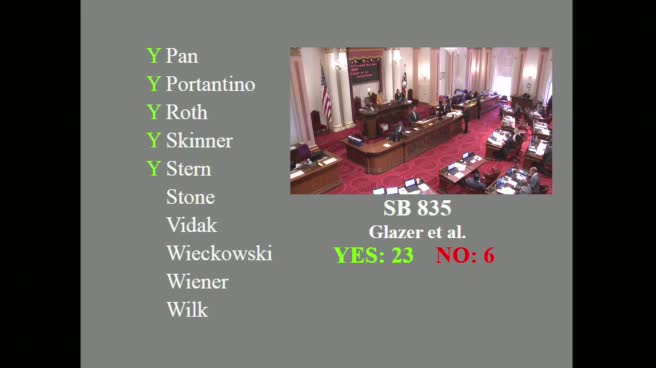 3MIN
Senate Floor
 5MIN
Assembly Floor
 1H
Assembly Standing Committee on Appropriations
 6MIN
Assembly Standing Committee on Transportation
 3MIN
Senate Floor
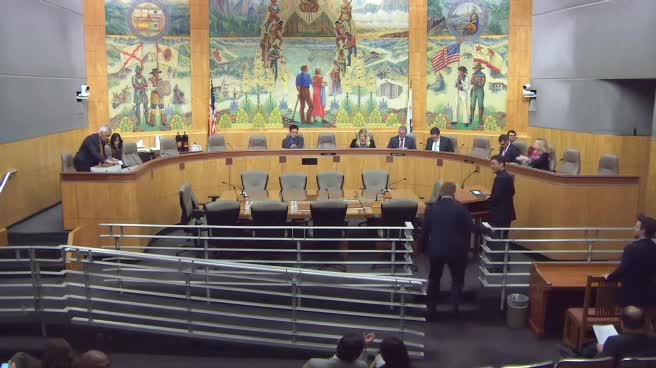 5MIN
Senate Standing Committee on Transportation and Housing
Bill Author