SB 997: Health care service plans: physician to enrollee ratios.
- Session Year: 2017-2018
- House: Senate
- Latest Version Date: 2018-07-20
Existing law, the Knox-Keene Health Care Service Plan Act of 1975, provides for the licensure and regulation of health care service plans by the Department of Managed Health Care and makes a willful violation of the act a crime.
Existing law requires a health care service plan to ensure that there is at least one full-time equivalent primary care physician for every 2,000 enrollees and authorizes the assignment of up to an additional 1,000 enrollees, as specified, to a primary care physician for each full-time equivalent nonphysician medical practitioner, as defined, supervised by that physician. Under existing law, these provisions repeal on January 1, 2019.
This bill would delete the repeal date, thereby continuing operation of these provisions indefinitely. By extending the operation of these requirements, the willful violation of which would be a crime, this bill would impose a state-mandated local program.
The California Constitution requires the state to reimburse local agencies and school districts for certain costs mandated by the state. Statutory provisions establish procedures for making that reimbursement.
This bill would provide that no reimbursement is required by this act for a specified reason.
Existing law, the Knox-Keene Health Care Service Plan Act of 1975, provides for the licensure and regulation of health care service plans by the Department of Managed Health Care and makes a willful violation of the act a crime.
Existing law requires a health care service plan to ensure that there is at least one full-time equivalent primary care physician for every 2,000 enrollees and authorizes the assignment of up to an additional 1,000 enrollees, as specified, to a primary care physician for each full-time equivalent nonphysician medical practitioner, as defined, supervised by that physician. Under existing law, these provisions repeal on January 1, 2019.
This bill would delete the repeal date, thereby continuing operation of these provisions indefinitely. By extending the operation of these requirements, the willful violation of which would be a crime, this bill would impose a state-mandated local program.
The California Constitution requires the state to reimburse local agencies and school districts for certain costs mandated by the state. Statutory provisions establish procedures for making that reimbursement.
This bill would provide that no reimbursement is required by this act for a specified reason.
Existing law, the Knox-Keene Health Care Service Plan Act of 1975, provides for the licensure and regulation of health care service plans by the Department of Managed Health Care and makes a willful violation of the act a crime.
Existing law requires a health care service plan to ensure that there is at least one full-time equivalent primary care physician for every 2,000 enrollees and authorizes the assignment of up to an additional 1,000 enrollees, as specified, to a primary care physician for each full-time equivalent nonphysician medical practitioner, as defined, supervised by that physician. Under existing law, these provisions repeal on January 1, 2019.
This bill would delete the repeal date, thereby continuing operation of these provisions indefinitely. By extending the operation of these requirements, the willful violation of which would be a crime, this bill would impose a state-mandated local program.
The California Constitution requires the state to reimburse local agencies and school districts for certain costs mandated by the state. Statutory provisions establish procedures for making that reimbursement.
This bill would provide that no reimbursement is required by this act for a specified reason.
(a)A health care service plan shall ensure that there is at least one full-time equivalent primary care physician for every 2,000 enrollees of the plan. The number of enrollees per primary care physician may be increased by up to 1,000 additional enrollees for each full-time equivalent nonphysician medical practitioner supervised by that primary care physician.
(b)This section shall not require a primary care physician to accept an assignment of enrollees by a health care service plan without his or her approval, or that would be contrary to paragraph (2) of subdivision (b) of Section 1375.7.
(c)This section does not modify subdivision (e) of Section 2836.1 of the Business and Professions Code or subdivision (b) of Section 3516 of the Business and Professions Code.
(d)For purposes of this section, a primary care provider includes a nonphysician medical practitioner, which is defined as a physician assistant performing services under the supervision of a primary care physician in compliance with Chapter 7.7 (commencing with Section 3500) of Division 2 of the Business and Professions Code or a nurse practitioner performing services in collaboration with a physician pursuant to Chapter 6 (commencing with Section 2700) of Division 2 of the Business and Professions Code.
SEC. 2.No reimbursement is required by this act pursuant to Section 6 of Article XIIIB of the California Constitution because the only costs that may be incurred by a local agency or school district will be incurred because this act creates a new crime or infraction, eliminates a crime or infraction, or changes the penalty for a crime or infraction, within the meaning of Section 17556 of the Government Code, or changes the definition of a crime within the meaning of Section 6 of Article XIIIB of the California Constitution.
(a)A health care service plan shall ensure that there is at least one full-time equivalent primary care physician for every 2,000 enrollees of the plan. The number of enrollees per primary care physician may be increased by up to 1,000 additional enrollees for each full-time equivalent nonphysician medical practitioner supervised by that primary care physician.
(b)This section shall not require a primary care physician to accept an assignment of enrollees by a health care service plan without his or her approval, or that would be contrary to paragraph (2) of subdivision (b) of Section 1375.7.
(c)This section does not modify subdivision (e) of Section 2836.1 of the Business and Professions Code or subdivision (b) of Section 3516 of the Business and Professions Code.
(d)For purposes of this section, a primary care provider includes a nonphysician medical practitioner, which is defined as a physician assistant performing services under the supervision of a primary care physician in compliance with Chapter 7.7 (commencing with Section 3500) of Division 2 of the Business and Professions Code or a nurse practitioner performing services in collaboration with a physician pursuant to Chapter 6 (commencing with Section 2700) of Division 2 of the Business and Professions Code.
SEC. 2.No reimbursement is required by this act pursuant to Section 6 of Article XIIIB of the California Constitution because the only costs that may be incurred by a local agency or school district will be incurred because this act creates a new crime or infraction, eliminates a crime or infraction, or changes the penalty for a crime or infraction, within the meaning of Section 17556 of the Government Code, or changes the definition of a crime within the meaning of Section 6 of Article XIIIB of the California Constitution.
(a)A health care service plan shall ensure that there is at least one full-time equivalent primary care physician for every 2,000 enrollees of the plan. The number of enrollees per primary care physician may be increased by up to 1,000 additional enrollees for each full-time equivalent nonphysician medical practitioner supervised by that primary care physician.
(b)This section shall not require a primary care physician to accept an assignment of enrollees by a health care service plan without his or her approval, or that would be contrary to paragraph (2) of subdivision (b) of Section 1375.7.
(c)This section does not modify subdivision (e) of Section 2836.1 of the Business and Professions Code or subdivision (b) of Section 3516 of the Business and Professions Code.
(d)For purposes of this section, a primary care provider includes a nonphysician medical practitioner, which is defined as a physician assistant performing services under the supervision of a primary care physician in compliance with Chapter 7.7 (commencing with Section 3500) of Division 2 of the Business and Professions Code or a nurse practitioner performing services in collaboration with a physician pursuant to Chapter 6 (commencing with Section 2700) of Division 2 of the Business and Professions Code.
(e)This section shall remain in effect only until January 1, 2019, and as of that date is repealed, unless a later enacted statute, that is enacted before January 1, 2019, deletes or extends that date.SEC. 2.No reimbursement is required by this act pursuant to Section 6 of Article XIIIB of the California Constitution because the only costs that may be incurred by a local agency or school district will be incurred because this act creates a new crime or infraction, eliminates a crime or infraction, or changes the penalty for a crime or infraction, within the meaning of Section 17556 of the Government Code, or changes the definition of a crime within the meaning of Section 6 of Article XIIIB of the California Constitution.
|
Date
|
Status
|
|---|---|
| Jul 20, 2018 | Chaptered by Secretary of State. Chapter 152, Statutes of 2018. |
| Jul 20, 2018 | Approved by the Governor. |
| Jul 11, 2018 | Enrolled and presented to the Governor at 4 p.m. |
| Jul 5, 2018 | In Senate. Ordered to engrossing and enrolling. |
| Jul 5, 2018 | Read third time. Passed. Ordered to the Senate. |
| Jun 28, 2018 | Read second time. Ordered to consent calendar. |
| Jun 27, 2018 | From committee: Do pass. Ordered to consent calendar. (Ayes 16. Noes 0.) (June 27). |
| Jun 20, 2018 | From committee: Do pass and re-refer to Com. on APPR. with recommendation: To consent calendar. (Ayes 15. Noes 0.) (June 19). Re-referred to Com. on APPR. |
| May 25, 2018 | Referred to Com. on HEALTH. |
| May 17, 2018 | In Assembly. Read first time. Held at Desk. |
| May 17, 2018 | Read third time. Passed. (Ayes 37. Noes 0.) Ordered to the Assembly. |
| May 15, 2018 | Read second time. Ordered to consent calendar. |
| May 14, 2018 | From committee: Be ordered to second reading pursuant to Senate Rule 28.8 and ordered to consent calendar. |
| May 4, 2018 | Set for hearing May 14. |
| Mar 14, 2018 | From committee: Do pass and re-refer to Com. on APPR. with recommendation: To consent calendar. (Ayes 9. Noes 0.) (March 14). Re-referred to Com. on APPR. |
| Feb 28, 2018 | Set for hearing March 14. |
| Feb 14, 2018 | Referred to Com. on HEALTH. |
| Feb 6, 2018 | From printer. May be acted upon on or after March 8. |
| Feb 5, 2018 | Introduced. Read first time. To Com. on RLS. for assignment. To print. |
|
Date
|
Description
|
Location
|
Votes
|
|
|---|---|---|---|---|
| Jul 5, 2018 | SB 997 Monning Consent Calendar Second Day Regular Session | Assembly Floor |
Passed |
|
| Jun 27, 2018 | Do pass. To Consent Calendar. | Assembly Standing Committee on Appropriations |
Passed |
|
| Jun 19, 2018 | Do pass and be re-referred to the Committee on [Appropriations] with recommendation: To Consent Calendar | Assembly Standing Committee on Health |
Passed |
|
| May 17, 2018 | Consent Calendar SB997 | Senate Floor |
Passed |
|
| Mar 14, 2018 | Do pass, but first be re-referred to the Committee on [Appropriations] with the recommendation: To Consent Calendar | Senate Standing Committee on Health |
Passed |
This list shows positions taken on this bill by organizations on the date displayed, which is linked to the original source.
Positions by individuals are not included.
|
Organization
|
Position
|
Date
|
|---|---|---|
| America'S Physician Groups | ** Support | Jun 15, 2018 |
| Blue Shield Of California | ** Support | Jun 15, 2018 |
| California Academy of Physician Assistants | ** Support | Jun 15, 2018 |
Date of Hearing: June 27, 2018
ASSEMBLY COMMITTEE ON APPROPRIATIONS
Lorena Gonzalez Fletcher, Chair
SBPCA Bill Id:SB 997
Author:(Monning) – As Introduced Ver:February 5, 2018
Policy Committee: | Health | Vote: | 15 - 0 |
Urgency: No State Mandated Local Program: Yes Reimbursable: No
SUMMARY:
This bill deletes the January 1, 2019 sunset date on existing requirements that a health plan ensure a minimum ratio of primary care providers to enrollees.
FISCAL EFFECT:
Negligible.
COMMENTS:
- Purpose. This bill is sponsored by the California Academy of Physician Assistants, who note current law, which sunsets January 1, 2019, has increased provider access and health plan compliance with laws mandating timely access to health care. This bill was introduced to delete the sunset. It has no opposition.
- Background. SB 494 (Monning), Chapter 684, Statutes of 2013, required a health plan licensed by Department of Managed Health Care (DMHC) to ensure one primary care physician for every 2,000 enrollees. It also authorized up to an additional 1,000 enrollees for each full-time-equivalent non-physician medical providers supervised by that primary care physician. Such providers can be nurse practitioners or physician assistants. These provisions sunset January 1, 2019. The DMHC oversees health plan compliance with the minimum provider ratios, as well as standards that require care be accessible within certain time standards.
Analysis Prepared by: Lisa Murawski / APPR. / (916) 319-2081
Date of Hearing: June 19, 2018
ASSEMBLY COMMITTEE ON HEALTH
Jim Wood, Chair
SBPCA Bill Id:SB 997
Author:(Monning) – As Introduced Ver:February 5, 2018
SENATE VOTE: 38-0
SUBJECT: Health care service plans: physician to enrollee ratios.
SUMMARY: Deletes the January 1, 2019 sunset date in existing law and makes permanent the requirement that a health care service plan (health plan) ensure that there are at least one full-time equivalent primary care physician (PCP) for every 2,000 enrollees of the health plan and permits an additional 1,000 enrollees for each full-time equivalent nonphysician medical practitioner (nurse practitioners (NPs) or Physician Assistants (PAs)).
EXISTING LAW:
- Establishes the Department of Managed Health Care (DMHC) to regulate health plans.
- Requires all services to be readily available at reasonable times to each enrollee consistent with good professional practice, and to the extent feasible, a health plan to make all services readily accessible to all enrollees consistent with existing law on timely access to health care services.
- Requires a health plan to ensure that there is at least one full-time equivalent PCP for every 2,000 enrollees, and permits the number of enrollees per PCP to be increased by up to 1,000 additional enrollees for each full-time equivalent nonphysician medical practitioner supervised by that PCP.
- States that 3), above, does not require a PCP to accept an assignment of enrollees by a health plan without his or her approval, or that would be contrary to existing providers bill of rights law which specifies terms that cannot be included in a contract between a health plan and a health care provider for health care services to a plan enrollee.
- Defines a “nonphysician medical practitioner” as a PA performing services under the supervision of a PCP in compliance with existing law, as specified, or a NP performing services in collaboration with a physician pursuant to existing law. Indicates “primary care provider” includes a nonphysician medical practitioner.
- Sunsets 3) to 5) above on January 1, 2019.
- Requires DMHC, in developing timely access standards, to consider clinical appropriateness, the nature of the specialty, the urgency of care, and the requirements of other provisions of law, including provisions governing utilization review that may affect timeliness of access.
- Requires DMHC to develop and adopt regulations to ensure that enrollees have access to health care services in a timely manner and consider the following as indicators of timeliness of access to care:
- Waiting times for appointments with physicians, including primary care and specialty physicians;
- Timeliness of care in an episode of illness, including the timeliness of referrals and obtaining other services, if needed; and,
- Waiting time to speak to a physician, registered nurse, or other qualified health professional acting within his or her scope of practice who is trained to screen or triage an enrollee who may need care.
FISCAL EFFECT: According to the Senate Appropriations Committee, pursuant to Senate Rule 28.8, negligible state costs.
COMMENTS:
- PURPOSE OF THIS BILL. According to the author, the law which requires a health plan to ensure that there is at least one full-time equivalent PCP for every 2,000 enrollees, and permits the number of enrollees per PCP to be increased by up to 1,000 additional enrollees for each full-time equivalent nonphysician medical practitioner supervised by that PCP, was introduced to make California law consistent with federal Patient Protection and Affordable Care Act’s (ACA) definitions of primary care provider, assist with California’s primary care provider workforce shortage, and help meet the needs of newly insured Californians seeking services as a result of the ACA. California continues to be in the midst of a well-documented shortage of primary care providers and a serious misdistribution of specialists in the state. Current health care workforce deficits compromise access to care in many areas and impede adherence to state-imposed timely access. Many of the challenges facing California at the time the original law was enacted are still true today and will continue through the foreseeable future. This bill will ensure that physician panels can continue to be increased to reflect the use of nonphysician medical practitioners.
- BACKGROUND.
- Primary care provider supply. According to a February 2017 report of the Healthforce Center at the University of California San Francisco (UCSF), California had 44,364 primary care clinicians in 2016, composed of 25,949 primary care medical doctors, 3,830 primary care osteopathic doctors, 12,442 primary care NPs, and 2,143 PAs. For medical doctors, this figure includes all medical doctors who provide patient care, not just those who provide 20 hours or more per week, to better align the estimates with the estimate of numbers of osteopathic doctors, NPs, and PAs. While medical doctors make up the greatest number of licensed primary care clinicians, only 36% of medical doctors who provide patient care more than 20 hours per week are PCPs. The percentage of PAs in California who provide primary care is also small at 22%. In contrast, approximately 60% of osteopathic doctors and 64% of NPs provide primary care.
A second study published by the Healthforce Center at UCSF in August of 2017 indicates that California will likely face a statewide shortfall of primary care clinicians in the next 15 years. Some regions may face greater shortages than others because providers are not evenly distributed across all regions of the state. In 2030, California is projected to have 78,000 to 103,000 primary care clinicians (approximately 34,000 to 46,000 full time equivalent clinicians). By 2030, NPs and PAs will comprise nearly half of California’s primary care clinicians. Californians are projected to demand 12% to 17% more primary care clinician full time equivalents by 2030. The Central Valley and Central Coast regions and the Southern Border regions are projected to have the worst shortages. - Select Committee. In March 2017, California Assembly Speaker Anthony Rendon appointed a Select Committee on Health Care Delivery Systems and Universal Coverage (Select Committee) to identify the best and quickest path to universal coverage for California and to explore strategies for improving the health care system. The California State Assembly contracted with the University of California San Francisco in order to provide a report (UC report) to the Select Committee summarizing the Select Committee's hearings, including any findings and potential options.
The UC report states that California has made great progress in reducing the number of uninsured but has not yet achieved universal coverage. In high-performing health care systems around the globe, universal coverage is essential for ensuring access to care, improving outcomes and controlling costs. In the U.S., approximately two-thirds of physicians are specialists and approximately one-third in primary care, a ratio that is reversed in many Western European countries. The difference between the U.S. and other countries mirrors differences across countries in relative incomes of primary care and specialist physicians. A strong primary care system, a comprehensive basic benefit package, provider payments that reward better health outcomes, a strong social safety net and administrative simplicity are other important ingredients for high performance. The UC report contends that California could take short-term steps and establish a longer term roadmap for system transformation.
- Primary care provider supply. According to a February 2017 report of the Healthforce Center at the University of California San Francisco (UCSF), California had 44,364 primary care clinicians in 2016, composed of 25,949 primary care medical doctors, 3,830 primary care osteopathic doctors, 12,442 primary care NPs, and 2,143 PAs. For medical doctors, this figure includes all medical doctors who provide patient care, not just those who provide 20 hours or more per week, to better align the estimates with the estimate of numbers of osteopathic doctors, NPs, and PAs. While medical doctors make up the greatest number of licensed primary care clinicians, only 36% of medical doctors who provide patient care more than 20 hours per week are PCPs. The percentage of PAs in California who provide primary care is also small at 22%. In contrast, approximately 60% of osteopathic doctors and 64% of NPs provide primary care.
The UC report stated that additional steps would be needed to overcome physician workforce shortages in underserved areas. Some of this might be addressed by producing more physicians, but this is a lengthy and expensive process. There is also no guarantee at the end of that training that these newly minted clinicians would enter primary care or work in a rural area. NPs and other mid-level clinicians may be a part of the solution but the same issues arise in terms of a long training period and a disincentive to enter into primary care or to work in rural areas. To overcome workforce shortages California needs a comprehensive strategy, utilizing incentives to overcome the market forces that discourage physicians and other clinicians from specializing in primary care and practicing in underserved areas. Such an approach could include incentives: i) to ensure that the physician training pipeline includes individuals who are interested and prepared for these roles; ii) to reduce the financial and practice barriers for individuals to enter in these roles; and, iii) through physician payment policies which can sustain them in these roles over time.
- Primary Care. The New England Journal of Medicine notes that a large body of evidence suggests that greater investment in primary care is good for patients and health systems. Greater use of primary care has been associated with lower costs, higher patient satisfaction, fewer hospitalizations and emergency department visits, and lower mortality. Within the U.S., health care markets with a larger percentage of primary care physicians have lower spending and higher quality of care. Despite this evidence, the U.S. continues to undervalue primary care. A recent Commonwealth Fund analysis identified underinvestment in primary care as one of four fundamental reasons that the U.S. health system ranks last among high-income countries. Compared with peer countries, the U.S. has fewer primary care clinicians than specialists, along with larger income disparities between the two groups of providers, and provides fewer services in the primary care setting. Although the ACA introduced a number of payment and regulatory changes that offer incentives to invest in primary care, they have not been enough to fix this foundational problem.
- Network Access and Availability. Under existing law and regulations, health plans are required to ensure geographic access to health care services and a sufficient number of providers located within a reasonable distance from where each enrollee lives or works. Specifically, regulations require PCPs and hospitals to be located within 15 miles or 30 minutes from an enrollee’s work or home. Health plans must also ensure provider capacity in that its network has enough of each of the right types of providers to deliver the volume of services needed. For example, existing regulations require at least one full time equivalent PCP for each two thousand enrollees.
Timely access regulations also require that health plans meet a set of standards which include specific time frames under which enrollees must be able to access care, including access to urgent and non-urgent care appointments, as well as the availability of telephone triage or screening services during and after regular business hours. To show compliance with the standards, health plans submit annual compliance reports to the DMHC. DMHC also reviews for compliance with these standards as part of their routine medical survey which is conducted at least once every three years. In the DMHC’s most recent Timely Access Report published for Measurement Year 2016, 36 full service health plans show survey results for primary care providers meeting appointment wait time standards across both urgent and non-urgent appointment types. The survey data charts show provider responses to appointment availability requests where if a health plan’s survey results show 72%, this means that the data indicated that 72% of the time, a provider responded during the survey that an appointment was available within the appointment wait time standard. The survey results reflect only a point in time based on the providers surveyed. The report indicates that four plans scored 90% or higher, meaning 90% or more of the time, a provider responded that an appointment was available within the wait time standard. Seven plans scored below 60%, meaning 60% or less of the time, a provider responded that an appointment was available within the wait time standard. The remaining 25 plans scores ranged from 88% to 63%. DMHC is still working with the plans to improve the accuracy and completeness of this data. In time this data can help DMHC identify primary care provider access issues as well as access issues for other types of providers and services.
- SUPPORT. The California Academy of Physician Assistants, sponsor of this bill, states that health plans have utilized this law to increase provider access and compliance with timely access laws, thereby reducing the state’s reliance on or use of costlier care in emergency rooms. Blue Shield of California states that with the acute shortage of PCPs in California, promoting the appropriate use of non-physician medical practitioners will go a long way to help improve timely access to routine care for members.
- RELATED LEGISLATION. AB 2895 (Arambula) would have established the Primary Care Spending Transparency Act, and would have required a health plan and health insurer to annually report its total primary care expenditures and other specified information to specified departments. AB 2895 was held in the Assembly Appropriations Committee.
- PREVIOUS LEGISLATION.
- SB 494 (Monning), Chapter 684, Statutes of 2013, requires a health plan licensed by DMHC to ensure one primary care physician for every 2,000 enrollees and authorizes up to an additional 1,000 enrollees for each full-time equivalent non-physician medical practitioner supervised by that PCP until January 1, 2019.
- SB 964 (Ed Hernandez), Chapter 573, Statutes of 2014, increases oversight of health plans with respect to compliance with timely access and provider network adequacy standards.
- AB 2179 (Cohn), Chapter 797, Statutes of 2002, requires DMHC and the California Department of Insurance to develop and adopted regulations to ensure that enrollees have access to needed health care services.
REGISTERED SUPPORT / OPPOSITION:
Support
California Academy of Physician Assistants (sponsor)
America’s Physician Groups
Blue Shield of California
Opposition
None on file.
Analysis Prepared by: Kristene Mapile / HEALTH / (916) 319-2097
Office of Senate Floor Analyses (916) 651-1520 Fax: (916) 327-4478 | SB |
CONSENT
Bill No: SB 997
:
SENATE HEALTH COMMITTEE: 9-0, 3/14/18
AYES: Hernandez, Nguyen, Leyva, Mitchell, Monning, Newman, Nielsen, Pan, Roth
SENATE APPROPRIATIONS COMMITTEE: Senate Rule 28.8
DIGEST:
This bill removes the sunset date on existing law that requires at least one full-time equivalent primary care physician for every 2,000 health plan enrollees and permits an additional 1,000 enrollees for each full-time equivalent nonphysician medical practitioner.
Existing law:
- Establishes the Department of Managed Health Care (DMHC) to regulate health plans. [HSC §1340, et. seq.]
- Requires all services to be readily available at reasonable times to each enrollee consistent with good professional practice, and to the extent feasible, a health plan to make all services readily accessible to all enrollees consistent with existing law on timely access to health care services. [HSC §1367 (e)(1)]
- Requires a health plan to ensure that there is at least one full-time equivalent primary care physician for every 2,000 enrollees, and permits the number of enrollees per primary care physician to be increased by up to 1,000 additional enrollees for each full-time equivalent nonphysician medical practitioner supervised by that primary care physician. [HSC §1375.9 (a)]
- States that 3), above, does not require a primary care physician to accept an assignment of enrollees by a health plan without his or her approval, or that would be contrary to the Health Care Providers’ Bill of Rights, which specifies terms that cannot be included in a contract between a health plan and a health care provider for health care services to a plan enrollee. [HSC §1375.9 (b)]
- Defines a “nonphysician medical practitioner” as a physician assistant performing services under the supervision of a primary care physician in compliance with existing law, as specified, or a nurse practitioner performing services in collaboration with a physician pursuant to existing law. Indicates “primary care provider” includes a nonphysician medical practitioner. [HSC §1375.9 (d)]
- Sunsets these provisions on January 1, 2019. [HSC §1375.9 (e)]
This bill deletes the sunset for 3) through 5), above, in existing law.
Comments
- Author’s statement. According to the author, the original law was introduced to make California law consistent with federal Affordable Care Act (ACA) definitions of primary care provider, to assist with California’s primary care provider workforce shortage, and to help meet the needs of newly insured Californians seeking services as a result of the ACA. California continues to be in the midst of a well-documented shortage of primary care providers and a serious misdistribution of specialists in the state. Current health care workforce deficits compromise access to care in many areas and impede adherence to state-imposed timely access. Many of the challenges facing California at the time the original law was enacted are still true today and will continue through the foreseeable future. This bill will ensure that physician panels can continue to be increased to reflect the use of nonphysician medical practitioners.
- Primary care provider supply. According to a February 2017 report of the Healthforce Center at UCSF (University of California San Francisco), California had 44,364 primary care clinicians in 2016, composed of 25,949 primary care medical doctors, 3,830 primary care osteopathic doctors, 12,442 primary care nurse practitioners, and 2,143 primary care physician assistants. For medical doctors, this figure includes all medical doctors who provide patient care, not just those who provide 20 hours or more per week, to better align the estimates with estimates of numbers of osteopathic doctors, nurse practitioners, and physician assistants. While medical doctors make up the greatest number of licensed primary care clinicians, only 36% of medical doctors who provide patient care more than 20 hours per week are primary care physicians. The percentage of physician assistants in California who provide primary care is also small 22%. In contrast, approximately 60% of osteopathic doctors and 64% of nurse practitioners provide primary care.
A second study published by the Healthforce Center at UCSF in August of 2017 indicates that California will likely face a statewide shortfall of primary care clinicians in the next 15 years. Some regions may face greater shortages than others because providers are not evenly distributed across all regions of the state. In 2030, California is projected to have 78,000 to 103,000 primary care clinicians (approximately 34,000 to 46,000 full time equivalent clinicians. By 2030, nurse practitioners and physician assistants will comprise nearly half of California’s primary care clinicians. Californians are projected to demand 12% to 17% more primary care clinician full time equivalents by 2030. The Central Valley and Central Coast regions and the Southern Border regions are projected to have the worst shortages.
- Timely access. California Code of Regulations Title 28 §1300.51 requires all health plan enrollees to have a residence or workplace within 30 minutes or 15 miles of a contracting or plan-operated primary care provider in such numbers and distribution as to accord to all enrollees a ratio of at least one primary care provider (on a full-time equivalent basis) to each 2,000 enrollees. The timely access regulations also require that health plans meet a set of standards which include specific timeframes under which enrollees must be able to access care, including access to urgent and non-urgent care appointments, as well as the availability of telephone triage or screening services during and after regular business hours. To show compliance with the standards, health plans submit annual compliance reports to the DMHC. DMHC also reviews for compliance with these standards as part of their routine medical survey which is conducted at least once every three years. In the DMHC’s most recent Timely Access Report published for Measurement Year 2016, 36 full-service health plans show survey results for primary care providers meeting appointment wait time standards across both urgent and non-urgent appointment types. The survey data charts show provider responses to appointment availability requests where if a health plan’s survey results show 72%, this means that the data indicated that 72% of the time, a provider responded during the survey that an appointment was available within the appointment wait time standard. The survey results reflect only a point in time based on the providers surveyed. Chart 4 on page 10 of the report indicates that four plans scored 90% or higher, meaning 90% or more of the time, a provider responded that an appointment was available within the wait time standard. Seven plans scored below 60%, meaning 60% or less of the time, a provider responded that an appointment was available within the wait time standard. The remaining 25 plans scores ranged from 88% to 63%. DMHC is still working with the plans to improve the accuracy and completeness of this data. In time this data can help DMHC identify primary care provider access issues as well as access issues for other types of providers and services.
Related/Prior Legislation
SB 964 (Hernandez, Chapter 573, Statutes of 2014) increased oversight of health plans with respect to compliance with timely access and provider network adequacy standards.
SB 494 (Monning, Chapter 684, Statutes of 2013) required a health plan licensed by DMHC to ensure one primary care physician for every 2,000 enrollees and authorizes up to an additional 1,000 enrollees for each full-time equivalent non-physician medical practitioner supervised by that PCP until January 1, 2019. SB 494 also stated for purposes of Medi-Cal managed care plans, as defined, non-physician medical practitioner means a physician assistant performing services under physician supervision in compliance with existing law, a nurse practitioner performing services in collaboration with a physician pursuant to existing law, or a certified nurse-midwife performing services under physician supervision in compliance with existing law.
AB 2179 (Cohn, Chapter 797, Statutes of 2002) required DMHC and the California Department of Insurance to develop and adopted regulations to ensure that enrollees have access to needed health care services.
FISCAL EFFECT: Appropriation: Fiscal Com.: Local:
America's Physician Groups
Blue Shield of California
California Academy of Physician Assistants
OPPOSITION: (Verified 5/15/18)
None received
ARGUMENTS IN SUPPORT: The California Academy of Physician Assistants (CAPA) writes that health plans have utilized this law to increase provider access and compliance with Timely Access laws, thereby reducing the state’s reliance on or use of costlier care in emergency rooms. CAPA is seeking to remove the sunset that was included in the original law.
Blue Shield of California writes that allowing a health plan to increase the number of patients assigned to a primary care provider helps with access challenges by improving member access to primary care services and providing a consistent and standardized way to calculate the capacity of a primary care physician’s panel. When nonphysician medical practitioners are on staff, the office can triage patients and allow more time for physicians to provide care to the sicker patients. With the acute shortage of primary care physicians in California, promoting the appropriate use of nonphysician medical practitioners will go a long way to help improve timely access to routine care for members, while helping control costs and reduce the strain in our overburdened health care delivery system.
5/16/18 10:54:30
**** END ****
SENATE COMMITTEE ON HEALTH
Senator Ed Hernandez, O.D., Chair
BILL NO: SB 997
AUTHOR: | Monning | ||
VERSION: | February 5, 2018 | ||
HEARING DATE: | March 14, 2018 | ||
CONSULTANT: | Teri Boughton | ||
SUBJECT: Health care service plans: physician to enrollee ratios
SUMMARY:
Removes the sunset date on existing law that requires at least one full-time equivalent primary care physician for every 2,000 health plan enrollees and permits an additional 1,000 enrollees for each full-time equivalent nonphysician medical practitioner.
Existing law:
- Establishes the Department of Managed Health Care (DMHC) to regulate health plans. [HSC §1340, et. seq.]
- Requires all services to be readily available at reasonable times to each enrollee consistent with good professional practice, and to the extent feasible, a health plan to make all services readily accessible to all enrollees consistent with existing law on timely access to health care services. [HSC §1367 e (1)]
- Requires a health plan to ensure that there is at least one full-time equivalent primary care physician for every 2,000 enrollees, and permits the number of enrollees per primary care physician to be increased by up to 1,000 additional enrollees for each full-time equivalent nonphysician medical practitioner supervised by that primary care physician. [HSC § 1375.9 (a)]
- States that 3) above does not require a primary care physician to accept an assignment of enrollees by a health plan without his or her approval, or that would be contrary to the Health Care Providers’ Bill of Rights, which specifies terms that cannot be included in a contract between a health plan and a health care provider for health care services to a plan enrollee. [HSC § 1375.9 (b)]
- Defines a “nonphysician medical practitioner” as a physician assistant performing services under the supervision of a primary care physician in compliance with existing law, as specified, or a nurse practitioner performing services in collaboration with a physician pursuant to existing law. Indicates “primary care provider” includes a nonphysician medical practitioner. [HSC § 1375.9 (d)]
- Sunsets these provisions on January 1, 2019. [HSC § 1375.9 (e)]
This bill: Deletes the sunset for 3) through 5) above in existing law.
FISCAL EFFECT:
This bill has not been analyzed by a fiscal committee.
COMMENTS:
- Author’s statement. According to the author, the original law was introduced to make California law consistent with federal Affordable Care Act (ACA) definitions of primary care provider, to assist with California’s primary care provider workforce shortage, and to help meet the needs of newly insured Californians seeking services as a result of the ACA. California continues to be in the midst of a well-documented shortage of primary care providers and a serious misdistribution of specialists in the state. Current health care workforce deficits compromise access to care in many areas and impede adherence to state-imposed timely access. Many of the challenges facing California at the time the original law was enacted are still true today and will continue through the foreseeable future. This bill will ensure that physician panels can continue to be increased to reflect the use of nonphysician medical practitioners.
- Primary care provider supply. According to a February 2017 report of the Healthforce Center at UCSF (University of California San Francisco), California had 44,364 primary care clinicians in 2016, composed of 25,949 primary care medical doctors, 3,830 primary care osteopathic doctors, 12,442 primary care nurse practitioners, and 2,143 primary care physician assistants. For medical doctors, this figure includes all medical doctors who provide patient care, not just those who provide 20 hours or more per week, to better align the estimates with estimates of numbers of osteopathic doctors, nurse practitioners, and physician assistants. While medical doctors make up the greatest number of licensed primary care clinicians, only 36% of medical doctors who provide patient care more than 20 hours per week are primary care physicians. The percentage of physician assistants in California who provide primary care is also small 22%. In contrast, approximately 60% of osteopathic doctors and 64% of nurse practitioners provide primary care.
A second study published by the Healthforce Center at UCSF in August of 2017 indicates that California will likely face a statewide shortfall of primary care clinicians in the next 15 years. Some regions may face greater shortages than others because providers are not evenly distributed across all regions of the state. In 2030, California is projected to have 78,000 to 103,000 primary care clinicians (approximately 34,000 to 46,000 full time equivalent clinicians. By 2030, nurse practitioners and physician assistants will comprise nearly half of California’s primary care clinicians. Californians are projected to demand 12% to 17% more primary care clinician full time equivalents by 2030. The Central Valley and Central Coast regions and the Southern Border regions are projected to have the worst shortages. - Timely access. California Code of Regulations Title 28 §1300.51 requires all health plan enrollees to have a residence or workplace within 30 minutes or 15 miles of a contracting or plan-operated primary care provider in such numbers and distribution as to accord to all enrollees a ratio of at least one primary care provider (on a full-time equivalent basis) to each 2,000 enrollees. The timely access regulations also require that health plans meet a set of standards which include specific time frames under which enrollees must be able to access care, including access to urgent and non-urgent care appointments, as well as the availability of telephone triage or screening services during and after regular business hours. To show compliance with the standards, health plans submit annual compliance reports to the DMHC. DMHC also reviews for compliance with these standards as part of their routine medical survey which is conducted at least once every three years. In the DMHC’s most recent Timely Access Report published for Measurement Year 2016, 36 full service health plans show survey results for primary care providers meeting appointment wait time standards across both urgent and non-urgent appointment types. The survey data charts show provider responses to appointment availability requests where if a health plan’s survey results show 72%, this means that the data indicated that 72% of the time, a provider responded during the survey that an appointment was available within the appointment wait time standard. The survey results reflect only a point in time based on the providers surveyed. Chart 4 on page 10 of the report indicates that four plans scored 90% or higher, meaning 90% or more of the time, a provider responded that an appointment was available within the wait time standard. Seven plans scored below 60%, meaning 60% or less of the time, a provider responded that an appointment was available within the wait time standard. The remaining 25 plans scores ranged from 88% to 63%. DMHC is still working with the plans to improve the accuracy and completeness of this data. In time this data can help DMHC identify primary care provider access issues as well as access issues for other types of providers and services.
- Prior legislation. SB 494 (Monning, Chapter 684, Statutes of 2013) requires a health plan licensed by DMHC to ensure one primary care physician for every 2,000 enrollees and authorizes up to an additional 1,000 enrollees for each full-time equivalent non-physician medical practitioner supervised by that PCP until January 1, 2019. SB 494 also states for purposes of Medi-Cal managed care plans, as defined, non-physician medical practitioner means a physician assistant performing services under physician supervision in compliance with existing law, a nurse practitioner performing services in collaboration with a physician pursuant to existing law, or a certified nurse-midwife performing services under physician supervision in compliance with existing law.
SB 964 (Hernandez, Chapter 573, Statutes of 2014) increases oversight of health plans with respect to compliance with timely access and provider network adequacy standards.
AB 2179 (Cohn, Chapter 797, Statutes of 2002) requires DMHC and the California Department of Insurance to develop and adopted regulations to ensure that enrollees have access to needed health care services.
- Support. The California Academy of PAs (CAPA) writes that health plans have utilized this law to increase provider access and compliance with Timely Access laws, thereby reducing the state’s reliance on or use of costlier care in emergency rooms. CAPA is seeking to remove the sunset that was included in the original law. Blue Shield of California writes that allowing a health plan to increase the number of patients assigned to a primary care provider helps with access challenges by improving member access to primary care services and providing a consistent and standardized way to calculate the capacity of a primary care physician’s panel. When nonphysician medical practitioners are on staff, the office can triage patients and allow more time for physicians to provide care to the sicker patients. With the acute shortage of primary care physicians in California, promoting the appropriate use of nonphysician medical practitioners will go a long way to help improve timely access to routine care for members, while helping control costs and reduce the strain in our overburdened health care delivery system.
SUPPORT AND OPPOSITION:
Support: California Academy of Physician Assistants (sponsor)
America's Physician Groups
Blue Shield of California
Oppose: None received
-- END --
Bill Author
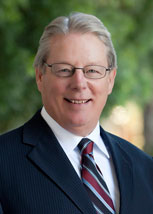
Bill Co-Author(s):