SCR 117: Mendez v. Westminster School District Day.
- Session Year: 2017-2018
- House: Senate
- Latest Version Date: 2018-05-23
This measure would designate April 14, 2018, as Mendez v. Westminster School District Day.
This measure would designate April 14, 2018, as Mendez v. Westminster School District Day.
This measure would designate April 14, 2018, as Mendez v. Westminster School District Day.
WHEREAS, While Brown v. Board of Education of Topeka (1954) 347 U.S. 483 is a widely known landmark decision of the United States Supreme Court, few can trace its origins to the case of nineyearold Sylvia Mendez in Mendez v. Westminster School District of Orange County (S.D. Cal. 1946) 64 F.Supp 544, affirmed (9th Cir. 1947) 161 F.2d 774; and
WHEREAS, Sylvias case, which was decided in the federal courts located in California, preceded Brown v. Board of Education by about eight years. Thurgood Marshall, who later represented Linda Brown, wrote an amicus brief in favor of Sylvias case. Marshall used some of the same arguments in Mendez v. Westminster School District to win Brown v. Board of Education; and
WHEREAS, Sylvia Mendez, who received the Presidential Medal of Freedom at a 2011 White House ceremony, was a child when she was turned away from a California public school for white students only. That rejection fueled her fathers determined journey through school, civic, and legal channels. Gonzalo Mendez, represented by a civil rights attorney, took four Los Angeles-area school districts to court and won a class action lawsuit at the trial and appellate levels of the federal court system; and
WHEREAS, Ms. Mendez carries on the legacy of Mendez v. Westminster School District when she explains that her parents taught her that we are all individuals; that we are all human beings; that we are all connected together; and that we all have the same rights, the same freedom; and
WHEREAS, During a two-week trial, the Mendez familys attorney, David Marcus, took the then-unusual approach of presenting social science evidence to support his argument that segregation resulted in feelings of inferiority among Mexican-American children that could undermine their ability to be productive Americans. United States District Court Judge Paul J. McCormick agreed with the plaintiffs and ordered that the school districts cease their discriminatory practices against the pupils of Mexican descent in the public schools within those districts; and
WHEREAS, In his decision, Judge McCormick wrote that [t]he equal protection of the laws pertaining to the public school system in California is not provided by furnishing in separate schools the same technical facilities, textbooks and courses of instruction to children of Mexican ancestry that are available to the other public school children regardless of their ancestry. A paramount requisite in the American system of public education is social equality. It must be open to all children by unified school association regardless of lineage; and
WHEREAS, The school districts appealed the case to the United States Court of Appeals for the Ninth Circuit. The Court of Appeals affirmed Judge McCormicks ruling. Two months later, California Governor Earl Warren signed a bill ending school segregation in California, making it the first state to officially desegregate its public schools; and
WHEREAS, While the case was pending before the United States Court of Appeals for the Ninth Circuit, several organizations, including the National Association for the Advancement of Colored People (NAACP) filed amicus curiae briefs. Thurgood Marshall wrote for the NAACP and, five years later, used similar reasoning before the United States Supreme Court in Brown v. Board of Education. The United States Supreme Court adopted many of Marshalls arguments and, in 1954, issued an opinion ending school segregation throughout the United States. Chief Justice Earl Warren wrote the opinion; and
WHEREAS, Sylvia Mendez went on to earn degrees in nursing and became the Assistant Nursing Director of the Pediatric Pavilion at the Los Angeles county and University of Southern California Medical Center. Since her retirement, she has dedicated her time to educating students about Mendez v. Westminster School District and encouraging young people to stay in school. In 2007, the United States Post Office issued a stamp commemorating Mendez v. Westminster School District. In 2009, the Los Angeles Unified School District dedicated a new high school in the eastern area of Los Angeles, the Felicitas and Gonzalo Mendez High School; now, therefore, be it
Resolved by the Senate of the State of California, the Assembly thereof concurring, That the Legislature hereby designates April 14, 2018, as Mendez v. Westminster School District Day in California; and be it further
Resolved, That the Secretary of the Senate transmit copies of this resolution to the author for appropriate distribution.
|
Date
|
Status
|
|---|---|
| May 23, 2018 | Chaptered by Secretary of State. Res. Chapter 70, Statutes of 2018. |
| May 23, 2018 | Enrolled and filed with the Secretary of State at 2:30 p.m. |
| May 17, 2018 | In Senate. Ordered to engrossing and enrolling. |
| May 17, 2018 | Read. Adopted. Ordered to the Senate. |
| May 10, 2018 | From committee: Be adopted. Ordered to consent calendar. (Ayes 9. Noes 0.) (May 10). |
| Apr 19, 2018 | Referred to Com. on RLS. |
| Apr 12, 2018 | In Assembly. Held at Desk. |
| Apr 12, 2018 | Read. Adopted. (Ayes 38. Noes 0.) Ordered to the Assembly. |
| Apr 4, 2018 | From committee: Ordered to third reading. |
| Mar 15, 2018 | Introduced. Referred to Com. on RLS. |
|
Date
|
Description
|
Location
|
Votes
|
|
|---|---|---|---|---|
| May 17, 2018 | SCR 117 Newman Consent Calendar Second Day Regular Session | Assembly Floor |
Passed |
|
| May 10, 2018 | Be adopted. To Consent Calendar. | Assembly Standing Committee on Rules |
Passed |
|
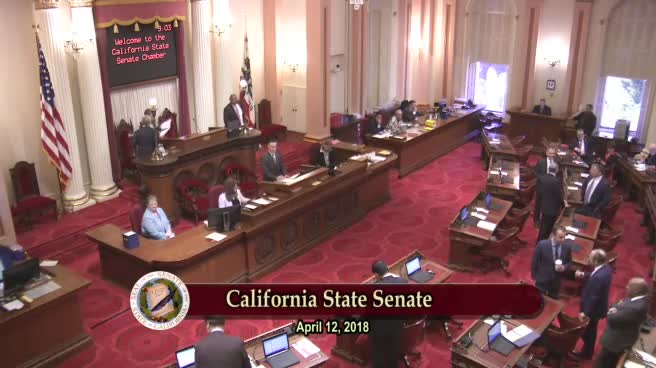
| Apr 12, 2018 | Senate 3rd Reading SCR117 Newman et al. | Senate Floor |
Passed |
This list shows positions taken on this bill by organizations on the date displayed, which is linked to the original source.
Positions by individuals are not included.
|
Organization
|
Position
|
Date
|
|---|---|---|
| California Association For Bilingual Education | ** Support | Apr 6, 2018 |
| Chaffey Joint Union High School District | ** Support | Apr 6, 2018 |
| Naacp Pomona Valley Branch #1085B | ** Support | Apr 6, 2018 |
| Numerous Individuals And Educators | ** Support | Apr 6, 2018 |
| The Broad Center | ** Support | Apr 6, 2018 |
Date of Hearing: May 10, 2018
ASSEMBLY COMMITTEE ON RULES
Ken Cooley, Chair
SBPCA Bill Id:SCR 117
Author:(Newman) – As Introduced Ver:
SENATE VOTE:
SUBJECT: Mendez v. Westminster School District Day
SUMMARY: Designates April 14, 2018, as Mendez v. Westminster School District Day. Specifically, this resolution makes the following legislative findings:
- While Brown v. Board of Education of Topeka is a widely known landmark decision of the U.S. Supreme Court, few can trace its origins to the case of nine-year-old Sylvia Mendez in Mendez v. Westminster School District of Orange County. Sylvia’s case, which was decided in the federal courts located in California, preceded Brown v. Board of Education by about eight years.
- Sylvia Mendez was a child when she was turned away from a California public school for white students only. That rejection fueled her father’s determined journey through school, civic, and legal channels. Gonzalo Mendez, represented by a civil rights attorney, took four Los Angeles-area school districts to court and won a class action lawsuit at the trial and appellate levels of the federal court system.
- During a two-week trial, the Mendez family’s attorney presented social science evidence to support his argument that segregation resulted in feelings of inferiority among Mexican-American children that could undermine their ability to be productive Americans. U.S. District Court Judge Paul J. McCormick agreed with the plaintiffs and ordered that the school districts cease their “discriminatory practices against the pupils of Mexican descent in the public schools” within those districts.
- In his decision, Judge McCormick wrote that “‘[t]he equal protection of the laws’ pertaining to the public school system in California is not provided by furnishing in separate schools the same technical facilities, textbooks and courses of instruction to children of Mexican ancestry that are available to the other public school children regardless of their ancestry. A paramount requisite in the American system of public education is social equality. It must be open to all children by unified school association regardless of lineage.”
- The school districts appealed the case to the U.S. Court of Appeals for the Ninth Circuit. The Court of Appeals affirmed Judge McCormick’s ruling. Two months later, California Governor Earl Warren signed a bill ending school segregation in California, making it the first state to officially desegregate its public schools.
- Sylvia Mendez went on to earn degrees in nursing and became the Assistant Nursing Director of the Pediatric Pavilion at the Los Angeles County and University of Southern California Medical Center. Since her retirement, she has dedicated her time to educating students about Mendez v. Westminster School District and encouraging young people to stay in school. In 2007, the U.S. Post Office issued a stamp commemorating Mendez v. Westminster School District. In 2009, the Los Angeles Unified School District dedicated a new high school in the eastern area of Los Angeles, the Felicitas and Gonzalo Mendez High School. Sylvia Mendez received the Presidential Medal of Freedom at a 2011 White House ceremony.
FISCAL EFFECT: None
REGISTERED SUPPORT / OPPOSITION:
Support
None on file
Opposition
None on file
Analysis Prepared by: Nicole Willis / RLS. / (916) 319-2800
Office of Senate Floor Analyses (916) 651-1520 Fax: (916) 327-4478 | SCR 117 |
THIRD READING
Bill No: SCR 117
Introduced: 3/15/18
SUBJECT: Mendez v. Westminster School District Day
DIGEST:
This resolution designates April 14, 2018, as Mendez v. Westminster School District Day.
ANALYSIS: This resolution makes the following legislative findings:
- While Brown v. Board of Education of Topeka is a widely known landmark decision of the U.S. Supreme Court, few can trace its origins to the case of nine-year-old Sylvia Mendez in Mendez v. Westminster School District of Orange County. Sylvia’s case, which was decided in the federal courts located in California, preceded Brown v. Board of Education by about eight years.
- Sylvia Mendez was a child when she was turned away from a California public school for white students only. That rejection fueled her father’s determined journey through school, civic, and legal channels. Gonzalo Mendez, represented by a civil rights attorney, took four Los Angeles-area school districts to court and won a class action lawsuit at the trial and appellate levels of the federal court system.
- During a two-week trial, the Mendez family’s attorney presented social science evidence to support his argument that segregation resulted in feelings of inferiority among Mexican-American children that could undermine their ability to be productive Americans. U.S. District Court Judge Paul J. McCormick agreed with the plaintiffs and ordered that the school districts cease their “discriminatory practices against the pupils of Mexican descent in the public schools” within those districts.
- In his decision, Judge McCormick wrote that “‘[t]he equal protection of the laws’ pertaining to the public school system in California is not provided by furnishing in separate schools the same technical facilities, textbooks and courses of instruction to children of Mexican ancestry that are available to the other public school children regardless of their ancestry. A paramount requisite in the American system of public education is social equality. It must be open to all children by unified school association regardless of lineage.”
- The school districts appealed the case to the U.S. Court of Appeals for the Ninth Circuit. The Court of Appeals affirmed Judge McCormick’s ruling. Two months later, California Governor Earl Warren signed a bill ending school segregation in California, making it the first state to officially desegregate its public schools.
- Sylvia Mendez went on to earn degrees in nursing and became the Assistant Nursing Director of the Pediatric Pavilion at the Los Angeles county and University of Southern California Medical Center. Since her retirement, she has dedicated her time to educating students about Mendez v. Westminster School District and encouraging young people to stay in school. In 2007, the U.S. Post Office issued a stamp commemorating Mendez v. Westminster School District. In 2009, the Los Angeles Unified School District dedicated a new high school in the eastern area of Los Angeles, the Felicitas and Gonzalo Mendez High School. Sylvia Mendez received the Presidential Medal of Freedom at a 2011 White House ceremony.
This resolution designates April 14, 2018, as Mendez v. Westminster School District Day in California.
FISCAL EFFECT: Appropriation: No Fiscal Com.: No Local: No
African American Parent Advisory Council, Pomona Unified School District
Al Mijares, Ph.D., County Superintendent of Schools, Orange County Department of Education
California Association for Bilingual Education
Chaffey Joint Union High School District
Dr. George J. McKenna III, Board Member, Los Angeles Unified School District Board of Education
Latino and Latina Roundtable of the San Gabriel and Pomona Valley
Monica Garcia, Board President, Los Angeles Unified School District Board of Education
NAACP Pomona Valley Branch #1085B
National Conference of Puerto Rican Women, Southern California Chapter
The Broad Center
Numerous individuals and educators
None received
ARGUMENTS IN SUPPORT: The author states:
The case of Mendez v. Westminster is a relatively little-known court case that proved to be the first successful constitutional challenge regarding school segregation in California. It was instrumental in determining that separate educational facilities are inherently unequal, and served as an important precursor and precedent to the landmark 1954 Supreme Court decision in Brown v. Board of Education to desegregate America’s schools.
When the Mendez family moved to southern California in 1943, then nine-year-old Sylvia Mendez and her two brothers went with their aunt and three cousins to enroll at the 17th Street School in Westminster, in Orange County. School officials summarily informed her aunt that her children, who were half-Mexican but had light skin and a French surname could register at the “white” elementary school; but the other Mendez children, with dark skin and a Mexican surname, however, would have to enroll at the “Mexican” school ten blocks away.
The rejection of the Mendez children from a whites-only California public school spurred Sylvia’s father’s tenacious journey through school, civic, and legal channels in pursuit of equity and social justice in education. With the help of a local civil rights attorney, Gonzalo Mendez took four Los Angeles-area school districts in Westminster, Garden Grove, Santa Ana, and El Modena to court. A young NAACP attorney named Thurgood Marshall submitted an amicus brief in support of his case.
In his landmark ruling, U.S. District Court Judge, Paul J. McCormick found that the Mexican-American students’ rights were being violated under the equal protection clause of the Fourteenth Amendment. The decision was later upheld by the Ninth Circuit Court of Appeals.
SCR 117 will commemorate April 14, 2018 as “Mendez v. Westminster School District Day” with the goal of creating awareness as well as educating the public about the ground-breaking Mendez v. Westminster case
which was so instrumental in laying the foundations for desegregation nationally.
Prepared by: Melissa Ward / SFA / (916) 651-1520
4/6/18 16:50:20
**** END ****
Bill Author






