SCR 145: Juneteenth.
- Session Year: 2017-2018
- House: Senate
- Latest Version Date: 2018-06-27
This measure would recognize June 19, 2018, as Juneteenth and would urge the people of California to join in celebrating Juneteenth as a day to honor and reflect on the significant role that African Americans have played in the history of the United States and how they have enriched society through their steadfast commitment to promoting unity and equality.
This measure would recognize June 19, 2018, as Juneteenth and would urge the people of California to join in celebrating Juneteenth as a day to honor and reflect on the significant role that African Americans have played in the history of the United States and how they have enriched society through their steadfast commitment to promoting unity and equality.
This measure would recognize June 19, 2018, as Juneteenth and would urge the people of California to join in celebrating Juneteenth as a day to honor and reflect on the significant role that African Americans have played in the history of the United States and how they have enriched society through their steadfast commitment to promoting unity and equality.
WHEREAS, Juneteenth, also known as Juneteenth Independence Day, Emancipation Day, Emancipation Celebration, and Freedom Day, is the oldest African American holiday observance in the United States; and
WHEREAS, Juneteenth commemorates the strong survival instinct of African Americans who were first brought to this country stacked in the bottom of slave ships in a month-long journey across the Atlantic Ocean known as the Middle Passage; and
WHEREAS, Events in the history of the United States that led to the start of the Civil War in 1861 centered on sectional differences between the North and the South that were based on the economic and social divergence caused by the existence of slavery; and
WHEREAS, In 1862, the first clear signs that the end of slavery was imminent appeared when laws abolishing slavery were adopted in the territories of Oklahoma, Nebraska, Colorado, and New Mexico; and
WHEREAS, In September 1862, President Lincoln issued the celebrated Emancipation Proclamation, warning the rebellious Confederate states that he would declare their slaves forever free if those states did not return to the Union by January 1, 1863; and
WHEREAS, Enforcement of the Emancipation Proclamation occurred only in Confederate states that were under Union Army control; and
WHEREAS, On January 31, 1865, Congress passed the Thirteenth Amendment to the United States Constitution, abolishing slavery throughout the United States and its territories; and
WHEREAS, Spontaneous celebration erupted throughout the country when African Americans learned of their freedom; and
WHEREAS, Juneteenth, or June 19, 1865, is considered the date when the last slaves in America were freed when General Gordon Granger rode into Galveston, Texas, and issued General Order No. 3, almost two and one-half years after President Lincoln issued the Emancipation Proclamation; and
WHEREAS, For former slaves, the Juneteenth celebration was a time for reassuring each other, praying, and gathering remaining family members together. Juneteenth continued to be highly revered in Texas decades later, with many former slaves and descendants making an annual pilgrimage back to Galveston on this date; and
WHEREAS, Juneteenth education and celebrations declined in America in the early part of the 20th century. But the Civil Rights Movement of the 1950s and 1960s saw a resurgence of interest in Juneteenth, along with renewed community celebrations of the day; and
WHEREAS, Observance of Juneteenth, a reminder of emancipation, spread from Texas to the neighboring states of Louisiana, Arkansas, and Oklahoma, as well as Alabama, Florida, and California, where many African American Texans migrated; and
WHEREAS, The state of Texas is widely considered the first state to begin Juneteenth celebrations. Informal observances have taken place there for over a century and it has been an official state holiday in Texas since 1980. Thirty-nine states, including California since 2003, and the District of Columbia have recognized Juneteenth as either a state holiday or a state holiday observance; and
WHEREAS, In 1994, the era of the Modern Juneteenth Movement began when a group of Juneteenth leaders from across the country gathered in New Orleans, Louisiana, to work for greater national recognition of Juneteenth; and
WHEREAS, Today, Juneteenth commemorates African American freedom and emphasizes education and achievement. It is a day, a week, and in some areas, a month marked with celebrations, guest speakers, picnics, and family gatherings. It is a time for reflection and rejoicing. It is a time for assessment, self-improvement, and planning for the future; and
WHEREAS, Juneteenth symbolizes freedom, celebrates the abolishment of slavery, and reminds all Americans of the significant contributions of African Americans to our society; and
WHEREAS, A growing number of American and African American cultural institutions have sponsored Juneteenth cultural events designed to make all Americans aware of this celebration; and
WHEREAS, Juneteenth celebrations are a tribute to those African Americans who fought so long and worked so hard to make the dream of equality a reality; now, therefore, be it
Resolved by the Senate of the State of California, the Assembly thereof concurring, That the Legislature of the State of California hereby recognizes June 19, 2018, as Juneteenth; and be it further
Resolved, That the Legislature urges the people of California to join in celebrating Juneteenth as a day to honor and reflect on the significant role that African Americans have played in the history of the United States and how they have enriched society through their steadfast commitment to promoting unity and equality; and be it further
Resolved, That the Secretary of the Senate transmit copies of this resolution to the author for appropriate distribution.
|
Date
|
Status
|
|---|---|
| Jun 27, 2018 | Chaptered by Secretary of State. Res. Chapter 112, Statutes of 2018. |
| Jun 27, 2018 | Enrolled and filed with the Secretary of State at 2:30 p.m. |
| Jun 21, 2018 | In Senate. Ordered to engrossing and enrolling. |
| Jun 21, 2018 | Read. Adopted. Ordered to the Senate. |
| Jun 18, 2018 | From committee: Be adopted. Ordered to consent calendar. (Ayes 7. Noes 0.) (June 18). |
| Jun 14, 2018 | Referred to Com. on RLS. |
| Jun 11, 2018 | In Assembly. Held at Desk. |
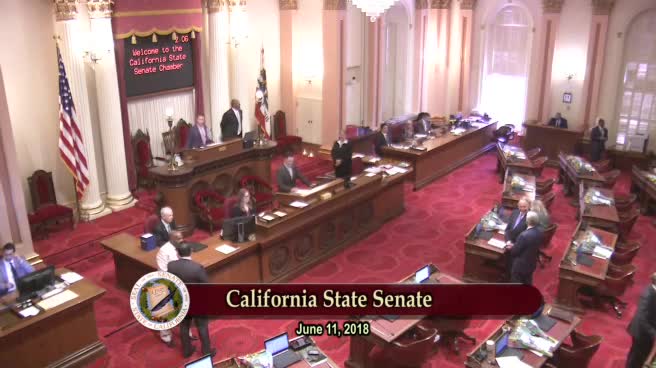
| Jun 11, 2018 | Read. Adopted. (Ayes 38. Noes 0.) Ordered to the Assembly. |
| May 23, 2018 | From committee: Ordered to third reading. |
| May 15, 2018 | Introduced. Referred to Com. on RLS. |
|
Date
|
Description
|
Location
|
Votes
|
|
|---|---|---|---|---|
| Jun 21, 2018 | SCR 145 Bradford Consent Calendar Second Day Regular Session | Assembly Floor |
Passed |
|
| Jun 18, 2018 | Be adopted. To Consent Calendar. | Assembly Standing Committee on Rules |
Passed |
|
| Jun 11, 2018 | Senate 3rd Reading SCR145 Bradford | Senate Floor |
Passed |
This list shows positions taken on this bill by organizations on the date displayed, which is linked to the original source.
Positions by individuals are not included.
Date of Hearing: June 18, 2018
ASSEMBLY COMMITTEE ON
, Chair
SBPCA Bill Id:
Author:() – As Ver:May 15, 2018
SENATE VOTE: 38-0
SUBJECT:
SUMMARY: Recognizes June 19, 2018, as Juneteenth and urges the people of California to join in celebrating Juneteenth as a day to honor and reflect on the significant role that African Americans have played in the history of the United States. Specifically, this resolution makes the following legislative findings:
- Juneteenth, also known as “Juneteenth Independence Day,” “Emancipation Day,” “Emancipation Celebration,” and “Freedom Day,” is the oldest African American holiday observance in the United States.
- Juneteenth, or June 19, 1865, is considered the date when the last slaves in America were freed when General Gordon Granger rode into Galveston, Texas, and issued General Order No. 3, almost two and one-half years after President Lincoln issued the Emancipation Proclamation.
- For former slaves, the Juneteenth celebration was a time for reassuring each other, praying, and gathering remaining family members together. Juneteenth continued to be highly revered in Texas decades later, with many former slaves and descendants making an annual pilgrimage back to Galveston on this date.
- The observance of Juneteenth, a reminder of emancipation, spread from Texas to the neighboring states of Louisiana, Arkansas, Oklahoma, as well as Alabama, Florida, and California, where many African American Texans migrated. Thirty-nine states, including California in 2003 and the District of Colombia have recognized Juneteenth as either a state holiday or a state holiday observance.
- Today, Juneteenth commemorates African American freedom and emphasizes education and achievement. It is a day, a week, and in some areas, a month marked with celebrations, guest speakers, picnics, and family gatherings. It is a time for reflection and rejoicing and is a time for assessment, self-improvement, and planning for the future.
- Juneteenth celebrations are a tribute to those African Americans who fought so long and worked so hard to make the dream of equality a reality.
FISCAL EFFECT: None
REGISTERED SUPPORT / OPPOSITION:
Support
None on file
Opposition
None on file
Analysis Prepared by:
Office of Senate Floor Analyses (916) 651-1520 Fax: (916) 327-4478 | SCR 145 |
THIRD READING
Bill No: SCR 145
Introduced: 5/15/18
DIGEST:
This resolution recognizes June 19, 2018, as Juneteenth and urges the people of California to join in celebrating Juneteenth as a day to honor and reflect on the significant role that African Americans have played in the history of the United States and how they have enriched society through their steadfast commitment to promoting unity and equality.
ANALYSIS: This resolution makes the following legislative findings:
- Juneteenth, also known as “Juneteenth Independence Day,” “Emancipation Day,” “Emancipation Celebration,” and “Freedom Day,” is the oldest African American holiday observance in the United States.
- Juneteenth commemorates the strong survival instinct of African Americans who were first brought to this country stacked in the bottom of slave ships.
- Juneteenth, or June 19, 1865, is considered the date when the last slaves in America were freed, almost two and one-half years after President Lincoln issued the Emancipation Proclamation.
- For former slaves, the Juneteenth celebration was a time for reassuring each other, praying, and gathering remaining family members together. Juneteenth continued to be highly revered in Texas decades later, with many former slaves and descendants making an annual pilgrimage back to Galveston on this date.
- Juneteenth education and celebrations declined in America in the early part of the 20th century. But the Civil Rights Movement of the 1950s and 1960s saw a resurgence of interest in Juneteenth, along with renewed community celebrations of the day.
- Texas is widely considered the first state to begin Juneteenth celebrations. Informal observances have taken place there for over a century and it has been an official state holiday in Texas since 1980. Thirty-nine states, including California since 2003, and the District of Columbia have recognized Juneteenth as either a state holiday or a state holiday observance.
- In 1994, the era of the “Modern Juneteenth Movement” began when a group of Juneteenth leaders from across the country gathered in New Orleans, Louisiana, to work for greater national recognition of Juneteenth.
- Today, Juneteenth commemorates African American freedom and emphasizes education and achievement. It is a time for reflection and rejoicing. It is a time for assessment, self-improvement, and planning for the future.
- Juneteenth symbolizes freedom, celebrates the abolishment of slavery, and reminds all Americans of the significant contributions of African Americans to our society.
- Juneteenth celebrations are a tribute to those African Americans who fought so long and worked so hard to make the dream of equality a reality.
This resolution recognizes June 19, 2018, as Juneteenth and urges the people of California to join in celebrating Juneteenth as a day to honor and reflect on the significant role that African Americans have played in the history of the United States and how they have enriched society through their steadfast commitment to promoting unity and equality.
Comments
According to the author’s office, “SCR 145 recognizes Juneteenth as the 153 Juneteenth. On June 19, 1865, two months after the surrender of Confederate General Robert E. Lee, Union General Gordon Granger and approximately 1,800 federal troops arrived in Galveston, Texas, to take control of the state and enforce the Emancipation Proclamation, which ended slavery.”
Related/Prior Legislation
SR 47 (Bradford, 2017) recognized June 19, 2017, as Juneteenth. The resolution was adopted by the Senate.
ACR 100 (Holden, Resolution Chapter 116, Statutes of 2017) recognized June 19, 2017, as Juneteenth.
FISCAL EFFECT: Appropriation: No Fiscal Com.: No Local: No
None received
OPPOSITION: (Verified 5/22/18)
None received
Prepared by: Melissa Ward / SFA / (916) 651-1520
5/24/18 14:43:09
**** END ****
Bill Author

Bill Co-Author(s):