SJR 14: Confederate names and statues.
- Session Year: 2017-2018
- House: Senate
- Latest Version Date: 2018-09-11
This measure would urge the Congress and the President of the United States to rename any federal buildings, parks, roadways, highway markers, landmarks, or other federally owned property, such as United States military bases, that bear the names of elected or military leaders of the Confederate States of America and would urge the Congress that statues or busts of elected or military leaders of the Confederate States of America in the United States Capitol be removed and placed in museums where they can be viewed in proper historic context.
This measure would urge the Congress and the President of the United States to rename any federal buildings, parks, roadways, highway markers, landmarks, or other federally owned property, such as United States military bases, that bear the names of elected or military leaders of the Confederate States of America and would urge the Congress that statues or busts of elected or military leaders of the Confederate States of America in the United States Capitol be removed and placed in museums where they can be viewed in proper historic context.
This measure would urge the Congress and the President of the United States to rename any federal buildings, parks, roadways, highway markers, landmarks, or other federally owned property, such as United States military bases, that bear the names of elected or military leaders of the Confederate States of America and would urge the Congress that statues or busts of elected or military leaders of the Confederate States of America in the United States Capitol be removed and placed in museums where they can be viewed in proper historic context.
This measure would urge the Congress and the President of the United States to rename any federal buildings, parks, roadways, or other federally owned property, such as United States military bases, that bear the names of elected or military leaders of the Confederate States of America and would urge the Congress that statues or busts of elected or military leaders of the Confederate States of America in the United States Capitol be removed and placed in museums where they can be viewed in proper historic context.
WHEREAS, The Confederate States of America and its secessionist movement were rooted in the defense of slavery; and
WHEREAS, The United States of America continues to struggle with racial equality and tolerance; and
WHEREAS, Using the names of elected or military leaders of the Confederate States of America for federal buildings, parks, roadways, or other federally owned property only deepens the pain of those living under the legacy of slavery; and
WHEREAS, The continued use of names of elected or military leaders of the Confederacy in public places is offensive to Americans who treasure the United States as one nation under God, indivisible, with liberty and justice for all; and
WHEREAS, References to the elected or military leaders of the Confederacy belong in history books and museums, where their place in American history is viewed and discussed in proper context; and
WHEREAS, In 2015, the California Senate and Assembly approved legislation prohibiting the names of Confederate military and political leaders for state buildings, parks, roadways, or other state-owned property; and
WHEREAS, In 2016, the California Senate and Assembly approved a resolution urging the 114th Congress to rename any federal buildings, parks, roadways, or other federally owned property that bear the names of elected or military leaders of the Confederate States of America; and
WHEREAS, August 2018 marks the one-year anniversary of the violent, racist protest in Charlottesville in which one counter-protester was killed; and
WHEREAS, The sight of people carrying swastika banners and Confederate flags at Charlottesville, Virginiarallying against the removal of a statue of Confederate General Robert E. Leewas a reminder that we have much more to do to bring Americans together; and
WHEREAS, Any movement that welcomes Nazis, the KKK, and white supremacists needs to be treated as a threat to our long-held principles of diversity, equality, and opportunity for all; and
WHEREAS, The death of Heather Heyer, who was peacefully counter-protesting the white supremacist rally, remains a tragedy for America; and
WHEREAS, The use of Confederate leaders names in buildings, parks, roadways, or other federally owned property in the United States only serves to further the discriminatory agenda of current sympathizers of the ideology of the Confederate States of America, and is antithetical to the United States mission of racial equality and tolerance; and
WHEREAS, The City of Alexandria, Virginia recently responded appropriately, by renaming the Jefferson Davis Highway to Richmond Highway; now, therefore, be it
Resolved by the Senate and the Assembly of the State of California, jointly, That the Legislature respectfully urges this new 115th Congress and the President of the United States to rename any federal buildings, parks, roadways, highway markers, landmarks, or other federally owned property, such as United States military bases, that bear the names of elected or military leaders of the Confederate States of America; and be it further
Resolved, That the Legislature respectfully urges the United States Congress that statues or busts of elected or military leaders of the Confederate States of America in the United States Capitol be removed and placed in museums where they can be viewed in proper historic context; and be it further
Resolved, That the Secretary of the Senate transmit copies of this resolution to the President and Vice President of the United States, to the Speaker of the House of Representatives, to the Majority Leader of the Senate, and to each Senator and Representative from California in the Congress of the United States.
WHEREAS, The Confederate States of America and its secessionist movement were rooted in the defense of slavery; and
WHEREAS, The United States of America continues to struggle with racial equality and tolerance; and
WHEREAS, Using the names of elected or military leaders of the Confederate States of America for federal buildings, parks, roadways, or other federally owned property only deepens the pain of those living under the legacy of slavery; and
WHEREAS, The continued use of names of elected or military leaders of the Confederacy in public places is offensive to Americans who treasure the United States as one nation under God, indivisible, with liberty and justice for all; and
WHEREAS, References to the elected or military leaders of the Confederacy belong in history books and museums, where their place in American history is viewed and discussed in proper context; and
WHEREAS, In 2015, the California Senate and Assembly approved legislation prohibiting the names of Confederate military and political leaders for state buildings, parks, roadways, or other state-owned property; and
WHEREAS, In 2016, the California Senate and Assembly approved a resolution urging the 114th Congress to rename any federal buildings, parks, roadways, or other federally owned property that bear the names of elected or military leaders of the Confederate States of America; and
WHEREAS, August 2018 marks the one-year anniversary of the violent, racist protest in Charlottesville in which one counter-protester was killed; and
WHEREAS, The sight of people carrying swastika banners and Confederate flags at Charlottesville, Virginiarallying against the removal of a statue of Confederate General Robert E. Leewas a reminder that we have much more to do to bring Americans together; and
WHEREAS, Any movement that welcomes Nazis, the KKK, and white supremacists needs to be treated as a threat to our long-held principles of diversity, equality, and opportunity for all; and
WHEREAS, The death of Heather Heyer, who was peacefully counterprotesting counter-protesting the white supremacist rally, is remains a tragedy for America; and
WHEREAS, The use of Confederate leaders names in buildings, parks, roadways, or other federally owned property in the United States only serves to further the discriminatory agenda of current sympathizers of the ideology of the Confederate States of America, and is antithetical to the United States mission of racial equality and tolerance; now, therefore, be it and
WHEREAS, The City of Alexandria, Virginia recently responded appropriately, by renaming the Jefferson Davis Highway to Richmond Highway; now, therefore, be it
Resolved by the Senate and the Assembly of the State of California, jointly, That the Legislature respectfully urges this new 115th Congress and the President of the United States to rename any federal buildings, parks, roadways, highway markers, landmarks, or other federally owned property, such as United States military bases, that bear the names of elected or military leaders of the Confederate States of America; and be it further
Resolved,That the Legislature respectfully urges the United States Congress that statues or busts of elected or military leaders of the Confederate States of America in the United States Capitol be removed and placed in museums where they can be viewed in proper historic context; and be it further
Resolved,That the Secretary of the Senate transmit copies of this resolution to the President and Vice President of the United States, to the Speaker of the House of Representatives, to the Majority Leader of the Senate, and to each Senator and Representative from California in the Congress of the United States.
WHEREAS, The Confederate States of America and its secessionist movement were rooted in the defense of slavery; and
WHEREAS, The United States of America continues to struggle with racial equality and tolerance; and
WHEREAS, Using the names of elected or military leaders of the Confederate States of America for federal buildings, parks, roadways, or other federally owned property only deepens the pain of those living under the legacy of slavery; and
WHEREAS, The continued use of names of elected or military leaders of the Confederacy in public places is offensive to Americans who treasure the United States as one nation under God, indivisible, with liberty and justice for all; and
WHEREAS, References to the elected or military leaders of the Confederacy belong in history books and museums, where their place in American history is viewed and discussed in proper context; and
WHEREAS, In 2015, the California Senate and Assembly approved legislation prohibiting the names of Confederate military and political leaders for state buildings, parks, roadways, or other state-owned property; and
WHEREAS, In 2016, the California Senate and Assembly approved a resolution urging the 114th Congress to rename any federal buildings, parks, roadways, or other federally owned property that bear the names of elected or military leaders of the Confederate States of America; and
WHEREAS, The sight of people carrying swastika banners and Confederate flags at Charlottesville, Virginiarallying against the removal of a statue of Confederate General Robert E. Leewas a reminder that we have much more to do to bring Americans together; and
WHEREAS, Any movement that welcomes Nazis, the KKK, and white supremacists needs to be treated as a threat to our long-held principles of diversity, equality, and opportunity for all; and
WHEREAS, The death of Heather Heyer, who was peacefully counterprotesting the white supremacist rally, is a tragedy for America; and
WHEREAS, The use of Confederate leaders names in buildings, parks, roadways, or other federally owned property in the United States only serves to further the discriminatory agenda of current sympathizers of the ideology of the Confederate States of America, and is antithetical to the United States mission of racial equality and tolerance; now, therefore, be it
Resolved by the Senate and the Assembly of the State of California, jointly, That the Legislature respectfully urges this new 115th Congress and the President of the United States to rename any federal buildings, parks, roadways, or other federally owned property, such as United States military bases, that bear the names of elected or military leaders of the Confederate States of America; and be it further
Resolved,That the Legislature respectfully urges the United States Congress that statues or busts of elected or military leaders of the Confederate States of America in the United States Capitol be removed and placed in museums where they can be viewed in proper historic context; and be it further
Resolved,That the Secretary of the Senate transmit copies of this resolution to the President and Vice President of the United States, to the Speaker of the House of Representatives, to the Majority Leader of the Senate, and to each Senator and Representative from California in the Congress of the United States.
|
Date
|
Status
|
|---|---|
| Sep 11, 2018 | Chaptered by Secretary of State. Res. Chapter 240, Statutes of 2018. |
| Sep 11, 2018 | Enrolled and filed with the Secretary of State at 2 p.m. |
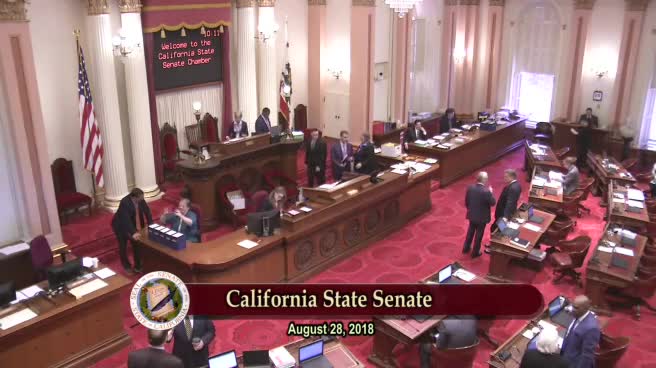
| Aug 28, 2018 | Assembly amendments concurred in. (Ayes 31. Noes 2.) Ordered to engrossing and enrolling. |
| Aug 24, 2018 | In Senate. Concurrence in Assembly amendments pending. |
| Aug 23, 2018 | Coauthors revised. |
| Aug 15, 2018 | Read second time and amended. Ordered to third reading. |
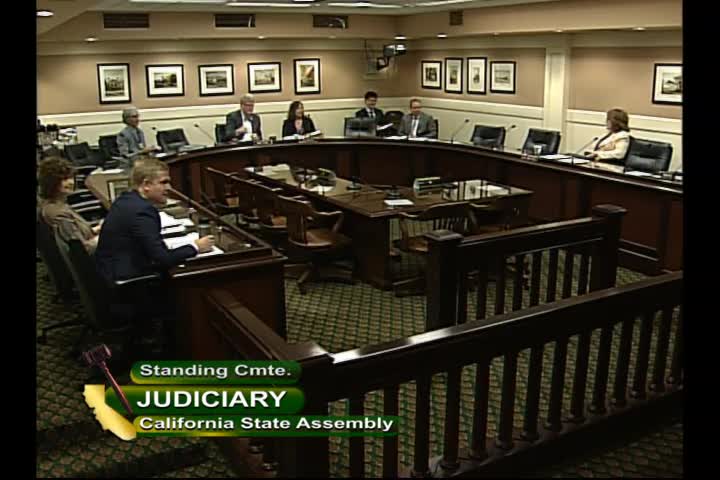
| Aug 14, 2018 | From committee: Be adopted as amended. (Ayes 8. Noes 0.) (August 14). |
| Aug 6, 2018 | Referred to Com. on JUD. |
| Sep 7, 2017 | In Assembly. Held at Desk. |
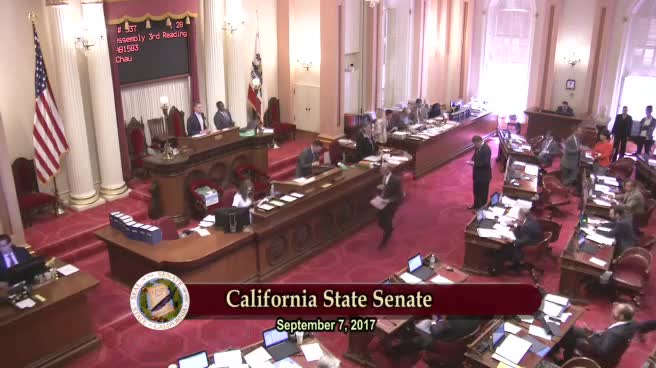
| Sep 7, 2017 | Read. Adopted. (Ayes 34. Noes 1.) Ordered to the Assembly. |
| Sep 6, 2017 | From committee: Ordered to third reading. |
| Sep 1, 2017 | Introduced. Referred to Com. on RLS. |
|
Date
|
Description
|
Location
|
Votes
|
|
|---|---|---|---|---|
| Aug 28, 2018 | Unfinished Business SJR14 Glazer et al. Concurrence | Senate Floor |
Passed |
|
| Aug 23, 2018 | SJR 14 Glazer Senate Third Reading By GONZALEZ FLETCHER | Assembly Floor |
Passed |
|
| Aug 14, 2018 | Be adopted as amended. | Assembly Standing Committee on Judiciary |
Passed |
|
| Sep 7, 2017 | Senate 3rd Reading SJR14 Glazer et al. | Senate Floor |
Passed |
|
| Sep 7, 2017 | Senate 3rd Reading SJR14 Glazer et al. Reconsider | Senate Floor |
Passed |
|
| Sep 7, 2017 | Senate 3rd Reading SJR14 Glazer et al. | Senate Floor |
Passed |
This list shows positions taken on this bill by organizations on the date displayed, which is linked to the original source.
Positions by individuals are not included.
Office of Senate Floor Analyses (916) 651-1520 Fax: (916) 327-4478 | SJR 14 |
UNFINISHED BUSINESS
Bill No: SJR 14
Amended: 8/15/18
SUBJECT: Confederate names and statues
DIGEST:
This resolution urges the Congress and the President of the United States to rename any federal buildings, parks, roadways, highway markers, landmarks, or other federally owned property, such as United States military bases, that bear the names of elected or military leaders of the Confederate States of America and urges the Congress that statues or busts of elected or military leaders of the Confederate States of America in the United States Capitol be removed and placed in museums where they can be viewed in proper historic context.
Assembly Amendments add legislative findings and make technical changes.
ANALYSIS: This resolution makes the following legislative findings:
- The Confederate States of America and its secessionist movement were rooted in the defense of slavery.
- Using the names of elected or military leaders of the Confederate States of America for federal buildings, parks, roadways, or other federally owned property only deepens the pain of those living under the legacy of slavery.
- The continued use of names of elected or military leaders of the Confederacy in public places is offensive to Americans who treasure the United States as one nation under God, indivisible, with liberty and justice for all.
- References to the elected or military leaders of the Confederacy belong in history books and museums, where their place in American history is viewed and discussed in proper context.
- In 2015, the California Senate and Assembly approved legislation prohibiting the names of Confederate military and political leaders for state buildings, parks, roadways, or other state-owned property.
- In 2016, the California Senate and Assembly approved a resolution urging the 114th Congress to rename any federal buildings, parks, roadways, or other federally owned property that bear the names of elected or military leaders of the Confederate States of America.
- The use of Confederate leaders’ names in buildings, parks, roadways, or other federally owned property in the United States only serves to further the discriminatory agenda of current sympathizers of the ideology of the Confederate States of America, and is antithetical to the United States’ mission of racial equality and tolerance.
This resolution urges this new 115th Congress and the President of the United States to rename any federal buildings, parks, roadways, highway markers, landmarks, or other federally owned property, such as United States military bases, that bear the names of elected or military leaders of the Confederate States of America; and respectfully urges the United States Congress that statues or busts of elected or military leaders of the Confederate States of America in the United States Capitol be removed and placed in museums where they can be viewed in proper historic context.
FISCAL EFFECT: Appropriation: No Fiscal Com.: No Local: No
None received
OPPOSITION: (Verified 8/23/18)
None received
Prepared by: Melissa Ward / SFA / (916) 651-1520
8/23/18 16:04:28
**** END ****
SENATE THIRD READING
STR Bill Id:SJR 14
Author:(Glazer)
As Amended Ver:August 15, 2018
Majority vote
SENATE VOTE: 37-0
Committee | Votes | Ayes | Noes |
Judiciary | 8-0 | Mark Stone, Chau, Chiu, Holden, Kalra, Kiley, Maienschein, Reyes |
SUMMARY: Urges federal officials to rename any federal buildings, parks, roadways, landmarks, or other federally-owned property that bear the names of elected or military leaders of the Confederate States of America, and requests that statues or busts of elected or military leaders of the Confederate States of America in the United States Capitol be removed. Specifically, this measure:
- Finds and declares that whereas;
- The Confederate States of America and its secessionist movement were rooted in the defense of slavery.
- The United States of America continues to struggle with racial equality and tolerance.
- Using the names of elected or military leaders of the Confederate States of America for federal buildings, parks, roadways, or other federally-owned property only deepens the pain of those living under the legacy of slavery.
- The continued use of names of elected or military leaders of the Confederacy in public places is offensive to Americans who treasure the United States as one nation under God, indivisible, with liberty and justice for all.
- References to the elected or military leaders of the Confederacy belong in history books and museums, where their place in American history is viewed and discussed in proper context.
- In 2015, the California Senate and Assembly approved legislation prohibiting the names of Confederate military and political leaders for state buildings, parks, roadways, or other state-owned property.
- In 2016, the California Senate and Assembly approved a resolution urging the 114th Congress to rename any federal buildings, parks, roadways, or other federally-owned property that bear the names of elected or military leaders of the Confederate States of America.
- August 2018 marks the one-year anniversary of the violent, racist protest in Charlottesville in which one counter-protester was killed.
- The sight of people carrying swastika banners and Confederate flags at Charlottesville, Virginia—rallying against the removal of a statue of Confederate General Robert E. Lee—was a reminder that we have much more to do to bring Americans together.
- Any movement that welcomes Nazis, the Klu Klux Klan (KKK), and white supremacists needs to be treated as a threat to our long-held principles of diversity, equality, and opportunity for all.
- The death of Heather Heyer, who was peacefully counter-protesting the white supremacist rally, remains a tragedy for America.
- The use of Confederate leaders' names in buildings, parks, roadways, or other federally-owned property in the United States only serves to further the discriminatory agenda of current sympathizers of the ideology of the Confederate States of America, and is antithetical to the United States' mission of racial equality and tolerance.
- The City of Alexandria, Virginia recently responded appropriately, by renaming the Jefferson Davis Highway to Richmond Highway.
- Resolves by the Senate and the Assembly of the State of California, jointly, the following:
- That the Legislature respectfully urges this new 115th Congress and the President of the United States to rename any federal buildings, parks, roadways and highway markers, landmarks, or other federally-owned property, such as United States military bases, that bear the names of elected or military leaders of the Confederate States of America;
- That the Legislature respectfully urges the United States Congress that statues or busts of elected or military leaders of the Confederate States of America in the United States Capitol be removed and placed in museums where they can be viewed in proper historic context; and be it further
- That the Secretary of the Senate transmit copies of this resolution to the President and Vice President of the United States, to the Speaker of the House of Representatives, to the Majority Leader of the Senate, and to each Senator and Representative from California in the Congress of the United States.
FISCAL EFFECT: None
COMMENTS: This resolution is the latest in a series of resolutions introduced in the Legislature in recent years urging the federal government to eliminate the public use of monuments and symbols that honor the Confederate States of America and associated military and political figures. The monuments and symbols have a long and disdainful history of being utilized to promote white supremacy and intimidate African Americans. This measure was introduced shortly after the 2017 "Unite the Right" rally in Charlottesville, Virginia that was ostensibly aimed at protesting the removal of a statue of Confederate General Robert E. Lee on the campus of the University of Virginia. The "Unite the Right" rally resulted in significant violence perpetrated against peaceful anti-racism protesters and caused the deaths of one civilian and two law enforcement officers. This measure, now one year after the events in Charlottesville, reiterates the Legislature's commitment to removing the remaining monuments to the Confederacy, and the white supremacist ideology they represent, from public spaces.
According to the Southern Poverty Law Center, there are approximately 1,740 monuments, place names, and other symbols still in existence honoring the Confederacy, its politicians, and military leaders. Although the overwhelming majority of these monuments are in the states that seceded from the United States, nearly every state has at least one monument remaining. California alone retains ten public places named after Confederate figures. Many of those in favor of retaining monuments, including those marching in Charlottesville, claim that removing monuments to Confederate figures would erase American history, ignore the importance of states' rights in the American political system, and dishonor the soldiers who lost their lives in the Civil War. Of the 1,740 remaining monuments, place names, and other symbols identified by the Southern Poverty Law Center, it is not clear how many of the monuments are owned or maintained by the federal government beyond the ten active military bases named after Confederate figures.
The United States has a long history storied of military heroism and victory in military conflict. This nation regards its military heroes with such reverence several have gone on to become President of the United States, including Theodore Roosevelt and Dwight Eisenhower. Even those not elected to higher office are frequently memorialized with statues or having buildings named in their honor. Currently, to promote patriotism and the military, rank and file service members are frequently honored at sporting events and local parades. Such tributes, however, are not extended to America's vanquished enemies. Accordingly, Confederate figures are unique among America's enemy combatants in that they are the only vanquished foe of this nation to be honored with memorials, schools, road names, or similar recognitions. Nonetheless, supporters of Confederate monuments seek to claim that the monuments are a testament to the honor of the Confederacy's state's rights cause and the bravery of those who fought for it, and tend to gloss over the fact that the Confederacy treasonously and openly waged war against the United States in order to perpetuate its ability to engage in slavery.
The doctrine of states' rights has long existed in American political thought. The idea was frequently debated in early American legal jurisprudence as a part of the discussions regarding the scope of federal power under the Constitution. Scholars suggest that Chief Justice John Marshall, recognizing the states' unease with federal power, slowly expanded the notion of judicial review to prevent a backlash from the states. (Genovese, Eugene. "Getting States' Rights Right." The Atlantic, March 2001.) Although typically associated with the conservative states in the American South, one of the earliest claims of states' rights arose after liberal free trade advocates in New England protested federal tariffs imposed by President Thomas Jefferson designed to keep America out of emerging European wars. (Id.)
The view that the Confederacy fought to protect states' rights rather than preserve slavery emerged only after the Civil War. According to a number of historians, the argument that the South had fought the Civil War to protect "states' rights" did not emerge until the 1880s or 1890s. In separate works, historians David Blight, Thomas Brown, Cecilia O'Leary, and James Loewen suggest some possible reasons for this reinterpretation. First, these historians argue, late-19th century efforts at national "reconciliation" between North and South required a changed understanding of the cause of the war. The South could only be reconciled, and the efforts of its troops honored, if the war was about something other than slavery. By the 1890s, it was easier to honor the South and its Confederate soldiers if they had fought for constitutional principles, as opposed to slavery. It was also during the 1880s and 1890s that Southern states faced the first challenges to its Jim Crow segregation laws, most notably in the Civil Rights Cases of 1883, and Plessy v. Ferguson in 1896. Accordingly, the Southern Poverty Law Center notes that many of the monuments that still exist were not erected shortly after the Civil War to honor the dead, but were instead constructed at the height of the Jim Crow Era to publically celebrate white supremacy and delegitimize the history and suffering of African Americans. The states' rights argument was convenient in that context, and the re-interpretation of the Confederate "cause" gave Southern segregationists and states' rights advocates an historical pedigree. While the declarations issued by the Southern states at the time of the war claimed that the war was about the preservation of slavery, histories written between the 1890s and 1950s greatly diminished the role of slavery and suggested that the war was about states' rights and Southern honor. (See e.g. David Blight, Race and Reunion: the Civil War in American Memory; Thomas J. Brown, Public Art and the Commemoration of the Civil War; Cecilia O'Leary, To Die For: the Paradox of American Patriotism; James Loewen, "Five Myths About Why the South Seceded," Washington Post, February 26, 2011.) This resolution, therefore, is based on the well-documented historical interpretation that the "lost cause" of the Confederacy was principally, if not exclusively, the defense of slavery.
California's state government does not appear to have any recognition of the Confederacy on state property. Accordingly, as it applies to California, this resolution is focused on Confederate symbols and memorials on federal property. Of the 1,730 confederate monuments left in the United States, two within California are clearly on federal land. Unlike many of the highway names and statues in the American South, California has several natural features named after Confederate figures. In California, a mountain in the Mokelumne National Wilderness, within the United States Forest Service's jurisdiction, is named after Jefferson Davis, and a tree in the Sequoia National Park named after Robert E. Lee. It appears that local governments can rename the mountain, and the Alpine County Board of Supervisors has formally requested the United States Board on Geographic Names amend the name. (Moffitt, Mike. "The Peak of Political Incorrectness? Should Mountains Honoring Jeff Davis Be Renamed?" San Francisco Chronicle, 29 Aug. 2017.) However, the federal government must rename the tree within the National Park.
Analysis Prepared by: Nicholas Liedtke / JUD. / (916) 319-2334 FN: 0003981
Date of Hearing: August 14, 2018
ASSEMBLY COMMITTEE ON JUDICIARY
Mark Stone, Chair
SBPCA Bill Id:SJR 14
Author:(Glazer) – As Introduced Ver:September 1, 2017
As Proposed to be Amended
SENATE VOTE: 37-0
SUBJECT: Confederate names and statues
KEY ISSUE: SHOULD THE CALIFORNIA LEGISLATURE URGE CONGRESS AND THE PRESIDENT OF THE UNITED STATES TO RENAME ANY FEDERAL BUILDINGS, PARKS, ROADWAYS, LANDMARKS, OR OTHER FEDERALLY-OWNED PROPERTY THAT BEARS THE NAME OF AN ELECTED OR MILITARY LEADER OF THE CONFEDERATE STATES OF AMERICA AND REMOVE ANY MONUMENTS TO SUCH FIGURES FROM THE UNITED STATES CAPITOL?
SYNOPSIS
This measure is the latest in a series of resolutions calling for the removal or renaming of monuments and other symbols that honor figures from the Confederate States of America. Additionally, as proposed to be amended, this resolution is intended to recognize the riot that was instigated by white supremacists in Charlottesville, Virginia in August of 2017, and acknowledge the first anniversary of that tragic day. This resolution "urges" Congress and the President to rename federal properties that bear Confederate names. Were Congress or the President to act on this resolution, it would result in the renaming of at least ten military bases named for Confederate generals, as well as certain national parks, such as the Robert E. Lee Memorial in Arlington, Virginia. As applied to California, this resolution would urge the renaming of a tree in the Sequoia National Park and a mountain in the Mokelumne National Wilderness Area.
The author maintains that the Confederacy and the secessionist movement that preceded the Civil War was rooted in the defense of race-based slavery; that Confederate names and symbols are offensive and painful to those living under the legacy of slavery; and that the continued use of Confederate names is at odds with California's values of racial equality and tolerance. The author additionally contends that the continued recognition of Confederate figures is designed to promote white supremacy across the country, and accordingly, appropriate steps must be taken to eliminate this recognition. This measure was approved by the Senate by a 37-0 vote.
SUMMARY: Urges federal officials to rename any federal buildings, parks, roadways, landmarks, or other federally-owned property that bear the names of elected or military leaders of the Confederate States of America, and requests that statues or busts of elected or military leaders of the Confederate States of America in the United States Capitol be removed. Specifically, this measure:
- Finds and declares that whereas;
- The Confederate States of America and its secessionist movement were rooted in the defense of slavery.
- The United States of America continues to struggle with racial equality and tolerance.
- Using the names of elected or military leaders of the Confederate States of America for federal buildings, parks, roadways, or other federally-owned property only deepens the pain of those living under the legacy of slavery.
- The continued use of names of elected or military leaders of the Confederacy in public places is offensive to Americans who treasure the United States as one nation under God, indivisible, with liberty and justice for all.
- References to the elected or military leaders of the Confederacy belong in history books and museums, where their place in American history is viewed and discussed in proper context.
- In 2015, the California Senate and Assembly approved legislation prohibiting the names of Confederate military and political leaders for state buildings, parks, roadways, or other state-owned property.
- In 2016, the California Senate and Assembly approved a resolution urging the 114th Congress to rename any federal buildings, parks, roadways, or other federally-owned property that bear the names of elected or military leaders of the Confederate States of America.
- August 2018 marks the one-year anniversary of the violent, racist protest in Charlottesville in which one counter-protester was killed.
- The sight of people carrying swastika banners and Confederate flags at Charlottesville, Virginia—rallying against the removal of a statue of Confederate General Robert E. Lee—was a reminder that we have much more to do to bring Americans together.
- Any movement that welcomes Nazis, the KKK, and white supremacists needs to be treated as a threat to our long-held principles of diversity, equality, and opportunity for all.
- The death of Heather Heyer, who was peacefully counter-protesting the white supremacist rally, remains a tragedy for America.
- The use of Confederate leaders’ names in buildings, parks, roadways, or other federally-owned property in the United States only serves to further the discriminatory agenda of current sympathizers of the ideology of the Confederate States of America, and is antithetical to the United States’ mission of racial equality and tolerance.
- The City of Alexandria, Virginia recently responded appropriately, by renaming the Jefferson Davis Highway to Richmond Highway.
- Resolves by the Senate and the Assembly of the State of California, jointly, the following:
- That the Legislature respectfully urges this new 115th Congress and the President of the United States to rename any federal buildings, parks, roadways and highway markers, landmarks, or other federally-owned property, such as United States military bases, that bear the names of elected or military leaders of the Confederate States of America;
- That the Legislature respectfully urges the United States Congress that statues or busts of elected or military leaders of the Confederate States of America in the United States Capitol be removed and placed in museums where they can be viewed in proper historic context; and be it further
- That the Secretary of the Senate transmit copies of this resolution to the President and Vice President of the United States, to the Speaker of the House of Representatives, to the Majority Leader of the Senate, and to each Senator and Representative from California in the Congress of the United States.
EXISTING LAW: None applicable.
FISCAL EFFECT: As currently in print this measure is keyed non-fiscal.
COMMENTS: This resolution is the latest in a series of resolutions introduced in the Legislature in recent years urging the federal government to eliminate the public use of monuments and symbols that honor the Confederate States of America and associated military and political figures. The monuments and symbols have a long and disdainful history of being utilized to promote white supremacy and intimidate African Americans. This measure was introduced shortly after the 2017 “Unite the Right” rally in Charlottesville, Virginia that was ostensibly aimed at protesting the removal of a statue of Confederate General Robert E. Lee on the campus of the University of Virginia. The “Unite the Right” rally resulted in significant violence perpetrated against peaceful anti-racism protesters and caused the deaths of one civilian and two law enforcement officers. This Committee is hearing this resolution one year after the “Unite the Right” rally, shortly after white supremacists and members of the alt-right are planning a Unite the Right 2 rally in Washington, DC, and accordingly, images of polo shirt clad, tiki-torch wielding assemblies of predominantly white men from the rally are once again in the public’s consciousness.
Author’s statement. This measure reiterates the Legislature’s commitment to removing the remaining monuments to the Confederacy, and the white supremacist ideology they represent, from public spaces. In support of the resolution the author states:
Unfortunately, too many public places in our nation still honor Confederate leaders who split the country into two as the fought to preserve the institution of slavery. SJR 14 calls on Congress and the President of the United States to remove rename all federal public places, including parks and roadways that bear the name of elected and military leaders of the Confederacy. SJR 14 also urges Congress to remove statues of elected or military leaders of the Confederacy.
Lose a war, get a monument. According to the Southern Poverty Law Center, there are approximately 1,740 monuments, place names, and other symbols still in existence honoring the Confederacy, its politicians, and military leaders. Although the overwhelming majority of these monuments are in the states that seceded from the United States, nearly every state has at least one monument remaining. California alone retains ten public places named after Confederate figures. Many of those in favor of retaining monuments, including those marching in Charlottesville, claim that removing monuments to Confederate figures would erase American history, ignore the importance of states’ rights in the American political system, and dishonor the soldiers who lost their lives in the Civil War. Of the 1,740 remaining monuments, place names, and other symbols identified by the Southern Poverty Law Center, it is not clear how many of the monuments are owned or maintained by the federal government beyond the ten active military bases named after Confederate figures.
Recognizing war heroes. The United States has a long history storied of military heroism and victory in military conflict. This nation regards its military heroes with such reverence several have gone on to become President of the United States, including Theodore Roosevelt and Dwight Eisenhower. Even those not elected to higher office are frequently memorialized with statues or having buildings named in their honor. Currently, to promote patriotism and the military, rank and file service members are frequently honored at sporting events and local parades. Such tributes, however, are not extended to America’s vanquished enemies. Indeed, one is unlikely to find a Kaiser Wilhelm II Regional Park, Osama bin Laden Elementary School, or Admiral Yamamoto Avenue anywhere in America. Furthermore, should an entity ever attempt to even name a park, school, or avenue after any of the above mentioned adversaries of the United States, that entity would almost certainly be met with immediate and justifiable public outrage.
Accordingly, Confederate figures are unique among America’s enemy combatants in that they are the only vanquished foe of this nation to be honored with memorials, schools, road names, or similar recognitions. Examining the history of the Civil War, one can surmise that these honors were not for military prowess. Following some early success, the Confederate Army was brutally defeated by American forces, as highlighted by General William Tecumseh Sherman’s burning of the City of Atlanta and the Confederacy’s surrender at Appomattox. Nonetheless, supporters of Confederate monuments seek to claim that the monuments are a testament to the honor of the Confederacy’s state’s rights cause and the bravery of those who fought for it, and tend to gloss over the fact that the Confederacy treasonously and openly waged war against the United States in order to perpetuate its ability to engage in slavery.
States’ rights and the Confederacy. The doctrine of states’ rights has long existed in American political thought. The idea was frequently debated in early American legal jurisprudence as a part of the discussions regarding the scope of federal power under the Constitution. Scholars suggest that Chief Justice John Marshall, recognizing the states’ unease with federal power, slowly expanded the notion of judicial review to prevent a backlash from the states. (Genovese, Eugene. “Getting States' Rights Right.” The Atlantic, March 2001.) Although typically associated with the conservative states in the American South, one of the earliest claims of states’ rights arose after liberal free trade advocates in New England protested federal tariffs imposed by President Thomas Jefferson designed to keep America out of emerging European wars. (Id.)
The view that the Confederacy fought to protect states' rights rather than preserve slavery emerged only after the Civil War. According to a number of historians, the argument that the South had fought the Civil War to protect "states' rights" did not emerge until the 1880s or 1890s. In separate works, historians David Blight, Thomas Brown, Cecilia O'Leary, and James Loewen suggest some possible reasons for this reinterpretation. First, these historians argue, late-19th century efforts at national "reconciliation" between North and South required a changed understanding of the cause of the war. The South could only be reconciled, and the efforts of its troops honored, if the war was about something other than slavery. By the 1890s, it was easier to honor the South and its Confederate soldiers if they had fought for constitutional principles, as opposed to slavery. It was also during the 1880s and 1890s that Southern states faced the first challenges to its Jim Crow segregation laws, most notably in the Civil Rights Cases of 1883, and Plessy v. Ferguson in 1896. Accordingly, the Southern Poverty Law Center notes that many of the monuments that still exist were not erected shortly after the Civil War to honor the dead, but were instead constructed at the height of the Jim Crow Era to publically celebrate white supremacy and delegitimize the history and suffering of African Americans. The states’ rights argument was convenient in that context, and the re-interpretation of the Confederate "cause" gave Southern segregationists and states' rights advocates an historical pedigree. While the declarations issued by the Southern states at the time of the war claimed that the war was about the preservation of slavery, histories written between the 1890s and 1950s greatly diminished the role of slavery and suggested that the war was about states' rights and Southern honor. (See e.g. David Blight, Race and Reunion: the Civil War in American Memory; Thomas J. Brown, Public Art and the Commemoration of the Civil War; Cecilia O'Leary, To Die For: the Paradox of American Patriotism; James Loewen, "Five Myths About Why the South Seceded," Washington Post, February 26, 2011.) This resolution, therefore, is based on the well-documented historical interpretation that the "lost cause" of the Confederacy was principally, if not exclusively, the defense of slavery.
Contrary to some of the arguments raised against similar measures, both in California and elsewhere, this resolution is not an attempt to re-write history or purge history of unpleasant facts that we would rather forget. Indeed, one could argue that this resolution is not an attempt to forget the past, but rather an effort to remember it for what it actually was. If the Confederacy stood for the preservation of slavery and its accompanying social structure, the author believes, then this nation should have no interest in enshrining the names of those associated with the Confederacy, its secessionist movement, or its ideals in our public schools, buildings, parks, or other federal property.
As proposed to be amended, this resolution recognizes the impact of the Charlottesville riots one-year later. On the evening of August 11, 2017, a group of white supremacists gathered on the campus of the University of Virginia and marched, allegedly, in protest of the University’s plan to remove a statue of Confederate General Robert E. Lee. When the protesters, famously dressed in white polo shirts and carrying tiki torches, arrived at a statue of the University’s founder Thomas Jefferson they were met by a group of peaceful counter protesters who surrounded the statue. Minor skirmishes broke out in the area around the statue and increased tension between the two groups. Those tensions exploded the next morning when white supremacists ignored law enforcement’s request to arrive for their rally at a designated location resulting in the white supremacists quickly became interspersed with counter protesters. Significant fighting between the two groups soon broke out. After police deemed the rally an unlawful assembly, the crowds retreated to their own camps. However, a young Neo-Nazi drove his rental car through a crowd of anti-racist protesters killing Heather Hyer and injuring dozens of other peaceful protesters. Approximately an hour later a police helicopter monitoring the riots crashed nearby, killing two law enforcement officers. Shortly after the riot made national headlines, the President issued a statement that was widely condemned by many public officials, and celebrated by white supremacists, that blamed parties on “both sides” for the violence.
In the year following the incident at Charlottesville, more cities across the nation began removing confederate monuments. The City of Memphis, Tennessee went so far as to sell city parks to a local non-profit to circumvent a state law that prevented municipalities from removing the statues. The violence in Charlottesville has also spurred a national conversation about race relations in modern American and the appropriateness of public displays recognizing the Confederacy. Despite the renewed focus on removing Confederate monuments, many remain in place while the backlash to their removal grows stronger. In addition to calling for the removal of statues and other symbols, in order to recognize the aftermath and one-year anniversary of the Charlottesville riots, the author proposes amendments to add the following findings to the resolution:
- WHEREAS, August 2018 marks the one-year anniversary of the violent, racist protest in Charlottesville in which one counter-protester was killed;
- WHEREAS, the death of Heather Heyer, who was peacefully counter-protesting the white supremacist rally, remains a tragedy for America; and
- WHEREAS, The City of Alexandria, Virginia recently responded appropriately, by renaming the Jefferson Davis Highway to Richmond Highway.
Proposed amendments reflect the somewhat unique nature of symbols of the Confederacy in California. California’s state government does not appear to have any recognition of the Confederacy on state property. Accordingly, as it applies to California, this resolution is focused on Confederate symbols and memorials on federal property. Of the 1,730 confederate monuments left in the United States, two within California are clearly on federal land. Unlike many of the highway names and statues in the American South, California has several natural features named after Confederate figures. In California, a mountain in the Mokelumne National Wilderness, within the United States Forest Service’s jurisdiction, is named after Jefferson Davis, and a tree in the Sequoia National Park named after Robert E. Lee. It appears that local governments can rename the mountain, and the Alpine County Board of Supervisors has formally requested the United States Board on Geographic Names amend the name. (Moffitt, Mike. “The Peak of Political Incorrectness? Should Mountains Honoring Jeff Davis Be Renamed?” San Francisco Chronicle, 29 Aug. 2017.) However, the federal government must rename the tree within the National Park. Accordingly, as proposed to be amended the resolution is expanded to reflect the unique nature of California’s confederate monuments as follows:
Resolved by the Senate and the Assembly of the State of California, jointly, That the Legislature respectfully urges this new 115th Congress and the President of the United States to rename any federal buildings, parks, roadways and highway markers, landmarks, or other federally owned property, such as United States military bases, that bear the names of elected or military leaders of the Confederate States of America; and be it further.
REGISTERED SUPPORT / OPPOSITION:
Support
None on file
Opposition
None on file
Analysis Prepared by: Nicholas Liedtke / JUD. / (916) 319-2334
Office of Senate Floor Analyses (916) 651-1520 Fax: (916) 327-4478 | SJR 14 |
THIRD READING
Bill No: SJR 14
Introduced: 9/1/17
SUBJECT: Confederate names and statues
DIGEST:
This resolution urges the Congress and the President of the United States to rename any federal buildings, parks, roadways, or other federally owned property, such as United States military bases, that bear the names of elected or military leaders of the Confederate States of America and urges the Congress that statues or busts of elected or military leaders of the Confederate States of America in the United States Capitol be removed and placed in museums where they can be viewed in proper historic context.
ANALYSIS: This resolution makes the following legislative findings:
- The Confederate States of America and its secessionist movement were rooted in the defense of slavery.
- Using the names of elected or military leaders of the Confederate States of America for federal buildings, parks, roadways, or other federally owned property only deepens the pain of those living under the legacy of slavery.
- The continued use of names of elected or military leaders of the Confederacy in public places is offensive to Americans who treasure the United States as one nation under God, indivisible, with liberty and justice for all.
- References to the elected or military leaders of the Confederacy belong in history books and museums, where their place in American history is viewed and discussed in proper context.
- In 2015, the California Senate and Assembly approved legislation prohibiting the names of Confederate military and political leaders for state buildings, parks, roadways, or other state-owned property.
- In 2016, the California Senate and Assembly approved a resolution urging the 114th Congress to rename any federal buildings, parks, roadways, or other federally owned property that bear the names of elected or military leaders of the Confederate States of America.
- The use of Confederate leaders’ names in buildings, parks, roadways, or other federally owned property in the United States only serves to further the discriminatory agenda of current sympathizers of the ideology of the Confederate States of America, and is antithetical to the United States’ mission of racial equality and tolerance.
This resolution urges this new 115th Congress and the President of the United States to rename any federal buildings, parks, roadways, or other federally owned property, such as United States military bases, that bear the names of elected or military leaders of the Confederate States of America; and respectfully urges the United States Congress that statues or busts of elected or military leaders of the Confederate States of America in the United States Capitol be removed and placed in museums where they can be viewed in proper historic context.
FISCAL EFFECT: Appropriation: No Fiscal Com.: No Local: No
None received
None received
Prepared by: Melissa Ward / SFA / (916) 651-1520
9/6/17 16:23:12
**** END ****
Discussed in Hearing
 3MIN
Senate Floor
 35MIN
Assembly Floor
 3MIN
Assembly Standing Committee on Judiciary
 1H
Senate Floor
Bill Author

Bill Co-Author(s):