SJR 19: Special education funding.
- Session Year: 2017-2018
- House: Senate
- Latest Version Date: 2018-07-10
This measure would respectfully memorialize the Congress and the President of the United States to enact H.R. 2902 pending before Congress that would fully fund the federal Individuals with Disabilities Education Act.
This measure would respectfully memorialize the Congress and the President of the United States to enact H.R. 2902 pending before Congress that would fully fund the federal Individuals with Disabilities Education Act.
This measure would respectfully memorialize the Congress and the President of the United States to enact H.R. 2902 pending before Congress that would fully fund the federal Individuals with Disabilities Education Act.
This measure would respectfully memorialize the Congress and the President of the United States to enact H.R. 2902 pending before Congress that would fully fund the federal Individuals with Disabilities Education Act.
This measure would respectfully memorialize the Congress and the President of the United States to enact H.R. 2902 pending before Congress that would fully fund the federal Individuals with Disabilities Education Act.
WHEREAS, The federal Education for All Handicapped Children Act of 1975 (1975 Act) was enacted by Congress and signed into law by the President of the United States as Public Law 94-142 to address the failure of states to meet the educational needs of children with disabilities. This act, known as the federal Individuals with Disabilities Education Act (IDEA) since 1990 with the enactment of Public Law 101-476, remains the cornerstone of federal statutory mandates governing special education; and
WHEREAS, The purpose of the 1975 Act, as declared by Congress, was to ensure that all children with disabilities have available to them, within specified time periods, a free appropriate public education which emphasizes special education and related services designed to meet their unique needs, to assure that the rights of children with disabilities and their parents or guardians are protected, to assist States and localities to provide for the education of all children with disabilities, and to assess and assure the effectiveness of efforts to educate children with disabilities; and
WHEREAS, The 1975 Act authorized a maximum state funding entitlement of 40 percent, for the fiscal year ending September 30, 1982, and for each fiscal year thereafter, of the average per pupil expenditure in public elementary and secondary schools in the United States; and
WHEREAS, Since 1975, including in the most recent amendments to the IDEA, Public Law 108-446, the federal Individuals with Disabilities Education Improvement Act of 2004, Congress has maintained the funding authorization at 40 percent of the average per-pupil expenditure in public elementary schools and secondary schools in the United States; and
WHEREAS, The federal government has never paid its promised 40 percent share of the IDEA mandate. For many years, Congress paid less than 8 percent of the excess cost of educating children with disabilities, forcing the states and local educational agencies to cover the remaining costs. The California student population requiring special education and related services continues to grow each year; and
WHEREAS, School, disability, and parent groups have been trying for years to bring IDEA appropriations up to the authorized 40 percent of average per-pupil expenditures, the maximum any state can receive per student with disability. This effort has come to be known as full funding, but the effort has never succeeded; and
WHEREAS, The California Legislature, since the early 1990s, has approved a number of joint resolutions memorializing the President of the United States and the U.S. Congress to provide the full federal share of funding for special education programs to the states so that this state and other states will not be required to take funding from other vital state and local programs to fund this underfunded federal mandate; and
WHEREAS, In 2016, federal funding only represented 16.3 percent of its share, well short of the promised 40 percent level; and
WHEREAS, Because the promised federal funding level is not being met, the burden has fallen on states and local school districts, which leads to cuts in programs, or tax increases, or both; and
WHEREAS, A bill stands on the floor of the United States House of Representatives, H.R. 2902, known as the IDEA Full Funding Act, that aims to reach the 40 percent full funding level by the fiscal year 2027 through incremental increases in the federal share of funding each fiscal year; now, therefore, be it
Resolved by the Senate and the Assembly of the State of California, jointly, That the Legislature respectfully memorializes the Congress and the President of the United States to enact H.R. 2902 pending before Congress that would fully fund IDEA; and be it further
Resolved, That the Secretary of the Senate transmit copies of this resolution to the President and Vice President of the United States, to the Speaker of the House of Representatives, to the Majority Leader of the Senate, to the Chair of the Senate Committee on the Budget, to the Chair of the House Committee on the Budget, to the Senate Committee on Appropriations, to the Chair of the House Committee on Appropriations, to each Senator and Representative from California in the Congress of the United States, and to the United States Secretary of Education.
WHEREAS, The federal Education for All Handicapped Children Act of 1975 (1975 Act) was enacted by Congress and signed into law by the President of the United States as Public Law 94-142 to address the failure of states to meet the educational needs of children with disabilities. This act, known as the federal Individuals with Disabilities Education Act (IDEA) since 1990 with the enactment of Public Law 101-476, remains the cornerstone of federal statutory mandates governing special education; and
WHEREAS, The purpose of the 1975 Act, as declared by Congress, was to ensure that all children with disabilities have available to them, within specified time periods, a free appropriate public education which emphasizes special education and related services designed to meet their unique needs, to assure that the rights of children with disabilities and their parents or guardians are protected, to assist States and localities to provide for the education of all children with disabilities, and to assess and assure the effectiveness of efforts to educate children with disabilities; and
WHEREAS, The 1975 Act authorized a maximum state funding entitlement of 40 percent, for the fiscal year ending September 30, 1982, and for each fiscal year thereafter, of the average per pupil expenditure in public elementary and secondary schools in the United States; and
WHEREAS, Since 1975, including in the most recent amendments to the IDEA, Public Law 108-446, the federal Individuals with Disabilities Education Improvement Act of 2004, Congress has maintained the funding authorization at 40 percent of the average per-pupil expenditure in public elementary schools and secondary schools in the United States; and
WHEREAS, The federal government has never paid its promised 40 percent share of the IDEA mandate. For many years, Congress paid less than 8 percent of the excess cost of educating children with disabilities, which forced forcing the states and local educational agencies to cover the remaining costs. The California student population requiring special education and related services continues to grow each year; and
WHEREAS, School, disability, and parent groups have been trying for years to bring IDEA appropriations up to the authorized 40 percent of average per-pupil expenditures, the maximum any state can receive per student with disability. This effort has come to be known as full funding, but the effort has never succeeded; and
WHEREAS, The California Legislature, since the early 1990s, has approved a number of joint resolutions memorializing the President of the United States and the U.S. Congress to provide the full federal share of funding for special education programs to the states so that this state and other states will not be required to take funding from other vital state and local programs to fund this underfunded federal mandate; and
WHEREAS, In 2016, federal funding only represented 16.3 percent of its share, well short of the promised 40 percent level; and
WHEREAS, Because the promised federal funding level is not being met, the burden has fallen on states and local school districts, which leads to cuts in programs, or tax increases, or both; and
WHEREAS, A bill stands on the floor of the United States House of Representatives, H.R. 2902, known as the IDEA Full Funding Act, that aims to reach the 40 percent full funding level by the fiscal year 2027 through incremental increases in the federal share of funding each fiscal year; now, therefore, be it
Resolved by the Senate and the Assembly of the State of California, jointly, That the Legislature respectfully memorializes the Congress and the President of the United States to enact H.R. 2902 pending before Congress that would fully fund IDEA; and be it further
Resolved, That the Secretary of the Senate transmit copies of this resolution to the President and Vice President of the United States, to the Speaker of the House of Representatives, to the Majority Leader of the Senate, to the Chair of the Senate Committee on the Budget, to the Chair of the House Committee on the Budget, to the Senate Committee on Appropriations, to the Chair of the House Committee on Appropriations, to each Senator and Representative from California in the Congress of the United States, and to the United States Secretary of Education.
WHEREAS, The federal Education for All Handicapped Children Act of 1975 (1975 Act) was enacted by Congress and signed into law by the President as Public Law 94-142 to address the failure of states to meet the educational needs of children with disabilities. This act, known as the federal Individuals with Disabilities Education Act (IDEA) since 1990 with the enactment of Public Law 101-476, remains the cornerstone of federal statutory mandates governing special education; and
WHEREAS, The purpose of the 1975 Act, as declared by Congress, was to ensure that all children with disabilities have available to them, within specified time periods, a free appropriate public education which emphasizes special education and related services designed to meet their unique needs, to assure that the rights of children with disabilities and their parents or guardians are protected, to assist States and localities to provide for the education of all children with disabilities, and to assess and assure the effectiveness of efforts to educate children with disabilities; and
WHEREAS, The 1975 Act authorized a maximum state funding entitlement of 40 percent, for the fiscal year ending September 30, 1982, and for each fiscal year thereafter, of the average per pupil expenditure in public elementary and secondary schools in the United States; and
WHEREAS, Since 1975, including in the most recent amendments to the IDEA, Public Law 108-446, the federal Individuals with Disabilities Education Improvement Act of 2004, Congress has maintained the funding authorization at 40 percent of the average per-pupil expenditure in public elementary schools and secondary schools in the United States; and
WHEREAS, The federal government has never paid its promised 40 percent share of the IDEA mandate. For many years, Congress paid less than 8 percent of the excess cost of educating children with disabilities disabilities, which forced the states and local educational agencies to cover the remaining costs. The California student population requiring special education and related services continues to grow each year; and
WHEREAS, School, disability, and parent groups have been trying for years to bring IDEA appropriations up to the authorized 40 percent of average per-pupil expenditures, the maximum any state can receive per student with disability. This effort has come to be known as full funding, but the effort has never succeeded; and
WHEREAS, The California Legislature, since the early 1990s, has approved a number of joint resolutions memorializing the President and the U.S. Congress to provide the full federal share of funding for special education programs to the states so that this state and other states will not be required to take funding from other vital state and local programs to fund this underfunded federal mandate; and
WHEREAS, In 2016, federal funding only represented 16.3 percent of its share, well short of the promised 40 percent level; and
WHEREAS, Because the promised federal funding level is not being met, the burden has fallen on states and local school districts, which leads to cuts in programs, or tax increases, or both; and
WHEREAS, A bill stands on the floor of the United States House of Representatives, H.R. 2902, known as the IDEA Full Funding Act, that aims to reach the 40 percent full funding level by the fiscal year 2027 through incremental increases in the federal share of funding each fiscal year; and now, therefore, be it
Resolved by the Senate and the Assembly of the State of California, jointly, That the Legislature respectfully memorializes the Congress and the President of the United States to enact H.R. 2902 pending before Congress that would fully fund IDEA; and be it further
Resolved, That the Secretary of the Senate transmit copies of this resolution to the President and Vice President of the United States, to the Speaker of the House of Representatives, to the Majority Leader of the Senate, to the Chair of the Senate Committee on Budget, to the Chair of the House Committee on the Budget, to the Senate Committee on Appropriations, to the Chair of the House Committee on Appropriations, to each Senator and Representative from California in the Congress of the United States, and to the United States Secretary of Education.
WHEREAS, The federal Education for All Handicapped Children Act of 1975 (1975 Act) was enacted by Congress and signed into law by the President as Public Law 94-142 to address the failure of states to meet the educational needs of children with disabilities. This act, known as the federal Individuals with Disabilities Education Act (IDEA) since 1990 with the enactment of Public Law 101-476, remains the cornerstone of federal statutory mandates governing special education; and
WHEREAS, The purpose of the 1975 Act, as declared by Congress, was to ensure that all children with disabilities have available to them, within specified time periods, a free appropriate public education which emphasizes special education and related services designed to meet their unique needs, to assure that the rights of children with disabilities and their parents or guardians are protected, to assist States and localities to provide for the education of all children with disabilities, and to assess and assure the effectiveness of efforts to educate children with disabilities; and
WHEREAS, The 1975 Act authorized a maximum state funding entitlement of 40 percent, for the fiscal year ending September 30, 1982, and for each fiscal year thereafter, of the average per pupil expenditure in public elementary and secondary schools in the United States; and
WHEREAS, Since 1975, including in the most recent amendments to the IDEA, Public Law 108-446, the federal Individuals with Disabilities Education Improvement Act of 2004, Congress has maintained the funding authorization at 40 percent of the average per-pupil expenditure in public elementary schools and secondary schools in the United States; and
WHEREAS, The federal government has never paid its promised 40 percent share of the IDEA mandate. For many years, Congress paid less than 8 percent of the excess cost of educating children with disabilities which forced the states and local educational agencies to cover the remaining costs. The California student population requiring special education and related services continues to grow each year; and
WHEREAS, School, disability, and parent groups have been trying for years to bring IDEA appropriations up to the authorized 40 percent of average per-pupil expenditures, the maximum any state can receive per student with disability. This effort has come to be known as full funding, but the effort has never succeeded; and
WHEREAS, The California Legislature, since the early 1990s, has approved a number of joint resolutions memorializing the President and the U.S. Congress to provide the full federal share of funding for special education programs to the states so that this state and other states will not be required to take funding from other vital state and local programs to fund this underfunded federal mandate; and
WHEREAS, In 2016, federal funding only represented 16.3 percent of its share, well short of the promised 40 percent level; and
WHEREAS, Because the promised federal funding level is not being met, the burden has fallen on states and local school districts, which leads to cuts in programs, or tax increases, or both; and
WHEREAS, A bill stands on the floor of the United States House of Representatives, H.R. 2902, known as the IDEA Full Funding Act, that aims to reach the 40 percent full funding level by the fiscal year 2027 through incremental increases in the federal share of funding each fiscal year; and
Resolved by the Senate and the Assembly of the State of California, jointly, That the Legislature respectfully memorializes the Congress and the President of the United States to enact H.R. 2902 pending before Congress that would fully fund IDEA; and be it further
Resolved, That the Secretary of the Senate transmit copies of this resolution to the President and Vice President of the United States, to the Speaker of the House of Representatives, to the Majority Leader of the Senate, to the Chair of the Senate Committee on Budget, to the Chair of the House Committee on the Budget, to the Senate Committee on Appropriations, to the Chair of the House Committee on Appropriations, to each Senator and Representative from California in the Congress of the United States, and to the United States Secretary of Education.
|
Date
|
Status
|
|---|---|
| Jul 10, 2018 | Chaptered by Secretary of State. Res. Chapter 126, Statutes of 2018. |
| Jul 10, 2018 | Enrolled and filed with the Secretary of State at 2:30 p.m. |
| Jul 2, 2018 | Assembly amendments concurred in. (Ayes 37. Noes 0.) Ordered to engrossing and enrolling. |
| Jun 21, 2018 | In Senate. Concurrence in Assembly amendments pending. |
| Jun 21, 2018 | Read. Adopted. Ordered to the Senate. |
| Jun 14, 2018 | From committee: Be adopted. Ordered to consent calendar. (Ayes 5. Noes 0.) (June 13). |
| Apr 10, 2018 | From committee with author's amendments. Read second time and amended. Re-referred to Com. on ED. |
| Apr 2, 2018 | Referred to Com. on ED. |
| Mar 22, 2018 | In Assembly. Held at Desk. |
| Mar 22, 2018 | Read. Adopted. (Ayes 37. Noes 0.) Ordered to the Assembly. |
| Mar 19, 2018 | Read second time. Ordered to third reading. |
| Mar 15, 2018 | From inactive file on motion of Senator Wilk. |
| Feb 20, 2018 | Ordered to inactive file on request of Senator Wilk. |
| Feb 14, 2018 | From committee: Ordered to third reading. |
| Feb 13, 2018 | From committee with author's amendments. Read second time and amended. Re-referred to Com. on RLS. |
| Feb 6, 2018 | Introduced. Referred to Com. on RLS. |
|
Date
|
Description
|
Location
|
Votes
|
|
|---|---|---|---|---|
| Jul 2, 2018 | Unfinished Business SJR19 Wilk et al. Concurrence | Senate Floor |
Passed |
|
| Jun 21, 2018 | SJR 19 Wilk Consent Calendar Second Day Regular Session | Assembly Floor |
Passed |
|
| Jun 13, 2018 | Be adopted. To Consent Calendar. | Assembly Standing Committee on Education |
Passed |
|
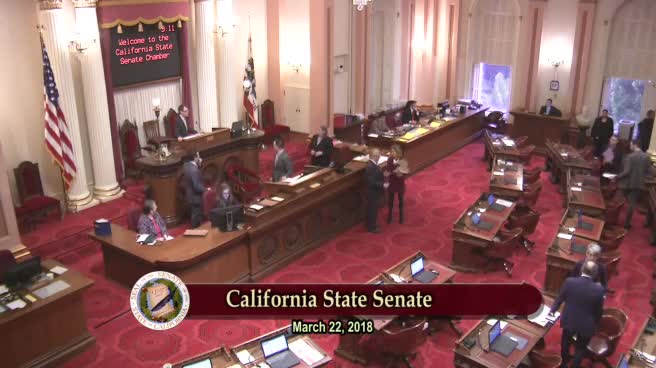
| Mar 22, 2018 | Conference Committee Report, Passage | Senate Floor |
Passed |
This list shows positions taken on this bill by organizations on the date displayed, which is linked to the original source.
Positions by individuals are not included.
|
Organization
|
Position
|
Date
|
|---|---|---|
| Coalition for Adequate Funding for Special Education | ** Support | Jun 11, 2018 |
| Los Angeles Unified School District | ** Support | Jun 11, 2018 |
| North Los Angeles County Regional Center | ** Support | Jun 11, 2018 |
Office of Senate Floor Analyses (916) 651-1520 Fax: (916) 327-4478 | SJR 19 |
UNFINISHED BUSINESS
Bill No: SJR 19
Amended: 4/10/18
SUBJECT: Special education funding
DIGEST:
This resolution memorializes the Congress and the President of the United States to enact H.R. 2902 pending before Congress that would fully fund the federal Individuals with Disabilities Education Act.
Assembly Amendments add coauthors and make technical changes.
ANALYSIS: This resolution makes the following legislative findings:
- The federal Education for All Handicapped Children Act of 1975 (1975 Act) was enacted by Congress and signed into law by the President of the United States as Public Law 94-142 to address the failure of states to meet the educational needs of children with disabilities. This act, known as the federal Individuals with Disabilities Education Act (IDEA) since 1990 with the enactment of Public Law 101-476, remains the cornerstone of federal statutory mandates governing special education.
- The purpose of the 1975 Act, as declared by Congress, was to ensure that all children with disabilities have available to them, within specified time periods, “a free appropriate public education which emphasizes special education and related services designed to meet their unique needs, to assure that the rights of children with disabilities and their parents or guardians are protected, to assist States and localities to provide for the education of all children with disabilities, and to assess and assure the effectiveness of efforts to educate children with disabilities.”
- Since 1975, including in the most recent amendments to the IDEA, Public Law 108-446, the federal Individuals with Disabilities Education Improvement Act of 2004, Congress has maintained the funding authorization at “40 percent of the average per-pupil expenditure in public elementary schools and secondary schools in the United States.”
- The federal government has never paid its promised 40 percent share of the IDEA mandate. For many years, Congress paid less than 8 percent of the excess cost of educating children with disabilities, forcing the states and local educational agencies to cover the remaining costs. The California student population requiring special education and related services continues to grow each year.
- School, disability, and parent groups have been trying for years to bring IDEA appropriations up to the authorized 40 percent of average per-pupil expenditures, the maximum any state can receive per student with disability. This effort has come to be known as “full funding,” but the effort has never succeeded.
- A bill stands on the floor of the United States House of Representatives, H.R. 2902, known as the IDEA Full Funding Act, that aims to reach the 40 percent “full funding” level by the fiscal year 2027 through incremental increases in the federal share of funding each fiscal year.
This resolution respectfully memorializes the Congress and the President of the United States to enact H.R. 2902 pending before Congress that would fully fund IDEA.
Related/Prior Legislation
AJR 83 (Daucher, Resolution Chapter 132, Statutes of 2004) memorialized the President and the Congress of the United States to provide the full federal share of funding for special education programs to the states so that this state and other states will not be required to take funding from other vital state and local programs to fund this underfunded federal mandate.
SJR 11 (Alpert, Resolution Chapter 68, Statutes of 2003) memorialized the President and Congress of the United States to provide the full federal share of funding for special education programs to the states so that this state and other states will not be required to take funding from other vital state and local programs to fund this underfunded federal mandate.
FISCAL EFFECT: Appropriation: No Fiscal Com.: No Local: No
None received
OPPOSITION: (Verified 6/21/18)
None received
Prepared by: Karen Chow / SFA / (916) 651-1520
6/22/18 14:09:05
**** END ****
Office of Senate Floor Analyses (916) 651-1520 Fax: (916) 327-4478 | SJR 19 |
THIRD READING
Bill No: SJR 19
Amended: 2/13/18
SUBJECT: Special education funding
DIGEST:
This resolution memorializes the Congress and the President of the United States to enact H.R. 2902 pending before Congress that would fully fund the federal Individuals with Disabilities Education Act.
ANALYSIS: This resolution makes the following legislative findings:
- The federal Education for All Handicapped Children Act of 1975 (1975 Act) was enacted by Congress and signed into law by the President as Public Law 94-142 to address the failure of states to meet the educational needs of children with disabilities. This act, known as the federal Individuals with Disabilities Education Act (IDEA) since 1990 with the enactment of Public Law 101-476, remains the cornerstone of federal statutory mandates governing special education.
- The purpose of the 1975 Act, as declared by Congress, was to ensure that all children with disabilities have available to them, within specified time periods, “a free appropriate public education which emphasizes special education and related services designed to meet their unique needs, to assure that the rights of children with disabilities and their parents or guardians are protected, to assist States and localities to provide for the education of all children with disabilities, and to assess and assure the effectiveness of efforts to educate children with disabilities.”
- Since 1975, including in the most recent amendments to the IDEA, Public Law 108-446, the federal Individuals with Disabilities Education Improvement Act of 2004, Congress has maintained the funding authorization at “40 percent of the average per-pupil expenditure in public elementary schools and secondary schools in the United States.”
- The federal government has never paid its promised 40 percent share of the IDEA mandate. For many years, Congress paid less than 8 percent of the excess cost of educating children with disabilities, which forced the states and local educational agencies to cover the remaining costs. The California student population requiring special education and related services continues to grow each year.
- School, disability, and parent groups have been trying for years to bring IDEA appropriations up to the authorized 40 percent of average per-pupil expenditures, the maximum any state can receive per student with disability. This effort has come to be known as “full funding,” but the effort has never succeeded.
- A bill stands on the floor of the United States House of Representatives, H.R. 2902, known as the IDEA Full Funding Act, that aims to reach the 40 percent “full funding” level by the fiscal year 2027 through incremental increases in the federal share of funding each fiscal year.
This resolution respectfully memorializes the Congress and the President of the United States to enact H.R. 2902 pending before Congress that would fully fund IDEA.
Related/Prior Legislation
AJR 83 (Daucher, Resolution Chapter 132, Statutes of 2004) memorialized the President and the Congress of the United States to provide the full federal share of funding for special education programs to the states so that this state and other states will not be required to take funding from other vital state and local programs to fund this underfunded federal mandate.
SJR 11 (Alpert, Resolution Chapter 68, Statutes of 2003) memorialized the President and Congress of the United States to provide the full federal share of funding for special education programs to the states so that this state and other states will not be required to take funding from other vital state and local programs to fund this underfunded federal mandate.
FISCAL EFFECT: Appropriation: No Fiscal Com.: No Local: No
None received
OPPOSITION: (Verified 3/16/18)
None received
Prepared by: Karen Chow / SFA / (916) 651-1520
3/20/18 15:21:22
**** END ****
Discussed in Hearing
View Older Hearings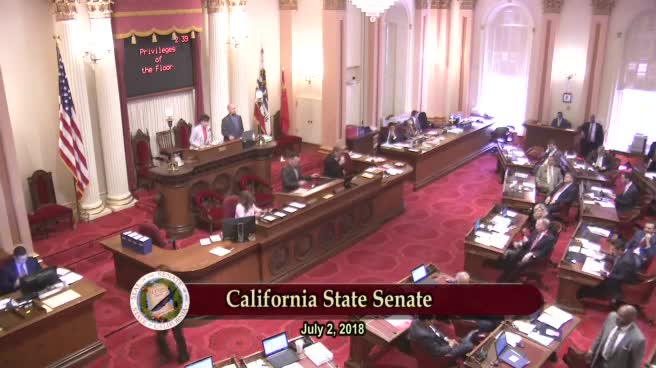
Bill Author









