SJR 22: Tijuana River Valley.
- Session Year: 2017-2018
- House: Senate
- Latest Version Date: 2018-09-11
This measure would urge the federal government and the United States Section of the International Boundary and Water Commission to take immediate action to adequately address cross-border pollution in the Tijuana River Valley.
This measure would urge the federal government and the United States Section of the International Boundary and Water Commission to take immediate action to adequately address cross-border pollution in the Tijuana River Valley.
This measure would urge the federal government and the United States Section of the International Boundary and Water Commission to take immediate action to adequately address cross-border pollution in the Tijuana River Valley.
This measure would urge the federal government and the United States Section of the International Boundary and Water Commission to take immediate action to adequately address cross-border pollution in the Tijuana River Valley, and would urge the State of California to join various entities in the County of San Diego in initiating a lawsuit over matters within the states jurisdiction to adequately address cross-border pollution in the Tijuana River Valley.
This measure would urge the federal government and the United States Section of the International Boundary and Water Commission to take immediate action to adequately address cross-border pollution in the Tijuana River Valley, and would urge the State of California to join various entities in the County of San Diego in initiating a lawsuit over matters within the states jurisdiction to adequately address cross-border pollution in the Tijuana River Valley.
This measure would urge the federal government and the United States Section of the International Boundary and Water Commission to take immediate action to adequately address cross-border pollution in the Tijuana River Valley, and would urge the State of California to join various entities in the County of San Diego in initiating a lawsuit over matters within the states jurisdiction to adequately address cross-border pollution in the Tijuana River Valley.
WHEREAS, The Tijuana River watershed is approximately 1,700 square miles and drains to the Pacific Ocean in the United States through the Tijuana River Valley, which consists of the Tijuana River, the Tijuana River estuary, and the ocean shoreline, all located in the most southwestern portion of the City of San Diego, bounded by the residential community of San Ysidro; and
WHEREAS, The Tijuana River estuary is designated as Wetlands of International Importance by the United Nations pursuant to the Convention on Wetlands of International Importance especially as Waterfowl Habitat, February 2, 1971 (T.I.A.S. No. 1084, 996 U.N.T.S. 245 (amended 1982 & 1987)), popularly known as the Ramsar Convention, and is one of the few estuaries and coastal lagoons in southern California, and the only one in the City of San Diego, not bisected by a railroad or freeway; and
WHEREAS, The Tijuana River estuary contains one of the few salt marshes remaining in California, where over 90 percent of wetlands have been lost to development; and
WHEREAS, The Tijuana River estuary provides a critical habitat for multiple endangered species and is also a critical stopover point in the Pacific Flyway for over 370 species of migratory and native birds; and
WHEREAS, The Tijuana River estuary is protected by the United States Fish and Wildlife Service and parts of the estuary, such as the Border Field State Park, are protected by the California Department of Parks and Recreation, as the Tijuana River Valley offers some of the few recreational activities that are affordable to nearby low-income communities, including disadvantaged communities and severely disadvantaged communities; and
WHEREAS, The Tijuana River, which flows east to west from Mexico and drains into the Pacific Ocean through the Tijuana River estuary, has for decades experienced an increased discharge of trash, sediment, and wastewater generated on the Mexico side, which as a result of sewage infrastructure inadequacies has created recurring pollution problems; and
WHEREAS, In February of 2017, one of the largest spills occurred, resulting in 143 million gallons of raw sewage flowing into the Tijuana River Valley; and
WHEREAS, Transboundary flows containing raw sewage, waste tires, trash, and sediment cause severe economic and environmental degradation as a result of the continued need to excavate, haul, and dispose of the pollution in the Tijuana River Valley, and those flows also result in constant beach closures that compromise the economic potential of south county beaches in the County of San Diego; and
WHEREAS, The discharge of raw sewage and other waste through the Tijuana River Valley poses serious public health risks from untreated and partially treated human and industrial wastewater that contains toxins and bacterial and viral pathogens, such as hepatitis and enteroviruses, which have been detected in the surf zone of the Tijuana River during wet weather; and
WHEREAS, The City of San Diego has declared a continued state of emergency since 1993 as a result of the escalated discharge of raw sewage from Tijuana, Mexico, that has caused numerous health problems, such as headaches, rashes, infections, and breathing problems; and
WHEREAS, The International Boundary and Water Commission, comprising the United States Section of the International Boundary and Water Commission (USIBWC) and its Mexican counterpart, Comision Internacional de Limites y Aguas entre Mexico y Estados Unidos, is an international organization that exercises the rights and obligations of both governments under the Treaty for Utilization of Waters of the Colorado and Tijuana Rivers and of the Rio Grande (59 Stat. 1219, Treaty Series 994; hereafter 1944 Water Treaty), a treaty which incorporates the agreement of both governments to give preferential attention to the solution of all border sanitation problems; and
WHEREAS, Section 313(a) of the Federal Water Pollution Control Act (33 U.S.C. Sec. 1323(a)) requires that each federal agency or department that has jurisdiction over any property or facility, or that is engaged in any activity resulting in, or which may result in, discharge or runoff of pollutants, shall be subject to all Federal, State, interstate, and local requirements, administrative authority, and process and sanctions respecting the control and abatement of water pollution in the same manner, and to the same extent as a nongovernmental entity; and
WHEREAS, Section 7002(a)(1)(B) of the federal Resource Conservation and Recovery Act (42 U.S.C. Sec. 6972(a)(1)(B)) provides that any person may commence a civil action on his or her own behalf against any person, including the United States and any other governmental instrumentality or agency... who has contributed or who is contributing to the past or present handling, storage, treatment transportation, or disposal of any solid or hazardous waste which may present an imminent and substantial endangerment to health or the environment; and
WHEREAS, In September of 2017, the City of San Diego, the City of Imperial Beach, the City of Chula Vista, the County of San Diego, and the Port of San Diego notified the USIBWC of their intention to sue if the USIBWC failed to take the necessary steps to address the spills and pollution in the Tijuana River Valley; and
WHEREAS, In December of 2017, the federal Department of Justice, the federal Environmental Protection Agency, the federal Department of State, the USIBWC, the Cities of Imperial Beach, San Diego, and National City, the County of San Diego, the Port of San Diego, and the San Diego Regional Water Quality Control Board met to discuss a number of project concepts to address cross-border pollution and the Tijuana River Valley that led to the development of a final project proposal that was shared with all jurisdictions; and
WHEREAS, The final project proposal was submitted to the USIBWC and required that the agency commit to implement priority projects that would control cross-border pollution in the main channel of the Tijuana River and tributary canyons, monitor and access the sources, extent, and magnitude of specific pollutants from existing and potential transboundary flows, and mitigate or restore the Tijuana River National Estuarine Research Reserve and other areas of the Tijuana River Valley; and
WHEREAS, In the three months leading up to the USIBWCs response, the transboundary flows have continued, at least 17 spills have been recorded, at least three million gallons of wastewater have been dumped, and portions of south county beaches in the County of San Diego have been closed for 40 percent of the time; and
WHEREAS, On March 1, 2018, the USIBWC notified the San Diego Regional Water Quality Control Board that [t]he USIBWCs role under the 1944 Water Treaty does not make it the agency, that, under U.S. Law, is responsible for managing transboundary trash, sewage, and sediment discharge from Mexico and that it does not make unilateral commitments and decisions and cannot commit to projects for which it does not have an appropriation; and
WHEREAS, The USIBWC has failed repeatedly to abide by the states water quality control standards for over 30 years, and millions of gallons of wastewater, sediment, and trash have poured into our coastal waters, with no effective diversion in place; and
WHEREAS, On March 2, 2018, after exhausting all avenues to solve the transboundary flows at the Tijuana River Valley, the City of Imperial Beach, the San Diego Unified Port District, and the City of Chula Vista filed a lawsuit against the USIBWC for their continued lack of action in resolving cross-border pollution in the Tijuana River Valley and in protecting the health and well-being of the people of California; and
WHEREAS, The USIBWCs failure to act is a clear violation of the Federal Water Pollution Control Act and the federal Resource Conservation and Recovery Act that has endangered the lives of the people of California and threatened the environmental health and viability of the Tijuana River Valley and its diverse and unique potential as an ecological, recreational, cultural, and educational jewel of the State of California for decades; and
WHEREAS, On May 14, 2018, Attorney General Xavier Becerra and the San Diego Regional Water Quality Control Board, addressing concerns over the public health hazards posed by the spills and pollution in the Tijuana River Valley, filed with the United States Environmental Protection Agency a 60-day Notice of Intent to Sue the USIBWC for violations of the National Pollutant Discharge Elimination System (NPDES) permit granted to the USIBWC by the San Diego Regional Water Quality Control Board pursuant to the Federal Water Pollution Control Act; now, therefore, be it
Resolved by the Senate and the Assembly of the State of California, jointly, That the Legislature urges the federal government and the USIBWC to take immediate action to adequately address cross-border pollution in the Tijuana River Valley; and be it further
Resolved, That the Secretary of the Senate transmit copies of this resolution to the President and Vice President of the United States, to the Speaker of the House of Representatives, to the Majority Leader of the Senate, to each Senator and Representative from California in the United States Congress, to the Commissioner of the United States Section of the International Boundary and Water Commission, to the Governor, to the Attorney General, and to the author for appropriate distribution.
WHEREAS, The Tijuana River watershed is approximately 1,700 square miles and drains to the Pacific Ocean in the United States through the Tijuana River Valley, which consists of the Tijuana River, the Tijuana River estuary, and the ocean shoreline, all located in the most southwestern portion of the City of San Diego, bounded by the residential community of San Ysidro; and
WHEREAS, The Tijuana River estuary is designated as Wetlands of International Importance by the United Nations pursuant to the Convention on Wetlands of International Importance especially as Waterfowl Habitat, February 2, 1971 (T.I.A.S. No. 1084, 996 U.N.T.S. 245 (amended 1982 & 1987)), popularly known as the Ramsar Convention, and is one of the few estuaries and coastal lagoons in southern California, and the only one in the City of San Diego, not bisected by a railroad or freeway; and
WHEREAS, The Tijuana River estuary contains one of the few salt marshes remaining in California, where over 90 percent of wetlands have been lost to development; and
WHEREAS, The Tijuana River estuary provides a critical habitat for multiple endangered species and is also a critical stopover point in the Pacific Flyway for over 370 species of migratory and native birds; and
WHEREAS, The Tijuana River estuary is protected by the United States Fish and Wildlife Service and parts of the estuary, such as the Border Field State Park, are protected by the California Department of Parks and Recreation, as the Tijuana River Valley offers some of the few recreational activities that are affordable to nearby low-income communities, including disadvantaged communities and severely disadvantaged communities; and
WHEREAS, The Tijuana River, which flows east to west from Mexico and drains into the Pacific Ocean through the Tijuana River estuary, has for decades experienced an increased discharge of trash, sediment, and wastewater generated on the Mexico side, which as a result of sewage infrastructure inadequacies has created recurring pollution problems; and
WHEREAS, In February of 2017, one of the largest spills occurred, resulting in 143 million gallons of raw sewage flowing into the Tijuana River Valley; and
WHEREAS, Transboundary flows containing raw sewage, waste tires, trash, and sediment cause severe economic and environmental degradation as a result of the continued need to excavate, haul, and dispose of the pollution in the Tijuana River Valley, and those flows also result in constant beach closures that compromise the economic potential of south county beaches in the County of San Diego; and
WHEREAS, The discharge of raw sewage and other waste through the Tijuana River Valley poses serious public health risks from untreated and partially treated human and industrial wastewater that contains toxins and bacterial and viral pathogens, such as hepatitis and enteroviruses, which have been detected in the surf zone of the Tijuana River during wet weather; and
WHEREAS, The City of San Diego has declared a continued state of emergency since 1993 as a result of the escalated discharge of raw sewage from Tijuana, Mexico, that has caused numerous health problems, such as headaches, rashes, infections, and breathing problems; and
WHEREAS, The International Boundary and Water Commission, comprising the United States Section of the International Boundary and Water Commission (USIBWC) and its Mexican counterpart, Comision Internacional de Limites y Aguas entre Mexico y Estados Unidos, is an international organization that exercises the rights and obligations of both governments under the Treaty for Utilization of Waters of the Colorado and Tijuana Rivers and of the Rio Grande (59 Stat. 1219, Treaty Series 994; hereafter 1944 Water Treaty), a treaty which incorporates the agreement of both governments to give preferential attention to the solution of all border sanitation problems; and
WHEREAS, Section 313(a) of the Federal Water Pollution Control Act (33 U.S.C. Sec. 1323(a)) requires that each federal agency or department that has jurisdiction over any property or facility, or that is engaged in any activity resulting in, or which may result in, discharge or runoff of pollutants, shall be subject to all Federal, State, interstate, and local requirements, administrative authority, and process and sanctions respecting the control and abatement of water pollution in the same manner, and to the same extent as a nongovernmental entity; and
WHEREAS, Section 7002(a)(1)(B) of the federal Resource Conservation and Recovery Act (42 U.S.C. Sec. 6972(a)(1)(B)) provides that any person may commence a civil action on his or her own behalf against any person, including the United States and any other governmental instrumentality or agency ... agency... who has contributed or who is contributing to the past or present handling, storage, treatment transportation, or disposal of any solid or hazardous waste which may present an imminent and substantial endangerment to health or the environment; and
WHEREAS, In September of 2017, the City of San Diego, the City of Imperial Beach, the City of Chula Vista, the County of San Diego, and the Port of San Diego notified the USIBWC of their intention to sue if the USIBWC failed to take the necessary steps to address the spills and pollution in the Tijuana River Valley; and
WHEREAS, In December of 2017, the federal Department of Justice, the federal Environmental Protection Agency, the federal Department of State, the USIBWC, the Cities of Imperial Beach, San Diego, and National City, the County of San Diego, the Port of San Diego, and the San Diego Regional Water Quality Control Board met to discuss a number of project concepts to address cross-border pollution and the Tijuana River Valley that led to the development of a final project proposal that was shared with all jurisdictions; and
WHEREAS, The final project proposal was submitted to the USIBWC and required that the agency commit to implement priority projects that would control cross-border pollution in the main channel of the Tijuana River and tributary canyons, monitor and access the sources, extent, and magnitude of specific pollutants from existing and potential transboundary flows, and mitigate or restore the Tijuana River National Estuarine Research Reserve and other areas of the Tijuana River Valley; and
WHEREAS, In the three months leading up to the USIBWCs response, the transboundary flows have continued, at least 17 spills have been recorded, at least three million gallons of wastewater have been dumped, and portions of south county beaches in the County of San Diego have been closed for 40 percent of the time; and
WHEREAS, On March 1, 2018, the USIBWC notified the San Diego Regional Water Quality Control Board that [t]he USIBWCs role under the 1944 Water Treaty does not make it the agency, that, under U.S. Law, is responsible for managing transboundary trash, sewage, and sediment discharge from Mexico and that it does not make unilateral commitments and decisions and cannot commit to projects for which it does not have an appropriation; and
WHEREAS, The USIBWC has failed repeatedly to abide by the states water quality control standards for over 30 years, and millions of gallons of wastewater, sediment, and trash have poured into our coastal waters, with no effective diversion in place; and
WHEREAS, The City of San Diego, the City of Imperial Beach, the City of Chula Vista, the County of San Diego, and the Port of San Diego recently filed intentions to sue if the On March 2, 2018, after exhausting all avenues to solve the transboundary flows at the Tijuana River Valley, the City of Imperial Beach, the San Diego Unified Port District, and the City of Chula Vista filed a lawsuit against the USIBWC fails to take the necessary steps to address the spills and pollution in the Tijuana River Valley and to protect for their continued lack of action in resolving cross-border pollution in the Tijuana River Valley and in protecting the health and well-being of the people of California; and
WHEREAS, The USIBWCs failure to act is a clear violation of the Federal Water Pollution Control Act and the federal Resource Conservation and Recovery Act that has endangered the lives of the people of California and threatened the environmental health and viability of the Tijuana River Valley and its diverse and unique potential as an ecological, recreational, cultural, and educational jewel of the State of California for decades; and
WHEREAS, On May 14th, 14, 2018, Attorney General Xavier Becerra and the San Diego Regional Water Quality Control Board, addressing concerns over the public health hazards posed by the spills and pollution in the Tijuana River Valley, filed with the United States Environmental Protection Agency a 60-day Notice of Intent to Sue the USIBWC for violations of the National Pollutant Discharge Elimination System (NPDES) permit granted to the USIBWC by the San Diego Regional Water Quality Control Board pursuant to the Federal Water Pollution Control Act; now, therefore, be it
Resolved by the Senate and the Assembly of the State of California, jointly, That the Legislature urges the federal government and the USIBWC to take immediate action to adequately address cross-border pollution in the Tijuana River Valley; and be it further
Resolved, That the Secretary of the Senate transmit copies of this resolution to the President and Vice President of the United States, to the Speaker of the House of Representatives, to the Majority Leader of the Senate, to each Senator and Representative from California in the United States Congress, to the Commissioner of the United States Section of the International Boundary and Water Commission, to the Governor, to the Attorney General, and to the author for appropriate distribution.
WHEREAS, The Tijuana River watershed is approximately 1,700 square miles and drains to the Pacific Ocean in the United States through the Tijuana River Valley, which consists of the Tijuana River, the Tijuana River estuary, and the ocean shoreline, all located in the most southwestern portion of the City of San Diego, bounded by the residential community of San Ysidro; and
WHEREAS, The Tijuana River estuary is designated as Wetlands of International Importance by the United Nations pursuant to the Convention on Wetlands of International Importance Especially especially as Waterfowl Habitat, February 2, 1971 (T.I.A.S. No. 1084, 996 U.N.T.S. 245 (amended 1982 & 1987)), popularly known as the Ramsar Convention, and is one of the few estuaries and coastal lagoons in southern California, and the only one in the City of San Diego, not bisected by a railroad or freeway; and
WHEREAS, The Tijuana River estuary contains one of the few salt marshes remaining in California, where over 90 percent of wetlands have been lost to development; and
WHEREAS, The Tijuana River estuary provides a critical habitat for multiple endangered species and is also a critical stopover point in the Pacific Flyway for over 370 species of migratory and native birds; and
WHEREAS, The Tijuana River estuary is protected by the United States Fish and Wildlife Service and parts of the estuary, such as the Border Field State Park, are protected by the California Department of Parks and Recreation, as the Tijuana River Valley offers some of the few recreational activities that are affordable to nearby low-income communities, including disadvantaged communities and severely disadvantaged communities; and
WHEREAS, The Tijuana River, which flows east to west from Mexico and drains into the Pacific Ocean through the Tijuana River estuary, has for decades experienced an increased discharge of trash, sediment, and wastewater generated on the Mexico side, which as a result of sewage infrastructure inadequacies has created recurring pollution problems; and
WHEREAS, In February of 2017, one of the largest spills occurred, resulting in 143 million gallons of raw sewage flowing into the Tijuana River Valley; and
WHEREAS, Transboundary flows containing raw sewage, waste tires, trash, and sediment cause severe economic and environmental degradation as a result of the continued need to excavate, haul, and dispose of the pollution in the Tijuana River Valley, and those flows also result in constant beach closures that compromise the economic potential of south county beaches in the County of San Diego; and
WHEREAS, The discharge of raw sewage and other waste through the Tijuana River Valley poses serious public health risks from untreated and partially treated human and industrial wastewater that contains toxins and bacterial and viral pathogens, such as hepatitis and enteroviruses, which have been detected in the surf zone of the Tijuana River during wet weather; and
WHEREAS, The City of San Diego has declared a continued state of emergency since 1993 as a result of the escalated discharge of raw sewage from Tijuana, Mexico, that has caused numerous health problems, such as headaches, rashes, infections, and breathing problems; and
WHEREAS, The International Boundary and Water Commission, comprising the United States Section of the International Boundary and Water Commission (USIBWC) and its Mexican counterpart, Comision Internacional de Limites y Agua Aguas entre Mexico y Estados Unidos, is an international organization that exercises the rights and obligations of both governments under the Treaty for Utilization of the Waters of the Colorado and Tijuana Rivers and of the Rio Grande (59 Stat. 1219, Treaty Series 994; hereafter 1944 Water Treaty), a treaty which incorporates the agreement of both governments to give preferential attention to the solution of all border sanitation problems; and
WHEREAS, Section 313(a) of the Federal Water Pollution Control Act (33 U.S.C. Sec. 1323(a)) requires that each federal agency or department that has jurisdiction over any property or facility, or that is engaged in any activity resulting in, or which may result in, discharge or runoff of pollutants, shall be subject to all Federal, State, interstate, and local requirements, administrative authority, and process and sanctions respecting the control and abatement of water pollution in the same manner, and to the same extent as a nongovernmental entity; and
WHEREAS, Section 7002(a)(1)(B) of the federal Resources Resource Conservation and Recovery Act (42 U.S.C. Sec. 6972(a)(1)(B)) provides that any person may commence a civil action on his of or her own behalf against any person, including the United States and any other governmental instrumentality or agency ... who has contributed or who is contributing to the past or present handling, storage, treatment transportation, or disposal of any solid or hazardous waste which may present an imminent and substantial endangerment to health or the environment; and
WHEREAS, In December of 2017, the federal Department of Justice, the federal Environmental Protection Agency, the federal Department of State, the USIBWC, the cities Cities of Imperial Beach, San Diego, and National City, the County of San Diego, the Port of San Diego, and the San Diego Regional Water Quality Control Board met to discuss a number of project concepts to address cross-border pollution and the Tijuana River Valley that led to the development of a final project proposal that was shared with all jurisdictions; and
WHEREAS, The final project proposal was submitted to the USIBWC and required that the agency commit to implement priority projects that would control cross-border pollution in the main channel of the Tijuana River and tributary canyons, monitor and access the sources, extent, and magnitude of specific pollutants from existing and potential transboundary flows, and mitigate or restore the Tijuana River National Estuarine Research Reserve and other areas of the Tijuana River Valley; and
WHEREAS, In the three months leading up to the USIBWCs response, the transboundary flows have continued, at least 17 spills have been recorded, at least three million gallons of wastewater have been dumped, and portions of south county beaches in the County of San Diego have been closed for 40 percent of the time; and
WHEREAS, On March 1, 2018, the USIBWC notified the San Diego Regional Water Quality Control Board that [t]he USIBWCs role under the 1944 Water Treaty does not make it the agency, that, under U.S. Law, is responsible for managing transboundary trash, sewage, and sediment discharge from Mexico and that it does not make unilateral commitments and decisions and cannot commit to projects for which it does not have an appropriation; and
WHEREAS, The USIBWC has failed repeatedly to abide by the states water quality control standards for over 30 years, and millions of gallons of wastewater, sediment, and trash have poured into our coastal waters, with no effective diversion in place; and
WHEREAS, The City of San Diego, the City of Imperial Beach, the City of Chula Vista, the County of San Diego, and the Port of San Diego recently filed intentions to sue if the USIBWC fails to take the necessary steps to address the spills and pollution in the Tijuana River Valley and to protect the health and well-being of the people of California; and
WHEREAS, The USIBWCs failure to act is a clear violation of the Federal Water Pollution Control Act and the federal Resources Resource Conservation and Recovery Act that has endangered the lives of the people of California and threatened the environmental health and viability of the Tijuana River Valley and its diverse and unique potential as an ecological, recreational, cultural, and educational jewel of the State of California for decades; now, therefore, be it and
WHEREAS, On May 14th, 2018, Attorney General Xavier Becerra and the San Diego Regional Water Quality Control Board, addressing concerns over the public health hazards posed by the spills and pollution in the Tijuana River Valley, filed with the United States Environmental Protection Agency a 60-day Notice of Intent to Sue the USIBWC for violations of the National Pollutant Discharge Elimination System (NPDES) permit granted to the USIBWC by the San Diego Regional Water Quality Control Board pursuant to the Federal Water Pollution Control Act; now, therefore, be it
Resolved by the Senate and the Assembly of the State of California, jointly, That the Legislature urges the federal government and the USIBWC to take immediate action to adequately address cross-border pollution in the Tijuana River Valley; and be it further
Resolved, That the Legislature urges the State of California to join the Cities of Imperial Beach and Chula Vista and the Port of San Diego in initiating a lawsuit against the USIBWC over matters within the states jurisdiction to adequately address cross-border pollution in the Tijuana River Valley; and be it furtherResolved, That the Secretary of the Senate transmit copies of this resolution to the President and Vice President of the United States, to the Speaker of the House of Representatives, to the Majority Leader of the Senate, to each Senator and Representative from California in the United States Congress, to the Commissioner of the United States Section of the International Boundary and Water Commission, to the Governor, to the Attorney General, and to the author for appropriate distribution.
WHEREAS, The Tijuana River watershed is approximately 1,700 square miles and drains to the Pacific Ocean in the United States through the Tijuana River Valley, which consists of the Tijuana River, the Tijuana River estuary, and the ocean shoreline, all located in the most southwestern portion of the City of San Diego, bounded by the residential community of San Ysidro; and
WHEREAS, The Tijuana River estuary is designated as Wetlands of International Importance by the United Nations pursuant to the Convention on Wetlands of International Importance Especially as Waterfowl Habitat, February 2, 1971 (T.I.A.S. No. 1084, 996 U.N.T.S. 245 (amended 1982 & 1987)), popularly known as the Ramsar Convention, and is one of the few estuaries and coastal lagoons in southern California, and the only one in the City of San Diego, not bisected by a railroad or freeway; and
WHEREAS, The Tijuana River estuary contains one of the few salt marshes remaining in California, where over 90 percent of wetlands have been lost to development; and
WHEREAS, The Tijuana River estuary provides a critical habitat for multiple endangered species and is also a critical stopover point in the Pacific Flyway for over 370 species of migratory and native birds; and
WHEREAS, The Tijuana River estuary is protected by the United States Fish and Wildlife Service and parts of the estuary, such as the Border Field State Park, are protected by the California Department of Parks and Recreation, as the Tijuana River Valley offers some of the few recreational activities that are affordable to nearby low-income communities, including disadvantaged communities and severely disadvantaged communities; and
WHEREAS, The Tijuana River, which flows east to west from Mexico and drains into the Pacific Ocean through the Tijuana River estuary, has for decades experienced an increased discharge of trash, sediment, and wastewater, wastewater generated on the Mexico side, which as a result of sewage infrastructure inadequacies has created recurring pollution problems; and
WHEREAS, In February of 2017, one of the largest spills occurred, resulting in 143 million gallons of raw sewage flowing into the Tijuana River Valley; and
WHEREAS, Transboundary flows containing raw sewage, waste tires, trash, and sediment cause severe economic and environmental degradation as a result of the continued need to excavate, haul, and dispose of the pollution in the Tijuana River Valley, and those flows also result in constant beach closures that compromise the economic potential of south county beaches in the County of San Diego; and
WHEREAS, The discharge of raw sewage and other waste through the Tijuana River Valley poses serious public health risks from untreated and partially treated human and industrial wastewater that contains toxins and bacterial and viral pathogens, such as hepatitis and enteroviruses, which have been detected in the surf zone of the Tijuana River during wet weather; and
WHEREAS, The City of San Diego has declared a continued state of emergency since 1993 as a result of the escalated discharge of raw sewage from Tijuana, Mexico, that has caused numerous health problems, such as headaches, rashes, infections, and breathing problems; and
WHEREAS, The International Boundary and Water Commission, comprising the United States Section of the International Boundary and Water Commission (USIBWC) and its Mexican counterpart, Comision Internacional de Limites y Agua entre Mexico y Estados Unidos, is an international organization that exercises the rights and obligations of both governments under the Treaty for Utilization of the Waters of Colorado and Tijuana and of the Rio Grande (59 Stat. 1219, Treaty Series 994; hereafter 1944 Water Treaty), a treaty which incorporates the agreement of both governments to give preferential attention to the solution of all border sanitation problems; and
WHEREAS, Section 313(a) of the Federal Water Pollution Control Act (33 U.S.C. Sec. 1323(a)) requires that each federal agency or department that has jurisdiction over any property or facility, or that is engaged in any activity resulting in, or which may result in, discharge or runoff of pollutants, shall be subject to all Federal, State, interstate, and local requirements, administrative authority, and process and sanctions respecting the control and abatement of water pollution in the same manner, and to the same extent as a nongovernmental entity; and
WHEREAS, Section 7002(a)(1)(B) of the federal Resources Conservation and Recovery Act (42 U.S.C. Sec. 6972(a)(1)(B)) provides that any person may commence a civil action on his of her own behalf against any person, including the United States and any other governmental instrumentality or agency ... who has contributed or who is contributing to the past or present handling, storage, treatment transportation, or disposal of any solid or hazardous waste which may present an imminent and substantial endangerment to health or the environment; and
WHEREAS, In December of 2017, the federal Department of Justice, the federal Environmental Protection Agency, the federal Department of State, the USIBWC, the cities of Imperial Beach, San Diego, and National City, the County of San Diego, the Port of San Diego, and the San Diego Regional Water Quality Control Board met to discuss a number of project concepts to address cross-border pollution and the Tijuana River Valley that led to the development of a final project proposal that was shared with all jurisdictions; and
WHEREAS, The final project proposal was submitted to the USIBWC and required that the agency commit to implement priority projects that would control cross-border pollution in the main channel of the Tijuana River and tributary canyons, monitor and access the sources, extent, and magnitude of specific pollutants from existing and potential transboundary flows, and mitigate or restore the Tijuana River National Estuarine Research Reserve and other areas of the Tijuana River Valley; and
WHEREAS, In the three months leading up to the USIBWCs response, the transboundary flows have continued, at least 17 spills have been recorded, at least three million gallons of wastewater have been dumped, and portions of south county beaches in the County of San Diego have been closed for 40 percent of the time; and
WHEREAS, On March 1, 2018, the USIBWC notified the San Diego Regional Water Quality Control Board that [t]he USIBWCs role under the 1944 Water Treaty does not make it the agency, that, under U.S. Law, is responsible for managing transboundary trash, sewage, and sediment discharge from Mexico and that it does not make unilateral commitments and decisions and cannot commit to projects for which it does not have an appropriation; and
WHEREAS, The USIBWC has failed repeatedly to abide by the states water quality control standards for over 30 years, and millions of gallons of wastewater, sediment, and trash have poured into our coastal waters, with no effective diversion in place; and
WHEREAS, The City of San Diego, the City of Imperial Beach, the City of Chula Vista, the County of San Diego, and the Port of San Diego recently filed intentions to sue if the USIBWC fails to take the necessary steps to address the spills and pollution in the Tijuana River Valley and to protect the health and well-being of the people of California; and
WHEREAS, The USIBWCs failure to act is a clear violation of the Federal Water Pollution Control Act and the federal Resources Conservation and Recovery Act that has endangered the lives of the people of California and threatened the environmental health and viability of the Tijuana River Valley and its diverse and unique potential as an ecological, recreational, cultural, and educational jewel of the State of California for decades; now, therefore, be it
Resolved by the Senate and the Assembly of the State of California, jointly, That the Legislature urges the federal government and the USIBWC to take immediate action to adequately address cross-border pollution in the Tijuana River Valley; and be it further
Resolved, That the Legislature urges the State of California to join the Cities of Imperial Beach, Beach and Chula Vista, the County of San Diego, Chula Vista and the Port of San Diego in initiating a lawsuit against the USIBWC over matters within the states jurisdiction to adequately address cross-border pollution in the Tijuana River Valley; and be it further
Resolved, That the Secretary of the Senate transmit copies of this resolution to the President and Vice President of the United States, to the Speaker of the House of Representatives, to the Majority Leader of the Senate, to each senator and representative Senator and Representative from California in the United States Congress, to the Commissioner of the United States Section of the International Boundary and Water Commission, to the Governor, to the Attorney General, and to the author for appropriate distribution.
WHEREAS, The Tijuana River watershed is approximately 1,700 square miles and drains to the Pacific Ocean in the United States through the Tijuana River Valley, which consists of the Tijuana River, the Tijuana River estuary, and the ocean shoreline, all located in the most southwestern portion of the City of San Diego, bounded by the residential community of San Ysidro; and
WHEREAS, The Tijuana River estuary is designated as Wetlands of International Importance by the United Nations pursuant to the Convention on Wetlands of International Importance Especially as Waterfowl Habitat, February 2, 1971 (T.I.A.S. No. 1084, 996 U.N.T.S. 245 (amended 1982 & 1987)), popularly known as the Ramsar Convention, and is one of the few estuaries and coastal lagoons in southern California, and the only one in the City of San Diego, not bisected by a railroad or freeway; and
WHEREAS, The Tijuana River estuary contains one of the few salt marshes remaining in California, where over 90 percent of wetlands have been lost to development; and
WHEREAS, The Tijuana River estuary provides a critical habitat for multiple endangered species and is also a critical stopover point in the Pacific Flyway for over 370 species of migratory and native birds; and
WHEREAS, The Tijuana River estuary is protected by the United States Fish and Wildlife Service and parts of the estuary, such as the Border Field State Park, are protected by the California Department of Parks and Recreation, as the Tijuana River Valley offers some of the few recreational activities that are affordable to nearby low-income communities, including disadvantaged communities and severely disadvantaged communities; and
WHEREAS, The Tijuana River, which flows east to west from Mexico and drains into the Pacific Ocean through the Tijuana River estuary, has for decades experienced an increased discharge of trash, sediment, and wastewater, generated on the Mexico side, which as a result of sewage infrastructure inadequacies has created recurring pollution problems; and
WHEREAS, In February of 2017, one of the largest spills occurred, resulting in 143 million gallons of raw sewage flowing into the Tijuana River Valley; and
WHEREAS, Transboundary flows containing raw sewage, waste tires, trash, and sediment cause severe economic and environmental degradation as a result of the continued need to excavate, haul, and dispose of the pollution in the Tijuana River Valley, and those flows also result in constant beach closures that compromise the economic potential of south county beaches in the County of San Diego; and
WHEREAS, The discharge of raw sewage and other waste through the Tijuana River Valley poses serious public health risks from untreated and partially treated human and industrial wastewater that contains toxins and bacterial and viral pathogens, such as hepatitis and enteroviruses, which have been detected in the surf zone of the Tijuana River during wet weather; and
WHEREAS, The City of San Diego has declared a continued state of emergency since 1993 as a result of the escalated discharge of raw sewage from Tijuana, Mexico, that has caused numerous health problems, such as headaches, rashes, infections, and breathing problems; and
WHEREAS, The International Boundary and Water Commission, comprising the United States Section of the International Boundary and Water Commission (USIBWC) and its Mexican counterpart, Comision Internacional de Limites y Agua entre Mexico y Estados Unidos, is an international organization that exercises the rights and obligations of both governments under the Treaty for Utilization of the Waters of Colorado and Tijuana and of the Rio Grande (59 Stat. 1219, Treaty Series 994; hereafter 1944 Water Treaty), a treaty which incorporates the agreement of both governments to give preferential attention to the solution of all border sanitation problems; and
WHEREAS, Section 313(a) of the Federal Water Pollution Control Act (33 U.S.C. Sec. 1323(a)) requires that each federal agency or department that has jurisdiction over any property or facility, or that is engaged in any activity resulting in, or which may result in, discharge or runoff of pollutants, shall be subject to all Federal, State, interstate, and local requirements, administrative authority, and process and sanctions respecting the control and abatement of water pollution in the same manner, and to the same extent as a nongovernmental entity; and
WHEREAS, Section 7002(a)(1)(B) of the federal Resources Conservation and Recovery Act (42 U.S.C. Sec. 6972(a)(1)(B)) provides that any person may commence a civil action on his of her own behalf against any person, including the United States and any other governmental instrumentality or agency ... who has contributed or who is contributing to the past or present handling, storage, treatment transportation, or disposal of any solid or hazardous waste which may present an imminent and substantial endangerment to health or the environment; and
WHEREAS, In December of 2017, the federal Department of Justice, the federal Environmental Protection Agency, the federal Department of State, the USIBWC, the cities of Imperial Beach, San Diego, and National City, the County of San Diego, the Port of San Diego, and the San Diego Regional Water Quality Control Board met to discuss a number of project concepts to address cross-border pollution and the Tijuana River Valley that led to the development of a final project proposal that was shared with all jurisdictions; and
WHEREAS, The final project proposal was submitted to the USIBWC and required that the agency commit to implement priority projects that would control cross-border pollution in the main channel of the Tijuana River and tributary canyons, monitor and access the sources, extent, and magnitude of specific pollutants from existing and potential transboundary flows, and mitigate or restore the Tijuana River National Estuarine Research Reserve and other areas of the Tijuana River Valley; and
WHEREAS, In the three months leading up to the USIBWCs response, the transboundary flows have continued, at least 17 spills have been recorded, at least three million gallons of wastewater have been dumped, and portions of south county beaches in the County of San Diego have been closed for 40 percent of the time; and
WHEREAS, On March 1, 2018, the USIBWC notified the San Diego Regional Water Quality Control Board that [t]he USIBWCs role under the 1944 Water Treaty does not make it the agency, that, under U.S. Law, is responsible for managing transboundary trash, sewage, and sediment discharge from Mexico and that it does not make unilateral commitments and decisions and cannot commit to projects for which it does not have an appropriation; and
WHEREAS, The USIBWC has failed repeatedly to abide by the states water quality control standards for over 30 years, and millions of gallons of wastewater, sediment, and trash have poured into our coastal waters, with no effective diversion in place; and
WHEREAS, The City of San Diego, the City of Imperial Beach, the City of Chula Vista, the County of San Diego, and the Port of San Diego recently filed intentions to sue if the USIBWC fails to take the necessary steps to address the spills and pollution in the Tijuana River Valley and to protect the health and well-being of the people of California; and
WHEREAS, The USIBWCs failure to act is a clear violation of the Federal Water Pollution Control Act and the federal Resources Conservation and Recovery Act that has endangered the lives of the people of California and threatened the environmental health and viability of the Tijuana River Valley and its diverse and unique potential as an ecological, recreational, cultural, and educational jewel of the State of California for decades; now, therefore, be it
Resolved by the Senate and the Assembly of the State of California, jointly, That the Legislature urges the federal government and the USIBWC to take immediate action to adequately address cross-border pollution in the Tijuana River Valley; and be it further
Resolved, That the Legislature urges the State of California to join the Cities of Imperial Beach, and Chula Vista, the County of San Diego, and the Port of San Diego in initiating a lawsuit against the USIBWC over matters within the states jurisdiction to adequately address cross-border pollution in the Tijuana River Valley; and be it further
Resolved, That the Secretary of the Senate transmit copies of this resolution to the President and Vice President of the United States, to the Speaker of the House of Representatives, the Majority Leader of the Senate, to each senator and representative from California in the United States Congress, to the Commissioner of the United States Section of the International Boundary and Water Commission, to the Governor, to the Attorney General, and to the author for appropriate distribution.
|
Date
|
Status
|
|---|---|
| Sep 11, 2018 | Chaptered by Secretary of State. Res. Chapter 241, Statutes of 2018. |
| Sep 11, 2018 | Enrolled and filed with the Secretary of State at 2 p.m. |
| Aug 30, 2018 | Assembly amendments concurred in. (Ayes 37. Noes 0.) Ordered to engrossing and enrolling. |
| Aug 30, 2018 | Assembly amendments concurred in. (Ayes 37. Noes 0. Page 6019.) Ordered to engrossing and enrolling. |
| Aug 29, 2018 | Ordered to special consent calendar. |
| Aug 21, 2018 | In Senate. Concurrence in Assembly amendments pending. |
| Aug 20, 2018 | Coauthors revised. |
| Aug 16, 2018 | Read and Amended. |
| Jun 27, 2018 | From committee: Be adopted. Ordered to third reading. (Ayes 6. Noes 0.) (June 26). |
| Jun 14, 2018 | Referred to Com. on E.S. & T.M. |
| May 31, 2018 | In Assembly. Held at Desk. |
| May 30, 2018 | Read. Adopted. (Ayes 36. Noes 0.) Ordered to the Assembly. |
| May 29, 2018 | Read second time and amended. Ordered to third reading. |
| May 25, 2018 | From committee: Be adopted as amended. (Ayes 7. Noes 0.) (May 25). |
| May 18, 2018 | Set for hearing May 25. |
| Apr 30, 2018 | April 30 hearing: Placed on APPR. suspense file. |
| Apr 20, 2018 | Set for hearing April 30. |
| Apr 18, 2018 | From committee: Be adopted and re-refer to Com. on APPR. (Ayes 7. Noes 0.) (April 18). Re-referred to Com. on APPR. |
| Apr 6, 2018 | Set for hearing April 18. |
| Apr 4, 2018 | Re-referred to Com. on EQ. |
| Apr 2, 2018 | From committee with author's amendments. Read second time and amended. Re-referred to Com. on RLS. |
| Mar 15, 2018 | Introduced. Referred to Com. on RLS. |
|
Date
|
Description
|
Location
|
Votes
|
|
|---|---|---|---|---|
| Aug 30, 2018 | Unfinished Business SJR22 Hueso et al. Concurrence | Senate Floor |
Passed |
|
| Aug 20, 2018 | SJR 22 Hueso Senate Third Reading By GONZALEZ FLETCHER | Assembly Floor |
Passed |
|
| Jun 26, 2018 | Be adopted. To third reading. | Assembly Standing Committee on Environmental Safety and Toxic Materials |
Passed |
|
| May 30, 2018 | Senate 3rd Reading SJR22 Hueso et al. | Senate Floor |
Passed |
|
| May 25, 2018 | Be adopted as amended | Senate Standing Committee on Appropriations |
Passed |
|
| Apr 30, 2018 | Placed on suspense file | Senate Standing Committee on Appropriations |
Passed |
|
| Apr 18, 2018 | Be adopted, but first be re-referred to the Committee on [Appropriations] | Senate Standing Committee on Environmental Quality |
Passed |
This list shows positions taken on this bill by organizations on the date displayed, which is linked to the original source.
Positions by individuals are not included.
|
Organization
|
Position
|
Date
|
|---|---|---|
| Alter Terra | ** Support | Aug 21, 2018 |
| San Diego Coastkeeper | ** Support | Aug 21, 2018 |
| Surfrider Foundation San Diego County Chapter | ** Support | Aug 21, 2018 |
| Wildcoast | ** Support | Aug 21, 2018 |
Office of Senate Floor Analyses (916) 651-1520 Fax: (916) 327-4478 | SJR |
UNFINISHED BUSINESS
Bill No: SJR 22
:
SENATE ENVIRONMENTAL QUALITY COMMITTEE: 7-0, 4/18/18
AYES: Wieckowski, Stone, Gaines, Hill, Lara, Skinner, Stern
SENATE APPROPRIATIONS COMMITTEE: 7-0, 5/25/18
AYES: Lara, Bates, Beall, Bradford, Hill, Nielsen, Wiener
SENATE FLOOR: 36-0, 5/30/18
AYES: Allen, Anderson, Atkins, Bates, Beall, Berryhill, Bradford, Dodd, Gaines, Galgiani, Glazer, Hernandez, Hertzberg, Hill, Hueso, Jackson, Lara, Leyva, McGuire, Mitchell, Monning, Moorlach, Morrell, Newman, Nguyen, Nielsen, Pan, Portantino, Roth, Skinner, Stern, Stone, Vidak, Wieckowski, Wiener, Wilk
NO VOTE RECORDED: Cannella, De León, Fuller
ASSEMBLY FLOOR: Read and adopted, 8/20/18
DIGEST:
This resolution urges the federal government and the United States Section of the International Boundary and Water Commission (USIBWC) to take immediate action to adequately address cross-border pollution in the Tijuana River Valley.
Assembly Amendments
update the status of the lawsuit filed by the City of Imperial Beach, the San Diego Unified Port District, and the City of Chula Vista against USIBWC. The amendments also add Assembly Members Gloria, Gonzalez Fletcher and Weber as coauthors.
Existing law:
- Establishes the International Boundary and Water Commission (IBWC) and entrusts the IBWC to give preferential attention to the solution of all border sanitation problems. (Treaty Series 944, Treaty between the United States of America and Mexico)
- Requires that each federal agency or department that has jurisdiction over any property or facility, or that is engaged in any activity resulting in, or which may result in, discharge or runoff of pollutants, “shall be subject to all federal, state, interstate, and local requirements, administrative authority, and process and sanctions respecting the control and abatement of water pollution in the same manner, and to the same extent as a nongovernmental entity.” (Section 313(a) of the Federal Water Pollution Control Act (33 U.S.C. Sec. 1323(a))
- Requires, under the Porter-Cologne Water Quality Act, that the state shall protect the quality of all of its waters, that all activities affecting water quality will be regulated, and that the state will exercise its full power to protect its waters from degradation. (California Water Code §13000 et seq.)
- Establishes the California-Mexico Border Relations Council to:
- Coordinate activities of state agencies that are related to cross-border programs, initiatives, projects, and partnerships that exist within state government, to improve the effectiveness of state and local efforts that are of concern between California and Mexico.
- Invite representatives of the State of Baja California and the Mexican government to participate in meetings.
- Establish policies to coordinate the collection and sharing of data related to cross-border issues between and among agencies.
- Establish the Border Region Solid Waste Working Group to develop and coordinate long-term solutions to address and remediate problems associated with waste tires, solid waste, and excessive sedimentation along the border that cause the degradation of valuable estuarine and riparian habitats, and threaten water quality and public health in the state.
- Identify and recommend to the Legislature changes in law needed to achieve the goals of this section. (Government Code §§99522, 995523)
- Establishes the California Border Environmental and Public Health Protection Fund to assist responsible agencies in California and Baja California in the implementation of projects that identify and resolve environmental and public health problems, including projects related to domestic and industrial wastewater, among others. (Public Resources Code §71101)
This resolution:
- Makes findings and declarations about the following:
- The Tijuana River Watershed and Estuary as a wetland of international importance.
- Pollution of the Tijuana River with raw sewage discharge and trash generated on the Mexico side, as a result of sewage infrastructure inadequacies.
- The health risks associated with exposure to raw sewage discharge in the Tijuana River.
- The establishment and mandate of IBWC.
- Submission of a multi-stakeholder project proposal to USIBWC that addressed cross-border pollution.
- USIBWC unwillingness to take responsibility and commit finances to the problems addressed in the project proposal that addressed cross-border pollution.
- States that the Cities of Imperial Beach and Chula Vista, as well as the Port of San Diego filed a lawsuit against USIBWC for their continued lack of action in resolving cross-border pollution in the Tijuana River Valley.
- Recognizes that on May 14, 2018, Attorney General Xavier Becerra and the San Diego Regional Water Quality Control Board filed with the United States Environmental Protection Agency a 60-day Notice of Intent to Sue the USIBWC for violations of the National Pollutant Discharge Elimination System permit granted to the USIBWC by the San Diego Regional Water Quality Control Board pursuant to the Federal Water Pollution Control Act.
- Resolves the Senate and Assembly of the State of California jointly urge the federal government and the USIBWC to take immediate action to adequately address cross-border pollution in the Tijuana River Valley.
- Resolves that the Secretary of the Senate will transmit copies of this resolution to the President and Vice President of the United States, to the Speaker of the House of Representatives, to the Majority Leader of the Senate, to each Senator and Representative from California in the United States Congress, to the Commissioner of the USIBWC, to the Governor, to the Attorney General, and to the author for appropriate distribution.
Background
- Tijuana River watershed and estuary. The Tijuana River watershed is approximately 1,700 square miles and drains to the Pacific Ocean in the United States through the Tijuana River Valley, which consists of the Tijuana River, the Tijuana River estuary, and the ocean shoreline, all located in the most southwestern portion of the City of San Diego, bounded by the residential community of San Ysidro.
The Tijuana River estuary is designated as “Wetlands of International Importance” by the United Nations pursuant to the Convention on Wetlands of International Importance Especially as Waterfowl Habitat, February 2, 1971 (known as the “Ramsar Convention),” and is one of the few estuaries and coastal lagoons in southern California, and the only one in the City of San Diego, not bisected by a railroad or freeway. It contains one of the few salt marshes remaining in California, where over 90 percent of wetlands have been lost to development. This makes it critical habitat for multiple endangered species as well as a critical stopover point in the Pacific Flyway for over 370 species of migratory and native birds.
The Tijuana River estuary is protected by the United States Fish and Wildlife Service and parts of the estuary, such as the Border Field State Park, are protected by the California Department of Parks and Recreation, as the Tijuana River Valley offers some of the few recreational activities that are affordable to nearby low-income communities, including disadvantaged communities and severely disadvantaged communities.
- Pollution of the Tijuana River. The Tijuana River, which flows east to west from Mexico and drains into the Pacific Ocean through the Tijuana River estuary. The river for decades has experienced an increased discharge of trash, sediment, and wastewater generated on the Mexico side, which as a result of sewage infrastructure inadequacies, has created recurring pollution problems.
Transboundary flows containing raw sewage, waste tires, trash, and sediment cause severe economic and environmental degradation as a result of the continued need to excavate, haul, and dispose of the pollution in the Tijuana River Valley, and those flows also result in constant beach closures that compromise the economic potential of south county beaches in the County of San Diego.
- Continuing health risks associated with raw sewage discharge in the Tijuana River. The discharge of raw sewage and other waste through the Tijuana River Valley poses serious public health risks from untreated and partially treated human and industrial wastewater that contains toxins and bacterial and viral pathogens, such as hepatitis and enteroviruses, which have been detected in the surf zone of the Tijuana River during wet weather.
Since 1993 the City of San Diego has declared a continued state of emergency in response to the discharge of raw sewage from Tijuana, Mexico. The sewage discharge has caused numerous health problems, such as headaches, rashes, infections, and breathing problems. In February of 2017, one of the largest spills occurred, resulting in 143 million gallons of raw sewage flowing into the Tijuana River Valley.
As of early 2018, the transboundary flows continue. At least 17 spills have been recorded, at least three million gallons of wastewater have been dumped, and south county beaches in the County of San Diego have been closed for 40 percent of the time.
- The International Boundary and Water Commission. The IBWC, comprising the USIBWC and its Mexican counterpart, Comisión Internacional de Límites y Agua entre México y Estados Unidos, is an international organization that exercises the rights and obligations of both governments under the 1944 Water Treaty. This treaty also incorporates the agreement of both governments to “give preferential attention to the solution of all border sanitation problems”.
- Submission of multi-stakeholder project proposal to USIBWC that addressed cross-border pollution. In December of 2017, the federal Department of Justice, the federal Environmental Protection Agency, the federal Department of State, the USIBWC, the Cities of Imperial Beach, San Diego, and National City, the County of San Diego, the Port of San Diego, and the San Diego Regional Water Quality Control Board met to discuss a number of project concepts to address cross-border pollution and the Tijuana River Valley that led to the development of a final project proposal that was shared with all jurisdictions.
The final project proposal was submitted to the USIBWC and required that the agency commit to implement priority projects that would control cross-border pollution in the main channel of the Tijuana River and tributary canyons, monitor and access the sources, extent, and magnitude of specific pollutants from existing and potential transboundary flows, and mitigate or restore the Tijuana River National Estuarine Research Reserve and other areas of the Tijuana River Valley.
- USIBWC response to project proposal. On March 1, 2018, the USIBWC notified the San Diego Regional Water Quality Control Board that “the USIBWC’s role under the 1944 Water Treaty does not make it the agency, that, under U.S. Law, is ‘responsible for managing transboundary trash, sewage, and sediment discharge’ from Mexico” and that it does not make unilateral commitments and decisions and cannot commit to projects for which it does not have an appropriation.”
- Previous lawsuits against USIBWC regarding water quality violations. In 1999 the Surfrider Foundation, a non-profit environmental organization, sued the USIBWC for discharging untreated sewage in violation of the Clean Water Act and their National Pollutant Discharge Elimination Systems permit. The case was settled in 2000. As part of the agreement IBWC committed to complying by 2003 once a secondary treatment facility was built.
In 2001, California’s Office of the Attorney General, on behalf of the San Diego Regional Water Quality Control Board sued IBWC for failing to properly treat sewage at their treatment plant in violation of the Clean Water Act. In 2004 a federal judge ordered the IBWC to take actions to comply with the Clean Water Act within four years.
In 2012, the state of Arizona sued the IBWC for Clean Water Act and state permit violations for failing to properly treat wastewater entering the US from Mexico in Nogales, Arizona. This case is still under litigation.
Comments
Purpose of bill. According to the author, “For thirty years, wastewater, trash and sediment has flowed into the Tijuana River Valley forcing the closure of beaches along the Southern California coast. In February of 2017, one of the largest spills occurred, resulting in 143 million gallons of raw sewage flowing into the Tijuana River Valley. From 2017-18, there have been 28 raw sewage spills totaling approximately 160 million gallons. The dangerous contaminants in water and on land are putting the public’s health at serious risk. There have been many recent complaints of respiratory ailments and rashes that can be attributed to bacteria that also have the potential of threatening human life. Furthermore, the noxious waste is devastating to wildlife and thousands of animals have already been killed. This is not only an environmental and health problem, it has severely affected quality of life of residents, as well as harmed the regional economy. Foul smells emanate from the Tijuana River Valley and Estuary every day. Property values are below market value and businesses have closed due to a steep decline in tourism. For these reasons, I am glad that Attorney General Becerra and the San Diego Regional Water Quality Control board filed notice of intent to sue the USIBWC for violations of the state’s water quality standards. Now it’s time the USIBWC and the federal government do their job and address cross-border pollution in the Tijuana River Valley and protect the health and well-being of the people of our great state.”
FISCAL EFFECT: Appropriation: No Fiscal Com.: No Local: No
According to the Senate Appropriations Committee, the cost pressures are unknown.
Alter Terra
San Diego CoastKeeper
Surfrider Foundation San Diego County Chapter
WILDCOAST
OPPOSITION: (Verified 8/20/18)
None received
8/21/18 19:09:29
**** END ****
SENATE THIRD READING
STR Bill Id:SJR 22
Author:(Hueso)
As Amended Ver:August 16, 2018
Majority vote
SENATE VOTE: 36-0
Committee | Votes | Ayes | Noes |
Environmental Safety | 6-0 | Quirk, Arambula, Lackey, Holden, Mathis, Muratsuchi |
|
SUMMARY: Urges the federal government and the United States Section of the International Boundary and Water Commission (USIBWC) to take immediate action to adequately address cross-border pollution in the Tijuana River Valley.
FISCAL EFFECT: This bill is keyed non-fiscal by the Legislative Counsel.
COMMENTS:
Sewage in the Tijuana River: The Tijuana River watershed is a 1,750 square mile binational watershed that lies across the California - Mexico border. Approximately 75% of the watershed is within Mexico and encompasses the densely urbanized cities of Tijuana and Tecate. The watershed drains from Mexico into the Tijuana River estuary on the United States' side of the border, and ultimately to the Pacific Ocean through the city of Imperial Beach.
The State Water Resources Control Board (State Water Board) notes that over the past 30 years, Tijuana, Mexico has experienced tremendous population and industrial growth and rapid urbanization, which has put a strain on aging Mexican sewage infrastructure and created recurring sewage pollution problems on both sides of the California - Mexico border. At times, sewage generated on the Mexico side of the watershed travels north into California through the Tijuana River and other cross-border canyon tributaries in the Tijuana River Valley. Sewage flows degrade water quality in the Tijuana River estuary, adjacent beaches, and coastal waters, and pose a significant public health risk to residents and visitors along both sides of the border.
Efforts to address binational sewage problems: Border sewage flows present a serious challenge for California because of the lack of United States (U.S.) jurisdiction in Mexico, making the development of cooperative binational approaches essential. Governmental organizations on both sides of the border must work collaboratively on multiple fronts to prevent the sewage spills from crossing the border and to address the underlying sewage infrastructure problems.
The U.S. and Mexico sections of the International Boundary and Water Commission (IBWC) are the lead binational agencies responsible for implementing water treaty rights and obligations/minutes between the U.S. and Mexico, including those related to sewage releases and the associated water quality problems in the Tijuana River watershed. Efforts on both sides of the border have led to the construction and ongoing operation of diversion structures, pump stations, and treatment plants to reduce the frequency, volume, and pollutant levels of transboundary sewage flows.
The South Bay International Wastewater Treatment Plant (SBIWTP): Jointly funded by the U.S. and Mexico, the SBIWTP provides secondary treatment for 25 million gallons of sewage per day from Tijuana. SBIWTP is located just north of the California - Mexico border in the city of San Diego, and discharges to the Pacific Ocean. The SBIWTP is owned and administered by the USIBWC, a federal government agency and the U.S. component of the IBWC. The SBIWTP is operated and maintained by a private contractor, Veolia Water North America –West, LLC (Veolia). The SBIWTP and its associated facilities operate under, and are subject to the terms of, a National Pollutant Discharge Elimination System (NPDES) permit under the federal Clean Water Act. The NPDES permit authorizes discharges of pollutants only after secondary treatment. All other discharges from the facility are prohibited.
Local lawsuits: On March 2, 2018, the City of Imperial Beach, the San Diego Unified Port District, and the City of Chula Vista filed a complaint against USIBWC and Veolia citing "ongoing, severe, and dangerous violations of the federal Clean Water Act and the Resources Conservation and Recovery Act." The plaintiffs charged, "pollution discharge events…have become routine. Human sewage, enormous volumes of sediment, industrial wastes, pesticides, massive amounts of trash, and a host of other nefarious pollutants from defendants’ facilities barrage the Tijuana River, its Estuary, the Pacific Ocean, and the Imperial Beach beachfront, contaminating those natural resources, stigmatizing the beachfront as unclean and unsafe, and sickening members of the public…"
On May 15, 2018, the Surfrider Foundation, on behalf of its San Diego County Chapter and as a result of the operations and actions of the USIBWC in the Tijuana River Valley, submitted to the USIBWC a 60-Day Notice of Intent to Sue the USIBWC for violations of the federal Clean Water Act and for violations of the NPDES permit it holds.
State's intent to sue: On May 14, 2018, the California Attorney General (AG) and the San Diego Regional Water Quality Control Board (San Diego Water Board) submitted to the USIBWC a 60-Day Notice of Intent to Sue. In the notice, the AG and the San Diego Water Board allege that the USIBWC, since 2015, has allowed more than 12 million gallons of untreated wastewater to flow from the Tijuana River watershed in Mexico into California. They note that the wastewater often contains excessive levels of pesticides, heavy metals, and bacteria, and allege a violation of the federal Clean Water Act and of the USIBWC's NPDES permit. In the notice, the AG and the San Diego Water Board allege that the USIBWC is not adequately managing transboundary flows, which has impacted human health and the environment.
This resolution, among other findings, memorializes the local lawsuit and the 60-day Notice of Intent to Sue filed by the AG and the San Diego Water Board. The resolution also, on behalf of the Senate and the Assembly of the State of California, jointly, urges the federal government and the USIBWC to take immediate action to adequately address cross-border pollution in the Tijuana River Valley.
Analysis Prepared by: Shannon McKinney / E.S. & T.M. / (916) 319-3965 FN: 0004061
SENATE THIRD READING
STR Bill Id:SJR 22
Author:(Hueso)
As Amended Ver:May 29, 2018
Majority vote
SENATE VOTE: 36-0
Committee | Votes | Ayes | Noes |
Environmental Safety | 6-0 | Quirk, Arambula, Lackey, Holden, Mathis, Muratsuchi |
SUMMARY: Urges the federal government and the United States Section of the International Boundary and Water Commission (USIBWC) to take immediate action to adequately address cross-border pollution in the Tijuana River Valley.
FISCAL EFFECT: This bill was keyed as non-fiscal by the Legislative Counsel.
COMMENTS: Need for the bill: According to the author, "For thirty years, wastewater, trash and sediment has flowed into the Tijuana River Valley forcing the closure of beaches along the Southern California coast. In February of 2017, one of the largest spills occurred, resulting in 143 million gallons of raw sewage flowing into the Tijuana River Valley. From 2017-18, there have been 28 raw sewage spills totaling approximately 160 million gallons. The dangerous contaminants in water and on land are putting the public’s health at serious risk.
For these reasons, I am glad that Attorney General Becerra and the San Diego Regional Water Quality Control board filed notice of intent to sue the USIBWC for violations of the state’s water quality standards. Now it’s time for the USIBWC and the federal government to do its job and address cross-border pollution in the Tijuana River Valley and protect the health and well-being of the people of our great state."
Tijuana River watershed: The Tijuana River watershed is a 1,750 square mile binational watershed that lies across the California - Mexico border. Approximately 75 percent of the watershed is within Mexico and encompasses the densely urbanized cities of Tijuana and Tecate. The watershed drains from Mexico into the Tijuana River Estuary on the United States' side of the border, and ultimately to the Pacific Ocean through the city of Imperial Beach.
Sewage in the Tijuana River: The State Water Resources Control Board (State Water Board) notes that over the past 30 years, Tijuana, Mexico has experienced tremendous population and industrial growth and rapid urbanization, which has put a strain on aging Mexican sewage infrastructure. Sewage infrastructure inadequacies have created recurring sewage pollution problems on both sides of the California - Mexico border for decades. At times, sewage generated on the Mexico side of the watershed travels north into California through the Tijuana River and other cross-border canyon tributaries in the Tijuana River Valley. Sewage flows degrade water quality in the Tijuana River estuary, adjacent beaches, and coastal waters, and pose a significant public health risk to residents and visitors along both sides of the border.
Efforts to address binational sewage problems: Border sewage flows present a serious challenge for California because of the lack of United States (U.S.) jurisdiction in Mexico, making the development of cooperative binational approaches essential. The U.S. and Mexico sections of the International Boundary and Water Commission are the lead binational agencies responsible for implementing water treaty rights and obligations between the U.S. and Mexico, including those related to sewage releases and the associated water quality problems in the Tijuana River watershed. Efforts on both sides of the border have led to the construction and ongoing operation of diversion structures, pump stations, and treatment plants to reduce the frequency, volume, and pollutant levels of transboundary sewage flows.
The South Bay International Wastewater Treatment Plant (SBIWTP): Jointly funded by the U.S. and Mexico, the SBIWTP provides secondary treatment for 25 million gallons of sewage per day from Tijuana. SBIWTP is located just north of the California - Mexico border in the city of San Diego, and discharges to the Pacific Ocean through the South Bay Ocean Outfall, completed in January 1999. The SBIWTP is owned and administered by the USIBWC, a federal government agency and the U.S. component of the USIBWC.
Local lawsuits: On March 2, 2018, the City of Imperial Beach, the San Diego Unified Port District, and the City of Chula Vista (collectively as plaintiffs) filed a complaint against USIBWC and Veolia (collectively as defendants) citing "ongoing, severe, and dangerous violations of the federal Clean Water Act and [RCRA]."
On May 15, 2018, the Surfrider Foundation, on behalf of its San Diego County Chapter and as a result of the operations and actions of the USIBWC in the Tijuana River Valley, submitted to the USIBWC a 60-Day Notice of Intent to Sue the USIBWC for violations of the federal Clean Water Act and for violations of the National Pollutant Discharge Elimination System (NPDES) permit it holds.
State's intent to sue: On May 14, 2018, the Attorney General (AG) and the San Diego Water Board submitted to the USIBWC a 60-Day Notice of Intent to Sue. In the notice, the AG and the San Diego Water Board allege that the USIBWC, from 2015 to the present, has allowed more than 12 million gallons of untreated wastewater to flow from the Tijuana River watershed in Mexico into California. They note that the wastewater often contains excessive levels of pesticides, heavy metals, and bacteria, and allege a violation of the Clean Water Act and of the USIBWC 's NPDES permit issued by the San Diego Water Board. In the notice, the AG and the San Diego Water Board allege that the USIBWC is not adequately managing transboundary flows, which has impacted human health and the environment.
This resolution, among other findings, memorializes the local lawsuit and the 60-day Notice of Intent to Sue filed by the AG and the San Diego Water Board. The resolution also, on behalf of the Senate and the Assembly of the State of California, jointly, urges the federal government and the USIBWC to take immediate action to adequately address cross-border pollution in the Tijuana River Valley.
Analysis Prepared by: Josh Tooker / E.S. & T.M. / (916) 319-3965 FN: 0003628
Date of Hearing: June 26, 2018
ASSEMBLY COMMITTEE ON ENVIRONMENTAL SAFETY AND TOXIC MATERIALS
Bill Quirk, Chair
SBPCA Bill Id:SJR 22
Author:(Hueso) – As Amended Ver:May 29, 2018
SENATE VOTE: 36-0
SUBJECT: Tijuana River Valley
SUMMARY: Urges the federal government and the United States Section of the International Boundary and Water Commission (USIBWC) to take immediate action to adequately address cross-border pollution in the Tijuana River Valley. Specifically, this resolution:
- Makes the following legislative findings:
- The Tijuana River watershed is approximately 1,700 square miles and drains to the Pacific Ocean in the United States through the Tijuana River Valley, which consists of the Tijuana River, the Tijuana River estuary, and the ocean shoreline, all located in the most southwestern portion of the City of San Diego, bounded by the residential community of San Ysidro;
- The Tijuana River estuary is designated as "Wetlands of International Importance" by the United Nations pursuant to the Convention on Wetlands of International Importance especially as Waterfowl Habitat, February 2, 1971 and is one of the few estuaries and coastal lagoons in southern California, and the only one in the City of San Diego, not bisected by a railroad or freeway;
- The Tijuana River estuary contains one of the few salt marshes remaining in California, where more than 90 percent of wetlands have been lost to development;
- The Tijuana River estuary provides a critical habitat for multiple endangered species and is also a critical stopover point in the Pacific Flyway for more than 370 species of migratory and native birds;
- The Tijuana River estuary is protected by the United States Fish and Wildlife Service and parts of the estuary, such as the Border Field State Park, are protected by the California Department of Parks and Recreation, as the Tijuana River Valley offers some of the few recreational activities that are affordable to nearby low-income communities, including disadvantaged communities and severely disadvantaged communities;
- The Tijuana River, which flows east to west from Mexico and drains into the Pacific Ocean through the Tijuana River estuary, has, for decades, experienced an increased discharge of trash, sediment, and wastewater generated on the Mexico side of the border, which, as a result of sewage infrastructure inadequacies, has created recurring pollution problems;
- In February of 2017, one of the largest spills occurred, resulting in 143 million gallons of raw sewage flowing into the Tijuana River Valley;
- Transboundary flows containing raw sewage, waste tires, trash, and sediment cause severe economic and environmental degradation as a result of the continued need to excavate, haul, and dispose of the pollution in the Tijuana River Valley, and those flows also result in constant beach closures that compromise the economic potential of south county beaches in the County of San Diego;
- The discharge of raw sewage and other waste through the Tijuana River Valley poses serious public health risks from untreated and partially treated human and industrial wastewater that contains toxins and bacterial and viral pathogens, such as hepatitis and enteroviruses, which have been detected in the surf zone of the Tijuana River during wet weather;
- The City of San Diego has declared a continued state of emergency since 1993 as a result of the escalated discharge of raw sewage from Tijuana, Mexico, that has caused numerous health problems, such as headaches, rashes, infections, and breathing problems;
- The USIBWC and its Mexican counterpart, Comisión Internacional de Límites y Aguas entre México y Estados Unidos, is an international organization that exercises the rights and obligations of both governments under the Treaty for Utilization of Waters of the Colorado and Tijuana Rivers and of the Rio Grande, a treaty which incorporates the agreement of both governments to "give preferential attention to the solution of all border sanitation problems;"
- The Federal Water Pollution Control Act (Clean Water Act) requires that each federal agency or department that has jurisdiction over any property or facility, or that is engaged in any activity resulting in, or which may result in, discharge or runoff of pollutants, "shall be subject to all Federal, State, interstate, and local requirements, administrative authority, and process and sanctions respecting the control and abatement of water pollution in the same manner, and to the same extent as a nongovernmental entity;"
- The federal Resource Conservation and Recovery Act (RCRA) provides that any person may commence a civil action on his or her own behalf "against any person, including the United States [U.S.] and any other governmental instrumentality or agency ... who has contributed or who is contributing to the past or present handling, storage, treatment transportation, or disposal of any solid or hazardous waste which may present an imminent and substantial endangerment to health or the environment;"
- In December of 2017, the federal Department of Justice, the U.S. Environmental Protection Agency, the federal Department of State, the USIBWC, the Cities of Imperial Beach, San Diego, and National City, the County of San Diego, the Port of San Diego, and the San Diego Regional Water Quality Control Board (San Diego Water Board) met to discuss a number of project concepts to address cross-border pollution and the Tijuana River Valley that led to the development of a final project proposal that was shared with all jurisdictions;
- The final project proposal was submitted to the USIBWC and required that the agency commit to implement priority projects that would control cross-border pollution in the main channel of the Tijuana River and tributary canyons; monitor and access the sources, extent, and magnitude of specific pollutants from existing and potential transboundary flows; and, mitigate or restore the Tijuana River National Estuarine Research Reserve and other areas of the Tijuana River Valley;
- In the three months leading up to the USIBWC’s response, the transboundary flows have continued. At least 17 spills have been recorded, at least three million gallons of wastewater have been dumped, and portions of south county beaches in the County of San Diego have been closed for 40 percent of the time;
- On March 1, 2018, the USIBWC notified the San Diego Water Board that "[t]he USIBWC’s role under the 1944 Water Treaty does not make it the agency, that, under U.S. Law, is ‘responsible for managing transboundary trash, sewage, and sediment discharge’ from Mexico" and that it does not make unilateral commitments and decisions and cannot commit to projects for which it does not have an appropriation;
- The USIBWC has failed repeatedly to abide by the state’s water quality control standards for over 30 years, and millions of gallons of wastewater, sediment, and trash have poured into our coastal waters, with no effective diversion in place;
- The City of San Diego, the City of Imperial Beach, the City of Chula Vista, the County of San Diego, and the Port of San Diego recently filed intentions to sue if the USIBWC fails to take the necessary steps to address the spills and pollution in the Tijuana River Valley and to protect the health and well-being of the people of California;
- The USIBWC’s failure to act is a clear violation of the federal Clean Water Act and the RCRA and has endangered the lives of the people of California and threatened the environmental health and viability of the Tijuana River Valley and its diverse and unique potential as an ecological, recreational, cultural, and educational jewel of the State of California for decades; and,
- On May 14th, 2018, Attorney General Xavier Becerra (AG) and the San Diego Water Board, addressing concerns over the public health hazards posed by the spills and pollution in the Tijuana River Valley, filed with the United States Environmental Protection Agency a 60-day Notice of Intent to Sue the USIBWC for violations of the National Pollutant Discharge Elimination System (NPDES) permit granted to the USIBWC by the San Diego Regional Water Quality Control Board pursuant to the Federal Water Pollution Control Act.
- Resolves, on behalf of the Senate and the Assembly of the State of California, jointly, that:
- The Legislature urges the federal government and the USIBWC to take immediate action to adequately address cross-border pollution in the Tijuana River Valley; and,
- The Secretary of the Senate shall transmit copies of this resolution to the President and Vice President of the United States, to the Speaker of the House of Representatives, to the Majority Leader of the Senate, to each Senator and Representative from California in the United States Congress, to the Commissioner of the United States Section of the International Boundary and Water Commission, to the Governor, to the Attorney General, and to the author for appropriate distribution.
EXISTING LAW:
- Establishes the International Boundary Commission (IBC). (Treaty Series 241, Convention between the United States of America and Mexico, 1889)
- Renames the IBC the International Boundary and Water Commission (IBWC) and entrusts the IBWC to give preferential attention to the solution of all border sanitation problems. (Treaty Series 944, Treaty between the United States of America and Mexico, 1944)
- Requires, under the federal Clean Water Act, that each federal agency or department that has jurisdiction over any property or facility, or that is engaged in any activity resulting in, or which may result in, discharge or runoff of pollutants, be subject to all federal, state, interstate, and local requirements, administrative authority, and process and sanctions respecting the control and abatement of water pollution in the same manner, and to the same extent as a nongovernmental entity. (33 United States Code (U.S.C.) § 1323(a))
- Provides, under RCRA, that any person may commence a civil action on his or her own behalf against any person, including the U.S. and any other governmental instrumentality or agency who has contributed to or who is contributing to the past or present handling, storage, treatment transportation, or disposal of any solid or hazardous waste that may present an imminent and substantial endangerment to health or the environment. (42 U.S.C. Sec. 6972(a)(1)(B))
- Requires, under the Porter-Cologne Water Quality Act, the state to protect the quality of all of its waters; that all activities affecting water quality will be regulated to obtain the highest water quality; and, the state to exercise its full power to protect its waters from degradation originating inside or outside the boundaries of the state. (Water Code § 13000 et seq.)
- Establishes the California-Mexico Border Relations Council to, among other requirements, coordinate activities of state agencies that are related to cross-border programs, initiatives, projects, and partnerships that exist within state government in order to improve the effectiveness of state and local efforts that are of concern between California and Mexico. (Government Code § 99522, 995523)
- Establishes the California Border Environmental and Public Health Protection Fund to assist responsible agencies in California and Baja California in the implementation of projects that identify and resolve environmental and public health problems, including projects related to domestic and industrial wastewater. (Public Resources Code § 71101)
FISCAL EFFECT: This bill was keyed as having no fiscal impact by the office of the Legislative Counsel.
COMMENTS:
Need for the bill: According to the author,
"For thirty years, wastewater, trash and sediment has flowed into the Tijuana River Valley forcing the closure of beaches along the Southern California coast. In February of 2017, one of the largest spills occurred, resulting in 143 million gallons of raw sewage flowing into the Tijuana River Valley. From 2017-18, there have been 28 raw sewage spills totaling approximately 160 million gallons. The dangerous contaminants in water and on land are putting the public’s health at serious risk.
There have been many recent complaints of respiratory ailments and rashes that can be attributed to bacteria that also have the potential of threatening human life. Furthermore, the noxious waste is devastating to wildlife and thousands of animals have already been killed. This is not only an environmental and health problem, it has severely affected quality of life of residents, as well as harmed the regional economy. Foul smells emanate from the Tijuana River Valley and Estuary every day. Property values are below market value and businesses have closed due to a steep decline in tourism.
For these reasons, I am glad that Attorney General Becerra and the San Diego Regional Water Quality Control board filed notice of intent to sue the USIBWC for violations of the state’s water quality standards. Now it’s time the USIBWC and the federal government do its job and address cross-border pollution in the Tijuana River Valley and protect the health and well-being of the people of our great state."
Tijuana River watershed: The Tijuana River watershed is a 1,750 square mile binational watershed that lies across the California - Mexico border. Approximately 75 percent of the watershed is within Mexico and encompasses the densely urbanized cities of Tijuana and Tecate. The watershed drains from Mexico into the Tijuana River estuary on the United States' side of the border, and ultimately to the Pacific Ocean through the city of Imperial Beach.
Sewage in the Tijuana River: The State Water Resources Control Board (State Water Board) notes that over the past 30 years, Tijuana, Mexico has experienced tremendous population and industrial growth and rapid urbanization, which has put a strain on aging Mexican sewage infrastructure. Sewage infrastructure inadequacies have created recurring sewage pollution problems on both sides of the California - Mexico border for decades. At times, sewage generated on the Mexico side of the watershed travels north into California through the Tijuana River and other cross-border canyon tributaries in the Tijuana River Valley. Sewage flows degrade water quality in the Tijuana River estuary, and adjacent beaches, and coastal waters, and pose a significant public health risk to residents and visitors along both sides of the border.
The San Diego Water Board submits spill reports when there are dry weather transboundary flows into the Tijuana River Valley. In 2017, the San Diego Water Board submitted 25 spill reports, including one in February of 143 million gallons and 5 others of more than a million gallons each. This year, the San Diego Water Board has submitted 8 spill reports so far. In March, Imperial Beach Mayor Serge Dedina reported that there were 28 beach closures in January and February alone. Since 1993, the city of San Diego has continuously declared a state of emergency for Mexican sewage runoff and spills into waters on both sides of the border. By declaring a state of emergency, the city can seek federal funding and support to mitigate the spills.
Efforts to address binational sewage problems: Border sewage flows present a serious challenge for California because of the lack of U.S. jurisdiction in Mexico, making the development of cooperative binational approaches essential. Governmental organizations on both sides of the border must work collaboratively on multiple fronts to prevent the sewage spills from crossing the border and to address the underlying sewage infrastructure problems.
The U.S. and Mexico sections of the IBWC are the lead binational agencies responsible for implementing water treaty rights and obligations/minutes between the U.S. and Mexico, including those related to sewage releases and the associated water quality problems in the Tijuana River watershed. Efforts on both sides of the border have led to the construction and ongoing operation of diversion structures, pump stations, and treatment plants to reduce the frequency, volume, and pollutant levels of transboundary sewage flows.
The South Bay International Wastewater Treatment Plant (SBIWTP): Jointly funded by the U.S. and Mexico, the SBIWTP provides secondary treatment for 25 million gallons of sewage per day from Tijuana. SBIWTP is located just north of the California - Mexico border in the city of San Diego, and discharges to the Pacific Ocean through the South Bay Ocean Outfall, a four and one-half mile long, 11 foot diameter pipe completed in January 1999.
The SBIWTP is owned and administered by the U.S. Section of the IBWC (USIBWC), a federal government agency and the U.S. component of the IBWC. The SBIWTP is operated and maintained by a private contractor, Veolia Water North America –West, LLC (Veolia). The SBIWTP and its associated facilities operate under, and are subject to the terms of, a National Pollutant Discharge Elimination System (NPDES) permit, under the federal Clean Water Act. The NPDES permit authorizes discharges of pollutants only at the South Bay Ocean Outfall, and only after such pollutants have gone through secondary treatment. All other discharges from the facility are prohibited.
Local lawsuits: On March 2, 2018, the City of Imperial Beach, the San Diego Unified Port District, and the City of Chula Vista (collectively as plaintiffs) filed a complaint against USIBWC and Veolia (collectively as defendants) citing "ongoing, severe, and dangerous violations of the federal Clean Water Act and [RCRA]." The plaintiffs charged that, "pollution discharge events…have become routine. Human sewage, enormous volumes of sediment, industrial wastes, pesticides, massive amounts of trash, and a host of other nefarious pollutants from defendants’ facilities barrage the Tijuana River, its Estuary, the Pacific Ocean, and the Imperial Beach beachfront, contaminating those natural resources, stigmatizing the beachfront as unclean and unsafe, and sickening members of the public who use the Tijuana River Valley, the beach, and the ocean for recreation." The suit continues, "Defendants…own and operate, respectively, flood control and wastewater collection and treatment infrastructure in the Tijuana River Valley…In operating their infrastructure, Defendants assumed a critical responsibility: to protect local communities from pollution flowing through the Tijuana River Valley, United States coastal waters, and onto beaches in the United States. Defendants have utterly failed to fulfill their legal and moral mandates."
On May 15, 2018, the Surfrider Foundation, on behalf of its San Diego County Chapter and as a result of the operations and actions of the USIBWC in the Tijuana River Valley, submitted to the USIBWC a 60-Day Notice of Intent to Sue the USIBWC for violations of the federal Clean Water Act and for violations of the NPDES permit it holds.
State's intent to sue: On May 14, 2018, the AG and the San Diego Water Board submitted to the USIBWC a 60-Day Notice of Intent to Sue. In the notice, the AG and the San Diego Water Board allege that the USIBWC, from 2015 to the present, has allowed more than 12 million gallons of untreated wastewater to flow from the Tijuana River watershed in Mexico into California. They note that the wastewater often contains excessive levels of pesticides, heavy metals, and bacteria, and allege a violation of the Clean Water Act and of the USIBWC 's NPDES permit issued by the San Diego Water Board. In the notice, the AG and the San Diego Water Board allege that the USIBWC is not adequately managing transboundary flows, which has impacted human health and the environment.
This resolution, among other findings, memorializes the local lawsuit and the 60-day Notice of Intent to Sue filed by the AG and the San Diego Water Board. The resolution also, on behalf of the Senate and the Assembly of the State of California, jointly, urges the federal government and the USIBWC to take immediate action to adequately address cross-border pollution in the Tijuana River Valley.
As legal action related to the USIBWC and the Tijuana River is evolving, the author may wish to amend the resolution to reflect any developments.
Environmental Safety and Toxic Materials hearing on the Tijuana River: On March 19, 2015, the Assembly Environmental Safety and Toxic Materials Committee (Committee) held an oversight hearing on the progress and challenges facing the Tijuana River Recovery Strategy in Imperial Beach, California. At the hearing, the Committee sought testimony on whether the current planning and regulatory structures are effective and efficient at providing public health and environmental protections for communities impacted by the Tijuana River. Testifying at the hearing were, among others, Serge Dedina, Mayor of Imperial Beach; Dr. Carlos Graizbord, Secretario de Protección al Ambiente de Baja; Carlos A. de la Parra, Chair of the Board, Tijuana-Tecate Citizen's Forum; David Gibson, Executive Officer, San Diego Regional Water Quality Control Board; and, representatives of other related governmental and non-profit organizations.
Related legislation:
- SB 1438 (Hueso, 2018). States that it is the intent of the Legislature to enact legislation to undertake the development of instream or offline structures to temporarily or permanently intercept and divert sewage, solid waste, or sediment from the Tijuana River main channel or tributary canyons. This bill was held in the Senate Rules Committee.
- SB 507 (Hueso, Chapter 542, Statutes of 2017). Authorizes funds granted to the County of San Diego in the 2014 Budget Act to be available for development, improvement, rehabilitation, protection, restoration, and studies of natural and park lands in the Tijuana River Valley.
- SCR 90 (Hueso, Chapter 80, Statutes of 2014). Declares the Legislature's commitment to work with the Tijuana River Valley Recovery Team to protect and preserve the Tijuana River Valley's diverse and unique ecological, recreational, and cultural resources.
- AB 687 (Salas, 2009). Would have established the Tijuana River Valley Conservancy in the Natural Resources Agency. The hearing in the Assembly Natural Resources Committee on this bill was cancelled at request of the author and the bill subsequently died pursuant to Joint Rule 56.
- SB 167 (Ducheny, Chapter 333, Statutes of 2009). Requires the 5-year waste tire program plan to include, as a border activity, the development of projects in Mexico in the California-Mexico border region, including education, infrastructure, mitigation, cleanup, prevention, reuse, and recycling projects, that address the movement of used tires from California to Mexico that are eventually disposed of in California.
REGISTERED SUPPORT / OPPOSITION:
Support
Alter Terra
San Diego CoastKeeper
Surfrider Foundation San Diego
WILDCOAST
Opposition
None received.
Analysis Prepared by: Shannon McKinney / E.S. & T.M. /
Office of Senate Floor Analyses (916) 651-1520 Fax: (916) 327-4478 | SJR |
THIRD READING
Bill No: SJR 22
:
SENATE ENVIRONMENTAL QUALITY COMMITTEE: 7-0, 4/18/18
AYES: Wieckowski, Stone, Gaines, Hill, Lara, Skinner, Stern
SENATE APPROPRIATIONS COMMITTEE: 7-0, 5/25/18
AYES: Lara, Bates, Beall, Bradford, Hill, Nielsen, Wiener
DIGEST:
This resolution urges the federal government and the United States Section of the International Boundary and Water Commission (USIBWC) to take immediate action to adequately address cross-border pollution in the Tijuana River Valley.
Existing law:
- Establishes the International Boundary and Water Commission (IBWC) and entrusts the IBWC to give preferential attention to the solution of all border sanitation problems. (Treaty Series 944, Treaty between the United States of America and Mexico)
- Requires that each federal agency or department that has jurisdiction over any property or facility, or that is engaged in any activity resulting in, or which may result in, discharge or runoff of pollutants, “shall be subject to all federal, state, interstate, and local requirements, administrative authority, and process and sanctions respecting the control and abatement of water pollution in the same manner, and to the same extent as a nongovernmental entity.” (Section 313(a) of the Federal Water Pollution Control Act (33 U.S.C. Sec. 1323(a))
- Requires, under the Porter-Cologne Water Quality Act, that the state shall protect the quality of all of its waters, that all activities affecting water quality will be regulated, and that the state will exercise its full power to protect its waters from degradation. (California Water Code §13000 et seq.)
- Establishes the California-Mexico Border Relations Council to:
- Coordinate activities of state agencies that are related to cross-border programs, initiatives, projects, and partnerships that exist within state government, to improve the effectiveness of state and local efforts that are of concern between California and Mexico.
- Invite representatives of the State of Baja California and the Mexican government to participate in meetings.
- Establish policies to coordinate the collection and sharing of data related to cross-border issues between and among agencies.
- Establish the Border Region Solid Waste Working Group to develop and coordinate long-term solutions to address and remediate problems associated with waste tires, solid waste, and excessive sedimentation along the border that cause the degradation of valuable estuarine and riparian habitats, and threaten water quality and public health in the state.
- Identify and recommend to the Legislature changes in law needed to achieve the goals of this section. (Government Code §§99522, 995523)
- Establishes the California Border Environmental and Public Health Protection Fund to assist responsible agencies in California and Baja California in the implementation of projects that identify and resolve environmental and public health problems, including projects related to domestic and industrial wastewater, among others. (Public Resources Code §71101)
This resolution:
- Makes findings and declarations about the following:
- The Tijuana River Watershed and Estuary as a wetland of international importance.
- Pollution of the Tijuana River with raw sewage discharge and trash generated on the Mexico side, as a result of sewage infrastructure inadequacies.
- The health risks associated with exposure to raw sewage discharge in the Tijuana River.
- The establishment and mandate of the International Boundary and Water Commission.
- Submission of a multi-stakeholder project proposal to USIBWC that addressed cross-border pollution.
- USIBWC unwillingness to take responsibility and commit finances to the problems addressed in the project proposal that addressed cross-border pollution.
- States that the Cities of San Diego, Imperial Beach, and Chula Vista, as well as the Port of San Diego and the County of San Diego have recently filed intentions to sue if the USIBWC fails to address pollution in the Tijuana River Valley.
- Recognizes that on May 14, 2018, Attorney General Xavier Becerra and the San Diego Regional Water Quality Control Board filed with the United States Environmental Protection Agency a 60-day Notice of Intent to Sue the USIBWC for violations of the National Pollutant Discharge Elimination System permit granted to the USIBWC by the San Diego Regional Water Quality Control Board pursuant to the Federal Water Pollution Control Act.
- Resolves the Senate and Assembly of the State of California jointly urge the federal government and the USIBWC to take immediate action to adequately address cross-border pollution in the Tijuana River Valley.
- Resolves that the Secretary of the Senate will transmit copies of this resolution to the President and Vice President of the United States, to the Speaker of the House of Representatives, to the Majority Leader of the Senate, to each Senator and Representative from California in the United States Congress, to the Commissioner of the United States Section of the International Boundary and Water Commission, to the Governor, to the Attorney General, and to the author for appropriate distribution.
Background
- Tijuana River watershed and estuary. The Tijuana River watershed is approximately 1,700 square miles and drains to the Pacific Ocean in the United States through the Tijuana River Valley, which consists of the Tijuana River, the Tijuana River estuary, and the ocean shoreline, all located in the most southwestern portion of the City of San Diego, bounded by the residential community of San Ysidro.
The Tijuana River estuary is designated as “Wetlands of International Importance” by the United Nations pursuant to the Convention on Wetlands of International Importance Especially as Waterfowl Habitat, February 2, 1971 (known as the “Ramsar Convention),” and is one of the few estuaries and coastal lagoons in southern California, and the only one in the City of San Diego, not bisected by a railroad or freeway. It contains one of the few salt marshes remaining in California, where over 90 percent of wetlands have been lost to development. This makes it critical habitat for multiple endangered species as well as a critical stopover point in the Pacific Flyway for over 370 species of migratory and native birds.
The Tijuana River estuary is protected by the United States Fish and Wildlife Service and parts of the estuary, such as the Border Field State Park, are protected by the California Department of Parks and Recreation, as the Tijuana River Valley offers some of the few recreational activities that are affordable to nearby low-income communities, including disadvantaged communities and severely disadvantaged communities.
- Pollution of the Tijuana River. The Tijuana River, which flows east to west from Mexico and drains into the Pacific Ocean through the Tijuana River estuary. The river for decades has experienced an increased discharge of trash, sediment, and wastewater generated on the Mexico side, which as a result of sewage infrastructure inadequacies, has created recurring pollution problems.
Transboundary flows containing raw sewage, waste tires, trash, and sediment cause severe economic and environmental degradation as a result of the continued need to excavate, haul, and dispose of the pollution in the Tijuana River Valley, and those flows also result in constant beach closures that compromise the economic potential of south county beaches in the County of San Diego.
- Continuing health risks associated with raw sewage discharge in the Tijuana River. The discharge of raw sewage and other waste through the Tijuana River Valley poses serious public health risks from untreated and partially treated human and industrial wastewater that contains toxins and bacterial and viral pathogens, such as hepatitis and enteroviruses, which have been detected in the surf zone of the Tijuana River during wet weather.
Since 1993 the City of San Diego has declared a continued state of emergency in response to the discharge of raw sewage from Tijuana, Mexico. The sewage discharge has caused numerous health problems, such as headaches, rashes, infections, and breathing problems. In February of 2017, one of the largest spills occurred, resulting in 143 million gallons of raw sewage flowing into the Tijuana River Valley.
As of early 2018, the transboundary flows continue. At least 17 spills have been recorded, at least three million gallons of wastewater have been dumped, and south county beaches in the County of San Diego have been closed for 40 percent of the time
- The International Boundary and Water Commission. The International Boundary and Water Commission, comprising the USIBWC and its Mexican counterpart, Comisión Internacional de Límites y Agua entre México y Estados Unidos, is an international organization that exercises the rights and obligations of both governments under the 1944 Water Treaty. This treaty also incorporates the agreement of both governments to “give preferential attention to the solution of all border sanitation problems”.
- Submission of multi-stakeholder project proposal to USIBWC that addressed cross-border pollution. In December of 2017, the federal Department of Justice, the federal Environmental Protection Agency, the federal Department of State, the USIBWC, the Cities of Imperial Beach, San Diego, and National City, the County of San Diego, the Port of San Diego, and the San Diego Regional Water Quality Control Board met to discuss a number of project concepts to address cross-border pollution and the Tijuana River Valley that led to the development of a final project proposal that was shared with all jurisdictions.
The final project proposal was submitted to the USIBWC and required that the agency commit to implement priority projects that would control cross-border pollution in the main channel of the Tijuana River and tributary canyons, monitor and access the sources, extent, and magnitude of specific pollutants from existing and potential transboundary flows, and mitigate or restore the Tijuana River National Estuarine Research Reserve and other areas of the Tijuana River Valley.
- USIBWC response to project proposal. On March 1, 2018, the USIBWC notified the San Diego Regional Water Quality Control Board that “the USIBWC’s role under the 1944 Water Treaty does not make it the agency, that, under U.S. Law, is ‘responsible for managing transboundary trash, sewage, and sediment discharge’ from Mexico” and that it does not make unilateral commitments and decisions and cannot commit to projects for which it does not have an appropriation.
- Previous lawsuits against USIBWC regarding water quality violations. In 1999 the Surfrider Foundation, a non-profit environmental organization, sued the USIBWC for discharging untreated sewage in violation of the Clean Water Act and their National Pollutant Discharge Elimination Systems permit. The case was settled in 2000. As part of the agreement IBWC committed to complying by 2003 once a secondary treatment facility was built.
In 2001, California’s Office of the Attorney General, on behalf of the San Diego Regional Water Quality Control Board sued IBWC for failing to properly treat sewage at their treatment plant in violation of the Clean Water Act. In 2004 a federal judge ordered the IBWC to take actions to comply with the Clean Water Act within four years.
In 2012, the state of Arizona sued the IBWC for Clean water Act and state permit violations for failing to properly treat wastewater entering the US from Mexico in Nogales, Arizona. This case is still under litigation.
Comments
Purpose of bill. According to the author, “For thirty years, wastewater, trash and sediment has flowed into the Tijuana River Valley forcing the closure of beaches along the Southern California coast. In February of 2017, one of the largest spills occurred, resulting in 143 million gallons of raw sewage flowing into the Tijuana River Valley. From 2017-18, there have been 28 raw sewage spills totaling approximately 160 million gallons. The dangerous contaminants in water and on land are putting the public’s health at serious risk. There have been many recent complaints of respiratory ailments and rashes that can be attributed to bacteria that also have the potential of threatening human life. Furthermore, the noxious waste is devastating to wildlife and thousands of animals have already been killed. This is not only an environmental and health problem, it has severely affected quality of life of residents, as well as harmed the regional economy. Foul smells emanate from the Tijuana River Valley and Estuary every day. Property values are below market value and businesses have closed due to a steep decline in tourism. For these reasons, I am glad that Attorney General Becerra and the San Diego Regional Water Quality Control board filed notice of intent to sue the USIBWC for violations of the state’s water quality standards. Now it’s time the USIBWC and the federal government do its job and address cross-border pollution in the Tijuana River Valley and protect the health and well-being of the people of our great state.”
FISCAL EFFECT: Appropriation: No Fiscal Com.: Yes Local: No
According to the Senate Appropriations Committee, the cost pressures are unknown.
Alter Terra
San Diego CoastKeeper
Surfrider Foundation San Diego County Chapter
WILDCOAST
OPPOSITION: (Verified 5/25/18)
None received
5/29/18 17:44:36
SENATE COMMITTEE ON
Senator Ricardo Lara, Chair
2017 - 2018 Regular Session
SJR 22 (Hueso) - Tijuana River Valley
Version: | Policy Vote: |
Urgency: | Mandate: |
Hearing Date: | Consultant: |
Bill Summary:
SJR 22 urges the federal government and the United States Section of the International Boundary and Water Commission to take immediate action to adequately address cross-border pollution in the Tijuana River Valley.
*********** ANALYSIS ADDENDUM – SUSPENSE FILE ***********
The following information is revised to reflect amendments
adopted by the committee on May 25, 2018
Fiscal Impact:
Unknown cost pressures.
Author Amendments:
Amendments remove the provision that would urge the State of California to join various entities in San Diego County to initiate a lawsuit over matters within the state’s jurisdiction to adequately address cross-border pollution.
-- END --
SENATE COMMITTEE ON APPROPRIATIONS
Senator Ricardo Lara, Chair
2017 - 2018 Regular Session
SJR 22 (Hueso) - Tijuana River Valley
Version: April 2, 2018 | Policy Vote: E.Q. 7 - 0 |
Urgency: No | Mandate: No |
Hearing Date: April 30, 2018 | Consultant: Narisha Bonakdar |
This bill meets the criteria for referral to the Suspense File.
Bill Summary:
- SJR 22 urges the State of California to join the Cities of Imperial Beach, Chula Vista, and the Port of San Diego in initiating a lawsuit against the United States International Boundary and Water Commission (USIBWC) over matters within the state’s jurisdiction to adequately address cross-border pollution in the Tijuana River Valley.
Fiscal Impact:
Unknown, potentially significant cost pressures for Attorney General (AG) staff to respond to Legislative urging, to review documentation related to litigation, and potentially to participate in litigation should the Attorney General (AG) opt to do so.
Background:
Tijuana River watershed and estuary. The Tijuana River watershed is approximately 1,700 square miles and drains to the Pacific Ocean in the United States through the Tijuana River Valley, which consists of the Tijuana River, the Tijuana River estuary, and the ocean shoreline, all located in the most southwestern portion of the City of San Diego, bounded by the residential community of San Ysidro.
The Tijuana River estuary is designated as “Wetlands of International Importance” by the United Nations pursuant to the Convention on Wetlands of International Importance Especially as Waterfowl Habitat, February 2, 1971 (known as the “Ramsar Convention),” and is one of the few estuaries and coastal lagoons in southern California, and the only one in the City of San Diego, not bisected by a railroad or freeway. It contains one of the few salt marshes remaining in California, where over 90 percent of wetlands have been lost to development. This makes it critical habitat for multiple endangered species as well as a critical stopover point in the Pacific Flyway for over 370 species of migratory and native birds.
The Tijuana River estuary is protected by the United States Fish and Wildlife Service and parts of the estuary, such as the Border Field State Park, are protected by the California Department of Parks and Recreation, as the Tijuana River Valley offers some of the few recreational activities that are affordable to nearby low-income communities, including disadvantaged communities and severely disadvantaged communities.
Pollution of the Tijuana River. The Tijuana River, which flows east to west from Mexico and drains into the Pacific Ocean through the Tijuana River estuary. The river for decades has experienced an increased discharge of trash, sediment, and wastewater generated on the Mexico side, which as a result of sewage infrastructure inadequacies, has created recurring pollution problems.
Transboundary flows containing raw sewage, waste tires, trash, and sediment cause severe economic and environmental degradation as a result of the continued need to excavate, haul, and dispose of the pollution in the Tijuana River Valley, and those flows also result in constant beach closures that compromise the economic potential of south county beaches in the County of San Diego.
Continuing health risks associated with raw sewage discharge in the Tijuana River. The discharge of raw sewage and other waste through the Tijuana River Valley poses serious public health risks from untreated and partially treated human and industrial wastewater that contains toxins and bacterial and viral pathogens, such as hepatitis and enteroviruses, which have been detected in the surf zone of the Tijuana River during wet weather.
Since 1993 the City of San Diego has declared a continued state of emergency in response to the discharge of raw sewage from Tijuana, Mexico. The sewage discharge has caused numerous health problems, such as headaches, rashes, infections, and breathing problems. In February of 2017, one of the largest spills occurred, resulting in 143 million gallons of raw sewage flowing into the Tijuana River Valley.
As of early 2018, the transboundary flows continue. At least 17 spills have been recorded, at least three million gallons of wastewater have been dumped, and portions of south county beaches in the County of San Diego have been closed for 40 percent of the time
The International Boundary and Water Commission. The International Boundary and Water Commission, comprising the United States Section of the International Boundary and Water Commission (USIBWC) and its Mexican counterpart, Commission Internacional de Límites y Agua entre México y Estados Unidos, is an international organization that exercises the rights and obligations of both governments under the 1944 Water Treaty. This treaty also incorporates the agreement of both governments to “give preferential attention to the solution of all border sanitation problems”.
Submission of multi-stakeholder project proposal to USIBWC that addressed cross-border pollution. In December of 2017, the federal Department of Justice, the federal Environmental Protection Agency, the federal Department of State, the USIBWC, the cities of Imperial Beach, San Diego, and National City, the County of San Diego, the Port of San Diego, and the San Diego Regional Water Quality Control Board met to discuss a number of project concepts to address cross-border pollution and the Tijuana River Valley that led to the development of a final project proposal that was shared with all jurisdictions.
The final project proposal was submitted to the USIBWC and required that the agency commit to implement priority projects that would control cross-border pollution in the main channel of the Tijuana River and tributary canyons, monitor and access the sources, extent, and magnitude of specific pollutants from existing and potential transboundary flows, and mitigate or restore the Tijuana River National Estuarine Research Reserve and other areas of the Tijuana River Valley.
USIBWC response to project proposal. On March 1, 2018, the USIBWC notified the San Diego Regional Water Quality Control Board that “the USIBWC’s role under the 1944 Water Treaty does not make it the agency, that, under U.S. Law, is ‘responsible for managing transboundary trash, sewage, and sediment discharge’ from Mexico” and that it does not make unilateral commitments and decisions and cannot commit to projects for which it does not have an appropriation.
Previous lawsuits against USIBWC regarding water quality violations. In 1999 the Surfrider Foundation, a non-profit environmental organization, sued the USIBWC for discharging untreated sewage in violation of the Clean Water Act and their National Pollutant Discharge Elimination Systems permit. The case was settled in 2000. As part of the agreement IBWC promised to comply by 2003 once a secondary treatment facility was built.
In 2001, California’s Office of the Attorney General, on behalf of the San Diego Regional Water Quality Control Board sued IBWC for failing to properly treat sewage at their treatment plant in violation of the Clean Water Act. In 2004 a federal judge ordered the IBWC to take actions to comply with the Clean Water Act within 4 years.
In 2012, the state of Arizona sued the IBWC for Clean water Act and state permit violations for failing to properly treat wastewater entering the US from Mexico in Nogales, Arizona. This case is still under litigation.
Proposed Law:
This resolution:
- Makes findings and declarations highlighting the critical importance of the river, and the environmental degradation and the public health impacts of the river.
- Urges the State of California to join the Imperial Beach, Chula Vista, and the Port of San Diego in initiating a lawsuit against the USIBWC over matters within the state’s jurisdiction to adequately address cross-border pollution in the Tijuana River Valley.
- Resolves that the Secretary of the Senate will transmit copies of this resolution to the President and Vice President of the United States, to the Speaker of the House of Representatives, to the Majority Leader of the Senate, to each Senator and Representative from California in the United States Congress, to the Commissioner of the United States Section of the International Boundary and Water Commission, to the Governor, to the Attorney General, and to the author for appropriate distribution.
Staff Comments:
The AG’s office did not report a fiscal impact; however, staff notes potential cost pressures exist to the extent that the AG opts to participate in litigation, but would not have otherwise joined the lawsuit.
-- END --
SENATE COMMITTEE ON ENVIRONMENTAL QUALITY
Senator Wieckowski, Chair
2017 - 2018 Regular
Bill No: SJR 22
Author: | Hueso | ||
Version: | 4/2/2018 | Hearing Date: | 4/18/2018 |
Urgency: | No | Fiscal: | Yes |
Consultant: | Magdalena Gutowska | ||
SUBJECT: Tijuana River Valley
ANALYSIS:
Existing law:
- Establishes the International Boundary Commission (IBC). (Treaty Series 241, Convention between the United States of America and Mexico)
- Renames the IBC the International Boundary and Water Commission (IBWC) and entrusts the IBWC to give preferential attention to the solution of all border sanitation problems. (Treaty Series 944, Treaty between the United States of America and Mexico)
- Requires that each federal agency or department that has jurisdiction over any property or facility, or that is engaged in any activity resulting in, or which may result in, discharge or runoff of pollutants, “shall be subject to all Federal, State, interstate, and local requirements, administrative authority, and process and sanctions respecting the control and abatement of water pollution in the same manner, and to the same extent as a nongovernmental entity. (Section 313(a) of the Federal Water Pollution Control Act (33 U.S.C. Sec. 1323(a))
- Provides that any person may commence a civil action on his of her own behalf “against any person, including the United States and any other governmental instrumentality or agency who has contributed or who is contributing to the past or present handling, storage, treatment transportation, or disposal of any solid or hazardous waste which may present an imminent and substantial endangerment to health or the environment. (Section 7002(a)(1)(B) of the federal Resources Conservation and Recovery Act (42 U.S.C. Sec. 6972(a)(1)(B))
- The Tijuana River estuary is designated as “Wetlands of International Importance” by the United Nations pursuant to the Convention on Wetlands of International Importance Especially as Waterfowl Habitat, February 2, 1971. (T.I.A.S. No. 1084, 996 U.N.T.S. 245 (amended 1982 & 1987))
- Requires, under the Porter-Cologne Water Quality Act, that the State shall protect the quality of all of its waters, that all activities affecting water quality will be regulated, and that the State will exercise its full power to protect its waters from degradation. (California Water Code §13000 et seq.)
- Establishes the California-Mexico Border Relations Council to
- Coordinate activities of state agencies that are related to cross-border programs, initiatives, projects, and partnerships that exist within state government, to improve the effectiveness of state and local efforts that are of concern between California and Mexico.
- Invite representatives of the State of Baja California and the Mexican government to participate in meetings.
- Establish policies to coordinate the collection and sharing of data related to cross-border issues between and among agencies.
- Establish the Border Region Solid Waste Working Group to develop and coordinate long-term solutions to address and remediate problems associated with waste tires, solid waste, and excessive sedimentation along the border that cause the degradation of valuable estuarine and riparian habitats, and threaten water quality and public health in the state.
- Identify and recommend to the Legislature changes in law needed to achieve the goals of this section. (Government Code §§99522, 995523)
- Coordinate activities of state agencies that are related to cross-border programs, initiatives, projects, and partnerships that exist within state government, to improve the effectiveness of state and local efforts that are of concern between California and Mexico.
- Establishes the California Border Environmental and Public Health Protection Fund to assist responsible agencies in California and Baja California in the implementation of projects that identify and resolve environmental and public health problems, including projects related to domestic and industrial wastewater, among others. (Public Resources Code §71101)
This SJR:
- The author makes findings and declarations about the following:
- The Tijuana River Watershed and Estuary as a wetland of international importance.
- Pollution of the Tijuana River with raw sewage discharge and trash generated on the Mexico side, as a result of sewage infrastructure inadequacies.
- The health risks associated with exposure to raw sewage discharge in the Tijuana River
- The establishment and mandate of the International Boundary and Water Commission.
- Submission of a multi-stakeholder project proposal to USIBWC that addressed cross-border pollution.
- USIBWC unwillingness to take responsibility and commit finances to the problems addressed in the project proposal that addressed cross-border pollution.
- Urges the State of California to join the Cities of Imperial Beach, Chula Vista and the Port of San Diego in initiating a lawsuit against the USIBWC over matters within the state’s jurisdiction to adequately address cross-border pollution in the Tijuana River Valley.
- Resolves that the Secretary of the Senate will transmit copies of this resolution to the President and Vice President of the United States, to the Speaker of the House of Representatives, to the Majority Leader of the Senate, to each Senator and Representative from California in the United States Congress, to the Commissioner of the United States Section of the International Boundary and Water Commission, to the Governor, to the Attorney General, and to the author for appropriate distribution.
Background
- Tijuana River watershed and estuary. The Tijuana River watershed is approximately 1,700 square miles and drains to the Pacific Ocean in the United States through the Tijuana River Valley, which consists of the Tijuana River, the Tijuana River estuary, and the ocean shoreline, all located in the most southwestern portion of the City of San Diego, bounded by the residential community of San Ysidro.
The Tijuana River estuary is designated as “Wetlands of International Importance” by the United Nations pursuant to the Convention on Wetlands of International Importance Especially as Waterfowl Habitat, February 2, 1971 (known as the “Ramsar Convention),” and is one of the few estuaries and coastal lagoons in southern California, and the only one in the City of San Diego, not bisected by a railroad or freeway. It contains one of the few salt marshes remaining in California, where over 90 percent of wetlands have been lost to development. This makes it critical habitat for multiple endangered species as well as a critical stopover point in the Pacific Flyway for over 370 species of migratory and native birds.
The Tijuana River estuary is protected by the United States Fish and Wildlife Service and parts of the estuary, such as the Border Field State Park, are protected by the California Department of Parks and Recreation, as the Tijuana River Valley offers some of the few recreational activities that are affordable to nearby low-income communities, including disadvantaged communities and severely disadvantaged communities.
- Pollution of the Tijuana River. The Tijuana River, which flows east to west from Mexico and drains into the Pacific Ocean through the Tijuana River estuary. The river for decades has experienced an increased discharge of trash, sediment, and wastewater generated on the Mexico side, which as a result of sewage infrastructure inadequacies, has created recurring pollution problems.
Transboundary flows containing raw sewage, waste tires, trash, and sediment cause severe economic and environmental degradation as a result of the continued need to excavate, haul, and dispose of the pollution in the Tijuana River Valley, and those flows also result in constant beach closures that compromise the economic potential of south county beaches in the County of San Diego.
- Continuing health risks associated with raw sewage discharge in the Tijuana River. The discharge of raw sewage and other waste through the Tijuana River Valley poses serious public health risks from untreated and partially treated human and industrial wastewater that contains toxins and bacterial and viral pathogens, such as hepatitis and enteroviruses, which have been detected in the surf zone of the Tijuana River during wet weather.
Since 1993 the City of San Diego has declared a continued state of emergency in response to the discharge of raw sewage from Tijuana, Mexico. The sewage discharge has caused numerous health problems, such as headaches, rashes, infections, and breathing problems. In February of 2017, one of the largest spills occurred, resulting in 143 million gallons of raw sewage flowing into the Tijuana River Valley.
As of early 2018, the transboundary flows continue. At least 17 spills have been recorded, at least three million gallons of wastewater have been dumped, and portions of south county beaches in the County of San Diego have been closed for 40 percent of the time
- The International Boundary and Water Commission. The International Boundary and Water Commission, comprising the United States Section of the International Boundary and Water Commission (USIBWC) and its Mexican counterpart, Comisión Internacional de Límites y Agua entre México y Estados Unidos, is an international organization that exercises the rights and obligations of both governments under the 1944 Water Treaty. This treaty also incorporates the agreement of both governments to “give preferential attention to the solution of all border sanitation problems”.
- Submission of multi-stakeholder project proposal to USIBWC that addressed cross-border pollution. In December of 2017, the federal Department of Justice, the federal Environmental Protection Agency, the federal Department of State, the USIBWC, the cities of Imperial Beach, San Diego, and National City, the County of San Diego, the Port of San Diego, and the San Diego Regional Water Quality Control Board met to discuss a number of project concepts to address cross-border pollution and the Tijuana River Valley that led to the development of a final project proposal that was shared with all jurisdictions.
The final project proposal was submitted to the USIBWC and required that the agency commit to implement priority projects that would control cross-border pollution in the main channel of the Tijuana River and tributary canyons, monitor and access the sources, extent, and magnitude of specific pollutants from existing and potential transboundary flows, and mitigate or restore the Tijuana River National Estuarine Research Reserve and other areas of the Tijuana River Valley.
- USIBWC response to project proposal. On March 1, 2018, the USIBWC notified the San Diego Regional Water Quality Control Board that “the USIBWC’s role under the 1944 Water Treaty does not make it the agency, that, under U.S. Law, is ‘responsible for managing transboundary trash, sewage, and sediment discharge’ from Mexico” and that it does not make unilateral commitments and decisions and cannot commit to projects for which it does not have an appropriation.
- Previous lawsuits against USIBWC regarding water quality violations. In 1999 the Surfrider Foundation, a non-profit environmental organization, sued the USIBWC for discharging untreated sewage in violation of the Clean Water Act and their National Pollutant Discharge Elimination Systems permit. The case was settled in 2000. As part of the agreement IBWC promised to comply by 2003 once a secondary treatment facility was built.
In 2001, California’s Office of the Attorney General, on behalf of the San Diego Regional Water Quality Control Board sued IBWC for failing to properly treat sewage at their treatment plant in violation of the Clean Water Act. In 2004 a federal judge ordered the IBWC to take actions to comply with the Clean Water Act within 4 years.
In 2012, the state of Arizona sued the IBWC for Clean water Act and state permit violations for failing to properly treat wastewater entering the US from Mexico in Nogales, Arizona. This case is still under litigation.
Comments
1) Purpose of Bill. According to the author, “Recently, the federal government has proposed to spend billions of dollars to build a wall at the border, however, it has completely neglected to act on a serious health and safety issue affecting the Tijuana River Valley, from the border region to the waters in Coronado Beach in central San Diego. For thirty years, wastewater, trash and sediment has flowed into the Tijuana River Valley forcing the closure of beaches along the Southern California coast.
In February of 2017, one of the largest spills occurred, resulting in 143 million gallons of raw sewage flowing into the Tijuana River Valley. From 2017-18, there have been 28 raw sewage spills totaling approximately 160 million gallons.
The dangerous contaminants in water and on land are putting the public’s health at serious risk. There have been many recent complaints of respiratory ailments and rashes that can be attributed to bacteria that also have the potential of threatening human life. Furthermore, the noxious waste is devastating to wildlife and thousands of animals have already been killed.
This is not only an environmental and health problem, it has severely affected quality of life of residents, as well as harmed the regional economy. Foul smells emanate from the Tijuana River Valley and Estuary every day. Property values are below market value and businesses have closed due to a steep decline in tourism.
For years, the state has tried tirelessly to resolve these issues with the IBWC, away from the courtroom, to no avail. We cannot continue to wait for results for another three decades. We must enforce the State’s water quality standards to ensure that the health and safety of residents of California is made a priority at the federal level.
For these reasons, I am asking the State to join regional efforts and initiate a lawsuit to demand that the federal government take immediate action in solving this environmental, economical, and public health crisis. It’s time we build the necessary infrastructure to divert and treat wastewater, trash and sediment flowing into the River and Estuary.
Related/Prior Legislation
Hueso (SB 507, Chapter 542, Statutes of 2017), authorizes moneys granted to the County of San Diego to be available for the development, improvement, rehabilitation, protection, and restoration of natural and park lands in the Tijuana River Valley, for specified studies of the land, as provided, and for the development of a campground.
Hueso (SB 1438, 2018), states the intent of the Legislature to enact legislation to undertake the development of instream or offline structures to temporarily or permanently intercept and divert sewage, solid waste, or sediment from the Tijuana River main channel or tributary canyons.
Hueso (SCR 90, Chapter 80, Statutes of 2014), declares the Legislature’s intent to work with the Tijuana River Valley Recovery Team to take various actions to protect and preserve the Tijuana River Valley, to encourage collaboration with the team to protect and enhance our natural resources through improved management of sediment and trash, flood control, ecosystem management, and recreation and education, and to promote bilateral ties with Mexico that will be beneficial to the enhancement of one of California’s most resilient ecosystems.
Salas (AB 687, 2009), would have established the Tijuana River Valley Conservancy.
Ducheny (SB 167, Chapter 333, Statutes of 2009), requires the 5-year plan to include, as a border activity, the development of projects in Mexico in the California-Mexico border region, including education, infrastructure, mitigation, cleanup, prevention, reuse, and recycling projects, that address the movement of used tires from California to Mexico that are eventually disposed of in California.
SOURCE:
Author
SUPPORT:
OPPOSITION:
None received
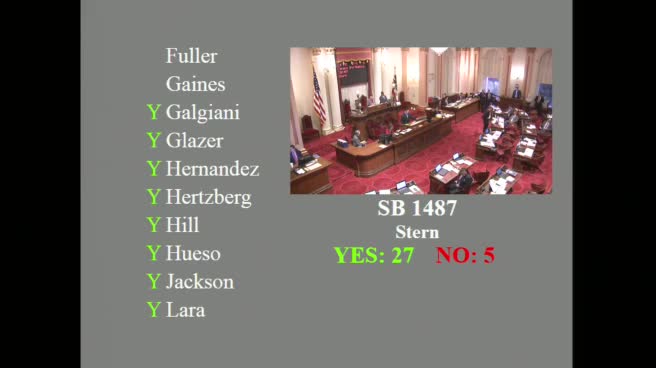
Bill Author

Bill Co-Author(s):