SJR 5: Federal rescheduling of marijuana from a Schedule I drug.
- Session Year: 2017-2018
- House: Senate
- Latest Version Date: 2017-09-22
This measure would request that the Congress of the United States pass a law to reschedule marijuana or cannabis and its derivatives from a Schedule I drug to an alternative schedule and that the President of the United States sign such legislation.
This measure would request that the Congress of the United States pass a law to reschedule marijuana or cannabis and its derivatives from a Schedule I drug to an alternative schedule and that the President of the United States sign such legislation.
This measure would request that the Congress of the United States pass a law to reschedule marijuana or cannabis and its derivatives from a Schedule I drug to an alternative schedule and that the President of the United States sign such legislation.
This measure would request that the Congress of the United States pass a law to reschedule marijuana or cannabis and its derivatives from a Schedule I drug to an alternative schedule and that the President of the United States sign such legislation.
WHEREAS, Marijuana and its derivatives remain classified as a Schedule I drug by the United States Drug Enforcement Administration (DEA); and
WHEREAS, Schedule I drugs, substances, or chemicals are defined as drugs with no currently accepted medical use and a high potential for abuse and include heroin, lysergic acid diethylamide (LSD), marijuana or cannabis, 3,4-methylenedioxymethamphetamine (ecstasy), methaqualone (Quaalude), and peyote; and
WHEREAS, Marijuana or cannabis and its congeners have been studied worldwide outside the United States for years and have shown efficacy for various conditions, such as wasting syndrome, as an antinauseant in those taking chemotherapy, Glaucoma (reduces intraocular pressure), Epilepsy (anti-seizure properties), migraine headaches and other types of pain, and anxiety; and
WHEREAS, The medical and recreational use of marijuana in the State of California has been authorized by the voters through initiatives; and
WHEREAS, Marijuana or cannabis is presently classified by the DEA as a Schedule I drug wherein the possession, sale, or utilization can trigger federal prosecution statues, including federal forfeiture provisions; and
WHEREAS, Concerns about the criminality and forfeiture provisions in federal law impede traditional banking institutions from doing business with potential clients cultivating, researching, selling, or utilizing marijuana or cannabis and its derivatives, therefore making marijuana commerce very difficult; and
WHEREAS, The inability to use traditional banking institutions impedes local and state government from adequately monitoring true marijuana or cannabis utilization and shortchanges the respective taxes owed to taxing agencies, potentially costing state and local governments hundreds of millions of dollars in lost tax income; and
WHEREAS, Since marijuana or cannabis businesses are unable to legally use traditional banking institutions, many vendors resort to the black market and involvement of organized crime making communities less safe; and
WHEREAS, Marijuana or cannabis and its derivatives cannot be legally studied by research institutions if it remains a Schedule I drug, thereby prohibiting newly discovered and verifiable pharmacological attributes of marijuana or cannabis and its derivatives, which otherwise may enhance the quality of life of those that could truly benefit from its use; now, therefore, be it
Resolved by the Senate and the Assembly of the State of California, jointly, That the Legislature urges the Congress of the United States to pass a law to reschedule marijuana or cannabis and its derivatives from a Schedule I drug to an alternative schedule, therefore allowing the legal research and development of marijuana or cannabis for medical use and allowing for the legal commerce of marijuana or cannabis so that businesses dealing with marijuana or cannabis can use traditional banks or financial institutions for their banking needs, which would result in providing a legal vehicle for those businesses to pay their taxes, including, but not limited to, payroll taxes, unsecured property taxes, and applicable taxes on the products sold in accordance with state and local laws; and be it further
Resolved, That the Legislature urges the President of the United States to sign such legislation; and be it further
Resolved, That the Secretary of the Senate transmit copies of this resolution to the President and Vice President of the United States, to the Speaker of the House of Representatives, to the Majority Leader of the United States Senate, to each Senator and Representative from California in the Congress of the United States, and to the author for appropriate distribution.
WHEREAS, Marijuana and its derivatives remain classified as a Schedule I drug by the United States Drug Enforcement Administration (DEA); and
WHEREAS, Schedule I drugs, substances, or chemicals are defined as drugs with no currently accepted medical use and a high potential for abuse and include heroin, lysergic acid diethylamide (LSD), marijuana or cannabis, 3,4-methylenedioxymethamphetamine (ecstasy), methaqualone (Quaalude), and peyote; and
WHEREAS, Marijuana or cannabis and its congeners have been studied worldwide outside the United States for years and have shown efficacy for various conditions, such as wasting syndrome, as an antinauseant in those taking chemotherapy, Glaucoma (reduces intraocular pressure), Epilepsy (anti-seizure properties), migraine headaches and other types of pain, and anxiety; and
WHEREAS, The medical and recreational use of marijuana in the State of California has been authorized by the voters through initiatives; and
WHEREAS, Marijuana or cannabis is presently classified by the DEA as a Schedule I drug wherein the possession, sale, or utilization can trigger federal prosecution statues, including federal forfeiture provisions; and
WHEREAS, Concerns about the criminality and forfeiture provisions in federal law impede traditional banking institutions from doing business with potential clients cultivating, researching, selling, or utilizing marijuana or cannabis and its derivatives, therefore making marijuana commerce very difficult; and
WHEREAS, The inability to use traditional banking institutions impedes local and state government from adequately monitoring true marijuana or cannabis utilization and shortchanges the respective taxes owed to taxing agencies, potentially costing state and local governments hundreds of millions of dollars in lost tax income; and
WHEREAS, Since marijuana or cannabis businesses are unable to legally use traditional banking institutions, many vendors resort to the black market and involvement of organized crime making communities less safe; and
WHEREAS, Marijuana or cannabis and its derivatives cannot be legally studied by research institutions if it remains a Schedule I drug, thereby prohibiting newly discovered and verifiable pharmacological attributes of marijuana or cannabis and its derivatives, which otherwise may enhance the quality of life of those that could truly benefit from its use; now, therefore, be it
Resolved by the Senate and the Assembly of the State of California, jointly, That the Legislature urges the Congress of the United States to pass a law to reschedule marijuana or cannabis and its its derivatives from a Schedule I drug to an alternative schedule, therefore allowing the legal research and development of marijuana or cannabis for medical use and allowing for the legal commerce of marijuana or cannabis so that businesses dealing with marijuana or cannabis can use traditional banks or financial institutions for their banking needs, which would result in providing a legal vehicle for those businesses to pay their taxes, including, but not limited to, payroll taxes, unsecured property taxes, and applicable taxes on the products sold in accordance with state and local laws; and be it further
Resolved, That the Legislature urges the President of the United States to sign such legislation; and be it further
Resolved, That the Secretary of the Senate transmit copies of this resolution to the President and Vice President of the United States, to the Speaker of the House of Representatives, to the Majority Leader of the United States Senate, to each Senator and Representative from California in the Congress of the United States, and to the author for appropriate distribution.
WHEREAS, Marijuana and its derivatives remain classified as a Schedule I drug by the United States Drug Enforcement Administration (DEA); and
WHEREAS, Schedule I drugs, substances, or chemicals are defined as drugs with no currently accepted medical use and a high potential for abuse and include heroin, lysergic acid diethylamide (LSD), marijuana or cannabis, 3,4-methylenedioxymethamphetamine (ecstasy), methaqualone (Quaalude), and peyote; and
WHEREAS, Marijuana or cannabis and its congeners have been studied worldwide outside the United States for years and have shown efficacy for various conditions, such as wasting syndrome, as an antinauseant in those taking chemotherapy, Glaucoma (reduces intraocular pressure), Epilepsy (anti-seizure properties), migraine headaches and other types of pain, and anxiety; and
WHEREAS, The medical and recreational use of marijuana in the State of California has been authorized by the voters through initiatives; and
WHEREAS, Marijuana or cannabis is presently classified by the DEA as a Schedule I drug wherein the possession, sale, or utilization can trigger federal prosecution statues, including federal forfeiture provisions; and
WHEREAS, Concerns about the criminality and forfeiture provisions in federal law impede traditional banking institutions from doing business with potential clients cultivating, researching, selling, or utilizing marijuana or cannabis and its derivatives, therefore making marijuana commerce very difficult; and
WHEREAS, The inability to use traditional banking institutions impedes local and state government from adequately monitoring true marijuana or cannabis utilization and shortchanges the respective taxes owed to taxing agencies, potentially costing state and local governments hundreds of millions of dollars in lost tax income; and
WHEREAS, Since marijuana or cannabis businesses are unable to legally use traditional banking institutions, many vendors resort to the black market and involvement of organized crime making communities less safe; and
WHEREAS, Marijuana or cannabis and its derivatives cannot be legally studied by research institutions if it remains a Schedule I drug, thereby prohibiting newly discovered and verifiable pharmacological attributes of marijuana or cannabis and its derivatives, which otherwise may enhance the quality of life of those that could truly benefit from its use; now, therefore, be it
Resolved by the Senate and the Assembly of the State of California, jointly, That the Legislature urges the Congress of the United States to pass a law to reschedule marijuana or cannabis and its derivatives from a Schedule I drug to an alternative schedule, therefore allowing the legal research and development of marijuana or cannabis for medical use and allowing for the legal commerce of marijuana or cannabis so that businesses dealing with marijuana or cannabis can use traditional banks or financial institutions for their banking needs, which would result in providing a legal vehicle for those businesses to pay their taxes, including, but not limited to, payroll taxes, unsecured property taxes, and applicable taxes on the products sold in accordance with state and local laws; and be it further
Resolved, That the Legislature urges the President of the United States to sign such legislation; and be it further
Resolved, That the Secretary of the Senate transmit copies of this resolution to the President and Vice President of the United States, to the Speaker of the House of Representatives, to the Majority Leader of the United States Senate, to each Senator and Representative from California in the Congress of the United States, and to the author for appropriate distribution.
|
Date
|
Status
|
|---|---|
| Sep 22, 2017 | Chaptered by Secretary of State. Res. Chapter 187, Statutes of 2017. |
| Sep 22, 2017 | Enrolled and filed with the Secretary of State at 10:30 a.m. |
| Sep 15, 2017 | In Senate. Ordered to engrossing and enrolling. |
| Sep 14, 2017 | Read. Adopted. Ordered to the Senate. |
| Jul 12, 2017 | From committee: Be adopted. Ordered to third reading. (Ayes 7. Noes 0.) (July 11). |
| Jun 15, 2017 | Referred to Com. on PUB. S. |
| Apr 6, 2017 | In Assembly. Held at Desk. |
| Apr 6, 2017 | Read. Adopted. (Ayes 34. Noes 2. Page 640.) Ordered to the Assembly. |
| Apr 3, 2017 | Read second time. Ordered to third reading. |
| Mar 30, 2017 | Read third time and amended. |
| Mar 22, 2017 | From committee: Be adopted. Ordered to third reading. (Ayes 7. Noes 0. Page 430.) (March 21). |
| Mar 7, 2017 | Set for hearing March 21. |
| Mar 2, 2017 | Re-referred to Com. on PUB. S. |
| Feb 21, 2017 | Introduced. Referred to Com. on RLS. |
|
Date
|
Description
|
Location
|
Votes
|
|
|---|---|---|---|---|
| Sep 14, 2017 | SJR 5 Stone Senate Third Reading By CUNNINGHAM | Assembly Floor |
Passed |
|
| Jul 11, 2017 | Be adopted. To third reading. | Assembly Standing Committee on Public Safety |
Passed |
|
| Apr 6, 2017 | Senate 3rd Reading SJR5 Stone et al. | Senate Floor |
Passed |
|
| Mar 21, 2017 | Be adopted. Ordered to third reading | Senate Standing Committee on Public Safety |
Passed |
This list shows positions taken on this bill by organizations on the date displayed, which is linked to the original source.
Positions by individuals are not included.
|
Organization
|
Position
|
Date
|
|---|---|---|
| California Association of County Treasurers and Tax Collectors | ** Support | Jul 10, 2017 |
| southern california coalition | ** Support | Jul 10, 2017 |
SENATE THIRD READING
STR Bill Id:SJR 5
Author:(Stone)
As Amended Ver:March 30, 2017
Majority vote
SENATE VOTE: 34-2
Committee | Votes | Ayes | Noes |
Public Safety | 7-0 | Jones-Sawyer, Lackey, Flora, Gonzalez Fletcher, Quirk, Rubio, Santiago |
SUMMARY: Requests the United States Congress to pass a law to reschedule cannabis, marijuana, and its derivatives from a Schedule I drug to an alternative schedule, and for the President of the United states to sign such legislation. Specifically, this joint resolution:
- States the following:
- That Marijuana or cannabis and its congeners have been studied worldwide outside the United States for years and have shown efficacy for various conditions, such as wasting syndrome, as an antinauseant in those taking chemotherapy, Glaucoma (reduces intraocular pressure), Epilepsy (anti-seizure properties), migraine headaches and other types of pain, and anxiety;
- That marijuana or cannabis is presently classified by the Drug Enforcement Administration as a Schedule I drug wherein the possession, sale, or utilization can trigger federal prosecution statues, including federal forfeiture provisions;
- That concerns about the criminality and forfeiture provisions in federal law impede traditional banking institutions from doing business with potential clients cultivating, researching, selling, or utilizing marijuana or cannabis and its derivatives, therefore making marijuana commerce very difficult;
- That the inability to use traditional banking institutions impedes local and state government from adequately monitoring true marijuana or cannabis utilization and shortchanges the respective taxes owed to taxing agencies, potentially costing state and local governments hundreds of millions of dollars in lost tax income;
- That since marijuana or cannabis businesses are unable to legally use traditional banking institutions, many vendors resort to the black market and involvement of organized crime making communities less safe; and,
- This joint resolution states that marijuana or cannabis and its derivatives cannot be legally studied by research institutions if it remains a Schedule I drug, thereby prohibiting newly discovered and verifiable pharmacological attributes of marijuana or cannabis and its derivatives, which otherwise may enhance the quality of life of those that could truly benefit from its use.
- Resolves by the Senate and the Assembly of the State of California jointly:
- Urges the Congress of the United States to pass a law to reschedule marijuana or cannabis and it's derivatives from a Schedule I drug to an alternative schedule, therefore allowing the legal research and development of marijuana or cannabis for medical use and allowing for the legal commerce of marijuana or cannabis so that businesses dealing with marijuana or cannabis can use traditional banks or financial institutions for their banking needs, which would result in providing a legal vehicle for those businesses to pay their taxes, including, but not limited to, payroll taxes, unsecured property taxes, and applicable taxes on the products sold in accordance with state and local laws;
- Urges the President of the United States to sign such legislation; and
- Orders the Secretary of the Senate to distribute copies of this resolution to the President and Vice President of the United States, the Speaker of the House of Representatives, the Majority Leader of the United States Senate, to each Senator and Representatives from California in the Congress of the United States, and to the author for appropriate distribution.
EXISTING LAW:
- Classifies controlled substances in five schedules according to their danger and potential for abuse. Schedule I controlled substances have the greatest restrictions and penalties, including prohibiting the prescribing of a Schedule I controlled substance.
- Prohibits the possession, possession with intent to sell, cultivation, sale, transportation, importation, or furnishing of marijuana, except as otherwise provided by law.
- Allows persons 21 or over to possess not more than 28.5 grams of marijuana and allows those individuals to smoke or ingest marijuana.
- Punishes possession of not more than one ounce of marijuana by those under 18 as an infraction, requiring four hours of drug education and up to 10 hours of community service for first-time offenders.
- Provides that possession of not more than one ounce of marijuana by 18 to 21 year-olds as an infraction with a $100 fine.
- States that the People of the State of California hereby find and declare that the purposes of the Compassionate Use Act of 1996 are as follows:
- To ensure that seriously ill Californians have the right to obtain and use cannabis for medical purposes where that medical use is deemed appropriate and has been recommended by a physician who has determined that the person's health would benefit from the use of cannabis in the treatment of cancer, anorexia, AIDS, chronic pain, spasticity, glaucoma, arthritis, migraine, or any other illness for which cannabis provides relief;
- To ensure that patients and their primary caregivers who obtain and use cannabis for medical purposes upon the recommendation of a physician are not subject to criminal prosecution or sanction; and
- To encourage the Federal and State governments to implement a plan to provide for the safe and affordable distribution of cannabis to all patients in medical need of cannabis.
- States that nothing in this section shall be construed to supersede legislation prohibiting persons from engaging in conduct that endangers others, nor to condone the diversion of cannabis for nonmedical purposes.
- States that existing law relating to the possession and the cultivation of cannabis shall not apply to a patient, or to a patient's primary caregiver, who possesses or cultivates cannabis for the personal medical purposes of the patient upon the written or oral recommendation or approval of a physician.
- Requires the Department of Public Health to establish and maintain a voluntary program for qualified patients to apply for identification cards, and county health departments to issue identification cards to qualified patients and their caregivers.
- Provides that persons with valid identification cards shall not be subject to arrest for possession, transportation, delivery, or cultivation of cannabis, in an amount established by the Medical Marijuana Program Act (MMPA), absent evidence of fraud.
- Provides that qualified patients, persons with valid identification cards, and their designated primary caregivers who associate in order collectively or cooperatively to cultivate cannabis are not subject to criminal liability on that basis.
- Restricts the location of medical marijuana cooperatives, collectives, or dispensaries to more than 600 feet from a school, and authorizes cities and counties to further restrict the locations of these establishments.
- Allows local governments to adopt and enforce local ordinances that regulate the location, operation, or establishment of a medical marijuana collective or cooperative.
- Recognizes the authority of cities and counties to make and enforce, within their borders, all local, police, sanitary, and other ordinances and regulations not in conflict with general laws.
FISCAL EFFECT: None.
COMMENTS: According to the author, "This resolution calls on Congress and the President to reschedule Marijuana from a Schedule 1 drug. The purpose for doing so is two-fold. First, it would allow for research facilities in the U.S. to legally study marijuana and determine what kind of medical benefits truly come from it. Second, as California embarks on the path to legalized marijuana following the passage of Proposition 64, banks and other financial institutions are unable to offer their services. As long as federal law recognizes marijuana as an illegal drug, California's financial institutions will be left out. This could force businesses, who are trying to pay their taxes and do the right thing under state law, to use other options, including the black market. This could result in millions in lost revenue to the State. By reclassifying marijuana from a Schedule 1 drug at the federal level, California will ultimately become a safer place.
Analysis Prepared by: Gregory Pagan / PUB. S. / (916) 319-3744 FN: 0001143
Date of Hearing: July 11, 2017
Chief Counsel: Gregory Pagan
ASSEMBLY COMMITTEE ON PUBLIC SAFETY
Reginald Byron Jones-Sawyer, Sr., Chair
SBPCA Bill Id:SJR 5
Author:(Stone) – As Amended Ver:March 30, 2017
SUMMARY: Requests the United States Congress to pass a law to reschedule cannabis, marijuana, and its derivatives from a Schedule I drug to an alternative schedule, and for the President of the United states to sign such legislation. Specifically, this joint resolution:
- States the following:
- That Marijuana or cannabis and its congeners have been studied worldwide outside the United States for years and have shown efficacy for various conditions, such as wasting syndrome, as an antinauseant in those taking chemotherapy, Glaucoma (reduces intraocular pressure), Epilepsy (anti-seizure properties), migraine headaches and other types of pain, and anxiety;
- That marijuana or cannabis is presently classified by the Drug Enforcement Administration as a Schedule I drug wherein the possession, sale, or utilization can trigger federal prosecution statues, including federal forfeiture provisions;
- That concerns about the criminality and forfeiture provisions in federal law impede traditional banking institutions from doing business with potential clients cultivating, researching, selling, or utilizing marijuana or cannabis and its derivatives, therefore making marijuana commerce very difficult;
- That the inability to use traditional banking institutions impedes local and state government from adequately monitoring true marijuana or cannabis utilization and shortchanges the respective taxes owed to taxing agencies, potentially costing state and local governments hundreds of millions of dollars in lost tax income;
- That since marijuana or cannabis businesses are unable to legally use traditional banking institutions, many vendors resort to the black market and involvement of organized crime making communities less safe; and,
- This joint resolution states that marijuana or cannabis and its derivatives cannot be legally studied by research institutions if it remains a Schedule I drug, thereby prohibiting newly discovered and verifiable pharmacological attributes of marijuana or cannabis and its derivatives, which otherwise may enhance the quality of life of those that could truly benefit from its use.
- That Marijuana or cannabis and its congeners have been studied worldwide outside the United States for years and have shown efficacy for various conditions, such as wasting syndrome, as an antinauseant in those taking chemotherapy, Glaucoma (reduces intraocular pressure), Epilepsy (anti-seizure properties), migraine headaches and other types of pain, and anxiety;
- Resolves by the Senate and the Assembly of the State of California jointly:
- Urges the Congress of the United States to pass a law to reschedule marijuana or cannabis and it’s derivatives from a Schedule I drug to an alternative schedule, therefore allowing the legal research and development of marijuana or cannabis for medical use and allowing for the legal commerce of marijuana or cannabis so that businesses dealing with marijuana or cannabis can use traditional banks or financial institutions for their banking needs, which would result in providing a legal vehicle for those businesses to pay their taxes, including, but not limited to, payroll taxes, unsecured property taxes, and applicable taxes on the products sold in accordance with state and local laws;
- Urges the President of the United States to sign such legislation; and
- Orders the Secretary of the Senate to distribute copies of this resolution to the President and Vice President of the United States, the Speaker of the House of Representatives, the Majority Leader of the United States Senate, to each Senator and Representatives from California in the Congress of the United States, and to the author for appropriate distribution.
- Urges the Congress of the United States to pass a law to reschedule marijuana or cannabis and it’s derivatives from a Schedule I drug to an alternative schedule, therefore allowing the legal research and development of marijuana or cannabis for medical use and allowing for the legal commerce of marijuana or cannabis so that businesses dealing with marijuana or cannabis can use traditional banks or financial institutions for their banking needs, which would result in providing a legal vehicle for those businesses to pay their taxes, including, but not limited to, payroll taxes, unsecured property taxes, and applicable taxes on the products sold in accordance with state and local laws;
EXISTING LAW:
- Classifies controlled substances in five schedules according to their danger and potential for abuse. Schedule I controlled substances have the greatest restrictions and penalties, including prohibiting the prescribing of a Schedule I controlled substance. (Health & Saf. Code, §§ 11054 - 11058.)
- Prohibits the possession, possession with intent to sell, cultivation, sale, transportation, importation, or furnishing of marijuana, except as otherwise provided by law. (Health & Saf. Code, §§ 11357, 11358, 11359, and 11360.)
- Allows persons 21 or over to possess not more than 28.5 grams of marijuana and allows those individuals to smoke or ingest marijuana. (Health and Saf. Code, § 11362.1)
- Punishes possession of not more than one ounce of marijuana by those under 18 as an infraction, requiring four hours of drug education and up to 10 hours of community service for first-time offenders. (Health and Saf. Code, § 11357)
- Provides that possession of not more than one ounce of marijuana by 18 to 21 year-olds as an infraction with a $100 fine. (Health and Saf. Code, § 11357)
- States that the People of the State of California hereby find and declare that the purposes of the Compassionate Use Act of 1996 are as follows:
- To ensure that seriously ill Californians have the right to obtain and use cannabis for medical purposes where that medical use is deemed appropriate and has been recommended by a physician who has determined that the person's health would benefit from the use of cannabis in the treatment of cancer, anorexia, AIDS, chronic pain, spasticity, glaucoma, arthritis, migraine, or any other illness for which cannabis provides relief;
- To ensure that patients and their primary caregivers who obtain and use cannabis for medical purposes upon the recommendation of a physician are not subject to criminal prosecution or sanction; and
- To encourage the Federal and State governments to implement a plan to provide for the safe and affordable distribution of cannabis to all patients in medical need of cannabis. (Health & Saf. Code, § 11362.5, subds. (b)(1)(A) to (C).)
- To ensure that seriously ill Californians have the right to obtain and use cannabis for medical purposes where that medical use is deemed appropriate and has been recommended by a physician who has determined that the person's health would benefit from the use of cannabis in the treatment of cancer, anorexia, AIDS, chronic pain, spasticity, glaucoma, arthritis, migraine, or any other illness for which cannabis provides relief;
- States that nothing in this section shall be construed to supersede legislation prohibiting persons from engaging in conduct that endangers others, nor to condone the diversion of cannabis for nonmedical purposes. (Health & Saf. Code, § 11362.5, subd. (b)(2).)
- States that existing law relating to the possession and the cultivation of cannabis shall not apply to a patient, or to a patient's primary caregiver, who possesses or cultivates cannabis for the personal medical purposes of the patient upon the written or oral recommendation or approval of a physician. (Health & Saf. Code, § 11362.5, subd. (d).)
- Requires the Department of Public Health to establish and maintain a voluntary program for qualified patients to apply for identification cards, and county health departments to issue identification cards to qualified patients and their caregivers. (Health & Saf. Code, § 11362.71, subds. (a) and (b).)
- Provides that persons with valid identification cards shall not be subject to arrest for possession, transportation, delivery, or cultivation of cannabis, in an amount established by the Medical Marijuana Program Act (MMPA), absent evidence of fraud. (Health & Saf. Code, § 11362.71, subd. (e).)
- Provides that qualified patients, persons with valid identification cards, and their designated primary caregivers who associate in order collectively or cooperatively to cultivate cannabis are not subject to criminal liability on that basis. (Health & Saf. Code, § 11362.775.)
- Restricts the location of medical marijuana cooperatives, collectives, or dispensaries to more than 600 feet from a school, and authorizes cities and counties to further restrict the locations of these establishments. (Health & Saf. Code, § 11362.768(b), (f), and (g).)
- Allows local governments to adopt and enforce local ordinances that regulate the location, operation, or establishment of a medical marijuana collective or cooperative. (Health & Saf. Code, § 11362.83, subds. (a) and (b).)
- Recognizes the authority of cities and counties to make and enforce, within their borders, all local, police, sanitary, and other ordinances and regulations not in conflict with general laws. (Cal. Const., art. XI, sec. 7.)
FISCAL EFFECT: None
COMMENTS:
- Author's Statement: According to the author, "This resolution calls on Congress and the President to reschedule Marijuana from a Schedule 1 drug. The purpose for doing so is two-fold. First, it would allow for research facilities in the U.S. to legally study marijuana and determine what kind of medical benefits truly come from it. Second, as California embarks on the path to legalized marijuana following the passage of Proposition 64, banks and other financial institutions are unable to offer their services. As long as federal law recognizes marijuana as an illegal drug, California’s financial institutions will be left out. This could force businesses, who are trying to pay their taxes and do the right thing under state law, to use other options, including the black market. This could result in millions in lost revenue to the State. By reclassifying marijuana from a Schedule 1 drug at the federal level, California will ultimately become a safer place.
- Scheduling Criteria: Although there is no similar list of statutory criteria in California law, this state generally follows federal classification procedures, as follows:
- Schedule I:
- The drug or other substance has a high potential for abuse.
- The drug or other substance has no currently accepted medical use in treatment in the United States.
- There is a lack of accepted safety for use of the drug or other substance under medical supervision.
- The drug or other substance has a high potential for abuse.
- Schedule II:
- The drug or other substance has a high potential for abuse.
- The drug or other substance has a currently accepted medical use in treatment in the United States or a currently accepted medical use with severe restrictions.
- Abuse of the drug or other substances may lead to severe psychological or physical dependence.
- The drug or other substance has a high potential for abuse.
- Schedule III:
- The drug or other substance has a potential for abuse less than the drugs or other substances in Schedules I and II.
- The drug or other substance has a currently accepted medical use in treatment in the United States.
- Abuse of the drug or other substance may lead to moderate or low physical dependence or high psychological dependence.
- The drug or other substance has a potential for abuse less than the drugs or other substances in Schedules I and II.
- Schedule IV:
- The drug or other substance has a low potential for abuse relative to the drugs or other substances in Schedule III.
- The drug or other substance has a currently accepted medical use in treatment in the United States.
- Abuse of the drug or other substance may lead to limited physical dependence or psychological dependence relative to the drugs or other substances in Schedule III.
- The drug or other substance has a low potential for abuse relative to the drugs or other substances in Schedule III.
- Schedule V:
- The drug or other substance has a low potential for abuse relative to the drugs or other substances in Schedule IV.
- The drug or other substance has a currently accepted medical use in treatment in the United States.
- Abuse of the drug or other substance may lead to limited physical dependence or psychological dependence relative to the drugs or other substances in Schedule IV.
- The drug or other substance has a low potential for abuse relative to the drugs or other substances in Schedule IV.
- Schedule I:
REGISTERED SUPPORT / OPPOSITION:
Support
California Association of County Treasurers and Tax Collectors
Southern California Coalition
Opposition
None
Analysis Prepared by: Gregory Pagan / PUB. S. / (916) 319-3744
Office of Senate Floor Analyses (916) 651-1520 Fax: (916) 327-4478 | SJR 5 |
THIRD READING
Bill No: SJR 5
Amended: 3/30/17
SENATE PUBLIC SAFETY COMMITTEE: 7-0, 3/21/17
AYES: Skinner, Anderson, Bradford, Jackson, Mitchell, Stone, Wiener
SUBJECT: Federal rescheduling of marijuana from a Schedule I drug
DIGEST: This resolution formally requests the United States Congress to pass a law to reschedule cannabis, marijuana, and its derivatives from a Schedule I drug, and for the President of the United States to sign such legislation.
Senate Floor Amendments of 3/30/17 add Assembly Member Lackey as a coauthor.
ANALYSIS: Existing federal law classifies cannabis and its derivatives as a Schedule I drug. Other Schedule I drugs include heroin, diethylamide (LSD), 4-methylenedioxymethamphetamine (ecstasy), methaqualone (Quaalude), and peyote, among other drugs. (21 U.S. Code § 812 (c)(a).)
Existing state law, approved by the voters, allows for the medicinal and recreational use of cannabis. (Cal. Const. Proposition 215 (1996) & Proposition 64 (2016))
This resolution states:
- Marijuana or cannabis and its congeners have been studied worldwide outside the United States for years and have shown efficacy for various conditions, such as wasting syndrome, as an antinauseant in those taking chemotherapy, Glaucoma (reduces intraocular pressure), Epilepsy (anti-seizure properties), migraine headaches and other types of pain, and anxiety.
- Marijuana or cannabis is presently classified by the Drug Enforcement Administration as a Schedule I drug wherein the possession, sale, or utilization can trigger federal prosecution statues, including federal forfeiture provisions.
- Concerns about the criminality and forfeiture provisions in federal law impede traditional banking institutions from doing business with potential clients cultivating, researching, selling, or utilizing marijuana or cannabis and its derivatives, therefore making marijuana commerce very difficult.
- The inability to use traditional banking institutions impedes local and state government from adequately monitoring true marijuana or cannabis utilization and shortchanges the respective taxes owed to taxing agencies, potentially costing state and local governments hundreds of millions of dollars in lost tax income.
- Since marijuana or cannabis businesses are unable to legally use traditional banking institutions, many vendors resort to the black market and involvement of organized crime making communities less safe.
- Marijuana or cannabis and its derivatives cannot be legally studied by research institutions if it remains a Schedule I drug, thereby prohibiting newly discovered and verifiable pharmacological attributes of marijuana or cannabis and its derivatives, which otherwise may enhance the quality of life of those that could truly benefit from its use.
This resolution urges:
- Congress of the United States to pass a law to reschedule marijuana or cannabis and its derivatives from a Schedule I drug to an alternative schedule, therefore allowing the legal research and development of marijuana or cannabis for medical use and allowing for the legal commerce of marijuana or cannabis so that businesses dealing with marijuana or cannabis can use traditional banks or financial institutions for their banking needs, which would result in providing a legal vehicle for those businesses to pay their taxes, including, but not limited to, payroll taxes, unsecured property taxes, and applicable taxes on the products sold in accordance with state and local laws.
- President of the United States to sign such legislation.
- The Secretary of the Senate to distribute copies of this resolution to the President and Vice President of the United States, the Speaker of the House of Representatives, the Majority Leader of the United States Senate, to each Senator and Representatives from California in the Congress of the United States, and to the author for appropriate distribution.
Comments
According to the author:
This resolution calls on Congress and the President to reschedule Marijuana from a Schedule 1 drug. The purpose for doing so is two-fold. First, it would allow for research facilities in the U.S. to legally study marijuana and determine what kind of medical benefits truly come from it. Second, as California embarks on the path to legalized marijuana following the passage of Proposition 64, banks and other financial institutions are unable to offer their services. As long as federal law recognizes marijuana as an illegal drug, California’s financial institutions will be left out. This could force businesses, who are trying to pay their taxes and do the right thing under state law, to use other options, including the black market. This could result in millions in lost revenue to the State. By reclassifying marijuana from a Schedule 1 drug at the federal level, California will ultimately become a safer place.
FISCAL EFFECT: Appropriation: No Fiscal Com.: No Local: No
None received
OPPOSITION: (Verified 3/22/17)
None received
Prepared by: Nico Galván / PUB. S. /
4/5/17 14:59:02
Office of Senate Floor Analyses (916) 651-1520 Fax: (916) 327-4478 | SJR |
THIRD READING
Bill No: SJR 5
:
SENATE PUBLIC SAFETY COMMITTEE: 7-0, 3/21/17
AYES: Skinner, Anderson, Bradford, Jackson, Mitchell, Stone, Wiener
DIGEST: This resolution formally requests the United States Congress to pass a law to reschedule cannabis, marijuana, and its derivatives from a Schedule I drug, and for the President of the United States to sign such legislation.
ANALYSIS: Existing federal law classifies cannabis and its derivatives as a Schedule I drug. Other Schedule I drugs include heroin, diethylamide (LSD), 4-methylenedioxymethamphetamine (ecstasy), methaqualone (Quaalude), and peyote, among other drugs. (21 U.S. Code § 812 (c)(a).)
Existing state law, approved by the voters, allows for the medicinal and recreational use of cannabis. (Cal. Const. Proposition 215 (1996) & Proposition 64 (2016))
This resolution states:
- Marijuana or cannabis and its congeners have been studied worldwide outside the United States for years and have shown efficacy for various conditions, such as wasting syndrome, as an antinauseant in those taking chemotherapy, Glaucoma (reduces intraocular pressure), Epilepsy (anti-seizure properties), migraine headaches and other types of pain, and anxiety.
- Marijuana or cannabis is presently classified by the Drug Enforcement Administration as a Schedule I drug wherein the possession, sale, or utilization can trigger federal prosecution statues, including federal forfeiture provisions.
- Concerns about the criminality and forfeiture provisions in federal law impede traditional banking institutions from doing business with potential clients cultivating, researching, selling, or utilizing marijuana or cannabis and its derivatives, therefore making marijuana commerce very difficult.
- The inability to use traditional banking institutions impedes local and state government from adequately monitoring true marijuana or cannabis utilization and shortchanges the respective taxes owed to taxing agencies, potentially costing state and local governments hundreds of millions of dollars in lost tax income.
- Since marijuana or cannabis businesses are unable to legally use traditional banking institutions, many vendors resort to the black market and involvement of organized crime making communities less safe.
- Marijuana or cannabis and its derivatives cannot be legally studied by research institutions if it remains a Schedule I drug, thereby prohibiting newly discovered and verifiable pharmacological attributes of marijuana or cannabis and its derivatives, which otherwise may enhance the quality of life of those that could truly benefit from its use.
This resolution urges:
- Congress of the United States to pass a law to reschedule marijuana or cannabis and its derivatives from a Schedule I drug to an alternative schedule, therefore allowing the legal research and development of marijuana or cannabis for medical use and allowing for the legal commerce of marijuana or cannabis so that businesses dealing with marijuana or cannabis can use traditional banks or financial institutions for their banking needs, which would result in providing a legal vehicle for those businesses to pay their taxes, including, but not limited to, payroll taxes, unsecured property taxes, and applicable taxes on the products sold in accordance with state and local laws.
- President of the United States to sign such legislation.
- The Secretary of the Senate to distribute copies of this resolution to the President and Vice President of the United States, the Speaker of the House of Representatives, the Majority Leader of the United States Senate, to each Senator and Representatives from California in the Congress of the United States, and to the author for appropriate distribution.
Comments
According to the author:
This resolution calls on Congress and the President to reschedule Marijuana from a Schedule 1 drug. The purpose for doing so is two-fold. First, it would allow for research facilities in the U.S. to legally study marijuana and determine what kind of medical benefits truly come from it. Second, as California embarks on the path to legalized marijuana following the passage of Proposition 64, banks and other financial institutions are unable to offer their services. As long as federal law recognizes marijuana as an illegal drug, California’s financial institutions will be left out. This could force businesses, who are trying to pay their taxes and do the right thing under state law, to use other options, including the black market. This could result in millions in lost revenue to the State. By reclassifying marijuana from a Schedule 1 drug at the federal level, California will ultimately become a safer place.
FISCAL EFFECT: Appropriation: No Fiscal Com.: No Local: No
None received
OPPOSITION: (Verified 3/22/17)
None received
3/29/17 16:12:36
**** END ****
SENATE COMMITTEE ON PUBLIC SAFETY
Senator Nancy Skinner, Chair
2017 - 2018 Regular
Bill No: SJR 5 Hearing Date: March 21, 2017
Author: | Stone | ||
Version: | February 21, 2017 | ||
Urgency: |
| Fiscal: | No |
Consultant: | NQG | ||
Subject: Federal Rescheduling of Marijuana From a Schedule I Drug
HISTORY
Source: Author
Prior Legislation: Unknown
Support: Unknown
Opposition: None known
PURPOSE
The purpose of this Senate Joint Resolution is to formally request the United States Congress to pass a law to reschedule cannabis, marijuana, and its derivatives from a Schedule I drug to an alternative schedule, and for the President of the United states to sign such legislation.
Existing federal law classifies cannabis and its derivatives as a Schedule I drug. Other Schedule I drugs include heroin, diethylamide (LSD), 4-methylenedioxymethamphetamine (ecstasy), methaqualone (Quaalude), and peyote, among other drugs. (21 U.S. Code § 812 (c)(a).)
Existing California state law, authorized by voter initiatives, allows for the medicinal and recreational use of cannabis. (Cal. Const. Proposition 215 & Proposition 64)
This joint resolution states that Marijuana or cannabis and its congeners have been studied worldwide outside the United States for years and have shown efficacy for various conditions, such as wasting syndrome, as an antinauseant in those taking chemotherapy, Glaucoma (reduces intraocular pressure), Epilepsy (anti-seizure properties), migraine headaches and other types of pain, and anxiety.
This joint resolution states that marijuana or cannabis is presently classified by the Drug Enforcement Administration as a Schedule I drug wherein the possession, sale, or utilization can trigger federal prosecution statues, including federal forfeiture provisions;
This joint resolution states that concerns about the criminality and forfeiture provisions in federal law impede traditional banking institutions from doing business with potential clients cultivating, researching, selling, or utilizing marijuana or cannabis and its derivatives, therefore making marijuana commerce very difficult.
This joint resolution states that the inability to use traditional banking institutions impedes local and state government from adequately monitoring true marijuana or cannabis utilization and shortchanges the respective taxes owed to taxing agencies, potentially costing state and local governments hundreds of millions of dollars in lost tax income;
This joint resolution states that since marijuana or cannabis businesses are unable to legally use traditional banking institutions, many vendors resort to the black market and involvement of organized crime making communities less safe.
This joint resolution states that marijuana or cannabis and its derivatives cannot be legally studied by research institutions if it remains a Schedule I drug, thereby prohibiting newly discovered and verifiable pharmacological attributes of marijuana or cannabis and its derivatives, which otherwise may enhance the quality of life of those that could truly benefit from its use.
This joint resolution urges the Congress of the United States to pass a law to reschedule marijuana or cannabis and it’s derivatives from a Schedule I drug to an alternative schedule, therefore allowing the legal research and development of marijuana or cannabis for medical use and allowing for the legal commerce of marijuana or cannabis so that businesses dealing with marijuana or cannabis can use traditional banks or financial institutions for their banking needs, which would result in providing a legal vehicle for those businesses to pay their taxes, including, but not limited to, payroll taxes, unsecured property taxes, and applicable taxes on the products sold in accordance with state and local laws;
This joint resolution urges the President of the United States to sign such legislation.
This joint resolution orders the Secretary of the Senate to distribute copies of this resolution to the President and Vice President of the United States, the Speaker of the House of Representatives, the Majority Leader of the United States Senate, to each Senator and Representatives from California in the Congress of the United States, and to the author for appropriate distribution.
COMMENTS
1. Need for this Joint Resolution
According to the author:
This resolution calls on Congress and the President to reschedule Marijuana from a Schedule 1 drug. The purpose for doing so is two-fold. First, it would allow for research facilities in the U.S. to legally study marijuana and determine what kind of medical benefits truly come from it. Second, as California embarks on the path to legalized marijuana following the passage of Proposition 64, banks and other financial institutions are unable to offer their services. As long as federal law recognizes marijuana as an illegal drug, California’s financial institutions will be left out. This could force businesses, who are trying to pay their taxes and do the right thing under state law, to use other options, including the black market. This could result in millions in lost revenue to the State. By reclassifying marijuana from a Schedule 1 drug at the federal level, California will ultimately become a safer place.
2. Effect of this Joint Resolution
As stated above, this resolution urges the United States Congress and the President of the United States to reschedule cannabis and its derivatives from a Schedule. California has a particular interest in the rescheduling of cannabis from a Schedule I drug because California state law allows for the medial and recreational use of cannabis.
-- END –
Discussed in Hearing
View Older Hearings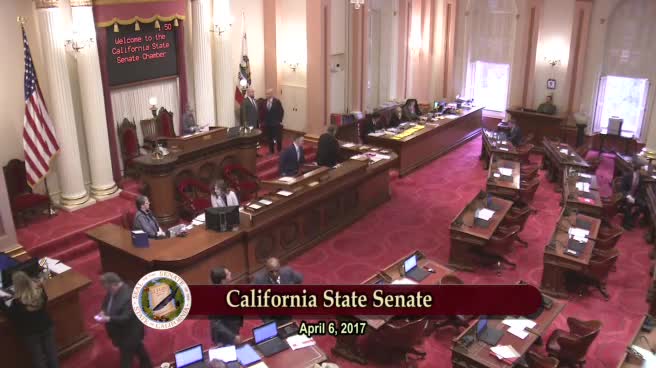
Bill Author