SJR 8: California Nonmotorized Trails Master Plan.
- Session Year: 2017-2018
- House:
- Latest Version Date: 2017-09-07
This measure would request the Governor to designate specified departments to accelerate the planning, creation, and completion timelines for a California Nonmotorized Trails Master Plan for urban and rural regions to expand specified opportunities for Californians. The measure would request the Governor to request the President of the United States, Members of Congress, and the Federal Highway Administration to dedicate increased funding to California to accelerate and support the planning and development of the plan and to accelerate the completion of existing nonmotorized recreational trails.
This measure would request the Governor to designate specified departments to accelerate the planning, creation, and completion timelines for a California Nonmotorized Trails Master Plan for urban and rural regions to expand specified opportunities for Californians. The measure would request the Governor to request the President of the United States, Members of Congress, and the Federal Highway Administration to dedicate increased funding to California to accelerate and support the planning and development of the plan and to accelerate the completion of existing nonmotorized recreational trails.
This measure would request the Governor to designate specified departments to accelerate the planning, creation, and completion timelines for a California Nonmotorized Trails Master Plan for urban and rural regions to expand specified opportunities for Californians. The measure would request the Governor to request the President, Members of Congress, and the Federal Highway Administration to dedicate increased funding to California to accelerate and support the planning and development of the plan and to accelerate the completion of existing nonmotorized recreational trails.
WHEREAS, California established significant greenhouse gas emission reduction targets for 2020 through the California Global Warming Solutions Act of 2006 and for 2050 through Executive Order S-3-05; and
WHEREAS, In 1974, the California Recreational Trails Act was enacted to increase accessibility and enhance the use, enjoyment, and understanding of Californias scenic, natural, historic, and cultural resources; and
WHEREAS, The act and the California Recreational Trails System Plan, which is prepared and continuously maintained by the Department of Parks and Recreation pursuant to the act and in cooperation with the Department of Transportation, provides for both motorized and nonmotorized accessibility and use; and
WHEREAS, In order to help meet those greenhouse gas emission reduction targets, a California Nonmotorized Trails Master Plan is urgently needed to create a statewide plan and timeline for a coordinated network of California trails for walking, hiking, biking, horseback riding, and other forms of nonmotorized transportation in both urban and rural regions; and
WHEREAS, Human-powered, nonmotorized transportation can serve the dual purposes of providing healthy exercise for citizens and transporting them from one location to another with a zero-carbon footprint; and
WHEREAS, Many of Californias local entities, including municipalities, public agencies, private organizations, and individual citizens, are currently in the process of developing their own local trails master plans in their neighborhoods, cities, counties, or regions that are designed to create avenues for environmentally friendly methods of nonmotorized transportation and that are likely to expand rural economic development benefits and outcomes; and
WHEREAS, According to a 2014 report issued by the Governors Highway Safety Association, 338 cyclists were killed in collisions with motor vehicles in California between 2010 and 2012, the most in any state; and
WHEREAS, Other states, including New York, have found that a coordinated nonmotorized trails network offers myriad health benefits and valuable experiences, including hiking, biking, cross-country skiing, taking short nature walks, touring, including agricultural touring, exploring greenways, parklands, and rural agricultural lands, and other nonvehicular experiences in the unique settings of local communities, and that these related activities bring commercial opportunities to those communities; and
WHEREAS, The federal Recreational Trails Program is a Federal Highway Administration assistance program that provides federal funds to states to develop and maintain recreational trails in both urban and rural regions for motorized and nonmotorized recreational trail use; and
WHEREAS, Californias rural regions have limited access to networks of nonmotorized recreational trails; and
WHEREAS, There is currently no deadline to complete and connect the states many diverse and separate trails into a statewide coordinated nonmotorized transportation network in both urban and rural regions; now, therefore, be it
Resolved by the Senate and the Assembly of the State of California, jointly, That the Legislature requests the Governor to designate the Department of Parks and Recreation and the Department of Transportation, in partnership with the National Park Service and other relevant federal, state, regional, and local agencies, private organizations, and individual citizens, to accelerate the planning, creation, and completion timelines for a California Nonmotorized Trails Master Plan for urban and rural regions to expand opportunities for all Californians to benefit from new recreational, tourist, and economic development options in their daily lives, which will reduce the overall usage of fossil-fuel powered vehicles for public transportation and create a safer environment for pedestrians and bicyclists who use nonmotorized transportation trails networks to walk or ride; and be it further
Resolved, That the Legislature requests the Governor to request the President, Members of Congress, and the Federal Highway Administration, through its Recreational Trails Program, to dedicate increased funding to California to accelerate and support the planning and development of the California Nonmotorized Trails Master Plan as an expanded network of nonmotorized recreational trails in rural and urban regions of the state and to accelerate the completion of existing nonmotorized recreational trails, including the California Coastal Trail; and be it further
Resolved, That the Secretary of the Senate transmit copies of this resolution to the President and Vice President of the United States, to the Speaker of the House of Representatives, to the Majority Leader of the Senate, to each Senator and Representative from California in the Congress of the United States, and to the author for appropriate distribution.
WHEREAS, California established significant greenhouse gas emission reduction targets for 2020 through the California Global Warming Solutions Act of 2006 and for 2050 through Executive Order S-3-05; and
WHEREAS, In 1974, the California Recreational Trails Act was enacted to increase accessibility and enhance the use, enjoyment, and understanding of Californias scenic, natural, historic, and cultural resources; and
WHEREAS, The act and the California Recreational Trails System Plan, which is prepared and continuously maintained by the Department of Parks and Recreation pursuant to the act and in cooperation with the Department of Transportation, provides for both motorized and nonmotorized accessibility and use; and
WHEREAS, In order to help meet those greenhouse gas emission reduction targets, a California Nonmotorized Trails Master Plan is urgently needed to create a statewide plan and timeline for a coordinated network of California trails for walking, hiking, biking, horseback riding, and other forms of nonmotorized transportation in both urban and rural regions; and
WHEREAS, Human-powered, nonmotorized transportation can serve the dual purposes of providing healthy exercise for citizens and transporting them from one location to another with a zero-carbon footprint; and
WHEREAS, Many of Californias local entities, including municipalities, public agencies, private organizations, and individual citizens, are currently in the process of developing their own local trails master plans in their neighborhoods, cities, counties, or regions that are designed to create avenues for environmentally friendly methods of nonmotorized transportation and that are likely to expand rural economic development benefits and outcomes; and
WHEREAS, According to a 2014 report issued by the Governors Highway Safety Association, 338 cyclists were killed in collisions with motor vehicles in California between 2010 and 2012, the most in any state; and
WHEREAS, Other states, including New York, have found that a coordinated nonmotorized trails network offers myriad health benefits and valuable experiences, including hiking, biking, cross-country skiing, taking short nature walks, touring, including agricultural touring, exploring greenways, parklands, and rural agricultural lands, and other nonvehicular experiences in the unique settings of local communities, and that these related activities bring commercial opportunities to those communities; and
WHEREAS, The federal Recreational Trails Program is a Federal Highway Administration assistance program that provides federal funds to states to develop and maintain recreational trails in both urban and rural regions for motorized and nonmotorized recreational trail use; and
WHEREAS, Californias rural regions have limited access to networks of nonmotorized recreational trails; and
WHEREAS, There is currently no deadline to complete and connect the states many diverse and separate trails into a statewide coordinated nonmotorized transportation network in both urban and rural regions; now therefore, be it
Resolved by the Senate and the Assembly of the State of California, jointly, That the Legislature requests the Governor to designate the Department of Parks and Recreation and the Department of Transportation, in partnership with the National Park Service and other relevant federal, state, regional, and local agencies, private organizations, and individual citizens, to accelerate the planning, creation, and completion timelines for a California Nonmotorized Trails Master Plan for urban and rural regions to expand opportunities for all Californians to benefit from new recreational, tourist, and economic development options in their daily lives, which will reduce the overall usage of fossil-fuel powered vehicles for public transportation and create a safer environment for pedestrians and bicyclists who use nonmotorized transportation trails networks to walk or ride; and be it further
Resolved,That the Legislature requests the Governor to request the President, Members of Congress, and the Federal Highway Administration, through its Recreational Trails Program, to dedicate increased funding to California to accelerate and support the planning and development of the California Nonmotorized Trails Master Plan as an expanded network of nonmotorized recreational trails in rural and urban regions of the state and to accelerate the completion of existing nonmotorized recreational trails, including the California Coastal Trail; and be it further
Resolved, That the Secretary of the Senate transmit copies of this resolution to the President and Vice President of the United States, to the Speaker of the House of Representatives, to the Majority Leader of the Senate, to each Senator and Representative from California in the Congress of the United States, and to the author for appropriate distribution.
|
Date
|
Status
|
|---|---|
| Sep 7, 2017 | Chaptered by Secretary of State. Res. Chapter 146, Statutes of 2017. |
| Sep 7, 2017 | Enrolled and filed with the Secretary of State at 10 a.m. |
| Sep 1, 2017 | In Senate. Ordered to engrossing and enrolling. |
| Aug 31, 2017 | Coauthors revised. |
| Aug 22, 2017 | Coauthors revised. |
| Jul 20, 2017 | Referred to Com. on W.,P., & W. |
| Jul 17, 2017 | In Assembly. Held at Desk. |
| Jul 17, 2017 | Read. Adopted. (Ayes 35. Noes 1.) Ordered to the Assembly. |
| Jul 11, 2017 | From committee: Be adopted. Ordered to third reading. (Ayes 9. Noes 0.) (July 11). |
| Jul 3, 2017 | Set for hearing July 11. |
| Jun 28, 2017 | Re-referred to Com. on N.R. & W. |
| Jun 13, 2017 | Introduced. Referred to Com. on RLS. |
| Jun 20, 2017 | Introduced. Referred to Com. on RLS. |
|
Date
|
Description
|
Location
|
Votes
|
|
|---|---|---|---|---|
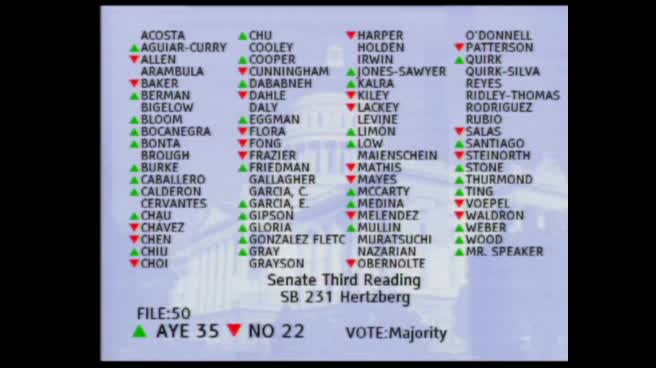
| Aug 31, 2017 | SJR 8 Allen Senate Third Reading By GLORIA | Assembly Floor |
Passed |
|
| Aug 22, 2017 | Be adopted. To third reading. | Assembly Standing Committee on Water, Parks, and Wildlife |
Passed |
|
| Jul 17, 2017 | Passage, Second Reading | Senate Floor |
Passed |
|
| Jul 11, 2017 | Be adopted. Ordered to third reading | Senate Standing Committee on Natural Resources and Water |
Passed |
This list shows positions taken on this bill by organizations on the date displayed, which is linked to the original source.
Positions by individuals are not included.
|
Organization
|
Position
|
Date
|
|---|---|---|
| Bay Area Ridge Trail Council | ** Support | Aug 18, 2017 |
| Biosafety Alliance | ** Support | Aug 18, 2017 |
| butte county association of governments | ** Support | Aug 18, 2017 |
| California Bicycle Coalition | ** Support | Aug 18, 2017 |
| California Guild | ** Support | Aug 18, 2017 |
| California Outdoor Recreation Partners | ** Support | Aug 18, 2017 |
| California Park & Recreation Society | ** Support | Aug 18, 2017 |
| Chico Community Guilds | ** Support | Aug 18, 2017 |
| East Bay Regional Park District | ** Support | Aug 18, 2017 |
| GMO Free California | ** Support | Aug 18, 2017 |
| Hayward Area Recreation And Park District | ** Support | Aug 18, 2017 |
| moms across america | ** Support | Aug 18, 2017 |
| Rails-to-Trails Conservancy | ** Support | Aug 18, 2017 |
| River Partners | ** Support | Aug 18, 2017 |
| sacramento community guild | ** Support | Aug 18, 2017 |
| soil not oil coalition | ** Support | Jul 12, 2017 |
| Taylorsville Historic Hall | ** Support | Aug 18, 2017 |
| Watershed Conservation Authority | ** Support | Aug 18, 2017 |
SENATE THIRD READING
STR Bill Id:SJR 8
Author:(Allen)
As Introduced Ver:June 20, 2017
Majority vote
SENATE VOTE: 36-1
Committee | Votes | Ayes | Noes |
Water | 8-4 | Eduardo Garcia, Chu, Friedman, Gloria, Rubio, Salas, Wood, Cervantes | Bigelow, Choi, Harper, Mathis |
SUMMARY: This resolution requests the Governor to designate specified departments to accelerate the planning, creation, and completion timelines for a California Non-motorized Trails Master Plan for urban and rural regions to expand specified opportunities for Californians, and requests the Governor to request the President, Members of Congress, and the Federal Highway Administration to dedicate increased funding to California to accelerate and support the planning and development of the plan and to accelerate the completion of existing non-motorized recreational trails.
Specifically, this resolution:
- Requests the Governor to designate the Department of Parks and Recreation (DPR) and the Department of Transportation, in partnership with relevant state and local agencies, to accelerate the planning, creation, and completion timelines for a California Non-motorized Trails Master Plan for urban and rural regions. The plan is intended to expand opportunities for all Californians to benefit from new recreational, tourist, and economic development options in their daily lives, in order to reduce the overall usage of fossil-fuel powered vehicles, and create a safer environment for pedestrians and bicyclists who use non-motorized transportation trails networks.
- Requests the Governor to request the President, Members of Congress, and the Federal Highway Administration, through its Recreational Trails Program, to dedicate increased funding to California in order to accelerate and support the planning and development of the California Non-motorized Trails Master Plan as an expanded network of non-motorized recreational trails in rural and urban regions of the state, and to accelerate the completion of existing non-motorized recreational trails, including the California Coastal Trail.
- Requires that the Secretary of the Senate transmit copies of this resolution to the President and Vice President of the United States, to the Speaker of the House of Representatives, to the Majority Leader of the Senate, to each Senator and Representative from California in the Congress of the United States, and to the author for appropriate distribution.
This resolution also makes the following findings:
- California established significant greenhouse gas emission reduction targets for 2020 through the California Global Warming Solutions Act of 2006 and for 2050 through Executive Order S-3-05.
- In 1974, the California Recreational Trails Act (act) was enacted to increase accessibility and enhance the use, enjoyment, and understanding of California's scenic, natural, historic, and cultural resources.
- The act and the California Recreational Trails System Plan (plan), which is prepared and continuously maintained by the Department of Parks and Recreation (DPR) pursuant to the act and in cooperation with the Department of Transportation, provides for both motorized and non-motorized accessibility and use.
- In order to help meet those greenhouse gas emission reduction targets, a California Non-motorized Trails Master Plan is urgently needed to create a statewide plan and timeline for a coordinated network of California trails for walking, hiking, biking, horseback riding, and other forms of non-motorized transportation in both urban and rural regions.
- Human-powered, non-motorized transportation can serve the dual purposes of providing healthy exercise for citizens and transporting them from one location to another with a zero-carbon footprint.
- Many of California's local entities, including municipalities, public agencies, private organizations, and individual citizens, are currently in the process of developing their own local trails master plan in their neighborhoods, cities, counties, or regions that are designed to create avenues for environmentally friendly methods of non-motorized transportation and that are likely to expand rural economic development benefits and outcomes.
- According to a 2014 report issued by the Governors Highway Safety Association, 338 cyclists were killed in collisions with motor vehicles in California between 2010 and 2012, the most in any state.
- Other states, including New York, have found that a coordinated non-motorized trails network offers myriad health benefits and valuable experiences, including hiking, biking, cross-country skiing, taking short nature walks, touring, including agricultural touring, exploring greenways, parklands, and rural agricultural lands, and other non-vehicular experiences in the unique settings of local communities, and that these related activities bring commercial opportunities to those communities.
- The federal Recreational Trails Program (RTP) is a Federal Highway Administration assistance program that provides federal funds to states to develop and maintain recreational trails in both urban and rural regions for motorized and non-motorized recreational trail use.
- California's rural regions have limited access to networks of non-motorized recreational trails.
- There is currently no deadline to complete and connect the state's many diverse and separate trails into a statewide coordinated non-motorized transportation network in both urban and rural regions.
EXISTING LAW:
- Establishes the California Department of Parks and Recreation (DPR) which is responsible for administering the state park system. The DPR has also been directed under prior bond acts to administer grant programs for local and regional parks and related programs.
- Establishes the California Natural Resources Agency, comprised of departments, boards, conservancies, and commissions responsible for the restoration, protection, and management of the state's natural and cultural resources.
FISCAL EFFECT: This resolution is keyed non-fiscal.
COMMENTS:
Background. According to the Senate Natural Resources Committee, in 1974, the Legislature enacted the California Recreation Trails Act (act) with the intent to increase accessibility and enhance the use, enjoyment, and understanding of California's scenic, natural, historic, and cultural resources. Additionally, this act provides for the development and maintenance of a statewide system of recreational and interpretive trails, including heritage corridors.
The California Recreational Trails System Plan (plan) was created under the act to serve as the comprehensive plan for the development and operation of a statewide system of recreation trails. The plan is produced by the DPR for all California agencies and recreation providers that manage trails. Included in the plan is information on: the benefits of trails, how to acquire funding, effective stewardship, how to encourage cooperation among different trail users, and an assessment of present and future demand for trails, along with recommendations for an integrated system of trail routes.
The federal Recreational Trails Program (RTP) provides funds annually for recreational trails and trails-related projects and is administered at the state level by the DPR and the Department of Transportation's Active Transportation Program. In 2015, the federal government reauthorized the RTP for federal fiscal years 2016 through 2020. California's annual apportionment is $5.8 million, of which roughly $1.7 million is allocated to the DPR's Office of Grants and Local Services for the non-motorized component.
Analysis Prepared by: Catherine Freeman / W., P., & W. / (916) 319-2096 FN: 0001340
Date of Hearing: August 22, 2017
ASSEMBLY COMMITTEE ON WATER, PARKS, AND WILDLIFE
Eduardo Garcia, Chair
SBPCA Bill Id:SJR 8
Author:(Allen) – As Introduced Ver:June 20, 2017
SENATE VOTE: 36-1
SUBJECT: California Nonmotorized Trails Master Plan
SUMMARY: This resolution requests the Governor to designate specified departments to accelerate the planning, creation, and completion timelines for a California Non-motorized Trails Master Plan for urban and rural regions to expand specified opportunities for Californians, and requests the Governor to request the President, Members of Congress, and the Federal Highway Administration to dedicate increased funding to California to accelerate and support the planning and development of the plan and to accelerate the completion of existing non-motorized recreational trails.
Specifically, this resolution:
- Requests the Governor to designate the Department of Parks and Recreation (DPR) and the Department of Transportation, in partnership with relevant state and local agencies, to accelerate the planning, creation, and completion timelines for a California Non-motorized Trails Master Plan for urban and rural regions. The plan is intended to expand opportunities for all Californians to benefit from new recreational, tourist, and economic development options in their daily lives, in order to reduce the overall usage of fossil-fuel powered vehicles, and create a safer environment for pedestrians and bicyclists who use non-motorized transportation trails networks.
- Requests the Governor to request the President, Members of Congress, and the Federal Highway Administration, through its Recreational Trails Program, to dedicate increased funding to California in order to accelerate and support the planning and development of the California Non-motorized Trails Master Plan as an expanded network of non-motorized recreational trails in rural and urban regions of the state, and to accelerate the completion of existing non-motorized recreational trails, including the California Coastal Trail.
- Requires that the Secretary of the Senate transmit copies of this resolution to the President and Vice President of the United States, to the Speaker of the House of Representatives, to the Majority Leader of the Senate, to each Senator and Representative from California in the Congress of the United States, and to the author for appropriate distribution.
This resolution also makes the following findings:
- California established significant greenhouse gas emission reduction targets for 2020 through the California Global Warming Solutions Act of 2006 and for 2050 through Executive Order S-3-05.
- In 1974, the California Recreational Trails Act (act) was enacted to increase accessibility and enhance the use, enjoyment, and understanding of California’s scenic, natural, historic, and cultural resources.
- The act and the California Recreational Trails System Plan (plan), which is prepared and continuously maintained by the Department of Parks and Recreation (DPR) pursuant to the act and in cooperation with the Department of Transportation, provides for both motorized and non-motorized accessibility and use.
- In order to help meet those greenhouse gas emission reduction targets, a California Non-motorized Trails Master Plan is urgently needed to create a statewide plan and timeline for a coordinated network of California trails for walking, hiking, biking, horseback riding, and other forms of non-motorized transportation in both urban and rural regions.
- Human-powered, non-motorized transportation can serve the dual purposes of providing healthy exercise for citizens and transporting them from one location to another with a zero-carbon footprint.
- Many of California’s local entities, including municipalities, public agencies, private organizations, and individual citizens, are currently in the process of developing their own local trails master plan in their neighborhoods, cities, counties, or regions that are designed to create avenues for environmentally friendly methods of non-motorized transportation and that are likely to expand rural economic development benefits and outcomes.
- According to a 2014 report issued by the Governors Highway Safety Association, 338 cyclists were killed in collisions with motor vehicles in California between 2010 and 2012, the most in any state.
- Other states, including New York, have found that a coordinated non-motorized trails network offers myriad health benefits and valuable experiences, including hiking, biking, cross-country skiing, taking short nature walks, touring, including agricultural touring, exploring greenways, parklands, and rural agricultural lands, and other non-vehicular experiences in the unique settings of local communities, and that these related activities bring commercial opportunities to those communities.
- The federal Recreational Trails Program (RTP) is a Federal Highway Administration assistance program that provides federal funds to states to develop and maintain recreational trails in both urban and rural regions for motorized and non-motorized recreational trail use.
- California’s rural regions have limited access to networks of non-motorized recreational trails.
- There is currently no deadline to complete and connect the state’s many diverse and separate trails into a statewide coordinated non-motorized transportation network in both urban and rural regions.
EXISTING LAW:
- Establishes the California Department of Parks and Recreation (DPR) which is responsible for administering the state park system. The DPR has also been directed under prior bond acts to administer grant programs for local and regional parks and related programs.
- Establishes the California Natural Resources Agency, comprised of departments, boards, conservancies, and commissions responsible for the restoration, protection, and management of the state’s natural and cultural resources.
FISCAL EFFECT: This resolution is keyed non-fiscal.
COMMENTS:
Author’s Statement:
“The Department of Parks and Recreation, in cooperation with the Department of Transportation, is developing a Recreational Trails Plan (RTP) that will include motorized and non-motorized trails. Non-motorized recreational trails are an important part of a strategy to meet greenhouse gas reduction goals, enhance public health and provide economic benefits to local, often rural, communities while providing the public with increased access to the significant scenic, natural, rural, historic and cultural resources. While the Plan under development will improve access to trails statewide, the DPR is focusing on non-motorized trails on a one-by-one basis with no concept for connectivity from one trail to another, except for some isolated regional trail networks. Developing a Master Plan specifically for non-motorized trails could provide a timeline for completion of a coordinated network of trails for walking, hiking, biking, horseback riding and other forms of non-motorized transportation, and help contribute to a zero-carbon footprint. A Master Plan for non-motorized trails could also help local agencies obtain funding for trail projects as agencies align their trail system with the Master Plan.”
Background: According to the Senate Natural Resources Committee, in 1974, the Legislature enacted the California Recreation Trails Act (act) with the intent to increase accessibility and enhance the use, enjoyment, and understanding of California’s scenic, natural, historic, and cultural resources. Additionally, this act provides for the development and maintenance of a statewide system of recreational and interpretive trails, including heritage corridors.
The California Recreational Trails System Plan (plan) was created under the act to serve as the comprehensive plan for the development and operation of a statewide system of recreation trails. The plan is produced by the DPR for all California agencies and recreation providers that manage trails. Included in the plan is information on: the benefits of trails, how to acquire funding, effective stewardship, how to encourage cooperation among different trail users, and an assessment of present and future demand for trails, along with recommendations for an integrated system of trail routes.
The federal Recreational Trails Program (RTP) provides funds annually for recreational trails and trails-related projects and is administered at the state level by the DPR and the Department of Transportation’s Active Transportation Program. In 2015, the federal government reauthorized the RTP for federal fiscal years 2016 through 2020. California’s annual apportionment is $5.8 million, of which roughly $1.7 million is allocated to the DPR’s Office of Grants and Local Services for the non-motorized component.
Prior and Related Legislation: AB 907 (E. Garcia), of this session, would establish an Office of Outdoor Recreation and Public Lands within the Governor’s Office of Business and Economic Development to, among other things, promote economic and job development opportunities within the outdoor recreation sector of the state’s economy. This bill was held in Assembly Appropriations Committee.
Supporting Arguments: Supporters state that this resolution is a call to action, using unrestrictive and inclusive language, to expand California’s non-motorized recreational trails across the state. They also note that in addition to increasing access to the state’s resources, this will also enhance public health and offer economic benefits inclusive of agri-tourism and generating environmental enhancements as well.
Opposing Arguments: None received.
REGISTERED SUPPORT / OPPOSITION:
Support
Bay Area Ridge Trail Council
Biosafety Alliance
Butte County Association of Governments
California Bicycle Coalition
California Guild (Sponsor)
California Outdoor Recreation Partners
California Park & Recreation Society
Chico Community Guilds
East Bay Regional Park District
GMO Free California
Hayward Area Recreation and Park District
Moms Across America
Rails-to-Trails Conservancy
River Partners
Sacramento Community Guild
Taylorsville Historic Hall
Watershed Conservation Authority
Opposition
None on file
Analysis Prepared by: Catherine Freeman / W., P., & W. / (916) 319-2096
Office of Senate Floor Analyses (916) 651-1520 Fax: (916) 327-4478 | SJR |
THIRD READING
Bill No: SJR 8
:
SENATE NATURAL RES. & WATER COMMITTEE: 9-0, 7/11/17
AYES: Hertzberg, Stone, Allen, Atkins, Hueso, Jackson, Monning, Stern, Vidak
DIGEST:
This resolution requests the Governor to designate specified departments to accelerate the planning, creation, and completion timelines for a California Nonmotorized Trails Master Plan for urban and rural regions to expand specified opportunities for Californians, and requests the Governor to request the President, Members of Congress, and the Federal Highway Administration to dedicated increased funding to California to accelerate and support the planning and development of the plan and to accelerate the completion of existing nonmotorized recreational trails.
ANALYSIS: This resolution makes the following legislative findings:
- California established significant greenhouse gas emission reduction targets for 2020 through the California Global Warming Solutions Act of 2006 and for 2050 through Executive Order S-3-05.
- In 1974, the California Recreational Trails Act (act) was enacted to increase accessibility and enhance the use, enjoyment, and understanding of California’s scenic, natural, historic, and cultural resources.
- The act and the California Recreational Trails System Plan (plan), which is prepared and continuously maintained by the Department of Parks and Recreation (DPR) pursuant to the act and in cooperation with the Department of Transportation, provides for both motorized and nonmotorized accessibility and use.
- In order to help meet those greenhouse gas emission reduction targets, a California Nonmotorized Trails Master Plan is urgently needed to create a statewide plan and timeline for a coordinated network of California trails for walking, hiking, biking, horseback riding, and other forms of nonmotorized transportation in both urban and rural regions.
- Human-powered, nonmotorized transportation can serve the dual purposes of providing healthy exercise for citizens and transporting them from one location to another with a zero-carbon footprint.
- Many of California’s local entities, including municipalities, public agencies, private organizations, and individual citizens, are currently in the process of developing their own local trails master plans in their neighborhoods, cities, counties, or regions that are designed to create avenues for environmentally friendly methods of nonmotorized transportation and that are likely to expand rural economic development benefits and outcomes.
- According to a 2014 report issued by the Governors Highway Safety Association, 338 cyclists were killed in collisions with motor vehicles in California between 2010 and 2012, the most in any state.
- Other states, including New York, have found that a coordinated nonmotorized trails network offers myriad health benefits and valuable experiences, including hiking, biking, cross-country skiing, taking short nature walks, touring, including agricultural touring, exploring greenways, parklands, and rural agricultural lands, and other nonvehicular experiences in the unique settings of local communities, and that these related activities bring commercial opportunities to those communities.
- The federal Recreational Trails Program (RTP) is a Federal Highway Administration assistance program that provides federal funds to states to develop and maintain recreational trails in both urban and rural regions for motorized and nonmotorized recreational trail use.
- California’s rural regions have limited access to networks of nonmotorized recreational trails.
- There is currently no deadline to complete and connect the state’s many diverse and separate trails into a statewide coordinated nonmotorized transportation network in both urban and rural regions.
This resolution:
- Requests the Governor to designate DPR and the Department of Transportation, in partnership with the National Park Service and other relevant federal, state, regional, and local agencies, private organizations, and individual citizens, to accelerate the planning, creation, and completion timelines for a California Nonmotorized Trails Master Plan for urban and rural regions to expand opportunities for all Californians to benefit from new recreational, tourist, and economic development options in their daily lives, which will reduce the overall usage of fossil-fuel powered vehicles for public transportation and create a safer environment for pedestrians and bicyclists who use nonmotorized transportation trails networks to walk or ride.
- Requests the Governor to request the President, Members of Congress, and the Federal Highway Administration, through its Recreational Trails Program, to dedicate increased funding to California to accelerate and support the planning and development of the California Nonmotorized Trails Master Plan as an expanded network of nonmotorized recreational trails in rural and urban regions of the state and to accelerate the completion of existing nonmotorized recreational trails, including the California Coastal Trail.
- Requires that the Secretary of the Senate transmit copies of this resolution to the President and Vice President of the United States, to the Speaker of the House of Representatives, to the Majority Leader of the Senate, to each Senator and Representative from California in the Congress of the United States, and to the author for appropriate distribution.
Background
In 1974, the Legislature enacted the act with the intent to increase accessibility and enhance the use, enjoyment, and understanding of California’s scenic, natural, historic, and cultural resources. Additionally, this act provides for the development and maintenance of a statewide system of recreational and interpretive trails, including heritage corridors.
The plan was created under the act to serve as the comprehensive plan for the development and operation of a statewide system of recreation trails. The plan is produced by DPR for all California agencies and recreation providers that manage trails. Included in the plan is information on: the benefits of trails, how to acquire funding, effective stewardship, how to encourage cooperation among different trail users, and an assessment of present and future demand for trails, along with recommendations for an integrated system of trail routes.
The RTP provides funds annually for recreational trails and trails-related projects. The RTP is administered at the state level by DPR and the Department of Transportation’s Active Transportation Program. In 2015, then-President Obama signed the Fixing America’s Surface Transportation Act that reauthorized the RTP for Federal fiscal years 2016 through 2020. California’s annual apportionment is $5,756,189, of which roughly $1.7 million is allocated to DPR’s Office of Grants and Local Services for the non-motorized component.
FISCAL EFFECT: Appropriation: No Fiscal Com.: No Local: No
California Guild (source)
Bay Area Ridge Trail Council
Biosafety Alliance
Butte County Association of Governments
GMO Free California
Moms Across America
Rails-to-Trails Conservancy
River Partners
Sacramento Community Guild
Soil Not Oil Coalition
None received
ARGUMENTS IN SUPPORT: According to the author, “The Department of Parks and Recreation, in cooperation with the Department of Transportation, is developing a Recreational Trails Plan that will include motorized and non-motorized trails. Non-motorized recreational trails are an important part of a strategy to meet greenhouse gas reduction goals, enhance public health and provide economic benefits to local, often rural, communities while providing the public with increased access to the significant scenic, natural, rural, historic and cultural resources. While the Plan under development will improve access to trails statewide, DPR is focusing on non-motorized trails on a one-by-one basis with no concept for connectivity from one trail to another, except for some isolated regional trail networks. Developing a Master Plan specifically for non-motorized trails could provide a timeline for completion of a coordinated network of trails for walking, hiking, biking, horseback riding and other forms of non-motorized transportation, and help contribute to a zero-carbon footprint. A Master Plan for non-motorized trails could also help local agencies obtain funding for trail projects as agencies align their trail system with the Master Plan.”
Supporters state that this resolution is a call to action that uses unrestrictive and inclusive language to expand California’s nonmotorized recreational trails across the state. They also note that in addition to increasing access to the state’s resources, this will also enhance public health and offer economic benefits inclusive of agritourism and generating environmental enhancements as well.
7/12/17 9:52:50
**** END ****
SENATE COMMITTEE ON NATURAL RESOURCES AND WATER
Senator Robert Hertzberg, Chair
2017 - 2018 Regular
Bill No: SJR 8 Hearing Date: July 11, 2017
Author: | |||
Version: |
| ||
Urgency: | No | Fiscal: | |
Consultant: | |||
Subject: California Nonmotorized Trails Master Plan
BACKGROUND AND EXISTING LAW
In 1974, the Legislature enacted the California Recreational Trails Act (act) with the intent to increase accessibility and enhance the use, enjoyment, and understanding of California’s scenic, natural, historic, and cultural resources. Additionally, this act provides for the development and maintenance of a statewide system of recreational and interpretive trails, including heritage corridors (see Public Resources Code §5070.5).
The California Recreational Trails System Plan (plan) was created under the act to serve as the comprehensive plan for the development and operation of a statewide system of recreation trails. The plan is produced by California Department of Parks and Recreation (DPR) for all California agencies and recreation providers that manage trails. Included in the plan is information on: the benefits of trails, how to acquire funding, effective stewardship, how to encourage cooperation among different trail users, and an assessment of present and future demand for trails, along with recommendations for an integrated system of trail routes.
The Recreational Trails Program (RTP) provides funds annually for recreational trails and trails-related projects. The RTP is administered at the federal level by the Federal Highway Administration (FHWA). It is administered at the state level by DPR and the Department of Transportation (Caltrans) Active Transportation Program (ATP). In 2015, then President Obama signed the Fixing America’s Surface Transportation (FAST) Act that reauthorized the RTP for Federal fiscal years 2016 through 2020. California’s annual apportionment is $5,756,189, of which roughly $1.7 million is allocated to DPR’s Office of Grants and Local Services (OGALS) for the non-motorized component.
PROPOSED LAW
This resolution makes legislative findings regarding the creation of a California Nonmotorized Trails Master Plan to expand recreational, tourist and economic development opportunities for Californians. It states that nonmotorized transportation can serve the dual purposes of providing healthy exercise for citizens and transporting them from one location to another with a zero-carbon footprint. The findings also emphasize that the creation of a California Nonmotorized Trails Master Plan will reduce the overall usage of fossil-fuel vehicles for public transportation and create a safer environment for pedestrians and bicyclists who use the trails.
This resolution concludes with the Legislature requesting the Governor to designate state departments to accelerate the planning, creation, and completion timelines for a California Nonmotorized Trails Master Plan. It also requests that the Governor request the federal government to increase funding to California to support new and existing nonmotorized recreational trails
ARGUMENTS IN SUPPORT
According to the author, “The Department of Parks and Recreation, in cooperation with the Department of Transportation, is developing a Recreational Trails Plan that will include motorized and non-motorized trails. Non-motorized recreational trails are an important part of a strategy to meet greenhouse gas reduction goals, enhance public health and provide economic benefits to local, often rural, communities while providing the public with increased access to the significant scenic, natural, rural, historic and cultural resources. While the Plan under development will improve access to trails statewide, DPR is focusing on non-motorized trails on a one-by-one basis with no concept for connectivity from one trail to another, except for some isolated regional trail networks. Developing a Master Plan specifically for non-motorized trails could provide a timeline for completion of a coordinated network of trails for walking, hiking, biking, horseback riding and other forms of non-motorized transportation, and help contribute to a zero-carbon footprint. A Master Plan for non-motorized trails could also help local agencies obtain funding for trail projects as agencies align their trail system with the Master Plan.”
Supporters state that this resolution is a call to action that uses unrestrictive and inclusive language to expand California’s nonmotorized recreational trails across the state. They also note that in addition to increasing access to the state’s resources, this will also enhance public health and offer economic benefits inclusive of agritourism and generating environmental enhancements as well.
ARGUMENTS IN OPPOSITION
None Received.
SUPPORT
Bay Area Ridge Trail Council
Biosafety Alliance
Butte County Association of Governments
California Guild (Sponsor)
GMO Free California
Moms Across America
Rails-to-Trails Conservancy
River Partners
Sacramento Community Guild
Soil Not Oil Coalition
OPPOSITION
None Received.
-- END --
Discussed in Hearing
 2MIN
Assembly Floor
 12MIN
Assembly Standing Committee on Water, Parks, and Wildlife
 6MIN
Senate Floor

Bill Co-Author(s):