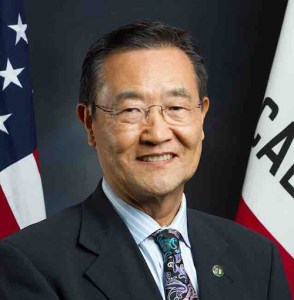
AB 160: Employment policy: voluntary veterans’ preference.
- Session Year: 2019-2020
- House: Assembly
- Latest Version Date: 2019-04-29
|
Date
|
Status
|
|---|---|
| Jul 2, 2019 | In committee: Set, first hearing. Failed passage. Reconsideration granted. |
| May 29, 2019 | Referred to Coms. on JUD. and V.A. |
| May 23, 2019 | In Senate. Read first time. To Com. on RLS. for assignment. |
| May 22, 2019 | Read third time. Passed. Ordered to the Senate. |
| May 20, 2019 | Read second time. Ordered to third reading. |
| May 16, 2019 | From committee: Do pass. (Ayes 18. Noes 0.) (May 16). |
| May 8, 2019 | In committee: Set, first hearing. Referred to APPR. suspense file. |
| Apr 30, 2019 | Re-referred to Com. on APPR. |
| Apr 29, 2019 | Read second time and amended. |
| Apr 25, 2019 | From committee: Amend, and do pass as amended and re-refer to Com. on APPR. (Ayes 7. Noes 0.) (April 24). |
| Mar 27, 2019 | From committee: Do pass and re-refer to Com. on L. & E. (Ayes 10. Noes 1.) (March 26). Re-referred to Com. on L. & E. |
| Feb 21, 2019 | Coauthors Revised. |
| Jan 24, 2019 | Referred to Coms. on V.A. and L. & E. |
| Jan 8, 2019 | From printer. May be heard in committee February 7. |
| Jan 7, 2019 | Read first time. To print. |
|
Date
|
Description
|
Location
|
Votes
|
|
|---|---|---|---|---|
| Jul 2, 2019 | [First] hearing set for [07-03-2019]: Failed passage in Committee. Reconsideration granted | Senate Standing Committee on Judiciary |
Passed |
|
| Jul 2, 2019 | Do pass, but first be re-referred to the Committee on [Veterans Affairs] | Senate Standing Committee on Judiciary |
Passed |
|
| May 22, 2019 | AB 160 Voepel Assembly Third Reading | Assembly Floor |
Passed |
|
| May 16, 2019 | Do pass. | Assembly Standing Committee on Appropriations |
Passed |
|
| Apr 24, 2019 | Do pass as amended and be re-referred to the Committee on [Appropriations] | Assembly Standing Committee on Labor and Employment |
Passed |
|
| Mar 26, 2019 | Do pass and be re-referred to the Committee on [Labor and Employment] | Assembly Standing Committee on Veterans Affairs |
Passed |
This list shows positions taken on this bill by organizations on the date displayed, which is linked to the original source.
Positions by individuals are not included.
Senator Hannah-Beth Jackson, Chair
2019-2020 Regular Session
Bill No: AB 160 (Author:Voepel)
Version: April 29, 2019
Hearing Date: July 2, 2019
Fiscal: Yes
Urgency: No
Consultant: MEC
SUBJECT
Employment policy: voluntary veterans’ preference
DIGEST
This bill enacts the Voluntary Veterans’ Preference Employment Policy Act and authorizes a private employer to establish a veterans’ preference employment policy.
EXECUTIVE SUMMARY
Various statutes, such as the Fair Employment and Housing Act (FEHA) and the Unruh Civil Rights Act, prohibit discrimination in employment, housing, public accommodation and services provided by business establishments on the basis of specified personal characteristics such as sex, race, color, national origin, religion, and disability. Over time, these statutes have been amended to include other characteristics such as medical conditions, marital status, and sexual orientation. Also over time, other statutes were amended to reflect the state’s public policy against discrimination in all forms.
The Federal Uniformed Services Employment and Reemployment Rights Act (USERRA) provides employment discrimination protection for a person who is an active duty military or a veteran and has an obligation to perform service in a uniformed service (United States Armed Forces, United States Armed Forces Reserve, the United States National Guard). (38 U.S.C. § 4311.) The California Military and Veterans Code incorporates this discrimination protection, and further extends it to members or veterans of the California National Guard. (Mil. & Vet. Code § 394.) AB 556 (Salas, Ch. 691, Stats. 2013) incorporated protection from discrimination and retaliation for military employees and veterans into FEHA.
This bill seeks to establish the Voluntary Veterans’ Preference Employment Policy Act to allow private employers to give veteran preference in employment decisions. AB 353 (Voepel, 2017) and AB 1383 (Jones, 2016), bills nearly identical to the one now before this Committee, died in the Senate Judiciary Committee because of concerns regarding the impact the creation of a program that would give preference to a population that is 92 percent male would have on women and LGBTQ persons. If this bill passes this Committee, it will be heard by the Senate Veterans Affairs Committee.
PROPOSED CHANGES TO THE LAW
Existing federal law:
- USERRA prohibits discrimination and retaliation against active duty military and veterans on the basis of the person’s military membership, application for membership, performance of service, application for service, or obligation. (38 U.S.C. § 4311.)
- Prohibits an employer’s use of the employee’s military membership, performance of service, application for service, or obligation as a motivating factor as cause for an adverse employment decision against the employee. (38 U.S.C. § 4311.)
- USERRA provides that any person whose absence from a position of employment is necessitated by reason of service in the uniformed services shall be entitled to specified reemployment rights and benefits and other employment benefits of this chapter. (38 U.S.C. § 4312.)
Existing state law:
- Prohibits discrimination by a person, public entity, or official against any officer, warrant officer, or enlisted member of the military or naval forces because of that membership, and prohibits prejudice or injury by any person, employer, or officer or agent of any corporation, company, or firm with respect to that member’s employment, position or status, or be denied or disqualified for employment by virtue of the membership. (Mil. & Vet. Code § 394.)
- Prohibits an employer or officer or agent of any corporation, company, or firm, or other person, from: (1) discharging any person from employment because of the performance of any ordered military duty or training or by reason of being an officer, warrant officer, or enlisted member of the military or naval forces of this state; (2) preventing that person from performing any military service or from attending any military encampment or place of drill or instruction they may be called upon to perform or attend by proper authority; (3) using prejudice or harm against an employee in any manner in their employment, position, or status by reason of the employee’s performance of military service or duty or attendance at military encampments or places of drill or instruction; or (4) dissuading, preventing, or stopping any person from enlistment or accepting a warrant or commission in the California National Guard or Naval Militia by threat or injury to the employee in respect to their employment, position, status, trade, or business because of enlistment or acceptance of a warrant or commission. (Mil. & Vet. Code § 394.)
- Prohibits a private employer or officer or agent of any corporation, company, or firm, or other person, from restricting or terminating any collateral benefit for employees by reason of an employee’s temporary incapacitation (any period of incapacitation of 52 weeks or less) incident to duty in the National Guard or Naval Militia. (Mil. & Vet. Code § 394.)
- Provides that a violation of the above state employment protections is a misdemeanor, and that any person violating any of these provisions is liable for actual damages and reasonable attorney’s fees incurred by the injured party. (Mil. & Vet. Code § 394.)
- Provides that a covered employee has an absolute right to be restored to the former office or position and status formerly had by them in the same locality and in the same office, board, commission, agency, or institution of the public agency upon the termination of temporary military duty. If the office or position has been eliminated during the employee’s absence, the employee must be reinstated to a position of like seniority, status, and pay if a position exists, or if no position exists, the employee will have the same rights and privileges that he or she would have had if they had occupied the position when it ceased to exist and had not taken temporary military leave of absence. (Mil. & Vet. Code § 395.)
- The Fair Employment and Housing Act (FEHA), prohibits discrimination in housing and employment on the basis of various characteristics, including military and veteran status, defined as a member or veteran of the United States Armed Forces, United States Armed Forces Reserve, the United States National Guard, and the California National Guard. (Gov. Code § 12920 et seq.)
- Allows the Legislature to provide civil service hiring preferences for veterans and their surviving spouses. (Cal. Const., art. VII, § 6(a).)
- Provides that gender discrimination protection under FEHA does not affect the right of an employer to use veteran status as a factor in employee selection or to give special consideration to Vietnam-era veterans. (Gov. Code § 12920(a)(4).)
This bill:
- Instead provides that nothing in FEHA relating to discrimination shall affect the right of an employer to use veteran status as a factor in hiring decisions if the employer maintains a veterans’ preference employment policy established in accordance with the Voluntary Veteran’s Preference Employment Policy Act.
- Expands the employer’s right to give special consideration to all veterans and authorize the employer to use veteran status as a factor in hiring decisions if the employer maintains a veterans’ preference employment policy, as specified, and makes clear that a veterans’ preference employment policy shall not be established or applied for the purpose of discriminating against an employment applicant on the basis of any FEHA protected classification.
- Enacts the Voluntary Veterans’ Preference Employment Policy Act and authorizes a private employer to establish and maintain a written veterans’ preference employment policy, which shall be applied uniformly to hiring decisions.
- Authorizes that employer to require that a veteran submit a DD 214 form to be eligible for the preference. (A DD 214 is a Certificate of Release or Discharge from Active Duty issued by the United States Department of Defense upon a military service member’s retirement, separation, or discharge from active duty military.)
- Specifies that the granting of a veterans’ preference, in and of itself, shall be deemed not to violate any local or state equal employment opportunity law or regulation, including, but not limited to, FEHA.
- Require the Department of Veterans Affairs to assist any private employer in determining if an applicant is a veteran, to the extent permitted by law.
- Provides that nothing in the Voluntary Veteran’s Preference Employment Policy Act shall be construed to authorize the establishment or use of a veterans’ preference employment policy for the purpose of discriminating against an employment applicant on the basis of any protected classification under FEHA.
- Provides that the Voluntary Veteran’s Preference Employment Policy Act shall not become operative until the prohibition against transgender individuals from serving in the United States Armed Forces, as outlined in the United States Department of Defense Directive-type Memorandum-19-004, is rescinded and provided that individuals in any protected classification in subdivision (a) of Section 12940 are allowed to serve.
- Makes technical and conforming changes.
- Provides the following definitions:
- “DD 214” means United States Department of Defense Form 214 or a similarly effective form issued by that department relating to separation from military service;
- “private employer” means a business entity in the private sector of this state with one or more employees;
- “veteran” means a person who served full time in the Armed Forces in time of national emergency or state military emergency or during any expedition of the Armed Forces and who has been discharged or released under conditions other than dishonorable; and
- “veterans’ preference employment policy” means a private employer’s voluntary preference for hiring or retaining a veteran over another qualified applicant or employee.
COMMENTS
1. Stated need for the bill
The author writes:
There are nearly 2 million veterans in California. Of the nearly 7 million Americans who served in the Vietnam War, less than 620,000 are estimated to be alive today in California with the youngest veterans being about 60 years old. In a 2016 US Department of Veteran’s Affairs report, over 50 percent of veterans in California are over the age of 65. With the national retirement age averaging at the same age, Vietnam-era veterans have left and are continuing to leave the workplace.
Current law gives the opportunity for private employers to establish a preference in hiring Vietnam-era veterans, yet most of this veteran group has since passed or retired. AB 160 allows private employers to have a voluntary veterans’ preference for all veterans, despite the era in which they served.
In the same 2016 US Department of Veterans Affairs report, female veterans make up 8 percent of the veteran population in California. A 2017 report from the US Department of Labor, Bureau of Labor Statistics, reported female veteran unemployment in [sic] stands at 6.9 percent, higher than the national average of unemployed female veterans at 4.1 percent.
The Society for Human Resource Management (SHRM), in support, states that this bill would:
establish a voluntary preference for employers to grant a veteran in hiring. This voluntary preference would expand the veteran’s preference exception to all U.S. veterans, regardless of when they served [. . . Human Resource] professionals are keenly aware of the difficulty some veterans face when searching for employment and SHRM and our affiliate, the California State Council of SHRM (CalSHRM), (and many businesses and veteran groups) have been collaborating to assist returning veterans gain employment in our state. We believe that allowing an employer to exercise a voluntary hiring preference exception to all veterans is one small way we can thank them for their service to our country. [Emphasis in original]
2. Establishing veterans’ preference
Existing law provides that sex discrimination protections provided under the FEHA do not affect the right of an employer to use veteran status as a factor in employee selection or to give special consideration to Vietnam-era veterans. (Gov. Code § 12940(a)(4).) This bill would provide that all of the discrimination protections provided under FEHA would not affect a private employer’s right to select a veteran over another applicant. This bill would also expand an employer’s right to give special consideration to all veterans and authorize the employer to use veteran status as a factor in hiring decisions if the employer maintains a veterans’ preference employment policy, as specified. The author argues that existing FEHA protections are outdated and should provide for hiring preference to all veterans, not just Vietnam-era veterans.
The FEHA provisions regarding Vietnam-era veterans were established in 1981. Although FEHA has been amended numerous times in the past 34 years, this veteran preference subdivision was not updated other than to make a minor revision to change “Vietnam era” to “Vietnam-era.” (AB 1814 (Buchanan, Ch. 130, Stats. of 2010).)
This bill would require the private employer, who opts to provide veteran preference in hiring decisions, to establish and maintain a written veterans’ preference employment policy. In this way, other applicants or employees would be made aware of the employer’s hiring policy. In the absence of such written policy, the employer may be liable for discrimination against another employee or applicant. Moreover, seeking to address concern that veteran’s preference policy created under this bill could be used by an employer in order to discriminate against the other protected classes under FEHA, the bill contains provisions that establish that:
- a veterans’ preference policy shall not be established or applied for the purpose of discriminating against an employment applicant on the basis of any protected classification;
- nothing in the bill shall be construed to authorize the establishment or use of a veterans’ preference employment policy for the purpose of discriminating against an employment applicant on the basis of any protected classification; and
- the veteran’s preference program shall be applied uniformly to hiring decisions.
3. Unintended consequences for women and LGBTQ persons
The policy goal of giving preference to a person who served in the military is laudable. However, the population of veterans (those who would receive preference under this bill) is still predominately male. According to a United States Department of Veterans Affairs March 2019 analysis, “Veterans are predominately men (around 91 percent) whereas over half of all non-Veterans are women. This difference is particularly important to remember when doing any economic comparisons. In general men earn more, are more likely to be employed, less likely to be single parents, and less likely to live in poverty than women.” (United States Department of Veterans Affairs, Profile of Veterans: 2017, Data from the American Community Survey, National Center for Veterans Analysis and Statistics (March 2017)(<https://www.va.gov/vetdata/docs/
SpecialReports/Profile_of_Veterans_2017.pdf>) [as of June 21, 2019].)
Because the percentage of male veterans is so much higher than female veterans, males will disproportionately benefit from the veterans’ preference program this bill seeks to codify. Although well intentioned, any private business that would institute a veterans’ preference program under this bill would, by virtue of the low female veteran population, have the ability to give preference to a population that is around 91 percent male. Until the population of female veterans catches up to male veterans, a veterans’ preference program will benefit males to the detriment of females.
In opposition, the California Employment Lawyers Association writes:
We commend the author for his attempt to provide greater benefits to our veterans, who often may face barriers to employment. But we do not think this bill is the right approach. This bill would create a prejudicial distinction between veterans and other protected groups under the Fair Employment and Housing Act whose members face similar barriers to employment. Playing favorites among the various groups of workers who face workplace discrimination ultimately will be harmful to all.
The bill states that a “veterans’ preference employment policy shall not be established or applied for the purpose of discriminating against an employment applicants on the basis of any protected classification in this subdivision.” But while the employer’s purpose may not be to discriminate against a job applicant on the basis of a protected classification, a preference inevitably will have the effect of allowing that discrimination. In a zero-sum game, a preference for one is the opposite for another.
To illustrate this point, consider the U.S. Department of Veterans Affairs’ current projection that the percentage of U.S. Veterans who are women will be just 10 percent. As a result, a veterans’ preference in employment is a preference for a nearly all-male group. Such a hiring preference inevitably would disadvantage women, and would be especially problematic in fields where women already are underrepresented, such as science, engineering, mathematics and technology (STEM) occupations.
This bill would also have a discriminatory effect for members of the LGBTQ community. Last year in their letter of opposition to AB 353, Lambda Legal recounted the anti-LGBTQ history of the U.S. Military. Lambda Legal highlighted that the military’s policy of “Don’t Ask, Don’t Tell” began in 1993 and only allowed LGBTQ people to serve if they successfully remained “closeted” and were not “outed” as to their sexual orientation. It was not until September 2011 that “Don’t Ask, Don’t Tell” was repealed. However, Lambda Legal points out that “although the end of that policy has finally allowed military service regardless of sexual orientation, the same is not true of gender identity. Transgender people are still, to this day, prevented from enlisting.” The Trump Administration’s policy of prohibiting transgender individuals from enlisting in the military is currently in effect.
Equality California writes the following in opposition to this bill:
Given that veterans are already a protected class under FEHA, expanding the current exemption for gender-based discrimination that gave preference to Vietnam veterans to an exemption for discrimination based on all the additional protected classes under FEHA in order to give preference to any veteran is simply not appropriate. Veterans deserve recognition, respect, and opportunity, but not at the expense of every other marginalized group – groups that also face high rates of unemployment, underemployment, and financial instability. We support expanding economic opportunity for veterans, but not in a way that absolves employers of any responsibility for discrimination on the basis of all other factors covered under FEHA.
Specifically, AB 160 will empower those who seek to exclude LGBTQ people, women, people of color and immigrants from equal employment opportunities to do so under the guise of giving preference to veterans. AB 160 would also compound the discrimination that LGBTQ individuals have already faced due to current and historic exclusion from opportunities to serve in the military. It was not so long ago that people who are lesbian, gay, or bisexual were banned or ejected from the military – and were at times arrested, assaulted, or even killed – when their sexual orientation was discovered. It was only in September of 2011 that “Don’t Ask Don’t Tell,” the final version of the military’s ban on service by people who are lesbian, gay, and bisexual, was repealed. Until then, thousands of people were discharged or prevented from serving because of their sexual orientation, despite their significant sacrifices to this country and their effort to serve honorably, and in silence.
While the recent repeal of “Don’t Ask, Don’t Tell” has finally enabled enlistment in the military regardless of sexual orientation, the same is not true of servicemembers or would-be enlistees who are transgender and therefore excluded from military service under the Trump-Pence Administration’s recently implemented ban.
Because of these past and ongoing exclusions of LGBTQ individuals from military service – not due to a lack of fitness or readiness, but due to their sexual orientation or gender identity – a preference for veterans imposes systemic disadvantages on some of the very people who already have been systematically excluded from equal opportunities in employment.
This is not the right approach to addressing the challenges veterans face in securing employment and would undermine one of the most important goals of FEHA: fostering equal opportunity. FEHA should protect all groups that are marginalized in the workplace equally, not some more than others.
4. There is a veterans’ preference in California’s civil service
The California Constitution allows the Legislature to provide civil service hiring preferences for veterans and their surviving spouses. (Cal. Const., art. VII, § 6(a).) Currently, there is a veterans’ preference for some state jobs. As stated on the California Department of Veterans Affairs website:
Veterans’ Preference can be applied to a veteran’s eligibility for qualifying open and open, non-promotional examinations [and] Veterans’ Preference will be awarded as follows, starting on January 1, 2014:
1. Any veteran, widow or widower of a veteran, or spouse of a 100 percent disabled veteran, who achieves a passing score in an entrance examination, shall be ranked in the top rank of the resulting eligibility list. Any veteran who has been dishonorably discharged or released is not eligible for Veterans’ Preference.
2. An entrance examination is defined, under the law, as any open competitive examination.
3. Veterans’ Preference is not granted once a person achieves permanent civil service status.
(See <https://www.calvet.ca.gov/VetServices/Pages/State-Employment.aspx> [as of June 4, 2019].)
SUPPORT
American Legion-Department of California
AMVETS-Department of California
California Association of County Veterans Service Officers
California State Commanders Veterans Council
California State Council of SHRM
Civil Justice Association of California
National Guard Association of California
Society for Human Resource Management in California
Vietnam Veterans of America-California State Council
OPPOSITION
American Civil Liberties Union of California
California Employment Lawyers Association
Equality California
RELATED LEGISLATION
Pending Legislation: None known
Prior Legislation:
AB 353 (Voepel, 2017) was substantially similar to this bill and failed passage in the Senate Judiciary Committee.
AB 1383 (Jones, 2016) was substantially similar to this bill and failed passage in the Senate Judiciary Committee.
AB 556 (Salas, Ch. 691, Stats. 2013) See Background.
AB 1814 (Buchanan, Ch. 130, Stats. 2010) See Comment 2.
SB 36 (Baca, Ch. 201, Stats. 1999) requires any city, county, or city and county, general law or chartered, when it has established a civil service system, to implement a veterans’ preference system, or adopt a resolution identifying reasons that the local agency does not do so.
SB 1150 (Fletcher and Burns, Ch. 123, Stats. 1945) requires military veterans’ preference on civil service employment lists.
PRIOR VOTES:
Assembly Floor (Ayes 75, Noes 0)
Assembly Appropriations Committee (Ayes 18, Noes 0)
Assembly Labor and Employment Committee (Ayes 7, Noes 0)
Assembly Veterans Affairs Committee (Ayes 10, Noes 1)
**************
ASSEMBLY THIRD READING
ATR Bill Id:AB 160
Author:(Voepel)
As Amended Ver:April 29, 2019
Majority vote
SUMMARY:
Enacts the "Voluntary Veterans' Preference Employment Policy Act" to authorize a private employer to establish and maintain a voluntary veterans' preference employment policy for hiring and retaining veterans without deeming it discriminatory under local and state equal employment opportunity laws and the Fair Employment and Housing Act (FEHA).
Major Provisions
- Establishes the Voluntary Veterans' Preference Employment Policy Act to authorize a private employer to establish and maintain a written veterans' preference employment policy, to be applied uniformly to hiring decisions, to give a voluntary preference for hiring or retaining a veteran over another qualified applicant or employee.
- Provides that the granting of a veterans' preference pursuant to the bill, in and of itself, shall be deemed not to violate any local or state equal employment opportunity law or regulation, including, but not limited to, the antidiscrimination provisions of FEHA.
- Revises the existing veteran status provision in FEHA to remove references to discrimination on account of sex and to Vietnam-era veterans, and would, instead, provide that nothing in FEHA relating to discrimination affects the right of an employer to use veteran status as a factor in hiring decisions if the employer maintains a veterans' preference employment policy established in accordance with the Voluntary Veterans' Preference Employment Policy Act.
- Prohibits a veterans' preference employment policy from being established or applied for the purpose of discriminating against an employment applicant on the basis of a protected classification under FEHA.
- Specifies this article will not become operative until the prohibition against transgender individuals from serving in the United States Armed Forces, as outlined in the United States Department of Defense Directive-type Memorandum-19-004, is rescinded and provided individuals in any protected classification in subdivision (a) of Section 12940 are allowed to serve.
- Requires, when the contingency in 5) above has been met, CalVet to post notice on its website.
COMMENTS:
This bill seeks to establish the Voluntary Veterans' Preference Employment Policy Act to allow private employers to give veteran preference in employment decisions. The initiative captured by this bill is the subject of the current priorities of the Department of Defense's "Key DoD Personnel and Readiness Issues Supporting Service Members and Families 2017":
Allow private sector employers to offer hiring preference to veterans: Private sector employers attempting to offer hiring preferences to veterans may be risking claims of discrimination from applicants lacking military experience. States may establish laws or policies that protect private sector employers from discrimination claims when offering hiring preference to veterans.
According to the Author:
"Veterans often have a diverse skillset to offer the workforce once they transition into civilian life. The public sector enjoys a Voluntary Veterans preference but the private sector's Voluntary Veterans Preference is now very much outdated. AB 160 gives private sector employers the option to a Voluntary Veterans Preference to all veterans who have served."
Arguments in Support:
A coalition of veterans organizations, including the Vietnam Veterans of America-California State Council, is in support and states, "California currently has a Veteran's Preference; however, the scope of this preference is arguably outdated and narrow as it only allows public sector employers to utilize veteran preference when hiring. [We] support AB 160 to update current law which only allows for a business to create a preference for Vietnam War era veterans to allow the preference to extend to all veterans regardless of when they served."
The Civil Justice Association of California, states in support of the measure, "California law allows public employers to utilize a preference for veterans but does not provide private employers that same right. The bill fixes that incongruity and will protect employers who wish to provide a hiring benefit to veterans from a possible unjustified discrimination lawsuit."
According to the National Conference of State Legislatures (NCSL), similar veteran's preference laws have been enacted in 37 states across the country (including 33 states in the past three years): Alabama, Arizona, Arkansas, Florida, Georgia, Idaho, Illinois, Indiana, Iowa, Kansas, Kentucky, Louisiana, Maine, Maryland, Massachusetts, Michigan, Minnesota, Montana, Nebraska, Nevada, New Hampshire, New Jersey, North Carolina, North Dakota, Ohio, Oklahoma, Oregon, Pennsylvania, Rhode Island, South Carolina, South Dakota, Texas, Utah, Virginia, Washington, West Virginia and Wyoming.
Arguments in Opposition:
According to the American Civil Liberties Union, "whatever rationale there may have been decades ago when the current Vietnam veteran's preference was enacted with respect to gender discrimination, we do not believe it is necessary or appropriate to expand that exemption in light of the subsequent addition of veterans as a protected class under the FEHA. To do so would be to elevate one protected group over another."
FISCAL COMMENTS:
According to the Assembly Committee on Appropriations: Estimated ongoing administrative costs to CalVet in the range of $220,000 (general fund (GF)) to $415,000 (GF) in the first year and between $200,000 (GF) and $390,000 ongoing thereafter. It is difficult to estimate the number of inquiries CalVet would receive related to veteran verification. There are 1.7 million veterans in California and roughly one million are of working age. If CalVet were to process 2,500 inquires annually, administrative costs would be in the lower end of this range.
VOTES:
ASM VETERANS AFFAIRS: 10-1-0
YES: Irwin, Voepel, Brough, Daly, Frazier, Gloria, Mathis, Muratsuchi, Petrie-Norris, Salas
NO: Boerner Horvath
ASM LABOR AND EMPLOYMENT: 7-0-0
YES: Kalra, Flora, Carrillo, Diep, Gonzalez, Jones-Sawyer, Luz Rivas
ASM APPROPRIATIONS: 18-0-0
YES: Gonzalez, Bigelow, Bloom, Bonta, Brough, Calderon, Carrillo, Chau, Diep, Eggman, Fong, Gabriel, Eduardo Garcia, Maienschein, Obernolte, Petrie-Norris, Quirk, Robert Rivas
UPDATED:
VERSION: April 29, 2019
CONSULTANT: Jenny Callison / V.A. / (916) 319-3550 FN: 0000797
Date of Hearing: May 8, 2019
ASSEMBLY COMMITTEE ON APPROPRIATIONS
Lorena Gonzalez, Chair
ABPCA Bill Id:AB 160
Author:(Voepel) – As Amended Ver:April 29, 2019
Policy Committee: | Veterans Affairs | Vote: | 10 - 1 |
Labor and Employment | 7 - 0 | ||
|
|
Urgency: No State Mandated Local Program: No Reimbursable: No
SUMMARY:
This bill establishes the “Voluntary Veterans’ Preference Employment Policy Act” to authorize a private employer to establish and maintain a veteran’ preference employment policy, contingent upon the prohibition against transgender individuals serving in the military being lifted. The bill also updates outdated statute authorizing the veteran's preference exception. Specifically, this bill:
- Authorizes an employer with a veterans’ preference employment policy to require a veteran to submit a United States Department of Defense form (DD 214) to be eligible for the preference.
- Specifies the granting of a veterans’ preference, in and of itself, does not violate any local or state equal employment opportunity law or regulation.
- Requires the Department of Veterans Affairs (CalVet) to assist any private employer in determining if an applicant is a veteran, to the extent permitted by law.
- Specifies this article will not become operative until the prohibition against transgender individuals from serving in the United States Armed Forces, as outlined in the United States Department of Defense Directive-type Memorandum-19-004, is rescinded and provided individuals in any protected classification in subdivision (a) of Section 12940 are allowed to serve.
- Requires, when the contingency in 4) above has been met, CalVet to post notice on its website.
FISCAL EFFECT:
Estimated ongoing administrative costs to CalVet in the range of $220,000 (GF) to $415,000 (GF) in the first year and between $200,000 (GF) and $390,000 ongoing thereafter. It is difficult to estimate the number of inquiries CalVet would receive related to veteran verification. There are 1.7 million veterans in California and roughly one million are of working age. If CalVet were to process 2,500 inquires annually, administrative costs would be in the lower end of this range.
COMMENTS:
- Purpose. This bill seeks to give veterans preference in employment decisions. According to the author:
Veterans often have a diverse skillset to offer the workforce once they transition into civilian life. The public sector enjoys a Voluntary Veterans preference but the private sector’s Voluntary Veterans Preference is now very much outdated. AB 160 gives private sector employers the option to a Voluntary Veterans Preference to all veterans who have served.
- Background. The California Fair Employment and Housing Act (FEHA) currently allows employers to use veterans' status as a factor in employee selection or to give special consideration to Vietnam–era veterans. According to the author, this exception is outdated and narrow. The current veteran’s preference exception applies only to Vietnam War-era veterans and immunizes employers only from gender discrimination claims. This bill updates the law to apply to all veterans.
This bill also allows an employer to establish a voluntary veterans hiring preference policy and clarifies that exercising such a preference does not violate state or local antidiscrimination laws. By limiting this preference to hiring decisions, this bill is narrowly focused and intended to remedy the immediate problem of higher-than-normal unemployment rates for veterans and removes veteran-related hiring barriers.
According to the National Conference of State Legislatures (NCSL), similar veteran’s preference laws have been enacted in 37 states across the country, including 33 states in the past three years.
- Arguments in Support. A coalition of veterans organizations, including the Vietnam Veterans of America-California State Council, states:
California currently has a Veteran’s Preference; however, the scope of this preference is arguably outdated and narrow as it only allows public sector employers to utilize veteran preference when hiring. [We] support AB 160 to update current law which only allows for a business to create a preference for Vietnam War era veterans to allow the preference to extend to all veterans regardless of when they served.
- Argument in Opposition. According to the American Civil Liberties Union:
Whatever rationale there may have been decades ago when the current Vietnam veteran’s preference was enacted with respect to gender discrimination, we do not believe it is necessary or appropriate to expand that exemption in light of the subsequent addition of veterans as a protected class under the FEHA. To do so would be to elevate one protected group over another.
- Prior Legislation: AB 353 (Voepel), of the 2017-18 Legislative Session, and AB 1383 (Jones), of the 2016-17 Legislative Session, were substantially similar to this bill. Both bills failed passage in the Senate Committee on Judiciary.
Analysis Prepared by: Jennifer Swenson / APPR. / (916) 319-2081
Date of Hearing: April 24, 2019
ASSEMBLY COMMITTEE ON LABOR AND EMPLOYMENT
Ash Kalra, Chair
ABPCA Bill Id:AB 160 (
Author:Voepel) – As Proposed to be Amended Ver:April 24, 2019
SUBJECT: Employment policy: voluntary veterans’ preference
SUMMARY: Enacts the Voluntary Veterans’ Preference Employment Policy Act to authorize a private employer to establish a voluntary veterans’ preference employment policy for hiring and retaining veterans without deeming it discriminatory under local and state equal employment opportunity laws and the Fair Employment and Housing Act (FEHA). Specifically, this bill:
- Establishes the Voluntary Veterans’ Preference Employment Policy Act to authorize a private employer to establish and maintain a written veterans’ preference employment policy, to be applied uniformly to hiring decisions, to give a voluntary preference for hiring or retaining a veteran over another qualified applicant or employee.
- Provides that the granting of a veterans’ preference pursuant to the bill, in and of itself, shall be deemed not to violate any local or state equal employment opportunity law or regulation, including, but not limited to, the antidiscrimination provisions of FEHA.
- Revises the existing veteran status provision in FEHA to remove references to discrimination on account of sex and to Vietnam-era veterans, and would, instead, provide that nothing in FEHA relating to discrimination affects the right of an employer to use veteran status as a factor in hiring decisions if the employer maintains a veterans’ preference employment policy established in accordance with the Voluntary Veterans’ Preference Employment Policy Act.
- Prohibits a veterans’ preference employment policy from being established or applied for the purpose of discriminating against an employment applicant on the basis of a protected classification under FEHA.
EXISTING LAW:
- Establishes FEHA that prohibits discrimination in hiring, terms and conditions of employment, and the selection for or participation in a training program, with limited exceptions, because of the race, religious creed, color, national origin, ancestry, physical disability, mental disability, medical condition, genetic information, marital status, sex, gender, gender identity, gender expression, age, sexual orientation, or military and veteran status of that person.
- Provides that nothing in the provisions of FEHA relating to discrimination on account of sex affects the right of an employer to use veteran status as a factor in employee selection or to give special consideration to Vietnam-era veterans.
FISCAL EFFECT: Unknown
COMMENTS: According to the author, “Currently, private sector employers enjoy Veterans Preference under the specification that the veteran is a Vietnam-era veteran. As the Vietnam-era veteran population continues to leave the workforce, AB 160 would allow a private employer the ability to voluntarily exercise their preference when hiring and retaining a veteran, no matter what era they served, as an employee.”
Committee Comments
State Laws Providing Employment Benefits to Veterans
Many state legislatures have enacted a number of laws and programs, including veterans’ hiring preferences, in recent years to help veterans return to work and effectively utilize their skills gained through military education, training and experience. According to the National Conference of State Legislatures, “Since 2010, all 50 states and Puerto Rico have enacted legislation assisting active duty service members and veterans in transferring and obtaining occupational licenses and certifications…At least 19 states—Alabama, Alaska, California, Colorado, Connecticut, Delaware, Florida, Idaho, Illinois, Maryland, Mississippi, New Mexico, New York, Oklahoma, Utah, Vermont, Washington, West Virginia and Wisconsin—provide grants or tax credits to encourage private employers to hire returning veterans. Since 2011, 37 states (including 33 states in the past three years) have enacted legislation allowing private employers to give hiring preference to honorably discharged veterans.”
Addressing the Ban on Transgender Individuals From Serving in the Military
While this measure seeks to create a voluntary veterans’ preference employment policy and states that no such policy shall be established for the purpose of discriminating against other protected classes, the impact of the preference is likely to disadvantage LGBTQ employment applicants due to the Department of Defense’s ban on transgender individuals serving in the military which went into effect on April 12, 2019. To address this concern, the Committee proposes the following amendment to the bill:
12958.3 (a) This article shall not become operative until the prohibition against transgender individuals from serving in the United States Armed Forces, as outlined in the United States Department of Defense Directive-type Memorandum-19-004, is rescinded and provided that individuals in any protected classification in subdivision (a) of Section 12940 are allowed to serve. (b) When the contingency in subdivision (a) has been met, the Department of Veterans Affairs shall post notice on the homepage of its internet website.
Arguments in Support
A coalition of veterans organizations, including the Vietnam Veterans of America-California State Council, is in support and states, “California currently has a Veteran’s Preference; however, the scope of this preference is arguably outdated and narrow as it only allows public sector employers to utilize veteran preference when hiring. [We] support AB 160 to update current law which only allows for a business to create a preference for Vietnam War era veterans to allow the preference to extend to all veterans regardless of when they served.”
The Civil Justice Association of California, states in support of the measure, “California law allows public employers to utilize a preference for veterans but does not provide private employers that same right. The bill fixes that incongruity and will protect employers who wish to provide a hiring benefit to veterans from a possible unjustified discrimination lawsuit.”
Arguments in Opposition
The California Employment Lawyers Association is opposed to the bill and states, “We commend the author for his attempt to provide greater benefits to our veterans, who often may face barriers to employment. But we do not think this bill is the right approach. This bill would create a prejudicial distinction between veterans and other protected groups under the Fair Employment and Housing Act whose members face similar barriers to employment. Playing favorites among the various groups of workers who face workplace discrimination ultimately will be harmful to all.
The bill states that a veterans’ preference employment policy shall not be established or applied for the purpose of discriminating against an employment applicant on the basis of any protected classification in this subdivision. But while the employer’s purpose may not be to discriminate against a job applicant on the basis of a protected classification, a preference inevitably will have the effect of allowing that discrimination. In a zero-sum game, a preference for one is the opposite for another.”
Related and Prior Legislation
AB 1376 (Ramos) of 2019 would require the Department of Veterans Affairs to collaborate with state agencies and departments, including public colleges and universities, to establish a veterans’ preference to be applied to employment opportunities within the field of cybersecurity that require a security clearance. The bill is pending in the Assembly Veterans Affairs Committee.
AB 353 (Voepel) of 2018 was identical to this bill and failed passage in the Senate Judiciary Committee.
AB 1383 (Jones) of 2016 contained similar provisions to this bill and failed passage in the Senate Judiciary Committee.
REGISTERED SUPPORT / OPPOSITION:
Support
American Legion, Department Of California
AMVETS, Department Of California
California Association Of County Veterans Service Officers
California State Commanders Veterans Council
California State Council Of SHRM
Civil Justice Association Of California
National Guard Association Of California
Society For Human Resource Management
Vietnam Veterans Of America, California State Council
Oppose
American Civil Liberties Union Of California
California Employment Lawyers Association
Equality California
Analysis Prepared by: Megan Lane / L. & E. /
Date of Hearing: March 26, 2019
ASSEMBLY COMMITTEE ON VETERANS AFFAIRS
Jacqui Irwin, Chair
ABPCA Bill Id:AB 160 (
Author:Voepel) – As Introduced Ver:January 7, 2019
SUBJECT: Employment policy: voluntary veterans’ preference
SUMMARY: Enacts the “Voluntary Veterans’ Preference Employment Policy Act” to authorize a private employer to establish and maintain a veteran’ preference employment policy. Specifically, this bill:
- Authorizes an employer with a veterans’ preference employment policy to require a veteran to submit a United States Department of Defense form (DD 214) to be eligible for the preference.
- Specifies the granting of a veterans’ preference, in and of itself, does not violate any local or state equal employment opportunity law or regulation.
- Requires the Department of Veterans Affairs to assist any private employer in determining if an applicant is a veteran, to the extent permitted by law.
EXISTING LAW:
Federal Law:
- Establishes the Uniformed Services Employment and Reemployment Rights Act (USERRA), which prohibits discrimination and retaliation against active duty military and veterans on the basis of the person’s military membership, application for membership, performance of service, application for service, or obligation. (38 U.S.C. Sec. 4311.)
- Prohibits an employer’s use of the employee’s military membership, performance of service, application for service, or obligation as a motivating factor as cause for an adverse employment decision against the employee. (38 U.S.C. Sec. 4311.)
State Law:
- Establishes the California Fair Employment and Housing Act (FEHA). The FEHA provides that it is an unlawful employment practice for an employer to discriminate against a person because of the race, religious creed, color, national origin, ancestry, physical disability, mental disability, medical condition, genetic information, marital status, sex, gender, gender identity, gender expression, age, sexual orientation, or military and veteran status of that person.
- Allows employers, under the California Fair Employment and Housing Act (FEHA) to use veterans' status as a factor in employee selection or to give special consideration to Vietnam–era veterans.
FISCAL EFFECT: According to the Assembly Appropriations Committee which analyzed the substantially similar AB 353 (Voepel, 2017):
Ongoing General Fund administrative costs to the Department of Veteran Affairs in the range of $195,000 to $365,000. It is difficult to estimate the number of inquiries the department would receive related to veteran verification. There are 1.8 million veterans in California; roughly half are of working age. For illustration, if the department were to process 2,500 inquires annually administrative costs would be in the lower end of this range.
COMMENTS:
This bill seeks to establish the Voluntary Veterans’ Preference Employment Policy Act to allow private employers to give veteran preference in employment decisions. The initiative captured by this bill is the subject of the current priorities of the Department of Defense’s “Key DoD Personnel and Readiness Issues Supporting Service Members and Families 2017”:
Allow private sector employers to offer hiring preference to veterans: Private sector employers attempting to offer hiring preferences to veterans may be risking claims of discrimination from applicants lacking military experience. States may establish laws or policies that protect private sector employers from discrimination claims when offering hiring preference to veterans.
According to the author:
“Veterans often have a diverse skillset to offer the workforce once they transition into civilian life. The public sector enjoys a Voluntary Veterans preference but the private sector’s Voluntary Veterans Preference is now very much outdated. AB 160 gives private sector employers the option to a Voluntary Veterans Preference to all veterans who have served.”
According to the National Conference of State Legislatures (NCSL), similar veteran’s preference laws have been enacted in 37 states across the country (including 33 states in the past three years): Alabama, Arizona, Arkansas, Florida, Georgia, Idaho, Illinois, Indiana, Iowa, Kansas, Kentucky, Louisiana, Maine, Maryland, Massachusetts, Michigan, Minnesota, Montana, Nebraska, Nevada, New Hampshire, New Jersey, North Carolina, North Dakota, Ohio, Oklahoma, Oregon, Pennsylvania, Rhode Island, South Carolina, South Dakota, Texas, Utah, Virginia, Washington, West Virginia and Wyoming.
Argument in opposition: According to the American Civil Liberties Union, “whatever rationale there may have been decades ago when the current Vietnam veteran’s preference was enacted with respect to gender discrimination, we do not believe it is necessary or appropriate to expand that exemption in light of the subsequent addition of veterans as a protected class under the FEHA. To do so would be to elevate one protected group over another.”
Previous legislation: AB 353 (Voepel, 2017) was substantially similar to this bill and died in the Senate Committee on Judiciary.
AB 1383 (Jones, 2016) was substantially similar to this bill and died in the Senate Committee on Judiciary.
AB 556 (Salas, Chapter 691, Statutes of 2013) incorporated protection from discrimination and retaliation for military employees and veterans into FEHA.
SB 36 (Baca, Chapter 201, Statutes of 1999) requires any city, county, or city and county, general law or chartered, when it has established a civil service system, to implement a veterans’ preference system, or adopt a resolution identifying reasons that the local agency does not do so.
SB 1150 (Fletcher and Burns, Chapter 123, Statutes of 1945) requires military veterans’ preference on civil service employment lists.
This bill is double referred to the Labor and Employment Committee.
REGISTERED SUPPORT / OPPOSITION:
Support
American Legion, Department Of California
AMVETs, Department of California
California Association of County Veterans Service Officers
California State Commanders Veterans Council
Civil Justice Association of California
National Guard Association of California
Society for Human Resource Management
Vietnam Veterans of America, California State Council
Oppose
American Civil Liberties Union of California
Analysis Prepared by: Jenny Callison / V.A. / (916) 319-3550
Bill Author