AB 1413: Transportation: transactions and use taxes.
- Session Year: 2019-2020
- House: Assembly
- Latest Version Date: 2019-10-11
|
Date
|
Status
|
|---|---|
| Oct 11, 2019 | Chaptered by Secretary of State - Chapter 758, Statutes of 2019. |
| Oct 11, 2019 | Approved by the Governor. |
| Sep 25, 2019 | Enrolled and presented to the Governor at 3:30 p.m. |
| Sep 12, 2019 | Senate amendments concurred in. To Engrossing and Enrolling. |
| Sep 11, 2019 | In Assembly. Concurrence in Senate amendments pending. |
| Sep 11, 2019 | Read third time. Passed. Ordered to the Assembly. |
| Sep 9, 2019 | Read second time. Ordered to third reading. |
| Sep 6, 2019 | Read third time and amended. Ordered to second reading. |
| Aug 13, 2019 | Read second time and amended. Ordered to third reading. |
| Aug 12, 2019 | From committee: Amend, and do pass as amended. (Ayes 4. Noes 1.) (July 10). |
| Jun 25, 2019 | From committee: Do pass and re-refer to Com. on GOV. & F. (Ayes 7. Noes 3.) (June 25). Re-referred to Com. on GOV. & F. |
| May 29, 2019 | Referred to Coms. on TRANS. and GOV. & F. |
| May 23, 2019 | In Senate. Read first time. To Com. on RLS. for assignment. |
| May 22, 2019 | Read third time. Passed. Ordered to the Senate. |
| May 6, 2019 | Read second time. Ordered to third reading. |
| May 2, 2019 | From committee: Do pass. (Ayes 6. Noes 2.) (May 1). |
| Mar 14, 2019 | Referred to Com. on L. GOV. |
| Feb 25, 2019 | Read first time. |
| Feb 23, 2019 | From printer. May be heard in committee March 25. |
| Feb 22, 2019 | Introduced. To print. |
|
Date
|
Description
|
Location
|
Votes
|
|
|---|---|---|---|---|
| Sep 12, 2019 | AB 1413 Gloria Concurrence in Senate Amendments | Assembly Floor |
Passed |
|
| Sep 11, 2019 | Assembly 3rd Reading AB1413 Gloria By Dodd | Senate Floor |
Passed |
|
| Jul 10, 2019 | Do pass as amended | Senate Standing Committee on Governance and Finance |
Passed |
|
| Jun 25, 2019 | Do pass, but first be re-referred to the Committee on [Governance and Finance] | Senate Standing Committee on Transportation |
Passed |
|
| May 22, 2019 | AB 1413 Gloria Assembly Third Reading | Assembly Floor |
Passed |
|
| May 1, 2019 | Do pass. | Assembly Standing Committee on Local Government |
Passed |
This list shows positions taken on this bill by organizations on the date displayed, which is linked to the original source.
Positions by individuals are not included.
CONCURRENCE IN SENATE AMENDMENTS
CSA1 Bill Id:AB 1413
Author:(Gloria)
As Amended Ver:September 6, 2019
Majority vote
SUMMARY:
Authorizes specified local transportation authorities, which have existing transactions and use tax authority, to levy a transactions and use tax (TUT) in a portion of its jurisdiction, with voter approval.
The Senate Amendments:
- Specify that the Placer County Transportation Planning Agency and the Solano County Transportation Improvement Agency, have the authority to impose a TUT applicable to a specific portion of their Counties in conformity with TUT Law at a rate of no more than 1% if certain requirements are met, including a requirement that the ordinance proposing the transactions and use tax be submitted to, and approved by, the voters.
- Identify the portions of Placer and Solano counties in which a tax authorized by this bill can be imposed.
- Specify that any revenues derived from such a tax shall supplement, and not supplant, other transportation and transit infrastructure and service revenues available to the portion of the county to which the tax applies.
- Specify that the entire unincorporated area within the jurisdiction's boundaries shall either be wholly included wholly excluded.
COMMENTS:
Background. Current law authorizes a local transportation authority to impose a transactions and use tax ordinance in the incorporated and unincorporated territory of a county in accordance with existing law which governs transactions and use taxes. The local transportation authority must adopt the tax ordinance by a two-thirds vote, request the county to call a special election, and adopt an expenditure plan, as specified. Current law requires the expenditure plan to be prepared for the expenditure of the transactions and use tax revenues, and federal, state, and local funds expected to be available for transportation improvements for the period during which the tax is imposed.
State law has been amended multiple times to authorize cities, counties, special districts and local transportation authorities to impose a transactions and use tax. Transactions and use taxes are taxes imposed on the total retail price of any tangible personal property and the use or storage of such property when sales tax is not paid. As of April 1, 2019, 316 local agencies impose their own district taxes: 56 are imposed countywide, 258 citywide, and two across multiple counties.
According to the Author:
"AB 1413 allows subregions within a local transportation authority's jurisdiction to find ways to address the specific transportation infrastructure needs of their communities. By enabling subregions to choose whether they want to tax themselves, voters will be assured that their taxes will go back into their community – improving roads, transit, highways, or other transportation infrastructure as they see fit."
Arguments in Support:
Placer County states, "For Placer County, transportation is a key to our quality of life, environmental priorities and economic vitality, yet funding to provide for these needs at the local community level is difficult to obtain. What funding that is available from State and Federal sources often requires significant local match, which is frequently made available through a local transportation sales tax. Obtaining the required 2/3 majority support for a local transportation sales tax is made even more difficult in a county as diverse as Placer County.
"There are examples of such previous legislative efforts to provide discrete portions within a county for a local entity to seek sales tax authority including in Placer County. Specifically, in 1994, legislation was passed to designate the area of Placer County east of the summit of the Sierras as a separate transportation sales tax district under the authority of the North Lake Tahoe Transportation Authority. The North Lake Tahoe Transportation Authority was reaffirmed by the Legislature in 2018 through AB 2920 (Thurmond).
"AB 1413 would allow the Placer County Transportation agency to build on the districting approach by designating sales tax districts where needs are greatest and can be served with a regionally viable sales tax. Such districts would allow for targeted expenditure plans that speak to the critical transportation needs of those areas, with assurance that the funds generated would be spent in that same district. The measure does not propose to change any voting requirements for special sales tax elections."
Arguments in Opposition:
The Howard Jarvis Taxpayers Association argues that, "This bill is very similar to AB 1324 (2017) which HJTA also opposed. Local government agencies and municipalities shouldn't be able to pick and choose among their tax base to make it easier to increase regressive sales taxes. From a business compliance standpoint, authorizing smaller sales tax regions makes compliance challenging for retailers and creates tax disparities that may be different not just from city to city, but street to street. Consumer behavior will undoubtedly be negatively affected by this picking of winners and losers in the private economy."
FISCAL COMMENTS:
None
VOTES:
ASM LOCAL GOVERNMENT: 6-2-0
YES: Aguiar-Curry, Bloom, Boerner Horvath, Ramos, Luz Rivas, Robert Rivas
NO: Lackey, Voepel
ASSEMBLY FLOOR: 47-26-7
YES: Aguiar-Curry, Arambula, Berman, Bloom, Bonta, Burke, Calderon, Carrillo, Chau, Chiu, Chu, Cooper, Daly, Eggman, Frazier, Friedman, Gabriel, Cristina Garcia, Gipson, Gloria, Gray, Holden, Jones-Sawyer, Kalra, Kamlager-Dove, Levine, Limón, Low, McCarty, Medina, Mullin, Nazarian, O'Donnell, Quirk, Ramos, Reyes, Luz Rivas, Robert Rivas, Rodriguez, Blanca Rubio, Santiago, Mark Stone, Ting, Weber, Wicks, Wood, Rendon
NO: Bauer-Kahan, Boerner Horvath, Brough, Cervantes, Chen, Choi, Cunningham, Diep, Flora, Fong, Gallagher, Gonzalez, Irwin, Lackey, Maienschein, Mathis, Mayes, Melendez, Obernolte, Patterson, Petrie-Norris, Quirk-Silva, Salas, Smith, Voepel, Waldron
ABS, ABST OR NV: Bigelow, Cooley, Dahle, Eduardo Garcia, Grayson, Kiley, Muratsuchi
SENATE FLOOR: 28-10-2
YES: Allen, Archuleta, Atkins, Beall, Bradford, Caballero, Dodd, Durazo, Galgiani, Glazer, Lena Gonzalez, Hertzberg, Hill, Hueso, Hurtado, Jackson, Leyva, McGuire, Mitchell, Monning, Pan, Portantino, Roth, Rubio, Skinner, Stern, Wieckowski, Wiener
NO: Bates, Borgeas, Chang, Grove, Jones, Morrell, Nielsen, Stone, Umberg, Wilk
ABS, ABST OR NV: Dahle, Moorlach
UPDATED:
VERSION: September 6, 2019
CONSULTANT: Jimmy MacDonald / L. GOV. / (916) 319-3958 FN: 0002304
Office of Senate Floor Analyses (916) 651-1520 Fax: (916) 327-4478 | AB 1413 |
THIRD READING
Bill No: AB 1413
Amended: 9/6/19 in Senate
SENATE TRANSPORTATION COMMITTEE: 7-3, 6/25/19
AYES: Beall, Dodd, Galgiani, Roth, Rubio, Skinner, Wieckowski
NOES: Bates, Morrell, Stone
NO VOTE RECORDED: Dahle, McGuire, Umberg
SENATE GOVERNANCE & FIN. COMMITTEE: 4-1, 7/10/19
AYES: McGuire, Beall, Hertzberg, Wiener
NOES: Nielsen
NO VOTE RECORDED: Moorlach, Hurtado
ASSEMBLY FLOOR: 47-26, 5/22/19 - See last page for vote
SUBJECT: Transportation: local transportation authorities: transactions and use taxes
DIGEST:
This bill authorizes local transportation authorities in Placer, Solano, and San Diego Counties to levy a transactions and use tax (TUT), in a portion of its jurisdiction, with voter approval, as specified.
Existing law:
- Allows for the establishment of local transportation authorities and authorizes a variety of powers and duties.
- Authorizes a local transportation authority to levy a TUT for specified transportation purposes if approved by two-thirds of the authority’s governing board and two-thirds of the voters within its jurisdiction.
- Additionally requires that an expenditure plan to be adopted in order for the TUT to take effect.
- Establishes and provides for the consolidation of certain transportation entities within the County of San Diego including the San Diego County Regional Transportation Commission, the San Diego Association of Governments, and the San Diego Metropolitan Transit System.
- Prohibits, in any county, the combined rate of all Transactions and Use Taxes imposed in accordance with Transactions and Use Tax Law from exceeding 2%.
This bill:
- Authorizes the Placer County Transportation Planning Agency (agency) to impose a TUT applicable to the entirety of, or a portion of, the County of Placer in conformity with TUT Law at a rate of no more than 1% if certain requirements are met, including a requirement that the ordinance proposing the transactions and use tax be submitted to, and approved by, the voters. Further requires that any revenues derived from the TUT be spent within, or for the benefit of, the portion of Placer County to which the tax would apply and be spent only on transportation and transit infrastructure and services. Excludes the Tahoe Basin from the provisions specified in this bill.
- Provides the same abovementioned TUT authority to the Solano Transportation Improvement Agency for certain portions of Solano County.
- Authorizes the San Diego Regional Transportation Commission, San Diego Association of Governments (SANDAG), San Diego Metropolitan Transit System (MTS) and the North County Transit District (NCTD) to levy a TUT in a portion of its jurisdiction, with voter approval and requires revenues derived from the TUT to be spent only on transportation and transit infrastructure and services.
- Prohibits a transportation agency specified in paragraph 3 from entering into a construction contract over $1,000,000 that would be in part or wholly financed through a tax applicable to only a portion of the county with any entity unless the entity provides to the transportation agency an enforceable commitment that the entity and its subcontractors at every tier will use a skilled and trained workforce to perform all work on the project or a contract that falls within an apprenticeship occupation in the building and construction trades, as specified.
Comments
- Author’s statement. According to the author, “AB 1413 allows sub regions within a local transportation authority’s jurisdiction to find ways to address the specific transportation infrastructure needs of their communities. By enabling sub regions to choose whether they want to tax themselves, voters will be assured that their taxes will go back into their community — improving roads, transit, highways, or other transportation infrastructure as they see fit.”
- Transactions and use tax. TUTs are taxes that are applied to the retail sales of tangible personal property, such as when clothing or other goods are purchased in a store, as well as to the use or storage of such property when sales tax is not paid. If these taxes are to be used for unrestricted, general purposes, they must be approved by the voters by a majority vote. Special taxes, which are restricted for a specified use, such as transportation projects, must be approved by a two-thirds vote.
State law has been amended multiple times to authorize cities, counties, special districts and local transportation authorities, including SANDAG, MTS, and NCTD, to impose a transactions and use tax. As of April 1, 2018, 269 local agencies impose their own transactions and use taxes: four of 58 county-imposed taxes are general-purpose taxes and 54 are special purpose taxes, with 35 dedicated for transportation purposes. Of the 211 city-imposed taxes, 174 are general purpose and 37 are special purpose. Additionally, under current law, cities, counties, and specified special districts and transportation authorities may not impose transactions and use taxes that, when combined with other taxes, exceed a total of 2% above the State’s 7.25% rate.
- Close calls. The author introduced this bill in attempt to remedy an issue many local agencies have encountered when attempting to pass TUT measures for transportation purposes. Existing law requires these TUT measures to be enacted with over two-thirds or 66 percent voter approval. However, many times these measures have failed despite the fact that the measure received over 60 percent voter approval. For example, in 2016, of the seven TUT measures that failed throughout the state, four failed with over 60 percent voting in favor of the measure. One of the primary challenges for many of these regions stems from diverse areas within a county or city that limit an agency’s ability to obtain two-thirds voter approval. The provisions specified in this bill aim to provide a solution by allowing a local transportation agency in Placer, Solano, and San Diego Counties to determine the boundaries where transportation needs are in highest demand, develop an expenditure plan to meet those needs, and attempt to successfully enact TUT measures within those areas.
FISCAL EFFECT: Appropriation: No Fiscal Com.: No Local: No
American Federation of State, County, and Municipal Employees, AFL-CIO
California Association of Councils of Governments
California Transportation Commission
California-Nevada Conference of Operating Engineers
City of Lincoln
City of Roseville
Construction and General Laborers’ Local 185
Contra Costa Transportation Authority
Environmental Health Coalition
Humboldt County Association of Governments
Lincoln Area Chamber of Commerce
LiUNA
North State Building Industry Association
Placer County
Placer County Association of Realtors
Placer County Transportation Planning Agency
Placer County Visitor’s Bureau
Rocklin Area Chamber of Commerce
Roseville Area Chamber of Commerce
Sacramento Area Council of Governments
San Diego 350
Solano Transportation Authority
Ventura County Transportation Commission
Westpark Communities
Yolo County
California Taxpayers Association
Howard Jarvis Taxpayers Association
ASSEMBLY FLOOR: 47-26, 5/22/19
AYES: Aguiar-Curry, Arambula, Berman, Bloom, Bonta, Burke, Calderon, Carrillo, Chau, Chiu, Chu, Cooper, Daly, Eggman, Frazier, Friedman, Gabriel, Cristina Garcia, Gipson, Gloria, Gray, Holden, Jones-Sawyer, Kalra, Kamlager-Dove, Levine, Limón, Low, McCarty, Medina, Mullin, Nazarian, O'Donnell, Quirk, Ramos, Reyes, Luz Rivas, Robert Rivas, Rodriguez, Blanca Rubio, Santiago, Mark Stone, Ting, Weber, Wicks, Wood, Rendon
NOES: Bauer-Kahan, Boerner Horvath, Brough, Cervantes, Chen, Choi, Cunningham, Diep, Flora, Fong, Gallagher, Gonzalez, Irwin, Lackey, Maienschein, Mathis, Mayes, Melendez, Obernolte, Patterson, Petrie-Norris, Quirk-Silva, Salas, Smith, Voepel, Waldron
NO VOTE RECORDED: Bigelow, Cooley, Dahle, Eduardo Garcia, Grayson, Kiley, Muratsuchi
Prepared by: Manny Leon / TRANS. / (916) 651-4121
**** END ****
Office of Senate Floor Analyses (916) 651-1520 Fax: (916) 327-4478 | AB 1413 |
THIRD READING
Bill No: AB 1413
Amended: 8/13/19 in Senate
SENATE TRANSPORTATION COMMITTEE: 7-3, 6/25/19
AYES: Beall, Dodd, Galgiani, Roth, Rubio, Skinner, Wieckowski
NOES: Bates, Morrell, Stone
NO VOTE RECORDED: Dahle, McGuire, Umberg
SENATE GOVERNANCE & FIN. COMMITTEE: 4-1, 7/10/19
AYES: McGuire, Beall, Hertzberg, Wiener
NOES: Nielsen
NO VOTE RECORDED: Moorlach, Hurtado
ASSEMBLY FLOOR: 47-26, 5/22/19 - See last page for vote
SUBJECT: Transportation: local transportation authorities: transactions and use taxes
DIGEST:
This bill authorizes local transportation authorities in Placer and San Diego Counties, which have existing transactions and use tax (TUT) authority, to levy a TUT in any portion of its jurisdiction, with voter approval.
Existing law:
- Allows for the establishment of local transportation authorities and authorizes a variety of powers and duties.
- Authorizes a local transportation authority to levy a TUT for specified transportation purposes if approved by two-thirds of the authority’s governing board and two-thirds of the voters within its jurisdiction.
- Additionally requires that an expenditure plan to be adopted in order for the TUT to take effect.
- Establishes and provides for the consolidation of certain transportation entities within the County of San Diego including the San Diego County Regional Transportation Commission, the San Diego Association of Governments, and the San Diego Metropolitan Transit System.
- Prohibits, in any county, the combined rate of all Transactions and Use Taxes imposed in accordance with Transactions and Use Tax Law from exceeding 2%.
This bill:
- Authorizes the Placer County Transportation Planning Agency (agency) to impose a TUT applicable to the entirety of, or a portion of, the County of Placer in conformity with TUT Law at a rate of no more than 1% if certain requirements are met, including a requirement that the ordinance proposing the transactions and use tax be submitted to, and approved by, the voters. Further requires that any revenues derived from the TUT be spent within, or for the benefit of, the portion of Placer County to which the tax would apply and be spent only on transportation and transit infrastructure and services.
- Authorizes the San Diego Regional Transportation Commission, San Diego Association of Governments (SANDAG), San Diego Metropolitan Transit System (MTS) and the North County Transit District (NCTD) to levy a TUT in a portion of its jurisdiction, with voter approval and requires revenues derived from the TUT to be spent only on transportation and transit infrastructure and services.
- Prohibits a transportation agency specified in paragraph 2 from entering into a construction contract over $1,000,000 that would be in part or wholly financed through a tax applicable to only a portion of the county with any entity unless the entity provides to the transportation agency an enforceable commitment that the entity and its subcontractors at every tier will use a skilled and trained workforce to perform all work on the project or a contract that falls within an apprenticeship occupation in the building and construction trades, as specified.
Comments
- Author’s statement. According to the author, “AB 1413 allows sub regions within a local transportation authority’s jurisdiction to find ways to address the specific transportation infrastructure needs of their communities. By enabling sub regions to choose whether they want to tax themselves, voters will be assured that their taxes will go back into their community — improving roads, transit, highways, or other transportation infrastructure as they see fit.”
- Transactions and use tax. TUTs are taxes that are applied to the retail sales of tangible personal property, such as when clothing or other goods are purchased in a store, as well as to the use or storage of such property when sales tax is not paid. If these taxes are to be used for unrestricted, general purposes, they must be approved by the voters by a majority vote. Special taxes, which are restricted for a specified use, such as transportation projects, must be approved by a two-thirds vote.
State law has been amended multiple times to authorize cities, counties, special districts and local transportation authorities, including SANDAG, MTS, and NCTD, to impose a transactions and use tax. As of April 1, 2018, 269 local agencies impose their own transactions and use taxes: four of 58 county-imposed taxes are general-purpose taxes and 54 are special purpose taxes, with 35 dedicated for transportation purposes. Of the 211 city-imposed taxes, 174 are general purpose and 37 are special purpose. Additionally, under current law, cities, counties, and specified special districts and transportation authorities may not impose transactions and use taxes that, when combined with other taxes, exceed a total of 2% above the State’s 7.25% rate.
- Close calls. The author introduced this bill in attempt to remedy an issue many local agencies have encountered when attempting to pass TUT measures for transportation purposes. Existing law requires these TUT measures to be enacted with over two-thirds or 66 percent voter approval. However, many times these measures have failed despite the fact that the measure received over 60 percent voter approval. For example, in 2016, of the seven TUT measures that failed throughout the state, four failed with over 60 percent voting in favor of the measure. One of the primary challenges for many of these regions stems from diverse areas within a county or city that limit an agency’s ability to obtain two-thirds voter approval. The provisions specified in this bill aim to provide a solution by allowing a local transportation agency in Placer and San Diego Counties to determine the boundaries where transportation needs are in highest demand, develop an expenditure plan to meet those needs, and attempt to successfully enact TUT measures within those areas.
FISCAL EFFECT: Appropriation: No Fiscal Com.: No Local: No
American Federation of State, County and Municipal Employees, AFL-CIO
California Association of Councils of Governments
California Transportation Commission
California-Nevada Conference of Operating Engineers
City of Lincoln
City of Roseville
Construction and General Laborers Local 185
Contra Costa Transportation Authority
Environmental Health Coalition
Humboldt County Association of Governments
Lincoln Area Chamber of Commerce
LiUNA
North State Building Industry Association
Placer County
Placer County Association of Realtors
Placer County Transportation Planning Agency
Placer County Visitor’s Bureau
Rocklin Area Chamber of Commerce
Roseville Area Chamber of Commerce
Sacramento Area Council of Governments
San Diego 350
Solano Transportation Authority
Ventura County Transportation Commission
Westpark Communities
Yolo County
OPPOSITION: (Verified 8/14/19)
California Taxpayers Association
Howard Jarvis Taxpayers Association
ASSEMBLY FLOOR: 47-26, 5/22/19
AYES: Aguiar-Curry, Arambula, Berman, Bloom, Bonta, Burke, Calderon, Carrillo, Chau, Chiu, Chu, Cooper, Daly, Eggman, Frazier, Friedman, Gabriel, Cristina Garcia, Gipson, Gloria, Gray, Holden, Jones-Sawyer, Kalra, Kamlager-Dove, Levine, Limón, Low, McCarty, Medina, Mullin, Nazarian, O'Donnell, Quirk, Ramos, Reyes, Luz Rivas, Robert Rivas, Rodriguez, Blanca Rubio, Santiago, Mark Stone, Ting, Weber, Wicks, Wood, Rendon
NOES: Bauer-Kahan, Boerner Horvath, Brough, Cervantes, Chen, Choi, Cunningham, Diep, Flora, Fong, Gallagher, Gonzalez, Irwin, Lackey, Maienschein, Mathis, Mayes, Melendez, Obernolte, Patterson, Petrie-Norris, Quirk-Silva, Salas, Smith, Voepel, Waldron
NO VOTE RECORDED: Bigelow, Cooley, Dahle, Eduardo Garcia, Grayson, Kiley, Muratsuchi
SENATE COMMITTEE ON GOVERNANCE AND FINANCE
Senator Mike McGuire, Chair
2019 - 2020 Regular
Bill No: | AB 1413 | Hearing Date: | 7/10/19 |
Author: | Gloria | Tax Levy: | No |
Version: | 2/22/19 | Fiscal: | No |
Consultant: | Grinnell | ||
Transportation: local transportation authorities: transactions and use taxes
Allows specified transit districts, and any transportation commission, to impose a district tax within a portion of a city or county under specified circumstances.
Background
Transit Districts and Transportation Authorities. Cities and counties provide transit services in a variety of ways, including transit districts. Current law creates 17 distinct transit districts to provide transit within a prescribed area of jurisdiction, including transit agencies and transit districts, such as the Bay Area Regional Transit District and the Gold Coast Transit District (AB 664, Williams, 2013), among others.
District taxes dedicated to transportation originated in 1970, when the Legislature authorized several counties served by the Bay Area Rapid Transit (BART) District to impose a regional sales tax. The Legislature subsequently authorized district taxes for individual counties or local entities, including Los Angeles, San Diego, Santa Clara, Fresno, and Sacramento, among others. In 1987, the Legislature enacted SB 142 (Deddeh) which provided a generic process for individual counties to implement local sales taxes of up to 1% for transportation purposes, upon the adoption of a specified expenditure plan and approval of a ballot proposition by a majority of county voters. Today, 24 counties impose a transportation tax.
In 1975, the Legislature created the Metropolitan Transit System (MTS) and its northern counterpart (the North County Transit District or NCTD) to plan, construct, and operate public transit systems in San Diego County. NCTD’s jurisdiction includes the Carlsbad, Del Mar, Encinitas, Escondido, Oceanside, San Marcos, Solana Beach, and Vista, plus specific census tracts in unincorporated San Diego County. MTS’s jurisdiction is the cities of Chula Vista, Coronado, El Cajon, Imperial Beach, La Mesa, Lemon Grove, National City, Poway, San Diego, and Santee, plus the part of the unincorporated area of San Diego County that isn’t part of NCTD. In 2017, the Legislature authorized NCTD and MTS to impose district taxes (AB 805, Gonzalez Fletcher).
Metropolitan Planning Organizations. The Federal-Aid Highway Act of 1962 required that a regional entity, known as a Metropolitan Planning Organization (MPO), guide and maintain transportation planning in any urbanized area with a population of 50,000 or more. MPOs are usually called councils of governments, and are directed by boards comprised of representatives from local governments and transportation agencies. Counties can establish a local transportation fund in the county treasury, and contract with CDTFA to deposit moneys from district taxes dedicated to transportation into this fund. There are 18 MPOs and 26 RTPAs in California. Except for the Sacramento Area Council of Governments and the Tahoe Metropolitan Planning Organization, all California MPOs have boundaries coterminous with county lines; four are multiple county boundaries; the remaining ones are located within a single county.
The San Diego Association of Governments (SANDAG) started in 1966, when the incorporated cities in the county formed the Comprehensive Planning Organization (CPO), as a subcomponent of the County of San Diego, to address long-range transportation and other regional planning issues. The CPO was a voluntary association, headed by representatives of the agencies that wished to be part of the organization. Six years later, the members of the planning organization reestablished the organization as a separate joint powers authority, independent of county government. In 1980, CPO changed its name to SANDAG, and the Legislature codified SANDAG as the county’s transportation planning agency when it enacted the San Diego County Regional Transportation Commission Act, which created the San Diego Regional Transportation Commission, governed by the board of directors of SANDAG, and granted it specified powers (SB 321, Deddeh, 1985).
Sales and Use Taxes. State law imposes the sales tax on every retailer “engaged in business in this state” that sells tangible personal property, and requires them to register with the California Department of Tax and Fee Administration (CDTFA), as well as collect the appropriate tax at purchase and remit the amount to CDFTA. Sales tax applies whenever a retail sale occurs, which is generally any sale other than one for resale in the regular course of business. The current rate is 7.25% as shown in the table below.
Rate | Jurisdiction | Purpose/Authority | |
|---|---|---|---|
3.9375% | State (General Fund) | State general purposes | |
1.0625% |
| Local governments to fund local public safety services | |
0.50% | State (1991 Realignment) | Local governments to fund health and welfare programs | |
0.50% | State (Proposition 172 - 1993) | Local governments to fund public safety services | |
1.25% | Local (City/County) 1.00% City and County | City and county general operations. Dedicated to county transportation purposes | |
7.25% | Total Statewide Rate |
Unless the purchaser pays the sales tax to the retailer, he or she is liable for the use tax, which the law imposes on any person consuming tangible personal property in the state. The use tax is the same rate as the sales tax, and also like the sales tax, must be remitted on or before the last day of the month following the quarterly period in which the person made the purchase.
District Taxes. The California Constitution states that taxes levied by local governments are either general taxes, subject to majority approval of its voters, or special taxes, subject to 2/3 vote (Article XIII C). Proposition 13 (1978) required a 2/3 vote of each house of the Legislature for state tax increases, and 2/3 vote for local special taxes. Proposition 62 (1986) prohibited local agencies from imposing general taxes without majority approval of local voters, and a 2/3 vote for special taxes. Proposition 218 (1996) extended those vote thresholds to charter cities and limited local agencies’ powers to levy new assessments, fees, and taxes. Local agencies generally propose to increase taxes by adopting an ordinance or a resolution at a public hearing. Any tax must be submitted to “the electorate” of the local government.
State law allows cities, counties, and specified special districts to increase the sales and use tax applicable in their jurisdiction, also known as district or transactions and use taxes. As of April 1, 2019, 316 local agencies impose their own district taxes: 56 are imposed countywide, 258 citywide, and two cross multiple counties.
State law caps the total rate for any county at 2%, with exceptions for the Cities of Alameda, Berkeley, Emeryville and Santa Fe Springs; Alameda, Contra Costa, and Santa Clara Counties; the Peninsula Corridor Joint Powers Board; the transportation agency for Monterey County; the San Mateo County Transit District; and the Los Angeles Metropolitan Transportation Authority. Last year, the Legislature also allowed the County of Sonoma, any city in the County, and the Sonoma County Transportation Authority to impose a transactions and use tax in increments of 0.25% up to 1% exempt from the 2% cap (SB 152, McGuire).
Currently, all but one of California’s 316 district taxes applies across a whole city or county. In November, 2018, voters in unincorporated Santa Cruz County approved Measure G, which imposed an additional 0.5% general tax only in the whole unincorporated area, using an authority created by the Legislature (AB 2119, Stone, 2014), which became effective on April 1, 2019. However, the Legislature has allowed two specific exemption:
- As mentioned above, AB 805 (Gonzalez Fletcher, 2017) allowed the Metropolitan Transit Service and the North County Transit District which includes a part of San Diego County’s unincorporated area defined by census tracts to impose district taxes. Neither district has yet to impose a tax.
- The Legislature also authorized the North Tahoe Airport District to impose a tax within one part of a county set by surveying guidelines (SB 1488, Rainey, 1998); however, the tax has not yet been imposed.
CDFTA collects its costs from local agencies before remitting funds, so high administrative costs can significantly reduce local agency revenues from any tax.
Seeking to increase the chances for MTS, NCTD, SANDAG, and other transportation agencies to obtain voter approval for district taxes, the author wants to allow taxes to apply only within some portions of counties, and only to select cities.
Proposed Law
Assembly Bill 1413 allows MTS, NCTD, SANDAG, and any transportation commission to impose a district tax within a portion of a city or county. The board must determine the portion of the jurisdiction subject to the tax before any election. Any city included in the tax must be wholly included. The bill requires the district levying the tax to spend resulting revenues within the area subject to the tax, and provides that revenues from such a tax must supplement, and not supplant, other transportation revenues available to the portion of the area in which the tax applies.
The bill prohibits the district imposing the tax from entering into a construction contract over $1 million paid for partially or wholly by the tax with any entity, unless the entity provides an enforceable commitment that the entity and its subcontractors at every tier will use a skilled and trained workforce to perform all work on the project. The prohibition does not apply if the contract falls within an apprenticeship occupation in the building and construction trades in accordance with the Public Contract Code. AB 1413 also states that this prohibition does not apply when:
- The district entered into a project labor agreement that will bind all contractors and subcontractors performing work on the project,
- The district contracted to use a skilled and trained workforce and the entity has agreed to be bound by that project labor agreement,
- The project is being performed under the extension or renewal of a project labor agreement that was entered into by the board before January 1, 2019, and
- The entity entered into a project labor agreement that will bind the entity and all its subcontractors at every tier performing the project or the entity has contracted to use a skilled and trained workforce.
State Revenue Impact
No estimate.
Comments
1. Purpose of the bill. According to the author, “AB 1413 allows subregions within a local transportation authority’s jurisdiction to find ways to address the specific transportation infrastructure needs of their communities. By enabling subregions to choose whether they want to tax themselves, voters will be assured that their taxes will go back into their community – improving roads, transit, highways, or other transportation infrastructure as they see fit.”
2. Pick and choose. Generally, local agencies serve all of the citizens within their jurisdictions equally, to whom they are accountable when electing the public officials who lead the local agency. Cities, counties, and special districts apply taxes evenly across their jurisdictions, and seek to ensure that all its citizens have equal access to public services. AB 1413 departs from this principle to allow specified transit districts and all county transportation commissions to impose taxes on some residents, but not others. However, 2/3 voter approval can be difficult to obtain in some areas, especially when including citizens in unincorporated areas who generally rely mostly on cars for transportation, which results in traffic congestion and subpar transit services and transportation infrastructure. But allowing governing bodies of select transit districts to pick and choose the voters they believe are most favorable to winning voter approval is inconsistent with the mission to serve all citizens equally. While the bill requires the district levying the tax to spend resulting revenues within the area subject to the tax, are there practical ways that transit and transportation agencies can ensure residents in untaxed areas do not ride busses or use roads paid for by the tax?
3. Competitive advantage. Retailers collect the sales tax portion of the district tax from consumers when making a sale, remit the amount to CDTFA, who in turn distributes proceeds back to the local agency where the retailer makes the sale. Cities, counties, and special districts with district taxes therefore charge higher rates at the cash register. Higher tax rates can nudge consumers toward jurisdictions without district taxes for more expensive items like cars, or when a business buys items in bulk. The use tax portion seeks to compensate for this advantage by requiring purchasers to remit the margin between the sales tax paid at the cash register and the tax due in the jurisdiction where they use the purchased item, but such a payment rarely occurs. AB 1413 allows voters to approve a higher district tax rate in some areas of a county and some cities, but not others, which will enhance the competitive advantage retailers have in lower-tax jurisdictions. The Committee may wish to consider whether AB 1413 allows for some businesses to have competitive advantages over others.
4. Uneven boundaries. AB 1413 allows specified transit districts and agencies, and any county transportation commission, to administer a tax that applies within specified portions of a city or county, potentially creating a patchwork where the tax is imposed in some neighborhoods, but not others. Subjurisdictional district taxes pose distinct implementation for CDTFA and compliance issues for retailers. When administering a district tax, CDTFA assigns a specific code to properly identify accounts within a district. As long as a tax is imposed within whole city or county boundaries, CDTFA can electronically identify accounts within these areas. However, under AB 1413, CDTFA would have to manually identify accounts and addresses subject to the tax. To comply, retailers selling or delivering into areas with subjurisdictional taxes would need to determine whether the customer they are shipping to is included within the area subject to the tax or not. Retailers usually use software or the CDTFA’s website to determine the appropriate rate, but could end up overpaying the tax, resulting in potential refunds, or underpaying, which can lead to audits, penalties, and interest.
5. What does “electorate” mean? An ambiguity in the California Constitution may make it difficult for the Legislature to allow a district tax to be approved only by some voters, but not others. The Constitution states that local agencies cannot impose taxes “unless and until the tax is submitted to the electorate and approved.” by majority or 2/3 vote as applicable. But is the electorate just the voters selected by the district under AB 1413, or all voters in the district? Statutory language cannot override voter-approved provisions of Propositions 62 and 218. As a result, regardless of what AB 1413 says, it will be left to individual counties, and perhaps the courts, to ultimately decide whether a county tax can be approved by only a portion of the county-wide electorate
6. Options. If the Committee wanted to limit the scope of AB 1413, it could:
- Narrow the bill’s authorization for subjurisdictional taxes to one or more whole contiguous cities for transit or transportation infrastructure within those cities, and
- Specify individual counties that can impose subjurisdictional taxes.
7. Incoming! The Senate Transportation Committee approved AB 1413 by a vote of 7 to 3 on June 25th. The Committee on Governance and Finance is considering the measure as the committee of second reference.
Assembly Actions
Assembly Local Government Committee: 6-2
Assembly Floor: 47-26
Support and Opposition
(7/5/19)
Support: American Federation of State, County, and Municipal Employees, AFL-CIO, North State Building Industry Association, California Association of Councils of Governments, California-Nevada Conference of Operating Engineers , California Transportation Commission, City of Lincoln, City of Roseville, Contra Costa Transportation Authority, Environmental Health Coalition, Humboldt County Association of Governments, Lincoln Area Chamber of Commerce, LiUNA , Placer County, Placer County Association of Realtors, Placer County Transportation Planning Agency, Placer County Visitor’s Bureau, Rocklin Area Chamber of Commerce, Roseville Area Chamber of Commerce, Sacramento Area Council of Governments, San Diego 350, Solano Transportation Authority, Ventura County Transportation Commission, Westpark Communities, Yolo County
Opposition: California Taxpayers Association, Howard Jarvis Taxpayers Association.
-- END --
SENATE COMMITTEE ON TRANSPORTATION
Senator Jim Beall, Chair
2019 - 2020 Regular
Bill No: AB 1413 Hearing Date: 6/25/19
Author: | Gloria | ||
Version: | 2/22/2019 | ||
Urgency: | No | Fiscal: | No |
Consultant: | Manny Leon | ||
SUBJECT: Transportation: local transportation authorities: transactions and use taxes
DIGEST: This bill authorizes specified local transportation authorities, which have existing transactions and use tax authority (TUT), to levy a transaction and use tax in any portion of its jurisdiction, with voter approval.
ANALYSIS:
Existing law:
- Allows for the establishment of local transportation authorities and authorizes a variety of powers and duties.
- Authorizes a local transportation authority to levy a TUT for specified transportation purposes if approved by two-thirds of the authority’s governing board and two-thirds of the voters within its jurisdiction.
- Additionally requires that an expenditure plan to be adopted in order for the TUT to take effect.
- Establishes and provides for the consolidation of certain transportation entities within the County of San Diego including the San Diego County Regional Transportation Commission, the San Diego Association of Governments, the San Diego Metropolitan Transit System, the
- Prohibits, in any county, the combined rate of all Transactions and Use Taxes (TUTs) imposed in accordance with Transactions and Use Tax Law from exceeding 2%.
This bill:
- Authorizes a local transportation authority that has existing transactions and use tax authority to levy a transactions and use tax in a portion of its jurisdiction, with voter approval.
- Requires the local transportation authority to determine the portion of the jurisdiction in which the tax would apply prior to the electors voting on the measure.
- Specifies that if the tax only applies to a portion of the jurisdiction, both of the following shall apply:
- The incorporated area of each city within the area shall be either wholly included or wholly excluded from that portion; and,
- The governing board shall not enter into a construction contract over one million dollars that would be part or wholly financed through the tax with any entity, unless the entity provides to the agency an enforceable commitment that the entity and its subcontractors at every tier will use a skilled and trained workforce to perform all work on the project or a contract that falls within an apprenticeship occupation in the building and construction trades, as specified. Provides that this paragraph shall not apply if any of the following requirements are met:
- The governing board has entered into a project labor agreement that will bind all contractors and subcontractors performing work on the project;
- The governing board has contracted to use a skilled and trained workforce and the entity has agreed to be bound by that project labor agreement;
- The project or contract is being performed under the extension or renewal of a project labor agreement that was entered into by the governing board before January 1, 2019; and,
- The entity has entered into a project labor agreement that will bind the entity and all of its subcontractors at every tier performing the project or the entity has contracted to use a skilled and trained workforce.
- Requires the tax revenues to be spent within or for the benefit of the portion of the jurisdiction to which the tax applies.
- Requires any tax revenues to supplement, and not supplant, other transportation revenues available to the portion of the jurisdiction to which the tax applies.
- Authorizes the San Diego Association of Governments (SANDAG), San Diego Metropolitan Transit System (MTS) and the North County Transit District (NCTD), which have existing transactions and use tax authority, to levy a transactions and use tax in a portion of its jurisdiction, with voter approval, subject to 2) through 5), above.
- Makes a number of technical and clarifying changes.
COMMENTS:
- Author’s statement. According to the author, “AB 1413 allows subregions within a local transportation authority’s jurisdiction to find ways to address the specific transportation infrastructure needs of their communities. By enabling subregions to choose whether they want to tax themselves, voters will be assured that their taxes will go back into their community – improving roads, transit, highways, or other transportation infrastructure as they see fit.”
- Transactions and use tax (TUT). TUTs are taxes that are applied to the retail sales of tangible personal property, such as when clothing or other goods are purchased in a store, as well as to the use or storage of such property when sales tax is not paid. If these taxes are to be used for unrestricted, general purposes, they must be approved by the voters by a majority vote. Special taxes, which are restricted for a specified use, such as transportation projects, must be approved by a two-thirds vote.
State law has been amended multiple times to authorize cities, counties, special districts and local transportation authorities, including SANDAG, MTS, and NCTD, to impose a transactions and use tax. As of April 1, 2018, 269 local agencies impose their own transactions and use taxes: four of 58 county-imposed taxes are general purpose taxes and 54 are special purpose taxes, with 35 dedicated for transportation purposes. Of the 211 city-imposed taxes, 174 are general purpose and 37 are special purpose. Additionally, under current law, cities, counties, and specified special districts and transportation authorities may not impose transactions and use taxes that, when combined with other taxes, exceed a total of 2% above the State’s 7.25% rate.
- Close calls. The author introduced this bill in attempt to remedy an issue many local agencies have encountered when attempting to pass TUT measures for transportation purposes. Existing law requires these TUT measures to be enacted with over two-thirds or 66 percent voter approval. However, many times these measures have failed despite the fact that the measure received over 60 percent voter approval. For example, in 2016, of the seven TUT measures that failed throughout the state, four failed with over 60 percent voting in favor of the measure. One of the primary challenges for many of these regions stems from diverse areas within a county or city that limit an agency’s ability to obtain two-thirds voter approval. The provisions specified in this bill aim to provide a solution by allowing a local agency to determine the boundaries where transportation needs are in highest demand, develop an expenditure plan to meet those needs, and attempt to successfully enact TUT measures within those areas. Due to their unique establishment in state law, the provisions in this bill also provide this authority to transportation agencies within San Diego County.
- Double referral. This bill has been double referred to the Senate Governance and Finance Committee.
FISCAL EFFECT: Appropriation: No Fiscal Com.: No Local: No
Assembly Votes:
Floor: 47-26
Local Gov: 6-2
POSITIONS: (Communicated to the committee before noon on Wednesday,
June 19, 2019.)
SUPPORT:
American Federation of State, County, and Municipal Employees, AFL-CIO (AFSCME)
North State Building Industry Association
California Association of Councils of Governments
California-Nevada Conference of Operating Engineers
California Transportation Commission
City of Lincoln
City of Roseville
Contra Costa Transportation Authority
Environmental Health Coalition
Humboldt County Association of Governments
Lincoln Area Chamber of Commerce
LiUNA
Placer County
Placer County Association of Realtors
Placer County Transportation Planning Agency
Placer County Visitor’s Bureau
Rocklin Area Chamber of Commerce
Roseville Area Chamber of Commerce
San Diego 350
Solano Transportation Authority
Ventura County Transportation Commission
Westpark Communities
Yolo County
OPPOSITION:
CalTax
Howard Jarvis Taxpayers Association
-- END --
ASSEMBLY THIRD READING
ATR Bill Id:AB 1413
Author:(Gloria)
As Introduced Ver:February 22, 2019
Majority vote
SUMMARY:
Authorizes specified local transportation authorities, which have existing transactions and use tax authority, to levy a transactions and use tax in any portion of its jurisdiction, with voter approval.
Major Provisions
This bill authorizes specified local transportation agencies which have existing transaction and use tax authority to levy a transactions and use tax in any portion of its jurisdiction, with two-thirds voter approval. Under this bill, the local transportation agency must identify the portion of its jurisdiction in which the tax would apply prior to its adoption of a tax ordinance. Additionally, this bill requires that revenues must only be used in the area or for the benefit of the portion of the county where the tax applies. Any transactions and use tax revenues must supplement, and not supplant, other transportation revenues available to that area.
COMMENTS:
Background. Current law authorizes a local transportation authority to impose a transactions and use tax ordinance in the incorporated and unincorporated territory of a county in accordance with existing law which governs transactions and use taxes. The local transportation authority must adopt the tax ordinance by a two-thirds vote, request the county to call a special election, and adopt an expenditure plan, as specified. Current law requires the expenditure plan to be prepared for the expenditure of the transactions and use tax revenues, and federal, state, and local funds expected to be available for transportation improvements for the period during which the tax is imposed.
State law has been amended multiple times to authorize cities, counties, special districts and local transportation authorities, including the San Diego Association of Governments (SANDAG), Metropolitan Transit System (MTS), and North County Bus & Train Service (NCTD), to impose a transactions and use tax. Transactions and use taxes are taxes imposed on the total retail price of any tangible personal property and the use or storage of such property when sales tax is not paid. As of April 1, 2018, 269 local agencies impose their own transactions and use taxes: four of 58 county-imposed taxes are general purpose taxes and 54 are special purpose taxes, with 35 dedicated for transportation purposes. Of the 211 city-imposed taxes, 174 are general purpose and 37 are special purpose.
Policy Consideration. This bill requires, if a transactions and use tax only applies to a portion of an agency's jurisdiction, the incorporated area of each city within the county to be wholly included or excluded from that portion where the tax applies. This bill allows the unincorporated area of an agency's jurisdiction to be divided and the tax to be imposed in a portion of the county. The Legislature may wish to consider that while transportation needs do not necessarily align with jurisdictional boundaries, whether this bill may create potential equity issues within the county.
According to the Author:
"AB 1413 allows subregions within a local transportation authority's jurisdiction to find ways to address the specific transportation infrastructure needs of their communities. By enabling subregions to choose whether they want to tax themselves, voters will be assured that their taxes will go back into their community – improving roads, transit, highways, or other transportation infrastructure as they see fit."
Arguments in Support:
Placer County states, "For Placer County, transportation is a key to our quality of life, environmental priorities and economic vitality, yet funding to provide for these needs at the local community level is difficult to obtain. What funding that is available from State and Federal sources often requires significant local match, which is frequently made available through a local transportation sales tax. Obtaining the required 2/3 majority support for a local transportation sales tax is made even more difficult in a county as diverse as Placer County.
"There are examples of such previous legislative efforts to provide discrete portions within a county for a local entity to seek sales tax authority including in Placer County. Specifically, in 1994, legislation was passed to designate the area of Placer County east of the summit of the Sierras as a separate transportation sales tax district under the authority of the North Lake Tahoe Transportation Authority. The North Lake Tahoe Transportation Authority was reaffirmed by the Legislature in 2018 through AB 2920 (Thurmond).
"AB 1413 would allow the Placer County Transportation agency to build on the districting approach by designating sales tax districts where needs are greatest and can be served with a regionally viable sales tax. Such districts would allow for targeted expenditure plans that speak to the critical transportation needs of those areas, with assurance that the funds generated would be spent in that same district. The measure does not propose to change any voting requirements for special sales tax elections."
Arguments in Opposition:
The Howard Jarvis Taxpayers Association argues that, "This bill is very similar to AB 1324 (2017) which HJTA also opposed. Local government agencies and municipalities shouldn't be able to pick and choose among their tax base to make it easier to increase regressive sales taxes. From a business compliance standpoint, authorizing smaller sales tax regions makes compliance challenging for retailers and creates tax disparities that may be different not just from city to city, but street to street. Consumer behavior will undoubtedly be negatively affected by this picking of winners and losers in the private economy."
FISCAL COMMENTS:
None
VOTES:
ASM LOCAL GOVERNMENT: 6-2-0
YES: Aguiar-Curry, Bloom, Boerner Horvath, Ramos, Luz Rivas, Robert Rivas
NO: Lackey, Voepel
UPDATED:
VERSION: February 22, 2019
CONSULTANT: Jimmy MacDonald / L. GOV. / (916) 319-3958 FN: 0000373
Date of Hearing: May 1, 2019
ASSEMBLY COMMITTEE ON LOCAL GOVERNMENT
Cecilia Aguiar-Curry, Chair
ABPCA Bill Id:AB 1413 (
Author:Gloria) – As Introduced Ver:February 22, 2019
SUBJECT: Transportation: local transportation authorities: transactions and use taxes.
SUMMARY: Authorizes specified local transportation authorities, which have existing transactions and use tax authority, to levy a transactions and use tax in any portion of its jurisdiction, with voter approval. Specifically, this bill:
- Authorizes a local transportation authority that has existing transactions and use tax authority to levy a transactions and use tax in a portion of its jurisdiction, with voter approval.
- Requires the local transportation authority to determine the portion of the jurisdiction in which the tax would apply prior to the electors voting on the measure.
- Specifies that if the tax only applies to a portion of the jurisdiction, both of the following shall apply:
- The incorporated area of each city within the area shall be either wholly included or wholly excluded from that portion; and,
- The governing board shall not enter into a construction contract over one million dollars that would be part or wholly financed through the tax with any entity, unless the entity provides to the agency an enforceable commitment that the entity and its subcontractors at every tier will use a skilled and trained workforce to perform all work on the project or a contract that falls within an apprenticeship occupation in the building and construction trades, as specified. Provides that this paragraph shall not apply if any of the following requirements are met:
- The governing board has entered into a project labor agreement that will bind all contractors and subcontractors performing work on the project;
- The governing board has contracted to use a skilled and trained workforce and the entity has agreed to be bound by that project labor agreement;
- The project or contract is being performed under the extension or renewal of a project labor agreement that was entered into by the governing board before January 1, 2019; and,
- The entity has entered into a project labor agreement that will bind the entity and all of its subcontractors at every tier performing the project or the entity has contracted to use a skilled and trained workforce.
- Requires the tax revenues to be spent within or for the benefit of the portion of the jurisdiction to which the tax applies.
- Requires any tax revenues to supplement, and not supplant, other transportation revenues available to the portion of the jurisdiction to which the tax applies.
- Authorizes the San Diego Association of Governments (SANDAG), San Diego Metropolitan Transit System (MTS) and the North County Transit District (NCTD), which have existing transactions and use tax authority, to levy a transactions and use tax in a portion of its jurisdiction, with voter approval, subject to 2) through 5), above.
- Makes a number of technical and clarifying changes.
FISCAL EFFECT: None
COMMENTS:
- Background. Current law authorizes a local transportation authority to impose a transactions and use tax ordinance in the incorporated and unincorporated territory of a county in accordance with existing law which governs transactions and use taxes. The local transportation authority must adopt the tax ordinance by a two-thirds vote, request the county to call a special election, and adopt an expenditure plan, as specified. Current law requires the expenditure plan to be prepared for the expenditure of the transactions and use tax revenues, and federal, state, and local funds expected to be available for transportation improvements for the period during which the tax is imposed.
State law has been amended multiple times to authorize cities, counties, special districts and local transportation authorities, including SANDAG, MTS, and NCTD, to impose a transactions and use tax. Transactions and use taxes are taxes imposed on the total retail price of any tangible personal property and the use or storage of such property when sales tax is not paid. As of April 1, 2018, 269 local agencies impose their own transactions and use taxes: four of 58 county-imposed taxes are general purpose taxes and 54 are special purpose taxes, with 35 dedicated for transportation purposes. Of the 211 city-imposed taxes, 174 are general purpose and 37 are special purpose.
- Bill Summary. This bill authorizes specified local transportation agencies which have existing transaction and use tax authority to levy a transactions and use tax in any portion of its jurisdiction, with two-thirds voter approval. Under this bill, the local transportation agency must identify the portion of its jurisdiction in which the tax would apply prior to its adoption of a tax ordinance. Additionally, this bill requires that revenues must only be used in the area or for the benefit of the portion of the county where the tax applies. Any transactions and use tax revenues must supplement, and not supplant, other transportation revenues available to that area. This bill is sponsored by the author.
- Author's Statement. According to the author, "AB 1413 allows subregions within a local transportation authority’s jurisdiction to find ways to address the specific transportation infrastructure needs of their communities. By enabling subregions to choose whether they want to tax themselves, voters will be assured that their taxes will go back into their community – improving roads, transit, highways, or other transportation infrastructure as they see fit.”
- Prior Legislation. AB 431 (Mullin) of 2013 would have authorized a transportation planning agency that is designated as a Metropolitan Planning Organization to impose a transaction and use tax within all or a portion of its jurisdiction for the purpose of achieving the goals of the sustainable communities strategy, at a rate of no more than 0.5 %, subject to specified conditions. AB 431 was subsequently amended into a different subject matter.
AB 2119 (Stone), Chapter 148, Statutes of 2014, authorized a county board of supervisors to levy, increase, or extend a transactions and use tax, for general or specific purposes, within the unincorporated area of the county.
AB 805 (Gonzalez Fletcher), Chapter 658, Statutes of 2017, made changes to the governance structure for SANDAG, Metropolitan Transportation System (MTS), and North County Transit District (NCTD), and authorized MTS and NCTD to impose a transactions and use tax. Additionally, AB 805 required the MTS and NCTD Boards to contract with the California Department of Tax and Fee Administration (CDTFA) to administer a transactions and use tax, and provide CDTFA with a complete alphabetical list of all streets within the affected unincorporated area under the jurisdiction of the Board within 45 days from the date the ordinance is approved by the voters.
AB 1324 (Gloria) of 2018 would have authorized a local transportation authority, which has existing transactions and use tax authority, to levy a transactions and use tax in any portion
of its jurisdiction, with voter approval. This bill was held on the Assembly Floor.
- Policy Consideration. This bill requires, if a transactions and use tax only applies to a portion of an agency’s jurisdiction, the incorporated area of each city within the county to be wholly included or excluded from that portion where the tax applies. This bill allows the unincorporated area of an agency’s jurisdiction to be divided and the tax to be imposed in a portion of the county. The Committee may wish to consider that while transportation needs do not necessarily align with jurisdictional boundaries, whether this bill may create potential equity issues within the county.
- Arguments in Support. Placer County states, “For Placer County, transportation is a key to our quality of life, environmental priorities and economic vitality, yet funding to provide for these needs at the local community level is difficult to obtain. What funding that is available from State and Federal sources often requires significant local match, which is frequently made available through a local transportation sales tax. Obtaining the required 2/3 majority support for a local transportation sales tax is made even more difficult in a county as diverse as Placer County.
“There are examples of such previous legislative efforts to provide discrete portions within a county for a local entity to seek sales tax authority including in Placer County. Specifically, in 1994, legislation was passed to designate the area of Placer County east of the summit of the Sierras as a separate transportation sales tax district under the authority of the North Lake Tahoe Transportation Authority. The North Lake Tahoe Transportation Authority was reaffirmed by the Legislature in 2018 through AB 2920 (Thurmond).
“AB 1413 would allow the Placer County Transportation agency to build on the districting approach by designating sales tax districts where needs are greatest and can be served with a regionally viable sales tax. Such districts would allow for targeted expenditure plans that speak to the critical transportation needs of those areas, with assurance that the funds generated would be spent in that same district. The measure does not propose to change any voting requirements for special sales tax elections.”
- Arguments in Opposition. The Howard Jarvis Taxpayers Association argues that, “This bill is very similar to AB 1324 (2017) which HJTA also opposed. Local government agencies and municipalities shouldn’t be able to pick and choose among their tax base to make it easier to increase regressive sales taxes. From a business compliance standpoint, authorizing smaller sales tax regions makes compliance challenging for retailers and creates tax disparities that may be different not just from city to city, but street to street. Consumer behavior will undoubtedly be negatively affected by this picking of winners and losers in the private economy.”
REGISTERED SUPPORT / OPPOSITION:
Support
American Federation of State, County, and Municipal Employees, AFL-CIO (AFSCME)
California Association of Councils of Governments
City of Lincoln
City of Roseville
Contra Costa Transportation Authority
Environmental Health Coalition
Lincoln Area Chamber of Commerce
Placer County
Placer County Transportation Planning Agency
Rocklin Area Chamber of Commerce
Roseville Area Chamber of Commerce
San Diego 350
Solano Transportation Authority
Yolo County
Opposition
Howard Jarvis Taxpayers Association
Analysis Prepared by: Jimmy MacDonald / L. GOV. / (916) 319-3958
Bill Author
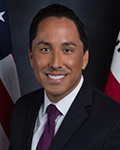
Bill Co-Author(s):