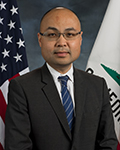
AB 317: Department of Motor Vehicles: appointments: unlawful sale.
- Session Year: 2019-2020
- House: Assembly
- Latest Version Date: 2019-10-08
|
Date
|
Status
|
|---|---|
| Oct 8, 2019 | Chaptered by Secretary of State - Chapter 608, Statutes of 2019. |
| Oct 8, 2019 | Approved by the Governor. |
| Sep 12, 2019 | Enrolled and presented to the Governor at 3:30 p.m. |
| Sep 9, 2019 | Senate amendments concurred in. To Engrossing and Enrolling. (Ayes 79. Noes 0.). |
| Sep 5, 2019 | In Assembly. Concurrence in Senate amendments pending. May be considered on or after September 7 pursuant to Assembly Rule 77. |
| Sep 4, 2019 | Read third time. Passed. Ordered to the Assembly. |
| Aug 20, 2019 | Read second time. Ordered to third reading. |
| Aug 19, 2019 | From committee: Be ordered to second reading pursuant to Senate Rule 28.8. |
| Aug 7, 2019 | In committee: Hearing postponed by committee. |
| Jun 6, 2019 | From committee chair, with author's amendments: Amend, and re-refer to committee. Read second time, amended, and re-referred to Com. on TRANS. |
| Jul 9, 2019 | From committee: Do pass and re-refer to Com. on APPR. (Ayes 13. Noes 0.) (July 9). Re-referred to Com. on APPR. |
| Jun 6, 2019 | Referred to Com. on TRANS. |
| May 24, 2019 | In Senate. Read first time. To Com. on RLS. for assignment. |
| May 23, 2019 | Read third time. Passed. Ordered to the Senate. |
| May 20, 2019 | Read second time. Ordered to third reading. |
| May 17, 2019 | Read second time and amended. Ordered returned to second reading. |
| May 16, 2019 | From committee: Amend, and do pass as amended. (Ayes 18. Noes 0.) (May 16). |
| Mar 20, 2019 | In committee: Set, first hearing. Referred to suspense file. |
| Mar 12, 2019 | From committee: Do pass and re-refer to Com. on APPR. (Ayes 15. Noes 0.) (March 11). Re-referred to Com. on APPR. |
| Feb 27, 2019 | Re-referred to Com. on TRANS. |
| Feb 26, 2019 | From committee chair, with author's amendments: Amend, and re-refer to Com. on TRANS. Read second time and amended. |
| Feb 11, 2019 | Referred to Coms. on TRANS. and JUD. |
| Jan 31, 2019 | From printer. May be heard in committee March 2. |
| Jan 30, 2019 | Read first time. To print. |
|
Date
|
Description
|
Location
|
Votes
|
|
|---|---|---|---|---|
| Sep 9, 2019 | AB 317 Diep Concurrence in Senate Amendments | Assembly Floor |
Passed |
|
| Sep 4, 2019 | Assembly 3rd Reading AB317 Diep et al. By Jones | Senate Floor |
Passed |
|
| Jul 9, 2019 | Do pass, but first be re-referred to the Committee on [Appropriations] | Senate Standing Committee on Transportation |
Passed |
|
| May 23, 2019 | AB 317 Diep Assembly Third Reading | Assembly Floor |
Passed |
|
| May 16, 2019 | Do pass as amended. | Assembly Standing Committee on Appropriations |
Passed |
|
| Mar 11, 2019 | Do pass and be re-referred to the Committee on [Appropriations] | Assembly Standing Committee on Transportation |
Passed |
This list shows positions taken on this bill by organizations on the date displayed, which is linked to the original source.
Positions by individuals are not included.
CONCURRENCE IN SENATE AMENDMENTS
CSA1 Bill Id:AB 317
Author:(Diep and Fong)
As Amended Ver:June 6, 2019
Majority vote
SUMMARY:
Prohibits the sale of appointments with the Department of Motor Vehicles (DMV).
Major Provisions
- Prohibits a person, firm, corporation, or association to sell, or offer for sale, an appointment with DMV.
- Defines "appointment" to mean an arrangement to receive a government service at a specific time.
- Provides that a violation of this section is an infraction.
The Senate Amendments:
Make technical, nonsubstantive changes and add co-authors.
COMMENTS:
Last year there was a noticeable uptick in wait times at DMV. As a result, DMV began reporting monthly numbers on wait times to the Joint Legislative Budget Committee. In the last week of July of 2018, DMV reported that the average wait time for non-appointment customers was two hours and ten minutes. The top 20 most impacted DMV field offices saw average wait times of three hours and 21 minutes.
DMV Attributes much of the increase in wait times to compliance with the Federal REAL ID Act of 2005, which requires in-person verification for a state issued driver's license or identification cards in order for a person to fly domestically or enter a federal building. While individuals traditionally only have to renew their state issued driver's license in person once every 15 years, individuals who wish to fly domestically have between January 2018 and October 2020 to renew in person, regardless of when their driver's licenses expire.
DMV began to hire significantly more staff as a result of the increase in wait times. Between July 1, 2018 and December 31, 2018, DMV made 946 civil service appointments, 680 emergency hires, and hired 141 retired annuitants. By January, the statewide average wait time for those without an appointment dropped to 57 minutes and the top 20 offices saw an average wait time of 95 minutes. DMV has set a goal of reducing their average wait times to 45 minutes for those without an appointment, and 15 minutes for those with an appointment. So far DMV has not met that goal. Wait times for those with an appointment are significantly less. In August, wait times for those with an appointment averaged 20 minutes. By the end of November the wait time for those with an appointment dropped to 14 minutes.
Getting an appointment with DMV can be challenging. DMV allows individuals to make appointments up to 90 days in advance. As of February 21st, the earliest appointment available at the DMV office with the longest wait time was on May 7th. Three other options were provided at other nearby offices, with the earliest appointment available on April 10th at an office 15 minutes away. The San Francisco office, which is not even in the top 20 most impacted offices, had no available appointments. The earliest appointment at a nearby office was on May 20th.
Waiting 20 minutes to do one's business at DMV instead of 3 hours can make a huge difference. Recently, a company called Yogov began offering a service to help individuals get an appointment within a month for $25. Yogov claims on its website that their employees are constantly hitting refresh on DMV's website to look for dropped appointments in order to get the customer an earlier appointment.
However, in an interview with the blog Hacker Noon, Yogov founder, Ryder Pearce, stated that he had hired a team in the Philippines "to help with bookings and customer support. This allowed me to not only get some sleep, but helped us fulfill DMV appointment bookings that we hadn't yet automated." It is unclear what is meant by "hadn't yet automated." But it is possible for Yogov or any other company to run simultaneous automated bots: one to make appointments under false names and birthdates as soon as DMV makes them available, and one to scoop up those appointments once they are canceled and make them under their customer's names.
Under this scheme, Yogov or other businesses could take away the ability for everyday individuals to get an appointment with DMV without paying a transaction fee for what was supposed to be a free service. Other state departments, like the Department of Parks and Recreation, have been able to use existing law to shut down websites that were reserving camping grounds for an increased cost. However those laws do not pertain to DMV.
Committee comments: The Legislature should consider whether sites like Yogov are innovative businesses helping citizens get better access to government, or a predatory business taking advantage of DMV customers by giving those with the ability to pay easier access to a basic government service.
According to the Author:
According to the Author, "Government is supposed to serve everyone equally, regardless of how much they can afford to pay. At a time when DMV is struggling to meet demand, we can't allow companies to make the problem worse by making it a competitive appointment process between Californians and companies. Especially, if these companies are turning a profit off a government service that is free to the public."
Arguments in Support:
According to Allstate, "the selling of appointments disadvantages low income customers, customers without read access to a computer and may contribute to the long lines and inefficiencies that currently plague the DMV."
Arguments in Opposition:
None on file
FISCAL COMMENTS:
Minor costs, if any, to DMV.
VOTES:
ASM TRANSPORTATION: 15-0-0
YES: Frazier, Fong, Aguiar-Curry, Berman, Bigelow, Chu, Cunningham, Daly, Diep, Friedman, Gipson, Grayson, Medina, Nazarian, O'Donnell
ASM APPROPRIATIONS: 18-0-0
YES: Gonzalez, Bigelow, Bloom, Bonta, Brough, Calderon, Carrillo, Chau, Diep, Eggman, Fong, Gabriel, Eduardo Garcia, Maienschein, Obernolte, Petrie-Norris, Quirk, Robert Rivas
ASSEMBLY FLOOR: 78-0-2
YES: Aguiar-Curry, Arambula, Bauer-Kahan, Berman, Bigelow, Bloom, Boerner Horvath, Bonta, Brough, Burke, Calderon, Carrillo, Cervantes, Chau, Chen, Chiu, Choi, Chu, Cooper, Cunningham, Dahle, Daly, Diep, Eggman, Flora, Fong, Frazier, Friedman, Gabriel, Gallagher, Cristina Garcia, Gipson, Gloria, Gonzalez, Gray, Grayson, Holden, Irwin, Jones-Sawyer, Kalra, Kamlager-Dove, Kiley, Lackey, Levine, Limón, Low, Maienschein, Mathis, Mayes, McCarty, Medina, Melendez, Mullin, Muratsuchi, Nazarian, O'Donnell, Obernolte, Patterson, Petrie-Norris, Quirk, Quirk-Silva, Ramos, Reyes, Luz Rivas, Robert Rivas, Rodriguez, Blanca Rubio, Salas, Santiago, Smith, Mark Stone, Ting, Voepel, Waldron, Weber, Wicks, Wood, Rendon
ABS, ABST OR NV: Cooley, Eduardo Garcia
SENATE FLOOR: 40-0-0
YES: Allen, Archuleta, Atkins, Bates, Beall, Borgeas, Bradford, Caballero, Chang, Dahle, Dodd, Durazo, Galgiani, Glazer, Lena Gonzalez, Grove, Hertzberg, Hill, Hueso, Hurtado, Jackson, Jones, Leyva, McGuire, Mitchell, Monning, Moorlach, Morrell, Nielsen, Pan, Portantino, Roth, Rubio, Skinner, Stern, Stone, Umberg, Wieckowski, Wiener, Wilk
UPDATED:
VERSION: June 6, 2019
CONSULTANT: David Sforza / TRANS. / (916) 319-2093 FN: 0001923
Office of Senate Floor Analyses (916) 651-1520 Fax: (916) 327-4478 | AB 317 |
THIRD READING
Bill No: AB 317
Author: Diep (R) and Fong (R), et al.
Amended: 6/6/19 in Senate
SENATE TRANSPORTATION COMMITTEE: 13-0, 7/9/19
AYES: Beall, Bates, Dahle, Dodd, Galgiani, McGuire, Morrell, Roth, Rubio, Skinner, Stone, Umberg, Wieckowski
SENATE APPROPRIATIONS COMMITTEE: Senate Rule 28.8
ASSEMBLY FLOOR: 78-0, 5/23/19 - See last page for vote
SUBJECT: Department of Motor Vehicles: appointments: unlawful sale
DIGEST:
This bill makes it unlawful for any person to sell, or offer for sale, an appointment with the Department of Motor Vehicles (DMV).
Existing law:
- Specifies that the DMV has the authority to issue and renew driver’s licenses and identification cards. (Vehicle Code (VEH) §1500 et seq.)
- Specifies that, unless otherwise stated, any violation of the Vehicle Code is an infraction. (VEH §40000.1)
- Sets out the fines that shall be assessed for infraction violations of the Vehicle Code, which reach a maximum of $250. (VEH §42001(a))
- Specifies that, unless the provision or context otherwise requires, a “person” is defined throughout the Vehicle Code as including a natural person, firm, copartnership, association, limited liability company, or corporation. (VEH §100, §470)
This bill:
- Makes it unlawful for any person to sell, or offer for sale, an appointment with the DMV.
- Defines an “appointment” as an arrangement to receive a government service at a specified time.
Comments
- Author’s Statement. According to the author, “A company in California has been selling ‘expedited appointments’ to customers to guarantee appointments with the DMV within 2-3 weeks. Their employees scour the DMV website looking for appointments and then book those appointments under a customer’s name by charging them a fee. This company is profiting off a free service that is provided to all Californians. If this inequity is not fixed, the current system allows those with the means to take advantage of a system that is supposed to serve Californians from all economic backgrounds.”
- DMV appointments can be a scarce commodity, but wait times for walk-ins are longer than wait times with an appointment. DMV appointments may be made either online or by phone for most services, but they may not be available soon or at a time convenient for a customer. For example, as of June 24, 2019, the next available appointment for a REAL ID at the Sacramento DMV office is on September 3, 2019, while in San Diego, there are no appointments currently available within the next 90 days (appointments may only be scheduled up to 90 days in advance).
The DMV’s goals are for wait times not to exceed one hour for customers without an appointment or 18 minutes for customers with an appointment. In March, the average wait time for walk-in customers was 56 minutes and 15 minutes for customers with appointments. These figures are down from averages of almost two hours and of 22 minutes, respectively, in August 2018, when unacceptable customer wait times resulted from the DMV’s implementation of the federal REAL ID requirements. Since the summer of 2018, when wait times often exceeded several hours, the DMV has improved its performance and reduced those wait times to pre-REAL ID levels, facilitated by significant budget increases.
Overall, appointments can be hard to come by but having one significantly cuts down on wait time.
- Last-minute DMV appointments offered for a fee. A company called YoGov advertises last-minute “express” DMV appointments for $24.99.[1] While it may be surprising to some that anyone would pay to go to the DMV, their Web site promises, “we’ll find you [an appointment] that's within 2-3 weeks at the latest, guaranteed! We work around the clock to look for last-minute appointment slots and cancellations at your local DMV, and then we snap up the first one we can find on your behalf! The process of finding you an appointment takes 4-7 days on average…”
According to their blog post on their Express DMV Appointments, once they have a customer who has requested an appointment, they (likely a member of their “Philippines team”) begin manually checking the DMV Web site “hoping to find a last-minute opening or cancellation” to book under that customer’s name. They imply that they do not book appointments way in advance so that they can cancel it later to create a “last minute” opportunity for a customer. They also say they do not currently use any automation but, in a recent interview with the CEO, imply that they will.
The CEO of YoGov does not believe this bill prohibits YoGov’s business because, he says, they are offering a service. The YoGov Web site states that, “our service is the equivalent to having your receptionist or personal assistant check the DMV website.” Regardless, the legislative intent behind this bill is clearly to prohibit entities from charging for the provision of last-minute DMV appointments.
- How a prohibition on DMV appointment sales would be enforced and other DMV actions may also weaken appointment selling business. This bill makes selling a DMV appointment an infraction. Other examples of infractions in the Vehicle Code include jaywalking (VEH §21954) or making an unsafe left-turn (VEH §21801). Given the very different nature of the “appointment selling” infraction, it is not entirely clear how the statute would be enforced. One potential precedent: In 2014, San Francisco’s city attorney ordered the company Monkey Parking to cease and desist from selling city street parking on a mobile app on the legal grounds that this was illegal under city ordinance and constituted an unfair business practice under the Unfair Competition Law (Business and Professions Code §17200), which contains a number of enforcement mechanisms.
FISCAL EFFECT: Appropriation: No Fiscal Com.: Yes Local: Yes
Allstate Insurance
Teamsters
OPPOSITION: (Verified 8/20/19)
None received
ASSEMBLY FLOOR: 78-0, 5/23/19
AYES: Aguiar-Curry, Arambula, Bauer-Kahan, Berman, Bigelow, Bloom, Boerner Horvath, Bonta, Brough, Burke, Calderon, Carrillo, Cervantes, Chau, Chen, Chiu, Choi, Chu, Cooper, Cunningham, Dahle, Daly, Diep, Eggman, Flora, Fong, Frazier, Friedman, Gabriel, Gallagher, Cristina Garcia, Gipson, Gloria, Gonzalez, Gray, Grayson, Holden, Irwin, Jones-Sawyer, Kalra, Kamlager-Dove, Kiley, Lackey, Levine, Limón, Low, Maienschein, Mathis, Mayes, McCarty, Medina, Melendez, Mullin, Muratsuchi, Nazarian, Obernolte, O'Donnell, Patterson, Petrie-Norris, Quirk, Quirk-Silva, Ramos, Reyes, Luz Rivas, Robert Rivas, Rodriguez, Blanca Rubio, Salas, Santiago, Smith, Mark Stone, Ting, Voepel, Waldron, Weber, Wicks, Wood, Rendon
NO VOTE RECORDED: Cooley, Eduardo Garcia
Prepared by: Amy Gilson / TRANS. / (916) 651-4121
8/21/19 9:55:12
As advertised, https://yogov.org/dmv-express/, retrieved June 24, 2019. ↑
SENATE COMMITTEE ON TRANSPORTATION
Senator Jim Beall, Chair
2019 - 2020 Regular
Bill No: AB 317 Hearing Date: 7/9/2019
Author: | Diep | ||
Version: | 6/6/2019 | ||
Urgency: | No | Fiscal: | Yes |
Consultant: | Amy Gilson | ||
SUBJECT: Department of Motor Vehicles: appointments: unlawful sale
DIGEST: This bill makes it unlawful for any person to sell, or offer for sale, an appointment with the Department of Motor Vehicles (DMV).
ANALYSIS:
Existing law:
- Specifies that the DMV has the authority to issue and renew driver’s licenses and identification cards. (Vehicle Code §1500 et seq.)
- Specifies that, unless otherwise stated, that any violation of the Vehicle Code is an infraction. (VEH §40000.1)
- Set out the fines that shall be assessed for infraction violations of the Vehicle Code, which reach a maximum of $250. (VEH §42001(a))
- Specifies that, unless the provision or context otherwise requires, a “person” is defined throughout the Vehicle Code as including a natural person, firm, copartnership, association, limited liability company, or corporation. (VEH §100, §470)
This bill:
- Makes it unlawful for any person to sell, or offer for sale, an appointment with the DMV.
- Defines an “appointment” as an arrangement to receive a government service at a specified time.
COMMENTS:
- Author’s Statement. According to the author, “A company in California has been selling ‘expedited appointments’ to customers to guarantee appointments with the DMV within 2-3 weeks. Their employees scour the DMV website looking for appointments and then book those appointments under a customer’s name by charging them a fee. This company is profiting off a free service that is provided to all Californians. If this inequity is not fixed, the current system allows those with the means to take advantage of a system that is supposed to serve Californians from all economic backgrounds.”
- DMV appointments can be a scarce commodity, but wait times for walk-ins are longer than wait times with an appointment. DMV appointments may be made either online or by phone for most services, but they may not be available soon or at a time convenient for a customer. For example, as of June 24, 2019, the next available appointment for a REAL ID at the Sacramento DMV office is on September 3, 2019 while in San Diego, there are no appointments currently available within the next 90 days (appointments may only be scheduled up to 90 days in advance).
The DMV’s goals are for wait times not to exceed one hour for customers without an appointment or 18 minutes for customers with an appointment. In March, the average wait time for walk-in customers was 56 minutes and 15 minutes for customers with appointments. These figures are down from averages of almost two hours and of 22 minutes, respectively, in August 2018, when unacceptable customer wait times resulted from the DMV’s implementation of the federal REAL ID requirements.[1] Since the summer of 2018, when wait times often exceeded several hours, the DMV has improved its performance and reduced those wait times to pre-REAL ID levels, facilitated by significant budget increases.
Overall, appointments can be hard to come by but having one significantly cuts down on wait time.
- Last-minute DMV appointments offered for a fee. A company called YoGov advertises last-minute “express” DMV appointments for $24.99.[2] While it may be surprising to some that anyone would pay to go to the DMV, their website promises, “we’ll find you [an appointment] that's within 2-3 weeks at the latest, guaranteed! We work around the clock to look for last-minute appointment slots and cancellations at your local DMV, and then we snap up the first one we can find on your behalf! The process of finding you an appointment takes 4-7 days on average…”
According to their blog post on their Express DMV Appointments, once they have a customer who has requested an appointment, they (likely a member of their “Philippines team”[3]) begin manually checking the DMV website “hoping to find a last-minute opening or cancellation” to book under that customer’s name. They imply that they do not book appointments way in advance so that they can cancel it later to create a “last minute” opportunity for a customer. They also say they do not currently use any automation2 but, in a recent interview with the CEO, imply that they will.3
YoGov also advertises “DMV Line Concierges” who will wait in line on a customer’s behalf (which would not be affected by this bill), along with a number of other DMV and government-related offerings.
The CEO of YoGov does not believe this bill would prohibit YoGov’s business because, he says, they are offering a service.[4] The YoGov website states that, our service is the equivalent to having your receptionist or personal assistant check the DMV website.” Regardless, the legislative intent behind this bill is clearly to prohibit entities from charging for the provision of last-minute DMV appointments.
Furthermore, “field office employees described honoring appointments… by driving schools who sell appointments to students after booking blocks of appointments on DMV’s website,”[5] and this practice by driving schools would also be prohibited by this bill.
Less clear is whether this legislation should prohibit individuals from seeking help or offering help booking a DMV appointment on websites such as Craigslist (the classified advertisements website) or TaskRabbit (which matches freelance labor with local demand for help with chores). However, a quick search of both cites did not yield any DMV related services or products.
- How a prohibition on DMV appointment sales would be enforced and other DMV actions may also weaken appointment selling business. This bill makes selling a DMV appointment an infraction. Other examples of infractions in the Vehicle Code include jaywalking (VEH §21954) or making an unsafe left-turn (VEH §21801). Given the very different nature of the “appointment selling” infraction, it is not entirely clear how the statute would be enforced. One potential precedent: In 2014, San Francisco’s city attorney ordered the company Monkey Parking to cease and desist from selling city street parking on a mobile app on the legal grounds that this was illegal under city ordinance and constituted an unfair business practice under the Unfair Competition Law (Business and Professions Code §17200), which contains a number of enforcement mechanisms.
The DMV can take additional steps to frustrate the DMV appointment trade including keeping walk-in wait times down; increasing the number of appointments available to better meet demand; and changing the appointment sign-up process to require a unique identifier, such as a driver’s license number, in addition to name and phone number. This last step would stop schools and businesses from reserving multiple appointments to sell to their customers. Each of these has been discussed in the Department of Finance audit of the DMV5 and the DMV states that it “is working with its queue system vendor to put in place additional strategies to increase appointment availability… [and] eliminate the ability to make multiple appointments with the same telephone number.”[6] However, this bill does send a strong message that government services are truly meant to be free to everyone, regardless of income level.
FISCAL EFFECT: Appropriation: Fiscal Com.: Local:
This bill makes selling a DMV appointment an infraction. The Assembly Appropriations Committee’s fiscal analysis, below, was for a previous version of the bill, which would have made violations a misdemeanor.
According to the Assembly Appropriations Committee, the fiscal effects of this previous version of the bill were “minor costs, if any, to DMV. Possible ongoing cost pressures in the hundreds of thousands of dollars (Trial Court Trust Fund/GF) for increased court costs, including possible trial costs, given the bill creates a misdemeanor. A defendant charged with a misdemeanor is entitled to a public defender and a jury trial. If 15 new misdemeanors are filed annually statewide and proceed to trial resulting in the use of two days of court time, at an estimated cost of approximately $6,331 for an eight-hour day, the approximate cost to the trial courts is $189,930.”
POSITIONS: (Communicated to the committee before noon on Wednesday,
July 3, 2019.)
SUPPORT:
Allstate Insurance
Teamsters
OPPOSITION:
None received.
-- END --
California Department of Motor Vehicles, Report to the Joint Legislative Budget Committee of the State of California- Department of Motor Vehicles Monthly Status Update Report, June 3, 2019 ↑
As advertised, https://yogov.org/dmv-express/, retrieved June 24, 2019. ↑
Davis Baer, Founder Interviews: Ryder Pearce of YoGov, Hacker Noon, November 12, 2018 https://hackernoon.com/founder-interviews-ryder-pearce-of-yogov-2d8e50790b4e ↑
Bryan Anderson, You can pay $25 to have someone book your DMV appointment, unless this bill becomes law, Sacramento Bee, January 31, 2019 https://www.sacbee.com/news/politics-government/capitol-alert/article225349465.html ↑
California Department of Finance Office of State Audits and Evaluations, California Department of Motor Vehicles Performance Audit Report No. 19-2740-032, March 2019 ↑
California Department of Motor Vehicles, Improving the Department of Motor Vehicles: Work Action Plans, April 23, 2019. ↑
ASSEMBLY THIRD READING
ATR Bill Id:AB 317
Author:(Diep and Fong)
As Amended Ver:May 17, 2019
Majority vote
SUMMARY:
Prohibits the sale of appointments with the Department of Motor Vehicles (DMV).
Major Provisions
- Prohibits a person, firm, corporation, or association to sell, or offer for sale, an appointment with DMV.
- Defines "appointment" to mean an arrangement to receive a government service at a specific time.
- Provides that a violation of this section is an infraction.
COMMENTS:
Last year there was a noticeable uptick in wait times at DMV. As a result, DMV began reporting monthly numbers on wait times to the Joint Legislative Budget Committee. In the last week of July of 2018, DMV reported that the average wait time for non-appointment customers was two hours and ten minutes. The top 20 most impacted DMV field offices saw average wait times of three hours and 21 minutes.
DMV Attributes much of the increase in wait times to compliance with the Federal REAL ID Act of 2005, which requires in-person verification for a state issued driver's license or identification cards in order for a person to fly domestically or enter a federal building. While individuals traditionally only have to renew their state issued driver's license in person once every 15 years, individuals who wish to fly domestically have between January 2018 and October 2020 to renew in person, regardless of when their driver's licenses expire.
DMV began to hire significantly more staff as a result of the increase in wait times. Between July 1, 2018 and December 31, 2018, DMV made 946 civil service appointments, 680 emergency hires, and hired 141 retired annuitants. By January, the statewide average wait time for those without an appointment dropped to 57 minutes and the top 20 offices saw an average wait time of 95 minutes. DMV has set a goal of reducing their average wait times to 45 minutes for those without an appointment, and 15 minutes for those with an appointment. So far DMV has not met that goal. Wait times for those with an appointment are significantly less. In August, wait times for those with an appointment averaged 20 minutes. By the end of November the wait time for those with an appointment dropped to 14 minutes.
Getting an appointment with DMV can be challenging. DMV allows individuals to make appointments up to 90 days in advance. As of February 21st, the earliest appointment available at the DMV office with the longest wait time was on May 7th. Three other options were provided at other nearby offices, with the earliest appointment available on April 10th at an office 15 minutes away. The San Francisco office, which is not even in the top 20 most impacted offices, had no available appointments. The earliest appointment at a nearby office was on May 20th.
Waiting 20 minutes to do one's business at DMV instead of 3 hours can make a huge difference. Recently, a company called Yogov began offering a service to help individuals get an appointment within a month for $25. Yogov claims on its website that their employees are constantly hitting refresh on DMV's website to look for dropped appointments in order to get the customer an earlier appointment.
However, in an interview with the blog Hacker Noon, Yogov founder, Ryder Pearce, stated that he had hired a team in the Philippines "to help with bookings and customer support. This allowed me to not only get some sleep, but helped us fulfill DMV appointment bookings that we hadn't yet automated." It is unclear what is meant by "hadn't yet automated." But it is possible for Yogov or any other company to run simultaneous automated bots: one to make appointments under false names and birthdates as soon as DMV makes them available, and one to scoop up those appointments once they are canceled and make them under their customer's names.
Under this scheme, Yogov or other businesses could take away the ability for everyday individuals to get an appointment with DMV without paying a transaction fee for what was supposed to be a free service. Other state departments, like the Department of Parks and Recreation, have been able to use existing law to shut down websites that were reserving camping grounds for an increased cost. However those laws do not pertain to DMV.
Committee comments: The Legislature should consider whether sites like Yogov are innovative businesses helping citizens get better access to government, or a predatory business taking advantage of DMV customers by giving those with the ability to pay easier access to a basic government service.
According to the Author:
According to the Author, "Government is supposed to serve everyone equally, regardless of how much they can afford to pay. At a time when DMV is struggling to meet demand, we can't allow companies to make the problem worse by making it a competitive appointment process between Californians and companies. Especially, if these companies are turning a profit off a government service that is free to the public."
Arguments in Support:
According to Allstate, "the selling of appointments disadvantages low income customers, customers without read access to a computer and may contribute to the long lines and inefficiencies that currently plague the DMV."
Arguments in Opposition:
None on file
FISCAL COMMENTS:
According to the Assembly Appropriations Committee, minor costs, if any, to the DMV.
VOTES:
ASM TRANSPORTATION: 15-0-0
YES: Frazier, Fong, Aguiar-Curry, Berman, Bigelow, Chu, Cunningham, Daly, Diep, Friedman, Gipson, Grayson, Medina, Nazarian, O'Donnell
ASM APPROPRIATIONS: 18-0-0
YES: Gonzalez, Bigelow, Bloom, Bonta, Brough, Calderon, Carrillo, Chau, Diep, Eggman, Fong, Gabriel, Eduardo Garcia, Maienschein, Obernolte, Petrie-Norris, Quirk, Robert Rivas
UPDATED:
VERSION: May 17, 2019
CONSULTANT: David Sforza / TRANS. / (916) 319-2093 FN: 0000986
Date of Hearing: March 20, 2019
ASSEMBLY COMMITTEE ON APPROPRIATIONS
Lorena Gonzalez, Chair
ABPCA Bill Id:AB 317
Author:(Diep) – As Amended Ver:February 26, 2019
Policy Committee: | Transportation | Vote: | 15 - 0 |
|
| ||
|
|
Urgency: No State Mandated Local Program: Yes Reimbursable: No
SUMMARY:
This bill declares it unlawful to sell an appointment with the Department of Motor Vehicles (DMV) and makes such a sale a misdemeanor under the Vehicle Code.
FISCAL EFFECT:
- Minor costs, if any, to DMV.
- Possible ongoing cost pressures in the hundreds of thousands of dollars (Trial Court Trust Fund/GF) for increased court costs, including possible trial costs, given the bill creates a misdemeanor. A defendant charged with a misdemeanor is entitled to a public defender and a jury trial. If 15 new misdemeanors are filed annually statewide and proceed to trial resulting in the use of two days of court time, at an estimated cost of approximately $6,331 for an eight-hour day, the approximate cost to the trial courts is $189,930.
COMMENTS:
- Purpose. According to the author:
Government is supposed to serve everyone equally, regardless of how much they can afford to pay. At a time when DMV is struggling to meet demand, we can’t allow companies to make the problem worse by making it a competitive appointment process between Californians and companies. Especially, if these companies are turning a profit off a government service that is free to the public.
- Background. The federal Real ID Act requires state-issued driver licenses (DLs) and identification cards (ID cards) to meet certain security standards. Consistent with the act, DLs and ID cards issued by a state that had not yet complied with the act’s security requirements would not enable a person to board a domestic-bound airplane or enter federal property, effective January 22, 2018.
Most states now issue DLs and ID cards consistent with the requirements of the act. California, however, does not. The federal government granted an extension to noncompliant states, including California, that allows use of noncompliant DLs and ID cards until October 1, 2020. After this date, a person will no longer be able to use a noncompliant DL or ID card to board a domestic-bound flight or access federal property.
The DMV reports a significant increase in workload, and wait times, associated individuals seeking to obtain a DL or ID card that complies with the Real ID Act. Many expect demand for the DLs and ID cards to increase significantly as California’s Real ID compliance extension comes to an end.
The DMV allows customers to schedule an appointment with the DMV, up to three months in advance. Having a DMV appointment can make a world of difference. According to DMV, customers with an appointment receive service in as little as 15 minutes; those without an appointment often experience wait times of over an hour and, sometimes, more than three hours. It would be wise, then, for a customer with foreseeable business at a DMV office to schedule an appointment with DMV. Yet, securing a DMV appointment can be a challenge. Many DMV offices have no appointment openings for several months, while the San Francisco DMV office currently has no appointments available at all.
This DMV appointment scarcity in the face of increasing demand has created a business opportunity. Enter the for-profit entrepreneur, Yogov, which, according to its website, Yogov.org, works “round the clock” to find its customers “last-minute appointment slots and cancellations at your local DMV,” which Yogov, “snaps up” on the customer’s behalf. Presumably, Yogov, and other entities that sell DMV appointments, provides a valuable service to customers who are willing—and able—to pay the company’s fee. However, the company is capitalizing on government-created demand—compliance with legal requirements obligates millions of Californians to visit a DMV office—and government-created scarcity—the DMV has been, thus far, unable to offer enough appointment times to accommodate all those customers who would like one. For most goods, private transactions resolve such imbalances in supply and demand. The author, and many others, however, object to the use of a market solution in this instance. As the author contends, government is supposed to serve everyone equally, regardless of ability to pay. Wait times at DMV offices may be unreasonable, but, at least, in theory, all Californians confront this unreasonableness equally, or, they cannot affect this inequality through a direct financial transaction. (Of course, this bill does not address the many other inequities among Californians that affect their ability to secure a scarce appointment with DMV. The most equitable solution might be to reduce wait times at DMV overall.)
A greater concern is the incentive created by the ability to sell DMV appointment reservations. As noted in a prior committee analysis, an entity could schedule a DMV appointment under a false name, contract to secure a DMV appointment on behalf of a legitimate DMV customer for a fee, cancel the fake appointment and then schedule the appointment on behalf of the client. In such as case, it would be as the author describes— a competitive appointment process between Californians and private companies. Of course, in addition to being unfair, these actions also would be fraud and, as such, be illegal under current law. Automated, this fraud could become pervasive, preventing any Californian from scheduling an appointment with DMV without paying a fee to a private company.
Representatives of Yogov contend that, in scheduling DMV appointments for a fee, the company is not breaking the law. This bill declares that the selling of DMV appointments is, indeed, unlawful. Once the activity is unlawful, an entity that sells DMV appointments could face criminal charges, as well as civil penalties. The unlawfulness of the activity, and the possibility costly civil liability, seem likely to deter such activity; the classification of the activity as a misdemeanor, in itself, does not.
Yet, by creating a misdemeanor, there is an increased likelihood of cost pressures on the trial courts. Total hearing costs for an eight-hour day in superior court, including the cost of one judge and one clerk, are $6,331. This does not include possible local cost pressures for public defender or probation services related to the prosecution of a misdemeanor. Were the bill not to explicitly classify the crime as a misdemeanor, it seems the author could maintain the bill’s deterrent effect while forgoing the cost pressures on the trail courts.
Analysis Prepared by: Jay Dickenson / APPR. / (916) 319-2081
Date of Hearing: March 11, 2019
ASSEMBLY COMMITTEE ON TRANSPORTATION
Jim Frazier, Chair
ABPCA Bill Id:AB 317 (
Author:Diep) – As Amended Ver:February 26, 2019
SUBJECT: Department Motor Vehicles: appointments: unlawful sale
SUMMARY: Prohibits the sale of appointments with the Department of Motor Vehicles (DMV).
Specifically, this bill:
- Prohibits a person, firm, corporation, or association to sell, or offer for sale, an appointment with DMV.
- Defines “appointment” to mean an arrangement to receive a government service at a specific time.
- Provides that a violation of this section is a misdemeanor.
EXISTING LAW:
- Establishes DMV within the Transportation Agency.
- Specifies that DMV has the authority to issue and renew driver’s licenses and identification cards.
- Specifies that DMV shall collect vehicle registration fees.
FISCAL EFFECT: Unknown.
COMMENTS: Last year there was a noticeable uptick in wait times at DMV. As a result, DMV began reporting monthly numbers on wait times to the Joint Legislative Budget Committee. In the last week of July of 2018, DMV reported that the average wait time for non-appointment customers was two hours and ten minutes. The top 20 most impacted DMV field offices saw average wait times of three hours and 21 minutes.
DMV Attributes much of the increase in wait times to compliance with the Federal REAL ID Act of 2005, which requires in-person verification for a state issued driver’s license or identification cards in order for a person to fly domestically or enter a federal building. While individuals traditionally only have to renew their state issued driver’s license in person once every 15 years, individuals who wish to fly domestically have between January 2018 and October 2020 to renew in person, regardless of when their driver’s licenses expire.
DMV began to hire significantly more staff as a result of the increase in wait times. Between July 1, 2018 and December 31, 2018, DMV made 946 civil service appointments, 680 emergency hires, and hired 141 retired annuitants. DMV made several technological changes as well, including allowing individuals to electronically fill out their information either online or while waiting for their appointment. These actions have sped up transactions.
By January, the statewide average wait time for those without an appointment dropped to 57 minutes and the top 20 offices saw an average wait time of 95 minutes. DMV has set a goal of reducing their average wait times to 45 minutes for those without an appointment, and 15 minutes for those with an appointment. So far DMV has not met that goal.
Wait times for those with an appointment are significantly less. In August, wait times for those with an appointment averaged 20 minutes. By the end of November the wait time for those with an appointment dropped to 14 minutes.
Getting an appointment with DMV can be challenging. DMV allows individuals to make appointments up to 90 days in advance. As of February 21st, the earliest appointment available at the DMV office with the longest wait time was on May 7th. Three other options were provided at other nearby offices, with the earliest appointment available on April 10th at an office 15 minutes away. The San Francisco office, which is not even in the top 20 most impacted offices, had no available appointments. The earliest appointment at a nearby office was on May 20th.
Waiting 20 minutes to do one’s business at DMV instead of 3 hours can make a huge difference. Recently, a company called Yogov began offering a service to help individuals get an appointment within a month for $25. Yogov claims on its website that their employees are constantly hitting refresh on DMV’s website to look for dropped appointments in order to get the customer an earlier appointment.
However, in an interview with the blog Hacker Noon, Yogov founder, Ryder Pearce, stated that he had hired a team in the Philippines “to help with bookings and customer support. This allowed me to not only get some sleep, but helped us fulfill DMV appointment bookings that we hadn’t yet automated.”
It is unclear what is meant by “hadn’t yet automated.” But it is possible for Yogov or any other company to run simultaneous automated bots: one to make appointments under false names and birthdates as soon as DMV makes them available, and one to scoop up those appointments once they are canceled and make them under their customer’s names.
Under this scheme, Yogov or other businesses could take away the ability for everyday individuals to get an appointment with DMV without paying a transaction fee for what was supposed to be a free service. Other state departments, like the Department of Parks and Recreation, have been able to use existing law to shut down websites that were reserving camping grounds for an increased cost. However those laws do not pertain to DMV.
According to the Author, “Government is supposed to serve everyone equally, regardless of how much they can afford to pay. At a time when DMV is struggling to meet demand, we can’t allow companies to make the problem worse by making it a competitive appointment process between Californians and companies. Especially, if these companies are turning a profit off a government service that is free to the public.”
Committee comments: The Legislature should consider whether sites like Yogov are innovative businesses helping citizens get better access to government, or a predatory business taking advantage of DMV customers by giving those with the ability to pay easier access to a basic government service.
REGISTERED SUPPORT / OPPOSITION:
Support
Teamsters
Opposition
ACLU
Analysis Prepared by: David Sforza / TRANS. / (916) 319-2093