AB 85: State taxes and charges.
- Session Year: 2019-2020
- House: Assembly
- Latest Version Date: 2020-06-29
This bill would express the intent of the Legislature to enact statutory changes relating to the Budget Act of 2019.
It is the intent of the Legislature to enact statutory changes relating to the Budget Act of 2019.
|
Date
|
Status
|
|---|---|
| Jun 29, 2020 | Chaptered by Secretary of State - Chapter 8, Statutes of 2020. |
| Jun 29, 2020 | Approved by the Governor. |
| Jun 15, 2020 | Enrolled and presented to the Governor at 5 p.m. |
| Jun 15, 2020 | In Assembly. Concurrence in Senate amendments pending. May be considered on or after June 17 pursuant to Assembly Rule 77. |
| Jun 15, 2020 | Read second time. Ordered to third reading. |
| Jun 12, 2020 | From committee: Do pass. (Ayes 12. Noes 5.) (June 12). |
| Jun 10, 2020 | From committee chair, with author's amendments: Amend, and re-refer to committee. Read second time, amended, and re-referred to Com. on B. & F.R. |
| Jun 26, 2019 | Re-referred to Com. on B. & F.R. |
| Jun 13, 2019 | Read second time. Ordered to third reading. |
| Jun 12, 2019 | From committee: Do pass. (Ayes 12. Noes 5.) (June 12). |
| Jun 10, 2019 | In committee: Hearing postponed by committee. |
| Jun 10, 2019 | From committee chair, with author's amendments: Amend, and re-refer to committee. Read second time, amended, and re-referred to Com. on B. & F.R. |
| Apr 24, 2019 | Referred to Com. on B. & F.R. |
| Apr 11, 2019 | In Senate. Read first time. To Com. on RLS. for assignment. |
| Apr 11, 2019 | Read third time. Passed. Ordered to the Senate. |
| Apr 8, 2019 | Read second time. Ordered to third reading. |
| Apr 4, 2019 | Assembly Rule 96 suspended. (Ayes 53. Noes 15.) |
| Jan 24, 2019 | Referred to Com. on BUDGET. |
| Dec 4, 2018 | From printer. May be heard in committee January 3. |
| Dec 3, 2018 | Read first time. To print. |
|
Date
|
Description
|
Location
|
Votes
|
|
|---|---|---|---|---|
| Jun 15, 2020 | AB 85 BUDGET Concurrence in Senate Amendments By TING | Assembly Floor |
Passed |
|
| Jun 15, 2020 | WORF AB85 BUDGET (Ting) By Mitchell | Senate Floor |
Passed |
|
| Jun 12, 2020 | Do pass | Senate Standing Committee on Budget and Fiscal Review |
Passed |
|
| Jun 12, 2019 | Do pass | Senate Standing Committee on Budget and Fiscal Review |
Passed |
|
| Apr 11, 2019 | AB 85 Ting Assembly Third Reading | Assembly Floor |
Passed |
This list shows positions taken on this bill by organizations on the date displayed, which is linked to the original source.
Positions by individuals are not included.
SENATE RULES COMMITTEE Office of Senate Floor Analyses (916) 651-1520 Fax: (916) 327-4478 | AB 85 |
THIRD READING
Bill No: AB 85
Author: Committee on Budget
Amended: 6/10/20 in Senate
Vote: 27
PRIOR VOTES NOT RELEVANT
SENATE BUDGET & FISCAL REVIEW COMMITTEE: 12-5, 6/12/20
AYES: Mitchell, Beall, Caballero, Durazo, Leyva, McGuire, Monning, Pan, Roth, Skinner, Stern, Wieckowski
NOES: Nielsen, Dahle, Melendez, Moorlach, Morrell
NO VOTE RECORDED: Hurtado
SUBJECT: State taxes and charges
SOURCE: Author
DIGEST:
This bill is the revenue trailer bill for the 2020-21 Budget. This bill contains various statutory changes necessary to implement the Budget Act of 2020.
ANALYSIS: This bill contains various statutory changes necessary to implement the Budget Act of 2020.
- Used Car Dealer Sales Tax Remittance:
- Requires any licensed car dealers in the state, except new vehicle dealers as specified, to collect and remit sales tax on cars sold to the Department of Motor Vehicles (DMV) on behalf of the California Department of Tax and Fee Administration (CDTFA).
- Establishes that vehicle dealers have an obligation to both submit registration applications and remit sales tax to the DMV and file a return with CDTFA as specified in existing code.
- Provides that a failure to submit a timely application to the DMV by the dealer results in penalty fees as specified in existing code.
- Provides that a failure to pay sales tax due after submitting an application to the DMV and failure to file returns to CDTFA in a timely manner, results in penalty and interest on unpaid amounts as specified in existing code.
- Requires that a car dealer, except a new vehicle dealer as specified, submit the applicable sales tax based on the sales price of the vehicle as required by existing Sales and Use Tax Law code to the DMV within 30 days of sale.
- Allows the DMV to withhold the registration or the transfer of registration of any vehicles sold by a dealer, until the dealer pays any tax and penalties owed for any transactions on or after January 1, 2021. However, if the applicant for registration provides proof of sales tax remittance to the dealer for the vehicle to be registered, the DMV may process registration or transfer of registration for the vehicles for which sales taxes have not been paid by the dealer.
- Requires the DMV to transfer all collection of sales tax and penalty monies to CDTFA within 30 days of receiving sales tax payments accompanied by a schedule prescribed by CDTFA.
- Requires that CDTFA reimburse the DMV for all associated costs in carrying out the provisions described above.
- Allows for disregarding of dollar fractions in the computation of the used car sales tax by the DMV in a manner specified under existing code. Tax payment will still be in full compliance with requirements of Sales and Use Tax Law.
- The statutory changes above apply to sales of vehicles on or after January 1, 2021.
- Menstrual Hygiene and Diaper Sales and Use Tax Exemption:
- Extends the gross receipt sales and use tax exemption for the sale of, or the storage, use, or other consumption of, diapers for infants, toddlers, and children and menstrual hygiene products from January 1, 2022 to July 1, 2023.
- Extends the annual appropriation totaling estimated dollar amount of sales and use tax revenues to be transferred from the General Fund to the Local Revenue Fund 2011 during the extended exemption period.
- Postpones the due date of the legislatively required report evaluating the effectiveness of the sales and use tax exemption to be done by the Legislative Analyst Office from on or before January 1, 2021 to on or before July 1, 2022.
- Business Credit Cap:
- Specifies that for each taxable year beginning on or before January 1, 2020, and before January 1, 2023, the total specified credits otherwise allowable under the Personal Income Tax Law and the Corporate Tax Law claimed may not exceed $5 million for each taxable year.
- Provides for an exemption for specified credits to the $5 million limit on total allowable tax credits described above.
- Specifies that the amount of any credit otherwise allowable that is not allowed solely due to the application of this bill limitation, shall be allowed an additional carryover period equal to the number of taxable years the credit was not allowed because of this limitation.
- Makes similar/conforming changes to the Sales and Use Tax Law in relation to the Film and Television Tax Credit and laws governing the gross premium tax on insurers.
- Film and Television Tax Credit Carryforward:
- Extends the existing carry over period of the prior version of the film and television tax credit (Film and TV Credit 2.0) from six taxable years to nine taxable years.
- Net Operating Loss Suspension:
- Specifies that a net operating loss deduction shall not be allowed in respect to both corporate and income taxes for any taxable year beginning on or after January 1, 2020, and before January 1, 2023.
- Extends the carryover period for up to three years, as specified, for any net operating loss for which a deduction is denied pursuant to the changes made by this bill.
- Specifies that the suspension of the net operating loss deduction included in this bill does not apply to a taxpayer with a net business income or a modified adjusted gross income of less than $1 million.
- Minimum Franchise Tax First Year Exemption:
- Provides that every limited partnership, limited liability partnership and limited liability company that files, registers or organizes to do business in the state, is exempted from payment of the annual tax of $800 in its first taxable year.
- This exemption is applicable for taxable years beginning on or after January 1, 2021.
- This exemption expires on January 1, 2024.
- Makes the exemption contingent on an appropriation to the Franchise Tax Board (FTB) to fund the costs of administration.
- Advanced Strategic Aircraft Credit:
- Specifies that for taxable years beginning on or after January 1, 2020, and before January 1, 2026, the Advanced Strategic Aircraft Credit could be used to reduce the alternative minimum tax.
- Individual Shared Responsibility Penalty:
- Requires the non-coverage penalty to be collected along with other interest-bearing debt.
- Limits the maximum monthly penalty for a responsible individual with an applicable household size of five or more individuals to the maximum monthly penalty for a responsible individual with an applicable household size of five individuals.
- Specifies that the FTB may adopt regulations to implement the Individual Shared Responsibility Penalty.
FISCAL EFFECT: Appropriation: Yes Fiscal Com.: Yes Local: No
According to the Senate Budget and Fiscal Review Committee, the provisions of this bill result in a net General Fund benefit of approximately $4.4 billion for the 2020-21 fiscal year, including:
- The provisions of this bill related to Used Car Dealer Sales Tax Remittance are projected to result in an increase of $12 million in revenue.
- The provisions of this bill related to the Net Operating Loss Suspension are projected to result in increased revenue of approximately $1.8 billion.
- The provisions of this bill related to the Tax Credit Limits are projected to result in increased revenue of approximately $2 billion in the budget year. There is also an interaction between these provisions and the Net Operating Loss Suspension provisions that are estimated to result in approximately $611 million in revenue.
- The provisions of this bill related to the Minimum Franchise Tax First Year Exemption are projected to result in a decrease of revenue of $50 million.
SUPPORT: (Verified 6/11/20)
None received
OPPOSITION: (Verified 6/11/20)
None received
Prepared by: Joe Stephenshaw and Meron Tesfaye / B. & F.R. / 916-651-4103
6/15/20 14:11:49
**** END ****
(Without Reference to File)
CONCURRENCE IN SENATE AMENDMENTS
CSA1 Bill Id:AB 85
Author:(Committee on Budget)
As Amended Ver:June 10, 2020
2/3 vote. Budget Bill Appropriation Takes Effect Immediately
SUMMARY:
This is the Revenues trailer bill for the 2020-21. It contains the necessary changes related to the 2020 Budget Act.
Major Provisions
Used Car Dealer Sales Tax
- Requires any licensed car dealers, other than new vehicle dealers, to collect and remit to the Department of Motor Vehicles (DMV) applicable sales tax, measured by the sales price of the vehicle with the registration fee. This requirement would be effective January 1, 2021.
- Requires used vehicle dealers to remit applicable sales tax along with the Report of Sale (ROS) and registration fees to DMV within 30 days from the date of sale.
- Requires DMV to withhold registration of vehicles purchased from used motor vehicle dealers until the dealer pays to DMV sales tax measured by the sales price together with any penalty.
- Imposes upon a used vehicle dealer a penalty for failure to timely remit sales tax if that dealer is subject to the DMV penalty for failure to make a timely application for registration.
- Requires used vehicle dealers to continue to file sales tax returns with CDTFA and impose interest and penalties for sales tax not timely paid.
Net Operating Loss Suspension
- Suspends the use of net operating loss (NOL) deductions for taxpayers with business income in excess of $1 million for 2020, 2021, and 2022. Applies the suspension to both personal income tax and corporation tax taxpayers.
- Extends the carryover period for up to three years, as specified, for any net operating loss for which a deduction is denied pursuant to the changes made by this bill.
Limit Tax Credits
- Limits the use of business incentive tax credits to offset no more than $5 million in tax liability for 2020, 2021, and 2022. Makes this suspension applicable to both personal income tax and corporation tax taxpayers.
- Provides that the amount of any credit otherwise allowable that is not allowed due to the application of this bill, will remain a credit carryover amount and provides that the carryover period will be increased by the number of taxable years the credit or any portion thereof was not allowed.
- Makes similar/conforming changes to the Sales and Use Tax Law in relation to the Film and Television Tax Credit and laws governing the gross premium tax on insurers.
- Exempts the Low Income Housing Tax Credit from the $5 million limit.
Minimum Franchise Tax First Year Exemption
- Provides that every limited partnership, limited liability partnership and limited liability company that files, registers or organizes to do business in the state, is exempted from payment of the annual tax of $800 in its first taxable year.
- Applies for taxable years beginning on or after January 1, 2021 and expires on January 1, 2024.
Menstrual Hygiene and Diaper Sales and Use Tax Exemption
- Extends the sales and use tax exemption for the sale of, or the storage, use, or other consumption of, diapers for infants, toddlers, and children, and menstrual hygiene products from January 1, 2022 to July 1, 2023.
Film and Television Tax Credit Carryforward
- Aligns the carryforward period in 2.0 Program from 6 years to 9 years consistent with the 3.0 program.
Individual Shared Responsibility
- Requires the non-coverage penalty to be collected along with other interest-bearing debt.
- Limits the future maximum monthly penalty for a responsible individual with an applicable household size of 5 or more individuals to the current maximum monthly penalty for a responsible individual with an applicable household size of 5 individuals.
- Corrects drafting errors in the original bill regarding definitions of and references to “responsible individual” and “applicable household member.”
- Authorizes the FTB to adopt regulations to implement the Individual Shared Responsibility Penalty.
Advanced Strategic Aircraft Credit
- Provides that for taxable years, beginning on or after January 1, 2020, to January 1, 2026, the Advanced Strategic Aircraft Credit could be used to reduce the alternative minimum tax.
The Senate Amendments:
See above.
COMMENTS:
This bill is a budget trailer bill within the overall 2020-21 budget package to implement actions related to revenues.
According to the Author:
None.
Arguments in Support:
None on file.
Arguments in Opposition:
None on file.
FISCAL COMMENTS:
The provisions of this bill result in a net General Fund benefit of approximately $4.4 billion for the 2020-21 fiscal year, including:
- $12 million from the Used Car Dealer Sales Tax Remittance provisions.
- $50 million decrease from the Minimum Franchise Tax First Year Exemption
- $1.8 billion from the Net Operating Loss Suspension
- $2 billion from the Tax Credit Limits
- $611 million from the interaction between the Tax Credit Limit provisions and the Net Operating Loss Suspension provisions.
VOTES:
ASSEMBLY FLOOR: 54-13-13
YES: Aguiar-Curry, Bauer-Kahan, Bloom, Boerner Horvath, Bonta, Burke, Calderon, Carrillo, Cervantes, Chau, Chu, Cooper, Daly, Eggman, Frazier, Friedman, Gabriel, Cristina Garcia, Gipson, Gloria, Gonzalez, Gray, Grayson, Holden, Irwin, Jones-Sawyer, Kalra, Kamlager-Dove, Limón, Maienschein, McCarty, Medina, Mullin, Muratsuchi, Nazarian, O'Donnell, Petrie-Norris, Quirk, Quirk-Silva, Ramos, Reyes, Luz Rivas, Robert Rivas, Rodriguez, Blanca Rubio, Salas, Santiago, Smith, Mark Stone, Ting, Weber, Wicks, Wood, Rendon
NO: Bigelow, Brough, Dahle, Flora, Fong, Gallagher, Kiley, Mathis, Melendez, Obernolte, Patterson, Voepel, Waldron
ABS, ABST OR NV: Arambula, Berman, Chen, Chiu, Choi, Cooley, Cunningham, Diep, Eduardo Garcia, Lackey, Levine, Low, Mayes
UPDATED:
VERSION: June 10, 2020
CONSULTANT: Genevieve Morelos / BUDGET / (916) 319-2099 FN: 0003077
SENATE COMMITTEE ON BUDGET AND FISCAL REVIEW
Senator Holly Mitchell, Chair
2019 - 2020 Regular
Bill No: AB 85 Hearing Date: June 12, 2020
Author: | |||
Version: | June 10, 2020 Amended | ||
Urgency: | Yes | Fiscal: | Yes |
Consultant: | Joe Stephenshaw and Meron Tesfaye | ||
Subject: State taxes and charges
Summary:
This is the Revenue trailer bill for the 2020-21 budget. It contains various statutory changes necessary to implement the Budget Act of 2020.
Proposed Law:
- Used Car Dealer Sales Tax Remittance
- Requires any licensed car dealers in the state, except new vehicle dealers as specified, to collect and remit sales tax on cars sold to the Department of Motor Vehicles on behalf of the California Department of Tax and Fee Administration (CDTFA).
- Establishes that vehicle dealers have an obligation to both submit registration applications and remit sales tax to the Department of Motor Vehicles (DMV) and file a return with CDTFA as specified in existing code.
- Provides that a failure to submit a timely application to the DMV by the dealer results in penalty fees as specified in existing code.
- Provides that a failure to pay sales tax due after submitting an application to the DMV and failure to file returns to CDTFA in a timely manner, results in penalty and interest on unpaid amounts as specified in existing code.
- Requires that a car dealer, except a new vehicle dealer as specified, submit the applicable sales tax based on the sales price of the vehicle as required by existing Sales and Use Tax Law code to the DMV within 30 days of sale.
- Allows the DMV to withhold the registration or the transfer of registration of any vehicles sold by a dealer, until the dealer pays any tax and penalties owed for any transactions on or after January 1, 2021. However, if the applicant for registration provides proof of sales tax remittance to the dealer for the vehicle to be registered, the DMV may process registration or transfer of registration for the vehicles for which sales taxes have not been paid by the dealer.
- Requires the DMV to transfer all collection of sales tax and penalty monies to CDTFA within 30 days of receiving sales tax payments accompanied by a schedule prescribed by CDTFA.
- Requires that CDTFA reimburse the DMV for all associated costs in carrying out the provisions described above.
- Allows for disregarding of dollar fractions in the computation of the used car sales tax by the DMV in a manner specified under existing code. Tax payment will still be in full compliance with requirements of Sales and Use Tax Law.
- The statutory changes above apply to sales of vehicles on or after January 1, 2021.
- Menstrual Hygiene and Diaper Sales and Use Tax Exemption
- Extends the gross receipt sales and use tax exemption for the sale of, or the storage, use, or other consumption of, diapers for infants, toddlers, and children and menstrual hygiene products from January 1, 2022 to July 1, 2023.
- Extends the annual appropriation totaling estimated dollar amount of sales and use tax revenues to be transferred from the General Fund to the Local Revenue Fund 2011 during the extended exemption period.
- Postpones the due date of the legislatively required report evaluating the effectiveness of the sales and use tax exemption to be done by the Legislative Analyst Office from on or before January 1, 2021 to on or before July 1, 2022.
- Business Credit Cap
- Specifies that for each taxable year beginning on or before January 1, 2020, and before January 1, 2023, the total specified credits otherwise allowable under the Personal Income Tax Law and the Corporate Tax Law claimed may not exceed $5 million for each taxable year.
- Provides for an exemption for specified credits to the $5 million limit on total allowable tax credits described above.
- Specifies that the amount of any credit otherwise allowable that is not allowed solely due to the application of this bill limitation, shall be allowed an additional carryover period equal to the number of taxable years the credit was not allowed because of this limitation.
- Makes similar/conforming changes to the Sales and Use Tax Law in relation to the Film and Television Tax Credit and laws governing the gross premium tax on insurers.
- Film and Television Tax Credit Carryforward
- Extends the existing carry over period of the prior version of the film and television tax credit (Film and TV Credit 2.0) from six taxable years to nine taxable years.
- Net Operating Loss Suspension
- Specifies that a net operating loss deduction shall not be allowed in respect to both corporate and income taxes for any taxable year beginning on or after January 1, 2020, and before January 1, 2023.
- Extends the carryover period for up to three years, as specified, for any net operating loss for which a deduction is denied pursuant to the changes made by this bill.
- Specifies that the suspension of the net operating loss deduction included in this bill does not apply to a taxpayer with a net business income or a modified adjusted gross income of less than $1 million.
- Minimum Franchise Tax First Year Exemption
- Provides that every limited partnership, limited liability partnership and limited liability company that files, registers or organizes to do business in the state, is exempted from payment of the annual tax of $800 in its first taxable year.
- This exemption is applicable for taxable years beginning on or after January 1, 2021.
- This exemption expires on January 1, 2024.
- Makes the exemption contingent on an appropriation to the Franchise Tax Board (FTB) to fund the costs of administration.
- Advanced Strategic Aircraft Credit
- Specifies that for taxable years beginning on or after January 1, 2020, and before January 1, 2026, the Advanced Strategic Aircraft Credit could be used to reduce the alternative minimum tax.
- Individual Shared Responsibility Penalty
- Requires the non-coverage penalty to be collected along with other interest-bearing debt.
- Limits the maximum monthly penalty for a responsible individual with an applicable household size of five or more individuals to the maximum monthly penalty for a responsible individual with an applicable household size of 5 individuals.
- Specifies that the FTB may adopt regulations to implement the Individual Shared Responsibility Penalty.
Fiscal Effect:
The provisions of this bill result in a net General Fund benefit of approximately $4.4 billion for the 2020-21 fiscal year, including:
- The provisions of this bill related to Used Car Dealer Sales Tax Remittance are projected to result in an increase of $12 million in revenue.
- The provisions of this bill related to the Net Operating Loss Suspension are projected to result in increased revenue of approximately $1.8 billion.
- The provisions of this bill related to the Tax Credit Limits are projected to result in increased revenue of approximately $2 billion in the budget year. There is also an interaction between these provisions and the Net Operating Loss Suspension provisions that are estimated to result in approximately $611 million in revenue.
- The provisions of this bill related to the Minimum Franchise Tax First Year Exemption are projected to result in a decrease of revenue of $50 million.
Support:
None on file.
Opposed:
None on file.
-- END --
Office of Senate Floor Analyses (916) 651-1520 Fax: (916) 327-4478 | AB 85 |
THIRD READING
Bill No: AB 85
Amended: 6/10/19 in Senate
SENATE BUDGET & FISCAL REVIEW COMMITTEE: 12-5, 6/12/19
AYES: Mitchell, Beall, Durazo, Hurtado, Leyva, McGuire, Monning, Roth, Skinner, Stern, Umberg, Wieckowski
NOES: Nielsen, Jones, Moorlach, Morrell, Stone
NO VOTE RECORDED: Pan
ASSEMBLY FLOOR: Not relevant
SUBJECT: Public resources: omnibus trailer bill
DIGEST:
This bill, the omnibus Resources Trailer Bill for 2019-20, contains various statutory changes necessary to implement the Budget Act of 2019.
ANALYSIS: This bill makes the following changes:
- Heavy Duty Phase 2 GHG Implementation & Audit Program – Removes the cap on the total amount of funds the Air Resources Board may collect for certification of motor vehicles, engines, and trailers sold in the state so that fees are sufficient to cover the cost of implementing required state programs
- Improved Infrastructure Management Revolving Fund – Establishes the Department of Forestry and Fire Protection (CalFire) Infrastructure Projects Revolving Fund to enhance CalFire’s ability to undertake agency-retained infrastructure improvement projects.
- Office of the State Fire Marshal - Fire and Life Safety – Clarifies that a fee may be charged by various state and local entities for enforcement of building standards adopted by the State Fire Marshal relating to fire and panic safety and other regulations. Makes various other changes to define and clarify the Fire Life and Safety Division's mission and responsibilities.
- Surface Mining and Reclamation Act: Technical Amendment – Requires the amount deposited into the Surface Mining and Reclamation Account to include any statewide general administrative costs assessed to the account for that fiscal year.
- Unclaimed Gas Tax – Authorizes the California Department of Food and Agriculture to retain a portion of the remaining Unclaimed Gas Tax funding, upon agreement by the county agricultural commissioners and the Secretary of the Department of Food and Agriculture, for purposes of implementing jointly developed priority agricultural programs.
- CalFire SB 901 Coordination – Requires CalFire to collaborate with the State Water Resources Control Board and the Department of Fish and Wildlife when selecting fuel reduction projects to ensure they protect water resources and wildlife habitat, while addressing fire behavior and public safety.
- Community Emission Reduction Program – Specifies that Greenhouse Gas Reduction Fund resources appropriated for projects to reduce mobile and stationary sources of criteria air pollutants are consistent with the community emissions reduction programs. Also requires that these resources complement and furthers the rules and regulatory requirements established by the Air Resources Board and local air districts.
- Habitat Conservation Fund – Extends the Habitat Conservation Fund for 10 years, until January 1, 2030.
- Healthy Stores Refrigeration and Grant Program – Defines “low-access area” and requires a grant recipient to be located in a low-income area or a low-access area. Revises the criteria required for a nonprofit entity to qualify to apply for a grant and authorizes a nonprofit entity to use grant funds to sell California-grown fresh fruits, nuts, vegetables, and minimally processed prepared foods directly in low-income areas or low-access areas.
- Independent Emissions Market Advisory Committee (IEMAC): Bagley Keene – Exempts the members of the IEMAC from the Bagley-Keene Act prohibition on serial conversations in order to provide them greater flexibility to communicate with each other when analyzing the effectiveness of the Cap-and-Trade program.
- IEMAC Legislative Analyst’s Office: Nonvoting Member – Specifies that the IEMAC member representing the Legislative Analyst’s Office is a nonvoting member.
FISCAL EFFECT: Appropriation: Yes Fiscal Com.: Yes Local: No
None received
OPPOSITION: (Verified 6/11/19)
None received
Prepared by: Joanne Roy / B. & F.R. / 916-651-4103
6/14/19 11:23:01
**** END ****
ASSEMBLY THIRD READING
ATR Bill Id:AB 85
Author:(Ting)
As Introduced Ver:December 3, 2018
Majority vote. Budget Bill Appropriation Takes Effect Immediately
SUMMARY:
This bill expresses the intent of the Legislature to enact statutory changes relating to the Budget Act of 2019.
Major Provisions
COMMENTS:
According to the Author:
Arguments in Support:
Arguments in Opposition:
FISCAL COMMENTS:
VOTES:
UPDATED:
VERSION: December 3, 2018
CONSULTANT: Christian Griffith / BUDGET / (916) 319-2099 FN: 0000128
SENATE COMMITTEE ON
Senator Holly Mitchell, Chair
2019 - 2020 Regular
Bill No: Hearing Date: June 11, 2019
Author: | Committee on Budget | ||
Version: | June 10, 2019 Amended | ||
Urgency: | Fiscal: | ||
Consultant: | |||
Subject:
Summary:
This is the omnibus Resources Trailer Bill for 2019-20. It contains various statutory changes necessary to implement the Budget Act of 2019.
Proposed Law:
- Heavy Duty Phase 2 GHG Implementation & Audit Program – Removes the cap on the total amount of funds the Air Resources Board may collect for certification of motor vehicles, engines, and trailers sold in the state so that fees are sufficient to cover the cost of implementing required state programs
- Improved Infrastructure Management Revolving Fund – Establishes the Department of Forestry and Fire Protection (CalFire) Infrastructure Projects Revolving Fund to enhance the department’s ability to undertake agency-retained infrastructure improvement projects.
- Office of the State Fire Marshal - Fire and Life Safety – Clarifies that a fee may be charged by various state and local entities for enforcement of building standards adopted by the State Fire Marshal relating to fire and panic safety and other regulations. Makes various other changes to define and clarify the Fire Life and Safety Division's mission and responsibilities.
- Surface Mining and Reclamation Act: Technical Amendment – Requires the amount deposited into the Surface Mining and Reclamation Account to include any statewide general administrative costs assessed to the account for that fiscal year.
- Unclaimed Gas Tax – Authorizes the California Department of Food and Agriculture to retain a portion of the remaining Unclaimed Gas Tax funding, upon agreement by the county agricultural commissioners and the Secretary of the Department of Food and Agriculture, for purposes of implementing jointly developed priority agricultural programs.
- CalFire SB 901 Coordination – Requires CalFire to collaborate with the State Water Resources Control Board and the Department of Fish and Wildlife when selecting fuel reduction projects to ensure they protect water resources and wildlife habitat, while addressing fire behavior and public safety.
- Community Emission Reduction Program – Specifies that Greenhouse Gas Reduction Fund resources appropriated for projects to reduce mobile and stationary sources of criteria air pollutants are consistent with the community emissions reduction programs. Also requires that these resources complement and furthers the rules and regulatory requirements established by the Air Resources Board and local air districts.
- Habitat Conservation Fund – Extends the Habitat Conservation Fund for 10 years, until January 1, 2030.
- Healthy Stores Refrigeration and Grant Program – Defines “low-access area” and requires a grant recipient to be located in a low-income area or a low-access area. Revises the criteria required for a nonprofit entity to qualify to apply for a grant and authorizes a nonprofit entity to use grant funds to sell California-grown fresh fruits, nuts, vegetables, and minimally processed prepared foods directly in low-income areas or low-access areas.
- Independent Emissions Market Advisory Committee (IEMAC): Bagley Keene – Exempts the members of the IEMAC from the Bagley-Keene Act prohibition on serial conversations in order to provide them greater flexibility to communicate with each other when analyzing the effectiveness of the Cap-and-Trade program.
- IEMAC Legislative Analyst’s Office: Nonvoting Member – Specifies that the IEMAC member representing the Legislative Analyst’s Office is a nonvoting member.
Fiscal Effect:
The funding related to the changes in this bill is contained in the 2019 Budget Act.
Support:
None on file.
Opposed:
None on file.
-- END --
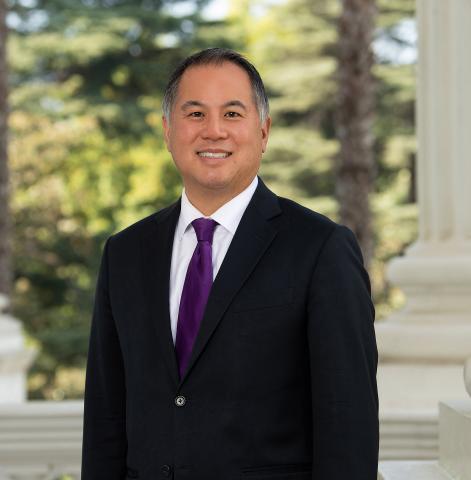
Bill Author
Bill Co-Author(s):