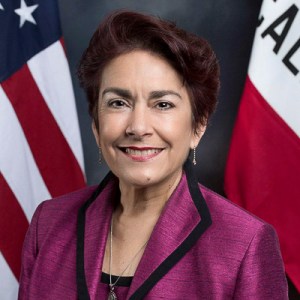
SB 455: Financial Empowerment Fund: unbanked and underbanked populations.
- Session Year: 2019-2020
- House: Senate
- Latest Version Date: 2019-10-02
Existing law establishes the Department of Business Oversight, which is responsible for the administration and enforcement of regulations on the activities of various financial entities, including commercial banks, industrial banks, trust companies, credit unions, and savings and loan associations. Existing law requires specified fees, reimbursements, assessments, and other moneys collected by the Division of Corporations within the department to be deposited into the State Corporations Fund for specified purposes.
This bill would, until January 1, 2025, require the department to provide grants of up to $100,000 to specified nonprofits for financial education and financial empowerment programs and services to unbanked and underbanked populations in the state, and would authorize the department to award up to $1,000,000 in grant moneys per fiscal year. The bill would appropriate the sum of $4,000,000 plus reasonable administrative costs, as estimated by the department, from the State Corporations Fund to the Financial Empowerment Fund, established in the State Treasury by the bill, and would continuously appropriate the moneys in the fund to the department for purposes of the program.
(a)There is hereby established in the State Treasury the Financial Empowerment Fund. Notwithstanding Section 13340 of the Government Code, moneys in the fund are hereby continuously appropriated without regard to fiscal years to the Commissioner of Business Oversight for purposes of the act.
(b)Notwithstanding Section 13340 of the Government Code, the Controller shall, on July 1, 2020, transfer from the State Corporations Fund to the Financial Empowerment Fund the sum of four million dollars ($4,000,000) plus an amount estimated by the department to be the reasonable costs to administer the division.
(c)The Commissioner of Business Oversight shall use moneys in the Financial Empowerment Fund for allocation to fund financial education and financial empowerment programs and services for at-risk populations in California, as described in Section 24001. The commissioner may additionally use moneys in the Financial Empowerment Fund to cover its costs to administer this act.
24001.(a)The Commissioner of Business Oversight shall administer an application process for grants of up to one hundred thousand dollars ($100,000) per applicant from the Financial Empowerment Fund or shall contract with an independent third party to do so on the departments behalf. The commissioner, or the independent third party designated by the commissioner, may award up to one million dollars ($1,000,000) in grant moneys per fiscal year, beginning in the 20202021 fiscal year. To be eligible for selection by the department to administer the grant program, an independent third party must cap its administrative fees at no more than 15 percent of the grant moneys it administers on the departments behalf.
(b)An applicant shall apply to the commissioner or to an independent third party designated by the commissioner for a grant in a form and manner prescribed by the commissioner or the independent third party. To be eligible for a grant, an applicant shall meet both of the following criteria:
(1)The organization is exempt from federal income taxes under Section 501(c)(3) of the Internal Revenue Code and is organized and operated exclusively for one or more of the purposes described in Section 501(c)(3) of the Internal Revenue Code.
(2)No part of the net earnings of the organization shall inure to the benefit of a private shareholder or individual.
(c)A grantee shall only use grant moneys for the following financial education and financial empowerment programs and services for at-risk populations:
(1)Designing, developing, or offering, free of charge to consumers, classroom- or web-based financial education and empowerment content intended to help unbanked and underbanked consumers achieve, identify, and access lower cost financial products and services, establish or improve their credit, increase their savings, or lower their debt.
(2)Providing individualized, free financial coaching to unbanked and underbanked consumers.
(3)Designing, developing, or offering, free of charge to consumers, a financial product or service intended to help unbanked and underbanked consumers identify and access responsible financial products and financial services, establish or improve their credit, increase their savings, or lower their debt.
(d)A grantee shall use no more than 15 percent of its grant to cover its administrative costs. Failure to comply with this requirement shall render the organization ineligible for grant funding during the subsequent fiscal year.
(e)Every project funded with a grant from the Financial Empowerment Fund shall meet all of the following criteria:
(1)Promote and enhance the economic security of consumers.
(2)Adhere to the five principles of effective financial education described in the June 2017 report, Effective financial education: Five principles and how to use them, issued by the federal Consumer Financial Protection Bureau.
(3)Include one or more specific outcome targets.
(4)Include an evaluation component designed to measure and document the extent to which the project achieves its intended outcomes and increases consumers financial well-being.
(f)Each grantee shall submit a report, in a form and by a date acceptable to the Commissioner of Business Oversight, documenting the specific uses to which grant funds were allocated, documenting the number of individuals aided through use of the funds, providing quantitative results regarding the impact of grant funding, and including any other information requested by the commissioner. Failure to submit a report shall render the organization ineligible for grant funding during the subsequent fiscal year.
(g)On or before December 31, 2021, and at least once annually thereafter, the department shall post on its internet website a summary of the information received from grantees pursuant to subdivision (f).
24002.(a)This division shall remain in effect only until January 1, 2025, and as of that date is repealed.
(b)Upon the repeal of this division, the Controller shall transfer any moneys remaining in the Financial Empowerment Fund to the State Corporations Fund.
|
Date
|
Status
|
|---|---|
| Oct 2, 2019 | Chaptered by Secretary of State. Chapter 478, Statutes of 2019. |
| Oct 2, 2019 | Approved by the Governor. |
| Sep 19, 2019 | Enrolled and presented to the Governor at 3 p.m. |
| Sep 11, 2019 | Assembly amendments concurred in. (Ayes 39. Noes 0.) Ordered to engrossing and enrolling. |
| Sep 11, 2019 | Ordered to special consent calendar. |
| Sep 10, 2019 | In Senate. Concurrence in Assembly amendments pending. |
| Sep 10, 2019 | Read third time. Passed. Ordered to the Senate. |
| Sep 3, 2019 | Read second time. Ordered to third reading. |
| Aug 30, 2019 | From committee: Do pass. (Ayes 18. Noes 0.) (August 30). |
| Aug 21, 2019 | August 21 set for first hearing. Placed on APPR. suspense file. |
| Aug 12, 2019 | From committee with author's amendments. Read second time and amended. Re-referred to Com. on APPR. |
| Jul 9, 2019 | From committee: Do pass and re-refer to Com. on APPR. with recommendation: To consent calendar. (Ayes 10. Noes 0.) (July 8). Re-referred to Com. on APPR. |
| Jun 6, 2019 | Referred to Com. on B. & F. |
| May 24, 2019 | In Assembly. Read first time. Held at Desk. |
| May 23, 2019 | Read third time. Passed. (Ayes 38. Noes 0.) Ordered to the Assembly. |
| May 20, 2019 | Read second time. Ordered to third reading. |
| May 17, 2019 | From committee: Do pass as amended. (Ayes 6. Noes 0.) (May 16). |
| May 10, 2019 | Set for hearing May 16. |
| Apr 29, 2019 | April 29 hearing: Placed on APPR. suspense file. |
| Apr 18, 2019 | Set for hearing April 29. |
| Apr 11, 2019 | From committee: Do pass and re-refer to Com. on APPR. (Ayes 7. Noes 0.) (April 10). Re-referred to Com. on APPR. |
| Mar 8, 2019 | Set for hearing April 10. |
| Mar 7, 2019 | Referred to Com. on B. & F.I. |
| Feb 22, 2019 | From printer. May be acted upon on or after March 24. |
| Feb 21, 2019 | Introduced. Read first time. To Com. on RLS. for assignment. To print. |
|
Date
|
Description
|
Location
|
Votes
|
|
|---|---|---|---|---|
| Sep 11, 2019 | Unfinished Business SB455 Bradford et al. Concurrence | Senate Floor |
Passed |
|
| Sep 10, 2019 | SB 455 Bradford Senate Third Reading By Limón | Assembly Floor |
Passed |
|
| Aug 30, 2019 | Do pass. | Assembly Standing Committee on Appropriations |
Passed |
|
| Jul 8, 2019 | Do pass and be re-referred to the Committee on [Appropriations] with recommendation: To Consent Calendar | Assembly Standing Committee on Banking and Finance |
Passed |
|
| May 23, 2019 | Senate 3rd Reading SB455 Bradford et al. | Senate Floor |
Passed |
|
| May 16, 2019 | Do pass as amended | Senate Standing Committee on Appropriations |
Passed |
|
| Apr 29, 2019 | Placed on suspense file | Senate Standing Committee on Appropriations |
Passed |
|
| Apr 10, 2019 | Do pass, but first be re-referred to the Committee on [Appropriations] | Senate Standing Committee on Banking and Financial Institutions |
Passed |
This list shows positions taken on this bill by organizations on the date displayed, which is linked to the original source.
Positions by individuals are not included.
Office of Senate Floor Analyses (916) 651-1520 Fax: (916) 327-4478 | SB 455 |
UNFINISHED BUSINESS
Bill No: SB 455
Author: Bradford (D) and Chang (R), et al.
Amended: 8/12/19
SENATE BANKING & F.I. COMMITTEE: 7-0, 4/10/19
AYES: Bradford, Chang, Caballero, Durazo, Hueso, Morrell, Portantino
SENATE APPROPRIATIONS COMMITTEE: 6-0, 5/16/19
AYES: Portantino, Bates, Bradford, Hill, Jones, Wieckowski
SENATE FLOOR: 38-0, 5/23/19
AYES: Allen, Archuleta, Atkins, Bates, Beall, Borgeas, Bradford, Caballero, Chang, Dodd, Durazo, Galgiani, Glazer, Grove, Hertzberg, Hill, Hueso, Hurtado, Jackson, Jones, Leyva, McGuire, Mitchell, Monning, Moorlach, Morrell, Nielsen, Pan, Portantino, Roth, Rubio, Skinner, Stern, Stone, Umberg, Wieckowski, Wiener, Wilk
ASSEMBLY FLOOR: 79-0, 9/10/19 - See last page for vote
SUBJECT: Financial Empowerment Fund: unbanked and underbanked populations
DIGEST:
This bill, until January 1, 2025, creates the Financial Empowerment Fund (FEF), as specified, and authorizes the Commissioner of Business Oversight (commissioner) to award grants from that fund to nonprofit organizations that offer financial education and financial empowerment programs and services to at-risk populations in California.
Assembly Amendments
revise the funding mechanism of the FEF, cap administrative fees that may be charged by any independent third party selected to administer the grant program, and limit the amount of grant funding a nonprofit grantee may use to cover its administrative costs.
Existing law:
- Provides for the Department of Business Oversight (DBO) and gives DBO authority to regulate 24 different financial and securities-related programs and laws. The two laws relevant for this analysis are the California Financing Law (CFL; Financial Code Section 22000 et seq.) and the California Deferred Deposit Transaction Law (CDDTL; Financial Code Section 23000 et seq.), both of which are administered by the Division of Corporations within DBO.
- Provides that, notwithstanding any provision of any law administered by the Division of Corporations declaring that fees, reimbursements, assessments, or other money or amounts charged and collected by the division are to be deposited to the credit of the General Fund, all fees, reimbursements, assessments, and other money or amounts charged and collected under the laws administered by the Division of Corporations shall be deposited to the credit of the State Corporations Fund (Government Code Section 12895).
This bill:
- Establishes the Financial Empowerment Fund (FEF) in the State Treasury and directs the State Controller to transfer $4 million, plus DBO’s estimated costs to administer the bill, from the State Corporations Fund to the FEF.
- Appropriates, continuously, money in the FEF for use by the commissioner, as specified, but caps the maximum dollar amount of grants that may be awarded in any fiscal year at $1 million.
- Requires the commissioner to allocate moneys in the FEF for financial education and financial empowerment programs and services for at-risk populations in California and to cover the commissioner’s costs to administer the grant program, as follows:
- Directs the commissioner to administer a grant program or to contract out with an independent third party to administer a grant program, through which applicants meeting specified criteria may apply for grants of up to $100,000. To be eligible for selection by the commissioner to administer the grant program, an independent third party must cap its administrative fees at no more than 15% of the grant moneys it administers on DBO’s behalf.
- To be eligible for a grant, an applicant must be exempt from federal income taxes pursuant to Internal Revenue Code Section 501(c)(3), and no part of the net earnings of the applicant may inure to the benefit of a private shareholder or individual.
- Every project funded with an FEF grant must meet all of the following criteria:
- Promote and enhance the economic security of consumers.
- Adhere to the five principles of effective financial education described in the June, 2017 report from the Consumer Financial Protection Bureau (CFPB) titled, “Effective financial education: five principles and how to use them.”
- Include one or more specific outcome targets.
- Include an evaluation component designed to measure and document the extent to which the project achieves its intended outcomes and increases consumers’ financial well-being.
- Promote and enhance the economic security of consumers.
- Directs the commissioner to administer a grant program or to contract out with an independent third party to administer a grant program, through which applicants meeting specified criteria may apply for grants of up to $100,000. To be eligible for selection by the commissioner to administer the grant program, an independent third party must cap its administrative fees at no more than 15% of the grant moneys it administers on DBO’s behalf.
- Provides that grantees may only use grant moneys for one or more of the following:
- Designing, developing, or offering, free of charge to consumers, classroom- or web-based financial education and empowerment content intended to help unbanked and underbanked consumes achieve, identify, and access lower cost financial products and services, establish or improve their credit, increase their savings, or lower their debt.
- Providing individualized, free financial coaching to unbanked and underbanked consumers.
- Designing, developing, or offering, free of charge to consumers, a financial product or service intended to help unbanked and underbanked consumers identify and access responsible financial products and financial services, establish or improve their credit, increase their savings, or lower their debt.
- Providing individualized, free financial coaching to unbanked and underbanked consumers.
- Prohibits any grantee from using more than 15% of its grant to cover its administrative costs, and provides that failure to comply with this restriction renders the organization ineligible for grant funding during the subsequent fiscal year.
- Requires each grantee to submit a report, in a form and by a date acceptable to the commissioner, documenting the specific purposes to which grant funds were allocated, documenting the number of individuals aided through use of the funds, providing quantitative results regarding the impact of the grant funding, and including any other information requested by the commissioner. Failure to submit a report renders a grant recipient ineligible for grant funding during the subsequent fiscal year.
- Requires, on or before December 31, 2021 and annually thereafter, DBO to post on its website a summary of the information contained in grantees’ reports.
- Sunsets the program on January 1, 2025 and transfers any money remaining in the FEF following the sunset from the FEF to the State Corporations Fund.
Background
California has a significant population of residents who turn to high-cost financial products and services to meet their pressing financial needs. According to the most recent Federal Deposit Insurance Corporation’s Survey of Unbanked and Underbanked Households, approximately 7% of California households are unbanked, and another 18% are underbanked. Even though two-thirds of California’s households are fully banked, only half of California households save for unexpected expenses or emergencies, and many of those who save still lack the money necessary to cover a $400 emergency expense.
Faced with inevitable financial emergencies, many consumers turn to high-cost financial providers whose products and services often exacerbate the consumers’ financial hardships. Although the path to financial self-sufficiency may differ from person to person, one thread common to those who have achieved self-sufficiency is an understanding of the financial tools and resources available to them and a willingness to engage in and model positive financial behavior. Yet, many at-risk Californians do not have access to effective financial education or tools to help them make better financial decisions. Even those who are offered financial education often fail to benefit from it, because the educational programs are not designed with the needs of the underserved in mind.
Comments
The federal Consumer Financial Protection Bureau (CFPB) has conducted extensive research and compiled studies performed by others in an effort to determine what makes financial education effective – i.e., to determine how best to equip consumers to understand the financial marketplace, make sound financial choices that help them achieve their goals, and achieve long-term financial well-being.
Through its research, the CFPB has identified five principles which, when combined, offer a comprehensive framework for successful financial education and empowerment strategies: 1) know the individuals and families to be served; 2) provide actionable, relevant, and timely information; 3) improve key financial skills; 4) build on motivation; and 5) make it easy for people to make good decisions and follow through.
This bill authorizes DBO to award grants to organizations whose work with un- and underbanked populations is grounded in the CFPB’s five principles, and whose outcomes will be measured and documented. This bill’s evaluation component is intended to ensure that grant money goes to those organizations most likely to have a positive impact on un- and underbanked Californians. The bill also includes a four-year sunset date to encourage the impact of the FEF to be evaluated, and its details modified as appropriate to help promote maximum effectiveness.
FISCAL EFFECT: Appropriation: Yes Fiscal Com.: Yes Local: No
According to the Assembly Appropriations Committee, in addition to the $4 million allocated to grant awards, SB 455 will result in annual costs of approximately $160,000 for DBO to hire staff to oversee the grant process. If DBO chooses to contract out with a third party to administer the grant program, annual costs would be approximately $310,000, which reflects the costs of the contract as well as DBO’s staffing costs. These administrative costs would be paid for through an appropriation from the State Corporations Fund to the FEF.
Mission Asset Fund (source)
Building Skills Partnership
Canal Alliance
California Bankers Association
California Low-Income Consumer Coalition
California Reinvestment Coalition
Center for Responsible Lending
City and County of San Francisco Treasurer Jose Cisneros
City of Long Beach
City of Stockton Mayor Michael Tubbs
Coalition for Humane Immigrant Rights
County of Los Angeles Department of Consumer and Business Affairs
EARN.org
Housing and Economic Rights Advocates
La Hermandad
LIFT – Los Angeles
MyPath
New Economics for Women
Oakland Mayor Libby Schaaf
Opportunity Fund
Peninsula Family Service
Rubicon Programs
Unidos US
Western Center on Law and Poverty
OPPOSITION: (Verified 9/10/19)
Department of Finance
ARGUMENTS IN SUPPORT: This bill’s sponsor, Mission Asset Fund (MAF) writes “Millions of Californians are unbanked and underserved by mainstream financial institutions and advisors. In fact, when faced with an inevitable financial emergency, without advice or support, many consumers turn to high-cost financial products that further exacerbate their financial hardships. SB 455 would help by supporting a statewide infrastructure of nonprofits that pair consumers with relevant, timely and actionable tools to increase their financial well-being and curb the use of harmful high-cost financial products...[MAF believes] in the impact nonprofit organizations can have in turning all Californians into empowered consumers...It is time for the state to act and make financial wellness a reality for all. Together, we can create more pathways for economic mobility and financial stability for all Californians.”
ARGUMENTS IN OPPOSITION: The Department of Finance opposes the bill “because the provisions create a continuous appropriation for the State Corporations Fund. This approach does not provide adequate budgetary oversight of these funds and changes to appropriation levels should be considered as part of the budget development process.”
ASSEMBLY FLOOR: 79-0, 9/10/19
AYES: Aguiar-Curry, Arambula, Bauer-Kahan, Berman, Bigelow, Bloom, Boerner Horvath, Bonta, Brough, Burke, Calderon, Carrillo, Cervantes, Chau, Chen, Chiu, Choi, Chu, Cooley, Cooper, Cunningham, Daly, Diep, Eggman, Flora, Fong, Frazier, Friedman, Gabriel, Gallagher, Cristina Garcia, Eduardo Garcia, Gipson, Gloria, Gonzalez, Gray, Grayson, Holden, Irwin, Jones-Sawyer, Kalra, Kamlager-Dove, Kiley, Lackey, Levine, Limón, Low, Maienschein, Mathis, Mayes, McCarty, Medina, Melendez, Mullin, Muratsuchi, Nazarian, Obernolte, O'Donnell, Patterson, Petrie-Norris, Quirk, Quirk-Silva, Ramos, Reyes, Luz Rivas, Robert Rivas, Rodriguez, Blanca Rubio, Salas, Santiago, Smith, Mark Stone, Ting, Voepel, Waldron, Weber, Wicks, Wood, Rendon
Prepared by: Eileen Newhall / B. & F.I. /
9/10/19 23:01:46
**** END ****
SENATE THIRD READING
STR Bill Id:SB 455
Author:(Bradford and Chang)
As Amended Ver:August 12, 2019
2/3 vote
SUMMARY:
Creates the Financial Empowerment Fund and authorizes the Commissioner of Business Oversight to award grants of up to $100,000 per applicant to support financial education and financial empowerment programs administered by nonprofit organizations, until January 1, 2025.
Major Provisions
- Establishes the Financial Empowerment Fund (FEF) in the State Treasury and directs the State Controller to transfer from the State Corporations Fund to the FEF the sum of $4 million plus an amount estimated by the Department of Business Oversight (DBO) to be the reasonable costs to administer the program described in 2) below. Moneys in the FEF are continuously appropriated to DBO for specified purposes.
- Requires DBO to directly administer or contract with a third party to administer an application process for grants of up to $100,000 per applicant for projects that promote and enhance the economic security of consumers and adhere to the five principles of effective financial education described in the June 2017 report from the Consumer Financial Protection Bureau, "Effective financial education: Five principles and how to use them."
- Authorizes DBO, or the third party designated by DBO, to award up to $1 million in grant moneys per fiscal year, beginning in the 2020-2021 fiscal year.
- Requires an applicant to be a nonprofit organization, as specified, to be eligible for a grant.
- Requires that a grantee shall only use grant moneys for the following programs and services for at-risk populations:
- Designing, developing, or offering, free of charge to consumers, classroom- or web-based financial education and empowerment content intended to help unbanked and underbanked consumes achieve, identify, and access lower cost financial products and services, establish or improve their credit, increase their savings, or lower their debt.
- Providing individualized, free financial coaching to unbanked and underbanked consumers.
- Designing, developing, or offering, free of charge to consumers, a financial product or service intended to help unbanked and underbanked consumers identify and access responsible financial products and financial services, establish or improve their credit, increase their savings, or lower their debt.
- Prohibits a grantee from using more than 15% of its grant to cover its administrative costs. Failure to comply with this requirement shall render the organization ineligible for grant funding during the subsequent fiscal year.
- Sunsets the program as of January 1, 2025.
COMMENTS:
Many Californians do not have access to resources that can help them navigate their financial situations and the complex array of financial products and services in the market. While educators, policymakers, and financial service providers appear to agree that improving financial literacy is important, empirical research suggests that there is often little to no effect of financial literacy efforts on actual consumer behavior and financial well-being.[1]
Acknowledging the limited effectiveness of legacy programs, the Consumer Financial Protection Bureau conducted research to determine what makes financial education effective. In its report, "Effective financial education: Five principles and how to use them," the Bureau identified five necessary components of successful financial education and empowerment programs:
- know the individuals and families to be served;
- provide actionable, relevant, and timely information;
- improve key financial skills;
- build on motivation; and
- make it easy for people to make good decisions and follow through.
Based on the 17% of Americans considered financially vulnerable by Financial Health Network's U.S. Financial Health Pulse, it is reasonable to assume that at least 7 million Californians would greatly benefit from effective financial education and empowerment programs. This bill contemplates a modest initial investment in financial education and empowerment programs from the state government. Currently, nonprofits that deliver these programs rely primarily on private donations with significantly smaller support from local governments in heavily populated areas of the state, like San Francisco and Los Angeles.
According to the Author:
Far too many Californians are unbanked or underbanked, have little to no credit history, and lack the educational empowerment to make sound financial decisions for their future. While there may be numerous financial products available, many are expensive or out of reach, ultimately leaving consumers to fend for themselves. This bill will help address this problem by providing reliable, trustworthy tools to consumers to help them improve their financial well-being.
Arguments in Support:
Mission Asset Fund, the sponsor of the bill, writes:
Millions of Californians are unbanked and underserved by mainstream financial institutions and advisors. In fact, when faced with an inevitable financial emergency, without advice or support, many consumers turn to high-cost financial products that further exacerbate their financial hardships. SB 455 would help by supporting a statewide infrastructure of nonprofits that pair consumers with relevant, timely and actionable tools to increase their financial well-being and curb the use of harmful high-cost financial products.
Arguments in Opposition:
None received.
FISCAL COMMENTS:
According to the Assembly Appropriations Committee, annual costs of approximately $160,000 in staffing costs for DBO to oversee the grant process. If DBO chooses to contract out with a third party to administer the application process, annual costs would be approximately $310,000, which reflects the costs of the contract as well as DBO costs. These costs would be paid for through an appropriation from the State Corporations Fund to the Empowerment Fund.
VOTES:
SENATE FLOOR: 38-0-0
YES: Allen, Archuleta, Atkins, Bates, Beall, Borgeas, Bradford, Caballero, Chang, Dodd, Durazo, Galgiani, Glazer, Grove, Hertzberg, Hill, Hueso, Hurtado, Jackson, Jones, Leyva, McGuire, Mitchell, Monning, Moorlach, Morrell, Nielsen, Pan, Portantino, Roth, Rubio, Skinner, Stern, Stone, Umberg, Wieckowski, Wiener, Wilk
ASM BANKING AND FINANCE: 10-0-2
YES: Limón, Chen, Bauer-Kahan, Cervantes, Choi, Gabriel, Grayson, Mark Stone, Weber, Wicks
ABS, ABST OR NV: Burke, Melendez
ASM APPROPRIATIONS: 18-0-0
YES: Gonzalez, Bigelow, Bloom, Bonta, Brough, Calderon, Carrillo, Chau, Diep, Eggman, Fong, Gabriel, Eduardo Garcia, Maienschein, Obernolte, Petrie-Norris, Quirk, Robert Rivas
UPDATED:
VERSION: August 12, 2019
CONSULTANT: Michael Burdick / B. & F. / (916) 319-3081 FN: 0001595
See Fernandes, Daniel & Lynch, John & G. Netemeyer, Richard. (2014). Financial Literacy, Financial Education, and Downstream Financial Behaviors. Management Science. 10.1287/mnsc.2013.1849. ↑
Date of Hearing: August 21, 2019
ASSEMBLY COMMITTEE ON APPROPRIATIONS
Lorena Gonzalez, Chair
SBPCA Bill Id:SB 455
Author:(Bradford) – As Amended Ver:August 12, 2019
Policy Committee: | Banking and Finance | Vote: | 10 - 0 |
|
| ||
|
|
Urgency: No State Mandated Local Program: No Reimbursable: No
SUMMARY:
This bill creates the Financial Empowerment Fund (Empowerment Fund) for grants to financial education and financial empowerment programs. Specifically, this bill:
- Establishes the Fund in the State Treasury and directs the State Controller to transfer $4 million, plus enough to cover the Department of Business Oversight’s (DBO’s) administrative expense, from the State Corporations Fund to the Empowerment Fund.
- Requires DBO to directly administer or contract with a third party to administer an application process for grants of up to $100,000 per eligible nonprofit applicant for projects that must meet specified criteria, such as developing or offering free classroom- or web-based financial education content or providing free individualized financial coaching to unbanked and underbanked consumers.
FISCAL EFFECT:
Annual costs of approximately $160,000 in staffing costs for DBO to oversee the grant process. If DBO chooses to contract out with a third party to administer the application process, annual costs would be approximately $310,000, which reflects the costs of the contract as well as DBO costs. These costs would be paid for through an appropriation from the State Corporations Fund to the Empowerment Fund.
COMMENTS:
- Purpose. According to the author, this bill will help expand education opportunities to help the unbanked and underbanked make sound financial decisions. The author notes that many existing financial products are expensive or out of reach for financially vulnerable families, and this bill will help them obtain trustworthy tools.
- Recent amendments. The author recently amended this bill to modify the funding source for the Empowerment Fund and to put more parameters around the grant process. Specifically, these amendments:
- Establish a different funding source. Prior versions of this bill allocated fine and penalty revenue from certain violations of the California Financing Law (CFL) and the California Deferred Deposit Transaction Law (CDDTL). The logic behind this funding mechanism was that families most in need of the programs proposed by this bill are most likely to use high-cost loans authorized by these laws. However, the downside of this approach was that funding would likely be inconsistent and unpredictable. These recent amendments instead appropriate $4 million from the State Corporations Fund and allow up to $1 million in grants to be allocated each year for four years.
- Caps administrative expenses. As recently amended, administrative expenses cannot exceed 15% of grant money received or, in the case of a contractor, grant moneys administered.
Analysis Prepared by: Luke Reidenbach / APPR. / (916) 319-2081
Date of Hearing: June 24, 2019
ASSEMBLY COMMITTEE ON BANKING AND FINANCE
Monique Limón, Chair
SBPCA Bill Id:SB 455
Author:(Bradford) – As Amended Ver:May 17, 2019
SENATE VOTE: 38-0
SUBJECT: Financial Empowerment Fund: unbanked and underbanked populations
SUMMARY: Creates the Financial Empowerment Fund and authorizes the Commissioner of Business Oversight to award grants of up to $100,000 per applicant to support financial education and financial empowerment programs, until January 1, 2025.
Specifically, this bill:
- Establishes the Financial Empowerment Fund (FEF) in the State Treasury and directs the State Controller to transfer up to $1 million annually to that fund. The source of funding for the FEF is fine and penalty revenue received by Department of Business Oversight (DBO) related to violations of the California Financing Law (CFL) and California Deferred Deposit Transaction Law (CDDTL). Moneys in the FEF are continuously appropriated to DBO for specified purposes.
- Reimburses DBO for the administrative costs to enforce provisions of the CFL and CDDTL before transferring money to the FEF.
- If DBO receives less than $1 million from fine and penalty revenue net of the department’s recovery of administrative costs, provides that the Controller shall only transfer the aggregate amount received.
- Authorizes reimbursement to DBO for costs to administer the grant program.
- Requires DBO to directly administer or contract with a third party to administer an application process for grants of up to $100,000 per applicant for projects that must meet the following criteria:
- Promote and enhance the economic security of consumers.
- Adhere to the five principles of effective financial education described in the June 2017 report from the Consumer Financial Protection Bureau, “Effective financial education: Five principles and how to use them.”
- Include one or more specific outcome targets.
- Include an evaluation component designed to measure and document the extent to which the project achieves its intended outcomes and increases consumers’ financial well-being.
- Requires an applicant to meet the following criteria to be eligible for a grant:
- The organization must be exempt from federal income taxes under Section 501(c)(3) of the Internal Revenue Code and is organized and operated exclusively for one or more purposes described in that section.
- No part of the net earnings of the applicant may inure to the benefit of a private shareholder or individual.
- Requires that a grantee shall only use grant moneys for the following programs and services for at-risk populations:
- Designing, developing, or offering, free of charge to consumers, classroom- or web-based financial education and empowerment content intended to help unbanked and underbanked consumes achieve, identify, and access lower cost financial products and services, establish or improve their credit, increase their savings, or lower their debt.
- Providing individualized, free financial coaching to unbanked and underbanked consumers.
- Designing, developing, or offering, free of charge to consumers, a financial product or service intended to help unbanked and underbanked consumers identify and access responsible financial products and financial services, establish or improve their credit, increase their savings, or lower their debt.
- Requires each grantee to submit a report, in a form and by a date acceptable to the commissioner, documenting the specific purposes to which grant funds were allocated, documenting the number of individuals aided through use of the funds, providing quantitative results regarding the impact of the grant funding, and including any other information requested by the commissioner. Failure to submit a report renders a grant recipient ineligible for grant funding during the subsequent fiscal year.
- Sunsets the program as of January 1, 2025.
EXISTING LAW:
- Provides for the Department of Business Oversight (DBO) and authorizes DBO to implement policies and enforce laws related to financial services, including the California Financing Law (Financial Code 22000 et seq.) and the California Deferred Deposit Transaction Law (Financial Code Section 23000 et seq.), both of which are administered by the Division of Corporations within DBO.
- Requires that all fees, reimbursements, assessments, and other money or amounts charged and collected under the laws administered by the Division of Corporations shall be deposited to the credit of the State Corporations Fund (Government Code Section 12895).
- Provides that, notwithstanding any other provision of law, and except as provided, revenues derived from the assessment of fines and penalties by any state agency may not be expended, unless the Legislature specifically provides authority for the expenditure of these funds in the annual Budget Act or other legislation. Further provides that a fine or penalty is a charge imposed by an agency or department for wrongdoing, in excess of the cost of investigating, processing, or prosecuting the conduct for which the charge is assessed, or the cost of collecting it (Government Code Section 13332.18).
- Authorizes the Commissioner of Business Oversight (commissioner) to impose the following fines and penalties under the CFL and the CDDTL, as follows:
- Any CFL licensee or any person required to be licensed under the CFL is subject to an administrative fine of up to $2,500 for any violation of the CFL or any rule or order issued pursuant to that law (Financial Code Section 22707.5).
- Any person who willfully violates the CFL or any rule or order issued pursuant to the CFL is subject to a fine of up to $10,000 upon conviction, as specified (Financial Code Section 22753).
- Any person who violates any provision of the CDDTL or any rule or order issued pursuant to the CDDTL is liable for a civil penalty of up to $2,500 per violation, as specified (Financial Code Section 23051).
- Any CDDTL licensee or any person required to be licensed under the CDDTL is subject to an administrative penalty of up to $2,500 for any violation of the CDDTL or any rule or order issued pursuant to that law (Financial Code Section 23058).
- Any CFL licensee or any person required to be licensed under the CFL is subject to an administrative fine of up to $2,500 for any violation of the CFL or any rule or order issued pursuant to that law (Financial Code Section 22707.5).
FISCAL EFFECT: According to the Senate Appropriations Committee, this bill will continuously appropriate up to $1 million per year from the State Corporations Fund to the Financial Empowerment Fund. The bill will result in ongoing costs to DBO of approximately $450,000 per year for additional personnel to create new procedures to administer the grant program, to review grant applications, and to review and analyze information to produce the report. These costs may be lower if DBO chooses to authorize a third party to administer the grant.
COMMENTS:
- PURPOSE
This bill is sponsored by the Mission Asset Fund to support the work of organizations offering effective financial education and empowerment programs and services to unbanked and underbanked populations in the state.
According to the author:
Far too many Californians are unbanked or underbanked, have little to no credit history, and lack the educational empowerment to make sound financial decisions for their future. While there may be numerous financial products available, many are expensive or out of reach, ultimately leaving consumers to fend for themselves. SB 455 will help address this problem by providing reliable, trustworthy tools to consumers to help them improve their financial well-being.
- BACKGROUND
According to the Financial Health Network (formerly CFSI), 17% of Americans are considered financially vulnerable as measured by the organization’s U.S. Financial Health Pulse. Due to California’s notoriously high housing costs, it is reasonable to assume that an even greater percentage of California families are struggling to cope financially. Although workplace instability and cost of living are primary drivers of a family’s financial health, the financial products and services available to them are also a factor that can contribute to either improving or harming their financial well-being.
Many Californians do not have access to resources that can help them navigate their financial situations and the complex array of financial products and services in the market. While educators, policymakers, and financial service providers appear to agree that improving financial literacy is important, empirical research suggests that there is often little to no effect of financial literacy efforts on actual consumer behavior and financial well-being.[1]
Acknowledging the limited effectiveness of legacy programs, the Consumer Financial Protection Bureau conducted research to determine what makes financial education effective. In its report, “Effective financial education: Five principles and how to use them,” the Bureau identified five necessary components of successful financial education and empowerment programs:
1) know the individuals and families to be served;
2) provide actionable, relevant, and timely information;
3) improve key financial skills;
4) build on motivation; and
5) make it easy for people to make good decisions and follow through.
- BUDGETARY CONSIDERATIONS
This bill requires the proposed Financial Empowerment Fund to be funded by fine and penalty revenue generated by DBO enforcement actions for violations of the CDDTL, which regulates payday lending, and the CFL, which regulates nondepository lending, including small-dollar consumer installment loans, mortgages, and commercial loans. Given that consumers who may be in the most need of financial empowerment programs are also more likely to use risky, high-cost financial products like payday loans and installment loans with interest rates of 100% or more, the proposed funding source is a logical nexus to the objectives of the grant program.
Fine and penalty revenue generated by DBO enforcement actions is unpredictable and lumpy. The table below show the net amount of fines and penalties collected by DBO during the last three calendar years. While in some years the revenue may not be sufficient to fund the full $1 million annual transfer proposed by this bill, there will be more than enough to transfer the full amount in other years.
Additionally, the most recent state budget projects the State Corporations Fund to have a fund balance of $88 million at the end of the current fiscal year, and there is no budgeted use of fund balance in fiscal year 2019-2020.
The bill continuously appropriates moneys in the FEF to DBO for purposes of funding the grant program. The continuous appropriations is intended to ensure that DBO’s ability to award grants is not dependent on an annual Budget Act appropriation and provide greater assurance to nonprofit organizations that grant funding will be available.
- IS $1 MILLION SUFFICIENT GIVEN THE SIZE OF THE PROBLEM?
Based on the 17% of Americans considered financially vulnerable by Financial Health Network’s U.S. Financial Health Pulse, it is reasonable to assume that at least 7 million Californians would greatly benefit from effective financial education and empowerment programs. This bill contemplates a modest initial investment in financial education and empowerment programs from the state government. Currently, nonprofits that deliver these programs rely primarily on private donations with significantly smaller support from local governments in heavily populated areas of the state, like San Francisco and Los Angeles. Committee staff is not aware of any efforts by the state government to deliver these programs directly to residents of the state or to build capacity of nonprofits to serve a greater number of clients.
The Legislature may consider increasing the investment in future years. This bill requires grantees to provide quantitative results regarding the impact of grant funding, and DBO is required to post a summary of these reports on the department’s website. If the program appears to generate significant benefits for California residents, the Legislature may decide to revisit the program prior to the sunset date of January 1, 2025, and could then decide whether to increase the funding into the program.
REGISTERED SUPPORT / OPPOSITION:
Support
Mission Asset Fund (Sponsor)
Building Skills Partnership
California Association Of Micro Enterprise Opportunity
California Bankers Association
California Low-Income Consumer Coalition
California Reinvestment Coalition
Canal Alliance
Center for Responsible Lending
City And County Of San Francisco - Treasurer's Office
City Of Long Beach
City Of Oakland
Coalition For Humane Immigrant Rights (CHIRLA)
EARN
Housing And Economic Rights Advocates
La Hermandad
Lift Los Angeles
Los Angeles County Department Of Consumer And Business Affairs
My Path
New Economics For Women
Opportunity Fund
Peninsula Family Service
Rubicon Programs
UnidosUS
Western Center On Law And Poverty
Opposition
None received.
Analysis Prepared by: Michael Burdick / B. & F. / (916) 319-3081
See Fernandes, Daniel & Lynch, John & G. Netemeyer, Richard. (2014). Financial Literacy, Financial Education, and Downstream Financial Behaviors. Management Science. 10.1287/mnsc.2013.1849. ↑
Office of Senate Floor Analyses (916) 651-1520 Fax: (916) 327-4478 | SB 455 |
THIRD READING
Bill No: SB 455
Amended: 5/17/19
SENATE BANKING & F.I. COMMITTEE: 7-0, 4/10/19
AYES: Bradford, Chang, Caballero, Durazo, Hueso, Morrell, Portantino
SENATE APPROPRIATIONS COMMITTEE: 6-0, 5/16/19
AYES: Portantino, Bates, Bradford, Hill, Jones, Wieckowski
SUBJECT: Financial Empowerment Fund: unbanked and underbanked populations
DIGEST:
This bill creates the Financial Empowerment Fund, funded with up to $1 million annually, as specified, and authorizes the Commissioner of Business Oversight to award grants of up to $100,000 from the Financial Empowerment Fund to support financial education and financial empowerment programs and services for at-risk populations in California, until January 1, 2025, as specified.
Existing law:
- Provides for the Department of Business Oversight (DBO) and gives DBO authority to regulate 24 different financial and securities-related programs and laws. The two laws relevant for this analysis are the California Financing Law (CFL; Financial Code Section 22000 et seq.) and the California Deferred Deposit Transaction Law (CDDTL; Financial Code Section 23000 et seq.), both of which are administered by the Division of Corporations within DBO.
- Provides that, notwithstanding any provision of any law administered by the Division of Corporations declaring that fees, reimbursements, assessments, or other money or amounts charged and collected by the division are to be deposited to the credit of the General Fund, all fees, reimbursements, assessments, and other money or amounts charged and collected under the laws administered by the Division of Corporations shall be deposited to the credit of the State Corporations Fund (Government Code Section 12895).
- Provides that, notwithstanding any other provision of law, and except as provided, revenues derived from the assessment of fines and penalties by any state agency may not be expended, unless the Legislature specifically provides authority for the expenditure of these funds in the annual Budget Act or other legislation. Further provides that a fine or penalty is a charge imposed by an agency or department for wrongdoing, in excess of the cost of investigating, processing, or prosecuting the conduct for which the charge is assessed, or the cost of collecting it (Government Code Section 13332.18).
- Authorizes the Commissioner of Business Oversight (commissioner) to impose the following fines and penalties under the CFL and the CDDTL, as follows:
- Any CFL licensee or any person required to be licensed under the CFL is subject to an administrative fine of up to $2,500 for any violation of the CFL or any rule or order issued pursuant to that law (Financial Code Section 22707.5).
- Any person who willfully violates the CFL or any rule or order issued pursuant to the CFL is subject to a fine of up to $10,000 upon conviction, as specified (Financial Code Section 22753).
- Any person who violates any provision of the CDDTL or any rule or order issued pursuant to the CDDTL is liable for a civil penalty of up to $2,500 per violation, as specified (Financial Code Section 23051).
- Any CDDTL licensee or any person required to be licensed under the CDDTL is subject to an administrative penalty of up to $2,500 for any violation of the CDDTL or any rule or order issued pursuant to that law (Financial Code Section 23058).
- Any CFL licensee or any person required to be licensed under the CFL is subject to an administrative fine of up to $2,500 for any violation of the CFL or any rule or order issued pursuant to that law (Financial Code Section 22707.5).
This bill:
- Establishes the Financial Empowerment Fund (FEF) in the State Treasury and directs the State Controller to transfer up to $1 million annually to that fund. Funds the FEF with money derived from fine and penalty revenue received by DBO pursuant to Financial Code Sections 22707.5, 22753, 23051, and 23058, and pursuant to settlement agreements reached by DBO with CFL and CDDTL licensees and unlicensed persons alleged to have violated those laws.
- Reimburses DBO for its costs to enforce the aforementioned provisions before transferring any money to the FEF.
- Provides that in any fiscal year in which less than $1 million is received by DBO pursuant to the aforementioned sources, the Controller shall only transfer the aggregate amount received.
- Provides that if, in any fiscal year, the balance of the FEF would exceed $1.5 million following the required transfer, the Controller shall only transfer those amounts that would result in the balance of the FEF fund not exceeding $1.5 million.
- Continuously appropriates money in the FEF for use by the commissioner, as specified.
- Reimburses DBO for its costs to enforce the aforementioned provisions before transferring any money to the FEF.
- Requires the commissioner to allocate moneys in the FEF for financial education and financial empowerment programs and services for at-risk populations in California, as follows:
- Directs the commissioner to administer a grant program or to contract out with an independent third party to administer a grant program, through which applicants meeting specified criteria may apply for grants of up to $100,000. To be eligible for a grant, an applicant must be exempt from federal income taxes pursuant to Internal Revenue Code Section 501(c)(3), and no part of the net earnings of the applicant may inure to the benefit of a private shareholder or individual.
- Every project funded with an FEF grant must meet all of the following criteria:
- Promote and enhance the economic security of consumers.
- Adhere to the five principles of effective financial education described in the June, 2017 report from the Consumer Financial Protection Bureau (CFPB) titled, “Effective financial education: five principles and how to use them.”
- Include one or more specific outcome targets.
- Include an evaluation component designed to measure and document the extent to which the project achieves its intended outcomes and increases consumers’ financial well-being.
- Promote and enhance the economic security of consumers.
- Directs the commissioner to administer a grant program or to contract out with an independent third party to administer a grant program, through which applicants meeting specified criteria may apply for grants of up to $100,000. To be eligible for a grant, an applicant must be exempt from federal income taxes pursuant to Internal Revenue Code Section 501(c)(3), and no part of the net earnings of the applicant may inure to the benefit of a private shareholder or individual.
- Provides that grantees may only use grant moneys for one or more of the following:
- Designing, developing, or offering, free of charge to consumers, classroom- or web-based financial education and empowerment content intended to help unbanked and underbanked consumes achieve, identify, and access lower cost financial products and services, establish or improve their credit, increase their savings, or lower their debt.
- Providing individualized, free financial coaching to unbanked and underbanked consumers.
- Designing, developing, or offering, free of charge to consumers, a financial product or service intended to help unbanked and underbanked consumers identify and access responsible financial products and financial services, establish or improve their credit, increase their savings, or lower their debt.
- Providing individualized, free financial coaching to unbanked and underbanked consumers.
- Requires each grantee to submit a report, in a form and by a date acceptable to the commissioner, documenting the specific purposes to which grant funds were allocated, documenting the number of individuals aided through use of the funds, providing quantitative results regarding the impact of the grant funding, and including any other information requested by the commissioner. Failure to submit a report renders a grant recipient ineligible for grant funding during the subsequent fiscal year.
- Authorizes the commissioner to recover his or her costs to administer the grant program.
- Ceases appropriations to the FEF on July 1, 2024 and sunsets the program on January 1, 2025.
Background
California has a significant population of residents who turn to high-cost financial products and services to meet their pressing financial needs. According to the most recent Federal Deposit Insurance Corporation’s Survey of Unbanked and Underbanked Households, approximately 7% of California households are unbanked, and another 18% are underbanked. Even though two-thirds of California’s households are fully banked, only half of California households save for unexpected expenses or emergencies, and many of those who save still lack the money necessary to cover a $400 emergency expense.
Faced with inevitable financial emergencies, many consumers turn to high-cost financial providers whose products and services often exacerbate the consumers’ financial hardships. Although the path to financial self-sufficiency may differ from person to person, one thread common to those who have achieved self-sufficiency is an understanding of the financial tools and resources available to them and a willingness to engage in and model positive financial behavior. Yet, many at-risk Californians do not have access to effective financial education or tools to help them make better financial decisions. Even those who are offered financial education often fail to benefit from it, because the educational programs are not designed with the needs of the underserved in mind.
Comments
The federal Consumer Financial Protection Bureau (CFPB) has conducted extensive research and compiled studies performed by others in an effort to determine what makes financial education effective – i.e., to determine how best to equip consumers to understand the financial marketplace, make sound financial choices that help them achieve their goals, and achieve long-term financial well-being.
Through its research, the CFPB has identified five principles which, when combined, offer a comprehensive framework for successful financial education and empowerment strategies: 1) know the individuals and families to be served; 2) provide actionable, relevant, and timely information; 3) improve key financial skills; 4) build on motivation; and 5) make it easy for people to make good decisions and follow through.
This bill authorizes DBO to award grants to organizations whose work with un- and underbanked populations is grounded in the CFPB’s five principles, and whose outcomes will be measured and documented. This bill’s evaluation component is intended to ensure that grant money goes to those organizations most likely to have a positive impact on un- and underbanked Californians. The bill also includes a four-year sunset date to encourage the impact of the FEF to be evaluated, and its details modified as appropriate to help promote maximum effectiveness.
State Corporations Fund. The State Corporations Fund is one of four special funds administered by DBO, all of which have positive fund balances. According to the most recent Governor’s Budget (see table immediately below), the State Corporations Fund ran a surplus of $88 million during Fiscal Year (FY) 2017-18 and is projected to run surpluses of $88 million in FY 2019-19 and $104 million in 2019-20. Thus, it appears that the State Corporations Fund can readily absorb the $1 million appropriation contemplated by this bill.
2017-18 | 2018-19 | 2019-20 | |
Beginning Fund Balance | $80,112,000 | $88,195,000 | $87,730,000 |
Revenues | $62,757,000 | $61,022,000 | $61,022,000 |
Loan Repayment from the General Fund (per Budget Act of 2002) | -- | -- | $18,500,000 |
Expenditures | $54,674,000 | $61,487,000 | $63,152,000 |
Fund Balance | $88,195,000 | $87,730,000 | $104,100,000 |
FISCAL EFFECT: Appropriation: Yes Fiscal Com.: Yes Local: No
According to the Senate Appropriations Committee, this bill will continuously appropriate up to $1 million per year from the State Corporations Fund to the Financial Empowerment Fund. The bill will result in ongoing costs to DBO of approximately $450,000 per year for additional personnel to create new procedures to administer the grant program, to review grant applications, and to review and analyze information to produce the report. These costs may be lower if DBO chooses to authorize a third party to administer the grant.
Mission Asset Fund (source)
Building Skills Partnership
California Low-Income Consumer Coalition
California Reinvestment Coalition
Canal Alliance
Center for Responsible Lending
City and County of San Francisco Treasurer Jose Cisneros
City of Long Beach
Coalition for Humane Immigrant Rights
County of Los Angeles Department of Consumer and Business Affairs
EARN.org
Housing and Economic Rights Advocates
La Hermandad
LIFT – Los Angeles
MyPath
New Economics for Women
Oakland Mayor Libby Schaaf
Opportunity Fund
Peninsula Family Service
Rubicon Programs
Unidos US
Western Center on Law and Poverty
OPPOSITION: (Verified 5/16/19)
None received
ARGUMENTS IN SUPPORT: This bill’s sponsor, Mission Asset Fund (MAF) writes “Millions of Californians are unbanked and underserved by mainstream financial institutions and advisors. In fact, when faced with an inevitable financial emergency, without advice or support, many consumers turn to high-cost financial products that further exacerbate their financial hardships. SB 455 would help by supporting a statewide infrastructure of nonprofits that pair consumers with relevant, timely and actionable tools to increase their financial well-being and curb the use of harmful high-cost financial products...[MAF believes] in the impact nonprofit organizations can have in turning all Californians into empowered
consumers...It is time for the state to act and make financial wellness a reality for all. Together, we can create more pathways for economic mobility and financial stability for all Californians.”
Prepared by: Eileen Newhall / B. & F.I. /
5/20/19 19:29:51
**** END ****
SENATE COMMITTEE ON APPROPRIATIONS
Senator Anthony Portantino, Chair
2019 - 2020 Regular Session
SB 455 (Bradford) - Financial Empowerment Fund: unbanked and underbanked populations
Version: February 21, 2019 | Policy Vote: B. & F.I. 7 - 0 |
Urgency: No | Mandate: No |
Hearing Date: May 16, 2019 | Consultant: Debra Cooper |
Bill Summary:
SB 455 would create the Financial Empowerment Fund (Fund), funded with up to $1 million annually, and would authorize the Commissioner of Business Oversight (Commissioner), until January 1, 2025, to award grants of up to $100,000 from the fund to support financial education and financial empowerment programs and services for at-risk populations in California.
*********** ANALYSIS ADDENDUM – SUSPENSE FILE ***********
The following information is revised to reflect amendments
adopted by the committee on May 16, 2019
Fiscal Impact:
- Continuous appropriation of $1 million per year from the State Corporations Fund to the Financial Empowerment Fund. Though the moneys have already been collected from specified fines and fees, the $1 million to be transferred would divert from its current use – administration of the California Financing Law and the California Deferred Deposit Transaction Law (State Corporations Fund)
- Ongoing costs to the Department of Business Oversight (DBO) of up to $450,000 per year for additional personnel to create new procedures to administer the grant program, to review grant applications, and to review and analyze information to produce the report. These costs may be lower if DBO chooses to authorize a third party to administer the grant. (State Corporations Fund)
Author Amendments:
Authorize a third-party to administer the grant. Strike the 10 percent cap on DBO’s ability to recoup costs. Make technical and clarifying changes.
-- END --
SENATE COMMITTEE ON APPROPRIATIONS
Senator Anthony Portantino, Chair
2019 - 2020 Regular Session
SB 455 (Bradford) - Financial Empowerment Fund: unbanked and underbanked populations
Version: February 21, 2019 | Policy Vote: B. & F.I. 7 - 0 |
Urgency: No | Mandate: No |
Hearing Date: April 29, 2019 | Consultant: Debra Cooper |
Bill Summary:
SB 455 would create the Financial Empowerment Fund (Fund), funded with up to $1 million annually, and would authorize the Commissioner of Business Oversight (Commissioner), until January 1, 2025, to award grants of up to $100,000 from the fund to support financial education and financial empowerment programs and services for at-risk populations in California.
Fiscal Impact:
- Continuous appropriation of $1 million per year from the State Corporations Fund to the Financial Empowerment Fund. Though the moneys have already been collected from specified fines and fees, the $1 million to be transferred would divert from its current use – administration of the California Financing Law and the California Deferred Deposit Transaction Law (State Corporations Fund)
- Ongoing costs to the Department of Business Oversight (DBO) of approximately $450,000 per year for additional personnel to create new procedures to administer the grant program, to review grant applications, and to review and analyze information to produce the report. (State Corporations Fund)
Background:
Existing law creates the California Financing Law (CFL; Financial Code Section 22000 et seq.) and the California Deferred Deposit Transaction Law (CDDTL; Financial Code Section 23000 et seq.), administered by DBO. Under CFL and CDDTL, the Commissioner is authorized to impose a fine of up to $2,500 to any CFL licensee for any violation of the CFL, a fine of up to $10,000 for any person who willfully violates the CFL, a civil penalty of up to $2,500 per violation for any person who violates any provision of the CDDTL, and an administrative penalty of up to $2,500 for any violation of the CDDTL for any CDDTL licensee. These moneys, deposited into the State Corporations Fund are used for administration of the CFL and CDDTL.
In 2017, the Federal Deposit Insurance Corporation (FDIC) conducted a comprehensive study that provides estimates of the proportion of U.S. households that do not have an account at an insured institution (unbanked), and the proportion that have an account but obtained alternative financial services in the past 12 months (underbanked). According to the survey, 7% of households in the United States were unbanked and an additional 18% of U.S. households were underbanked. Even though two-thirds of California’s households are fully banked, only half of California households save for unexpected expenses or emergencies.
The federal Consumer Financial Protection Bureau (CFPB) has conducted extensive research and has identified five principles which offer a comprehensive framework for successful financial education and empowerment strategies: 1) know the individuals and families to be served; 2) provide actionable, relevant, and timely information; 3) improve key financial skills; 4) build on motivation; and 5) make it easy for people to make good decisions and follow through. The CFPB concluded, based both on its own research and on extensive work done by others, that financial education programs must be matched to the specific circumstances, challenges, goals, and situational factors of each program participant.
Proposed Law:
This bill would established in the State Treasury the Financial Empowerment Fund, a fund continuously appropriated without regard to fiscal years, and would authorize the Commissioner to award grants to support financial education and financial empowerment programs and services. Specifically, this bill would:
- Require the Controller, beginning on July 1, 2020, and annually on July 1 each year thereafter, to transfer $1 million (or the aggregate amount received if less than $1 million) to the Fund from moneys derived from specified fines, fees, and settlements, less the administrative costs for enforcement;
- Limit the balance of the Fund, following a transfer, to $1.5 million;
- Require the Commissioner to use moneys in the Fund for allocation for a grant program (for grants up to $100,000) to fund financial education and financial empowerment programs and services for at-risk populations in California, as specified;
- Authorize the Commissioner to recover reimbursement, capped at 10 percent of the aggregate grant amount awarded in that fiscal year, for the costs to administer the grant program;
- Require each grantee to submit a report, as specified;
- Require DBO to post on its internet website a summary of the information received from grantees’ reports;
- Sunset on July 1, 2024.
Related Legislation:
SB 1379 (Hernandez, 2018) would have required DBO to conduct a comprehensive study of unbanked and underbanked populations, and would have required the State Treasurer to administer the Bank on California program instead of DBO. The measure was held on the Senate Appropriations Committee suspense file.
Staff Comments:
The following table shows the net amount of fines and penalties collected by DBO under CFL and CDDTL during each of the last three calendar years.
2016 | 2017 | 2018 | |
CFL | $1,390,000 | $532,000 | $1,216,000 |
CDDTL | $0 | $5,500 | $41,885,000 |
Total | $1,390,000 | $537,500 | $43,101,000 |
The enforcement revenue received in the CFL and CDDTL vary each year. There may be less than $1 million in grant funding available in certain years, and other years, the $1 million transfer may only constitute a small proportion of the total revenue received.
Staff notes that DBO may be reimbursed up to 10% of the aggregate grant amount awarded; however, that reimbursement amount may not suffice to cover the costs to administer the program.
-- END --
SENATE COMMITTEE ON
BANKING AND FINANCIAL INSTITUTIONS
Senator Steven Bradford, Chair
2019 - 2020 Regular
Bill No: SB 455 Hearing Date: April 10, 2018
Author: | Bradford | ||
Version: | February 21, 2019 Introduced | ||
Urgency: | No | Fiscal: | Yes |
Consultant: | Eileen Newhall | ||
Subject: Financial Empowerment Fund: unbanked and underbanked populations.
SUMMARY
This bill creates the Financial Empowerment Fund, funded with up to $1 million annually, as specified, and authorizes the Commissioner of Business Oversight to award grants of up to $100,000 from the Financial Empowerment Fund to support financial education and financial empowerment programs and services for at-risk populations in California, until January 1, 2025, as specified.
EXISTING LAW
- Provides for the Department of Business Oversight (DBO) and gives DBO authority to regulate 24 different financial and securities-related programs and laws. The two laws relevant for this analysis are the California Financing Law (CFL; Financial Code Section 22000 et seq.) and the California Deferred Deposit Transaction Law (CDDTL; Financial Code Section 23000 et seq.), both of which are administered by the Division of Corporations within DBO.
- Provides that, notwithstanding any provision of any law administered by the Division of Corporations declaring that fees, reimbursements, assessments, or other money or amounts charged and collected by the division are to be deposited to the credit of the General Fund, all fees, reimbursements, assessments, and other money or amounts charged and collected under the laws administered by the Division of Corporations shall be deposited to the credit of the State Corporations Fund (Government Code Section 12895).
- Provides that, notwithstanding any other provision of law, and except as provided, revenues derived from the assessment of fines and penalties by any state agency may not be expended, unless the Legislature specifically provides authority for the expenditure of these funds in the annual Budget Act or other legislation. Further provides that a fine or penalty is a charge imposed by an agency or department for wrongdoing, in excess of the cost of investigating, processing, or prosecuting the conduct for which the charge is assessed, or the cost of collecting it (Government Code Section 13332.18).
- Authorizes the Commissioner of Business Oversight (commissioner) to impose the following fines and penalties under the CFL and the CDDTL, as follows:
- Any CFL licensee or any person required to be licensed under the CFL is subject to an administrative fine of up to $2,500 for any violation of the CFL or any rule or order issued pursuant to that law (Financial Code Section 22707.5).
- Any person who willfully violates the CFL or any rule or order issued pursuant to the CFL is subject to a fine of up to $10,000 upon conviction, as specified (Financial Code Section 22753).
- Any person who violates any provision of the CDDTL or any rule or order issued pursuant to the CDDTL is liable for a civil penalty of up to $2,500 per violation, as specified (Financial Code Section 23051).
- Any CDDTL licensee or any person required to be licensed under the CDDTL is subject to an administrative penalty of up to $2,500 for any violation of the CDDTL or any rule or order issued pursuant to that law (Financial Code Section 23058).
- Any CFL licensee or any person required to be licensed under the CFL is subject to an administrative fine of up to $2,500 for any violation of the CFL or any rule or order issued pursuant to that law (Financial Code Section 22707.5).
THIS BILL
- Establishes the Financial Empowerment Fund (FEF) in the State Treasury and directs the State Controller to transfer up to $1 million annually to that fund. Funds the FEF with money derived from fine and penalty revenue received by DBO pursuant to Financial Code Sections 22707.5, 22753, 23051, and 23058, and pursuant to settlement agreements reached by DBO with CFL and CDDTL licensees and unlicensed persons alleged to have violated those laws.
- Reimburses DBO for its costs to enforce the aforementioned provisions before transferring any money to the FEF.
- Provides that in any fiscal year in which less than $1 million is received by DBO pursuant to the aforementioned sources, the Controller shall only transfer the aggregate amount received.
- Provides that if, in any fiscal year, the balance of the FEF would exceed $1.5 million following the required transfer, the Controller shall only transfer those amounts that would result in the balance of the FEF fund not exceeding $1.5 million.
- Continuously appropriates money in the FEF for use by the commissioner, as specified.
- Authorizes reimbursement of the commissioner’s cost to administer the grant program but caps the maximum reimbursement amount at 10% of the aggregate grants awarded in that fiscal year.
- Reimburses DBO for its costs to enforce the aforementioned provisions before transferring any money to the FEF.
- Requires the commissioner to allocate moneys in the FEF for financial education and financial empowerment programs and services for at-risk populations in California, as follows:
- Directs the commissioner to administer a grant program, through which applicants meeting specified criteria may apply for grants of up to $100,000. To be eligible for a grant, an applicant must be exempt from federal income taxes pursuant to Internal Revenue Code Section 501(c)(3), and no part of the net earnings of the applicant may inure to the benefit of a private shareholder or individual.
- Every project funded with an FEF grant must meet all of the following criteria:
- Promote and enhance the economic security of consumers.
- Adhere to the five principles of effective financial education described in the June, 2017 report from the Consumer Financial Protection Bureau (CFPB) titled, “Effective Financial Education: Five Principles and How to Use Them.”
- Include one or more specific outcome targets.
- Include an evaluation component designed to measure and document the extent to which the project achieves its intended outcomes and increases consumers’ financial well-being.
- Promote and enhance the economic security of consumers.
- Directs the commissioner to administer a grant program, through which applicants meeting specified criteria may apply for grants of up to $100,000. To be eligible for a grant, an applicant must be exempt from federal income taxes pursuant to Internal Revenue Code Section 501(c)(3), and no part of the net earnings of the applicant may inure to the benefit of a private shareholder or individual.
- Provides that grantees may only use grant moneys for one or more of the following:
- Designing, developing, or offering, free of charge to consumers, classroom- or web-based financial education and empowerment content intended to help unbanked and underbanked consumes achieve, identify, and access lower cost financial products and services, establish or improve their credit, increase their savings, or lower their debt.
- Providing individualized, free financial coaching to unbanked and underbanked consumers.
- Designing, developing, or offering, free of charge to consumers, a financial product or service intended to help unbanked and underbanked consumers identify and access responsible financial products and financial services, establish or improve their credit, increase their savings, or lower their debt.
- Providing individualized, free financial coaching to unbanked and underbanked consumers.
- Requires each grantee to submit a report, in a form and by a date acceptable to the commissioner, documenting the specific purposes to which grant funds were allocated, documenting the number of individuals aided through use of the funds, providing quantitative results regarding the impact of the grant funding, and including any other information requested by the commissioner. Failure to submit a report renders a grant recipient ineligible for grant funding during the subsequent fiscal year.
- Ceases appropriations to the FEF on July 1, 2024 and sunsets the program on January 1, 2025.
COMMENTS
- Purpose: This bill is sponsored by the Mission Asset Fund to help support the work of organizations offering effective financial education and empowerment programs and services to unbanked and underbanked populations in the state.
- Background: California has a significant population of residents who turn to high-cost financial products and services to meet their pressing financial needs. According to the most recent Federal Deposit Insurance Corporation’s Survey of Unbanked and Underbanked Households, approximately 7% of California households are unbanked, and another 18% are underbanked. Even though two-thirds of California’s households are fully banked, only half of California households save for unexpected expenses or emergencies, and many of those who save still lack the money necessary to cover a $400 emergency expense.
Faced with inevitable financial emergencies, many consumers turn to high-cost financial providers whose products and services often exacerbate the consumers’ financial hardships. In 2017, 1.7 million California consumers took out 10.7 million payday loans totaling $2.9 billion. In the same year, California consumers took out 325,000 small dollar installment loans (loan amounts up to $5,000), totaling over $900 million, which carried annual percentage rates of 100% or higher. Californians, on average, carry $10,500 in credit card debt, fourth highest in the nation.
Although the path to financial self-sufficiency may differ from person to person, one thread common to those who have achieved self-sufficiency is an understanding of the financial tools and resources available to them and a willingness to engage in and model positive financial behavior. Yet, many at-risk Californians do not have access to effective financial education or tools to help them make better financial decisions. Even those who are offered financial education often fail to benefit from it, because the educational programs are not designed with the needs of the underserved in mind. - What Makes Financial Education Effective? The federal Consumer Financial Protection Bureau (CFPB) has conducted extensive research and compiled studies performed by others in an effort to determine what makes financial education effective – i.e., to determine how best to equip consumers to understand the financial marketplace, make sound financial choices that help them achieve their goals, and achieve long-term financial well-being (see “Effective financial education: Five principals and how to use them” [June 2017], “Financial coaching: A strategy to improve financial well-being” [October 2016], “Financial well-being: The goal of financial education” [January 2015], and the myriad publications cited in each of these documents).
Through its research, the CFPB has identified five principles which, when combined, offer a comprehensive framework for successful financial education and empowerment strategies: 1) know the individuals and families to be served; 2) provide actionable, relevant, and timely information; 3) improve key financial skills; 4) build on motivation; and 5) make it easy for people to make good decisions and follow through.
The CFPB concluded, based both on its own research and on extensive work done by others, that financial education programs must be matched to the specific circumstances, challenges, goals, and situational factors of each program participant; people are much more likely to absorb information if it is tied to an upcoming decision that matters to them; consumers need to learn how to find timely and relevant information regarding financial decisions they are considering and need practice acting on that information in ways that further their financial well-being; and that success is most readily achieved when we remove barriers and make it easier for people to achieve their goals.
This bill authorizes DBO to award grants to organizations whose work with un- and underbanked populations is grounded in the CFPB’s five principles, and whose outcomes will be measured and documented. This bill’s evaluation component is intended to ensure that grant money goes to those organizations most likely to have a positive impact on un- and underbanked Californians. The bill also includes a four-year sunset date to encourage the impact of the FEF to be evaluated, and its details modified as appropriate to help promote maximum effectiveness. - Is CFL and CDDTL Fine and Penalty Revenue Sufficient to Fund the Financial Empowerment Fund? The following table shows the net amount of fines and penalties collected by DBO during each of the last three calendar years. Amounts shown are net of the costs of collection. On the basis of the table below, there appears to be sufficient fine and penalty revenue to fund the grant program envisioned by this bill, even though less than $1 million in grant funding may be available in certain years.
2016 | 2017 | 2018 | |
CFL | $1,390,000 | $532,000 | $1,216,000 |
CDDTL | $0 | $5,500 | $41,885,000 |
Total | $1,390,000 | $537,500 | $43,101,000 |
- Can the State Corporations Fund Absorb the Appropriation Contemplated by this Bill? The State Corporations Fund is one of four special funds administered by DBO, all of which have positive fund balances. According to the most recent Governor’s Budget (see table immediately below), the State Corporations Fund ran a surplus of $88 million during Fiscal Year (FY) 2017-18 and is projected to run surpluses of $88 million in FY 2019-19 and $104 million in 2019-20. Thus, it appears that the State Corporations Fund can readily absorb the $1 million appropriation contemplated by this bill.
2017-18 | 2018-19 | 2019-20 | |
Beginning Fund Balance | $80,112,000 | $88,195,000 | $87,730,000 |
Revenues | $62,757,000 | $61,022,000 | $61,022,000 |
Loan Repayment from the General Fund (per Budget Act of 2002) | -- | -- | $18,500,000 |
Expenditures | $54,674,000 | $61,487,000 | $63,152,000 |
Fund Balance | $88,195,000 | $87,730,000 | $104,100,000 |
- Continuous Appropriation: This bill continuously appropriates moneys in the FEF to DBO for purposes of funding the grant program. The continuous appropriations is intended to ensure that DBO’s ability to award grants is not dependent on an annual Budget Act appropriation and provide greater assurance to nonprofit organizations that grant funding will be available.
- Support:
- This bill’s sponsor, Mission Asset Fund (MAF) writes “Millions of Californians are unbanked and underserved by mainstream financial institutions and advisors. In fact, when faced with an inevitable financial emergency, without advice or support, many consumers turn to high-cost financial products that further exacerbate their financial hardships. SB 455 would help by supporting a statewide infrastructure of nonprofits that pair consumers with relevant, timely and actionable tools to increase their financial well-being and curb the use of harmful high-cost financial products...[MAF believes] in the impact nonprofit organizations can have in turning all Californians into empowered consumers...It is time for the state to act and make financial wellness a reality for all. Together, we can create more pathways for economic mobility and financial stability for all Californians.”
- Local government representatives and organizations from around the state sent similar letters of support in which they echoed the points in MAF’s sponsorship letter. SB 455 “would allow nonprofit organizations to reach and support consumers most in need...We need more nonprofits to meet the needs of consumers living in the fringes of our economy. It’s time for the state to take action and make financial wellness a reality for all.”
- This bill’s sponsor, Mission Asset Fund (MAF) writes “Millions of Californians are unbanked and underserved by mainstream financial institutions and advisors. In fact, when faced with an inevitable financial emergency, without advice or support, many consumers turn to high-cost financial products that further exacerbate their financial hardships. SB 455 would help by supporting a statewide infrastructure of nonprofits that pair consumers with relevant, timely and actionable tools to increase their financial well-being and curb the use of harmful high-cost financial products...[MAF believes] in the impact nonprofit organizations can have in turning all Californians into empowered consumers...It is time for the state to act and make financial wellness a reality for all. Together, we can create more pathways for economic mobility and financial stability for all Californians.”
- Opposition: None received.
LIST OF REGISTERED SUPPORT/OPPOSITION
Support
Mission Asset Fund (sponsor)
Building Skills Partnership
Canal Alliance
California Low-Income Consumer Coalition
California Reinvestment Coalition
City and County of San Francisco Treasurer Jose Cisneros
City of Long Beach
Center for Responsible Lending
Coalition for Humane Immigrant Rights
EARN.org
Housing and Economic Rights Advocates
LIFT-Los Angeles
La Hermandad
MyPath
New Economics for Women
Oakland Mayor Libby Schaaf
Opportunity Fund
Peninsula Family Service
Rubicon Programs
Unidos US
Western Center on Law and Poverty
Opposition
None received
-- END --