SB 491: State Energy Resources Conservation and Development Commission: chair: report to the Legislature.
- Session Year: 2025-2026
- House: Senate
- Latest Version Date: 2025-04-01
Current Status:
In Progress
(2025-08-29: August 29 hearing: Held in committee and under submission.)
Introduced
In Committee
Awaiting First Chamber Vote
Passed First Chamber
In Committee
Awaiting Second Chamber Vote
Passed Second Chamber
Enacted
Existing law establishes the State Energy Resources Conservation and Development Commission consisting of 5 members and establishes various duties and responsibilities of the commission relating to energy usage in the state. Existing law requires the Governor to designate a chair of the commission and requires the chair to direct the public advisor, the executive director, and other staff of the commission in the performance of their duties in conformance with the policies and guidelines established by the commission.
This bill would require the chair of the commission to appear annually before the appropriate policy committees of the Legislature to report on activities of the commission, as specified.
(a)The chair of the commission shall direct the public advisor, the executive director, and other staff in the performance of their duties in conformance with the policies and guidelines established by the commission.
(b)(1)The chair of the commission shall appear annually before the appropriate policy committees of the Legislature to report on the commissions plans to carry out the commissions responsibilities, including, but not limited to, its activities regarding all of the following:
(A)Research, development, and demonstration.
(B)Building and appliance efficiency standards.
(C)Electricity and natural gas demand forecasts.
(D)Siting of thermal powerplants.
(E)Implementation of the California Renewables Portfolio Standard Program (Article 16 (commencing with Section 399.11) of Chapter 2.3 of Part 1 of Division 1 of the Public Utilities Code) and energy labeling.
(F)Transportation fuels and alternative fuel vehicles.
(2)The chair of the commission shall report on the activities taken by the commission in the previous year and the processes instituted to solicit input from Californians in diverse regions of the state.
(3)The chair shall report on the successes and the challenges encountered in carrying out the responsibilities specified in paragraph (1) and the reported activities taken and processes instituted pursuant to paragraph (2).
(a)The chair of the commission shall direct the public advisor, the executive director, and other staff in the performance of their duties in conformance with the policies and guidelines established by the commission.
(b)(1)The chair of the commission shall appear annually before the appropriate policy committees of the Legislature to report on the commissions plans to carry out the commissions responsibilities, including, but not limited to, its activities regarding all of the following:
(A)Research, development, and demonstration.
(B)Building and appliance efficiency standards.
(C)Electricity and natural gas demand forecasts.
(D)Siting of thermal powerplants.
(E)Implementation of the California Renewables Portfolio Standard Program (Article 16 (commencing with Section 399.11) of Chapter 2.3 of Part 1 of Division 1 of the Public Utilities Code) and energy labeling.
(F)Transportation fuels and alternative fuel vehicles.
(2)The chair of the commission shall report on the activities taken by the commission in the previous year and the processes instituted to solicit input from Californians in diverse regions of the state.
(3)The chair shall report on the successes and challenges encountered in carrying out the responsibilities specified in paragraph (1) and the reported activities taken and processes instituted pursuant to paragraph (2).
|
Date
|
Status
|
|---|---|
| Aug 29, 2025 | August 29 hearing: Held in committee and under submission. |
| Jul 9, 2025 | July 9 set for first hearing. Placed on APPR. suspense file. |
| Jun 26, 2025 | From committee: Do pass and re-refer to Com. on APPR. with recommendation: To consent calendar. (Ayes 18. Noes 0.) (June 25). Re-referred to Com. on APPR. |
| Jun 5, 2025 | Referred to Com. on U. & E. |
| May 28, 2025 | In Assembly. Read first time. Held at Desk. |
| May 27, 2025 | Read third time. Passed. (Ayes 39. Noes 0. Page 1237.) Ordered to the Assembly. |
| Apr 8, 2025 | Read second time. Ordered to third reading. |
| Apr 7, 2025 | From committee: Be ordered to second reading pursuant to Senate Rule 28.8. |
| Apr 1, 2025 | From committee with author's amendments. Read second time and amended. Re-referred to Com. on APPR. |
| Mar 28, 2025 | Set for hearing April 7. |
| Mar 25, 2025 | From committee: Do pass and re-refer to Com. on APPR. (Ayes 16. Noes 0. Page 511.) (March 24). Re-referred to Com. on APPR. |
| Mar 17, 2025 | Set for hearing March 24. |
| Feb 26, 2025 | Referred to Com. on E., U & C. |
| Feb 20, 2025 | From printer. May be acted upon on or after March 22. |
| Feb 19, 2025 | Introduced. Read first time. To Com. on RLS. for assignment. To print. |
|
Date
|
Description
|
Location
|
Votes
|
|
|---|---|---|---|---|
| Jun 25, 2025 | Do pass and be re-referred to the Committee on [Appropriations] with recommendation: To Consent Calendar | Assembly Standing Committee on Utilities and Energy |
Passed |
|
| May 27, 2025 | Senate 3rd Reading SB491 Laird et al. | Senate Floor |
Passed |
|
| Mar 24, 2025 | Do pass, but first be re-referred to the Committee on [Appropriations] | Senate Standing Committee on Energy, Utilities and Communications |
Passed |
This list shows positions taken on this bill by organizations on the date displayed, which is linked to the original source.
Positions by individuals are not included.
|
Organization
|
Position
|
Date
|
|---|---|---|
| City of San Luis Obispo | ** Support | |
| League Of California Cities | ** Support |
Date of Hearing: July 9, 2025
ASSEMBLY COMMITTEE ON APPROPRIATIONS
Buffy Wicks, Chair
SBPCA Bill Id:SB 491
Author:(Laird) – As Amended Ver:April 1, 2025
Policy Committee: | Utilities and Energy | Vote: | 18 - 0 |
|
| ||
|
|
Urgency: No State Mandated Local Program: No Reimbursable: No
SUMMARY:
This bill requires the chair of the California Energy Commission (CEC) to appear annually before the appropriate policy committees of the Legislature to report on the CEC’s plans to carry out the CEC’s responsibilities, in general, and as specified in the bill, and the challenges the CEC encountered in doing so.
The bill also requires the chair to report on activities taken by the CEC in the previous year and the processes instituted to solicit input from Californians in diverse regions of the state.
FISCAL EFFECT:
Minor state costs, which the CEC can absorb with existing resources. However, consistent with the committee’s rules regarding a bill that has the primary purpose of creating a task force, a commission, a work group, a pilot project or a pilot project extension, a report or a study, this bill is a candidate for the committee’s suspense file.
COMMENTS:
The author contends this bill “ensures meaningful engagement between the state’s primary energy planning entity and the Legislature to facilitate progress towards meeting our clean energy goals.”
The State Energy Resources Conservation and Development Commission (more commonly known as the “California Energy Commission” or “CEC”) describes itself as state’s primary energy policy and planning agency and as committed to reducing energy costs and environmental impacts of energy use while ensuring a safe, resilient and reliable supply of energy.
The CEC is involved, directly or indirectly, in all aspects of energy policy development and implementation and energy regulation in the state. Statute assigns to the CEC several distinct responsibilities. Those responsibilities include, but are not limited to:
- Forecasting natural gas and electricity demand.
- Permitting (“siting”) large thermal powerplants.
- Setting energy efficiency standards applicable to appliances and buildings.
- Awarding financial incentives for energy-related research, development and demonstration projects; development and deployment of low-carbon fuels and advanced vehicle technologies and installation of solar photovoltaic systems on new homes.
- Certifying renewable powerplants as eligible for compliance with the state’s renewable portfolio standard.
The California Public Utilities Commission (CPUC) sets the rates and, to a large extent, the terms of service of the state’s publicly owned utilities, including electrical and natural gas utilities. By practical necessity and, in some instances, statutory requirement, the CEC works closely with and influences the work of the CPUC.
Statue obligates the president of the CPUC to appear annually before the relevant legislative committees. The conditions that led the Legislature to require the president of the CPUC to appear before it seem to be unique to the CPUC at the time the requirement was created: the CPUC faced a persistent workload backlog and, according to long-time legislative staff, the then-president of the CPUC ignored legislative requests to appear before policy committees.
This committee is unaware of similar workload issues at the CEC; nor is this committee aware of any reluctance on the part of CEC leadership or staff to appear before or report to the Legislature. It is not clear why legislative oversight of the CEC could not be achieved by a standing request by the policy committees of each house that the CEC appear annually before them, similar to the practice of legislative budget committees.
There have been several attempts to place in statute the requirement that the chair of the CEC appear before the Legislature; however, none of those attempts passed both houses of the Legislature.
Analysis Prepared by: Jay Dickenson / APPR. / (916) 319-2081
Date of Hearing: June 25, 2025
ASSEMBLY COMMITTEE ON UTILITIES AND ENERGY
Cottie Petrie-Norris, Chair
SBPCA Bill Id:SB 491
Author:(Laird) – As Amended Ver:April 1, 2025
SENATE VOTE: 39-0
SUBJECT: State Energy Resources Conservation and Development Commission: chair: report to the Legislature
SUMMARY: Requires the chair of the California Energy Commission (CEC) to annually appear before and report to the appropriate policy committees of the Legislature regarding the activities of the CEC. Specifically, this appearance should include updates on CEC activities regarding all of the following:
- Research, development, and demonstration.
- Building and appliance efficiency standards.
- Electricity and natural gas demand forecasts.
- Siting of thermal powerplants.
- Implementation of the California Renewables Portfolio Standard Program and energy labeling.
- Transportation fuels and alternative fuel vehicles.
EXISTING LAW:
- Establishes the CEC, consisting of five members appointed by the governor, and specifies the duties of the commission. Every two years, the governor must designate a chair and vice chair from the CEC’s membership. The CEC must appoint a public adviser every three years to carry out certain public engagement duties. (Public Resources Code § 25200 et. seq.)
- Requires the CEC to assess trends in energy consumption and analyze the social, economic, and environmental consequences of these trends. The CEC must establish energy conservation measures, including building and appliance energy efficiency standards, and recommend additional conservation measures to the governor and the Legislature. (Public Resources Code § 25216)
- Establishes the California Public Utilities Commission (CPUC), consisting of five members appointed by the governor, and authorizes the CPUC to fix rates and establish rules for public utilities. (Article 12 of the California Constitution)
- Requires the CPUC to prepare an annual report on its activities and performance and requires the president of the CPUC to annually appear before the appropriate policy committees of the Legislature to present the report. (Public Utilities Code §§ 910 and 321.6)
FISCAL EFFECT: This bill is keyed fiscal and will be referred to the Assembly Committee on Appropriations. This bill passed out of Senate Appropriations under Senate Rule 28.8.
CONSUMER COST IMPACTS: Unknown, but unlikely.
BACKGROUND:
What is the CEC? Established in 1974, the CEC is tasked under existing law with a number of duties, including serving as California’s primary energy policy planning agency. The CEC’s responsibilities include:
- Planning and Policy Development – The CEC produces the Integrated Energy Policy Report (IEPR), which includes assessments and analyses of California’s energy industry, supply, production, transportation, delivery and distribution, demand, and prices. These forecasts enable long term planning for the state to transition to a low-carbon economy.
- Renewable Energy Growth – California has established renewable energy goals—including requiring that 60 percent of the state’s electricity come from renewable resources, such as wind, solar, and geothermal, by 2030. The CEC administers the state’s Renewables Portfolio Standard (RPS), ensuring that utilities disclose their electricity supply portfolio to consumers, certifies power plants, and verifies utilities are meeting the RPS targets.
- Energy Efficiency – The CEC works to advance energy efficiency in the state. The commission establishes energy conservation building standards and appliance regulations for minimum efficiency levels, as well as incentivizes efficiency upgrades for California’s existing buildings.
- Energy Innovation – The CEC invests in energy research, development, and demonstration (RD&D) projects, providing roughly $150 million a year for electricity and natural gas system RD&D projects, principally through its Electric Program Investment Charge (EPIC) program.
- Cleaner Transportation – California’s transportation sector is the largest source of air pollution, including greenhouse gas emissions. The CEC invests about $100 million annually to develop and deploy low-carbon fuels and vehicle technologies. In addition, the CEC is the state’s lead agency on electric vehicle fueling infrastructure, responsible for leading the state’s investment in plug-in electric vehicle stations and establishing the first network of retail hydrogen refueling stations in the nation.
- Responsible Electricity Infrastructure – The CEC helps ensure that proposed energy facilities are located, constructed, operated, and decommissioned in a manner that protects the environment, public health, and safety.
- Emergency Response – With the increasing possibility of more severe wildfires, looming earthquakes, and extreme droughts and floods, it is critical to the health and safety of Californians to ensure that the state is ready to respond to emergencies. The CEC develops California’s strategy for responding to the loss of energy supply due to a natural disaster or other emergency. The CEC also helps support state emergency response efforts and, if authorized by the Governor, instructs fuel suppliers to hold and redirect fuel for use in disaster response and recovery efforts.
Reports to the Legislature – The CEC annually submits reports to the Legislature on a number of its activities. Every two years, the CEC submits the comprehensive IEPR, with updates to the report submitted every other year. The CEC also submits reports on energy research, development, and demonstration activities and transportation investments to the Legislature.
COMMENTS:
- Author’s Statement. According to the author: “Senate Bill 491 requires the Chair of the California Energy Commission to appear before the Legislature annually. This bill ensures meaningful engagement between the state’s primary energy planning entity and the Legislature to facilitate progress toward meeting our clean energy goals. In times of rapidly changing climate, collaboration is more urgent and important than ever to ensure Californian’s have access to safe, reliable, and affordable energy.”
- Purpose of the bill. This bill requires the CEC’s Chair to annually report to the appropriate policy committees of the Legislature. A statutory requirement is not needed to compel the CEC’s Chair to appear before a legislative committee; however, it does increase the likelihood that such appearances become standard. Moreover, it provides parity with the CEC’s sister-agency, the CPUC, whose president has a statutory obligation to appear annually.
- Prior Legislation.
SB 610 (Laird, 2024) is substantially similar to this bill and would require the CEC to appear annually before the appropriate policy committees of the Legislature to report on specified activities. The bill was subsequently amended into a different subject matter. Status: The bill was held in the Assembly Appropriations Committee.
SB 733 (Hueso, 2022) is substantially similar to this bill and would require the CEC to appear annually before the appropriate policy committees of the Legislature to report on specified activities. The bill was subsequently amended into a different subject matter. Status: The bill was held in the Assembly Appropriations Committee.
SB 708 (Hueso, 2019) would require the CAISO to disclose information relating to tariff or rule of conduct violations by market participants or scheduling coordinators and establish other transparency requirements. The bill also requires the CAISO’s Chief Executive Officer to appear annually before the relevant policy committees of the Legislature to report on the CAISO’s operations and state of the grid. Status: The bill died in the Assembly.
SB 497 (Bradford, 2019) is substantially similar to this bill and would require the CEC to appear annually before the appropriate policy committees of the Legislature to report on specified activities. Status: The bill died in the Assembly.
SB 376 (Bradford, 2017) is substantially similar to this bill and would require the CEC to appear annually before the appropriate policy committees of the Legislature to report on specified activities. Status: The bill died in the Assembly.
SB 1467 (Padilla, 2010) made various technical changes to Public Utilities Code and required the chair of the CEC to annually appear before the relevant policy committees of the Legislature. Status: The bill was vetoed.
AB 1735 (Committee on Utilities and Commerce, Chapter 452, Statutes of 2003) establishes deadlines for certain CPUC proceedings and requires the President of the CPUC to annually appear before the relevant policy committees of the Legislature.
REGISTERED SUPPORT / OPPOSITION:
Support
City of San Luis Obispo
League of California Cities
Opposition
None on file
Analysis Prepared by: Kristen Koenig / U. & E. / (916) 319-2083
SENATE RULES COMMITTEE Office of Senate Floor Analyses (916) 651-1520 Fax: (916) 327-4478 | SB 491 |
THIRD READING
Bill No: SB 491
Author: Laird (D), et al.
Amended: 4/1/25
Vote: 21
SENATE ENERGY, U. & C. COMMITTEE: 16-0, 3/24/25
AYES: Becker, Ochoa Bogh, Allen, Archuleta, Arreguín, Ashby, Caballero, Gonzalez, Grove, Hurtado, Limón, McNerney, Rubio, Stern, Strickland, Wahab
NO VOTE RECORDED: Dahle
SENATE APPROPRIATIONS COMMITTEE: Senate Rule 28.8
SUBJECT: State Energy Resources Conservation and Development Commission: chair: report to the Legislature
SOURCE: Author
DIGEST:
This bill requires the chair of the California Energy Commission (CEC) to annually appear before the relevant legislative policy committees to report on specified activities of the CEC.
ANALYSIS:
Existing law:
- Establishes the CEC, consisting of five members appointed by the Governor, and specifies the duties of the CEC. Every two years, the Governor must designate a chair and vice chair from the CEC’s membership. The CEC must appoint a public adviser every three years to carry out certain public engagement duties. (Public Resources Code §25200 et. seq.)
- Requires the CEC to assess trends in energy consumption and analyze the social, economic, and environmental consequences of these trends. The CEC must establish energy conservation measures, including building and appliance energy efficiency standards, and recommend additional conservation measures to the Governor and the Legislature. (Public Resources Code §25216)
- Establishes the California Public Utilities Commission (CPUC), consisting of five members appointed by the Governor, and authorizes the CPUC to fix rates and establish rules for public utilities. (Article XII, Section I, of the California Constitution)
- Requires the CPUC to prepare an annual report on its activities and performance and requires the president of the CPUC to appear annually before the appropriate policy committees of the Legislature to present the report. (Public Utilities Code §§910 and 321.6)
This bill:
- Requires the chair of the CEC to appear annually before the relevant policy committees of the Legislature to report on the CEC’s responsibilities, including the following activities:
- Research, development, and demonstration.
- Building and appliance efficiency standards.
- Electricity and natural gas demand forecasts.
- Siting of thermal powerplants.
- Implementation of the Renewables Portfolio Standard (RPS) Program and energy labeling.
- Transportation fuels and alternative fuel vehicles.
- Requires the CEC’s chair to report on the CEC’s activities from the prior year and efforts taken to solicit input from Californians in diverse parts of the states.
- Requires the CEC’s chair to report on the successes and challenges encountered in carrying out its responsibilities and outreach efforts.
Background
This bill requires the chair of the CEC to appear annually before the Legislature to report on the CEC’s activities. The CEC plays a significant role in the state’s energy policy and administers multiple programs that impact the duties of the CPUC and the California Independent System Operator (CAISO). Under existing law, the CEC’s duties have long included the following:
- Analyzing state demand and supply for electricity and natural gas.
- Administering the RPS program.
- Environmental review and certification of proposed large thermal power plants.
- Establishment of building and appliance efficiency standards that promote energy conservation.
- Coordination and development of zero-emission vehicle technology and infrastructure.
- Managing the largest state-level energy research and development program in the nation.
In recent years, the Legislature has expanded the CEC’s duties to include a number of new duties related fuel markets, energy reliability, and renewable energy development. These new duties include, but are not limited to, the following:
- Administering a streamlined permitting process for certain large-scale renewable energy projects that opt-in for state-level certification.
- Establishing the Strategic Reliability Reserve to fund sources that enable the shifting or reduction of net peak demand during critical reliability events. The CEC administers two programs that receive funding from the Strategic Reliability Fund: the Demand Side Grid Support and Distributed Electricity Backup Assets programs.
- Establishing the Division of Petroleum Market Oversight and collecting and analyzing petroleum refinery data, monitoring fuel pricing trends, overseeing oil refinery turnaround and maintenance periods, and setting minimum transportation fuel inventory levels for refineries.
- Creating a strategic plan for developing offshore wind resources.
- Setting bidirectional charging requirements on certain electric vehicles sold in the state.
The CEC, CPUC, and CAISO each play a critical role in forecasting, planning, and addressing energy demands. Increasingly, policies adopted by one of these agencies will impact the activities of the other energy agencies. For example, the CEC’s building and appliance energy efficiency standards may influence utility building decarbonization investments overseen by the CPUC. Greater electrical loads resulting from higher electrification may impact the availability of resources through the CAISO. Targets for certain renewable energy development can impact utility procurement overseen by the CPUC. Despite interrelated impacts between activities undertaken by the CEC, CPUC and CAISO, existing law only requires the CPUC annually appear before the relevant state legislative policy committees. This bill would expand those annual reporting requirements to the CEC.
Related/Prior Legislation
SB 610 (Laird) of 2024 was substantially similar to this bill when heard by this committee. The bill was subsequently amended into a different subject matter. The bill was held in the Assembly Appropriations Committee.
SB 733 (Hueso) of 2022 as passed by this committee, was substantially similar to this bill. The bill was subsequently amended into a different subject matter. The bill was held in the Assembly Appropriations Committee
SB 708 (Hueso) of 2019 would have required the CAISO to disclose information relating to tariff or rule of conduct violations by market participants or scheduling coordinators and established other transparency requirements. The bill also would have required the CAISO’s Chief Executive Officer to appear annually before the relevant policy committees of the Legislature to report on the CAISO’s operations and state of the grid. The bill died in the Assembly.
SB 497 (Bradford) of 2019 was substantially similar to this bill and would have required the CEC to appear annually before the appropriate policy committees of the Legislature to report on specified activities. The bill died in the Assembly.
SB 376 (Bradford) of 2017 was substantially similar to this bill and would have required the CEC to appear annually before the appropriate policy committees of the Legislature to report on specified activities. The bill died in the Assembly.
FISCAL EFFECT: Appropriation: No Fiscal Com.: Yes Local: No
SUPPORT: (Verified 4/7/25)
None received
OPPOSITION: (Verified 4/7/25)
None received
ARGUMENTS IN SUPPORT: According to the author:
Senate Bill 491 requires the Chair of the California Energy Commission to appear before the Legislature annually. This bill ensures meaningful engagement between the state’s primary energy planning entity and the Legislature to facilitate progress towards meeting our clean energy goals. In times of rapidly changing climate, collaboration is more urgent and important than ever to ensure Californian’s have access to safe, reliable, and affordable energy.
Prepared by: Sarah Smith / E., U. & C. / (916) 651-4107
4/9/25 15:50:14
**** END ****
SENATE COMMITTEE ON ENERGY, UTILITIES AND COMMUNICATIONS
Senator Josh Becker, Chair
2025 - 2026 Regular
Bill No: SB 491 Hearing Date: 3/24/2025
Author: | Laird | ||
Version: | 2/19/2025 Introduced | ||
Urgency: | No | Fiscal: | Yes |
Consultant: | Sarah Smith | ||
SUBJECT: State Energy Resources Conservation and Development Commission: chair: report to the Legislature
DIGEST: This bill requires the chair of the California Energy Commission (CEC) to annually appear before the relevant legislative policy committees to report on specified activities of the CEC.
ANALYSIS:
Existing law:
- Establishes the CEC, consisting of five members appointed by the Governor, and specifies the duties of the CEC. Every two years, the Governor must designate a chair and vice chair from the CEC’s membership. The CEC must appoint a public adviser every three years to carry out certain public engagement duties. (Public Resources Code §25200 et. seq.)
- Requires the CEC to assess trends in energy consumption and analyze the social, economic, and environmental consequences of these trends. The CEC must establish energy conservation measures, including building and appliance energy efficiency standards, and recommend additional conservation measures to the Governor and the Legislature. (Public Resources Code §25216)
- Establishes the California Public Utilities Commission (CPUC), consisting of five members appointed by the Governor, and authorizes the CPUC to fix rates and establish rules for public utilities. (Article 12 of the California Constitution)
- Requires the CPUC to prepare an annual report on its activities and performance and requires the president of the CPUC to appear annually before the appropriate policy committees of the Legislature to present the report. (Public Utilities Code §§910 and 321.6)
This bill:
- Requires the chair of the CEC to appear annually before the relevant policy committees of the Legislature to report on the CEC’s responsibilities, including the following activities:
- Research, development, and demonstration.
- Building and appliance efficiency standards.
- Electricity and natural gas demand forecasts.
- Siting of thermal powerplants.
- Implementation of the Renewables Portfolio Standard (RPS) Program and energy labeling.
- Transportation fuels and alternative fuel vehicles.
- Requires the CEC’s chair to report on the CEC’s activities from the prior year and efforts taken to solicit input from Californians in diverse parts of the states.
- Requires the CEC’s chair to report on the successes and challenges encountered in carrying out its responsibilities and outreach efforts.
Background
This bill requires the chair of the CEC to appear annually before the Legislature to report on the CEC’s activities. The CEC plays a significant role in the state’s energy policy and administers multiple programs that impact the duties of the CPUC and the California Independent System Operator (CAISO). Under existing law, the CEC’s duties have long included the following:
- Analyzing state demand and supply for electricity and natural gas;
- Administering the RPS program;
- Environmental review and certification of proposed large thermal power plants;
- Establishment of building and appliance efficiency standards that promote energy conservation;
- Coordination and development of zero-emission vehicle (ZEV) technology and infrastructure; and
- Managing the largest state-level energy research and development program in the nation.
In recent years, the Legislature has expanded the CEC’s duties to include a number of new duties related fuel markets, energy reliability, and renewable energy development. These new duties include, but are not limited to, the following:
- Administering a streamlined permitting process for certain large-scale renewable energy projects that opt-in for state-level certification.
- Establishing the Strategic Reliability Reserve to fund sources that enable the shifting or reduction of net peak demand during critical reliability events. The CEC administers two programs that receive funding from the Strategic Reliability Fund: the Demand Side Grid Support (DSGS) and Distributed Electricity Backup Assets (DEBA) programs.
- Establishing the Division of Petroleum Market Oversight (DPMO) and collecting and analyzing petroleum refinery data, monitoring fuel pricing trends, overseeing oil refinery turnaround and maintenance periods, and setting minimum transportation fuel inventory levels for refineries.
- Creating a strategic plan for developing offshore wind resources.
- Setting bidirectional charging requirements on certain electric vehicles (EVs) sold in the state.
The CEC, CPUC, and CAISO each play a critical role in forecasting, planning, and addressing energy demands. Increasingly, policies adopted by one of these agencies will impact the activities of the other energy agencies. For example, the CEC’s building and appliance energy efficiency standards may influence utility building decarbonization investments overseen by the CPUC. Greater electrical loads resulting from higher electrification may impact the availability of resources through the CAISO. Targets for certain renewable energy development can impact utility procurement overseen by the CPUC. Despite interrelated impacts between activities undertaken by the CEC, CPUC and CAISO, existing law only requires the CPUC annually appear before the relevant state legislative policy committees. This bill would expand those annual reporting requirements to the CEC.
Prior/Related Legislation
SB 610 (Laird) of 2024 was substantially similar to this bill when heard by this committee. The bill was subsequently amended into a different subject matter. The bill was held in the Assembly Appropriations Committee.
SB 733 (Hueso) of 2022 as passed by this committee, was substantially similar to this bill. The bill was subsequently amended into a different subject matter. The bill was held in the Assembly Appropriations Committee
SB 708 (Hueso) of 2019 would have required the CAISO to disclose information relating to tariff or rule of conduct violations by market participants or scheduling coordinators and established other transparency requirements. The bill also would have required the CAISO’s Chief Executive Officer to appear annually before the relevant policy committees of the Legislature to report on the CAISO’s operations and state of the grid. The bill died in the Assembly.
SB 497 (Bradford) of 2019 was substantially similar to this bill and would have required the CEC to appear annually before the appropriate policy committees of the Legislature to report on specified activities. The bill died in the Assembly.
SB 376 (Bradford) of 2017 was substantially similar to this bill and would have required the CEC to appear annually before the appropriate policy committees of the Legislature to report on specified activities. The bill died in the Assembly.
FISCAL EFFECT: Appropriation: No Fiscal Com.: Yes Local: No
SUPPORT:
None received
OPPOSITION:
None received
ARGUMENTS IN SUPPORT: According to the author:
“Senate Bill 491 requires the Chair of the California Energy Commission to appear before the Legislature annually. This bill ensures meaningful engagement between the state’s primary energy planning entity and the Legislature to facilitate progress towards meeting our clean energy goals. In times of rapidly changing climate, collaboration is more urgent and important than ever to ensure Californian’s have access to safe, reliable, and affordable energy.”
-- END --
Discussed in Hearing
 1MIN
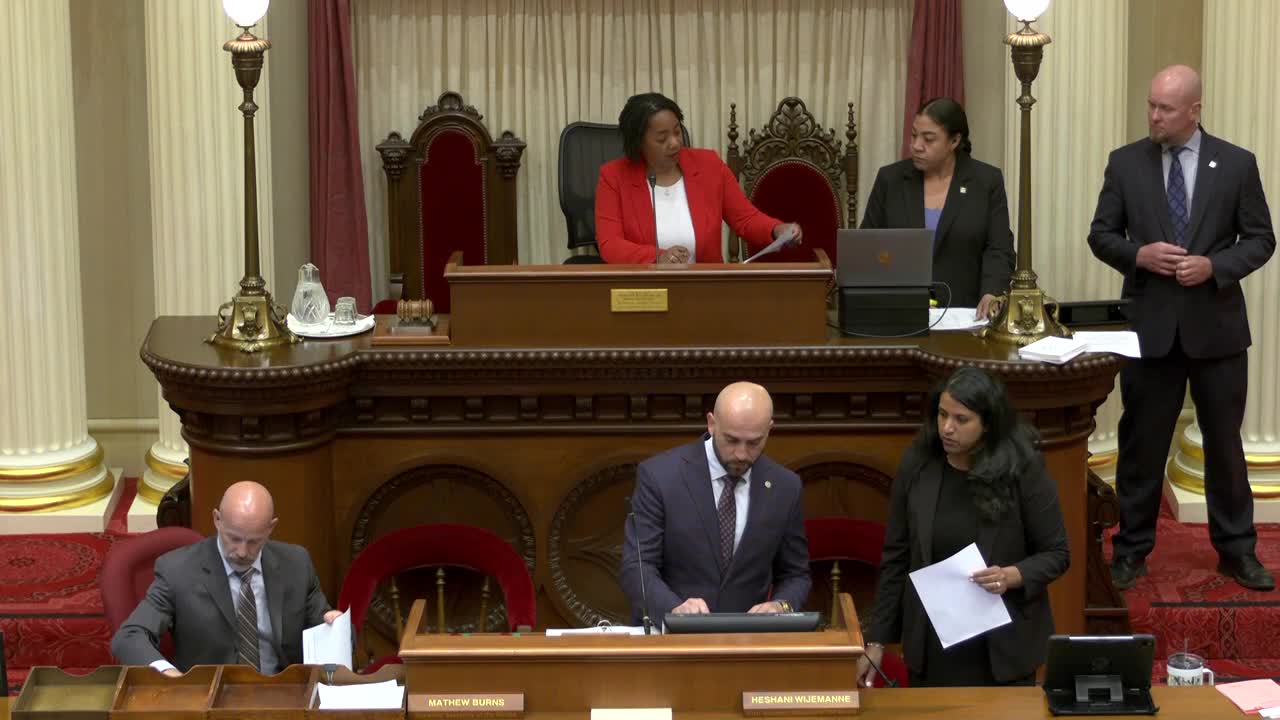
Senate Floor
 4MIN
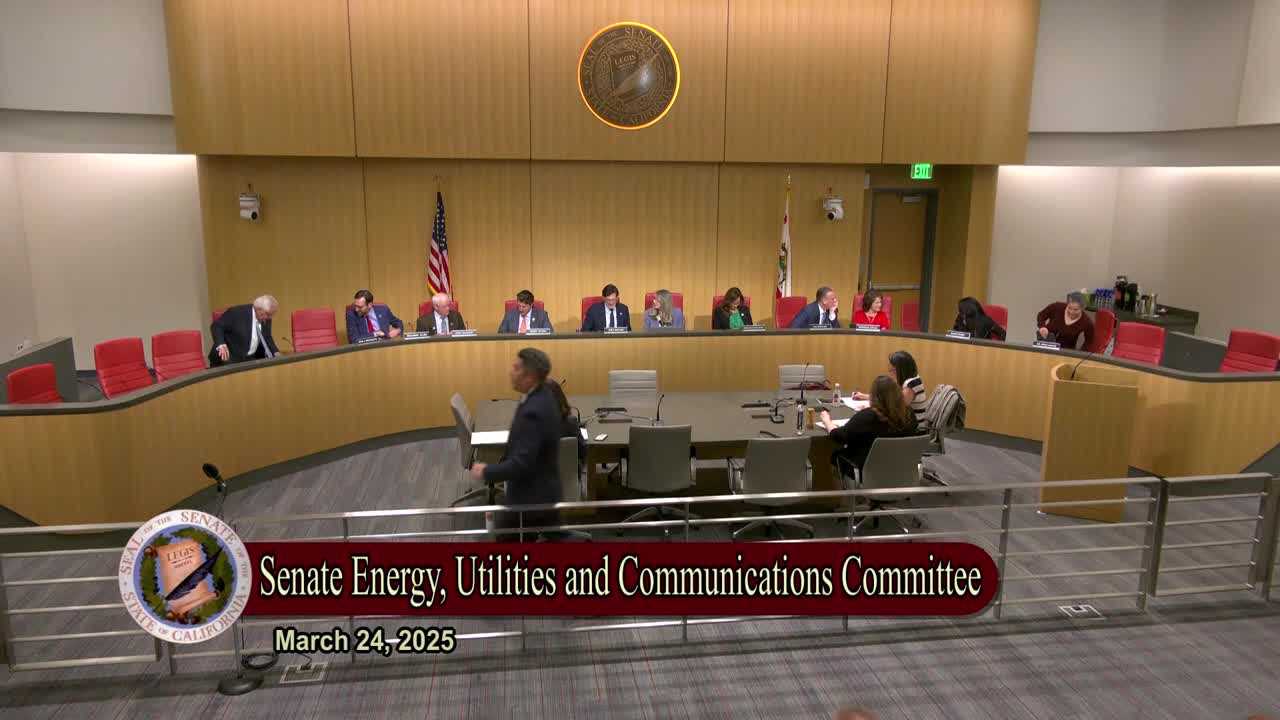
Senate Standing Committee on Energy, Utilities and Communications
Bill Author
Bill Co-Author(s):
