SB 69: Artificial intelligence program: Attorney General.
- Session Year: 2025-2026
- House: Senate
- Latest Version Date: 2025-06-23
Current Status:
In Progress
(2025-08-29: August 29 hearing: Held in committee and under submission.)
Introduced
In Committee
Awaiting First Chamber Vote
Passed First Chamber
In Committee
Awaiting Second Chamber Vote
Passed Second Chamber
Enacted
What does this bill do?
The bill requires the California Attorney General to create and run a program inside the Department of Justice to build expertise on artificial intelligence, including its uses, risks, regulatory issues, and effects on civil rights. The program must set up a dedicated team, hire or train legal and technical staff, work with academics, civil rights groups, technical experts and other state agencies, and send a public report to the Legislature each year describing its work, key AI developments, and recommendations for additional oversight or safeguards.
The summary is provided by generative AI which can make mistakes. For original language, please view the details in the table below.
Existing law generally regulates artificial intelligence, including by requiring the Office of Emergency Services to, as appropriate, perform a risk analysis of potential threats posed by the use of generative artificial intelligence to Californias critical infrastructure, including those that could lead to mass casualty events.
This bill would require the Attorney General to establish and maintain a specified program to build internal expertise in artificial intelligence, including its applications, risks, regulatory implications, and civil rights impacts. The bill would require, on or before July 1, 2027, and annually thereafter, the Attorney General to submit a public report to the Legislature describing the program, key developments in artificial intelligence law and policy, and recommendations for additional state oversight or safeguards.
Existing law establishes the Clean Cars 4 All Program, which is administered by the State Air Resources Board, to focus on achieving reductions in the emissions of greenhouse gases, improvements in air quality, and benefits to low-income state residents through the replacement of high-polluter motor vehicles with cleaner and more efficient motor vehicles or a mobility option. Under existing law, the distribution of incentives under the program is implemented in air pollution control and air quality management districts that choose to participate in the program and through a statewide program. Existing law requires the state board to consider certain metrics in allocating funding under the program to participating air districts and to the statewide program.This bill would authorize a participating air district to submit a disbursement request to the state board for an amount equal to its previous 4 months of expenditures under the program if it determines that its balance of available funding for the program is less than the total amount of its expenditures under the program over the previous 4 months. If there are sufficient funds available from funds allocated to the program to cover the amount in the disbursement request while retaining a specified reserve, the bill would require the state board to issue the requested amount of funding to the air district within 60 days of the submittal of the disbursement request.Existing law establishes the Clean Cars 4 All Program, which is administered by the State Air Resources Board, to focus on achieving reductions in the emissions of greenhouse gases, improvements in air quality, and benefits to low-income state residents through the replacement of high-polluter motor vehicles with cleaner and more efficient motor vehicles or a mobility option. Under existing law, the distribution of incentives under the program is implemented in air pollution control and air quality management districts that choose to participate in the program and through a statewide program. Existing law requires the state board to consider certain metrics in allocating funding under the program to participating air districts and to the statewide program.
This bill would authorize a participating air district to submit a disbursement request to the state board for an amount equal to its previous 4 months of expenditures under the program if it determines that its balance of available funding for the program is less than the total amount of its expenditures under the program over the previous 4 months. If there are sufficient funds available from funds allocated to the program to cover the amount in the disbursement request while retaining a specified reserve, the bill would require the state board to issue the requested amount of funding to the air district within 60 days of the submittal of the disbursement request.
Existing law establishes the Clean Cars 4 All Program, which is administered by the State Air Resources Board, to focus on achieving reductions in the emissions of greenhouse gases, improvements in air quality, and benefits to low-income state residents through the replacement of high-polluter motor vehicles with cleaner and more efficient motor vehicles or a mobility option. Under existing law, the distribution of incentives under the program is implemented in air pollution control and air quality management districts that choose to participate in the program and through a statewide program. Existing law requires the state board to consider certain metrics in allocating funding under the program to participating air districts and to the statewide program.
This bill would authorize a participating air district to submit a disbursement request to the state board for an amount equal to its previous 4 months of expenditures under the program if it determines that its balance of available funding for the program is less than the total amount of its expenditures under the program over the previous 4 months. If there are sufficient funds available from funds allocated to the program to cover the amount in the disbursement request, request while retaining a specified reserve, the bill would require the state board to issue the requested amount of funding to the air district within 60 days of the submittal of the disbursement request.
Existing law establishes the Clean Cars 4 All Program, which is administered by the State Air Resources Board, to focus on achieving reductions in the emissions of greenhouse gases, improvements in air quality, and benefits to low-income state residents through the replacement of high-polluter motor vehicles with cleaner and more efficient motor vehicles or a mobility option. Under existing law, the distribution of incentives under the program is implemented in air pollution control and air quality management districts that choose to participate in the program and through a statewide program. Existing law requires the state board to consider certain metrics in allocating funding under the program to participating air districts and to the statewide program.
This bill would authorize a participating air district to submit a disbursement request to the state board for an amount equal to its previous 4 months of expenditures under the program if it determines that its balance of available funding for the program is less than the total amount of its expenditures under the program over the previous 4 months. If there are sufficient funds available from funds allocated to the program to cover the amount in the disbursement request, the bill would require the state board to issue the requested amount of funding to the air district within 60 days of the submittal of the disbursement request.
Existing law establishes the Tri-Valley-San Joaquin Valley Regional Rail Authority for purposes of planning, developing, delivering, and operating cost-effective and responsive rail connectivity, between the Bay Area Rapid Transit system and the Altamont Corridor Express commuter rail service, as provided. Existing law establishes a governing board for the authority that comprises representatives from specified entities, including the Mountain House Community Services District.This bill would require a representative from the City of Mountain House to be on the governing board for the authority, instead of a representative from the Mountain House Community Services District. By imposing new duties on the City of Mountain House, this bill would create a state-mandated local program.The California Constitution requires the state to reimburse local agencies and school districts for certain costs mandated by the state. Statutory provisions establish procedures for making that reimbursement.This bill would provide that, if the Commission on State Mandates determines that the bill contains costs mandated by the state, reimbursement for those costs shall be made pursuant to the statutory provisions noted above.Existing law establishes the Tri-Valley-San Joaquin Valley Regional Rail Authority for purposes of planning, developing, delivering, and operating cost-effective and responsive rail connectivity, between the Bay Area Rapid Transit system and the Altamont Corridor Express commuter rail service, as provided. Existing law establishes a governing board for the authority that comprises representatives from specified entities, including the Mountain House Community Services District.
This bill would require a representative from the City of Mountain House to be on the governing board for the authority, instead of a representative from the Mountain House Community Services District. By imposing new duties on the City of Mountain House, this bill would create a state-mandated local program.
The California Constitution requires the state to reimburse local agencies and school districts for certain costs mandated by the state. Statutory provisions establish procedures for making that reimbursement.
This bill would provide that, if the Commission on State Mandates determines that the bill contains costs mandated by the state, reimbursement for those costs shall be made pursuant to the statutory provisions noted above.
(a)The Attorney General shall establish and maintain a program to build internal expertise in artificial intelligence, including its applications, risks, regulatory implications, and civil rights impacts.
(b)The program shall include, but not be limited to, all of the following:
(1)Designating a team or office within the Department of Justice that is responsible for AI-related legal and policy issues.
(2)Recruiting or training legal and technical staff with specialized knowledge in artificial intelligence, machine learning, and automated decision systems.
(3)Collaborating with academic institutions, civil rights organizations, and technical experts to support evidence-based analysis of artificial intelligence systems.
(4)Collaborating with state agencies, including, but not limited to, the Department of Technology and the Government Operations Agency.
(c)On or before July 1, 2027, and annually thereafter, the Attorney General shall submit, pursuant to Section 9795, a public report to the Legislature describing the departments activities under this section, key developments in artificial intelligence law and policy, and recommendations for additional state oversight or safeguards.
SECTION 1.Section 44127 of the Health and Safety Code is amended to read:44127.(a)Upon appropriation by the Legislature, the state board may allocate moneys for the expansion of the replacement component or mobility option component of the program or Clean Cars 4 All from any of the following:(1)The Enhanced Fleet Modernization Subaccount, created pursuant to Section 44126.(2)The High Polluter Repair or Removal Account, created pursuant to Section 44091.(3)The Vehicle Inspection and Repair Fund, created pursuant to Section 9886 of the Business and Professions Code.(b)Upon appropriation by the Legislature, the state board may allocate moneys consistent with law for Clean Cars 4 All from the Greenhouse Gas Reduction Fund, created pursuant to Section 16428.8 of the Government Code.(c)Of the funds made available in Items 3900-101-0001 and 3900-101-3228 of the Budget Act of 2023 (Sections 110 and 111 of Chapter 38 of the Statutes of 2023) to the state board and that the state board allocated to Clean Cars 4 All, the state board shall maintain funding for each district participating in Clean Cars 4 All, such that if a district has insufficient funds to meet processed demand, the state board shall reallocate moneys to that district to ensure operation is minimally impacted for district Clean Cars 4 All programs.(d)(1)In allocating funding under Clean Cars 4 All to districts participating in the program, and to the statewide program, the state board shall consider, at a minimum, all of the following metrics:(A)Number of vouchers deployed.(B)Proportion of applications that have been started and resulted in completed replacement transactions or mobility vouchers.(C)Demand for vouchers.(D)Proportional investment to underserved populations identified pursuant to paragraph (4) of subdivision (c) of Section 44125.5.(E)Population in eligible Clean Cars 4 All ZIP Codes.(2)Beginning January 1, 2023, and every year thereafter, the state board shall publish, as part of its funding plan, a report identifying how each criterion was used to allocate funding to districts and to the statewide program.(e)(1)If a district determines that its balance of available funding for Clean Cars 4 All is less than the total amount of its expenditures under Clean Cars 4 All over the previous four months, then that district may submit a disbursement request to the state board for an amount equal to its previous four months of expenditures under Clean Cars 4 All.(2)The state board shall verify and process a disbursement request submitted pursuant to paragraph (1) within 30 days. If there are sufficient funds available from funds allocated to Clean Cars 4 All to cover the amount in the disbursement request and still retain an amount no less than the total amount of its expenditures under Clean Cars 4 All over the previous four months, then the state board shall issue the requested amount of funding to the district within 60 days of the submittal of the disbursement request.(f)(1)Up to 10 percent of the moneys allocated by the state board for Clean Cars 4 All may be used for outreach programs in accordance with both of the following requirements:(A)Before a district allocates more than 5 percent of the moneys received from the state board for Clean Cars 4 All in a fiscal year for outreach, the district shall submit a description to the state board of the outreach efforts that will be funded with any money above 5 percent of the moneys allocated by the state board and a justification of how the additional funding for outreach will support deployment of Clean Cars 4 All to households in census tracts shown to be the most impacted in each region, households making less than 225 percent of the federal poverty level, households that are primarily non-English speaking, and other underserved populations identified pursuant to paragraph (4) of subdivision (c) of Section 44125.5.(B)A district that allocates more than 5 percent of the moneys received from the state board for Clean Cars 4 All in a fiscal year for outreach shall submit a report to the state board on the outcome of this expenditure, including a description of outreach efforts that were funded or augmented with any money above 5 percent of the moneys allocated by the state board for Clean Cars 4 All and how that funding supported deployment of Clean Cars 4 All to households in census tracts shown to be the most impacted in each region, households making less than 225 percent of the federal poverty level, households that are primarily non-English speaking, and other underserved populations identified pursuant to paragraph (4) of subdivision (c) of Section 44125.5.(2)Documents and information submitted by a district to the state board pursuant to this subdivision shall be for informational purposes only.(g)(1)Notwithstanding Section 10231.5 of the Government Code, the state board shall report annually to the budget committees of both houses of the Legislature the amount of funding allocated by the state board to the statewide Clean Cars 4 All program and to each district Clean Cars 4 All program and detailed performance metrics consistent with the requirements of subdivision (d) for the statewide and district Clean Cars 4 All programs, including the number and dollar amount of grants awarded by each district program and by the statewide program and regionally specific information for grant awards made by the administrator under the statewide program.(2)Notwithstanding Section 9795 of the Government Code, a report prepared pursuant to paragraph (1) shall be submitted as an electronic copy to the committees described in paragraph (1) and posted on the state boards internet website.(a)Upon appropriation by the Legislature, the state board may allocate moneys for the expansion of the replacement component or mobility option component of the program or Clean Cars 4 All from any of the following:
(1)The Enhanced Fleet Modernization Subaccount, created pursuant to Section 44126.
(2)The High Polluter Repair or Removal Account, created pursuant to Section 44091.
(3)The Vehicle Inspection and Repair Fund, created pursuant to Section 9886 of the Business and Professions Code.
(b)Upon appropriation by the Legislature, the state board may allocate moneys consistent with law for Clean Cars 4 All from the Greenhouse Gas Reduction Fund, created pursuant to Section 16428.8 of the Government Code.
(c)Of the funds made available in Items 3900-101-0001 and 3900-101-3228 of the Budget Act of 2023 (Sections 110 and 111 of Chapter 38 of the Statutes of 2023) to the state board and that the state board allocated to Clean Cars 4 All, the state board shall maintain funding for each district participating in Clean Cars 4 All, such that if a district has insufficient funds to meet processed demand, the state board shall reallocate moneys to that district to ensure operation is minimally impacted for district Clean Cars 4 All programs.
(d)(1)In allocating funding under Clean Cars 4 All to districts participating in the program, and to the statewide program, the state board shall consider, at a minimum, all of the following metrics:
(A)Number of vouchers deployed.
(B)Proportion of applications that have been started and resulted in completed replacement transactions or mobility vouchers.
(C)Demand for vouchers.
(D)Proportional investment to underserved populations identified pursuant to paragraph (4) of subdivision (c) of Section 44125.5.
(E)Population in eligible Clean Cars 4 All Zip ZIP Codes.
(2)Beginning January 1, 2023, and every year thereafter, the state board shall publish, as part of its funding plan, a report identifying how each criterion was used to allocate funding to districts and to the statewide program.
(e)(1)If a district determines that its balance of available funding for Clean Cars 4 All is less than the total amount of its expenditures under Clean Cars 4 All over the previous four months, then that district may submit a disbursement request to the state board for an amount equal to its previous four months of expenditures under Clean Cars 4 All.
(2)The state board shall verify and process a disbursement request submitted pursuant to paragraph (1) within 30 days. If there are sufficient funds available from funds allocated to Clean Cars 4 All to cover the amount in the disbursement request and still retain an amount no less than the total amount of its expenditures under Clean Cars 4 All over the previous four months, then the state board shall issue the requested amount of funding to the district within 60 days of the submittal of the disbursement request.
(f)(1)Up to 10 percent of the moneys allocated by the state board for Clean Cars 4 All may be used for outreach programs in accordance with both of the following requirements:
(A)Before a district allocates more than 5 percent of the moneys received from the state board for Clean Cars 4 All in a fiscal year for outreach, the district shall submit a description to the state board of the outreach efforts that will be funded with any money above 5 percent of the moneys allocated by the state board and a justification of how the additional funding for outreach will support deployment of Clean Cars 4 All to households in census tracts shown to be the most impacted in each region, households making less than 225 percent of the federal poverty level, households that are primarily non-English speaking, and other underserved populations identified pursuant to paragraph (4) of subdivision (c) of Section 44125.5.
(B)A district that allocates more than 5 percent of the moneys received from the state board for Clean Cars 4 All in a fiscal year for outreach shall submit a report to the state board on the outcome of this expenditure, including a description of outreach efforts that were funded or augmented with any money above 5 percent of the moneys allocated by the state board for Clean Cars 4 All and how that funding supported deployment of Clean Cars 4 All to households in census tracts shown to be the most impacted in each region, households making less than 225 percent of the federal poverty level, households that are primarily non-English speaking, and other underserved populations identified pursuant to paragraph (4) of subdivision (c) of Section 44125.5.
(2)Documents and information submitted by a district to the state board pursuant to this subdivision shall be for informational purposes only.
(g)(1)Notwithstanding Section 10231.5 of the Government Code, the state board shall report annually to the budget committees of both houses of the Legislature the amount of funding allocated by the state board to the statewide Clean Cars 4 All program and to each district Clean Cars 4 All program and detailed performance metrics consistent with the requirements of subdivision (d) for the statewide and district Clean Cars 4 All programs, including the number and dollar amount of grants awarded by each district program and by the statewide program and regionally specific information for grant awards made by the administrator under the statewide program.
(2)Notwithstanding Section 9795 of the Government Code, a report prepared pursuant to paragraph (1) shall be submitted as an electronic copy to the committees described in paragraph (1) and posted on the state boards internet website.
(a)Upon appropriation by the Legislature, the state board may allocate moneys for the expansion of the replacement component or mobility option component of the program or Clean Cars 4 All from any of the following:
(1)The Enhanced Fleet Modernization Subaccount, created pursuant to Section 44126.
(2)The High Polluter Repair or Removal Account, created pursuant to Section 44091.
(3)The Vehicle Inspection and Repair Fund, created pursuant to Section 9886 of the Business and Professions Code.
(b)Upon appropriation by the Legislature, the state board may allocate moneys consistent with law for Clean Cars 4 All from the Greenhouse Gas Reduction Fund, created pursuant to Section 16428.8 of the Government Code.
(c)Of the funds made available in Items 3900-101-0001 and 3900-101-3228 of the Budget Act of 2023 (Sections 110 and 111 of Chapter 38 of the Statutes of 2023) to the state board and that the state board allocated to Clean Cars 4 All, the state board shall maintain funding for each district participating in Clean Cars 4 All, such that if a district has insufficient funds to meet processed demand, the state board shall reallocate moneys to that district to ensure operation is minimally impacted for district Clean Cars 4 All programs.
(d)(1)In allocating funding under Clean Cars 4 All to districts participating in the program, and to the statewide program, the state board shall consider, at a minimum, all of the following metrics:
(A)Number of vouchers deployed.
(B)Proportion of applications that have been started and resulted in completed replacement transactions or mobility vouchers.
(C)Demand for vouchers.
(D)Proportional investment to underserved populations identified pursuant to paragraph (4) of subdivision (c) of Section 44125.5.
(E)Population in eligible Clean Cars 4 All Zip Codes.
(2)Beginning January 1, 2023, and every year thereafter, the state board shall publish, as part of its funding plan, a report identifying how each criterion was used to allocate funding to districts and to the statewide program.
(e)(1)If a district determines that its balance of available funding for Clean Cars 4 All is less than the total amount of its expenditures under Clean Cars 4 All over the previous four months, then that district may submit a disbursement request to the state board for an amount equal to its previous four months of expenditures under Clean Cars 4 All.
(2)The state board shall verify and process a disbursement request submitted pursuant to paragraph (1) within 30 days. If there are sufficient funds available from funds allocated to Clean Cars 4 All to cover the amount in the disbursement request, request and still retain an amount no less than the total amount of its expenditures under Clean Cars 4 All over the previous four months, then the state board shall issue the requested amount of funding to the district within 60 days of the submittal of the disbursement request.
(f)(1)Up to 10 percent of the moneys allocated by the state board for Clean Cars 4 All may be used for outreach programs in accordance with both of the following requirements:
(A)Before a district allocates more than 5 percent of the moneys received from the state board for Clean Cars 4 All in a fiscal year for outreach, the district shall submit a description to the state board of the outreach efforts that will be funded with any money above 5 percent of the moneys allocated by the state board and a justification of how the additional funding for outreach will support deployment of Clean Cars 4 All to households in census tracts shown to be the most impacted in each region, households making less than 225 percent of the federal poverty level, households that are primarily non-English speaking, and other underserved populations identified pursuant to paragraph (4) of subdivision (c) of Section 44125.5.
(B)A district that allocates more than 5 percent of the moneys received from the state board for Clean Cars 4 All in a fiscal year for outreach shall submit a report to the state board on the outcome of this expenditure, including a description of outreach efforts that were funded or augmented with any money above 5 percent of the moneys allocated by the state board for Clean Cars 4 All and how that funding supported deployment of Clean Cars 4 All to households in census tracts shown to be the most impacted in each region, households making less than 225 percent of the federal poverty level, households that are primarily non-English speaking, and other underserved populations identified pursuant to paragraph (4) of subdivision (c) of Section 44125.5.
(2)Documents and information submitted by a district to the state board pursuant to this subdivision shall be for informational purposes only.
(g)(1)Notwithstanding Section 10231.5 of the Government Code, the state board shall report annually to the budget committees of both houses of the Legislature the amount of funding allocated by the state board to the statewide Clean Cars 4 All program and to each district Clean Cars 4 All program and detailed performance metrics consistent with the requirements of subdivision (d) for the statewide and district Clean Cars 4 All programs, including the number and dollar amount of grants awarded by each district program and by the statewide program and regionally specific information for grant awards made by the administrator under the statewide program.
(2)Notwithstanding Section 9795 of the Government Code, a report prepared pursuant to paragraph (1) shall be submitted as an electronic copy to the committees described in paragraph (1) and posted on the state boards internet website.
(a)Upon appropriation by the Legislature, the state board may allocate moneys for the expansion of the replacement component or mobility option component of the program or Clean Cars 4 All from any of the following:
(1)The Enhanced Fleet Modernization Subaccount, created pursuant to Section 44126.
(2)The High Polluter Repair or Removal Account, created pursuant to Section 44091.
(3)The Vehicle Inspection and Repair Fund, created pursuant to Section 9886 of the Business and Professions Code.
(b)Upon appropriation by the Legislature, the state board may allocate moneys consistent with law for Clean Cars 4 All from the Greenhouse Gas Reduction Fund, created pursuant to Section 16428.8 of the Government Code.
(c)Of the funds made available in Items 3900-101-0001 and 3900-101-3228 of the Budget Act of 2023 (Sections 110 and 111 of Chapter 38 of the Statutes of 2023) to the state board and that the state board allocated to Clean Cars 4 All, the state board shall maintain funding for each district participating in Clean Cars 4 All, such that if a district has insufficient funds to meet processed demand, the state board shall reallocate moneys to that district to ensure operation is minimally impacted for district Clean Cars 4 All programs.
(d)(1)In allocating funding under Clean Cars 4 All to districts participating in the program, and to the statewide program, the state board shall consider, at a minimum, all of the following metrics:
(A)Number of vouchers deployed.
(B)Proportion of applications that have been started and resulted in completed replacement transactions or mobility vouchers.
(C)Demand for vouchers.
(D)Proportional investment to underserved populations identified pursuant to paragraph (4) of subdivision (c) of Section 44125.5.
(E)Population in eligible Clean Cars 4 All Zip Codes.
(2)Beginning January 1, 2023, and every year thereafter, the state board shall publish, as part of its funding plan, a report identifying how each criterion was used to allocate funding to districts and to the statewide program.
(e)(1)If a district determines that its balance of available funding for Clean Cars 4 All is less than the total amount of its expenditures under Clean Cars 4 All over the previous four months, then that district may submit a disbursement request to the state board for an amount equal to its previous four months of expenditures under Clean Cars 4 All.
(2)The state board shall verify and process a disbursement request submitted pursuant to paragraph (1) within 30 days. If there are sufficient funds available from funds allocated to Clean Cars 4 All to cover the amount in the disbursement request, then the state board shall issue the requested amount of funding to the district within 60 days of the submittal of the disbursement request.
(e)(f)(1)Up to 10 percent of the moneys allocated by the state board for Clean Cars 4 All may be used for outreach programs in accordance with both of the following requirements:
(A)Before a district allocates more than 5 percent of the moneys received from the state board for Clean Cars 4 All in a fiscal year for outreach, the district shall submit a description to the state board of the outreach efforts that will be funded with any money above 5 percent of the moneys allocated by the state board and a justification of how the additional funding for outreach will support deployment of Clean Cars 4 All to households in census tracts shown to be the most impacted in each region, households making less than 225 percent of the federal poverty level, households that are primarily non-English speaking, and other underserved populations identified pursuant to paragraph (4) of subdivision (c) of Section 44125.5.
(B)A district that allocates more than 5 percent of the moneys received from the state board for Clean Cars 4 All in a fiscal year for outreach shall submit a report to the state board on the outcome of this expenditure, including a description of outreach efforts that were funded or augmented with any money above 5 percent of the moneys allocated by the state board for Clean Cars 4 All and how that funding supported deployment of Clean Cars 4 All to households in census tracts shown to be the most impacted in each region, households making less than 225 percent of the federal poverty level, households that are primarily non-English speaking, and other underserved populations identified pursuant to paragraph (4) of subdivision (c) of Section 44125.5.
(2)Documents and information submitted by a district to the state board pursuant to this subdivision shall be for informational purposes only.
(f)(g)(1)Notwithstanding Section 10231.5 of the Government Code, the state board shall report annually to the budget committees of both houses of the Legislature the amount of funding allocated by the state board to the statewide Clean Cars 4 All program and to each district Clean Cars 4 All program and detailed performance metrics consistent with the requirements of subdivision (d) for the statewide and district Clean Cars 4 All programs, including the number and dollar amount of grants awarded by each district program and by the statewide program and regionally specific information for grant awards made by the administrator under the statewide program.
(2)Notwithstanding Section 9795 of the Government Code, a report prepared pursuant to paragraph (1) shall be submitted as an electronic copy to the committees described in paragraph (1) and posted on the state boards internet website.
SECTION 1.Section 132655 of the Public Utilities Code is amended to read:132655.The governing board of the authority shall comprise one representative from each of the following entities to be appointed by the governing board, mayor, or supervisor of each entity:(a)The Bay Area Rapid Transit District.(b)The City of Dublin.(c)The City of Lathrop.(d)The City of Livermore.(e)The City of Manteca.(f)The City of Pleasanton.(g)The City of Stockton.(h)The City of Tracy.(i)The County of Alameda.(j)The County of San Joaquin.(k)The Livermore Amador Valley Transit Authority.(l)The City of Mountain House.(m)The San Joaquin Regional Rail Commission.(n)The City of Danville.(o)The City of San Ramon.SEC. 2.If the Commission on State Mandates determines that this act contains costs mandated by the state, reimbursement to local agencies and school districts for those costs shall be made pursuant to Part 7 (commencing with Section 17500) of Division 4 of Title 2 of the Government Code.The governing board of the authority shall be composed of comprise one representative from each of the following entities to be appointed by the governing board, mayor, or supervisor of each entity:
(a)The Bay Area Rapid Transit District.
(b)The City of Dublin.
(c)The City of Lathrop.
(d)The City of Livermore.
(e)The City of Manteca.
(f)The City of Pleasanton.
(g)The City of Stockton.
(h)The City of Tracy.
(i)The County of Alameda.
(j)The County of San Joaquin.
(k)The Livermore Amador Valley Transit Authority.
(l)The Mountain House Community Services District. City of Mountain House.
(m)The San Joaquin Regional Rail Commission.
(n)The City of Danville.
(o)The City of San Ramon.
SEC. 2.If the Commission on State Mandates determines that this act contains costs mandated by the state, reimbursement to local agencies and school districts for those costs shall be made pursuant to Part 7 (commencing with Section 17500) of Division 4 of Title 2 of the Government Code.
|
Date
|
Status
|
|---|---|
| Aug 29, 2025 | August 29 hearing: Held in committee and under submission. |
| Aug 20, 2025 | August 20 set for first hearing. Placed on APPR. suspense file. |
| Jul 16, 2025 | From committee: Do pass and re-refer to Com. on APPR. with recommendation: To consent calendar. (Ayes 12. Noes 0.) (July 15). Re-referred to Com. on APPR. |
| Jul 9, 2025 | From committee: Do pass and re-refer to Com. on JUD. (Ayes 14. Noes 0.) (July 8). Re-referred to Com. on JUD. |
| Jun 27, 2025 | Re-referred to Coms. on P. & C.P. and JUD. pursuant to Assembly Rule 96. |
| Jun 24, 2025 | July 7 set for first hearing canceled at the request of author. |
| Jun 23, 2025 | From committee with author's amendments. Read second time and amended. Re-referred to Com. on TRANS. |
| Jun 5, 2025 | Referred to Coms. on TRANS. and NAT. RES. |
| May 28, 2025 | In Assembly. Read first time. Held at Desk. |
| May 28, 2025 | Read third time. Passed. (Ayes 35. Noes 0. Page 1281.) Ordered to the Assembly. |
| May 27, 2025 | Read second time. Ordered to third reading. |
| May 23, 2025 | From committee: Do pass as amended. (Ayes 6. Noes 0. Page 1190.) (May 23). |
| May 23, 2025 | Read second time and amended. Ordered to second reading. |
| May 16, 2025 | Set for hearing May 23. |
| May 5, 2025 | May 5 hearing: Placed on APPR. suspense file. |
| Apr 29, 2025 | Set for hearing May 5. |
| Apr 24, 2025 | Read second time and amended. Re-referred to Com. on APPR. |
| Apr 23, 2025 | From committee: Do pass as amended and re-refer to Com. on APPR. with recommendation: To consent calendar. (Ayes 8. Noes 0. Page 866.) (April 23). |
| Apr 4, 2025 | Set for hearing April 23. |
| Apr 2, 2025 | Re-referred to Com. on E.Q. |
| Mar 24, 2025 | Withdrawn from committee. |
| Mar 24, 2025 | Re-referred to Com. on RLS. |
| Mar 24, 2025 | From committee with author's amendments. Read second time and amended. Re-referred to Com. on TRANS. |
| Jan 29, 2025 | Referred to Com. on TRANS. |
| Jan 15, 2025 | From printer. May be acted upon on or after February 14. |
| Jan 14, 2025 | Introduced. Read first time. To Com. on RLS. for assignment. To print. |
|
Date
|
Description
|
Location
|
Votes
|
|
|---|---|---|---|---|
| Jul 15, 2025 | Do pass and be re-referred to the Committee on [Appropriations] with recommendation: To Consent Calendar | Assembly Standing Committee on Judiciary |
Passed |
|
| Jul 8, 2025 | Do pass and be re-referred to the Committee on [Judiciary] | Assembly Standing Committee on Privacy and Consumer Protection |
Passed |
|
| May 28, 2025 | Senate 3rd Reading SB69 McNerney et al. | Senate Floor |
Passed |
|
| May 23, 2025 | Do pass as amended | Senate Standing Committee on Appropriations |
Passed |
|
| May 5, 2025 | Placed on suspense file | Senate Standing Committee on Appropriations |
Passed |
|
| Apr 23, 2025 | Do pass as amended, but first amend, and re-refer to the Committee on [Appropriations] with the recommendation: To Consent Calendar | Senate Standing Committee on Environmental Quality |
Passed |
This list shows positions taken on this bill by organizations on the date displayed, which is linked to the original source.
Positions by individuals are not included.
|
Organization
|
Position
|
Date
|
|---|---|---|
| California Electric Transportation Coalition | ** Support | |
| Oakland Privacy | ** Support | |
| Transparency Coalition.ai | ** Support | |
| Union Of Concerned Scientists | ** Support |
Date of Hearing: August 20, 2025
ASSEMBLY COMMITTEE ON APPROPRIATIONS
Buffy Wicks, Chair
SBPCA Bill Id:SB 69
Author:(McNerney) – As Amended Ver:June 23, 2025
Policy Committee: | Privacy and Consumer Protection | Vote: | 14 - 0 |
Judiciary | 12 - 0 | ||
|
|
Urgency: No State Mandated Local Program: No Reimbursable: No
SUMMARY:
This bill requires the Department of Justice (DOJ) to establish and maintain a program to build internal expertise in artificial intelligence (AI), and requires DOJ to report annually to the Legislature beginning in 2027 about its work on AI.
Specifically, this bill requires the DOJ AI program to include:
- Designating a team or office within DOJ that is responsible for AI-related legal and policy issues.
- Recruiting or training legal and technical staff with specialized knowledge in AI, machine learning, and automated decision systems (ADS).
- Collaborating with academic institutions, civil rights organizations, and technical experts to support evidence-based analysis of AI systems.
- Collaborating with state agencies, including, but not limited to, the Department of Technology and the Government Operations Agency.
FISCAL EFFECT:
Costs (General Fund) to DOJ, likely in the millions of dollars annually. DOJ anticipates costs of $3.8 million in fiscal year (FY) 2025-26 and $7 million in FY 2026-27 and ongoing for 28 staff positions in its Public Rights Division, Criminal Law Division, Office of General Counsel, and Divisions of Operations, plus external consulting to provide AI expertise to DOJ’s AI staff and provide ongoing training and education. DOJ reports it cannot implement this bill without an additional appropriation of funds.
COMMENTS:
- Background. In recent years, AI technology has advanced considerably. It is now integrated into many facets of our daily lives through products, services, and government actions. In California, policymakers have struggled to achieve consensus on the optimal balance between ensuring transparency and consumer protection, and permitting the industry to continue to innovate unburdened by state regulations. In 2024, when he vetoed another Legislative attempt to regulate AI model developers, Governor Newsom announced he was convening a group of experts to propose a framework for regulating the generative AI industry. In June 2025, the group released a report discussing key principles it believes should guide California AI policymaking. Most of the recommendations relate to regulation of AI developers and deployers, and do not address the need for building governmental expertise in AI. As listed below, the Legislature is considering many bills this session that seek to regulate AI and AI-related industries. Some of these bills authorize enforcement by public prosecutors, including DOJ.
- Related Legislation. AB 979 (Irwin) requires the California Cybersecurity Integration Center to develop a playbook to facilitate information sharing across the AI community and strengthen defenses against emerging threats. AB 979 is pending in the Senate Appropriations Committee.
AB 1018 (Bauer-Kahan) establishes a regulatory scheme for developers and deployers of ADS used to make consequential decisions. AB 1018 is pending in the Senate Appropriations Committee.
AB 1064 (Bauer-Kahan) regulates companion chatbots and other AI systems that are intended for use by children. AB 1064 is pending in the Senate Appropriations Committee.
AB 1405 (Bauer-Kahan) allows qualifying AI auditors to enroll with GovOps and establishes minimum standards for such auditors. AB 1405 is pending in the Senate Appropriations Committee.
SB 7 (McNerney) limits an employer’s use of ADS in certain employment decisions and provides employees a right to appeal decisions made with ADS. SB 7 is pending in this committee.
SB 11 (Ashby), among other things, requires Judicial Council to review the impact of AI on evidence in court proceedings and develop any rules of court needed to help courts determine the provenance and veracity of evidence. SB 11 is pending in this committee.
SB 243 (Padilla) regulates operators of companion chatbots, requires operators to submit to third-party audits, and requires reporting to the Office of Suicide Prevention. SB 243 is pending in this committee.
SB 833 (McNerney) requires human oversight of AI systems and ADS used by state agencies to operate critical infrastructure. SB 833 is pending in this committee.
Analysis Prepared by: Annika Carlson / APPR. / (916) 319-2081
Date of Hearing: July 15, 2025
ASSEMBLY COMMITTEE ON JUDICIARY
Ash Kalra, Chair
SBPCA Bill Id:SB 69
Author:(McNerney) – As Amended Ver:June 23, 2025
PROPOSED CONSENT
SENATE VOTE: 35-0
SUBJECT: Artificial intelligence program: Attorney General
KEY ISSUE: Should the Legislature require the Attorney General to establish and maintain a program within the Department of Justice to build internal expertise in artificial intelligence, including its applications, risks, regulatory implications, and civil rights impacts, and to report annually to the Legislature with findings and recommendations for state oversight?
SYNOPSIS
Artificial intelligence is evolving faster than the public institutions tasked with regulating it. According to a 2025 Pew Research Center survey, six in ten U.S. adults say they are more concerned that the government will not go far enough in regulating AI than that it will go too far. That concern is widely shared among AI experts. Yet despite this shared desire for oversight, 62% of the public and 53% of experts say they have little or no confidence that the U.S. government will regulate AI responsibly. The gap between expectations and capacity is clear—and California, like other states, is under pressure to act. That urgency has been compounded by recent efforts to preempt state authority. On July 1, 2025, the U.S. Senate voted 99–1 to strip a proposed 10-year federal moratorium on state AI laws from the One Big Beautiful Bill Act. While the provision failed, it would have blocked over 1,000 state legislative efforts nationwide, including in areas like civil rights, child online safety, and deceptive trade practices.
Under existing California law (SB 896, Dodd, 2024), the Department of Technology and sister agencies are responsible for assessing GenAI risks and operational safeguards. However, no statute currently requires the Department of Justice to develop internal AI expertise. This bill fills that gap. It directs the Attorney General to establish a permanent program within DOJ to build legal and technical capacity around AI, collaborate across agencies and with outside experts, and submit annual reports to the Legislature with policy recommendations. It ensures California’s chief enforcement agency is equipped to act—and to uphold the state’s role as a national leader in regulating emerging technologies. This measure was previously heard by the Committee on Privacy and Consumer Protection, where it passed 14-0. It is supported by Oakland Privacy and the Transparency Coalition.ai and has no formal opposition.
SUMMARY: Directs the Attorney General to establish and maintain a program within the Department of Justice (DOJ) to build institutional expertise in artificial intelligence (AI), with a focus on its applications, regulatory implications, and civil rights impacts. Specifically, this bill:
- Requires the Attorney General to create and sustain a program to develop internal DOJ expertise in artificial intelligence, including its:
- Applications;
- Risks;
- Regulatory implications;
- Civil rights impacts.
- Provides that the program must include, but not limited to, all of the following:
- Designating a team or office within the Department of Justice that is responsible for AI-related legal and policy issues.
- Recruiting or training legal and technical staff with specialized knowledge in artificial intelligence, machine learning, and automated decision systems.
- Collaborating with academic institutions, civil rights organizations, and technical experts to support evidence-based analysis of artificial intelligence systems.
- Collaborating with state agencies, including, but not limited to, the Department of Technology and the Government Operations Agency.
- Requires the Attorney General, on or before July 1, 2027, and annually thereafter, to submit a public report to the Legislature pursuant to Section 9795, describing the department’s activities under this section, key developments in artificial intelligence law and policy, and recommendations for additional state oversight or safeguards.
EXISTING LAW:
- Establishes the Attorney General as a position that shall be elected in cycles concomitant with gubernatorial elections. (California Constitution, Article V, Section 11.)
- Establishes the Attorney General as the chief law officer of the State and requires the Attorney General to see that the laws of the State are uniformly and adequately enforced. (California Constitution, Article V, Section 13.)
- Defines “artificial intelligence” as an engineered or machine-based system that varies in its level of autonomy and that can, for explicit or implicit objectives, infer from the input it receives how to generate outputs that can influence physical or virtual environments. (Government Code Section 11546.45.5.)
- Requires that any report submitted to the Legislature by a state or local agency pursuant to statute be submitted in compliance with specified requirements, including delivery to the Secretary of the Senate and the Chief Clerk of the Assembly, and posting on the agency’s internet website, if feasible. (Government Code Section 9795.)
- Establishes various data collection and policy development responsibilities within the Department of Justice, including the collection and reporting of use-of-force incidents, arrest-related deaths, and other law enforcement activity. (Government Code Sections 12525.2, 12525.3, and 12525.5.)
- Establishes the Office of Data and Innovation within the Government Operations Agency to improve state service delivery and data infrastructure, and to develop state policies and standards for data governance and technology use. (Government Code Section 12815.)
- Codifies the Generative Artificial Intelligence Accountability Act, which requires the Department of Technology to update the state’s GenAI report, directs the Office of Emergency Services to perform a risk analysis of GenAI threats to critical infrastructure, and requires agencies using GenAI to communicate with the public to include disclaimers and provide human contact alternatives. (Government Code Sections 11549.63–11549.66.)
FISCAL EFFECT: As currently in print this bill is keyed fiscal.
COMMENTS: Artificial intelligence is advancing faster than the institutions tasked with regulating it. As AI systems increasingly influence decisions in law enforcement, employment, and civil rights, the public’s trust in government oversight is eroding. SB 69 responds by directing the Attorney General to establish a formal program within the Department of Justice to build internal legal and technical expertise in AI. The bill aims to ensure that California’s top legal agency has the institutional capacity to evaluate emerging technologies and provide informed guidance on their risks, applications, and regulatory implications. The author explains the impetus for this measure:
Artificial intelligence is advancing at an unprecedented pace and already impacting nearly every aspect of daily life. Yet our state institutions lack the capacity and expertise to fully understand these powerful technologies. This bill addresses a critical gap in state law by establishing a dedicated program within the California Department of Justice to build internal AI expertise.
Importantly, this bill is also a proactive response to growing efforts at the federal level to preempt state regulation of AI. Proposals for a national AI moratorium or federal preemption could strip states of their ability to implement regulations that protect residents from the harms of unchecked or poorly designed AI systems. By equipping the Attorney General’s office with in-house expertise, cross-agency collaboration, and regular reporting requirements, this bill ensures that the DOJ is able to protect consumers if federal efforts to override our state’s authority to regulate AI in the public interest are successful.
Government AIn’t cutting it. Despite the rapid acceleration of artificial intelligence across sectors, public confidence in government’s ability to regulate AI remains conspicuously low. According to a 2025 Pew Research Center survey, About 6 in 10 U.S. adults say they are more concerned about that the U.S. government will not go far enough in regulating AI than about the government going too far. (Pew Research Center, How the U.S. Public and AI Experts View Artificial Intelligence, April 3, 2025, available at: https://www.pewresearch.org/internet/2025/04/03/how-the-us-public-and-ai-experts-view-artificial-intelligence.) Majorities across political affiliations believe that AI requires active government oversight, particularly in high-stakes domains such as criminal justice, employment, and civil rights enforcement. Yet these expectations are tempered by concern that regulators do not understand what they are attempting to regulate. But while the public wants regulation, their confidence in the government to it effectively is low; only 62% of adults believe that federal policymakers will actually regulate AI effectively. This lack of confidence is not limited to the general public; the same research found that a majority AI experts—including developers, ethicists, and civil society advocates—are deeply skeptical that existing institutions have the capacity or technical competence to meaningfully govern the technology’s impact. (Ibid.)
California is beginning to fill this gap with a range of sector-specific legislation. But notably absent is a formal, cross-cutting program within the state’s primary legal enforcement agency to build and retain internal expertise in AI’s technical foundations, regulatory implications, and civil rights risks. The Department of Justice currently lacks a designated team to assess emerging algorithmic systems or advise on their legal consequences. SB 69 addresses this institutional blind spot by establishing a permanent program within the DOJ to recruit experts, engage with academic and civil rights communities, and report annually to the Legislature. According to supporters of this measure, if the state is to serve as a model for responsible AI governance, it must begin by equipping its own public institutions with the knowledge and infrastructure to meet the challenge.
This bill sets out to do something both urgent and familiar: build institutional capacity within government to understand and regulate a powerful and rapidly evolving technology. Specifically, it requires the California Department of Justice to establish an internal program dedicated to artificial intelligence—staffed with legal and technical experts, informed by external collaboration, and tasked with annually advising the Legislature on AI risks, applications, and regulatory needs. While artificial intelligence presents novel challenges to civil rights, consumer protection, and administrative law, the structural approach taken by SB 69 is not without precedent. Governments have responded similarly in the past when faced with disruptive technologies or specialized regulatory demands.
When environmental regulation, digital privacy, and fintech first emerged as policy challenges, California and federal agencies responded by standing up new infrastructure: specialized offices, dedicated technical staff, and regular reporting requirements. For example, California’s Office of Data and Innovation (ODI) was codified in Government Code Section 12815 to modernize digital service delivery and expand state data capacity. Similarly, the California Privacy Protection Agency was established by Proposition 24 and codified in Civil Code Section 1798.199.10, with mandates to hire privacy and cybersecurity experts to enforce the California Consumer Privacy Act. The Department of Financial Protection and Innovation (DFPI) created the Financial Technology Innovation Office under Financial Code Section 90006 to research emerging financial markets, promote innovation and consumer access, and conduct outreach to underserved communities. These entities reflect a common insight: agencies cannot regulate what they do not understand. And they cannot understand without internal, institutionalized expertise.
With regards to AI regulation, California is not starting from zero. In September 2023, Governor Newsom issued Executive Order N-12-23, directing various state agencies to assess the risks and opportunities associated with generative artificial intelligence. That executive framework was subsequently codified in SB 896 (Dodd, Chap. 928, Stats. 2024), the Generative Artificial Intelligence Accountability Act. SB 896 required the Department of Technology, under the guidance of the Government Operations Agency, the Office of Data and Innovation, and the Department of Human Resources, to maintain and update the state’s GenAI report; directs the Office of Emergency Services to perform ongoing risk assessments of GenAI threats to critical infrastructure; mandates agency consideration of GenAI procurement opportunities; and requires state agencies that use GenAI to interact with the public to include prominent disclaimers and provide access to human contact alternatives (Government Code Sections 11549.63–11549.66). These provisions reflect a strong foundational effort to govern the state’s use of generative AI.
SB 69 complements this framework by addressing a gap in the state’s enforcement infrastructure: it directs the Department of Justice—not an administrative or service agency, but California’s top legal enforcement entity—to build internal AI expertise to monitor, understand, and respond to GenAI’s legal, civil rights, and consumer protection implications. Where SB 896 sought to institutionalize guardrails for public-sector AI deployment, SB 69 ensures that California’s chief legal office has the tools to evaluate harms, enforce relevant laws, and advise the Legislature on necessary statutory protections. Together, the two measures represent parallel, but distinct, strategies for preparing California to govern generative AI: one focused on state operations and public interaction, the other on enforcement and legal capacity.
Response to federal preemption on AI regulation. SB 69 is not just a forward-looking effort to build internal legal and technical expertise within the Department of Justice—it is also a measured response to mounting federal efforts to preempt state regulation of artificial intelligence. On July 1, 2025, the U.S. Senate voted 99–1 to strike from the One Big Beautiful Bill Act a sweeping AI moratorium provision that would have barred states from enacting new laws regulating artificial intelligence or automated decision-making systems for up to ten years. The moratorium—part of President Trump’s broader domestic policy agenda folded into a reconciliation package—would have frozen in place more than 1,000 AI-related bills active in state legislatures nationwide. The proposal sparked intense bipartisan backlash. Senators, governors, and attorneys general from both parties criticized the moratorium as an unjustified intrusion into state authority—especially at a time when federal legislation continues to stall and states are acting to address urgent harms. Critics warned that preempting state laws could gut emerging protections in areas such as child online safety, algorithmic discrimination, consumer deception, and the misuse of AI-generated likenesses. The Senate’s near-unanimous decision to strip the provision left the broader bill intact but the federal-state balance unsettled. Although the moratorium was defeated, the episode makes clear that efforts to centralize AI governance remain active—and volatile. For California, which has long led in the regulation of emerging technologies, this is a moment of both opportunity and urgency. SB 69 affirms the state’s authority not merely to act, but to equip its institutions—especially its enforcement agencies—with the expertise needed to do so responsibly.
ARGUMENTS IN SUPPORT: The Transparency Coalition.AI writes in support:
SB 69 establishes a much-needed program within the California Department of Justice (DOJ) to build internal expertise in artificial intelligence. By designating a team focused on AI-related legal and policy issues, recruiting and training technical staff, and fostering partnerships with civil rights and academic institutions, this bill ensures that the DOJ is well-equipped to understand and respond to the rapidly evolving AI landscape.
As artificial intelligence systems become increasingly embedded in decision-making processes that impact Californians’ lives—from criminal justice to healthcare to employment—the state must ensure these systems are subject to legal scrutiny, civil rights protections, and informed oversight. Without internal expertise, the DOJ risks falling behind the private sector and losing the ability to hold systems accountable when harms arise or civil liberties are at risk.
Specifically, SB 69 will: a) Establish an AI expertise program within the Department of Justice; b) Designate a team to lead on AI-related legal and policy issues; c) Recruit or train staff with specialized AI knowledge; d) Facilitate collaboration with experts, civil rights groups, and academic institutions c) Coordinate with key state agencies on AI oversight.
SB 69 offers a proactive and responsible solution. It lays the foundation for long-term institutional knowledge and interagency collaboration, helping to position California as a leader in AI governance and legal accountability.
Thank you for your leadership in this important measure. We strongly urge your “AYE” vote on SB 69.
Oakland Privacy likewise supports this measure:
While California does have more than a few subject-specific AI task forces in place: including one in the Judicial Branch, one housed at the CA Lawyers Association, and one housed at the CA School Boards Assn, the California Attorney General has the specific charge of defending the state’s legislative actions from industry attacks and defending the civil rights of Californians.
Given these responsibilities, it seems likely the Department of Justice will be, and probably already us, moving in this general direction in terms of gathering expertise on artificial intelligence and hiring qualified staff as well as consulting on legislative proposals. We are not sure a bill needs to be adopted in order to compel these actions.
But certainly Senate Bill 69 is explicit about the need for the Attorney General’s office to prioritize these efforts and may serve as a vehicle to ensure that appropriate resources are directed towards the effort.
We definitely support the issuance of an ongoing annual report on the state of the technology and recommendations as a way to help ensure that future AI legislative proposals are grounded in evidence-based analysis, responsive to current conditions, and hopefully somewhat targeted.
REGISTERED SUPPORT / OPPOSITION:
Support
Oakland Privacy
Transparency Coalition.ai
Opposition
None on file
Analysis Prepared by: Shiran Zohar / JUD. / (916) 319-2334
SENATE RULES COMMITTEE Office of Senate Floor Analyses (916) 651-1520 Fax: (916) 327-4478 | SB 69 |
THIRD READING
Bill No: SB 69
Author: McNerney (D), et al.
Amended: 5/23/25
Vote: 21
SENATE ENVIRONMENTAL QUALITY COMMITTEE: 8-0, 4/23/25
AYES: Blakespear, Valladares, Dahle, Gonzalez, Hurtado, Menjivar, Padilla, Pérez
SENATE APPROPRIATIONS COMMITTEE: 6-0, 5/23/25
AYES: Caballero, Seyarto, Cabaldon, Grayson, Richardson, Wahab
NO VOTE RECORDED: Dahle
SUBJECT: Clean Cars 4 All Program
SOURCE: Author
DIGEST:
This bill creates a process for air districts implementing Clean Cars 4 All to request disbursement from the California Air Resources Board if they determine their balance of remaining funds is less than the previous four months of expenditures.
ANALYSIS:
Existing law:
- Establishes the California Air Resources Board (CARB) as the air pollution control agency in California and requires CARB, among other things, to control emissions from a wide array of mobile sources and coordinate, encourage, and review the efforts of all levels of government as they affect air quality. (Health and Safety Code (HSC) §39500 et seq.)
- Establishes the Air Quality Improvement Program (AQIP), administered by CARB in consultation with local air districts, to fund programs that reduce criteria air pollutants, improve air quality, and provide research for alternative fuels and vehicles, vessels, and equipment technologies. (HSC §44274 et seq.)
- Establishes the Clean Cars 4 All (CC4A) Program, to be administered by CARB, to focus on achieving reductions in the emissions of greenhouse gases (GHGs), improvements in air quality, and benefits to low-income state residents through the replacement of high-polluter motor vehicles with cleaner and more efficient motor vehicles or a mobility option. (HSC §44124.5)
This bill:
- Allows an air district administering a CC4A program to determine if its balance of available funding for the program is less than the last four months of expenditures and submit a disbursement request for that amount to CARB if so.
- Requires CARB to, upon receiving such a disbursement request, verify and process the request within 30 days and—if there are sufficient funds available for CC4A to cover the disbursement request and four months of their own program expenses—issue the funding within 60 days.
Background
- Clean Cars 4 All. One of the enduring challenges in the widespread adoption of clean light-duty vehicles in the state has been overcoming the financial obstacle of vehicle purchase faced by lower-income households, many of which rely heavily on cars. To meet this need, in June 2015 CARB introduced the Clean Cars 4 All (CC4A, previously called the Enhanced Fleet Modernization Program [EFMP] Plus-Up pilot) program. CC4A was designed to better integrate vehicle retirement and replacement incentive programs and to provide a larger benefit to low- and moderate-income households. CC4A is a program that focuses on providing incentives to lower-income California drivers to scrap their older, high-polluting car and replace it with a zero- or near-zero emission replacement. The program aims to focus the benefits of the program on low-income and disadvantaged communities and has a heavy emphasis on consumer protections, education of the new technologies, and coordination with other clean transportation programs.
The program has now been operating for nine years and extended to five air districts, during which time districts have (as of November 2022) been allocated over $436 million in funding, and placed over 13,000 vehicles with eligible households. The program has reached record levels of applications more recently, particularly as the other major light-duty zero-emission vehicle (ZEV) incentive program (the Clean Vehicle Rebate Project) shut down last year. - Who benefits from CC4A? Underserved communities and communities of color disproportionately experience the negative impacts of vehicle pollution. Studies consistently show that mobile source pollution exposure near major roadways contributes to and exacerbates asthma, impairs lung function, and increases cardiovascular mortality. Residents of communities located near major roadways, often low-income or communities of color, are at increased risk of asthma attacks and other respiratory and cardiac effects. These communities are also more sensitive and likely to experience the negative impacts of climate change. This history of disproportionate exposure to polluted air makes it essential to prioritize low-income communities and priority populations who will benefit the most from the reduced emissions and cost-saving benefits of cleaner, newer vehicles and alternative methods of transportation.
The residents in these communities are often unable to afford the cleanest, most fuel-efficient vehicle technologies available. CC4A program provides much-needed incentives for lower-income residents living in and near disadvantaged communities who scrap their old vehicles and purchase or lease new or used hybrid, plug-in hybrid (PHEV), zero-emission (ZEV) replacement vehicles, or alternative mobility options.
CC4A incentives are available to participants with household incomes at or below 300 percent of the Federal Poverty Level (FPL). This is currently equivalent to $93,600 per year for a household of four. Historically, at least 90% of program funds have gone to participants in the Low-income (less than or at 225% FPL) category.
- Statewide CC4A versus regional CC4A. In concert with the conclusion of the Clean Vehicle Rebate Project (CVRP), CARB announced that they would establish a statewide CC4A program (which, together with the Financing Assistance Program, would collectively be called the Driving Clean Assistance Program (DCAP)) to provide needs-based zero-emission vehicle (ZEV) incentives to lower-income Californians in places where existing, air district-run (or “regional”) CC4A programs did not cover.
After a brief solicitation in early 2023, CARB selected the Community Housing Development Corporation (CHDC) to administer the inchoate statewide program. CHDC is a community-based organization in North Richmond founded in 1990 and is a full-service housing development corporation that also provides supportive services such as financial and credit counseling and community outreach.
The five air districts that administer CC4A today cover 85% of the population of the state, and 95% of its disadvantaged communities (DACs). Thus, the statewide DCAP will cover the remaining 15% of the state’s population. Nevertheless (and ostensibly due in part to additional upfront costs in setting up a new program) the statewide program is slated to receive more funding in the current budget than the district-run programs. As of today, 15% of Californians outside the five participating air districts are not yet able to access CC4A funding, which will change whenever CHDC is able to start offering the program.
Comments
- Purpose of Bill. According to the author, “The Clean Cars 4 All Program has been extremely successful at the regional level. This program offers incentives for Californians to scrap their old vehicles and buy or lease newer zero-emission or near-zero-emission vehicles. To date, CC4A has provided over $189 million in incentives and replaced over 21,000 older, high-emission vehicles. More than half of the program’s funding has delivered benefits to disadvantaged communities, who often face the longest commutes and the largest financial barriers to buying a new car. Despite the program’s success, regional CC4A programs lack sufficient funding to meet community demand. SB 69 creates a pathway for regional CC4A programs to receive the funding they need to ensure low-income and disadvantaged communities are not left behind in the transition to 100% zero-emission vehicles.”
- Fits and starts. As California shifts towards a fully ZEV fleet, a variety of incentive programs have been established to play different roles to help the market take off. According to the Center for Sustainable Energy’s 2024 data dashboard[1], in 2015 82% of ZEVs on the road were estimated to have been bought using a state incentive, and that number fell steadily to 58% in 2021 (the last year data are available). As the market matures and ZEVs become more cost competitive with traditional internal combustion vehicles, incentives will play an even smaller role in some Californians’ car buying decisions.
Regardless of macro trends in ZEV purchases in California, incentives can be designed to function in different ways and serve different roles. CC4A includes significant assistance and outreach elements to better reach and serve communities in need. Before CVRP was concluded, the largely hands-off program was regularly oversubscribed and ran through its annual funding allocation in less than a year. This is similar to other incentives (such as the Hybrid and Zero-Emission Truck and Bus Voucher Incentive Project (HVIP)), that in some years has exhausted its annual funding in less than a day.
The nature of CC4A makes it particularly damaging to trust and ultimately program success if start-and-stop funding leads to inconsistent service. Thus, there is clear value in keeping statewide and regional CC4A programs funded, particularly before they entirely exhaust their funding.
- Right-sizing budgets with programs. This is not the first time the Legislature has considered a proposal to allocate funding from the statewide CC4A to the regional programs. An October 23, 2023 letter from 37 legislators to CARB’s Chair and Executive Officer stated,
“SB 1382 (Gonzalez) clearly showcases the Legislature’s intent that CC4A funding allocations be based on demonstrated demand and program success. With this in mind, we highlight the fact that the five regional air quality districts encompass 85 percent of the state population, and 95 percent of its disadvantaged communities. SB 459 (Pavley) gave the original direction to administer CC4A through regional air quality districts to keep the program closer to the communities it is designed to serve.
“The anticipated “statewide” program that covers the remaining 15 percent of the state’s population appears to be fully funded by the $125 million allocated from 2022. Providing additional funding at this time to a program that has yet to launch – while the existing district programs face the risk of running out of funds – seems premature and contrary to the intent of SB 1382 (Gonzalez).”
Subsequently, CARB did take action to remedy the situation, which was effectuated by Board Resolution 23-23.[2] The Resolution found that “…there is an identified need to divide and to be able to move available CC4A funding between the Statewide and Regional (Air District) CC4A Programs as well as the Statewide Financing Assistance Program to ensure that these Programs have adequate funding to meet demand through the end of calendar year 2024.” And in turn, the Resolution addressed this by delegating authority to the Executive Officer of CARB to re-allocate available CC4A funds between the statewide and regional programs prior to December 31, 2024, where such funding was not otherwise liquidated, encumbered, or obligated, and such re-allocation was needed to meet demand.
The clear, formula-based trigger that would be created by SB 69 could prove to be a predictable, reliable way to create certainty for regional CC4A programs without unnecessarily defunding the statewide program going forward. Doing this through legislation provides greater certainty for CC4A programs than CARB issuing a Resolution and temporarily delegating authority to the Executive Officer to do so.
FISCAL EFFECT: Appropriation: No Fiscal Com.: Yes Local: No
According to the Senate Appropriations Committee:
- CARB estimates ongoing costs of about $1 million annually (Greenhouse Gas Reduction Fund [GGRF]) for approximately 5 positions to develop new expenditure reporting processes, develop new disbursement request processes and standardized reporting protocols, amend open CC4A grant agreements as needed, monitor disbursements and further amend grant agreements, and review and process an increased volume of disbursement requests, among other things.
SUPPORT: (Verified 5/23/2025)
California Electric Transportation Coalition
Union of Concerned Scientists
OPPOSITION: (Verified 5/23/2025)
Prepared by: Eric Walters / E.Q. / (916) 651-4108
5/27/25 12:40:28
**** END ****
Center for Sustainable Energy (2024). CARB CA Light-Duty ZEV Incentive Program Insights. Data last updated 3/12/2025. Retrieved 4/10/2025 from https://www.calzevinsights.org/ ↑
https://ww2.arb.ca.gov/sites/default/files/barcu/board/books/2023/111623/prores23-23.pdf ↑
SENATE COMMITTEE ON
Senator Anna Caballero, Chair
2025 - 2026 Regular Session
SB 69 (McNerney) - Clean Cars 4 All Program
Version: | Policy Vote: |
Urgency: | Mandate: |
Hearing Date: | Consultant: |
Bill Summary:
This bill would create a process for air districts implementing Clean Cars 4 All (CC4A) to request disbursement from the California Air Resources Board (CARB), as provided.
*********** ANALYSIS ADDENDUM – SUSPENSE FILE ***********
The following information is revised to reflect amendments
adopted by the committee on May 23, 2025
Fiscal Impact:
- CARB estimates ongoing costs of about $1 million annually (Greenhouse Gas Reduction Fund [GGRF]) for approximately 5 positions to develop new expenditure reporting processes, develop new disbursement request processes and standardized reporting protocols, amend open CC4A grant agreements as needed, monitor disbursements and further amend grant agreements, and review and process an increased volume of disbursement requests, among other things.
Author Amendments:
Author amendments add coauthors.
-- END --
SENATE COMMITTEE ON
Senator Anna Caballero, Chair
2025 - 2026 Regular Session
SB 69 (McNerney) - Clean Cars 4 All Program
Version: | Policy Vote: |
Urgency: | Mandate: |
Hearing Date: | Consultant: |
Bill Summary:
This bill would create a process for air districts implementing Clean Cars 4 All (CC4A) to request disbursement from the California Air Resources Board (CARB), as provided.
Fiscal Impact:
- CARB estimates ongoing costs of about $1 million annually (Greenhouse Gas Reduction Fund [GGRF]) for approximately 5 positions to develop new expenditure reporting processes, develop new disbursement request processes and standardized reporting protocols, amend open CC4A grant agreements as needed, monitor disbursements and further amend grant agreements, and review and process an increased volume of disbursement requests, among other things.
Background:
One of the enduring challenges in the widespread adoption of clean light-duty vehicles in the state has been overcoming the financial obstacle of vehicle purchase faced by lower-income households, many of which rely heavily on cars. To meet this need, in June 2015 CARB introduced the CC4A program (previously called the Enhanced Fleet Modernization Program [EFMP] Plus-Up pilot). CC4A was designed to better integrate vehicle retirement and replacement incentive programs and to provide a larger benefit to low- and moderate-income households. CC4A is a program that focuses on providing incentives to lower-income California drivers to scrap their older, high-polluting car and replace it with a zero- or near-zero emission replacement. The program aims to focus the benefits of the program on low-income and disadvantaged communities and has a heavy emphasis on consumer protections, education of the new technologies, and coordination with other clean transportation programs.
The program has now been operating for nine years and extended to five air districts, during which time districts have (as of November 2022) been allocated over $436 million in funding, and placed over 13,000 vehicles with eligible households. The program has reached record levels of applications more recently, particularly as the other major light-duty zero-emission vehicle (ZEV) incentive program (the Clean Vehicle Rebate Project) shut down last year.
CC4A incentives are available to participants with household incomes at or below 300 percent of the Federal Poverty Level (FPL). This is currently equivalent to $93,600 per year for a household of four. Historically, at least 90% of program funds have gone to participants in the Low-income (less than or at 225% FPL) category.
This is not the first time the Legislature has considered a proposal to allocate funding from the statewide CC4A to the regional programs. An October 23, 2023 letter from 37 legislators to CARB’s Chair and Executive Officer stated,
“SB 1382 (Gonzalez) clearly showcases the Legislature’s intent that CC4A funding allocations be based on demonstrated demand and program success. With this in mind, we highlight the fact that the five regional air quality districts encompass 85 percent of the state population, and 95 percent of its disadvantaged communities. SB 459 (Pavley) gave the original direction to administer CC4A through regional air quality districts to keep the program closer to the communities it is designed to serve.
“The anticipated “statewide” program that covers the remaining 15 percent of the state’s population appears to be fully funded by the $125 million allocated from 2022. Providing additional funding at this time to a program that has yet to launch – while the existing district programs face the risk of running out of funds – seems premature and contrary to the intent of SB 1382 (Gonzalez).”
Subsequently, CARB did take action to remedy the situation, which was effectuated by Board Resolution 23-23. The Resolution found that “…there is an identified need to divide and to be able to move available CC4A funding between the Statewide and Regional (Air District) CC4A Programs as well as the Statewide Financing Assistance Program to ensure that these Programs have adequate funding to meet demand through the end of calendar year 2024.” And in turn, the Resolution addressed this by delegating authority to the Executive Officer of CARB to re-allocate available CC4A funds between the statewide and regional programs prior to December 31, 2024, where such funding was not otherwise liquidated, encumbered, or obligated, and such re-allocation was needed to meet demand.
Proposed Law:
This bill would create a process for air districts implementing Clean Cars 4 All to request disbursement from the California Air Resources Board (CARB), as provided. Specifically, this bill would:
- Authorize an air district administering a CC4A program to determine if its balance of available funding for the program is less than the last four months of expenditures, and, if so, submit a disbursement request for that amount to CARB.
- Require CARB, upon receiving such a disbursement request, to verify and process the request within 30 days and—if there are sufficient funds available for CC4A to cover the disbursement request while retaining an amount no less than the total amount of its expenditures under CC4A over the previous four months—issue the funding within 60 days.
Related Legislation:
AB 2401 (Ting, 2024) would have made several changes to CC4A, including but not limited to codifying a statewide CC4A program, potentially reallocating funds between statewide and air district-run CC4A programs, expanding reporting requirements established pursuant to SB 1382 (Gonzalez, 2022), and prioritizing certain CC4A recipients who drive older vehicles greater amounts in more pollution-burdened areas. AB 2401 was vetoed by Governor Newsom.
-- END --
SENATE COMMITTEE ON ENVIRONMENTAL QUALITY
Senator Blakespear, Chair
2025 - 2026 Regular
Bill No: SB 69
Author: | McNerney | ||
Version: | 3/24/2025 | Hearing Date: | 4/23/25 |
Urgency: | No | Fiscal: | Yes |
Consultant: | Eric Walters | ||
SUBJECT: Clean Cars 4 All Program
DIGEST: This bill creates a process for air districts implementing Clean Cars 4 All to request disbursement from the California Air Resources Board if they determine their balance of remaining funds is less than the previous four months of expenditures.
ANALYSIS:
Existing law:
- Establishes the California Air Resources Board (CARB) as the air pollution control agency in California and requires CARB, among other things, to control emissions from a wide array of mobile sources and coordinate, encourage, and review the efforts of all levels of government as they affect air quality. (Health and Safety Code (HSC) §39500 et seq.)
- Establishes the Air Quality Improvement Program (AQIP), administered by CARB in consultation with local air districts, to fund programs that reduce criteria air pollutants, improve air quality, and provide research for alternative fuels and vehicles, vessels, and equipment technologies. (HSC §44274 et seq.)
- Establishes the Clean Cars 4 All (CC4A) Program, to be administered by CARB, to focus on achieving reductions in the emissions of greenhouse gases (GHGs), improvements in air quality, and benefits to low-income state residents through the replacement of high-polluter motor vehicles with cleaner and more efficient motor vehicles or a mobility option. (HSC §44124.5)
This bill:
- Allows an air district administering a CC4A program to determine if its balance of available funding for the program is less than the last four months of expenditures and submit a disbursement request for that amount to CARB if so.
- Requires CARB to, upon receiving such a disbursement request, verify and process the request within 30 days and—if there are sufficient funds available for CC4A to cover the disbursement request—issue the funding within 60 days.
Background
- Clean Cars 4 All. One of the enduring challenges in the widespread adoption of clean light-duty vehicles in the state has been overcoming the financial obstacle of vehicle purchase faced by lower-income households, many of which rely heavily on cars. To meet this need, in June 2015 CARB introduced the Clean Cars 4 All (CC4A, previously called the Enhanced Fleet Modernization Program [EFMP] Plus-Up pilot) program. CC4A was designed to better integrate vehicle retirement and replacement incentive programs and to provide a larger benefit to low- and moderate-income households. CC4A is a program that focuses on providing incentives to lower-income California drivers to scrap their older, high-polluting car and replace it with a zero- or near-zero emission replacement. The program aims to focus the benefits of the program on low-income and disadvantaged communities and has a heavy emphasis on consumer protections, education of the new technologies, and coordination with other clean transportation programs.
The program has now been operating for nine years and extended to five air districts, during which time districts have (as of November 2022) been allocated over $436 million in funding, and placed over 13,000 vehicles with eligible households. The program has reached record levels of applications more recently, particularly as the other major light-duty zero-emission vehicle (ZEV) incentive program (the Clean Vehicle Rebate Project) shut down last year. - Who benefits from CC4A? Underserved communities and communities of color disproportionately experience the negative impacts of vehicle pollution. Studies consistently show that mobile source pollution exposure near major roadways contributes to and exacerbates asthma, impairs lung function, and increases cardiovascular mortality. Residents of communities located near major roadways, often low-income or communities of color, are at increased risk of asthma attacks and other respiratory and cardiac effects. These communities are also more sensitive and likely to experience the negative impacts of climate change. This history of disproportionate exposure to polluted air makes it essential to prioritize low-income communities and priority populations who will benefit the most from the reduced emissions and cost-saving benefits of cleaner, newer vehicles and alternative methods of transportation.
The residents in these communities are often unable to afford the cleanest, most fuel-efficient vehicle technologies available. CC4A program provides much-needed incentives for lower-income residents living in and near disadvantaged communities who scrap their old vehicles and purchase or lease new or used hybrid, plug-in hybrid (PHEV), zero-emission (ZEV) replacement vehicles, or alternative mobility options.
CC4A incentives are available to participants with household incomes at or below 300 percent of the Federal Poverty Level (FPL). This is currently equivalent to $93,600 per year for a household of four. Historically, at least 90% of program funds have gone to participants in the Low-income (less than or at 225% FPL) category.
- Statewide CC4A versus regional CC4A. In concert with the conclusion of the Clean Vehicle Rebate Project (CVRP), CARB announced that they would establish a statewide CC4A program (which, together with the Financing Assistance Program, would collectively be called the Driving Clean Assistance Program (DCAP)) to provide needs-based zero-emission vehicle (ZEV) incentives to lower-income Californians in places where existing, air district-run (or “regional”) CC4A programs did not cover.
After a brief solicitation in early 2023, CARB selected the Community Housing Development Corporation (CHDC) to administer the inchoate statewide program. CHDC is a community-based organization in North Richmond founded in 1990 and is a full-service housing development corporation that also provides supportive services such as financial and credit counseling and community outreach.
The five air districts that administer CC4A today cover 85% of the population of the state, and 95% of its disadvantaged communities (DACs). Thus, the statewide DCAP will cover the remaining 15% of the state’s population. Nevertheless (and ostensibly due in part to additional upfront costs in setting up a new program) the statewide program is slated to receive more funding in the current budget than the district-run programs. As of today, 15% of Californians outside the five participating air districts are not yet able to access CC4A funding, which will change whenever CHDC is able to start offering the program.
Comments
- Purpose of Bill. According to the author, “The Clean Cars 4 All Program has been extremely successful at the regional level. This program offers incentives for Californians to scrap their old vehicles and buy or lease newer zero-emission or near-zero-emission vehicles. To date, CC4A has provided over $189 million in incentives and replaced over 21,000 older, high-emission vehicles. More than half of the program’s funding has delivered benefits to disadvantaged communities, who often face the longest commutes and the largest financial barriers to buying a new car. Despite the program’s success, regional CC4A programs lack sufficient funding to meet community demand. SB 69 creates a pathway for regional CC4A programs to receive the funding they need to ensure low-income and disadvantaged communities are not left behind in the transition to 100% zero-emission vehicles.”
- Fits and starts. As California shifts towards a fully ZEV fleet, a variety of incentive programs have been established to play different roles to help the market take off. According to the Center for Sustainable Energy’s 2024 data dashboard[1], in 2015 82% of ZEVs on the road were estimated to have been bought using a state incentive, and that number fell steadily to 58% in 2021 (the last year data are available). As the market matures and ZEVs become more cost competitive with traditional internal combustion vehicles, incentives will play an even smaller role in some Californians’ car buying decisions.
Regardless of macro trends in ZEV purchases in California, incentives can be designed to function in different ways and serve different roles. CC4A includes significant assistance and outreach elements to better reach and serve communities in need. Before CVRP was concluded, the largely hands-off program was regularly oversubscribed and ran through its annual funding allocation in less than a year. This is similar to other incentives (such as the Hybrid and Zero-Emission Truck and Bus Voucher Incentive Project (HVIP)), that in some years has exhausted its annual funding in less than a day.
The nature of CC4A makes it particularly damaging to trust and ultimately program success if start-and-stop funding leads to inconsistent service. Thus, there is clear value in keeping statewide and regional CC4A programs funded, particularly before they entirely exhaust their funding. - Right-sizing budgets with programs. This is not the first time the Legislature has considered a proposal to allocate funding from the statewide CC4A to the regional programs. An October 23, 2023 letter from 37 legislators to CARB’s Chair and Executive Officer stated,
“SB 1382 (Gonzalez) clearly showcases the Legislature’s intent that CC4A funding allocations be based on demonstrated demand and program success. With this in mind, we highlight the fact that the five regional air quality districts encompass 85 percent of the state population, and 95 percent of its disadvantaged communities. SB 459 (Pavley) gave the original direction to administer CC4A through regional air quality districts to keep the program closer to the communities it is designed to serve.
“The anticipated “statewide” program that covers the remaining 15 percent of the state’s population appears to be fully funded by the $125 million allocated from 2022. Providing additional funding at this time to a program that has yet to launch – while the existing district programs face the risk of running out of funds – seems premature and contrary to the intent of SB 1382 (Gonzalez).”
Subsequently, CARB did take action to remedy the situation, which was effectuated by Board Resolution 23-23.[2] The Resolution found that “…there is an identified need to divide and to be able to move available CC4A funding between the Statewide and Regional (Air District) CC4A Programs as well as the Statewide Financing Assistance Program to ensure that these Programs have adequate funding to meet demand through the end of calendar year 2024.” And in turn, the Resolution addressed this by delegating authority to the Executive Officer of CARB to re-allocate available CC4A funds between the statewide and regional programs prior to December 31, 2024, where such funding was not otherwise liquidated, encumbered, or obligated, and such re-allocation was needed to meet demand.
- Robbing Peter to pay Paul? The clear, formula-based trigger that would be created by SB 69 could prove to be a predictable, reliable way to create certainty for regional CC4A programs without unnecessarily defunding the statewide program going forward. Doing this through legislation provides greater certainty for CC4A programs than CARB issuing a Resolution and temporarily delegating authority to the Executive Officer to do so.
However, the bill as written has the potential to create the same problem for the statewide program that it attempts to solve for the regional programs. Specifically, CARB is required to issue the disbursement payment to the regional program if, “there are sufficient funds available from funds allocated to Clean Cars 4 All to cover the amount in the disbursement request.” The committee may wish to amend this provision to only require CARB to issue the funding if doing so would not result in the remaining funds being less than the last four months of expenditures for the statewide CC4A program.
Related/Prior Legislation
AB 2401 (Ting, 2024) would have made several changes to CC4A, including but not limited to codifying a statewide CC4A program, potentially reallocating funds between statewide and air district-run CC4A programs, expanding reporting requirements established pursuant to SB 1382 (Gonzalez, 2022), and prioritizing certain CC4A recipients who drive older vehicles greater amounts in more pollution-burdened areas. AB 2401 was vetoed by Governor Newsom.
SOURCE:
Author
SUPPORT:
California Electric Transportation Coalition
Union of Concerned Scientists
OPPOSITION:
None received
-- END --
Center for Sustainable Energy (2024). CARB CA Light-Duty ZEV Incentive Program Insights. Data last updated 3/12/2025. Retrieved 4/10/2025 from https://www.calzevinsights.org/ ↑
https://ww2.arb.ca.gov/sites/default/files/barcu/board/books/2023/111623/prores23-23.pdf ↑
Discussed in Hearing
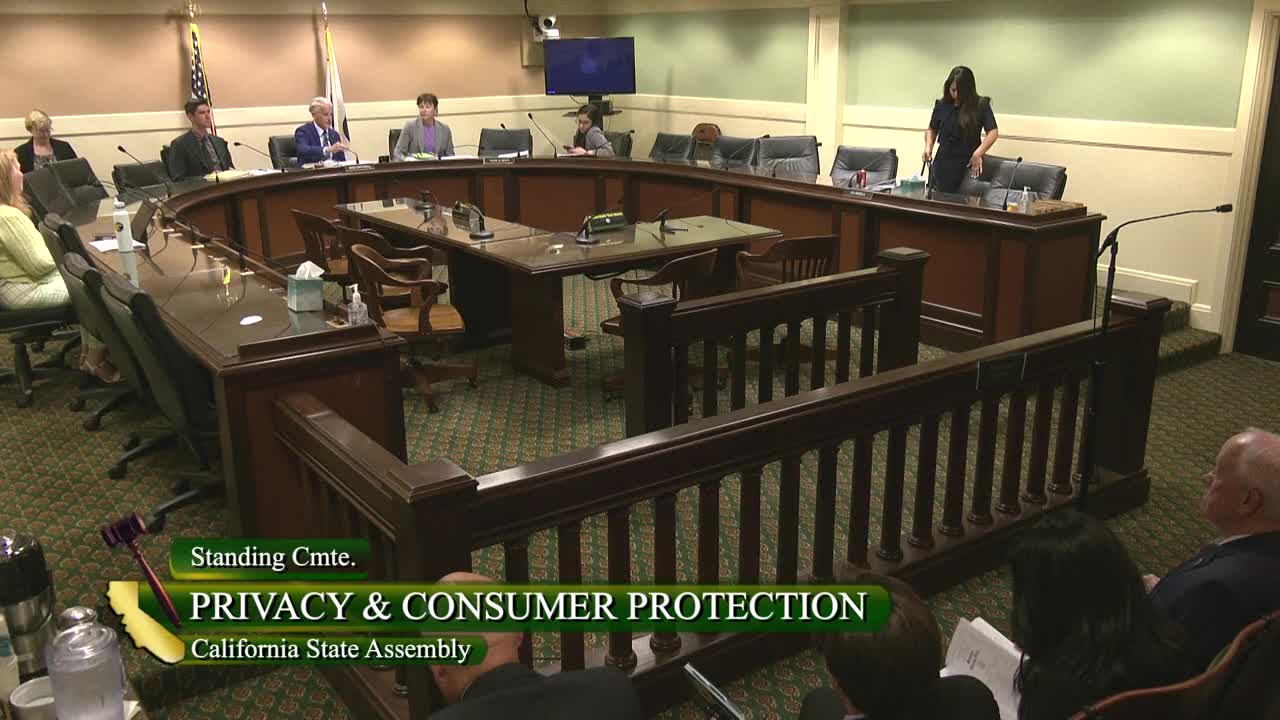 12MIN
Assembly Standing Committee on Privacy and Consumer Protection
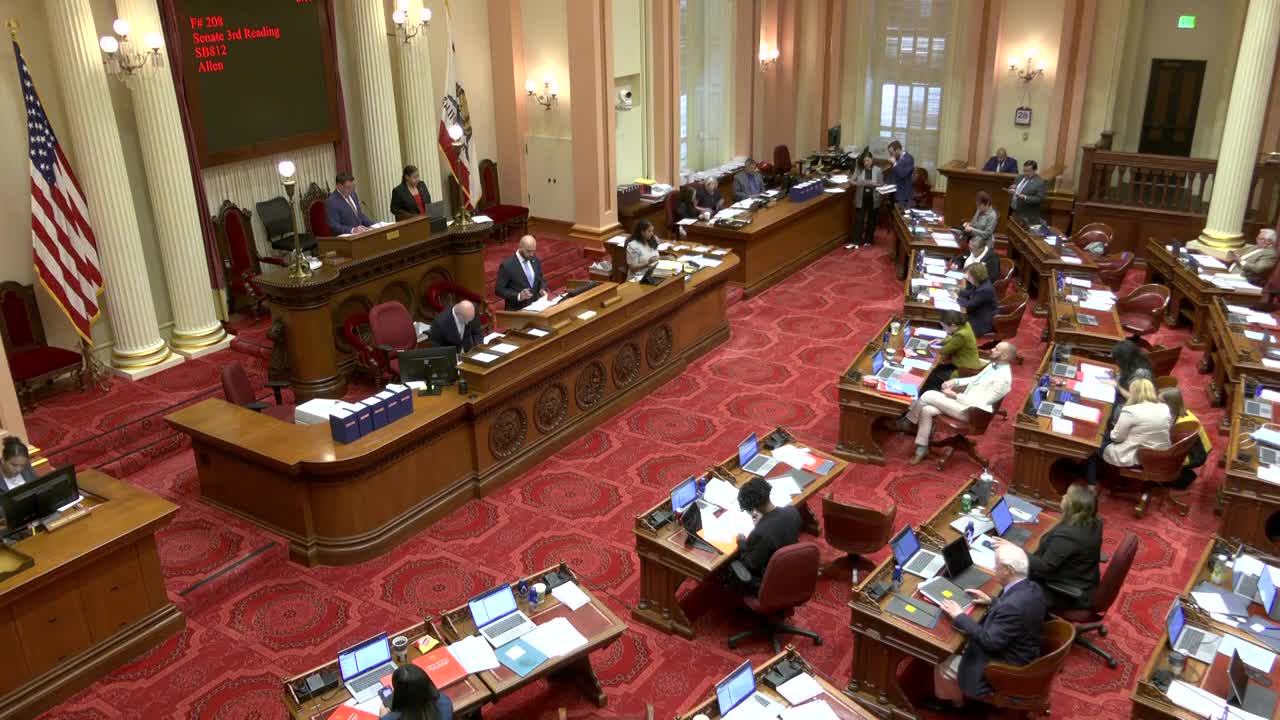 2MIN
Senate Floor
Bill Author