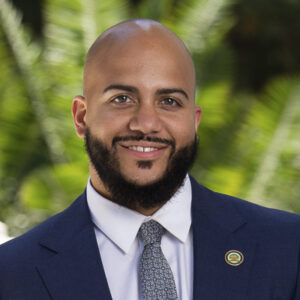
AB 46: California Youth Empowerment Act.
- Session Year: 2021-2022
- House: Assembly
- Latest Version Date: 2021-10-08
Existing law establishes various social services and programs to address the needs of young people in this state including the California Youth Leadership Project to support and promote civic engagement through scholarships to disconnected and disadvantaged youth.
This bill would create the California Youth Empowerment Act to address, among other issues, the growing need to engage youth directly with policymakers. The bill would establish the California Youth Empowerment Commission in state government consisting of 13 voting commissioners between 14 and 25 years of age and meeting specified requirements, with 11 members appointed by the Governor, one at-large member appointed by the Senate Committee on Rules, and one at-large member appointed by the Speaker of the Assembly, along with several ex officio, nonvoting members from various geographic regions of the state. The bill would establish the commission to be advisory in nature, for the main purpose of providing meaningful opportunities for civic engagement to improve the quality of life for Californias disconnected and disadvantaged youth. The bill would require the commission to conduct regular meetings, in accordance with specified timeframes and procedures, and, among other duties, formally advise and make recommendations to the Legislature, the Superintendent of Public Instruction, and the Governor, on various legislative and fiscal issues affecting youth. The bill would also authorize the commission to draft and approve resolutions, draft model legislation, provide testimony during legislative committee meetings, conduct public hearings, and award prizes or direct grants to organizations.
The bill would require the Governor to appoint an executive director of the California Youth Empowerment Commission to assist the commission in carrying out its work, would authorize the commission to accept gifts and grants, and would create the Youth Commission Fund in the State Treasury, with moneys deposited in the fund available for expenditure, upon appropriation by the Legislature, to carry out the duties of the commission. The bill would require that its provisions be implemented only if funds are made available in the budget or through gifts and grants. The bill would require the Department of Finance to determine if sufficient funds have been provided and would require the department to publish notice of this determination on its website.
Existing law establishes various social services and programs to address the needs of young people in this state including the California Youth Leadership Project to support and promote civic engagement through scholarships to disconnected and disadvantaged youth.
This bill would create the California Youth Empowerment Act to address, among other issues, the growing need to engage youth directly with policymakers. The bill would establish the California Youth Empowerment Commission in state government consisting of 25 13 voting commissioners between 14 and 25 years of age and meeting specified requirements, with 21 11 members appointed by the Governor, 2 one at-large members member appointed by the Senate Committee on Rules, and 2 one at-large members member appointed by the Speaker of the Assembly, along with several ex officio, nonvoting members from various geographic regions of the state. The bill would establish the commission to be advisory in nature, for the main purpose of providing meaningful opportunities for civic engagement to improve the quality of life for Californias disconnected and disadvantaged youth. The bill would require the commission to conduct regular meetings, in accordance with specified timeframes and procedures, and, among other duties, formally advise and make recommendations to the Legislature, the Superintendent of Public Instruction, and the Governor, on various legislative and fiscal issues affecting youth. The bill would also authorize the commission to draft and approve resolutions, draft model legislation, provide testimony during legislative committee meetings, conduct public hearings, and award prizes or direct grants to organizations.
The bill would require the Governor to appoint an executive director of the California Youth Empowerment Commission to assist the commission in carrying out its work, would authorize the commission to accept gifts and grants, and would create the Youth Commission Fund in the State Treasury, with moneys deposited in the fund available for expenditure, upon appropriation by the Legislature, to carry out the duties of the commission. The bill would require that its provisions be implemented only if funds are made available in the budget or through gifts and grants. The bill would require the Department of Finance to determine if sufficient funds have been provided and would require the department to publish notice of this determination on its website.
Existing law establishes various social services and programs to address the needs of young people in this state including the California Youth Leadership Project to support and promote civic engagement through scholarships to disconnected and disadvantaged youth.
This bill would create the California Youth Empowerment Act to address, among other issues, the growing need to engage youth directly with policymakers. The bill would establish the California Youth Empowerment Commission in state government consisting of 25 voting commissioners between 14 and 25 years of age and meeting specified requirements, with 21 members appointed by the Governor, 2 at-large members appointed by the Senate Committee on Rules, and 2 at-large members appointed by the Speaker of the Assembly, along with several ex officio, nonvoting members from various geographic regions of the state. The bill would establish the commission to be advisory in nature, for the main purpose of providing meaningful opportunities for civic engagement to improve the quality of life for Californias disconnected and disadvantaged youth. The bill would require the commission to conduct regular meetings, in accordance with specified timeframes and procedures, and, among other duties, formally advise and make recommendations to the Legislature, the Superintendent of Public Instruction, and the Governor, on various legislative and fiscal issues affecting youth. The bill would also authorize the commission to draft and approve resolutions, draft model legislation, provide testimony during legislative committee meetings, conduct public hearings, and award prizes or direct grants to organizations.
The bill would require the Governor to appoint an executive director of the California Youth Empowerment Commission to assist the commission in carrying out its work, would authorize the commission to accept gifts and grants, and would create the Youth Commission Fund in the State Treasury, with moneys deposited in the fund available for expenditure, upon appropriation by the Legislature, to carry out the duties of the commission.
Existing law, the Bagley-Keene Open Meeting Act, authorizes state bodies, as defined, to conduct meetings via teleconference provided certain criteria are met, including that agendas must be posted at all teleconference locations and each teleconference location must be identified in the notice and agenda, each teleconference location must be accessible to the public, and members of the public must be able to address the state body directly.This bill would allow commissioners to attend the meeting through a teleconferencing platform if they are unable to travel to the meeting, provided other provisions of existing law are met, including, the rights of any party or member of the public appearing before the state body are protected, the location of the meeting listed in the agenda is accessible to the public, and members of the public are able to address the commission directly.Existing constitutional provisions require that a statute that limits the right of access to the meetings of public bodies or the writings of public officials and agencies be adopted with findings demonstrating the interest protected by the limitation and the need for protecting that interest.This bill would make legislative findings to that effect.Existing law establishes various social services and programs to address the needs of young people in this state including the California Youth Leadership Project to support and promote civic engagement through scholarships to disconnected and disadvantaged youth.
This bill would create the California Youth Empowerment Act to address, among other issues, the growing need to engage youth directly with policymakers. The bill would establish the California Youth Empowerment Commission in state government consisting of 25 voting commissioners between 14 and 25 years of age and meeting specified requirements, with 21 members appointed by the Governor, 2 at-large members appointed by the Senate Committee on Rules, and 2 at-large members appointed by the Speaker of the Assembly, along with several ex officio, nonvoting members from various geographic regions of the state. The bill would establish the commission to be advisory in nature, for the main purpose of providing meaningful opportunities for civic engagement to improve the quality of life for Californias disconnected and disadvantaged youth. The bill would require the commission to conduct regular meetings, in accordance with specified timeframes and procedures, and, among other duties, formally advise and make recommendations to the Legislature, the Superintendent of Public Instruction, and the Governor, on various legislative and fiscal issues affecting youth. The bill would also authorize the commission to draft and approve resolutions, draft model legislation, provide testimony during legislative committee meetings, conduct public hearings, and award prizes or direct grants to organizations.
The bill would require the Governor to appoint an executive director of the California Youth Empowerment Commission to assist the commission in carrying out its work, would authorize the commission to accept gifts and grants, and would create the Youth Commission Fund in the State Treasury, with moneys deposited in the fund available for expenditure, upon appropriation by the Legislature, to carry out the duties of the commission.
Existing law, the Bagley-Keene Open Meeting Act, authorizes state bodies, as defined, to conduct meetings via teleconference provided certain criteria are met, including that agendas must be posted at all teleconference locations and each teleconference location must be identified in the notice and agenda, each teleconference location must be accessible to the public, and members of the public must be able to address the state body directly.
This bill would allow commissioners to attend the meeting through a teleconferencing platform if they are unable to travel to the meeting, provided other provisions of existing law are met, including, the rights of any party or member of the public appearing before the state body are protected, the location of the meeting listed in the agenda is accessible to the public, and members of the public are able to address the commission directly.
Existing constitutional provisions require that a statute that limits the right of access to the meetings of public bodies or the writings of public officials and agencies be adopted with findings demonstrating the interest protected by the limitation and the need for protecting that interest.
This bill would make legislative findings to that effect.
Existing law establishes various social services and programs to address the needs of young people in this state including the California Youth Leadership Project to support and promote civic engagement through scholarships to disconnected and disadvantaged youth.
This bill would create the California Youth Empowerment Act to address, among other issues, the growing need to engage youth directly with policymakers. The bill would establish the California Youth Empowerment Commission in state government consisting of 25 voting commissioners between 14 and 25 years of age and meeting specified requirements, with 21 members appointed by the Governor, 2 at-large members appointed by the Senate Committee on Rules, and 2 at-large members appointed by the Speaker of the Assembly, along with several ex officio, nonvoting members from various geographic regions of the state. The bill would establish the commission to be advisory in nature, for the main purpose of providing meaningful opportunities for civic engagement to improve the quality of life for Californias disconnected and disadvantaged youth. The bill would require the commission to conduct regular meetings, in accordance with specified timeframes and procedures, and, among other duties, formally advise and make recommendations to the Legislature, the Superintendent of Public Instruction, and the Governor, on various legislative and fiscal issues affecting youth. The bill would also authorize the commission to draft and approve resolutions, draft model legislation, provide testimony during legislative committee meetings, conduct public hearings, and award prizes or direct grants to organizations.
The bill would require the Governor to appoint an executive director of the California Youth Empowerment Commission to assist the commission in carrying out its work, would authorize the commission to accept gifts and grants, and would create the Youth Commission Fund in the State Treasury, with moneys deposited in the fund available for expenditure, upon appropriation by the Legislature, to carry out the duties of the commission.
The Legislature finds and declares all of the following:
(a)The needs and issues affecting youth are most accurately addressed by youth themselves.
(b)Young people in California have demonstrated their passion for the civic process and getting involved, as seen in the spike in voter turnout from the 2014 midterm elections, where 8 percent of California voters between 18 and 24 years of age voted, to the 2018 midterm elections, where 27.5 percent of California voters between 18 and 24 years of age voted.
(c)Young people have also shown their desire for change in social and public policy, as shown in advocacy efforts relating to gun reform, education, affordable housing, juvenile justice, health, jobs, and climate change.
(d)There are nearly 8,900,000 youths in California under 18 years of age as of the most recent data, compiled for 2019. Of those, an estimated 14,213 unaccompanied minors and youths between 18 and 24 years of age experience homelessness each year. Data shows that approximately 60,778 children are in the foster care system. In 2019, there were 43,181 arrests of California youth, and more than 30,000 of those arrests resulted in the detention of a young person in a juvenile hall. Youth who are homeless, in the juvenile justice system, or in foster care have limited opportunities to participate in the policy process that ultimately impacts their well-being.
(e)The COVID-19 pandemic has exacerbated disparities among our youth, who are increasingly disconnected from peers, family, teachers, and policymakers. Homeless youth, incarcerated youth, foster youth, and youth with disabilities or preexisting conditions have a higher likelihood of being exposed to COVID-19 or experiencing significant disparities in accessing health care and receiving quality care. According to a report published by the federal Centers for Disease Control and Prevention, the proportion of emergency department visits from March 2020 to October 2020 related to mental health increased by 24 percent for children 5 to 11 years of age and spiked by 31 percent among adolescents 12 to 17 years of age compared to the same period of the previous year. Additionally, during the first 12 weeks of the pandemic, nearly one-half (44 percent) of young people 16 to 23 years of age, inclusive, applied for unemployment insurance, the highest rate of any age group. Thus, it is the intent of the Legislature to prioritize the needs and issues affecting youth to prevent irreversible short-term and long-term damage to their development and growth.
(f)The recent protests against state violence and systemic racism against Black communities has highlighted the profound underinvestment of social, health, and educational services and overinvestment in policing and incarceration of young Black, Indigenous, and people of color (BIPOC) and their communities. Government policies, institutional practices, and individual actions, both conscious and unconscious, have reinforced a system where BIPOC communities see dramatically increased rates of poverty, violence, policing, foster care, homelessness, multisystem involvement, substance use disorders, and other health disparities. Thus, it is the intent of the Legislature to ensure that all commissions, including the one established by this chapter, purposefully uplift and empower BIPOC individuals and other marginalized communities within both the commissions composition and its priorities.
(g)The government is designed to address input and participation from the people being served; however, youth under 18 years of age who cannot vote do not have a formal way to participate in the civic process.
(h)There is a growing need to engage our youth directly with policymakers in a manner that will provide genuine opportunities for our youth to acquire civic knowledge and develop the skills necessary to participate fully in a democratic society.
(i)Over 20 other states have statewide youth entities codified into law for the purpose of advising their respective legislatures and governors.
(j)The California Youth Empowerment Commission, as established by this bill, is intended to provide model legislation and advocacy for the needs of youth.
SEC. 2.Chapter 3.4 (commencing with Section 8261) is added to Division 1 of Title 2 of the Government Code, to read:3.4.California Youth Empowerment Act1.Title8261.This chapter shall be known, and may be cited, as the California Youth Empowerment Act.
2.Definitions8262.For purposes of this chapter, the following definitions apply:
(a)Commission means the California Youth Empowerment Commission established in Section 8263.
(b)Commissioner means a voting member of the California Youth Empowerment Commission.
3.Creation and Membership8263.(a)There is in the state government the California Youth Empowerment Commission. The commission shall consist of 13 voting commissioners to be appointed as follows:
(1)Eleven public members appointed by the Governor, subject to the following requirements:
(A)The terms of these commissioners initially shall be staggered so that five members serve one-year terms and six members serve two-year terms. To achieve the staggering of terms, the Governor shall designate the terms of the present members of the commission who have been appointed by the Governor.
(B)One of the commissioners shall reside, work, or attend school in each region described in subdivision (b), with the exception of the at-large commissioner.
(C)Five of the commissioners shall be between 14 to 18 years of age.
(D)Five of the commissioners shall be between 18 to 25 years of age.
(E)At least five commissioners shall have experienced a physical disability, youth homelessness, foster care, or juvenile incarceration.
(F)One at-large commissioner, who may be between 14 to 25 years of age.
(2)One at-large public member appointed by the Senate Committee on Rules.
(3)One at-large public member appointed by the Speaker of the Assembly.
(4)The Governor may appoint alternates for those described in paragraph (1).
(b)For the purposes of subparagraph (B) of paragraph (1) of subdivision (a), these regions are defined as follows:
(1)The Superior California region consists of the Counties of Butte, Colusa, El Dorado, Glenn, Lassen, Modoc, Nevada, Placer, Plumas, Sacramento, Shasta, Sierra, Siskiyou, Sutter, Tehama, Yolo, and Yuba.
(2)The North Coast region consists of the Counties of Del Norte, Humboldt, Lake, Mendocino, Napa, Sonoma, and Trinity.
(3)The San Francisco Bay area region consists of the Counties of Alameda, Contra Costa, Marin, San Mateo, Santa Clara, and Solano, and the City and County of San Francisco.
(4)The Northern San Joaquin Valley region consists of the Counties of Alpine, Amador, Calaveras, Madera, Mariposa, Merced, Mono, San Joaquin, Stanislaus, and Tuolumne.
(5)The Central Coast region consists of the Counties of Monterey, San Benito, San Luis Obispo, Santa Barbara, Santa Cruz, and Ventura.
(6)The Southern San Joaquin Valley region consists of the Counties of Fresno, Inyo, Kern, Kings, and Tulare.
(7)The Inland Empire region consists of the Counties of Riverside and San Bernardino.
(8)The Los Angeles region consists of the County of Los Angeles.
(9)The Orange County region consists of the County of Orange.
(10)The San Diego/Imperial region consists of the Counties of Imperial and San Diego.
(c)In addition to subdivision (a), one Member of the Senate appointed by the Senate Committee on Rules, one Member of the Assembly appointed by the Speaker of the Assembly, the Governor, the Superintendent of Public Instruction, and the Secretary of California Health and Human Services shall serve as nonvoting members of the commission.
(d)All appointing powers shall take into consideration that the members of the commission represent the geographical, racial, ethnic, socioeconomic, cultural, physical, and educational diversity of Californias youth. Particular emphasis and funding should be used on reaching out to at-risk or disadvantaged youth to serve as members of the commission, as their participation will provide keen insight into many of the issues that youth face in their day-to-day lives.
8264.(a)Excluding the initial staggering of terms, commissioners shall serve two-year terms.
(b)Commissioners shall be between 14 and 25 years of age. If a commissioner turns 26 years of age during their term, that commissioner shall be allowed to complete the term.
(c)A commissioner shall be a resident of California.
(d)A commissioner may seek reappointment as long as they fulfill the requirements pursuant to subdivision (b).
(e)(1)Attending a meeting of the commission as a commissioner shall be a lawful excuse for a student to be absent from school, under paragraph (7) of subdivision (a) of Section 48205 of the Education Code, if approved by the principal or a designated representative pursuant to uniform standards established by the governing board.
(2)A student excused from school attendance under this section may not be recorded as being absent on any date for which the excuse is operative and may not be penalized by the school in any manner.
(f)(1)In the event of inappropriate conduct, unexcused absences, or inability to complete expected duties of a commissioner, the commissioner in question is entitled to a facilitated meeting using restorative practices.
(2)For purposes of this subdivision, the following definitions shall apply:
(A)Facilitated meeting means a facilitated process designed to acknowledge, address, and respond to the underlying needs of all parties, that may include, but is not limited to, a meeting of the commissioners in conflict.
(B)Restorative justice practices means a process to improve and repair relationships between people and communities. Restorative justice practices provide tertiary prevention, introduced after the problem has occurred, with the intention of avoiding reoccurrence.
(g)A commissioners position becomes vacant, under the approval of the executive director, in the event of any of the following:
(1)Death of a commissioner.
(2)Resignation of a commissioner.
(3)Change in residence of a commissioner to outside of California.
(4)Failure to resolve challenges occurring from inappropriate conduct, unexcused absences, or inability to complete expected duties of a commissioner.
(h)In the event of a vacancy, the alternate will fill the position, and the appointing power that appointed the commissioner shall appoint a new alternate in the same manner as the original appointment within 60 days of the vacancy.
8265.(a)Within six months of the commissions establishment, and not later than March 1 of each subsequent year, the executive director, appointed pursuant to Section 8274, shall both:
(1)Release to the public on its internet website the procedures for the general application process to assist public members in the appointment process and facilitate communications between public members and the appointing powers.
(2)Have created and made the application publicly available on its internet website.
(b)The executive director shall also notify the Superintendent of Public Instruction, the Association of Independent California Colleges and Universities, the Regents of the University of California, the California State University, and the California Community Colleges Chancellors office that the application for an appointment is open. The notice shall include the requirements for an appointment, a copy of the application, and a request to transmit the notice to all students in California.
(c)In reviewing general applications, the executive director may consider additional relevant selection criteria and conduct interviews.
(d)The executive director may recommend public members to be appointed to the appointing powers, but there shall be no right or obligation on the part of the appointing powers to appoint those public members.
8266.Each public member of the commission shall receive one hundred dollars ($100) per diem while on official business of the commission. Each member of the commission shall also be entitled to receive their actual necessary traveling expenses while on official business of the commission. For commissioners between 14 and 18 years of age, a parent or guardian shall be entitled to receive their actual necessary traveling expenses while accompanying the minor on official business of the commission.
8267.(a)The commission shall elect a chair, vice chair, and clerk from among its members at the first meeting of the year.
(b)The commission shall be composed of the following:
(1)A chair who shall conduct the meetings, draft bylaws, serve as the primary liaison to the government, and oversee the formation of committees as necessary to accomplish the business of the commission.
(2)A vice chair who shall assist the chair and conduct the meetings of the commission if the chair is absent or otherwise unable to perform their duties.
(3)A clerk who shall keep and maintain the minutes of the meetings, regularly update the internet website, pursuant to Section 8272, and record the final votes on any measure for vote by the chair.
4.Purposes, Duties, and Powers8268.With respect to its duties, the commission shall be an advisory commission only. There shall be no right or obligation on the part of the state, or parties meeting and conferring, to implement the findings of the commission without further legislation that specifically authorizes that the evaluations, determinations, and findings of the commission be implemented.
8269.The commissions main purpose is to provide meaningful opportunities for actual civic engagement to improve the quality of life for Californias disconnected and disadvantaged youth. Furthermore, youths involved with the commission will make meaningful recommendations regarding legislation and policies that impact their own lives and the lives of millions of other youths in California whose voices often go unheard.
8270.The commission shall conduct full commission meetings at least every other month, with the first meeting in August 2022, or not later than eight months after funding is made available for this purpose.
8271.The affirmative votes of a majority of the commissioners at a full session or committee meeting are required for the commission or committee to take action on any measure, respectively, including resolutions, annual reports, and initiatives.
8272.The commission shall do the following:
(a)Examine and discuss policy and fiscal issues affecting the interests, needs, and conditions of the youth of California.
(b)Formally advise and make recommendations to the Legislature, Superintendent of Public Instruction, and Governor on specific legislative and fiscal issues affecting youth, such as the following:
(1)Achievement gap.
(2)Behavioral and physical health.
(3)Bullying.
(4)Career preparation.
(5)Child welfare.
(6)Child and sexual abuse.
(7)Civic engagement.
(8)Climate crisis.
(9)College affordability and student loans.
(10)Depression and suicide.
(11)Education.
(12)Employment.
(13)Financial literacy.
(14)Foster care.
(15)Gun violence.
(16)Health care.
(17)Homelessness.
(18)Housing and transportation.
(19)Immigration and undocumented youth.
(20)Juvenile justice.
(21)Labor and jobs.
(22)LGBTQ civil rights.
(23)Mental health.
(24)Poverty.
(25)Racial, economic, and gender equity.
(26)Reproductive justice.
(27)Safety.
(28)Social media and networking.
(29)Substance abuse and vaping.
(30)Youth development.
(31)Any other policy or fiscal issues deemed appropriate by the commission.
(c)Consult with any existing local-level youth advisory commissions and community-based, grassroots youth-led organizations for input and potential solutions on issues related to youth.
(d)Publish an internet website to report details relevant to the commission for the public to view, including, but not limited to, commission agendas, minutes, resolutions, vote counts, initiatives, commissioner information, photos, and video.
(e)On or before January 1, 2024, and annually thereafter, publish an annual report to the Legislature, Superintendent of Public Instruction, Secretary of California Health and Human Services, and Governor detailing the activities, issues, demographics, budget, and outcomes of the commission. The commission shall submit the report to the Legislature required by this subdivision in compliance with Section 9795.
8273.The commission shall carry out the duties imposed upon it by this chapter, and may do any of the following:
(a)Draft and approve resolutions that formally articulate the commissions positions on various youth-related legislative and fiscal policy.
(b)Draft model legislation that addresses issues relating to youth that may be adopted by Members of the Legislature.
(c)Provide testimony during any committee meeting in the Legislature.
(d)Form committees and task forces to discuss specific issues and policy areas and meet as necessary.
(e)Conduct public hearings with community and youth organizations to identify pressing issues and debate priorities.
(f)Appoint advisory committees from within its membership or with outside members whenever necessary. Members of an advisory committee shall serve without compensation, but each may be reimbursed for necessary traveling and other expenses incurred in the performance of official duties.
(g)Conduct public awareness campaigns to raise awareness about the commission and to enhance outreach to the youth in this state.
(h)Conduct periodic seminars for its members regarding leadership, government, and the Legislature.
(i)Establish grant application criteria and procedures, subject to the availability of funding pursuant to Section 8275.
(j)Award prizes or direct grants to organizations in accordance with those regulations as the commission may prescribe. In awarding prizes or directing grants, the commission shall notify the offices of the legislators in whose district the recipient resides.
5.Administration and Finance8274.The Governor shall appoint an executive director of the California Youth Empowerment Commission. The executive director shall do all of the following:
(a)Assist the commission in carrying out its work.
(b)Be responsible for the hiring of commission staff, including, but not limited to, deputy directors, who shall assist the executive director with their duties as outlined in this chapter as delegated.
(c)Be responsible for the management and administration of the commission staff.
(d)Perform other duties as directed by the commission.
8275.(a)The commission may accept gifts and grants from any source, public or private, to help perform its functions pursuant to this chapter.
(b)The commission may seek out funding and in-kind contributions from foundations, nonprofit organizations, public and private entities, and other individuals or groups in order to carry out the work of the commission.
(c)The commission shall develop a strategy to attract financial support from private donors in order to reduce the commissions dependence on state funding.
(d)There is hereby created in the State Treasury the Youth Empowerment Commission Fund in support of the commission, which shall be administered by the executive director. Moneys deposited in the account may be expended, upon appropriation by the Legislature, to carry out the duties of the commission.
(e)This chapter shall be implemented only to the extent that funds have been provided in the Budget Act of 2021 or the Department of Finance determines that sufficient funding has been provided through the means set forth in subdivision (a) or (b). Upon a determination that sufficient funds have been received to implement this chapter, the department shall publish notice of this fact on its internet website.
8276.This chapter shall remain in effect only until January 1, 2027, and as of that date is repealed.
The Legislature finds and declares all of the following:
(a)The needs and issues affecting youth are most accurately addressed by youth themselves.
(b)Young people in California have demonstrated their passion for the civic process and getting involved, as seen in the spike in voter turnout from the 2014 midterm elections, where 8 percent of California voters between 18 and 24 years of age voted, to the 2018 midterm elections, where 27.5 percent of California voters between 18 and 24 years of age voted.
(c)Young people have also shown their desire for change in social and public policy, as shown in advocacy efforts relating to gun reform, education, affordable housing, juvenile justice, health, jobs, and climate change.
(d)There are nearly 8,900,000 youths in California under 18 years of age as of the most recent data, compiled for 2019. Of those, an estimated 14,213 unaccompanied minors and youths between 18 and 24 years of age experience homelessness each year. Data shows that approximately 60,778 children are in the foster care system. In 2019, there were 43,181 arrests of California youth, and more than 30,000 of those arrests resulted in the detention of a young person in a juvenile hall. Youth who are homeless, in the juvenile justice system, or in foster care have limited opportunities to participate in the policy process that ultimately impacts their well-being.
(e)The COVID-19 pandemic has exacerbated disparities among our youth, who are increasingly disconnected from peers, family, teachers, and policymakers. Homeless youth, incarcerated youth, foster youth, and youth with disabilities or preexisting conditions have a higher likelihood of being exposed to COVID-19 or experiencing significant disparities in accessing health care and receiving quality care. According to a report published by the federal Centers for Disease Control and Prevention, the proportion of emergency department visits from March 2020 to October 2020 related to mental health increased by 24 percent for children 5 to 11 years of age and spiked by 31 percent among adolescents 12 to 17 years of age compared to the same period of the previous year. Additionally, during the first 12 weeks of the pandemic, nearly one-half (44 percent) of young people 16 to 23 years of age age, inclusive, applied for unemployment insurance, the highest rate of any age group. Thus, it is the intent of the Legislature to prioritize the needs and issues affecting youth to prevent irreversible short-term and long-term damage to their development and growth.
(f)The recent protests against state violence and systemic racism against Black communities has highlighted the profound underinvestment of social, health, and educational services and overinvestment in policing and incarceration of young Black, Indigenous, and people of color (BIPOC) and their communities. Government policies, institutional practices, and individual actions, both conscious and unconscious, have reinforced a system where BIPOC communities see dramatically increased rates of poverty, violence, policing, foster care, homelessness, multisystem involvement, substance use disorders, and other health disparities. Thus, it is the intent of the Legislature to ensure that all commissions, including the one established by this chapter, purposefully uplift and empower BIPOC individuals and other marginalized communities within both the commissions composition and its priorities.
(g)The government is designed to address input and participation from the people being served; however, youth under 18 years of age who cannot vote do not have a formal way to participate in the civic process.
(h)There is a growing need to engage our youth directly with policymakers in a manner that will provide genuine opportunities for our youth to acquire civic knowledge and develop the skills necessary to participate fully in a democratic society.
(i)Over 20 other states have statewide youth entities codified into law for the purpose of advising their respective legislatures and governors.
(j)The California Youth Empowerment Commission, as established by this bill, is intended to provide model legislation and advocacy for the needs of youth.
SEC. 2.Chapter 3.4 (commencing with Section 8261) is added to Division 1 of Title 2 of the Government Code, to read:3.4.California Youth Empowerment Act1.Title8261.This chapter shall be known, and may be cited, as the California Youth Empowerment Act.
2.Definitions8262.For purposes of this chapter, the following definitions apply:
(a)Commission means the California Youth Empowerment Commission established in Section 8263.
(b)Commissioner means a voting member of the California Youth Empowerment Commission.
3.Creation and Membership8263.(a)There is in the state government the California Youth Empowerment Commission. The commission shall consist of 25 13 voting commissioners to be appointed as follows:
(1)Twenty-one Eleven public members appointed by the Governor, subject to the following requirements:
(A)The terms of these commissioners initially shall be staggered so that 10 five members serve one-year terms and 11 six members serve two-year terms. To achieve the staggering of terms, the Governor shall designate the terms of the present members of the commission who have been appointed by the Governor.
(B)Two One of the commissioners shall reside, work, or attend school in each region described in subdivision (b), with the exception of the at-large commissioner.
(C)Ten Five of the commissioners shall be between 14 to 18 years of age.
(D)Ten Five of the commissioners shall be between 18 to 25 years of age.
(E)At least 10 five commissioners shall have experienced a physical disability, youth homelessness, foster care, or juvenile incarceration.
(F)One at-large commissioner, who may be between 14 to 25 years of age.
(2)Two One at-large public members member appointed by the Senate Committee on Rules.
(3)Two One at-large public members member appointed by the Speaker of the Assembly.
(4)The Governor may appoint alternates for those described in paragraph (1).
(b)For the purposes of subparagraph (B) of paragraph (1) of subdivision (a), these regions are defined as follows:
(1)The Superior California region consists of the Counties of Butte, Colusa, El Dorado, Glenn, Lassen, Modoc, Nevada, Placer, Plumas, Sacramento, Shasta, Sierra, Siskiyou, Sutter, Tehama, Yolo, and Yuba.
(2)The North Coast region consists of the Counties of Del Norte, Humboldt, Lake, Mendocino, Napa, Sonoma, and Trinity.
(3)The San Francisco Bay area region consists of the Counties of Alameda, Contra Costa, Marin, San Mateo, Santa Clara, and Solano, and the City and County of San Francisco.
(4)The Northern San Joaquin Valley region consists of the Counties of Alpine, Amador, Calaveras, Madera, Mariposa, Merced, Mono, San Joaquin, Stanislaus, and Tuolumne.
(5)The Central Coast region consists of the Counties of Monterey, San Benito, San Luis Obispo, Santa Barbara, Santa Cruz, and Ventura.
(6)The Southern San Joaquin Valley region consists of the Counties of Fresno, Inyo, Kern, Kings, and Tulare.
(7)The Inland Empire region consists of the Counties of Riverside and San Bernardino.
(8)The Los Angeles region consists of the County of Los Angeles.
(9)The Orange County region consists of the County of Orange.
(10)The San Diego/Imperial region consists of the Counties of Imperial and San Diego.
(c)In addition to subdivision (a), one Member of the Senate appointed by the Senate Committee on Rules, one Member of the Assembly appointed by the Speaker of the Assembly, the Governor, the Superintendent of Public Instruction, and the Secretary of California Health and Human Services shall serve as nonvoting members of the commission.
(d)All appointing powers shall take into consideration that the members of the commission represent the geographical, racial, ethnic, socioeconomic, cultural, physical, and educational diversity of Californias youth. Particular emphasis and funding should be used on reaching out to at-risk or disadvantaged youth to serve as members of the commission, as their participation will provide keen insight into many of the issues that youth face in their day-to-day lives.
8264.(a)Excluding the initial staggering of terms, commissioners shall serve two-year terms.
(b)Commissioners shall be between 14 and 25 years of age. If a commissioner turns 26 years of age during their term, that commissioner shall be allowed to complete the term.
(c)A commissioner shall be a resident of California.
(d)A commissioner may seek reappointment as long as they fulfill the requirements pursuant to subdivision (b).
(e)(1)Attending a meeting of the commission as a commissioner shall be a lawful excuse for a student to be absent from school, under paragraph (7) of subdivision (a) of Section 48205 of the Education Code, if approved by the principal or a designated representative pursuant to uniform standards established by the governing board.
(2)A student excused from school attendance under this section may not be recorded as being absent on any date for which the excuse is operative and may not be penalized by the school in any manner.
(f)(1)In the event of inappropriate conduct, unexcused absences, or inability to complete expected duties of a commissioner, the commissioner in question is entitled to a facilitated meeting using restorative practices.
(2)For purposes of this subdivision, the following definitions shall apply:
(A)Facilitated meeting means a facilitated process designed to acknowledge, address, and respond to the underlying needs of all parties, that may include, but is not limited to, a meeting of the commissioners in conflict.
(B)Restorative justice practices means a process to improve and repair relationships between people and communities. Restorative justice practices provide tertiary prevention, introduced after the problem has occurred, with the intention of avoiding reoccurrence.
(g)A commissioners position becomes vacant, under the approval of the executive director, in the event of any of the following:
(1)Death of a commissioner.
(2)Resignation of a commissioner.
(3)Change in residence of a commissioner to outside of California.
(4)Failure to resolve challenges occurring from inappropriate conduct, unexcused absences, or inability to complete expected duties of a commissioner.
(h)In the event of a vacancy, the alternate will fill the position, and the appointing power that appointed the commissioner shall appoint a replacement new alternate in the same manner as the original appointment within 30 60 days of the vacancy.
8265.(a)Within six months of the commissions establishment, and not later than March 1 of each subsequent year, the executive director, appointed pursuant to Section 8274, shall both:
(1)Release to the public on its internet website the procedures for the general application process to assist public members in the appointment process and facilitate communications between public members and the appointing powers.
(2)Have created and made the application publicly available on its internet website.
(b)The executive director shall also notify the Superintendent of Public Instruction, the Association of Independent California Colleges and Universities, the Regents of the University of California, the California State University, and the California Community Colleges Chancellors office that the application for an appointment is open. The notice shall include the requirements for an appointment, a copy of the application, and a request to transmit the notice to all students in California.
(c)In reviewing general applications, the executive director may consider additional relevant selection criteria and conduct interviews.
(d)The executive director may recommend public members to be appointed to the appointing powers, but there shall be no right or obligation on the part of the appointing powers to appoint those public members.
8266.Each public member of the commission shall receive one hundred dollars ($100) per diem while on official business of the commission. Each member of the commission shall also be entitled to receive their actual necessary traveling expenses while on official business of the commission. For commissioners between 14 and 18 years of age, a parent or guardian shall be entitled to receive their actual necessary traveling expenses while accompanying the minor on official business of the commission.
8267.(a)The commission shall elect a chair, vice chair, and clerk from among its members at the first meeting of the year.
(b)The commission shall be composed of the following:
(1)A chair who shall conduct the meetings, draft bylaws, serve as the primary liaison to the government, and oversee the formation of committees as necessary to accomplish the business of the commission.
(2)A vice chair who shall assist the chair and conduct the meetings of the commission if the chair is absent or otherwise unable to perform their duties.
(3)A clerk who shall keep and maintain the minutes of the meetings, regularly update the internet website, pursuant to Section 8272, and record the final votes on any measure for vote by the chair.
4.Purposes, Duties, and Powers8268.With respect to its duties, the commission shall be an advisory commission only. There shall be no right or obligation on the part of the state, or parties meeting and conferring, to implement the findings of the commission without further legislation that specifically authorizes that the evaluations, determinations, and findings of the commission be implemented.
8269.The commissions main purpose is to provide meaningful opportunities for actual civic engagement to improve the quality of life for Californias disconnected and disadvantaged youth. Furthermore, youths involved with the commission will make meaningful recommendations regarding legislation and policies that impact their own lives and the lives of millions of other youths in California whose voices often go unheard.
8270.The commission shall conduct full commission meetings at least every other month, with the first meeting in August 2022, or not later than eight months after funding is made available for this purpose.
8271.The affirmative votes of a majority of the commissioners at a full session or committee meeting are required for the commission or committee to take action on any measure, respectively, including resolutions, annual reports, and initiatives.
8272.The commission shall do the following:
(a)Examine and discuss policy and fiscal issues affecting the interests, needs, and conditions of the youth of California.
(b)Formally advise and make recommendations to the Legislature, Superintendent of Public Instruction, and Governor on specific legislative and fiscal issues affecting youth, such as the following:
(1)Achievement gap.
(2)Behavioral and physical health.
(3)Bullying.
(4)Career preparation.
(5)Child welfare.
(6)Child and sexual abuse.
(7)Civic engagement.
(8)Climate crisis.
(9)College affordability and student loans.
(10)Depression and suicide.
(11)Education.
(12)Employment.
(13)Financial literacy.
(14)Foster care.
(15)Gun violence.
(16)Health care.
(17)Homelessness.
(18)Housing and transportation.
(19)Immigration and undocumented youth.
(20)Juvenile justice.
(21)Labor and jobs.
(22)LGBTQ civil rights.
(23)Mental health.
(24)Poverty.
(25)Racial, economic, and gender equity.
(26)Reproductive justice.
(27)Safety.
(28)Social media and networking.
(29)Substance abuse and vaping.
(30)Youth development.
(31)Any other policy or fiscal issues deemed appropriate by the commission.
(c)Consult with any existing local-level youth advisory commissions and community-based, grassroots youth-led organizations for input and potential solutions on issues related to youth.
(d)Publish an internet website to report details relevant to the commission for the public to view, including, but not limited to, commission agendas, minutes, resolutions, vote counts, initiatives, commissioner information, photos, and video.
(e)On or before January 1, 2024, and annually thereafter, publish an annual report to the Legislature, Superintendent of Public Instruction, Secretary of California Health and Human Services, and Governor detailing the activities, issues, demographics, budget, and outcomes of the commission. The commission shall submit the report to the Legislature required by this subdivision in compliance with Section 9795.
8273.The commission shall carry out the duties imposed upon it by this chapter, and may do any of the following:
(a)Draft and approve resolutions that formally articulate the commissions positions on various youth-related legislative and fiscal policy.
(b)Draft model legislation that addresses issues relating to youth that may be adopted by Members of the Legislature.
(c)Provide testimony during any committee meeting in the Legislature.
(d)Form committees and task forces to discuss specific issues and policy areas and meet as necessary.
(e)Conduct public hearings with community and youth organizations to identify pressing issues and debate priorities.
(f)Appoint advisory committees from within its membership or with outside members whenever necessary. Members of an advisory committee shall serve without compensation, but each may be reimbursed for necessary traveling and other expenses incurred in the performance of official duties.
(g)Conduct public awareness campaigns to raise awareness about the commission and to enhance outreach to the youth in this state.
(h)Conduct periodic seminars for its members regarding leadership, government, and the Legislature.
(i)Establish grant application criteria and procedures, subject to the availability of funding pursuant to Section 8275.
(j)Award prizes or direct grants to organizations in accordance with those regulations as the commission may prescribe. In awarding prizes or directing grants, the commission shall notify the offices of the legislators in whose district the recipient resides.
5.Administration and Finance8274.The Governor shall appoint an executive director of the California Youth Empowerment Commission. The executive director shall do all of the following:
(a)Assist the commission in carrying out its work.
(b)Be responsible for the hiring of commission staff, including, but not limited to, deputy directors. directors, who shall assist the executive director with their duties as outlined in this chapter as delegated.
(c)Be responsible for the management and administration of the commission staff.
(d)Perform other duties as directed by the commission.
8275.(a)The commission may accept gifts and grants from any source, public or private, to help perform its functions pursuant to this chapter.
(b)The commission may seek out funding and in-kind contributions from foundations, nonprofit organizations, public and private entities, and other individuals or groups in order to carry out the work of the commission.
(c)The commission shall develop a strategy to attract financial support from private donors in order to reduce the commissions dependence on state funding.
(d)There is hereby created in the State Treasury the Youth Empowerment Commission Fund in support of the commission, which shall be administered by the executive director. Moneys deposited in the account may be expended, upon appropriation by the Legislature, to carry out the duties of the commission.
(e)This chapter shall be implemented only to the extent that funds have been provided in the Budget Act of 2021 or the Department of Finance determines that sufficient funding has been provided through the means set forth in subdivision (a) or (b). Upon a determination that sufficient funds have been received to implement this chapter, the department shall publish notice of this fact on its internet website.
8276.This chapter shall remain in effect only until January 1, 2027, and as of that date is repealed.
The Legislature finds and declares all of the following:
(a)The needs and issues affecting youth are most accurately addressed by youth themselves.
(b)Young people in California have demonstrated their passion for the civic process and getting involved, as seen in the spike in voter turnout from the 2014 midterm elections, where 8 percent of California voters between 18 and 24 years of age voted, to the 2018 midterm elections, where 27.5 percent of California voters between 18 and 24 years of age voted.
(c)Young people have also shown their desire for change in social and public policy, as shown in advocacy efforts relating to gun reform, education, affordable housing, juvenile justice, health, jobs, and climate change.
(d)There are nearly 8,900,000 youths in California under 18 years of age as of the most recent data, compiled for 2019. Of those, an estimated 14,213 unaccompanied minors and youths between 18 and 24 years of age experience homelessness each year. Data shows that approximately 60,778 children are in the foster care system. In 2019, there were 43,181 arrests of California youth, and more than 30,000 of those arrests resulted in the detention of a young person in a juvenile hall. Youth who are homeless, in the juvenile justice system, or in foster care have limited opportunities to participate in the policy process that ultimately impacts their well-being.
(e)The COVID-19 pandemic has exacerbated disparities among our youth, who are increasingly disconnected from peers, family, teachers, and policymakers. Homeless youth, incarcerated youth, foster youth, and youth with disabilities or preexisting conditions have a higher likelihood of being exposed to COVID-19 or experiencing significant disparities in accessing health care and receiving quality care. According to a report published by the federal Centers for Disease Control and Prevention, the proportion of emergency department visits from March 2020 to October 2020 related to mental health increased by 24 percent for children 5 to 11 years of age and spiked by 31 percent among adolescents 12 to 17 years of age compared to the same period of the previous year. Additionally, during the first 12 weeks of the pandemic, nearly one-half (44 percent) of young people 16 to 23 years of age applied for unemployment insurance, the highest rate of any age group. Thus, it is the intent of the Legislature to prioritize the needs and issues affecting youth to prevent irreversible short-term and long-term damage to their development and growth.
(f)The recent protests against state violence and systemic racism against Black communities has highlighted the profound underinvestment of social, health, and educational services and overinvestment in policing and incarceration of young Black, Indigenous, and people of color (BIPOC) and their communities. Government policies, institutional practices, and individual actions, both conscious and unconscious, have reinforced a system where BIPOC communities see dramatically increased rates of poverty, violence, policing, foster care, homelessness, multisystem involvement, substance use disorders, and other health disparities. Thus, it is the intent of the Legislature to ensure that all commissions, including the one established by this chapter, purposefully uplift and empower BIPOC individuals and other marginalized communities within both the commissions composition and its priorities.
(g)The government is designed to address input and participation from the people being served; however, youth under 18 years of age who cannot vote do not have a formal way to participate in the civic process.
(h)There is a growing need to engage our youth directly with policymakers in a manner that will provide genuine opportunities for our youth to acquire civic knowledge and develop the skills necessary to participate fully in a democratic society.
(i)Over 20 other states have statewide youth entities codified into law for the purpose of advising their respective legislatures and governors.
(j)The California Youth Empowerment Commission, as established by this bill, is intended to provide model legislation and advocacy for the needs of youth.
SECTION 1.Chapter 3.4 (commencing with Section 8260) is added to Division 1 of Title 2 of the Government Code, to read:SEC. 2.Chapter 3.4 (commencing with Section 8261) is added to Division 1 of Title 2 of the Government Code, to read:3.4.California Youth Empowerment Act1.Title8260.8261.This chapter shall be known, and may be cited, as the California Youth Empowerment Act.
2.Legislative Findings and Declarations8261.The Legislature finds and declares all of the following:(a)The needs and issues affecting youth are most accurately addressed by youth themselves.(b)Young people in California have demonstrated their passion for the civic process and getting involved, as seen in the spike in voter turnout from the 2014 midterm elections, where 8 percent of California voters between 18 and 24 years of age voted, to the 2018 midterm elections, where 27.5 percent of California voters between 18 and 24 years of age voted.(c)Young people have also shown their desire for change in social and public policy, as shown in advocacy efforts relating to gun reform, education, affordable housing, juvenile justice, health, jobs, and climate change.(d)There are nearly 8,900,000 youths in California under 18 years of age as of the most recent data, compiled for 2019. Of those, an estimated 14,213 unaccompanied minors and youths between 18 and 24 years of age experience homelessness each year. Data shows that approximately 60,778 children are in the foster care system. In 2019, there were 43,181 arrests of California youth, and more than 30,000 of those arrests resulted in the detention of a young person in a juvenile hall. Youth who are homeless, in the juvenile justice system, or in foster care have limited opportunities to participate in the policy process that ultimately impacts their well-being.(e)The COVID-19 pandemic has exacerbated disparities among our youth, who are increasingly disconnected from peers, family, teachers, and policymakers. Homeless youth, incarcerated youth, foster youth, and youth with disabilities or preexisting conditions have a higher likelihood of being exposed to COVID-19 or experiencing significant disparities in accessing health care and receiving quality care. According to a report published by the federal Centers for Disease Control and Prevention, the proportion of emergency department visits from March 2020 to October 2020 related to mental health increased by 24 percent for children 5 to 11 years of age and spiked by 31 percent among adolescents 12 to 17 years of age compared to the same period of the previous year. Additionally, during the first 12 weeks of the pandemic, nearly one-half (44 percent) of young people 16 to 23 years of age applied for unemployment insurance, the highest rate of any age group. Thus, it is the intent of the Legislature to prioritize the needs and issues affecting youth to prevent irreversible short-term and long-term damage to their development and growth.(f)The recent protests against state violence and systemic racism against Black communities has highlighted the profound underinvestment of social, health, and educational services and overinvestment in policing and incarceration of young Black, Indigenous, and people of color (BIPOC) and their communities. Government policies, institutional practices, and individual actions, both conscious and unconscious, have reinforced a system where BIPOC communities see dramatically increased rates of poverty, violence, policing, foster care, homelessness, multisystem involvement, substance use disorders, and other health disparities. Thus, it is the intent of the Legislature to ensure that all commissions, including the one established by this chapter, purposefully uplift and empower BIPOC individuals and other marginalized communities within both the commissions composition and its priorities.(g)The government is designed to address input and participation from the people being served; however, youth under 18 years of age who cannot vote do not have a formal way to participate in the civic process.(h)There is a growing need to engage our youth directly with policymakers in a manner that will provide genuine opportunities for our youth to acquire civic knowledge and develop the skills necessary to participate fully in a democratic society.(i)Over 20 other states have statewide youth entities codified into law for the purpose of advising their respective legislatures and governors.(j)The California Youth Empowerment Commission, as established by this chapter, is intended to provide model legislation and advocacy for the needs of youth. 3. 2.Definitions8262.For purposes of this chapter, the following definitions apply:
(a)Commission means the California Youth Empowerment Commission established in Section 8263.
(b)Commissioner means a voting member of the California Youth Empowerment Commission.
4. 3.Creation and Membership8263.(a)There is in the state government the California Youth Empowerment Commission. The commission shall consist of 25 voting commissioners to be appointed as follows:
(1)Twenty-one public members appointed by the Governor, subject to the following requirements:
(A)The terms of these commissioners initially shall be staggered so that 10 members serve one-year terms and 11 members serve two-year terms. To achieve the staggering of terms, the Governor shall designate the terms of the present members of the commission who have been appointed by the Governor.
(B)Two of the commissioners shall reside, work, or attend school in each region described in subdivision (b), with the exception of the at-large commissioner.
(C)Ten of the commissioners shall be between 14 to 18 years of age.
(D)Ten of the commissioners shall be between 18 to 25 years of age.
(E)At least 10 commissioners shall have experienced a physical disability, youth homelessness, foster care, or juvenile incarceration.
(F)One at-large commissioner, who may be between 14 to 25 years of age.
(2)Two at-large public members appointed by the Senate Committee on Rules.
(3)Two at-large public members appointed by the Speaker of the Assembly.
(b)For the purposes of subparagraph (B) of paragraph (1) of subdivision (a), these regions are defined as follows:
(1)The Superior California region consists of the Counties of Butte, Colusa, El Dorado, Glenn, Lassen, Modoc, Nevada, Placer, Plumas, Sacramento, Shasta, Sierra, Siskiyou, Sutter, Tehama, Yolo, and Yuba.
(2)The North Coast region consists of the Counties of Del Norte, Humboldt, Lake, Mendocino, Napa, Sonoma, and Trinity.
(3)The San Francisco Bay area region consists of the Counties of Alameda, Contra Costa, Marin, San Mateo, Santa Clara, and Solano, and the City and County of San Francisco.
(4)The Northern San Joaquin Valley region consists of the Counties of Alpine, Amador, Calaveras, Madera, Mariposa, Merced, Mono, San Joaquin, Stanislaus, and Tuolumne.
(5)The Central Coast region consists of the Counties of Monterey, San Benito, San Luis Obispo, Santa Barbara, Santa Cruz, and Ventura.
(6)The Southern San Joaquin Valley region consists of the Counties of Fresno, Inyo, Kern, Kings, and Tulare.
(7)The Inland Empire region consists of the Counties of Riverside and San Bernardino.
(8)The Los Angeles region consists of the County of Los Angeles.
(9)The Orange County region consists of the County of Orange.
(10)The San Diego/Imperial region consists of the Counties of Imperial and San Diego.
(c)In addition to subdivision (a), one Member of the Senate appointed by the Senate Committee on Rules, one Member of the Assembly appointed by the Speaker of the Assembly, the Governor, the Superintendent of Public Instruction, and the Secretary of California Health and Human Services shall serve as nonvoting members of the commission.
(d)All appointing powers shall take into consideration that the members of the commission represent the geographical, racial, ethnic, socioeconomic, cultural, physical, and educational diversity of Californias youth. Particular emphasis and funding should be used on reaching out to at-risk or disadvantaged youth to serve as members of the commission, as their participation will provide keen insight into many of the issues that youth face in their day-to-day lives.
8264.(a)Excluding the initial staggering of terms, commissioners shall serve two-year terms.
(b)Commissioners shall be between 14 and 25 years of age. If a commissioner turns 26 years of age during their term, that commissioner shall be allowed to complete the term.
(c)A commissioner shall be a resident of California.
(d)A commissioner may seek reappointment as long as they fulfill the requirements pursuant to subdivision (b).
(e)(1)Attending a meeting of the commission as a commissioner shall be a lawful excuse for a student to be absent from school, under paragraph (7) of subdivision (a) of Section 48205 of the Education Code, if approved by the principal or a designated representative pursuant to uniform standards established by the governing board.
(2)A student excused from school attendance under this section may not be recorded as being absent on any date for which the excuse is operative and may not be penalized by the school in any manner.
(f)(1)In the event of inappropriate conduct, unexcused absences, or inability to complete expected duties of a commissioner, the commissioner in question is entitled to a facilitated meeting using restorative practices.
(2)For purposes of this subdivision, the following definitions shall apply:
(A)Facilitated meeting means a facilitated process designed to acknowledge, address, and respond to the underlying needs of all parties, that may include, but is not limited to, a meeting of the commissioners in conflict.
(B)Restorative justice practices means a process to improve and repair relationships between people and communities. Restorative justice practices provide tertiary prevention, introduced after the problem has occurred, with the intention of avoiding reoccurrence.
(g)A commissioners position becomes vacant, under the approval of the executive director, in the event of any of the following:
(1)Death of a commissioner.
(2)Resignation of a commissioner.
(3)Change in residence of a commissioner to outside of California.
(4)Failure to resolve challenges occurring from inappropriate conduct, unexcused absences, or inability to complete expected duties of a commissioner.
(h)In the event of a vacancy, the appointing power that appointed the commissioner shall appoint a replacement in the same manner as the original appointment within 30 days of the vacancy.
8265.(a)No later than March 1 of each year, Within six months of the commissions establishment, and not later than March 1 of each subsequent year, the executive director, appointed pursuant to Section 8274, shall both:
(1)Release to the public on its internet website the procedures for the general application process to assist public members in the appointment process and facilitate communications between public members and the appointing powers.
(2)Have created and made the application publicly available on its internet website.
(b)The executive director shall also notify the Superintendent of Public Instruction, the Association of Independent California Colleges and Universities, the Regents of the University of California, the California State University, and the California Community Colleges Chancellors office that the application for an appointment is open. The notice shall include the requirements for an appointment, a copy of the application, and a request to transmit the notice to all students in California.
(c)In reviewing general applications, the executive director may consider additional relevant selection criteria and conduct interviews.
(d)The executive director may recommend public members to be appointed to the appointing powers, but there shall be no right or obligation on the part of the appointing powers to appoint those public members.
8266.Each public member of the commission shall receive one hundred dollars ($100) per diem while on official business of the commission. Each member of the commission shall also be entitled to receive their actual necessary traveling expenses while on official business of the commission.
8267.(a)The commission shall elect a chair, vice chair, and clerk from among its members at the first meeting of the year.
(b)The commission shall be composed of the following:
(1)A chair who shall conduct the meetings, draft bylaws, serve as the primary liaison to the government, and oversee the formation of committees as necessary to accomplish the business of the commission.
(2)A vice chair who shall assist the chair and conduct the meetings of the commission if the chair is absent or otherwise unable to perform their duties.
(3)A clerk who shall keep and maintain the minutes of the meetings, regularly update the internet website, pursuant to Section 8272, and record the final votes on any measure for vote by the chair.
5. 4.Purposes, Duties, and Powers8268.With respect to its duties, the commission shall be an advisory commission only. There shall be no right or obligation on the part of the state, or parties meeting and conferring, to implement the findings of the commission without further legislation that specifically authorizes that the evaluations, determinations, and findings of the commission be implemented.
8269.The commissions main purpose is to provide meaningful opportunities for actual civic engagement to improve the quality of life for Californias disconnected and disadvantaged youth. Furthermore, youths involved with the commission will make meaningful recommendations regarding legislation and policies that impact their own lives and the lives of millions of other youths in California whose voices often go unheard.
8270.The commission shall conduct full commission meetings at least every other month, with the first meeting in August 2022. 2022, or not later than eight months after funding is made available for this purpose.
8271.The affirmative votes of a majority of the commissioners at a full session or committee meeting are required for the commission or committee to take action on any measure, respectively, including resolutions, annual reports, and initiatives.
8272.The commission shall do the following:
(a)Examine and discuss policy and fiscal issues affecting the interests, needs, and conditions of the youth of California.
(b)Formally advise and make recommendations to the Legislature, Superintendent of Public Instruction, and Governor on specific legislative and fiscal issues affecting youth, such as the following:
(1)Achievement gap.
(2)Behavioral and physical health.
(3)Bullying.
(4)Career preparation.
(5)Child welfare.
(6)Child and sexual abuse.
(7)Civic engagement.
(8)Climate crisis.
(9)College affordability and student loans.
(10)Depression and suicide.
(11)Education.
(12)Employment.
(13)Financial literacy.
(14)Foster care.
(15)Gun violence.
(16)Health care.
(17)Homelessness.
(18)Housing and transportation.
(19)Immigration and undocumented youth.
(20)Juvenile justice.
(21)Labor and jobs.
(22)LGBTQ civil rights.
(23)Mental health.
(24)Poverty.
(25)Racial, economic, and gender equity.
(26)Reproductive justice.
(27)Safety.
(28)Social media and networking.
(29)Substance abuse and vaping.
(30)Youth development.
(31)Any other policy or fiscal issues deemed appropriate by the commission.
(c)Consult with any existing local-level youth advisory commissions and community-based, grassroots youth-led organizations for input and potential solutions on issues related to youth.
(d)Publish an internet website to report details relevant to the commission for the public to view, including, but not limited to, commission agendas, minutes, resolutions, vote counts, initiatives, commissioner information, photos, and video.
(e)On or before January 1, 2024, and annually thereafter, publish an annual report to the Legislature, Superintendent of Public Instruction, Secretary of California Health and Human Services, and Governor detailing the activities, issues, demographics, budget, and outcomes of the commission. The commission shall submit the report to the Legislature required by this subdivision in compliance with Section 9795.
8273.The commission shall carry out the duties imposed upon it by this chapter, and may do any of the following:
(a)Draft and approve resolutions that formally articulate the commissions positions on various youth-related legislative and fiscal policy.
(b)Draft model legislation that addresses issues relating to youth that may be adopted by Members of the Legislature.
(c)Provide testimony during any committee meeting in the Legislature.
(d)Form committees and task forces to discuss specific issues and policy areas and meet as necessary.
(e)Conduct public hearings with community and youth organizations to identify pressing issues and debate priorities.
(f)Appoint advisory committees from within its membership or with outside members whenever necessary. Members of an advisory committee shall serve without compensation, but each may be reimbursed for necessary traveling and other expenses incurred in the performance of official duties.
(g)Conduct public awareness campaigns to raise awareness about the commission and to enhance outreach to the youth in this state.
(h)Conduct periodic seminars for its members regarding leadership, government, and the Legislature.
(i)Establish grant application criteria and procedures. procedures, subject to the availability of funding pursuant to Section 8275.
(j)Award prizes or direct grants to organizations in accordance with those regulations as the commission may prescribe. In awarding prizes or directing grants, the commission shall notify the offices of the legislators in whose district the recipient resides.
6. 5.Administration and Finance8274.The Governor shall appoint an executive director of the California Youth Empowerment Commission. The executive director shall do all of the following:
(a)Assist the commission in carrying out its work.
(b)Be responsible for the hiring of commission staff, including, but not limited to, deputy directors.
(c)Be responsible for the management and administration of the commission staff.
(d)Perform other duties as directed by the commission.
8275.(a)The commission may accept gifts and grants from any source, public or private, to help perform its functions pursuant to this chapter.
(b)The commission may seek out funding and in-kind contributions from foundations, nonprofit organizations, public and private entities, and other individuals or groups in order to carry out the work of the commission.
(c)The commission shall develop a strategy to attract financial support from private donors in order to reduce the commissions dependence on state funding.
(d)There is hereby created in the State Treasury the Youth Empowerment Commission Fund in support of the commission, which shall be administered by the executive director. Moneys deposited in the account may be expended, upon appropriation by the Legislature, to carry out the duties of the commission.
(e)This chapter shall be implemented only to the extent that funds have been provided in the Budget Act of 2021 or the Department of Finance determines that sufficient funding has been provided through the means set forth in subdivision (a) or (b). Upon a determination that sufficient funds have been received to implement this chapter, the department shall publish notice of this fact on its internet website.
8276.This chapter shall remain in effect only until January 1, 2027, and as of that date is repealed.
This chapter shall be known, and may be cited, as the California Youth Empowerment Act.
2.Legislative Findings and Declarations8261.The Legislature finds and declares all of the following:
(a)The needs and issues affecting youth are most accurately addressed by youth themselves.
(b)Young people in California have demonstrated their passion for the civic process and getting involved, as seen in the spike in voter turnout from the 2014 midterm elections, where 8 percent of California voters between 18 and 24 years of age voted, to the 2018 midterm elections, where 27.5 percent of California voters between 18 and 24 years of age voted.
(c)Young people have also shown their desire for change in social and public policy, as shown in advocacy efforts relating to gun reform, education, affordable housing, juvenile justice, health, jobs, and climate change.
(d)There are nearly 8,900,000 youths in California under 18 years of age as of the most recent data, compiled for 2019. Of those, an estimated 14,213 unaccompanied minors and youths between 18 and 24 years of age experience homelessness each year. Data shows that approximately 60,778 children are in the foster care system. In 2019, there were 43,181 arrests of California youth, and more than 30,000 of those arrests resulted in the detention of a young person in a juvenile hall. Youth who are homeless, in the juvenile justice system, or in foster care have limited opportunities to participate in the policy process that ultimately impacts their well-being.
(e)The COVID-19 pandemic has exacerbated disparities among our youth, who are increasingly disconnected from peers, family, teachers, and policymakers. Homeless youth, incarcerated youth, foster youth, and youth with disabilities or preexisting conditions have a higher likelihood of being exposed to COVID-19 or experiencing significant disparities in accessing health care and receiving quality care. According to a report published by the federal Centers for Disease Control and Prevention, the proportion of emergency department visits from March 2020 to October 2020 related to mental health increased by 24 percent for children 5 to 11 years of age and spiked by 31 percent among adolescents 12 to 17 years of age, age compared to the same period of the previous year. Additionally, during the first 12 weeks of the pandemic, nearly one-half (44 percent) of young people 16 to 23 years of age applied for unemployment insurance, the highest rate of any age group. Thus, it is the intent of the Legislature to prioritize the needs and issues affecting youth to prevent irreversible short-term and long-term damage to their development and growth.
(f)The recent protests against state violence and systemic racism against Black communities has highlighted the profound underinvestment of social, health, and educational services and overinvestment in policing and incarceration of young Black, Indigenous, and people of color (BIPOC) and their communities. Government policies, institutional practices, and individual actions, both conscious and unconscious, have reinforced a system where BIPOC communities see dramatically increased rates of poverty, violence, policing, foster care, homelessness, multisystem involvement, substance use disorders, and other health disparities. Thus, it is the intent of the Legislature to ensure that all commissions, including the one established by this chapter, purposefully uplift and empower BIPOC individuals and other marginalized communities within both the commissions composition and its priorities.
(g)The government is designed to address input and participation from the people being served; however, youth under 18 years of age who cannot vote do not have a formal way to participate in the civic process.
(h)There is a growing need to engage our youth directly with policymakers in a manner that will provide genuine opportunities for our youth to acquire civic knowledge and develop the skills necessary to participate fully in a democratic society.
(i)Over 20 other states have statewide youth entities codified into law for the purpose of advising their respective legislatures and governors.
(j)The California Youth Empowerment Commission, as established by this chapter, is intended to provide model legislation and advocacy for the needs of youth.
3.Definitions8262.For purposes of this chapter, the following definitions apply:
(a)Commission means the California Youth Empowerment Commission established in Section 8263.
(b)Commissioner means a voting member of the California Youth Empowerment Commission.
4.Creation and Membership8263.(a)There is in the state government the California Youth Empowerment Commission. The commission shall consist of 25 voting commissioners to be appointed as follows:
(1)Twenty-one public members appointed by the Governor, subject to the following requirements:
(A)The terms of these commissioners initially shall be staggered so that 10 members serve one-year terms and 11 members serve two-year terms. To achieve the staggering of terms, the Governor shall designate the terms of the present members of the commission who have been appointed by the Governor.
(B)Two of the commissioners shall reside, work, or attend school in each region described in subdivision (b), with the exception of the at-large commissioner.
(C)Ten of the commissioners shall be between 14 to 18 years of age.
(D)Ten of the commissioners shall be between 18 to 25 years of age.
(E)At least 10 commissioners shall have experienced a physical disability, youth homelessness, foster care, or juvenile incarceration.
(F)One at-large commissioner, who may be between 14 to 25 years of age.
(2)Two at-large public members appointed by the Senate Committee on Rules.
(3)Two at-large public members appointed by the Speaker of the Assembly.
(b)For the purposes of subparagraph (B) of paragraph (1) of subdivision (a), these regions are defined as follows:
(1)The Superior California region consists of the Counties of Butte, Colusa, El Dorado, Glenn, Lassen, Modoc, Nevada, Placer, Plumas, Sacramento, Shasta, Sierra, Siskiyou, Sutter, Tehama, Yolo, and Yuba.
(2)The North Coast region consists of the Counties of Del Norte, Humboldt, Lake, Mendocino, Napa, Sonoma, and Trinity.
(3)The San Francisco Bay area region consists of the Counties of Alameda, Contra Costa, Marin, San Mateo, Santa Clara, and Solano, and the City and County of San Francisco.
(4)The Northern San Joaquin Valley region consists of the Counties of Alpine, Amador, Calaveras, Madera, Mariposa, Merced, Mono, San Joaquin, Stanislaus, and Tuolumne.
(5)The Central Coast region consists of the Counties of Monterey, San Benito, San Luis Obispo, Santa Barbara, Santa Cruz, and Ventura.
(6)The Southern San Joaquin Valley region consists of the Counties of Fresno, Inyo, Kern, Kings, and Tulare.
(7)The Inland Empire region consists of the Counties of Riverside and San Bernardino.
(8)The Los Angeles region consists of the County of Los Angeles.
(9)The Orange County region consists of the County of Orange.
(10)The San Diego/Imperial region consists of the Counties of Imperial and San Diego.
(c)In addition to subdivision (a), one Member of the Senate appointed by the Senate Committee on Rules, one Member of the Assembly appointed by the Speaker of the Assembly, the Governor, Superintendent of Public Instruction, and Secretary of California Health and Human Services shall serve as nonvoting members of the commission.
(d)All appointing powers shall take into consideration that the members of the commission represent the geographical, racial, ethnic, socioeconomic, cultural, physical, and educational diversity of Californias youth. Particular emphasis and funding should be used on reaching out to at-risk or disadvantaged youth to serve as members of the commission, as their participation will provide keen insight into many of the issues that youth face in their day-to-day lives.
8264.(a)Excluding the initial staggering of terms, commissioners shall serve two-year terms.
(b)Commissioners shall be between 14 and 25 years of age. If a commissioner turns 26 years of age during their term, that commissioner shall be allowed to complete the term.
(c)A commissioner shall be a resident of California.
(d)A commissioner may seek reappointment as long as they fulfill the requirements pursuant to subdivision (b).
(e)(1)Attending a meeting of the commission as a commissioner shall be a lawful excuse for a student to be absent from school, under paragraph (7) of subdivision (a) of Section 48205 of the Education Code, if approved by the principal or a designated representative pursuant to uniform standards established by the governing board.
(2)A student excused from school attendance under this section may not be recorded as being absent on any date for which the excuse is operative and may not be penalized by the school in any manner.
(f)(1)In the event of inappropriate conduct, unexcused absences, or inability to complete expected duties of a commissioner, the commissioner in question is entitled to a facilitated meeting using restorative practices.
(2)For purposes of this subdivision, the following definitions shall apply:
(A)Facilitated meeting means a facilitated process designed to acknowledge, address, and respond to the underlying needs of all parties, that may include, but is not limited to, a meeting of the commissioners in conflict.
(B)Restorative justice practices means a process to improve and repair relationships between people and communities. Restorative justice practices provide tertiary prevention, introduced after the problem has occurred, with the intention of avoiding reoccurrence.
(g)A commissioners position becomes vacant, under the approval of the executive director, in the event of any of the following:
(1)Death of a commissioner.
(2)Resignation of a commissioner.
(3)Change in residence of a commissioner to outside of California.
(4)Failure to resolve challenges occurring from inappropriate conduct, unexcused absences, or inability to complete expected duties of a commissioner.
(h)In the event of a vacancy, the appointing power that appointed the commissioner shall appoint a replacement in the same manner as the original appointment within 30 days of the vacancy.
8265.(a)No later than March 1 of each year, the executive director, appointed pursuant to Section 8274, shall both:
(1)Release to the public on its internet website the procedures for the general application process to assist public members in the appointment process and facilitate communications between public members and the appointing powers.
(2)Have created and made the application publicly available on its internet website.
(b)The executive director shall also notify the Superintendent of Public Instruction, the Association of Independent California Colleges and Universities, the Regents of the University of California, the California State University, and the California Community Colleges Chancellors office that the application for an appointment is open. The notice shall include the requirements for an appointment, a copy of the application, and a request to transmit the notice to all students in California.
(c)In reviewing general applications, the executive director may consider additional relevant selection criteria and conduct interviews.
(d)The executive director may recommend public members to be appointed to the appointing powers, but there shall be no right or obligation on the part of the appointing powers to appoint those public members.
8266.Each public member of the commission shall receive one hundred dollars ($100) per diem while on official business of the commission. Each member of the commission shall also be entitled to receive their actual necessary traveling expenses while on official business of the commission.
8267.(a)The commission shall elect a chair, vice chair, and clerk from among its members at the first meeting of the year.
(b)The commission shall be composed of the following:
(1)A chair who shall conduct the meetings, draft bylaws, serve as the primary liaison to the government, and oversee the formation of committees as necessary to accomplish the business of the commission.
(2)A vice chair who shall assist the chair and conduct the meetings of the commission if the chair is absent or otherwise unable to perform their duties.
(3)A clerk who shall keep and maintain the minutes of the meetings, regularly update the internet website, pursuant to Section 8272, and record the final votes on any measure for vote by the chair.
5.Purposes, Duties, and Powers8268.With respect to its duties, the commission shall be an advisory commission only. There shall be no right or obligation on the part of the state, or parties meeting and conferring, to implement the findings of the commission without further legislation that specifically authorizes that the evaluations, determinations, and findings of the commission be implemented.
8269.The commissions main purpose is to provide meaningful opportunities for actual civic engagement to improve the quality of life for Californias disconnected and disadvantaged youth. Furthermore, youths involved with the commission will make meaningful recommendations regarding legislation and policies that impact their own lives and the lives of millions of other youths in California whose voices often go unheard.
8270.The commission shall conduct full commission meetings at least every other month, with the first meeting in August 2022.
8271.The affirmative votes of a majority of the commissioners at a full session or committee meeting are required for the commission or committee to take action on any measure, respectively, including resolutions, annual reports, and initiatives.
8272.The commission shall do the following:
(a)Examine and discuss policy and fiscal issues affecting the interests, needs, and conditions of the youth of California.
(b)Formally advise and make recommendations to the Legislature, Superintendent of Public Instruction, and Governor on specific legislative and fiscal issues affecting youth, such as the following:
(1)Achievement gap.
(2)Behavioral and physical health.
(3)Bullying.
(4)Career preparation.
(5)Child welfare.
(6)Child and sexual abuse.
(7)Civic engagement.
(8)Climate crisis.
(9)College affordability and student loans.
(10)Depression and suicide.
(11)Education.
(12)Employment.
(13)Financial literacy.
(14)Foster care.
(15)Gun violence.
(16)Health care.
(17)Homelessness.
(18)Housing and transportation.
(19)Immigration and undocumented youth.
(20)Juvenile justice.
(21)Labor and jobs.
(22)LGBTQ civil rights.
(23)Mental health.
(24)Poverty.
(25)Racial, economic, and gender equity.
(26)Reproductive justice.
(27)Safety.
(28)Social media and networking.
(29)Substance abuse and vaping.
(30)Youth development.
(31)Any other policy or fiscal issues deemed appropriate by the commission.
(c)Consult with any existing local-level youth advisory commissions and community-based, grassroots youth-led organizations for input and potential solutions on issues related to youth.
(d)Publish an internet website to report details relevant to the commission for the public to view, including, but not limited to, commission agendas, minutes, resolutions, vote counts, initiatives, commissioner information, photos, and video.
(e)On or before January 1, 2024, and annually thereafter, publish an annual report to the Legislature, Superintendent of Public Instruction, Secretary of California Health and Human Services, and Governor detailing the activities, issues, demographics, budget, and outcomes of the commission. The commission shall submit the report to the Legislature required by this subdivision in compliance with Section 9795.
8273.The commission shall carry out the duties imposed upon it by this chapter, and may do any of the following:
(a)Draft and approve resolutions that formally articulate the commissions positions on various youth-related legislative and fiscal policy.
(b)Draft model legislation that addresses issues relating to youth that may be adopted by Members of the Legislature.
(c)Provide testimony during any committee meeting in the Legislature.
(d)Form committees and task forces to discuss specific issues and policy areas and meet as necessary.
(e)Conduct public hearings with community and youth organizations to identify pressing issues and debate priorities.
(f)Appoint advisory committees from within its membership or with outside members whenever necessary. Members of an advisory committee shall serve without compensation, but each may be reimbursed for necessary traveling and other expenses incurred in the performance of official duties.
(g)Conduct public awareness campaigns to raise awareness about the commission and to enhance outreach to the youth in this state.
(h)Conduct periodic seminars for its members regarding leadership, government, and the Legislature.
(i)Establish grant application criteria and procedures.
(j)Award prizes or direct grants to organizations in accordance with those regulations as the commission may prescribe. In awarding prizes or directing grants, the commission shall notify the offices of the legislators in whose district the recipient resides.
6.Administration and Finance8274.The Governor shall appoint an executive director of the California Youth Empowerment Commission. The executive director shall do all of the following:
(a)Assist the commission in carrying out its work.
(b)Be responsible for the hiring of commission staff, including, but not limited to, deputy directors.
(c)Be responsible for the management and administration of the commission staff.
(d)Perform other duties as directed by the commission.
8275.(a)The commission may accept gifts and grants from any source, public or private, to help perform its functions pursuant to this chapter.
(b)The commission may seek out funding and in-kind contributions from foundations, nonprofit organizations, public and private entities, and other individuals or groups in order to carry out the work of the commission.
(c)The commission shall develop a strategy to attract financial support from private donors in order to reduce the commissions dependence on state funding.
(d)There is hereby created in the State Treasury the Youth Empowerment Commission Fund in support of the commission, which shall be administered by the executive director. Moneys deposited in the account may be expended, upon appropriation by the Legislature, to carry out the duties of the commission.
8276.This chapter shall remain in effect only until January 1, 2027, and as of that date is repealed.
This chapter shall be known, and may be cited, as the California Youth Empowerment Act.
2.Legislative Findings and Declarations8261.The Legislature finds and declares all of the following:
(a)The needs and issues affecting youth are most accurately addressed by youth themselves.
(b)Young people in California have demonstrated their passion for the civic process and getting involved, as seen in the spike in voter turnout from the 2014 midterm elections, where 8 percent of California voters between 18 and 24 years of age voted, to the 2018 midterm elections, where 27.5 percent of California voters between 18 and 24 years of age voted.
(c)Young people have also shown their desire for change in social and public policy, as shown in advocacy efforts relating to gun reform, education, affordable housing, juvenile justice, health, jobs, and climate change.
(d)There are nearly 8,900,000 youths in California under 18 years of age as of the most recent data, compiled for 2019. Of those, an estimated 14,213 unaccompanied minors and youths between 18 and 24 years of age experience homelessness each year. Data shows that approximately 60,778 children are in the foster care system. In 2019, there were 43,181 arrests of California youth, and more than 30,000 of those arrests resulted in the detention of a young person in a juvenile hall. Youth who are homeless, in the juvenile justice system, or in foster care have limited opportunities to participate in the policy process that ultimately impacts their well-being.
(e)The COVID-19 pandemic has exacerbated disparities among our youth, who are increasingly disconnected from peers, family, teachers, and policymakers. Homeless youth, incarcerated youth, foster youth, and youth with disabilities or preexisting conditions have a higher likelihood of being exposed to COVID-19 or experiencing significant disparities in accessing health care and receiving quality care. According to a report published by the federal Centers for Disease Control and Prevention, the proportion of emergency department visits from March 2020 to October 2020 related to mental health increased by 24 percent for children 5 to 11 years of age and spiked by 31 percent among adolescents 12 to 17 years of age, compared to the same period of the previous year. Additionally, during the first 12 weeks of the pandemic, nearly one-half (44 percent) of young people 16 to 23 years of age applied for unemployment insurance, the highest rate of any age group. Thus, it is the intent of the Legislature to prioritize the needs and issues affecting youth to prevent irreversible short-term and long-term damage to their development and growth.
(f)The recent protests against state violence and systemic racism against Black communities has highlighted the profound underinvestment of social, health, and educational services and overinvestment in policing and incarceration of young Black, Indigenous, and people of color (BIPOC) and their communities. Government policies, institutional practices, and individual actions, both conscious and unconscious, have reinforced a system where BIPOC communities see dramatically increased rates of poverty, violence, policing, foster care, homelessness, multisystem involvement, substance use disorders, and other health disparities. Thus, it is the intent of the Legislature to ensure that all commissions, including the one established by this chapter, purposefully uplift and empower BIPOC individuals and other marginalized communities within both the commissions composition and its priorities.
(g)The government is designed to address input and participation from the people being served; however, youth under 18 years of age who cannot vote do not have a formal way to participate in the civic process.
(h)There is a growing need to engage our youth directly with policymakers in a manner that will provide genuine opportunities for our youth to acquire civic knowledge and develop the skills necessary to participate fully in a democratic society.
(i)Over 20 other states have statewide youth entities codified into law for the purpose of advising their respective legislatures and governors.
(j)The California Youth Empowerment Commission, as established by this chapter, is intended to provide model legislation and advocacy for the needs of youth.
3.Definitions8262.For purposes of this chapter, the following definitions apply:
(a)Commission means the California Youth Empowerment Commission established in Section 8263.
(b)Commissioner means a voting member of the California Youth Empowerment Commission.
4.Creation and Membership8263.(a)There is in the state government the California Youth Empowerment Commission. The commission shall consist of 25 voting commissioners to be appointed as follows:
(1)Twenty-one public members appointed by the Governor, subject to the following requirements:
(A)The terms of these commissioners initially shall be staggered so that 10 members serve one-year terms and 11 members serve two-year terms. To achieve the staggering of terms, the Governor shall designate the terms of the present members of the commission who have been appointed by the Governor.
(B)Two of the commissioners shall reside, work, or attend school in each region described in subdivision (b), with the exception of the at-large commissioner.
(C)Ten of the commissioners shall be between 14 to 18 years of age.
(D)Ten of the commissioners shall be between 18 to 25 years of age.
(E)At least 10 commissioners shall have experienced a physical disability, youth homelessness, foster care, or juvenile incarceration.
(F)One at-large commissioner, who may be between 14 to 25 years of age.
(2)Two at-large public members appointed by the Senate Committee on Rules.
(3)Two at-large public members appointed by the Speaker of the Assembly.
(b)For the purposes of subparagraph (B) of paragraph (1) of subdivision (a), these regions are defined as follows:
(1)The Superior California region consists of the Counties of Butte, Colusa, El Dorado, Glenn, Lassen, Modoc, Nevada, Placer, Plumas, Sacramento, Shasta, Sierra, Siskiyou, Sutter, Tehama, Yolo, and Yuba.
(2)The North Coast region consists of the Counties of Del Norte, Humboldt, Lake, Mendocino, Napa, Sonoma, and Trinity.
(3)The San Francisco Bay area region consists of the Counties of Alameda, Contra Costa, Marin, San Mateo, Santa Clara, and Solano, and the City and County of San Francisco.
(4)The Northern San Joaquin Valley region consists of the Counties of Alpine, Amador, Calaveras, Madera, Mariposa, Merced, Mono, San Joaquin, Stanislaus, and Tuolumne.
(5)The Central Coast region consists of the Counties of Monterey, San Benito, San Luis Obispo, Santa Barbara, Santa Cruz, and Ventura.
(6)The Southern San Joaquin Valley region consists of the Counties of Fresno, Inyo, Kern, Kings, and Tulare.
(7)The Inland Empire region consists of the Counties of Riverside and San Bernardino.
(8)The Los Angeles region consists of the County of Los Angeles.
(9)The Orange County region consists of the County of Orange.
(10)The San Diego/Imperial region consists of the Counties of Imperial and San Diego.
(c)In addition to subdivision (a), one Member of the Senate appointed by the Senate Committee on Rules, one Member of the Assembly appointed by the Speaker of the Assembly, the Governor, Superintendent of Public Instruction, and Secretary of California Health and Human Services shall serve as nonvoting members of the commission.
(d)All appointing powers shall take into consideration that the members of the commission represent the geographical, racial, ethnic, socioeconomic, cultural, physical, and educational diversity of Californias youth. Particular emphasis and funding should be used on reaching out to at-risk or disadvantaged youth to serve as members of the commission, as their participation will provide keen insight into many of the issues that youth face in their day-to-day lives.
8264.(a)Excluding the initial staggering of terms, commissioners shall serve two-year terms.
(b)Commissioners shall be between 14 and 25 years of age. If a commissioner turns 26 years of age during their term, that commissioner shall be allowed to complete the term.
(c)A commissioner shall be a resident of California.
(d)A commissioner may seek reappointment as long as they fulfill the requirements pursuant to subdivision (b).
(e)(1)Attending a meeting of the commission as a commissioner shall be a lawful excuse for a student to be absent from school, under paragraph (7) of subdivision (a) of Section 48205 of the Education Code, if approved by the principal or a designated representative pursuant to uniform standards established by the governing board.
(2)A student excused from school attendance under this section may not be recorded as being absent on any date for which the excuse is operative and may not be penalized by the school in any manner.
(f)(1)In the event of inappropriate conduct, unexcused absences, or inability to complete expected duties of a commissioner, the commissioner in question is entitled to a facilitated meeting using restorative practices.
(2)For purposes of this subdivision, the following definitions shall apply:
(A)Facilitated meeting means a facilitated process designed to acknowledge, address, and respond to the underlying needs of all parties, that may include, but is not limited to, a meeting of the commissioners in conflict.
(B)Restorative justice practices means a process to improve and repair relationships between people and communities. Restorative justice practices provide tertiary prevention, introduced after the problem has occurred, with the intention of avoiding reoccurrence.
(g)A commissioners position becomes vacant, under the approval of the executive director, in the event of any of the following:
(1)Death of a commissioner.
(2)Resignation of a commissioner.
(3)Change in residence of a commissioner to outside of California.
(4)Failure to resolve challenges occurring from inappropriate conduct, unexcused absences, or inability to complete expected duties of a commissioner.
(h)In the event of a vacancy, the appointing power that appointed the commissioner shall appoint a replacement in the same manner as the original appointment within 30 days of the vacancy.
8265.(a)No later than March 1 of each year, the executive director, appointed pursuant to Section 8274, shall both:
(1)Release to the public on its internet website the procedures for the general application process to assist public members in the appointment process and facilitate communications between public members and the appointing powers.
(2)Have created and made the application publicly available on its internet website.
(b)The executive director shall also notify the Superintendent of Public Instruction, the Association of Independent California Colleges and Universities, the Regents of the University of California, the California State University, and the California Community Colleges Chancellors office that the application for an appointment is open. The notice shall include the requirements for an appointment, a copy of the application, and a request to transmit the notice to all students in California.
(c)In reviewing general applications, the executive director may consider additional relevant selection criteria and conduct interviews.
(d)The executive director may recommend public members to be appointed to the appointing powers, but there shall be no right or obligation on the part of the appointing powers to appoint those public members.
8266.Each public member of the commission shall receive one hundred dollars ($100) per diem while on official business of the commission. Each member of the commission shall also be entitled to receive their actual necessary traveling expenses while on official business of the commission.
8267.(a)The commission shall elect a chair, vice chair, and clerk from among its members at the first meeting of the year.
(b)The commission shall be composed of the following:
(1)A chair who shall conduct the meetings, draft bylaws, serve as the primary liaison to the government, and oversee the formation of committees as necessary to accomplish the business of the commission.
(2)A vice chair who shall assist the chair and conduct the meetings of the commission if the chair is absent or otherwise unable to perform their duties.
(3)A clerk who shall keep and maintain the minutes of the meetings, regularly update the internet website, pursuant to Section 8272, and record the final votes on any measure for vote by the chair.
5.Purposes, Duties, and Powers8268.With respect to its duties, the commission shall be an advisory commission only. There shall be no right or obligation on the part of the state, or parties meeting and conferring, to implement the findings of the commission without further legislation that specifically authorizes that the evaluations, determinations, and findings of the commission be implemented.
8269.The commissions main purpose is to provide meaningful opportunities for actual civic engagement to improve the quality of life for Californias disconnected and disadvantaged youth. Furthermore, youths involved with the commission will make meaningful recommendations regarding legislation and policies that impact their own lives and the lives of millions of other youths in California whose voices often go unheard.
8270.(a)The commission shall conduct full commission meetings at least every other month, with the first meeting in August 2022. All meetings of the full commission shall be open and public, and all persons shall be permitted to attend any meetings of the commission. For all other committee meetings, the commission may meet by electronic teleconference means.
(b)Notwithstanding subparagraph (C) of paragraph (1) of subdivision (b) of Section 11123, commissioners may use a teleconferencing platform to join a meeting when a commissioner cannot travel to the meeting location, provided the commission complies with the remainder of Section 11123, and the rights of any party or member of the public appearing before the state body are protected, the location of the meeting listed in the agenda is accessible to the public, and members of the public are able to address the commission directly pursuant to Section 11125.7.8271.The affirmative votes of a majority of the commissioners at a full session or committee meeting are required for the commission or committee to take action on any measure, respectively, including resolutions, annual reports, and initiatives.
8272.The commission shall do the following:
(a)Examine and discuss policy and fiscal issues affecting the interests, needs, and conditions of the youth of California.
(b)Formally advise and make recommendations to the Legislature, Superintendent of Public Instruction, and Governor on specific legislative and fiscal issues affecting youth, such as the following:
(1)Achievement gap.
(2)Behavioral and physical health.
(3)Bullying.
(4)Career preparation.
(5)Child welfare.
(6)Child and sexual abuse.
(7)Civic engagement.
(8)Climate crisis.
(9)College affordability and student loans.
(10)Depression and suicide.
(11)Education.
(12)Employment.
(13)Financial literacy.
(14)Foster care.
(15)Gun violence.
(16)Health care.
(17)Homelessness.
(18)Housing and transportation.
(19)Immigration and undocumented youth.
(20)Juvenile justice.
(21)Labor and jobs.
(22)LGBTQ civil rights.
(23)Mental health.
(24)Poverty.
(25)Racial, economic, and gender equity.
(26)Reproductive justice.
(27)Safety.
(28)Social media and networking.
(29)Substance abuse and vaping.
(30)Youth development.
(31)Any other policy or fiscal issues deemed appropriate by the commission.
(c)Consult with any existing local-level youth advisory commissions and community-based, grassroots youth-led organizations for input and potential solutions on issues related to youth.
(d)Publish an internet website to report details relevant to the commission for the public to view, including, but not limited to, commission agendas, minutes, resolutions, vote counts, initiatives, commissioner information, photos, and video.
(e)Publish On or before January 1, 2024, and annually thereafter, publish an annual report to the Legislature, Superintendent of Public Instruction, Secretary of California Health and Human Services, and Governor detailing the activities, issues, demographics, budget, and outcomes of the commission. The commission shall submit the report to the Legislature required by this subdivision in compliance with Section 9795.
8273.The commission shall carry out the duties imposed upon it by this chapter, and may do any of the following:
(a)Draft and approve resolutions that formally articulate the commissions positions on various youth-related legislative and fiscal policy.
(b)Draft model legislation that addresses issues relating to youth that may be adopted by Members of the Legislature.
(c)Provide testimony during any committee meeting in the Legislature.
(d)Form committees and task forces to discuss specific issues and policy areas and meet as necessary.
(e)Conduct public hearings with community and youth organizations to identify pressing issues and debate priorities.
(f)Appoint advisory committees from within its membership or with outside members whenever necessary. Members of an advisory committee shall serve without compensation, but each may be reimbursed for necessary traveling and other expenses incurred in the performance of official duties.
(g)Conduct public awareness campaigns to raise awareness about the commission and to enhance outreach to the youth in this state.
(h)Conduct periodic seminars for its members regarding leadership, government, and the Legislature.
(i)Establish grant application criteria and procedures.
(j)Award prizes or direct grants to organizations in accordance with those regulations as the commission may prescribe. In awarding prizes or directing grants, the commission shall notify the offices of the legislators in whose district the recipient resides.
6.Administration and Finance8274.The Governor shall appoint an executive director of the California Youth Empowerment Commission. The executive director shall do all of the following:
(a)Assist the commission in carrying out its work.
(b)Be responsible for the hiring of commission staff, including, but not limited to, deputy directors.
(c)Be responsible for the management and administration of the commission staff.
(d)Perform other duties as directed by the commission.
8275.(a)The commission may accept gifts and grants from any source, public or private, to help perform its functions pursuant to this chapter.
(b)The commission may seek out funding and in-kind contributions from foundations, nonprofit organizations, public and private entities, and other individuals or groups in order to carry out the work of the commission.
(c)The commission shall develop a strategy to attract financial support from private donors in order to reduce the commissions dependence on state funding.
(d)There is hereby created in the State Treasury the Youth Empowerment Commission Fund in support of the commission, which shall be administered by the executive director. Moneys deposited in the account may be expended, upon appropriation by the Legislature, to carry out the duties of the commission.
8276.This chapter shall remain in effect only until January 1, 2027, and as of that date is repealed.
SEC. 2.The Legislature finds and declares that Section 1 of this act, which adds Section 8270 of the Government Code, imposes a limitation on the publics right of access to the meetings of public bodies or the writings of public officials and agencies within the meaning of Section 3 of Article I of the California Constitution. Pursuant to that constitutional provision, the Legislature makes the following findings to demonstrate the interest protected by this limitation and the need for protecting that interest:The Commission consists of young people 14 to 25 years of age, inclusive, who may have difficulty traveling to meetings on their own and may need to attend meetings from home or school. It is important to meet the findings and declarations of the Legislature in Section 8261 of the Government Code, added by this act, to allow commissioners to attend as many meetings as possible if commissioners are unable to travel without the requirement to post agendas and allow public access at the commissioners home, school, or other teleconference location.This chapter shall be known, and may be cited, as the California Youth Empowerment Act.
2.Legislative Findings and Declarations8261.The Legislature finds and declares all of the following:
(a)The needs and issues affecting youth are most accurately addressed by youth themselves.
(b)Young people in California have demonstrated their passion for the civic process and getting involved, as seen in the spike in voter turnout from the 2014 midterm elections, where 8 percent of California voters between 18 and 24 years of age voted, to the 2018 midterm elections, where 27.5 percent of California voters between 18 and 24 years of age voted.
(c)Young people have also shown their desire for change in social and public policy, as shown in advocacy efforts relating to gun reform, education, affordable housing, juvenile justice, health, jobs, and climate change.
(d)There are nearly 8,900,000 youths in California under 18 years of age as of the most recent data, compiled for 2019. Of those, an estimated 14,213 unaccompanied minors and youths between 18 and 24 years of age experience homelessness each year. Data shows that approximately 60,778 children are in the foster care system. In 2019, there were 43,181 arrests of California youth, and more than 30,000 of those arrests resulted in the detention of a young person in a juvenile hall. Youth who are homeless, in the juvenile justice system, or in foster care have limited opportunities to participate in the policy process that ultimately impacts their well-being.
(e)The COVID-19 pandemic has exacerbated disparities among our youth, who are increasingly disconnected from peers, family, teachers, and policymakers. Homeless youth, incarcerated youth, foster youth, and youth with disabilities or preexisting conditions have a higher likelihood of being exposed to COVID-19 or experiencing significant disparities in accessing health care and receiving quality care. According to a report published by the federal Centers for Disease Control and Prevention, the proportion of emergency department visits from March 2020 to October 2020 related to mental health increased by 24 percent for children 5 to 11 years of age and spiked by 31 percent among adolescents 12 to 17 years of age, compared to the same period of the previous year. Additionally, during the first 12 weeks of the pandemic, nearly one-half (44 percent) of young people 16 to 23 years of age applied for unemployment insurance, the highest rate of any age group. Thus, it is the intent of the Legislature to prioritize the needs and issues affecting youth to prevent irreversible short-term and long-term damage to their development and growth.
(f)The recent protests against state violence and systemic racism against Black communities has highlighted the profound underinvestment of social, health, and educational services and overinvestment in policing and incarceration of young Black, Indigenous, and people of color (BIPOC) and their communities. Government policies, institutional practices, and individual actions, both conscious and unconscious, have reinforced a system where BIPOC communities see dramatically increased rates of poverty, violence, policing, foster care, homelessness, multisystem involvement, substance use disorders, and other health disparities. Thus, it is the intent of the Legislature to ensure that all commissions, including the one established by this chapter, purposefully uplift and empower BIPOC individuals and other marginalized communities within both the commissions composition and its priorities.
(g)The government is designed to address input and participation from the people being served; however, youth under 18 years of age who cannot vote do not have a formal way to participate in the civic process.
(h)There is a growing need to engage our youth directly with policymakers in a manner that will provide genuine opportunities for our youth to acquire civic knowledge and develop the skills necessary to participate fully in a democratic society.
(i)Over 20 other states have statewide youth entities codified into law for the purpose of advising their respective legislatures and governors.
(j)The California Youth Empowerment Commission, as established by this chapter, is intended to provide model legislation and advocacy for the needs of youth.
3.Definitions8262.For purposes of this chapter, the following definitions apply:
(a)Commission means the California Youth Empowerment Commission established in Section 8263.
(b)Commissioner means a voting member of the California Youth Empowerment Commission.
4.Creation and Membership8263.(a)There is in the state government the California Youth Empowerment Commission. The commission shall consist of 25 voting commissioners to be appointed as follows:
(1)Twenty-one public members appointed by the Governor, subject to the following requirements:
(A)The terms of these commissioners initially shall be staggered so that 10 members serve one-year terms and 11 members serve two-year terms. To achieve the staggering of terms, the Governor shall designate the terms of the present members of the commission who have been appointed by the Governor.
(B)Two of the commissioners shall reside, work, or attend school in each region described in subdivision (b), with the exception of the at-large commissioner.
(C)Ten of the commissioners shall be between 14 to 18 years of age.
(D)Ten of the commissioners shall be between 18 to 25 years of age.
(E)At least 10 commissioners shall have experienced a physical disability, youth homelessness, foster care, or juvenile incarceration.
(F)One at-large commissioner, who may be between 14 to 25 years of age.
(2)Two at-large public members appointed by the Senate Committee on Rules.
(3)Two at-large public members appointed by the Speaker of the Assembly.
(b)For the purposes of subparagraph (B) of paragraph (1) of subdivision (a), these regions are defined as follows:
(1)The Superior California region consists of the Counties of Butte, Colusa, El Dorado, Glenn, Lassen, Modoc, Nevada, Placer, Plumas, Sacramento, Shasta, Sierra, Siskiyou, Sutter, Tehama, Yolo, and Yuba.
(2)The North Coast region consists of the Counties of Del Norte, Humboldt, Lake, Mendocino, Napa, Sonoma, and Trinity.
(3)The San Francisco Bay area region consists of the Counties of Alameda, Contra Costa, Marin, San Mateo, Santa Clara, and Solano, and the City and County of San Francisco.
(4)The Northern San Joaquin Valley region consists of the Counties of Alpine, Amador, Calaveras, Madera, Mariposa, Merced, Mono, San Joaquin, Stanislaus, and Tuolumne.
(5)The Central Coast region consists of the Counties of Monterey, San Benito, San Luis Obispo, Santa Barbara, Santa Cruz, and Ventura.
(6)The Southern San Joaquin Valley region consists of the Counties of Fresno, Inyo, Kern, Kings, and Tulare.
(7)The Inland Empire region consists of the Counties of Riverside and San Bernardino.
(8)The Los Angeles region consists of the County of Los Angeles.
(9)The Orange County region consists of the County of Orange.
(10)The San Diego/Imperial region consists of the Counties of Imperial and San Diego.
(c)In addition to subdivision (a), one Member of the Senate appointed by the Senate Committee on Rules, one Member of the Assembly appointed by the Speaker of the Assembly, the Governor, Superintendent of Public Instruction, and Secretary of California Health and Human Services shall serve as nonvoting members of the commission.
(d)All appointing powers shall take into consideration that the members of the commission represent the geographical, racial, ethnic, socioeconomic, cultural, physical, and educational diversity of Californias youth. Particular emphasis and funding should be used on reaching out to at-risk or disadvantaged youth to serve as members of the commission, as their participation will provide keen insight into many of the issues that youth face in their day-to-day lives.
8264.(a)Excluding the initial staggering of terms, commissioners shall serve two-year terms.
(b)Commissioners shall be between 14 and 25 years of age. If a commissioner turns 26 years of age during their term, that commissioner shall be allowed to complete the term.
(c)A commissioner shall be a resident of California.
(d)A commissioner may seek reappointment as long as they fulfill the requirements pursuant to subdivision (b) of Section 8267. (b).
(e)(1)Attending a meeting of the commission as a commissioner shall be a lawful excuse for a student to be absent from school, under paragraph (7) of subdivision (a) of Section 48205 of the Education Code, if approved by the principal or a designated representative pursuant to uniform standards established by the governing board.
(2)A student excused from school attendance under this section may not be recorded as being absent on any date for which the excuse is operative and may not be penalized by the school in any manner.
(f)(1)In the event of inappropriate conduct, unexcused absences, or inability to complete expected duties of a commissioner, the commissioner in question is entitled to a facilitated meeting using restorative practices.
(2)For purposes of this subdivision, the following definitions shall apply:
(A)Facilitated meeting means a facilitated process designed to acknowledge, address, and respond to the underlying needs of all parties, that may include, but is not limited to, a meeting of the commissioners in conflict.
(B)Restorative justice practices means a process to improve and repair relationships between people and communities. Restorative justice practices provide tertiary prevention, introduced after the problem has occurred, with the intention of avoiding reoccurrence.
(g)A commissioners position becomes vacant, under the approval of the executive director, in the event of any of the following:
(1)Death of a commissioner.
(2)Resignation of a commissioner.
(3)Change in residence of a commissioner to outside of California.
(4)Failure to resolve challenges occurring from inappropriate conduct, unexcused absences, or inability to complete expected duties of a commissioner.
(h)In the event of a vacancy, the appointing power that appointed the commissioner shall appoint a replacement in the same manner as the original appointment within 30 days of the vacancy.
8265.(a)No later than March 1 of each year, the executive director, appointed pursuant to Section 8274, shall both:
(1)Release to the public on its internet website the procedures for the general application process to assist public members in the appointment process and facilitate communications between public members and the appointing powers.
(2)Have created and made the application publicly available on its internet website.
(b)The executive director shall also notify the Superintendent of Public Instruction, the Association of Independent California Colleges and Universities, the Regents of the University of California, the California State University, and the California Community Colleges Chancellors office that the application for an appointment is open. The notice shall include the requirements for an appointment, a copy of the application, and a request to transmit the notice to all students in California.
(c)In reviewing general applications, the executive director may consider additional relevant selection criteria and conduct interviews.
(d)The executive director may recommend public members to be appointed to the appointing powers, but there shall be no right or obligation on the part of the appointing powers to appoint those public members.
8266.Each public member of the commission shall receive one hundred dollars ($100) per diem while on official business of the commission. Each member of the commission shall also be entitled to receive their actual necessary traveling expenses while on official business of the commission.
8267.(a)The commission shall elect a chair, vice chair, and clerk from among its members at the first meeting of the year.
(b)The commission shall be composed of the following:
(1)A chair who shall conduct the meetings, draft bylaws, serve as the primary liaison to the government, and oversee the formation of committees as necessary to accomplish the business of the commission.
(2)A vice chair who shall assist the chair and conduct the meetings of the commission if the chair is absent or otherwise unable to perform their duties.
(3)A clerk who shall keep and maintain the minutes of the meetings, regularly update the internet website, pursuant to Section 8272, and record the final votes on any measure for vote by the chair.
5.Purposes, Duties, and Powers8268.With respect to its duties, the commission shall be an advisory commission only. There shall be no right or obligation on the part of the state, or parties meeting and conferring, to implement the findings of the commission without further legislation that specifically authorizes that the evaluations, determinations, and findings of the commission be implemented.
8269.The commissions main purpose is to provide meaningful opportunities for actual civic engagement to improve the quality of life for Californias disconnected and disadvantaged youth. Furthermore, youths involved with the commission will make meaningful recommendations regarding legislation and policies that impact their own lives and the lives of millions of other youths in California whose voices often go unheard.
8270.(a)The commission shall conduct full commission meetings at least every other month, with the first meeting in August 2022. All meetings of the full commission shall be open and public, and all persons shall be permitted to attend any meetings of the commission. For all other committee meetings, the commission may meet by electronic teleconference means.
(b)Notwithstanding subparagraph (C) of paragraph (1) of subdivision (b) of Section 11123, commissioners may use a teleconferencing platform to join a meeting when a commissioner cannot travel to the meeting location, provided the commission complies with the remainder of Section 11123, and the rights of any party or member of the public appearing before the state body are protected, the location of the meeting listed in the agenda is accessible to the public, and members of the public are able to address the commission directly pursuant to Section 11125.7.
8271.The affirmative votes of a majority of the commissioners at a full session or committee meeting are required for the commission or committee to take action on any measure, respectively, including resolutions, annual reports, and initiatives.
8272.The commission shall do the following:
(a)Examine and discuss policy and fiscal issues affecting the interests, needs, and conditions of the youth of California.
(b)Formally advise and make recommendations to the Legislature, Superintendent of Public Instruction, and Governor on specific legislative and fiscal issues affecting youth, such as the following:
(1)Achievement gap.
(2)Behavioral and physical health.
(3)Bullying.
(4)Career preparation.
(5)Child welfare.
(6)Child and sexual abuse.
(7)Civic engagement.
(8)Climate crisis.
(9)College affordability and student loans.
(10)Depression and suicide.
(11)Education.
(12)Employment.
(13)Financial literacy.
(14)Foster care.
(15)Gun violence.
(16)Health care.
(17)Homelessness.
(18)Housing and transportation.
(19)Immigration and undocumented youth.
(20)Juvenile justice.
(21)Labor and jobs.
(22)LGBTQ civil rights.
(23)Mental health.
(24)Poverty.
(25)Racial, economic, and gender equity.
(26)Reproductive justice.
(27)Safety.
(28)Social media and networking.
(29)Substance abuse and vaping.
(30)Youth development.
(31)Any other policy or fiscal issues deemed appropriate by the commission.
(c)Consult with any existing local-level youth advisory commissions and community-based, grassroots youth-led organizations for input and potential solutions on issues related to youth.
(d)Publish an internet website to report details relevant to the commission for the public to view, including, but not limited to, commission agendas, minutes, resolutions, vote counts, initiatives, commissioner information, photos, and video.
(e)Publish an annual report to the Legislature, Superintendent of Public Instruction, Secretary of California Health and Human Services, and Governor detailing the activities, issues, demographics, budget, and outcomes of the commission. The commission shall submit the report to the Legislature required by this subdivision in compliance with Section 9795.
8273.The commission shall carry out the duties imposed upon it by this chapter, and may do any of the following:
(a)Draft and approve resolutions that formally articulate the commissions positions on various youth-related legislative and fiscal policy.
(b)Draft model legislation that addresses issues relating to youth that may be adopted by Members of the Legislature.
(c)Provide testimony during any committee meeting in the Legislature.
(d)Form committees and task forces to discuss specific issues and policy areas and meet as necessary.
(e)Conduct public hearings with community and youth organizations to identify pressing issues and debate priorities.
(f)Appoint advisory committees from within its membership or with outside members whenever necessary. Members of an advisory committee shall serve without compensation, but each may be reimbursed for necessary traveling and other expenses incurred in the performance of official duties.
(g)Conduct public awareness campaigns to raise awareness about the commission and to enhance outreach to the youth in this state.
(h)Conduct periodic seminars for its members regarding leadership, government, and the Legislature.
(i)Establish grant application criteria and procedures.
(j)Award prizes or direct grants to organizations in accordance with those regulations as the commission may prescribe. In awarding prizes or directing grants, the commission shall notify the offices of the legislators in whose district the recipient resides.
6.Administration and Finance8274.The Governor shall appoint an executive director of the California Youth Empowerment Commission. The executive director shall do all of the following:
(a)Assist the commission in carrying out its work.
(b)Be responsible for the hiring of commission staff, including, but not limited to, deputy directors.
(c)Be responsible for the management and administration of the commission staff.
(d)Perform other duties as directed by the commission.
8275.(a)The commission may accept gifts and grants from any source, public or private, to help perform its functions pursuant to this chapter.
(b)The commission may seek out funding and in-kind contributions from foundations, nonprofit organizations, public and private entities, and other individuals or groups in order to carry out the work of the commission.
(c)The commission shall develop a strategy to attract financial support from private donors in order to reduce the commissions dependence on state funding.
(d)There is hereby created in the State Treasury the Youth Empowerment Commission Fund in support of the commission, which shall be administered by the executive director. Moneys deposited in the account may be expended, upon appropriation by the Legislature, to carry out the duties of the commission.
SEC. 2.The Legislature finds and declares that Section 1 of this act, which adds Section 8270 of the Government Code, imposes a limitation on the publics right of access to the meetings of public bodies or the writings of public officials and agencies within the meaning of Section 3 of Article I of the California Constitution. Pursuant to that constitutional provision, the Legislature makes the following findings to demonstrate the interest protected by this limitation and the need for protecting that interest:
The Commission consists of young people 14 to 25 years of age, inclusive, who may have difficulty traveling to meetings on their own and may need to attend meetings from home or school. It is important to meet the findings and declarations of the Legislature in Section 8261 of the Government Code, added by this act, to allow commissioners to attend as many meetings as possible if commissioners are unable to travel without the requirement to post agendas and allow public access at the commissioners home, school, or other teleconference location.
This chapter shall be known, and may be cited, as the California Youth Empowerment Act.
2.Legislative Findings and Declarations8261.The Legislature finds and declares all of the following:
(a)The needs and issues affecting youth are most accurately addressed by youth themselves.
(b)Young people in California have demonstrated their passion for the civic process and getting involved, as seen in the spike in voter turnout from the 2014 midterm elections, where 8 percent of California voters between 18 and 24 years of age voted, to the 2018 midterm elections, where 27.5 percent of California voters between 18 and 24 years of age voted.
(c)Young people have also shown their desire for change in social and public policy, as shown in advocacy efforts relating to gun reform, education, affordable housing, juvenile justice, health, jobs, and climate change.
(d)There are nearly 8,900,000 youths in California under 18 years of age as of the most recent data, compiled for 2019. Of those, an estimated 14,213 unaccompanied minors and youths between 18 and 24 years of age experience homelessness each year. Data shows that approximately 60,778 children are in the foster care system. In 2019, there were 43,181 arrests of California youth, and more than 30,000 of those arrests resulted in the detention of a young person in a juvenile hall. Youth who are homeless, in the juvenile justice system, or in foster care have limited opportunities to participate in the policy process that ultimately impacts their well-being.
(e)The COVID-19 pandemic has exacerbated disparities among our youth, who are increasingly disconnected from peers, family, teachers, and policymakers. Homeless youth, incarcerated youth, foster youth, and youth with disabilities or preexisting conditions have a higher likelihood of being exposed to COVID-19 or experiencing significant disparities in accessing health care and receiving quality care. According to a report published by the federal Centers for Disease Control and Prevention, the proportion of emergency department visits from March 2020 to October 2020 related to mental health increased by 24 percent for children 5 to 11 years of age and spiked by 31 percent among adolescents 12 to 17 years of age, compared to the same period of the previous year. Additionally, during the first 12 weeks of the pandemic, nearly one-half (44 percent) of young people 16 to 23 years of age applied for unemployment insurance, the highest rate of any age group. Thus, it is the intent of the Legislature to prioritize the needs and issues affecting youth to prevent irreversible short-term and long-term damage to their development and growth.
(f)The recent protests against state violence and systemic racism against Black communities has highlighted the profound underinvestment of social, health, and educational services and overinvestment in policing and incarceration of young Black, Indigenous, and people of color (BIPOC) and their communities. Government policies, institutional practices, and individual actions, both conscious and unconscious, have reinforced a system where BIPOC communities see dramatically increased rates of poverty, violence, policing, foster care, homelessness, multisystem involvement, substanceuse substance use disorders, and other health disparities. Thus, it is the intent of the Legislature to ensure that all commissions, including the one established by this chapter, purposefully uplift and empower BIPOC individuals and other marginalized communities within both the commissions composition and its priorities.
(g)The government is designed to address input and participation from the people being served; however, youth under 18 years of age who cannot vote do not have a formal way to participate in the civic process.
(h)There is a growing need to engage our youth directly with policymakers in a manner that will provide genuine opportunities for our youth to acquire civic knowledge and develop the skills necessary to participate fully in a democratic society.
(i)Over 20 other states have statewide youth entities codified into law for the purpose of advising their respective legislatures and governors.
(j)The California Youth Empowerment Commission, as established by this chapter, is intended to provide model legislation and advocacy for the needs of youth.
3.Definitions8262.For purposes of this chapter, the following definitions apply:
(a)Commission means the California Youth Empowerment Commission established in Section 8263.
(b)Commissioner means a voting member of the California Youth Empowerment Commission.
4.Creation and Membership8263.(a)There is in the state government the California Youth Empowerment Commission. The commission shall consist of 25 voting commissioners to be appointed as follows:
(1)Twenty-one public members appointed by the Governor, subject to the following requirements:
(A)The terms of these commissioners initially shall be staggered so that 10 members serve one-year terms and 11 members serve two-year terms. To achieve the staggering of terms, the Governor shall designate the terms of the present members of the commission who have been appointed by the Governor.
(B)Two of the commissioners shall reside, work, or attend school in each region described in subdivision (b), with the exception of the at-large commissioner.
(C)Ten of the commissioners shall be between 14 to 18 years of age.
(D)Ten of the commissioners shall be between 18 to 25 years of age.
(E)At least 10 commissioners shall have experienced a physical disability, youth homelessness, foster care, or juvenile incarceration.
(F)One at-large commissioner, who may be between 14 to 25 years of age.
(2)Two at-large public members appointed by the Senate Committee on Rules.
(3)Two at-large public members appointed by the Speaker of the Assembly.
(b)For the purposes of subparagraph (B) of paragraph (1) of subdivision (a), these regions are defined as follows:
(1)The Superior California region consists of the Counties of Butte, Colusa, El Dorado, Glenn, Lassen, Modoc, Nevada, Placer, Plumas, Sacramento, Shasta, Sierra, Siskiyou, Sutter, Tehama, Yolo, and Yuba.
(2)The North Coast region consists of the Counties of Del Norte, Humboldt, Lake, Mendocino, Napa, Sonoma, and Trinity.
(3)The San Francisco Bay area region consists of the Counties of Alameda, Contra Costa, Marin, San Mateo, Santa Clara, and Solano, and the City and County of San Francisco.
(4)The Northern San Joaquin Valley region consists of the Counties of Alpine, Amador, Calaveras, Madera, Mariposa, Merced, Mono, San Joaquin, Stanislaus, and Tuolumne.
(5)The Central Coast region consists of the Counties of Monterey, San Benito, San Luis Obispo, Santa Barbara, Santa Cruz, and Ventura.
(6)The Southern San Joaquin Valley region consists of the Counties of Fresno, Inyo, Kern, Kings, and Tulare.
(7)The Inland Empire region consists of the Counties of Riverside and San Bernardino.
(8)The Los Angeles region consists of the County of Los Angeles.
(9)The Orange County region consists of the County of Orange.
(10)The San Diego/Imperial region consists of the Counties of Imperial and San Diego.
(c)In addition to subdivision (a), one Member of the Senate appointed by the Senate Committee on Rules, one Member of the Assembly appointed by the Speaker of the Assembly, the Governor, Superintendent of Public Instruction, and Secretary of California Health and Human Services shall serve as nonvoting members of the commission.
(d)All appointing powers shall take into consideration that the members of the commission represent the geographical, racial, ethnic, socioeconomic, cultural, physical, and educational diversity of Californias youth. Particular emphasis and funding should be used on reaching out to at-risk or disadvantaged youth to serve as members of the commission, as their participation will provide keen insight into many of the issues that youth face in their day-to-day lives.
8264.(a)Excluding the initial staggering of terms, commissioners shall serve two-year terms.
(b)Commissioners shall be between 14 and 25 years of age. If a commissioner turns 26 years of age during their term, that commissioner shall be allowed to complete the term.
(c)A commissioner must shall be a resident of California.
(d)A commissioner may seek reappointment as long as they fulfill the requirements pursuant to subdivision (b) of Section 8267.
(e)(1)Attending a meeting of the commission as a commissioner shall be a lawful excuse for a student to be absent from school, under paragraph (7) of subdivision (a) of Section 48205 of the Education Code, if approved by the principal or a designated representative pursuant to uniform standards established by the governing board.
(2)A student excused from school attendance under this section may not be recorded as being absent on any date for which the excuse is operative and may not be penalized by the school in any manner.
(f)(1)In the event of inappropriate conduct, unexcused absences, or inability to complete expected duties of a commissioner, the commissioner in question is entitled to a facilitated meeting using restorative practices.
(2)For purposes of this subdivision, the following definitions shall apply:
(A)Facilitated meeting means a facilitated process designed to acknowledge, address, and respond to the underlying needs of all parties, that may include, but is not limited to, a meeting of the commissioners in conflict.
(B)Restorative justice practices means a process to improve and repair relationships between people and communities. Restorative justice practices provide tertiary prevention, introduced after the problem has occurred, with the intention of avoiding reoccurrence.
(g)A commissioners position becomes vacant, under the approval of the executive director, in the event of any of the following:
(1)Death of a commissioner.
(2)Resignation of a commissioner.
(3)Change in residence of a commissioner to outside of California.
(4)Failure to resolve challenges occurring from inappropriate conduct, unexcused absences, or inability to complete expected duties of a commissioner.
(h)In the event of a vacancy, the appointing power that appointed the commissioner shall appoint a replacement in the same manner as the original appointment within 30 days of the vacancy.
8265.(a)No later than March 1 of each year, the executive director, appointed pursuant to Section 8274, shall both:
(1)Release to the public on its internet website the procedures for the general application process to assist public members in the appointment process and facilitate communications between public members and the appointing powers.
(2)Have created and made the application publicly available on its internet website.
(b)The executive director shall also notify the Superintendent of Public Instruction, the Association of Independent California Colleges and Universities, the Regents of the University of California, the California State University, and the California Community Colleges Chancellors office that the application for an appointment is open. The notice shall include the requirements for an appointment, a copy of the application, and a request to transmit the notice to all students in California.
(c)In reviewing general applications, the executive director may consider additional relevant selection criteria and conduct interviews.
(d)The executive director may recommend public members to be appointed to the appointing powers, but there shall be no right or obligation on the part of the appointing powers to appoint those public members.
8266.Each public member of the commission shall receive one hundred dollars ($100) per diem while on official business of the commission. Each member of the commission shall also be entitled to receive their actual necessary traveling expenses while on official business of the commission.
8267.(a)The commission shall elect a chair, vice chair, and clerk from among its members at the first meeting of the year.
(b)The commission shall be composed of the following:
(1)A chair who shall conduct the meetings, draft bylaws, serve as the primary liaison to the government, and oversee the formation of committees as necessary to accomplish the business of the commission.
(2)A vice chair who shall assist the chair and conduct the meetings of the commission if the chair is absent or otherwise unable to perform their duties.
(3)A clerk who shall keep and maintain the minutes of the meetings, regularly update the internet website, pursuant to Section 8272, and record the final votes on any measure for vote by the chair.
5.Purposes, Duties, and Powers8268.With respect to its duties, the commission shall be an advisory commission only. There shall be no right or obligation on the part of the state, or parties meeting and conferring, to implement the findings of the commission without further legislation that specifically authorizes that the evaluations, determinations, and findings of the commission be implemented.
8269.The commissions main purpose is to provide meaningful opportunities for actual civic engagement to improve the quality of life for Californias disconnected and disadvantaged youth. Furthermore, youths involved with the commission will make meaningful recommendations regarding legislation and policies that impact their own lives and the lives of millions of other youths in California whose voices often go unheard.
8270.(a)The commission shall conduct full commission meetings at least every other month, with the first meeting in August 2021. 2022. All meetings of the full commission shall be open and public, and all persons shall be permitted to attend any meetings of the commission. For all other committee meetings, the commission may meet by electronic teleconference means.
(b)Notwithstanding subparagraph (C) of paragraph (1) of subdivision (b) of Section 11123, commissioners may use a teleconferencing platform to join a meeting when a commissioner cannot travel to the meeting location, provided the commission complies with the remainder of Section 11123, and the rights of any party or member of the public appearing before the state body are protected, the location of the meeting listed in the agenda is accessible to the public, and members of the public are able to address the commission directly pursuant to Section 11125.7.
8271.The affirmative votes of a majority of the commissioners at a full session or committee meeting are required for the commission or committee to take action on any measure, respectively, including resolutions, annual reports, and initiatives.
8272.The commission shall do the following:
(a)Examine and discuss policy and fiscal issues affecting the interests, needs, and conditions of the youth of California.
(b)Formally advise and make recommendations to the Legislature, Superintendent of Public Instruction, and Governor on specific legislative and fiscal issues affecting youth, such as the following:
(1)Achievement gap.
(2)Behavioral and physical health.
(3)Bullying.
(4)Career preparation.
(5)Child welfare.
(6)Child and sexual abuse.
(7)Civic engagement.
(8)Climate crisis.
(9)College affordability and student loans.
(10)Depression and suicide.
(11)Education.
(12)Employment.
(13)Financial literacy.
(14)Foster care.
(15)Gun violence.
(16)Health care.
(17)Homelessness.
(18)Housing and transportation.
(19)Immigration and undocumented youth.
(20)Juvenile justice.
(21)Labor and jobs.
(22)LGBTQ civil rights.
(23)Mental health.
(24)Poverty.
(25)Racial, economic, and gender equity.
(26)Reproductive justice.
(27)Safety.
(28)Social media and networking.
(29)Substance abuse and vaping.
(30)Youth development.
(31)Any other policy or fiscal issues deemed appropriate by the commission.
(c)Consult with any existing local-level youth advisory commissions and community-based, grassroots youth-led organizations for input and potential solutions on issues related to youth.
(d)Publish an internet website to report details relevant to the commission for the public to view, including, but not limited to, commission agendas, minutes, resolutions, vote counts, initiatives, commissioner information, photos, and video.
(e)Publish an annual report to the Legislature, Superintendent of Public Instruction, Secretary of California Health and Human Services, and Governor detailing the activities, issues, demographics, budget, and outcomes of the commission. The commission shall submit the report to the Legislature required by this subdivision in compliance with Section 9795.
8273.The commission shall carry out the duties imposed upon it by this chapter, and may do any of the following:
(a)Draft and approve resolutions that formally articulate the commissions positions on various youth-related legislative and fiscal policy.
(b)Draft model legislation that addresses issues relating to youth that may be adopted by Members of the Legislature.
(c)Provide testimony during any committee meeting in the Legislature.
(d)Form committees and task forces to discuss specific issues and policy areas and meet as necessary.
(e)Conduct public hearings with community and youth organizations to identify pressing issues and debate priorities.
(f)Appoint advisory committees from within its membership or with outside members whenever necessary. Members of an advisory committee shall serve without compensation, but each may be reimbursed for necessary traveling and other expenses incurred in the performance of official duties.
(g)Conduct public awareness campaigns to raise awareness about the commission and to enhance outreach to the youth in this state.
(h)Conduct periodic seminars for its members regarding leadership, government, and the Legislature.
(i)Establish grant application criteria and procedures.
(j)Award prizes or direct grants to organizations in accordance with those regulations as the commission may prescribe. In awarding prizes or directing grants, the commission shall notify the offices of the legislators in whose district the recipient resides.
6.Administration and Finance8274.The Governor shall appoint an executive director of the California Youth Empowerment Commission. The executive director shall do all of the following:
(a)Assist the commission in carrying out its work.
(b)Be responsible for the hiring of commission staff, including, but not limited to, deputy directors.
(c)Be responsible for the management and administration of the commission staff.
(d)Perform other duties as directed by the commission.
8275.(a)The commission may accept gifts and grants from any source, public or private, to help perform its functions pursuant to this chapter.
(b)The commission may seek out funding and in-kind contributions from foundations, nonprofit organizations, public and private entities, and other individuals or groups in order to carry out the work of the commission.
(c)The commission shall develop a strategy to attract financial support from private donors in order to reduce the commissions dependence on state funding.
(d)There is hereby created in the State Treasury the Youth Empowerment Commission Fund in support of the commission, which shall be administered by the executive director. Moneys deposited in the account may be expended, upon appropriation by the Legislature, to carry out the duties of the commission.
SEC. 2.The Legislature finds and declares that Section 1 of this act, which adds Section 8270 of the Government Code, imposes a limitation on the publics right of access to the meetings of public bodies or the writings of public officials and agencies within the meaning of Section 3 of Article I of the California Constitution. Pursuant to that constitutional provision, the Legislature makes the following findings to demonstrate the interest protected by this limitation and the need for protecting that interest:
The Commission consists of young people 14 to 25 years of age, inclusive, who may have difficulty traveling to meetings on their own and may need to attend meetings from home or school. It is important to meet the findings and declarations of the Legislature in Section 8261 of the Government Code, added by this act, to allow commissioners to attend as many meetings as possible if commissioners are unable to travel without the requirement to post agendas and allow public access at the commissioners home, school, or other teleconference location.
This chapter shall be known, and may be cited, as the California Youth Empowerment Act.
2.Legislative Findings and Declarations8261.The Legislature finds and declares all of the following:
(a)The needs and issues affecting youth are most accurately addressed by youth themselves.
(b)Young people in California have demonstrated their passion for the civic process and getting involved, as seen in the spike in voter turnout from the 2014 midterm elections, where 8 percent of California voters between 18 and 24 years of age voted, to the 2018 midterm elections, where 27.5 percent of California voters between 18 and 24 years of age voted.
(c)Young people have also shown their desire for change in social and public policy, as shown in advocacy efforts relating to gun reform, education, affordable housing, juvenile justice, health, jobs, and climate change.
(d)There are nearly 8,900,000 youths in California under 18 years of age as of the most recent data, compiled for 2019. Of those, an estimated 14,213 unaccompanied minors and youths between 18 and 24 years of age experience homelessness each year. Data shows that approximately 60,778 children are in the foster care system. In 2019, there were 43,181 arrests of California youth, and more than 30,000 of those arrests resulted in the detention of a young person in a juvenile hall. Youth who are homeless, in the juvenile justice system, or in foster care have limited opportunities to participate in the policy process that ultimately impacts their well-being.
(e)The COVID-19 pandemic has exacerbated disparities among our youth, who are increasingly disconnected from peers, family, teachers, and policymakers. Homeless youth, incarcerated youth, foster youth, and youth with disabilities or preexisting conditions have a higher likelihood of being exposed to COVID-19 or experiencing significant disparities in accessing health care and receiving quality care. According to a report published by the federal Centers for Disease Control and Prevention, the proportion of emergency department visits from March 2020 to October 2020 related to mental health increased by 24 percent for children 5 to 11 years of age and spiked by 31 percent among adolescents 12 to 17 years of age, compared to the same period of the previous year. Additionally, during the first 12 weeks of the pandemic, nearly one-half (44 percent) of young people 16 to 23 years of age applied for unemployment insurance, the highest rate of any age group. Thus, it is the intent of the Legislature to prioritize the needs and issues affecting youth to prevent irreversible short-term and long-term damage to their development and growth.
(f)The recent protests against state violence and systemic racism against Black communities has highlighted the profound underinvestment of social, health, and educational services and overinvestment in policing and incarceration of young Black, Indigenous, and people of color (BIPOC) and their communities. Government policies, institutional practices, and individual actions, both conscious and unconscious, have reinforced a system where BIPOC communities see dramatically increased rates of poverty, violence, policing, foster care, homelessness, multisystem involvement, substanceuse disorders, and other health disparities. Thus, it is the intent of the Legislature to ensure that all commissions, including the one established by this chapter, purposefully uplift and empower BIPOC individuals and other marginalized communities within both the commissions composition and its priorities.
(g)The government is designed to address input and participation from the people being served; however, youth under 18 years of age who cannot vote do not have a formal way to participate in the civic process.
(h)There is a growing need to engage our youth directly with policymakers in a manner that will provide genuine opportunities for our youth to acquire civic knowledge and develop the skills necessary to participate fully in a democratic society.
(i)Over 20 other states have statewide youth entities codified into law for the purpose of advising their respective legislatures and governors.
(j)The California Youth Empowerment Commission, as established by this chapter, is intended to provide model legislation and advocacy for the needs of youth.
3.Definitions8262.For purposes of this chapter, the following definitions apply:
(a)Commission means the California Youth Empowerment Commission established in Section 8263.
(b)Commissioner means a voting member of the California Youth Empowerment Commission.
4.Creation and Membership8263.(a)There is in the state government the California Youth Empowerment Commission. The commission shall consist of 25 voting commissioners to be appointed as follows:
(1)Twenty-one public members appointed by the Governor, subject to the following requirements:
(A)The terms of these commissioners initially shall be staggered so that 10 members serve one-year terms and 11 members serve two-year terms. To achieve the staggering of terms, the Governor shall designate the terms of the present members of the commission who have been appointed by the Governor.
(B)Two of the commissioners shall reside, work, or attend school in each region described in subdivision (b), with the exception of the at-large commissioner.
(C)Ten of the commissioners shall be between 14 to 18 years of age.
(D)Ten of the commissioners shall be between 18 to 25 years of age.
(E)At least 10 commissioners shall have experienced a physical disability, youth homelessness, foster care, or juvenile incarceration.
(F)One at-large commissioner, who may be between 14 to 25 years of age.
(2)Two at-large public members appointed by the Senate Committee on Rules.
(3)Two at-large public members appointed by the Speaker of the Assembly.
(b)For the purposes of subparagraph (B) of paragraph (1) of subdivision (a), these regions are defined as follows:
(1)The Superior California region consists of the Counties of Butte, Colusa, El Dorado, Glenn, Lassen, Modoc, Nevada, Placer, Plumas, Sacramento, Shasta, Sierra, Siskiyou, Sutter, Tehama, Yolo, and Yuba.
(2)The North Coast region consists of the Counties of Del Norte, Humboldt, Lake, Mendocino, Napa, Sonoma, and Trinity.
(3)The San Francisco Bay area region consists of the Counties of Alameda, Contra Costa, Marin, San Mateo, Santa Clara, and Solano, and the City and County of San Francisco.
(4)The Northern San Joaquin Valley region consists of the Counties of Alpine, Amador, Calaveras, Madera, Mariposa, Merced, Mono, San Joaquin, Stanislaus, and Tuolumne.
(5)The Central Coast region consists of the Counties of Monterey, San Benito, San Luis Obispo, Santa Barbara, Santa Cruz, and Ventura.
(6)The Southern San Joaquin Valley region consists of the Counties of Fresno, Inyo, Kern, Kings, and Tulare.
(7)The Inland Empire region consists of the Counties of Riverside and San Bernardino.
(8)The Los Angeles region consists of the County of Los Angeles.
(9)The Orange County region consists of the County of Orange.
(10)The San Diego/Imperial region consists of the Counties of Imperial and San Diego.
(c)In addition to subdivision (a), one Member of the Senate appointed by the Senate Committee on Rules, one Member of the Assembly appointed by the Speaker of the Assembly, the Governor, Superintendent of Public Instruction, and Secretary of California Health and Human Services shall serve as nonvoting members of the commission.
(d)All appointing powers shall take into consideration that the members of the commission represent the geographical, racial, ethnic, socioeconomic, cultural, physical, and educational diversity of Californias youth. Particular emphasis and funding should be used on reaching out to at-risk or disadvantaged youth to serve as members of the commission, as their participation will provide keen insight into many of the issues that youth face in their day-to-day lives.
8264.(a)Excluding the initial staggering of terms, commissioners shall serve two-year terms.
(b)Commissioners shall be between 14 and 25 years of age. If a commissioner turns 26 years of age during their term, that commissioner shall be allowed to complete the term.
(c)A commissioner must be a resident of California.
(d)A commissioner may seek reappointment as long as they fulfill the requirements pursuant to subdivision (b) of Section 8267.
(e)(1)Attending a meeting of the commission as a commissioner shall be a lawful excuse for a student to be absent from school, under paragraph (7) of subdivision (a) of Section 48205 of the Education Code, if approved by the principal or a designated representative pursuant to uniform standards established by the governing board.
(2)A student excused from school attendance under this section may not be recorded as being absent on any date for which the excuse is operative and may not be penalized by the school in any manner.
(f)(1)In the event of inappropriate conduct, unexcused absences, or inability to complete expected duties of a commissioner, the commissioner in question is entitled to a facilitated meeting using restorative practices.
(2)For purposes of this subdivision, the following definitions shall apply:
(A)Facilitated meeting means a facilitated process designed to acknowledge, address, and respond to the underlying needs of all parties, that may include, but is not limited to, a meeting of the commissioners in conflict.
(B)Restorative justice practices means a process to improve and repair relationships between people and communities. Restorative justice practices provide tertiary prevention, introduced after the problem has occurred, with the intention of avoiding reoccurrence.
(g)A commissioners position becomes vacant, under the approval of the executive director, in the event of any of the following:
(1)Death of a commissioner.
(2)Resignation of a commissioner.
(3)Change in residence of a commissioner to outside of California.
(4)Failure to resolve challenges occurring from inappropriate conduct, unexcused absences, or inability to complete expected duties of a commissioner.
(h)In the event of a vacancy, the appointing power that appointed the commissioner shall appoint a replacement in the same manner as the original appointment within 30 days of the vacancy.
8265.(a)No later than March 1 of each year, the executive director, appointed pursuant to Section 8274, shall both:
(1)Release to the public on its internet website the procedures for the general application process to assist public members in the appointment process and facilitate communications between public members and the appointing powers.
(2)Have created and made the application publicly available on its internet website.
(b)The executive director shall also notify the Superintendent of Public Instruction, the Association of Independent California Colleges and Universities, the Regents of the University of California, the California State University, and the California Community Colleges Chancellors office that the application for an appointment is open. The notice shall include the requirements for an appointment, a copy of the application, and a request to transmit the notice to all students in California.
(c)In reviewing general applications, the executive director may consider additional relevant selection criteria and conduct interviews.
(d)The executive director may recommend public members to be appointed to the appointing powers, but there shall be no right or obligation on the part of the appointing powers to appoint those public members.
8266.(a)Each public member of the commission shall receive one hundred dollars ($100) per diem while on official business of the commission. Each member of the commission shall also be entitled to receive their actual necessary traveling expenses while on official business of the commission.
(b)Each commissioner shall be reimbursed for any necessary food, travel, or lodging expenses associated with the duties of the commission.8267.(a)The commission shall elect a chair, vice chair, and clerk from among its members at the first meeting of the year.
(b)The commission shall be composed of the following:
(1)A chair who shall conduct the meetings, draft bylaws, serve as the primary liaison to the government, and oversee the formation of committees as necessary to accomplish the business of the commission.
(2)A vice chair who shall assist the chair and conduct the meetings of the commission if the chair is absent or otherwise unable to perform their duties.
(3)A clerk who shall keep and maintain the minutes of the meetings, regularly update the internet website, pursuant to Section 8272, and record the final votes on any measure for vote by the chair.
5.Purposes, Duties, and Powers8268.With respect to its duties, the commission shall be an advisory commission only. There shall be no right or obligation on the part of the state, or parties meeting and conferring, to implement the findings of the commission without further legislation that specifically authorizes that the evaluations, determinations, and findings of the commission be implemented.
8269.The commissions main purpose is to provide meaningful opportunities for actual civic engagement to improve the quality of life for Californias disconnected and disadvantaged youth. Furthermore, youths involved with the commission will make meaningful recommendations regarding legislation and policies that impact their own lives and the lives of millions of other youths in California whose voices often go unheard.
8270.(a)The commission shall conduct full commission meetings at least every other month, with the first meeting in August 2021. All meetings of the full commission shall be open and public, and all persons shall be permitted to attend any meetings of the commission. For all other committee meetings, the commission may meet by electronic teleconference means.
(b)Notwithstanding subparagraph (C) of paragraph (1) of subdivision (b) of Section 11123, commissioners may use a teleconferencing platform to join a meeting when a commissioner cannot travel to the meeting location, provided the commission complies with the remainder of Section 11123, and the rights of any party or member of the public appearing before the state body are protected, the location of the meeting listed in the agenda is accessible to the public, and members of the public are able to address the commission directly pursuant to Section 11125.7.
8271.The affirmative votes of a majority of the commissioners at a full session or committee meeting are required for the commission or committee to take action on any measure, respectively, including resolutions, annual reports, and initiatives.
8272.The commission shall do the following:
(a)Examine and discuss policy and fiscal issues affecting the interests, needs, and conditions of the youth of California.
(b)Formally advise and make recommendations to the Legislature, Superintendent of Public Instruction, and Governor on specific legislative and fiscal issues affecting youth, such as the following:
(1)Achievement gap.
(2)Behavioral and physical health.
(3)Bullying.
(4)Career preparation.
(5)Child welfare.
(6)Child and sexual abuse.
(7)Civic engagement.
(8)Climate crisis.
(9)College affordability and student loans.
(10)Depression and suicide.
(11)Education.
(12)Employment.
(13)Financial literacy.
(14)Foster care.
(15)Gun violence.
(16)Healthcare. Health care.
(17)Homelessness.
(18)Housing and transportation.
(19)Immigration and undocumented youth.
(20)Juvenile justice.
(21)Labor and jobs.
(22)LGBTQ civil rights.
(23)Mental health.
(24)Poverty.
(25)Racial, economic, and gender equity.
(26)Reproductive justice.
(27)Safety.
(28)Social media and networking.
(29)Substance abuse and vaping.
(30)Youth development.
(31)Any other policy or fiscal issues deemed appropriate by the commission.
(c)Consult with any existing local-level youth advisory commissions and community-based, grassroots youth-led organizations for input and potential solutions on issues related to youth.
(d)Publish an internet website to report details relevant to the commission for the public to view, including, but not limited to, commission agendas, minutes, resolutions, vote counts, initiatives, commissioner information, photos, and video.
(e)Publish an annual report to the Legislature, Superintendent of Public Instruction, Secretary of California Health and Human Services, and Governor detailing the activities, issues, demographics, budget, and outcomes of the commission. The commission shall submit the report to the Legislature required by this subdivision in compliance with Section 9795.
8273.The commission shall carry out the duties imposed upon it by this chapter, and may do any of the following:
(a)Draft and approve resolutions that formally articulate the commissions positions on various youth-related legislative and fiscal policy.
(b)Draft model legislation that addresses issues relating to youth that may be adopted by Members of the Legislature.
(c)Provide testimony during any committee meeting in the Legislature.
(d)Form committees and task forces to discuss specific issues and policy areas and meet as necessary.
(e)Conduct public hearings with community and youth organizations to identify pressing issues and debate priorities.
(f)Appoint advisory committees from within its membership or with outside members whenever necessary. Members of an advisory committee shall serve without compensation, but each may be reimbursed for necessary traveling and other expenses incurred in the performance of official duties.
(g)Conduct public awareness campaigns to raise awareness about the commission and to enhance outreach to the youth in this state.
(h)Conduct periodic seminars for its members regarding leadership, government, and the Legislature.
(i)Establish grant application criteria and procedures.
(j)Award prizes or direct grants to organizations in accordance with those regulations as the commission may prescribe. In awarding prizes or directing grants, the commission shall notify the offices of the legislators in whose district the recipient resides.
6.Administration and Finance8274.The Governor shall appoint an executive director of the California Youth Empowerment Commission. The executive director shall do all of the following:
(a)Assist the commission in carrying out its work.
(b)Be responsible for the hiring of commission staff, including, but not limited to, deputy directors.
(c)Be responsible for the management and administration of the commission staff.
(d)Perform other duties as directed by the commission.
8275.(a)The commission may accept gifts and grants from any source, public or private, to help perform its functions pursuant to this chapter.
(b)The commission may seek out funding and in-kind contributions from foundations, nonprofit organizations, public and private entities, and other individuals or groups in order to carry out the work of the commission.
(c)The commission shall develop a strategy to attract financial support from private donors in order to reduce the commissions dependence on state funding.
(d)There is hereby created in the State Treasury the Youth Empowerment Commission Fund in support of the commission, which shall be administered by the executive director. Moneys deposited in the account may be expended, upon appropriation by the Legislature, to carry out the duties of the commission.
SEC. 2.The Legislature finds and declares that Section 1 of this act, which adds Section 8270 of the Government Code, imposes a limitation on the publics right of access to the meetings of public bodies or the writings of public officials and agencies within the meaning of Section 3 of Article I of the California Constitution. Pursuant to that constitutional provision, the Legislature makes the following findings to demonstrate the interest protected by this limitation and the need for protecting that interest:
The Commission consists of young people 14 to 25 years of age, inclusive, who may have difficulty traveling to meetings on their own and may need to attend meetings from home or school. It is important to meet the findings and declarations of the Legislature in Section 8261 of the Government Code, added by this act, to allow commissioners to attend as many meetings as possible if commissioners are unable to travel without the requirement to post agendas and allow public access at the commissioners home, school, or other teleconference location.
CORRECTIONS: HeadingLine 5.This chapter shall be known, and may be cited, as the California Youth Empowerment Act.
2.Legislative Findings and Declarations8261.The Legislature finds and declares all of the following:
(a)The needs and issues affecting youth are most accurately addressed by youth themselves.
(b)Young people in California have demonstrated their passion for the civic process and getting involved, as seen in the spike in voter turnout from the 2014 midterm elections, where 8 percent of California voters between 18 and 24 years of age voted, to the 2018 midterm elections, where 27.5 percent of California voters between 18 and 24 years of age voted.
(c)Young people have also shown their desire for change in social and public policy, as shown in advocacy efforts relating to gun reform, education, affordable housing, juvenile justice, health, jobs, and climate change.
(d)There are over 9,000,000 nearly 8,900,000 youths in California under 18 years of age as of the most recent data, compiled in 2017. for 2019. Of those, an estimated 14,660 14,213 unaccompanied minors and youths between 18 and 24 years of age experience homelessness each year. Research Data shows that approximately 60,000 60,778 children are in the foster care system in California at any one time, and less than 1 percent of the 225,000 youths arrested in California currently occupy juvenile justice facilities. system. In 2019, there were 43,181 arrests of California youth, and more than 30,000 of those arrests resulted in the detention of a young person in a juvenile hall. Youth who are homeless, in the juvenile justice system, or in foster care have limited opportunities to participate in the policy process that ultimately impacts their well-being.
(e)The COVID-19 pandemic has exacerbated disparities among our youth, who are increasingly disconnected from peers, family, teachers, and policymakers. Homeless youth, incarcerated youth, foster youth, and youth with disabilities or preexisting conditions have a higher likelihood of being exposed to COVID-19 or experiencing significant disparities in accessing health care and receiving quality care. According to a report published by the federal Centers for Disease Control and Prevention, the proportion of emergency department visits from March 2020 to October 2020 related to mental health increased by 24 percent for children 5 to 11 years of age and spiked by 31 percent among adolescents 12 to 17 years of age, compared to the same period of the previous year. Additionally, during the first 12 weeks of the pandemic, nearly one-half (44 percent) of young people 16 to 23 years of age applied for unemployment insurance, the highest rate of any age group. Thus, it is the intent of the Legislature to prioritize the needs and issues affecting youth to prevent irreversible short-term and long-term damage to their development and growth.
(f)The recent protests against state violence and systemic racism against Black communities has highlighted the profound underinvestment of social, health, and educational services and overinvestment in policing and incarceration of young Black, Indigenous, and people of color (BIPOC) and their communities. Government policies, institutional practices, and individual actions, both conscious and unconscious, have reinforced a system where BIPOC communities see dramatically increased rates of poverty, violence, policing, foster care, homelessness, multisystem involvement, substanceuse disorders, and other health disparities. Thus, it is the intent of the Legislature to ensure that all commissions, including the one established by this chapter, purposefully uplift and empower BIPOC individuals and other marginalized communities within both the commissions composition and its priorities.
(e)
(g)The government is designed to address input and participation from the people being served; however, youth under 18 years of age who cannot vote do not have a formal way to participate in the civic process.
(f)
(h)There is a growing need to engage our youth directly with policymakers in a manner that will provide genuine opportunities for our youth to acquire civic knowledge and develop the skills necessary to participate fully in a democratic society.
(g)
(i)Over 20 other states have statewide youth entities codified into law for the purpose of advising their respective legislatures and governors.
(h)
(j)The California Youth Empowerment Commission, as established by this chapter, is intended to provide model legislation and advocacy for the needs of youth.
3.Definitions8262.For purposes of this chapter, the following definitions apply:
(a)Commission means the California Youth Empowerment Commission established in Section 8263.
(b)Commissioner means a voting member of the California Youth Empowerment Commission.
4.Creation and Membership8263.(a)There is in the state government the California Youth Empowerment Commission. The commission shall consist of 25 voting commissioners to be appointed as follows:
(1)Twenty-one public members appointed by the Governor, subject to the following requirements:
(A)The terms of these commissioners initially shall be staggered so that 10 members serve one-year terms and 11 members serve two-year terms. To achieve the staggering of terms, the Governor shall designate the terms of the present members of the commission who have been appointed by the Governor.
(B)Two of the commissioners shall reside, work, or attend school in each region described in subdivision (b), with the exception of the at-large commissioner.
(C)Ten of the commissioners shall be between the ages of 14 and 18. 14 to 18 years of age.
(D)Ten of the commissioners shall be between the ages of 18 and 25. 18 to 25 years of age.
(E)At least 10 commissioners shall have experienced a physical disability, youth homelessness, foster care, or juvenile incarceration.
(F)One at-large commissioner, who may be between the ages of 14 and 25. 14 to 25 years of age.
(2)Two at-large public members appointed by the Senate Committee on Rules.
(3)Two at-large public members appointed by the Speaker of the Assembly.
(b)For the purposes of subparagraph (B) of paragraph (1) of subdivision (a), these regions are defined as follows:
(1)The Superior California region consists of the Counties of Butte, Colusa, El Dorado, Glenn, Lassen, Modoc, Nevada, Placer, Plumas, Sacramento, Shasta, Sierra, Siskiyou, Sutter, Tehama, Yolo, and Yuba.
(2)The North Coast region consists of the Counties of Del Norte, Humboldt, Lake, Mendocino, Napa, Sonoma, and Trinity.
(3)The San Francisco Bay area region consists of the Counties of Alameda, Contra Costa, Marin, San Mateo, Santa Clara, and Solano, and the City and County of San Francisco.
(4)The Northern San Joaquin Valley region consists of the Counties of Alpine, Amador, Calaveras, Madera, Mariposa, Merced, Mono, San Joaquin, Stanislaus, and Tuolumne.
(5)The Central Coast region consists of the Counties of Monterey, San Benito, San Luis Obispo, Santa Barbara, Santa Cruz, and Ventura.
(6)The Southern San Joaquin Valley region consists of the Counties of Fresno, Inyo, Kern, Kings, and Tulare.
(7)The Inland Empire region consists of the Counties of Riverside and San Bernardino.
(8)The Los Angeles region consists of the County of Los Angeles.
(9)The Orange County region consists of the County of Orange.
(10)The San Diego/Imperial region consists of the Counties of Imperial and San Diego.
(c)In addition to subdivision (a), one Member of the Senate appointed by the Senate Committee on Rules, one Member of the Assembly appointed by the Speaker of the Assembly, the Governor, Superintendent of Public Instruction, and Secretary of California Health and Human Services shall serve as nonvoting members of the commission.
(d)All appointing powers shall take into consideration that the members of the commission represent the geographical, racial, ethnic, socioeconomic, cultural, physical, and educational diversity of Californias youth. Particular emphasis and funding should be used on reaching out to at-risk or disadvantaged youth to serve as members of the commission, as their participation will provide keen insight into many of the issues that youth face in their day-to-day lives.
8264.(a)Excluding the initial staggering of terms, commissioners shall serve two-year terms.
(b)Commissioners shall be between 14 and 25 years of age. If a commissioner turns 26 years of age during their term, that commissioner shall be allowed to complete the term.
(c)A commissioner must be a resident of California.
(d)A commissioner may seek reappointment as long as they fulfill the requirements pursuant to subdivision (b) of Section 8267.
(e)(1)Attending a meeting of the commission as a commissioner shall be a lawful excuse for a student to be absent from school, under paragraph (7) of subdivision (a) of Section 48205 of the Education Code, if approved by the principal or a designated representative pursuant to uniform standards established by the governing board.
(2)A student excused from school attendance under this section may not be recorded as being absent on any date for which the excuse is operative and may not be penalized by the school in any manner.
(f)(1)In the event of inappropriate conduct, unexcused absences, or inability to complete expected duties of a commissioner, the commissioner in question is entitled to a facilitated meeting using restorative practices.
(2)For purposes of this subdivision, the following definitions shall apply:
(A)Facilitated meeting means a facilitated process designed to acknowledge, address, and respond to the underlying needs of all parties, that may include, but is not limited to, a meeting of the commissioners in conflict.
(B)Restorative justice practices means a process to improve and repair relationships between people and communities. Restorative justice practices provide tertiary prevention, introduced after the problem has occurred, with the intention of avoiding reoccurrence.
(g)A commissioners position becomes vacant, under the approval of the executive director, in the event of any of the following:
(1)Death of a commissioner.
(2)Resignation of a commissioner.
(3)Change in residence of a commissioner to outside of California.
(4)Failure of restorative practices for to resolve challenges occurring from inappropriate conduct, unexcused absences, or inability to complete expected duties of a commissioner.
(h)In the event of a vacancy, the appointing power that appointed the commissioner shall appoint a replacement in the same manner as the original appointment within 30 days of the vacancy.
8265.(a)No later than March 1 of each year, the executive director, appointed pursuant to Section 8274, shall both:
(1)Release to the public on its internet website the procedures for the general application process to assist public members in the appointment process and facilitate communications between public members and the appointing powers.
(2)Have created and made the application publicly available on its internet website.
(b)The executive director shall also notify the Superintendent of Public Instruction, the Association of Independent California Colleges and Universities, the Regents of the University of California, the California State University, and the California Community Colleges Chancellors office that the application for an appointment is open. The notice shall include the requirements for an appointment, a copy of the application, and a request to transmit the notice to all students in California.
(c)In reviewing general applications, the executive director may consider additional relevant selection criteria and conduct interviews.
(d)The executive director may recommend public members to be appointed to the appointing powers, but there shall be no right or obligation on the part of the appointing powers to appoint those public members.
8266.(a)Each public member of the commission shall receive one hundred dollars ($100) per diem while on official business of the commission. Each member of the commission shall also be entitled to receive their actual necessary traveling expenses while on official business of the commission.
(b)Each commissioner shall be reimbursed for any necessary food, travel, or lodging expenses associated with the duties of the commission.
8267.(a)The commission shall elect a chair, vice chair, and clerk from among its members at the first meeting of the year.
(b)The commission shall be composed of the following:
(1)A chair who shall conduct the meetings, draft bylaws, serve as the primary liaison to the government, and oversee the formation of committees as necessary to accomplish the business of the commission.
(2)A vice chair who shall assist the chair and conduct the meetings of the commission if the chair is absent or otherwise unable to perform their duties.
(3)A clerk who shall keep and maintain the minutes of the meetings, regularly update the internet website, pursuant to Section 8272, and record the final votes on any measure for vote by the chair.
5.Purposes, Duties, and Powers8268.With respect to its duties, the commission shall be an advisory commission only. There shall be no right or obligation on the part of the state, or parties meeting and conferring, to implement the findings of the commission without further legislation that specifically authorizes that the evaluations, determinations, and findings of the commission be implemented.
8269.The commissions main purpose is to provide meaningful opportunities for actual civic engagement to improve the quality of life for Californias disconnected and disadvantaged youth. Furthermore, youths involved with the commission will make meaningful recommendations regarding legislation and policies that impact their own lives and the lives of millions of other youths in California whose voices often go unheard.
8270.The commission shall conduct full commission meetings at least every other month, with the first meeting in August 2021. All meetings of the full commission shall be open and public, and all persons shall be permitted to attend any meetings of the commission. For all other committee meetings, the commission may meet by electronic teleconference means.
8271.The affirmative votes of a majority of the commissioners at a full session or committee meeting are required for the commission or committee to take action on any measure, respectively, including resolutions, annual reports, and initiatives.
8272.The commission shall do the following:
(a)Examine and discuss policy and fiscal issues affecting the interests, needs, and conditions of the youth of California.
(b)Formally advise and make recommendations to the Legislature, Superintendent of Public Instruction, and Governor on specific legislative and fiscal issues affecting youth, such as the following:
(1)Achievement gap.
(2)Behavioral and physical health.
(3)Bullying.
(4)Career preparation.
(5)Child welfare.
(6)Child and sexual abuse.
(7)Civic engagement.
(8)Climate crisis.
(9)College affordability and student loans.
(10)Depression and suicide.
(11)Education.
(12)Employment.
(13)Financial literacy.
(14)Foster care.
(15)Gun violence.
(16)Healthcare.
(17)Homelessness.
(18)Housing and transportation.
(19)Immigration and undocumented youth.
(20)Juvenile justice.
(21)Labor and jobs.
(22)LGBTQ civil rights.
(23)Mental health.
(24)Poverty.
(25)Racial, economic, and gender equity.
(26)Reproductive justice.
(27)Safety.
(28)Social media and networking.
(29)Substance abuse and vaping.
(30)Youth development.
(31)Any other policy or fiscal issues deemed appropriate by the commission.
(c)Consult with any existing local-level youth advisory commissions and community-based, grassroots youth-led organizations for input and potential solutions on issues related to youth.
(d)Publish an internet website to report details relevant to the commission for the public to view, including, but not limited to, commission agendas, minutes, resolutions, vote counts, initiatives, commissioner information, photos, and video.
(e)Publish an annual report to the Legislature, Superintendent of Public Instruction, Secretary of California Health and Human Services, and Governor detailing the activities, issues, demographics, budget, and outcomes of the commission. The commission shall submit the report to the Legislature required by this subdivision in compliance with Section 9795.
8273.The commission shall carry out the duties imposed upon it by this chapter, and may do any of the following:
(a)Draft and approve resolutions that formally articulate the commissions positions on various youth-related legislative and fiscal policy.
(b)Draft model legislation that addresses issues relating to youth that may be adopted by Members of the Legislature.
(c)Provide testimony during any committee meeting in the Legislature.
(d)Form committees and task forces to discuss specific issues and policy areas and meet as necessary.
(e)Conduct public hearings with community and youth organizations to identify pressing issues and debate priorities.
(f)Appoint advisory committees from within its membership or with outside members whenever necessary. Members of an advisory committee shall serve without compensation, but each may be reimbursed for necessary traveling and other expenses incurred in the performance of official duties.
(g)Conduct public awareness campaigns to raise awareness about the commission and to enhance outreach to the youth in this state.
(h)Conduct periodic seminars for its members regarding leadership, government, and the Legislature.
(i)Establish grant application criteria and procedures.
(j)Award prizes or direct grants to organizations in accordance with those regulations as the commission may prescribe. In awarding prizes or directing grants, the commission shall notify the offices of the legislators in whose district the recipient resides.
6.Administration and Finance8274.The Governor shall appoint an executive director of the California Youth Empowerment Commission. The executive director shall do all of the following:
(a)Assist the commission in carrying out its work.
(b)Be responsible for the hiring of commission staff, including, but not limited to, deputy directors.
(c)Be responsible for the management and administration of the commission staff.
(d)Perform other duties as directed by the commission.
8275.(a)The commission may accept gifts and grants from any source, public or private, to help perform its functions pursuant to this chapter.
(b)The commission may seek out funding and in-kind contributions from foundations, nonprofit organizations, public and private entities, and other individuals or groups in order to carry out the work of the commission.
(c)The commission shall develop a strategy to attract financial support from private donors in order to reduce the commissions dependence on state funding.
(d)There is hereby created in the State Treasury the Youth Empowerment Commission Fund in support of the commission, which shall be administered by the executive director. Moneys deposited in the account may be expended, upon appropriation by the Legislature, to carry out the duties of the commission.
This chapter shall be known, and may be cited, as the California Youth Empowerment Act.
2.Legislative Findings and Declarations8261.The Legislature finds and declares all of the following:
(a)The needs and issues affecting youth are most accurately addressed by youth themselves.
(b)Young people in California have demonstrated their passion for the civic process and getting involved, as seen in the spike in voter turnout from the 2014 midterm elections, where 8 percent of California voters between 18 and 24 years of age voted, to the 2018 midterm elections, where 27.5 percent of California voters between 18 and 24 years of age voted.
(c)Young people have also shown their desire for change in social and public policy, as shown in advocacy efforts relating to gun reform, education, affordable housing, juvenile justice, health, jobs, and climate change.
(d)There are over 9,000,000 youths in California under 18 years of age as of the most recent data, compiled in 2017. Of those, an estimated 14,660 unaccompanied minors and youths between 18 and 24 years of age experience homelessness each year. Research shows that approximately 60,000 children are in the foster care system in California at any one time, and less than 1 percent of the 225,000 youths arrested in California currently occupy juvenile justice facilities. Youth who are homeless, in the juvenile justice system, or in foster care have limited opportunities to participate in the policy process that ultimately impacts their well-being.
(e)The government is designed to address input and participation from the people being served; however, youth under 18 years of age who cannot vote do not have a formal way to participate in the civic process.
(f)There is a growing need to engage our youth directly with policymakers in a manner that will provide genuine opportunities for our youth to acquire civic knowledge and develop the skills necessary to participate fully in a democratic society.
(g)Over 20 other states have statewide youth entities codified into law for the purpose of advising their respective legislatures and governors.
(h)The California Youth Empowerment Commission, as established by this chapter, is intended to provide model legislation and advocacy for the needs of youth.
3.Definitions8262.For purposes of this chapter, the following definitions apply:
(a)Commission means the California Youth Empowerment Commission established in Section 8263.
(b)Commissioner means a voting member of the California Youth Empowerment Commission.
4.Creation and Membership8263.(a)There is in the state government the California Youth Empowerment Commission. The commission shall consist of 25 voting commissioners to be appointed as follows:
(1)Twenty-one public members appointed by the Governor, subject to the following requirements:
(A)The terms of these commissioners initially shall be staggered so that 10 members serve one-year terms and 11 members serve two-year terms. To achieve the staggering of terms, the Governor shall designate the terms of the present members of the commission who have been appointed by the Governor.
(B)Two of the commissioners shall reside, work, or attend school in each region described in subdivision (b), with the exception of the at-large commissioner.
(C)Ten of the commissioners shall be between the ages of 14 and 18.
(D)Ten of the commissioners shall be between the ages of 18 and 25.
(E)At least 10 commissioners shall have experienced a physical disability, youth homelessness, foster care, or juvenile incarceration.
(F)One at-large commissioner, who may be between the ages of 14 and 25.
(2)Two at-large public members appointed by the Senate Committee on Rules.
(3)Two at-large public members appointed by the Speaker of the Assembly.
(b)For the purposes of subparagraph (B) of paragraph (1) of subdivision (a), these regions are defined as follows:
(1)The Superior California region consists of the Counties of Butte, Colusa, El Dorado, Glenn, Lassen, Modoc, Nevada, Placer, Plumas, Sacramento, Shasta, Sierra, Siskiyou, Sutter, Tehama, Yolo, and Yuba.
(2)The North Coast region consists of the Counties of Del Norte, Humboldt, Lake, Mendocino, Napa, Sonoma, and Trinity.
(3)The San Francisco Bay area region consists of the Counties of Alameda, Contra Costa, Marin, San Mateo, Santa Clara, and Solano, and the City and County of San Francisco.
(4)The Northern San Joaquin Valley region consists of the Counties of Alpine, Amador, Calaveras, Madera, Mariposa, Merced, Mono, San Joaquin, Stanislaus, and Tuolumne.
(5)The Central Coast region consists of the Counties of Monterey, San Benito, San Luis Obispo, Santa Barbara, Santa Cruz, and Ventura.
(6)The Southern San Joaquin Valley region consists of the Counties of Fresno, Inyo, Kern, Kings, and Tulare.
(7)The Inland Empire region consists of the Counties of Riverside and San Bernardino.
(8)The Los Angeles region consists of the County of Los Angeles.
(9)The Orange County region consists of the County of Orange.
(10)The San Diego/Imperial region consists of the Counties of Imperial and San Diego.
(c)In addition to subdivision (a), one Member of the Senate appointed by the Senate Committee on Rules, one Member of the Assembly appointed by the Speaker of the Assembly, the Governor, Superintendent of Public Instruction, and Secretary of California Health and Human Services shall serve as nonvoting members of the commission.
(d)All appointing powers shall take into consideration that the members of the commission represent the geographical, racial, ethnic, socioeconomic, cultural, physical, and educational diversity of Californias youth. Particular emphasis and funding should be used on reaching out to at-risk or disadvantaged youth to serve as members of the commission, as their participation will provide keen insight into many of the issues that youth face in their day-to-day lives.
8264.(a)Excluding the initial staggering of terms, commissioners shall serve two-year terms.
(b)Commissioners shall be between 14 and 25 years of age. If a commissioner turns 26 years of age during their term, that commissioner shall be allowed to complete the term.
(c)A commissioner must be a resident of California.
(d)A commissioner may seek reappointment as long as they fulfill the requirements pursuant to subdivision (b) of Section 8267.
(e)(1)Attending a meeting of the commission as a commissioner shall be a lawful excuse for a student to be absent from school, under paragraph (7) of subdivision (a) of Section 48205 of the Education Code, if approved by the principal or a designated representative pursuant to uniform standards established by the governing board.
(2)A student excused from school attendance under this section may not be recorded as being absent on any date for which the excuse is operative and may not be penalized by the school in any manner.
(f)(1)In the event of inappropriate conduct, unexcused absences, or inability to complete expected duties of a commissioner, the commissioner in question is entitled to a facilitated meeting using restorative practices.
(2)For purposes of this subdivision, the following definitions shall apply:
(A)Facilitated meeting means a facilitated process designed to acknowledge, address, and respond to the underlying needs of all parties, that may include, but is not limited to, a meeting of the commissioners in conflict.
(B)Restorative practices means a process to improve and repair relationships between people and communities. Restorative practices provide tertiary prevention, introduced after the problem has occurred, with the intention of avoiding reoccurrence.
(g)A commissioners position becomes vacant, under the approval of the executive director, in the event of any of the following:
(1)Death of a commissioner.
(2)Resignation of a commissioner.
(3)Change in residence of a commissioner to outside of California.
(4)Failure of restorative practices for inappropriate conduct, unexcused absences, or inability to complete expected duties of a commissioner.
(h)In the event of a vacancy, the appointing power that appointed the commissioner shall appoint a replacement in the same manner as the original appointment within 30 days of the vacancy.
8265.(a)No later than March 1 of each year, the executive director, appointed pursuant to Section 8274, shall both:
(1)Release to the public on its internet website the procedures for the general application process to assist public members in the appointment process and facilitate communications between public members and the appointing powers.
(2)Have created and made the application publicly available on its internet website.
(b)The executive director shall also notify the Superintendent of Public Instruction, the Association of Independent California Colleges and Universities, the Regents of the University of California, the California State University, and the California Community Colleges Chancellors office that the application for an appointment is open. The notice shall include the requirements for an appointment, a copy of the application, and a request to transmit the notice to all students in California.
(c)In reviewing general applications, the executive director may consider additional relevant selection criteria and conduct interviews.
(d)The executive director may recommend public members to be appointed to the appointing powers, but there shall be no right or obligation on the part of the appointing powers to appoint those public members.
8266.(a)Each public member of the commission shall receive one hundred dollars ($100) per diem while on official business of the commission. Each member of the commission shall also be entitled to receive their actual necessary traveling expenses while on official business of the commission.
(b)Each commissioner shall be reimbursed for any necessary food, travel, or lodging expenses associated with the duties of the commission.
8267.(a)The commission shall elect a chair, vice chair, and clerk from among its members at the first meeting of the year.
(b)The commission shall be composed of the following:
(1)A chair who shall conduct the meetings, draft bylaws, serve as the primary liaison to the government, and oversee the formation of committees as necessary to accomplish the business of the commission.
(2)A vice chair who shall assist the chair and conduct the meetings of the commission if the chair is absent or otherwise unable to perform their duties.
(3)A clerk who shall keep and maintain the minutes of the meetings, regularly update the internet website, pursuant to Section 8272, and record the final votes on any measure for vote by the chair.
5.Purposes, Duties, and Powers8268.With respect to its duties, the commission shall be an advisory commission only. There shall be no right or obligation on the part of the state, or parties meeting and conferring, to implement the findings of the commission without further legislation that specifically authorizes that the evaluations, determinations, and findings of the commission be implemented.
8269.The commissions main purpose is to provide meaningful opportunities for actual civic engagement to improve the quality of life for Californias disconnected and disadvantaged youth. Furthermore, youths involved with the commission will make meaningful recommendations regarding legislation and policies that impact their own lives and the lives of millions of other youths in California whose voices often go unheard.
8270.The commission shall conduct full commission meetings at least every other month, with the first meeting in August 2021. All meetings of the full commission shall be open and public, and all persons shall be permitted to attend any meetings of the commission. For all other committee meetings, the commission may meet by electronic teleconference means.
8271.The affirmative votes of a majority of the commissioners at a full session or committee meeting are required for the commission or committee to take action on any measure, respectively, including resolutions, annual reports, and initiatives.
8272.The commission shall do the following:
(a)Examine and discuss policy and fiscal issues affecting the interests, needs, and conditions of the youth of California.
(b)Formally advise and make recommendations to the Legislature, Superintendent of Public Instruction, and Governor on specific legislative and fiscal issues affecting youth, such as the following:
(1)Achievement gap.
(2)Behavioral and physical health.
(3)Bullying.
(4)Career preparation.
(5)Child welfare.
(6)Child and sexual abuse.
(7)Civic engagement.
(8)Climate crisis.
(9)College affordability and student loans.
(10)Depression and suicide.
(11)Education.
(12)Employment.
(13)Financial literacy.
(14)Foster care.
(15)Gun violence.
(16)Healthcare.
(17)Homelessness.
(18)Housing and transportation.
(19)Immigration and undocumented youth.
(20)Juvenile justice.
(21)Labor and jobs.
(22)LGBTQ civil rights.
(23)Mental health.
(24)Poverty.
(25)Racial, economic, and gender equity.
(26)Reproductive justice.
(27)Safety.
(28)Social media and networking.
(29)Substance abuse and vaping.
(30)Youth development.
(31)Any other policy or fiscal issues deemed appropriate by the commission.
(c)Consult with any existing local-level youth advisory commissions and community-based, grassroots youth-led organizations for input and potential solutions on issues related to youth.
(d)Publish an internet website to report details relevant to the commission for the public to view, including, but not limited to, commission agendas, minutes, resolutions, vote counts, initiatives, commissioner information, photos, and video.
(e)Publish an annual report to the Legislature, Superintendent of Public Instruction, Secretary of California Health and Human Services, and Governor detailing the activities, issues, demographics, budget, and outcomes of the commission. The commission shall submit the report to the Legislature required by this subdivision in compliance with Section 9795.
8273.The commission shall carry out the duties imposed upon it by this chapter, and may do any of the following:
(a)Draft and approve resolutions that formally articulate the commissions positions on various youth-related legislative and fiscal policy.
(b)Draft model legislation that addresses issues relating to youth that may be adopted by Members of the Legislature.
(c)Provide testimony during any committee meeting in the Legislature.
(d)Form committees and task forces to discuss specific issues and policy areas and meet as necessary.
(e)Conduct public hearings with community and youth organizations to identify pressing issues and debate priorities.
(f)Appoint advisory committees from within its membership or with outside members whenever necessary. Members of an advisory committee shall serve without compensation, but each may be reimbursed for necessary traveling and other expenses incurred in the performance of official duties.
(g)Conduct public awareness campaigns to raise awareness about the commission and to enhance outreach to the youth in this state.
(h)Conduct periodic seminars for its members regarding leadership, government, and the Legislature.
(i)Establish grant application criteria and procedures.
(j)Award prizes or direct grants to organizations in accordance with those regulations as the commission may prescribe. In awarding prizes or directing grants, the commission shall notify the offices of the legislators in whose district the recipient resides.
6.Administration and Finance8274.The Governor shall appoint an executive director of the California Youth Empowerment Commission. The executive director shall do all of the following:
(a)Assist the commission in carrying out its work.
(b)Be responsible for the hiring of commission staff, including, but not limited to, deputy directors.
(c)Be responsible for the management and administration of the commission staff.
(d)Perform other duties as directed by the commission.
8275.(a)The commission may accept gifts and grants from any source, public or private, to help perform its functions pursuant to this chapter.
(b)The commission may seek out funding and in-kind contributions from foundations, nonprofit organizations, public and private entities, and other individuals or groups in order to carry out the work of the commission.
(c)The commission shall develop a strategy to attract financial support from private donors in order to reduce the commissions dependence on state funding.
(d)There is hereby created in the State Treasury the Youth Empowerment Commission Fund in support of the commission, which shall be administered by the executive director. Moneys deposited in the account may be expended, upon appropriation by the Legislature, to carry out the duties of the commission.
|
Date
|
Status
|
|---|---|
| Oct 8, 2021 | Chaptered by Secretary of State - Chapter 660, Statutes of 2021. |
| Oct 8, 2021 | Approved by the Governor. |
| Sep 17, 2021 | Enrolled and presented to the Governor at 3 p.m. |
| Sep 9, 2021 | Senate amendments concurred in. To Engrossing and Enrolling. (Ayes 71. Noes 1. Page 2989.). |
| Sep 8, 2021 | In Assembly. Concurrence in Senate amendments pending. |
| Sep 8, 2021 | Read third time. Passed. Ordered to the Assembly. (Ayes 30. Noes 4. Page 2497.). |
| Sep 3, 2021 | Read second time. Ordered to third reading. |
| Sep 2, 2021 | Read third time and amended. Ordered to second reading. |
| Aug 30, 2021 | Read second time. Ordered to third reading. |
| Aug 26, 2021 | From committee: Amend, and do pass as amended. (Ayes 5. Noes 1.) (August 26). |
| Aug 16, 2021 | In committee: Referred to suspense file. |
| Jul 15, 2021 | From committee chair, with author's amendments: Amend, and re-refer to committee. Read second time, amended, and re-referred to Com. on APPR. |
| Jul 7, 2021 | From committee: Do pass and re-refer to Com. on APPR. (Ayes 4. Noes 1.) (July 6). Re-referred to Com. on APPR. |
| Jun 23, 2021 | Read second time and amended. Re-referred to Com. on HUMAN S. |
| Jun 22, 2021 | From committee: Amend, and do pass as amended and re-refer to Com. on HUMAN S. (Ayes 11. Noes 2.) (June 22). |
| Jun 17, 2021 | Action rescinded wherebythe bill was referred to the Com. on JUD. |
| Jun 16, 2021 | Referred to Coms. on G.O., HUMAN S. and JUD. |
| Jun 2, 2021 | In Senate. Read first time. To Com. on RLS. for assignment. |
| Jun 1, 2021 | Read third time. Passed. Ordered to the Senate. (Ayes 73. Noes 0. Page 1715.) |
| May 24, 2021 | Read second time. Ordered to third reading. |
| May 20, 2021 | From committee: Do pass. (Ayes 14. Noes 0.) (May 20). |
| May 5, 2021 | In committee: Set, first hearing. Referred to APPR. suspense file. |
| Apr 27, 2021 | Re-referred to Com. on APPR. |
| Apr 26, 2021 | Read second time and amended. |
| Apr 22, 2021 | From committee: Amend, and do pass as amended and re-refer to Com. on APPR. (Ayes 8. Noes 0.) (April 21). |
| Apr 19, 2021 | Re-referred to Com. on HUM. S. |
| Apr 15, 2021 | Assembly Rule 56 suspended. (Page 1023.) |
| Apr 5, 2021 | Re-referred to Com. on A. & A.R. |
| Apr 2, 2021 | Measure version as amended on March 30 corrected. |
| Mar 30, 2021 | From committee chair, with author's amendments: Amend, and re-refer to Com. on A. & A.R. Read second time and amended. |
| Mar 25, 2021 | Re-referred to Com. on A. & A.R. |
| Mar 24, 2021 | From committee chair, with author's amendments: Amend, and re-refer to Com. on A. & A.R. Read second time and amended. |
| Jan 11, 2021 | Referred to Coms. on A. & A.R. and HUM. S. |
| Dec 8, 2020 | From printer. May be heard in committee January 7. |
| Dec 7, 2020 | Read first time. To print. |
|
Date
|
Description
|
Location
|
Votes
|
|
|---|---|---|---|---|
| Sep 9, 2021 | AB 46 Luz Rivas Concurrence in Senate Amendments | Assembly Floor |
Passed |
|
| Sep 8, 2021 | Assembly 3rd Reading AB46 Luz Rivas et al. By Wiener | Senate Floor |
Passed |
|
| Jun 1, 2021 | AB 46 Luz Rivas Assembly Third Reading | Assembly Floor |
Passed |
This list shows positions taken on this bill by organizations on the date displayed, which is linked to the original source.
Positions by individuals are not included.
Bill Author