SB 841: Immigration enforcement.
- Session Year: 2025-2026
- House: Senate
- Latest Version Date: 2025-06-19
Current Status:
In Progress
(2025-09-09: Ordered to inactive file on request of Assembly Member Aguiar-Curry.)
Introduced
In Committee
Awaiting First Chamber Vote
Passed First Chamber
In Committee
Awaiting Second Chamber Vote
Passed Second Chamber
Enacted
What does this bill do?
The bill bars employees at homeless shelters, rape crisis centers, domestic violence shelters, family justice centers, and human-trafficking service providers from allowing immigration agents into private or nonpublic parts of their sites unless required by law or the agents have a valid court order. Staff must grant access only if agents show valid ID, provide a written statement of purpose, and present a judicial warrant or court order. The bill defines immigration enforcement to include efforts to investigate or enforce federal civil or criminal immigration laws.
The summary is provided by generative AI which can make mistakes. For original language, please view the details in the table below.
The State Housing Law, among other things, requires the Department of Housing and Community Development to adopt, amend, or repeal rules and regulations for the protection of the health, safety, and general welfare of the occupant and the public relating to specified residential structures. Existing law provides for the inspection of homeless shelters and makes a violation of these provisions a crime.
Existing law requires the Office of Emergency Services to, in collaboration with an advisory committee, administer sexual assault/rape crisis center victim services programs and provide grants to proposed and existing sexual assault services programs that are operating a local rape victim center. Existing law generally makes a violation of the Penal Code a misdemeanor.
Existing law requires domestic violence shelter-based program staff to work with social service agencies, schools, and law enforcement agencies in an advocacy capacity.
This bill, the Keep Safe Spaces Safe Act, would prohibit, to the extent possible, an employee of a homeless shelter, rape crisis center, domestic violence shelter, family justice center, or human trafficking service provider from allowing access to the nonpublic areas of those facilities, except as required by state or federal law, for immigration enforcement activity, as defined, unless specified criteria are met, including a valid judicial warrant. This bill would provide that its provisions are severable. By creating a new crime, this bill would impose a state-mandated local program.
The California Constitution requires the state to reimburse local agencies and school districts for certain costs mandated by the state. Statutory provisions establish procedures for making that reimbursement.
This bill would provide that no reimbursement is required by this act for a specified reason.
The State Housing Law, among other things, requires the Department of Housing and Community Development to adopt, amend, or repeal rules and regulations for the protection of the health, safety, and general welfare of the occupant and the public relating to specified residential structures. Existing law provides for the inspection of homeless shelters and makes a violation of these provisions a crime.
Existing law requires the Office of Emergency Services to, in collaboration with an advisory committee, administer sexual assault/rape crisis center victim services programs and provide grants to proposed and existing sexual assault services programs that are operating a local rape victim center. Existing law generally makes a violation of the Penal Code a misdemeanor.
Existing law requires domestic violence shelter-based program staff to work with social service agencies, schools, and law enforcement agencies in an advocacy capacity.
This bill bill, the Keep Safe Spaces Safe Act, would prohibit, to the extent possible, an employee of a homeless shelter, rape crisis center, domestic violence shelter, and human trafficking shelter family justice center, or human trafficking service provider from allowing access to the nonpublic areas of those facilities, except as required by state or federal law, for immigration enforcement activity, as defined, unless specified criteria are met, including a valid judicial warrant. By creating a new crime, this bill would impose a state-mandated local program.
The California Constitution requires the state to reimburse local agencies and school districts for certain costs mandated by the state. Statutory provisions establish procedures for making that reimbursement.
This bill would provide that no reimbursement is required by this act for a specified reason.
The State Housing Law, among other things, requires the Department of Housing and Community Development to adopt, amend, or repeal rules and regulations for the protection of the health, safety, and general welfare of the occupant and the public relating to specified residential structures. Existing law provides for the inspection of homeless shelters and makes violations a violation of these provisions a crime.
Existing law requires the Office of Emergency Services to, in collaboration with an advisory committee, administer sexual assault/rape crisis center victim services programs and provide grants to proposed and existing sexual assault services programs that are operating a local rape victim center.
Existing law requires domestic violence shelter-based program staff to work with social service agencies, schools, and law enforcement agencies in an advocacy capacity.
This bill would prohibit prohibit, to the extent possible, an employee of a courthouse, homeless shelter, rape crisis center, and domestic violence shelter, and human trafficking shelter from allowing an officer or employee of the United States Immigration and Customs Enforcement from entering the site of a courthouse, homeless shelter, rape crisis center, or domestic violence shelter, respectively, access to the nonpublic areas of those facilities, except as required by state or federal law, for immigration enforcement activity, as defined, unless specified criteria are met, including a valid judicial warrant, and would prohibit the staff member from granting access to the facility if children are present. warrant. By creating a new crime, this bill would impose a state-mandated local program.
The California Constitution requires the state to reimburse local agencies and school districts for certain costs mandated by the state. Statutory provisions establish procedures for making that reimbursement.
This bill would provide that no reimbursement is required by this act for a specified reason.
Under existing law, the sittings of every court are public. Existing law prohibits the court from excluding the public from physical access, except as specified.
The State Housing Law, among other things, requires the Department of Housing and Community Development to adopt, amend, or repeal rules and regulations for the protection of the health, safety, and general welfare of the occupant and the public relating to specified residential structures. Existing law provides for the inspection of homeless shelters and makes violations of these provisions a crime.
Existing law requires the Office of Emergency Services to, in collaboration with an advisory committee, administer sexual assault/rape crisis center victim services programs and provide grants to proposed and existing sexual assault services programs that are operating a local rape victim center.
Existing law requires domestic violence shelter-based program staff to work with social service agencies, schools, and law enforcement agencies in an advocacy capacity.
This bill would prohibit an employee of a courthouse, homeless shelter, rape crisis center, and domestic violence shelter from allowing an officer or employee of the United States Immigration and Customs Enforcement from entering the site of a courthouse, homeless shelter, rape crisis center, or domestic violence shelter, respectively, except as required by state or federal law, unless specified criteria are met, including a valid judicial warrant, and would prohibit the staff member from granting access to the facility if children are present. By creating a new crime, this bill would impose a state-mandated local program.
The California Constitution requires the state to reimburse local agencies and school districts for certain costs mandated by the state. Statutory provisions establish procedures for making that reimbursement.
This bill would provide that no reimbursement is required by this act for a specified reason.
Existing law, the Domestic Violence Prevention Act, includes provisions intended to prevent acts of domestic violence, abuse, and sexual abuse and to provide for a separation of the persons involved in the domestic violence for a period sufficient to enable these persons to seek a resolution of the causes of the violence.This bill would state the intent of the Legislature to enact legislation relating to domestic violence.Existing law, the Domestic Violence Prevention Act, includes provisions intended to prevent acts of domestic violence, abuse, and sexual abuse and to provide for a separation of the persons involved in the domestic violence for a period sufficient to enable these persons to seek a resolution of the causes of the violence.
This bill would state the intent of the Legislature to enact legislation relating to domestic violence.
This act shall be known, and may be cited, as the Keep Safe Spaces Safe Act.
SEC. 2.Section 17974.7 is added to the Health and Safety Code, to read:17974.7.(a)Except as required by state or federal law, or as required to administer a state or federally supported homeless shelter, an employee of a homeless shelter shall not, to the extent possible, allow access to the nonpublic areas of the site of a homeless shelter for immigration enforcement activity without a valid judicial warrant or court order. The director of the homeless shelter, or their designee, shall grant access if provided all of the following:
(1)A valid identification.
(2)A written statement of purpose.
(3)A valid judicial warrant.
(b)For the purposes of this section, immigration enforcement includes any and all efforts to investigate, enforce, or assist in the investigation or enforcement of any federal civil immigration law, and also includes any and all efforts to investigate, enforce, or assist in the investigation or enforcement of any federal criminal immigration law that penalizes a persons presence in, entry, or reentry to, or employment in, the United States.
SEC. 3.Section 13837.5 is added to the Penal Code, to read:13837.5.(a)Except as required by state or federal law, or as required to administer a state or federally supported rape crisis center, an employee of a rape crisis center shall not, to the extent possible, allow access to the nonpublic areas of the site of a rape crisis center for immigration enforcement activity without a valid judicial warrant or court order. The director of the rape crisis center, or their designee, shall grant access if provided all of the following:
(1)A valid identification.
(2)A written statement of purpose.
(3)A valid judicial warrant.
(b)For the purposes of this section, immigration enforcement includes any and all efforts to investigate, enforce, or assist in the investigation or enforcement of any federal civil immigration law, and also includes any and all efforts to investigate, enforce, or assist in the investigation or enforcement of any federal criminal immigration law that penalizes a persons presence in, entry, or reentry to, or employment in, the United States.
SEC. 4.Section 18296.5 is added to the Welfare and Institutions Code, to read:18296.5.(a)Except as required by state or federal law, or as required to administer a state or federally supported domestic violence shelter, an employee of a domestic violence shelter, family justice center, or human trafficking service provider shall not, to the extent possible, allow access to the nonpublic areas of the site of a domestic violence shelter, family justice center, or human trafficking service provider for immigration enforcement activity without a valid judicial warrant or court order. The director of the domestic violence shelter, family justice center, or human trafficking service provider, or their designee, shall grant access if provided all of the following:
(1)A valid identification.
(2)A written statement of purpose.
(3)A valid judicial warrant.
(b)For the purposes of this section, immigration enforcement includes any and all efforts to investigate, enforce, or assist in the investigation or enforcement of any federal civil immigration law, and also includes any and all efforts to investigate, enforce, or assist in the investigation or enforcement of any federal criminal immigration law that penalizes a persons presence in, entry, or reentry to, or employment in, the United States.
SEC. 5.The provisions of this act are severable. If any provision of this act or its application is held invalid, that invalidity shall not affect other provisions or applications that can be given effect without the invalid provision or application.
SEC. 5.SEC. 6.No reimbursement is required by this act pursuant to Section 6 of Article XIIIB of the California Constitution because the only costs that may be incurred by a local agency or school district will be incurred because this act creates a new crime or infraction, eliminates a crime or infraction, or changes the penalty for a crime or infraction, within the meaning of Section 17556 of the Government Code, or changes the definition of a crime within the meaning of Section 6 of Article XIIIB of the California Constitution.
REVISIONS: HeadingLine 5.This act shall be known, and may be cited, as the Keep Safe Spaces Safe Act.
SECTION 1.SEC. 2.Section 17974.7 is added to the Health and Safety Code, to read:17974.7.(a)Except as required by state or federal law, or as required to administer a state or federally supported homeless shelter, an employee of a homeless shelter shall not, to the extent possible, allow access to the nonpublic areas of the site of a homeless shelter for immigration enforcement activity without a valid judicial warrant or court order. The director of the homeless shelter, or their designee, shall grant access if provided all of the following:
(1)A valid identification.
(2)A written statement of purpose.
(3)A valid judicial warrant.
(b)For the purposes of this section, immigration enforcement includes any and all efforts to investigate, enforce, or assist in the investigation or enforcement of any federal civil immigration law, and also includes any and all efforts to investigate, enforce, or assist in the investigation or enforcement of any federal criminal immigration law that penalizes a persons presence in, entry, or reentry to, or employment in, the United States.
SEC. 2.SEC. 3.Section 13837.5 is added to the Penal Code, to read:13837.5.(a)Except as required by state or federal law, or as required to administer a state or federally supported rape crisis center, an employee of a rape crisis center shall not, to the extent possible, allow access to the nonpublic areas of the site of a rape crisis center for immigration enforcement activity without a valid judicial warrant or court order. The director of the rape crisis center, or their designee, shall grant access if provided all of the following:
(1)A valid identification.
(2)A written statement of purpose.
(3)A valid judicial warrant.
(b)For the purposes of this section, immigration enforcement includes any and all efforts to investigate, enforce, or assist in the investigation or enforcement of any federal civil immigration law, and also includes any and all efforts to investigate, enforce, or assist in the investigation or enforcement of any federal criminal immigration law that penalizes a persons presence in, entry, or reentry to, or employment in, the United States.
SEC. 3.SEC. 4.Section 18296.5 is added to the Welfare and Institutions Code, to read:18296.5.(a)Except as required by state or federal law, or as required to administer a state or federally supported domestic violence shelter, an employee of a domestic violence shelter or human trafficking shelter shelter, family justice center, or human trafficking service provider shall not, to the extent possible, allow access to the nonpublic areas of the site of a domestic violence shelter or human trafficking shelter shelter, family justice center, or human trafficking service provider for immigration enforcement activity without a valid judicial warrant or court order. The director of the domestic violence shelter or human trafficking shelter, family justice center, or human trafficking service provider, or their designee, shall grant access if provided all of the following:
(1)A valid identification.
(2)A written statement of purpose.
(3)A valid judicial warrant.
(b)For the purposes of this section, immigration enforcement includes any and all efforts to investigate, enforce, or assist in the investigation or enforcement of any federal civil immigration law, and also includes any and all efforts to investigate, enforce, or assist in the investigation or enforcement of any federal criminal immigration law that penalizes a persons presence in, entry, or reentry to, or employment in, the United States.
SEC. 4.SEC. 5.No reimbursement is required by this act pursuant to Section 6 of Article XIIIB of the California Constitution because the only costs that may be incurred by a local agency or school district will be incurred because this act creates a new crime or infraction, eliminates a crime or infraction, or changes the penalty for a crime or infraction, within the meaning of Section 17556 of the Government Code, or changes the definition of a crime within the meaning of Section 6 of Article XIIIB of the California Constitution.
(a)Except as required by state or federal law, or as required to administer a state or federally supported homeless shelter, an employee of a homeless shelter shall not allow an officer or employee of the United States Immigration and Customs Enforcement to enter the site of a homeless shelter for any purpose without receiving approval from the not, to the extent possible, allow access to the nonpublic areas of the site of a homeless shelter for immigration enforcement activity without a valid judicial warrant or court order. The director of the homeless shelter, or their designee, and all of the following from the officer or employee of the United States Immigration and Customs Enforcement: shall grant access if provided all of the following:
(1)A valid identification.
(2)A written statement of purpose.
(3)A valid judicial warrant.
(b)If an officer or employee of the United States Immigration and Customs Enforcement meets the requirements set forth in subdivision (a), the homeless shelter shall not grant access to a facility if children are present.(b)For the purposes of this section, immigration enforcement includes any and all efforts to investigate, enforce, or assist in the investigation or enforcement of any federal civil immigration law, and also includes any and all efforts to investigate, enforce, or assist in the investigation or enforcement of any federal criminal immigration law that penalizes a persons presence in, entry, or reentry to, or employment in, the United States.
SEC. 3.SEC. 2.Section 13837.5 is added to the Penal Code, to read:13837.5.(a)Except as required by state or federal law, or as required to administer a state or federally supported rape crisis center, an employee of a rape crisis center shall not allow an officer or employee of the United States Immigration and Customs Enforcement to enter the site of a rape crisis center for any purpose without receiving approval from the not, to the extent possible, allow access to the nonpublic areas of the site of a rape crisis center for immigration enforcement activity without a valid judicial warrant or court order. The director of the rape crisis center, or their designee, and all of the following from the officer or employee of the United States Immigration and Customs Enforcement: shall grant access if provided all of the following:
(1)A valid identification.
(2)A written statement of purpose.
(3)A valid judicial warrant.
(b)If an officer or employee of the United States Immigration and Customs Enforcement meets the requirements set forth in subdivision (a), the rape crisis center shall not grant access to a facility if children are present.(b)For the purposes of this section, immigration enforcement includes any and all efforts to investigate, enforce, or assist in the investigation or enforcement of any federal civil immigration law, and also includes any and all efforts to investigate, enforce, or assist in the investigation or enforcement of any federal criminal immigration law that penalizes a persons presence in, entry, or reentry to, or employment in, the United States.
SEC. 4.SEC. 3.Section 18296.5 is added to the Welfare and Institutions Code, to read:18296.5.(a)Except as required by state or federal law, or as required to administer a state or federally supported domestic violence shelter, an employee of a domestic violence shelter or human trafficking shelter shall not allow an officer or employee of the United States Immigration and Customs Enforcement to enter the site of a domestic violence shelter for any purpose without receiving approval from the not, to the extent possible, allow access to the nonpublic areas of the site of a domestic violence shelter or human trafficking shelter for immigration enforcement activity without a valid judicial warrant or court order. The director of the domestic violence shelter or human trafficking shelter, or their designee, and all of the following from the officer or employee of the United States Immigration and Customs Enforcement: shall grant access if provided all of the following:
(1)A valid identification.
(2)A written statement of purpose.
(3)A valid judicial warrant.
(b)If an officer or employee of the United States Immigration and Customs Enforcement meets the requirements set forth in subdivision (a), the domestic violence shelter shall not grant access to a facility if children are present.(b)For the purposes of this section, immigration enforcement includes any and all efforts to investigate, enforce, or assist in the investigation or enforcement of any federal civil immigration law, and also includes any and all efforts to investigate, enforce, or assist in the investigation or enforcement of any federal criminal immigration law that penalizes a persons presence in, entry, or reentry to, or employment in, the United States.
SEC. 5.SEC. 4.No reimbursement is required by this act pursuant to Section 6 of Article XIIIB of the California Constitution because the only costs that may be incurred by a local agency or school district will be incurred because this act creates a new crime or infraction, eliminates a crime or infraction, or changes the penalty for a crime or infraction, within the meaning of Section 17556 of the Government Code, or changes the definition of a crime within the meaning of Section 6 of Article XIIIB of the California Constitution.
(a)Except as required by state or federal law, an employee of a courthouse shall not allow an officer or employee of the United States Immigration and Customs Enforcement to enter the site of a courthouse for any purpose without receiving approval from the administrator of the courthouse, or their designee, and all of the following from the officer or employee of the United States Immigration and Customs Enforcement:
(1)A valid identification.
(2)A written statement of purpose.
(3)A valid judicial warrant.
(b)If an officer or employee of the United States Immigration and Customs Enforcement meets the requirements set forth in subdivision (a), the courthouse shall not grant access to a facility if children are present.
SEC. 2.Section 17974.7 is added to the Health and Safety Code, to read:17974.7.(a)Except as required by state or federal law, or as required to administer a state or federally supported homeless shelter, an employee of a homeless shelter shall not allow an officer or employee of the United States Immigration and Customs Enforcement to enter the site of a homeless shelter for any purpose without receiving approval from the director of the homeless shelter, or their designee, and all of the following from the officer or employee of the United States Immigration and Customs Enforcement:
(1)A valid identification.
(2)A written statement of purpose.
(3)A valid judicial warrant.
(b)If an officer or employee of the United States Immigration and Customs Enforcement meets the requirements set forth in subdivision (a), the homeless shelter shall not grant access to a facility if children are present.
SEC. 3.Section 13837.5 is added to the Penal Code, to read:13837.5.(a)Except as required by state or federal law, or as required to administer a state or federally supported rape crisis center, an employee of a rape crisis center shall not allow an officer or employee of the United States Immigration and Customs Enforcement to enter the site of a rape crisis center for any purpose without receiving approval from the director of the rape crisis center, or their designee, and all of the following from the officer or employee of the United States Immigration and Customs Enforcement:
(1)A valid identification.
(2)A written statement of purpose.
(3)A valid judicial warrant.
(b)If an officer or employee of the United States Immigration and Customs Enforcement meets the requirements set forth in subdivision (a), the rape crisis center shall not grant access to a facility if children are present.
SEC. 4.Section 18296.5 is added to the Welfare and Institutions Code, to read:18296.5.(a)Except as required by state or federal law, or as required to administer a state or federally supported domestic violence shelter, an employee of a domestic violence shelter shall not allow an officer or employee of the United States Immigration and Customs Enforcement to enter the site of a domestic violence shelter for any purpose without receiving approval from the director of the domestic violence shelter, or their designee, and all of the following from the officer or employee of the United States Immigration and Customs Enforcement:
(1)A valid identification.
(2)A written statement of purpose.
(3)A valid judicial warrant.
(b)If an officer or employee of the United States Immigration and Customs Enforcement meets the requirements set forth in subdivision (a), the domestic violence shelter shall not grant access to a facility if children are present.
SEC. 5.No reimbursement is required by this act pursuant to Section 6 of Article XIIIB of the California Constitution because the only costs that may be incurred by a local agency or school district will be incurred because this act creates a new crime or infraction, eliminates a crime or infraction, or changes the penalty for a crime or infraction, within the meaning of Section 17556 of the Government Code, or changes the definition of a crime within the meaning of Section 6 of Article XIIIB of the California Constitution.
SECTION 1.It is the intent of the Legislature to enact legislation relating to domestic violence.It is the intent of the Legislature to enact legislation relating to domestic violence.
|
Date
|
Status
|
|---|---|
| Sep 9, 2025 | Ordered to inactive file on request of Assembly Member Aguiar-Curry. |
| Aug 21, 2025 | Read second time. Ordered to third reading. |
| Aug 20, 2025 | From committee: Do pass. (Ayes 12. Noes 0.) (August 20). |
| Jul 16, 2025 | From committee: Do pass and re-refer to Com. on APPR. (Ayes 7. Noes 0.) (July 15). Re-referred to Com. on APPR. |
| Jul 16, 2025 | Coauthors revised. |
| Jun 24, 2025 | From committee: Do pass and re-refer to Com. on PUB. S. (Ayes 9. Noes 0.) (June 24). Re-referred to Com. on PUB. S. |
| Jun 19, 2025 | From committee with author's amendments. Read second time and amended. Re-referred to Com. on JUD. |
| Jun 12, 2025 | From committee with author's amendments. Read second time and amended. Re-referred to Com. on JUD. |
| Jun 9, 2025 | Referred to Coms. on JUD. and PUB. S. |
| Jun 4, 2025 | In Assembly. Read first time. Held at Desk. |
| Jun 3, 2025 | Read third time. Passed. (Ayes 31. Noes 0. Page 1463.) Ordered to the Assembly. |
| May 13, 2025 | Read second time. Ordered to third reading. |
| May 12, 2025 | From committee: Be ordered to second reading pursuant to Senate Rule 28.8. |
| May 2, 2025 | Set for hearing May 12. |
| Apr 30, 2025 | From committee: Do pass and re-refer to Com. on APPR. (Ayes 5. Noes 0. Page 946.) (April 29). Re-referred to Com. on APPR. |
| Apr 23, 2025 | From committee: Do pass and re-refer to Com. on PUB. S. (Ayes 11. Noes 0. Page 838.) (April 22). Re-referred to Com. on PUB. S. |
| Apr 11, 2025 | Set for hearing April 29 in PUB. S. pending receipt. |
| Apr 10, 2025 | Set for hearing April 22. |
| Apr 10, 2025 | From committee with author's amendments. Read second time and amended. Re-referred to Com. on JUD. |
| Apr 2, 2025 | Re-referred to Coms. on JUD. and PUB. S. |
| Mar 26, 2025 | From committee with author's amendments. Read second time and amended. Re-referred to Com. on RLS. |
| Mar 12, 2025 | Referred to Com. on RLS. |
| Feb 24, 2025 | Read first time. |
| Feb 24, 2025 | From printer. May be acted upon on or after March 24. |
| Feb 21, 2025 | Introduced. To Com. on RLS. for assignment. To print. |
|
Date
|
Description
|
Location
|
Votes
|
|
|---|---|---|---|---|
| Aug 20, 2025 | Do pass. | Assembly Standing Committee on Appropriations |
Passed |
|
| Jul 15, 2025 | Do pass and be re-referred to the Committee on [Appropriations] | Assembly Standing Committee on Public Safety |
Passed |
|
| Jun 24, 2025 | Do pass and be re-referred to the Committee on [Public Safety] | Assembly Standing Committee on Judiciary |
Passed |
|
| Jun 3, 2025 | Senate 3rd Reading SB841 Rubio | Senate Floor |
Passed |
|
| Apr 29, 2025 | Do pass, but first be re-referred to the Committee on [Appropriations] | Senate Standing Committee on Public Safety |
Passed |
|
| Apr 22, 2025 | Do pass, but first be re-referred to the Committee on [Public Safety] | Senate Standing Committee on Judiciary |
Passed |
This list shows positions taken on this bill by organizations on the date displayed, which is linked to the original source.
Positions by individuals are not included.
|
Organization
|
Position
|
Date
|
|---|---|---|
| Asian Americans for Community Involvement | ** Support | |
| Asian Women's Shelter | ** Support | |
| Building Futures With Women And Children | ** Support | |
| California Family Justice Center Network | ** Support | |
| California Partnership To End Domestic Violence | ** Support | |
| California Public Defenders Association | ** Support | |
| California Women's Law Center | ** Support | |
| Center for Community Solutions | ** Support | |
| Center for Domestic Peace | ** Support | |
| Coalition for Humane Immigrant Rights of Los Angeles (CHIRLA) | ** Support | |
| Coalition to Abolish Slavery and Trafficking | ** Support | |
| Coalition to End Slavery and Trafficking | ** Support | |
| Communities United for Restorative Youth Justice | ** Support | |
| Community Overcoming Relationship Abuse | ** Support | |
| Community Solutions for Children, Families, and Individuals | ** Support | |
| Cora - Community Overcoming Relationship Abuse | ** Support | |
| Domestic Violence Solutions for Santa Barbara County | ** Support | |
| Empower Tehama | ** Support | |
| Family Violence Appellate Project | ** Support | |
| Family Violence Law Center | ** Support | |
| Gray's Trauma-Informed Care Service Corps | ** Support | |
| Haven | ** Support | |
| Healthy Alternatives to Violent Environments | ** Support | |
| House of Ruth, INC. | ** Support | |
| Housing California | ** Support | |
| Los Angeles LGBT Center | ** Support | |
| Lumina Alliance | ** Support | |
| marjaree mason center | ** Support | |
| Mountain Crisis Services | ** Support | |
| Oakland Privacy | ** Support | |
| Peace Over Violence | ** Support | |
| Public Law Center | ** Support | |
| Riverside Area Rape Crisis Center | ** Support | |
| Safe Alternatives to Violent Environments | ** Support | |
| Shelter From the Storm, Inc. | ** Support | |
| Sister Warriors Freedom Coalition | ** Support | |
| The People Concern | ** Support | |
| tri-valley haven for women | ** Support | |
| Valor US | ** Support | |
| Women's and Children's Crisis Shelter | ** Support | |
| WomenShelter of Long Beach | ** Support | |
| Ywca Golden Gate Silicon Valley | ** Support |
SENATE THIRD READING
STR Bill Id:SB 841
Author:(Rubio)
As Amended Ver:June 19, 2025
Majority vote
SUMMARY
Imposes restrictions on various establishments that provide sensitive services related to their interactions with immigration enforcement.
Major Provisions
- Prohibits an employee of a homeless shelter, rape crisis center, or domestic violence shelter from, to the extent possible, allowing access to the nonpublic areas of the site of the relevant site for immigration enforcement activity without a valid judicial warrant or court order, except as required by state or federal law, or as required to administer a state or federally supported homeless shelter, rape crisis center, or domestic violence shelter.
- Requires the director of the homeless shelter, rape crisis center, or domestic violence center, or their designee, to grant access if provided all of the following:
- A valid identification;
- A written statement of purpose;
- A valid judicial warrant.
- Requires the director of the homeless shelter, rape crisis center, or domestic violence center, or their designee, to grant access if provided all of the following:
- Defines "immigration enforcement" as including any and all efforts to investigate, enforce, or assist in the investigation or enforcement of any federal civil immigration law, and also includes any and all efforts to investigate, enforce, or assist in the investigation or enforcement of any federal criminal immigration law that penalizes a person's presence in, entry, or reentry to, or employment in, the United States.
COMMENTS
California is home to nearly a quarter of the country's immigrant population, totaling approximately 10.6 million people across the state. This population consists of individuals from dozens of countries, with the most common countries of origin being Mexico, the Philippines, and China. As of the most recent data, 83% of California's immigrant population were naturalized citizens, or had some form of legal residency status. Approximately the remaining 17% are undocumented. (Public Policy Institute of California, Immigrants in California available at: https://www.ppic.org/publication/immigrants-in-california/.)
The "sensitive locations" memo. Since at least 2007, Immigrations and Customs Enforcement (ICE) had identified a number of "sensitive locations", including where immigration enforcement actions were limited. These "sensitive locations" or "protected areas" included "medical or mental healthcare facility, such as a hospital, doctor's office, health clinic, vaccination or testing site, urgent care center, site that serves pregnant individuals, or community health center," a "social services establishment, such as a crisis center, domestic violence shelter, victims services center, child advocacy center, supervised visitation center, family justice center, community-based organization, facility that serves disabled persons, homeless shelter, drug or alcohol counseling and treatment facility, or foodbank or pantry or other establishment distributing food or other essentials of life to people in need." In justifying the directive, the memo stated the "need to consider the fact that an enforcement action taken near – and not necessarily in—the protected area can have the same restraining impact on an individual's access to the protected area itself. […] The fundamental question is whether our enforcement action would restrain people from accessing the protected area to receive essential services or engage in essential activities." (United States (U.S.) Department of Homeland Security, Guidelines for Enforcement Actions in or Near Protected Areas, October 27, 2021 available at: https://www.dhs.gov/sites/default/files/2022-06/ICE%20-%20Immigration%20Enforcement%20at%20Sensitive%20Locations.pdf.)
On January 21, 2025, Acting Department of Homeland Security (DHS) Secretary Benjamine Huffman rescinded the Biden directive stating that it "thwart[ed] law enforcement in or near so-called 'sensitive' areas.'" (U.S. Department of Homeland Security, Statement from a DHS Spokesperson on Directives Expanding Law Enforcement and Ending the Abuse of Humanitarian Parole, January 21, 2025 available at: https://www.dhs.gov/news/2025/01/21/statement-dhs-spokesperson-directives-expanding-law-enforcement-and-ending-abuse.) On January 31, 2025, DHS issued a new directive stating they were "not issuing rules regarding where immigration laws are permitted to be enforced. Instead […] the ICE Director charges Assistant Field Office Directors and Assistant Special Agents in Charge with responsibility for making case-by-case determinations regarding whether, where and when to conduct an immigration enforcement action in or near a protected area." (U.S. Department of Homeland Security, ICE Directive Common Sense Enforcement Actions in or Near Protected Areas, January 31, 2025 available at: https://www.ice.gov/about-ice/ero/protected-areas.) In March, the Department issued yet another directive, reverting back to the 2021 policy only in relation to places of worship. (U.S. Department of Homeland Security, Enforcement Actions in or Near Places of Worship – Injunction, March 2025 available at: https://www.ice.gov/about-ice/ero/protected-areas.) In sum, the last year has seen administrative whiplash on the issue of immigration enforcement actions in and around sensitive areas, including schools. The result is an understandably heightened level of anxiety and fear within immigrant communities about the threat of ICE activity and the safety of children attending school.
This bill prohibits employees of various sensitive locations, including homeless shelters, rape crisis centers, domestic violence shelters, and family justice centers, from allowing access to the nonpublic areas of their locations for the purposes of immigration enforcement activity unless provided a valid warrant or court order, valid identification, and written statement of purpose.
The bill appears to be intentionally crafted to avoid concerns related to preemption. In particular, the bill only applies its requirements except as required by state or federal law or as required to administer a state or federally supported program. To the extent federal or state law require access to one of the identified locations, the bill's requirements do not apply. Any concern that this bill may frustrate federal agents' ability to carry out the tasks entrusted to them by federal law is arguably assuaged as agents would have the ability to carry out their directives so long as they have a valid judicial warrant, and can identify themselves as an individual authorized to carry out the warrant's authority. Thus, while it is impossible for this analysis to predict how a court may rule in the event of a legal challenge, it is reasonable to believe that this measure could survive constitutional scrutiny.
According to the Author
Domestic violence shelters and other similar locations are meant to be places of healing and recovery for vulnerable individuals who have been attacked. But if fear keeps someone from walking through the door of these safe spaces that provide critical services, we as a society have failed them. It is clear that in the absence of compassionate federal policy, the state must take action to ensure domestic violence shelters and similar locations are seen as safe spaces for the vulnerable people who need their services.
Immigrant survivors of domestic violence already face many barriers to accessing support. Their immigration status and the threat of deportation can be used as a tool of coercive control by perpetrators of domestic violence and sexual assault, through threats of reporting survivors' immigration statuses to ICE. This fear of ICE can have a significant effect in reducing the willingness of survivors to seek help.
SB 841 protects victims by requiring federal immigration agents show identification, provide a written statement of purpose, and present a judicial warrant before they can enter domestic violence shelters and other facilities protected under the bill. Fear keeps people trapped – and abusers know this. We cannot let the government become part of that abuse by further traumatizing victims.
Arguments in Support
This bill is sponsored by the California Partnership to End Domestic Violence, the Coalition to End Slavery and Trafficking, Valor US, the California Family Justice Center Network, and the Coalition for Humane Immigrant Rights of Los Angeles (CHIRLA). It is further supported by a significant number of immigrants' rights advocacy organizations, civil rights advocates, legal services providers, and domestic violence service providers, survivors' advocates, and private individuals. In support of the bill CHIRLA submits:
SB 841 will protect domestic violence shelters and other safe spaces that help vulnerable individuals heal and recover from abuse so that the people who need to access these locations do not need to fear the trauma of unwarranted immigration enforcement.
[…]
It is clear that in the absence of compassionate federal policy, the state must take action to ensure domestic violence shelters and similar locations are seen as safe spaces for the vulnerable people who need their services. SB 841 will insulate domestic violence shelters, homeless shelters, rape crisis centers, and human trafficking shelters from unwarranted immigration enforcement by requiring employees at these locations to refuse access to the nonpublic areas of these locations for "immigration enforcement activity," as defined, unless valid identification, a written statement of purpose, and a valid judicial warrant or court order is presented.
By making these changes to state law, SB 841 will help victims of domestic violence and other abuse know that there is a safe space where they can be protected from their abusers.
Arguments in Opposition
None on file
FISCAL COMMENTS
According to the Assembly Appropriations Committee, no state costs.
VOTES
SENATE FLOOR: 31-0-9
YES: Allen, Alvarado-Gil, Archuleta, Arreguín, Ashby, Becker, Blakespear, Cabaldon, Caballero, Cervantes, Cortese, Durazo, Gonzalez, Grayson, Hurtado, Laird, Limón, McGuire, McNerney, Menjivar, Ochoa Bogh, Padilla, Pérez, Richardson, Rubio, Smallwood-Cuevas, Stern, Umberg, Wahab, Weber Pierson, Wiener
ABS, ABST OR NV: Choi, Dahle, Grove, Jones, Niello, Reyes, Seyarto, Strickland, Valladares
ASM JUDICIARY: 9-0-3
YES: Kalra, Garcia, Bryan, Connolly, Harabedian, Pacheco, Papan, Lee, Zbur
ABS, ABST OR NV: Dixon, Tangipa, Sanchez
ASM PUBLIC SAFETY: 7-0-2
YES: Schultz, Alanis, Mark González, Haney, Harabedian, Nguyen, Sharp-Collins
ABS, ABST OR NV: Lackey, Ramos
ASM APPROPRIATIONS: 12-0-3
YES: Wicks, Arambula, Calderon, Caloza, Elhawary, Fong, Mark González, Hart, Pacheco, Pellerin, Jeff Gonzalez, Solache
ABS, ABST OR NV: Dixon, Ta, Tangipa
UPDATED
VERSION: June 19, 2025
CONSULTANT: Manuela Boucher / JUD. / (916) 319-2334 FN: 0001186
Date of Hearing: August 20, 2025
ASSEMBLY COMMITTEE ON APPROPRIATIONS
Buffy Wicks, Chair
SBPCA Bill Id:SB 841
Author:(Rubio) – As Amended Ver:June 19, 2025
Policy Committee: | Judiciary | Vote: | 9 - 0 |
Public Safety | 7 - 0 | ||
|
|
Urgency: No State Mandated Local Program: Yes Reimbursable: No
SUMMARY:
This bill prohibits an employee of a covered facility from allowing access to nonpublic areas of the facility for immigration enforcement activity, except as specified.
Specifically, this bill prohibits an employee of a homeless shelter, rape crisis center, domestic violence shelter, family justice center, or human trafficking service provider (“covered facility”) from, to the extent possible, allowing access to nonpublic areas of the facility for the purposes of immigration enforcement without a valid judicial warrant or court order, except as required by state or federal law, or as required to administer a state or federally supported facility.
The bill requires the director of a covered facility (or their designee) to grant access for immigration enforcement purposes if the director is provided all of the following:
- A valid identification.
- A written statement of purpose.
- A valid judicial warrant.
FISCAL EFFECT:
No state costs.
COMMENTS:
- Background. From 2007 to 2025, Immigration and Customs Enforcement (ICE) followed internal policies that limited immigration enforcement activities at certain sensitive locations, including schools, churches, health care facilities, and social services providers, including domestic violence and homeless shelters. These policies were enacted to ensure that immigration enforcement activities did not interfere with people’s access to essential services or engagement in essential activities, unless exigent circumstances required otherwise. Essentially, ICE was directed to enforce immigration laws without interfering too much with people’s daily lives. In 2025, when the Trump administration took office, the Department of Homeland Security (DHS) rescinded ICE’s long-standing internal policies and issued a series of new directives that provided conflicting guidance about when and where ICE may conduct enforcement activities, but largely eliminating protections for sensitive locations.
- Purpose. The author intends this bill to prevent employees of sensitive covered facilities from providing access to private spaces for the purpose of immigration enforcement. According to the author:
Domestic violence shelters and other similar locations are meant to be places of healing and recovery for vulnerable individuals who have been attacked. But if fear keeps someone from walking through the door of these safe spaces that provide critical services, we as a society have failed them. It is clear that in the absence of compassionate federal policy, the state must take action to ensure domestic violence shelters and similar locations are seen as safe spaces for the vulnerable people who need their services.
The bill does not specify an enforcement mechanism – in other words, it is not clear if there would be any consequences for an employee of a covered facility who violated the bill’s provisions. As discussed in the analysis of this bill by the Assembly Committee on Judiciary, this may be an intentional omission, since prior similar legislation that imposed civil penalties was overturned as unconstitutional when challenged in court.
Analysis Prepared by: Annika Carlson / APPR. / (916) 319-2081
Date of Hearing: July 15, 2025
Counsel: Ilan Zur
ASSEMBLY COMMITTEE ON PUBLIC SAFETY
Nick Schultz, Chair
SBPCA Bill Id:SB 841
Author:(Rubio) – As Amended Ver:June 19, 2025
SUMMARY:
Prohibits an employee of a homeless shelter, rape crisis center, domestic violence shelter, family justice center, or human trafficking service provider from allowing immigration enforcement activity in the nonpublic areas of the facility without a valid warrant or court order. Specifically, this bill:
- Prohibits an employee of a homeless shelter, rape crisis center, domestic violence shelter, family justice center, or human trafficking service provider from, to the extent possible, allowing access to the nonpublic areas of the site for immigration enforcement activity without a valid judicial warrant or court order, except as required by state or federal law, or as required to administer a state or federally supported protected provider.
- Requires a director of a such a provider, or their designee, to grant access if provided all of the following:
- A valid identification;
- A written statement of purpose; and,
- A valid judicial warrant.
- Defines “immigration enforcement” to include any and all efforts to investigate, enforce, or assist in the investigation or enforcement of any federal civil immigration law, and also includes any and all efforts to investigate, enforce, or assist in the investigation or enforcement of any federal criminal immigration law that penalizes a person’s presence in, entry, or reentry to, or employment in, the United States.
- Contains a severability clause.
EXISTING FEDERAL LAW
- Prohibits the federal government from “conscripting” the states to enforce federal regulatory programs. (U.S. Const., 10th Amend.)
- Prohibits a federal, state, or local government entity or official from prohibiting, or in any way restricting, any government entity or official from sending to, or receiving from, the Immigration and Naturalization Service information regarding the citizenship or immigration status, lawful or unlawful, of any individual. (8 U.S.C. §§ 1373, 1644.)
EXISTING STATE LAW
- Prohibits, except as otherwise required by federal law, a public or private employer from providing voluntary consent to an immigration enforcement agent to enter any nonpublic area of a place of labor, unless the agent provides a judicial warrant, and specifies civil penalties, enforceable by the Labor Commissioner or the Attorney General (AG), for an employer who violates this prohibition. (Gov. Code, § 7285.1, subds. (b)-(c).)
- Provides that the above prohibition does not preclude an employer from taking the agent to a nonpublic area, where employees are not present, to verify whether the agent has a warrant, provided that no consent to search the nonpublic areas is given in the process. (Gov. Code, § 7285.1, subd. (c).)
- Prohibits, except as otherwise required by federal law, a public or private employer from providing voluntary consent to an immigration enforcement agent to access, review, or obtain the employer’s employee records without a subpoena or judicial warrant, except for access to I-9 employment eligibility verification forms or other documents for which a Notice of Inspection has been provided to the employer, and establishes specified civil penalties for a violation of this prohibition. (Gov. Code, § 7285.2.)
- Prohibits, except as required by state or federal law or as required to administer a state- or federally-supported educational program, school officials and employees of a school district, county office of education, or charter school from collecting information or documents regarding citizenship or immigration status of pupils or their family members. (Ed. Code, § 234.7, subd. (a).)
- Requires the AG, in consultation with the appropriate stakeholders, to publish model policies limiting assistance with immigration enforcement at public schools, public libraries, health facilities operated by the state or a political subdivision thereof, courthouses, Division of Labor Standards Enforcement facilities, the Agricultural Labor Relations Board, the Division of Workers Compensation, and shelters, to the fullest extent possible consistent with federal and state law, and ensure that public schools remain safe and accessible to all California residents, regardless of immigration status. (Gov. Code, § 7284.8, subd. (a).)
- Establishes the California Values Act, which prohibits law enforcement agencies from using agency or department money or personnel to investigate, interrogate, detain, detect, or arrest persons for immigration enforcement purposes, subject to specified exemptions. (Gov. Code, §§ 7282.5, 7284.6.)
- Provides that the Values Act does not restrict any government entity or official from sending to, or receiving from, federal immigration authorities information regarding the citizenship or immigration status of an individual, as specified. (Gov. Code, § 7284.6, subd. (e).)
FISCAL EFFECT:
Unknown
COMMENTS:
- Author's Statement: According to the author, “Federal policy has traditionally designated domestic violence shelters, homeless shelters, rape crisis centers, and courthouses as locations protected from immigration and customs enforcement. However, this longstanding policy was rescinded in January under the current presidential administration – and since then, these locations have reported a chilling effect and significant anxiety over this policy change.
“Immigrant survivors of domestic violence already face many barriers to accessing support, and after the recent policy change, they may be even less likely to seek assistance due to the fear of detention and deportation. In addition, immigration status and the threat of deportation can be used as a tool of coercive control by perpetrators of domestic violence and sexual assault, through threats of reporting survivors’ immigration statuses to the United States Immigration and Customs Enforcement agency (ICE). This fear of ICE can have a significant effect in reducing the willingness of survivors to seek help.
“When survivors are too afraid to seek help, it makes our communities less safe. SB 841 strengthens public safety and equity by ensuring that all survivors—regardless of immigration status—can access emergency support without fear of government action. It is clear that in the absence of compassionate federal policy, the state must take action to ensure domestic violence shelters and similar locations are seen as safe spaces for the vulnerable people who need their services. We have already seen domestic violence organizations impacted by immigration enforcement actions in Los Angeles.”
- Background:
- Increased Federal Immigration Enforcement
President Trump has vowed to carry out the largest deportation program in U.S. history during his second term. The White House has set a goal of 1 million annual deportations.[1]
On January 20, 2025, the President issued an order titled “Protecting the American People Against Invasion.” The order states that “[i]t is the policy of the United States to faithfully execute the immigration laws against all inadmissible and removable aliens, particularly those aliens who threaten the safety or security of the American people. Further, it is the policy of the United States to achieve the total and efficient enforcement of those laws, including through lawful incentives and detention capabilities.”[2] Notable provisions of this order include: 1) directing the Department of Homeland Security (DHS) to set enforcement priorities, emphasizing criminal histories; 2) establishing Homeland Security Task Forces in each state; 3) requiring all noncitizens to register with DHS, with civil and criminal penalties for failure to register; 4) directing DHS to collect all civil fines and penalties from undocumented individuals, such as for unlawful entry or attempted unlawful entry; 5) expanding the use of expedited removal; 6) building more detention facilities; 7) encouraging federal/state cooperation, as specified; 8) encouraging voluntary departure, as specified; 9) limiting access to humanitarian parole and Temporary Protected Status; 10) directing the U.S. AG and DHS to ensure that “sanctuary” jurisdictions do not receive access to federal funds; 11) reviewing federal grants to non-profits assisting undocumented persons and denying public benefits to undocumented persons; and 12) hiring more U.S. Immigration and Customs Enforcement (ICE) and Customs and Border Patrol (CBP) officers.[3]
Immigration arrests have significantly increased since President Trump’s second term began.[4] Just last month, protests grew in Los Angeles (L.A.) in response to widespread immigration enforcement activity throughout the area. From June 6 to June 22 federal immigration enforcement teams arrested 1,618 immigrants for deportation in L.A. and surrounding Southern California regions.[5] In response to the protests, President Trump deployed National Guard troops and Marines to L.A. over the objection of state officials.[6] Immigration raids have continued throughout L.A. in the weeks since the protests, prompting residents to stay home out of fear of being detained.[7] Most of the persons arrested by ICE from June 1 to June 10 had never been charged with a crime.[8]
- Rescission of the ICE Sensitive Locations Memo
DHS has had standing guidance prohibiting immigration authorities from conducting enforcement actions in certain “sensitive locations,” including schools, hospitals, and churches, unless exigent circumstances existed, prior approval was obtained, or other law enforcement actions have led officers to a sensitive location, as specified.[9] In 2021, the Biden Administration issued a memo expanding these sensitive places to include, as pertains to this bill, social service establishments, such as a crisis center, domestic violence shelter, victims services center, child advocacy center, supervised visitation center, family justice center, community-based organization, facility that serves disabled persons, homeless shelter, drug or alcohol counseling and treatment facility, or food bank or pantry or other establishment distributing food or other essentials of life to people in need.[10] In justifying the directive, the memo stated the “need to consider the fact that an enforcement action taken near – and not necessarily in—the protected area can have the same restraining impact on an individual’s access to the protected area itself. … The fundamental question is whether our enforcement action would restrain people from accessing the protected area to receive essential services or engage in essential activities.”[11]
On January 21, 2025, acting DHS Secretary Benjamin Huffman rescinded the Biden directive stating that it “thwart[ed] law enforcement in or near so-called ‘sensitive’ areas.’”[12] On January 31, 2025, DHS issued a new directive stating they were “not issuing rules regarding where immigration laws are permitted to be enforced. Instead… the ICE Director charges Assistant Field Office Directors and Assistant Special Agents in Charge with responsibility for making case-by-case determinations regarding whether, where and when to conduct an immigration enforcement action in or near a protected area.”[13] In March, ICE reverted back to the 2021 policy, but only in relation to places of worship. (Ibid.)
The recent passage of federal legislation allocating $170 billion for border and immigration enforcement foreshadows the possibility of even more extensive immigration raids in the coming years.[14]
- Fourth Amendment and the Reasonable Expectation of Privacy: Both the United States and the California Constitutions guarantee the right of all persons to be secure from unreasonable searches and seizures. (U.S. Const., 4th Amend.; Cal. Const., art. 1, sec. 13.) This protection applies to all unreasonable government intrusions into legitimate expectations of privacy. (United States v. Chadwick (1977) 433 U.S. 1, 7, overruled on other grounds by California v. Acevedo (1991) 500 U.S. 565.) The Supreme Court has emphasized that the Fourth Amendment requires adherence to judicial processes, and has stressed that searches and seizures occurring without a warrant issued by a judge or magistrate are considered to be per se unreasonable under the Fourth Amendment, subject to certain exceptions. (Katz v. U.S. (1967) 389 U.S. 347, 357.) Whether a person has a “reasonable expectation of privacy” in a place, for purposes of triggering Fourth Amendment protections, is an inquiry that takes into account the specific circumstances surrounding the intrusion, societal understanding about the place where the intrusion occurred, and the severity of the intrusion. (See e.g., Trujillo v. City of Ontario (9th Cir. 2006) 428 F.Supp.2d 1094, 1103; Hill v. Nat’l Collegiate Athletic Assn. (1994) 7 Cal.4th 1, 36-37.)
Fourth Amendment protections generally apply to business premises, although they do not apply to portions of commercial premises that are open to the public. (Marshall v. Barlow’s, Inc. (1978) 436 U.S. 307, 311; People v. Doty (1985) 165 Cal.App.3d 1060, 1066; Patel v. City of Montclair (9th Cir. 2015) 798 F.3d 895.) As such, Fourth Amendment protections extend to employees on the property and to any of their personal property to which an expectation of privacy may reasonably attach. (Mancusi v. DeForte (1968) 392 U.S. 364, 369-372; People v. Thompson (1988) 205 Cal.App.3d 1503.) As applied to this bill, a person utilizing the services of a homeless shelter, rape crisis center, domestic violence shelter, family justice center, or human trafficking service provider, and particularly those temporarily using such locations for overnight shelter, may have a reasonable expectation of privacy in the non-public areas of that cite, depending on the specific circumstances of that site. For example, there may be a reasonable expectation of privacy in areas of a homeless shelter such as large shared sleeping quarters. (Community for Creative Non-Violence v. Unknown Agents of United States Marshals Service (1992) 791 F.Supp. 1, 6.)[15] As such, shelter staff are not obligated to consent to a peace officer’s warrantless entry into a shelter’s bedroom or living quarters, and may refuse to consent to a warrantless entry, or otherwise ask to see a judicial warrant. (United States v. Prescott (9th Cir. 1978) 581 F.2d 1343, 1350-1351.)[16] Generally, a judicial warrant is not required for peace officers to look for or approach clients in a public area of a shelter.[17]
- Effect of this Bill: In 2017, the California Legislature took significant steps to limit state and local cooperation with federal immigration enforcement officers. Particularly, the Legislature enacted SB 54 (De Leon), Chapter 495, Statutes of 2017, also known as the California Values Act, which limited use of state and local resources for the purposes of immigration enforcement. More relevant to this bill, the Legislature also enacted AB 450 (Chiu), Chapter 492, Statutes of 2017, which prohibited an employer from providing access to a federal government immigration enforcement agent to any non-public areas of a place of labor if the agent does not have a warrant. Particularly, AB 450 prohibited, except as otherwise required by federal law, a public or private employer or person acting on their behalf from providing voluntary consent to an immigration enforcement agent to enter any nonpublic area of a place of labor, unless the agent provides a judicial warrant. (Gov. Code, § 7285.1, subds. (b)-(c).) It also outlined specifies civil penalties of $2,000-$5,000 for first violation, and $5,000-$10,000 for each subsequent violation, enforceable by the Labor Commissioner or AG, for an employer who violates this prohibition. (Ibid.)
Here, this bill is somewhat similar to AB 450 in that it prohibits an employee of a homeless shelter, rape crisis center, domestic violence shelter, family justice center, or human trafficking service provider from, to the extent possible, allowing access to the nonpublic areas of the site of such an entity for immigration enforcement activity without a valid judicial warrant or court order, except as required by state or federal law, or as required to administer a state or federally supported protected provider. It would require a director of such an entity, or their designee, to grant access if provided a valid identification, a written statement of purpose, or a valid judicial warrant. The bill contains a severability clause.
A prior U.S. District Court case suggests that this bill may be vulnerable to a legal challenge. In 2018 the Trump administration challenged SB 54 and AB 450 in District Court. Specifically, the Trump Administration challenged AB 450’s constitutionality as applied to private employers only, arguing that the bill was preempted by federal law and violated the doctrine of intergovernmental immunity. (United States v. California (E.D. Cal. 2018) 314 F.Supp.3d 1077, 1096.) The doctrine of intergovernmental immunity, derived from the Supremacy Clause of the Constitution, makes a state regulation invalid if it “regulates the United States directly or discriminates against the Federal Government or those with whom it deals.” (N.D. v. United States (1990) 495 U.S. 423, 435.) The district court did not reach a conclusion on the issue of preemption, but it did find that the Trump Administration was likely to succeed on the issue of intergovernmental immunity. (United States v. California, supra, 314 F.Supp.3d. at p. 1096.) In particular, the court held that “a law which imposes monetary penalties on an employer solely because that employer voluntarily consents to federal immigration enforcement’s entry into nonpublic areas of their place of business or access to their employment records impermissibly discriminates against those who choose to deal with the Federal Government.” (Ibid.)
The District Court proceeded to find that the provisions of AB 450 that prohibited employers from providing voluntary consent to an immigration agent to enter a nonpublic area of a place of labor and from re-verifying the employment eligibility of current employees when not required by federal law impermissibly infringed on the sovereignty of the U.S. However, the District Court found that SB 54, as well as the employee notice provision of AB 450 (requiring employers to provide notice to their employees of any impending I-9, or other employment record, inspection within 72 hours of receiving notice of that inspection) were not preempted by federal law. (United States v. California, supra, 314 F.Supp.3d. at p. 1086.)
The Trump Administration appealed this ruling. On appeal, the Ninth Circuit found that the district court properly concluded that AB 450's employee-notice provisions did not violate the doctrine of intergovernmental immunity and were not preempted by federal law. (United States v. California (9th Cir. 2019) 921 F.3d 865, 881-882.) The District Court’s finding that the Trump Administration’s intergovernmental immunity claim pertaining to imposing monetary penalties on an employer who consents to immigration agents entering into non-public areas of a business was likely to succeed on the merits, was not a matter on appeal. Further, the Ninth Circuit upheld SB 54 citing that because federal immigration law is silent on the role of state or local governments in immigration enforcement, and SB 54 was focused on state and local agencies, the law was not preempted. (United States v. California, supra, 921 F.3d, at p. 887.) In particular they stated, “SB 54 does not directly conflict with any obligations that the INA or other federal statutes impose on state or local governments, because federal law does not actually mandate any state action[.]” (Ibid.) The administration appealed the Ninth Circuit ruling but the Supreme Court denied the request, leaving the decision untouched.
SB 841 is somewhat similar AB 450’s provision that prohibits an employer from voluntarily consenting to federal immigration enforcement’s entry into nonpublic areas of their place of business. This may make this bill vulnerable to the same type of intergovernmental immunity challenge that the District Court stated was likely to succeed on the merits in United States v. California (E.D. Cal. 2018) 314 F.Supp.3d 1077, 1096.) However, this bill is distinguishable for several reasons. First, the district court found that AB 450 violated the Supremacy Clause as applied to private employers only. Here, SB 841 generally applies to employees of a homeless shelter, rape crisis center, domestic violence shelter, family justice center, or human trafficking service provider, and does not distinguish between public or private providers. This would appear to encompass a variety of public, private, and non-profit entities.[18] There may be no legal issue as to this bill’s application to public employers. Second, the district court in U.S. v. California specifically discussed the imposition of civil penalties for a violation of AB 450 as a factor in why that law violated the Supremacy Clause. Here, SB 841 does not include any such penalties. Third, AB 450 applied to all employers, regardless of industry, whereas this bill is more narrowly limited to only those employees of a homeless shelter, rape crisis center, domestic violence shelter, family justice center, or human trafficking service provider.
Additionally, this bill contains several qualifiers to avoid conflicts with existing federal or state law. Most notably, the bill’s obligations apply “[e]xcept as required by state or federal law, or as required to administer a state or federally supported homeless shelter, rape crisis center, or domestic violence shelter.” Therefore, to the extent state or federal law requires an employee of such a site to provide immigration agents with access to the non-public areas of the site, this bill’s requirements will not apply. Further, its prohibition against an employee of a homeless shelter, rape crisis center, domestic violence shelter, family justice center, or human trafficking service provider providing access to nonpublic areas of the site, only applies “to the extent possible.” This suggests this bill may be more akin to guidance, rather than a mandate. Thus, while it is difficult to predict the outcome of a potential legal challenge to this bill, it is reasonable to believe that this measure would survive constitutional scrutiny.
- Argument in Support: According to Asian Americans Advancing Justice Southern California, “SB 841, also known as The Keep Safe Spaces Safe Act, will protect domestic violence shelters and other safe spaces that help vulnerable individuals heal and recover from abuse so that the people who need to access these locations do not need to fear the trauma of unwarranted immigration enforcement.
“Federal policy has traditionally designated domestic violence shelters, homeless shelters, rape crisis centers, family justice centers, and human trafficking service providers as locations protected from immigration and customs enforcement. However, this longstanding policy was rescinded in January under the current presidential administration – and since then, these locations have reported a chilling effect and significant anxiety over this policy change. Immigrant survivors of domestic violence already face many barriers to accessing support, and after the recent policy change, they may be even less likely to seek assistance due to the fear of detention and deportation. In addition, immigration status and the threat of deportation can be used as a tool of coercive control by perpetrators of domestic violence and sexual assault, through threats of reporting survivors’ immigration statuses to the United States Immigration and Customs Enforcement agency (ICE). This fear of ICE can have a significant effect in reducing the willingness of survivors to seek help. In a 2019 survey of domestic violence service providers, more than half reported working with survivors who withdrew civil or criminal legal cases against their abusers because of fear of immigration-related consequences.
“In the absence of compassionate federal policy, the state must take action to ensure domestic violence shelters and similar locations are seen as safe spaces for the vulnerable people who need their services. SB 841 will insulate domestic violence shelters, homeless shelters, rape crisis centers, family justice centers, and human trafficking service providers from unwarranted immigration enforcement by requiring employees at these locations to refuse access to the nonpublic areas of these locations for “immigration enforcement activity,” as defined, unless valid identification, a written statement of purpose, and a valid judicial warrant or court order is presented.
“By making these changes to state law, SB 841 will help victims of domestic violence and other abuse know that there is a safe space where they can be protected from their abusers.”
- Argument in Opposition: None Submitted.
- Related Legislation:
- SB 48 (Gonzalez) would prohibit, to the extent possible, a local educational agency’s personnel from allowing an officer or employee of an agency conducting immigration enforcement from entering school-sites without a valid judicial warrant or court order, prohibits LEAs from disclosing personal information to immigration authorities without a valid warrant or court order, and requires the AG to publish model policies for schools on responding to immigration enforcement. SB 48 is pending a hearing in the Assembly Judiciary Committee.
- SB 81 (Arreguín) would prohibit, to the extent permitted by state and federal law, a health care provider entity and its personnel from granting access to the nonpublic areas of the facility for immigration enforcement without a valid judicial warrant or court order, among other changes. SB 81 is pending a hearing in the Assembly Privacy & Consumer Protection.
- SB 635 (Durazo) would prohibit, among other things, a local authority from providing voluntary consent to an immigration enforcement agent to access, review, or obtain any of the local authority’s records that include personally identifiable information of any sidewalk vendors in the jurisdiction without a subpoena or judicial warrant. SB 635 is being heard in this committee today.
- AB 421 (Solache) would expand the California Values Act by prohibiting California LEAs from collaborating with immigration authorities regarding immigration actions that may be taking place within one mile of a childcare facility, place of worship, hospital, or medical office. AB 421 was never heard in this committee.
- Prior Legislation:
- SB 54 (De Leon), Chapter 495, Statutes of 2017, limited the involvement of state and local law enforcement agencies in federal immigration enforcement.
- AB 450 (Chiu), Chapter 492, Statutes of 2017, prohibits an employer from providing access to a federal government immigration enforcement agent to any non-public areas of a place of labor if the agent does not have a warrant.
- AB 699 (O’Donnell), Chapter 493, Statutes of 2017, requires the AG to publish model policies limiting assistance with immigration enforcement at public schools, requires local educational agencies to adopt the model policies or equivalent polices, and provides education and support to immigrant students and their families.
- AB 2792 (Bonta), Chapter 768, Statutes of 2016, requires local law enforcement agencies to provide copies of specified documentation received from ICE to the individual in custody and to notify the individual regarding the intent of the agency to comply with ICE requests.
- AB 4 (Ammiano), Chapter 570, Statutes of 2013, prohibits a law enforcement official from detaining an individual on the basis of an ICE hold after that individual becomes eligible for release from custody, unless, at the time that the individual becomes eligible for release from custody, certain conditions are met, including, among other things, that the individual has been convicted of specified crimes.
- SB 54 (De Leon), Chapter 495, Statutes of 2017, limited the involvement of state and local law enforcement agencies in federal immigration enforcement.
REGISTERED SUPPORT / OPPOSITION:
Support
1 Individual
Asian Americans Advancing Justice Southern California
Asian Americans for Community Involvement
Asian Women's Shelter
Building Futures With Women and Children
CA Family Justice Network
California Civil Liberties Advocacy
California Immigrant Policy Center
California Partnership to End Domestic Violence
California Public Defenders Association
California Public Defenders Association (CPDA)
California Women's Law Center
Center for Community Solutions
Center for Domestic Peace
Coalition for Humane Immigrant Rights of Los Angeles
Coalition to Abolish Slavery and Trafficking
Communities United for Restorative Youth Justice (CURYJ)
Community Solutions
Community Solutions for Children, Families, and Individuals
Cora - Community Overcoming Relationship Abuse
Domestic Violence Solutions for Santa Barbara County
East Los Angeles Women's Center
Empower Tehama
Family Services of Tulare County
Family Violence Appellate Project
Family Violence Law Center
Gray's Trauma-informed Care Services Corp
Haven (healthy Alternatives to a Violent Environment)
Haven Hills, INC.
Healthy Alternatives to Violent Environments
Healthy Alternatives to Violent Environments (HAVEN)
House of Ruth
House of Ruth, INC.
Housing California
Interface Children & Family Services
Live Violence Free
Los Angeles Lgbt Center
Lumina Alliance
Marjaree Mason Center
Monterey County Rape Crisis Center
Mountain Crisis Services
My Sister's House CA
Napa News
New STAR Family Justice Center
Next Door Solutions to Domestic Violence
North Coast Rape Crisis Team
Oakland Privacy
Partners Against Violence
Peace Over Violence
Praxis Health Empowerment
Progress Advisors
Project Sanctuary, INC.
Project Sister Family Services
Public Law Center
Rape Counseling Services of Fresno
Rape Trauma Services: a Center for Healing and Violence Prevention
Reach the Valley
Riverside Area Rape Crisis Center
Safe Alternatives to Violent Environments
San Francisco Women Against Rape (SFWAR)
Shelter From the Storm, INC.
Sierra Community House
Siskiyou Domestic Violence & Crisis Center
Sister Warriors Freedom Coalition
Stopping Domestic Violence
Survivor Justice Center
Tahirih Justice Center
The People Concern
Tri Valley Haven
Tri-valley Haven for Women
Valor US
Verity
Walnut Avenue Family & Women's Center
Waymakers
Wild Iris Family Counseling & Crisis Center
Women's and Children's Crisis Shelter
Women's Center-high Desert, INC.
Womenshelter of Long Beach
Ywca Golden Gate Silicon Valley
Ywca Greater Los Angeles
Analysis Prepared by: Ilan Zur / PUB. S. / (916) 319-3744
Politico, Trump got $170 billion for immigration. Now he has to enact it (July 5, 2025), available at: https://www.politico.com/news/2025/07/05/trump-got-170-billion-for-immigration-now-he-has-to-enact-it-00439785 ↑
The White House, Protecting the American People Against Invasion (Jan. 20, 2025), available at: https://www.whitehouse.gov/presidential-actions/2025/01/protecting-the-american-people-against-invasion/ ↑
Ibid. ↑
Albert Sun, Immigration Arrests Are Up Sharply in Every State. Here Are the Numbers, New York Times (June 27, 2025), available at: https://www.nytimes.com/interactive/2025/06/27/us/ice-arrests-trump.html ↑
Andrea Castillo, More than 1600 immigrants detained in Southern California this month, DHS says, Los Angeles Times (June 25, 2025), available at: https://www.latimes.com/politics/story/2025-06-25/more-than-1-600-immigrants-detained-in-southern-california-this-month-dhs-says ↑
Bill Hutchinson, LA protests timeline: How ICE raids sparked demonstrations and Trump to send in the military, ABC News (June 11, 2025), available at: https://abcnews.go.com/US/timeline-ice-raids-sparked-la-protests-prompted-trump/story?id=122688437.) ↑
Vives, et. al., L.A. neighborhoods clear out as immigration raids send people underground, Los Angeles Times (June 15, 2025), available at: https://www.latimes.com/california/story/2025-06-15/some-l-a-neighborhoods-clear-out-as-immigration-raids-push-people-underground ↑
Rachel Uranga, Most nabbed in L.A. raids were men with no criminal conviction, picked up off the street, Los Angeles Times (June 24, 2025), available at: https://www.latimes.com/california/story/2025-06-15/some-l-a-neighborhoods-clear-out-as-immigration-raids-push-people-underground ↑
U.S. Immigration and Customs Enforcement, Memorandum: Enforcement Actions at or Focused on Sensitive Locations (Oct. 24, 2011), available at: https://www.ice.gov/doclib/ero-outreach/pdf/10029.2-policy.pdf ↑
Id. at p. 45. ↑
Ibid. ↑
U.S. Department of Homeland Security, Statement from a DHS Spokesperson on Directives Expanding Law Enforcement and Ending the Abuse of Humanitarian Parole, January 21, 2025 available at: https://www.dhs.gov/news/2025/01/21/statement-dhs-spokesperson-directives-expanding-law-enforcement-and-ending-abuse. ↑
U.S. Department of Homeland Security, ICE Directive Common Sense Enforcement Actions in or Near Protected Areas, January 31, 2025 available at: https://www.ice.gov/about-ice/ero/protected-areas. ↑
Myah Ward, Trump got $170 billion for immigration. Now he has to enact it, Politico (July 5, 2025), available at: https://www.nytimes.com/interactive/2025/06/27/us/ice-arrests-trump.html ↑
See also California Department of Justice, Promoting Safe and Secure Shelters for All (Dec. 2024), at p. 16, available at: https://oag.ca.gov/sites/all/files/agweb/pdfs/immigration/shelter.pdf ↑
Ibid. ↑
Id. at p. 17. ↑
Los Angeles Homeless Services Authority, Find A Shelter (accessed July 8, 2025), available at: https://www.lahsa.org/portal/apps/find-a-shelter/adults; VALORUS, Rape Crisis Centers Category: California (accessed July 8, 2025), available at: https://www.valor.us/get-help/wpbdp_category/california/; ↑
Date of Hearing: June 24, 2025
ASSEMBLY COMMITTEE ON JUDICIARY
Ash Kalra, Chair
SBPCA Bill Id:SB 841
Author:(Rubio) – As Amended Ver:June 19, 2025
SENATE VOTE: 31-0
SUBJECT: IMMIGRATION ENFORCEMENT
KEY ISSUE: SHOULD SPECIFIED EMPLOYERS BE PROHIBITED FROM ALLOWING ACCESS TO NONPUBLIC AREAS OF THEIR WORKSITES, TO THE EXTENT POSSIBLE UNDER EXISTING STATE AND FEDERAL LAW, UNLESS PROVIDED WITH A VALID JUDICIAL WARRANT OR COURT ORDER?
SYNOPSIS
California is home to nearly a quarter of the country’s immigrant population, totaling approximately 10.6 million people across the state. Since the presidential inauguration in January of this year, the Trump administration has focused on enacting sweeping new immigration policies. The threat of these policies has been felt across the immigrant community, regardless of whether individuals are undocumented, legal permanent residents, naturalized citizens, or hold another form of immigration status. On January 21, 2025, the new presidential administration rescinded the Biden administration’s “sensitive locations” memo, which had limited immigration enforcement activity in and around certain sensitive locations such as schools and hospitals. In an effort to address this policy reversal, this bill seeks to provide protections to certain sensitive locations that were previously covered under the DHS sensitive locations memo, but the current administration appears to be open to targeting for immigration enforcement. The bill prohibits employees of various sensitive locations, including homeless shelters, rape crisis centers, domestic violence shelters, and family justice centers, from allowing access to the nonpublic areas of their locations for the purposes of immigration enforcement activity unless provided a valid warrant or court order, valid identification, and written statement of purpose.
This bill is sponsored by the California Partnership to End Domestic Violence, the Coalition to End Slavery and Trafficking, Valor US, the California Family Justice Center Network, and the Coalition for Humane Immigrant Rights of Los Angeles (CHIRLA). It is further supported by a significant number of immigrants’ rights advocacy organizations, civil rights advocates, legal services providers, and domestic violence service providers and survivors’ advocates. There is no known opposition. Should this bill pass out of this Committee, it will be heard next by the Assembly Committee on Public Safety.
SUMMARY: Imposes restrictions on various establishments that provide sensitive services related to their interactions with immigration enforcement. Specifically, this bill:
- Prohibits an employee of a homeless shelter from, to the extent possible, allowing access to the nonpublic areas of the site of a homeless shelter for immigration enforcement activity without a valid judicial warrant or court order, except as required by state or federal law, or as required to administer a state or federally supported homeless shelter.
- Requires the director of the homeless shelter, or their designee, to grant access if provided all of the following:
- A valid identification;
- A written statement of purpose;
- A valid judicial warrant.
- Requires the director of the homeless shelter, or their designee, to grant access if provided all of the following:
- Prohibits an employee of a rape crisis center from, to the extent possible, allowing access to the nonpublic areas of the site of a rape crisis center for immigration enforcement activity without a valid judicial warrant or court order, except as required by state or federal law, or as required to administer a state or federally supported rape crisis center.
- Requires the director of a rape crisis center, or their designee, to grant access if provided all of the following:
- A valid identification;
- A written statement of purpose;
- A valid judicial warrant.
- Requires the director of a rape crisis center, or their designee, to grant access if provided all of the following:
- Prohibits an employee of a domestic violence shelter or human trafficking shelter from, to the extent possible, allowing access to the nonpublic areas of the site of a domestic violence shelter or human trafficking shelter for immigration enforcement activity without a valid judicial warrant or court order, except as required by state or federal law, or as required to administer a state or federally supported domestic violence shelter.
- Requires the director of the domestic violence shelter or a human trafficking shelter, or their designee, to grant access if provided all of the following:
- A valid identification;
- A written statement of purpose;
- A valid judicial warrant.
- Requires the director of the domestic violence shelter or a human trafficking shelter, or their designee, to grant access if provided all of the following:
- Defines “immigration enforcement” as including any and all efforts to investigate, enforce, or assist in the investigation or enforcement of any federal civil immigration law, and also includes any and all efforts to investigate, enforce, or assist in the investigation or enforcement of any federal criminal immigration law that penalizes a person’s presence in, entry, or reentry to, or employment in, the United States.
- Includes a severability clause.
EXISTING LAW:
- Prohibits law enforcement agencies from using agency or department moneys or personnel to investigate, interrogate, detain, detect, or arrest persons for immigration enforcement purposes, as specified, place peace officers under the supervision of federal agencies, use immigration authorities as interpreters for law enforcement matters, transfer an individual to immigration authorities unless authorized by a judicial warrant, provide office space exclusively dedicated to immigration authorities, and from contracting with the federal government for the use of law enforcement agency facilities to house individuals as federal detainees for the purposes of civil immigration custody, as specified. (Government Code Section 7284.6. All further statutory references are to the Government Code unless otherwise noted.)
- Requires the Attorney General, by April 1, 2018, and in consultation with the appropriate stakeholders, to publish model policies limiting assistance with immigration enforcement at public schools, public libraries, health facilities operated by the state or a political subdivision thereof, courthouses, Division of Labor Standards Enforcement facilities, the Agricultural Labor Relations Board, the Division of Workers Compensation, and shelters, to the fullest extent possible consistent with federal and state law, and ensure that public schools remain safe and accessible to all California residents, regardless of immigration status.
- Requires all public schools, health facilities operated by the state or a political division thereof, and courthouses to implement the Attorney General’s model policy, or an equivalent.
- Encourages the Agricultural Relations Board, the Division of Workers’ Compensation, the Division of Labor Standards Enforcement, shelters, libraries, and all other organizations and entities that provide services related to physical or mental health and wellness, education, or access to justice, including the University of California, to adopt the model policy. (Section 7284.8.)
- Requires the Attorney General to, by October 1, 2018, and in consultation with appropriate stakeholders, publish guidance, audit criteria, and training recommendations aimed at ensuring that any databases operated by state and local law enforcement agencies, including databases maintained for the agency by private vendors, are governed in a manner that limits the availability of information therein to anyone or any entity for the purpose of immigration enforcement, to the fullest extent practicable and consistent with federal and state law. (Section 7284.8 (b).)
- Prohibits, except as otherwise required by federal law, an employer or person acting on their behalf from providing voluntary consent to an immigration enforcement agent to enter any nonpublic area of a place of labor, unless the agent provides a judicial warrant, and specifies civil penalties for an employer who violates this prohibition. (Section 7285.1)
- Prohibits an employer from providing voluntary consent to an immigration enforcement agent to access, review, or obtain the employer’s employee records without a subpoena or judicial warrant, except for access to I-9 employment eligibility verification forms or other documents for which a Notice of Inspection has been provided to the employer. Provides a civil penalty, enforceable by the Labor Commissioner or the Attorney General, for a violation of this prohibition. (Section 7285.2.)
FISCAL EFFECT: As currently in print this bill is keyed fiscal.
COMMENTS: California is home to nearly a quarter of the country’s immigrant population, totaling approximately 10.6 million people across the state. This population consists of individuals from dozens of countries, with the most common countries of origin being Mexico, the Philippines, and China. As of the most recent data, 83% of California’s immigrant population were naturalized citizens, or had some form of legal residency status. Approximately the remaining 17% are undocumented. (Public Policy Institute of California, Immigrants in California available at: https://www.ppic.org/publication/immigrants-in-california/.)
Briefly, immigrants to the United States can have a range of immigration statuses. Individuals who enter the United States with prior authorization often come with either an immigrant visa (issued to individuals with intent to stay in the United States usually through an application filed by a family member or sponsored by an employer), or a non-immigrant visa (issued to individuals for temporary visits, such as a tourist, work, or student visa). Someone who enters with a valid visa, but stays beyond the date authorized, loses their lawful immigration status, and is considered undocumented. Many immigrants, whether undocumented or otherwise, may also obtain legal permanent residency, often referred to as a green card or LPR. After that point, an individual may opt to apply for citizenship, a process referred to as naturalization.
The Trump administration has made no secret of its intent to engage in a mass deportation campaign. On the 6th of this month, protests grew in Los Angeles in response to widespread immigration enforcement activity throughout the area. In response to the protests, President Trump deployed National Guard troops and Marines to L.A. over the objection of state officials, including Governor Newsom. (Hutchinson (ABC News) June 11, 2025 LA protests timeline: How ICE raids sparked demonstrations and Trump to send in the military available at: https://abcnews.go.com/US/timeline-ice-raids-sparked-la-protests-prompted-trump/story?id=122688437.) Immigration raids have continued throughout L.A. in the weeks since the protests, prompting residents to stay home out of fear of being detained. (Vives, Rainey, and Jany (Los Angeles Times) June 15, 2025 L.A. neighborhoods clear out as immigration raids send people underground available at: https://www.latimes.com/california/story/2025-06-15/some-l-a-neighborhoods-clear-out-as-immigration-raids-push-people-underground.)
The “sensitive locations” memo. Since at least 2007, Immigrations and Customs Enforcement (ICE) had considered schools to be among the “sensitive locations” where immigration enforcement actions were limited, and sharply restricted ICE activity at or surrounding schools to only be allowed under exigent circumstances. The Biden administration reiterated that restriction in a 2021 memo that directed “[t]o the fullest extent possible, [ICE and CBP] should not take enforcement action in or near a location that would restrain people’s access to essential services or engagement in essential activities. Such a location is referred to as a ‘protected area.’” The memo went on to describe a number of protected areas, including “medical or mental healthcare facility, such as a hospital, doctor’s office, health clinic, vaccination or testing site, urgent care center, site that serves pregnant individuals, or community health center,” a “social services establishment, such as a crisis center, domestic violence shelter, victims services center, child advocacy center, supervised visitation center, family justice center, community-based organization, facility that serves disabled persons, homeless shelter, drug or alcohol counseling and treatment facility, or foodbank or pantry or other establishment distributing food or other essentials of life to people in need.” In justifying the directive, the memo stated the “need to consider the fact that an enforcement action taken near – and not necessarily in—the protected area can have the same restraining impact on an individual’s access to the protected area itself. […] The fundamental question is whether our enforcement action would restrain people from accessing the protected area to receive essential services or engage in essential activities.” (U.S. Department of Homeland Security, Guidelines for Enforcement Actions in or Near Protected Areas, October 27, 2021 available at: https://www.dhs.gov/sites/default/files/2022-06/ICE%20-%20Immigration%20Enforcement%20at%20Sensitive%20Locations.pdf.)
On January 21, 2025, Acting Department of Homeland Security (DHS) Secretary Benjamine Huffman rescinded the Biden directive stating that it “thwart[ed] law enforcement in or near so-called ‘sensitive’ areas.’” (U.S. Department of Homeland Security, Statement from a DHS Spokesperson on Directives Expanding Law Enforcement and Ending the Abuse of Humanitarian Parole, January 21, 2025 available at: https://www.dhs.gov/news/2025/01/21/statement-dhs-spokesperson-directives-expanding-law-enforcement-and-ending-abuse.) On January 31, 2025, DHS issued a new directive stating they were “not issuing rules regarding where immigration laws are permitted to be enforced. Instead […] the ICE Director charges Assistant Field Office Directors and Assistant Special Agents in Charge with responsibility for making case-by-case determinations regarding whether, where and when to conduct an immigration enforcement action in or near a protected area.” (U.S. Department of Homeland Security, ICE Directive Common Sense Enforcement Actions in or Near Protected Areas, January 31, 2025 available at: https://www.ice.gov/about-ice/ero/protected-areas.) In March, the Department issued yet another directive, reverting back to the 2021 policy only in relation to places of worship. (U.S. Department of Homeland Security, Enforcement Actions in or Near Places of Worship – Injunction, March 2025 available at: https://www.ice.gov/about-ice/ero/protected-areas.)
In sum, the last three months have seen administrative whiplash on the issue of immigration enforcement actions in and around sensitive areas, including schools. The result is an understandably heightened level of anxiety and fear within immigrant communities about the threat of ICE activity and the safety of children attending school.
According to the author:
Domestic violence shelters and other similar locations are meant to be places of healing and recovery for vulnerable individuals who have been attacked. But if fear keeps someone from walking through the door of these safe spaces that provide critical services, we as a society have failed them. It is clear that in the absence of compassionate federal policy, the state must take action to ensure domestic violence shelters and similar locations are seen as safe spaces for the vulnerable people who need their services.
Immigrant survivors of domestic violence already face many barriers to accessing support. Their immigration status and the threat of deportation can be used as a tool of coercive control by perpetrators of domestic violence and sexual assault, through threats of reporting survivors’ immigration statuses to ICE. This fear of ICE can have a significant effect in reducing the willingness of survivors to seek help.
SB 841 protects victims by requiring federal immigration agents show identification, provide a written statement of purpose, and present a judicial warrant before they can enter domestic violence shelters and other facilities protected under the bill. Fear keeps people trapped – and abusers know this. We cannot let the government become part of that abuse by further traumatizing victims.
This bill seeks to provide protections to certain sensitive locations that were previously covered under the DHS sensitive locations memo, but where the current administration appears to be open to targeting for immigration enforcement. The bill prohibits employees of various sensitive locations, including homeless shelters, rape crisis centers, domestic violence shelters, and family justice centers, from allowing access to the nonpublic areas of their locations for the purposes of immigration enforcement activity unless provided a valid warrant or court order, valid identification, and written statement of purpose.
Under existing law, employers can refuse law enforcement access to most areas of a worksite absent a valid warrant. The Fourth Amendment of the U.S. Constitution grants protection against unreasonable searches and seizures. (U.S. Const., Amend. IV.) In order to gain access, law enforcement, including ICE, are generally required to present a valid judicial warrant. As an administrative agency, ICE may occasionally present an administrative warrant for the arrest or detention of a named individual. However, administrative warrants are distinct from judicial warrants signed by judges, and do not need probable cause to be issued. Thus, administrative warrants are not sufficient for purposes of Fourth Amendment protections to gain access to worksites and nonpublic areas absent consent. (For more detailed information related to employers’ workplace rights related to immigration enforcement activity please see the Immigrant Legal Resources Center’s “Know Your Rights: A Guide for California Employers” (February 2018) available at: https://www.ilrc.org/sites/default/files/resources/kyr_employer_guide-v4-20180307.pdf.)
For at least the past decade, the California Legislature has taken steps to limit collaboration with immigration enforcement activity, most notably through passage of SB 54 (De Leon, Chap. 495, Stats. 2017) which limited the use of state and local resources for the purposes of immigration enforcement. At the same time, AB 450 (Chiu, Chap. 492, Stats. 2017) enacted Government Code Section 7285.1, among over provisions. Section 7285.1 prohibited an employer from providing voluntary consent to an immigration enforcement agent to enter any nonpublic areas of a workplace. The new statute also imposed civil penalties on an employer who violated the new law.
The Trump administration challenged both SB 54 and AB 450 in District Court. For purposes of this analysis, the District Court’s decision regarding AB 450 is of particular relevance. The administration challenged the new statute’s constitutionality as applied to private employers only, arguing that the bill was preempted by federal law and violated the doctrine of intergovernmental immunity. Briefly, the doctrine of intergovernmental immunity, derived from the Supremacy Clause of the Constitution, has been interpreted to provide limits on the extent to which the state and federal governments can encroach on each other’s sovereignty. The district court did not reach a conclusion on the issue of preemption, but did find that the Administration was likely to succeed on the issue of intergovernmental immunity. In particular, the court held that “a law which imposes monetary penalties on an employer solely because that employer voluntarily consents to federal immigration enforcement’s entry into nonpublic areas of their place of business or access to their employment records impermissibly discriminates against those who choose to deal with the Federal Government.” (United States v. California (2018) 314 F.Supp.3d 1077, 1096.)
The district court found that SB 54 and the remaining provisions of AB 450 were not preempted by federal law, and the Administration appealed that ruling. On appeal, the Ninth Circuit ruled against the Administration. The court held that because federal immigration law is silent on the role of state or local governments in immigration enforcement, and SB 54 was focused on state and local agencies, the law was not preempted. In particular they stated “SB 54 does not directly conflict with any obligations that the INA or other federal statutes impose on state or local governments, because federal law does not actually mandate any state action[.]” (United States v. California (2019) 921 F.3d 865, 887.) The administration appealed the Ninth Circuit ruling, but the Supreme Court denied the request, leaving the decision untouched.
While SB 841 appears to present a similar prohibition to that of AB 450, there are a couple distinguishable factors. First, the district court found that AB 450 violated the Supremacy Clause as applied to private employers only. The question of public employers, and thus a state’s decision related to their own resources, is distinct and arguably decided in the opposite direction in the case before the Ninth Circuit. To the extent this bill does not distinguish between public and private employers, there may be no legal question as to its viability related to public employers. Additionally, the district court specifically discussed the imposition of civil penalties for a violation of AB 450 as a factor in why that law violated the Supremacy Clause. SB 841 does not include any such penalties. Finally, AB 450 applied to all employers, regardless of industry. The current measure is tailored to specific employers that oversee the administration of sensitive services. To the extent this provides a distinct lens to justify the restriction, a court may decide differently than the district court in U.S. v. California.
The bill appears to be intentionally crafted to avoid concerns related to preemption. In particular, the bill only applies its requirements except as required by state or federal law or as required to administer a state or federally supported program. To the extent federal or state law require access to one of the identified locations, the bill’s requirements do not apply. Any concern that this bill may frustrate federal agents’ ability to carry out the tasks entrusted to them by federal law is arguably assuaged as agents would have the ability to carry out their directives so long as they have a valid judicial warrant, and can identify themselves as an individual authorized to carry out the warrant’s authority.
Thus, while it is impossible for this analysis to predict how a court may rule in the event of a legal challenge, it is reasonable to believe that this measure would survive constitutional scrutiny.
ARGUMENTS IN SUPPORT: This bill is sponsored by the California Partnership to End Domestic Violence, the Coalition to End Slavery and Trafficking, Valor US, the California Family Justice Center Network, and the Coalition for Humane Immigrant Rights of Los Angeles (CHIRLA). It is further supported by a significant number of immigrants’ rights advocacy organizations, civil rights advocates, legal services providers, and domestic violence service providers and survivors’ advocates. In support of the bill CHIRLA submits:
SB 841 will protect domestic violence shelters and other safe spaces that help vulnerable individuals heal and recover from abuse so that the people who need to access these locations do not need to fear the trauma of unwarranted immigration enforcement.
Federal policy has traditionally designated domestic violence shelters, homeless shelters, rape crisis centers, and human trafficking shelters as locations protected from immigration and customs enforcement. However, this longstanding policy was rescinded in January under the current presidential administration – and since then, these locations have reported a chilling effect and significant anxiety over this policy change. Immigrant survivors of domestic violence already face many barriers to accessing support, and after the recent policy change, they may be even less likely to seek assistance due to the fear of detention and deportation. In addition, immigration status and the threat of deportation can be used as a tool of coercive control by perpetrators of domestic violence and sexual assault, through threats of reporting survivors’ immigration statuses to the United States Immigration and Customs Enforcement agency (ICE). This fear of ICE can have a significant effect in reducing the willingness of survivors to seek help. In a 2019 survey of domestic violence service providers, more than half reported working with survivors who withdrew civil or criminal legal cases against their abusers because of fear of immigration-related consequences.
It is clear that in the absence of compassionate federal policy, the state must take action to ensure domestic violence shelters and similar locations are seen as safe spaces for the vulnerable people who need their services. SB 841 will insulate domestic violence shelters, homeless shelters, rape crisis centers, and human trafficking shelters from unwarranted immigration enforcement by requiring employees at these locations to refuse access to the nonpublic areas of these locations for “immigration enforcement activity,” as defined, unless valid identification, a written statement of purpose, and a valid judicial warrant or court order is presented.
By making these changes to state law, SB 841 will help victims of domestic violence and other abuse know that there is a safe space where they can be protected from their abusers.
REGISTERED SUPPORT / OPPOSITION:
Support
California Partnership to End Domestic Violence (co-sponsor)
Coalition for Humane Immigrant Rights of Los Angeles (co-sponsor)
Coalition to Abolish Slavery and Trafficking (co-sponsor)
Valor US (co-sponsor)
Asian Americans for Community Involvement
Asian Women's Shelter
Building Futures With Women and Children
California Public Defenders Association (CPDA)
California Women's Law Center
Center for Community Solutions
Center for Domestic Peace
Communities United for Restorative Youth Justice (CURYJ)
Community Solutions for Children, Families, and Individuals
CORA - Community Overcoming Relationship Abuse
Domestic Violence Solutions for Santa Barbara County
Empower Tehama
Family Violence Appellate Project
Family Violence Law Center
Gray's Trauma-informed Care Services Corp
HAVEN (Healthy Alternatives to a Violent Environment)
Healthy Alternatives to Violent Environments
House of Ruth, INC.
Housing California
Los Angeles LGBT Center
Lumina Alliance
Marjaree Mason Center
Mountain Crisis Services
Oakland Privacy
Peace Over Violence
Public Law Center
Riverside Area Rape Crisis Center
Safe Alternatives to Violent Environments
Shelter From the Storm, INC.
Sister Warriors Freedom Coalition
The People Concern
Tri-valley Haven for Women
Women's and Children's Crisis Shelter
WomenShelter of Long Beach
YWCA Golden Gate Silicon Valley
4 individuals
Opposition
None on file
Analysis Prepared by: Manuela Boucher-de la Cadena / JUD. / (916) 319-2334
SENATE RULES COMMITTEE Office of Senate Floor Analyses (916) 651-1520 Fax: (916) 327-4478 | SB 841 |
THIRD READING
Bill No: SB 841
Author: Rubio (D)
Amended: 4/10/25
Vote: 21
SENATE JUDICIARY COMMITTEE: 11-0, 4/22/25
AYES: Umberg, Allen, Arreguín, Ashby, Caballero, Durazo, Laird, Stern, Wahab, Weber Pierson, Wiener
NO VOTE RECORDED: Niello, Valladares
SENATE PUBLIC SAFETY COMMITTEE: 5-0, 4/29/25
AYES: Arreguín, Caballero, Gonzalez, Pérez, Wiener
NO VOTE RECORDED: Seyarto
SENATE APPROPRIATIONS COMMITTEE: Senate Rule 28.8
SUBJECT: Immigration enforcement
SOURCE: California Partnership to End Domestic Violence
DIGEST:
This bill prohibits an employee of a homeless shelter, rape crisis center, domestic violence shelter, or human trafficking shelter from allowing access to the nonpublic areas of the site for immigration enforcement activity without a valid judicial warrant, as specified.
ANALYSIS:
Existing law:
- Prohibits law enforcement agencies from: using agency or department moneys or personnel to investigate, interrogate, detain, detect, or arrest persons for immigration enforcement purposes, as specified; place peace officers under the supervision of federal agencies; use immigration authorities as interpreters for law enforcement matters; transfer an individual to immigration authorities unless authorized by a judicial warrant; provide office space exclusively dedicated to immigration authorities; and contract with the federal government for the use of law enforcement agency facilities to house individuals as federal detainees for the purposes of civil immigration custody, as specified. (Government (Gov.) Code § 7284.6.)
- Requires the Attorney General, by April 1, 2018, and in consultation with the appropriate stakeholders, to publish model policies limiting assistance with immigration enforcement at public schools, public libraries, health facilities operated by the state or a political subdivision thereof, courthouses, Division of Labor Standards Enforcement facilities, the Agricultural Labor Relations Board, the Division of Workers Compensation, and shelters, to the fullest extent possible consistent with federal and state law, and ensuring that public schools remain safe and accessible to all California residents, regardless of immigration status.
- Requires all public schools, health facilities operated by the state or a political division thereof, and courthouses to implement the Attorney General’s model policy, or an equivalent.
- Encourages the Agricultural Relations Board, the Division of Workers’ Compensation, the Division of Labor Standards Enforcement, shelters, libraries, and all other organizations and entities that provide services related to physical or mental health and wellness, education, or access to justice, including the University of California, to adopt the model policy. (Gov. Code § 7284.8.)
- Requires the Attorney General, by October 1, 2018, and in consultation with the appropriate stakeholders, to publish guidance, audit criteria, and training recommendations aimed at ensuring that any databases operated by state and local law enforcement agencies, including databases maintained for the agency by private vendors, are governed in a manner that limits the availability of information therein to anyone or any entity for the purpose of immigration enforcement, to the fullest extent practicable and consistent with federal and state law. (Gov. Code § 7284.8(b).)
- Prohibits, except as otherwise required by federal law, an employer or person acting on their behalf from providing voluntary consent to an immigration enforcement agent to enter any nonpublic area of a place of labor, unless the agent provides a judicial warrant, and specifies civil penalties for an employer who violates this prohibition. (Gov. Code § 7285.1.)
- Prohibits an employer from providing voluntary consent to an immigration enforcement agent to access, review, or obtain the employer’s employee records without a subpoena or judicial warrant, except for access to I-9 employment eligibility verification forms or other documents for which a Notice of Inspection has been provided to the employer. Provides a civil penalty, enforceable by the Labor Commissioner or the Attorney General, for a violation of this prohibition. (Gov. Code § 7285.2.)
This bill:
- Prohibits, except as required by state or federal law or as required to administer a state or federally supported homeless shelter, an employee of a homeless shelter from, to the extent possible, allowing access to the nonpublic areas of the homeless shelter site for immigration enforcement activity without a valid judicial warrant or court order. Specifies that the director of the homeless shelter, or their designee, must grant access if provided with:
- A valid identification;
- A written statement of purpose; and
- A valid judicial warrant.
- Prohibits, except as required by state or federal law or as required to administer a state or federally supported rape crisis center, an employee of a rape crisis center from, to the extent possible, allowing access to the nonpublic areas of the rape crisis center site for immigration enforcement activity without a valid judicial warrant or court order. Specifies that the director of the rape crisis center, or their designee, must grant access if provided with:
- A valid identification;
- A written statement of purpose; and
- A valid judicial warrant.
- Prohibits, except as required by state or federal law or as required to administer a state or federally supported domestic violence shelter, an employee of a domestic violence shelter or human trafficking shelter from, to the extent possible, allowing access to the nonpublic areas of the domestic violence or human trafficking shelter site for immigration enforcement activity without a valid judicial warrant or court order. Specifies that the director of the domestic violence or human trafficking shelter, or their designee, must grant access if provided with:
- A valid identification;
- A written statement of purpose; and
- A valid judicial warrant.
- Defines, for the purposes of the provisions of (1) through (3), above, “immigration enforcement” as including any and all efforts to investigate, enforce, or assist in the investigation or enforcement of any federal civil immigration law, and also includes any and all efforts to investigate, enforce, or assist in the investigation or enforcement of any federal criminal immigration law that penalizes a person’s presence in, entry, or reentry to, or employment in the United States.
FISCAL EFFECT: Appropriation: No Fiscal Com.: Yes Local: Yes
SUPPORT: (Verified 5/12/25)
California Partnership to End Domestic Violence (source)
Coalition to Abolish Slavery and Trafficking (co-source)
Valor US (co-source)
Asian Americans for Community Involvement
Asian Women's Shelter
Building Futures With Women and Children
California Public Defenders Association
Center for Community Solutions
Center for Domestic Peace
Coalition for Humane Immigrant Rights of Los Angeles
Communities United for Restorative Youth Justice
Community Solutions for Children, Families, and Individuals
Cora - Community Overcoming Relationship Abuse
Domestic Violence Solutions for Santa Barbara County
Empower Tehama
Family Violence Appellate Project
Family Violence Law Center
Gray's Trauma-informed Care Services Corp
Haven (Healthy Alternatives to a Violent Environment)
Healthy Alternatives to Violent Environments
House of Ruth, Inc.
Housing California
Los Angeles LGBT Center
Lumina Alliance
Marjaree Mason Center
Mountain Crisis Services
Peace Over Violence
Public Law Center
Riverside Area Rape Crisis Center
Safe Alternatives to Violent Environments
Shelter From the Storm, Inc.
The People Concern
Tri-valley Haven for Women
Women's and Children's Crisis Shelter
Womenshelter of Long Beach
YWCA Golden Gate Silicon Valley
OPPOSITION: (Verified 5/12/25)
None received
ARGUMENTS IN SUPPORT:
According to the California Partnership to End Domestic Violence, which is the source of this bill:
At the heart of SB 841 is the recognition that no survivor of domestic or sexual violence or human trafficking should be threatened with arrest and deportation if they seek help and try to access safety. When survivors are not confident in their ability to safely access help, they may remain in domestic violence situations, may not seek help in the wake of sexual assault, and may face increased risk of harm as a result.
It is for this reason that federal policy has traditionally designated domestic violence shelters, homeless shelters, rape crisis centers, and human trafficking shelters as locations protected from immigration and customs enforcement. However, this longstanding policy was rescinded in January under the current presidential administration – and since then, these locations have reported a chilling effect and significant anxiety over this policy change.
Immigrant survivors of domestic violence already face many barriers to accessing support, and after the recent policy change, they may be even less likely to seek assistance due to the fear of detention and deportation. In addition, immigration status and the threat of deportation can be used as a tool of coercive control by perpetrators of domestic violence and sexual assault, through threats of reporting survivors’ immigration statuses to immigration enforcement authorities. This fear of immigration authorities can have a significant effect in reducing the willingness of survivors to seek help. In a 2019 survey of domestic violence service providers, more than half reported working with survivors who withdrew civil or criminal legal cases against their abusers because of fear of immigration-related consequences.
It is clear that, in the absence of compassionate federal policy, the state must take action to ensure domestic violence shelters and similar locations are seen as safe spaces for the vulnerable people who need their services. SB 841 will insulate domestic violence shelters, homeless shelters, rape crisis centers, and human trafficking from unwarranted immigration enforcement by requiring employees at these locations to refuse entry to the non-public spaces of those locations by immigration authorities unless they can present valid identification, a written statement of purpose, a valid judicial warrant, and written approval from the direction of the location or their designee. By making these changes to state law, SB 841 will help victims of domestic and sexual violence know that there is a safe space where they can be protected from their abusers.
Prepared by: Ian Dougherty / JUD. / (916) 651-4113
5/14/25 12:30:13
**** END ****
SENATE COMMITTEE ON PUBLIC SAFETY
Senator Jesse Arreguín, Chair
2025 - 2026 Regular
Bill No: SB 841 Hearing Date: April 29, 2025
Author: | Rubio | ||
Version: | April 10, 2025 | ||
Urgency: | No | Fiscal: | Yes |
Consultant: | SU | ||
Subject: Immigration enforcement
HISTORY
Source: California Partnership to End Domestic Violence
Prior Legislation: AB 4 (Ammiano), Ch. 570, Stats. of 2013
SB 54 (De León), Ch. 495, Stats. of 2017
AB 450 (Chiu), Ch. 492, Stats. of 2017
AB 699 (O’Donnell), Ch. 493, Stats. of 2017
Support: Asian Americans for Community Involvement; Asian Women's Shelter; Building Futures With Women and Children; California Partnership to End Domestic Violence; California Public Defenders Association; Center for Community Solutions; Center for Domestic Peace; Coalition for Humane Immigrant Rights of Los Angeles; Coalition to Abolish Slavery and Trafficking; Community Overcoming Relationship Abuse; Community Solutions for Children, Families, and Individuals; Domestic Violence Solutions for Santa Barbara County; Empower Tehama; Family Violence Appellate Project; Family Violence Law Center; Gray's Trauma-informed Care Services Corp; Healthy Alternatives to Violent Environments; House of Ruth, INC.; Housing California; Los Angeles LGBT Center; Lumina Alliance; Mountain Crisis Services; Peace Over Violence; Public Law Center; Riverside Area Rape Crisis Center; Safe Alternatives to Violent Environments; Shelter From the Storm, INC.; Tri-valley Haven for Women; Valor US; Women's and Children's Crisis Shelter; WomenShelter of Long Beach; YWCA Golden Gate Silicon Valley
Opposition: None known
PURPOSE
The purpose of this bill is to restrict access to non-public areas of homeless shelters, domestic violence shelters, rape crisis centers, and human trafficking shelters to immigration authorities conducting immigration enforcement if they do not have a judicial warrant or court order.
Existing federal law prohibits the federal government from “conscripting” the states to enforce federal regulatory programs. (U.S. Const. Tenth Amend.)
Existing federal law states that notwithstanding any provision of federal, state, or local law, no state or local government entity may be prohibited, or in any way restricted, from sending to or receiving from the Immigration and Naturalization Service information regarding the immigration status, lawful or unlawful, of an alien in the United States. (8 USC § 1644.)
Existing law prohibits law enforcement agencies from using resources to investigate, interrogate, detain, detect, or arrest people for immigration enforcement purposes, except as specified. These provisions are commonly known as the Values Act. Restrictions include:
- Inquiring into an individual's immigration status;
- Detaining a person based on a hold request from immigration authorities;
- Providing information regarding a person’s release date or responding to requests for notification by providing release dates or other information unless that information is available to the public;
- Providing personal information, as specified, including, but not limited to, name, social security number, home or work addresses, unless that information is available to the public;
- Arresting a person based on a civil immigration warrant;
- Participating in border patrol activities, including warrantless searches;
- Performing the functions of an immigration agent whether through agreements known as 287(g) agreements, or any program that deputizes police as immigration agents;
- Using ICE agents as interpreters;
- Transferring an individual to immigration authorities unless authorized by a judicial warrant or judicial probable cause determination, or except as otherwise specified;
- Providing office space exclusively for immigration authorities in a city or county law enforcement facility; and,
- Entering into a contract, after June 15, 2017, with the federal government to house or detain adult or minor non-citizens in a locked detention facility for purposes of immigration custody. (Gov. Code, § 7284.6, subd. (a).)
Existing law prohibits, except as otherwise required by federal law, an employer or person acting on their behalf from providing voluntary consent to an immigration enforcement agent to enter any nonpublic area of a place of labor, unless the agent provides a judicial warrant, and specifies civil penalties for an employer who violates this prohibition. (Gov. Code § 7285.1.)
Existing law prohibits an employer from providing voluntary consent to an immigration enforcement agent to access, review, or obtain the employer’s employee records without a subpoena or judicial warrant, except for access to I-9 employment eligibility verification forms or other documents for which a Notice of Inspection has been provided to the employer. Provides a civil penalty, enforceable by the Labor Commissioner or the Attorney General, for a violation of this prohibition. (Gov. Code § 7285.2.)
Existing law prohibits, except as required by state or federal law or as required to administer a state- or federally-supported educational program, school officials and employees of a school district, county office of education, or charter school from collecting information or documents regarding citizenship or immigration status of students or their family members. (Ed. Code, § 234.7.)
This bill prohibits an employee of a homeless shelter, a rape crisis center, a domestic violence shelter, or a human trafficking shelter from allowing access to the nonpublic areas of the site, to the extent possible, for immigration enforcement activity without a valid judicial warrant or court order, except as required by state or federal law or as required to administer a state or federally supported site.
This bill specifies that the director of a shelter or center, or their designee, must grant access if provided with:
- a valid identification;
- a written statement of purpose; and,
- a valid judicial warrant.
This bill states that for the purposes of these provisions, “immigration enforcement” includes “any and all efforts to investigate, enforce, or assist in the investigation or enforcement of any federal civil immigration law, and also includes any and all efforts to investigate, enforce, or assist in the investigation or enforcement of any federal criminal immigration law that penalizes a person’s presence in, entry, or reentry to, or employment in, the United States.”
COMMENTS
- Need for This Bill
According to the author:
Domestic violence shelters and other similar locations are meant to be places of healing and recovery for vulnerable individuals who have been attacked. But if fear keeps someone from walking through the door of these safe spaces that provide critical services, we as a society have failed them. It is clear that in the absence of compassionate federal policy, the state must take action to ensure domestic violence shelters and similar locations are seen as safe spaces for the vulnerable people who need their services.
Immigrant survivors of domestic violence already face many barriers to accessing support. Their immigration status and the threat of deportation can be used as a tool of coercive control by perpetrators of domestic violence and sexual assault, through threats of reporting survivors’ immigration statuses to ICE. This fear of ICE can have a significant effect in reducing the willingness of survivors to seek help.
SB 841 protects victims by requiring federal immigration agents show identification, provide a written statement of purpose, and present a judicial warrant before they can enter domestic violence shelters and other facilities protected under the bill. Fear keeps people trapped – and abusers know this. We cannot let the government become part of that abuse by further traumatizing victims.
- Heightened Concerns of Intimidation of Immigrants:
President Trump has vowed to carry out the largest deportation program in U.S. history during his second term. On January 20, 2025, the President issued an order titled “Protecting the American People Against Invasion.” The order states that “[i]t is the policy of the United States to faithfully execute the immigration laws against all inadmissible and removable aliens, particularly those aliens who threaten the safety or security of the American people. Further, it is the policy of the United States to achieve the total and efficient enforcement of those laws, including through lawful incentives and detention capabilities.” (https://www.whitehouse.gov/presidential-actions/2025/01/protecting-the-american-people-against-invasion/ [as of April 15, 2025].) The provisions of this order include:
- Directing the Department of Homeland Security (DHS) to set enforcement priorities, emphasizing criminal histories (§§ 4 and 5);
- Directing Homeland Security Investigations to prioritize immigration enforcement (§ 4);
- Establishing Homeland Security Task Forces in each state (§ 6);
- Requiring all noncitizens, including and especially undocumented individuals, to register with DHS, with civil and criminal penalties for failure to register (§ 7);
- Collecting civil fines and penalties from undocumented individuals, such as for unlawful entry or attempted unlawful entry, and from anyone assisting with unlawful entry (§ 8);
- Expanding the use of expedited removal (§ 9);
- Building more detention facilities (§ 10);
- Encouraging federal/state cooperation regarding immigration enforcement, such as 287(g) immigration enforcement agreements (§ 11) and requiring the sharing of information between the federal government and state/local governments (§ 18);
- Encouraging removable individuals to avail themselves of Voluntary Departure (§ 12);
- Establishing visa bonds, for nonimmigrant visa applicants (§ 14);
- Reestablishing the Victims Of Immigration Crime Engagement (VOICE) office, regarding victims of criminal offenses committed by noncitizens (§ 150;
- Limiting the grant of humanitarian parole (§ 16(a));
- Limiting Temporary Protected Status (TPS) (§ 16(b));
- Restricting the availability of employment authorization documents (work permits) for undocumented people (§ 16(c));
- Denying federal funds for sanctuary cities (§ 17);
- Reviewing federal grants to nonprofits helping undocumented/removable people, and freezing funding pending review (§ 19);
- Denying public benefits to undocumented individuals (§ 20); and,
- Hiring more U.S. Immigration and Customs Enforcement (ICE) and Customs and Border Patrol (CBP) officers (§ 21).
On January 25, 2025, Immigration and Customs Enforcement field offices were told that each office must detain at least 75 noncitizens every day, or more than 1,800 per day nationwide. (See Washington Post, Trump Officials Issue Quotas to ICE Officers to Ramp up Arrests, January 26, 2025, https://www.washingtonpost.com/immigration/2025/01/26/ice-arrests-raids-trump-quota/ [as of April 15, 2025].) To hold more detainees, the Trump Administration opened Guantanamo Bay and sent detained individuals there in February. (M. Lee, AP News, Immigration Officials Defend Authority to Hold Migrants at Guantanamo Bay, March 10, 2025, https://apnews.com/article/us-immigration-detention-guantanamo-bay-d4fe8f0d051e0cd7e3f04ce02c8e7564 [as of April 15, 2025].) The Trump Administration has also started sending detained individuals to a mega prison in El Salvador. (M. Aleman, AP News, Venezuelan Migrants Deported by the US Ended up in a Salvadoran Prison. This is Their Legal Status, March 25, 2025, https://apnews.com/article/el-salvador-trump-tren-de-aragua-venezuela-dde4259e5dcd502101b7b8fbd3c03659 [as of April 15, 2025].) This includes one individual with protected legal status, who has been ordered returned by a court, while the administration ignores that order. (J. Gerstein, Politico, Trump Administration Contends it has no Duty to Return Illegally Deported Man to US, April 13, 2025, https://www.politico.com/news/2025/04/13/abrego-garcia-el-salvador-trump-administration-00288502 [as of April 15, 2025].) In addition, President Trump has suggested sending American citizens convicted of crimes to be incarcerated in El Salvador. (N. Riccardi, AP News, Trump Says He Wants to Imprison US Citizens in El Salvador. That’s Likely Illegal, April 15, 2025, https://apnews.com/article/trump-citizens-prison-el-salvador-illegal-79113d0ccefefd1f7d8e51c3a4c3defd [as of April 22, 2025].)
It is against this backdrop that this bill seeks to restrict access to nonpublic areas of homeless shelters, rape crisis centers, domestic violence shelters, and human trafficking shelters to immigration authorities who show up for immigration enforcement activities without a warrant or court order.
- Rescission of Order Protecting Sensitive Places
The DSH had standing guidance prohibiting immigration authorities from conducting enforcement actions in certain “sensitive locations,” including schools, hospitals, and churches, unless exigent circumstances existed, prior approval was obtained, or other law enforcement actions have led officers to a sensitive location, as specified. (https://www.ice.gov/doclib/ero-outreach/pdf/10029.2-policy.pdf [as of April 20, 2025].) In 2021, the Biden Administration issued a memo expanding these sensitive places to include, as pertains to this bill, social service establishments, such as a crisis center, domestic violence shelter, victims services center, child advocacy center, supervised visitation center, family justice center, community-based organization, facility that serves disabled persons, homeless shelter, drug or alcohol counseling and treatment facility, or food bank or pantry or other establishment distributing food or other essentials of life to people in need. The memo further stated that immigration officials should not conduct enforcement actions near these areas, including entrances and parking lots. (See Department of Homeland Security Press Release, Secretary Mayorkas Issues New Guidance for Enforcement Action at Protected Areas, Oct. 27, 2021, available at https://www.dhs.gov/archive/news/2021/10/27/secretary-mayorkas-issues-new-guidance-enforcement-action-protected-areas [as of April 25, 2025].) There was also a separate memo issued by the Biden Administration with regards to immigration enforcement at or near courthouses. (https://www.cbp.gov/sites/default/files/assets/documents/2021-Apr/Enforcement-Actions-in-Courthouses-04-26-21.pdf [as of April 20, 2025].) The Trump Administration rescinded this policy on January 20, 2025. (https://www.nafsa.org/sites/default/files/media/document/BenjamineHuffmanProtectedAreasMemo_20250120.pdf [as of April 20, 2025].)
The threat of immigration enforcement activity in places where vulnerable people turn for help, many of whom are victims of crime, will have a chilling effect on these individuals obtaining the help or services they need. This bill would prohibit an employee of a homeless shelter, rape crisis center, domestic violence shelter, or human trafficking shelter from allowing access to the nonpublic areas of the shelter or center for immigration enforcement activity, unless the immigration authorities requesting access have a valid judicial warrant or court order. This bill specifies, however, that the director of the shelter or rape crisis center must grant access if the individual requesting access for immigration enforcement purposes provides valid identification, a written statement of purpose, and a valid judicial warrant.
- Related Legislation
There have been several bills introduced this year to limit the sharing of information with immigration authorities. SB 48 (Gonzalez) would prohibit a local education agency from disclosing any information about a student, their family and household, school employees, or teachers to immigration authorities without a valid judicial warrant or court order. SB 48 is pending in the Senate Judiciary Committee. SB 81 (Arreguin) would prohibit, except as specified, a health care provider, service plan, contractor, or corporation and its subsidiaries and affiliates from disclosing medical information for immigration enforcement. The bill would also prohibit, to the extent permitted by state and federal law, those same entities from allowing access to a patient for immigration enforcement. SB 81 is pending hearing in the Senate Judiciary Committee. SB 635 (Durazo) would prohibit a local authority from collecting information about an individual's immigration or citizenship status, place of birth, or criminal history, or requiring a criminal background check or fingerprinting to obtain a permit for sidewalk vending or street food vending. The bill would also require that any such information or documentation collected before its effective date be destroyed by March 1, 2026. In addition, SB 635 would prohibit a local authority from giving an immigration enforcement agent access to any of its records that include the personally-identifiable information of a sidewalk vendor or street food vendor without a subpoena or a judicial warrant. SB 635 will be heard in this committee today.
- Argument in Support
According to the California Partnership to End Domestic Violence, a co-sponsor of this bill:
At the heart of SB 841 is the recognition that no survivor of domestic or sexual violence or human trafficking should be threatened with arrest and deportation if they seek help and try to access safety. When survivors are not confident in their ability to safely access help, they may remain in domestic violence situations, may not seek help in the wake of sexual assault, and may face increased risk of harm as a result.
It is for this reason that federal policy has traditionally designated domestic violence shelters, homeless shelters, rape crisis centers, and human trafficking shelters as locations protected from immigration and customs enforcement. However, this longstanding policy was rescinded in January under the current presidential
administration – and since then, these locations have reported a chilling effect and significant anxiety over this policy change.
Immigrant survivors of domestic violence already face many barriers to accessing support, and after the recent policy change, they may be even less likely to seek assistance due to the fear of detention and deportation. In addition, immigration status and the threat of deportation can be used as a tool of coercive control by perpetrators of domestic violence and sexual assault, through threats of reporting survivors’ immigration statuses to immigration enforcement authorities. This fear of immigration authorities can have a significant effect in reducing the willingness of survivors to seek help. In a 2019 survey of domestic violence service providers, more than half reported working with survivors who withdrew civil or criminal legal cases against their abusers because of fear of immigration-related consequences.
It is clear that, in the absence of compassionate federal policy, the state must take action to ensure domestic violence shelters and similar locations are seen as safe spaces for the vulnerable people who need their services. SB 841 will insulate domestic violence shelters, homeless shelters, rape crisis centers, and human trafficking from unwarranted immigration enforcement by requiring employees at these locations to refuse entry to the non-public spaces of those locations by immigration authorities unless they can present valid identification, a written statement of purpose, a valid judicial warrant, and written approval from the direction of the location or their designee. By making these changes to state law, SB 841 will help victims of domestic and sexual violence know that there is a safe space where they can be protected from their abusers.
-- END –
Senator Thomas Umberg, Chair
2025-2026 Regular Session
Bill No: SB 841 (Author:Rubio)
Version: April 10, 2025
Hearing Date: April 22, 2025
Fiscal: Yes
Urgency: No
Consultant: ID
SUBJECT
Immigration enforcement
DIGEST
This bill prohibits an employee of a homeless shelter, rape crisis center, domestic violence shelter, or human trafficking shelter from allowing access to the nonpublic areas of the site for immigration enforcement activity without a valid judicial warrant, as specified.
EXECUTIVE SUMMARY
California is home to about 10.6 million immigrants. California’s immigrant residents are important and valuable members of their communities, and help make the state a thriving, diverse, and healthy place to live. However, every non-citizen has some risk of being subject to immigration enforcement activities or deportation. This risk presents a serious stressor for many immigrants across California, and has serious negative financial and psychological effects on immigrant families. Recent increased immigration enforcement and federal policy changes regarding immigration enforcement at sensitive locations like shelters have further increased these fears. SB 841 aims to provide security for immigrants who rely on homeless shelters, rape crisis centers, human trafficking shelters, and domestic violence shelters for vital support and assistance by limiting when immigration enforcement may happen in the nonpublic spaces of such shelters and centers in the state. It prohibits an employee of such a shelter or rape crisis center from allowing access to the nonpublic areas of the site for immigration enforcement, unless the individual conducting the enforcement has a valid judicial warrant. SB 841 is sponsored by the California Network to End Domestic Violence, and is supported by numerous domestic violence shelters and organizations that work to combat domestic violence. The Committee has received no timely letters of opposition to this bill. Should SB 841 pass this Committee, it will next be heard by the Senate Public Safety Committee.
PROPOSED CHANGES TO THE LAW
Existing law:
- Prohibits law enforcement agencies from: using agency or department moneys or personnel to investigate, interrogate, detain, detect, or arrest persons for immigration enforcement purposes, as specified; place peace officers under the supervision of federal agencies; use immigration authorities as interpreters for law enforcement matters; transfer an individual to immigration authorities unless authorized by a judicial warrant; provide office space exclusively dedicated to immigration authorities; and contract with the federal government for the use of law enforcement agency facilities to house individuals as federal detainees for the purposes of civil immigration custody, as specified. (Gov. Code § 7284.6.)
- Requires the Attorney General, by April 1, 2018, and in consultation with the appropriate stakeholders, to publish model policies limiting assistance with immigration enforcement at public schools, public libraries, health facilities operated by the state or a political subdivision thereof, courthouses, Division of Labor Standards Enforcement facilities, the Agricultural Labor Relations Board, the Division of Workers Compensation, and shelters, to the fullest extent possible consistent with federal and state law, and ensuring that public schools remain safe and accessible to all California residents, regardless of immigration status.
- Requires all public schools, health facilities operated by the state or a political division thereof, and courthouses to implement the Attorney General’s model policy, or an equivalent.
- Encourages the Agricultural Relations Board, the Division of Workers’ Compensation, the Division of Labor Standards Enforcement, shelters, libraries, and all other organizations and entities that provide services related to physical or mental health and wellness, education, or access to justice, including the University of California, to adopt the model policy. (Gov. Code § 7284.8.)
- Requires the Attorney General, by October 1, 2018, and in consultation with the appropriate stakeholders, to publish guidance, audit criteria, and training recommendations aimed at ensuring that any databases operated by state and local law enforcement agencies, including databases maintained for the agency by private vendors, are governed in a manner that limits the availability of information therein to anyone or any entity for the purpose of immigration enforcement, to the fullest extent practicable and consistent with federal and state law. (Gov. Code § 7284.8(b).)
- Prohibits, except as otherwise required by federal law, an employer or person acting on their behalf from providing voluntary consent to an immigration enforcement agent to enter any nonpublic area of a place of labor, unless the agent provides a judicial warrant, and specifies civil penalties for an employer who violates this prohibition. (Gov. Code § 7285.1.)
- Prohibits an employer from providing voluntary consent to an immigration enforcement agent to access, review, or obtain the employer’s employee records without a subpoena or judicial warrant, except for access to I-9 employment eligibility verification forms or other documents for which a Notice of Inspection has been provided to the employer. Provides a civil penalty, enforceable by the Labor Commissioner or the Attorney General, for a violation of this prohibition. (Gov. Code § 7285.2.)
This bill:
- Prohibits, except as required by state or federal law or as required to administer a state or federally supported homeless shelter, an employee of a homeless shelter from, to the extent possible, allowing access to the nonpublic areas of the homeless shelter site for immigration enforcement activity without a valid judicial warrant or court order. Specifies that the director of the homeless shelter, or their designee, must grant access if provided with:
- a valid identification;
- a written statement of purpose; and
- a valid judicial warrant.
- Prohibits, except as required by state or federal law or as required to administer a state or federally supported rape crisis center, an employee of a rape crisis center from, to the extent possible, allowing access to the nonpublic areas of the rape crisis center site for immigration enforcement activity without a valid judicial warrant or court order. Specifies that the director of the rape crisis center, or their designee, must grant access if provided with:
- a valid identification;
- a written statement of purpose; and
- a valid judicial warrant.
- Prohibits, except as required by state or federal law or as required to administer a state or federally supported domestic violence shelter, an employee of a domestic violence shelter or human trafficking shelter from, to the extent possible, allowing access to the nonpublic areas of the domestic violence or human trafficking shelter site for immigration enforcement activity without a valid judicial warrant or court order. Specifies that the director of the domestic violence or human trafficking shelter, or their designee, must grant access if provided with:
- a valid identification;
- a written statement of purpose; and
- a valid judicial warrant.
- Defines, for the purposes of the provisions of (1) through (3), above, “immigration enforcement” as including any and all efforts to investigate, enforce, or assist in the investigation or enforcement of any federal civil immigration law, and also includes any and all efforts to investigate, enforce, or assist in the investigation or enforcement of any federal criminal immigration law that penalizes a person’s presence in, entry, or reentry to, or employment in the United States.
COMMENTS
- Author’s statement
According to the author:
Domestic violence shelters and other similar locations are meant to be places of healing and recovery for vulnerable individuals who have been attacked. But if fear keeps someone from walking through the door of these safe spaces that provide critical services, we as a society have failed them. It is clear that in the absence of compassionate federal policy, the state must take action to ensure domestic violence shelters and similar locations are seen as safe spaces for the vulnerable people who need their services.
Immigrant survivors of domestic violence already face many barriers to accessing support. Their immigration status and the threat of deportation can be used as a tool of coercive control by perpetrators of domestic violence and sexual assault, through threats of reporting survivors’ immigration statuses to ICE. This fear of ICE can have a significant effect in reducing the willingness of survivors to seek help.
SB 841 protects victims by requiring federal immigration agents show identification, provide a written statement of purpose, and present a judicial warrant before they can enter domestic violence shelters and other facilities protected under the bill. Fear keeps people trapped – and abusers know this. We cannot let the government become part of that abuse by further traumatizing victims.
- California’s non-citizen population
California is home to about 10.6 million immigrants, accounting for 22% of the foreign-born population nationwide.[1] In 2023, 27% of the state’s population was foreign born, the highest of any state. Of California’s immigrant population, about 1.8 million are undocumented, and 45% are non-citizens. Undocumented and non-citizen Californians are important members of their communities. Many attend California schools or are studying to enter fields greatly impacted by worker shortages, work in essential services, and play vital roles in their towns and cities. Undocumented Californians also contribute millions to the California economy and in taxes every year. They help make California a thriving, diverse, and healthy state to live in.
The term “undocumented” generally refers to a person who is in the United States without immigration status from the federal government. Many undocumented Californians arrived to the United States when they were young, and have long been a part of their communities. About 76% of undocumented students arrived in the United States when they were children or adolescents, and those who arrived to the United States as adults on average have lived in the United States for eight years.[2] Lacking immigration status can be incredibly limiting; without immigration status, individuals are usually ineligible for federal public benefits and federal student loans, and may become subject to a deportation proceeding by federal immigration authorities at any time. In addition, undocumented persons are generally not authorized to work in the United States.
An undocumented person may have entered the United States without any visa or immigration status, or they may have entered with an immigration status that has since expired. A person with a visa that is expiring is generally expected to renew or apply to adjust their status to a new category of immigration status, or depart the United States. However, many visas are only designed to be temporary, and eligibility for and availability of permanent immigration status – called lawful permanent residency, or a green card – is incredibly limited. Even those who qualify for a green card may have to wait a decade or even two decades to be able to receive it due to backlogs and administrative delays. Without immigration reform from Congress, the United States’ immigration system continues to be broken and fails to provide meaningful opportunities for undocumented individuals and those who wish to stay in the United States to do so with immigration status.
- Non-citizen Californians hold a variety of immigration statuses
In addition to undocumented individuals, many other individuals with various immigration status or visas call California home. Many have Deferred Action for Childhood Arrivals (DACA) status, a program created by President Obama in 2012 that provides temporary protection from deportation and the opportunity for employment authorization to certain undocumented youth who entered the United States as children and have, or are, completing some amount of school.[3] Other California immigrants are international students, who are in the United States on student visas that have strict requirements regarding their education and employment, and unaccompanied minors with Special Immigrant Juvenile Status (SIJS) due to abandonment, abuse, or neglect by one or both of their parents. In addition, others are recipients of immigration statuses like u-nonimmigrant status, t-nonimmigrant status, or asylum, which all provide temporary status and the ability to apply for lawful permanent residency. Others have lawful permanent residency, and simply have not obtained U.S. citizenship yet or do not qualify for citizenship. In addition to these categories of immigration status, various other categories of status exist that are tied to the visa holder’s employment, or are temporary visas for specific purposes.
U-nonimmigrant status, colloquially called a u-visa, is a category of temporary status that is available to survivors of crimes, such as domestic violence or assault, who cooperate with law enforcement in the investigation or prosecution of the crime and meet other requirements. The intent behind the u-visa program was to encourage undocumented individuals to report crimes and talk to the police without fear that they will suffer immigration-related consequences for doing so, thereby creating more trust between the undocumented community and police and strengthening law enforcement agencies’ ability to fight crime and serve victims of crime. While the u-visa provides immigration status and the ability to obtain work authorization and eventually apply for a green card, there is typically a 10-year wait time to receive a visa due to restrictions in the number of u-visas that may be issued each year. While an applicant is waiting for their u-visa, they may have no protection or immigration status at all. Although previous administrations have aimed to provide some protections from deportation for u-visa applicants with approved applications who are simply waiting for a visa to be available, the Trump administration has demonstrated an inclination not to do so, and to continue with u-visa applicants’ deportation for those in deportation proceedings.
Two other types of visas are also related to an applicant being a survivor of crime or domestic violence. One is t-nonimmigrant status, or the t-visa, which is available for some survivors of severe forms of labor or sex trafficking who can meet a number of other strict requirements, including proving that they would suffer extreme hardship involving unusual and severe harm if they were to be deported. Lastly, the Violence Against Women Act (VAWA) created the self-petition process for survivors of abuse at the hands of their United States citizen spouses or close family members, in which the applicant can “self-petition” for a green card without their abusive family member who otherwise would need to be the “petitioner” for their green card being involved in the process. All of these visas recognize the particular vulnerability of undocumented survivors of domestic violence and trafficking, and the value of helping remain in the United States and cooperate in criminal investigations into that crime.
- The risks and harm that immigration enforcement activities pose to undocumented and non-citizen Californians
Any person in the United States who is not a citizen has some level of risk that they could be deported from the United States. In order to be deported from the United States, an individual needs to be found to have triggered a ground of deportability. There are numerous grounds of deportability, such as making a false claim to U.S. citizenship or being convicted of certain criminal offenses.[4] An individual who is present in the United States without ever having been admitted or paroled into the United States by an immigration officer is deportable, as is an individual who has violated their immigration status or has had their immigration status expire. Thus, an undocumented person is always at risk of being subject to immigration enforcement activities by the federal government.
If an individual is apprehended by an immigration official, such as an officer of Immigration and Customs Enforcement (ICE), the agency responsible for enforcing the nation’s immigration laws within the United States, or an officer of Customs and Border Patrol (CBP), the agency responsible for inspecting and patrolling the nation’s borders and ports of entry, and the officer believes the individual is undocumented or has done something to trigger a ground of deportability, they may be placed into a deportation proceeding before an immigration judge. Deportation proceedings are informal, administrative proceedings, in which an administrative law judge makes a determination of whether a respondent before the judge should be granted relief from deportation and some type of immigration status, such as asylee status, or be deported. So serious are the consequences of deportation proceedings that one immigration judge has called deportation proceedings “death penalty cases heard in traffic court.”[5] While such proceedings often take years to resolve, the result of either failing to appear at such a proceeding or failing to defend against the government’s charges of deportability is that the individual is ordered removed from the United States. If an individual has an outstanding removal order, they may be detained and removed at any time, except in narrow circumstances.
In addition, under a process called expedited removal, if an immigration officer stops an individual who cannot provide documentation proving that they have legal status to reside in the United States and that they have been in the United States for a certain period of time, they may be removed through an expedited process without the ability to defend against their deportation before an immigration judge.[6] For much of the time that expedited removal has existed, it was limited to stops within 100 miles of the United States border and cases in which the detained individual was unable to prove that they have resided in the United States for at least two weeks.[7] However, under President Trump’s first term, and again under his second term, expedited removal was expanded to be available throughout the entire United States, and to require that a detained individual must be able to prove that they have been in the United States for at least the past two years. When an individual is stopped by an immigration officer and placed in either expedited removal or a removal proceeding, they may be detained in immigration detention, sometimes indefinitely while awaiting their case or deportation.
- The Trump administration’s rescission of the “sensitive locations” memorandum threatens non-citizen and undocumented Californians who are survivors of crime or need access to the state’s court system
Long-standing federal policy has limited immigration enforcement activity at “sensitive locations” like schools, places of worship, and funerals and other religious ceremonies.[8] In 2021, the Biden administration strengthened this sensitive locations policy with new guidance that expanded what is considered a protected, sensitive location to include places like licensed daycare centers, medical facilities, places where children gather, crisis centers, disaster relief centers, community-based organizations, homeless shelters, and domestic violence shelters.[9] However, on January 2025, the Trump Administration rescinded all sensitive locations policies, thereby eliminating the protections that the long-standing policy provided to many sensitive locations from immigration enforcement activity[10].
The consequences of the threat of immigration enforcement activity and these recent changes in policy regarding such activity is significant. Schools across the country are experiencing significant drops in school attendance as students and their families fear being stopped or questioned by immigration authorities at school.[11] In addition, research has shown that many immigrant youth experience high levels of mental health symptoms like anxiety, depression, and post-traumatic stress due to fears of immigration enforcement and separation from their family due to immigration enforcement.[12] Stressors related to immigration status and the risk of deportation negatively impact all aspects of an undocumented or non-citizen’s life. Deportation can also severely impact the individual deported, sending them to a country in which they have not lived for many years or where they fear for their life, and separating them from their families. Family members of those subject to immigration enforcement often suffer as well, through the psychological pain of family separation as well as through financial strain and other hardships as a result.
- Recent California laws aim to limit the use of state resources for immigration enforcement activity
In response to increased immigration enforcement activity under the first Trump administration, the Legislature passed a number of laws related to immigration enforcement. One of the first measures was AB 450 (Chiu, Ch. 492, Stats. 2017), which prohibited an employer from providing voluntary consent to an immigration officer to enter a non-public area of the workplace without being provided a judicial warrant. AB 450 also prohibited an employer from providing immigration officers voluntary consent to access, review, or obtain an employer’s employee records without a subpoena or judicial warrant, except for in the context of a valid request to review I-9 employment eligibility verification forms and related records.
The same year that AB 450 was passed, the Legislature also passed the California Values Act (SB 54, De León, Ch. 495, Stats. 2017). SB 54 limited local law enforcement agencies’ sharing of inmate information with federal immigration agencies, and prohibited law enforcement agencies from using their resources for immigration enforcement or from cooperating in immigration enforcement activities. In addition, SB 54 required the Attorney General to publish various model policies regarding local entities’ involvement or cooperation with immigration enforcement. These model policies included policies for limiting assistance with immigration enforcement at public schools, public libraries, health care facilities, courthouses, various state agencies, and at homeless and domestic violence shelters. SB 54 required public schools, health facilities operated by the state, and courthouses to implement the model policies. The Attorney General’s model policies regarding California homeless and domestic violence shelters include a number of policy recommendations, including that shelters create policies regarding monitoring and receiving visitors and identifying which areas of the facility are nonpublic.[13] While SB 54 was challenged in court by the previous Trump administration, the Ninth Circuit upheld it as constitutional under the anti-commandeering doctrine of the Tenth Amendment, and the United States Supreme Court refused to disturb that decision. (United States v. California (2019) 921 F.3d 865; United States v. California (2020) 141 S. Ct. 124.)
- SB 841 aims to limit the state’s cooperation with immigration enforcement actions
In light of the risks of immigration enforcement activity, SB 841 aims to require specified sensitive locations in California to limit their cooperation with immigration enforcement activity so that individuals utilizing those entities’ services feel safe when doing so. The bill accomplishes this by prohibiting an employee of a homeless shelter, rape crisis center, domestic violence shelter, or human trafficking shelter from allowing access to the nonpublic areas of the shelter or center for immigration enforcement activity, unless the individual requesting access has a valid judicial warrant or court order. SB 841 also specifies that the director of the shelter or center must grant access if the individual requesting access for immigration enforcement purposes provides valid identification, a written statement of purpose, and a valid judicial warrant.
- SB 841 is properly within the authority of the state
Under the United States Constitution, the federal government has exclusive authority over immigration law. (Arizona v. U.S., (2012) 567 U.S. 387, 394.) Although the Supremacy Clause of the United States forbids states from interfering with or enacting laws that conflict with immigration law, the “anti-commandeering” principle of the Tenth Amendment prohibits the federal government from requiring state officials to enforce federal laws.[14] Moreover, the Tenth Amendment of the United States Constitution provides states with general police powers and all other powers not explicitly delegated to the federal government.
In addition, the fourth amendment of the United States Constitution guarantees all persons in the United States security against unreasonable searches and seizures, and requires judicial warrants be supported by probable cause. (U.S. Const., IV Amend.) The Fifth Amendment prohibits the federal government from depriving any person of life, liberty, or property without due process. (U.S. Const., V Amend.) Under the Fourth Amendment, government officers may not enter areas in which an individual has a “reasonable expectation of privacy” without a valid judicial warrant.
This bill relates to immigration enforcement activity at California’s homeless shelters, rape crisis centers, human trafficking shelters, and domestic violence shelters. It prohibits access to the nonpublic areas of such sites, ensuring its reach only applies to the areas of such shelters in which an individual within the shelter would have a reasonable expectation of privacy. It also does not prohibit access if the individual engaging in immigration enforcement activity, whether a federal or state law enforcement officer, has a valid judicial warrant. Limiting immigration enforcement activities at these sensitive sites will help ensure that these sites, and their employees and visitors, can focus on the mission of the site without the constant fear of immigration enforcement. As such, SB 841 serves an important purpose in ensuring equal access for all Californians vital community services.
- Arguments in support
According to the California Partnership to End Domestic Violence, which is the sponsor of this bill:
At the heart of SB 841 is the recognition that no survivor of domestic or sexual violence or human trafficking should be threatened with arrest and deportation if they seek help and try to access safety. When survivors are not confident in their ability to safely access help, they may remain in domestic violence situations, may not seek help in the wake of sexual assault, and may face increased risk of harm as a result.
It is for this reason that federal policy has traditionally designated domestic violence shelters, homeless shelters, rape crisis centers, and human trafficking shelters as locations protected from immigration and customs enforcement. However, this longstanding policy was rescinded in January under the current presidential administration – and since then, these locations have reported a chilling effect and significant anxiety over this policy change.
Immigrant survivors of domestic violence already face many barriers to accessing support, and after the recent policy change, they may be even less likely to seek assistance due to the fear of detention and deportation. In addition, immigration status and the threat of deportation can be used as a tool of coercive control by perpetrators of domestic violence and sexual assault, through threats of reporting survivors’ immigration statuses to immigration enforcement authorities. This fear of immigration authorities can have a significant effect in reducing the willingness of survivors to seek help. In a 2019 survey of domestic violence service providers, more than half reported working with survivors who withdrew civil or criminal legal cases against their abusers because of fear of immigration-related consequences.
It is clear that, in the absence of compassionate federal policy, the state must take action to ensure domestic violence shelters and similar locations are seen as safe spaces for the vulnerable people who need their services. SB 841 will insulate domestic violence shelters, homeless shelters, rape crisis centers, and human trafficking from unwarranted immigration enforcement by requiring employees at these locations to refuse entry to the non-public spaces of those locations by immigration authorities unless they can present valid identification, a written statement of purpose, a valid judicial warrant, and written approval from the direction of the location or their designee. By making these changes to state law, SB 841 will help victims of domestic and sexual violence know that there is a safe space where they can be protected from their abusers.
SUPPORT
California Partnership to End Domestic Violence (sponsor)
Asian Americans for Community Involvement
Asian Women's Shelter
Center for Domestic Peace
Domestic Violence Solutions for Santa Barbara County
Empower Tehama
Family Violence Appellate Project
Family Violence Law Center
Gray's Trauma-informed Care Services Corp
Healthy Alternatives to Violent Environments
House of Ruth, Inc.
Housing California
Los Angeles LGBT Center
Lumina Alliance
Mountain Crisis Services
Peace Over Violence
Public Law Center
Safe Alternatives to Violent Environments
Shelter From the Storm, Inc.
The People Concern
Tri-valley Haven for Women
Valor US
WomenShelter of Long Beach
YWCA Golden Gate Silicon Valley
OPPOSITION
None received
RELATED LEGISLATION
Pending Legislation:
SB 307 (Cervantes, 2025) requires the Trustee of the CSU, and requests the Regents of the UC, to implement specified, additional policies to ensure that an undocumented student subject to an immigration order or deportation can retain their benefits and eligibility for in-state tuition. SB 307 is currently pending before this Committee.
SB 81 (Arreguín, 2025) includes immigration status in the definition of medical information for the purposes of the California Medical Information Act, prohibits a medical provider from disclosing medical information for immigration purposes, and requires medical providers to establish certain procedures relating to immigration enforcement at the provider’s site. SB 81 is currently pending before this Committee.
SB 48 (Gonzalez, 2025) prohibits a local educational agency and its personnel from granting an immigration official access to a schoolsite, producing a pupil for questioning by an immigration authority at the schoolsite, or consent to a search of any kind at the schoolsite, unless the immigration authority presents a judicial warrant. SB 48 is currently pending before the Senate Education Committee.
AB 419 (Connolly, 2025) requires the governing board or body of a local educational agency to post the “Know Your Educational Rights” guide developed by the Attorney General in the administrative buildings and on the website of the local educational agency and at each of its schoolsites, including in each language other than English that the school is required to translate documents into pursuant to existing law. AB 419 is currently pending before the Assembly Education Committee.
AB 49 (Muratsuchi, 2025) prohibits school officials and employees of a local educational agency, or employees of a day care facility, from allowing a federal immigration officer to enter a schoolsite or day care facility for any purpose without providing valid identification, a written statement of purpose, and a valid judicial warrant, and without receiving approval from specified school officials, and limits an approved official’s access to only facilities where students or children are not present. AB 49 is currently pending before the Assembly Education Committee.
Prior Legislation:
SB 959 (Hurtado, 2019) would have defined “pupil,” for the purposes of existing law that provides what school officials and employees of a school district cannot do with information related to the citizenship or immigration status of a pupil or their family members, and related provisions, to mean a child enrolled in a childcare or development program, transitional kindergarten, kindergarten, or the first through twelfth grades. SB 959 died in the Senate Education Committee.
SB 54 (De León, Ch. 495, Stats. 2017) prohibited state and local law enforcement agencies from using money or personnel to investigate, interrogate, detain, detect, or arrest persons for immigration enforcement purposes, subject to exception, and required the issuance and adoption by various entities of model policies limiting assistance with immigration enforcement and limiting the availability of information for immigration enforcement. See Comment 6, above.
AB 699 (O’Donnell, Ch. 493, Stats. 2017) included immigration status in the list of specified characteristics for which law states it is the policy of the State of California to provide equal rights and opportunities in the state’s educational institutions, and prohibited school officials and employees of a school district, county office of education, or charter school from collecting information or documents regarding the citizenship or immigration status of pupils or their family members. Required specified school officials to take certain actions in response to requests for information or access to a schoolsite by an immigration officer for the purposes of immigration enforcement, required the Attorney General to publish, by April 1, 2018, model policies limiting assistance with immigration enforcement at public schools, and required all local educational agencies to adopt these model policies or equivalent policies.
SB 674 (De Leon, Ch. 271, Stats. 2015) provided that, upon the request of a victim or victim’s family member, a certifying official from a certifying entity, as defined, is required to certify “victim helpfulness” on the Form I-918 Supplement B (Form I-918B), when the victim was a victim of a qualifying criminal activity and has been helpful, is being helpful, or is likely to be helpful to the detection or investigation or prosecution of that criminal activity. This bill also specified timelines within which a certifying entity must process a Form I-918B request and required a certifying entity that receives a request for a Form I-918B certification to report to the Legislature on or before January 1, 2017, and annually thereafter, on the number of Form I-918B certifications requested, signed, and denied.
AB 4 (Ammiano, Ch. 570, Stats. 2013) limited local law enforcement’s cooperation with Immigration and Customs Enforcement for requests to hold or transfer individuals for immigration enforcement, but for certain circumstances.
**************
Marisol Cuellar Mejia et al., Fact Sheet: Immigrants in California, Public Policy Institute of California (Jan. 2025), available at https://www.ppic.org/publication/immigrants-in-california/. ↑
American Immigration Council and Presidents’ Alliance on Higher Education and Immigration, “Undocumented Students in U.S. Higher Education” (Jun. 2024), available at https://www.higheredimmigrationportal.org/research/undocumented-students-in-higher-education-updated-march-2021/ (hereafter American Immigration Council). ↑
Id. ↑
See 8 U.S.C. § 1227. ↑
Dana Leigh Marks, “Immigration judge: death penalty cases in a traffic court setting,” CNN (Jun. 26, 2014), https://www.cnn.com/2014/06/26/opinion/immigration-judge-broken-system/index.html. ↑
8 U.S.C. § 1225(b). ↑
American Immigration Council, “Fact Sheet: A primer on expedited removal,” (Feb. 2025), available at https://www.americanimmigrationcouncil.org/research/expedited-removal. ↑
James A. Puleo, Memorandum: Enforcement Activities at Schools, Places of Worship, or at funerals or other religious ceremonies, Imm. & Nationality Svcs., HQ 807-P (May 17, 1993). Dept. of Homeland Sec., “Secretary Mayorkas Issues New Guidance for Enforcement Action at Protected Areas,” (Oct. 27, 2021), available at https://www.dhs.gov/archive/news/2021/10/27/secretary-mayorkas-issues-new-guidance-enforcement-action-protected-areas. ↑
Dept. of Homeland Sec., “Secretary Mayorkas Issues New Guidance for Enforcement Action at Protected Areas,” (Oct. 27, 2021), available at https://www.dhs.gov/archive/news/2021/10/27/secretary-mayorkas-issues-new-guidance-enforcement-action-protected-areas. ↑
Benjamine C. Huffman, Memorandum: Enforcement Actions in or Near Protected Areas, Dept. of Homeland Sec. (Jan. 20, 2025), available at https://www.nafsa.org/regulatory-information/dhs-rescinds-biden-protected-areas-enforcement-policy. ↑
Jasmine Garsd, “The prospect of immigration agents entering schools is sending shockwaves among communities,” NPR (Feb. 4, 2025), https://www.npr.org/2025/02/04/nx-s1-5277170/schools-ice-immigration. ↑
Randy Capps & Michael Fox, “How the fear of immigration enforcement affects the mental health of latino youth,” Migration Policy Institute (Dec. 2020), https://www.migrationpolicy.org/news/how-fear-immigration-enforcement-affects-mental-health-latino-youth. ↑
Office of Attorney General, Promoting Safe and Secure Shelters for All, Dept. of Justice (Dec. 2024), available at https://oag.ca.gov/immigrant/resources. ↑
See United States v. California (2019) 921 F.3d 865; United States v. California (2020) 141 S. Ct. 124 (upholding California’s SB 54 (De Leon, Ch. 495, Stats. 2017) under the anti-commandeering doctrine). ↑
Discussed in Hearing
 3MIN
Assembly Standing Committee on Appropriations
 9MIN
Assembly Standing Committee on Public Safety
 18MIN
Assembly Standing Committee on Judiciary
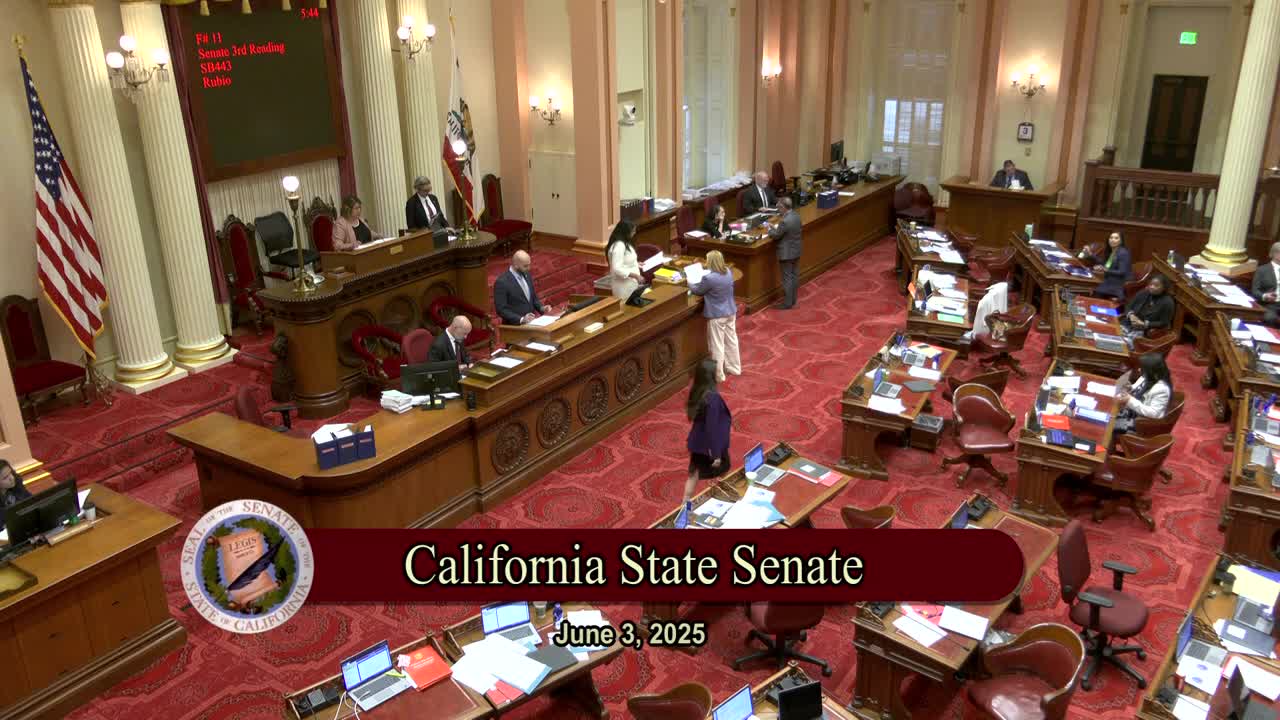 3MIN
Senate Floor
 14MIN
Senate Standing Committee on Public Safety
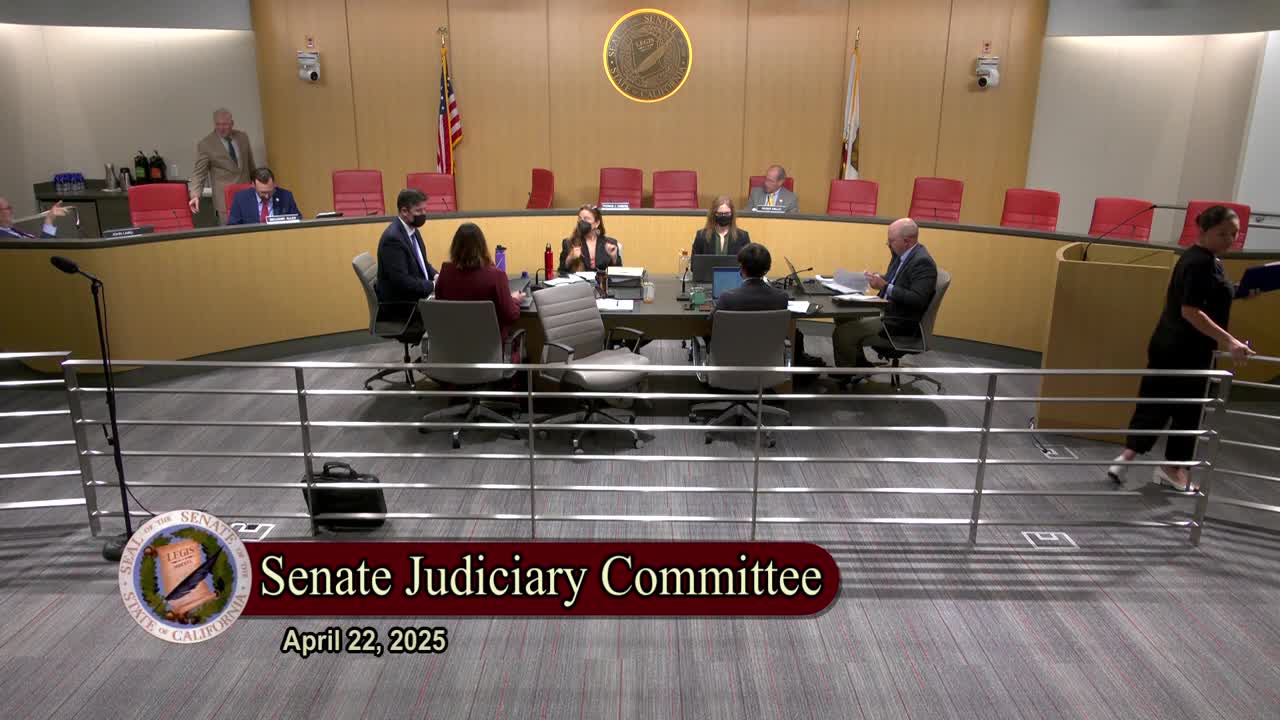 6MIN
Senate Standing Committee on Judiciary
Bill Author