AB 1214: Courts: remote technology.
- Session Year: 2023-2024
- House: Assembly
- Latest Version Date: 2023-06-29
Current Status:
Failed
(2023-07-06: In committee: Set, first hearing. Hearing canceled at the request of author.)
Introduced
In Committee
First Chamber
In Committee
Second Chamber
Enacted
What does this bill do?
The bill lets criminal defendants appear or take part by two‑way audio‑video technology, with the defendant’s agreement and the judge’s permission, for certain noncritical events such as initial appearances, arraignments, pleas, bail hearings, resentencings, and motion hearings when no sworn testimony is taken, but not for jury or bench trials. It also allows witnesses to testify remotely in limited situations, directs the Judicial Council to set minimum courtroom technology standards and collect feedback, and bars courts from retaliating against official court reporters who report tech or audibility problems that interfere with the record.
The summary is provided by generative AI which can make mistakes. For original language, please view the details in the table below.
Existing law allows the use of technology by trial courts for attorneys, parties, and witnesses to appear remotely for specified criminal court proceedings, subject to specified limitations, until January 1, 2024. Existing law, beginning January 1, 2024, allows a defendant in a case charged with only a misdemeanor to appear by counsel, except as specified, and if the defendant agrees, to conduct the initial court appearance, arraignment, and plea by video, as specified. Existing law requires an individual accused of a felony to be personally present at all proceedings unless with leave of the court, the individual executes a written waiver of their right to be personally present, or as otherwise specified. Existing law, beginning January 1, 2024, allows a defendant in a felony matter, if the defendant agrees, to conduct the initial court appearance, arraignment, and plea by video, as specified.
This bill would, until January 1, 2026, instead allow, if the defendant agrees and the court consents, a defendant in a misdemeanor matter to appear through remote technology, as defined, for any noncritical portion of a proceeding when no sworn testimony is taken. The bill would additionally allow a defendant in a felony matter to participate, upon their request and with leave of the court, in the initial court appearance, arraignment, entry of plea, bail hearings, resentencing hearings, and motion hearings and conferences when no sworn testimony is taken, through remote technology, as specified. The bill would specify that these provisions do not authorize the use of remote technology for a jury or court trial. The bill would require the waiver of a defendants personal appearance in a felony matter to include that the defendant knowingly, intelligently, and voluntarily waives the right to be present at the hearing or other proceeding. The bill would authorize a court to permit a witness in misdemeanor or felony proceedings to testify through the use of remote technology, except as specified. The bill would authorize the defendant to consent to appear remotely for noncritical portions of criminal proceedings when no sworn testimony is taken. The bill would require defense counsel, the prosecution, and the judicial officer to be present in the courtroom if the defendant if is physically present in the courtroom.
This bill would require the Judicial Council to adopt minimum standards for the courtroom technology necessary to permit remote participation in criminal proceedings and would authorize the Judicial Council to adopt rules and standards necessary to implement these provisions. The bill would require a superior court using remote technology for criminal proceedings to post on its internet website a means for various persons to provide feedback regarding the use of remote technology and would require the superior court to send feedback to the Judicial Council on a quarterly basis. The bill would require the Judicial Council, commencing July 1, 2024, to compile the written feedback and provide a copy to the chairs of the Senate and Assembly Committees on Judiciary and Senate and Assembly Committees on Public Safety, semiannually.
Existing law prohibits, until January 1, 2024, a trial court from retaliating against an official court reporter or official court reporter pro tempore for notifying a judicial officer that technology or audibility issues are interfering with the creation of the record for a remote proceeding pursuant to specified provisions.
This bill would generally prohibit a court from retaliating, or threatening to retaliate, against an official court reporter or official court reporter pro tempore for notifying a judicial officer that technology or audibility issues are interfering with the creation of the record for a criminal proceeding that includes participation through remote technology.
Existing law allows the use of technology by trial courts for attorneys, parties, and witnesses to appear remotely for specified criminal court proceedings, subject to specified limitations, until January 1, 2024. Existing law, beginning January 1, 2024, allows a defendant in a case charged with only a misdemeanor to appear by counsel, except as specified, and if the defendant agrees, to conduct the initial court appearance, arraignment, and plea by video, as specified. Existing law requires an individual accused of a felony to be personally present at all proceedings unless with leave of the court, the individual executes a written waiver of their right to be personally present, or as otherwise specified. Existing law, beginning January 1, 2024, allows a defendant in a felony matter, if the defendant agrees, to conduct the initial court appearance, arraignment, and plea by video, as specified.
This bill would, until January 1, 2026, instead allow, if the defendant agrees and the court consents, a defendant in a misdemeanor matter to appear through remote technology, as defined, for any appearance or proceeding that does not involve the presentation of testimonial evidence. noncritical portion of a proceeding when no sworn testimony is taken. The bill would additionally allow a defendant in a felony matter to participate, upon their request and with leave of the court, in the initial court appearance, arraignment, entry of plea, bail hearings, resentencing hearings, and motion hearings and conferences that do not involve the presentation of testimonial evidence, when no sworn testimony is taken, through remote technology, as specified. The bill would specify that these provisions do not authorize the use of remote technology for a jury or court trial. The bill would require the waiver of a defendants personal appearance in a felony matter to include that the defendant knowingly, intelligently, and voluntarily waives the right to be present at the hearing or other proceeding. The bill would authorize a court to permit a witness in misdemeanor or felony proceedings to testify through the use of remote technology, except as specified. The bill would authorize the defendant to consent to appear remotely for noncritical portions of criminal proceedings when no testimonial evidence sworn testimony is taken. The bill would require defense counsel, the prosecution, and the judicial officer to be present in the courtroom if the defendant if physically present in the courtroom.
This bill would require the Judicial Council to adopt minimum standards for the courtroom technology necessary to permit remote participation in criminal proceedings and would authorize the Judicial Council to adopt rules and standards necessary to implement these provisions. The bill would require a superior court using remote technology for criminal proceedings to post on its internet website a means for various persons to provide feedback regarding the use of remote technology and would require the superior court to send feedback to the Judicial Council on a quarterly basis. The bill would require the Judicial Council, commencing July 1, 2024, to compile the written feedback and provide a copy to the chairs of the Senate and Assembly Committees on Judiciary and Senate and Assembly Committees on Public Safety, semiannually.
Existing law prohibits, until January 1, 2024, a trial court from retaliating against an official court reporter or official court reporter pro tempore for notifying a judicial officer that technology or audibility issues are interfering with the creation of the record for a remote proceeding pursuant to specified provisions.
This bill would generally prohibit a court from retaliating, or threatening to retaliate, against an official court reporter or official court reporter pro tempore for notifying a judicial officer that technology or audibility issues are interfering with the creation of the record for a proceeding that includes participation through remote technology.
Existing law allows the use of technology by trial courts for attorneys, parties, and witnesses to appear remotely for specified criminal court proceedings, subject to specified limitations, until January 1, 2024. Existing law, beginning January 1, 2024, allows a defendant in a case charged with only a misdemeanor to appear by counsel, except as specified, and if the defendant agrees, to conduct the initial court appearance, arraignment, and plea by video, as specified. Existing law requires an individual accused of a felony to be personally present at all proceedings unless with leave of the court, the individual executes a written waiver of their right to be personally present, or as otherwise specified. Existing law, beginning January 1, 2024, allows a defendant in a felony matter, if the defendant agrees, to conduct the initial court appearance, arraignment, and plea by video, as specified.
This bill would, until January 1, 2026, instead allow, at the defendants request, if the defendant agrees and the court consents, a defendant in a misdemeanor matter to appear through remote technology, as defined, in all proceedings except in a court or jury trial, as specified. for any appearance or proceeding that does not involve the presentation of testimonial evidence. The bill would additionally allow a defendant in a felony matter to participate, upon their request and with leave of the court, in the initial court appearance, arraignment, entry of plea, bail hearings, resentencing hearings, and motion hearings and conferences that do not involve the presentation of testimonial evidence, through remote technology, as specified. The bill would specify that these provisions do not authorize the use of remote technology for a jury or court trial. The bill would require the waiver of a defendants personal appearance in a felony matter to include that the defendant knowingly, intelligently, and voluntarily waives the right to be present at the hearing or other proceeding. The bill would authorize a court to permit a prosecuting attorney or defense counsel to participate through remote technology in a proceeding that does not involve the presentation of testimonial evidence, except in specified circumstances concerning the quality of the remote technology. The bill would authorize a court to permit a witness in misdemeanor or felony proceedings to testify through the use of remote technology, except as specified. The bill would authorize the defendant to consent to appear remotely for noncritical portions of criminal proceedings when no testimonial evidence is taken. The bill would require defense counsel, the prosecution, and the judicial officer to be present in the courtroom if the defendant if physically present in the courtroom.
This bill would require the Judicial Council to adopt minimum standards for the courtroom technology necessary to permit remote participation in criminal proceedings and would authorize the Judicial Council to adopt rules and standards necessary to implement these provisions. The bill would require a superior court using remote technology for criminal proceedings to post on its internet website a means for various persons to provide feedback regarding the use of remote technology and would require the superior court to send feedback to the Judicial Council on a quarterly basis. The bill would require the Judicial Council, commencing July 1, 2024, to compile the written feedback and provide a copy to the chairs of the Senate and Assembly Committees on Judiciary and Senate and Assembly Committees on Public Safety, semiannually.
Existing law prohibits, until January 1, 2024, a trial court from retaliating against an official court reporter or official court reporter pro tempore for notifying a judicial officer that technology or audibility issues are interfering with the creation of the record for a remote proceeding pursuant to specified provisions.
This bill would generally prohibit a court from retaliating, or threatening to retaliate, against an official court reporter or official court reporter pro tempore for notifying a judicial officer that technology or audibility issues are interfering with the creation of the record for a proceeding that includes participation through remote technology.
Existing law allows the use of technology by trial courts for attorneys, parties, and witnesses to appear remotely for specified criminal court proceedings, subject to specified limitations, until January 1, 2024. Existing law, beginning January 1, 2024, allows a defendant in a case charged with only a misdemeanor to appear by counsel, except as specified, and if the defendant agrees, to conduct the initial court appearance, arraignment, and plea by video, as specified. Existing law requires an individual accused of a felony to be personally present at all proceedings unless with leave of the court, the individual executes a written waiver of their right to be personally present, or as otherwise specified. Existing law, beginning January 1, 2024, allows a defendant in a felony matter, if the defendant agrees, to conduct the initial court appearance, arraignment, and plea by video, as specified.
This bill would, until January 1, 2026, instead allow, at the defendants request, a defendant in a misdemeanor matter to appear through remote technology, as defined, in all proceedings except in a court or jury trial, as specified. The bill would additionally allow a defendant in a felony matter to participate, upon their request and with leave of the court, in the initial court appearance, arraignment, entry of plea, bail hearings, resentencing hearings, and motion hearings and conferences that do not involve the presentation of testimonial evidence, through remote technology, as specified. The bill would require the waiver of a defendants personal appearance in a felony matter to include that the defendant knowingly, intelligently, and voluntarily waives the right to be present at the hearing or other proceeding. The bill would authorize a court to permit a prosecuting attorney or defense counsel to participate through remote technology in a proceeding that does not involve the presentation of testimonial evidence, except in specified circumstances concerning the quality of the remote technology. The bill would authorize a court to permit a witness in misdemeanor or felony proceedings to testify through the use of remote technology, except as specified.
This bill would require the Judicial Council to adopt minimum standards for the courtroom technology necessary to permit remote participation in criminal proceedings and would authorize the Judicial Council to adopt rules and standards necessary to implement these provisions. The bill would require a superior court using remote technology for criminal proceedings to post on its internet website a means for various persons to provide feedback regarding the use of remote technology and would require the superior court to send feedback to the Judicial Council on a quarterly basis. The bill would require the Judicial Council, commencing July 1, 2024, to compile the written feedback and provide a copy to the chairs of the Senate and Assembly Committees on Judiciary and Senate and Assembly Committees on Public Safety, semiannually.
Existing law prohibits, until January 1, 2024, a trial court from retaliating against an official court reporter or official court reporter pro tempore for notifying a judicial officer that technology or audibility issues are interfering with the creation of the record for a remote proceeding pursuant to specified provisions.
This bill would generally prohibit a court from retaliating, or threatening to retaliate, against an official court reporter or official court reporter pro tempore for notifying a judicial officer that technology or audibility issues are interfering with the creation of the record for a proceeding that includes participation through remote technology.
(a)(1)In all cases in which the accused is charged with a misdemeanor only, they may appear by counsel only, except as provided in paragraphs (2) and (3).
(2)If the accused is charged with a misdemeanor offense involving domestic violence, as defined in Section 6211 of the Family Code, or a misdemeanor violation of Section 273.6, the accused shall be present for arraignment and sentencing, and at any time during the proceedings when ordered by the court for the purpose of being informed of the conditions of a protective order issued pursuant to Section 136.2.
(3)If the accused is charged with a misdemeanor offense involving driving under the influence, in an appropriate case, the court may order a defendant to be present for arraignment, at the time of plea, or at sentencing. For purposes of this paragraph, a misdemeanor offense involving driving under the influence shall include a misdemeanor violation of any of the following:
(A)Subdivision (b) of Section 191.5.
(B)Section 23103 as specified in Section 23103.5 of the Vehicle Code.
(C)Section 23152 of the Vehicle Code.
(D)Section 23153 of the Vehicle Code.
(4)Notwithstanding the above, if the accused agrees and the court consents, the accused may appear through remote technology for any noncritical portion of a criminal proceeding when no sworn testimony is taken as provided by subdivision (c). This paragraph does not permit the use of remote technology for a jury or court trial.
(b)(1)Except as provided in subdivision (c), in all cases in which a felony is charged, the accused shall be personally present at the arraignment, at the time of plea, during the preliminary hearing, during those portions of the trial when evidence is taken before the trier of fact, and at the time of the imposition of sentence. The accused shall be personally present at all other proceedings unless they shall, with leave of court, execute in open court, a written waiver of their right to be personally present, as provided by paragraph (2). Notwithstanding the above, at the request of the accused, and with leave of the court, the accuseds participation in the initial court appearance, arraignment, bail hearing, resentencing if the defendant is incarcerated, motion hearings and conferences when no sworn testimony is taken, and plea may be by remote technology, as provided by subdivision (c). This paragraph does not permit the use of remote technology for a jury or court trial.
(2)The accused may execute a written waiver of their right to be personally present, approved by their counsel, and the waiver shall be filed with the court. However, the court may specifically direct the defendant to be personally present at any particular proceeding or portion thereof. The waiver shall be substantially in the following form:
Waiver of Defendants Personal Presence
The undersigned defendant, having been advised of their right to be present at all stages of the proceedings, including, but not limited to, presentation of and arguments on questions of fact and law, and to be confronted by and cross-examine all witnesses, hereby knowingly, intelligently, and voluntarily waives the right to be present at the hearing of any motion or other proceeding in this cause. The undersigned defendant hereby requests the court to proceed during every absence of the defendant that the court may permit pursuant to this waiver, and hereby agrees that their interest is represented at all times by the presence of their attorney the same as if the defendant were personally present in court, and further agrees that notice to their attorney that their presence in court
on a particular day at a particular time is required is notice to the defendant of the requirement of their appearance at that time and place.
(c)(1)The court may permit the initial court appearance and arraignment of defendants held in any state, county, or local facility within the county on felony or misdemeanor charges, except for those defendants who were indicted by a grand jury, to be conducted by remote technology between the defendant and the courtroom in lieu of the physical presence of the defendant in the courtroom. If the defendant is represented by counsel, the attorney shall be present with the defendant at the initial court appearance and arraignment and may enter a plea during the arraignment. However, if the defendant is represented by counsel at an arraignment on the information in a felony case, and if the defendant does not plead guilty or nolo contendere to any charge, the attorney shall be present with the defendant or if the attorney is not present with the defendant, the attorney shall be present in court during the hearing. The defendant shall have the right to make their plea while physically present in the courtroom if they request to do so. If the defendant decides not to exercise the right to be physically present in the courtroom, they shall execute a written waiver of that right. A judge may order a defendants personal appearance in court for the initial court appearance and arraignment. In a misdemeanor case, a judge may, pursuant to this subdivision, accept a plea of guilty or no contest from a defendant who is not physically in the courtroom. In a felony case, a judge may, pursuant to this subdivision, accept a plea of guilty or no contest from a defendant who is not physically in the courtroom if the parties stipulate thereto.
(2)(A)A defendant, whether in or out of custody, who does not wish to be personally present for noncritical portions of a criminal proceeding or the trial when no sworn testimony is taken may make an oral waiver in open court prior to the proceeding or may submit a written request to the court, which the court may grant in its discretion. The defendant may also consent to appear remotely for noncritical portions of criminal proceedings when no sworn testimony is taken. The court may, when a defendant has waived the right to be personally present, require a defendant held in any state, county, or local facility within the county on felony or misdemeanor charges to be present for noncritical portions of the proceedings when no sworn testimony is taken, including motions in limine, by remote technology between the defendant and the courtroom in lieu of the physical presence of the defendant in the courtroom. If the defendant is represented by counsel, the attorney shall not be required to be personally present with the defendant for noncritical portions of the proceedings when no sworn testimony is taken, if the remote technology allows for private communication between the defendant and the attorney prior to and during the noncritical portion of the proceedings when no sworn testimony is taken. Any private communication shall be confidential and privileged pursuant to Section 952 of the Evidence Code.
(B)If the defendant is incarcerated in state prison and the defendant agrees, the provisions of Section 977.2 apply to resentencing. This paragraph does not permit the use of remote technology for a jury or court trial.
(C)This paragraph does not expand or limit the right of a defendant to be personally present with their counsel at a particular proceeding as required by Section 15 of Article I of the California Constitution.
(d)(1)Notwithstanding any other provision in this section, the court may allow a defendant to appear by counsel on that day, at a trial, hearing, or other proceeding, with or without a written waiver, if the court finds, by clear and convincing evidence, all of the following to be true:
(A)The defendant is in custody and is refusing, without good cause, to appear in court on that day for that trial, hearing, or other proceeding.
(B)The defendant has been informed of their right and obligation to be personally present in court.
(C)The defendant has been informed that the trial, hearing, or other proceeding will proceed without the defendant being present.
(D)The defendant has been informed that they have the right to remain silent during the trial, hearing, or other proceeding.
(E)The defendant has been informed that their absence without good cause will constitute a voluntary waiver of any constitutional or statutory right to confront any witnesses against them or to testify on their own behalf.
(F)The defendant has been informed whether or not defense counsel will be present.
(2)The court shall state on the record the reasons for the courts findings and shall cause those findings and reasons to be entered into the minutes.
(3)If the trial, hearing, or other proceeding lasts for more than one day, the court is required to make the findings required by this subdivision anew for each day that the defendant is absent.
(4)This subdivision does not apply to any trial, hearing, or other proceeding in which the defendant was personally present in court at the commencement of the trial, hearing, or other proceeding.
(e)If the accused is physically present in court, counsel for the accused, the prosecution, and the judicial officer shall be present in the courtroom.
(f)When the court conducts a criminal proceeding that will be reported by an official reporter or official reporter pro tempore, the reporter shall be physically present in the same room as the judicial officer.
(g)When a court interpreter is used in a criminal proceeding, the court interpreter shall be physically present in the same room as the judicial officer.
(h)The court shall require any person who participates remotely in a criminal proceeding to observe proper courtroom decorum, including, but not limited to, observing the same dress code and behavior as would be observed if physically in the courtroom and avoiding any extraneous noise or distractions.
(i)The court shall not permit a prosecuting attorney, defense counsel, the accused, or a witness to appear or participate in a criminal proceeding through the use of remote technology, and shall continue any criminal proceeding being conducted with the use of remote technology, if any of the following conditions are present and cannot be resolved:
(1)The court does not have the technology necessary to conduct the proceeding remotely.
(2)Although the court has the requisite technology, the quality of the technology or audibility at a proceeding or the length of the proceeding prevents the effective management or resolution of the proceeding.
(3)The quality of the technology or audibility at a proceeding inhibits the court reporters ability to accurately prepare and certify a transcript of the proceeding.
(4)The court reporter is unable to capture the verbatim record and certify a transcript of any proceeding that is conducted remotely, in whole or in part, to the same extent and in the same manner as if it were not conducted remotely.
(5)A confidential remote proceeding has been infiltrated or otherwise interrupted by unauthorized parties.
(6)The quality of the technology or audibility at a proceeding inhibits the accuseds ability to understand or participate in the proceeding.
(7)The quality of the technology or audibility at a proceeding inhibits defense counsel from being able to provide effective representation to the accused.
(8)The quality of the technology or audibility at a proceeding inhibits a court interpreters ability to provide language access, including the ability to communicate and translate directly with the accused and the court during the proceeding.
(j)The Judicial Council shall adopt minimum standards for the courtroom technology necessary to permit remote participation in criminal proceedings. Such standards shall include, but not be limited to, hard-wired or other reliable high-speed internet connections for the judicial officer and court reporter, and monitors, dedicated cameras, speakers, and microphones so the judicial officer, court reporter, and court interpreter can appropriately see and hear remote participants, as well as to ensure that remote participants can appropriately see and hear the judicial officer and other courtroom participants.
(k)The Judicial Council shall adopt other rules and standards as are necessary to implement the policies and provisions of this section.
(l)A superior court that uses remote technology for criminal proceedings shall post on its internet website a continuing invitation for interested parties, including attorneys, court reporters, and court interpreters, to provide written feedback to the superior court on the use of remote technology in criminal proceedings. Superior courts shall forward copies of the written feedback to the Judicial Council on at least a quarterly basis. The Judicial Council shall compile the written feedback received by the superior courts and provide a copy of the written feedback to the chairs of the Senate and Assembly Committees on Judiciary and Senate and Assembly Committees on Public Safety, semiannually, commencing July 1, 2024.
(m)For the purposes of this section, remote technology means two-way electronic audiovideo communication.
(n)This section shall remain in effect only until January 1, 2026, and as of that date is repealed.
SEC. 3.SEC. 2.Section 977.3 is added to the Penal Code, to read:977.3.(a)Only when authorized by Section 1340, 1347.5, or 2624, and consistent with the constitutional rights of the accused, the court may permit a witness in a misdemeanor or felony proceeding to testify through the use of remote technology. Except as authorized by this section, the witness shall be physically present in the courtroom when presenting live testimony in misdemeanor or felony proceedings.
(b)For the purposes of this section, remote technology means two-way electronic audiovideo communication.
SEC. 3.Section 977.4 is added to the Penal Code, to read:977.4.A trial court shall not retaliate or threaten to retaliate against an official reporter or official reporter pro tempore who notifies the judicial officer that technology or audibility issues are impeding the creation of the verbatim records of a criminal proceeding that includes participation through remote technology.
A trial court shall not retaliate or threaten to retaliate against an official reporter or official reporter pro tempore who notifies the judicial officer that technology or audibility issues are impeding the creation of the verbatim records of a proceeding that includes participation through remote technology.
SEC. 2.Section 977 of the Penal Code, as added by Section 13 of Chapter 57 of the Statutes of 2022, is amended to read:977.(a)(1)In all cases in which the accused is charged with a misdemeanor only, they may appear by counsel only, except as provided in paragraphs (2) and (3).
(2)If the accused is charged with a misdemeanor offense involving domestic violence, as defined in Section 6211 of the Family Code, or a misdemeanor violation of Section 273.6, the accused shall be present for arraignment and sentencing, and at any time during the proceedings when ordered by the court for the purpose of being informed of the conditions of a protective order issued pursuant to Section 136.2.
(3)If the accused is charged with a misdemeanor offense involving driving under the influence, in an appropriate case, the court may order a defendant to be present for arraignment, at the time of plea, or at sentencing. For purposes of this paragraph, a misdemeanor offense involving driving under the influence shall include a misdemeanor violation of any of the following:
(A)Subdivision (b) of Section 191.5.
(B)Section 23103 as specified in Section 23103.5 of the Vehicle Code.
(C)Section 23152 of the Vehicle Code.
(D)Section 23153 of the Vehicle Code.
(4)Notwithstanding the above, if the accused agrees and the court consents, the accused may appear through remote technology for any appearance or proceeding, including, but not limited to, the initial court appearance, arraignment, plea, bail hearing, resentencing if the defendant is incarcerated, and motion hearings and conferences that do not involve the presentation of testimonial evidence, noncritical portion of a criminal proceeding when no sworn testimony is taken as provided by subdivision (c). This paragraph does not permit the use of remote technology for a jury or court trial.
(b)(1)Except as provided in subdivision (c), in all cases in which a felony is charged, the accused shall be personally present at the arraignment, at the time of plea, during the preliminary hearing, during those portions of the trial when evidence is taken before the trier of fact, and at the time of the imposition of sentence. The accused shall be personally present at all other proceedings unless they shall, with leave of court, execute in open court, a written waiver of their right to be personally present, as provided by paragraph (2). Notwithstanding the above, at the request of the accused, and with leave of the court, the accuseds participation in the initial court appearance, arraignment, bail hearing, resentencing if the defendant is incarcerated, motion hearings and conferences that do not involve the presentation of testimonial evidence, when no sworn testimony is taken, and plea may be by remote technology, as provided by subdivision (c). This paragraph does not permit the use of remote technology for a jury or court trial.
(2)The accused may execute a written waiver of their right to be personally present, approved by their counsel, and the waiver shall be filed with the court. However, the court may specifically direct the defendant to be personally present at any particular proceeding or portion thereof. The waiver shall be substantially in the following form:
Waiver of Defendants Personal Presence
The undersigned defendant, having been advised of their right to be present at all stages of the proceedings, including, but not limited to, presentation of and arguments on questions of fact and law, and to be confronted by and cross-examine all witnesses, hereby knowingly, intelligently, and voluntarily waives the right to be present at the hearing of any
motion or other proceeding in this cause. The undersigned defendant hereby requests the court to proceed during every absence of the defendant that the court may permit pursuant to this waiver, and hereby agrees that their interest is represented at all times by the presence of their attorney the same as if the defendant were personally present in court, and further agrees that notice to their attorney that their presence in court on a particular day at a particular time is required is notice to the defendant of the requirement of their appearance at that time and place.
(c)(1)The court may permit the initial court appearance and arraignment of defendants held in any state, county, or local facility within the county on felony or misdemeanor charges, except for those defendants who were indicted by a grand jury, to be conducted by remote technology between the defendant and the courtroom in lieu of the physical presence of the defendant in the courtroom. If the defendant is represented by counsel, the attorney shall be present with the defendant at the initial court appearance and arraignment, arraignment and may enter a plea during the arraignment. However, if the defendant is represented by counsel at an arraignment on an the information in a felony case, and if the defendant does not plead guilty or nolo contendere to any charge, the attorney shall be present with the defendant or if the attorney is not present with the defendant, the attorney shall be present in court during the hearing. The defendant shall have the right to make their plea while physically present in the courtroom if they request to do so. If the defendant decides not to exercise the right to be physically present in the courtroom courtroom, they shall execute a written waiver of that right. A judge may order a defendants personal appearance in court for the initial court appearance and arraignment. In a misdemeanor case, a judge may, pursuant to this subdivision, accept a plea of guilty or no contest from a defendant who is not physically in the courtroom. In a felony case, a judge may, pursuant to this subdivision, accept a plea of guilty or no contest from a defendant who is not physically in the courtroom if the parties stipulate thereto.
(2)(A)A defendant, whether in or out of custody, who does not wish to be personally present for noncritical portions of a criminal proceeding or the trial when no testimonial evidence sworn testimony is taken may make an oral waiver in open court prior to the proceeding or may submit a written request to the court, which the court may grant in its discretion. The defendant may also consent to appear remotely for noncritical portions of criminal proceedings when no testimonial evidence sworn testimony is taken. The court may, when a defendant has waived the right to be personally present, require a defendant held in any state, county, or local facility within the county on felony or misdemeanor charges to be present for noncritical portions of the trial when no testimonial evidence is taken, including, but not limited to, confirmation of the preliminary hearing, status conferences, trial readiness conferences, discovery motions, receipt of records, the setting of the trial date, a motion to vacate the trial date, and proceedings when no sworn testimony is taken, including motions in limine, by remote technology between the defendant and the courtroom in lieu of the physical presence of the defendant in the courtroom. If the defendant is represented by counsel, the attorney shall not be required to be personally present with the defendant for noncritical portions of the trial, proceedings when no sworn testimony is taken, if the remote technology allows for private communication between the defendant and the attorney prior to and during the noncritical portion of trial. the proceedings when no sworn testimony is taken. Any private communication shall be confidential and privileged pursuant to Section 952 of the Evidence Code.
(B)If the defendant is incarcerated in state prison and the defendant agrees, the provisions of Section 977.2 apply to resentencing. This paragraph does not permit the use of remote technology for a jury or court trial.
(B)(C)This paragraph does not expand or limit the right of a defendant to be personally present with their counsel at a particular proceeding as required by Section 15 of Article I of the California Constitution.
(d)(1)Notwithstanding any other provision in this section, the court may allow a defendant to appear by counsel on that day, at a trial, hearing, or other proceeding, with or without a written waiver, if the court finds, by clear and convincing evidence, all of the following to be true:
(A)The defendant is in custody and is refusing, without good cause, to appear in court on that day for that trial, hearing, or other proceeding.
(B)The defendant has been informed of their right and obligation to be personally present in court.
(C)The defendant has been informed that the trial, hearing, or other proceeding will proceed without the defendant being present.
(D)The defendant has been informed that they have the right to remain silent during the trial, hearing, or other proceeding.
(E)The defendant has been informed that their absence without good cause will constitute a voluntary waiver of any constitutional or statutory right to confront any witnesses against them or to testify on their own behalf.
(F)The defendant has been informed whether or not defense counsel will be present.
(2)The court shall state on the record the reasons for the courts findings and shall cause those findings and reasons to be entered into the minutes.
(3)If the trial, hearing, or other proceeding lasts for more than one day, the court is required to make the findings required by this subdivision anew for each day that the defendant is absent.
(4)This subdivision does not apply to any trial, hearing, or other proceeding in which the defendant was personally present in court at the commencement of the trial, hearing, or other proceeding.
(e)If the accused is physically present in court, counsel for the accused, the prosecution, and the judicial officer shall be present in the courtroom.
(f)When the court conducts a criminal proceeding that will be reported by an official reporter or official reporter pro tempore, the reporter shall be physically present in the same room as the judicial officer.
(g)When a court interpreter is used in a criminal proceeding, the court interpreter shall be physically present in the same room as the judicial officer.
(h)The court shall require any person who participates remotely in a criminal proceeding to observe proper courtroom decorum, including, but not limited to, observing the same dress code and behavior as would be observed if physically in the courtroom and avoiding any extraneous noise or distractions.
(i)The court shall not permit a prosecuting attorney, defense counsel, the accused, or a witness to appear or participate in a criminal proceeding through the use of remote technology, and shall continue any criminal proceeding being conducted with the use of remote technology, if any of the following conditions are present and cannot be resolved:
(1)The court does not have the technology necessary to conduct the proceeding remotely.
(2)Although the court has the requisite technology, the quality of the technology or audibility at a proceeding or the length of the proceeding prevents the effective management or resolution of the proceeding.
(3)The quality of the technology or audibility at a proceeding inhibits the court reporters ability to accurately prepare and certify a transcript of the proceeding.
(4)The court reporter is unable to capture the verbatim record and certify a transcript of any proceeding that is conducted remotely, in whole or in part, to the same extent and in the same manner as if it were not conducted remotely.
(5)A confidential remote proceeding has been infiltrated or otherwise interrupted by unauthorized parties.
(6)The quality of the technology or audibility at a proceeding inhibits the accuseds ability to understand or participate in the proceeding.
(7)The quality of the technology or audibility at a proceeding inhibits defense counsel from being able to provide effective representation to the accused.
(8)The quality of the technology or audibility at a proceeding inhibits a court interpreters ability to provide language access, including the ability to communicate and translate directly with the accused and the court during the proceeding.
(j)The Judicial Council shall adopt minimum standards for the courtroom technology necessary to permit remote participation in criminal proceedings. Such standards shall include, but not be limited to, hard-wired or other reliable high-speed internet connections for the judicial officer and court reporter, and monitors, dedicated cameras, speakers, and microphones so the judicial officer, court reporter, and court interpreter can appropriately see and hear remote participants, as well as to ensure that remote participants can appropriately see and hear the judicial officer and other courtroom participants.
(k)The Judicial Council shall adopt other rules and standards as are necessary to implement the policies and provisions of this section.
(l)A superior court that uses remote technology for criminal proceedings shall post on its internet website a continuing invitation for interested parties, including attorneys, court reporters, and court interpreters, to provide written feedback to the superior court on the use of remote technology in criminal proceedings. Superior courts shall forward copies of the written feedback to the Judicial Council on at least a quarterly basis. The Judicial Council shall compile the written feedback received by the superior courts and provide a copy of the written feedback to the chairs of the Senate and Assembly Committees on Judiciary and Senate and Assembly Committees on Public Safety, semiannually, commencing July 1, 2024.
(m)For the purposes of this section, remote technology means by two-way electronic audiovideo communication.
(n)This section shall remain in effect only until January 1, 2026, and as of that date is repealed.
SEC. 3.Section 977.3 is added to the Penal Code, to read:977.3.(a)Only when authorized by Section 1340, 1347.5, or 2624, and consistent with the constitutional rights of the accused, the court may permit a witness in a misdemeanor or felony proceeding to testify through the use of remote technology. Except as authorized by this section, the witness shall be physically present in the courtroom when presenting live testimony in misdemeanor or felony proceedings.
(b)For the purposes of this section, remote technology means two-way electronic audiovideo communication.
A trial court shall not retaliate or threaten to retaliate against an official reporter or official reporter pro tempore who notifies the judicial officer that technology or audibility issues are impeding the creation of the verbatim records of a proceeding that includes participation through remote technology.
SEC. 2.Section 977 of the Penal Code, as added by Section 13 of Chapter 57 of the Statutes of 2022, is amended to read:977.(a)(1)In all cases in which the accused is charged with a misdemeanor only, they may appear by counsel only, except as provided in paragraphs (2) and (3). The court may permit the accused, upon their request, to appear through remote technology for any appearance or proceeding, including, but not limited to, the initial court appearance, arraignment, and plea, as provided by subdivision (c). This section does not permit the use of remote technology for a jury or court trial, except as authorized by this section.
(2)If the accused is charged with a misdemeanor offense involving domestic violence, as defined in Section 6211 of the Family Code, or a misdemeanor violation of Section 273.6, the accused shall be present for arraignment and sentencing, and at any time during the proceedings when ordered by the court for the purpose of being informed of the conditions of a protective order issued pursuant to Section 136.2.
(3)If the accused is charged with a misdemeanor offense involving driving under the influence, in an appropriate case, the court may order a defendant to be present for arraignment, at the time of plea, or at sentencing. For purposes of this paragraph, a misdemeanor offense involving driving under the influence shall include a misdemeanor violation of any of the following:
(A)Subdivision (b) of Section 191.5.
(B)Section 23103 as specified in Section 23103.5 of the Vehicle Code.
(C)Section 23152 of the Vehicle Code.
(D)Section 23153 of the Vehicle Code.
(4)Notwithstanding the above, if the accused agrees and the court consents, the accused may appear through remote technology for any appearance or proceeding, including, but not limited to, the initial court appearance, arraignment, plea, bail hearing, resentencing if the defendant is incarcerated, and motion hearings and conferences that do not involve the presentation of testimonial evidence, as provided by subdivision (c). This paragraph does not permit the use of remote technology for a jury or court trial.
(b)(1)Except as provided in subdivision (c), in all cases in which a felony is charged, the accused shall be personally present at the arraignment, at the time of plea, during the preliminary hearing, during those portions of the trial when evidence is taken before the trier of fact, and at the time of the imposition of sentence. The accused shall be personally present at all other proceedings unless they shall, with leave of court, execute in open court, a written waiver of their right to be personally present, as provided by paragraph (2). At Notwithstanding the above, at the request of the accused, and with leave of the court, the accuseds participation in the initial court appearance, arraignment, bail hearing, resentencing if the defendant is incarcerated, motion hearings and conferences that do not involve the presentation of testimonial evidence, and plea may be by remote technology, as provided by subdivision (c). This paragraph does not permit the use of remote technology for a jury or court trial.
(2)The accused may execute a written waiver of their right to be personally present, approved by their counsel, and the waiver shall be filed with the court. However, the court may specifically direct the defendant to be personally present at any particular proceeding or portion thereof. The waiver shall be substantially in the following form:
Waiver of Defendants Personal Presence
The undersigned defendant, having been advised of their right to be present at all stages of the proceedings, including, but not limited to, presentation of and arguments on questions of fact and law, and to be confronted by and cross-examine all witnesses, hereby knowingly, intelligently, and voluntarily waives the right to be present at the hearing of any motion or other proceeding in this cause. The undersigned defendant hereby requests the court to proceed during every absence of the defendant that the court may permit pursuant to this waiver, and hereby agrees that their interest is represented at all times by the presence of their attorney the
same as if the defendant were personally present in court, and further agrees that notice to their attorney that their presence in court on a particular day at a particular time is required is notice to the defendant of the requirement of their appearance at that time and place.
(c)(1)The court may permit the initial court appearance and arraignment of defendants held in any state, county, or local facility within the county on felony or misdemeanor charges, except for those defendants who were indicted by a grand jury, to be conducted by remote technology between the defendant and the courtroom in lieu of the physical presence of the defendant in the courtroom. If the defendant is represented by counsel, the attorney shall be present with the defendant at the initial court appearance and arraignment, and may enter a plea during the arraignment. However, if the defendant is represented by counsel at an arraignment on an information in a felony case, and if the defendant does not plead guilty or nolo contendere to any charge, the attorney shall be present with the defendant or if the attorney is not present with the defendant, the attorney shall be present in court during the hearing. The defendant shall have the right to make their plea while physically present in the courtroom if they request to do so. If the defendant decides not to exercise the right to be physically present in the courtroom they shall execute a written waiver of that right. A judge may order a defendants personal appearance in court for the initial court appearance and arraignment. In a misdemeanor case, a judge may, pursuant to this subdivision, accept a plea of guilty or no contest from a defendant who is not physically in the courtroom. In a felony case, a judge may, pursuant to this subdivision, accept a plea of guilty or no contest from a defendant who is not physically in the courtroom if the parties stipulate thereto.
(2)(A)A defendant defendant, whether in or out of custody, who does not wish to be personally present for noncritical portions of a criminal proceeding or the trial when no testimonial evidence is taken may make an oral waiver in open court prior to the proceeding or may submit a written request to the court, which the court may grant in its discretion. The defendant may also consent to appear remotely for noncritical portions of criminal proceedings when no testimonial evidence is taken. The court may, when a defendant has waived the right to be personally present, require a defendant held in any state, county, or local facility within the county on felony or misdemeanor charges to be present for noncritical portions of the trial when no testimonial evidence is taken, including, but not limited to, confirmation of the preliminary hearing, status conferences, trial readiness conferences, discovery motions, receipt of records, the setting of the trial date, a motion to vacate the trial date, and motions in limine, by remote technology between the defendant and the courtroom in lieu of the physical presence of the defendant in the courtroom. If the defendant is represented by counsel, the attorney shall not be required to be personally present with the defendant for noncritical portions of the trial, if the remote technology allows for private communication between the defendant and the attorney prior to and during the noncritical portion of trial. Any private communication shall be confidential and privileged pursuant to Section 952 of the Evidence Code.
(B)This paragraph does not expand or limit the right of a defendant to be personally present with their counsel at a particular proceeding as required by Section 15 of Article 1 I of the California Constitution.
(d)(1)Notwithstanding any other provision in this section, the court may allow a defendant to appear by counsel on that day, at a trial, hearing, or other proceeding, with or without a written waiver, if the court finds, by clear and convincing evidence, all of the following to be true:
(A)The defendant is in custody and is refusing, without good cause, to appear in court on that day for that trial, hearing, or other proceeding.
(B)The defendant has been informed of their right and obligation to be personally present in court.
(C)The defendant has been informed that the trial, hearing, or other proceeding will proceed without the defendant being present.
(D)The defendant has been informed that they have the right to remain silent during the trial, hearing, or other proceeding.
(E)The defendant has been informed that their absence without good cause will constitute a voluntary waiver of any constitutional or statutory right to confront any witnesses against them or to testify on their own behalf.
(F)The defendant has been informed whether or not defense counsel will be present.
(2)The court shall state on the record the reasons for the courts findings and shall cause those findings and reasons to be entered into the minutes.
(3)If the trial, hearing, or other proceeding lasts for more than one day, the court is required to make the findings required by this subdivision anew for each day that the defendant is absent.
(4)This subdivision does not apply to any trial, hearing, or other proceeding in which the defendant was personally present in court at the commencement of the trial, hearing, or other proceeding.
(e)Except as specified in subdivision (i), a court may, as appropriate and practicable, permit a prosecuting attorney or defense counsel to participate through the use of remote technology in a criminal proceeding that does not involve the presentation of testimonial evidence. This subdivision does not limit or expand the courts authority to require the physical presence of an attorney.(e)If the accused is physically present in court, counsel for the accused, the prosecution, and the judicial officer shall be present in the courtroom.
(f)When the court conducts a criminal proceeding that will be reported by an official reporter or official reporter pro tempore, the reporter shall be physically present in the same room as the judicial officer.
(g)When a court interpreter is used in a criminal proceeding, the court interpreter shall be physically present in the same room as the judicial officer.
(h)The court shall require any person who participates remotely in a criminal proceeding to observe proper courtroom decorum, including, but not limited to, observing the same dress code and behavior as would be observed if physically in the courtroom. courtroom and avoiding any extraneous noise or distractions.
(i)The court shall not permit a prosecuting attorney, defense counsel, the accused, or a witness to appear or participate in a criminal proceeding through the use of remote technology, and shall continue any criminal proceeding being conducted with the use of remote technology, if any of the following conditions are present and cannot be resolved:
(1)The court does not have the technology necessary to conduct the proceeding remotely.
(2)Although the court has the requisite technology, the quality of the technology or audibility at a proceeding prevents the effective management or resolution of the proceeding.
(3)The quality of the technology or audibility at a proceeding inhibits the court reporters ability to accurately prepare and certify a transcript of the proceeding.
(4)The court reporter is unable to capture the verbatim record and report certify a transcript of any proceeding that is conducted remotely, in whole or in part, to the same extent and in the same manner as if it were not conducted remotely.
(5)A confidential remote proceeding has been infiltrated or otherwise interrupted by unauthorized parties.
(5)(6)The quality of the technology or audibility at a proceeding inhibits the accuseds ability to understand or participate in the proceeding.
(6)(7)The quality of the technology or audibility at a proceeding inhibits defense counsel from being able to provide effective representation to the accused.
(7)(8)The quality of the technology or audibility at a proceeding inhibits a court interpreters ability to provide language access, including the ability to communicate and translate directly with the accused and the court during the proceeding.
(j)The Judicial Council shall adopt minimum standards for the courtroom technology necessary to permit remote participation in criminal proceedings. Such standards shall include, but not be limited to, hard-wired internet connections for the judicial officer and court reporter, and monitors, dedicated cameras, speakers, and microphones so the judicial officer, court reporter, and court interpreter can appropriately see and hear remote participants, as well as to ensure that remote participants can appropriately see and hear the judicial officer and other courtroom participants.
(k)The Judicial Council shall adopt other rules and standards as are necessary to implement the policies and provisions of this section.
(l)A superior court that uses remote technology for criminal proceedings shall post on its internet website a continuing invitation for interested parties, including attorneys, court reporters, and court interpreters, to provide written feedback to the superior court on the use of remote technology in criminal proceedings. Superior courts shall forward copies of the written feedback to the Judicial Council on at least a quarterly basis. The Judicial Council shall compile the written feedback received by the superior courts and provide a copy of the written feedback to the chairs of the Senate and Assembly Committees on Judiciary and Senate and Assembly Committees on Public Safety, semiannually, commencing July 1, 2024.
(m)For the purposes of this section, remote technology means by two-way electronic audiovideo communication.
(n)This section shall remain in effect only until January 1, 2026, and as of that date is repealed.
SEC. 3.Section 977.4 is added to the Penal Code, to read:977.4.(a)Where authorized by Sections 1340, 1346, 1346.1, 1347.5, and 2624 of this code, or Section 16519.63 of the Welfare and Institutions Code, and consistent with the constitutional rights of the accused, the court may permit a witness in a misdemeanor or felony proceeding to testify through the use of remote technology. Except as authorized by this section, the witness shall be physically present in the courtroom when presenting live testimony in misdemeanor or felony proceedings.(b)For the purposes of this section, remote technology means by two-way electronic audiovideo communication.A trial court shall not retaliate or threaten to retaliate against an official reporter or official reporter pro tempore who notifies the judicial officer that technology or audibility issues are impeding the creation of the verbatim records of a proceeding that includes participation through remote technology.
SEC. 2.Section 977 of the Penal Code, as added by Section 13 of Chapter 57 of the Statutes of 2022, is amended to read:977.(a)(1)In all cases in which the accused is charged with a misdemeanor only, they may appear by counsel only, except as provided in paragraphs (2) and (3). If the accused agrees, the initial court appearance, arraignment, and plea may be by video, as provided by subdivision (c). The court may permit the accused, upon their request, to appear through remote technology for any appearance or proceeding, including, but not limited to, the initial court appearance, arraignment, and plea, as provided by subdivision (c). This section does not permit the use of remote technology for a jury or court trial, except as authorized by this section.
(2)If the accused is charged with a misdemeanor offense involving domestic violence, as defined in Section 6211 of the Family Code, or a misdemeanor violation of Section 273.6, the accused shall be present for arraignment and sentencing, and at any time during the proceedings when ordered by the court for the purpose of being informed of the conditions of a protective order issued pursuant to Section 136.2.
(3)If the accused is charged with a misdemeanor offense involving driving under the influence, in an appropriate case, the court may order a defendant to be present for arraignment, at the time of plea, or at sentencing. For purposes of this paragraph, a misdemeanor offense involving driving under the influence shall include a misdemeanor violation of any of the following:
(A)Subdivision (b) of Section 191.5.
(B)Section 23103 as specified in Section 23103.5 of the Vehicle Code.
(C)Section 23152 of the Vehicle Code.
(D)Section 23153 of the Vehicle Code.
(b)(1)Except as provided in subdivision (c), in all cases in which a felony is charged, the accused shall be personally present at the arraignment, at the time of plea, during the preliminary hearing, during those portions of the trial when evidence is taken before the trier of fact, and at the time of the imposition of sentence. The accused shall be personally present at all other proceedings unless they shall, with leave of court, execute in open court, a written waiver of their right to be personally present, as provided by paragraph (2). If the accused agrees, At the request of the accused, and with leave of the court, the accuseds participation in the initial court appearance, arraignment, bail hearing, resentencing if the defendant is incarcerated, motion hearings and conferences that do not involve the presentation of testimonial evidence, and plea may be by video, remote technology, as provided by subdivision (c).
(2)The accused may execute a written waiver of their right to be personally present, approved by their counsel, and the waiver shall be filed with the court. However, the court may specifically direct the defendant to be personally present at any particular proceeding or portion thereof. The waiver shall be substantially in the following form:
Waiver of Defendants Personal Presence
The undersigned defendant, having been advised of their right to be present at all stages of the proceedings, including, but not limited to, presentation of and arguments on questions of fact and law, and to be confronted by and cross-examine all witnesses, hereby knowingly, intelligently, and voluntarily waives the right to be present at the hearing of any motion or other proceeding in this cause. The undersigned defendant hereby requests
the court to proceed during every absence of the defendant that the court may permit pursuant to this waiver, and hereby agrees that their interest is represented at all times by the presence of their attorney the same as if the defendant were personally present in court, and further agrees that notice to their attorney that their presence in court on a particular day at a particular time is required is notice to the defendant of the requirement of their appearance at that time and place.
(c)(1)The court may permit the initial court appearance and arraignment of defendants held in any state, county, or local facility within the county on felony or misdemeanor charges, except for those defendants who were indicted by a grand jury, to be conducted by two-way electronic audiovideo communication remote technology between the defendant and the courtroom in lieu of the physical presence of the defendant in the courtroom. If the defendant is represented by counsel, the attorney shall be present with the defendant at the initial court appearance and arraignment, and may enter a plea during the arraignment. However, if the defendant is represented by counsel at an arraignment on an information in a felony case, and if the defendant does not plead guilty or nolo contendere to any charge, the attorney shall be present with the defendant or if the attorney is not present with the defendant, the attorney shall be present in court during the hearing. The defendant shall have the right to make their plea while physically present in the courtroom if they request to do so. If the defendant decides not to exercise the right to be physically present in the courtroom they shall execute a written waiver of that right. A judge may order a defendants personal appearance in court for the initial court appearance and arraignment. In a misdemeanor case, a judge may, pursuant to this subdivision, accept a plea of guilty or no contest from a defendant who is not physically in the courtroom. In a felony case, a judge may, pursuant to this subdivision, accept a plea of guilty or no contest from a defendant who is not physically in the courtroom if the parties stipulate thereto.
(2)(A)A defendant who does not wish to be personally present for noncritical portions of the trial when no testimonial evidence is taken may make an oral waiver in open court prior to the proceeding or may submit a written request to the court, which the court may grant in its discretion. The court may, when a defendant has waived the right to be personally present, require a defendant held in any state, county, or local facility within the county on felony or misdemeanor charges to be present for noncritical portions of the trial when no testimonial evidence is taken, including, but not limited to, confirmation of the preliminary hearing, status conferences, trial readiness conferences, discovery motions, receipt of records, the setting of the trial date, a motion to vacate the trial date, and motions in limine, by two-way electronic audiovideo communication remote technology between the defendant and the courtroom in lieu of the physical presence of the defendant in the courtroom. If the defendant is represented by counsel, the attorney shall not be required to be personally present with the defendant for noncritical portions of the trial, if the audiovideo conferencing system or other remote technology allows for private communication between the defendant and the attorney prior to and during the noncritical portion of trial. Any private communication shall be confidential and privileged pursuant to Section 952 of the Evidence Code.
(B)This paragraph does not expand or limit the right of a defendant to be personally present with their counsel at a particular proceeding as required by Section 15 of Article 1 of the California Constitution.
(d)(1)Notwithstanding any other provision in this section, the court may allow a defendant to appear by counsel on that day, at a trial, hearing, or other proceeding, with or without a written waiver, if the court finds, by clear and convincing evidence, all of the following to be true:
(A)The defendant is in custody and is refusing, without good cause, to appear in court on that day for that trial, hearing, or other proceeding.
(B)The defendant has been informed of their right and obligation to be personally present in court.
(C)The defendant has been informed that the trial, hearing, or other proceeding will proceed without the defendant being present.
(D)The defendant has been informed that they have the right to remain silent during the trial, hearing, or other proceeding.
(E)The defendant has been informed that their absence without good cause will constitute a voluntary waiver of any constitutional or statutory right to confront any witnesses against them or to testify on their own behalf.
(F)The defendant has been informed whether or not defense counsel will be present.
(2)The court shall state on the record the reasons for the courts findings and shall cause those findings and reasons to be entered into the minutes.
(3)If the trial, hearing, or other proceeding lasts for more than one day, the court is required to make the findings required by this subdivision anew for each day that the defendant is absent.
(4)This subdivision does not apply to any trial, hearing, or other proceeding in which the defendant was personally present in court at the commencement of the trial, hearing, or other proceeding.
(e) This section shall become operative on January 1, 2024.(e)Except as specified in subdivision (i), a court may, as appropriate and practicable, permit a prosecuting attorney or defense counsel to participate through the use of remote technology in a criminal proceeding that does not involve the presentation of testimonial evidence. This subdivision does not limit or expand the courts authority to require the physical presence of an attorney.
(f)When the court conducts a criminal proceeding that will be reported by an official reporter or official reporter pro tempore, the reporter shall be physically present in the same room as the judicial officer.
(g)When a court interpreter is used in a criminal proceeding, the court interpreter shall be physically present in the same room as the judicial officer.
(h)The court shall require any person who participates remotely in a criminal proceeding to observe proper courtroom decorum, including, but not limited to, observing the same dress code and behavior as would be observed if physically in the courtroom.
(i)The court shall not permit a prosecuting attorney, defense counsel, the accused, or a witness to appear or participate in a criminal proceeding through the use of remote technology, and shall continue any criminal proceeding being conducted with the use of remote technology, if any of the following conditions are present and cannot be resolved:
(1)The court does not have the technology necessary to conduct the proceeding remotely.
(2)Although the court has the requisite technology, the quality of the technology or audibility at a proceeding prevents the effective management or resolution of the proceeding.
(3)The quality of the technology or audibility at a proceeding inhibits the court reporters ability to accurately prepare a transcript of the proceeding.
(4)The court reporter is unable to capture the verbatim record and report any proceeding that is conducted remotely, in whole or in part, to the same extent and in the same manner as if it were not conducted remotely.
(5)The quality of the technology or audibility at a proceeding inhibits the accuseds ability to understand or participate in the proceeding.
(6)The quality of the technology or audibility at a proceeding inhibits defense counsel from being able to provide effective representation to the accused.
(7)The quality of the technology or audibility at a proceeding inhibits a court interpreters ability to provide language access, including the ability to communicate and translate directly with the accused and the court during the proceeding.
(j)The Judicial Council shall adopt minimum standards for the courtroom technology necessary to permit remote participation in criminal proceedings. Such standards shall include, but not be limited to, hard-wired internet connections for the judicial officer and court reporter, and monitors, dedicated cameras, speakers, and microphones so the judicial officer, court reporter, and court interpreter can appropriately see and hear remote participants, as well as to ensure that remote participants can appropriately see and hear the judicial officer and other courtroom participants.
(k)The Judicial Council shall adopt other rules and standards as are necessary to implement the policies and provisions of this section.
(l)A superior court that uses remote technology for criminal proceedings shall post on its internet website a continuing invitation for interested parties, including attorneys, court reporters, and court interpreters, to provide written feedback to the superior court on the use of remote technology in criminal proceedings. Superior courts shall forward copies of the written feedback to the Judicial Council on at least a quarterly basis. The Judicial Council shall compile the written feedback received by the superior courts and provide a copy of the written feedback to the chairs of the Senate and Assembly Committees on Judiciary and Senate and Assembly Committees on Public Safety, semiannually, commencing July 1, 2024.
(m)For the purposes of this section, remote technology means by two-way electronic audiovideo communication.
(n)This section shall remain in effect only until January 1, 2026, and as of that date is repealed.
SEC. 3.Section 977.4 is added to the Penal Code, to read:977.4.(a)Where authorized by Sections 1340, 1346, 1346.1, 1347.5, and 2624 of this code, or Section 16519.63 of the Welfare and Institutions Code, and consistent with the constitutional rights of the accused, the court may permit a witness in a misdemeanor or felony proceeding to testify through the use of remote technology. Except as authorized by this section, the witness shall be physically present in the courtroom when presenting live testimony in misdemeanor or felony proceedings.
(b)For the purposes of this section, remote technology means by two-way electronic audiovideo communication.
|
Date
|
Status
|
|---|---|
| Jul 6, 2023 | In committee: Set, first hearing. Hearing canceled at the request of author. |
| Jun 29, 2023 | From committee chair, with author's amendments: Amend, and re-refer to committee. Read second time, amended, and re-referred to Com. on JUD. |
| Jun 20, 2023 | From committee: Do pass and re-refer to Com. on JUD. (Ayes 5. Noes 0.) (June 20). Re-referred to Com. on JUD. |
| Jun 13, 2023 | From committee chair, with author's amendments: Amend, and re-refer to committee. Read second time, amended, and re-referred to Com. on PUB S. |
| May 31, 2023 | Referred to Coms. on PUB S. and JUD. |
| May 23, 2023 | In Senate. Read first time. To Com. on RLS. for assignment. |
| May 22, 2023 | Read third time. Passed. Ordered to the Senate. (Ayes 77. Noes 0. Page 1690.) |
| May 8, 2023 | Ordered to third reading. |
| May 8, 2023 | From Consent Calendar. |
| May 4, 2023 | Read second time. Ordered to Consent Calendar. |
| May 3, 2023 | From committee: Do pass. To Consent Calendar. (Ayes 16. Noes 0.) (May 3). |
| Apr 26, 2023 | In committee: Hearing postponed by committee. |
| Apr 12, 2023 | From committee: Do pass and re-refer to Com. on APPR. (Ayes 8. Noes 0.) (April 11). Re-referred to Com. on APPR. |
| Apr 5, 2023 | Re-referred to Com. on PUB. S. |
| Apr 4, 2023 | From committee chair, with author's amendments: Amend, and re-refer to Com. on PUB. S. Read second time and amended. |
| Mar 23, 2023 | In committee: Set, first hearing. Hearing canceled at the request of author. |
| Mar 2, 2023 | Referred to Com. on PUB. S. |
| Feb 17, 2023 | From printer. May be heard in committee March 19. |
| Feb 16, 2023 | Read first time. To print. |
|
Date
|
Description
|
Location
|
Votes
|
|
|---|---|---|---|---|
| Jun 20, 2023 | Do pass, but first be re-referred to the Committee on [Judiciary] | Senate Standing Committee on Public Safety |
Passed |
|
| May 22, 2023 | AB 1214 Maienschein Assembly Third Reading | Assembly Floor |
Passed |
|
| May 3, 2023 | Do pass. To Consent Calendar. | Assembly Standing Committee on Appropriations |
Passed |
|
| Apr 11, 2023 | Do pass and be re-referred to the Committee on [Appropriations] | Assembly Standing Committee on Public Safety |
Passed |
This list shows positions taken on this bill by organizations on the date displayed, which is linked to the original source.
Positions by individuals are not included.
|
Organization
|
Position
|
Date
|
|---|---|---|
| Aaron Read & Associates | * Support | Apr 11, 2023 |
| AFSCME | * Support | Apr 11, 2023 |
| California Labor Federation | * Support | Apr 11, 2023 |
| California Public Defender's Association | * Support | Jun 20, 2023 |
| California School Employees Association | ** Support | |
| County of San Bernardino | * Against | Apr 11, 2023 |
| Initiate Justice | * Support | Apr 11, 2023 |
| Judicial Council of California | ** Against | |
| Orange County Employees Association | * Support | Apr 11, 2023 |
| San Francisco Public Defender | * Support | Apr 11, 2023 |
| San Joaquin County | * Support | Apr 11, 2023 |
| SEIU | * Support | Jun 20, 2023 |
SENATE COMMITTEE ON PUBLIC SAFETY
Senator Aisha Wahab, Chair
2023 - 2024 Regular
Bill No: AB 1214 Hearing Date: June 20, 2023
Author: | Maienschein | ||
Version: | June 13, 2023 | ||
Urgency: | No | Fiscal: | Yes |
Consultant: | MK | ||
Subject: Courts: remote technology
HISTORY
Source: SEIU California
California Public Defenders Association
Prior Legislation: AB 199 (Budget) Chapter 57, Stats. 2022
SB 848 (Umberg) failed on concurrence 2022
SB 241 (Umberg) Chapter 214, Stats. 2021
Support: ACLU California Action; AFSCME; California Labor Federation, AFL-CIO; California School Employees Association; California State Council of Service Employees International Union (SEIU California); Orange County Employees Association
Opposition: Judicial Council of California
Assembly Floor Vote: 77 - 0
PURPOSE
The purpose of this bill is to extend the sunset for remote proceedings in a criminal court and to make a number of substantive changes in those provisions.
Existing law provides that in all cases in which the accused is charges with a misdemeanor only, they may appear by counsel only, except in domestic violence or driving under the influence cases. (Penal Code § 977(a)(1))
Existing law provides that, in a misdemeanor, if the accused agrees, the initial court appearance, arraignment, plea, and all other proceedings, except jury and court trials, may be conducted remotely through the use of technology. (Penal Code § 977(a)(1))
Existing law provides that in all cases in which a felony is charged, the accused shall be physically present at the arraignment, at the time of plea, during the preliminary hearing, during the portions of the trial when evidence is taken before the trier of fact, and at the time of imposition of sentence. The accused shall be physically or remotely present at all other proceedings unless they waive their right to be physically or remotely present, with leave of court and with approval of defendant’s counsel. (Penal Code § 977(b)(1))
Existing law provides that upon waiver of the right to be physically present by the defendant, criminal proceedings may be conducted through the use of remote technology, except a defendant charged with a felony or misdemeanor shall not appear remotely for a jury trial or court trial and a defendant charged with a felony shall not appear remotely at sentencing, except for post-conviction relief proceedings. (Penal Code § 977(c)(1) (A)(D)(E)))
Existing law provides that the court my specifically direct the defendant, either personally or through counsel to be present at a particular felony proceeding or portion thereof. (Penal Code § 977(c)(1)(B))
Existing law provides that if the defendant is represented by counsel, the attorney shall not be required to be physically present with the defendant if remote technology allows for private communication between the defendant and attorney prior to and during the proceedings, unless, upon the request of defense counsel the court allows the appearance without private communication. (Penal Code § 977(c)(1)(C))
Existing law provides that a witness may appear at a misdemeanor or felony criminal proceeding, except for a felony trial, remotely. (Penal Code § 977(c)(1)(F))
Existing law provides that a felony defendant who does not wish to be physically or remotely present for noncritical portions of the trial when no testimonial evidence is taken may make an oral waiver in open court prior to the proceeding, or may submit a written request to the court, which the court may grant in its discretion. (Penal Code § 977(c)(2))
Existing law provides that notwithstanding any other provision, the court may allow a defendant to appear by counsel at trial or any other proceeding, if the court finds that: the defendant is in custody and refusing, without good cause, to appear; the defendant has been informed of their right to be personally present; the defendant has been informed that the trial or other proceeding will go on without them; the defendant has been informed of their right to remain silent; the defendant has been informed their absence will constitute a voluntary waiver of their constitutional rights; and, the defendant has been informed whether or not defense counsel will be present. (Penal Code § 977(d)(1))
Existing law provides that a court may, as appropriate and practicable, allow a prosecuting attorney and defense counsel to participate in a criminal proceeding without being physically present. (Penal Code § 977(e))
Existing law provides that except as provided by law, the court shall require a prosecuting attorney, defense counsel, defendant, or witness to appear in person at a proceeding, if any of the following conditions are present and cannot be resolved in a reasonable amount of time:
- The Court does not have the technology necessary to conduct the proceeding remotely.
- Although the court has the requisite technology, the quality of the technology or audibility at a proceeding prevents the effective management or resolution of the proceeding.
- The quality of the technology or audibility at a proceeding inhibits the court reporter’s ability to prepare a transcript of the proceeding.
- The quality of the technology or audibility at a proceeding prevents defense counsel from being able to provide effective representation to the defendant.
- The quality of the technology or audibility at a proceeding inhibits a court interpreter’s ability to provide language access, including the ability to communicate and translate directly the defendant and the court during the proceeding. (Penal Code § 977(f))
Existing law provides that before the court conducts a remote proceeding, the court shall have a process for a defendant, defense counsel, prosecuting attorney, witness, official reporter, court interpreter, or other court personnel to alert the judicial officer of technological or audibility issues that arise during the proceeding. (Penal Code § 977(g)(1))
Existing law provides that the official court reporter shall be physically present in the courtroom when remote proceedings are conducted. (Penal Code § 977(g)(2))
Existing law provides that the provisions allowing remote proceedings in criminal cases shall sunset on January 1, 2024.
This bill extends the sunset until January 1, 2026.
This bill provides that if the accused agrees and the court consents, the accused may appear through remote technology for any noncritical portion of a criminal proceeding when no sworn testimony is taken.
This bill provides that at the request of the accused, and leave of the court the accused may participate by remote technology in the initial court appearance, arraignment, bail hearing, resentencing if defendant is incarcerated, and motion hearings and conferences when no sworn testimony is taken.
This bill provides that a trial court shall not retaliate or threaten to retaliate against an official reporter or official reporter pro tempore who notifies the judicial officer that technology or audibility issues are impeding the creation of the verbatim records of a proceeding that includes participation through remote technology.
This bill adds knowingly, intelligently, and voluntary to the waiver to be signed when a defendant is waiving his or her personal presence.
This bill provides that if the accused is present in court, the prosecution and judicial officer shall also be present in the court room.
This bill provides that when the court conducts a criminal proceeding that will require a court reporter, the reporter shall be physically present in the same room as the judicial officer.
This bill provides that when a court interpreter is used in a criminal proceeding the court interpreter shall be physically in the same room as the judicial officer.
This bill provides that a person who participates remotely in a criminal proceeding shall observe the proper courtroom decorum that would be required if they were physically present.
This bill provides that the court shall not permit appearance by remote technology if any of the following conditions are present:
- The court does not have the technology necessary to conduct the proceeding remotely.
- The quality of the technology or audibility at a proceeding or the length of the proceeding prevents the effective management or resolution of the proceeding.
- The court reporter is unable to capture the verbatim record and certify a transcript of any proceeding that is conducted remotely to the same extent and the same manner as if it were not conducted remotely.
- A confidential remote proceeding has been infiltrated or otherwise interrupted by unauthorized parties.
- The quality of technology or audibility at a proceeding inhibits the accused’s ability to understand or participate in the proceeding.
- The quality of technology or audibility at a proceeding inhibits defense counsel from being able to provided effective representation of the accused.
- The quality of the technology or audibility at a proceeding inhibits a court interpreter’s ability to provide language access, including the ability to communicate and translate directly with the accused and the court proceeding.
This bill provides that Judicial Council shall adopt minimum standard for the courtroom technology necessary to permit remote participation in criminal proceedings.
This bill provides that Judicial Council shall adopt other rules and standards as are necessary to implement the policies and provisions of the law.
This bill provides that a superior court that uses remote technology for criminal proceeding shall post on its internet website a continuing invitation for interested parties to provide feedback to the superior court on the use of remote technology in criminal proceedings. The written feedback shall be forwarded to Judicial Council quarterly and Judicial Council shall compile the feedback and report it to the Senate and Assembly Public Safety and Judiciary Committees semiannually commencing July 1, 2024.
Existing law permits a witness in criminal case to testify remotely only in specified circumstances: if the court determines the witness is too sick or infirm; in specified circumstances when the witness is disabled; under specified circumstances when the witness is incarcerated. (Penal Code §§ 1340; 1347.5, or 2624)
This bill provides that only when authorized as above may a court permit a witness to testify through the use of remote technology.
COMMENTS
1. Need for This Bill
According to the author:
During the pandemic, we learned when remote is beneficial and when its limitations compromise the integrity of our justice system. The seriousness of criminal proceedings requires we maintain the highest standards of integrity for our justice system. Now that the pandemic is over, we don’t have to choose between justice or exposure to the COVID-19 virus. AB 1214 would extend procedures for non-critical portions of criminal proceedings and establish minimum standards for appropriate technology and equipment. It also preserves the defendants’ right to be appear in-person with their lawyer at all stages of proceedings.
2. Remote proceedings in Criminal cases
Prior to COVID-19, with the exception of appearances that could be waived, defendants in criminal cases generally appeared in person, with the option of remote appearances limited to in-custody defendants. The Emergency Rules generally allowed defendants and attorneys to appear remotely in proceedings with the consent of the defendant. Prior to the June 30, 2022, sunset of the Emergency Rules and through the budget process, discussions were had amongst interested parties to continue remote appearances in criminal cases. The Courts, Public Defenders, District Attorneys, Probation, Sheriffs, and various criminal justice groups were supportive of the final version of the legislation. The result was a continuation of remote proceedings with some changes to what had been in place during the Emergency Rules. The new provisions, which are currently in place, provide:
- Misdemeanors: Defendants may appear remotely in all proceedings except trials. Attorneys may appear remotely if the court finds it appropriate and practicable.
- Felonies: Defendants may appear remotely in all proceedings except trials and sentencing, unless the court allows a waiver for non-critical, non-testimonial portions of the trial. Remote proceedings are allowed for post-conviction relief proceedings. Attorneys may appear remotely if the court finds it appropriate and practicable.
- Witnesses: may testify remotely except for felony trials, and only with the consent of both parties and the court.
- Court reporters: must be physically present in a courtroom when remote proceedings occur and cannot be retaliated against for reporting technology and audibility issues.
- Courts must have a process for participants to alert the court of audibility or technology issues before and during a proceeding and shall require a person to appear in person if the issues cannot resolved.
The statutes authorizing these remote appearances in criminal cases are set to sunset on January 1, 2024
- Noncritical portions of criminal proceedings
This bill provides in a number of places that remote technology shall not be used in noncritical portions of criminal proceedings when no sworn testimony is taken. Is it always clear that no sworn testimony will be taken, is it possible that in a hearing or motion situation that a judge may seek to put some testimony on the record?
- Waiver
This bill makes some changes to the waiver of personal presence to include the words knowingly, intelligently and voluntarily in Penal Code §977(b)(2). Existing law also already allows a defendant to waive appearance and just appear by attorney in most misdemeanor cases.
In addition to the waiver for personal appearance above, the bill discusses an oral waiver or written request to the court when an in or out of custody defendant does not wish to be present for non-critical proceedings in Penal Code § 977 (b) Is this provision all or in part redundant? Or is something else intended here, in which case it should probably be clarified.
- Reporter and interpreter to be physically present with judge
This bill provides that when a defendant or attorney is appearing using remote technology the court reporter and, when there is an interpreter, the interpreter shall be physically present with the judge. Are there ever times when a court reporter may not be able to be physically present with a judge due to weather or other issues? Are there are times when, possibly due to shortage of interpreters in a specific language, an interpreter will need to be remote to not interfere with a defendant’s speedy trial rights?
- No remote when technology issues
This bill makes it clear that a court should not allow for appearances by remote technology when specific issues exist with the technology in that particular courtroom.
- Witnesses
This bill would limit the ability of a witness in misdemeanor or felony proceeding to testify by the use of remote technology to those circumstances that already exist in law. Is this too narrow? Is there no circumstance when a defendant may wish to have a witness, maybe an expert witness, testify remotely? Should the bill allow for a broader exception if the defendant agrees or is this never appropriate?
- Reporting
This bill requires superior courts using remote technology to set up on their website a way for participants to give feedback on the use of remote technology. The courts shall then compile the feedback quarterly and submit it to Judicial Council who will then report it to the Legislature semiannually. Is a semiannual report necessary or would an annual report to the Legislature suffice?
- Sunset extension
This bill extends the sunset on remote technology until January 1, 2026.
- Other changes
This bill makes a number of other clarifying changes regarding how and when remote technology can be used in a criminal case.
3. Retaliation
This bill provides that a trial court shall not retaliate or threaten to retaliate against an official reporter who notifies a judicial official that technology or audibility issues are impeding the creation of the verbatim records of a proceeding that include participation through remote technology
4. PPIC report
The Public Policy Institute of California recently released a report on remote proceedings during COVID. Among the findings were the fact that conviction rates decreased and sentencing resulted in less prison sentences under remote hearing procedures during the pandemic. Specifically the reports key takeaways were:
This report chronicles how the COVID-19 pandemic affected the courts in 2020, describes policy responses, and assesses the impact of remote hearing policies on conviction and sentencing outcomes within six months of arrest.
- Pandemic conditions challenged the courts’ capacity to resolve cases. An estimated 55,000 criminal cases that would have completed within six months remained unresolved at the end of 2020.
- Courts acted swiftly to adapt to pandemic conditions. Three main strategies included modifying pretrial release to reduce jail populations, permitting remote hearings, and extending case timelines.
- Uneven adoption of policies, coupled with geographic differences in where people live, meant that Black and Latino defendants had greater potential than people of other races to experience pandemic policies.
- Remote hearing policies reinforced pandemic trends for lower conviction rates, but counteracted trends in sentencing. When remote hearing policies were in place, rates of conviction within six months of arrest fell, with outcomes for white, Latino, and Black people driving this result. Misdemeanor convictions were less likely to lead to jail and more likely to receive noncustodial sentences such as probation and money sanctions, mainly for white, Latino, and Black people. Felony convictions were less likely to result in prison and more likely to lead to jail, and outcomes for Black people dominated this result.
- Remote hearing policies contributed to racial differences in criminal case outcomes. Inequity in conviction and jail sentence rates narrowed between white and Latino defendants and between white and Black defendants. By contrast, racial inequity widened in the likelihood of being sentenced to money sanctions and probation.
Arguably, whether a criminal proceeding is conducted virtually or in person should not influence whether a person is convicted or how they are sentenced; yet remote hearing policies have affected both. Before Assembly Bill 199 expires, policymakers will need to determine whether these outcomes are desirable and how to factor them into decisions about whether to allow criminal cases to proceed remotely. (Harris, Heather, PPIC “Public Policymaking and Changed Outcomes in Criminal Courts, April 2023. https://www.ppic.org/publication/pandemic-policymaking-and-changed-outcomes-in-criminal-courts/)
5. Related Legislation
There are a number of bills relating to court proceedings relating to remote technology, this bill is most directly related to SB 99 (Umberg) which also deals with remote proceedings in criminal cases. At some point these two bills will likely have to be reconciled. The interested parties have been in ongoing discussions on all the bill related to remote proceedings an those discussions are expected to continue.
6. Argument in Support
The Service Employees International Union (SEIU) one of the sponsors of this bill supports it stating:
The existing law authorizing criminal remote proceedings was created when courts had no option but to operate remotely to avoid COVID-19 exposure. Now that the pandemic is over, we can apply what we’ve learned over the last three years to enact procedures that utilize remote technology while maintaining the highest standards for our criminal justice system.
Under existing law, some courts require remote appearances by default. While remote may be more convenient for some court users, the digital divide disproportionately impacts indigent youth, families, and communities of color. Not everyone has a personal computer or space in their homes or elsewhere to safely and privately participate in remote proceedings. A party should not be prejudiced by lack of access or inability to use remote technology effectively.
Additionally, many courts have failed to provide the appropriate equipment for court reporters to participate effectively in remote proceedings because the existing statute includes no minimum technology requirements. Remote proceedings are frequently interrupted by internet disconnections, glitches, microphones, and background noise. These issues all threaten the integrity of verbatim transcripts, and in criminal matters, one word can strip someone’s liberty or deny someone justice.
AB 1214 would allow defendants in misdemeanor and felony cases to appear remotely for non-critical proceedings upon their request. To address the issues described above, AB 1214 would also:
- Preserve defendants' rights to appear in person and cross-examine witnesses in person.
- Prohibit remote proceedings if technology or audibility impedes the accused and defense counsel’s ability to hear or understand the proceeding.
- Prohibit remote proceedings if a court reporter or court interpreter cannot fulfill their statutory duties.
- Require proceedings where sworn testimony is taken, motions where attorney arguments are expected, and jury and court trials to be held in person
- If a court reporter or court interpreter is assigned, require the judicial officer to be physically present in the same room to ensure effective communication.
- Require the Judicial Council to adopt minimum standards for technology and equipment used to conduct remote proceedings.
- Require courts to solicit feedback on remote proceedings on their websites, and the Judicial Council would compile and submit feedback to the Legislature semiannually.
7. Argument in Opposition
While Judicial Council has some concerns with the bill that they outline in the bill. In general they state:
The inability to appear remotely for a “noncritical portion of a criminal proceeding when no sworn testimony is taken” will restrict—and potentially significantly so—the proceedings at which a defendant may choose the option to appear remotely, and is not a workable concept for the courts. Due to the fluid nature of criminal proceedings, sworn testimony may be introduced during the middle of a remote proceeding where sworn testimony was not originally anticipated, which would require a continuance to another date. Further, the council believes that the elimination of remote witness testimony would disadvantage defendants…
****
The Judicial Council supports the ultimate goal of AB 1214 to extend authorization for remote criminal proceedings as the council has seen the many benefits of giving individuals the option to participate remotely in criminal proceedings. The remote option helps preserve access to justice for many Californians and vulnerable court users when they would otherwise lose time from work, childcare, and other obligations and would incur travel and parking costs for short hearings and appearances. It also preserves equal access to justice and increases the efficiency of court services by continuing to allow courts the flexibility to require in-person court proceedings when it is more appropriate.
-- END –
ASSEMBLY THIRD READING
ATR Bill Id:AB 1214
Author:(Maienschein)
As Amended Ver:April 4, 2023
Majority vote
SUMMARY
Allows defendants to appear by remote technology for certain criminal proceedings that do not involve the presentation of testimonial evidence and provides procedural and technological guidelines for the use of remote technology. Specifies this does not authorize the use of remote technology in court or jury trials.
Major Provisions
- Prohibits the use of remote technology for a court or jury trial in all misdemeanor and felony cases.
- Expands the use of remote technology to allow a defendant in a misdemeanor case, whether in or out of custody, to appear by remote technology, with their agreement and the court's consent, for any proceedings in which no testimonial evidence is taken, as provided.
- Expands the use of remote technology to allow a defendant in a felony case, to appear by remote technology, if they request and with leave of court, for specified proceedings in which no testimonial evidence is taken – bail hearing, resentencing if the defendant is incarcerated, and motions and hearings, as provided.
- Provides that a defendant may consent to appear remotely for noncritical portions of criminal proceedings when no testimonial evidence is taken.
- Requires the waiver of a defendant's personal appearance in a felony matter to include that the defendant knowingly, intelligently, and voluntarily waives the right to be present at the hearing or other proceeding.
- Provides that if the accused is physically present in court, their counsel, the prosecution, and the judicial officer shall be present in the courtroom.
7) States that when the court conducts a criminal proceeding that will be reported by an official reporter or official reporter pro tempore, the reporter shall be physically present in the same room as the judicial officer.
8) States that when a court interpreter is used in a criminal proceeding, the court interpreter shall be physically present in the same room as the judicial officer.
9) Provides that the court shall require any person who participates remotely in a criminal proceedings to observe proper courtroom decorum, including, but not limited to, observing the same dress code and behavior as would be observed if physically in the courtroom and avoiding any extraneous noise or distractions.
10) Prohibits the court from permitting a prosecuting attorney, defense counsel, the accused, or a witness to appear or to participate in a criminal proceeding through the use of remote technology, and shall continue any criminal proceeding being conducted with the use of remote technology, if any of the following conditions exist and cannot be resolved:
- The court does not have the technology necessary to conduct the proceeding remotely;
- Although the court has the requisite technology, the quality of the technology or audibility at a proceeding prevents the effective management or resolution of the proceeding;
- The quality of the technology or audibility at a proceeding inhibits the court reporter's ability to accurately prepare and certify a transcript of the proceeding;
- The court reporter is unable to capture the verbatim record and certify a transcript of any proceeding that is conducted remotely, in whole or in part, to the same extent and in the same manner as if it were not conducted remotely;
- A confidential remote proceeding has been infiltrated or otherwise interrupted by unauthorized parties;
- The quality of the technology or audibility at a proceeding inhibits the accused's ability to understand or participate in the proceeding;
- The quality of the technology or audibility at a proceeding inhibits defense counsel from being able to provide effective representation to the accused; or
- The quality of the technology or audibility at a proceeding inhibits a court interpreter’s ability to provide language access, including the ability to communicate and translate directly with the accused and the court during the proceeding.
11) Requires the Judicial Council to adopt minimum standards for the courtroom technology necessary to permit remote participation in criminal proceedings.
12) Requires the Judicial Council to adopt other rules and standards as are necessary to implement these policies and provisions.
13)States that a superior court that uses remote technology for criminal proceedings shall post on its internet website a continuing invitation for interested parties, including attorneys, court reporters, and court interpreters, to provide written feedback to the superior court on the use of remote technology in criminal proceedings. Superior courts shall forward copies of the written feedback to the Judicial Council on at least a quarterly basis. The Judicial Council shall compile the written feedback received by the superior courts and provide a copy of the written feedback to the chairs of the Senate and Assembly Committees on Judiciary and Senate and Assembly Committees on Public Safety, semiannually, commencing July 1, 2024.
14) Defines "remote technology" as meaning by two-way electronic audio-video communication.
15) Sunsets these provisions on January 1, 2026.
16) Prohibits the trial court from retaliating or threatening to retaliate against an official reporter or official reporter pro tempore who notifies the judicial officer that technology or audibility issues are impeding the creation of the verbatim records of a proceeding that includes participation through remote technology.
COMMENTS
According to the Author
"Over the past three years, much has been learned about what is minimally necessary to maintain the integrity of the California judicial system. AB 1214 would establish thoughtful and technological guidelines to protect defendants, ensure interpreters and court reporters can meet their statutory duties, require judges to be physically present, and to restrict certain types of adult criminal proceedings from being conducted remotely."
Arguments in Support
According to the Service Employees International Union (SEIU), a co-sponsor of this bill, "Court proceedings are the foundation of our legal system, and while the option for remote offers convenience, the technological limitations require meaningful safeguards to ensure the highest standards for our justice system. For short appearances, remote proceedings can offer convenience. However, the same is not true for trials or proceedings where testimonial evidence is given or where attorney arguments are made – it is critical that everything said in these proceedings be captured by a court reporter and included in the transcript. These types of proceedings must be held in person. Remote proceedings are frequently interrupted by the same disconnections, glitches, and microphone issues interrupting remote meetings. But the serious nature of criminal proceedings, where one word can strip someone's liberty, require thoughtful guidelines to protect the accused and ensure justice is served."
Arguments in Opposition
According to Judicial Council of California, "The Judicial Council supports the ultimate goal of AB 1214 to extend authorization for remote criminal proceedings as the council has seen the many benefits of giving individuals the option to participate remotely in criminal proceedings. The remote option helps preserve access to justice for many Californians and vulnerable court users when they would otherwise lose time from work, childcare, and other obligations and would incur travel and parking costs for short hearings and appearances. It also preserves equal access to justice and increases the efficiency of court services by continuing to allow courts the flexibility to require in-person court proceedings when it is more appropriate…."
FISCAL COMMENTS
According to the Assembly Appropriations Committee, "Costs of an uncertain amount to the courts (Trial Court Trust Fund, General Fund). Judicial Council reports no costs for permitting defendants to appear remotely during court proceedings. Judicial Council anticipates that the data collection required by this bill will likely increase workload to the courts, but was unable to estimate the resulting fiscal impact. The cost to Judicial Council for reporting to the Legislature is absorbable with existing resources. Although courts are not funded on the basis of workload, increased pressure on the Trial Court Trust Fund may create a need for increased funding for courts from the General Fund. If funding is not provided for the new workload created by this bill, it may result in delays and prioritization of court cases."
VOTES
ASM PUBLIC SAFETY: 8-0-0
YES: Jones-Sawyer, Alanis, Bonta, Jackson, Lackey, Ortega, Santiago, Zbur
ASM APPROPRIATIONS: 16-0-0
YES: Holden, Megan Dahle, Bryan, Calderon, Wendy Carrillo, Dixon, Mike Fong, Hart, Lowenthal, Mathis, Papan, Pellerin, Robert Rivas, Sanchez, Weber, Wilson
UPDATED
VERSION: April 4, 2023
CONSULTANT: Cheryl Anderson / PUB. S. / (916) 319-3744 FN: 0000329
Date of Hearing: May 3, 2023
ASSEMBLY COMMITTEE ON APPROPRIATIONS
Chris Holden, Chair
ABPCA Bill Id:AB 1214
Author:(Maienschein) – As Amended Ver:April 4, 2023
Policy Committee: | Public Safety | Vote: | 8 - 0 |
|
| ||
|
|
Urgency: No State Mandated Local Program: No Reimbursable: No
SUMMARY:
This bill allows a defendant to appear remotely for certain criminal court appearances and proceedings if the defendant and the court both consent. The bill also provides procedural and technological guidelines for using remote technology during criminal proceedings.
Specifically, this bill:
- Defines “remote technology” as meaning by two-way electronic audio-video communication.
- Prohibits the use of remote technology for a court or jury trial in all misdemeanor and felony cases.
- Allows a defendant in a misdemeanor case, whether in or out of custody, to appear by remote technology for any proceedings in which no testimonial evidence is taken, provided the court and defendant agree to the remote appearance.
- Allows a defendant in a felony case to appear by remote technology for specified proceedings in which no testimonial evidence is taken, including bail hearing, resentencing if the defendant is incarcerated, and motions and hearings, provided the court and defendant agree to the remote appearance.
- Provides that if the accused is physically present in court, their counsel, the prosecution, and the judicial officer shall be present in the courtroom.
7) States that when an official reporter or court interpreter is used in a criminal proceeding, they must be physically present in the same room as the judicial officer.
9) Provides that the court shall require any person who participates remotely in a criminal proceedings to observe proper courtroom decorum.
10) Prohibits the court from permitting a court appearance or participation through remote technology if specified technological or confidentiality concerns exist and cannot be resolved.
11) Requires the Judicial Council to adopt minimum standards for the courtroom technology necessary to permit remote participation in criminal proceedings, as well as other rules and standards as are necessary to implement these policies and provisions.
13) Requires superior courts and Judicial Council to solicit and compile feedback from the public about use of remote technology for criminal proceedings and provide the public feedback to the chairs of the Senate and Assembly Committees on Judiciary and Senate and Assembly Committees on Public Safety, semiannually, commencing July 1, 2024.
FISCAL EFFECT:
Costs of an uncertain amount to the courts (Trial Court Trust Fund, General Fund). Judicial Council reports no costs for permitting defendants to appear remotely during court proceedings. Judicial Council anticipates that the data collection required by this bill will likely increase workload to the courts, but was unable to estimate the resulting fiscal impact. The cost to Judicial Council for reporting to the Legislature is absorbable with existing resources. Although courts are not funded on the basis of workload, increased pressure on the Trial Court Trust Fund may create a need for increased funding for courts from the General Fund. If funding is not provided for the new workload created by this bill, it may result in delays and prioritization of court cases.
COMMENTS:
- Author’s Statement. According to the author:
Over the past three years, much has been learned about what is minimally necessary to maintain the integrity of the California judicial system. AB 1214 would establish thoughtful and technological guidelines to protect defendants, ensure interpreters and court reporters can meet their statutory duties, require judges to be physically present, and to restrict certain types of adult criminal proceedings from being conducted remotely.
- Background. Prior to 2020, criminal defendants generally appeared in court in person for all proceedings, and only defendants who were incarcerated appeared via remote technology. In response to the COVID-19 pandemic, the Judicial Council adopted emergency rules allowing courts to conduct criminal proceedings remotely as long as the defendant consented to the remote appearance. In 2022, the Legislature extended remote court hearings with some limitations, including the requirement that a defendant must agree to appearing remotely. (AB 199 (Budget Committee), Chapter 57, Statutes of 2022.) Those statutes are set to sunset on January 1, 2024. Under existing law, a defendant in a misdemeanor case may generally appear remotely or through counsel only, except in specified circumstances. For felony cases, a defendant must appear in person for certain critical portions of their trial, but may appear remotely or through counsel only for other portions of their trial.
This bill gives courts specific direction on procedures for using remote technology in criminal proceedings, including in-person staffing during proceedings in which a party appears remotely. Additionally, it clarifies that misdemeanor and felony defendants may not appear remotely for proceedings in which testimonial evidence is taken, and that remote technology may not be used for a jury or court trial. The bill also requires courts and Judicial Council to solicit written feedback from the public about the use of remote technology for criminal proceedings, and provide the public’s feedback to the Legislature, as provided.
As noted in a letter of opposition from the Judicial Council and the analysis of this bill by the Assembly Committee on Public Safety, there is some concern that, as currently written, the bill’s prohibition on use of remote technology for proceedings in which no testimonial evidence is taken may be too broad. The Judicial Council believes that “testimonial evidence” should be defined in the bill to clarify whether it addresses sworn testimony or testimony taken not under oath. More generally, the Judicial Council argues that the prohibition on remote technology for proceedings that involve testimonial evidence is too limiting and may disadvantage defendants, particularly those who cannot afford to bring experts to court to testify or cannot themselves miss work to attend court proceedings. The author may wish to consider amendments to address these concerns.
- Related Legislation. SB 99 (Umberg) extends the sunset date from January 1, 2024, to January 1, 2028, for the statutes that currently authorize remote appearances in criminal proceedings. SB 99 is pending in the Senate Appropriations Committee.
SB 22 (Umberg) authorizes the use of remote technology in juvenile justice and specified civil and criminal commitment proceedings, but not misdemeanor and felony criminal proceedings. SB 22 is pending in the Senate Appropriations Committee.
Analysis Prepared by: Annika Carlson / APPR. / (916) 319-2081
Date of Hearing:
Counsel: Cheryl Anderson
ASSEMBLY COMMITTEE ON PUBLIC SAFETY
Reginald Byron Jones-Sawyer, Sr., Chair
ABPCA Bill Id:AB 1214
Author:(Maienschein) – As Amended Ver:April 4, 2023
SUMMARY:
Allows defendants to appear by remote technology for certain criminal proceedings that do not involve the presentation of testimonial evidence and provides procedural and technological guidelines for the use of remote technology. Specifies this does not authorize the use of remote technology in court or jury trials. Specifically, this bill:
- Prohibits the use of remote technology for a court or jury trial in all misdemeanor and felony cases.
- Expands the use of remote technology to allow a defendant in a misdemeanor case, whether in or out of custody, to appear by remote technology, with their agreement and the court’s consent, for any proceedings in which no testimonial evidence is taken, as provided.
- Expands the use of remote technology to allow a defendant in a felony case, to appear by remote technology, if they request and with leave of court, for specified proceedings in which no testimonial evidence is taken – bail hearing, resentencing if the defendant is incarcerated, and motions and hearings, as provided.
- Provides that a defendant may consent to appear remotely for noncritical portions of criminal proceedings when no testimonial evidence is taken.
- Requires the waiver of a defendant’s personal appearance in a felony matter to include that the defendant knowingly, intelligently, and voluntarily waives the right to be present at the hearing or other proceeding.
- Provides that if the accused is physically present in court, their counsel, the prosecution, and the judicial officer shall be present in the courtroom.
7) States that when the court conducts a criminal proceeding that will be reported by an official reporter or official reporter pro tempore, the reporter shall be physically present in the same room as the judicial officer.
8) States that when a court interpreter is used in a criminal proceeding, the court interpreter shall be physically present in the same room as the judicial officer.
9) Provides that the court shall require any person who participates remotely in a criminal proceedings to observe proper courtroom decorum, including, but not limited to, observing the same dress code and behavior as would be observed if physically in the courtroom and avoiding any extraneous noise or distractions.
10) Prohibits the court from permitting a prosecuting attorney, defense counsel, the accused, or a witness to appear or to participate in a criminal proceeding through the use of remote technology, and shall continue any criminal proceeding being conducted with the use of remote technology, if any of the following conditions exist and cannot be resolved:
- The court does not have the technology necessary to conduct the proceeding remotely;
- Although the court has the requisite technology, the quality of the technology or audibility at a proceeding prevents the effective management or resolution of the proceeding;
- The quality of the technology or audibility at a proceeding inhibits the court reporter’s ability to accurately prepare and certify a transcript of the proceeding;
- The court reporter is unable to capture the verbatim record and certify a transcript of any proceeding that is conducted remotely, in whole or in part, to the same extent and in the same manner as if it were not conducted remotely;
- A confidential remote proceeding has been infiltrated or otherwise interrupted by unauthorized parties;
- The quality of the technology or audibility at a proceeding inhibits the accused’s ability to understand or participate in the proceeding;
- The quality of the technology or audibility at a proceeding inhibits defense counsel from being able to provide effective representation to the accused; or
- The quality of the technology or audibility at a proceeding inhibits a court interpreter’s ability to provide language access, including the ability to communicate and translate directly with the accused and the court during the proceeding.
11) Requires the Judicial Council to adopt minimum standards for the courtroom technology necessary to permit remote participation in criminal proceedings. Such standards shall include, but not be limited to, hard-wired internet connections for the judicial officer and court reporter, monitors, dedicated cameras, speakers, and microphones so the judicial officer, court reporter, and court interpreter can appropriately see and hear remote participants, as well as to ensure that remote participants can appropriately see and hear the judicial officer and other courtroom participants.
12) Requires the Judicial Council to adopt other rules and standards as are necessary to implement these policies and provisions.
13)States that a superior court that uses remote technology for criminal proceedings shall post on its internet website a continuing invitation for interested parties, including attorneys, court reporters, and court interpreters, to provide written feedback to the superior court on the use of remote technology in criminal proceedings. Superior courts shall forward copies of the written feedback to the Judicial Council on at least a quarterly basis. The Judicial Council shall compile the written feedback received by the superior courts and provide a copy of the written feedback to the chairs of the Senate and Assembly Committees on Judiciary and Senate and Assembly Committees on Public Safety, semiannually, commencing July 1, 2024.
14) Defines “remote technology” as meaning by two-way electronic audio-video communication.
15) Sunsets these provisions on January 1, 2026.
16) Prohibits the trial court from retaliating or threatening to retaliate against an official reporter or official reporter pro tempore who notifies the judicial officer that technology or audibility issues are impeding the creation of the verbatim records of a proceeding that includes participation through remote technology.
EXISTING LAW
OPERATIVE ON JANUARY 1, 2024:
- States that in all cases in which the accused is charged with a misdemeanor only, the accused may appear by counsel only, except as provided. If the accused agrees, the initial court appearance, arraignment, and plea may be by video, as provided. (Pen. Code, § 977, subds. (a) & (c).)
- Provides that if the accused is charged with a misdemeanor offense involving domestic violence the accused shall be present for arraignment and sentencing, and at any time during the proceedings when ordered by the court for the purpose of being informed of the conditions of a protective order. (Pen. Code, § 977, subd. (a)(2).)
- Provides that if the accused is charged with a misdemeanor offense involving driving under the influence, in an appropriate case, the court may order a defendant to be present for arraignment, at the time of plea, or at sentencing. (Pen. Code, § 977, subd. (a)(3).)
- States that in all cases in which a felony is charged, except as provided, the accused shall be present at the arraignment, at the time of plea, during the preliminary hearing, during those portions of the trial when evidence is taken before the trier of fact, and at the time of the imposition of sentence. The accused shall be personally present at all other proceedings unless the accused, with leave of court, executes in open court, a written waiver of their right to be personally present. If the accused agrees, the initial court appearance, arraignment, and plea may be by video, as provided. (Pen. Code, § 977, subds. (b)(1) & (c).)
- Specifies that the accused’s executed waiver of their right to be personally present must be with the approval of counsel and filed with the court. However, the court may specifically direct the defendant to be personally present at any particular proceeding or portion thereof. (Pen. Code, § 977, subd. (b)(2).)
- Provides that the court may permit the initial court appearance and arraignment of defendants held in any state, county, or local facility within the county on felony or misdemeanor charges, except for those defendants who were indicted by a grand jury, to be conducted by two-way electronic audiovideo communication between the defendant and the courtroom in lieu of the physical presence of the defendant in the courtroom. (Pen. Code, § 977, subd. (c)(1).)
- Provides that if an in-custody defendant is represented by counsel, the attorney shall be present with the defendant at the initial court appearance and arraignment, and may enter a plea during the arraignment. . (Pen. Code, § 977, subd. (c)(1).)
- Provides, however, if the defendant is represented by counsel at an arraignment on an information in a felony case, and if the defendant does not plead guilty or nolo contendere to any charge, the attorney shall be present with the defendant. Or if the attorney is not present with the defendant, the attorney shall be present in court during the hearing. (Pen. Code, § 977, subd. (c)(1).)
- Entitles an in-custody defendant to enter their plea while physically present in the courtroom, if they request to do so. If the defendant decides not to exercise the right to be physically present in the courtroom, they shall execute a written waiver of that right.
- Allows a judge to order an in-custody defendant’s personal appearance in court for the initial court appearance and arraignment. In a misdemeanor case, a judge may accept a plea of guilty or no contest from a defendant who is not physically in the courtroom. In a felony case, a judge may accept a plea of guilty or no contest from a defendant who is not physically in the courtroom if the parties stipulate thereto. (Pen. Code, § 977, subd. (c)(1).)
- Provides that a defendant who does not wish to be personally present for noncritical portions of the trial when no testimonial evidence is taken may make an oral waiver in open court prior to the proceeding or may submit a written request to the court, which the court may grant in its discretion. (Pen. Code, § 977, subd. (c)(2)(A).)
- Authorizes the court, when a defendant has waived the right to be personally present, to require a defendant held in any correctional facility within the county on felony or misdemeanor charges to be present by two-way electronic audiovideo communication.for noncritical portions of the trial when no testimonial evidence is taken, including, but not limited to: confirmation of the preliminary hearing, status conferences, trial readiness conferences, discovery motions, receipt of records, the setting of the trial date, a motion to vacate the trial date, and motions in limine, (Pen. Code, § 977, subd. (c)(2)(A).)
- Provides that if an in-custody defendant is represented by counsel, the attorney is not required to be personally present with the defendant for noncritical portions of the trial, if the audiovideo conferencing system or other technology allows for private communication between the defendant and the attorney prior to and during the noncritical portion of trial. Any private communication shall be confidential and privileged. (Pen. Code, § 977, subd. (c)(2)(A).)
- States that the provisions related to video appearance do not expand or limit the right of a defendant to be personally present with their counsel at a particular proceeding as required by the California Constitution. (Pen. Code, § 977, subd. (c)(2)(B).)
- Permits the court to allow a defendant to appear by counsel at a trial, hearing, or other proceeding, with or without a written waiver, if the court finds by clear and convincing evidence, all of the following:
- The defendant is in custody and refusing, without good cause, to appear in court for that particular trial, hearing, or other proceeding;
- The defendant has been informed of their right and obligation to be personally present in court;
- The defendant has been informed that the trial, hearing, or other proceeding will proceed without their personal presence;
- The defendant has been informed that they have the right to remain silent during the trial, hearing, or other proceeding;
- The defendant has been informed that their absence without good cause will constitute a voluntary waiver of any constitutional or statutory right to confront any witnesses against them or to testify on their own behalf; and,
- The defendant has been informed whether or not defense counsel will be present. (Pen. Code, § 977, subd. (d)(1).)
- Requires the court to state the reasons for its findings on the record and cause those findings and reasons to be entered into the minutes. (Pen. Code, § 977, subd. (d)(2).)
- Provides that if the trial, hearing, or other proceeding lasts more than one day, the court is required to make the findings required by this provision anew for each day that the defendant is absent. (Pen. Code, § 977, subd. (d)(3).)
- States that these provisions do not apply to any trial, hearing, or other proceeding in which the defendant was personally present in court at the commencement of the trial, hearing, or other proceeding. (Pen. Code, § 977, subd. (d)(4).)
FISCAL EFFECT:
Unknown
COMMENTS:
- Author's Statement: According to the author, “Over the past three years, much has been learned about what is minimally necessary to maintain the integrity of the California judicial system. AB 1214 would establish thoughtful and technological guidelines to protect defendants, ensure interpreters and court reporters can meet their statutory duties, require judges to be physically present, and to restrict certain types of adult criminal proceedings from being conducted remotely.”
- Defendant’s Constitutional Right to be Present at Trial: A criminal defendant has a constitutional right to be present at trial and at other critical proceedings in the case. That right arises under various provisions of law, including the Due Process Clause of the Fourteenth Amendment of the federal Constitution and under article I, section 15, of the California Constitution. (People v. Jennings (2010) 50 Cal.4th 616, 681–682 [due process right to be present arises at stages that are “‘critical’” to the trial's outcome and if defendant's presence would contribute to the procedure's fairness]; People v. Butler (2009) 46 Cal.4th 847, 861 [“‘state constitutional right to be present at trial is generally coextensive with the federal due process right’”].)
Courts have found that in felony cases the right to be present applies at the following stages: arraignment; plea; preliminary hearing; jury selection (except court discussions with counsel regarding juror hardship excusals or sidebars for brief discussions); those portions of the trial when evidence is taken before the trier of fact; verdict; judgment; imposition of sentence, including any modification of an erroneously imposed sentence or sentencing following revocation of probation; communications between the judge and a juror; and defense counsel’s removal or withdraw. (4 California Criminal Defense Practice § 80.03 (2022).) - Current Laws Regarding Use of Remote Technology in Criminal Cases: Notwithstanding the right to be present, “[t]he use of video conferencing and other electronic communication technology has been found to be permissible in certain circumstances and for certain proceedings in both criminal and civil cases. In general, the use of such technology is subject to constitutional considerations … and proper security and reliability of the technology with guidelines for the use established by rules of court.” (People v. Sekhon (2018) 26 Cal.App.5th Supp. 26, 29.)
In spring of 2020, the Judicial Council adopted emergency rules in response to COVID-19. Pursuant to these rules, courts were allowed to conduct criminal proceedings remotely (i.e., by video, audio, or telephonic means), as long as the defendant consented to the remote appearance. These rules sunsetted on June 30, 2022. (Cal. Rules of Court, appen. I, emergency rule 3(a).)
AB 199 (Budget Committee), Chapter 57, Statutes of 2022, extended remote court hearings with specified limitations, including but not limited to, requiring the consent of the defendant and limiting remote hearings to noncritical portions of a felony trial. These provisions are set to sunset on January 1, 2024. (Pen. Code, § 977, as amended by Stats. 2022, Ch. 57, Sec. 12.)
Prior to the emergency rules and AB 199, with the exception of appearances that could be waived, defendants in criminal cases generally appeared in person, with the option of remote appearances limited to in-custody defendants. Beginning January 1, 2024, these provisions of law would be restored. This bill would amend the law that will go into effect on January 1, 2024, and as existed prior to AB 199 and the emergency rules.
This bill would expressly prohibit the use of remote technology in court or jury trials in both misdemeanor and felony cases. That being said, it would expand the use of remote technology to allow a defendant in a misdemeanor case, whether in or out of custody, to appear by remote technology, with their agreement and the court’s consent, for any other proceedings in which no testimonial evidence is taken. It would expand the use of remote technology to allow a defendant in a felony case to appear by remote technology, if they request and with leave of court, for specified proceedings in which no testimonial evidence is taken – bail hearing, resentencing if the defendant is incarcerated, and motions and hearings. However, both of these provisions state that the specified remote testimony is allowed, as provided in another provision of the bill. That provision provides that a defendant in a misdemeanor or felony case may consent to appear remotely for noncritical portions of criminal proceedings when no testimonial evidence is taken. One could argue this limits the remote proceedings allowed, as specified above, to those in which no testimonial evidence is taken, as well as being noncritical in nature. This author may wish to clarify this.
This bill would further require the defendant’s counsel, the prosecution, and the judge to be present in the courtroom if the defendant is physically present. It would also strengthen the law regarding waiver of a defendant’s personal presence by expressly requiring it be knowing, intelligent, and voluntary.
Additionally, this bill would prohibit remote proceedings if specified technological or equipment insufficiencies are present and, for example, prevent the court reporter from being able to create a verbatim transcript or inhibit defense counsel’s ability to provide effective representation.
This bill would require the Judicial Council to adopt minimum standards for the courtroom technology necessary to permit remote participation in criminal proceedings and would authorize the Judicial Council to adopt rules and standards necessary to implement these provisions. This bill would require a superior court using remote technology for criminal proceedings to post on its internet website a means for interested parties, including attorneys, court reporters, and court interpreters, to provide feedback regarding the use of remote technology and would require the superior court to send feedback to the Judicial Council on a quarterly basis. This bill would require the Judicial Council, commencing July 1, 2024, to compile the written feedback and provide a copy to the chairs of the Senate and Assembly Committees on Judiciary and Senate and Assembly Committees on Public Safety, semiannually.
This bill would add back a prohibition, similar to one that was in AB 199, against retaliation or threats of retaliation against court reporters. - Argument in Support: According to the Service Employees International Union (SEIU), a co-sponsor of this bill, “Court proceedings are the foundation of our legal system, and while the option for remote offers convenience, the technological limitations require meaningful safeguards to ensure the highest standards for our justice system. For short appearances, remote proceedings can offer convenience. However, the same is not true for trials or proceedings where testimonial evidence is given or where attorney arguments are made – it is critical that everything said in these proceedings be captured by a court reporter and included in the transcript. These types of proceedings must be held in person. Remote proceedings are frequently interrupted by the same disconnections, glitches, and microphone issues interrupting remote meetings. But the serious nature of criminal proceedings, where one word can strip someone’s liberty, require thoughtful guidelines to protect the accused and ensure justice is served.
“The existing laws authorizing criminal remote proceedings fail to address remote technology's limitations. The digital divide disproportionately impacts indigent youth, families, and communities of color, which means remote proceedings are least accessible to the same population that is more often convicted and with harsher sentences. The law requires that courts allow defendants to be physically present. However, some courts are not providing this option. Access to remote technology is inequitable, and not everyone has the space to safely and privately participate in remote proceedings. A party should not be prejudiced by lack of access or inability to use technology effectively.
“Many courts have failed to install or provide the necessary equipment for remote proceedings, despite receiving $33.2 million for this purpose. Some courts installed limited equipment but have not provided court reporters with headphones, speakers, or monitors. This is especially troubling because they are solely responsible for ensuring the accuracy of the transcripts for appeals. An inaccurate or incomplete transcript can deny someone justice or strip them of their liberty.
“Lastly, there have been documented incidents of unknown parties infiltrating remote proceedings and using the chat function to masquerade as lawyers or court employees requesting fees from unsuspecting litigants. This raises serious issues regarding the security of these proceedings and those participating in them. In addition, confidential and privileged conversations between attorneys and clients are also at risk if proceedings are not secure. - Argument in Opposition: According to Judicial Council of California, “…The limits on testimonial evidence will restrict—and potentially significantly so—the ability of defendants to choose the option to appear remotely (new PEN 977.4). Further, the limits on “testimonial evidence” are vague and it is unclear whether the bill is addressing “sworn” testimony versus testimony that is not under oath. It would appear to also apply to written declarations, which are under oath and hence testimonial. Further, the council believes that the limits on remote witness testimony would disadvantage defendants. For example, these limits on the ability of a defendant to choose the remote option for testimony could disadvantage a defendant when:
o Expert testimony is required by national experts to prove racial discrimination under the Racial Justice Act who would not otherwise be available or whose in person appearance would be cost prohibitive.
o Testimony of behavioral health experts, who are notably in short supply, is necessary to the defendant’s case and the option of remote appearances will assist the defendant.
o A defendant requests resentencing – where they can submit declarations and testify on their own behalf as well as submit testimony from character witnesses. If the defendant must appear, then they must travel from prison to the county jail, and risk losing their current job, programming and housing
“These examples underscore that the remote option is an access to justice issue for defendants that should remain an option for them, when appropriate….
“Requiring that optional remote hearings hinge on the accused’s “requests” (thereby prohibiting anyone from asking the accused if they would like the option of appearing remotely) interferes with the individual’s access to justice and substantially modifies Penal Code 977(a), which has permitted a defendant charged with misdemeanors to appear by video for arraignment and plea, with their agreement, since 1993….
“The Judicial Council supports the ultimate goal of AB 1214 to extend authorization for remote criminal proceedings as the council has seen the many benefits of giving individuals the option to participate remotely in criminal proceedings. The remote option helps preserve access to justice for many Californians and vulnerable court users when they would otherwise lose time from work, childcare, and other obligations and would incur travel and parking costs for short hearings and appearances. It also preserves equal access to justice and increases the efficiency of court services by continuing to allow courts the flexibility to require in-person court proceedings when it is more appropriate….” (Footnote omitted.)
- Related Legislation:
- SB 22 (Umberg) authorizes the use of remote technology in juvenile justice and specified civil and criminal commitment proceedings, but not misdemeanor and felony criminal proceedings, and contains an urgency clause. SB 22 is pending in the Senate Appropriations Committee.
- SB 22 (Umberg) authorizes the use of remote technology in juvenile justice and specified civil and criminal commitment proceedings, but not misdemeanor and felony criminal proceedings, and contains an urgency clause. SB 22 is pending in the Senate Appropriations Committee.
- Prior Legislation:
- AB 199 (Committee on Budget), Chapter 57, Statutes of 2022, extended remote court hearings until January 1, 2024 with specified limitations, including but not limited to, requiring consent of the defendant and limiting remote hearings to noncritical portions of a felony trial.
- AB 1790 (Cervantes), of the 2021-2022 Legislative Session, would have authorized an alleged stalking victim to testify contemporaneously by remote technology, under specified circumstances, if the defendant is representing themselves pro per.
- AB 700 (Cunningham), Chapter 196, Statutes of 2021, allowed a defendant who is in custody to appear by counsel in criminal proceedings, with or without a written waiver, if the court makes specified findings on the record by clear and convincing evidence.
- AB 2397 (Frazier), Chapter 167, Statutes of 2014, expanded the appearances that can be made via two-way video conferences between a defendant housed in a county jail and a courtroom to include specified noncritical trial appearances, if the defendant does not wish to be personally present.
- AB 2102 (Lieu), of the 2009-2010 Legislative Session, would have specified that a defendant may appear in court by video conferencing in specified cases when the defendant consents so long as the matter does not involve the taking of testimony. AB 2102 was passed by the Assembly but was never heard in the Senate Public Safety Committee.
- AB 2174 (Villines), Chapter 744, Statutes of 2006, provided that the court may order a person charged with a misdemeanor driving under the influence offense to be personally present at arraignment, plea, or sentencing.
- AB 678 (Gaines), Chapter 747, Statues of 2007, as relevant here, made a series of technical conforming amendments to numerous code sections including as related to waiver of personal appearance through counsel.
- AB 199 (Committee on Budget), Chapter 57, Statutes of 2022, extended remote court hearings until January 1, 2024 with specified limitations, including but not limited to, requiring consent of the defendant and limiting remote hearings to noncritical portions of a felony trial.
REGISTERED SUPPORT / OPPOSITION:
Support
California Public Defenders Association (CPDA) (Co-Sponsor)
California State Council of Service Employees International Union (seiu California) (Co-Sponsor)
Afscme
American Federation of State, County and Municipal Employees, Afl-cio
California Labor Federation, Afl-cio
California School Employees Association
Orange County Employees Association
Opposition
Judicial Council of California
Analysis Prepared by:
Cheryl Anderson / PUB. S. / (916) 319-3744
Discussed in Hearing
 10MIN
Senate Standing Committee on Public Safety
 1MIN
Assembly Floor
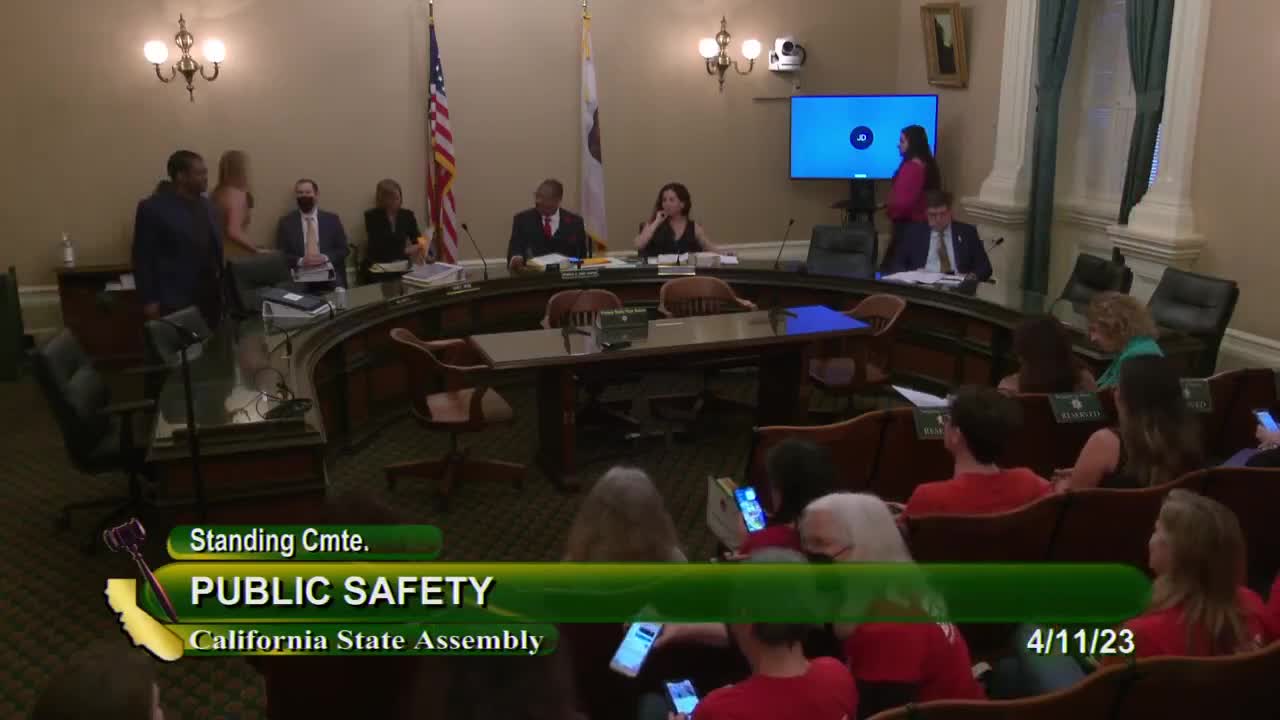 27MIN
Assembly Standing Committee on Public Safety
Bill Author

Bill Co-Author(s):