AB 1544: Child Abuse Central Index.
- Session Year: 2023-2024
- House: Assembly
- Latest Version Date: 2023-05-18
Current Status:
Failed
(2023-06-14: Referred to Com. on PUB S.)
Introduced
In Committee
First Chamber
In Committee
Second Chamber
Enacted
What does this bill do?
The bill allows police and sheriff’s departments to send substantiated reports of child abuse or severe neglect to the state Child Abuse Central Index (CACI) and requires those agencies to notify people who are listed and adopt procedures for challenging a listing. It also requires the Department of Justice to run a grievance process with timelines, hearing rights, evidence rules, and recordkeeping, and removes the specific immunity that otherwise applied to submitting these reports.
The summary is provided by generative AI which can make mistakes. For original language, please view the details in the table below.
Existing law designates certain individuals, such as teachers, peace officers, physicians, and clergy members, among others, as mandated reporters and requires them to report suspected child abuse or neglect to specified agencies whenever the mandated reporter, in their professional capacity or within the scope of their employment, knows of, or observes, a child whom the mandated reporter knows or reasonably suspects has been the victim of child abuse or neglect. Existing law requires specified local agencies to forward those reports to the Department of Justice in writing of all cases the agencies investigate of known or suspected child abuse or severe neglect that are determined to be substantiated. Existing law requires the Department of Justice to be a repository of reports of suspected child abuse and severe neglect and to maintain those reports in the Child Abuse Central Index (CACI). Existing law prohibits a police or sheriffs department from forwarding to the Department of Justice a report of a case the police or sheriffs department investigates of known or suspected child abuse or neglect.
This bill would authorize a police or sheriffs department to which a report of suspected child abuse or severe neglect is made on or after January 1, 2024, or that is investigating an open case for which a report of suspected child abuse or severe neglect was made on or before January 1, 2024, to forward to the Department of Justice a report in writing of its investigation of known or suspected child abuse or severe neglect that is determined to be substantiated. The bill would require a police or sheriffs department that forwards a report to comply with the same requirements placed on other reporting agencies and would require the police or sheriffs department to adopt procedures to notify persons reported to the CACI. The bill would require the Department of Justice to create a grievance procedure for reports to the CACI submitted by police or sheriffs departments, and would prescribe minimum requirements for the notification and grievance procedures, including specifying timelines and rules governing the grievance hearing. The bill would also make conforming changes.
(a)Except for a police department or sheriffs department, an agency specified in Section 11165.9 shall forward to the Department of Justice a report in writing of every case it investigates of known or suspected child abuse or severe neglect that is determined to be substantiated, other than cases coming within subdivision (b) of Section 11165.2. An agency shall not forward a report to the Department of Justice unless it has conducted an active investigation and determined that the report is substantiated, as defined in Section 11165.12. If a previously filed report subsequently proves to be not substantiated, the Department of Justice shall be notified in writing of that fact and shall not retain the report. The reports required by this section shall be in a form approved by the Department of Justice and may be sent by fax or electronic transmission. An agency specified in Section 11165.9 receiving a written report from another agency specified in Section 11165.9 shall not send that report to the Department of Justice.
(b)A police or sheriffs department to which a report is made on or after January 1, 2024, pursuant to Section 11165.9, or that is investigating an open case for which a report was made on or before January 1, 2024, pursuant to Section 11165.9, may forward to the Department of Justice a report in writing of its investigation of known or suspected child abuse or neglect that is determined to be substantiated, other than cases coming within subdivision (b) of Section 11165.2. A police or sheriffs department shall not forward a report to the Department of Justice pursuant to this subdivision unless it has conducted an active investigation and determined that the report is substantiated, as defined in Section 11165.12. If a previously filed report subsequently proves to be not substantiated, the Department of Justice shall be notified in writing of that fact and shall not retain the report. A police or sheriffs department that forwards a report to the Department of Justice pursuant to this subdivision is subject to all of the requirements imposed by this section and shall adopt notification and grievance procedures as set forth in Section 11169.5.
(c)At the time an agency specified in Section 11165.9 forwards a report in writing to the Department of Justice pursuant to subdivision (a) or (b), the agency shall also notify in writing the known or suspected child abuser that they have been reported to the Child Abuse Central Index (CACI). The notice required by this section shall be in a form approved by the department. The requirements of this subdivision shall apply with respect to reports forwarded to the department on or after the date on which this subdivision becomes operative.
(d)Subject to subdivision (e), a person who is listed on the CACI has the right to a hearing before the agency that requested the persons inclusion in the CACI to challenge their listing on the CACI. The hearing shall satisfy due process requirements. It is the intent of the Legislature that the hearing provided for by this subdivision shall not be construed to be inconsistent with hearing proceedings available to persons who have been listed on the CACI prior to the enactment of the act that added this subdivision.
(e)A hearing requested pursuant to subdivision (d) shall be denied when a court of competent jurisdiction has determined that suspected child abuse or neglect has occurred, or when the allegation of child abuse or neglect resulting in the referral to the CACI is pending before the court. A person who is listed on the CACI and has been denied a hearing pursuant to this subdivision has a right to a hearing pursuant to subdivision (d) only if the courts jurisdiction has terminated, the court has not made a finding concerning whether the suspected child abuse or neglect was substantiated, and a hearing has not previously been provided to the listed person pursuant to subdivision (d).
(f)A person listed in the CACI who has reached 100 years of age shall have their listing removed from the CACI.
(g)A person listed in the CACI as of January 1, 2013, who was listed prior to reaching 18 years of age, and who is listed once in CACI with no subsequent listings, shall be removed from the CACI 10 years from the date of the incident resulting in the CACI listing.
(h)If, after a hearing pursuant to subdivision (d) or a court proceeding described in subdivision (e), it is determined the persons CACI listing was based on a report that was not substantiated, the agency shall notify the department of that result and the department shall remove that persons name from the CACI.
(i)Agencies, including police departments and sheriffs departments, shall retain child abuse or neglect investigative reports that result or resulted in a report filed with the Department of Justice pursuant to subdivision (a) or (b) for the same period of time that the information is required to be maintained on the CACI pursuant to this section and subdivision (a) of Section 11170. This section does not prohibit an agency from retaining the reports for a longer period of time if required by law.
(j)The immunity provisions of Section 11172 do not apply to the submission of a report by an agency pursuant to this section. However, this section does not alter or diminish any other immunity provisions of state or federal law.
SEC. 2.Section 11169.5 is added to the Penal Code, to read:11169.5.(a)An entity that forwards a report of known or suspected child abuse or severe neglect to the Department of Justice pursuant to subdivision (b) of Section 11169 shall adopt notification procedures that, at a minimum, include all of the following requirements:
(1)Within five business days of submitting a persons name to the department for listing on the Child Abuse Central Index (CACI), the entity shall send the following forms to the persons last known address:
(A)A notice of the CACI listing.
(B)A description of the grievance procedures for challenging a listing on the CACI.
(C)A form to request a grievance hearing, including a referral number for the persons case.
(2)The notice of the CACI listing required by paragraph (1) shall contain the following information:
(A)Notice that the entity has completed an investigation of suspected child abuse or severe neglect, which the entity has determined to be substantiated, and that the entity has submitted the persons name to the Department of Justice for listing on the CACI.
(B)The victims name, a brief description of the alleged abuse or severe neglect, and the date and location where the abuse or neglect occurred.
(b)The Department of Justice shall create a grievance procedure for reports of known or suspected child abuse on the CACI that were submitted pursuant to subdivision (b) of Section 11169, that, at a minimum, include all of the following requirements:
(1)(A)A person who requests a grievance hearing shall, within 30 calendar days of the date of notice of the CACI listing, send by mail, fax, or electronic mail, or deliver in person to the department, a signed and completed request for grievance hearing form that includes all of the required information contained on the form. Failure to send the completed request for grievance hearing form within the required time period constitutes a waiver of the right to a grievance hearing.
(B)A completed request for grievance hearing form shall include the referral number, name of the entity that investigated the abuse or neglect, the persons contact information and date of birth, the reason for grievance, and contact information for the persons attorney or representative, if any.
(2)A grievance hearing shall be scheduled within 10 business days, and shall be held no later than 60 calendar days, after the date the request for a grievance hearing is received by the department, unless otherwise agreed to by the person requesting the hearing and the entity that forwarded the report.
(A)Notice of the date, time, and place of the grievance hearing shall be mailed by the department to the person requesting the hearing at least 30 calendar days before the grievance hearing is scheduled, unless otherwise agreed to by the person and the entity that forwarded the report.
(B)The person requesting the hearing may have an attorney or other representative present at the hearing to assist the person.
(C)Either party may request a continuance of the grievance hearing not to exceed 10 business days. Additional continuances or dismissal of the grievance hearing shall be granted with mutual agreement of both parties involved or for good cause.
(D)The entity that forwarded the report may resolve a grievance hearing at any point by changing a finding of substantiated child abuse or severe neglect to a finding of not substantiated and notifying the department of the need to remove the persons name from the CACI.
(3)The person requesting the grievance hearing, or the persons attorney or representative, if any, and the entity that forwarded the report shall be permitted, at least 10 days prior to the hearing, to examine all records and relevant evidence that is not otherwise made confidential by law, that the opposing party intends to introduce at the grievance hearing.
(A)The department shall redact names and personal identifiers from the records and other evidence as required by law and to protect the identity and health and safety of a mandated reporter. The department may also redact information regarding a mandated reporters observations of the evidence indicating child abuse or severe neglect, if necessary to protect the identity and health and safety of the mandated reporter.
(B)The entity that forwarded the report shall release disclosable information to the persons attorney or representative only if the person has provided the entity that forwarded the report with a signed consent to do so.
(C)The person requesting the hearing and the entity that forwarded the report shall exchange witness lists at least 10 days in advance of the grievance hearing.
(D)Failure to disclose evidence or witness lists in advance of the grievance hearing may constitute grounds for the opposing party to object to consideration of the evidence or to object to allowing testimony of a witness during the hearing.
(4)Each party and their attorney or representative, and witnesses while testifying, shall be the only persons authorized to be present during the grievance hearing unless both parties and the department consent to the presence of other persons.
(5)All testimony given during the grievance hearing shall be given under oath or affirmation.
(A)Each party may call witnesses to the hearing and may question witnesses called by the other party. The department may limit the questioning of a witness to protect the witness from unwarranted embarrassment, oppression, or harassment.
(B)The department may permit the testimony or presence of a child at a hearing only if the childs participation in the grievance hearing is voluntary and the child is capable of providing voluntary consent.
(i)The department may prevent the presence or examination of a child at a grievance hearing for good cause, including, but not limited to, protecting the child from trauma or to protect the childs health, safety, or well-being.
(ii)The department may interview a child outside the presence of the parties in order to determine whether the participation of the child is voluntary or whether good cause exists for preventing the child from being present or testifying at the grievance hearing.
(C)The officer or employee of the entity who conducted the investigation that is the subject of the grievance hearing shall be present at the hearing if the officer or employee is available to participate in the grievance hearing.
(6)At the hearing, the entity that forwarded the report shall first present its evidence supporting its actions or findings that are the subject of the grievance. The person who requested the grievance hearing may then provide evidence supporting the persons claim that the entitys decision should be withdrawn or changed. The entity shall then be allowed to present rebuttal evidence in further support of its finding. Thereafter, the department may, at the departments discretion, allow the parties to submit any additional evidence as may be warranted to fully evaluate the matter under review.
(7)The department shall have the proceedings of the grievance review hearing audio recorded as part of the official administrative record.
(A)The department shall maintain the administrative record of the grievance hearing.
(B)The department shall keep possession of the recording and transcript, and its contents shall remain under seal, except that the person who requested the grievance hearing or the persons attorney or representative shall be entitled to inspect the recording and any related transcripts.
(C)If the person who requested the grievance hearing seeks to inspect the transcript, the cost for transcribing a recording of the hearing shall be assessed to that person.
(D)The department shall file the administrative record with the court if any party seeks judicial review of the final decision of the department in the grievance process.
(8)At the conclusion of the grievance hearing, the department shall make a determination based on the evidence presented at the grievance hearing, whether the allegation of child abuse or severe neglect is unfounded, substantiated, or inconclusive, as defined by Section 11165.12.
(A)The department shall render a written decision within 30 calendar days of the completion of the grievance hearing. The written decision shall contain a summary statement of the facts, the issues involved, findings, and the basis for the decision.
(B)A copy of the decision shall be sent to the person who requested the grievance hearing and the persons attorney or representative, if any.
(C)If the person who requested the grievance hearing chooses to challenge the written determination, the evidence and information disclosed at the grievance hearing may be part of an administrative record for a writ of mandate and shall be kept confidential.
(D)The grievance hearing administrative record shall be kept confidential, including if any of the parties request that it be filed with the court under seal.
(9)The grievance hearing administrative record shall be retained for a length of time consistent with current law, regulations, or judicial order that governs the retention of the underlying record, but not less than one year from the decision date in any circumstance, and shall include all records accepted into evidence at the hearing.
(10)The department shall bill the entity that forwarded the report for expenses for the hearing.
SEC. 3.Section 11170 of the Penal Code is amended to read:11170.(a)(1)The Department of Justice shall maintain an index of all reports of child abuse and severe neglect submitted pursuant to Section 11169. The index shall be continually updated by the department and shall not contain any reports that are determined to be not substantiated. The department may adopt rules governing recordkeeping and reporting pursuant to this article.
(2)The department shall act only as a repository of reports of suspected child abuse and severe neglect to be maintained in the Child Abuse Central Index (CACI) pursuant to paragraph (1). The submitting agencies are responsible for the accuracy, completeness, and retention of the reports described in this section. The department shall be responsible for ensuring that the CACI accurately reflects the report it receives from the submitting agency.
(3)Only information from reports that are reported as substantiated shall be filed pursuant to paragraph (1), and all other determinations shall be removed from the central list. If a person listed in the CACI was under 18 years of age at the time of the report, the information shall be deleted from the CACI 10 years from the date of the incident resulting in the CACI listing, if no subsequent report concerning the same person is received during that time period.
(b)The requirements of subdivision (c) of Section 11169 apply to any information provided pursuant to this subdivision.
(1)The department shall immediately notify an agency that submits a report pursuant to Section 11169, or a prosecutor who requests notification, of any information maintained pursuant to subdivision (a) that is relevant to the known or suspected instance of child abuse or severe neglect reported by the agency. The agency shall make that information available to the reporting health care practitioner who is treating a person reported as a possible victim of known or suspected child abuse. The agency shall make that information available to the reporting child custodian, Child Abuse Prevention and Treatment Act guardian ad litem appointed under Rule 5.662 of the California Rules of Court, or counsel appointed under Section 317 or 318 of the Welfare and Institutions Code, or the appropriate licensing agency, if they the licensing agency is handling or investigating a case of known or suspected child abuse or severe neglect.
(2)When a report is made pursuant to subdivision (a) of Section 11166, or Section 11166.05, the investigating agency, upon completion of the investigation or after there has been a final disposition in the matter, shall inform the person required or authorized to report of the results of the investigation and of any action the agency is taking with regard to the child or family.
(3)The department shall make relevant information from the CACI available to a law enforcement agency, county welfare department, tribal agency pursuant to Section 10553.12 of the Welfare and Institutions Code, or county probation department that is conducting a child abuse investigation.
(4)The department shall make available to the State Department of Social Services, to any county licensing agency that has contracted with the state for the performance of licensing duties, to a county approving resource families pursuant to Section 16519.5 of the Welfare and Institutions Code, or to a tribal court or tribal child welfare agency of a tribe, consortium of tribes, or tribal organization that has entered into an agreement with the state pursuant to Section 10553.1 of the Welfare and Institutions Code, information regarding a known or suspected child abuser maintained pursuant to this section or Section 11169 concerning any person who is an applicant for licensure or approval, or any adult who resides or is employed in the home of an applicant for licensure or approval, or who is an applicant for employment in a position having supervisorial or disciplinary power over a child or children, or who will provide 24-hour care for a child or children in a residential home or facility, pursuant to Section 1522.1 or 1596.877 of the Health and Safety Code, or Section 8714, 8802, 8912, or 9000 of the Family Code, or Section 11403.2 or 16519.5 of the Welfare and Institutions Code.
(5)The department shall make available to a Court Appointed Special Advocate program that is conducting a background investigation of an applicant seeking employment with the program or a volunteer position as a Court Appointed Special Advocate, as defined in Section 101 of the Welfare and Institutions Code, information contained in the index regarding known or suspected child abuse by the applicant.
(6)For purposes of child death review, the department shall make available to the chairperson, or the chairpersons designee, for each county child death review team, or the State Child Death Review Council, information for investigative purposes only that is maintained in the CACI pursuant to subdivision (a) relating to the death of one or more children and any prior child abuse or neglect investigation reports maintained involving the same victims, siblings, or suspects. Local child death review teams may share any relevant information regarding case reviews involving child death with other child death review teams.
(7)The department shall make available to investigative agencies or probation officers, or court investigators acting pursuant to Section 1513 of the Probate Code, responsible for placing children or assessing the possible placement of children pursuant to Article 6 (commencing with Section 300), Article 7 (commencing with Section 305), Article 10 (commencing with Section 360), or Article 14 (commencing with Section 601) of Chapter 2 of Part 1 of Division 2 of the Welfare and Institutions Code, or Article 2 (commencing with Section 1510) or Article 3 (commencing with Section 1540) of Chapter 1 of Part 2 of Division 4 of the Probate Code, information regarding a known or suspected child abuser contained in the index concerning any adult residing in the home where the child may be placed, when this information is requested for purposes of ensuring that the placement is in the best interest of the child. Upon receipt of relevant information concerning child abuse or neglect investigation reports contained in the CACI from the department pursuant to this subdivision, the agency or court investigator shall notify, in writing, the person listed in the CACI that they are in the index. The notification shall include the name of the reporting agency and the date of the report.
(8)Pursuant to Section 10553.12 of the Welfare and Institutions Code, the department shall make available to a tribal agency information regarding a known or suspected child abuser maintained pursuant to this section or Section 11169 who is being considered as a prospective foster or adoptive parent, an adult who resides or is employed in the home of an applicant for approval, any person who has a familial or intimate relationship with any person living in the home of an applicant, or an employee of the tribal agency who may have contact with children.
(9)The department shall make available to a government agency conducting a background investigation pursuant to Section 1031 of the Government Code of an applicant seeking employment as a peace officer, as defined in Section 830, information regarding a known or suspected child abuser maintained pursuant to this section concerning the applicant.
(10)The department shall make available to a county child welfare agency or delegated county adoption agency, as defined in Section 8515 of the Family Code, conducting a background investigation, or a government agency conducting a background investigation on behalf of one of those agencies, information regarding a known or suspected child abuser maintained pursuant to this section or Section 11169 concerning any applicant seeking employment or volunteer status with the agency who, in the course of their employment or volunteer work, will have direct contact with children who are alleged to have been, are at risk of, or have suffered, abuse or neglect.
(11)(A)Persons or agencies, as specified in subdivision (b), if investigating a case of known or suspected child abuse or neglect, or the State Department of Social Services or any county licensing agency pursuant to paragraph (4), or a Court Appointed Special Advocate (CASA) program conducting a background investigation for employment or volunteer candidates pursuant to paragraph (5), or an investigative agency, probation officer, or court investigator responsible for placing children or assessing the possible placement of children pursuant to paragraph (7), or a government agency conducting a background investigation of an applicant seeking employment as a peace officer pursuant to paragraph (9), or a county child welfare agency or delegated county adoption agency conducting a background investigation of an applicant seeking employment or volunteer status who, in the course of their employment or volunteer work, will have direct contact with children who are alleged to have been, are at risk of, or have suffered, abuse or neglect, pursuant to paragraph (10), to whom disclosure of any information maintained pursuant to subdivision (a) is authorized, are responsible for obtaining the original investigative report from the reporting agency, and for drawing independent conclusions regarding the quality of the evidence disclosed, and its sufficiency for making decisions regarding investigation, prosecution, licensing, placement of a child, employment or volunteer positions with a CASA program, or employment as a peace officer.
(B)If CACI information is requested by an agency for the temporary placement of a child in an emergency situation pursuant to Article 7 (commencing with Section 305) of Chapter 2 of Part 1 of Division 2 of the Welfare and Institutions Code, the department is exempt from the requirements of Section 1798.18 of the Civil Code if compliance would cause a delay in providing an expedited response to the agencys inquiry and if further delay in placement may be detrimental to the child.
(12)(A)Whenever information contained in the departments files is furnished as the result of an application for employment or licensing or volunteer status pursuant to paragraph (4), (5), (8), (9), or (10), the department may charge the person or entity making the request a fee. The fee shall not exceed the reasonable costs to the department of providing the information. The only increase shall be at a rate not to exceed the legislatively approved cost-of-living adjustment for the department. In no case shall the fee exceed fifteen dollars ($15).
(B)All moneys received by the department pursuant to this section to process trustline applications for purposes of Chapter 3.35 (commencing with Section 1596.60) of Division 2 of the Health and Safety Code shall be deposited in a special account in the General Fund that is hereby established and named the Department of Justice Child Abuse Fund. Moneys in the fund shall be available, upon appropriation by the Legislature, for expenditure by the department to offset the costs incurred to process trustline automated child abuse or neglect system checks pursuant to this section.
(C)All moneys, other than those described in subparagraph (B), received by the department pursuant to this paragraph shall be deposited in a special account in the General Fund which is hereby created and named the Department of Justice Sexual Habitual Offender Fund. The funds shall be available, upon appropriation by the Legislature, for expenditure by the department to offset the costs incurred pursuant to Chapter 9.5 (commencing with Section 13885) and Chapter 10 (commencing with Section 13890) of Title 6 of Part 4, and the DNA and Forensic Identification Data Base and Data Bank Act of 1998 (Chapter 6 (commencing with Section 295) of Title 9 of Part 1), and for maintenance and improvements to the statewide Sexual Habitual Offender Program and the California DNA offender identification file (CAL-DNA) authorized by Chapter 9.5 (commencing with Section 13885) of Title 6 of Part 4 and the DNA and Forensic Identification Data Base and Data Bank Act of 1998 (Chapter 6 (commencing with Section 295) of Title 9 of Part 1).
(c)(1)The department shall make available to any agency responsible for placing children pursuant to Article 7 (commencing with Section 305) of Chapter 2 of Part 1 of Division 2 of the Welfare and Institutions Code, upon request, relevant information concerning child abuse or neglect reports contained in the index, when making a placement with a responsible relative pursuant to Sections 281.5, 305, and 361.3 of the Welfare and Institutions Code. Upon receipt of relevant information concerning child abuse or neglect reports contained in the index from the department pursuant to this subdivision, the agency shall also notify in writing the person listed in the CACI that they are in the index. The notification shall include the location of the original investigative report and the submitting agency. The notification shall be submitted to the person listed at the same time that all other parties are notified of the information, and no later than the actual judicial proceeding that determines placement.
(2)If information is requested by an agency for the placement of a child with a responsible relative in an emergency situation pursuant to Article 7 (commencing with Section 305) of Chapter 2 of Part 1 of Division 2 of the Welfare and Institutions Code, the department is exempt from the requirements of Section 1798.18 of the Civil Code if compliance would cause a delay in providing an expedited response to the child protective agencys inquiry and if further delay in placement may be detrimental to the child.
(d)The department shall make available any information maintained pursuant to subdivision (a) to out-of-state law enforcement agencies conducting investigations of known or suspected child abuse or neglect only when an agency makes the request for information in writing and on official letterhead, or as designated by the department, identifying the suspected abuser or victim by name and date of birth or approximate age. The request shall be signed by the department supervisor of the requesting law enforcement agency. The written requests shall cite the out-of-state statute or interstate compact provision that requires that the information contained within these reports shall be disclosed only to law enforcement, prosecutorial entities, or multidisciplinary investigative teams, and shall cite the safeguards in place to prevent unlawful disclosure of any confidential information provided by the requesting state or the applicable interstate compact provision.
(e)(1)The department shall make available to an out-of-state agency, for purposes of approving a prospective foster or adoptive parent in compliance with the Adam Walsh Child Protection and Safety Act of 2006 (Public Law 109-248), information regarding a known or suspected child abuser maintained pursuant to subdivision (a) concerning the prospective foster or adoptive parent, and any other adult living in the home of the prospective foster or adoptive parent. The department shall make that information available only when the out-of-state agency makes the request indicating that continual compliance will be maintained with the requirement in Section 671(a)(20) of Title 42 of the United States Code that requires the state to have in place safeguards to prevent the unauthorized disclosure of information in any child abuse and neglect registry maintained by the state and prevent the information from being used for a purpose other than the conducting of background checks in foster or adoption placement cases.
(2)With respect to any information provided by the department in response to the out-of-state agencys request, the out-of-state agency is responsible for obtaining the original investigative report from the reporting agency, and for drawing independent conclusions regarding the quality of the evidence disclosed and its sufficiency for making decisions regarding the approval of prospective foster or adoptive parents.
(3)(A)Whenever information contained in the index is furnished pursuant to this subdivision, the department shall charge the out-of-state agency making the request a fee. The fee shall not exceed the reasonable costs to the department of providing the information. The only increase shall be at a rate not to exceed the legislatively approved cost-of-living adjustment for the department. In no case shall the fee exceed fifteen dollars ($15).
(B)All moneys received by the department pursuant to this subdivision shall be deposited in the Department of Justice Child Abuse Fund, established under subparagraph (B) of paragraph (12) of subdivision (b). Moneys in the fund shall be available, upon appropriation by the Legislature, for expenditure by the department to offset the costs incurred to process requests for information pursuant to this subdivision.
(f)(1)A person may determine if they are listed in the CACI by making a request in writing to the department. The request shall be notarized and include the persons name, address, date of birth, and either a social security number or a California identification number. Upon receipt of a notarized request, the department shall make available to the requesting person information identifying the date of the report and the submitting agency. The requesting person is responsible for obtaining the investigative report from the submitting agency pursuant to paragraph (11) of subdivision (b) of Section 11167.5.
(2)A person or agency shall not require or request another person to furnish a copy of a record concerning the other person, or notification that a record concerning the other person exists or does not exist, pursuant to paragraph (1).
(g)If a person is listed in the CACI only as a victim of child abuse or neglect, and that person is 18 years of age or older, that person may have their name removed from the index by making a written request to the department. The request shall be notarized and include the persons name, address, social security number, and date of birth.
(a)An Except for a police department or sheriffs department, an agency specified in Section 11165.9 shall forward to the Department of Justice a report in writing of every case it investigates of known or suspected child abuse or severe neglect that is determined to be substantiated, other than cases coming within subdivision (b) of Section 11165.2. An agency shall not forward a report to the Department of Justice unless it has conducted an active investigation and determined that the report is substantiated, as defined in Section 11165.12. If a report has previously been filed which previously filed report subsequently proves to be not substantiated, the Department of Justice shall be notified in writing of that fact and shall not retain the report. The reports required by this section shall be in a form approved by the Department of Justice and may be sent by fax or electronic transmission. An agency specified in Section 11165.9 receiving a written report from another agency specified in Section 11165.9 shall not send that report to the Department of Justice.
(b)On and after January 1, 2012, a police department or sheriffs department specified in Section 11165.9 shall no longer forward to the Department of Justice a report in writing of any case it investigates of known or suspected child abuse or severe neglect.(b)A police or sheriffs department to which a report is made on or after January 1, 2024, pursuant to Section 11165.9, or that is investigating an open case for which a report was made on or before January 1, 2024, pursuant to Section 11165.9, may forward to the Department of Justice a report in writing of its investigation of known or suspected child abuse or neglect that is determined to be substantiated, other than cases coming within subdivision (b) of Section 11165.2. A police or sheriffs department shall not forward a report to the Department of Justice pursuant to this subdivision unless it has conducted an active investigation and determined that the report is substantiated, as defined in Section 11165.12. If a previously filed report subsequently proves to be not substantiated, the Department of Justice shall be notified in writing of that fact and shall not retain the report. A police or sheriffs department that forwards a report to the Department of Justice pursuant to this subdivision is subject to all of the requirements imposed by this section and shall adopt notification and grievance procedures as set forth in Section 11169.5.
(c)At the time an agency specified in Section 11165.9 forwards a report in writing to the Department of Justice pursuant to subdivision (a), (a) or (b), the agency shall also notify in writing the known or suspected child abuser that he or she has they have been reported to the Child Abuse Central Index (CACI).The (CACI). The notice required by this section shall be in a form approved by the Department of Justice. department. The requirements of this subdivision shall apply with respect to reports forwarded to the department on or after the date on which this subdivision becomes operative.
(d)Subject to subdivision (e), any a person who is listed on the CACI has the right to a hearing before the agency that requested his or her the persons inclusion in the CACI to challenge his or her their listing on the CACI. The hearing shall satisfy due process requirements. It is the intent of the Legislature that the hearing provided for by this subdivision shall not be construed to be inconsistent with hearing proceedings available to persons who have been listed on the CACI prior to the enactment of the act that added this subdivision.
(e)A hearing requested pursuant to subdivision (d) shall be denied when a court of competent jurisdiction has determined that suspected child abuse or neglect has occurred, or when the allegation of child abuse or neglect resulting in the referral to the CACI is pending before the court. A person who is listed on the CACI and has been denied a hearing pursuant to this subdivision has a right to a hearing pursuant to subdivision (d) only if the courts jurisdiction has terminated, the court has not made a finding concerning whether the suspected child abuse or neglect was substantiated, and a hearing has not previously been provided to the listed person pursuant to subdivision (d).
(f)Any A person listed in the CACI who has reached 100 years of age shall have his or her their listing removed from the CACI.
(g)Any A person listed in the CACI as of January 1, 2013, who was listed prior to reaching 18 years of age, and who is listed once in CACI with no subsequent listings, shall be removed from the CACI 10 years from the date of the incident resulting in the CACI listing.
(h)If, after a hearing pursuant to subdivision (d) or a court proceeding described in subdivision (e), it is determined the persons CACI listing was based on a report that was not substantiated, the agency shall notify the Department of Justice department of that result and the department shall remove that persons name from the CACI.
(i)Agencies, including police departments and sheriffs departments, shall retain child abuse or neglect investigative reports that result or resulted in a report filed with the Department of Justice pursuant to subdivision (a) or (b) for the same period of time that the information is required to be maintained on the CACI pursuant to this section and subdivision (a) of Section 11170. Nothing in this section precludes This section does not prohibit an agency from retaining the reports for a longer period of time if required by law.
(j)The immunity provisions of Section 11172 shall do not apply to the submission of a report by an agency pursuant to this section. However, nothing in this section shall be construed to this section does not alter or diminish any other immunity provisions of state or federal law.
SEC. 2.Section 11169.5 is added to the Penal Code, to read:11169.5.(a)An entity that forwards a report of known or suspected child abuse or severe neglect to the Department of Justice pursuant to subdivision (b) of Section 11169 shall adopt notification procedures that, at a minimum, include all of the following requirements:
(1)Within five business days of submitting a persons name to the department for listing on the Child Abuse Central Index (CACI), the entity shall send the following forms to the persons last known address:
(A)A notice of the CACI listing.
(B)A description of the grievance procedures for challenging a listing on the CACI.
(C)A form to request a grievance hearing, including a referral number for the persons case.
(2)The notice of the CACI listing required by paragraph (1) shall contain the following information:
(A)Notice that the entity has completed an investigation of suspected child abuse or severe neglect, which the entity has determined to be substantiated, and that the entity has submitted the persons name to the Department of Justice for listing on the CACI.
(B)The victims name, a brief description of the alleged abuse or severe neglect, and the date and location where the abuse or neglect occurred.
(b)The Department of Justice shall create a grievance procedure for reports of known or suspected child abuse on the CACI that were submitted pursuant to subdivision (b) of Section 11169, that, at a minimum, include all of the following requirements:
(1)(A)A person who requests a grievance hearing shall, within 30 calendar days of the date of notice of the CACI listing, send by mail, fax, or electronic mail, or deliver in person to the department, a signed and completed request for grievance hearing form that includes all of the required information contained on the form. Failure to send the completed request for grievance hearing form within the required time period constitutes a waiver of the right to a grievance hearing.
(B)A completed request for grievance hearing form shall include the referral number, name of the entity that investigated the abuse or neglect, the persons contact information and date of birth, the reason for grievance, and contact information for the persons attorney or representative, if any.
(2)A grievance hearing shall be scheduled within 10 business days, and shall be held no later than 60 calendar days, after the date the request for a grievance hearing is received by the department, unless otherwise agreed to by the person requesting the hearing and the entity that forwarded the report.
(A)Notice of the date, time, and place of the grievance hearing shall be mailed by the department to the person requesting the hearing at least 30 calendar days before the grievance hearing is scheduled, unless otherwise agreed to by the person and the entity that forwarded the report.
(B)The person requesting the hearing may have an attorney or other representative present at the hearing to assist the person.
(C)Either party may request a continuance of the grievance hearing not to exceed 10 business days. Additional continuances or dismissal of the grievance hearing shall be granted with mutual agreement of both parties involved or for good cause.
(D)The entity that forwarded the report may resolve a grievance hearing at any point by changing a finding of substantiated child abuse or severe neglect to a finding of not substantiated and notifying the department of the need to remove the persons name from the CACI.
(3)The person requesting the grievance hearing, or the persons attorney or representative, if any, and the entity that forwarded the report shall be permitted, at least 10 days prior to the hearing, to examine all records and relevant evidence that is not otherwise made confidential by law, that the opposing party intends to introduce at the grievance hearing.
(A)The department shall redact names and personal identifiers from the records and other evidence as required by law and to protect the identity and health and safety of a mandated reporter. The department may also redact information regarding a mandated reporters observations of the evidence indicating child abuse or severe neglect, if necessary to protect the identity and health and safety of the mandated reporter.
(B)The entity that forwarded the report shall release disclosable information to the persons attorney or representative only if the person has provided the entity that forwarded the report with a signed consent to do so.
(C)The person requesting the hearing and the entity that forwarded the report shall exchange witness lists at least 10 days in advance of the grievance hearing.
(D)Failure to disclose evidence or witness lists in advance of the grievance hearing may constitute grounds for the opposing party to object to consideration of the evidence or to object to allowing testimony of a witness during the hearing.
(4)Each party and their attorney or representative, and witnesses while testifying, shall be the only persons authorized to be present during the grievance hearing unless both parties and the department consent to the presence of other persons.
(5)All testimony given during the grievance hearing shall be given under oath or affirmation.
(A)Each party may call witnesses to the hearing and may question witnesses called by the other party. The department may limit the questioning of a witness to protect the witness from unwarranted embarrassment, oppression, or harassment.
(B)The department may permit the testimony or presence of a child at a hearing only if the childs participation in the grievance hearing is voluntary and the child is capable of providing voluntary consent.
(i)The department may prevent the presence or examination of a child at a grievance hearing for good cause, including, but not limited to, protecting the child from trauma or to protect the childs health, safety, or well-being.
(ii)The department may interview a child outside the presence of the parties in order to determine whether the participation of the child is voluntary or whether good cause exists for preventing the child from being present or testifying at the grievance hearing.
(C)The officer or employee of the entity who conducted the investigation that is the subject of the grievance hearing shall be present at the hearing if the officer or employee is available to participate in the grievance hearing.
(6)At the hearing, the entity that forwarded the report shall first present its evidence supporting its actions or findings that are the subject of the grievance. The person who requested the grievance hearing may then provide evidence supporting the persons claim that the entitys decision should be withdrawn or changed. The entity shall then be allowed to present rebuttal evidence in further support of its finding. Thereafter, the department may, at the departments discretion, allow the parties to submit any additional evidence as may be warranted to fully evaluate the matter under review.
(7)The department shall have the proceedings of the grievance review hearing audio recorded as part of the official administrative record.
(A)The department shall maintain the administrative record of the grievance hearing.
(B)The department shall keep possession of the recording and transcript, and its contents shall remain under seal, except that the person who requested the grievance hearing or the persons attorney or representative shall be entitled to inspect the recording and any related transcripts.
(C)If the person who requested the grievance hearing seeks to inspect the transcript, the cost for transcribing a recording of the hearing shall be assessed to that person.
(D)The department shall file the administrative record with the court if any party seeks judicial review of the final decision of the department in the grievance process.
(8)At the conclusion of the grievance hearing, the department shall make a determination based on the evidence presented at the grievance hearing, whether the allegation of child abuse or severe neglect is unfounded, substantiated, or inconclusive, as defined by Section 11165.12.
(A)The department shall render a written decision within 30 calendar days of the completion of the grievance hearing. The written decision shall contain a summary statement of the facts, the issues involved, findings, and the basis for the decision.
(B)A copy of the decision shall be sent to the person who requested the grievance hearing and the persons attorney or representative, if any.
(C)If the person who requested the grievance hearing chooses to challenge the written determination, the evidence and information disclosed at the grievance hearing may be part of an administrative record for a writ of mandate and shall be kept confidential.
(D)The grievance hearing administrative record shall be kept confidential, including if any of the parties request that it be filed with the court under seal.
(9)The grievance hearing administrative record shall be retained for a length of time consistent with current law, regulations, or judicial order that governs the retention of the underlying record, but not less than one year from the decision date in any circumstance, and shall include all records accepted into evidence at the hearing.
(10)The department shall bill the entity that forwarded the report for expenses for the hearing.
SEC. 3.Section 11170 of the Penal Code is amended to read:11170.(a)(1)The Department of Justice shall maintain an index of all reports of child abuse and severe neglect submitted pursuant to Section 11169. The index shall be continually updated by the department and shall not contain any reports that are determined to be not substantiated. The department may adopt rules governing recordkeeping and reporting pursuant to this article.
(2)The department shall act only as a repository of reports of suspected child abuse and severe neglect to be maintained in the Child Abuse Central Index (CACI) pursuant to paragraph (1). The submitting agencies are responsible for the accuracy, completeness, and retention of the reports described in this section. The department shall be responsible for ensuring that the CACI accurately reflects the report it receives from the submitting agency.
(3)Only information from reports that are reported as substantiated shall be filed pursuant to paragraph (1), and all other determinations shall be removed from the central list. If a person listed in the CACI was under 18 years of age at the time of the report, the information shall be deleted from the CACI 10 years from the date of the incident resulting in the CACI listing, if no subsequent report concerning the same person is received during that time period.
(b)The provisions requirements of subdivision (c) of Section 11169 apply to any information provided pursuant to this subdivision.
(1)The Department of Justice department shall immediately notify an agency that submits a report pursuant to Section 11169, or a prosecutor who requests notification, of any information maintained pursuant to subdivision (a) that is relevant to the known or suspected instance of child abuse or severe neglect reported by the agency. The agency shall make that information available to the reporting health care practitioner who is treating a person reported as a possible victim of known or suspected child abuse. The agency shall make that information available to the reporting child custodian, Child Abuse Prevention and Treatment Act guardian ad litem appointed under Rule 5.662 of the California Rules of Court, or counsel appointed under Section 317 or 318 of the Welfare and Institutions Code, or the appropriate licensing agency, if he or she or they the licensing agency is handling or investigating a case of known or suspected child abuse or severe neglect.
(2)When a report is made pursuant to subdivision (a) of Section 11166, or Section 11166.05, the investigating agency, upon completion of the investigation or after there has been a final disposition in the matter, shall inform the person required or authorized to report of the results of the investigation and of any action the agency is taking with regard to the child or family.
(3)The Department of Justice department shall make relevant information from the CACI available to a law enforcement agency, county welfare department, tribal agency pursuant to Section 10553.12 of the Welfare and Institutions Code, or county probation department that is conducting a child abuse investigation.
(4)The department shall make available to the State Department of Social Services, to any county licensing agency that has contracted with the state for the performance of licensing duties, to a county approving resource families pursuant to Section 16519.5 of the Welfare and Institutions Code, or to a tribal court or tribal child welfare agency of a tribe, consortium of tribes, or tribal organization that has entered into an agreement with the state pursuant to Section 10553.1 of the Welfare and Institutions Code, information regarding a known or suspected child abuser maintained pursuant to this section and subdivision (a) of or Section 11169 concerning any person who is an applicant for licensure or approval, or any adult who resides or is employed in the home of an applicant for licensure or approval, or who is an applicant for employment in a position having supervisorial or disciplinary power over a child or children, or who will provide 24-hour care for a child or children in a residential home or facility, pursuant to Section 1522.1 or 1596.877 of the Health and Safety Code, or Section 8714, 8802, 8912, or 9000 of the Family Code, or Section 11403.2 or 16519.5 of the Welfare and Institutions Code.
(5)The Department of Justice department shall make available to a Court Appointed Special Advocate program that is conducting a background investigation of an applicant seeking employment with the program or a volunteer position as a Court Appointed Special Advocate, as defined in Section 101 of the Welfare and Institutions Code, information contained in the index regarding known or suspected child abuse by the applicant.
(6)For purposes of child death review, the Department of Justice department shall make available to the chairperson, or the chairpersons designee, for each county child death review team, or the State Child Death Review Council, information for investigative purposes only that is maintained in the CACI pursuant to subdivision (a) relating to the death of one or more children and any prior child abuse or neglect investigation reports maintained involving the same victims, siblings, or suspects. Local child death review teams may share any relevant information regarding case reviews involving child death with other child death review teams.
(7)The department shall make available to investigative agencies or probation officers, or court investigators acting pursuant to Section 1513 of the Probate Code, responsible for placing children or assessing the possible placement of children pursuant to Article 6 (commencing with Section 300), Article 7 (commencing with Section 305), Article 10 (commencing with Section 360), or Article 14 (commencing with Section 601) of Chapter 2 of Part 1 of Division 2 of the Welfare and Institutions Code, or Article 2 (commencing with Section 1510) or Article 3 (commencing with Section 1540) of Chapter 1 of Part 2 of Division 4 of the Probate Code, information regarding a known or suspected child abuser contained in the index concerning any adult residing in the home where the child may be placed, when this information is requested for purposes of ensuring that the placement is in the best interest of the child. Upon receipt of relevant information concerning child abuse or neglect investigation reports contained in the CACI from the Department of Justice department pursuant to this subdivision, the agency or court investigator shall notify, in writing, the person listed in the CACI that he or she is they are in the index. The notification shall include the name of the reporting agency and the date of the report.
(8)Pursuant to Section 10553.12 of the Welfare and Institutions Code, the department shall make available to a tribal agency information regarding a known or suspected child abuser maintained pursuant to this section or subdivision (a) of Section 11169 who is being considered as a prospective foster or adoptive parent, an adult who resides or is employed in the home of an applicant for approval, any person who has a familial or intimate relationship with any person living in the home of an applicant, or an employee of the tribal agency who may have contact with children.
(9)The Department of Justice department shall make available to a government agency conducting a background investigation pursuant to Section 1031 of the Government Code of an applicant seeking employment as a peace officer, as defined in Section 830, information regarding a known or suspected child abuser maintained pursuant to this section concerning the applicant.
(10)The Department of Justice department shall make available to a county child welfare agency or delegated county adoption agency, as defined in Section 8515 of the Family Code, conducting a background investigation, or a government agency conducting a background investigation on behalf of one of those agencies, information regarding a known or suspected child abuser maintained pursuant to this section and subdivision (a) of or Section 11169 concerning any applicant seeking employment or volunteer status with the agency who, in the course of his or her their employment or volunteer work, will have direct contact with children who are alleged to have been, are at risk of, or have suffered, abuse or neglect.
(11)(A)Persons or agencies, as specified in subdivision (b), if investigating a case of known or suspected child abuse or neglect, or the State Department of Social Services or any county licensing agency pursuant to paragraph (4), or a Court Appointed Special Advocate (CASA) program conducting a background investigation for employment or volunteer candidates pursuant to paragraph (5), or an investigative agency, probation officer, or court investigator responsible for placing children or assessing the possible placement of children pursuant to paragraph (7), or a government agency conducting a background investigation of an applicant seeking employment as a peace officer pursuant to paragraph (9), or a county child welfare agency or delegated county adoption agency conducting a background investigation of an applicant seeking employment or volunteer status who, in the course of his or her their employment or volunteer work, will have direct contact with children who are alleged to have been, are at risk of, or have suffered, abuse or neglect, pursuant to paragraph (10), to whom disclosure of any information maintained pursuant to subdivision (a) is authorized, are responsible for obtaining the original investigative report from the reporting agency, and for drawing independent conclusions regarding the quality of the evidence disclosed, and its sufficiency for making decisions regarding investigation, prosecution, licensing, placement of a child, employment or volunteer positions with a CASA program, or employment as a peace officer.
(B)If CACI information is requested by an agency for the temporary placement of a child in an emergency situation pursuant to Article 7 (commencing with Section 305) of Chapter 2 of Part 1 of Division 2 of the Welfare and Institutions Code, the department is exempt from the requirements of Section 1798.18 of the Civil Code if compliance would cause a delay in providing an expedited response to the agencys inquiry and if further delay in placement may be detrimental to the child.
(12)(A)Whenever information contained in the Department of Justice departments files is furnished as the result of an application for employment or licensing or volunteer status pursuant to paragraph (4), (5), (8), (9), or (10), the Department of Justice department may charge the person or entity making the request a fee. The fee shall not exceed the reasonable costs to the department of providing the information. The only increase shall be at a rate not to exceed the legislatively approved cost-of-living adjustment for the department. In no case shall the fee exceed fifteen dollars ($15).
(B)All moneys received by the department pursuant to this section to process trustline applications for purposes of Chapter 3.35 (commencing with Section 1596.60) of Division 2 of the Health and Safety Code shall be deposited in a special account in the General Fund that is hereby established and named the Department of Justice Child Abuse Fund. Moneys in the fund shall be available, upon appropriation by the Legislature, for expenditure by the department to offset the costs incurred to process trustline automated child abuse or neglect system checks pursuant to this section.
(C)All moneys, other than those described in subparagraph (B), received by the department pursuant to this paragraph shall be deposited in a special account in the General Fund which is hereby created and named the Department of Justice Sexual Habitual Offender Fund. The funds shall be available, upon appropriation by the Legislature, for expenditure by the department to offset the costs incurred pursuant to Chapter 9.5 (commencing with Section 13885) and Chapter 10 (commencing with Section 13890) of Title 6 of Part 4, and the DNA and Forensic Identification Data Base and Data Bank Act of 1998 (Chapter 6 (commencing with Section 295) of Title 9 of Part 1), and for maintenance and improvements to the statewide Sexual Habitual Offender Program and the California DNA offender identification file (CAL-DNA) authorized by Chapter 9.5 (commencing with Section 13885) of Title 6 of Part 4 and the DNA and Forensic Identification Data Base and Data Bank Act of 1998 (Chapter 6 (commencing with Section 295) of Title 9 of Part 1).
(c)(1)The Department of Justice department shall make available to any agency responsible for placing children pursuant to Article 7 (commencing with Section 305) of Chapter 2 of Part 1 of Division 2 of the Welfare and Institutions Code, upon request, relevant information concerning child abuse or neglect reports contained in the index, when making a placement with a responsible relative pursuant to Sections 281.5, 305, and 361.3 of the Welfare and Institutions Code. Upon receipt of relevant information concerning child abuse or neglect reports contained in the index from the Department of Justice department pursuant to this subdivision, the agency shall also notify in writing the person listed in the CACI that he or she is they are in the index. The notification shall include the location of the original investigative report and the submitting agency. The notification shall be submitted to the person listed at the same time that all other parties are notified of the information, and no later than the actual judicial proceeding that determines placement.
(2)If information is requested by an agency for the placement of a child with a responsible relative in an emergency situation pursuant to Article 7 (commencing with Section 305) of Chapter 2 of Part 1 of Division 2 of the Welfare and Institutions Code, the department is exempt from the requirements of Section 1798.18 of the Civil Code if compliance would cause a delay in providing an expedited response to the child protective agencys inquiry and if further delay in placement may be detrimental to the child.
(d)The department shall make available any information maintained pursuant to subdivision (a) to out-of-state law enforcement agencies conducting investigations of known or suspected child abuse or neglect only when an agency makes the request for information in writing and on official letterhead, or as designated by the department, identifying the suspected abuser or victim by name and date of birth or approximate age. The request shall be signed by the department supervisor of the requesting law enforcement agency. The written requests shall cite the out-of-state statute or interstate compact provision that requires that the information contained within these reports shall be disclosed only to law enforcement, prosecutorial entities, or multidisciplinary investigative teams, and shall cite the safeguards in place to prevent unlawful disclosure of any confidential information provided by the requesting state or the applicable interstate compact provision.
(e)(1)The department shall make available to an out-of-state agency, for purposes of approving a prospective foster or adoptive parent in compliance with the Adam Walsh Child Protection and Safety Act of 2006 (Public Law 109-248), information regarding a known or suspected child abuser maintained pursuant to subdivision (a) concerning the prospective foster or adoptive parent, and any other adult living in the home of the prospective foster or adoptive parent. The department shall make that information available only when the out-of-state agency makes the request indicating that continual compliance will be maintained with the requirement in paragraph (20) of subsection (a) of Section 671 Section 671(a)(20) of Title 42 of the United States Code that requires the state to have in place safeguards to prevent the unauthorized disclosure of information in any child abuse and neglect registry maintained by the state and prevent the information from being used for a purpose other than the conducting of background checks in foster or adoption placement cases.
(2)With respect to any information provided by the department in response to the out-of-state agencys request, the out-of-state agency is responsible for obtaining the original investigative report from the reporting agency, and for drawing independent conclusions regarding the quality of the evidence disclosed and its sufficiency for making decisions regarding the approval of prospective foster or adoptive parents.
(3)(A)Whenever information contained in the index is furnished pursuant to this subdivision, the department shall charge the out-of-state agency making the request a fee. The fee shall not exceed the reasonable costs to the department of providing the information. The only increase shall be at a rate not to exceed the legislatively approved cost-of-living adjustment for the department. In no case shall the fee exceed fifteen dollars ($15).
(B)All moneys received by the department pursuant to this subdivision shall be deposited in the Department of Justice Child Abuse Fund, established under subparagraph (B) of paragraph (12) of subdivision (b). Moneys in the fund shall be available, upon appropriation by the Legislature, for expenditure by the department to offset the costs incurred to process requests for information pursuant to this subdivision.
(f)(1)Any A person may determine if he or she is they are listed in the CACI by making a request in writing to the Department of Justice. department. The request shall be notarized and include the persons name, address, date of birth, and either a social security number or a California identification number. Upon receipt of a notarized request, the Department of Justice department shall make available to the requesting person information identifying the date of the report and the submitting agency. The requesting person is responsible for obtaining the investigative report from the submitting agency pursuant to paragraph (11) of subdivision (b) of Section 11167.5.
(2)No A person or agency shall not require or request another person to furnish a copy of a record concerning himself or herself, the other person, or notification that a record concerning himself or herself the other person exists or does not exist, pursuant to paragraph (1).
(g)If a person is listed in the CACI only as a victim of child abuse or neglect, and that person is 18 years of age or older, that person may have his or her their name removed from the index by making a written request to the Department of Justice. department. The request shall be notarized and include the persons name, address, social security number, and date of birth.
REVISIONS: HeadingLine 2. CORRECTIONS: HeadingLine 3.|
Date
|
Status
|
|---|---|
| Jun 14, 2023 | Referred to Com. on PUB S. |
| Jun 1, 2023 | In Senate. Read first time. To Com. on RLS. for assignment. |
| Jun 1, 2023 | Read third time. Passed. Ordered to the Senate. (Ayes 71. Noes 0. Page 2141.) |
| May 22, 2023 | Read second time. Ordered to third reading. |
| May 18, 2023 | From committee: Amend, and do pass as amended. (Ayes 15. Noes 0.) (May 18). |
| May 18, 2023 | Joint Rule 62(a), file notice suspended. (Page 1580.) |
| May 18, 2023 | Read second time and amended. Ordered returned to second reading. |
| May 17, 2023 | In committee: Set, first hearing. Referred to APPR. suspense file. |
| May 10, 2023 | In committee: Hearing postponed by committee. |
| Apr 26, 2023 | From committee: Do pass and re-refer to Com. on APPR. (Ayes 11. Noes 0.) (April 25). Re-referred to Com. on APPR. |
| Apr 14, 2023 | Introduced measure version corrected. |
| Apr 12, 2023 | Coauthors revised. |
| Apr 12, 2023 | From committee: Do pass and re-refer to Com. on P. & C.P. (Ayes 5. Noes 0.) (April 11). Re-referred to Com. on P. & C.P. |
| Mar 9, 2023 | Referred to Coms. on PUB. S. and P. & C.P. |
| Feb 18, 2023 | From printer. May be heard in committee March 20. |
| Feb 17, 2023 | Read first time. To print. |
|
Date
|
Description
|
Location
|
Votes
|
|
|---|---|---|---|---|
| Jun 1, 2023 | AB 1544 Lackey Assembly Third Reading | Assembly Floor |
Passed |
|
| May 18, 2023 | Do pass as amended. | Assembly Standing Committee on Appropriations |
Passed |
|
| Apr 25, 2023 | Do pass and be re-referred to the Committee on [Appropriations] | Assembly Standing Committee on Privacy and Consumer Protection |
Passed |
|
| Apr 11, 2023 | Do pass and be re-referred to the Committee on [Privacy and Consumer Protection] | Assembly Standing Committee on Public Safety |
Passed |
This list shows positions taken on this bill by organizations on the date displayed, which is linked to the original source.
Positions by individuals are not included.
|
Organization
|
Position
|
Date
|
|---|---|---|
| Aclu California Action | * Against | Apr 25, 2023 |
| California Public Defenders Association | ** Against | |
| Dependency Advocacy Center | ** Against | |
| Dependency Legal Services | ** Against | |
| Los Angeles County Interagency Council on Child Abuse and Neglect | * Support | Apr 11, 2023 |
| Los Angeles County Sheriff'S Department | * Support | Apr 25, 2023 |
| Los Angeles Dependency Lawyers, Inc. | ** Against | |
| Prisoners with Children | * Against | Apr 25, 2023 |
SENATE COMMITTEE ON PUBLIC SAFETY
Senator Aisha Wahab, Chair
2023 - 2024 Regular
Bill No: AB 1544 Hearing Date: July 11, 2023
Author: | Lackey | ||
Version: | May 18, 2023 | ||
Urgency: | No | Fiscal: | Yes |
Consultant: | SC | ||
Subject: Child Abuse Central Index
HISTORY
Source: Author
Prior Legislation: AB 1450 (Lackey), failed Sen. Public Safety Comm., 2020
AB 2005 (Santiago), 2018, vetoed
AB 1707 (Ammiano), Ch. 848, Stats. 2012
AB 717 (Ammiano), Ch. 468, Stats. 2011
AB 2442 (Keeley), Ch. 1064, Stats. 2002
AB 1447 (Granlund), never heard in Sen. Judiciary Comm., 2000
Support: Los Angeles County District Attorney’s Office; Los Angeles County Sheriff’s Department
Opposition: ACLU California Action; California Public Defenders Association (oppose unless amended); Dependency Legal Services; Los Angeles Dependency Lawyers, Inc.; Public Counsel; Root & Rebound
Assembly Floor Vote: 71 - 0
PURPOSE
The purpose of this bill is to authorize a police or sheriff’s department receiving a report of known or suspected child abuse or severe neglect, made on or after January 1, 2024, to forward to the Department of Justice (DOJ) a report in writing of its investigation that is determined to be substantiated for inclusion in the Child Abuse Central Index (CACI)
Existing law requires mandated reporters to make reports of suspected child abuse or neglect to any police department or sheriff’s department, not including a school district police or security department, county probation department, if designated by the county to receive mandated reports, or the county welfare department. (Pen. Code, § 11165.9.)
Existing law requires that any specified mandated reporter who has knowledge of or observes a child, in his or her professional capacity or within the scope of his or her employment whom the reporter knows, or reasonably suspects, has been the victim of child abuse, to report it immediately to any police department or sheriff’s department, not including a school district police or security department, county probation department, if designated by the county to receive mandated reports, or the county welfare department. (Pen. Code, § 11166, subd. (a).)
Existing law requires specified local agencies to send the DOJ reports of every case of child abuse or severe neglect that they investigate and determine to be substantiated. (Penal Code, § 11169, subd. (a).)
Existing law defines “substantiated” as “a report that is determined by the investigator who conducted the investigation to constitute child abuse or neglect … based upon evidence that makes it more likely than not that child abuse or neglect, as defined, occurred. A substantiated report shall not include a report where the investigator who conducted the investigation found the report to be false, inherently improbable, to involve an accidental injury, or to not constitute child abuse or neglect.” (Pen. Code, § 11165.12, subd. (b).)
Existing law directs the DOJ to maintain an index, referred to as the CACI, of all substantiated reports of child abuse and neglect submitted as specified. (Pen. Code § 11170, subds. (a)(1) and (a)(3).)
Existing law allows DOJ to disclose information contained in the CACI to multiple identified parties for purposes of child abuse investigation, licensing, and employment applications for positions that have interaction with children. (Pen. Code, § 11170, subd. (b).)
Existing law requires reporting agencies to provide written notification to a person reported to the CACI. (Pen. Code, § 11169, subd. (c).)
Existing law provide that, except in those cases where a court has determined that suspected child abuse or neglect has occurred or a case is currently pending before the court, any person listed in the CACI has the right to hearing which comports with due process before the agency that requested the person's CACI inclusion. (Pen. Code, §11169, subds. (d) and (e).)
Existing law requires a reporting agency to notify the DOJ when a due process hearing results in a finding that a CACI listing was based on an unsubstantiated report. (Pen. Code, § 11169, subd. (h).)
Existing law requires the DOJ to remove a person's name from the CACI when it is notified that the due process hearing resulted in a finding that the listing was based on an unsubstantiated report. (Pen. Code, § 11169, subd. (h).)
Existing law provides that any person listed in CACI who has reached age 100 is to be removed from CACI. (Pen. Code, §11169, subd. (f).)
Existing law provides that any non-reoffending minor who is listed in CACI shall be removed after 10 years. (Pen. Code, § 11169, subd. (g).)
Existing law, as of January 1, 2012, prohibits a police or sheriff’s department from forwarding to DOJ for inclusion in the CACI a report of any case it investigates of known or suspected child abuse or severe neglect. (Pen. Code, § 11169, subd. (b).)
This bill repeals the provision in existing law that prohibits law enforcement from forwarding reports of abuse and neglect to the DOJ for inclusion in the CACI, and instead authorizes a police or sheriff's department to forward to DOJ a report of its investigation of known or suspected child abuse or severe neglect that is determined to be substantiated.
This bill specifies that law enforcement can only forward reports of known or suspected child abuse or severe neglect made on or after January 1, 2024.
This bill states that if a previously filed report subsequently proves to be not substantiated, DOJ shall be notified in writing of that fact and shall not retain the report.
This bill requires a law enforcement department that chooses to forward reports of known or suspected abuse and neglect to DOJ for inclusion in CACI to adopt notification and grievance procedures that, at a minimum, include all of the following requirements:
- Within 5 business days of submitting a person’s name to DOJ for listing on CACI, the entity shall send a notice of the CACI listing, a description of the grievance procedures for challenging a listing on CACI, and a form to request a grievance hearing, including a referral number for the person’s case to the person’s last known address; and,
- The notice of the CACI listing shall contain notice that the entity has completed an investigation of suspected child abuse or severe neglect, which the entity has determined to be substantiated, and that the entity has submitted the person’s name to DOJ for listing on CACI and the victim’s name along with a brief description of the alleged abuse or severe neglect, and the date and location where the abuse or neglect occurred.
This bill requires DOJ to create a grievance procedure for reports of known or suspected child abuse on CACI that were submitted by law enforcement agencies that, at minimum, include all of the following requirements:
- A person who requests a grievance hearing shall, within 30 calendar days of the date of notice of the CACI listing, send by mail, fax, or electronic mail, or deliver in person to DOJ, a signed and completed request for grievance hearing form that includes all of the required information contained on the form. Failure to send the completed request for grievance hearing form within the required time period constitutes a waiver of the right to a grievance hearing;
- A completed request for grievance hearing form shall include the referral number, name of the entity that investigated the abuse or neglect, the person’s contact information and date of birth, the reason for grievance, and contact information for the person’s attorney or representative, if any;
- A grievance hearing shall be scheduled within 10 business days, and shall be held no later than 60 calendar days, after the date the request for a grievance hearing is received by the department, unless otherwise agreed to by the person requesting the hearing and the entity that forwarded the report;
- Notice of the date, time, and place of the grievance hearing shall be mailed by DOJ to the person requesting the hearing at least 30 calendar days before the grievance hearing is scheduled, unless otherwise agreed to by the person and the entity that forwarded the report;
- The person requesting the hearing may have an attorney or other representative present at the hearing to assist the person;
- Either party may request a continuance of the grievance hearing not to exceed 10 business days. Additional continuances or dismissal of the grievance hearing shall be granted with mutual agreement of both parties involved or for good cause;
- The entity that forwarded the report may resolve a grievance hearing at any point by changing a finding of substantiated child abuse or severe neglect to a finding of not substantiated and notifying DOJ of the need to remove the person’s name from the CACI.
- The person requesting the grievance hearing, or the person’s attorney or representative, if any, and the entity that forwarded the report shall be permitted, at least 10 days prior to the hearing, to examine all records and relevant evidence that is not otherwise made confidential by law, that the opposing party intends to introduce at the grievance hearing;
- DOJ shall redact names and personal identifiers from the records and other evidence as required by law and to protect the identity and health and safety of a mandated reporter. DOJ may also redact information regarding a mandated reporter’s observations of the evidence indicating child abuse or severe neglect, if necessary to protect the identity and health and safety of the mandated reporter;
- The entity that forwarded the report shall release disclosable information to the person’s attorney or representative only if the person has provided the entity that forwarded the report with a signed consent to do so;
- The person requesting the hearing and the entity that forwarded the report shall exchange witness lists at least 10 days in advance of the grievance hearing.;
- Failure to disclose evidence or witness lists in advance of the grievance hearing may constitute grounds for the opposing party to object to consideration of the evidence or to object to allowing testimony of a witness during the hearing;
- Each party and their attorney or representative, and witnesses while testifying, shall be the only persons authorized to be present during the grievance hearing unless both parties and the department consent to the presence of other persons;
- All testimony given during the grievance hearing shall be given under oath or affirmation;
- Each party may call witnesses to the hearing and may question witnesses called by the other party. DOJ may limit the questioning of a witness to protect the witness from unwarranted embarrassment, oppression, or harassment;
- DOJ may permit the testimony or presence of a child at a hearing only if the child’s participation in the grievance hearing is voluntary and the child is capable of providing voluntary consent;
- DOJ may prevent the presence or examination of a child at a grievance hearing for good cause, including, but not limited to, protecting the child from trauma or to protect the child’s health, safety, or well-being;
- DOJ may interview a child outside the presence of the parties in order to determine whether the participation of the child is voluntary or whether good cause exists for preventing the child from being present or testifying at the grievance hearing;
- The officer or employee of the entity who conducted the investigation that is the subject of the grievance hearing shall be present at the hearing if the officer or employee is available to participate in the grievance hearing;
- At the hearing, the entity that forwarded the report shall first present its evidence supporting its actions or findings that are the subject of the grievance. The person who requested the grievance hearing may then provide evidence supporting the person’s claim that the entity’s decision should be withdrawn or changed. The entity shall then be allowed to present rebuttal evidence in further support of its finding. Thereafter, DOJ may, at DOJ’s discretion, allow the parties to submit any additional evidence as may be warranted to fully evaluate the matter under review;
- DOJ shall have the proceedings of the grievance review hearing audio recorded as part of the official administrative record and shall maintain the administrative record of the hearing.
- DOJ shall keep possession of the recording and transcript, and its contents shall remain under seal, except that the person who requested the grievance hearing or the person’s attorney or representative shall be entitled to inspect the recording and any related transcripts;
- If the person who requested the grievance hearing seeks to inspect the transcript, the cost for transcribing a recording of the hearing shall be assessed to that person;
- DOJ shall file the administrative record with the court if any party seeks judicial review of the final decision of the department in the grievance process;
- At the conclusion of the grievance hearing, DOJ shall make a determination based on the evidence presented at the grievance hearing, whether the allegation of child abuse or severe neglect is unfounded, substantiated, or inconclusive, as defined;
- DOJ shall render a written decision within 30 calendar days of the completion of the grievance hearing. The written decision shall contain a summary statement of the facts, the issues involved, findings, and the basis for the decision;
- A copy of the decision shall be sent to the person who requested the grievance hearing and the person’s attorney or representative, if any;
- If the person who requested the grievance hearing chooses to challenge the written determination, the evidence and information disclosed at the grievance hearing may be part of an administrative record for a writ of mandate and shall be kept confidential;
- The grievance hearing administrative record shall be kept confidential, including if any of the parties request that it be filed with the court under seal;
- The grievance hearing administrative record shall be retained for a length of time consistent with current law, regulations, or judicial order that governs the retention of the underlying record, but not less than one year from the decision date in any circumstance, and shall include all records accepted into evidence at the hearing; and,
- DOJ shall bill the entity that forwarded the report for expenses for the hearing.
COMMENTS
- Need for This Bill
According to the author of this bill:
The Child Abuse Central Index was originally developed to assist investigators with determinations for whether immediate action needed to be taken in potentially dangerous situations for our youth. CACI has been plagued with issues affecting the lives of vulnerable communities throughout its development. It is the role of the legislature to address these concerns and reform the system to better serve children.
In my district, we have experienced an abnormally high number of catastrophic incidents where children have died of abuse that has been deemed torture despite reports to both law enforcement and social services. We need to make substantive policy changes to the systems that ensure child protection to better coordinate the response. This starts with improving the information available to decision makers that will allow them to save vulnerable children before it is too late. My bill aims to improve the available data while ensuring strength-based respect for all communities.
- Background on CACI
CACI was created in 1965 as a centralized system for collecting reports of suspected child abuse. This is not an index of persons who necessarily have been convicted of any crime; it is an index of persons against whom reports of child abuse or neglect have been made, investigated, and determined by the reporting agency (local welfare departments and law enforcement) to meet the requirements for inclusion, according to standards that have changed over the years.
Access to CACI initially was limited to official investigations of open child abuse cases, but in 1986 the Legislature expanded access to allow the Department of Social Services (DSS) to use the information for conducting background checks on applications for licenses, adoptions, and employment in child care and related services positions.
DOJ provides the following summary of CACI on its website:
The Attorney General administers the Child Abuse Central Index (CACI), which was created by the Legislature in 1965 as a tool for state and local agencies to help protect the health and safety of California's children. Defined in Penal Code sections 11164 through 11174.31, these statutes are referred to as the "Child Abuse and Neglect Reporting Act" or "CANRA".
Investigated reports of child abuse are forwarded to the CACI. These reports contain information related to substantiated cases of physical abuse, sexual abuse, mental/emotional abuse, and/or severe neglect of a child.
The information in the CACI is available to aid law enforcement investigations, prosecutions, and to provide notification of new child abuse investigation reports involving the same suspects and/or victims. Information also is provided to designated social welfare agencies to help screen applicants for licensing or employment in child care facilities and foster homes, and to aid in background checks for other possible child placements, and adoptions. Dissemination of CACI information is restricted and controlled by statute
Information on file in the Child Abuse Central Index include:
- Names and personal descriptors of the suspects and victims listed on reports;
- Reporting agency that investigated the incident;
- The name and/or number assigned to the case by the investigating agency; and
- Type(s) of abuse investigated
It is important to note that the effectiveness of the index is only as good as the quality of the information reported. Each reporting agency is required by law to forward to the DOJ a report of every child abuse incident it investigates, unless the incident is determined to be unfounded or general neglect. Each reporting agency is responsible for the accuracy, completeness and retention of the original reports. The CACI serves as a “pointer” back to the original submitting agency.
(See <http://oag.ca.gov/childabuse> [as of June 26, 2023].) DOJ is not authorized to remove suspect records from CACI unless requested by the original reporting agency. (<https://oag.ca.gov/childabuse/selfinquiry> [as of June 26, 2023].)
- Legislative History and Litigation
In 1963, the Legislature began requiring physicians to report suspected child abuse. (See Smith v. M.D. (2003) 105 Cal.App.4th 1169.) Two years later, the Legislature expanded the reporting scheme to require that instances of suspected abuse and neglect be referred to a central registry maintained by DOJ. In the early 1980s, the Legislature revised the then-existing laws and enacted the Child Abuse and Neglect Reporting Act (CANRA), which created the current version of CACI. These revisions did not require that listed individuals be notified of the listing, nor were individuals even able to determine whether they were listed in CACI.
In Burt v. County of Orange (2004) 120 Cal.App.4th 273, the Court of Appeal held that a CACI listing implicates an individual's state constitutional right to familial and informational privacy, thus entitling the person to due process. (Id. at pp. 284-285.) Although CACI did not explicitly grant a hearing for a listed individual to challenge placement on the CACI, the statutory scheme contained an implicit right to a hearing. (Id. at p. 285.) The court declined to provide guidance on what procedures that hearing should include. The court merely stated that the county social services agency was required to afford a listed individual a "reasonable" opportunity to be heard. (Id. at p. 286.)
In Humphries v. Los Angeles County (9th Cir. 2009) 554 F.3d 1170, 1200, the Ninth Circuit held that an erroneous listing of parents who were accused of child abuse on the CACI without notice and an opportunity to be heard would violate the parents' due process rights. Specifically,"[t]he lack of any meaningful, guaranteed procedural safeguards before the initial placement on CACI combined with the lack of any effective process for removal from CACI violates the [parents'] due process rights." (Id.) The court ruled that, "California must promptly notify a suspected child abuser that his name is on the CACI and provide 'some kind of hearing' by which he can challenge his inclusion." (Id. at 1201.)
After Humphries was decided and while the case was on remand in the trial court, CANRA (Penal Code § 11164 et seq.), which contains the statutory scheme that governs CACI, was amended through AB 717 (Ammiano), Chapter 468, Statutes of 2011. AB 717 amended CANRA to provide for a hearing to seek removal from the CACI. That legislation also limited the reports of abuse and neglect for inclusion in CACI to substantiated reports; inconclusive and unfounded reports were removed. And of particular significance to this bill, the Legislature also amended the Act to prohibit law enforcement from forwarding reports of abuse and neglect to the DOJ for inclusion in the CACI. The policy committee analyses for AB 717 do not specifically discuss why the statute was amended to prohibit law enforcement from forwarding reports of abuse and neglect to the DOJ. However, court documents filed in the Humphries case appear to indicate that the court declined to issue an injunction because the conduct that led to the plaintiffs’ unlawful inclusion on CACI, specifically law enforcement’s ability to submit reports to CACI, was prohibited by AB 717 which had gone into effect a few months prior and thus the issue became moot. (Defendant’s Opposition to Plaintiffs’ Motion for Partial Summary Judgment or Summary Adjudication of Issues, SACV 03-0697, Humphries v. County of Los Angeles et al.)
This bill would undo the prohibition enacted by AB 717 and would instead provide that a police or sheriff’s department to which a report of child abuse or neglect is made on or after January 1, 2024 may forward to DOJ a report in writing of its investigation of known or suspected child abuse or neglect that is determined to be substantiated, other than incidents of general neglect. This bill states that a police or sheriff’s department shall not forward a report to DOJ unless it has conducted an active investigation and determined that the report is substantiated. If a previously filed report proves to be not substantiated, DOJ shall be notified in writing and shall not retain the report.
This bill requires a police or sheriff’s department that forwards a report to DOJ to adopt notification and grievance procedures as specified.
- State Auditor Report on CACI
A recent audit of CACI found that the information in the database contained errors, failed to include substantiated reports of child abuse and inexplicably included persons who did not have any history of child abuse. At the time of the report, CACI contained references to more than 700,000 reports of child abuse. (California State Auditor, The Child Abuse Central Index:
The Unreliability of This Database Puts Children at Risk and May Violate Individuals’ Rights (May 2022) Report Number: 2021-112.)
The report summarized how reports of child abuse end up on CACI:
County social workers conduct investigations of suspected child abuse and document these investigations in the statewide CWS Case Management System (CWS/CMS) maintained by the California Department of Social Services (Social Services). In addition to recording information on the allegations of abuse and the individuals involved, CWS/CMS contains a variety of information such as records of foster placements of children, California State Auditor Report 2021-112 9 May 2022 services provided to families, and relevant actions by the courts. When social workers complete the associated investigations and substantiate allegations, CWS/CMS automatically populates a CACI report with the available data. Social workers then print, finalize, and mail the reports to DOJ as DOJ requires. According to DOJ, if it determines that the reports are missing any required information, it mails the reports back to the county and requires the county to resend corrected reports. DOJ’s staff manually enter complete reports into the CACI database. Then, a DOJ staff member reviews the data entry to ensure that it accurately reflects the reports before a separate DOJ unit scans and stores an electronic copy of the reports.
When counties need to amend or remove an existing report from CACI, they may mail, fax, or email DOJ a request to do so. According to DOJ, it reviews these requests and either updates the information in CACI or deletes the record.
Finally, DOJ staff process the requests from authorized users to search for individuals in CACI. According to DOJ, its staff search for possible matches between suspects in CACI and the individual’s identifying information provided during the application process. Depending on the result of the CACI search, DOJ responds to the authorized user with a letter stating that either there was no match to CACI suspects or there was a possible match to CACI suspects. The possible match letter advises the authorized user to contact the county CWS agency that submitted the report for further information.
(Id. at pp. 8-9.) The audit found that CACI is missing many suspects with a history of child abuse and that DOJ and county agencies could not adequately explain the reason for the missing reports:
In evaluating CWS/CMS data statewide, we identified more than 52,000 reports of substantiated child abuse that the counties generated during the four-year period ending June 2021. However, as shown in Figure 2, CACI contained only about 25,000 of these substantiated reports, meaning that it did not include more than half—about 27,000. These 27,000 reports concern about 25,000 unique suspects, and more than 22,000 of these suspects had no other reported information in CACI. As a result, authorized users requesting background checks for these 22,000 individuals may be unaware that these individuals have a history of substantiated child abuse. Given this significant gap in CACI reports for the four-year period we reviewed, it is highly likely that CACI is also missing a large number of suspects from other years that we did not examine.
(Id. at p. 13.) The audit also found that CACI erroneously identified some individuals as having a history of substantiated child abuse:
CACI erroneously contains some reports of child abuse that are not substantiated, which could lead to DOJ informing an authorized user that an individual is a perpetrator of child abuse when he or she has no associated report of substantiated child abuse. As a result, this erroneous information may limit that person’s employment or opportunity to care for children. In fact, we identified instances in which DOJ informed authorized users that individuals were a possible match with someone in CACI based on inaccurate information. For the four years ending June 2021, we identified 298 reports of child abuse in CACI that were not supported by the corresponding county records. Because these reports were in CACI, DOJ sent 25 letters to authorized users notifying them that individuals were a possible match with a known child abuse suspect. As we discuss in the Introduction, state law requires the authorized user to follow up with the relevant county CWS agency for additional information, which could mitigate the impact of these errors. Additionally, according to DOJ, it informs individuals when it sends certain letters to authorized users of a possible match to a known child abuse suspect in CACI. However, even if the authorized user performs this follow-up, or the individual requests a grievance hearing to remove his or her erroneous information from CACI, the individual’s employment or opportunity to care for children may be inappropriately denied or delayed.
(Id. at p. 20.) Additionally, the audit found that some counties failed to adhere to laws and regulations required for grievance hearings:
Specifically, three of the six counties [that were reviewed]—Contra Costa, Kern, and Stanislaus—do not have a policy allowing the suspect to challenge the impartiality of the grievance review officer. State regulations require that counties allow suspects to request the grievance review officer be disqualified on the grounds that a fair and impartial hearing cannot be held or a decision cannot be rendered. In addition, two of the six counties, Orange and Stanislaus, do not have a policy requiring that confidential evidence be returned to the county when the county provides a suspect with such evidence before a grievance hearing, which could result in the inappropriate release of sensitive or confidential information regarding the investigation. Finally, we found that three of the six counties—Calaveras, Contra Costa, and Shasta—lack policies for removing individuals from CACI if a grievance hearing determines that the allegations should not be substantiated. When CACI contains records of child abuse that are not accurate, individuals may be unjustifiably denied opportunities to care for children, such as obtaining employment at a child care center or adopting a child, or the individual may be inappropriately delayed from caring for children while the results of a grievance hearing are transmitted to DOJ.
(Id. at p. 21.) Lastly, the audit found that DOJ lacks adequate controls for ensuring that CACI contains accurate and appropriate records resulting in CACI containing significant errors. Specifically, some records in CACI did not contain the suspect’s date of birth which prevents DOJ from removing persons as required by law: suspects from CACI are to be removed when the suspect reaches 100 years of age or when the suspect was a minor at the time of the incident and has had no subsequent CACI reports for 10 years. (See Pen. Code, §11169, subd. (f) and (g).) DOJ was also unable to ensure that suspects who should appropriately be removed are removed from CACI and that the county that made the request for removal is notified of the removal. (Id. at p. 22.)
- Impacts of Inclusion in CACI
An individual is placed on CACI based on a substantiated allegation of child abuse, not a criminal conviction. A substantiated allegation means that the agency who submits the individual’s name for inclusion in CACI has made a determination that it is more likely than not that the child abuse occurred.
An individual’s placement on CACI can negatively impact employment or licensing, volunteer activities, parental rights or custody of a child, or fostering or adopting a child because a background check by an authorized entity will reveal that the person is on CACI. (Pen. Code, § 11170, subd. (b).) CACI is also accessible by law enforcement agencies to investigate cases. (Id.)
Once a person is included in CACI, if they are not successful at challenging their inclusion through the grievance process, they will remain in the index for life or until they reach the age of 100. A minor may also be placed on CACI although their listing will be removed ten years after the date of the incident that resulted in the CACI placement as long as the person is not again listed on CACI for a separate incident.
- Similar Prior Legislation
AB 1544 (Lackey), of the 2019-2020 Legislative Session, would have allowed law enforcement agencies to report substantiated incidents of child abuse for inclusion in CACI and failed passage in this committee.
AB 2005 (Santiago), of the 2017-18 Legislative Session, was similar to this bill and was vetoed. According to the Governor’s veto message:
In 2011 I signed AB 717 (Ammiano), which was intended to update the procedures governing the index as well as establish due process protections for individuals added to the database. At that time, the ability of law enforcement to submit cases to the index was eliminated, in part to eliminate redundancies and reduce costs.
I am not fundamentally opposed to once again granting law enforcement the authority to submit cases to the index, however this bill does so in a manner that would undoubtedly lead to inconsistent application across and within counties. I encourage the proponents to work with the relevant stakeholders, including the Department of Social Services and Department of Justice, to further refine this proposal for future consideration.
- Argument in Support
According to the Los Angeles County Sheriff’s Department:
As of January 1, 2012, law enforcement is prohibited from forwarding to the Department of Justice a report in writing of any case it investigates of known or suspected child abuse or severe neglect. Since that time investigations of suspected child abuse or severe neglect, including sexual abuse by, for example, day care providers, clergy, or babysitters have gone unreported.
According to the DOJ CACI internet homepage, “The information in CACI is available to aid law enforcement investigations, prosecutions, and to provide notification of new child abuse investigations reports involving the same suspects and/or victims.” AB 1544 will ensure the Child Abuse Central Index continues to be a critical and useful tool to those charged with child abuse investigation.
Assembly Bill 1544 would delete the provision prohibiting a police or sheriff’s department from forwarding a report of suspected child abuse to DOJ. This bill would require a police or sheriff’s Department receiving a report of known or suspected child abuse or severe neglect to forward any such reports that are substantiated to the DOJ.
Additionally, AB 1544 will clarify due process procedures for those who wish to contest their inclusion in the CACI.
- Argument in Opposition
According to Public Counsel:
The existing restriction against law enforcement reporting to CACI was part of a set of statutory reforms intended to address the due process violations and abuses that had occurred. CACI is a database of reported incidents of child abuse and neglect, maintained by the California Department of Justice. The information can be accessed by law enforcement agencies or other agencies as needed in conducting child abuse investigations, or by agencies for use in making decisions regarding hiring and licensing for positions involving supervision of children and decisions regarding prospective foster and adoptive parents. For much of the history of the program, it had no safeguards to ensure that the information included in the database was reliable, and gave the subjects of the reports no means of challenging the information. CACI became the subject of numerous legal challenges. In response to one such challenge, the Ninth Circuit Court of Appeals held that the CACI violated the due process clause of the Fourteenth amendment because the then-existing procedures for challenging allegations reported into the system were inadequate. Humphries v. County of Los Angeles (2009) 554 F.3d 1170, 1200.)
. . . .
Following the decision in the Humphries case, the Legislature made significant changes to Penal Code section 11169 to put in place some procedural safeguards. The changes included changing the standard for the inclusion of report on CACI from “determined not to be unfounded” to “determined to be substantiated,” giving persons listed on the CACI the right to a hearing to challenge the listing, and adding subdivision (b) to bar police and sheriffs’ departments from forwarding reports to CACI. In addition to these statutory changes, a settlement decision in the case of Gomez v. Saenz put in place limited due process requirements regarding reports of abuse submitted to CACI by social service agencies. See Gomez v. Saenz Settlement: Training for Child Welfare Workers and Supervisors. . . . These requirements resulted in the adoption of the DSS regulations now applicable when child welfare agencies submit reports onto CACI.
Despite these changes, serious concerns remain regarding the rights of those reported to CACI under existing law. The standard for finding a report to be “substantiated” requires only that the investigator who conducted the investigation – not an independent reviewer – determine that it is “more likely than not” that the abuse occurred. Penal Code §11165.12. The change to this standard would not have helped the Humphries, who were the subject of a report identified as “substantiated” by the Los Angeles Sheriff’s Department. The DSS grievance procedures under the Gomez v. Saenz case also fail to protect the rights of those reported: these regulations have inadequate service requirements, fail to provide individuals with adequate notice of the details of the alleged incident, and fail to provide notice of the potential consequences of being listed on CACI, and create an unreasonable deadline for filing a challenge. The grievance procedures proposed in AB 1544 share these shortcomings. CACI remains a database of unproven allegations that can subject the persons listed to the stigma of being identified as child abusers as well as numerous practical consequences, and individuals listed have little recourse.
Because of the grave dangers to the rights of those who are named in allegations reported to CACI, any change to allow law enforcement to resume submitting reports to the system must incorporate adequate due process protections. Even as amended, the procedures proposed in AB 1544 are not adequate to protect the rights of individuals, and particularly not where there is law enforcement involvement. Without adequate due process protections, allowing law enforcement to report individuals to the CACI poses grave dangers to the rights of Californians who have not been convicted of any crime.
-- END –
ASSEMBLY THIRD READING
ATR Bill Id:AB 1544
Author:(Lackey)
As Amended Ver:May 18, 2023
Majority vote
SUMMARY
Allows a police or sheriff's department receiving a report of known or suspected child abuse or severe neglect to forward any such reports that are investigated and determined to be substantiated to the Department of Justice (DOJ) for inclusion in the Child Abuse Central Index (CACI), except as specified.
Major Provisions
- Eliminates the provision in existing law which prohibits law enforcement from forwarding reports of abuse and neglect to the DOJ for inclusion in the CACI, and instead authorizes a police or sheriff's department to forward to DOJ a report of its investigation of known or suspected child abuse or severe neglect that is determined to be substantiated.
- Specifies that law enforcement cannot forward cases of general neglect.
- Specifies that law enforcement can only forward reports of known or suspected child abuse or severe neglect made on or after January 1, 2024.
- States that if a previously filed report subsequently proves to be not substantiated, DOJ shall be notified in writing of that fact and shall not retain the report
- Requires a law enforcement department that chooses to forward reports of known or suspected abuse and neglect to DOJ for inclusion in CACI to adopt notification and grievance procedures.
- Requires the notification procedures to, at a minimum, include the following:
- A notice of the CACI listing which includes the victim's name, a brief description of the alleged abuse or severe neglect, and the date and location where it occurred;
- A description of the grievance procedures for challenging inclusion in the CACI; and,
- A form to request a grievance hearing;
- Provides that this notification must be sent to the person's last known address within five business days of submission of the person's name to DOJ for inclusion in the CACI.
- Requires the DOJ to create a grievance procedure for reports of substantiated allegations of abuse and severe neglect that were made by law enforcement.
- Allows the person requesting the hearing to have an attorney or other representative present.
- Allows the law enforcement agency forwarding the CACI submission to resolve the grievance at any point by changing a finding of substantiated abuse or severe neglect to a finding of not substantiated and by notifying DOJ of the need to remove the person's name from the CACI.
- Allows the person requesting the hearing or their attorney, as well as the law enforcement agency, to examine the all records and relevant evidence that is not otherwise confidential that the opposing party intends to introduce at the grievance hearing.
- Requires DOJ to redact specified information to protect the identity and health and safety information of a mandated reporter.
- Require the law enforcement agency that forwarded the report to release disclosable information to the person's attorney if that person has provided written consent.
- Requires the parties to exchange witness lists at least 10 days in advance of the hearing. Failure to do so may constitute grounds for objection to the consideration of the evidence or testimony of a witness during the hearing.
- Establishes rules for presentation of testimony and examination of the witnesses.
- Requires DOJ to make a determination at the conclusion of the hearing based on the evidence presented whether the allegation of abuse or severe neglect is unfounded, substantiated, or inconclusive.
- Mandates that the hearing be audio recorded as part of the official administrative record and that DOJ maintain the administrative record, as specified, and to file it with the court in the event any party seeks judicial review.
- Requires DOJ to render a written decision within 30 days of the grievance hearing and requires the decision be sent to the person who requested the hearing and their attorney, if applicable.
- Makes the grievance hearing administrative record confidential and requires its retention for at least one year from the date of decision.
COMMENTS
According to the Author
"The Child Abuse Central Index was originally developed to assist investigators with determinations for whether immediate action needed to be taken in potentially dangerous situations for our youth. CACI has been plagued with issues affecting the lives of vulnerable communities throughout its development. It is the role of the legislature to address these concerns and reform the system to better serve children.
"In my district, we have experienced an abnormally high number of catastrophic incidents where children have died of abuse that has been deemed torture despite reports to both law enforcement and social services. We need to make substantive policy changes to the systems that ensure child protection to better coordinate the response. This starts with improving the information available to decision makers that will allow them to save vulnerable children before it is too late. My bill aims to improve the available data while ensuring strength-based respect for all communities."
Arguments in Support
According to the Los Angeles County Inter-agency Council on Child Abuse and Neglect (ICAN), "By removing law enforcement reports from the Index, a significant group of abusers who are outside the family are excluded from CACI. All cases where children are harmed in day care, in school settings, at playgrounds etc. will not be in the Index, thus eliminating important information should a clearance be requested on a person or provider who would be in a care giving role or on any subsequent allegations. The inability of law enforcement to submit reports to CACI has created a large gap in our ability to protect children from future harm."
Arguments in Opposition
According to Los Angeles Dependency Lawyers, Inc., "Law enforcement agencies' abuse of this power led to legislation several years ago that took away their authorization to report onto the CACI. The Legislature should not give them back the power they misused. Further, rather than addressing the concerns raised by the California State Auditor in 2022, AB 1544 simply worsens a broken system. …
"CACI has become the subject of numerous legal challenges. In response to one such challenge, the Ninth Circuit Court of Appeals held that the CACI violated the Fourteenth Amendment due process clause because of inadequate procedures for challenging allegations reported to CACI. (Humphries v. County of Los Angeles (2009) 554 F.3d 1170, 1200.) Following the decision in Humphries, the Legislature put in place the existing restriction against law enforcement reporting to CACI. This was part of a set of statutory reforms intended to address the terrible due process violations and abuses that had occurred.
"The facts in Humphries are instructive. The Humphries were accused of abuse by Mr. Humphries' daughter from a previous marriage. They were arrested on a charge of felony torture, their other two children were placed in foster care, and an investigation report regarding the allegations was entered into CACI as a "substantiated" report. Although the Humphries were acquitted and found "factually innocent," and the juvenile dependency petition was dismissed, the Los Angeles Sheriff's Department refused to reverse its report labeling the allegations as substantiated. As a result of their refusal, the report remained in the CACI until the court ordered the agency to remove it.
"Following the Humphries decision, the Legislature made significant changes to Penal Code section 11169 to establish some procedural safeguards. First, the standard for the inclusion of report on CACI was changed from "determined not to be unfounded" to "determined to be substantiated." Second, persons listed on the CACI were given the right to a hearing to challenge the listing. Third, subdivision (b) was added to bar police and sheriffs' departments from forwarding reports to CACI. In addition to these statutory changes, a settlement decision in Gomez v. Saenz established limited due process requirements regarding reports of abuse submitted to CACI by social service agencies. These requirements resulted in the adoption of the Department of Social Services (DSS) regulations now applicable when child welfare agencies submit reports onto CACI.
"This bill puts in place notice and grievance procedures similar to those required under the DSS regulations. Unfortunately, the proposed procedures, like the DSS procedures, fail to provide adequate due process protections or safeguards to ensure the accuracy of information reported. The standard for finding a report to be "substantiated" requires only that the investigator who conducted the investigation – not an independent reviewer – determine that it is "more likely than not" that the abuse occurred. (Penal Code §11165.12.) The DSS grievance procedures have inadequate service requirements, fail to provide individuals with sufficient notice of the details of the alleged incident, fail to provide notice of the potential consequences of being listed on CACI, and create an unreasonable deadline for filing a challenge. The grievance procedures proposed in AB 1544 share these shortcomings. CACI remains a database of unproven allegations that can subject the persons listed to the stigma of being identified as child abusers and the real consequences of being unable to hold certain jobs or to become foster or adoptive parents. Individuals listed often have little recourse to challenge the listing. …
"The problems caused by the lack of adequate due process protections will be compounded if, as proposed in AB 1544, law enforcement agencies are allowed to submit reports onto CACI and are responsible for providing notice and conducting grievance proceedings where requested. First, persons who are investigated by law enforcement for child abuse face potential criminal prosecution – with the potential for consequences such as loss of liberty. The procedural protections provided must be greater than those provided when the stakes are not as high – the DSS procedures, inadequate even where child welfare agency reports are at issue, are even less adequate in this context.
"Second, persons who receive notice from a law enforcement agency that they have been reported to CACI are placed in an untenable position. If a person chooses to challenge the report in a grievance proceeding held before an official from the law enforcement agency, the law enforcement agency may then take the evidence that person submits and use it in their investigation or to support criminal prosecution. But if the person recognizes this risk and chooses not to challenge the listing on CACI, or chooses not to testify in the hearing, that person may then unjustly be listed on CACI as a child abuser, with all of the consequences that flow from that, with no further opportunity to have the report removed from the database.
"Third, allowing each law enforcement agency to determine whether to report is an invitation to inconsistent application of the law. AB 1544 will allow each agency to determine whether it will submit reports onto the CACI, and each agency that chooses to do so will be required to adopt its own grievance procedures. Whether an individual is listed on the CACI will be determined by where that person happens to live. This will result in racial disparities in reporting, as those who live in urban areas served by better-resourced police departments will be reported and those in areas served by smaller law enforcement agencies will not. Governor Brown foresaw this problem when he vetoed AB 2005 (2018), a bill very similar to AB 1544, stating that it would 'undoubtedly lead to inconsistent application across and within counties.' …
"The CACI system is a deeply flawed system that has harmed countless Californians Expanding the CACI by allowing law enforcement reports will increase the number of those harmed and make the system even more treacherous, as new dangers are created for those who face being reported by law enforcement. Now is not the moment to grant law enforcement agencies more powers when those powers were previously abused."
FISCAL COMMENTS
According to the Assembly Appropriations Committee, costs (General Fund) to DOJ of an unknown but potentially significant amount. This bill requires DOJ to process reports forwarded to DOJ by law enforcement agencies authorized by this bill. DOJ estimated costs around $90,000 for a similar bill, AB 1450 (Lackey) of the 2019-2020 Legislative Session. Unlike AB 1450, this bill also requires DOJ to administer the notification and grievance processes for any reports sent to DOJ by law enforcement agencies for inclusion in the CACI. Accordingly, DOJ's costs will likely exceed $150,000 for the duties included in this bill.
VOTES
ASM PUBLIC SAFETY: 5-0-3
YES: Jones-Sawyer, Alanis, Lackey, Ortega, Santiago
ABS, ABST OR NV: Bonta, Jackson, Zbur
ASM PRIVACY AND CONSUMER PROTECTION: 11-0-0
YES: Gabriel, Joe Patterson, Bauer-Kahan, Bennett, Essayli, Vince Fong, Irwin, Lowenthal, Papan, Wicks, Wilson
ASM APPROPRIATIONS: 15-0-1
YES: Holden, Megan Dahle, Bryan, Calderon, Wendy Carrillo, Dixon, Mike Fong, Hart, Lowenthal, Mathis, Papan, Pellerin, Sanchez, Weber, Ortega
ABS, ABST OR NV: Robert Rivas
UPDATED
VERSION: May 18, 2023
CONSULTANT: Sandy Uribe / PUB. S. / (916) 319-3744 FN: 0000858
Date of Hearing: May 17, 2023
ASSEMBLY COMMITTEE ON APPROPRIATIONS
Chris Holden, Chair
ABPCA Bill Id:AB 1544
Author:(Lackey) – As Introduced Ver:February 17, 2023
Policy Committee: | Public Safety | Vote: | 5 - 0 |
Privacy and Consumer Protection | 11 - 0 | ||
|
|
Urgency: No State Mandated Local Program: No Reimbursable: No
SUMMARY:
If a police or sheriff’s department receives a report of known or suspected child abuse or severe neglect and investigates and determines the report is substantiated, this bill allows the police or sheriff’s department to forward the report to the Department of Justice (DOJ) for inclusion in the Child Abuse Central Index (CACI). The bill also requires any law enforcement agency that forwards a report to DOJ for inclusion in the CACI to adopt notification and grievance procedures administered by DOJ.
FISCAL EFFECT:
Costs (General Fund) to DOJ of an unknown but potentially significant amount. This bill requires DOJ to process reports forwarded to DOJ by law enforcement agencies authorized by this bill. DOJ estimated costs around $90,000 for a similar bill, AB 1450 (Lackey) of the 2019-2020 Legislative Session. Unlike AB 1450, this bill also requires DOJ to administer the notification and grievance processes for any reports sent to DOJ by law enforcement agencies for inclusion in the CACI. Accordingly, DOJ’s costs will likely exceed $150,000 for the duties included in this bill.
COMMENTS:
- Author’s Statement. According to the author:
The Child Abuse Central Index was originally developed to assist investigators with determinations for whether immediate action needed to be taken in potentially dangerous situations for our youth. CACI has been plagued with issues affecting the lives of vulnerable communities throughout its development. It is the role of the legislature to address these concerns and reform the system to better serve children.
In my district, we have experienced an abnormally high number of catastrophic incidents where children have died of abuse that has been deemed torture despite reports to both law enforcement and social services. We need to make substantive policy changes to the systems that ensure child protection to better coordinate the response. This starts with improving the information available to decision makers that will allow them to save vulnerable children before it is too late. My bill aims to improve the available data while ensuring strength-based respect for all communities.
- Background. The CACI is a database that contains reports of suspected child abuse. It is an index of people against whom reports of child abuse or neglect have been made, investigated, and determined by the reporting agency to meet the requirements for inclusion in the database. The CACI is maintained by DOJ but contains reports from other agencies, like local welfare agencies. People whose information is contained in the CACI have not necessarily been convicted of any crime. As discussed in detail in the analysis of this bill by the Assembly Committee on Public Safety, the standards that determine which reports should be included in the system have changed over time. Legislation in 2011 removed inconclusive and unfounded reports of abuse or neglect from the CACI, and prohibited law enforcement agencies from forwarding reports of child abuse for inclusion in the CACI. Following a legal settlement in 2003, child welfare departments in California adopted a mandatory notification and grievance process for reports added to the CACI. If a person’s name is submitted for inclusion in the CACI based on a substantiated report of abuse or neglect, the person must be notified and provided an opportunity to contest their inclusion in the CACI.
This bill would allow (but not require) police departments and sheriff’s departments to forward substantiated reports of child abuse and severe neglect to DOJ for inclusion in the CACI. If a police department or sheriff’s department forwards such a report to DOJ, the department must adopt the notice and grievance processes established in this bill. The bill’s notice and grievance processes are similar to those already used by child welfare departments, but would be administered by DOJ rather than the agency submitting the report.
- Prior Legislation. AB 1450 (Lackey), of the 2019-2020 Legislative Session, was similar to this bill except that the grievance hearings would have been held by the law enforcement agency that forwarded the CACI submission to the DOJ. AB 1450 failed passage in the Senate Public Safety Committee.
AB 2005 (Santiago), of the 2017-2018 Legislative Session, was also similar to this bill. AB 2005 was vetoed by Governor Brown, who wrote:
I am not fundamentally opposed to once again granting law enforcement the authority to submit cases to the index, however this bill does so in a manner that would undoubtedly lead to inconsistent application across and within counties. I encourage the proponents to work with the relevant stakeholders, including the Department of Social Services and Department of Justice, to further refine this proposal for future consideration.
As noted above, AB 1544 requires DOJ to conduct a notice and grievance process for law enforcement reports submitted to the CACI, rather than the submitting agency.
Analysis Prepared by: Annika Carlson / APPR. / (916) 319-2081
Date of Hearing: April 25, 2023
ASSEMBLY COMMITTEE ON PRIVACY AND CONSUMER PROTECTION
Jesse Gabriel, Chair
ABPCA Bill Id:AB 1544 (
Author:Lackey) – As Introduced Ver:February 17, 2023
SUBJECT: Child Abuse Central Index
SYNOPSIS
The Child Abuse Central Index (CACI) was created in 1965 as a centralized system for collecting reports of suspected child abuse. This is not an index of persons who necessarily have been convicted of any crime; it is an index of persons against whom reports of child abuse or neglect have been made, investigated, and determined by the reporting agency (local welfare departments and probation departments) to meet the requirements for inclusion, according to standards that have changed over the years.
In 2011, AB 717 (Ammiano, Chap. 468, Stat. 2011) prohibited law enforcement from forwarding reports of abuse and neglect to the California Department of Justice (DOJ) for inclusion in the CACI. This bill would undo that legislative change, and allow, but not require, law enforcement to report claims of substantiated abuse or severe neglect to CACI. This bill, however, specifically prohibits reporting claims of general neglect. In addition, this bill will establish a grievance process at the DOJ similar to the one currently in place at the Department of Social Services (DSS) for people who believe that their names are wrongly included in the database.
The jurisdiction of this Committee spans a wide range of technology-related issues, and includes matters affecting consumer protection in both the digital and analog worlds. Specifically, the Committee has jurisdiction over matters related to privacy, the protection of personal information (including digital information), the security of data, and information technology, as well as false advertising, charitable solicitations, weights and measures, and consumer protection generally. The Committee is also responsible for oversight of the Department of Technology within the State's Government Operations Agency.
Given that jurisdiction, the policies in this bill are generally outside of this Committee’s jurisdiction and there is nothing in this bill that raises concerns with the issues that are within its purview.
This bill is sponsored by the Los Angeles County Inter-agency Council on Child Abuse and Neglect (ICAN). Opponents include ACLU California Action, Dependency Advocacy Center, Dependency Legal Services, and Los Angeles Dependency Lawyers, INC.
This bill previously passed the Public Safety Committee on a 5-0-3 vote.
SUMMARY: Allows a police or sheriff’s department receiving a report of known or suspected child abuse or severe neglect to forward any such reports that are investigated and determined to be substantiated to the California Department of Justice (DOJ) for inclusion in the Child Abuse Central Index (CACI), except as specified. Specifically, this bill:
- Eliminates the provision in existing law which prohibits law enforcement from forwarding reports of abuse and neglect to DOJ for inclusion in CACI, and instead authorizes a police or sheriff’s department to forward to DOJ a report of its investigation of known or suspected child abuse or severe neglect that is determined to be substantiated.
- Specifies that law enforcement cannot forward cases of general neglect.
- Specifies that law enforcement can only forward reports of known or suspected child abuse or severe neglect made on or after January 1, 2024, or reports made before January 1, 2024, pertaining to open cases still being investigated on that date.
- States that if a previously filed report subsequently proves to be not substantiated, DOJ shall be notified in writing of that fact and shall not retain the report.
- Requires a law enforcement department that chooses to forward reports of known or suspected abuse and neglect to DOJ for inclusion in CACI to adopt notification and grievance procedures.
- Requires the notification procedures to, at a minimum, include the following:
- A notice of CACI listing which includes the victim’s name, a brief description of the alleged abuse or severe neglect, and the date and location where it occurred.
- A description of the grievance procedures for challenging inclusion in CACI.
- A form to request a grievance hearing.
- Provides that this notification must be sent to the person’s last known address within five business days of submission of the person’s name to DOJ for inclusion in CACI.
- Requires DOJ to create a grievance procedure for reports of substantiated allegations of abuse and severe neglect that were made by law enforcement.
- Requires a person wanting a grievance hearing to request it within 30 days. Failure to send the completed request form within this time frame constitutes a waiver of the right to the hearing.
- States that a completed grievance form must contain the referral number; the name of the investigating agency; the person’s contact information and date of birth; the reason for the grievance, and contact information for the person’s attorney or representative, if any.
- Allows the person requesting the hearing to have an attorney or other representative present.
- States that the grievance hearing must be scheduled within 10 business days, held within 60 calendar days, and that notice of the hearing date must be given at least 30 days before its scheduled date, unless the parties agree otherwise.
- Allows either party to request a continuance not to exceed 10 days. Additional continuances may be allowed for good cause or with mutual agreement of both parties.
- Allows the law enforcement agency forwarding CACI submission to resolve the grievance at any point by changing a finding of substantiated abuse or severe neglect to a finding of not substantiated and by notifying DOJ of the need to remove the person’s name from CACI.
- Allows the person requesting the hearing or their attorney, as well as the law enforcement agency, to examine the all records and relevant evidence that is not otherwise confidential that the opposing party intends to introduce at the grievance hearing.
- Requires DOJ to redact specified information to protect the identity and health and safety information of a mandated reporter.
- Require the law enforcement agency that forwarded the report to release disclosable information to the person’s attorney if that person has provided written consent.
- Requires the parties to exchange witness lists at least 10 days in advance of the hearing. Failure to do so may constitute grounds for objection to the consideration of the evidence or testimony of a witness during the hearing.
- Establishes rules for presentation of testimony and examination of the witnesses.
- Requires DOJ to make a determination at the conclusion of the hearing based on the evidence presented whether the allegation of abuse or severe neglect is unfounded, substantiated, or inconclusive.
- Mandates that the hearing be audio recorded as part of the official administrative record and that DOJ maintain the administrative record, as specified, and to file it with the court in the event any party seeks judicial review.
- Requires DOJ to render a written decision within 30 days of the grievance hearing and requires the decision be sent to the person who requested the hearing and their attorney, if applicable.
- Makes the grievance hearing administrative record confidential and requires its retention for at least one year from the date of decision.
- States that DOJ shall bill the forwarding law enforcement agency for the expenses related to the grievance hearing.
EXISTING LAW:
- Requires that any specified mandated reporter who has knowledge of or observes a child, in his or her professional capacity or within the scope of his or her employment whom the reporter knows, or reasonably suspects, has been the victim of child abuse, shall report it immediately to a specified child protection agency. (Pen. Code § 11166(a).)
- Requires specified local agencies to send DOJ reports of every case of child abuse or severe neglect that they investigate and determine to be substantiated. (Pen. Code § 11169(a).)
- Directs the DOJ to maintain an index, referred to as CACI, of all substantiated reports of child abuse and neglect submitted as specified. (Pen. Code § 11170(a)(1) & (a)(3).)
- Allows DOJ to disclose information contained in CACI to multiple identified parties for purposes of child abuse investigation, licensing, and employment applications for positions that have interaction with children. (Pen. Code § 11170(b).)
- Requires reporting agencies to provide written notification to a person reported to CACI. (Pen. Code § 11169(c).)
- Provides that, except in those cases where a court has determined that suspected child abuse or neglect has occurred or a case is currently pending before the court, any person listed in CACI has the right to a hearing which comports with due process before the agency that requested the person's CACI inclusion. (Pen. Code § 11169(d) & (e).)
- Requires a reporting agency to notify DOJ when a due process hearing results in a finding that a CACI listing was based on an unsubstantiated report. (Pen. Code § 11169 (h).)
- Requires DOJ to remove a person's name from CACI when DOJ is notified that the due process hearing resulted in a finding that the listing was based on an unsubstantiated report. (Pen. Code § 11169 (h).)
- Provides that any person listed in CACI who has reached age 100 is to be removed from CACI. (Pen. Code § 11169 (f).)
- Provides that any non-reoffending minor who is listed in CACI must be removed after 10 years. (Pen. Code § 11169 (g).)
FISCAL EFFECT: As currently in print this bill is keyed fiscal.
COMMENTS:
1) How the Child Abuse Central Index (CACI) works. Investigated reports of child abuse are forwarded to DOJ to be placed in CACI databases. These reports contain information related to substantiated cases of physical abuse, sexual abuse, mental/emotional abuse, and/or severe neglect of a child.
The information in CACI is available to aid law enforcement investigations, prosecutions, and to provide notification of new child abuse investigation reports involving the same suspects and/or victims. Information is also provided to designated social welfare agencies to help screen applicants for licensing or employment in child care facilities and foster homes, and to aid in background checks for other possible child placements, and adoptions. Dissemination of CACI information is restricted and controlled by statute.
Information on file in CACI includes:
1. Names and personal descriptors of the suspects and victims listed on reports.
2. The reporting agency that investigated the incident.
3. The name and/or number assigned to the case by the investigating agency.
4. Type(s) of abuse investigated.
2) Background. CACI was created in 1965 as a centralized system for collecting reports of suspected child abuse. This is not an index of persons who necessarily have been convicted of any crime; it is an index of persons against whom reports of child abuse or neglect have been made, investigated, and determined by the reporting agency (local welfare departments and probation departments) to meet the requirements for inclusion, according to standards that have changed over the years.
In 1980, the Child Abuse and Neglect Reporting Act expanded the list of mandatory reporters and allowed reviews of CACI for screening purposes before permitting close contact with children. Access to CACI initially was limited to official investigations of open child abuse cases, but in 1986 the Legislature expanded access to allow the Department of Social Services (DSS) to use the information for conducting background checks on applications for licenses, adoptions, and employment in child care and related services positions.
In Humphries v. Los Angeles County (9th Cir. 2009) 554 F.3d 1170, the Ninth Circuit held that an erroneous listing of parents who were accused of child abuse on CACI without notice and an opportunity to be heard violated the parents’ due process rights. Specifically, “[t]he lack of any meaningful, guaranteed procedural safeguards before the initial placement on CACI combined with the lack of any effective process for removal from CACI violates the [parents’] due process rights.” (Id at 1200.) The court ruled that, “California must promptly notify a suspected child abuser that his name is on the CACI and provide ‘some kind of hearing’ by which he can challenge his inclusion.” (Id. at 1201.)
In 2011, the Legislature amended the Child Abuse and Neglect Reporting Act to provide for a hearing to seek removal from CACI. (See AB 717 (Ammiano, Chap. 468, Stat. 2011).) The same legislation also limited the reports of abuse and neglect for inclusion in CACI to substantiated reports. Inconclusive and unfounded reports were removed. And of particular significance to this bill, the Legislature also amended the Act to prohibit law enforcement from forwarding reports of abuse and neglect to DOJ for inclusion in CACI.
3) Purpose. The intent of this bill is to restore law enforcement’s ability to enter data into CACI. In addition, it moves the grievance process away from local law enforcement agencies and places it within DOJ. According to the author, this will streamline the ability to have more accurate information within the system while providing that individuals familiar with evaluating the statutes related to a CACI listing should decide whether to uphold or dismiss a listing. The bill would remove the decision from the direct chain of command where the listing originated. It does not make changes to the process for social services.
4) Author’s statement. According to the author:
The Child Abuse Central Index was originally developed to assist investigators with determinations for whether immediate action needed to be taken in potentially dangerous situations for our youth. CACI has been plagued with issues affecting the lives of vulnerable communities throughout its development. It is the role of the legislature to address these concerns and reform the system to better serve children.
In my district, we have experienced an abnormally high number of catastrophic incidents where children have died of abuse that has been deemed torture despite reports to both law enforcement and social services. We need to make substantive policy changes to the systems that ensure child protection to better coordinate the response. This starts with improving the information available to decisionmakers that will allow them to save vulnerable children before it is too late. My bill aims to improve the available data while ensuring strength-based respect for all communities.
5) Assembly Public Safety Committee analysis of the bill. Prior to being heard in this Committee, this bill was heard in the Assembly Public Safety Committee. According to that Committee’s analysis:
In 2018, the Legislature passed AB 2005 (Santiago), which was substantially similar to this bill; however it was vetoed by then-Governor Jerry Brown. In his veto message, the Governor said:
“In 2011 I signed AB 717 (Ammiano), which was intended to update the procedures governing the index as well as establish due process protections for individuals added to the database. At that time, the ability of law enforcement to submit cases to the index was eliminated, in part to eliminate redundancies and reduce costs.
“I am not fundamentally opposed to once again granting law enforcement the authority to submit cases to the index, however this bill does so in a manner that would undoubtedly lead to inconsistent application across and within counties. I encourage the proponents to work with the relevant stakeholders, including the Department of Social Services and Department of Justice, to further refine this proposal for future consideration.”
This bill addresses the crux of former Governor Brown’s veto message because it requires the DOJ to establish a grievance hearing process for persons wishing to challenge a submission made by a law enforcement agency, and moreover requires the DOJ to administer those hearings.
The Public Safety Committee passed this bill on a 5-0-3 vote at its hearing on April 11, 2023.
6) Analysis. As noted previously in the Background section, AB 717 (Ammiano, Chap. 468, Stats. 2011) prohibited law enforcement from forwarding reports of abuse and neglect to DOJ for inclusion in CACI. This bill would undo that legislative change, and allow, but not require, law enforcement to report claims of substantiated abuse or severe neglect to CACI. This bill, however, specifically prohibits reporting claims of general neglect. In addition, this bill will establish a grievance process at DOJ similar to the one currently in place at the Department of Social Services (DSS) for people who believe that their names are wrongly included in the database.
The jurisdiction of this Committee spans a wide range of technology-related issues, and includes matters affecting consumer protection in both the digital and analog worlds. Specifically, the Committee has jurisdiction over matters related to privacy, the protection of personal information (including digital information), the security of data, and information technology, as well as false advertising, charitable solicitations, weights and measures, and consumer protection generally. The Committee is also responsible for oversight of the Department of Technology within the State’s Government Operations Agency.
Given that jurisdiction, the policies in this bill are generally outside of this Committee’s jurisdiction and there is nothing in this bill that raises concerns with the issues that are within its purview.
7) Related legislation. AB 391 (Jones-Sawyer), in this session, would require a person making a child abuse or neglect report, who is not a mandated reporter, to provide specified information in the report, including their name, telephone number, and information that gave rise to the suspicion of child abuse or neglect. AB 391 is pending hearing in the Assembly Appropriations Committee.
SB 47 (Roth), in this session, would require an agency that receives a report of known or suspected child abuse to take specified actions, including, among other things, requiring an investigator to make contact with the person who made the report. SB 47 will be heard in the Senate Public Safety Committee today.
AB 1450 (Lackey, 2020) was similar to this bill except that grievance hearings would have been held by the law enforcement agency that forwarded CACI submission to DOJ. That bill failed passage in the Senate Public Safety Committee.
AB 2005 (Santiago, 2018) was also substantially similar to this bill. That bill, as discussed previously, was vetoed by Governor Brown.
AB 1911 (Lackey, 2017) would have required every county to establish an on-line database for specified agencies to track the reporting of substantiated allegations of child abuse and neglect by 2029. AB 1911 failed passage in this Committee.
AB 1707 (Ammiano, Chap. 848, Stats. 2012) removed non-reoffending minors from CACI after 10 years, and amended the CACI notice provisions.
AB 717 (Ammiano, Chap. 468, Stats. 2011) amended CACI provisions by including only substantiated reports and removing inconclusive and unfounded reports from CACI.
ARGUMENTS IN SUPPORT. According to the Los Angeles County Inter-agency Council on Child Abuse and Neglect (ICAN):
By removing law enforcement reports from the Index, a significant group of abusers who are outside the family are excluded from CACI. All cases where children are harmed in day care, in school settings, at playgrounds etc. will not be in the Index, thus eliminating important information should a clearance be requested on a person or provider who would be in a care giving role or on any subsequent allegations. The inability of law enforcement to submit reports to CACI has created a large gap in our ability to protect children from future harm.
ARGUMENTS IN OPPOSITION: In opposition, the Dependency Advocacy Center writes:
On behalf of DAC, we would like to express opposition to Assembly Bill 1544 (Lackey). which would restore the authorization for police or sheriffs’ departments to report incidents of suspected child abuse to the Child Abuse Central Index (CACI). Law enforcement agencies’ abuse of this power led to legislation several years ago that took away their authorization to report onto the CACI. The Legislature should not give them back the power they misused. Further, rather than addressing the concerns raised by the California State Auditor in 2022, AB 1544 simply worsens a broken system.
REGISTERED SUPPORT / OPPOSITION:
Support
Los Angeles County Inter-agency Council on Child Abuse and Neglect (ICAN)
Oppose Unless Amended
California Public Defenders Association (CPDA)
Opposition
ACLU California Action
Dependency Advocacy Center
Dependency Legal Services
Los Angeles Dependency Lawyers, INC.
Analysis Prepared by: Julie Salley / P. & C.P. / (916) 319-2200
Date of Hearing:
Chief Counsel: Sandy Uribe
ASSEMBLY COMMITTEE ON PUBLIC SAFETY
Reginald Byron Jones-Sawyer, Sr., Chair
ABPCA Bill Id:AB 1544
Author:(Lackey) – As Introduced Ver:February 17, 2023
SUMMARY:
Allows a police or sheriff’s department receiving a report of known or suspected child abuse or severe neglect to forward any such reports that are investigated and determined to be substantiated to the Department of Justice (DOJ) for inclusion in the Child Abuse Central Index (CACI), except as specified. Specifically, this bill:
- Eliminates the provision in existing law which prohibits law enforcement from forwarding reports of abuse and neglect to the DOJ for inclusion in the CACI, and instead authorizes a police or sheriff’s department to forward to DOJ a report of its investigation of known or suspected child abuse or severe neglect that is determined to be substantiated.
- Specifies that law enforcement cannot forward cases of general neglect.
- Specifies that law enforcement can only forward reports of known or suspected child abuse or severe neglect made on or after January 1, 2024, or reports made before January 1, 2024, pertaining to open cases still being investigated on that date.
- States that if a previously filed report subsequently proves to be not substantiated, DOJ shall be notified in writing of that fact and shall not retain the report.
- Requires a law enforcement department that chooses to forward reports of known or suspected abuse and neglect to DOJ for inclusion in CACI to adopt notification and grievance procedures.
- Requires the notification procedures to, at a minimum, include the following:
- A notice of the CACI listing which includes the victim’s name, a brief description of the alleged abuse or severe neglect, and the date and location where it occurred;
- A description of the grievance procedures for challenging inclusion in the CACI; and,
- A form to request a grievance hearing;
- A notice of the CACI listing which includes the victim’s name, a brief description of the alleged abuse or severe neglect, and the date and location where it occurred;
- Provides that this notification must be sent to the person’s last known address within five business days of submission of the person’s name to DOJ for inclusion in the CACI.
- Requires the DOJ to create a grievance procedure for reports of substantiated allegations of abuse and severe neglect that were made by law enforcement.
- Requires a person wanting a grievance hearing to request it within 30 days. Failure to send the completed request form within this time frame constitutes a waiver of the right to the hearing.
- States that a completed grievance form must contain the referral number; the name of the investigating agency; the person’s contact information and date of birth; the reason for the grievance, and contact information for the person’s attorney or representative, if any.
- Allows the person requesting the hearing to have an attorney or other representative present.
- States that the grievance hearing must be scheduled within 10 business days, held within 60 calendar days, and that notice of the hearing date must be given at least 30 days before its scheduled date, unless the parties agree otherwise.
- Allows either party to request a continuance not to exceed 10 days. Additional continuances may be allowed for good cause or with mutual agreement of both parties.
- Allows the law enforcement agency forwarding the CACI submission to resolve the grievance at any point by changing a finding of substantiated abuse or severe neglect to a finding of not substantiated and by notifying DOJ of the need to remove the person’s name from the CACI.
- Allows the person requesting the hearing or their attorney, as well as the law enforcement agency, to examine the all records and relevant evidence that is not otherwise confidential that the opposing party intends to introduce at the grievance hearing.
- Requires DOJ to redact specified information to protect the identity and health and safety information of a mandated reporter.
- Require the law enforcement agency that forwarded the report to release disclosable information to the person’s attorney if that person has provided written consent.
- Requires the parties to exchange witness lists at least 10 days in advance of the hearing. Failure to do so may constitute grounds for objection to the consideration of the evidence or testimony of a witness during the hearing.
- Establishes rules for presentation of testimony and examination of the witnesses.
- Requires DOJ to make a determination at the conclusion of the hearing based on the evidence presented whether the allegation of abuse or severe neglect is unfounded, substantiated, or inconclusive.
- Mandates that the hearing be audio recorded as part of the official administrative record and that DOJ maintain the administrative record, as specified, and to file it with the court in the event any party seeks judicial review.
- Requires DOJ to render a written decision within 30 days of the grievance hearing and requires the decision be sent to the person who requested the hearing and their attorney, if applicable.
- Makes the grievance hearing administrative record confidential and requires its retention for at least one year from the date of decision.
- States that DOJ shall bill the forwarding law enforcement agency for the expenses related to the grievance hearing.
EXISTING LAW:
- Requires that any specified mandated reporter who has knowledge of or observes a child, in his or her professional capacity or within the scope of his or her employment whom the reporter knows, or reasonably suspects, has been the victim of child abuse, shall report it immediately to a specified child protection agency. (Pen. Code, § 11166, subd. (a).)
- Requires specified local agencies to send the DOJ reports of every case of child abuse or severe neglect that they investigate and determine to be substantiated. (Pen. Code, § 11169, subd. (a).)
- Directs the DOJ to maintain an index, referred to as the CACI, of all substantiated reports of child abuse and neglect submitted as specified. (Pen. Code § 11170, subds. (a)(1) and (a)(3).)
- Allows DOJ to disclose information contained in the CACI to multiple identified parties for purposes of child abuse investigation, licensing, and employment applications for positions that have interaction with children. (Pen. Code, § 11170, subd. (b).)
- Requires reporting agencies to provide written notification to a person reported to the CACI. (Pen. Code, § 11169, subd. (c).)
- Provide that, except in those cases where a court has determined that suspected child abuse or neglect has occurred or a case is currently pending before the court, any person listed in the CACI has the right to hearing which comports with due process before the agency that requested the person's CACI inclusion. (Pen. Code, §11169, subds. (d) & (e).)
- Requires a reporting agency to notify the DOJ when a due process hearing results in a finding that a CACI listing was based on an unsubstantiated report. (Pen. Code, § 11169, subd. (h).)
- Requires the DOJ to remove a person's name from the CACI when it is notified that the due process hearing resulted in a finding that the listing was based on an unsubstantiated report. (Pen. Code, § 11169, subd. (h).)
- Provides that any person listed in CACI who has reached age 100 is to be removed from CACI. (Pen. Code, §11169, subd. (f).)
- Provides that any non-reoffending minor who is listed in CACI shall be removed after 10 years. (Pen. Code, § 11169, subd. (g).)
FISCAL EFFECT:
Unknown
COMMENTS:
- Author's Statement: According to the author, “The Child Abuse Central Index was originally developed to assist investigators with determinations for whether immediate action needed to be taken in potentially dangerous situations for our youth. CACI has been plagued with issues affecting the lives of vulnerable communities throughout its development. It is the role of the legislature to address these concerns and reform the system to better serve children.
“In my district, we have experienced an abnormally high number of catastrophic incidents where children have died of abuse that has been deemed torture despite reports to both law enforcement and social services. We need to make substantive policy changes to the systems that ensure child protection to better coordinate the response. This starts with improving the information available to decision makers that will allow them to save vulnerable children before it is too late. My bill aims to improve the available data while ensuring strength-based respect for all communities.” - Child Abuse Central Index (CACI): The CACI was created in 1965 as a centralized system for collecting reports of suspected child abuse. This is not an index of persons who necessarily have been convicted of any crime; it is an index of persons against whom reports of child abuse or neglect have been made, investigated, and determined by the reporting agency (local welfare departments and law enforcement) to meet the requirements for inclusion, according to standards that have changed over the years.
Access to CACI initially was limited to official investigations of open child abuse cases, but in 1986 the Legislature expanded access to allow the Department of Social Services (DSS) to use the information for conducting background checks on applications for licenses, adoptions, and employment in child care and related services positions.
DOJ provides the following summary of CACI on its website:
“The Attorney General administers the Child Abuse Central Index (CACI), which was created by the Legislature in 1965 as a tool for state and local agencies to help protect the health and safety of California's children.
“Each year, child abuse investigations are reported to the CACI. These reports pertain to investigations of alleged physical abuse, sexual abuse, mental/emotional abuse, and/or severe neglect of a child. The reports are submitted by county welfare and probation departments.
“The information in the Index is available to aid law enforcement investigations, prosecutions, and to provide notification of new child abuse investigation reports involving the same suspects and/or victims. Information also is provided to designated social welfare agencies to help screen applicants for licensing or employment in child care facilities and foster homes, and to aid in background checks for other possible child placements, and adoptions. Dissemination of CACI information is restricted and controlled by the Penal Code.
“Information on file in the Child Abuse Central Index include:
- "Names and personal descriptors of the suspects and victims listed on reports;
- "Reporting agency that investigated the incident;
- "The name and/or number assigned to the case by the investigating agency;
- "Type(s) of abuse investigated; and
- "The findings of the investigation for the incident are substantiated.
“It is important to note that the effectiveness of the index is only as good as the quality of the information reported. Each reporting agency is required by law to forward to the DOJ a report of every child abuse incident it investigates, unless the incident is determined to be unfounded or general neglect. Each reporting agency is responsible for the accuracy, completeness and retention of the original reports. The CACI serves as a 'pointer' back to the original submitting agency.” (See <http://oag.ca.gov/childabuse> [as of March 26, 2023].)
DOJ is not authorized to remove suspect records from CACI unless requested by the original reporting agency. (https://oag.ca.gov/childabuse/selfinquiry [as of March 26, 2023].)
- Prior CACI Legislation and Litigation: In 1963, the Legislature began requiring physicians to report suspected child abuse. (See Smith v. M.D. (2003) 105 Cal.App.4th 1169 [discussing evolution of child abuse detection laws].) Two years later, the Legislature expanded the reporting scheme to require that instances of suspected abuse and neglect be referred to a central registry maintained by DOJ. In the early 1980s, the Legislature revised the then-existing laws and enacted the Child Abuse and Neglect Reporting Act (CANRA), which created the current version of the CACI. These revisions did not require that listed individuals be notified of the listing, nor were individuals even able to determine whether they were listed in the CACI.
In Burt v. County of Orange (2004) 120 Cal.App.4th 273, the Court of Appeal held that a CACI listing implicates an individual's state constitutional right to familial and informational privacy, thus entitling the person to due process. (Id. at pp. 284-285.) Although the CACI does not explicitly grant a hearing for a listed individual to challenge placement on the CACI, the statutory scheme contained an implicit right to a hearing. (Id. at p. 285.) The court declined to provide guidance on what procedures that hearing should include. The court merely stated that the county social services agency was required to afford a listed individual a "reasonable" opportunity to be heard. (Id. at p. 286.)
In Humphries v. Los Angeles County (9th Cir. 2009) 554 F.3d 1170, the Ninth Circuit held that an erroneous listing of parents who were accused of child abuse on the CACI without notice and an opportunity to be heard would violate the parents' due process rights. Specifically,"[t]he lack of any meaningful, guaranteed procedural safeguards before the initial placement on CACI combined with the lack of any effective process for removal from CACI violates the [parents'] due process rights." (Id at 1200.) The court ruled that, "California must promptly notify a suspected child abuser that his name is on the CACI and provide 'some kind of hearing' by which he can challenge his inclusion." (Id. at 1201.)
In 2011, the Legislature amended the Child Abuse and Neglect Reporting Act to provide for a hearing to seek removal from the CACI. (See AB 717 (Ammiano), Chapter 468, Statutes of 2011.) The same legislation also limited the reports of abuse and neglect for inclusion in CACI to substantiated reports. Inconclusive and unfounded reports were removed. And of particular significance to this bill, the Legislature also amended the Act to prohibit law enforcement from forwarding reports of abuse and neglect to the DOJ for inclusion in the CACI.
This bill would undo the latter legislative change, and allow, but not require, law enforcement to report claims of substantiated abuse or severe neglect to CACI. This bill specifically prohibits reporting claims of general neglect.
The policy committee analyses for AB 717 (Ammiano) do not specifically discuss why the statute was amended to prohibit law enforcement from forwarding reports of abuse and neglect to the DOJ. However, both the Assembly Public Safety Committee and Senate Public Safety Committee analyses noted that bill codified several requirements addressed in court settlements as well as constitutional deficiencies noted in other cases. Thus, it is likely that the provision was a result of a settlement in Gomez v. Saenz (2003) which required county social service agencies, but not law enforcement agencies, to provide notice and a hearing. As a result, there was no method for removal of a CACI report when the report was made by a law enforcement agency.
- Current Practice: Department of Social Services (DSS) child welfare staff will submit the names of perpetrators from “substantiated” referrals of abuse and/or neglect to the DOJ for inclusion in the CACI. Staff will further inform those persons that their name has been submitted for listing on the CACI, and provide them with information on the process to grieve/contest the listing.
In response to the settlement in Gomez v. Saenz, all child welfare departments in California have agreed to notify individuals of their listing on the CACI, give individuals the right to grieve the listing, and provide grievance hearings for those who challenge the listing.
Pursuant to the Gomez v. Saenz settlement, when submitting a person’s name for listing on the CACI, the Department is required to provide the person (by mail) with three forms – the completed Notice of Child Abuse Central Index Listing (SOC 832), the Request for Grievance Hearing (SOC 834), and the Grievance Procedures for Challenging Reference to the Child Abuse Central Index (SOC 833). (http://www.cdss.ca.gov/cdssweb/entres/forms/English/SOC833.pdf )
If an individual requests a grievance hearing, there are strict procedures to follow. For example, the hearing must occur within 10 business days, and no later than 60 calendar days from the request for a hearing. The complaining party is entitled to have an attorney or other representative assist him or her at the hearing. The grievance hearing officer must be a person not directly involved in the decision or in the investigation that is the subject of the hearing; nor can a coworker or direct supervisor of persons involved in making the finding be the hearing officer. The complaining party and his or her representatives must be permitted to examine all records and relevant evidence. The complaining party is entitled to a witness list. All testimony must be given under oath or affirmation. The proceedings must be audio recorded as part of the official administrative record. There must be a written decision, and the complainant may challenge that decision by means of a writ of mandate. (http://www.cdss.ca.gov/cdssweb/entres/forms/English/SOC833.pdf)
This bill would apply many of the DSS grievance procedures to those law enforcement agencies which seek to begin forwarding allegations of substantiated abuse and neglect to DOJ for inclusion in the CACI. However, it will be the DOJ that is responsible for administering grievance hearings when the agency submitting the CACI report is a law enforcement agency.
- Governor’s Veto Message: In 2018, the Legislature passed AB 2005 (Santiago), which was substantially similar to this bill; however it was vetoed by then-Governor Jerry Brown. In his veto message, the Governor said:
“In 2011 I signed AB 717 (Ammiano), which was intended to update the procedures governing the index as well as establish due process protections for individuals added to the database. At that time, the ability of law enforcement to submit cases to the index was eliminated, in part to eliminate redundancies and reduce costs.
“I am not fundamentally opposed to once again granting law enforcement the authority to submit cases to the index, however this bill does so in a manner that would undoubtedly lead to inconsistent application across and within counties. I encourage the proponents to work with the relevant stakeholders, including the Department of Social Services and Department of Justice, to further refine this proposal for future consideration.”
This bill addresses the crux of former Governor Brown’s veto message because it requires the DOJ to establish a grievance hearing process for persons wishing to challenge a submission made by a law enforcement agency, and moreover requires the DOJ to administer those hearings.
- Argument in Support: According to the Los Angeles County Inter-agency Council on Child Abuse and Neglect (ICAN), “By removing law enforcement reports from the Index, a significant group of abusers who are outside the family are excluded from CACI. All cases where children are harmed in day care, in school settings, at playgrounds etc. will not be in the Index, thus eliminating important information should a clearance be requested on a person or provider who would be in a care giving role or on any subsequent allegations. The inability of law enforcement to submit reports to CACI has created a large gap in our ability to protect children from future harm.”
- Argument in Opposition: According to Los Angeles Dependency Lawyers, Inc., “Law enforcement agencies’ abuse of this power led to legislation several years ago that took away
their authorization to report onto the CACI. The Legislature should not give them back the power they misused. Further, rather than addressing the concerns raised by the California State Auditor in 2022, AB 1544 simply worsens a broken system. …
“CACI has become the subject of numerous legal challenges. In response to one such challenge, the Ninth Circuit Court of Appeals held that the CACI violated the Fourteenth Amendment due process clause because of inadequate procedures for challenging allegations reported to CACI. (Humphries v. County of Los Angeles (2009) 554 F.3d 1170, 1200.) Following the decision in Humphries, the Legislature put in place the existing restriction against law enforcement reporting to CACI. This was part of a set of statutory reforms intended to address the terrible due process violations and abuses that had occurred.
“The facts in Humphries are instructive. The Humphries were accused of abuse by Mr. Humphries’ daughter from a previous marriage. They were arrested on a charge of felony torture, their other two children were placed in foster care, and an investigation report regarding the allegations was entered into CACI as a “substantiated” report. Although the Humphries were acquitted and found “factually innocent,” and the juvenile dependency petition was dismissed, the Los Angeles Sheriff’s Department refused to reverse its report labeling the allegations as substantiated. As a result of their refusal, the report remained in the CACI until the court ordered the agency to remove it.
“Following the Humphries decision, the Legislature made significant changes to Penal Code section 11169 to establish some procedural safeguards. First, the standard for the inclusion of report on CACI was changed from “determined not to be unfounded” to “determined to be substantiated.” Second, persons listed on the CACI were given the right to a hearing to challenge the listing. Third, subdivision (b) was added to bar police and sheriffs’ departments from forwarding reports to CACI. In addition to these statutory changes, a settlement decision in Gomez v. Saenz established limited due process requirements regarding reports of abuse submitted to CACI by social service agencies. These requirements resulted in the adoption of the Department of Social Services (DSS) regulations now applicable when child welfare agencies submit reports onto CACI.
“This bill puts in place notice and grievance procedures similar to those required under the DSS regulations. Unfortunately, the proposed procedures, like the DSS procedures, fail to provide adequate due process protections or safeguards to ensure the accuracy of information reported. The standard for finding a report to be “substantiated” requires only that the investigator who conducted the investigation – not an independent reviewer – determine that it is “more likely than not” that the abuse occurred. (Penal Code §11165.12.) The DSS grievance procedures have inadequate service requirements, fail to provide individuals with sufficient notice of the details of the alleged incident, fail to provide notice of the potential consequences of being listed on CACI, and create an unreasonable deadline for filing a challenge. The grievance procedures proposed in AB 1544 share these shortcomings. CACI remains a database of unproven allegations that can subject the persons listed to the stigma of being identified as child abusers and the real consequences of being unable to hold certain jobs or to become foster or adoptive parents. Individuals listed often have little recourse to challenge the listing. …
“The problems caused by the lack of adequate due process protections will be compounded if, as proposed in AB 1544, law enforcement agencies are allowed to submit reports onto CACI and are responsible for providing notice and conducting grievance proceedings where requested. First, persons who are investigated by law enforcement for child abuse face potential criminal prosecution – with the potential for consequences such as loss of liberty. The procedural protections provided must be greater than those provided when the stakes are not as high – the DSS procedures, inadequate even where child welfare agency reports are at issue, are even less adequate in this context.
Second, persons who receive notice from a law enforcement agency that they have been reported to CACI are placed in an untenable position. If a person chooses to challenge the report in a grievance proceeding held before an official from the law enforcement agency, the law enforcement agency may then take the evidence that person submits and use it in their investigation or to support criminal prosecution. But if the person recognizes this risk and chooses not to challenge the listing on CACI, or chooses not to testify in the hearing, that person may then unjustly be listed on CACI as a child abuser, with all of the consequences that flow from that, with no further opportunity to have the report removed from the database.
“Third, allowing each law enforcement agency to determine whether to report is an invitation to inconsistent application of the law. AB 1544 will allow each agency to determine whether it will submit reports onto the CACI, and each agency that chooses to do so will be required to adopt its own grievance procedures. Whether an individual is listed on the CACI will be determined by where that person happens to live. This will result in racial disparities in reporting, as those who live in urban areas served by better-resourced police departments will be reported and those in areas served by smaller law enforcement agencies will not. Governor Brown foresaw this problem when he vetoed AB 2005 (2018), a bill very similar to AB 1544, stating that it would ‘undoubtedly lead to inconsistent application across and within counties.’ …
“The CACI system is a deeply flawed system that has harmed countless Californians Expanding the CACI by allowing law enforcement reports will increase the number of those harmed and make the system even more treacherous, as new dangers are created for those who face being reported by law enforcement. Now is not the moment to grant law enforcement agencies more powers when those powers were previously abused.”
- Related Legislation:
- AB 391 (Jones-Sawyer), would require a person making a child abuse or neglect report, who is not a mandated reporter, to provide specified information in the report, including their name, telephone number, and information that gave rise to the suspicion of child abuse or neglect. AB 391 is pending hearing in the Assembly Appropriations Committee.
- SB 47 (Roth), would require an agency that receives a report of known or suspected child abuse to take specified actions, including, among other things, requiring an investigator to make contact with the person who made the report. SB 47 will be heard in the Senate Public Safety Committee today.
- AB 391 (Jones-Sawyer), would require a person making a child abuse or neglect report, who is not a mandated reporter, to provide specified information in the report, including their name, telephone number, and information that gave rise to the suspicion of child abuse or neglect. AB 391 is pending hearing in the Assembly Appropriations Committee.
- Prior Legislation:
- AB 1450 (Lackey), of the 2019-2020 Legislative Session, was similar to this bill except that the grievance hearings would have been held by the law enforcement agency that forwarded the CACI submission to the DOJ. AB 1450 failed passage in the Senate Public Safety Committee.
- AB 2005 (Santiago), of the 2017-2018 Legislative Session, was also substantially similar to this bill. AB 2005 was vetoed.
- AB 1911 (Lackey), of the 2017-2018 Legislative Session, would have required every county to establish an on-line database to for specified agencies to track the reporting of substantiated allegations of child abuse and neglect by 2029. AB 1911 failed passage in this Committee.
- AB 1707 (Ammiano), Chapter 848, Statutes of 2012, removed non-reoffending minors from the CACI after 10 years, and amended the CACI notice provisions.
- AB 717 (Ammiano), Chapter 468, Statutes of 2011, amended the CACI provisions by including only substantiated reports and removing inconclusive and unfounded reports from CACI.
- SB 1312 (Peace), Chapter 91, Statutes of 2002, would have made numerous changes to CACI including the purging of old reports. The provisions dealing with CACI were deleted before SB 1312 was chaptered.
- AB 2442 (Keeley), Chapter 1064, Statutes of 2002, established the Child Abuse and Neglect Reporting Act Task Force for the purpose of reviewing the act and CACI.
- AB 1447 (Granlund), of the 1999-2000 Legislative Session, would have made numerous changes to CACI including the purging of old reports. AB 1477 was never heard by the Senate Judiciary Committee.
- AB 1450 (Lackey), of the 2019-2020 Legislative Session, was similar to this bill except that the grievance hearings would have been held by the law enforcement agency that forwarded the CACI submission to the DOJ. AB 1450 failed passage in the Senate Public Safety Committee.
REGISTERED SUPPORT / OPPOSITION:
Support
Los Angeles County Inter-Agency Council on Child Abuse and Neglect
Opposition
California Public Defenders Association
Los Angeles Dependency Lawyers, Inc.
Analysis Prepared by:
Sandy Uribe / PUB. S. / (916) 319-3744
Discussed in Hearing
 9MIN
Assembly Floor
 10MIN
Assembly Standing Committee on Privacy and Consumer Protection
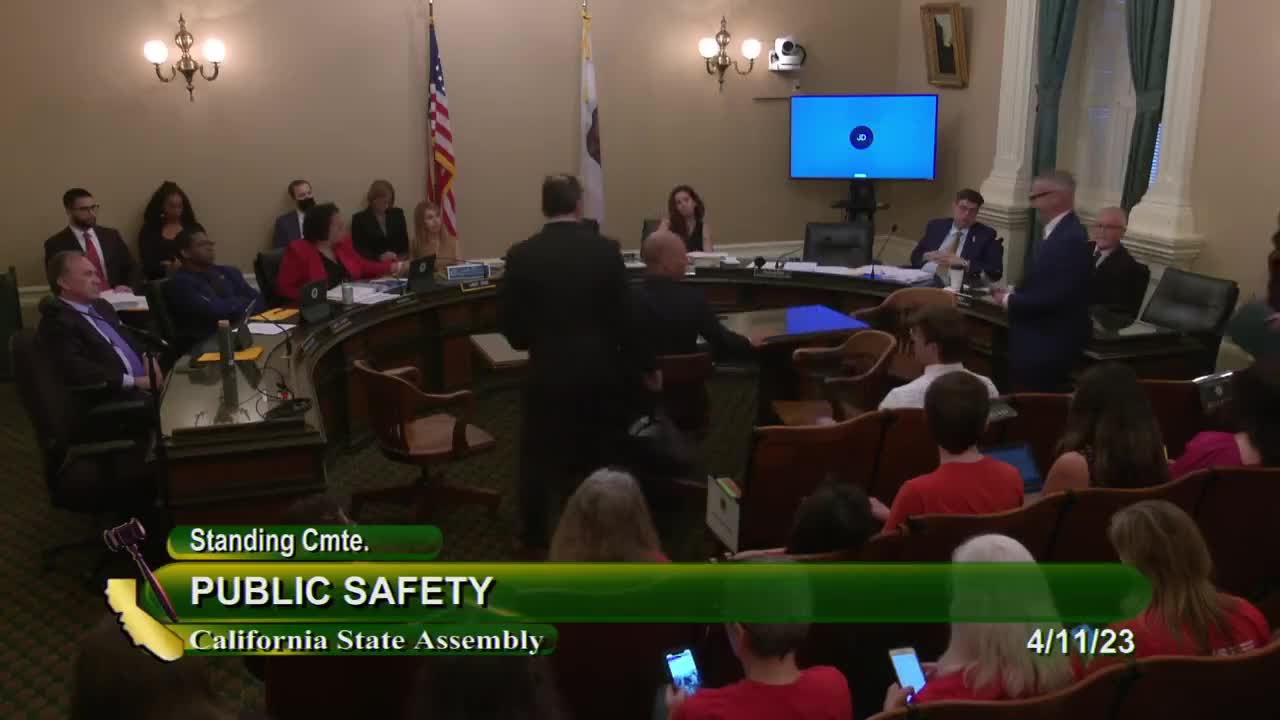 26MIN
Assembly Standing Committee on Public Safety
Bill Author

Bill Co-Author(s):