AB 1647: Veterans treatment courts: grant program.
- Session Year: 2023-2024
- House: Assembly
- Latest Version Date: 2023-05-01
Current Status:
Failed
(2023-06-07: Referred to Coms. on PUB S. and M. & V.A.)
Introduced
In Committee
First Chamber
In Committee
Second Chamber
Enacted
Existing law establishes a statewide system of courts with a superior court of one or more judges in each county. Existing law authorizes the Judicial Council to prescribe the methods, means, and standards for electronic collection of data related to court administration, practice, and procedure.
Existing law requires a criminal court to make a determination as to whether a defendant who was a member of the United States military may be suffering from sexual trauma, traumatic brain injury, post-traumatic stress disorder, substance abuse, or mental health problems as a result of the persons service. Existing law allows the court to consider these circumstances in granting probation, referring the defendant to mental health treatment, and granting restorative relief, as provided. Existing law authorizes a court to grant restorative relief to a veteran defendant who was granted probation and who met specified criteria, including successful participation in court-ordered treatment services to address sexual trauma, traumatic brain injury, post-traumatic stress disorder, substance abuse, or mental health problems stemming from military service.
This bill bill, until January 1, 2029, would require that, on appropriation by the Legislature, the Judicial Council operate a grant program to establish and support veterans treatment courts or the equivalent services in counties where veterans treatment courts would be inefficient or impracticable. The bill would require the Judicial Council to establish standards and procedures for the operation of veterans courts, and condition the award of grant funds on adherence to those standards and procedures. The bill would require veterans treatment courts that receive grant funds to report information to the Judicial Council, as specified. The bill would also require the Judicial Council to report information to the Legislature, as specified.
Existing law establishes a statewide system of courts with a superior court of one or more judges in each county. Existing law authorizes the Judicial Council to prescribe the methods, means, and standards for electronic collection of data related to court administration, practice, and procedure.
Existing law requires a criminal court to make a determination as to whether a defendant who was a member of the United States military may be suffering from sexual trauma, traumatic brain injury, post-traumatic stress disorder, substance abuse, or mental health problems as a result of the persons service. Existing law allows the court to consider these circumstances in granting probation, referring the defendant to mental health treatment, and granting restorative relief, as provided. Existing law authorizes a court to grant restorative relief to a veteran defendant who was granted probation and who met specified criteria, including successful participation in court-ordered treatment services to address sexual trauma, traumatic brain injury, post-traumatic stress disorder, substance abuse, or mental health problems stemming from military service.
This bill would require that, on appropriation by the Legislature, the Judicial Council operate a grant program to establish and support veterans treatment courts or the equivalent services in counties where veterans treatment courts would be inefficient or impracticable. The bill would require the Judicial Council to establish standards and procedures for the operation of veterans courts, and condition the award of grant funds on adherence to those standards and procedures.
This bill would require the Judicial Council to conduct a study of veterans and veterans treatment courts that includes a statewide assessment, as specified, of veterans treatment courts currently in operation and a survey of counties that do not operate veterans treatment courts that identifies barriers to program implementation and assesses the need for veterans treatment courts in those counties, if funds are received for that purpose. The bill would require the Judicial Council to report to the Legislature on the results of the study, as specified, on or before June 1, 2024. The bill would create the Veterans Court Assessment Fund in the State Treasury, administered by the Judicial Council, and would authorize the fund to accept private donations, as specified. The bill would appropriate sums from the Veterans Court Assessment Fund and from the General Fund for the purpose of conducting the study and report.Existing law establishes a statewide system of courts with a superior court of one or more judges in each county. Existing law authorizes the Judicial Council to prescribe the methods, means, and standards for electronic collection of data related to court administration, practice, and procedure.
Existing law requires a criminal court to make a determination as to whether a defendant who was a member of the United States military may be suffering from sexual trauma, traumatic brain injury, post-traumatic stress disorder, substance abuse, or mental health problems as a result of the persons service. Existing law allows the court to consider these circumstances in granting probation, referring the defendant to mental health treatment, and granting restorative relief, as provided. Existing law authorizes a court to grant restorative relief to a veteran defendant who was granted probation and who met specified criteria, including successful participation in court-ordered treatment services to address sexual trauma, traumatic brain injury, post-traumatic stress disorder, substance abuse, or mental health problems stemming from military service.
This bill would require the Judicial Council to conduct a study of veterans and veterans treatment courts that includes a statewide assessment, as specified, of veterans treatment courts currently in operation and a survey of counties that do not operate veterans treatment courts that identifies barriers to program implementation and assesses the need for veterans treatment courts in those counties, if funds are received for that purpose. The bill would require the Judicial Council to report to the Legislature on the results of the study, as specified, on or before June 1, 2024. The bill would create the Veterans Court Assessment Fund in the State Treasury, administered by the Judicial Council, and would authorize the fund to accept private donations, as specified. The bill would appropriate sums from the Veterans Court Assessment Fund and from the General Fund for the purpose of conducting the study and report.
Under existing law, a dependent of a veteran may apply for aid for certain benefits, including tuition and fees and a monthly payment for books, supplies, and living expenses while in school. Existing law requires the Department of Veterans Affairs, if it determines the educational needs of the applicant can be satisfactorily met in an educational institution in this state or elsewhere, to assume state wardship over the education of the applicant, as specified.This bill would make technical, nonsubstantive changes to this provision.Under existing law, a dependent of a veteran may apply for aid for certain benefits, including tuition and fees and a monthly payment for books, supplies, and living expenses while in school. Existing law requires the Department of Veterans Affairs, if it determines the educational needs of the applicant can be satisfactorily met in an educational institution in this state or elsewhere, to assume state wardship over the education of the applicant, as specified.
This bill would make technical, nonsubstantive changes to this provision.
(a)The Judicial Council shall, on appropriation by the Legislature, operate a grant program for the establishment and support of veterans treatment courts, and the provision of appropriate equivalent services in counties where, because of a lack of a sufficient veteran population or other court resources, operation of a veterans treatment court is inefficient or impracticable.
(b)The Judicial Council shall establish standards and procedures for the operation of veterans courts, and condition award of funds under this section on adherence to those standards and procedures.
(c)Veterans treatment courts that receive grant funds shall, on July 1, 2025, and on July 1 each year thereafter, report the following information to Judicial Council:
(1)The number of veterans that participated in the veterans treatment court program.
(2)The offenses with which each program participant had been charged or to which each program participant had plead guilty.
(3)The qualifying condition for each program participant who participated in the program.
(4)The number of program participants who completed the program.
(5)The number of program participants who did not complete the program.
(6)The length of time that each program participant spent in the program.
(d)On January 1, 2026, and annually thereafter, Judicial Council shall send a report to the Legislature with all of the following information:
(1)The total funds awarded under the grant program.
(2)The amount of funds awarded to each veteran treatment court.
(3)The total funds awarded to appropriate equivalent services in counties without a veterans treatment court.
(4)The specific services to which funds were allocated in counties without a veterans treatment court.
(5)A summary of the information submitted to Judicial Council under subdivision (c).
(e)This section shall remain in effect only until January 1, 2029, and as of that date is repealed.
(a)The Judicial Council shall, on appropriation by the Legislature, operate a grant program for the establishment and support of veterans treatment courts, and the provision of appropriate equivalent services in counties where, because of a lack of a sufficient veteran population or other court resources, operation of a veterans treatment court is inefficient or impracticable.
(b)The Judicial Council shall establish standards and procedures for the operation of veterans courts, and condition award of funds under this section on adherence to those standards and procedures.
SEC. 2.If this act is not enacted, the Judicial Council shall return any funds donated to the Veterans Court Assessment Fund or donated for the purpose of carrying out the study and report described in Section 1 of this act to the entity or individual who made the donation in an amount equal to the donation.SEC. 3.The sum of one hundred thousand dollars ($100,000) is hereby appropriated from the Veterans Court Assessment Fund to the Judicial Council for the purpose of conducting the study and report described in Section 68530 of the Government Code.SEC. 4.The sum of one hundred thousand dollars ($100,000) is hereby appropriated from the General Fund to the Judicial Council for the purpose of conducting the study and report described in Section 68530 of the Government Code.(a)The Judicial Council shall, on appropriation by the Legislature, operate a grant program for the establishment and support of veterans treatment courts, and the provision of appropriate equivalent services in counties where, because of a lack of a sufficient veteran population or other court resources, operation of a veterans treatment court is inefficient or impracticable.
(b)The Judicial Council shall establish standards and procedures for the operation of veterans courts, and condition award of funds under this section on adherence to those standards and procedures.
SECTION 1.Section 68530 is added to the Government Code, to read:68530.(a)If the Judicial Council receives funds for the purpose of implementing this section, the Judicial Council shall conduct a study of veterans and veterans treatment courts that includes both of the following:(1)A statewide assessment of the veterans treatment courts currently in operation that includes the number of veteran participants in the program, services available, and program outcomes, including successful completion or program terminations. The assessment shall evaluate the impact of a sample of veterans treatment courts on participant outcomes, including, but not limited to, program recidivism, mental health, homelessness, employment, social stability, and substance abuse.(2)A survey of counties that do not operate veterans treatment courts that identifies barriers to program implementation and assesses the need for veterans treatment courts in those jurisdictions based on the veterans services available and the estimated number of veterans involved in the local criminal justice system. The survey shall identify alternative resources that may be available to veterans, such as community courts or other collaborative justice courts.(b)On or before June 1, 2024, the Judicial Council shall report to the Legislature on the results of the study described in subdivision (a). The report shall include recommendations regarding the expansion of veterans treatment courts or services to counties without veterans treatment courts and shall explore the feasibility of designing regional model veterans treatment courts through the use of service coordination or technological resources. The report shall be submitted in compliance with Section 9795.(c)Fifty percent of the funds required for the study and report described in this section shall be funded by private sources, and 50 percent of the funds shall be funded by the state, upon appropriation by the Legislature.(d)The Veterans Court Assessment Fund is hereby created in the State Treasury. The fund shall be administered by the Judicial Council. The fund may accept private donations from entities and individuals. The Judicial Council shall deposit the donations into the fund.(e)This section shall remain in effect only until January 1, 2025, and as of that date is repealed, unless a later enacted statute that is enacted before January 1, 2026, deletes or extends that date.SEC. 2.If this act is not enacted, the Judicial Council shall return any funds donated to the Veterans Court Assessment Fund or donated for the purpose of carrying out the study and report described in Section 1 of this act to the entity or individual who made the donation in an amount equal to the donation.
SEC. 3.The sum of one hundred thousand dollars ($100,000) is hereby appropriated from the Veterans Court Assessment Fund to the Judicial Council for the purpose of conducting the study and report described in Section 68530 of the Government Code.
SEC. 4.The sum of one hundred thousand dollars ($100,000) is hereby appropriated from the General Fund to the Judicial Council for the purpose of conducting the study and report described in Section 68530 of the Government Code.
(a)If the Judicial Council receives funds for the purpose of implementing this section, the Judicial Council shall conduct a study of veterans and veterans treatment courts that includes both of the following:
(1)A statewide assessment of the veterans treatment courts currently in operation that includes the number of veteran participants in the program, services available, and program outcomes, including successful completion or program terminations. The assessment shall evaluate the impact of a sample of veterans treatment courts on participant outcomes, including, but not limited to, program recidivism, mental health, homelessness, employment, social stability, and substance abuse.
(2)A survey of counties that do not operate veterans treatment courts that identifies barriers to program implementation and assesses the need for veterans treatment courts in those jurisdictions based on the veterans services available and the estimated number of veterans involved in the local criminal justice system. The survey shall identify alternative resources that may be available to veterans, such as community courts or other collaborative justice courts.
(b)On or before June 1, 2024, the Judicial Council shall report to the Legislature on the results of the study described in subdivision (a). The report shall include recommendations regarding the expansion of veterans treatment courts or services to counties without veterans treatment courts and shall explore the feasibility of designing regional model veterans treatment courts through the use of service coordination or technological resources. The report shall be submitted in compliance with Section 9795.
(c)Fifty percent of the funds required for the study and report described in this section shall be funded by private sources, and 50 percent of the funds shall be funded by the state, upon appropriation by the Legislature.
(d)The Veterans Court Assessment Fund is hereby created in the State Treasury. The fund shall be administered by the Judicial Council. The fund may accept private donations from entities and individuals. The Judicial Council shall deposit the donations into the fund.
(e)This section shall remain in effect only until January 1, 2025, and as of that date is repealed, unless a later enacted statute that is enacted before January 1, 2026, deletes or extends that date.
SEC. 2.If this act is not enacted, the Judicial Council shall return any funds donated to the Veterans Court Assessment Fund or donated for the purpose of carrying out the study and report described in Section 1 of this act to the entity or individual who made the donation in an amount equal to the donation.
SEC. 3.The sum of one hundred thousand dollars ($100,000) is hereby appropriated from the Veterans Court Assessment Fund to the Judicial Council for the purpose of conducting the study and report described in Section 68530 of the Government Code.
SEC. 4.The sum of one hundred thousand dollars ($100,000) is hereby appropriated from the General Fund to the Judicial Council for the purpose of conducting the study and report described in Section 68530 of the Government Code.
SECTION 1.Section 892 of the Military and Veterans Code is amended to read:892.A dependent of a veteran who desires to continue their education may apply to the department. If, in the opinion of the department, the educational needs of the applicant can be satisfactorily met in an educational institution in this state or elsewhere, the department shall assume state wardship over the education of the applicant. The department may provide educational counsel for an applicant and assist them in securing admission to a suitable institution of learning. Tuition may be paid at private schools only when a suitable opportunity is not available in a public or semipublic institution.A dependent of a veteran who desires to continue his their education may apply to the department. If If, in the opinion of the department department, the educational needs of the applicant can be satisfactorily met in an educational institutions institution in this State state or elsewhere, the department shall assume state wardship over the education of the applicant. The department may provide educational counsel for applicants an applicant and assist them in securing admission to a suitable institutions institution of learning. Tuition may be paid at private schools only when a suitable opportunity is not available in a public or semipublic institutions. institution.
|
Date
|
Status
|
|---|---|
| Jun 7, 2023 | Referred to Coms. on PUB S. and M. & V.A. |
| May 26, 2023 | In Senate. Read first time. To Com. on RLS. for assignment. |
| May 25, 2023 | Read third time. Passed. Ordered to the Senate. (Ayes 75. Noes 0. Page 1803.) |
| May 18, 2023 | Read second time. Ordered to third reading. |
| May 18, 2023 | From committee: Do pass. (Ayes 15. Noes 0.) (May 18). |
| May 10, 2023 | In committee: Set, first hearing. Referred to APPR. suspense file. |
| May 2, 2023 | Re-referred to Com. on APPR. |
| May 1, 2023 | Read second time and amended. |
| Apr 27, 2023 | From committee: Amend, and do pass as amended and re-refer to Com. on APPR. with recommendation: To Consent Calendar. (Ayes 8. Noes 0.) (April 25). |
| Mar 29, 2023 | From committee: Do pass and re-refer to Com. on PUB. S. (Ayes 11. Noes 0.) (March 28). Re-referred to Com. on PUB. S. |
| Mar 20, 2023 | Re-referred to Com. on M. & V.A. |
| Mar 16, 2023 | Re-referred to Com. on M. & V.A. |
| Mar 16, 2023 | From committee chair, with author's amendments: Amend, and re-refer to Com. on M. & V.A. Read second time and amended. |
| Mar 15, 2023 | From committee chair, with author's amendments: Amend, and re-refer to Com. on M. & V.A. Read second time and amended. |
| Mar 14, 2023 | Re-referred to Com. on M. & V.A. |
| Mar 13, 2023 | From committee chair, with author's amendments: Amend, and re-refer to Com. on M. & V.A. Read second time and amended. |
| Mar 9, 2023 | Referred to Coms. on M. & V.A. and PUB. S. |
| Feb 18, 2023 | From printer. May be heard in committee March 20. |
| Feb 17, 2023 | Read first time. To print. |
|
Date
|
Description
|
Location
|
Votes
|
|
|---|---|---|---|---|
| May 25, 2023 | AB 1647 Soria Assembly Third Reading | Assembly Floor |
Passed |
|
| May 18, 2023 | Do pass. | Assembly Standing Committee on Appropriations |
Passed |
|
| Apr 25, 2023 | Do pass as amended, and be re-referred to the Committee on [Appropriations] with recommendation: To Consent Calendar | Assembly Standing Committee on Public Safety |
Passed |
|
| Mar 28, 2023 | Do pass and be re-referred to the Committee on [Public Safety] | Assembly Standing Committee on Military and Veterans Affairs |
Passed |
This list shows positions taken on this bill by organizations on the date displayed, which is linked to the original source.
Positions by individuals are not included.
ASSEMBLY THIRD READING
ATR Bill Id:AB 1647
Author:(Soria)
As Amended Ver:May 1, 2023
Majority vote
SUMMARY
Establishes a grant program, upon appropriation, to be administered by Judicial Council to establish and support veterans treatment courts (VTC) and support veterans in the criminal legal system in counties without VTCs.
Major Provisions
- Requires Judicial Council, on appropriation by the Legislature, to operate a grant program for the establishment and support of VTCs, and for the provision of appropriate equivalent services in counties where, because of a lack of a sufficient veteran population or other court resources, operation of a VTC is inefficient or impracticable.
- Requires Judicial Council to establish standards and procedures for the operation of VTCs, and condition award of funds on adherence to those standards and procedures.
- Requires VTCs that receive grant funds to report, on July 1, 2025 and on July 1 each year thereafter, specified information on the operation of their courts.
- Requires Judicial Council, on January 1, 2026, and annually thereafter, to send a report to the Legislature with specified information about the operation of the grant program.
- Provides a sunset date of January 1, 2029.
COMMENTS
VTCs are a model of collaborative court that resolve veterans' criminal cases through treatment and supportive services. According to Judicial Council,
Veterans treatment courts (VTCs) developed as an alternative to incarceration through an understanding of the unique conditions that may lead to veterans of the U.S. Armed Forces being charged with crimes.
VTCs attempt to resolve eligible veterans’ criminal cases by providing treatment and support to address the underlying problems that may have led them to criminal behavior. VTCs provide substance abuse and mental health treatment, as well as other military-specific services. Most VTCs operate on a post-conviction model in which a veteran criminal defendant first pleads guilty and is then placed on probation while participating in the VTC. On successful completion of a VTC program, the court may terminate probation, reduce an eligible offense from a felony to a misdemeanor, or dismiss the charges.
VTCs often work closely with VA health centers to provide services to veterans. Additionally, mentorship programs, where VTC graduates or other veteran mentors serve on the VTC team, are a common characteristic of VTCs. VTCs have expanded rapidly nationwide. According to a 2020 report by the Judicial Council, 32 VTCs were then operating in 31 of California’s 58 counties.
According to the Author
"A significant proportion of veterans suffer from mental health problems, including depression and PTSD. Among veterans, mental illness and substance abuse have high rates of co-occurrence, and both are contributing factors in criminal involvement. Veterans Treatment Courts provide an alternative to incarceration for veterans who have become entangled in the justice system, but access to VTCs statewide is inconsistent and local practices and eligibility criteria differ. This bill will go some way to supporting the operation and establishment of VTCs, and the development and application of consistent standards and practices for their operation."
Arguments in Support
The California Public Defenders Association states, "Unfortunately, we have learned through our representation that as a result of our clients' military service, many of our veteran clients have suffered from sexual trauma, traumatic brain injury, post-traumatic stress disorder, substance abuse, and other mental health problems.
Currently, the law allows for courts to consider these circumstances when determining the appropriate disposition in a criminal case. Accordingly, a court may grant restorative relief to a veteran who was granted probation and who meets specified criteria, including successful participation in court-ordered treatment to address the harm they suffered as a result of their military service. Addressing this harm through the criminal legal system is holistic, empathetic, wise, and promotes public safety."
Arguments in Opposition
None on file.
FISCAL COMMENTS
Costs (General Fund) potentially in the millions of dollars, depending on the scope of the grant program. Judicial Council reports that it currently has over 30 VTCs that may be eligible for grant funding and that the cost to establish a new VTC is approximately $300,000. If the program funds three new VTCs and provides $50,000 grants to five existing VTCs, those grant funds would total $1.15 million. Judicial Council also reports that it would need 7.5% of the allocated grant funds to cover its administrative expenses
VOTES
ASM MILITARY AND VETERANS AFFAIRS: 11-0-0
YES: Soria, Davies, Addis, Alvarez, Boerner Horvath, Juan Carrillo, Mathis, Muratsuchi, Petrie-Norris, Ta, Valencia
ASM PUBLIC SAFETY: 8-0-0
YES: Jones-Sawyer, Alanis, Bonta, Bryan, Lackey, Ortega, Santiago, Zbur
ASM APPROPRIATIONS: 15-0-1
YES: Holden, Megan Dahle, Bryan, Calderon, Wendy Carrillo, Dixon, Mike Fong, Hart, Lowenthal, Mathis, Papan, Pellerin, Sanchez, Weber, Ortega
ABS, ABST OR NV: Robert Rivas
UPDATED
VERSION: May 1, 2023
CONSULTANT: Christian Burkin / M. & V.A. / (916) 319-3550 FN: 0000915
Date of Hearing: May 10, 2023
ASSEMBLY COMMITTEE ON APPROPRIATIONS
Chris Holden, Chair
ABPCA Bill Id:AB 1647
Author:(Soria) – As Amended Ver:May 1, 2023
Policy Committee: | Military and Veterans Affairs | Vote: | 11 - 0 |
Public Safety | 8 - 0 | ||
|
|
Urgency: No State Mandated Local Program: No Reimbursable: No
SUMMARY:
This bill establishes a grant program, upon appropriation, to be administered by Judicial Council to establish and support veterans treatment courts (VTC) and support veterans in the criminal legal system in counties without VTCs.
FISCAL EFFECT:
Costs (General Fund) potentially in the millions of dollars, depending on the scope of the grant program. Judicial Council reports that it currently has over 30 VTCs that may be eligible for grant funding and that the cost to establish a new VTC is approximately $300,000. If the program funds three new VTCs and provides $50,000 grants to five existing VTCs, those grant funds would total $1.15 million. Judicial Council also reports that it would need 7.5% of the allocated grant funds to cover its administrative expenses.
COMMENTS:
- Author’s Statement. According to the author:
A significant proportion of veterans suffer from mental health problems, including depression and PTSD. Among veterans, mental illness and substance abuse have high rates of co-occurrence, and both are contributing factors in criminal involvement. Veterans Treatment Courts provide an alternative to incarceration for veterans who have become entangled in the justice system, but access to VTCs statewide is inconsistent and local practices and eligibility criteria differ. This bill will go some way to supporting the operation and establishment of VTCs, and the development and application of consistent standards and practices for their operation.
- Background. VTCs are county courts that provide an alternative to traditional criminal prosecution for eligible military veterans. VTCs attempt to resolve a veteran’s criminal case through substance abuse treatment, mental health services, and other veteran-specific services provided during probation. According to the Judicial Council, which oversees California’s VTCs, “Most VTCs operate on a postconviction model in which the veterans plead guilty and are placed on probation while participating in the VTC. On successful completion of a VTC program, the court may terminate probation, reduce an eligible offense from a felony to a misdemeanor, or dismiss the charges.” This bill establishes a grant program to support VTCs and provide comparable services to counties where it is impracticable to establish a VTC. The bill provides little detail about the intended scope of the program so costs could vary significantly depending on how many grants are issued and the size of each grant.
Analysis Prepared by: Annika Carlson / APPR. / (916) 319-2081
Date of Hearing: April 25, 2023
Counsel: Andrew Ironside
ASSEMBLY COMMITTEE ON
Reginald Byron Jones-Sawyer, Sr., Chair
ABPCA Bill Id:
Author:() – As Ver:
As Proposed to be Amended in Committee
SUMMARY:
Establishes a grant program to be administered by Judicial Council to support veterans treatment courts (VTCs) and justice-involved veterans in counties without VTCs. Specifically, this bill:
- Requires Judicial Council, on appropriation by the Legislature, to operate a grant program for the establishment and support of VTCs, and for the provision of appropriate equivalent services in counties where, because of a lack of a sufficient veteran population or other court resources, operation of a VTC is inefficient or impracticable.
- Requires Judicial Council to establish standards and procedures for the operation of VTCs, and condition award of funds on adherence to those standards and procedures.
- Requires VTCs that receive grant funds to report, on July 1, 2025 and on July 1 each year thereafter, the following information:
- The number of veterans that participated in the VTC program;
- The offenses with which each program participant had been charged or to which each program participant had plead guilty;
- The qualifying condition for each program participant who participated in the program;
- The number of program participants who completed the program;
- The number of program participants who did not complete the program; and,
- The length of time that each program participant spent in the program.
- The number of veterans that participated in the VTC program;
- Requires Judicial Council, on January 1, 2026, and annually thereafter, to send a report to the Legislature with the following information:
- The total funds awarded under the grant program;
- The amount of funds awarded to each VTC;
- The total funds awarded to appropriate equivalent services in counties without a VTC;
- The specific services to which funds were allocated in counties without a VTC; and
- A summary of the information submitted to Judicial Council by VTCs.
- The total funds awarded under the grant program;
- Provides a sunset date of January 1, 2029.
EXISTING LAW:
- Establishes pretrial misdemeanor diversion for a current or former member of the U.S. military who may be suffering from sexual trauma, traumatic brain injury, post-traumatic stress disorder, substance abuse, or mental health problems as a result of his or her military service. (Pen. Code, § 1001.80, subd. (b).)
- Requires the court, if it appears to the court that the defendant is performing unsatisfactorily in the assigned program, or that the defendant is not benefiting from the treatment and services provided under the diversion program, after notice to the defendant, to hold a hearing to determine whether the criminal proceedings should be reinstituted. (Pen. Code, § 1001.80, subd. (c).)
- Authorizes a court to end pretrial misdemeanor diversion and resume criminal proceedings if the court finds that the defendant is not performing satisfactorily in the assigned program, or that the defendant is not benefiting from diversion. (Pen. Code, § 1001.80, subd. (c).)
- Requires the court to dismiss the criminal charges at the end of the period of diversion if the defendant has performed satisfactorily during the period of diversion. (Pen Code, § 1001.80, subd. (c).)
- Requires the county, if a referral is made to the county mental health authority as part of the pretrial diversion program, to provide mental health treatment services only to the extent that resources are available for that purpose, as specified. (Pen. Code, §§ 1001.80, subd. (d) & 1170.9, subd. (c).)
- Requires the county mental health agency, if mental health treatment services are ordered by the court, to coordinate appropriate referral of the defendant to the county veterans service officer, as required. (Pen. Code, §§ 1001.80, subd. (d) & 1170.9, subd. (c).)
- Requires an order referring a defendant to a county mental health agency only if that agency has agreed to accept responsibility for the treatment of the defendant, the coordination of appropriate referral to a county veterans service officer, and the filing of required reports. (Pen. Code, § 1001.80, subd. (d).)
- Requires the court, when determining the requirements of a pretrial diversion program for members of the military and military veterans, to assess whether the defendant should be ordered to participate in a federal or community-based treatment service program with a demonstrated history of specializing in the treatment of mental health problems, including substance abuse, post-traumatic stress disorder, traumatic brain injury, military sexual trauma, and other related mental health problems. (Pen. Code, § 1001.80, subd. (e).)
- Requires the court, in making an order to commit a defendant to an established treatment program, to give preference to a treatment program that has a history of successfully treating veterans who suffer from sexual trauma, traumatic brain injury, post-traumatic stress disorder, substance abuse, or mental health problems as a result of military service, including, but not limited to, programs operated by the United States Department of Defense or the United States Department of Veterans Affairs. (Pen. Code, § 1001.80, subd. (f).)
- Authorizes the court and the assigned treatment program to collaborate with the Department of Veterans Affairs and the United States Department of Veterans Affairs to maximize benefits and services provided to a veteran. (Pen. Code, § 1001.80, subd. (g).)
- Provides that the period during which criminal proceedings against the defendant may be diverted shall be no longer than two years. (Pen. Code, § 1001.80, subd. (h).)
- Requires the responsible agency or agencies to file reports on the defendant’s progress in the diversion program with the court and with the prosecutor not less than every six months. (Pen. Code, § 1001.80, subd. (h).)
- Requires the court, in the case of any person convicted of a criminal offense who could otherwise be sentenced to county jail or state prison and who alleges that the person committed the offense as a result of sexual trauma, traumatic brain injury, post-traumatic stress disorder, substance abuse, or mental health problems stemming from service in the United States military, to make a determination prior to sentencing as to whether the defendant was, or currently is, a member of the United States military and whether the defendant may be suffering from sexual trauma, traumatic brain injury, post-traumatic stress disorder, substance abuse, or mental health problems as a result of the person’s service. (Pen. Code, § 1170.9, subd. (a).)
- Requires the court, if the court concludes that a defendant convicted of a criminal offense is a member of the military or a military veteran, and if the defendant is otherwise eligible for probation, to consider the circumstances as a factor in favor of granting probation. (Pen. Code, § 1170.9, subd. (b)(1).)
- If the court places the defendant on probation, the court may order the defendant into a local, state, federal, or private nonprofit treatment program for a period not to exceed that period which the defendant would have served in state prison or county jail, provided the defendant agrees to participate in the program and the court determines that an appropriate treatment program exists. (Pen. Code, § 1170.9, subd. (b)(2).)
- Requires the court, if it concludes that a defendant convicted of a felony offense is, or was, a member of the United States military who may be suffering from sexual trauma, traumatic brain injury, post-traumatic stress disorder, substance abuse, or mental health problems as a result of the defendant’s military service, to consider the circumstance as a factor in mitigation when imposing a sentence. (Pen. Code, § 1170.91, subd. (a).)
- Provides that the primary goal of the use of funds deposited in the mental health account of the local health and welfare trust fund is to serve, among other groups, military veterans in need of mental health services. (Welf. & Inst., § 5600.3, subd. (a)(5).
- Provides that veterans who may be eligible for mental health services through the United States Department of Veterans Affairs should be advised of these services by the county and assisted in linking to those services, but the eligible veteran shall not be denied county mental or behavioral health services while waiting for a determination of eligibility for, and availability of, mental or behavioral health services provided by the United States Department of Veterans Affairs. (Welf. & Inst., § 5600.3, subd. (a)(5).
- Provides that counties should consider contracting with community-based veterans’ services agencies, where possible, to provide high-quality, veteran specific mental health services. (Welf. & Inst., § 5600.3, subd. (a)(5)(C).)
FISCAL EFFECT:
Unknown
COMMENTS:
- Author's Statement: According to the author, “A significant proportion of veterans suffer from mental health problems, including depression and PTSD. Among veterans, mental illness and substance abuse have high rates of co-occurrence, and both are contributing factors in criminal involvement. Veterans Treatment Courts provide an alternative to incarceration for veterans who have become entangled in the justice system, but access to VTCs statewide is inconsistent and local practices and eligibility criteria differ. This bill will go some way to supporting the operation and establishment of VTCs, and the development and application of consistent standards and practices for their operation.”
- Veterans Treatment Courts (VTCs): VTCs are a model of collaborative court that resolve veterans’ criminal cases through treatment and supportive services. According to Judicial Council,
Veterans Treatment Courts developed as an alternative to incarceration with an understanding of the unique needs of JIVs. These specialized courts endeavor to resolve eligible veterans’ criminal cases by providing treatment and support to address the underlying issues that may have led them to commit the crime that brought them into the criminal justice system. VTCs provide substance abuse and mental health treatment, as well as other military-specific services. Most VTCs operate on a postconviction model in which the veterans plead guilty and are placed on probation while participating in the VTC. On successful completion of a VTC program, the court may terminate probation, reduce an eligible offense from a felony to a misdemeanor, or dismiss the charges.
VTCs often work closely with VA health centers to provide services to veterans. Additionally, mentorship programs, where VTC graduates or other veteran mentors serve on the VTC team, are a common characteristic of VTCs. VTCs have expanded rapidly nationwide. In 2018, Veterans Justice Outreach specialists, who support JIVs, reported serving in 551 VTCs nationwide. At the initiation of this study, 32 VTCs were operating in 29 of California’s 58 counties.
(Judicial Council of Cal., Collaborative Justice: Survey and Assessment of Veterans Treatment Courts (June 2020) p. 4.)
SB 339 (Roth), Chapter 595, Statutes of 2017, required the Judicial Council to conduct a statewide study of veterans and VTCs and to report its findings to the Legislature. Judicial Council issued the report in June 2020. It recommended identifying eligible veterans and notifying them of their rights; reviewing eligibility requirements to expand the number of veterans who qualify for veterans treatment courts; and “utilize[ing] existing local resources rather than creating regional VTCs, including collaborating with justice systems partners to enact a systemwide approach and identifying and utilizing the full array of local resources.” (Collaborative Justice, supra, at p. 1.) A 2019 Center for Court Innovation reached similar conclusions. (Center for Court Innovation, California Veterans Treatment Court Strategic Plan (Nov. 2019) <https://www.courts.ca.gov/documents/california-strategic-report-final.pdf> [last visited Apr. 20, 2023].)
- Judicial Council Grants: This bill would require Judicial Council to operate a grant program for VTCs and equivalent services. Judicial Council oversees grant programs for other collaborative courts. For example, Judicial Council administers the Collaborative Justice Courts Substance Abuse Focus Program Grant, which funds adult and juvenile drug courts, adult and juvenile mental health courts, dependency and family law drug courts, DUI courts, elder courts, homeless courts, juvenile delinquency drug courts, peer/youth courts, reentry courts, truancy courts, veterans’ courts, community courts, girls courts and other collaborative justice courts that have a substance abuse focus. It also administers the Dependency Drug Court Augmentation Grant. (https://www.courts.ca.gov/3080.htm)
Judicial Council is an appropriate entity in which to establish this program.
- Prior Legislation:
- SB 339 (Roth), Chapter 595, Statutes of 2017, required the Judicial Council, contingent upon funding, to conduct a statewide study of veterans and VTCs, as specified, and to report its findings to the Legislature
- AB 1672 (Mathis), of the 2015-2016 Legislative Session, would have required the Judicial Council to report to the Legislature on a study of veterans and VTCs that includes a statewide assessment of VTCs currently in operation and a survey of counties that do not operate VTCs. AB 1672 was held under submission in the Senate Appropriations Committee.
- AB 2098 (Levine), Chapter 163, Statutes of 2014, required the court to consider a defendant’s status as a veteran suffering from PTSD or other forms of trauma when making specified sentencing determinations.
- ACR 36 (Atkins), Resolution Chapter 39, Statutes of 2013 encourages all superior courts to consider establishing VTCs and/or veterans treatment review calendars to assist troubled veterans who have service-related mental health issues.
- AB 201 (Butler), of the 2012-2013 Legislative Session, would have authorized superior courts to develop and implement VTCs, and would have established standards and procedures for VTCs and would have specified that county participation in the VTCs program is voluntary. The Governor vetoed AB 201.
- AB 1925 (Salas), of the 2009-2010 Legislative Session, would have authorized superior courts to develop and implement veterans’ courts for eligible veterans of the United States (U.S.) military. AB 1925 was vetoed by the Governor.
- AB 674 (Salas), Chapter 347, Statutes of 2010, allowed a court to order a defendant who suffers from sexual trauma, traumatic brain injury, post-traumatic stress disorder, substance abuse, or mental health problems as a result of military service, into a treatment program or veterans’ courts for a period not to exceed that which the defendant would have served in state prison or jail.
REGISTERED SUPPORT / OPPOSITION:
Support
None
Opposition
None
Analysis Prepared by:
Date of Hearing: March 28, 2023
ASSEMBLY COMMITTEE ON MILITARY AND VETERANS AFFAIRS
Esmeralda Soria, Chair
ABPCA Bill Id:AB 1647 (
Author:Soria) – As Amended Ver:March 16, 2023
SUBJECT: Veterans treatment courts: grant program
SUMMARY: Requires that the Judicial Council operate a grant program to establish and support the ongoing operation of veterans treatment courts or equivalent services, where appropriate. Specifically, this bill:
- Requires the Judicial Council, on appropriation by the Legislature, to operate a grant program for the establishment and support of veterans treatment courts, and the provision of appropriate equivalent services in counties where, because of a lack of a sufficient veteran population or other court resources, operation of a veterans treatment court is inefficient or impracticable.
- Requires the Judicial Council to establish standards and procedures for the operation of veterans courts, and to condition award of funds under this section on adherence to those standards and procedures.
EXISTING LAW:
- Vests in the superior courts the judicial power of California. (Cal. Const. art. VI, § 1.)
- Establishes the Judicial Council and authorizes them to improve the administration of justice, to survey judicial business and make recommendations to the courts to the Governor and Legislature, and adopt rules for court administration, practice and procedure, and perform other functions prescribed by statue. (Cal. Const. art. VI§ 6(d).)
- Allows courts to make rules for the administration of the courts so long as they are not otherwise prohibited by the Constitution, statute or rules adopted by the Judicial Council. (Gov. Code, § 68070; Wisniewski v. Clary (1975) 46 Cal.App.3d 499.)
- Requires judges to identify veteran defendants suffering from sexual trauma, post-traumatic stress disorder, traumatic brain injury, substance abuse, or mental health problems as a result of his or her service and use this status as a factor in favor of granting probation and/or ordering participation in approved treatment programs. (Pen. Code, § 1170.9.)
FISCAL EFFECT: This bill is keyed fiscal.
COMMENTS: Veterans treatment courts (VTCs) developed as an alternative to incarceration through an understanding of the unique conditions that may lead to veterans of the U.S. Armed Forces being charged with crimes.
VTCs attempt to resolve eligible veterans’ criminal cases by providing treatment and support to address the underlying problems that may have led them to criminal behavior. VTCs provide substance abuse and mental health treatment, as well as other military-specific services. Most VTCs operate on a post-conviction model in which a veteran criminal defendant first pleads guilty and is then placed on probation while participating in the VTC. On successful completion of a VTC program, the court may terminate probation, reduce an eligible offense from a felony to a misdemeanor, or dismiss the charges.
VTCs often work closely with VA health centers to provide services to veterans. Additionally, mentorship programs, where VTC graduates or other veteran mentors serve on the VTC team, are a common characteristic of VTCs. VTCs have expanded rapidly nationwide. According to a 2020 report by the Judicial Council, 32 VTCs were then operating in 31 of California’s 58 counties.
According to the author:
“A significant proportion of veterans suffer from mental health problems, including depression and PTSD. Among veterans, mental illness and substance abuse have high rates of co-occurrence, and both are contributing factors in criminal involvement. Veterans Treatment Courts provide an alternative to incarceration for veterans who have become entangled in the justice system, but access to VTCs statewide is inconsistent and local practices and eligibility criteria differ. This bill will go some way to supporting the operation and establishment of VTCs, and the development and application of consistent standards and practices for their operation.”
Equity impact
The bill would support provision of sentencing alternatives in select cases to veterans, who are disproportionately people of color, though also disproportionately male. This, also, however, describes the general population entangled in criminal prosecutions. On balance, the impact may be slightly toward mitigating inequity, as it supports an alternative to incarceration sentencing program that benefits select, eligible criminal defendants.
Prior legislation
SB 339 (Roth, Chapter 595, Statutes of 2017.) required the Judicial Council, contingent upon funding, to conduct a statewide study of veterans and veterans treatment courts, as specified, and to report its findings to the Legislature
AB 1672 (Mathis, Held under Submission, Senate Appropriations, 2016) requires the Judicial Council to report to the Legislature on a study of veterans and veterans treatment courts that includes a statewide assessment of veterans treatment courts currently in operation and a survey of counties that do not operate veterans treatment courts that identifies barriers to program implementation and assesses the need for veterans treatment courts in those counties, if funds are received for that purpose.
AB 2098 (Levine, Chapter 163, Statutes of 2014) requires the court to consider a defendant’s status as a veteran suffering from PTSD or other forms of trauma when making specified sentencing determinations.
ACR 36 (Atkins, Resolution Chapter 39, Statutes of 2013) encourages all superior courts to consider establishing VTCs and/or veterans treatment review calendars to assist troubled veterans who have service-related mental health issues.
AB 201 (Butler, vetoed, 2012) would have authorized superior courts to develop and implement veterans’ courts. This bill would have established standards and procedures for veterans’ courts and would have specified that county participation in the veterans’ courts program is voluntary.
AB 1925 (Salas, vetoed, 2010) would have authorized superior courts to develop and implement veterans’ courts for eligible veterans of the United States (U.S.) military. The Governor’s veto message stated “authorizing legislation is not required for the superior courts to establish specialized courts with dedicated calendars. I would urge the Judicial Council to examine the need for veterans' courts, however, and establish appropriate guidelines for the superior courts to follow.”
AB 674 (Salas, Chapter 347, Statutes of 2010) allows a court to order a defendant who suffers from sexual trauma, traumatic brain injury, post-traumatic stress disorder, substance abuse, or mental health problems as a result of military service, into a treatment program or veteran's court for a period not to exceed that which the defendant would have served in state prison or jail.
REGISTERED SUPPORT / OPPOSITION:
Support
None on file.
Opposition
None on file.
Analysis Prepared by: Christian Burkin / M. & V.A. / (916) 319-3550
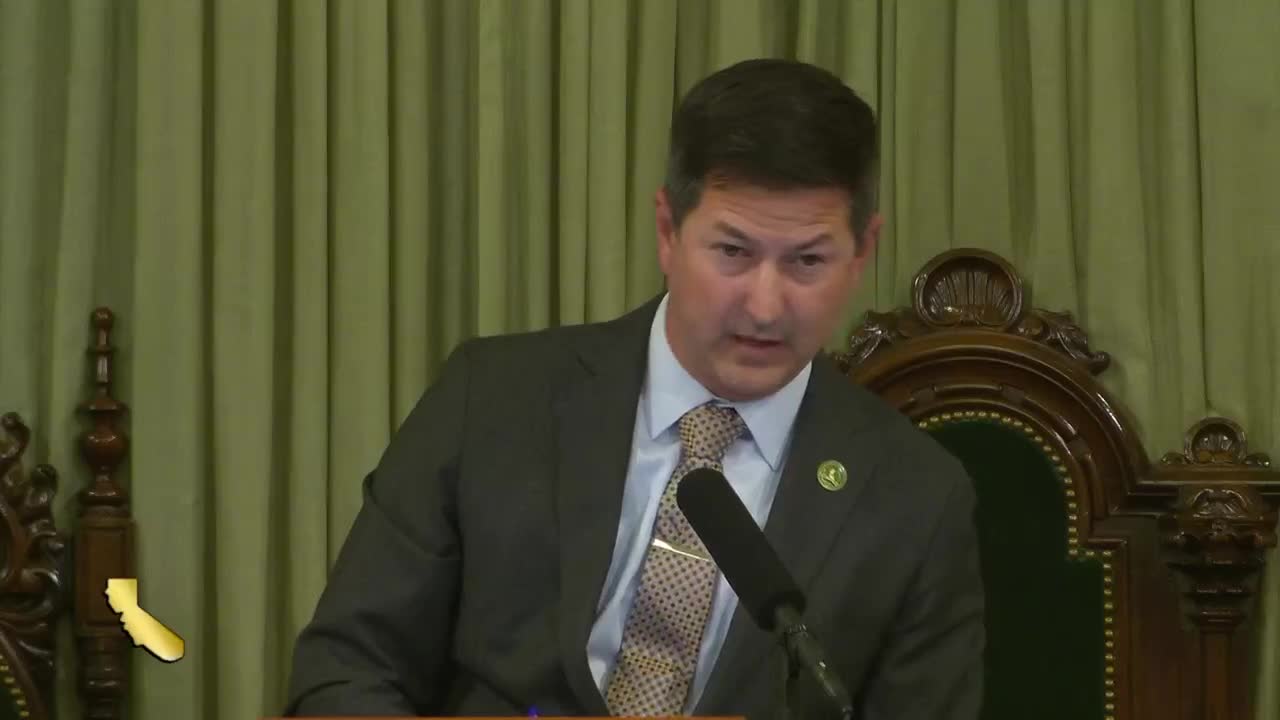
Bill Author

Bill Co-Author(s):