AB 1672: In-Home Supportive Services Employer-Employee Relations Act.
- Session Year: 2023-2024
- House: Assembly
- Latest Version Date: 2023-02-17
Current Status:
Failed
(2023-06-21: In committee: Set, first hearing. Hearing canceled at the request of author.)
Introduced
In Committee
First Chamber
In Committee
Second Chamber
Enacted
What does this bill do?
This bill creates the In-Home Supportive Services Employer-Employee Relations Act, letting IHSS home‑care workers (called individual providers) form or join employee organizations and making the state the employer of record for collective bargaining over wages, benefits, and work rules. It keeps recipients’ right to hire, fire, and supervise their providers, requires sharing provider contact information with recognized organizations and honoring existing payroll deduction authorizations, and sets out mediation, arbitration, and other negotiation procedures.
The summary is provided by generative AI which can make mistakes. For original language, please view the details in the table below.
(1)Existing law establishes the In-Home Supportive Services (IHSS) program, which is administered by the State Department of Social Services, counties, and other entities, under which qualified aged, blind, or disabled persons are provided with supportive services in order to permit them to remain in their own homes.
Existing law authorizes a county board of supervisors to elect to contract with a nonprofit consortium to provide for the delivery of in-home supportive services or to establish, by ordinance, a public authority to provide for the delivery of those services, in accordance with certain procedures. Existing law deems a public authority created under these provisions to be the employer of in-home supportive services personnel under the Meyers-Milias-Brown Act, which governs labor relations between local public employers and employees. Existing law also deems a nonprofit consortium contracting with a county to be the employer of in-home supportive services personnel for purposes of collective bargaining over wages, hours, and other terms and conditions of employment. Existing law grants recipients of in-home supportive services the right to hire, fire, and supervise the work of any in-home supportive services personnel providing services for them.
Existing law prohibits the state and specified local public employers from deterring or discouraging public employees from becoming or remaining members of an employee organization. Existing law also requires specified public employers to provide exclusive employee representatives access to new employee orientations. Existing law generally grants the Public Employment Relations Board jurisdiction over violations of these provisions. Existing law defines public employers who are subject to these provisions as including, among others, public agencies, cities, counties, and districts.
This bill would expand the definition of public employer, for purposes of those provisions, to include an employer who is subject to the In-Home Supportive Services Employer-Employee Relations Act, which the bill would create. The bill would establish a method for resolving disputes regarding wages, benefits, and other terms and conditions of employment between the state and recognized employee organizations representing independent providers. The bill would provide for the right of employees, also known as individual providers under the act, to form, join, and participate in activities of employee organizations for the purposes of representation on all matters within the scope of employee organizations. The bill would define employee or individual provider for these purposes to mean a person authorized to provide in-home supportive services pursuant to the individual provider mode or waiver personal care services, as prescribed.
For purposes of collective bargaining, the bill would deem the state to be the employer of record of individual providers in each county. The bill would grant the in-home supportive services recipient with the right to hire, fire, and supervise the work of the individual providers providing services to them. Among other things, the bill would specify that individual providers employed by a predecessor agency before the effective date of the act shall retain employee status and not be required by the state to requalify to receive payment for providing in-home supportive services.
Among other things, for purposes of collective bargaining, the bill would provide that existing bargaining units consisting of individual providers in a single county that are represented by the same recognized employee organization shall be deemed merged into the largest possible multicounty bargaining units represented by that employee organization, upon the effective date of this act. In counties where no recognized employee organization exists as of the effective date of the act, the bill would specify that a bargaining unit consisting of all employees in that county shall be deemed an appropriate unit for collective bargaining. Under the bill, if individual providers in a county bargaining unit are represented by a recognized employee organization on the date of the act, the state would be deemed the successor employer of the predecessor agency for purposes of negotiating a collective bargaining agreement, subject to the obligation to meet and confer in good faith and meet other related legal requirements.
The bill would require all recognized employee organizations, as of the effective date of the act, to negotiate jointly on behalf of all bargaining units they represent to reach a single memorandum of understanding with the employer. The bill would authorize the memorandum of understanding to contain addenda reflecting regional or county-level terms and conditions. The bill would establish procedures for voting and ratification of a memorandum of understanding, and for the employer to assume a predecessor agencys rights and obligations under a memorandum of understanding or agreement between a predecessor agency and a recognized employee organization that is in effect on the date of the bills enactment.
The bill would prescribe the duties of the state under the act, including requiring the Governor to meet and confer in good faith, and to follow specified procedures regarding collective bargaining. If an agreement is reached by a representative of the Governor and the recognized employee organizations, the bill would require those parties to jointly prepare a written memorandum of understanding and present it to the Legislature for determination by majority vote. The bill would require the Governor, for any side letter, appendix, or other addendum to a memorandum of understanding that requires the expenditure of $250,000 or more related to salary and benefits not included in the original memorandum or the Budget Act, to provide that to the Joint Legislative Budget Committee, as specified. The bill would also establish mediation and arbitration procedures that would apply when the parties fail to reach an agreement.
The bill would make certain actions by an employer and other entities involved in administering the IHSS program unlawful, including imposing or threatening to impose reprisals on employees or otherwise interfering with the exercise of their rights. The bill would authorize the Public Employment Relations Board to adopt reasonable rules and regulations pursuant to the act, including the adoption of emergency regulations, as prescribed.
(2)Existing law requires the Controller to provide for the administration of payroll deductions and salary reductions, and authorizes the Controller to establish procedures for that purpose.
The bill would require the Controller to honor a written authorization for payroll deductions executed by an employee before the effective date of the act, and to make deductions for payments of dues to a recognized employee organization pursuant to the act consistent with the above-described payroll deduction procedures.
(3)Existing law, the California Public Records Act, requires public records to be open to inspection at all times during the office hours of the state or local agency that retains those records, and provides that every person has a right to inspect any public record, except as provided. Existing law provides that certain information regarding persons paid by the state to provide in-home supportive services, or other related public services, are not subject to disclosure under the act. Existing law further provides that copies of names, addresses, home telephone numbers, and other identifying information are required to be made available, upon request, to an exclusive bargaining agent and to any employee organization seeking representation rights under specified collective bargaining provisions.
With respect to the above-described personal identifying information, this bill would instead require this information to be made available to the exclusive bargaining agent and any employee organization seeking representation under the In-Home Supportive Services Employer-Employee Relations Act. The bill would require the state, or a county, public authority, or nonprofit consortium organized pursuant to the IHSS program, to promptly make the information available to the requesting entity.
The bill would revise the IHSS program provisions to require the state to assume responsibilities as set forth in the act. The bill would also require a county or city and county to continue to have certain IHSS program-related functions set forth in county ordinance or contract performed in accordance with specified provisions.
(4)Existing law requires prospective providers of in-home supportive services to complete an in-person provider orientation at the time of enrollment that is developed by the department, in consultation with counties, that includes requirements to be an eligible IHSS provider and other related matters.
This bill additionally would require that in-person provider orientation include any other information required to be communicated to prospective providers by a memorandum of understanding, appendix, or side letter between recognized employee organizations and the state. The bill would make other related changes to these provisions.
By imposing new duties on local government officials, the bill would impose a state-mandated local program.
(5)The bill would include findings that changes proposed by this bill address a matter of statewide concern and, therefore, apply to all counties.
(6)The California Constitution requires local agencies, for the purpose of ensuring public access to the meetings of public bodies and the writings of public officials and agencies, to comply with a statutory enactment that amends or enacts laws relating to public records or open meetings and contains findings demonstrating that the enactment furthers the constitutional requirements relating to this purpose.
This bill would make legislative findings to that effect.
(7)Existing constitutional provisions require that a statute that limits the right of access to the meetings of public bodies or the writings of public officials and agencies be adopted with findings demonstrating the interest protected by the limitation and the need for protecting that interest.
This bill would make legislative findings to that effect.
(8)The California Constitution requires the state to reimburse local agencies and school districts for certain costs mandated by the state. Statutory provisions establish procedures for making that reimbursement.
This bill would provide that with regard to certain mandates no reimbursement is required by this act for a specified reason.
With regard to any other mandates, this bill would provide that, if the Commission on State Mandates determines that the bill contains costs so mandated by the state, reimbursement for those costs shall be made pursuant to the statutory provisions noted above.
For the purpose of this chapter:
(a)Employee organization means an employee organization within the meaning of the provisions listed in subdivision (c).
(b)Public employee means an employee granted rights by the provisions listed in subdivision (c) or an employee of a public transit agency, the labor relations of which are regulated by provisions in the Public Utilities Code.
(c)Public employer means any employer subject to Chapter 10 (commencing with Section 3500), Chapter 10.3 (commencing with Section 3512), Chapter 10.4 (commencing with Section 3524.50), Chapter 10.7 (commencing with Section 3540), or Chapter 12 (commencing with Section 3560) of Division 4 of Title 1, Chapter 7 (commencing with Section 71600) or Chapter 7.5 (commencing with Section 71800) of Title 8 of of, or Title 26 (commencing with Section 110000) of, this code, or Chapter 7 (commencing with Section 99560) of Part 11 of Division 10 of the Public Utilities Code, or Section 12302.25 of the Welfare and Institutions Code. This chapter also applies to public transit districts with respect to their public employees who are in bargaining units not subject to the provisions listed in this subdivision.
SEC. 2.Section 3555.5 of the Government Code is amended to read:3555.5.(a)This chapter applies to public employers subject to Chapter 10 (commencing with Section 3500), Chapter 10.3 (commencing with Section 3512), Chapter 10.4 (commencing with Section 3524.50), Chapter 10.7 (commencing with Section 3540), or Chapter 12 (commencing with Section 3560) of, or Chapter 7 (commencing with Section 71600) or Chapter 7.5 (commencing with Section 71800) of Title 8 of, or Title 26 (commencing with Section 110000) of, this code, or Chapter 7 (commencing with Section 99560) of Part 11 of Division 10 of the Public Utilities Code. This chapter, except for subdivision (c), also applies to public transit districts with respect to their public employees who are in bargaining units not subject to the provisions listed in this subdivision.
(b)For purposes of this chapter:
(1)Exclusive representative means the exclusive representative or recognized employee organization for the bargaining unit.
(2)Interest arbitration means a process whereby an employer and an exclusive representative submit a dispute concerning the terms of access to new employee orientations for resolution to a third-party arbitrator who is then authorized to approve either partys proposal in its entirety, to approve a proposal using both the employers and exclusive representatives final proposals, or to modify the proposals by the parties.
(3)New employee orientation means the onboarding process of a newly hired public employee, whether in person, online, or through other means or mediums, in which employees are advised of their employment status, rights, benefits, duties and responsibilities, or any other employment-related matters.
(4)Newly hired public employee means any employee, whether permanent, temporary, full time, part time, or seasonal, hired by a public employer, to which this chapter applies and who is still employed as of the date of the new employee orientation.
(c)(1)Except as provided in paragraph (2), the Public Employment Relations Board shall have jurisdiction over violations of this chapter. The powers and duties of the board described in Section 3541.3 shall apply, as appropriate, to this chapter.
(2)The employee relations commissions established by the County of Los Angeles and the City of Los Angeles shall have jurisdiction over violations of this chapter in the County of Los Angeles and the City of Los Angeles, respectively.
SEC. 3.Section 7926.300 of the Government Code is amended to read:7926.300.(a)Notwithstanding any other provision of this division, information regarding persons paid by the state to provide in-home supportive services pursuant to Article 7 (commencing with Section 12300) of Chapter 3 of Part 3 of Division 9 of the Welfare and Institutions Code or personal care services pursuant to Section 14132.95, 14132.952, 14132.956, or 14132.97 of the Welfare and Institutions Code, and information about persons who have completed the form described in subdivision (a) of Section 12305.81 of the Welfare and Institutions Code for the provider enrollment process, is not subject to public disclosure pursuant to this division, except as provided in subdivision (b).
(b)Copies of names, addresses, home telephone numbers, personal cellular telephone numbers, written or spoken languages, if known, and personal email addresses of persons described in subdivision (a) shall be made available, upon request, to an exclusive bargaining agent and to any labor employee organization seeking representation rights pursuant to subdivision (c) of Section 12301.6, or Section 12302.5, of the Welfare and Institutions Code or Chapter 10 (commencing with Section 3500) of Division 4. the In-Home Supportive Services Employer-Employee Relations Act (Title 26 (commencing with Section 110000)). The state, or a county, public authority, or nonprofit consortium organized pursuant to Sections 12301.6 or 12302.25 of the Welfare and Institutions Code, shall promptly make the information available to the requesting entity. This information shall not be used by the receiving entity for any purpose other than the employee organizing, representation, and assistance activities of the labor employee organization.
(c)This section applies solely to individuals who provide services under the In-Home Supportive Services Program (Article 7 (commencing with Section 12300) of Chapter 3 of Part 3 of Division 9 of the Welfare and Institutions Code), the Personal Care Services Program pursuant to Section 14132.95 of the Welfare and Institutions Code, the In-Home Supportive Services Plus Option Program pursuant to Section 14132.952 of the Welfare and Institutions Code, the Community First Choice Option Program pursuant to Section 14132.956 of the Welfare and Institutions Code, or the Waiver Personal Care Services Program pursuant to Section 14132.97 of the Welfare and Institutions Code.
(d)This section does not alter the rights of parties under the Meyers-Milias-Brown Act (Chapter 10 (commencing with Section 3500) of Division 4) or any other labor relations law.
(e)Employee organization has the same meaning as set forth in subdivision (c) of Section 110003.
SEC. 4.Title 26 (commencing with Section 110000) is added to the Government Code, to read:26.IN-HOME SUPPORT SERVICES EMPLOYER-EMPLOYEE RELATIONS ACT1.General Provisions110000.This title shall be known and may be cited as the In-Home Supportive Services Employer-Employee Relations Act.
110001.It is the purpose of this title to promote full communication between the state and recognized employee organizations representing independent providers by providing a reasonable method of resolving disputes regarding wages, benefits, and other terms and conditions of employment, as described in Section 110022, between the state and recognized employee organizations. It is also the purpose of this title to promote the improvement of personnel management and employer-employee relations within the public authority by providing a uniform basis for recognizing the right of independent providers to join organizations of their own choice and be represented by those organizations for purposes of collective bargaining with the state. This title is intended to strengthen methods of administering employer-employee relations through the establishment of uniform and orderly methods of communication between the recognized employee organizations and the state. Except as expressly provided herein, this title is not intended to require changes in existing bargaining units or memoranda of agreement or understanding.
110002.Except as otherwise provided by the Legislature, employees shall have the right to form, join, and participate in the activities of employee organizations of their own choosing for the purpose of representation on all matters within the scope of representations. Employees also shall have the right to refuse to join or participate in the activities of employee organizations.
110003.As used in this title:
(a)Board means the Public Employment Relations Board established pursuant to Section 3541.
(b)Employee or individual provider means any person authorized to provide in-home supportive services pursuant to Article 7 (commencing with Section 12300) of Chapter 3 of Part 3 of Division 9 of the Welfare and Institutions Code, and Sections 14132.95, 14132.952, and 14132.956 of the Welfare and Institutions Code, pursuant to the individual provider mode, as described in Section 12302.2 of the Welfare and Institutions Code, or waiver personal care services pursuant to Section 14132.97 of the Welfare and Institutions Code. As used in this title, employee or individual provider does not include any person providing in-home supportive services pursuant to the county-employed homemaker mode or the contractor mode, as authorized in Section 12302 of the Welfare and Institutions Code. Individual providers shall not be deemed to be employees of the state for any other purposes, except as expressly set forth in this title.
(c)Employee organization means an organization that includes employees, as defined in subdivision (b), and that has as one of its primary purposes representing those employees in their relations with the public employer.
(d)Employer means, for the purposes of collective bargaining, the state, the State Department of Health Care Services, or any other agency, department, contractor, subcontractor, or any political subdivision of the state administering the In-Home Supportive Services Program. The in-home supportive services recipient shall be the employer of an individual provider with the unconditional and exclusive right to hire, fire, and supervise the provider.
(e)In-home supportive services or In-Home Supportive Services Program means services provided pursuant to Article 7 (commencing with Section 12300) of Chapter 3 of Part 3 of Division 9 of the Welfare and Institutions Code, and Sections 14132.95, 14132.952, and 14132.956 of the Welfare and Institutions Code, and waiver personal care services pursuant to Section 14132.97 of the Welfare and Institutions Code.
(f)In-home supportive services recipient means the individual who receives the in-home supportive services provided by the individual provider.
(g)Mediation means effort by an impartial third party to assist in reconciling a dispute regarding wages, benefits, and other terms and conditions of employment, as defined in Section 110022, between representatives of the employer and the recognized employee organization or recognized employee organizations through interpretation, suggestion, and advice.
(h)Predecessor agency means a county, a local public authority, or a nonprofit consortium established pursuant to Section 12301.6 or 12302.25 of the Welfare and Institutions Code before the effective date of this title.
(i)Recognized employee organization means an employee organization that has been formally acknowledged as follows:
(1)Before the effective date of this title, by a predecessor agency, as the exclusive representative of its employees.
(2)On or after the effective date of this title, by the employer.
2.Transitional Provisions110004.It is the intent of the Legislature to stabilize the labor and employment relations of individual providers in order to provide continuity of care and services to the maximum extent possible, and consistent with the responsibilities of the employer under the act adding this title.
110005.For the purposes of collective bargaining, and as expressly set forth in subdivision (d) of Section 110003, the state is deemed to be the employer of record of individual providers in each county as of the effective date of this title. In-home supportive services recipients shall retain the right to hire, fire, and supervise the work of the individual providers providing services to them.
110006.Individual providers employed by any predecessor agency as of the effective date of this title shall retain employee status and shall not be required by the state to requalify to receive payment for providing services pursuant to Article 7 (commencing with Section 12300) of Chapter 3 of Part 3 of Division 9 of the Welfare and Institutions Code. In the same manner as set forth in subdivision (e) of Section 12305.86 of the Welfare and Institutions Code, the employer shall accept a clearance that was obtained or accepted by any predecessor agency pursuant to Article 7 (commencing with Section 12300) of Chapter 3 of Part 3 of Division 9 of the Welfare and Institutions Code. Existence of a clearance shall be determined by verification through the case management, information, and payroll system of the predecessor agency that the predecessor agency has deemed the provider to be eligible to receive payment for providing services pursuant to Article 7 (commencing with Section 12300) of Chapter 3 of Part 3 of Division 9 of the Welfare and Institutions Code.
110007.(a)On the effective date of this title, consistent with the recognition of employee organizations by predecessor agencies, existing bargaining units consisting of individual providers in a single county that are represented by the same recognized employee organization shall be deemed merged into the largest possible multicounty bargaining units represented by that employee organization.
(b)In those counties where no recognized employee organization exists as of the effective date of this title, a bargaining unit consisting of all employees in that county shall be deemed an appropriate unit for collective bargaining. If employees thereafter select an employee organization as their exclusive representative, the county bargaining unit shall be deemed merged into any existing multicounty bargaining unit represented by the same recognized employee organization.
110008.If, on the effective date of this title, individual providers in a county bargaining unit are represented by a recognized employee organization, the state shall be deemed the successor employer of the predecessor agency for the purposes of negotiating a collective bargaining agreement, and shall be obligated to recognize and to meet and confer in good faith with the recognized employee organization on all matters within the scope of representation, as defined in Section 110022, as to those individual providers. The recognized employee organization shall continue to perform all obligations of a recognized employee organization as to the individual providers in that county.
110009.(a)(1)As of the effective date of this title, all recognized employee organizations shall negotiate jointly on behalf of all bargaining units they represent to reach a single memorandum of understanding with the employer. The memorandum of understanding may contain addenda reflecting regional or county-level terms and conditions.
(2)Notwithstanding Section 110007, the votes of all eligible individual providers in all bargaining units shall be aggregated for ratification purposes if ratification is required by a recognized employee organizations constitution, bylaws, or other governing documents. Nothing in this section shall require individual provider ratification that is not otherwise required by a recognized employee organizations constitution, bylaws, or other governing documents. Nothing in this section shall require individual provider ratification in any manner that is not otherwise required by a recognized employee organization's constitution, bylaws, or other governing documents.
(b)Subject to subdivision (c), the employer and all employee organizations that are recognized by predecessor agencies before the effective date may meet before the effective date of this title to negotiate the terms of the memorandum of understanding, which shall not take effect until the effective date.
(c)On the effective date of this title, subject to Section 12306.16 of the Welfare and Institutions Code, the employer shall assume the predecessor agencies rights and obligations under any memorandum of understanding or agreement between a predecessor agency and a recognized employee organization that is in effect on the effective date for the duration thereof. Absent mutual consent to reopen, the terms of any transferred memorandum of understanding or agreement shall continue until the memorandum of understanding or agreement has expired. If a memorandum of understanding or agreement between a recognized employee organization and a predecessor agency has expired and has not been replaced by a successor memorandum of understanding or agreement as of the effective date of this title, the employer shall assume the obligation to meet and confer in good faith with the recognized employee organization.
(d)Notwithstanding any other law, except to the extent set forth in this chapter and as limited by Section 110022, the terms and conditions of any memorandum of understanding or agreement between a predecessor agency and a recognized employee organization in effect as of the effective date of this title shall not be reduced, except by mutual agreement between the recognized employee organization and the employer.
(e)The Controller shall be obligated to honor a written authorization for payroll deductions executed by an employee prior to the effective date of this title. The implementation of this title shall not be a cause for the Controller to cease administering payroll deductions pursuant to Section 1153 for any employee who has executed a written authorization for payroll deductions.
110010.(a)Except as otherwise expressly provided in this title, the enactment of this title shall not be a cause for the employer or any predecessor agency to modify or eliminate any existing memorandum of agreement or understanding, or to modify existing wages, benefits, or other terms and conditions of employment. Except to the extent set forth in this title, the enactment of this title shall not prevent the modification of existing wages, benefits, or terms and conditions of employment through the meet and confer in good faith process or, in those situations in which the employees are not represented by a recognized employee organization, through appropriate procedures.
(b)This title does not relieve any predecessor agency of its obligation to meet and confer in good faith with a recognized employee organization pursuant to the Meyers-Milias-Brown Act (Chapter 10 (commencing with Section 3500) of Division 4 of Title 1) until the effective date of this title. This title does not require the predecessor agency to meet and confer with a recognized employee organization after the employer assumes the predecessor agencys rights and obligations on the effective date of this title.
110011.If the employer and the recognized employee organization negotiate changes to locally administered health benefits for individual providers, the employer shall give 90 days notice to the county of the agreed-upon changes.
3.Labor Relations110012.The Legislature finds and declares that collective bargaining for individual providers under this title constitutes a matter of statewide concern pursuant to Article XI of the California Constitution. Therefore, this title applies to all counties, notwithstanding charter provisions to the contrary.
110013.Where the language of this title is the same or substantially the same as that contained in Chapter 10.3 (commencing with Section 3512) of Division 4 of Title 1, it shall be interpreted and applied by the board in a manner consistent with and in accordance with judicial interpretations of the same language.
110014.The employer shall grant exclusive recognition to employee organizations designated or selected pursuant to this title or rules established by the board for employees of the employer or an appropriate unit thereof, subject to the right of an employee to represent oneself.
110015.(a)Except as provided in this title, the powers and duties of the board described in Sections 3541.3 and 3541.5 shall also apply, as appropriate, to this title. Included among the appropriate powers of the board are the powers to order elections, to conduct any election the board orders, to order unit modifications consistent with Section 110007, and to adopt rules.
(b)The board shall establish reasonable procedures for petitions and holding elections and determining appropriate units consistent with Section 110007. In a representation election, a majority of the votes cast by the employees in the appropriate bargaining unit shall be required.
(c)Upon the request of all affected recognized employee organizations, the employer shall recognize a merged bargaining unit consisting of bargaining units that were previously represented by separate recognized employee organizations.
110016.Notwithstanding any other law, if a decision by an administrative law judge regarding the recognition, certification, decertification, or unit modification, consistent with Section 110007, of an employee organization is appealed, the decision shall be deemed the final order of the board if the board does not issue a ruling that supersedes the decision no later than 180 days after the appeal is filed.
110017.(a)Any charging party, respondent, or intervener aggrieved by a final decision or order of the board in an unfair practice case, except a decision of the board not to issue a complaint in such a case, and any party to a final decision or order of the board in a unit determination consistent with Section 110007, or in a representation, recognition, or election matter that is not brought as an unfair practice case, may petition for a writ of extraordinary relief from that decision or order. A board order directing an election shall not be stayed pending judicial review.
(b)A petition for a writ of extraordinary relief shall be filed in the district court of appeal having jurisdiction over the county where the events giving rise to the decision or order occurred. The petition shall be filed within 30 days from the date of the issuance of the boards final decision or order, or order denying reconsideration, as applicable. Upon the filing of the petition, the court shall cause notice to be served upon the board and thereafter shall have jurisdiction of the proceeding. The board shall file in the court the record of the proceeding, certified by the board, within 10 days after the clerks notice unless that time is extended by the court for good cause shown. The court shall have jurisdiction to grant any temporary relief or restraining order it deems just and proper, and in like manner to make and enter a decree enforcing, modifying, and enforcing as modified, or setting aside in whole or in part the decision or order of the board. The findings of the board with respect to questions of fact, including ultimate facts, if supported by substantial evidence on the record considered as a whole, shall be conclusive. Title 1 (commencing with Section 1067) of Part 3 of the Code of Civil Procedure relating to writs shall, except where specifically superseded by this section, apply to proceedings pursuant to this section.
(c)If the time to petition for extraordinary relief from a board decision or order has expired, the board may seek enforcement of any final decision or order in a district court of appeal or superior court having jurisdiction over the county where the events giving rise to the decision or order occurred. The board shall respond within 10 days to any inquiry from a party to the action as to why the board has not sought court enforcement of the final decision or order. If the response does not indicate that there has been compliance with the boards final decision or order, the board shall seek enforcement of the final decision or order upon the request of the party. The board shall file in the court the record of the proceeding, certified by the board, and appropriate evidence disclosing the failure to comply with the decision or order. If, after hearing, the court determines that the order was issued pursuant to the procedures established by the board and that the person or entity refuses to comply with the order, the court shall enforce the order by writ of mandamus or other proper process. The court may not review the merits of the order.
110018.An individual provider shall not be subject to punitive action or denied promotion, or threatened with any such treatment, for the exercise of lawful action as an elected, appointed, or recognized representative of any employee bargaining unit.
110019.(a)This title does not affect the right of an employee to authorize a dues deduction from the employees salary or wages pursuant to Article 6 (commencing with Section 1150) of Chapter 1 of Division 4 of Title 1.
(b)The Controller shall make deductions for the payment of dues to a recognized employee organization consistent with Article 6 (commencing with Section 1150) of Chapter 1 of Division 4 of Title 1.
110020.Recognized employee organizations shall have the right to represent their members in their employment relations with the employer. Employee organizations may establish reasonable restrictions regarding who may join and may make reasonable provisions for the dismissal of individuals from membership. This section does not prohibit an employee from appearing on their own behalf in their employment relations with the employer.
110021.The employer and employee organizations shall not interfere with, intimidate, restrain, coerce, or discriminate against employees because of the exercise of their rights guaranteed by this title.
110022.(a)The scope of representation shall include all matters relating to wages, benefits, and other terms and conditions of employment, including programmatic changes that affect terms and conditions of employment of individual providers. However, the scope of representation shall not include consideration of the merits, necessity, or organization of any service or activity provided by law or executive order, or the right to hire, fire and supervise the individual providers which is reserved to the IHSS recipient.
(b)All of the following matters are within the scope of representation:
(1)Wages and benefits, including, but not limited to, health insurance, retirement, and contributions to health benefit and retirement trust funds.
(2)The structure, time, and manner of recognized employee organization access to orientations of new providers.
(3)Impacts on individual providers delivery of services as a result of changes in regulations, rules, policies, or resolutions adopted by the department and applicable to the In-Home Supportive Services programs.
(4)The operation of and rules applicable to county-level individual provider registries, including appeals procedures for registry decisions.
(5)Rules and regulations applicable to the identification and scheduling of backup individual providers.
(6)Payment, payment reporting, and payroll procedures applicable individual providers.
(7)Improvement of recruitment and retention of individual providers.
(8)Joint labor-management committees.
(9)Grievance arbitration.
(10)Professional training and development for individual providers.
(11)The deduction of membership dues and other voluntary deductions authorized by individual providers and allocation of the costs of implementing that deduction system.
(c)This section does not limit the right of the employer to consult and reach agreement with the recognized employee organizations on any matter outside the scope of representation. Any matter outside the scope of representation enumerated in this section shall not be considered a mandatory subject of bargaining.
110023.(a)Except in cases of emergency as provided in this section, the Governor, through the Governors designee, shall give reasonable written notice to each recognized employee organization affected by any law, rule, practice, or policy directly relating to matters within the scope of representation proposed to be adopted by the employer and shall give each recognized employee organization the opportunity to meet with the employer.
(b)In cases of emergency when the Governor, through the Governors designee, determines that any law, rule, policy, or procedure must be adopted immediately without prior notice or meeting with a recognized employee organization, the employer shall provide notice and an opportunity to meet at the earliest practical time following the adoption of the law, rule, policy, or procedure.
110024.(a)The Governor, through the Governors designee, shall meet and confer in good faith regarding wages, hours, and other terms and conditions of employment with representatives of recognized employee organizations, and shall consider fully such presentations as are made by the employee organization on behalf of its members prior to arriving at a determination of policy or course of action.
(b)Meet and confer in good faith means that the Governor, through the Governors designee, and representatives of recognized employee organizations, shall have the mutual obligation personally to meet and confer promptly upon request by either party and continue for a reasonable period of time in order to exchange freely information, opinions, and proposals, and to endeavor to reach agreement on matters within the scope of representation prior to the adoption by the state of its final budget for the ensuing year. The process should include adequate time for the resolution of impasses.
110025.(a)Any side letter, appendix, or other addendum to a properly ratified memorandum of understanding that requires the expenditure of two hundred fifty thousand dollars ($250,000) or more related to salary and benefits and that is not already contained in the original memorandum of understanding or the Budget Act, shall be provided by the Governor to the Joint Legislative Budget Committee. The Joint Legislative Budget Committee shall determine within 30 days after receiving the side letter, appendix, or other addendum if it presents substantial additions that are not reasonably within the parameters of the original memorandum of understanding and thereby requires legislative action to ratify the side letter, appendix, or other addendum.
(b)A side letter, appendix, or other addendum to a properly ratified memorandum of understanding that does not require the expenditure of funds shall be expressly identified by the Governor if that side letter, appendix, or other addendum is to be incorporated in a subsequent memorandum of understanding submitted to the Legislature for approval.
110026.If an agreement is reached by the representatives of the Governor and the recognized employee organizations, they shall jointly prepare a written memorandum of the understanding, and present it to the Legislature for determination by majority vote.
110027.(a)If, after a reasonable period of time, representatives of the employer and the recognized employee organizations fail to reach agreement, the dispute shall be referred to mediation before a mediator mutually agreeable to the parties. If the parties are unable to agree upon the mediator, either party may request the board to appoint a mediator in accordance with rules adopted by the board.
(b)The costs of mediation shall be divided one-half to the employer and one-half to the recognized employee organizations.
110028.(a)After all mediation procedures have been exhausted, if no agreement has been reached between the parties, disputes or controversies pertaining to wages, hours, benefits, or terms and conditions of employment that remain unresolved shall be submitted to a three-member board of arbitrators at the request of the employer or the recognized employee organizations.
(b)The recognized employee organizations and the employer shall each select and appoint one arbitrator to the board of arbitrators. The third member of the arbitration board shall be selected by agreement of the parties, and absent agreement within five days of a request for arbitration, the employer or the recognized employee organizations may then request from the State Mediation and Conciliation Service a list of seven persons qualified and experienced as labor arbitrators. If the recognized employee organizations and the employer cannot agree within three days after receipt of such a list on one of the seven persons to act as the neutral arbitrator, they shall alternately strike names from the list of nominees until one name remains and that person shall then become the neutral arbitrator and chairperson of the arbitration board.
(c)Any arbitration proceeding convened pursuant to this article shall be conducted in conformance with, and be subject to Title 9 (commencing with Section 1290) of Part 3 of the Code of Civil Procedure. The arbitration board may, in its discretion, hold public hearings, receive evidence from the parties, and cause a transcript of the proceedings to be prepared. In the exercise of its discretion, the arbitration board may meet privately with the parties, mediate, or arbitrate the issues in dispute. The arbitration board may also adopt such other procedures that are designed to encourage an agreement between the parties, expedite the arbitration hearing process, or reduce the cost of the arbitration process.
(d)If an agreement is not reached before the conclusion of the arbitration hearings, the arbitration board shall direct each of the parties to submit, within such time limit as the arbitration board may establish, a last offer of settlement on each of the remaining issues in dispute. The arbitration board shall decide each issue by majority vote by selecting whichever last offer of settlement on that issue it finds most nearly conforms to those factors traditionally taken into consideration in the determination of wages, hours, benefits and terms and conditions of public and relevant private employment, including, but not limited to: changes in the average Consumer Price Index for goods and services; the wages, hours, benefits and terms and conditions of employment of employees performing similar services; stipulations of the parties; state and federal laws that are applicable to the employer; the interests and welfare of the public and the financial ability of the employer to meet the costs of the award; the overall compensation presently received by the employees affected, including their direct wages, the costs of any vacations, holidays, or other paid time off, insurance, pension, medical and hospitalization benefits; and the continuity and stability of employment.
(e)After reaching a decision, the arbitration board shall mail or otherwise deliver a true copy of its decision to the parties. The decision of the arbitration board shall not be publicly disclosed and shall not be binding until 10 days after it is delivered to the parties. During that 10-day period, the parties may meet privately, attempt to resolve their differences, and by mutual agreement amend or modify the decision of the arbitration board. At the conclusion of the 10-day period, the decision of the arbitration board, as it may be modified or amended by the parties, shall be publicly disclosed, and shall become final and binding upon both of the parties. The Legislature may reject the decision of the arbitration panel by majority vote.
(f)The expenses of any arbitration proceeding convened pursuant to this section, including the fee for the services of the chairperson of the arbitration board, the costs of the preparation of the transcript of proceedings, and any other costs related to the conduct of the proceeding as determined by the arbitration board, shall be divided one-half to the employer and one-half to the recognized employee organizations. Any other expenses the parties may incur are to be borne by the party incurring that particular expense.
110029.If the Legislature does not approve or fully fund any provision of a memorandum of understanding which requires the expenditure of funds, either party may reopen negotiations on all or part of the memorandum of understanding. This section does not prevent the parties from agreeing and effecting those provisions of the memorandum of understanding that have received legislative approval or those provisions that do not require legislative action.
110030.A memorandum of understanding between the Governor and the recognized employee organizations shall be binding on all state departments and agencies, counties, public authorities or nonprofit consortia organized pursuant to Sections 12306.1 or 12302.25 of the Welfare and Institutions Code before the effective date of this title, and any other political subdivision of the state that is involved in the administration of the In-Home Supportive Services Program and the relevant contractors and subcontractors of those departments and agencies.
110031.The employer shall allow a reasonable number of representatives of recognized employee organizations reasonable time off without loss of compensation or other benefits when formally meeting and conferring with representatives of the employer on matters within the scope of representation.
110032.(a)It is unlawful for the employer to do any of the following:
(1)Impose or threaten to impose reprisals on employees, to discriminate or threaten to discriminate against employees, or otherwise to interfere with, restrain, or coerce employees because of their exercise of rights guaranteed by this title.
(2)Deny to employee organizations the rights guaranteed to them by this title.
(3)Refuse or fail to meet and negotiate in good faith with a recognized employee organization. For purposes of this subdivision, knowingly providing a recognized employee organization with inaccurate information regarding the financial resources of the employer, whether or not in response to a request for information, constitutes a refusal or failure to meet and negotiate in good faith.
(4)Dominate or interfere with the formation or administration of any employee organization, contribute financial or other support to any employee organization, or in any way encourage employees to join any employee organization in preference to another.
(5)Refuse to participate in good faith in any applicable impasse procedure.
(6)Deter or discourage individual providers from becoming or remaining members of an employee organization, or from authorizing representation by an employee organization, or from authorizing dues or other voluntary deductions to a provider organization.
(7)Refuse or fail to require any county, public authority, or nonprofit consortium organized pursuant to Sections 12306.1 or 12302.25 of the Welfare and Institutions Code to comply with the provisions of any memorandum of understanding or addenda, appendices, or side letters thereto between the state and recognized employee organizations.
(8)Refuse or fail to require any county, public authority, or nonprofit consortium organized pursuant to Sections 12306.1 or 12302.25 of the Welfare and Institutions Code to comply with Section 12301.24 of the Welfare and Institutions Code.
(b)It is unlawful for any county, public authority, or nonprofit consortium organized pursuant to Section 12306.1 or 12302.25 of the Welfare and Institutions Code, or any other political subdivision of the state that is involved in the administration of the In-Home Supportive Services Program and the relevant contractors and subcontractors of those departments and agencies, to do any of the following:
(1)Impose or threaten to impose reprisals on employees, to discriminate or threaten to discriminate against employees, or otherwise to interfere with, restrain, or coerce employees because of their exercise of rights guaranteed by this title.
(2)Deny to employee organizations the rights guaranteed to them by this title.
(3)Dominate or interfere with the formation or administration of any employee organization, contribute financial or other support to any employee organization, or in any way encourage employees to join any employee organization in preference to another.
(4)Deter or discourage individual providers from becoming or remaining members of an employee organization, or from authorizing representation by an employee organization, or from authorizing dues or other voluntary deductions to a provider organization.
(5)Deny to employee organizations the rights guaranteed to them by Section 12301.24 of the Welfare and Institutions Code.
110033.(a)The board may adopt reasonable rules and regulations for all of the following:
(1)Registering employee organizations.
(2)Determining the status of organizations and associations as employee organizations or bona fide associations.
(3)Identifying the officers and representatives who officially represent employee organizations and bona fide associations.
(4)Any other matters that are necessary to carry out the purposes of this title.
(b)The board shall establish procedures whereby recognition of employee organizations formally recognized as majority representatives pursuant to a vote of the employees may be revoked by a majority vote of the employees only after a period of not less than 12 months following the date of recognition.
(c)The employer shall not unreasonably withhold recognition of employee organizations.
(d)Employees and employee organizations may challenge a rule or regulation of the employer as a violation of this title. This subdivision does not restrict or expand the boards jurisdiction or authority as set forth in subdivisions (a) to (c), inclusive, of Section 3541.3.
110034.(a)The board may adopt emergency regulations to implement this title. The initial adoption, amendment, or repeal of the regulations authorized by this section is deemed to address an emergency, for purposes of Sections 11346.1 and 11349.6, and the board is exempt for that purpose from the requirements of subdivision (b) of Section 11346.1. Initial emergency regulations and one readoption of emergency regulations authorized by this section shall be exempt from review by the Office of Administrative Law. The initial emergency regulations and one readoption of emergency regulations authorized by this section shall be submitted to the Office of Administrative Law for filing with the Secretary of State and each shall remain in effect for no more than 180 days, by which time final regulations may be adopted.
(b)The adoption, amendment, or repeal of a regulation authorized by this section is hereby exempt from subdivision (d) of Section 11346.1 and Section 11349.6, and the board shall transmit the regulations directly to the Secretary of State for filing. The regulations shall become effective immediately upon filing with the Secretary of State.
110035.The provisions of this title are severable. If any provision of this title or its application is held invalid, that invalidity shall not affect other provisions or applications that can be given effect without the invalid provision or application.
SEC. 5.Section 12300.8 is added to the Welfare and Institutions Code, to read:12300.8.(a)On the effective date of Title 26 (commencing with Section 110000) of the Government Code, the state shall assume the responsibilities set forth in Title 26 (commencing with Section 110000) of the Government Code.
(b)A county or city and county, subject to subdivision (a), shall do any one of the following:
(1)Continue to have its public authority perform the functions set forth in the county ordinance existing at the time of the notification pursuant to subdivision (a) and established pursuant to Section 12301.6, excluding subdivision (c) of that section.
(2)Continue to have the entity perform the functions in the existing contract at the time of the notification pursuant to subdivision (a) established pursuant to Section 12301.6, excluding subdivision (c) of that section.
(3)Assume the functions performed by an entity or public authority pursuant to Section 12301.6, excluding subdivision (c) of that section.
(c)If a county or city and county assumes the functions described in paragraph (3) of subdivision (b), it may do any of the following:
(1)Contract for the performance of any or all of the functions assumed.
(2)Contract with an entity pursuant to Section 12301.6 for the performance of any or all functions assumed.
(3)Establish a public authority pursuant to Section 12301.6 for the performance of any functions assumed.
SEC. 6.Section 12301.6 of the Welfare and Institutions Code is amended to read:12301.6.(a)Notwithstanding Sections 12302 and 12302.1, a county board of supervisors may, at its option, elect to do either of the following:
(1)Contract with a nonprofit consortium to provide for the delivery of in-home supportive services.
(2)Establish, by ordinance, a public authority to provide for the delivery of in-home supportive services.
(b)(1)To the extent that a county elects to establish a public authority pursuant to paragraph (2) of subdivision (a), the enabling ordinance shall specify the membership of the governing body of the public authority, the qualifications for individual members, the manner of appointment, selection, or removal of members, how long they shall serve, and other matters as the board of supervisors deems necessary for the operation of the public authority.
(2)A public authority established pursuant to paragraph (2) of subdivision (a) shall be both of the following:
(A)An entity separate from the county, and shall be required to file the statement required by Section 53051 of the Government Code.
(B)A corporate public body, exercising public and essential governmental functions and that has all powers necessary or convenient to carry out the delivery of in-home supportive services, including the power to contract for services pursuant to Sections 12302 and 12302.1 and that makes or provides for direct payment to a provider chosen by the recipient for the purchase of services pursuant to Sections 12302 and 12302.2. Employees of the public authority shall not be employees of the county for any purpose.
(3)(A)As an alternative, the enabling ordinance may designate the board of supervisors as the governing body of the public authority.
(B)Any enabling ordinance that designates the board of supervisors as the governing body of the public authority shall also specify that no fewer than 50 percent of the membership of the advisory committee shall be individuals who are current or past users of personal assistance services paid for through public or private funds or recipients of services under this article.
(C)If the enabling ordinance designates the board of supervisors as the governing body of the public authority, it shall also require the appointment of an advisory committee of not more than 11 individuals who shall be designated in accordance with subparagraph (B).
(D)Prior to making designations of committee members pursuant to subparagraph (C), or governing body members in accordance with paragraph (4), the board of supervisors shall solicit recommendations of qualified members of either the governing body of the public authority or of any advisory committee through a fair and open process that includes the provision of reasonable written notice to, and a reasonable response time by, members of the general public and interested persons and organizations.
(4)If the enabling ordinance does not designate the board of supervisors as the governing body of the public authority, the enabling ordinance shall require the membership of the governing body to meet the requirements of subparagraph (B) of paragraph (3).
(c)(1)Any public authority created pursuant to this section shall be deemed to be the employer of in-home supportive services personnel referred to recipients under paragraph (3) of subdivision (e) within the meaning of Chapter 10 (commencing with Section 3500) of Division 4 of Title 1 of the Government Code. Recipients shall retain the right to hire, fire, and supervise the work of any in-home supportive services personnel providing services to them.
(2)(A)Any nonprofit consortium contracting with a county pursuant to this section shall be deemed to be the employer of in-home supportive services personnel referred to recipients pursuant to paragraph (3) of subdivision (e) for the purposes of collective bargaining over wages, hours, and other terms and conditions of employment.
(B)Recipients shall retain the right to hire, fire, and supervise the work of any in-home supportive services personnel providing services for them.
(d)A public authority established pursuant to this section or a nonprofit consortium contracting with a county pursuant to this section, when providing for the delivery of services under this article by contract in accordance with Sections 12302 and 12302.1, by direct payment to a provider chosen by a recipient in accordance with Sections 12302 and 12302.2, or by way of a provider of waiver personal care services provided pursuant to Section 14132.97, shall comply with and be subject to, all statutory and regulatory provisions applicable to the respective delivery mode.
(e)Any nonprofit consortium contracting with a county pursuant to this section or any public authority established pursuant to this section shall provide for all of the following functions under this article, but shall not be limited to those functions:
(1)The provision of assistance to recipients in finding in-home supportive services personnel or waiver personal care services authorized pursuant to Section 14132.97 through the establishment of a registry.
(2)(A)(i)The investigation of the qualifications and background of potential personnel. Upon the effective date of the amendments to this section made during the 200910 Fourth Extraordinary Session of the Legislature, the investigation with respect to any provider in the registry or prospective registry applicant shall include criminal background checks requested by the nonprofit consortium or public authority and conducted by the Department of Justice pursuant to Section 15660, for those public authorities or nonprofit consortia using the agencies on the effective date of the amendments to this section made during the 200910 Fourth Extraordinary Session of the Legislature. Criminal background checks shall be performed no later than July 1, 2010, for any provider who is already on the registry on the effective date of amendments to this section made during the 200910 Fourth Extraordinary Session of the Legislature, for whom a criminal background check pursuant to this section has not previously been provided, as a condition of the providers continued enrollment in the IHSS program or the program authorizing waiver personal care services pursuant to Section 14132.97. Criminal background checks shall be conducted at the providers expense.
(ii)Upon notice from the Department of Justice notifying the public authority or nonprofit consortium that the prospective registry applicant has been convicted of a criminal offense specified in Section 12305.81, the public authority or nonprofit consortium shall deny the request to be placed on the registry for providing supportive services to any recipient of in-home supportive services or waiver personal care services authorized pursuant to Section 14132.97.
(iii) Commencing 90 days after the effective date of the act that adds Section 12305.87, and upon notice from the Department of Justice that an applicant who is subject to the provisions of that section has been convicted of, or incarcerated following conviction for, an offense described in subdivision (b) of that section, the public authority or nonprofit consortium shall deny the applicants request to become a provider of supportive services to any recipient of in-home supportive services or waiver personal care services, subject to the individual waiver and exception processes described in that section. An applicant who is denied on the basis of Section 12305.87 shall be informed by the public authority or nonprofit consortium of the individual waiver and exception processes described in that section.
(B)(i)Notwithstanding any other law, the public authority or nonprofit consortium shall provide an individual with a copy of his or her the individuals state-level criminal offender record information search response as provided to the entity by the Department of Justice if the individual has been denied placement on the registry for providing supportive services to any recipient of the In-Home Supportive Services program or waiver personal care services based on this information. The copy of the state-level criminal offender record information search response shall be included with the individuals notice of denial. Along with the notice of denial, the public authority or public consortium shall also provide information in plain language on how an individual may contest the accuracy and completeness of, and refute any erroneous or inaccurate information in, his or her their state-level criminal offender record information search response as provided by the Department of Justice as authorized by Section 11126 of the Penal Code. The state-level criminal offender record information search response shall not be modified or altered from its form or content as provided by the Department of Justice.
(ii)The department shall develop a written appeal process for the current and prospective providers who are determined ineligible to receive payment for the provision of services in the In-Home Supportive Services program or waiver personal care services. Notwithstanding any other law, the public authority or nonprofit consortium shall provide the department with a copy of the state-level criminal offender record information search response as provided to the entity by the Department of Justice for any individual who has requested an appeal of a denial of placement on the registry for providing supportive services to any recipient of in-home supportive services or waiver personal care services based on clause (ii) or (iii) of subparagraph (A). The state-level criminal offender record information search response shall not be modified or altered from its form or content as provided by the Department of Justice and shall be provided to the address specified by the department in its written request.
(C)This paragraph does not prohibit the Department of Justice from assessing a fee pursuant to Section 11105 or 11123 of the Penal Code to cover the cost of furnishing summary criminal history information.
(D)As used in this section, nonprofit consortium means a nonprofit public benefit corporation that has all powers necessary to carry out the delivery of in-home supportive services or waiver personal care services under the delegated authority of a government entity.
(E)A nonprofit consortium or a public authority authorized to secure a criminal background check clearance pursuant to this section shall accept a clearance for an applicant described in clause (i) of subparagraph (A) who has been deemed eligible by another nonprofit consortium, public authority, or county with criminal background check authority pursuant to either Section 12305.86 or this section, to receive payment for providing services pursuant to this article. Existence of a clearance shall be determined by verification through the case management, information, and payrolling system, that another county, nonprofit consortium, or public authority with criminal background check authority pursuant to Section 12305.86 or this section has deemed the current or prospective provider to be eligible to receive payment for providing services pursuant to this article.
(3)Establishment of a referral system under which in-home supportive services personnel or waiver personal care services personnel shall be referred to recipients.
(4)Providing for training for providers and recipients.
(5)(A)Performing any other functions related to the delivery of in-home supportive services or waiver personal care services.
(B)(i)Upon request of a recipient of in-home supportive services pursuant to this chapter, or a recipient of personal care services under the Medi-Cal program pursuant to Section 14132.95, a public authority or nonprofit consortium may provide a criminal background check on a nonregistry applicant or provider from the Department of Justice, in accordance with clause (i) of subparagraph (A) of paragraph (2) of subdivision (e). If the person who is the subject of the criminal background check is not hired or is terminated because of the information contained in the criminal background report, the provisions of subparagraph (B) of paragraph (2) of subdivision (e) shall apply.
(ii)A recipient of in-home supportive services pursuant to this chapter or a recipient of personal care services under the Medi-Cal program may elect to employ an individual as their service provider notwithstanding the individuals record of previous criminal convictions, unless those convictions include any of the offenses specified in Section 12305.81.
(6)Ensuring that the requirements of the personal care option pursuant to Subchapter 19 (commencing with Section 1396) of Chapter 7 of Title 42 of the United States Code are met.
(f)(1)Any nonprofit consortium contracting with a county pursuant to this section or any public authority created pursuant to this section shall be deemed not to be the employer of in-home supportive services personnel or waiver personal care services personnel referred to recipients under this section for purposes of liability due to the negligence or intentional torts of the in-home supportive services personnel or waiver personal care services personnel.
(2) A nonprofit consortium contracting with a county pursuant to this section or any public authority created pursuant to this section is not liable for the action or omission of any in-home supportive services personnel or waiver personal care services personnel whom the nonprofit consortium or public authority did not list on its registry or otherwise refer to a recipient.
(3)Counties and the state shall be immune from any liability resulting from their implementation of this section in the administration of the In-Home Supportive Services program or in the administration of waiver personal care services authorized under Section 14132.97. Any obligation of the public authority or consortium pursuant to this section, whether statutory, contractual, or otherwise, shall be the obligation solely of the public authority or nonprofit consortium, and shall not be the obligation of the county or state.
(g)Any nonprofit consortium contracting with a county pursuant to this section shall ensure that it has a governing body that complies with the requirements of subparagraph (B) of paragraph (3) of subdivision (b) or an advisory committee that complies with subparagraphs (B) and (C) of paragraph (3) of subdivision (b).
(h)Recipients of services under this section may elect to receive services from in-home supportive services personnel or waiver personal care services personnel who are not referred to them by the public authority or nonprofit consortium. Those personnel shall be referred to the public authority or nonprofit consortium for the purposes of wages, benefits, and other terms and conditions of employment.
(i)(1) This section does not affect the states responsibility with respect to the state payroll system, unemployment insurance, or workers compensation and other provisions of Section 12302.2 for providers of in-home supportive services or for individuals who are employed by a recipient of waiver personal care services authorized under Section 14132.97.
(2)(A)The Controller shall make any deductions from the wages of in-home supportive services personnel or waiver personal care services personnel, who are employees of a public authority pursuant to paragraph (1) of subdivision (c), that are agreed to by that public authority in collective bargaining with the designated representative of the in-home supportive services personnel or waiver personal care services personnel pursuant to Chapter 10 (commencing with Section 3500) of Division 4 of Title 1 of the Government Code and transfer the deducted funds as directed in that agreement.
(B)This paragraph shall become inoperative on the effective date of Title 26 (commencing with Section 110000) of the Government Code.
(3)Any county that elects to provide in-home supportive services pursuant to this section shall be responsible for any increased costs to the in-home supportive services case management, information, and payrolling system attributable to that election. The department shall collaborate with any county that elects to provide in-home supportive services pursuant to this section prior to implementing the amount of financial obligation for which the county shall be responsible.
(j)To the extent permitted by federal law, personal care option funds, obtained pursuant to Subchapter 19 (commencing with Section 1396) of Chapter 7 of Title 42 of the United States Code, along with matching funds using the state and county sharing ratio established in subdivision (c) of Section 12306, or any other funds that are obtained pursuant to Subchapter 19 (commencing with Section 1396) of Chapter 7 of Title 42 of the United States Code, may be used to establish and operate an entity authorized by this section.
(k)Notwithstanding any other law, the county, in exercising its option to establish a public authority, shall not be subject to competitive bidding requirements. However, contracts entered into by either the county, a public authority, or a nonprofit consortium pursuant to this section shall be subject to competitive bidding as otherwise required by law.
(l)(1)The department may adopt regulations implementing this section as emergency regulations in accordance with Chapter 3.5 (commencing with Section 11340) of Part 1 of Division 3 of Title 2 of the Government Code. For the purposes of the Administrative Procedure Act, the adoption of the regulations shall be deemed an emergency and necessary for the immediate preservation of the public peace, health and safety, or general welfare. Notwithstanding Chapter 3.5 (commencing with Section 11340) of Part 1 of Division 3 of Title 2 of the Government Code, these emergency regulations shall not be subject to the review and approval of the Office of Administrative Law.
(2)Notwithstanding subdivision (h) of Section 11346.1 and Section 11349.6 of the Government Code, the department shall transmit these regulations directly to the Secretary of State for filing. The regulations shall become effective immediately upon filing by the Secretary of State.
(3)Except as otherwise provided for by Section 10554, the Office of Administrative Law shall provide for the printing and publication of these regulations in the California Code of Regulations. Emergency regulations adopted pursuant to this subdivision shall remain in effect for no more than 180 days.
(m)(1) If a county elects to form a nonprofit consortium or public authority pursuant to subdivision (a) before the State Department of Health Care Services has obtained all necessary federal approvals pursuant to paragraph (3) of subdivision (j) of Section 14132.95, all of the following shall apply:
(A)Subdivision (d) shall apply only to those matters that do not require federal approval.
(B)The second sentence of subdivision (h) shall not be operative.
(C)The nonprofit consortium or public authority shall not provide services other than those specified in paragraphs (1), (2), (3), (4), and (5) of subdivision (e).
(2)Paragraph (1) shall become inoperative when the State Department of Health Care Services has obtained all necessary federal approvals pursuant to paragraph (3) of subdivision (j) of Section 14132.95.
(n)(1)One year after the effective date of the first approval by the department granted to the first public authority, the Bureau of State Audits shall commission a study to review the performance of that public authority.
(2)The study shall be submitted to the Legislature and the Governor not later than two years after the effective date of the approval specified in subdivision (a). The study shall give special attention to the health and welfare of the recipients under the public authority, including the degree to which all required services have been delivered, out-of-home placement rates, prompt response to recipient complaints, and any other issue the director deems relevant.
(3)The report shall make recommendations to the Legislature and the Governor for any changes to this section that will further ensure the well-being of recipients and the most efficient delivery of required services.
(o)Commencing July 1, 1997, the department shall provide annual reports to the appropriate fiscal and policy committees of the Legislature on the efficacy of the implementation of this section, and shall include an assessment of the quality of care provided pursuant to this section.
(p)(1)Notwithstanding any other law, and except as provided in paragraph (2), the department shall, no later than January 1, 2009, implement subparagraphs (A) and (B) through an all-county letter from the director:
(A)Subparagraphs (A) and (B) of paragraph (2) of subdivision (e).
(B)Subparagraph (B) of paragraph (5) of subdivision (e).
(2)The department shall, no later than July 1, 2009, adopt regulations to implement subparagraphs (A) and (B) of paragraph (1).
(q)The amendments made to paragraphs (2) and (5) of subdivision (e) made by the act that added this subdivision during the 200708 Regular Session of the Legislature shall be implemented only to the extent that an appropriation is made in the annual Budget Act or other statute, except for the amendments that added subparagraph (D) of paragraph (2) of subdivision (e), which shall go into effect January 1, 2009.
(r)(1)Notwithstanding any other law, a county or city and county, a public authority established pursuant to this section, or a nonprofit consortium contracting with a county pursuant to this section, when providing for the delivery of services under this article by contract in accordance with Sections 12302 and 12302.1, by direct payment to a provider chosen by a recipient in accordance with Sections 12302 and 12302.2, or by way of a provider of waiver personal care services provided pursuant to Section 14132.97, shall comply with, and be subject to, all provisions of any memorandum of understanding or addenda, appendices, or side letters thereto between the state and recognized employee organizations, as defined in Title 26 (commencing with Section 110000) of the Government Code. The state shall assume, and is liable for, any act by a county or city and county, a public authority established pursuant to this section, or a nonprofit consortium contracting with a county, that is in violation of a memorandum of understanding or addenda, appendices, or side letters. Those violations may be adjusted through a grievance procedure contained in a memorandum of understanding between the state and recognized employee organizations.
(2)This subdivision shall become operative on the effective date of Title 26 (commencing with Section 110000) of the Government Code.
SEC. 7.Section 12301.24 of the Welfare and Institutions Code is amended to read:12301.24.(a)All prospective providers shall complete an in-person provider orientation at the time of enrollment, as developed by the department, in consultation with counties, which shall include, but is not limited to, all of the following:
(1)The requirements to be an eligible IHSS provider.
(2)A description of the IHSS program.
(3)The rules, regulations, and provider-related processes and procedures, including timesheets.
(4)The consequences of committing fraud in the IHSS program.
(5)The Medi-Cal toll-free telephone fraud hotline and internet website for reporting suspected fraud or abuse in the provision or receipt of supportive services.
(6)The applicable federal and state requirements regarding minimum wage and overtime pay, including paid travel time and wait time, and the requirements of Section 12300.4.
(7)Any other information required to be communicated to prospective providers by a memorandum of understanding, appendix, or side letter between recognized employee organizations and the state.
(b)In order to complete provider enrollment, at the conclusion of the provider orientation, all applicants shall sign a statement specifying that the provider agrees to all of the following:
(1)The prospective provider will provide to a recipient the authorized services.
(2)The prospective provider has received a demonstration of, and understands, timesheet requirements, including content, signature, and fingerprinting, when implemented.
(3)The prospective provider shall cooperate with state or county staff to provide any information necessary for assessment or evaluation of a case.
(4)The prospective provider understands and agrees to program expectations and is aware of the measures that the state or county may take to enforce program integrity.
(5)The prospective provider has attended the provider orientation and understands that failure to comply with program rules and requirements may result in the provider being terminated from providing services through the IHSS program.
(c)The county shall indefinitely retain this statement in the providers file. Refusal of the provider to sign the statement described in subdivision (b) shall result in the provider being ineligible to receive payment for the provision of services and participate as a provider in the IHSS program.
(d)All of the following shall apply to the provider orientation described in subdivision (a):
(1)(A)The orientation shall be an onsite orientation that all prospective providers shall attend in person.
(B)(i)If the state or local public health agency issues an order limiting the size of gatherings, a county may hold a series of smaller in-person orientations that meet the same criteria specified in this section. A county is not required to hold an orientation in which prospective providers attend in person if the state or local health agency issues an order that prevents the in-person orientation from occurring.
(ii)If an orientation is not required to be held in person pursuant to clause (i), the county shall hold an orientation that is in person within 30 calendar days of the date that the public health order restrictions are lifted. Counties or IHSS public authorities may provide a written attestation to the recognized employee organization if public health conditions cause staffing or facility challenges that cause delays, and such an attestation will result in a one-time extension of 15 calendar days for the return to in-person orientations.
(C)The requirement for the orientation to be held in person and prospective providers to attend the orientation in person shall not apply if parties to a collective bargaining agreement expressly agree to waive that requirement and have a negotiated alternative method for the provision of the orientation.
(2)Prospective providers may attend the onsite orientation only after completing the application for the IHSS provider enrollment process described in subdivision (a) of Section 12305.81.
(3)Any oral presentation and written materials presented at the orientation shall be translated into all IHSS threshold languages in the county.
(4)(A)Representatives of the recognized employee organization in the county shall be permitted to make a presentation of up to 30 minutes at the beginning of the orientation. Prior to implementing the orientation requirements set forth in this subdivision, counties shall provide at least the level of access to, and the ability to make presentations at, provider orientations that they allowed the recognized employee organization in the county as of September 1, 2014. Counties shall not discourage prospective providers from attending, participating, or listening to the orientation presentation of the recognized employee organization. Prospective providers may, by their own accord, choose not to participate in the recognized employee organization presentation.
(B)Prior to scheduling a provider orientation, the county shall provide the recognized employee organization in the county with not less than 10 days advance notice of the planned date, time, and location of the orientation. If, within 3 business days of receiving that notice, the recognized employee organization notifies the county of its unavailability for the planned orientation, the county shall make reasonable efforts to schedule the orientation so the recognized employee organization can attend, so long as rescheduling the orientation does not delay provider enrollment by more than 10 business days. The requirement to make reasonable efforts to reschedule may be waived, as necessary, due to a natural disaster or other declared state of emergency, or by mutual agreement between the county and the recognized employee organization.
(C)Prior to Not less than 10 days before the orientation, the recognized employee organization shall be provided with the information described in subdivision (b) of Section 7926.300 of the Government Code for prospective providers.
(e)To the extent that the orientation is modified from an onsite and in-person orientation, as required by paragraph (1) of subdivision (d), the recognized employee organization in the county shall be provided with the same right to make a presentation, the same advance notice of scheduling, and the same information regarding the applicants, providers, or prospective providers who will attend the orientation, as the organization would receive for an onsite orientation.
(f)A claim may be brought before the Public Employment Relations Board for an alleged violation of Section 3550 of the Government Code if the county has not complied with the requirements of this section within 30 days of being notified by the recognized employee organization.
(g)This section shall become operative on January 1, 2023.(g)As used in this section, the following definitions apply:
(1)Individual provider has the meaning set forth in subdivision (b) of Section 110003 of the Government Code.
(2)Recognized employee organization has the meaning set forth in subdivision (i) of Section 110003 of the Government Code.
(h)If the terms of this section are in conflict with the provisions of a memorandum of understanding, appendix, or side letter between recognized employee organizations and the state, the memorandum of understanding, appendix, or side letter shall be controlling without further legislative action.
(i)The changes made by the act adding this subdivision shall become operative on the effective date of the act adding Title 26 (commencing with Section 110000) to the Government Code.
SEC. 8.The Legislature finds and declares that Section 3 of this act, which amends Section 7926.300 of the Government Code, furthers, within the meaning of paragraph (7) of subdivision (b) of Section 3 of Article I of the California Constitution, the purposes of that constitutional section as it relates to the right of public access to the meetings of local public bodies or the writings of local public officials and local agencies. Pursuant to paragraph (7) of subdivision (b) of Section 3 of Article I of the California Constitution, the Legislature makes the following findings:
It is in the public interest, and it furthers the purposes of paragraph (7) of subdivision (b) of Section (3) of Article I of the California Constitution, to ensure that certain personal information regarding persons paid by the state to provide in-home supportive and related social services is made available, upon request, to an exclusive bargaining agent and employee organization seeking representation rights for purposes of collective bargaining.
SEC. 9.The Legislature finds and declares that Section 4 of this act, which adds Title 26 (commencing with Section 110000) to the Government Code, imposes a limitation on the publics right of access to the meetings of public bodies or the writings of public officials and agencies within the meaning of Section 3 of Article I of the California Constitution. Pursuant to that constitutional provision, the Legislature makes the following findings to demonstrate the interest protected by this limitation and the need for protecting that interest:
To allow arbitration proceedings to be conducted under the In-Home Supportive Services Employer-Employee Relations Act in conformity with law governing the arbitration process, it is necessary to allow the arbitration board to meet privately with parties as necessary to address issues in dispute.
SEC. 10.No reimbursement is required by this act pursuant to Section 6 of Article XIIIB of the California Constitution for certain costs that may be incurred by a local agency or school district because, in that regard, those costs under this act would result from a legislative mandate that is within the scope of paragraph (7) of subdivision (b) of Section 3 of Article I of the California Constitution.
However, if the Commission on State Mandates determines that this act contains other costs mandated by the state, reimbursement to local agencies and school districts for those costs shall be made pursuant to Part 7 (commencing with Section 17500) of Division 4 of Title 2 of the Government Code.
REVISIONS: HeadingLines 4 and 5.|
Date
|
Status
|
|---|---|
| Jun 21, 2023 | In committee: Set, first hearing. Hearing canceled at the request of author. |
| Jun 14, 2023 | Referred to Coms. on L., P.E. & R. and JUD. |
| Jun 1, 2023 | In Senate. Read first time. To Com. on RLS. for assignment. |
| May 31, 2023 | Read third time. Passed. Ordered to the Senate. (Ayes 67. Noes 6. Page 2041.) |
| May 18, 2023 | From committee: Do pass. (Ayes 13. Noes 1.) (May 18). |
| May 18, 2023 | Read second time. Ordered to third reading. |
| May 3, 2023 | In committee: Set, first hearing. Referred to APPR. suspense file. |
| Apr 26, 2023 | In committee: Hearing postponed by committee. |
| Apr 12, 2023 | Coauthors revised. |
| Apr 12, 2023 | From committee: Do pass and re-refer to Com. on APPR. (Ayes 6. Noes 0.) (April 12). Re-referred to Com. on APPR. |
| Mar 9, 2023 | Referred to Com. on P.E. & R. |
| Feb 18, 2023 | From printer. May be heard in committee March 20. |
| Feb 17, 2023 | Read first time. To print. |
|
Date
|
Description
|
Location
|
Votes
|
|
|---|---|---|---|---|
| May 31, 2023 | AB 1672 Haney Assembly Third Reading | Assembly Floor |
Passed |
|
| May 18, 2023 | Do pass. | Assembly Standing Committee on Appropriations |
Passed |
|
| Apr 12, 2023 | Do pass and be re-referred to the Committee on [Appropriations] | Assembly Standing Committee on Public Employment and Retirement |
Passed |
This list shows positions taken on this bill by organizations on the date displayed, which is linked to the original source.
Positions by individuals are not included.
|
Organization
|
Position
|
Date
|
|---|---|---|
| AFSCME California | * Support | Apr 12, 2023 |
| AlzheimerS Association | ** Support | |
| California Alliance For Retired Americans | * Support | Apr 12, 2023 |
| California Association Of Public Authorities For Ihss | * Indeterminate | Apr 12, 2023 |
| California Federation Of Teachers | ** Support | Apr 12, 2023 |
| California Labor Federation | * Support | Apr 12, 2023 |
| California State Association Of Counties | * Indeterminate | Apr 12, 2023 |
| County Welfare Directors Association Of California (Cwda) | * Indeterminate | Apr 12, 2023 |
| Del Norte County | * Support | Apr 12, 2023 |
| El Dorado County | * Support | Apr 12, 2023 |
| Humboldt County | * Support | Apr 12, 2023 |
| IHSS | * Support | Apr 12, 2023 |
| Justice in Aging | ** Support | |
| Kern County | * Support | Apr 12, 2023 |
| Local 3930 | ** Support | |
| Merced County | * Support | Apr 12, 2023 |
| Placer County | * Support | Apr 12, 2023 |
| Sacramento County | * Support | Apr 12, 2023 |
| SCIU 2015 | * Support | Apr 12, 2023 |
| SEIU 20 | * Support | Apr 12, 2023 |
| SEIU 2015 | * Support | Apr 12, 2023 |
| Sierra County | * Support | Apr 12, 2023 |
| UDW | * Support | Apr 12, 2023 |
| United Domestic Workers | * Support | Apr 12, 2023 |
| Yolo County | * Support | Apr 12, 2023 |
ASSEMBLY THIRD READING
ATR Bill Id:AB 1672
Author:(Haney)
As Introduced Ver:February 17, 2023
Majority vote
SUMMARY
Establishes the In-Home Supportive Services Employer-Employee Relations Act (IHSSEERA) as a method for resolving disputes regarding wages, benefits, and other and terms and conditions of employment between the state and recognized employee organizations representing independent In-Home Support Services (IHSS) providers.
Major Provisions
- Establish the purpose of the act, including employee rights to form, join, and participate in the activities of a union for the purpose of representation on all matters within the scope of representation, and that employees also to have the right to refuse association with an employee organization.
- Establish the state as the employer of record of IHSS providers, including successor employer of a predecessor agency for the purposes of negotiating a collective bargaining agreement, in each county, and that IHSS service recipients must maintain the right to hire, fire, and supervise the work of IHSS providers providing services to them, and recognition and merging of bargaining units of IHSS providers in a single county that are represented by the same recognized employee organization.
- Provide for collective bargaining; the structure and manner in which negotiation is to occur, including joint negotiations; memorandum of understanding/agreement (MOU/A); assumption of the terms of a MOU/A by the employer of predecessor agency, and certain other prescribed rights and obligations relating to employer-employee relations.
- Establish that the provisions of this bill must not be a cause for the employer or predecessor agency to modify or eliminate existing MOU's/A's, wages, benefits, or other terms and conditions of employment, wages, benefits, or other terms and conditions of employment, but allows for the modification of existing wages, benefits, or other terms and conditions of employment through the meet and confer in good faith process, or, through appropriate procedures in situations where employees are not represented by a recognized employee organization.
- Require the employer to give 90 days' notice to the county of the agreed upon changes, if the employer and recognized employee organization negotiate changes to locally administered health benefits for IHSS providers.
- Establish that the IHSSEERA is within the jurisdiction of the Public Employment Relations Board (PERB) as prescribed, and include provisions relating to the processes, procedures, and timelines for challenges to, or appeals of, decisions or orders of the PERB, and petitions for a writ of extraordinary relief from PERB decisions or orders.
- Establish the process, timeline, and determination by the Joint Legislative Budget Committee or Legislature, as applicable, of side letters, appendices, or addenda to an original properly ratified MOU and relating expenditures, as provided; and, adoption of a MOU/A by the Legislature if an agreement is reached between representatives of the Governor and the recognized employee organization.
- Provide for mediation in the event that the employer and recognized employee organization fail to reach agreement, and the responsibility for costs of mediation, and the process and procedures for arbitration, in the event that after all mediation procedures have been exhausted and no agreement has been reached between the parties.
- Make various substantive conforming changes to existing law under the Welfare and Institutions Code for these purposes. as follows:
- Add a requirement that the state must assume the responsibilities of the IHSSEERA, as provided, on the effective date of the act;
- Add a requirement that a count, or city and county, do any one of the following: (i) continue to have its public authority perform certain functions, as provided; (ii) continue to have the entity perform the functions in the existing contract at the time of notification, as provided; or (iii) assume the functions performed by an entity or public authority.
- Authorize a county, or city and county, to assume certain functions to either: (i) contract for the performance of any or all of the functions assumed; (ii) contract with an entity for the performance of any or all functions assumed, as provided; or, (iii) establish a public authority for the performance of any functions assumed, as provided.
- Include a severability clause to shield otherwise valid provisions and the application of the law from becoming invalid, if certain provisions are later deemed to be invalid.
COMMENTS
- What is the IHSS Program and What Do IHSS Providers Do?
The IHSS program helps to pay for services provided to an individual so that they can safely remain in their own home. To be eligible for IHSS services, a person must be 65 years of age and older, or disabled, among other criteria, and disabled children also are potentially eligible for IHSS services. The IHSS program is considered an alternative to out-of-home care, such as nursing homes or board and care facilities.
For this program, county social workers currently determine eligibility for IHSS after conducting a standardized in-home assessment, and periodic reassessments, of an individual's ability to perform specified activities of daily living. Once eligible, recipients are responsible for hiring, firing, directing and supervising their own IHSS provider or providers. The counties or local public authorities must conduct a criminal background check and provide an orientation before a provider can receive payment. Local public authorities are designated as "employers of record" for collective bargaining purposes, while the state administers payroll, workers' compensation, and benefits.
Generally, the providers of these services are family members of the IHSS program participant; however, this is not exclusive as program participants can also choose a provider from a list of local (i.e., county) providers for care. IHSS providers perform a range of necessary tasks for recipients such as cleaning, bathing, other healthcare, cooking, providing social interaction, assistance with errands, and other numerous common day-to-day living activities or responsibilities.
- Brief History of the Former IHSSEERA
Historically, IHSS providers and their exclusive representatives negotiate at the local level (i.e., county or local public authority) under the Meyers-Milias-Brown (MMBA) on matters involving employment relations relating to the IHSS program. Because of a dissimilar approach or philosophy, and inconsistent outcomes among the various counties in their employer-employee relations regarding this program, including achieving a memorandum of understanding or agreement with represented IHSS providers and their exclusive representatives, exclusive representatives of IHSS providers sought a uniform approach to employer-employee relations and collective bargaining in support of establishing the former IHSSEERA, which was enacted in 2012.
Generally, among other things, the former IHSSEERA only covered eight counties and established the IHSS Statewide Authority to serve as the employer of record of IHSS providers for purposes of collective bargaining in several Coordinated Care Initiative (CCI) demonstration counties, while the recipient of IHSS services retained rights as an employer (i.e., hire, direct, supervise, and terminate) of the provider prior to, and after, the IHSSEERA transition of collective bargaining from the MMBA to the state for those counties. As the employer of record for IHSS providers, the former IHSS Statewide Authority was responsible for employer-employee relations. Thus, the responsibility for collective bargaining was largely removed from those counties. In 2017, the original IHSSEERA was repealed, which returned responsibility for employer-employee relations and collective bargaining to the local level under the MMBA.
- Equity Solutions and Maximizing Benefits for Underserved and Marginalized Communities
Pursuant to House Resolution (HR) 39 (Gipson, 2021), to continue the Assembly's commitment to investing in equity solutions and maximizing benefits for underserved and marginalized communities, legislative analyses of the Assembly must discuss the equity impact that a bill will, or may, have on such communities, if any.
This bill does not present a particular focus towards addressing equity in relation to maximizing benefits for underserved or marginalized communities as articulated in HR 39. However, under a broader context, the author states that, "IHSS providers and their recipients are a very diverse and marginalized population. The IHSS program is specifically meant to provide care to low-income adults who are aging and individuals living with disabilities to allow them to receive care safely in their homes with comfort and dignity."
- Please see the policy committee analysis for a full discussion of this bill.
According to the Author
"Without secure contracts for workers, the State estimates that we will face an IHSS caregiver shortage due to the rapid growth in California's senior population and the low wages of IHSS workers. Existing problems in the IHSS collective bargaining process have resulted in workers being denied a fair wage. While the average living wage in California is $43.44 per hour, the average IHSS worker makes only $16.46 per hour. The current structure of the IHSS collective bargaining process is not conducive to establishing a living wage standard for these essential workers, or filling the impending long-term care shortage. To provide for our essential workers and ensure that IHSS recipients receive the care they need, [this bill] would allow IHSS providers and employers to negotiate their contracts and wages at a State level instead of at the county level."
Arguments in Support
Among other things, the American Federation of State, County and Municipal Employees (AFSCME), AFL-CIO states that, "… the IHSS program is designed to provide in-home assistance to low-income adults who are aging and individuals living with disabilities to allow them to receive care safely in their homes with comfort and dignity. This program employs 6000,000 IHSS providers and serves over 690,000 recipients. The fragmented nature of the IHSS program as a county-administered program is not conducive to standardizing an equitable living wages across this industry. [This bill] will help transition collective bargaining from the local level to the statewide level… to streamline the collective bargaining process, professionalize the IHSS workforce by providing livable wages and benefits, ensure more equitable distribution of long-term care funds, and allow the state to meet its long-term care demands."
Arguments in Opposition
Registering a position of "pending"as to this bill, a coalition letter from the California Association of Public Authorities for IHSS, the California State Association of Counties, and the California Welfare Directors Association states in part that, "[e]xisting law deems a Public Authority as the employer of record for the purposes of collective bargaining for IHSS providers. This bill establishes the [IHSSEERA], which would shift collective bargaining for IHSS providers to the state. If collective bargaining transfers to the state, it should do so in a manner that works effectively for all entities involved." In its written correspondence, the coalition also identified several key areas in this bill in which it is collaboratively engaging with the author to resolve items of concern.
FISCAL COMMENTS
According to the Assembly Appropriations Committee, this bill would result in the following:
- Ongoing, likely significant, General Fund costs to the state to the extent that state and recognized employee organizations representing IHSS providers collectively bargain increased wages and benefits for IHSS providers. The state has over 600,000 IHSS providers.
- Ongoing General Fund costs in the low millions of dollars annually to the California Department of Social Services for at least 10 staff to administer the requirements of this bill. Specifically, to establish a state collective bargaining team and to administer changes in the policies and procedures in the IHSS program, including curriculum changes in the provider orientation and potential programming changes to the Case Management, Information and Payrolling System.
- Ongoing costs to local entities administering IHSS programs, to the extent they are required to implement any collectively bargained provisions locally, such as IHSS provider trainings.
The state would need to reimburse these costs to local entities, if the Commission on State Mandates determines the bill's requirements to be a reimbursable state mandate.
VOTES
ASM PUBLIC EMPLOYMENT AND RETIREMENT: 6-0-1
YES: McKinnor, Lackey, Addis, Haney, Stephanie Nguyen, Schiavo
ABS, ABST OR NV: Vince Fong
ASM APPROPRIATIONS: 13-1-2
YES: Holden, Bryan, Calderon, Wendy Carrillo, Mike Fong, Hart, Lowenthal, Mathis, Papan, Pellerin, Sanchez, Weber, Ortega
NO: Dixon
ABS, ABST OR NV: Megan Dahle, Robert Rivas
UPDATED
VERSION: February 17, 2023
CONSULTANT: Michael Bolden / P. E. & R. / (916) 319-3957 FN: 0000514
Date of Hearing: May 3, 2023
ASSEMBLY COMMITTEE ON APPROPRIATIONS
Chris Holden, Chair
ABPCA Bill Id:AB 1672
Author:(Haney) – As Introduced Ver:February 17, 2023
Policy Committee: | Public Employment and Retirement | Vote: | 6 - 0 |
|
| ||
|
|
Urgency: No State Mandated Local Program: Yes Reimbursable: Yes
SUMMARY:
This bill creates the In-Home Supportive Services Employer-Employee Relations Act (ACT), which shifts collective bargaining over In-Home Support Services (IHSS) provider wages, benefits, and conditions of employment from the local level to the state level.
FISCAL EFFECT:
- Ongoing, likely significant, General Fund costs to the state to the extent that state and recognized employee organizations representing IHSS providers collectively bargain increased wages and benefits for IHSS providers. The state has over 600,000 IHSS providers.
- Ongoing General Fund costs in the low millions of dollars annually to the California Department of Social Services for at least 10 staff to administer the requirements of this bill. Specifically, to establish a state collective bargaining team and to administer changes in the policies and procedures in the IHSS program, including curriculum changes in the provider orientation and potential programming changes to the Case Management, Information and Payrolling System.
- Ongoing costs to local entities administering IHSS programs, to the extent they are required to implement any collectively bargained provisions locally, such as IHSS provider trainings.
The state would need to reimburse these costs to local entities, if the Commission on State Mandates determines the bill’s requirements to be a reimbursable state mandate.
COMMENTS:
- Purpose. According to the co-sponsor of this bill, United Domestic Workers/American Federation of State, County & Municipal Employees Local 3930, which represents over 165,000 IHSS providers and family childcare providers:
The fragmented nature of the IHSS program as a county-administered program is not conducive to standardizing an equitable living wage across this industry. While a number of successful bargaining agreements have been reached in various counties throughout the state, many IHSS providers live in counties with limited budgetary resources and/or a lack of local support to invest in the program.
Transitioning collective bargaining from the local level to the statewide level within the Governor's administration will help to streamline the bargaining process, professionalize the IHSS workforce by providing livable wages and benefits, ensure more equitable distribution of long-term care funds, and allow the state to meet its long-term care demands. Change is long overdue within the IHSS program, and it is time for California to uplift and empower those individuals caring for our loved ones and most vulnerable communities.
- IHSS. The IHSS program is designed to provide in-home assistance to low-income adults who are aging and individuals living with disabilities to allow them to receive care safely in their homes. To be eligible for IHSS services, a person must be 65 years of age or older, or disabled, among other criteria. Disabled children also are potentially eligible for IHSS services. Generally, the providers of these services are family members of the IHSS program participant, however, participants can also choose a provider from a list of local providers. The program currently employs just over 600,000 IHSS providers and serves over 690,000 recipients.
- IHSS Pay and Collective Bargaining. IHSS provider wages and benefits are funded through a mix of federal, state, and local funds. The federal government has a share of cost based on the Medi-Cal Federal Medical Assistance Percentage. Beyond this allocation to IHSS providers, the state covers the nonfederal share for state’s minimum wage increases and local entities pay the remaining costs for locally negotiated increase above the state minimum wage. IHSS provider wages vary across California from the minimum wage of $15.50 in Kern County to $19.25 in San Francisco County. The median IHSS provider wage in California is $16.46.
In 2017, IHSS provider employer-employee relations and collective bargaining were transferred from the state level back to the local level. Currently, local public authorities are designated as “employers of record” for the collective bargaining purposes of IHSS providers, while the state administers payroll, workers’ compensation, and benefits.
This bill shifts collective bargaining for IHSS providers from the local level to the state level. For this reason, the bill appears to shift any future wage and benefit increases for IHSS providers to the state.
Analysis Prepared by: Natasha Collins / APPR. / (916) 319-2081
Date of Hearing: April 12, 2023
ASSEMBLY COMMITTEE ON PUBLIC EMPLOYMENT AND RETIREMENT
Tina S. McKinnor, Chair
ABPCA Bill Id:AB 1672 (
Author:Haney) – As Introduced Ver:February 17, 2023
SUBJECT: In-Home Supportive Services Employer-Employee Relations Act
SUMMARY: Establishes the In-Home Supportive Services Employer-Employee Relations Act (IHSSEERA) as a method for resolving disputes regarding wages, benefits, and other and terms and conditions of employment between the state and recognized employee organizations representing independent In-Home Support Services (IHSS) providers, among other provisions. Specifically, this bill:
- Establishes that the provisions of the Prohibition on Public Employers Deterring or Discouraging Union Membership (PEDD) apply. (Section 3552.)
The PEDD makes it unlawful for public employers to deter or discourage public employees or applicants to be public employees from: a) becoming or remaining members of an employee organization; b) authorizing representation by an employee; or, c) from authorizing dues or fee deductions to an employee organization, apply.
- Establishes that the provisions of the Public Employee Communications Chapter (PECC) apply. (Section 3555.5.)
The PECC gives exclusive representatives of public employees specific rights designed to provide them with meaningful access to, and the ability to effectively communicate with, their represented members, apply.
- Establishes the purpose of the act to: a) promote full communication between the state and the recognized employee organizations representing IHSS providers; b) resolve disputes regarding wages, benefits, and other terms and conditions of employment, as provided, c) promote improvement of personnel management and employer-employee relations with the public authority by providing a uniform basis for recognizing specified rights of IHSS providers; d) that it is intended to strengthen employer-employee relations through a uniform and orderly method of communication between the recognized employee organizations and the state; however, the act is not intended to require changes to existing bargaining units or memoranda of understanding or agreement (MOU/A). (Section 110001.)
- Establishes employee rights to form, join, and participate in the activities of a union for the purpose of representation on all matters within the scope of representation, and that employees also to have the right to refuse association with an employee organization. (Section 110002.)
- Provides for these purposes, as specified, transitional provisions relating to: (Sections 110005 through 110011, inclusive.)
- Establishing the state as the employer of record of IHSS providers, including successor employer of a predecessor agency for the purposes of negotiating a collective bargaining agreement, in each county, as specified, and that IHSS service recipients must maintain the right to hire, fire, and supervise the work of IHSS providers providing services to them. (Sections 110005 and 110008.)
- Establishing employee status and clearance of employees, as provided. (Section 110006.)
- Recognition, and merging, of bargaining units of IHSS providers in a single county that are represented by the same recognized employee organization, as provided. (Section 110007, inclusive.)
- Collective bargaining and the structure in which negotiation is to occur, including joint negotiations; obligations of employee organizations; and, memoranda of understanding or agreement (MOU/A), including a single MOU/A with the employer; addenda to a MOU/A reflecting regional or county-level terms and conditions; and, requirements relating to employee organization/IHSS provider ratification of a MOU/A. (Section 110009 (a), inclusive.)
- Authority for the employer and employee organizations recognized by predecessor agencies to meet before the effective date of the IHSSEERA to negotiate a MOU/A (which would become effective after the effective date of the IHSSEERA). (Section 110009 (b).)
- Assumption by the employer of predecessor agency rights and obligations contained in a MOU/A, including the duration of the MOU/A, and if a MOU/A has expired and not replaced by a new MOU/A on the effective date of the IHSSEERA, employer assumption of the obligation to meet and confer in good faith with the recognized employee organization; a prohibition to reduce the terms and conditions within a MOU/A, except by mutual agreement between the recognized employee organization and the employer. (Section 110009 (c) and (d).)
- A requirement that the State Controller is obligated to continue to honor written authorization for payroll deductions executed by an IHSS provider, as stipulated. (Section 110009 (e).)
- That the provisions of this bill must not be a cause for the employer or predecessor agency to modify or eliminate existing MOU’s/A’s, wages, benefits, or other terms and conditions of employment, except as otherwise expressly provided, but allows for the modification of existing wages, benefits, or other terms and conditions of employment through the meet and confer in good faith process, or, through appropriate procedures in situations where employees are not represented by a recognized employee organization.
In addition, predecessor agencies are not relieved of their obligation to meet and confer in good faith with a recognized employee organization pursuant to the Meyers-Milias-Brown Act (MMBA) until the effect date of this bill; however, predecessor agencies are not required to meet and confer with such organizations after the employer assumes the agency’s rights and obligations after the effective date of this bill. (Section 110010, inclusive.)
- A requirement that the employer give 90 days’ notice to the county of the agreed upon changes, if the employer and recognized employee organization negotiate changes to locally administered health benefits for IHSS providers. (Section 110011.)
- Provides for these purposes as specified, labor relations provisions relating to:
- A requirement that the Public Employment Relations Board (PERB) interpret and apply the provisions of this bill in a manner consistent, and in accordance, with judicial interpretations of the same language where the provisions of this bill are the same or substantially similar to those in the Ralph C. Dills Act (Dills Act). (Section 110013.)
- A requirement that employers grant exclusive recognition to employee organization designated or selected pursuant to this bill or rules established by the PERB for employees of the employer or appropriate unit thereof, subject to the right of an employee to self-represent. (Section 110014.)
- Establishing that powers and duties of the PERB must apply, as specified, including the powers relating to elections, unit modifications, and adoption of rules; that upon request of all affected recognized employee organizations, the employer must recognize a merged bargaining unit, as provided. (Section 110015, inclusive.)
- Appeals of administrative law judicial decisions regarding recognition, certification, decertification, or unit modification, and final decisions of the PERB, as provided. (Section 110016.)
- The processes, procedures, and timelines for challenges to, or appeals of, decisions or orders of the PERB, as specified, and petitions for a writ of extraordinary relief from PERB decisions or orders. (Section 110017, inclusive.)
- A prohibition against IHSS providers being subject to punitive action, denial of promotion, or threatened with such treatment, for exercising lawful action as an elected, appointed, or recognized representative of any employee bargaining unit. (Section 110018.)
- Establishing that these provisions do not affect the rights of an employee to authorize dues deductions from their salary or wages, and requirements relating to the Controller to make such deductions for payment to a recognized employee organization, as provided. (Section 110019, inclusive.)
- The granting of rights to recognized employee organizations to represent their members in employment relations with the employer; authorizing such organizations to establish reasonable restrictions on membership; and, authorizing employees to self-represent in their relations with the employer. (Section 110020.)
- Prohibiting the employer from certain specified activities or actions against employees in their exercise of rights guaranteed by this bill. (Section 110021.)
- The scope of representation, which includes all matters relating to wages; hours; benefits; other terms and conditions of employment; programmatic changes that affect terms and conditions of employment; and, other specified matters within the scope, as provided; however, the consideration of the merits, necessity, or organization of any service or activity provided by law or executive order is excluded, as well as the right to hire, fire, and supervise an IHSS providers as these is expressly reserve to the IHSS recipient.
Notwithstanding the totality of the expressly enumerated matters within the scope of representation, the employer is authorized to consult and reach an agreement with the recognized employee organization on matters outside the scope of representation, and such matters must not be considered a mandatory subject of bargaining. (Section 110022, inclusive.)
- Reasonable written notice by the Governor, or its designee, to each recognized employee organization affected by any law, rule, practice, or policy directly relating to matters within the scope of representation proposed to be adopted by the employer, and the opportunity for the recognized employee to meet with the employers, except in cases of emergency; and, in such cases of emergency when such changes must be made in the absence prior written notice or meeting with a recognized employee organization, notice and opportunity to meet must be provided at the earliest opportunity following such action. (Section 110023, inclusive.)
- The “meet and confer” process and the exchange of proposals among, and by, the employer and a recognized employee organization, including the resolution of impasse. (Section 110024, inclusive.)
- The process, timeline, and determination by the Joint Legislative Budget Committee or Legislature, as applicable, of side letters, appendices, or addenda to an original properly ratified MOU and relating expenditures, as provided; and, adoption of a MOU/A by the Legislature is an agreement is reached between representatives of the Governor and the recognized employee organization. (Sections 110025, inclusive, and 110026.)
- Mediation, in the event that the employer and recognized employee organization fail to reach agreement, and the responsibility for costs of mediation, as specified. (Section 110027, inclusive.)
- The process and procedures for arbitration, in the event that after all mediation procedures have been exhausted and no agreement has been reached between the parties, as specified. (Section 110028, inclusive.)
- Reopening negotiations on all or part of the MOU, if the Legislature does not approve or fully fund the provisions of the agreement; however, the parties to the agreement may agree to effectuate provisions of the agreement that have received legislative approval or do not require legislative action. (Section 110029.)
- Binding contractual rights and obligations borne by all state departments and agencies; counties; public authorities or nonprofit consortia, as provided; before the effective date of the IHSSEERA, and any other political subdivision of the state involved in the administration of the IHSS program, as well as relevant contractors and subcontractors of those departments and agencies. (Section 110030.)
- A requirement that the employer allow a reasonable number of recognized employee organization representatives reasonable time off without loss of compensation or other benefits when formally meeting and conferring with the employer on matters within the scope of representation. (Section 110031.)
- Making certain acts or actions by the employer unlawful, as specified and provided. (Section 110032, inclusive.)
- Authorizing the PERB to adopt reasonable rules and regulations, including emergency regulations, for these purposes, as specified and provided. (Sections 110033, inclusive, and 110034, inclusive.)
- Includes a severability clause to shield otherwise valid provisions and the application of the law from becoming invalid, if certain provisions are later deemed to be invalid. (Section 110035.)
- Defines the following for these purposes:
- Board” to mean the Public Employment Relations Board (PERB), as specified. (Section 110003 (a).)
- “Employee” or “individual provider” to mean a person authorized to provide IHSS services, as provided; however, these terms do not include any person providing IHSS services to the county-employed homemaker model or the contractor mode, as provided, and that IHSS providers must not be deemed employees of the state for any other purpose, except as expressly provided. (Section 110003 (b).)
- “Employer” to mean, for the specific purposes of collective bargaining, the state, the Department of Health Care Services, or any other agency, department, contractor, subcontractor, or political subdivision of the state administering the IHSS program; however, the IHSS recipient must be the employer of an IHSS provider with unconditional exercise to hire, fire, and supervise the provider. (Section 110003 (d).)
- “In-home supportive services” or “In-Home Supportive Services Program” to mean services, as provided under the Welfare and Institutions Code, and waiver personal care services, also as provided under the Welfare and Institutions Code. (Section 110003 (e).)
- “In-home supportive services recipient” to mean the individual who receives IHSS provided by the individual provider. (Section 110003 (f).)
- “Mediation” to mean effort by an impartial third party to assist in reconciling a dispute regarding the subjects of bargaining (i.e., scope of representation,) as provided, between representatives of the employer and the recognized employee organization(s) through interpretation suggestion, and advice. (Section 110003 (g).)
- “Predecessor agency” to mean a county, local public authority, or a nonprofit consortium established, as specified, before the effective date of this act. (Section 110003 (h).)
- “Recognized employee organization” to mean an employee organization that has been formally acknowledged before the effective date of this act, by a predecessor agency, as the exclusive representative of its employees; and, on or after the effective date of this act, by the employer. (Section 110003 (i), inclusive.)
- Defines, for purposes relating to the labor relations provisions, the following:
- “Meet and confer in good faith” to mean the Governor, through its designee, and representatives of recognized employee organizations, must have the mutual obligation personally to meet and confer promptly upon request by either party and continue for a reasonable period of time in order to exchange freely information, opinions, and proposals, and to endeavor to reach agreement on matters within the scope of representation prior to the adoption by the state of its final budget for the ensuing year. The process should include adequate time for the resolution of impasses. (Section 11024 (b).)
- Makes various substantive conforming changes to existing law under the Welfare and Institutions Code for these purposes as follows:
- Adds the state, or a county, public authority, or nonprofit consortium, as specified, also must promptly make certain specified contact information available, upon request, to an exclusive bargaining agent and any employee organization that seeks representation rights. (Section 7926.300.)
- Adds a requirement that the state must assume the responsibilities of the IHSSEERA, as provided, on the effective date of the act; (Section 12300.8 (a).)
- Adds a requirement that a count, or city and county, do any one of the following: (i) continue to have its public authority perform certain functions, as provided; (ii) continue to have the entity perform the functions in the existing contract at the time of notification, as provided; or (iii) assume the functions performed by an entity or public authority. (Section 12300.8 (b), inclusive.)
- Authorizes a county, or city and county, assumes certain specified functions, to either: (i) contract for the performance of any or all of the functions assumed; (ii) contract with an entity for the performance of any or all functions assumed, as provided; or, (iii) establish a public authority for the performance of any functions assumed, as provided. (Section 12300.8 (c), inclusive.)
- Amends by adding that a county, or city and county, public authority, or nonprofit consortium contracting with a county, when providing for the delivery of IHSS services by contract, direct payment to a provider, or by way of a provider of waiver of personal care services, must comply with the provisions or any MOU, addenda, appendices, or side letter to the MOU between the state and recognized employee organization, as specified and provided.
In addition, the state must assume and be liable for any act by a county, or city and county, a public authority, or nonprofit consortium contracting with a county that violates the terms of a MOU or modifications thereto, as specified; and, authorizes such violations to be adjusted through the grievance procedure contained in the MOU between the state and recognized employee organization. (Section 12301.6 (r), inclusive.)
- Amends by adding to the enumerated items of information to be provided to prospective IHSS providers during orientation, any other information required to be communicated to prospective IHSS providers by a MOU, appendix, or side letter between the recognized employee organization and the state. (Section 12301.24 (a)(7).)
- Amends by clarifying that a recognized employee organization must be provided with specified information, as provided, not less than 10 days before orientation of a prospective IHSS provider. (Section 12301.24 (d)(ii)(4)(C).)
- Amends by adding consistent definitions of terms for purposes of conformity, as applicable, and establishes that provisions of a MOU/A are controlling in the event that conflicting statutory provisions exist, as specified. (Section 12301.24 (g), inclusive.)
- Makes other conforming changes in the Welfare and Institutions Code for these purposes.
- Makes several legislative findings, declarations, and states legislative intent for these purposes. (Section 110004, 110012, SEC. 8, and SEC. 9.)
- Includes pro forma provisions relating to mandated reimbursement of costs to local agencies or school districts as determined by the Commission on State Mandates. (SEC 10.)
EXISTING LAW:
- Governs collective bargaining in the private sector under the federal National Relations Labor Relations Act (NLRA), but leaves it to the states to regulate collective bargaining in their respective public sectors.[1]
While the NLRA and the decisions of its National Labor Relations Board (NLRB) often provide persuasive precedent in interpreting state collective bargaining law, public employees have no collective bargaining rights absent specific statutory authority establishing those rights.
- Provides several statutory frameworks under California law to provide public employees collective bargaining rights, govern public employer-employee relations, and limit labor strife and economic disruption in the public sector through a reasonable method of resolving disputes regarding wages, hours and other terms and conditions of employment between public employers and recognized public employee organizations or their exclusive representatives. Among these, the Meyers-Milias-Brown Act (MMBA) governs employer-employee relations for local public employers and their employees.[2]
- Establishes the PERB, a quasi-judicial administrative agency charged with administering certain statutory frameworks governing employer-employee relations, resolving disputes, and enforcing the statutory duties and rights of public agency employers and employee organizations, but provides the City and County of Los Angeles a local alternative to PERB oversight.[3]
- Prohibits the state and specified public employers from deterring or discouraging public employees from becoming or remaining members of a public employee organization,[4] and requires specified public employer to provide exclusive employee representatives access to new employee orientations, among other provisions.[5]
- Expands the jurisdiction of the PERB to include the “Building a Better Early Care and Education System Act of 2019,” also commonly referred to as the Childcare Provider Act (CPA), which provides collective bargaining for family childcare providers who participate in a state-funded early care and education program.[6]
The statutory purpose of the CPA is to promote quality, access, and stability in the early care and education system by authorizing an appropriate unit of family child care providers to choose a provider organization to act as their unit representative on all matters specified in the CPA, and to promote full communication between family child care providers and the state by permitting a provider organization certified as the representative of such providers to meet and confer with the state regarding matters within the scope of representation and other areas as mutually agreed upon in negotiations.[7]
FISCAL EFFECT: Unknown. This bill is flagged as fiscal by Legislative Counsel.
COMMENTS: Information provided by the author states that, “[t]he current structure of the IHSS collective bargaining process is not conducive to filling the impending long-term care shortage or establishing a living wage standard for these essential workers. The demand for long-term care is expected to grow drastically over the next decade,” and, “[a]ccording to the Department of Finance, the population of older adults who will need long-term services and supports (LTSS) is expected to grow by more than 40 percent between 2019 and 2030, from 6 million to over 8.6 million. However, the availability of quality home care providers is becoming a dwindling resource due to unlivable wages for the work’s difficult demands.
“Wages and benefits vary between each county, but no county pays providers a living wage. The average living wage in California is $43.44 per hour. In comparison, the average IHSS worker makes only $16.46 per hour. Additionally, access to health benefits also vary. In fact, providers in 20 counties have no access to health or dental benefits through the IHSS program.”
In addition, “[a]ccording to a state audit released in February 2021, in 2019 – before COVID-19 – nearly 32 million hours of IHSS care went unused. And the state not only needs to find people to do this work, these workers need to be retained. According to the Legislative Analyst’s Office, the average annual turnover in IHSS is roughly 33 percent. California needs tens of thousands of caregivers just to meet turnover and current shortage.”
When left up to the counties, history shows a completely disaggregated and inefficient framework for investment in, and implementation of, the program. There are several counties where the only raises the providers have seen in the last decade are due to the state minimum wage increases. In fact, Siskiyou County has never had a settled collective bargaining agreement for its IHSS providers. Up and down the state, these types of disparities keep the collective power of these workers disaggregated and keeps this program from doing what it’s supposed to do, which is to provide the most cost effective quality care in the setting people want.”
Moreover, “[t]he current structure of the IHSS collective bargaining process is not conducive to filling the impending long-term care shortage or establishing a living wage standard for these essential workers. The demand for long-term care is expected to grow drastically over the next decade. According to the Department of Finance, the population of older adults who will need long-term services and supports (LTSS) is expected to grow by more than 40 percent between 2019 and 2030, from 6 million to over 8.6 million. However, the availability of quality home care providers is becoming a dwindling resource due to unlivable wages for the work’s difficult demands.”
For purposes of this bill, the author states that, “[w]ithout secure contracts for workers, the State estimates that we will face an IHSS caregiver shortage due to the rapid growth in California’s senior population and the low wages of IHSS workers. Existing problems in the IHSS collective bargaining process have resulted in workers being denied a fair wage. While the average living wage in California is $43.44 per hour, the average IHSS worker makes only $16.46 per hour. The current structure of the IHSS collective bargaining process is not conducive to establishing a living wage standard for these essential workers, or filling the impending long-term care shortage. To provide for our essential workers and ensure that IHSS recipients receive the care they need, [this bill] would allow IHSS providers and employers to negotiate their contracts and wages at a State level instead of at the county level.”
- What is the IHSS Program and What Do IHSS Providers Do?
The IHSS program helps to pay for services provided to an individual so that they can safely remain in their own home. To be eligible for IHSS services, a person must be 65 years of age and older, or disabled, among other criteria, and disabled children also are potentially eligible for IHSS services. The IHSS program is considered an alternative to out-of-home care, such as nursing homes or board and care facilities.[8]
For this program, county social workers currently determine eligibility for IHSS after conducting a standardized in-home assessment, and periodic reassessments, of an individual’s ability to perform specified activities of daily living. Once eligible, recipients are responsible for hiring, firing, directing and supervising their own IHSS provider or providers. The counties or local public authorities must conduct a criminal background check and provide an orientation before a provider can receive payment. Local public authorities are designated as “employers of record” for collective bargaining purposes, while the state administers payroll, workers’ compensation, and benefits.
Generally, the providers of these services are family members of the IHSS program participant; however, this is not exclusive as program participants can also choose a provider from a list of local (i.e., county) providers for care. IHSS providers perform a range of necessary tasks for recipients such as cleaning, bathing, other healthcare, cooking, providing social interaction, assistance with errands, and other numerous common day-to-day living activities or responsibilities.
- Brief History of the Former IHSSEERA
Historically, IHSS providers and their exclusive representatives negotiate at the local level (i.e., county or local public authority) under the MMBA on matters involving employment relations relating to the IHSS program.
Because of a dissimilar approach or philosophy, and inconsistent outcomes among the various counties in their employer-employee relations regarding this program, including achieving a memorandum of understanding or agreement with represented IHSS providers and their exclusive representatives, exclusive representatives of IHSS providers sought a uniform approach to employer-employee relations and collective bargaining in support of establishing the former IHSSEERA, which was enacted in 2012.
Generally, among other things, the former IHSSEERA established the IHSS Statewide Authority to serve as the employer of record of IHSS providers – for purposes of collective bargaining – in several Coordinated Care Initiative (CCI) demonstration counties,[9] while the recipient of IHSS services retained rights as an employer (i.e., hire, direct, supervise, and terminate) of the provider prior to, and after, the IHSSEERA transition of collective bargaining from the MMBA to the state for those counties.
The original IHSSEERA initially covered only eight counties: Alameda, Los Angeles, Orange, Riverside, San Bernardino, Santa Clara, San Diego, and San Mateo. On July 1, 2015, the Counties of San Bernardino, Riverside, San Diego, and Los Angeles transitioned to the IHSS Statewide Authority under the IHSSEERA, and it was the first time that Los Angeles was under the PERB’s jurisdiction; whereas, the other three counties were formerly subject to the PERB’s jurisdiction under the MMBA.[10]
As the employer of record for IHSS providers, the former IHSS Statewide Authority was responsible for employer-employee relations. Thus, the responsibility for collective bargaining was largely removed from those counties. In 2017, the original IHSSEERA was repealed, which returned responsibility for employer-employee relations and collective bargaining to the local level under the MMBA.
- This Bill: The IHSSEERA, Redux
Although not entirely identical, the provisions of this bill are substantially similar to the former IHSSERA. In practical effect, this bill proposes to similarly reestablish the IHSSEERA for the similar purposes as to its predecessor act.
- Equity Solutions and Maximizing Benefits for Underserved and Marginalized Communities
Pursuant to House Resolution (HR) 39 (Gipson, 2021), to continue the Assembly’s commitment to investing in equity solutions and maximizing benefits for underserved and marginalized communities, legislative analyses of the Assembly must discuss the equity impact that a bill will, or may, have on such communities, if any.
This bill does not present a particular focus towards addressing equity in relation to maximizing benefits for underserved or marginalized communities as articulated in HR 39. However, under a broader context, the author states that, “IHSS providers and their recipients are a very diverse and marginalized population. The IHSS program is specifically meant to provide care to low-income adults who are aging and individuals living with disabilities to allow them to receive care safely in their homes with comfort and dignity.”
- Prior or Related Legislation
Chapter 25, Statutes of 2017, Section 4 (Senate Bill 90, Committee on Budget and Fiscal Review), among other things, repealed provisions relating to the IHSS Statewide Authority, the IHSS Fund, and the IHSSEERA.
Chapter 45, Statutes of 2012 (Senate Bill 1036, Committee on Budget and Fiscal Review), established the IHSSEERA.
Chapter 33, Statutes of 2012 (Senate Bill 1008, Committee on Budget and Fiscal Review), among other things, implemented the Duals Demonstration Pilot Projects to achieve savings, and expanded the number of counties in which dual demonstration sites may be established, from four to eight, relating to coordinate care services.
- Comments by Supporters
Among other things, the American Federation of State, County and Municipal Employees (AFSCME), AFL-CIO states that, “… the IHSS program is designed to provide in-home assistance to low-income adults who are aging and individuals living with disabilities to allow them to receive care safely in their homes with comfort and dignity. This program employs 6000,000 IHSS providers and serves over 690,000 recipients. The fragmented nature of the IHSS program as a county-administered program is not conducive to standardizing an equitable living wages across this industry. [This bill] will help transition collective bargaining from the local level to the statewide level… to streamline the collective bargaining process, professionalize the IHSS workforce by providing livable wages and benefits, ensure more equitable distribution of long-term care funds, and allow the state to meet its long-term care demands.”
Among statements similar to those of the author, the United Domestic Workers (UDW)/AFSCME, AFL-CIO also states in part that, “[c]hange is long overdue within the IHSS program, and it is time for California to uplift and empower those individuals caring for our loved ones and most vulnerable communities.”
Justice in Aging, and the California Labor Federation, AFL-CIO, expresses statements similar to those of AFSCME, AFL-CIO, and UDW/AFSCME, AFL-CIO.
- Comments by Others
Registering a position of “pending”as to this bill, a coalition letter from the California Association of Public Authorities for IHSS, the California State Association of Counties, and the California Welfare Directors Association states in part that, “[e]xisting law deems a Public Authority (PA) as the employer of record for the purposes of collective bargaining for IHSS providers. This bill establishes the IHSS Employer-Employee Relations Act (Act), which would shift collective bargaining for IHSS providers to the state. If collective bargaining transfers to the state, it should do so in a manner that works effectively for all entities involved. With that in mind, counties and PAs have identified several key areas in this bill that we are engaging with the author and sponsors on in a collaborative manner. These include:
- “Providing clarity that the state would be responsible for the full nonfederal share of cost for any negotiated wage and benefit increases agreed to in state bargaining and the full cost of any negotiated new mandates on counties and public authorities. Under state bargaining, the state would be solely responsible for agreeing to wage and benefit increases and counties would have no ability to manage the associated costs within Realignment funding and county budgets;
- “Preserving and strengthening PA functions and the funding for those PA services that are performed outside of collective bargaining. There are numerous provisions of [this bill] that directly or indirectly impact the work and functions of PAs. Additionally, not all PAs are equally funded based on caseload, creating existing equity issues that may become exacerbated under this bill; and,
- “Examining the items included within the scope of bargaining and potential County and PA representation in the statewide entity responsible for bargaining. There are currently several items within the scope of bargaining that are functions performed by PAs, yet counties and PAs would have no ability to provide input on the impacts of any potential changes to those functions.”
REGISTERED SUPPORT / OPPOSITION:
Support
Service Employees International Union, California (Sponsor)
United Domestic Workers/American Federation of State, County and Municipal Employees,
Local 3930 (Co-sponsor)
Alzheimer’s Association
American Federation of State, County and Municipal Employees, AFL-CIO
California Alliance for Retired Americans
California Labor Federation, AFL-CIO
Justice in Aging
Opposition
None on file.
Other
California Association of Public Authorities for IHSS (Position Pending)
California State Association of Counties (Position Pending)
County Welfare Directors Association of California (Position Pending)
Analysis Prepared by: Michael Bolden / P. E. & R. / (916) 319-3957
Sections 151 et seq., Title 29, United States Code. ↑
Sections 3500 et seq. of the Government (Gov.) Code. ↑
Sections 3541 et seq. of the Gov. Code. ↑
Sections 3550 through 3553, inclusive, of the Gov. Code. ↑
Section 3555 through 3559 of the Gov. Code. ↑
Sections 10420 et seq. of the Welfare and Institutions Code. ↑
Section 10420.5. ibid. ↑
California Department of Social Services – IHSS Program. Visit: www.cdss.ca.gov/in-home-supportive-services. ↑
The purpose of the CCI was aimed at coordinating for individuals who were receiving Medicare and Medi-Cal program benefits, and to achieve cost savings. ↑
“2021-22 Annual Report.” PERB, October 15, 2022. ↑
Discussed in Hearing
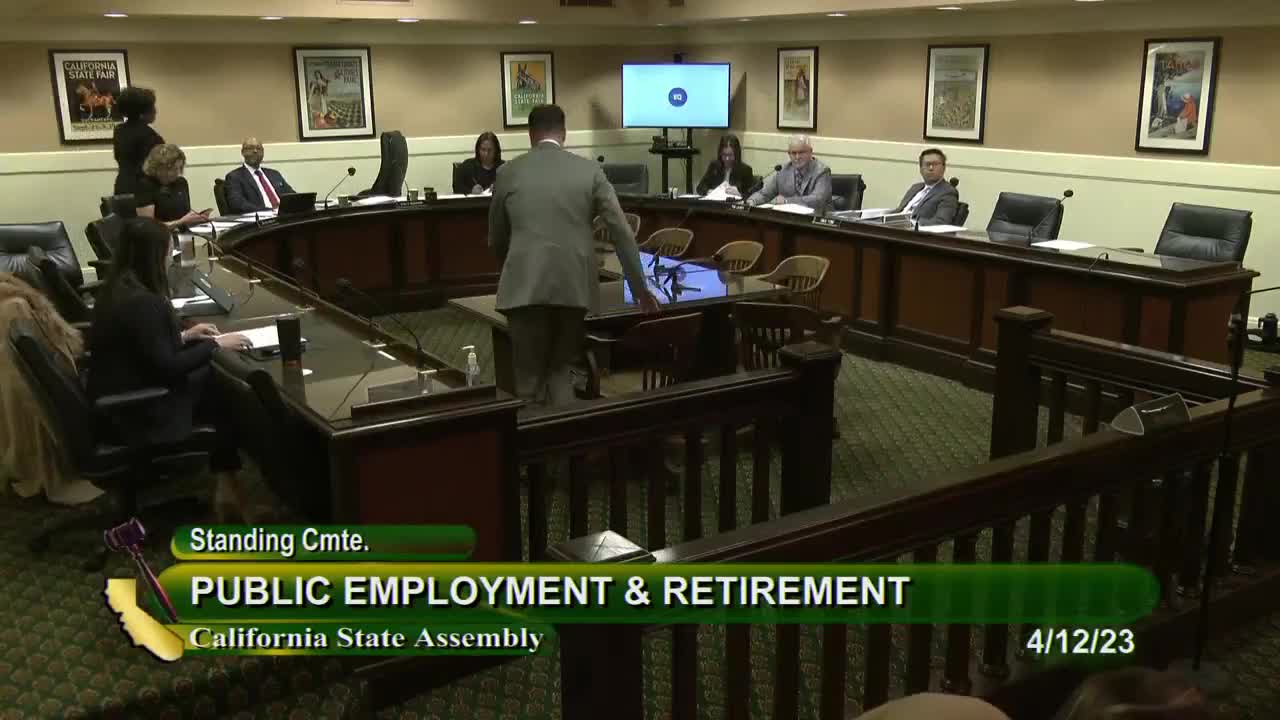 24MIN