AB 1844: California FAIR Plan Association governing committee.
- Session Year: 2023-2024
- House: Assembly
- Latest Version Date: 2024-01-16
Current Status:
Failed
(2024-06-11: In committee: Hearing postponed by committee.)
Introduced
In Committee
First Chamber
In Committee
Second Chamber
Enacted
The California FAIR Plan Association is a joint reinsurance association in which all insurers licensed to write basic property insurance participate to administer a program for the equitable apportionment of basic property insurance for persons who are unable to obtain that coverage through normal channels. Existing law establishes a governing committee for the association and prescribes its membership.
This bill would require the Speaker of the Assembly and the Chairperson of the Senate Committee on Rules to serve as nonvoting, ex officio members of the governing committee, and would authorize each to name a designee to serve in their place.
(a)Within 30 days after the effective date of this chapter, with the approval of the commissioner, all insurers licensed to write and engaged in writing in this state, on a direct basis, basic property insurance or any component of basic property insurance in multiperil policies, shall establish an industry placement facility, the California FAIR Plan Association, to formulate and administer a program for the equitable apportionment among insurers of basic property insurance that may be afforded to persons having an interest in real or tangible personal property who, after diligent effort, as specified in subdivision (a) of Section 10093, are unable to procure insurance through normal channels from an admitted insurer or a surplus line broker. Each insurer, as a condition of its authority to transact those kinds of insurance in this state, shall participate in an industry placement facility program in accordance with rules to be established by a governing committee, composed of nine insurers annually elected in the manner to be provided in the program. The governing committee shall also have as nonvoting members one representative of insurance agents, one representative of insurance brokers, one representative of surplus line brokers, and one representative of the public, each to be appointed by the Governor. The Speaker of the Assembly and the Chairperson of the Senate Committee on Rules shall serve as nonvoting, ex officio members of the governing committee, and each may name a designee to serve in their place.
(b)The governing committee may establish separate classifications of written premiums for the purpose of equitable distribution, but shall not include premiums from automobile risks, commercial agricultural commodities or livestock, or equipment used to cultivate or transport agricultural commodities or livestock.
(c)The program may provide, with the approval of the commissioner, for assessment of all members in amounts sufficient to operate the facility, and may establish maximum limits of liability to be placed through the program, reasonable underwriting standards for determining insurability of a risk, and commission to be paid to the licensed producer designated by the applicant.
|
Date
|
Status
|
|---|---|
| Jun 11, 2024 | In committee: Hearing postponed by committee. |
| May 1, 2024 | Referred to Com. on INS. |
| Apr 8, 2024 | In Senate. Read first time. To Com. on RLS. for assignment. |
| Apr 8, 2024 | Read third time. Passed. Ordered to the Senate. (Ayes 74. Noes 0. Page 4661.) |
| Apr 4, 2024 | Read second time. Ordered to third reading. |
| Apr 3, 2024 | From committee: Do pass. (Ayes 12. Noes 0.) (April 3). |
| Jan 29, 2024 | Referred to Com. on INS. |
| Jan 17, 2024 | From printer. May be heard in committee February 16. |
| Jan 16, 2024 | Read first time. To print. |
|
Date
|
Description
|
Location
|
Votes
|
|
|---|---|---|---|---|
| Apr 8, 2024 | AB 1844 Calderon Assembly Third Reading | Assembly Floor |
Passed |
|
| Apr 3, 2024 | Do pass. | Assembly Standing Committee on Insurance |
Passed |
This list shows positions taken on this bill by organizations on the date displayed, which is linked to the original source.
Positions by individuals are not included.
|
Organization
|
Position
|
Date
|
|---|---|---|
| California Farm Bureau | * Support | Apr 3, 2024 |
| Insurance Commissioner Ricardo Lara / California Department of Insurance | ** Support |
SENATE COMMITTEE ON INSURANCE
Senator Susan Rubio, Chair
2023 - 2024 Regular
Bill No: AB 1844 Hearing Date: June 12, 2024
Author: | Calderon | ||
Version: | January 16, 2024 | ||
Urgency: | No | Fiscal: | No |
Consultant: | Jill Rice | ||
SUBJECT: California FAIR Plan Association governing committee
DIGEST:
The California FAIR (Fair Access to Insurance Requirements) Plan Association is a joint reinsurance association in which all insurers licensed to write basic property insurance participate to administer a program for the equitable apportionment of basic property insurance for persons who are unable to obtain that coverage through normal channels. Existing law establishes a governing committee for the association and prescribes its membership.
This bill would require the Speaker of the Assembly and the Chairperson of the Senate Committee on Rules to serve as nonvoting, ex officio members of the governing committee, and would authorize each to name a designee to serve in their place.
ANALYSIS:
Existing law:
- Specifies that the California FAIR Plan Association Governing Committee (Governing Committee) includes nine insurers, as well as, as nonvoting members, one representative of insurance agents, one representative of insurance brokers, one representative of surplus line brokers, and one representative of the public, each appointed by the Governor.
- Allows the FAIR Plan, with approval from the Insurance Commissioner, to assess all members in amounts sufficient to operate the association.
- States that the FAIR Plan was established to assure stability, to assure the availability, to encourage maximum use, to provide for equitable distribution among admitted insurers of the responsibility for insuring qualified property for which basic property insurance cannot be obtained through the normal insurance market.
This bill:
- Requires the Speaker of the Assembly and the Chairperson of the Senate Committee on Rules to serve as nonvoting, ex officio members of the Governing Committee, and each may name a designee to serve in their place.
Background (Author’s Statement)
The Assembly Insurance Committee held two oversight hearings on the California FAIR Plan in the past year. These hearings highlighted the role, purpose, and obstacles of the FAIR Plan. Under the current climate of the California insurance market, the FAIR Plan is under pressure as the “take-all” insurer of last resort. AB 1844 increases transparency by adding two additional members to the governing committee, similar to the California Earthquake Authority.
Comments
The California FAIR Plan is a state-mandated insurance pool that provides basic property insurance to individuals who cannot obtain coverage through the standard insurance market. The CA FAIR Plan was established in 1968 in response to widespread urban riots and civil unrest during the 1960s, which made it difficult for property owners in high-risk areas to secure insurance coverage. The lack of available insurance threatened to exacerbate economic challenges in these areas, leading to the creation of the FAIR Plan as part of a broader initiative to ensure that all property owners had access to essential insurance.
The primary aim of the FAIR Plan is to offer a safety net for property owners, ensuring that they can obtain insurance even if they are considered high-risk by standard insurers. The plan covers various perils such as fire, vandalism, and windstorms, though it typically offers more limited coverage compared to standard insurance policies.
The FAIR Plan is managed by a board of directors, which includes representatives from various insurance companies operating within California. The board is responsible for the overall management and strategic direction of the Plan. This bill, in an effort in increase transparency, would add to that board of directors the Speaker of the Assembly and the Chairperson of the Senate Committee on Rules, or their designee, to serve as nonvoting, ex officio members.
Transparency is critical to the continued viability of the FAIR Plan. California has experienced a significant increase in the frequency and severity of wildfires over the past few years. This has led to a growing number of property owners, especially in wildfire-prone areas, relying on the FAIR Plan for coverage. As more people depend on this safety net, ensuring transparency in how the plan operates, assesses risk, and determines premiums is crucial for public trust and confidence. Additionally, there has been a steep rise in premiums. Transparency in the FAIR Plan’s rate-setting process is essential to justify these changes to policyholders and ensure they are fair and necessary. Finally, the FAIR Plan's financial health is vital for its sustainability. Transparency about its financial status, including how it manages claims, reserves, and potential shortfalls, helps in maintaining the plan’s integrity. If the Association needs to assess participating insurers to cover deficits, clear communication about these assessments is necessary to avoid surprises and ensure all stakeholders are informed and prepared.
Related/Prior Legislation
AB 3012 (Daly & Wood) Chapter 258, Statutes of 2020, directs the Fair Plan to implement a clearinghouse program whereby property insurers will be provided information about FAIR Plan policies, for the purpose of encouraging those insurers to offer regular private insurance to FAIR Plan policyholders.
SB 505 (Rubio) Chapter 180, Statutes of 2023, requires, by July 1, 2024, FAIR Plan to establish a clearinghouse program for commercial insurance policies.
AB 2260 (Calderon) This bill would require the FAIR Plan, until December 31, 2027, to quarterly provide specified information about policies and clearinghouse program progress to the relevant policy committees of the Legislature and to post the information on the association’s public internet website.
ARGUMENTS IN SUPPORT:
The California Farm Bureau Federation argues that “AB 1844 adds important transparency so that the Legislature, by gaining a non-voting seat at the FAIR Plan’s governing board for the Assembly and Senate leadership stays full informed about the conditions of the FAIR Plan and the state’s efforts to depopulate it by restoring competition to the admitted market.” This sentiment is echoed in the support letter of Commissioner Ricardo Lara as he writes “By establishing additional nonvoting members on the FAIR Plan’s Governing Committee, AB 1844 will help further needed transparency of this insurance safety net while supporting legislative policymakers’ oversight efforts.”
SUPPORT:
California Farm Bureau Federation
Insurance Commissioner Ricardo Lara / California Department of Insurance
OPPOSITION:
None on file.
-- END --
ASSEMBLY THIRD READING
ATR Bill Id:AB 1844
Author:(Calderon)
As Introduced Ver:January 16, 2024
Majority vote
SUMMARY
Allows the Speaker of the Assembly and the Chairperson of the Senate Committee on Rules to serve as nonvoting, ex officio members of the Fair Access to Insurance Requirements (FAIR) Plan Governing Committee, and would authorize each to name a designee to serve in their place.
Major Provisions
COMMENTS
Background: The FAIR Plan is an "association" of all licensed insurance companies by the California Department of Insurance (CDI) that provides basic property insurance in California. It was created in 1968, following urban disturbances, notably the Watts Riots in Los Angeles.
Simply stated, the purpose of the FAIR Plan is to be the "insurer of last resort" for "basic" property insurance in the event of a market failure. At inception, that was essentially urban commercial property. Ultimately, it has expanded to include homeowners' insurance anywhere in the state, provided that the insurance "cannot be obtained" in the normal manner in the market. The FAIR Plan is not intended to compete with the voluntary market.
The FAIR Plan was established to ensure that urban property owners, mostly businesses, would have "fair access" to the property insurance necessary to continue to operate in a market that insurers viewed as too risky to cover. That risk evaluation resulted in a substantial market withdrawal by insurers from the urban property market. Despite its initial creation as an urban/business "insurer of last resort," the FAIR Plan expanded to provide coverage in "designated" brush fire regions of the state. It operated fairly well in this manner until the mid-1990's, when, as a consequence of the genuine homeowners' insurance crisis that followed the Northridge earthquake in 1994, the entire state was designated as the appropriate FAIR Plan coverage region.
By statute, the FAIR Plan policy is not as broad as traditional homeowners' policies, it is nonetheless a fully sound and guaranteed policy that satisfies lenders' security requirements and protects the property against the primary risk factor faced by homeowners, which is fire. Other coverages are readily available in the market (typically through the purchase of a "difference-in-conditions" or "DIC" policy), which provides wraparound coverage that, coupled with a FAIR Plan policy, results in the same protection provided by a standard homeowner's policy. Because the FAIR plan's role is to provide coverage when the regular market will not, it is not the role of the FAIR Plan to provide DIC policies when there is a healthy market for those policies.
According to the FAIR Plan, the association has more than 350,000 policies in force, a 22% increase in 2023. Right now, which is not typical, the FAIR Plan receives nearly 1,000 applications a day, as well registered agents, brokers, and other contacts increased from 9,000 to over 54,000. The FAIR Plan's risk exposure is $311 billion as of December 2023, which is up from $50 billion in 2018.
The FAIR Plan Governing Committee: The FAIR Plan is administered by a Governing Committee, and subject to the supervision of the Insurance Commissioner. The Governing Committee consists of nine voting insurers, and four non-voting members appointed by the Governor, which includes one representative of insurance agents, one representative of insurance brokers, one representative of the public, and one representative of surplus line brokers. The purpose of the Governing Committee is to ensure the requirements laid out in California Insurance Code 10090 are followed (referenced under existing law). Legislation (signed by the Governor), or by rule, regulation or administrative determination by the Insurance Commissioner requires the FAIR Plan Governing Committee to amends its plan of operation.
Point of reference is the California Earthquake Authority (CEA), which is governed by a three-member governing board consisting of the Governor, the Treasurer, and the Insurance Commissioner, each of whom may name designees to serve as board members in their place. The Speaker of the Assembly and the Chairperson of the Senate Committee on Rules serve as nonvoting, ex officio members of the board, and may name designees to serve in their place.
FAIR Plan Transformation: In the last five years, primarily in response to catastrophic wildfires and admitted market withdrawal, legislation and actions taken by CDI has resulted in the FAIR Plan going through a complete transformation. To summarize, these actions include:
- Increasing FAIR Plan residential limits to $3.3 million;
- Increasing FAIR Plan commercial limits to $8.4 million per location, to $20 million per location to the $20 million per structure (which is still being implemented);
- Potential expansion and requirement to offer homeowners a more comprehensive coverage aka HO-3 light policy (pending litigation);
- Expanding commercial coverage to farms, ranches, and other agricultural businesses;
- Developing residential and commercial clearinghouse programs; and,
- Implementing "Safer from Wildfire" discounts to FAIR Plan policyholders.
According to the Author
The Assembly Insurance Committee held two oversight hearings on the California FAIR Plan in the past year. These hearings highlighted the role, purpose, and obstacles of the FAIR Plan. Under the current climate of the California insurance market, the FAIR Plan is under pressure as the "take-all" insurer of last resort. AB 1844 increases transparency by adding two additional nonvoting members to the governing committee, similar to the California Earthquake Authority (CEA).
Arguments in Support
According to CDI, by establishing additional nonvoting members of the FAIR Plan's Governing Committee, AB 1844 will help further needed transparency of this insurance safety net while supporting legislative policymakers' oversight efforts.
Arguments in Opposition
None on file
FISCAL COMMENTS
Unknown. This bill is keyed non-fiscal by the Legislative Counsel.
VOTES
ASM INSURANCE: 12-0-3
YES: Calderon, Chen, Berman, Gipson, Lowenthal, Ortega, Joe Patterson, Petrie-Norris, Blanca Rubio, Valencia, Wallis, Wood
ABS, ABST OR NV: Alvarez, Bauer-Kahan, Jones-Sawyer
UPDATED
VERSION: January 16, 2024
CONSULTANT: Kathleen O'Malley / INS. / (916) 319-2086 FN: 0002690
Date of Hearing: April 3, 2024
ASSEMBLY COMMITTEE ON INSURANCE
Lisa Calderon, Chair
ABPCA Bill Id:AB 1844 (
Author:Calderon) – As Introduced Ver:January 16, 2024
SUBJECT: California FAIR Plan Association governing committee
SUMMARY: Allows the Speaker of the Assembly and the Chairperson of the Senate Committee on Rules to serve as nonvoting, ex officio members of the Fair Access to Insurance Requirements (FAIR) Plan Governing Committee, and would authorize each to name a designee to serve in their place.
EXISTING LAW:
- Specifies that the Governing Committee includes nine insurers, as well as, as nonvoting members, one representative of insurance agents, one representative of insurance brokers, one representative of surplus line brokers, and one representative of the public, each appointed by the Governor. (Insurance (Ins.) Code, Section 10094)
- Allows the FAIR Plan, with approval from the Insurance Commissioner, to assess all members in amounts sufficient to operate the facility. (Ins. Code, Section 10094)
- States that the FAIR Plan was established to assure stability, to assure the availability, to encourage maximum use, to provide for equitable distribution among admitted insurers of the responsibility for insuring qualified property for which basic property insurance cannot be obtained through the normal insurance market. (Ins. Code, Section 10090)
- Specifies that rates for the FAIR Plan shall not be excessive, inadequate, or unfairly discriminatory, and shall be actuarially sound so that premiums are adequate to cover expected losses, expenses and taxes, and shall reflect investment income of the plan. (Ins. Code, Section 10100.2)
FISCAL EFFECT: None
COMMENTS:
- Purpose: The Assembly Insurance Committee held two oversight hearings on the California FAIR Plan in the past year. These hearings highlighted the role, purpose, and obstacles of the FAIR Plan. Under the current climate of the California insurance market, the FAIR Plan is under pressure as the “take-all” insurer of last resort. AB 1844 increases transparency by adding two additional nonvoting members to the governing committee, similar to the California Earthquake Authority (CEA).
- Background: The FAIR Plan is an “association” of all licensed insurance companies by the California Department of Insurance (CDI) that provides basic property insurance in California. It was created in 1968, following urban disturbances, notably the Watts Riots in Los Angeles.
Simply stated, the purpose of the FAIR Plan is to be the “insurer of last resort” for “basic” property insurance in the event of a market failure. At inception, that was essentially urban commercial property. Ultimately, it has expanded to include homeowners’ insurance anywhere in the state, provided that the insurance “cannot be obtained” in the normal manner in the market. The FAIR Plan is not intended to compete with the voluntary market.
The FAIR Plan was established to ensure that urban property owners, mostly businesses, would have “fair access” to the property insurance necessary to continue to operate in a market that insurers viewed as too risky to cover. That risk evaluation resulted in a substantial market withdrawal by insurers from the urban property market. Despite its initial creation as an urban/business “insurer of last resort,” the FAIR Plan expanded to provide coverage in “designated” brush fire regions of the state. It operated fairly well in this manner until the mid-1990’s, when, as a consequence of the genuine homeowners’ insurance crisis that followed the Northridge earthquake in 1994, the entire state was designated as the appropriate FAIR Plan coverage region.
By statute, the FAIR Plan policy is not as broad as traditional homeowners’ policies, it is nonetheless a fully sound and guaranteed policy that satisfies lenders’ security requirements and protects the property against the primary risk factor faced by homeowners, which is fire. Other coverages are readily available in the market (typically through the purchase of a “difference-in-conditions” or “DIC” policy), which provides wraparound coverage that, coupled with a FAIR Plan policy, results in the same protection provided by a standard homeowner’s policy. Because the FAIR plan’s role is to provide coverage when the regular market won’t, it is not the role of the FAIR Plan to provide DIC policies when there is a healthy market for those policies.
According to the FAIR Plan, the association has more than 350,000 policies in force, a 22% increase in 2023. Right now, which is not typical, the FAIR Plan receives nearly 1,000 applications a day, as well registered agents, brokers, and other contacts increased from 9,000 to over 54,000. The FAIR Plan’s risk exposure is $311 billion as of December 2023, which is up from $50 billion in 2018.
- The FAIR Plan Governing Committee: The FAIR Plan is administered by a Governing Committee, and subject to the supervision of the Insurance Commissioner. The Governing Committee consists of nine voting insurers, and four non-voting members appointed by the Governor, which includes one representative of insurance agents, one representative of insurance brokers, one representative of the public, and one representative of surplus line brokers. The purpose of the Governing Committee is to ensure the requirements laid out in California Insurance Code 10090 are followed (referenced under existing law). Legislation (signed by the Governor), or by rule, regulation or administrative determination by the Insurance Commissioner requires the FAIR Plan Governing Committee to amends its plan of operation.
Point of reference is the CEA, which is governed by a three-member governing board consisting of the Governor, the Treasurer, and the Insurance Commissioner, each of whom may name designees to serve as board members in their place. The Speaker of the Assembly and the Chairperson of the Senate Committee on Rules serve as nonvoting, ex officio members of the board, and may name designees to serve in their place.
- FAIR Plan Transformation: In the last five years, primarily in response to catastrophic wildfires and admitted market withdrawal, legislation and actions taken by CDI has resulted in the FAIR Plan going through a complete transformation. To summarize, these actions include:
- Increasing FAIR Plan residential limits to $3.3 million;
- Increasing FAIR Plan commercial limits to $8.4 million per location, to $20 million per location to the $20 million per structure (which is still being implemented);
- Potential expansion and requirement to offer homeowners a more comprehensive coverage aka HO-3 light policy (pending litigation);
- Expanding commercial coverage to farms, ranches and other agricultural businesses;
- Developing residential and commercial clearinghouse programs; and,
- Implementing “Safer from Wildfire” discounts to FAIR Plan policyholders.
- Previous legislation: AB 3012 (Daly & Wood) Chapter 258, Statutes of 2020, directs the Fair Plan to implement a clearinghouse program whereby property insurers will be provided information about FAIR Plan policies, for the purpose of encouraging those insurers to offer regular private insurance to FAIR Plan policyholders.
SB 505 (Rubio) Chapter 180, Statutes of 2023, requires, by July 1, 2024, FAIR Plan to establish a clearinghouse program for commercial insurance policies.
- Related legislation: AB 2260 (Calderon) This bill would require the FAIR Plan, until December 31, 2027, to quarterly provide specified information about policies and clearinghouse program progress to the relevant policy committees of the Legislature and to post the information on the association’s public internet website. Pending before the Assembly Insurance Committee.
REGISTERED SUPPORT / OPPOSITION:
Support
Insurance Commissioner Ricardo Lara / California Department of Insurance
Opposition
None on file
Analysis Prepared by: Kathleen O'Malley / INS. / (916) 319-2086
Discussed in Hearing
View Older Hearings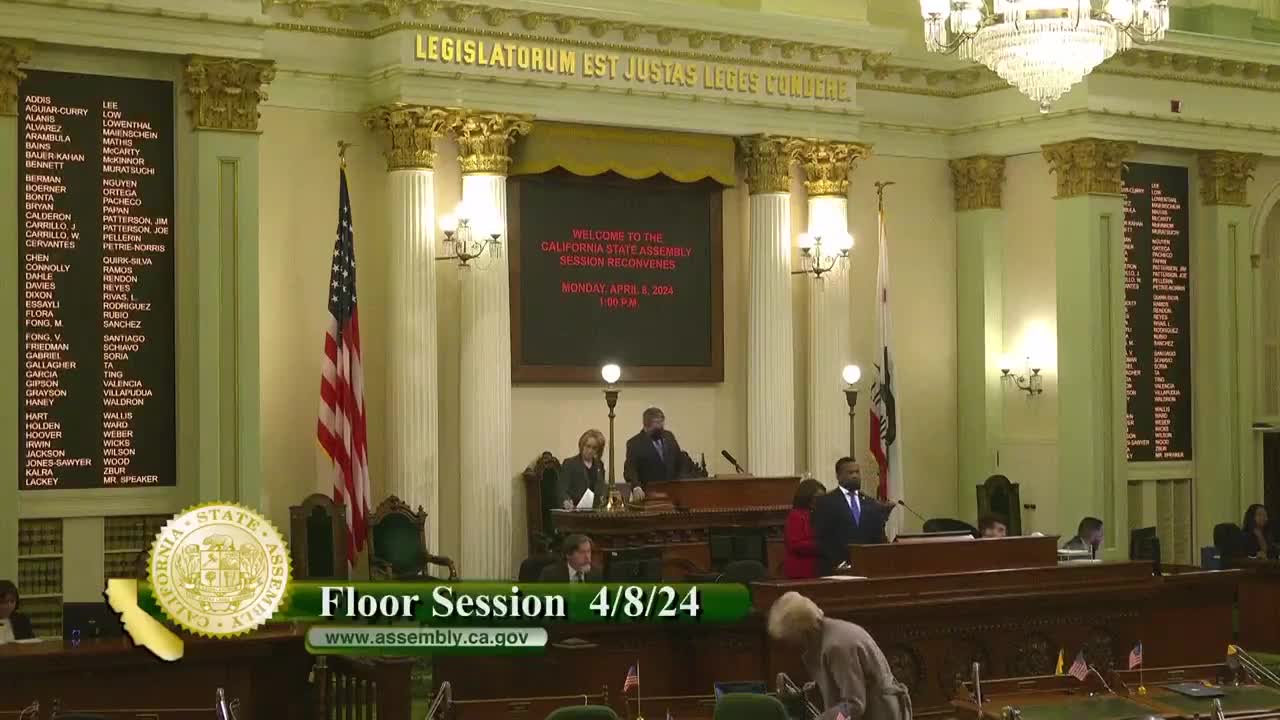
Bill Author
Bill Co-Author(s):