AB 1990: Criminal procedure: arrests: shoplifting.
- Session Year: 2023-2024
- House: Assembly
- Latest Version Date: 2024-04-16
Current Status:
Failed
(2024-06-25: In committee: Hearing postponed by committee.)
Introduced
In Committee
First Chamber
In Committee
Second Chamber
Enacted
(1)Existing law prohibits shoplifting, defined as entering a commercial establishment with intent to commit theft while that establishment is open during regular business hours, where the value of the property that is taken or intended to be taken does not exceed $950. Existing law requires an act that falls within this definition to be charged as shoplifting and not as burglary or theft. Under existing law, shoplifting is punishable as a misdemeanor, except when the defendant has prior convictions, as specified.
Existing law authorizes a peace officer to make a warrantless arrest for a misdemeanor when the officer has probable cause to believe the person to be arrested has committed the misdemeanor in the officers presence. Existing law also authorizes a private person to make an arrest for a misdemeanor committed in their presence, and requires the person to deliver the arrested person to a peace officer or magistrate. Existing law additionally authorizes a merchant to detain a person for a reasonable time and in a reasonable manner to determine if a person has unlawfully taken merchandise.
Existing law authorizes a peace officer to make a warrantless arrest for specified misdemeanors relating to domestic violence, violation of a restraining order, and carrying a concealed firearm at an airport that did not occur in the officers presence.
This bill would authorize a peace officer to make a warrantless arrest for a misdemeanor shoplifting offense not committed in the officers presence if the officer has probable cause to believe that person has committed shoplifting. shoplifting, as specified.
(2)Existing law requires a peace officer to release upon a signed promise to appear any person arrested for a misdemeanor, unless the person demands to be taken before a magistrate. Existing law provides certain reasons a person arrested for a misdemeanor shall not be released including that the person is intoxicated or in need of medical attention, the person is unable to provide satisfactory proof of identification, or there are outstanding arrest warrants for the person. Additionally, existing law exempts from this provision persons arrest for specified crimes including domestic violence, stalking, threatening a witness, and, until January 1, 2026, organized retail theft.
This bill would additionally exempt a person arrested for shoplifting from the requirement that they be released on citation.
(1)Existing law prohibits shoplifting, defined as entering a commercial establishment with intent to commit theft while that establishment is open during regular business hours, where the value of the property that is taken or intended to be taken does not exceed $950. Existing law requires an act that falls within this definition to be charged as shoplifting and not as burglary or theft. Under existing law, shoplifting is punishable as a misdemeanor, except when the defendant has prior convictions, as specified.
Existing law authorizes a peace officer to make a warrantless arrest for a misdemeanor when the officer has probable cause to believe the person to be arrested has committed the misdemeanor in the officers presence. Existing law also authorizes a private person to make an arrest for a misdemeanor committed in their presence, and requires the person to deliver the arrested person to a peace officer or magistrate. Existing law additionally authorizes a merchant to detain a person for a reasonable time and in a reasonable manner to determine if a person has unlawfully taken merchandise.
Existing law authorizes a peace officer to make a warrantless arrest for specified misdemeanors relating to domestic violence, violation of a restraining order, and carrying a concealed firearm at an airport that did not occur in the officers presence.
This bill would authorize a peace officer to make a warrantless arrest for a misdemeanor shoplifting offense not committed in the officers presence if the officer has probable cause to believe that person has committed shoplifting.
(2)Existing law requires a peace officer to release upon a signed promise to appear any person arrested for a misdemeanor, unless the person demands to be taken before a magistrate. Existing law provides certain reasons a person arrested for a misdemeanor shall not be released including that the person is intoxicated or in need of medical attention, the person is unable to provide satisfactory proof of identification, or there are outstanding arrest warrants for the person. Additionally, existing law exempts from this provision persons arrest for specified crimes including domestic violence, stalking, threatening a witness, and, until January 1, 2026, organized retail theft.
This bill would additionally exempt a person arrested for shoplifting from the requirement that they be released on citation.
(a)A peace officer may arrest a person in obedience to a warrant, or, pursuant to the authority granted by Chapter 4.5 (commencing with Section 830), without a warrant, may arrest a person whenever any of the following circumstances occur:
(1)The officer has probable cause to believe that the person to be arrested has committed a public offense in the officers presence.
(2)The person arrested has committed a felony, although not in the officers presence.
(3)The officer has probable cause to believe that the person to be arrested has committed a felony, whether or not a felony, in fact, has been committed.
(b)Any time a peace officer is called out on a domestic violence call, it shall be mandatory that the officer make a good faith effort to inform the victim of their right to make a citizens arrest, unless the peace officer makes an arrest for a violation of paragraph (1) of subdivision (e) of Section 243 or 273.5. This information shall include advising the victim how to safely execute the arrest.
(c)(1)When a peace officer is responding to a call alleging a violation of a domestic violence protective or restraining order issued under Section 527.6 of the Code of Civil Procedure, the Family Code, Section 136.2, 646.91, or paragraph (2) of subdivision (a) of Section 1203.097 of this code, Section 213.5 or 15657.03 of the Welfare and Institutions Code, or of a domestic violence protective or restraining order issued by the court of another state, tribe, or territory and the peace officer has probable cause to believe that the person against whom the order is issued has notice of the order and has committed an act in violation of the order, the officer shall, consistent with subdivision (b) of Section 13701, make a lawful arrest of the person without a warrant and take that person into custody whether or not the violation occurred in the presence of the arresting officer. The officer shall, as soon as possible after the arrest, confirm with the appropriate authorities or the Domestic Violence Protection Order Registry maintained pursuant to Section 6380 of the Family Code that a true copy of the protective order has been registered, unless the victim provides the officer with a copy of the protective order.
(2)The person against whom a protective order has been issued shall be deemed to have notice of the order if the victim presents to the officer proof of service of the order, the officer confirms with the appropriate authorities that a true copy of the proof of service is on file, or the person against whom the protective order was issued was present at the protective order hearing or was informed by a peace officer of the contents of the protective order.
(3)In situations where mutual protective orders have been issued under Division 10 (commencing with Section 6200) of the Family Code, liability for arrest under this subdivision applies only to those persons who are reasonably believed to have been the dominant aggressor. In those situations, prior to making an arrest under this subdivision, the peace officer shall make reasonable efforts to identify, and may arrest, the dominant aggressor involved in the incident. The dominant aggressor is the person determined to be the most significant, rather than the first, aggressor. In identifying the dominant aggressor, an officer shall consider (A) the intent of the law to protect victims of domestic violence from continuing abuse, (B) the threats creating fear of physical injury, (C) the history of domestic violence between the persons involved, and (D) whether either person involved acted in self-defense.
(d)Notwithstanding paragraph (1) of subdivision (a), if a suspect commits an assault or battery upon a current or former spouse, fiance, fiancee, a current or former cohabitant as defined in Section 6209 of the Family Code, a person with whom the suspect currently is having or has previously had an engagement or dating relationship, as defined in paragraph (10) of subdivision (f) of Section 243, a person with whom the suspect has parented a child, or is presumed to have parented a child pursuant to the Uniform Parentage Act (Part 3 (commencing with Section 7600) of Division 12 of the Family Code), a child of the suspect, a child whose parentage by the suspect is the subject of an action under the Uniform Parentage Act, a child of a person in one of the above categories, any other person related to the suspect by consanguinity or affinity within the second degree, or any person who is 65 years of age or older and who is related to the suspect by blood or legal guardianship, a peace officer may arrest the suspect without a warrant where both of the following circumstances apply:
(1)The peace officer has probable cause to believe that the person to be arrested has committed the assault or battery, whether or not it has in fact been committed.
(2)The peace officer makes the arrest as soon as probable cause arises to believe that the person to be arrested has committed the assault or battery, whether or not it has in fact been committed.
(e)In addition to the authority to make an arrest without a warrant pursuant to paragraphs (1) and (3) of subdivision (a), a peace officer may, without a warrant, arrest a person for a violation of Section 25400 when all of the following apply:
(1)The officer has reasonable cause to believe that the person to be arrested has committed the violation of Section 25400.
(2)The violation of Section 25400 occurred within an airport, as defined in Section 21013 of the Public Utilities Code, in an area to which access is controlled by the inspection of persons and property.
(3)The peace officer makes the arrest as soon as reasonable cause arises to believe that the person to be arrested has committed the violation of Section 25400.
(f)(1)In addition to the authority to make an arrest without a warrant pursuant to subdivision (a), a peace officer may, without a warrant, arrest a person for a violation of Section 459.5 not committed in the officers presence if the officer has reasonable probable cause to believe that the person to be arrested has committed a violation of Section 459.5.
(2)The probable cause to make an arrest shall be based on a sworn statement obtained by the officer from a person who witnessed the person to be arrested committing the alleged violation.
SEC. 2.Section 853.6 of the Penal Code, as amended by Section 1 of Chapter 856 of the Statutes of 2022, is amended to read:853.6.(a)(1)When a person is arrested for an offense declared to be a misdemeanor, including a violation of a city or county ordinance, and does not demand to be taken before a magistrate, that person shall, instead of being taken before a magistrate, be released according to the procedures set forth by this chapter, although nothing prevents an officer from first booking an arrestee pursuant to subdivision (g). If the person is released, the officer or the officers superior shall prepare in duplicate a written notice to appear in court, containing the name and address of the person, the offense charged, and the time when, and place where, the person shall appear in court. If, pursuant to subdivision (i), the person is not released prior to being booked and the officer in charge of the booking or the officers superior determines that the person should be released, the officer or the officers superior shall prepare a written notice to appear in a court.
(2)When a person is arrested for a misdemeanor violation of a protective court order involving domestic violence, as defined in Section 13700, or arrested pursuant to a policy, as described in Section 13701, the person shall be taken before a magistrate instead of being released according to the procedures set forth in this chapter, unless the arresting officer determines that there is not a reasonable likelihood that the offense will continue or resume or that the safety of persons or property would be imminently endangered by release of the person arrested. Prior to adopting these provisions, each city, county, or city and county shall develop a protocol to assist officers to determine when arrest and release is appropriate, rather than taking the arrested person before a magistrate. The county shall establish a committee to develop the protocol, consisting of, at a minimum, the police chief or county sheriff within the jurisdiction, the district attorney, county counsel, city attorney, representatives from domestic violence shelters, domestic violence councils, and other relevant community agencies.
(3)This subdivision does not apply to the crimes specified in Section 1270.1, including crimes defined in each of the following:
(A)Paragraph (1) of subdivision (e) of Section 243.
(B)Section 273.5.
(C)Section 273.6, if the detained person made threats to kill or harm, has engaged in violence against, or has gone to the residence or workplace of, the protected party.
(D)Section 646.9.
(4)This subdivision shall not affect a defendants ability to be released on bail or on their own recognizance, except as specified in Section 1270.1.
(b)Unless waived by the person, the time specified in the notice to appear shall be at least 10 days after arrest if the duplicate notice is to be filed by the officer with the magistrate.
(c)The place specified in the notice shall be the court of the magistrate before whom the person would be taken if the requirement of taking an arrested person before a magistrate were complied with, or shall be an officer authorized by that court to receive a deposit of bail.
(d)The officer shall deliver one copy of the notice to appear to the arrested person, and the arrested person, in order to secure release, shall give their written promise to appear in court as specified in the notice by signing the duplicate notice, which shall be retained by the officer, and the officer may require the arrested person, if the arrested person has no satisfactory identification, to place a right thumbprint, or a left thumbprint or fingerprint if the person has a missing or disfigured right thumb, on the notice to appear. Except for law enforcement purposes relating to the identity of the arrestee, a person or entity shall not sell, give away, allow the distribution of, include in a database, or create a database with, this print. Upon the signing of the duplicate notice, the arresting officer shall immediately release the person arrested from custody.
(e)The officer shall, as soon as practicable, file the duplicate notice, as follows:
(1)It shall be filed with the magistrate if the offense charged is an infraction.
(2)It shall be filed with the magistrate if the prosecuting attorney has previously directed the officer to do so.
(3)(A)The duplicate notice and underlying police reports in support of the charge or charges shall be filed with the prosecuting attorney in cases other than those specified in paragraphs (1) and (2).
(B)If the duplicate notice is filed with the prosecuting attorney, the prosecuting attorney, within their discretion, may initiate prosecution by filing the notice or a formal complaint with the magistrate specified in the duplicate notice within 25 days from the time of arrest. If the prosecution is not to be initiated, the prosecutor shall send notice to the person arrested at the address on the notice to appear. The failure by the prosecutor to file the notice or formal complaint within 25 days of the time of the arrest shall not bar further prosecution of the misdemeanor charged in the notice to appear. However, any further prosecution shall be preceded by a new and separate citation or an arrest warrant.
(C)Upon the filing of the notice with the magistrate by the officer, or the filing of the notice or formal complaint by the prosecutor, the magistrate may fix the amount of bail that in the magistrates judgment, in accordance with Section 1275, is reasonable and sufficient for the appearance of the defendant and shall endorse upon the notice a statement signed by the magistrate in the form set forth in Section 815a. The defendant may, prior to the date upon which the defendant promised to appear in court, deposit with the magistrate the amount of bail set by the magistrate. At the time the case is called for arraignment before the magistrate, if the defendant does not appear, either in person or by counsel, the magistrate may declare the bail forfeited, and may, in the magistrates discretion, order that further proceedings shall not be had in the case, unless the defendant has been charged with a violation of Section 374.3 or 374.7 of this code or of Section 11357, 11360, or 13002 of the Health and Safety Code, or a violation punishable under Section 5008.7 of the Public Resources Code, and the defendant has previously been convicted of a violation of that section or a violation that is punishable under that section, except when the magistrate finds that undue hardship will be imposed upon the defendant by requiring the defendant to appear, the magistrate may declare the bail forfeited and order that further proceedings not be had in the case.
(D)Upon the making of the order that further proceedings not be had, all sums deposited as bail shall immediately be paid into the county treasury for distribution pursuant to Section 1463.
(f)A warrant shall not be issued for the arrest of a person who has given a written promise to appear in court, unless and until the person has violated that promise or has failed to deposit bail, to appear for arraignment, trial, or judgment, or to comply with the terms and provisions of the judgment, as required by law.
(g)The officer may book the arrested person at the scene or at the arresting agency prior to release or indicate on the citation that the arrested person shall appear at the arresting agency to be booked or indicate on the citation that the arrested person shall appear at the arresting agency to be fingerprinted prior to the date the arrested person appears in court. If it is indicated on the citation that the arrested person shall be booked or fingerprinted prior to the date of the persons court appearance, the arresting agency, at the time of booking or fingerprinting, shall provide the arrested person with verification of the booking or fingerprinting by making an entry on the citation. If it is indicated on the citation that the arrested person is to be booked or fingerprinted, the magistrate, judge, or court shall, before the proceedings begin, order the defendant to provide verification that the defendant was booked or fingerprinted by the arresting agency. If the defendant cannot produce the verification, the magistrate, judge, or court shall require that the defendant be booked or fingerprinted by the arresting agency before the next court appearance, and that the defendant provide the verification at the next court appearance unless both parties stipulate that booking or fingerprinting is not necessary.
(h)A peace officer shall use the written notice to appear procedure set forth in this section for any misdemeanor offense in which the officer has arrested a person without a warrant pursuant to Section 836 or in which the officer has taken custody of a person pursuant to Section 847.
(i)When a person is arrested by a peace officer for a misdemeanor, that person shall be released according to the procedures set forth in this chapter unless one of the following is a reason for nonrelease, in which case the arresting officer may release the person, except as provided in subdivision (a), or the arresting officer shall indicate, on a form to be established by the officers employing law enforcement agency, which of the following was a reason for the nonrelease:
(1)The person arrested was so intoxicated that they could have been a danger to themselves or to others.
(2)The person arrested required medical examination or medical care or was otherwise unable to care for their own safety.
(3)The person was arrested under one or more of the circumstances listed in Sections 40302 and 40303 of the Vehicle Code.
(4)There were one or more outstanding arrest warrants for the person.
(5)The person could not provide satisfactory evidence of personal identification.
(6)The prosecution of the offense or offenses for which the person was arrested, or the prosecution of any other offense or offenses, would be jeopardized by immediate release of the person arrested.
(7)There was a reasonable likelihood that the offense or offenses would continue or resume, or that the safety of persons or property would be imminently endangered by release of the person arrested.
(8)The person arrested demanded to be taken before a magistrate or refused to sign the notice to appear.
(9)There is reason to believe that the person would not appear at the time and place specified in the notice. The basis for this determination shall be specifically stated.
(10)(A)The person was subject to Section 1270.1.
(B)The form shall be filed with the arresting agency as soon as practicable and shall be made available to any party having custody of the arrested person, subsequent to the arresting officer, and to any person authorized by law to release the arrested person from custody before trial.
(11)The person has been cited, arrested, or convicted for misdemeanor or felony theft from a store in the previous six months.
(12)There is probable cause to believe that the person arrested is guilty of committing a violation of Section 490.4 or 459.5.
(j)(1)Once the arresting officer has prepared the written notice to appear and has delivered a copy to the person arrested, the officer shall deliver the remaining original and all copies as provided by subdivision (e).
(2)Any person, including the arresting officer and any member of the officers department or agency, or any peace officer, who alters, conceals, modifies, nullifies, or destroys, or causes to be altered, concealed, modified, nullified, or destroyed, the face side of the remaining original or a copy of a citation that was retained by the officer, for any reason, before it is filed with the magistrate or with a person authorized by the magistrate to receive deposit of bail, is guilty of a misdemeanor.
(3)If, after an arrested person has signed and received a copy of a notice to appear, the arresting officer determines that, in the interest of justice, the citation or notice should be dismissed, the arresting agency may recommend, in writing, to the magistrate that the charges be dismissed. The recommendation shall cite the reasons for the recommendation and shall be filed with the court.
(4)If the magistrate makes a finding that there are grounds for dismissal, the finding shall be entered in the record and the charges dismissed.
(5)A personal relationship with any officer, public official, or law enforcement agency shall not be grounds for dismissal.
(k)(1)A person contesting a charge by claiming under penalty of perjury not to be the person issued the notice to appear may choose to submit a right thumbprint, or a left thumbprint if the person has a missing or disfigured right thumb, to the issuing court through the persons local law enforcement agency for comparison with the one placed on the notice to appear. A local law enforcement agency providing this service may charge the requester no more than the actual costs. The issuing court may refer the thumbprint submitted and the notice to appear to the prosecuting attorney for comparison of the thumbprints. When there is no thumbprint or fingerprint on the notice to appear, or when the comparison of thumbprints is inconclusive, the court shall refer the notice to appear or copy thereof back to the issuing agency for further investigation, unless the court finds that referral is not in the interest of justice.
(2)Upon initiation of the investigation or comparison process by referral of the court, the court shall continue the case and the speedy trial period shall be tolled for 45 days.
(3)Upon receipt of the issuing agencys or prosecuting attorneys response, the court may make a finding of factual innocence pursuant to Section 530.6 if the court determines that there is insufficient evidence that the person cited is the person charged and shall immediately notify the Department of Motor Vehicles of its determination. If the Department of Motor Vehicles determines the citation or citations in question formed the basis of a suspension or revocation of the persons driving privilege, the department shall immediately set aside the action.
(4)If the prosecuting attorney or issuing agency fails to respond to a court referral within 45 days, the court shall make a finding of factual innocence pursuant to Section 530.6, unless the court finds that a finding of factual innocence is not in the interest of justice.
(5)The citation or notice to appear may be held by the prosecuting attorney or issuing agency for future adjudication should the arrestee who received the citation or notice to appear be found.
(l)For purposes of this section, the term arresting agency includes any other agency designated by the arresting agency to provide booking or fingerprinting services.
(m)This section shall remain in effect only until January 1, 2026, and as of that date is repealed.
SEC. 3.Section 853.6 of the Penal Code, as added by Section 2 of Chapter 856 of the Statutes of 2022, is amended to read:853.6.(a)(1)When a person is arrested for an offense declared to be a misdemeanor, including a violation of a city or county ordinance, and does not demand to be taken before a magistrate, that person shall, instead of being taken before a magistrate, be released according to the procedures set forth by this chapter, however an officer may first book an arrestee pursuant to subdivision (g). If the person is released, the officer or the officers superior shall prepare, in duplicate, a written notice to appear in court, containing the name and address of the person, the offense charged, and the time when, and place where, the person shall appear in court. If, pursuant to subdivision (i), the person is not released prior to being booked and the officer in charge of the booking or the officers superior determines that the person should be released, the officer or the officers superior shall prepare a written notice to appear in a court.
(2)When a person is arrested for a misdemeanor violation of a protective court order involving domestic violence, as defined in subdivision (b) of Section 13700, or arrested pursuant to a policy described in Section 13701, the person shall be taken before a magistrate instead of being released according to the procedures set forth in this chapter, unless the arresting officer determines that there is not a reasonable likelihood that the offense will continue or resume or that the safety of persons or property would be imminently endangered by release of the person arrested. Prior to adopting these provisions, each city, county, or city and county shall develop a protocol to assist officers to determine when arrest and release is appropriate, rather than taking the arrested person before a magistrate. The county shall establish a committee to develop the protocol, consisting of, at a minimum, the police chief or county sheriff within the jurisdiction, the district attorney, county counsel, city attorney, representatives from domestic violence shelters, domestic violence councils, and other relevant community agencies.
(3)This subdivision shall not apply to the crimes specified in Section 1270.1, including crimes defined in each of the following:
(A)Paragraph (1) of subdivision (e) of Section 243.
(B)Section 273.5.
(C)Section 273.6, if the detained person made threats to kill or harm, has engaged in violence against, or has gone to the residence or workplace of, the protected party.
(D)Section 646.9.
(4)This subdivision does not affect a defendants ability to be released on bail or on their own recognizance, except as specified in Section 1270.1.
(b)Unless waived by the person, the time specified in the notice to appear shall be at least 10 days after arrest if the duplicate notice is to be filed by the officer with the magistrate.
(c)The place specified in the notice shall be the court of the magistrate before whom the person would be taken if the requirement of taking an arrested person before a magistrate were complied with, or shall be an officer authorized by that court to receive a deposit of bail.
(d)The officer shall deliver one copy of the notice to appear to the arrested person, and the arrested person, in order to secure release, shall give their written promise to appear in court as specified in the notice by signing the duplicate notice, which shall be retained by the officer. The officer may require the arrested person, if the arrested person has no satisfactory identification, to place a right thumbprint, or a left thumbprint or fingerprint if the person has a missing or disfigured right thumb, on the notice to appear. Except for law enforcement purposes relating to the identity of the arrestee, a person or entity may not sell, give away, allow the distribution of, include in a database, or create a database with, this print. Upon the person signing the duplicate notice, the arresting officer shall immediately release the person arrested from custody.
(e)The officer shall, as soon as practicable, file the duplicate notice, as follows:
(1)It shall be filed with the magistrate if the offense charged is an infraction.
(2)It shall be filed with the magistrate if the prosecuting attorney has previously directed the officer to do so.
(3)(A)The duplicate notice and underlying police reports in support of the charge or charges shall be filed with the prosecuting attorney in cases other than those specified in paragraphs (1) and (2).
(B)If the duplicate notice is filed with the prosecuting attorney, the prosecuting attorney, within their discretion, may initiate prosecution by filing the notice or a formal complaint with the magistrate specified in the duplicate notice within 25 days from the time of arrest. If the prosecution is not to be initiated, the prosecutor shall send notice to the person arrested at the address on the notice to appear. The failure by the prosecutor to file the notice or formal complaint within 25 days of the time of the arrest shall not bar further prosecution of the misdemeanor charged in the notice to appear. However, any further prosecution shall be preceded by a new and separate citation or an arrest warrant.
(C)Upon the filing of the notice with the magistrate by the officer, or the filing of the notice or formal complaint by the prosecutor, the magistrate may fix the amount of bail that in the magistrates judgment, in accordance with Section 1275, is reasonable and sufficient for the appearance of the defendant and shall endorse upon the notice a statement signed by the magistrate in the form set forth in Section 815a. The defendant may, prior to the date upon which the defendant promised to appear in court, deposit with the magistrate the amount of bail set by the magistrate. When the case is called for arraignment before the magistrate, if the defendant does not appear, either in person or by counsel, the magistrate may declare the bail forfeited, and may, in the magistrates discretion, order that no further proceedings shall be had in the case, unless the defendant has been charged with a violation of Section 374.3 or 374.7 of this code or of Section 11357, 11360, or 13002 of the Health and Safety Code, or a violation punishable under Section 5008.7 of the Public Resources Code, and the defendant has previously been convicted of a violation of that section or a violation that is punishable under that section, except in cases where the magistrate finds that undue hardship will be imposed upon the defendant by requiring the defendant to appear, the magistrate may declare the bail forfeited and order that no further proceedings be had in the case.
(D)Upon the making of the order that no further proceedings be had, all sums deposited as bail shall immediately be paid into the county treasury for distribution pursuant to Section 1463.
(f)A warrant shall not be issued for the arrest of a person who has given a written promise to appear in court, unless and until the person has violated that promise or has failed to deposit bail, to appear for arraignment, trial, or judgment or to comply with the terms and provisions of the judgment, as required by law.
(g)The officer may book the arrested person at the scene or at the arresting agency prior to release or indicate on the citation that the arrested person shall appear at the arresting agency to be booked or indicate on the citation that the arrested person shall appear at the arresting agency to be fingerprinted prior to the date the arrested person appears in court. If it is indicated on the citation that the arrested person shall be booked or fingerprinted prior to the date of the persons court appearance, the arresting agency, at the time of booking or fingerprinting, shall provide the arrested person with verification of the booking or fingerprinting by making an entry on the citation. If it is indicated on the citation that the arrested person is to be booked or fingerprinted, the magistrate, judge, or court shall, before the proceedings begin, order the defendant to provide verification that the defendant was booked or fingerprinted by the arresting agency. If the defendant cannot produce the verification, the magistrate, judge, or court shall require that the defendant be booked or fingerprinted by the arresting agency before the next court appearance, and that the defendant provide the verification at the next court appearance unless both parties stipulate that booking or fingerprinting is not necessary.
(h)A peace officer shall use the written notice to appear procedure set forth in this section for any misdemeanor offense in which the officer has arrested a person without a warrant pursuant to Section 836 or in which the officer has taken custody of a person pursuant to Section 847.
(i)When a person is arrested by a peace officer for a misdemeanor, that person shall be released according to the procedures set forth by this chapter unless one of the following is a reason for nonrelease, in which case the arresting officer may release the person, except as provided in subdivision (a), or the arresting officer shall indicate, on a form to be established by the officers employing law enforcement agency, which of the following was a reason for the nonrelease:
(1)The person arrested was so intoxicated that they could have been a danger to themselves or to others.
(2)The person arrested required medical examination or medical care or was otherwise unable to care for their own safety.
(3)The person was arrested under one or more of the circumstances listed in Sections 40302 and 40303 of the Vehicle Code.
(4)There were one or more outstanding arrest warrants for the person.
(5)The person could not provide satisfactory evidence of personal identification.
(6)The prosecution of the offense or offenses for which the person was arrested, or the prosecution of any other offense or offenses, would be jeopardized by immediate release of the person arrested.
(7)There was a reasonable likelihood that the offense or offenses would continue or resume, or that the safety of persons or property would be imminently endangered by release of the person arrested.
(8)The person arrested demanded to be taken before a magistrate or refused to sign the notice to appear.
(9)There is reason to believe that the person would not appear at the time and place specified in the notice. The basis for this determination shall be specifically stated.
(10)(A)The person was subject to Section 1270.1.
(11)There is probable cause to believe that the person arrested is guilty of committing a violation of Section 459.5.
(B)The form shall be filed with the arresting agency as soon as practicable and shall be made available to any party having custody of the arrested person, subsequent to the arresting officer, and to any person authorized by law to release the arrested person from custody before trial.
(j)(1)Once the arresting officer has prepared the written notice to appear and has delivered a copy to the person arrested, the officer shall deliver the remaining original and all copies as provided by subdivision (e).
(2)A person, including the arresting officer and any member of the officers department or agency, or any peace officer, who alters, conceals, modifies, nullifies, or destroys, or causes to be altered, concealed, modified, nullified, or destroyed, the face side of the remaining original or any copy of a citation that was retained by the officer, for any reason, before it is filed with the magistrate or with a person authorized by the magistrate to receive deposit of bail, is guilty of a misdemeanor.
(3)If, after an arrested person has signed and received a copy of a notice to appear, the arresting officer determines that, in the interest of justice, the citation or notice should be dismissed, the arresting agency may recommend, in writing, to the magistrate that the charges be dismissed. The recommendation shall cite the reasons for the recommendation and shall be filed with the court.
(4)If the magistrate makes a finding that there are grounds for dismissal, the finding shall be entered in the record and the charges dismissed.
(5)A personal relationship with any officer, public official, or law enforcement agency shall not be grounds for dismissal.
(k)(1)A person contesting a charge by claiming under penalty of perjury not to be the person issued the notice to appear may choose to submit a right thumbprint, or a left thumbprint if the person has a missing or disfigured right thumb, to the issuing court through the persons local law enforcement agency for comparison with the one placed on the notice to appear. A local law enforcement agency providing this service may charge the requester no more than the actual costs. The issuing court may refer the thumbprint submitted and the notice to appear to the prosecuting attorney for comparison of the thumbprints. When there is no thumbprint or fingerprint on the notice to appear, or when the comparison of thumbprints is inconclusive, the court shall refer the notice to appear, or a copy thereof, back to the issuing agency for further investigation, unless the court finds that referral is not in the interest of justice.
(2)Upon initiation of the investigation or comparison process by referral of the court, the court shall continue the case and the speedy trial period shall be tolled for 45 days.
(3)Upon receipt of the issuing agencys or prosecuting attorneys response, the court may make a finding of factual innocence pursuant to Section 530.6 if the court determines that there is insufficient evidence that the person cited is the person charged and shall immediately notify the Department of Motor Vehicles of its determination. If the Department of Motor Vehicles determines the citation or citations in question formed the basis of a suspension or revocation of the persons driving privilege, the department shall immediately set aside the action.
(4)If the prosecuting attorney or issuing agency fails to respond to a court referral within 45 days, the court shall make a finding of factual innocence pursuant to Section 530.6, unless the court finds that a finding of factual innocence is not in the interest of justice.
(5)The citation or notice to appear may be held by the prosecuting attorney or issuing agency for future adjudication should the arrestee who received the citation or notice to appear be found.
(l)For purposes of this section, the term arresting agency includes any other agency designated by the arresting agency to provide booking or fingerprinting services.
(m)This section shall become operative January 1, 2026.
(a)A peace officer may arrest a person in obedience to a warrant, or, pursuant to the authority granted by Chapter 4.5 (commencing with Section 830) of Title 3 of Part 2, 830), without a warrant, may arrest a person whenever any of the following circumstances occur:
(1)The officer has probable cause to believe that the person to be arrested has committed a public offense in the officers presence.
(2)The person arrested has committed a felony, although not in the officers presence.
(3)The officer has probable cause to believe that the person to be arrested has committed a felony, whether or not a felony, in fact, has been committed.
(b)Any time a peace officer is called out on a domestic violence call, it shall be mandatory that the officer make a good faith effort to inform the victim of their right to make a citizens arrest, unless the peace officer makes an arrest for a violation of paragraph (1) of subdivision (e) of Section 243 or 273.5. This information shall include advising the victim how to safely execute the arrest.
(c)(1)When a peace officer is responding to a call alleging a violation of a domestic violence protective or restraining order issued under Section 527.6 of the Code of Civil Procedure, the Family Code, Section 136.2, 646.91, or paragraph (2) of subdivision (a) of Section 1203.097 of this code, Section 213.5 or 15657.03 of the Welfare and Institutions Code, or of a domestic violence protective or restraining order issued by the court of another state, tribe, or territory and the peace officer has probable cause to believe that the person against whom the order is issued has notice of the order and has committed an act in violation of the order, the officer shall, consistent with subdivision (b) of Section 13701, make a lawful arrest of the person without a warrant and take that person into custody whether or not the violation occurred in the presence of the arresting officer. The officer shall, as soon as possible after the arrest, confirm with the appropriate authorities or the Domestic Violence Protection Order Registry maintained pursuant to Section 6380 of the Family Code that a true copy of the protective order has been registered, unless the victim provides the officer with a copy of the protective order.
(2)The person against whom a protective order has been issued shall be deemed to have notice of the order if the victim presents to the officer proof of service of the order, the officer confirms with the appropriate authorities that a true copy of the proof of service is on file, or the person against whom the protective order was issued was present at the protective order hearing or was informed by a peace officer of the contents of the protective order.
(3)In situations where mutual protective orders have been issued under Division 10 (commencing with Section 6200) of the Family Code, liability for arrest under this subdivision applies only to those persons who are reasonably believed to have been the dominant aggressor. In those situations, prior to making an arrest under this subdivision, the peace officer shall make reasonable efforts to identify, and may arrest, the dominant aggressor involved in the incident. The dominant aggressor is the person determined to be the most significant, rather than the first, aggressor. In identifying the dominant aggressor, an officer shall consider (A) the intent of the law to protect victims of domestic violence from continuing abuse, (B) the threats creating fear of physical injury, (C) the history of domestic violence between the persons involved, and (D) whether either person involved acted in self-defense.
(d)Notwithstanding paragraph (1) of subdivision (a), if a suspect commits an assault or battery upon a current or former spouse, fiance, fiancee, a current or former cohabitant as defined in Section 6209 of the Family Code, a person with whom the suspect currently is having or has previously had an engagement or dating relationship, as defined in paragraph (10) of subdivision (f) of Section 243, a person with whom the suspect has parented a child, or is presumed to have parented a child pursuant to the Uniform Parentage Act (Part 3 (commencing with Section 7600) of Division 12 of the Family Code), a child of the suspect, a child whose parentage by the suspect is the subject of an action under the Uniform Parentage Act, a child of a person in one of the above categories, any other person related to the suspect by consanguinity or affinity within the second degree, or any person who is 65 years of age or older and who is related to the suspect by blood or legal guardianship, a peace officer may arrest the suspect without a warrant where both of the following circumstances apply:
(1)The peace officer has probable cause to believe that the person to be arrested has committed the assault or battery, whether or not it has in fact been committed.
(2)The peace officer makes the arrest as soon as probable cause arises to believe that the person to be arrested has committed the assault or battery, whether or not it has in fact been committed.
(e)In addition to the authority to make an arrest without a warrant pursuant to paragraphs (1) and (3) of subdivision (a), a peace officer may, without a warrant, arrest a person for a violation of Section 25400 when all of the following apply:
(1)The officer has reasonable cause to believe that the person to be arrested has committed the violation of Section 25400.
(2)The violation of Section 25400 occurred within an airport, as defined in Section 21013 of the Public Utilities Code, in an area to which access is controlled by the inspection of persons and property.
(3)The peace officer makes the arrest as soon as reasonable cause arises to believe that the person to be arrested has committed the violation of Section 25400.
(f)In addition to the authority to make an arrest without a warrant pursuant to subdivision (a), a peace officer may, without a warrant, arrest a person for a violation of Section 459.5 not committed in the officers presence if the officer has reasonable cause to believe that the person to be arrested has committed a violation of Section 459.5.
SEC. 2.Section 853.6 of the Penal Code, as amended by Section 1 of Chapter 856 of the Statutes of 2022, is amended to read:853.6.(a)(1)When a person is arrested for an offense declared to be a misdemeanor, including a violation of a city or county ordinance, and does not demand to be taken before a magistrate, that person shall, instead of being taken before a magistrate, be released according to the procedures set forth by this chapter, although nothing prevents an officer from first booking an arrestee pursuant to subdivision (g). If the person is released, the officer or the officers superior shall prepare in duplicate a written notice to appear in court, containing the name and address of the person, the offense charged, and the time when, and place where, the person shall appear in court. If, pursuant to subdivision (i), the person is not released prior to being booked and the officer in charge of the booking or the officers superior determines that the person should be released, the officer or the officers superior shall prepare a written notice to appear in a court.
(2)When a person is arrested for a misdemeanor violation of a protective court order involving domestic violence, as defined in Section 13700, or arrested pursuant to a policy, as described in Section 13701, the person shall be taken before a magistrate instead of being released according to the procedures set forth in this chapter, unless the arresting officer determines that there is not a reasonable likelihood that the offense will continue or resume or that the safety of persons or property would be imminently endangered by release of the person arrested. Prior to adopting these provisions, each city, county, or city and county shall develop a protocol to assist officers to determine when arrest and release is appropriate, rather than taking the arrested person before a magistrate. The county shall establish a committee to develop the protocol, consisting of, at a minimum, the police chief or county sheriff within the jurisdiction, the district attorney, county counsel, city attorney, representatives from domestic violence shelters, domestic violence councils, and other relevant community agencies.
(3)This subdivision does not apply to the crimes specified in Section 1270.1, including crimes defined in each of the following:
(A)Paragraph (1) of subdivision (e) of Section 243.
(B)Section 273.5.
(C)Section 273.6, if the detained person made threats to kill or harm, has engaged in violence against, or has gone to the residence or workplace of, the protected party.
(D)Section 646.9.
(4)This subdivision shall not affect a defendants ability to be released on bail or on their own recognizance, except as specified in Section 1270.1.
(b)Unless waived by the person, the time specified in the notice to appear shall be at least 10 days after arrest if the duplicate notice is to be filed by the officer with the magistrate.
(c)The place specified in the notice shall be the court of the magistrate before whom the person would be taken if the requirement of taking an arrested person before a magistrate were complied with, or shall be an officer authorized by that court to receive a deposit of bail.
(d)The officer shall deliver one copy of the notice to appear to the arrested person, and the arrested person, in order to secure release, shall give their written promise to appear in court as specified in the notice by signing the duplicate notice, which shall be retained by the officer, and the officer may require the arrested person, if the arrested person has no satisfactory identification, to place a right thumbprint, or a left thumbprint or fingerprint if the person has a missing or disfigured right thumb, on the notice to appear. Except for law enforcement purposes relating to the identity of the arrestee, a person or entity shall not sell, give away, allow the distribution of, include in a database, or create a database with, this print. Upon the signing of the duplicate notice, the arresting officer shall immediately release the person arrested from custody.
(e)The officer shall, as soon as practicable, file the duplicate notice, as follows:
(1)It shall be filed with the magistrate if the offense charged is an infraction.
(2)It shall be filed with the magistrate if the prosecuting attorney has previously directed the officer to do so.
(3)(A)The duplicate notice and underlying police reports in support of the charge or charges shall be filed with the prosecuting attorney in cases other than those specified in paragraphs (1) and (2).
(B)If the duplicate notice is filed with the prosecuting attorney, the prosecuting attorney, within their discretion, may initiate prosecution by filing the notice or a formal complaint with the magistrate specified in the duplicate notice within 25 days from the time of arrest. If the prosecution is not to be initiated, the prosecutor shall send notice to the person arrested at the address on the notice to appear. The failure by the prosecutor to file the notice or formal complaint within 25 days of the time of the arrest shall not bar further prosecution of the misdemeanor charged in the notice to appear. However, any further prosecution shall be preceded by a new and separate citation or an arrest warrant.
(C)Upon the filing of the notice with the magistrate by the officer, or the filing of the notice or formal complaint by the prosecutor, the magistrate may fix the amount of bail that in the magistrates judgment, in accordance with Section 1275, is reasonable and sufficient for the appearance of the defendant and shall endorse upon the notice a statement signed by the magistrate in the form set forth in Section 815a. The defendant may, prior to the date upon which the defendant promised to appear in court, deposit with the magistrate the amount of bail set by the magistrate. At the time the case is called for arraignment before the magistrate, if the defendant does not appear, either in person or by counsel, the magistrate may declare the bail forfeited, and may, in the magistrates discretion, order that further proceedings shall not be had in the case, unless the defendant has been charged with a violation of Section 374.3 or 374.7 of this code or of Section 11357, 11360, or 13002 of the Health and Safety Code, or a violation punishable under Section 5008.7 of the Public Resources Code, and the defendant has previously been convicted of a violation of that section or a violation that is punishable under that section, except when the magistrate finds that undue hardship will be imposed upon the defendant by requiring the defendant to appear, the magistrate may declare the bail forfeited and order that further proceedings not be had in the case.
(D)Upon the making of the order that further proceedings not be had, all sums deposited as bail shall immediately be paid into the county treasury for distribution pursuant to Section 1463.
(f)A warrant shall not be issued for the arrest of a person who has given a written promise to appear in court, unless and until the person has violated that promise or has failed to deposit bail, to appear for arraignment, trial, or judgment, or to comply with the terms and provisions of the judgment, as required by law.
(g)The officer may book the arrested person at the scene or at the arresting agency prior to release or indicate on the citation that the arrested person shall appear at the arresting agency to be booked or indicate on the citation that the arrested person shall appear at the arresting agency to be fingerprinted prior to the date the arrested person appears in court. If it is indicated on the citation that the arrested person shall be booked or fingerprinted prior to the date of the persons court appearance, the arresting agency, at the time of booking or fingerprinting, shall provide the arrested person with verification of the booking or fingerprinting by making an entry on the citation. If it is indicated on the citation that the arrested person is to be booked or fingerprinted, the magistrate, judge, or court shall, before the proceedings begin, order the defendant to provide verification that the defendant was booked or fingerprinted by the arresting agency. If the defendant cannot produce the verification, the magistrate, judge, or court shall require that the defendant be booked or fingerprinted by the arresting agency before the next court appearance, and that the defendant provide the verification at the next court appearance unless both parties stipulate that booking or fingerprinting is not necessary.
(h)A peace officer shall use the written notice to appear procedure set forth in this section for any misdemeanor offense in which the officer has arrested a person without a warrant pursuant to Section 836 or in which the officer has taken custody of a person pursuant to Section 847.
(i)When a person is arrested by a peace officer for a misdemeanor, that person shall be released according to the procedures set forth in this chapter unless one of the following is a reason for nonrelease, in which case the arresting officer may release the person, except as provided in subdivision (a), or the arresting officer shall indicate, on a form to be established by the officers employing law enforcement agency, which of the following was a reason for the nonrelease:
(1)The person arrested was so intoxicated that they could have been a danger to themselves or to others.
(2)The person arrested required medical examination or medical care or was otherwise unable to care for their own safety.
(3)The person was arrested under one or more of the circumstances listed in Sections 40302 and 40303 of the Vehicle Code.
(4)There were one or more outstanding arrest warrants for the person.
(5)The person could not provide satisfactory evidence of personal identification.
(6)The prosecution of the offense or offenses for which the person was arrested, or the prosecution of any other offense or offenses, would be jeopardized by immediate release of the person arrested.
(7)There was a reasonable likelihood that the offense or offenses would continue or resume, or that the safety of persons or property would be imminently endangered by release of the person arrested.
(8)The person arrested demanded to be taken before a magistrate or refused to sign the notice to appear.
(9)There is reason to believe that the person would not appear at the time and place specified in the notice. The basis for this determination shall be specifically stated.
(10)(A)The person was subject to Section 1270.1.
(B)The form shall be filed with the arresting agency as soon as practicable and shall be made available to any party having custody of the arrested person, subsequent to the arresting officer, and to any person authorized by law to release the arrested person from custody before trial.
(11)The person has been cited, arrested, or convicted for misdemeanor or felony theft from a store in the previous six months.
(12)There is probable cause to believe that the person arrested is guilty of committing a violation of Section 490.4 or 459.5.
(j)(1)Once the arresting officer has prepared the written notice to appear and has delivered a copy to the person arrested, the officer shall deliver the remaining original and all copies as provided by subdivision (e).
(2)Any person, including the arresting officer and any member of the officers department or agency, or any peace officer, who alters, conceals, modifies, nullifies, or destroys, or causes to be altered, concealed, modified, nullified, or destroyed, the face side of the remaining original or a copy of a citation that was retained by the officer, for any reason, before it is filed with the magistrate or with a person authorized by the magistrate to receive deposit of bail, is guilty of a misdemeanor.
(3)If, after an arrested person has signed and received a copy of a notice to appear, the arresting officer determines that, in the interest of justice, the citation or notice should be dismissed, the arresting agency may recommend, in writing, to the magistrate that the charges be dismissed. The recommendation shall cite the reasons for the recommendation and shall be filed with the court.
(4)If the magistrate makes a finding that there are grounds for dismissal, the finding shall be entered in the record and the charges dismissed.
(5)A personal relationship with any officer, public official, or law enforcement agency shall not be grounds for dismissal.
(k)(1)A person contesting a charge by claiming under penalty of perjury not to be the person issued the notice to appear may choose to submit a right thumbprint, or a left thumbprint if the person has a missing or disfigured right thumb, to the issuing court through the persons local law enforcement agency for comparison with the one placed on the notice to appear. A local law enforcement agency providing this service may charge the requester no more than the actual costs. The issuing court may refer the thumbprint submitted and the notice to appear to the prosecuting attorney for comparison of the thumbprints. When there is no thumbprint or fingerprint on the notice to appear, or when the comparison of thumbprints is inconclusive, the court shall refer the notice to appear or copy thereof back to the issuing agency for further investigation, unless the court finds that referral is not in the interest of justice.
(2)Upon initiation of the investigation or comparison process by referral of the court, the court shall continue the case and the speedy trial period shall be tolled for 45 days.
(3)Upon receipt of the issuing agencys or prosecuting attorneys response, the court may make a finding of factual innocence pursuant to Section 530.6 if the court determines that there is insufficient evidence that the person cited is the person charged and shall immediately notify the Department of Motor Vehicles of its determination. If the Department of Motor Vehicles determines the citation or citations in question formed the basis of a suspension or revocation of the persons driving privilege, the department shall immediately set aside the action.
(4)If the prosecuting attorney or issuing agency fails to respond to a court referral within 45 days, the court shall make a finding of factual innocence pursuant to Section 530.6, unless the court finds that a finding of factual innocence is not in the interest of justice.
(5)The citation or notice to appear may be held by the prosecuting attorney or issuing agency for future adjudication should the arrestee who received the citation or notice to appear be found.
(l)For purposes of this section, the term arresting agency includes any other agency designated by the arresting agency to provide booking or fingerprinting services.
(m)This section shall remain in effect only until January 1, 2026, and as of that date is repealed.
SEC. 3.Section 853.6 of the Penal Code, as added by Section 2 of Chapter 856 of the Statutes of 2022, is amended to read:853.6.(a)(1)When a person is arrested for an offense declared to be a misdemeanor, including a violation of a city or county ordinance, and does not demand to be taken before a magistrate, that person shall, instead of being taken before a magistrate, be released according to the procedures set forth by this chapter, however an officer may first book an arrestee pursuant to subdivision (g). If the person is released, the officer or the officers superior shall prepare, in duplicate, a written notice to appear in court, containing the name and address of the person, the offense charged, and the time when, and place where, the person shall appear in court. If, pursuant to subdivision (i), the person is not released prior to being booked and the officer in charge of the booking or the officers superior determines that the person should be released, the officer or the officers superior shall prepare a written notice to appear in a court.
(2)When a person is arrested for a misdemeanor violation of a protective court order involving domestic violence, as defined in subdivision (b) of Section 13700, or arrested pursuant to a policy described in Section 13701, the person shall be taken before a magistrate instead of being released according to the procedures set forth in this chapter, unless the arresting officer determines that there is not a reasonable likelihood that the offense will continue or resume or that the safety of persons or property would be imminently endangered by release of the person arrested. Prior to adopting these provisions, each city, county, or city and county shall develop a protocol to assist officers to determine when arrest and release is appropriate, rather than taking the arrested person before a magistrate. The county shall establish a committee to develop the protocol, consisting of, at a minimum, the police chief or county sheriff within the jurisdiction, the district attorney, county counsel, city attorney, representatives from domestic violence shelters, domestic violence councils, and other relevant community agencies.
(3)This subdivision shall not apply to the crimes specified in Section 1270.1, including crimes defined in each of the following:
(A)Paragraph (1) of subdivision (e) of Section 243.
(B)Section 273.5.
(C)Section 273.6, if the detained person made threats to kill or harm, has engaged in violence against, or has gone to the residence or workplace of, the protected party.
(D)Section 646.9.
(4)This subdivision does not affect a defendants ability to be released on bail or on their own recognizance, except as specified in Section 1270.1.
(b)Unless waived by the person, the time specified in the notice to appear shall be at least 10 days after arrest if the duplicate notice is to be filed by the officer with the magistrate.
(c)The place specified in the notice shall be the court of the magistrate before whom the person would be taken if the requirement of taking an arrested person before a magistrate were complied with, or shall be an officer authorized by that court to receive a deposit of bail.
(d)The officer shall deliver one copy of the notice to appear to the arrested person, and the arrested person, in order to secure release, shall give their written promise to appear in court as specified in the notice by signing the duplicate notice, which shall be retained by the officer. The officer may require the arrested person, if the arrested person has no satisfactory identification, to place a right thumbprint, or a left thumbprint or fingerprint if the person has a missing or disfigured right thumb, on the notice to appear. Except for law enforcement purposes relating to the identity of the arrestee, a person or entity may not sell, give away, allow the distribution of, include in a database, or create a database with, this print. Upon the person signing the duplicate notice, the arresting officer shall immediately release the person arrested from custody.
(e)The officer shall, as soon as practicable, file the duplicate notice, as follows:
(1)It shall be filed with the magistrate if the offense charged is an infraction.
(2)It shall be filed with the magistrate if the prosecuting attorney has previously directed the officer to do so.
(3)(A)The duplicate notice and underlying police reports in support of the charge or charges shall be filed with the prosecuting attorney in cases other than those specified in paragraphs (1) and (2).
(B)If the duplicate notice is filed with the prosecuting attorney, the prosecuting attorney, within their discretion, may initiate prosecution by filing the notice or a formal complaint with the magistrate specified in the duplicate notice within 25 days from the time of arrest. If the prosecution is not to be initiated, the prosecutor shall send notice to the person arrested at the address on the notice to appear. The failure by the prosecutor to file the notice or formal complaint within 25 days of the time of the arrest shall not bar further prosecution of the misdemeanor charged in the notice to appear. However, any further prosecution shall be preceded by a new and separate citation or an arrest warrant.
(C)Upon the filing of the notice with the magistrate by the officer, or the filing of the notice or formal complaint by the prosecutor, the magistrate may fix the amount of bail that in the magistrates judgment, in accordance with Section 1275, is reasonable and sufficient for the appearance of the defendant and shall endorse upon the notice a statement signed by the magistrate in the form set forth in Section 815a. The defendant may, prior to the date upon which the defendant promised to appear in court, deposit with the magistrate the amount of bail set by the magistrate. When the case is called for arraignment before the magistrate, if the defendant does not appear, either in person or by counsel, the magistrate may declare the bail forfeited, and may, in the magistrates discretion, order that no further proceedings shall be had in the case, unless the defendant has been charged with a violation of Section 374.3 or 374.7 of this code or of Section 11357, 11360, or 13002 of the Health and Safety Code, or a violation punishable under Section 5008.7 of the Public Resources Code, and the defendant has previously been convicted of a violation of that section or a violation that is punishable under that section, except in cases where the magistrate finds that undue hardship will be imposed upon the defendant by requiring the defendant to appear, the magistrate may declare the bail forfeited and order that no further proceedings be had in the case.
(D)Upon the making of the order that no further proceedings be had, all sums deposited as bail shall immediately be paid into the county treasury for distribution pursuant to Section 1463.
(f)A warrant shall not be issued for the arrest of a person who has given a written promise to appear in court, unless and until the person has violated that promise or has failed to deposit bail, to appear for arraignment, trial, or judgment or to comply with the terms and provisions of the judgment, as required by law.
(g)The officer may book the arrested person at the scene or at the arresting agency prior to release or indicate on the citation that the arrested person shall appear at the arresting agency to be booked or indicate on the citation that the arrested person shall appear at the arresting agency to be fingerprinted prior to the date the arrested person appears in court. If it is indicated on the citation that the arrested person shall be booked or fingerprinted prior to the date of the persons court appearance, the arresting agency, at the time of booking or fingerprinting, shall provide the arrested person with verification of the booking or fingerprinting by making an entry on the citation. If it is indicated on the citation that the arrested person is to be booked or fingerprinted, the magistrate, judge, or court shall, before the proceedings begin, order the defendant to provide verification that the defendant was booked or fingerprinted by the arresting agency. If the defendant cannot produce the verification, the magistrate, judge, or court shall require that the defendant be booked or fingerprinted by the arresting agency before the next court appearance, and that the defendant provide the verification at the next court appearance unless both parties stipulate that booking or fingerprinting is not necessary.
(h)A peace officer shall use the written notice to appear procedure set forth in this section for any misdemeanor offense in which the officer has arrested a person without a warrant pursuant to Section 836 or in which the officer has taken custody of a person pursuant to Section 847.
(i)When a person is arrested by a peace officer for a misdemeanor, that person shall be released according to the procedures set forth by this chapter unless one of the following is a reason for nonrelease, in which case the arresting officer may release the person, except as provided in subdivision (a), or the arresting officer shall indicate, on a form to be established by the officers employing law enforcement agency, which of the following was a reason for the nonrelease:
(1)The person arrested was so intoxicated that they could have been a danger to themselves or to others.
(2)The person arrested required medical examination or medical care or was otherwise unable to care for their own safety.
(3)The person was arrested under one or more of the circumstances listed in Sections 40302 and 40303 of the Vehicle Code.
(4)There were one or more outstanding arrest warrants for the person.
(5)The person could not provide satisfactory evidence of personal identification.
(6)The prosecution of the offense or offenses for which the person was arrested, or the prosecution of any other offense or offenses, would be jeopardized by immediate release of the person arrested.
(7)There was a reasonable likelihood that the offense or offenses would continue or resume, or that the safety of persons or property would be imminently endangered by release of the person arrested.
(8)The person arrested demanded to be taken before a magistrate or refused to sign the notice to appear.
(9)There is reason to believe that the person would not appear at the time and place specified in the notice. The basis for this determination shall be specifically stated.
(10)(A)The person was subject to Section 1270.1.
(11)There is probable cause to believe that the person arrested is guilty of committing a violation of Section 459.5.
(B)The form shall be filed with the arresting agency as soon as practicable and shall be made available to any party having custody of the arrested person, subsequent to the arresting officer, and to any person authorized by law to release the arrested person from custody before trial.
(j)(1)Once the arresting officer has prepared the written notice to appear and has delivered a copy to the person arrested, the officer shall deliver the remaining original and all copies as provided by subdivision (e).
(2)A person, including the arresting officer and any member of the officers department or agency, or any peace officer, who alters, conceals, modifies, nullifies, or destroys, or causes to be altered, concealed, modified, nullified, or destroyed, the face side of the remaining original or any copy of a citation that was retained by the officer, for any reason, before it is filed with the magistrate or with a person authorized by the magistrate to receive deposit of bail, is guilty of a misdemeanor.
(3)If, after an arrested person has signed and received a copy of a notice to appear, the arresting officer determines that, in the interest of justice, the citation or notice should be dismissed, the arresting agency may recommend, in writing, to the magistrate that the charges be dismissed. The recommendation shall cite the reasons for the recommendation and shall be filed with the court.
(4)If the magistrate makes a finding that there are grounds for dismissal, the finding shall be entered in the record and the charges dismissed.
(5)A personal relationship with any officer, public official, or law enforcement agency shall not be grounds for dismissal.
(k)(1)A person contesting a charge by claiming under penalty of perjury not to be the person issued the notice to appear may choose to submit a right thumbprint, or a left thumbprint if the person has a missing or disfigured right thumb, to the issuing court through the persons local law enforcement agency for comparison with the one placed on the notice to appear. A local law enforcement agency providing this service may charge the requester no more than the actual costs. The issuing court may refer the thumbprint submitted and the notice to appear to the prosecuting attorney for comparison of the thumbprints. When there is no thumbprint or fingerprint on the notice to appear, or when the comparison of thumbprints is inconclusive, the court shall refer the notice to appear, or a copy thereof, back to the issuing agency for further investigation, unless the court finds that referral is not in the interest of justice.
(2)Upon initiation of the investigation or comparison process by referral of the court, the court shall continue the case and the speedy trial period shall be tolled for 45 days.
(3)Upon receipt of the issuing agencys or prosecuting attorneys response, the court may make a finding of factual innocence pursuant to Section 530.6 if the court determines that there is insufficient evidence that the person cited is the person charged and shall immediately notify the Department of Motor Vehicles of its determination. If the Department of Motor Vehicles determines the citation or citations in question formed the basis of a suspension or revocation of the persons driving privilege, the department shall immediately set aside the action.
(4)If the prosecuting attorney or issuing agency fails to respond to a court referral within 45 days, the court shall make a finding of factual innocence pursuant to Section 530.6, unless the court finds that a finding of factual innocence is not in the interest of justice.
(5)The citation or notice to appear may be held by the prosecuting attorney or issuing agency for future adjudication should the arrestee who received the citation or notice to appear be found.
(l)For purposes of this section, the term arresting agency includes any other agency designated by the arresting agency to provide booking or fingerprinting services.
(m)This section shall become operative January 1, 2026.
(a)A peace officer may arrest a person in obedience to a warrant, or, pursuant to the authority granted to him or her by Chapter 4.5 (commencing with Section 830) of Title 3 of Part 2, without a warrant, may arrest a person whenever any of the following circumstances occur:
(1)The officer has probable cause to believe that the person to be arrested has committed a public offense in the officers presence.
(2)The person arrested has committed a felony, although not in the officers presence.
(3)The officer has probable cause to believe that the person to be arrested has committed a felony, whether or not a felony, in fact, has been committed.
(b)Any time a peace officer is called out on a domestic violence call, it shall be mandatory that the officer make a good faith effort to inform the victim of his or her their right to make a citizens arrest, unless the peace officer makes an arrest for a violation of paragraph (1) of subdivision (e) of Section 243 or 273.5. This information shall include advising the victim how to safely execute the arrest.
(c)(1)When a peace officer is responding to a call alleging a violation of a domestic violence protective or restraining order issued under Section 527.6 of the Code of Civil Procedure, the Family Code, Section 136.2, 646.91, or paragraph (2) of subdivision (a) of Section 1203.097 of this code, Section 213.5 or 15657.03 of the Welfare and Institutions Code, or of a domestic violence protective or restraining order issued by the court of another state, tribe, or territory and the peace officer has probable cause to believe that the person against whom the order is issued has notice of the order and has committed an act in violation of the order, the officer shall, consistent with subdivision (b) of Section 13701, make a lawful arrest of the person without a warrant and take that person into custody whether or not the violation occurred in the presence of the arresting officer. The officer shall, as soon as possible after the arrest, confirm with the appropriate authorities or the Domestic Violence Protection Order Registry maintained pursuant to Section 6380 of the Family Code that a true copy of the protective order has been registered, unless the victim provides the officer with a copy of the protective order.
(2)The person against whom a protective order has been issued shall be deemed to have notice of the order if the victim presents to the officer proof of service of the order, the officer confirms with the appropriate authorities that a true copy of the proof of service is on file, or the person against whom the protective order was issued was present at the protective order hearing or was informed by a peace officer of the contents of the protective order.
(3)In situations where mutual protective orders have been issued under Division 10 (commencing with Section 6200) of the Family Code, liability for arrest under this subdivision applies only to those persons who are reasonably believed to have been the dominant aggressor. In those situations, prior to making an arrest under this subdivision, the peace officer shall make reasonable efforts to identify, and may arrest, the dominant aggressor involved in the incident. The dominant aggressor is the person determined to be the most significant, rather than the first, aggressor. In identifying the dominant aggressor, an officer shall consider (A) the intent of the law to protect victims of domestic violence from continuing abuse, (B) the threats creating fear of physical injury, (C) the history of domestic violence between the persons involved, and (D) whether either person involved acted in self-defense.
(d)Notwithstanding paragraph (1) of subdivision (a), if a suspect commits an assault or battery upon a current or former spouse, fiance, fiancee, a current or former cohabitant as defined in Section 6209 of the Family Code, a person with whom the suspect currently is having or has previously had an engagement or dating relationship, as defined in paragraph (10) of subdivision (f) of Section 243, a person with whom the suspect has parented a child, or is presumed to have parented a child pursuant to the Uniform Parentage Act (Part 3 (commencing with Section 7600) of Division 12 of the Family Code), a child of the suspect, a child whose parentage by the suspect is the subject of an action under the Uniform Parentage Act, a child of a person in one of the above categories, any other person related to the suspect by consanguinity or affinity within the second degree, or any person who is 65 years of age or older and who is related to the suspect by blood or legal guardianship, a peace officer may arrest the suspect without a warrant where both of the following circumstances apply:
(1)The peace officer has probable cause to believe that the person to be arrested has committed the assault or battery, whether or not it has in fact been committed.
(2)The peace officer makes the arrest as soon as probable cause arises to believe that the person to be arrested has committed the assault or battery, whether or not it has in fact been committed.
(e)In addition to the authority to make an arrest without a warrant pursuant to paragraphs (1) and (3) of subdivision (a), a peace officer may, without a warrant, arrest a person for a violation of Section 25400 when all of the following apply:
(1)The officer has reasonable cause to believe that the person to be arrested has committed the violation of Section 25400.
(2)The violation of Section 25400 occurred within an airport, as defined in Section 21013 of the Public Utilities Code, in an area to which access is controlled by the inspection of persons and property.
(3)The peace officer makes the arrest as soon as reasonable cause arises to believe that the person to be arrested has committed the violation of Section 25400.
(f)In addition to the authority to make an arrest without a warrant pursuant to subdivision (a), a peace officer may, without a warrant, arrest a person for a violation of Section 459.5 not committed in the officers presence if the officer has reasonable cause to believe that the person to be arrested has committed a violation of Section 459.5.
SEC. 2.Section 853.6 of the Penal Code, as amended by Section 1 of Chapter 856 of the Statutes of 2022, is amended to read:853.6.(a)(1)When a person is arrested for an offense declared to be a misdemeanor, including a violation of a city or county ordinance, and does not demand to be taken before a magistrate, that person shall, instead of being taken before a magistrate, be released according to the procedures set forth by this chapter, although nothing prevents an officer from first booking an arrestee pursuant to subdivision (g). If the person is released, the officer or the officers superior shall prepare in duplicate a written notice to appear in court, containing the name and address of the person, the offense charged, and the time when, and place where, the person shall appear in court. If, pursuant to subdivision (i), the person is not released prior to being booked and the officer in charge of the booking or the officers superior determines that the person should be released, the officer or the officers superior shall prepare a written notice to appear in a court.
(2)When a person is arrested for a misdemeanor violation of a protective court order involving domestic violence, as defined in Section 13700, or arrested pursuant to a policy, as described in Section 13701, the person shall be taken before a magistrate instead of being released according to the procedures set forth in this chapter, unless the arresting officer determines that there is not a reasonable likelihood that the offense will continue or resume or that the safety of persons or property would be imminently endangered by release of the person arrested. Prior to adopting these provisions, each city, county, or city and county shall develop a protocol to assist officers to determine when arrest and release is appropriate, rather than taking the arrested person before a magistrate. The county shall establish a committee to develop the protocol, consisting of, at a minimum, the police chief or county sheriff within the jurisdiction, the district attorney, county counsel, city attorney, representatives from domestic violence shelters, domestic violence councils, and other relevant community agencies.
(3)This subdivision does not apply to the crimes specified in Section 1270.1, including crimes defined in each of the following:
(A)Paragraph (1) of subdivision (e) of Section 243.
(B)Section 273.5.
(C)Section 273.6, if the detained person made threats to kill or harm, has engaged in violence against, or has gone to the residence or workplace of, the protected party.
(D)Section 646.9.
(4)This subdivision shall not affect a defendants ability to be released on bail or on their own recognizance, except as specified in Section 1270.1.
(b)Unless waived by the person, the time specified in the notice to appear shall be at least 10 days after arrest if the duplicate notice is to be filed by the officer with the magistrate.
(c)The place specified in the notice shall be the court of the magistrate before whom the person would be taken if the requirement of taking an arrested person before a magistrate were complied with, or shall be an officer authorized by that court to receive a deposit of bail.
(d)The officer shall deliver one copy of the notice to appear to the arrested person, and the arrested person, in order to secure release, shall give their written promise to appear in court as specified in the notice by signing the duplicate notice, which shall be retained by the officer, and the officer may require the arrested person, if the arrested person has no satisfactory identification, to place a right thumbprint, or a left thumbprint or fingerprint if the person has a missing or disfigured right thumb, on the notice to appear. Except for law enforcement purposes relating to the identity of the arrestee, a person or entity shall not sell, give away, allow the distribution of, include in a database, or create a database with, this print. Upon the signing of the duplicate notice, the arresting officer shall immediately release the person arrested from custody.
(e)The officer shall, as soon as practicable, file the duplicate notice, as follows:
(1)It shall be filed with the magistrate if the offense charged is an infraction.
(2)It shall be filed with the magistrate if the prosecuting attorney has previously directed the officer to do so.
(3)(A)The duplicate notice and underlying police reports in support of the charge or charges shall be filed with the prosecuting attorney in cases other than those specified in paragraphs (1) and (2).
(B)If the duplicate notice is filed with the prosecuting attorney, the prosecuting attorney, within their discretion, may initiate prosecution by filing the notice or a formal complaint with the magistrate specified in the duplicate notice within 25 days from the time of arrest. If the prosecution is not to be initiated, the prosecutor shall send notice to the person arrested at the address on the notice to appear. The failure by the prosecutor to file the notice or formal complaint within 25 days of the time of the arrest shall not bar further prosecution of the misdemeanor charged in the notice to appear. However, any further prosecution shall be preceded by a new and separate citation or an arrest warrant.
(C)Upon the filing of the notice with the magistrate by the officer, or the filing of the notice or formal complaint by the prosecutor, the magistrate may fix the amount of bail that in the magistrates judgment, in accordance with Section 1275, is reasonable and sufficient for the appearance of the defendant and shall endorse upon the notice a statement signed by the magistrate in the form set forth in Section 815a. The defendant may, prior to the date upon which the defendant promised to appear in court, deposit with the magistrate the amount of bail set by the magistrate. At the time the case is called for arraignment before the magistrate, if the defendant does not appear, either in person or by counsel, the magistrate may declare the bail forfeited, and may, in the magistrates discretion, order that further proceedings shall not be had in the case, unless the defendant has been charged with a violation of Section 374.3 or 374.7 of this code or of Section 11357, 11360, or 13002 of the Health and Safety Code, or a violation punishable under Section 5008.7 of the Public Resources Code, and the defendant has previously been convicted of a violation of that section or a violation that is punishable under that section, except when the magistrate finds that undue hardship will be imposed upon the defendant by requiring the defendant to appear, the magistrate may declare the bail forfeited and order that further proceedings not be had in the case.
(D)Upon the making of the order that further proceedings not be had, all sums deposited as bail shall immediately be paid into the county treasury for distribution pursuant to Section 1463.
(f)A warrant shall not be issued for the arrest of a person who has given a written promise to appear in court, unless and until the person has violated that promise or has failed to deposit bail, to appear for arraignment, trial, or judgment, or to comply with the terms and provisions of the judgment, as required by law.
(g)The officer may book the arrested person at the scene or at the arresting agency prior to release or indicate on the citation that the arrested person shall appear at the arresting agency to be booked or indicate on the citation that the arrested person shall appear at the arresting agency to be fingerprinted prior to the date the arrested person appears in court. If it is indicated on the citation that the arrested person shall be booked or fingerprinted prior to the date of the persons court appearance, the arresting agency, at the time of booking or fingerprinting, shall provide the arrested person with verification of the booking or fingerprinting by making an entry on the citation. If it is indicated on the citation that the arrested person is to be booked or fingerprinted, the magistrate, judge, or court shall, before the proceedings begin, order the defendant to provide verification that the defendant was booked or fingerprinted by the arresting agency. If the defendant cannot produce the verification, the magistrate, judge, or court shall require that the defendant be booked or fingerprinted by the arresting agency before the next court appearance, and that the defendant provide the verification at the next court appearance unless both parties stipulate that booking or fingerprinting is not necessary.
(h)A peace officer shall use the written notice to appear procedure set forth in this section for any misdemeanor offense in which the officer has arrested a person without a warrant pursuant to Section 836 or in which the officer has taken custody of a person pursuant to Section 847.
(i)When a person is arrested by a peace officer for a misdemeanor, that person shall be released according to the procedures set forth in this chapter unless one of the following is a reason for nonrelease, in which case the arresting officer may release the person, except as provided in subdivision (a), or the arresting officer shall indicate, on a form to be established by the officers employing law enforcement agency, which of the following was a reason for the nonrelease:
(1)The person arrested was so intoxicated that they could have been a danger to themselves or to others.
(2)The person arrested required medical examination or medical care or was otherwise unable to care for their own safety.
(3)The person was arrested under one or more of the circumstances listed in Sections 40302 and 40303 of the Vehicle Code.
(4)There were one or more outstanding arrest warrants for the person.
(5)The person could not provide satisfactory evidence of personal identification.
(6)The prosecution of the offense or offenses for which the person was arrested, or the prosecution of any other offense or offenses, would be jeopardized by immediate release of the person arrested.
(7)There was a reasonable likelihood that the offense or offenses would continue or resume, or that the safety of persons or property would be imminently endangered by release of the person arrested.
(8)The person arrested demanded to be taken before a magistrate or refused to sign the notice to appear.
(9)There is reason to believe that the person would not appear at the time and place specified in the notice. The basis for this determination shall be specifically stated.
(10)(A)The person was subject to Section 1270.1.
(B)The form shall be filed with the arresting agency as soon as practicable and shall be made available to any party having custody of the arrested person, subsequent to the arresting officer, and to any person authorized by law to release the arrested person from custody before trial.
(11)The person has been cited, arrested, or convicted for misdemeanor or felony theft from a store in the previous six months.
(12)There is probable cause to believe that the person arrested is guilty of committing organized retail theft, as defined in subdivision (a) of Section 490.4. a violation of Section 490.4 or 459.5.
(j)(1)Once the arresting officer has prepared the written notice to appear and has delivered a copy to the person arrested, the officer shall deliver the remaining original and all copies as provided by subdivision (e).
(2)Any person, including the arresting officer and any member of the officers department or agency, or any peace officer, who alters, conceals, modifies, nullifies, or destroys, or causes to be altered, concealed, modified, nullified, or destroyed, the face side of the remaining original or a copy of a citation that was retained by the officer, for any reason, before it is filed with the magistrate or with a person authorized by the magistrate to receive deposit of bail, is guilty of a misdemeanor.
(3)If, after an arrested person has signed and received a copy of a notice to appear, the arresting officer determines that, in the interest of justice, the citation or notice should be dismissed, the arresting agency may recommend, in writing, to the magistrate that the charges be dismissed. The recommendation shall cite the reasons for the recommendation and shall be filed with the court.
(4)If the magistrate makes a finding that there are grounds for dismissal, the finding shall be entered in the record and the charges dismissed.
(5)A personal relationship with any officer, public official, or law enforcement agency shall not be grounds for dismissal.
(k)(1)A person contesting a charge by claiming under penalty of perjury not to be the person issued the notice to appear may choose to submit a right thumbprint, or a left thumbprint if the person has a missing or disfigured right thumb, to the issuing court through the persons local law enforcement agency for comparison with the one placed on the notice to appear. A local law enforcement agency providing this service may charge the requester no more than the actual costs. The issuing court may refer the thumbprint submitted and the notice to appear to the prosecuting attorney for comparison of the thumbprints. When there is no thumbprint or fingerprint on the notice to appear, or when the comparison of thumbprints is inconclusive, the court shall refer the notice to appear or copy thereof back to the issuing agency for further investigation, unless the court finds that referral is not in the interest of justice.
(2)Upon initiation of the investigation or comparison process by referral of the court, the court shall continue the case and the speedy trial period shall be tolled for 45 days.
(3)Upon receipt of the issuing agencys or prosecuting attorneys response, the court may make a finding of factual innocence pursuant to Section 530.6 if the court determines that there is insufficient evidence that the person cited is the person charged and shall immediately notify the Department of Motor Vehicles of its determination. If the Department of Motor Vehicles determines the citation or citations in question formed the basis of a suspension or revocation of the persons driving privilege, the department shall immediately set aside the action.
(4)If the prosecuting attorney or issuing agency fails to respond to a court referral within 45 days, the court shall make a finding of factual innocence pursuant to Section 530.6, unless the court finds that a finding of factual innocence is not in the interest of justice.
(5)The citation or notice to appear may be held by the prosecuting attorney or issuing agency for future adjudication should the arrestee who received the citation or notice to appear be found.
(l)For purposes of this section, the term arresting agency includes any other agency designated by the arresting agency to provide booking or fingerprinting services.
(m)This section shall remain in effect only until January 1, 2026, and as of that date is repealed.
SEC. 3.Section 853.6 of the Penal Code, as added by Section 2 of Chapter 856 of the Statutes of 2022, is amended to read:853.6.(a)(1)When a person is arrested for an offense declared to be a misdemeanor, including a violation of a city or county ordinance, and does not demand to be taken before a magistrate, that person shall, instead of being taken before a magistrate, be released according to the procedures set forth by this chapter, however an officer may first book an arrestee pursuant to subdivision (g). If the person is released, the officer or the officers superior shall prepare, in duplicate, a written notice to appear in court, containing the name and address of the person, the offense charged, and the time when, and place where, the person shall appear in court. If, pursuant to subdivision (i), the person is not released prior to being booked and the officer in charge of the booking or the officers superior determines that the person should be released, the officer or the officers superior shall prepare a written notice to appear in a court.
(2)When a person is arrested for a misdemeanor violation of a protective court order involving domestic violence, as defined in subdivision (b) of Section 13700, or arrested pursuant to a policy described in Section 13701, the person shall be taken before a magistrate instead of being released according to the procedures set forth in this chapter, unless the arresting officer determines that there is not a reasonable likelihood that the offense will continue or resume or that the safety of persons or property would be imminently endangered by release of the person arrested. Prior to adopting these provisions, each city, county, or city and county shall develop a protocol to assist officers to determine when arrest and release is appropriate, rather than taking the arrested person before a magistrate. The county shall establish a committee to develop the protocol, consisting of, at a minimum, the police chief or county sheriff within the jurisdiction, the district attorney, county counsel, city attorney, representatives from domestic violence shelters, domestic violence councils, and other relevant community agencies.
(3)This subdivision shall not apply to the crimes specified in Section 1270.1, including crimes defined in each of the following:
(A)Paragraph (1) of subdivision (e) of Section 243.
(B)Section 273.5.
(C)Section 273.6, if the detained person made threats to kill or harm, has engaged in violence against, or has gone to the residence or workplace of, the protected party.
(D)Section 646.9.
(4)This subdivision does not affect a defendants ability to be released on bail or on their own recognizance, except as specified in Section 1270.1.
(b)Unless waived by the person, the time specified in the notice to appear shall be at least 10 days after arrest if the duplicate notice is to be filed by the officer with the magistrate.
(c)The place specified in the notice shall be the court of the magistrate before whom the person would be taken if the requirement of taking an arrested person before a magistrate were complied with, or shall be an officer authorized by that court to receive a deposit of bail.
(d)The officer shall deliver one copy of the notice to appear to the arrested person, and the arrested person, in order to secure release, shall give their written promise to appear in court as specified in the notice by signing the duplicate notice, which shall be retained by the officer. The officer may require the arrested person, if the arrested person has no satisfactory identification, to place a right thumbprint, or a left thumbprint or fingerprint if the person has a missing or disfigured right thumb, on the notice to appear. Except for law enforcement purposes relating to the identity of the arrestee, a person or entity may not sell, give away, allow the distribution of, include in a database, or create a database with, this print. Upon the person signing the duplicate notice, the arresting officer shall immediately release the person arrested from custody.
(e)The officer shall, as soon as practicable, file the duplicate notice, as follows:
(1)It shall be filed with the magistrate if the offense charged is an infraction.
(2)It shall be filed with the magistrate if the prosecuting attorney has previously directed the officer to do so.
(3)(A)The duplicate notice and underlying police reports in support of the charge or charges shall be filed with the prosecuting attorney in cases other than those specified in paragraphs (1) and (2).
(B)If the duplicate notice is filed with the prosecuting attorney, the prosecuting attorney, within their discretion, may initiate prosecution by filing the notice or a formal complaint with the magistrate specified in the duplicate notice within 25 days from the time of arrest. If the prosecution is not to be initiated, the prosecutor shall send notice to the person arrested at the address on the notice to appear. The failure by the prosecutor to file the notice or formal complaint within 25 days of the time of the arrest shall not bar further prosecution of the misdemeanor charged in the notice to appear. However, any further prosecution shall be preceded by a new and separate citation or an arrest warrant.
(C)Upon the filing of the notice with the magistrate by the officer, or the filing of the notice or formal complaint by the prosecutor, the magistrate may fix the amount of bail that in the magistrates judgment, in accordance with Section 1275, is reasonable and sufficient for the appearance of the defendant and shall endorse upon the notice a statement signed by the magistrate in the form set forth in Section 815a. The defendant may, prior to the date upon which the defendant promised to appear in court, deposit with the magistrate the amount of bail set by the magistrate. When the case is called for arraignment before the magistrate, if the defendant does not appear, either in person or by counsel, the magistrate may declare the bail forfeited, and may, in the magistrates discretion, order that no further proceedings shall be had in the case, unless the defendant has been charged with a violation of Section 374.3 or 374.7 of this code or of Section 11357, 11360, or 13002 of the Health and Safety Code, or a violation punishable under Section 5008.7 of the Public Resources Code, and the defendant has previously been convicted of a violation of that section or a violation that is punishable under that section, except in cases where the magistrate finds that undue hardship will be imposed upon the defendant by requiring the defendant to appear, the magistrate may declare the bail forfeited and order that no further proceedings be had in the case.
(D)Upon the making of the order that no further proceedings be had, all sums deposited as bail shall immediately be paid into the county treasury for distribution pursuant to Section 1463.
(f)A warrant shall not be issued for the arrest of a person who has given a written promise to appear in court, unless and until the person has violated that promise or has failed to deposit bail, to appear for arraignment, trial, or judgment or to comply with the terms and provisions of the judgment, as required by law.
(g)The officer may book the arrested person at the scene or at the arresting agency prior to release or indicate on the citation that the arrested person shall appear at the arresting agency to be booked or indicate on the citation that the arrested person shall appear at the arresting agency to be fingerprinted prior to the date the arrested person appears in court. If it is indicated on the citation that the arrested person shall be booked or fingerprinted prior to the date of the persons court appearance, the arresting agency, at the time of booking or fingerprinting, shall provide the arrested person with verification of the booking or fingerprinting by making an entry on the citation. If it is indicated on the citation that the arrested person is to be booked or fingerprinted, the magistrate, judge, or court shall, before the proceedings begin, order the defendant to provide verification that the defendant was booked or fingerprinted by the arresting agency. If the defendant cannot produce the verification, the magistrate, judge, or court shall require that the defendant be booked or fingerprinted by the arresting agency before the next court appearance, and that the defendant provide the verification at the next court appearance unless both parties stipulate that booking or fingerprinting is not necessary.
(h)A peace officer shall use the written notice to appear procedure set forth in this section for any misdemeanor offense in which the officer has arrested a person without a warrant pursuant to Section 836 or in which the officer has taken custody of a person pursuant to Section 847.
(i)When a person is arrested by a peace officer for a misdemeanor, that person shall be released according to the procedures set forth by this chapter unless one of the following is a reason for nonrelease, in which case the arresting officer may release the person, except as provided in subdivision (a), or the arresting officer shall indicate, on a form to be established by the officers employing law enforcement agency, which of the following was a reason for the nonrelease:
(1)The person arrested was so intoxicated that they could have been a danger to themselves or to others.
(2)The person arrested required medical examination or medical care or was otherwise unable to care for their own safety.
(3)The person was arrested under one or more of the circumstances listed in Sections 40302 and 40303 of the Vehicle Code.
(4)There were one or more outstanding arrest warrants for the person.
(5)The person could not provide satisfactory evidence of personal identification.
(6)The prosecution of the offense or offenses for which the person was arrested, or the prosecution of any other offense or offenses, would be jeopardized by immediate release of the person arrested.
(7)There was a reasonable likelihood that the offense or offenses would continue or resume, or that the safety of persons or property would be imminently endangered by release of the person arrested.
(8)The person arrested demanded to be taken before a magistrate or refused to sign the notice to appear.
(9)There is reason to believe that the person would not appear at the time and place specified in the notice. The basis for this determination shall be specifically stated.
(10)(A) The person was subject to Section 1270.1.
(11)There is probable cause to believe that the person arrested is guilty of committing a violation of Section 459.5.
(B)The form shall be filed with the arresting agency as soon as practicable and shall be made available to any party having custody of the arrested person, subsequent to the arresting officer, and to any person authorized by law to release the arrested person from custody before trial.
(j)(1)Once the arresting officer has prepared the written notice to appear and has delivered a copy to the person arrested, the officer shall deliver the remaining original and all copies as provided by subdivision (e).
(2)A person, including the arresting officer and any member of the officers department or agency, or any peace officer, who alters, conceals, modifies, nullifies, or destroys, or causes to be altered, concealed, modified, nullified, or destroyed, the face side of the remaining original or any copy of a citation that was retained by the officer, for any reason, before it is filed with the magistrate or with a person authorized by the magistrate to receive deposit of bail, is guilty of a misdemeanor.
(3)If, after an arrested person has signed and received a copy of a notice to appear, the arresting officer determines that, in the interest of justice, the citation or notice should be dismissed, the arresting agency may recommend, in writing, to the magistrate that the charges be dismissed. The recommendation shall cite the reasons for the recommendation and shall be filed with the court.
(4)If the magistrate makes a finding that there are grounds for dismissal, the finding shall be entered in the record and the charges dismissed.
(5)A personal relationship with any officer, public official, or law enforcement agency shall not be grounds for dismissal.
(k)(1)A person contesting a charge by claiming under penalty of perjury not to be the person issued the notice to appear may choose to submit a right thumbprint, or a left thumbprint if the person has a missing or disfigured right thumb, to the issuing court through the persons local law enforcement agency for comparison with the one placed on the notice to appear. A local law enforcement agency providing this service may charge the requester no more than the actual costs. The issuing court may refer the thumbprint submitted and the notice to appear to the prosecuting attorney for comparison of the thumbprints. When there is no thumbprint or fingerprint on the notice to appear, or when the comparison of thumbprints is inconclusive, the court shall refer the notice to appear, or a copy thereof, back to the issuing agency for further investigation, unless the court finds that referral is not in the interest of justice.
(2)Upon initiation of the investigation or comparison process by referral of the court, the court shall continue the case and the speedy trial period shall be tolled for 45 days.
(3)Upon receipt of the issuing agencys or prosecuting attorneys response, the court may make a finding of factual innocence pursuant to Section 530.6 if the court determines that there is insufficient evidence that the person cited is the person charged and shall immediately notify the Department of Motor Vehicles of its determination. If the Department of Motor Vehicles determines the citation or citations in question formed the basis of a suspension or revocation of the persons driving privilege, the department shall immediately set aside the action.
(4)If the prosecuting attorney or issuing agency fails to respond to a court referral within 45 days, the court shall make a finding of factual innocence pursuant to Section 530.6, unless the court finds that a finding of factual innocence is not in the interest of justice.
(5)The citation or notice to appear may be held by the prosecuting attorney or issuing agency for future adjudication should the arrestee who received the citation or notice to appear be found.
(l)For purposes of this section, the term arresting agency includes any other agency designated by the arresting agency to provide booking or fingerprinting services.
(m)This section shall become operative January 1, 2026.
|
Date
|
Status
|
|---|---|
| Jun 25, 2024 | In committee: Hearing postponed by committee. |
| Jun 5, 2024 | Referred to Coms. on PUB S. and APPR. |
| May 24, 2024 | In Senate. Read first time. To Com. on RLS. for assignment. |
| May 23, 2024 | Read third time. Passed. Ordered to the Senate. (Ayes 44. Noes 1. Page 5641.) |
| Apr 17, 2024 | Read second time. Ordered to third reading. |
| Apr 16, 2024 | Read second time and amended. Ordered returned to second reading. |
| Apr 15, 2024 | From committee: Amend, and do pass as amended. (Ayes 7. Noes 0.) (April 9). |
| Mar 19, 2024 | Re-referred to Com. on PUB. S. |
| Mar 18, 2024 | From committee chair, with author's amendments: Amend, and re-refer to Com. on PUB. S. Read second time and amended. |
| Feb 12, 2024 | Referred to Com. on PUB. S. |
| Jan 31, 2024 | From printer. May be heard in committee March 1. |
| Jan 30, 2024 | Read first time. To print. |
|
Date
|
Description
|
Location
|
Votes
|
|
|---|---|---|---|---|
| May 23, 2024 | AB 1990 Wendy Carrillo Assembly Third Reading | Assembly Floor |
Passed |
|
| Apr 9, 2024 | Do pass as amended. | Assembly Standing Committee on Public Safety |
Passed |
This list shows positions taken on this bill by organizations on the date displayed, which is linked to the original source.
Positions by individuals are not included.
|
Organization
|
Position
|
Date
|
|---|---|---|
| A New PATH | * Against | Apr 9, 2024 |
| A New Way of Life Re-Entry Project | ** Against | |
| ACLU California | * Against | Apr 9, 2024 |
| All of Us or None | * Against | Apr 9, 2024 |
| Aouon Orange County | ** Against | |
| California Association Of Highway Patrolmen | ** Support | |
| California Business Properties Association | * Support | Apr 9, 2024 |
| California Correctional Supervisors Organization, Inc. | ** Support | |
| California District Attorneys Association | * Support | Apr 9, 2024 |
| California Grocers Association | * Support | Apr 9, 2024 |
| California Hispanic Chamber Of Commerce | * Support | Apr 9, 2024 |
| California Immigrant Policy Center | * Against | Apr 9, 2024 |
| California Police Chiefs Association | * Support | Apr 9, 2024 |
| California Public Defenders Association | * Against | Apr 9, 2024 |
| California Retailers Association | * Support | Apr 9, 2024 |
| California State Council Of Laborers | * Support | Apr 9, 2024 |
| California State Sheriffs' Association | ** Support | |
| Californians for Safety and Justice | ** Against | |
| Californians United for a Responsible Budget | ** Against | |
| Center for Empowering Refugees and Immigrants | ** Against | |
| Chief Probation Officers Of California | * Support | Apr 9, 2024 |
| Drug Policy Alliance | * Against | Apr 9, 2024 |
| Ella Baker Center For Human Rights | * Against | Apr 9, 2024 |
| Homies Unidos Inc | ** Against | |
| Immigrant Legal Resource Center | * Against | Apr 9, 2024 |
| Initiate Justice | * Against | Apr 9, 2024 |
| LA Voice | ** Against | |
| League Of California Cities | * Support | Apr 9, 2024 |
| Legal Services for Prisoners with Children | * Against | Apr 9, 2024 |
| Peace Officers Research Association Of California | ** Support | |
| Riverside Sheriff's Association | * Support | Apr 9, 2024 |
| San Francisco Public Defender's Office | * Against | Apr 9, 2024 |
| SEIU California | * Against | Apr 9, 2024 |
| Smart Justice California | * Against | Apr 9, 2024 |
| Vera Institute Of Justice | * Against | Apr 9, 2024 |
| Whittier Blvd Merchant Association of East Los Angeles | ** Support | |
| Young Women's Freedom Center | ** Against |
SENATE COMMITTEE ON PUBLIC SAFETY
Senator Aisha Wahab, Chair
2023 - 2024 Regular
Bill No: AB 1990 Hearing Date: June 25, 2024
Author: | Wendy Carrillo | ||
Version: | April 16, 2024 | ||
Urgency: | No | Fiscal: | No |
Consultant: | SC | ||
Subject: Criminal procedure: arrests: shoplifting
HISTORY
Source: Author
Prior Legislation: AB 335 (Alanis), held in Assem. Approps. Comm., 2023
AB 2294 (Jones-Sawyer), Ch. 856, Stats. 2022
SB 284 (Nguyen), failed Sen. Public Safety Comm., 2017
Support: California Contract Cities Association; California Correctional Supervisors Organization, INC.; California Grocers Association; City of Buena Park; City of Fullerton; City of Mission Viejo; City of Norwalk; City of Rancho Palos Verdes; City of Riverside; City of San Jose; City of Santa Clarita; City of Stockton; League of California Cities; Town of Apple Valley; 1 individual
Opposition: Alliance for Reparations, Reconciliation, and Truth; Black Equity Collective; California Black Power Network; California Immigrant Policy Center; California Public Defenders Association; California Reparations Task Force Members Dr. Cheryl Grills, Lisa Holder, and Don Tamaki; Californians United for A Responsible Budget; Catalyst California; Ella Baker Center for Human Rights; Equal Justice Society; Essie Justice Group; Grace Institute - End Child Poverty in CA; Indivisible CA Statestrong; Initiate Justice; Initiate Justice Action; Legal Services for Prisoner With Children; Livefree California; San Francisco Public Defender; Silicon Valley De-bug; Smart Justice California, a Project of Tides Advocacy; Vera Institute of Justice; Western Center on Law & Poverty
Assembly Floor Vote: 44 - 1
PURPOSE
The purpose of this bill is to authorize a warrantless arrest for shoplifting not committed in the presence a police officer and provide that the arrested person may not be cited and released.
Existing law defines “shoplifting” as entering a commercial establishment with intent to commit larceny while that establishment is open during regular business hours, where the value of the property that is taken or intended to be taken does not exceed $950 dollars. (Pen. Code, § 459.5, subd. (a).)
Existing law states that any act of shoplifting must be charged as such, and that a person charged with shoplifting cannot also be charged with burglary or theft of the same property. (Pen. Code, § 459.5, subd. (b).)
Existing law provides that an arrest is taking a person into custody in a case and manner authorized by law, and authorizes peace officers and private persons to make arrests. (Pen. Code, § 834.)
Existing law authorizes a peace officer to arrest a person without a warrant in the following circumstances:
- The officer has probable cause to believe that the person to be arrested has committed a public offense in the officer’s presence;
- The person arrested has committed a felony, although not in the officer’s presence; or,
- The office has probable cause to believe that the person to be arrested has committed a felony, whether or not a felony, in fact, has been committed. (Pen. Code, § 836.)
Existing law states that when a person is arrested for a misdemeanor and does not demand to be taken before a magistrate, that person shall be released with a written notice to appear in court unless specified reasons for nonrelease are present. (Pen. Code, § 853.6, subd. (a)(1) & (i).)
This bill authorizes a peace officer, without a warrant, to arrest a person for a violation of shoplifting not committed in the officer’s presence if the officer has probable cause to believe that the person to be arrested has committed shoplifting.
This bill requires probable cause to make an arrest to be based on a sworn statement obtained by the officer from a person who witnessed the person to be arrested committed the alleged violation.
Existing law, until January 1, 2026, provides when the person has been cited, arrested, or convicted for misdemeanor or felony theft from a store in the previous six months, or when there is probable cause to believe that the person arrested is guilty of committing organized retail theft as additional reasons for nonrelease. (Pen. Code, § 853.6, subd. (i)(11)-(12).)
This bill adds when there is probable cause to believe that the person arrested is guilty of committing shoplifting as a reason for nonrelease.
COMMENTS
- Need for This Bill
According to the author of this bill:
As California grapples with an increase in retail theft, AB 1990 would authorize a peace officer to make a warrantless arrest for a misdemeanor shoplifting offense not committed in the officer’s presence if the officer has probable cause to believe that person has committed shoplifting.
Retail theft continues to impact small and large businesses alike, our California economy, and the safety and wellbeing of our communities. Today, we stand at a pivotal moment to address a challenge that has been allowed for far too long.
- Probable Cause
The Fourth Amendment to the U.S. Constitution protects against unreasonable searches and seizures by the government. Subject to limited exceptions, a search or seizure is reasonable if it is supported by probable cause. Probable cause to arrest an individual exists “when, under the totality of the circumstances known to the arresting officers, a prudent person would have concluded that there was a fair probability that [that individual] had committed a crime.” (See U.S. v. Garza (9th Cir. 1992) 980 F.2d 546, 550; U.S. v. Gonzales (9th Cir. 1984) 749 F.2d 1329, 1337.) Whether justification for an arrest exists is based on the totality of the circumstances known to law enforcement at the time of the arrest, search, or submitting of an affidavit for a warrant. (See e.g., Illinois v. Gates, supra, 462 U.S. at 238; U.S. v. Buckner (9th Cir. 1999) 179 F.3d 834, 837.)
This bill provides that a police officer needs probable cause to believe that a person has shoplifted to make a warrantless arrest when the crime was not committed in the officer’s presence and specifies that probable cause to make an arrest shall be based on a sworn statement obtained by the officer from a person who witnessed the person to be arrested committing the alleged violation. This appears to be a hybrid of a citizen’s arrest which is authorized when a person witnesses a crime in their presence (Pen. Code, § 837) and the “shopkeeper’s privilege” which authorizes store owners and merchants to detain an individual suspected of shoplifting (Pen. Code, § 490.5, subd. (f)(1)).
- Arrest Authority
Existing law generally requires that a peace officer obtain a warrant prior to making a misdemeanor arrest for an offense that did not occur in the officer's presence. Exceptions under the statute at issue in this bill include violations of domestic violence protective or restraining order; an assault or battery of a significant other, as specified; or carry a concealed firearm within an airport. (Penal Code, Section 836, subds. (c)-(e).) Other exceptions include, among others, an assault on a firefight or paramedic (Penal Code, Section 836.1), or driving under the influence of alcohol when the person is involved in a crash. (Vehicle Code, Section 40300.5, subd. (a).)
This bill would add shoplifting to the list of crimes for which a warrantless arrest may be made when the crime was not committed in the officer's presence and states that probable cause to make an arrest shall be based on a sworn statement obtained by the officer from a person who witnessed the person to be arrested committing the alleged violation.
This bill would also provide that, unlike for other misdemeanors, a peace office does not have to release a person for which there is probable cause to believe that the person arrested is guilty of shoplifting. Under existing law, a person arrested by a peace office for a misdemeanor must be released, except in limited circumstances. (Penal Code, Section 853.6, subd. (i).) For example, existing law provides that an officer is not obligated to release a person arrested for a misdemeanor if there is reason to believe that the person would not appear at the time and place specified on the notice to appear. (Penal Code, § 853.6, subd. (i)(9).) There is also an exception to the release requirement when there is a reasonable likelihood that the person would resume committing offenses, or where the person has outstanding warrants. (Penal Code, Section 853.6, subd. (i)(4) & (6).)
Moreover, a peace officer is not required to release a person if that person has been cited, arrested, or convicted for misdemeanor or felony theft offense from a store in the previous six months. (Penal Code, Section 853.6, subd. (i)(11).) Additionally, a peace officer does not have to cite and release an individual who the officer believes there is probable cause the person is guilty of organized retail theft. These two provisions are only in effect until January 1, 2026. (AB 2294 (Jones-Sawyer), Ch. 856, Stats. 2022.)
This bill would as a reason for nonrelease, when the officer has probable cause to believe the person is guilty of shoplifting. Unlike the above provision authorizing nonrelease for organized retail theft, this provision would be permanent and authorizes non-release on a straight misdemeanor offense not involving violence or dangerousness.
- Shoplifting Data
According to the Public Policy Institute of California (PPIC), despite an increase in shoplifting rates between 2019 and 2022, “[b]eginning with a statewide overview of the last decade or so, shoplifting remains 8% below pre-pandemic levels, despite a 29% jump in 2022 from 2019.” (Magnus Lofstrom, Testimony: Crime Data on Retail Theft and Robberies in California (Jan. 2024) https://www.ppic.org/blog/testimony-crime-data-on-retail-theft-and-robberies-in-california/ [as of June 17, 2024].)
Data from the California Department of Justice also reports a decrease in shoplifting incidents: From around 97,000 in 2014, when Proposition 47 was approved, to about 82,000 in 2022. (Lagos, Prop 47’s impact on California’s Criminal Justice System, KQED (Feb. 14, 2024) https://www.kqed.org/news/11975692/prop-47s-impact-on-californias-criminal-justice-system [as of June 17, 2024] citing DOJ’s Open Data Justice Portal.
- Proposition 47 Reduced Racial Disparity in Arrests and Bookings
Proposition 47, also known as the Safe Neighborhoods and Schools Act, was approved by the voters in November 2014. Proposition 47 reduced the penalties for certain drug and property crimes and directed that the resulting state savings be directed to mental health and substance abuse treatment, truancy and dropout prevention, and victims’ services. Specifically, the initiative reduced the penalties for possession for personal use of most illegal drugs to misdemeanors. The initiative also reduced the penalties for theft, shoplifting, receiving stolen property, writing bad checks, and check forgery valued at $950 or less from alternate felony-misdemeanors to straight misdemeanors. Among the crimes reduced to misdemeanors by Proposition 47 “are certain second degree burglaries where the defendant enters a commercial establishment with the intent to steal. Such offense is now characterized as “shoplifting” as defined in new [Penal Code] section 459.5.” (People v. Sherow (2015) 239 Cal.App.4th 875, 879.) The measure limited the reduced penalties to offenders who do not have designated prior convictions for serious or violent felonies and who are not required to register as sex offenders. (Legislative Analyst's Office analysis of Proposition 47, http://www.lao.ca.gov/ballot/2014/prop-47-110414.pdf .)
Various studies have been conducted on the impacts of Proposition 47 which includes its impact of decreasing racial disparities in arrests and bookings. Specifically, this decrease in disparity has been driven by trends in arrests for drug and property crimes. According to PPIC, “the gap in arrest rates between African Americans and whites for drug and property offenses (including felonies and misdemeanors) dropped by 24.4 percent after Prop 47, while the gap in booking rates narrowed by 32.6 percent. The decline in arrests and bookings for drug felonies is especially striking. For these offenses, the gap in the arrest and booking rates between African Americans and whites narrowed by about 55 percent. As a result, African American arrest and booking rates for drug felonies are now lower than the rates were for whites before Prop 47 passed.” (https://www.ppic.org/press-release/prop-47-has-reduced-racial-disparities-in-arrests-and-bookings-in-california-but-serious-inequities-remain/ (Jun. 23, 2020) [as of June 17, 2024].)
This bill would add shoplifting as an exception to the general rule requiring misdemeanants to be cited and released. Opponents of this bill raise concerns that the changes made by this bill will result in racial profiling and have a disparate impact on people who are poor for whom being booked into custody is more likely to result in loss of housing or employment.
- Argument in Support
According to California Grocers Association:
Poll after poll shows that public safety is top of mind for Californians. According to the Public Policy Institute of California, crime data indicates that retailers have increasingly been the target of crime with retail theft incidents rising in the Bay Area, and trending up in Los Angeles and other urban areas. News outlets report “Los Angeles was the metro area most affected by organized retail crime in the country followed by San Francisco and Oakland. Because of retail theft, several businesses in California have closed down or relocated over the last few years.
Consequently, addressing organized retail crime has been a top priority in our State. Last year, California invested the largest amount in its history to combat organized retail crime, sending over $267 million to 55 cities and counties from the Organized Retail Theft Grant Program to increase arrests and prosecutions.
However, within the grocery retail industry it is not just organized retail theft that plagues grocery stores. Grocery store operators are constantly combating lone individuals that are continuously entering their stores and walking out with carts or bags full of unpaid items. Almost all our large, regional, and independently owned grocery store operators have individuals that come into their stores several times a week to steal merchandise. With AB 1990 on the books would be a deterrent to these frequent thieves if there was a possibility they could get arrested and charged with retail theft.
Currently, if and when law enforcement shows up to stores where an employee has detained a thief, the outcome for the thief is to be cited then released. To end this vicious cycle that doesn’t hold thieves accountable, we need laws like AB 1990.
- Argument in Opposition
According to Initiate Justice Actions:
Existing law provides procedures for the detention and arrest of shoplifters. Current law provides shopkeepers and their agents the power to detain individuals for shoplifting. Current law also gives shopkeepers and their agents the power to make citizen arrests and turn the arrestee over to the police. This applies equally to shoplifting witnessed through video surveillance and those witnessed in person. This procedure has been used for decades in shoplifting cases, and other misdemeanor offenses that do not occur in an officer’s presence.
In addition, in the event that shoplifting is captured on video and the person is not immediately apprehended in the store, current law also provides the district attorney the ability to charge and prosecute the person based on the evidence captured in the video. If a police officer or a district attorney feels that it is appropriate to take the person into custody, they can also seek an arrest warrant.
This bill would allow an officer to take any person arrested for shoplifting into physical custody, regardless of whether any of the circumstances which currently provide a basis for physical arrest on a misdemeanor are present. As a general matter, persons arrested for a misdemeanor offense are issued a citation and allowed to remain out of custody to appear in court. This general rule recognizes two truths: (1) county jails are overcrowded and shoplifting offenses do not pose an immediate public safety risk, and (2) custodial arrest has a significant negative impact on the individual. It also reflects our deeply held value that people charged but not convicted of a crime should be presumed innocent and not subject to unnecessary detention. In fact, under existing law, there are only specified misdemeanors in which law enforcement may make a warrantless arrest for something that did not occur in their presence - domestic violence, violation of a restraining order, driving under the influence of alcohol when the person is involved in a crash, or carrying a concealed firearm at an airport. If AB 1990 were to pass, it would effectively treat petty shoplifting - a nonviolent offense - the same as these other more serious crimes. To put it bluntly, that is not in the interest of public safety.
-- END –
SENATE COMMITTEE ON PUBLIC SAFETY
Senator Aisha Wahab, Chair
2023 - 2024 Regular
Bill No: AB 1990 Hearing Date: June 25, 2024
Author: | Wendy Carrillo | ||
Version: | April 16, 2024 | ||
Urgency: | No | Fiscal: | No |
Consultant: | SC | ||
Subject: Criminal procedure: arrests: shoplifting
HISTORY
Source: Author
Prior Legislation: AB 335 (Alanis), held in Assem. Approps. Comm., 2023
AB 2294 (Jones-Sawyer), Ch. 856, Stats. 2022
SB 284 (Nguyen), failed Sen. Public Safety Comm., 2017
Support: California Contract Cities Association; California Correctional Supervisors Organization, INC.; California Grocers Association; California Pan - Ethnic Health Network; City of Buena Park; City of Fullerton; City of Mission Viejo; City of Norwalk; City of Rancho Palos Verdes; City of Riverside; City of San Jose; City of Santa Clarita; City of Stockton; League of California Cities; Town of Apple Valley; 1 individual
Opposition: Alliance for Reparations, Reconciliation, and Truth; Black Equity Collective; California Black Power Network; California Immigrant Policy Center; California Public Defenders Association; California Reparations Task Force Members Dr. Cheryl Grills, Lisa Holder, and Don Tamaki; Californians United for A Responsible Budget; Catalyst California; Ella Baker Center for Human Rights; Equal Justice Society; Essie Justice Group; Grace Institute - End Child Poverty in CA; Indivisible CA Statestrong; Initiate Justice; Initiate Justice Action; Legal Services for Prisoner With Children; Livefree California; San Francisco Public Defender; Silicon Valley De-bug; Smart Justice California, a Project of Tides Advocacy; Vera Institute of Justice; Western Center on Law & Poverty
Assembly Floor Vote: 44 - 1
PURPOSE
The purpose of this bill is to authorize a warrantless arrest for shoplifting not committed in the presence a police officer and provide that the arrested person may not be cited and released.
Existing law defines “shoplifting” as entering a commercial establishment with intent to commit larceny while that establishment is open during regular business hours, where the value of the property that is taken or intended to be taken does not exceed $950 dollars. (Pen. Code, § 459.5, subd. (a).)
Existing law states that any act of shoplifting must be charged as such, and that a person charged with shoplifting cannot also be charged with burglary or theft of the same property. (Pen. Code, § 459.5, subd. (b).)
Existing law provides that an arrest is taking a person into custody in a case and manner authorized by law, and authorizes peace officers and private persons to make arrests. (Pen. Code, § 834.)
Existing law authorizes a peace officer to arrest a person without a warrant in the following circumstances:
- The officer has probable cause to believe that the person to be arrested has committed a public offense in the officer’s presence;
- The person arrested has committed a felony, although not in the officer’s presence; or,
- The office has probable cause to believe that the person to be arrested has committed a felony, whether or not a felony, in fact, has been committed. (Pen. Code, § 836.)
Existing law provides that an arrest is taking a person into custody in a case and manner authorized by law, and authorizes peace officers and private persons to make arrests. (Pen. Code, § 834.)
Existing law authorizes a peace officer to arrest a person without a warrant in the following circumstances:
- The officer has probable cause to believe that the person to be arrested has committed a public offense in the officer’s presence;
- The person arrested has committed a felony, although not in the officer’s presence; or,
- The office has probable cause to believe that the person to be arrested has committed a felony, whether or not a felony, in fact, has been committed. (Pen. Code, § 836.)
Existing law states that when a person is arrested for a misdemeanor and does not demand to be taken before a magistrate, that person shall be released with a written notice to appear in court unless specified reasons for nonrelease are present. (Pen. Code, § 853.6, subd. (a)(1) & (i).)
This bill authorizes a peace officer, without a warrant, to arrest a person for a violation of shoplifting not committed in the officer’s presence if the officer has probable cause to believe that the person to be arrested has committed shoplifting.
This bill requires probable cause to make an arrest to be based on a sworn statement obtained by the officer from a person who witnessed the person to be arrested committed the alleged violation.
Existing law, until January 1, 2026, provides when the person has been cited, arrested, or convicted for misdemeanor or felony theft from a store in the previous six months, or when there is probable cause to believe that the person arrested is guilty of committing organized retail theft as additional reasons for nonrelease. (Pen. Code, § 853.6, subd. (i)(11)-(12).)
This bill adds when there is probable cause to believe that the person arrested is guilty of committing shoplifting as a reason for nonrelease.
COMMENTS
- Need for This Bill
According to the author of this bill:
As California grapples with an increase in retail theft, AB 1990 would authorize a peace officer to make a warrantless arrest for a misdemeanor shoplifting offense not committed in the officer’s presence if the officer has probable cause to believe that person has committed shoplifting.
Retail theft continues to impact small and large businesses alike, our California economy, and the safety and wellbeing of our communities. Today, we stand at a pivotal moment to address a challenge that has been allowed for far too long.
- Probable Cause
The Fourth Amendment to the U.S. Constitution protects against unreasonable searches and seizures by the government. Subject to limited exceptions, a search or seizure is reasonable if it is supported by probable cause. Probable cause to arrest an individual exists “when, under the totality of the circumstances known to the arresting officers, a prudent person would have concluded that there was a fair probability that [that individual] had committed a crime.” (See U.S. v. Garza (9th Cir. 1992) 980 F.2d 546, 550; U.S. v. Gonzales (9th Cir. 1984) 749 F.2d 1329, 1337.) Whether justification for an arrest exists is based on the totality of the circumstances known to law enforcement at the time of the arrest, search, or submitting of an affidavit for a warrant. (See e.g., Illinois v. Gates, supra, 462 U.S. at 238; U.S. v. Buckner (9th Cir. 1999) 179 F.3d 834, 837.)
This bill provides that a police officer needs probable cause to believe that a person has shoplifted to make a warrantless arrest when the crime was not committed in the officer’s presence and specifies that probable cause to make an arrest shall be based on a sworn statement obtained by the officer from a person who witnessed the person to be arrested committing the alleged violation. This appears to be a hybrid of a citizen’s arrest which is authorized when a person witnesses a crime in their presence (Pen. Code, § 837) and the “shopkeeper’s privilege” which authorizes store owners and merchants to detain an individual suspected of shoplifting (Pen. Code, § 490.5, subd. (f)(1)).
- Arrest Authority
Existing law generally requires that a peace officer obtain a warrant prior to making a misdemeanor arrest for an offense that did not occur in the officer's presence. Exceptions under the statute at issue in this bill include violations of domestic violence protective or restraining order; an assault or battery of a significant other, as specified; or carry a concealed firearm within an airport. (Penal Code, Section 836, subds. (c)-(e).) Other exceptions include, among others, an assault on a firefight or paramedic (Penal Code, Section 836.1), or driving under the influence of alcohol when the person is involved in a crash. (Vehicle Code, Section 40300.5, subd. (a).)
This bill would add shoplifting to the list of crimes for which a warrantless arrest may be made when the crime was not committed in the officer's presence and states that probable cause to make an arrest shall be based on a sworn statement obtained by the officer from a person who witnessed the person to be arrested committing the alleged violation.
This bill would also provide that, unlike for other misdemeanors, a peace office does not have to release a person for which there is probable cause to believe that the person arrested is guilty of shoplifting. Under existing law, a person arrested by a peace office for a misdemeanor must be released, except in limited circumstances. (Penal Code, Section 853.6, subd. (i).) For example, existing law provides that an officer is not obligated to release a person arrested for a misdemeanor if there is reason to believe that the person would not appear at the time and place specified on the notice to appear. (Penal Code, § 853.6, subd. (i)(9).) There is also an exception to the release requirement when there is a reasonable likelihood that the person would resume committing offenses, or where the person has outstanding warrants. (Penal Code, Section 853.6, subd. (i)(4) & (6).)
Moreover, a peace officer is not required to release a person if that person has been cited, arrested, or convicted for misdemeanor or felony theft offense from a store in the previous six months. (Penal Code, Section 853.6, subd. (i)(11).) Additionally, a peace officer does not have to cite and release an individual who the officer believes there is probable cause the person is guilty of organized retail theft. These two provisions are only in effect until January 1, 2026. (AB 2294 (Jones-Sawyer), Ch. 856, Stats. 2022.)
This bill would as a reason for nonrelease, when the officer has probable cause to believe the person is guilty of shoplifting. Unlike the above provision authorizing nonrelease for organized retail theft, this provision would be permanent and authorizes non-release on a straight misdemeanor offense not involving violence or dangerousness.
- Shoplifting Data
According to the Public Policy Institute of California (PPIC), despite an increase in shoplifting rates between 2019 and 2022, “[b]eginning with a statewide overview of the last decade or so, shoplifting remains 8% below pre-pandemic levels, despite a 29% jump in 2022 from 2019.” (Magnus Lofstrom, Testimony: Crime Data on Retail Theft and Robberies in California (Jan. 2024) https://www.ppic.org/blog/testimony-crime-data-on-retail-theft-and-robberies-in-california/ [as of June 17, 2024].)
Data from the California Department of Justice also reports a decrease in shoplifting incidents: From around 97,000 in 2014, when Proposition 47 was approved, to about 82,000 in 2022. (Lagos, Prop 47’s impact on California’s Criminal Justice System, KQED (Feb. 14, 2024) https://www.kqed.org/news/11975692/prop-47s-impact-on-californias-criminal-justice-system [as of June 17, 2024] citing DOJ’s Open Data Justice Portal.
- Proposition 47 Reduced Racial Disparity in Arrests and Bookings
Proposition 47, also known as the Safe Neighborhoods and Schools Act, was approved by the voters in November 2014. Proposition 47 reduced the penalties for certain drug and property crimes and directed that the resulting state savings be directed to mental health and substance abuse treatment, truancy and dropout prevention, and victims’ services. Specifically, the initiative reduced the penalties for possession for personal use of most illegal drugs to misdemeanors. The initiative also reduced the penalties for theft, shoplifting, receiving stolen property, writing bad checks, and check forgery valued at $950 or less from alternate felony-misdemeanors to straight misdemeanors. Among the crimes reduced to misdemeanors by Proposition 47 “are certain second degree burglaries where the defendant enters a commercial establishment with the intent to steal. Such offense is now characterized as “shoplifting” as defined in new [Penal Code] section 459.5.” (People v. Sherow (2015) 239 Cal.App.4th 875, 879.) The measure limited the reduced penalties to offenders who do not have designated prior convictions for serious or violent felonies and who are not required to register as sex offenders. (Legislative Analyst's Office analysis of Proposition 47, http://www.lao.ca.gov/ballot/2014/prop-47-110414.pdf .)
Various studies have been conducted on the impacts of Proposition 47 which includes its impact of decreasing racial disparities in arrests and bookings. Specifically, this decrease in disparity has been driven by trends in arrests for drug and property crimes. According to PPIC, “the gap in arrest rates between African Americans and whites for drug and property offenses (including felonies and misdemeanors) dropped by 24.4 percent after Prop 47, while the gap in booking rates narrowed by 32.6 percent. The decline in arrests and bookings for drug felonies is especially striking. For these offenses, the gap in the arrest and booking rates between African Americans and whites narrowed by about 55 percent. As a result, African American arrest and booking rates for drug felonies are now lower than the rates were for whites before Prop 47 passed.” (https://www.ppic.org/press-release/prop-47-has-reduced-racial-disparities-in-arrests-and-bookings-in-california-but-serious-inequities-remain/ (Jun. 23, 2020) [as of June 17, 2024].)
This bill would add shoplifting as an exception to the general rule requiring misdemeanants to be cited and released. Opponents of this bill raise concerns that the changes made by this bill will result in racial profiling and have a disparate impact on people who are poor for whom being booked into custody is more likely to result in loss of housing or employment.
- Argument in Support
According to California Grocers Association:
Poll after poll shows that public safety is top of mind for Californians. According to the Public Policy Institute of California, crime data indicates that retailers have increasingly been the target of crime with retail theft incidents rising in the Bay Area, and trending up in Los Angeles and other urban areas. News outlets report “Los Angeles was the metro area most affected by organized retail crime in the country followed by San Francisco and Oakland. Because of retail theft, several businesses in California have closed down or relocated over the last few years.
Consequently, addressing organized retail crime has been a top priority in our State. Last year, California invested the largest amount in its history to combat organized retail crime, sending over $267 million to 55 cities and counties from the Organized Retail Theft Grant Program to increase arrests and prosecutions.
However, within the grocery retail industry it is not just organized retail theft that plagues grocery stores. Grocery store operators are constantly combating lone individuals that are continuously entering their stores and walking out with carts or bags full of unpaid items. Almost all our large, regional, and independently owned grocery store operators have individuals that come into their stores several times a week to steal merchandise. With AB 1990 on the books would be a deterrent to these frequent thieves if there was a possibility they could get arrested and charged with retail theft.
Currently, if and when law enforcement shows up to stores where an employee has detained a thief, the outcome for the thief is to be cited then released. To end this vicious cycle that doesn’t hold thieves accountable, we need laws like AB 1990.
- Argument in Opposition
According to Initiate Justice Actions:
Existing law provides procedures for the detention and arrest of shoplifters. Current law provides shopkeepers and their agents the power to detain individuals for shoplifting. Current law also gives shopkeepers and their agents the power to make citizen arrests and turn the arrestee over to the police. This applies equally to shoplifting witnessed through video surveillance and those witnessed in person. This procedure has been used for decades in shoplifting cases, and other misdemeanor offenses that do not occur in an officer’s presence.
In addition, in the event that shoplifting is captured on video and the person is not immediately apprehended in the store, current law also provides the district attorney the ability to charge and prosecute the person based on the evidence captured in the video. If a police officer or a district attorney feels that it is appropriate to take the person into custody, they can also seek an arrest warrant.
This bill would allow an officer to take any person arrested for shoplifting into physical custody, regardless of whether any of the circumstances which currently provide a basis for physical arrest on a misdemeanor are present. As a general matter, persons arrested for a misdemeanor offense are issued a citation and allowed to remain out of custody to appear in court. This general rule recognizes two truths: (1) county jails are overcrowded and shoplifting offenses do not pose an immediate public safety risk, and (2) custodial arrest has a significant negative impact on the individual. It also reflects our deeply held value that people charged but not convicted of a crime should be presumed innocent and not subject to unnecessary detention. In fact, under existing law, there are only specified misdemeanors in which law enforcement may make a warrantless arrest for something that did not occur in their presence - domestic violence, violation of a restraining order, driving under the influence of alcohol when the person is involved in a crash, or carrying a concealed firearm at an airport. If AB 1990 were to pass, it would effectively treat petty shoplifting - a nonviolent offense - the same as these other more serious crimes. To put it bluntly, that is not in the interest of public safety.
-- END –
ASSEMBLY THIRD READING
ATR Bill Id:AB 1990
Author:(Wendy Carrillo)
As Amended Ver:March 18, 2024
Majority vote
SUMMARY
Authorizes a warrantless arrest for shoplifting not committed in the presence a police officer.
Major Provisions
- Authorizes a peace officer to make a warrantless arrest for shoplifting not committed in their presence if the officer has reasonable cause to believe that person has shoplifted.
- Provides that, unlike for other misdemeanors, a peace office does not have to release a person for which there is probable cause to believe that the person arrested is guilty of shoplifting.
COMMENTS
- Effect of the Bill: Existing law generally requires that a peace officer obtain a warrant prior to making a misdemeanor arrest for an offense that did not occur in the officer's presence. Exceptions under the statute at issue in this bill include violations of domestic violence protective or restraining order; an assault or battery of a significant other, as specified; or carry a concealed firearm within an airport. (Penal Code, Section 836, subds. (c)-(e).) Other exceptions include, among others, an assault on a firefight or paramedic (Penal Code, Section 836.1), or driving under the influence of alcohol when the person is involved in a crash. (Vehicle Code, Section 40300.5, subd. (a).)
This bill would add shoplifting to the list of crimes for which a warrantless arrest may be made when the crime was not committed in the officer's presence.
This bill would also provide that, unlike for other misdemeanors, a peace office does not have to release a person for which there is probable cause to believe that the person arrested is guilty of shoplifting. Under existing law, a person arrested by a peace office for a misdemeanor must be released, except in limited circumstances. (Penal Code, Section 853.6, subd. (i).)
For example, existing law provides that an officer is not obligated to release a person arrested for a misdemeanor if there is reason to believe that the person would not appear at the time and place specified on the notice to appear. (Penal Code,Section 853.6, subd. (i)(9).)There is also an exception to the release requirement when there is a reasonable likelihood that the person would resume committing offenses, or where the person has outstanding warrants. (Penal Code, Section 853.6, subd. (i)(4) & (6).) Moreover, a peace officer is not required to release a person if that person has been cited, arrested, or convicted for misdemeanor or felony theft offense from a store in the previous six months. (Penal Code, Section 853.6, subd. (i)(11).) Put simply, under existing law, many people arrested for shoplifting are already not required to be released.
Indeed, this bill would authorize a peace officer to hold a person who is not a threat, has no outstanding warrants, is unlikely to continue shoplifting, has not shoplifted in the last six months, and is likely to show up as required for their scheduled appearance before a magistrate. Detaining such people is contrary to the Legislature's intent "that the disposition of any criminal case use the least restrictive means available." (Penal Code, Section 17.2, subd. (a).)
Further, one would perhaps be justified in raising concerns about how some in law enforcement will exercise the discretion to hold or release people arrested for shoplifting. (See Premkumar, Police Use of Force and Misconduct in California, PPIC (Oct. 2021) <https://www.ppic.org/publication/police-use-of-force-and-misconduct-in-california/ > [last visited Apr. 4, 2024] ["Black people are substantially overrepresented"]; Lofstrom, Racial Disparities in Law Enforcement Stops, PPIC (Oct. 2021) <https://www.ppic.org/publication/racial-disparities-in-law-enforcement-stops/ > [last visited Apr. 4, 2024]; Lofstrom, Racial Disparities in California Arrests, PPIC (Oct. 2019) <https://www.ppic.org/publication/racial-disparities-in-california-arrests/> [last visited Apr. 4, 2024]; Sewell, Supervisors approve settlement over Antelope Valley racial profiling, L.A. Times (Apr. 28, 2015).) The L.A. County District Attorney's Office reported "that over 47%of those incarcerated for misdemeanors have a mental health disability, 60% have substance use disorder, and 20% of all arrests [for misdemeanors] involve individuals who are unhoused." (Racial and Identity Profiling Advisory Board, Annual Report 2023, at p. 97 <https://oag.ca.gov/system/files/media/ripa-board-report-2024.pdf> [last visited Apr. 5, 2024].)
Incarceration for any length of time may have significant collateral consequences, including loss of a job or housing. (McCann, How "Collateral Consequences" Keep People Trapped in the Legal System, Vera Institute (Nov. 29, 2023) <https://www.vera.org/news/how-collateral-consequences-keep-people-trapped-in-the-legal-system> [last visited Nov. 29, 2023].)
For undocumented Californians, incarceration may result in deportation. (McCann, supra; L.A. District Attorney's Off., Special Directive: Misdemeanor Case Management (Dec. 2020), p. 1 <https://da.lacounty.gov/sites/default/files/pdf/SPECIAL-DIRECTIVE-20-07.pdf>; see San Ramon, Orange County Sheriff's cooperation with ICE sees spike in inmate transfers, L.A. Times (Mar. 26, 2024) <https://www.latimes.com/socal/daily-pilot/entertainment/story/2024-03-26/orange-county-sheriffs-cooperation-with-ice-sees-spike-in-inmate-transfers> [last visited Mar. 29, 2024].)
- This Bill Provides Fewer Guardrails Than AB 2943 (Zbur) of the current legislative session: This bill would authorize a peace officer to make a warrantless arrest for shoplifting not committed in their presence if the officer has reasonable cause to believe that person has shoplifted. AB 2943 (Zbur) would also allow for a warrantless arrest in that situation. However, unlike this bill, AB 2943 would require probable cause to make an arrest to include either 1) a sworn statement obtained by the officer from a person who witnessed the person to be arrested committing the alleged violation; or 2) the officer observing video footage that shows the person to be arrest committing the alleged violation. This bill contains no provisions limiting when probable cause to make a warrantless arrest exists.
Additionally, this bill provides that, unlike other for other misdemeanors, a peace officer does not have to release a person for which there is probable cause to believe that the person arrested is guilty of shoplifting. AB 2943 contains no such provision.
According to the Author
"As California grapples with an increase in retail theft, [this bill] would authorize a peace officer to make a warrantless arrest for a misdemeanor shoplifting offense not committed in the officer's presence if the officer has probable cause to believe that person has committed shoplifting.
"Retail theft continues to impact small and large businesses alike, our California economy, and the safety and wellbeing of our communities. Today, we stand at a pivotal moment to address a challenge that has been allowed for far too long."
Arguments in Support
According to the California Business Properties Association, "[This bill] offers a pragmatic approach to addressing the challenges associated with misdemeanor shoplifting offenses, particularly for items totaling $950 or less. By enabling law enforcement officers to make warrantless arrests based on probable cause, even if they were not present when the crime occurred, this bill strengthens the tools available to deter and address retail theft effectively.
"CBPA is committed to ensuring the safety and security of the business environment in California. The ongoing retail theft crisis not only endangers the well-being of consumers and employees but also imposes significant financial strains on businesses."
Arguments in Opposition
According to Smart Justice, "Existing law provides effective procedures for the detention and arrest of shoplifters. Current law provides shopkeepers and their agents the power to detain individuals for shoplifting. Current law also gives shopkeepers and their agents the power to make citizen arrests and turn the arrestee over to the police for processing and criminal prosecution. This applies equally to shoplifting crimes witnessed through video surveillance and those witnessed in person. This procedure has been used effectively for decades in shoplifting cases, and other misdemeanor offenses that do not occur in an officer's presence.
"In addition, in the event that shoplifting is captured on video and the person is not immediately apprehended in the store, current law also provides the district attorney the ability to charge and prosecute the person based on the evidence captured in the video. If a police officer or a district attorney feels that it is appropriate to take the person into custody, they can also seek an arrest warrant.
"In addition to being unneeded, this bill is unconstitutional. The standard to make an arrest under the California and Federal constitutions requires probable cause to believe that a person has engaged in the crime for which they are being arrested. This bill would only require reasonable cause (a lower evidentiary standard) to arrest a person for shoplifting. This lower standard does not meet constitutional requirements.
"This bill would allow an officer to take any person arrested for shoplifting into physical custody, regardless of whether any of the circumstances which currently provide a basis for physical arrest on a misdemeanor are present. As a general matter, persons arrested for a misdemeanor offense are issued a citation and allowed to remain out of custody to appear in court. This general rule recognizes two facts: (1) jail space is limited and should be used for individuals who pose an immediate safety risk, and (2) custodial arrest has a significant negative impact on the individual. It also reflects our deeply held value that people charged but not convicted of a crime should be presumed innocent and not subject to unnecessary detention.
"There are exceptions to this general rule which allows the officer to take an individual into physical custody on a misdemeanor. Those exceptions include, among others, the fact that the person is likely to continue to commit the offense or there is reason to believe the person will not show up for court. Existing law provides sufficient protections for public safety by allowing police to take a person into custody on a shoplifting offense (or other misdemeanor offense) if certain circumstances, facts, or conditions are present.
"This bill would mandate that police take a shoplifting arrestee into custody in each and every case, even when there is no concern that the person will reoffend or fail to appear and even if the item stolen is as small as a pack of gum. Shoplifting is a minor charge which does not present a threat of physical danger to members of the community to justify custodial arrests in all cases."
FISCAL COMMENTS
Unknown. This bill is keyed non-fiscal by the Legislative Counsel.
VOTES
ASM PUBLIC SAFETY: 7-0-1
YES: McCarty, Alanis, Lackey, Stephanie Nguyen, Reyes, Ting, Zbur
ABS, ABST OR NV: Wilson
UPDATED
VERSION: March 18, 2024
CONSULTANT: Andrew Ironside / PUB. S. / (916) 319-3744 FN: 0002741
Date of Hearing: April 9, 2024
Counsel: Andrew Ironside
ASSEMBLY COMMITTEE ON
Kevin McCarty, Chair
ABPCA Bill Id:
Author:() – As Ver:
SUMMARY:
Authorizes a warrantless arrest for shoplifting not committed in the presence a police officer. Specifically, this bill:
- Authorizes a peace officer to make a warrantless arrest for shoplifting not committed in their presence if the officer has reasonable cause to believe that person has shoplifted.
- Provides that, unlike other for other misdemeanors, a peace office does not have to release a person for which there is probable cause to believe that the person arrested is guilty of shoplifting.
EXISTING FEDERAL LAW: Provides that the right of the people to be secure in their persons, houses, papers, and effects, against unreasonable searches and seizures, shall not be violated, and no warrants shall issue, but upon probable cause, supported by oath or affirmation, and particularly describing the place to be searched, and the persons or things to be seized. (U.S. Const., Amend. IV.)
EXISTING LAW:
- Provides that the right of the people to be secure in their persons, houses, papers, and effects against unreasonable seizures and searches may not be violated; and a warrant may not issue except on probable cause, supported by oath or affirmation, particularly describing the place to be searched and the persons and things to be seized. (Cal. Const., art. I, § 13.)
- Authorizes a peace officer to arrest a person without a warrant if the officer has probable cause to believe that the person to be arrested has committed a public offense in the officer’s presence. (Pen. Code, § 836, subd. (a)(1).)
- Authorizes a peace officer to arrest a person for committing specified crimes not committed in the officer’s presence, including domestic violence, violations of a domestic violence protective or restraining order, or for carrying a concealed firearm within an airport. (Pen. Code, § 836, subds. (c)-(e).)
- Requires a person arrested for a misdemeanor to be released unless the person demands to be taken before a magistrate or there exists a specified reason for nonrelease, although nothing prevents an officer from first booking an arrestee, as specified. (Pen. Code, § 853.6, subd. (a)(1); Pen. Code, § 853.6, subd. (i)(12).)
- Requires the officer or the officer’s superior, if the person arrested for a misdemeanor is released, to prepare in duplicate a written notice to appear in court, containing the name and address of the person, the offense charged, and the time when, and place where, the person shall appear in court. (Pen. Code, § 853.6, subd. (a)(1).)
- Requires the officer or the officer’s superior, if the person arrested for a misdemeanor is not released prior to being booked and the officer in charge of the booking or the officer’s superior determines that the person should be released, to prepare a written notice to appear in a court. (Pen. Code, § 853.6, subd. (a)(1).)
- Provides that reasons for nonrelease of a person arrested by a peace officer for a misdemeanor include, among other things, that there were one or more outstanding arrest warrants for the person; that the person could not provide satisfactory evidence of personal identification; that there was a reasonable likelihood that the offense or offenses would continue or resume; that there is reason to believe that the person would not appear at the time and place specified in the notice; that the person has been cited, arrested, or convicted for misdemeanor or felony theft from a store in the previous six months; or that there is probable cause to believe that the person arrested is guilty of committing organized retail theft. (Pen. Code, § 853.6, subd. (i).)
- Provides that the officer may book the arrested person at the scene or at the arresting agency prior to release or indicate on the citation that the arrested person shall appear at the arresting agency to be booked or indicate on the citation that the arrested person shall appear at the arresting agency to be fingerprinted prior to the date the arrested person appears in court. (Pen. Code, § 853.6, subd. (g).)
- Provides that any person who willfully violates his or her written promise to appear or a lawfully granted continuance of his or her promise to appear in court is guilty of a misdemeanor, regardless of the disposition of the charge upon which he or she was originally arrested. (Pen. Code, § 853.7.)
- Provides that when a person signs a written promise to appear at the time and place specified in the written promise to appear and has not posted bail, as specified, the magistrate shall issue and have delivered for execution a warrant for his or her arrest within 20 days after his or her failure to appear as promised or within 20 days after his or her failure to appear after a lawfully granted continuance of his or her promise to appear. (Pen. Code, § 853.8.)
- Authorizes a private person to arrest another for a public offense committed or attempted in his presence. (Pen. Code, § 837.)
- Requires a private person who has arrested another for the commission of a public offense must, without unnecessary delay, take the person arrested before a magistrate, or deliver him or her to a peace officer. (Pen. Code, § 847, subd. (a).)
- Defines “shoplifting” as entering a commercial establishment with intent to commit larceny while that establishment is open during regular business hours, where the value of the property that is taken or intended to be taken does not exceed $950. (Pen. Code, § 459.5, subd. (a).)
- Makes shoplifting shall a misdemeanor punishable by up to six months in county jail, by a $1,000 fine, or both a fine and imprisonment; except that a person with one or more prior convictions for a serious or violent felony, or for an offense require registration as a sex offender, may be punished by 16 months, 2 years, or 3 years in county jail. (Pen. Code, § 459.5, subd. (a).)
- No person who is charged with shoplifting may also be charged with burglary or theft of the same property. (Pen. Code, § 459.5, subd. (b).)
FISCAL EFFECT:
Unknown
COMMENTS:
- Author's Statement: According to the author, “As California grapples with an increase in retail theft, AB 1990 would authorize a peace officer to make a warrantless arrest for a misdemeanor shoplifting offense not committed in the officer’s presence if the officer has probable cause to believe that person has committed shoplifting.
“Retail theft continues to impact small and large businesses alike, our California economy, and the safety and wellbeing of our communities. Today, we stand at a pivotal moment to address a challenge that has been allowed for far too long.” - Effect of the Bill: Existing law generally requires that a peace officer obtain a warrant prior to making a misdemeanor arrest for an offense that did not occur in the officer’s presence. Exceptions under the statute at issue in this bill include violations of domestic violence protective or restraining order; an assault or battery of a significant other, as specified; or carry a concealed firearm within an airport. (Pen. Code, § 836, subds. (c)-(e).) Other exceptions include, among others, an assault on a firefight or paramedic (Pen. Code, § 836.1), or driving under the influence of alcohol when the person is involved in a crash. (Veh. Code, § 40300.5, subd. (a).)
This bill would add shoplifting to the list of crimes for which a warrantless arrest may be made when the crime was not committed in the officer’s presence.
This bill would also provide that, unlike for other misdemeanors, a peace office does not have to release a person for which there is probable cause to believe that the person arrested is guilty of shoplifting. Under existing law, a person arrested by a peace office for a misdemeanor must be released, except in limited circumstances. (Pen. Code, § 853.6, subd. (i).)
For example, existing law provides that an officer is not obligated to release a person arrested for a misdemeanor if there is reason to believe that the person would not appear at the time and place specified on the notice to appear. (Pen. Code, § 853.6, subd. (i)(9).)There is also an exception to the release requirement when there is a reasonable likelihood that the person would resume committing offenses, or where there person has outstanding warrants. (Pen. Code, § 853.6, subd. (i)(4) & (6).) Moreover, a peace officer is not required to release a person if that person has been cited, arrested, or convicted for misdemeanor or felony theft offense from a store in the previous six months. (Pen. Code, § 853.6, subd. (i)(11).) Put simply, under existing law, many people arrested for shoplifting are already not required to be released.
Indeed, this bill would authorize a peace officer to hold a person who is not a threat, has no outstanding warrants, is unlikely to continue shoplifting, has not shoplifted in the last six months, and is likely to show up as required for their scheduled appearance before a magistrate. Detaining such people is contrary to the Legislature’s intent “that the disposition of any criminal case use the least restrictive means available.” (Pen. Code, § 17.2, subd. (a).)
Further, one would perhaps be justified in raising concerns about how some in law enforcement will exercise the discretion to hold or release people arrested for shoplifting. (See Premkumar, Police Use of Force and Misconduct in California, PPIC (Oct. 2021) <https://www.ppic.org/publication/police-use-of-force-and-misconduct-in-california/ > [last visited Apr. 4, 2024] [“Black people are substantially overrepresented”]; Lofstrom, Racial Disparities in Law Enforcement Stops, PPIC (Oct. 2021) <https://www.ppic.org/publication/racial-disparities-in-law-enforcement-stops/ > [last visited Apr. 4, 2024]; Lofstrom, Racial Disparities in California Arrests, PPIC (Oct. 2019) <https://www.ppic.org/publication/racial-disparities-in-california-arrests/> [last visited Apr. 4, 2024]; Sewell, Supervisors approve settlement over Antelope Valley racial profiling, L.A. Times (Apr. 28, 2015).) The L.A. County District Attorney’s Office reported “that over 47 percent of those incarcerated for misdemeanors have a mental health disability, 60 percent have substance use disorder, and 20 percent of all arrests [for misdemeanors] involve individuals who are unhoused.” (Racial and Identity Profiling Advisory Board, Annual Report 2023, at p. 97 <https://oag.ca.gov/system/files/media/ripa-board-report-2024.pdf> [last visited Apr. 5, 2024].)
Incarceration for any length of time may have significant collateral consequences, including loss of a job or housing. (McCann, How “Collateral Consequences” Keep People Trapped in the Legal System, Vera Institute (Nov. 29, 2023) <https://www.vera.org/news/how-collateral-consequences-keep-people-trapped-in-the-legal-system> [last visited Nov. 29, 2023].)
For undocumented Californians, incarceration may result in deportation. (McCann, supra; L.A. District Attorney’s Off., Special Directive: Misdemeanor Case Management (Dec. 2020), p. 1 <https://da.lacounty.gov/sites/default/files/pdf/SPECIAL-DIRECTIVE-20-07.pdf>; see San Ramon, Orange County Sheriff’s cooperation with ICE sees spike in inmate transfers, L.A. Times (Mar. 26, 2024) <https://www.latimes.com/socal/daily-pilot/entertainment/story/2024-03-26/orange-county-sheriffs-cooperation-with-ice-sees-spike-in-inmate-transfers> [last visited Mar. 29, 2024].)
- This Bill Provides Fewer Guardrails Than AB 2943 (Zbur): This bill would authorize a peace officer to make a warrantless arrest for shoplifting not committed in their presence if the officer has reasonable cause to believe that person has shoplifted. AB 2943 (Zbur) would also allow for a warrantless arrest in that situation. However, unlike this bill, AB 2943 would require probable cause to make an arrest to include either (1) a sworn statement obtained by the officer from a person who witnessed the person to be arrested committing the alleged violation; or (2) the officer observing video footage that shows the person to be arrest committing the alleged violation. This bill contains no provisions limiting when probable cause to make a warrantless arrest exists.
Additionally, this bill provides that, unlike other for other misdemeanors, a peace officer does not have to release a person for which there is probable cause to believe that the person arrested is guilty of shoplifting. AB 2943 contains no such provision. - Proposition 47: Proposition 47, approved by voters on November 4, 2014, reduced the penalties for certain drug and property crimes and required that the resulting state savings be directed to mental health and substance abuse treatment, truancy and dropout prevention, and victims’ services. The initiative was enacted to comply with a 2011 California Supreme Court order, which upheld that California’s overcrowded prisons violated incarcerated individuals’ Eighth Amendment rights against cruel and unusual punishment.
Proposition 47 contained specific language reflecting the purpose and intent of the proposition:
“In enacting this act, it is the purpose and intent of the people of the State of California to: “. . . (3) Require misdemeanors instead of felonies for nonserious, nonviolent crimes like petty theft and drug possession, unless the defendant has prior convictions for specified violent or serious crimes. . . ” (http://vig.cdn.sos.ca.gov/2014/general/pdf/text-of-proposed-laws1.pdf#prop47)
Specifically, the initiative also directed that theft crimes of $950 or less shall be considered petty theft and be punished as a misdemeanor, with limited exceptions for individuals with specified prior convictions. Proposition 47 also created the new offense of shoplifting, a misdemeanor, where the value of the property taken or intended to be taken is $950 or less (Pen. Code, § 459.5; People v. Sherow (2015) 239 Cal.App.4th 875, 879).)
- Probable Cause: The Fourth Amendment to the U.S. Constitution protects against unreasonable searches and seizures by the government. Subject to limited exceptions, a search or seizure is reasonable if it is supported by probable cause. Probable cause to arrest an individual exists “when, under the totality of the circumstances known to the arresting officers, a prudent person would have concluded that there was a fair probability that [that individual] had committed a crime.” (See U.S. v. Garza (9th Cir. 1992) 980 F.2d 546, 550; U.S. v. Gonzales (9th Cir. 1984) 749 F.2d 1329, 1337.) Whether justification for an arrest exists is based on the totality of the circumstances known to law enforcement at the time of the arrest, search, or submitting of an affidavit for a warrant. (See e.g., Illinois v. Gates, supra, 462 U.S. at 238; U.S. v. Buckner (9th Cir. 1999) 179 F.3d 834, 837.)
This bill provides that a police officer needs “reasonable cause”—not probable cause—to believe that a person has shoplifted to make a warrantless arrest when the crime was not committed in the officer’s presence. Prior to 1998, section 836 of the Penal Code used “reasonable cause” as the legal standard for judging whether a warrantless arrest was warranted. AB 1767 (Havice), Chapter 699, Statutes of 1998, replaced “reasonable cause” with “probable cause” throughout the section—at the time limited to subdivisions (a) through (d)—amendments the Floor Analysis of AB 1767 described as “a clarifying change.” However, that same year, AB 247 (Scott), Chapter 224, Statutes of 1998, added subdivision (e) authorizing a warrantless arrest of person when an officer has reasonable cause to believe that the person was carrying a concealed firearm at an airport. AB 247 retained “reasonable cause” as used prior to the “clarifying change” made by AB 1767. The result is language that does not comport with contemporary legal standards—i.e. probable cause and reasonable suspicion. Confusingly, this bill employs the “reasonable cause” standard despite cross-referencing subdivision (a), which correctly uses “probable cause.”[1]
Opponents argue, “In addition to being unneeded, this bill is unconstitutional. The standard to make an arrest under the California and Federal constitutions requires probable cause to believe that a person has engaged in the crime for which they are being arrested. This bill would only require reasonable cause (a lower evidentiary standard) to arrest a person for shoplifting. This lower standard does not meet constitutional requirements.” - Theft Rates after Proposition 47: Despite allegations of a recent increase, shoplifting rates in California remain comparatively low. According to PPIC, despite an increase between 2019 and 2022, “Beginning with a statewide overview of the last decade or so, shoplifting remains 8% below pre-pandemic levels[.]” (Lofstrom, Testimony: Crime Data on Retail Theft and Robberies in California, PPIC (Jan. 4, 2024) <https://www.ppic.org/blog/testimony-crime-data-on-retail-theft-and-robberies-in-california/> [last visited Apr. 5, 2024].) Indeed, the shoplifting rate is currently lower than it was every year between 2010 and 2018. (Ibid.)
Further, the extent of the problem has been disputed. The California Retailers’ Association (CRA) estimated that San Francisco and Oakland alone suffer $3.6 billion per year in losses from organized retail crime. (Hurd, String of Bay Area high-profile retail robberies brings calls for action, The Mercury News (Nov. 22, 2021) <https://www.mercurynews.com/2021/11/22/string-of-bay-area-high-profile-retail-robberies-brings-calls-for-action/> [last visited Apr. 4, 2024].)
However, commenters questioned CRA’s “back-of-the napkin calculation” based on a misreading of Retail Industry Leaders Association 2020 report on total retail crime, organized or otherwise. (Dean, Retailers say thefts are at crisis level. The numbers say otherwise, L.A. Times (Dec. 15, 2021) <https://www.latimes.com/business/story/2021-12-15/organized-retail-theft-crime-rate> [last visited Apr. 4, 2024]; see Mull, The Great Shoplifting Freak-Out, The Atlantic (Dec. 23, 2021) <https://www.theatlantic.com/health/archive/2021/12/shoplifting-holiday-theft-panic/621108/> [last visited Apr. 4, 2024].)
Some complaints of retail theft were overstated. For example, in 2021, Walgreens closed five stores in San Francisco purportedly due to retail theft. However, the San Francisco Police Department’s data on shoplifting did not support this explanation for the closures. Recently, the chief financial officer of Walgreens acknowledged the shoplifting threat had probably been overstated. The company likely spent too much on security measures and mischaracterized the amount of theft at stores. In fact, shrinkage (the inventory that was bought but couldn’t be sold primarily due to shoplifting) actually decreased to around 2.5 to 2.6 percent of sales, compared to 3.5 percent the prior year. (Holpuch, Walgreens Executive Says Shoplifting Threat Was Overstated, N.Y. Times (Jan. 6, 2023) <https://www.nytimes.com/2023/01/06/business/walgreens-shoplifting.html> [last visited Apr. 4, 2024]; see also, Selyukh, Retailers howled about theft last year. Why not now?, NPR (Mar. 11, 2024) <https://www.npr.org/2024/03/11/1236075589/retail-theft-crime-target-stores> [last visited Apr. 4, 2024], Hiltzik, How the retail lobby sold a $45-billion whopper about organized shoplifting, L.A. Times (Dec. 14, 2023) <https://www.latimes.com/business/story/2023-12-14/column-retail-lobby-confesses-it-lied-about-organized-shoplifting-rings> [last visited Apr. 4, 2024].)
- Argument in Support: According to the California Business Properties Association, “AB 1990 offers a pragmatic approach to addressing the challenges associated with misdemeanor shoplifting offenses, particularly for items totaling $950 or less. By enabling law enforcement officers to make warrantless arrests based on probable cause, even if they were not present when the crime occurred, this bill strengthens the tools available to deter and address retail theft effectively.
“CBPA is committed to ensuring the safety and security of the business environment in California. The ongoing retail theft crisis not only endangers the well-being of consumers and employees but also imposes significant financial strains on businesses.” - Argument in Opposition: According to Smart Justice, “Existing law provides effective procedures for the detention and arrest of shoplifters. Current law provides shopkeepers and their agents the power to detain individuals for shoplifting. Current law also gives shopkeepers and their agents the power to make citizen arrests and turn the arrestee over to the police for processing and criminal prosecution. This applies equally to shoplifting crimes witnessed through video surveillance and those witnessed in person. This procedure has been used effectively for decades in shoplifting cases, and other misdemeanor offenses that do not occur in an officer’s presence.
“In addition, in the event that shoplifting is captured on video and the person is not immediately apprehended in the store, current law also provides the district attorney the ability to charge and prosecute the person based on the evidence captured in the video. If a police officer or a district attorney feels that it is appropriate to take the person into custody, they can also seek an arrest warrant.
“In addition to being unneeded, this bill is unconstitutional. The standard to make an arrest under the California and Federal constitutions requires probable cause to believe that a person has engaged in the crime for which they are being arrested. This bill would only require reasonable cause (a lower evidentiary standard) to arrest a person for shoplifting. This lower standard does not meet constitutional requirements.
“This bill would allow an officer to take any person arrested for shoplifting into physical custody, regardless of whether any of the circumstances which currently provide a basis for physical arrest on a misdemeanor are present. As a general matter, persons arrested for a misdemeanor offense are issued a citation and allowed to remain out of custody to appear in court. This general rule recognizes two facts: (1) jail space is limited and should be used for individuals who pose an immediate safety risk, and (2) custodial arrest has a significant negative impact on the individual. It also reflects our deeply held value that people charged but not convicted of a crime should be presumed innocent and not subject to unnecessary detention.
“There are exceptions to this general rule which allows the officer to take an individual into physical custody on a misdemeanor. Those exceptions include, among others, the fact that the person is likely to continue to commit the offense or there is reason to believe the person will not show up for court. Existing law provides sufficient protections for public safety by allowing police to take a person into custody on a shoplifting offense (or other misdemeanor offense) if certain circumstances, facts, or conditions are present.
“This bill would mandate that police take a shoplifting arrestee into custody in each and every case, even when there is no concern that the person will reoffend or fail to appear and even if the item stolen is as small as a pack of gum. Shoplifting is a minor charge which does not present a threat of physical danger to members of the community to justify custodial arrests in all cases.” - Related Legislation:
- AB 1772 (Ramos), would require the DOJ to submit a report to the Legislature regarding the number of retail theft convictions during the COVID-19 State of Emergency, as specified. AB 1772 is pending in this Committee.
- AB 2943 (Zbur), among other things, would authorize a warrantless arrest for shoplifting not committed in the presence a police officer if the officer had probable cause that the person committed the offense based on either a sworn witness statement or video footage. AB 2943 is scheduled to be heard today in this committee.
- AB 3209 (Berman), would authorize an officer to arrest a person for a violation of an order prohibiting a person from being present at a retail establishment instead of releasing the person pursuant to a written notice to appear. AB 3209 is scheduled to be heard today in this committee.
- SB 923 (Archuleta), would revise the definition of shoplifting to require an intent to steal retail property or merchandise and would require a person convicted of petty theft or shoplifting, if the person has two or more prior convictions for specified theft-related offenses, to be punished by imprisonment in the county jail for up to one year, or for 16 months, or two or three years. SB 923 is pending in Senate Public Safety Committee.
- SB 1416 (Newman), would create sentencing enhancements for selling, exchanging, or returning for value, or attempting to sell, exchange, or return for value, any property acquired through one or more acts of shoplifting, theft, or burglary from a retail business, if the property value exceeds specified amounts and would make these enhancements apply to any person acting in concert with another person to commit these offenses. SB 1416 is pending in Senate Public Safety Committee.
- Prior Legislation:
- AB 335 (Alanis), of the 2023-2024 Legislative Session, would have required the Little Hoover Commission to submit a report to the Legislature describing the reported retail thefts, as specified. AB 335 was held under submission in Assembly Appropriations Committee.
- AB 23 (Muratsuchi), of the 2023-2024 Legislative Session, would have decreased the threshold amount for grand theft from $950 to $400. The hearing on AB 23 was canceled the request of the author.
- AB 75 (Hoover), of the 2023-2024 Legislative Session, would have reinstated the offense of petty theft with a prior as it existed before it was eliminated by Prop. 47 and makes it applicable to the offense of shoplifting created by Prop.47, subject to approval by the voters. AB 75 failed passage in this committee.
- AB 329 (Ta), would have imposed higher penalties for shoplifting and petty theft if the crime is committed by a non-citizen of the state of California. AB 329 failed passage in this committee.
- AB 1599 (Kiley), of the 2021-2022 Legislative Session, would have repealed the changes made by Proposition 47, except those related to reducing the penalty for possession of concentrated cannabis, subject to approval of the voters. AB 1599 failed passage in this Committee.
- AB 1603 (Salas), of the 2021-2022 Legislative Session, would have amended Proposition 47 by reducing the threshold amount for petty theft and shoplifting to be punished as a misdemeanor from $950 to $400. AB 1603 failed passage in this Committee.
- AB 2390 (Muratsuchi), of the 2021-2022 Legislative Session, would have amended Proposition 47 by authorizing the aggregation of the value of property from one or more acts of theft or shoplifting, as specified. AB 2390 failed passage in this Committee.
- AB 335 (Alanis), of the 2023-2024 Legislative Session, would have required the Little Hoover Commission to submit a report to the Legislature describing the reported retail thefts, as specified. AB 335 was held under submission in Assembly Appropriations Committee.
REGISTERED SUPPORT / OPPOSITION:
Support
California Association of Highway Patrolmen
California Business Properties Association
California Correctional Supervisors Organization, INC.
California District Attorneys Association
California Hispanic Chamber of Commerce
California Police Chiefs Association
California State Sheriffs' Association
Chief Probation Officers' of California (CPOC)
League of California Cities
Peace Officers Research Association of California (PORAC)
Whittier Blvd Merchant Association of East Los Angeles
1 Private Individual
Opposition
A New Way of Life Re-entry Project
Aouon Orange County
California Immigrant Policy Center
California Public Defenders Association
Californians for Safety and Justice
Californians United for A Responsible Budget
Center for Empowering Refugees and Immigrants
Ella Baker Center for Human Rights
Homies Unidos INC
Immigrant Legal Resource Center
Initiate Justice
Initiate Justice Action
LA Voice
Smart Justice California, a Project of Tides Advocacy
Vera Institute of Justice
Young Women's Freedom Center
Analysis Prepared by:
Several other statutes retain the “reasonable cause” standard. For example, a peace officer may arrest a person without a warrant if “the officer has reasonable cause to believe that the person has been driving under the influence of an alcoholic beverage” and “the person is involved in a traffic crash.” (Veh. Code, § 40300.5, subd. (a) [emphasis added].) ↑
Discussed in Hearing
View Older Hearings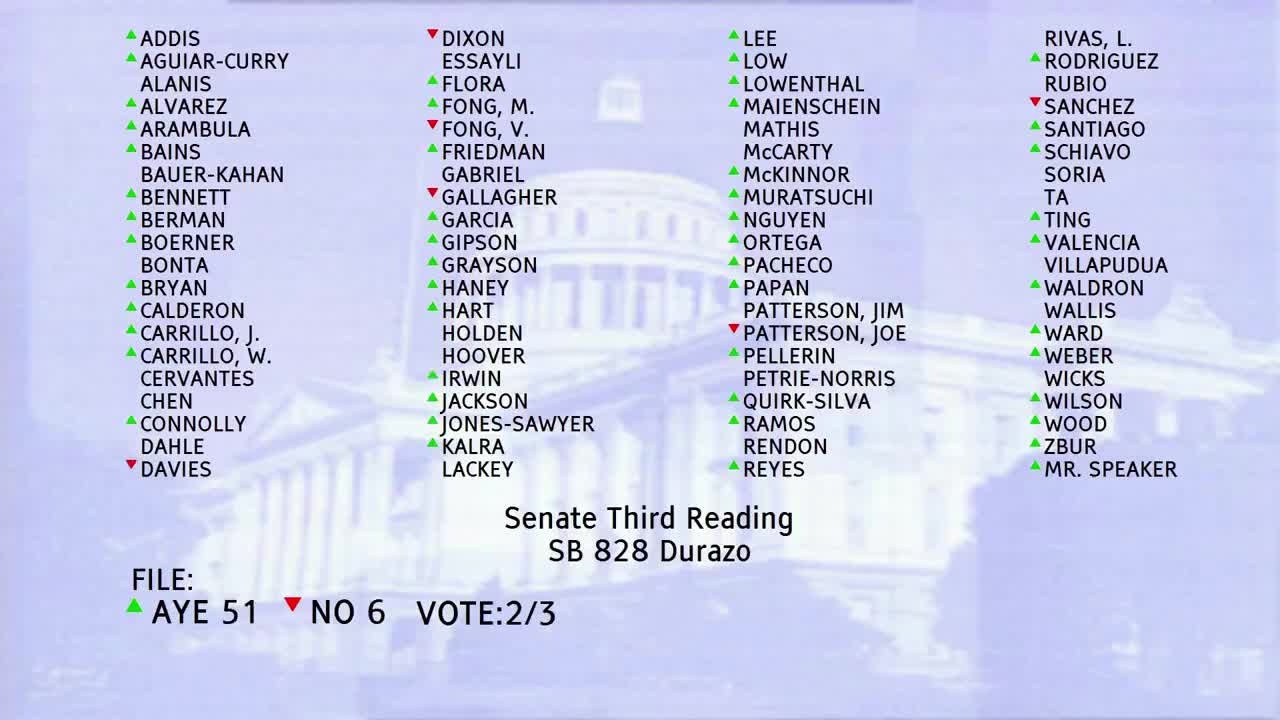
Bill Author







