AB 2051: Psychology interjurisdictional compact.
- Session Year: 2023-2024
- House: Assembly
- Latest Version Date: 2024-05-20
Current Status:
Failed
(2024-06-20: In committee: Set, first hearing. Hearing canceled at the request of author.)
Introduced
In Committee
First Chamber
In Committee
Second Chamber
Enacted
What does this bill do?
The bill approves the Psychology Interjurisdictional Compact (PSYPACT), allowing psychologists licensed in other compact states who meet PSYPACT requirements to provide telepsychology and short-term in-person care (generally up to 30 days per year) to people in California and directing the state Board of Psychology to adopt rules to implement the compact. It also bars psychologists practicing in California under PSYPACT from working as employees or contractors for state or local government entities here unless they hold a California license.
The summary is provided by generative AI which can make mistakes. For original language, please view the details in the table below.
Existing law, the Psychology Licensing Law, establishes the Board of Psychology to license and regulate the practice of psychology. Existing law, except as specified, prohibits persons without a license under existing law from practicing psychology or representing themselves to be a psychologist in this state. Existing law requires an applicant for licensure as a psychologist to possess specified degrees, have engaged in supervised professional experience, pass an examination, and complete particular coursework or provide evidence of training.
This bill would provide that the Psychology Interjurisdictional Compact is approved and ratified, and would provide that the compact is an interstate compact that is intended to regulate the practice of telepsychology and the temporary in-person, face-to-face practice of psychology across state boundaries. The bill would prohibit a person who is authorized by the compact to practice psychology in this state from engaging in the practice of psychology as an employee or contractor of a state or local government entity if the person does not have a license granted by the board, as prescribed.
Under this bill, the compact would require this state, as a compact state, to recognize the right of a psychologist, licensed in a compact state in conformance with the compact, to practice telepsychology in other compact states in which the psychologist is not licensed, as provided in the compact. Under the bill, the compact would also require this state to recognize the right of a psychologist, licensed in a compact state in conformance with the compact, to practice temporarily in other compact states in which the psychologist is not licensed, as provided in the compact. Under the bill, the compact would require the board to appoint a commissioner to the Psychology Interjurisdictional Compact Commission, a joint body with powers and responsibilities as established by the compact, including rulemaking authority, as prescribed. Under the bill, a person without a license granted under existing state law, but holding a privilege to practice under the compact, would not be prohibited from engaging in the practice of psychology or representing themselves to be a psychologist.
This bill would provide that the board is required to comply with the requirements of the compact and to adopt regulations as necessary to implement the compact. The bill would specify that those requirements on the board and the compact shall not become operative until the Director of Consumer Affairs certifies that a majority of the board has voted in favor of joining the compact, and would require the director to notify the Secretary of State and the Legislative Counsel Bureau of the date of that certification.
Existing law, the Psychology Licensing Law, establishes the Board of Psychology to license and regulate the practice of psychology. Existing law, except as specified, prohibits persons without a license under existing law from practicing psychology or representing themselves to be a psychologist in this state. Existing law requires an applicant for licensure as a psychologist to possess specified degrees, have engaged in supervised professional experience, pass an examination, and complete particular coursework or provide evidence of training.
This bill would ratify and approve provide that the Psychology Interjurisdictional Compact, Compact is approved and ratified, and would provide that the compact is an interstate compact that is operational under its terms, to facilitate intended to regulate the practice of telepsychology and the temporary in-person, face-to-face practice of psychology across state boundaries.
Under this bill, the compact would require this state, as a compact state, to recognize the right of a psychologist, licensed in a compact state in conformance with the compact, to practice telepsychology in other compact states in which the psychologist is not licensed, as provided in the compact. Under the bill, the compact would also require this state to recognize the right of a psychologist, licensed in a compact state in conformance with the compact, to practice temporarily in other compact states in which the psychologist is not licensed, as provided in the compact. Under the bill, the compact would require the board to appoint a commissioner to the Psychology Interjurisdictional Compact Commission, a joint body with powers and responsibilities as established by the compact, including rulemaking authority, as prescribed. Under the bill, a person without a license granted under existing state law, but holding a privilege to practice under the compact, would not be prohibited from engaging in the practice of psychology or representing themselves to be a psychologist.
This bill would require provide that the board is required to comply with the requirements of the compact and to adopt regulations as necessary to implement the compact. Under the bill, a person without a license granted under existing state law, but holding a privilege to practice under the compact, would not be prohibited from engaging in the practice of psychology or representing themselve to be a psychologist. The bill would specify that those requirements on the board and the compact shall not become operative until the Director of Consumer Affairs certifies that a majority of the board has voted in favor of joining the compact, and would require the director to notify the Secretary of State and the Legislative Counsel Bureau of the date of that certification.
Existing law, the Psychology Licensing Law, establishes the Board of Psychology to license and regulate the practice of psychology. Existing law, except as specified, prohibits persons without a license under existing law from practicing psychology or representing themselves to be a psychologist in this state. Existing law requires an applicant for licensure as a psychologist to possess specified degrees, have engaged in supervised professional experience, pass an examination, and complete particular coursework or provide evidence of training.
This bill would ratify and approve the Psychology Interjurisdictional Compact, an interstate compact that is operational under its terms, to facilitate the practice of telepsychology and the temporary in-person, face-to-face practice of psychology across state boundaries.
Under this bill, the compact would require this state, as a compact state, to recognize the right of a psychologist, licensed in a compact state in conformance with the compact, to practice telepsychology in other compact states in which the psychologist is not licensed, as provided in the compact. Under the bill, the compact would also require this state to recognize the right of a psychologist, licensed in a compact state in conformance with the compact, to practice temporarily in other compact states in which the psychologist is not licensed, as provided in the compact. Under the bill, the compact would require the board to appoint a commissioner to the Psychology Interjurisdictional Compact Commission, a joint body with powers and responsibilities as established by the compact, including rulemaking authority, as prescribed.
This bill would require the board to comply with the requirements of the compact and to adopt regulations as necessary to implement the compact. Under the bill, a person without a license granted under existing state law, but holding a privilege to practice under the compact, would not be prohibited from engaging in the practice of psychology or representing themselve to be a psychologist.
(a)No person may engage in the practice of psychology, or represent themselves to be a psychologist, without a license granted under this chapter, except as otherwise provided in this chapter, including, but not limited to, holding a privilege to practice under the Psychology Interjurisdictional Compact (PSYPACT) adopted pursuant to Article 11 (commencing with Section 2999.110).
(b)The practice of psychology is defined as rendering or offering to render to individuals, groups, organizations, or the public any psychological service involving the application of psychological principles, methods, and procedures of understanding, predicting, and influencing behavior, such as the principles pertaining to learning, perception, motivation, emotions, and interpersonal relationships; and the methods and procedures of interviewing, counseling, psychotherapy, behavior modification, and hypnosis; and of constructing, administering, and interpreting tests of mental abilities, aptitudes, interests, attitudes, personality characteristics, emotions, and motivations.
(c)The application of these principles and methods includes, but is not restricted to, assessment, diagnosis, prevention, treatment, and intervention to increase effective functioning of individuals, groups, and organizations.
(d)Psychotherapy, within the meaning of this chapter, means the use of psychological methods in a professional relationship to assist a person or persons to acquire greater human effectiveness or to modify feelings, conditions, attitudes, and behaviors that are emotionally, intellectually, or socially ineffectual or maladaptive.
SEC. 2.Section 2948.5 is added to the Business and Professions Code, to read:2948.5.(a)The board shall comply with the requirements of the Psychology Interjurisdictional Compact (PSYPACT) adopted pursuant to Article 11 (commencing with Section 2999.110) and shall adopt regulations necessary to implement the requirements of the compact.
(b)Neither this section nor Article 11 (commencing with Section 2999.110) shall become operative until the Director of Consumer Affairs certifies that a majority of the board has voted in favor of joining the compact during a regular meeting. The director shall notify the Secretary of State and the Legislative Counsel Bureau of the date of that certification.
SEC. 3.Article 11 (commencing with Section 2999.110) is added to Chapter 6.6 of Division 2 of the Business and Professions Code, to read:11.Psychology Interjurisdictional Compact (PSYPACT)2999.110.Psychology Interjurisdictional Compact (PSYPACT) as set forth in Section 2999.111 is hereby ratified and approved.
2999.111.The provisions of the Psychology Interjurisdictional Compact (PSYPACT) between the State of California and other states that are parties to the compact are as follows:
ARTICLE I. PURPOSE
Whereas, states license psychologists, in order to protect the public through verification of education, training and experience and ensure accountability for professional practice; and
Whereas, this Compact is intended to regulate the day to day practice of telepsychology (i.e. the provision of psychological services using telecommunication technologies) by psychologists across state boundaries in the performance of their psychological practice as assigned by an appropriate authority; and
Whereas, this Compact is intended to regulate the temporary in-person, face-to-face practice of psychology by psychologists across state boundaries for 30 days within a calendar year in the performance of their psychological practice as assigned by an appropriate authority;
Whereas, this Compact is intended to authorize State Psychology Regulatory Authorities to afford legal recognition, in a manner consistent with the terms of the Compact, to psychologists licensed in another state;
Whereas, this Compact recognizes that states have a vested interest in protecting the publics health and safety through their licensing and regulation of psychologists and that such state regulation will best protect public health and safety;
Whereas, this Compact does not apply when a psychologist is licensed in both the Home and Receiving States; and
Whereas, this Compact does not apply to permanent in-person, face-to-face practice, it does allow for authorization of temporary psychological practice.
Consistent with these principles, this Compact is designed to achieve the following purposes and objectives:
1. Increase public access to professional psychological services by allowing for telepsychological practice across state lines as well as temporary in-person, face-to-face services into a state which the psychologist is not licensed to practice psychology;
2. Enhance the states ability to protect the publics health and safety, especially client/patient safety;
3. Encourage the cooperation of Compact States in the areas of psychology licensure and regulation;
4. Facilitate the exchange of information between Compact States regarding psychologist licensure, adverse actions and disciplinary history;
5. Promote compliance with the laws governing psychological practice in each Compact State; and
6. Invest all Compact States with the authority to hold licensed psychologists accountable through the mutual recognition of Compact State licenses.
ARTICLE II. DEFINITIONS
A. Adverse Action means: Any action taken by a State Psychology Regulatory Authority which finds a violation of a statute or regulation that is identified by the State Psychology Regulatory Authority as discipline and is a matter of public record.
B. Association of State and Provincial Psychology Boards (ASPPB) means: the recognized membership organization composed of State and Provincial Psychology Regulatory Authorities responsible for the licensure and registration of psychologists throughout the United States and Canada.
C. Authority to Practice Interjurisdictional Telepsychology means: a licensed psychologists authority to practice telepsychology, within the limits authorized under this Compact, in another Compact State.
D. Bylaws means: those Bylaws established by the Psychology Interjurisdictional Compact Commission pursuant to Article X for its governance, or for directing and controlling its actions and conduct.
E. Client/Patient means: the recipient of psychological services, whether psychological services are delivered in the context of healthcare, corporate, supervision, and/or consulting services.
F. Commissioner means: the voting representative appointed by each State Psychology Regulatory Authority pursuant to Article X.
G. Compact State means: a state, the District of Columbia, or United States territory that has enacted this Compact legislation and which has not withdrawn pursuant to Article XIII, Section C or been terminated pursuant to Article XII, Section B.
H. Coordinated Licensure Information System also referred to as Coordinated Database means: an integrated process for collecting, storing, and sharing information on psychologists licensure and enforcement activities related to psychology licensure laws, which is administered by the recognized membership organization composed of State and Provincial Psychology Regulatory Authorities.
I. Confidentiality means: the principle that data or information is not made available or disclosed to unauthorized persons and/or processes.
J. Day means: any part of a day in which psychological work is performed.
K. Distant State means: the Compact State where a psychologist is physically present (not through the use of telecommunications technologies), to provide temporary in-person, face-to-face psychological services.
L. E.Passport means: a certificate issued by the Association of State and Provincial Psychology Boards (ASPPB) that promotes the standardization in the criteria of interjurisdictional telepsychology practice and facilitates the process for licensed psychologists to provide telepsychological services across state lines.
M. Executive Board means: a group of directors elected or appointed to act on behalf of, and within the powers granted to them by, the Commission.
N. Home State means: a Compact State where a psychologist is licensed to practice psychology. If the psychologist is licensed in more than one Compact State and is practicing under the Authorization to Practice Interjurisdictional Telepsychology, the Home State is the Compact State where the psychologist is physically present when the telepsychological services are delivered. If the psychologist is licensed in more than one Compact State and is practicing under the Temporary Authorization to Practice, the Home State is any Compact State where the psychologist is licensed.
O. Identity History Summary means: a summary of information retained by the FBI, or other designee with similar authority, in connection with arrests and, in some instances, federal employment, naturalization, or military service.
P. In-Person, Face-to-Face means: interactions in which the psychologist and the client/patient are in the same physical space and which does not include interactions that may occur through the use of telecommunication technologies.
Q. Interjurisdictional Practice Certificate (IPC) means: a certificate issued by the Association of State and Provincial Psychology Boards (ASPPB) that grants temporary authority to practice based on notification to the State Psychology Regulatory Authority of intention to practice temporarily, and verification of ones qualifications for such practice.
R. License means: authorization by a State Psychology Regulatory Authority to engage in the independent practice of psychology, which would be unlawful without the authorization.
S. Non-Compact State means: any State which is not at the time a Compact State.
T. Psychologist means: an individual licensed for the independent practice of psychology.
U. Psychology Interjurisdictional Compact Commission also referred to as Commission means: the national administration of which all Compact States are members.
V. Receiving State means: a Compact State where the client/patient is physically located when the telepsychological services are delivered.
W. Rule means: a written statement by the Psychology Interjurisdictional Compact Commission promulgated pursuant to Article XI of the Compact that is of general applicability, implements, interprets, or prescribes a policy or provision of the Compact, or an organizational, procedural, or practice requirement of the Commission and has the force and effect of statutory law in a Compact State, and includes the amendment, repeal or suspension of an existing rule.
X. Significant Investigatory Information means:
1. investigative information that a State Psychology Regulatory Authority, after a preliminary inquiry that includes notification and an opportunity to respond if required by state law, has reason to believe, if proven true, would indicate more than a violation of state statute or ethics code that would be considered more substantial than minor infraction; or
2. investigative information that indicates that the psychologist represents an immediate threat to public health and safety regardless of whether the psychologist has been notified and/or had an opportunity to respond.
Y. State means: a state, commonwealth, territory, or possession of the United States, the District of Columbia.
Z. State Psychology Regulatory Authority means: the Board, office or other agency with the legislative mandate to license and regulate the practice of psychology.
AA. Telepsychology means: the provision of psychological services using telecommunication technologies.
BB. Temporary Authorization to Practice means: a licensed psychologists authority to conduct temporary in-person, face-to-face practice, within the limits authorized under this Compact, in another Compact State.
CC. Temporary In-Person, Face-to-Face Practice means: where a psychologist is physically present (not through the use of telecommunications technologies), in the Distant State to provide for the practice of psychology for 30 days within a calendar year and based on notification to the Distant State.
ARTICLE III. HOME STATE LICENSURE
A. The Home State shall be a Compact State where a psychologist is licensed to practice psychology.
B. A psychologist may hold one or more Compact State licenses at a time. If the psychologist is licensed in more than one Compact State, the Home State is the Compact State where the psychologist is physically present when the services are delivered as authorized by the Authority to Practice Interjurisdictional Telepsychology under the terms of this Compact.
C. Any Compact State may require a psychologist not previously licensed in a Compact State to obtain and retain a license to be authorized to practice in the Compact State under circumstances not authorized by the Authority to Practice Interjurisdictional Telepsychology under the terms of this Compact.
D. Any Compact State may require a psychologist to obtain and retain a license to be authorized to practice in a Compact State under circumstances not authorized by Temporary Authorization to Practice under the terms of this Compact.
E. A Home States license authorizes a psychologist to practice in a Receiving State under the Authority to Practice Interjurisdictional Telepsychology only if the Compact State:
1. Currently requires the psychologist to hold an active E.Passport;
2. Has a mechanism in place for receiving and investigating complaints about licensed individuals;
3. Notifies the Commission, in compliance with the terms herein, of any adverse action or significant investigatory information regarding a licensed individual;
4. Requires an Identity History Summary of all applicants at initial licensure, including the use of the results of fingerprints or other biometric data checks compliant with the requirements of the Federal Bureau of Investigation FBI, or other designee with similar authority, no later than ten years after activation of the Compact; and
5. Complies with the Bylaws and Rules of the Commission.
F. A Home States license grants Temporary Authorization to Practice to a psychologist in a Distant State only if the Compact State:
1. Currently requires the psychologist to hold an active IPC;
2. Has a mechanism in place for receiving and investigating complaints about licensed individuals;
3. Notifies the Commission, in compliance with the terms herein, of any adverse action or significant investigatory information regarding a licensed individual;
4. Requires an Identity History Summary of all applicants at initial licensure, including the use of the results of fingerprints or other biometric data checks compliant with the requirements of the Federal Bureau of Investigation FBI, or other designee with similar authority, no later than ten years after activation of the Compact; and
5. Complies with the Bylaws and Rules of the Commission.
ARTICLE IV. COMPACT PRIVILEGE TO PRACTICE TELEPSYCHOLOGY
A. Compact States shall recognize the right of a psychologist, licensed in a Compact State in conformance with Article III, to practice telepsychology in other Compact States (Receiving States) in which the psychologist is not licensed, under the Authority to Practice Interjurisdictional Telepsychology as provided in the Compact.
B. To exercise the Authority to Practice Interjurisdictional Telepsychology under the terms and provisions of this Compact, a psychologist licensed to practice in a Compact State must:
1. Hold a graduate degree in psychology from an institute of higher education that was, at the time the degree was awarded:
a. Regionally accredited by an accrediting body recognized by the U.S. Department of Education to grant graduate degrees, OR authorized by Provincial Statute or Royal Charter to grant doctoral degrees; OR
b. A foreign college or university deemed to be equivalent to 1 (a) above by a foreign credential evaluation service that is a member of the National Association of Credential Evaluation Services (NACES) or by a recognized foreign credential evaluation service; AND
2. Hold a graduate degree in psychology that meets the following criteria:
a. The program, wherever it may be administratively housed, must be clearly identified and labeled as a psychology program. Such a program must specify in pertinent institutional catalogues and brochures its intent to educate and train professional psychologists;
b. The psychology program must stand as a recognizable, coherent, organizational entity within the institution;
c. There must be a clear authority and primary responsibility for the core and specialty areas whether or not the program cuts across administrative lines;
d. The program must consist of an integrated, organized sequence of study;
e. There must be an identifiable psychology faculty sufficient in size and breadth to carry out its responsibilities;
f. The designated director of the program must be a psychologist and a member of the core faculty;
g. The program must have an identifiable body of students who are matriculated in that program for a degree;
h. The program must include supervised practicum, internship, or field training appropriate to the practice of psychology;
i. The curriculum shall encompass a minimum of three academic years of full- time graduate study for doctoral degree and a minimum of one academic year of full-time graduate study for masters degree;
j. The program includes an acceptable residency as defined by the Rules of the Commission.
3. Possess a current, full and unrestricted license to practice psychology in a Home State which is a Compact State;
4. Have no history of adverse action that violate the Rules of the Commission;
5. Have no criminal record history reported on an Identity History Summary that violates the Rules of the Commission;
6. Possess a current, active E.Passport;
7. Provide attestations in regard to areas of intended practice, conformity with standards of practice, competence in telepsychology technology; criminal background; and knowledge and adherence to legal requirements in the home and receiving states, and provide a release of information to allow for primary source verification in a manner specified by the Commission; and
8. Meet other criteria as defined by the Rules of the Commission.
C. The Home State maintains authority over the license of any psychologist practicing into a Receiving State under the Authority to Practice Interjurisdictional Telepsychology.
D. A psychologist practicing into a Receiving State under the Authority to Practice Interjurisdictional Telepsychology will be subject to the Receiving States scope of practice.
A Receiving State may, in accordance with that states due process law, limit or revoke a psychologists Authority to Practice Interjurisdictional Telepsychology in the Receiving State and may take any other necessary actions under the Receiving States applicable law to protect the health and safety of the Receiving States citizens. If a Receiving State takes action, the state shall promptly notify the Home State and the Commission.
E. If a psychologists license in any Home State, another Compact State, or any Authority to Practice Interjurisdictional Telepsychology in any Receiving State, is restricted, suspended or otherwise limited, the E.Passport shall be revoked and therefore the psychologist shall not be eligible to practice telepsychology in a Compact State under the Authority to Practice Interjurisdictional Telepsychology.
ARTICLE V. COMPACT TEMPORARY AUTHORIZATION TO PRACTICE
A. Compact States shall also recognize the right of a psychologist, licensed in a Compact State in conformance with Article III, to practice temporarily in other Compact States (Distant States) in which the psychologist is not licensed, as provided in the Compact.
B. To exercise the Temporary Authorization to Practice under the terms and provisions of this Compact, a psychologist licensed to practice in a Compact State must:
1. Hold a graduate degree in psychology from an institute of higher education that was, at the time the degree was awarded:
a. Regionally accredited by an accrediting body recognized by the U.S. Department of Education to grant graduate degrees, OR authorized by Provincial Statute or Royal Charter to grant doctoral degrees; OR
b. A foreign college or university deemed to be equivalent to 1 (a) above by a foreign credential evaluation service that is a member of the National Association of Credential Evaluation Services (NACES) or by a recognized foreign credential evaluation service; AND
2. Hold a graduate degree in psychology that meets the following criteria:
a. The program, wherever it may be administratively housed, must be clearly identified and labeled as a psychology program. Such a program must specify in pertinent institutional catalogues and brochures its intent to educate and train professional psychologists;
b. The psychology program must stand as a recognizable, coherent, organizational entity within the institution;
c. There must be a clear authority and primary responsibility for the core and specialty areas whether or not the program cuts across administrative lines;
d. The program must consist of an integrated, organized sequence of study;
e. There must be an identifiable psychology faculty sufficient in size and breadth to carry out its responsibilities;
f. The designated director of the program must be a psychologist and a member of the core faculty;
g. The program must have an identifiable body of students who are matriculated in that program for a degree;
h. The program must include supervised practicum, internship, or field training appropriate to the practice of psychology;
i. The curriculum shall encompass a minimum of three academic years of full- time graduate study for doctoral degrees and a minimum of one academic year of full-time graduate study for masters degree;
j. The program includes an acceptable residency as defined by the Rules of the Commission.
3. Possess a current, full and unrestricted license to practice psychology in a Home State which is a Compact State;
4. No history of adverse action that violate the Rules of the Commission;
5. No criminal record history that violates the Rules of the Commission;
6. Possess a current, active IPC;
7. Provide attestations in regard to areas of intended practice and work experience and provide a release of information to allow for primary source verification in a manner specified by the Commission; and
8. Meet other criteria as defined by the Rules of the Commission.
C. A psychologist practicing into a Distant State under the Temporary Authorization to Practice shall practice within the scope of practice authorized by the Distant State.
D. A psychologist practicing into a Distant State under the Temporary Authorization to Practice will be subject to the Distant States authority and law. A Distant State may, in accordance with that states due process law, limit or revoke a psychologists Temporary Authorization to Practice in the Distant State and may take any other necessary actions under the Distant States applicable law to protect the health and safety of the Distant States citizens. If a Distant State takes action, the state shall promptly notify the Home State and the Commission.
E. If a psychologists license in any Home State, another Compact State, or any Temporary Authorization to Practice in any Distant State, is restricted, suspended or otherwise limited, the IPC shall be revoked and therefore the psychologist shall not be eligible to practice in a Compact State under the Temporary Authorization to Practice.
ARTICLE VI. CONDITIONS OF TELEPSYCHOLOGY PRACTICE IN A RECEIVING STATE
A. A psychologist may practice in a Receiving State under the Authority to Practice Interjurisdictional Telepsychology only in the performance of the scope of practice for psychology as assigned by an appropriate State Psychology Regulatory Authority, as defined in the Rules of the Commission, and under the following circumstances:
1. The psychologist initiates a client/patient contact in a Home State via telecommunications technologies with a client/patient in a Receiving State;
2. Other conditions regarding telepsychology as determined by Rules promulgated by the Commission.
ARTICLE VII. ADVERSE ACTIONS
A. A Home State shall have the power to impose adverse action against a psychologists license issued by the Home State. A Distant State shall have the power to take adverse action on a psychologists Temporary Authorization to Practice within that Distant State.
B. A Receiving State may take adverse action on a psychologists Authority to Practice Interjurisdictional Telepsychology within that Receiving State. A Home State may take adverse action against a psychologist based on an adverse action taken by a Distant State regarding temporary in-person, face-to-face practice.
C. If a Home State takes adverse action against a psychologists license, that psychologists Authority to Practice Interjurisdictional Telepsychology is terminated and the E.Passport is revoked. Furthermore, that psychologists Temporary Authorization to Practice is terminated and the IPC is revoked.
1. All Home State disciplinary orders which impose adverse action shall be reported to the Commission in accordance with the Rules promulgated by the Commission. A Compact State shall report adverse actions in accordance with the Rules of the Commission.
2. In the event discipline is reported on a psychologist, the psychologist will not be eligible for telepsychology or temporary in-person, face-to-face practice in accordance with the Rules of the Commission.
3. Other actions may be imposed as determined by the Rules promulgated by the Commission.
D. A Home States Psychology Regulatory Authority shall investigate and take appropriate action with respect to reported inappropriate conduct engaged in by a licensee which occurred in a Receiving State as it would if such conduct had occurred by a licensee within the Home State. In such cases, the Home States law shall control in determining any adverse action against a psychologists license.
E. A Distant States Psychology Regulatory Authority shall investigate and take appropriate action with respect to reported inappropriate conduct engaged in by a psychologist practicing under Temporary Authorization Practice which occurred in that Distant State as it would if such conduct had occurred by a licensee within the Home State. In such cases, Distant States law shall control in determining any adverse action against a psychologists Temporary Authorization to Practice.
F. Nothing in this Compact shall override a Compact States decision that a psychologists participation in an alternative program may be used in lieu of adverse action and that such participation shall remain non-public if required by the Compact States law. Compact States must require psychologists who enter any alternative programs to not provide telepsychology services under the Authority to Practice Interjurisdictional Telepsychology or provide temporary psychological services under the Temporary Authorization to Practice in any other Compact State during the term of the alternative program.
G. No other judicial or administrative remedies shall be available to a psychologist in the event a Compact State imposes an adverse action pursuant to subsection C, above.
ARTICLE VIII. ADDITIONAL AUTHORITIES INVESTED IN A COMPACT STATES PSYCHOLOGY REGULATORY AUTHORITY
A. In addition to any other powers granted under state law, a Compact States Psychology Regulatory Authority shall have the authority under this Compact to:
1. Issue subpoenas, for both hearings and investigations, which require the attendance and testimony of witnesses and the production of evidence. Subpoenas issued by a Compact States Psychology Regulatory Authority for the attendance and testimony of witnesses, and/or the production of evidence from another Compact State shall be enforced in the latter state by any court of competent jurisdiction, according to that courts practice and procedure in considering subpoenas issued in its own proceedings. The issuing State Psychology Regulatory Authority shall pay any witness fees, travel expenses, mileage and other fees required by the service statutes of the state where the witnesses and/or evidence are located; and
2. Issue cease and desist and/or injunctive relief orders to revoke a psychologists Authority to Practice Interjurisdictional Telepsychology and/or Temporary Authorization to Practice.
3. During the course of any investigation, a psychologist may not change his/her Home State licensure. A Home State Psychology Regulatory Authority is authorized to complete any pending investigations of a psychologist and to take any actions appropriate under its law. The Home State Psychology Regulatory Authority shall promptly report the conclusions of such investigations to the Commission. Once an investigation has been completed, and pending the outcome of said investigation, the psychologist may change his/her Home State licensure. The Commission shall promptly notify the new Home State of any such decisions as provided in the Rules of the Commission. All information provided to the Commission or distributed by Compact States pursuant to the psychologist shall be confidential, filed under seal and used for investigatory or disciplinary matters. The Commission may create additional rules for mandated or discretionary sharing of information by Compact States.
ARTICLE IX. COORDINATED LICENSURE INFORMATION SYSTEM
A. The Commission shall provide for the development and maintenance of a Coordinated Licensure Information System (Coordinated Database) and reporting system containing licensure and disciplinary action information on all psychologists individuals to whom this Compact is applicable in all Compact States as defined by the Rules of the Commission.
B. Notwithstanding any other provision of state law to the contrary, a Compact State shall submit a uniform data set to the Coordinated Database on all licensees as required by the Rules of the Commission, including:
1. Identifying information;
2. Licensure data;
3. Significant investigatory information;
4. Adverse actions against a psychologists license;
5. An indicator that a psychologists Authority to Practice Interjurisdictional
Telepsychology and/or Temporary Authorization to Practice is revoked;
6. Non-confidential information related to alternative program participation information;
7. Any denial of application for licensure, and the reasons for such denial; and
8. Other information which may facilitate the administration of this Compact, as determined by the Rules of the Commission.
C. The Coordinated Database administrator shall promptly notify all Compact States of any adverse action taken against, or significant investigative information on, any licensee in a Compact State.
D. Compact States reporting information to the Coordinated Database may designate information that may not be shared with the public without the express permission of the Compact State reporting the information.
E. Any information submitted to the Coordinated Database that is subsequently required to be expunged by the law of the Compact State reporting the information shall be removed from the Coordinated Database.
ARTICLE X. ESTABLISHMENT OF THE PSYCHOLOGY INTERJURISDICTIONAL COMPACT COMMISSION
A. The Compact States hereby create and establish a joint public agency known as the Psychology Interjurisdictional Compact Commission.
1. The Commission is a body politic and an instrumentality of the Compact States.
2. Venue is proper and judicial proceedings by or against the Commission shall be brought solely and exclusively in a court of competent jurisdiction where the principal office of the Commission is located. The Commission may waive venue and jurisdictional defenses to the extent it adopts or consents to participate in alternative dispute resolution proceedings.
3. Nothing in this Compact shall be construed to be a waiver of sovereign immunity.
B. Membership, Voting, and Meetings
1. The Commission shall consist of one voting representative appointed by each Compact State who shall serve as that states Commissioner. The State Psychology Regulatory Authority shall appoint its delegate. This delegate shall be empowered to act on behalf of the Compact State. This delegate shall be limited to:
a. Executive Director, Executive Secretary or similar executive;
b. Current member of the State Psychology Regulatory Authority of a Compact State;
OR
c. Designee empowered with the appropriate delegate authority to act on behalf of the Compact State.
2. Any Commissioner may be removed or suspended from office as provided by the law of the state from which the Commissioner is appointed. Any vacancy occurring in the Commission shall be filled in accordance with the laws of the Compact State in which the vacancy exists.
3. Each Commissioner shall be entitled to one (1) vote with regard to the promulgation of Rules and creation of Bylaws and shall otherwise have an opportunity to participate in the business and affairs of the Commission. A Commissioner shall vote in person or by such other means as provided in the Bylaws. The Bylaws may provide for Commissioners participation in meetings by telephone or other means of communication.
4. The Commission shall meet at least once during each calendar year. Additional meetings shall be held as set forth in the Bylaws.
5. All meetings shall be open to the public, and public notice of meetings shall be given in the same manner as required under the rulemaking provisions in Article XI.
6. The Commission may convene in a closed, non-public meeting if the Commission must discuss:
a. Non-compliance of a Compact State with its obligations under the Compact;
b. The employment, compensation, discipline or other personnel matters, practices or procedures related to specific employees or other matters related to the
Commissions internal personnel practices and procedures;
c. Current, threatened, or reasonably anticipated litigation against the Commission;
d. Negotiation of contracts for the purchase or sale of goods, services or real estate;
e. Accusation against any person of a crime or formally censuring any person;
f. Disclosure of trade secrets or commercial or financial information which is privileged or confidential;
g. Disclosure of information of a personal nature where disclosure would constitute a clearly unwarranted invasion of personal privacy;
h. Disclosure of investigatory records compiled for law enforcement purposes;
i. Disclosure of information related to any investigatory reports prepared by or on behalf of or for use of the Commission or other committee charged with responsibility for investigation or determination of compliance issues pursuant to the Compact; or
j. Matters specifically exempted from disclosure by federal and state statute.
7. If a meeting, or portion of a meeting, is closed pursuant to this provision, the Commissions legal counsel or designee shall certify that the meeting may be closed and shall reference each relevant exempting provision. The Commission shall keep minutes which fully and clearly describe all matters discussed in a meeting and shall provide a full and accurate summary of actions taken, of any person participating in the meeting, and the reasons therefore, including a description of the views expressed. All documents considered in connection with an action shall be identified in such minutes. All minutes and documents of a closed meeting shall remain under seal, subject to release only by a majority vote of the Commission or order of a court of competent jurisdiction.
C. The Commission shall, by a majority vote of the Commissioners, prescribe Bylaws and/or Rules to govern its conduct as may be necessary or appropriate to carry out the purposes and exercise the powers of the Compact, including but not limited to:
1. Establishing the fiscal year of the Commission;
2. Providing reasonable standards and procedures:
a. for the establishment and meetings of other committees; and
b. governing any general or specific delegation of any authority or function of the Commission;
3. Providing reasonable procedures for calling and conducting meetings of the Commission, ensuring reasonable advance notice of all meetings and providing an opportunity for attendance of such meetings by interested parties, with enumerated exceptions designed to protect the publics interest, the privacy of individuals of such proceedings, and proprietary information, including trade secrets. The Commission may meet in closed session only after a majority of the Commissioners vote to close a meeting to the public in whole or in part. As soon as practicable, the Commission must make public a copy of the vote to close the meeting revealing the vote of each Commissioner with no proxy votes allowed;
4. Establishing the titles, duties and authority and reasonable procedures for the election of the officers of the Commission;
5. Providing reasonable standards and procedures for the establishment of the personnel policies and programs of the Commission. Notwithstanding any civil service or other similar law of any Compact State, the Bylaws shall exclusively govern the personnel policies and programs of the Commission;
6. Promulgating a Code of Ethics to address permissible and prohibited activities of Commission members and employees;
7. Providing a mechanism for concluding the operations of the Commission and the equitable disposition of any surplus funds that may exist after the termination of the Compact after the payment and/or reserving of all of its debts and obligations;
8. The Commission shall publish its Bylaws in a convenient form and file a copy thereof and a copy of any amendment thereto, with the appropriate agency or officer in each of the Compact States;
9. The Commission shall maintain its financial records in accordance with the Bylaws; and
10. The Commission shall meet and take such actions as are consistent with the provisions of this Compact and the Bylaws.
D. The Commission shall have the following powers:
1. The authority to promulgate uniform rules to facilitate and coordinate implementation and administration of this Compact. The rule shall have the force and effect of law and shall be binding in all Compact States;
2. To bring and prosecute legal proceedings or actions in the name of the Commission, provided that the standing of any State Psychology Regulatory Authority or other regulatory body responsible for psychology licensure to sue or be sued under applicable law shall not be affected;
3. To purchase and maintain insurance and bonds;
4. To borrow, accept or contract for services of personnel, including, but not limited to, employees of a Compact State;
5. To hire employees, elect or appoint officers, fix compensation, define duties, grant such individuals appropriate authority to carry out the purposes of the Compact, and to establish the Commissions personnel policies and programs relating to conflicts of interest, qualifications of personnel, and other related personnel matters;
6. To accept any and all appropriate donations and grants of money, equipment, supplies, materials and services, and to receive, utilize and dispose of the same; provided that at all times the Commission shall strive to avoid any appearance of impropriety and/or conflict of interest;
7. To lease, purchase, accept appropriate gifts or donations of, or otherwise to own, hold, improve or use, any property, real, personal or mixed; provided that at all times the Commission shall strive to avoid any appearance of impropriety;
8. To sell, convey, mortgage, pledge, lease, exchange, abandon or otherwise dispose of any property real, personal or mixed;
9. To establish a budget and make expenditures;
10. To borrow money;
11. To appoint committees, including advisory committees comprised of Members, State regulators, State legislators or their representatives, and consumer representatives, and such other interested persons as may be designated in this Compact and the Bylaws;
12. To provide and receive information from, and to cooperate with, law enforcement agencies;
13. To adopt and use an official seal; and
14. To perform such other functions as may be necessary or appropriate to achieve the purposes of this Compact consistent with the state regulation of psychology licensure, temporary in-person, face-to-face practice and telepsychology practice.
E. The Executive Board
The elected officers shall serve as the Executive Board, which shall have the power to act on behalf of the Commission according to the terms of this Compact.
1. The Executive Board shall be comprised of six members:
a. Five voting members who are elected from the current membership of the Commission by the Commission;
b. One ex-officio, nonvoting member from the recognized membership organization composed of State and Provincial Psychology Regulatory Authorities.
2. The ex-officio member must have served as staff or member on a State Psychology Regulatory Authority and will be selected by its respective organization.
3. The Commission may remove any member of the Executive Board as provided in Bylaws.
4. The Executive Board shall meet at least annually.
5. The Executive Board shall have the following duties and responsibilities:
a. Recommend to the entire Commission changes to the Rules or Bylaws, changes to this Compact legislation, fees paid by Compact States such as annual dues, and any other applicable fees;
b. Ensure Compact administration services are appropriately provided, contractual or otherwise;
c. Prepare and recommend the budget;
d. Maintain financial records on behalf of the Commission;
e. Monitor Compact compliance of member states and provide compliance reports to the Commission;
f. Establish additional committees as necessary; and
g. Other duties as provided in Rules or Bylaws.
F. Financing of the Commission
1. The Commission shall pay, or provide for the payment of the reasonable expenses of its establishment, organization and ongoing activities.
2. The Commission may accept any and all appropriate revenue sources, donations and grants of money, equipment, supplies, materials and services.
3. The Commission may levy on and collect an annual assessment from each Compact State or impose fees on other parties to cover the cost of the operations and activities of the Commission and its staff which must be in a total amount sufficient to cover its annual budget as approved each year for which revenue is not provided by other sources. The aggregate annual assessment amount shall be allocated based upon a formula to be determined by the Commission which shall promulgate a rule binding upon all Compact States.
4. The Commission shall not incur obligations of any kind prior to securing the funds adequate to meet the same; nor shall the Commission pledge the credit of any of the Compact States, except by and with the authority of the Compact State.
5. The Commission shall keep accurate accounts of all receipts and disbursements. The receipts and disbursements of the Commission shall be subject to the audit and accounting procedures established under its Bylaws. However, all receipts and disbursements of funds handled by the Commission shall be audited yearly by a certified or licensed public accountant and the report of the audit shall be included in and become part of the annual report of the Commission.
G. Qualified Immunity, Defense, and Indemnification
1. The members, officers, Executive Director, employees and representatives of the Commission shall be immune from suit and liability, either personally or in their official capacity, for any claim for damage to or loss of property or personal injury or other civil liability caused by or arising out of any actual or alleged act, error or omission that occurred, or that the person against whom the claim is made had a reasonable basis for believing occurred within the scope of Commission employment, duties or responsibilities; provided that nothing in this paragraph shall be construed to protect any such person from suit and/or liability for any damage, loss, injury or liability caused by the intentional or willful or wanton misconduct of that person.
2. The Commission shall defend any member, officer, Executive Director, employee or representative of the Commission in any civil action seeking to impose liability arising out of any actual or alleged act, error or omission that occurred within the scope of Commission employment, duties or responsibilities, or that the person against whom the claim is made had a reasonable basis for believing occurred within the scope of Commission employment, duties or responsibilities; provided that nothing herein shall be construed to prohibit that person from retaining his or her own counsel; and provided further, that the actual or alleged act, error or omission did not result from that persons intentional or willful or wanton misconduct.
3. The Commission shall indemnify and hold harmless any member, officer, Executive Director, employee or representative of the Commission for the amount of any settlement or judgment obtained against that person arising out of any actual or alleged act, error or omission that occurred within the scope of Commission employment, duties or responsibilities, or that such person had a reasonable basis for believing occurred within the scope of Commission employment, duties or responsibilities, provided that the actual or alleged act, error or omission did not result from the intentional or willful or wanton misconduct of that person.
ARTICLE XI. RULEMAKING
A. The Commission shall exercise its rulemaking powers pursuant to the criteria set forth in this Article and the Rules adopted thereunder. Rules and amendments shall become binding as of the date specified in each rule or amendment.
B. If a majority of the legislatures of the Compact States rejects a rule, by enactment of a statute or resolution in the same manner used to adopt the Compact, then such rule shall have no further force and effect in any Compact State.
C. Rules or amendments to the rules shall be adopted at a regular or special meeting of the Commission.
D. Prior to promulgation and adoption of a final rule or Rules by the Commission, and at least sixty (60) days in advance of the meeting at which the rule will be considered and voted upon, the Commission shall file a Notice of Proposed Rulemaking:
1. On the website of the Commission; and
2. On the website of each Compact States Psychology Regulatory Authority or the publication in which each state would otherwise publish proposed rules.
E. The Notice of Proposed Rulemaking shall include:
1. The proposed time, date, and location of the meeting in which the rule will be considered and voted upon;
2. The text of the proposed rule or amendment and the reason for the proposed rule;
3. A request for comments on the proposed rule from any interested person; and
4. The manner in which interested persons may submit notice to the Commission of their intention to attend the public hearing and any written comments.
F. Prior to adoption of a proposed rule, the Commission shall allow persons to submit written data, facts, opinions and arguments, which shall be made available to the public.
G. The Commission shall grant an opportunity for a public hearing before it adopts a rule or amendment if a hearing is requested by:
1. At least twenty-five (25) persons who submit comments independently of each other;
2. A governmental subdivision or agency; or
3. A duly appointed person in an association that has having at least twenty-five (25) members.
H. If a hearing is held on the proposed rule or amendment, the Commission shall publish the place, time, and date of the scheduled public hearing.
1. All persons wishing to be heard at the hearing shall notify the Executive Director of the Commission or other designated member in writing of their desire to appear and testify at the hearing not less than five (5) business days before the scheduled date of the hearing.
2. Hearings shall be conducted in a manner providing each person who wishes to comment a fair and reasonable opportunity to comment orally or in writing.
3. No transcript of the hearing is required, unless a written request for a transcript is made, in which case the person requesting the transcript shall bear the cost of producing the transcript. A recording may be made in lieu of a transcript under the same terms and conditions as a transcript. This subsection shall not preclude the Commission from making a transcript or recording of the hearing if it so chooses.
4. Nothing in this section shall be construed as requiring a separate hearing on each rule. Rules may be grouped for the convenience of the Commission at hearings required by this section.
I. Following the scheduled hearing date, or by the close of business on the scheduled hearing date if the hearing was not held, the Commission shall consider all written and oral comments received.
J. The Commission shall, by majority vote of all members, take final action on the proposed rule and shall determine the effective date of the rule, if any, based on the rulemaking record and the full text of the rule.
K. If no written notice of intent to attend the public hearing by interested parties is received, the Commission may proceed with promulgation of the proposed rule without a public hearing.
L. Upon determination that an emergency exists, the Commission may consider and adopt an emergency rule without prior notice, opportunity for comment, or hearing, provided that the usual rulemaking procedures provided in the Compact and in this section shall be retroactively applied to the rule as soon as reasonably possible, in no event later than ninety (90) days after the effective date of the rule. For the purposes of this provision, an emergency rule is one that must be adopted immediately in order to:
1. Meet an imminent threat to public health, safety, or welfare;
2. Prevent a loss of Commission or Compact State funds;
3. Meet a deadline for the promulgation of an administrative rule that is established by federal law or rule; or
4. Protect public health and safety.
M. The Commission or an authorized committee of the Commission may direct revisions to a previously adopted rule or amendment for purposes of correcting typographical errors, errors in format, errors in consistency, or grammatical errors. Public notice of any revisions shall be posted on the website of the Commission. The revision shall be subject to challenge by any person for a period of thirty (30) days after posting. The revision may be challenged only on grounds that the revision results in a material change to a rule.
A challenge shall be made in writing, and delivered to the Chair of the Commission prior to the end of the notice period. If no challenge is made, the revision will take effect without further action. If the revision is challenged, the revision may not take effect without the approval of the Commission.
ARTICLE XII. OVERSIGHT, DISPUTE RESOLUTION AND ENFORCEMENT
A. Oversight
1. The Executive, Legislative and Judicial branches of state government in each Compact State shall enforce this Compact and take all actions necessary and appropriate to effectuate the Compacts purposes and intent. The provisions of this Compact and the rules promulgated hereunder shall have standing as statutory law.
2. All courts shall take judicial notice of the Compact and the rules in any judicial or administrative proceeding in a Compact State pertaining to the subject matter of this Compact which may affect the powers, responsibilities or actions of the Commission.
3. The Commission shall be entitled to receive service of process in any such proceeding, and shall have standing to intervene in such a proceeding for all purposes. Failure to provide service of process to the Commission shall render a judgment or order void as to the Commission, this Compact or promulgated rules.
B. Default, Technical Assistance, and Termination
1. If the Commission determines that a Compact State has defaulted in the performance of its obligations or responsibilities under this Compact or the promulgated rules, the Commission shall:
a. Provide written notice to the defaulting state and other Compact States of the nature of the default, the proposed means of remedying the default and/or any other action to be taken by the Commission; and
b. Provide remedial training and specific technical assistance regarding the default.
2. If a state in default fails to remedy the default, the defaulting state may be terminated from the Compact upon an affirmative vote of a majority of the Compact States, and all rights, privileges and benefits conferred by this Compact shall be terminated on the effective date of termination. A remedy of the default does not relieve the offending state of obligations or liabilities incurred during the period of default.
3. Termination of membership in the Compact shall be imposed only after all other means of securing compliance have been exhausted. Notice of intent to suspend or terminate shall be submitted by the Commission to the Governor, the majority and minority leaders of the defaulting state's legislature, and each of the Compact States.
4. A Compact State which has been terminated is responsible for all assessments, obligations and liabilities incurred through the effective date of termination, including obligations which extend beyond the effective date of termination.
5. The Commission shall not bear any costs incurred by the state which is found to be in default or which has been terminated from the Compact, unless agreed upon in writing between the Commission and the defaulting state.
6. The defaulting state may appeal the action of the Commission by petitioning the U.S. District Court for the state of Georgia or the federal district where the Compact has its principal offices. The prevailing member shall be awarded all costs of such litigation, including reasonable attorneys fees.
C. Dispute Resolution
1. Upon request by a Compact State, the Commission shall attempt to resolve disputes related to the Compact which arise among Compact States and between Compact and Non-Compact States.
2. The Commission shall promulgate a rule providing for both mediation and binding dispute resolution for disputes that arise before the commission.
D. Enforcement
1. The Commission, in the reasonable exercise of its discretion, shall enforce the provisions and Rules of this Compact.
2. By majority vote, the Commission may initiate legal action in the United States District Court for the State of Georgia or the federal district where the Compact has its principal offices against a Compact State in default to enforce compliance with the provisions of the Compact and its promulgated Rules and Bylaws. The relief sought may include both injunctive relief and damages. In the event judicial enforcement is necessary, the prevailing member shall be awarded all costs of such litigation, including reasonable attorneys fees.
3. The remedies herein shall not be the exclusive remedies of the Commission. The Commission may pursue any other remedies available under federal or state law.
ARTICLE XIII. DATE OF IMPLEMENTATION OF THE PSYCHOLOGY INTERJURISDICTIONAL COMPACT COMMISSION AND ASSOCIATED RULES, WITHDRAWAL, AND AMENDMENTS
A. The Compact shall come into effect on the date on which the Compact is enacted into law in the seventh Compact State. The provisions which become effective at that time shall be limited to the powers granted to the Commission relating to assembly and the promulgation of rules. Thereafter, the Commission shall meet and exercise rulemaking powers necessary to the implementation and administration of the Compact.
B. Any state which joins the Compact subsequent to the Commissions initial adoption of the rules shall be subject to the rules as they exist on the date on which the Compact becomes law in that state. Any rule which has been previously adopted by the Commission shall have the full force and effect of law on the day the Compact becomes law in that state.
C. Any Compact State may withdraw from this Compact by enacting a statute repealing the same.
1. A Compact States withdrawal shall not take effect until six (6) months after enactment of the repealing statute.
2. Withdrawal shall not affect the continuing requirement of the withdrawing States Psychology Regulatory Authority to comply with the investigative and adverse action reporting requirements of this act prior to the effective date of withdrawal.
D. Nothing contained in this Compact shall be construed to invalidate or prevent any psychology licensure agreement or other cooperative arrangement between a Compact State and a Non-Compact State which does not conflict with the provisions of this Compact.
E. This Compact may be amended by the Compact States. No amendment to this Compact shall become effective and binding upon any Compact State until it is enacted into the law of all Compact States.
ARTICLE XIV. CONSTRUCTION AND SEVERABILITY
This Compact shall be liberally construed so as to effectuate the purposes thereof. If this Compact shall be held contrary to the constitution of any state member thereto, the Compact shall remain in full force and effect as to the remaining Compact States
2999.112.No person authorized to practice in this state by the Authority to Practice Interjurisdictional Telepsychology or the Temporary Authorization to Practice under the Psychology Interjurisdictional Compact (PSYPACT) shall engage in the practice of psychology as an employee or contractor of a state or local government entity without a license granted by the board under Article 3 (commencing with Section 2940).
(a)No person may engage in the practice of psychology, or represent themselves to be a psychologist, without a license granted under this chapter, except as otherwise provided in this chapter, including, but not limited to, holding a privilege to practice under the Psychology Interjurisdictional Compact (PSYPACT) adopted pursuant to Article 11 (commencing with Section 2999.110).
(b)The practice of psychology is defined as rendering or offering to render to individuals, groups, organizations, or the public any psychological service involving the application of psychological principles, methods, and procedures of understanding, predicting, and influencing behavior, such as the principles pertaining to learning, perception, motivation, emotions, and interpersonal relationships; and the methods and procedures of interviewing, counseling, psychotherapy, behavior modification, and hypnosis; and of constructing, administering, and interpreting tests of mental abilities, aptitudes, interests, attitudes, personality characteristics, emotions, and motivations.
(c)The application of these principles and methods includes, but is not restricted to, assessment, diagnosis, prevention, treatment, and intervention to increase effective functioning of individuals, groups, and organizations.
(d)Psychotherapy, within the meaning of this chapter, means the use of psychological methods in a professional relationship to assist a person or persons to acquire greater human effectiveness or to modify feelings, conditions, attitudes, and behaviors that are emotionally, intellectually, or socially ineffectual or maladaptive.
SEC. 2.Section 2948.5 is added to the Business and Professions Code, to read:2948.5.(a)The board shall comply with the requirements of the Psychology Interjurisdictional Compact (PSYPACT) adopted pursuant to Article 11 (commencing with Section 2999.110) and shall adopt regulations necessary to implement the requirements of the compact.
(b)Neither this section nor Article 11 (commencing with Section 2999.110) shall become operative until the Director of Consumer Affairs certifies that a majority of the board has voted in favor of joining the compact during a regular meeting. The director shall notify the Secretary of State and the Legislative Counsel Bureau of the date of that certification.
SEC. 3.Article 11 (commencing with Section 2999.110) is added to Chapter 6.6 of Division 2 of the Business and Professions Code, to read:11.Psychology Interjurisdictional Compact (PSYPACT)2999.110.Psychology Interjurisdictional Compact (PSYPACT) as set forth in Section 2999.111 is hereby ratified and approved.
2999.111.The provisions of the Psychology Interjurisdictional Compact (PSYPACT) between the State of California and other states that are parties to the compact are as follows:
ARTICLE I. PURPOSE
Whereas, states license psychologists, in order to protect the public through verification of education, training and experience and ensure accountability for professional practice; and
Whereas, this Compact is intended to regulate the day to day practice of telepsychology (i.e. the provision of psychological services using telecommunication technologies) by psychologists across state boundaries in the performance of their psychological practice as assigned by an appropriate authority; and
Whereas, this Compact is intended to regulate the temporary in-person, face-to-face practice of psychology by psychologists across state boundaries for 30 days within a calendar year in the performance of their psychological practice as assigned by an appropriate authority;
Whereas, this Compact is intended to authorize State Psychology Regulatory Authorities to afford legal recognition, in a manner consistent with the terms of the Compact, to psychologists licensed in another state;
Whereas, this Compact recognizes that states have a vested interest in protecting the publics health and safety through their licensing and regulation of psychologists and that such state regulation will best protect public health and safety;
Whereas, this Compact does not apply when a psychologist is licensed in both the Home and Receiving States; and
Whereas, this Compact does not apply to permanent in-person, face-to-face practice, it does allow for authorization of temporary psychological practice.
Consistent with these principles, this Compact is designed to achieve the following purposes and objectives:
1. Increase public access to professional psychological services by allowing for telepsychological practice across state lines as well as temporary in-person, face-to-face services into a state which the psychologist is not licensed to practice psychology;
2. Enhance the states ability to protect the publics health and safety, especially client/patient safety;
3. Encourage the cooperation of Compact States in the areas of psychology licensure and regulation;
4. Facilitate the exchange of information between Compact States regarding psychologist licensure, adverse actions and disciplinary history;
5. Promote compliance with the laws governing psychological practice in each Compact State; and
6. Invest all Compact States with the authority to hold licensed psychologists accountable through the mutual recognition of Compact State licenses.
ARTICLE II. DEFINITIONS
A. Adverse Action means: Any action taken by a State Psychology Regulatory Authority which finds a violation of a statute or regulation that is identified by the State Psychology Regulatory Authority as discipline and is a matter of public record.
B. Association of State and Provincial Psychology Boards (ASPPB) means: the recognized membership organization composed of State and Provincial Psychology Regulatory Authorities responsible for the licensure and registration of psychologists throughout the United States and Canada.
C. Authority to Practice Interjurisdictional Telepsychology means: a licensed psychologists authority to practice telepsychology, within the limits authorized under this Compact, in another Compact State.
D. Bylaws means: those Bylaws established by the Psychology Interjurisdictional Compact Commission pursuant to Article X for its governance, or for directing and controlling its actions and conduct.
E. Client/Patient means: the recipient of psychological services, whether psychological services are delivered in the context of healthcare, corporate, supervision, and/or consulting services.
F. Commissioner means: the voting representative appointed by each State Psychology Regulatory Authority pursuant to Article X.
G. Compact State means: a state, the District of Columbia, or United States territory that has enacted this Compact legislation and which has not withdrawn pursuant to Article XIII, Section C or been terminated pursuant to Article XII, Section B.
H. Coordinated Licensure Information System also referred to as Coordinated Database means: an integrated process for collecting, storing, and sharing information on psychologists licensure and enforcement activities related to psychology licensure laws, which is administered by the recognized membership organization composed of State and Provincial Psychology Regulatory Authorities.
I. Confidentiality means: the principle that data or information is not made available or disclosed to unauthorized persons and/or processes.
J. Day means: any part of a day in which psychological work is performed.
K. Distant State means: the Compact State where a psychologist is physically present (not through the use of telecommunications technologies), to provide temporary in-person, face-to-face psychological services.
L. E.Passport means: a certificate issued by the Association of State and Provincial Psychology Boards (ASPPB) that promotes the standardization in the criteria of interjurisdictional telepsychology practice and facilitates the process for licensed psychologists to provide telepsychological services across state lines.
M. Executive Board means: a group of directors elected or appointed to act on behalf of, and within the powers granted to them by, the Commission.
N. Home State means: a Compact State where a psychologist is licensed to practice psychology. If the psychologist is licensed in more than one Compact State and is practicing under the Authorization to Practice Interjurisdictional Telepsychology, the Home State is the Compact State where the psychologist is physically present when the telepsychological services are delivered. If the psychologist is licensed in more than one Compact State and is practicing under the Temporary Authorization to Practice, the Home State is any Compact State where the psychologist is licensed.
O. Identity History Summary means: a summary of information retained by the FBI, or other designee with similar authority, in connection with arrests and, in some instances, federal employment, naturalization, or military service.
P. In-Person, Face-to-Face means: interactions in which the psychologist and the client/patient are in the same physical space and which does not include interactions that may occur through the use of telecommunication technologies.
Q. Interjurisdictional Practice Certificate (IPC) means: a certificate issued by the Association of State and Provincial Psychology Boards (ASPPB) that grants temporary authority to practice based on notification to the State Psychology Regulatory Authority of intention to practice temporarily, and verification of ones qualifications for such practice.
R. License means: authorization by a State Psychology Regulatory Authority to engage in the independent practice of psychology, which would be unlawful without the authorization.
S. Non-Compact State means: any State which is not at the time a Compact State.
T. Psychologist means: an individual licensed for the independent practice of psychology.
U. Psychology Interjurisdictional Compact Commission also referred to as Commission means: the national administration of which all Compact States are members.
V. Receiving State means: a Compact State where the client/patient is physically located when the telepsychological services are delivered.
W. Rule means: a written statement by the Psychology Interjurisdictional Compact Commission promulgated pursuant to Article XI of the Compact that is of general applicability, implements, interprets, or prescribes a policy or provision of the Compact, or an organizational, procedural, or practice requirement of the Commission and has the force and effect of statutory law in a Compact State, and includes the amendment, repeal or suspension of an existing rule.
X. Significant Investigatory Information means:
1. investigative information that a State Psychology Regulatory Authority, after a preliminary inquiry that includes notification and an opportunity to respond if required by state law, has reason to believe, if proven true, would indicate more than a violation of state statute or ethics code that would be considered more substantial than minor infraction; or
2. investigative information that indicates that the psychologist represents an immediate threat to public health and safety regardless of whether the psychologist has been notified and/or had an opportunity to respond.
Y. State means: a state, commonwealth, territory, or possession of the United States, the District of Columbia.
Z. State Psychology Regulatory Authority means: the Board, office or other agency with the legislative mandate to license and regulate the practice of psychology.
AA. Telepsychology means: the provision of psychological services using telecommunication technologies.
BB. Temporary Authorization to Practice means: a licensed psychologists authority to conduct temporary in-person, face-to-face practice, within the limits authorized under this Compact, in another Compact State.
CC. Temporary In-Person, Face-to-Face Practice means: where a psychologist is physically present (not through the use of telecommunications technologies), in the Distant State to provide for the practice of psychology for 30 days within a calendar year and based on notification to the Distant State.
ARTICLE III. HOME STATE LICENSURE
A. The Home State shall be a Compact State where a psychologist is licensed to practice psychology.
B. A psychologist may hold one or more Compact State licenses at a time. If the psychologist is licensed in more than one Compact State, the Home State is the Compact State where the psychologist is physically present when the services are delivered as authorized by the Authority to Practice Interjurisdictional Telepsychology under the terms of this Compact.
C. Any Compact State may require a psychologist not previously licensed in a Compact State to obtain and retain a license to be authorized to practice in the Compact State under circumstances not authorized by the Authority to Practice Interjurisdictional Telepsychology under the terms of this Compact.
D. Any Compact State may require a psychologist to obtain and retain a license to be authorized to practice in a Compact State under circumstances not authorized by Temporary Authorization to Practice under the terms of this Compact.
E. A Home States license authorizes a psychologist to practice in a Receiving State under the Authority to Practice Interjurisdictional Telepsychology only if the Compact State:
1. Currently requires the psychologist to hold an active E.Passport;
2. Has a mechanism in place for receiving and investigating complaints about licensed individuals;
3. Notifies the Commission, in compliance with the terms herein, of any adverse action or significant investigatory information regarding a licensed individual;
4. Requires an Identity History Summary of all applicants at initial licensure, including the use of the results of fingerprints or other biometric data checks compliant with the requirements of the Federal Bureau of Investigation FBI, or other designee with similar authority, no later than ten years after activation of the Compact; and
5. Complies with the Bylaws and Rules of the Commission.
F. A Home States license grants Temporary Authorization to Practice to a psychologist in a Distant State only if the Compact State:
1. Currently requires the psychologist to hold an active IPC;
2. Has a mechanism in place for receiving and investigating complaints about licensed individuals;
3. Notifies the Commission, in compliance with the terms herein, of any adverse action or significant investigatory information regarding a licensed individual;
4. Requires an Identity History Summary of all applicants at initial licensure, including the use of the results of fingerprints or other biometric data checks compliant with the requirements of the Federal Bureau of Investigation FBI, or other designee with similar authority, no later than ten years after activation of the Compact; and
5. Complies with the Bylaws and Rules of the Commission.
ARTICLE IV. COMPACT PRIVILEGE TO PRACTICE TELEPSYCHOLOGY
A. Compact States shall recognize the right of a psychologist, licensed in a Compact State in conformance with Article III, to practice telepsychology in other Compact States (Receiving States) in which the psychologist is not licensed, under the Authority to Practice Interjurisdictional Telepsychology as provided in the Compact.
B. To exercise the Authority to Practice Interjurisdictional Telepsychology under the terms and provisions of this Compact, a psychologist licensed to practice in a Compact State must:
1. Hold a graduate degree in psychology from an institute of higher education that was, at the time the degree was awarded:
a. Regionally accredited by an accrediting body recognized by the U.S. Department of Education to grant graduate degrees, OR authorized by Provincial Statute or Royal Charter to grant doctoral degrees; OR
b. A foreign college or university deemed to be equivalent to 1 (a) above by a foreign credential evaluation service that is a member of the National Association of Credential Evaluation Services (NACES) or by a recognized foreign credential evaluation service; AND
2. Hold a graduate degree in psychology that meets the following criteria:
a. The program, wherever it may be administratively housed, must be clearly identified and labeled as a psychology program. Such a program must specify in pertinent institutional catalogues and brochures its intent to educate and train professional psychologists;
b. The psychology program must stand as a recognizable, coherent, organizational entity within the institution;
c. There must be a clear authority and primary responsibility for the core and specialty areas whether or not the program cuts across administrative lines;
d. The program must consist of an integrated, organized sequence of study;
e. There must be an identifiable psychology faculty sufficient in size and breadth to carry out its responsibilities;
f. The designated director of the program must be a psychologist and a member of the core faculty;
g. The program must have an identifiable body of students who are matriculated in that program for a degree;
h. The program must include supervised practicum, internship, or field training appropriate to the practice of psychology;
i. The curriculum shall encompass a minimum of three academic years of full- time graduate study for doctoral degree and a minimum of one academic year of full-time graduate study for masters degree;
j. The program includes an acceptable residency as defined by the Rules of the Commission.
3. Possess a current, full and unrestricted license to practice psychology in a Home State which is a Compact State;
4. Have no history of adverse action that violate the Rules of the Commission;
5. Have no criminal record history reported on an Identity History Summary that violates the Rules of the Commission;
6. Possess a current, active E.Passport;
7. Provide attestations in regard to areas of intended practice, conformity with standards of practice, competence in telepsychology technology; criminal background; and knowledge and adherence to legal requirements in the home and receiving states, and provide a release of information to allow for primary source verification in a manner specified by the Commission; and
8. Meet other criteria as defined by the Rules of the Commission.
C. The Home State maintains authority over the license of any psychologist practicing into a Receiving State under the Authority to Practice Interjurisdictional Telepsychology.
D. A psychologist practicing into a Receiving State under the Authority to Practice Interjurisdictional Telepsychology will be subject to the Receiving States scope of practice.
A Receiving State may, in accordance with that states due process law, limit or revoke a psychologists Authority to Practice Interjurisdictional Telepsychology in the Receiving State and may take any other necessary actions under the Receiving States applicable law to protect the health and safety of the Receiving States citizens. If a Receiving State takes action, the state shall promptly notify the Home State and the Commission.
E. If a psychologists license in any Home State, another Compact State, or any Authority to Practice Interjurisdictional Telepsychology in any Receiving State, is restricted, suspended or otherwise limited, the E.Passport shall be revoked and therefore the psychologist shall not be eligible to practice telepsychology in a Compact State under the Authority to Practice Interjurisdictional Telepsychology.
ARTICLE V. COMPACT TEMPORARY AUTHORIZATION TO PRACTICE
A. Compact States shall also recognize the right of a psychologist, licensed in a Compact State in conformance with Article III, to practice temporarily in other Compact States (Distant States) in which the psychologist is not licensed, as provided in the Compact.
B. To exercise the Temporary Authorization to Practice under the terms and provisions of this Compact, a psychologist licensed to practice in a Compact State must:
1. Hold a graduate degree in psychology from an institute of higher education that was, at the time the degree was awarded:
a. Regionally accredited by an accrediting body recognized by the U.S. Department of Education to grant graduate degrees, OR authorized by Provincial Statute or Royal Charter to grant doctoral degrees; OR
b. A foreign college or university deemed to be equivalent to 1 (a) above by a foreign credential evaluation service that is a member of the National Association of Credential Evaluation Services (NACES) or by a recognized foreign credential evaluation service; AND
2. Hold a graduate degree in psychology that meets the following criteria:
a. The program, wherever it may be administratively housed, must be clearly identified and labeled as a psychology program. Such a program must specify in pertinent institutional catalogues and brochures its intent to educate and train professional psychologists;
b. The psychology program must stand as a recognizable, coherent, organizational entity within the institution;
c. There must be a clear authority and primary responsibility for the core and specialty areas whether or not the program cuts across administrative lines;
d. The program must consist of an integrated, organized sequence of study;
e. There must be an identifiable psychology faculty sufficient in size and breadth to carry out its responsibilities;
f. The designated director of the program must be a psychologist and a member of the core faculty;
g. The program must have an identifiable body of students who are matriculated in that program for a degree;
h. The program must include supervised practicum, internship, or field training appropriate to the practice of psychology;
i. The curriculum shall encompass a minimum of three academic years of full- time graduate study for doctoral degrees and a minimum of one academic year of full-time graduate study for masters degree;
j. The program includes an acceptable residency as defined by the Rules of the Commission.
3. Possess a current, full and unrestricted license to practice psychology in a Home State which is a Compact State;
4. No history of adverse action that violate the Rules of the Commission;
5. No criminal record history that violates the Rules of the Commission;
6. Possess a current, active IPC;
7. Provide attestations in regard to areas of intended practice and work experience and provide a release of information to allow for primary source verification in a manner specified by the Commission; and
8. Meet other criteria as defined by the Rules of the Commission.
C. A psychologist practicing into a Distant State under the Temporary Authorization to Practice shall practice within the scope of practice authorized by the Distant State.
D. A psychologist practicing into a Distant State under the Temporary Authorization to Practice will be subject to the Distant States authority and law. A Distant State may, in accordance with that states due process law, limit or revoke a psychologists Temporary Authorization to Practice in the Distant State and may take any other necessary actions under the Distant States applicable law to protect the health and safety of the Distant States citizens. If a Distant State takes action, the state shall promptly notify the Home State and the Commission.
E. If a psychologists license in any Home State, another Compact State, or any Temporary Authorization to Practice in any Distant State, is restricted, suspended or otherwise limited, the IPC shall be revoked and therefore the psychologist shall not be eligible to practice in a Compact State under the Temporary Authorization to Practice.
ARTICLE VI. CONDITIONS OF TELEPSYCHOLOGY PRACTICE IN A RECEIVING STATE
A. A psychologist may practice in a Receiving State under the Authority to Practice Interjurisdictional Telepsychology only in the performance of the scope of practice for psychology as assigned by an appropriate State Psychology Regulatory Authority, as defined in the Rules of the Commission, and under the following circumstances:
1. The psychologist initiates a client/patient contact in a Home State via telecommunications technologies with a client/patient in a Receiving State;
2. Other conditions regarding telepsychology as determined by Rules promulgated by the Commission.
ARTICLE VII. ADVERSE ACTIONS
A. A Home State shall have the power to impose adverse action against a psychologists license issued by the Home State. A Distant State shall have the power to take adverse action on a psychologists Temporary Authorization to Practice within that Distant State.
B. A Receiving State may take adverse action on a psychologists Authority to Practice Interjurisdictional Telepsychology within that Receiving State. A Home State may take adverse action against a psychologist based on an adverse action taken by a Distant State regarding temporary in-person, face-to-face practice.
C. If a Home State takes adverse action against a psychologists license, that psychologists Authority to Practice Interjurisdictional Telepsychology is terminated and the E.Passport is revoked. Furthermore, that psychologists Temporary Authorization to Practice is terminated and the IPC is revoked.
1. All Home State disciplinary orders which impose adverse action shall be reported to the Commission in accordance with the Rules promulgated by the Commission. A Compact State shall report adverse actions in accordance with the Rules of the Commission.
2. In the event discipline is reported on a psychologist, the psychologist will not be eligible for telepsychology or temporary in-person, face-to-face practice in accordance with the Rules of the Commission.
3. Other actions may be imposed as determined by the Rules promulgated by the Commission.
D. A Home States Psychology Regulatory Authority shall investigate and take appropriate action with respect to reported inappropriate conduct engaged in by a licensee which occurred in a Receiving State as it would if such conduct had occurred by a licensee within the Home State. In such cases, the Home States law shall control in determining any adverse action against a psychologists license.
E. A Distant States Psychology Regulatory Authority shall investigate and take appropriate action with respect to reported inappropriate conduct engaged in by a psychologist practicing under Temporary Authorization Practice which occurred in that Distant State as it would if such conduct had occurred by a licensee within the Home State. In such cases, Distant States law shall control in determining any adverse action against a psychologists Temporary Authorization to Practice.
F. Nothing in this Compact shall override a Compact States decision that a psychologists participation in an alternative program may be used in lieu of adverse action and that such participation shall remain non-public if required by the Compact States law. Compact States must require psychologists who enter any alternative programs to not provide telepsychology services under the Authority to Practice Interjurisdictional Telepsychology or provide temporary psychological services under the Temporary Authorization to Practice in any other Compact State during the term of the alternative program.
G. No other judicial or administrative remedies shall be available to a psychologist in the event a Compact State imposes an adverse action pursuant to subsection C, above.
ARTICLE VIII. ADDITIONAL AUTHORITIES INVESTED IN A COMPACT STATES PSYCHOLOGY REGULATORY AUTHORITY
A. In addition to any other powers granted under state law, a Compact States Psychology Regulatory Authority shall have the authority under this Compact to:
1. Issue subpoenas, for both hearings and investigations, which require the attendance and testimony of witnesses and the production of evidence. Subpoenas issued by a Compact States Psychology Regulatory Authority for the attendance and testimony of witnesses, and/or the production of evidence from another Compact State shall be enforced in the latter state by any court of competent jurisdiction, according to that courts practice and procedure in considering subpoenas issued in its own proceedings. The issuing State Psychology Regulatory Authority shall pay any witness fees, travel expenses, mileage and other fees required by the service statutes of the state where the witnesses and/or evidence are located; and
2. Issue cease and desist and/or injunctive relief orders to revoke a psychologists Authority to Practice Interjurisdictional Telepsychology and/or Temporary Authorization to Practice.
3. During the course of any investigation, a psychologist may not change his/her Home State licensure. A Home State Psychology Regulatory Authority is authorized to complete any pending investigations of a psychologist and to take any actions appropriate under its law. The Home State Psychology Regulatory Authority shall promptly report the conclusions of such investigations to the Commission. Once an investigation has been completed, and pending the outcome of said investigation, the psychologist may change his/her Home State licensure. The Commission shall promptly notify the new Home State of any such decisions as provided in the Rules of the Commission. All information provided to the Commission or distributed by Compact States pursuant to the psychologist shall be confidential, filed under seal and used for investigatory or disciplinary matters. The Commission may create additional rules for mandated or discretionary sharing of information by Compact States.
ARTICLE IX. COORDINATED LICENSURE INFORMATION SYSTEM
A. The Commission shall provide for the development and maintenance of a Coordinated Licensure Information System (Coordinated Database) and reporting system containing licensure and disciplinary action information on all psychologists individuals to whom this Compact is applicable in all Compact States as defined by the Rules of the Commission.
B. Notwithstanding any other provision of state law to the contrary, a Compact State shall submit a uniform data set to the Coordinated Database on all licensees as required by the Rules of the Commission, including:
1. Identifying information;
2. Licensure data;
3. Significant investigatory information;
4. Adverse actions against a psychologists license;
5. An indicator that a psychologists Authority to Practice Interjurisdictional
Telepsychology and/or Temporary Authorization to Practice is revoked;
6. Non-confidential information related to alternative program participation information;
7. Any denial of application for licensure, and the reasons for such denial; and
8. Other information which may facilitate the administration of this Compact, as determined by the Rules of the Commission.
C. The Coordinated Database administrator shall promptly notify all Compact States of any adverse action taken against, or significant investigative information on, any licensee in a Compact State.
D. Compact States reporting information to the Coordinated Database may designate information that may not be shared with the public without the express permission of the Compact State reporting the information.
E. Any information submitted to the Coordinated Database that is subsequently required to be expunged by the law of the Compact State reporting the information shall be removed from the Coordinated Database.
ARTICLE X. ESTABLISHMENT OF THE PSYCHOLOGY INTERJURISDICTIONAL COMPACT COMMISSION
A. The Compact States hereby create and establish a joint public agency known as the Psychology Interjurisdictional Compact Commission.
1. The Commission is a body politic and an instrumentality of the Compact States.
2. Venue is proper and judicial proceedings by or against the Commission shall be brought solely and exclusively in a court of competent jurisdiction where the principal office of the Commission is located. The Commission may waive venue and jurisdictional defenses to the extent it adopts or consents to participate in alternative dispute resolution proceedings.
3. Nothing in this Compact shall be construed to be a waiver of sovereign immunity.
B. Membership, Voting, and Meetings
1. The Commission shall consist of one voting representative appointed by each Compact State who shall serve as that states Commissioner. The State Psychology Regulatory Authority shall appoint its delegate. This delegate shall be empowered to act on behalf of the Compact State. This delegate shall be limited to:
a. Executive Director, Executive Secretary or similar executive;
b. Current member of the State Psychology Regulatory Authority of a Compact State;
OR
c. Designee empowered with the appropriate delegate authority to act on behalf of the Compact State.
2. Any Commissioner may be removed or suspended from office as provided by the law of the state from which the Commissioner is appointed. Any vacancy occurring in the Commission shall be filled in accordance with the laws of the Compact State in which the vacancy exists.
3. Each Commissioner shall be entitled to one (1) vote with regard to the promulgation of Rules and creation of Bylaws and shall otherwise have an opportunity to participate in the business and affairs of the Commission. A Commissioner shall vote in person or by such other means as provided in the Bylaws. The Bylaws may provide for Commissioners participation in meetings by telephone or other means of communication.
4. The Commission shall meet at least once during each calendar year. Additional meetings shall be held as set forth in the Bylaws.
5. All meetings shall be open to the public, and public notice of meetings shall be given in the same manner as required under the rulemaking provisions in Article XI.
6. The Commission may convene in a closed, non-public meeting if the Commission must discuss:
a. Non-compliance of a Compact State with its obligations under the Compact;
b. The employment, compensation, discipline or other personnel matters, practices or procedures related to specific employees or other matters related to the
Commissions internal personnel practices and procedures;
c. Current, threatened, or reasonably anticipated litigation against the Commission;
d. Negotiation of contracts for the purchase or sale of goods, services or real estate;
e. Accusation against any person of a crime or formally censuring any person;
f. Disclosure of trade secrets or commercial or financial information which is privileged or confidential;
g. Disclosure of information of a personal nature where disclosure would constitute a clearly unwarranted invasion of personal privacy;
h. Disclosure of investigatory records compiled for law enforcement purposes;
i. Disclosure of information related to any investigatory reports prepared by or on behalf of or for use of the Commission or other committee charged with responsibility for investigation or determination of compliance issues pursuant to the Compact; or
j. Matters specifically exempted from disclosure by federal and state statute.
7. If a meeting, or portion of a meeting, is closed pursuant to this provision, the Commissions legal counsel or designee shall certify that the meeting may be closed and shall reference each relevant exempting provision. The Commission shall keep minutes which fully and clearly describe all matters discussed in a meeting and shall provide a full and accurate summary of actions taken, of any person participating in the meeting, and the reasons therefore, including a description of the views expressed. All documents considered in connection with an action shall be identified in such minutes. All minutes and documents of a closed meeting shall remain under seal, subject to release only by a majority vote of the Commission or order of a court of competent jurisdiction.
C. The Commission shall, by a majority vote of the Commissioners, prescribe Bylaws and/or Rules to govern its conduct as may be necessary or appropriate to carry out the purposes and exercise the powers of the Compact, including but not limited to:
1. Establishing the fiscal year of the Commission;
2. Providing reasonable standards and procedures:
a. for the establishment and meetings of other committees; and
b. governing any general or specific delegation of any authority or function of the Commission;
3. Providing reasonable procedures for calling and conducting meetings of the Commission, ensuring reasonable advance notice of all meetings and providing an opportunity for attendance of such meetings by interested parties, with enumerated exceptions designed to protect the publics interest, the privacy of individuals of such proceedings, and proprietary information, including trade secrets. The Commission may meet in closed session only after a majority of the Commissioners vote to close a meeting to the public in whole or in part. As soon as practicable, the Commission must make public a copy of the vote to close the meeting revealing the vote of each Commissioner with no proxy votes allowed;
4. Establishing the titles, duties and authority and reasonable procedures for the election of the officers of the Commission;
5. Providing reasonable standards and procedures for the establishment of the personnel policies and programs of the Commission. Notwithstanding any civil service or other similar law of any Compact State, the Bylaws shall exclusively govern the personnel policies and programs of the Commission;
6. Promulgating a Code of Ethics to address permissible and prohibited activities of Commission members and employees;
7. Providing a mechanism for concluding the operations of the Commission and the equitable disposition of any surplus funds that may exist after the termination of the Compact after the payment and/or reserving of all of its debts and obligations;
8. The Commission shall publish its Bylaws in a convenient form and file a copy thereof and a copy of any amendment thereto, with the appropriate agency or officer in each of the Compact States;
9. The Commission shall maintain its financial records in accordance with the Bylaws; and
10. The Commission shall meet and take such actions as are consistent with the provisions of this Compact and the Bylaws.
D. The Commission shall have the following powers:
1. The authority to promulgate uniform rules to facilitate and coordinate implementation and administration of this Compact. The rule shall have the force and effect of law and shall be binding in all Compact States;
2. To bring and prosecute legal proceedings or actions in the name of the Commission, provided that the standing of any State Psychology Regulatory Authority or other regulatory body responsible for psychology licensure to sue or be sued under applicable law shall not be affected;
3. To purchase and maintain insurance and bonds;
4. To borrow, accept or contract for services of personnel, including, but not limited to, employees of a Compact State;
5. To hire employees, elect or appoint officers, fix compensation, define duties, grant such individuals appropriate authority to carry out the purposes of the Compact, and to establish the Commissions personnel policies and programs relating to conflicts of interest, qualifications of personnel, and other related personnel matters;
6. To accept any and all appropriate donations and grants of money, equipment, supplies, materials and services, and to receive, utilize and dispose of the same; provided that at all times the Commission shall strive to avoid any appearance of impropriety and/or conflict of interest;
7. To lease, purchase, accept appropriate gifts or donations of, or otherwise to own, hold, improve or use, any property, real, personal or mixed; provided that at all times the Commission shall strive to avoid any appearance of impropriety;
8. To sell, convey, mortgage, pledge, lease, exchange, abandon or otherwise dispose of any property real, personal or mixed;
9. To establish a budget and make expenditures;
10. To borrow money;
11. To appoint committees, including advisory committees comprised of Members, State regulators, State legislators or their representatives, and consumer representatives, and such other interested persons as may be designated in this Compact and the Bylaws;
12. To provide and receive information from, and to cooperate with, law enforcement agencies;
13. To adopt and use an official seal; and
14. To perform such other functions as may be necessary or appropriate to achieve the purposes of this Compact consistent with the state regulation of psychology licensure, temporary in-person, face-to-face practice and telepsychology practice.
E. The Executive Board
The elected officers shall serve as the Executive Board, which shall have the power to act on behalf of the Commission according to the terms of this Compact.
1. The Executive Board shall be comprised of six members:
a. Five voting members who are elected from the current membership of the Commission by the Commission;
b. One ex-officio, nonvoting member from the recognized membership organization composed of State and Provincial Psychology Regulatory Authorities.
2. The ex-officio member must have served as staff or member on a State Psychology Regulatory Authority and will be selected by its respective organization.
3. The Commission may remove any member of the Executive Board as provided in Bylaws.
4. The Executive Board shall meet at least annually.
5. The Executive Board shall have the following duties and responsibilities:
a. Recommend to the entire Commission changes to the Rules or Bylaws, changes to this Compact legislation, fees paid by Compact States such as annual dues, and any other applicable fees;
b. Ensure Compact administration services are appropriately provided, contractual or otherwise;
c. Prepare and recommend the budget;
d. Maintain financial records on behalf of the Commission;
e. Monitor Compact compliance of member states and provide compliance reports to the Commission;
f. Establish additional committees as necessary; and
g. Other duties as provided in Rules or Bylaws.
F. Financing of the Commission
1. The Commission shall pay, or provide for the payment of the reasonable expenses of its establishment, organization and ongoing activities.
2. The Commission may accept any and all appropriate revenue sources, donations and grants of money, equipment, supplies, materials and services.
3. The Commission may levy on and collect an annual assessment from each Compact State or impose fees on other parties to cover the cost of the operations and activities of the Commission and its staff which must be in a total amount sufficient to cover its annual budget as approved each year for which revenue is not provided by other sources. The aggregate annual assessment amount shall be allocated based upon a formula to be determined by the Commission which shall promulgate a rule binding upon all Compact States.
4. The Commission shall not incur obligations of any kind prior to securing the funds adequate to meet the same; nor shall the Commission pledge the credit of any of the Compact States, except by and with the authority of the Compact State.
5. The Commission shall keep accurate accounts of all receipts and disbursements. The receipts and disbursements of the Commission shall be subject to the audit and accounting procedures established under its Bylaws. However, all receipts and disbursements of funds handled by the Commission shall be audited yearly by a certified or licensed public accountant and the report of the audit shall be included in and become part of the annual report of the Commission.
G. Qualified Immunity, Defense, and Indemnification
1. The members, officers, Executive Director, employees and representatives of the Commission shall be immune from suit and liability, either personally or in their official capacity, for any claim for damage to or loss of property or personal injury or other civil liability caused by or arising out of any actual or alleged act, error or omission that occurred, or that the person against whom the claim is made had a reasonable basis for believing occurred within the scope of Commission employment, duties or responsibilities; provided that nothing in this paragraph shall be construed to protect any such person from suit and/or liability for any damage, loss, injury or liability caused by the intentional or willful or wanton misconduct of that person.
2. The Commission shall defend any member, officer, Executive Director, employee or representative of the Commission in any civil action seeking to impose liability arising out of any actual or alleged act, error or omission that occurred within the scope of Commission employment, duties or responsibilities, or that the person against whom the claim is made had a reasonable basis for believing occurred within the scope of Commission employment, duties or responsibilities; provided that nothing herein shall be construed to prohibit that person from retaining his or her own counsel; and provided further, that the actual or alleged act, error or omission did not result from that persons intentional or willful or wanton misconduct.
3. The Commission shall indemnify and hold harmless any member, officer, Executive Director, employee or representative of the Commission for the amount of any settlement or judgment obtained against that person arising out of any actual or alleged act, error or omission that occurred within the scope of Commission employment, duties or responsibilities, or that such person had a reasonable basis for believing occurred within the scope of Commission employment, duties or responsibilities, provided that the actual or alleged act, error or omission did not result from the intentional or willful or wanton misconduct of that person.
ARTICLE XI. RULEMAKING
A. The Commission shall exercise its rulemaking powers pursuant to the criteria set forth in this Article and the Rules adopted thereunder. Rules and amendments shall become binding as of the date specified in each rule or amendment.
B. If a majority of the legislatures of the Compact States rejects a rule, by enactment of a statute or resolution in the same manner used to adopt the Compact, then such rule shall have no further force and effect in any Compact State.
C. Rules or amendments to the rules shall be adopted at a regular or special meeting of the Commission.
D. Prior to promulgation and adoption of a final rule or Rules by the Commission, and at least sixty (60) days in advance of the meeting at which the rule will be considered and voted upon, the Commission shall file a Notice of Proposed Rulemaking:
1. On the website of the Commission; and
2. On the website of each Compact States Psychology Regulatory Authority or the publication in which each state would otherwise publish proposed rules.
E. The Notice of Proposed Rulemaking shall include:
1. The proposed time, date, and location of the meeting in which the rule will be considered and voted upon;
2. The text of the proposed rule or amendment and the reason for the proposed rule;
3. A request for comments on the proposed rule from any interested person; and
4. The manner in which interested persons may submit notice to the Commission of their intention to attend the public hearing and any written comments.
F. Prior to adoption of a proposed rule, the Commission shall allow persons to submit written data, facts, opinions and arguments, which shall be made available to the public.
G. The Commission shall grant an opportunity for a public hearing before it adopts a rule or amendment if a hearing is requested by:
1. At least twenty-five (25) persons who submit comments independently of each other;
2. A governmental subdivision or agency; or
3. A duly appointed person in an association that has having at least twenty-five (25) members.
H. If a hearing is held on the proposed rule or amendment, the Commission shall publish the place, time, and date of the scheduled public hearing.
1. All persons wishing to be heard at the hearing shall notify the Executive Director of the Commission or other designated member in writing of their desire to appear and testify at the hearing not less than five (5) business days before the scheduled date of the hearing.
2. Hearings shall be conducted in a manner providing each person who wishes to comment a fair and reasonable opportunity to comment orally or in writing.
3. No transcript of the hearing is required, unless a written request for a transcript is made, in which case the person requesting the transcript shall bear the cost of producing the transcript. A recording may be made in lieu of a transcript under the same terms and conditions as a transcript. This subsection shall not preclude the Commission from making a transcript or recording of the hearing if it so chooses.
4. Nothing in this section shall be construed as requiring a separate hearing on each rule. Rules may be grouped for the convenience of the Commission at hearings required by this section.
I. Following the scheduled hearing date, or by the close of business on the scheduled hearing date if the hearing was not held, the Commission shall consider all written and oral comments received.
J. The Commission shall, by majority vote of all members, take final action on the proposed rule and shall determine the effective date of the rule, if any, based on the rulemaking record and the full text of the rule.
K. If no written notice of intent to attend the public hearing by interested parties is received, the Commission may proceed with promulgation of the proposed rule without a public hearing.
L. Upon determination that an emergency exists, the Commission may consider and adopt an emergency rule without prior notice, opportunity for comment, or hearing, provided that the usual rulemaking procedures provided in the Compact and in this section shall be retroactively applied to the rule as soon as reasonably possible, in no event later than ninety (90) days after the effective date of the rule. For the purposes of this provision, an emergency rule is one that must be adopted immediately in order to:
1. Meet an imminent threat to public health, safety, or welfare;
2. Prevent a loss of Commission or Compact State funds;
3. Meet a deadline for the promulgation of an administrative rule that is established by federal law or rule; or
4. Protect public health and safety.
M. The Commission or an authorized committee of the Commission may direct revisions to a previously adopted rule or amendment for purposes of correcting typographical errors, errors in format, errors in consistency, or grammatical errors. Public notice of any revisions shall be posted on the website of the Commission. The revision shall be subject to challenge by any person for a period of thirty (30) days after posting. The revision may be challenged only on grounds that the revision results in a material change to a rule.
A challenge shall be made in writing, and delivered to the Chair of the Commission prior to the end of the notice period. If no challenge is made, the revision will take effect without further action. If the revision is challenged, the revision may not take effect without the approval of the Commission.
ARTICLE XII. OVERSIGHT, DISPUTE RESOLUTION AND ENFORCEMENT
A. Oversight
1. The Executive, Legislative and Judicial branches of state government in each Compact State shall enforce this Compact and take all actions necessary and appropriate to effectuate the Compacts purposes and intent. The provisions of this Compact and the rules promulgated hereunder shall have standing as statutory law.
2. All courts shall take judicial notice of the Compact and the rules in any judicial or administrative proceeding in a Compact State pertaining to the subject matter of this Compact which may affect the powers, responsibilities or actions of the Commission.
3. The Commission shall be entitled to receive service of process in any such proceeding, and shall have standing to intervene in such a proceeding for all purposes. Failure to provide service of process to the Commission shall render a judgment or order void as to the Commission, this Compact or promulgated rules.
B. Default, Technical Assistance, and Termination
1. If the Commission determines that a Compact State has defaulted in the performance of its obligations or responsibilities under this Compact or the promulgated rules, the Commission shall:
a. Provide written notice to the defaulting state and other Compact States of the nature of the default, the proposed means of remedying the default and/or any other action to be taken by the Commission; and
b. Provide remedial training and specific technical assistance regarding the default.
2. If a state in default fails to remedy the default, the defaulting state may be terminated from the Compact upon an affirmative vote of a majority of the Compact States, and all rights, privileges and benefits conferred by this Compact shall be terminated on the effective date of termination. A remedy of the default does not relieve the offending state of obligations or liabilities incurred during the period of default.
3. Termination of membership in the Compact shall be imposed only after all other means of securing compliance have been exhausted. Notice of intent to suspend or terminate shall be submitted by the Commission to the Governor, the majority and minority leaders of the defaulting state's legislature, and each of the Compact States.
4. A Compact State which has been terminated is responsible for all assessments, obligations and liabilities incurred through the effective date of termination, including obligations which extend beyond the effective date of termination.
5. The Commission shall not bear any costs incurred by the state which is found to be in default or which has been terminated from the Compact, unless agreed upon in writing between the Commission and the defaulting state.
6. The defaulting state may appeal the action of the Commission by petitioning the U.S. District Court for the state of Georgia or the federal district where the Compact has its principal offices. The prevailing member shall be awarded all costs of such litigation, including reasonable attorneys fees.
C. Dispute Resolution
1. Upon request by a Compact State, the Commission shall attempt to resolve disputes related to the Compact which arise among Compact States and between Compact and Non-Compact States.
2. The Commission shall promulgate a rule providing for both mediation and binding dispute resolution for disputes that arise before the commission.
D. Enforcement
1. The Commission, in the reasonable exercise of its discretion, shall enforce the provisions and Rules of this Compact.
2. By majority vote, the Commission may initiate legal action in the United States District Court for the State of Georgia or the federal district where the Compact has its principal offices against a Compact State in default to enforce compliance with the provisions of the Compact and its promulgated Rules and Bylaws. The relief sought may include both injunctive relief and damages. In the event judicial enforcement is necessary, the prevailing member shall be awarded all costs of such litigation, including reasonable attorneys fees.
3. The remedies herein shall not be the exclusive remedies of the Commission. The Commission may pursue any other remedies available under federal or state law.
ARTICLE XIII. DATE OF IMPLEMENTATION OF THE PSYCHOLOGY INTERJURISDICTIONAL COMPACT COMMISSION AND ASSOCIATED RULES, WITHDRAWAL, AND AMENDMENTS
A. The Compact shall come into effect on the date on which the Compact is enacted into law in the seventh Compact State. The provisions which become effective at that time shall be limited to the powers granted to the Commission relating to assembly and the promulgation of rules. Thereafter, the Commission shall meet and exercise rulemaking powers necessary to the implementation and administration of the Compact.
B. Any state which joins the Compact subsequent to the Commissions initial adoption of the rules shall be subject to the rules as they exist on the date on which the Compact becomes law in that state. Any rule which has been previously adopted by the Commission shall have the full force and effect of law on the day the Compact becomes law in that state.
C. Any Compact State may withdraw from this Compact by enacting a statute repealing the same.
1. A Compact States withdrawal shall not take effect until six (6) months after enactment of the repealing statute.
2. Withdrawal shall not affect the continuing requirement of the withdrawing States Psychology Regulatory Authority to comply with the investigative and adverse action reporting requirements of this act prior to the effective date of withdrawal.
D. Nothing contained in this Compact shall be construed to invalidate or prevent any psychology licensure agreement or other cooperative arrangement between a Compact State and a Non-Compact State which does not conflict with the provisions of this Compact.
E. This Compact may be amended by the Compact States. No amendment to this Compact shall become effective and binding upon any Compact State until it is enacted into the law of all Compact States.
ARTICLE XIV. CONSTRUCTION AND SEVERABILITY
This Compact shall be liberally construed so as to effectuate the purposes thereof. If this Compact shall be held contrary to the constitution of any state member thereto, the Compact shall remain in full force and effect as to the remaining Compact States
(a)No person may engage in the practice of psychology, or represent himself or herself themselves to be a psychologist, without a license granted under this chapter, except as otherwise provided in this chapter. The chapter, including, but not limited to, holding a privilege to practice under the Psychology Interjurisdictional Compact (PSYPACT) adopted pursuant to Article 11 (commencing with Section 2999.110).
(b)The practice of psychology is defined as rendering or offering to render to individuals, groups, organizations, or the public any psychological service involving the application of psychological principles, methods, and procedures of understanding, predicting, and influencing behavior, such as the principles pertaining to learning, perception, motivation, emotions, and interpersonal relationships; and the methods and procedures of interviewing, counseling, psychotherapy, behavior modification, and hypnosis; and of constructing, administering, and interpreting tests of mental abilities, aptitudes, interests, attitudes, personality characteristics, emotions, and motivations.
(b)(c)The application of these principles and methods includes, but is not restricted to: to, assessment, diagnosis, prevention, treatment, and intervention to increase effective functioning of individuals, groups, and organizations.
(c)Psychotherapy within(d)Psychotherapy, within the meaning of this chapter chapter, means the use of psychological methods in a professional relationship to assist a person or persons to acquire greater human effectiveness or to modify feelings, conditions, attitudes, and behaviors that are emotionally, intellectually, or socially ineffectual or maladaptive.
SEC. 2.Section 2948.5 is added to the Business and Professions Code, to read:2948.5.The board shall comply with the requirements of the Psychology Interjurisdictional Compact (PSYPACT) adopted pursuant to Article 11 (commencing with Section 2999.110) and shall adopt regulations necessary to implement the requirements of the compact.
SEC. 3.Article 11 (commencing with Section 2999.110) is added to Chapter 6.6 of Division 2 of the Business and Professions Code, to read:11.Psychology Interjurisdictional Compact (PSYPACT)2999.110.Psychology Interjurisdictional Compact (PSYPACT) as set forth in Section 2999.111 is hereby ratified and approved.
2999.111.The provisions of the Psychology Interjurisdictional Compact (PSYPACT) between the State of California and other states that are parties to the compact are as follows:
ARTICLE I. PURPOSE
Whereas, states license psychologists, in order to protect the public through verification of education, training and experience and ensure accountability for professional practice; and
Whereas, this Compact is intended to regulate the day to day practice of telepsychology (i.e. the provision of psychological services using telecommunication technologies) by psychologists across state boundaries in the performance of their psychological practice as assigned by an appropriate authority; and
Whereas, this Compact is intended to regulate the temporary in-person, face-to-face practice of psychology by psychologists across state boundaries for 30 days within a calendar year in the performance of their psychological practice as assigned by an appropriate authority;
Whereas, this Compact is intended to authorize State Psychology Regulatory Authorities to afford legal recognition, in a manner consistent with the terms of the Compact, to psychologists licensed in another state;
Whereas, this Compact recognizes that states have a vested interest in protecting the publics health and safety through their licensing and regulation of psychologists and that such state regulation will best protect public health and safety;
Whereas, this Compact does not apply when a psychologist is licensed in both the Home and Receiving States; and
Whereas, this Compact does not apply to permanent in-person, face-to-face practice, it does allow for authorization of temporary psychological practice.
Consistent with these principles, this Compact is designed to achieve the following purposes and objectives:
1. Increase public access to professional psychological services by allowing for telepsychological practice across state lines as well as temporary in-person, face-to-face services into a state which the psychologist is not licensed to practice psychology;
2. Enhance the states ability to protect the publics health and safety, especially client/patient safety;
3. Encourage the cooperation of Compact States in the areas of psychology licensure and regulation;
4. Facilitate the exchange of information between Compact States regarding psychologist licensure, adverse actions and disciplinary history;
5. Promote compliance with the laws governing psychological practice in each Compact State; and
6. Invest all Compact States with the authority to hold licensed psychologists accountable through the mutual recognition of Compact State licenses.
ARTICLE II. DEFINITIONS
A. Adverse Action means: Any action taken by a State Psychology Regulatory Authority which finds a violation of a statute or regulation that is identified by the State Psychology Regulatory Authority as discipline and is a matter of public record.
B. Association of State and Provincial Psychology Boards (ASPPB) means: the recognized membership organization composed of State and Provincial Psychology Regulatory Authorities responsible for the licensure and registration of psychologists throughout the United States and Canada.
C. Authority to Practice Interjurisdictional Telepsychology means: a licensed psychologists authority to practice telepsychology, within the limits authorized under this Compact, in another Compact State.
D. Bylaws means: those Bylaws established by the Psychology Interjurisdictional Compact Commission pursuant to Article X for its governance, or for directing and controlling its actions and conduct.
E. Client/Patient means: the recipient of psychological services, whether psychological services are delivered in the context of healthcare, corporate, supervision, and/or consulting services.
F. Commissioner means: the voting representative appointed by each State Psychology Regulatory Authority pursuant to Article X.
G. Compact State means: a state, the District of Columbia, or United States territory that has enacted this Compact legislation and which has not withdrawn pursuant to Article XIII, Section C or been terminated pursuant to Article XII, Section B.
H. Coordinated Licensure Information System also referred to as Coordinated Database means: an integrated process for collecting, storing, and sharing information on psychologists licensure and enforcement activities related to psychology licensure laws, which is administered by the recognized membership organization composed of State and Provincial Psychology Regulatory Authorities.
I. Confidentiality means: the principle that data or information is not made available or disclosed to unauthorized persons and/or processes.
J. Day means: any part of a day in which psychological work is performed.
K. Distant State means: the Compact State where a psychologist is physically present (not through the use of telecommunications technologies), to provide temporary in-person, face-to-face psychological services.
L. E.Passport means: a certificate issued by the Association of State and Provincial Psychology Boards (ASPPB) that promotes the standardization in the criteria of interjurisdictional telepsychology practice and facilitates the process for licensed psychologists to provide telepsychological services across state lines.
M. Executive Board means: a group of directors elected or appointed to act on behalf of, and within the powers granted to them by, the Commission.
N. Home State means: a Compact State where a psychologist is licensed to practice psychology. If the psychologist is licensed in more than one Compact State and is practicing under the Authorization to Practice Interjurisdictional Telepsychology, the Home State is the Compact State where the psychologist is physically present when the telepsychological services are delivered. If the psychologist is licensed in more than one Compact State and is practicing under the Temporary Authorization to Practice, the Home State is any Compact State where the psychologist is licensed.
O. Identity History Summary means: a summary of information retained by the FBI, or other designee with similar authority, in connection with arrests and, in some instances, federal employment, naturalization, or military service.
P. In-Person, Face-to-Face means: interactions in which the psychologist and the client/patient are in the same physical space and which does not include interactions that may occur through the use of telecommunication technologies.
Q. Interjurisdictional Practice Certificate (IPC) means: a certificate issued by the Association of State and Provincial Psychology Boards (ASPPB) that grants temporary authority to practice based on notification to the State Psychology Regulatory Authority of intention to practice temporarily, and verification of ones qualifications for such practice.
R. License means: authorization by a State Psychology Regulatory Authority to engage in the independent practice of psychology, which would be unlawful without the authorization.
S. Non-Compact State means: any State which is not at the time a Compact State.
T. Psychologist means: an individual licensed for the independent practice of psychology.
U. Psychology Interjurisdictional Compact Commission also referred to as Commission means: the national administration of which all Compact States are members.
V. Receiving State means: a Compact State where the client/patient is physically located when the telepsychological services are delivered.
W. Rule means: a written statement by the Psychology Interjurisdictional Compact Commission promulgated pursuant to Article XI of the Compact that is of general applicability, implements, interprets, or prescribes a policy or provision of the Compact, or an organizational, procedural, or practice requirement of the Commission and has the force and effect of statutory law in a Compact State, and includes the amendment, repeal or suspension of an existing rule.
X. Significant Investigatory Information means:
1. investigative information that a State Psychology Regulatory Authority, after a preliminary inquiry that includes notification and an opportunity to respond if required by state law, has reason to believe, if proven true, would indicate more than a violation of state statute or ethics code that would be considered more substantial than minor infraction; or
2. investigative information that indicates that the psychologist represents an immediate threat to public health and safety regardless of whether the psychologist has been notified and/or had an opportunity to respond.
Y. State means: a state, commonwealth, territory, or possession of the United States, the District of Columbia.
Z. State Psychology Regulatory Authority means: the Board, office or other agency with the legislative mandate to license and regulate the practice of psychology.
AA. Telepsychology means: the provision of psychological services using telecommunication technologies.
BB. Temporary Authorization to Practice means: a licensed psychologists authority to conduct temporary in-person, face-to-face practice, within the limits authorized under this Compact, in another Compact State.
CC. Temporary In-Person, Face-to-Face Practice means: where a psychologist is physically present (not through the use of telecommunications technologies), in the Distant State to provide for the practice of psychology for 30 days within a calendar year and based on notification to the Distant State.
ARTICLE III. HOME STATE LICENSURE
A. The Home State shall be a Compact State where a psychologist is licensed to practice psychology.
B. A psychologist may hold one or more Compact State licenses at a time. If the psychologist is licensed in more than one Compact State, the Home State is the Compact State where the psychologist is physically present when the services are delivered as authorized by the Authority to Practice Interjurisdictional Telepsychology under the terms of this Compact.
C. Any Compact State may require a psychologist not previously licensed in a Compact State to obtain and retain a license to be authorized to practice in the Compact State under circumstances not authorized by the Authority to Practice Interjurisdictional Telepsychology under the terms of this Compact.
D. Any Compact State may require a psychologist to obtain and retain a license to be authorized to practice in a Compact State under circumstances not authorized by Temporary Authorization to Practice under the terms of this Compact.
E. A Home States license authorizes a psychologist to practice in a Receiving State under the Authority to Practice Interjurisdictional Telepsychology only if the Compact State:
1. Currently requires the psychologist to hold an active E.Passport;
2. Has a mechanism in place for receiving and investigating complaints about licensed individuals;
3. Notifies the Commission, in compliance with the terms herein, of any adverse action or significant investigatory information regarding a licensed individual;
4. Requires an Identity History Summary of all applicants at initial licensure, including the use of the results of fingerprints or other biometric data checks compliant with the requirements of the Federal Bureau of Investigation FBI, or other designee with similar authority, no later than ten years after activation of the Compact; and
5. Complies with the Bylaws and Rules of the Commission.
F. A Home States license grants Temporary Authorization to Practice to a psychologist in a Distant State only if the Compact State:
1. Currently requires the psychologist to hold an active IPC;
2. Has a mechanism in place for receiving and investigating complaints about licensed individuals;
3. Notifies the Commission, in compliance with the terms herein, of any adverse action or significant investigatory information regarding a licensed individual;
4. Requires an Identity History Summary of all applicants at initial licensure, including the use of the results of fingerprints or other biometric data checks compliant with the requirements of the Federal Bureau of Investigation FBI, or other designee with similar authority, no later than ten years after activation of the Compact; and
5. Complies with the Bylaws and Rules of the Commission.
ARTICLE IV. COMPACT PRIVILEGE TO PRACTICE TELEPSYCHOLOGY
A. Compact States shall recognize the right of a psychologist, licensed in a Compact State in conformance with Article III, to practice telepsychology in other Compact States (Receiving States) in which the psychologist is not licensed, under the Authority to Practice Interjurisdictional Telepsychology as provided in the Compact.
B. To exercise the Authority to Practice Interjurisdictional Telepsychology under the terms and provisions of this Compact, a psychologist licensed to practice in a Compact State must:
1. Hold a graduate degree in psychology from an institute of higher education that was, at the time the degree was awarded:
a. Regionally accredited by an accrediting body recognized by the U.S. Department of Education to grant graduate degrees, OR authorized by Provincial Statute or Royal Charter to grant doctoral degrees; OR
b. A foreign college or university deemed to be equivalent to 1 (a) above by a foreign credential evaluation service that is a member of the National Association of Credential Evaluation Services (NACES) or by a recognized foreign credential evaluation service; AND
2. Hold a graduate degree in psychology that meets the following criteria:
a. The program, wherever it may be administratively housed, must be clearly identified and labeled as a psychology program. Such a program must specify in pertinent institutional catalogues and brochures its intent to educate and train professional psychologists;
b. The psychology program must stand as a recognizable, coherent, organizational entity within the institution;
c. There must be a clear authority and primary responsibility for the core and specialty areas whether or not the program cuts across administrative lines;
d. The program must consist of an integrated, organized sequence of study;
e. There must be an identifiable psychology faculty sufficient in size and breadth to carry out its responsibilities;
f. The designated director of the program must be a psychologist and a member of the core faculty;
g. The program must have an identifiable body of students who are matriculated in that program for a degree;
h. The program must include supervised practicum, internship, or field training appropriate to the practice of psychology;
i. The curriculum shall encompass a minimum of three academic years of full- time graduate study for doctoral degree and a minimum of one academic year of full-time graduate study for masters degree;
j. The program includes an acceptable residency as defined by the Rules of the Commission.
3. Possess a current, full and unrestricted license to practice psychology in a Home State which is a Compact State;
4. Have no history of adverse action that violate the Rules of the Commission;
5. Have no criminal record history reported on an Identity History Summary that violates the Rules of the Commission;
6. Possess a current, active E.Passport;
7. Provide attestations in regard to areas of intended practice, conformity with standards of practice, competence in telepsychology technology; criminal background; and knowledge and adherence to legal requirements in the home and receiving states, and provide a release of information to allow for primary source verification in a manner specified by the Commission; and
8. Meet other criteria as defined by the Rules of the Commission.
C. The Home State maintains authority over the license of any psychologist practicing into a Receiving State under the Authority to Practice Interjurisdictional Telepsychology.
D. A psychologist practicing into a Receiving State under the Authority to Practice Interjurisdictional Telepsychology will be subject to the Receiving States scope of practice.
A Receiving State may, in accordance with that states due process law, limit or revoke a psychologists Authority to Practice Interjurisdictional Telepsychology in the Receiving State and may take any other necessary actions under the Receiving States applicable law to protect the health and safety of the Receiving States citizens. If a Receiving State takes action, the state shall promptly notify the Home State and the Commission.
E. If a psychologists license in any Home State, another Compact State, or any Authority to Practice Interjurisdictional Telepsychology in any Receiving State, is restricted, suspended or otherwise limited, the E.Passport shall be revoked and therefore the psychologist shall not be eligible to practice telepsychology in a Compact State under the Authority to Practice Interjurisdictional Telepsychology.
ARTICLE V. COMPACT TEMPORARY AUTHORIZATION TO PRACTICE
A. Compact States shall also recognize the right of a psychologist, licensed in a Compact State in conformance with Article III, to practice temporarily in other Compact States (Distant States) in which the psychologist is not licensed, as provided in the Compact.
B. To exercise the Temporary Authorization to Practice under the terms and provisions of this Compact, a psychologist licensed to practice in a Compact State must:
1. Hold a graduate degree in psychology from an institute of higher education that was, at the time the degree was awarded:
a. Regionally accredited by an accrediting body recognized by the U.S. Department of Education to grant graduate degrees, OR authorized by Provincial Statute or Royal Charter to grant doctoral degrees; OR
b. A foreign college or university deemed to be equivalent to 1 (a) above by a foreign credential evaluation service that is a member of the National Association of Credential Evaluation Services (NACES) or by a recognized foreign credential evaluation service; AND
2. Hold a graduate degree in psychology that meets the following criteria:
a. The program, wherever it may be administratively housed, must be clearly identified and labeled as a psychology program. Such a program must specify in pertinent institutional catalogues and brochures its intent to educate and train professional psychologists;
b. The psychology program must stand as a recognizable, coherent, organizational entity within the institution;
c. There must be a clear authority and primary responsibility for the core and specialty areas whether or not the program cuts across administrative lines;
d. The program must consist of an integrated, organized sequence of study;
e. There must be an identifiable psychology faculty sufficient in size and breadth to carry out its responsibilities;
f. The designated director of the program must be a psychologist and a member of the core faculty;
g. The program must have an identifiable body of students who are matriculated in that program for a degree;
h. The program must include supervised practicum, internship, or field training appropriate to the practice of psychology;
i. The curriculum shall encompass a minimum of three academic years of full- time graduate study for doctoral degrees and a minimum of one academic year of full-time graduate study for masters degree;
j. The program includes an acceptable residency as defined by the Rules of the Commission.
3. Possess a current, full and unrestricted license to practice psychology in a Home State which is a Compact State;
4. No history of adverse action that violate the Rules of the Commission;
5. No criminal record history that violates the Rules of the Commission;
6. Possess a current, active IPC;
7. Provide attestations in regard to areas of intended practice and work experience and provide a release of information to allow for primary source verification in a manner specified by the Commission; and
8. Meet other criteria as defined by the Rules of the Commission.
C. A psychologist practicing into a Distant State under the Temporary Authorization to Practice shall practice within the scope of practice authorized by the Distant State.
D. A psychologist practicing into a Distant State under the Temporary Authorization to Practice will be subject to the Distant States authority and law. A Distant State may, in accordance with that states due process law, limit or revoke a psychologists Temporary Authorization to Practice in the Distant State and may take any other necessary actions under the Distant States applicable law to protect the health and safety of the Distant States citizens. If a Distant State takes action, the state shall promptly notify the Home State and the Commission.
E. If a psychologists license in any Home State, another Compact State, or any Temporary Authorization to Practice in any Distant State, is restricted, suspended or otherwise limited, the IPC shall be revoked and therefore the psychologist shall not be eligible to practice in a Compact State under the Temporary Authorization to Practice.
ARTICLE VI. CONDITIONS OF TELEPSYCHOLOGY PRACTICE IN A RECEIVING STATE
A. A psychologist may practice in a Receiving State under the Authority to Practice Interjurisdictional Telepsychology only in the performance of the scope of practice for psychology as assigned by an appropriate State Psychology Regulatory Authority, as defined in the Rules of the Commission, and under the following circumstances:
1. The psychologist initiates a client/patient contact in a Home State via telecommunications technologies with a client/patient in a Receiving State;
2. Other conditions regarding telepsychology as determined by Rules promulgated by the Commission.
ARTICLE VII. ADVERSE ACTIONS
A. A Home State shall have the power to impose adverse action against a psychologists license issued by the Home State. A Distant State shall have the power to take adverse action on a psychologists Temporary Authorization to Practice within that Distant State.
B. A Receiving State may take adverse action on a psychologists Authority to Practice Interjurisdictional Telepsychology within that Receiving State. A Home State may take adverse action against a psychologist based on an adverse action taken by a Distant State regarding temporary in-person, face-to-face practice.
C. If a Home State takes adverse action against a psychologists license, that psychologists Authority to Practice Interjurisdictional Telepsychology is terminated and the E.Passport is revoked. Furthermore, that psychologists Temporary Authorization to Practice is terminated and the IPC is revoked.
1. All Home State disciplinary orders which impose adverse action shall be reported to the Commission in accordance with the Rules promulgated by the Commission. A Compact State shall report adverse actions in accordance with the Rules of the Commission.
2. In the event discipline is reported on a psychologist, the psychologist will not be eligible for telepsychology or temporary in-person, face-to-face practice in accordance with the Rules of the Commission.
3. Other actions may be imposed as determined by the Rules promulgated by the Commission.
D. A Home States Psychology Regulatory Authority shall investigate and take appropriate action with respect to reported inappropriate conduct engaged in by a licensee which occurred in a Receiving State as it would if such conduct had occurred by a licensee within the Home State. In such cases, the Home States law shall control in determining any adverse action against a psychologists license.
E. A Distant States Psychology Regulatory Authority shall investigate and take appropriate action with respect to reported inappropriate conduct engaged in by a psychologist practicing under Temporary Authorization Practice which occurred in that Distant State as it would if such conduct had occurred by a licensee within the Home State. In such cases, Distant States law shall control in determining any adverse action against a psychologists Temporary Authorization to Practice.
F. Nothing in this Compact shall override a Compact States decision that a psychologists participation in an alternative program may be used in lieu of adverse action and that such participation shall remain non-public if required by the Compact States law. Compact States must require psychologists who enter any alternative programs to not provide telepsychology services under the Authority to Practice Interjurisdictional Telepsychology or provide temporary psychological services under the Temporary Authorization to Practice in any other Compact State during the term of the alternative program.
G. No other judicial or administrative remedies shall be available to a psychologist in the event a Compact State imposes an adverse action pursuant to subsection C, above.
ARTICLE VIII. ADDITIONAL AUTHORITIES INVESTED IN A COMPACT STATES PSYCHOLOGY REGULATORY AUTHORITY
A. In addition to any other powers granted under state law, a Compact States Psychology Regulatory Authority shall have the authority under this Compact to:
1. Issue subpoenas, for both hearings and investigations, which require the attendance and testimony of witnesses and the production of evidence. Subpoenas issued by a Compact States Psychology Regulatory Authority for the attendance and testimony of witnesses, and/or the production of evidence from another Compact State shall be enforced in the latter state by any court of competent jurisdiction, according to that courts practice and procedure in considering subpoenas issued in its own proceedings. The issuing State Psychology Regulatory Authority shall pay any witness fees, travel expenses, mileage and other fees required by the service statutes of the state where the witnesses and/or evidence are located; and
2. Issue cease and desist and/or injunctive relief orders to revoke a psychologists Authority to Practice Interjurisdictional Telepsychology and/or Temporary Authorization to Practice.
3. During the course of any investigation, a psychologist may not change his/her Home State licensure. A Home State Psychology Regulatory Authority is authorized to complete any pending investigations of a psychologist and to take any actions appropriate under its law. The Home State Psychology Regulatory Authority shall promptly report the conclusions of such investigations to the Commission. Once an investigation has been completed, and pending the outcome of said investigation, the psychologist may change his/her Home State licensure. The Commission shall promptly notify the new Home State of any such decisions as provided in the Rules of the Commission. All information provided to the Commission or distributed by Compact States pursuant to the psychologist shall be confidential, filed under seal and used for investigatory or disciplinary matters. The Commission may create additional rules for mandated or discretionary sharing of information by Compact States.
ARTICLE IX. COORDINATED LICENSURE INFORMATION SYSTEM
A. The Commission shall provide for the development and maintenance of a Coordinated Licensure Information System (Coordinated Database) and reporting system containing licensure and disciplinary action information on all psychologists individuals to whom this Compact is applicable in all Compact States as defined by the Rules of the Commission.
B. Notwithstanding any other provision of state law to the contrary, a Compact State shall submit a uniform data set to the Coordinated Database on all licensees as required by the Rules of the Commission, including:
1. Identifying information;
2. Licensure data;
3. Significant investigatory information;
4. Adverse actions against a psychologists license;
5. An indicator that a psychologists Authority to Practice Interjurisdictional
Telepsychology and/or Temporary Authorization to Practice is revoked;
6. Non-confidential information related to alternative program participation information;
7. Any denial of application for licensure, and the reasons for such denial; and
8. Other information which may facilitate the administration of this Compact, as determined by the Rules of the Commission.
C. The Coordinated Database administrator shall promptly notify all Compact States of any adverse action taken against, or significant investigative information on, any licensee in a Compact State.
D. Compact States reporting information to the Coordinated Database may designate information that may not be shared with the public without the express permission of the Compact State reporting the information.
E. Any information submitted to the Coordinated Database that is subsequently required to be expunged by the law of the Compact State reporting the information shall be removed from the Coordinated Database.
ARTICLE X. ESTABLISHMENT OF THE PSYCHOLOGY INTERJURISDICTIONAL COMPACT COMMISSION
A. The Compact States hereby create and establish a joint public agency known as the Psychology Interjurisdictional Compact Commission.
1. The Commission is a body politic and an instrumentality of the Compact States.
2. Venue is proper and judicial proceedings by or against the Commission shall be brought solely and exclusively in a court of competent jurisdiction where the principal office of the Commission is located. The Commission may waive venue and jurisdictional defenses to the extent it adopts or consents to participate in alternative dispute resolution proceedings.
3. Nothing in this Compact shall be construed to be a waiver of sovereign immunity.
B. Membership, Voting, and Meetings
1. The Commission shall consist of one voting representative appointed by each Compact State who shall serve as that states Commissioner. The State Psychology Regulatory Authority shall appoint its delegate. This delegate shall be empowered to act on behalf of the Compact State. This delegate shall be limited to:
a. Executive Director, Executive Secretary or similar executive;
b. Current member of the State Psychology Regulatory Authority of a Compact State;
OR
c. Designee empowered with the appropriate delegate authority to act on behalf of the Compact State.
2. Any Commissioner may be removed or suspended from office as provided by the law of the state from which the Commissioner is appointed. Any vacancy occurring in the Commission shall be filled in accordance with the laws of the Compact State in which the vacancy exists.
3. Each Commissioner shall be entitled to one (1) vote with regard to the promulgation of Rules and creation of Bylaws and shall otherwise have an opportunity to participate in the business and affairs of the Commission. A Commissioner shall vote in person or by such other means as provided in the Bylaws. The Bylaws may provide for Commissioners participation in meetings by telephone or other means of communication.
4. The Commission shall meet at least once during each calendar year. Additional meetings shall be held as set forth in the Bylaws.
5. All meetings shall be open to the public, and public notice of meetings shall be given in the same manner as required under the rulemaking provisions in Article XI.
6. The Commission may convene in a closed, non-public meeting if the Commission must discuss:
a. Non-compliance of a Compact State with its obligations under the Compact;
b. The employment, compensation, discipline or other personnel matters, practices or procedures related to specific employees or other matters related to the
Commissions internal personnel practices and procedures;
c. Current, threatened, or reasonably anticipated litigation against the Commission;
d. Negotiation of contracts for the purchase or sale of goods, services or real estate;
e. Accusation against any person of a crime or formally censuring any person;
f. Disclosure of trade secrets or commercial or financial information which is privileged or confidential;
g. Disclosure of information of a personal nature where disclosure would constitute a clearly unwarranted invasion of personal privacy;
h. Disclosure of investigatory records compiled for law enforcement purposes;
i. Disclosure of information related to any investigatory reports prepared by or on behalf of or for use of the Commission or other committee charged with responsibility for investigation or determination of compliance issues pursuant to the Compact; or
j. Matters specifically exempted from disclosure by federal and state statute.
7. If a meeting, or portion of a meeting, is closed pursuant to this provision, the Commissions legal counsel or designee shall certify that the meeting may be closed and shall reference each relevant exempting provision. The Commission shall keep minutes which fully and clearly describe all matters discussed in a meeting and shall provide a full and accurate summary of actions taken, of any person participating in the meeting, and the reasons therefore, including a description of the views expressed. All documents considered in connection with an action shall be identified in such minutes. All minutes and documents of a closed meeting shall remain under seal, subject to release only by a majority vote of the Commission or order of a court of competent jurisdiction.
C. The Commission shall, by a majority vote of the Commissioners, prescribe Bylaws and/or Rules to govern its conduct as may be necessary or appropriate to carry out the purposes and exercise the powers of the Compact, including but not limited to:
1. Establishing the fiscal year of the Commission;
2. Providing reasonable standards and procedures:
a. for the establishment and meetings of other committees; and
b. governing any general or specific delegation of any authority or function of the Commission;
3. Providing reasonable procedures for calling and conducting meetings of the Commission, ensuring reasonable advance notice of all meetings and providing an opportunity for attendance of such meetings by interested parties, with enumerated exceptions designed to protect the publics interest, the privacy of individuals of such proceedings, and proprietary information, including trade secrets. The Commission may meet in closed session only after a majority of the Commissioners vote to close a meeting to the public in whole or in part. As soon as practicable, the Commission must make public a copy of the vote to close the meeting revealing the vote of each Commissioner with no proxy votes allowed;
4. Establishing the titles, duties and authority and reasonable procedures for the election of the officers of the Commission;
5. Providing reasonable standards and procedures for the establishment of the personnel policies and programs of the Commission. Notwithstanding any civil service or other similar law of any Compact State, the Bylaws shall exclusively govern the personnel policies and programs of the Commission;
6. Promulgating a Code of Ethics to address permissible and prohibited activities of Commission members and employees;
7. Providing a mechanism for concluding the operations of the Commission and the equitable disposition of any surplus funds that may exist after the termination of the Compact after the payment and/or reserving of all of its debts and obligations;
8. The Commission shall publish its Bylaws in a convenient form and file a copy thereof and a copy of any amendment thereto, with the appropriate agency or officer in each of the Compact States;
9. The Commission shall maintain its financial records in accordance with the Bylaws; and
10. The Commission shall meet and take such actions as are consistent with the provisions of this Compact and the Bylaws.
D. The Commission shall have the following powers:
1. The authority to promulgate uniform rules to facilitate and coordinate implementation and administration of this Compact. The rule shall have the force and effect of law and shall be binding in all Compact States;
2. To bring and prosecute legal proceedings or actions in the name of the Commission, provided that the standing of any State Psychology Regulatory Authority or other regulatory body responsible for psychology licensure to sue or be sued under applicable law shall not be affected;
3. To purchase and maintain insurance and bonds;
4. To borrow, accept or contract for services of personnel, including, but not limited to, employees of a Compact State;
5. To hire employees, elect or appoint officers, fix compensation, define duties, grant such individuals appropriate authority to carry out the purposes of the Compact, and to establish the Commissions personnel policies and programs relating to conflicts of interest, qualifications of personnel, and other related personnel matters;
6. To accept any and all appropriate donations and grants of money, equipment, supplies, materials and services, and to receive, utilize and dispose of the same; provided that at all times the Commission shall strive to avoid any appearance of impropriety and/or conflict of interest;
7. To lease, purchase, accept appropriate gifts or donations of, or otherwise to own, hold, improve or use, any property, real, personal or mixed; provided that at all times the Commission shall strive to avoid any appearance of impropriety;
8. To sell, convey, mortgage, pledge, lease, exchange, abandon or otherwise dispose of any property real, personal or mixed;
9. To establish a budget and make expenditures;
10. To borrow money;
11. To appoint committees, including advisory committees comprised of Members, State regulators, State legislators or their representatives, and consumer representatives, and such other interested persons as may be designated in this Compact and the Bylaws;
12. To provide and receive information from, and to cooperate with, law enforcement agencies;
13. To adopt and use an official seal; and
14. To perform such other functions as may be necessary or appropriate to achieve the purposes of this Compact consistent with the state regulation of psychology licensure, temporary in-person, face-to-face practice and telepsychology practice.
E. The Executive Board
The elected officers shall serve as the Executive Board, which shall have the power to act on behalf of the Commission according to the terms of this Compact.
1. The Executive Board shall be comprised of six members:
a. Five voting members who are elected from the current membership of the Commission by the Commission;
b. One ex-officio, nonvoting member from the recognized membership organization composed of State and Provincial Psychology Regulatory Authorities.
2. The ex-officio member must have served as staff or member on a State Psychology Regulatory Authority and will be selected by its respective organization.
3. The Commission may remove any member of the Executive Board as provided in Bylaws.
4. The Executive Board shall meet at least annually.
5. The Executive Board shall have the following duties and responsibilities:
a. Recommend to the entire Commission changes to the Rules or Bylaws, changes to this Compact legislation, fees paid by Compact States such as annual dues, and any other applicable fees;
b. Ensure Compact administration services are appropriately provided, contractual or otherwise;
c. Prepare and recommend the budget;
d. Maintain financial records on behalf of the Commission;
e. Monitor Compact compliance of member states and provide compliance reports to the Commission;
f. Establish additional committees as necessary; and
g. Other duties as provided in Rules or Bylaws.
F. Financing of the Commission
1. The Commission shall pay, or provide for the payment of the reasonable expenses of its establishment, organization and ongoing activities.
2. The Commission may accept any and all appropriate revenue sources, donations and grants of money, equipment, supplies, materials and services.
3. The Commission may levy on and collect an annual assessment from each Compact State or impose fees on other parties to cover the cost of the operations and activities of the Commission and its staff which must be in a total amount sufficient to cover its annual budget as approved each year for which revenue is not provided by other sources. The aggregate annual assessment amount shall be allocated based upon a formula to be determined by the Commission which shall promulgate a rule binding upon all Compact States.
4. The Commission shall not incur obligations of any kind prior to securing the funds adequate to meet the same; nor shall the Commission pledge the credit of any of the Compact States, except by and with the authority of the Compact State.
5. The Commission shall keep accurate accounts of all receipts and disbursements. The receipts and disbursements of the Commission shall be subject to the audit and accounting procedures established under its Bylaws. However, all receipts and disbursements of funds handled by the Commission shall be audited yearly by a certified or licensed public accountant and the report of the audit shall be included in and become part of the annual report of the Commission.
G. Qualified Immunity, Defense, and Indemnification
1. The members, officers, Executive Director, employees and representatives of the Commission shall be immune from suit and liability, either personally or in their official capacity, for any claim for damage to or loss of property or personal injury or other civil liability caused by or arising out of any actual or alleged act, error or omission that occurred, or that the person against whom the claim is made had a reasonable basis for believing occurred within the scope of Commission employment, duties or responsibilities; provided that nothing in this paragraph shall be construed to protect any such person from suit and/or liability for any damage, loss, injury or liability caused by the intentional or willful or wanton misconduct of that person.
2. The Commission shall defend any member, officer, Executive Director, employee or representative of the Commission in any civil action seeking to impose liability arising out of any actual or alleged act, error or omission that occurred within the scope of Commission employment, duties or responsibilities, or that the person against whom the claim is made had a reasonable basis for believing occurred within the scope of Commission employment, duties or responsibilities; provided that nothing herein shall be construed to prohibit that person from retaining his or her own counsel; and provided further, that the actual or alleged act, error or omission did not result from that persons intentional or willful or wanton misconduct.
3. The Commission shall indemnify and hold harmless any member, officer, Executive Director, employee or representative of the Commission for the amount of any settlement or judgment obtained against that person arising out of any actual or alleged act, error or omission that occurred within the scope of Commission employment, duties or responsibilities, or that such person had a reasonable basis for believing occurred within the scope of Commission employment, duties or responsibilities, provided that the actual or alleged act, error or omission did not result from the intentional or willful or wanton misconduct of that person.
ARTICLE XI. RULEMAKING
A. The Commission shall exercise its rulemaking powers pursuant to the criteria set forth in this Article and the Rules adopted thereunder. Rules and amendments shall become binding as of the date specified in each rule or amendment.
B. If a majority of the legislatures of the Compact States rejects a rule, by enactment of a statute or resolution in the same manner used to adopt the Compact, then such rule shall have no further force and effect in any Compact State.
C. Rules or amendments to the rules shall be adopted at a regular or special meeting of the Commission.
D. Prior to promulgation and adoption of a final rule or Rules by the Commission, and at least sixty (60) days in advance of the meeting at which the rule will be considered and voted upon, the Commission shall file a Notice of Proposed Rulemaking:
1. On the website of the Commission; and
2. On the website of each Compact States Psychology Regulatory Authority or the publication in which each state would otherwise publish proposed rules.
E. The Notice of Proposed Rulemaking shall include:
1. The proposed time, date, and location of the meeting in which the rule will be considered and voted upon;
2. The text of the proposed rule or amendment and the reason for the proposed rule;
3. A request for comments on the proposed rule from any interested person; and
4. The manner in which interested persons may submit notice to the Commission of their intention to attend the public hearing and any written comments.
F. Prior to adoption of a proposed rule, the Commission shall allow persons to submit written data, facts, opinions and arguments, which shall be made available to the public.
G. The Commission shall grant an opportunity for a public hearing before it adopts a rule or amendment if a hearing is requested by:
1. At least twenty-five (25) persons who submit comments independently of each other;
2. A governmental subdivision or agency; or
3. A duly appointed person in an association that has having at least twenty-five (25) members.
H. If a hearing is held on the proposed rule or amendment, the Commission shall publish the place, time, and date of the scheduled public hearing.
1. All persons wishing to be heard at the hearing shall notify the Executive Director of the Commission or other designated member in writing of their desire to appear and testify at the hearing not less than five (5) business days before the scheduled date of the hearing.
2. Hearings shall be conducted in a manner providing each person who wishes to comment a fair and reasonable opportunity to comment orally or in writing.
3. No transcript of the hearing is required, unless a written request for a transcript is made, in which case the person requesting the transcript shall bear the cost of producing the transcript. A recording may be made in lieu of a transcript under the same terms and conditions as a transcript. This subsection shall not preclude the Commission from making a transcript or recording of the hearing if it so chooses.
4. Nothing in this section shall be construed as requiring a separate hearing on each rule. Rules may be grouped for the convenience of the Commission at hearings required by this section.
I. Following the scheduled hearing date, or by the close of business on the scheduled hearing date if the hearing was not held, the Commission shall consider all written and oral comments received.
J. The Commission shall, by majority vote of all members, take final action on the proposed rule and shall determine the effective date of the rule, if any, based on the rulemaking record and the full text of the rule.
K. If no written notice of intent to attend the public hearing by interested parties is received, the Commission may proceed with promulgation of the proposed rule without a public hearing.
L. Upon determination that an emergency exists, the Commission may consider and adopt an emergency rule without prior notice, opportunity for comment, or hearing, provided that the usual rulemaking procedures provided in the Compact and in this section shall be retroactively applied to the rule as soon as reasonably possible, in no event later than ninety (90) days after the effective date of the rule. For the purposes of this provision, an emergency rule is one that must be adopted immediately in order to:
1. Meet an imminent threat to public health, safety, or welfare;
2. Prevent a loss of Commission or Compact State funds;
3. Meet a deadline for the promulgation of an administrative rule that is established by federal law or rule; or
4. Protect public health and safety.
M. The Commission or an authorized committee of the Commission may direct revisions to a previously adopted rule or amendment for purposes of correcting typographical errors, errors in format, errors in consistency, or grammatical errors. Public notice of any revisions shall be posted on the website of the Commission. The revision shall be subject to challenge by any person for a period of thirty (30) days after posting. The revision may be challenged only on grounds that the revision results in a material change to a rule.
A challenge shall be made in writing, and delivered to the Chair of the Commission prior to the end of the notice period. If no challenge is made, the revision will take effect without further action. If the revision is challenged, the revision may not take effect without the approval of the Commission.
ARTICLE XII. OVERSIGHT, DISPUTE RESOLUTION AND ENFORCEMENT
A. Oversight
1. The Executive, Legislative and Judicial branches of state government in each Compact State shall enforce this Compact and take all actions necessary and appropriate to effectuate the Compacts purposes and intent. The provisions of this Compact and the rules promulgated hereunder shall have standing as statutory law.
2. All courts shall take judicial notice of the Compact and the rules in any judicial or administrative proceeding in a Compact State pertaining to the subject matter of this Compact which may affect the powers, responsibilities or actions of the Commission.
3. The Commission shall be entitled to receive service of process in any such proceeding, and shall have standing to intervene in such a proceeding for all purposes. Failure to provide service of process to the Commission shall render a judgment or order void as to the Commission, this Compact or promulgated rules.
B. Default, Technical Assistance, and Termination
1. If the Commission determines that a Compact State has defaulted in the performance of its obligations or responsibilities under this Compact or the promulgated rules, the Commission shall:
a. Provide written notice to the defaulting state and other Compact States of the nature of the default, the proposed means of remedying the default and/or any other action to be taken by the Commission; and
b. Provide remedial training and specific technical assistance regarding the default.
2. If a state in default fails to remedy the default, the defaulting state may be terminated from the Compact upon an affirmative vote of a majority of the Compact States, and all rights, privileges and benefits conferred by this Compact shall be terminated on the effective date of termination. A remedy of the default does not relieve the offending state of obligations or liabilities incurred during the period of default.
3. Termination of membership in the Compact shall be imposed only after all other means of securing compliance have been exhausted. Notice of intent to suspend or terminate shall be submitted by the Commission to the Governor, the majority and minority leaders of the defaulting state's legislature, and each of the Compact States.
4. A Compact State which has been terminated is responsible for all assessments, obligations and liabilities incurred through the effective date of termination, including obligations which extend beyond the effective date of termination.
5. The Commission shall not bear any costs incurred by the state which is found to be in default or which has been terminated from the Compact, unless agreed upon in writing between the Commission and the defaulting state.
6. The defaulting state may appeal the action of the Commission by petitioning the U.S. District Court for the state of Georgia or the federal district where the Compact has its principal offices. The prevailing member shall be awarded all costs of such litigation, including reasonable attorneys fees.
C. Dispute Resolution
1. Upon request by a Compact State, the Commission shall attempt to resolve disputes related to the Compact which arise among Compact States and between Compact and Non-Compact States.
2. The Commission shall promulgate a rule providing for both mediation and binding dispute resolution for disputes that arise before the commission.
D. Enforcement
1. The Commission, in the reasonable exercise of its discretion, shall enforce the provisions and Rules of this Compact.
2. By majority vote, the Commission may initiate legal action in the United States District Court for the State of Georgia or the federal district where the Compact has its principal offices against a Compact State in default to enforce compliance with the provisions of the Compact and its promulgated Rules and Bylaws. The relief sought may include both injunctive relief and damages. In the event judicial enforcement is necessary, the prevailing member shall be awarded all costs of such litigation, including reasonable attorneys fees.
3. The remedies herein shall not be the exclusive remedies of the Commission. The Commission may pursue any other remedies available under federal or state law.
ARTICLE XIII. DATE OF IMPLEMENTATION OF THE PSYCHOLOGY INTERJURISDICTIONAL COMPACT COMMISSION AND ASSOCIATED RULES, WITHDRAWAL, AND AMENDMENTS
A. The Compact shall come into effect on the date on which the Compact is enacted into law in the seventh Compact State. The provisions which become effective at that time shall be limited to the powers granted to the Commission relating to assembly and the promulgation of rules. Thereafter, the Commission shall meet and exercise rulemaking powers necessary to the implementation and administration of the Compact.
B. Any state which joins the Compact subsequent to the Commissions initial adoption of the rules shall be subject to the rules as they exist on the date on which the Compact becomes law in that state. Any rule which has been previously adopted by the Commission shall have the full force and effect of law on the day the Compact becomes law in that state.
C. Any Compact State may withdraw from this Compact by enacting a statute repealing the same.
1. A Compact States withdrawal shall not take effect until six (6) months after enactment of the repealing statute.
2. Withdrawal shall not affect the continuing requirement of the withdrawing States Psychology Regulatory Authority to comply with the investigative and adverse action reporting requirements of this act prior to the effective date of withdrawal.
D. Nothing contained in this Compact shall be construed to invalidate or prevent any psychology licensure agreement or other cooperative arrangement between a Compact State and a Non-Compact State which does not conflict with the provisions of this Compact.
E. This Compact may be amended by the Compact States. No amendment to this Compact shall become effective and binding upon any Compact State until it is enacted into the law of all Compact States.
ARTICLE XIV. CONSTRUCTION AND SEVERABILITY
This Compact shall be liberally construed so as to effectuate the purposes thereof. If this Compact shall be held contrary to the constitution of any state member thereto, the Compact shall remain in full force and effect as to the remaining Compact States
|
Date
|
Status
|
|---|---|
| Jun 20, 2024 | In committee: Set, first hearing. Hearing canceled at the request of author. |
| Jun 5, 2024 | Referred to Coms. on B., P. & E. D. and JUD. |
| May 24, 2024 | In Senate. Read first time. To Com. on RLS. for assignment. |
| May 23, 2024 | Read third time. Passed. Ordered to the Senate. (Ayes 67. Noes 0. Page 5648.) |
| May 20, 2024 | Assembly Rule 69(b)(1) suspended. (Page 5266.) |
| May 20, 2024 | Read second time. Ordered to third reading. |
| May 20, 2024 | Read third time and amended. Ordered to third reading. (Page 5290.) |
| May 16, 2024 | From committee: Do pass. (Ayes 15. Noes 0.) (May 16). |
| May 1, 2024 | In committee: Set, first hearing. Referred to APPR. suspense file. |
| Apr 18, 2024 | Re-referred to Com. on APPR. |
| Apr 17, 2024 | Read second time and amended. |
| Apr 16, 2024 | From committee: Amend, and do pass as amended and re-refer to Com. on APPR. (Ayes 17. Noes 0.) (April 16). |
| Feb 12, 2024 | Referred to Com. on B. & P. |
| Feb 2, 2024 | From printer. May be heard in committee March 3. |
| Feb 1, 2024 | Read first time. To print. |
|
Date
|
Description
|
Location
|
Votes
|
|
|---|---|---|---|---|
| May 23, 2024 | AB 2051 Bonta Assembly Third Reading | Assembly Floor |
Passed |
|
| May 16, 2024 | Do pass. | Assembly Standing Committee on Appropriations |
Passed |
|
| Apr 16, 2024 | Do pass as amended and be re-referred to the Committee on [Appropriations] | Assembly Standing Committee on Business and Professions |
Passed |
This list shows positions taken on this bill by organizations on the date displayed, which is linked to the original source.
Positions by individuals are not included.
|
Organization
|
Position
|
Date
|
|---|---|---|
| ATA Action | * Support | Apr 16, 2024 |
| California Association of Social Rehabilitation Agencies | ** Support | |
| California Board of Psychology | * Against | Apr 16, 2024 |
| California Health Coalition Advocacy | ** Support | |
| California Institute of Integral Studies | * Against | Apr 16, 2024 |
| California Psychological Association | * For If Amend | Apr 16, 2024 |
| California Youth Empowerment Network | * Support | Apr 16, 2024 |
| Depression and Bipolar Support Alliance California. | ** Support | |
| Mental Health America of California | * Support | Apr 16, 2024 |
| Rural County Representatives of California | ** Support | |
| Steinburg Institute | * Support | Apr 16, 2024 |
ASSEMBLY THIRD READING
ATR Bill Id:AB 2051
Author:(Bonta)
As Amended Ver:April 17, 2024
Majority vote
SUMMARY
Codifies, subject to approval by the Board of Psychology (Board or BOP), the Psychology Interjurisdictional Compact (PSYPACT) to facilitate the practice of telepsychology and the temporary in-person, face-to-face practice of psychology across state lines for licensees who have authorization.
Major Provisions
- Codify the entirety of the PSYPACT, including provisions that do all of the following:
- Require compact states to adhere to specified requirements for a psychologist's home state license to authorize them to practice telepsychology or temporarily practice psychology in-person in another compact state:
- Set forth requirements for a psychologist who is licensed in a compact state to practice telepsychology or temporarily practice psychology in-person in other compact states in which the psychologist is not licensed, and requires compact states to recognize the rights of psychologists who meet those requirements.
- Provide that the PSYPACT shall come into effect on the date of which the PSYPACT is enacted into law by seven member states.
- Specify that an out-of-state psychologist practicing telepsychology or psychology in-person temporarily as authorized under the PSYPACT is subject to the scope of practice in the state in which the psychologist is providing psychological services.
- Require a psychologist's E.Passport or Interjurisdictional Practice Certificate (IPC) to be revoked if the psychologist's license is restricted, suspended, or otherwise limited in their home state or if their Authority to Practice Interjurisdictional Telepsychology (APIT) or Temporary Authorization to Practice (TAP) is restricted, suspended, or otherwise limited.
- Authorize a compact state to take adverse action on an out-of-state psychologist's APIT and/or TAP in that state.
- Require state licensing authorities to investigate and take appropriate action with respect to reported inappropriate conduct engaged in by a licensee in another compact state as it would if such conduct had occurred in its own state. Additionally requires state licensing authorities to investigate and take appropriate action with respect to reported inappropriate conduct engaged in by an out-of-state psychologist as it would if such conduct had occurred by a licensee within their own state.
- Authorize state licensing authorities to issue subpoenas for hearings and investigations that require the attendance and testimony of witnesses and the production of evidence, as well as issue cease and desist and/or injunctive relief orders to revoke an out-of-state psychologist's APIT and/or TAP.
- Provide that the Commission must develop and maintain a Coordinate Licensure Information System and reporting system containing licensure and disciplinary action information on all psychologists to whom the Compact is applicable.
- Require compact states to provide specified information about licensees.
- Provide for the establishment of a joint public agency known as the Psychology Interjurisdictional Compact Commission, consisting of one voting representative appointed by each compact state.
- Authorize the Commission to, by a majority vote of the Commissioners, prescribe Bylaws and/or Rules to govern its conduct, as specified.
- Authorize the Commission to levy on and collect an annual assessment from each Compact state or impose fees on other parties to cover the cost of the Commission's operations and activities, and its staff.
- Require the Executive, Legislative, and Judicial branches of state government in each compact state to enforce the compact and take all actions necessary and appropriate to effectuate the Compact's purposes and intent.
- Requires the Board to comply with the requirements of the PSYPACT.
- Prohibits a person from engaging in the practice of psychology without a license from the BOP or a privilege to practice under the PSYPACT.
- Conditions the enactment of PSYPACT on the Director of Consumer Affairs certifying that a majority of the Board has voted in favor of joining the compact during a regular meeting.
- Codify the entirety of the PSYPACT, including provisions that do all of the following:
COMMENTS
Board of Psychology. The BOP is the state licensing entity responsible for licensing and regulating psychologists in California. Its mission is to "protect consumers of psychological services by licensing psychologists, regulating the practice of psychology, and supporting the evolution of the profession." The BOP has authority to take disciplinary action against licensees who violate the Psychology Licensing Law, the laws and regulations governing the practice of psychology in California. At its disposal are an escalating scale of penalties ranging from citations and fines to formal disciplinary action to suspend or revoke a license. The Board is self-funded through license, application, and examination fees, and receives no General Fund revenue.
Applicants for a Psychologist license must have a qualifying doctorate degree from a college or institution of higher education that is accredited by a regional accrediting agency recognized by the United States Department of Education, complete a minimum of 3,000 hours of supervised professional experience, half of which must be accrued post-doctorally, and pass both a national examination and a California law and ethics examination. Licensees are also required to complete more than 36 hours of continuing professional development every two years as a condition of license renewal. During the Board's 2021 Sunset Review, the Board reported that in Fiscal Year (FY) 2018/19 (the most recent FY for which data was provided), there were 18,719 actively licensed psychologists in California. At the time, the BOP reported that based on data as of August 29, 2019, it took about 25 days to review initial applications for a psychologist license and notify the applicant of application deficiencies or next steps.
Interstate Licensing Compacts. An interstate licensing compact represents a legally binding agreement between multiple states to facilitate cross-state practice for licensed professionals without requiring them to obtain full licensure in each participating state. To participate in such a compact, a state must adopt model statutory language provided by a compact organization. Typically, a practitioner must already hold a license in their home state before seeking authorization to practice in a compact member state. California currently does not participate in any licensing compacts related to the healing arts professions.
The Psychology Interjurisdictional Compact. The PSYPACT is an interstate compact designed to facilitate the practice of telepsychology and the temporary in-person, face-to-face practice of psychology across state boundaries. To date, 41 states have joined the PSYPACT. Each state may appoint one voting member to sit on the PSYPACT Commission, the governing body of the PSYPACT. The PSYPACT Commission is responsible for establishing the bylaws, rules, and regulations that govern the interstate practice of psychology. The PSYPACT Commission is also responsible for granting psychologists the authority to practice psychology in every Compact. To be eligible for an APIT or for a TAP, psychologists must be licensed in a PSYPACT state, have an unrestricted license with no history of disciplinary action taken against their license, and obtain an E.Passport or IPC from the ASPPB. Psychologists must also pay application and renewal fees. Psychologists are subject to the laws and regulations in the state in which they are practicing telepsychology or temporary in-person psychological services. A psychologist's APIT or TAP may be revoked by a PSYPACT state if found to have violated the laws and regulations governing the practice of psychology in that state. Forty-two states have joined the PSYPACT and a handful of others are considering joining.
The author's office report that there are approximately 11,000 psychologists who participate in the PSYPACT. That number has the potential to double—to the benefit of other PSYPACT states—if California were to join. This bill would enact the PSYPACT, subject to the Board's approval, thereby allowing out-of-state psychologists to provide telepsychology to Californians and temporarily provide services in-person in this state. According to the author and sponsors of this bill, California's membership in the PSYPACT will help address the shortage of behavioral health providers affecting the state. A workforce needs study by the Steinberg Institute, one of the co-sponsors of this measure, found that California needs to add more than 370,000 behavioral health professionals, including more than 16,000 psychologists, specifically, by 2030 to meet need.
According to the Author
"Mental illness affects nearly one in six Californians, yet according to a 2018 poll, 57% of Californians surveyed reported that they have been unable to access needed mental health services. On top of the existing shortage of mental health professionals, California faces an 11% decline in psychologists in the next four years due to retirement. We must act now to increase patient access to psychological services. By joining the Psychology Interjurisdictional Compact (PSYPACT), Californians will gain access to more psychologists. Moreover, through PSYPACT, Californians who relocate temporarily, move, or frequently travel out of state, like college students, can seamlessly continue their care with their provider using telehealth, ensuring uninterrupted access to mental health services across the lifespan."
Arguments in Support
As co-sponsors of this bill, the Steinberg Institute and Mental Health America of California write in support:
Occupational licensure compacts are one way that we can address the behavioral health workforce shortage and get Californians the care they need now. Through licensure compacts, states establish and agree upon uniform standards that enable multi-state practice. There are currently 15 Occupational Licensure Compacts recognized by the National Center for Interstate Compacts. Occupational licensure compacts are one way that we can address the behavioral health workforce shortage and get Californians the care they need now. Through licensure compacts, states establish and agree upon uniform standards that enable multi-state practice. There are currently 15 Occupational Licensure Compacts recognized by the National Center for Interstate Compacts. PSYPACT, the occupational licensure compact for psychologists, was created by the Association of State and Provincial Psychology Boards (ASSPB) in 2014. To date, 40 states have enacted PSYPACT legislation, joining the compact. By providing a means for psychologists to practice across state lines, PSYPACT increases access to care and allows for continuity of care when patients or providers relocate or travel. Because all compact states enact the same model legislation, PSYPACT promotes cooperation between states and provides a means for telepsychology regulation and consumer protection. California can't afford not to join PSYPACT. We must use all tools at our disposal to address our behavioral health workforce shortage and ensure clients have continuity of care.
Arguments in Opposition
The Board of Psychology raises in its opposition letter numerous concerns related to consumer protection, need for the bill, cost and workload, and equity, and writes, in part, the following:
The Board has concerns with [this bill], including the promulgation of rules and laws by PSYPACT's Commission which would have the force of law in California. This delegation of substantial authority to a non-governmental entity located in another jurisdiction and dominated in large part by smaller states many of which do not share some of the contemporary core values of California is problematic. It vests in this nongovernmental entity the authority to promulgate regulations that would affect the Board, California licensees, and California consumers. For instance, many of the nonresident psychologists who practice telehealth with California consumers will not be from jurisdictions that share the same requirements for continuing professional development in social justice and diversity, equity, and inclusion like California licensees, thereby subjecting California consumers to potential harm. Further, some of the states in which out of state practitioners reside still allow practices such as conversion therapy for LGBTQ+ children and adolescents or mandatory counseling for women seeking to terminate an unwanted pregnancy.
FISCAL COMMENTS
According to the Assembly Appropriations Committee, the Board estimates ongoing annual costs of $191,000 to $216,000 (Psychology Fund). The funds to support this bill's requirements would come primarily from license fees.
The Board estimated costs as follows: the Board receives approximately 940 complaints annually for a licensee population of 23,537 (4% of licensees). There are 70,965 licensed professionals in the Compact. If 25% of those licensees were to provide services in California, and the Board were to receive complaints about 4% of those licenses per year, the Board would receive an additional 710 complaints per year. Based on the Board's current average review time of three hours per complaint, the Board assumes an increase in workload of approximately 2,130 hours. The Board could not absorb this workload and would require about $166,000 to hire one analyst to support the likely additional workload resulting from this bill.
Additionally, the Board would require funds to support cases referred to the Attorney General (AG). Estimating five to ten new cases to the AG at approximately $5,000 per case, the Board will require an additional $25,000 to $50,000 for AG expenses.
VOTES
ASM BUSINESS AND PROFESSIONS: 17-0-1
YES: Berman, Flora, Alanis, Bains, Juan Carrillo, Chen, Dixon, Grayson, Jackson, Ward, Lowenthal, McKinnor, Stephanie Nguyen, Pellerin, Sanchez, Soria, Zbur
ABS, ABST OR NV: Irwin
ASM APPROPRIATIONS: 15-0-0
YES: Wicks, Sanchez, Arambula, Bryan, Calderon, Wendy Carrillo, Dixon, Mike Fong, Grayson, Haney, Hart, Jim Patterson, Pellerin, Ta, Villapudua
UPDATED
VERSION: April 17, 2024
CONSULTANT: Kaitlin Curry / B. & P. / (916) 319-3301 FN: 0003043
ASSEMBLY THIRD READING
ATR Bill Id:AB 2051
Author:(Bonta)
As Amended Ver:May 20, 2024
Majority vote
SUMMARY
Codifies, subject to approval by the Board of Psychology (Board or BOP), the Psychology Interjurisdictional Compact (PSYPACT) to facilitate the practice of telepsychology and the temporary in-person, face-to-face practice of psychology across state lines for licensees who have authorization.
Major Provisions
- Codify the entirety of the PSYPACT, including provisions that do all of the following:
- Require compact states to adhere to specified requirements for a psychologist's home state license to authorize them to practice telepsychology or temporarily practice psychology in-person in another compact state:
- Set forth requirements for a psychologist who is licensed in a compact state to practice telepsychology or temporarily practice psychology in-person in other compact states in which the psychologist is not licensed, and requires compact states to recognize the rights of psychologists who meet those requirements.
- Provide that the PSYPACT shall come into effect on the date of which the PSYPACT is enacted into law by seven member states.
- Specify that an out-of-state psychologist practicing telepsychology or psychology in-person temporarily as authorized under the PSYPACT is subject to the scope of practice in the state in which the psychologist is providing psychological services.
- Require a psychologist's E.Passport or Interjurisdictional Practice Certificate (IPC) to be revoked if the psychologist's license is restricted, suspended, or otherwise limited in their home state or if their Authority to Practice Interjurisdictional Telepsychology (APIT) or Temporary Authorization to Practice (TAP) is restricted, suspended, or otherwise limited.
- Authorize a compact state to take adverse action on an out-of-state psychologist's APIT and/or TAP in that state.
- Require state licensing authorities to investigate and take appropriate action with respect to reported inappropriate conduct engaged in by a licensee in another compact state as it would if such conduct had occurred in its own state. Additionally requires state licensing authorities to investigate and take appropriate action with respect to reported inappropriate conduct engaged in by an out-of-state psychologist as it would if such conduct had occurred by a licensee within their own state.
- Authorize state licensing authorities to issue subpoenas for hearings and investigations that require the attendance and testimony of witnesses and the production of evidence, as well as issue cease and desist and/or injunctive relief orders to revoke an out-of-state psychologist's APIT and/or TAP.
- Provide that the Commission must develop and maintain a Coordinate Licensure Information System and reporting system containing licensure and disciplinary action information on all psychologists to whom the Compact is applicable.
- Require compact states to provide specified information about licensees.
- Provide for the establishment of a joint public agency known as the Psychology Interjurisdictional Compact Commission, consisting of one voting representative appointed by each compact state.
- Authorize the Commission to, by a majority vote of the Commissioners, prescribe Bylaws and/or Rules to govern its conduct, as specified.
- Authorize the Commission to levy on and collect an annual assessment from each Compact state or impose fees on other parties to cover the cost of the Commission's operations and activities, and its staff.
- Require the Executive, Legislative, and Judicial branches of state government in each compact state to enforce the compact and take all actions necessary and appropriate to effectuate the Compact's purposes and intent.
- Requires the Board to comply with the requirements of the PSYPACT.
- Prohibits a person from engaging in the practice of psychology without a license from the BOP or a privilege to practice under the PSYPACT.
- Conditions the enactment of PSYPACT on the Director of Consumer Affairs certifying that a majority of the Board has voted in favor of joining the compact during a regular meeting.
- Prohibits any person engaging in the practice of psychology in this state under the Psychology Interjurisdictional Compact from doing so as an employee or contractor of a state or local government entity without a state license issued by the Board of Psychology.
- Codify the entirety of the PSYPACT, including provisions that do all of the following:
COMMENTS
Board of Psychology. The BOP is the state licensing entity responsible for licensing and regulating psychologists in California. Its mission is to "protect consumers of psychological services by licensing psychologists, regulating the practice of psychology, and supporting the evolution of the profession." The BOP has authority to take disciplinary action against licensees who violate the Psychology Licensing Law, the laws and regulations governing the practice of psychology in California. At its disposal are an escalating scale of penalties ranging from citations and fines to formal disciplinary action to suspend or revoke a license. The Board is self-funded through license, application, and examination fees, and receives no General Fund revenue.
Applicants for a Psychologist license must have a qualifying doctorate degree from a college or institution of higher education that is accredited by a regional accrediting agency recognized by the United States Department of Education, complete a minimum of 3,000 hours of supervised professional experience, half of which must be accrued post-doctorally, and pass both a national examination and a California law and ethics examination. Licensees are also required to complete more than 36 hours of continuing professional development every two years as a condition of license renewal. During the Board's 2021 Sunset Review, the Board reported that in Fiscal Year (FY) 2018/19 (the most recent FY for which data was provided), there were 18,719 actively licensed psychologists in California. At the time, the BOP reported that based on data as of August 29, 2019, it took about 25 days to review initial applications for a psychologist license and notify the applicant of application deficiencies or next steps.
Interstate Licensing Compacts. An interstate licensing compact represents a legally binding agreement between multiple states to facilitate cross-state practice for licensed professionals without requiring them to obtain full licensure in each participating state. To participate in such a compact, a state must adopt model statutory language provided by a compact organization. Typically, a practitioner must already hold a license in their home state before seeking authorization to practice in a compact member state. California currently does not participate in any licensing compacts related to the healing arts professions.
The Psychology Interjurisdictional Compact. The PSYPACT is an interstate compact designed to facilitate the practice of telepsychology and the temporary in-person, face-to-face practice of psychology across state boundaries. To date, 41 states have joined the PSYPACT. Each state may appoint one voting member to sit on the PSYPACT Commission, the governing body of the PSYPACT. The PSYPACT Commission is responsible for establishing the bylaws, rules, and regulations that govern the interstate practice of psychology. The PSYPACT Commission is also responsible for granting psychologists the authority to practice psychology in every Compact. To be eligible for an APIT or for a TAP, psychologists must be licensed in a PSYPACT state, have an unrestricted license with no history of disciplinary action taken against their license, and obtain an E.Passport or IPC from the ASPPB. Psychologists must also pay application and renewal fees. Psychologists are subject to the laws and regulations in the state in which they are practicing telepsychology or temporary in-person psychological services. A psychologist's APIT or TAP may be revoked by a PSYPACT state if found to have violated the laws and regulations governing the practice of psychology in that state. Forty-two states have joined the PSYPACT and a handful of others are considering joining.
The author's office report that there are approximately 11,000 psychologists who participate in the PSYPACT. That number has the potential to double—to the benefit of other PSYPACT states—if California were to join. This bill would enact the PSYPACT, subject to the Board's approval, thereby allowing out-of-state psychologists to provide telepsychology to Californians and temporarily provide services in-person in this state. According to the author and sponsors of this bill, California's membership in the PSYPACT will help address the shortage of behavioral health providers affecting the state. A workforce needs study by the Steinberg Institute, one of the co-sponsors of this measure, found that California needs to add more than 370,000 behavioral health professionals, including more than 16,000 psychologists, specifically, by 2030 to meet need.
According to the Author
"Mental illness affects nearly one in six Californians, yet according to a 2018 poll, 57% of Californians surveyed reported that they have been unable to access needed mental health services. On top of the existing shortage of mental health professionals, California faces an 11% decline in psychologists in the next four years due to retirement. We must act now to increase patient access to psychological services. By joining the Psychology Interjurisdictional Compact (PSYPACT), Californians will gain access to more psychologists. Moreover, through PSYPACT, Californians who relocate temporarily, move, or frequently travel out of state, like college students, can seamlessly continue their care with their provider using telehealth, ensuring uninterrupted access to mental health services across the lifespan."
Arguments in Support
As co-sponsors of this bill, the Steinberg Institute and Mental Health America of California write in support:
Occupational licensure compacts are one way that we can address the behavioral health workforce shortage and get Californians the care they need now. Through licensure compacts, states establish and agree upon uniform standards that enable multi-state practice. There are currently 15 Occupational Licensure Compacts recognized by the National Center for Interstate Compacts. Occupational licensure compacts are one way that we can address the behavioral health workforce shortage and get Californians the care they need now. Through licensure compacts, states establish and agree upon uniform standards that enable multi-state practice. There are currently 15 Occupational Licensure Compacts recognized by the National Center for Interstate Compacts. PSYPACT, the occupational licensure compact for psychologists, was created by the Association of State and Provincial Psychology Boards (ASSPB) in 2014. To date, 40 states have enacted PSYPACT legislation, joining the compact. By providing a means for psychologists to practice across state lines, PSYPACT increases access to care and allows for continuity of care when patients or providers relocate or travel. Because all compact states enact the same model legislation, PSYPACT promotes cooperation between states and provides a means for telepsychology regulation and consumer protection. California can't afford not to join PSYPACT. We must use all tools at our disposal to address our behavioral health workforce shortage and ensure clients have continuity of care.
Arguments in Opposition
The Board of Psychology raises in its opposition letter numerous concerns related to consumer protection, need for the bill, cost and workload, and equity, and writes, in part, the following:
The Board has concerns with [this bill], including the promulgation of rules and laws by PSYPACT's Commission which would have the force of law in California. This delegation of substantial authority to a non-governmental entity located in another jurisdiction and dominated in large part by smaller states many of which do not share some of the contemporary core values of California is problematic. It vests in this nongovernmental entity the authority to promulgate regulations that would affect the Board, California licensees, and California consumers. For instance, many of the nonresident psychologists who practice telehealth with California consumers will not be from jurisdictions that share the same requirements for continuing professional development in social justice and diversity, equity, and inclusion like California licensees, thereby subjecting California consumers to potential harm. Further, some of the states in which out of state practitioners reside still allow practices such as conversion therapy for LGBTQ+ children and adolescents or mandatory counseling for women seeking to terminate an unwanted pregnancy.
FISCAL COMMENTS
According to the Assembly Appropriations Committee, the Board estimates ongoing annual costs of $191,000 to $216,000 (Psychology Fund). The funds to support this bill's requirements would come primarily from license fees.
The Board estimated costs as follows: the Board receives approximately 940 complaints annually for a licensee population of 23,537 (4% of licensees). There are 70,965 licensed professionals in the Compact. If 25% of those licensees were to provide services in California, and the Board were to receive complaints about 4% of those licenses per year, the Board would receive an additional 710 complaints per year. Based on the Board's current average review time of three hours per complaint, the Board assumes an increase in workload of approximately 2,130 hours. The Board could not absorb this workload and would require about $166,000 to hire one analyst to support the likely additional workload resulting from this bill.
Additionally, the Board would require funds to support cases referred to the Attorney General (AG). Estimating five to ten new cases to the AG at approximately $5,000 per case, the Board will require an additional $25,000 to $50,000 for AG expenses.
VOTES
ASM BUSINESS AND PROFESSIONS: 17-0-1
YES: Berman, Flora, Alanis, Bains, Juan Carrillo, Chen, Dixon, Grayson, Jackson, Ward, Lowenthal, McKinnor, Stephanie Nguyen, Pellerin, Sanchez, Soria, Zbur
ABS, ABST OR NV: Irwin
ASM APPROPRIATIONS: 15-0-0
YES: Wicks, Sanchez, Arambula, Bryan, Calderon, Wendy Carrillo, Dixon, Mike Fong, Grayson, Haney, Hart, Jim Patterson, Pellerin, Ta, Villapudua
UPDATED
VERSION: May 20, 2024
CONSULTANT: Kaitlin Curry / B. & P. / (916) 319-3301 FN: 0003438
Date of Hearing: May 1, 2024
ASSEMBLY COMMITTEE ON APPROPRIATIONS
Buffy Wicks, Chair
ABPCA Bill Id:AB 2051
Author:(Bonta) – As Amended Ver:April 17, 2024
Policy Committee: | Business and Professions | Vote: | 17 - 0 |
|
| ||
|
|
Urgency: No State Mandated Local Program: No Reimbursable: No
SUMMARY:
This bill codifies the Psychology Interjurisdictional Compact (Compact) if a majority of the Board of Psychology (Board) votes to join the Compact. The Compact facilitates the practice of telepsychology and the temporary in-person, face-to-face practice of psychology across state lines for authorized licensees.
FISCAL EFFECT:
The Board estimates ongoing annual costs of $191,000 to $216,000 (Psychology Fund). The funds to support this bill’s requirements would come primarily from license fees.
The Board estimated costs as follows: the Board receives approximately 940 complaints annually for a licensee population of 23,537 (4% of licensees). There are 70,965 licensed professionals in the Compact. If 25% of those licensees were to provide services in California, and the Board were to receive complaints about 4% of those licenses per year, the Board would receive an additional 710 complaints per year. Based on the Board’s current average review time of three hours per complaint, the Board assumes an increase in workload of approximately 2,130 hours. The Board could not absorb this workload and would require about $166,000 to hire one analyst to support the likely additional workload resulting from this bill.
Additionally, the Board would require funds to support cases referred to the Attorney General (AG). Estimating five to ten new cases to the AG at approximately $5,000 per case, the Board will require an additional $25,000 to $50,000 for AG expenses.
COMMENTS:
- Purpose. This bill is sponsored by the Steinberg Institute and Mental Health America, CA. According to the author:
Mental illness affects nearly one in six Californians, yet according to a 2018 poll, 57% of Californians surveyed reported that they have been unable to access needed mental health services. On top of the existing shortage of mental health professionals, California faces an 11% decline in psychologists in the next four years due to retirement. We must act now to increase patient access to psychological services. By joining the Psychology Interjurisdictional Compact (PSYPACT), Californians will gain access to more psychologists. Moreover, through PSYPACT, Californians who relocate temporarily, move, or frequently travel out of state, like college students, can seamlessly continue their care with their provider using telehealth, ensuring uninterrupted access to mental health services across the lifespan.
- Opposition. The Board of Psychology, in opposition, writes:
The Board has concerns with [this bill], including the promulgation of rules and laws by PSYPACT’s Commission which would have the force of law in California. This delegation of substantial authority to a non-governmental entity located in another jurisdiction and dominated in large part by smaller states many of which do not share some of the contemporary core values of California is problematic. It vests in this nongovernmental entity the authority to promulgate regulations that would affect the Board, California licensees, and California consumers. For instance, many of the nonresident psychologists who practice telehealth with California consumers will not be from jurisdictions that share the same requirements for continuing professional development in social justice and diversity, equity, and inclusion like California licensees, thereby subjecting California consumers to potential harm. Further, some of the states in which out of state practitioners reside still allow practices such as conversion therapy for LGBTQ+ children and adolescents or mandatory counseling for women seeking to terminate an unwanted pregnancy.
- Additional Concerns. The Assembly Business and Professions Committee analysis of this bill raised additional concerns, including equity to California licensees, the need for the PSYPACT given existing allowances in statute for out-of-state psychologists to practice in California for up to 30 days per year and workload for the Board, among others.
- Related Legislation.
- AB 2566 (Wilson) enacts the Interstate Counseling Compact to facilitate interstate practice of licensed professional counselors. AB 2566 is pending in this committee.
- AB 3232 (Dahle) enacts the Nurse Licensure program, which authorizes the Board of Registered Nursing and the Board of Vocational Nursing and Psychiatric Technicians to issue a multistate license to practice in all party states. AB 3232 is pending in Assembly Business and Professions Committee.
- AB 2566 (Wilson) enacts the Interstate Counseling Compact to facilitate interstate practice of licensed professional counselors. AB 2566 is pending in this committee.
Analysis Prepared by: Allegra Kim / APPR. / (916) 319-2081
Date of Hearing:
ASSEMBLY COMMITTEE ON BUSINESS AND PROFESSIONS
Marc Berman, Chair
ABPCA Bill Id:AB 2051
Author:(Bonta) – As Introduced Ver:February 1, 2024
SUBJECT: Psychology interjurisdictional compact.
SUMMARY: Codifies the Psychology Interjurisdictional Compact (PSYPACT) to facilitate the practice of telepsychology and the temporary in-person, face-to-face practice of psychology across state lines for licensees who have authorization.
EXISTING LAW:
- Establishes the Psychology Licensing Law, which provides for the state’s licensure and regulation of psychologists. (Business and Professions Code (BPC) §§ 2900 et seq.)
- Establishes the Board of Psychology (Board or BOP) within the Department of Consumer Affairs (DCA) for purposes of implementing and enforcing the Psychology Licensing Law. (BPC § 2920)
- Specifies that no person may engage in the practice of psychology, or represent themselves to be a psychologist, without a license issued by the BOP. (BPC § 2903(a))
- Defines the “practice of psychology” as rendering or offering to render to individuals, groups, organizations, or the public any psychological service involving the application of psychological principles, methods, and procedures of understanding, predicting, and influencing behavior, such as the principles pertaining to learning, perception, motivation, emotions, and interpersonal relationships; and the methods and procedures of interviewing, counseling, psychotherapy, behavior modification, and hypnosis; and of constructing, administering, and interpreting tests of mental abilities, aptitudes, interests, attitudes, personality characteristics, emotions, and motivations. (BPC §2903(a))
- Defines “psychotherapy,” for purposes of the Psychology Licensing Law, as the use of psychological methods in a professional relationship to assist a person or persons to acquire greater human effectiveness or to modify feelings, conditions, attitudes, and behaviors that are emotionally, intellectually, or socially ineffectual or maladaptive. (BPC § 2903(c))
- Authorizes a licensed psychologist to use biofeedback instruments which do not pierce or cut the skin to measure physical and mental functioning. (BPC § 2903.1)
- Specifies that the practice of psychology does not include prescribing drugs, performing surgery, or administering electroconvulsive therapy. (BPC § 2904)
- Specifies that corporations are prohibited from having any professional rights, privileges, or powers, and are not permitted to practice psychology or limit the liability of a licensed psychologist. (BPC § 2907)
- Authorizes a person who is licensed as a psychologist at the doctoral level in another state or territory of the United States or in Canada to offer psychological services in California for a period not to exceed 30 days in any calendar year. (BPC § 2912)
- Requires an applicant for licensure to have earned a doctoral degree, as specified, from a college or institution of higher education that is accredited by a regional accrediting agency recognized by the United States Department of Education. (BPC § 2914(b))
- Requires an applicant for licensure trained in an educational institute outside the United States or Canada to demonstrate to the satisfaction of the BOP that the applicant possesses an acceptable doctoral degree that is equivalent to a degree earned from a regionally accredited academic institution in the United States or Canada, as specified, or by the National Register of Health Service Psychologists, and any other documentation the board deems necessary. (BPC § 2914(b)(5))
- Requires an applicant for licensure to have two years of supervised professional experience under the direction of a licensed psychologist or under suitable alternative supervision as determined by the BOP, at least one year of which must have occurred after the applicant was awarded the qualifying doctoral degree. (BPC § 2914(c))
- Requires an applicant for licensure to take and pass a specified examination, unless otherwise exempted by the Board. Specifies that an applicant for licensure who has completed all academic coursework required for a doctoral degree, as documented by a written certification from the registrar of the applicant’s educational institution or program, is eligible to take any and all examinations required for licensure. If a national licensing examination entity approved by the BOP imposes additional eligibility requirements beyond the completion of academic coursework, the BOP shall implement a process to verify that an applicant has satisfied those additional eligibility requirements. (BPC § 2914(d))
- Requires an applicant for licensure to complete coursework or provide evidence of training in the detection and treatment of alcohol and other chemical substance dependency as well as in spousal or partner abuse assessment, detection, and intervention. (BPC §§ 2914.1 – 2914.2)
- Requires the BOP to develop guidelines, as specified, for the basic education and training of psychologists whose practices include patients with medical conditions and patients with mental and emotional disorders, who may require psychopharmacological treatment and whose management may require collaboration with physicians and other licensed prescribers. (BPC § 2914.3(b))
- Requires a licensed psychologist to complete 36 hours of approved continuing professional development, as specified, every two years as a condition of license renewal. (BPC § 2915)
- Requires, effective January 1, 2020, an applicant for licensure as a psychologist to show, as part of the application, that they have completed a minimum of six hours of coursework or applied experience under supervision in suicide risk assessment and intervention. Licensed psychologists, as a one-time requirement, must, prior to their next license renewal after January 1, 2020, or an applicant for reactivation or reinstatement to an active license status, complete a minimum of six hours of coursework or applied experience under supervision in suicide risk assessment and intervention (BPC § 2915.4)
- Requires any applicant for licensure as a psychologist as a condition of licensure, to complete a minimum of six contact hours of coursework or applied experience in aging and long-term care, as specified. (BPC § 2915.5)
- Specifies that confidential relations and communications between psychologist and client are privileged, as specified. (BPC § 2918)
- Requires a licensed psychologist to retain a patient’s health service records for a minimum of seven years from the patient’s discharge date. If the patient is a minor, the patient’s health service records shall be retained for a minimum of seven years from the date the patient reaches 18 years of age. (BPC § 2919)
- Requires that protection of the public be the Board’s highest priority in exercising its licensing, regulatory, and disciplinary functions. Whenever the protection of the public is inconsistent with other interests sought to be promoted, the protection of the public shall be paramount. (BPC § 2920.1)
- Authorizes the Board to refuse to issue any registration or license, or may issue a registration or license with terms and conditions, or may suspend or revoke the registration or license of any registrant or licensee, as specified. (BPC §§ 2960 et seq.)
- Specifies that any person who violates the Psychology Licensing Law is guilty of a misdemeanor punishable by imprisonment in the county jail not exceeding six months, or by a fine not exceeding two thousand dollars ($2,000), or by both. (BPC § 2970)
- Requires a board under the DCA to expedite the initial licensure process for an applicant who has served as an active duty member of the Armed Forces of the United States and was honorably discharged. (BPC § 115.4)
- Requires a board under the DCA to expedite the licensure process for an applicant who is married to, or in a domestic partnership or other legal union with, an active duty member of the Armed Forces of the United States who is assigned to a duty station in California under official active duty military orders; and who holds a current license in another state in the profession or vocation for which they are seeking a license from the board. (BPC § 115.5)
- Requires the boards under the DCA to grant temporary licenses to applicants who are married to, or in a domestic partnership or other legal union with, an active duty member of the Armed Forces and who holds a current, active, and unrestricted license in another state. (BPC § 115.6)
THIS BILL:
- Codifies the entirety of the PSYPACT, including provisions that do all of the following:
- Require compact states to do all of the following for a psychologist’s home state license authorizes them to practice telepsychology in another compact state or temporarily practice psychology in-person in another compact state:
- Require the psychologist to hold an active E.Passport or Interjurisdictional Practice Certificate (IPC) issued by the Association of State and Provincial Psychology Boards (ASPPB), to practice telepsychology or temporarily practice psychology in-person, respectively;
- Have a mechanism in place for receiving and investigating complaints about licensed individuals;
- Notify the Psychology Interjurisdictional Compact Commission (Commission), as specified, of any adverse action (i.e. disciplinary action) or significant investigatory information regarding a licensed individual;
- Require of all applicants at initial licensure an Identity History Summary, defined as a summary of information retained by the FBI, or other designee with similar authority, in connection with arrests and, in some instances, federal employment, naturalization, or military service, no later than 10 years after activation of the PSYPACT.
- Comply with the Commission’s bylaws and rules.
- Set forth requirements for a psychologist who is licensed in a compact state to practice telepsychology or temporarily practice psychology in-person in other compact states in which the psychologist is not licensed, and requires compact states to recognize the rights of psychologists who meet those requirements.
- Provide that the PSYPACT shall come into effect on the date of which the PSYPACT is enacted into law by seven member states.
- Specify that an out-of-state psychologist practicing telepsychology or psychology in-person temporarily as authorized under the PSYPACT is subject to the scope of practice in the state in which the psychologist is providing psychological services.
- Require a psychologist’s E.Passport or IPC to be revoked if the psychologist’s license is restricted, suspended, or otherwise limited in their home state or if their Authority to Practice Interjurisdictional Telepsychology (APIT) or Temporary Authorization to Practice (TAP) is restricted, suspended, or otherwise limited.
- Authorize a compact state to take adverse action on an out-of-state psychologist’s APIT and/or TAP in that state.
- Require state licensing authorities to investigate and take appropriate action with respect to reported inappropriate conduct engaged in by a licensee in another compact state as it would if such conduct had occurred in its own state. Additionally requires state licensing authorities to investigate and take appropriate action with respect to reported inappropriate conduct engaged in by an out-of-state psychologist as it would if such conduct had occurred by a licensee within their own state.
- Authorize state licensing authorities to issue subpoenas for hearings and investigations that require the attendance and testimony of witnesses and the production of evidence, as well as issue cease and desist and/or injunctive relief orders to revoke an out-of-state psychologist’s APIT and/or TAP.
- Provide that the Commission must develop and maintain a Coordinate Licensure Information System and reporting system containing licensure and disciplinary action information on all psychologists to whom the Compact is applicable.
- Require compact states to provide specified information about licensees.
- Provide for the establishment of a joint public agency known as the Psychology Interjurisdictional Compact Commission, consisting of one voting representative appointed by each compact state.
- Authorize the Commission to, by a majority vote of the Commissioners, prescribe Bylaws and/or Rules to govern its conduct, as specified.
- Authorize the Commission to levy on and collect an annual assessment from each Compact state or impose fees on other parties to cover the cost of the Commission’s operations and activities, and its staff.
- Require the Executive, Legislative, and Judicial branches of state government in each compact state to enforce the compact and take all actions necessary and appropriate to effectuate the Compact’s purposes and intent.
- Require compact states to do all of the following for a psychologist’s home state license authorizes them to practice telepsychology in another compact state or temporarily practice psychology in-person in another compact state:
- Requires BOP to comply with the requirements of the PSYPACT.
- Prohibits a person from engaging in the practice of psychology without a license from the BOP or a privilege to practice under the PSYPACT.
FISCAL EFFECT: Unknown. This bill is keyed fiscal by Legislative Counsel.
COMMENTS:
Purpose. This bill is co-sponsored by the Steinberg Institute and Mental Health America, CA. According to the author:
Mental illness affects nearly one in six Californians, yet according to a 2018 poll, 57% of Californians surveyed reported that they have been unable to access needed mental health services. On top of the existing shortage of mental health professionals, California faces an 11% decline in psychologists in the next four years due to retirement. We must act now to increase patient access to psychological services. By joining the Psychology Interjurisdictional Compact (PSYPACT), Californians will gain access to more psychologists. Moreover, through PSYPACT, Californians who relocate temporarily, move, or frequently travel out of state, like college students, can seamlessly continue their care with their provider using telehealth, ensuring uninterrupted access to mental health services across the lifespan.
Background.
Board of Psychology. The BOP is the state licensing entity responsible for licensing and regulating psychologists in California. Its mission is to “protect consumers of psychological services by licensing psychologists, regulating the practice of psychology, and supporting the evolution of the profession.”[1] The BOP has authority to take disciplinary action against licensees who violate the Psychology Licensing Law, the laws and regulations governing the practice of psychology in California. At its disposal are an escalating scale of penalties ranging from citations and fines to formal disciplinary action to suspend or revoke a license. The board is self-funded through license, application, and examination fees, and receives no General Fund revenue.
Applicants for a Psychologist license must have a qualifying doctorate degree from a college or institution of higher education that is accredited by a regional accrediting agency recognized by the United States Department of Education, complete a minimum of 3,000 hours of supervised professional experience, half of which must be accrued post-doctorally, and pass both a national examination and a California law and ethics examination. Licensees are also required to complete more than 36 hours of continuing professional development every two years as a condition of license renewal. During the Board’s 2021 Sunset Review, the Board reported that in Fiscal Year (FY) 2018/19 (the most recent FY for which data was provided), there were 18,719 actively licensed psychologists in California. At the time, the BOP reported that based on data as of August 29, 2019, it took about 25 days to review initial applications for a psychologist license and notify the applicant of application deficiencies or next steps.
Interstate Licensing Compacts. An interstate licensing compact represents a legally binding agreement between multiple states to facilitate cross-state practice for licensed professionals without requiring them to obtain full licensure in each participating state. To participate in such a compact, a state must adopt model statutory language provided by a compact organization. Typically, a practitioner must already hold a license in their home state before seeking authorization to practice in a compact member state. California currently does not participate in any licensing compacts related to the healing arts professions.
The Psychology Interjurisdictional Compact. The PSYPACT is an interstate compact designed to facilitate the practice of telepsychology and the temporary in-person, face-to-face practice of psychology across state boundaries.[2] To date, 41 states have joined the PSYPACT. Each state may appoint one voting member to sit on the PSYPACT Commission, the governing body of the PSYPACT. The PSYPACT Commission is responsible for establishing the bylaws, rules, and regulations that govern the interstate practice of psychology. The PSYPACT Commission is also responsible for granting psychologists the authority to practice psychology in every Compact. To be eligible for an APIT or for a TAP, psychologists must be licensed in a PSYPACT state, have an unrestricted license with no history of disciplinary action taken against their license, and obtain an E.Passport Certificate or Interjurisdictional Practice Certificate (IPC) from the ASPPB. Psychologists must also pay application and renewal fees. Psychologists are subject to the laws and regulations in the state in which they are practicing telepsychology or temporary in-person psychological services. A psychologist’s APIT or TAP may be revoked by a PSYPACT state if found to have violated the laws and regulations governing the practice of psychology in that state. Forty-two states have joined the PSYPACT and a handful of others are considering joining.
The author’s office report that there are approximately 11,000 psychologists who participate in the PSYPACT. That number has the potential to double—to the benefit of other PSYPACT states—if California were to join. This bill would enact the PSYPACT thereby allowing out-of-state psychologists to provide telepsychology to Californians and temporarily provide services in-person in this state.[3] According to the author and sponsors of this bill, California’s membership in the PSYPACT will help address the shortage of behavioral health providers affecting the state. A workforce needs study by the Steinberg Institute, one of the co-sponsors of this measure, found that California needs to add more than 370,000 behavioral health professionals, including more than 16,000 psychologists, specifically, by 2030 to meet need.[4]
Current Related Legislation.
AB 2566 (Wilson) would enact the Interstate Counseling Compact to facilitate interstate practice of licensed professional counselors. AB 2566 is pending in this committee.
AB 1328 (Gipson) would enact the Cosmetology Licensure Compact to facilitate California’s participation in a multistate licensing program whereby cosmetologists can receive reciprocity to practice in other states that have adopted the Cosmetology Licensure Compact and vice versa. AB 1328 is pending in the Senate Business, Professions, and Economic Development Committee.
AB 3232 (Dahle) would enact the Nurse Licensure program, under which the Board of Registered Nursing and the Board of Vocational Nursing and Psychiatric Technicians would be authorized to issue a multistate license to practice in all party states. AB 3232 is pending in this committee.
ARGUMENTS IN SUPPORT:
As co-sponsors of this bill, the Steinberg Institute and Mental Health America of California write in support:
Occupational licensure compacts are one way that we can address the behavioral health workforce shortage and get Californians the care they need now. Through licensure compacts, states establish and agree upon uniform standards that enable multi-state practice. There are currently 15 Occupational Licensure Compacts recognized by the National Center for Interstate Compacts. Occupational licensure compacts are one way that we can address the behavioral health workforce shortage and get Californians the care they need now. Through licensure compacts, states establish and agree upon uniform standards that enable multi-state practice. There are currently 15 Occupational Licensure Compacts recognized by the National Center for Interstate Compacts. PSYPACT, the occupational licensure compact for psychologists, was created by the Association of State and Provincial Psychology Boards (ASSPB) in 2014. To date, 40 states have enacted PSYPACT legislation, joining the compact. By providing a means for psychologists to practice across state lines, PSYPACT increases access to care and allows for continuity of care when patients or providers relocate or travel. Because all compact states enact the same model legislation, PSYPACT promotes cooperation between states and provides a means for telepsychology regulation and consumer protection. California can’t afford not to join PSYPACT. We must use all tools at our disposal to address our behavioral health workforce shortage and ensure clients have continuity of care.
ARGUMENTS IN OPPOSITION:
The Board of Psychology raises in its opposition letter numerous concerns related to consumer protection, need for the bill, cost and workload, and equity, and writes, in part, the following:
The Board has concerns with [this bill], including the promulgation of rules and laws by PSYPACT’s Commission which would have the force of law in California. This delegation of substantial authority to a non-governmental entity located in another jurisdiction and dominated in large part by smaller states many of which do not share some of the contemporary core values of California is problematic. It vests in this nongovernmental entity the authority to promulgate regulations that would affect the Board, California licensees, and California consumers. For instance, many of the nonresident psychologists who practice telehealth with California consumers will not be from jurisdictions that share the same requirements for continuing professional development in social justice and diversity, equity, and inclusion like California licensees, thereby subjecting California consumers to potential harm. Further, some of the states in which out of state practitioners reside still allow practices such as conversion therapy for LGBTQ+ children and adolescents or mandatory counseling for women seeking to terminate an unwanted pregnancy.
POLICY ISSUE(S) FOR CONSIDERATION:
Sufficiency of Existing Laws. While one of the potential benefits of joining a state licensing compact is to expedite licensure for active duty service members of the United States Armed Forces and military spouses, the federal Servicemembers Civil Relief Act already authorizes service members or their spouses who currently hold a valid license in good standing in another state to practice in California within the same profession or vocation, if they are required to relocate to California because of military orders.[5] Additionally, the BOP expedites the licensure process for military veterans who were honorably discharged, as well as domestic partners of active duty servicemembers.[6]
Another understood benefit of joining the PSYPACT is that qualifying out-of-state psychologists would be able to practice psychology in other PSYPACT states temporarily for up to 30 days, which may be useful to psychologists who are traveling or have patients in a neighboring state. However, BPC § 2912 already allows out-of-state psychologists who have a doctorate to practice in California for a period not to exceed 30 days per calendar year.
Delegation of Authority. By joining PSYPACT, California would be delegating all authority to a multistate commission to determine and enforce licensing requirements for out-of-state psychologists to provide psychology services to Californians. Moreover, with just one voting member on the PSYPACT Commission—equal to all other PSYPACT states—California’s representation would be vastly disproportionate to the number of licensees California would contribute to the compact. By a simple majority vote, the PSYPACT Commission would have the ability to make decisions at odds with California’s position.
Fairness. Psychologists licensed by the BOP are required to obtain a qualifying doctorate degree from a college or institution of higher education that is accredited by a regional accrediting agency recognized by the United States Department of Education, complete a minimum of 3,000 hours of supervised professional experience, half of which must be accrued post-doctorally, and pass both a national examination and a California law and ethics examination. In addition, California psychologists are required to complete 36 hours of continuing education every two years. According to data shared by the author’s office, slightly more than one third of states require fewer hours of supervised professional experience and nearly half of PSYPACT states require fewer hours of continuing education. However, under the terms of PSYPACT, those out-of-state psychologists whose qualifications are less than what this state has deemed appropriate and necessary for licensure would have the same ability to practice telepsychology in California.
Consumer Protection. Considering the varying the licensing requirements for out-of-state psychologists, joining PSYPACT could make Californians susceptible to consumer harm, although the author’s office reports that there is not a history of complaints made against out-of-state psychologists practicing in another PSYPACT state. While California psychologists are required to pass a California-specific law and ethics exam, the BOP would not have any authority to require out-of-state psychologists with either an APIT or TAP to do the same. As such, while PSYPACT requires participating psychologists to abide by the laws of the remote state (wherever the patient is), there’s still the potential for consumer harm considering out-of-state psychologists may not be aware of or understand CA’s laws and regulations pertaining to the practice of psychology. Because California is unable to modify any provision of the PSYPACT, the state cannot require out-of-state psychologists to take specific qualifying coursework or continuing education, or pass a California-specific law and ethics exam prior to seeing California patients.
IMPLEMENTATION ISSUES:
Equity for California Licensees. While obtaining a doctoral degree from an institution of higher education that is accredited by the American Psychological Association is necessary for an E.Passport issued by the ASPPB, and therefore a requirement to participate in the PSYPACT,[7] there is no such requirement for licensure in California. Consequently, if California were to join PSYPACT, more than a third of psychologists licensed by the BOP could not participate in PSYPACT. Additionally, applicants for an APIT or TAP are required to provide their social security number (SSN). Applicants for licensure in California may provide a SSN or an Individual Taxpayer Identification Number.[8] California-licensed psychologists who do not have a SSN may be excluded from participating in the compact despite being otherwise qualified.
Cost. The PSYPACT Commission is authorized to collect an annual assessment from each Compact State or impose fees on other parties to cover the cost of its operations, activities, and staff. According to the author’s office the annual assessment is capped at $6,000. However, it is unclear from where that money would come if California were to join the PSYPACT as the BOP is fully supported by application, exam, and licensing fees. Additionally, if such a fee were to be determined by the number of psychologists participating in the PSYPACT from each member state, California could potentially be required to pay a much higher assessment.
BOP Workload. As a PSYPACT state, the BOP would be required to investigate reports of inappropriate conduct by an out-of-state psychologist and take appropriate action as they would if such conduct occurred by one of its own licensees. Additionally, the BOP would be responsible for investing and taking action against California psychologists practicing in other PSYPACT states. Because the BOP would not be permitted to charge a fee from out-of-state psychologists, there is no reimbursement for the Board’s added workload. Without adequate resources, the Board may be limited in its enforcement capability—to the detriment of California patients.
Ease of Leaving the PSYPACT. In the same way that legislation is required to join the PSYPACT, so too is legislation required to leave the PSYPACT. In the event that California joined and subsequently wanted to leave the PSYPACT, doing so would be subject to affirmative action on behalf of the Legislature.
AMENDMENTS:
Considering the policy and implementation concerns above, the author has agreed to amend to bill to make its enactment contingent upon approval by the BOP.
REGISTERED SUPPORT:
Steinberg Institute (Co-sponsor)
Mental Health America of California (Co-sponsor)
ATA Action
California Association of Social Rehabilitation Agencies
California Health Coalition Advocacy
California Youth Empowerment Network
Depression and Bipolar Support Alliance California
Rural County Representatives of California
One individual
REGISTERED OPPOSITION:
California Board of Psychology
Two individuals
Five individuals (Unless amended)
Analysis Prepared by: Kaitlin Curry / B. & P. / (916) 319-3301
2021 Updated Sunset Report and Board Actions and Responses to COVID-19 (ca.gov) ↑
About Us - Psychology Interjurisdictional Compact (PSYPACT) ↑
BPC § 2912 currently allows out-of-state psychologists who have a doctorate to practice in California for up to 30 days per calendar year. ↑
Estimating Our Behavioral Health Workforce Needs: Initial Findings from New Tool, Steinberg Institute. February 26, 2024. ↑
Federal Professional License Portability and State Registration - California Department of Consumer Affairs ↑
Information for Military (Former and Active) and Military Spouse/Partner Applicants and Licensees - California Board of Psychology ↑
APA Accredited Programs - The Association of State and Provincial Psychology Boards (asppb.net) ↑
Discussed in Hearing
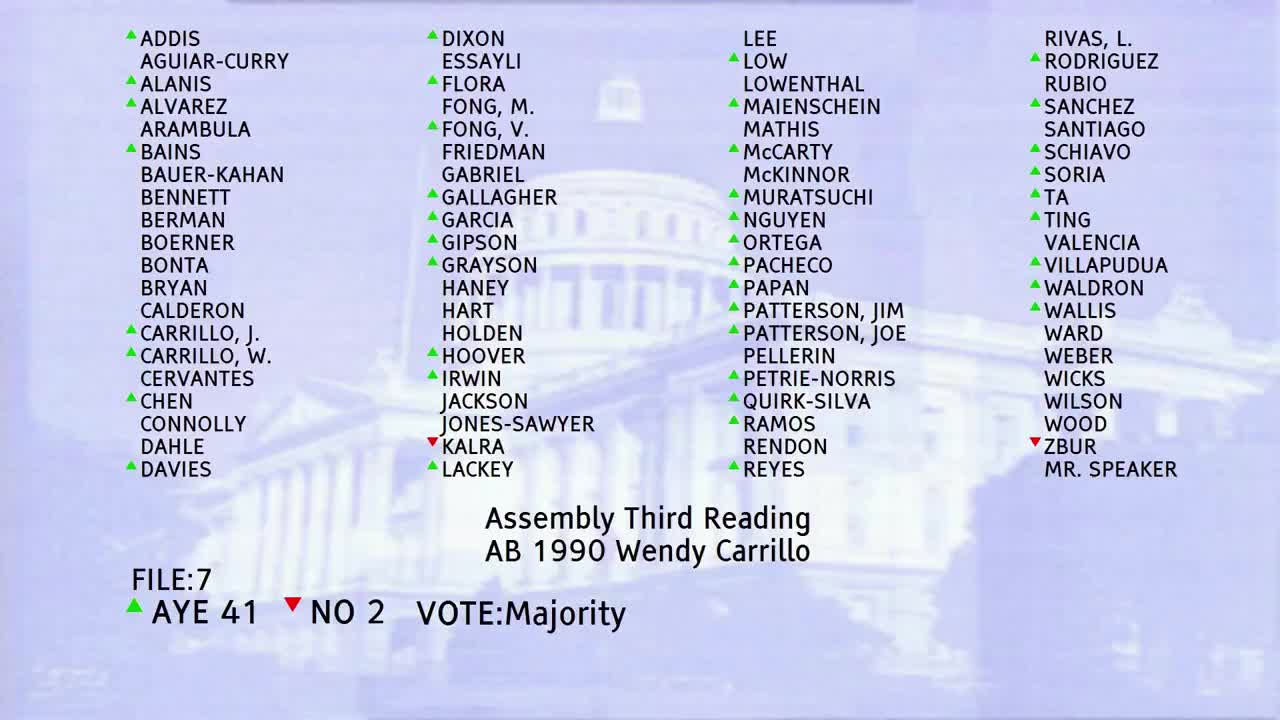 4MIN
Assembly Floor
 21MIN
Assembly Standing Committee on Business and Professions
Bill Author

Bill Co-Author(s):