AB 2305: Public postsecondary education: community colleges: statewide baccalaureate degree program.
- Session Year: 2023-2024
- House: Assembly
- Latest Version Date: 2024-03-19
Current Status:
Failed
(2024-07-03: In committee: Set, second hearing. Hearing canceled at the request of author.)
Introduced
In Committee
First Chamber
In Committee
Second Chamber
Enacted
Existing law authorizes the Board of Governors of the California Community Colleges, in consultation with the California State University and the University of California, to authorize the establishment of district baccalaureate degree programs, as provided. Existing law requires, as part of the application and review process, the Chancellor of the California Community Colleges to ensure that a community college district is provided with 2 timelines in which to apply for a baccalaureate degree program and receive notice of approval or rejection, as specified, that only 15 baccalaureate degree programs are approved during each application period allowing for a total of 30 baccalaureate degree programs per academic year, and that a minimum of 30 working days is taken to validate the submitted information and assess the workforce value of the proposed baccalaureate degree program, as specified.
This bill would instead require that a community college district is provided with one timeline in which to apply for a baccalaureate degree program, with a total of 30 baccalaureate degree programs approved per academic year, and that a minimum of 45 working 90 days is taken to validate the submitted information and assess the workforce value of the proposed baccalaureate degree program.
Existing law requires the chancellor to consult with and seek feedback from the Chancellor of the California State University, the President of the University of California, and the President of the Association of Independent California Colleges and Universities on proposed baccalaureate degree programs, as specified. Under existing law the California State University and the University of California may assess whether proposed baccalaureate degree programs are duplicative of existing baccalaureate programs offered by state universities. If the California State University or the University of California believes there is program duplication they are required to submit written objections with supporting evidence to the chancellor within 30 working days of receipt of the proposal, and the chancellor has 30 working days after receipt of written objections to convene with the applicant and the segment or segments that raised an objection to collaborate and establish a written agreement before the program is approved.
This bill would instead provide that the California State University and the University of California have 45 working 105 days after receipt of the proposal to submit written objections with supporting evidence and the chancellor has 45 working 90 days after receipt of written objections to convene with the applicant and the segment or segments that raised an objection to collaborate and establish a written agreement before the program is approved.
Existing law authorizes the Board of Governors of the California Community Colleges, in consultation with the California State University and the University of California, to authorize the establishment of district baccalaureate degree programs, as provided. Existing law requires, as part of the application and review process, the Chancellor of the California Community Colleges to ensure that a community college district is provided with 2 timelines in which to apply for a baccalaureate degree program and receive notice of approval or rejection, as specified, that only 15 baccalaureate degree programs are approved during each application period allowing for a total of 30 baccalaureate degree programs per academic year, and that a minimum of 30 working days is taken to validate the submitted information and assess the workforce value of the proposed baccalaureate degree program, as specified.
This bill would instead require that a community college district is provided with one timeline in which to apply for a baccalaureate degree program, with a total of 30 baccalaureate degree programs approved per academic year, and that a minimum of 45 working days is taken to validate the submitted information and assess the workforce value of the proposed baccalaureate degree program.
Existing law requires the chancellor to consult with and seek feedback from the Chancellor of the California State University, the President of the University of California, and the President of the Association of Independent California Colleges and Universities on proposed baccalaureate degree programs, as specified. Under existing law the California State University and the University of California may assess whether proposed baccalaureate degree programs are duplicative of existing baccalaureate programs offered by state universities. If the California State University or the University of California believes there is program duplication they are required to submit written objections with supporting evidence to the chancellor within 30 working days of receipt of the proposal, and the chancellor has 30 working days after receipt of written objections to convene with the applicant and the segment or segments that raised an objection to collaborate and establish a written agreement before the program is approved.
This bill would instead provide that the California State University and the University of California have 45 working days after receipt of the proposal to submit written objections with supporting evidence and the chancellor has 45 working days after receipt of written objections to convene with the applicant and the segment or segments that raised an objection to collaborate and establish a written agreement before the program is approved.
(a)A district shall seek approval to offer baccalaureate degree programs through the appropriate accreditation body.
(b)When seeking approval from the Board of Governors of the California Community Colleges, a district shall maintain the primary mission of the California Community Colleges specified in paragraph (3) of subdivision (a) of Section 66010.4. The district, as part of the baccalaureate degree program, shall have the additional mission to provide high-quality undergraduate education at an affordable price for students and the state.
(c)As a condition of eligibility for consideration to participate in the statewide baccalaureate degree program, a district shall have a written policy that requires all potential students who wish to apply for a Board of Governors Fee Waiver pursuant to Section 76300 to complete and submit either a Free Application for Federal Student Aid or a California Dream Act application in lieu of completing the Board of Governors Fee Waiver application.
(d)A districts baccalaureate degree program shall be subject to the following limitations:
(1)A district shall identify and document unmet workforce needs in the subject area of the baccalaureate degree to be offered and offer a baccalaureate degree at a campus in a subject area with unmet workforce needs in the local community or region of the district.
(2)A baccalaureate degree program shall not offer a baccalaureate degree program or program curricula already offered by the California State University or the University of California.
(3)A district shall have the expertise, resources, and student interest to offer a quality baccalaureate degree in the chosen field of study.
(e)A district shall maintain separate records for students who are enrolled in courses classified in the upper division and lower division of a baccalaureate degree program. A student shall be reported as a community college student for enrollment in a lower division course and as a baccalaureate degree program student for enrollment in an upper division course.
(f)A governing board of a district seeking authorization to offer a baccalaureate degree program shall submit all of the following for review by the Chancellor of the California Community Colleges and approval by the Board of Governors of the California Community Colleges:
(1)Documentation of the districts written policy required by subdivision (c).
(2)The administrative plan for the baccalaureate degree program, including, but not limited to, the governing board of the districts funding plan for its specific district.
(3)A description of the baccalaureate degree programs curriculum, faculty, and facilities.
(4)The enrollment projections for the baccalaureate degree program.
(5)Documentation regarding unmet workforce needs specifically related to the proposed baccalaureate degree program, and a written statement supporting the necessity of a four-year degree for that program. The documentation regarding unmet workforce needs shall include all of the following:
(A)Evidence that the district consulted with regional employers and regional workforce development boards.
(B)Statewide and regional workforce data relevant to the proposed baccalaureate degree program.
(C)Evidence that the baccalaureate degree to be offered will help address unmet workforce needs. The evidence may include, but is not limited to, information showing the following:
(i)Employers are having difficulty filling positions that require a baccalaureate degree.
(ii)Employers are willing to pay baccalaureate degree holders more than those with a related associate degree or no postsecondary degree.
(iii)Employers have a preference for candidates with the proposed baccalaureate degree.
(6)Documentation of consultation with the California State University and the University of California regarding collaborative approaches to meeting regional workforce needs.
(g)(1)The Board of Governors of the California Community Colleges shall develop, and adopt by regulation, a funding model for the support of the statewide baccalaureate degree program that is based on a calculation of the number of full-time equivalent students enrolled in all district baccalaureate degree programs.
(2)Funding for each full-time equivalent student shall be at a marginal cost calculation, as determined by the Board of Governors of the California Community Colleges, that shall not exceed the community college credit instruction marginal cost calculation for a full-time equivalent student, as determined pursuant to paragraph (2) of subdivision (d) of Section 84750.5.
(3)A student in a baccalaureate degree program authorized by this article shall not be charged fees higher than the mandatory systemwide fees charged for baccalaureate degree programs at the California State University.
(4)Fees for coursework in a baccalaureate degree program shall be consistent with Article 1 (commencing with Section 76300) of Chapter 2 of Part 47.
(5)A district shall, in addition to the fees charged pursuant to paragraph (4), charge a fee for upper division coursework in a baccalaureate degree program of eighty-four dollars ($84) per unit.
(h)The Chancellor of the California Community Colleges shall ensure all of the following for the application and review process for community college districts to participate in the baccalaureate degree program:
(1)A community college district is provided with one timeline in which to apply for a baccalaureate degree program per year. A community college district may submit an application to the Chancellor of the California Community Colleges by no later than August 15 and shall receive notice of approval or rejection on or before December 31. June 15 of the following year.
(2)A total of 30 baccalaureate degree programs may be approved per academic year.
(3)The total number of baccalaureate degree programs offered by a community college district, at any time, does not exceed 25 percent of the total number of associate degree programs offered by the community college district, including associate degrees for transfer.
(4)The review process takes no less than 45 90 days from the receipt of a completed application to validate the information submitted and assess the workforce value of the proposed program by the Chancellor of the California Community Colleges.
(i)(1)The Chancellor of the California Community Colleges shall consult with and seek feedback from the Chancellor of the California State University, the President of the University of California, and the President of the Association of Independent California Colleges and Universities about proposed baccalaureate degree programs.
(2)The Chancellor of the California Community Colleges shall notify and send relevant materials to the California State University, the University of California, and the President of the Association of Independent California Colleges and Universities who may notify institutions with physical campuses in the service area of the community college district seeking the proposed baccalaureate degree program.
(3)The California State University and the University of California may assess whether proposed baccalaureate degree programs are duplicative of existing baccalaureate programs offered by state universities, and may submit written comments to the Chancellor of the California Community Colleges regarding proposed baccalaureate degree programs. If the California State University or the University of California believes there is program duplication, written objections with supporting evidence shall be submitted to the Chancellor of the California Community Colleges within 45 working 105 days of receipt of the proposal. Upon receipt of written objections, the Chancellor of the California Community Colleges shall have 45 working 90 days to convene with the applicant and the segment or segments that raised an objection to collaborate and establish a written agreement before the program is approved.
(4)A formal objection filed by either the California State University or the University of California pursuant to paragraph (3) shall address, at a minimum, each of the following issues in order to facilitate the consultation process:
(A)The name and description of the baccalaureate degree program currently offered by the objecting segment that may be duplicated by the proposed baccalaureate degree program, including the campuses that offer the program.
(B)The specific components of the proposed baccalaureate degree program deemed as duplicative.
(5)The written agreement established between the objecting segment and the Chancellor of the California Community Colleges shall address, at a minimum, whether each of the elements of the original objection addressed in paragraph (4) have been resolved.
(j)(1)A community college district shall continue to offer an associate degree program in the same academic subject for which a baccalaureate degree program has been approved, unless that community college district has received approval from the Chancellor of the California Community Colleges to eliminate the associate degree program.
(2)When conducting a review to approve the elimination of an associate degree program, the Chancellor of the California Community Colleges shall evaluate both of the following:
(A)Changes to the labor market viability of the associate degree.
(B)Changes to the minimum education required to maintain program accreditation.
(a)A district shall seek approval to offer baccalaureate degree programs through the appropriate accreditation body.
(b)When seeking approval from the Board of Governors of the California Community Colleges, a district shall maintain the primary mission of the California Community Colleges specified in paragraph (3) of subdivision (a) of Section 66010.4. The district, as part of the baccalaureate degree program, shall have the additional mission to provide high-quality undergraduate education at an affordable price for students and the state.
(c)As a condition of eligibility for consideration to participate in the statewide baccalaureate degree program, a district shall have a written policy that requires all potential students who wish to apply for a Board of Governors Fee Waiver pursuant to Section 76300 to complete and submit either a Free Application for Federal Student Aid or a California Dream Act application in lieu of completing the Board of Governors Fee Waiver application.
(d)A districts baccalaureate degree program shall be subject to the following limitations:
(1)A district shall identify and document unmet workforce needs in the subject area of the baccalaureate degree to be offered and offer a baccalaureate degree at a campus in a subject area with unmet workforce needs in the local community or region of the district.
(2)A baccalaureate degree program shall not offer a baccalaureate degree program or program curricula already offered by the California State University or the University of California.
(3)A district shall have the expertise, resources, and student interest to offer a quality baccalaureate degree in the chosen field of study.
(e)A district shall maintain separate records for students who are enrolled in courses classified in the upper division and lower division of a baccalaureate degree program. A student shall be reported as a community college student for enrollment in a lower division course and as a baccalaureate degree program student for enrollment in an upper division course.
(f)A governing board of a district seeking authorization to offer a baccalaureate degree program shall submit all of the following for review by the Chancellor of the California Community Colleges and approval by the Board of Governors of the California Community Colleges:
(1)Documentation of the districts written policy required by subdivision (c).
(2)The administrative plan for the baccalaureate degree program, including, but not limited to, the governing board of the districts funding plan for its specific district.
(3)A description of the baccalaureate degree programs curriculum, faculty, and facilities.
(4)The enrollment projections for the baccalaureate degree program.
(5)Documentation regarding unmet workforce needs specifically related to the proposed baccalaureate degree program, and a written statement supporting the necessity of a four-year degree for that program. The documentation regarding unmet workforce needs shall include all of the following:
(A)Evidence that the district consulted with regional employers and regional workforce development boards.
(B)Statewide and regional workforce data relevant to the proposed baccalaureate degree program.
(C)Evidence that the baccalaureate degree to be offered will help address unmet workforce needs. The evidence may include, but is not limited to, information showing the following:
(i)Employers are having difficulty filling positions that require a baccalaureate degree.
(ii)Employers are willing to pay baccalaureate degree holders more than those with a related associate degree or no postsecondary degree.
(iii)Employers have a preference for candidates with the proposed baccalaureate degree.
(6)Documentation of consultation with the California State University and the University of California regarding collaborative approaches to meeting regional workforce needs.
(g)(1)The Board of Governors of the California Community Colleges shall develop, and adopt by regulation, a funding model for the support of the statewide baccalaureate degree program that is based on a calculation of the number of full-time equivalent students enrolled in all district baccalaureate degree programs.
(2)Funding for each full-time equivalent student shall be at a marginal cost calculation, as determined by the Board of Governors of the California Community Colleges, that shall not exceed the community college credit instruction marginal cost calculation for a full-time equivalent student, as determined pursuant to paragraph (2) of subdivision (d) of Section 84750.5.
(3)A student in a baccalaureate degree program authorized by this article shall not be charged fees higher than the mandatory systemwide fees charged for baccalaureate degree programs at the California State University.
(4)Fees for coursework in a baccalaureate degree program shall be consistent with Article 1 (commencing with Section 76300) of Chapter 2 of Part 47.
(5)A district shall, in addition to the fees charged pursuant to paragraph (4), charge a fee for upper division coursework in a baccalaureate degree program of eighty-four dollars ($84) per unit.
(h)The Chancellor of the California Community Colleges shall ensure all of the following for the application and review process for community college districts to participate in the baccalaureate degree program:
(1)A community college district is provided with two timelines one timeline in which to apply for a baccalaureate degree program per year. A community college district may submit an application to the Chancellor of the California Community Colleges by no later than January 15 and shall receive notice of approval or rejection on or before May 31. A community college district may submit an application to the Chancellor of the California Community Colleges by no later than August 15 and shall receive notice of approval or rejection on or before December 31.
(2)Only 15 baccalaureate degree programs are approved during each application period, allowing for a A total of 30 approved baccalaureate degree programs may be approved per academic year.
(3)The total number of baccalaureate degree programs offered by a community college district, at any time, does not exceed 25 percent of the total number of associate degree programs offered by the community college district, including associate degrees for transfer.
(4)The review process takes no less than 30 45 days from the receipt of a completed application to validate the information submitted and assess the workforce value of the proposed program by the Chancellor of the California Community Colleges.
(i)(1)The Chancellor of the California Community Colleges shall consult with and seek feedback from the Chancellor of the California State University, the President of the University of California, and the President of the Association of Independent California Colleges and Universities about proposed baccalaureate degree programs.
(2)The Chancellor of the California Community Colleges shall notify and send relevant materials to the California State University, the University of California, and the President of the Association of Independent California Colleges and Universities who may notify institutions with physical campuses in the service area of the community college district seeking the proposed baccalaureate degree program.
(3)The California State University and the University of California may assess whether proposed baccalaureate degree programs are duplicative of existing baccalaureate programs offered by state universities, and may submit written comments to the Chancellor of the California Community Colleges regarding proposed baccalaureate degree programs. If the California State University or the University of California believes there is program duplication, written objections with supporting evidence shall be submitted to the Chancellor of the California Community Colleges within 30 45 working days of receipt of the proposal. Upon receipt of written objections, the Chancellor of the California Community Colleges shall have 30 45 working days to convene with the applicant and the segment or segments that raised an objection to collaborate and establish a written agreement before the program is approved.
(4)A formal objection filed by either the California State University or the University of California pursuant to paragraph (3) shall address, at a minimum, each of the following issues in order to facilitate the consultation process:
(A)The name and description of the baccalaureate degree program currently offered by the objecting segment that may be duplicated by the proposed baccalaureate degree program, including the campuses that offer the program.
(B)The specific components of the proposed baccalaureate degree program deemed as duplicative.
(5)The written agreement established between the objecting segment and the Chancellor of the California Community Colleges shall address, at a minimum, whether each of the elements of the original objection addressed in paragraph (4) have been resolved.
(j)(1)A community college district shall continue to offer an associate degree program in the same academic subject for which a baccalaureate degree program has been approved, unless that community college district has received approval from the Chancellor of the California Community Colleges to eliminate the associate degree program.
(2)When conducting a review to approve the elimination of an associate degree program, the Chancellor of the California Community Colleges shall evaluate both of the following:
(A)Changes to the labor market viability of the associate degree.
(B)Changes to the minimum education required to maintain program accreditation.
|
Date
|
Status
|
|---|---|
| Jul 3, 2024 | In committee: Set, second hearing. Hearing canceled at the request of author. |
| May 21, 2024 | In committee: Set, first hearing. Hearing canceled at the request of author. |
| May 8, 2024 | Referred to Com. on ED. |
| Apr 25, 2024 | In Senate. Read first time. To Com. on RLS. for assignment. |
| Apr 25, 2024 | Read third time. Passed. Ordered to the Senate. (Ayes 75. Noes 0. Page 4998.) |
| Apr 18, 2024 | Read second time. Ordered to Consent Calendar. |
| Apr 17, 2024 | From committee: Do pass. To Consent Calendar. (Ayes 15. Noes 0.) (April 17). |
| Apr 3, 2024 | From committee: Do pass and re-refer to Com. on APPR. with recommendation: To Consent Calendar. (Ayes 11. Noes 0.) (April 2). Re-referred to Com. on APPR. |
| Mar 20, 2024 | Re-referred to Com. on HIGHER ED. |
| Mar 19, 2024 | From committee chair, with author's amendments: Amend, and re-refer to Com. on HIGHER ED. Read second time and amended. |
| Feb 26, 2024 | Referred to Com. on HIGHER ED. |
| Feb 13, 2024 | From printer. May be heard in committee March 14. |
| Feb 12, 2024 | Read first time. To print. |
|
Date
|
Description
|
Location
|
Votes
|
|
|---|---|---|---|---|
| Apr 25, 2024 | AB 2305 Mike Fong Consent Calendar Second Day Regular Session | Assembly Floor |
Passed |
|
| Apr 17, 2024 | Do pass. To Consent Calendar. | Assembly Standing Committee on Appropriations |
Passed |
|
| Apr 2, 2024 | Do pass and be re-referred to the Committee on [Appropriations] with recommendation: To Consent Calendar | Assembly Standing Committee on Higher Education |
Passed |
This list shows positions taken on this bill by organizations on the date displayed, which is linked to the original source.
Positions by individuals are not included.
|
Organization
|
Position
|
Date
|
|---|---|---|
| California State University, Office Of The Chancellor | ** Support | |
| Faculty Association Of California Community Colleges | ** Support | |
| Rio Hondo College | ** Support |
Date of Hearing: April 17, 2024
ASSEMBLY COMMITTEE ON APPROPRIATIONS
Buffy Wicks, Chair
ABPCA Bill Id:AB 2305
Author:(Mike Fong) – As Amended Ver:March 19, 2024
Policy Committee: | Higher Education | Vote: | 11 - 0 |
|
| ||
|
|
Urgency: No State Mandated Local Program: No Reimbursable: No
SUMMARY:
This bill revises the existing submission and approval process for California Community College (CCC) baccalaureate program proposals by reducing the submission cycle to once per year and lengthening the review timeline.
Specifically, this bill:
- Sets a deadline of August 15 for CCC districts to submit proposals for new baccalaureate degree programs to the CCC Chancellor’s Office.
- Provides the CCC Chancellor’s Office 90 days to review proposals and seek input from four-year institutions.
- Provides the California State University (CSU) and the University of California (UC) 105 each days to submit with any written objections to proposals to the CCC Chancellor’s Office.
- Upon receipt of any objections to proposals from UC or CSU, provides the CCC Chancellor’s Office up to 90 days to convene the CCC district submitting the proposal and the objecting CSU or UC to establish a written agreement.
- Requires the CCC Chancellor’s Office to provide notification of approval or rejection of a proposed programs to CCC districts by June 15 of the following year.
FISCAL EFFECT:
No state cost.
COMMENTS:
- Purpose. According to the author:
The CCC Chancellor’s Office and the CSU Chancellor’s Office have reported that the requirement to review proposals two cycles in a year within a short time period is cumbersome and hectic. AB 2305 revises the submission and approval process by reducing the submission cycle to once a year and lengthening the review timeline for each step of the process.
- Background. SB 850 (Block), Chapter 747, Statutes of 2014, authorized the CCC Board of Governors, in consultation with the CSU and the UC, to establish a baccalaureate degree pilot program. AB 927 (Medina), Chapter 565, Statutes of 2021, made the CCC baccalaureate program permanent. In addition, AB 927 set up an annual approval process for new CCC baccalaureate programs. The process requires a CCC district wishing to establish a baccalaureate program to submit a proposal to the CCC Chancellor’s Office by either January 15 or August 15 of a given year and requires the CCC Chancellor’s Office to provide an approval or rejection of the program proposal no later than May 31 or December 31 of that year, respectively. During the approval or rejection process, law requires various program proposal reviews take place, including a review by CSU and UC to determine whether the proposed program is duplicative of any existing baccalaureate programs they offer. If UC or CSU determine a proposed program is duplicative, they may submit an objection to the CCC Chancellor’s Office and the Chancellor’s Office is to convene the proposing CCC and the objecting CSU or UC to establish a written agreement.
This bill revises the submission and approval process by reducing the submission cycle to once a year and lengthening the review timeline.
The CCC Chancellor’s Office and CSU Chancellor’s Office indicate the current timelines have been difficult to meet and support the changes in this bill.
Analysis Prepared by: Natasha Collins / APPR. / (916) 319-2081
Date of Hearing: April 2, 2024
ASSEMBLY COMMITTEE ON HIGHER EDUCATION
Mike Fong, Chair
ABPCA Bill Id:AB 2305 (
Author:Mike Fong) – As Amended Ver:March 19, 2024
SUBJECT: Public postsecondary education: community colleges: statewide baccalaureate degree program
SUMMARY: Requires that a Community College district (CCD) is permitted to apply for a baccalaureate degree program during a specified annual time. Specifically, this bill:
- Specifies that a CCD is provided with one timeline in which to apply for a baccalaureate degree program per year. A CCD may submit an application to the Chancellor of the California Community Colleges (CCC) by no later than August 15 and shall receive notice of approval or rejection on or before June 15 of the following year.
- Requires that a CCD is provided with one timeline in a calendar year in which to apply for a baccalaureate degree program, with a total of 30 baccalaureate degree programs approved per academic year, and that a minimum of 90 days is taken to validate the submitted information and assess the workforce value of the proposed baccalaureate degree program.
- Provides that the California State University (CSU) and the University of California (UC) have 105 days after receipt of the proposal to submit written objections with supporting evidence and the chancellor has 90 days after receipt of written objections to convene with the applicant and the segment or segments that raised an objection to collaborate and establish a written agreement before the program is approved.
EXISTING LAW:
- Specifies that the mission and function of the CCC is the offering of academic and vocational instruction at the lower division level, including those persons returning to school, and that the CCC are authorized to grant the Associate in Arts and the Associate in Science degrees. Additionally specifies that the CCCs are required to offer additional learning supports to close learning gaps, English as a Second Language instruction, adult noncredit instruction, and support services which help students succeed at the postsecondary level. Specifies that a primary mission of the CCCs is to advance California’s economic growth and global competitiveness through education, training, and services that contribute to continuous workforce improvement. (Education Code (EDC) Section 66010.4)
- Establishes the CCC, under the administration of the board of Governors (BOG) of the CCC, as one of the segments of public postsecondary education in this state. (EDC Section 66700, et seq.)
- Existing law requires the BOG to appoint a chief executive officer, to be known as the Chancellor of the CCC. (EDC Section 71090, et seq.)
- Authorizes the BOG of the CCC to establish permanent district baccalaureate degree programs, and provided that only 15 baccalaureate degree programs are approved during each application period allowing for a total of 30 baccalaureate degree programs per academic year.
- Specifies that CCDs, as part of the baccalaureate degree program, will have the additional mission to provide high-quality undergraduate education at an affordable price for students and the state.
- Requires the Chancellor of the CCC to consult with and seek feedback from the Chancellor of the CSU, the President of the UC, and the President of the Association of Independent California Colleges and Universities (AICCU) on proposed baccalaureate degree programs, as specified, and establishes a mechanism for the assessment, consultation, and approval of programs where duplication is identified, as specified;
- Requires a CCD to continue to offer an associate degree program in the same academic subject for which baccalaureate degree program has been approved, unless the CCD has received approval from the CCC Chancellor to eliminate the associate degree program, and requires the CCC Chancellor to evaluate both changes to the labor market viability of an associate degree and changes to the minimum education required to maintain program accreditation when making a decision to authorize the elimination of an associate degree program; and,
- Specifies that the total number of baccalaureate degree programs offered by a CCD, at any time, does not exceed 25% of the total number of associate degree programs offered by the CCD, including associate degrees for transfer. (EDC Section 78040, et seq.)
FISCAL EFFECT: Unknown.
COMMENTS: Purpose. According to the author, “Proposed programs that have resulted in objections by the four-year segments have required more time than specified in the law. Moreover, the [CCC Chancellor’s Office (CCCCO)] and the CSU Chancellor’s office have reported that the requirement to review proposals two cycles in a year within a short time period is cumbersome and hectic. AB 2305 revises the submission and approval process by reducing the submission cycle to once a year and lengthening the review timeline for each step of the process. The total number of approvals remains 30 per academic year. Consolidating the two cycles and allowing more time for each step of review will hopefully result in a more thorough process for all parties.”
Background - the Master Plan for Higher Education. As outlined in the Master Plan for Higher Education and by state statute, the CCCs are designated to have an open admission policy and bear the most extensive responsibility for lower-division undergraduate instruction. Its three primary areas of mission include; education leading to associates degrees and university transfer, career technical education, and basic skills. The primary mission of the CSU is undergraduate and graduate instruction through the master’s degree. The UC was granted the sole authority to offer doctoral degrees.
Existing law specifically establishes that the CCCs must, as a primary mission, offer academic and vocational instruction at the lower division level for both younger and older students, including those persons returning to school. The Associate in Arts and the Associate in Science degrees are used to recognize those students who have completed courses of study at the lower division level. The Associate Degree for Transfer (ADT) may also be awarded to students who complete 60 units of lower division coursework in articulated pathways – ADT recipients can transfer to CSU campuses as upper division students in their field of study.
Baccalaureate degree pilot program. Senate Bill 850 (Block, Chapter 747, Statutes of 2014) authorized the CCC BOG, in consultation with the CSU and the UC, to establish a baccalaureate degree pilot program. The pilot program allowed up to 15 participating community college districts to offer one baccalaureate degree program to meet the local workforce needs as long as it does not duplicate a baccalaureate degree program already offered by the CSU or the UC. The Legislative Analyst’s Office (LAO) conducted interim and final evaluations of the pilot program.
The LAO found that assessing whether programs met industry needs was difficult based on the information provided by colleges in their initial applications. Generally, colleges provided documents citing broad support for the proposed programs with little concrete evidence of the benefits to employers. In most of these cases, the LAO found that graduates were using their bachelor’s degrees to enter management positions where a bachelor’s degree is a minimum requirement. The LAO found little evidence that graduates from these pilot programs were better prepared to fill these positions compared to those with other bachelor’s degrees or that pilot program graduates were helping employers fill hard-to-staff positions.
The most common benefit of the pilot cited by students was the relatively low cost of attending the community college bachelor’s degree programs. In a survey conducted by the pilot community colleges, 51% of respondents stated they would not have pursued a bachelor’s degree if their community college program had not been offered. The pilot programs particularly benefited students with an associate degree in the same major and related work experience in the industry.
Pilot made permanent. Assembly Bill 927 (Medina and Choi, Chapter 565, Statutes of 2021) made the SB 850 (Block) pilot program permanent, perpetually approving the original pilot programs. The bill increased the number of potential programs to 30 annually and set up two application cycles per academic year: January 15 with notice of approval or rejection on or before May 31; and August 15 with notice of approval or rejection on or before December 31. A limit of 15 programs may be approved each cycle. As of publication of this analysis there are a total of 39 approved programs. Most participating campuses currently offer one program, while with seven campuses offer two baccalaureate degree programs.
The current approved cycle established in existing law is as follows:
- CCDs submit baccalaureate degree program proposals to the CCCCO by January 15 or August 15.
- The CCCCO reviews the applications within 30 days and seeks feedback from the CSU Chancellor’s Office, the President of the UC, and the President of the AICCU.
- The CSU and UC have 30 working days after receipt of a proposal to provide written objection if they determine that the baccalaureate degree program is duplicative of existing baccalaureate programs offered by the CSU or the UC.
- Upon receipt of the objection, the CCCCO has 30 working days to convene with the CCD and the segment(s) that raised the objection to collaborate and establish a written agreement.
Committee comments. As noted in the author’s statement, AB 2305 (Mike Fong) revises the submission and approval process by reducing the submission cycle to once a year and lengthening the review timeline for each step of the process. The total number of approvals remains 30 per academic year. The bill proposes the following:
- CCDs submit baccalaureate degree program proposals to the CCCCO by August 15
- CCCCO has 90 days to review applications and seek input from the four-year institutions
- The CSU and have 105 days from receipt of the proposals to respond with written objections based on duplication of existing baccalaureate degrees offered at the CSU or UC.
- Upon receipt of the objection, the CCCCO has 90 days to convene with the CCD and the four year segment(s) to develop written agreements.
- Notification of approval or rejection of a proposed program must be provided by June 15 of the following year.
Committee staff notes that leaders from the CCCCO and CSU have expressed that the timeline established in AB 927 (Medina and Choi) was difficult to sustain, and collaborate with the author to establish the timeline reflected in the March 19, 2024 amendments.
Arguments in support. The CSU wrote in support of this bill, noting that “the CSU has worked closely with the [CCCCO] to implement this [the community college baccalaureate program], and significant work has been done in the past year to make improvements to the review and consultation process. AB 2305 will provide much needed timeline adjustments which have been agreed upon by the CSU, CCCCO, and other partners that will allow for a more thorough process.”
The Faculty Association of the California Community Colleges (FACCC) wrote in support of AB 2305 (Mike Fong), noting that “FACCC strongly supports AB 2305 because it simplifies the application process for community colleges looking to offer baccalaureate degrees while maintaining a rigorous review to ensure program quality and avoid duplication with existing offerings at state universities. The bill facilitates a more thorough and efficient evaluation process by establishing a single annual application deadline and extending the review period.”
Related legislation. AB 2044 (Chen) requires the Chancellor of the CCC to evaluate whether baccalaureate degree holders are paid more than associate degree holders in the same field when conducting a review to approve the elimination of an associate degree program. AB 2044 (Chen) is scheduled to be heard by the Assembly Committee on Higher Education on April 2, 2024.
Prior legislation. AB 927 (Medina and Choi), Chapter 565, Statutes of 2021, removed the cap on the total number of baccalaureate degree programs allowed within the CCC system and eliminates the January 1, 2027 sunset date of the statewide baccalaureate degree pilot program, thereby permanently authorizing the offering of baccalaureate degree programs at CCCs.
SB 874 (Hill) of 2020, would have extended the operation of the statewide baccalaureate degree pilot program indefinitely. The bill would have removed the requirements that the program consist of a maximum of 15 community college district programs and for a student to commence a program by the end of the 2022–23 academic year. SB 874 was held in the Senate Committee on Education due to bill restrictions from COVID-19.
SB 769 (Hill) of 2017, would have extended the operation of the statewide baccalaureate degree pilot program until July 1, 2028. SB 769 was held in the Assembly Committee on Appropriations.
SB 577 (Dodd), Chapter 603, Statutes of 2018, established the CCC Teacher Credentialing Partnership Pilot Program, awarding grants to collaboratives of one or more teacher-credentialing higher education institutions partnering with one or more community colleges for the purpose of offering teacher credentialing programs at community colleges.
SB 850 (Block) Chapter 747, Statutes of 2014, authorizes the BOG of the CCC, in consultation with the CSU and the UC, to establish baccalaureate degree pilot programs, at up to 15 community college districts, with one baccalaureate degree program each, as specified, to be determined by the CCCCO.
AB 661 (Block, 2011) authorized Grossmont-Cuyamaca and the San Mateo Community College districts to offer one baccalaureate degree pilot program per campus. AB 661 was heard and passed in the Assembly Higher Education Committee by a vote of 6-0 but was moved to the inactive file on the Assembly Floor.
AB 2400 (Block, 2010) authorized the San Diego, Grossmont-Cuyamaca and San Mateo Community College districts to establish baccalaureate degree pilot programs. No vote was taken and AB 2400 was held in the Assembly Higher Education Committee.
REGISTERED SUPPORT / OPPOSITION:
Support
California State University, Office of the Chancellor
Faculty Association of California Community Colleges
Rio Hondo College
Opposition
None on file.
Analysis Prepared by: Kevin J. Powers / HIGHER ED. / (916) 319-3960
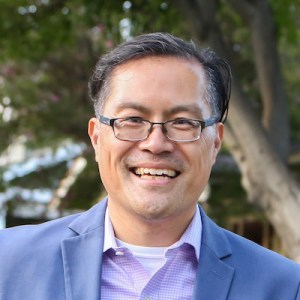
Bill Author
Bill Co-Author(s):