AB 2479: Housing First: core components.
- Session Year: 2023-2024
- House: Assembly
- Latest Version Date: 2024-04-25
Current Status:
Failed
(2024-06-05: Referred to Coms. on HOUSING and RLS.)
Introduced
In Committee
First Chamber
In Committee
Second Chamber
Enacted
Existing law requires agencies and departments administering state programs related to homelessness to adopt guidelines and regulations to incorporate core components of Housing First, as defined. Under existing law, Housing First includes time-limited rental or services assistance, so long as the housing and service provider assists the recipient, among other things, in accessing permanent housing. Existing law defines state programs for this purpose as any program a California state agency or department funds, implements, or administers for the purpose of providing housing or housing-based services to people experiencing homelessness or at risk of homelessness, except as provided. Under existing law, the core components of Housing First include, among others, services that are informed by a harm-reduction philosophy that recognizes drug and alcohol use and addiction as a part of tenants lives, where tenants are engaged in nonjudgmental communication regarding drug and alcohol use, and where tenants are offered education regarding how to avoid risky behaviors and engage in safer practices, as well as connected to evidence-based treatment if the tenant so chooses.
This bill would clarify, pursuant to that core component, that state departments and or agencies may allow programs to fund recovery housing, as defined, if the state program uses at least 75% of funds for housing or housing-based services using a harm-reduction model and the recovery housing complies with housing, as defined, that use substance use-specific services, peer support, and physical design features supporting individuals and families on a path to recovery from addiction that emphasizes abstinence, so long as the state program meets specified requirements. The bill would require the housing related to time-limited rental or services assistance to meet the core components of Housing First.
Existing law requires agencies and departments administering state programs related to homelessness to adopt guidelines and regulations to incorporate core components of Housing First, as defined. Under existing law, Housing First includes time-limited rental or services assistance, so long as the housing and service provider assists the recipient, among other things, in accessing permanent housing. Existing law defines state programs for this purpose as any program a California state agency or department funds, implements, or administers for the purpose of providing housing or housing-based services to people experiencing homelessness or at risk of homelessness, except as provided. Under existing law, the core components of Housing First include, among others, services that are informed by a harm-reduction philosophy that recognizes drug and alcohol use and addiction as a part of tenants lives, where tenants are engaged in nonjudgmental communication regarding drug and alcohol use, and where tenants are offered education regarding how to avoid risky behaviors and engage in safer practices, as well as connected to evidence-based treatment if the tenant so chooses.
This bill would clarify, pursuant to that core component, that state departments and agencies may allow programs to fund recovery housing, as defined, if the state program uses at least 75% of funds for housing or housing-based services using a harm-reduction model and the recovery housing complies with specified requirements. The bill would require the housing related to time-limited rental or services assistance to meet the core components of Housing First.
Existing law, the Planning and Zoning Law, requires each city, county, and city and county to prepare and adopt a general plan that contains certain mandatory elements, including a housing element.This bill would state that it is the intent of the Legislature to enact legislation relating to housing.Existing law, the Planning and Zoning Law, requires each city, county, and city and county to prepare and adopt a general plan that contains certain mandatory elements, including a housing element.
This bill would state that it is the intent of the Legislature to enact legislation relating to housing.
For purposes of this chapter:
(a)Council means the California Interagency Council on Homelessness, formerly known as the Homeless Coordinating and Financing Council established pursuant to Section 8257.
(b)Core components of Housing First means all of the following:
(1)Tenant screening and selection practices that promote accepting applicants regardless of their sobriety or use of substances, completion of treatment, or participation in services.
(2)Applicants are not rejected on the basis of poor credit or financial history, poor or lack of rental history, criminal convictions unrelated to tenancy, or behaviors that indicate a lack of housing readiness.
(3)Acceptance of referrals directly from shelters, street outreach, drop-in centers, and other parts of crisis response systems frequented by vulnerable people experiencing homelessness.
(4)Supportive services that emphasize engagement and problem solving over therapeutic goals and service plans that are highly tenant-driven without predetermined goals.
(5)Participation in services or program compliance is not a condition of permanent housing tenancy.
(6)Tenants have a lease and all the rights and responsibilities of tenancy, as outlined in Californias the Civil, Health and Safety, and Government codes. Codes.
(7)The use of alcohol or drugs in and of itself, without other lease violations, is not a reason for eviction.
(8)In communities with coordinated assessment and entry systems, incentives for funding promote tenant selection plans for supportive housing that prioritize eligible tenants based on criteria other than first-come-first-serve, including, but not limited to, the duration or chronicity of homelessness, vulnerability to early mortality, or high utilization of crisis services. Prioritization may include triage tools, developed through local data, to identify high-cost, high-need homeless residents.
(9)Case managers and service coordinators who are trained in and actively employ evidence-based practices for client engagement, including, but not limited to, motivational interviewing and client-centered counseling.
(10)(A)Services are informed by a harm-reduction philosophy that recognizes drug and alcohol use and addiction as a part of tenants lives, where tenants are engaged in nonjudgmental communication regarding drug and alcohol use, and where tenants are offered education regarding how to avoid risky behaviors and engage in safer practices, as well as connected to evidence-based treatment if the tenant so chooses. State departments and agencies may allow programs to fund recovery housing if the state program uses at least 75 percent of funds for housing or housing-based services using a harm-reduction model, and that the recovery housing complies with all of the following:
(B)State departments or agencies may allow programs to fund recovery housing, as defined in subparagraph (C), that use substance use-specific services, peer support, and physical design features supporting individuals and families on a path to recovery from addiction that emphasizes abstinence, so long as the state program meets all of the following requirements:
(i)The state program uses at least 75 percent of funds in each county for housing or housing-based services using a harm reduction model.
(ii)The state program shall require an applicant for funding, in the submission of an application for funding, to demonstrate engagement with people with lived experience of homelessness and substance use that informs the local decision to seek funding for recovery housing options. An applicant shall include minutes or notes of at least two meetings between the applicant and a new or existing body of people with lived experience of homelessness and substance use in order to demonstrate engagement with people with lived experience of homelessness and substance use.
(iii)The state program shall require a grantee under the program, prior to awarding subgrants, to confirm that the subgrantee has achieved successful outcomes in promoting housing retention, similar to rates of housing retention as harm reduction programs.
(iv)The state performs periodic monitoring of select recovery housing programs to ensure that the recovery housing complies with the following:
(A)(I)The individual or family is offered options and chooses recovery housing over housing offering a harm-reduction approach.
(B)(II)The recovery housing otherwise complies with all other components of Housing First in this section. section, including low barrier to entry.
(C)(III)Participation in a program is self-initiated.
(D)(IV)Core outcomes emphasize long-term housing stability and minimize returns to homelessness.
(E)(V)Policies and operations ensure individual rights of privacy, dignity, and respect, and freedom from coercion and restraint, as well as continuous, uninterrupted access to the housing.
(F)(VI)Holistic services and peer-based recovery supports are available to all program participants along with services that align with participants choice and prioritization of personal goals of sustained recovery and abstinence from substance use.
(G)(VII)The housing abides by local and state landlord-tenant laws governing grounds for eviction.
(H)(VIII)Relapse is not a cause for eviction from housing and, instead, and tenants receive relapse support. Eviction
(IX)Eviction from recovery housing should shall only occur when a tenants behavior substantially disrupts or impacts the welfare of the recovery community in which the tenant resides. A tenant may apply to reenter the housing program if expressing a renewed commitment to living in a housing setting targeted to people in recovery with an abstinence focus. If
(X)If a tenant is no longer interested in living in a recovery-housing recovery housing model or the tenant is at risk of eviction, the housing program provides assistance in accessing housing operated with harm-reduction principles that is also permanent housing.
(C)For purposes of this paragraph, recovery housing means a residence that serves individuals experiencing, or who are at risk of experiencing, homelessness or who are experiencing serious mental illness or substance use disorders and that does all of the following:
(1)Satisfies the core components of Housing First pursuant to this section.
(2)Uses substance use-specific services, peer support, and physical design features supporting individuals and families on a path to recovery from addiction.
(3)Emphasizes abstinence.
(11)The project and specific apartment may include special physical features that accommodate disabilities, reduce harm, and promote health and community and independence among tenants.
(c)Homeless has the same definition as that term is defined in Section 91.5 of Title 24 of the Code of Federal Regulations.
(d)(1)Housing First means the evidence-based model that uses housing as a tool, rather than a reward, for recovery and that centers on providing or connecting homeless people to permanent housing as quickly as possible. Housing First providers offer services as needed and requested on a voluntary basis and that do not make housing contingent on participation in services.
(2)(A)Housing First includes time-limited rental or services assistance, so long as the housing and service provider assists the recipient in accessing permanent housing and in securing longer term rental assistance, income assistance, or employment, and the housing otherwise meets the core components identified in this section.
(B)For time-limited, supportive services programs serving homeless youth, programs should use a positive youth development model and be culturally competent to serve unaccompanied youth under 25 years of age. Providers should work with the youth to engage in family reunification efforts, where appropriate and when in the best interest of the youth. In the event of an eviction, programs shall make every effort, which shall be documented, to link tenants to other stable, safe, and decent housing options. Exit to homelessness should be extremely rare, and only after a tenant refuses assistance with housing search, location, and move-in assistance.
(e)Recovery housing means a housing model using substance use-specific services, peer support, and physical design features supporting individuals and families on a path to recovery from addiction that emphasizes abstinence.(f)(e)State programs means any programs a California state agency or department funds, implements, or administers for the purpose of providing housing or housing-based services to people experiencing homelessness or at risk of homelessness, with the exception of federally funded programs with requirements inconsistent with this chapter.
(f)Trauma-informed practices means a trauma-informed approach to care guided by the principles of safety, trustworthiness and transparency, peer support, collaboration and mutuality, empowerment and choice, and cultural, historical, and gender issues.
For purposes of this chapter:
(a)Council means the California Interagency Council on Homelessness, formerly known as the Homeless Coordinating and Financing Council established pursuant to Section 8257.
(b)Core components of Housing First means all of the following:
(1)Tenant screening and selection practices that promote accepting applicants regardless of their sobriety or use of substances, completion of treatment, or participation in services.
(2)Applicants are not rejected on the basis of poor credit or financial history, poor or lack of rental history, criminal convictions unrelated to tenancy, or behaviors that indicate a lack of housing readiness.
(3)Acceptance of referrals directly from shelters, street outreach, drop-in centers, and other parts of crisis response systems frequented by vulnerable people experiencing homelessness.
(4)Supportive services that emphasize engagement and problem solving over therapeutic goals and service plans that are highly tenant-driven without predetermined goals.
(5)Participation in services or program compliance is not a condition of permanent housing tenancy.
(6)Tenants have a lease and all the rights and responsibilities of tenancy, as outlined in Californias Civil, Health and Safety, and Government codes.
(7)The use of alcohol or drugs in and of itself, without other lease violations, is not a reason for eviction.
(8)In communities with coordinated assessment and entry systems, incentives for funding promote tenant selection plans for supportive housing that prioritize eligible tenants based on criteria other than first-come-first-serve, including, but not limited to, the duration or chronicity of homelessness, vulnerability to early mortality, or high utilization of crisis services. Prioritization may include triage tools, developed through local data, to identify high-cost, high-need homeless residents.
(9)Case managers and service coordinators who are trained in and actively employ evidence-based practices for client engagement, including, but not limited to, motivational interviewing and client-centered counseling.
(10)Services are informed by a harm-reduction philosophy that recognizes drug and alcohol use and addiction as a part of tenants lives, where tenants are engaged in nonjudgmental communication regarding drug and alcohol use, and where tenants are offered education regarding how to avoid risky behaviors and engage in safer practices, as well as connected to evidence-based treatment if the tenant so chooses. State departments and agencies may allow programs to fund recovery housing if the state program uses at least 75 percent of funds for housing or housing-based services using a harm-reduction model, and that the recovery housing complies with all of the following:
(A)The individual or family is offered options and chooses recovery housing over housing offering a harm-reduction approach.
(B)The recovery housing otherwise complies with all other components of Housing First in this section.
(C)Participation in a program is self-initiated.
(D)Core outcomes emphasize long-term housing stability and minimize returns to homelessness.
(E)Policies and operations ensure individual rights of privacy, dignity, and respect, and freedom from coercion and restraint, as well as continuous, uninterrupted access to the housing.
(F)Holistic services and peer-based recovery supports are available to all program participants along with services that align with participants choice and prioritization of personal goals of sustained recovery and abstinence from substance use.
(G)The housing abides by local and state landlord-tenant laws governing grounds for eviction.
(H)Relapse is not a cause for eviction from housing and, instead, tenants receive relapse support. Eviction from recovery housing should only occur when a tenants behavior substantially disrupts or impacts the welfare of the recovery community in which the tenant resides. A tenant may apply to reenter the housing program if expressing a renewed commitment to living in a housing setting targeted to people in recovery with an abstinence focus. If a tenant is no longer interested in living in a recovery-housing model or the tenant is at risk of eviction, the housing program provides assistance in accessing housing operated with harm-reduction principles that is also permanent housing.
(11)The project and specific apartment may include special physical features that accommodate disabilities, reduce harm, and promote health and community and independence among tenants.
(c)Homeless has the same definition as that term is defined in Section 91.5 of Title 24 of the Code of Federal Regulations.
(d)(1)Housing First means the evidence-based model that uses housing as a tool, rather than a reward, for recovery and that centers on providing or connecting homeless people to permanent housing as quickly as possible. Housing First providers offer services as needed and requested on a voluntary basis and that do not make housing contingent on participation in services.
(2)(A)Housing First includes time-limited rental or services assistance, so long as the housing and service provider assists the recipient in accessing permanent housing and in securing longer term rental assistance, income assistance, or employment. employment, and the housing otherwise meets the core components identified in this section.
(B)For time-limited, supportive services programs serving homeless youth, programs should use a positive youth development model and be culturally competent to serve unaccompanied youth under 25 years of age. Providers should work with the youth to engage in family reunification efforts, where appropriate and when in the best interest of the youth. In the event of an eviction, programs shall make every effort, which shall be documented, to link tenants to other stable, safe, decent housing options. Exit to homelessness should be extremely rare, and only after a tenant refuses assistance with housing search, location, and move-in assistance.
(e)Recovery housing means a housing model using substance use-specific services, peer support, and physical design features supporting individuals and families on a path to recovery from addiction that emphasizes abstinence.
(e)(f)State programs means any programs a California state agency or department funds, implements, or administers for the purpose of providing housing or housing-based services to people experiencing homelessness or at risk of homelessness, with the exception of federally funded programs with requirements inconsistent with this chapter.
SECTION 1.It is the intent of the Legislature to enact legislation relating to housing.It is the intent of the Legislature to enact legislation relating to housing.
|
Date
|
Status
|
|---|---|
| Jun 5, 2024 | Referred to Coms. on HOUSING and RLS. |
| May 23, 2024 | In Senate. Read first time. To Com. on RLS. for assignment. |
| May 22, 2024 | Read third time. Passed. Ordered to the Senate. (Ayes 72. Noes 0. Page 5482.) |
| May 20, 2024 | Read second time. Ordered to third reading. |
| May 16, 2024 | From committee: Do pass. (Ayes 15. Noes 0.) (May 16). |
| May 16, 2024 | Joint Rule 62(a), file notice suspended. (Page 5215.) |
| May 15, 2024 | In committee: Set, first hearing. Referred to APPR. suspense file. |
| Apr 29, 2024 | Re-referred to Com. on APPR. |
| Apr 25, 2024 | Read second time and amended. |
| Apr 24, 2024 | From committee: Amend, and do pass as amended and re-refer to Com. on APPR. (Ayes 9. Noes 0.) (April 24). |
| Mar 20, 2024 | Re-referred to Com. on H. & C.D. |
| Mar 19, 2024 | From committee chair, with author's amendments: Amend, and re-refer to Com. on H. & C.D. Read second time and amended. |
| Mar 18, 2024 | Referred to Com. on H. & C.D. |
| Feb 14, 2024 | From printer. May be heard in committee March 15. |
| Feb 13, 2024 | Read first time. To print. |
|
Date
|
Description
|
Location
|
Votes
|
|
|---|---|---|---|---|
| May 22, 2024 | AB 2479 Haney Assembly Third Reading | Assembly Floor |
Passed |
|
| May 16, 2024 | Do pass. | Assembly Standing Committee on Appropriations |
Passed |
|
| Apr 24, 2024 | Do pass as amended and be re-referred to the Committee on [Appropriations] | Assembly Standing Committee on Housing and Community Development |
Passed |
This list shows positions taken on this bill by organizations on the date displayed, which is linked to the original source.
Positions by individuals are not included.
|
Organization
|
Position
|
Date
|
|---|---|---|
| Code Tenderloin | ** Support | |
| Dignitymoves | ** Support | |
| Hotel Council of San Francisco | ** Support | |
| Pacific Alliance for Prevention and Recovery | ** Support | |
| Positive Directions Equals Change INC. | ** Support | |
| San Francisco Mayor's Office | * Support | Apr 24, 2024 |
| Sister's Circle | ** Support | |
| Tenderloin Housing Clinic | ** Support | |
| The Salvation Army | ** Support | |
| Tmg Partners | ** Support | |
| United Playaz | ** Support | |
| Westside Community Services | ** Support |
ASSEMBLY THIRD READING
ATR Bill Id:AB 2479
Author:(Haney)
As Amended Ver:April 25, 2024
Majority vote
SUMMARY
Adds requirements for recovery housing to meet to qualify for state funding under the Housing First definition.
Major Provisions
- Allows state departments and agencies to allow programs to fund recovery housing if the state program uses at least 75% percent of funds for housing or housing-based services using a harm-reduction model, and the recovery housing complies with all of the following:
- The individual or family is offered options and chooses recovery housing over housing offering a harm-reduction approach;
- The recovery housing otherwise complies with all other components of Housing First;
- Participation in a program is self-initiated;
- Core outcomes emphasize long-term housing stability and minimize returns to homelessness;
- Policies and operations ensure individual rights of privacy, dignity, and respect, and freedom from coercion and restraint, as well as continuous, uninterrupted access to the housing;
- Holistic services and peer-based recovery supports are available to all program participants along with services that align with participants' choice and prioritization of personal goals of sustained recovery and abstinence from substance use;
- The housing abides by local and state landlord-tenant laws governing grounds for eviction; and
- Relapse is not a cause for eviction from housing and, instead, tenants receive relapse support. Eviction from recovery housing should only occur when a tenant's behavior substantially disrupts or impacts the welfare of the recovery community in which the tenant resides. A tenant may apply to reenter the housing program if expressing a renewed commitment to living in a housing setting targeted to people in recovery with an abstinence focus. If a tenant is no longer interested in living in a recovery-housing model or the tenant is at risk of eviction, the housing program provides assistance in accessing housing operated with harm-reduction principles that is also permanent housing.
- Defines "recovery housing" to mean a housing model using substance use-specific services, peer support, and physical design features supporting individuals and families on a path to recovery from addiction that emphasizes abstinence.
COMMENTS
Homelessness in California: Based on the 2023 point in time count, California has the largest homeless population in the nation with 181,399 people experiencing homelessness on any given night. Many of those people (113,660) are unsheltered, meaning they are living outdoors and not in temporary shelters. Nearly half of all unsheltered people in the country were in California during the 2023 count. The homelessness crisis is driven in part by the lack of affordable rental housing for lower income people. In the current market, 2.2 million extremely low-income and very low-income renter households are competing for 664,000 affordable rental units. Of the six million renter households in the state, 1.7 million are paying more than 50% of their income toward rent. The National Low Income Housing Coalition estimates that the state needs an additional 1.5 million housing units affordable to very low-income Californians.
Housing First: Decades of research demonstrate that evidence-based approaches like supportive housing – affordable housing coupled with wrap-around services – resolves homelessness for most individuals. In addition, the state has a policy of Housing First, which is an approach that prioritizes providing permanent housing to people experiencing homelessness, thus ending their homelessness and serving as a platform from which they can pursue personal goals and improve their quality of life. Many state and local programs effectively utilize these evidence-based approaches to address homelessness; however, the number of people falling into homelessness continues to overwhelm the response system and surpasses the affordable housing stock in many communities. These factors lead to persistently high rates of homelessness despite recent state and local investments. Other strategies, such as rental assistance and help with identifying and securing housing (housing navigation) can also help with those individuals who need prevention tools to avoid homelessness.
Recovery Housing: Under existing law, "recovery residences" or "sober living homes" are residential dwellings that provide cooperative living and that support an individual's personal recovery from a substance use disorder. These homes are not licensed by the Department of Health Care Services or any other state or local government. This bill seeks to create a new category of "recovery home" for people who are homeless or at risk of experiencing homelessness or mental health or substance abuse issues. Recovery housing, as currently defined under existing law, is not required to comply with Housing First requirements, although some may do so. This bill would require a "recovery home" to comply with Housing First, which means that although the provider of the housing could emphasize abstinence, an individual would be offered options and would choose recovery housing over housing offering a harm-reduction approach; participation would be self-initiated; relapse is not a cause for eviction from housing and tenants receive relapse support; and policies and operations must ensure individual rights of privacy, dignity and respect, and freedom from coercion and restraint, as well as continuous, uninterrupted access to housing. This bill also seeks to allow state funding for homelessness programs to be used for recovery housing by adding recovery housing to the existing Housing First definition in statute.
Shifting Funding: SB 1380 (Mitchell) Chapter 847, Statutes of 2016 required the state to adopt a Housing First approach and required all state-funded programs to comply with Housing First. Traditional recovery housing does not necessarily conform to Housing First because it is an abstinence-based approach to addressing substance abuse, meaning tenants who relapse, do not participate in mandatory programming, or do not comply with certain house rules might be evicted. This bill would set new guidelines for how recovery homes could continue to provide an option for abstinence but also comply with Housing First. This bill would allow state programs to use 25% of available funding for homelessness for licensed recovery homes, as defined.
Overlapping Bills: This bill is very similar, though not identical to AB 2893 (Ward) which recently passed out of this committee. AB 2893 also adds a definition of recovery housing to the Housing First definition in state statute, with a few differences. AB 2893 also requires a recovery housing provider applying for state funds to demonstrate engagement with lived experience of homelessness as part of the program. AB 2893 requires certification of recovery housing by the Department of Health Care Services, which would provide assurances that that recipients of state funding are adhering to Housing First. AB 2893 passed out of the Assembly Appropriations Committee on May 16.
According to the Author
"Although housing that does not require sobriety works for thousands of people who aren't yet ready to enter drug free housing, it doesn't work for everyone. There are thousands of people who want to live in a strictly sober living arrangement but they can't access it because this type of housing is limited and hard to find. This causes people to live in housing that is not best suited for their sobriety journey and puts them at a higher risk of falling back into homelessness. AB 2479 aligns California policy with federal guidelines by recognizing that drug free housing is a component of the housing first model and should get some statewide funding."
Arguments in Support
According to the bill's cosponsor, the Salvation Army, "AB 2479 would allow state housing programs targeting people experiencing homelessness to use up to 25% of funding to support Recovery Housing projects. Recovery Housing is a housing model that utilizes substance use-specific services, peer support, and physical design features to support individuals and families on a path to recovery from addiction that emphasizes abstinence."
Arguments in Opposition
None on file.
FISCAL COMMENTS
According to the Assembly Committee on Appropriations:
- The California Interagency Council on Homelessness (Cal ICH) estimates ongoing General Fund costs in the high hundreds of thousands in the first year and annually thereafter, plus additional resources for positions with expertise in working with those with serious mental illness or substance use disorders. Cal ICH notes the bill is unclear about which state entity will be required to perform periodic monitoring of select recovery houses. This estimate assumes Cal ICH will conduct the monitoring.
- The Department of Housing and Community Development anticipates minor and absorbable costs.
According to the Legislative Analyst's Office, the General Fund faces a structural deficit in the tens of billions of dollars over the next several fiscal years.
VOTES
ASM HOUSING AND COMMUNITY DEVELOPMENT: 9-0-0
YES: Ward, Joe Patterson, Grayson, Kalra, Lee, Quirk-Silva, Reyes, Sanchez, Wilson
ASM APPROPRIATIONS: 15-0-0
YES: Wicks, Sanchez, Arambula, Bryan, Calderon, Wendy Carrillo, Dixon, Mike Fong, Grayson, Haney, Hart, Jim Patterson, Pellerin, Ta, Villapudua
UPDATED
VERSION: April 25, 2024
CONSULTANT: Lisa Engel / H. & C.D. / (916) 319-2085 FN: 0003097
Date of Hearing: May 15, 2024
ASSEMBLY COMMITTEE ON APPROPRIATIONS
Buffy Wicks, Chair
ABPCA Bill Id:AB 2479
Author:(Haney) – As Amended Ver:April 25, 2024
Policy Committee: | Housing and Community Development | Vote: | 9 - 0 |
|
| ||
|
|
Urgency: No State Mandated Local Program: No Reimbursable: No
SUMMARY:
This bill allows recovery housing, as defined, to qualify for state funding related to homelessness under the Housing First definition, if certain conditions are met.
Specifically, this bill:
- Allows state departments and agencies to allow programs to fund recovery housing, as defined, provided the state program meets all of the following:
- Uses at least 75% of funds in each county for housing or housing-based services using a harm-reduction model.
- Requires an applicant for funding, in the submission of an application for funding, to demonstrate engagement with people with lived experience of homelessness and substance use that informs the local decision to seek funding for recovery housing options.
- Requires a grantee under the program, prior to awarding subgrants, to confirm the subgrantee has achieved successful outcomes in promoting housing retention, similar to rates of housing retention as harm reduction programs.
- The state performs periodic monitoring of select recovery housing programs to ensure the recovery housing complies with specified requirements, including that the recovery housing otherwise complies with all other components of Housing First, participation in the program is self-initiated, and relapse is not a cause for eviction, among other requirements.
- Defines “recovery housing” to mean a residence that serves individuals experiencing, or who are at risk of experiencing, homelessness or who are experiencing serious mental illness or substance use disorders and that does all of the following:
- Satisfies the core components of Housing First pursuant to this section.
- Uses substance use-specific services, peer support, and physical design features supporting individuals and families on a path to recovery from addiction.
- Emphasizes abstinence.
FISCAL EFFECT:
- The California Interagency Council on Homelessness (Cal ICH) estimates ongoing General Fund costs in the high hundreds of thousands in the first year and annually thereafter, plus additional resources for positions with expertise in working with those with serious mental illness or substance use disorders. Cal ICH notes the bill is unclear about which state entity will be required to perform periodic monitoring of select recovery houses. This estimate assumes Cal ICH will conduct the monitoring.
- The Department of Housing and Community Development anticipates minor and absorbable costs.
According to the Legislative Analyst’s Office, the General Fund faces a structural deficit in the tens of billions of dollars over the next several fiscal years.
COMMENTS:
- Purpose. According to the author:
Although housing that does not require sobriety works for thousands of people who aren’t yet ready to enter drug free housing, it doesn’t work for everyone. There are thousands of people who want to live in a strictly sober living arrangement but they can’t access it because this type of housing is limited and hard to find. This causes people to live in housing that is not best suited for their sobriety journey and puts them at a higher risk of falling back into homelessness. [This bill] aligns California policy with federal guidelines by recognizing that drug free housing is a component of the housing first model and should get statewide funding.
- Background. Extensive research demonstrates evidence-based approaches like supportive housing – affordable housing coupled with wrap-around services – resolves homelessness for most individuals. Housing First is a state policy that prioritizes providing permanent housing to people experiencing homelessness, thus ending their homelessness and serving as a platform from which they can pursue personal goals and improve their quality of life.
Under existing law, “recovery housing” or “sober living homes” are residential dwellings that provide cooperative living and support an individual’s personal recovery from a substance use disorder. The state laws and licensing requirements that govern treatment and care facilities do not include recovery houses. The tenants of a recovery house pay rent and abide by house rules, which always include maintenance of sobriety and participation in a self-help program. The California Research Bureau estimates there are at least 12,000 sober living beds in the state to serve an eligible population of between 25,000 and 35,000 individuals. If a recovery house is providing licensable services it must obtain a valid recovery or treatment facility license from the Department of Health Care Services (DHCS).
Recovery housing, as defined under existing law, is not required to comply with Housing First requirements and, thus, does not qualify for state funding under state homelessness programs. The author seeks to remedy this by adding recovery housing to the Housing First definition in statute. Under this bill, a provider of recovery housing may emphasize abstinence, but relapse would not be a cause for eviction as is required under existing law. Instead tenants could receive relapse support and uninterrupted access to housing.
- Related Legislation. AB 2893 (Ward), of this legislative session, is substantially similar to this bill and establishes a certification process for recovery homes and adds a standard for recovery homes that meets the state’s Housing First requirements. AB 2893 is pending in this committee.
Analysis Prepared by: Jennifer Swenson / APPR. / (916) 319-2081
Date of Hearing: April 24, 2024
ASSEMBLY COMMITTEE ON HOUSING AND COMMUNITY DEVELOPMENT
Christopher M. Ward, Chair
ABPCA Bill Id:AB 2479 (
Author:Haney) – As Amended Ver:March 19, 2024
SUBJECT: Housing First: core components
SUMMARY: Adds requirements for recovery housing to meet to qualify for state funding under the Housing First definition. Specifically, this bill:
- Allows state departments and agencies to allow programs to fund recovery housing if the state program uses at least 75% percent of funds for housing or housing-based services using a harm-reduction model, and the recovery housing complies with all of the following:
- The individual or family is offered options and chooses recovery housing over housing offering a harm-reduction approach;
- The recovery housing otherwise complies with all other components of Housing First;
- Participation in a program is self-initiated;
- Core outcomes emphasize long-term housing stability and minimize returns to homelessness;
- Policies and operations ensure individual rights of privacy, dignity, and respect, and freedom from coercion and restraint, as well as continuous, uninterrupted access to the housing;
- Holistic services and peer-based recovery supports are available to all program participants along with services that align with participants’ choice and prioritization of personal goals of sustained recovery and abstinence from substance use;
- The housing abides by local and state landlord-tenant laws governing grounds for eviction; and
- Relapse is not a cause for eviction from housing and, instead, tenants receive relapse support. Eviction from recovery housing should only occur when a tenant’s behavior substantially disrupts or impacts the welfare of the recovery community in which the tenant resides. A tenant may apply to reenter the housing program if expressing a renewed commitment to living in a housing setting targeted to people in recovery with an abstinence focus. If a tenant is no longer interested in living in a recovery-housing model or the tenant is at risk of eviction, the housing program provides assistance in accessing housing operated with harm-reduction principles that is also permanent housing.
- Defines “recovery housing” to mean a housing model using substance use-specific services, peer support, and physical design features supporting individuals and families on a path to recovery from addiction that emphasizes abstinence.
EXISTING LAW:
- Establishes the California Interagency Council on Homelessness (Cal-ICH) with the purpose of coordinating the state’s response to homelessness by utilizing Housing First practices. (Welfare and Institutions Code Section 8255)
- Requires agencies and departments administering state programs created on or after July 1, 2017 to incorporate the core components of Housing First. (WIC 8255)
- Defines “Housing First” to mean the evidence-based model that uses housing as a tool, rather than a reward, for recovery and that centers on providing or connecting homeless people to permanent housing as quickly as possible. Housing First providers offer services as needed and requested on a voluntary basis and that do not make housing contingent on participation in services. (WIC 8255)
- Defines, among other things, the “core components of Housing First” to mean:
- Acceptance of referrals directly from shelters, street outreach, drop-in centers, and other parts of crisis response systems frequented by vulnerable people experiencing homelessness;
- Supportive services that emphasize engagement and problem-solving over therapeutic goals and service plans that are highly tenant-driven without predetermined goals;
- Participation in services or program compliance is not a condition of permanent housing tenancy;
- Tenants have a lease and all the rights and responsibilities of tenancy, as outlined in California’s Civil, Health and Safety, and Government codes; and
- The use of alcohol or drugs in and of itself, without other lease violations, is not a reason for eviction. (WIC 8255)
- Defines “recovery residence” to mean a residential dwelling that provides primary housing for individuals who seek a cooperative living arrangement that supports personal recovery from a substance use disorder and that does not require licensure by the department or does not provide licensable services. Provides that a recovery residence may include, but is not limited to, residential dwellings commonly referred to as “sober living homes,” “sober living environments,” or “unlicensed alcohol and drug free residences.” (HSC 11833.05)
FISCAL EFFECT: Unknown.
COMMENTS:
Author’s Statement: According to the author, “Although housing that does not require sobriety works for thousands of people who aren’t yet ready to enter drug free housing, it doesn’t work for everyone. There are thousands of people who want to live in a strictly sober living arrangement but they can’t access it because this type of housing is limited and hard to find. This causes people to live in housing that is not best suited for their sobriety journey and puts them at a higher risk of falling back into homelessness. AB 2479 aligns California policy with federal guidelines by recognizing that drug free housing is a component of the housing first model and should get some statewide funding.”
Homelessness in California: Based on the 2023 point in time count, California has the largest homeless population in the nation with 181,399 people experiencing homelessness on any given night. Many of those people (113,660) are unsheltered, meaning they are living outdoors and not in temporary shelters. Nearly half of all unsheltered people in the country were in California during the 2023 count. The homelessness crisis is driven in part by the lack of affordable rental housing for lower income people. In the current market, 2.2 million extremely low-income and very low-income renter households are competing for 664,000 affordable rental units. Of the six million renter households in the state, 1.7 million are paying more than 50% of their income toward rent. The National Low Income Housing Coalition estimates that the state needs an additional 1.5 million housing units affordable to very low-income Californians.
Housing First: Decades of research demonstrate that evidence-based approaches like supportive housing – affordable housing coupled with wrap-around services – resolves homelessness for most individuals. In addition, the state has a policy of Housing First, which is an approach that prioritizes providing permanent housing to people experiencing homelessness, thus ending their homelessness and serving as a platform from which they can pursue personal goals and improve their quality of life. Many state and local programs effectively utilize these evidence-based approaches to address homelessness; however, the number of people falling into homelessness continues to overwhelm the response system and surpasses the affordable housing stock in many communities. These factors lead to persistently high rates of homelessness despite recent state and local investments. Other strategies, such as rental assistance and help with identifying and securing housing (housing navigation) can also help with those individuals who need prevention tools to avoid homelessness.
Recovery Housing: Under existing law, “recovery housing” or “sober living homes” are residential dwellings that provide cooperative living and that support an individual’s personal recovery from a substance use disorder. These homes are not licensed by the Department of Health Care Services or any other state or local government. This bill seeks to allow state funding for homelessness programs to be used for recovery housing by adding recovery housing to the existing Housing First definition in statute. Recovery housing, as currently defined under existing law, is not required to comply with Housing First requirements, although some may do so. This bill would require a “recovery home” to comply with Housing First, which means that although the provider of the housing could emphasize abstinence, an individual would be offered options and would choose recovery housing over housing offering a harm-reduction approach; participation would be self-initiated; relapse is not a cause for eviction from housing and tenants receive relapse support; and policies and operations must ensure individual rights of privacy, dignity and respect, and freedom from coercion and restraint, as well as continuous, uninterrupted access to housing. By incorporating the principles of Housing First, an evidence-based approach to housing, recovery homes will ensure greater success for individuals to remain housed.
Shifting Funding: SB 1380 (Mitchell), Chapter 847, Statutes of 2016 required the state to adopt a Housing First approach and required all state-funded programs to comply with Housing First. Traditional recovery housing does not necessarily conform to Housing First because it is an abstinence-based approach to addressing substance abuse, meaning tenants who relapse, do not participate in mandatory programming, or do not comply with certain house rules might be evicted. This bill would set new guidelines for how recovery homes could continue to provide an option for abstinence but also comply with Housing First. This bill would allow state programs to use 25% of available funding for homelessness for licensed recovery homes, as defined.
Overlapping Bills: This bill is very similar, though not identical to AB 2893 (Ward) which recently passed out of this committee. AB 2893 also adds a definition of recovery housing to the Housing First definition in state statute, with a few differences. AB 2893 also requires a recovery housing provider applying for state funds to demonstrate engagement with lived experience of homelessness as part of the program. AB 2893 also has a different definition of recovery housing.
Arguments in Support: According to the bill’s cosponsor, the Salvation Army, “AB 2479 would allow state housing programs targeting people experiencing homelessness to use up to 25% of funding to support Recovery Housing projects. Recovery Housing is a housing model that utilizes substance use-specific services, peer support, and physical design features to support individuals and families on a path to recovery from addiction that emphasizes abstinence.”
Arguments in Opposition: None on file.
Committee amendments: The committee may wish to consider amending this bill so that it matches the policy the committee already approved in AB 2893 (Ward).
Related Legislation:
AB 2893 (Ward) of the current legislative session would establish a certification process for recovery homes and adds a standard for recovery homes that meets the state’s Housing First requirements. This bill passed out of the Assembly Housing and Community Development Committee 7-0 and is currently pending hearing in Assembly Health Committee.
REGISTERED SUPPORT / OPPOSITION:
Support
The Salvation Army (Sponsor)
Code Tenderloin
DignityMoves
Hotel Council of San Francisco
Mayor Matt Mahan, City of San Jose
Mayor of City & County of San Francisco London Breed
Pacific Alliance for Prevention and Recovery
Positive Directions Equals Change INC.
Sister's Circle
Tenderloin Housing Clinic
TMG Partners
United Playaz
Westside Community Services
Opposition
None on file.
Analysis Prepared by: Lisa Engel / H. & C.D. / (916) 319-2085
Discussed in Hearing
 3MIN
Assembly Floor
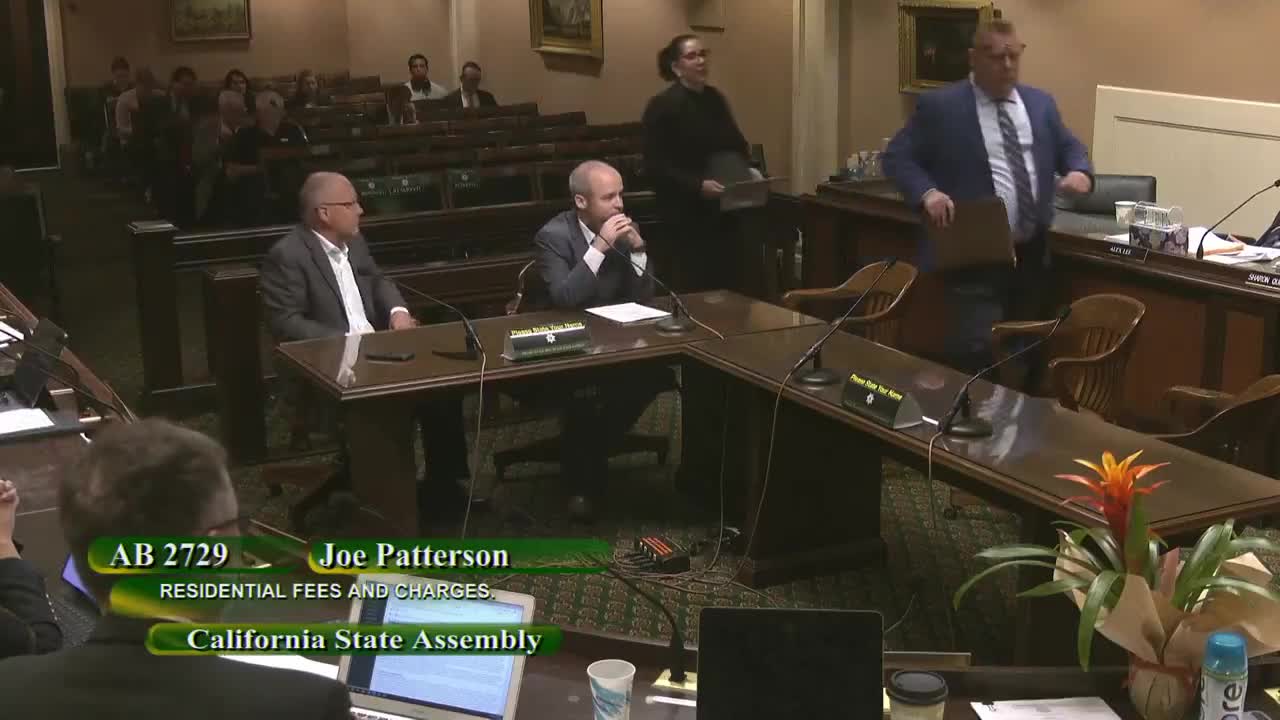 11MIN
Assembly Standing Committee on Housing and Community Development
Bill Author

Bill Co-Author(s):
