AB 564: Medi-Cal: claim or remittance forms: signature.
- Session Year: 2023-2024
- House: Assembly
- Latest Version Date: 2023-04-05
Current Status:
Failed
(2023-06-14: Referred to Com. on HEALTH.)
Introduced
In Committee
First Chamber
In Committee
Second Chamber
Enacted
Existing law establishes the Medi-Cal program, which is administered by the State Department of Health Care Services and under which qualified low-income individuals receive health care services. The Medi-Cal program is, in part, governed and funded by federal Medicaid program provisions.
Existing law requires the Director of Health Care Services to develop and implement standards for the timely processing and payment of each claim type. Existing law requires that the standards be sufficient to meet minimal federal requirements for the timely processing of claims. Existing law states the intent of the Legislature that claim forms for use by physicians and hospitals be the same as claim forms in general use by other payors, as specified.
This bill would require the department to allow a provider to submit an electronic signature for a claim or remittance form under the Medi-Cal program, to the extent not in conflict with federal law.
Existing law provides for the Medi-Cal program, which is administered by the State Department of Health Care Services, under which qualified low-income individuals receive health care services. The Medi-Cal program is, in part, governed and funded by federal Medicaid Program provisions. Existing department regulations require an applicant or provider to meet specified standards and to submit a completed application package on specified forms as a condition for enrollment, continued enrollment, or enrollment at a new location or a change in location, and requires these forms to contain, among other things, an original signature in ink.This bill would require the department to allow applicants or providers to submit electronic signatures for all enrollment forms, including, but not limited to, claims and remit forms, in the Medi-Cal program.Existing law provides for the Medi-Cal program, which is administered by the State Department of Health Care Services, under which qualified low-income individuals receive health care services. The Medi-Cal program is, in part, governed and funded by federal Medicaid Program provisions. Existing department regulations require an applicant or provider to meet specified standards and to submit a completed application package on specified forms as a condition for enrollment, continued enrollment, or enrollment at a new location or a change in location, and requires these forms to contain, among other things, an original signature in ink.
This bill would require the department to allow applicants or providers to submit electronic signatures for all enrollment forms, including, but not limited to, claims and remit forms, in the Medi-Cal program.
The department shall allow a provider to submit an electronic signature for a claim or remittance form under the Medi-Cal program, to the extent not in conflict with federal law.
SECTION 1.Section 14044.1 is added to the Welfare and Institutions Code, to read:14044.1.The State Department of Health Care Services shall allow applicants or providers to submit electronic signatures for all enrollment forms, including, but not limited to, claims and remit forms, in the Medi-Cal program.The State Department of Health Care Services shall allow applicants or providers to submit electronic signatures for all enrollment forms, including, but not limited to, claims and remit forms, in the Medi-Cal program.
|
Date
|
Status
|
|---|---|
| Jun 14, 2023 | Referred to Com. on HEALTH. |
| Jun 1, 2023 | In Senate. Read first time. To Com. on RLS. for assignment. |
| May 31, 2023 | Read third time. Passed. Ordered to the Senate. (Ayes 80. Noes 0. Page 2058.) |
| May 18, 2023 | From committee: Do pass. (Ayes 15. Noes 0.) (May 18). |
| May 18, 2023 | Read second time. Ordered to third reading. |
| May 3, 2023 | In committee: Set, first hearing. Referred to APPR. suspense file. |
| Apr 26, 2023 | In committee: Hearing postponed by committee. |
| Apr 12, 2023 | From committee: Do pass and re-refer to Com. on APPR. with recommendation: To Consent Calendar. (Ayes 15. Noes 0.) (April 11). Re-referred to Com. on APPR. |
| Apr 6, 2023 | Re-referred to Com. on HEALTH. |
| Apr 5, 2023 | From committee chair, with author's amendments: Amend, and re-refer to Com. on HEALTH. Read second time and amended. |
| Feb 17, 2023 | Referred to Com. on HEALTH. |
| Feb 9, 2023 | From printer. May be heard in committee March 11. |
| Feb 8, 2023 | Read first time. To print. |
|
Date
|
Description
|
Location
|
Votes
|
|
|---|---|---|---|---|
| May 31, 2023 | AB 564 Villapudua Assembly Third Reading | Assembly Floor |
Passed |
|
| May 18, 2023 | Do pass. | Assembly Standing Committee on Appropriations |
Passed |
|
| Apr 11, 2023 | Do pass and be re-referred to the Committee on [Appropriations] with recommendation: To Consent Calendar | Assembly Standing Committee on Health |
Passed |
This list shows positions taken on this bill by organizations on the date displayed, which is linked to the original source.
Positions by individuals are not included.
|
Organization
|
Position
|
Date
|
|---|---|---|
| California Chapter of the American College of Emergency Physicians | ** Support | |
| California Rheumatology Alliance | ** Support | |
| California Telehealth Network | ** Support | |
| CaliforniaHealth+ Advocates | ** Support | |
| ChildrenS Choice Dental Care | ** Support | |
| Health Net | ** Support | |
| OCHIN, INC. | ** Support |
ASSEMBLY THIRD READING
ATR Bill Id:AB 564
Author:(Villapudua)
As Amended Ver:April 5, 2023
Majority vote
SUMMARY
Requires the Department of Health Care Services (DHCS) to allow applicants or providers to submit electronic signatures for all enrollment forms, including, but not limited to, claims and remit forms, in the Medi-Cal program.
Major Provisions
COMMENTS
- Medi-Cal Provider Enrollment. Current state and federal law and regulation establish standards for the enrollment of health care providers in the Medi-Cal program. An applicant or provider seeking to provide services in the Medi-Cal program must submit a complete application package for enrollment, continuing enrollment, enrollment at a new location, or a change in location. DHCS' Provider Enrollment Division is responsible for the enrollment and re-enrollment of most eligible fee-for-service (FFS)54 health care providers in the Medi-Cal program. State regulations establish additional specificity on the enrollment process.
In November 2016, DHCS implemented the Provider Application and Validation for Enrollment (PAVE) system. PAVE is a software program that automates DHCS' Medi-Cal provider enrollment processes and serves as the enterprise platform for provider enrollment activities. PAVE provides a secure, web-based portal for providers to submit their enrollment applications and update their information. PAVE is also used by DHCS to establish and monitor ongoing provider compliance with enrollment requirements.
- Medi-Cal FFS Billing. Medi-Cal enrollees receive services either through a Medi-Cal managed care plan, or through the FFS Medi-Cal program administered directly by DHCS (sometimes colloquially called "straight Medi-Cal"). A provider providing services to a Medi-Cal managed care plan enrollee would bill the plan, while the same provider providing services to an enrollee in FFS Medi-Cal would bill DHCS directly. DHCS administers a claims payment system called California Medicaid Management Information System (CA-MMIS). CA-MMIS processes payments to health care providers who participate in the FFS Medi‑Cal program, pursuant to rules and policies developed by DHCS.
In a process separate from the provider enrollment process, DHCS requires providers to submit additional forms that include information necessary to bill FFS Medi-Cal through the CA-MMIS system. For instance, the "Medi-Cal Telecommunications Provider and Biller Application/Agreement Form" for electronic claim submission collects information about the individual or entity who is billing, if different from the enrolled provider. It also collects technical information about the billing system. Another form, "Electronic Health Care Claim Payment/Advice Receiver Agreement," is necessary to allow DHCS to provide Remittance Advice Detail (RAD) information to the biller. The RAD includes line-by-line detail of Medi-Cal claims transactions, showing which claims were paid, denied, or are not yet adjudicated. DHCS is in the process of updating these FFS Medi-Cal billing forms to remove the requirement for manual processing and to automate these forms.
- Effect of Manual Billing Forms. The sponsor of this bill, OCHIN, provides electronic health record (EHR) technology to member health care providers (400 health care sites with nearly 8,500 members in California). According to OCHIN, about one-third of their members are safety net clinics or networks of clinics. OCHIN reports many of their clinic members have upgraded their EHR systems or are the process of upgrading these systems. If they do so, OCHIN explains, a clinic needs to inform DHCS, via the aforementioned billing forms, that DHCS should accept claims from a new "biller" on the behalf of the clinic, and that the designated biller should become the sole recipient of future remittance files. OCHIN reports the manual filing of these forms causes significant delays and cash flow issues for clinics.
- E-Signatures. Federal legislation known as the Federal Electronic Signatures in Global and National Commerce Act (E-SIGN) [Public Law No. 106-229] made both electronic contracts and e-Signatures legal and enforceable. Following the federal government's lead, California adopted the Uniform Electronic Transactions Act with the passage of SB 820 (Sher), Chapter 428, Statutes of 1999, which establishes the legal validity of e-Signatures and contracts in a manner similar to the federal law. AB 2296 (Low), Chapter 144, Statutes of 2016, revised state law to clarify the state is authorized to use any type of e-Signature.
According to the State Administrative Manual issued by the Department of General Services (DGS), all forms that are designed to be completed by internal or external customers (public or private sector entities) conducting business with the state of California are available in an electronic format. DGS requires agencies to use electronic signatures in place of a wet signature unless prohibited by law and that state agencies to ensure all forms are digitally available and can accept e-Signatures.
DHCS accepts e-Signatures from beneficiaries on enrollment applications and accepts electronic signatures as proof of a licensed prescriber's order for a drug or a clinical laboratory test.
According to the Author
This bill will ensure health care providers can focus on providing health care services rather than spending their time doing costly and antiquated paperwork, by directing DHCS to allow e-Signatures for forms that providers use to become authorized to bill the FFS Medi-Cal program.
Arguments in Support
Supporters of this bill, including Health Net, California Chapter of the American College of Emergency Physicians, and the California Rheumatology Alliance, indicate this bill will reduce administrative burden and modernize Medi-Cal processes. OCHIN, this bill's sponsor, indicates transitions to a new EHR system are costly and complex due to the antiquated paperwork requirements of the Medi-Cal program. OCHIN states these requirements are time-consuming and involve costly shipping and staff coordination, often resulting in significant delays. OCHIN supports this bill as critical to advancing the adoption of health care technology, resulting in greater efficiency, reduced costs, and improved access and health outcomes for patients.
Arguments in Opposition
There is no known opposition.
FISCAL COMMENTS
According to the Assembly Appropriations Committee, this bill would have unknown one-time costs, potentially in the hundreds of thousands of dollars, or more, to DHCS (General Fund and federal funds). If DHCS is already working to do what this bill requires, this bill would not add costs. However, because the bill requires DHCS to do this activity, and DHCS could not choose to abandon this activity if this bill were to become law, the committee attributes these costs to the bill.
VOTES
ASM HEALTH: 15-0-0
YES: Wood, Waldron, Aguiar-Curry, Arambula, Boerner Horvath, Wendy Carrillo, Flora, Vince Fong, Maienschein, McCarty, Joe Patterson, Rodriguez, Santiago, Villapudua, Weber
ASM APPROPRIATIONS: 15-0-1
YES: Holden, Megan Dahle, Bryan, Calderon, Wendy Carrillo, Dixon, Mike Fong, Hart, Lowenthal, Mathis, Papan, Pellerin, Sanchez, Weber, Ortega
ABS, ABST OR NV: Robert Rivas
UPDATED
VERSION: April 5, 2023
CONSULTANT: Lisa Murawski / HEALTH / (916) 319-2097 FN: 0000893
Date of Hearing: May 3, 2023
ASSEMBLY COMMITTEE ON APPROPRIATIONS
Chris Holden, Chair
ABPCA Bill Id:AB 564
Author:(Villapudua) – As Amended Ver:April 5, 2023
Policy Committee: | Health | Vote: | 15 - 0 |
|
| ||
|
|
Urgency: No State Mandated Local Program: No Reimbursable: No
SUMMARY:
This bill requires the Department of Health Care Services (DHCS) to allow a provider to submit an electronic signature for a claim form or a remit form under the Medi-Cal program, to the extent allowed by federal law.
FISCAL EFFECT:
Unknown one-time costs, potentially in the hundreds of thousands of dollars, or more, to DHCS (General Fund and federal funds). If DHCS is already working to do what this bill requires, this bill would not add costs. However, because the bill requires DHCS to do this activity, and DHCS could not choose to abandon this activity if this bill were to become law, the committee attributes these costs to the bill.
COMMENTS:
- Purpose. According to the author:
[H]ealth centers and physician practices have been transitioning to new electronic health record systems to… comply with the new health information exchange requirements, digital reporting, population health management, and enhanced care management requirements of [California Advancing and Innovating Medi-Cal (CalAIM)]. However, such transitions are unduly costly and complex due to antiquated paperwork requirements of the Medi-Cal program.
Currently, when health centers and other providers transition to new electronic health record systems, Medi-Cal requires a ‘wet’ signature on…a claim enrollment form or … a remit enrollment form, [which is] time-consuming and involve[s] costly shipping and staff coordination. [The] burdens fall heaviest on providers in underserved communities, waste scarce agency staff time and public resources, and contribute to a carbon footprint.
The ‘wet’ signature requirement is part of the criteria for claim and remit enrollment under the California Code of Regulations. [DHCS] has the discretion to initiate rulemaking to…authorize the use of eSignatures…[O]nly 6 states, including California, still require a wet signature.
- Background. The Federal Electronic Signatures in Global and National Commerce Act (E-SIGN) made both electronic contracts and e-signatures legal and enforceable. Following the federal government’s lead, California adopted the Uniform Electronic Transactions Act with the passage of SB 820 (Sher), Chapter 428, Statutes of 1999, which establishes the legal validity of e-signatures and contracts in a manner similar to the federal law. AB 2296 (Low), Chapter 144, Statutes of 2016, revised state law to clarify the state is authorized to use any type of e-signature.
According to the State Administrative Manual issued by the Department of General Services (DGS), all forms that are designed to be completed by internal or external customers conducting business with the state are available in an electronic format. DGS requires agencies to use electronic signatures in place of a wet signature, unless prohibited by law, and to ensure all forms are digitally available and can accept e-signatures. - Medi-Cal Provider Enrollment. State and federal laws and regulations establish standards for the enrollment of health care providers in Medi-Cal. A provider seeking to provide services in the Medi-Cal program must submit a complete application package for enrollment, continuing enrollment, enrollment at a new location, or a change in location. In November 2016, DHCS implemented the Provider Application and Validation for Enrollment (PAVE) system. PAVE is a software program that automates DHCS’ Medi-Cal provider enrollment processes and serves as the enterprise platform for provider enrollment activities, and provides a secure, web-based portal for providers to submit their enrollment applications and update their information. DHCS also uses PAVE to monitor provider compliance with enrollment requirements.
- Medi-Cal Fee for Service (FFS) Billing. A provider providing services to an enrollee in FFS Medi-Cal bills DHCS directly. DHCS administers a claims payment system called California Medicaid Management Information System (CA-MMIS). CA-MMIS processes payments to FFS Medi‑Cal. DHCS also requires providers to submit additional forms that include information necessary to bill FFS Medi-Cal through the CA-MMIS system. DHCS is updating FFS Medi-Cal billing forms to remove the requirement for manual processing and to automate these forms.
- Related Legislation. AB 696 (Lowenthal) requires a state agency that administers a grant or enters into a contract with a nonprofit organization to follow certain procedures, including, among other things, providing for and accepting electronic signatures, as defined, and not requiring an original or wet signature on any document associated with the contract. AB 696 is pending in the Assembly Committee on Accountability and Administrative Review.
Analysis Prepared by: Allegra Kim / APPR. / (916) 319-2081
Date of Hearing: April 11, 2023
ASSEMBLY COMMITTEE ON HEALTH
Jim Wood, Chair
ABPCA Bill Id:AB 564
Author:((Villapudua) – As Amended Ver:April 5, 2023
SUBJECT: Medi-Cal enrollment.
SUMMARY: Requires the Department of Health Care Services (DHCS) to allow applicants or providers to submit electronic signatures for all enrollment forms, including, but not limited to, claims and remit forms, in the Medi-Cal program.
EXISTING LAW:
- Establishes the Medi-Cal Program, administered by DHCS, to provide comprehensive health benefits to low-income individuals who meet specified eligibility criteria. [Welfare and Institutions Code (WIC) §14000 et seq.]
- Establishes requirements and processes for the enrollment of providers in the Medi-Cal program. [WIC §14043 et seq.]]
- Establishes regulations regarding the enrollment of providers in the Medi-Cal program, including ownership, structure, business location, subcontractors and other provider requirements. [California Code of Regulations (CCR), Title 22, §50000 et seq.]
- Requires, via regulation, an applicant or provider to submit a completed application package to DHCS for enrollment, continued enrollment, or enrollment at a new, additional, or change in location. Requires this application package to include an original signature in ink. [CCR, Title 22, §51000.30 (a)(2)(C)]]
- Allows, for purposes of a beneficiary submitting forms for redetermination of Medi-Cal eligibility, the Medi-Cal program to accept electronic signatures, telephonic signatures, and handwritten signatures transmitted by electronic transmission to be accepted. [WIC §14005.37]
- Accepts, for purposes of Medi-Cal claims, electronic signatures as proof of a licensed prescriber’s order for a drug or a clinical laboratory test. [WIC §14170.10]
- Requires, for purposes of claim submission to the fee-for-service (FFS) Medi-Cal program, the availability of electronic means for transmitting claims to the fiscal intermediary contractor. [WIC §14040]
FISCAL EFFECT: Unknown. This bill has not yet been analyzed by a fiscal committee.
COMMENTS:
- PURPOSE OF THIS BILL. According to the author, this bill will ensure health care providers can focus on providing health care services rather than spending their time doing costly and antiquated paperwork, by directing DHCS to allow e-Signatures for forms that providers use to become authorized to bill the FFS Medi-Cal program.
- BACKGROUND.
- Medi-Cal Provider Enrollment. Current state and federal law and regulation establish standards for the enrollment of health care providers in the Medi-Cal program. An applicant or provider seeking to provide services in the Medi-Cal program must submit a complete application package for enrollment, continuing enrollment, enrollment at a new location, or a change in location. DHCS’ Provider Enrollment Division (PED) is responsible for the enrollment and re-enrollment of most eligible FFS health care providers in the Medi-Cal program. State regulations establish additional specificity on the enrollment process.
In November 2016, DHCS implemented the Provider Application and Validation for Enrollment (PAVE) system. PAVE is a software program that automates DHCS’ Medi-Cal provider enrollment processes and serves as the enterprise platform for provider enrollment activities. PAVE provides a secure, web-based portal for providers to submit their enrollment applications and update their information. PAVE is also used by DHCS to establish and monitor ongoing provider compliance with enrollment requirements. - Medi-Cal FFS Billing. Medi-Cal enrollees receive services either through a Medi-Cal managed care plan, or through the FFS Medi-Cal program administered directly by DHCS (sometimes colloquially called “straight Medi-Cal”). A provider providing services to a Medi-Cal managed care plan enrollee would bill the plan, while the same provider providing services to an enrollee in FFS Medi-Cal would bill DHCS directly. DHCS administers a claims payment system called California Medicaid Management Information System (CA-MMIS). CA-MMIS processes payments to health care providers who participate in the FFS Medi‑Cal program, pursuant to rules and policies developed by DHCS.
In a process separate from the provider enrollment process, DHCS requires providers to submit additional forms that include information necessary to bill FFS Medi-Cal through the CA-MMIS system. For instance, the “Medi-Cal Telecommunications Provider And Biller Application/Agreement Form” for electronic claim submission collects information about the individual or entity who is billing, if different from the enrolled provider. It also collects technical information about the billing system. Another form, “Electronic Health Care Claim Payment/Advice Receiver Agreement,” is necessary to allow DHCS to provide Remittance Advice Detail (RAD) information to the biller. The RAD includes line-by-line detail of Medi-Cal claims transactions, showing which claims were paid, denied, or are not yet adjudicated. DHCS is in the process of updating these FFS Medi-Cal billing forms to remove the requirement for manual processing and to automate these forms. - Effect of Manual Billing Forms. The sponsor of this bill, OCHIN, provides electronic health record (EHR) technology to member health care providers (400 health care sites with nearly 8,500 members in California). According to OCHIN, about one-third of their members are safety net clinics or networks of clinics. OCHIN reports many of their clinic members have upgraded their EHR systems or are the process of upgrading these systems. If they do so, OCHIN explains, a clinic needs to inform DHCS, via the aforementioned billing forms, that DHCS should accept claims from a new “biller” on the behalf of the clinic, and that the designated biller should become the sole recipient of future remittance files. OCHIN reports the manual filing of these forms causes significant delays and cash flow issues for clinics.
- E-Signatures. Federal legislation known as the Federal Electronic Signatures in Global and National Commerce Act (E-SIGN) [Public Law No. 106-229] made both electronic contracts and e-Signatures legal and enforceable. Following the federal government’s lead, California adopted the Uniform Electronic Transactions Act with the passage of SB 820 (Sher), Chapter 428, Statutes of 1999, which establishes the legal validity of e-Signatures and contracts in a manner similar to the federal law. AB 2296 (Low), Chapter 144, Statutes of 2016, revised state law to clarify the state is authorized to use any type of e-Signature.
According to the State Administrative Manual issued by the Department of General Services (DGS), all forms that are designed to be completed by internal or external customers (public or private sector entities) conducting business with the state of California are available in an electronic format. DGS requires agencies to use electronic signatures in place of a wet signature unless prohibited by law and that state agencies to ensure all forms are digitally available and can accept e-Signatures.
DHCS accepts e-Signatures from beneficiaries on enrollment applications and accepts electronic signatures as proof of a licensed prescriber’s order for a drug or a clinical laboratory test.
- Medi-Cal Provider Enrollment. Current state and federal law and regulation establish standards for the enrollment of health care providers in the Medi-Cal program. An applicant or provider seeking to provide services in the Medi-Cal program must submit a complete application package for enrollment, continuing enrollment, enrollment at a new location, or a change in location. DHCS’ Provider Enrollment Division (PED) is responsible for the enrollment and re-enrollment of most eligible FFS health care providers in the Medi-Cal program. State regulations establish additional specificity on the enrollment process.
- SUPPORT. Supporters of this bill, including Health Net, California Chapter of the American College of Emergency Physicians, and the California Rheumatology Alliance, indicate this bill will reduce administrative burden and modernize Medi-Cal processes. OCHIN, this bill’s sponsor, indicates transitions to a new EHR system are costly and complex due to the antiquated paperwork requirements of the Medi-Cal program. OCHIN states these requirements are time-consuming and involve costly shipping and staff coordination, often resulting in significant delays. OCHIN supports this bill as critical to advancing the adoption of health care technology, resulting in greater efficiency, reduced costs, and improved access and health outcomes for patients.
- RELATED LEGISLATION. AB 696 (Lowenthal) would, among other provisions, require a state agency that administers a grant or enters into a contract with a nonprofit organization to follow certain procedures, including, among other things, providing for and accepting electronic signatures, as defined, and not requiring an original or wet signature on any document associated with the contract. AB 696 is pending in the Assembly Committee on Accountability and Administrative Review.
- PREVIOUS LEGISLATION.
- SB 820 enacts the Uniform Electronic Transactions Act, which provides that a record or signature may not be denied legal effect or enforceability solely because it is in electronic form, and enacts enact related provisions.
- AB 2296 clarifies a digital signature is a type of an electronic signature as set forth in the Uniform Electronic Transaction Act.
REGISTERED SUPPORT / OPPOSITION:
Support
California Chapter of the American College of Emergency Physicians
CaliforniaHealth+ Advocates
California Rheumatology Alliance
California Telehealth Network
Children’s Choice Dental Care
Health Net
OCHIN, INC.
Opposition
None on file.
Analysis Prepared by: Lisa Murawski / HEALTH / (916) 319-2097
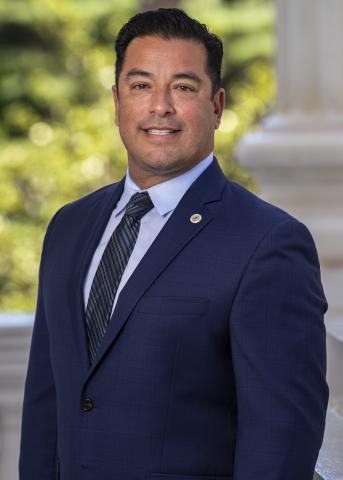
Bill Author
Bill Co-Author(s):