AB 667: Firearms: gun violence restraining orders.
- Session Year: 2023-2024
- House: Assembly
- Latest Version Date: 2024-01-03
Current Status:
Failed
(2024-06-04: In committee: Set, first hearing. Hearing canceled at the request of author.)
Introduced
In Committee
First Chamber
In Committee
Second Chamber
Enacted
Existing law allows a court to issue a gun violence restraining order prohibiting and enjoining a named person from having custody or control of any firearms or ammunition if the person poses a significant danger of causing personal injury to themselves or another by having custody or control of a firearm or ammunition. Existing law authorizes a court to issue a gun violence restraining order to prohibit a person from purchasing or possessing a firearm or ammunition for a period of one to 5 years, subject to renewal for additional one- to 5-year periods, if the subject of the petition poses a significant danger of self-harm or harm to another in the near future by having a firearm and the order is necessary to prevent personal injury to the subject of the petition or another. Existing law makes it a crime to own or possess a firearm in violation of a gun violence restraining order.
This bill would increase the renewal period to a maximum of 10 years, instead of 5, if the subject of the petition poses a significant danger of self-harm or harm to another in the near future by having a firearm and the order is necessary to prevent personal injury to the subject of the petition or another. order. If the court finds evidence of an extreme risk of violence, including repeated and egregious instances of specified facts, and those facts existed 12 months prior to a petition being filed, this bill would require a court to issue a gun violence restraining order for 5 years. By expanding the scope of an existing crime, this bill would impose a state-mandated local program.
The California Constitution requires the state to reimburse local agencies and school districts for certain costs mandated by the state. Statutory provisions establish procedures for making that reimbursement.
This bill would provide that no reimbursement is required by this act for a specified reason.
Existing law allows a court to issue a gun violence restraining order prohibiting and enjoining a named person from having custody or control of any firearms or ammunition if the person poses a significant danger of causing personal injury to themselves or another by having custody or control of a firearm or ammunition. Existing law authorizes a court to issue a gun violence restraining order to prohibit a person from purchasing or possessing a firearm or ammunition for a period of one to 5 years, subject to renewal for additional one- to 5-year periods, if the subject of the petition poses a significant danger of self-harm or harm to another in the near future by having a firearm and the order is necessary to prevent personal injury to the subject of the petition or another. Existing law makes it a crime to own or possess a firearm in violation of a gun violence restraining order.
This bill would increase the renewal period to a maximum of 10 years, instead of 5, if the subject of the petition poses a significant danger of self-harm or harm to another in the near future by having a firearm and the order is necessary to prevent personal injury to the subject of the petition or another. By expanding the scope of an existing crime, this bill would impose a state-mandated local program.
The California Constitution requires the state to reimburse local agencies and school districts for certain costs mandated by the state. Statutory provisions establish procedures for making that reimbursement.
This bill would provide that no reimbursement is required by this act for a specified reason.
(a)In determining whether to issue a gun violence restraining order under this chapter, the court shall consider evidence of the facts identified in paragraph (1) of subdivision (b) of Section 18155 and may consider any other evidence of an increased risk for violence, including, but not limited to, evidence of the facts identified in paragraph (2) of subdivision (b) of Section 18155.
(b)At the hearing, the petitioner has the burden of proving, by clear and convincing evidence, that both of the following are true:
(1)The subject of the petition, or a person subject to a temporary emergency gun violence restraining order or an ex parte gun violence restraining order, as applicable, poses a significant danger of causing personal injury to themselves or another by having in the subjects or persons custody or control, owning, purchasing, possessing, or receiving a firearm, ammunition, or magazine.
(2)A gun violence restraining order is necessary to prevent personal injury to the subject of the petition, or the person subject to an ex parte gun violence restraining order, as applicable, or another because less restrictive alternatives either have been tried and found to be ineffective, or are inadequate or inappropriate for the circumstances of the subject of the petition, or the person subject to an ex parte gun violence restraining order, as applicable.
(c)(1)If the court finds that there is clear and convincing evidence to issue a gun violence restraining order, the court shall issue a gun violence restraining order that prohibits the subject of the petition from having in the subjects custody or control, owning, purchasing, possessing, or receiving, or attempting to purchase or receive, a firearm, ammunition, or magazine.
(2)If the court finds that there is not clear and convincing evidence to support the issuance of a gun violence restraining order, the court shall dissolve a temporary emergency or ex parte gun violence restraining order then in effect.
(d)(1)The subject of the petition may file a form with the court relinquishing the subjects firearm rights for the duration specified on the petition or, if not stated in the petition, for one year from the date of the proposed hearing, and stating that the subject is not contesting the petition.
(2)If the subject of the petition files a form pursuant to paragraph (1), the court shall issue, without any hearing, the gun violence restraining order at least five court days before the scheduled hearing. If the subject files the form within five court days before the scheduled hearing, the court shall issue, without any hearing, the gun violence restraining order as soon as possible. The court shall provide notice of the order to all parties.
(3)If the subject of the petition files a form pursuant to paragraph (1) and has not already surrendered all firearms, ammunition, and magazines in the subjects custody or control or those that the subject possesses or owns, the subject shall follow the procedures in Section 18120 but shall surrender the firearms, ammunition, and magazines within 48 hours of filing the form relinquishing firearm rights.
(e)(1) The court shall issue a gun violence restraining order under this chapter for a period of time of one to five years, subject to termination by further order of the court at a hearing held pursuant to Section 18185 and renewal by further order of the court pursuant to Section 18190.
(2)In determining the duration of the gun violence restraining order pursuant to paragraph (1), the court shall consider the length of time that the circumstances set forth in subdivision (b) are likely to continue, and shall issue the order based on that determination.
(f)(1)If the court finds evidence of an extreme risk of violence, including, but not limited to, repeated and egregious instances of the facts identified in paragraphs (1) and (2) of subdivision (b) of Section 18155, and the court finds that the evidence existed in the 12 months prior to the petition being filed, the court shall issue a gun violence restraining order under this chapter for a period of five years.
(f)(g)This section shall become operative on September 1, 2020.
SEC. 2.No reimbursement is required by this act pursuant to Section 6 of Article XIIIB of the California Constitution because the only costs that may be incurred by a local agency or school district will be incurred because this act creates a new crime or infraction, eliminates a crime or infraction, or changes the penalty for a crime or infraction, within the meaning of Section 17556 of the Government Code, or changes the definition of a crime within the meaning of Section 6 of Article XIIIB of the California Constitution.
(a)(1)Any of the following people may request a renewal of a gun violence restraining order at any time within the three months before the expiration of a gun violence restraining order:
(A)An immediate family member of the subject of the petition.
(B)An employer of the subject of the petition.
(C)A coworker of the subject of the petition, if they have had substantial and regular interactions with the subject for at least one year and have obtained the approval of the employer.
(D)An employee or teacher of a secondary or postsecondary school that the subject has attended in the last six months, if the employee or teacher has obtained the approval of a school administrator or a school administration staff member with a supervisorial role.
(E)A law enforcement officer.
(F)A roommate of the subject of the petition.
(G)An individual who has a dating relationship with the subject of the petition.
(H)An individual who has a child in common with the subject of the petition, if they have had substantial and regular interactions with the subject for at least one year.
(2)For purposes of this subdivision, dating relationship has the same meaning as in paragraph (10) of subdivision (f) of Section 243.
(3)For purposes of this subdivision, immediate family member means any spouse, whether by marriage or not, domestic partner, parent, child, any person related by consanguinity or affinity within the second degree, or any person related by consanguinity or affinity within the fourth degree who has had substantial and regular interactions with the subject for at least one year.
(4)For purposes of this subdivision, roommate means a person who regularly resides in the household, or who, within the prior six months, regularly resided in the household, and who has had substantial and regular interactions with the subject for at least one year.
(5)This chapter does not require a person described in paragraph (1) to seek a gun violence restraining order.
(b)A court may, after notice and a hearing, renew a gun violence restraining order issued under this chapter if the petitioner proves, by clear and convincing evidence, that paragraphs (1) and (2) of subdivision (b) of Section 18175 continue to be true.
(c)In determining whether to renew a gun violence restraining order issued under this chapter, the court shall consider evidence of the facts identified in paragraph (1) of subdivision (b) of Section 18155 and any other evidence of an increased risk for violence, including, but not limited to, evidence of any of the facts identified in paragraph (2) of subdivision (b) of Section 18155.
(d)At the hearing, the petitioner shall have the burden of proving, by clear and convincing evidence, that paragraphs (1) and (2) of subdivision (b) of Section 18175 are true.
(e)If the renewal petition is supported by clear and convincing evidence, the court shall renew the gun violence restraining order issued under this chapter.
(f)(1)The renewal of a gun violence restraining order issued pursuant to this section shall have a duration of between one to five 10 years, subject to termination by further order of the court at a hearing held pursuant to Section 18185 and further renewal by further order of the court pursuant to this section.
(2)In determining the duration of the gun violence restraining order pursuant to paragraph (1), the court shall consider the length of time that the circumstances set forth in subdivision (b) of Section 18175 are likely to continue, and shall issue the order based on that determination.
(g)A gun violence restraining order renewed pursuant to this section shall include the information identified in subdivision (a) of Section 18180.
(h)This section shall become operative on September 1, 2020.
SEC. 2.No reimbursement is required by this act pursuant to Section 6 of Article XIIIB of the California Constitution because the only costs that may be incurred by a local agency or school district will be incurred because this act creates a new crime or infraction, eliminates a crime or infraction, or changes the penalty for a crime or infraction, within the meaning of Section 17556 of the Government Code, or changes the definition of a crime within the meaning of Section 6 of Article XIIIB of the California Constitution.
|
Date
|
Status
|
|---|---|
| Jun 4, 2024 | In committee: Set, first hearing. Hearing canceled at the request of author. |
| May 22, 2024 | In committee: Hearing postponed by committee. |
| May 1, 2024 | Referred to Com. on PUB S. |
| Jan 25, 2024 | In Senate. Read first time. To Com. on RLS. for assignment. |
| Jan 25, 2024 | Read third time. Passed. Ordered to the Senate. (Ayes 61. Noes 1. Page 3931.) |
| Jan 22, 2024 | Read second time. Ordered to third reading. |
| Jan 18, 2024 | From committee: Do pass. (Ayes 13. Noes 0.) (January 18). |
| Jan 18, 2024 | In committee: Set, first hearing. Referred to APPR. suspense file. |
| Jan 9, 2024 | From committee: Do pass and re-refer to Com. on APPR. (Ayes 7. Noes 0.) (January 9). Re-referred to Com. on APPR. |
| Jan 4, 2024 | Re-referred to Com. on PUB. S. |
| Jan 3, 2024 | From committee chair, with author's amendments: Amend, and re-refer to Com. on PUB. S. Read second time and amended. |
| Mar 28, 2023 | In committee: Set, second hearing. Hearing canceled at the request of author. |
| Mar 21, 2023 | In committee: Set, first hearing. Hearing canceled at the request of author. |
| Feb 23, 2023 | Referred to Com. on PUB. S. |
| Feb 14, 2023 | From printer. May be heard in committee March 16. |
| Feb 13, 2023 | Read first time. To print. |
|
Date
|
Description
|
Location
|
Votes
|
|
|---|---|---|---|---|
| Jan 25, 2024 | AB 667 Maienschein Assembly Third Reading | Assembly Floor |
Passed |
|
| Jan 18, 2024 | Do pass. | Assembly Standing Committee on Appropriations |
Passed |
|
| Jan 9, 2024 | Do pass and be re-referred to the Committee on [Appropriations] | Assembly Standing Committee on Public Safety |
Passed |
This list shows positions taken on this bill by organizations on the date displayed, which is linked to the original source.
Positions by individuals are not included.
|
Organization
|
Position
|
Date
|
|---|---|---|
| American College of Emergency Physicians - California Chapter | * Support | Jan 9, 2024 |
| California Catholic Conference | ** Support | |
| California District Attorneys Association | ** Support | |
| National Rifle Association | ** Against | |
| National Rifle Association - Institute For Legislative Action | ** Against |
SENATE COMMITTEE ON PUBLIC SAFETY
Senator Aisha Wahab, Chair
2023 - 2024 Regular
Bill No: AB 667 Hearing Date: June 4, 2024
Author: | Maienschein | ||
Version: | January 3, 2024 | ||
Urgency: | No | Fiscal: | Yes |
Consultant: | SC | ||
Subject: Firearms: gun violence restraining orders
HISTORY
Source: Author
Prior Legislation: AB 301 (Bauer-Kahan), Ch. 234, Stats. 2023
AB 2870 (Santiago), Ch. 974, Stats. 2022
AB 538 (Rubio), Ch. 686, Stats. 2021
AB 2617 (Gabriel), Ch. 286, Stats. 2020
AB 12 (Irwin), Ch. 724, Stats. 2019
AB 61 (Ting), Ch. 725, Stats. 2019
AB 339 (Irwin), Ch. 727, Stats. 2019
SB 1200 (Skinner), Ch. 898, Stats. 2018
AB 2888 (Ting), vetoed, 2018
SB 505 (Jackson), Ch. 918, Stats. 2014
AB 1014 (Skinner), Ch. 872, Stats. 2014
Support: California District Attorneys Association; California Catholic Conference; CFT –A Union of Educators & Classified Professionals, AFT, AFL-CIO
Opposition: Brady United Against Gun Violence; GIFFORDS; National Rifle Association
Assembly Floor Vote: 61 - 1
PURPOSE
The purpose of this bill is to require a court to issue a gun violence restraining order (GVRO) for a duration of five years if the subject of the petition displayed an extreme risk of violence, as specified, within the prior 12 months.
Existing law defines a “GVRO” as an order in writing, signed by the court, prohibiting and enjoining a named person from having in his or her custody or control, owning, purchasing, possessing, or receiving any firearms or ammunition. (Pen. Code, § 18100.)
Existing law requires a petition for a GVRO to describe the number, types, and locations of any firearms and ammunition presently believed by the petitioner to be possessed or controlled by the subject of the petition. (Pen. Code, § 18107.)
Existing law requires the court to notify the Department of Justice (DOJ) when a GVRO is issued, renewed, dissolved, or terminated. (Pen. Code, § 18115.)
Existing law prohibits a person that is subject to a GVRO from having in his or her custody any firearms or ammunition while the order is in effect. Specifies that this means the person cannot own, purchase, possess, or receive any firearms or ammunition. (Pen. Code, § 18120, subd. (a).)
Existing law requires the court to order the restrained person to surrender all firearms and ammunition in his or her control, or which the person possesses or owns. (Pen. Code, § 18120, subd. (b)(1).)
Existing law requires the law enforcement officer serving a GVRO to request that all firearms and ammunition be immediately surrendered. Requires, if the request is not made by a law enforcement officer, the surrender to occur within 24 hours of being served with the order, by surrendering all firearms and ammunition in a safe manner to the control of the local law enforcement agency, selling all firearms and ammunition to a licensed firearms dealer, or transferring all firearms and ammunition to a licensed firearms dealer. (Pen. Code, § 18120, subd. (b)(2) & (3).)
Existing law requires the law enforcement officer or licensed firearms dealer taking possession of any firearms or ammunition to issue a receipt to the person surrendering the firearm, or firearms, or ammunition, or both, at the time of surrender and requires the restrained person to, within 48 hours of being served, do both of the following:
- File with the court that issued the GVRO the original receipt showing all firearms and ammunition have been surrendered to a local law enforcement agency or sold or transferred to a licensed firearms dealer. Failure to timely file a receipt shall constitute a violation of the restraining order; and,
- File a copy of the receipt with the law enforcement agency, if any, that served the GVRO. Failure to timely file a copy of the receipt shall constitute a violation of the restraining order. (Pen. Code, § 18120, subd. (b)(4) & (5).)
Existing law provides that there is no filing fee for an application, a responsive pleading, or an order to show cause that seeks to obtain, modify, or enforce a GVRO or other authorized order if the request for the other order is necessary to obtain or give effect to a GVRO or other authorized order. Provides that there is no fee for a subpoena filed in connection with that application, responsive pleading, or order to show cause. (Pen. Code, § 18121.)
Existing law allows law enforcement to obtain a temporary GVRO if the officer asserts, and the court finds, that there is reasonable cause to believe the following:
- The subject of the petition poses an immediate and present danger of causing injury to himself, herself, or another by having in his or her custody or control, owning, purchasing, possessing, or receiving a firearm or ammunition; and,
- A temporary emergency GVRO is necessary to prevent personal injury to the subject of the order or another because less restrictive alternatives have been tried and been ineffective or have been determined to be inadequate or inappropriate under the circumstances. (Pen. Code, § 18125, subd. (a).)
Existing law provides that a temporary GVRO expire 21 days from the date the order is issued. (Pen. Code, § 18125, subd. (b).)
Existing law requires a law enforcement officer who requests a temporary GVRO do all of the following:
- If the request is made orally, sign a declaration under penalty of perjury reciting the oral statements provided to the judicial officer and memorialize the order of the court on the form approved by the Judicial Council;
- Serve the order on the restrained person, if the restrained person can reasonably be located;
- File a copy of the order with the court as soon as practicable, but not later than 3 court days, after issuance; and,
- Have the order entered into the computer database system for protective and restraining orders maintained by the Department of Justice. (Pen. Code, § 18140.)
Existing law allows any of the following individuals to file a petition requesting that the court issue an ex parte GVRO enjoining a person from having in his or her custody or control, owning, purchasing, or receiving a firearm or ammunition:
- An immediate family member of the subject of the petition;
- An employer of the subject of the petition;
- A coworker, if they have had substantial and regular interactions with the subject for at least one year and have obtained the approval of the employer;
- An employee or teacher of a school that the subject has attended in the past 6 months, if the employee or teacher has obtained the approval of a school administrator or a school administration staff member with a supervisorial role;
- A law enforcement officer;
- A roommate of the subject of the petition;
- An individual who has a dating relationship with the subject of the petition; or,
- An individual who has a child in common with the subject of the petition, if they have had substantial and regular interactions with the subject for at least one year. (Pen. Code, § 18150, subd. (a)(1).)
Existing law defines “immediate family member” to mean “any spouse, whether by marriage or not, domestic partner, parent, child, any person related by consanguinity or affinity within the second degree, or any person related by consanguinity or affinity within the fourth degree who has had substantial and regular interactions with the subject for at least one year.” (Pen. Code, § 18150, subd. (a)(3).)
Existing law allows a court to issue an ex parte GVRO if an affidavit, made in writing and signed by the petitioner under oath, or an oral statement, and any additional information provided to the court shows there is a substantial likelihood that both of the following are true:
- The subject of the petition poses a significant danger, in the near future, of causing personal injury to himself, herself, or another by having under his or her custody and control, owning, purchasing, possessing, or receiving a firearm as determined by balancing specified factors.
- An ex parte GVRO is necessary to prevent personal injury to the subject of the petition or another because less restrictive alternatives either have been tried and found to be ineffective, or are inadequate or inappropriate for the circumstances of the subject of the petition. (Pen. Code, §§ 18150, subd. (b) & 18155.)
Existing law requires an ex parte GVRO to be issued or denied on the same day that the petition is submitted to the court unless the petition is filed too late in the day to permit effective review, in which case the order is required to be issued or denied on the next judicial business day. (Pen. Code, § 18150, subd. (d).)
Existing law requires a law enforcement officer to serve the ex parte GVRO on the restrained person, if the restrained person can reasonably be located. Requires the law enforcement officer to inform the restrained person that he or she is entitled to a hearing and provide the date of the scheduled hearing when serving a gun violence restraining order. (Pen. Code, § 18160.)
Existing law provides that an ex parte GVRO expires no later than 21 days from the date the order is issued. (Pen. Code, § 18155, subd. (c).)
Existing law requires the court that issued the order or another court in the same jurisdiction, within 21 days after the date on the temporary GVRO order or the ex parte GVRO order, to hold a hearing to determine if a GVRO should be issued after notice and hearing. (Pen. Code, §§ 18148 and 18165.)
Existing law allows the following individuals to file a petition requesting that the court issue a GVRO after notice and a hearing enjoining a person from having in his or her custody or control, owning, purchasing, or receiving a firearm or ammunition: an immediate family member of the subject of the petition; an employer of the subject of the petition; a coworker, if they have had substantial and regular interactions with the subject for at least one year and have obtained the approval of the employer; an employee or teacher of a school that the subject has attended in the past 6 months, if the employee or teacher has obtained the approval of a school administrator or a school administration staff member with a supervisorial role; a law enforcement officer; A roommate of the subject of the petition; an individual who has a dating relationship with the subject of the petition; or an individual who has a child in common with the subject of the petition, if they have had substantial and regular interactions with the subject for at least one year. (Pen. Code, § 18170.)
Existing law states that at the hearing, the petitioner has the burden of proof, which is to establish by clear and convincing evidence that both of the following are true:
- The person poses a significant danger of causing personal injury to themselves or another by having in the subject’s custody or control, owning, purchasing, possessing, or receiving a firearm.
- A GVRO is necessary to prevent personal injury to the subject of the petition or another because less restrictive alternatives either have been tried and found to be ineffective, or are inadequate or inappropriate for the circumstances of the subject of the petition. (Pen. Code, § 18175, subd. (b).)
Existing law provides that in determining whether grounds for a GVRO exist, the court shall consider all evidence of the following:
- A recent threat of violence or act of violence by the subject of the petition directed toward another;
- A recent threat of violence or act of violence by the subject of the petition directed toward himself or herself;
- A violation of an emergency protective order issued that is in effect at the time the court is considering the petition;
- A recent violation of an unexpired protective order;
- A conviction for a misdemeanor offense that results in firearm prohibitions; or,
- A pattern of violent acts or violent threats within the past 12 months, including, but not limited to, threats of violence or acts of violence by the subject of the petition directed toward himself, herself, or another. (Pen. Code, § 18155, subd. (b)(1), italics added.)
Existing law defines “recent” for purposes of the above provision to mean within the six months prior to the date the petition was filed. (Pen. Code, § 18155, subd. (c).)
Existing law states that in determining whether grounds for a GVRO exist, the court may consider any other evidence of an increased risk for violence, including, but not limited to, evidence of any of the following:
- The unlawful and reckless use, display, or brandishing of a firearm by the subject of the petition;
- The history of use, attempted use, or threatened use of physical force by the subject of the petition against another person;
- A prior arrest of the subject of the petition for a felony offense;
- A history of a violation by the subject of the petition of an emergency protective order;
- A history of a violation by the subject of the petition of a protective order;
- Documentary evidence, including, but not limited to, police reports and records of convictions, of either recent criminal offenses by the subject of the petition that involve controlled substances or alcohol or ongoing abuse of controlled substances or alcohol by the subject of the petition; or,
- Evidence of recent acquisition of firearms, ammunition, or other deadly weapons. (Pen. Code, § 18155, subd. (b)(2), italics added.)
This bill provides that if the court finds evidence of an extreme risk of violence, including but not limited to, repeated and egregious instances of facts identified in subdivision (b) of Penal Code section 18155, and the court finds that the evidence existed in the 12 months prior to the petition being filed, the court shall issue a GVRO for a period of 5 years.
COMMENTS
- Need for This Bill
According to the author of this bill:
California has proved that it is possible to reduce gun violence through legislative action. In the last decade, we have passed nearly 100 laws aimed at reducing gun violence, and these efforts have kept us below the national average of gun deaths. Still, too many individuals find themselves in situations where legal protections are necessary. Gun violence restraining orders serve as a useful tool for law enforcement and families across the state to help keep firearms out of the hands of individuals who pose a risk to either themselves or others. AB 667 furthers current protections for victims by having a court-issued gun violence restraining order for a mandatory five years if the court finds evidence of extreme risk of violence and repeated offenses within a one-year period.
- California’s GVRO Law
California’s GVRO law, modeled after domestic violence restraining order laws, was signed into law on September 30, 2014, with a delayed implementation date of January 1, 2016. (AB 1014 (Skinner), Ch. 872, Stats. 2014.) A GVRO prohibits the restrained person from purchasing or possessing firearms or ammunition and authorizes law enforcement to remove any firearms or ammunition already in the individual’s possession. A court is required to notify DOJ when a GVRO is issued, renewed, dissolved, or terminated.
The statutory scheme establishes three types of GVRO’s: (1) a temporary emergency GVRO, (2) an ex parte GVRO, and (3) a GVRO issued after notice and hearing.
A temporary emergency GVRO may only be sought by a law enforcement officer. (Pen. Code, § 18125.) To obtain this order, a court must find that the subject of the petition poses an immediate and present danger of causing injury to himself, herself, or another by having in his or her custody or control, owning, purchasing, possessing, or receiving a firearm or ammunition; and the order is necessary to prevent personal injury to the subject of the order or another because less restrictive alternatives have been tried and been ineffective or have been determined to be inadequate or inappropriate under the circumstances. (Ibid.)
The second type of GVRO is an ex parte GVRO, which may be sought by an immediate family member of the subject of the petition; an individual who has a dating relationship with the subject or who has a child in common with the subject; an employer of the subject of the petition; a coworker, if they have had substantial and regular interactions with the subject for at least one year and have obtained the approval of the employer; an employee or teacher of a school that the subject has attended in the past 6 months, if the employee or teacher has obtained the approval of a school administrator or a school administration staff member with a supervisorial role; or a law enforcement officer. The ex parte order may be issued if the court finds that (1) the subject of the petition poses a significant danger, in the near future, of causing personal injury to himself, herself, or another by having under his or her custody and control, owning, purchasing, possessing, or receiving a firearm as determined as determined by considering the factors listed in Penal Code section 18155; and (2) an order is necessary to prevent personal injury to the subject of the petition or another because less restrictive alternatives either have been tried and found to be ineffective, or are inadequate or inappropriate for the circumstances of the subject of the petition. (Pen. Code, § 18150.) The petition for an ex parte GVRO must be supported by an affidavit that sets forth the facts tending to establish the grounds of the petition, or the reason for believing that they exist. (Ibid.)
Within 21 days, and before the temporary or ex parte GVRO expires, one of the above listed categories of individuals may request that a court issue the third type of GVRO which is issued after notice and a hearing, enjoining the subject of the petition from having in his or her custody or control, owning, purchasing, possessing, or receiving a firearm or ammunition for a period of one to five years. (Pen. Code, § 18170 et seq.) At the hearing, the petitioner has the burden of proving, by clear and convincing evidence, that both of the following are true: (1) the person poses a significant danger of causing personal injury to themselves or another by having in the subject’s custody or control, owning, purchasing, possessing, or receiving a firearm; and (2) a GVRO is necessary to prevent personal injury to the subject of the petition or another because less restrictive alternatives either have been tried and found to be ineffective, or are inadequate or inappropriate for the circumstances of the subject of the petition. (Pen. Code, § 18175, subd. (b).) If the court finds that there is clear and convincing evidence to issue a GVRO, the court shall issue a GVRO that prohibits the subject of the petition from having in his or her custody or control, owning, purchasing, possessing, or receiving, or attempting to purchase or receive, a firearm, ammunition, or magazine. (Pen. Code, § 18175, subd. (c).) If the court finds that there is not clear and convincing evidence to support the issuance of a GVRO, the court shall dissolve any temporary emergency or ex parte GVRO then in effect. (Ibid.)
Persons who are prohibited from owning or possessing a firearm or ammunition due to a valid order issued out-of-state that is similar or equivalent to California’s GVRO law is also prohibited from owning or possessing a firearm or ammunition within the state. (AB 2617 (Gabriel), Ch. 286, Stats. 2020.)
When the original law went into effect, a GVRO issued after notice and a hearing had a duration of one year which the court could renew if the petitioner proves by clear and convincing evidence that the grounds for the issuance of the order continue to be true. Since then, the law has been amended to authorize a GVRO to be valid for a period of up to 5 years. In determining the duration of the GVRO, the court is required to consider the length of time that the circumstances requiring the order are likely to continue. The subject of the petition is allowed to request a hearing for termination of the order on an annual basis. (See AB 12 (Irwin), Ch. 724, Stats. 2019.)
The bill requires a court to issue a GVRO for the maximum period of 5 years if the court finds evidence of extreme risk of violence, including but not limited to, repeated instances of the facts that the court should consider when determining whether grounds exist to issue an ex parte GVRO. Those facts include recent acts or threats of violence, violation of a protective order, a prior conviction for unlawful possession of a firearm, and recent acquisition or certain weapons, among other facts. The statute defines “recent” to be within the prior 6 months, but also states that the court shall consider evidence of a pattern of violent acts or threats within the past 12 months.
As stated above, the court currently has discretion to determine the appropriate length of time that the GVRO should be in place. In determining what length of time is appropriate, the court is required to consider the length of time that the circumstances requiring the order are likely to continue. This consideration focuses on current and future dangerousness in determining how long a person should be subject to firearm prohibitions. As shown by the data in note #3 below, courts have issued a significant number of GVROs lasting 4-5 years which shows that courts are not having trouble finding future dangerousness in many cases. This bill requires the court to issue a GVRO for the maximum period of 5 years based on prior conduct which may show current dangerousness but does not require a connection to future dangerousness (i.e. how long the circumstances are likely to last).
According to information on Everytown for Gun Safety’s website, California is an outlier for how long our GVROs may last compared to other states with similar extreme risk laws. The maximum length of time for orders in those states ranges from 6 months to one year. (See Extreme Risk Laws Save Lives – Extreme Risk Laws By State | Everytown Research & Policy [as of May 28, 2024].)
- Data on Issuance of GVROs
The Department of Justice (DOJ) has statutory authority to collect GVRO data. (Pen. Code, § 18115.) According to DOJ’s data, since the law went into effect in 2016, courts issued GVROs 86 times in 2016 and 104 times in 2017. Los Angeles County had the highest number of GVROs issued for a total of 32 from 2016 to 2017. The county with the second highest number was Santa Barbara with 21 GVROs. The county that had the highest number of GVROs per capita was Contra Costa.
In 2018, 424 GVROs were issued throughout the state. San Diego County accounted for the majority of the increase with 185 orders issued; the nine Bay Area counties accounted for 53 GVROs with only one issued in San Francisco. In 2019, 700 GVROs were issued and in 2020, 1,284 GVROs were issued. In 2021, there were 1384 GVROs issued with an increased amount of petitions coming from family members and co-workers. In 2022, there were 1,909 GVROs issued. The highest number of GVROs were issued in San Diego County and the second highest from Santa Clara County.
In 2023, a total of 2,703 GVROs were issued. The highest number of GVROs were issued in Santa Clara County and the second highest from San Diego County. The data shows that a law enforcement petitioner accounted for the vast majority of GVRO orders issued overall.
Information provided by DOJ on the duration of GVROs issued by courts for the period starting September 1, 2020 through December 31, 2022 is as follows:
Duration of GRVO | 9/1/2020-12/31/2022 |
0-1 year | 386 |
1-2 years | 52 |
2-3 years | 69 |
3-4 years | 84 |
4-5 years | 271 |
5+ years | 14 |
The data shows that the one-year GVRO is the most commonly issued, however the 4-5 year orders appear to be issued more frequently than the shorter duration orders. Thus, it appears that courts have issued a significant number of the longer duration orders under existing law.
- Pending Litigation: United States v. Rahimi
In N.Y. State Rifle & Pistol Ass’n v. Bruen (2022) 142 S.Ct. 2111, the United States Supreme Court established a new test for determining whether a government restriction on carrying a firearm violates the Second Amendment:
“[W]hen the Second Amendment’s plain text covers an individual’s conduct, the Constitution presumptively protects that conduct. To justify its regulation, the government may not simply posit that the regulation promotes an important interest. Rather, the government must demonstrate that the regulation is consistent with this Nation’s historical tradition of firearm regulation. Only if a firearm regulation is consistent with this Nation’s historical tradition may a court conclude that the individual’s conduct falls outside the Second Amendment’s ‘unqualified command.’” (Id. at 2126.)
Based on Bruen, the Fifth Circuit Court of Appeals invalidated a federal statute prohibiting a defendant from possessing a firearm pursuant to a domestic violence court order, even after the defendant was involved in five shootings over the course of approximately one month. (U.S. v. Rahimi (2023) 61 F.4th 443.) The court examined several different historical statutes to see if there were any analogues which prohibited firearm possession based on civil proceedings alone. (Id. at 455-460.) Ultimately, the court found that there were no such relevantly similar historical laws and found that the firearm prohibition was an, “‘an outlier that our ancestors would never have accepted.’” (Id. at 461.)
The United States Supreme Court is now reviewing the case (certiorari granted United States v. Rahimi (2023) 143 S.Ct. 2688). On November 7, 2023, the Court heard oral arguments in the case. The justices’ questioning seemed to suggest that they would uphold the law. (See Amy Howe, Justices appear wary of striking down domestic-violence gun restriction, SCOTUSblog (Nov. 7, 2023, 5:47 PM), https://www.scotusblog.com/2023/11/justices-appear-wary-of-striking-down-domestic-violence-gun-restriction )
Although the Rahimi case deals with domestic violence restraining orders, the inquiry principally revolved around prohibiting firearm possession based on a civil proceeding, which could implicate California’s GVRO laws depending on the outcome of the case.
- Argument in Support
According to CFT:
California’s school shooting epidemic is among the most serious challenges faced by our education system. In 2023 alone, our schools suffered 25 shooting incidents, totaling 18 deaths1 and likely far more injuries, particularly when mental health trauma is considered. Most students must now undergo repeated drills and training regarding what to do during mass shooter incidents, forcing children to live their lives in fear that such a catastrophic event could occur at their school. Clearly, we must do more to prevent these incidents from ever occurring in the first place.
AB 667 (Maienschein) requires a court to issue a gun violence restraining order (GVRO) lasting the maximum time of five years if the subject of the petition displayed an extreme risk of violence within the prior 12 months. This common-sense measure targets those individuals most likely to commit gun violence and takes a strong step towards disarming those very individuals. With this measure in place, our members and our students will be less likely to suffer violence at the hands of those whom courts agree should not be in possession of firearms.
- Argument in Opposition
According to GIFFORDS and Brady United Against Gun Violence:
Under the existing statute, the duration of GVROs is informed, at the petitioner’s request, by the length of time a person is likely to continue to be a threat to themselves or others and how likely those circumstances will continue. Right now, law enforcement accounts for the vast majority (96 percent) of petitioners. When seeking these orders, they and the other petitioners ask the court to issue GVROs for various reasons and varying lengths of time-based on the case's specific circumstances. Ultimately, the length of time the order will remain in place is determined based on the petitioner’s request and the evidence they present. A showing of “significant violence” is adequate for a 5-year order if the basis is likely to continue. For instance, a judge may determine a five-year order is warranted because the condition of a person with dementia or another condition contributing to them being a danger to themselves or others is unlikely to improve.
AB 667 introduces a new, undefined “extreme risk of violence” factor to the GVRO determination, potentially raising the bar for longer orders. This addition alters and potentially narrows the GVRO process, interfering with the court’s ability to use its discretion in issuing orders that align with the petitioners' requests and are appropriate to the circumstances. Additionally, while in some cases, the evidence may indeed indicate “extreme” violence, this is not always the case. Under AB 667, if there have not been “repeated and egregious instances” of an “extreme” threat of violence, petitioners may be unable to request a five-year order, and judges may be less inclined to issue one, even if it is warranted.
The GVRO is an important, life-saving tool. We understand and applaud the desire to constantly improve its effectiveness. Unfortunately, AB 667 does not improve upon what is currently in place and could undermine its vital role in preventing access to firearms and ammunition for those who may be a danger to themselves or others.
-- END –
ASSEMBLY THIRD READING
ATR Bill Id:AB 667
Author:(Maienschein)
As Amended Ver:January 3, 2024
Majority vote
SUMMARY
Requires a court to issue a gun violence restraining order (GVRO) lasting the maximum time of five years if the subject of the petition displayed an extreme risk of violence within the prior 12 months.
Major Provisions
- Provides that when issuing a gun violence restraining order, the court must set it at the maximum period of five years if the court finds evidence of an extreme risk of violence in the 12 months prior to the petition being filed.
- States that a finding of extreme risk of violence may be supported by repeated and egregious instances of the following factors:
- Recent threats or acts of violence towards self or others;
- Violations, or history of violations, of specified restraining or protective orders;
- A conviction for certain misdemeanor offenses which resulted in the person being prohibited from possessing a firearm for a period of 10 years;
- A pattern of violence within the past year;
- The unlawful and reckless use or display of a firearm;
- History of use, attempted use, or threatened use of force;
- Prior arrests for a felony offense;
- Documentary evidence showing ongoing alcohol or controlled substance abuse; and,
- The recent acquisition of firearms and ammunition.
COMMENTS
Gun Violence Restraining Orders: California's GVRO laws, modeled after domestic violence restraining order laws, went into effect on January 1, 2016. A GVRO will prohibit the restrained person from purchasing or possessing firearms or ammunition and authorizes law enforcement to remove any firearms or ammunition already in the individual's possession.
In determining for how long to issue the GVRO the court will be required to consider two things: 1) the length of time that a person poses a significant danger of causing injury to self or others by owning, purchasing, or possessing a firearm; and 2) that the GVRO is necessary to prevent that injury because less restrictive alternatives either have been tried and been ineffective, or are inadequate or inappropriate for the circumstances. (Penal Code (PEN) Section 18175, subdivision. (b)(1) & (2).) When making the determination, the court must consider certain evidence, such as whether the subject of the petition has committed a recent threat or act of violence, violated specified court protective orders, has been convicted of misdemeanors which would result in firearm prohibitions, or has demonstrated a pattern of violent acts or threats within the prior 12 months. (PEN 18175, subd. (a) & 18155, subd. (b)(1).) In addition, court may also consider any other evidence of an increased risk for violence, such as whether the subject of the petition unlawfully and reckless used or displayed a firearm, has a history of violating specified protective orders, has recently been using controlled substances or alcohol, and other enumerated factors. (PEN 18175, subd. (a) & 18155, subd. (b)(2).)
This bill does not change the maximum duration of an original GVRO; original GVROs after notice and a hearing remain capped at up to five years. However, this bill would require that the GVRO be issued for the longest possible term of five years if the court finds evidence of an extreme risk of violence, which includes repeated and egregious instances of the evidence listed directly above. Arguably, this bill will help create more uniform GVRO durations and will ensure that those individuals who demonstrate the greatest risk to public safety are unable to possess a firearm or ammunition for a longer period of time.
According to the Author
"California has proved that it is possible to reduce gun violence through legislative action. In the last decade, we have passed nearly 100 laws aimed at reducing gun violence, and these efforts have kept us below the national average of gun deaths. Still, too many individuals find themselves in situations where legal protections are necessary. Gun violence restraining orders serve as a useful tool for law enforcement and families across the state to help keep firearms out of the hands of individuals who pose a risk to either themselves or others. AB 667 furthers current protections for victims by having a court-issued gun violence restraining order for a mandatory five years if the court finds evidence of extreme risk of violence and repeated offenses within a one-year period."
Arguments in Support
No longer applicable.
Arguments in Opposition
No longer applicable.
FISCAL COMMENTS
According to the Assembly Appropriations Committee, Unknown but potentially significant workload cost pressures (Trial Court Trust Fund, General Fund) to the courts. This bill requires a court to determine whether a GVRO petition contains evidence of an extreme risk of violence. To the extent the bill results in longer periods of GVRO restrictions, courts will likely need to adjudicate additional violations and petitions for termination hearings and will incur increased workload costs. Although courts are not funded on the basis of workload, increased pressure on the Trial Court Trust Fund may create a need for increased funding for courts from the General Fund. The 2023-24 budget includes $105 million from the General Fund to backfill declining revenue to the Trial Court Trust Fund.
VOTES
ASM PUBLIC SAFETY: 7-0-1
YES: McCarty, Alanis, Zbur, Stephanie Nguyen, Reyes, Gipson, Wilson
ABS, ABST OR NV: Lackey
ASM APPROPRIATIONS: 13-0-3
YES: Holden, Arambula, Wood, Calderon, Connolly, Dixon, Mike Fong, Grayson, Haney, Hart, Lowenthal, Pellerin, Villapudua
ABS, ABST OR NV: Sanchez, Megan Dahle, Ta
UPDATED
VERSION: January 3, 2024
CONSULTANT: Sandy Uribe / PUB. S. / (916) 319-3744 FN: 0002584
Date of Hearing: January 18, 2024
ASSEMBLY COMMITTEE ON APPROPRIATIONS
Chris Holden, Chair
ABPCA Bill Id:AB 667
Author:(Maienschein) – As Amended Ver:January 3, 2024
Policy Committee: | Public Safety | Vote: | 7 - 0 |
|
| ||
|
|
Urgency: No State Mandated Local Program: Yes Reimbursable: No
SUMMARY:
This bill requires a court to issue a five-year gun violence restraining order (GVRO) against a person (“respondent”) if the court finds evidence of an extreme risk of violence by the respondent and the evidence existed in the 12 months prior to the filing of the GVRO petition.
FISCAL EFFECT:
Unknown but potentially significant workload cost pressures (Trial Court Trust Fund, General Fund) to the courts. This bill requires a court to determine whether a GVRO petition contains evidence of an extreme risk of violence. To the extent the bill results in longer periods of GVRO restrictions, courts will likely need to adjudicate additional violations and petitions for termination hearings and will incur increased workload costs. Although courts are not funded on the basis of workload, increased pressure on the Trial Court Trust Fund may create a need for increased funding for courts from the General Fund. The 2023-24 budget includes $105 million from the General Fund to backfill declining revenue to the Trial Court Trust Fund.
COMMENTS:
- Purpose. According to the author:
California has proved that it is possible to reduce gun violence through legislative action. In the last decade, we have passed nearly 100 laws aimed at reducing gun violence, and these efforts have kept us below the national average of gun deaths. Still, too many individuals find themselves in situations where legal protections are necessary… AB 667 furthers current protections for victims by having a court-issued gun violence restraining order for a mandatory five years if the court finds evidence of extreme risk of violence and repeated offenses within a one-year period.
- Background. A GVRO is a restraining order issued by a court that temporarily prohibits a respondent from possessing or purchasing a firearm or ammunition. A petition seeking a GVRO against a respondent may be filed by a law enforcement officer or the family member, employer, coworker, school employee, roommate, or romantic partner, among others, of the respondent. If a court determines that a respondent poses a significant risk to themselves or others by having access to firearms or ammunition, the court can issue a GVRO that prohibits the respondent from possessing, purchasing, or attempting to purchase a firearm or ammunition. A respondent who violates their GVRO may be convicted of a misdemeanor. A GVRO can have a duration between one and five years. Existing law allows the issuing court to determine the duration of each GVRO. A respondent may petition the court once per year to request a hearing to terminate their GVRO.
This bill requires a court to issue a five-year GVRO if the court finds evidence of an extreme risk of violence by a respondent and finds that the evidence existed in the 12 months before the GVRO petition was filed. In other words, instead of allowing a judge to determine the length of a GVRO, this bill requires the court to automatically issue the longest restraining order allowed under existing law if a GVRO petition shows a heightened risk of violence. It is not clear whether the “extreme risk of violence” findings required by this bill will result in different outcomes than the current approach, which allows judges to grant five-year GVROs at their discretion. To the extent this bill results in judges issuing longer GVROs, it may result in additional violations and termination hearing requests from respondents who spend more time bound by GVRO restrictions. Adjudicating these violations and termination hearing requests would increase workload costs to the courts. Actual costs will depend on the amount of court time needed to make the findings required by this bill, the amount of additional time respondents are subject to GVRO restrictions as a result of this bill, and the amount of court time needed to adjudicate related violations and termination requests.
Analysis Prepared by: Annika Carlson / APPR. / (916) 319-2081
Date of Hearing:
Chief Counsel: Sandy Uribe
ASSEMBLY COMMITTEE ON PUBLIC SAFETY
Kevin McCarty, Chair
ABPCA Bill Id:AB 667
Author:(Maienschein) – As Amended Ver:January 3, 2024
SUMMARY:
Requires a court to issue a gun violence restraining order (GVRO) lasting the maximum time of five years if the subject of the petition displayed an extreme risk of violence within the prior 12 months. Specifically, this bill:
- Provides that when issuing a gun violence restraining order, the court must set it at the maximum period of five years if the court finds evidence of an extreme risk of violence in the 12 months prior to the petition being filed.
- States that a finding of extreme risk of violence may be supported by repeated and egregious instances of the following factors:
- Recent threats or acts of violence towards self or others;
- Violations, or history of violations, of specified restraining or protective orders;
- A conviction for certain misdemeanor offenses which resulted in the person being prohibited from possessing a firearm for a period of 10 years;
- A pattern of violence within the past year;
- The unlawful and reckless use or display of a firearm;
- History of use, attempted use, or threatened use of force;
- Prior arrests for a felony offense;
- Documentary evidence showing ongoing alcohol or controlled substance abuse; and,
- The recent acquisition of firearms and ammunition.
- Recent threats or acts of violence towards self or others;
EXISTING LAW:
- Defines a GVRO as an order in writing, signed by the court, prohibiting and enjoining a named person from having in their custody or control, owning, purchasing, possessing, or receiving any firearms or ammunition. (Pen. Code, § 18100.)
- Requires a petition for a GVRO to describe the number, types, and locations of any firearms and ammunition that the petition believes the subject of the petition possesses. (Pen. Code, § 18107.)
- Requires the court to notify the Department of Justice (DOJ) when a GVRO is issued, renewed, dissolved, or terminated. (Pen. Code, § 18115.)
- Prohibits a person that is subject to a GVRO from having in their custody or control any firearms or ammunition while the order is in effect. (Pen. Code, § 18120, subd. (a).)
- Requires the court to order the restrained person to surrender all firearms and ammunition in their control. (Pen. Code, § 18120, subd. (b)(1).)
- States that an officer serving a GVRO shall immediately request the surrender of all firearms and ammunition. Alternatively, if law enforcement does not make a surrender request, the person must surrender them within 24 hours of being served with the GVRO, as specified. (Pen. Code, § 18120, subd. (b)(2).)
- Allows law enforcement to seek a temporary GVRO if the officer asserts, and the court finds, that there is reasonable cause to believe the following:
- The subject of the petition poses an immediate and present danger of causing injury to himself or another by possessing a firearm; and
- A temporary GVRO is necessary to prevent personal injury to the subject of the order or another because less restrictive alternatives have been tried and been ineffective or have been determined to be inadequate under the circumstances. (Pen. Code, § 18125, subd. (a).)
- The subject of the petition poses an immediate and present danger of causing injury to himself or another by possessing a firearm; and
- States that a temporary GVRO shall expire 21 days from the date it is issued and requires the court to hold a specified hearing to determine whether to issue an extended GVRO. (Pen. Code, §§ 18125, subd. (b), & 18148.)
- Allows an immediate family member, an employer, a coworker, an employee or teacher of a secondary or post-secondary school, law enforcement officer, a roommate, an individual who has a dating relationship or a child in common with the subject of the petition to file a petition requesting that the court issue an ex parte GVRO enjoining a person from possessing, owning, purchasing, or receiving a firearm or ammunition. (Pen. Code, § 18150, subd. (a)(1).)
- Allows a court to issue an ex parte GVRO if there is a substantial likelihood that the subject of the petition poses a significant risk of injury to themselves, or to another by having under their custody and control, owning, purchasing, possessing, or receiving a firearm as determined by balancing specified factors, and that the order is necessary to prevent personal injury to the subject of the petition or to others. (Pen. Code, §§ 18150, subd. (b), & 18155.)
- States that an ex parte GVRO shall expire 21 days from the date the order is issued and requires the court to hold a hearing to determine whether to issue an extended GVRO. (Pen. Code, §§ 18155, subd. (c), & 18165.)
- States that at the hearing, the petitioner has the burden to establish by clear and convincing evidence that the person poses a significant danger of causing injury to themselves or to another by possessing, owning, purchasing, possessing, or receiving a firearm and that the order is necessary to prevent injury. (Pen. Code, § 18175, subd. (b).)
- Enumerates factors which the court must consider in making a determination that grounds for a GVRO exist:
- A recent threat or act of violence toward themselves or another;
- A violation of an emergency stalking or emergency domestic violence restraining order, as specified;
- A recent violation of a domestic violence restraining order, criminal protective order, civil harassment restraining order, a restraining order regarding juveniles that are either dependents or wards of the court, or a restraining order regarding an elder or dependent adult, as specified;
- A conviction of certain misdemeanor offenses that result in a person losing their ability to possess a firearm for a period of 10 years; and,
- A pattern of violent acts or threats within the past 12 months. (Pen. Code, §§ 18155, subd. (b)(1), & 18175, subd. (a).)
- A pattern of violent acts or threats within the past 12 months. (Pen. Code, §§ 18155, subd. (b)(1), & 18175, subd. (a).)
- Permits a court to consider any other evidence of an increased risk for violence, including:
- The unlawful or reckless use or display of a firearm;
- A history of use, attempted use, or threatened use of physical force against another person;
- A prior arrest for a felony offense;
- A history of violating emergency stalking or emergency domestic violence restraining orders;
- A history of violating a domestic violence restraining order, criminal protective order, a civil harassment restraining order, a restraining order regarding juveniles who are either dependents or wards of the court, or a restraining order regarding an elder or dependent adult, as specified;
- Documentary evidence demonstrating involvement with alcohol or controlled substances; or,
- Recent acquisition of a firearm, ammunition, or other deadly weapon, or the acquisition of body armor. (Pen. Code, §§ 18155, subd. (b)(1), & 18175, subd. (a).)
- Provides that the court shall issue a GVRO for a period between one to five years, subject to termination and renewal. (Pen. Code, § 18175, subd. (e)(1).)
- Requires the court to consider the length of time that the subject poses a significant danger of causing injury to self or others and the time it is necessary to prevent injury because less restrictive alternatives have either been tried and found to be ineffective or are inadequate or inappropriate under the circumstances. (Pen. Code, § 18175, subd. (e)(2).)
- Allows a restrained person to file one written request per year for a hearing to terminate the order. (Pen. Code, §18185.)
- Allows a request for renewal of a GVRO at any time within three months of its expiration. (Pen. Code, § 18190, subd. (a)(1).)
- Makes a violation of a GVRO a misdemeanor. (Pen. Code, § 18205.)
FISCAL EFFECT:
Unknown
COMMENTS:
- Author's Statement: According to the author, “California has proved that it is possible to reduce gun violence through legislative action. In the last decade, we have passed nearly 100 laws aimed at reducing gun violence, and these efforts have kept us below the national average of gun deaths. Still, too many individuals find themselves in situations where legal protections are necessary. Gun violence restraining orders serve as a useful tool for law enforcement and families across the state to help keep firearms out of the hands of individuals who pose a risk to either themselves or others. AB 667 furthers current protections for victims by having a court-issued gun violence restraining order for a mandatory five years if the court finds evidence of extreme risk of violence and repeated offenses within a one-year period.”
- Gun Violence Restraining Orders: California's GVRO laws, modeled after domestic violence restraining order laws, went into effect on January 1, 2016. A GVRO will prohibit the restrained person from purchasing or possessing firearms or ammunition and authorizes law enforcement to remove any firearms or ammunition already in the individual's possession.
The statutory scheme establishes three types of GVRO's: a temporary emergency GVRO, an ex parte GVRO, and a GVRO issued after notice and hearing. A law enforcement officer may seek a temporary emergency GVRO by submitting a written petition to or calling a judicial officer to request an order at any time of day or night.
In contrast, an immediate family member[1], an employer, a coworker[2], an employee or teacher of a secondary or post-secondary school[3], law enforcement officer, a roommate, an individual who has a dating relationship or a child in common[4] with the subject of the petition can petition for either an ex parte GVRO or a GVRO after notice and a hearing.
An ex parte GVRO is based on an affidavit filed by the petitioner which sets forth the facts establishing the grounds for the order. The court will determine whether good cause exists to issue the order. If, the court issues the order, it can remain in effect for 21 days. Within that time frame, the court must provide an opportunity for a hearing. At the hearing, the court can determine whether the firearms should be returned to the restrained person, or whether it should issue a more permanent order.
Finally, if the court issues a GVRO after notice and hearing has been provided to the person to be restrained, this more permanent order can last for up to five years. To balance the due process rights of the individual restrained the person is allowed to request a hearing for termination of the order on an annual basis.
In determining for how long to issue the GVRO the court will be required to consider two things: (1) the length of time that a person poses a significant danger of causing injury to self or others by owning, purchasing, or possessing a firearm; and (2) that the GVRO is necessary to prevent that injury because less restrictive alternatives either have been tried and been ineffective, or are inadequate or inappropriate for the circumstances. (Pen. Code, § 18175, subds. (b)(1) & (2).) When making the determination, the court must consider certain evidence, such as whether the subject of the petition has committed a recent threat or act of violence, violated specified court protective orders, has been convicted of misdemeanors which would result in firearm prohibitions, or has demonstrated a pattern of violent acts or threats within the prior 12 months. (Pen. Code, §§ 18175, subd. (a) & 18155, subd. (b)(1).) In addition, court may also consider any other evidence of an increased risk for violence, such as whether the subject of the petition unlawfully and reckless used or displayed a firearm, has a history of violating specified protective orders, has recently been using controlled substances or alcohol, and other enumerated factors. (Pen. Code, §§ 18175, subd. (a) & 18155, subd. (b)(2).)
This bill does not change the maximum duration of an original GVRO; original GVROs after notice and a hearing remain capped at up to five years. However, this bill would require that the GVRO be issued for the longest possible term of five years if the court finds evidence of an extreme risk of violence, which includes repeated and egregious instances of the evidence listed directly above. Arguably, this bill will help create more uniform GVRO durations and will ensure that those individuals who demonstrate the greatest risk to public safety are unable to possess a firearm or ammunition for a longer period of time.
- Pending Litigation on Validity of Firearm Prohibition based on Court Order: In N.Y. State Rifle & Pistol Ass’n v. Bruen (2022) 142 S.Ct. 2111 (hereafter Bruen), the United States Supreme Court established a new test for determining whether a government restriction on carrying a firearm violates the Second Amendment:
“[W]hen the Second Amendment’s plain text covers an individual’s conduct, the Constitution presumptively protects that conduct. To justify its regulation, the government may not simply posit that the regulation promotes an important interest. Rather, the government must demonstrate that the regulation is consistent with this Nation’s historical tradition of firearm regulation. Only if a firearm regulation is consistent with this Nation’s historical tradition may a court conclude that the individual’s conduct falls outside the Second Amendment’s ‘unqualified command.’” (Id. at 2126.)
Based on Bruen, the Fifth Circuit Court of Appeals invalidated a federal statute prohibiting a defendant from possessing a firearm pursuant to a domestic violence court order, even after the defendant was involved in five shootings over the course of approximately one month. (U.S. v. Rahimi (2023) 61 F.4th 443.) The court examined several different historical statutes to see if there were any analogues which prohibited firearm possession based on civil proceedings alone. (Id. at 455-460.) Ultimately, the court found that there were no such relevantly similar historical laws and found that the firearm prohibition was an, “‘an outlier that our ancestors would never have accepted.’” (Id. at 461.)
The United States Supreme Court is now reviewing the case. (certiorari granted United States v. Rahimi (2023) 143 S.Ct. 2688.) This is the first case taken up by the Supreme Court after its decision in Bruen. The government argues that the Second Amendment allows Congress to disarm persons who are not law-abiding, responsible citizens. Rahimi counters that there is no historical tradition of any similar restriction, and so the prohibition is unconstitutional. On November 7, 2023, the Court heard oral arguments in the case. The justices’s questioning seemed to suggest that they would uphold the law. (See Amy Howe, Justices appear wary of striking down domestic-violence gun restriction, SCOTUSblog (Nov. 7, 2023, 5:47 PM), https://www.scotusblog.com/2023/11/justices-appear-wary-of-striking-down-domestic-violence-gun-restriction )
Although the Rahimi case deals with domestic violence restraining orders, the inquiry principally revolved around prohibiting firearm possession based on a civil proceeding, which means that the decision will likely impact the validity of California’s gun violence restraining order laws.
- Argument in Support: No longer applicable.
- Argument in Opposition: No longer applicable.
- Prior Legislation:
- AB 301 (Bauer-Kahan), Chapter 234, Statutes of 2023, provides that, in determining whether grounds for issuing a GVRO exist, the court may consider evidence of the acquisition of body armor.
- AB 2870 (Santiago), Chapter 974, Statutes of 2022, further expanded the category of persons that may file a petition requesting a court to issue a GVRO.
- AB 12 (Irwin), Chapter 724, Statutes of 2019, extended the duration of gun violence restraining orders (GVRO) and their renewals to a maximum of five years.
- AB 61 (Ting), Chapter 725, Statutes of 2019, expanded the persons who could petition for a GVRO to include an employer, a coworker, as specified, and an employee or teacher of a secondary school, or postsecondary school, as specified.
- AB 1014 (Skinner), Chapter 872, Statutes of 2014, allowed the court to issue a GRVO and established the process by which the orders can be obtained.
- AB 301 (Bauer-Kahan), Chapter 234, Statutes of 2023, provides that, in determining whether grounds for issuing a GVRO exist, the court may consider evidence of the acquisition of body armor.
REGISTERED SUPPORT / OPPOSITION:
Support
California Catholic Conference
California District Attorneys Association
Oppose
National Rifle Association - Institute for Legislative Action
2 Private Individuals
Analysis Prepared by:
Sandy Uribe / PUB. S. / (916) 319-3744
“Immediate family member” means any spouse, whether by marriage or not, domestic partner, parent, child, any person related by consanguinity or affinity within the second degree, or any person related by consanguinity or affinity within the fourth degree who has had substantial and regular interactions with the subject for at least one year. (Pen. Code, § 18150, subd. (a)(3).) ↑
A coworker must have had substantial and regular interactions with the subject for at least one year and have obtained the approval of the employer. (Pen. Code, § 18150, subd. (a)(1)(C)). ↑
The subject of the petition must have attended in the last six months. (Pen. Code, § 18150, subd. (a)(1)(D)). ↑
An individual who has a child in common with the subject of the petition must have had substantial and regular interactions with the subject for at least one year. (Pen. Code, § 18150, subd. (a)(1)(H)). ↑
Date of Hearing:
Chief Counsel: Sandy Uribe
ASSEMBLY COMMITTEE ON PUBLIC SAFETY
Reginald Byron Jones-Sawyer, Sr., Chair
ABPCA Bill Id:AB 667
Author:(Maienschein) – As Introduced Ver:February 13, 2023
SUMMARY:
Extends the duration of gun violence restraining order (GVRO) renewals from a maximum of five years to a maximum of ten years.
EXISTING LAW:
- Defines a GVRO as an order in writing, signed by the court, prohibiting and enjoining a named person from having in their custody or control, owning, purchasing, possessing, or receiving any firearms or ammunition. (Pen. Code, § 18100.)
- Requires a petition for a GVRO to describe the number, types, and locations of any firearms and ammunition that the petition believes the subject of the petition possesses. (Pen. Code, § 18107.)
- Requires the court to notify the Department of Justice (DOJ) when a GVRO is issued, renewed, dissolved, or terminated. (Pen. Code, § 18115.)
- Prohibits a person that is subject to a GVRO from having in their custody or control any firearms or ammunition while the order is in effect. (Pen. Code, § 18120, subd. (a).)
- Requires the court to order the restrained person to surrender all firearms and ammunition in their control. (Pen. Code, § 18120, subd. (b)(1).)
- States that an officer serving a GVRO shall immediately request the surrender of all firearms and ammunition. Alternatively, if law enforcement does not make a surrender request, the person must surrender them within 24 hours of being served with the GVRO, as specified. (Pen. Code, § 18120, subd. (b)(2).)
- Allows law enforcement to seek a temporary GVRO if the officer asserts, and the court finds, that there is reasonable cause to believe the following:
- The subject of the petition poses an immediate and present danger of causing injury to himself or another by possessing a firearm; and
- A temporary GVRO is necessary to prevent personal injury to the subject of the order or another because less restrictive alternatives have been tried and been ineffective or have been determined to be inadequate under the circumstances. (Pen. Code, § 18125, subd. (a).)
- The subject of the petition poses an immediate and present danger of causing injury to himself or another by possessing a firearm; and
- States that a temporary GVRO shall expire 21 days from the date it is issued. (Pen. Code, § 18125, subd. (b).)
- Allows an immediate family member, an employer, a coworker, an employee or teacher of a secondary or post-secondary school, law enforcement officer, a roommate, an individual who has a dating relationship or a child in common with the subject of the petition to file a petition requesting that the court issue an ex parte GVRO enjoining a person from possessing, owning, purchasing, or receiving a firearm or ammunition. (Pen. Code, § 18150, subd. (a)(1).)
- Allows a court to issue an ex parte GVRO on a showing of good cause that the subject of the petition poses a significant risk of injury to themselves, or to another by having under their custody and control, owning, purchasing, possessing, or receiving a firearm as determined by balancing specified factors, and that the order is necessary to prevent personal injury to the subject of the petition or to others. (Pen. Code, §§ 18150, subd. (b), & 18155.)
- Enumerates factors which the court must and may consider in making a determination that grounds for a GVRO exist. (Pen. Code, § 18155, subd. (b).)
- States that an ex parte GVRO shall expire 21 days from the date the order is issued. (Pen. Code, § 18155, subd. (c).)
- Entitles the restrained person to a hearing to determine the validity of the order within 21 days after the date on the order. (Pen. Code, § 18165.)
- Allows an immediate family member, an employer, a coworker, an employee or teacher of a secondary or post-secondary school, law enforcement officer, a roommate, an individual who has a dating relationship or a child in common with the subject of the petition to file a petition requesting that the court issue a GVRO after notice and a hearing enjoining a person from possessing, owning, purchasing, or receiving a firearm or ammunition. (Pen. Code, § 18170.)
- States that at the hearing, the petitioner has the burden to establish by clear and convincing evidence that the person poses a significant danger of causing injury to themselves or to another by possessing, owning, purchasing, possessing, or receiving a firearm and that the order is necessary to prevent injury. (Pen. Code, § 18175, subd. (b).)
- Provides that the court shall issue a GVRO for a period between one to five years, subject to termination and renewal. (Pen. Code, § 18175, subd. (e)(1).)
- Requires the court to consider the length of time that the subject poses a significant danger of causing injury to self or others and the time it is necessary to prevent injury because less restrictive alternatives have either been tried and found to be ineffective or are inadequate or inappropriate under the circumstances. (Pen. Code, § 18175, subd. (e)(2).)
- Allows a restrained person to file one written request per year for a hearing to terminate the order. (Pen. Code, §18185.)
- Allows a request for renewal of a GVRO at any time within three months of its expiration. (Pen. Code, § 18190, subd. (a)(1).)
- Allows the same individuals who can petition for a GVRO to petition for a renewal. The person need not have sought the original GVRO. (Pen. Code, § 18190, subds. (a)(1) & (5).)
- Requires the petitioner make the same showing as an original petition for a GVRO to be made by clear and convincing evidence. (Pen. Code, § 18190, subds. (b) & (d).)
- Provides that the renewal shall have a duration of between one year and five years. (Pen. Code, § 18190, subd. (f)(1).)
- States that every person who files a petition for a GVRO knowing the information in the petition to be false or with the intent to harass, is guilty of a misdemeanor. (Pen. Code, § 18200.)
- Makes a violation of a GVRO a misdemeanor. (Pen. Code, § 18205.)
FISCAL EFFECT:
Unknown
COMMENTS:
- Author's Statement: According to the author, “California has proved that it is possible to reduce gun violence through legislative action. In the last decade, we have passed nearly 100 laws aimed at reducing gun violence and these efforts have kept us below the national average of gun deaths. Still, too many individuals find themselves in situations where legal protections are necessary. Gun violence restraining orders serve as useful tool for law enforcement and families across the state to help keep firearms out of the hands of individuals who pose a risk to either themselves or others. AB 667 furthers current protections for victims by extending the duration of a gun violence restraining order from five years to ten years.”
- Gun Violence Restraining Orders: California's GVRO laws, modeled after domestic violence restraining order laws, went into effect on January 1, 2016. A GVRO will prohibit the restrained person from purchasing or possessing firearms or ammunition and authorizes law enforcement to remove any firearms or ammunition already in the individual's possession.
The statutory scheme establishes three types of GVRO's: a temporary emergency GVRO, an ex parte GVRO, and a GVRO issued after notice and hearing. A law enforcement officer may seek a temporary emergency GVRO by submitting a written petition to or calling a judicial officer to request an order at any time of day or night.
In contrast, an immediate family member[1], an employer, a coworker[2], an employee or teacher of a secondary or post-secondary school[3], law enforcement officer, a roommate, an individual who has a dating relationship or a child in common[4] with the subject of the petition can petition for either an ex parte GVRO or a GVRO after notice and a hearing.
An ex parte GVRO is based on an affidavit filed by the petitioner which sets forth the facts establishing the grounds for the order. The court will determine whether good cause exists to issue the order. If, the court issues the order, it can remain in effect for 21 days. Within that time frame, the court must provide an opportunity for a hearing. At the hearing, the court can determine whether the firearms should be returned to the restrained person, or whether it should issue a more permanent order.
Finally, if the court issues a GVRO after notice and hearing has been provided to the person to be restrained, this more permanent order can last for up to five years. In determining for how long to issue the GVRO the court will be required to consider two things: whether the person poses a significant danger of causing injury to self or others; and, whether the GVRO is necessary to prevent such injury. To balance the due process rights of the individual restrained the person is allowed to request a hearing for termination of the order on an annual basis.
As to the permissible duration of GVROs after notice and a hearing, it should be noted when GVROs were first established by AB 1014 (Skinner), Chapter 872, Statutes of 2014, a GVRO issued after notice and a hearing had the duration of one year. Effective September 2020, AB 12 (Irwin), Chapter 724, Statutes of 2019, allowed the court to issue GVROs for up to five years. AB 12 also extended the maximum length of GVRO renewals for up to 5 years.
This bill does not change the maximum duration of an original GVRO; original GVROs after notice and a hearing remain capped at up to five years. This bill would change the duration of GVROs renewals, allowing them to last between one and ten years, based on the court’s determination of how long the person might continue to pose a significant danger of causing injury to self or others. Because the five-year limit has only been in effect for about a year and a half, any five-year orders have not even lapsed. Accordingly, this change seems premature. There has been no showing that the current five-year renewal length will be insufficient.
In determining for how long to issue a GVRO renewal, the court is required to consider two things: (1) the length of time that a person poses a significant danger of causing injury to self or others by owning, purchasing, or possessing a firearm; and (2) that the GVRO is necessary to prevent that injury because less restrictive alternatives either have been tried and been ineffective, or are inadequate or inappropriate for the circumstances. (Pen. Code, § 18190, subds. (b)& (d).) A decade is a long time. Circumstances change over time. In most cases a court cannot possibly know that the subject of the petition will continue to pose a significant danger to themselves or others.
- Data on the Lengths of GVROs: Courts are required to notify the Department of Justice (DOJ) when a GVRO is issued. (Pen. Code, § 18115.) When GVROs were first enacted, the maximum duration for such an order was one year. AB 12 (Irwin), Chapter 724, Statutes of 2019, extended the duration of gun violence restraining orders (GVRO) and their renewals to a maximum of five years, commencing in September 2020. (See Pen. Code, § 18175, subd. (e)(1).) DOJ has informed this committee that from the period of September 1, 2020 through December 31, 2022, the duration of GVROs issued after a hearing are as follows:
Duration of GRVO | 9/1/2020-12/31/2022 |
0-1 year | 386 |
1-2 years | 52 |
2-3 years | 69 |
3-4 years | 84 |
4-5 years | 271 |
5+ years[5] | 14 |
Although there have been a significant number of 4-5 year GVROs issued since AB 12 went into effect, these orders have not lapsed, and petitions for renewal on these orders have not yet been filed.
- Argument in Support: According to the California District Attorneys Association, “California courts are permitted to prohibit and enjoin a person from having custody or control of any firearms or ammunition if the person poses a significant danger of causing personal injury to themselves or another by having custody or control of a firearm or ammunition. Current law authorizes a court to issue a gun violence restraining order for a period of one to five years, with a possible renewal period for an additional one to five years if the person poses a significant danger of self-harm or harm to another in the near future by having a firearm and the order is necessary to prevent personal injury to the subject of the petition or another.
“AB 667 increases the renewal period to a maximum of 10 years. By ensuring that individuals who are found by a court to pose a significant danger to themselves or others from having a firearm for longer, AB 667 helps keep our communities safe from gun violence.” - Argument in Opposition: According to the National Rifle Association, “Denial of constitutional rights is a serious matter that requires proper due process and strong objective supporting data. Currently GVRO’s can be issued for a period of one to five years and extended without limitation. Allowing GVROs to extend beyond one year is a recent change, signed into law in 2019 (AB 12). This change made California an outlier for this class of protective orders. AB 667 compounds California’s outlier status, by extending the potential duration of a GVRO to ten years. The unfortunate reality is that an individual can be placed in a constant restrained state without ever being convicted of a crime or adjudicated mentally ill, but based on third party allegations.
“By extending the duration of a GVRO, the restrained will be burdened with making the request to appeal the order (allowable once a year) and saddled with the legal costs associated with such a request. Further, the appeal process seems to shift the burden to the restrained to show that the standard can no longer be achieved for the order. This may prove difficult in many instances where a respondent is forced to show that third party allegations no longer exist. Whereas orders of shorter duration places the burden on the petitioner to meet the evidentiary standard for the order to be granted/extended.
“AB 667, like the preceding legislation extending the period of time for orders, fails to provide any clear guidance on how a judge is to determine the length of a GVRO. It should be noted that if an individual is truly dangerous, existing law already provides a variety of mechanisms to deal with the individual, all of which can lead to firearm prohibitions in appropriate cases. The issuance of a protective order does nothing to deal with the underlying cause of dangerousness, nor does it subject the person to any actual physical restraint, ongoing reporting or monitoring requirements, or treatment for any underlying mental health condition.
“AB 667 will have the effect of acting as a false security blanket. Again, this legislation would leave truly dangerous individuals free to commit their crimes with illegal firearms, explosives and anything else that sick individuals might use to commit heinous crimes. Unfortunately, AB 667 will only further promote the denial of fundamental civil liberties.” - Related Legislation:
- AB 301 (Bauer-Kahan), would allow the court to consider the acquisition of body armor as a factor in determining whether to issue a GVRO. AB 301 is pending hearing in the Assembly Appropriations Committee.
- SB 762 (Becker), states intent to further strengthen and expand GVRO provisions. SB 762 is in the Senate Rules Committee.
- AB 301 (Bauer-Kahan), would allow the court to consider the acquisition of body armor as a factor in determining whether to issue a GVRO. AB 301 is pending hearing in the Assembly Appropriations Committee.
- Prior Legislation:
- AB 2870 (Santiago), Chapter 974, Statutes of 2022, further expanded the category of persons that may file a petition requesting a court to issue a GVRO.
- AB 12 (Irwin), Chapter 724, Statutes of 2019, extended the duration of gun violence restraining orders (GVRO) and their renewals to a maximum of five years.
- AB 61 (Ting ), Chapter 725, Statutes of 2019, expanded the persons who could petition for a GVRO to include an employer, a coworker, as specified, and an employee or teacher of a secondary school, or postsecondary school, as specified.
- AB 1014 (Skinner), Chapter 872, Statutes of 2014, allowed the court to issue a GRVO and established the process by which the orders can be obtained.
- AB 2870 (Santiago), Chapter 974, Statutes of 2022, further expanded the category of persons that may file a petition requesting a court to issue a GVRO.
REGISTERED SUPPORT / OPPOSITION:
Support
California Catholic Conference
California District Attorneys Association
Opposition
National Rifle Association
Analysis Prepared by:
Sandy Uribe / PUB. S. / (916) 319-3744
“Immediate family member” means any spouse, whether by marriage or not, domestic partner, parent, child, any person related by consanguinity or affinity within the second degree, or any person related by consanguinity or affinity within the fourth degree who has had substantial and regular interactions with the subject for at least one year. (Pen. Code, § 18150, subd. (a)(3).) ↑
A coworker must have had substantial and regular interactions with the subject for at least one year and have obtained the approval of the employer. (Pen. Code, § 18150, subd. (a)(1)(C)). ↑
The subject of the petition must have attended in the last six months. (Pen. Code, § 18150, subd. (a)(1)(D)). ↑
An individual who has a child in common with the subject of the petition must have had substantial and regular interactions with the subject for at least one year. (Pen. Code, § 18150, subd. (a)(1)(H)). ↑
It is unclear why any GVROs have been issued for more than five years, as existing law currently limits the duration to a maximum of five years. ↑
Discussed in Hearing
View Older Hearings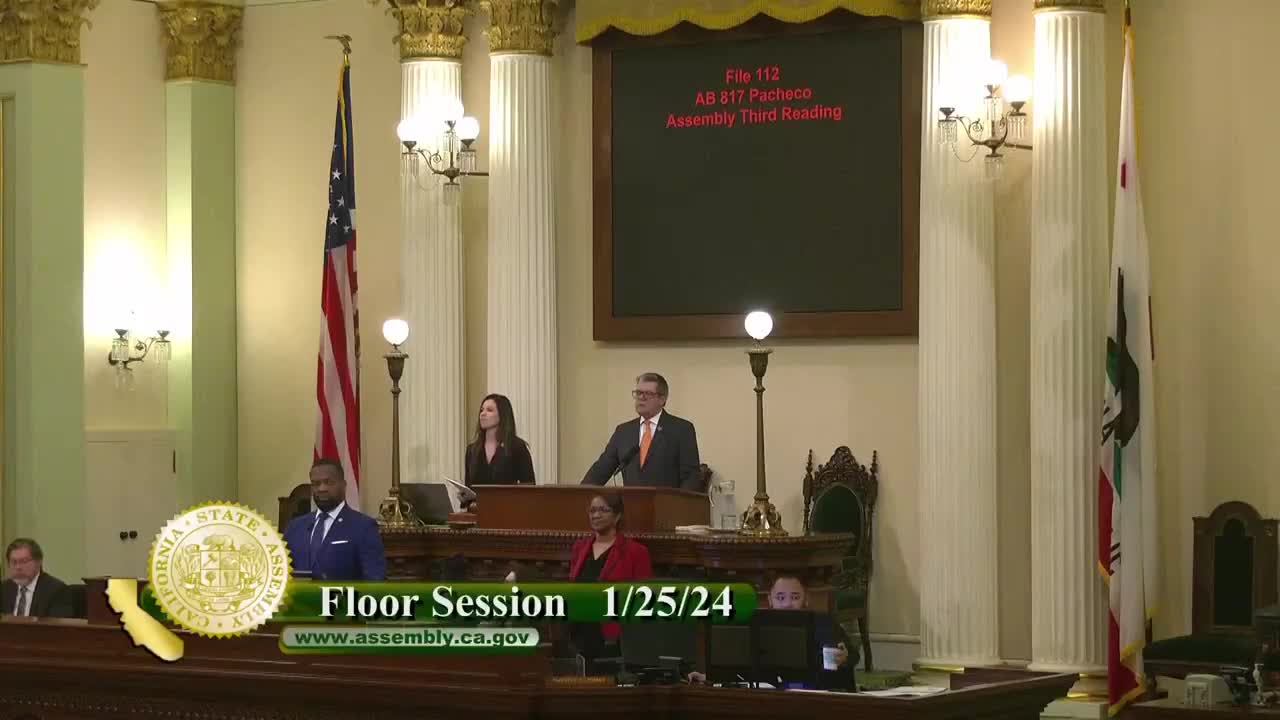
Bill Author

Bill Co-Author(s):