AB 93: Criminal procedure: consensual searches.
- Session Year: 2023-2024
- House: Assembly
- Latest Version Date: 2023-02-23
Current Status:
Failed
(2023-06-01: Reconsideration granted. (Ayes 53. Noes 17. Page 2140.))
Introduced
In Committee
First Chamber
In Committee
Second Chamber
Enacted
What does this bill do?
This bill forbids police and law enforcement agencies in California from asking for or relying on a person’s consent to do a search of a person, a vehicle, or a person’s belongings; consent alone cannot justify a warrantless search. It still allows searches that are supported by a valid warrant, probable cause, or another legal reason.
The summary is provided by generative AI which can make mistakes. For original language, please view the details in the table below.
Existing law describes search warrants and enumerates the grounds upon which a search warrant may be issued, including, among other grounds, when the property or things to be seized constitute evidence showing that a felony has been committed. Existing law authorizes a peace officer to conduct a search without a warrant if they have the voluntary consent of the person.
This bill would state the intent of the Legislature to enact legislation to prohibit officers from requesting consent to conduct a search if the officer does not suspect criminal activity.This bill would prohibit a peace officer or law enforcement agency from conducting a warrantless search of a vehicle, person, or their effects, based solely on a persons consent, as specified. The bill would specify that consent to conduct a search is not lawful justification for a search.
Existing law describes search warrants and enumerates the grounds upon which a search warrant may be issued, including, among other grounds, when the property or things to be seized constitute evidence showing that a felony has been committed. Existing law authorizes a peace officer to conduct a search without a warrant if they have the voluntary consent of the person.
This bill would state the intent of the Legislature to enact legislation to prohibit officers from requesting consent to conduct a search if the officer does not suspect criminal activity.
The Legislature finds and declares all of the following:
(a)The people have a right to be secure in their persons and effects against unreasonable seizures and searches. Search warrants may not be issued except on probable cause, supported by oath or affirmation, particularly describing the place to be searched and the persons and things to be seized.
(b)Nevertheless, every year, law enforcement agencies conduct tens of thousands of searches of people in California that are based not on any warrant, probable cause, nor even any factual basis to suspect a crime, but merely on the purported consent to search given by a person confronted on the street by a police officer.
(c)Data and research make clear that such searches should not be considered truly consensual. In data reported to the state, officers report that 98.5 percent of individuals consent to a search when asked. Social psychology research indicates that the consent to search that people give when asked by an authority figure is not truly voluntary due to power dynamics, particularly with vulnerable populations. In California, policing agencies reported most frequently subjecting youth 10 to 17 years of age to searches based solely on purported consent.
(d)Data and research show that these factually baseless searches are not beneficial for public safety, because searches of people and vehicles in which the only legal justification for the search is the persons purported consent have very low rates of discovering evidence of crime. Though police officers perform consent-only searches in stops of Black and Hispanic or Latine people more frequently, they are also least likely to find contraband or evidence during those searches.
(e)Considering the race of an individual to any degree when deciding whether to conduct additional actions during a stop, including consensual searches or asking questions, violates California law prohibiting racial or identity profiling. However, data and research show that giving officers the discretion to seek factually baseless searches based on purported consent leads to disparate stops and searches of Black and Hispanic or Latine individuals. State stop data show that when consent searches are performed, the underlying reason for the initial police contact is more likely to be traffic enforcement for people of color than it is for Caucasian people, raising the concern that consent searches incentivize racially biased pretextual stops. Black individuals are 4 times as likely, Hispanic or Latine individuals 2.4 times as likely, and Multiracial individuals 2.2 times as likely to be asked for consent to search during a traffic stop than Caucasian individuals.
(f)Increased police contacts including searches can have a negative impact on public health and safety, with Black individuals who have been stopped and those that live in communities where such stops frequently occur reporting higher levels of anxiety, trauma, post-traumatic stress disorder, and depression along with other negative health consequences, including trauma-induced sleep deprivation in youth who are stopped or vicariously experience abusive police behaviors. It may also undermine public faith in the institution of policing, with research finding that individuals perceive stops for minor infractions that lead to officers asking additional questions, such as for consent to search, as illegitimate uses of police authority.
SECTION 1.SEC. 2.It is the intent of the Legislature to enact legislation to prohibit officers from requesting consent to conduct a search if the officer does not suspect criminal activity. ensure the right of the people to be secure in their persons and effects against police searches based on purported consent rather than on an evidentiary basis.
SEC. 3.Section 833.6 is added to the Penal Code, to read:833.6.(a)The consent of a person given to a peace officer to conduct a search shall not constitute lawful justification for a search. A warrantless search conducted solely on the basis of a persons consent is a violation of that persons rights under this section.
(b)A peace officer shall not seek consent to conduct a warrantless search of a vehicle, person, or their effects.
(c)A law enforcement agency shall not authorize a peace officer to conduct a search in violation of this section.
(d)This section shall not be construed to limit the authority of a peace officer to conduct a search based on probable cause, a valid warrant, or another legal basis that is not consent.
It is the intent of the Legislature to enact legislation to prohibit officers from requesting consent to conduct a search if the officer does not suspect criminal activity.
|
Date
|
Status
|
|---|---|
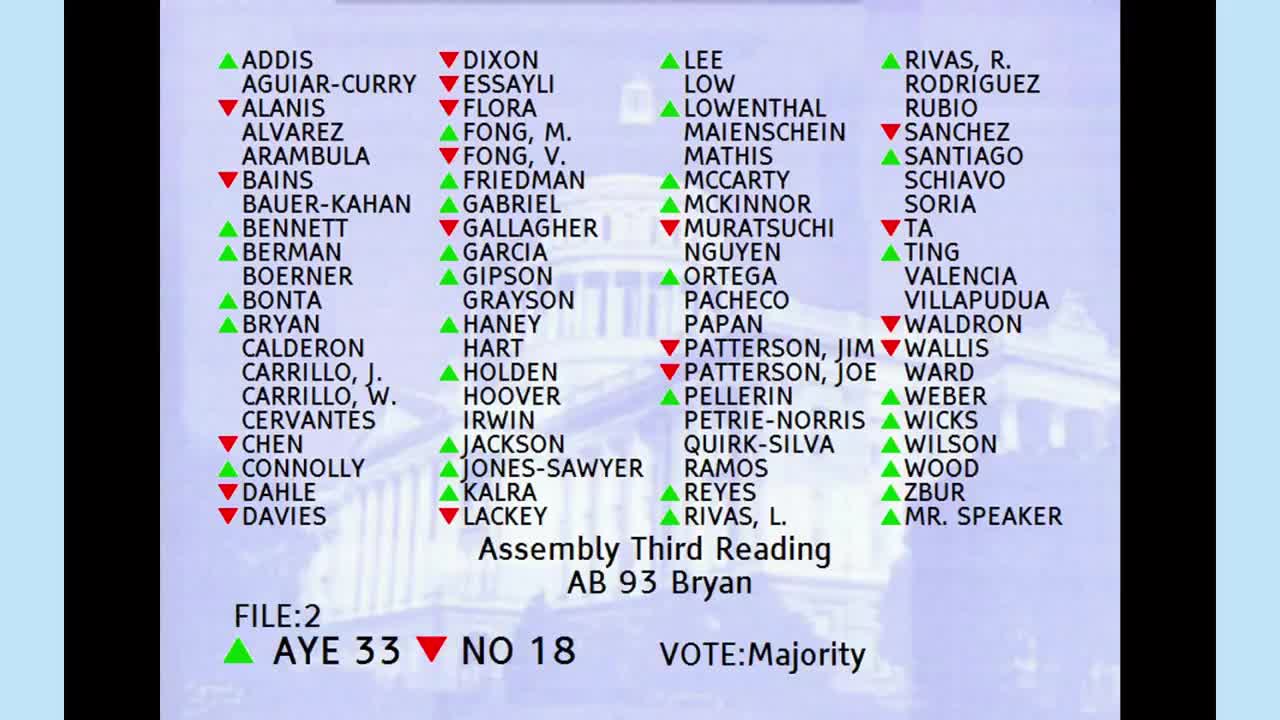
| Jun 1, 2023 | Read third time. Refused passage. (Ayes 35. Noes 22. Page 2145.). |
| Jun 1, 2023 | Reconsideration granted. (Ayes 53. Noes 17. Page 2140.) |
| May 25, 2023 | Motion to reconsider made by Assembly Member Bryan. |
| May 25, 2023 | Read third time. Refused passage. |
| Mar 8, 2023 | Read second time. Ordered to third reading. |
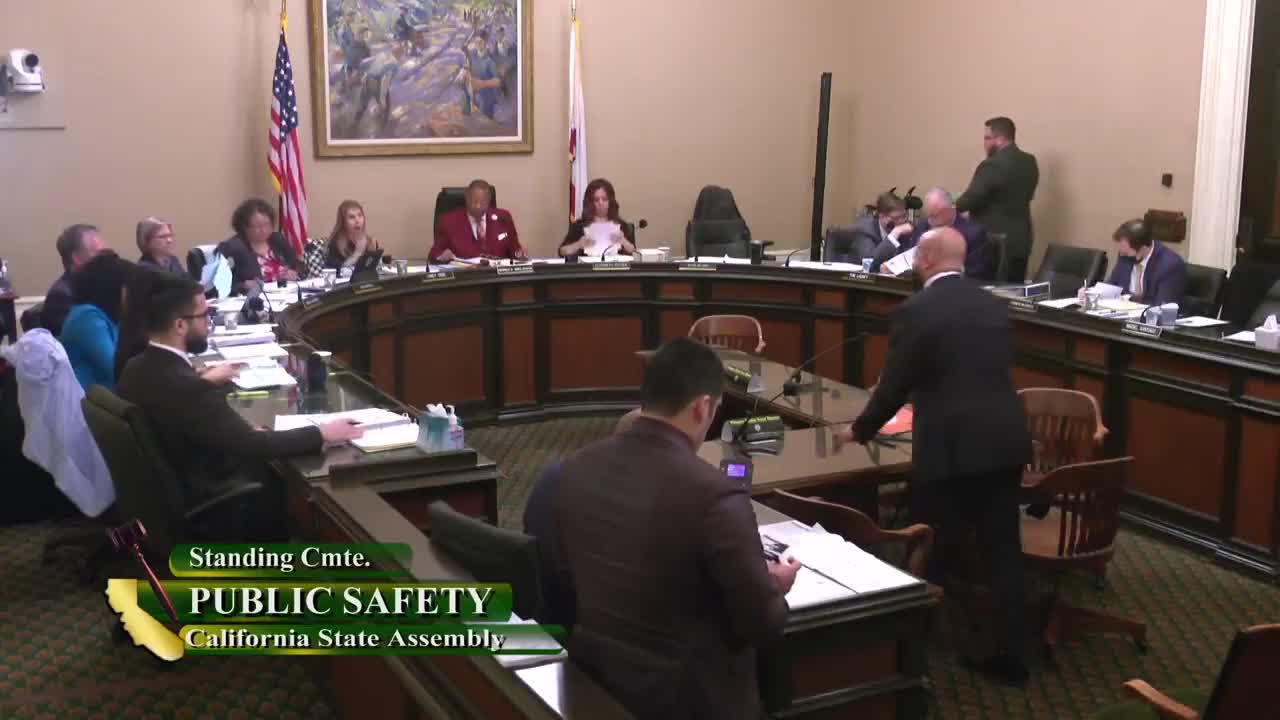
| Mar 7, 2023 | From committee: Do pass. (Ayes 6. Noes 1.) (March 7). |
| Feb 27, 2023 | Re-referred to Com. on PUB. S. |
| Feb 23, 2023 | From committee chair, with author's amendments: Amend, and re-refer to Com. on PUB. S. Read second time and amended. |
| Feb 23, 2023 | Referred to Com. on PUB. S. |
| Jan 10, 2023 | From printer. May be heard in committee February 9. |
| Jan 9, 2023 | Read first time. To print. |
|
Date
|
Description
|
Location
|
Votes
|
|
|---|---|---|---|---|
| Jun 1, 2023 | AB 93 Bryan Assembly Third Reading | Assembly Floor |
Failed |
|
| Jun 1, 2023 | AB 93 Bryan Motion to Reconsider | Assembly Floor |
Passed |
|
| May 25, 2023 | AB 93 Bryan Assembly Third Reading | Assembly Floor |
Failed |
|
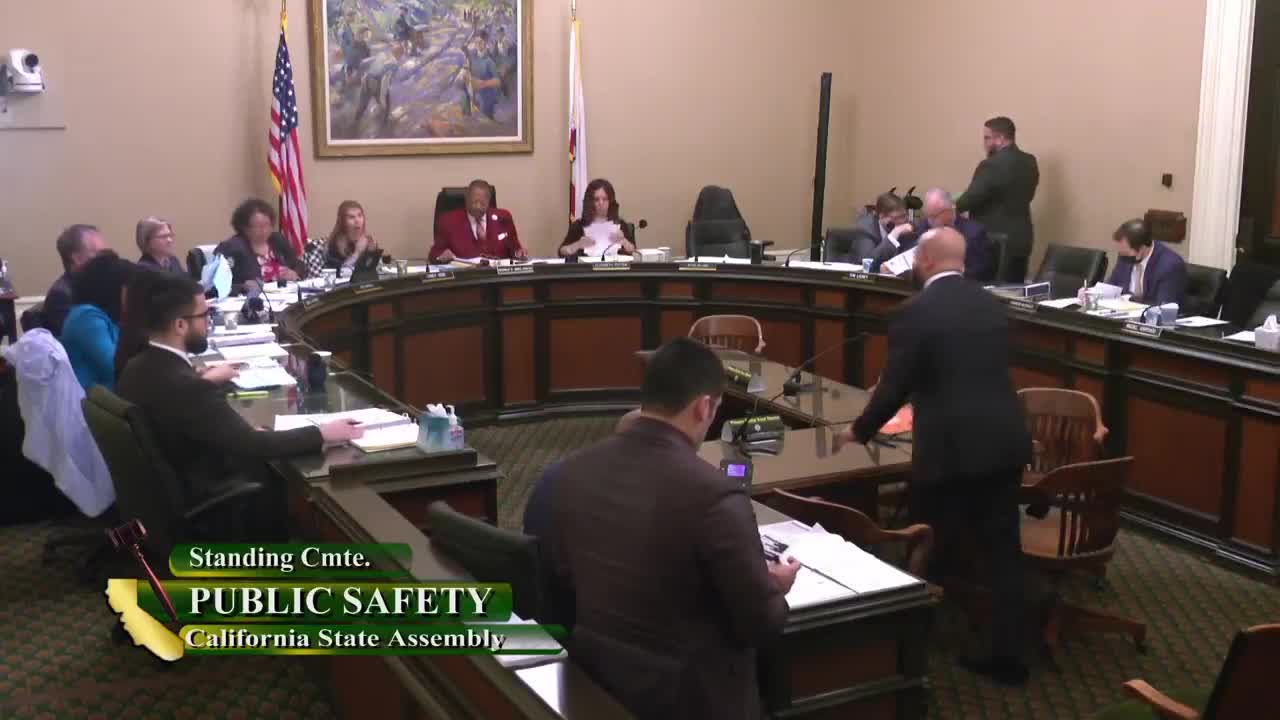
| Mar 7, 2023 | Do pass. | Assembly Standing Committee on Public Safety |
Passed |
This list shows positions taken on this bill by organizations on the date displayed, which is linked to the original source.
Positions by individuals are not included.
|
Organization
|
Position
|
Date
|
|---|---|---|
| AAPI Equity Alliance | ** Support | |
| Aclu California Action | * Support | Mar 7, 2023 |
| ACLU of Northern California | * Support | Mar 7, 2023 |
| Alianza | ** Support | |
| Alianza Coachella Valley | ** Support | |
| Alliance San Diego | ** Support | |
| American Atheists | ** Support | |
| American Friends Service Committee | ** Support | |
| Anti-Recidivism Coaition | * Support | Mar 7, 2023 |
| Anti-Recidivism Coalition | * Support | Mar 7, 2023 |
| Arcadia Police Officers' Association | ** Against | |
| Asian Americans Advancing Justice - Asian Law Caucus | ** Support | |
| Asian Prisoner Support Committee | ** Support | |
| Black Jewish Justice Alliance | ** Support | |
| Black Lives Matter Los Angeles | ** Support | |
| Black Lives Matter Sacramento | ** Support | |
| Burbank Police Officers' Association | ** Against | |
| California Association of Black Lawyers | ** Support | |
| California Attorneys For Criminal Justice | ** Support | |
| California Bicycle Coalition | ** Support | |
| California Coalition of School Safety Professionals | ** Against | |
| California District Attorney Association | * Against | Mar 7, 2023 |
| California District Attorneys Association | * Against | Mar 7, 2023 |
| California Public Defenders Association | * Support | Mar 7, 2023 |
| Californians for Safety and Justice | * Support | Mar 7, 2023 |
| Cancel the Contract Antelope Valley | ** Support | |
| Children's Defense Fund - CA | ** Support | |
| Chispa, a Project of Tides Advocacy | ** Support | |
| CLAREMONT POLICE OFFICERS ASSOCIATION | ** Against | |
| Coalition for Humane Immigrant Rights | ** Support | |
| Communities United for Restorative Youth Justice | ** Support | |
| Corona Police Officers Association | ** Against | |
| Council on American-Islamic Relations, California | ** Support | |
| Courage California | ** Support | |
| Culver City Police Officers' Association | ** Against | |
| Ella Baker Center For Human Rights | ** Support | |
| Empowering Pacific Islander Communities Fiscally Sponsored by Community Partners | ** Support | |
| Fullerton Police Officers' Association | ** Against | |
| Glide | ** Support | |
| Housing Is a Human Right Oc | ** Support | |
| Inglewood Police Officers Association | ** Against | |
| Initiate Justice | * Support | Mar 7, 2023 |
| Interfaith Movement for Human Integrity | ** Support | |
| Lawyers' Committee for Civil Rights of the San Francisco Bay Area | ** Support | |
| Legal Services for Prisoners with Children | ** Support | |
| Los Angeles County Bicycle Coalition | ** Support | |
| los angeles school police officers association | ** Against | |
| Newport Beach Police Association | ** Against | |
| Norcal Resist | ** Support | |
| Oakland Privacy | ** Support | |
| Orange County Equality Coalition | ** Support | |
| Palos Verdes Police Officers Association | ** Against | |
| Peace Officers Research Assn of CA (PORAC PAC) | * Against | Mar 7, 2023 |
| Peace Officers Research Association Of California | * Against | Mar 7, 2023 |
| People's Budget Orange County | ** Support | |
| PLACER COUNTY DEPUTY SHERIFFS ASSOCIATION | ** Against | |
| Pomona Police Officers' Association | ** Against | |
| RIVERSIDE POLICE OFFICERS ASSOCIATION | ** Against | |
| Riverside Sheriffs' Association | ** Against | |
| San Diegans Against Crime | * Against | Mar 7, 2023 |
| San Diego Deputy District Attorneys Association | * Against | Mar 7, 2023 |
| San Diego District Attorney's Association | * Against | Mar 7, 2023 |
| San Francisco Public Defenders Office | * Support | Mar 7, 2023 |
| Santa Ana Police Officers Association | ** Against | |
| Silicon Valley De-Bug | * Support | Mar 7, 2023 |
| Smart Justice California | * Support | Mar 7, 2023 |
| Social Justice Learning Institute | ** Support | |
| Social Justice Legal Foundation | ** Support | |
| Transforming Justice Oc | ** Support | |
| Upland Police Officers Association | ** Against | |
| Woodhull Freedom Foundation | ** Support |
ASSEMBLY THIRD READING
ATR Bill Id:AB 93
Author:(Bryan)
As Amended Ver:February 23, 2023
Majority vote
SUMMARY
Prohibits consent searches by peace officers, as specified.
Major Provisions
- States that the consent of a person given to a peace officer to conduct a search shall not constitute lawful justification for a search.
- Provides that a warrantless consent search is a violation of that person's rights.
- Prohibits a peace officer from seeking consent to conduct a warrantless search of a vehicle, person, or their effects.
- Prohibits a law enforcement agency from authorizing a peace officer to conduct a consent search.
- Provides that these provisions shall not be construed to limit the authority of a peace officer to conduct a search based on probable cause, a valid warrant, or another legal basis that is not consent.
- States Legislative findings and declarations.
- States Legislative intent to protect against police searched based on purported consent rather than on an evidentiary basis.
COMMENTS
According to the Author
"AB 93 will prohibit police officers from asking for consent to search a person or their vehicle without an evidence-based legal justification. Consent searches are inherently vulnerable to bias because they are not based on objective criteria, and police have full discretion to choose when and from whom to seek such a search.
"RIPA data reveals that Black individuals were four times as likely and Latino individuals were 2.4 times as likely to be asked for a consent search during a traffic stop than White individuals. During stops where officers perform consent searches, officers are least likely to find contraband in the possession of those who are Black. Despite this, a far higher percentage of stops of Black individuals involve consent searches compared to any other group. Essentially, people of color, particularly Black individuals, are being unjustly asked to waive their fourth amendment rights by officers holding lethal weapons under the guise of being voluntary.
"Limiting consent searches will help stop unjustifiable police interactions that lead to more intrusive and at worst lethal encounters with communities of color."
Arguments in Support
According to Initiate Justice, "These searches are invasive and traumatizing, and amount to fishing expeditions that are significantly influenced by officers' biases.
"Indeed, research shows that people of color are significantly more likely to be asked to submit to a search than people who are white. Statewide, Black people are four times as likely, Latine people 2.4 times as likely, and multiracial people 2.2 times as likely to be asked for consent to search during a traffic stop than white people. In Los Angeles, seven out of every 10 bicyclists searched by the Sheriff's Department was Latine. In San Francisco, Black motorists were eight times more likely than white drivers to be subjected to a consent search after a traffic stop, and Latine drivers were searched at almost four times the rate of white drivers. Yet research consistently shows that searches of Black and Latine people are significantly less likely to uncover contraband than are searches of people who are white."
Arguments in Opposition
According to San Diego Deputy District Attorneys Association (SDDDAA), "Our federal and state Constitutions and well-established case law provide very clear boundaries for what constitutes a valid consent search under the law. When an individual gives their consent to search their vehicle, their person, or their property, courts have bright line parameters provided in case law that require the scrutinization of the voluntariness and scope of consent. […] This extreme bill of throwing out all consensual searches takes away another valuable and lawful tool for law enforcement, while also removing choice from individuals in a free society to decide when they want to aid police, solve a crime, or ensure an innocent person is exonerated. …
"The Committee on Revision of the Penal Code is concerned about two areas as it relates to consent searches: (1) police asking for consent more often from people of color and (2) lower rates of discovering evidence of a crime from consent searches. […] It should be noted that this bill goes even further than the recommendations from the Committee on Revision of the Penal Code, which suggests consent searches when there is reasonable suspicion. This bill bans any person from freely choosing to allow the police to search a vehicle, their person or their effects/property. Put simply, this bill strips law enforcement of legally valid tools, strips individuals of free will to consent, and does nothing to keep the public safer in communities held hostage by violence."
FISCAL COMMENTS
Unknown. This bill is keyed non-fiscal by the Legislative Counsel.
VOTES
ASM PUBLIC SAFETY: 6-1-1
YES: Jones-Sawyer, Bonta, Bryan, Ortega, Santiago, Zbur
NO: Alanis
ABS, ABST OR NV: Lackey
UPDATED
VERSION: February 23, 2023
CONSULTANT: Liah Burnley / PUB. S. / (916) 319-3744 FN: 0000017
Date of Hearing: March 7, 2023
Counsel: Liah Burnley
ASSEMBLY COMMITTEE ON
Reginald Byron Jones-Sawyer, Sr., Chair
ABPCA Bill Id:
Author:() – As Ver:
SUMMARY:
Prohibits consent searches by peace officers, as specified. Specifically, this bill:
- States that the consent of a person given to a peace officer to conduct a search shall not constitute lawful justification for a search.
- Provides that a warrantless consent search is a violation of that person’s rights.
- Prohibits a peace officer from seeking consent to conduct a warrantless search of a vehicle, person, or their effects.
- Prohibits a law enforcement agency from authorizing a peace officer to conduct a consent search.
- Provides that these provisions shall not be construed to limit the authority of a peace officer to conduct a search based on probable cause, a valid warrant, or another legal basis that is not consent.
- States Legislative findings and declarations.
- States Legislative intent to protect against police searched based on purported consent rather than on an evidentiary basis
EXISTING FEDERAL LAW: Provides that the right of the people to be secure in their persons, houses, papers, and effects, against unreasonable searches and seizures, shall not be violated, and no Warrants shall issue, but upon probable cause, supported by Oath or affirmation, and particularly describing the place to be searched, and the persons or things to be seized. (U.S. Const., 4th Amend.)
EXISTING STATE LAW:
- Provides that the right of the people to be secure in their persons, houses, papers, and effects against unreasonable seizures and searches may not be violated; and a warrant may not issue except on probable cause, supported by oath or affirmation, particularly describing the place to be searched and the persons and things to be seized. (Cal. Const., art I, § 13.)
- Sets forth the circumstances for which a search warrant may be issued. (Pen. Code, §§ 1523-1542.)
- Provides that a defendant may move for the return of property or to suppress evidence obtained as a result of a search or seizure if, among other reasons, the search without a warrant was unreasonable. (Pen. Code, § 1538.5, subd. (a).)
- Provides that relevant evidence shall not be excluded in any criminal proceeding, including pretrial and post-conviction motions and hearings, or in any trial or hearing of a juvenile for a criminal offense, whether heard in juvenile or adult court, subject to the existing statutory role of evidence relating to privilege or hearsay, or inadmissibility. (Cal. Const., art. I, § 28.)
- Requires a peace officer making a traffic or pedestrian stop to state the reason for the stop before engaging in questioning related to a criminal investigation or a traffic violation.. (Veh. Code, § 2806.5.)
- Requires DMV to include within the Driver’s Handbook a section on a person’s civil rights during a traffic stop, including the limitations on a peace officer’s authority during a traffic stop and the legal rights of drivers and passengers. (Veh. Code, § 1656.3, subd. (a)(4).)
FISCAL EFFECT:
Unknown
COMMENTS:
- Author's Statement: According to the author, “AB 93 will prohibit police officers from asking for consent to search a person or their vehicle without an evidence-based legal justification. Consent searches are inherently vulnerable to bias because they are not based on objective criteria, and police have full discretion to choose when and from whom to seek such a search.
“RIPA data reveals that Black individuals were 4 times as likely and Latino individuals were 2.4 times as likely to be asked for a consent search during a traffic stop than White individuals. During stops where officers perform consent searches, officers are least likely to find contraband in the possession of those who are Black. Despite this, a far higher percentage of stops of Black individuals involve consent searches compared to any other group. Essentially, people of color, particularly Black individuals, are being unjustly asked to waive their 4th amendment rights by officers holding lethal weapons under the guise of being voluntary.
“Limiting consent searches will help stop unjustifiable police interactions that lead to more intrusive and at worst lethal encounters with communities of color.”
- Search Warrant Requirement: The Fourth Amendment of the U.S. Constitution and Article I, Section 13 of the California Constitution provide safeguards against unreasonable search and seizures. Generally, a “search” is a governmental intrusion upon, or invasion of a person’s security in an area in which they have a reasonable expectation of privacy. (People v. Mayberry (1982) 13 Cal.3d 35, 341.) These constitutional provisions both generally require the police to secure a warrant before conducting a search, and specify that the warrant must be issued “upon probable cause, supported by oath or affirmation, and particularly describing the place to be searched.”
Penal Code section 1523 defines a “search warrant” as an order, in writing, signed by a magistrate, commanding a peace officer to search for personal property and bring it before a magistrate. Section 1524 outlines the statutory grounds for issuance of search warrants and mandates that they be supported by probable cause. The standard for probable cause to issue a search warrant is “whether, given all the circumstances set forth in the affidavit, there is a fair probability that contraband or evidence of a crime will be found in a particular place.” (Illinois v. Gates (1983) 462 U.S. 213, 238.)
The search warrant requirement is subject to some exceptions, such as warrantless vehicle searches, searches to preserve life or property, searches of probationers and parolees, temporary searches incident to detention and arrests, and school searches. Consent searches are also an exception to the warrant requirement of the Fourth Amendment.
- Parameters of Warrantless Consent Searches: Officers do not need to suspect any wrongdoing or have probable cause to seek a consent search, and officers can use their discretion to decide when to request a consent search. (Florida v. Royer (1983) 460 U.S. 491, 497; see also Schneckloth v. Bustamonte (1973) 412 U.S. 218, 227.) Consent to search is broad in scope, unless limited by the person giving it or by the officers’ statements. (People v. Miller (1999) 69 CA.4th 190, 203.) Consent must be free and voluntary, rather than a mere submission to a claim of lawful authority or the result of coercion or distress. (Florida v. Royer, supra, 460 U.S. at p. 497.) Consent can be manifested by actions as well as by words. (People v. Harrington (1970) 2 Cal.3d. 991, 995.) Consent may be withdrawn anytime before a search is completed. (People v. Hamilton (1985) 168 Ca.3d 1058, 1067.) But, advice that consent can be refused is not required. (U.S. v. Watson (1976) 423 U.S. 411, 424.) Use of ruse by the police, or evidence to mislead is a factor to be considered, but does not make consent involuntary. (People v. Avalos (1996) 47 Cal.4th 1569, 1577.)
- The Exclusionary Rule and Proposition 8: The exclusionary rule requires suppression of evidence seized during an unreasonable search or seizure in violation of the Fourth Amendment. (U.S. Const., amend. IV, XIV; Wong Sun v. United States (1963) 371 U.S. 471, 484-487.) Penal Code section 1538.5 requires courts to suppress evidence that was obtained in a way that violates the California Constitution or the U.S. Constitution.
In 1982, the California voters passed Proposition 8. Proposition 8 enacted article I, section 28 of the California Constitution, which provides in relevant part: “Right to Truth-in-Evidence. Except as provided by statute hereafter enacted by a two-thirds vote of the membership in each house of the Legislature, relevant evidence shall not be excluded in any criminal proceeding, including pretrial and post conviction motions and hearings.” (Cal. Const., art. I, § 28, subd. (f); People v. Lazlo (2012) 206 Cal.App.4th 1063, 1069.) The “Truth-in-Evidence” provision of Section 28 “was intended to permit exclusion of relevant, but unlawfully obtained evidence, only if exclusion is required by the United States Constitution.” (In re Lance W. (1985) 37 Cal.3d 873, 890 (Lance W.).) Thus, Section 28 federalized California’s search and seizure law. A trial court may exclude evidence under Penal Code section 1538.5 only if exclusion is mandated by the federal Constitution. (Lance W., supra, 37 Cal.3d at p. 896.)
This bill would provide that a warrantless search conducted solely on the basis of a person’s consent is a violation of that person’s rights. However, such a violation would not necessarily rise to the level of a Fourth Amendment violation. (People v. McKay (2002) 27 Cal.4th 601, 605 [the violation of a state statute, standing alone, does not form the basis for suppression under the Fourth Amendment.) Accordingly, this bill would not require a two-thirds vote pursuant to Proposition 8, and will not necessarily result in exclusion of evidence found during a consent search as a remedy. If this bill is enacted, evidence obtained by an officer pursuant to a consent search could generally still be introduced at trial. However, the prohibition could potentially be used in other contexts, such as civil rights actions, disciplinary and internal affairs investigations, and other civil or administrative actions.
- Coercive Nature of Voluntary Consent: A salient critique of consent searches is that they are inherently coercive because implicit in the police officer’s questioning is a show of authority that will intimidate the average person. (Lawrence v. United States (D.C. 1989)566 A.2d 57, 61.) Many people, if not most, will always feel coerced by police requests to search. (See Strauss, Reconstructing Consent (2001) 92 J. Crim. L. & Criminology 211, 221 [arguing that consent searches are often not consensual].) Given the nature of police authority and the context of the citizen–police encounter, it is highly likely that police requests to search are often interpreted as commands to permit the search to take place. (Tiersma & Sloan, The Language of Consent in Police Encounters (2012), at p. 337.) Indeed, 98.5% of people consent to a search of either their person or property when an officer requested to perform a search during a traffic stop. (Racial and Identity Profiling Advisory Board, 2023 Annual Report at p. 71 <https://oag.ca.gov/system/files/media/ripa-board-report-2023.pdf> [as of Feb. 28, 2023].)
Research also shows that “decision makers judging the voluntariness of consent consistently underestimate the pressure to comply with intrusive requests. This is problematic because it indicates that a key justification for suspicionless consent searches—that they are voluntary—relies on an assessment that is subject to bias.” (Sommers & Bons, The Voluntariness of Voluntary Consent: Consent Searches and the Psychology of Compliance (2019) 128 Yale L. J.1962, 1965.)
Another “objection to consent searches is that the legal standard for determining the voluntariness of consent is murky and ill-defined, allowing courts to find consent voluntary in all but the most extreme cases.” (Sommers & Bons, supra, at p. 1969.) Courts determine whether there was consent to a search by determining whether the officers’ belief that they had consent is “objectively reasonable under the circumstances.” (People v. Machupa (1997) 2 Cal.3d 991, 995.) Systematic studies of lower-court rulings have found that judges rarely give weight to individualized factors about the accused when deciding voluntariness. Instead, judges tend to focus on the conduct of the police, such as whether officers used a “conversational tone” and whether they drew their weapons. If there is “no threat, no command, not even an authoritative tone of voice,” judges generally infer that the defendant felt free to refuse the search. (Sommers & Bons, supra, at p. 1969.)
- Racial Disparities in Consent Searches: Data indicates that there are significant racial disparities related to consent searches. For example, “local law enforcement officers are especially likely to search Black and Latino drivers during nighttime stops, but discovery rates for contraband or evidence are lower than those of white drivers.” (Public Policy Institute of California, Racial Disparities in Traffic Stops, (October 2022) <https://www.ppic.org/publication/racial-disparities-in-traffic-stops/> [as of Feb. 28, 2023].)
In San Francisco, Black drivers are eight times more likely than white drivers to be subjected to a consent search after a traffic stop, and Latino drivers are searched at almost four times the rate of white drivers. (San Francisco Chronicle, Racial Disparities in SF Traffic Searches Raise Concerns of Bias (April 8, 2018) <https://www.sfchronicle.com/crime/article/Racial-disparities-in-SF-traffic-searches-raise-7235690.php> [as of Feb. 23, 2023].)
At the request of the Los Angeles Police Commission, the Office of the Inspector General (OIG) reviewed vehicle, pedestrian, and bicycle stops conducted by the Los Angeles Police Department (LAPD) in 2019. For stops based on traffic violations, the rate of consent-only searches was seven times higher for Black men than White men, and five times higher for Hispanic men than White men. In examining these searches the OIG found: “Racial differences persisted even for searches considered to be more discretionary, such as consensual searches or searches based on generalized officer safety concerns. Searches of Black and Hispanic people, including higher-discretion searches, were generally less likely to be associated with the recovery of contraband or other evidence than were searches of White people. With respect to serious contraband such as a firearm, the recovery rates were relatively low – around two percent—and varied only slightly by race, with searches of Black and Hispanic people being slightly more likely to be associated with the recovery of a firearm than searches of other groups.” The OIG also found “Instances in which a Black or Hispanic person was searched were also less likely to result in an arrest than were instances in which a White person was searched.”(Los Angeles Police Commission, Review of Stops Conducted by the Los Angeles Police Department in 2019 (October 27, 2020) at p. 4 <https://www.oig.lacity.org/_files/ugd/b2dd23_d3e88738022547acb55f3ad9dd7a1dcb.pdf> [as of Feb. 23, 2023].) - Recommendations by the Committee on Revision of the Penal Code: The Committee on Revision of the Penal Code was established by the Legislature and the Governor to study all aspects of criminal law and procedure and make recommendations that would simplify and rationalize the law. In its 2022 Annual Report, the Committee recommends, among other things, to limit consent searches during traffic stops. (Committee on the Revision of the Penal Code, 2022 Annual Report and Recommendations at p. 3 <http://www.clrc.ca.gov/CRPC/Pub/Reports/CRPC_AR2022.pdf > [as of Feb. 28, 2023].)
Specifically, the Committee recommends allowing “police officers to request permission to search during traffic stops only when the officer has reasonable suspicion to believe the search will uncover evidence of a crime.” (Id., at pp. 36-38.) “The reasonable suspicion threshold should be extended to consent searches, so that consent-based searches are only undertaken when there is some articulable level of suspicion, as opposed to a potentially-biased hunch.” (Ibid.)
This bill goes beyond the recommendation of the Committee on the Revision of the Penal Code in that it prohibits consent searches altogether. - Recommendations by the Racial Identity and Profiling Advisory Board: The Racial and Identity Profiling Advisory Board’s annual reports examine a wide range of issues related to racial and identity profiling in policing. The Board’s 2023 Annual Report analyzes the stop data from January 1, 2021 to December 31, 2021, collected and reported by 58 law enforcement agencies in California, including data and research on pretextual stops and consent searches. In its report, the Board calls on the Legislature, law enforcement agencies, and local district attorneys to “prohibit certain searches, such as consent searches or supervision searches, during traffic stops and instead requiring probable cause for any search.” The Board’s report also recommends, “Policies should prohibit specific types of enforcement actions traditionally allowed in the absence of probable cause or reasonable suspicion.” (Racial and Identity Profiling Advisory Board, 2023 Annual Report at pp. 7, 13-14 <https://oag.ca.gov/system/files/media/ripa-board-report-2023.pdf> [as of Feb. 28, 2023].)
Again, this bill goes beyond the recommendations of the Board in that it prohibits consent searches altogether. - Rodriguez v. California Highway Patrol: The California Highway Patrol (CHP) issued a moratorium on consent searches from 2001 to 2006, upon the recommendation of a team of CHP managers and a pending federal class-action case, Rodriguez v. California Highway Patrol (N.D. Cal. 2000) 89 F. Supp. 2d 1131, alleging racial discrimination. Data obtained through discovery in the case revealed that Latinos were approximately three times as likely to be searched by drug interdiction officers as Whites, and African Americans were approximately twice as likely to be searched by drug interdiction officers. (American Civil Liberties Union, California Highway Patrol Bans Consent Searches Following Review of Data Collection Showing Discriminatory Pattern, (April 2001) <https://www.aclu.org/press-releases/california-highway-patrol-bans-consent-searches-following-review-data-collection> [as of Feb. 27, 2023]; see also Los Angeles Times, CHP Settles Lawsuit Over Claims of Racial Profiling (February 23, 2003) <https://www.latimes.com/archives/la-xpm-2003-feb-28-me-search28-story.html> [as of Feb. 27, 2023].) In so doing, CHP became the nation’s first law enforcement agency to voluntarily agree to stop asking motorists for permission to search their vehicles.
While the terms of this agreement made effective steps towards addressing racial profiling within CHP, the moratorium expired in 2006. AB 2133 (Torrico), was introduced in 2006 to codify the moratorium and establish a statewide policy for all law enforcement to end consent searches. However, AB 2133 was never heard at the request of the author. (Asm. Comm. on Public Safety, Analysis of AB 2133 (2005-2006 Reg. Sess.) as amended April 6, 2006, p. 11.) - Limitations on Consent Searches in Other States: In 2002, the New Jersey Supreme Court held that in order for a consent to search a motor vehicle, law enforcement personnel must have a reasonable and articulable suspicion of criminal wrongdoing prior to seeking consent. (State v. Carty (2002)170 N.J. 632.)
In 2003, the Minnesota Supreme Court also held that in the absence of reasonable, articulable suspicion a consent-based search obtained by exploitation of a routine traffic stop that exceeds the scope of the stop’s underlying justification is invalid. (State v. Fort (2003) 660 N.W.2d 415, 416.)
The Austin Police Department in Texas revised its consent search policy in 2012 to require that officers only request consent to search when they have an articulable reason to believe the search is necessary and likely to produce evidence related to an investigation. A driver must give permission for a search in writing before a consent search can be initiated. (City of Austin Police Department, 2018 Annual Racial Profiling Report (February 2019) at p. 3 <https://www.austintexas.gov/sites/default/files/files/Police/2013_racial_profiling_report_022414.pdf> [as of Feb. 27, 2023].)
Rhode Island passed legislation in 2017 that limits consent searches by a law enforcement officer unless there is reasonable suspicion or probable cause of criminal activity. (RI Gen. L. § 31-21.2-5 (2017).)
Connecticut passed legislation in 2020 that prohibits police officers from asking for consent to search a vehicle during a traffic stop and prohibits consent searches in limited situations, including searches of a person that are not supported by probable cause. (Conn. H.R. No. 6004, July Special Session, Public Act No. 20-1 at p. 37.)
- Policy Considerations: This bill outright prohibits officers from seeking consent to search a vehicle, person, or their effects without a warrant and provides that a warrantless consent search is a violation of that person’s rights.
This prohibition runs contrary to a long line of cases upholding consent as an exception to the warrant requirement of the federal and state constitutions. It is well settled by the U.S. Supreme Court that one of the specifically established exceptions is a search that is conducted pursuant to consent. (Vale v. Louisiana (1970) 399 U.S. 30, [a search authorized by consent is wholly valid]; see also Davis v. United States (1946) 328 U.S. 582; Zap v. United States (1946) 328 U. S. 630.)
In Schneckloth v. Bustamonte (1973) 412 U.S. 218, the U.S. Supreme Court described the utility of consent searches. “Without such investigation, those who were innocent might be falsely accused, those who were guilty might wholly escape prosecution, and many crimes would go unsolved. In short, the security of all would be diminished.” (Id. at p. 225.)
Accordingly, some opponents of the bill have opposed a blanket ban, but suggest that it is possible to find some common ground in regulating consent searches, for example by limiting them to instances in which the officer has probable cause that a crime has been committed. However, in Schneckloth the Supreme Court pointed out that situations where the police have some evidence of illicit activity, but lack probable cause to arrest or search, a search authorized by a valid consent may be the only means of obtaining important and reliable evidence. (Id. at p. 227.) Schneckloth addresses the question whether an officer must have probable cause to request consent for a search (the answer is no). However, Schneckloth does not address the question whether a standard less than probable cause could be required for consent searches.
Probable cause exists when there is a fair probability that a search will result in evidence of a crime being discovered. (Illinois v. Gates, (1983) 462 U.S. 213, 238.) The Fourth Amendment and California constitution already require all searches to be supported by probable cause. (U.S. Const., 4th Amend; Cal. Const., art I, § 13.) Consent is an exception. (Schneckloth v. Bustamonte (1973) 412 U.S. 218.) Thus, logic follows, that adding a probable cause requirement to consent searches only serves to eviscerate the entire concept of consent as an exception. Further, in many instances, if an officer has probable cause, they are not required to obtain consent prior to conducting a search. For example, searches incident to arrests and vehicle searches, even without consent, are permissible if an officer has probable cause. (United States v. Robinson (1973) 414 U.S. 218, 235; Husty v. United States (1931) 282 U.S. 694.) Moreover, probable cause is already the standard for a warrant, making consent based on probable cause all but meaningless. (Whiteley v. Warden (1971) 401 U.S. 560, 564.)
Alternatively, allowing consent searches only in instances where an officer has reasonable suspicion would require the officer to be able to articulate a basis for the search could sufficiently limit the vast discretion officers currently have to conduct consent searches. The reasonable suspicion standard is less stringent than probable cause, but requires more than an inchoate and unparticularized suspicion or hunch; it must be based on specific and articulable facts, taken together with rational inferences from those facts. (Terry v. Ohio (1968) 329 US. 1, 27.)
Requiring consent searches to be supported by reasonable suspicion would not be unprecedented. The New Jersey Supreme Court, which limited consent searches to those supported by reasonable suspicion, stated that the reasonable and articulable suspicion standard “serves the prophylactic purpose of preventing the police from turning routine traffic stops into a fishing expedition for criminal activity unrelated to the lawful stop.” (State v. Carty (2002)170 N.J. 632, 634.)
Also, limiting consent searches to instances in which an officer has reasonable suspicion was recommended by the Committee on the Revision of the Penal Code: “Allow police officers to request permission to search during traffic stops only when the officer has reasonable suspicion to believe the search will uncover evidence of a crime.” (Committee on the Revision of the Penal Code, 2022 Annual Report and Recommendations, supra, at p. 36 (emphasis added).) “The reasonable suspicion threshold should be extended to consent searches, so that consent-based searches are only undertaken when there is some articulable level of suspicion, as opposed to a potentially-biased hunch.” (Ibid. (emphasis added).) As noted above, as introduced, this bill goes far further than that recommended by the Committee on the Revision of the Penal Code.
Accordingly, the Legislature should consider whether, rather than banning consent searches, it could strike a balance by limiting consent searches to instances where officers have reasonable and articulable suspicion to believe that the search is likely to produce evidence of an offense.
- Argument in Support: According to Initiate Justice, “These searches are invasive and traumatizing, and amount to fishing expeditions that are significantly influenced by officers’ biases.
“Indeed, research shows that people of color are significantly more likely to be asked to submit to a search than people who are white. Statewide, Black people are 4 times as likely, Latine people 2.4 times as likely, and multiracial people 2.2 times as likely to be asked for consent to search during a traffic stop than white people. In Los Angeles, 7 out of every 10 bicyclists searched by the Sheriff's Department was Latine. In San Francisco, Black motorists were eight times more likely than white drivers to be subjected to a consent search after a traffic stop, and Latine drivers were searched at almost four times the rate of white drivers. Yet research consistently shows that searches of Black and Latine people are significantly less likely to uncover contraband than are searches of people who are white.”
- Argument in Opposition: According to San Diego Deputy District Attorneys Association (SDDDAA), “Our federal and state Constitutions and well-established case law provide very clear boundaries for what constitutes a valid consent search under the law. When an individual gives their consent to search their vehicle, their person, or their property, courts have bright line parameters provided in case law that require the scrutinization of the voluntariness and scope of consent. […] This extreme bill of throwing out all consensual searches takes away another valuable and lawful tool for law enforcement, while also removing choice from individuals in a free society to decide when they want to aid police, solve a crime, or ensure an innocent person is exonerated. …
“The Committee on Revision of the Penal Code is concerned about two areas as it relates to consent searches: (1) police asking for consent more often from people of color and (2) lower rates of discovering evidence of a crime from consent searches. […] It should be noted that this bill goes even further than the recommendations from the Committee on Revision of the Penal Code, which suggests consent searches when there is reasonable suspicion. This bill bans any person from freely choosing to allow the police to search a vehicle, their person or their effects/property. Put simply, this bill strips law enforcement of legally valid tools, strips individuals of free will to consent, and does nothing to keep the public safer in communities held hostage by violence.”
- Related Legislation:
- AB 272 (Chen), would allow a search warrant for stolen property to include an order for such property to be returned to the person named in the warrant. AB 272 is pending hearing in this Committee.
- SB 64 (Umberg), would authorize a search warrant to be issued on the grounds that the property or things to be seized consists of evidence that tends to show that certain misdemeanor hate crimes have occurred. SB 64 is pending hearing in the Senate Public Safety Committee.
- AB 272 (Chen), would allow a search warrant for stolen property to include an order for such property to be returned to the person named in the warrant. AB 272 is pending hearing in this Committee.
- Prior Legislation:
- AB 2537 (Gipson), Chapter 332, Statutes of 2022, requires driver education courses to include a video on proper conduct by peace officers and individuals during a traffic stop.
- AB 2773 (Holden), Chapter 805, Statutes of 2022, requires a peace officer making a traffic or pedestrian stop to state the reason for the stop before asking any questions.
- AB 2918 (Holden), Chapter 723, Statutes of 2018, requires the DMV to include within its Handbook a section on a person’s civil rights during a traffic stop.
- AB 2133 (Torrico), of the 2005-2006 Legislative Session, would have prohibited consent searches in connection with traffic stops. AB 2133 was not heard in this Committee at the request of the author.
- AB 2537 (Gipson), Chapter 332, Statutes of 2022, requires driver education courses to include a video on proper conduct by peace officers and individuals during a traffic stop.
REGISTERED SUPPORT / OPPOSITION:
Support
ACLU California Action (Sponsor)
Aapi Equity Alliance
Alianza
Alianza Coachella Valley
Alliance San Diego
American Atheists
American Friends Service Committee
Asian Americans Advancing Justice - Asian Law Caucus
Asian Prisoner Support Committee
Black Jewish Justice Alliance
Black Lives Matter - Los Angeles
Black Lives Matter Sacramento
California Association of Black Lawyers
California Attorneys for Criminal Justice
California Bicycle Coalition
California Public Defenders Association (CPDA)
Californians for Safety and Justice
Cancel the Contract Antelope Valley
Children's Defense Fund - CA
Chispa, a Project of Tides Advocacy
Coalition for Humane Immigrant Rights (CHIRLA)
Communities United for Restorative Youth Justice (CURYJ)
Council on American-islamic Relations, California
Courage California
Ella Baker Center for Human Rights
Empowering Pacific Islander Communities (EPIC) Fiscally Sponsored by Community Partners
Glide
Housing Is a Human Right Oc (HHROC)
Initiate Justice
Interfaith Movement for Human Integrity
Lawyers' Committee for Civil Rights of The San Francisco Bay Area
Legal Services for Prisoners With Children
Los Angeles County Bicycle Coalition
Norcal Resist
Oakland Privacy
Orange County Equality Coalition
People's Budget Orange County
San Francisco Public Defender
Smart Justice California
Social Justice Learning Institute
Social Justice Legal Foundation
Transforming Justice Oc
Woodhull Freedom Foundation
Opposition
Arcadia Police Officers' Association
Burbank Police Officers' Association
California Coalition of School Safety Professionals
California District Attorneys Association
Claremont Police Officers Association
Corona Police Officers Association
Culver City Police Officers' Association
Fullerton Police Officers' Association
Inglewood Police Officers Association
Los Angeles School Police Officers Association
Newport Beach Police Association
Palos Verdes Police Officers Association
Peace Officers Research Association of California (PORAC)
Placer County Deputy Sheriffs' Association
Pomona Police Officers' Association
Riverside Police Officers Association
Riverside Sheriffs' Association
San Diegans Against Crime
Santa Ana Police Officers Association
Upland Police Officers Association
Analysis Prepared by:
Bill Author

Bill Co-Author(s):