AB 233: Local government: public or private property: disposal of animal excrement.
- Session Year: 2023-2024
- House: Assembly
- Latest Version Date: 2023-06-22
Current Status:
Failed
(2024-08-30: Ordered to inactive file at the request of Senator Allen.)
Introduced
In Committee
First Chamber
In Committee
Second Chamber
Enacted
Existing law generally regulates the governance of local agencies and defines a local agency to mean a county, city, or city and county.
This bill would authorize a local agency to adopt an ordinance requiring the owner of, or person otherwise responsible for, an animal to collect and dispose of any animal excrement deposited by that animal on public or private property. The bill would declare that these provisions are declaratory of existing law.
Existing law generally regulates the governance of local agencies and defines a local agency to mean a county, city, or city and county.
This bill would authorize a local agency to require adopt an ordinance requiring the rider owner of, or person otherwise responsible for, a horse an animal to collect and dispose of any horse animal excrement deposited by that horse animal on a street or sidewalk. public property. The bill would declare that these provisions are declaratory of existing law.
Existing law generally regulates the governance of local agencies and defines a local agency to mean a county, city, or city and county.
This bill would authorize a local agency to require the rider of, or person otherwise responsible for, a horse to collect and dispose of any animal waste horse excrement deposited by that horse on a street, sidewalk, or other public property. street or sidewalk.
Existing law generally regulates the governance of local agencies and defines a local agency to mean a county, city, or city and county.
This bill would authorize a local agency to require the rider of, or person otherwise responsible for, a horse to collect and dispose of any animal waste deposited by that horse on a street, sidewalk, or other public property.
(a)Notwithstanding any other law, a local agency may adopt an ordinance requiring the owner of, or person otherwise responsible for, an animal to collect and dispose of any animal excrement deposited by that animal on public or private property.
(b)Under the general police powers afforded to local governments under Section 7 of Article XI of the California Constitution, this section is declaratory of existing law.
(a)Notwithstanding Section 21050 of the Vehicle Code or any other law, a local agency may require adopt an ordinance requiring the rider owner of, or person otherwise responsible for, a horse an animal to collect and dispose of any horse animal excrement deposited by that horse animal on a street or sidewalk. public property.
(b)Under the general police powers afforded to local governments under Section 7 of Article XI of the California Constitution, this section is declaratory of existing law.
Notwithstanding Section 21050 of the Vehicle Code or any other law, a local agency may require the rider of, or person otherwise responsible for, a horse to collect and dispose of any animal waste horse excrement deposited by that horse on a street, sidewalk, or other public property. street or sidewalk.
Notwithstanding Section 21050 of the Vehicle Code or any other law, a local agency may require the rider of, or person otherwise responsible for, a horse to collect and dispose of any animal waste deposited by that horse on a street, sidewalk, or other public property.
|
Date
|
Status
|
|---|---|
| Aug 30, 2024 | Ordered to inactive file at the request of Senator Allen. |
| Aug 22, 2024 | Read second time. Ordered to third reading. |
| Aug 21, 2024 | Ordered to second reading. |
| Aug 21, 2024 | From inactive file. |
| Sep 7, 2023 | Ordered to inactive file at the request of Senator Glazer. |
| Jun 22, 2023 | Read second time and amended. Ordered to third reading. |
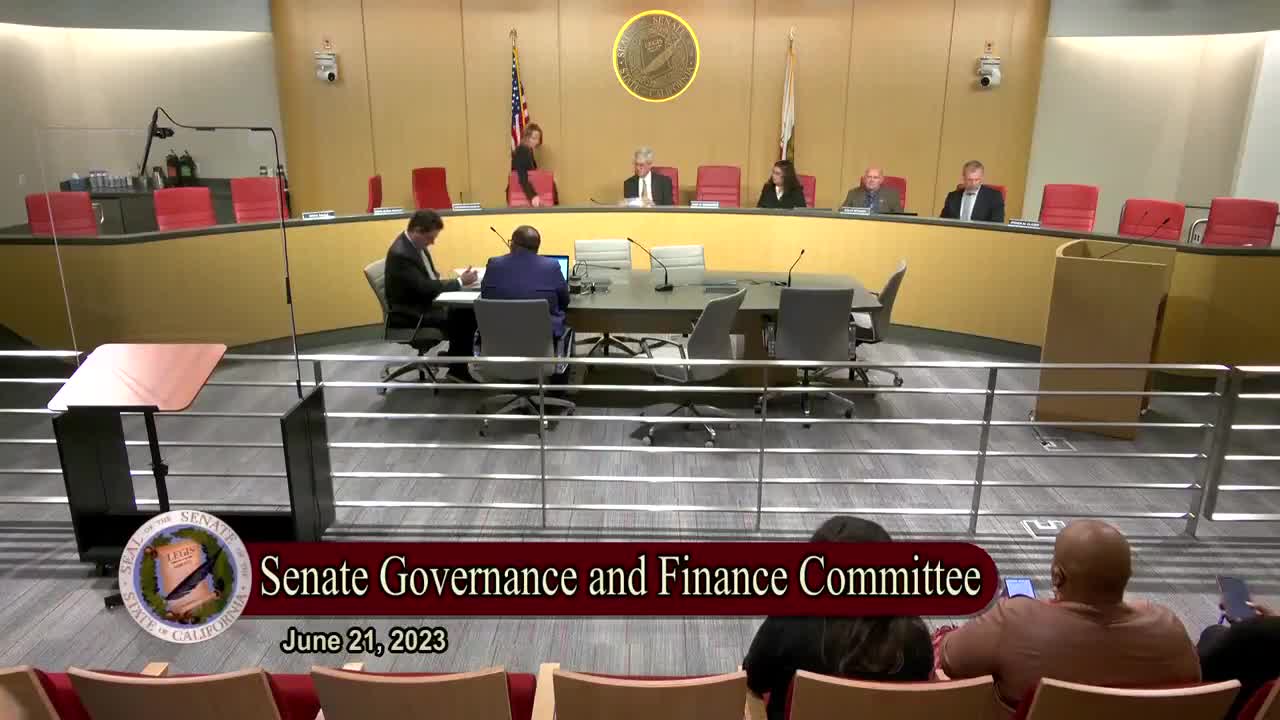
| Jun 21, 2023 | From committee: Amend, and do pass as amended. (Ayes 6. Noes 1.) (June 21). |
| Jun 12, 2023 | In committee: Set, first hearing. Hearing canceled at the request of author. |
| Jun 12, 2023 | From committee chair, with author's amendments: Amend, and re-refer to committee. Read second time, amended, and re-referred to Com. on GOV. & F. |
| May 24, 2023 | Referred to Com. on GOV. & F. |
| May 16, 2023 | In Senate. Read first time. To Com. on RLS. for assignment. |
| May 15, 2023 | Read third time. Passed. Ordered to the Senate. (Ayes 69. Noes 3. Page 1555.) |
| May 4, 2023 | Read second time. Ordered to third reading. |
| May 3, 2023 | From committee: Do pass. (Ayes 8. Noes 0.) (May 3). |
| Mar 8, 2023 | Re-referred to Com. on L. GOV. |
| Mar 7, 2023 | From committee chair, with author's amendments: Amend, and re-refer to Com. on L. GOV. Read second time and amended. |
| Feb 9, 2023 | Referred to Com. on L. GOV. |
| Jan 13, 2023 | From printer. May be heard in committee February 12. |
| Jan 12, 2023 | Read first time. To print. |
|
Date
|
Description
|
Location
|
Votes
|
|
|---|---|---|---|---|
| Jun 21, 2023 | Do pass as amended | Senate Standing Committee on Governance and Finance |
Passed |
|
| May 15, 2023 | AB 233 Wilson Assembly Third Reading | Assembly Floor |
Passed |
|
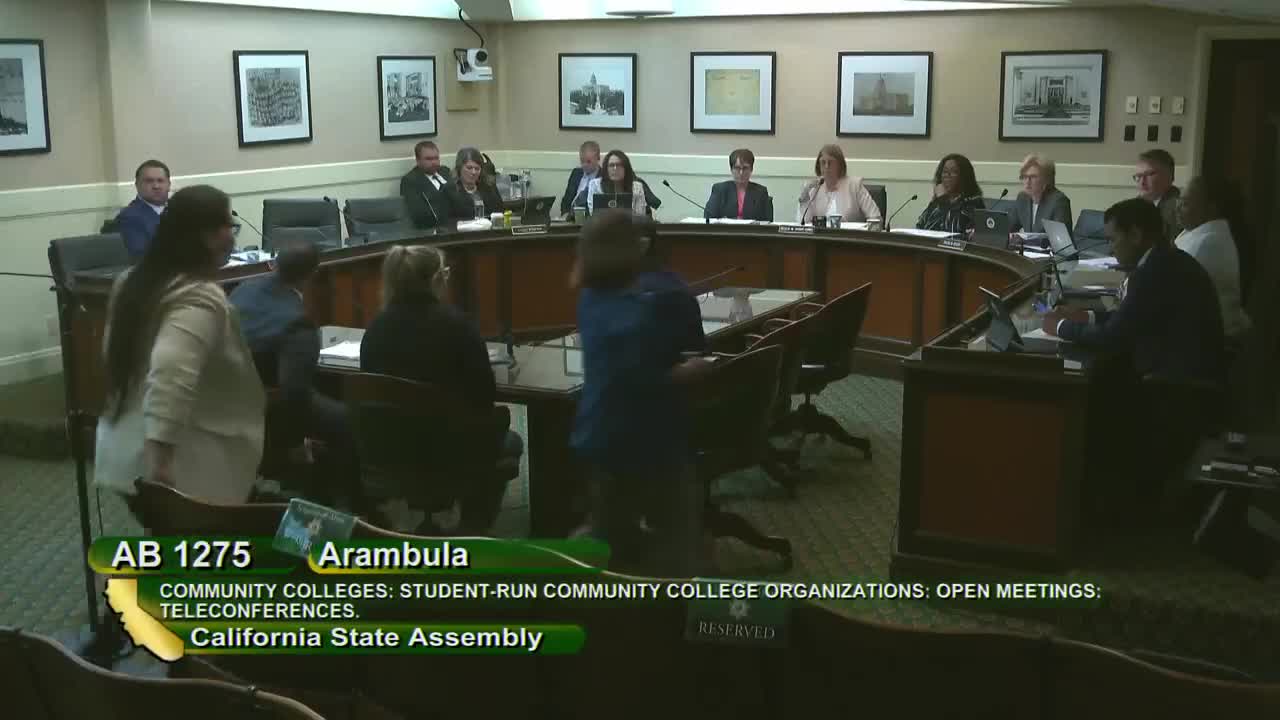
| May 3, 2023 | Do pass. | Assembly Standing Committee on Local Government |
Passed |
This list shows positions taken on this bill by organizations on the date displayed, which is linked to the original source.
Positions by individuals are not included.
|
Organization
|
Position
|
Date
|
|---|---|---|
| Back Country Horsemen California - San Joaquin Sierra Unit | ** Against | |
| City of Norco | * Against | Jun 21, 2023 |
| City of Norco Mayor Robin Grundmeyer | ** Against | |
| Midpeninsula Regional Open Space District | ** Support | |
| Tijuana River Valley Equestrian Association | ** Against |
SENATE RULES COMMITTEE Office of Senate Floor Analyses (916) 651-1520 Fax: (916) 327-4478 | AB 233 |
THIRD READING
Bill No: AB 233
Author: Wilson (D)
Amended: 6/22/23 in Senate
Vote: 21
SENATE GOVERNANCE & FIN. COMMITTEE: 6-1, 6/21/23
AYES: Caballero, Blakespear, Durazo, Glazer, Skinner, Wiener
NOES: Seyarto
NO VOTE RECORDED: Dahle
ASSEMBLY FLOOR: 69-3, 5/15/23 - See last page for vote
SUBJECT: Local government: public or private property: disposal of animal excrement
SOURCE: Author
DIGEST:
This bill allows local agencies to adopt an ordinance to require animal owners to clean up after the animal should it defecate on public property, and states its provisions are declaratory of existing law.
ANALYSIS: Existing law, under Article XI, Section 7 of the State Constitution, allows cities and counties to “make and enforce within its limits, all local, police, sanitary and other ordinances and regulations not in conflict with general laws.” Commonly known as the police power, it is this provision of the Constitution that allows cities and counties to regulate behavior to preserve the health, safety, and welfare of the public, including land use authority.
This bill:
- States local governments can adopt ordinances requiring animal owners or the person responsible for the animal to clean up and dispose of any excrement the animal may leave on public or private property.
- States its provisions are declaratory of existing law.
Comments
According to the author’s office, the need for this bill stems from an incident in the City of Suisun City. People frequently ride horses across sidewalks where children walk to school, leaving excrement in their paths. The author proposed the city adopt an ordinance to require horse riders to clean up the mess left by their horses, but was told by the Suisun City Attorney at the time that such an ordinance was preempted by state law.
The author wants to amend state law to make it clear local agencies can adopt ordinances to require people to clean up after their animals when they defecate on public or private property.
- Purpose of the bill. According to the author, “AB 233 will allow local governments to have the option of implementing an ordinance that would require animal owners to clean up animal excrement that is deposited on public property.”
- Aren’t local governments already doing this? Many local governments have already adopted ordinances related to animal waste. While there is no state law specifically authorizing local governments to adopt ordinances requiring animal owners to clean up after their animals, many local governments have already done so under their general police powers to address sanitary issues, such as:
- The City of Galt has a broad ordinance requiring the owner of a dog, cat, “or any other animal” to clean up any feces left by the animal on public or private property that doesn’t belong to the animal owner.
- The City of Newport Beach has a similar ordinance that applies to all animals and requires their owners to pick up after them if they defecate on a public sidewalk, public beach or park or on any other public property, or on any private property that doesn’t belong to the animal owner.
- The County of Los Angeles requires pet owners to ensure their pets are not a nuisance to others. The ordinance requires people to regularly remove and dispose of pet waste from their own property, as well as removing and discarding their pet’s waste that has been deposited on other people’s property – as well as public property.
FISCAL EFFECT: Appropriation: No Fiscal Com.: No Local: No
SUPPORT: (Verified 7/11/23)
Midpeninsula Regional Open Space District
OPPOSITION: (Verified 7/11/23)
City of Norco, Mayor Robin Grundmeyer
Three individuals
ARGUMENTS IN SUPPORT: According to the Midpeninsula Regional Open Space District:
“AB 233 aims to empower local agencies to enforce waste disposal responsibilities on animal owners, particularly horse owners, when their animals' waste lands on public sidewalks or roads. Horses, and other animals, remain a widely used means of transportation in numerous rural communities and roads throughout California, serving both practical and recreational purposes. However, when horses or other road animals traverse public roads, they may deposit excrement onto these pathways, posing potential health risks to others if left unaddressed, such as spreading disease or contaminating groundwater.
“Currently, there is no law that requires people in the state of California to clean up after their horses. This absence of regulations places the burden of cleanup expenses on either the local government or the businesses situated nearby the excrement-laden areas. AB 233 simply grants local agencies control over this issue and allows them to enforce regulations requiring horse-riders to collect and dispose of any excrement left on public property, if that is the best course of action for the health and well-being of their locality.”
ARGUMENTS IN OPPOSITION: According to City of Norco, Mayor Robin Grundmeyer:
“Norco was founded in 1964 with the slogan ‘City Living in a Rural Atmosphere.’ Norco is an animal-keeping, equestrian-oriented community where residents enjoy over 400 acres of parkland and one of the largest networks of horse trails in the nation, earning the nickname—which evolved into an official trademark—Horsetown USA®. Many of our residents keep horses at their homes and ride through our city and surrounding areas. It is also quite common to see horses, including the acclaimed horses from Disneyland’s® Circle D Ranch, out on our city streets and even “driving through” local businesses for a morning coffee.
“Horse manure is not a nuisance to be solved—it’s a minor inconvenience that comes with having these beautiful, working animals throughout our community. Our state should be focused on continuing to promote the positive benefits of horse ownership and supporting our equestrian, animal-keeping communities. AB 233 appears to be opening the door to more regulation of equestrian activities in our cities and other public spaces, such as our parks, trails, and wildland areas. Instead of adding regulatory burdens that discourage horsemanship, our state should encourage and support this healthy, environmentally-friendly activity for more Californians.”
ASSEMBLY FLOOR: 69-3, 5/15/23
AYES: Addis, Aguiar-Curry, Alanis, Alvarez, Arambula, Bauer-Kahan, Bennett, Berman, Boerner, Bonta, Bryan, Calderon, Juan Carrillo, Wendy Carrillo, Cervantes, Chen, Connolly, Davies, Dixon, Flora, Mike Fong, Gabriel, Garcia, Gipson, Grayson, Haney, Hart, Holden, Irwin, Jackson, Jones-Sawyer, Kalra, Lee, Low, Lowenthal, Maienschein, McCarty, McKinnor, Muratsuchi, Stephanie Nguyen, Ortega, Pacheco, Papan, Jim Patterson, Joe Patterson, Pellerin, Petrie-Norris, Quirk-Silva, Ramos, Reyes, Robert Rivas, Rodriguez, Blanca Rubio, Sanchez, Santiago, Schiavo, Soria, Ta, Ting, Valencia, Villapudua, Wallis, Ward, Weber, Wicks, Wilson, Wood, Zbur, Rendon
NOES: Essayli, Gallagher, Hoover
NO VOTE RECORDED: Bains, Megan Dahle, Vince Fong, Friedman, Lackey, Mathis, Luz Rivas, Waldron
Prepared by: Evan Goldberg / GOV. & F. / (916) 651-4119
7/11/23 12:24:12
**** END ****
SENATE COMMITTEE ON GOVERNANCE AND FINANCE
Senator Anna M. Caballero, Chair
2023 - 2024 Regular
Bill No: | AB 233 | Hearing Date: | 6/21/23 |
Author: | Wilson | Tax Levy: | No |
Version: | 6/12/23 | Fiscal: | No |
Consultant: | Goldberg | ||
Local government: streets and sidewalks: disposal of excrement
Allows local agencies to adopt an ordinance to require animal owners to clean up after the animal should it defecate on public property, and states its provisions are declaratory of existing law.
Background
Article XI, Section 7 of the State Constitution allows cities and counties to “make and enforce within its limits, all local, police, sanitary and other ordinances and regulations not in conflict with general laws.” Commonly known as the police power, it is this provision of the Constitution that allows cities and counties to regulate behavior to preserve the health, safety, and welfare of the public, including land use authority.
According to the author’s office, the need for this bill stems from an incident in the City of Suisun City. People frequently ride horses across sidewalks where children walk to school, leaving excrement in their paths. The author proposed the city adopt an ordinance to require horse riders to clean up the mess left by their horses, but was told by the Suisun City Attorney at the time that such an ordinance was preempted by state law.
The author wants to amend state law to make it clear local agencies can adopt ordinances to require people to clean up after their animals when they defecate on public property.
Proposed Law
Assembly Bill 233 states local governments can adopt ordinances requiring animal owners or the person responsible for the animal to clean up and dispose of any excrement the animal may leave on public property. The measure also provides its provisions are declaratory of existing law.
State Revenue Impact
No estimate.
Comments
1. Purpose of the bill. According to the author, “AB 233 will allow local governments to have the option of implementing an ordinance that would require animal owners to clean up animal excrement that is deposited on public property.”
2. Many local governments have already adopted ordinances related to animal waste. While there is no state law specifically authorizing local governments to adopt ordinances requiring animal owners to clean up after their animals, many local governments have already done so under their general police powers to address sanitary issues, such as:
- The City of Galt has a broad ordinance requiring the owner of a dog, cat, “or any other animal” to clean up any feces left by the animal on public or private property that doesn’t belong to the animal owner.
- The City of Newport Beach has a similar ordinance that applies to all animals and requires their owners to pick up after them if they defecate on a public sidewalk, public beach or park or on any other public property, or on any private property that doesn’t belong to the animal owner.
- The County of Los Angeles requires pet owners to ensure their pets are not a nuisance to others. The ordinance requires people to regularly remove and dispose of pet waste from their own property, as well as removing and discarding their pet’s waste that has been deposited on other people’s property – as well as public property.
Given these ordinances were adopted without any reference to state law, the Committee may wish to consider whether this bill is necessary.
3. More – or less – local control? Setting aside the question of whether local governments can already do what AB 233 calls for, this bill arguably reduces local control instead of expanding it. That’s because it only applies to animals that defecate on public property. By not including private property, it calls into question the ability of local agencies to adopt ordinances to require animal owners to pick up after those animals when they defecate on private property not under the control of the pet owner (or even private property controlled by the pet owner, which Los Angeles County’s ordinance includes). The Committee may wish to consider whether the bill should be expanded to allow local governments to apply its provisions to private property as well.
Assembly Actions
Assembly Local Government: 8-0
Assembly Floor: 69-3
Support and Opposition
(6/16/23)
Support:
Midpeninsula Regional Open Space District
Opposition:
City of Norco Mayor Robin Grundmeyer
3 Individuals
-- END --
ASSEMBLY THIRD READING
ATR Bill Id:AB 233
Author:(Wilson)
As Amended Ver:March 7, 2023
Majority vote
SUMMARY
Allows a local agency to require the rider of, or person otherwise responsible for, a horse to collect and dispose of any horse excrement deposited by that horse on a street or sidewalk.
Major Provisions
Allows, notwithstanding Vehicle Code (VEH) Section 21050 or any other law, a local agency to require the rider of, or person otherwise responsible for, a horse to collect and dispose of any horse excrement deposited by that horse on a street or sidewalk.
COMMENTS
Existing law allows a city or county to "make and enforce within its limits, all local, police, sanitary and other ordinances and regulations not in conflict with general laws." It is from this fundamental power (commonly called the police power) that cities and counties derive their authority to regulate behavior to preserve the health, safety, and welfare of the public, including land use authority.
The VEH provides that every person riding or driving an animal upon a highway has all of the rights and is subject to all of the duties applicable to the driver of a vehicle by provisions of law governing the rules of the road and accidents and accident reports, as specified, except those provisions which by their very nature can have no application.
Some have raised concerns that, because of this provision, it is not clear if local agencies have the authority to require a person riding or responsible for a horse to clean up after said horse.
According to the Author
As a former local leader, I understand how important it is to have local control because local leaders have the opportunity to implement laws that will benefit their cities and allow them to succeed. AB 233 allows local control because local governments will have the option to implement an ordinance that would require horse riders to clean up animal waste that is deposited on streets and sidewalks.
Currently, there is no law that requires people in the state of California to clean up after their horses and it is a problem in cities where there can be a lot of horse traffic amongst buildings, businesses, and public property. Thus, for any manure that is left on public or private property, the cost of clean-up falls on the local government or a local business owner. Additionally, if manure removal is neglected, there are potential runoff issues that can lead to nutrients entering groundwater or surface water sources.
Arguments in Support
None on file.
Arguments in Opposition
The City of Norco writes, "Horses have been an integral part of California's lifestyle and history for hundreds of years. Before we had paved streets and sidewalks, we had horses as our only means of transportation and as an important part of family life in an agriculturally-based economy. While our state has evolved and become a metropolis of more than 30 million people, the equestrian lifestyle has remained extremely popular in communities throughout the state.
"Norco was founded in 1964 with the slogan 'City Living in a Rural Atmosphere.' Norco is an animal-keeping, equestrian-oriented community where residents enjoy over 400 acres of parkland and one of the largest networks of horse trails in the nation, earning the nickname – which evolved into an official trademark – Horsetown USA®. Many of our residents keep horses at their homes and ride through our city and surrounding areas. It is also quite common to see horses, including the acclaimed horses from Disneyland's® Circle D Ranch, out on our city streets and even 'driving through' local businesses for a morning coffee.
"Horse manure is not a nuisance to be solved – it's a minor inconvenience that comes with having these beautiful, working animals throughout our community. Our state should be focused on continuing to promote the positive benefits of horse ownership and supporting our equestrian, animal-keeping communities. AB 233 appears to be opening the door to more regulation of equestrian activities in our cities and other public spaces, such as our parks, trails, and wildland areas. Instead of adding regulatory burdens that discourage horsemanship, our state should encourage and support this healthy, environmentally-friendly activity for more Californians.
"In Norco, people from all walks of life and at all income levels are prioritizing rural living because they love animals and believe in leading a self-sufficient and sustainable life. We will continue to actively oppose unnecessary regulations like AB 233 to protect cherished lifestyles like ours throughout the State of California."
FISCAL COMMENTS
None.
VOTES
ASM LOCAL GOVERNMENT: 8-0-0
YES: Aguiar-Curry, Dixon, Boerner, Pacheco, Ramos, Robert Rivas, Waldron, Wilson
UPDATED
VERSION: March 7, 2023
CONSULTANT: Angela Mapp / L. GOV. / (916) 319-3958 FN: 0000306
Date of Hearing: May 3, 2023
ASSEMBLY COMMITTEE ON LOCAL GOVERNMENT
Cecilia Aguiar-Curry, Chair
ABPCA Bill Id:AB 233 (
Author:Wilson) – As Amended Ver:March 7, 2023
SUBJECT: Local government: streets and sidewalks: disposal of horse excrement.
SUMMARY: Allows, notwithstanding Section 21050 of the Vehicle Code (VEH) or any other law, a local agency to require the rider of, or person otherwise responsible for, a horse to collect and dispose of any horse excrement deposited by that horse on a street or sidewalk.
EXISTING LAW:
- Allows a city or county to “make and enforce within its limits, all local, police, sanitary and other ordinances and regulations not in conflict with general laws.” (Cal. Const., Art. XI, § 7)
- Provides, except as otherwise expressly provided, that the provisions of the VEH are applicable and uniform throughout the state and in all counties and municipalities therein, and a local authority shall not enact or enforce any ordinance or resolution on the matters covered by the VEH, including ordinances or resolutions that establish regulations or procedures for, or assess a fine, penalty, assessment, or fee for a violation of, matters covered by the VEH, unless expressly authorized by the VEH. (VEH § 21)
- Provides that every person riding or driving an animal upon a highway has all of the rights and is subject to all of the duties applicable to the driver of a vehicle by provisions of law governing the rules of the road and accidents and accident reports, as specified, except those provisions which by their very nature can have no application. (VEH § 21050)
- Defines “highway” as a way or place of whatever nature, publicly maintained and open to the use of the public for purposes of vehicular travel, including a street. (VEH § 360)
FISCAL EFFECT: None
COMMENTS:
- Bill Summary and Author’s Statement. This bill allows, notwithstanding VEH § 21050 or any other law, a local agency to require the rider of, or person otherwise responsible for, a horse to collect and dispose of any horse excrement deposited by that horse on a street or sidewalk. This bill is sponsored by the author.
According to the author, “As a former local leader, I understand how important it is to have local control because local leaders have the opportunity to implement laws that will benefit their cities and allow them to succeed. AB 233 allows local control because local governments will have the option to implement an ordinance that would require horse riders to clean up animal waste that is deposited on streets and sidewalks.
“Currently, there is no law that requires people in the state of California to clean up after their horses and it is a problem in cities where there can be a lot of horse traffic amongst buildings, businesses, and public property. Thus, for any manure that is left on public or private property, the cost of clean-up falls on the local government or a local business owner. Additionally, if manure removal is neglected, there are potential runoff issues that can lead to nutrients entering groundwater or surface water sources.”
- Background. Existing law allows a city or county to “make and enforce within its limits, all local, police, sanitary and other ordinances and regulations not in conflict with general laws.” It is from this fundamental power (commonly called the police power) that cities and counties derive their authority to regulate behavior to preserve the health, safety, and welfare of the public, including land use authority.
The VEH provides that every person riding or driving an animal upon a highway has all of the rights and is subject to all of the duties applicable to the driver of a vehicle by provisions of law governing the rules of the road and accidents and accident reports, as specified, except those provisions which by their very nature can have no application.
Some have raised concerns that, because of this provision, it is not clear if local agencies have the authority to require a person riding or responsible for a horse to clean up after said horse.
- Related Legislation. AB 1017 (Friedman) authorizes any entity conducting an engineering and traffic survey to consider equestrian safety and removes provisions of existing law that provide such authority only to the cities of Burbank, Glendale, Los Angeles and Norco and Orange County. AB 1017 is pending in the Senate.
- Arguments in Support. None on file.
- Arguments in Opposition. The City of Norco writes, “Horses have been an integral part of California’s lifestyle and history for hundreds of years. Before we had paved streets and sidewalks, we had horses as our only means of transportation and as an important part of family life in an agriculturally-based economy. While our state has evolved and become a metropolis of more than 30 million people, the equestrian lifestyle has remained extremely popular in communities throughout the state.
“Norco was founded in 1964 with the slogan ‘City Living in a Rural Atmosphere.’ Norco is an animal-keeping, equestrian-oriented community where residents enjoy over 400 acres of parkland and one of the largest networks of horse trails in the nation, earning the nickname—which evolved into an official trademark—Horsetown USA®. Many of our residents keep horses at their homes and ride through our city and surrounding areas. It is also quite common to see horses, including the acclaimed horses from Disneyland’s® Circle D Ranch, out on our city streets and even ‘driving through’ local businesses for a morning coffee.
“Horse manure is not a nuisance to be solved – it’s a minor inconvenience that comes with having these beautiful, working animals throughout our community. Our state should be focused on continuing to promote the positive benefits of horse ownership and supporting our equestrian, animal-keeping communities. AB 233 appears to be opening the door to more regulation of equestrian activities in our cities and other public spaces, such as our parks, trails, and wildland areas. Instead of adding regulatory burdens that discourage horsemanship, our state should encourage and support this healthy, environmentally-friendly activity for more Californians.
“In Norco, people from all walks of life and at all income levels are prioritizing rural living because they love animals and believe in leading a self-sufficient and sustainable life. We will continue to actively oppose unnecessary regulations like AB 233 to protect cherished lifestyles like ours throughout the State of California.”
REGISTERED SUPPORT / OPPOSITION:
Support
None on file
Opposition
Back Country Horsemen California - San Joaquin Sierra Unit
City of Norco
Tijuana River Valley Equestrian Association
Analysis Prepared by: Angela Mapp / L. GOV. / (916) 319-3958
Discussed in Hearing
 21MIN
Senate Standing Committee on Governance and Finance
 1MIN
Assembly Floor
 6MIN
Assembly Standing Committee on Local Government
Bill Author

Bill Co-Author(s):