AB 1024: Water rights: small irrigation use: lake or streambed alteration agreements.
- Session Year: 2023-2024
- House: Assembly
- Latest Version Date: 2023-05-18
Current Status:
Failed
(2024-08-15: In committee: Held under submission.)
Introduced
In Committee
First Chamber
In Committee
Second Chamber
Enacted
Existing law, the Water Rights Permitting Reform Act of 1988, authorizes a person to obtain a right to appropriate water for a small domestic use, small irrigation use, or livestock stockpond use upon first registering the use, as those uses are defined by the act, with the State Water Resources Control Board and thereafter applying the water to reasonable and beneficial use with due diligence. The act requires the registration of water use to be made upon a form prescribed by the board that requires, among other things, a certification that the registrant has contacted a representative of the Department of Fish and Wildlife and has agreed to comply with conditions set forth by the department. The act requires the board to establish reasonable general conditions to which all appropriations made pursuant to the act are required to be subject, including, among other things, that all conditions lawfully required by the department are conditions upon the appropriations. The act provides that the board is not required to adopt general conditions for small irrigation use until the board determines that funds are available for that purpose, and that a registration for small irrigation use pursuant to the act is not authorized until the board establishes general conditions for small irrigation use to protect instream beneficial uses, as specified.
This bill would require the board to give priority to adopting, on or before June 30, 2027, except as provided, general conditions that permit a registrant specified registrants to store water for small irrigation use during times of high streamflow in exchange for the registrant those registrants reducing diversions during periods of low streamflow, as specified. The bill would require that the actions of the board under these provisions be deemed an action taken for the protection of the environment for purposes of specified California Environmental Quality Act guidelines, if those actions do not result in the relaxation of streamflow standards.
Existing law exempts certain stream segments subject to certain minimum streamflow requirements from the provisions of the act upon proper registration.
This bill, if the Director of Fish and Wildlife establishes proposed streamflow requirements for a stream segment, as specified, would instead prohibit the authorization of a registration for that stream segment until the board establishes instream flow requirements as a part of the general conditions applicable to that stream segment. The bill would require that the establishment of those instream flow requirements be done after the board considers the proposed streamflow requirements, if proposed by the director. The bill would provide that these requirements apply to registrations issued on or after January 1, 2024.
Existing law prohibits an entity from substantially diverting or obstructing the natural flow of, or substantially changing or using any material from the bed, channel, or bank of, any river, stream, or lake, or from depositing certain material where it may pass into any river, stream, or lake, without first notifying the department of that activity and entering into a lake or streambed alteration agreement, if required by the department to protect fish and wildlife resources. Existing law exempts certain routine maintenance and operation activities from those requirements after the initial notification and agreement, certain emergency activities from those notification and agreement requirements and certain activities authorized by a license or renewed license issued for cannabis cultivation from those agreement requirements. Existing law authorizes the department to establish a graduated schedule of fees to be charged to any entity subject to the notification and agreement provisions and requires any fees received to be deposited into the Fish and Game Preservation Fund.
This bill would exempt an entity from the requirement to enter into a lake or streambed alteration agreement with the department if the entity submits a board-approved registration or renewed or amended registration for water use in specified counties to the department and the department determines certain requirements are met, including, the payment of a fee required for a lake or streambed alteration agreement and the submission of a copy of any department conditions imposed for the registration for water use. With respect to the submission of a renewed or amended registration, the bill would require the department to modify the existing conditions, or add new conditions, which would become part of the renewed or amended registration, if the department determines the conditions for the use will not protect fish and wildlife resources that may be substantially adversely affected by the activity authorized by the renewed or amended registration. If the department determines that an entity has failed to comply with these conditions, the exemption, upon written notice by the department, would no longer apply and the entity would be required to comply with the regular notice and agreement requirements. The bill would limit the number of these registrations to 100 for the first year of implementation and would authorize the department to eliminate or raise this limit thereafter.
Existing law, the Water Rights Permitting Reform Act of 1988, authorizes a person to obtain a right to appropriate water for a small domestic use, small irrigation use, or livestock stockpond use upon first registering the use, as those uses are defined by the act, with the State Water Resources Control Board and thereafter applying the water to reasonable and beneficial use with due diligence. The act requires the registration of water use to be made upon a form prescribed by the board that requires, among other things, a certification that the registrant has contacted a representative of the Department of Fish and Wildlife and has agreed to comply with conditions set forth by the department. The act requires the board to establish reasonable general conditions to which all appropriations made pursuant to the act are required to be subject, including, among other things, that all conditions lawfully required by the department are conditions upon the appropriations. The act provides that the board is not required to adopt general conditions for small irrigation use until the board determines that funds are available for that purpose, and that a registration for small irrigation use pursuant to the act is not authorized until the board establishes general conditions for small irrigation use to protect instream beneficial uses, as specified.
This bill would require the board to give priority to adopting, on or before June 30, 2027, except as provided, general conditions that permit a registrant to store water for small irrigation use during times of high streamflow in exchange for the registrant reducing diversions during periods of low streamflow, as specified. The bill would require that the actions of the board under these provisions be deemed an action taken for the protection of the environment for purposes of specified California Environmental Quality Act guidelines, if those actions do not result in the relaxation of streamflow standards.
Existing law exempts certain stream segments subject to certain minimum streamflow requirements from the provisions of the act upon proper registration.
This bill, if the Director of Fish and Wildlife establishes proposed streamflow requirements for a stream segment, as specified, would instead prohibit the authorization of a registration for that stream segment until the board establishes instream flow requirements as a part of the general conditions applicable to that stream segment. The bill would require that the establishment of those instream flow requirements be done after the board considers the proposed streamflow requirements, if proposed by the director.
Existing law prohibits an entity from substantially diverting or obstructing the natural flow of, or substantially changing or using any material from the bed, channel, or bank of, any river, stream, or lake, or from depositing certain material where it may pass into any river, stream, or lake, without first notifying the department of that activity and entering into a lake or streambed alteration agreement, if required by the department to protect fish and wildlife resources. Existing law exempts certain routine maintenance and operation activities from those requirements after the initial notification and agreement, certain emergency activities from those notification and agreement requirements and certain activities authorized by a license or renewed license issued for cannabis cultivation from those agreement requirements. Existing law authorizes the department to establish a graduated schedule of fees to be charged to any entity subject to the notification and agreement provisions and requires any fees received to be deposited into the Fish and Game Preservation Fund.
This bill would exempt an entity from the requirement to enter into a lake or streambed alteration agreement with the department if the entity submits a board-approved registration or renewed or amended registration for water use to the department and the department determines certain requirements are met, including, the payment of a fee required for a lake or streambed alteration agreement and the submission of a copy of any department conditions imposed for the registration for water use. With respect to the submission of a renewed or amended registration, the bill would require the department to modify the existing conditions, or add new conditions, which would become part of the renewed or amended registration, if the department determines the conditions for the use will not protect fish and wildlife resources that may be substantially adversely affected by the activity authorized by the renewed or amended registration. If the department determines that an entity has failed to comply with these conditions, the exemption, upon written notice by the department, would no longer apply and the entity would be required to comply with the regular notice and agreement requirements.
Existing law requires the State Water Resources Control Board to consider and act upon all applications for permits to appropriate water and to do all things required or proper relating to those applications.This bill would make a nonsubstantive change to that law.Existing law requires the State Water Resources Control Board to consider and act upon all applications for permits to appropriate water and to do all things required or proper relating to those applications.
This bill would make a nonsubstantive change to that law.
(a)(1)Notwithstanding subdivision (a) of Section 1602, an entity that submits a registration of water use made pursuant to Section 1228.3 of the Water Code that has been approved by the State Water Resources Control Board is deemed to have given the notification required by paragraph (1) of subdivision (a) of Section 1602, and shall not be required to obtain an agreement from the department for the activity that the registration covers for the term of the registration, if all of the following occur:
(A)The fee specified in paragraph (3) of subdivision (a) of Section 1602 is submitted to the department with the registration.
(B)The entity submits to the department a copy of any conditions imposed by the department pursuant to paragraph (2) of subdivision (a) of Section 1228.6 of the Water Code.
(C)The department notifies the entity in writing that the exemption in this paragraph applies to the registered water use.
(2)The department shall notify the entity in writing whether the exemption in this paragraph applies to the registered water use within 60 days of receiving the registration and fee.
(3)If the department determines that an entity has failed to comply with any of the department conditions described in paragraph (1), the failure shall not constitute a violation of this chapter, and the exemption provided in paragraph (1), upon written notice by the department, shall no longer apply and the entity shall comply with Section 1602.
(b)(1)An entity that submits a renewal of registration or amended registration made pursuant to Section 1228.5 or 1228.7 of the Water Code that has been approved by the State Water Resources Control Board is deemed to have given the notification required by paragraph (1) of subdivision (a) of Section 1602, and shall not be required to obtain an agreement from the department for the activity that the registration covers for the term of the renewed or amended registration, if all of the following occur:
(A)The fee specified in paragraph (3) of subdivision (a) of Section 1602 is submitted to the department with the renewal of registration or amended registration, as applicable.
(B)The entity submits to the department a copy of any conditions imposed by the department pursuant to paragraph (2) of subdivision (a) of Section 1228.6 of the Water Code.
(C)The department determines the conditions described in subparagraph (B), together with any other conditions in the renewed or amended registration, will protect fish and wildlife resources that may be substantially adversely affected by the activity that the renewed or amended registration authorizes.
(D)The department notifies the entity in writing that the exemption in this paragraph applies to the registered water use.
(2)The department shall notify the entity in writing whether the exemption in paragraph (1) applies to the registered water use within 60 days of receiving the registration and fee.
(3)If the department determines the conditions described in paragraph (1), together with any other conditions in the renewed or amended registration, will not protect fish and wildlife resources that may be substantially adversely affected by the activity that the renewed or amended registration authorizes, the department shall modify the existing conditions, or add new conditions to the renewed or amended registration, and notify the entity in writing that the exemption in paragraph (1) applies to the registered water use with the modified or new conditions, which shall become part of the renewed or amended registration.
(4)If the department determines that an entity has failed to comply with any of the department conditions described in paragraph (1) or (3), the failure shall not constitute a violation of this chapter, and the exemption provided in paragraph (1), upon written notice by the department, shall no longer apply and the entity shall comply with Section 1602.
(c)(1)This section shall only apply to registrations in the following counties:
(A)County of Del Norte.
(B)County of Humboldt.
(C)County of Lake.
(D)County of Marin.
(E)County of Mendocino.
(F)County of Napa.
(G)County of San Luis Obispo.
(H)County of San Mateo.
(I)County of Sonoma.
(2)Registrations pursuant to this section shall be limited to 100 per calendar year for the first year of implementation. The department may, after the first year of implementation, increase or eliminate this limit on registrations.
SEC. 2.Section 1229 of the Water Code is amended to read:1229.(a)The board is not required to adopt general conditions for small irrigation use pursuant to subdivision (a) of Section 1228.6 and this section until the board determines that funds are available for that purpose.
(b)A registration for small irrigation use pursuant to this article is not authorized until the board establishes general conditions for small irrigation use pursuant to subdivision (a) of Section 1228.6 to protect instream beneficial uses.
(c)The board may establish general conditions for some methods of diversion or categories of small irrigation use before establishing general conditions for other methods or categories, in which case a registration for small irrigation use is authorized only for those methods or categories for which the board has established the general conditions for the protection of instream beneficial uses.
(d)(1)Except as necessary to adopt principles and guidelines implementing paragraph (1) of subdivision (a) of Section 1259.4 or Section 13149, and subject to subdivision (a), the board shall give priority to adopting, on or before June 30, 2027, general conditions that permit a registrant the registrants specified in subdivision (c) of Section 1602.1 of the Fish and Game Code to store water for small irrigation use during times of high streamflow in exchange for that registrant those registrants reducing diversions during periods of low streamflow for diversions from coastal streams entering the Pacific Ocean and streams entering the San Francisco Bay, not including the Sacramento River and San Joaquin River, for the following:
(A)Off-stream storage reservoirs.
(B)On-stream storage reservoirs located on stream reaches where fish are not present, if the reservoirs will not substantially affect fish habitat in downstream reaches where fish are present.
(2)An action of the board pursuant to this subdivision shall be deemed an action taken for the protection of the environment for purposes of Section 15308 of Title 14 of the California Code of Regulations, if those actions do not result in the relaxation of existing streamflow standards.
SEC. 3.Section 1229.1 of the Water Code is amended to read:1229.1.(a)If For registrations issued on or after January 1, 2024, if the Director of Fish and Wildlife establishes proposed streamflow requirements for a stream segment pursuant to Section 10002 of the Public Resources Code, and the stream segment is subject to Section 1602.1 of the Fish and Game Code, regardless of whether those requirements were proposed before July 1, 1989, a registration for that stream segment pursuant to this article is not authorized until the board establishes instream flow requirements as a part of the general conditions applicable to that stream segment. The establishment of those instream flow requirements shall be done after the board considers the proposed streamflow requirements, if proposed by the Director of Fish and Wildlife.
(b)Notwithstanding subdivision (a), a registration filed before the Director of Fish and Wildlife establishes proposed streamflow requirements for the source of water supply for the registration may be renewed even if the board has not yet adopted instream flow requirements. The conditions for renewal under subdivision (c) of Section 1228.5 may include any conditions the Department of Fish and Wildlife determines to be necessary to protect stream-related fish and wildlife resources on a source of water supply for which the Director of Fish and Wildlife has established proposed streamflow requirements pursuant to Section 10002 of the Public Resources Code.
(c)For registrations issued prior to January 1, 2024, this article does not apply to those stream segments for which the Director of Fish and Wildlife establishes proposed streamflow requirements pursuant to Section 10002 of the Public Resources Code, notwithstanding the July 1, 1989, deadline for preparation of the requirements.
(a)(1)Notwithstanding subdivision (a) of Section 1602, an entity that submits a registration of water use made pursuant to Section 1228.3 of the Water Code that has been approved by the State Water Resources Control Board is deemed to have given the notification required by paragraph (1) of subdivision (a) of Section 1602, and shall not be required to obtain an agreement from the department for the activity that the registration covers for the term of the registration, if all of the following occur:
(A)The fee specified in paragraph (3) of subdivision (a) of Section 1602 is submitted to the department with the registration.
(B)The entity submits to the department a copy of any conditions imposed by the department pursuant to paragraph (2) of subdivision (a) of Section 1228.6 of the Water Code.
(C)The department notifies the entity in writing that the exemption in this paragraph applies to the registered water use.
(2)The department shall notify the entity in writing whether the exemption in this paragraph applies to the registered water use within 60 days of receiving the registration and fee.
(3)If the department determines that an entity has failed to comply with any of the department conditions described in paragraph (1), the failure shall not constitute a violation of this chapter, and the exemption provided in paragraph (1), upon written notice by the department, shall no longer apply and the entity shall comply with Section 1602.
(b)(1)An entity that submits a renewal of registration or amended registration made pursuant to Section 1228.5 or 1228.7 of the Water Code that has been approved by the State Water Resources Control Board is deemed to have given the notification required by paragraph (1) of subdivision (a) of Section 1602, and shall not be required to obtain an agreement from the department for the activity that the registration covers for the term of the renewed or amended registration, if all of the following occur:
(A)The fee specified in paragraph (3) of subdivision (a) of Section 1602 is submitted to the department with the renewal of registration or amended registration, as applicable.
(B)The entity submits to the department a copy of any conditions imposed by the department pursuant to paragraph (2) of subdivision (a) of Section 1228.6 of the Water Code.
(C)The department determines the conditions described in subparagraph (B), together with any other conditions in the renewed or amended registration, will protect fish and wildlife resources that may be substantially adversely affected by the activity that the renewed or amended registration authorizes.
(D)The department notifies the entity in writing that the exemption in this paragraph applies to the registered water use.
(2)The department shall notify the entity in writing whether the exemption in paragraph (1) applies to the registered water use within 60 days of receiving the registration and fee.
(3)If the department determines the conditions described in paragraph (1), together with any other conditions in the renewed or amended registration, will not protect fish and wildlife resources that may be substantially adversely affected by the activity that the renewed or amended registration authorizes, the department shall modify the existing conditions, or add new conditions to the renewed or amended registration, and notify the entity in writing that the exemption in paragraph (1) applies to the registered water use with the modified or new conditions, which shall become part of the renewed or amended registration.
(4)If the department determines that an entity has failed to comply with any of the department conditions described in paragraph (1) or (3), the failure shall not constitute a violation of this chapter, and the exemption provided in paragraph (1), upon written notice by the department, shall no longer apply and the entity shall comply with Section 1602.
SEC. 2.Section 1229 of the Water Code is amended to read:1229.(a)The board is not required to adopt general conditions for small irrigation use pursuant to subdivision (a) of Section 1228.6 and this section until the board determines that funds are available for that purpose.
(b)A registration for small irrigation use pursuant to this article is not authorized until the board establishes general conditions for small irrigation use pursuant to subdivision (a) of Section 1228.6 to protect instream beneficial uses.
(c)The board may establish general conditions for some methods of diversion or categories of small irrigation use before establishing general conditions for other methods or categories, in which case a registration for small irrigation use is authorized only for those methods or categories for which the board has established the general conditions for the protection of instream beneficial uses.
(d)(1)Except as necessary to adopt principles and guidelines implementing paragraph (1) of subdivision (a) of Section 1259.4 or 13149, and subject to subdivision (a), the board shall give priority to adopting, on or before June 30, 2027, general conditions that permit a registrant to store water for small irrigation use during times of high streamflow in exchange for that registrant reducing diversions during periods of low streamflow for diversions from coastal streams entering the Pacific Ocean and streams entering the San Francisco Bay, not including the Sacramento River and San Joaquin River, for the following:
(A)Off-stream storage reservoirs.
(B)On-stream storage reservoirs located on stream reaches where fish are not present, if the reservoirs will not substantially affect fish habitat in downstream reaches where fish are present.
(2)An action of the board pursuant to this subdivision shall be deemed an action taken for the protection of the environment for purposes of Section 15308 of Title 14 of the California Code of Regulations, if those actions do not result in the relaxation of existing streamflow standards.
SEC. 3.Section 1229.1 of the Water Code is amended to read:1229.1.(a)This article does not apply to those stream segments for which the Director of Fish and Wildlife establishes proposed streamflow requirements pursuant to Section 10002 of the Public Resources Code, notwithstanding the July 1, 1989, deadline for preparation of the requirements.1229.1.(a)If the Director of Fish and Wildlife establishes proposed streamflow requirements for a stream segment pursuant to Section 10002 of the Public Resources Code, regardless of whether those requirements were proposed before July 1, 1989, a registration for that stream segment pursuant to this article is not authorized until the board establishes instream flow requirements as a part of the general conditions applicable to that stream segment. The establishment of those instream flow requirements shall be done after the board considers the proposed streamflow requirements, if proposed by the Director of Fish and Wildlife.
(b)Notwithstanding subdivision (a), this article applies to a registration filed before the Director of Fish and Wildlife establishes proposed streamflow requirements for the source of water supply for the registration. registration may be renewed even if the board has not yet adopted instream flow requirements. The conditions for renewal under subdivision (c) of Section 1228.5 may include any conditions the Department of Fish and Wildlife determines to be necessary to protect stream-related fish and wildlife resources on a source of water supply for which the Director of Fish and Wildlife has established proposed streamflow requirements pursuant to Section 10002 of the Public Resources Code.
SECTION 1.Section 1250 of the Water Code is amended to read:1250.The board shall consider and act upon all applications for permits to appropriate water and shall do all things required or proper relating to those applications.The board shall consider and act upon all applications for permits to appropriate water and shall do all things required or proper relating to such those applications.
|
Date
|
Status
|
|---|---|
| Aug 15, 2024 | In committee: Held under submission. |
| Sep 1, 2023 | In committee: Held under submission. |
| Aug 21, 2023 | In committee: Referred to APPR suspense file. |
| Jun 27, 2023 | From committee: Do pass and re-refer to Com. on APPR with recommendation: To Consent Calendar. (Ayes 11. Noes 0.) (June 27). Re-referred to Com. on APPR. |
| Jun 7, 2023 | Referred to Com. on N.R. & W. |
| May 31, 2023 | In Senate. Read first time. To Com. on RLS. for assignment. |
| May 30, 2023 | Read third time. Passed. Ordered to the Senate. (Ayes 79. Noes 0. Page 1927.) |
| May 22, 2023 | Read second time. Ordered to third reading. |
| May 18, 2023 | Read second time and amended. Ordered returned to second reading. |
| May 18, 2023 | From committee: Amend, and do pass as amended. (Ayes 11. Noes 0.) (May 18). |
| May 10, 2023 | In committee: Set, first hearing. Referred to APPR. suspense file. |
| May 3, 2023 | In committee: Hearing postponed by committee. |
| Apr 19, 2023 | From committee: Do pass and re-refer to Com. on APPR. with recommendation: To Consent Calendar. (Ayes 15. Noes 0.) (April 18). Re-referred to Com. on APPR. |
| Mar 6, 2023 | Re-referred to Com. on W., P., & W. |
| Mar 2, 2023 | Referred to Com. on W., P., & W. |
| Mar 2, 2023 | From committee chair, with author's amendments: Amend, and re-refer to Com. on W., P., & W. Read second time and amended. |
| Feb 16, 2023 | From printer. May be heard in committee March 18. |
| Feb 15, 2023 | Read first time. To print. |
|
Date
|
Description
|
Location
|
Votes
|
|
|---|---|---|---|---|
| Aug 21, 2023 | Placed on suspense file | Senate Standing Committee on Appropriations |
Passed |
|
| Jun 27, 2023 | Do pass, but first be re-referred to the Committee on [Appropriations] with the recommendation: To Consent Calendar | Senate Standing Committee on Natural Resources and Water |
Passed |
|
| May 30, 2023 | AB 1024 Aguiar-Curry Assembly Third Reading | Assembly Floor |
Passed |
|
| May 18, 2023 | Do pass as amended. | Assembly Standing Committee on Appropriations |
Passed |
|
| Apr 18, 2023 | Do pass and be re-referred to the Committee on [Appropriations] with recommendation: To Consent Calendar | Assembly Standing Committee on Water, Parks, and Wildlife |
Passed |
This list shows positions taken on this bill by organizations on the date displayed, which is linked to the original source.
Positions by individuals are not included.
|
Organization
|
Position
|
Date
|
|---|---|---|
| California Association Of Winegrape Growers | ** Support | |
| California Trout | ** Support | |
| Family Winemakers Of California | ** Support | |
| Midpeninsula Regional Open Space District | ** Support | |
| The Nature Conservancy | ** Support | |
| Trout Unlimited | ** Support | |
| Wine Institute | ** Support |
SENATE COMMITTEE ON APPROPRIATIONS
Senator Anthony Portantino, Chair
2023 - 2024 Regular Session
AB 1024 (Aguiar-Curry) - Water rights: small irrigation use: lake or streambed alteration agreements
Version: May 18, 2023 | Policy Vote: N.R. & W. 11 - 0 |
Urgency: No | Mandate: No |
Hearing Date: | Consultant: Ashley Ames |
Bill Summary:
This bill would exempt entities in specified Central and Northern California counties that have a registration for small domestic use, small irrigation, or livestock stockpond water use from the requirement to enter into a lake or streambed alteration agreement (LSAA).
Fiscal Impact:
- The Department of Fish and Wildlife (DFW) estimates ongoing costs of about $1.9 million in 2024-25 and $1.8 million annually thereafter (General Fund or special fund) for 7 positions to handle workload associated with increased registrations, among other things.
- The State Water Resources Control Board (SWRCB) estimates one-time costs of $1.5 million and ongoing costs of about $675,000 annually (General Fund or the Water Rights Fund) to implement the provisions of this bill.
Background:
Water Rights Permitting Reform Act. Under current law, any person may obtain a right to appropriate water for a small domestic, small irrigation, or livestock stockpond use by registering the use with the State Water Resources Control Board (SWRCB) and then putting the water to reasonable and beneficial use, subject to certain conditions. “Small domestic use” is a direct diversion of 4,500 gallons/day or less or a diversion to storage of 10 acre-feet (AF) or less annually for domestic, aesthetic, fire protection, recreational, or fish and wildlife uses associated with a dwelling. “Small irrigation use” is a diversion to storage of 20 AF or less annually for irrigation, heat control, or frost protection uses or a direct diversion of 42,000 gallons/day or less or up to a maximum of 20 AF annually for irrigation use. “Livestock stock pond” use is a direct diversion of 4,500 gallons/day or less or diversion for storage of 10 AF or less annually to a water impoundment structure constructed for livestock watering. Incidental aesthetic, fire protection, recreational, and fish and wildlife uses are also permitted as part of livestock pond use.
These registrations last for a term of up to five years and can be renewed for additional five-year terms if the registrant meets conditions placed upon the registration, reports use, and pays fees. One of the required conditions is that the registration includes a certification that the registrant has contacted a representative of the DFW and has agreed to comply with conditions set forth by DFW.
At present, SWRCB reports there are 1,004 Small Domestic registrations with a face value of 3,319 AF, 26 Small Irrigation registrations with a face value of 293 AF, and 363 Livestock Stockpond registrations with a face value of 1,767 AF that are active.
Current law also requires SWRCB to establish general conditions to which all appropriations of water for small domestic, small irrigation, and livestock stockpond use are subject. The state board adopted the general conditions for small irrigation use registrations on September 20, 2013 and for small domestic and livestock stockpond uses on January 27, 2014.
Lake or Streambed Alteration Agreements (LSAAs). The Lake or Streambed Alteration Program (Fish and Game Code (FGC) §§ 1602 et seq.) requires any person, state or local governmental agency, or public utility to notify DFW before beginning any activity that may do any of the following:
- Divert or obstruct the natural flow of any river, stream, or lake;
- Change the bed, channel, or bank of any river, stream, or lake;
- Use material from any river, stream, or lake; or
- Deposit or dispose of material into any river, stream, or lake.
If DFW determines that the activity, as described in the notification, would substantially alter a river, stream, or lake, and that it may substantially adversely affect existing fish or wildlife resources, an LSAA is required. An LSAA is a type of permit that includes mitigation measures necessary to protect fish and wildlife resources.
Proposed Law:
This bill would exempt entities in specified Central and Northern California counties that have a registration for small domestic use, small irrigation, or livestock stockpond water use from the requirement to enter into a LSAA with DFW. Specifically, this bill would:
- Exempt an entity in Del Norte, Humboldt, Lake, Marin, Mendocino, Napa, San Luis Obispo, San Mateo, and Sonoma counties from the requirement to enter into an LSAA with DFW if that entity holds a registration for small domestic, small irrigation, or livestock stockpond water use issued by SWRCB.
- Provide that the exemption from LSAA requirements applies if the registrant does the following: pays LSAA fees; submits a copy of any conditions placed upon the water use by DFW to DFW; and obtains confirmation from DFW that the exemption applies to the registered water use in question. DFW must notify the applicant whether the exemption applies within 60 days of receiving a registration and fee.
- Provide that no more than 100 registrations shall be eligible for the exemption from LSAA requirements in the first year of this bill's implementation. DFW may increase or eliminate this limitation after one year of implementation.
- Require SWRCB to give priority to adopting, on or before June 30, 2027, general conditions that apply to a permit to store water for small irrigation use during times of high streamflow in exchange for the registrant reducing diversions during periods of low streamflow, as specified. Deems such an action by SWRCB to be an action for the protection of the environment, for purposes of a categorical CEQA exemption, as long as those actions do not result in the relaxation of existing streamflow standards.
- Prohibit the authorization of a registration on or after January 1, 2024, for a stream segment for which the Director of DFW has proposed a streamflow requirement (pursuant to Public Resources Code § 10002) until SWRCB establishes instream flow requirements as part of the general conditions for that stream segment.
Related Legislation:
AB 1420 (Aguiar-Curry, 2017) was substantially similar to this bill. AB 1420 was held in this committee.
AB 1704 (Dodd, 2016) would have required SWRCB to adopt general conditions for small irrigation uses by January 1, 2018, as specified. AB 1704 was held in this committee.
AB 964 (Huffman, Chapter 579, Statutes of 2011) authorizes any person to obtain a right to appropriate water for a small irrigation use, as defined, upon registering the use with SWRCB and applying the water to reasonable beneficial use.
-- END --
SENATE COMMITTEE ON NATURAL RESOURCES AND WATER
Senator Dave Min, Chair
2023 - 2024 Regular
Bill No: AB 1024 Hearing Date: June 27, 2023
Author: | |||
Version: | Amended | ||
Urgency: | Fiscal: | ||
Consultant: | |||
Subject: Water rights: small irrigation use: lake or streambed alteration agreements
BACKGROUND AND EXISTING LAW
Water Rights Permitting Reform Act. Under current law, any person may obtain a right to appropriate water for a small domestic, small irrigation, or livestock stockpond use by registering the use with the State Water Resources Control Board (SWRCB) and then putting the water to reasonable and beneficial use, subject to certain conditions. “Small domestic use” is a direct diversion of 4,500 gallons/day or less or a diversion to storage of 10 acre-feet (AF) or less annually for domestic, aesthetic, fire protection, recreational, or fish and wildlife uses associated with a dwelling. “Small irrigation use” is a diversion to storage of 20 AF or less annually for irrigation, heat control, or frost protection uses or a direct diversion of 42,000 gallons/day or less or up to a maximum of 20 AF annually for irrigation use. “Livestock stock pond” use is a direct diversion of 4,500 gallons/day or less or diversion for storage of 10 AF or less annually to a water impoundment structure constructed for livestock watering. Incidental aesthetic, fire protection, recreational, and fish and wildlife uses are also permitted as part of livestock pond use.
These registrations last for a term of up to five years and can be renewed for additional five-year terms if the registrant meets conditions placed upon the registration, reports use, and pays fees. One of the required conditions is that the registration includes a certification that the registrant has contacted a representative of the California Department of Fish and Wildlife (CDFW) and has agreed to comply with conditions set forth by CDFW.
At present, SWRCB reports there are 1,004 Small Domestic registrations with a face value of 3,319 AF, 26 Small Irrigation registrations with a face value of 293 AF, and 363 Livestock Stockpond registrations with a face value of 1,767 AF that are active.
Current law also requires SWRCB to establish general conditions to which all appropriations of water for small domestic, small irrigation, and livestock stockpond use are subject. The state board adopted the general conditions for small irrigation use registrations on September 20, 2013 and for small domestic and livestock stockpond uses on January 27, 2014.
Lake or Streambed Alteration Agreements (LSAAs). The Lake or Streambed Alteration Program (Fish and Game Code (FGC) §§ 1602 et seq.) requires any person, state or local governmental agency, or public utility to notify CDFW before beginning any activity that may do any of the following:
- Divert or obstruct the natural flow of any river, stream, or lake;
- Change the bed, channel, or bank of any river, stream, or lake;
- Use material from any river, stream, or lake; or
- Deposit or dispose of material into any river, stream, or lake.
If CDFW determines that the activity, as described in the notification, would substantially alter a river, stream, or lake, and that it may substantially adversely affect existing fish or wildlife resources, an LSAA is required. An LSAA is a type of permit that includes mitigation measures necessary to protect fish and wildlife resources.
Existing law
- Prohibits any entity from substantially diverting or obstructing the natural flow of, or substantially changing or using any material from a streambed, unless CDFW determines the activity will not adversely affect fish and wildlife resources or the entity enters into an agreement with CDFW to take reasonable measures to protect fish and wildlife resources [i.e., an LSAA] (Fish and Game Code (FGC) § 1602).
- Under the Water Rights Permitting Reform Act,
- Permits SWRCB to issue a certificate granting a right to appropriate water for small domestic, small irrigation, or livestock stockpond uses if an applicant submits a complete registration, pays required fees, and meets other requirements as specified (Water Code (Wat. C.) § 1228.1). Provides that a registration for small domestic, small irrigation, or livestock stockpond uses shall expire after five years unless renewed as specified (Wat. C. § 1228.4).
- Requires SWRCB to establish general conditions to which all registrations of appropriations for small domestic, small irrigation, and livestock stock pond uses shall be subject. Requires that the general conditions include that all such appropriations are subject to prior rights, conditions lawfully required by CDFW, and diversions be constructed and water applied to beneficial use with due diligence (Wat. C. § 1228.6).
- Defines “small domestic use” as a direct diversion of 4,500 gallons/day or less or a diversion to storage of 10 AF or less annually for domestic, aesthetic, fire protection, recreational, or fish and wildlife uses associated with a dwelling.
- Defines “small irrigation use” as a diversion to storage of 20 AF or less annually for irrigation, heat control, or frost protection uses or a direct diversion of not greater than 42,000 gallons/day or up to a maximum of 20 AF annually for irrigation use.
- Defines “livestock stockpond” use as a direct diversion of no greater than 4,500 gallons/ day or diversion for storage of no greater than 10 AF annually to a water impoundment structure constructed for livestock watering. Incidental aesthetic, fire protection, recreational, or fish and wildlife uses are permitted as part of livestock stockpond use.
- Permits SWRCB to issue a certificate granting a right to appropriate water for small domestic, small irrigation, or livestock stockpond uses if an applicant submits a complete registration, pays required fees, and meets other requirements as specified (Water Code (Wat. C.) § 1228.1). Provides that a registration for small domestic, small irrigation, or livestock stockpond uses shall expire after five years unless renewed as specified (Wat. C. § 1228.4).
- Requires the Director of CDFW to identify streams and watercourses throughout the state for which minimum flow levels are needed to assure the continued viability of stream-related fish and wildlife resources and to prepare proposed streamflow requirements for these streams to be transmitted to SWRCB by July 1, 1989 (Public Resources Code §§ 10001, 10002).
PROPOSED LAW
This bill exempts entities in specified Central and Northern California counties that have a registration for small domestic use, small irrigation, or livestock stockpond water use from the requirement to enter into a LSAA with CDFW. Specifically, this bill:
- Exempts an entity in Del Norte, Humboldt, Lake, Marin, Mendocino, Napa, San Luis Obispo, San Mateo, and Sonoma counties from the requirement to enter into an LSAA with CDFW if that entity holds a registration for small domestic, small irrigation, or livestock stockpond water use issued by SWRCB.
- Provides that the exemption from LSAA requirements applies if the registrant does the following: pays LSAA fees; submits a copy of any conditions placed upon the water use by CDFW to CDFW; and obtains confirmation from CDFW that the exemption applies to the registered water use in question. CDFW must notify the applicant whether the exemption applies within 60 days of receiving a registration and fee.
- Provides that no more than 100 registrations shall be eligible for the exemption from LSAA requirements in the first year of this bill's implementation. CDFW may increase or eliminate this limitation after one year of implementation.
- Requires SWRCB to give priority to adopting, on or before June 30, 2027, general conditions that apply to a permit to store water for small irrigation use during times of high streamflow in exchange for the registrant reducing diversions during periods of low streamflow, as specified. Deems such an action by SWRCB to be an action for the protection of the environment, for purposes of a categorical CEQA exemption, as long as those actions do not result in the relaxation of existing streamflow standards.
- Prohibits the authorization of a registration on or after January 1, 2024, for a stream segment for which the Director of CDFW has proposed a streamflow requirement (pursuant to Public Resources Code § 10002) until SWRCB establishes instream flow requirements as part of the general conditions for that stream segment.
ARGUMENTS IN SUPPORT
According to the author, “AB 1024 will streamline the permitting process for a farm or vineyard owner to obtain a permit from the State Water Resources Control Board to divert water into a small irrigation pond. Many vineyard and farm owners on the Central Coast and North Coast rely on water diverted from steams that support salmon, steelhead, and other threatened or endangered native species. These agricultural water diversions can occur during the irrigation season when streamflow is naturally low and juvenile salmon and steelhead are in the streams.
To provide farmers with a reliable source of water and protect fish populations during critical months, a permitting program for small irrigation ponds was created in collaboration with agricultural and environmental organizations. However, the process for obtaining the permit is time-consuming and overly-burdensome. As a result, less than 10 permits have been approved since its creation. This bill will streamline the permitting process to divert water into small irrigation ponds to encourage greater program participation and protect the habitat of salmon and steelhead populations.”
According to Wine Institute and the California Association of Winegrape Growers, co-sponsors of the bill, “[t]his bill will make several important changes so that registrations for small irrigation ponds may be processed more efficiently. Wine Institute and Trout Unlimited were sponsors of the law that established the small irrigation pond registration process, AB 964 (Huffman, 2011), but that law has yielded fewer requests for registrations than we had anticipated. This is unfortunate, as these projects have the potential to provide substantive environmental benefits for fisheries by facilitating diversions during period of high stream flow and subsequently avoiding such diversions during periods of low stream flow.
With the changes proposed by AB 1024, we believe this important tool will be more readily used. For example, the bill simplifies a registrant’s permitting burden by exempting registrations from [CDFW]s lake and streambed alteration agreement program if the department has provided conditions on the approved registration and the registrant provides a specified fee.
Additionally, the bill requires [SWRCB] to develop general conditions for environmentally preferred irrigation pond projects and to expand the program beyond the north coast region. These changes will help expedite projects that have the greatest environmental benefits and make the program available to other regions of the State.”
ARGUMENTS IN OPPOSITION
None received.
COMMENTS
Adoption of general conditions subject to categorical exemption from CEQA. This bill clarifies that SWRCB’s actions to adopt general conditions for small irrigation use registrations shall be subject to a categorical exemption from CEQA. The referenced section, Cal. Code Regs. Title 14, § 15308, exempts “actions taken by regulatory agencies, as authorized by state or local ordinance, to assure the maintenance, restoration, enhancement, or protection of the environment where the regulatory process involves procedures for protection of the environment” from CEQA.
AB 964 (Huffman, 2011). The genesis of the small irrigation registration program was the significant drop in streamflow in the Russian River that occurred when sprinklers used to protect vineyards against frost kicked on. The jump in water demand for the sprinklers, in addition to usual demands on the river, lead to insufficient streamflow for salmon and other fish.
The small irrigation use registration process was created in order to create an expedited water right for a pond that stores less than 20 acre-feet annually so that a vineyard could draw from its pond for frost protection instead of directly from the stream. However, the bill was not limited to frost protection uses. SWRCB, at that time, identified that one quarter of its currently-pending water rights applications were for uses of 20 acre-feet per year or less. Therefore, creation of a small irrigation registration process was expected to streamline permitting for some of those small irrigation uses and help SWRCB eliminate some of its water right permitting backlog.
So Far, Results Are Disappointing. There is general agreement that the current process is less than ideal. Applications are not nearly as high as expected when AB 964 was enacted. This bill intends to remedy that.
Related legislation
AB 1420 (Aguiar-Curry, 2017) was substantially similar to this bill. AB 1420 died in the Senate Appropriations Committee.
AB 1704 (Dodd, 2016) would have required SWRCB to adopt general conditions for small irrigation uses by January 1, 2018, as specified. AB 1704 died in the Senate Appropriations Committee.
AB 964 (Huffman, Chapter 579, Statutes of 2011) authorizes any person to obtain a right to appropriate water for a small irrigation use, as defined, upon registering the use with SWRCB and applying the water to reasonable beneficial use.
SUPPORT
California Association of Winegrape Growers (co-sponsor)
Wine Institute (co-sponsor)
Family Winemakers of California
Midpeninsula Regional Open Space District
OPPOSITION
None Received
-- END --
ASSEMBLY THIRD READING
ATR Bill Id:AB 1024
Author:(Aguiar-Curry)
As Amended Ver:May 18, 2023
Majority vote
SUMMARY
Exempts entities in specified Central Coast and Northern California counties that hold a registration for small domestic, small irrigation, or livestock stockpond water use from the requirement to enter into a lake or streambed alteration agreement (LSAA) with the Department of Fish and Wildlife (DFW).
Major Provisions
- Exempts an entity in Del Norte, Humboldt, Lake, Marin, Mendocino, Napa, San Luis Obispo, San Mateo, and Sonoma counties from the requirement to enter into an LSAA with DFW if that entity holds a registration for small domestic, small irrigation, or livestock stockpond water use issued by the State Water Resources Control Board (State Water Board).
- Provides that the exemption from LSAA requirements applies if the registrant does the following: pays LSAA fees; submits copy of any conditions placed upon the water use by DFW to DFW; and obtains confirmation from DFW that the exemption applies to the registered water use in question. DFW must notify the applicant whether the exemption applies within 60 days of receiving a registration and fee.
- Provides that no more than 100 registrations shall be eligible for the exemption from LSAA requirements in the first year of this bill's implementation. DFW may increase or eliminate this limitation after one year of implementation.
- Requires the State Water Board to give priority to adopting, on or before June 30, 2027, general conditions that apply to a permit to store water for small irrigation use during times of high streamflow in exchange for the registrant reducing diversions during periods of low streamflow.
- Prohibits the authorization of a registration on or after January 1, 2024 for a stream segment for which the Director of DFW has proposed a streamflow requirement (pursuant to Public Resources Code Section 10002) until the State Water Board establishes instream flow requirements as part of the general conditions for that stream segment.
COMMENTS
Water right registrations have been offered by the State Water Board since January 1, 1989, and provide an expedited pathway to acquisition of an appropriative water right for certain small projects: small domestic use, small irrigation use, and livestock stockpond. These registrations last for a term of up to five years and can be renewed for additional five-year terms if the registrant meets conditions placed upon the registration, reports use, and pays fees. According to the State Water Board, the process to apply for a water right registration proceeds as follows: "the State Water Board reviews the registration packet to ensure the submittal meets the criteria of the program. Once the review is complete, for Small Domestic Use and Livestock Stockpond registrations, the State Water Board shares the registration with [DFW] for an opportunity to develop special conditions, unless the special conditions or a waiver of conditions has already been received." For Small Irrigation Use registrations, applicants must consult with DFW prior to submittal of a registration. After State Water Board review, the State Water Board may then issue a certificate of registration subject to any special conditions from DFW. At present, the State Water Board reports there are 1,004 Small Domestic registrations with a face value of 3,319 AF, 26 Small Irrigation registrations with a face value of 293 AF, and 363 Livestock Stockpond registrations with a face value of 1,767 AF that are active.
LSAAs. DFW issues these permits and LSAAs are required before a person, agency, or organization takes any action that: 1) diverts or obstructs the natural flow of any river, stream, or lake; 2) changes the bed, channel, or bank of any river, stream, or lake; 3) uses material from any river, stream, or lake; or 4) deposits or disposes of material into any river, stream, or lake. Water storage, floodplain restoration, flood protection, and riparian habitat restoration are all projects that typically need an LSAA. DFW reports that finalizing an LSAA has taken an average of 119 days in recent years, but that the timeline varies, largely due to whether or not the applicant submits a complete notification to start the process.
According to the Author
"[This bill] will streamline the permitting process for a farm or vineyard owner to obtain a permit from the State Water Resources Control Board to divert water into a small irrigation pond. Many vineyard and farm owners on the Central Coast and North Coast rely on water diverted from steams that support salmon, steelhead, and other threatened or endangered species like the Clear Lake Hitch. These agricultural water diversions can occur during the irrigation season when streamflow is naturally low and juvenile salmon and steelhead are in the streams.
To provide farmers with a reliable source of water and protect fish populations during critical months, a permitting program for small irrigation ponds was created in collaboration with agricultural and environmental organizations. However, the process for obtaining the permit is time-consuming and overly-burdensome. As a result, less than 10 permits have been approved since its creation. This bill will streamline the permitting process to divert water into small irrigation ponds to encourage greater program participation and protect the habitat of salmon and steelhead populations."
Arguments in Support
The Wine Institute and California Association of Winegrape Growers (sponsors) are co-sponsors of this bill and indicate that this bill is intended to make changes to increase the number of entities that utilize the Small Irrigation registration that AB 964 created in 2011. The sponsors express dismay that uptake in the use of the Small Irrigation registration has been less than anticipated at the time that it was created. The sponsors argue the changes in this bill will be good for both the registrant and the environment noting that "these projects have the potential to provide substantive environmental benefits for fisheries by facilitating diversions during periods of high stream flow and subsequently avoiding such diversions during periods of low stream flow." The sponsors note that the expediting offered by this bill occurs after DFW has already had an opportunity to place conditions on the registration to protect instream uses of water.
Arguments in Opposition
None on file.
FISCAL COMMENTS
According to the Assembly Appropriations Committee, this bill has the following fiscal impacts:
- The State Water Board estimates ongoing annual costs of approximately $675,000 for three positions and a one-time contracting cost of $1.5 million to prepare the general conditions required by this bill and for increased workload related to registrations (General Fund or Water Rights Fund).
- Unknown, potentially significant, costs to DFW to review water use registrations and develop necessary protective conditions and measures. Amendments limit the number of annual registrations and eligible counties, which should lower DFW's costs, although it is not clear to what extent LSAA fees will help defray the DFW's costs.
VOTES
ASM WATER, PARKS, AND WILDLIFE: 15-0-0
YES: Bauer-Kahan, Mathis, Alanis, Bennett, Megan Dahle, Davies, Friedman, Hart, Kalra, Pellerin, Blanca Rubio, Schiavo, Villapudua, Ward, Weber
ASM APPROPRIATIONS: 11-0-5
YES: Holden, Bryan, Calderon, Wendy Carrillo, Mike Fong, Hart, Lowenthal, Papan, Pellerin, Weber, Ortega
ABS, ABST OR NV: Megan Dahle, Dixon, Mathis, Robert Rivas, Sanchez
UPDATED
VERSION: May 18, 2023
CONSULTANT: Pablo Garza / W., P., & W. / (916) 319-2096 FN: 0000949
Date of Hearing: May 10, 2023
ASSEMBLY COMMITTEE ON APPROPRIATIONS
Chris Holden, Chair
ABPCA Bill Id:AB 1024
Author:(Aguiar-Curry) – As Amended Ver:March 2, 2023
Policy Committee: | Water, Parks and Wildlife | Vote: | 15 - 0 |
|
| ||
|
|
Urgency: No State Mandated Local Program: No Reimbursable: No
SUMMARY:
This bill, among other things, exempts an entity that holds a registration for small domestic, small irrigation, or livestock stockpond water use from the requirement to enter into a lake or streambed alteration agreement (LSAA) with the Department of Fish and Wildlife (DFW).
Specifically, this bill, among other things:
- Exempts an entity that holds a registration for or is seeking to renew a registration for small domestic, small irrigation, or livestock stockpond water use issued by the State Water Resources Control Board (State Water Board) from the requirement to enter into an LSAA with DFW if specified conditions are met, including the payment of LSAA fees.
- Requires DFW to notify the applicant in writing whether the exemption in 1) applies within 60 days of receiving a registration and fee.
- Requires the State Water Board, on or before June 30, 2027, to give priority to adopting general conditions that apply to a permit to store water for small irrigation use during times of high streamflow in exchange for the registrant reducing diversions during periods of low streamflow. Provides that an action taken by the State Water Board to adopt general conditions shall be deemed an action taken to protect the environment, so long as those actions do not result in the relaxation of existing streamflow standards.
- Prohibits the authorization of a registration for a stream segment for which the director of DFW has proposed a streamflow requirement until the State Water Board establishes instream flow requirements as part of the general conditions for that stream segment.
FISCAL EFFECT:
1) The State Water Board estimates ongoing annual costs of approximately $675,000 for three positions and a one-time contracting cost of $1.5 million to prepare the general conditions required by this bill and for increased workload related to registrations (General Fund or Water Rights Fund).
2) Unknown, potentially significant, costs to DFW to review water use registrations and develop necessary protective conditions and measures. It is not clear if, and to what extent, existing LSAA fees will help defray DFW’s costs.
COMMENTS:
1) Purpose. According to the author:
[This bill] will streamline the permitting process for a farm or vineyard owner to obtain a permit from the State Water Resources Control Board to divert water into a small irrigation pond. Many vineyard and farm owners on the Central Coast and North Coast rely on water diverted from steams that support salmon, steelhead, and other threatened or endangered species like the Clear Lake Hitch. These agricultural water diversions can occur during the irrigation season when streamflow is naturally low and juvenile salmon and steelhead are in the streams. To provide farmers with a reliable source of water and protect fish populations during critical months, a permitting program for small irrigation ponds was created in collaboration with agricultural and environmental organizations. However, the process for obtaining the permit is time-consuming and overly-burdensome. As a result, less than 10 permits have been approved since its creation. This bill will streamline the permitting process to divert water into small irrigation ponds to encourage greater program participation and protect the habitat of salmon and steelhead populations.
2) Background. An LSAA is a type of permit that contains any necessary provisions to mitigate the planned activity’s potentially adverse consequences. The LSAA program requires any person, state or local governmental agency, or public utility to notify DFW and receive approval prior to beginning any activity that may divert or obstruct the natural flow of, change the bed, channel, or bank of, use material from, or deposit or dispose of material into any river, stream, or lake. An applicant is required to pay a fee to DFW before the department will process their notification. Once an applicant pays the fee, DFW determines if the project may substantially and adversely affect fish or wildlife resources. DFW requires an LSAA when it determines the activity will substantially alter a river, stream, or lake, or may substantially adversely affect existing fish or wildlife resources. DFW reports that finalizing an LSAA has taken an average of 119 days in recent years, but that the timeline varies, largely due to whether the applicant submits a complete notification to start the process
Since 1989, the State Water Board has made available water right registrations for expedited acquisition of appropriative water rights for certain small projects, namely small domestic use, small irrigation use, and livestock stockpond. Once the State Water Board has completed its review of a registration for small domestic use or a livestock stockpond, it shares the registration with DFW to develop special conditions, unless the project has special conditions or the project applicant already has a waiver of conditions. For small irrigation use registrations, an applicant must consult with DFW prior to submitting a registration packet to the State Water Board. After subsequent State Water Board review, the State Water Board may issue a certificate of registration subject to any special conditions from DFW.
Under existing law, water users are not exempt from notifying DFW for an LSAA. An LSAA issued for a specific registration would include appropriate measures to protect fish and wildlife resources present in the area. This bill would exempt registrants from the need to obtain an LSAA from DFW. As a result, DFW’s eight regional water rights coordinators will likely need to consult with LSAA staff to develop any necessary protective measures to submit to the State Water Board.
The Wine Institute and California Association of Winegrape Growers, the co-sponsors of this bill, indicate this bill is intended to make changes to increase the number of entities that utilize the aforementioned registrations. The sponsors express dismay that uptake in the use of the small irrigation registration has been less than anticipated, in part they contend because of delays in DFW review. The sponsors argue the changes in this bill will be beneficial for both the registrant and the environment noting these projects have the potential to provide “substantive environmental benefits for fisheries by facilitating diversions during periods of high stream flow and subsequently avoiding such diversions during periods of low stream flow.” The sponsors note the expediting offered by this bill occurs after DFW has had an opportunity to place conditions on the registration to protect instream uses of water.
3) Related legislation. AB 1420 (Aguiar-Curry), of 2017-2018 Legislative Session, was substantially similar to this bill. AB 1420 was held on the Senate Appropriations Committee’s suspense file.
Analysis Prepared by: Nikita Koraddi / APPR. / (916) 319-2081
Date of Hearing: April 18, 2023
ASSEMBLY COMMITTEE ON WATER, PARKS, AND WILDLIFE
Rebecca Bauer-Kahan, Chair
ABPCA Bill Id:AB 1024 (
Author:Aguiar-Curry) – As Amended Ver:March 2, 2023
SUBJECT: Water rights: small irrigation use: lake or streambed alteration agreements
SUMMARY: Exempts entities that hold a registration for small domestic, small irrigation, or livestock stockpond water use from the requirement to enter into a lake or streambed alteration agreement (LSAA) with the Department of Fish and Wildlife (DFW). Specifically, this bill:
- Exempts an entity from the requirement to enter into an LSAA with DFW if that entity holds a registration for small domestic, small irrigation, or livestock stockpond water use issued by the State Water Resources Control Board (State Water Board) and the conditions specified in #2, below, are met. The exemption shall apply for the term of the registration issued by the State Water Board (typically five years).
- Provides that the exemption from the requirement to obtain an LSAA applies if the entity does the following: pays LSAA fees; submits copy of any conditions placed upon the water use by DFW to DFW; and obtains confirmation from DFW that the exemption applies to the registered water use in question. DFW must notify the applicant whether the exemption applies within 60 days of receiving a registration and fee.
- Exempts an entity seeking to renew a registration for small domestic, small irrigation, or livestock stockpond water use with the State Water Board from the requirement to enter into an LSAA with DFW if the conditions specified in #4, below, are met. The exemption shall apply for the term of the renewal issued by the State Water Board.
- Provides the exemption from the requirement to obtain an LSAA applies to a renewal of a registration for small domestic, small irrigation, or livestock stockpond water use if the entity meets the following conditions: pays LSAA fees; provides a copy of any conditions placed upon the water use required by DFW; and obtains a determination from DFW that the water use will protect fish and wildlife resources and is subject to the exemption provided by this bill. DFW must notify the entity seeking a renewed exemption whether the exemption applies within 60 days of receiving the registration and fee.
- Requires the State Water Board to give priority to adopting, on or before June 30, 2027, general conditions that apply to a permit to store water for small irrigation use during times of high streamflow in exchange for the registrant reducing diversions during periods of low streamflow, as specified. Provides that an action taken by the State Water Board to adopt general conditions shall be deemed an action taken to protect the environment for the purposes of Section 15308 of Title 14 of the California Code of Regulations (Cal. Code Regs.) so long as those actions do not result in the relaxation of existing streamflow standards.
- Prohibits the authorization of a registration for a stream segment for which the Director of DFW has proposed a streamflow requirement (pursuant to Public Resources Code § 10002) until the State Water Board establishes instream flow requirements as part of the general conditions for that stream segment.
EXISTING LAW:
- Permits the State Water Board to issue a certificate granting a right to appropriate water for small domestic, small irrigation, or livestock stockpond uses if an applicant submits a complete registration, pays required fees, and meets other requirements as specified (Water Code § 1228.1). Provides that a registration for small domestic, small irrigation, or livestock stockpond uses shall expire after five years unless renewed as specified (Water Code § 1228.4).
- Requires the State Water Board to establish general conditions to which all registrations of appropriations for small domestic, small irrigation, and livestock stock pond uses shall be subject. Requires that the general conditions include that all such appropriations are subject to prior rights, conditions lawfully required by DFW, and diversions be constructed and water applied to beneficial use with due diligence (Water Code § 1228.6).
- Defines “small domestic use” as a direct diversion of 4,500 gallons/day or less or a diversion to storage of 10 acre-feet (AF) or less annually for domestic, aesthetic, fire protection, recreational, or fish and wildlife uses associated with a dwelling.
- Defines “small irrigation use” as a diversion to storage of 20 AF or less annually for irrigation, heat control, or frost protection uses or a direct diversion of not greater than 42,000 gallons/day or up to a maximum of 20 AF annually for irrigation use.
- Defines “livestock stockpond” use as a direct diversion of no greater than 4,500 gallons/ day or diversion for storage of no greater than 10 AF annually to a water impoundment structure constructed for livestock watering. Incidental aesthetic, fire protection, recreational, or fish and wildlife uses are permitted as part of livestock stockpond use.
- Prohibits any entity from substantially diverting or obstructing the natural flow of, or substantially changing or using any material from a streambed, unless DFW determines the activity will not adversely affect fish and wildlife resources or the entity enters into an agreement with DFW to take reasonable measures to protect fish and wildlife resources [i.e., a Lake and Streambed Alteration Agreement (LSAA)] (Fish and Game Code § 1602).
- Requires the Director of DFW to identify streams and watercourses throughout the state for which minimum flow levels are needed to assure the continued viability of stream-related fish and wildlife resources and to prepare proposed streamflow requirements for these streams to be transmitted to the State Water Board by July 1, 1989 (Public Resources Code § 10001 and 10002).
FISCAL EFFECT: Unknown. This bill is keyed fiscal.
COMMENTS:
- Purpose of this bill. According to the author, “[This bill] will streamline the permitting process for a farm or vineyard owner to obtain a permit from the State Water Resources Control Board to divert water into a small irrigation pond. Many vineyard and farm owners on the Central Coast and North Coast rely on water diverted from steams that support salmon, steelhead, and other threatened or endangered species like the Clear Lake Hitch. These agricultural water diversions can occur during the irrigation season when streamflow is naturally low and juvenile salmon and steelhead are in the streams.
To provide farmers with a reliable source of water and protect fish populations during critical months, a permitting program for small irrigation ponds was created in collaboration with agricultural and environmental organizations. However, the process for obtaining the permit is time-consuming and overly-burdensome. As a result, less than 10 permits have been approved since its creation. This bill will streamline the permitting process to divert water into small irrigation ponds to encourage greater program participation and protect the habitat of salmon and steelhead populations.” - Background. Water right registrations have been offered by the State Water Board since January 1, 1989, and provide an expedited pathway to acquisition of an appropriative water right for certain small projects: small domestic use, small irrigation use, and livestock stockpond. These registrations last for a term of up to five years and can be renewed for additional five-year terms if the registrant meets conditions placed upon the registration, reports use, and pays fees. According to the State Water Board, the process to apply for a water right registration proceeds as follows: “the State Water Board reviews the registration packet to ensure the submittal meets the criteria of the program. Once the review is complete, for Small Domestic Use and Livestock Stockpond registrations, the State Water Board shares the registration with [DFW] for an opportunity to develop special conditions, unless the special conditions or a waiver of conditions has already been received.” For Small Irrigation Use registrations, applicants must consult with DFW prior to submittal of a registration. After State Water Board review, the State Water Board may then issue a certificate of registration subject to any special conditions from DFW. At present, the State Water Board reports there are 1,004 Small Domestic registrations with a face value of 3,319 AF, 26 Small Irrigation registrations with a face value of 293 AF, and 363 Livestock Stockpond registrations with a face value of 1,767 AF that are active.
LSAAs. DFW issues these permits and LSAAs are required before a person, agency, or organization takes any action that: 1) diverts or obstructs the natural flow of any river, stream, or lake; 2) changes the bed, channel, or bank of any river, stream, or lake; 3) uses material from any river, stream, or lake; or 4) deposits or disposes of material into any river, stream, or lake. Water storage, floodplain restoration, flood protection, and riparian habitat restoration are all projects that typically need an LSAA. DFW reports that finalizing an LSAA has taken an average of 119 days in recent years, but that the timeline varies, largely due to whether or not the applicant submits a complete notification to start the process.
Adoption of general conditions subject to categorical exemption from California Environmental Quality Act (CEQA). This bill clarifies that the State Water Board’s actions to adopt general conditions for small irrigation use registrations shall be subject to a categorical exemption from CEQA (see #5 under “SUMMARY,” above). The section of regulations referenced is one of 33 categorical exemptions to CEQA; the exemptions apply to classes of projects that are generally considered to not have potential impacts on the environment. The referenced section, Cal. Code Regs. Title 14, § 15308, exempts “actions taken by regulatory agencies, as authorized by state or local ordinance, to assure the maintenance, restoration, enhancement, or protection of the environment where the regulatory process involves procedures for protection of the environment” from CEQA. - Arguments in support. The Wine Institute and California Association of Winegrape Growers (sponsors) are co-sponsors of this bill and indicate that this bill is intended to make changes to increase the number of entities that utilize the Small Irrigation registration that AB 964 created in 2011. The sponsors express dismay that uptake in the use of the Small Irrigation registration has been less than anticipated at the time that it was created. The sponsors argue the changes in this bill will be good for both the registrant and the environment noting that “these projects have the potential to provide substantive environmental benefits for fisheries by facilitating diversions during periods of high stream flow and subsequently avoiding such diversions during periods of low stream flow.” The sponsors note that the expediting offered by this bill occurs after DFW has already had an opportunity to place conditions on the registration to protect instream uses of water.
- Related legislation. AB 1420 (Aguiar-Curry) of 2017 was substantially similar to this bill. AB 1420 died in the Senate Appropriations Committee.
AB 1704 (Dodd) of 2016 would have required the State Water Board to adopt general conditions for small irrigation uses by January 1, 2018, as specified. AB 1704 died in the Senate Appropriations Committee.
AB 964 (Huffman), Chapter 579, Statutes of 2011, authorizes any person to obtain a right to appropriate water for a small irrigation use, as defined, upon registering the use with the State Water Board and applying the water to reasonable beneficial use.
REGISTERED SUPPORT / OPPOSITION:
Support
Wine Institute (co-sponsor)
California Association of Winegrape Growers (co-sponsor)
California Trout
The Nature Conservancy
Trout Unlimited
Opposition
None on file
Analysis Prepared by: Pablo Garza / W., P., & W. / (916) 319-2096
Discussed in Hearing
View Older Hearings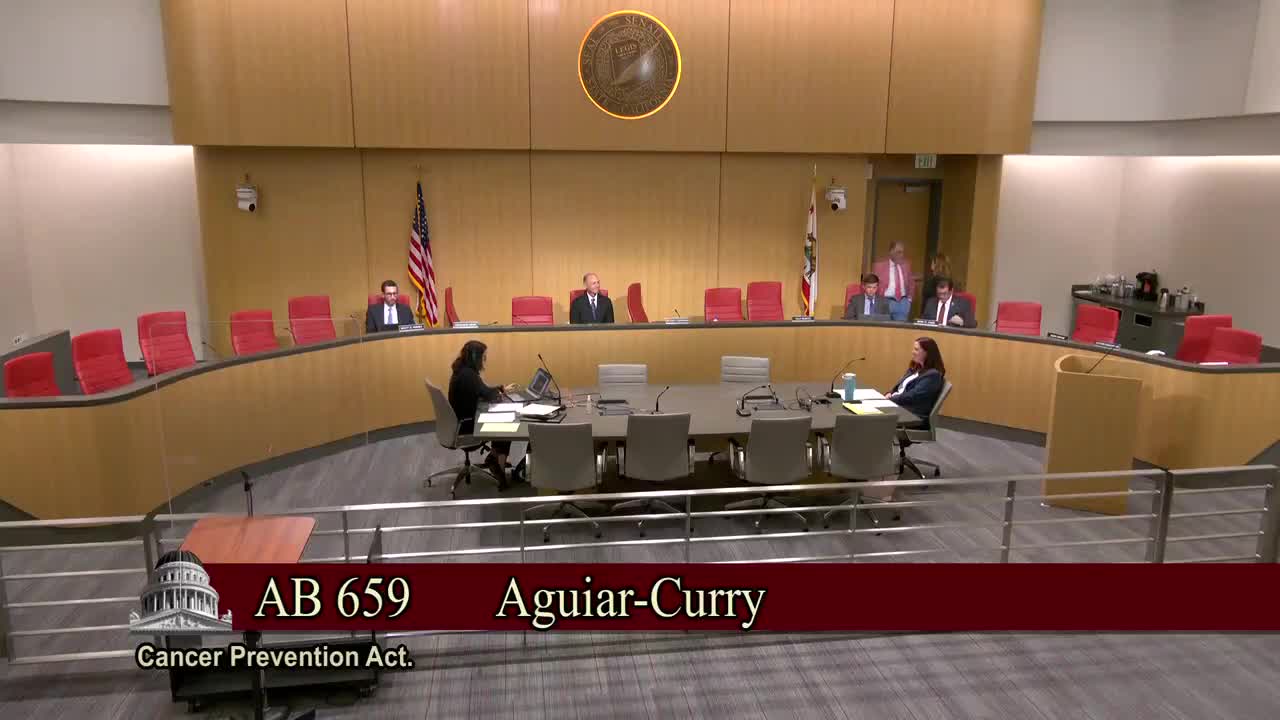
Bill Author

Bill Co-Author(s):