AB 1665: Veterans’ homes.
- Session Year: 2023-2024
- House: Assembly
- Latest Version Date: 2023-04-11
Current Status:
Failed
(2023-09-06: Ordered to inactive file at the request of Senator Archuleta.)
Introduced
In Committee
First Chamber
In Committee
Second Chamber
Enacted
Existing law provides for the establishment and operation of veterans homes at various sites and provides for an administrator of each home, as specified. Existing law establishes the duties of the Department of Veterans Affairs with regard to the establishment and regulation of veterans homes.
Under existing law, veterans homes are for aged or disabled persons who served in the Armed Forces of the United States who were discharged or released from active duty under conditions other than dishonorable, who are eligible for health care benefits, hospitalization, or domiciliary care in a veterans facility, and who are bona fide residents of this state at the time of application, and for the spouses or domestic partners of those persons, if certain conditions are met.
This bill would authorize a nonveteran spouse or domestic partner previously admitted to a veterans home to elect to continue residency in the veterans home after a specified event occurs, including the death or discharge of the related veteran member, subject to certain restrictions.This bill would specify that dissolution of marriage or termination of domestic partnership does not necessitate the discharge of the spouse or domestic partner. The bill would provide that the discharge of a veteran member who intends to take an aid-in-dying drug, as specified, does not necessitate the discharge of the spouse or domestic partner.
Existing law provides for the establishment and operation of veterans homes at various sites and provides for an administrator of each home, as specified. Existing law establishes the duties of the Department of Veterans Affairs with regard to the establishment and regulation of veterans homes.
Under existing law, veterans veterans homes are for aged or disabled persons who served in the Armed Forces of the United States, States who were discharged or released from active duty under conditions other than dishonorable, who are eligible for health care benefits, hospitalization, or domiciliary care in a veterans facility, and who are bona fide residents of this state at the time of application, and for the spouses or domestic partners of those persons, if certain conditions are met.
This bill would authorize a nonveteran spouse or domestic partner previously admitted to a veterans home to elect to continue residency in the veterans home after a specified event occurs, including the death or discharge of the related veteran member, subject to certain restrictions.
This bill would make technical, nonsubstantive changes to this provision.Under existing law, veterans homes are for aged or disabled persons who served in the Armed Forces of the United States, who were discharged or released from active duty under conditions other than dishonorable, who are eligible for health care benefits, hospitalization, or domiciliary care in a veterans facility, and who are bona fide residents of this state at the time of application, and for the spouses or domestic partners of those persons, if certain conditions are met.
This bill would make technical, nonsubstantive changes to this provision.
(a)Except as provided in Sections 1012.4, 1023, and 1023.1, veterans homes are a veterans home is for aged or disabled persons who served in the Armed Forces of the United States of America who were discharged or released from active duty under conditions other than dishonorable, who are eligible for health care benefits, hospitalization, or domiciliary care in a veterans facility in accordance with the rules and regulations of the United States Department of Veterans Affairs, and who are bona fide residents of this state at the time of application; application, and for the spouses or domestic partners of these persons persons, if all of the following conditions, as are applicable, are satisfied:
(1)Space is available.
(2)Joint residency will be in the best interests of the home member, as determined by the administrator.
(3)The spouse or domestic partner is a bona fide resident of this state at the time of application for admission to the home and either is married to, and has resided with, the veteran applicant for at least one year, year or is the widow or widower of a recipient of the Medal of Honor or a former prisoner of war (POW).
(4)(A)The home member and spouse or domestic partner agree to pay the fees and charges for joint residency, or for a residency.
(B)A widow or widower, widower agrees to pay the fees and charges for the residency, residency that the department may establish.
(b)(1)Veterans who qualify A veteran who qualifies for benefits under this chapter due to service during a time of war shall be given priority over veterans who qualify a veteran who qualifies due to service during a time of peace.
(2)Veterans who qualify A veteran who qualifies for benefits under this chapter who are recipients is a recipient of the Medal of Honor or who were prisoners of war (POWs) was a prisoner of war (POW) shall be given priority over all other qualified veterans, regardless of the level of care required.
(3)Veterans who qualify A veteran who qualifies for benefits under this chapter who have has been rated by the United States Department of Veterans Affairs as being 70 percent or greater service-connected disabled may be given priority over other veterans.
(4)The secretary may establish needs-based criteria for admission to the homes, and any a veteran meeting those criteria may be given priority over veterans who do a veteran who does not qualify for prioritization under paragraph (2) or (3) and can afford to provide for their own care elsewhere.
(5)Paragraphs (3) and (4) shall not apply to veterans a veteran who, as of January 1, 2018, are is on a wait list awaiting admission to a veterans home.
(c)A member spouse or domestic partner may continue residence after the veterans death so long as they continue to pay all applicable fees.
(d)The dissolution of marriage or termination of a domestic partnership between a veteran member and their spouse or domestic partner following joint admission does not necessitate the discharge of the spouse or domestic partner.
(e)The discharge of a veteran member who intends to take an aid-in-dying drug pursuant to the End of Life Option Act (Part 1.85 (commencing with Section 443) of Division 1 of the Health and Safety Code) does not necessitate the discharge of the spouse or domestic partner.
(d)(f)The property of the home shall be used for this purpose.
SECTION 1.Section 1012.5 is added to the Military and Veterans Code, to read:1012.5.(a)A nonveteran spouse or domestic partner previously admitted to a veterans home in a joint admission with a veteran may elect to continue residency in the veterans home, subject to subdivisions (b) and (c), after any of the following events:(1)The death of the related veteran member.(2)The discharge of the related veteran member.(3)The discharge of the related veteran member for cause.(4)The marital dissolution or the termination of a domestic partnership between the related veteran member and the nonveteran spouse or domestic partner following joint admission.(b)This section does not prohibit a discharge when a nonveteran spouse or domestic partner does any of the following:(1)Has not resided jointly with the related veteran member in the veterans home for at least one year unless the failure to meet this requirement is due to the related veteran members death or the related veteran members discharge.(2)Commits a separate violation of the member code of conduct.(3)Fails to pay member fees.(4)No longer meets eligibility requirements.(5)Exceeds the veterans homes treatment limitations.(6)Poses a risk to the licensure or certification of the veterans home.(c)This section does not apply when the related veteran member is discharged from the veterans home pursuant to subdivision (b) of Section 1012.1 as it pertains to providing false financial and other information on a joint application. A nonveteran spouse shall be discharged jointly with the related veteran member in those circumstances.(a)A nonveteran spouse or domestic partner previously admitted to a veterans home in a joint admission with a veteran may elect to continue residency in the veterans home, subject to subdivisions (b) and (c), after any of the following events:
(1)The death of the related veteran member.
(2)The discharge of the related veteran member.
(3)The discharge of the related veteran member for cause.
(4)The marital dissolution or the termination of a domestic partnership between the related veteran member and the nonveteran spouse or domestic partner following joint admission.
(b)This section does not prohibit a discharge when a nonveteran spouse or domestic partner does any of the following:
(1)Has not resided jointly with the related veteran member in the veterans home for at least one year unless the failure to meet this requirement is due to the related veteran members death or the related veteran members discharge.
(2)Commits a separate violation of the member code of conduct.
(3)Fails to pay member fees.
(4)No longer meets eligibility requirements.
(5)Exceeds the veterans homes treatment limitations.
(6)Poses a risk to the licensure or certification of the veterans home.
(c)This section does not apply when the related veteran member is discharged from the veterans home pursuant to subdivision (b) of Section 1012.1 as it pertains to providing false financial and other information on a joint application. A nonveteran spouse shall be discharged jointly with the related veteran member in those circumstances.
SECTION 1.Section 1012 of the Military and Veterans Code is amended to read:1012.(a)Except as provided in Sections 1012.4, 1023, and 1023.1, a veterans home is for aged or disabled persons who served in the Armed Forces of the United States of America who were discharged or released from active duty under conditions other than dishonorable, who are eligible for health care benefits, hospitalization, or domiciliary care in a veterans facility in accordance with the rules and regulations of the United States Department of Veterans Affairs, and who are bona fide residents of this state at the time of application, and for the spouses or domestic partners of these persons, if all of the following conditions, as are applicable, are satisfied:(1)Space is available.(2)Joint residency will be in the best interests of the home member, as determined by the administrator.(3)The spouse or domestic partner is a bona fide resident of this state at the time of application for admission to the home and either is married to and has resided with the veteran applicant for at least one year or is the widow or widower of a recipient of the Medal of Honor or a former prisoner of war (POW).(4)The home member and spouse or domestic partner agree to pay the fees and charges for joint residency or, for a widow or widower, for the residency, that the department may establish.(b)(1)A veteran who qualifies for benefits under this chapter due to service during a time of war shall be given priority over a veteran who qualifies due to service during a time of peace.(2)A veteran who qualifies for benefits under this chapter who is a recipient of the Medal of Honor or who was a prisoner of war (POW) shall be given priority over all other qualified veterans, regardless of the level of care required.(3)A veteran who qualifies for benefits under this chapter who has been rated by the United States Department of Veterans Affairs as being 70 percent or greater service-connected disabled may be given priority over other veterans.(4)The secretary may establish needs-based criteria for admission to the homes, and a veteran meeting those criteria may be given priority over a veteran who does not qualify for prioritization under paragraph (2) or (3) and can afford to provide for their own care elsewhere.(5)Paragraphs (3) and (4) shall not apply to a veteran who, as of January 1, 2018, is on a wait list awaiting admission to a veterans home.(c)A member spouse or domestic partner may continue residence after the veterans death so long as they continue to pay all applicable fees.(d)The property of the home shall be used for this purpose.(a)Except as provided in Sections 1012.4, 1023, and 1023.1, veterans homes are a veterans home is for aged or disabled persons who served in the Armed Forces of the United States of America who were discharged or released from active duty under conditions other than dishonorable, who are eligible for health care benefits, hospitalization, or domiciliary care in a veterans veterans facility in accordance with the rules and regulations of the United States Department of Veterans Affairs, and who are bona fide residents of this state at the time of application; application, and for the spouses or domestic partners of these persons persons, if all of the following conditions, as are applicable, are satisfied:
(1)Space is available.
(2)Joint residency will be in the best interests of the home member, as determined by the administrator.
(3)The spouse or domestic partner is a bona fide resident of this state at the time of application for admission to the home and either is married to, to and has resided with, with the veteran applicant for at least one year, year or is the widow or widower of a recipient of the Medal of Honor or a former prisoner of war (POW).
(4)The home member and spouse or domestic partner agree to pay the fees and charges for joint residency, or residency or, for a widow or widower, for the residency, that the department may establish.
(b)(1)Veterans who qualify A veteran who qualifies for benefits under this chapter due to service during a time of war shall be given priority over veterans who qualify a veteran who qualifies due to service during a time of peace.
(2)Veterans who qualify A veteran who qualifies for benefits under this chapter who are recipients is a recipient of the Medal of Honor or who were prisoners of war (POWs) was a prisoner of war (POW) shall be given priority over all other qualified veterans, regardless of the level of care required.
(3)Veterans who qualify A veteran who qualifies for benefits under this chapter who have has been rated by the United States Department of Veterans Affairs as being 70 percent or greater service-connected disabled may be given priority over other veterans.
(4)The secretary may establish needs-based criteria for admission to the homes, and any a veteran meeting those criteria may be given priority over veterans a veteran who do does not qualify for prioritization under paragraph (2) or (3) and can afford to provide for their own care elsewhere.
(5)Paragraphs (3) and (4) shall not apply to veterans a veteran who, as of January 1, 2018, are is on a wait list awaiting admission to a veterans veterans home.
(c)A member spouse or domestic partner may continue residence after the veterans death so long as they continue to pay all applicable fees.
(d)The property of the home shall be used for this purpose.
|
Date
|
Status
|
|---|---|
| Sep 6, 2023 | Ordered to inactive file at the request of Senator Archuleta. |
| Aug 22, 2023 | Read second time. Ordered to third reading. |
| Aug 21, 2023 | From committee: Be ordered to second reading pursuant to Senate Rule 28.8. |
| Jul 11, 2023 | From committee: Do pass and re-refer to Com. on APPR. (Ayes 5. Noes 0.) (July 10). Re-referred to Com. on APPR. |
| May 24, 2023 | Referred to Com. on M. & V.A. |
| May 11, 2023 | In Senate. Read first time. To Com. on RLS. for assignment. |
| May 11, 2023 | Read third time. Passed. Ordered to the Senate. (Ayes 66. Noes 0. Page 1524.) |
| May 4, 2023 | Read second time. Ordered to Consent Calendar. |
| May 3, 2023 | From committee: Do pass. To Consent Calendar. (Ayes 16. Noes 0.) (May 3). |
| Apr 19, 2023 | From committee: Do pass and re-refer to Com. on APPR. with recommendation: To Consent Calendar. (Ayes 11. Noes 0.) (April 18). Re-referred to Com. on APPR. |
| Apr 12, 2023 | Re-referred to Com. on M. & V.A. |
| Apr 11, 2023 | From committee chair, with author's amendments: Amend, and re-refer to Com. on M. & V.A. Read second time and amended. |
| Mar 20, 2023 | Re-referred to Com. on M. & V.A. |
| Mar 16, 2023 | Referred to Com. on M. & V.A. |
| Mar 16, 2023 | From committee chair, with author's amendments: Amend, and re-refer to Com. on M. & V.A. Read second time and amended. |
| Feb 18, 2023 | From printer. May be heard in committee March 20. |
| Feb 17, 2023 | Read first time. To print. |
|
Date
|
Description
|
Location
|
Votes
|
|
|---|---|---|---|---|
| Jul 10, 2023 | Do pass, but first be re-referred to the Committee on [Appropriations] | Senate Standing Committee on Military and Veterans Affairs |
Passed |
|
| May 11, 2023 | AB 1665 Soria Consent Calendar Second Day Regular Session | Assembly Floor |
Passed |
|
| May 3, 2023 | Do pass. To Consent Calendar. | Assembly Standing Committee on Appropriations |
Passed |
|
| Apr 18, 2023 | Do pass and be re-referred to the Committee on [Appropriations] with recommendation: To Consent Calendar | Assembly Standing Committee on Military and Veterans Affairs |
Passed |
This list shows positions taken on this bill by organizations on the date displayed, which is linked to the original source.
Positions by individuals are not included.
|
Organization
|
Position
|
Date
|
|---|---|---|
| Compassion & Choices | ** Support |
SENATE RULES COMMITTEE Office of Senate Floor Analyses (916) 651-1520 Fax: (916) 327-4478 | AB 1665 |
THIRD READING
Bill No: AB 1665
Author: Soria (D)
Amended: 4/11/23 in Assembly
Vote: 21
SENATE MILITARY & VETERANS COMMITTEE: 5-0, 7/10/23
AYES: Archuleta, Grove, Alvarado-Gil, Menjivar, Umberg
SENATE APPROPRIATIONS COMMITTEE: Senate Rule 28.8
ASSEMBLY FLOOR: 66-0, 5/11/23 (Consent) - See last page for vote
SUBJECT: Veterans’ homes
SOURCE: Author
DIGEST:
This bill specifies that dissolution of marriage or termination of domestic partnership does not necessitate the discharge of the spouse or domestic partner; and provides that the discharge of a veteran member who intends to take an aid-in-dying drug, as specified, does not necessitate the discharge of the spouse or domestic partner.
ANALYSIS:
Existing law:
- States that veterans’ homes are for aged or disabled persons who served in the Armed Forces of the United States of America who were discharged or released from active duty under conditions other than dishonorable, who are eligible for health care benefits, hospitalization, or domiciliary care in a veterans’ facility in accordance with the rules and regulations of the United States Department of Veterans Affairs, and who are bona fide residents of this state at the time of application; and for the spouses or domestic partners of these persons if all of the following conditions, as are applicable, are satisfied:
- Space is available.
- Joint residency will be in the best interests of the home member, as determined by the administrator.
- The spouse or domestic partner is a bona fide resident of this state at the time of application for admission to the home and either is married to, and has resided with, the veteran applicant for at least one year, or is the widow or widower of a recipient of the Medal of Honor or a former prisoner of war (POW).
- The home member and spouse or domestic partner agree to pay the fees and charges for joint residency, or for a widow or widower, for the residency, that the department may establish.
- Requires that veterans who qualify for benefits under this chapter due to service during a time of war be given priority over veterans who qualify due to service during a time of peace.
- Requires that veterans who qualify for benefits under this chapter who are recipients of the Medal of Honor or who were prisoners of war (POWs) be given priority over all other qualified veterans, regardless of the level of care required.
- Permits veterans who qualify for benefits under this chapter who have been rated by the United States Department of Veterans Affairs as being 70 percent or greater service-connected disabled to be given priority over other veterans.
- Permits the CalVet secretary to establish needs-based criteria for admission to the homes, and states that any veteran meeting those criteria may be given priority over veterans who do not qualify for prioritization under other criteria and who can afford to provide for their own care elsewhere.
- Provides that a member spouse or domestic partner may continue residence after the veteran’s death so long as they continue to pay all applicable fees.
This bill specifies that the spouse or domestic partner of a veteran resident of a state veterans’ home does not necessitate a discharge from the home under specified circumstances. Specifically, this bill:
- Provides that the dissolution of marriage or termination of a domestic partnership between a veteran member and their spouse or domestic partner following joint admission does not necessitate the discharge of the spouse or domestic partner.
- Provides that the discharge of a veteran member who intends to take an aid-in-dying drug pursuant to the End of Life Option Act (Part 1.85 (commencing with Section 443) of Division 1 of the Health and Safety Code) does not necessitate the discharge of the spouse or domestic partner.
Background
CalVet oversees eight veterans homes across the State. The homes provide rehabilitative, residential, and medical services to the veterans who reside there. Veterans who are disabled or over 55 years of age and a resident of California are eligible to apply for admission to the homes. Each home provides different levels of care, including skilled nursing care and memory care. The homes also range in size. For example, the Lancaster home can house 60 residents on a 20-acre site while the largest home, the Yountville home (Yountville) in Napa County, can house up to 1,000 residents on a site that covers several hundred acres. CalVet currently operates Veterans Homes in eight cities:
- Yountville (established in 1884 and is the largest elderly care facility in the United States.)
- Barstow
- Chula Vista
- Lancaster
- Ventura
- Redding
- Fresno
- West Los Angeles (on the grounds of the U.S.D.V.A. Greater Los Angeles Medical Center.)
Comments
State law establishes the right of the spouse or domestic partner of an eligible veteran admitted to a Veterans Home to accompany them provided that there is space, that joint residency is in the veteran’s interest, that the spouse or domestic partner is a California resident who has been married or co-habiting with the veteran at least one year, and that the veteran and their spouse or domestic partner agree to pay requisite fees and charges.
The law also provides that the member spouse or domestic partner may continue residence after the veteran’s death so long as they continue to pay all applicable fees. However, the law is otherwise silent on other conditions under which a member’s spouse or domestic partner may remain at the home, such as divorce or separation.
Additionally, since the passage of the End of Life Option Act, CalVet has had to formulate policy providing for the exercise of rights under the act by home members while remaining compliant with federal law, under which medical aid-in-dying is still forbidden. CalVet regulation forbids the department from providing aid-in-dying drugs, and forbids its employees and contractors from participating in any activity under the End of Life Option Act while on the premises of the Veterans Home, or while acting within the course and scope of any employment by, or contract with, the Veterans Home.
Further, CalVet regulation also requires that should a member intend to take an aid-in-dying drug to end his or her life, that before receiving and taking the drug, the member must discharge from the home, though it does provide for their return if they elect not to take the drug, after all. However, it does not, currently, specify that the veteran’s spouse or partner may remain, or that they may remain in cases of divorce or separation. CalVet is now considering proposed regulations protecting continued residency in those cases, but there is still no statutory protection.
According to the author:
“The law grants to the spouse or domestic partner of an eligible veteran admitted to a Veterans Home the right to accompany them, subject to other requirements, and the right to remain after the veteran member’s death, but is otherwise silent on other circumstances, such as divorce or separation. We should resolve this certainty so that members of the home don’t fear that divorce, separation, or the veteran member’s exercise of rights under the End of Life Option Act will result in them losing their home.”
Related/Prior Legislation
AB 240 (Irwin, Chapter 61, Statutes of 2020) limited the term of a lease of real property at a Veterans’ Home to five years, except under specified conditions; and required that any use of property by a third party at a Veterans' Home meet specified criteria.
FISCAL EFFECT: Appropriation: No Fiscal Com.: Yes Local: No
SUPPORT: (Verified 8/21/23)
Compassion & Choices
OPPOSITION: (Verified 8/21/23)
None received
ASSEMBLY FLOOR: 66-0, 5/11/23
AYES: Addis, Aguiar-Curry, Alanis, Bains, Bennett, Berman, Boerner, Bryan, Calderon, Wendy Carrillo, Chen, Connolly, Megan Dahle, Davies, Essayli, Flora, Mike Fong, Vince Fong, Friedman, Gabriel, Gallagher, Garcia, Gipson, Grayson, Haney, Holden, Hoover, Irwin, Jackson, Jones-Sawyer, Kalra, Lackey, Low, Lowenthal, Maienschein, Mathis, McKinnor, Muratsuchi, Stephanie Nguyen, Pacheco, Papan, Joe Patterson, Pellerin, Petrie-Norris, Quirk-Silva, Ramos, Reyes, Luz Rivas, Robert Rivas, Rodriguez, Blanca Rubio, Sanchez, Santiago, Schiavo, Soria, Ta, Ting, Valencia, Villapudua, Waldron, Wallis, Weber, Wicks, Wilson, Zbur, Rendon
NO VOTE RECORDED: Alvarez, Arambula, Bauer-Kahan, Bonta, Juan Carrillo, Cervantes, Dixon, Hart, Lee, McCarty, Ortega, Jim Patterson, Ward, Wood
Prepared by: Jenny Callison / M.&V.A. / (916) 651-1503
8/23/23 15:14:06
**** END ****
SENATE COMMITTEE ON MILITARY AND VETERANS AFFAIRS
Senator Bob Archuleta, Chair
2023 - 2024 Regular
Bill No: AB 1665 Hearing Date: 7/10/23
Author: | Soria | ||
Version: | 4/11/23 Introduced | ||
Urgency: | No | Fiscal: | Yes |
Consultant: | Jenny Callison | ||
Subject: Veterans’ homes
DESCRIPTION
Summary:
This bill specifies that the spouse or domestic partner of a veteran resident of a state veterans’ home does not necessitate a discharge from the home under specified circumstances. Specifically, this bill:
- Provides that the dissolution of marriage or termination of a domestic partnership between a veteran member and their spouse or domestic partner following joint admission does not necessitate the discharge of the spouse or domestic partner.
- Provides that the discharge of a veteran member who intends to take an aid-in-dying drug pursuant to the End of Life Option Act (Part 1.85 (commencing with Section 443) of Division 1 of the Health and Safety Code) does not necessitate the discharge of the spouse or domestic partner.
Existing law:
- States that veterans’ homes are for aged or disabled persons who served in the Armed Forces of the United States of America who were discharged or released from active duty under conditions other than dishonorable, who are eligible for health care benefits, hospitalization, or domiciliary care in a veterans’ facility in accordance with the rules and regulations of the United States Department of Veterans Affairs, and who are bona fide residents of this state at the time of application; and for the spouses or domestic partners of these persons if all of the following conditions, as are applicable, are satisfied:
- Space is available.
- Joint residency will be in the best interests of the home member, as determined by the administrator.
- The spouse or domestic partner is a bona fide resident of this state at the time of application for admission to the home and either is married to, and has resided with, the veteran applicant for at least one year, or is the widow or widower of a recipient of the Medal of Honor or a former prisoner of war (POW).
- The home member and spouse or domestic partner agree to pay the fees and charges for joint residency, or for a widow or widower, for the residency, that the department may establish.
- Requires that veterans who qualify for benefits under this chapter due to service during a time of war be given priority over veterans who qualify due to service during a time of peace.
- Requires that veterans who qualify for benefits under this chapter who are recipients of the Medal of Honor or who were prisoners of war (POWs) be given priority over all other qualified veterans, regardless of the level of care required.
- Permits veterans who qualify for benefits under this chapter who have been rated by the United States Department of Veterans Affairs as being 70 percent or greater service-connected disabled to be given priority over other veterans.
- Permits the CalVet secretary to establish needs-based criteria for admission to the homes, and states that any veteran meeting those criteria may be given priority over veterans who do not qualify for prioritization under other criteria and who can afford to provide for their own care elsewhere.
- Provides that a member spouse or domestic partner may continue residence after the veteran’s death so long as they continue to pay all applicable fees.
BACKGROUND
CalVet oversees eight veterans homes across the State. The homes provide rehabilitative, residential, and medical services to the veterans who reside there. Veterans who are disabled or over 55 years of age and a resident of California are eligible to apply for admission to the homes. Each home provides different levels of care, including skilled nursing care and memory care. The homes also range in size. For example, the Lancaster home can house 60 residents on a 20-acre site while the largest home, the Yountville home (Yountville) in Napa County, can house up to 1,000 residents on a site that covers several hundred acres. CalVet currently operates Veterans Homes in eight cities:
- Yountville (established in 1884 and is the largest elderly care facility in the United States.)
- Barstow
- Chula Vista
- Lancaster
- Ventura
- Redding
- Fresno
- West Los Angeles (on the grounds of the U.S.D.V.A. Greater Los Angeles Medical Center.)
COMMENT
State law establishes the right of the spouse or domestic partner of an eligible veteran admitted to a Veterans Home to accompany them provided that there is space, that joint residency is in the veteran’s interest, that the spouse or domestic partner is a California resident who has been married or co-habiting with the veteran at least one year, and that the veteran and their spouse or domestic partner agree to pay requisite fees and charges.
The law also provides that the member spouse or domestic partner may continue residence after the veteran’s death so long as they continue to pay all applicable fees. However, the law is otherwise silent on other conditions under which a member’s spouse or domestic partner may remain at the home, such as divorce or separation.
Additionally, since the passage of the End of Life Option Act, CalVet has had to formulate policy providing for the exercise of rights under the act by home members while remaining compliant with federal law, under which medical aid-in-dying is still forbidden. CalVet regulation forbids the department from providing aid-in-dying drugs, and forbids its employees and contractors from participating in any activity under the End of Life Option Act while on the premises of the Veterans Home, or while acting within the course and scope of any employment by, or contract with, the Veterans Home.
Further, CalVet regulation also requires that should a member intend to take an aid-in-dying drug to end his or her life, that before receiving and taking the drug, the member must discharge from the home, though it does provide for their return if they elect not to take the drug, after all. However, it does not, currently, specify that the veteran’s spouse or partner may remain, or that they may remain in cases of divorce or separation. CalVet is now considering proposed regulations protecting continued residency in those cases, but there is still no statutory protection.
According to the author:
“The law grants to the spouse or domestic partner of an eligible veteran admitted to a Veterans Home the right to accompany them, subject to other requirements, and the right to remain after the veteran member’s death, but is otherwise silent on other circumstances, such as divorce or separation. We should resolve this certainty so that members of the home don’t fear that divorce, separation, or the veteran member’s exercise of rights under the End of Life Option Act will result in them losing their home.”
Related legislation:
AB 240 (Irwin, Chapter 61, Statutes of 2020) limited the term of a lease of real property at a Veterans’ Home to five years, except under specified conditions; and required that any use of property by a third party at a Veterans' Home meet specified criteria.
POSITIONS
Sponsor: Author.
Support: None on File.
Oppose: None on File.
-- END --
Date of Hearing: May 3, 2023
ASSEMBLY COMMITTEE ON APPROPRIATIONS
Chris Holden, Chair
ABPCA Bill Id:AB 1665
Author:(Soria) – As Amended Ver:April 11, 2023
Policy Committee: | Military and Veterans Affairs | Vote: | 11 - 0 |
|
| ||
|
|
Urgency: No State Mandated Local Program: No Reimbursable: No
SUMMARY:
This bill specifies that the spouse or domestic partner of a veteran resident (member) of a state veterans’ home need not be discharged from the home upon a) dissolution of the marriage or termination of the domestic partnership between a veteran member and their spouse or domestic partner following joint admission, or b) the discharge of a veteran member who intends to take an aid-in-dying drug pursuant to the End of Life Option Act.
FISCAL EFFECT:
CalVet indicates no costs as a result of this bill. The bill specifies conditions under which a spouse or domestic partner of a veteran member is not required to be discharged, but does not prohibit it. Further, a spouse and domestic partner who remains in the home is required to continue to pay all fees and charges for the residency.
COMMENTS:
- Purpose. The author of this bill seeks to provide statutory protection for the continued residency of a spouse or partner in a state veterans’ home in cases of divorce and the exercise of rights by the veteran member under the End of Life Option Act. According to the author:
The law grants to the spouse or domestic partner of an eligible veteran admitted to a Veterans Home the right to accompany them, subject to other requirements, and the right to remain after the veteran member’s death, but is otherwise silent on other circumstances, such as divorce or separation. We should resolve this certainty so that members of the home don’t fear that divorce, separation, or the veteran member’s exercise of rights under the End of Life Option Act will result in them losing their home.
- Background. CalVet oversees eight veterans’ homes across the state. The homes provide rehabilitative, residential and medical services to the veterans who reside there. Any veteran who is disabled or over 55 years of age and a resident of California is eligible to apply for admission to the homes. Each home provides different levels of care, including skilled nursing care and memory care.
Existing state law establishes the right of the spouse or domestic partner of an eligible veteran admitted to a veterans’ home to accompany them, provided there is space, that joint residency is in the veteran’s best interest, the spouse or domestic partner is a California resident who has been married or co-habiting with the veteran at least one year, and the veteran and their spouse or domestic partner agree to pay requisite fees and charges.
State law provides that the member’s spouse or domestic partner may continue residence after the veteran’s death so long as they continue to pay all applicable fees.
- End of Life Option Act. Since the passage of the End of Life Option Act, CalVet has developed regulations providing for the exercise of rights under the act by a veterans’ home member while remaining compliant with federal law, under which medical aid-in-dying is still forbidden. CalVet regulations forbid providing an aid-in-dying drug and forbid its employees and contractors from participating in any activity under the End of Life Option Act while on the premises of the veterans’ home, or while acting within the course and scope of any employment by, or contract with, the veterans’ home.
CalVet regulations also require, should a veteran member intend to take an aid-in-dying drug to end their life, before receiving and taking the drug, the member discharge from the home, though it does provide for their return if they elect not to take the drug after all. Neither state law nor regulation specifies that a veteran’s spouse or partner may remain at the home after the member has discharged.
CalVet is considering proposed regulations protecting continued residency of spouses and domestic partners in the circumstances of divorce and the exercise of end-of-life options discussed here. This bill provides that the spouse or domestic partner of a veteran member of a state veterans’ home need not be discharged from the home under these circumstances.
Analysis Prepared by: Jennifer Swenson / APPR. / (916) 319-2081
Date of Hearing: April 18, 2023
ASSEMBLY COMMITTEE ON MILITARY AND VETERANS AFFAIRS
Esmeralda Soria, Chair
ABPCA Bill Id:AB 1665 (
Author:Soria) – As Amended Ver:March 16, 2023
SUBJECT: Veterans’ homes
SUMMARY: This bill states that the spouse or domestic partner of a veteran resident of a state veterans’ home need not be discharged from the home under specified circumstances. Specifically, this bill:
- Provides that the dissolution of marriage or termination of a domestic partnership between a veteran member and their spouse or domestic partner following joint admission does not necessitate the discharge of the spouse or domestic partner.
- Provides that the discharge of a veteran member who intends to take an aid-in-dying drug pursuant to the End of Life Option Act (Part 1.85 (commencing with Section 443) of Division 1 of the Health and Safety Code) does not necessitate the discharge of the spouse or domestic partner.
EXISTING LAW:
Military and Veterans Code Section 1012:
- States that veterans’ homes are for aged or disabled persons who served in the Armed Forces of the United States of America who were discharged or released from active duty under conditions other than dishonorable, who are eligible for health care benefits, hospitalization, or domiciliary care in a veterans’ facility in accordance with the rules and regulations of the United States Department of Veterans Affairs, and who are bona fide residents of this state at the time of application; and for the spouses or domestic partners of these persons if all of the following conditions, as are applicable, are satisfied:
- Space is available.
- Joint residency will be in the best interests of the home member, as determined by the administrator.
- The spouse or domestic partner is a bona fide resident of this state at the time of application for admission to the home and either is married to, and has resided with, the veteran applicant for at least one year, or is the widow or widower of a recipient of the Medal of Honor or a former prisoner of war (POW).
- The home member and spouse or domestic partner agree to pay the fees and charges for joint residency, or for a widow or widower, for the residency, that the department may establish.
- Requires that veterans who qualify for benefits under this chapter due to service during a time of war be given priority over veterans who qualify due to service during a time of peace.
- Requires that veterans who qualify for benefits under this chapter who are recipients of the Medal of Honor or who were prisoners of war (POWs) be given priority over all other qualified veterans, regardless of the level of care required.
- Permits veterans who qualify for benefits under this chapter who have been rated by the United States Department of Veterans Affairs as being 70 percent or greater service-connected disabled to be given priority over other veterans.
- Permits the CalVet secretary to establish needs-based criteria for admission to the homes, and states that any veteran meeting those criteria may be given priority over veterans who do not qualify for prioritization under other criteria and who can afford to provide for their own care elsewhere.
- Provides that a member spouse or domestic partner may continue residence after the veteran’s death so long as they continue to pay all applicable fees.
FISCAL EFFECT: This bill has not been analyzed by a fiscal committee.
COMMENTS: Purpose. According to the author:
“The law grants to the spouse or domestic partner of an eligible veteran admitted to a Veterans Home the right to accompany them, subject to other requirements, and the right to remain after the veteran member’s death, but is otherwise silent on other circumstances, such as divorce or separation. We should resolve this certainty so that members of the home don’t fear that divorce, separation, or the veteran member’s exercise of rights under the End of Life Option Act will result in them losing their home.”
State law establishes the right of the spouse or domestic partner of an eligible veteran admitted to a Veterans Home to accompany them provided that there is space, that joint residency is in the veteran’s interest, that the spouse or domestic partner is a California resident who has been married or co-habiting with the veteran at least one year, and that the veteran and their spouse or domestic partner agree to pay requisite fees and charges.
The law also provides that the member spouse or domestic partner may continue residence after the veteran’s death so long as they continue to pay all applicable fees. However, the law is otherwise silent on other conditions under which a member’s spouse or domestic partner may remain at the home, such as divorce or separation.
Additionally, since the passage of the End of Life Option Act, CalVet has had to formulate policy providing for the exercise of rights under the act by home members while remaining compliant with federal law, under which medical aid-in-dying is still forbidden. CalVet regulation forbids the department from providing aid-in-dying drugs, and forbids its employees and contractors from participating in any activity under the End of Life Option Act while on the premises of the Veterans Home, or while acting within the course and scope of any employment by, or contract with, the Veterans Home.
Further, CalVet regulation also requires that should a member intend to take an aid-in-dying drug to end his or her life, that before receiving and taking the drug, the member must discharge from the home, though it does provide for their return if they elect not to take the drug, after all. However, it does not, currently, specify that the veteran’s spouse or partner may remain, or that they may remain in cases of divorce or separation. CalVet is now considering proposed regulations protecting continued residency in those cases, but there is still no statutory protection.
Related legislation.
AB 240 (Irwin, Chapter 61, Statutes of 2020) limited the term of a lease of real property at a Veterans’ Home to five years, except under specified conditions; and required that any use of property by a third party at a Veterans' Home meet specified criteria.
REGISTERED SUPPORT / OPPOSITION:
Support
None on file.
Opposition
None on file.
Analysis Prepared by: Christian Burkin / M. & V.A. / (916) 319-3550
Discussed in Hearing
 11MIN
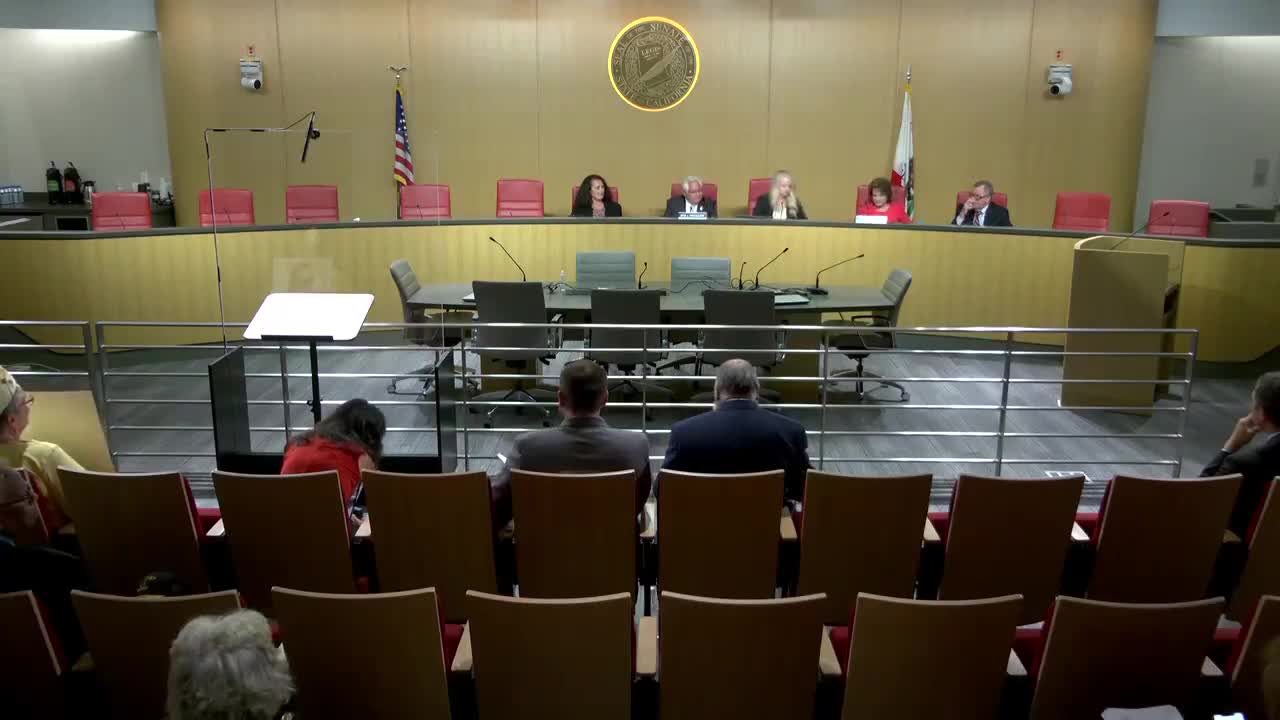
Senate Standing Committee on Military and Veterans Affairs
Bill Author

Bill Co-Author(s):