AB 1794: Crimes: larceny.
- Session Year: 2023-2024
- House: Assembly
- Latest Version Date: 2024-04-11
Current Status:
Failed
(2024-08-15: In committee: Held under submission.)
Introduced
In Committee
First Chamber
In Committee
Second Chamber
Enacted
Existing law, the Safe Neighborhoods and Schools Act, enacted as an initiative statute by Proposition 47, as approved by the electors at the November 4, 2014, statewide general election, makes the theft of money, labor, or property petty theft punishable as a misdemeanor, whenever the value of the property taken does not exceed $950. Under existing law, if the value of the property taken exceeds $950, the theft is grand theft, punishable as a misdemeanor or a felony. Proposition 47 requires shoplifting, defined as entering a commercial establishment with the intent to commit larceny if the value of the property taken does not exceed $950, to be punished as a misdemeanor.
Under existing law, if the value of all property taken over the course of distinct but related acts motivated by one intention, general impulse, and plan exceeds $950, those values may be aggregated into a single charge of grand theft.
This bill would clarify that those values may be aggregated even though the thefts occurred in different places or from different victims. The bill would also, declarative of existing law, provide that circumstantial evidence may be used to prove that multiple thefts were motivated by one intention, general impulse, and plan.
The bill would, until January 1, 2030, would also authorize counties to operate a program to allow retailers to submit details of alleged shoplifting shoplifting, organized retail theft, or grand theft directly to the county district attorney through an online portal on the district attorneys internet website. The bill would require counties that participate in the program to conduct an evaluation and collect specified information, and to report that information to the Department of Justice, Assembly and Senate Public Safety Committees and the Board of State and Community Corrections, as specified.
Existing law, the Safe Neighborhoods and Schools Act, enacted as an initiative statute by Proposition 47, as approved by the electors at the November 4, 2014, statewide general election, makes the theft of money, labor, or property petty theft punishable as a misdemeanor, whenever the value of the property taken does not exceed $950. Under existing law, if the value of the property taken exceeds $950, the theft is grand theft, punishable as a misdemeanor or a felony. Proposition 47 requires shoplifting, defined as entering a commercial establishment with the intent to commit larceny if the value of the property taken does not exceed $950, to be punished as a misdemeanor.
Under existing law, if the value of all property taken over the course of distinct but related acts motivated by one intention, general impulse, and plan exceeds $950, those values may be aggregated into a single charge of grand theft.
This bill would clarify that those values may be aggregated even though the thefts occurred in different places or from different victims. The bill would also, declarative of existing law, provide that circumstantial evidence may be used to prove that multiple thefts were motivated by one intention, general impulse, and plan.
The bill would, until January 1, 2030, also authorize counties to operate a program to allow retailers to submit details of alleged shoplifting directly to the county district attorney through an online portal on the district attorneys internet website. The bill would require counties that participate in the program to conduct an evaluation and collect specified information, and to report that information to the Department of Justice, as specified.
This bill would state the intent of the Legislature to enact legislation relating to theft.Existing law, the Safe Neighborhoods and Schools Act, enacted as an initiative statute by Proposition 47, as approved by the electors at the November 4, 2014, statewide general election, makes the theft of money, labor, or property petty theft punishable as a misdemeanor, whenever the value of the property taken does not exceed $950. Under existing law, if the value of the property taken exceeds $950, the theft is grand theft, punishable as a misdemeanor or a felony. Proposition 47 requires shoplifting, defined as entering a commercial establishment with the intent to commit larceny if the value of the property taken does not exceed $950, to be punished as a misdemeanor.
This bill would state the intent of the Legislature to enact legislation relating to theft.
Grand theft is theft committed in any of the following cases:
(a)When the money, labor, real property, or personal property taken is of a value exceeding nine hundred fifty dollars ($950), except as provided in subdivision (b).
(b)Notwithstanding subdivision (a), grand theft is committed in any of the following cases:
(1)(A)When domestic fowls, avocados, olives, citrus or deciduous fruits, other fruits, vegetables, nuts, artichokes, or other farm crops are taken of a value exceeding two hundred fifty dollars ($250).
(B)For the purposes of establishing that the value of domestic fowls, avocados, olives, citrus or deciduous fruits, other fruits, vegetables, nuts, artichokes, or other farm crops under this paragraph exceeds two hundred fifty dollars ($250), that value may be shown by the presentation of credible evidence which establishes that on the day of the theft domestic fowls, avocados, olives, citrus or deciduous fruits, other fruits, vegetables, nuts, artichokes, or other farm crops of the same variety and weight exceeded two hundred fifty dollars ($250) in wholesale value.
(2)When fish, shellfish, mollusks, crustaceans, kelp, algae, or other aquacultural products are taken from a commercial or research operation which is producing that product, of a value exceeding two hundred fifty dollars ($250).
(3)Where the money, labor, real property, or personal property is taken by a servant, agent, or employee from their principal or employer and aggregates nine hundred fifty dollars ($950) or more in any 12 consecutive month period.
(c)When the property is taken from the person of another.
(d)When the property taken is any of the following:
(1)An automobile.
(2)A firearm.
(e)(1)If the value of the money, labor, real property, or personal property taken exceeds nine hundred fifty dollars ($950) over the course of distinct but related acts, including takings from multiple places or multiple victims, the value of the money, labor, real property, or personal property taken may properly be aggregated to charge a count of grand theft, if the acts are motivated by one intention, one general impulse, and one plan.
(2)Circumstantial evidence may be used to determine whether multiple takings are committed pursuant to one intention, general impulse, and plan. The following types of evidence are relevant, but not exclusive, in determining whether a defendant acted with a single intent, impulse, and plan in committing a series of thefts:
(A)Whether the defendant took particular items of property.
(B)Whether the defendant took the property within a short time span or similar location.
(C)Whether the defendant employed a single method to take the property.
SEC. 2.Section 746 is added to the Penal Code, to read:746.(a)Counties The CAL-Fast Pass Program is hereby created.
(b)Counties may operate a program to allow retail stores to submit investigative reports to prosecutors for the prosecutors to determine whether to file charges for retail theft. The program shall allow retailers to submit details of alleged shoplifting shoplifting, organized retail theft, or grand theft directly to the county district attorney through an online portal on the district attorneys internet website. The district attorney may use these submissions to determine whether further investigation is necessary and whether to file charges.
(c)Counties that establish a CAL-Fast Pass program may apply for funding under the Organized Retail Theft Prevention Grant Program, established pursuant to Item 5227-117-0001 of Section 2.00 of the Budget Act of 2022 (Chs. 43, 45, and 249, Stats. 2022), and the Organized Retail Theft Vertical Prosecution Grant Program, administered by the Board of State and Community Corrections and established pursuant to Item 5227-118-0001 of Section 2.00 of the Budget Act of 2022 (Chs. 43, 45, and 249, Stats. 2022), to fund the program.
(b)(d)Each county that operates a program pursuant to this section shall establish criteria on the types of cases they may investigate. The cases the program may investigate shall include, but not be limited to, cases that meet any of the following criteria:
(1)A five-hundred-dollar ($500) minimum value of stolen property, or the defendant was acting in concert or committing repeated thefts. property.
(2)The defendant was acting in concert with others or committing repeated thefts.
(2)(3)The theft was a felony offense.
(3)(4)The case involves threats of violence.
(4)(5)There is video evidence of the theft.
(5)(6)There is a positive identification of the suspect.
(c)(e)(1)A county that establishes a program pursuant to this section shall conduct an annual evaluation of the pilot programs impact and effectiveness in their county. The evaluation shall include, but not be limited to, evaluating the pilot programs impact on overall retail theft countywide, if any, and its effectiveness with respect to theft reports investigated by the county district attorneys office.
(2)Counties may contract with an independent entity, including, but not limited to, the Regents of the University of California, for the purposes of conducting the evaluation and preparing the report pursuant to this subdivision.
(3)Counties establishing a program pursuant to this section shall submit an annual report to the Department of Justice Assembly and Senate Public Safety Committees and the Board of State and Community Corrections on December 31 each year, starting on December 31, 2026. The report shall include, but not be limited to, all of the following:
(A)The number of theft reports from retailers to the county district attorneys office.
(B)The number of theft reports investigated by the county district attorneys office.
(C)The number of criminal charges filed by the county district attorneys office in response to the theft reports.
(D)The conviction rates and jail or prison time sentenced by the judge or jury in response to the theft reports.
(E)The report based on the evaluation conducted pursuant to paragraph (1).
(d)This chapter shall remain in effect only until January 1, 2031, and as of that date is repealed, unless a later enacted statute, which is enacted before January 1, 2030, deletes or extends that date.Grand theft is theft committed in any of the following cases:
(a)When the money, labor, real property, or personal property taken is of a value exceeding nine hundred fifty dollars ($950), except as provided in subdivision (b).
(b)Notwithstanding subdivision (a), grand theft is committed in any of the following cases:
(1)(A)When domestic fowls, avocados, olives, citrus or deciduous fruits, other fruits, vegetables, nuts, artichokes, or other farm crops are taken of a value exceeding two hundred fifty dollars ($250).
(B)For the purposes of establishing that the value of domestic fowls, avocados, olives, citrus or deciduous fruits, other fruits, vegetables, nuts, artichokes, or other farm crops under this paragraph exceeds two hundred fifty dollars ($250), that value may be shown by the presentation of credible evidence which establishes that on the day of the theft domestic fowls, avocados, olives, citrus or deciduous fruits, other fruits, vegetables, nuts, artichokes, or other farm crops of the same variety and weight exceeded two hundred fifty dollars ($250) in wholesale value.
(2)When fish, shellfish, mollusks, crustaceans, kelp, algae, or other aquacultural products are taken from a commercial or research operation which is producing that product, of a value exceeding two hundred fifty dollars ($250).
(3)Where the money, labor, real property, or personal property is taken by a servant, agent, or employee from their principal or employer and aggregates nine hundred fifty dollars ($950) or more in any 12 consecutive month period.
(c)When the property is taken from the person of another.
(d)When the property taken is any of the following:
(1)An automobile.
(2)A firearm.
(e)(1)If the value of the money, labor, real property, or personal property taken exceeds nine hundred fifty dollars ($950) over the course of distinct but related acts, including takings from multiple places or multiple victims, the value of the money, labor, real property, or personal property taken may properly be aggregated to charge a count of grand theft, if the acts are motivated by one intention, one general impulse, and one plan.
(2)Circumstantial evidence may be used to determine whether multiple takings are committed pursuant to one intention, general impulse, and plan. The following types of evidence are relevant, but not exclusive, in determining whether a defendant acted with a single intent, impulse, and plan in committing a series of thefts:
(A)Whether the defendant took particular items of property.
(B)Whether the defendant took the property within a short time span or similar location.
(C)Whether the defendant employed a single method to take the property.
SEC. 2.Section 746 is added to the Penal Code, to read:746.(a)Counties may operate a program to allow retail stores to submit investigative reports to prosecutors for the prosecutors to determine whether to file charges for retail theft. The program shall allow retailers to submit details of alleged shoplifting directly to the county district attorney through an online portal on the district attorneys internet website. The district attorney may use these submissions to determine whether further investigation is necessary and whether to file charges.
(b)Each county that operates a program pursuant to this section shall establish criteria on the types of cases they may investigate. The cases the program may investigate shall include, but not be limited to, cases that meet any of the following criteria:
(1)A five-hundred-dollar ($500) minimum value of stolen property, or the defendant was acting in concert or committing repeated thefts.
(2)The theft was a felony offense.
(3)The case involves threats of violence.
(4)There is video evidence of the theft.
(5)There is a positive identification of the suspect.
(c)(1)A county that establishes a program pursuant to this section shall conduct an annual evaluation of the pilot programs impact and effectiveness in their county. The evaluation shall include, but not be limited to, evaluating the pilot programs impact on overall retail theft countywide, if any, and its effectiveness with respect to theft reports investigated by the county district attorneys office.
(2)Counties may contract with an independent entity, including, but not limited to, the Regents of the University of California, for the purposes of conducting the evaluation and preparing the report pursuant to this subdivision.
(3)Counties establishing a program pursuant to this section shall submit an annual report to the Department of Justice on December 31 each year, starting on December 31, 2026. The report shall include, but not be limited to, all of the following:
(A)The number of theft reports from retailers to the county district attorneys office.
(B)The number of theft reports investigated by the county district attorneys office.
(C)The number of criminal charges filed by the county district attorneys office in response to the theft reports.
(D)The conviction rates and jail or prison time sentenced by the judge or jury in response to the theft reports.
(E)The report based on the evaluation conducted pursuant to paragraph (1).
(d)This chapter shall remain in effect only until January 1, 2031, and as of that date is repealed, unless a later enacted statute, which is enacted before January 1, 2030, deletes or extends that date.
SECTION 1.It is the intent of the Legislature to enact legislation to address problems relating to retail crime and controlled substances in California by adopting new laws to curtail repeat offenders, reassessing public safety accountability measures, and reexamining the Safe Neighborhoods and Schools Act, an initiative statute approved by the voters as Proposition 47 at the November 4, 2014, statewide general election.It is the intent of the Legislature to enact legislation to address problems relating to retail crime and controlled substances in California by adopting new laws to curtail repeat offenders, reassessing public safety accountability measures, and reexamining the Safe Neighborhoods and Schools Act, an initiative statute approved by the voters as Proposition 47 at the November 4, 2014, statewide general election.
|
Date
|
Status
|
|---|---|
| Aug 15, 2024 | In committee: Held under submission. |
| Aug 5, 2024 | In committee: Referred to APPR suspense file. |
| Jun 17, 2024 | In committee: Set, first hearing. Hearing canceled at the request of author. |
| Jun 11, 2024 | From committee: Do pass and re-refer to Com. on APPR. (Ayes 4. Noes 0.) (June 11). Re-referred to Com. on APPR. |
| May 29, 2024 | Referred to Com. on PUB S. |
| May 22, 2024 | In Senate. Read first time. To Com. on RLS. for assignment. |
| May 22, 2024 | Read third time. Passed. Ordered to the Senate. (Ayes 69. Noes 0. Page 5507.) |
| May 20, 2024 | Read second time. Ordered to third reading. |
| May 16, 2024 | From committee: Do pass. (Ayes 15. Noes 0.) (May 16). |
| Apr 24, 2024 | In committee: Set, first hearing. Referred to APPR. suspense file. |
| Apr 15, 2024 | Re-referred to Com. on APPR. |
| Apr 11, 2024 | Read second time and amended. |
| Apr 10, 2024 | From committee: Amend, and do pass as amended and re-refer to Com. on APPR. (Ayes 8. Noes 0.) (April 9). |
| Apr 2, 2024 | Re-referred to Com. on PUB. S. |
| Apr 1, 2024 | Referred to Com. on PUB. S. |
| Apr 1, 2024 | From committee chair, with author's amendments: Amend, and re-refer to Com. on PUB. S. Read second time and amended. |
| Jan 5, 2024 | From printer. May be heard in committee February 4. |
| Jan 4, 2024 | Read first time. To print. |
|
Date
|
Description
|
Location
|
Votes
|
|
|---|---|---|---|---|
| Aug 5, 2024 | Placed on suspense file | Senate Standing Committee on Appropriations |
Passed |
|
| Jun 11, 2024 | Do pass, but first be re-referred to the Committee on [Appropriations] | Senate Standing Committee on Public Safety |
Passed |
|
| May 22, 2024 | AB 1794 McCarty Assembly Third Reading | Assembly Floor |
Passed |
|
| May 16, 2024 | Do pass. | Assembly Standing Committee on Appropriations |
Passed |
|
| Apr 9, 2024 | Do pass as amended and be re-referred to the Committee on [Appropriations] | Assembly Standing Committee on Public Safety |
Passed |
This list shows positions taken on this bill by organizations on the date displayed, which is linked to the original source.
Positions by individuals are not included.
|
Organization
|
Position
|
Date
|
|---|---|---|
| Aclu California Action | * Against | Jun 12, 2024 |
| All of Us or None | * Support | Jun 11, 2024 |
| Arcadia Police Officers' Association | ** Support | |
| Burbank Police Officers' Association | ** Support | |
| California Chamber Of Commerce | * Support | Jun 12, 2024 |
| California Coalition of School Safety Professionals | ** Support | |
| California Grocers Association | * Support | Apr 9, 2024 |
| California Narcotic Officers Association | * Support | Jun 12, 2024 |
| California New Car Dealers Association | * Support | Apr 9, 2024 |
| California Police Chiefs Association | * Support | Apr 9, 2024 |
| California Public Defenders Association | ** Against | Jun 11, 2024 |
| California Reserve Peace Officers Association | ** Support | |
| California Retailers Association | * Support | Jun 12, 2024 |
| Chief Probation Officers Of California | * Support | Apr 9, 2024 |
| City Of Beverly Hills | * Support | Jun 12, 2024 |
| City of Downey | * Support | Jun 12, 2024 |
| City of Rancho Palos Verdes | * N/A | Jun 12, 2024 |
| CLAREMONT POLICE OFFICERS ASSOCIATION | ** Support | |
| Corona Police Officers Association | ** Support | |
| Culver City Police Officers' Association | ** Support | |
| Deputy Sheriffs Association of Monterey County | ** Support | |
| Friends Committee On Legislation Of California | * Against | Jun 11, 2024 |
| Fullerton Police Officers' Association | ** Support | |
| Initiate Justice | * Against | Jun 12, 2024 |
| League Of California Cities | * Support | Jun 12, 2024 |
| Legal Services for Prisoners with Children | * Against | Jun 11, 2024 |
| Legal Services for Prisoners with Children | * Support | Jun 11, 2024 |
| Los Angeles County District Attorney'S Office | * Support | Jun 12, 2024 |
| Los Angeles School Police Management Association | ** Support | |
| los angeles school police officers association | ** Support | |
| Murrieta Police Officers' Association | ** Support | |
| Newport Beach Police Association | ** Support | |
| Novato Police Officers Association | ** Support | |
| Pacific Juvenile Defender Center | ** Against | |
| Palos Verdes Police Officers Association | ** Support | |
| PLACER COUNTY DEPUTY SHERIFFS ASSOCIATION | ** Support | |
| Pomona Police Officers' Association | ** Support | |
| RIVERSIDE POLICE OFFICERS ASSOCIATION | ** Support | |
| Riverside Sheriff's Association | * Support | Jun 12, 2024 |
| San Francisco Public Defender's Office | * Against | Jun 11, 2024 |
| Santa Ana Police Officers Association | ** Support | |
| Town of Apple Valley | * Support | Jun 12, 2024 |
| Upland Police Officers Association | ** Support | |
| Vera Institute Of Justice | * Against | Jun 12, 2024 |
| Yolo County | * Support | Jun 11, 2024 |
SENATE COMMITTEE ON APPROPRIATIONS
Senator Anna Caballero, Chair
2023 - 2024 Regular Session
AB 1794 (McCarty) - Crimes: larceny
Version: April 11, 2024 | Policy Vote: PUB. S. 4 - 0 |
Urgency: No | Mandate: No |
Hearing Date: August 5, 2024 | Consultant: Liah Burnley |
Bill Summary:
AB 1794 authorizes counties to operate a Cal-Fast Pass program to allow retailers to submit details of alleged shoplifting, organized retail theft, or grand theft directly to the district attorney through an online portal on the district attorney’s internet website.
Fiscal Impact:
- Incarceration costs (local funds, General Fund) to the counties and the California Department of Corrections and Rehabilitation (CDCR) to the extent this bill results in more grand theft convictions. Costs may be in the millions of dollars annually statewide, with actual costs depending on the number of convictions, the length of each sentence, and whether each sentence must be served in county jail or state prison. The average annual cost to incarcerate one person in county jail is approximately $29,000. The Legislative Analyst’s Office (LAO) estimates the average annual cost to incarcerate one person in state prison is $133,000. Although county incarceration costs are generally not considered reimbursable state mandates pursuant to Proposition 30 (2012), overcrowding in county jails creates cost pressure on the General Fund because the state has historically granted new funding to counties to offset overcrowding resulting from 2011 public safety realignment.
- Cost pressures (General Fund) to provide increased funding to the Organized Retail Theft Prevention Grant Program and Organized Retail Theft Vertical Prosecution Grant Program. This bill authorizes a county that establishes a CAL-Fast Pass Program to apply for funding from these grant programs, widening the pool of authorized grant recipients and potentially increasing the demand for further grant funds. The Governor’s 2024-25 budget proposal includes $373.5 million General Fund over four years for various efforts related to retail theft, including $10 million in fiscal year 2024-25 for the Organized Retail Theft Vertical Prosecution Grant Program.
Background:
The Cal-Fast Pass program created by this bill is based on a program enacted in Yolo County in fall 2023. The Yolo County “FastPass to Prosecution” program was created to speed up shoplifting investigations by allowing retailers to submit information about suspected crimes directly to the district attorney’s office, rather than reporting the information to the police first.
Proposed Law:
- Authorizes, but does not require, each county district attorney’s office to establish a CAL-Fast Pass Program to facilitate reporting of retail theft-related incidents from retailers to prosecutors.
- EEEstablishes minimum operating and reporting guidelines and authorizes participating counties to apply for funding through two existing grant programs for theft-related prosecution, the Organized Retail Theft Prevention Grant Program and Organized Retail Theft Vertical Prosecution Grant Program.
- Specifies that thefts that occurred in multiple places or from multiple victims may be aggregated for the purpose of charging a defendant with grand theft.
- Adds to the grand theft statute examples of the types of evidence that may be used to determine whether a defendant acted with a single intent, impulse and plan in committing a series of thefts, such that the thefts may be aggregated into grand theft.
Related Legislation:
AB 1779 (Irwin) allows specified criminal actions for thefts to be consolidated and brought in any jurisdiction, subject to a hearing on consolidation of the offenses, as specified. AB 1779 is pending on the Senate floor.
AB 1802 (Jones-Sawyer) removes the sunset date on the organized retail theft statute and the regional property crimes task force. AB 1802 is pending on the Senate floor.
AB 1960 (Soria) creates sentencing enhancements for taking, damaging, or destroying property in the commission or attempted commission of a felony, as specified. AB 1960 is pending on the Senate floor.
AB 1972 (Alanis) requires the existing regional crimes property task force to assist railroad police and specifies cargo theft as a property crime for consideration by the regional property crimes task force is pending on the Senate floor.
AB 2943 (Zbur) makes it a crime for any person to possess property unlawfully that was acquired through one or more acts of shoplifting, theft, or burglary from a retail business, if the property is not possessed for personal use and the person has intent to sell, exchange, or return the merchandise for value, or the intent to act in concert with one or more persons to sell, exchange, or return the merchandise for value, and the value of the possessed property exceeds $950. AB 2943 is pending on the Senate floor.
AB 3209 (Berman) establishes a retail theft restraining order, as specified. AB 3209 is pending on the Senate floor.
SB 1144 (Skinner) revises the types of transactions that qualify a third-party seller as a “high-volume third-party seller,” relating to online marketplaces, as specified. SB 1144 is pending on the Assembly floor.
SB 1416 (Newman) reinstates sentencing enhancements for selling, exchanging, or returning for value, or attempting to sell, exchange, or return for value, any property acquired through one or more acts of shoplifting, theft, or burglary from a retail business, if the property value exceeds specified amounts. SB 1416 is pending on the Assembly floor.
SB 905 (Wiener) creates the new crime of forcibly entering a vehicle with intent to commit theft therein, as specified. SB 905 is pending on the Assembly floor.
SB 982 (Wahab) removes the sunset date on the organized retail theft statute. SB 982 is pending on the Assembly floor.
SB 1242 (Min) makes it a factor in aggravation if arson was carried out within a merchant’s premises in order to facilitate organized retail theft. SB 1242 is pending on the Assembly floor.
Staff Comments:
To the extent the CAL-Fast Pass programs authorized by this bill are operated and result in more convictions than would otherwise have occurred, they will likely contribute to increased incarceration costs in the long term. Also, if, as proponents hope, additional changes made by this bill make it easier to charge and convict defendants with grand theft rather than petty theft, the bill will result in significant incarceration costs to the counties and the state.
When taking into account the total costs of incarceration, including fixed costs for staffing and infrastructure in addition to the marginal cost of each inmate, the average annual per capita cost to confine a person in state prison is over $133,000. That’s because there are many other types of costs—including most staffing costs—that are only saved when capacity is reduced. Measures that result in state prison sentences, like those proposed by this bill, would delay cost savings associated with capacity reductions.
-- END --
SENATE COMMITTEE ON
Senator Anna Caballero, Chair
2023 - 2024 Regular Session
AB 1794 (McCarty) - Crimes: larceny
Version: | Policy Vote: |
Urgency: | Mandate: |
Hearing Date: | Consultant: |
Bill Summary:
AB 1794 authorizes counties to operate a Cal-Fast Pass program to allow retailers to submit details of alleged shoplifting, organized retail theft, or grand theft directly to the district attorney through an online portal on the district attorney’s internet website.
Fiscal Impact:
- Incarceration costs (local funds, General Fund) to the counties and the California Department of Corrections and Rehabilitation (CDCR) to the extent this bill results in more grand theft convictions. Costs may be in the millions of dollars annually statewide, with actual costs depending on the number of convictions, the length of each sentence, and whether each sentence must be served in county jail or state prison. The average annual cost to incarcerate one person in county jail is approximately $29,000. The Legislative Analyst’s Office (LAO) estimates the average annual cost to incarcerate one person in state prison is $133,000. Although county incarceration costs are generally not considered reimbursable state mandates pursuant to Proposition 30 (2012), overcrowding in county jails creates cost pressure on the General Fund because the state has historically granted new funding to counties to offset overcrowding resulting from 2011 public safety realignment.
- Cost pressures (General Fund) to provide increased funding to the Organized Retail Theft Prevention Grant Program and Organized Retail Theft Vertical Prosecution Grant Program. This bill authorizes a county that establishes a CAL-Fast Pass Program to apply for funding from these grant programs, widening the pool of authorized grant recipients and potentially increasing the demand for further grant funds. The Governor’s 2024-25 budget proposal includes $373.5 million General Fund over four years for various efforts related to retail theft, including $10 million in fiscal year 2024-25 for the Organized Retail Theft Vertical Prosecution Grant Program.
Background:
The Cal-Fast Pass program created by this bill is based on a program enacted in Yolo County in fall 2023. The Yolo County “FastPass to Prosecution” program was created to speed up shoplifting investigations by allowing retailers to submit information about suspected crimes directly to the district attorney’s office, rather than reporting the information to the police first.
Proposed Law:
- Authorizes, but does not require, each county district attorney’s office to establish a CAL-Fast Pass Program to facilitate reporting of retail theft-related incidents from retailers to prosecutors.
- EEEstablishes minimum operating and reporting guidelines and authorizes participating counties to apply for funding through two existing grant programs for theft-related prosecution, the Organized Retail Theft Prevention Grant Program and Organized Retail Theft Vertical Prosecution Grant Program.
- Specifies that thefts that occurred in multiple places or from multiple victims may be aggregated for the purpose of charging a defendant with grand theft.
- Adds to the grand theft statute examples of the types of evidence that may be used to determine whether a defendant acted with a single intent, impulse and plan in committing a series of thefts, such that the thefts may be aggregated into grand theft.
Related Legislation:
AB 1779 (Irwin) allows specified criminal actions for thefts to be consolidated and brought in any jurisdiction, subject to a hearing on consolidation of the offenses, as specified. AB 1779 will be heard by this Committee today.
AB 1802 (Jones-Sawyer) removes the sunset date on the organized retail theft statute and the regional property crimes task force. AB 1802 will be heard by this Committee today.
AB 1960 (Soria) creates sentencing enhancements for taking, damaging, or destroying property in the commission or attempted commission of a felony, as specified. AB 1960 will be heard by this Committee today.
AB 1972 (Alanis) requires the existing regional crimes property task force to assist railroad police and specifies cargo theft as a property crime for consideration by the regional property crimes task force. AB 1972 will be heard by this Committee today.
AB 2943 (Zbur) makes it a crime for any person to possess property unlawfully that was acquired through one or more acts of shoplifting, theft, or burglary from a retail business, if the property is not possessed for personal use and the person has intent to sell, exchange, or return the merchandise for value, or the intent to act in concert with one or more persons to sell, exchange, or return the merchandise for value, and the value of the possessed property exceeds $950. AB 2943 will be heard by this Committee today.
AB 3209 (Berman) establishes a retail theft restraining order, as specified. AB 3209 will be heard by this Committee today.
SB 1144 (Skinner) revises the types of transactions that qualify a third-party seller as a “high-volume third-party seller,” relating to online marketplaces, as specified. SB 1144 is pending in the Assembly Appropriations Committee.
SB 1416 (Newman) reinstates sentencing enhancements for selling, exchanging, or returning for value, or attempting to sell, exchange, or return for value, any property acquired through one or more acts of shoplifting, theft, or burglary from a retail business, if the property value exceeds specified amounts. SB 1416 is pending in the Assembly Appropriations Committee.
SB 905 (Wiener) creates the new crime of forcibly entering a vehicle with intent to commit theft therein, as specified. SB 905 is pending in the Assembly Appropriations Committee.
SB 982 (Wahab) removes the sunset date on the organized retail theft statute. SB 982 is pending in the Assembly Appropriations Committee.
SB 1242 (Min) makes it a factor in aggravation if arson was carried out within a merchant’s premises in order to facilitate organized retail theft. SB 1242 is pending in the Assembly Appropriations Committee.
Staff Comments:
To the extent the CAL-Fast Pass programs authorized by this bill are operated and result in more convictions than would otherwise have occurred, they will likely contribute to increased incarceration costs in the long term. Also, if, as proponents hope, additional changes made by this bill make it easier to charge and convict defendants with grand theft rather than petty theft, the bill will result in significant incarceration costs to the counties and the state.
When taking into account the total costs of incarceration, including fixed costs for staffing and infrastructure in addition to the marginal cost of each inmate, the average annual per capita cost to confine a person in state prison is over $133,000. That’s because there are many other types of costs—including most staffing costs—that are only saved when capacity is reduced. Specifically, when a whole prison is deactivated, the state can save several tens of thousands of dollars per capita annually in addition to the population driven savings. Since 2021, the administration has deactivated several prisons and yards. CDCR estimates that these deactivations resulted in ongoing General Fund savings totaling about $620 million annually. The administration currently plans to deactivate additional prisons. The Governor’s 2024-25 budget proposes a $493 million decrease in CDCR funding, largely as a result of previous capacity reductions and the planned deactivation of a prison in March 2025. The LAO believes the state could deactivate around five additional prisons that collectively cost nearly $1 billion should they continue operating. As such, the LAO has recommended that the Legislature direct CDCR to begin planning to reduce capacity by deactivating prisons. Longer state prison sentences, like those proposed by this bill, would delay prison closures and the cost savings associated with them.
Proposed Amendments:
This bill will be amended to contain an urgency clause, allowing the bill’s provisions to take effect immediately upon approval of the Governor. Additionally, the bill will be amended to contain an inoperability clause stating that its provisions will become inoperative if the proposed initiative measure titled, “The Homelessness, Drug Addition, and Theft Reduction Act” (Initiative 23-0017A1) is approved by the voters at the statewide general election on November 5, 2024. The amendments also include double-jointing language to avoid chaptering issues with AB 2943 (Zbur).
-- END --
SENATE COMMITTEE ON PUBLIC SAFETY
Senator Aisha Wahab, Chair
2023 - 2024 Regular
Bill No: AB 1794 Hearing Date: June 11, 2024
Author: | McCarty | ||
Version: | April 11, 2024 | ||
Urgency: | No | Fiscal: | Yes |
Consultant: | SC | ||
Subject: Crimes: larceny
HISTORY
Source: Author
Prior Legislation: AB 2356 (Rodriguez), Ch. 22, Stats. 2022
Support: Arcadia Police Officers' Association; Association of California Cities - Orange County (ACC-OC); Buena Park; City of; Burbank Police Officers' Association; California Coalition of School Safety Professionals; California Downtown Association; California Narcotic Officers' Association; California Police Chiefs Association; California Reserve Peace Officers Association; California Retailers Association; Chief Probation Officers' of California (CPOC); Chino Hills; City of; City of Artesia; City of Concord; City of Cypress; City of Fountain Valley; City of Grand Terrace; City of Lakeport; City of Norwalk; City of Oakdale; City of Rancho Palos Verdes; City of San Luis Obispo; City of Stanton; City of Whittier; Claremont Police Officers Association; Corona Police Officers Association; Culver City Police Officers' Association; Darrell Steinberg, Mayor of Sacramento; Deputy Sheriffs' Association of Monterey County; Fullerton Police Officers' Association; Fullerton; City of; Hesperia; City of; Lafayette; City of; League of California Cities; Los Angeles School Police Management Association; Los Angeles School Police Officers Association; Mayor Todd Gloria, City of San Diego; Mission Viejo; City of; Murrieta Police Officers' Association; Newport Beach Police Association; Novato Police Officers Association; Oakley; City of; Palos Verdes Police Officers Association; Placer County Deputy Sheriffs' Association; Pomona Police Officers' Association; Riverside Police Officers Association; Riverside Sheriffs' Association; Santa Ana Police Officers Association; Tri-valley Cities of Dublin, Livermore, Pleasanton, San Ramon, and Town of Danville; Upland Police Officers Association
Opposition: California Public Defenders Association; Legal Services for Prisoners with Children; Pacific Juvenile Defender Center; San Francisco Public Defender; Uncommon Law; Vera Institute of Justice
Assembly Floor Vote: 69 - 0
PURPOSE
The purpose of this bill is to establish the CAL-Fast Pass Program, authorizing district attorney's offices to operate a program allowing retailers to submit details of alleged retail theft directly to the district attorney through an online portal and to clarify the standard for aggregating multiple thefts to charge grand theft.
Existing law divides theft into two degrees, petty theft and grand theft. (Pen. Code, § 486.)
Existing law defines grand theft as when the money, labor, or real or personal property taken is of a value exceeding $950 dollars, except as specified. (Pen. Code, § 487.)
Existing law states that petty theft is punishable by a fine not exceeding $1,000, by imprisonment in the county jail not exceeding six months, or both. (Penal Code § 490.)
Existing law defines “shoplifting” as entering a commercial establishment with intent to commit larceny while that establishment is open during regular business hours, where the value of the property that is taken or intended to be taken does not exceed $950 dollars. (Pen. Code, § 459.5, subd. (a).)
Existing law states that any act of shoplifting must be charged as such, and that a person charged with shoplifting cannot also be charged with burglary or theft of the same property. (Pen. Code, § 459.5, subd. (b).)
Existing law punishes shoplifting as a misdemeanor, except where a person has a prior “super strike” or a registrable sex conviction, in which case the offense is punished as a felony by imprisonment in the county jail pursuant to realignment. (Pen. Code, § 459.5, subd. (a).)
Existing law provides that if the value of the money, labor, real property, or personal property taken exceeds $950 over the course of distinct but related acts, the value of the money, labor, real property, or personal property taken may properly be aggregated to charge a count of grand theft, if the acts are motivated by one intention, one general impulse, and one plan. (Pen. Code, § 487, subd. (e).)
This bill includes takings from multiple places and victims to the aggregation provision above.
This bill provides that circumstantial evidence may be used to determine whether multiple takings are committed pursuant to one intention, general impulse and plan and specifies that the following types of evidence are relevant but not exclusive in making this determination:
- Whether the defendant took particular items of property;
- Whether the defendant took the property within a short time span or similar location; or,
- Whether the defendant employed a single method to take the property.
This bill establishes the CAL-Fast Pass Program to allow retailers to submit details of alleged shoplifting, organized retail theft, or grand theft directly to the county district attorney through an online portal on the district attorney’s internet website.
This bill provides that these submissions may be used to determine whether further investigation is necessary and whether to file charges.
This bill specifies that counties that establish a CAL-Fast Pass program may apply for funding under the Organized Retail Theft Prevention Grant Program and the Organized Retail Theft Vertical Prosecution Grant Program, administered by the Board of State and Community Corrections (BSCC).
This bill requires each county that operates a Fast Pass program shall establish criteria on the types of cases they may investigate which shall include, but not be limited to, cases that meet any of the following criteria:
- A $500 minimum value of stolen property;
- The defendant was acting in concert with others or committing repeated thefts;
- The theft was a felony offense;
- The case involves threats of violence;
- There is video evidence of the theft; or,
- There is a positive identification of the suspect.
This bill requires a county that establishes a Fast Pass program to conduct an annual evaluation of the program’s impact and effectiveness in their county. The evaluation shall include, but not be limited to, evaluating the program’s impact on overall retail theft countywide, if any, and its effectiveness with respect to theft reports investigated by the county district attorney’s office.
This bill authorizes counties to contract with an independent entity, including, but not limited to, the Regents of the University of California, for the purposes of conducting the evaluation and preparing the report.
This bill requires counties establishing a Fast Pass program to submit an annual report to the Assembly and Senate Public Safety Committees and BSCC on December 31 each year, starting on December 31, 2026. The report shall include, but not be limited to, all of the following:
- The number of theft reports from retailers to the county district attorney’s office;
- The number of theft reports investigated by the county district attorney’s office;
- The number of criminal charges filed by the county district attorney’s office in response to the theft reports;
- The conviction rates and jail or prison time sentenced by the judge or jury in response to the theft reports; and,
- The report based on the annual evaluation.
COMMENTS
- Need for This Bill
According to the author of this bill:
Retail theft poses a significant threat to California's economy and the vitality of its small businesses, resulting in a staggering loss of $1.319 billion for the state. AB 1794 is a crucial step towards protecting businesses, ensuring consumer safety, and bolstering the economy. By consolidating theft crimes across different locations and victims, as well as establishing the CAL Fast Pass program, this bill will streamline efforts to combat retail theft, fostering greater expediency and transparency to both business owners and shoppers.
This bill has robust bipartisan backing and it is an integral component of the broader Assembly retail theft package.
- CAL-Fast Pass
In March, Yolo County District Attorney Jeff Reisig unveiled a new program called “Fast Pass” to target retail that that speeds up shoplifting investigations by allowing stores to communicate directly with prosecutors. The program eliminates a report of shoplifting to police, who would then submit investigative reports to the district attorney's office to determine whether to file charges. Instead, retailers submit the details of an alleged shoplifting directly to the district attorney's office online to determine if further investigation is necessary and what criminal charges to file.
According to the Yolo County District Attorney:
Because of factors outside of the control of police and sheriffs, including high priority call volume, limited staffing, some police responses can be delayed or simply impractical . . . . Fast Pass becomes a force multiplier for retailers and the police by directly expediting the facts of non-emergency incidents to the ultimate decision maker, the DA, for charging consideration and allocation of investigative assets.
(Yolo DA unveils ‘first of its kind in the nation’ program targeting retail theft offenders, Sac Bee (Mar. 5, 2024) https://www.sacbee.com/news/local/crime/article286286850.html [as of May 30, 2024].) Since the launch of FastPass last fall, the DA's office has filed criminal cases against 49 suspects, including dozens of felony cases, with total losses exceeding $100,000. These 49 individuals combined have over 134 previous theft convictions, and 93% of all the offenders have previous arrests including theft, burglary, robbery, violent assaults, and family violence. First time offenders are not generally part of the FastPass program. (Id.)
This bill would establish the CAL-Fast Pass program in state law, authorizing county district attorneys’ offices to replicate the program. The bill would incentivize participation by making the offices eligible for specified organized retail theft grants administered by the BSCC. In order to determine the efficacy of the program, the bill would mandate specified reporting requirements.
- Aggregation of Multiple Thefts
Multiple acts of theft can be aggregated and prosecuted as one felony if they are conducted pursuant to one intention, one general impulse, and one plan. (See People v. Bailey (1961) 55 Cal.2d 514, 518-519.) In the context of petty theft versus grand theft, when charges of theft are aggregated, the value of the contents stolen can also be aggregated so instead of being charged with multiple misdemeanor offenses (where the value of each item stolen is less than $950) the defendant may be charged with a single felony when the value of the items stolen can be added together to breach the $950 threshold.
The defendant in Bailey made a single fraudulent misrepresentation about her household income that caused her to receive a stream of welfare payments. (Id. at pp. 515–516.) While each individual payment fell below the felony threshold, the aggregated total constituted grand theft. (Id. at p. 518.) The California Supreme Court concluded that the payments could be aggregated because “the evidence established that there was only one intention, one general impulse, and one plan.” (Id. at p. 519; see also CALCRIM No. 1802 [Theft: As Part of Overall Plan].)
The California Supreme Court addressed the Bailey rule in People v. Whitmer (2014) 59 Cal.4th 733. In Whitmer, the defendant arranged for the fraudulent sale of 20 motorcycles, motorized dirt bikes, all-terrain vehicles, and similar recreational vehicles. The defendant was convicted of multiple thefts. (Id. at pp. 735-736.) The defendant appealed, arguing that under Bailey he should have been convicted of a single theft. The Supreme Court distinguished the facts in Whitmer from what occurred in Bailey, and found that multiple theft convictions were appropriate because each count of theft was based on a separate and distinct fraudulent act. (Whitmer, supra. at p. 740.) The court in Whitmer pointed out that Bailey concerned a single fraudulent act followed by a series of payments. In a concurring opinion. Justice Liu distinguished acts committed with a common scheme from acts committed as part of a single impulse. (Whitmer, supra, at p. 748, concur. opn. J. Liu.) Justice Liu went on to state that “. . ., separate and distinct takings do not fall under Bailey's aggregation rule simply because, as here, they were all done the same way. But neither does the mere fact that multiple takings are separate and distinct entail a finding of multiple thefts in every case. If the takings were committed pursuant to a single intention, impulse, and plan, then under Bailey they amount to only one theft.”
In 2022, the Legislature codified the aggregation rule from Bailey in subdivision (e) of Penal Code section 487. (AB 2356 (Rodriguez), Ch. 22, Stats. 2022.)
This bill clarifies the aggregation rule by including takings from multiple places and victims. The bill also provides that circumstantial evidence may be used to determine whether multiple takings are committed pursuant to one intention, general impulse and plan and specifies that the following types of evidence are relevant but not exclusive in making this determination: (1) whether the defendant took particular items of property; (2) whether the defendant took the property within a short time span or similar location; or, (3) whether the defendant employed a single method to take the property.
- Renewed Efforts to Combat Property Crimes
“The Homelessness, Drug Addition, and Theft Reduction Act” is a new initiative that would make specific changes to laws enacted by Proposition 47, also known as the Safe Neighborhoods and Schools Act which was approved by the voters in November 2014. Proposition 47 reduced the penalties for certain drug and property crimes and directed that the resulting state savings be directed to mental health and substance abuse treatment, truancy and dropout prevention, and victims’ services. (See Legislative Analyst's Office analysis of Proposition 47 (See http://www.lao.ca.gov/ballot/2014/prop-47-110414.pdf [as of June 3, 2024].)
Specifically, the new initiative would reenact felony sentencing for petty theft with two prior thefts, allow multiple petty thefts to be aggregated to meet the $950 threshold without a showing that the acts were connected, and create new enhancements depending on the amount of property stolen or damaged. The initiative would also increase penalties for certain drug crimes, mandate treatment for certain offenders, and require courts to warn people convicted of drug distribution that they may be charged with murder in the future if someone dies after taking an illegal drug provided by that person. (https://ballotpedia.org/California_Drug_and_Theft_Crime_Penalties_and_Treatment-Mandated_Felonies_Initiative_(2024) [as of June 3, 2024].) The initiative is supported by various law enforcement, public officials, district attorneys, small businesses and retail corporations. (Id.) To qualify for the November 2024 ballot, the law requires 546,651 valid signatures by June 27, 2024; as of January 25, 2024, the campaign had notified the Secretary of State that 25% of the required signatures had been collected. (Id.) The initiative is currently pending signature verification. (https://www.sos.ca.gov/elections/ballot-measures/initiative-and-referendum-status/initiatives-and-referenda-pending-signature-verification [as of June 3, 2024].)
On January 9, 2024, Governor Newsom called for legislation to crack down on large scale property crimes committed by organized groups who profit from resale of stolen goods. (https://www.gov.ca.gov/2024/01/09/property-crime-framework/ [as of June 3, 2024).) The proposals include: 1) creating new penalties targeting those engaged in retail theft to resell, and those that resell the stolen property; 2) clarifying existing arrest authority so that police can arrest suspects of retail theft, even if they didn’t witness the crime in progress; 3) clarifying that theft amounts may be aggregated to reach the grand theft threshold; 4) creating new penalties for professional auto burglary, increasing penalties for the possession of items stolen from a vehicle with intent to resell, regardless of whether the vehicle was locked; 5) eliminating the sunset date for the organized retail crime statute; and 6) increasing penalties for large-scale resellers of stolen goods.
Both houses of the Legislature have announced legislative packages that include parts of the Governor’s proposals. (See https://www.latimes.com/california/story/2024-02-26/senate-leaders-respond-to-states-fentanyl-crisis-and-organized-retail-theft-problem-with-new-legislation [as of June 3, 2024) and https://www.latimes.com/california/story/2024-02-15/democratic-lawmakers-introduce-legislation-to-target-organized-retail-theft-online-resellers#:~:text=If%20passed%2C%20the%20bill%20would,if%20there%20were%20separate%20victims [as of June 3, 2024].)
- Amendments to be Taken in Appropriations Committee
This bill will be amended to contain an urgency clause, allowing the bill’s provisions to take effect immediately upon approval of the Governor. Additionally, the bill will be amended to contain an inoperability clause stating that its provisions will become inoperative if the proposed initiative measure titled, “The Homelessness, Drug Addition, and Theft Reduction Act” (Initiative 23-0017A1) is approved by the voters at the statewide general election on November 5, 2024.
- Argument in Support
According to California Retailers Association:
There has been demonstrated remarkable effectiveness in curbing retail theft and protecting businesses, employees, and consumers through streamlining the process for reporting and prosecuting retail theft incidents. These types of programs empower retailers to take swift and decisive action against perpetrators while providing law enforcement with the necessary tools to apprehend and deter repeat offenders.
Expanding the reach of these types of programs statewide presents a unique opportunity to replicate its success and establish a unified framework for combating retail theft across California. By standardizing procedures and protocols, this legislation could facilitate collaboration between local jurisdictions, enhance information sharing, and enable more efficient enforcement of laws aimed at deterring theft and safeguarding our communities while also providing much needed data and evaluation on the effectiveness with respect to theft reports being investigated by the county district attorney’s offices.
This bill also provides much needed clarification for the ability to aggregated to the $950 felony threshold for retail theft by allowing circumstantial evidence to be utilized in determining whether multiple takings are committed pursuant to one intention, general impulse, and plan, particularly in cases involving theft. This approach acknowledges that direct evidence may be lacking or insufficient, and thus, circumstantial evidence becomes crucial in establishing the defendant's intent and pattern of behavior.
- Argument in Opposition
According to Vera Institute of Justice:
California’s current theft laws are in fact already harsher than those in many other states. For example, in South Carolina and Texas, states not known for being “soft on crime,” theft cannot be charged as a felony unless the amount of loss is at least $2,000 or $2,500 respectively. AB 1794 would allow for DAs to press felony charges by aggregating separate instances of retail theft that occurred on different occasions and by broadly expanding the types of circumstantial evidence that can be considered in aggregating separate instances.
AB 1794 also takes the unusual approach of allowing retailers to seek criminal prosecutions by filing requests for retail theft prosecutions directly with DAs. This would give special treatment to retailers that no one else in the criminal legal system—including victims of serious violence and sexual harm—receives. In bypassing law enforcement investigation and processing, DAs would receive retail theft allegations without the checks and balances that other allegations—even those involving physical harm—receive, and may result in DAs prioritizing retail theft claims before other issues because of the special attention these unvetted claims will require. A DA’s office has finite resources and must prioritize and triage prosecutorial resources in order to safeguard public safety, justice, and accountability. This bill will inevitably draw DA resources away from cases that have greater impact on public safety.
When we blame the wrong problems, we miss the right solutions. As sensational claims about organized retail theft have been debunked and data shows that retail theft is not rising statewide, responses must be tailored to the facts. The legislature should respond to concerns from the community and local businesses with evidence-backed solutions that do not risk deprioritizing other public safety matters.
Increasing penalties for non-violent offenses like retail theft will do little to make our communities safer. Study after study has shown that neither lengthening sentences nor increasing charges and punishments based on a second or third offense meaningfully deters crime.6 And unlike the community-based programs funded by Proposition 47, which have reduced recidivism, sending people to jail and prison makes them more likely to reoffend, while costing taxpayers dearly amid a budget deficit. Finally, evidence indicates that AB 1794 is likely to worsen racial disparities in California’s criminal system by sending more Black and Latinx people to prison.
-- END –
ASSEMBLY THIRD READING
ATR Bill Id:AB 1794
Author:(McCarty and Friedman)
As Amended Ver:April 11, 2024
Majority vote
SUMMARY
Clarifies the standard for aggregating multiple thefts to charge grand theft, and establishes CAL-Fast Pass Program, authorizing district attorney's offices to operate a program allowing retailers to submit details of alleged retail theft directly to the district attorney through an online portal to determine whether to further investigate and file charges.
Major Provisions
- Clarifies that offenses which may be aggregated to establish grand that include takings from multiple places or multiple victims.
- Specifies that circumstantial evidence may be used to determine if multiple takings are committed pursuant to intent, impulse or plan, including, but not limited to:
- Whether the defendant took particular items of property;
- Whether the defendant took property within a short time span;
- Whether the defendant took property from a similar location; or,
- Whether the defendant employed a single method to take the property.
- Establishes the CAL-Fast Pass Program, which authorizes district attorneys to operate a program allowing retailers to submit investigative reports to the district attorney's office so that the office may determine whether to file charges involving retail theft.
- Provides that the program shall allow a retailer to submit details of an alleged shoplifting to the district attorney's office through an online portal on the district attorney's website.
- Requires each participating district attorney's office to establish criteria on the types of cases they may investigate for prosecution.
- Provides that cases to be investigated shall include but not be limited to, any of the following criteria:
- A $500 minimum value of stolen property;
- A defendant acting in concert with others, or committing repeated thefts;
- The case involves threats of violence;
- There is video evidence of the theft; or,
- There is a positive identification of the suspect.
- Requires a district attorney's office that establishes a pilot program to conduct an annual evaluation of the program, which includes the impact on retail theft county-wide, if any, and it's effectiveness with respect to thefts investigated by the office.
- Allows the district attorney's office to contract with an independent entity to conduct the evaluation and prepare a report.
- Requires submission of the report to the Assembly and Senate Public Safety Committees and the Board of State and Community Corrections (BSCC) starting on December 31, 2026, and yearly on that date thereafter. The report must include:
- The number of thefts reported from retailers to the county district attorney's office;
- The number of thefts reports investigated by the county district attorney's office;
- The number of criminal charges filed by the county district attorney's office in response to the theft reports;
- The conviction rates and jail or prison time imposed; and,
- The evaluation on the program's impact on overall retail theft, if any, and its effectiveness.
- Allows district attorneys' offices that establish a CAL-Fast Pass program to apply for funding under the Organized Retail Theft Prevention Grant Program and the Organized Retail Theft Vertical Prosecution Grant Program administered by the BSCC to fund the program.
COMMENTS
CAL-Fast Pass: Last fall, Yolo County District Attorney Jeff Reisig established the Yolo County "FastPass to Prosecution" Program. The program is intended to speed up shoplifting investigations by allowing retailers to communicate directly with the district attorney's office. It is known as "Fast Pass", because the program eliminates a report of shoplifting to police, who would then submit investigative reports to the district attorney's office to determine whether to file charges. Instead, retailers submit the details of an alleged shoplifting directly to the district attorney's office online to determine if further investigation is necessary and what criminal charges to file.
According to a press release issued by the Yolo County District Attorney's Office:
FastPass was designed to provide retailers another option to report non-emergency crimes that have been investigated and documented internally, directly to the DA, who possesses the exclusive authority to file formal criminal complaints. FastPass is not designed to deter retailers from calling 911 in an emergency or reporting crimes to police and sheriffs, and nothing prevents law enforcement from responding, but because of factors outside the control of police and sheriffs, including high priority call volume and limited staffing, some police responses can be delayed or impractical….
Since the launch of FastPass last fall, the DA's office has filed criminal cases against 49 suspects, including dozens of felony cases (60%), with total losses exceeding $100,000. These 49 individuals combined have over 134 previous theft convictions, and 93% of all the offenders have previous arrests including theft, burglary, robbery, violent assaults, and family violence. First time offenders are not generally part of the FastPass program.
(https://yoloda.org/yolo-da-announces-the-launch-of-fastpass-to-prosecution-combatting-retail-theft-through-retailer-initiated-reporting-and-rapid-prosecution/ [as of April 4, 2024].)
This bill would establish the CAL Fast Pass program, authorizing the district attorney's office in any county to replicate the program. The bill would incentivize participation by making the offices eligible for specified organized retail theft grants administered by the BSCC. In order to determine the efficacy of the program, the bill would mandate specified reporting requirements.
According to the Author
"Retail theft poses a significant threat to California's economy and the vitality of its small businesses, resulting in a staggering loss of $1.319 billion for the state. AB 1794 is a crucial step towards protecting businesses, ensuring consumer safety, and bolstering the economy. By consolidating theft crimes across different locations and victims, as well as establishing the CAL Fast Pass program, this bill will streamline efforts to combat retail theft, fostering greater expediency and transparency to both business owners and shoppers."
Arguments in Support
According to the California Police Chiefs Association (CPCA), "The annual total value of stolen goods, as reported by the Department of Justice, has nearly doubled since the 2014. As such, there is a clear need to address the dramatic increase in the number of theft offenses through statutory solutions. AB 1794 proposes several of these solutions that we believe will have an overall positive impact in ultimately reducing the total value of stolen goods.
"While CPCA believes it will take a comprehensive approach to meaningfully reduce the number of theft offenses occurring throughout the state, we feel AB 1794 is a step in the right direction."
Arguments in Opposition
According to the Pacific Juvenile Defender Center, "AB 1794 would allow for DAs to press felony charges by aggregating separate instances of retail theft that occurred on different occasions and by broadly expanding the types of circumstantial evidence that can be considered in aggregating separate instances.
"AB 1794 also takes the unusual approach of allowing retailers to seek criminal prosecutions by filing requests for retail theft prosecutions directly with DAs. This would give special treatment to retailers that no one else in the criminal legal system—including victims of serious violence and sexual harm—receives. In bypassing law enforcement investigation and processing, DAs would receive retail theft allegations without the checks and balances that other allegations—even those involving physical harm—receive, and may result in DAs prioritizing retail theft claims before other issues because of the special attention these unvetted claims will require. A DA's office has finite resources and must prioritize and triage prosecutorial resources in order to safeguard public safety, justice, and accountability. This bill will inevitably draw DA resources away from cases that have greater impact on public safety."
FISCAL COMMENTS
According to the Assembly Appropriations Committee:
- Incarceration costs (local funds, General Fund) to the counties and the California Department of Corrections and Rehabilitation (CDCR) to the extent this bill results in more grand theft convictions. Costs may be in the millions of dollars annually statewide, with actual costs depending on the number of convictions, the length of each sentence, and whether each sentence must be served in county jail or state prison. The average annual cost to incarcerate one person in county jail is approximately $29,000. The Legislative Analyst's Office (LAO) estimates the average annual cost to incarcerate one person in state prison is $133,000. Although county incarceration costs are generally not considered reimbursable state mandates pursuant to Proposition 30 (2012), overcrowding in county jails creates cost pressure on the General Fund because the state has historically granted new funding to counties to offset overcrowding resulting from 2011 public safety realignment.
- Cost pressures (General Fund) to provide increased funding to the Organized Retail Theft Prevention Grant Program and Organized Retail Theft Vertical Prosecution Grant Program. This bill authorizes a county that establishes a CAL-Fast Pass Program to apply for funding from these grant programs, widening the pool of authorized grant recipients and potentially increasing the demand for further grant funds. The Governor's 2024-25 budget proposal includes $373.5 million General Fund over four years for various efforts related to retail theft, including $10 million in fiscal year 2024-25 for the Organized Retail Theft Vertical Prosecution Grant Program.
According to the LAO, the General Fund faces a structural deficit in the tens of billions of dollars over the next several fiscal years.
VOTES
ASM PUBLIC SAFETY: 8-0-0
YES: McCarty, Alanis, Lackey, Stephanie Nguyen, Reyes, Ting, Wilson, Zbur
ASM APPROPRIATIONS: 15-0-0
YES: Wicks, Sanchez, Arambula, Bryan, Calderon, Wendy Carrillo, Dixon, Mike Fong, Grayson, Haney, Hart, Jim Patterson, Pellerin, Ta, Villapudua
UPDATED
VERSION: April 11, 2024
CONSULTANT: Sandy Uribe / PUB. S. / (916) 319-3744 FN: 0003077
Date of Hearing: April 24, 2024
ASSEMBLY COMMITTEE ON APPROPRIATIONS
Buffy Wicks, Chair
ABPCA Bill Id:AB 1794
Author:(McCarty) – As Amended Ver:April 11, 2024
Policy Committee: | Public Safety | Vote: | 8 - 0 |
|
| ||
|
|
Urgency: No State Mandated Local Program: No Reimbursable: No
SUMMARY:
This bill specifies that takings from multiple places and victims may be aggregated so a defendant may be charged with grand theft. The bill also authorizes each county to operate a CAL-Fast Pass Program through which retail stores submit investigative reports to prosecutors.
Specifically, among other provisions, the bill:
- Authorizes each district attorney to operate a CAL-Fast Pass Program (“program”) allowing retailers to submit investigative reports to the district attorney’s office through an online portal so that the office may determine whether to file charges involving retail theft.
- Requires each district attorney’s office that operates a program to establish criteria on the types of cases the office may investigate for prosecution, and specifies certain types of cases that must be investigated.
- Requires a district attorney’s office that establishes a program to conduct an annual evaluation that includes the program’s impact on retail theft county-wide, its effectiveness with respect to thefts investigated by the office, and specified data about the number of reports, investigations, and convictions related to the program.
- Allows a district attorney’s office that establish a program to apply for funding under the Organized Retail Theft Prevention Grant Program and the Organized Retail Theft Vertical Prosecution Grant Program administered by the Board of State and Community Corrections to fund the program.
FISCAL EFFECT:
- Incarceration costs (local funds, General Fund) to the counties and the California Department of Corrections and Rehabilitation (CDCR) to the extent this bill results in more grand theft convictions. Costs may be in the millions of dollars annually statewide, with actual costs depending on the number of convictions, the length of each sentence, and whether each sentence must be served in county jail or state prison. The average annual cost to incarcerate one person in county jail is approximately $29,000. The Legislative Analyst’s Office (LAO) estimates the average annual cost to incarcerate one person in state prison is $133,000. Although county incarceration costs are generally not considered reimbursable state mandates pursuant to Proposition 30 (2012), overcrowding in county jails creates cost pressure on the General Fund because the state has historically granted new funding to counties to offset overcrowding resulting from 2011 public safety realignment.
- Cost pressures (General Fund) to provide increased funding to the Organized Retail Theft Prevention Grant Program and Organized Retail Theft Vertical Prosecution Grant Program. This bill authorizes a county that establishes a CAL-Fast Pass Program to apply for funding from these grant programs, widening the pool of authorized grant recipients and potentially increasing the demand for further grant funds. The Governor’s 2024-25 budget proposal includes $373.5 million General Fund over four years for various efforts related to retail theft, including $10 million in fiscal year 2024-25 for the Organized Retail Theft Vertical Prosecution Grant Program.
According to the LAO, the General Fund faces a structural deficit in the tens of billions of dollars over the next several fiscal years.
COMMENTS:
- Purpose. According to the author:
Retail theft poses a significant threat to California’s economy and the vitality of its small businesses, resulting in a staggering loss of $1.319 billion for the state. AB 1794 is a crucial step towards protecting businesses, ensuring consumer safety, and bolstering the economy. By consolidating theft crimes across different locations and victims, as well as establishing the CAL Fast Pass program, this bill will streamline efforts to combat retail theft, fostering greater expediency and transparency to both business owners and shoppers.
- Background. Grand theft. Under existing law, if a person steals property with a value exceeding $950, they may be convicted of grand theft. If a person commits multiple lower-value thefts, those thefts may be combined (“aggregated”) to reach the $950 grand theft threshold if the acts of theft are motivated by one intention, one general impulse, and one plan. Grand theft may be charged as a misdemeanor or a felony. Misdemeanor grand theft is punishable by imprisonment in county jail for up to one year. Felony grand theft is punishable by imprisonment in county jail for 16 months, two years, or three years. If the defendant has certain prior convictions, felony grand theft is punishable by a term in state prison. Theft that does not meet the $950 threshold is petty theft, punishable as a misdemeanor by up to six months in county jail.
This bill specifies that thefts that occurred in multiple places or from multiple victims may be aggregated for the purpose of charging a defendant with grand theft. The bill also adds to the grand theft statute examples of the types of evidence that may be used to determine whether a defendant acted with a single intent, impulse and plan in committing a series of thefts, such that the thefts may be aggregated into grand theft. If, as proponents hope, these two changes make it easier to charge and convict defendants with grand theft rather than petty theft, the bill will result in significant incarceration costs to the counties and the state.
CAL-Fast Pass Program. This bill authorizes, but does not require, each county district attorney’s office to establish a CAL-Fast Pass Program to facilitate reporting of retail theft-related incidents from retailers to prosecutors. The bill establishes minimum operating and reporting guidelines and authorizes participating counties to apply for funding through two existing grant programs for theft-related prosecution. This statewide authorization is based on a program enacted in Yolo County in fall 2023. The Yolo County “FastPass to Prosecution” program was created to speed up shoplifting investigations by allowing retailers to submit information about suspected crimes directly to the district attorney’s office, rather than reporting the information to the police first. According to a press release issued by the Yolo County District Attorney’s Office in March 2024:
Since the launch of FastPass last fall, the DA’s office has filed criminal cases against 49 suspects, including dozens of felony cases (60%), with total losses exceeding $100,000. These 49 individuals combined have over 134 previous theft convictions, and 93% of all the offenders have previous arrests including theft, burglary, robbery, violent assaults, and family violence. First time offenders are not generally part of the FastPass program.
It is not clear how many of these cases were prosecuted solely because of the FastPass program. To the extent the CAL-Fast Pass programs authorized by this bill are operated and result in more convictions than would otherwise have occurred, they will likely contribute to increased incarceration costs in the long term. In the short term, because they are voluntary and not mandated by the state, the immediate fiscal effect will be on the grant programs authorized to fund CAL-Fast Pass, as described above.
Analysis Prepared by: Annika Carlson / APPR. / (916) 319-2081
Date of Hearing:
Chief Counsel: Sandy Uribe
ASSEMBLY COMMITTEE ON PUBLIC SAFETY
Kevin McCarty, Chair
ABPCA Bill Id:AB 1794
Author:(McCarty) – As Amended Ver:April 1, 2024
As Proposed to be Amended in Committee
SUMMARY:
Clarifies the standard for aggregating multiple thefts to charge grand theft, and establishes CAL-Fast Pass Program, authorizing district attorney’s offices to operate a program allowing retailers to submit details of alleged retail theft directly to the district attorney through an online portal to determine whether to further investigate and file charges. Specifically, this bill:
- Clarifies that offenses which may be aggregated to establish grand that include takings from multiple places or multiple victims.
- Specifies that circumstantial evidence may be used to determine if multiple takings are committed pursuant to intent, impulse or plan, including, but not limited to:
- Whether the defendant took particular items of property;
- Whether the defendant took property within a short time span;
- Whether the defendant took property from a similar location; or,
- Whether the defendant employed a single method to take the property.
- Whether the defendant took particular items of property;
- Establishes the CAL-Fast Pass Program, which authorizes district attorneys to operate a program allowing retailers to submit investigative reports to the district attorney’s office so that the office may determine whether to file charges involving retail theft.
- Provides that the program shall allow a retailer to submit details of an alleged shoplifting to the district attorney’s office through an online portal on the district attorney’s website.
- Requires each participating district attorney’s office to establish criteria on the types of cases they may investigate for prosecution.
- Provides that cases to be investigated shall include but not be limited to, any of the following criteria:
- A $500 minimum value of stolen property;
- A defendant acting in concert with others, or committing repeated thefts;
- The case involves threats of violence;
- There is video evidence of the theft; or,
- There is a positive identification of the suspect.
- A $500 minimum value of stolen property;
- Requires a district attorney’s office that establishes a pilot program to conduct an annual evaluation of the program, which includes the impact on retail theft county-wide, if any, and it’s effectiveness with respect to thefts investigated by the office.
- Allows the district attorney’s office to contract with an independent entity to conduct the evaluation and prepare a report.
- Requires submission of the report to the Assembly and Senate Public Safety Committees and the Board of State and Community Corrections (BSCC) starting on December 31, 2026, and yearly on that date thereafter. The report must include:
- The number of thefts reported from retailers to the county district attorney’s office;
- The number of thefts reports investigated by the county district attorney’s office;
- The number of criminal charges filed by the county district attorney’s office in response to the theft reports;
- The conviction rates and jail or prison time imposed; and,
- The evaluation on the program’s impact on overall retail theft, if any, and its effectiveness.
- The number of thefts reported from retailers to the county district attorney’s office;
- Allows district attorneys’ offices that establish a CAL-Fast Pass program to apply for funding under the Organized Retail Theft Prevention Grant Program and the Organized Retail Theft Vertical Prosecution Grant Program administered by the BSCC to fund the program.
EXISTING LAW:
- Divides theft into two degrees, petty theft and grand theft. (Pen. Code, § 486.)
- Defines grand theft as theft of money, labor, real or personal property of a value exceeding $950. Grand theft is a wobbler, punishable by imprisonment in a county jail not exceeding one year, or as a felony by imprisonment in the county jail for 16 months, two years, or three years (Pen. Code, § 487, 489.)
- Punishes petty theft as a misdemeanor, punishable by fine not exceeding $1,000, or by imprisonment in the county jail not exceeding six months, or both. (Pen. Code, §490.)
- Defines “shoplifting” as entering a commercial establishment with intent to commit larceny while that establishment is open during regular business hours, where the value of the property that is taken or intended to be taken does not exceed $950. Any other entry into a commercial establishment with the intent to commit larceny is burglary. Shoplifting is punishable as a misdemeanor, except as specified. (Pen. Code, § 459.5.)
- States that any act of shoplifting must be charged as such, and that a person charged with shoplifting cannot also be charged with burglary or theft of the same property. (Pen. Code, § 459.5, subd. (b).)
- Provides that the value of the money, labor, real property, or personal property taken exceeds $950 over the course of distinct but related acts, the value of the money, labor, real property, or personal property taken may properly be aggregated to charge a count of grand theft, if the acts are motivated by one intention, one general impulse, and one plan. (Pen. Code, § 487, subd. (e).)
FISCAL EFFECT:
Unknown
COMMENTS:
- Author's Statement: According to the author, “Retail theft poses a significant threat to California's economy and the vitality of its small businesses, resulting in a staggering loss of $1.319 billion for the state. AB 1794 is a crucial step towards protecting businesses, ensuring consumer safety, and bolstering the economy. By consolidating theft crimes across different locations and victims, as well as establishing the CAL Fast Pass program, this bill will streamline efforts to combat retail theft, fostering greater expediency and transparency to both business owners and shoppers.”
- Aggregation: Repeated acts of theft can be aggregated and prosecuted as one felony if they are conducted pursuant to one intention, one general impulse, and one plan. (Pen. Code, § 487, subd. (e); see also, People v. Bailey (1961) 55 Cal.2d 514, 518-519.) Aggregation is an important concept in theft offenses because if charges of theft are aggregated then the value of the contents stolen can also be aggregated. Aggregation can make the difference between a defendant being charged with multiple misdemeanor offenses (where the value of each item stolen is less than $950) and a felony charge, when the value of the items stolen can be added together to breach the $950 threshold.
The defendant in Bailey made a single fraudulent misrepresentation about her household income that caused her to receive a stream of welfare payments. (Id. at pp. 515–516.) While each individual payment fell below the felony threshold, the aggregated total constituted grand theft. (Id. at p. 518.) The Supreme Court concluded that the payments could be aggregated because “the evidence established that there was only one intention, one general impulse, and one plan.” (Id. at p. 519; see also CALCRIM No. 1802 [Theft: As Part of Overall Plan].)
The California Supreme Court addressed the Bailey rule in People v. Whitmer (2014) 59 Cal.4th 733. In Whitmer, the defendant arranged for the fraudulent sale of 20 motorcycles, motorized dirt bikes, all-terrain vehicles, and similar recreational vehicles. The defendant was convicted of multiple thefts. (Id. at pp. 735-736.) The defendant appealed, arguing that under Bailey he should have been convicted of a single theft. The Supreme Court distinguished the facts in Whitmer from what occurred in Bailey, and found that multiple theft convictions were appropriate because each count of theft was based on a separate and distinct fraudulent act. (Whitmer, supra. at p. 740.) The court in Whitmer pointed out that Bailey concerned a single fraudulent act followed by a series of payments. In a concurring opinion, Justice Liu distinguished acts committed with a common scheme from acts committed as part of a single impulse. (Whitmer, supra, at p. 748, concur. opn. J. Liu.) Justice Liu went on to state that “. . ., separate and distinct takings do not fall under Bailey's aggregation rule simply because, as here, they were all done the same way. But neither does the mere fact that multiple takings are separate and distinct entail a finding of multiple thefts in every case. If the takings were committed pursuant to a single intention, impulse, and plan, then under Bailey they amount to only one theft.”
Where multiple victims are involved, courts disagree about applying the Bailey rule and cumulating the charges even if a single plan or intent is demonstrated. In People v. Columbia Research Corp. (1980) 103 Cal.App.3d Supp. 33, the court applied Bailey and approved aggregation where the defendant was charged with grand theft based on a series of petty thefts that occurred over a 10-month period, pursuant to a single plan and intent, and involved different victims. (Id. at p. 40.) In People v. Garcia (1990) 224 Cal.App.3d 297, the defendant filed fraudulent bonds at different times involving different victims. The court found multiple convictions proper. (Id. at pp. 308-309.)
This bill would clarify that distinct but related acts of theft can be aggregated, even if the acts are committed against multiple victims or committed in multiple places. This bill also would clarify what type of evidence is relevant to determine whether a defendant acted with one intention, one general impulse, and one plan for purposes of establishing aggregation.
- CAL-Fast Pass: Last fall, Yolo County District Attorney Jeff Reisig established the Yolo County “FastPass to Prosecution” Program. The program is intended to speed up shoplifting investigations by allowing retailers to communicate directly with the district attorney’s office. It is known as “Fast Pass”, because the program eliminates a report of shoplifting to police, who would then submit investigative reports to the district attorney’s office to determine whether to file charges. Instead, retailers submit the details of an alleged shoplifting directly to the district attorney’s office online to determine if further investigation is necessary and what criminal charges to file.
According to a press release issued by the Yolo County District Attorney’s Office:
FastPass was designed to provide retailers another option to report non-emergency crimes that have been investigated and documented internally, directly to the DA, who possesses the exclusive authority to file formal criminal complaints. FastPass is not designed to deter retailers from calling 911 in an emergency or reporting crimes to police and sheriffs, and nothing prevents law enforcement from responding, but because of factors outside the control of police and sheriffs, including high priority call volume and limited staffing, some police responses can be delayed or impractical….
Since the launch of FastPass last fall, the DA’s office has filed criminal cases against 49 suspects, including dozens of felony cases (60%), with total losses exceeding $100,000. These 49 individuals combined have over 134 previous theft convictions, and 93% of all the offenders have previous arrests including theft, burglary, robbery, violent assaults, and family violence. First time offenders are not generally part of the FastPass program.
(https://yoloda.org/yolo-da-announces-the-launch-of-fastpass-to-prosecution-combatting-retail-theft-through-retailer-initiated-reporting-and-rapid-prosecution/ [as of April 4, 2024].)
This bill would establish the CAL Fast Pass program, authorizing the district attorney’s office in any county to replicate the program. The bill would incentivize participation by making the offices eligible for specified organized retail theft grants administered by the BSCC. In order to determine the efficacy of the program, the bill would mandate specified reporting requirements.
- Argument in Support: According to the California Police Chiefs Association (CPCA), “The annual total value of stolen goods, as reported by the Department of Justice, has nearly doubled since the 2014. As such, there is a clear need to address the dramatic increase in the number of theft offenses through statutory solutions. AB 1794 proposes several of these solutions that we believe will have an overall positive impact in ultimately reducing the total value of stolen goods.
“While CPCA believes it will take a comprehensive approach to meaningfully reduce the number of theft offenses occurring throughout the state, we feel AB 1794 is a step in the right direction.”
- Argument in Opposition: According to the Pacific Juvenile Defender Center, “AB 1794 would allow for DAs to press felony charges by aggregating separate instances of retail theft that occurred on different occasions and by broadly expanding the types of circumstantial evidence that can be considered in aggregating separate instances.
“AB 1794 also takes the unusual approach of allowing retailers to seek criminal prosecutions by filing requests for retail theft prosecutions directly with DAs. This would give special treatment to retailers that no one else in the criminal legal system—including victims of serious violence and sexual harm—receives. In bypassing law enforcement investigation and processing, DAs would receive retail theft allegations without the checks and balances that other allegations—even those involving physical harm—receive, and may result in DAs prioritizing retail theft claims before other issues because of the special attention these unvetted claims will require. A DA’s office has finite resources and must prioritize and triage prosecutorial resources in order to safeguard public safety, justice, and accountability. This bill will inevitably draw DA resources away from cases that have greater impact on public safety.”
- Related Legislation:
- AB 1845 (Alanis), would establish a grant program for identifying, apprehending, and prosecuting resale of stolen property. AB 1845 is being heard in this committee today.
- AB 2943 (Zbur), among other things, clarifies the law on aggregating theft offenses and creates the new offense of “criminal deprivation of a retail business opportunity,” relating to receipt of stolen property. AB 2943 is being heard in this committee today.
- AB 1845 (Alanis), would establish a grant program for identifying, apprehending, and prosecuting resale of stolen property. AB 1845 is being heard in this committee today.
- Prior Legislation:
- AB 2356 (Rodriguez), Chapter 22, Statues of 2022, specifies that if the value of property taken, or intended to be taken, exceeds $950 over the course of distinct but related acts, the value of the property taken, or intended to be taken, may properly be aggregated to charge a count of grand theft, if the acts are motivated by one intention, one general impulse, and one plan.
- AB 1772 (Chau), of the 2019-2020 Legislative Session, would have specified that if the value of the property taken or intended to be taken exceeds $950 over the course of distinct but related acts, whether committed against one or more victims, the value of the property taken or intended to be taken may properly be aggregated to charge a count of grand theft, if the acts are motivated by one intention, one general impulse, and one plan. AB 1772 failed passage in this Committee.
- AB 3011 (Chau), of the 2017-2018 Legislative Session, would have specified that if the value of the stolen property exceeds $950, then it may be aggregated to a charge of grand theft. AB 3011 failed passage in this Committee.
- AB 2444 (Portantino), of the 2011-2012 Legislative Session, would have provided that grand theft occurs where money, labor, or real or personal property in an aggregate amount of $950 is taken as a result of an agreement or prior arrangement to take and the taking is made in concert with one or more other individuals. After referral to this Committee, the hearing was canceled at the author’s request.
- AB 2372 (Ammiano), Chapter 693, Statutes of 2010, increased the threshold amount that constitutes grand theft from $400 to $950.
- AB 2356 (Rodriguez), Chapter 22, Statues of 2022, specifies that if the value of property taken, or intended to be taken, exceeds $950 over the course of distinct but related acts, the value of the property taken, or intended to be taken, may properly be aggregated to charge a count of grand theft, if the acts are motivated by one intention, one general impulse, and one plan.
REGISTERED SUPPORT / OPPOSITION:
Support
Arcadia Police Officers' Association
Burbank Police Officers' Association
California Coalition of School Safety Professionals
California Narcotic Officers' Association
California Police Chiefs Association
California Reserve Peace Officers Association
California Retailers Association
Chief Probation Officers' of California (CPOC)
Claremont Police Officers Association
Corona Police Officers Association
Culver City Police Officers' Association
Deputy Sheriffs' Association of Monterey County
Fullerton Police Officers' Association
League of California Cities
Los Angeles School Police Management Association
Los Angeles School Police Officers Association
Murrieta Police Officers' Association
Newport Beach Police Association
Novato Police Officers Association
Palos Verdes Police Officers Association
Placer County Deputy Sheriffs' Association
Pomona Police Officers' Association
Riverside Police Officers Association
Riverside Sheriffs' Association
Santa Ana Police Officers Association
Upland Police Officers Association
Opposition
California Public Defenders Association
Pacific Juvenile Defender Center
Vera Institute of Justice
Analysis Prepared by:
Sandy Uribe / PUB. S. / (916) 319-3744
Discussed in Hearing
 1MIN
Senate Standing Committee on Appropriations
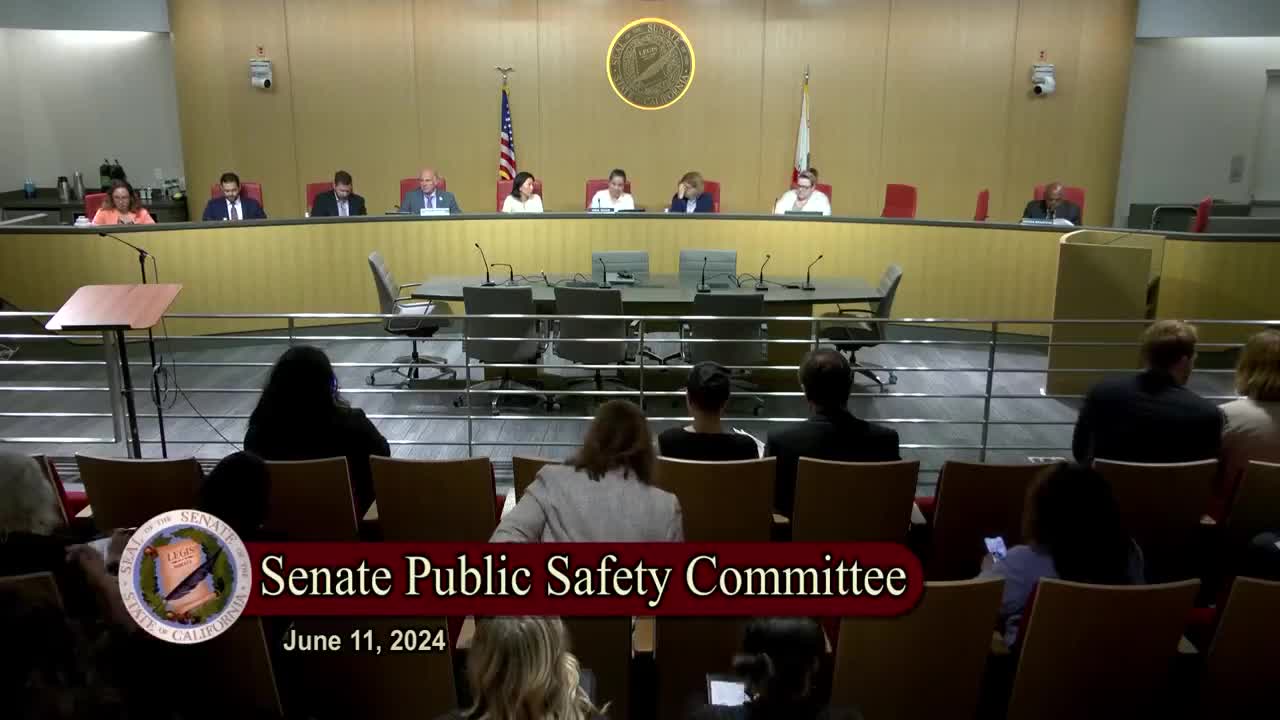 12MIN
Senate Standing Committee on Public Safety
 3MIN
Assembly Floor
 12MIN



