AB 444: California Defense Community Infrastructure Program.
- Session Year: 2023-2024
- House: Assembly
- Latest Version Date: 2023-06-22
Current Status:
Failed
(2023-09-01: In committee: Held under submission.)
Introduced
In Committee
First Chamber
In Committee
Second Chamber
Enacted
Existing law establishes within state government the Office of Planning and Research as the comprehensive state planning agency for long-range planning and research. Existing law, until January 1, 2026, establishes within state government a Governors Military Council that serves under the direction of the Military Department to advise the Governor on efforts to retain military installations and operations within this state that are necessary for the defense of the nation and to coordinate and focus those efforts.
This bill, upon appropriation by the Legislature, would establish the California Defense Community Infrastructure Program, which would require the Office of Planning and Research to grant funds and provide technical assistance to local agencies to assist with matching fund requirements in applications for funds from the federal Defense Community Infrastructure Program. The bill would require the office, in consultation with the Governors Military Council, to develop guidelines for the program that, where possible, align with the guidelines of the federal program.
This bill would require the office to use specified project criteria, define an eligible project, as specified, rank eligible projects, as specified, and award grants based on the available funds. The bill would require the office to give priority to projects located in, or that would provide services to people who live in, a disadvantaged community, as defined.
Existing law establishes within state government the Office of Planning and Research as the comprehensive state planning agency for long-range planning and research. Existing law, until January 1, 2026, establishes within state government a Governors Military Council that serves under the direction of the Military Department to advise the Governor on efforts to retain military installations and operations within this state that are necessary for the defense of the nation, nation and to coordinate and focus those efforts.
This bill bill, upon appropriation by the Legislature, would establish the California Defense Community Infrastructure Program, which would require the Office of Planning and Research, Research to grant funds to local agencies to assist with matching fund requirements in applications for funds from the federal Defense Community Infrastructure Program. The bill would require the office, in consultation with the Governors Military Council, to develop guidelines for the program that, where possible, align with the guidelines of the federal program.
This bill would require the office to use specified project criteria, define an eligible project, as specified; specified, rank eligible projects, as specified; specified, and award grants based on the available funds. The bill would require the office to give priority to projects located in, or that would provide services to people who live in, a disadvantaged community, as defined.
Existing law establishes within state government the Office of Planning and Research as the comprehensive state planning agency for long-range planning and research. Existing law, until January 1, 2026, establishes within state government a Governors Military Council that serves under the direction of the Military Department to advise the Governor on efforts to retain military installations and operations within this state that are necessary for the defense of the nation, and to coordinate and focus those efforts.
This bill would establish the California Defense Community Infrastructure Program, which would require the Office of Planning and Research, to grant funds to local agencies to assist with matching fund requirements in applications for funds from the federal Defense Community Infrastructure Program. The bill would require the office, in consultation with the Governors Military Council, to develop guidelines for the program that, where possible, align with the guidelines of the federal program.
This bill would require the office to use specified project criteria, define an eligible project, as specified; rank eligible projects, as specified; and award grants based on the available funds. The bill would require the office to give priority to projects located in, or that would provide services to people who live in, a disadvantaged community, as defined.
The California Defense Community Infrastructure Program is hereby established and shall be administered by the office in accordance with this article.
65053.1.The office shall develop and administer the California Defense Community Infrastructure Program to issue grants and provide technical assistance for either of the following purposes:
(a)To provide a full or partial grant to assist a community with any matching fund requirement in its application for funds from the federal Defense Community Infrastructure Program, as authorized by Section 2809 of the National Defense Authorization Act of 2019 (10 U.S.C. Sec. 2391).
(b)To provide grant funds to a local government to aid in identifying, planning, analyzing, or performing an environmental review or other activities, as defined by the office, to assist in identifying or securing grant funding for potential community infrastructure projects that may qualify for funding under subdivision (a).
65053.2.(a)The office shall develop guidelines for the program pursuant to this article in consultation with the Governors Military Council and, where possible, align these guidelines to match those in the federal program. The guidelines shall not be subject to the requirements of Chapter 3.5 (commencing with Section 11340) of Part 1 of Division 3 of Title 2.
(b)For a project pursuant to subdivision (a) of Section 65053.1, the office shall establish a minimum set of requirements for eligibility that shall include, but are not limited to, all of the following:
(1)The proposed project is not located on a military installation or is on federal property subject to a long-term real estate agreement, including, but not limited to, a lease or easement.
(2)The applicant has site control over the area for the proposed project.
(3)The proposed project has a letter of support from the applicable military installation commander.
(4)The proposed project is any of the following:
(A)A transportation project.
(B)A school, hospital, police, fire, emergency response, or other community support facility.
(C)A water, wastewater, telecommunications, electric, gas, or other utility infrastructure project.
(5)The proposed project demonstrates a benefit to the local community and the United States Department of Defense installation proposed in the application.
(c)The office shall determine the appropriate number and timing for soliciting and awarding grants.
(d)In developing the guidelines to administer this program, the office shall review and take into account the federally adopted guidelines for the California Defense Community Infrastructure Program, as established under Section 2391 of Title 10 of the United States Code, and shall ensure that the program qualifies to serve as state matching requirements established therein.
65053.3.(a)The office shall rank proposed projects based on criteria established by the program and shall award grants based on the funds available.
(b)The office shall give priority to projects located in, or that can be shown to provide services to people who live in, a disadvantaged community. For the purposes of this subdivision, disadvantaged community means a community with an annual median household income that is less than 80 percent of the statewide annual median household income based on current data identified by the office.
65053.4.(a)The office may, upon approval by the Department of Finance, award grants pursuant to this article without regard to fiscal year only for the purposes specified in this article.
(b)The office shall not distribute grant funds for a project pursuant to subdivision (a) of Section 65053.1 prior to the awarding of grant funds from the federal Defense Community Infrastructure Program.
(c)Amounts appropriated by the Legislature for the purpose of issuing grants pursuant to this article shall remain available until expended. Appropriated amounts shall include reasonable administration costs for the office to administer the program.
65053.5.This article shall become operative upon appropriation by the Legislature.
The California Defense Community Infrastructure Program is hereby established and shall be administered by the office in accordance with this article.
65053.1.The office shall develop and administer the California Defense Community Infrastructure Program to issue grants for either of the following purposes:
(a)To provide a full or partial grant to assist a community with any matching fund requirement in its application for funds from the federal Defense Community Infrastructure Program, as authorized by Section 2809 of the National Defense Authorization Act of 2019 (10 U.S.C. Sec. 2391).
(b)To provide grant funds to a local government to aid in identifying, planning, analyzing, or performing an environmental review or other activities, as defined by the office, to assist in identifying or securing grant funding for potential community infrastructure projects that may qualify for funding under subdivision (a).
65053.2.(a)The office shall develop guidelines for the program pursuant to this article in consultation with the Governors Military Council and, where possible, align these guidelines to match those in the federal program. The guidelines shall not be subject to the requirements of Chapter 3.5 (commencing with Section 11340) of Part 1 of Division 3 of Title 2.
(b)For a project pursuant to subdivision (a) of Section 65053.1, the office shall establish a minimum set of requirements for eligibility that shall include, but are not be limited to, all of the following:
(1)The proposed project is not located on a military installation or is on federal property subject to a long-term real estate agreement, including, but not limited to, a lease or easement.
(2)The applicant has site control over the area for the proposed project.
(3)The proposed project has a letter of support from the applicable military installation commander.
(4)The proposed project is any of the following:
(A)A transportation project.
(B)A school, hospital, police, fire, emergency response, or other community support facility.
(C)A water, wastewater, telecommunications, electric, gas, or other utility infrastructure project.
(5)The proposed project demonstrates a benefit to the local community and the United States Department of Defense installation proposed in the application.
(c)The office shall determine the appropriate number and timing for soliciting and awarding grants.
65053.3.(a)The office shall rank proposed projects based on criteria established by the program and shall award grants based on the funds available.
(b)The office shall give priority to projects located in, or that can be shown to provide services to people who live in, a disadvantaged community. For the purposes of this subdivision, disadvantaged community means a community with an annual median household income that is less than 80 percent of the statewide annual median household income based on current data identified by the office.
65053.4.(a)The office may, upon approval by the Department of Finance, award grants pursuant to this article without regard to fiscal year only for the purposes specified in this article.
(b)The office shall not distribute grant funds for a project pursuant to subdivision (a) of Section 65053.1 prior to the awarding of grant funds from the federal Defense Community Infrastructure Program.
65053.5.This article shall become operative upon appropriation by the Legislature.
The California Defense Community Infrastructure Program is hereby established and shall be administered by the office in accordance with this article.
65053.1.The office shall develop and administer the California Defense Community Infrastructure Program to issue grants for either of the following purposes:
(a)To provide a full or partial grant to assist a community with any matching fund requirement in its application for funds from the federal Defense Community Infrastructure Program, as authorized by Section 2809 of the National Defense Authorization Act of 2019 (10 U.S.C. Sec. 2391).
(b)To provide grant funds to a local government to aid in identifying, planning, analyzing, or performing an environmental review or other activities, as defined by the office, to assist in identifying or securing grant funding for potential community infrastructure projects that may qualify for funding under subdivision (a).
65053.2.(a)The office shall develop guidelines for the program pursuant to this article in consultation with the Governors Military Council and, where possible, align these guidelines to match those in the federal program. The guidelines shall not be subject to the requirements of Chapter 3.5 (commencing with Section 11340) of Part 1 of Division 3 of Title 2.
(b)For a project pursuant to subdivision (a) of Section 65053.1, the office shall establish a minimum set of requirements for eligibility that shall include, but not be limited to, the following:
(1)The proposed project is not located on a military installation or is on federal property subject to a long-term real estate agreement, including, but not limited to, a lease or easement.
(2)The applicant has site control over the area for the proposed project.
(3)The proposed project has a letter of support from the applicable military installation commander.
(4)The proposed project is any of the following:
(A)A transportation project.
(B)A school, hospital, police, fire, emergency response, or other community support facility.
(C)A water, wastewater, telecommunications, electric, gas, or other utility infrastructure project.
(5)The proposed project demonstrates a benefit to the local community and the United States Department of Defense installation proposed in the application.
(c)The office shall determine the appropriate number and timing for soliciting and awarding grants.
65053.3.(a)The office shall rank proposed projects based on criteria established by the program and shall award grants based on the funds available.
(b)The office shall give priority to projects located in, or that can be shown to provide services to people who live in, a disadvantaged community. For the purposes of this subdivision, disadvantaged community means a community with an annual median household income that is less than 80 percent of the statewide annual median household income based on current data identified by the office.
65053.4.(a)The office may, upon approval by the Department of Finance, award grants pursuant to this article without regard to fiscal year only for the purposes specified in this article.
(b)The office shall not distribute grant funds for a project pursuant to subdivision (a) of Section 65053.1 prior to the awarding of grant funds from the federal Defense Community Infrastructure Program.
REVISIONS: HeadingLine 3.|
Date
|
Status
|
|---|---|
| Sep 1, 2023 | In committee: Held under submission. |
| Jul 3, 2023 | In committee: Referred to APPR suspense file. |
| Jun 22, 2023 | Read second time and amended. Re-referred to Com. on APPR. |
| Jun 21, 2023 | From committee: Amend, and do pass as amended and re-refer to Com. on APPR with recommendation: To Consent Calendar. (Ayes 8. Noes 0.) (June 21). |
| Jun 7, 2023 | Referred to Com. on GOV. & F. |
| May 26, 2023 | In Senate. Read first time. To Com. on RLS. for assignment. |
| May 25, 2023 | Read third time. Passed. Ordered to the Senate. (Ayes 74. Noes 0. Page 1804.) |
| May 22, 2023 | Read second time. Ordered to third reading. |
| May 18, 2023 | From committee: Amend, and do pass as amended. (Ayes 11. Noes 0.) (May 18). |
| May 18, 2023 | Read second time and amended. Ordered returned to second reading. |
| May 3, 2023 | In committee: Set, first hearing. Referred to APPR. suspense file. |
| Apr 19, 2023 | Coauthors revised. |
| Apr 19, 2023 | From committee: Do pass and re-refer to Com. on APPR. with recommendation: To Consent Calendar. (Ayes 11. Noes 0.) (April 18). Re-referred to Com. on APPR. |
| Mar 9, 2023 | Referred to Com. on M. & V.A. |
| Feb 7, 2023 | From printer. May be heard in committee March 9. |
| Feb 6, 2023 | Read first time. To print. |
|
Date
|
Description
|
Location
|
Votes
|
|
|---|---|---|---|---|
| Jul 3, 2023 | Placed on suspense file | Senate Standing Committee on Appropriations |
Passed |
|
| Jun 21, 2023 | Do pass as amended, but first amend, and re-refer to the Committee on [Appropriations] with the recommendation: To Consent Calendar | Senate Standing Committee on Governance and Finance |
Passed |
|
| May 25, 2023 | AB 444 Addis Assembly Third Reading | Assembly Floor |
Passed |
|
| May 18, 2023 | Do pass as amended. | Assembly Standing Committee on Appropriations |
Passed |
|
| Apr 18, 2023 | Do pass and be re-referred to the Committee on [Appropriations] with recommendation: To Consent Calendar | Assembly Standing Committee on Military and Veterans Affairs |
Passed |
This list shows positions taken on this bill by organizations on the date displayed, which is linked to the original source.
Positions by individuals are not included.
|
Organization
|
Position
|
Date
|
|---|---|---|
| Capitol Core Group, INC. | ** Support | |
| City of Coronado | ** Support | |
| City of Ridgecrest | ** Support | |
| County of Monterey | ** Support | |
| County of Riverside | ** Support | |
| County of San Bernardino | ** Support | |
| Indian Wells Valley Groundwater Authority | ** Support | |
| San Bernardino County | ** Support | |
| San Diego Military Advisory Council | ** Support |
SENATE COMMITTEE ON
Senator Anthony Portantino, Chair
2023 - 2024 Regular Session
AB 444 (Addis) - California Defense Community Infrastructure Program
Version: | Policy Vote: |
Urgency: | Mandate: |
Hearing Date: | Consultant: |
Bill Summary:
AB 444 would require the Governor’s Office of Planning and Research (OPR), upon appropriation of funds by the Legislature, to develop and implement the California Defense Community Infrastructure Program (CDCIP) to provide grants and technical assistance to local agencies for matching funds and other costs related to community improvements supportive of a military institution, as specified.
Fiscal Impact:
- Ongoing significant General Fund cost pressures, likely in the tens of millions of dollars annually, to provide funding for the new grant program. (General Fund)
- OPR estimates ongoing costs of approximately $679,000 annually and 3.5 PY of staff to develop and administer the CDCIP, including developing guidelines, providing technical assistance to applicants, coordinating with stakeholders and the GMC, awarding grants, and conducting ongoing monitoring activities. Staff notes that these costs would only be incurred to the extent funding is appropriated by the Legislature for the CDCIP. (General Fund)
- The Governor’s Military Council (GMC) would incur one-time costs of approximately $73,000 annually for ½ PY of staff time to assist in the development of program guidelines. Ongoing costs to coordinate with OPR to ensure continued compliance with federal requirements are likely to be minor. Staff notes that these costs would only be incurred to the extent funding is appropriated by the Legislature to establish the CDCIP. (General Fund)
Background:
Existing law establishes OPR as the state’s chief planning agency and requires OPR to advise local governments in their planning responsibilities. As part of that role, OPR helps local governments to work collaboratively and avoid land use conflicts with military installations in the state, such as new development that would impact military readiness. OPR publishes a guidebook on reducing such conflicts, as well as a technical advisory for local governments on incorporating military readiness into city and county general plans. OPR also facilitates military installation compliance with state regulations and incorporation of military installations into the state’s energy and environmental policies.
In March 2013, Governor Brown created the Governor’s Military Council through executive action to maintain and grow military operations in the state. Existing law, as enacted by AB 442 (Irwin), Chap. 298/2015, codifies the GMC within the Military Department to advise the Governor on efforts to retain military installations and operations within this state that are necessary for the defense of the nation, and to coordinate and focus those efforts. The GMC’s authorizing statutes were extended to January 1, 2026 by AB 2192 (Irwin), Chap. 74/2020.
Existing federal law allows the Secretary of Defense to issue grants to projects that address deficiencies in community infrastructure supportive of a military installation. The Office of Local Defense Community Cooperation within the Department of Defense (DoD) administers a competitive grant program, known as the Defense Community Infrastructure Program (DCIP), to distribute these funds. DCIP can fund the following types of projects: transportation; school, hospital, police, fire, emergency response, or other community support facilities; or water, wastewater, telecommunications, electric, gas, or other utility projects. Eligible projects must enhance military value, military resilience, and quality of life, and meet other specified requirements. Applicants must provide a match of at least 30% of the project cost, but rural communities are exempted from the matching requirement. All other project funding must be secured prior to the award of DCIP funds by the DoD.
The federal DCIP program is funded through the annual National Defense Authorization Act. Since its inception, the program has received $50 million to award in FY 2020, $60 million in FY 2021, and $90 million in FY 2022. Projects in California received one grant of approximately $500,000 out of 16 total awards that received funding in FY 2020, and three grants totaling approximately $12 million out of 13 awards allocated in FY 2021 but no grants for California projects were received in FY 2022. According to the GMC, there are approximately $90 million in projects in California that have applied for funding in past DCIP rounds, but did not receive a grant.
Proposed Law:
AB 444 would, upon appropriation of funding by the Legislature, establish the CDCIP, and require OPR to administer the program. Specifically, this bill would:
- Require OPR to develop and administer the CDCIP to issue grants and provide technical assistance for either of the following purposes:
- To provide a full or partial grant to assist a community with any matching fund requirement in an application for funds from the federal DCIP.
- To provide grant funds to a local government to aid in identifying, planning, analyzing, or performing environmental or other activities to assist in identifying or securing rant funding for potential community infrastructure projects that may qualify for funding under DCIP.
- Require OPR to develop program guidelines, in consultation with the GMC, that align with federal DCIP guidelines, where possible. The guidelines would be exempt from the rulemaking requirements of the Administrative Procedures Act.
- Require OPR, when developing the guidelines, to review and account for the federally adopted guidelines, and ensure that the CDCIP qualifies to serve as state matching requirements, as specified.
- Require OPR to establish a minimum set of requirements for projects for which a local agency is seeking matching funds for its application for federal DCCIP funding that includes the following:
- The proposed project is not on a military installation, or is on federal property subject to a long-term real estate agreement, including a lease or easement.
- The applicant has site control over the project area.
- The proposed project has a letter of support from the applicable military installation commander.
- The proposed project is any of the following: (1) a transportation project; (2) a school, hospital, police, fire, emergency response, or other community support facility; or (3) a water, wastewater, telecommunications, electric, gas, or other utility infrastructure project.
- The proposed project demonstrates a benefit to the local community and the military installation proposed in the application.
- Require OPR to determine the appropriate number and timing for soliciting and awarding grants.
- Require OPR to rank proposed projects based on CDCIP criteria, and award grants based upon available funding.
- Require OPR to give priority to projects located in, or provide services to people who live in, a disadvantaged community, as specified.
- Authorize OPR, upon approval by the Department of Finance, to award grants without regard to fiscal year only for purposes specified in the bill.
- Prohibit OPR from distributing grant funds for local project matching funds prior to the awarding of federal CDIP grant funds.
- Specify that amounts appropriated by the Legislature for CDCIP grants shall be available until expended, and that appropriated amounts shall include OPR’s reasonable administrative costs.
- Specify that the bill’s requirements would only be operative upon appropriation by the Legislature.
Related Legislation:
SB 1395 (Bates), which was held on this Committee’s Suspense File last year, was similar to this bill, but would have imposed ongoing administrative responsibilities upon the GMC and appropriated $50 million from the General Fund for the grant program, instead of making implementation subject to an appropriation of funds by the Legislature.
Staff Comments:
This bill would establish a state grant program to provide matching funds for improvements near military installations, which is intended to increase the likelihood that these communities would draw down federal funding through the DCIP. The bill would only become operative upon appropriation by the Legislature, thereby imposing General Fund cost pressures, likely in the tens of millions annually, to fund the program. Staff assumes any future funding decisions would be considered as a part of the annual budget process.
-- END --
SENATE COMMITTEE ON GOVERNANCE AND FINANCE
Senator Anna M. Caballero, Chair
2023 - 2024 Regular
Bill No: | AB 444 | Hearing Date: | 6/21/23 |
Author: | Addis | Tax Levy: | No |
Version: | 5/18/23 | Fiscal: | Yes |
Consultant: | Goldberg | ||
California Defense Community Infrastructure Program
Creates a state matching grant program to help local communities home to military institutions draw down funds from a federal grant program to enhance and support the areas around those military institutions.
Background
The U.S. Department of Defense (DoD) administers a competitive grant program, known as the Defense Community Infrastructure Program (DCIP), to distribute funds to local governments with the goal of enhancing and supporting the military institution. As such, the DCIP grants pay for transportation, school, hospital, police, fire, emergency response, water, wastewater, telecommunications, electric, gas, and other related projects. Applicants must provide a match of at least 30% of the project’s cost, though rural communities are exempt from the matching requirement. Applicants must secure all of the project funding before DoD awards DCIP funds.
The DCIP program is funded through the annual National Defense Authorization Act and since its inception, the program has received $50 million to award in fiscal year (FY) 2020, $60 million in FY 2021, and $90 million in FY 2022. Projects in California received one grant of approximately $500,000 out of 16 total awards in FY 2020, and three grants totaling approximately $12 million out of 13 awards in FY 2021, but none in 2022. According to the California Military Council, there are approximately $90 million in projects in California that have applied for funding in past DCIP funding cycles, but did not receive a grant.
The Governor’s Office of Planning and Research (OPR) is the state’s chief planning agency and advises local governments on their planning responsibilities. OPR helps local governments work collaboratively and avoid land use conflicts with military installations in the state, and it publishes a guidebook on reducing such conflicts, as well as a technical advisory for local governments on incorporating military readiness into city and county general plans. OPR also facilitates military installation compliance with state regulations and incorporation of military installations into the state’s energy and environmental policies.
In March 2013, Governor Brown created the Governor’s Military Council to maintain and grow military operations in the state. The Legislature codified the Military Council within the Military Department to advise the Governor on efforts to retain military installations and operations within this state that are necessary for the defense of the nation, and to coordinate and focus those efforts (AB 442, Irwin, 2015 and AB 2192, Irwin, 2020). The Governor appoints the Council but it must include bipartisan representatives nominated by the Senate Rules Committee and the Speaker of the Assembly. The Military Council has 23 members, including retired military leaders, civic leaders, three California legislators, and state agency representatives from the Military Department, the Governor’s Office of Business and Economic Development, the Department of Veterans Affairs, and OPR. The Military Council sunsets on January 1, 2026.
The author wants to provide local communities with state funding they can use as matching funds with the hope of winning DCIP grants.
Proposed Law
Assembly Bill 444 creates the California Defense Community Infrastructure Program (California DCIP) under OPR and requires OPR to award funds to local governments that want to apply for DCIP grants. The bill also requires OPR to develop program guidelines and ranking criteria for awarding the grants.
Program grants could be issued to:
- Assist a community with any matching fund requirement when applying for a DCIP grant.
- Help a local government identify, plan, analyze, or conduct an environmental review or other activity defined by OPR to help identify or secure grant funding for potential community infrastructure projects that may qualify for funding.
OPR must consult with the Governor’s Military Council to develop guidelines and, where possible, align these guidelines to match those in the federal program.
OPR must establish a minimum set of project requirements for eligibility including, but limited to:
- The proposed project is not located on a military installation or on federal property subject to a long-term real estate agreement, including a lease or easement.
- The applicant has site control over the area for the proposed project.
- The proposed project has a letter of support from the applicable military installation commander.
- The proposed project demonstrates a benefit to the local community and the U.S. DoD installation proposed in the application.
- The proposed project is any of the following:
- A transportation project.
- A school, hospital, police, fire, emergency response, or other community support facility.
- A water, wastewater, telecommunications, electric, gas, or other utility infrastructure project.
The bill leaves it up to OPR to determine the appropriate number and timing for soliciting and awarding grants, to rank proposed projects based on criteria established by the program, and to award grants based on the funds available.
Priority must be given to projects located in, or that can be shown to provide services to people who live in, a disadvantaged community, which is defined as a community with an annual median household income that is less than 80% of the statewide annual median household income based on current data identified by OPR.
AB 444 would only become operative if and when the Legislature appropriates the money necessary to set up the grant program.
State Revenue Impact
No estimate.
Comments
1. Purpose of the bill. According to the author, “Several California military communities have taken advantage of the funding available through the federal Defense Community Infrastructure Program, but many communities throughout the state are unable to meet the funding requirements for eligible projects. AB 444 will help California’s military communities compete for federal dollars to address important infrastructure needs.”
2. Laying the groundwork. While the bill sets up a structure for the California DCIP and directs OPR to take certain steps, the bill won’t become operative until the Legislature appropriates money explicitly for that purpose. Unless the Legislature provides funding, OPR won’t conduct any of the work, so any potential California DCIP project won’t be better off until that appropriation occurs.
3. Return to sender, address known, while trusting & verifying. This bill makes it clear OPR cannot distribute any grant funds to any entity until grant funds are awarded from the federal DCIP – and the California DCIP has a similar requirement. So, up and until DCIP verifies the local entity has secured a commitment for matching funds and OPR verifies the local entity has secured a commitment for a DCIP grant, no funds will be distributed from either entity.
4. You look familiar. AB 444 is similar to SB 1395 (Bates), which sought to set up a structure similar to the one established in this bill and appropriated $50 million to fund the program. SB 1395 was approved by the Committee last year, but was held on the Senate Appropriations Committee’s suspense file.
5. Technically speaking. To provide a bit more clarity in the bill, the Committee may wish to adopt the following technical amendments:
- Under Section 65053.1, add language to clarify California DCIP, in addition to providing grants, can provide technical assistance to local communities.
- Under Section 65053.2, add language to clarify OPR must ensure the California DCIP qualifies to serve as a state matching program.
- Under Section 65053.3, add language to clarify funds appropriated by the Legislature will remain available until they are spent and should cover reasonable administration costs to administer the program.
Assembly Actions
Assembly Military & Veterans Affairs Committee: 11-0
Assembly Appropriations Committee: 11-0
Assembly Floor: 74-0
Support and Opposition
(6/16/23)
Support: City of Ridgecrest
County of Monterey
County of Riverside
County of San Bernardino
Indian Wells Valley Groundwater Authority
San Diego Military Advisory Council (SDMAC)
Opposition: None received.
-- END --
ASSEMBLY THIRD READING
ATR Bill Id:AB 444
Author:(Addis)
As Amended Ver:May 18, 2023
Majority vote
SUMMARY
This bill requires the Governor's Office of Planning and Research (OPR) to develop and implement the California Defense Community Infrastructure Program (CDCIP) to provide grants to local agencies for matching funds and other costs related to community improvements supportive of a military institution.
Major Provisions
- Establishes the California Defense Community Infrastructure Program, upon appropriation by the State Legislature.
- Requires OPR to develop and administer the CDCIP to issue grants for either of the following purposes:
- To provide a full or partial grant to assist a community with any matching fund requirement in its application for funds from the federal Defense Community Infrastructure Program (DCIP).
- To provide grant funds to a local government to aid in identifying, planning, analyzing, or performing an environmental review or other activities, as defined by OPR, to assist in identifying or securing grant funding for potential community infrastructure projects that may qualify for funding.
- Requires OPR to develop guidelines for the program in consultation with the Governor's Military Council and, where possible, to align these guidelines to match those in the federal program.
- Requires OPR to establish a minimum set of project requirements for eligibility that shall include, but not be limited to, the following:
- The proposed project is not located on a military installation or is on federal property subject to a long-term real estate agreement, including, but not limited to, a lease or easement.
- The applicant has site control over the area for the proposed project.
- The proposed project has a letter of support from the applicable military installation commander.
- The proposed project is any of the following:
- A transportation project.
- A school, hospital, police, fire, emergency response, or other community support facility.
- A water, wastewater, telecommunications, electric, gas, or other utility infrastructure project.
- The proposed project demonstrates a benefit to the local community and the United States Department of Defense (DoD) installation proposed in the application.
- Requires OPR to determine the appropriate number and timing for soliciting and awarding grants.
- Requires OPR to rank proposed projects based on criteria established by the program and to award grants based on the funds available.
- Requires that OPR give priority to projects located in, or that can be shown to provide services to people who live in, a disadvantaged community,
- Defines "disadvantaged community" as one with an annual median household income that is less than 80% of the statewide annual median household income based on current data identified by OPR.
- Permits OPR, upon approval by the Department of Finance, to award grants under this bill without regard to fiscal year only for the purposes specified in this article.
- Prohibits OPR from distributing grant funds for a project under this bill prior to the awarding of grant funds from the federal DCIP.
COMMENTS
The Office of Local Defense Community Cooperation within the DoD administers a competitive grant program, the DCIP, to issue grants to address deficiencies in community infrastructure supportive of a military installation. DCIP can fund the following types of projects: transportation; school, hospital, police, fire, emergency response, or other community support facilities; or water, wastewater, telecommunications, electric, gas, or other utility projects. Eligible projects must enhance military value, military resilience, and quality of life, and meet other specified requirements. Applicants must provide a match of at least 30% of the project cost, but rural communities are exempted from the matching requirement. All other project funding must be secured prior to the award of DCIP funds.
The DCIP program is funded through the annual National Defense Authorization Act. Since its inception, the program has received $50 million to award in FY 2020, $60 million in FY 2021, and $90 million in FY 2022. Projects in California received one grant of approximately $500,000 out of 16 total awards that received funding in FY 2020, and three grants totaling approximately $12 million out of 13 awards allocated in FY 2021. Funds were not awarded to any California projects in 2022. According to the Military Council, there are approximately $90 million in projects in California that have applied for funding in past DCIP rounds, but did not receive a grant.
This bill is intended to provide an equivalent state program to mirror the federal DCIP, in order to help local governments and other public agencies secure funding from that program.
Office of Planning and Research and the Governor's Military Council. OPR is the state's chief planning agency and advises local governments in their planning responsibilities. Stemming from that role, OPR helps local governments work collaboratively and avoid land use conflicts with military installations in the state, such as new development that would impact military readiness. OPR publishes a guidebook on reducing such conflicts, as well as a technical advisory for local governments on incorporating military readiness into city and county general plans. OPR also facilitates military installation compliance with state regulations and incorporation of military installations into the state's energy and environmental policies.
According to the Author
"Several California military communities have taken advantage of the funding available through the federal DCIP, but many communities throughout the state are unable to meet the funding requirements for eligible projects. [This bill] will close the gap by prioritizing disadvantaged communities for funding allocations from the CDCIP."
Arguments in Support
San Bernardino County states:
"California's applications to the DCIP program are becoming less competitive. As a result, no community in California received a DCIP grant during the 2022 cycle. A DCIP grant application requires a commitment of a 30% funding match from the state government and/or the local community. Three states – Texas, Florida, and Virginia – have enacted state grant programs that provide this 30% match requirement. Funding from the state is extremely important for applicants to effectively compete for this federal DCIP funding. AB 444 establishes the California Defense Community Infrastructure Program that will provide matching funds for defense communities successfully compete for federal DCIP grants."
Arguments in Opposition
None on file.
FISCAL COMMENTS
According to the Assembly Appropriation Committee:
- Ongoing General Fund (GF) costs, likely in the tens of millions of dollars annually to fund the grant program.
- OPR estimates ongoing GF costs of approximately $679,000 annually for 3.5 additional staff positions to develop, coordinate, and administer the CDCIP.
- The California Military Department (which houses the GMC) estimates ongoing GF costs of approximately $73,000 annually, for staff time to support OPR with the program.
VOTES
ASM MILITARY AND VETERANS AFFAIRS: 11-0-0
YES: Soria, Davies, Addis, Alvarez, Boerner Horvath, Juan Carrillo, Mathis, Muratsuchi, Petrie-Norris, Ta, Valencia
ASM APPROPRIATIONS: 11-0-5
YES: Holden, Bryan, Calderon, Wendy Carrillo, Mike Fong, Hart, Lowenthal, Papan, Pellerin, Weber, Ortega
ABS, ABST OR NV: Megan Dahle, Dixon, Mathis, Robert Rivas, Sanchez
UPDATED
VERSION: May 18, 2023
CONSULTANT: Christian Burkin / M. & V.A. / (916) 319-3550 FN: 0000931
Date of Hearing: May 3, 2023
ASSEMBLY COMMITTEE ON APPROPRIATIONS
Chris Holden, Chair
ABPCA Bill Id:AB 444
Author:(Addis) – As Introduced Ver:February 6, 2023
Policy Committee: | Military and Veterans Affairs | Vote: | 11 - 0 |
|
| ||
|
|
Urgency: No State Mandated Local Program: No Reimbursable: No
SUMMARY:
This bill requires the Governor’s Office of Planning and Research (OPR) to develop and implement the California Defense Community Infrastructure Program (CDCIP) to provide grants to local agencies for matching funds and other costs related to community improvements supportive of a military institution.
Specifically, this bill:
- Requires OPR to develop and administer CDCIP to issue grants for either of the following purposes:
- To provide a full or partial grant to assist a community with matching fund requirements in its application for funds from the federal Defense Community Infrastructure Program (DCIP).
- To provide grant funds to a local government to aid in identifying or securing grant funding for potential community infrastructure projects that may qualify for funding.
- Requires OPR to develop guidelines for the program in consultation with the Governor’s Military Council (GMC) and, where possible, to align these guidelines with those in the federal program.
- Requires OPR to establish minimum eligibility requirements, determine the appropriate number and timing for soliciting and awarding grants, rank proposed projects based on criteria established by the program, and award grants based on the funds available.
- Requires OPR to give priority to projects located in, or that can be shown to provide services to people who live in, a disadvantaged community.
FISCAL EFFECT:
- Ongoing General Fund cost pressures, likely in the tens of millions of dollars annually to fund the grant program. This bill does not identify a funding source.
- OPR estimates ongoing GF costs of approximately $679,000 annually for 3.5 additional staff positions to develop, coordinate, and administer the CDCIP.
- The California Military Department (which houses the GMC) estimates ongoing GF costs of approximately $73,000 annually, for staff time to support OPR with the program.
COMMENTS:
- Purpose. According to the author:
Several California military communities have taken advantage of the funding available through the federal DCIP, but many communities throughout the state are unable to meet the funding requirements for eligible projects. [This bill] will close the gap by prioritizing disadvantaged communities for funding allocations from the CDCIP.
- Background. Existing law establishes OPR as the state’s chief planning agency and requires OPR to advise local governments in their planning responsibilities. As part of that role, OPR helps local governments work collaboratively with military installations to avoid land use conflicts from new development that would impact military readiness. OPR publishes a guidebook on reducing such conflicts, as well as a technical advisory for local governments on incorporating military readiness into city and county general plans. The GMC, within the California Military Department, advises the Governor on efforts to retain military installations and operations within the state necessary for the defense of the nation, and to coordinate and focus those efforts.
Existing federal law allows the federal Secretary of Defense to issue grants to address deficiencies in community infrastructure supportive of a military installation. The Office of Local Defense Community Cooperation within the Department of Defense (DoD) administers a competitive grant program, known as the Defense Community Infrastructure Program (DCIP), to distribute funds to local communities. DCIP can fund a variety of projects, including transportation projects; school, hospital, police, fire, emergency response, or other community support facilities projects; or water, wastewater, telecommunications, electric, gas, or other utility projects. Eligible projects must enhance military value, military resilience, and quality of life, and meet other specified requirements. Applicants must provide a match of at least 30% of the project cost, with exceptions for rural communities. All other project funding must be secured prior to the award of DCIP funds.
The DCIP program is funded through the annual National Defense Authorization Act. The DCIP program received $50 million to award to local projects in fiscal year (FY) 2020, $60 million in FY 2021, and $90 million in FY 2022. California received one grant (of 16 awarded) of approximately $500,000, in FY 2020, and three grants (of 13 awarded) totaling approximately $12 million, in FY 2021. No California projects were awarded funding in 2022. According to the GMC, there are approximately $90 million in projects in California that have applied for DCIP funding, but did not receive a grant.
This author intends this bill to assist communities with matching funds and other assistance to better meet the funding requirements for federal infrastructure grants under DCIP.
- Prior Legislation. SB 1395 (Bates), of the 2021-22 Legislative Session, was substantially similar to this bill, but included a $50 million appropriation from the GF for the grant program. SB 1395 was held on the Senate Appropriations Committee’s suspense file.
Analysis Prepared by: Jennifer Swenson / APPR. / (916) 319-2081
Date of Hearing: April 18, 2023
ASSEMBLY COMMITTEE ON MILITARY AND VETERANS AFFAIRS
Esmeralda Soria, Chair
ABPCA Bill Id:AB 444 (
Author:Addis) – As Introduced Ver:February 6, 2023
SUBJECT: California Defense Community Infrastructure Program
SUMMARY: Establishes the California Defense Community Infrastructure Program under the Office of Planning and Research (OPR), requiring the OPR to award funds to local governments applying for funding from the Defense Community Infrastructure Program or exploring potential application, and requires the OPR to develop program guidelines, and ranking criteria, as specified. Specifically, this bill:
- Establishes the California Defense Community Infrastructure Program.
- Requires OPR to develop and administer the California Defense Community Infrastructure Program to issue grants for either of the following purposes:
- To provide a full or partial grant to assist a community with any matching fund requirement in its application for funds from the federal Defense Community Infrastructure Program.
- To provide grant funds to a local government to aid in identifying, planning, analyzing, or performing an environmental review or other activities, as defined by OPR, to assist in identifying or securing grant funding for potential community infrastructure projects that may qualify for funding.
- Requires OPR to develop guidelines for the program in consultation with the Governor’s Military Council and, where possible, to align these guidelines to match those in the federal program.
- Requires OPR to establish a minimum set of project requirements for eligibility that shall include, but not be limited to, the following:
- The proposed project is not located on a military installation or is on federal property subject to a long-term real estate agreement, including, but not limited to, a lease or easement.
- The applicant has site control over the area for the proposed project.
- The proposed project has a letter of support from the applicable military installation commander.
- The proposed project is any of the following:
- A transportation project.
- A school, hospital, police, fire, emergency response, or other community support facility.
- A water, wastewater, telecommunications, electric, gas, or other utility infrastructure project.
- The proposed project demonstrates a benefit to the local community and the United States Department of Defense installation proposed in the application.
- Requires OPR to determine the appropriate number and timing for soliciting and awarding grants.
- Requires OPR to rank proposed projects based on criteria established by the program and to award grants based on the funds available.
- Requires that OPR give priority to projects located in, or that can be shown to provide services to people who live in, a disadvantaged community,
- Defines “disadvantaged community” as one with an annual median household income that is less than 80 percent of the statewide annual median household income based on current data identified by OPR.
- Permits OPR, upon approval by the Department of Finance, to award grants under this bill without regard to fiscal year only for the purposes specified in this article.
- Prohibits OPR from distributing grant funds for a project under this bill prior to the awarding of grant funds from the federal Defense Community Infrastructure Program.
EXISTING LAW:
State law:
- Establishes in the Governor’s office the Office of Planning and Research, under direct control of a director who is responsible to the Governor. (Government Code Section 65037)
- Requires the Governor to appoint the Director of State Planning and Research, who is required to perform all duties, exercise all powers, assume and discharge all responsibilities, and carry out and effect all purposes vested by law in the office, including contracting for professional or consultant services in connection with the work of the office. (Government Code Section 65038)
- Requires the Office of Planning and Research to serve the Governor and the Governor’s Cabinet as staff for long-range planning and research, and to constitute the comprehensive state planning agency. In which capacity, the office is required to:
- Assisted by the Planning Advisory and Assistance Council established pursuant to subdivision (a) of Section 65040.6, engage in the formulation, evaluation and updating of long-range goals and policies for land use, population growth and distribution, urban expansion, development, open space, resource preservation and utilization, air and water quality, and other factors that shape statewide development patterns and significantly influence the quality of the state’s environment.
- Assist in the orderly preparation by appropriate state departments and agencies of intermediate- and short-range functional plans to guide programs of transportation, water management, open space, recreation and other functions that relate to the protection and enhancement of the state’s environment.
- In conjunction with the council, evaluate plans and programs of departments and agencies of state government, identify conflicts or omissions, and recommend to the Governor and the Legislature new state policies, programs and actions, or amendments of existing programs, as required, to resolve conflicts, advance statewide environmental goals to respond to emerging environmental problems and opportunities, and to assure that all state policies and programs conform to the adopted land use planning goals and programs.
- Assist the Department of Finance in preparing, as part of the annual state budget, an integrated program of priority actions to implement state functional plans and to achieve statewide environmental goals and objectives and take other actions to assure that the program budget, submitted annually to the Legislature, contains information reporting the achievement of state goals and objectives by departments and agencies of state government.
- Coordinate the development of policies and criteria to ensure the federal grants-in-aid administered or directly expended by state government advance statewide environmental goals and objectives.
- Coordinate the development and operation of a statewide environmental monitoring system to assess the implications of present growth and development trends on the environment and to identify at an early time, potential threats to public health, natural resources and environmental quality.
- Coordinate, in conjunction with appropriate state, regional, and local agencies, the development of objectives, criteria and procedures for the orderly evaluation and report of the impact of public and private actions on the environmental quality of the state and as a guide to the preparation of environmental impact reports required of state and local agencies in Sections 21102 and 21150 of the Public Resources Code.
- Coordinate research activities of state government directed to the growth and development of the state and the preservation of environmental quality, render advice to the Governor, the Governor’s Cabinet, to the Legislature, and any agency or department of state government, and provide information to, and cooperate with, the Legislature or any of its committees or officers.
- Coordinate the technical assistance provided by state departments and agencies in regional and local planning to assure that such plans are consistent with statewide environmental goals and objectives.
- Accept and allocate or expend grants and gifts on behalf of the State of California from any source, public or private, for the purpose of state planning and undertaking other planning and coordinating activities, and supporting community partnerships and strategic communication activities, as will implement the policy and intent of the Legislature as set forth herein.
- Develop long-range policies to assist the state and local agencies in meeting the problems presented by the growth and development of urban areas and defining the complementary roles of the state, cities, counties, school districts, and special districts with respect to such growth.
- Encourage the formation and proper functioning of, and provide planning assistance to, city, county, district, and regional planning agencies.
- Assist local government in land use planning. (Government Code Section 65040)
Federal law:
- Permits the Secretary of Defense under the Defense Community Infrastructure Pilot Program to make grants, conclude cooperative agreements, and supplement funds available under Federal programs administered by agencies other than the Department of Defense to assist State and local governments to address deficiencies in community infrastructure supportive of a military installation. (10 U.S.C. Sec. 2391 (d)(A))
- Requires the Secretary to establish criteria for the selection of community infrastructure projects to receive assistance under the DCIP, including selection of community infrastructure projects in the following order of priority:
- Projects that will enhance military value at a military installation.
- Projects that will enhance military installation resilience.
- Projects that will enhance military family quality of life at a military installation. (10 U.S.C. Sec. 2391 (d)(B))
FISCAL EFFECT: This bill has not been analyzed in a fiscal committee.
COMMENTS: Purpose. According to the author, “Several California military communities have taken advantage of the funding available through the federal Defense Community Infrastructure Program, but many communities throughout the state are unable to meet the funding requirements for eligible projects. AB 444 will close the gap by prioritizing disadvantaged communities for funding allocations from the California Defense Communities Infrastructure Program.”
Background.
Defense Community Infrastructure Program. The Office of Local Defense Community Cooperation within the Department of Defense (DoD) administers a competitive grant program, known as the Defense Community Infrastructure Program (DCIP), to distribute these funds. DCIP can fund the following types of projects: transportation; school, hospital, police, fire, emergency response, or other community support facilities; or water, wastewater, telecommunications, electric, gas, or other utility projects. Eligible projects must enhance military value, military resilience, and quality of life, and meet other specified requirements. Applicants must provide a match of at least 30% of the project cost, but rural communities are exempted from the matching requirement. All other project funding must be secured prior to the award of DCIP funds.
The DCIP program is funded through the annual National Defense Authorization Act. Since its inception, the program has received $50 million to award in FY 2020, $60 million in FY 2021, and $90 million in FY 2022. Projects in California received one grant of approximately $500,000 out of 16 total awards that received funding in FY 2020, and three grants totaling approximately $12 million out of 13 awards allocated in FY 2021. Funds were not awarded to any California projects in 2022. According to the Military Council, there are approximately $90 million in projects in California that have applied for funding in past DCIP rounds, but did not receive a grant.
Office of Planning and Research and the Governor’s Military Council. OPR is the state’s chief planning agency and advises local governments in their planning responsibilities. Stemming from that role, OPR helps local governments work collaboratively and avoid land use conflicts with military installations in the state, such as new development that would impact military readiness. OPR publishes a guidebook on reducing such conflicts, as well as a technical advisory for local governments on incorporating military readiness into city and county general plans. OPR also facilitates military installation compliance with state regulations and incorporation of military installations into the state’s energy and environmental policies.
In March 2013, Governor Brown created the Governor’s Military Council through executive action to maintain and grow military operations in the state. The Legislature subsequently codified the Military Council within the Military Department to advise the Governor on efforts to retain military installations and operations within this state that are necessary for the defense of the nation, and to coordinate and focus those efforts (AB 442, Irwin, 2015 and AB 2192, Irwin, 2020). The Governor appoints the Council but must include bipartisan representatives from both houses of the Legislature, nominated by the Senate Rules Committee and the Speaker of the Assembly. Currently, the Military Council has 22 members, including retired military leaders, civic leaders, four California legislators, and state agency representatives from the Military Department, the Governor’s Office of Business and Economic Development, the Department of Veterans Affairs, and OPR. The Military Council sunsets on January 1, 2026.
Equity impact analysis
According to the author’s background materials:
Section 65053.3 of AB 444 states as follows: “(a) The office shall rank proposed projects based on criteria established by the program and shall award grants based on the funds available.
(b) The office shall give priority to projects located in, or that can be shown to provide services to people who live in, a disadvantaged community. For the purposes of this subdivision, “disadvantaged community” means a community with an annual median household income that is less than 80 percent of the statewide annual median household income based on current data identified by the office.”
This section of AB 444 explicitly states that the Office of Planning and Research should give priority to projects that would help disadvantaged communities (with a median household income of less than 80% of the statewide average). Disadvantaged communities typically lack the available funding to afford infrastructure projects like the ones provided by the Defense Community Infrastructure Program, regardless of the funding provided by said program. The matching requirement keeps these projects out of reach for such disadvantaged communities, which is where AB 444 would bridge the gap.
Committee comment. The author may wish to consider amending the bill to specify that the mandate for the OPR to establish the program and began awarding grants is contingent upon appropriation to such by the state legislature.
Related legislation
SB 1395 (Bates, 2022) required the Governor’s Office of Planning and Research (OPR), with input and assistance from the Governor’s Military Council (GMC), to develop and implement the California Defense Community Infrastructure Program (CDCIP) to provide grants to local agencies for matching funds and other costs related to community improvements supportive of a military institution, as specified. The bill would appropriated $50 million from the General Fund for the grant program. It was held in Senate Appropriations.
REGISTERED SUPPORT / OPPOSITION:
Support
Capitol Core Group, INC.
City of Coronado
County of Monterey
Indian Wells Valley Groundwater Authority
Ridgecrest; City of
San Bernardino County
San Diego Military Advisory Council (SDMAC)
Opposition
None on file.
Analysis Prepared by: Christian Burkin / M. & V.A. / (916) 319-3550
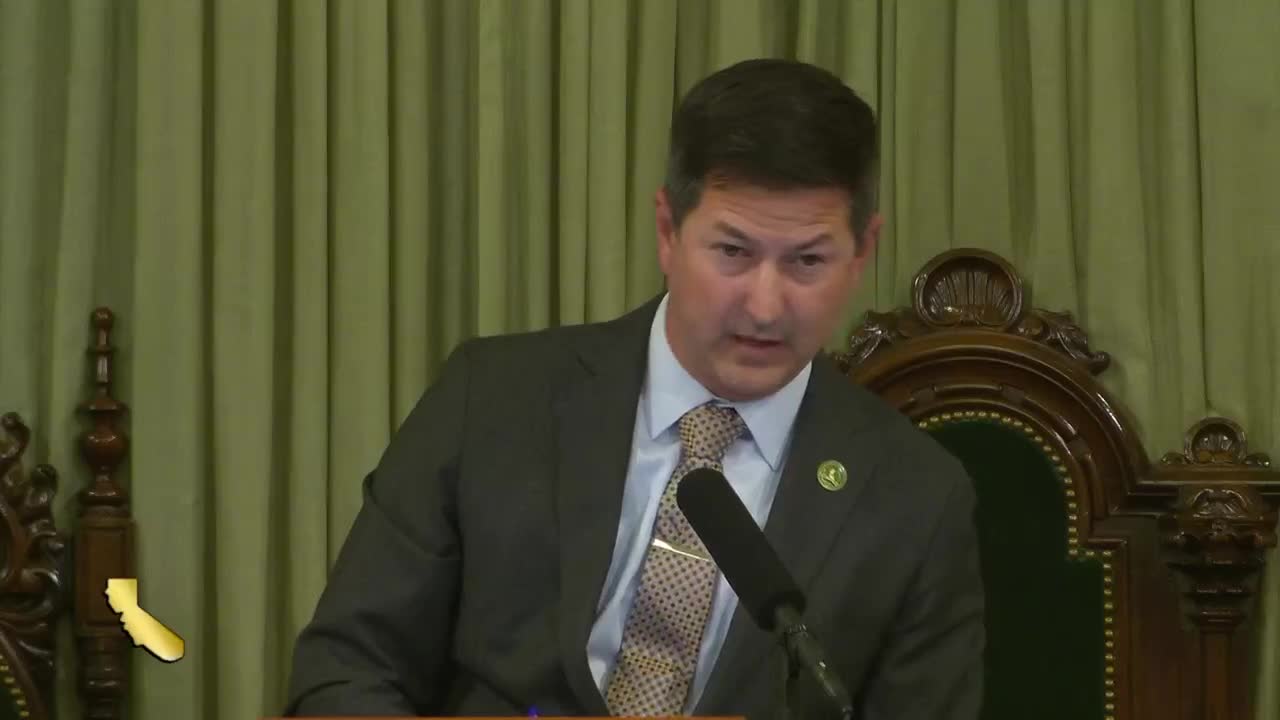
Bill Author