AB 619: State government: emergency services: nonprofit service providers.
- Session Year: 2023-2024
- House: Assembly
- Latest Version Date: 2023-05-18
Current Status:
Failed
(2023-09-01: In committee: Held under submission.)
Introduced
In Committee
First Chamber
In Committee
Second Chamber
Enacted
Existing law, the California Emergency Services Act, authorizes the Governor to declare a state of emergency during conditions of disaster or extreme peril to persons or property. Existing law authorizes the Governor, during a state of emergency, to suspend any regulatory statute, or statute prescribing the procedure for conduct of state business, or the orders, rules, or regulations of any state agency, including provisions relating to eligibility to receive unemployment compensation benefits, if the Governor determines and declares that strict compliance with any statute, order, rule, or regulation would in any way prevent, hinder, or delay the mitigation of the effects of the emergency. Existing law requires each department, division, bureau, board, commission, officer, and employee of this state to render all possible assistance to the Governor and to the Director of Emergency Services in carrying out the act.
This bill would authorize a nonprofit entity that provides services pursuant to a contract with a state agency, during a state of war emergency or a state of emergency, to request the state agency to allow that nonprofit to modify the method in which it provides those services so long as the purpose of the contract is served. The bill would prohibit the nonprofit entity from exceeding the contract budget unless the nonprofit entity and the state agency enter into an agreement for modification. The bill would require the state agency and the nonprofit entity, if the state agency agrees to that modification, to prepare and sign an addendum to the contract establishing the terms and conditions of the modification.
The bill would require the nonprofit entity to notify each state agency from which it receives funding of a closure or of an impacted program, including whether a closure is location specific or due to executive order, and why the service level may be impacted. The bill would further require the nonprofit entity to identify and thoroughly document all expenditures associated with the closed program and retain documentation to justify expenses and to support claiming continued state funding, as specified. The bill would require a state agency that receives notification from a nonprofit entity pursuant to these provisions to ensure that funding is available to pay for canceled services, closed programs, or reduced service levels.
The bill would also permit a nonprofit entity, when a disruption occurs that prohibits that entity from providing services pursuant to a contract but a state of emergency or state of war emergency is not declared, to submit a request to the applicable state agency for flexibility with respect to services and funding pursuant to the contract. The bill would authorize a state agency to approve the written request if it determines that doing so is reasonable under the circumstances described by the nonprofit agency.
Existing law, the California Emergency Services Act, authorizes the Governor to declare a state of emergency during conditions of disaster or extreme peril to persons or property. Existing law authorizes the Governor, during a state of emergency, to suspend any regulatory statute, or statute prescribing the procedure for conduct of state business, or the orders, rules, or regulations of any state agency, including provisions relating to eligibility to receive unemployment compensation benefits, if the Governor determines and declares that strict compliance with any statute, order, rule, or regulation would in any way prevent, hinder, or delay the mitigation of the effects of the emergency. Existing law requires each department, division, bureau, board, commission, officer, and employee of this state to render all possible assistance to the Governor and to the Director of Emergency Services in carrying out the act.
This bill would authorize a nonprofit entity that provides services pursuant to a contract with a state agency, during a state of war emergency or a state of emergency, to request the state agency to allow that nonprofit to modify the method in which it provides those services so long as the purpose of the contract is served. The bill would require the state agency and the nonprofit entity, if the state agency agrees to that modification, to prepare and sign an addendum to the contract establishing the terms and conditions of the modification.
The bill would require the nonprofit entity to notify each state agency from which it receives funding of a closure or of an impacted program, including whether a closure is location specific or due to executive order, and why the service level may be impacted. The bill would further require the nonprofit entity to identify and thoroughly document all expenditures associated with the closed program and retain documentation to justify expenses and to support claiming continued state funding, as specified. The bill would require a state agency that receives notification from a nonprofit entity pursuant to these provisions to ensure that funding is available to pay for canceled services, closed programs, or reduced service levels.
The bill would also permit a nonprofit entity, when a disruption occurs that prohibits that entity from providing services pursuant to a contract but a state of emergency or state of war emergency is not declared, to submit a request to the applicable state agency for flexibility with respect to services and funding pursuant to the contract. The bill would authorize a state agency to approve the written request if it determines that doing so is reasonable under the circumstances described by the nonprofit agency.
(a)During a state of war emergency or a state of emergency, a nonprofit entity that provides services pursuant to a contract with a state agency may request the state agency to allow that nonprofit to modify the method in which it provides those services so long as the purpose of the contract is served. The nonprofit entity shall not exceed the contract budget unless the nonprofit entity and the state agency enter into an agreement for modification. If the state agency agrees to that modification, the state agency and nonprofit entity shall prepare and sign an addendum to the contract establishing the terms and conditions of the modification.
(b)The nonprofit entity shall notify each state agency from which it receives funding of a closure or of an impacted program, including whether a closure is location specific or due to executive order, and why the service level may be impacted.
(c)(1)The nonprofit entity shall identify and thoroughly document all expenditures associated with the closed program. The nonprofit entity shall retain documentation to justify expenses and to support claiming continued state funding in accordance with the following requirements:
(A)Fixed and regular costs that continue to be incurred shall be paid normally.
(B)Hourly employees, including those who would not otherwise be paid when a program is not operating, shall be paid the anticipated wage during the closure.
(C)If there are any expenses that will not be incurred due to a program closure, those expenses shall be identified and excluded from invoicing. If the costs occurred prior to the closure, those costs shall be paid by the contracting state agency.
(2)While contract expenditures may be billed using a regular monthly invoice template, the expenses related to a closure shall be documented and provided separately to the state agency.
(A)A nonprofit entity with a cost reimbursement contract shall invoice for the month, but shall be flexible and responsive to the applicable state agencys requests for additional documentation about expenditures during closure, which may include documentation of specific services that were expected but unable to be delivered, and costs associated with those services.
(B)A nonprofit entity with a fee-for-service contract shall invoice for the month by calculating one-twelfth of the contracted units of service, and shall provide documentation of specific services that were expected but unable to be delivered.
(d)A state agency that receives notification from a nonprofit entity pursuant to subdivision (b) shall ensure that funding is available to pay for canceled services, closed programs, or reduced service levels.
(e)When a disruption occurs that prohibits a nonprofit entity from providing services pursuant to a contract with a state agency, but a state of emergency or a state of war emergency is not declared, the nonprofit entity may submit to the impacted state agency for approval a written request for flexibility with respect to services and funding pursuant to the contract. The state agency may approve the written request if it determines that doing so is reasonable under the circumstances described by the nonprofit agency.
(a)During a state of war emergency or a state of emergency, a nonprofit entity that provides services pursuant to a contract with a state agency may request the state agency to allow that nonprofit to modify the method in which it provides those services so long as the purpose of the contract is served. If the state agency agrees to that modification, the state agency and nonprofit entity shall prepare and sign an addendum to the contract establishing the terms and conditions of the modification.
(b)The nonprofit entity shall notify each state agency from which it receives funding of a closure or of an impacted program, including whether a closure is location specific or due to executive order, and why the service level may be impacted.
(c)(1)The nonprofit entity shall identify and thoroughly document all expenditures associated with the closed program. The nonprofit entity shall retain documentation to justify expenses and to support claiming continued state funding in accordance with the following requirements:
(A)Fixed and regular costs that continue to be incurred shall be paid normally.
(B)Hourly employees, including those who would not otherwise be paid when a program is not operating, shall be paid the anticipated wage during the closure.
(C)If there are any expenses that will not be incurred due to a program closure, those expenses shall be identified and excluded from invoicing. If the costs occurred prior to the closure, those costs shall be paid by the contracting state agency.
(2)While contract expenditures may be billed using a regular monthly invoice template, the expenses related to a closure shall be documented and provided separately to the state agency.
(A)A nonprofit entity with a cost reimbursement contract shall invoice for the month, but shall be flexible and responsive to the applicable state agencys requests for additional documentation about expenditures during closure, which may include documentation of specific services that were expected but unable to be delivered, and costs associated with those services.
(B)A nonprofit entity with a fee-for-service contract shall invoice for the month by calculating one-twelfth of the contracted units of service, and shall provide documentation of specific services that were expected but unable to be delivered.
(d)A state agency that receives notification from a nonprofit entity pursuant to subdivision (b) shall ensure that funding is available to pay for canceled services, closed programs, or reduced service levels.
(e)When a disruption occurs that prohibits a nonprofit entity from providing services pursuant to a contract with a state agency, but a state of emergency or a state of war emergency is not declared, the nonprofit entity may submit to the impacted state agency for approval a written request for flexibility with respect to services and funding pursuant to the contract. The state agency may approve the written request if it determines that doing so is reasonable under the circumstances described by the nonprofit agency.
|
Date
|
Status
|
|---|---|
| Sep 1, 2023 | In committee: Held under submission. |
| Aug 14, 2023 | In committee: Referred to APPR suspense file. |
| Jul 11, 2023 | From committee: Do pass and re-refer to Com. on APPR with recommendation: To Consent Calendar. (Ayes 14. Noes 0.) (July 11). Re-referred to Com. on APPR. |
| Jun 7, 2023 | Referred to Com. on G.O. |
| May 26, 2023 | In Senate. Read first time. To Com. on RLS. for assignment. |
| May 25, 2023 | Read third time. Passed. Ordered to the Senate. (Ayes 77. Noes 0. Page 1800.) |
| May 22, 2023 | Read second time. Ordered to third reading. |
| May 18, 2023 | From committee: Amend, and do pass as amended. (Ayes 15. Noes 0.) (May 18). |
| May 18, 2023 | Read second time and amended. Ordered returned to second reading. |
| Apr 19, 2023 | In committee: Set, first hearing. Referred to APPR. suspense file. |
| Mar 28, 2023 | From committee: Do pass and re-refer to Com. on APPR. (Ayes 7. Noes 0.) (March 27). Re-referred to Com. on APPR. |
| Feb 17, 2023 | Referred to Com. on E.M. |
| Feb 10, 2023 | From printer. May be heard in committee March 12. |
| Feb 9, 2023 | Read first time. To print. |
|
Date
|
Description
|
Location
|
Votes
|
|
|---|---|---|---|---|
| Aug 14, 2023 | Placed on suspense file | Senate Standing Committee on Appropriations |
Passed |
|
| Jul 11, 2023 | Do pass, but first be re-referred to the Committee on [Appropriations] with the recommendation: To Consent Calendar | Senate Standing Committee on Governmental Organization |
Passed |
|
| May 25, 2023 | AB 619 Vince Fong Assembly Third Reading | Assembly Floor |
Passed |
|
| May 18, 2023 | Do pass as amended. | Assembly Standing Committee on Appropriations |
Passed |
|
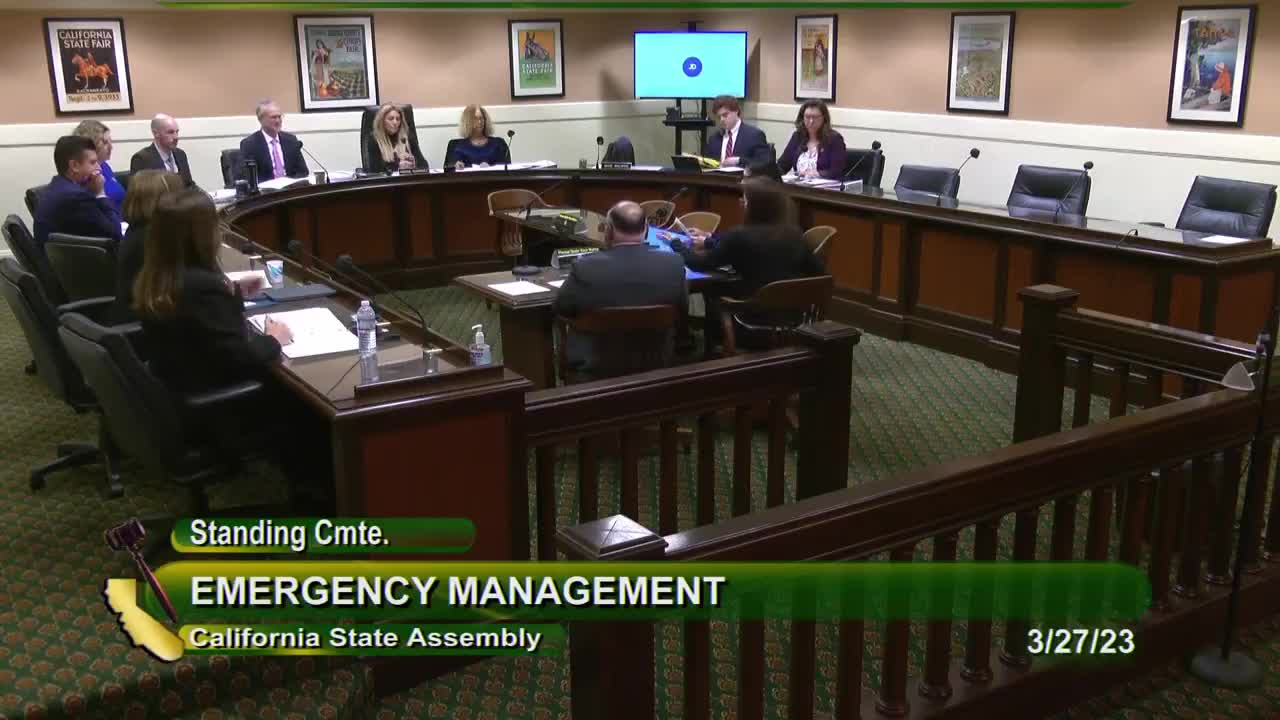
| Mar 27, 2023 | Do pass and be re-referred to the Committee on [Appropriations] | Assembly Standing Committee on Emergency Management |
Passed |
This list shows positions taken on this bill by organizations on the date displayed, which is linked to the original source.
Positions by individuals are not included.
|
Organization
|
Position
|
Date
|
|---|---|---|
| Amigos de los Rios | ** Support | |
| Amity Foundation | ** Support | |
| Angelenos for Trees | ** Support | |
| Arts District Community Council LA | ** Support | |
| Bay Area Urban Forest Ecosystem Council | ** Support | |
| California Coalition for Community Investment | ** Support | |
| California Council Of Community Behavioral Health Agencies | ** Support | |
| California Partnership To End Domestic Violence | ** Support | |
| California Releaf | ** Support | |
| California Urban Forests Council | ** Support | |
| CalNonprofits | ** Support | |
| Canopy | ** Support | |
| Center for Nonprofit Management | ** Support | |
| Central Coast Urban Forests Council | ** Support | |
| ChildrenS Institute | ** Support | |
| Clean & Green Pomona | ** Support | |
| Clean Power Campaign | * Support | Sep 12, 2023 |
| Climate Action Now | ** Support | |
| Coalition of California Utility Employees | * Support | Sep 12, 2023 |
| Community Alliance With Family Farmers | ** Support | |
| Community Bridges | ** Support | |
| Community Forest Advisory Committee | ** Support | |
| El Concilio | ** Support | |
| El Concilio of Stockton | ** Support | |
| fresno building healthy communities | ** Support | |
| Growing Together | ** Support | |
| HealthRight 360 | ** Support | |
| Industrial District Green | ** Support | |
| Inland Empire Community Collaborative | ** Support | |
| Inland Southern California United Way | ** Support | |
| Inland Urban Forest Council | ** Support | |
| International Society of Arboriculture, Western Chapter | ** Support | |
| Koreatown Youth + Community Center | ** Support | |
| la Cooperativa Campesina de California | ** Support | |
| Los Angeles Area Chamber Of Commerce | ** Support | |
| Los Angeles Beautification Team | ** Support | |
| Los Angeles Neighborhood Land Trust | ** Support | |
| Lumber Cycle | ** Support | |
| Madera Coalition for Community Justice | ** Support | |
| Meals On Wheels California | ** Support | |
| Meals on Wheels Orange County | ** Support | |
| Nonprofit Finance Fund | ** Support | |
| North East Trees | ** Support | |
| Pacific Gas And Electric Company | * Support | Sep 12, 2023 |
| Path | ** Support | |
| Rural Community Assistance Corporation | ** Support | |
| Sacramento Tree Foundation | ** Support | |
| Sacramento Urban Forest Council | ** Support | |
| San Diego Regional Urban Forests Council | ** Support | |
| San Joaquin Urban Forest Council | ** Support | |
| Santa Cruz Volunteer Center | ** Support | |
| Self-Help Enterprises | ** Support | |
| Southern California Edison | * Support | Sep 12, 2023 |
| Street Tree Seminar | ** Support | |
| Sustainable Claremont | ** Support | |
| The Climate Center | ** Support | |
| Treepeople | ** Support | |
| United Ways Of California | ** Support | |
| Urban Ecos | ** Support | |
| Watsonville Wetlands Watch | ** Support | |
| Westcare California Inc | ** Support | |
| Your Childrens Trees | ** Support |
SENATE COMMITTEE ON
Senator Anthony Portantino, Chair
2023 - 2024 Regular Session
AB 619 (Vince Fong) - State government: emergency services: nonprofit service providers
Version: | Policy Vote: |
Urgency: | Mandate: |
Hearing Date: | Consultant: |
Bill Summary:
AB 619 authorizes nonprofits providing services to a state agency to request to modify their service delivery methods during a declared state of war emergency or state of emergency and additionally authorizes nonprofits to request contract flexibility whenever a disruption occurs that prohibits a nonprofit entity from providing services to a state agency.
Fiscal Impact:
Unknown, potentially significant fiscal impact across impacted state agencies to ensure funds are available to pay for services that have been canceled or programs that have been closed or disrupted after receiving a notice or request from a nonprofit contractor (General Fund and special funds). The magnitude of the costs that may be incurred depends on the duration of the emergency or disruption, the effect the emergency or disruption has on the nonprofit contractor’s ability to provide services, and decisions made by the contractor on whether or how to work around the limitations imposed by the emergency or disruption.
The Department of General Services (DGS) reports that its Office of Legal Services, which reviews and approves contracts and contract amendments anticipates workload to be absorbable. However, workload for other departments that contract with nonprofit entities for services is unknown. A state agency’s ability to redirect budgeted funds to support other priorities, including costs and activities that respond to the emergency, may be limited. A state agency’s ability to hire another contractor to augment the services being provided by the first contractor may also be limited.
Background:
The COVID-19 pandemic has shifted how organizations across the state operate. Most in person programs had to be canceled and other services could be unexpectedly impacted by a COVID-19 outbreak or other closure. However, if the nonprofit entity was contracted with the state to provide specific services that pandemic guidelines prevent, they are still legally required to provide those services per the agreed upon requirements. By not providing the contracted services, the nonprofits could potentially lose funding and are unable to use the existing funding to serve their clients in another way without going through a lengthy budget modification process.
In 2020, a California Association of Nonprofits survey of more than 600 nonprofits from across 44 counties revealed that 86% needed changes in their state contract deliverable requirements because of the pandemic’s impact on their work. For example, a nonprofit foster care agency was unclear how to continue meeting performance obligations when shelter-in-place requirements complicated required home visits to confirm the health and safety of children in foster care. A nonprofit mental health provider for Medi-Cal recipients wanted to adjust its payments to ensure providers would not have to be laid off and needed quick agency guidance to make those changes. Additionally, 60% percent of survey respondents provide essential services as defined by the state government, and over half support state programs through grants and contracts with the state.
Proposed Law:
- During a state of war emergency or state of emergency, authorizes a nonprofit entity providing services to a state agency to request the state agency allow that nonprofit to modify the method in which it provides those services as long as the purpose of the contract is served.
- Prohibits the nonprofit from exceeding the contract budget unless the nonprofit and the state agency enter into an agreement for modification. If the state agency agrees to that modification, requires the agency and nonprofit to prepare and sign an addendum to the contract establishing the terms and conditions of the modification.
- Requires the nonprofit to notify each state agency from which it receives funding of a closure or of an impacted program.
- Requires a state agency that receives notification from a nonprofit entity to ensure that funding is available to pay for canceled services, closed programs, or reduced service levels.
- Requires the nonprofit entity to identify and thoroughly document all expenditures associated with the closed program and retain documentation justifying expenses to support claiming continued state funding in accordance with all of the following:
- Fixed and regular costs that continue to be incurred shall be paid normally.
- Hourly employees, including those who would not otherwise be paid when a program is not operating, shall be paid the anticipated wage during the closure.
- If there are any expenses that will not be incurred due to a program closure, those expenses shall be identified and excluded from invoicing. If the costs occurred prior to the closure, those costs shall be paid by the contracting state agency.
- Requires expenses related to a closure to be documented and provided separately to the state agency.
- Requires a nonprofit with a cost reimbursement contract to invoice for the month, but be flexible and responsive to the applicable state agency’s requests for additional documentation about expenditures during closure and costs associated with those services.
- Requires a nonprofit with a fee-for-service contract to invoice for the month by calculating one-twelfth of the contracted units of service and provide documentation of specific services that were expected but unable to be delivered.
- When a disruption occurs that prohibits a nonprofit from providing services pursuant to a contract with a state agency but a state of emergency or a state of war emergency is not declared, authorizes the nonprofit to submit a written request to the impacted state agency for contract flexibility.
- Authorizes a state agency to approve the written request if it determines that doing so is reasonable under the circumstances described by the nonprofit agency.
Related Legislation: AB 590 (Hart, 2023) authorizes a state agency administering a grant program to provide an advance payment to a recipient 501(c)(3) non-profit organization. AB 590 is pending in this committee.
AB 696 (Lowenthal, 2023) establishes the California State Grants and Contracts Modernization Act, which beginning July 1, 2025, requires a state agency that administers a grant or enters into contracts with eligible entities to provide for and accept electronic signatures and offer electronic payment options. AB 696 is pending in this committee.
AB 860 (Valencia, 2023) imposes requirements on the administration of covered grants by state agencies and third-party contractors. AB 860 is pending in this committee.
-- END --
SENATE COMMITTEE ON GOVERNMENTAL ORGANIZATION
Senator Bill Dodd
Chair
2023 - 2024 Regular
Bill No: AB Hearing Date: 7/11/2023
Author: | Vince Fong | ||
Version: | Amended | ||
Urgency: | Fiscal: | ||
Consultant: | |||
SUBJECT:
DIGEST: This bill authorizes nonprofits that contract with a state agency to request to modify their service delivery methods during a declared state of emergency without exceeding their contract budgets and authorizes those nonprofits to request flexibility in service provision and funding when disruptions occur, even if a state of emergency is not declared.
ANALYSIS:
Existing law:
- The California Emergency Services Act (ESA) authorizes the Governor to declare a state of emergency during conditions of disaster or extreme peril to persons or property.
- Authorizes the Governor, during a state of emergency, to suspend any regulatory statute, or statute prescribing the procedure for conduct of state business, or the orders, rules, or regulations of any state agency, as specified.
- Requires each department, division, bureau, board, commission, officer, and employee of this state to render all possible assistance to the Governor and to the Director of Emergency Services in carrying out the ESA.
This bill:
- Authorizes a nonprofit entity that provides services pursuant to a contract with a state agency to, during a state of war emergency or state of emergency, request the state agency to allow that nonprofit to modify the method in which it provides those services so long as the purpose of the contract is served.
- Prohibits the nonprofit entity from exceeding the contract budget unless the nonprofit and the state agency enter into an agreement for modification.
- Provides that if the state agency agrees to that modification, that state agency and the nonprofit shall prepare and sign an addendum to the contract establishing the terms and conditions of the modification.
- Requires a nonprofit entity to notify each state agency from which it receives funding of a closure or of an impacted program, including whether a closure is location specific or due to executive order, and why the service level may be impacted.
- Requires a nonprofit entity to identify and thoroughly document all expenditures associated with the closed program and requires the nonprofit entity to retain documentation to justify expenses and to support claiming continued state funding in accordance with the following requirements:
- Fixed and regular costs that continue to be incurred shall be paid normally.
- Hourly employees, including those who would not otherwise be paid when a program is not operating, shall be paid the anticipated wage during the closure.
- If there are any expenses that will not be incurred to a program closure, those expenses shall be identified and excluded from invoicing. If the costs occurred prior to the closure, those costs shall be paid by the contracting state agency.
- Provides that while contract expenditures may be billed using a regular monthly invoice template, the expenses related to a closure shall be documented and provided separately to the state agency.
- Requires a nonprofit entity with a cost reimbursement contract to invoice for the month, but provides that the nonprofit shall be flexible and responsive to the applicable state agency’s requests for additional documentation about expenditures during closure, which may include documentation of specific services that were expected but unable to be delivered, and costs associated with those services.
- Requires a state agency that receives notification from a nonprofit entity to ensure that funding is available to pay for canceled services, closed programs, or reduced service levels.
- Provides that when a disruption occurs that prohibits a nonprofit entity from providing services pursuant to a contract with a state agency, but a state of emergency or a state of war emergency is not declared, the nonprofit may submit to the impacted state agency for approval a written request for flexibility with respect to services and funding pursuant to the contract.
- Authorizes a state agency to approve the written request if it determines that doing so is reasonable under the circumstances described by the nonprofit agency.
Background
Author Statement. According to the author’s office, “California nonprofits are the driving force behind the delivery of local services and community assistance. As seen during the beginning of the COVID-19 pandemic, resources were bottlenecked, but the resilient nonprofits did not waiver despite challenges to reprioritize their state funds to provide the much-needed services to their communities. Greater contract flexibility will allow these nonprofits to successfully implement and engage our communities during crisis responses.”
Request for Flexibility. The COVID-19 pandemic has shifted how organizations across the state operate. Most in person programs had to be canceled and other services could be unexpectedly impacted by a COVID-19 outbreak or other closure. However, if the nonprofit entity was contracted with the state to provide specific services that pandemic guidelines prevent, they are still legally required to provide those services per the agreed upon requirements. By not providing the contracted services, the nonprofits could potentially lose funding and are unable to use the existing funding to serve their clients in another way without going through a lengthy budget modification process.
In 2020, a California Association of Nonprofits (CalNonprofits) survey of more than 600 nonprofits from across 44 counties revealed that 86% needed changes in their state contract deliverable requirements because of the pandemic’s impact on their work. For example, a nonprofit foster care agency was unclear how to continue meeting performance obligations when shelter-in-place requirements complicated required home visits to confirm the health and safety of children in foster care. A nonprofit mental health provider for Medi-Cal recipients wanted to adjust its payments to ensure providers would not have to be laid off and needed quick agency guidance to make those changes. Additionally, 60% percent of survey respondents provide essential services as defined by the state government, and over half support state programs through grants and contracts with the state.
San Francisco County Guidance. On March 11, 2020, San Francisco City and County issued a continuity policy for paying nonprofit suppliers facing COVID-19 related disruptions. The City and County expressed their intention to continue providing funds, either partially or in full, to nonprofits whose contracted programming is impacted by following recommendations from the San Francisco Department of Emergency Management. This policy also outlined rules regarding notifications, documentation, invoicing, and department funding. Previous versions of this bill language were modeled after these guidelines.
California Small Business COVID-19 Relief Grant Program. In January, Governor Newsom established this program by Executive Order, which provides grants from $5,000 to $25,000 to eligible small businesses and nonprofits impacted by COVID-19 and the related health and safety restrictions. In February, the legislature passed SB 87, which provided an additional $2 billion in grants. $50 million of the total was designated specifically for non-profit cultural institutions.
Emergency Planning with the Nonprofit Sector. Nonprofit organizations are a critical component of any disaster response and recovery effort. It is important to have a well thought out and managed volunteer and donations management program in place in order to avoid hindering the efforts of first responders and emergency personnel and to meet the needs of vulnerable populations. With a system in place for receiving and referring spontaneous volunteers, and receiving and distributing donations, local government and relief organizations can capture these valuable resources and thus provide more efficient and cost-effective service to the community.
Many operational areas (counties) and cities across California have developed Volunteer & Donations Management Support Annexes to their Emergency Operation Plans with the overall objective of enfolding the nonprofit sector into community emergency preparations. Typically, the goals of Volunteer and Donations Management Support Annexes include the following:
a. Providing an all-hazards framework for volunteer coordination and donations management that is scalable to the size and scope of a disaster event;
b. Identifying roles and responsibilities within the jurisdiction that support coordination or volunteers and donation management programs; and
c. Strengthening and encouraging partnerships and communication among governmental agencies and nonprofits regarding volunteer coordination and donation management during a disaster event.
COVID-19 Donations. On April 4, 2020, Governor Newsom announced the launch of covid19supplies.ca.gov. This website was designed to allow individuals and companies to donate, sell or offer to manufacture the most essential medical supplies, including ventilators, N95 respirators and testing materials, in order to support California’s fight against the pandemic.
Additional donations reported from private entities included television and radio air time for public service announcements, technology for students to access remote learning, and support for individuals experiencing homelessness.
COVID-19 Volunteers. In March of 2021, California Volunteers, under the Office of the Governor, announced a statewide volunteer recruitment campaign to assist in COVID-19 vaccination efforts. Volunteers were sourced to work at vaccination sites, share information, and transport others to their vaccination appointments. Some individuals became eligible for a vaccine based on volunteering.
During a State of Emergency. This bill authorizes nonprofits that provide services pursuant to a contract with a state agency to request a modification to the method in which it provides those services during a declared state of war emergency or a state of emergency. This bill would prohibit the nonprofit from exceeding the contract budget unless the nonprofit and the state agency enter into an agreement for modification. If a state agency agrees to that modification, the state and the nonprofit must prepare and sign and addendum to the contract establishing the terms and conditions of the modification.
Prior/Related Legislation
SB 336 (Umberg, 2023) requires the Department of General Services to establish a process for nonprofits to negotiate a state standard negotiated cost agreement, as defined, and requires state agencies administering grant programs to use the same terms as contained in a grantee’s existing negotiated indirect cost rate agreement policies approved by the federal government, or the same terms contained in the state standard negotiated cost agreement, as specified. (Pending in the Assembly Accountability and Administrative Review Committee)
SB 557 (Limon, 2023) expands the definition of a grant for the purposes of the California Prompt Payment Act requiring timely payments to include nonprofits by changing what is considered a grant and sets a specific monetary threshold of $250 or 5% of the invoiced amount (whichever is lower) for when a state agency can dispute a bill related to property or services delivered. (Pending in the Assembly Appropriations Committee)
AB 590 (Hart, 2023) authorizes a state agency administering a grant program to provide an advance payment to a recipient 501(c)(3) non-profit organization. (Pending in the Senate Governmental Organization Committee)
AB 860 (Valencia, 2023) streamlines the process of applying for and receiving small state grants, particularly those not exceeding $20,000 and with a duration of less than 12 months, and requires the creation of a more accessible and equitable grant application process. (Pending in the Senate Appropriations Committee)
AB 696 (Lowenthal, 2023) enacts the California State Grants and Contracts Modernization Act to require all state agencies to provide for, but not require, all state grant and contract transactions to occur online. (Pending in the Senate Governmental Organization Committee)
AB 885 (L. Rivas, 2023) establishes the “California Nonprofit Fairness in Contracting Act” which would provide nonprofits preferential treatment when contracting with the state for goods or services or when contracting with a local agency using state funds. (Never heard in the Assembly Accountability and Administrative Review Committee)
SB 543 (Limon, 2022) would have required the Department of General Services to designate a person to serve as a nonprofit liaison, as specified. (Vetoed by Governor Newsom)
SB 784 (Glazer, 2022) was substantially similar to this bill and would have authorized a nonprofit entity that provides supportive services pursuant to a contract with the state, during a state of war emergency or a state of emergency, to adjust the method in which it provides those services so long as the purpose of the contract is served, as specified. (Died on the Senate Inactive File)
FISCAL EFFECT: Appropriation: No Fiscal Com.: Yes Local: No
SUPPORT:
CalNonprofits (Sponsor)
Amigos De Los Rios
Amity Foundation
Angelenos for Trees
Arts District Community Council LA
Bay Area Urban Forest Ecosystem Council
California Coalition for Community Investment
California Council of Community Behavioral Health Agencies
California Partnership to End Domestic Violence
California ReLeaf
California Urban Forests Council
Canopy
Center for Nonprofit Management
Central Coast Urban Forests Council
Children's Institute
Clean & Green Pomona
Climate Action Now
Community Alliance with Family Farmers
Community Bridges
Community Forest Advisory Committee
El Concilio of Stockton
Fresno Building Healthy Communities
Growing Together
HealthRIGHT 360
Industrial District Green
Inland Empire Community Collaborative
Inland Southern California United Way
Inland Urban Forest Council
International Society of Arboriculture Western Chapter
Koreatown Youth + Community Center
LA Cooperativa Campesina De California
Los Angeles Area Chamber of Commerce
Los Angeles Beautification Team
Los Angeles Neighborhood Land Trust
Lumber Cycle
Madera Coalition for Community Justice
Meals on Wheels California
Meals on Wheels Orange County
Nonprofit Finance Fund
North East Trees
PATH
Rural Community Assistance Corporation
Sacramento Tree Foundation
Sacramento Urban Forest Council
San Diego Regional Urban Forests Council
San Joaquin Urban Forest Council
Santa Cruz Volunteer Center
Self-help Enterprises
Street Tree Seminar
Sustainable Claremont
The Climate Center
TreePeople
United Ways of California
Urban Ecos
Watsonville Wetlands Watch
WestCare California INC.
Your Children’s Trees
OPPOSITION:
None received
ARGUMENTS IN SUPPORT: In support of the bill, CalNonprofits writes that this bill “is part of the California Nonprofit Equity Initiative that our organizations, along with more than 500 other nonprofit and community leaders, are supporting to level the playing field for nonprofits. Improving how state government contracts with nonprofits is a question of equity – for our most vulnerable communities and for the nonprofits that serve them. Nonprofits are a powerful force for equity. The state relies on nonprofits to help put critical policies into action, partnering with community organizations to help the homeless, build affordable housing, respond to the impacts of climate change, support domestic violence victims, and in countless ways improve the lives of vulnerable members of our communities. To succeed, nonprofits need contracting terms that set us up to partner effectively.”
Further, “[a]linged with the Governor’s ‘California for All’ vision, [AB 619] responds to the impact the pandemic has had on our communities, the need to address equity and inequality in access to state resources, and the imperative to support strong and varied community-based organizations to address increased need. Passing AB 619 and the rest of the California Nonprofit Equity Initiative will strengthen the essential partnership between the state and nonprofits and our mutual efforts to deliver the highest quality services to the people of California.”
ASSEMBLY THIRD READING
ATR Bill Id:AB 619
Author:(Vince Fong)
As Amended Ver:May 18, 2023
Majority vote
SUMMARY
Authorizes a process for nonprofit entities contracted with the state to request an alteration to the services provided in the event of a state of war, state of emergency, or other disruption.
Major Provisions
- Authorizes a nonprofit entity contracted with the state, in the event of a state of emergency or state of war emergency, to request to alter the way in which it provides service so long as the original purpose of the contract is met.
- Prohibits a nonprofit entity from exceeding the originally contracted budget unless they enter a new agreement for modification with the contacted state agency
- Requires the state agency and the nonprofit entity, if the state agency agrees to the requested contract changes during a state of war or state of emergency, to prepare and sign an addendum to the contract that establishes the terms and conditions of the modification.
- Requires the nonprofit entity to notify each department it receives funding from if a program will either be closed or impacted and why the level of service may be impacted.
- Requires a state agency that receives notification from a nonprofit entity that a program will either be closed or impacted to ensure funding is available to pay for canceled services, closed programs, or reduced service levels.
- Requires the nonprofit entity to identify and document a closed program's expenditures and retain the documentation to justify expenses and additional funding, as specified.
- Specifies contract expenditures may be billed using a regular monthly invoice template, but expenses related to a closure shall be documented and provided separately to the applicable state agency.
- Permits a nonprofit entity contracted with a state agency, when a disruption occurs that prohibits that entity from providing services pursuant to the contract and a state of emergency or state of war emergency is not declared, to submit a request to the applicable state agency for flexibility with respect to services and funding pursuant to the contract.
- Authorizes a state agency to approve a nonprofit entity's request for contract flexibility, as specified, in relation to a disruption if the agency determines that doing so is reasonable under the circumstances described by the nonprofit entity.
COMMENTS
Equity Impact: According to the author's staff, "Many nonprofits offer services for free or discounted prices to disadvantaged and marginalized communities. They are on the front lines of providing health services, homelessness outreach, education, environmental action, and rebuilding efforts following natural disasters. These groups acutely understand the needs of those that they service. Without the State contracts that often fund these nonprofit projects in communities, their services would be dramatically reduced and many of the people that these nonprofits reach will not have an advocate nor a program that they can turn to for support. This bill will allow for these nonprofits to have flexibility in their contracts during a State of Emergency so that they can pivot their operations to better serve the communities most in need."
Nonprofit Organizations: There are nearly 80,000 nonprofits, with over one million employees, in California. The nonprofit sector ranks as the fourth largest industry in California by employment and contribute approximately 15% of California's gross state product.
Request for Flexibility: The COVID-19 pandemic has shifted how organizations across the state operate. Most in person programs had to be canceled and other services could be unexpectedly impacted by a COVID-19 outbreak or other closure. However, if the nonprofit entity was contracted with the state to provide specific services that pandemic guidelines prevent, they are still legally required to provide those services per the agreed upon requirements. By not providing the contracted services, the nonprofits could potentially lose funding and are unable to use the existing funding to serve their clients in another way without going through a lengthy budget modification process.
The California Association of Nonprofits (CalNonprofits) issued a report based on a questionnaire to its 10,000 members, which covered the topic of government contracts during the COVID-19 pandemic. The CalNonprofits report asserts that the "Government, which provides about 30% of the funding of nonprofits, has acted inconsistently and unevenly to adapt contract requirements, invoicing procedures, and more, further adding to the burden nonprofits are taking on." Of the 622 respondents, 86% reported that they needed their contract requirements to be altered due to impacts from the pandemic, 68% reported they received inconsistent guidelines on how to best fulfill their contract from different departments or levels of government, and 69% expressed a need to move funds from one line item to another without having to go through the usual budget modification process.
San Francisco County Guidance: On March 11, 2020, San Francisco City and County issued a continuity policy for paying nonprofit suppliers facing COVID-19 related disruptions. The City and County expressed their intention to continue providing funds, either partially or in full, to nonprofits whose contracted programming is impacted by following recommendations from the San Francisco Department of Emergency Management. This policy also outlined rules regarding notifications, documentation, invoicing, and department funding. Previous versions of this bill language were modeled after these guidelines.
Emergency Planning with the Nonprofit Sector: Nonprofit organizations are a critical component of any disaster response and recovery effort. It is important to have a well thought out and managed volunteer and donations management program in place in order to avoid hindering the efforts of first responders and emergency personnel and to meet the needs of vulnerable populations. With a system in place for receiving and referring spontaneous volunteers, and receiving and distributing donations, local government and relief organizations can capture these valuable resources and thus provide more efficient and cost-effective service to the community.
Many operational areas (counties) and cities across California have developed Volunteer & Donations Management Support Annexes to their Emergency Operation Plans with the overall objective of enfolding the nonprofit sector into community emergency preparations. Typically, the goals of Volunteer and Donations Management Support Annexes include the following:
- Providing an all-hazards framework for volunteer coordination and donations management that is scalable to the size and scope of a disaster event;
- Identifying roles and responsibilities within the jurisdiction that support coordination or volunteers and donation management programs; and
- Strengthening and encouraging partnerships and communication among governmental agencies and nonprofits regarding volunteer coordination and donation management during a disaster event.
According to the Author
California nonprofits are the driving force behind the delivery of local services and community assistance. As seen during the beginning of the COVID-19 pandemic, resources were bottlenecked, but the resilient nonprofits did not waiver despite challenges to reprioritize their state funds to provide the much-needed services to their communities. Greater contract flexibility will allow these nonprofits to successfully implement and engage our communities during crisis responses.
Arguments in Support
The California Association of Nonprofits (CalNonprofits) writes in support, "The current crisis has highlighted the need for nonprofit organizations to be able to adapt their contracted programs during emergencies and to shift expenses to cover new costs associated with the crisis. In 2020, a CalNonprofits survey of more than 600 nonprofits from across 48 counties revealed that 86 percent needed changes in their state contract deliverable requirements as a result because of the pandemic's impact on their work. For example, a nonprofit foster care agency was unclear how to contend with performance obligations when shelter-in-place requirements complicated required home visits to confirm the health and safety of foster care children. A nonprofit mental health provider for Medi-Cal recipients wanted to adjust its payments to ensure providers would not have to be laid off and needed quick agency guidance to make those changes."
They continue, "Sixty percent of these survey respondents provide essential services as defined by state government, and over half support state programs through grants and contracts with the state. Clearly, the state has an interest in ensuring these services continue during an emergency, and a streamlined way of assuring contract flexibility is warranted."
Arguments in Opposition
None on file.
FISCAL COMMENTS
According to the Assembly Appropriations Committee, "Costs of an unknown, but potentially significant amount, to the state if this bill requires state agencies to continue paying for services that are no longer being performed (General Fund or special fund). The magnitude of costs depends on the duration of the emergency, the effect the emergency has on the nonprofit entity's ability to provide services, and how the entity decides to work around the limitations imposed by the emergency. If the state guarantees the nonprofit entity will be paid regardless of services provided, continued funding may reduce incentives for the entity to find alternative ways to deliver the full range of services envisioned by the contract. A state agency and nonprofit entity may also disagree over whether and to what extent "the purpose of the contract" is still being served."
They continue, "Additional costs to state agencies for staff workload depend on the volume of contracts and substance of contract amendments subject to review and approval. Such costs may be minor and absorbable for a state agency with few disrupted nonprofit contracts, but significant for other state agencies."
VOTES
ASM EMERGENCY MANAGEMENT: 7-0-0
YES: Rodriguez, Waldron, Aguiar-Curry, Alvarez, Calderon, Megan Dahle, Schiavo
ASM APPROPRIATIONS: 15-0-1
YES: Holden, Megan Dahle, Bryan, Calderon, Wendy Carrillo, Dixon, Mike Fong, Hart, Lowenthal, Mathis, Papan, Pellerin, Sanchez, Weber, Ortega
ABS, ABST OR NV: Robert Rivas
UPDATED
VERSION: May 18, 2023
CONSULTANT: Ryan Fleming / E.M. / (916) 319-3802 FN: 0000667
Date of Hearing: April 19, 2023
ASSEMBLY COMMITTEE ON APPROPRIATIONS
Chris Holden, Chair
ABPCA Bill Id:AB 619
Author:(Vince Fong) – As Introduced Ver:February 9, 2023
Policy Committee: | Emergency Management | Vote: | 7 - 0 |
|
| ||
|
|
Urgency: No State Mandated Local Program: No Reimbursable: No
SUMMARY:
This bill allows, during a state of emergency or war emergency, a nonprofit entity to adjust how contracted services are provided to a state agency, so long as the purpose of the contract is served, while requiring the state agency to continue paying for canceled services, closed programs, or reduced service levels.
Specifically, this bill:
- Requires a state agency and nonprofit entity to prepare and sign an addendum to a contract modified during a state emergency, establishing the terms and conditions of the mutually agreed upon modification.
- Requires a nonprofit entity to notify each state agency from which the nonprofit entity receives funding of a closure or impacted program, as well as retain documentation to justify expenses and support claiming continued state funding.
- Requires a state agency that receives such notification from a nonprofit entity to ensure funding is available to pay for canceled services, closed programs, or reduced service levels.
- Allows, when a disruption not caused by a state of emergency or war emergency occurs, a nonprofit entity to submit a written request for contract flexibility to the impacted state agency. The state agency may approve the request if deemed reasonable.
FISCAL EFFECT:
Costs of an unknown, but potentially significant amount, to the state if this bill requires state agencies to continue paying for services that are no longer being performed (General Fund or special fund). The magnitude of costs depends on the duration of the emergency, the effect the emergency has on the nonprofit entity’s ability to provide services, and how the entity decides to work around the limitations imposed by the emergency. If the state guarantees the nonprofit entity will be paid regardless of services provided, continued funding may reduce incentives for the entity to find alternative ways to deliver the full range of services envisioned by the contract. A state agency and nonprofit entity may also disagree over whether and to what extent “the purpose of the contract” is still being served.
Additional costs to state agencies for staff workload depend on the volume of contracts and substance of contract amendments subject to review and approval. Such costs may be minor and absorbable for a state agency with few disrupted nonprofit contracts, but significant for other state agencies.
COMMENTS:
- Purpose. According to the author:
As seen during the beginning of the COVID-19 pandemic, resources were bottlenecked, but the resilient nonprofits did not waiver despite challenges to reprioritize their state funds to provide the much-needed services to their communities. Greater contract flexibility will allow these nonprofits to successfully implement and engage our communities during crisis responses.
This bill is part of the California Nonprofit Equity Initiative, a package of legislation developed by the California Association of Nonprofits (CalNonprofits) intended to improve how state government contracts with nonprofits. This bill is supported by CalNonprofits and a range of individual nonprofit organizations.
- Impact of COVID-19 on Nonprofit Contracts. A 2020 CalNonprofits survey of more than 600 nonprofits across 44 counties during the COVID-19 pandemic found 86% of respondents needed their state contract deliverable requirements changed due to the pandemic’s impact on their work. Additionally, 68% of respondents reported receiving inconsistent guidelines on how to best fulfill their contract and 69% expressed needing to move funds from one line item to another.
Like it did for all other organizations, the COVID-19 pandemic shifted how nonprofit entities across the state could operate, with most in-person programs and other services subject to closure or cancellation. Nonprofit entities contracted with the state to provide specific services prevented by pandemic guidelines were still legally required to provide those services per the agreed upon contracts, or risked losing funding. Such rigidity also prevented nonprofit entities from being able to use funding to serve clients in other needed ways. This bill allows, without first completing a lengthy budget modification process, a nonprofit entity to request flexibility in servicing a state contract during a state of emergency, while requiring the state agency to ensure funding is available to pay for modified services. This bill also allows a nonprofit entity to submit a simpler written request for contract flexibility during a disruption not caused by a state of emergency, but does not require continued payments in such circumstances.
- Prior Legislation. SB 784 (Glazer), of the 2021-22 Legislative Session, was substantially similar to this bill. SB 784 was pending concurrence in Assembly amendments, but was ordered to the Senate Inactive File by the author.
Analysis Prepared by: Irene Ho / APPR. / (916) 319-2081
Date of Hearing: March 27, 2023
ASSEMBLY COMMITTEE ON EMERGENCY MANAGEMENT
Freddie Rodriguez, Chair
ABPCA Bill Id:AB 619 (
Author:Vince Fong) – As Introduced Ver:February 9, 2023
SUBJECT: State government: emergency services: nonprofit service providers
SUMMARY: Authorizes a process for nonprofit entities contracted with the state to request an alteration to the services provided in the event of a state of war, state of emergency, or other disruption. Specifically, this bill:
- Authorizes a nonprofit entity contracted with the state, in the event of a state of emergency or state of war emergency, to request to alter the way in which it provides service so long as the original purpose of the contract is met.
- Requires the state agency and the nonprofit entity, if the state agency agrees to the requested contract changes during a state of war or state of emergency, to prepare and sign an addendum to the contract that establishes the terms and conditions of the modification.
- Requires the nonprofit entity to notify each department it receives funding from if a program will either be closed or impacted and why the level of service may be impacted.
- Requires a state agency that receives notification from a nonprofit entity that a program will either be closed or impacted to ensure funding is available to pay for canceled services, closed programs, or reduced service levels.
- Requires the nonprofit entity to identify and document a closed program’s expenditures and retain the documentation to justify expenses and additional funding, as specified.
- Specifies contract expenditures may be billed using a regular monthly invoice template, but expenses related to a closure shall be documented and provided separately to the applicable state agency.
- Permits a nonprofit entity contracted with a state agency, when a disruption occurs that prohibits that entity from providing services pursuant to the contract and a state of emergency or state of war emergency is not declared, to submit a request to the applicable state agency for flexibility with respect to services and funding pursuant to the contract.
- Authorize a state agency to approve a nonprofit entity’s request for contract flexibility, as specified, in relation to a disruption if the agency determines that doing so is reasonable under the circumstances described by the nonprofit entity.
EXISTING LAW:
- Authorizes, pursuant to the California Emergency Services Act (ESA), the Governor to declare a state of emergency during conditions of disaster or extreme peril to persons or property. (Government Code 8625)
- Authorizes the Governor, during a state of emergency, to suspend any regulatory statute, or statute prescribing the procedure for conduct of state business, or the orders, rules, or regulations of any state agency, as specified. (Government Code 8627)
- Requires each department, division, bureau, board, commission, officer, and employee of this state to render all possible assistance to the Governor and to the Director of the Office of Emergency Services in carrying out the ESA. (Government Code 8596)
FISCAL EFFECT: A fiscal committee has not heard AB 619. However, when analyzing SB 784 (Glazer, 2022) – a substantively similar bill to AB 619, the Assembly Appropriations Committee stated “Likely negligible costs, as individual nonprofit entities under varying contract terms may already be able to seek a contract amendment when unforeseen circumstances arise. However, this bill may result in potential costs of an unknown amount if nonprofit entities continue to receive funding they would otherwise not receive.”
COMMENTS:
Purpose of the Bill: According to the author, “California nonprofits are the driving force behind the delivery of local services and community assistance. As seen during the beginning of the COVID-19 pandemic, resources were bottlenecked, but the resilient nonprofits did not waiver despite challenges to reprioritize their state funds to provide the much-needed services to their communities. Greater contract flexibility will allow these nonprofits to successfully implement and engage our communities during crisis responses”
Equity Impact: According to the author’s staff, “Many nonprofits offer services for free or discounted prices to disadvantaged and marginalized communities. They are on the front lines of providing health services, homelessness outreach, education, environmental action, and rebuilding efforts following natural disasters. These groups acutely understand the needs of those that they service. Without the State contracts that often fund these nonprofit projects in communities, their services would be dramatically reduced and many of the people that these nonprofits reach will not have an advocate nor a program that they can turn to for support. This bill will allow for these nonprofits to have flexibility in their contracts during a State of Emergency so that they can pivot their operations to better serve the communities most in need.”
Nonprofit Organizations: There are nearly 80,000 nonprofits, with over one million employees, in California. The nonprofit sector ranks as the fourth largest industry in California by employment and contribute approximately 15% of California’s gross state product.
Ongoing and complex disasters are the new normal: In recent written testimony provided to the House of Representatives Committee on Appropriations, California’s OES Director states “the State of California arguably faces the most complex and severe disaster conditions in the nation and these challenges and complexities grow in magnitude each year. In the past decade, California has experienced every conceivable type of natural and manmade disaster including drought, earthquake, flood, catastrophic wildfire, mudslides, dam failure, cyber security attacks, oil spills, natural gas leak, civil unrest, terrorism, and tsunami. However, the COVID-19 pandemic has put our emergency management system to the test.”
Request for Flexibility: The COVID-19 pandemic has shifted how organizations across the state operate. Most in person programs had to be canceled and other services could be unexpectedly impacted by a COVID-19 outbreak or other closure. However, if the nonprofit entity was contracted with the state to provide specific services that pandemic guidelines prevent, they are still legally required to provide those services per the agreed upon requirements. By not providing the contracted services, the nonprofits could potentially lose funding and are unable to use the existing funding to serve their clients in another way without going through a lengthy budget modification process.
The California Association of Nonprofits (CalNonprofits) issued a report based on a questionnaire to its 10,000 members, which covered the topic of government contracts during the COVID-19 pandemic. The CalNonprofits report asserts that the “Government, which provides about 30% of the funding of nonprofits, has acted inconsistently and unevenly to adapt contract requirements, invoicing procedures, and more, further adding to the burden nonprofits are taking on.” Of the 622 respondents, 86% reported that they needed their contract requirements to be altered due to impacts from the pandemic, 68% reported they received inconsistent guidelines on how to best fulfill their contract from different departments or levels of government, and 69% expressed a need to move funds from one line item to another without having to go through the usual budget modification process.
San Francisco County Guidance: On March 11, 2020, San Francisco City and County issued a continuity policy for paying nonprofit suppliers facing COVID-19 related disruptions. The City and County expressed their intention to continue providing funds, either partially or in full, to nonprofits whose contracted programming is impacted by following recommendations from the San Francisco Department of Emergency Management. This policy also outlined rules regarding notifications, documentation, invoicing, and department funding. Previous versions of this bill language were modeled after these guidelines.
California Small Business COVID-19 Relief Grant Program: In January, Governor Newsom established this program by Executive Order, which provides grants from $5,000 to $25,000 to eligible small businesses and nonprofits impacted by COVID-19 and the related health and safety restrictions. In February, the legislature passed SB 87, which provided an additional $2 billion in grants. $50 million of the total was designated specifically for non-profit cultural institutions.
Emergency Planning with the Nonprofit Sector: Nonprofit organizations are a critical component of any disaster response and recovery effort. It is important to have a well thought out and managed volunteer and donations management program in place in order to avoid hindering the efforts of first responders and emergency personnel and to meet the needs of vulnerable populations. With a system in place for receiving and referring spontaneous volunteers, and receiving and distributing donations, local government and relief organizations can capture these valuable resources and thus provide more efficient and cost-effective service to the community.
Many operational areas (counties) and cities across California have developed Volunteer & Donations Management Support Annexes to their Emergency Operation Plans with the overall objective of enfolding the nonprofit sector into community emergency preparations. Typically, the goals of Volunteer and Donations Management Support Annexes include the following:
- Providing an all-hazards framework for volunteer coordination and donations management that is scalable to the size and scope of a disaster event;
- Identifying roles and responsibilities within the jurisdiction that support coordination or volunteers and donation management programs; and
- Strengthening and encouraging partnerships and communication among governmental agencies and nonprofits regarding volunteer coordination and donation management during a disaster event.
COVID-19 Donations: On April 4, 2020, Governor Newsom announced the launch of covid19supplies.ca.gov. This website was designed to allow individuals and companies to donate, sell or offer to manufacture the most essential medical supplies, including ventilators, N95 respirators and testing materials, in order to support California’s fight against the pandemic.
Additional donations reported from private entities included television and radio air time for PSAs, technology for students to access remote learning, and support for individuals experiencing homelessness.
COVID-19 Volunteers: In March of 2021, California Volunteers, under the Office of the Governor, announced a statewide volunteer recruitment campaign to assist in COVID-19 vaccination efforts. Volunteers were sourced to work at vaccination sites, share information, and transport others to their vaccination appointments. Some individuals became eligible for a vaccine based on volunteering.
Arguments in Support: The California Association of Nonprofits (CalNonprofits), writes in support, “The current crisis has highlighted the need for nonprofit organizations to be able to adapt their contracted programs during emergencies and to shift expenses to cover new costs associated with the crisis. In 2020, a CalNonprofits survey of more than 600 nonprofits from across 48 counties revealed that 86 percent needed changes in their state contract deliverable requirements as a result because of the pandemic’s impact on their work. For example, a nonprofit foster care agency was unclear how to contend with performance obligations when shelter-in-place requirements complicated required home visits to confirm the health and safety of foster care children. A nonprofit mental health provider for Medi-Cal recipients wanted to adjust its payments to ensure providers would not have to be laid off and needed quick agency guidance to make those changes.”
They continue, “Sixty percent of these survey respondents provide essential services as defined by state government, and over half support state programs through grants and contracts with the state. Clearly, the state has an interest in ensuring these services continue during an emergency, and a streamlined way of assuring contract flexibility is warranted.”
Prior and Related Legislation: SB 784 (Glazer, 2022) Would have authorized a nonprofit entity that is contracted with the state, in the event of a state of emergency or state of war emergency, to alter the way in which it provides service so long as the original purpose of the contract is met. (Died on the Senate Floor)
SB 543 (Limon, 2022). Would have required a state agency that significantly regulates or impacts nonprofit corporations to designate a person to serve as a nonprofit liaison, as specified. (Vetoed by the Governor)
AB 2213 (Limón), Chapter 98, Statutes of 2020. Requires Cal OES to develop model guidelines for local governments to identify community resources that could assist in responding to or recovering from disasters and expands emergency notification programs.
REGISTERED SUPPORT / OPPOSITION:
Support
California Association of Nonprofits (Sponsor)
California Council of Community Behavioral Health Agencies (CBHA)
California Partnership to End Domestic Violence
California ReLeaf
Center for Nonprofit Management
Children's Institute
Community Alliance With Family Farmers
Community Bridges
El Concilio
Fresno Building Healthy Communities
Healthright 360
Inland Empire Community Collaborative
Inland Southern California United Way
Koreatown Youth + Community Center
Meals on Wheels California
Nonprofit Finance Fund (NFF)
Path (people Assisting the Homeless)
Rural Community Assistance Corporation (RCAC)
Santa Cruz Volunteer Center
Self-help Enterprises
Treepeople
United Ways of California (UWCA)
Opposition
None on file.
Analysis Prepared by: Ryan Fleming / E.M. / (916) 319-3802
Discussed in Hearing
 21MIN
Senate Standing Committee on Energy, Utilities and Communications
 58SEC
Senate Standing Committee on Appropriations
 7MIN
Assembly Standing Committee on Emergency Management
Bill Author

Bill Co-Author(s):