AB 691: Inefficient heating, ventilation, and air conditioning systems at schools: report.
- Session Year: 2023-2024
- House: Assembly
- Latest Version Date: 2024-06-10
Current Status:
Failed
(2024-08-15: In committee: Held under submission.)
Introduced
In Committee
First Chamber
In Committee
Second Chamber
Enacted
Existing law requires the State Energy Resources Conservation and Development Commission, in collaboration with certain electrical corporations and gas corporations, to develop and administer the School Reopening Ventilation and Energy Efficiency Verification and Repair Program to award grants to local educational agencies to reopen schools with functional ventilation systems that are tested, adjusted, and, if necessary or cost effective, repaired, upgraded, or replaced to increase efficiency and performance. Existing law requires the commission to ensure that moneys from each electrical or gas corporation for the program are used for projects located in the service territory of the electrical or gas corporation from which the moneys are received, as specified. Existing law repeals these provisions on January 1, 2027.
This bill would require the commission, on or before January 1, 2026, to submit a report to the Legislature regarding the impacts and effects of inefficient heating, ventilation, and air conditioning systems at schools serving pupils in kindergarten or any of grades 1 to 12, inclusive, as provided.
(1)Existing law requires the Public Utilities Commission (PUC) to require those electrical corporations with 250,000 or more customer accounts in the state, and those gas corporations with 400,000 or more customer accounts in the state, to fund as part of their energy efficiency portfolios the joint School Energy Efficiency Stimulus Program, which consists of: (A) the School Reopening Ventilation and Energy Efficiency Verification and Repair Program (SRVEVR Program) to award grants to local educational agencies to reopen schools with functional ventilation systems that are tested, adjusted, and, if necessary or cost effective, repaired, upgraded, or replaced to increase efficiency and performance; and (B) the School Noncompliant Plumbing Fixture and Appliance Program (SNPFA Program) to provide grants to state agencies and local educational agencies to replace noncompliant plumbing fixtures, as defined, and noncompliant appliances, as defined, that fail to meet water efficiency standards and waste potable water and the energy used to convey that water with water-conserving plumbing fixtures and appliances.Existing law requires the PUC to require those utilities to fund the School Energy Efficiency Stimulus Program by allocating their energy efficiency budgets for program years 2021, 2022, and 2023 in specified amounts and requires all funds allocated to be spent or returned to each utility by December 1, 2026. Existing law requires, for each program year, that 75% of these moneys are allocated to the SRVEVR Program and that 25% of these moneys are allocated to the SNPFA Program. Existing law requires the State Energy Resources Conservation and Development Commission (Energy Commission) to ensure that moneys from each utility for the School Energy Efficiency Stimulus Program are used for projects located in the service territory of that utility from which the moneys are received and authorizes the Energy Commission to set application and encumbrance deadlines to ensure that the reversion of funds to each utility occurs by December 1, 2026. Existing law repeals the School Energy Efficiency Stimulus Program on January 1, 2027.This bill would revise and recast various definitions for purposes of the School Energy Efficiency Stimulus Program, including, among others, by defining noncompliant appliance to additionally include a commercial propane, natural gas, or oil water heater. The bill would extend the date by which all funds allocated pursuant to the program are required to be spent or returned to each utility by December 1, 2030, as specified. The bill would authorize the Energy Commission to set application and encumbrance deadlines to ensure that the reversion of these funds occurs instead by December 1, 2030. The bill would additionally authorize the Energy Commission to establish the timing of grant funding, as specified. The bill would require, for the first two program years, that 75% of these moneys are allocated to the SRVEVR Program and that 25% of these moneys are allocated to the SNPFA Program. The bill would, after the first two program years, instead authorize the Energy Commission to reallocate remaining moneys between the SRVEVR and SNPFA programs based on need. The bill would instead repeal these provisions on January 1, 2031.Under existing law, the moneys in the School Energy Efficiency Stimulus Program Fund are continuously appropriated. By extending the term of a continuous appropriation, the bill would make an appropriation.(2)Existing law requires the Energy Commission, until March 1, 2027, to annually submit a report to the relevant policy committees of the Legislature and the Joint Legislative Budget Committee describing programmatic activities and spending pursuant to the School Energy Efficiency Stimulus Program, as specified.This bill would extend the above-described annual reporting requirement to require that report until March 1, 2031.(3)Under existing law, a violation of the Public Utilities Act is a crime.Because certain provisions of this bill would be part of the act, the violation of which would be a crime, the bill would impose a state-mandated local program.The California Constitution requires the state to reimburse local agencies and school districts for certain costs mandated by the state. Statutory provisions establish procedures for making that reimbursement.This bill would provide that no reimbursement is required by this act for a specified reason.(1)Existing law requires the Public Utilities Commission (PUC) to require those electrical corporations with 250,000 or more customer accounts in the state, and those gas corporations with 400,000 or more customer accounts in the state, to fund as part of their energy efficiency portfolios the joint School Energy Efficiency Stimulus Program, which consists of: (A) the School Reopening Ventilation and Energy Efficiency Verification and Repair Program (SRVEVR Program) to award grants to local educational agencies to reopen schools with functional ventilation systems that are tested, adjusted, and, if necessary or cost effective, repaired, upgraded, or replaced to increase efficiency and performance; and (B) the School Noncompliant Plumbing Fixture and Appliance Program (SNPFA Program) to provide grants to state agencies and local educational agencies to replace noncompliant plumbing fixtures, as defined, and noncompliant appliances, as defined, that fail to meet water efficiency standards and waste potable water and the energy used to convey that water with water-conserving plumbing fixtures and appliances.
Existing law requires the PUC to require those utilities to fund the School Energy Efficiency Stimulus Program by allocating their energy efficiency budgets for program years 2021, 2022, and 2023 in specified amounts and requires all funds allocated to be spent or returned to each utility by December 1, 2026. Existing law requires, for each program year, that 75% of these moneys are allocated to the SRVEVR Program and that 25% of these moneys are allocated to the SNPFA Program. Existing law requires the State Energy Resources Conservation and Development Commission (Energy Commission) to ensure that moneys from each utility for the School Energy Efficiency Stimulus Program are used for projects located in the service territory of that utility from which the moneys are received and authorizes the Energy Commission to set application and encumbrance deadlines to ensure that the reversion of funds to each utility occurs by December 1, 2026. Existing law repeals the School Energy Efficiency Stimulus Program on January 1, 2027.
This bill would revise and recast various definitions for purposes of the School Energy Efficiency Stimulus Program, including, among others, by defining noncompliant appliance to additionally include a commercial propane, natural gas, or oil water heater. The bill would extend the date by which all funds allocated pursuant to the program are required to be spent or returned to each utility by December 1, 2030, as specified. The bill would authorize the Energy Commission to set application and encumbrance deadlines to ensure that the reversion of these funds occurs instead by December 1, 2030. The bill would additionally authorize the Energy Commission to establish the timing of grant funding, as specified. The bill would require, for the first two program years, that 75% of these moneys are allocated to the SRVEVR Program and that 25% of these moneys are allocated to the SNPFA Program. The bill would, after the first two program years, instead authorize the Energy Commission to reallocate remaining moneys between the SRVEVR and SNPFA programs based on need. The bill would instead repeal these provisions on January 1, 2031.
Under existing law, the moneys in the School Energy Efficiency Stimulus Program Fund are continuously appropriated. By extending the term of a continuous appropriation, the bill would make an appropriation.
(2)Existing law requires the Energy Commission, until March 1, 2027, to annually submit a report to the relevant policy committees of the Legislature and the Joint Legislative Budget Committee describing programmatic activities and spending pursuant to the School Energy Efficiency Stimulus Program, as specified.
This bill would extend the above-described annual reporting requirement to require that report until March 1, 2031.
(3)Under existing law, a violation of the Public Utilities Act is a crime.
Because certain provisions of this bill would be part of the act, the violation of which would be a crime, the bill would impose a state-mandated local program.
The California Constitution requires the state to reimburse local agencies and school districts for certain costs mandated by the state. Statutory provisions establish procedures for making that reimbursement.
This bill would provide that no reimbursement is required by this act for a specified reason.
Existing law vests the Public Utilities Commission with regulatory authority over public utilities, including electrical corporations. Pursuant to its existing authority, the commission has issued and revised Electric Tariff Rule 21 establishing operational and metering requirements for a generation or storage facility to be interconnected to an electrical corporations distribution grid. Existing law authorizes the commission to establish an expedited distribution grid interconnection dispute resolution process, as specified.This bill would require the commission, on or before July 1, 2025, to establish an optional flexible interconnection tariff, as specified, to modify the distribution energization and interconnection tariffs of electrical corporations to promote the cost-effective and timely interconnection of expanded onsite demand or distributed energy resources, as defined, pursuant to the optional flexible interconnection tariff, and to authorize the use of the optional flexible interconnection tariff by a customer as an alternative to an electrical distribution system upgrade that would otherwise be required by the electrical corporation in response to the customers request to energize or interconnect a distributed energy resource that does not use a certified power control system, as defined. The bill would require the commission, in consultation with specified entities, to assess the effectiveness of power control systems to mitigate adverse impacts to electrical grid components and to update relevant electrical corporation energization and interconnection rules to incorporate those findings.Under existing law, a violation of the Public Utilities Act or any order, decision, rule, direction, demand, or requirement of the commission is a crime.Because the above provisions would be part of the act and a violation of a commission action implementing this bills requirements would be a crime, the bill would impose a state-mandated local program.The California Constitution requires the state to reimburse local agencies and school districts for certain costs mandated by the state. Statutory provisions establish procedures for making that reimbursement.This bill would provide that no reimbursement is required by this act for a specified reason.Existing law vests the Public Utilities Commission with regulatory authority over public utilities, including electrical corporations. Pursuant to its existing authority, the commission has issued and revised Electric Tariff Rule 21 establishing operational and metering requirements for a generation or storage facility to be interconnected to an electrical corporations distribution grid. Existing law authorizes the commission to establish an expedited distribution grid interconnection dispute resolution process, as specified.
This bill would require the commission, on or before July 1, 2025, to establish an optional flexible interconnection tariff, as specified, to modify the distribution energization and interconnection tariffs of electrical corporations to promote the cost-effective and timely interconnection of expanded onsite demand or distributed energy resources, as defined, pursuant to the optional flexible interconnection tariff, and to authorize the use of the optional flexible interconnection tariff by a customer as an alternative to an electrical distribution system upgrade that would otherwise be required by the electrical corporation in response to the customers request to energize or interconnect a distributed energy resource that does not use a certified power control system, as defined. The bill would require the commission, in consultation with specified entities, to assess the effectiveness of power control systems to mitigate adverse impacts to electrical grid components and to update relevant electrical corporation energization and interconnection rules to incorporate those findings.
Under existing law, a violation of the Public Utilities Act or any order, decision, rule, direction, demand, or requirement of the commission is a crime.
Because the above provisions would be part of the act and a violation of a commission action implementing this bills requirements would be a crime, the bill would impose a state-mandated local program.
The California Constitution requires the state to reimburse local agencies and school districts for certain costs mandated by the state. Statutory provisions establish procedures for making that reimbursement.
This bill would provide that no reimbursement is required by this act for a specified reason.
Existing law requires the Public Utilities Commission to, on or before December 31, 2018, and biennially thereafter, as part of a specified report, identify and report to the Legislature on electrical and gas corporation ratepayer-funded energy efficiency programs that are similar to programs administered by the State Energy Resources Conservation and Development Commission, the State Air Resources Board, and the California Alternative Energy and Advanced Transportation Financing Authority.This bill would instead require the commission to identify and report to the Legislature on those programs on an annual basis.Existing law requires the Public Utilities Commission to, on or before December 31, 2018, and biennially thereafter, as part of a specified report, identify and report to the Legislature on electrical and gas corporation ratepayer-funded energy efficiency programs that are similar to programs administered by the State Energy Resources Conservation and Development Commission, the State Air Resources Board, and the California Alternative Energy and Advanced Transportation Financing Authority.
This bill would instead require the commission to identify and report to the Legislature on those programs on an annual basis.
(a)On or before January 1, 2026, the commission shall submit a report to the Legislature regarding the impacts and effects of inefficient heating, ventilation, and air conditioning systems at schools. The commission shall, as part of that report, evaluate the future policies necessary, and future needs of schools, to ensure that schools are energy efficient.
(b)(1)The report to be submitted pursuant to subdivision (a) shall be submitted in compliance with Section 9795 of the Government Code.
(2)Pursuant to Section 10231.5 of the Government Code, this section is repealed on January 1, 2030.
(c)As used in this section, school means a school serving pupils in kindergarten or any of grades 1 to 12, inclusive.
SECTION 1.Section 25208 of the Public Resources Code is amended to read:25208.(a)By March 1, 2022, and by each March 1 thereafter, until March 1, 2031, the commission shall submit a report to the relevant policy committees of the Legislature and the Joint Legislative Budget Committee describing programmatic activities and spending pursuant to the School Energy Efficiency Stimulus Program. The report shall be submitted in compliance with Section 9795 of the Government Code.(b)The report shall include both of the following:(1)A description of any changes to guidelines and budget.(2)A summary of past spending, activities funded, and expected changes in funding and activities for the next year.(c)As part of the report, the commission may include information that is already provided in reports submitted to and approved by the Public Utilities Commission, as applicable.(d)Pursuant to Section 10231.5 of the Government Code, this section is repealed on January 1, 2036.SEC. 2.Section 1615 of the Public Utilities Code is amended to read:1615.(a)(1)The commission shall require each utility to fund the School Energy Efficiency Stimulus Program by allocating their energy efficiency budgets for program years 2021, 2022, and 2023, in both of the following amounts:(A)An amount equal to the applicable percentage of the difference between the budget contained in each utilitys 2020 annual budget advice letter approved as of July 1, 2020, and the annual portfolio funding limitation for program year 2020 as set forth in the 20182025 business plan of each utility as approved and modified in ordering paragraph 45 of the commissions Decision 18-05-041 (May 31, 2019), Decision Addressing Energy Efficiency Business Plans, as modified by Decision 20-02-029 (February 6, 2020), Order Modifying Decision (D.) 18-05-041 and Denying Rehearing of Decision, as Modified. The applicable percentage is 80 percent for program year 2021, 70 percent for program year 2022, and 60 percent for program year 2023.(B)Any carryover amount from unspent and uncommitted energy efficiency funds for program year 2020, 2021, or 2022 to the School Energy Efficiency Stimulus Program for the following years budget.(2)Funding allocations required by this subdivision shall only apply to program years 2021, 2022, and 2023.(3)Any funds allocated towards the School Energy Efficiency Stimulus Program pursuant to this section that remain unspent by the end of each program year may be carried over and contribute to the next years budget for the School Energy Efficiency Stimulus Program until the end of the 2023 energy efficiency program year.(b)(1)This section does not authorize the levy of a charge or any increase in the amount collected pursuant to an existing charge beyond the amounts authorized by the commission in Decision 18-05-041, or as modified by Decision 20-02-029, nor does it add to, or detract from, any existing authority of the commission to levy or increase charges.(2)This subdivision does not change the commissions authority to determine revenue allocation and rate design, including its ability to prioritize customers participating in the California Alternative Rates for Energy or Family Electric Rate Assistance programs when considering appropriate revenue allocation for energy efficiency programs.(c)The Energy Commission shall ensure that moneys from each utility for the School Energy Efficiency Stimulus Program are used for projects located in the service territory of that utility from which the moneys are received.(d)The Energy Commission may use no more than 5 percent, not to exceed five million dollars ($5,000,000) per year, of the SRVEVR Program and the SNPFA Program funds for administrating the programs, including providing technical support to program participants. The commission shall ensure that funds allocated to the Energy Commission pursuant to this section are transferred to an account specified by the Energy Commission within 60 days after the completion of the prior energy efficiency program year.(e)(1)The School Energy Efficiency Stimulus Program Fund was administratively established for the Energy Commission to receive funds allocated pursuant to this chapter.(2)Notwithstanding Section 13340 of the Government Code, the moneys in the School Energy Efficiency Stimulus Program Fund are hereby continuously appropriated to the Energy Commission without regard to fiscal years for the purposes of the School Energy Efficiency Stimulus Program established pursuant to this chapter, including, but not limited to, paying the costs of program administration.(f)All funds allocated in subdivision (a) shall be spent or returned to each utility by December 1, 2030.(g)The Energy Commission may set application and encumbrance deadlines to ensure that the reversion of funds as required by subdivision (f) occurs by December 1, 2030.(h)The Energy Commission shall take steps, consistent with Section 25230 of the Public Resources Code, to ensure that a diverse group of contractors are aware of funding opportunities available through the School Energy Efficiency Stimulus Program.SEC. 3.Section 1616 of the Public Utilities Code is amended to read:1616.(a)Moneys for the School Energy Efficiency Stimulus Program for each program year shall be allocated as follows for the first two program years:(1)Seventy-five percent to the SRVEVR Program.(2)Twenty-five percent to the SNPFA Program.(b)After the first two program years, the Energy Commission may reallocate remaining moneys between the SRVEVR and SNPFA programs based on need.SEC. 4.Section 1630 of the Public Utilities Code is amended to read:1630.For purposes of this article, the following terms have the following meanings:(a)Noncompliant appliance means any of the following:(1)A commercial dishwasher that was manufactured before January 1, 2010, that does not meet the efficiency requirement of the Energy Star Product Specification for Commercial Dishwashers, Version 1.1.(2)A automatic commercial ice maker that was manufactured before January 1, 2010, that does not meet the efficiency requirement of the Energy Star Product Specification for Automatic Commercial Ice Makers, Version 1.0.(3)A commercial clothes washer that was manufactured before January 1, 2010, that does not meet the efficiency requirement of the Energy Star Product Specification for Clothes Washers, Version 5.0.(4)A commercial propane, natural gas, or oil water heater.(b)Noncompliant plumbing fixtures means either of the following:(1)A toilet, urinal, showerhead, or interior faucet that meets the definition of noncompliant plumbing fixture in Section 1101.3 of the Civil Code.(2)A toilet, urinal, showerhead, or interior faucet installed before August 1, 2020, that uses a handle or button to control the flow of water.(c)Water-conserving appliance means any of the following:(1)A commercial dishwasher that meets the criteria of the Energy Star Product Specification for Commercial Dishwashers, Version 2.0, or any revision to those criteria published by the United States Environmental Protection Agency that is adopted by the Energy Commission for the program.(2)An automatic commercial ice maker that meets the criteria of the Energy Star Product Specification for Automatic Commercial Ice Makers, Version 3.0, or any revision to those criteria published by the United States Environmental Protection Agency that is adopted by the Energy Commission for the program.(3)A commercial clothes washer that meets the criteria of the Energy Star Product Specification for Clothes Washers, Version 8.0, or any revision to those criteria published by the United States Environmental Protection Agency that is adopted by the Energy Commission for the program.(4)An electric water heater that meets the criteria of either of the following:(A)Subsection (d) of Section 430.32 of Title 10 of the Code of Federal Regulations.(B)Paragraph (1) of subsection (e) of Section 6295 of Title 42 of the United States Code.(d)Water-conserving plumbing fixture means any of the following:(1)A fixture that meets the definition of water-conserving plumbing fixture in Section 1101.3 of the Civil Code.(2)A toilet, urinal, showerhead, or interior faucet that uses a motion sensor to control the flow of water instead of a handle or button.SEC. 5.Section 1633 of the Public Utilities Code is amended to read:1633.(a)The Energy Commission shall award a grant pursuant to this article if an applicant submits documents showing the existence of noncompliant plumbing fixtures or appliances in the buildings for which the grant funding will be used and a cost estimate that is verified by a contractor for the replacement of the noncompliant plumbing fixtures and appliances with water-conserving plumbing fixtures and water-conserving appliances, and the applicant meets other requirements determined by the Energy Commission to be appropriate to achieve the purposes of this article.(b)The Energy Commission may establish the timing of grant funding, including, but not limited to, by providing some or all funding in advance of the performance of work where requirements to ensure performance are established.(c)As a condition of the grant, an applicant receiving a grant shall ensure that all construction work funded, in whole or in part, by the grants are performed by a skilled and trained workforce.(d)The Energy Commission is authorized to provide technical assistance or award grants pursuant to the School Noncompliant Plumbing Fixture and Appliance Program to assist local educational agencies in identifying noncompliant plumbing fixtures and noncompliant appliances eligible for replacement pursuant to this article.SEC. 6.Section 1640 of the Public Utilities Code is amended to read:1640.This chapter shall remain in effect only until January 1, 2031, and as of that date is repealed.SEC. 7.No reimbursement is required by this act pursuant to Section 6 of Article XIIIB of the California Constitution because the only costs that may be incurred by a local agency or school district will be incurred because this act creates a new crime or infraction, eliminates a crime or infraction, or changes the penalty for a crime or infraction, within the meaning of Section 17556 of the Government Code, or changes the definition of a crime within the meaning of Section 6 of Article XIIIB of the California Constitution.(a)By March 1, 2022, and by each March 1 thereafter, until March 1, 2027, 2031, the commission shall submit a report to the relevant policy committees of the Legislature and the Joint Legislative Budget Committee describing programmatic activities and spending pursuant to the School Energy Efficiency Stimulus Program. The report shall be submitted in compliance with Section 9795 of the Government Code.
(b)The report shall include both of the following:
(1)A description of any changes to guidelines and budget.
(2)A summary of past spending, activities funded, and expected changes in funding and activities for the next year.
(c)As part of the report, the commission may include information that is already provided in reports submitted to and approved by the Public Utilities Commission, as applicable.
(d)Pursuant to Section 10231.5 of the Government Code, this section is repealed on January 1, 2032. 2036.
SEC. 2.Section 1615 of the Public Utilities Code is amended to read:1615.(a)(1)The commission shall require each utility to fund the School Energy Efficiency Stimulus Program by allocating their energy efficiency budgets for program years 2021, 2022, and 2023, in both of the following amounts:
(A)An amount equal to the applicable percentage of the difference between the budget contained in each utilitys 2020 annual budget advice letter approved as of July 1, 2020, and the annual portfolio funding limitation for program year 2020 as set forth in the 20182025 business plan of each utility as approved and modified in ordering paragraph 45 of the commissions Decision 18-05-041 (May 31, 2019) 2019), Decision Addressing Energy Efficiency Business Plans, as modified by Decision 20-02-029 (February 6, 2020) 2020), Order Modifying Decision (D.) 18-05-041 and Denying Rehearing of Decision, as Modified. The applicable percentage is 80 percent for program year 2021, 70 percent for program year 2022, and 60 percent for program year 2023.
(B)Any carryover amount from unspent and uncommitted energy efficiency funds for program year 2020, 2021, or 2022 to the School Energy Efficiency Stimulus Program for the following years budget.
(2)Funding allocations required by this subdivision shall only apply to program years 2021, 2022, and 2023.
(3)Any funds allocated towards the School Energy Efficiency Stimulus Program pursuant to this section that remain unspent by the end of each program year may be carried over and contribute to the next years budget for the School Energy Efficiency Stimulus Program until the end of the 2023 energy efficiency program year.
(b)(1)This section does not authorize the levy of a charge or any increase in the amount collected pursuant to an existing charge beyond the amounts authorized by the commission in Decision 18-05-041, or as modified by Decision 20-02-029, nor does it add to, or detract from, any existing authority of the commission to levy or increase charges.
(2)This subdivision does not change the commissions authority to determine revenue allocation and rate design, including its ability to prioritize customers participating in the California Alternative Rates for Energy or Family Electric Rate Assistance programs when considering appropriate revenue allocation for energy efficiency programs.
(c)The Energy Commission shall ensure that moneys from each utility for the School Energy Efficiency Stimulus Program are used for projects located in the service territory of that utility from which the moneys are received.
(d)The Energy Commission may use no more than 5 percent, not to exceed five million dollars ($5,000,000) per year, of the SRVEVR Program and the SNPFA Program funds for administrating the programs, including providing technical support to program participants. The commission shall ensure that funds allocated to the Energy Commission pursuant to this section are transferred to an account specified by the Energy Commission within 60 days after the completion of the prior energy efficiency program year.
(e)(1)The School Energy Efficiency Stimulus Program Fund was administratively established for the Energy Commission to receive funds allocated pursuant to this chapter.
(2)Notwithstanding Section 13340 of the Government Code, the moneys in the School Energy Efficiency Stimulus Program Fund are hereby continuously appropriated to the Energy Commission without regard to fiscal years for the purposes of the School Energy Efficiency Stimulus Program established pursuant to this chapter, including, but not limited to, paying the costs of program administration.
(f)All funds allocated in subdivision (a) shall be spent or returned to each utility by December 1, 2026. 2030.
(g)The Energy Commission may set application and encumbrance deadlines to ensure that the reversion of funds as required by subdivision (f) occurs by December 1, 2026. 2030.
(h)The Energy Commission shall take steps, consistent with Section 25230 of the Public Resources Code, to ensure that a diverse group of contractors are aware of funding opportunities available through the School Energy Efficiency Stimulus Program.
SEC. 3.Section 1616 of the Public Utilities Code is amended to read:1616.(a)Moneys for the School Energy Efficiency Stimulus Program for each program year shall be allocated as follows: follows for the first two program years:
(a)(1)Seventy-five percent to the SRVEVR Program.
(b)(2)Twenty-five percent to the SNPFA Program.
(b)After the first two program years, the Energy Commission may reallocate remaining moneys between the SRVEVR and SNPFA programs based on need.
SEC. 4.Section 1630 of the Public Utilities Code is amended to read:1630.For purposes of this article, the following terms have the following meanings:
(a)Noncompliant appliance means all any of the following:
(1)Any A commercial dishwasher that was manufactured prior to before January 1, 2010, that does not meet the efficiency requirement of the Energy Star Product Specification for Commercial Dishwashers, Version 1.1.
(2)Any A automatic commercial ice maker that was manufactured prior to before January 1, 2010, that does not meet the efficiency requirement of the Energy Star Product Specification for Automatic Commercial Ice Makers, Version 1.0.
(3)Any A commercial clothes washer that was manufactured prior to before January 1, 2010, that does not meet the efficiency requirement of the Energy Star Product Specification for Clothes Washers, Version 5.0.
(4)A commercial propane, natural gas, or oil water heater.
(b)Noncompliant plumbing fixtures and water-conserving plumbing fixtures have the same meanings set forth in Section 1101.3 of the Civil Code. means either of the following:
(1)A toilet, urinal, showerhead, or interior faucet that meets the definition of noncompliant plumbing fixture in Section 1101.3 of the Civil Code.
(2)A toilet, urinal, showerhead, or interior faucet installed before August 1, 2020, that uses a handle or button to control the flow of water.
(c)Water-conserving appliance means any of the following:
(1)A commercial dishwasher that meets the criteria of the Energy Star Product Specification for Commercial Dishwashers, Version 2.0, or any revision to those criteria published by the United States Environmental Protection Agency that is adopted by the Energy Commission for the program.
(2)An automatic commercial ice maker that meets the criteria of the Energy Star Product Specification for Automatic Commercial Ice Makers, Version 3.0, or any revision to those criteria published by the United States Environmental Protection Agency that is adopted by the Energy Commission for the program.
(3)Any A commercial clothes washer that meets the criteria of the Energy Star Product Specification for Clothes Washers, Version 8.0, or any revision to those criteria published by the United States Environmental Protection Agency that is adopted by the Energy Commission for the program.
(4)An electric water heater that meets the criteria of either of the following:
(A)Subsection (d) of Section 430.32 of Title 10 of the Code of Federal Regulations.
(B)Paragraph (1) of subsection (e) of Section 6295 of Title 42 of the United States Code.
(d)Water-conserving plumbing fixture means any of the following:
(1)A fixture that meets the definition of water-conserving plumbing fixture in Section 1101.3 of the Civil Code.
(2)A toilet, urinal, showerhead, or interior faucet that uses a motion sensor to control the flow of water instead of a handle or button.
SEC. 5.Section 1633 of the Public Utilities Code is amended to read:1633.(a)The Energy Commission shall award a grant pursuant to this article if an applicant submits documents showing the existence of noncompliant plumbing fixtures or appliances in the buildings for which the grant funding will be used and a cost estimate that is verified by a contractor for the replacement of the noncompliant plumbing fixtures and appliances with water-conserving plumbing fixtures and water-conserving appliances, and the applicant meets other requirements determined by the Energy Commission to be appropriate to achieve the purposes of this article.
(b)The Energy Commission may establish the timing of grant funding, including, but not limited to, by providing some or all funding in advance of the performance of work where requirements to ensure performance are established.
(b)(c)As a condition of the grant, an applicant receiving a grant shall ensure that all construction work funded, in whole or in part, by the grants are performed by a skilled and trained workforce.
(c)(d)The Energy Commission is authorized to provide technical assistance or award grants pursuant to the School Noncompliant Plumbing Fixture and Appliance Program to assist local educational agencies in identifying noncompliant plumbing fixtures and noncompliant appliances eligible for replacement pursuant to this article.
SEC. 6.Section 1640 of the Public Utilities Code is amended to read:1640.This chapter shall remain in effect only until January 1, 2027, 2031, and as of that date is repealed.
SEC. 7.No reimbursement is required by this act pursuant to Section 6 of Article XIIIB of the California Constitution because the only costs that may be incurred by a local agency or school district will be incurred because this act creates a new crime or infraction, eliminates a crime or infraction, or changes the penalty for a crime or infraction, within the meaning of Section 17556 of the Government Code, or changes the definition of a crime within the meaning of Section 6 of Article XIIIB of the California Constitution.
SECTION 1.The Legislature finds and declares all the following:(a)As a result of extreme weather events and natural disasters, new approaches are necessary to increase resiliency to electrical service outages by using clean distributed energy resources to maintain essential electrical service, decarbonize the economy, and minimize adverse customer impacts.(b)Reform to energization and interconnection processes is needed to decarbonize the electrical grid at the transmission and distribution levels, to enable widespread transportation and building decarbonization, and to facilitate flexible demand management to help maintain grid reliability.(c)Historically, electrical corporations have designed energization and interconnection requirements based on worst case conditions. However, technology has evolved to where onsite power control systems can support electrical corporations in preventing these worst case conditions from occurring.(d)Interconnected distributed energy resource systems are rapidly evolving to simultaneously include renewable energy generation, energy storage, and electric vehicle charging stations that increase both total electrical load requirements and export capacity potential to the electrical grid through the bidirectional nature of stationary energy storage systems and electric vehicle charging stations.(e)Energization and interconnection study methods for behind-the-meter electrical loads and generation have not evolved with advancements in technology and customer use, limiting the use and benefit of distributed energy resources as predictable and controllable flexible energy resources.(f)Existing energization and interconnection processes are designed to assess the potential risks that distributed energy resource systems may pose to distribution grid infrastructure and do not consider the full ability of these systems to adequately limit the import and export of electricity to avoid grid impacts.(g)Due to the potential risk of excessive loading or inadvertent export of electricity from distributed energy resource systems, electrical corporations are increasingly refusing to energize or interconnect these systems or are requiring costly electrical grid upgrades that have long lead times and can be more expensive than the cost of the distributed energy resource systems themselves.(h)Distributed energy resources, paired with certified power control systems, can limit both the import and export of electricity at the electrical utility meter, known as the point of common coupling, based on criteria set in an upfront electric service or interconnection agreement and through dynamic management. As such, these resources can be curtailed as a safeguard against unforeseen grid events.(i)To mitigate electrical corporation concerns over distributed energy resource system performance risk and electrical grid impacts, the Public Utilities Commission should develop and adopt an optional flexible interconnection tariff that requires customers to accept curtailment risk as a requirement for energization or interconnection, enabled by using certified power control systems to limit the net import and export of electricity at the point of common coupling.(j)An optional flexible interconnection tariff will increase the average use rate of existing electrical service facilities and grid assets, support energy affordability, provide more options to customers to expand onsite electrical demand or adopt distributed energy resources, provide electrical corporations with the ability to limit the import and export of electricity when there is a threat to grid reliability or electrical quality, and enable electrical corporations to better plan for distribution system level upgrades.SEC. 2.Section 769.7 is added to the Public Utilities Code, to read:769.7.(a)For purposes of this section, the following definitions apply:(1)Certified power control system means a power control system certified by a nationally recognized testing laboratory.(2)Curtailment risk means the probability of a distributed energy resource having its import or export of electricity curtailed by an electrical corporation.(3)Distributed energy resource includes a distributed energy resource as defined in Section 8370, a distributed resource as defined in Section 769, and other building decarbonization technologies such an electric heat pump, an electric or heat pump water heater, induction stove, or smart thermostat.(4)Energization means the physical connection of a new or increased electrical load in accordance with the requirements of applicable electrical corporation rules so that new or increased customer electrical service through an electrical corporations distribution or transmission system can occur.(5)Flexible interconnection tariff means a set of predetermined rules and requirements for expeditiously energizing new load or interconnecting a distributed energy resource to the electrical grid and that includes an agreement for curtailing the import and export of electricity from and to the distribution system.(6)Interconnection means the physical connection of a generating or storage facility in accordance with the requirements of applicable electrical corporation rules so that parallel operation with the electrical corporations distribution or transmission system can occur.(7)Power control system means a software, hardware, or overarching software function serving as the interface of a distributed energy resource system that can curtail the import and export of electricity and that has electricity import and export control set points.(b)On or before July 1, 2025, the commission, in a new or existing proceeding, shall do all of the following:(1)Modify the distribution energization and interconnection tariffs of electrical corporations to promote the cost-effective and timely interconnection of expanded onsite demand or distributed energy resources pursuant to the optional flexible interconnection tariff established pursuant to paragraph (2).(2)In order to safely energize or interconnect a distributed energy resource to the distribution system, establish an optional flexible interconnection tariff that includes all of the following:(A)Terms and conditions for limiting the import and export of electricity using certified power control systems.(B)Conditions upon which electricity imported or exported from a distributed energy resource can be curtailed by an electrical corporation, including the number of allowable hours within a given year a customer may be subject to curtailment under the optional flexible interconnection tariff.(C)Safety certification requirements and other technical specifications to protect electrical grid integrity and worker safety.(3)Authorize the use of the optional flexible interconnection tariff by a customer as an alternative to a distribution system upgrade that would otherwise be required by the electrical corporation in response to the customers request to energize or interconnect a distributed energy resource that does not use a certified power control system.(c)In consultation with the Energy Commission, third-party research organizations such as a national laboratory or the Electric Power Research Institute, and a standard setting body such as the UL Standards and Engagement, the commission shall assess the effectiveness of power control systems to mitigate adverse impacts to electrical grid components, such as thermal overloading of distribution transformers, in a timely manner, and update relevant electrical corporation energization and interconnection rules to incorporate those findings.SEC. 3.No reimbursement is required by this act pursuant to Section 6 of Article XIIIB of the California Constitution because the only costs that may be incurred by a local agency or school district will be incurred because this act creates a new crime or infraction, eliminates a crime or infraction, or changes the penalty for a crime or infraction, within the meaning of Section 17556 of the Government Code, or changes the definition of a crime within the meaning of Section 6 of Article XIIIB of the California Constitution.The Legislature finds and declares all the following:
(a)As a result of extreme weather events and natural disasters, new approaches are necessary to increase resiliency to electrical service outages by using clean distributed energy resources to maintain essential electrical service, decarbonize the economy, and minimize adverse customer impacts.
(b)Reform to energization and interconnection processes is needed to decarbonize the electrical grid at the transmission and distribution levels, to enable widespread transportation and building decarbonization, and to facilitate flexible demand management to help maintain grid reliability.
(c)Historically, electrical corporations have designed energization and interconnection requirements based on worst case conditions. However, technology has evolved to where onsite power control systems can support electrical corporations in preventing these worst case conditions from occurring.
(d)Interconnected distributed energy resource systems are rapidly evolving to simultaneously include renewable energy generation, energy storage, and electric vehicle charging stations that increase both total electrical load requirements and export capacity potential to the electrical grid through the bidirectional nature of stationary energy storage systems and electric vehicle charging stations.
(e)Energization and interconnection study methods for behind-the-meter electrical loads and generation have not evolved with advancements in technology and customer use, limiting the use and benefit of distributed energy resources as predictable and controllable flexible energy resources.
(f)Existing energization and interconnection processes are designed to assess the potential risks that distributed energy resource systems may pose to distribution grid infrastructure and do not consider the full ability of these systems to adequately limit the import and export of electricity to avoid grid impacts.
(g)Due to the potential risk of excessive loading or inadvertent export of electricity from distributed energy resource systems, electrical corporations are increasingly refusing to energize or interconnect these systems or are requiring costly electrical grid upgrades that have long lead times and can be more expensive than the cost of the distributed energy resource systems themselves.
(h)Distributed energy resources, paired with certified power control systems, can limit both the import and export of electricity at the electrical utility meter, known as the point of common coupling, based on criteria set in an upfront electric service or interconnection agreement and through dynamic management. As such, these resources can be curtailed as a safeguard against unforeseen grid events.
(i)To mitigate electrical corporation concerns over distributed energy resource system performance risk and electrical grid impacts, the Public Utilities Commission should develop and adopt an optional flexible interconnection tariff that requires customers to accept curtailment risk as a requirement for energization or interconnection, enabled by using certified power control systems to limit the net import and export of electricity at the point of common coupling.
(j)An optional flexible interconnection tariff will increase the average use rate of existing electrical service facilities and grid assets, support energy affordability, provide more options to customers to expand onsite electrical demand or adopt distributed energy resources, provide electrical corporations with the ability to limit the import and export of electricity when there is a threat to grid reliability or electrical quality, and enable electrical corporations to better plan for distribution system level upgrades.
SEC. 2.Section 769.7 is added to the Public Utilities Code, to read:769.7.(a)For purposes of this section, the following definitions apply:
(1)Certified power control system means a power control system certified by a nationally recognized testing laboratory.
(2)Curtailment risk means the probability of a distributed energy resource having its import or export of electricity curtailed by an electrical corporation.
(3)Distributed energy resource includes a distributed energy resource as defined in Section 8370, a distributed resource as defined in Section 769, and other building decarbonization technologies such an electric heat pump, an electric or heat pump water heater, induction stove, or smart thermostat.
(4)Energization means the physical connection of a new or increased electrical load in accordance with the requirements of applicable electrical corporation rules so that new or increased customer electrical service through an electrical corporations distribution or transmission system can occur.
(5)Flexible interconnection tariff means a set of predetermined rules and requirements for expeditiously energizing new load or interconnecting a distributed energy resource to the electrical grid and that includes an agreement for curtailing the import and export of electricity from and to the distribution system.
(6)Interconnection means the physical connection of a generating or storage facility in accordance with the requirements of applicable electrical corporation rules so that parallel operation with the electrical corporations distribution or transmission system can occur.
(7)Power control system means a software, hardware, or overarching software function serving as the interface of a distributed energy resource system that can curtail the import and export of electricity and that has electricity import and export control set points.
(b)On or before July 1, 2025, the commission, in a new or existing proceeding, shall do all of the following:
(1)Modify the distribution energization and interconnection tariffs of electrical corporations to promote the cost-effective and timely interconnection of expanded onsite demand or distributed energy resources pursuant to the optional flexible interconnection tariff established pursuant to paragraph (2).
(2)In order to safely energize or interconnect a distributed energy resource to the distribution system, establish an optional flexible interconnection tariff that includes all of the following:
(A)Terms and conditions for limiting the import and export of electricity using certified power control systems.
(B)Conditions upon which electricity imported or exported from a distributed energy resource can be curtailed by an electrical corporation, including the number of allowable hours within a given year a customer may be subject to curtailment under the optional flexible interconnection tariff.
(C)Safety certification requirements and other technical specifications to protect electrical grid integrity and worker safety.
(3)Authorize the use of the optional flexible interconnection tariff by a customer as an alternative to a distribution system upgrade that would otherwise be required by the electrical corporation in response to the customers request to energize or interconnect a distributed energy resource that does not use a certified power control system.
(c)In consultation with the Energy Commission, third-party research organizations such as a national laboratory or the Electric Power Research Institute, and a standard setting body such as the UL Standards and Engagement, the commission shall assess the effectiveness of power control systems to mitigate adverse impacts to electrical grid components, such as thermal overloading of distribution transformers, in a timely manner, and update relevant electrical corporation energization and interconnection rules to incorporate those findings.
SEC. 3.No reimbursement is required by this act pursuant to Section 6 of Article XIIIB of the California Constitution because the only costs that may be incurred by a local agency or school district will be incurred because this act creates a new crime or infraction, eliminates a crime or infraction, or changes the penalty for a crime or infraction, within the meaning of Section 17556 of the Government Code, or changes the definition of a crime within the meaning of Section 6 of Article XIIIB of the California Constitution.
SECTION 1.Section 913.9 of the Public Utilities Code is amended to read:913.9.On or before December 31, 2018, and annually thereafter, the commission shall, in its annual report prepared pursuant to Section 913, identify and report to the Legislature on electrical and gas corporation ratepayer-funded energy efficiency programs that are similar to programs administered by the Energy Commission, the State Air Resources Board, and the California Alternative Energy and Advanced Transportation Financing Authority, and on those programs revised pursuant to Section 381.4.On or before December 31, 2018, and biennially annually thereafter, the commission shall, in its annual report prepared pursuant to Section 913, identify and report to the Legislature on electrical and gas corporation ratepayer-funded energy efficiency programs that are similar to programs administered by the Energy Commission, the State Air Resources Board, and the California Alternative Energy and Advanced Transportation Financing Authority, and on those programs revised pursuant to Section 381.4.
|
Date
|
Status
|
|---|---|
| Aug 15, 2024 | In committee: Held under submission. |
| Aug 5, 2024 | In committee: Referred to APPR suspense file. |
| Jun 25, 2024 | From committee: Do pass and re-refer to Com. on APPR. (Ayes 13. Noes 4.) (June 24). Re-referred to Com. on APPR. |
| Jun 10, 2024 | From committee chair, with author's amendments: Amend, and re-refer to committee. Read second time, amended, and re-referred to Com. on E., U. & C. |
| Mar 18, 2024 | From committee chair, with author's amendments: Amend, and re-refer to committee. Read second time, amended, and re-referred to Com. on E., U. & C. |
| Jun 29, 2023 | In committee: Set, first hearing. Hearing canceled at the request of author. |
| Jun 8, 2023 | From committee chair, with author's amendments: Amend, and re-refer to committee. Read second time, amended, and re-referred to Com. on E., U. & C. |
| May 24, 2023 | Referred to Com. on E., U. & C. |
| May 11, 2023 | In Senate. Read first time. To Com. on RLS. for assignment. |
| May 11, 2023 | Read third time. Passed. Ordered to the Senate. (Ayes 66. Noes 0. Page 1523.) |
| May 4, 2023 | Read second time. Ordered to Consent Calendar. |
| May 3, 2023 | From committee: Do pass. To Consent Calendar. (Ayes 16. Noes 0.) (May 3). |
| Apr 13, 2023 | From committee: Do pass and re-refer to Com. on APPR. with recommendation: To Consent Calendar. (Ayes 15. Noes 0.) (April 12). Re-referred to Com. on APPR. |
| Feb 23, 2023 | Referred to Com. on U. & E. |
| Feb 14, 2023 | From printer. May be heard in committee March 16. |
| Feb 13, 2023 | Read first time. To print. |
|
Date
|
Description
|
Location
|
Votes
|
|
|---|---|---|---|---|
| Aug 5, 2024 | Placed on suspense file | Senate Standing Committee on Appropriations |
Passed |
|
| Jun 24, 2024 | Do pass, but first be re-referred to the Committee on [Appropriations] | Senate Standing Committee on Energy, Utilities and Communications |
Passed |
|
| May 11, 2023 | AB 691 Ting Consent Calendar Second Day Regular Session | Assembly Floor |
Passed |
|
| May 3, 2023 | Do pass. To Consent Calendar. | Assembly Standing Committee on Appropriations |
Passed |
|
| Apr 12, 2023 | Do pass and be re-referred to the Committee on [Appropriations] with recommendation: To Consent Calendar | Assembly Standing Committee on Utilities and Energy |
Passed |
This list shows positions taken on this bill by organizations on the date displayed, which is linked to the original source.
Positions by individuals are not included.
SENATE COMMITTEE ON
Senator Anna Caballero, Chair
2023 - 2024 Regular Session
AB 691 (Ting) - Inefficient heating, ventilation, and air conditioning systems at schools: report
Version: | Policy Vote: |
Urgency: | Mandate: |
Hearing Date: | Consultant: |
Bill Summary:
This bill would require the California Energy Commission (CEC) to submit a report to the Legislature by January 1, 2026, on impacts from schools’ inefficient heating, ventilation, and air conditioning (HVAC) systems.
Fiscal Impact:
- The CEC estimates one-time costs of $750,000 (Energy Resources Program Account [ERPA] or General Fund) for contract funds to complete the required report.
Background:
The Legislature passed AB 841 (Ting, Chapter 372, Statutes of 2020) during the Covid-19 pandemic to provide both economic stimulus funding for upgrades that could improve schools’ ventilation systems. Pursuant to AB 841, the CEC established the California Schools, Healthy Air, Plumbing, and Efficiency (CalSHAPE) program to provide ratepayer-funded grants to schools for specified plumbing and HVAC upgrades.
The CEC provides an annual report on the status of the CalSHAPE program. The CEC’s 2023 program year report notes that the CEC has received 777 applications for HVAC funding and 205 applications for plumbing funding. The program has funded $421 million in ventilation upgrades and $66 million in plumbing upgrades. While statute restricts CalSHAPE funding to local education agencies (LEAs), the CEC expanded eligibility for CalSHAPE plumbing upgrades to state entities in 2022.
As of December 2023, the CEC received applications for CalSHAPE plumbing funds from three state entities: the California Highway Patrol and two California State University campuses. While many LEAs have made use of the CalSHAPE program, the program continues to reserve a substantial amount of unexpended ratepayer funds. At the end of 2023, the program had awarded approximately 43 percent of the total funds allocated for CalSHAPE. Under existing law, any of these monies unencumbered by December 1, 2026, must be returned to the IOUs.
Proposed Law:
This bill would require the CEC to submit a report to the Legislature by January 1, 2026, regarding the impacts of inefficient HVAC systems at schools. It would also require the CEC to evaluate policies needed to ensure that schools are energy efficient.
Related Legislation:
SB 1182 (Gonzalez, 2024) requires the CEC to develop a Master Plan for Healthy, Sustainable, and Climate-Resilient Schools on or before March 31, 2026. The bill specifies items that must be included in this master plan, including an assessment of a representative sample of schools’ facilities to analyze the energy and climate-associated features of the building, including, but not limited to, HVAC systems. The bill is pending in the Assembly.
AB 841 (Ting, Chapter 372, Statutes of 2020) established the CalSHAPE program by allocating ratepayer energy efficiency incentives to fund energy efficient plumbing and ventilation upgrades in school facilities.
-- END --
SENATE COMMITTEE ON ENERGY, UTILITIES AND COMMUNICATIONS
Senator Steven Bradford, Chair
2023 - 2024 Regular
Bill No: Hearing Date: 6/24/2024
Author: | |||
Version: | Amended | ||
Urgency: | Fiscal: | ||
Consultant: | |||
SUBJECT:
DIGEST: This bill requires the California Energy Commission (CEC) to submit a report to the Legislature by January 1, 2026, on impacts from schools’ inefficient heating, ventilation, and air conditioning (HVAC) systems.
ANALYSIS:
Existing law:
- Established the School Energy Efficiency Stimulus Program, which is comprised of the following two programs:
- The School Reopening Ventilation and Energy Efficiency Verification and Repair Program, which funds energy efficient upgrades to school HVAC systems.
- The School Noncompliant Plumbing Fixture and Appliance Program, which funds energy efficient upgrades to school plumbing fixtures and appliances. (Public Utilities Code §1600 et. seq.)
- Designates the CEC as the program administrator of the School Energy Efficiency Stimulus Program. (Public Utilities Code §1610)
- Requires the California Public Utilities Commission (CPUC) to direct each investor-owned utility (IOU) to allocate a specified portion of their ratepayer-funded energy efficiency incentives to the School Energy Efficiency Stimulus Program. (Public Utilities Code §1615)
- Requires any unspent funds to be returned to each IOU by December 1, 2026, and authorizes the CEC to set encumbrance deadlines to ensure that unspent funds can be returned by that deadline. (Public Utilities Code §1615)
This bill:
- Defines a school as a school serving kindergarten students or any students in any grade, including grades 1-12.
- Requires the CEC to submit a report to the Legislature by January 1, 2026, regarding the impacts of inefficient HVAC systems at schools. This bill requires the CEC to evaluate policies needed to ensure that schools are energy efficient.
Background
Status of the California Schools, Healthy Air, Plumbing, and Efficiency (CalSHAPE) program. The Legislature passed AB 841 (Ting, Chapter 372, Statutes of 2020) during the Covid-19 pandemic to provide both economic stimulus funding for upgrades that could improve schools’ ventilation systems. Pursuant to AB 841, the CEC established the CalSHAPE program to provide ratepayer-funded grants to schools for specified plumbing and HVAC upgrades. The CEC provides an annual report on the status of the CalSHAPE program. The CEC’s 2023 program year report notes that the CEC has received 777 applications for HVAC funding and 205 applications for plumbing funding. The program has funded $421 million in ventilation upgrades and $66 million in plumbing upgrades. While statute restricts CalSHAPE funding to local education agencies (LEAs), the CEC expanded eligibility for CalSHAPE plumbing upgrades to state entities in 2022. As of December 2023, the CEC received applications for CalSHAPE plumbing funds from three state entities: the California Highway Patrol and two California State University campuses. While many LEAs have made use of the CalSHAPE program, the program continues to reserve a substantial amount of unexpended ratepayer funds. At the end of 2023, the program had awarded approximately 43 percent of the total funds allocated for CalSHAPE. Under existing law, any of these monies unencumbered by December 1, 2026, must be returned to the IOUs.
Need for Bill? This bill requires the CEC to report on the impact of inefficient HVAC systems in schools and make recommendations for policy changes needed to make schools more efficient. However, under existing law, the CEC already has broad authority to assess the energy efficiency of existing buildings, including school facilities. Prior legislation, AB 758 (Skinner, Chapter 470, Statutes of 2009), tasked the CEC with developing a comprehensive program to achieve greater energy savings in California’s existing residential and nonresidential building stock. As part of this direction, the CEC publishes an Energy Efficiency Action Plan every three years, assessing energy efficiency policies for existing buildings. In recent years, this action plan has focused on building decarbonization, which can include energy conservation measures and may also include assessments and strategies regarding self-generation and fuel-switching. In addition to these assessments, the CEC has run multiple programs aimed at improving the energy efficiency of schools and has produced reports on schools’ energy efficiency needs as part of these programs. While the assessment required by this bill narrowly focuses on inefficient HVAC systems in schools, this bill requires the CEC to make broader recommendations about the efficiency of school buildings. Given the narrow scope of this bill’s required assessment and the amount of reports already produced by the CEC on energy efficiency in existing buildings and K-12 efficiency programs, it is unclear if the report required by this bill is needed.
Prior/Related Legislation
SB 1182 (Gonzalez, 2024) requires the CEC to develop a Master Plan for Healthy, Sustainable, and Climate-Resilient Schools on or before March 31, 2026. The bill specifies items that must be included in this master plan, including an assessment of a representative sample of schools’ facilities to analyze the energy and climate-associated features of the building, including, but not limited to, HVAC systems. The bill is pending in the Assembly.
AB 841 (Ting, Chapter 372, Statutes of 2020) established the CalSHAPE program by allocating ratepayer energy efficiency incentives to fund energy efficient plumbing and ventilation upgrades in school facilities.
FISCAL EFFECT: Appropriation: Fiscal Com.: Local:
SUPPORT:
None received
OPPOSITION:
None received
ARGUMENTS IN SUPPORT: According to the Author:
Public schools throughout California contain outdated, inefficient HVAC systems and plumbing fixtures that waste energy and water. Poorly functioning HVAC systems also impair student performance and increase the risk of chronic illness transmission. California must ensure that electrifying school HVAC systems are part of our energy transition, especially in our most disadvantaged communities. AB 691 will require the CEC to submit a report to the Legislature on the impacts and effects of inefficient HVAC systems and evaluate the future policies needed to ensure energy efficiency at our schools.
-- END --
Date of Hearing: May 3, 2023
ASSEMBLY COMMITTEE ON APPROPRIATIONS
Chris Holden, Chair
ABPCA Bill Id:AB 691
Author:(Ting) – As Introduced Ver:February 13, 2023
Policy Committee: | Utilities and Energy | Vote: | 15 - 0 |
|
| ||
|
|
Urgency: No State Mandated Local Program: No Reimbursable: No
SUMMARY:
This bill requires the California Public Utilities Commission (CPUC), as part of its statutorily required annual report, to identify and report to the Legislature on electrical and gas corporation ratepayer-funded energy efficiency programs that are similar to programs administered by the Energy Commission, the State Air Resources Board, and the California Alternative Energy and Advanced Transportation Financing Authority. Current law requires the CPUC to include this information it its annual report only every other year.
FISCAL EFFECT:
No state costs.
COMMENTS:
Background and Purpose. The CPUC is mandated to report biennially on its efforts to “identify ratepayer-funded energy efficiency programs” that duplicate programs at the California Energy Commission, the Air Resources Board and the California Alternative Energy and Advanced Transportation Financing Authority. The report is to enable the Legislature to ensure CPUC energy efficiency efforts complement, but not duplicate, energy efficiency efforts at other state agencies.
In the past, the CPUC contended the annual reporting requirement was excessive, since there were few energy efficiency programs at state agencies that might be duplicative. In 2017, legislation changed the frequency with which CPUC is to submit its energy efficiency report, making it a biennial requirement instead of an annual one. (See SB 385 (Hueso), Chapter 425, Statutes of 2017.) This bill would, once again, require CPUC submit the report annually.
According to the author:
As Californians deal with increasingly high utility bills, it is crucial that the State take a second look at the way that we expend ratepayer money...By requiring annual reporting, the state can ensure public transparency in the way we utilize ratepayer dollars and assess which programs are unnecessary and should be discontinued.
Analysis Prepared by: Jay Dickenson / APPR. / (916) 319-2081
Date of Hearing: April 12, 2023
ASSEMBLY COMMITTEE ON UTILITIES AND ENERGY
Eduardo Garcia, Chair
ABPCA Bill Id:AB 691 (
Author:Ting) – As Introduced Ver:February 13, 2023
SUBJECT: Public Utilities Commission: energy efficiency programs: report
SUMMARY: Changes a California Public Utilities Commission (CPUC) reporting requirement related to duplicative energy efficiency programs across state agencies, as specified, from biennial to annual.
EXISTING LAW:
- Requires the CPUC to report biennially on its efforts to identify ratepayer-funded energy efficiency programs that are similar to programs administered by the California Energy Commission (CEC), the California Air Resources Board (CARB), and the California Alternative Energy and Advanced Transportation Financing Authority (CAEATFA) in its annual report on ratepayer costs, and to require revisions of ratepayer funded programs as necessary. (Public Utilities Code § 913.9)
- Requires the CPUC to publish the costs to ratepayers of all utility programs and activities currently recovered in retail rates for electrical corporations with at least 1 million retail customers and gas corporations with at least 500,000 retail customers. These are known as the “AB 67 Reports.” (Public Utilities Code § 913)
FISCAL EFFECT: Unknown. This bill is keyed fiscal and will be referred to the Assembly Committee on Appropriations for its review.
BACKGROUND:
Energy Efficiency at the CPUC – California has led the nation in energy efficiency programs since the 1970s. Due to the state’s efficiency programs, per capita energy use has remained flat, while the rest of the US has increased by about 33%. In its 2022 Annual Report, the CPUC noted the energy efficiency savings from the electric sector programs for the first three quarters of the year amounted to 2,827 gigawatt hours; while the gas sector programs resulted in 60 million therms.[1] In 2022, these programs cost approximately $590 million across the three largest investor-owned utilities (IOUs).[2]
Energy efficiency is at the top of the “loading order,” and California’s utilities are required to first meet their energy needs through cost-effective energy efficiency measures before renewable and conventional generation. The state’s IOUs and, to a lesser extent, the publicly owned utilities, administer hundreds of energy efficiency programs that provide financial incentives and rebates. The CPUC regulates ratepayer-funded energy efficiency programs. The programs span a variety of sectors encompassing residential homes and commercial buildings, large and small appliances, lighting and HVAC, industrial manufacturers, and agriculture. Within those sectors, efficiency programs may use any number of different tools: financial incentives and rebates, research and development for energy efficiency technologies, financing mechanisms, codes and standards development, education and public outreach, marketing, and others. The CPUC works with the IOUs, other program administrators, and vendors to develop programs and measures to reduce energy consumption using ratepayer funds.[3]
Energy Efficiency at Other Agencies – Energy efficiency efforts are not unique to the CPUC or electric utilities. Many other state and federal agencies administer energy efficiency efforts, some include:
- The “Clean Energy Upgrade Financing” program required by ABx1 14 (Skinner, 2011) to finance energy efficiency retrofits with loans administered by the California Alternative Energy and Advanced Transportation Financing Authority (CAEATFA) within the State Treasurer’s Office.
- Federal funding for free weatherization services for low-income residents administered by the California Department of Community Services and Development (CDCS).
- The “School Energy Efficiency Stimulus program” at the CEC established by AB 841 (Ting, Chapter 372, Statutes of 2020) to fund critical school improvements, support efforts to reopen schools consistent with COVID-19 guidance, and provide jobs.
COMMENTS:
- Author’s Statement. According to the author, “As Californians deal with increasingly high utility bills, it is crucial that the State take a second look at the way that we expend ratepayer money. AB 691 requires the California Public Utilities Commission to identify and report the ratepayer-funded energy efficiency programs that duplicate programs administered by state agencies every year instead of every two years. By requiring annual reporting, the state can ensure public transparency in the way we utilize ratepayer dollars and assess which programs are unnecessary and should be discontinued.”
- Reversing Course. The CPUC is mandated to report biennially on its efforts to “identify ratepayer-funded energy efficiency programs” that duplicate programs at the CEC, CARB, and CAEATFA.[4] Such a report is meant to be included in the CPUC’s annual report to the Legislature. The purpose of such effort is to address the potential for agencies to silo efforts. Having the CPUC identify, and then modify ratepayer funded programs, to ensure CPUC efforts are complimentary, not duplicative, to other agency programs can ideally lead to efficient use of both ratepayer and taxpayer dollars.
This bill changes this reporting requirement from every two years to every year. The cadence of this report was last changed only a few years ago in SB 385 (Hueso, Chapter 425, Statutes of 2017) to make this report a biennial requirement. At the time, the CPUC had noted the annual requirement for these reports was excessive, and stated that only a small number of duplicative programs may exist, negating the need for such annual reports. The CPUC suggested moving the report to every two years instead of annually in order to better use CPUC resources. However in 2017, the original report mandated by the Legislature to be updated annually had yet to be delivered, even though the enacting statute was chaptered in 2014.[5]
Following the passage of SB 385 (Hueso, Chapter 425, Statutes of 2017), the CPUC included this report on energy-efficiency programs across state agencies in its 2018 Energy Efficiency Portfolio Report.[6] This reporting effort listed examples of how the CPUC was coordinating with the CEC, CARB, and CAEATFA on various programs and their efforts to avoid duplication amongst the agencies. While the review of joint-agency collaboration is helpful, this report did not provide a comprehensive identification of various energy efficiency programs across state agencies nor share details of how CPUC programs were revised to avoid duplication, as called for under the statute. A review of the CPUC’s AB 67[7] reports since 2018,[8] which were meant to be the home for the biennial updates to this report, do not clearly show any further review of state agency collaboration or identification of potentially duplicative energy efficiency programs. Therefore it may be prudent, as put forward by this measure, to return the reporting requirement back to an annual obligation, and for the Legislature to inquire more directly of the CPUC when to expect the comprehensive review required under statute.
- Prior Legislation.
SB 385 (Hueso) provides technical clean-up of the Public Utilities Code, including changing the requirement to report the similarity between CPUC energy efficiency programs and other state agency programs from annual to biennial. Status: Chapter 425, Statutes of 2017.
SB 350 (De León) among its many provisions, includes a goal to double the energy efficiency savings in electricity and natural gas end uses by 2030. Status: Chapter 547, Statutes of 2015.
AB 270 (Bradford) requires the CPUC to report on its efforts to identify ratepayer-funded energy efficiency programs that are similar to programs administered by other state agencies. The CPUC is also required to make revisions to programs to ensure they are complimentary and not duplicative of other state efforts. Status: Chapter 610, Statutes of 2013.
AB 67 (Levine) includes a provision requiring the CPUC to report on the costs of programs and activities conducted by each electric and gas IOU, and identify each program mandated by statute or the CPUC and its annual cost to ratepayers, among other items. Status: Chapter 562, Statutes of 2005.
REGISTERED SUPPORT / OPPOSITION:
Support
None on file.
Opposition
None on file.
Analysis Prepared by: Laura Shybut / U. & E. / (916) 319-2083
CPUC, 2022 Annual Report; https://www.cpuc.ca.gov/-/media/cpuc-website/divisions/news-and-outreach/reports/annual-reports/ar2022_web_013123.pdf ↑
Pg. 40, CPUC, 2022 California Electric and Gas Utility Costs Report: AB 67 Annual Report to the Governor and Legislature, April 2023. https://www.cpuc.ca.gov/-/media/cpuc-website/divisions/office-of-governmental-affairs-division/reports/2023/2022-ab-67-report.pdf ↑
CPUC, Regulating Energy Efficiency: A Primer on the CPUC’s Energy Efficiency Programs, February 2016; Microsoft Word - Regulating Energy Efficiency_DRAFT_v001.docx (ca.gov) ↑
Originally under AB 270 (Bradford, Chapter 610, Statutes of 2013) but moved to PUC § 913.9 under SB 697 (Hertzberg, Chapter 612, Statutes of 2015) ↑
AB 270 (Bradford, Chapter 610, Statutes of 2013) ↑
Pg. 108-109; CPUC, Energy Efficiency Portfolio Report, May 2018; https://www.cpuc.ca.gov/-/media/cpuc-website/files/uploadedfiles/cpucwebsite/content/about_us/organization/divisions/office_of_governmental_affairs/legislation/2018/13-15-energy-efficiency-report-final.pdf ↑
PUC § 913 ↑
All CPUC reports to the Legislature may be found on the Office of Governmental Affairs website, here: https://www.cpuc.ca.gov/about-cpuc/divisions/office-of-governmental-affairs ↑
Discussed in Hearing
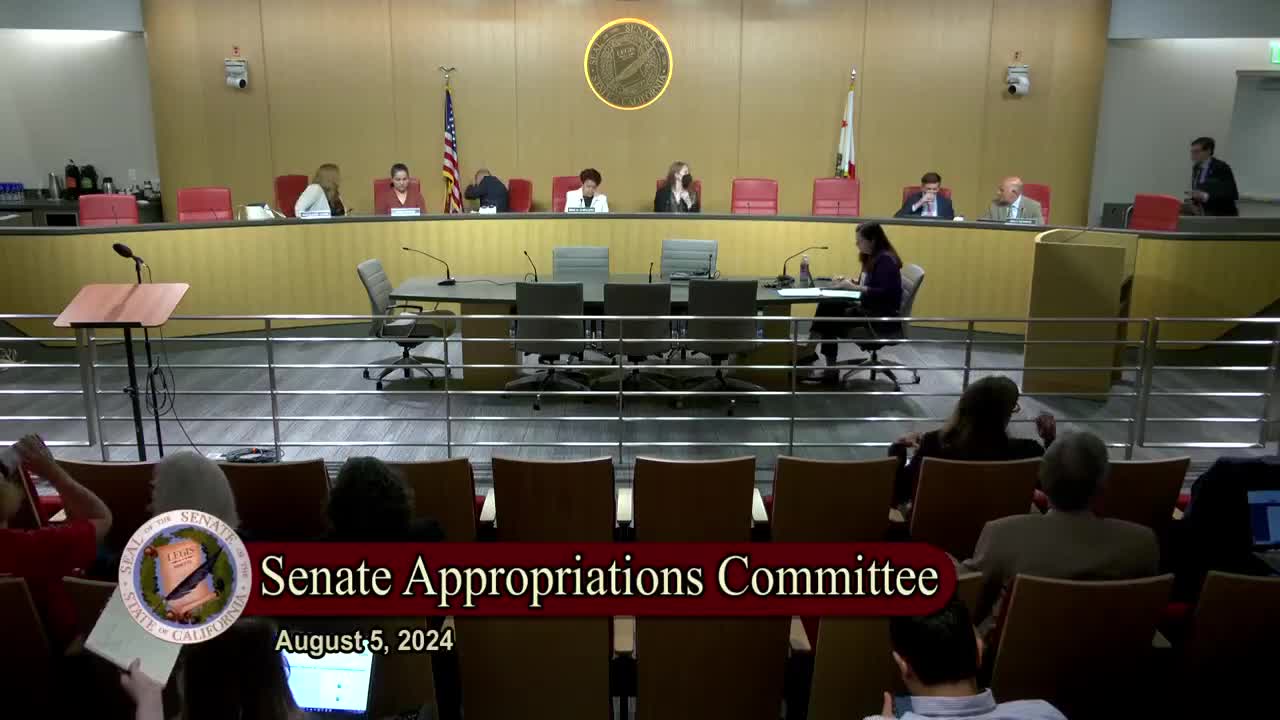 52SEC
Senate Standing Committee on Appropriations
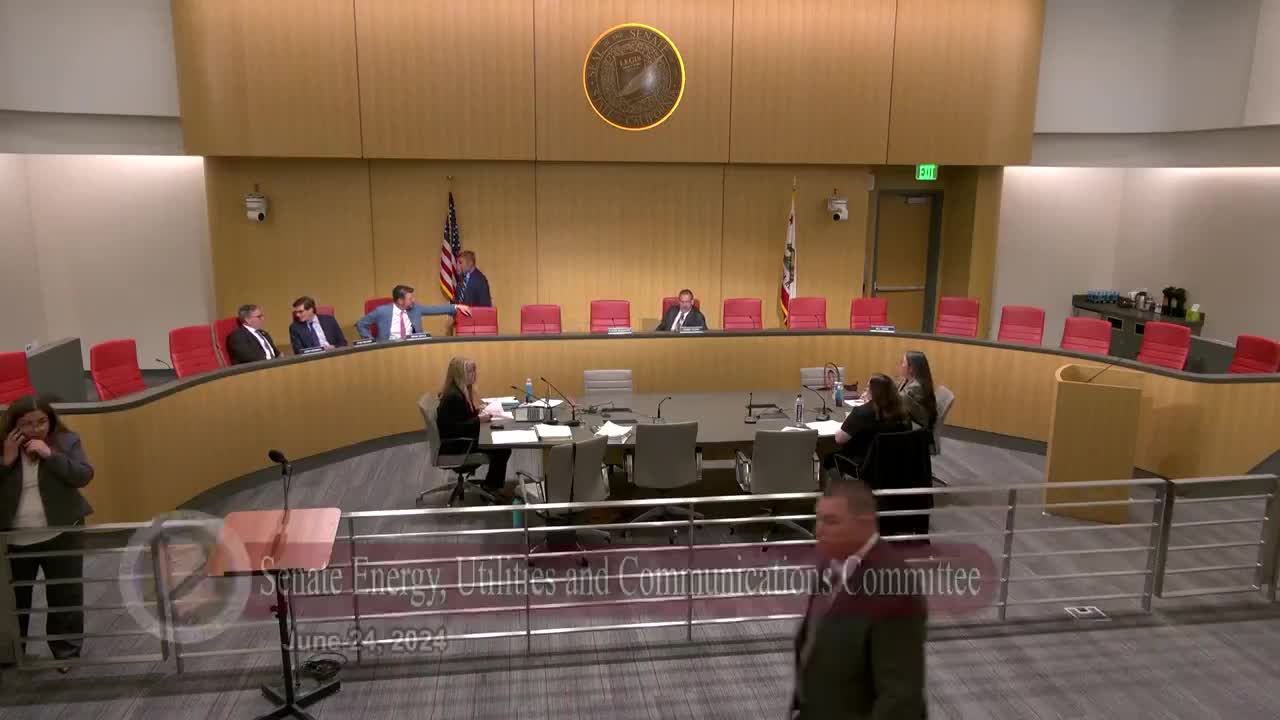 2MIN
Senate Standing Committee on Energy, Utilities and Communications
Bill Author

Bill Co-Author(s):