AB 862: County jails: recidivism: reports.
- Session Year: 2023-2024
- House: Assembly
- Latest Version Date: 2023-02-14
Current Status:
Failed
(2023-09-01: In committee: Held under submission.)
Introduced
In Committee
First Chamber
In Committee
Second Chamber
Enacted
What does this bill do?
The bill requires every county sheriff to collect and send to the Board of State and Community Corrections lists of educational, rehabilitative, and exercise programs in county jails, along with how many people took each program and how much each program costs. The board must use that information to make a report to the Legislature, and the bill defines recidivism as a new felony or misdemeanor conviction or probation violation within three years of a prior conviction.
The summary is provided by generative AI which can make mistakes. For original language, please view the details in the table below.
Existing law establishes the Board of State and Community Corrections, which, among other things, is responsible for providing statewide leadership, coordination, and technical assistance to promote effective state and local efforts and partnerships in Californias adult and juvenile criminal justice system.
Existing law provides for the confinement of persons in county jails sentenced to imprisonment therein. Existing law authorizes a sheriff or other official in charge of a county correctional facility to provide for the vocational training and rehabilitation of inmates, as specified.
This bill would, on or before January 1, 2025, require the sheriff in each county to compile and submit specified data to the Board of State and Community Corrections on their educational opportunities, rehabilitative opportunities, exercise opportunities, the number of participants and the cost of administering those programs, and success rates in reducing recidivism, as defined. The bill would require the board to compile a report based upon those findings and submit the report to the Legislature by a specified date.
By imposing new duties on local entities, this bill would create a state-mandated local program.
The California Constitution requires the state to reimburse local agencies and school districts for certain costs mandated by the state. Statutory provisions establish procedures for making that reimbursement.
This bill would provide that, if the Commission on State Mandates determines that the bill contains costs mandated by the state, reimbursement for those costs shall be made pursuant to the statutory provisions noted above.
(a)(1)On or before January 1, 2025, the sheriff in each county shall compile and submit the following data to the Board of State and Community Corrections:
(A)A list of all of the educational opportunities provided in each county jail.
(B)A list of all of the rehabilitative opportunities provided in each county jail.
(C)A list of all of the exercise opportunities provided in each county jail.
(D)The number of participants and the cost of administering each of the programs in subparagraphs (A), (B), and (C).
(E)The overall recidivism rates for each county jail.
(2)For the purposes of this section, recidivism means that an individual received a new felony or misdemeanor conviction or probation violation within three years of their previous criminal conviction. For statistical purposes, any individual who is released from custody and reoffends shall be counted as part of the data collected pursuant to subparagraph (E) of paragraph (1).
(b)On or before July 1, 2025, the board shall compile a report based upon the findings in subdivision (a) and submit the report to the Legislature pursuant to Section 9795 of the Government Code.
(c) This section shall become inoperative on July 1, 2029, and, as of January 1, 2030, is repealed.
SEC. 2.If the Commission on State Mandates determines that this act contains costs mandated by the state, reimbursement to local agencies and school districts for those costs shall be made pursuant to Part 7 (commencing with Section 17500) of Division 4 of Title 2 of the Government Code.
REVISIONS: HeadingLine 2.|
Date
|
Status
|
|---|---|
| Sep 1, 2023 | In committee: Held under submission. |
| Aug 14, 2023 | In committee: Referred to APPR suspense file. |
| Jul 12, 2023 | From committee: Do pass and re-refer to Com. on APPR. (Ayes 3. Noes 1.) (July 11). Re-referred to Com. on APPR. |
| Jun 7, 2023 | Referred to Com. on PUB S. |
| May 31, 2023 | In Senate. Read first time. To Com. on RLS. for assignment. |
| May 30, 2023 | Read third time. Passed. Ordered to the Senate. (Ayes 67. Noes 0. Page 1877.) |
| May 18, 2023 | From committee: Do pass. (Ayes 11. Noes 0.) (May 18). |
| May 18, 2023 | Read second time. Ordered to third reading. |
| Apr 19, 2023 | In committee: Set, first hearing. Referred to APPR. suspense file. |
| Mar 22, 2023 | Coauthors revised. |
| Mar 22, 2023 | From committee: Do pass and re-refer to Com. on APPR. (Ayes 8. Noes 0.) (March 21). Re-referred to Com. on APPR. |
| Feb 23, 2023 | Referred to Com. on PUB. S. |
| Feb 15, 2023 | From printer. May be heard in committee March 17. |
| Feb 14, 2023 | Read first time. To print. |
|
Date
|
Description
|
Location
|
Votes
|
|
|---|---|---|---|---|
| Aug 14, 2023 | Placed on suspense file | Senate Standing Committee on Appropriations |
Passed |
|
| Jul 11, 2023 | Do pass, but first be re-referred to the Committee on [Appropriations] | Senate Standing Committee on Public Safety |
Passed |
|
| May 30, 2023 | AB 862 Bauer-Kahan Assembly Third Reading | Assembly Floor |
Passed |
|
| May 18, 2023 | Do pass. | Assembly Standing Committee on Appropriations |
Passed |
|
| Mar 21, 2023 | Do pass and be re-referred to the Committee on [Appropriations] | Assembly Standing Committee on Public Safety |
Passed |
This list shows positions taken on this bill by organizations on the date displayed, which is linked to the original source.
Positions by individuals are not included.
|
Organization
|
Position
|
Date
|
|---|---|---|
| All of Us or None | * Support | Mar 21, 2023 |
| California Public Defenders Association | * Support | Jul 11, 2023 |
| California State Sheriff's Association | * Against | Jul 11, 2023 |
| Ella Baker Center For Human Rights | * Support | Mar 21, 2023 |
| Felony Murder Elimination Project | * Support | Mar 21, 2023 |
| Initiate Justice | * Support | Mar 21, 2023 |
| Legal Services for Prisoners with Children | * Support | Mar 21, 2023 |
| Prosecutors Alliance of California | * Support | Mar 21, 2023 |
| San Francisco Public Defender's Office | * Support | Mar 21, 2023 |
| Transformative In-Prison Workgroup | * Support | Jul 11, 2023 |
SENATE COMMITTEE ON
Senator Anthony Portantino, Chair
2023 - 2024 Regular Session
AB 862 (Bauer-Kahan) - County jails: recidivism: reports
Version: | Policy Vote: |
Urgency: | Mandate: |
Hearing Date: | Consultant: |
Bill Summary:
AB 862 would require county sheriffs to compile and submit data to the Board of State and Community Corrections (BSCC) on rehabilitative opportunities for incarcerated individuals and recidivism rates, as specified.
Fiscal Impact:
- One-time and ongoing costs in the hundreds of thousands to the BSCC (General Fund). The BSCC estimates initial one-time costs of approximately $200,000 to develop information technology data collection and management processes. The BSCC also estimates additional ongoing costs of approximately $236,000 for staff to manage, collect, and summarize the reports provided by county Sheriffs.
- Unknown, potentially reimbursable costs to county sheriffs to compile and submit data on educational opportunities, rehabilitative opportunities, exercise opportunities, the number of participants and the cost of administering those programs, and success rates in reducing recidivism, as specified (local funds, General Fund). General Fund costs will depend on whether this measure constitutes a reimbursable state mandate as determined by the Commission on State Mandates.
Background:
In 2011, AB 109 (Realignment) was enacted and shifted the management of lower-level felony offenders from state prison and the parole system to county jail and probation systems. Since that time, much attention has been paid to the recidivism rates of both individuals who served their felony sentence in county jail and those who served their felony sentences in the state’s prisons. Although there are different ways to measure recidivism, the state has adopted reconviction as its primary recidivism measure.
This bill requires every county sheriff to report the overall recidivism rates for each county jail, and defines recidivism as “an individual received a new felony or misdemeanor conviction or probation violation within three years of their previous criminal conviction.” This bill additionally requires each sheriff to report to the BSCC a list of all of the educational, rehabilitative, and recreational opportunities provided in each county jail as well as the number of participants and the cost of administering each of the programs.
Proposed Law:
- Requires the sheriff in each county to compile and submit the following data to the BSCC:
- A list of all the educational opportunities provided in each county jail;
- A list of all of the rehabilitative opportunities provided in each county jail;
- A list of all the exercise opportunities in each county jail;
- The number of participants and the cost of administering these programs; and,
- The overall recidivism rates for each county jail.
- Defines “recidivism” means that an individual received a new felony or misdemeanor conviction or probation violation within three years of their previous criminal conviction. Provides that for statistical purposes, any individual who is released from custody and reoffends be counted as part of the data.
- Requires the BSCC to provide a report to the Legislature based upon the findings of the data collected on or before July 1, 2025.
- Sunsets these provisions on July 1, 2029 and repeals them on January 1, 2030.
Related Legislation:
AB 731 (Bauer-Kahan) of the 2021-2022 legislative session was substantially similar to this bill. AB 731 was vetoed by the Governor, who cited fiscal concerns in his veto message.
-- END --
SENATE COMMITTEE ON PUBLIC SAFETY
Senator Aisha Wahab, Chair
2023 - 2024 Regular
Bill No: AB 862 Hearing Date: July 11, 2023
Author: | Bauer-Kahan | ||
Version: | February 14, 2023 | ||
Urgency: | No | Fiscal: | Yes |
Consultant: | SJ | ||
Subject: County jails: recidivism: reports
HISTORY
Source: Author
Prior Legislation: AB 731 (Bauer-Kahan), vetoed in 2022
AB 2483 (Bauer-Kahan), vetoed in 2020
AB 152 (Gallagher), held in Assembly Appropriations in
AB 2521 (Hagman), held in Senate Appropriations in 2014
AB 1050 (Dickinson), Ch. 270, Stats. 2013
Support: California Public Defenders Association; Ella Baker Center for Human Rights; Initiate Justice
Opposition: California State Sheriffs’ Association
Assembly Floor Vote: 67 - 0
PURPOSE
The purpose of this bill is to require county sheriffs to compile and submit data to the Board of State and Community Corrections (BSCC) on rehabilitative opportunities for incarcerated individuals.
Existing law establishes the BSCC to provide statewide leadership, coordination, and technical assistance to promote effective state and local efforts and partnerships in California’s adult and juvenile criminal justice system, including addressing gang problems. (Pen. Code, § 6024, subds. (a) & (b).)
Existing law requires the BSCC’s mission to reflect the principle of aligning fiscal policy and correctional practices, including, but not limited to prevention, intervention, suppression, supervision, and incapacitation, to promote a justice investment strategy that fits each county and is consistent with the integrated statewide goal of improved public safety through cost-effective, promising, and evidence-based strategies for managing criminal justice populations. (Pen. Code, § 6024, subd. (b).)
Existing law provides that it is the duty of the BSCC to collect and maintain available information and data about state and community corrections policies, practices, capacities, and needs. (Pen. Code, § 6027, subd. (a).)
Existing law authorizes BSCC to do either of the following:
- Collect, evaluate, publish, and disseminate statistics and other information on the condition and progress of criminal justice in the state; or,
- Perform other functions and duties as required by federal acts, rules, regulations, or guidelines in acting as the administrative office of the state planning agency for distribution of federal grants.
(Pen. Code, § 6027, subd. (c).)
This bill requires the sheriff in each county to compile and submit the following data to the BSCC:
- A list of all the educational opportunities provided in each county jail;
- A list of all of the rehabilitative opportunities provided in each county jail;
- A list of all the exercise opportunities in each county jail;
- The number of participants and the cost of administering these programs; and,
- The overall recidivism rates for each county jail.
This bill defines “recidivism” means that an individual received a new felony or misdemeanor conviction or probation violation within three years of their previous criminal conviction. Provides that for statistical purposes, any individual who is released from custody and reoffends be counted as part of the data.
This bill requires the BSCC to provide a report to the Legislature based upon the findings of the data collected on or before July 1, 2025.
This bill provides that its provisions will become inoperative on July 1, 2029 and repealed on January 1, 2030.
COMMENTS
- Need For This Bill
According to the author:
AB 862 requires county jail data collection aimed at understanding the spending and effectiveness of the county's rehabilitation programs. Counties have an outsized role in the criminal justice system, and understanding their rehabilitation programming, especially after realignment, should be a priority. This information provides an opportunity for the legislature to make fully informed decisions on the best use of scarce funding, aimed at programs that show proven rates of reducing recidivism.
- Recidivism Data
In 2011, AB 109 (Realignment) was enacted and shifted the management of lower-level felony offenders from state prison and the parole system to county jail and probation systems. Since that
time, much attention has been paid to the recidivism rates of both individuals who served their felony sentence in county jail and those who served their felony sentences in the state’s prisons. Although there are different ways to measure recidivism, the state has adopted reconviction as its primary recidivism measure. (Public Policy Institute of California, Realignment and Recidivism in California (Dec. 2017), p. 9 available at <https://www.ppic.org/wp-content/uploads/r_1217mbr.pdf>.)
This bill requires every county sheriff to report the overall recidivism rates for each county jail, and defines recidivism as “an individual received a new felony or misdemeanor conviction or probation violation within three years of their previous criminal conviction.” This definition is consistent with the BSCC’s definition of recidivism. (BSCC, Definitions of Key Terms, p. 2 available at <https://www.bscc.ca.gov/wp-content/uploads/AB-1050-Key-Term-Definitions.pdf>.) This bill also specifies that any individual who is released from custody and reoffends may be counted as part of the recidivism data for statistical purposes. This appears to be consistent with the BSCC’s definition of recidivism which provides that its definition “does not preclude other measures of offender outcomes… [which] may include new arrest, return to custody, criminal filing, violation of supervision, and level of offense (felony or misdemeanor).” (Ibid.)
This bill additionally requires each sheriff to report to the BSCC a list of all of the educational, rehabilitative, and recreational opportunities provided in each county jail as well as the number of participants and the cost of administering each of the programs.
- AB 731
Apart from the timelines provided in the bill, this bill is identical to AB 731 (Bauer-Kahan) of the 2021-2022 legislative session which was vetoed. In vetoing the bill, Governor Newsom wrote:
This bill requires the sheriff in each county to compile and send extensive data to the Board of State and Community Corrections (Board) about educational and rehabilitative programs in county jail and their success rates in reducing recidivism. It further requires the Board to report to the legislature.
While I agree that data relating to the efficacy of local programs is important, this bill is overly broad and creates a large mandate, potentially costing the state millions of dollars. With our state facing lower-than-expected revenues over the first few months of this fiscal year, it is important to remain disciplined when it comes to spending, particularly spending that is ongoing. We must prioritize existing obligations and priorities, including education, health care, public safety and safety-net programs.
The Legislature sent measures with potential costs of well over $20 billion in one-time spending commitments and more than $10 billion in ongoing commitments not accounted for in the state budget. Bills with significant fiscal impact, such as this measure, should be considered and accounted for as part of the annual budget process. For these reasons, I cannot sign this bill.
- Argument in Support
The California Public Defender’s Association writes:
AB 862 will require County Sheriffs to report the nature of their anti-recidivism programs, and those programs’ success rates in reducing recidivism. Recidivism can be reduced through rehabilitation by addressing the criminogenic needs of individuals within the criminal justice system. Local Sheriffs are responsible for providing the services that address these individuals’ needs. Looking at success rates will afford local and State decision makers with the knowledge necessary to efficiently allocate limited resources to those programs that best reduce recidivism and encourage rehabilitation.
- Argument in Opposition
According to the California State Sheriffs’ Association:
Sheriffs across the state provide meaningful rehabilitative programming to jail inmates with the desire to enhance formerly incarcerated persons’ re-entry into society and reduce the likelihood that people re-offend. Unfortunately, the bill is ambiguous and creates unreasonable expectations about what data individual jails possess about recidivism that may take place in other jurisdictions. As a result, the bill would likely be interpreted as requiring county jails to ascertain from courts, other jails, or state prisons, potentially including such entities in other states, information regarding subsequent convictions. Requiring such would be very expensive and exceedingly time consuming; a problem exacerbated by the fact that the bill provides no funding for its requirements.
-- END --
ASSEMBLY THIRD READING
ATR Bill Id:AB 862
Author:(Bauer-Kahan)
As Introduced Ver:February 14, 2023
Majority vote
SUMMARY
Requires county sheriffs to compile and submit data to the Board of State and Community Corrections (BSCC) on rehabilitative opportunities for incarcerated individuals.
Major Provisions
- Requires the sheriff in each county to compile and submit the following data to the BSCC:
- A list of all the educational opportunities provided in each county jail;
- A list of all of the rehabilitative opportunities provided in each county jail;
- A list of all the exercise opportunities in each county jail;
- The number of participants and the cost of administering these programs; and,
- The overall recidivism rates for each county jail.
- Defines "recidivism" means that an individual received a new felony or misdemeanor conviction or probation violation within three years of their previous criminal conviction; and provides that for statistical purposes, any individual who is released from custody and reoffends shall be counted as part of the data.
- Provides that on or before July 1, 2025, the BSCC must provide a report to the Legislature based upon the findings of the data collected.
- States that these provisions will become inoperative on July 1, 2029 and is repealed on Janaury 1, 2030.
COMMENTS
According to the Author
"AB 862 requires county jail data collection aimed at understanding the spending and effectiveness of the county's rehabilitation programs. Counties have an outsized role in the criminal justice system, and understanding their rehabilitation programming, especially after realignment, should be a priority. This information provides an opportunity for the legislature to make fully informed decisions on the best use of scarce funding, aimed at programs that show proven rates of reducing recidivism."
Arguments in Support
According to The California Public Defender's Association, "AB 862 will require County Sheriffs to report the nature of their anti-recidivism programs, and those programs' success rates in reducing recidivism. Recidivism can be reduced through rehabilitation by addressing the criminogenic needs of individuals within the criminal justice system. Local Sheriffs are responsible for providing the services that address these individuals' needs. Looking at success rates will afford local and State decision makers with the knowledge necessary to efficiently allocate limited resources to those programs that best reduce recidivism and encourage rehabilitation."
Arguments in Opposition
According to The California State Sheriffs' Association, "Sheriffs across the state provide meaningful rehabilitative programming to jail inmates with the desire to enhance formerly incarcerated persons' re-entry into society and reduce the likelihood that people re-offend. Unfortunately, the bill is ambiguous and creates unreasonable expectations about what data individual jails possess about recidivism that may take place in other jurisdictions. As a result, the bill would likely be interpreted as requiring county jails to ascertain from courts, other jails, or state prisons, potentially including such entities in other states, information regarding subsequent convictions. Requiring such would be very expensive and exceedingly time consuming; a problem exacerbated by the fact that the bill provides no funding for its requirements."
FISCAL COMMENTS
According to the Assembly/Senate Appropriations Committee:
- Likely reimbursable costs (General Fund) in the hundreds of thousands of dollars for the sheriffs' departments to collect and report data to the BSCC. If it costs each sheriff's department about $10,000 to gather the specified data, this bill would result in approximately $580,000 in local, potentially reimbursable costs. The extent of potential reimbursement would be determined by the Commission on State Mandates.
- Costs to BSCC (General Fund) in the hundreds of thousands of dollars. The BSCC estimates costs of approximately $200,000 to develop information technology data collection and management processes, plus additional costs of approximately $236,000 for staff to manage, collect, and summarize the data reported by the sheriffs.
VOTES
ASM PUBLIC SAFETY: 8-0-0
YES: Jones-Sawyer, Alanis, Bonta, Bryan, Lackey, Ortega, Santiago, Zbur
ASM APPROPRIATIONS: 11-0-5
YES: Holden, Bryan, Calderon, Wendy Carrillo, Mike Fong, Hart, Lowenthal, Papan, Pellerin, Weber, Ortega
ABS, ABST OR NV: Megan Dahle, Dixon, Mathis, Robert Rivas, Sanchez
UPDATED
VERSION: February 14, 2023
CONSULTANT: Elizabeth Potter / PUB. S. / (916) 319-3744 FN: 0000704
Date of Hearing: April 19, 2023
ASSEMBLY COMMITTEE ON APPROPRIATIONS
Chris Holden, Chair
ABPCA Bill Id:AB 862
Author:(Bauer-Kahan) – As Introduced Ver:February 14, 2023
Policy Committee: | Public Safety | Vote: | 8 - 0 |
|
| ||
|
|
Urgency: No State Mandated Local Program: Yes Reimbursable: Yes
SUMMARY:
This bill requires the sheriff in each county to compile and submit specified data related to rehabilitative programs and recidivism to the Board of State and Community Corrections (BSCC) by January 1, 2025. The bill also requires the BSCC to compile a report based on the county data and submit it to the Legislature by July 1, 2025.
FISCAL EFFECT:
- Likely reimbursable costs (General Fund) in the hundreds of thousands of dollars for the sheriffs’ departments to collect and report data to the BSCC. If it costs each sheriff’s department about $10,000 to gather the specified data, this bill would result in approximately $580,000 in local, potentially reimbursable costs. The extent of potential reimbursement would be determined by the Commission on State Mandates.
- Costs to BSCC (General Fund) in the hundreds of thousands of dollars. The BSCC estimates costs of approximately $200,000 to develop information technology data collection and management processes, plus additional costs of approximately $236,000 for staff to manage, collect, and summarize the data reported by the sheriffs.
COMMENTS:
- Author’s Statement. According to the author:
AB 862 requires county jail data collection aimed at understanding the spending and effectiveness of the county's rehabilitation programs. Counties have an outsized role in the criminal justice system, and understanding their rehabilitation programming, especially after realignment, should be a priority. This information provides an opportunity for the legislature to make fully informed decisions on the best use of scarce funding, aimed at programs that show proven rates of reducing recidivism.
- Data Reporting. This bill requires each county sheriff’s department to compile information about educational, rehabilitative, and exercise opportunities provided in each county jail. The bill also requires each county sheriff’s department to compile information about recidivism rates, where recidivism is defined to mean instances when an individual receives a new felony or misdemeanor conviction or probation violation within three years of their prior criminal conviction. It is unclear whether sheriff’s departments currently track this type of recidivism information, or whether they have the capability to track instances of recidivism that occur in other jurisdictions. Additionally, the bill does not clearly define what types of educational, rehabilitative, and exercise opportunities must be reported to BSCC. As a result, data reported to BSCC from the county sheriffs may be inconsistent, and may not provide a comprehensive picture of rehabilitative programs across the counties or recidivism rates for individuals formerly incarcerated in county jails.
- Prior Legislation. AB 731 (Bauer-Kahan), of the 2021-2022 Legislative Session, was substantially similar to this bill and was vetoed. The Governor’s veto message stated:
While I agree that data relating to the efficacy of local programs is important, this bill is overly broad and creates a large mandate, potentially costing the state millions of dollars…Bills with significant fiscal impact, such as this measure, should be considered and accounted for as part of the annual budget process.
AB 2483 (Bauer-Kahan), of the 2019-2020 Legislative Session, was also substantially similar to this bill and AB 731, and was also vetoed by the Governor.
AB 152 (Gallagher), of the 2017-2018 Legislative Session, would have required the BSCC to collect and analyze specified recidivism data. AB 152 was held on suspense in this committee.
Analysis Prepared by: Annika Carlson / APPR. / (916) 319-2081
Date of Hearing: March 21, 2023
Consultant: Elizabeth Potter
ASSEMBLY COMMITTEE ON
Reginald Byron Jones-Sawyer, Sr., Chair
ABPCA Bill Id:
Author:() – As Ver:
SUMMARY:
Requires county sheriffs to compile and submit data to the Board of State and Community Corrections (BSCC) on rehabilitative opportunities for incarcerated individuals. Specifically, this bill:
- Requires the sheriff in each county to compile and submit the following data to the BSCC:
- A list of all the educational opportunities provided in each county jail;
- A list of all of the rehabilitative opportunities provided in each county jail;
- A list of all the exercise opportunities in each county jail;
- The number of participants and the cost of administering these programs; and,
- The overall recidivism rates for each county jail.
- A list of all the educational opportunities provided in each county jail;
- Defines “recidivism” means that an individual received a new felony or misdemeanor conviction or probation violation within three years of their previous criminal conviction; and provides that for statistical purposes, any individual who is released from custody and reoffends shall be counted as part of the data.
- Provides that on or before July 1, 2025, the BSCC must provide a report to the Legislature based upon the findings of the data collected.
- States that these provisions will become inoperative on July 1, 2029 and is repealed on Janaury 1, 2030.
EXISTING LAW:
- Establishes the BSCC to provide statewide leadership, coordination, and technical assistance to promote effective state and local efforts and partnerships in California’s adult and juvenile criminal justice system, including addressing gang problems. (Pen. Code, § 6024, subds. (a) & (b).)
- Provides that BSCC’s mission shall reflect the principle of aligning fiscal policy and correctional practices, including, but not limited to prevention, intervention, suppression, supervision, and incapacitation, to promote a justice investment strategy that fits each county and is consistent with the integrated statewide goal of improved public safety through cost-effective, promising, and evidence-based strategies for managing criminal justice populations. (Pen. Code, § 6024, subd. (b).)
- States that it is the duty of the BSCC to collect and maintain available information and data about state and community corrections policies, practices, capacities, and needs. (Pen. Code, § 6027, subd. (a).)
- Authorizes BSCC to do either of the following:
- Collect, evaluate, publish, and disseminate statistics and other information on the condition and progress of criminal justice in the state; or,
- Perform other functions and duties as required by federal acts, rules, regulations, or guidelines in acting as the administrative office of the state planning agency for distribution of federal grants. (Pen. Code, § 6027, subd. (c).)
- Collect, evaluate, publish, and disseminate statistics and other information on the condition and progress of criminal justice in the state; or,
- Provides that any report required or requested by law to be submitted by a state or local agency to the Members of either house of the Legislature must be submitted as a printed copy to the Secretary of Senate, as an electronic copy to the Chief Clerk of the Assembly, and as an electronic or printed copy to the Legislative Counsel. Each report shall include a summary of its contents, not to exceed one page in length. If the report is submitted by a state agency, that agency shall also provide an electronic copy of the summary directly to each member of the appropriate house or houses of the Legislature. (Gov. Code, § 9795, subd (a)(1)(A).)
FISCAL EFFECT:
Unknown
COMMENTS:
- Author's Statement: According to the author, “AB 862 requires county jail data collection aimed at understanding the spending and effectiveness of the county's rehabilitation programs. Counties have an outsized role in the criminal justice system, and understanding their rehabilitation programming, especially after realignment, should be a priority. This information provides an opportunity for the legislature to make fully informed decisions on the best use of scarce funding, aimed at programs that show proven rates of reducing recidivism.”
- Collecting and Analyzing Data: The Public Policy Institute of California (PPIC) released a report in 2017 that took a closer look at recidivism rates throughout the state. This report examined the effect of AB 109 (Comm. on Budget), Chapter 15, Statutes of 2011, which created criminal justice realignment. AB 109 was enacted to place lower risk offenders into county jails due to overcrowding in state prisons. For this report the PPIC used data from BSCC, the California Department of Corrections and Rehabilitation and DOJ, among others. The PPIC stated “There are many ways of measuring recidivism.[1] The state has adopted reconviction—often considered a more accurate measure of reoffending behavior, relative to rearrest—as its primary recidivism measure. Reconvictions also represent a substantial resource burden and thus may be of particular interest to correctional systems. However, when comparing the reconviction rates of individuals released before and after realignment, it is important to consider how realignment changed the likelihood that criminal justice systems would pursue formal convictions. Before realignment, individuals who violated the conditions of their parole or who were suspected of a new offense could be revoked to prison custody. Under realignment, most offenders can only be sent to prison following conviction on a new, prison-eligible offense—meaning that correctional systems may be shifting away from revocations and toward more formal rearrests and reconvictions”. (Realignment and Recidivism in California (ppic.org) (2017) at p.9)
This bill would require every county sheriff to collect, analyze, and report recidivism data to the BSCC. In addition, this bill would require the BSCC to take the aforementioned data and compile a report to the Legislature.
Currently, Penal Code section 6027 allows the BSCC to define recidivism. The BSCC considers the following terms when defining the adult definition of recidivism (https://www.bscc.ca.gov/wp-content/uploads/AB-1050-Key-Term-Definitions.pdf at p.2):
Recidivism is defined as conviction of a new felony or misdemeanor committed within three years of release from custody or committed within three years of placement on supervision for a previous criminal conviction. [2]
Supplemental Measures: This definition does not preclude other measures of offender outcomes. Such measures may include new arrest, return to custody, criminal filing, violation of supervision, and level of offense (felony or misdemeanor).
Recidivism Rates: While the definition adopts a three-year standard measurement period, rates may also be measured over other time intervals such as one, two, or five years.
This bill defines recidivism for purposes of reporting to BSCC in similar language as the BSCC defines recidivism.
- Governor’s Veto: AB 731 (Bauer-Kahan), of the 2021-2022 Legislative Session, which was nearly identical to this bill, was vetoed by the Governor. In his veto message, the Governor said:
“This bill requires the sheriff in each county to compile and send extensive data to the Board of State and Community Corrections (Board) about educational and rehabilitative programs in county jail and their success rates in reducing recidivism. It further requires the Board to report to the legislature.
“While I agree that data relating to the efficacy of local programs is important, this bill is overly broad and creates a large mandate, potentially costing the state millions of dollars. With our state facing lower-than-expected revenues over the first few months of this fiscal year, it is important to remain disciplined when it comes to spending, particularly spending that is ongoing. We must prioritize existing obligations and priorities, including education, health care, public safety and safety-net programs.
“The Legislature sent measures with potential costs of well over $20 billion in one-time spending commitments and more than $10 billion in ongoing commitments not accounted for in the state budget. Bills with significant fiscal impact, such as this measure, should be considered and accounted for as part of the annual budget process. For these reasons, I cannot sign this bill.”
This bill does not address the Governor’s veto message. - Argument in Support: According to The California Public Defender’s Association, “AB 862 will require County Sheriffs to report the nature of their anti-recidivism programs, and those programs’ success rates in reducing recidivism. Recidivism can be reduced through rehabilitation by addressing the criminogenic needs of individuals within the criminal justice system. Local Sheriffs are responsible for providing the services that address these individuals’ needs. Looking at success rates will afford local and State decision makers with the knowledge necessary to efficiently allocate limited resources to those programs that best reduce recidivism and encourage rehabilitation.”
- Argument in Opposition: According to The California State Sheriffs’ Association, “Sheriffs across the state provide meaningful rehabilitative programming to jail inmates with the desire to enhance formerly incarcerated persons’ re-entry into society and reduce the likelihood that people re-offend. Unfortunately, the bill is ambiguous and creates unreasonable expectations about what data individual jails possess about recidivism that may take place in other jurisdictions. As a result, the bill would likely be interpreted as requiring county jails to ascertain from courts, other jails, or state prisons, potentially including such entities in other states, information regarding subsequent convictions. Requiring such would be very expensive and exceedingly time consuming; a problem exacerbated by the fact that the bill provides no funding for its requirements.”
- Related Legislation: SB 519 (Atkins), would expand the Board of State and Community Correction’s (BSCC) mission to include the promotion of legal and safe conditions for youth, inmates, and staff in local detention facilities. SB 519 is pending in the Senate Committee on Public Safety.
- Prior Legislation:
- AB 731 (Bauer-Kahan), of the 2021-2022 Legislative Session, would have required the sheriff in each county to compile and send data to the Board of State and Community Corrections (BSCC) on antirecidivism programs and success rates in reducing recidivism, and report the data to the Legislature. AB 731 was vetoed by the Governor.
- AB 2483 (Bauer-Kahan), of the 2019-2020 Legislative Session was substantially similar to this bill and AB 731. AB 2483 was vetoed by the Governor.
- AB 152 (Gallagher), of the 2017-2018 Legislative Session, would have required the Board of State and Community Corrections (BSCC) to collect and analyze data regarding recidivism rates of all persons who receive a felony sentence or who are placed on postrelease community supervision. AB 152 was held on suspense in the Assembly Appropriations Committee.
- AB 2521 (Hagman), ), of the 2013-2014 Legislative Session, would have required, on and after July 1, 2015, the Board of State and Community Corrections (BSCC), in consultation with specified stakeholders, to collect and analyze data regarding recidivism rates, as defined, of all persons who receive sentences for felonies punishable by imprisonment in a county jail, or who are placed on postrelease community supervision on or after July 1, 2015. AB 2521 was held on the Senate Committee on Appropriations suspense file.
- AB 731 (Bauer-Kahan), of the 2021-2022 Legislative Session, would have required the sheriff in each county to compile and send data to the Board of State and Community Corrections (BSCC) on antirecidivism programs and success rates in reducing recidivism, and report the data to the Legislature. AB 731 was vetoed by the Governor.
REGISTERED SUPPORT / OPPOSITION:
Support
California Public Defenders Association (CPDA)
Initiate Justice
Oppose
California State Sheriffs' Association
Analysis Prepared by:
Indeed, it is important to note that the best measures of recidivism depend on the purpose of the analysis. For example, if the primary goal is to understand the effect of a policy change on the cost of operating correctional institutions, then the most appropriate metric to examine may be returns to custody. If the goal is to understand how a policy change has affected the demands placed on police departments, then the best recidivism measure may be rearrest rates. No single measure of recidivism fits all purposes. ↑
“Committed” refers to the date of offense, not the date of conviction ↑
Discussed in Hearing
 1MIN
Senate Standing Committee on Appropriations
 6MIN
Senate Standing Committee on Public Safety
 55SEC
Assembly Floor
 21MIN
Assembly Standing Committee on Public Safety
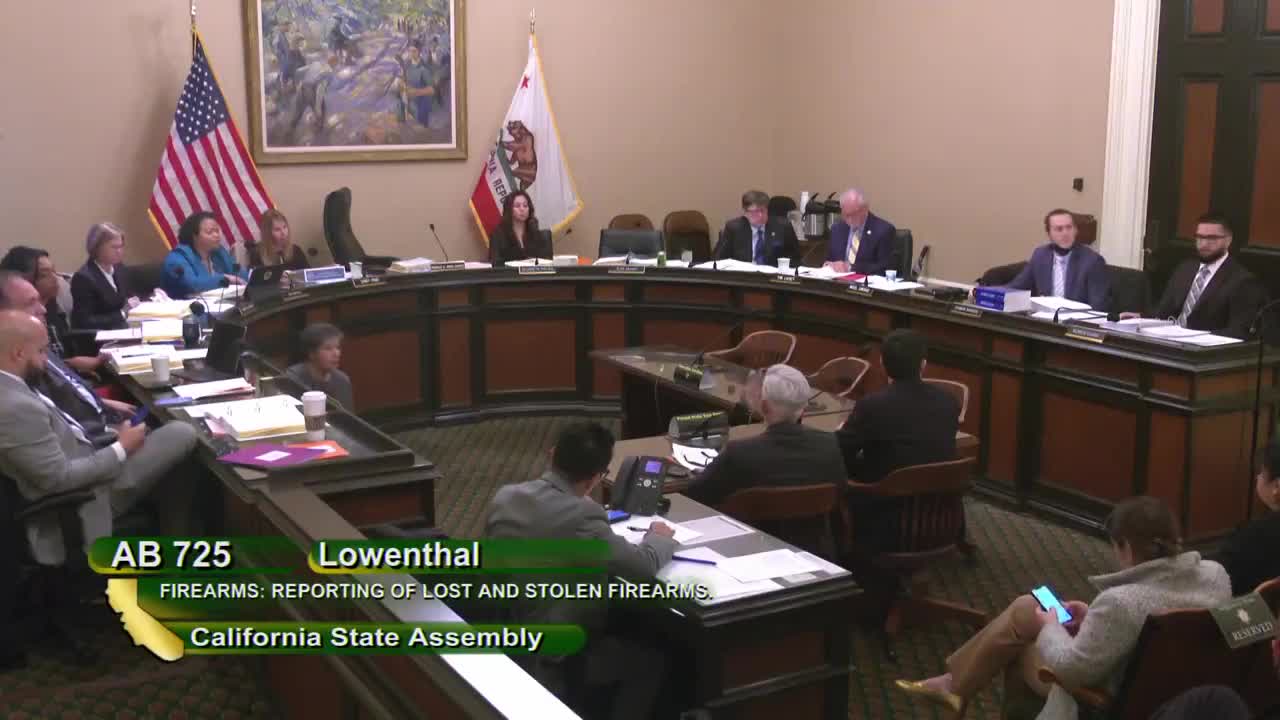 21MIN
Assembly Standing Committee on Public Safety
Bill Author

Bill Co-Author(s):
