AB 1192: Kindergarten: admission: transitional kindergarten: professional development requirements.
- Session Year: 2023-2024
- House: Assembly
- Latest Version Date: 2023-07-14
Current Status:
Failed
(2023-09-01: In committee: Held under submission.)
Introduced
In Committee
First Chamber
In Committee
Second Chamber
Enacted
What does this bill do?
The bill applies kindergarten and transitional kindergarten (TK) rules to school districts and charter schools and updates staffing, training, and teacher qualification requirements for TK. It requires charter schools to admit children who turn 5 by Sept. 1 to kindergarten, phases in TK eligibility through 2025–26 (when children who turn 4 by Sept. 1 qualify), sets adult‑to‑pupil averages of 1:12 starting 2022–23 and 1:10 starting 2025–26, requires at least 48 hours of professional development for adults assigned to TK classrooms, and sets a 2025 deadline for certain teacher qualifications.
The summary is provided by generative AI which can make mistakes. For original language, please view the details in the table below.
(1)Existing law requires a school district to admit a child to a kindergarten maintained by the school district if the child will have their 5th birthday on or before September 1, as provided. Existing law authorizes the governing board of a school district to admit to a kindergarten a child having attained the age of 5 years at any time during the school year, as provided.
This bill would make the above provisions applicable to a charter school or a governing body of a charter school, as provided. To the extent this bill would add new requirements on a charter school, the bill would impose a state-mandated local program.
(2)Existing law authorizes a school district or charter school to maintain a transitional kindergarten program. Existing law requires a school district or a charter school, as a condition of receipt of apportionment for pupils in a transitional kindergarten program, to ensure that, among other things, a child who will have their 5th birthday between September 2 and specified dates, depending on the school year, be admitted to a transitional kindergarten program, as provided. Existing law authorizes, in any school year, a school district or charter school to, at any time during a school year, admit a child to a transitional kindergarten program who will have their 5th birthday after the applicable cutoff date but during that same school year, as provided.This bill would delete the above-described condition that the child admitted to a transitional kindergarten program during a school year have their 5th birthday during that same school year, as provided. Existing(2)Existing law authorizes a school district or charter school to maintain a transitional kindergarten program. Existing law requires a school district or charter school to, as a condition of receipt of apportionment for pupils in a transitional kindergarten program, commencing with the 202324 202526 school year, and for each year thereafter, maintain an average of at least 1 adult for every 10 pupils for transitional kindergarten classrooms, contingent upon an appropriation of funds. classrooms.
This bill would delay the start of the requirement that a school district or charter school maintain an average of at least 1 adult for every 10 pupils for transitional kindergarten classrooms at each schoolsite until the 202526 school year, and would delete the requirement that this provision be contingent upon an appropriation of funds. The bill would require, commencing with the 202526 school year, that any teacher aides adult, with certain exceptions, assigned to a transitional kindergarten classrooms classroom be provided, or begin to be provided, at least 48 hours of professional development, as specified, and would require the school district or charter school to provide this professional development, as provided. The bill also would make conforming changes.
(3)The California Constitution requires the state to reimburse local agencies and school districts for certain costs mandated by the state. Statutory provisions establish procedures for making that reimbursement.
This bill would provide that, if the Commission on State Mandates determines that the bill contains costs mandated by the state, reimbursement for those costs shall be made pursuant to the statutory provisions noted above.
(1)Existing law requires a school district to admit a child to a kindergarten maintained by the school district if the child will have their 5th birthday on or before September 1, as provided. Existing law authorizes the governing board of a school district to admit to a kindergarten a child having attained the age of 5 years at any time during the school year, as provided.
This bill would make the above provisions applicable to a charter school or a governing body of a charter school, as provided. To the extent this bill would add new requirements on a charter school, the bill would impose a state-mandated local program.
(2)Existing law authorizes a school district or charter school to maintain a transitional kindergarten program. Existing law requires a school district or a charter school, as a condition of receipt of apportionment for pupils in a transitional kindergarten program, to ensure that, among other things, a child who will have their 5th birthday between September 2 and specified dates, depending on the school year, be admitted to a transitional kindergarten program, as provided. Existing law authorizes, in any school year, a school district or charter school to, at any time during a school year, admit a child to a transitional kindergarten program who will have their 5th birthday after the applicable cutoff date but during that same school year, as provided.
This bill would delete the above-described condition that the child admitted to a transitional kindergarten program during a school year have their 5th birthday during that same school year, as provided.
Existing law requires a school district or charter school to, as a condition of receipt of apportionment for pupils in a transitional kindergarten program, commencing with the 202324 school year, and for each year thereafter, maintain an average of at least 1 adult for every 10 pupils for transitional kindergarten classrooms, contingent upon an appropriation of funds.
This bill would delay the start of the requirement that a school district or charter school maintain an average of at least 1 adult for every 10 pupils for transitional kindergarten classrooms at each schoolsite until the 202526 school year, and would delete the requirement that this provision be contingent upon an appropriation of funds. The bill would require, commencing with the 202526 school year, that any teacher aides assigned to transitional kindergarten classrooms meet at least one of a list of specified requirements, including, as an option, a requirement related to professional development. The bill be provided, or begin to be provided, at least 48 hours of professional development, as specified, and would require the school district or charter school to provide this professional development. development, as provided.
Existing law requires credentialed teachers who are first assigned to a transitional kindergarten classroom after July 1, 2015, to have, by August 1, 2023, met one of a list of specified requirements.The bill would require, for the 202324 and 202425 fiscal years, a school district or charter school to make specified certifications relating to credentialed teachers meeting that specified requirement, as provided. The bill would require the State Department of Education to provide the form to school districts and charter schools for purposes of the certification, as provided.(3)The California Constitution requires the state to reimburse local agencies and school districts for certain costs mandated by the state. Statutory provisions establish procedures for making that reimbursement.
This bill would provide that, if the Commission on State Mandates determines that the bill contains costs mandated by the state, reimbursement for those costs shall be made pursuant to the statutory provisions noted above.
(1)Existing law requires a school district to admit a child to a kindergarten maintained by the school district if the child will have their 5th birthday on or before September 1, as provided. Existing law authorizes the governing board of a school district to admit to a kindergarten a child having attained the age of 5 years at any time during the school year, as provided.
This bill would make the above provisions applicable to a charter school or a governing body of a charter school, as provided. To the extent this bill would add new requirements on a charter school, the bill would impose a state-mandated local program.
(2)Existing law authorizes a school district or charter school to maintain a transitional kindergarten program. Existing law requires a school district or a charter school, as a condition of receipt of apportionment for pupils in a transitional kindergarten program, to ensure that, among other things, a child who will have their 5th birthday between September 2 and specified dates, depending on the school year, be admitted to a transitional kindergarten program, as provided. Existing law authorizes, in any school year, a school district or charter school to, at any time during a school year, admit a child to a transitional kindergarten program who will have their 5th birthday after the applicable cutoff date but during that same school year, as provided.
This bill would delete the above-described condition that the child admitted to a transitional kindergarten program during a school year have their 5th birthday during that same school year, as provided.
Existing law requires a school district or charter school to, as a condition of receipt of apportionment for pupils in a transitional kindergarten program, commencing with the 202324 school year, and for each year thereafter, maintain an average of at least 1 adult for every 10 pupils for transitional kindergarten classrooms, contingent upon an appropriation of funds.
This bill would delay the start of the requirement that a school district or charter school maintain an average of at least 1 adult for every 10 pupils for transitional kindergarten classrooms at each schoolsite until the 202526 school year, and would delete the requirement that this provision be contingent upon an appropriation of funds. The bill would require, commencing with the 202526 school year, that any teacher aides assigned to transitional kindergarten classrooms meet at least one of a list of specified requirements, including, as an option, a requirement related to professional development. The bill would require the school district or charter school to provide this professional development.
Existing law requires credentialed teachers who are first assigned to a transitional kindergarten classroom after July 1, 2015, to have, by August 1, 2023, met one of a list of specified requirements.
The bill would require, for the 202324 and 202425 fiscal years, a school district or charter school to make specified certifications relating to credentialed teachers meeting that specified requirement, as provided. The bill would require the State Department of Education to provide the form to school districts and charter schools for purposes of the certification, as provided.
(3)The California Constitution requires the state to reimburse local agencies and school districts for certain costs mandated by the state. Statutory provisions establish procedures for making that reimbursement.
This bill would provide that, if the Commission on State Mandates determines that the bill contains costs mandated by the state, reimbursement for those costs shall be made pursuant to the statutory provisions noted above.
Existing law authorizes a school district or charter school to maintain a transitional kindergarten program. Existing law requires a school district or a charter school, as a condition of receipt of apportionment for pupils in a transitional kindergarten program, to ensure that, among other things, a child who will have their 5th birthday between September 2 and specified dates, depending on the school year, be admitted to a transitional kindergarten program, as provided. Existing law authorizes, in any school year, a school district or charter school to, at any time during a school year, admit a child to a transitional kindergarten program who will have their 5th birthday after the applicable cutoff date but during that same school year, as provided.
This bill would delete the above-described condition that the child admitted to a transitional kindergarten program during a school year have their 5th birthday during that same school year, as provided.
Existing law requires a school district or a charter school, as a condition of receipt of apportionment for pupils in a transitional kindergarten program, to ensure that, among other things, in the 202526 school year, and in each school year thereafter, a child who will have their 4th birthday by September 1 is admitted to a transitional kindergarten, as provided.This bill would make a nonsubstantive change to this law.Existing law requires a school district or a charter school, as a condition of receipt of apportionment for pupils in a transitional kindergarten program, to ensure that, among other things, in the 202526 school year, and in each school year thereafter, a child who will have their 4th birthday by September 1 is admitted to a transitional kindergarten, as provided.
This bill would make a nonsubstantive change to this law.
(a)A child shall be admitted to a kindergarten maintained by the school district or charter school at the beginning of a school year, or at a later time in the same year, if the child will have their fifth birthday on or before one of the following dates:
(1)December 2 of the 201112 school year.
(2)November 1 of the 201213 school year.
(3)October 1 of the 201314 school year.
(4)September 1 of the 201415 school year and each school year thereafter.
(b)The governing board of the school district of a school district district, or the governing body of a charter school, maintaining one or more kindergartens may, on a case-by-case basis, admit to a kindergarten a child having attained the age of five years at any time during the school year with the approval of the parent or guardian, subject to the following conditions:
(1)The governing board of the school district district, or the governing body of a charter school, determines that the admittance is in the best interests of the child.
(2)The parent or guardian is given information regarding the advantages and disadvantages and any other explanatory information about the effect of this early admittance.
(c)(1)As a condition of receipt of apportionment for pupils in a transitional kindergarten program pursuant to Section 46300, and Chapter 3 (commencing with Section 47610) of Part 26.8, as applicable, a school district or charter school shall ensure the following: following for the applicable school year:
(A)In the 201213 school year, a child who will have their fifth birthday between November 2 and December 2 shall be admitted to a transitional kindergarten program maintained by the school district or charter school.
(B)In the 201314 school year, a child who will have their fifth birthday between October 2 and December 2 shall be admitted to a transitional kindergarten program maintained by the school district or charter school.
(C)From the 201415 school year to the 202122 school year, inclusive, a child who will have their fifth birthday between September 2 and December 2 shall be admitted to a transitional kindergarten program maintained by the school district or charter school.
(D)In the 202223 school year, a child who will have their fifth birthday between September 2 and February 2 shall be admitted to a transitional kindergarten program maintained by the school district or charter school.
(E)In the 202324 school year, a child who will have their fifth birthday between September 2 and April 2 shall be admitted to a transitional kindergarten program maintained by the school district or charter school.
(F)In the 202425 school year, a child who will have their fifth birthday between September 2 and June 2 shall be admitted to a transitional kindergarten program maintained by the school district or charter school.
(G)In the 202526 school year, and in each school year thereafter, a child who will have their fourth birthday by September 1 shall be admitted to a transitional kindergarten program maintained by the school district or charter school.
(2)(A)In any school year, a school district or charter school may, at any time during a school year, admit a child to a transitional kindergarten program who will have their fifth birthday after the date specified for the applicable year in subparagraphs (A) to (F), inclusive, of paragraph (1) but during that same school year, with the approval of the parent or guardian, subject to the following conditions:
(i)The governing board of the school district or the governing body of the charter school determines that the admittance is in the best interests of the child.
(ii)The parent or guardian is given information regarding the advantages and disadvantages and any other explanatory information about the effect of this early admittance.
(B)Notwithstanding any other law, a pupil admitted to a transitional kindergarten program pursuant to subparagraph (A) shall not generate average daily attendance for purposes of Section 46300, or be included in the enrollment or unduplicated pupil count pursuant to Section 42238.02, until the pupil has attained the pupils fifth birthday, regardless of when the pupil was admitted during the school year.
(d)For purposes of this section, transitional kindergarten means the first year of a two-year kindergarten program that uses a modified kindergarten curriculum that is age and developmentally appropriate.
(e)A transitional kindergarten shall not be construed as a new program or higher level of service.
(f)It is the intent of the Legislature that transitional kindergarten curriculum be aligned to the California Preschool Learning Foundations developed by the department.
(g)As a condition of receipt of apportionment for pupils in a transitional kindergarten program pursuant to Section 46300, a school district or charter school shall do all of the following:
(1)Maintain an average transitional kindergarten class enrollment of not more than 24 pupils for each schoolsite. For purposes of this calculation, the following shall apply for each schoolsite of a school district or charter school:
(A)Class means a group of pupils scheduled to report regularly at a particular time to a particular teacher during the regular schoolday, as defined by the governing board of the school district or the governing body of the charter school, as applicable, excluding special day classes. Classes in the evening and summer school class shall not be considered classes for purposes of this calculation.
(B)(i)Active enrollment count for purposes of subparagraph (C) means the count of all pupils enrolled in a class with transitional kindergarten pupils on the first day of the school year on which the class was in session, plus all later enrollees, minus all withdrawals since that first day. An active enrollment count shall be made on the last teaching day of each school month that ends before April 15 of the school year.
(ii)For school districts, active enrollment count shall not include pupils enrolled in independent study pursuant to Article 5.5 (commencing with Section 51744) of Chapter 5 of Part 28 who meet the minimum day requirements for independent study and are continually enrolled in independent study for more than 14 schooldays in a school year.
(iii)For charter schools, active enrollment count shall not include pupils enrolled in independent study pursuant to Article 5.5 (commencing with Section 51744) of Chapter 5 of Part 28 who are continually enrolled in independent study for more than 14 schooldays on any of the days on which school is taught for the purpose of meeting the 175-instructional-day offering, as described in Section 11960 of Title 5 of the California Code of Regulations.
(C)Average number of pupils enrolled per class means the quotient of the sum of the active enrollment counts made under subparagraph (B) divided by the total number of those active enrollment counts for each class of the schoolsite.
(D)Average transitional kindergarten class enrollment means the quotient of the sum of the average number of pupils enrolled per class determined pursuant to subparagraph (C) of all classes at the schoolsite divided by the total number of all classes at the schoolsite that include transitional kindergarten pupils, rounded to the nearest half or whole integer.
(2)Commencing with the 202223 school year, maintain an average of at least one adult for every 12 pupils for transitional kindergarten classrooms at each schoolsite. For purposes of this calculation, (A)For purposes of the calculations made pursuant to this paragraph, the following shall apply for each schoolsite of a school district or charter school:
(A)(i)Total transitional kindergarten enrollment is the sum of the average number of pupils enrolled per class of all classes at the schoolsite, as determined in subparagraph (C) of paragraph (1).
(B)(ii)Number of adults shall be determined for each schoolsite as follows:
(i)(I)A count of employees of the school district or charter school assigned to each class at the schoolsite that includes transitional kindergarten pupils shall be made on the last teaching day of each school month that ends before April 15 of the school year.
(ii)(II)The sum of all of the adult counts pursuant to clause (i) subclause (I) shall be divided by the total number of those counts, rounded to the nearest half or whole integer.
(C)(iii)Adult-to-pupil ratio shall be the quotient of the total transitional kindergarten enrollment divided by the total number of adults, rounded to the nearest half or whole integer.
(B)Commencing with the 202223 school year, maintain an average of at least one adult for every 12 pupils for transitional kindergarten classrooms at each schoolsite.
(3)(A)Commencing(C)(i)Commencing with the 202526 school year, and for each year thereafter, maintain an average of at least one adult for every 10 pupils for transitional kindergarten classrooms.
(B)(ii)It is the intent of the Legislature to appropriate funds for purposes of this paragraph. subparagraph.
(3)(A)It is the intent of the Legislature that all local educational agencies provide professional support to employees assigned to a transitional kindergarten classroom to obtain the necessary competencies and qualifications for supporting the development of, and learning for, children four and five years of age. It is further the intent of the Legislature that school districts and charter schools provide professional development to site administrators who are responsible for a transitional kindergarten program to improve their knowledge of the developmental needs of transitional kindergarten pupils. Support may include, but is not limited to, professional development, induction programs, and financial aid for coursework or other costs associated with enrollment in a class or a program that leads to a Commission on Teacher Credentialing early childhood education permit or certification.
(B)(i)Commencing with the 202526 school year, ensure that an adult assigned to a transitional kindergarten classroom pursuant to subparagraph (B) or (C) of paragraph (2), as applicable, has been provided, or begins to be provided, at least 48 hours, over the course of two years, of professional development related to early childhood development to improve knowledge of the California Preschool Learning Foundations standards with a coaching or induction element or supervised practicum.
(ii)The professional development described in clause (i) shall be provided by the school district or the charter school to the adult at no cost to the adult and during the adults regular working hours.
(iii)The professional development requirements described in this subparagraph shall not apply to an adult assigned to a transitional kindergarten classroom who has a multiple subject credential, an early childhood education specialist credential, or a teacher permit or higher issued by the Commission on Teacher Credentialing, or who is enrolled in a program with supervised practicum experience to obtain a teacher permit or higher from the Commission on Teacher Credentialing.
(4)Ensure that credentialed teachers who are first assigned to a transitional kindergarten classroom after July 1, 2015, have, by August 1, 2025, one of the following:
(A)At least 24 units in early childhood education, childhood development, or both.
(B)As determined and documented by the local educational agency employing the teacher, professional experience in a classroom setting with preschool age children meeting the criteria established by the governing board or body of the local educational agency that is comparable to the 24 units of education described in subparagraph (A).
(C)A child development teacher permit, or an early childhood education specialist credential, issued by the Commission on Teacher Credentialing.
(h)A school district or charter school may place four-year-old children, as defined in Section 8205, enrolled in a California state preschool program into a transitional kindergarten program classroom. A school district or charter school that commingles children from both programs in the same classroom shall meet all of the requirements of the respective programs in which the children are enrolled, and the school district or charter school shall adhere to all of the following requirements, irrespective of the program in which the child is enrolled:
(1)An early childhood environment rating scale, as specified in Section 18281 of Title 5 of the California Code of Regulations, shall be completed for the classroom.
(2)All children enrolled for 10 or more hours per week shall be evaluated using the Desired Results Developmental Profile, as specified in Section 18272 of Title 5 of the California Code of Regulations.
(3)The classroom shall be taught by a teacher that holds a credential issued by the Commission on Teacher Credentialing in accordance with Section 44065 and subdivision (b) of Section 44256 and who meets the requirements set forth in subdivision (g).
(4)The classroom shall be in compliance with the adult-child ratio specified in subdivision (c) of Section 8241.
(5)Contractors of a school district or charter school commingling children enrolled in the California state preschool program with children enrolled in a transitional kindergarten program classroom shall report the services, revenues, and expenditures for the California state preschool program children in accordance with Section 18068 of Title 5 of the California Code of Regulations. Those contractors are not required to report services, revenues, and expenditures for the children in the transitional kindergarten program.
(i)Until July 1, 2019, a transitional kindergarten classroom that has in attendance children enrolled in a California state preschool program shall be licensed pursuant to Chapter 3.4 (commencing with Section 1596.70) of, and Chapter 3.5 (commencing with Section 1596.90) of, Division 2 of the Health and Safety Code.
(j)A school district or charter school that chooses to place California state preschool program children into a transitional kindergarten program classroom shall not also include children enrolled in transitional kindergarten for a second year or children enrolled in kindergarten in that classroom.
(k)A childs eligibility for transitional kindergarten enrollment under paragraph (1) or (2) of subdivision (c) shall not impact family eligibility for a preschool or childcare program, including, but not limited to, all of the following:
(1)A Head Start or Early Head Start program, as defined by the federal Head Start Act, as amended (42 U.S.C. Sec. 9801 et seq.).
(2)A childcare center, family childcare home, or license-exempt provider serving children through an alternative payment program pursuant to Chapter 3 (commencing with Section 10225) of Part 1.8 of Division 9 of the Welfare and Institutions Code.
(3)A migrant childcare and development program serving children pursuant to Chapter 6 (commencing with Section 10235) of Part 1.8 of Division 9 of the Welfare and Institutions Code.
(4)A childcare center or family childcare home educational network serving children through a California state preschool program pursuant to Article 2 (commencing with Section 8207) of Chapter 2 of Part 6 of Division 1 of Title 1.
(5)A childcare center, family childcare home, or license-exempt provider serving children through a general childcare and development program pursuant to Chapter 7 (commencing with Section 10240) of Part 1.8 of Division 9 of the Welfare and Institutions Code.
(6)A family childcare home educational network serving children pursuant to Chapter 8 (commencing with Section 10250) of Part 1.8 of Division 9 of the Welfare and Institutions Code.
(7)Childcare and development services for children with special needs pursuant to Chapter 9 (commencing with Section 10260) of Part 1.8 of Division 9 of the Welfare and Institutions Code.
(8)A program serving children through a CalWORKs Stage 1, Stage 2, or Stage 3 program pursuant to Chapter 21 (commencing with Section 10370) of Part 1.8 of Division 9 of the Welfare and Institutions Code.
(l)(1)The Superintendent shall authorize California state preschool program contracting agencies to offer less than four hours each instructional day of wraparound childcare services within a part-day California state preschool program for children enrolled in an education program as a transitional kindergarten or kindergarten pupil, if their families meet the requirements of Section 8208.
(2)The Superintendent shall authorize California state preschool programs operating on a local education educational agency campus to operate a part-day California state preschool program that allows flexibility in the operational hours and enrollment cutoff dates to better align with the enrollment for the new school year.
(3)Notwithstanding the rulemaking provisions of the Administrative Procedure Act (Chapter 3.5 (commencing with Section 11340) of Part 1 of Division 3 of Title 2 of the Government Code) and Section 33308.5, until regulations are filed with the Secretary of State to implement this subdivision the department shall implement this subdivision, through management bulletins or similar letters of instruction on or before December 31, 2022.
SEC. 2.Section 48000.1 of the Education Code is amended to read:48000.1.(a)For the purposes of subparagraphs (A) and (B) of paragraph (4) of subdivision (g) of Section 48000, units means semester units, or their quarterly equivalent, as used for the purposes of a degree program at the University of California, California State University, California Community Colleges, or independent institutions of higher education, as defined in Section 66010.
(b)(1)Commencing with the 202223 school year, if a school district or charter school fails to comply with the requirements of paragraphs (1) to (4), inclusive, paragraph (1), (2), or (4) of subdivision (g) of Section 48000, the Superintendent shall withhold from the school districts or charter schools entitlement computed pursuant to Section 42238.02 the sum of the following:
(A)For school districts and charter schools that fail to meet the adult-to-pupil ratio requirements of paragraph (2) of subdivision (g) of Section 48000, the amount determined by multiplying:
(i)The number of additional adults needed to meet the requirements of paragraph (2) of subdivision (g) of Section 48000, as calculated by dividing the total transitional kindergarten enrollment at the schoolsite, as determined pursuant to clause (i) of subparagraph (A) of paragraph (2) of subdivision (g) of Section 48000, by 12, rounded to the nearest half or whole integer, minus the total number of adults at the schoolsite, as determined pursuant to clause (ii) of subparagraph (B) (A) of paragraph (2) of subdivision (g) of Section 48000.
(ii)Twenty-four, reduced by the statewide average rate of absence for elementary school districts for kindergarten and grades 1 to 8, inclusive, as calculated by the department for the prior fiscal year, with the resultant figures and rates rounded to the nearest tenth.
(iii)The per average daily attendance rate determined pursuant to paragraph (2) of subdivision (g) of Section 42238.02.
(B)For school districts and charter schools that fail to ensure that credentialed teachers who are first assigned to a transitional kindergarten classroom after July 1, 2015, have, by August 1, 2025, met one of the requirements of subparagraphs (A) to (C), inclusive, of paragraph (4) of subdivision (g) of Section 48000, the amount determined by multiplying:
(i)The number of credentialed teachers that did not meet the requirements of subparagraphs (A) to (C), inclusive, of paragraph (4) of subdivision (g) of Section 48000.
(ii)Twenty-four, reduced by the statewide average rate of absence for elementary school districts for kindergarten and grades 1 to 8, inclusive, as calculated by the department for the prior fiscal year, with the resultant figures and rates rounded to the nearest tenth.
(iii)The per average daily attendance rate pursuant to subparagraph (A) of paragraph (1) of subdivision (d) of Section 42238.02.
(iv)The quotient of the sum of all schooldays on which all teachers identified pursuant to clause (i) rendered any amount of service in a classroom with transitional kindergarten pupils without meeting the applicable requirements divided by the total days of instruction for those teachers.
(C)For school districts and charter schools that fail to maintain an average transitional kindergarten class enrollment of not more than 24 pupils for each schoolsite, as required pursuant to paragraph (1) of subdivision (g) of Section 48000, the amount determined by multiplying the then-current fiscal years average daily attendance reported for the second principal apportionment period in transitional kindergarten by the amount specified in subparagraph (A) of paragraph (3) of subdivision (d) of Section 42238.02, unless the school district fails to meet the requirements for average class size for kindergarten and grades 1 to 3, inclusive, pursuant to clause (i) of subparagraph (D) of paragraph (3) of subdivision (d) of Section 42238.02.
(2)The requirements of paragraphs (1), (2), and (4) of subdivision (g) of Section 48000, and, if operative, the requirements of paragraph (3) of subdivision (g) of Section 48000, 48000 shall apply to any classroom providing instruction to pupils enrolled in a transitional kindergarten program.
(c)The Superintendent shall adjust an amount withheld pursuant to the requirements of subdivision (b) to ensure that the total amount withheld does not exceed the product of both of the following:
(1)The then-current fiscal years average daily attendance reported for the second principal apportionment period in transitional kindergarten for the applicable school district or charter school.
(2)The sum of the per average daily attendance rates of all of the following:
(A)Subparagraph (A) of paragraph (1) of subdivision (d) of Section 42238.02.
(B)Subparagraph (A) of paragraph (3) of subdivision (d) of Section 42238.02.
(C)Paragraph (2) of subdivision (g) of Section 42238.02.
(d)An individual with a substitute permit or teaching permit authorized by the Commission on Teacher Credentialing pursuant to subdivision (m) of Section 44225 or Section 44300 of this code, or Sections 80025, 80025.1, and 80025.2 of Title 5 of the California Code of Regulations, that provides substitute teaching services in a transitional kindergarten classroom, shall not be subject to the requirements of paragraph (4) of subdivision (g) of Section 48000.
SEC. 2.SEC. 3.If the Commission on State Mandates determines that this act contains costs mandated by the state, reimbursement to local agencies and school districts for those costs shall be made pursuant to Part 7 (commencing with Section 17500) of Division 4 of Title 2 of the Government Code.
(a)A child shall be admitted to a kindergarten maintained by the school district or charter school at the beginning of a school year, or at a later time in the same year, if the child will have their fifth birthday on or before one of the following dates:
(1)December 2 of the 201112 school year.
(2)November 1 of the 201213 school year.
(3)October 1 of the 201314 school year.
(4)September 1 of the 201415 school year and each school year thereafter.
(b)The governing board of the school district of a school district, or the governing body of a charter school, maintaining one or more kindergartens may, on a case-by-case basis, admit to a kindergarten a child having attained the age of five years at any time during the school year with the approval of the parent or guardian, subject to the following conditions:
(1)The governing board of the school district, or the governing body of a charter school, determines that the admittance is in the best interests of the child.
(2)The parent or guardian is given information regarding the advantages and disadvantages and any other explanatory information about the effect of this early admittance.
(c)(1)As a condition of receipt of apportionment for pupils in a transitional kindergarten program pursuant to Section 46300, and Chapter 3 (commencing with Section 47610) of Part 26.8, as applicable, a school district or charter school shall ensure the following for the applicable school year:
(A)In the 201213 school year, a child who will have their fifth birthday between November 2 and December 2 shall be admitted to a transitional kindergarten program maintained by the school district or charter school.
(B)In the 201314 school year, a child who will have their fifth birthday between October 2 and December 2 shall be admitted to a transitional kindergarten program maintained by the school district or charter school.
(C)From the 201415 school year to the 202122 school year, inclusive, a child who will have their fifth birthday between September 2 and December 2 shall be admitted to a transitional kindergarten program maintained by the school district or charter school.
(D)In the 202223 school year, a child who will have their fifth birthday between September 2 and February 2 shall be admitted to a transitional kindergarten program maintained by the school district or charter school.
(E)In the 202324 school year, a child who will have their fifth birthday between September 2 and April 2 shall be admitted to a transitional kindergarten program maintained by the school district or charter school.
(F)In the 202425 school year, a child who will have their fifth birthday between September 2 and June 2 shall be admitted to a transitional kindergarten program maintained by the school district or charter school.
(G)In the 202526 school year, and in each school year thereafter, a child who will have their fourth birthday by September 1 shall be admitted to a transitional kindergarten program maintained by the school district or charter school.
(2)(A)In any school year, a school district or charter school may, at any time during a school year, admit a child to a transitional kindergarten program who will have their fifth birthday after the date specified for the applicable year in subparagraphs (A) to (F), inclusive, of paragraph (1), with the approval of the parent or guardian, subject to the following conditions:
(i)The governing board of the school district or the governing body of the charter school determines that the admittance is in the best interests of the child.
(ii)The parent or guardian is given information regarding the advantages and disadvantages and any other explanatory information about the effect of this early admittance.
(B)Notwithstanding any other law, a pupil admitted to a transitional kindergarten program pursuant to subparagraph (A) shall not generate average daily attendance for purposes of Section 46300, or be included in the enrollment or unduplicated pupil count pursuant to Section 42238.02, until the pupil has attained the pupils fifth birthday, regardless of when the pupil was admitted during the school year.
(d)For purposes of this section, transitional kindergarten means the first year of a two-year kindergarten program that uses a modified kindergarten curriculum that is age and developmentally appropriate.
(e)A transitional kindergarten shall not be construed as a new program or higher level of service.
(f)It is the intent of the Legislature that transitional kindergarten curriculum be aligned to the California Preschool Learning Foundations developed by the department.
(g)As a condition of receipt of apportionment for pupils in a transitional kindergarten program pursuant to Section 46300, a school district or charter school shall do all of the following:
(1)Maintain an average transitional kindergarten class enrollment of not more than 24 pupils for each schoolsite. For purposes of this calculation, the following shall apply for each schoolsite of a school district or charter school:
(A)Class means a group of pupils scheduled to report regularly at a particular time to a particular teacher during the regular schoolday, as defined by the governing board of the school district or the governing body of the charter school, as applicable, excluding special day classes. Classes in the evening and summer school class shall not be considered classes for purposes of this calculation.
(B)(i)Active enrollment count for purposes of subparagraph (C) means the count of all pupils enrolled in a class with transitional kindergarten pupils on the first day of the school year on which the class was in session, plus all later enrollees, minus all withdrawals since that first day. An active enrollment count shall be made on the last teaching day of each school month that ends before April 15 of the school year.
(ii)For school districts, active enrollment count shall not include pupils enrolled in independent study pursuant to Article 5.5 (commencing with Section 51744) of Chapter 5 of Part 28 who meet the minimum day requirements for independent study and are continually enrolled in independent study for more than 14 schooldays in a school year.
(iii)For charter schools, active enrollment count shall not include pupils enrolled in independent study pursuant to Article 5.5 (commencing with Section 51744) of Chapter 5 of Part 28 who are continually enrolled in independent study for more than 14 schooldays on any of the days on which school is taught for the purpose of meeting the 175-instructional-day offering, as described in Section 11960 of Title 5 of the California Code of Regulations.
(C)Average number of pupils enrolled per class means the quotient of the sum of the active enrollment counts made under subparagraph (B) divided by the total number of those active enrollment counts for each class of the schoolsite.
(D)Average transitional kindergarten class enrollment means the quotient of the sum of the average number of pupils enrolled per class determined pursuant to subparagraph (C) of all classes at the schoolsite divided by the total number of all classes at the schoolsite that include transitional kindergarten pupils, rounded to the nearest half or whole integer.
(2)(A)For purposes of the calculations made pursuant to this paragraph, the following shall apply for each schoolsite of a school district or charter school:
(i)Total transitional kindergarten enrollment is the sum of the average number of pupils enrolled per class of all classes at the schoolsite, as determined in subparagraph (C) of paragraph (1).
(ii)Number of adults shall be determined for each schoolsite as follows:
(I)A count of employees of the school district or charter school assigned to each class at the schoolsite that includes transitional kindergarten pupils shall be made on the last teaching day of each school month that ends before April 15 of the school year.
(II)The sum of all of the adult counts pursuant to subclause (I) shall be divided by the total number of those counts, rounded to the nearest half or whole integer.
(iii)Adult-to-pupil ratio shall be the quotient of the total transitional kindergarten enrollment divided by the total number of adults, rounded to the nearest half or whole integer.
(B)Commencing with the 202223 school year, maintain an average of at least one adult for every 12 pupils for transitional kindergarten classrooms at each schoolsite.
(C)Commencing with the 202526 school year, and for each year thereafter, maintain an average of at least one adult for every 10 pupils for transitional kindergarten classrooms at each schoolsite.
(D)It is the intent of the Legislature that all local educational agencies provide professional support to employees assigned to a transitional kindergarten classroom to obtain the necessary competencies and qualifications for supporting the development of, and learning for, children four and five years of age. It is further the intent of the Legislature that school districts and charter schools provide professional development to site administrators who are responsible for a transitional kindergarten program to improve their knowledge of the developmental needs of transitional kindergarten pupils. Support may include, but is not limited to, professional development, induction programs, and financial aid for coursework or other costs associated with enrollment in a class or a program that leads to a Commission on Teacher Credentialing early childhood education permit or certification.
(E)(i)Commencing with the 202526 school year, ensure that any teacher aides assigned to a transitional kindergarten classroom pursuant to subparagraph (B) or (C), as applicable, meet at least one of the following requirements:(I)The teacher aide has a multiple subject credential or a PK3 Early Childhood Education Specialist credential issued by the Commission on Teacher Credentialing, or is enrolled in a program that leads to a multiple subject credential or a PK3 early childhood education specialist credential, including, but not limited to, an apprenticeship program, a residency program, an intern program, the California Classified School Employee Teacher Credentialing Program, or any teacher preparation program seeking clinical or supervised practicum experience.(II)The teacher aide has a child development permit issued by the Commission on Teacher Credentialing, or is enrolled in a program with supervised practicum experience to obtain a child development permit.(III)Notwithstanding subclause (II), a teacher aide that has at least one year of professional experience in a classroom setting with preschool age children shall be deemed to satisfy the requirements of this subparagraph if the local educational agency provides the teacher aide at least 24 hours, over the course of one year, of professional development related to early childhood development to improve knowledge of the California Preschool Learning Foundation Standards with coaching, induction element, or supervised practicum.(IV)The teacher aide has(E)(i)Commencing with the 202526 school year, ensure that any teacher aides assigned to a transitional kindergarten classroom pursuant to subparagraph (B) or (C), as applicable, has been provided, or begins to be provided, at least 48 hours, over the course of two years, of professional development related to early childhood development to improve knowledge of the California Preschool Learning Foundations standards with a coaching or induction element or supervised practicum.
(ii)The professional development described in subclauses (III) and (IV) of clause (i) shall be provided by the school district, or the charter school, to the teacher aide at no cost to the teacher aide and during the teacher aides regular working hours.
(3)Ensure that credentialed teachers who are first assigned to a transitional kindergarten classroom after July 1, 2015, have, by August 1, 2023, one of the following:
(A)At least 24 units in early childhood education, or childhood development, or both.
(B)As determined and documented by the local educational agency employing the teacher, professional experience in a classroom setting with preschool age children meeting the criteria established by the governing board or body of the local educational agency that is comparable to the 24 units of education described in subparagraph (A). For purposes of this subparagraph, experience in a classroom where transitional kindergarten pupils are enrolled may qualify as professional experience.
(C)A child development teacher permit, or an early childhood education specialist credential, issued by the Commission on Teacher Credentialing.
(D)For the 202324 and 202425 fiscal years, a school district or charter school shall certify that any credentialed teacher subject to this paragraph is enrolled in a program to obtain the qualifications of subparagraph (A), (B), or (C) by August 1, 2025. The certification shall be made no later than November 1 of each year using a form the department shall provide for this purpose. The department shall make this form available to local educational agencies on or before March 31, 2024.(h)A school district or charter school may place four-year-old children, as defined in Section 8205, enrolled in a California state preschool program into a transitional kindergarten program classroom. A school district or charter school that commingles children from both programs in the same classroom shall meet all of the requirements of the respective programs in which the children are enrolled, and the school district or charter school shall adhere to all of the following requirements, irrespective of the program in which the child is enrolled:
(1)An early childhood environment rating scale, as specified in Section 18281 of Title 5 of the California Code of Regulations, shall be completed for the classroom.
(2)All children enrolled for 10 or more hours per week shall be evaluated using the Desired Results Developmental Profile, as specified in Section 18272 of Title 5 of the California Code of Regulations.
(3)The classroom shall be taught by a teacher that holds a credential issued by the Commission on Teacher Credentialing in accordance with Section 44065 and subdivision (b) of Section 44256 and who meets the requirements set forth in subdivision (g).
(4)The classroom shall be in compliance with the adult-child ratio specified in subdivision (c) of Section 8264.8.
(5)Contractors of a school district or charter school commingling children enrolled in the California state preschool program with children enrolled in a transitional kindergarten program classroom shall report the services, revenues, and expenditures for the California state preschool program children in accordance with Section 18068 of Title 5 of the California Code of Regulations. Those contractors are not required to report services, revenues, and expenditures for the children in the transitional kindergarten program.
(i)Until July 1, 2019, a transitional kindergarten classroom that has in attendance children enrolled in a California state preschool program shall be licensed pursuant to Chapter 3.4 (commencing with Section 1596.70) of, and Chapter 3.5 (commencing with Section 1596.90) of, Division 2 of the Health and Safety Code.
(j)A school district or charter school that chooses to place California state preschool program children into a transitional kindergarten program classroom shall not also include children enrolled in transitional kindergarten for a second year or children enrolled in kindergarten in that classroom.
(k)A childs eligibility for transitional kindergarten enrollment under paragraph (1) or (2) of subdivision (c) shall not impact family eligibility for a preschool or childcare program, including, but not limited to, all of the following:
(1)A Head Start or Early Head Start program, as defined by the federal Head Start Act, as amended (42 U.S.C. Sec. 9801 et seq.).
(2)A childcare center, family childcare home, or license-exempt provider serving children through an alternative payment program pursuant to Chapter 3 (commencing with Section 10225) of Part 1.8 of Division 9 of the Welfare and Institutions Code.
(3)A migrant childcare and development program serving children pursuant to Chapter 6 (commencing with Section 10235) of Part 1.8 of Division 9 of the Welfare and Institutions Code.
(4)A childcare center or family childcare home educational network serving children through a California state preschool program pursuant to Article 2 (commencing with Section 8207) of Chapter 2 of Part 6 of Division 1 of Title 1.
(5)A childcare center, family childcare home, or license-exempt provider serving children through a general childcare and development program pursuant to Chapter 7 (commencing with Section 10240) of Part 1.8 of Division 9 of the Welfare and Institutions Code.
(6)A family childcare home educational network serving children pursuant to Chapter 8 (commencing with Section 10250) of Part 1.8 of Division 9 of the Welfare and Institutions Code.
(7)Childcare and development services for children with special needs pursuant to Chapter 9 (commencing with Section 10260) of Part 1.8 of Division 9 of the Welfare and Institutions Code.
(8)A program serving children through a CalWORKs Stage 1, Stage 2, or Stage 3 program pursuant to Chapter 21 (commencing with Section 10370) of Part 1.8 of Division 9 of the Welfare and Institutions Code.
(l)(1)The Superintendent shall authorize California state preschool program contracting agencies to offer less than four hours each instructional day of wraparound childcare services within a part-day California state preschool program for children enrolled in an education program as a transitional kindergarten or kindergarten pupil, if their families meet the requirements of Section 8208.
(2)The Superintendent shall authorize California state preschool programs operating on a local education agency campus to operate a part-day California state preschool program that allows flexibility in the operational hours and enrollment cutoff dates to better align with the enrollment for the new school year.
(3)Notwithstanding the rulemaking provisions of the Administrative Procedure Act (Chapter 3.5 (commencing with Section 11340) of Part 1 of Division 3 of Title 2 of the Government Code) and Section 33308.5, until regulations are filed with the Secretary of State to implement this subdivision the department shall implement this subdivision, through management bulletins or similar letters of instruction on or before December 31, 2022.
SEC. 2.If the Commission on State Mandates determines that this act contains costs mandated by the state, reimbursement to local agencies and school districts for those costs shall be made pursuant to Part 7 (commencing with Section 17500) of Division 4 of Title 2 of the Government Code.
(a)A child shall be admitted to a kindergarten maintained by the school district or charter school at the beginning of a school year, or at a later time in the same year, if the child will have their fifth birthday on or before one of the following dates:
(1)December 2 of the 201112 school year.
(2)November 1 of the 201213 school year.
(3)October 1 of the 201314 school year.
(4)September 1 of the 201415 school year and each school year thereafter.
(b)The governing board of the school district of a school district district, or the governing body of a charter school, maintaining one or more kindergartens may, on a case-by-case basis, admit to a kindergarten a child having attained the age of five years at any time during the school year with the approval of the parent or guardian, subject to the following conditions:
(1)The governing board of the school district district, or the governing body of a charter school, determines that the admittance is in the best interests of the child.
(2)The parent or guardian is given information regarding the advantages and disadvantages and any other explanatory information about the effect of this early admittance.
(c)(1)As a condition of receipt of apportionment for pupils in a transitional kindergarten program pursuant to Section 46300, and Chapter 3 (commencing with Section 47610) of Part 26.8, as applicable, a school district or charter school shall ensure the following for the applicable school year:
(A)In the 201213 school year, a child who will have their fifth birthday between November 2 and December 2 shall be admitted to a transitional kindergarten program maintained by the school district or charter school.
(B)In the 201314 school year, a child who will have their fifth birthday between October 2 and December 2 shall be admitted to a transitional kindergarten program maintained by the school district or charter school.
(C)From the 201415 school year to the 202122 school year, inclusive, a child who will have their fifth birthday between September 2 and December 2 shall be admitted to a transitional kindergarten program maintained by the school district or charter school.
(D)In the 202223 school year, a child who will have their fifth birthday between September 2 and February 2 shall be admitted to a transitional kindergarten program maintained by the school district or charter school.
(E)In the 202324 school year, a child who will have their fifth birthday between September 2 and April 2 shall be admitted to a transitional kindergarten program maintained by the school district or charter school.
(F)In the 202425 school year, a child who will have their fifth birthday between September 2 and June 2 shall be admitted to a transitional kindergarten program maintained by the school district or charter school.
(G)In the 202526 school year, and in each school year thereafter, a child who will have their fourth birthday by September 1 shall be admitted to a transitional kindergarten program maintained by the school district or charter school.
(2)(A)In any school year, a school district or charter school may, at any time during a school year, admit a child to a transitional kindergarten program who will have their fifth birthday after the date specified for the applicable year in subparagraphs (A) to (F), inclusive, of paragraph (1), with the approval of the parent or guardian, subject to the following conditions:
(i)The governing board of the school district or the governing body of the charter school determines that the admittance is in the best interests of the child.
(ii)The parent or guardian is given information regarding the advantages and disadvantages and any other explanatory information about the effect of this early admittance.
(B)Notwithstanding any other law, a pupil admitted to a transitional kindergarten program pursuant to subparagraph (A) shall not generate average daily attendance for purposes of Section 46300, or be included in the enrollment or unduplicated pupil count pursuant to Section 42238.02, until the pupil has attained the pupils fifth birthday, regardless of when the pupil was admitted during the school year.
(d)For purposes of this section, transitional kindergarten means the first year of a two-year kindergarten program that uses a modified kindergarten curriculum that is age and developmentally appropriate.
(e)A transitional kindergarten shall not be construed as a new program or higher level of service.
(f)It is the intent of the Legislature that transitional kindergarten curriculum be aligned to the California Preschool Learning Foundations developed by the department.
(g)As a condition of receipt of apportionment for pupils in a transitional kindergarten program pursuant to Section 46300, a school district or charter school shall do all of the following:
(1)Maintain an average transitional kindergarten class enrollment of not more than 24 pupils for each schoolsite. For purposes of this calculation, the following shall apply for each schoolsite of a school district or charter school:
(A)Class means a group of pupils scheduled to report regularly at a particular time to a particular teacher during the regular schoolday, as defined by the governing board of the school district or the governing body of the charter school, as applicable, excluding special day classes. Classes in the evening and summer school class shall not be considered classes for purposes of this calculation.
(B)(i)Active enrollment count for purposes of subparagraph (C) means the count of all pupils enrolled in a class with transitional kindergarten pupils on the first day of the school year on which the class was in session, plus all later enrollees, minus all withdrawals since that first day. An active enrollment count shall be made on the last teaching day of each school month that ends before April 15 of the school year.
(ii)For school districts, active enrollment count shall not include pupils enrolled in independent study pursuant to Article 5.5 (commencing with Section 51744) of Chapter 5 of Part 28 who meet the minimum day requirements for independent study and are continually enrolled in independent study for more than 14 schooldays in a school year.
(iii)For charter schools, active enrollment count shall not include pupils enrolled in independent study pursuant to Article 5.5 (commencing with Section 51744) of Chapter 5 of Part 28 who are continually enrolled in independent study for more than 14 schooldays on any of the days on which school is taught for the purpose of meeting the 175-instructional-day offering, as described in Section 11960 of Title 5 of the California Code of Regulations.
(C)Average number of pupils enrolled per class means the quotient of the sum of the active enrollment counts made under subparagraph (B) divided by the total number of those active enrollment counts for each class of the schoolsite.
(D)Average transitional kindergarten class enrollment means the quotient of the sum of the average number of pupils enrolled per class determined pursuant to subparagraph (C) of all classes at the schoolsite divided by the total number of all classes at the schoolsite that include transitional kindergarten pupils, rounded to the nearest half or whole integer.
(2)Commencing with the 202223 school year, maintain an average of at least one adult for every 12 pupils for transitional kindergarten classrooms at each schoolsite. For(2)(A)For purposes of this calculation, the calculations made pursuant to this paragraph, the following shall apply for each schoolsite of a school district or charter school:
(A)(i)Total transitional kindergarten enrollment is the sum of the average number of pupils enrolled per class of all classes at the schoolsite, as determined in subparagraph (C) of paragraph (1).
(B)(ii)Number of adults shall be determined for each schoolsite as follows:
(i)(I)A count of employees of the school district or charter school assigned to each class at the schoolsite that includes transitional kindergarten pupils shall be made on the last teaching day of each school month that ends before April 15 of the school year.
(ii)(II)The sum of all of the adult counts pursuant to clause (i) subclause (I) shall be divided by the total number of those counts, rounded to the nearest half or whole integer.
(C)(iii)Adult-to-pupil ratio shall be the quotient of the total transitional kindergarten enrollment divided by the total number of adults, rounded to the nearest half or whole integer.
(3)Commencing with the 202324 school year, and for each year thereafter, maintain an average of at least one adult for every 10 pupils for transitional kindergarten classrooms, contingent upon an appropriation of funds for this purpose.(B)Commencing with the 202223 school year, maintain an average of at least one adult for every 12 pupils for transitional kindergarten classrooms at each schoolsite.
(C)Commencing with the 202526 school year, and for each year thereafter, maintain an average of at least one adult for every 10 pupils for transitional kindergarten classrooms at each schoolsite.
(D)It is the intent of the Legislature that all local educational agencies provide professional support to employees assigned to a transitional kindergarten classroom to obtain the necessary competencies and qualifications for supporting the development of, and learning for, children four and five years of age. It is further the intent of the Legislature that school districts and charter schools provide professional development to site administrators who are responsible for a transitional kindergarten program to improve their knowledge of the developmental needs of transitional kindergarten pupils. Support may include, but is not limited to, professional development, induction programs, and financial aid for coursework or other costs associated with enrollment in a class or a program that leads to a Commission on Teacher Credentialing early childhood education permit or certification.
(E)(i)Commencing with the 202526 school year, ensure that any teacher aides assigned to a transitional kindergarten classroom pursuant to subparagraph (B) or (C), as applicable, meet at least one of the following requirements:
(I)The teacher aide has a multiple subject credential or a PK3 Early Childhood Education Specialist credential issued by the Commission on Teacher Credentialing, or is enrolled in a program that leads to a multiple subject credential or a PK3 early childhood education specialist credential, including, but not limited to, an apprenticeship program, a residency program, an intern program, the California Classified School Employee Teacher Credentialing Program, or any teacher preparation program seeking clinical or supervised practicum experience.
(II)The teacher aide has a child development permit issued by the Commission on Teacher Credentialing, or is enrolled in a program with supervised practicum experience to obtain a child development permit.
(III)Notwithstanding subclause (II), a teacher aide that has at least one year of professional experience in a classroom setting with preschool age children shall be deemed to satisfy the requirements of this subparagraph if the local educational agency provides the teacher aide at least 24 hours, over the course of one year, of professional development related to early childhood development to improve knowledge of the California Preschool Learning Foundation Standards with coaching, induction element, or supervised practicum.
(IV)The teacher aide has been provided, or begins to be provided, at least 48 hours, over the course of two years, of professional development related to early childhood development to improve knowledge of the California Preschool Learning Foundations standards with a coaching or induction element or supervised practicum.
(ii)The professional development described in subclauses (III) and (IV) of clause (i) shall be provided by the school district, or the charter school, to the teacher aide at no cost to the teacher aide and during the teacher aides regular working hours.
(4)(3)Ensure that credentialed teachers who are first assigned to a transitional kindergarten classroom after July 1, 2015, have, by August 1, 2023, one of the following:
(A)At least 24 units in early childhood education, or childhood development, or both.
(B)As determined and documented by the local educational agency employing the teacher, professional experience in a classroom setting with preschool age children meeting the criteria established by the governing board or body of the local educational agency that is comparable to the 24 units of education described in subparagraph (A). For purposes of this subparagraph, experience in a classroom where transitional kindergarten pupils are enrolled may qualify as professional experience.
(C)A child development teacher permit, or an early childhood education specialist credential, issued by the Commission on Teacher Credentialing.
(D)For the 202324 and 202425 fiscal years, a school district or charter school shall certify that any credentialed teacher subject to this paragraph is enrolled in a program to obtain the qualifications of subparagraph (A), (B), or (C) by August 1, 2025. The certification shall be made no later than November 1 of each year using a form the department shall provide for this purpose. The department shall make this form available to local educational agencies on or before March 31, 2024.
(h)A school district or charter school may place four-year-old children, as defined in Section 8205, enrolled in a California state preschool program into a transitional kindergarten program classroom. A school district or charter school that commingles children from both programs in the same classroom shall meet all of the requirements of the respective programs in which the children are enrolled, and the school district or charter school shall adhere to all of the following requirements, irrespective of the program in which the child is enrolled:
(1)An early childhood environment rating scale, as specified in Section 18281 of Title 5 of the California Code of Regulations, shall be completed for the classroom.
(2)All children enrolled for 10 or more hours per week shall be evaluated using the Desired Results Developmental Profile, as specified in Section 18272 of Title 5 of the California Code of Regulations.
(3)The classroom shall be taught by a teacher that holds a credential issued by the Commission on Teacher Credentialing in accordance with Section 44065 and subdivision (b) of Section 44256 and who meets the requirements set forth in subdivision (g).
(4)The classroom shall be in compliance with the adult-child ratio specified in subdivision (c) of Section 8264.8.
(5)Contractors of a school district or charter school commingling children enrolled in the California state preschool program with children enrolled in a transitional kindergarten program classroom shall report the services, revenues, and expenditures for the California state preschool program children in accordance with Section 18068 of Title 5 of the California Code of Regulations. Those contractors are not required to report services, revenues, and expenditures for the children in the transitional kindergarten program.
(i)Until July 1, 2019, a transitional kindergarten classroom that has in attendance children enrolled in a California state preschool program shall be licensed pursuant to Chapter 3.4 (commencing with Section 1596.70) of, and Chapter 3.5 (commencing with Section 1596.90) of, Division 2 of the Health and Safety Code.
(j)A school district or charter school that chooses to place California state preschool program children into a transitional kindergarten program classroom shall not also include children enrolled in transitional kindergarten for a second year or children enrolled in kindergarten in that classroom.
(k)A childs eligibility for transitional kindergarten enrollment under paragraph (1) or (2) of subdivision (c) shall not impact family eligibility for a preschool or childcare program, including, but not limited to, all of the following:
(1)A Head Start or Early Head Start program, as defined by the federal Head Start Act, as amended (42 U.S.C. Sec. 9801 et seq.).
(2)A childcare center, family childcare home, or license-exempt provider serving children through an alternative payment program pursuant to Chapter 3 (commencing with Section 10225) of Part 1.8 of Division 9 of the Welfare and Institutions Code.
(3)A migrant childcare and development program serving children pursuant to Chapter 6 (commencing with Section 10235) of Part 1.8 of Division 9 of the Welfare and Institutions Code.
(4)A childcare center or family childcare home educational network serving children through a California state preschool program pursuant to Article 2 (commencing with Section 8207) of Chapter 2 of Part 6 of Division 1 of Title 1.
(5)A childcare center, family childcare home, or license-exempt provider serving children through a general childcare and development program pursuant to Chapter 7 (commencing with Section 10240) of Part 1.8 of Division 9 of the Welfare and Institutions Code.
(6)A family childcare home educational network serving children pursuant to Chapter 8 (commencing with Section 10250) of Part 1.8 of Division 9 of the Welfare and Institutions Code.
(7)Childcare and development services for children with special needs pursuant to Chapter 9 (commencing with Section 10260) of Part 1.8 of Division 9 of the Welfare and Institutions Code.
(8)A program serving children through a CalWORKs Stage 1, Stage 2, or Stage 3 program pursuant to Chapter 21 (commencing with Section 10370) of Part 1.8 of Division 9 of the Welfare and Institutions Code.
(l)(1)The Superintendent shall authorize California state preschool program contracting agencies to offer less than four hours each instructional day of wraparound childcare services within a part-day California state preschool program for children enrolled in an education program as a transitional kindergarten or kindergarten pupil, if their families meet the requirements of Section 8208.
(2)The Superintendent shall authorize California state preschool programs operating on a local education agency campus to operate a part-day California state preschool program that allows flexibility in the operational hours and enrollment cutoff dates to better align with the enrollment for the new school year.
(3)Notwithstanding the rulemaking provisions of the Administrative Procedure Act (Chapter 3.5 (commencing with Section 11340) of Part 1 of Division 3 of Title 2 of the Government Code) and Section 33308.5, until regulations are filed with the Secretary of State to implement this subdivision the department shall implement this subdivision, through management bulletins or similar letters of instruction on or before December 31, 2022.
SEC. 2.If the Commission on State Mandates determines that this act contains costs mandated by the state, reimbursement to local agencies and school districts for those costs shall be made pursuant to Part 7 (commencing with Section 17500) of Division 4 of Title 2 of the Government Code.
(a)A child shall be admitted to a kindergarten maintained by the school district at the beginning of a school year, or at a later time in the same year, if the child will have their fifth birthday on or before one of the following dates:
(1)December 2 of the 201112 school year.
(2)November 1 of the 201213 school year.
(3)October 1 of the 201314 school year.
(4)September 1 of the 201415 school year and each school year thereafter.
(b)The governing board of the school district of a school district maintaining one or more kindergartens may, on a case-by-case basis, admit to a kindergarten a child having attained the age of five years at any time during the school year with the approval of the parent or guardian, subject to the following conditions:
(1)The governing board of the school district determines that the admittance is in the best interests of the child.
(2)The parent or guardian is given information regarding the advantages and disadvantages and any other explanatory information about the effect of this early admittance.
(c)(1)As a condition of receipt of apportionment for pupils in a transitional kindergarten program pursuant to Section 46300, and Chapter 3 (commencing with Section 47610) of Part 26.8, as applicable, a school district or charter school shall ensure the following for the applicable school year:
(A)In the 201213 school year, a child who will have their fifth birthday between November 2 and December 2 shall be admitted to a transitional kindergarten program maintained by the school district or charter school.
(B)In the 201314 school year, a child who will have their fifth birthday between October 2 and December 2 shall be admitted to a transitional kindergarten program maintained by the school district or charter school.
(C)From the 201415 school year to the 202122 school year, inclusive, a child who will have their fifth birthday between September 2 and December 2 shall be admitted to a transitional kindergarten program maintained by the school district or charter school.
(D)In the 202223 school year, a child who will have their fifth birthday between September 2 and February 2 shall be admitted to a transitional kindergarten program maintained by the school district or charter school.
(E)In the 202324 school year, a child who will have their fifth birthday between September 2 and April 2 shall be admitted to a transitional kindergarten program maintained by the school district or charter school.
(F)In the 202425 school year, a child who will have their fifth birthday between September 2 and June 2 shall be admitted to a transitional kindergarten program maintained by the school district or charter school.
(G)In the 202526 school year, and in each school year thereafter, a child who will have their fourth birthday by September 1 shall be admitted to a transitional kindergarten program maintained by the school district or charter school.
(2)(A)In any school year, a school district or charter school may, at any time during a school year, admit a child to a transitional kindergarten program who will have their fifth birthday after the date specified for the applicable year in subparagraphs (A) to (F), inclusive, of paragraph (1) but during that same school year, (1), with the approval of the parent or guardian, subject to the following conditions:
(i)The governing board of the school district or the governing body of the charter school determines that the admittance is in the best interests of the child.
(ii)The parent or guardian is given information regarding the advantages and disadvantages and any other explanatory information about the effect of this early admittance.
(B)Notwithstanding any other law, a pupil admitted to a transitional kindergarten program pursuant to subparagraph (A) shall not generate average daily attendance for purposes of Section 46300, or be included in the enrollment or unduplicated pupil count pursuant to Section 42238.02, until the pupil has attained the pupils fifth birthday, regardless of when the pupil was admitted during the school year.
(d)For purposes of this section, transitional kindergarten means the first year of a two-year kindergarten program that uses a modified kindergarten curriculum that is age and developmentally appropriate.
(e)A transitional kindergarten shall not be construed as a new program or higher level of service.
(f)It is the intent of the Legislature that transitional kindergarten curriculum be aligned to the California Preschool Learning Foundations developed by the department.
(g)As a condition of receipt of apportionment for pupils in a transitional kindergarten program pursuant to Section 46300, a school district or charter school shall do all of the following:
(1)Maintain an average transitional kindergarten class enrollment of not more than 24 pupils for each schoolsite. For purposes of this calculation, the following shall apply for each schoolsite of a school district or charter school:
(A)Class means a group of pupils scheduled to report regularly at a particular time to a particular teacher during the regular schoolday, as defined by the governing board of the school district or the governing body of the charter school, as applicable, excluding special day classes. Classes in the evening and summer school class shall not be considered classes for purposes of this calculation.
(B)(i)Active enrollment count for purposes of subparagraph (C) means the count of all pupils enrolled in a class with transitional kindergarten pupils on the first day of the school year on which the class was in session, plus all later enrollees, minus all withdrawals since that first day. An active enrollment count shall be made on the last teaching day of each school month that ends before April 15 of the school year.
(ii)For school districts, active enrollment count shall not include pupils enrolled in independent study pursuant to Article 5.5 (commencing with Section 51744) of Chapter 5 of Part 28 who meet the minimum day requirements for independent study and are continually enrolled in independent study for more than 14 schooldays in a school year.
(iii)For charter schools, active enrollment count shall not include pupils enrolled in independent study pursuant to Article 5.5 (commencing with Section 51744) of Chapter 5 of Part 28 who are continually enrolled in independent study for more than 14 schooldays on any of the days on which school is taught for the purpose of meeting the 175-instructional-day offering, as described in Section 11960 of Title 5 of the California Code of Regulations.
(C)Average number of pupils enrolled per class means the quotient of the sum of the active enrollment counts made under subparagraph (B) divided by the total number of those active enrollment counts for each class of the schoolsite.
(D)Average transitional kindergarten class enrollment means the quotient of the sum of the average number of pupils enrolled per class determined pursuant to subparagraph (C) of all classes at the schoolsite divided by the total number of all classes at the schoolsite that include transitional kindergarten pupils, rounded to the nearest half or whole integer.
(2)Commencing with the 202223 school year, maintain an average of at least one adult for every 12 pupils for transitional kindergarten classrooms at each schoolsite. For purposes of this calculation, the following shall apply for each schoolsite of a school district or charter school:
(A)Total transitional kindergarten enrollment is the sum of the average number of pupils enrolled per class of all classes at the schoolsite, as determined in subparagraph (C) of paragraph (1).
(B)Number of adults shall be determined for each schoolsite as follows:
(i)A count of employees of the school district or charter school assigned to each class at the schoolsite that includes transitional kindergarten pupils shall be made on the last teaching day of each school month that ends before April 15 of the school year.
(ii)The sum of all of the adult counts pursuant to clause (i) shall be divided by the total number of those counts, rounded to the nearest half or whole integer.
(C)Adult-to-pupil ratio shall be the quotient of the total transitional kindergarten enrollment divided by the total number of adults, rounded to the nearest half or whole integer.
(3)Commencing with the 202324 school year, and for each year thereafter, maintain an average of at least one adult for every 10 pupils for transitional kindergarten classrooms, contingent upon an appropriation of funds for this purpose.
(4)Ensure that credentialed teachers who are first assigned to a transitional kindergarten classroom after July 1, 2015, have, by August 1, 2023, one of the following:
(A)At least 24 units in early childhood education, or childhood development, or both.
(B)As determined and documented by the local educational agency employing the teacher, professional experience in a classroom setting with preschool age children meeting the criteria established by the governing board or body of the local educational agency that is comparable to the 24 units of education described in subparagraph (A).
(C)A child development teacher permit, or an early childhood education specialist credential, issued by the Commission on Teacher Credentialing.
(h)A school district or charter school may place four-year-old children, as defined in Section 8205, enrolled in a California state preschool program into a transitional kindergarten program classroom. A school district or charter school that commingles children from both programs in the same classroom shall meet all of the requirements of the respective programs in which the children are enrolled, and the school district or charter school shall adhere to all of the following requirements, irrespective of the program in which the child is enrolled:
(1)An early childhood environment rating scale, as specified in Section 18281 of Title 5 of the California Code of Regulations, shall be completed for the classroom.
(2)All children enrolled for 10 or more hours per week shall be evaluated using the Desired Results Developmental Profile, as specified in Section 18272 of Title 5 of the California Code of Regulations.
(3)The classroom shall be taught by a teacher that holds a credential issued by the Commission on Teacher Credentialing in accordance with Section 44065 and subdivision (b) of Section 44256 and who meets the requirements set forth in subdivision (g).
(4)The classroom shall be in compliance with the adult-child ratio specified in subdivision (c) of Section 8264.8.
(5)Contractors of a school district or charter school commingling children enrolled in the California state preschool program with children enrolled in a transitional kindergarten program classroom shall report the services, revenues, and expenditures for the California state preschool program children in accordance with Section 18068 of Title 5 of the California Code of Regulations. Those contractors are not required to report services, revenues, and expenditures for the children in the transitional kindergarten program.
(i)Until July 1, 2019, a transitional kindergarten classroom that has in attendance children enrolled in a California state preschool program shall be licensed pursuant to Chapter 3.4 (commencing with Section 1596.70) of, and Chapter 3.5 (commencing with Section 1596.90) of, Division 2 of the Health and Safety Code.
(j)A school district or charter school that chooses to place California state preschool program children into a transitional kindergarten program classroom shall not also include children enrolled in transitional kindergarten for a second year or children enrolled in kindergarten in that classroom.
(k)A childs eligibility for transitional kindergarten enrollment under paragraph (1) or (2) of subdivision (c) shall not impact family eligibility for a preschool or childcare program, including, but not limited to, all of the following:
(1)A Head Start or Early Head Start program, as defined by the federal Head Start Act, as amended (42 U.S.C. Sec. 9801 et seq.).
(2)A childcare center, family childcare home, or license-exempt provider serving children through an alternative payment program pursuant to Chapter 3 (commencing with Section 10225) of Part 1.8 of Division 9 of the Welfare and Institutions Code.
(3)A migrant childcare and development program serving children pursuant to Chapter 6 (commencing with Section 10235) of Part 1.8 of Division 9 of the Welfare and Institutions Code.
(4)A childcare center or family childcare home educational network serving children through a California state preschool program pursuant to Article 2 (commencing with Section 8207) of Chapter 2 of Part 6 of Division 1 of Title 1.
(5)A childcare center, family childcare home, or license-exempt provider serving children through a general childcare and development program pursuant to Chapter 7 (commencing with Section 10240) of Part 1.8 of Division 9 of the Welfare and Institutions Code.
(6)A family childcare home educational network serving children pursuant to Chapter 8 (commencing with Section 10250) of Part 1.8 of Division 9 of the Welfare and Institutions Code.
(7)Childcare and development services for children with special needs pursuant to Chapter 9 (commencing with Section 10260) of Part 1.8 of Division 9 of the Welfare and Institutions Code.
(8)A program serving children through a CalWORKs Stage 1, Stage 2, or Stage 3 program pursuant to Chapter 21 (commencing with Section 10370) of Part 1.8 of Division 9 of the Welfare and Institutions Code.
(l)(1)The Superintendent shall authorize California state preschool program contracting agencies to offer less than four hours each instructional day of wraparound childcare services within a part-day California state preschool program for children enrolled in an education program as a transitional kindergarten or kindergarten pupil, if their families meet the requirements of Section 8208.
(2)The Superintendent shall authorize California state preschool programs operating on a local education agency campus to operate a part-day California state preschool program that allows flexibility in the operational hours and enrollment cutoff dates to better align with the enrollment for the new school year.
(3)Notwithstanding the rulemaking provisions of the Administrative Procedure Act (Chapter 3.5 (commencing with Section 11340) of Part 1 of Division 3 of Title 2 of the Government Code) and Section 33308.5, until regulations are filed with the Secretary of State to implement this subdivision the department shall implement this subdivision, through management bulletins or similar letters of instruction on or before December 31, 2022.
(a)A child shall be admitted to a kindergarten maintained by the school district at the beginning of a school year, or at a later time in the same year, if the child will have their fifth birthday on or before one of the following dates:
(1)December 2 of the 201112 school year.
(2)November 1 of the 201213 school year.
(3)October 1 of the 201314 school year.
(4)September 1 of the 201415 school year and each school year thereafter.
(b)The governing board of the school district of a school district maintaining one or more kindergartens may, on a case-by-case basis, admit to a kindergarten a child having attained the age of five years at any time during the school year with the approval of the parent or guardian, subject to the following conditions:
(1)The governing board of the school district determines that the admittance is in the best interests of the child.
(2)The parent or guardian is given information regarding the advantages and disadvantages and any other explanatory information about the effect of this early admittance.
(c)(1)As a condition of receipt of apportionment for pupils in a transitional kindergarten program pursuant to Section 46300, and Chapter 3 (commencing with Section 47610) of Part 26.8, as applicable, a school district or charter school shall ensure the following: following for the applicable school year:
(A)In the 201213 school year, a child who will have their fifth birthday between November 2 and December 2 shall be admitted to a transitional kindergarten program maintained by the school district or charter school.
(B)In the 201314 school year, a child who will have their fifth birthday between October 2 and December 2 shall be admitted to a transitional kindergarten program maintained by the school district or charter school.
(C)From the 201415 school year to the 202122 school year, inclusive, a child who will have their fifth birthday between September 2 and December 2 shall be admitted to a transitional kindergarten program maintained by the school district or charter school.
(D)In the 202223 school year, a child who will have their fifth birthday between September 2 and February 2 shall be admitted to a transitional kindergarten program maintained by the school district or charter school.
(E)In the 202324 school year, a child who will have their fifth birthday between September 2 and April 2 shall be admitted to a transitional kindergarten program maintained by the school district or charter school.
(F)In the 202425 school year, a child who will have their fifth birthday between September 2 and June 2 shall be admitted to a transitional kindergarten program maintained by the school district or charter school.
(G)In the 202526 school year, and in each school year thereafter, a child who will have their fourth birthday by September 1 shall be admitted to a transitional kindergarten program maintained by the school district or charter school.
(2)(A)In any school year, a school district or charter school may, at any time during a school year, admit a child to a transitional kindergarten program who will have their fifth birthday after the date specified for the applicable year in subparagraphs (A) to (F), inclusive, of paragraph (1) but during that same school year, with the approval of the parent or guardian, subject to the following conditions:
(i)The governing board of the school district or the governing body of the charter school determines that the admittance is in the best interests of the child.
(ii)The parent or guardian is given information regarding the advantages and disadvantages and any other explanatory information about the effect of this early admittance.
(B)Notwithstanding any other law, a pupil admitted to a transitional kindergarten program pursuant to subparagraph (A) shall not generate average daily attendance for purposes of Section 46300, or be included in the enrollment or unduplicated pupil count pursuant to Section 42238.02, until the pupil has attained the pupils fifth birthday, regardless of when the pupil was admitted during the school year.
(d)For purposes of this section, transitional kindergarten means the first year of a two-year kindergarten program that uses a modified kindergarten curriculum that is age and developmentally appropriate.
(e)A transitional kindergarten shall not be construed as a new program or higher level of service.
(f)It is the intent of the Legislature that transitional kindergarten curriculum be aligned to the California Preschool Learning Foundations developed by the department.
(g)As a condition of receipt of apportionment for pupils in a transitional kindergarten program pursuant to Section 46300, a school district or charter school shall do all of the following:
(1)Maintain an average transitional kindergarten class enrollment of not more than 24 pupils for each schoolsite. For purposes of this calculation, the following shall apply for each schoolsite of a school district or charter school:
(A)Class means a group of pupils scheduled to report regularly at a particular time to a particular teacher during the regular schoolday, as defined by the governing board of the school district or the governing body of the charter school, as applicable, excluding special day classes. Classes in the evening and summer school class shall not be considered classes for purposes of this calculation.
(B)(i)Active enrollment count for purposes of subparagraph (C) means the count of all pupils enrolled in a class with transitional kindergarten pupils on the first day of the school year on which the class was in session, plus all later enrollees, minus all withdrawals since that first day. An active enrollment count shall be made on the last teaching day of each school month that ends before April 15 of the school year.
(ii)For school districts, active enrollment count shall not include pupils enrolled in independent study pursuant to Article 5.5 (commencing with Section 51744) of Chapter 5 of Part 28 who meet the minimum day requirements for independent study and are continually enrolled in independent study for more than 14 schooldays in a school year.
(iii)For charter schools, active enrollment count shall not include pupils enrolled in independent study pursuant to Article 5.5 (commencing with Section 51744) of Chapter 5 of Part 28 who are continually enrolled in independent study for more than 14 schooldays on any of the days on which school is taught for the purpose of meeting the 175-instructional-day offering, as described in Section 11960 of Title 5 of the California Code of Regulations.
(C)Average number of pupils enrolled per class means the quotient of the sum of the active enrollment counts made under subparagraph (B) divided by the total number of those active enrollment counts for each class of the schoolsite.
(D)Average transitional kindergarten class enrollment means the quotient of the sum of the average number of pupils enrolled per class determined pursuant to subparagraph (C) of all classes at the schoolsite divided by the total number of all classes at the schoolsite that include transitional kindergarten pupils, rounded to the nearest half or whole integer.
(2)Commencing with the 202223 school year, maintain an average of at least one adult for every 12 pupils for transitional kindergarten classrooms at each schoolsite. For purposes of this calculation, the following shall apply for each schoolsite of a school district or charter school:
(A)Total transitional kindergarten enrollment is the sum of the average number of pupils enrolled per class of all classes at the schoolsite, as determined in subparagraph (C) of paragraph (1).
(B)Number of adults shall be determined for each schoolsite as follows:
(i)A count of employees of the school district or charter school assigned to each class at the schoolsite that includes transitional kindergarten pupils shall be made on the last teaching day of each school month that ends before April 15 of the school year.
(ii)The sum of all of the adult counts pursuant to clause (i) shall be divided by the total number of those counts, rounded to the nearest half or whole integer.
(C)Adult-to-pupil ratio shall be the quotient of the total transitional kindergarten enrollment divided by the total number of adults, rounded to the nearest half or whole integer.
(3)Commencing with the 202324 school year, and for each year thereafter, maintain an average of at least one adult for every 10 pupils for transitional kindergarten classrooms, contingent upon an appropriation of funds for this purpose.
(4)Ensure that credentialed teachers who are first assigned to a transitional kindergarten classroom after July 1, 2015, have, by August 1, 2023, one of the following:
(A)At least 24 units in early childhood education, or childhood development, or both.
(B)As determined and documented by the local educational agency employing the teacher, professional experience in a classroom setting with preschool age children meeting the criteria established by the governing board or body of the local educational agency that is comparable to the 24 units of education described in subparagraph (A).
(C)A child development teacher permit, or an early childhood education specialist credential, issued by the Commission on Teacher Credentialing.
(h)A school district or charter school may place four-year-old children, as defined in Section 8205, enrolled in a California state preschool program into a transitional kindergarten program classroom. A school district or charter school that commingles children from both programs in the same classroom shall meet all of the requirements of the respective programs in which the children are enrolled, and the school district or charter school shall adhere to all of the following requirements, irrespective of the program in which the child is enrolled:
(1)An early childhood environment rating scale, as specified in Section 18281 of Title 5 of the California Code of Regulations, shall be completed for the classroom.
(2)All children enrolled for 10 or more hours per week shall be evaluated using the Desired Results Developmental Profile, as specified in Section 18272 of Title 5 of the California Code of Regulations.
(3)The classroom shall be taught by a teacher that holds a credential issued by the Commission on Teacher Credentialing in accordance with Section 44065 and subdivision (b) of Section 44256 and who meets the requirements set forth in subdivision (g).
(4)The classroom shall be in compliance with the adult-child ratio specified in subdivision (c) of Section 8264.8.
(5)Contractors of a school district or charter school commingling children enrolled in the California state preschool program with children enrolled in a transitional kindergarten program classroom shall report the services, revenues, and expenditures for the California state preschool program children in accordance with Section 18068 of Title 5 of the California Code of Regulations. Those contractors are not required to report services, revenues, and expenditures for the children in the transitional kindergarten program.
(i)Until July 1, 2019, a transitional kindergarten classroom that has in attendance children enrolled in a California state preschool program shall be licensed pursuant to Chapter 3.4 (commencing with Section 1596.70) of, and Chapter 3.5 (commencing with Section 1596.90) of, Division 2 of the Health and Safety Code.
(j)A school district or charter school that chooses to place California state preschool program children into a transitional kindergarten program classroom shall not also include children enrolled in transitional kindergarten for a second year or children enrolled in kindergarten in that classroom.
(k)A childs eligibility for transitional kindergarten enrollment under paragraph (1) or (2) of subdivision (c) shall not impact family eligibility for a preschool or childcare program, including, but not limited to, all of the following:
(1)A Head Start or Early Head Start program, as defined by the federal Head Start Act, as amended (42 U.S.C. Sec. 9801 et seq.).
(2)A childcare center, family childcare home, or license-exempt provider serving children through an alternative payment program pursuant to Chapter 3 (commencing with Section 10225) of Part 1.8 of Division 9 of the Welfare and Institutions Code.
(3)A migrant childcare and development program serving children pursuant to Chapter 6 (commencing with Section 10235) of Part 1.8 of Division 9 of the Welfare and Institutions Code.
(4)A childcare center or family childcare home educational network serving children through a California state preschool program pursuant to Article 2 (commencing with Section 8207) of Chapter 2 of Part 6 of Division 1 of Title 1.
(5)A childcare center, family childcare home, or license-exempt provider serving children through a general childcare and development program pursuant to Chapter 7 (commencing with Section 10240) of Part 1.8 of Division 9 of the Welfare and Institutions Code.
(6)A family childcare home educational network serving children pursuant to Chapter 8 (commencing with Section 10250) of Part 1.8 of Division 9 of the Welfare and Institutions Code.
(7)Childcare and development services for children with special needs pursuant to Chapter 9 (commencing with Section 10260) of Part 1.8 of Division 9 of the Welfare and Institutions Code.
(8)A program serving children through a CalWORKs Stage 1, Stage 2, or Stage 3 program pursuant to Chapter 21 (commencing with Section 10370) of Part 1.8 of Division 9 of the Welfare and Institutions Code.
(l)(1)The Superintendent shall authorize California state preschool program contracting agencies to offer less than four hours each instructional day of wraparound childcare services within a part-day California state preschool program for children enrolled in an education program as a transitional kindergarten or kindergarten pupil, if their families meet the requirements of Section 8208.
(2)The Superintendent shall authorize California state preschool programs operating on a local education agency campus to operate a part-day California state preschool program that allows flexibility in the operational hours and enrollment cutoff dates to better align with the enrollment for the new school year.
(3)Notwithstanding the rulemaking provisions of the Administrative Procedure Act (Chapter 3.5 (commencing with Section 11340) of Part 1 of Division 3 of Title 2 of the Government Code) and Section 33308.5, until regulations are filed with the Secretary of State to implement this subdivision the department shall implement this subdivision, through management bulletins or similar letters of instruction on or before December 31, 2022.
|
Date
|
Status
|
|---|---|
| Sep 1, 2023 | In committee: Held under submission. |
| Aug 21, 2023 | In committee: Referred to APPR suspense file. |
| Jul 14, 2023 | Read second time and amended. Re-referred to Com. on APPR. |
| Jul 14, 2023 | From committee: Amend, and do pass as amended and re-refer to Com. on APPR. (Ayes 5. Noes 2.) (July 12). |
| Jun 14, 2023 | Referred to Com. on ED. |
| Jun 1, 2023 | In Senate. Read first time. To Com. on RLS. for assignment. |
| Jun 1, 2023 | Read third time. Passed. Ordered to the Senate. (Ayes 50. Noes 16. Page 2135.) |
| May 18, 2023 | Read second time. Ordered to third reading. |
| May 18, 2023 | From committee: Do pass. (Ayes 12. Noes 2.) (May 18). |
| May 10, 2023 | In committee: Set, first hearing. Referred to APPR. suspense file. |
| May 2, 2023 | Re-referred to Com. on APPR. |
| May 1, 2023 | Read second time and amended. |
| Apr 27, 2023 | From committee: Amend, and do pass as amended and re-refer to Com. on APPR. (Ayes 5. Noes 2.) (April 26). |
| Apr 18, 2023 | Re-referred to Com. on ED. |
| Apr 17, 2023 | From committee chair, with author's amendments: Amend, and re-refer to Com. on ED. Read second time and amended. |
| Mar 15, 2023 | In committee: Set, first hearing. Hearing canceled at the request of author. |
| Mar 6, 2023 | Re-referred to Com. on ED. |
| Mar 2, 2023 | Referred to Com. on ED. |
| Mar 2, 2023 | From committee chair, with author's amendments: Amend, and re-refer to Com. on ED. Read second time and amended. |
| Feb 17, 2023 | From printer. May be heard in committee March 19. |
| Feb 16, 2023 | Read first time. To print. |
|
Date
|
Description
|
Location
|
Votes
|
|
|---|---|---|---|---|
| Aug 21, 2023 | Placed on suspense file | Senate Standing Committee on Appropriations |
Passed |
|
| Jul 12, 2023 | Do pass as amended, but first amend, and re-refer to the Committee on [Appropriations] | Senate Standing Committee on Education |
Passed |
|
| Jun 1, 2023 | AB 1192 McCarty Assembly Third Reading | Assembly Floor |
Passed |
|
| May 18, 2023 | Do pass. | Assembly Standing Committee on Appropriations |
Passed |
|
| Apr 26, 2023 | Do pass as amended and be re-referred to the Committee on [Appropriations] | Assembly Standing Committee on Education |
Passed |
This list shows positions taken on this bill by organizations on the date displayed, which is linked to the original source.
Positions by individuals are not included.
|
Organization
|
Position
|
Date
|
|---|---|---|
| California School Board Association | * Against | Apr 26, 2023 |
| California School Employees Association | * Support | Jul 12, 2023 |
| Child Care Law Center | ** Against | |
| Children Now | * Support | Jul 12, 2023 |
| Early Care And Education Consortium | * Neutral | Jul 12, 2023 |
| Early Edge California | * Support | Jul 12, 2023 |
| Partnership for Children and Youth | * Support | Apr 26, 2023 |
SENATE COMMITTEE ON APPROPRIATIONS
Senator Anthony Portantino, Chair
2023 - 2024 Regular Session
AB 1192 (McCarty) - Kindergarten: admission: transitional kindergarten: professional development requirements
Version: July 14, 2023 | Policy Vote: ED. 5 - 2 |
Urgency: No | Mandate: Yes |
Hearing Date: August 21, 2023 | Consultant: Lenin Del Castillo |
Bill Summary:
This bill requires each schoolsite to ensure that any adult assigned to a transitional kindergarten classroom has been or is being provided specified professional development but exempts holders of specified credentials or permits, and adds charter schools to the existing requirement that students be admitted to kindergarten if the child will have their fifth birthday on or before specified dates.
Fiscal Impact:
- The bill’s requirement for school districts to provide 48 hours of professional development to adults assigned to transitional kindergarten classrooms could result in a reimbursable state mandate. The extent of the costs is unknown but could be significant, especially since the training must occur during regular working hours which may result in the need for substitutes. However, the bill’s professional development requirements would not apply to adults who have a multiple subject credential, an early childhood education specialist credential, or a teacher permit or higher, or who is enrolled in a program with supervised practicum experience to obtain a teacher permit or higher which could reduce the costs.
- The California Department of Education (CDE) estimates one-time General Fund costs of $366,000 in the 2024-25 fiscal year and $360,000 annually thereafter for 2.0 positions to implement the provisions of this bill. Specifically, CDE would need to create and release guidance to the field via electronic communications, webinars, office hours, and frequently asked questions.
- To the extent there are charter schools that are not currently admitting students to kindergarten who have their fifth birthdays by the specified dates, this bill could result in additional, unknown Proposition 98 General Fund costs for the increase in attendance.
Background:
Existing law requires, as a condition of receipt of apportionment for students in a transitional kindergarten program, a school district or charter school to ensure the following:
- In the 2012–13 school year, a child who will have their fifth birthday between November 2 and December 2 shall be admitted to a transitional kindergarten program maintained by the school district or charter school.
- In the 2013–14 school year, a child who will have their fifth birthday between October 2 and December 2 shall be admitted to a transitional kindergarten program maintained by the school district or charter school.
- From the 2014–15 school year to the 2021–22 school year, inclusive, a child who will have their fifth birthday between September 2 and December 2 shall be admitted to a transitional kindergarten program maintained by the school district or charter school.
- In the 2022–23 school year, a child who will have their fifth birthday between September 2 and February 2 shall be admitted to a transitional kindergarten program maintained by the school district or charter school.
- In the 2023–24 school year, a child who will have their fifth birthday between September 2 and April 2 shall be admitted to a transitional kindergarten program maintained by the school district or charter school.
- In the 2024–25 school year, a child who will have their fifth birthday between September 2 and June 2 shall be admitted to a transitional kindergarten program maintained by the school district or charter school.
- In the 2012–13 school year, a child who will have their fifth birthday between November 2 and December 2 shall be admitted to a transitional kindergarten program maintained by the school district or charter school.
In the 2025–26 school year, and in each school year thereafter, a child who will have their fourth birthday by September 1 shall be admitted to a transitional kindergarten program maintained by the school district or charter school.
Existing law prohibits a student admitted to a transitional kindergarten program from generating average daily attendance, or be included in the enrollment or unduplicated pupil count, until the student has attained the student’s fifth birthday, regardless of when the student was admitted during the school year.
Existing law requires, beginning with the 2025–26 school year, and for each year thereafter, transitional kindergarten classrooms to maintain an average of at least one adult for every 10 pupils for transitional kindergarten classrooms.
Proposed Law:
This bill requires schools, beginning with the 2025–26 school year, to ensure that adults assigned to a transitional kindergarten classroom has been provided, or begins to be provided, at least 48 hours, over the course of two years, of professional development related to early childhood development to improve knowledge of the California Preschool Learning Foundations standards with a coaching or induction element or supervised practicum.
This bill requires the professional development to be provided by the school district, or the charter school, to the adults at no cost and during regular working hours. The bill provides that the professional development requirements shall not apply to an adult assigned to a transitional kindergarten classroom who has a multiple subject credential, an early childhood education specialist credential, or a teacher permit or higher issued by the Commission on Teacher Credentialing, or who is enrolled in a program with supervised practicum experience to obtain a teacher permit or higher from the Commission.
This bill states legislative intent that all local educational agencies provide professional support to employees assigned to a transitional kindergarten classroom to obtain the necessary competencies and qualifications for supporting the development of, and learning for, children four and five years of age. This bill further states legislative intent that school districts and charter schools provide professional development to site administrators who are responsible for a transitional kindergarten program to improve their knowledge of the developmental needs of transitional kindergarten pupils. Support may include, but is not limited to, professional development, induction programs, and financial aid for coursework or other costs associated with enrollment in a class or a program that leads to a Commission on Teacher Credentialing early childhood education permit or certification.
This bill clarifies that charter schools are to admit students to kindergarten pursuant to the established birthdate schedule (fifth birthday on or before September 1), and that the governing body of a charter school has the authority to admit to kindergarten, on a case-by-case basis, a child having attained the age of five years at any time during the school year with the approval of the parent or guardian, as specified. These provisions mirror those that currently apply to school districts.
Related Legislation: AB 1555 (Quirk-Silva, 2023) would extend the requirement, from August 1, 2023, to August 1, 2028, for credentialed teachers assigned to TK classrooms to meet specified requirements. The bill is pending on the Senate Floor.
AB 22 (McCarty, 2021) would have incrementally expanded TK eligibility to achieve universal TK. The bill was later amended to address a different subject matter and signed into law.
-- END --
SENATE COMMITTEE ON EDUCATION
Senator Josh Newman, Chair
2023 - 2024 Regular
Bill No: AB 1192 Hearing Date: July 12, 2023
Author: | |||
Version: | May 1, 2023 | ||
Urgency: | No | Fiscal: | Yes |
Consultant: | Lynn Lorber | ||
Subject: Kindergarten: transitional kindergarten: admission: birth dates: classroom ratios: teacher aide requirements.
SUMMARY
This bill 1) allows children who will have their fifth birthday after the date specified for the applicable year (summer birthdays) to be admitted to a transitional kindergarten program; 2) delays by two school years the requirement that transitional kindergartens maintain an average of at least one adult for every 10 students at each schoolsite; 3) requires each schoolsite to ensure that any teacher aides assigned to a transitional kindergarten classroom has been or is being provided specified professional development; and, 4) adds charter schools to the existing requirement that students be admitted to kindergarten if the child will have their fifth birthday on or before specified dates.
BACKGROUND
Existing law:
Age of children for admission to transitional kindergarten
- Requires, as a condition of receipt of apportionment for students in a transitional kindergarten program, a school district or charter school to ensure the following:
- In the 2012–13 school year, a child who will have their fifth birthday between November 2 and December 2 shall be admitted to a transitional kindergarten program maintained by the school district or charter school.
- In the 2013–14 school year, a child who will have their fifth birthday between October 2 and December 2 shall be admitted to a transitional kindergarten program maintained by the school district or charter school.
- From the 2014–15 school year to the 2021–22 school year, inclusive, a child who will have their fifth birthday between September 2 and December 2 shall be admitted to a transitional kindergarten program maintained by the school district or charter school.
- In the 2022–23 school year, a child who will have their fifth birthday between September 2 and February 2 shall be admitted to a transitional kindergarten program maintained by the school district or charter school.
- In the 2023–24 school year, a child who will have their fifth birthday between September 2 and April 2 shall be admitted to a transitional kindergarten program maintained by the school district or charter school.
- In the 2024–25 school year, a child who will have their fifth birthday between September 2 and June 2 shall be admitted to a transitional kindergarten program maintained by the school district or charter school.
- In the 2025–26 school year, and in each school year thereafter, a child who will have their fourth birthday by September 1 shall be admitted to a transitional kindergarten program maintained by the school district or charter school. (Education Code (EC) § 48000)
- In the 2012–13 school year, a child who will have their fifth birthday between November 2 and December 2 shall be admitted to a transitional kindergarten program maintained by the school district or charter school.
Summer birthdays
- Authorizes a school district or charter school to, at any time during a school year, admit a child to a transitional kindergarten program who will have their fifth birthday after the date specified for the applicable year but during that same school year, with the approval of the parent or guardian, subject to the following conditions:
- The governing board of the school district or the governing body of the charter school determines that the admittance is in the best interests of the child.
- The parent or guardian is given information regarding the advantages and disadvantages and any other explanatory information about the effect of this early admittance. (EC § 48000)
- The governing board of the school district or the governing body of the charter school determines that the admittance is in the best interests of the child.
- Prohibits a student admitted to a transitional kindergarten program from generating average daily attendance, or be included in the enrollment or unduplicated pupil count, until the student has attained the student’s fifth birthday, regardless of when the student was admitted during the school year. (EC § 48000)
- Defines “early enrollment child” as a child whose fourth birthday will be between the second of June and first of September preceding the school year during which they are enrolled in a transitional kindergarten classroom. (EC § 48000.15)
- Requires any school district or charter school that offers transitional kindergarten to early enrollment children, for the 2023–24 and 2024–25 school years, to concurrently offer enrollment in a California state preschool program that is operated by the school district or charter school if one is operated and if that program is not fully subscribed. (EC § 48000.15)
- Authorizes any school district or charter school to enroll an early enrollment child in a California state preschool program operated by the school district or charter school, regardless of income, after all other eligible children have been enrolled. (EC § 48000.15)
- Prohibits an early enrollment child from generating average daily attendance or be included in the enrollment or unduplicated pupil count until the child has attained their fifth birthday. (EC § 48000.15)
- Authorizes a school district or charter school to enroll an early enrollment child in a transitional kindergarten program if all of following conditions are met:
- Any classroom that includes an early enrollment child shall maintain an adult-to-student ratio of at least one adult to every 10 students.
- The school district or charter school prioritizes assigning credentialed teachers that meet specified requirements to early enrollment transitional kindergarten classrooms, to the extent possible.
- Any transitional kindergarten classroom that includes an early enrollment child shall maintain a classroom enrollment that does not exceed 20 students. (EC § 48000.15)
- Any classroom that includes an early enrollment child shall maintain an adult-to-student ratio of at least one adult to every 10 students.
Adult-to-student ratio
- Requires, beginning with the 2022–23 school year, transitional kindergarten classrooms at each schoolsite to maintain an average of at least one adult for every 12 students. (EC § 48000)
- Requires, beginning with the 2025–26 school year, and for each year thereafter, transitional kindergarten classrooms to maintain an average of at least one adult for every 10 pupils for transitional kindergarten classrooms. (EC § 48000)
ANALYSIS
This bill:
Summer birthdays
- Authorizes a child to be admitted to transitional kindergarten in the following school year who will have their birthday after the statutory date for admission for transitional kindergarten (after April 2 for the 2023-24 school year, and after June 2 for the 2024-25 school year).
- Strikes the limitation that these younger children may be admitted during that same school year.
Adult-to-student ratio
- Delays by two years, from the 2023-24 school year to the 2025-26 school year, the date by which schools must maintain an average of at least one adult for every 10 students for transitional kindergarten.
- Delinks the requirement to maintain 1:10 ration from being contingent upon funding.
Professional development
- Requires schools, beginning with the 2025–26 school year, to ensure that any teacher aides assigned to a transitional kindergarten classroom has been provided, or begins to be provided, at least 48 hours, over the course of two years, of professional development related to early childhood development to improve knowledge of the California Preschool Learning Foundations standards with a coaching or induction element or supervised practicum.
- Requires the professional development to be provided by the school district, or the charter school, to the teacher aide at no cost to the teacher aide and during the teacher aide’s regular working hours.
- States legislative intent that all local educational agencies provide professional support to employees assigned to a transitional kindergarten classroom to obtain the necessary competencies and qualifications for supporting the development of, and learning for, children four and five years of age. This bill further states legislative intent that school districts and charter schools provide professional development to site administrators who are responsible for a transitional kindergarten program to improve their knowledge of the developmental needs of transitional kindergarten pupils. Support may include, but is not limited to, professional development, induction programs, and financial aid for coursework or other costs associated with enrollment in a class or a program that leads to a Commission on Teacher Credentialing early childhood education permit or certification.
Adds charter schools
- Clarifies that charter schools are to admit students to kindergarten pursuant to the established birthdate schedule (fifth birthday on or before September 1), and that the governing body of a charter school has the authority to admit to kindergarten, on a case-by-case basis, a child having attained the age of five years at any time during the school year with the approval of the parent or guardian, as specified. These provisions mirror those that currently apply to school districts.
STAFF COMMENTS
- Need for the bill. According to the author, “The expansion of universal transitional kindergarten has been a tremendous success. TK significantly improves kindergarten readiness, putting children ahead of their non-TK peers by up to six months in numerous academic skills. High-quality early learning improves social-emotional development, school readiness, and long-term academic achievement. As TK continues to expand, AB 1192 will improve implementation and expand access by eliminating the summer birth date restriction, reducing student ratios so that educators can form better bonds with each child, and ensures that children are taught by qualified and experienced teachers and teacher aides.”
- Transitional kindergarten and its expansion. Transitional kindergarten is the first year of a two-year kindergarten program. California’s Kindergarten Readiness Act of 2010 revised the date by which children must turn 5 for kindergarten entry in that year. The act established September 1 as the new kindergarten eligibility date, three months earlier than the previous date of December 2. The Kindergarten Readiness Act also established transitional kindergarten for all students affected by the birthdate eligibility change. Instead of enrolling in traditional kindergarten, students who reach age 5 between September 2 and December 2 would receive an "age and developmentally appropriate" experience in transitional kindergarten prior to entering kindergarten the following year.
The 2021-22 Budget Act included the expansion of transitional kindergarten, which will make transitional kindergarten available to all 4-year olds in the 2025-26 school year. All school districts offering kindergarten are required to provide access to transitional kindergarten for eligible 4-year olds, but attendance is not mandatory. - The “second adult” in transitional kindergarten classrooms. Beginning with the 2022–23 school year, school districts must maintain an average of at least one adult for every 12 students for transitional classrooms, and an average class enrollment of no more than 24 students.
Each classroom must include a first adult who meets specified credentialing requirements. Currently, statute does not specify qualifications or credentials of the second adult; however, the second adult must be at least 18 years of age, fingerprinted, and an employee of the school district.
This bill requires schools, beginning with the 2025–26 school year, to ensure that any adults assigned to a transitional kindergarten classroom has been provided, or begins to be provided, at least 48 hours, over the course of two years, of professional development related to early childhood development to improve knowledge of the California Preschool Learning Foundations standards with a coaching or induction element or supervised practicum. - Amendments.
- Committee staff recommends the following amendments:
- Delete any changes to provisions related to early enrollment (summer birthdays), as this provision is addressed in recently-enacted budget language (SB 114 (Committee on Budget and Fiscal Review), Chapter x, Statutes of 2023).
- Delete the provisions related to the requirement to maintain an average of at least one adult for every 10 students, as this provision is included in recently-enacted budget language (SB 114 (Committee on Budget and Fiscal Review), Chapter x, Statutes of 2023).
- Delete any changes to provisions related to early enrollment (summer birthdays), as this provision is addressed in recently-enacted budget language (SB 114 (Committee on Budget and Fiscal Review), Chapter x, Statutes of 2023).
- The author would like to amend this bill as follows:
- Exempt from the professional development requirements an adult assigned to a transitional kindergarten classroom who has a multiple subject credential, an early childhood education specialist credential, or teacher permit or higher issued by the Commission on Teacher Credentialing, or who is enrolled in a program with supervised practicum experience to obtain a teacher permit or higher from the Commission on Teacher Credentialing.
- Delete references to “teacher aides” and instead reference “adults.”
- Exempt from the professional development requirements an adult assigned to a transitional kindergarten classroom who has a multiple subject credential, an early childhood education specialist credential, or teacher permit or higher issued by the Commission on Teacher Credentialing, or who is enrolled in a program with supervised practicum experience to obtain a teacher permit or higher from the Commission on Teacher Credentialing.
- Committee staff recommends the following amendments:
As amended, this bill would require schools to ensure that an adult assigned to a transitional kindergarten classroom (the “second adult”) receives specified professional development, exempt holders of specified credentials or permits from professional development, and add charter schools to existing provisions.
- Fiscal impact. According to the Assembly Appropriations Committee, the current version of this bill would impose the following costs:
- Ongoing Proposition 98 General Fund costs of about $200 million starting in the 2025-26 school year, with ongoing costs annually adjusted for cost of living adjustments, to school districts and charter schools to comply with this bill, according to the California Department of Education (CDE).
- One-time General Fund costs of $377,724 in the 2023-24 fiscal year and $371,946 in the 2024-25 fiscal year for CDE staff to implement the provisions of this bill. Specifically, CDE would need to create and release guidance to the field via electronic communications, webinars, office hours, and frequently asked questions and collaborate within the department to ensure the 48-hour professional development requirement for teacher aides is in the Guide for Annual Audits of K-12 Local Education Agencies and State Compliance Reporting.
- Ongoing Proposition 98 General Fund costs of about $200 million starting in the 2025-26 school year, with ongoing costs annually adjusted for cost of living adjustments, to school districts and charter schools to comply with this bill, according to the California Department of Education (CDE).
SUPPORT
Children Now (Co-Sponsor)
Early Edge California (Co-Sponsor)
California School Employees Association
OPPOSITION
Child Care Law Center
Early Care and Education Consortium
-- END --
ASSEMBLY THIRD READING
ATR Bill Id:AB 1192
Author:(McCarty)
As Amended Ver:May 1, 2023
Majority vote
SUMMARY
Deletes the provision that school districts and charter schools admit a four-year old child to a transitional kindergarten (TK) program only if they have their fifth birthday during the school year; delays the requirement for TK programs to provide one adult for every 10 students and removes the contingency that this be subject to appropriation; and requires that teacher aides assigned to TK classrooms be provided with 48 hours of professional development related to early childhood development over two years.
Major Provisions
- Includes charter schools in the requirement for a child to be admitted to a kindergarten program if they will have their fifth birthday on or before September 1st.
- Deletes the provision that a child admitted to a TK program during a school year have their 5th birthday during that same school year, so that all four-year olds would be eligible for TK.
- Delays the requirement, from 2023-24 to 2025-26, for local educational agencies (LEAs) to maintain an average of at least one adult for every 10 students in TK classrooms at a schoolsite, clarifies the calculations used for this requirement, and removes the condition that this be subject to an appropriation.
- Requires, beginning with the 2025-26 school year, a teacher aide assigned to a TK classroom pursuant to specified adult to child ratios, has been provided, or begins to be provided, at least 48 hours over the course of two years, professional development related to early childhood development to improve knowledge of the California Preschool Learning Foundation Standards with a coaching, induction element, or supervised practicum.
- Requires that the professional development in (4)(c) and (d) above be provided by the school district or charter school at no cost to the teacher aide and during their regular working hours.
COMMENTS
Research confirms the value of high-quality pre-kindergarten experiences. Educators in K-12 school systems are faced with wide disparities in skill levels of entering kindergarteners, which means that all too many children are already far behind many of their peers. Findings in developmental science point toward the importance of early-life experiences in shaping brain development and suggest that if we knew how to provide these experiences in our early education programs, we could have a lifelong impact on children’s success. (Phillips, 2017)
California schools are required to offer TK. TK is the first year of a two-year kindergarten program. California’s Kindergarten Readiness Act of 2010 revised the cutoff date by which children must turn 5 for kindergarten entry in that year. The act established September 1 as the new kindergarten eligibility date, three months earlier than the previous date of December 2. The Kindergarten Readiness Act also established TK for all students affected by the birthdate eligibility change. Instead of enrolling in regular kindergarten, students who reach age 5 between September 2 and December 2 instead would receive an "age and developmentally appropriate" experience in TK prior to entering kindergarten the following year.
The 2021-22 Budget Act included the expansion of TK, which will make TK available to all 4-year-olds by 2025-26. All LEAs offering kindergarten are required to provide access to TK for eligible 4-year olds, but attendance is not mandatory. The minimum instructional minutes for TK is the same as for kindergarten.
According to the Author
"The expansion of universal TK has been a tremendous success. TK significantly improves kindergarten readiness, putting children ahead of their non-TK peers by up to six months in numerous academic skills. High-quality early learning improves social-emotional development, school readiness, and long-term academic achievement. As TK continues to expand, AB 1192 will improve implementation and expand access by eliminating the summer birth date restriction, reducing student ratios so that educators can form better bonds with each child, and ensures that children are taught by qualified and experienced teachers and teacher aides."
Arguments in Support
Early Edge California writes, "California passed a landmark Universal TK law in the 2021-22 State Budget, and created a free, high-quality preschool option for all 4-year-olds. In the midst of TK expansion, California is also grappling with the lasting effects that the COVID-19 pandemic has had on our educator workforce. It is critical that the state keeps quality top of mind as TK is implemented by 2025-26, while being responsive to the staffing challenges that LEAs across the state are facing.
To address this and ensure developmentally appropriate learning environments, AB 1192 would establish qualifications for the second adult in the TK classroom that provide multiple pathways, embed professional development, and validate existing experience of aides to ensure all adults working within a TK classroom are grounded in the California Preschool Learning Foundations Standards and prepared to work with 4-year-olds. It would also establish a timeline for transitioning from the current 12:1 student-adult ratios to 10:1, which would provide LEAs the ability to adequately prepare and hire staff needed to support lower ratios. This bill would also expand early access to TK, by allowing LEAs who decide to expand TK ahead of the implementation deadline the ability to serve children who turn 5-years-old after June 30.
To be responsive to staffing challenges, AB 1192 would delay the deadline for lead teachers in TK classrooms to meet the Early Childhood Education/Child Development 24 units, or local equivalency, requirement from August 1, 2023 to August 1, 2025 to align with TK expansion implementation timeline, and require LEAs to certify that teachers lacking these requirements are enrolled in a program to obtain these qualifications."
Arguments in Opposition
The California School Boards Association writes, "Although we appreciate the author’s intent to accelerate the implementation of the 1:10 ratio, LEAs continue to struggle with teacher and staff shortages across the state. While smaller class sizes are an important component of a learning environment responsive to student needs, LEAs need time to implement the transition to 1:10 and sufficient Proposition 98 moneys to fund it. It should not be pursued until sufficient funding and teachers are available to meet the requirement.
Additionally, the bill institutes increased requirements for the second adult in a TK classroom. Many LEAs employ a paraprofessional or teacher’s aide in a TK classroom and although we appreciate the flexibility in the ability of LEAs to meet the increased requirements, the bill mandates LEAs provide professional development to teacher’s aides at no cost to the teacher aide. It also mandates that the professional development be provided during the teacher aide’s regular working hours.
When taken together, the lowering of the adult to student ratio and the mandated training requirements amount to a significant unfunded mandate and would further exacerbate the challenges LEAs currently face in implementing universal TK."
FISCAL COMMENTS
According to the Assembly Appropriations Committee:
- Ongoing Proposition 98 General Fund costs of about $200 million starting in the 2025-26 school year, with ongoing costs annually adjusted for cost of living adjustments, to school districts and charter schools to comply with this bill, according to the California Department of Education (CDE).
If the Commission on State Mandates determines the bill’s requirements to be a reimbursable state mandate, the state would need to reimburse related costs to LEAs or provide funding through the K-12 Mandate Block Grant.
- One-time General Fund costs of $377,724 in the 2023-24 fiscal year and $371,946 in the 2024-25 fiscal year for CDE staff to implement the provisions of this bill. Specifically, CDE would need to create and release guidance to the field via electronic communications, webinars, office hours, and frequently asked questions and collaborate within the department to ensure the 48-hour professional development requirement for teacher aides is in the Guide for Annual Audits of K-12 Local Education Agencies and State Compliance Reporting.
VOTES
ASM EDUCATION: 5-2-0
YES: Muratsuchi, Juan Carrillo, Lee, McCarty, Quirk-Silva
NO: Megan Dahle, Hoover
ASM APPROPRIATIONS: 12-2-2
YES: Holden, Bryan, Calderon, Wendy Carrillo, Dixon, Mike Fong, Hart, Lowenthal, Papan, Pellerin, Weber, Ortega
NO: Mathis, Sanchez
ABS, ABST OR NV: Megan Dahle, Robert Rivas
UPDATED
VERSION: May 1, 2023
CONSULTANT: Debbie Look / ED. / (916) 319-2087 FN: 0000846
Date of Hearing: May 10, 2023
ASSEMBLY COMMITTEE ON APPROPRIATIONS
Chris Holden, Chair
ABPCA Bill Id:AB 1192
Author:(McCarty) – As Amended Ver:May 1, 2023
Policy Committee: | Education | Vote: | 5 - 2 |
|
| ||
|
|
Urgency: No State Mandated Local Program: Yes Reimbursable: Yes
SUMMARY:
This bill requires, beginning in the 2025-26 school year, a school district or charter school to provide professional development to a teacher aid assigned to transitional kindergarten (TK) and delays the start of the requirement that a school district or charter school maintain an average of at least one adult for every 10 pupils for TK classrooms, and other provisions. The bill also allows four-year old child who turns five years old during the summer months following the school year to enroll in TK.
Specifically, this bill:
- Delays the start of the requirement that a school district or charter school maintain an average of at least one adult for every 10 pupils for TK classrooms at each schoolsite from the 2022-23 school year until the 2025-26 school year and deletes the requirement that this provision be contingent upon an appropriation of funds.
- Requires a school district or charter school, beginning with the 2025-26 school year, provide, or begin to provide, to any teacher aide assigned to TK classroom at least 48 hours of professional development. The professional development is to be offered over the course of two years and be related to early childhood development to improve knowledge of the California Preschool Learning Foundations standards with a coaching or induction element or supervised practicum. The bill requires the school district or charter school to provide this professional development at no cost to the teacher aide and during the teacher aide’s regular working hours.
- Consistent with current law, allows a school district or charter school to allow a child into TK who will have their fifth birthday after the cut off, but does not require the child’s birthday to be in the same year.
- Deletes the provision that school districts and charter schools admit a four-year old child to a TK program only if they have their fifth birthday during the school year.
FISCAL EFFECT:
- Ongoing Proposition 98 General Fund costs of about $200 million starting in the 2025-26 school year, with ongoing costs annually adjusted for cost of living adjustments, to school districts and charter schools to comply with this bill, according to the California Department of Education (CDE). For training, substitutes, $300 cost, summer month kids.
If the Commission on State Mandates determines the bill’s requirements to be a reimbursable state mandate, the state would need to reimburse related costs to local educational agencies or provide funding through the K-12 Mandate Block Grant. More discussion of mandate claims charter schools can be found in Comment 2.
- One-time General Fund costs of $377,724 in the 2023-24 fiscal year and $371,946 in the 2024-25 fiscal year for CDE staff to implement the provisions of this bill. Specifically, CDE would need to create and release guidance to the field via electronic communications, webinars, office hours, and frequently asked questions and collaborate within the department to ensure the 48-hour professional development requirement for teacher aides is in the Guide for Annual Audits of K-12 Local Education Agencies and State Compliance Reporting.
COMMENTS:
- Background. California’s Kindergarten Readiness Act of 2010 revised the cutoff date by which children must turn five years old to enter kindergarten in that year. The act established September 1 as the new kindergarten eligibility date, three months earlier than the previous date of December 2. The Kindergarten Readiness Act also established TK for all children affected by the birthdate eligibility change. Instead of enrolling in regular kindergarten, students who reach age five between September 2 and December 2 instead receive an “age and developmentally appropriate” experience in TK prior to entering kindergarten the following year. Schools were also authorized to admit children who have their fifth birthday after December 2 to TK programs, but were not able to claim state funding for serving the child until the child turned five years old.
The Budget Act of 2021 expanded TK eligibility incrementally by birth month to provide TK to all children by the 2025-26 school year.
TK classrooms must have an additional adult in the classroom, as well as a credentialed teacher, in order to meet required student-to-adult ratios required by law. To comply with law, the Learning Policy Institute (LPI) estimates that school districts and charter schools will need at least 16,000 to 19,700 teacher aides in TK classrooms by the 2025-26 school year. LPI indicates school districts and charter schools may look to recent high school graduates, parents of school-age children who are reentering the workforce and others as potential candidates for TK teacher aides. In addition, LPI recommended TK teacher aides receive appropriate training for the position, and that teacher aides be given several years to meet any such training requirement.
There are no training requirements in state law for a teacher aide, other than the need to demonstrate proficiency in basic skills. School districts and charter schools, however, may impose additional requirements for teacher aides.
This bill would require school districts and charter schools to provide any teacher aide assigned to a TK classroom at least 48 hours of professional development and allow for two years to complete the training. The bill also delays by three years certain student-to-adult ratios in TK classrooms required in current law.
- State Mandates and Charter Schools. The California Constitution requires the state to reimburse local governments for the cost of new programs and higher levels of service it imposes upon them. Under a process subsequently established in state law, the Commission on State Mandates determines if a new law constitutes a reimbursable state mandate for local governments. In the area of K-12 education, school districts and county office of education are considered local governments. Although some state-mandated activities also apply to charter schools, the Commission on State Mandates deemed charter schools ineligible for reimbursement beginning in 2006. However, charter schools are eligible for pro-rated funding through the K-12 Mandates Block Grant to offset the costs of implementing certain state mandated activities.
- Opposition. This bill is opposed by several groups, including the Early Care & Education Consortium, who write, “With the expansion of TK and the resulting loss of four-year-olds, community-based providers are left with few options other than to raise tuition to cover the increased costs of providing care for infants and toddlers.” The group is concerned this bill will make matters worse.
- Related and Prior Legislation. AB 1555 (Quirk-Silva), of the 2023-24 Legislative Session, would extend the requirement, from August 1, 2023, to August 1, 2028, for credentialed teachers assigned to TK classrooms to meet specified requirements. The bill is pending in the Senate.
AB 22 (McCarty), of the 2020-21 Legislative Session, as heard and passed by this committee, would have expanded eligibility for TK incrementally to achieve universal TK eligibility and added specific requirements for TK. The bill was later amended to address a different subject matter as the 2021 budget trailer bill legislation expanded TK incrementally and added specific requirements for TK.
Analysis Prepared by: Natasha Collins / APPR. / (916) 319-2081
Date of Hearing: April 26, 2023
ASSEMBLY COMMITTEE ON EDUCATION
Al Muratsuchi, Chair
ABPCA Bill Id:AB 1192 (
Author:McCarty) – As Amended Ver:April 17, 2023
SUBJECT: Kindergarten: transitional kindergarten: admission: birth dates: classroom ratios: teacher requirements
SUMMARY: Deletes the provision that school districts and charter schools admit a four-year old child to a transitional kindergarten (TK) program only if they have their fifth birthday during the school year; delays the requirement for TK programs to provide one adult for every 10 students and removes the contingency that this be subject to appropriation; delays the requirement for credentialed teachers assigned to TK classrooms to gain early childhood education (ECE) to August 1, 2025 provided that they are enrolled in a program to meet the specified requirements; and requires that teacher aides assigned to TK classrooms meet specified requirements. Specifically, this bill:
- Includes charter schools in the requirement for a child to be admitted to a kindergarten program if the child will have their fifth birthday on or before September 1st.
- Deletes the provision that a child admitted to a TK program during a school year have their 5th birthday during that same school year.
- Delays the requirement, from 2023-24 to 2025-26, for local educational agencies (LEAs) to maintain an average of at least one adult for every 10 students in TK classrooms at a schoolsite, clarifies the calculations used for this requirement, and removes the condition that this be subject to an appropriation.
- Requires, beginning with the 2025-26 school year, a teacher aide assigned to a TK classroom pursuant to specified adult to child ratios, meet at least one of the following requirements:
- Holds a multiple subject credential or a PK-3 Early Childhood Education Specialist credential issued by the Commission on Teacher Credentialing (CTC), or be enrolled in a program leading to one of these credentials, including an apprenticeship program, a residency program, an intern program, the California Classified School Employee Teacher Credentialing Program, or any teacher preparation program seeking clinical or supervised practicum experience;
- Holds a child development permit issued by the CTC, or is enrolled in a program with supervised practicum experience to obtain a child development permit;
- Has at least one year of professional experience in a classroom setting with preschool age children, subject to the LEA providing the teacher aide at least 24 hours of professional development throughout the year related to early childhood development, to improve knowledge of the California Preschool Learning Foundation Standards with a coaching, induction element or supervised practicum; and
- Has been provided, or begins to be provided, at least 48 hours over the course of two years, professional development related to early childhood development to improve knowledge of the California Preschool Learning Foundation Standards with a coaching, induction element, or supervised practicum.
- Requires that the professional development in (4)(c) and (d) above be provided by the school district or charter school at no cost to the teacher aide during their regular working hours.
- For the 2023-24 and 2024-25 school years, requires a school district or charter school to certify that any credentialed TK teacher first assigned to a TK classroom after July 1, 2015 be enrolled in a program to meet one of the following requirements by August 1, 2025:
- At least 24 units in ECE, or childhood development, or both;
- Professional experience in a classroom setting with preschool age children, including TK children, as determined by the LEA employing the teacher, comparable to the 24 units of education; or
- A child development teacher permit, or an ECE specialist credential, issued by the Commission on Teacher Credentialing (CTC).
- Requires the certifications in (6) to be made by November 1st of each year on a form to be created and provided by the CDE by March 31, 2024.
- Expresses the intent of the Legislature that all LEAs provide professional support to employees assigned to a TK classroom to obtain the necessary competencies and qualifications for supporting the development of, and learning for, children four and five years of age. Further expresses the intent of the Legislature that school districts and charter schools provide professional development to site administrators who are responsible for a TK program to improve their knowledge of the developmental needs of TK students. States that support may include, but is not limited to, professional development, induction programs, and financial aid for coursework or other costs associated with enrollment in a class or a program that leads to a Commission on Teacher Credentialing (CTC) early childhood education (ECE) permit or certification.
EXISTING LAW:
- Defines “transitional kindergarten” as the first year of a two-year kindergarten program that uses a modified kindergarten curriculum that is age and developmentally appropriate. (Education Code (EC) 48000)
- Requires LEAs offering TK to ensure that credentialed teachers who are first assigned to a TK classroom after July 1, 2015, have, by August 1, 2023, one of the following:
- At least 24 units in ECE, or childhood development, or both;
- Professional experience in a preschool classroom setting, as determined and documented by the LEA employing the teacher, comparable to the 24 units of education; or
- A child development teacher permit, or an ECE specialist credential, issued by the CTC. (EC 48000)
- For school districts and charter schools that fail to ensure the teacher requirements in (2) above by August 1, 2023, requires the Superintendent of Public Instruction (SPI) to withhold from the school district or charter school’s entitlement, the amount determined by multiplying:
- The number of teachers not meeting the requirement above;
- The number 24 reduced by the statewide average rate of absence for elementary students in grades 1-8 inclusive, as calculated by CDE or the prior year;
- The applicable K-3 local control funding formula (LCFF) base grant per average daily attendance (ADA); and
- The sum of all schooldays on which all teachers not meeting the requirement provided any amount of service in a classroom with TK pupils, divided by the total days of instruction for those teachers.
- Authorizes the CTC to issue a one-year emergency specialist teaching permit in ECE that authorizes teaching all subjects in a self-contained TK classroom, provided the applicant meets all of the following conditions:
- Possesses a Bachelor’s or higher degree and holds a child development permit at the teacher or higher level, issued by the CTC;
- Satisfies the subject matter requirement by meeting one of the following:
- Commencing July 1, 2022, completes 24 semester units of coursework in child development or ECE at a regionally accredited institution of higher education (IHE);
- Commencing July 1, 2022, holds a baccalaureate or higher degree conferred by a IHE where the major is in child development, or ECE, or a similar major; and
- Commencing July 1, 2023, has three or more years of full-time teaching experience in a TK setting, or preschool age early childhood or child development program, or a combination. Experience may include, but shall not be limited to, teaching experience as a lead teacher in a public or private preschool or TK setting, Head Start program, or state-funded preschool program.
- The CTC approves the justification for the emergency permit submitted by the LEA in which the applicant is to be employed, as defined. (EC 44300)
- Authorizes the CTC to renew an emergency specialist permit in ECE for one additional year, provided all of the following conditions are met:
- The applicant verifies current enrollment in a CTC-approved teacher preparation program that will result in a credential authorizing teaching TK;
- The LEA submits a subsequent declaration of need for fully qualified educators based upon a motion adopted by the governing board or body;
- The LEA verifies that the applicant continues to successfully serve in the assignment on the basis of the emergency permit and verifies that continued orientation, mentoring, and support is being provided to the applicant. (EC 44300)
- Requires a school district or charter school that maintains a TK program, as a condition of receiving apportionments for TK, to admit to TK:
- In the 2014-15 to the 2021-22 school year, a child who will have their fifth birthday between September 2 and December 2;
- In the 2022-23 school year, a child who will have their fifth birthday between September 2 and February 2;
- In the 2023-24 school year, a child who will have their fifth birthday between September 2 and April 2;
- In the 2024-25 school year, a child who will have their fifth birthday between September 2 and June 2; and
- In the 2025-26 school year, and in each school year thereafter, a child who will have their fourth birthday by September 1. (EC 48000)
- Authorizes school districts or charter schools to admit a child to TK at any time during the school year regardless of whether they meet the cut-off dates specified above, but provided that they will have their fifth birthday during the school year, subject to specified conditions, and requires that the child not generate ADA until the child reaches their fifth birthday.
- Requires LEAs offering TK to maintain an average TK class enrollment of not more than 24 pupils per schoolsite, and commencing with the 2022-23 school year, maintain an average of at least one adult for every 12 pupils for TK classrooms at each schoolsite. (EC 48000)
- Defines “Instructional aide” to mean a person employed to assist classroom teachers and other certificated personnel in the performance of their duties and in the supervision of students and in instructional tasks which, in the judgment of the certificated personnel to whom the instructional aide is assigned, may be performed by a person not licensed as a classroom teacher. (EC 45343)
- Requires that a person be initially assigned as an instructional aide unless they have demonstrated proficiency in basic reading, writing, and mathematics skills, as specified; and requires that educational qualifications for instructional aides be prescribed by the school district employer and be appropriate to the responsibilities to be assigned. (EC 45344, 45344.5)
FISCAL EFFECT: The Office of Legislative Counsel has keyed this bill as a possible state-mandated local program.
COMMENTS:
Need for the bill. According to the author, “The expansion of universal TK has been a tremendous success. TK significantly improves kindergarten readiness, putting children ahead of their non-TK peers by up to six months in numerous academic skills. High-quality early learning improves social-emotional development, school readiness, and long-term academic achievement. As TK continues to expand, AB 1192 will improve implementation and expand access by eliminating the summer birth date restriction, reducing student ratios so that educators can form better bonds with each child, and ensures that children are taught by qualified and experienced teachers and teacher aides.”
Research confirms the value of high-quality pre-kindergarten experiences. According to the study, Current State of Scientific Knowledge on Pre-Kindergarten Effects (Phillips, 2017):
Educators in K-12 school systems are faced with wide disparities in skill levels of entering kindergarteners, which means that all too many children are already far behind many of their peers. Findings in developmental science point toward the importance of early-life experiences in shaping brain development and suggest that if we knew how to provide these experiences in our early education programs, we could have a lifelong impact on children’s success. Findings include:
- Convincing evidence shows that children attending a diverse array of state and school district pre-k programs are more ready for school at the end of their pre-k year than children who do not attend pre-k. Improvements in academic areas such as literacy and numeracy are most common; the smaller number of studies of social-emotional and self-regulatory development generally show more modest improvements in those areas;
- Studies of different groups of preschoolers often find greater improvement in learning at the end of the pre-k year for economically disadvantaged children and dual language learners than for more advantaged and English-proficient children;
- Pre-k programs are not all equally effective. Several effectiveness factors may be at work in the most successful programs. One such factor supporting early learning is a well implemented, evidence-based curriculum. Coaching for teachers, as well as efforts to promote orderly but active classrooms, may also be helpful; and
- Children’s early learning trajectories depend on the quality of their learning experiences not only before and during their pre-k year, but also following the pre-k year. Classroom experiences early in elementary school can serve as charging stations for sustaining and amplifying pre-k learning gains.
A research brief, Untangling the Evidence on Preschool Effectiveness: Insights for Policymakers (Learning Policy Institute (LPI), 2019), finds “The weight of a sizable body of evidence indicates that preschool programs make a substantial difference in preparing children for school. The evidence about continued effects beyond school entry is also positive, but less consistent. In order to generate meaningful impacts, early learning experiences need to be rich and engaging. Implementing a high-quality preschool program well—offering compensation and support that attracts and retains a highly qualified workforce; a program day that provides adequate, productive learning time and activities; and child assessments used to individualize learning—is complex and often expensive. Finally, although preschool quality is important, even the highest quality preschool cannot inoculate children from the detrimental effects of poverty or poor elementary and secondary schools. Sustained benefits likely require investments in children and their families that are also sustained from preschool through grade school and beyond.”
California schools are required to offer TK. TK is the first year of a two-year kindergarten program. California’s Kindergarten Readiness Act of 2010 revised the cutoff date by which children must turn 5 for kindergarten entry in that year. The act established September 1 as the new kindergarten eligibility date, three months earlier than the previous date of December 2. The Kindergarten Readiness Act also established TK for all students affected by the birthdate eligibility change. Instead of enrolling in regular kindergarten, students who reach age 5 between September 2 and December 2 instead would receive an “age and developmentally appropriate” experience in TK prior to entering kindergarten the following year.
The 2021-22 Budget Act included the expansion of TK, which will make TK available to all 4-year-olds by 2025-26. All LEAs offering kindergarten are required to provide access to TK for eligible 4-year olds, but attendance is not mandatory. The minimum instructional minutes for TK is the same as for kindergarten.
For the 2021-22 school year, TK served older 4-year-olds and young 5-year-olds who have their fifth birthday after the cut-off date for kindergarten (between September 2 and December 2). Schools are also authorized, under certain conditions, to admit children who have their fifth birthday after December 2nd but within the school year, to TK programs, but may not claim ADA funding until the child turns 5. This is referred to as ETK.
TK was impacted by the pandemic, as enrollment dropped 23% from 88,883 in 2019 to 68,701 in 2020. While TK enrollment recovered slightly in 2021 to 75,465, it continues to serve less four-year old children than pre-pandemic levels. The 2021 enrollment represents 16% of all four-year olds.
Research suggests that there may be disparities in the racial/ethnic enrollment rates for TK. According to research by the University of California Berkeley Children’s Forum, “Growth in enrollments vary by the racial and ethnic backgrounds of children served by TK programs. Since 2013-14, Latino children have made up the largest share of TK students throughout the state, followed by white children, Asian-heritage children, and Black children. In 2019-20, before the pandemic, enrollment counts of children from each racial and ethnic group appeared to decline slightly. Most notably, enrollment numbers for Black children – historically quite low – have slipped lower since 2015-16.”
Credential requirements for TK. In order to teach TK in California, teachers must hold a Multiple Subject Credential, which authorizes the holder to teach preschool through 8th grade, and must complete 24 units of ECE or child development coursework by August 1, 2023. Teachers may be exempted from the requirement to complete 24 units of ECE of coursework if they began teaching TK prior to July 1, 2015, and they can have the requirement waived if the hiring district deems them to have comparable experience teaching in an early learning classroom.
Beginning with the 2022-23 school year, the CTC is authorized to issue one-year emergency specialist permits to teach TK to teachers who lack a credential if they meet certain criteria.
These permits are only issued at the request of an employing LEA.
The CTC also recently authorized the establishment of a PK-3 Early Childhood Education
Specialist Credential, which would authorize the teaching of preschool through third grade,
and be an alternate credential that would allow candidates to teach TK. The CTC is planning
for IHEs to be prepared to offer teacher preparation programs leading to this credential as early as the fall of 2023. California State University (CSU) campuses plan to offer aspiring and current teachers the opportunity to earn the new credential starting in the 2023-24 academic year. According to the CSU, “the credential will authorize graduates to teach all subjects in a general education classroom setting and to team teach or to regroup students across classrooms, in pre-kindergarten (PK) through 3rd grade. The English learner (EL) authorization provided through this credential aligns with the EL authorization that is earned upon completion of a single-, multiple-subject, or education specialist, credential program.”
Need for ECE competencies for TK teachers. Multiple organizations representing childcare agencies express concerns with a reliance on teachers with Multiple Subject Credentials or the PK-3 Early Childhood Education Specialist Credential, as they believe these efforts continue the “push-down” of K-12 standards and teacher preparation requirements rather than a “push-up” of ECE teaching principles and preparation requirements supported by research and PK-3rd grade experts. They note the following:
- A high quality ECE teacher forms relationships, encourages children’s’ active hands-on exploration and play to support their healthy social, emotional, and cognitive development in learning environments designed for young children; and
- National research indicates that preschool-aged children need ECE-prepared teachers and ECE learning environments. (Durkin, 2022; Lipsey 2018).
TK expansion will require up to 15,000 teachers. According to a 2022 report by the LPI:
The expansion of TK, which, in California, essentially adds another public school grade, creates a significant new demand for credentialed teachers with early childhood expertise. An LPI analysis estimates that by 2025–26, more than 447,700 children will be eligible for TK, with between 291,000 and 358,000 children enrolled, depending on the rate of uptake. In turn, TK will require an additional 11,900 to 15,600 credentialed teachers with early childhood expertise. The state can draw on existing pools of current Multiple Subject credential holders, current early childhood educators, and new candidates, but most potential TK teachers will require at least some additional preparation.
The CDE reports that as of November 2022, a total of 1,423 LEAs had submitted reports to the CDE providing information on their progress toward implementation of universal preK, including TK, CSPP, Head Start, and other opportunities. Of these respondents, 594 were charter schools and 829 were school districts. These plans included information on addressing workforce needs, including the following:
- 60% of districts and 56% of charters plan to partner with IHEs or the COE to support teachers in completing the requirements to earn a Multiple Subject Teaching Credential;
- 46% of districts and 49% of charters intend to provide advising on credential requirements and options for how to meet the requirements;
- 21% of districts and 24% of charters intend to apply for a California Classified School Employee Teacher Credentialing Program grant to recruit teachers;
- 26% of districts and 30% of charters intend to join an existing intern preparation program to recruit and prepare teachers for their LEA; and
- 15% of districts and 20% of charters intend to apply for a California Teacher Residency Grant Program to recruit and prepare individuals with a Bachelor’s degree who want to become teachers.
Based upon the plans submitted, 23% of districts and 26% of charters reported that they have enough Multiple Subject Teaching Credential holders to meet the demand for TK teachers.
California has made significant investments to address the teacher shortage. California has faced a severe teacher shortage for many years, exacerbated by the COVID-19 pandemic. The Legislative Analyst’s Office reports that the state has provided $1.6 billion since 2016-17 to address the teacher shortage, including $100 million specifically to increase the number of highly qualified CSPP and TK teachers.
According to a 2023 report by the LPI, following a long decline in teacher preparation program (TPP) enrollment, shortages of teachers began to re-emerge in California by 2015. In 2016–17, the number of substandard credentials issued in the state outpaced the number of new preliminary credentials issued to teachers prepared in California teacher preparation programs. The state has since invested in new program models, like teacher residencies, and service scholarships to stem shortages and strengthen preparation. These investments total more than $1.4 billion since 2016 and reflect a substantial increase in education funding statewide. A large increase in the number of fully prepared recruits into teaching, and in the number of candidates of color, suggests that these investments may be paying off. The pool of recently prepared graduates from California TPPs has increased in size and racial/ethnic diversity.
Who is teaching TK now? The Center for the Study of Child Care Employment (CSCCE) at the University of California Berkeley surveyed 300 TK teachers in classrooms throughout California in the fall of 2020, as part of the California Early Care and Education Workforce Study. Of the TK teachers in the sample:
- 99% were female;
- 29% were teachers of color, while 72% of children in TK are children of color;
- 22% of teachers speak a language besides English, while 38% of TK students do so;
- 35% had an associate degree or higher in child development or ECE;
- 96% had a Multiple Subject Credential and 2% had an emergency or intern credential at the time of the survey; and
- 90% had prior experience teaching in K-3rd grade and approximately one-third had prior experience teaching in other early learning and care settings.
This survey found that two-thirds of teachers surveyed met the requirement to hold 24 units of ECE coursework as follows:
- 67% have met the requirement in the following ways:
- 35% have degrees in ECE or child development;
- 28% completed coursework and/or trainings to gain the units; and
- 4% hold a Child Development Permit.
- 33% do not have the necessary units, but of these:
- 26% began teaching before the requirement took effect;
- 3% have had the units waived by their district; and
- 4% are still working on their units/experience.
Based upon these findings only 4% of teachers surveyed do not fully meet the ECE requirement being addressed by this bill. Although this may not necessarily be representative of the full population of TK teachers, it raises the question of the need for a further extension of the requirement.
The ECE requirement to teach TK has been extended in the past. The requirement for TK teachers to have specified qualifications and/or experience in ECE went into effect through the 2014-15 Budget Trailer bill. At that time, the deadline was August 1, 2020. $15 million was allocated for the TK Stipend Program to local planning councils (LPCs) to provide professional development and educational stipends for teachers in the TK program and the CSPP. The deadline was extended to August 1, 2021 in 2020 due to the pandemic. In 2021, the deadline was extended once again to August 1, 2023 to accommodate the universal TK implementation timeline. This bill proposes to further extend the requirement to August 1, 2025, provided that the employer certify annually that the teacher is enrolled in a program to earn the necessary ECE credits.
Penalties for failing to meet the TK teacher requirements. There is a statutorily defined penalty for failing to meet the ECE requirement. This is an amount determined based on multiplying the number of credentialed teachers not meeting the requirement by the number 24, reduced by the statewide absence rate, the K-3 LCFF base grant, and the number of days the teacher served in a TK classroom divided by the total number of days of instruction. This bill extends the requirement for teachers to earn the necessary ECE expertise, but does not change the date that the penalty is imposed.
Increasing the requirements for TK teacher aides. As noted above, TK classrooms are required to have an additional adult in the classroom, in addition to the credentialed teacher, in order to meet the 1:12 or 1:10 adult to child ratio. LPI estimates that California will need at least 16,000 to 19,700 assistant teachers or teacher aides in TK classrooms by 2025-26 based upon a 1:12 ratio in 2022-23 and 1:10 ratio in 2023-24 and beyond. They note that districts may look to recent high school graduates, parents of school-age children who are reentering the workforce, career changers, and more as potential candidates for TK aides. The report goes on to recommend that appropriate requirements are set for assistant TK teachers or aides to ensure these educators are prepared to support learning and development. For example, they might be held to the same education requirements as Associate Teachers in CSPP classes, namely 12 units of ECE coursework or the equivalent. It is also noted that, given the implementation pressures LEAs are facing to staff classrooms, that the assistant teachers or aides be given several years to meet this requirement. (Melnick, 2022)
There are no requirements in state law specifying requirements for an instructional aide, other than the need to meet basic skills proficiency. School districts are authorized, but not required, to impose additional educational requirements for instructional aides. This bill requires that, beginning in 2025-26, instructional aides assigned to TK classrooms meet at least one of the following: hold, or be enrolled in a program to earn a multiple subject credential or a PK-3 early childhood education specialist credential; hold, or be enrolled in a program to earn a child development permit; or have experience in an ECE setting with preschool aged children contingent upon the employing LEA providing a specified number of hours of ECE professional development.
The Governor’s Budget for 2023-24 also proposed additional requirements for TK aides. This proposal requires that, beginning in 2028-29, an adult assigned to a TK classroom, in addition to the credentialed teacher, must meet at least one of the following requirements:
- Hold a teaching credential issued by the CTC;
- Participate in an educator apprenticeship or residency program;
- Participate in the Classified Employee Teacher Credentialing program;
- Participate in any teacher preparation program from any pathway seeking clinical practicum experience, including an educator apprenticeship or residency program;
- Be a Regional Occupational Program/Home Economics Related Occupations program/Future Teachers and Dual Enrollment participant who is participating in supervised practicum experience; or
- Hold any level of child development permit or is a candidate participating in supervised practicum experience for a child development permit.
Imposing additional state-level education requirements, beyond basic skills, on instructional aides has no precedent in current law. The state does not require any particular education or expertise for instructional aides, including those assigned to work with students with exceptional needs. The Committee may wish to consider whether it is appropriate to require specified educational requirements for TK instructional aides given that this is not required for any other instructional aides, and given the current workforce challenges.
Recommended Committee Amendments. Staff recommend that the bill be amended as follows:
- Strike the requirement for teacher aides assigned to a TK classroom to have specified education or experience, and retain the requirement that teacher aides assigned to a TK classroom, beginning with the 2025-26 school year, be provided at least 48 hours of professional development related to early childhood development and knowledge of the California Preschool Learning Foundations.
- Strike the changes to the requirements relating to the ECE requirements for credentialed teachers assigned to a TK classroom as this issue was addressed in a prior bill passed by this Committee.
Arguments in support. Early Edge California writes, “California passed a landmark Universal TK law in the 2021-22 State Budget, and created a free, high-quality preschool option for all 4-year-olds. In the midst of TK expansion, California is also grappling with the lasting effects that the COVID-19 pandemic has had on our educator workforce. It is critical that the state keeps quality top of mind as TK is implemented by 2025-26, while being responsive to the staffing challenges that LEAs across the state are facing.
To address this and ensure developmentally appropriate learning environments, AB 1192 would establish qualifications for the second adult in the TK classroom that provide multiple pathways, embed professional development, and validate existing experience of aides to ensure all adults working within a TK classroom are grounded in the California Preschool Learning Foundations Standards and prepared to work with 4-year-olds. It would also establish a timeline for transitioning from the current 12:1 student-adult ratios to 10:1, which would provide LEAs the ability to adequately prepare and hire staff needed to support lower ratios. This bill would also expand early access to TK, by allowing LEAs who decide to expand TK ahead of the implementation deadline the ability to serve children who turn 5-years-old after June 30.
To be responsive to staffing challenges, AB 1192 would delay the deadline for lead teachers in TK classrooms to meet the Early Childhood Education/Child Development 24 units, or local equivalency, requirement from August 1, 2023 to August 1, 2025 to align with TK expansion implementation timeline, and require LEAs to certify that teachers lacking these requirements are enrolled in a program to obtain these qualifications.”
Arguments in opposition. The California School Boards Association writes, “Although we appreciate the author’s intent to accelerate the implementation of the 1:10 ratio, LEAs continue to struggle with teacher and staff shortages across the state. While smaller class sizes are an important component of a learning environment responsive to student needs, LEAs need time to implement the transition to 1:10 and sufficient Proposition 98 moneys to fund it. It should not be pursued until sufficient funding and teachers are available to meet the requirement.
Additionally, the bill institutes increased requirements for the second adult in a TK classroom. Many LEAs employ a paraprofessional or teacher’s aide in a TK classroom and although we appreciate the flexibility in the ability of LEAs to meet the increased requirements, the bill mandates LEAs provide professional development to teacher’s aides at no cost to the teacher aide. It also mandates that the professional development be provided during the teacher aide’s regular working hours.
When taken together, the lowering of the adult to student ratio and the mandated training requirements amount to a significant unfunded mandate and would further exacerbate the challenges LEAs currently face in implementing universal TK.”
Related legislation. AB 1555 (Quirk-Silva) of the 2023-24 Session would extend the requirement, from August 1, 2023, to August 1, 2028, for credentialed teachers assigned to TK classrooms to meet specified ECE requirements.
AB 123 (McCarty) of the 2019-20 Session would have established the Pre-K for All Act; expanded the eligibility for CSPP; increased the reimbursement rate for the CSPP and required a portion of the increase to be used to increase teacher pay; required CSPP lead teachers to hold a Bachelor’s degree by a specified date; and established a program to provide financial support to childcare workers pursuing a Bachelor’s degree. This bill was held in the Senate Appropriations Committee.
SB 443 (Rubio) of the 2019-20 Session would have deleted the provision that prohibits a child admitted to TK who has their 5th birthday after December 2nd from generating ADA or being included in the enrollment or unduplicated pupil count until they turn 5-years-old, thereby expanding eligibility for TK to all 4-year-olds. This bill was held in the Senate Appropriations Committee.
AB 2500 (McCarty) of the 2019-20 Session would have deleted the provision that prohibits a child admitted to TK who has their 5th birthday after December 2nd from generating ADA or being included in the enrollment or unduplicated pupil count until they turn 5-years-old, thereby expanding eligibility for TK to all 4-year-olds. This bill was held in the Assembly Education Committee.
SB 217 (Portantino) of the 2019-20 Session would have created the Early Intervention Grant Program to increase inclusive access to early education programs for children with exceptional needs and expand eligibility for TK to include children with exceptional needs turning five at any time during the school year. This bill was amended to include content outside of the jurisdiction of education.
AB 1754 (McCarty) of the 2017-18 Session would have required the state to provide all eligible low-income 4-year-old children with access to early care and education programs. This bill was held in the Senate Appropriations Committee.
SB 837 (Dodd) of the 2017-18 Session would have expanded eligibility for TK to all 4-year olds, phased in over a two-year period beginning in the 2020-21 school year. This bill was held in the Senate Appropriations Committee.
REGISTERED SUPPORT / OPPOSITION:
Support
Children Now
Early Edge California
Opposition
California School Boards Association
Child Care Law Center
Early Care and Education Consortium
Analysis Prepared by: Debbie Look / ED. / (916) 319-2087
Discussed in Hearing
 1MIN
Senate Standing Committee on Appropriations
 10MIN
Senate Standing Committee on Education
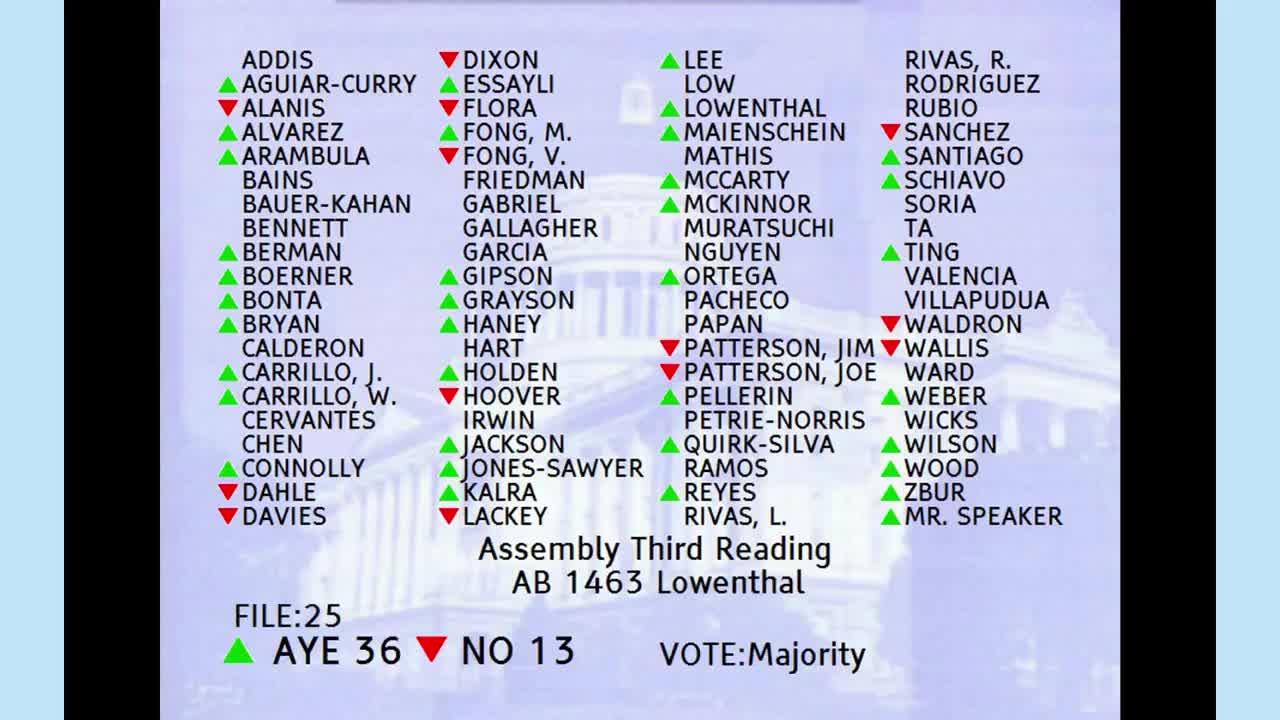 4MIN
Assembly Floor
 19MIN
Assembly Standing Committee on Education
Bill Author

Bill Co-Author(s):