AB 1993: Residential care facilities for the elderly: maximum number of residents.
- Session Year: 2023-2024
- House: Assembly
- Latest Version Date: 2024-05-16
Current Status:
Failed
(2024-08-15: In committee: Held under submission.)
Introduced
In Committee
First Chamber
In Committee
Second Chamber
Enacted
What does this bill do?
This bill lowers the number of residents that lets a residential care facility for the elderly be treated as a regular family home under local zoning from ten to eight. Homes with eight or fewer residents may not be called boarding houses or be required to get special zoning permits, but local building, health, and safety rules that apply equally to other homes still apply.
The summary is provided by generative AI which can make mistakes. For original language, please view the details in the table below.
Existing law, the California Residential Care Facilities for the Elderly Act (act), requires the State Department of Social Services to license, inspect, and regulate residential care facilities for the elderly, as defined, and imposes criminal penalties on a person who violates the act or who willfully or repeatedly violates any rule or regulation adopted under the act. Under existing law, whether or not unrelated persons are living together, a residential care facility for the elderly that serves 6 or fewer persons is considered a residential use of property, as specified.
This bill would increase the maximum number of residents served for purposes of those provisions from 6 to 10. 8.
Existing law, the California Residential Care Facilities for the Elderly Act (act), requires the State Department of Social Services to license, inspect, and regulate residential care facilities for the elderly, as defined, and imposes criminal penalties on a person who violates the act or who willfully or repeatedly violates any rule or regulation adopted under the act. Under existing law, whether or not unrelated persons are living together, a residential care facility for the elderly that serves 6 or fewer persons is considered a residential use of property, as specified.
This bill would increase the maximum number of residents served for purposes of those provisions from 6 to 10.
(a)Whether or not unrelated persons are living together, a residential care facility for the elderly that serves 10 eight or fewer persons shall be considered a residential use of property for the purposes of this article. In addition, the residents and operators of the facility shall be considered a family for the purposes of any law or zoning ordinance that relates to the residential use of property pursuant to this article.
(b)For the purpose of all local ordinances, a residential care facility for the elderly that serves 10 eight or fewer persons shall not be included within the definition of a boarding house, rooming house, institution or home for the care of the aged, guest home, rest home, community residence, or other similar term that implies that the residential care facility for the elderly is a business run for profit or differs in any other way from a family dwelling.
(c)This section shall not be construed to forbid a city, county, or other local public entity from placing restrictions on building heights, setback, lot dimensions, or placement of signs of a residential care facility for the elderly that serves 10 eight or fewer persons as long as the restrictions are identical to those applied to other family dwellings of the same type in the same zone.
(d)This section shall not be construed to forbid the application to a residential care facility for the elderly of any local ordinance that deals with health and safety, building standards, environmental impact standards, or any other matter within the jurisdiction of a local public entity if the ordinance does not distinguish residential care facilities for the elderly that serve 10 eight or fewer persons from other family dwellings of the same type in the same zone and if the ordinance does not distinguish residents of the residential care facilities for the elderly from persons who reside in other family dwellings of the same type in the same zone.
(e)No conditional use permit, zoning variance, or other zoning clearance shall be required of a residential care facility for the elderly that serves 10 eight or fewer persons that is not required of a family dwelling of the same type in the same zone.
(f)Use of a family dwelling for purposes of a residential care facility for the elderly serving 10 eight or fewer persons shall not constitute a change of occupancy for purposes of Part 1.5 (commencing with Section 17910) of Division 13 or local building codes. However, nothing in this section is intended to supersede Section 13143 or 13143.6, to the extent these sections are applicable to residential care facilities for the elderly providing care for 10 eight or fewer residents.
(g)For the purposes of this section, family dwelling, dwelling includes, but is not limited to, single-family dwellings, units in multifamily dwellings, including units in duplexes and units in apartment dwellings, mobilehomes, including mobilehomes located in mobilehome parks, units in cooperatives, units in condominiums, units in townhouses, and units in planned unit developments.
(a)Whether or not unrelated persons are living together, a residential care facility for the elderly that serves six 10 or fewer persons shall be considered a residential use of property for the purposes of this article. In addition, the residents and operators of the facility shall be considered a family for the purposes of any law or zoning ordinance that relates to the residential use of property pursuant to this article.
(b)For the purpose of all local ordinances, a residential care facility for the elderly that serves six 10 or fewer persons shall not be included within the definition of a boarding house, rooming house, institution or home for the care of the aged, guest home, rest home, community residence, or other similar term that implies that the residential care facility for the elderly is a business run for profit or differs in any other way from a family dwelling.
(c)This section shall not be construed to forbid a city, county, or other local public entity from placing restrictions on building heights, setback, lot dimensions, or placement of signs of a residential care facility for the elderly that serves six 10 or fewer persons as long as the restrictions are identical to those applied to other family dwellings of the same type in the same zone.
(d)This section shall not be construed to forbid the application to a residential care facility for the elderly of any local ordinance that deals with health and safety, building standards, environmental impact standards, or any other matter within the jurisdiction of a local public entity if the ordinance does not distinguish residential care facilities for the elderly that serve six 10 or fewer persons from other family dwellings of the same type in the same zone and if the ordinance does not distinguish residents of the residential care facilities for the elderly from persons who reside in other family dwellings of the same type in the same zone.
(e)No conditional use permit, zoning variance, or other zoning clearance shall be required of a residential care facility for the elderly that serves six 10 or fewer persons that is not required of a family dwelling of the same type in the same zone.
(f)Use of a family dwelling for purposes of a residential care facility for the elderly serving six 10 or fewer persons shall not constitute a change of occupancy for purposes of Part 1.5 (commencing with Section 17910) of Division 13 or local building codes. However, nothing in this section is intended to supersede Section 13143 or 13143.6, to the extent these sections are applicable to residential care facilities for the elderly providing care for six 10 or fewer residents.
(g)For the purposes of this section, family dwelling, includes, but is not limited to, single-family dwellings, units in multifamily dwellings, including units in duplexes and units in apartment dwellings, mobilehomes, including mobilehomes located in mobilehome parks, units in cooperatives, units in condominiums, units in townhouses, and units in planned unit developments.
|
Date
|
Status
|
|---|---|
| Aug 15, 2024 | In committee: Held under submission. |
| Aug 5, 2024 | In committee: Referred to APPR suspense file. |
| Jul 2, 2024 | From committee: Do pass and re-refer to Com. on APPR. (Ayes 5. Noes 0.) (July 1). Re-referred to Com. on APPR. |
| Jun 5, 2024 | Referred to Com. on HUMAN S. |
| May 23, 2024 | In Senate. Read first time. To Com. on RLS. for assignment. |
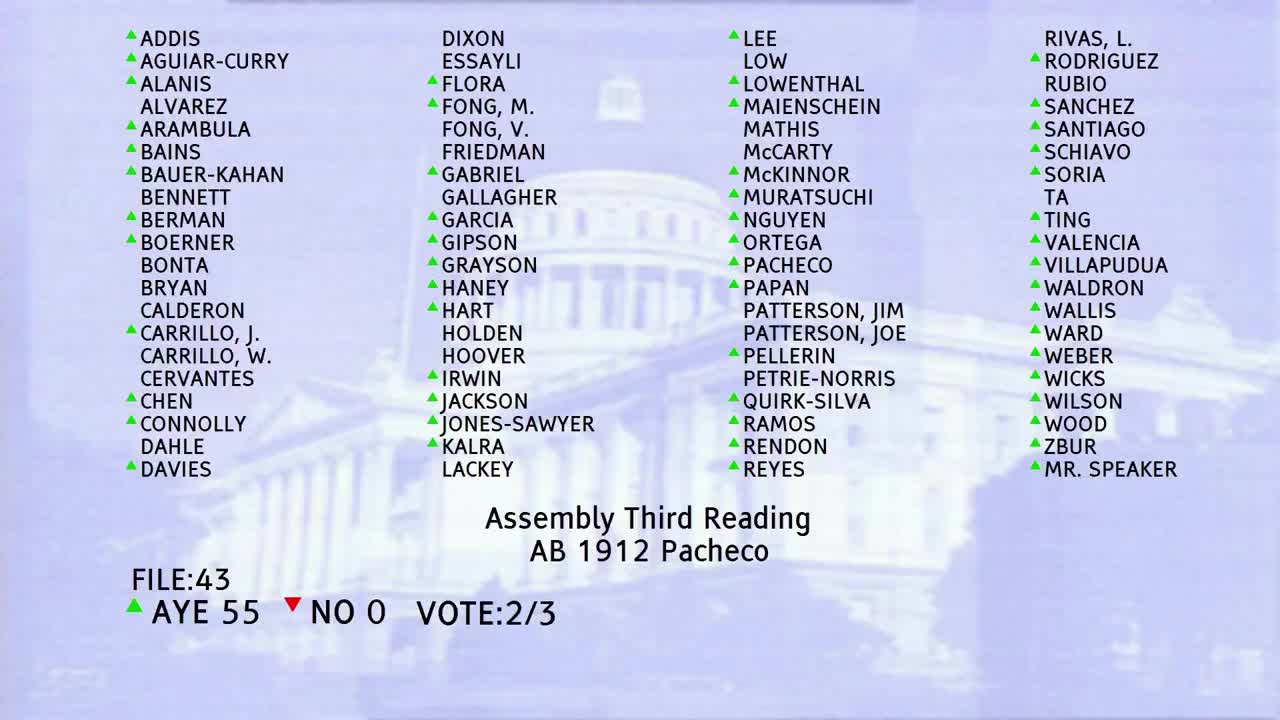
| May 22, 2024 | Read third time. Passed. Ordered to the Senate. (Ayes 64. Noes 2. Page 5561.) |
| May 20, 2024 | Read second time. Ordered to third reading. |
| May 16, 2024 | Assembly Rule 63 suspended. |
| May 16, 2024 | From committee: Amend, and do pass as amended. (Ayes 11. Noes 1.) (May 16). |
| May 16, 2024 | Read second time and amended. Ordered returned to second reading. |
| Apr 17, 2024 | In committee: Set, first hearing. Referred to APPR. suspense file. |
| Apr 3, 2024 | From committee: Do pass and re-refer to Com. on APPR. (Ayes 7. Noes 0.) (April 2). Re-referred to Com. on APPR. |
| Feb 12, 2024 | Referred to Com. on HUM. S. |
| Jan 31, 2024 | From printer. May be heard in committee March 1. |
| Jan 30, 2024 | Read first time. To print. |
|
Date
|
Description
|
Location
|
Votes
|
|
|---|---|---|---|---|
| Aug 5, 2024 | Placed on suspense file | Senate Standing Committee on Appropriations |
Passed |
|
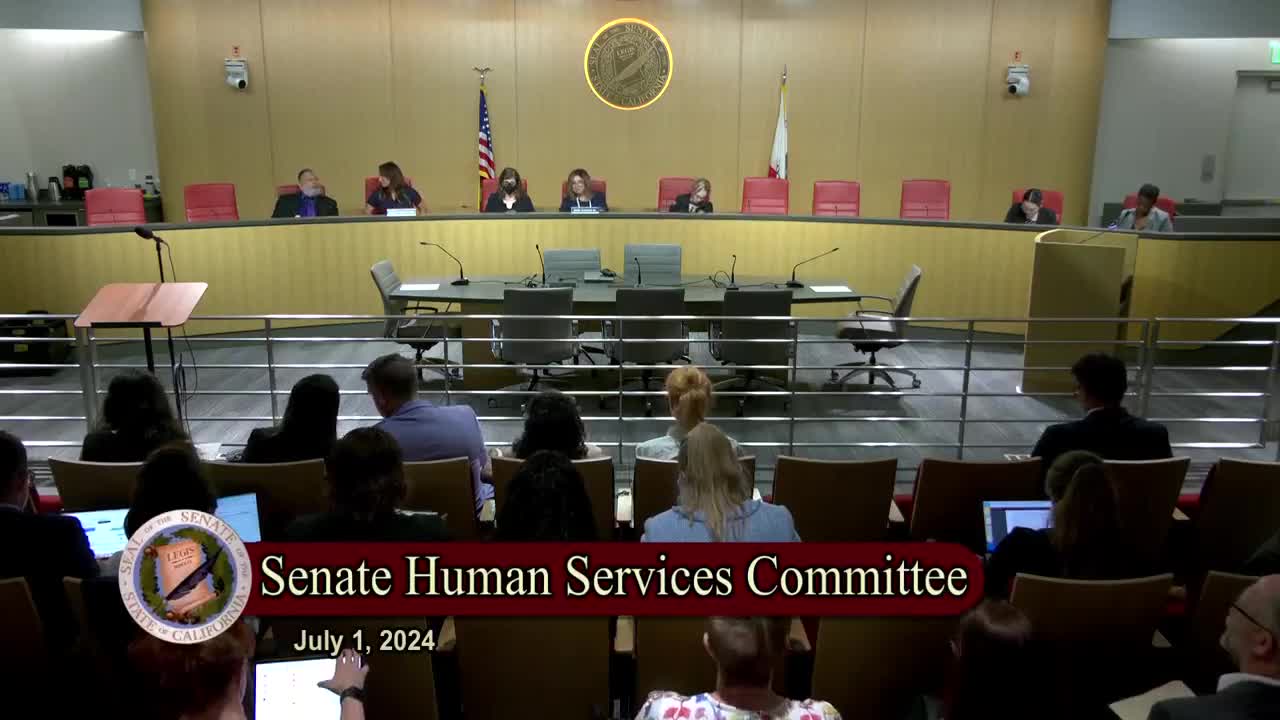
| Jul 1, 2024 | Do pass, but first be re-referred to the Committee on [Appropriations] | Senate Standing Committee on Human Services |
Passed |
|
| May 22, 2024 | AB 1993 Kalra Assembly Third Reading | Assembly Floor |
Passed |
|
| May 16, 2024 | Do pass as amended. | Assembly Standing Committee on Appropriations |
Passed |
|
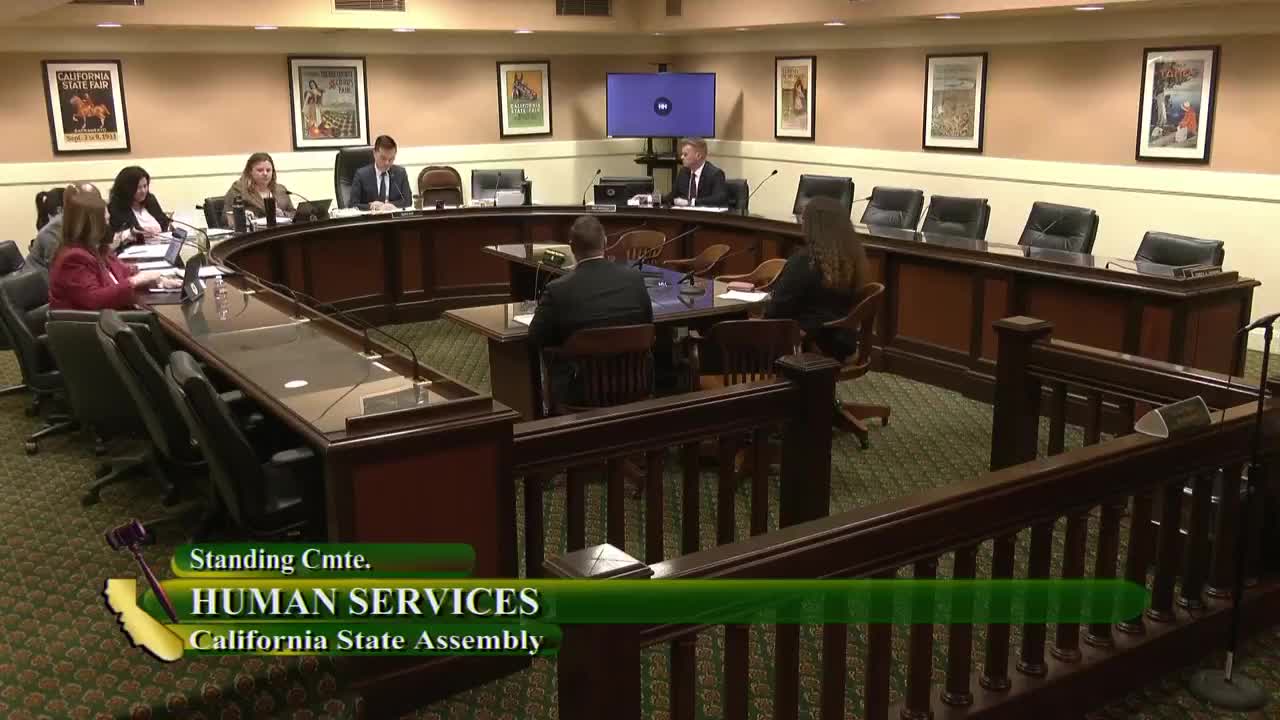
| Apr 2, 2024 | Do pass and be re-referred to the Committee on [Appropriations] | Assembly Standing Committee on Human Services |
Passed |
This list shows positions taken on this bill by organizations on the date displayed, which is linked to the original source.
Positions by individuals are not included.
|
Organization
|
Position
|
Date
|
|---|---|---|
| 6Beds Inc | * Support | Jul 1, 2024 |
| AARP | ** Support | |
| Advisory Council for Sourcewise | ** Support | |
| Alzheimer'S Association, State Policy Office | ** Support | |
| California Assisted Living Association | ** Support | |
| California Association Of Realtors | ** Against | |
| California Commission on Aging | ** Support | |
| California Women's Law Center | ** Support | |
| LeadingAge California | ** Support |
SENATE COMMITTEE ON
Senator Anna Caballero, Chair
2023 - 2024 Regular Session
AB 1993 (Kalra) - Residential care facilities for the elderly: maximum number of residents
Version: | Policy Vote: |
Urgency: | Mandate: |
Hearing Date: | Consultant: |
Bill Summary:
AB 1993 would increase, from six to eight, the maximum number of residents that may be served in a Residential Care Facility for the Elderly (RCFE) that is considered a residential use of property.
Fiscal Impact:
- The California Department of Social Services (CDSS) estimates General Fund costs of $3,645,000 in 2024-25 and $3,551,000 ongoing thereafter for staffing resources for increased workload. The workload includes: requests for licensed capacity increases; pre-licensing inspections; review of licensing materials, including updated plans of operations, resident records and admission agreements; increased complaints; constituent and local government inquiries; community outreach; and a resulting increased need for legal consultations and case referrals.
- The California Department of Justice estimates costs of $656,000 in 2025-26 and $1,109,000 ongoing thereafter for increased workload due to investigations and prosecutions (General Fund, federal funds, False Claims Act Fund).
Background:
RCFEs are responsible for providing housing, housekeeping, supervision, 24-hour staffing, and personal care assistance with activities of daily living (such as hygiene, dressing, eating, and walking) to individuals ages 60 and older. RCFEs range from small homes serving a handful of residents to larger RCFEs that can house over 100 residents. RCFEs provide care and supervision for people who are unable to live by themselves but who do not need 24-hour nursing care. RCFEs are considered non-medical facilities and some RCFEs include memory care units for seniors with dementia.
Under current law:
- Whether or not unrelated persons are living together, an RFCE that serves six or fewer persons is considered a residential use of property, as specified; and the residents and operators of the facility are considered a family for the purposes of any law or zoning ordinance that relates to the residential use of property, as specified.
- For the purpose of all local ordinances, an RCFE that serves six or fewer persons is not included within the definition of a boarding house, rooming house, institution or home for the care of the aged, guest home, rest home, community residence, or other similar term that implies that the residential care facility for the elderly is a business run for profit or differs in any other way from a family dwelling.
- No conditional use permit, zoning variance, or other zoning clearance are required of an RCFE that serves six or fewer persons that is not required of a family dwelling of the same type in the same zone.
Proposed Law:
AB 1993 would increase, from six to eight, the maximum number of residents that may be served in an RCFE for purposes of the above existing law provisions.
Related Legislation: AB 770 (Kalra, 2023) would have deleted the six-person limit for residents that may be served in an RCFE to be considered a residential use of property. The bill was held on the suspense file in the Assembly Appropriations Committee.
-- END --
SENATE COMMITTEE ON HUMAN SERVICES
Senator Alvarado-Gil, Chair
2023 - 2024 Regular
Bill No: | AB 1993 | ||
Author: | Kalra | ||
Version: | May 16, 2024 | Hearing Date: | July 1, 2024 |
Urgency: | No | Fiscal: | Yes |
Consultant: | Diana Dominguez | ||
Subject: Residential care facilities for the elderly: maximum number of residents
SUMMARY
This bill would increase the maximum number of residents that may be served in a Residential Care Facility for the Elderly (RCFE) and be considered a residential use of property from six to eight.
ABSTRACT
Existing Law:
- Establishes the California Residential Care Facilities for the Elderly Act. (HSC 1569 et seq.)
- Defines RCFE as a housing arrangement chosen voluntarily by persons 60 years of age or over, or their authorized representative, where varying levels and intensities of care and supervision, protective supervision, or personal care are provided, based upon their varying needs, as determined in order to be admitted and to remain in the facility. Allows persons under 60 years of age with compatible needs to be admitted or retained if a licensee determines that person is compatible, as defined. (HSC 1569.2)
- Requires a person, firm, partnership, association, corporation, or state or local public agency to have a current valid license to operate, establish, manage, conduct, or maintain an RCFE. (HSC 1569.10)
- Requires CDSS to inspect and license RCFEs. (HSC 1569.11)
- Establishes the Resident’s Bill of Rights for residents of RCFEs, which lists 30 rights, including, but not limited to, the following:
- To be accorded safe, healthful, and comfortable accommodations, furnishings, and equipment.
- To reasonable accommodation of resident preferences concerning room and roommate choices.
- To written notice of any room changes at least 30 days in advance unless the request for a change is agreed to by the resident, required to fill a vacant bed, or necessary due to an emergency.
- To share a room with the resident’s spouse, domestic partner, or a person of resident’s choice when both spouses, partners, or residents live in the same facility and consent to the arrangement.
- To consent to have relatives and other individuals of the resident’s choosing visit during reasonable hours, privately and without prior notice. (HSC 1569.269)
- Establishes provisions related to local regulation of RCFEs, including, but not limited to, the following:
- Declares that it is the policy of this state that each county and city shall permit and encourage the development of sufficient numbers of residential care facilities for the elderly as are commensurate with local need. Provides that provisions on local regulation for RCFEs shall apply equally to any chartered city, general law city, county, city and county, district, and any other local public entity. Provides that, for the purpose of local regulation of RCFEs, “six or fewer persons” does not include the licensee or members of the licensee’s family or persons employed as facility staff. (HSC 1569.82)
- Provides that, whether or not unrelated persons are living together, a RCFE that serves six or fewer persons shall be considered a residential use of property for the purpose of local regulation. Additionally requires the residents and operators of the facility to be considered a family for the purposes of any law or zoning ordinance that relates to the residential use of property pursuant to local regulation of RCFEs. Specifies the use of a family welling for purposes of a RCFE serving six or fewer persons does not constitute a change of occupancy for purposes of State Housing Law (Part 1.5 of Division 13 of HSC) or local building codes, as specified. (HSC 1569.85)
- Provides that a license for an RCFE shall be issued for a specific capacity which shall be the maximum number of residents which can be provided care at any given time. Requires the capacity to be exclusive of any members of the licensee’s own family who reside at the facility. However, requires the licensing agency to consider the presence of other family members or other persons who reside in the facility in determining capacity in order to ensure and promote proper living arrangements for both the licensee’s family and the residents and to ensure the provision of adequate care and supervision for the residents. Specifies the number of persons that a facility is licensed to admit shall be determined on the basis of the application review by the licensing agency which shall consider the following:
- Physical energy and skills of the licensee as it relates to their ability to meet the needs of the residents.
- Any other household members who may reside at the facility and their individual needs.
- Physical features of the facility, such as available living space, which are necessary in order to comply with regulations.
- Number of available staff to meet the care needs of the residents. (22 California Code of Regulations [CCR] 87158)
- Requires a facility to provide comfortable living accommodations and privacy for the residents, staff, and others who may reside in the facility, including the following:
- Requires resident bedrooms to be provided which meet, at a minimum, the following requirements:
- Bedrooms shall be large enough to allow for easy passage between and comfortable usage of beds and other required items of furniture, as specified, and any resident assistant devices such as wheelchairs or walkers.
- Prohibits a room commonly used for other purposes to be used as a sleeping room for any resident. This includes any hall, stairway, unfinished attic, garage, storage area, shed or similar detached building.
- Prohibits a bedroom of a resident to be used as a passageway to another room, bath or toilet.
- Specifies no more than two residents shall sleep in a bedroom.
- Requires equipment and supplies for personal care and maintenance of adequate hygiene practice to be readily available to each resident. The resident may provide the following items, or the licensee shall assure their provision:
- A bed and bedding for each resident, as specified, except that married couples may be provided with one appropriate sized bed.
- Bedroom furniture for each resident, including a chair, night stand, a lamp, or lights sufficient for reading, and a chest of drawers.
- Clean linen, as specified, with sufficient quantity to permit changing at least once per week or more often, as specified.
- Hygiene items of general use, such as soap and toilet paper.
- Portable or permanent closets and drawer space in the bedrooms for clothing and personal belongings. Requires a minimum of eight cubic feet of drawer space per resident.
- Basic laundry service (washing, drying, and ironing of personal clothing). (22 CCR 87307(a)(2-3))
- Requires resident bedrooms to be provided which meet, at a minimum, the following requirements:
- Requires toilets and bathrooms to be conveniently located. Requires the licensed capacity to be based on 22 CCR 87158 and the following:
- At least one toilet and washbasin for each six persons, which include residents, family and personnel.
- At least one bathtub or shower for each ten persons, which includes residents, family and live-in personnel. (22 CCR 87307(b))
This Bill:
- Changes the maximum allowed number of residents at an RCFE considered a residential use of property for the purpose of local regulation from six to eight.
FISCAL IMPACT
According to the Assembly Appropriations Committee analysis,
- “Estimated ongoing General Fund costs to CDSS of an unknown amount, but likely in the high-hundreds of thousands or more annually, for additional staff positions to manage increased capacity statewide, including reevaluating facilities that want to expand, reviewing updated licensing documents, performing inspections as necessary, and managing a potentially increased number of complaints and the resulting investigations.
- “Estimated one-time General Fund costs to CDSS of approximately $170,000 for one limited-term staff position to update regulations and inspection processes, as necessary.
- “The Division of Medi-Cal Fraud and Elder Abuse, within the Department of Justice, anticipates the increase in residents served at RCFEs and at small care facilities will lead to an increase in abuse and neglect, which will require an increase in investigations and prosecutions for DMFEA. The division estimates costs, beginning January 1, 2026, and ongoing of $650,000 to $1.1 million (Federal Trust Fund, False Claims Act Fund, and General Fund) for seven positions to manage the additional workload.
“According to the Legislative Analyst’s Office, the General Fund faces a structural deficit in the tens of billions of dollars over the next several fiscal years.”
BACKGROUND AND DISCUSSION
Purpose of the Bill:
According to the author, “Aging adults are the fastest-growing population of unhoused individuals in California, and affordable housing is limited, placing them at risk of becoming homeless. AB 1993 would amend the California RCFE Act to increase the number of residents an RCFE may serve and still be considered a residential use of a property. This proposed change would allow RCFEs to serve more individuals and help them receive housing, meals, and non-medical services. It is consistent with Priority Goal #1, ‘Housing Opportunities for Seniors as They Age,’ as identified in the Governor’s Master Plan on Aging.
“The 6-resident cap has its basis in the mental health system of the 1930s. Over time, the board and care facilities have expanded to provide care for other populations, but the 6-resident cap remains a barrier for small RCFEs. This bill addresses that houses built fifty years ago, when the 6-bed rule was established, were much smaller than houses built in the last twenty years. Community Care Licensing determines the maximum number of residents a facility may admit and works with local fire agencies to determine the maximum number of residents a facility can serve based. CCL regulations stipulate that no more than two adults may share a single bedroom. AB 1993 does not change the maximum number of individuals allowed to share a bedroom or reduce the personal space requirements. CCL is responsible for ensuring the building can safely serve the number of residents the RCFE is licensed for.
“AB 1993 is in response to our state’s rapidly aging population and increased demand for assisted living facilities. Housing for older adults is not always as simple as securing a place to sleep. Most older adults prefer to remain in their communities, close to familiar surroundings, or close to their loved ones. 24-hour non-medical care provided in a home located in neighborhoods promotes a happy environment for aging adults and a greater opportunity for family members to visit them regularly.”
Residential Care Facilities for the Elderly (RCFEs)
Sometimes referred to as assisted living facilities, RCFEs are responsible for providing housing, housekeeping, supervision, 24-hour staffing, and personal care assistance with activities of daily living, such as hygiene, dressing, eating, and walking, to individuals ages 60 and older. California’s network of RCFEs ranges from small homes serving a handful of residents to larger RCFEs that can house over 100 residents in communities across the state. This level of care and supervision is for people who are unable to live by themselves but who do not need 24-hour nursing care. RCFEs are considered non-medical facilities and are not required to have nurses, certified nursing assistances, or doctors on staff, but typically bring licensed health care practitioners into the facility to provide care as necessary. Some RCFEs include memory care units for seniors with dementia.
RCFEs are licensed and regulated by CDSS’s Community Care Licensing Division. The Community Care Licensing Division protects the health and safety of residents in RCFEs through its regulatory and enforcement programs. In addition to its licensing requirements, the Community Care Licensing Division conducts regular inspections of facilities to assess compliance with applicable laws and regulations.
As of March 31, 2024, there were over 7,600 licensed RCFEs with a capacity to serve about 204,000 residents.[1] The majority of these facilities (77%) have six or fewer beds. Under law, these smaller RCFEs, sometimes called “six-bed” facilities or simply “six-beds,” may be counted as a residential use of property.
Costs for RCFEs vary widely. RCFEs are free to set their own rates and charge whatever amount residents are willing to pay. In California, the median monthly cost is $5,250, with costs ranging from $1,575 for a resident on Supplemental Security Income/State Supplementary Payment (SSI/SSP) to over $10,000 per month. Most residents pay privately or with long-term care insurance since there is very little public funding available through Medi-Cal, SSI/SSP, or Medicare. Very few beds are available to seniors who pay their entire SSI/SSP checks in rent. As a result, low- and middle-income seniors who do not have long-term-care insurance are largely unable to afford to reside in an RCFE. Many low-income seniors receive services through the In Home Supportive Services (IHSS) program, or in a skilled nursing facility if they are Medi-Cal eligible.
Six-Bed RCFEs
According to stakeholders, the six-bed limit for RCFEs considered as a residential use of property was established based on the average number of bedrooms per house. At the time, the average number of bedrooms per house was three. Three bedrooms, with no more than two residents per bedroom, per Title 22 regulations, equates to six residents per RCFE. According to Census data[2] provided by the author on the number of bedrooms in new single-family houses, from 1977 to 2022 the number of homes built with four or more bedrooms increased from 30 percent to 46 percent. This bill seeks to increase the maximum number of residents for a licensed RCFE from six to eight based on this data.
California’s Aging Population and Homelessness Rates
California is home to a growing aging population. By 2030, one out of every four Californians, or 10.8 million people, will be age 60 and older. This is nearly twice as many people age 60 and older as there were in 2010. Additionally, the California Interagency Council on Homelessness reports that older adults are the fastest-growing population of unhoused persons in California, with the number of adults over the age of 55 experiencing homelessness growing by 90% since 2017, while the number of homeless adults over the age of 65 increased by 166%. The Los Angeles Times reported that in Los Angeles County, older adult homelessness jumped by 22% in 2018, reflecting an increase from just over 4,000 individuals experiencing homelessness age 62 and older to just over 4,800. San Diego, San Francisco, and Sacramento Counties have all also reported increases in their populations of people 55 and older experiencing homelessness. According to an article by KPBS[3], researchers predicted that in Los Angeles County alone the number of older adults experiencing homelessness could reach nearly 14,000 by 2030 if solutions are not found.
While the reasons for the statewide increase in homeless adults are varied, not being able to afford rent is a common factor. Adults who were unable to save for retirement can find themselves without a safety net when a medical emergency or rent increase occurs. As part of the Master Plan for Aging, released in January 2021, California has prioritized creating more affordable housing options to meet the needs of all stages of life, regardless of age, race, or income. This bill seeks to increase the capacity of existing six-bed RCFEs based on the need for non-medical assisted living options for California’s aging population.
Related/Prior Legislation:
SB 1406 (Allen) would, among other things, add to the list of rights for RCFE residents the right to request, refuse, or discontinue a service, and limit the amount that rates may be increased each year. SB 1406 is pending in the Assembly Appropriations Committee.
AB 770 (Kalra, 2023) would have struck the six-person bed limit for RCFEs considered as a residential use of property. AB 770 was held on the Assembly Appropriations Committee suspense file.
AB 2619 (Patterson of 2022) would have made the provisions applicable to an RCFE serving six or fewer persons also apply to an RCFE serving more than six persons if the family dwelling had sufficient square footage and a sufficient number of rooms, consistent with the standards established in a specified provision of the Uniform Housing Code of the International Conference of Building Officials, or other state-approved standards governing the allowable number of beds in a room used as a bedroom. AB 2619 was not set for hearing in the Assembly Human Services Committee.
AB 2171 (Wieckowski, Chapter 702, Statutes of 2014) established a bill of rights for residents of RCFEs.
COMMENTS
This bill seeks to increase the availability of RCFE beds by increasing the maximum number of residents from six to eight for current “six-bed” RCFEs. It is important to note that increasing the maximum allowable number of residents would not automatically result in increased capacity. Any facility wanting to serve a higher number of residents would have to apply for a change to their existing license to increase the number of residents the facility is approved to care for and house. This means that the CDSS Community Care Licensing Division and its regional licensing offices would retain oversight and discretion over the number of maximum residents at each RCFE. Title 22 regulations specify that a bedroom may have up to two residents. Thus, if an existing facility only has three bedrooms, the facility would not qualify to be approved for a licensed capacity of eight residents. By increasing the maximum allowable licensed capacity of current “six-bed” RCFEs, this bill seeks to make use of already licensed RCFEs that may have a fourth bedroom that could house two additional residents.
SUPPORT/OPPOSITION
Arguments in Support:
According to the California Commission on Aging, “AB 1993 would amend the RCFE Act to enable small RCFEs to expand the number of individuals they can serve by replacing the number of residents that triggers local discretionary review from six to eight. This change would allow small RCFE operators to serve more older individuals consistent with CDSS regulations and standard building codes. Allowing smaller RCFEs to serve more than six residents can help open more needed spots at assisted living homes to serve a growing aging population. CDSS would still be responsible for ensuring that the RCFE is able to meet the care and housing standards they require in their regulations in order to operate and would set the RCFE’s capacity based on these standards. The growth in the older adult population will increase the demand for housing services that provide a level of care. Existing solutions are available to house older adults in a community setting. However, without additional flexibilities, the ability to utilize these solutions may be unfeasible in the near future. With older Californians comprising the fastest growing population of unhoused adults in the state, we must recognize that solutions to homelessness will require addressing the specialized needs of an older population. The Commission believes we must act to ensure the viability of RCFEs to help meet the needs of older adults in California.”
Arguments in Opposition:
According to the California Association of Realtors, “As drafted, AB 1993 seeks to expand the commercial use of single-family homes for the residential care industry, in conflict with the U.S. Department of Housing and Urban Developments federally regulated regulatory occupancy requirements. As drafted, AB 1993 only serves to further constrict our states entry level market rate housing supply and the concerns raised by CDSS can be easily addressed with an amendment delegating authority to the department to adopt regulations to address resident occupancy flexibility during emergency. Unless AB 1993 is amended to resolve our concerns, residential care facilities located in single family homes would be permitted to put 8 seniors in 2, 3 or 4 bedroom homes creating an average of 3 or 4 or even 5 seniors per room. This universal increase only serves to push homeownership out of reach for working Californians by favoring large corporate wealth expansion opportunities and runs contrary to the state licensing entities room occupancy limitation for residential care facilities. With a persistent lack of housing supply and constant pressures on housing affordability, converting even more residential housing to commercial uses will dramatically reduce homeownership opportunities for our working families while serving to further increase the price of median housing in California.”
PRIOR VOTES
Assembly Floor: | 65 - 2 |
Assembly Appropriations Committee: | 11 - 1 |
Assembly Human Services Committee: | 7 - 0 |
POSITIONS
Support:
California Commission on Aging (Sponsor)
6beds, INC.
California Assisted Living Association
California Women's Law Center
Leadingage California
Oppose:
California Association of Realtors
-- END --
ASSEMBLY THIRD READING
ATR Bill Id:AB 1993
Author:(Kalra)
As Amended Ver:May 16, 2024
Majority vote
SUMMARY
Increases the current six or fewer persons limit for residential care facilities for the elderly (RCFEs) located in a family dwelling to eight or fewer persons.
Major Provisions
COMMENTS
Background: Residential Care Facilities for The Elderly are non-medical facilities that house and care for the aging population that have minimal health needs, but need basic daily help for services such as housekeeping, medication assistance, personal and hygiene care, and eating. There are three levels of care permitted in an RCFE which range from basic care when a resident still can retain some independence, to nonmedical care when a resident needs help with personal daily living activities, and the highest level of care is reserved for someone who needs extensive care with daily living activities and may have chronic health problems.
California's network of RCFEs consists of small homes serving a handful of residents to larger RCFEs that can house over 100 residents in communities across the state. Facilities provide a special combination of housing, personalized supportive services, and 24-hour staff designed to respond to the individual needs of those who require help with activities of daily living. This level of care and supervision is for people who are unable to live by themselves but who do not need 24-hour nursing care. They are considered non-medical facilities and are not required to have nurses, certified nursing assistants, or doctors on staff. Facilities usually centrally store and distribute medications for residents to self-administer.
Costs of RCFEs vary widely. RCFEs in California cost an average of $4,500 per month. However, monthly fees can exceed $10,000. According to California Department of Social Services (CDSS') website, there are 7,473 licensed RCFEs total and 5,790 RCFEs that serve six or fewer persons. There is no data pertaining to how many of the 5,790 RCFEs that serve six or fewer persons are in a residential area.
Population Aging and Rising Homelessness Rates. Population aging refers to the increase of people over the age of 65, while at the same time, a decrease in people age under the age of 15. Population aging has become a distinctive demographic feature in developing countries which currently have the largest proportion of people over the age of 65 in the world. Population aging can be attributed to increasing longevity and declining fertility. Data indicate that global life expectancy increased from 34 years in 1913 to 72 years in 2022 and is expected to continue on that trajectory.
According to the United States (U.S.) Census Bureau, 15.8% of California's population is over the age of 65 which is the largest number of older residents in the country, and estimates that about 22% of California's population will be over the age of 60 by the year 2030. The California Department of Finance projects that about one in four (23.1%) Californians will be over the age of 65 by 2040.
The California Interagency Council on Homelessness reports that older adults are the fastest-growing population of unhoused persons in California, with the number of adults over the age of 55 experiencing homelessness growing by 90% since 2017, while the number of homeless adults over the age of 65 increased by 166%. The Los Angeles Times reported that in Los Angeles County, older adult homelessness jumped 22% in 2018, reflecting an increase from just over 4,000 individuals experiencing homelessness age 62 and older to just over 4,800. San Diego, San Francisco, and Sacramento Counties have all also reported increases in their populations of people 55 and older experiencing homelessness. Furthermore, in an article by KPBS entitled "A Senior On The Streets, With Little Chance Of A Home," researchers predicted that in Los Angeles County alone, the number of older adults experiencing homelessness could reach nearly 14,000 by 2030 if solutions are not found.
Due to the higher needs of many older adults, finding solutions to make RCFEs and other living arrangements that offer assistance attainable is vital to lowering homelessness in older adults. Given the high cost of places for older adults to live, it is even more crucial to find ways to encourage RCFEs to house these residents.
Equity Implications: Older adults who require assistance with daily activities have an exceptionally hard time finding accommodations in that they must locate not only housing but also housing that can accommodate their specialized needs at a price they can afford.
For adults over the age of 50 who already struggle to meet their basic needs, financial and medical emergencies can push them into homelessness. According to the U.S. Department of Housing and Urban Development, roughly 30% of the state's unhoused population is Black due to a history of racial discrimination in housing, as well as an overrepresentation within the justice and child welfare systems. Data show that a substantial number of adults experiencing homelessness in California are older adults. According to the Budget Policy Center, over 40% of unhoused Californians in adult-only households who came in contact with the homelessness response system in the 2021-22 fiscal year were 50 and older. Complicating matters, adults over the age of 50 are more likely to have underlying health conditions that can be exacerbated by not having access to a stable home or health care, and research confirms that being homeless accelerates severe health declines. These adults often require more assistive services in addition to housing. Research conducted by the University of California, San Francisco (UCSF) indicates that 44% of all homeless people older than the age of 50 became homeless for the first time after they were 50, and account for half of all unhoused adults. For comparison, this same UCSF research found that in 1990, only 11% of homeless adults were over the age of 50.
While the reasons for this increase in homeless adults are varied, not being able to afford rent is a common factor. Adults who were unable to save for retirement can find themselves without a safety net when a medical emergency or rent increase occurs. As part of the Master Plan for Aging, California has prioritized creating more affordable housing options to meet the needs of all stages of life, regardless of age, race, or income.
According to the Author
"Aging adults are the fastest-growing population of unhoused individuals in California, and affordable housing is limited, placing them at risk of becoming homeless. [This bill] would amend the California Residential Care Facilities for the Elderly Act to increase the number of residents an RCFE may serve and still be considered a residential use of a property. This proposed change would allow RCFEs to serve more individuals and help them receive housing, meals, and non-medical services. It is consistent with Priority Goal #1, "Housing Opportunities for Seniors as They Age," as identified in the Governor's Master Plan on Aging.
"The 6-resident cap has its basis in the mental health system of the 1930s. Over time, the board and care facilities have expanded to provide care for other populations, but the 6-resident cap remains a barrier for small RCFEs. This bill addresses that houses built fifty years ago, when the 6-bed rule was established, were much smaller than houses built in the last twenty years.
"Community Care Licensing (CCL) determines the maximum number of residents a facility may admit and works with local fire agencies to concur with their determination of the maximum number of residents a facility can serve based on the ability to vacate the facility during an emergency. CCL regulations stipulate that no more than two adults may share a single bedroom. [this bill] does not change the maximum number of individuals allowed to share a bedroom or reduce the personal space requirements. CCL is responsible for ensuring the building can safely serve the number of residents the RCFE is licensed for.
"[This bill] is in response to our state's rapidly aging population and increased demand for assisted living facilities. Housing for older adults is not always as simple as securing a place to sleep. Most older adults prefer to remain in their communities, close to familiar surroundings, or close to their loved ones. 24-hour non-medical care provided in a home located in neighborhoods promotes a happy environment for aging adults and a greater opportunity for family members to visit them regularly."
Arguments in Support
According to the California Commission on Aging, one of the co-sponsors of this bill, "The growth in the older adult population will increase the demand for housing services that provide a level of care. Existing solutions are available to house older adults in a community setting. However, without additional flexibilities, the ability to utilize these solutions may be unfeasible in the near future. With older Californians comprising the fastest growing population of unhoused adults in the state, we must recognize that solutions to homelessness will require addressing the specialized needs of an older population. CCoA believes we must act to ensure the viability of RCFEs to help meet the needs of older adults in California."
Arguments in Opposition
California Association of Realtors write as opposed unless amended because: "With a persistent lack of housing supply and constant pressures on housing affordability, converting even more residential housing to commercial uses will dramatically reduce homeownership opportunities for our working families while serving to further increase the price of median housing in California. As currently drafted, [this bill] will ultimately deny attainable homeownership opportunities for our states underserved communities, who have consistently been excluded from the opportunities to build generational wealth."
FISCAL COMMENTS
According to the Assembly Committee on Appropriations on May 16, 2024:
- Estimated ongoing General Fund costs to the California Department of Social Services (CDSS) of an unknown amount, but likely in the mid-hundreds of thousands or more annually, for additional staff positions to manage increased capacity statewide, including reevaluating facilities that want to expand, reviewing updated licensing documents, performing inspections as necessary, and managing a potentially increased number of complaints and the resulting investigations.
- Estimated one-time General Fund costs to CDSS of approximately $170,000 for one limited-term staff position to update regulations and inspection processes, as necessary.
- Unknown costs to the Division of Medi-Cal Fraud and Elder Abuse (DMFEA), within the Department of Justice (DOJ). DMFEA anticipates the increase in residents served at RCFEs and at small care facilities will lead to an increase in investigations and prosecutions for DMFEA.
According to the Legislative Analyst's Office, the General Fund faces a structural deficit in the tens of billions of dollars over the next several fiscal years.
VOTES
ASM HUMAN SERVICES: 7-0-0
YES: Lee, Essayli, Calderon, Gipson, Jackson, Ta, Ortega
ASM APPROPRIATIONS: 11-1-3
YES: Wicks, Arambula, Bryan, Calderon, Wendy Carrillo, Mike Fong, Grayson, Haney, Hart, Pellerin, Villapudua
NO: Dixon
ABS, ABST OR NV: Sanchez, Jim Patterson, Ta
UPDATED
VERSION: May 16, 2024
CONSULTANT: Alexandria Smith / HUM. S. / (916) 319-2089 FN: 0003423
Date of Hearing: April 17, 2024
ASSEMBLY COMMITTEE ON APPROPRIATIONS
Buffy Wicks, Chair
ABPCA Bill Id:AB 1993
Author:(Kalra) – As Introduced Ver:January 30, 2024
Policy Committee: | Human Services | Vote: | 7 - 0 |
|
| ||
|
|
Urgency: No State Mandated Local Program: No Reimbursable: No
SUMMARY:
This bill increases the maximum number of residents a residential care facility for the elderly (RCFE) may serve, from six to 10, and still be considered a residential use of property for local zoning purposes.
FISCAL EFFECT:
- Estimated ongoing General Fund costs to the California Department of Social Services (CDSS) of an unknown amount, but likely in the high-hundreds of thousands or more annually, for additional staff positions to manage increased capacity statewide, including reevaluating facilities that want to expand, reviewing updated licensing documents, performing inspections as necessary, and managing a potentially increased number of complaints and the resulting investigations.
- Estimated one-time General Fund costs to CDSS of approximately $170,000 for one limited-term staff position to update regulations and inspection processes, as necessary.
- The Division of Medi-Cal Fraud and Elder Abuse (DMFEA), within the Department of Justice (DOJ), anticipates the increase in residents served at RCFEs and at small care facilities will lead to an increase in abuse and neglect, which will require an increase in investigations and prosecutions for DMFEA. The division estimates costs, beginning January 1, 2026, and ongoing of $650,000 to $1.1 million (Federal Trust Fund, False Claims Act Fund, and General Fund) for seven positions to manage the additional workload.
According to the Legislative Analyst’s Office, the General Fund faces a structural deficit in the tens of billions of dollars over the next several fiscal years.
COMMENTS:
- Purpose. The author seeks to expand housing opportunities for older adults. According to the author:
Aging adults are the fastest-growing population of unhoused individuals in California, and affordable housing is limited, placing them at risk of becoming homeless. [This bill] would amend the California Residential Care Facilities for the Elderly Act to increase the number of residents an RCFE may serve and still be considered a residential use of a property. This proposed change would allow RCFEs to serve more individuals and help them receive housing, meals, and non-medical services.
- Background. California’s aging population is growing faster than any other age group. The U.S. Census Bureau estimates about 22% of California's population will be over the age of 60 by the year 2030, up from the current 15.8%. The aging population is also the fastest growing homeless population in the state. Research conducted by the University of California, San Francisco indicates 44% of homeless people older than the age of 50 became homeless for the first time after the age of 50, and account for half of all unhoused adults.
RCFEs provide personal care and housing to those who require assistance with daily living, but who do not require 24-hour nursing care. California’s network of RCFEs includes small homes with up to six residents to larger RCFEs that can house over 100 residents. According to CDSS, there are 7,473 licensed RCFEs, including 5,790 RCFEs that serve six or fewer residents. CDSS indicates six-bed facilities on average are operating at 80% of their licensed capacity.
The average monthly cost to live in an RCFE in California is $4,500. Some counties, through the Assisted Living Waiver Program, are authorized to have Medi-Cal pay for eligible residents to live in an RCFE, however, most residents pay privately for care.
The Community Care Licensing (CCL) Division, within CDSS, among other duties, is responsible for the licensure of RCFEs. In this capacity, CCL determines the maximum number of residents a facility may admit based on the licensee’s skills, whether the licensee’s family members reside on-site, building features, and staff availability. Additionally, local fire agencies must agree with the CCL’s determination based on the ability to vacate the facility during an emergency. Regulations also stipulate no more than two individuals may share a bedroom and impose other personal space requirements. These and other regulations are designed to protect the health, safety, and quality of life of RCFE residents.
An RCFE seeking to expand under this bill must continue to meet all existing licensing requirements. The number of existing facilities with the capacity to expand and still meet existing operational requirements is unknown.
- Related Legislation. AB 770 (Kalra), of this legislative session, eliminates the six-bed limit for RCFEs and requires a licensed RCFE with greater than six beds to reserve at least 30% of the beds, excluding the first six, for low-income residents. AB 770 was held on this committee’s suspense file.
Analysis Prepared by: Jennifer Swenson / APPR. / (916) 319-2081
Date of Hearing: April 2, 2024
ASSEMBLY COMMITTEE ON HUMAN SERVICES
Alex Lee, Chair
ABPCA Bill Id:AB 1993 (
Author:Kalra) – As Introduced Ver:January 30, 2024
SUBJECT: Residential care facilities for the elderly: maximum number of residents
SUMMARY: Increases the current six or fewer persons limit for residential care facilities for the elderly (RCFEs) located in a family dwelling to 10 or fewer persons.
EXISTING LAW:
- Establishes the “California Residential Care Facilities for the Elderly Act”. (Health and Safety Code [HSC] §1569)
- Requires the California Department of Social Services (CDSS) to establish regulations, inspect, and license RCFEs. (HSC §§ 1569.30-1569.39; 1569.10-1569.24)
- Permits an RCFE serving six or fewer persons in a family dwelling to be considered a family for the purposes of zoning ordinances. (HSC § 1569.85)
- Defines a “family dwelling,” to include, but not be limited to, single-family dwellings, units in multifamily dwellings, including units in duplexes and units in apartment dwellings, mobilehomes, including mobilehomes located in mobilehome parks, units in cooperatives, units in condominiums, units in townhouses, and units in planned unit developments. (HSC § 1569.85 (g))
- Requires the State Fire Marshal to prepare and adopt regulations establishing minimum requirements for the prevention of fire, and for the protection of life and property against fire and panic, for any laboratory or research and development facility that stores, handles, or uses regulated hazardous materials. (HSC §§ 13143; 13143.6)
- Establishes “Resident’s Bill of Rights” for residents in RCFEs which includes 30 separate rights with the legislative intent that persons residing in RCFEs be treated with dignity, kindness, and respect and that their civil liberties be fully honored. (HSC §§ 1569.261-1569.269)
- Requires every facility required to be licensed to provide at least the following basic services:
- Care and supervision as defined in 6) above.
- Assistance with instrumental activities of daily living in combinations that meet the needs of residents;
- Helping residents gain access to appropriate supportive services, as defined, in the community;
- Being aware of the resident’s general whereabouts, although the resident may travel independently in the community;
- Monitoring the activities of the residents while they are under the supervision of the facility to ensure their general health, safety, and well-being; and,
- Encouraging the residents to maintain and develop their maximum functional ability through participation in planned activities. (HSC § 1569.312)
- Defines “care and supervision” to mean the facility assumes responsibility for or provides or promises to provide in the future, ongoing assistance with activities of daily living without which the resident’s physical health, mental health, safety, or welfare would be endangered. Assistance includes assistance with taking medications, money management, or personal care. (HSC § 1569.2)
- Establishes three levels of care as follows:
- Level I—Base care and supervision. Residents at this level can maintain a higher degree of independence and need only minimum care and supervision and minimal personal care assistance;
- Level II—Nonmedical personal care. Residents at this level have functional limitations and psychosocial needs requiring not only care and supervision but frequent assistance with personal activities of daily living and active intervention to help them maintain their potential for independent living; and,
- Level III—Health-related assistance. Residents at this level require the services of lower levels and rely on the facility for extensive assistance with personal activities of daily living. This level may include residents who also require the occasional services of an appropriately skilled professional due to chronic health problems and returning residents recovering from illness, injury, or treatment that requires placement in facilities providing higher levels of care. (HSC § 1569.70)
- Provides operating requirements for RCFEs. (California Code of Regulations 87202-87300)
FISCAL EFFECT: Unknown, this bill has not been analyzed by a fiscal committee.
COMMENTS:
Background: Residential Care Facilities for The Elderly are non-medical facilities that house and care for the aging population that have minimal health needs, but need basic daily help for services such as housekeeping, medication assistance, personal and hygiene care, and eating. There are three levels of care permitted in an RCFE which range from basic care when a resident still can retain some independence, to nonmedical care when a resident needs help with personal daily living activities, and the highest level of care is reserved for someone who needs extensive care with daily living activities and may have chronic health problems.
California’s network of RCFEs consists of small homes serving a handful of residents to larger RCFEs that can house over 100 residents in communities across the state. Facilities provide a special combination of housing, personalized supportive services, and 24-hour staff designed to respond to the individual needs of those who require help with activities of daily living. This level of care and supervision is for people who are unable to live by themselves but who do not need 24-hour nursing care. They are considered non-medical facilities and are not required to have nurses, certified nursing assistants, or doctors on staff. Facilities usually centrally store and distribute medications for residents to self-administer.
Costs of RCFEs vary widely. RCFEs in California cost an average of $4,500 per month. However, monthly fees can exceed $10,000. According to CDSS’ website, there are 7,473 licensed RCFEs total and 5,790 RCFEs that serve six or fewer persons. There is no data pertaining to how many of the 5,790 RCFEs that serve six or fewer persons are in a residential area.
Population Aging and Rising Homelessness Rates. Population aging refers to the increase of people over the age of 65, while at the same time, a decrease in people age under the age of 15. Population aging has become a distinctive demographic feature in developing countries which currently have the largest proportion of people over the age of 65 in the world. Population aging can be attributed to increasing longevity and declining fertility. Data indicate that global life expectancy increased from 34 years in 1913 to 72 years in 2022 and is expected to continue on that trajectory.
According to the U.S. Census Bureau, 15.8% of California's population is over the age of 65 which is the largest number of older residents in the country, and estimates that about 22% of California's population will be over the age of 60 by the year 2030. The California Department of Finance projects that about one in four (23.1%) Californians will be over the age of 65 by 2040.
The California Interagency Council on Homelessness reports that older adults are the fastest-growing population of unhoused persons in California, with the number of adults over the age of 55 experiencing homelessness growing by 90% since 2017, while the number of homeless adults over the age of 65 increased by 166%. The Los Angeles Times reported that in Los Angeles County, older adult homelessness jumped 22% in 2018, reflecting an increase from just over 4,000 individuals experiencing homelessness age 62 and older to just over 4,800. San Diego, San Francisco, and Sacramento Counties have all also reported increases in their populations of people 55 and older experiencing homelessness. Furthermore, in an article by KPBS entitled “A Senior On The Streets, With Little Chance Of A Home,” researchers predicted that in Los Angeles County alone, the number of older adults experiencing homelessness could reach nearly 14,000 by 2030 if solutions are not found.
Due to the higher needs of many older adults, finding solutions to make RCFEs and other living arrangements that offer assistance attainable is vital to lowering homelessness in older adults. Given the high cost of places for older adults to live, it is even more crucial to find ways to encourage RCFEs to house these residents.
Author’s Statement: According to the Author, “Aging adults are the fastest-growing population of unhoused individuals in California, and affordable housing is limited, placing them at risk of becoming homeless. AB 1993 would amend the California Residential Care Facilities for the Elderly Act to increase the number of residents an RCFE may serve and still be considered a residential use of a property. This proposed change would allow RCFEs to serve more individuals and help them receive housing, meals, and non-medical services. It is consistent with Priority Goal #1, “Housing Opportunities for Seniors as They Age,” as identified in the Governor’s Master Plan on Aging.
The 6-resident cap has its basis in the mental health system of the 1930s. Over time, the board and care facilities have expanded to provide care for other populations, but the 6-resident cap remains a barrier for small RCFEs. This bill addresses that houses built fifty years ago, when the 6-bed rule was established, were much smaller than houses built in the last twenty years.
Community Care Licensing (CCL) determines the maximum number of residents a facility may admit and works with local fire agencies to concur with their determination of the maximum number of residents a facility can serve based on the ability to vacate the facility during an emergency. CCL regulations stipulate that no more than two adults may share a single bedroom. AB 1993 does not change the maximum number of individuals allowed to share a bedroom or reduce the personal space requirements. CCL is responsible for ensuring the building can safely serve the number of residents the RCFE is licensed for.
AB 1993 is in response to our state’s rapidly aging population and increased demand for assisted living facilities. Housing for older adults is not always as simple as securing a place to sleep. Most older adults prefer to remain in their communities, close to familiar surroundings, or close to their loved ones. 24-hour non-medical care provided in a home located in neighborhoods promotes a happy environment for aging adults and a greater opportunity for family members to visit them regularly.”
Equity Implications: Older adults who require assistance with daily activities have an exceptionally hard time finding accommodations in that they must locate not only housing but also housing that can accommodate their specialized needs at a price they can afford.
For adults over the age of 50 who already struggle to meet their basic needs, financial and medical emergencies can push them into homelessness. According to the United States Department of Housing and Urban Development, roughly 30% of the state’s unhoused population is Black due to a history of racial discrimination in housing, as well as an overrepresentation within the justice and child welfare systems. Data show that a substantial number of adults experiencing homelessness in California are older adults. According to the Budget Policy Center, over 40% of unhoused Californians in adult-only households who came in contact with the homelessness response system in the 2021-22 fiscal year were 50 and older. Complicating matters, adults over the age of 50 are more likely to have underlying health conditions that can be exacerbated by not having access to a stable home or health care, and research confirms that being homeless accelerates severe health declines. These adults often require more assistive services in addition to housing. Research conducted by the University of California, San Francisco (UCSF) indicates that 44% of all homeless people older than the age of 50 became homeless for the first time after they were 50, and account for half of all unhoused adults. For comparison, this same UCSF research found that in 1990, only 11% of homeless adults were over the age of 50.
While the reasons for this increase in homeless adults are varied, not being able to afford rent is a common factor. Adults who were unable to save for retirement can find themselves without a safety net when a medical emergency or rent increase occurs. As part of the Master Plan for Aging, California has prioritized creating more affordable housing options to meet the needs of all stages of life, regardless of age, race, or income.
RELATED AND PRIOR LEGISLATION:
AB 770 (Kalra) of the current legislative session, would have struck the six-person bed limit for RCFEs located in a family dwelling. Further, AB 770 would have required any licensed RCFE with greater than six beds to reserve at least 30% of the beds, excluding the first six, for low-income residents. AB 770 was held on the Assembly Appropriations Committee suspense file.
AB 2619 (Patterson) of 2022, would have made the provisions applicable to an RCFE serving six or fewer persons, also apply to an RCFE serving more than six, if the family dwelling had sufficient square footage and a sufficient number of rooms, consistent with the standards established in a specified provision of the Uniform Housing Code of the International Conference of Building Officials, or other state-approved standards governing the allowable number of beds in a room used as a bedroom. AB 2619 was not set for hearing in the Assembly Human Services Committee.
SB 648 (Hurtado) of 2021, would have established the “Enriched Care Adult Residential Facility” pilot program for the purpose of promoting the sustainability of essential residential care facilities that serve recipients who receive SSI/SSP benefits. Specifically, SB 648 would have established a monthly stipend of $1,000 per SSI/SSP recipient residing in qualifying licensed adult residential facilities and RCFEs. The stipend would have been capped at $4,000 per month. SB 648 was placed on the inactive file by the author.
SB 1259 (Hurtado) of 2020, would have required CDSS to establish a task force for the purpose of issuing a report that would have included recommendations on how to meet the housing and care needs of low-income individuals who are blind, disabled, or over 65 years of age and receiving SSI/SSP, as specified. SB 1259 would also have required CDSS to provide updates on its progress in developing the report to specified committees. SB 1259 was held on the Assembly Appropriations Committee suspense file.
REGISTERED SUPPORT / OPPOSITION:
Support
6beds, INC. (Co-Sponsor)
California Commission on Aging (Co-Sponsor)
AARP
Advisory Council for Sourcewise
Alzheimer's Association State Policy Office
California Assisted Living Association
California Women's Law Center
LeadingAge California
Opposition
None on file.
Analysis Prepared by: Alexandria Smith / HUM. S. / (916) 319-2089
Discussed in Hearing
 19MIN
Senate Standing Committee on Human Services
 1MIN
Assembly Floor
 8MIN
Assembly Standing Committee on Human Services
Bill Author

Bill Co-Author(s):