AB 3143: Compensation: gratuities.
- Session Year: 2023-2024
- House: Assembly
- Latest Version Date: 2024-02-16
Current Status:
Failed
(2024-08-15: In committee: Held under submission.)
Introduced
In Committee
First Chamber
In Committee
Second Chamber
Enacted
Existing law establishes certain requirements relating to gratuities paid to employees, including prohibiting an employer or agent from taking any gratuity that is paid to an employee by a patron or from requiring an employee to credit the amount of a gratuity against the wages due to the employee. Existing law requires an employer to keep accurate records of all gratuities received by the employer and requires that those records be open to inspection by the Department of Industrial Relations. Existing law makes a violation of those provisions by an employer a misdemeanor.
This bill would prohibit an employer or agent from prohibiting, or implementing a policy to prohibit, an employee of a restaurant from receiving any gratuity that is paid, given to, or left for an employee by a patron. Because a violation of the bills provisions would be a crime, the bill would impose a state-mandated local program.
The California Constitution requires the state to reimburse local agencies and school districts for certain costs mandated by the state. Statutory provisions establish procedures for making that reimbursement.
This bill would provide that no reimbursement is required by this act for a specified reason.
An employer or agent shall not prohibit, or implement a policy to prohibit, an employee of a restaurant from receiving any gratuity that is paid, given to, or left for an employee by a patron.
SEC. 2.No reimbursement is required by this act pursuant to Section 6 of Article XIIIB of the California Constitution because the only costs that may be incurred by a local agency or school district will be incurred because this act creates a new crime or infraction, eliminates a crime or infraction, or changes the penalty for a crime or infraction, within the meaning of Section 17556 of the Government Code, or changes the definition of a crime within the meaning of Section 6 of Article XIIIB of the California Constitution.
|
Date
|
Status
|
|---|---|
| Aug 15, 2024 | In committee: Held under submission. |
| Jun 17, 2024 | In committee: Referred to suspense file. |
| Jun 5, 2024 | From committee: Do pass and re-refer to Com. on APPR. (Ayes 4. Noes 0.) (June 5). Re-referred to Com. on APPR. |
| May 29, 2024 | Referred to Com. on L., P.E. & R. |
| May 22, 2024 | In Senate. Read first time. To Com. on RLS. for assignment. |
| May 21, 2024 | Read third time. Passed. Ordered to the Senate. (Ayes 69. Noes 0. Page 5349.) |
| May 9, 2024 | Read second time. Ordered to third reading. |
| May 8, 2024 | From committee: Do pass. (Ayes 11. Noes 0.) (May 8). |
| Apr 18, 2024 | From committee: Do pass and re-refer to Com. on APPR. (Ayes 7. Noes 0.) (April 17). Re-referred to Com. on APPR. |
| Mar 11, 2024 | Referred to Com. on L. & E. |
| Feb 17, 2024 | From printer. May be heard in committee March 18. |
| Feb 16, 2024 | Read first time. To print. |
|
Date
|
Description
|
Location
|
Votes
|
|
|---|---|---|---|---|
| Jun 17, 2024 | Placed on suspense file | Senate Standing Committee on Appropriations |
Passed |
|
| Jun 5, 2024 | Do pass, but first be re-referred to the Committee on [Appropriations] | Senate Standing Committee on Labor, Public Employment and Retirement |
Passed |
|
| May 21, 2024 | AB 3143 Lowenthal Assembly Third Reading | Assembly Floor |
Passed |
|
| May 8, 2024 | Do pass. | Assembly Standing Committee on Appropriations |
Passed |
|
| Apr 17, 2024 | Do pass and be re-referred to the Committee on [Appropriations] | Assembly Standing Committee on Labor and Employment |
Passed |
This list shows positions taken on this bill by organizations on the date displayed, which is linked to the original source.
Positions by individuals are not included.
SENATE COMMITTEE ON APPROPRIATIONS
Senator Anna Caballero, Chair
2023 - 2024 Regular Session
AB 3143 (Lowenthal) - Compensation: gratuities
Version: February 16, 2024 | Policy Vote: L., P.E. & R. 4 - 0 |
Urgency: No | Mandate: Yes |
Hearing Date: June 17, 2024 | Consultant: Robert Ingenito |
Bill Summary:
AB 3143 would prohibit an employer or agent from prohibiting, or implementing a policy to prohibit, an employee of a restaurant from receiving any gratuity that is paid, given to, or left for an employee by a patron.
Fiscal Impact:
The Department of Industrial Relations (DIR) indicates that it would incur first-year costs of $358,000, and $347,000 annually thereafter, to implement the provisions of the bill (Labor Enforcement and Compliance Fund).
Background:
Under current law, gratuities are the sole property of the employee or employees to whom they are given. Unlike at the federal level and in other states, where there is a subminimum wage for tipped employees, California employers cannot use an employee’s tips as a credit towards the obligation to pay the minimum wage. Thus, California law requires that employees receive the minimum wage (currently $16 per hour with two industries, fast food and health care, having a higher minimum wage requirement) plus any tips left for them by patrons of the employer's business. Since tips are voluntarily left for an employee by the customer of the business and are not being provided by the employer, they are not considered as part of the regular rate of pay when calculating overtime.
Proposed Law:
This bill would prohibit an employer or agent from prohibiting, or implementing a policy to prohibit, an employee of a restaurant from receiving any gratuity that is paid, given to, or left for an employee by a patron.
Related Legislation:
- AB 610 (Holden, Chapter 4, Statutes of 2024) amended existing fast food worker provisions requiring a $20 an hour minimum wage for fast food workers to exempt specified restaurants from the definition of “fast food restaurant,” including restaurants in airports, hotels, event centers, theme parks, museums, and other locations, as prescribed.
- AB 1228 (Holden, Chapter 262, Statutes of 2023) requires, among other things, the hourly minimum wage for fast food restaurant employees to be twenty dollars ($20) per hour, effective April 1, 2024. AB 1228 repealed, revised, and recast provisions of the Fast Food Accountability and Standards Recovery Act (FAST Act) to codify changes that were negotiated and agreed to by both proponents and opponents (seeking a referendum) of AB 257 (Holden, 2022) but only if the referendum was withdrawn by January 1, 2024.
- AB 1003 (Gonzalez, Chapter 325, Statutes of 2021) made the intentional theft of wages, including gratuities, in an amount greater than $950 from any one employee, or $2,350 in the aggregate from two or more employees, by an employer in any consecutive 12-month period, punishable as grand theft.
- AB 1099 (Gonzalez, 2017) would have required entities, as specified, which permit a patron to pay for services performed by a worker by debit or credit card, to also accept a debit or credit card for payment of gratuity. This bill was pulled from hearing by the author and died without further action.
- SB 896 (Nguyen, 2016) would have required an establishment offering nail care services, if it accepts a debit or credit card as payment for nail care services, to also accept a debit or credit card for payment of a tip or gratuity. This bill was vetoed by the Governor.
- AB 2509 (Steinberg, Chapter 876, Statutes of 2000) removed an exception that allowed employers to receive or deduct gratuities intended for employees from wages otherwise payable, if those employees had a guaranteed wage or salary that is at least the higher of the federal or state minimum wage. The law also required employers to remit to their employees gratuities paid by credit card, without deduction for credit card fees, not later than the next regular payday following the date the credit card payment is authorized by the patron.
Staff Comments:
Any local government costs resulting from the mandate in this measure are not state-reimbursable because the mandate only involves the definition of a crime or the penalty for conviction of a crime.
-- END --
SENATE COMMITTEE ON LABOR, PUBLIC EMPLOYMENT AND RETIREMENT
Senator Lola Smallwood-Cuevas, Chair
2023 - 2024 Regular
Bill No: AB 3143 Hearing Date: June 5, 2024
Author: | Lowenthal | ||
Version: | February 16, 2024 | ||
Urgency: | No | Fiscal: | Yes |
Consultant: | Alma Perez-Schwab | ||
SUBJECT: Compensation: gratuities
KEY ISSUE
This bill prohibits an employer or agent from prohibiting, or implementing a policy to prohibit, an employee of a restaurant from receiving any gratuity that is paid, given to, or left for an employee by a patron.
ANALYSIS
Existing law:
- Sets California’s minimum wage at $16/hour and specifies that after January 1, 2023, the minimum wage rate be adjusted annually for inflation, as specified. (Labor Code §1182.12)
- Effective April 1, 2024, requires fast food restaurants, as defined, to pay their employees a minimum wage of $20.00 per hour. (Labor Code §§1474-1477)
- Effective July 1, 2024, requires specified health care facility employers to pay a health care worker minimum wage based on a multi-tiered schedule reaching up to $25 an hour by 2028, as specified. (Labor Code §1182.14, §1182.15)
- For purposes of the minimum wage, defines “employer” to mean any person who directly or indirectly, or through an agent or any other person, employs or exercises control over the wages, hours, or working conditions of any person and includes the state, political subdivisions of the state, and municipalities. (Labor Code §1182.14)
- Prohibits an employer or agent from collecting, taking, or receiving any gratuity or a part thereof that is paid, given to, or left for an employee by a patron, or from deducting from wages due any gratuity paid to an employee by a patron, or require an employee to credit any amount of a gratuity against wages due to the employee. (Labor Code §351)
- Specifies that employers that permit patrons to pay gratuities by credit card shall pay the employees the full amount of the gratuity indicated on the credit card slip, without any deductions for any credit card payment processing fees or costs that may be charged to the employer by the credit card company. Employers are required to transmit such payment of gratuities to the employees not later than the next regular payday following the date the patron authorized the credit card payment. (Labor Code §351)
- Requires employers to keep accurate records of all gratuities received by the employer, and make those records available to the Department of Industrial Relations for inspection. (Labor Code §353)
- Provides that any employer that violates these requirements is guilty of a misdemeanor, punishable by a fine not exceeding one thousand dollars ($1,000) or by imprisonment for not exceeding 60 days, or both. (Labor Code §354)
This bill:
- Prohibits an employer or agent from prohibiting, or implementing a policy to prohibit, an employee of a restaurant from receiving any gratuity that is paid, given to, or left for an employee by a patron.
COMMENTS
1. Background:
As noted above, the law is very clear about the rights of employees when it comes to gratuities. Gratuities are the sole property of the employee or employees to whom they are given. Unlike on the federal level and in other states, where there is a subminimum wage for tipped employees, California employers cannot use an employee’s tips as a credit towards its obligation to pay the minimum wage. California law requires that employees receive the minimum wage plus any tips left for them by patrons of the employer's business. Since tips are voluntarily left for an employee by the customer of the business and are not being provided by the employer, they are not considered as part of the regular rate of pay when calculating overtime.
California’s current minimum wage is $16 per hour with two industries, fast food and health care, having a higher minimum wage requirement. Fast food restaurants must pay their employees a minimum wage of $20.00 per hour while specified health care facility employers must pay based on a multi-tiered schedule reaching up to $25 an hour by 2028, as specified. This means that restaurant employees should be making the minimum wage plus, for restaurants that allow tipping, any additional amount in tips.
It appears, however, that some establishments only allow tipping when it involves “table service.” A quick online search reveals that several fast food chains have implemented policies prohibiting tipping of employees. This bill appears to target these fast food establishments.
Cost of Living in California:
According to a University of California, Berkeley Labor Center report, which provides an analysis of living wages in California “based on the MIT living wage calculator[1], which measures income adequacy by accounting for both family composition and geography, the 2022 self-sufficiency wage in California for
- A single adult is $21.24
- A family with two working adults and two children is $30.06
- A family with one working adult and one child is $43.33”[2]
Considering California’s cost of living, for workers in fields that allow for gratuities, these extra tip amounts can make a big difference in their ability to keep up with rising costs.
2. Need for this bill?
According to the author:
“Tipping has become commonplace throughout much of the food service industry, but there are still some restaurants that maintain policies to prevent their employees from accepting gratuities. Tips are an important source of supplemental income for food service employees, especially for employees earning minimum wage, and policies to prevent tipping are excluding these employees from earing this valuable supplemental income. Food prep and service workers are most likely to earn the minimum wage. Nearly 9% of hourly food preparation and service workers make the minimum wage or less, the highest of any occupation type.
AB 3143 prevents an employer from prohibiting or implementing a policy to prohibit an employee of a restaurant from receiving any gratuity that is paid, given to, or left for an employee by a patron. By allowing for tipping in all restaurants, AB 3143 allows food service employees to earn supplemental income and takes an important step toward closing the wage gap experienced by underserved and marginalized communities, who are disproportionately represented in these low-wage jobs in the food service industry.”
3. Proponent Arguments:
None received.
4. Opponent Arguments:
None received.
5. Prior/Related Legislation:
AB 610 (Holden, Chapter 4, Statutes of 2024) amended existing fast food worker provisions requiring a $20 an hour minimum wage for fast food workers to exempt specified restaurants from the definition of “fast food restaurant,” including restaurants in airports, hotels, event centers, theme parks, museums, and other locations, as prescribed.
AB 1228 (Holden, Chapter 262, Statutes of 2023) requires, among other things, the hourly minimum wage for fast food restaurant employees to be twenty dollars ($20) per hour, effective April 1, 2024. AB 1228 repealed, revised, and recast provisions of the Fast Food Accountability and Standards Recovery Act (FAST Act) to codify changes that were negotiated and agreed to by both proponents and opponents (seeking a referendum) of AB 257 (Holden, 2022) but only if the referendum was withdrawn by January 1, 2024.
AB 1003 (Gonzalez, Chapter 325, Statutes of 2021) made the intentional theft of wages, including gratuities, in an amount greater than $950 from any one employee, or $2,350 in the aggregate from two or more employees, by an employer in any consecutive 12-month period, punishable as grand theft.
AB 1099 (Gonzalez, 2017) would have required entities, as specified, which permit a patron to pay for services performed by a worker by debit or credit card, to also accept a debit or credit card for payment of gratuity. This bill was pulled from hearing by the author and died without further action.
SB 896 (Nguyen, 2016, Vetoed) would have required an establishment offering nail care services, if it accepts a debit or credit card as payment for nail care services, to also accept a debit or credit card for payment of a tip or gratuity. This bill was vetoed by Governor Brown.
AB 2509 (Steinberg, Chapter 876, Statutes of 2000) removed an exception that allowed employers to receive or deduct gratuities intended for employees from wages otherwise payable, if those employees had a guaranteed wage or salary that is at least the higher of the federal or state minimum wage. The law also required employers to remit to their employees gratuities paid by credit card, without deduction for credit card fees, not later than the next regular payday following the date the credit card payment is authorized by the patron.
SUPPORT
None received.
OPPOSITION
None received.
-- END --
Glasmeier, Amy K. Living Wage Calculator. 2023. Massachusetts Institute of Technology. Livingwage.mit.edu ↑
Farmand, Aida; Challenor, Tynan; Hunter,Savannah; Lopezlira, Enrique; and Jacobs, Ken. State workers struggle to make ends meet throughout California; Women, Black, and Latino workers are disproportionately affected. March 15, 2023. https://laborcenter.berkeley.edu/state-workers-struggle-to-make-ends-meet-throughout-california/ ↑
ASSEMBLY THIRD READING
ATR Bill Id:AB 3143
Author:(Lowenthal)
As Introduced Ver:February 16, 2024
Majority vote
SUMMARY
Prohibits an employer or agent from prohibiting, or implementing a policy to prohibit, an employee of a restaurant from receiving any gratuity that is paid, given to, or left for an employee by a patron.
Major Provisions
See summary.
COMMENTS
Unlike on the federal level and in most other states, where there is a subminimum wage for tipped employees, California employers are required to pay tipped workers the state's minimum wage. This means that all restaurant employees should be making at least the $16 state minimum wage, and that employees at restaurants that allow tipping can add on top of their hourly wage with tips. However, many establishments, including many fast food restaurants, have implemented policies prohibiting tipping of employees.
According to the Author
"Tipping has become commonplace throughout much of the food service industry, but there are still some restaurants that maintain policies to prevent their employees from accepting gratuities. Tips are an important source of supplemental income for food service employees, especially for employees earning minimum wage, and policies to prevent tipping are excluding these employees from earning this valuable supplemental income. Food prep and service workers are most likely to earn the minimum wage. Nearly 9% of hourly food preparation and service workers earn minimum wage or less, the highest of any occupation type. Unfortunately, restaurant workers are much more likely than other workers to be poor or near-poor. One in six restaurant workers live below the official poverty line. AB 3143 prevents an employer from prohibiting, or implementing a policy to prohibit, an employee of a restaurant from receiving any gratuity that is paid, given to, or left for an employee by a patron. By allowing for tipping in all restaurants, AB 3143 takes an important step toward closing the wage gap experienced by underserved and marginalized communities, who are disproportionately represented in these low-wage jobs in the food service industry."
Arguments in Support
None on file.
Arguments in Opposition
None on file.
FISCAL COMMENTS
According to the Assembly Appropriations Committee, costs of an unknown, but likely absorbable, amount to the Department of Industrial Relations.
VOTES
ASM LABOR AND EMPLOYMENT: 7-0-0
YES: Ortega, Flora, Alanis, Wendy Carrillo, Lee, Ward, Zbur
ASM APPROPRIATIONS: 11-0-4
YES: Wicks, Arambula, Bryan, Calderon, Wendy Carrillo, Mike Fong, Friedman, Haney, Hart, Pellerin, Villapudua
ABS, ABST OR NV: Sanchez, Dixon, Jim Patterson, Ta
UPDATED
VERSION: February 16, 2024
CONSULTANT: Erin Hickey / L. & E. / (916) 319-2091 FN: 0002898
Date of Hearing: May 8, 2024
ASSEMBLY COMMITTEE ON APPROPRIATIONS
Buffy Wicks, Chair
ABPCA Bill Id:AB 3143
Author:(Lowenthal) – As Introduced Ver:February 16, 2024
Policy Committee: | Labor and Employment | Vote: | 7 - 0 |
|
| ||
|
|
Urgency: No State Mandated Local Program: Yes Reimbursable: No
SUMMARY:
This bill prohibits an employer from prohibiting, or implementing a policy to prohibit, an employee of a restaurant from receiving a gratuity left for an employee by a patron.
FISCAL EFFECT:
Costs of an unknown, but likely absorbable, amount to the Department of Industrial Relations.
COMMENTS:
- Purpose. According to the author:
Tipping has become commonplace throughout much of the food service industry, but there are still some restaurants that maintain policies to prevent their employees from accepting gratuities. Tips are an important source of supplemental income for food service employees, especially for employees earning minimum wage, and policies to prevent tipping are excluding these employees from earning this valuable supplemental income.
- Tip Policies. Unlike at the federal level and other states with a subminimum wage for tipped employees, California employers must pay tipped workers the state minimum wage. Existing law prohibits an employer from collecting or taking a gratuity paid to an employee by a patron, or deducting an employee’s wages due to a gratuity. This bill prohibits an employer from prohibiting tips or implementing a policy to prohibit tips at a restaurant.
As noted in the Assembly Labor and Employment Committee’s analysis, “This bill seems to target fast food establishments, as most other restaurants already allow tipping.” The author confirms this bill is unrelated to mandatory service charge policies in lieu of tipping established at some restaurants, which enable such charges to be shared between front-of-house (for example, servers and hosts) and back-of-house staff (for example, cooks and dishwashers), helping to alleviate pay inequity between the two groups. Pursuant to recent guidance issued by the Attorney General, such policies are prohibited under SB 478 (Dodd), Chapter 400, Statutes of 2023.
Analysis Prepared by: Irene Ho / APPR. / (916) 319-2081
Date of Hearing: April 17, 2024
ASSEMBLY COMMITTEE ON LABOR AND EMPLOYMENT
Liz Ortega, Chair
ABPCA Bill Id:AB 3143 (
Author:Lowenthal) – As Introduced Ver:February 16, 2024
SUBJECT: Compensation: gratuities
SUMMARY: Prohibits an employer or agent from prohibiting, or implementing a policy to prohibit, an employee of a restaurant from receiving any gratuity that is paid, given to, or left for an employee by a patron.
EXISTING LAW:
- Prohibits an employer or agent from collecting, taking, or receiving any gratuity or a part thereof that is paid to an employee by a patron, or from deducting from wages due to an employee any gratuity paid to an employee by a patron. Labor Code § 351.
- Requires employers to keep accurate records of all gratuities received by the employer, and make those records available to the Department of Industrial Relations for inspection. Labor Code § 353.
- Provides that any employer that violates the requirements above is guilty of a misdemeanor. Labor Code § 354.
FISCAL EFFECT: Unknown
COMMENTS: Unlike on the federal level and in most other states, where there is a subminimum wage for tipped employees, California employers are required to pay tipped workers the state's minimum wage. This means that all restaurant employees should be making at least the $16 state minimum wage, and that employees at restaurants that allow tipping can add on top of their hourly wage with tips. However, many establishments, including many fast food restaurants, have implemented policies prohibiting tipping of employees.
According to the author, “Tipping has become commonplace throughout much of the food service industry, but there are still some restaurants that maintain policies to prevent their employees from accepting gratuities. Tips are an important source of supplemental income for food service employees, especially for employees earning minimum wage, and policies to prevent tipping are excluding these employees from earning this valuable supplemental income. Food prep and service workers are most likely to earn the minimum wage. Nearly 9% of hourly food preparation and service workers earn minimum wage or less, the highest of any occupation type. Unfortunately, restaurant workers are much more likely than other workers to be poor or near-poor. One in six restaurant workers live below the official poverty line. AB 3143 prevents an employer from prohibiting, or implementing a policy to prohibit, an employee of a restaurant from receiving any gratuity that is paid, given to, or left for an employee by a patron. By allowing for tipping in all restaurants, AB 3143 takes an important step toward closing the wage gap experienced by underserved and marginalized communities, who are disproportionately represented in these low-wage jobs in the food service industry.”
The author adds that “AB 3143 will promote equity solutions and maximize benefits for underserved and marginalized communities by allowing for tipping in all restaurants, thereby helping to close the wage gap experienced by underserved and marginalized communities, who are disproportionately represented in these low-wage jobs in the food service industry.”
Committee Comments
This bill seems to target fast food establishments, as most other restaurants already allow tipping. Recent legislation such as AB 1228 (Holden) of 2023 and AB 610 (Holden) of 2024 make changes to the minimum wage for certain fast food employees and create a Fast Food Council to establish fast food restaurant minimum standards on wages, and develop fast food restaurant minimum standards on working hours, and other health and safety conditions for fast food restaurant employees. This bill’s ban on employers prohibiting tips would be in addition to these changes, but would not otherwise interfere with the work of the Fast Food Council.
Arguments in Support
None on file.
Arguments in Opposition
None on file.
Prior Legislation
AB 1003 (Gonzalez) Chapter 325, Statutes of 2021 made the intentional theft of wages, including gratuities, in an amount greater than $950 from any one employee, or $2,350 in the aggregate from two or more employees, by an employer in any consecutive 12-month period, punishable as grand theft.
AB 1099 (Gonzalez) of 2017 would have required entities, as specified, which permit a patron to pay for services performed by a worker by debit or credit card, to also accept a debit or credit card for payment of gratuity. This bill died in Senate Labor and Industrial Relations Committee.
SB 896 (Nguyen) of 2016 would have required an establishment offering nail care services, if it accepts a debit or credit card as payment for nail care services, to also accept a debit or credit card for payment of a tip or gratuity. This bill was vetoed by Governor Brown.
AB 2509 (Steinberg) Chapter 876, Statutes of 2000, removed an exception that allowed employers to receive or deduct gratuities intended for employees from wages otherwise payable, if those employees had a guaranteed wage or salary that is at least the higher of the federal or state minimum wage. The law also required employers to remit to their employees gratuities paid by credit card, without deduction for credit card fees, not later than the next regular payday following the date the credit card payment is authorized by the patron.
REGISTERED SUPPORT / OPPOSITION:
Support
None on file.
Opposition
None on file.
Analysis Prepared by: Erin Hickey / L. & E. /
Discussed in Hearing
 4MIN
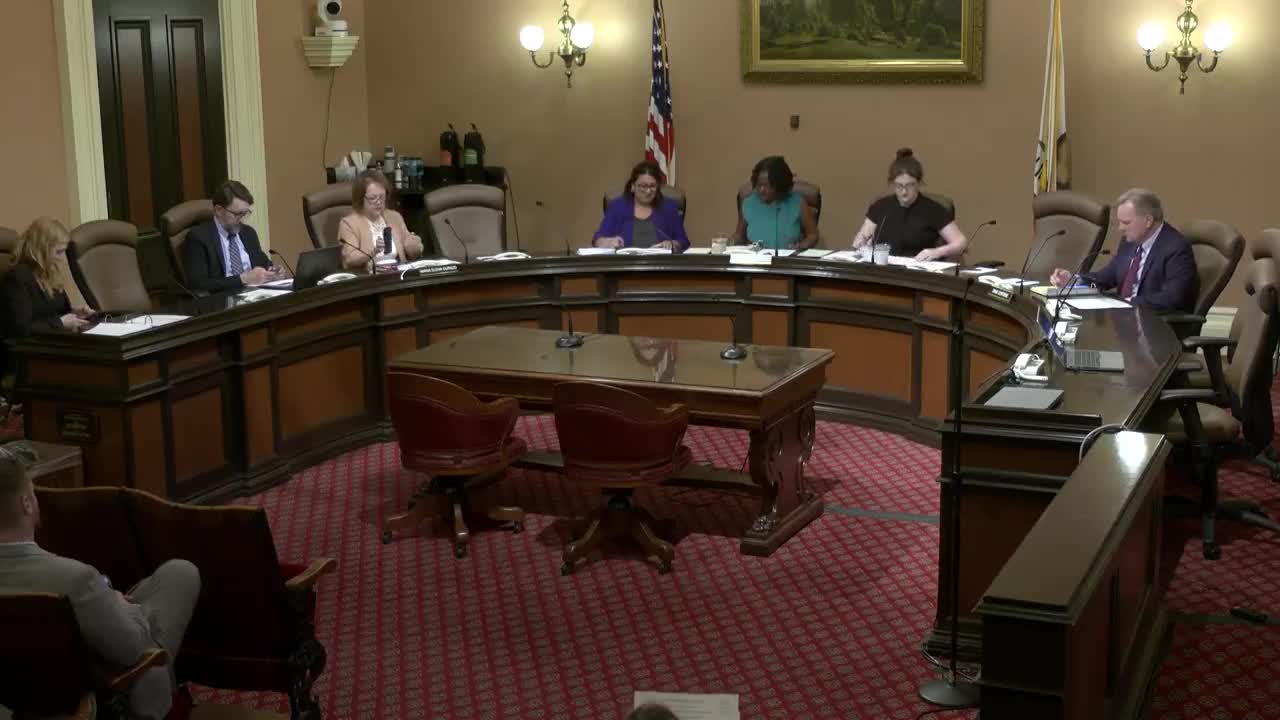
Senate Standing Committee on Labor, Public Employment and Retirement
 1MIN
Assembly Floor
 1MIN
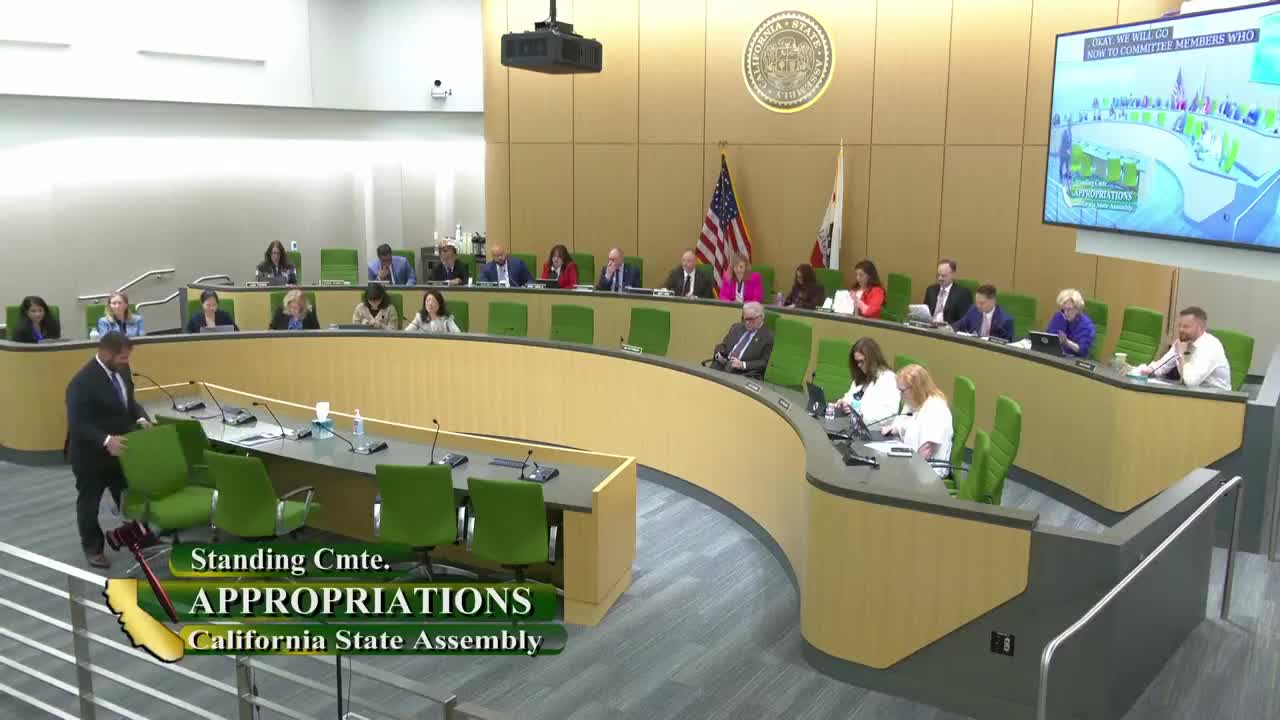
Assembly Standing Committee on Appropriations
 2MIN
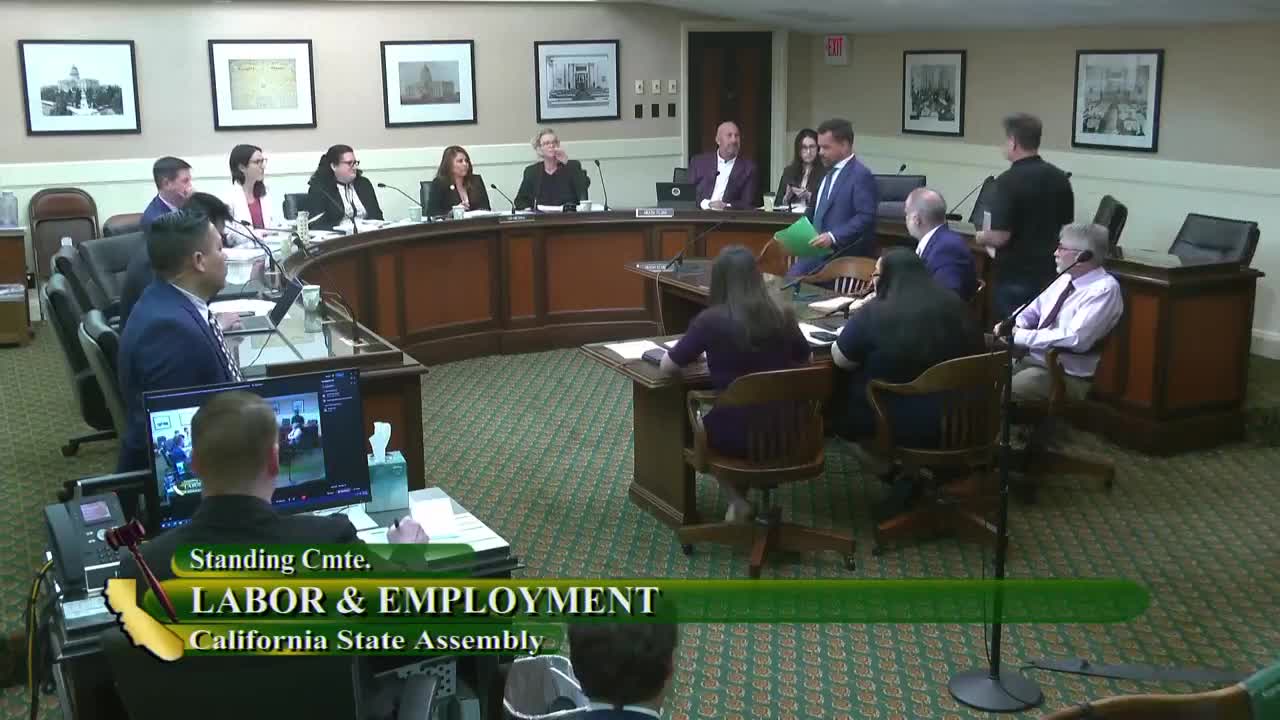
Assembly Standing Committee on Labor and Employment
Bill Author

Bill Co-Author(s):