AB 3217: Juveniles: Justice Through Placing Foster Children with Families Act.
- Session Year: 2023-2024
- House: Assembly
- Latest Version Date: 2024-06-24
Current Status:
Failed
(2024-08-15: In committee: Held under submission.)
Introduced
In Committee
First Chamber
In Committee
Second Chamber
Enacted
Existing law requires a county social worker to investigate the circumstances of each child taken into temporary custody by a peace officer under specified circumstances. Existing law requires the social worker to conduct an investigation, within 30 days of the childs removal, to identify and locate adult relatives of the child, as specified, and to provide them with a notification that the child has been removed from the custody of the childs parents, guardians, or Indian custodian, and an explanation of the various options to participate in the care and placement of the child.
This bill, the Justice Through Placing Foster Children with Families Act, would require each county, by January 30 of each year, to review publicly available data comparing the statewide national average rate of placing children with relatives in the prior year for comparison with the countys placement rate during the same period. The bill would require that, if the countys placement rate is less than the statewide average, the county welfare director, or their designee, shall, no later than December 1, communicate at least once with the county welfare directors of the 3 counties with the highest placement rates or their designees to compare best practices for family finding. Center for Excellence in Family Finding, Engagement, and Support to identify best practices that may be adopted by the county to improve its average rate placing children with relatives. The bill would require that each year a county has a rate of placing children with relatives that is less than the statewide average, the county board of supervisors of that county shall, county, at least once, include the topic topic, including whether the county has adopted best practices identified by the Center for Excellence in Family Finding, Engagement, and Support, for discussion on the agenda at a regularly noticed meeting of the full board. By increasing the duties of county welfare departments and county boards of supervisors, this bill would impose a state-mandated local program. The bill would make related findings and declarations.
The California Constitution requires the state to reimburse local agencies and school districts for certain costs mandated by the state. Statutory provisions establish procedures for making that reimbursement.
This bill would provide that no reimbursement is required by this act for a specified reason.
Existing law requires a county social worker to investigate the circumstances of each child taken into temporary custody by a peace officer under specified circumstances. Existing law requires the social worker to conduct an investigation, within 30 days of the childs removal, to identify and locate adult relatives of the child, as specified, and to provide them with a notification that the child has been removed from the custody of the childs parents, guardians, or Indian custodian, and an explanation of the various options to participate in the care and placement of the child.
This bill, the Justice through Through Placing Foster Children with Families Act, would require each county, by January 30 of each year, to review publicly available data comparing the statewide national average rate of placing children with relatives in the prior year for comparison with the countys placement rate during the same period. The bill would require that, if the countys placement rate is less than the statewide average by more than 10%, average, the county welfare director, or their designee, shall, no later than December 1, consult communicate at least once with the county welfare directors of the 3 counties with the highest placement rates or their designees to compare best practices for family finding. The bill would require that each year a county has a rate of placing children with relatives that is less than the statewide average, the county board of supervisors of that county shall, at least once, include the topic for discussion on the agenda at a regularly noticed meeting of the full board. By increasing the duties of county welfare departments, departments and county boards of supervisors, this bill would impose a state-mandated local program. The bill would make related findings and declarations.
The California Constitution requires the state to reimburse local agencies and school districts for certain costs mandated by the state. Statutory provisions establish procedures for making that reimbursement.This bill would provide that, if the Commission on State Mandates determines that the bill contains costs mandated by the state, reimbursement for those costs shall be made pursuant to the statutory provisions noted above.The California Constitution requires the state to reimburse local agencies and school districts for certain costs mandated by the state. Statutory provisions establish procedures for making that reimbursement.
This bill would provide that no reimbursement is required by this act for a specified reason.
Existing law requires a county social worker to investigate the circumstances of each child taken into temporary custody by a peace officer under specified circumstances. Existing law requires the social worker to conduct an investigation, within 30 days of the childs removal, to identify and locate adult relatives of the child, as specified, and to provide them with a notification that the child has been removed from the custody of the childs parents, guardians, or Indian custodian, and an explanation of the various options to participate in the care and placement of the child.
This bill, the Justice through Placing Foster Children with Families Act, would require each county, by January 30 of each year, to review publicly available data comparing the statewide national average rate of placing children with relatives in the prior year for comparison with the countys placement rate during the same period. The bill would require that, if the countys placement rate is less than the statewide average by more than 10%, the county welfare director, or their designee, shall, no later than December 1, consult with the county welfare directors of the 3 counties with the highest placement rates to compare best practices for family finding. By increasing the duties of county welfare departments, this bill would impose a state-mandated local program. The bill would make related findings and declarations.
The California Constitution requires the state to reimburse local agencies and school districts for certain costs mandated by the state. Statutory provisions establish procedures for making that reimbursement.
This bill would provide that, if the Commission on State Mandates determines that the bill contains costs mandated by the state, reimbursement for those costs shall be made pursuant to the statutory provisions noted above.
(a)This act shall be known as the Justice Through Placing Foster Children with Families Act.
(b)The Legislature finds and declares as follows:
(1)Among ethnic groups in California, Black children and Native American children become foster children at rates that far exceed their proportion of the population. For example, in California, 21 percent of foster children are Black.
(2)Black children comprise about 5 percent of the states children. Native American children comprise less than 1 percent of all California children but exceed 1 percent of children in foster care.
(3)The Legislature recognizes the Legislative Analysts Office has documented as follows:
(A)The proportions of Black and Native American youth in foster care are around four times larger than the proportions of Black and Native American youth in California overall.
(B)In addition, recent research on cumulative child welfare involvement of Californias 1999 birth cohort found nearly one in two Black and Native American children experienced some level of child welfare involvement by the time they turned 18 (compared to around 29 percent of Hispanic children, 22 percent of White children, and 13 percent of Asian/Pacific Islander children).
(C)Racial disproportionalities and disparities . . . persist at all levels of the system.
(c)(1)An effective way to address the racially discriminatory impact of Californias foster care is to promote strategies that result in children being placed with family members rather than strangers.
(2)The Legislature acknowledges that Casey Family Programs has stated:
(A)Numerous studies have established the benefits of kinship care. The research demonstrates that compared to non-kin foster care, kinship care yields greater placement stability, lower rates of re-abuse, better behavioral health, and a higher likelihood of permanency. Despite these findings, child protection agencies place only about one-third of children in formal out-of-home care with kin, and the rates vary significantly among jurisdictions across the country.
(B)A strong cultural identity can lead to greater self-esteem, higher education levels, increase in coping abilities, and decreased levels of loneliness and depression for youth in foster care.
(C)States other than California have placed a higher priority on placing children with family. For example, Tennessee requires the approval of a Kinship Exception Request form to before a child is placed in a non-kin home. In New York, if a child is not placed with relatives or kin, there is a secondary review by a person in a supervisory or managerial role to confirm efforts were taken to find an appropriate and available kinship placement.
(D)One recommendation to improve family placement is to routinely review, aggregate, and disseminate data and evidence about kinship families to fully understand how to continuously support these valued caregivers. It is important to consistently review data to understand what can be changed to better support kinship families.
SEC. 2.Section 309 of the Welfare and Institutions Code is amended to read:309.(a)Upon delivery to the social worker of a child who has been taken into temporary custody under this article, the social worker shall immediately investigate the circumstances of the child and the facts surrounding the childs being taken into custody and attempt to maintain the child with the childs family through the provision of services. The social worker shall immediately release the child to the custody of the childs parent, guardian, Indian custodian, or relative, regardless of the parents, guardians, Indian custodians, or relatives immigration status, unless one or more of the following conditions exist:
(1)The child has no parent, guardian, Indian custodian, or relative willing to provide care for the child.
(2)Continued detention of the child is a matter of immediate and urgent necessity for the protection of the child and there are no reasonable means by which the child can be protected in their home or the home of a relative.
(3)If it is known or there is reason to know the child is an Indian child, the child has been physically removed from the custody of a parent or parents or an Indian custodian, continued detention of the child continues to be necessary to prevent imminent physical damage or harm to the child, and there are no reasonable means by which the child can be protected if maintained in the physical custody of their parent or parents or Indian custodian.
(4)There is substantial evidence that a parent, guardian, or Indian custodian of the child is likely to flee the jurisdiction of the court, and, in the case of an Indian child, fleeing the jurisdiction will place the child at risk of imminent physical damage or harm.
(5)The child has left a placement in which the child was placed by the juvenile court.
(6)The parent or other person having lawful custody of the child voluntarily surrendered physical custody of the child pursuant to Section 1255.7 of the Health and Safety Code and did not reclaim the child within the 14-day period specified in subdivision (g) of that section.
(b)In any case in which there is reasonable cause for believing that a child who is under the care of a physician and surgeon or a hospital, clinic, or other medical facility, cannot be immediately moved, and is a person described in Section 300, the child shall be deemed to have been taken into temporary custody and delivered to the social worker for the purposes of this chapter while the child is at the office of the physician and surgeon or the medical facility.
(c)If the child is not released to their parent or guardian, the child shall be deemed detained for purposes of this chapter.
(d)(1)If a relative, as defined in Section 319, an extended family member of an Indian child, as defined in Section 224.1 and Section 1903 of the federal Indian Child Welfare Act of 1978 (25 U.S.C. Sec. 1901 et seq.), or a nonrelative extended family member, as defined in Section 362.7, is available and requests emergency placement of the child pending the detention hearing, or after the detention hearing and pending the dispositional hearing conducted pursuant to Section 358, the county welfare department shall initiate an assessment of the relatives or nonrelative extended family members suitability for emergency placement pursuant to Section 361.4.
(2)Upon completion of the assessment pursuant to Section 361.4, the child may be placed in the home on an emergency basis. Following the emergency placement of the child, the county welfare department shall evaluate and approve or deny the home pursuant to Section 16519.5. If the home in which the Indian child is placed is licensed or approved by the childs tribe, the provisions of Section 16519.5 do not apply for further approval. The county shall require the relative or nonrelative extended family member to submit an application for approval as a resource family and initiate the home environment assessment no later than five business days after the placement.
(3)If the sole issue preventing an emergency placement of a child with a relative or nonrelative extended family member is a lack of resources, including, but not limited to, physical items such as cribs and car seats, the agency shall use reasonable efforts to assist the relative or nonrelative extended family member in obtaining the necessary items within existing available resources. The department shall work with counties and stakeholders to issue guidance regarding reasonable efforts requirements.
(e)(1)If the child is removed, the social worker shall conduct, within 30 days, an investigation in order to identify and locate all grandparents, parents of a sibling of the child, if the parent has legal custody of the sibling, adult siblings, other adult relatives of the child, as defined in paragraph (2) of subdivision (h) of Section 319, including any other adult relatives suggested by the parents, and, if it is known or there is reason to know the child is an Indian child, any extended family members, as defined in Section 224.1 and Section 1903 of the federal Indian Child Welfare Act of 1978 (25 U.S.C. Sec. 1901 et seq.). As used in this section, sibling means a person related to the identified child by blood, adoption, or affinity through a common legal or biological parent. The social worker shall provide to all adult relatives who are located, except when that relatives history of family or domestic violence makes notification inappropriate, within 30 days of removal of the child, written notification and shall also, whenever appropriate, provide oral notification, in person or by telephone, of all the following information:
(A)The child has been removed from the custody of their parent or parents, guardian or guardians, or Indian custodian.
(B)An explanation of the various options to participate in the care and placement of the child and support for the childs family, including any options that may be lost by failing to respond. The notice shall provide information about providing care for the child while the family receives reunification services with the goal of returning the child to the parent or guardian, how to become a resource family, and additional services and support that are available in out-of-home placements, and, if it is known or there is reason to know the child is an Indian child, the option of obtaining approval for placement through the tribes license or approval procedure. The notice shall also include information regarding the Kin-GAP Program (Article 4.5 (commencing with Section 11360) of Chapter 2 of Part 3 of Division 9), the CalWORKs program for approved relative caregivers (Chapter 2 (commencing with Section 11200) of Part 3 of Division 9), adoption, and adoption assistance (Chapter 2.1 (commencing with Section 16115) of Part 4 of Division 9), as well as other options for contact with the child, including, but not limited to, visitation. The State Department of Social Services, in consultation with the County Welfare Directors Association of California and other interested stakeholders, shall develop the written notice.
(2)The social worker shall also provide the adult relatives notified pursuant to paragraph (1) with a relative information form to provide information to the social worker and the court regarding the needs of the child. The form shall include a provision whereby the relative may request the permission of the court to address the court, if the relative so chooses. The Judicial Council, in consultation with the State Department of Social Services and the County Welfare Directors Association of California, shall develop the form.
(3)(A)The social worker shall use due diligence in investigating the names and locations of the relatives, as well as any parent and alleged parent, pursuant to paragraph (1), including, but not limited to, asking the child in an age-appropriate manner about any parent, alleged parent, and relatives important to the child, consistent with the childs best interest, and obtaining information regarding the location of the childs parents, alleged parents, and adult relatives. Each county welfare department shall do all of the following:
(i)Create and make public a procedure by which a parent and relatives of a child who has been removed from their parents or guardians may identify themselves to the county welfare department and the county welfare department shall provide parents and relatives with the notices required by paragraphs (1) and (2).
(ii)Notify the State Department of Social Services, on or before January 1, 2024, in an email or other correspondence, whether it has adopted one of the suggested practices for family finding described in All-County Letter 18-42 and, generally, whether the practice has been implemented through training, memoranda, manuals, or comparable documents. If a county welfare department has not adopted one of the suggested practices for family finding described in All-County Letter 18-42, the county welfare department shall provide a copy to the State Department of Social Services of its existing family finding policies and practices, as reflected in memoranda, handbooks, manuals, training manuals, or any other document, that are in existence prior to January 1, 2022.
(iii)Each county shall, by January 30 of each year, review publicly available data data, which may include data from the California Child Welfare Indicators Project, comparing the statewide average rate of placing children with relatives in the prior year and, in the case of Indian children, the statewide average rate of placing children according to the Indian Child Welfare Act placement preferences, as described in subdivision (b) of Section 361.31, for comparison with the countys placement rate during the same period. If the countys rate is less than the statewide average, the county welfare director, or their designee, shall, no later than December 1, communicate at least once with the county welfare directors of the three counties with the highest placement rates or their designees to compare best practices for family finding. Center for Excellence in Family Finding, Engagement, and Support to identify best practices that may be adopted by the county to improve its average rate placing children with relatives. For purposes of this subparagraph, communication includes email, video conference, or phone call.
(B)The due diligence required under subparagraph (A) shall include family finding. For purposes of this section, family finding means conducting an investigation, including, but not limited to, through a computer-based search engine, to identify relatives and kin and to connect a child or youth, who may be disconnected from their parents, with those relatives and kin in an effort to provide family support and possible placement. If it is known or there is reason to know that the child is an Indian child, as defined by Section 224.1, family finding also includes contacting the Indian childs tribe to identify relatives and kin.
(f)Each year that, based on publicly available data, a county has a rate of placing children with relatives that is less than the statewide average, or, in the case of Indian children, the statewide average rate of placing children according to the Indian Child Welfare Act placement preferences, as described in subdivision (b) of Section 361.31, the board of supervisors of that county shall, at least once, include the topic for discussion discussion, including whether the county has adopted best practices identified by the Center for Excellence in Family Finding, Engagement, and Support, as described in clause (iii) of subparagraph (A) of paragraph (3) of subdivision (e), on the agenda of a regularly noticed meeting of the full board.
SEC. 3.To the extent that this act has an overall effect of increasing the costs already borne by a local agency for programs or levels of service mandated by the 2011 Realignment Legislation within the meaning of Section 36 of Article XIII of the California Constitution, it shall apply to local agencies only to the extent that the state provides annual funding for the cost increase. Any new program or higher level of service provided by a local agency pursuant to this act above the level for which funding has been provided shall not require a subvention of funds by the state or otherwise be subject to Section 6 of Article XIIIB of the California Constitution.
(a)This act shall be known as the Justice through Through Placing Foster Children with Families Act.
(b)The Legislature finds and declares as follows:
(1)Among ethnic groups in California, Black children and Native American children become foster children at rates that far exceed their proportion of the population. For example, in California, 21 percent of foster children are Black.
(2)Black children comprise about 5 percent of the states children. Native American children comprise less than 1 percent of all California children but exceed 1 percent of children in foster care.
(3)The Legislature recognizes the Legislative Analysts Office has documented as follows:
(A)The proportions of Black and Native American youth in foster care are around four times larger than the proportions of Black and Native American youth in California overall.
(B)In addition, recent research on cumulative child welfare involvement of Californias 1999 birth cohort found nearly one in two Black and Native American children experienced some level of child welfare involvement by the time they turned 18 (compared to around 29 percent of Hispanic children, 22 percent of White children, and 13 percent of Asian/Pacific Islander children).
(C)Racial disproportionalities and disparities . . . persist at all levels of the system.
(c)(1)An effective way to address the racially discriminatory impact of Californias foster care is to promote strategies that result in children being placed with family members rather than strangers.
(2)The Legislature acknowledges that Casey Family Programs has stated:
(A)Numerous studies have established the benefits of kinship care. The research demonstrates that compared to non-kin foster care, kinship care yields greater placement stability, lower rates of re-abuse, better behavioral health, and a higher likelihood of permanency. Despite these findings, child protection agencies place only about one-third of children in formal out-of-home care with kin, and the rates vary significantly among jurisdictions across the country.
(B)A strong cultural identity can lead to greater self-esteem, higher education levels, increase in coping abilities, and decreased levels of loneliness and depression for youth in foster care.
(C)States other than California have placed a higher priority on placing children with family. For example, Tennessee requires the approval of a Kinship Exception Request form to before a child is placed in a non-kin home. In New York, if a child is not placed with relatives or kin, there is a secondary review by a person in a supervisory or managerial role to confirm efforts were taken to find an appropriate and available kinship placement.
(D)One recommendation to improve family placement is to routinely review, aggregate, and disseminate data and evidence about kinship families to fully understand how to continuously support these valued caregivers. It is important to consistently review data to understand what can be changed to better support kinship families.
SEC. 2.Section 309 of the Welfare and Institutions Code is amended to read:309.(a)Upon delivery to the social worker of a child who has been taken into temporary custody under this article, the social worker shall immediately investigate the circumstances of the child and the facts surrounding the childs being taken into custody and attempt to maintain the child with the childs family through the provision of services. The social worker shall immediately release the child to the custody of the childs parent, guardian, Indian custodian, or relative, regardless of the parents, guardians, Indian custodians, or relatives immigration status, unless one or more of the following conditions exist:
(1)The child has no parent, guardian, Indian custodian, or relative willing to provide care for the child.
(2)Continued detention of the child is a matter of immediate and urgent necessity for the protection of the child and there are no reasonable means by which the child can be protected in their home or the home of a relative.
(3)If it is known or there is reason to know the child is an Indian child, the child has been physically removed from the custody of a parent or parents or an Indian custodian, continued detention of the child continues to be necessary to prevent imminent physical damage or harm to the child, and there are no reasonable means by which the child can be protected if maintained in the physical custody of their parent or parents or Indian custodian.
(4)There is substantial evidence that a parent, guardian, or Indian custodian of the child is likely to flee the jurisdiction of the court, and, in the case of an Indian child, fleeing the jurisdiction will place the child at risk of imminent physical damage or harm.
(5)The child has left a placement in which the child was placed by the juvenile court.
(6)The parent or other person having lawful custody of the child voluntarily surrendered physical custody of the child pursuant to Section 1255.7 of the Health and Safety Code and did not reclaim the child within the 14-day period specified in subdivision (g) of that section.
(b)In any case in which there is reasonable cause for believing that a child who is under the care of a physician and surgeon or a hospital, clinic, or other medical facility, cannot be immediately moved, and is a person described in Section 300, the child shall be deemed to have been taken into temporary custody and delivered to the social worker for the purposes of this chapter while the child is at the office of the physician and surgeon or the medical facility.
(c)If the child is not released to their parent or guardian, the child shall be deemed detained for purposes of this chapter.
(d)(1)If a relative, as defined in Section 319, an extended family member of an Indian child, as defined in Section 224.1 and Section 1903 of the federal Indian Child Welfare Act of 1978 (25 U.S.C. Sec. 1901 et seq.), or a nonrelative extended family member, as defined in Section 362.7, is available and requests emergency placement of the child pending the detention hearing, or after the detention hearing and pending the dispositional hearing conducted pursuant to Section 358, the county welfare department shall initiate an assessment of the relatives or nonrelative extended family members suitability for emergency placement pursuant to Section 361.4.
(2)Upon completion of the assessment pursuant to Section 361.4, the child may be placed in the home on an emergency basis. Following the emergency placement of the child, the county welfare department shall evaluate and approve or deny the home pursuant to Section 16519.5. If the home in which the Indian child is placed is licensed or approved by the childs tribe, the provisions of Section 16519.5 do not apply for further approval. The county shall require the relative or nonrelative extended family member to submit an application for approval as a resource family and initiate the home environment assessment no later than five business days after the placement.
(3)If the sole issue preventing an emergency placement of a child with a relative or nonrelative extended family member is a lack of resources, including, but not limited to, physical items such as cribs and car seats, the agency shall use reasonable efforts to assist the relative or nonrelative extended family member in obtaining the necessary items within existing available resources. The department shall work with counties and stakeholders to issue guidance regarding reasonable efforts requirements.
(e)(1)If the child is removed, the social worker shall conduct, within 30 days, an investigation in order to identify and locate all grandparents, parents of a sibling of the child, if the parent has legal custody of the sibling, adult siblings, other adult relatives of the child, as defined in paragraph (2) of subdivision (h) of Section 319, including any other adult relatives suggested by the parents, and, if it is known or there is reason to know the child is an Indian child, any extended family members, as defined in Section 224.1 and Section 1903 of the federal Indian Child Welfare Act of 1978 (25 U.S.C. Sec. 1901 et seq.). As used in this section, sibling means a person related to the identified child by blood, adoption, or affinity through a common legal or biological parent. The social worker shall provide to all adult relatives who are located, except when that relatives history of family or domestic violence makes notification inappropriate, within 30 days of removal of the child, written notification and shall also, whenever appropriate, provide oral notification, in person or by telephone, of all the following information:
(A)The child has been removed from the custody of their parent or parents, guardian or guardians, or Indian custodian.
(B)An explanation of the various options to participate in the care and placement of the child and support for the childs family, including any options that may be lost by failing to respond. The notice shall provide information about providing care for the child while the family receives reunification services with the goal of returning the child to the parent or guardian, how to become a resource family, and additional services and support that are available in out-of-home placements, and, if it is known or there is reason to know the child is an Indian child, the option of obtaining approval for placement through the tribes license or approval procedure. The notice shall also include information regarding the Kin-GAP Program (Article 4.5 (commencing with Section 11360) of Chapter 2 of Part 3 of Division 9), the CalWORKs program for approved relative caregivers (Chapter 2 (commencing with Section 11200) of Part 3 of Division 9), adoption, and adoption assistance (Chapter 2.1 (commencing with Section 16115) of Part 4 of Division 9), as well as other options for contact with the child, including, but not limited to, visitation. The State Department of Social Services, in consultation with the County Welfare Directors Association of California and other interested stakeholders, shall develop the written notice.
(2)The social worker shall also provide the adult relatives notified pursuant to paragraph (1) with a relative information form to provide information to the social worker and the court regarding the needs of the child. The form shall include a provision whereby the relative may request the permission of the court to address the court, if the relative so chooses. The Judicial Council, in consultation with the State Department of Social Services and the County Welfare Directors Association of California, shall develop the form.
(3)(A)The social worker shall use due diligence in investigating the names and locations of the relatives, as well as any parent and alleged parent, pursuant to paragraph (1), including, but not limited to, asking the child in an age-appropriate manner about any parent, alleged parent, and relatives important to the child, consistent with the childs best interest, and obtaining information regarding the location of the childs parents, alleged parents, and adult relatives. Each county welfare department shall do all of the following:
(i)Create and make public a procedure by which a parent and relatives of a child who has been removed from their parents or guardians may identify themselves to the county welfare department and the county welfare department shall provide parents and relatives with the notices required by paragraphs (1) and (2).
(ii)Notify the State Department of Social Services, on or before January 1, 2024, in an email or other correspondence, whether it has adopted one of the suggested practices for family finding described in All-County Letter 18-42 and, generally, whether the practice has been implemented through training, memoranda, manuals, or comparable documents. If a county welfare department has not adopted one of the suggested practices for family finding described in All-County Letter 18-42, the county welfare department shall provide a copy to the State Department of Social Services of its existing family finding policies and practices, as reflected in memoranda, handbooks, manuals, training manuals, or any other document, that are in existence prior to January 1, 2022.
(iii)Each county shall, by January 30 of each year, review publicly available data comparing the statewide average rate of placing children with relatives in the prior year and, in the case of Indian children, the statewide average rate of placing children according to the Indian Child Welfare Act placement preferences, as described in subdivision (b) of Section 361.31, for comparison with the countys placement rate during the same period. If the countys rate is less than the statewide average by more than 10 percent, average, the county welfare director, or their designee, shall, no later than December 1, consult communicate at least once with the county welfare directors of the three counties with the highest placement rates or their designees to compare best practices for family finding. For purposes of this subparagraph, communication includes email, video conference, or phone call.
(B)The due diligence required under subparagraph (A) shall include family finding. For purposes of this section, family finding means conducting an investigation, including, but not limited to, through a computer-based search engine, to identify relatives and kin and to connect a child or youth, who may be disconnected from their parents, with those relatives and kin in an effort to provide family support and possible placement. If it is known or there is reason to know that the child is an Indian child, as defined by Section 224.1, family finding also includes contacting the Indian childs tribe to identify relatives and kin.
(f)Each year that, based on publicly available data, a county has a rate of placing children with relatives that is less than the statewide average, or, in the case of Indian children, the statewide average rate of placing children according to the Indian Child Welfare Act placement preferences, as described in subdivision (b) of Section 361.31, the board of supervisors of that county shall, at least once, include the topic for discussion on the agenda of a regularly noticed meeting of the full board.
SEC. 3.If the Commission on State Mandates determines that this act contains costs mandated by the state, reimbursement to local agencies and school districts for those costs shall be made pursuant to Part 7 (commencing with Section 17500) of Division 4 of Title 2 of the Government Code.SEC. 3.To the extent that this act has an overall effect of increasing the costs already borne by a local agency for programs or levels of service mandated by the 2011 Realignment Legislation within the meaning of Section 36 of Article XIII of the California Constitution, it shall apply to local agencies only to the extent that the state provides annual funding for the cost increase. Any new program or higher level of service provided by a local agency pursuant to this act above the level for which funding has been provided shall not require a subvention of funds by the state or otherwise be subject to Section 6 of Article XIIIB of the California Constitution.
(a)This act shall be known as the Justice through Placing Foster Children with Families Act.
(b)The Legislature finds and declares as follows:
(1)Among ethnic groups in California, Black children and Native American children become foster children at rates that far exceed their proportion of the population. For example, in California, 21 percent of foster children are Black.
(2)Black children comprise about 5 percent of the states children. Native American children comprise less than 1 percent of all California children but exceed 1 percent of children in foster care.
(3)The Legislature recognizes the Legislative Analysts Office has documented as follows:
(A)The proportions of Black and Native American youth in foster care are around four times larger than the proportions of Black and Native American youth in California overall.
(B)In addition, recent research on cumulative child welfare involvement of Californias 1999 birth cohort found nearly one in two Black and Native American children experienced some level of child welfare involvement by the time they turned 18 (compared to around 29 percent of Hispanic children, 22 percent of White children, and 13 percent of Asian/Pacific Islander children).
(C)Racial disproportionalities and disparities . . . persist at all levels of the system.
(c)(1)An effective way to address the racially discriminatory impact of Californias foster care is to promote strategies that result in children being placed with family members rather than strangers.
(2)The Legislature acknowledges that Casey Family Programs has stated:
(A)Numerous studies have established the benefits of kinship care. The research demonstrates that compared to non-kin foster care, kinship care yields greater placement stability, lower rates of re-abuse, better behavioral health, and a higher likelihood of permanency. Despite these findings, child protection agencies place only about one-third of children in formal out-of-home care with kin, and the rates vary significantly among jurisdictions across the country.
(B)A strong cultural identity can lead to greater self-esteem, higher education levels, increase in coping abilities, and decreased levels of loneliness and depression for youth in foster care.
(C)States other than California have placed a higher priority on placing children with family. For example, Tennessee requires the approval of a Kinship Exception Request form to before a child is placed in a non-kin home. In New York, if a child is not placed with relatives or kin, there is a secondary review by a person in a supervisory or managerial role to confirm efforts were taken to find an appropriate and available kinship placement.
(D)One recommendation to improve family placement is to routinely review, aggregate, and disseminate data and evidence about kinship families to fully understand how to continuously support these valued caregivers. It is important to consistently review data to understand what can be changed to better support kinship families.
SEC. 2.Section 309 of the Welfare and Institutions Code is amended to read:309.(a)Upon delivery to the social worker of a child who has been taken into temporary custody under this article, the social worker shall immediately investigate the circumstances of the child and the facts surrounding the childs being taken into custody and attempt to maintain the child with the childs family through the provision of services. The social worker shall immediately release the child to the custody of the childs parent, guardian, Indian custodian, or relative, regardless of the parents, guardians, Indian custodians, or relatives immigration status, unless one or more of the following conditions exist:
(1)The child has no parent, guardian, Indian custodian, or relative willing to provide care for the child.
(2)Continued detention of the child is a matter of immediate and urgent necessity for the protection of the child and there are no reasonable means by which the child can be protected in their home or the home of a relative.
(3)If it is known or there is reason to know the child is an Indian child, the child has been physically removed from the custody of a parent or parents or an Indian custodian, continued detention of the child continues to be necessary to prevent imminent physical damage or harm to the child, and there are no reasonable means by which the child can be protected if maintained in the physical custody of their parent or parents or Indian custodian.
(4)There is substantial evidence that a parent, guardian, or Indian custodian of the child is likely to flee the jurisdiction of the court, and, in the case of an Indian child, fleeing the jurisdiction will place the child at risk of imminent physical damage or harm.
(5)The child has left a placement in which the child was placed by the juvenile court.
(6)The parent or other person having lawful custody of the child voluntarily surrendered physical custody of the child pursuant to Section 1255.7 of the Health and Safety Code and did not reclaim the child within the 14-day period specified in subdivision (g) of that section.
(b)In any case in which there is reasonable cause for believing that a child who is under the care of a physician and surgeon or a hospital, clinic, or other medical facility, cannot be immediately moved, and is a person described in Section 300, the child shall be deemed to have been taken into temporary custody and delivered to the social worker for the purposes of this chapter while the child is at the office of the physician and surgeon or the medical facility.
(c)If the child is not released to their parent or guardian, the child shall be deemed detained for purposes of this chapter.
(d)(1)If a relative, as defined in Section 319, an extended family member of an Indian child, as defined in Section 224.1 and Section 1903 of the federal Indian Child Welfare Act of 1978 (25 U.S.C. Sec. 1901 et seq.), or a nonrelative extended family member, as defined in Section 362.7, is available and requests emergency placement of the child pending the detention hearing, or after the detention hearing and pending the dispositional hearing conducted pursuant to Section 358, the county welfare department shall initiate an assessment of the relatives or nonrelative extended family members suitability for emergency placement pursuant to Section 361.4.
(2)Upon completion of the assessment pursuant to Section 361.4, the child may be placed in the home on an emergency basis. Following the emergency placement of the child, the county welfare department shall evaluate and approve or deny the home pursuant to Section 16519.5. If the home in which the Indian child is placed is licensed or approved by the childs tribe, the provisions of Section 16519.5 do not apply for further approval. The county shall require the relative or nonrelative extended family member to submit an application for approval as a resource family and initiate the home environment assessment no later than five business days after the placement.
(3)If the sole issue preventing an emergency placement of a child with a relative or nonrelative extended family member is a lack of resources, including, but not limited to, physical items such as cribs and car seats, the agency shall use reasonable efforts to assist the relative or nonrelative extended family member in obtaining the necessary items within existing available resources. The department shall work with counties and stakeholders to issue guidance regarding reasonable efforts requirements.
(e)(1)If the child is removed, the social worker shall conduct, within 30 days, an investigation in order to identify and locate all grandparents, parents of a sibling of the child, if the parent has legal custody of the sibling, adult siblings, other adult relatives of the child, as defined in paragraph (2) of subdivision (h) of Section 319, including any other adult relatives suggested by the parents, and, if it is known or there is reason to know the child is an Indian child, any extended family members, as defined in Section 224.1 and Section 1903 of the federal Indian Child Welfare Act of 1978 (25 U.S.C. Sec. 1901 et seq.). As used in this section, sibling means a person related to the identified child by blood, adoption, or affinity through a common legal or biological parent. The social worker shall provide to all adult relatives who are located, except when that relatives history of family or domestic violence makes notification inappropriate, within 30 days of removal of the child, written notification and shall also, whenever appropriate, provide oral notification, in person or by telephone, of all the following information:
(A)The child has been removed from the custody of their parent or parents, guardian or guardians, or Indian custodian.
(B)An explanation of the various options to participate in the care and placement of the child and support for the childs family, including any options that may be lost by failing to respond. The notice shall provide information about providing care for the child while the family receives reunification services with the goal of returning the child to the parent or guardian, how to become a resource family, and additional services and support that are available in out-of-home placements, and, if it is known or there is reason to know the child is an Indian child, the option of obtaining approval for placement through the tribes license or approval procedure. The notice shall also include information regarding the Kin-GAP Program (Article 4.5 (commencing with Section 11360) of Chapter 2 of Part 3 of Division 9), the CalWORKs program for approved relative caregivers (Chapter 2 (commencing with Section 11200) of Part 3 of Division 9), adoption, and adoption assistance (Chapter 2.1 (commencing with Section 16115) of Part 4 of Division 9), as well as other options for contact with the child, including, but not limited to, visitation. The State Department of Social Services, in consultation with the County Welfare Directors Association of California and other interested stakeholders, shall develop the written notice.
(2)The social worker shall also provide the adult relatives notified pursuant to paragraph (1) with a relative information form to provide information to the social worker and the court regarding the needs of the child. The form shall include a provision whereby the relative may request the permission of the court to address the court, if the relative so chooses. The Judicial Council, in consultation with the State Department of Social Services and the County Welfare Directors Association of California, shall develop the form.
(3)(A)The social worker shall use due diligence in investigating the names and locations of the relatives, as well as any parent and alleged parent, pursuant to paragraph (1), including, but not limited to, asking the child in an age-appropriate manner about any parent, alleged parent, and relatives important to the child, consistent with the childs best interest, and obtaining information regarding the location of the childs parents, alleged parents, and adult relatives. Each county welfare department shall do both all of the following:
(i)Create and make public a procedure by which a parent and relatives of a child who has been removed from their parents or guardians may identify themselves to the county welfare department and the county welfare department shall provide parents and relatives with the notices required by paragraphs (1) and (2).
(ii)Notify the State Department of Social Services, on or before January 1, 2024, in an email or other correspondence, whether it has adopted one of the suggested practices for family finding described in All-County Letter 18-42 and, generally, whether the practice has been implemented through training, memoranda, manuals, or comparable documents. If a county welfare department has not adopted one of the suggested practices for family finding described in All-County Letter 18-42, the county welfare department shall provide a copy to the State Department of Social Services of its existing family finding policies and practices, as reflected in memoranda, handbooks, manuals, training manuals, or any other document, that are in existence prior to January 1, 2022.
(iii)Each county shall, by January 30 of each year, review publicly available data comparing the statewide average rate of placing children with relatives in the prior year for comparison with the countys placement rate during the same period. If the countys rate is less than the statewide average by more than 10 percent, the county welfare director, or their designee, shall, no later than December 1, consult with the county welfare directors of the three counties with the highest placement rates to compare best practices for family finding.
(B)The due diligence required under subparagraph (A) shall include family finding. For purposes of this section, family finding means conducting an investigation, including, but not limited to, through a computer-based search engine, to identify relatives and kin and to connect a child or youth, who may be disconnected from their parents, with those relatives and kin in an effort to provide family support and possible placement. If it is known or there is reason to know that the child is an Indian child, as defined by Section 224.1, family finding also includes contacting the Indian childs tribe to identify relatives and kin.
SEC. 3.If the Commission on State Mandates determines that this act contains costs mandated by the state, reimbursement to local agencies and school districts for those costs shall be made pursuant to Part 7 (commencing with Section 17500) of Division 4 of Title 2 of the Government Code.
|
Date
|
Status
|
|---|---|
| Aug 15, 2024 | In committee: Held under submission. |
| Jul 1, 2024 | In committee: Referred to suspense file. |
| Jun 24, 2024 | Read second time and amended. Re-referred to Com. on APPR. |
| Jun 20, 2024 | From committee: Amend, and do pass as amended and re-refer to Com. on APPR. (Ayes 5. Noes 0.) (June 17). |
| May 29, 2024 | Referred to Com. on HUMAN S. |
| May 22, 2024 | In Senate. Read first time. To Com. on RLS. for assignment. |
| May 21, 2024 | Read third time. Passed. Ordered to the Senate. (Ayes 74. Noes 0. Page 5351.) |
| May 16, 2024 | Read second time. Ordered to third reading. |
| May 15, 2024 | From committee: Do pass. (Ayes 15. Noes 0.) (May 15). |
| Apr 10, 2024 | From committee: Do pass and re-refer to Com. on APPR. (Ayes 6. Noes 0.) (April 9). Re-referred to Com. on APPR. |
| Apr 8, 2024 | Re-referred to Com. on HUM. S. |
| Apr 4, 2024 | From committee chair, with author's amendments: Amend, and re-refer to Com. on HUM. S. Read second time and amended. |
| Mar 11, 2024 | Referred to Com. on HUM. S. |
| Feb 17, 2024 | From printer. May be heard in committee March 18. |
| Feb 16, 2024 | Read first time. To print. |
|
Date
|
Description
|
Location
|
Votes
|
|
|---|---|---|---|---|
| Jul 1, 2024 | Placed on suspense file | Senate Standing Committee on Appropriations |
Passed |
|
| Jun 17, 2024 | Do pass as amended, but first amend, and re-refer to the Committee on [Appropriations] | Senate Standing Committee on Human Services |
Passed |
|
| Jun 17, 2024 | [06-18-2024] set for [First] hearing: Reconsideration of favorable vote granted | Senate Standing Committee on Human Services |
Passed |
|
| Jun 17, 2024 | Do pass as amended, but first amend, and re-refer to the Committee on [Appropriations] | Senate Standing Committee on Human Services |
Passed |
|
| May 21, 2024 | AB 3217 Bryan Assembly Third Reading | Assembly Floor |
Passed |
|
| May 15, 2024 | Do pass. | Assembly Standing Committee on Appropriations |
Passed |
|
| Apr 9, 2024 | Do pass and be re-referred to the Committee on [Appropriations] | Assembly Standing Committee on Human Services |
Passed |
This list shows positions taken on this bill by organizations on the date displayed, which is linked to the original source.
Positions by individuals are not included.
|
Organization
|
Position
|
Date
|
|---|---|---|
| Black Women Organized for Political Action | ** Support | |
| Black Youth Leadership Project | * Support | Jun 17, 2024 |
| Children Now | * Support | Apr 9, 2024 |
| Childrens Advocacy Institute | * Support | Jun 17, 2024 |
| County Welfare Directors Association Of California (Cwda) | * Support | Jun 18, 2024 |
| Dependency Legal Services | ** Support | |
| Essence of Black Girlhood Project | * Support | Apr 9, 2024 |
| Howard University | * Support | Apr 9, 2024 |
| Justice2Jobs | * Support | Apr 9, 2024 |
| NAACP Merced Chapter | ** Support | |
| North County Equity & Justice | * Support | Jun 17, 2024 |
| Pale Blue. | ** Support | |
| United College Action Network | * Support | Apr 9, 2024 |
SENATE COMMITTEE ON
Senator Anna Caballero, Chair
2023 - 2024 Regular Session
AB 3217 (Bryan) - Juveniles: Justice Through Placing Foster Children with Families Act
Version: | Policy Vote: |
Urgency: | Mandate: |
Hearing Date: | Consultant: |
Bill Summary:
AB 3217 would require counties to review statewide average rates of placing foster children with relatives, as specified.
Fiscal Impact:
Unknown potential General Fund cost pressures to fund counties for administration. Proposition 30 of 2012 provides that any legislation enacted after September 30, 2012 that has an overall effect of increasing the costs already borne by a local agency for realigned services applies to local agencies only to the extent that the State provides annual funding for the cost increase. Local agencies are not be obligated to provide programs or levels of service required by legislation above the level for which funding has been provided.
Background:
Under the child welfare services (CWS) system, social workers in each county receive reports of abuse or neglect, and investigate and resolve those reports. If it is determined that a child cannot remain in the home, even with family preservation and support services, the child comes under the jurisdiction of the county’s juvenile dependency court while the family is served by a CWS system social worker. This system seeks to ensure the safety and protection of these children, and where possible, preserve and strengthen families through visitation and family reunification. It is the state’s goal to reunify a foster child or youth with their biological family whenever possible.
Generally, if a child cannot be safely returned home after the time allotted for reunification services ends, the court terminates the parental rights of the child’s parents. The child’s case plan then focuses on permanency services, in an effort to connect the child to a permanent placement through adoption or guardianship. If an adoption or guardianship is not established, a child may remain in long-term foster care.
Current law requires, when a child is removed from their home, a social worker to use due diligence in investigating the names and locations of the relatives, as well as any parent and alleged parents, and requires each county welfare department to do both of the following:
- Create and make public a procedure by which a parent and relatives of a child who has been removed from their parents or guardians may identify themselves to the county welfare department, and to provide parents and relatives with specified notices; and,
- Notify the California Department of Social Services (CDSS), on or before January 1, 2024, in an email or other correspondence, whether it has adopted one of the suggested practices for family finding and, generally, whether the practice has been implemented. If a county welfare department has not adopted one of the suggested practices for family finding, the county welfare department must provide a copy to CDSS of its existing family finding policies and practices, as reflected in memoranda, handbooks, manuals, training manuals, or any other document.
Proposed Law:
Specific provisions of the bill would:
- Require each county, by January 30 of each year, to review publicly available data comparing the statewide average rate of placing children with relatives in the prior year and, in the case of Indian children, the statewide average rate of placing children according to the Indian Child Welfare Act placement preferences, as specified, for comparison with the county’s placement rate during the same period; and if the county’s rate is less than the statewide average, the county welfare director, or their designee, must no later than December 1, communicate at least once with the Center for Excellence in Family Finding, Engagement, and Support to identify best practices that may be adopted by the county to improve its average rate placing children with relatives.
- Require that each year that, based on publicly available data, a county has a rate of placing children with relatives that is less than the statewide average, or, in the case of Indian children, the statewide average rate of placing children according to the Indian Child Welfare Act placement preferences, as specified, the board of supervisors of that county must, at least once, include the topic for discussion, including whether the county has adopted best practices identified by the Center for Excellence in Family Finding, Engagement, and Support, on the agenda of a regularly noticed meeting of the full board.
-- END --
SENATE COMMITTEE ON HUMAN SERVICES
Senator Alvarado-Gil, Chair
2023 - 2024 Regular
Bill No: | AB 3217 | ||
Author: | Bryan | ||
Version: | April 4, 2024 | Hearing Date: | June 17, 2024 |
Urgency: | No | Fiscal: | Yes |
Consultant: | Heather Hopkins | ||
Subject: Juveniles: Justice Through Placing Foster Children with Families Act
SUMMARY
This bill creates the Justice Through Placing Foster Children with Families Act, which requires counties to review statewide average rates of placing children with relatives and take various actions if their county’s numbers are below the statewide average.
ABSTRACT
Existing Law:
- Establishes a state and local system of child welfare services, including foster care, for children who have been adjudged by the court to be at risk of abuse and neglect or have been abused or neglected, as specified. (WIC 202)
- States that the purpose of foster care law is to provide maximum safety and protection for children who are currently being physically, sexually, emotionally abused, neglected, or exploited, and to ensure the safety, protection, and physical and emotional well-being of children who are at risk of harm. (WIC 300.2)
- States the intent of the Legislature to preserve and strengthen a child’s family ties whenever possible, and to reunify a foster youth with their biological family whenever possible, or to provide a permanent placement alternative, such as adoption or guardianship. (WIC 16000)
- Requires, if a child is removed, the social worker to conduct, within 30 days an investigation in order to identify and locate all grandparents, parents of a sibling of the child, if the parent has legal custody of the sibling, adult siblings, other adult relatives of the child, including any other adult relatives suggested by the parents, and, if it is known or there is reason to know. (WIC 309(e)(1))
- Requires a social worker to use due diligence in investigating the names and locations of the relatives, as well as any parent and alleged parents, and requires each county welfare department to do both of the following:
- Create and make public a procedure by which a parent and relatives of a child who has been removed from their parents or guardians may identify themselves to the county welfare department, and requires the county welfare department to provide parents and relatives with specified notices; and,
- Notify CDSS, on or before January 1, 2024, in an email or other correspondence, whether it has adopted one of the suggested practices for family finding and, generally, whether the practice has been implemented. Requires, if a county welfare department has not adopted one of the suggested practices for family finding, the county welfare department to provide a copy to CDSS of its existing family finding policies and practices, as reflected in memoranda, handbooks, manuals, training manuals, or any other document. (WIC 309(e)(3))
- Create and make public a procedure by which a parent and relatives of a child who has been removed from their parents or guardians may identify themselves to the county welfare department, and requires the county welfare department to provide parents and relatives with specified notices; and,
- Defines “family finding” to mean conducting an investigation, including, but not limited to, through a computer-based search engine, to identify relatives and kin and to connect a child or youth, who may be disconnected from their parents, with those relatives and kin in an effort to provide family support and possible placement. If it is known or there is reason to know that the child is an Indian child, as defined, “family finding” also includes contacting the Indian child’s tribe to identify relatives and kin. (WIC 309(e)(3)(B))
- Requires preferential consideration be given to a request by a relative to have the child placed with the relative if the child has been removed from the physical custody of the child’s parent(s). (WIC 361.3(a))
- Requires, when placing a child in the home of a relative, an extended family member, or nonrelative extended family member (NREFM) on a temporary basis, the court to consider the recommendations of the social worker based on the assessment required by current law, including the results of a criminal records check and prior child abuse allegations, if any, before ordering that the child be placed with a relative or NREFM. (WIC 319(h)(3))
This Bill:
- Creates the Justice Through Placing Foster Children with Families Act.
- Makes legislative findings and declarations about the racial disparities in children in foster care and the benefits of kinship care.
- Requires each county, by January 30 of each year, to review publicly available data comparing the statewide average rate of placing children with relatives in the prior year for comparison with the county’s placement rate during the same period. If the county’s rate is less than the statewide average, the county welfare director, or their designee, shall, no later than December 1, communicate at least once with the county welfare directors of the three counties with the highest placement rates or their designees to compare best practices for family finding.
- Requires that each year that a county has a rate of placing children with relatives that is less than the statewide average the board of supervisors of that county shall, at least once, include the topic for discussion on the agenda of a regularly noticed meeting of the full board.
FISCAL IMPACT
According to the Assembly Appropriations Committee Analysis, “Ongoing General Fund costs, likely less than $25,000 annually statewide, for increased administrative workload to county child welfare agencies associated with the requirement for communicating best practices, including the time required for the under-performing counties to analyze data and communicate with the top performing counties.
“Although these are state-mandated costs, they are not reimbursable, but instead must be funded by the state pursuant to Proposition 30 (2012), which requires legislation enacted after September 30, 2012, that has an overall effect of increasing the costs already borne by a local agency for programs or levels of service mandated by realignment (including child welfare AB 3217 Page 2 services and foster care) to apply only to local agencies to the extent the state provides annual funding for the cost increase.”
BACKGROUND AND DISCUSSION
Purpose of the Bill:
According to the author, “Numerous studies over the years have shown that placing foster youth with loved ones leads to far better outcomes for that youth. Two years ago, our state made a $150 million investment for the Excellence in Family Finding, Engagement, and Support Program. AB 3217 is a simple measure that will ensure that counties that are falling behind in family placement rates are aware of the resources and guidance available to them and pursue best practices to ensure that young people in foster care are placed with loved ones, rather than strangers, in times of instability and trauma.”
Child Welfare Services (CWS)
The CWS system is an essential component of the state’s safety net. Social workers in each county receive reports of abuse or neglect, and investigate and resolve those reports. When a case is substantiated, a family is either provided with services to ensure a child’s well-being and avoid court involvement, or a child is removed and placed into foster care. In 2023, the state’s child welfare agencies received 433,571 reports of abuse or neglect. Of these, 47,845 reports contained allegations that were substantiated and 18,147 children were removed from their homes and placed into foster care via the CWS system.
After the county child welfare department becomes involved with families, approximately 12 months of services are provided to children who are able to remain safely in their home while the family receives services. This is considered family preservation services and the child does not come under the jurisdiction of the juvenile dependency court during this time.
If it is determined that a child cannot remain in the home, even with family preservation and support services, the child comes under the jurisdiction of the county’s juvenile dependency court while the family is served by a CWS system social worker. This system seeks to ensure the safety and protection of these children, and where possible, preserve and strengthen families through visitation and family reunification. It is the state’s goal to reunify a foster child or youth with their biological family whenever possible.
Generally, if a child cannot be safely returned home after the time allotted for reunification services ends, the court terminates the parental rights of the child’s parents. The child’s case plan then focuses on permanency services, in an effort to connect the child to a permanent placement through adoption or guardianship. If an adoption or guardianship is not established, a child may remain in long-term foster care. The child is always supposed to be placed in the most family like setting, with short-term residential treatment programs used only as necessary to provide intensive services. A child remains eligible for services for the length of their time in the child welfare system, time limits relate to the provision of services to the child’s parents.
In some circumstances, existing law allows the court to not provide reunification services at all, and parental rights are terminated without the opportunity for reunification. These circumstances include, but are not limited to, the following examples: when the whereabouts of the parent are unknown; when the parent is suffering from a mental disability, as provided, that renders the parent incapable of utilizing those services; when the parent caused the death of another child through abuse or neglect; after a finding of sever sexual abuse; when the parent has been convicted of a violent felony, as provided; and in some instances where a prior child of the parent became a dependent of the court and was unable to reunify.
Kinship Care
Kinship care refers to care of a child by relatives. Research has shown that children placed with their own relatives and extended family members have greater placement stability, fewer emotional and behavioral problems, and more connections to their biological families and social-cultural communities. According to the Child Welfare Information Gateway[1], a government organization providing information and tools for improving child welfare practice, kinship care is the preferred option in most U.S. child welfare systems because it is the least restrictive, most family like placement for children. They further note that children in kinship care environments have fewer disruptions and overall better permanency outcomes than children in non-familial placements.
The Juvenile Law Center writes, “Kinship care must be sought more frequently and be a top priority for Black and Native families and other communities in the child welfare system that have been historically disenfranchised, ripped apart, and devalued throughout American history. The child welfare system must prioritize the kinship care model to ensure the care of children, promote equity among families, sustain family/familial relationships, and to protect, and preserve the culture and history of these communities.”[2]
Family Placement Rates Vary By County
California’s 58 counties are each unique, with small and large populations, small and large geographic districts, and rural and urban settings. Across these 58 counties, rates of family placement vary. The California Child Welfare Indicators Project[3] provides a comprehensive source of child welfare administrative data. According to the data available on their website, county placement rates, as determined by the percentage of foster children currently placed with relatives or non-relative extended family members at the point in time of January 1, 2024, vary from 12.6% in Stanislaus County to 50.2% in Orange County. The counties with the highest placement rates are: Orange County 50.2%; San Benito 50%; and Ventura 44.4%. Calculating the average family placement rate from the Indicators Project website, noting 11 counties did not have the relevant data available, came to 30.85%. Counties below that average rate are:
Stanislaus 12.6% | Del Norte 19.8% | Sutter 21.9% | Fresno 25.8% | Sonoma 27.4% |
Tehama 13.3% | Monterey 19.9% | Santa Clara 22.5% | Yolo 26.2% | Calaveras 28.3% |
Yuba 13.8% | Siskiyou 21.2% | Sacramento 23.6% | Butte 26.5% | Tulare 28.6% |
Mendocino 17.6% | San Mateo 21.7% | Contra Costa 23.8% | Madera 27.1% | Kern 29.6% |
This bill requires counties with below statewide average placement rates to communicate with one of the top three counties to compare best practices for family finding.
Related/Prior Legislation:
AB 448 (Juan Carrillo, 2023) was similar to this bill, but had an additional requirement for the social worker to conduct immediately, but no later than 30 days after the child has been removed, an investigation in order to identify and locate all relatives of the child, and to document their efforts to the court, and in the case of an Indian child, the active efforts and results of those efforts to locate relatives or kin. AB 448 was vetoed.
SB 384 (Cortese, Chapter 811, Statutes of 2022) required each county welfare and probation department to notify CDSS whether it has adopted one of the suggested practices for family finding, as described, and how the practice has been implemented. Required a county who has not adopted one of the suggested practices to provide a copy of its existing family finding policies and practices to CDSS. Includes “family finding” activities within the due diligence required of a social worker and probation officer when investigating the names and locations of relatives.
SB 1091 (Hurtado, 2022) would have required that funds, appropriated by the Legislature for this purpose, be available to fund new or expanded family finding and engagement techniques and would have required CDSS to fund contracts with community-based organizations or to provide local assistance allocations to counties or Indian tribes, or both. SB 1091 would have further required CDSS to convene a leadership team to develop recommendations relating to family finding and engagement as provided. SB 1091 was set to be heard by the Assembly Appropriations Committee but the hearing was cancelled by the author.
AB 2579 (Bennet, 2022) would have required county placing agencies to implement model practices for intensive family finding and support for foster children, children detained but not adjudicated, and candidates for foster care. The bill would have further required counties to submit a plan to CDSS as a condition of receiving funding for these purposes. AB 2579 was held in the Senate Appropriations Committee.
SB 354 (Skinner, Chapter 687, Statutes of 2021) adopted changes to the criminal background check process during the resources family approval process for relatives of children placed in the child welfare system. SB 354 further permitted the court to authorize placement of children with relatives in certain circumstances, regardless of the status of any criminal exemption or resource family approval; and, required, no later than January 1, 2024, CDSS to submit a report to the Legislature related to criminal record exemptions, as specified.
SB 1336 (Jackson, Chapter 890, Statutes of 2016) required the juvenile court to make a finding as to whether the social worker exercised due diligence in conducting their investigation to identify, locate, and notify the child’s relatives, including whether specific actions were taken.
AB 1761 (Hall, Chapter 765, Statutes of 2014) clarified that the placement priority for relatives and NREFM applies both prior to the detention hearing and also after the detention hearing and prior to the dispositional hearing.
AB 2391 (Calderon, 2014) would have required the county social worker and the court, when determining whether placement with a relative is appropriate, to consider specified factors, and would have required that consideration for placement with a relative subsequent to a disposition hearing be given again without regard to whether a new placement of a child must be made. AB 2391 was referred to the Senate Judiciary Committee but was not set for hearing.
COMMENTS
This bill seeks to increase family placement rates in the dependency system by requiring counties with below average placement rates to communicate with one of the top three family placement counties. Does it make sense for rural and geographically vast counties to have to contact far more urban and densely populated counties for information on how to improve family placement numbers? Would counties more similar in size and setting have more relevant lessons and information? Does it place an undue burden on the top three counties to have 20 counties contacting them to compare best practices for family finding?
This bill further requires that each year that a county has a rate of placing children with relatives that is less than the statewide average the board of supervisors of that county shall, at least once, include the topic for discussion on the agenda of a regularly noticed meeting of the full board. Without providing any specific guidance as to what the agendizing of this topic requires, it is unclear if it will have any effect on changing policies to increase family placement rates.
Proposed Amendments: The author has agreed to the following committee amendments”
(iii) Each county shall, by January 30 of each year, review publicly available data, which may include data from the California Child Welfare Indicators Project, comparing the statewide average rate of placing children with relatives in the prior year and, in the case of Indian children, the statewide average rate of placing children according to the Indian Child Welfare Act placement preferences, as described in subdivision (b) of Section 361.31, for comparison with the county’s placement rate during the same period. If the county’s rate is less than the statewide average, the county welfare director, or their designee, shall, no later than December 1, communicate at least once with the Center for Excellence in Family Finding, Engagement, and Support to identify best practices that may be adopted by the county to improve its average rate of placing children with relatives. . For purposes of this subparagraph, communication includes email, video conference, or phone call.
(B) The due diligence required under subparagraph (A) shall include family finding. For purposes of this section, “family finding” means conducting an investigation, including, but not limited to, through a computer-based search engine, to identify relatives and kin and to connect a child or youth, who may be disconnected from their parents, with those relatives and kin in an effort to provide family support and possible placement. If it is known or there is reason to know that the child is an Indian child, as defined by Section 224.1, “family finding” also includes contacting the Indian child’s tribe to identify relatives and kin.
(f) Each year that, based on publicly available data, a county has a rate of placing children with relatives that is less than the statewide average, or, in the case of Indian children, the statewide average rate of placing children according to the Indian Child Welfare Act placement preferences, as described in subdivision (b) of Section 361.31, the board of supervisors of that county shall, at least once, include the topic for discussion, including whether the county has adopted best practices identified by the Center for Excellence as described in subparagraph (e)(2)(iii), on the agenda of a regularly noticed meeting of the full board.
PRIOR VOTES
| |
Assembly Floor: | 74 - 0 |
Assembly Appropriations Committee: | 15 - 0 |
Assembly Human Services Committee: | 6 - 0 |
POSITIONS
Support:
Childrens Advocacy Institute (Sponsor)
Black Women Organized for Political Action (BWOPA)
Children Now
Dependency Legal Services
Howard Advocacy, INC.
Justice2jobs Coalition
Oppose:
County Welfare Directors Association of California
-- END --
ASSEMBLY THIRD READING
ATR Bill Id:AB 3217
Author:(Bryan)
As Amended Ver:April 4, 2024
Majority vote
SUMMARY
Requires each county to annually review data comparing the statewide average rate of foster youth placed with relatives, for comparison with the county's placement rate. Requires the county welfare director, if a county's rate is less than the statewide average, to communicate with counties with the highest placement rates to compare best practices. Further requires, if a county has a rate of placing children with relatives below the statewide average, the board of supervisors to include the topic for discussion on the agenda of a board meeting.
Major Provisions
- Requires each county, by January 30 of each year, to review publicly available data comparing the statewide average rate of placing children with relatives in the prior year and, in the case of Indian children, the statewide average rate of placing children according to the Indian Child Welfare Act (ICWA) placement preferences, for comparison with the county's placement rate during the same period.
- Requires, if the county's rate is less than the statewide average, the county welfare director, or their designee, no later than December 1, to communicate at least once with the county welfare directors of the three counties with the highest placement rates or their designees to compare best practices for family finding.
- Specifies that communication includes email, video conference, or phone call.
- Requires, if each year that, based on publicly available data, a county has a rate of placing children with relatives that is less than the statewide average, or, in the case of Indian children, placing children according to ICWA, the county board of supervisors to, at least once, include the topic for discussion on the agenda of a regularly noticed meeting of the full board.
- Makes findings and declarations related to the racial and ethnic disproportionality that exists within the foster care system among Black and Native American children in California and the recommendation to consistently review data to understand what can be changed to better support kinship families.
COMMENTS
Background: Continuum of Care Reform (CCR). Beginning in 2015, California enacted legislation, known as CCR, to improve placement and treatment options for youth in foster care. AB 403 (Stone), Chapter 773, Statutes of 2015, sponsored by California Department of Social Services (CDSS), sought to improve outcomes for children and youth served by the child welfare services system by working to ensure that foster youth have their day-to-day physical, mental, and emotional needs met, that they have the opportunity to grow up in permanent and supportive homes and have the opportunities necessary to become self-sufficient and successful adults. CCR also sought to reduce the use of congregate care as a frequently used placement option for youth, as data have demonstrated that youth placed in congregate care settings experience poorer outcomes than youth placed in family settings.
Family Finding and Due Diligence. It has long been the goal of the child welfare services system to preserve familial ties whenever possible. Under certain circumstances, family maintenance services are provided to families in order to prevent the removal of children from their parents' home, including family therapy, parenting classes, or substance use treatment. However, in instances when a youth is removed from the custody of their parents and placed in the child welfare services system, county social workers are required to locate any relatives or non-relative extended family members (NREFMs) who may serve as caregivers to the youth.
Data from the California Child Welfare Indicators Project reveals a wide discrepancy in relative placement rates across counties in California. While the state average is 34%, Los Angeles County, which has one-third of California's foster youth population, has a relative placement rate of 40%. Orange County places 47% of foster youth with relatives, Alameda County stands at 34%, and San Diego County at 30%. Sacramento County, with 22%, has the lowest placement rate with relatives among all counties and is not only lower than the state average, it is also significantly lower than the national average of 35.5%.
This bill will require the director of any county welfare agency with a relative placement rate that is less than the statewide average to confer about best practices with the county welfare directors of the counties with the top three placement rates. Counties with below average rates will also be required to agendize the matter for board discussion at least once a year.
According to All County Letter (ACL) No. 18-42, distributed by CDSS, family finding and engagement is defined as a broad concept which encompasses not only the statutory requirements pertaining to identifying, locating, and notifying the relatives of a child in foster care, but also related efforts to foster life-long familial connections for children and youth in care. The ACL further describes these additional efforts, which are meant to enhance the long-term well-being of children and youth in care, as an important component of CCR's goal to reduce the use of congregate care and improve child welfare outcomes. Intensive family finding and engagement can be used by counties to identify possible relative or NREFM placements for children and youth currently placed in group homes, potentially allowing those children and youth to step down to a home-based care setting, consistent with the goals of CCR. Counties are also urged to seek out the practice of family finding and engagement above and beyond the statutorily required relative finding, to be used when opening a case as a way to identify the best possible placement for the child or youth.
Existing law requires the juvenile court, during the dispositional hearing for a dependent child, to make a finding that the child's social worker has exercised due diligence in identifying, locating, and notifying the child's relatives. As of January 1, 2017, all new relative home placements were required to meet Resource Family Approval (RFA) standards, and counties are encouraged to consider the likelihood that a relative will be able to meet those standards when evaluating that possibility. Existing law also provides for a process to place with a relative, either on an emergency basis or based on a compelling reason, prior to full RFA approval.
Social workers are required to use due diligence in their efforts to identify, locate, and notify relatives up to the fifth degree of kinship and to include paternal relatives, with the exception of relatives for whom a history of domestic violence has been determined.
This bill would additionally require counties by January 30 of each year, to review data comparing the statewide average of relative placement in the prior year with their own county's relative placement rate. This additional requirement adds an element of accountability to the requirements for counties to use due diligence in their efforts to place foster youth with relatives by also requiring each county to compare their relative placement rates against the statewide average.
Center for Excellence in Family Finding, Engagement, and Support. As a result of AB 207, (Committee on Budget), Chapter 573, Statutes of 2022, CDSS contracted with the University of California, Davis to launch the Center for Excellence in Family Finding, Engagement, and Support (CFE) to support efforts to keep children and youth connected to their biological and extended families. The CFE was designed to provide multi-tiered, culturally appropriate training and technical assistance, such as conducting evidence-based, organization-specific assessments of implementation activities, and strengthening trauma-informed practices and programs related to family finding and engagement.
The Excellence in Family Finding, Engagement, and Support (EFFES) is an opt-in program offered through the CFE. The CFE will provide training and technical assistance for counties and Tribes that have opted to participate in the EFFES program. Specialized trainings and support will be available to county welfare agencies, probation departments, participating tribes, and foster care providers to enhance their practices, policies, and efforts for family finding, support, and engagement. The CFE will also provide training on how to engage children and young people in the family finding process utilizing family finding and engagement and permanency subject matter experts.
Equity Implications: Research indicates that by improving relative placement rates in California, outcomes for all children and families, and in particular, Black children and families who are overrepresented in the foster care system, will also improve. According to the Legislative Analyst Office (LAO) in a March 2022 publication, the proportions of Black and Native American youth in foster care are around four times larger than the proportions of Black and Native American youth in California overall. In addition, recent research on cumulative child welfare involvement of California's 1999 birth cohort found nearly one in two Black and Native American children experienced some level of child welfare involvement by the time they turned 18 years of age (compared to around 29% of Latino children, 22% of White children, and 13% of Asian/Pacific Islander children). The LAO states that this same research also found that California children with public insurance (Medi-Cal) experienced child welfare involvement at more than twice the rate of those with private insurance. Because of the disproportionality across all aspects of the child welfare system - not just in foster care - but also child protective services involvement, prioritizing placement of a foster youth with their family members or other responsible adults who are known to the child has been seen as a way to address this issue by ensuring that these vulnerable youth are placed with family when possible.
According to the Author
"Numerous studies over the years have shown that placing foster youth with loved ones leads to far better outcomes for that youth. Two years ago, our state made a $150 million investment for the Excellence in Family Finding, Engagement, and Support Program. [This bill] is a simple measure that will ensure that counties that are falling behind in family placement rates are aware of the resources and guidance available to them and pursue best practices to ensure that young people in foster care are placed with loved ones, rather than strangers, in times of instability and trauma."
Arguments in Support
According to the Children's Advocacy Institute at the University of San Diego School of Law, sponsor of this bill, "Against a backdrop of i) vast discrepancies in how successfully counties place foster children with family members, ii) the documented and enduring benefits for children of being placed with their family, and iii) the disproportionate number of children of color in foster care, [this bill] is properly viewed in part as a civil rights bill as well as a child welfare bill. Based on these factors, the very least we can do is regularly have a conversation about how, within existing resources, counties might through best practices improve the rates by which they place traumatized foster children with their family members, as modestly proposed by this measure."
Arguments in Opposition
According to the County Welfare Directors Association of California (CWDA), "While CWDA shares the goal of ensuring optimal placements for children, challenges faced in reaching this goal are not due to a lack of consultation. Counties are already deeply involved in cooperation and consultation with one another, the state and tribal governments on best practices for family finding. Counties have opted in to $150 million dollars made available by the state in 2022 for the purpose of improving family finding. These funds established the Center for Excellence in Family Finding, Support and Engagement, which assists counties with support and training. The Center facilitates stakeholder groups, "Kinship Sprints," regional convenings and many other settings for learning and technical assistance for counties. County welfare directors also consult with one another directly within CWDA. This bill would be highly duplicative. "The duplicative requirements created by this bill would exacerbate workload strain within counties and could therefore detract from the actual work involved in family finding. Additionally, this bill would disproportionately adversely impact smaller, more rural counties. Children in these counties are less likely to have relatives that live within the county and are more likely to be placed with non-relatives in order to ensure that they are not removed from their communities. These counties would fall below the state average and be required to consult on issues they are already addressing but simply can't fix due to lack of available relatives for placement."
FISCAL COMMENTS
According to the Assembly Appropriations Committee on May 14, 2024, "Ongoing General Fund costs, likely less than $25,000 annually statewide, for increased administrative workload to county child welfare agencies associated with the requirement for communicating best practices, including the time required for the under-performing counties to analyze data and communicate with the top performing counties.
"Although these are state-mandated costs, they are not reimbursable, but instead must be funded by the state pursuant to Proposition 30 (2012), which requires legislation enacted after September 30, 2012, that has an overall effect of increasing the costs already borne by a local agency for programs or levels of service mandated by realignment (including child welfare services and foster care) to apply only to local agencies to the extent the state provides annual funding for the cost increase."
VOTES
ASM HUMAN SERVICES: 6-0-1
YES: Lee, Essayli, Calderon, Gipson, Jackson, Ortega
ABS, ABST OR NV: Mathis
ASM APPROPRIATIONS: 15-0-0
YES: Wicks, Sanchez, Arambula, Bryan, Calderon, Wendy Carrillo, Dixon, Mike Fong, Grayson, Haney, Hart, Jim Patterson, Pellerin, Ta, Villapudua
UPDATED
VERSION: April 4, 2024
CONSULTANT: Jessica Langtry / HUM. S. / (916) 319-2089 FN: 0003172
Date of Hearing: May 15, 2024
ASSEMBLY COMMITTEE ON APPROPRIATIONS
Buffy Wicks, Chair
ABPCA Bill Id:AB 3217
Author:(Bryan) – As Amended Ver:April 4, 2024
Policy Committee: | Human Services | Vote: | 6 - 0 |
|
| ||
|
|
Urgency: No State Mandated Local Program: Yes Reimbursable: No
SUMMARY:
This bill requires each county to annually review data comparing the statewide average rate of foster youth placed with relatives with the county’s placement rate. If a county’s placement rate is less than the statewide average, the bill requires the county welfare director to communicate with counties with the highest placement rates to compare best practices, and requires the county board of supervisors to include the topic on the agenda of a noticed meeting of the full board.
Specifically, this bill:
- Requires each county, by January 30 of each year, to review publicly available data comparing the statewide average rate of placing children with relatives in the prior year and, in the case of Indian children, the statewide average rate of placing children according to the Indian Child Welfare Act (ICWA) placement preferences, for comparison with the county’s placement rate during the same period.
- Requires, if the county’s relative placement rate is less than the statewide average, the county welfare director, by December 1, to communicate at least once with the county welfare directors of the three counties with the highest placement rates to compare best practices for family finding. Specifies communication includes email, video conference, or phone call.
- Requires, in each year a county’s placement rate is less than the statewide average, or, in the case of Indian children, placement rate according to ICWA, the county board of supervisors to, at least once, include the topic for discussion on the agenda of a regularly noticed meeting of the full board.
FISCAL EFFECT:
Ongoing General Fund costs, likely less than $25,000 annually statewide, for increased administrative workload to county child welfare agencies associated with the requirement for communicating best practices, including the time required for the under-performing counties to analyze data and communicate with the top performing counties.
Although these are state-mandated costs, they are not reimbursable, but instead must be funded by the state pursuant to Proposition 30 (2012), which requires legislation enacted after September 30, 2012, that has an overall effect of increasing the costs already borne by a local agency for programs or levels of service mandated by realignment (including child welfare services and foster care) to apply only to local agencies to the extent the state provides annual funding for the cost increase.
COMMENTS:
- Purpose. According to the author:
Numerous studies over the years have shown that placing foster youth with loved ones leads to far better outcomes for that youth. Two years ago, our state made a $150 million investment for the Excellence in Family Finding, Engagement, and Support Program. [This bill] will ensure that counties that are falling behind in family placement rates are aware of the resources and guidance available to them and pursue best practices to ensure that young people in foster care are placed with loved ones, rather than strangers, in times of instability and trauma.
- Background. The child welfare services system aims preserve familial ties whenever possible. However, in instances when a youth is removed from the custody of their parents and placed in the child welfare services system, county social workers are required to use due diligence in their efforts to locate any relatives or non-relative extended family members (NREFMs) who may serve as caregivers to the youth.
Data from the California Child Welfare Indicators Project reveals a wide discrepancy in relative placement rates across counties in California. While the state average is 34%, Los Angeles County, which has one-third of California’s foster youth population, has a relative placement rate of 40%. Orange County’s relative placement rate is 47%, Alameda County stands at 34%, and San Diego County at 30%. Sacramento County, at 22%, has the lowest placement rate with relatives among all counties and is also significantly lower than the national average of 35.5%.
Research indicates that by improving relative placement rates in California, outcomes for all children and families, and in particular, Black children and families who are overrepresented in the foster care system, will also improve.
- Opposition. The County Welfare Directors Association of California (CWDA) asserts this bill is highly duplicative of current activities. CWDA writes in opposition:
While CWDA shares the goal of ensuring optimal placements for children, challenges faced in reaching this goal are not due to a lack of consultation. Counties are already deeply involved in cooperation and consultation with one another, the state and tribal governments on best practices for family finding. Counties have opted in to $150 million dollars made available by the state in 2022 for the purpose of improving family finding. These funds established the Center for Excellence in Family Finding, Support and Engagement, which assists counties with support and training. The Center facilitates stakeholder groups, “Kinship Sprints,” regional convenings and many other settings for learning and technical assistance for counties. County welfare directors also consult with one another directly within CWDA.
The duplicative requirements created by this bill would exacerbate workload strain within counties and could therefore detract from the actual work involved in family finding. Additionally, this bill would disproportionately adversely impact smaller, more rural counties. Children in these counties are less likely to have relatives that live within the county and are more likely to be placed with non-relatives in order to ensure that they are not removed from their communities. These counties would fall below the state average and be required to consult on issues they are already addressing but simply can’t fix due to lack of available relatives for placement.
Analysis Prepared by: Jennifer Swenson / APPR. / (916) 319-2081
Date of Hearing: April 9, 2024
ASSEMBLY COMMITTEE ON HUMAN SERVICES
Alex Lee, Chair
ABPCA Bill Id:AB 3217 (
Author:Bryan) – As Amended Ver:April 4, 2024
SUBJECT: Juveniles: Justice Through Placing Foster Children with Families Act
SUMMARY: Requires each county to review annual data comparing the statewide average rate of foster youth placed with relatives, for comparison with the county’s placement rate. Requires the county welfare director, if a county’s rate is less than the statewide average, to communicate with counties with the highest placement rates to compare best practices. Further requires, if a county has a rate of placing children with relatives below the statewide average, the board of supervisors to include the topic for discussion on the agenda of a board meeting. Specifically, this bill:
- Requires each county, by January 30 of each year, to review publicly available data comparing the statewide average rate of placing children with relatives in the prior year and, in the case of Indian children, the statewide average rate of placing children according to the Indian Child Welfare Act (ICWA) placement preferences, for comparison with the county’s placement rate during the same period.
- Requires, if the county’s rate is less than the statewide average, the county welfare director, or their designee, no later than December 1, to communicate at least once with the county welfare directors of the three counties with the highest placement rates or their designees to compare best practices for family finding.
- Specifies that communication includes email, video conference, or phone call.
- Requires, if each year that, based on publicly available data, a county has a rate of placing children with relatives that is less than the statewide average, or, in the case of Indian children, placing children according to ICWA, the county board of supervisors to, at least once, include the topic for discussion on the agenda of a regularly noticed meeting of the full board.
- Makes findings and declarations related to the racial and ethnic disproportionality that exists within the foster care system among Black and Native American children in California and the recommendation to consistently review data to understand what can be changed to better support kinship families.
EXISTING LAW:
State law:
- Establishes a state and local system of child welfare services, including foster care, for children who have been adjudged by the court to be at risk of abuse and neglect or have been abused or neglected, as specified. (Welfare and Institutions Code Section [WIC] § 202)
- States legislative intent to preserve and strengthen a child’s family ties whenever possible and to reunify a foster youth with their biological family whenever possible, or to provide a permanent placement alternative, such as adoption or guardianship. (WIC § 16000)
- Requires a social worker, within 30 days of taking a child into temporary custody or whenever appropriate to identify and locate all adults who are related to the child by blood, adoption, or affinity within the fifth degree of kinship and provide for the purposes of informing them of their right to participate in the care and placement of the child, as specified. (WIC § 309(e))
- Requires the social worker to use due diligence in investigating the names and locations of the relatives and requires each county to do both of the following:
- Create and make public a procedure by which a parent and relatives of a child who has been removed from their parents or guardians may identify themselves to the county;
- Notify the California Department of Social Services (CDSS), in an email or other correspondence, whether it has adopted one of the suggested practices for family finding described in All-County Letter (ACL) No. 18-42 and, generally, whether the practice has been implemented through training, memoranda, manuals, or comparable documents. Specifies that if a county has not adopted one of the suggested practices for family finding described in ACL No. 18-42, the county is required to provide a copy to CDSS of its existing family finding policies and practices, as reflected in memoranda, handbooks, manuals, training manuals, or any other document. (WIC § 309(e)(3)(A))
- Specifies due diligence shall include “family finding,” which means conducting an investigation, including, but not limited to, through a computer-based search engine, to identify relatives and kin and to connect a child or youth, who may be disconnected from their parents, with those relatives and kin in an effort to provide family support and possible placement. If it is known, or there is reason to know, that the child is an Indian child, “family finding” also includes contacting the Indian child’s tribe to identify relatives and kin. (WIC § 309(e)(3)(B))
- Requires preferential consideration be given to a request by a relative to have the child placed with the relative if the child has been removed from the physical custody of the child's parent(s). (WIC § 361.3(a))
- Requires, when placing a child in the home of a relative, an extended family member, or non-relative extended family member (NREFM) on a temporary basis, the court to consider the recommendations of the social worker based on the assessment required by current law, including the results of a criminal records check and prior child abuse allegations, if any, before ordering that the child be placed with a relative or NREFM. (WIC § 319(h)(3))
- Requires CDSS to provide technical assistance to encourage and facilitate the county placement agency’s evaluation of placement needs and the development of needed placement resources and programs. (WIC § 16001.1)
- Requires updates by counties as it relates to children placed by child welfare, the family finding activities attempted or underway, or other activities to connect the child to caring adults outside of the congregate (group home) care setting; identification of the counties that have any existing or planned contracts, or efforts to directly provide or contract for intensive child specific recruitment services; identification of counties with any existing or planned specialty mental health services targeted to address the mental health service needs of a foster child transitioning from congregate care to permanency or other family-based care setting, and a summary of any gaps that remain; and the number of children that successfully achieved permanency following receipt of the services described. (WIC § 16523.57)
- Establishes the “Center for Excellence in Family Finding, Engagement, and Support Programs” to provide, or contract for the provision of, multi-tiered, culturally appropriate training and technical assistance to county child welfare and probation departments, participating tribes, and foster care providers to enhance their practices, policies, and efforts for family finding, support, and engagement. (WIC §§ 16546-16549)
Federal law:
- Establishes ICWA, which provides guidance to states regarding the jurisdictional requirements, proceedings of tribal courts, and custody proceedings involving the removal of Indian children from their parents. (25 United States Code [U.S.C.] §§ 1901 et seq.)
- Defines an “Indian child” to mean any unmarried person who is under 18 years of age and is either a member of an Indian tribe or is eligible for membership in an Indian tribe and is the biological child of a member of an Indian tribe. (25 U.S.C. §§ 1901 et seq.)
- Establishes the federal foster care program, authorized by Title IV-E of the Social Security Act, to allow states to provide safe and stable out-of-home care for children who meet certain eligibility requirements until they are safely returned home, placed permanently with adoptive families, or placed in other planned, permanent living arrangements. (42 U.S.C. § 471(a)(2))
FISCAL EFFECT: Unknown, this bill has not been analyzed by a fiscal committee.
COMMENTS:
Background: Continuum of Care Reform (CCR). Beginning in 2015, California enacted legislation, known as CCR, to improve placement and treatment options for youth in foster care. AB 403 (Stone), Chapter 773, Statutes of 2015, sponsored by CDSS, sought to improve outcomes for children and youth served by the child welfare services system by working to ensure that foster youth have their day-to-day physical, mental, and emotional needs met, that they have the opportunity to grow up in permanent and supportive homes and have the opportunities necessary to become self-sufficient and successful adults. CCR also sought to reduce the use of congregate care as a frequently used placement option for youth, as data have demonstrated that youth placed in congregate care settings experience poorer outcomes than youth placed in family settings.
Family Finding and Due Diligence. It has long been the goal of the child welfare services system to preserve familial ties whenever possible. Under certain circumstances, family maintenance services are provided to families in order to prevent the removal of children from their parents’ home, including family therapy, parenting classes, or substance use treatment. However, in instances when a youth is removed from the custody of their parents and placed in the child welfare services system, county social workers are required to locate any relatives or NREFMs who may serve as caregivers to the youth.
Data from the California Child Welfare Indicators Project reveals a wide discrepancy in relative placement rates across counties in California. While the state average is 34%, Los Angeles County, which has one-third of California’s foster youth population, has a relative placement rate of 40%. Orange County places 47% of foster youth with relatives, Alameda County stands at 34%, and San Diego County at 30%. Sacramento County, with 22%, has the lowest placement rate with relatives among all counties and is not only lower than the state average, it is also significantly lower than the national average of 35.5%.
This bill will require the director of any county welfare agency with a relative placement rate that is less than the statewide average to confer about best practices with the county welfare directors of the counties with the top three placement rates. Counties with below average rates will also be required to agendize the matter for board discussion at least once a year.
According to ACL No. 18-42, distributed by CDSS, family finding and engagement is defined as a broad concept which encompasses not only the statutory requirements pertaining to identifying, locating, and notifying the relatives of a child in foster care, but also related efforts to foster life-long familial connections for children and youth in care. The ACL further describes these additional efforts, which are meant to enhance the long-term well-being of children and youth in care, as an important component of CCR’s goal to reduce the use of congregate care and improve child welfare outcomes. Intensive family finding and engagement can be used by counties to identify possible relative or NREFM placements for children and youth currently placed in group homes, potentially allowing those children and youth to step down to a home-based care setting, consistent with the goals of CCR. Counties are also urged to seek out the practice of family finding and engagement above and beyond the statutorily required relative finding, to be used when opening a case as a way to identify the best possible placement for the child or youth.
According to studies conducted by Chapin Hall, an independent policy research center at the University of Chicago, children placed with family have better behavioral and mental health outcomes than their peers in traditional foster care. Children in kinship care, which is broadly defined as relatives or close family friends, have fewer placements and school changes and are less likely to run away from home than children in traditional foster care. They are more likely to report that they “always felt loved” and have higher satisfaction with kin placement.
Existing law requires the juvenile court, during the dispositional hearing for a dependent child, to make a finding that the child’s social worker has exercised due diligence in identifying, locating and notifying the child’s relatives. As of January 1, 2017, all new relative home placements were required to meet Resource Family Approval (RFA) standards, and counties are encouraged to consider the likelihood that a relative will be able to meet those standards when evaluating that possibility. Existing law also provides for a process to place with a relative, either on an emergency basis or based on a compelling reason, prior to full RFA approval.
Social workers are required to use due diligence in their efforts to identify, locate, and notify relatives up to the fifth degree of kinship and to include paternal relatives, with the exception of relatives for whom a history of domestic violence has been determined. This bill would additionally require counties by January 30 of each year, to review data comparing the statewide average of relative placement in the prior year with their own county’s relative placement rate. This additional requirement adds an element of accountability to the requirements for counties to use due diligence in their efforts to place foster youth with relatives by also requiring each county to compare their relative placement rates against the statewide average.
Center for Excellence in Family Finding, Engagement, and Support. As a result of AB 207, (Committee on Budget), Chapter 573, Statutes of 2022, CDSS contracted with the University of California, Davis to launch the Center for Excellence in Family Finding, Engagement, and Support (CFE) to support efforts to keep children and youth connected to their biological and extended families. The CFE was designed to provide multi-tiered, culturally appropriate training and technical assistance, such as conducting evidence-based, organization-specific assessments of implementation activities, and strengthening trauma-informed practices and programs related to family finding and engagement.
The Excellence in Family Finding, Engagement, and Support (EFFES) is an opt-in program offered through the CFE. The CFE will provide training and technical assistance for counties and Tribes that have opted to participate in the EFFES program. Specialized trainings and support will be available to county welfare agencies, probation departments, participating tribes, and foster care providers to enhance their practices, policies, and efforts for family finding, support, and engagement. The CFE will also provide training on how to engage children and young people in the family finding process utilizing family finding and engagement and permanency subject matter experts.
According to ACL No. 23-12, CDSS states that the EFFES Program activities include any of the following activities:
- Training of staff on family finding and engagement practices, and models approved by CDSS, in consultation with counties, stakeholders, and the advisory committee;
- Staffing and tools to identify, locate, and engage persons related to the child by blood or marriage, identification, and engagement of other family-like relationships, and in the case of an Indian child, to make active efforts to engage with the tribe to determine the child’s extended family members;
- Outreach and engagement of the child and family team members and all other current and prior service providers, case managers, and other connections to the foster child, to identify and engage possible family and family-like connections;
- Plan development and case management for the child, family, and family-like connections to identify and address any barriers to establishing or reestablishing positive, loving, and supportive relationships. Counties and participating Tribes shall engage children continuously in plan development, case planning, and services of importance to the child; and,
- Implementation of model programs, strategies, or promising practices identified by CDSS in consultation with Tribes, the County Welfare Directors Association, Chief Probation Officers of California, and child and youth advocacy organizations. The model programs, strategies, or promising practices include, but are not limited to, model programs, strategies, or promising practices that focus on upfront family finding and engagement and that focus on family finding and engagement techniques to find permanent families and relationships for foster children who have been in out-of-home foster care for 24 months or longer, who are not living with a relative, for whom reunification is no longer in the case plan, and who have not been placed with a family who is in the process of adopting them or assuming guardianship over them.
Author’s Statement: According to the Author, “Numerous studies over the years have shown that placing foster youth with loved ones leads to far better outcomes for that youth. Two years ago, our state made a $150 million investment for the Excellence in Family Finding, Engagement, and Support Program. [This bill] is a simple measure that will ensure that counties that are falling behind in family placement rates are aware of the resources and guidance available to them and pursue best practices to ensure that young people in foster care are placed with loved ones, rather than strangers, in times of instability and trauma.”
Equity Implications: Research indicates that by improving relative placement rates in California, outcomes for all children and families, and in particular, Black children and families who are overrepresented in the foster care system, will also improve. According to the Legislative Analyst Office (LAO) in a March 2022 publication, the proportions of Black and Native American youth in foster care are around four times larger than the proportions of Black and Native American youth in California overall. In addition, recent research on cumulative child welfare involvement of California’s 1999 birth cohort found nearly one in two Black and Native American children experienced some level of child welfare involvement by the time they turned 18 years of age (compared to around 29% of Latino children, 22% of White children, and 13% of Asian/Pacific Islander children). The LAO states that this same research also found that California children with public insurance (Medi-Cal) experienced child welfare involvement at more than twice the rate of those with private insurance. Because of the disproportionality across all aspects of the child welfare system - not just in foster care - but also child protective services involvement, prioritizing placement of a foster youth with their family members or other responsible adults who are known to the child has been seen as a way to address this issue by ensuring that these vulnerable youth are placed with family when possible.
RELATED AND PRIOR LEGISLATION:
AB 2929 (Juan Carrillo), of the current legislative session, requires courts and social workers to consider, in status review hearings and supplemental reports, respectively, whether appropriate efforts have been made to locate family members who could support or accept placement of a foster child or non-minor dependent. AB 2929 is pending before this committee and will be set for a hearing on April 23, 2023.
AB 448 (Juan Carrillo) of 2023, would have required a social worker and/or probation officer to immediately conduct, but no later than 30 days after the child had been removed, an investigation in order to identify and locate all relatives of the child, and to document their efforts to the court, and in the case of an Indian child, the active efforts and results of those efforts to locate relatives or kin. AB 448 would have also added requirements for social workers and probation officers to document their efforts and results to locate any relatives or kin who could provide family support or possible placement of the child or nonminor dependent. AB 448 was vetoed by Governor Newsom due to cost.
SB 1091 (Hurtado) of 2022, would have required that funds, appropriated by the Legislature for this purpose, be available to fund new or expanded family finding and engagement techniques and would have required CDSS to fund contracts with community-based organizations or to provide local assistance allocations to counties or Indian tribes, or both. SB 1098 would have further required CDSS to convene a leadership team to develop recommendations relating to family finding and engagement. SB 1091 was referred to the Assembly Appropriations Committee but the hearing was canceled at the request of the Author.
AB 2579 (Bennet) of 2022, would have required county placing agencies to implement model practices for intensive family finding and support for foster children, children detained but not adjudicated, and candidates for foster care. AB 2579 would have also required counties to submit a plan to CDSS as a condition of receiving funding for these purposes. AB 2579 was held on Senate Appropriations Committee suspense file.
SB 354 (Skinner), Chapter 687, Statutes of 2021, adopted changes to the criminal background check process during the RFA process for relatives of children placed in the child welfare system. SB 354 further permitted the court to authorize placement of children with relatives in certain circumstances, regardless of the status of any criminal exemption or RFA; and, required, no later than January 1, 2024, CDSS to submit a report to the Legislature related to criminal record exemptions, as specified.
SB 1336 (Jackson), Chapter 890, Statutes of 2016, required the juvenile court to make a finding as to whether the social worker exercised due diligence in conducting their investigation to identify, locate, and notify the child’s relatives, including whether specific actions were taken.
AB 1761 (Hall), Chapter 765, Statutes of 2014, clarified that the placement priority for relatives and NREFM applies both prior to the detention hearing and also after the detention hearing and prior to the dispositional hearing.
AB 2391 (Calderon) of 2014, would have required the county social worker and the court, when determining whether placement with a relative is appropriate, to consider specified factors, and would have required that consideration for placement with a relative subsequent to a disposition hearing be given again without regard to whether a new placement of a child must be made.
AB 2391 was referred to the Senate Judiciary Committee but was not set for hearing.
REGISTERED SUPPORT / OPPOSITION:
Support
Childrens Advocacy Institute (Sponsor)
Black Women Organized for Political Action (BWOPA)
Black Youth Leadership Project
Children Now
Dependency Legal Services
Justice2Jobs Coalition
NAACP Merced Chapter
Pale Blue.
Opposition
County Welfare Directors Association of California
Analysis Prepared by: Jessica Langtry / HUM. S. / (916) 319-2089
Discussed in Hearing
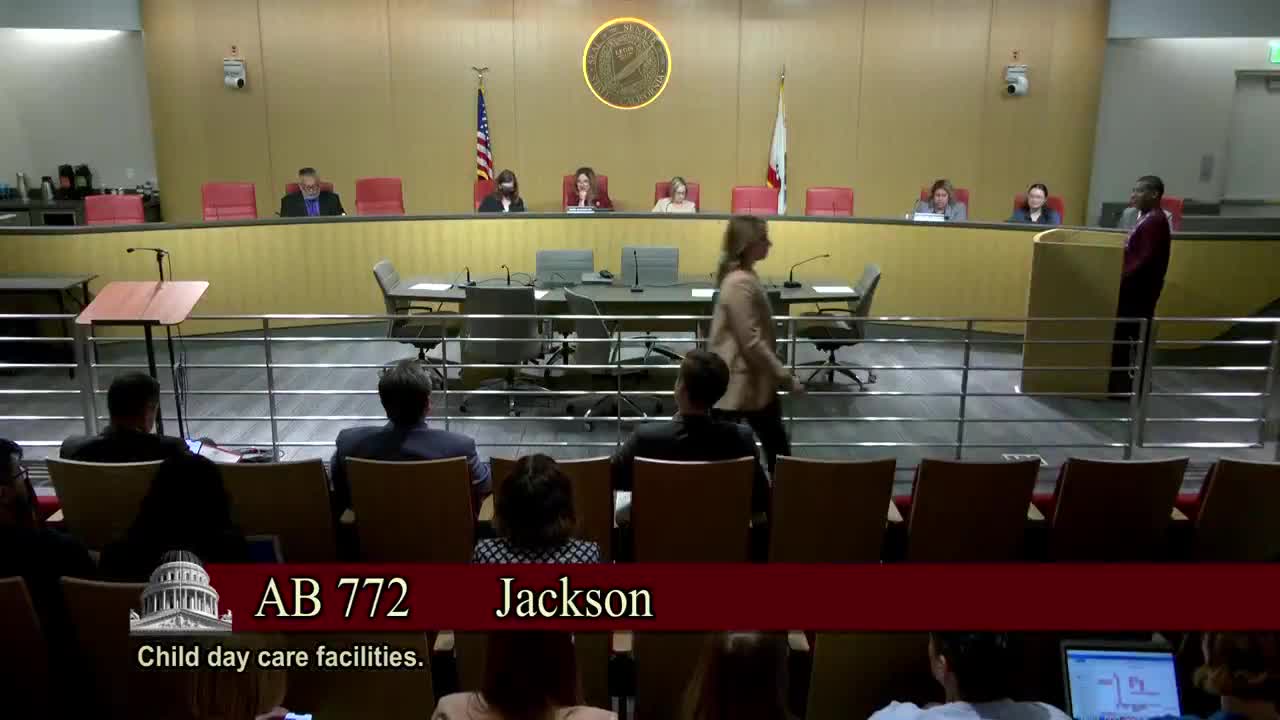 13MIN
Senate Standing Committee on Human Services
 1MIN
Assembly Floor
 1MIN
Assembly Standing Committee on Appropriations
 9MIN
Assembly Standing Committee on Human Services
Bill Author

Bill Co-Author(s):