ACA 6: University of California: basic state labor standards.
- Session Year: 2023-2024
- House: Assembly
- Latest Version Date: 2023-08-31
Current Status:
Failed
(2024-06-11: In committee: Set, second hearing. Failed passage.)
Introduced
In Committee
First Chamber
In Committee
Second Chamber
Enacted
What does this bill do?
This proposed constitutional amendment would require employees of the Regents of the University of California (the university’s governing board) and certain people who do work for the regents to be covered by California’s basic labor protections, such as minimum wage, overtime, timely payment, equal pay, and prevailing wage rules. It would also allow the Legislature to write laws to define, expand, or add health, safety, and other labor protections for those workers.
The summary is provided by generative AI which can make mistakes. For original language, please view the details in the table below.
The California Constitution provides that the University of California constitutes a public trust, and requires the university to be administered by the Regents of the University of California, a corporation in the form of a board, with full powers of organization and government, subject to legislative control only for specified purposes. These provisions grant the regents all the powers necessary or convenient for the effective administration of its trust.
This measure would require employees of the Regents of the University of California to have the right to, and be covered by, certain basic state labor standards, as provided. The measure would require individuals who perform certain work for the regents to have the right to the payment of a prevailing wage. The measure would authorize the Legislature to enact laws that further these rights, establish, define, or specify the basic state labor standards applicable to the regents, or establish other health, safety, and labor protections for individuals performing work for the regents.
The California Constitution provides that the University of California constitutes a public trust, and requires the university to be administered by the Regents of the University of California, a corporation in the form of a board, with full powers of organization and government, subject to legislative control only for specified purposes. These provisions grant the regents all the powers necessary or convenient for the effective administration of its trust.
This measure would require individuals who perform work for employees of the Regents of the University of California to have the right to, and be covered by, certain basic state labor standards, as provided. The measure would require individuals who perform certain work for the regents to have the right to the payment of a prevailing wage. The measure would authorize the Legislature to enact laws that further these rights, define establish, define, or specify the basic state labor standards, standards applicable to the regents, or establish other health, safety, and labor protections for individuals performing work for the regents to the same extent as for other California workers. regents.
The California Constitution provides that the University of California constitutes a public trust, and requires the university to be administered by the Regents of the University of California, a corporation in the form of a board, with full powers of organization and government, subject to legislative control only for specified purposes. These provisions grant the regents all the powers necessary or convenient for the effective administration of its trust.
This measure would require individuals who perform work for the Regents of the University of California to have the right to, and be covered by, certain basic state labor standards, as provided. The measure would authorize the Legislature to enact laws that further these rights, define the basic state labor standards, or establish other health, safety, and labor protections for individuals performing work for the regents to the same extent as for other California workers.
WHEREAS, California did not have basic state labor standards in place when Section 9 of Article IX of the California Constitution (hereafter Article IX) was amended in 1879 to constitute the University of California as a public trust; and
WHEREAS, Despite the California Supreme Court previously holding in San Francisco Labor Council v. Regents of the University of California (1980) (26 Cal.3d 785, 789-790) that it is well settled that general police power regulations governing private persons and corporations may be applied to the university and that state legislation may be made applicable to the University when the legislation regulates matters of statewide concern, and despite the fact that the Legislature has adopted such laws, the University of California has continually taken the position that Article IX excludes hundreds of thousands of Californians who work or perform work for the University of California from basic state labor standards that apply to all other California employers; and
WHEREAS, Some intermediate California courts have held that Article IX excludes Californians who work or perform work for the University of California from some basic state labor standards that apply to all other California employers; and
WHEREAS, Every California worker should have the same basic state labor standards, including equal pay standards, payment of a minimum wage, overtime pay, timely payment of wages, payment of a prevailing wage, and restrictions on outsourcing of jobs; and
WHEREAS, The outdated nearly 150-year-old exclusion of basic state labor standards for Californians who work or perform work for the University of California can be changed only by amending Article IX by a vote of the People of California; now, therefore, be it
Resolved by the Assembly, the Senate concurring, That the Legislature of the State of California at its 202324 Regular Session commencing on the fifth day of December 2022, two-thirds of the membership of each house concurring, hereby proposes to the people of the State of California, that the Constitution of the State be amended as follows:
This measure shall be known, and may be cited, as the Basic Labor Standards at the University of California Act.
WHEREAS, California did not have basic state labor standards in place when Section 9 of Article IX of the California Constitution (hereafter Article IX) was amended in 1879 to constitute the University of California as a public trust; and
WHEREAS, Despite the California Supreme Court previously holding in San Francisco Labor Council v. Regents of the University of California (1980) (26 Cal.3d 785, 789-790) that it is well settled that general police power regulations governing private persons and corporations may be applied to the university and that state legislation may be made applicable to the University when the legislation regulates matters of statewide concern, and despite the fact that the Legislature has adopted such laws, the University of California has continually taken the position that Article IX excludes hundreds of thousands of Californians who work or perform work for the University of California from basic state labor standards that apply to all other California employers; and
WHEREAS, Some intermediate California courts have held that Article IX excludes Californians who work or perform work for the University of California from some basic state labor standards that apply to all other California employers; and
WHEREAS, Every California worker should have the same basic state labor standards, including equal pay standards, payment of a minimum wage, overtime pay, timely payment of wages, payment of a prevailing wage, and restrictions on outsourcing of jobs; and
WHEREAS, The outdated nearly 150-year-old exclusion of basic state labor standards for Californians who work or perform work for the University of California can be changed only by amending Article IX by a vote of the People of California; now, therefore, be it
Resolved by the Assembly, the Senate concurring, That the Legislature of the State of California at its 202324 Regular Session commencing on the fifth day of December 2022, two-thirds of the membership of each house concurring, hereby proposes to the people of the State of California, that the Constitution of the State be amended as follows:
This measure shall be known, and may be cited, as the Basic Labor Standards for Individuals Performing Work at the University of California Act.
WHEREAS, California did not have basic state labor standards in place when Section 9 of Article IX of the California Constitution (hereafter Article IX) was amended in 1879 to constitute the University of California as a public trust; and
WHEREAS, Despite the California Supreme Court previously holding in San Francisco Labor Council v. Regents of the University of California (1980) (26 Cal.3d 785, 789-790) that it is well settled that general police power regulations governing private persons and corporations may be applied to the university and that state legislation may be made applicable to the University when the legislation regulates matters of statewide concern, and despite the fact that the Legislature has adopted such laws, the University of California has continually taken the position that Article IX excludes hundreds of thousands of Californians who perform work for the University of California from basic state labor standards that apply to all other California employers; and
WHEREAS, Some intermediate California courts have held that Article IX excludes Californians who perform work for the University of California from some basic state labor standards that apply to all other California employers; and
WHEREAS, Every California worker should have the same basic state labor standards, including equal pay standards, payment of a minimum wage, overtime pay, timely payment of wages, payment of a prevailing wage, and restrictions on outsourcing of jobs; and
WHEREAS, The outdated nearly 150-year-old exclusion of basic state labor standards for Californians who perform work for the University of California can be changed only by amending Article IX by a vote of the People of California; now, therefore, be it
Resolved by the Assembly, the Senate concurring, That the Legislature of the State of California at its 202324 Regular Session commencing on the fifth day of December 2022, two-thirds of the membership of each house concurring, hereby proposes to the people of the State of California, that the Constitution of the State be amended as follows:
This measure shall be known, and may be cited, as the Basic Labor Standards for Individuals Performing Work at the University of California Act.
|
Date
|
Status
|
|---|---|
| Jun 11, 2024 | In committee: Set, second hearing. Failed passage. |
| Sep 11, 2023 | In committee: Set, first hearing. Failed passage. Reconsideration granted. |
| Sep 7, 2023 | Joint Rules 61 and 62(a) suspended. (Ayes 32. Noes 8. Page 2460.) |
| Aug 31, 2023 | From committee chair, with author's amendments: Amend, and re-refer to committee. Read second time, amended, and re-referred to Com. on E. & C.A. |
| Aug 22, 2023 | In committee: Hearing postponed by committee. |
| Jul 12, 2023 | From committee chair, with author's amendments: Amend, and re-refer to committee. Read second time, amended, and re-referred to Com. on E. & C.A. |
| Jun 28, 2023 | From committee: Be adopted, and re-refer to Com. on E. & C.A. Re-referred. (Ayes 5. Noes 0.) (June 28). Re-referred to Com. on E. & C.A. |
| Jun 20, 2023 | From committee chair, with author's amendments: Amend, and re-refer to committee. Read second time, amended, and re-referred to Com. on L., P.E. & R. |
| Jun 15, 2023 | From committee chair, with author's amendments: Amend, and re-refer to committee. Read second time, amended, and re-referred to Com. on L., P.E. & R. |
| Jun 14, 2023 | Referred to Coms. on L., P.E. & R. and E. & C.A. |
| Jun 1, 2023 | In Senate. Read first time. To Com. on RLS. for assignment. |
| May 31, 2023 | Read third time. Adopted. (Ayes 67. Noes 7. Page 2030.) |
| May 31, 2023 | Ordered to the Senate. |
| May 18, 2023 | Read second time. Ordered to third reading. |
| May 18, 2023 | From committee: Be adopted. (Ayes 11. Noes 3.) (May 18). |
| May 18, 2023 | Coauthors revised. |
| May 10, 2023 | In committee: Set, first hearing. Referred to APPR. suspense file. |
| Apr 27, 2023 | From committee: Be adopted, and re-refer to Com. on APPR. Re-referred. (Ayes 6. Noes 0.) (April 26). Re-referred to Com. on APPR. |
| Apr 27, 2023 | Coauthors revised. |
| Apr 13, 2023 | Referred to Com. on L. & E. |
| Feb 17, 2023 | From printer. May be heard in committee March 19. |
| Feb 16, 2023 | Read first time. To print. |
|
Date
|
Description
|
Location
|
Votes
|
|
|---|---|---|---|---|
| Jun 11, 2024 | Be adopted, but first be re-referred to the Committee on [Appropriations] | Senate Standing Committee on Elections and Constitutional Amendments |
Failed |
|
| Sep 11, 2023 | [First] hearing set for [09-11-2023]: Failed passage in Committee. Reconsideration granted | Senate Standing Committee on Elections and Constitutional Amendments |
Passed |
|
| Sep 11, 2023 | Be adopted, but first be re-referred to the Committee on [Appropriations] | Senate Standing Committee on Elections and Constitutional Amendments |
Failed |
|
| Jun 28, 2023 | Be adopted, but first be re-referred to the Committee on [Elections and Constitutional Amendments] | Senate Standing Committee on Labor, Public Employment and Retirement |
Passed |
|
| May 31, 2023 | ACA 6 Haney Assembly Third Reading | Assembly Floor |
Passed |
|
| May 18, 2023 | Be adopted. | Assembly Standing Committee on Appropriations |
Passed |
|
| Apr 26, 2023 | Be adopted and re-referred to the Committee on [Appropriations] | Assembly Standing Committee on Labor and Employment |
Passed |
This list shows positions taken on this bill by organizations on the date displayed, which is linked to the original source.
Positions by individuals are not included.
|
Organization
|
Position
|
Date
|
|---|---|---|
| Alameda County Democratic Party | ** Support | |
| Alliance of Californians for Community Empowerment Action | ** Support | |
| American Association of Psychiatric Technicians | * Support | Jun 28, 2023 |
| American Cargoservice Inc. | ** Against | |
| Anaheim Chamber Of Commerce | ** Against | |
| Appvise Inc. | ** Against | |
| Aptos Chamber of Commerce | ** Against | |
| Assist Consulting Catalysts for Social Transformation, LLC | ** Against | |
| Bay Area Council | ** Against | |
| Berkeley Chamber of Commerce | ** Against | |
| Blackstone Talent Group LLC | ** Against | |
| Bogard Construction, Inc. | ** Against | |
| Brownstein Hyatt Farber Schreck LLP | * Against | Sep 11, 2023 |
| California Association Of Psychiatric Technicians | * Support | Jun 28, 2023 |
| California Chamber Of Commerce | * Against | Sep 11, 2023 |
| California Conference Of Machinists | ** Support | |
| California Conference of the Amalgamated Transit Union | ** Support | |
| California Employment Lawyers Association | ** Support | |
| California Faculty Association | ** Support | |
| California Hospital Association | * Against | Sep 11, 2023 |
| California Labor Federation | * Support | Sep 11, 2023 |
| California Nurses Association/National Nurses United | ** Support | |
| California Professional Firefighters | ** Support | |
| California Teacher Association | * Support | Sep 11, 2023 |
| Central City Association | ** Against | |
| Central Coast Construction Company | ** Against | |
| Central Coast Labor Council, AFL-CIO | ** Support | |
| CFT Council of Classified Employees | * Support | Sep 11, 2023 |
| Chamber Of Commerce Berkeley | * Against | Sep 11, 2023 |
| CHISPA | ** Support | |
| CIR Union | * Support | Sep 11, 2023 |
| CIR/SEIU | * Support | Sep 11, 2023 |
| Contra Costa Labor Council, AFL-CIO | ** Support | |
| Council Of Uc Faculty Associations | ** Support | |
| Courage California | ** Support | |
| D&S Communications Inc. | ** Against | |
| Data Principles Consulting, Inc. | ** Against | |
| Davis Chamber of Commerce | ** Against | |
| Division | ** Support | |
| Edios Media | ** Against | |
| Editcetera | ** Against | |
| Engineers and Scientists of CA, IPTE Local 20, AFL-CIO | ** Support | |
| Federated University Police Officers' Association | ** Support | |
| Garment Worker Center | ** Support | |
| Greater Irvine Chamber | ** Against | |
| Greater Riverside Chambers of Commerce | ** Against | |
| Health Data Movers | ** Against | |
| Healthy California Now | ** Support | |
| Honsha.ORG | ** Against | |
| Inlandboatmen's Union Southern California Region | ** Support | |
| Inlandboatmen’s Union of the Pacific Southern California Region, Marine | ** Support | |
| KELLY SERVICES | ** Against | |
| LA County Business Federation | * Against | Sep 11, 2023 |
| Los Angeles Alliance for a New Economy | ** Support | |
| Los Angeles Business Council | ** Against | |
| Los Angeles Chamber of Commerce | * Against | Sep 11, 2023 |
| Newport Beach Chamber of Commerce | ** Against | |
| North Valley Labor Federation | * Support | Sep 11, 2023 |
| Northern California District Council - Ilwu | ** Support | |
| OC Action | ** Support | |
| Orange County Business Council | * Against | Sep 11, 2023 |
| Orange County Hispanic Chamber of Commerce | ** Against | |
| Orbees Inc. | ** Against | |
| Rahul Investments LLC | ** Against | |
| Rolling Orange, Inc. | ** Against | |
| Sacramento Central Labor Council, AFL-CIO | ** Support | |
| San Diego Imperial County Labor Council | * Support | Sep 11, 2023 |
| San Diego Regional Chamber Of Commerce | * Against | Sep 11, 2023 |
| San Francisco Chamber of Commerce | * Against | Sep 11, 2023 |
| san mateo labor council | ** Support | |
| Santa Ana Chamber of Commerce | ** Against | |
| Santa Cruz County Chamber of Commerce | ** Against | |
| Santa Monica Chamber of Commerce | ** Against | |
| SC2 Strategic Communications, LLC | ** Against | |
| Shirley Hollywood and Associates, Inc. | ** Against | |
| South Bay Labor Council | ** Support | |
| South Orange County Economic Coalition | ** Against | |
| State Building Construction Trades Council | * Support | Sep 11, 2023 |
| State Superintendent of Public Instruction Tony Thurmond | ** Support | |
| Teamsters | ** Support | |
| Tri-County Chamber Alliance | ** Against | |
| UAW 2865 | * Support | Sep 11, 2023 |
| UC Berkeley | * Against | Sep 11, 2023 |
| UC Davis | * Support | Sep 11, 2023 |
| UC Davis Medical Center | * Support | Sep 11, 2023 |
| UC Health | * Against | Sep 11, 2023 |
| UC Irvine | * Support | Sep 11, 2023 |
| UC Merced | * Against | Sep 11, 2023 |
| UC Riverside | * Against | Sep 11, 2023 |
| UC Riverside | * Support | Sep 11, 2023 |
| UC San Diego | * Support | Sep 11, 2023 |
| UC Santa Barbara | * Against | Sep 11, 2023 |
| UC Santa Cruz | * Against | Sep 11, 2023 |
| UC Student Association | * Support | Sep 11, 2023 |
| UCLA | * Against | Sep 11, 2023 |
| UCLA | * Support | Sep 11, 2023 |
| UCLA Health System | * Against | Sep 11, 2023 |
| UCSB | * Support | Sep 11, 2023 |
| UCSD Medical Center | * Against | Sep 11, 2023 |
| UCSF Medical Center | * Support | Sep 11, 2023 |
| UCSF School of Medicine | * Against | Sep 11, 2023 |
| UDW/AFSCME Local 3930 | ** Support | |
| Union of American Physicians and Dentists, AFSCME Local 206 | ** Support | |
| UNITE HERE, AFL-CIO | ** Support | |
| United Food And Commercial Workers Western States Council | ** Support | |
| United Nurses Associations Of California/Union Of Health Care Professionals | ** Support | |
| UNIVERSITY COUNCIL- AFT | ** Support | |
| University of California | * Against | Sep 11, 2023 |
| University of California | * Support | Sep 11, 2023 |
| University of California Academic Health Centers | ** Against | |
| University of California Academic Senate | ** Against | |
| University of California Agriculture and Natural Resources | * Against | Sep 11, 2023 |
| University of California Chancellors | ** Against | |
| University of California Directors of Disabled Student Support Services | ** Against | |
| UPTE-CWA 9119 | ** Support | |
| Utility Workers Union of America | ** Support | |
| Valley Industry & Commerce Association | ** Against | |
| Wight Vineyard Management, Inc. | ** Against |
SENATE COMMITTEE ON
ELECTIONS AND CONSTITUTIONAL AMENDMENTS
Senator Catherine Blakespear, Chair
2023 - 2024 Regular
Bill No: ACA 6 Hearing Date: 6/11/24
Author: | Haney | ||
Version: | 8/31/23 | ||
Urgency: | No | Fiscal: | Yes |
Consultant: | Evan Goldberg | ||
Subject: University of California: basic state labor standards
DIGEST
This measure, if it is placed on the ballot and approved by the voters, requires the University of California (UC) to conform to certain labor, employment, and occupational health and safety standards that apply to other public agencies.
ANALYSIS
Existing Constitutional provisions that relate to the UC:
- Establishes the UC as a public trust under the administration of a board known as The Regents of the University of California (Regents).
- Grants the Regents powers necessary or convenient for the effective administration of the UC – and only subjects the UC to legislative control that may be necessary to ensure the security of UC funds and compliance with the terms of the endowments of UC.
- Subjects the UC to competitive bidding procedures that are applied to it by statute related to construction contracts, the sale of real property, and the purchase of materials, goods, and services.
- Provides the 26-member Board of Regents is comprised of 7 ex-officio members, 18 members appointed by the Governor and confirmed by the Senate, and 1 student representative appointed by the Regents.
Existing labor-related laws relevant to this measure:
- Preclude anyone from entering into a contract for construction, farm labor, garment, janitorial, security guard, or warehouse services where the contract does not provide enough money to allow the contractor to comply with all applicable local, state, and federal laws or regulations governing the labor or services to be provided.
- Prohibit employers from paying employees wages that differ by gender unless the employer demonstrates a seniority system, merit system, quality or quantity of production, or a bona fide factor other than gender as a reason for any wage difference.
- Provide all employees must be paid at least the minimum wage set by the Industrial Wage Commission (IWC). Any employer who pays less than the minimum wage is subject to a civil penalty, restitution of wages, liquidated damages payable to the employee, and other penalties.
- Require entities awarding public works contracts to pay the general prevailing wage rate where the work will be performed.
- Provide 8 hours of labor constitutes a day’s work and requires an employer to pay workers time-and-a-half for any work beyond 8 hours in a day, 40 hours in any single workweek, and the first 8 hours worked on the 7th day of work in any single workweek.
- Provide an employee shall be entitled to 1 unpaid 30-minute meal period on shifts over 5 hours and a 2nd unpaid 30-minute meal period on shifts over 10 hours. The employee may waive a meal period.
- Provide an employee shall be entitled to a rest period at the rate of 10 minutes for every 4 hours worked.
- Provide an employee not covered by a cooperative bargaining agreement shall accrue paid sick days at the rate of at least 1 hour for every 30 hours worked.
- Prohibit public agencies from contracting for services if approval of the contract is based solely on savings resulting from lower pay rates or benefits or the contract causes civil service employees to be displaced.
Existing laws related to the California Constitution:
- Provide every constitutional amendment, bond measure, or other legislative measure submitted to the people by the Legislature shall appear on the ballot of the first statewide election occurring at least 131 days after the Legislature adopts the proposal.
- Provide a proposed amendment or revision to the California Constitution approved by the voters takes effect on the fifth day after the Secretary of State officially certifies the votes. A measure can, in the text provided to the voters, set a later effective date.
This measure:
- If approved by voters, applies the following California labor standards to all UC employees after January 1, 2025:
- Equal pay standards, including those established under the California Equal Pay Act and California Fair Pay Act of 2015;
- The payment of a minimum wage;
- The timely payment of wages;
- The payment of overtime wages;
- Occupational safety and health standards;
- Meal and rest breaks;
- Paid leave, including paid sick leave; and
- Standards related to the displacement and contracting out of work.
- Requires UC employees to be paid the prevailing wage if that work would be considered public works under California’s prevailing wage laws.
- Allows the Legislature to create and apply other labor standards to UC employees.
- Specifies the measure does not apply retroactively to any contract entered into before January 1, 2025, if doing so would impair the obligations of that contract.
BACKGROUND
The Legislature & The University of California. In 1868, the Legislature passed and Governor Henry H. Haight signed the Organic Act, which laid the foundation for and created the University of California. In 1879, California voters adopted the modern-day California Constitution (sometimes referred as the “second constitution”), which among its provisions enshrined the Organic Act into it, making the UC a “public trust” being “subject only to such legislative control as may be necessary to ensure compliance with the terms of its endowments, and the proper investment and security of its funds…”
In 1917, the Legislature passed SCA 20 (Breed), which the voters approved in 1918. The measure updated the Organic Act and it modified the legislative control provisions to state the UC is “subject only to such legislative control as may be necessary to ensure compliance with the terms of its endowments and security of its funds.”
While there have been other modifications to the provisions related to legislative control over the UC (competitive bidding procedures were added in 1976), the concept that the UC Regents have autonomy over the UC has remained relatively consistent since 1868.
Employment at the University of California. As of 2022, the UC employed 73,012 academic employees and 143,188 non-academic employees with both full-time and part-time status. As a result, there are 216,200 workers employed by the UC – meaning because of UC’s constitutional protections, nearly a quarter of a million Californians are not covered by what some would consider to be the state’s most basic labor protection laws.
Recent Court Actions. Courts have held the Regents are exempt from statutes regulating the wages and benefits of workers, finding wages and benefits are internal affairs of the UC that do not come within any of the exceptions to the Regents’ constitutional immunity.
Most recently in Gomez v. Regents (2021) 63 Cal.App.5th 386, the plaintiff challenged the Regents’ policy and practice of rounding time punches and automatically deducting 30 minutes for meal periods regardless of whether the employees actually took them. The issue before the court was whether the Regents were subject to California’s minimum wage laws. The superior court held the Regents were not subject to those laws and dismissed the case. The court of appeal affirmed this decision by the lower court.
Contracting Out & UC Regents Policy 5402. In 2019, the UC Regents adopted Regents Policy 5402, which generally prohibits the UC from contracting out for services and functions the UC staff could perform just as well except under “exigent and limited circumstances.” This policy set standards for contracts related to:
- Cleaning;
- Custodial;
- Janitorial and housekeeping services;
- Food services;
- Laundry services;
- Groundskeeping;
- Building maintenance;
- Transportation and parking services;
- Security services;
- Billing and coding services;
- Sterile processing;
- Hospital or nursing assistant services; and
- Medical imaging or other medical technician services.
This policy also noted UC will utilize its employees to perform these services to the greatest extent possible before using private contractors to provide such services.
Regents Policy 5402 provides contracting out for the services noted above is only permitted where doing so is required by law, federal requirements, contract or grant requirements, court decisions or orders, or when:
- The services are needed to address an emergency, which includes, but is not limited to, the need to prevent the stoppage of UC operations or to ensure the continuous operations of the UC’s medical centers;
- The employees capable of providing the required services are not available or do not possess the necessary level of expertise or cannot perform the services satisfactorily or because the services are of a specialized or technical nature and the expertise, knowledge, ability and/or equipment required is not available internally;
- The services are incidental to a contract for the purchase or lease of real or personal property, which includes services to be provided on property the UC has leased to or from a third party or through public private partnerships;
- The services are of such an urgent, temporary, or occasional nature that the delay in hiring UC employees or would frustrate the UC’s goals that gave rise to the need for the services in the first place;
- The contractor will provide equipment, materials, facilities, or support services that UC employees could not feasibly provide at facilities within a 10-mile radius of a UC campus, medical center, or UC Laboratory; or
- The services are performed by registry personnel in clinical operations to address short-term staffing needs, including circumstances where the UC’s reasonable recruitment efforts to hire employees cannot satisfy ongoing staffing needs.
Policy 5402 also mandates any outside contracts adhere to an “Equal Pay for Equal Work” standard. .
COMMENTS
- According to the Author: “150 years ago, women couldn’t vote. That’s when a section was added to the State Constitution that made the UC exempt from basic labor standards, exempt from minimum wage orders, and exempt from equal pay for women. The courts have ruled that this remains the case. Californians will change this.
“Neither the Governor nor the Legislature have the executive or legislative authority to ensure basic labor standards apply to or are enforced at UC due to an outdated provision of the State Constitution. Article IX, Section 9 of the State Constitution was adopted nearly 150 years ago, before basic labor standards were in place. As a result, courts have held that Article IX, Section 9 excludes hundreds of thousands of Californians performing work for the University of California from labor standards adopted by the state legislature for virtually all other Californians since then.”
- Do We Actually Need A Constitutional Amendment To Do This? Can’t We Just Pass A Bill? The short answers to these questions are yes and no.
Because courts have consistently ruled the UC Regents and its employees are constitutionally exempt from the state’s labor laws, the only way to change that is by asking the voters to amend the California Constitution.
Passing a bill to amend the statutes may serve as a statement of the Legislature’s intent that the state’s labor laws apply to the UC system, but it won’t actually ensure the laws do apply to the system.
- Proposition 4 of 1976. It was 48 years ago when the voters last amended the California Constitution to give the Legislature the opportunity to apply certain statutes to the UC Regents. SCA 14 (Stull) was approved by the Legislature on 74-0 (Assembly) and 30-3 (Senate) votes to put Proposition 4 on the ballot. Unlike the proposal contained in ACA 6, SCA 14/Proposition 4 did not automatically apply any state laws to the UC Regents. Rather, it required the UC Regents to comply with “such competitive bidding procedures as may be made applicable to the university by statute …” It also added race, religion, ethnic heritage, and sex as reasons why the UC could not deny admission to any applicant.
Proposition 4 was approved by the voters on a 54.49%-45.51% margin.
- A Detailed Approach. Unlike SCA 14/Proposition 4, ACA 6 applies nine specific labor standards to UC and its employees, states the Legislature may apply other labor standards to the UC and its employees, and does not preclude these labor standards from being superseded by more favorable terms in a collective bargaining agreement.
This level of detail runs contrary not just to SCA 14/Proposition 4 but also to many other provisions of the California Constitution, which lay out a much more basic framework or goal and rely on the Legislature to fill in the details via statute.
For example, Article I, Section 1 provides “All people are by nature free and independent and have inalienable rights. Among these are enjoying and defending life and liberty, acquiring, possessing, and protecting property, and pursuing and obtaining safety, happiness, and privacy.” However, “safety,” “happiness,” and “privacy” are not defined in the Constitution – it is left up to the Legislature to, by statute, define those terms and decide how, when, and where they should apply
Similarly, Article 1, Section 29 provides “In a criminal case, the people of the State of California have the right to due process of law and to a speedy and public trial.” How “due process” and “speedy” are defined is left up to the Legislature, not detailed in the Constitution.
- Prior Senate Committee Actions. Prior to being considered by this committee, ACA 6 was heard and approved by the Senate Committee on Labor, Public Employment and Retirement on June 28, 2023, on a 5-0 vote. The measure was defeated in this committee on September 11, 2023, on a 3-1 vote (4 votes were needed for passage).
RELATED/PRIOR LEGISLATION
ACA 14 (Ortega) is substantively identical to ACA 6. ACA 14 is pending in the Senate Committee on Rules.
SCA 8 (Durazo) is substantively identical to ACA 6. SCA 8 is pending in the Senate Committee on Rules.
SB 27 (Durazo) was signed into law in 2023. Among other provisions, it prohibits a vendor from accepting payment from the UC if the vendor is performing services or supplying the UC with employees to perform services who are paid less than the compensation rate specified in the vendor’s contract with the UC or as required by university policy.
SB 1334 (Bradford) was signed into law in 2022. It extended meal and rest period rights and remedies to employees who provide direct patient care or support in general acute care hospitals, clinics, or public health settings who are directly employed by specific employers, including the UC.
ACA 14 (Gonzalez) of 2019 would have required the UC Regents to ensure all contract workers paid to perform support services for the UC are given the same equal employment opportunity standards as university employees performing similar services. ACA 14 died on the Senate’s inactive file.
SCA 14 (Hernandez) of 2017 would have (1) required the UC President to submit detailed budget reports to the Legislature; (2) required the UC President’s office to be funded by an item in the annual Budget Bill related solely to that purpose; (3) added the Chancellor of the California Community Colleges to the Board of Regents as a voting ex officio member; (4) made the UC President a nonvoting ex officio member; (5) restructured the terms of the Board of Regents members; and (6) banned the current Regents from being re-appointed after June 6, 2018. SCA died in the Senate Education Committee without a hearing.
SCA 13 (Galgiani) of 2017 would have prevented the UC Regents from increasing tuition or entering contracts with companies paying substandard wages in any year when the UC provides more than 600 managerial employees with annual salaries higher than the Governor’s salary. SCA 13 died in the Senate Education Committee without a hearing.
SCA 1 (Lara) of 2016 would have reduced a UC Regent’s term from 12 years to 4 years and set an overall term limit of 16 years. SCA 1 died on the Senate’s inactive file.
SCA 21 (Yee) of 2009 would have given the Legislature control over the UC system and have the Legislature the power to enact measures to implement the constitutional provision. SCA 21 died in the Senate Committee on Rules without a hearing.
.
PRIOR ACTION
Senate Elections & Constitutional Amendments: Senate Labor, Public Employment and Retirement: | 3 - 1 (4 votes were needed) 5 – 0 |
Assembly Floor: | 67 - 7 |
Assembly Appropriations Committee: | 11 - 3 |
Assembly Labor and Employment Committee: | 6 - 0 |
POSITIONS
Sponsor: AFSCME Local 3299
California Labor Federation
Tony Thurmond, State Superintendent of Public Instruction
Support: Alameda County Democratic Party
Alliance of Californians for Community Empowerment Action
American Federation of State, County, and Municipal Employees, AFL-CIO
California Conference of Machinists
California Conference of the Amalgamated Transit Union
California Employment Lawyers Association
California Faculty Association
California Nurses Association/National Nurses United
California Professional Firefighters
California Teachers Association
Central Coast Labor Council, AFL-CIO
Chispa
Contra Costa Labor Council, AFL-CIO
Council of University of California Faculty Associations
Courage California
Engineers and Scientists of CA, IFPTE Local 20, AFL-CIO
Federated University Police Officers’ Association
Garment Worker Center
Healthy California Now
Inlandboatmen’s Union of the Pacific Southern California Region, Marine
Division
Los Angeles Alliance for a New Economy
North Valley Labor Federation
Northern California District Council – ILWU
Sacramento Central Labor Council, AFL-CIO
San Mateo Labor Council
SEIU California
South Bay Labor Council
State Building and Construction Trades Council of California, AFL-CIO
Teamsters
UAW Local 2865
UAW Local 5810
UDW/AFSCME Local 3930
Union of American Physicians and Dentists, AFSCME Local 206
Union of Educator and Classified Professionals
UNITE HERE, AFL-CIO
United Food and Commercial Workers Western States Council
United Nurses Associations of California/Union of Health Care Professionals
United Teachers of Los Angles
University Council-AFT
University of California Student Association
UPTE-CWA 9119
Utility Workers Union of America
Oppose: American Cargoservice Inc.
American Staffing Association
Anaheim Chamber of Commerce
Appvise Inc.
Aptos Chamber of Commerce
Assist Consulting Catalysts for Social Transformation, LLC
Bay Area Council
Berkeley Chamber of Commerce
Blackstone Talent Group LLC
Bogard Construction, Inc.
California Association of Public Hospitals and Health Systems
California Chamber of Commerce
California Hospital Association
California Staffing Professionals
Central City Association
Central Coast Construction Company
Data Principles Consulting, Inc.
Davis Chamber of Commerce
D&S Communications Inc.
Edios Media
Editcetera
Greater Irvine Chamber
Greater Riverside Chambers of Commerce
Health Data Movers
Honsha.ORG
Kelly Services
Los Angeles Area Chamber of Commerce
Los Angeles Business Council
Los Angeles County Business Federation
Newport Beach Chamber of Commerce
Orange County Business Council
Orange County Hispanic Chamber of Commerce
Orbees Inc.
Quest Diagnostics
Rahul Investments LLC
Rolling Orange, Inc.
San Diego Regional Chamber of Commerce
San Francisco Chamber of Commerce
Santa Ana Chamber of Commerce
Santa Cruz County Chamber of Commerce
Santa Monica Chamber of Commerce
SC2 Strategic Communications, LLC
Shirley Hollywood and Associates, Inc.
South Orange County Economic Coalition
Tri-County Chamber Alliance
University of California
University of California Academic Health Centers
University of California Academic Senate
University of California Chancellors
University of California Directors of Disabled Student Support Services
Valley Industry & Commerce Association
Wight Vineyard Management, Inc.
25 Individuals
-- END --
SENATE COMMITTEE ON
ELECTIONS AND CONSTITUTIONAL AMENDMENTS
Senator Steven Glazer, Chair
2023 - 2024 Regular
Bill No: ACA Hearing Date: 9/11/23
Author: | |||
Version: | 8/31/23 | ||
Urgency: |
| Fiscal: | Yes |
Consultant: | Scott Matsumoto | ||
Subject: University of California: basic state labor standards
DIGEST
This measure, subject to voter approval, requires the University of California (UC) to conform to the same labor, employment, and occupational health and safety standards as other public agencies, including standards against displacement and contracting out of work as provided for in state laws governing the nonemergency use of personal service contracts, as specified.
ANALYSIS
Existing law:
- Establishes the UC as a public trust under the administration of the corporation in the form of a board “The Regents of the [UC]” (Regents) and grants the Regents powers necessary or convenient for the effective administration of the UC and subject only to such legislative control as may be necessary to insure the security of its funds and compliance with the terms of the endowments of the university and such competitive bidding procedures as may be made applicable to the university by statute for the letting of construction contracts, sales of real property, and purchasing of materials, goods, and services. Provides that the Regents be comprised of seven ex officio members, as specified, 18 members appointed by the Governor and approved by the Senate, a majority of the membership concurring, and permits a student representative if appointed by the Regents. Provides that the UC shall be entirely independent of all political or sectarian influence and kept free therefrom in the appointment of its regents and in the administration of its affairs.
- Provides that a person or entity shall not enter into a contract or agreement for labor or services with a construction, farm labor, garment, janitorial, security guard, or warehouse contractor, where the person or entity knows or should know that the contract or agreement does not include funds sufficient to allow the contractor to comply with all applicable local, state, and federal laws or regulations governing the labor or services to be provided.
- Prohibits an employer from paying employees a wage less than the wages paid to employees of the opposite sex for substantially similar work when viewed as a composite of skill, effort, and responsibility, and performed under similar working conditions, except where the employer demonstrates a seniority system, merit system, quality or quantity of productions, or a bona fide factor other than gender.
- Provides the minimum wage for employees fixed by the Industrial Wage Commission (IWC) is the minimum wage to be paid to employees, and the payment of less than the minimum wage is unlawful. Any employer who pays an employee a wage less than the minimum fixed by the commission shall be subject to a civil penalty, restitution of wages, liquidated damages payable to the employee, and any applicable penalties.
- Requires an entity awarding any contract for public work, or otherwise undertaking any public work, shall obtain the general prevailing rate of per diem wages and the general prevailing rate for holiday and overtime work in the locality in which the public work is to be performed for each craft, classification, or type of worker needed to execute the contract from the Director of Industrial Relations.
- Provides that eight hours of labor constitutes a day’s work and requires an employer to compensate an employee at the rate of no less than one and one-half times the regular rate of pay for any work in excess of eight hours in one workday, 40 hours in any one workweek, and the first eight hours worked on the seventh day of work in any one workweek.
- Provides that an employee shall be entitled to one unpaid 30-minute meal period on shifts over 5 hours and a second unpaid 30-minute meal period on shifts over 10 hours. The employee may waive a meal period in accordance with Section 11 of Industrial Welfare Commission Wage Order Number 4 or Wage Order Number 5. On-duty meal periods may be provided in accordance with IWC Wage Order Number 4 or Wage Order Number 5.
- Provides that an employee shall be entitled to a rest period based on the total hours worked daily at the rate of 10 minutes net rest time per 4 hours or major fraction thereof, as provided by IWC Wage Order Number 4 and Wage Order Number 5.
- Provides that an employee not covered by a cooperative bargaining agreement shall accrue paid sick days at the rate of not less than one hour per every 30 hours worked, beginning at the commencement of employment or the operative date of this article, whichever is later, subject to use and accrual limitations.
- Prohibits public agencies from contracting for services if approval of the contract is based solely on savings resulting from lower pay rates or benefits or the contract causes displacement of civil service employees.
- Provides that every constitutional amendment, bond measure, or other legislative measure submitted to the people by the Legislature shall appear on the ballot of the first statewide election occurring at least 131 days after the adoption of the proposal by the Legislature.
- Provides that a proposed amendment or revision to the California Constitution, if approved by a majority of votes cast thereon, takes effect on the fifth day after the Secretary of State files the statement of the vote for the election at which the measure is voted on, but the measure may provide that it becomes operative after its effective date.
This measure:
- Provides, if approved by voters and notwithstanding existing law, that employees of the UC Regents shall have the right to, and shall be covered by, the following basic state labor standards as they apply to employees of the state on or after January 1, 2025:
- Equal pay standards, including those established pursuant to the California Equal Pay Act and California Fair Pay Act of 2015.
- The payment of a minimum wage.
- The timely payment of wages.
- The payment of overtime and standards governing the hours of work.
- Occupational safety and health standards.
- Meal and rest breaks.
- Paid leave, including paid sick leave.
- Standards against displacement and contracting out of work as provided for in state laws governing the nonemergency use of personal service contracts by the state.
- Requires, notwithstanding existing law, that individuals who perform work for the UC Regents to have the right to the payment of a prevailing wage for work paid for, in whole or in part, out of UC funds, if that work would be considered public works under prevailing wage laws applicable to the state on or after January 1, 2025.
- Provides that, notwithstanding specific provisions of the California Constitution, the Legislature may enact laws to further the rights established by this subdivision, to establish, define, or specify basic state labor standards applicable to the UC Regents, or to establish other health, safety, and labor protections for individuals performing work for the UC Regents.
- Specifies that the provisions in this measure shall not apply to a contract entered into before January 1, 2025, if compliance would impair the obligations of that contract, as specified.
BACKGROUND
Legislative Authority over the University of California. In 1868, the Legislature passed and Governor Henry H. Haight signed the Organic Act, which laid the foundation for and created the University of California. In 1879, California voters adopted the modern-day California Constitution (sometimes referred as the “second constitution”). Among the provisions, the California Constitution enshrined the Organic Act, the UC as a “public trust,” and the UC being “subject only to such legislative control as may be necessary to insure compliance with the terms of its endowments, and the proper investment and security of its funds…”
In 1917, the Legislature passed SCA 20 (Breed), Resolution Chapter 51, Statutes of 1917. According to the argument in support of the measure, the California Constitution provided that the form of organization and government of the UC be as prescribed by the Organic Act. Many of the details of the Organic Act became “outgrown or have become obsolete” and the amendment would “do away with this inflexibility and permit the molding of the detail of the organization of the university to meet its needs as they arise.” One of the changes to the California Constitution modified the legislative control provisions to read that the UC is “subject only to such legislative control as may be necessary to insure compliance with the terms of its endowments and security of its funds.” Appearing as Proposition 8 at the November 5, 1918 election, it was approved by voters 62.8% to 37.2%.
While there have been other modifications to the provisions related to legislative control over the UC (competitive bidding procedures were later added), it has largely remained the same. However, the concept that the UC Regents have autonomy over the UC has remained relatively consistent since 1868.
Employed at the University of California. As of 2022, the UC employed 73,012 academic employees and 143,188 non-academic employees with both full-time and part-time status. As a result, there are 216,200 workers employed by the UC who are potentially exempt from various state labor laws due to the UC’s constitutional exemption.
Recent Court Actions. Courts have held the Regents are exempt from statutes regulating the wages and benefits of workers, as they are internal affairs of the UC that do not come within any of the exceptions to the Regents’ constitutional immunity. According to a news article/update from the Society for Human Resource Management, in June of 2019, “a former UC employee sued the UC Regents, arguing that the university failed to pay her the required minimum wage for all hours she worked, arguing that the time keeping procedures of rounding hours and automatically deducting 30 minute meal breaks resulted in her not receiving the minimum wage for all hours she actually worked.”
In April 2021, a California Court of Appeal affirmed a lower court judgment holding that the Regents of the UC could not be held liable for time keeping procedures that allegedly deprived a UC employee of the wages to which she was entitled. “The Court of Appeal noted that the California Constitution established the Regents as a ‘public trust,’ and the Legislature may regulate the Regents’ conduct in only limited circumstances. Furthermore, the Court of Appeal noted that courts have consistently held the Regents are exempt from statutes regulating the wages and benefits of employees and other workers, including those pertaining to prevailing wages and overtime pay on the ground those matters are internal affairs of the [UC] that do not come within any of the areas the Legislature may regulate.”
Contracting Out - UC Regents Policy 5402. In 2019, UC Regents adopted Regents Policy 5402, which generally prohibits the UC from contracting out for services and functions that UC staff could perform just as well except under “exigent and limited circumstances.” This policy established standards for contracts for cleaning, custodial, janitorial or housekeeping services; food services; laundry services; groundskeeping; building maintenance; transportation and parking services; security services; billing and coding services; sterile processing; hospital or nursing assistant services; and medical imaging or other medical technician services. This policy also noted that the UC will utilize its employees to perform covered services that have been customarily performed by UC employees to the greatest extent possible before resorting to the use of private contractors to provide such services.
In terms of contracting out services, Regents Policy 5402 provides that contracting for covered services is only permitted where contracting out is required by law, federal requirements, contract or grant requirements, court decisions or orders, or under the following limited, exigent circumstances that comply with the California’s requirements in existing law:
- The services are needed to address an emergency. An emergency may include, but is not limited to, the need to prevent the stoppage of UC operations or to ensure the continuous operations of the UC’s medical centers.
- The employees capable of providing the required services are not available at the UC location in sufficient quantity or do not possess the necessary level of expertise, or the services cannot be performed satisfactorily by UC employees, or the services are of a specialized or technical nature and the expertise, knowledge, ability and/or equipment required is not available internally.
- The services are incidental to a contract for the purchase or lease of real or personal property. This includes services that are to be provided on property that the UC has leased to or from a third party or through public private partnerships.
- The services are of such an urgent, temporary, or occasional nature that the delay resulting from their performance by UC employees hired under the UC’s regular or ordinary hiring process, or the inefficiencies or difficulties in utilizing UC employees, would frustrate the UC’s goals giving rise to the need for the services.
- The contractor will provide equipment, materials, facilities, or support services that could not be provided feasibly in the location where the services are to be performed. All services at remote facilities, which are those not within a 10-mile radius of a UC campus, medical center, or UC Laboratory, fall within this exception.
- The services are performed by registry personnel in clinical operations to address short-term staffing needs, including circumstances where the UC’s reasonable recruitment efforts to hire employees are unable to satisfy ongoing staffing needs.
Policy 5402 also mandates any outside contracts adhere to an “Equal Pay for Equal Work” standard. ACA 6 requires individuals who perform work for the UC Regents to have the right to specified basic state labor standards as they apply to work performed for the state or pursuant to state contracts.
COMMENTS
- According to the author: 150 years ago, women couldn’t vote. That’s when a section was added to the State Constitution that made the UC exempt from basic labor standards, exempt from minimum wage orders, and exempt from equal pay for women. The courts have ruled that this remains the case. Californians will change this.
Neither the Governor nor the Legislature have the executive or legislative authority to ensure basic labor standards apply to or are enforced at UC due to an outdated provision of the State Constitution. Article IX, Section 9 of the State Constitution was adopted nearly 150 years ago, before basic labor standards were in place. As a result, courts have held that Article IX, Section 9 excludes hundreds of thousands of Californians performing work for the University of California from labor standards adopted by the state legislature for virtually all other Californians since then.
- Implementation date. One of the provisions of ACA 6 specifies that the provisions in this measure shall not apply to a contract entered into before January 1, 2025 if compliance would impair the obligations of that contract. The author intends to have this measure on the March 5, 2024 statewide presidential primary election. If approved by voters, this measure would take effect on the fifth day after the Secretary of State files the statement of the vote for the election at which the measure is voted on. It should be noted that the measure may also provide that it becomes operative after its effective date. The latest the statement of the vote could be filed would be near the middle of April 2024. This creates a gap between the measure taking effect and the end of the 2024 calendar year (i.e before January 1, 2025). It is possible that a contract could be entered into between the UC and labor unions within that gap and the provisions of that contract would not need to apply the provisions in ACA 6 in cases where compliance would impair the obligations of that contract.
- Argument in Support. In a letter supporting ACA 6, the California Professional Firefighters stated, in part, the following:
The constitutional autonomy granted to the UC system by the California Constitution has long meant that it is the only employer in the state that is not subject to basic labor standards such as minimum wage, overtime pay, equal pay, sick leave, and much more. There have been numerous cases in which the courts have found that UC was not required to comply with these basic protections that should be extended to all workers.
It is a core tenet of the labor movement that all workers deserve fair, safe, and adequately compensated employment, and for hundreds of thousands of Californians to be forced to bargain for these standards that should be a bare minimum at all workplaces. ACA 6 will allow the voters to take action to modernize this outdated provision of the Constitution and ensure that some of the lowest-paid workers of the UC system have the basic labor protections that they deserve.
- Argument in Opposition. In a letter opposing ACA 6, the University of California stated, in part, the following:
ACA 6 singles out UC by applying public sector employment laws not just for its rank-and-file workers, but also for its students, researchers, faculty, and clinicians. The State’s public employment framework was not designed with academic and clinical enterprises in mind. The state framework, for example, does not contemplate such things as faculty sabbaticals, or the need to book lab time at odd hours – practices and work that are fundamental to the academic enterprise. Academic and clinical employees are not the same as career state employees and layering such a framework over University employees engaged in instruction, patient care and cutting-edge research means they will no longer be treated as academics and practitioners with a unique cycle of academic, clinical and research environments necessary to serve California and advance knowledge.
[...]
Further, ACA 6 is not necessary to ensure appropriate protections are in place for employees. For UC’s represented employees, UC already meets or exceeds most of the labor standards required by California law, including those covered by this legislation either through bargaining agreements currently in place or existing state statutes. Moreover, our faculty, staff and students enjoy significant labor protections and can organize under the Higher Education Employer-Employee Relations Act (HEERA, Government Code Section 3560, et. seq.). HEERA provides for the “harmonious and cooperative labor relations between [UC] and their employees” and it has provided significant benefits for UC’s employees, as evidenced by the fact that UC's graduate students are among the highest paid in the country. The University already negotiates in good faith with our represented employees and on legislation impacting UC’s labor, health and safety standards. Recent contracts with the Teamsters, California Nurses Association, Federated University Police Officers Association, and the Service Employees International Union have been settled quietly and without acrimony. Moreover, UC continues to negotiate openly on a wide range of labor related bills, including those sponsored by AFSCME 3299, SEIU and Teamsters. The University is proud to report that numbers of represented employees have increased steadily in recent years, with nearly 50 percent of our 275,000 employees now covered by collective bargaining agreements. Labor negotiations should be handled at the bargaining table or even through bills in the legislature. They should not be handled at the ballot box.
- Double Referral. Prior to being considered by this committee, ACA 6 was heard and adopted by the Senate Committee on Labor, Public Employment and Retirement with a vote of 5-0.
RELATED/PRIOR LEGISLATION
SB 27 (Durazo) of 2023, among other provisions, prohibits a vendor from accepting payment from the UC if the vendor is performing services or supplying the UC with employees to perform services who are paid less than the higher of the total compensation rate specified in the vendor’s contract with the UC or as required by university policy, as specified.
SB 1334 (Bradford), Chapter 845, Statutes of 2022, extended meal and rest period rights and remedies available to employees who provide direct patient care or support in general acute care hospitals, clinics, or public health settings who are directly employed by specified employers, including the UC.
SB 1364 (Durazo) of 2022 would have required a vendor that contracts with the UC to perform services to provide their employees with the higher of the total compensation rate specified in the vendor’s contract with the university or as required by university policy. SB 1364 would have also required a vendor, twice yearly, to provide basic payroll information, as defined, to the UC and members of any meeting body established with the exclusive representative of university employees who perform the same or similar services. SB 1364 was vetoed by Governor Newsom. In his veto message, Governor Newsom stated:
I appreciate the intent of this bill, which is to ensure Regents Policy 5402 and the ratified agreement with American Federation of State, Municipal Employees Local 3299 are appropriately enforced. It is my Administration’s understanding that the UC has been updating vendor contracts to include wage and benefit parity language and implementing campus and system level audit functions to monitor compliance and enforce these policies. The University is expected to complete a comprehensive report of audit findings in the first quarter of next year.
I urge the UC to make the audit findings publicly available and present those findings during an open session of a regularly scheduled UC Regents meeting. Additionally, this bill includes provisions related to sharing information with contracted workers regarding wage and benefit parity. These are important transparency aims for workers and I further urge the UC to identify and implement additional mechanisms that meet these goals.
While I support the enforcement of Regents Policy 5402 and the terms of Article 5, as UC is still implementing their audit mechanisms of the policies, this bill is premature. However, my Administration will closely monitor UC’s steps to enforce their own policies and determine if a statutory change is required.
For these reasons, I cannot sign this bill.
SCA 5 (Glazer) of 2022 would have required the Regents to add an additional student member to the Board of Regents to serve for at least one year and be a voting member with the same participation rights as other Regents. SCA 5 was held under submission in the Assembly Committee on Appropriations.
ACA 10 (Valladares) of 2021 would have prohibited the UC Regents from increasing the total amount of tuition and mandatory system wide fees charged to students of the university above those in effect as of June 15, 2021, until the 2027–28 academic year. ACA 10 died in the Assembly.
ACA 14 (Gonzalez) of 2019 would have required the Regents of the UC to ensure that all contract workers who are paid to perform support services for the UC to be afforded the same equal employment opportunity standards as university employees performing similar services. ACA 14 died on the Senate’s Inactive File.
PRIOR ACTION
Senate Labor, Public Employment and Retirement: | 5 - 0 |
Assembly Floor: | |
Assembly Appropriations Committee: | |
Assembly Labor and Employment Committee: |
POSITIONS
Sponsor: AFSCME Local 3299
California Labor Federation
Tony Thurmond, State Superintendent of Public Instruction
Support: Alameda County Democratic Party
Alliance of Californians for Community Empowerment Action
American Federation of State, County, and Municipal Employees, AFL-CIO California Conference of Machinists
California Conference of the Amalgamated Transit Union
California Employment Lawyers Association
California Faculty Association
California Nurses Association/National Nurses United
California Professional Firefighters
California Teachers Association
Central Coast Labor Council, AFL-CIO
Chispa
Contra Costa Labor Council, AFL-CIO
Council of University of California Faculty Associations
Courage California
Engineers and Scientists of CA, IFPTE Local 20, AFL-CIO
Federated University Police Officers’ Association
Garment Worker Center
Healthy California Now
Inlandboatmen’s Union of the Pacific Southern California Region, Marine
Division
Los Angeles Alliance for a New Economy
North Valley Labor Federation
Northern California District Council – ILWU
Sacramento Central Labor Council, AFL-CIO
San Mateo Labor Council
SEIU California
South Bay Labor Council
State Building and Construction Trades Council of California, AFL-CIO
Teamsters
UAW Local 2865
UAW Local 5810
UDW/AFSCME Local 3930
Union of American Physicians and Dentists, AFSCME Local 206
UNITE HERE, AFL-CIO
United Food and Commercial Workers Western States Council
United Nurses Associations of California/Union of Health Care Professionals
University Council-AFT
University of California Student Association
UPTE-CWA 9119
Utility Workers Union of America
Oppose: American Cargoservice Inc.
Anaheim Chamber of Commerce
Appvise Inc.
Aptos Chamber of Commerce
Assist Consulting Catalysts for Social Transformation, LLC
Bay Area Council
Berkeley Chamber of Commerce
Blackstone Talent Group LLC
Bogard Construction, Inc.
California Association of Public Hospitals and Health Systems
California Chamber of Commerce
California Hospital Association
Central City Association
Central Coast Construction Company
Data Principles Consulting, Inc.
Davis Chamber of Commerce
D&S Communications Inc.
Edios Media
Editcetera
Greater Irvine Chamber
Greater Riverside Chambers of Commerce
Health Data Movers
Honsha.ORG
Kelly Services
Los Angeles Area Chamber of Commerce
Los Angeles Business Council
Los Angeles County Business Federation
Newport Beach Chamber of Commerce
Orange County Business Council
Orange County Hispanic Chamber of Commerce
Orbees Inc.
Rahul Investments LLC
Rolling Orange, Inc.
San Diego Regional Chamber of Commerce
Santa Ana Chamber of Commerce
Santa Cruz County Chamber of Commerce
Santa Monica Chamber of Commerce
SC2 Strategic Communications, LLC
Shirley Hollywood and Associates, Inc.
South Orange County Economic Coalition
Tri-County Chamber Alliance
University of California
University of California Academic Health Centers
University of California Academic Senate
University of California Chancellors
University of California Directors of Disabled Student Support Services
Valley Industry & Commerce Association
Wight Vineyard Management, Inc.
25 Individuals
-- END --
SENATE COMMITTEE ON
ELECTIONS AND CONSTITUTIONAL AMENDMENTS
Senator Steven Glazer, Chair
2023 - 2024 Regular
Bill No: 6 Hearing Date: 8/22/23
Author: | Haney | ||
Version: |
| ||
Urgency: | Fiscal: | ||
Consultant: | |||
Subject:
DIGEST
This measure, subject to voter approval, requires the University of California (UC) to conform to the same labor, employment, and occupational health and safety standards as other public agencies, as specified.
ANALYSIS
Existing law:
- Establishes the UC as a public trust under the administration of the corporation in the form of a board “The Regents of the [UC]” (Regents) and grants the Regents powers necessary or convenient for the effective administration of the UC and subject only to such legislative control as may be necessary to insure the security of its funds and compliance with the terms of the endowments of the university and such competitive bidding procedures as may be made applicable to the university by statute for the letting of construction contracts, sales of real property, and purchasing of materials, goods, and services. Provides that the Regents be comprised of seven ex officio members, as specified, 18 members appointed by the Governor and approved by the Senate, a majority of the membership concurring, and permits a student representative if appointed by the Regents. Provides that the UC shall be entirely independent of all political or sectarian influence and kept free therefrom in the appointment of its regents and in the administration of its affairs.
- Provides that a person or entity shall not enter into a contract or agreement for labor or services with a construction, farm labor, garment, janitorial, security guard, or warehouse contractor, where the person or entity knows or should know that the contract or agreement does not include funds sufficient to allow the contractor to comply with all applicable local, state, and federal laws or regulations governing the labor or services to be provided.
- Prohibits an employer from paying employees a wage less than the wages paid to employees of the opposite sex for substantially similar work when viewed as a composite of skill, effort, and responsibility, and performed under similar working conditions, except where the employer demonstrates a seniority system, merit system, quality or quantity of productions, or a bona fide factor other than gender.
- Provides the minimum wage for employees fixed by the Industrial Wage Commission (IWC) is the minimum wage to be paid to employees, and the payment of less than the minimum wage is unlawful. Any employer who pays an employee a wage less than the minimum fixed by the commission shall be subject to a civil penalty, restitution of wages, liquidated damages payable to the employee, and any applicable penalties.
- Requires an entity awarding any contract for public work, or otherwise undertaking any public work, shall obtain the general prevailing rate of per diem wages and the general prevailing rate for holiday and overtime work in the locality in which the public work is to be performed for each craft, classification, or type of worker needed to execute the contract from the Director of Industrial Relations.
- Provides that eight hours of labor constitutes a day’s work and requires an employer to compensate an employee at the rate of no less than one and one-half times the regular rate of pay for any work in excess of eight hours in one workday, 40 hours in any one workweek, and the first eight hours worked on the seventh day of work in any one workweek.
- Provides that an employee shall be entitled to one unpaid 30-minute meal period on shifts over 5 hours and a second unpaid 30-minute meal period on shifts over 10 hours. The employee may waive a meal period in accordance with Section 11 of Industrial Welfare Commission Wage Order Number 4 or Wage Order Number 5. On-duty meal periods may be provided in accordance with IWC Wage Order Number 4 or Wage Order Number 5.
- Provides that an employee shall be entitled to a rest period based on the total hours worked daily at the rate of 10 minutes net rest time per 4 hours or major fraction thereof, as provided by IWC Wage Order Number 4 and Wage Order Number 5.
- Provides that an employee not covered by a cooperative bargaining agreement shall accrue paid sick days at the rate of not less than one hour per every 30 hours worked, beginning at the commencement of employment or the operative date of this article, whichever is later, subject to use and accrual limitations.
- Prohibits public agencies from contracting for services if approval of the contract is based solely on savings resulting from lower pay rates or benefits or the contract causes displacement of civil service employees.
- Provides that every constitutional amendment, bond measure, or other legislative measure submitted to the people by the Legislature shall appear on the ballot of the first statewide election occurring at least 131 days after the adoption of the proposal by the Legislature.
- Provides that the proposed amendment or revisions to the California Constitution, if approved by a majority of votes cast thereon, takes effect on the fifth day after the Secretary of State files the statement of the vote for the election at which the measure is voted on, but the measure may provide that it becomes operative after its effective date.
This measure:
- Provides, if approved by voters and notwithstanding existing law, that employees of the UC Regents shall have the right to, and shall be covered by, the following basic state labor standards as they apply to employees of the state on or after January 1, 2025:
- Equal pay standards, including those established pursuant to the California Equal Pay Act and California Fair Pay Act of 2015.
- The payment of a minimum wage.
- The timely payment of wages.
- The payment of overtime and standards governing the hours of work.
- Occupational safety and health standards.
- Meal and rest breaks.
- Paid leave, including paid sick leave.
- Standards against displacement and contracting out of work as provided for in state laws governing the nonemergency use of personal service contracts by the state.
- Requires, notwithstanding existing law, that individuals who perform work for the UC Regents to have the right to the payment of a prevailing wage for work paid for, in part or in whole, out of UC funds, if that work would be considered public works under prevailing wage laws applicable to the state on or after January 1, 2025.
- Provides that, notwithstanding specific provisions of the California Constitution, the Legislature may enact laws to further the rights established by this subdivision, to establish, define, or specify basic state labor standards applicable to the UC Regents, or to establish other health, safety, and labor protections for individuals performing work for the UC Regents.
- Specifies that the provisions in this measure shall not apply to a contract entered into before January 1, 2025, if compliance would impair the obligations of that contract, as specified.
BACKGROUND
Legislative Authority over the University of California. In 1868, the Legislature passed and Governor Henry H. Haight signed the Organic Act, which laid the foundation for and created the University of California. In 1879, California voters adopted the modern-day California Constitution (sometimes referred as the “second constitution”). Among the provisions, the California Constitution enshrined the Organic Act, the UC as a “public trust,” and the UC being “subject only to such legislative control as may be necessary to insure compliance with the terms of its endowments, and the proper investment and security of its funds…”
In 1917, the Legislature passed SCA 20 (Breed), Resolution Chapter 51, Statutes of 1917. According to the argument in support of the measure, the California Constitution provided that the form of organization and government of the UC be as prescribed by the Organic Act. Many of the details of the Organic Act became “outgrown or have become obsolete” and the amendment would “do away with this inflexibility and permit the molding of the detail of the organization of the university to meet its needs as they arise.” One of the changes to the California Constitution modified the legislative control provisions to read that the UC is “subject only to such legislative control as may be necessary to insure compliance with the terms of its endowments and security of its funds.” Appearing as Proposition 8 at the November 5, 1918 election, it was approved by voters 62.8% to 37.2%.
While there have been other modifications to the provisions related to legislative control over the UC (competitive bidding procedures were later added), it has largely remained the same. However, the concept that the UC Regents have autonomy over the UC has remained relatively consistent since 1868.
Employed at the University of California. As of 2022, the UC employed 73,012 academic employees and 143,188 non-academic employees with both full-time and part-time status. As a result, there are 216,200 workers employed by the UC who are potentially exempt from various state labor laws due to the UC’s constitutional exemption.
Recent Court Actions. Courts have held the Regents are exempt from statutes regulating the wages and benefits of workers, as they are internal affairs of the UC that do not come within any of the exceptions to the Regents’ constitutional immunity. According to a news article/update from the Society for Human Resource Management, in June of 2019, “a former UC employee sued the UC Regents, arguing that the university failed to pay her the required minimum wage for all hours she worked, arguing that the time keeping procedures of rounding hours and automatically deducting 30 minute meal breaks resulted in her not receiving the minimum wage for all hours she actually worked.”
In April 2021, a California Court of Appeal affirmed a lower court judgment holding that the Regents of the UC could not be held liable for time keeping procedures that allegedly deprived a UC employee of the wages to which she was entitled. “The Court of Appeal noted that the California Constitution established the Regents as a ‘public trust,’ and the Legislature may regulate the Regents’ conduct in only limited circumstances. Furthermore, the Court of Appeal noted that courts have consistently held the Regents are exempt from statutes regulating the wages and benefits of employees and other workers, including those pertaining to prevailing wages and overtime pay on the ground those matters are internal affairs of the [UC] that do not come within any of the areas the Legislature may regulate.”
Contracting Out - UC Regents Policy 5402. In 2019, UC Regents adopted Regents Policy 5402, which generally prohibits the UC from contracting out for services and functions that UC staff could perform just as well except under “exigent and limited circumstances.” This policy established standards for contracts for cleaning, custodial, janitorial or housekeeping services; food services; laundry services; groundskeeping; building maintenance; transportation and parking services; security services; billing and coding services; sterile processing; hospital or nursing assistant services; and medical imaging or other medical technician services. This policy also noted that the UC will utilize its employees to perform covered services that have been customarily performed by UC employees to the greatest extent possible before resorting to the use of private contractors to provide such services.
In terms of contracting out services, Regents Policy 5402 provides that contracting for covered services is only permitted where contracting out is required by law, federal requirements, contract or grant requirements, court decisions or orders, or under the following limited, exigent circumstances that comply with the California’s requirements in existing law:
- The services are needed to address an emergency. An emergency may include, but is not limited to, the need to prevent the stoppage of UC operations or to ensure the continuous operations of the UC’s medical centers.
- The employees capable of providing the required services are not available at the UC location in sufficient quantity or do not possess the necessary level of expertise, or the services cannot be performed satisfactorily by UC employees, or the services are of a specialized or technical nature and the expertise, knowledge, ability and/or equipment required is not available internally.
- The services are incidental to a contract for the purchase or lease of real or personal property. This includes services that are to be provided on property that the UC has leased to or from a third party or through public private partnerships.
- The services are of such an urgent, temporary, or occasional nature that the delay resulting from their performance by UC employees hired under the UC’s regular or ordinary hiring process, or the inefficiencies or difficulties in utilizing UC employees, would frustrate the UC’s goals giving rise to the need for the services.
- The contractor will provide equipment, materials, facilities, or support services that could not be provided feasibly in the location where the services are to be performed. All services at remote facilities, which are those not within a 10-mile radius of a UC campus, medical center, or UC Laboratory, fall within this exception.
- The services are performed by registry personnel in clinical operations to address short-term staffing needs, including circumstances where the UC’s reasonable recruitment efforts to hire employees are unable to satisfy ongoing staffing needs.
Policy 5402 also mandates any outside contracts adhere to an “Equal Pay for Equal Work” standard. ACA 6 requires individuals who perform work for the UC Regents to have the right to specified basic state labor standards as they apply to work performed for the state or pursuant to state contracts.
COMMENTS
- According to the author: 150 years ago, women couldn’t vote. That’s when a section was added to the State Constitution that made the UC exempt from basic labor standards, exempt from minimum wage orders, and exempt from equal pay for women. The courts have ruled that this remains the case. Californians will change this.
Neither the Governor nor the Legislature have the executive or legislative authority to ensure basic labor standards apply to or are enforced at UC due to an outdated provision of the State Constitution. Article IX, Section 9 of the State Constitution was adopted nearly 150 years ago, before basic labor standards were in place. As a result, courts have held that Article IX, Section 9 excludes hundreds of thousands of Californians performing work for the University of California from labor standards adopted by the state legislature for virtually all other Californians since then.
- Implementation date. One of the provisions of ACA 6 specifies that the provisions in this measure shall not apply to a contract entered into before January 1, 2025 if compliance would impair the obligations of that contract. The author intends to have this measure on the March 5, 2024 statewide presidential primary election. If approved by voters, this measure would take effect on the fifth day after the Secretary of State files the statement of the vote for the election at which the measure is voted on. It should be noted that the measure may also provide that it becomes operative after its effective date. The latest the statement of the vote could be filed would be near the middle of April 2024. This creates a gap between the measure taking effect and the end of the 2024 calendar year (i.e before January 1, 2025). It is possible that a contract could be entered into between the UC and labor unions within that gap and the provisions of that contract would not need to apply the provisions in ACA 6 in cases where compliance would impair the obligations of that contract.
- Argument in Support. In a letter supporting ACA 6, the California Professional Firefighters stated, in part, the following:
The constitutional autonomy granted to the UC system by the California Constitution has long meant that it is the only employer in the state that is not subject to basic labor standards such as minimum wage, overtime pay, equal pay, sick leave, and much more. There have been numerous cases in which the courts have found that UC was not required to comply with these basic protections that should be extended to all workers.
It is a core tenet of the labor movement that all workers deserve fair, safe, and adequately compensated employment, and for hundreds of thousands of Californians to be forced to bargain for these standards that should be a bare minimum at all workplaces. ACA 6 will allow the voters to take action to modernize this outdated provision of the Constitution and ensure that some of the lowest-paid workers of the UC system have the basic labor protections that they deserve.
- Argument in Opposition. In a letter opposing ACA 6, the University of California stated, in part, the following:
ACA 6 singles out UC by applying public sector employment laws not just for its rank-and-file workers, but also for its students, researchers, faculty, and clinicians. The State’s public employment framework was not designed with academic and clinical enterprises in mind. The state framework, for example, does not contemplate such things as faculty sabbaticals, or the need to book lab time at odd hours – practices and work that are fundamental to the academic enterprise. Academic and clinical employees are not the same as career state employees and layering such a framework over University employees engaged in instruction, patient care and cutting-edge research means they will no longer be treated as academics and practitioners with a unique cycle of academic, clinical and research environments necessary to serve California and advance knowledge.
[...]
Further, ACA 6 is not necessary to ensure appropriate protections are in place for employees. For UC’s represented employees, UC already meets or exceeds most of the labor standards required by California law, including those covered by this legislation either through bargaining agreements currently in place or existing state statutes. Moreover, our faculty, staff and students enjoy significant labor protections and can organize under the Higher Education Employer-Employee Relations Act (HEERA, Government Code Section 3560, et. seq.). HEERA provides for the “harmonious and cooperative labor relations between [UC] and their employees” and it has provided significant benefits for UC’s employees, as evidenced by the fact that UC's graduate students are among the highest paid in the country. The University already negotiates in good faith with our represented employees and on legislation impacting UC’s labor, health and safety standards. Recent contracts with the Teamsters, California Nurses Association, Federated University Police Officers Association, and the Service Employees International Union have been settled quietly and without acrimony. Moreover, UC continues to negotiate openly on a wide range of labor related bills, including those sponsored by AFSCME 3299, SEIU and Teamsters. The University is proud to report that numbers of represented employees have increased steadily in recent years, with nearly 50 percent of our 275,000 employees now covered by collective bargaining agreements. Labor negotiations should be handled at the bargaining table or even through bills in the legislature. They should not be handled at the ballot box.
- Double Referral. Prior to being considered by this committee, ACA 6 was heard and adopted by the Senate Committee on Labor, Public Employment and Retirement with a vote of 5-0.
RELATED/PRIOR LEGISLATION
SB 27 (Durazo) of 2023, among other provisions, prohibits a vendor from accepting payment from the UC if the vendor is performing services or supplying the UC with employees to perform services who are paid less than the higher of the total compensation rate specified in the vendor’s contract with the UC or as required by university policy, as specified.
SB 1334 (Bradford), Chapter 845, Statutes of 2022, extended meal and rest period rights and remedies available to employees who provide direct patient care or support in general acute care hospitals, clinics, or public health settings who are directly employed by specified employers, including the UC.
SB 1364 (Durazo) of 2022 would have required a vendor that contracts with the UC to perform services to provide their employees with the higher of the total compensation rate specified in the vendor’s contract with the university or as required by university policy. SB 1364 would have also required a vendor, twice yearly, to provide basic payroll information, as defined, to the UC and members of any meeting body established with the exclusive representative of university employees who perform the same or similar services. SB 1364 was vetoed by Governor Newsom. In his veto message, Governor Newsom stated:
I appreciate the intent of this bill, which is to ensure Regents Policy 5402 and the ratified agreement with American Federation of State, Municipal Employees Local 3299 are appropriately enforced. It is my Administration’s understanding that the UC has been updating vendor contracts to include wage and benefit parity language and implementing campus and system level audit functions to monitor compliance and enforce these policies. The University is expected to complete a comprehensive report of audit findings in the first quarter of next year.
I urge the UC to make the audit findings publicly available and present those findings during an open session of a regularly scheduled UC Regents meeting. Additionally, this bill includes provisions related to sharing information with contracted workers regarding wage and benefit parity. These are important transparency aims for workers and I further urge the UC to identify and implement additional mechanisms that meet these goals.
While I support the enforcement of Regents Policy 5402 and the terms of Article 5, as UC is still implementing their audit mechanisms of the policies, this bill is premature. However, my Administration will closely monitor UC’s steps to enforce their own policies and determine if a statutory change is required.
For these reasons, I cannot sign this bill.
SCA 5 (Glazer) of 2022 would have required the Regents to add an additional student member to the Board of Regents to serve for at least one year and be a voting member with the same participation rights as other Regents. SCA 5 was held under submission in the Assembly Committee on Appropriations.
ACA 10 (Valladares) of 2021 would have prohibited the UC Regents from increasing the total amount of tuition and mandatory system wide fees charged to students of the university above those in effect as of June 15, 2021, until the 2027–28 academic year. ACA 10 died in the Assembly.
ACA 14 (Gonzalez) of 2019 would have required the Regents of the UC to ensure that all contract workers who are paid to perform support services for the UC to be afforded the same equal employment opportunity standards as university employees performing similar services. ACA 14 died on the Senate’s Inactive File.
PRIOR ACTION
Senate Labor, Public Employment and Retirement: | 5 - 0 |
Assembly Floor: | 67 - 7 |
Assembly Appropriations Committee: | 11 - 3 |
Assembly Committee: | 6 - 0 |
POSITIONS
Sponsor: AFSCME Local 3299
California Labor Federation
Tony Thurmond, State Superintendent of Public Instruction
Support: Alameda County Democratic Party
Alliance of Californians for Community Empowerment Action
American Federation of State, County, and Municipal Employees, AFL-CIO California Conference of Machinists
California Conference of the Amalgamated Transit Union
California Employment Lawyers Association
California Faculty Association
California Nurses Association/National Nurses United
California Professional Firefighters
California Teachers Association
Central Coast Labor Council, AFL-CIO
Chispa
Contra Costa Labor Council, AFL-CIO
Council of University of California Faculty Associations
Courage California
Engineers and Scientists of CA, IFPTE Local 20, AFL-CIO
Federated University Police Officers’ Association
Garment Worker Center
Healthy California Now
Inlandboatmen’s Union of the Pacific Southern California Region, Marine
Division
Los Angeles Alliance for a New Economy
North Valley Labor Federation
Northern California District Council – ILWU
Sacramento Central Labor Council, AFL-CIO
San Mateo Labor Council
SEIU California
South Bay Labor Council
State Building and Construction Trades Council of California, AFL-CIO
Teamsters
UAW Local 2865
UAW Local 5810
UDW/AFSCME Local 3930
Union of American Physicians and Dentists, AFSCME Local 206
UNITE HERE, AFL-CIO
United Food and Commercial Workers Western States Council
United Nurses Associations of California/Union of Health Care Professionals
University Council-AFT
University of California Student Association
UPTE-CWA 9119
Utility Workers Union of America
Oppose: American Cargoservice Inc.
Anaheim Chamber of Commerce
Appvise Inc.
Aptos Chamber of Commerce
Assist Consulting Catalysts for Social Transformation, LLC
Bay Area Council
Berkeley Chamber of Commerce
Blackstone Talent Group LLC
Bogard Construction, Inc.
California Association of Public Hospitals and Health Systems
California Chamber of Commerce
California Hospital Association
Central City Association
Data Principles Consulting, Inc.
Davis Chamber of Commerce
D&S Communications Inc.
Edios Media
Editcetera
Greater Irvine Chamber
Greater Riverside Chambers of Commerce
Health Data Movers
Honsha.ORG
Kelly Services
Los Angeles Area Chamber of Commerce
Los Angeles Business Council
Los Angeles County Business Federation
Newport Beach Chamber of Commerce
Orange County Business Council
Orange County Hispanic Chamber of Commerce
Orbees Inc.
Rahul Investments LLC
Rolling Orange, Inc.
San Diego Regional Chamber of Commerce
Santa Ana Chamber of Commerce
Santa Monica Chamber of Commerce
SC2 Strategic Communications, LLC
Shirley Hollywood and Associates, Inc.
South Orange County Economic Coalition
University of California
University of California Academic Health Centers
University of California Chancellors
Valley Industry & Commerce Association
Wight Vineyard Management, Inc.
23 Individuals
-- END --
SENATE COMMITTEE ON LABOR, PUBLIC EMPLOYMENT AND RETIREMENT
Senator Dave Cortese, Chair
2023 - 2024 Regular
Bill No: ACA 6 Hearing Date: June 28, 2023
Author: | Haney | ||
Version: | June 20, 2023 | ||
Urgency: |
| Fiscal: | Yes |
Consultant: | Dawn Clover | ||
SUBJECT: University of California: basic state labor standards
KEY ISSUE
Should the Legislature put forth a constitutional amendment to require the University of California (UC) to conform to the same labor, employment, and occupational health and safety standards as other public agencies?
ANALYSIS
Existing law:
- Establishes the UC as a public trust under the administration of the corporation in the form of a board “The Regents of the [UC]” (Regents) and grants the Regents powers necessary or convenient for the effective administration of the UC. Limits the Regents to such legislative control as may be necessary to insure the security of its funds, to ensure compliance with the terms of the endowments of the UC, and such competitive bidding procedures as may be made applicable to the UC by statute for the letting of construction contracts, sales of real property, and purchasing of materials, goods, and services. Provides that the Regents be comprised of seven ex officio members, as specified, 18 members appointed by the Governor and approved by the Senate, a majority of the membership concurring, and permits a student representative if appointed by the Regents. (California Constitution, Article IX, §9(a))
- Provides that a person or entity shall not enter into a contract or agreement for labor or services with a construction, farm labor, garment, janitorial, security guard, or warehouse contractor, where the person or entity knows or should know that the contract or agreement does not include funds sufficient to allow the contractor to comply with all applicable local, state, and federal laws or regulations governing the labor or services to be provided. (Labor Code §2810)
- Prohibits an employer from paying employees a wage less than the wages paid to employees of the opposite sex for substantially similar work, when viewed as a composite of skill, effort, and responsibility, and performed under similar working conditions, except where the employer demonstrates a seniority system, merit system, quality or quantity of productions, or a bona fide factor other than gender. (Labor Code 1197.5)
- Provides the minimum wage for employees fixed by the Industrial Wage Commission (IWC) is the minimum wage to be paid to employees, and the payment of less than the minimum wage is unlawful. (Labor Code §1197) Any employer who pays an employee a wage less than the minimum fixed by the commission shall be subject to a civil penalty, restitution of wages, liquidated damages payable to the employee, and any applicable penalties. (Labor Code §1197.1)
- Requires an entity awarding any contract for public work, or otherwise undertaking any public work, shall obtain the general prevailing rate of per diem wages and the general prevailing rate for holiday and overtime work in the locality in which the public work is to be performed for each craft, classification, or type of worker needed to execute the contract from the Director of Industrial Relations. (Labor Code §1773)
- Provides that eight hours of labor constitutes a day’s work and requires an employer to compensate an employee at the rate of no less than one and one-half times the regular rate of pay for any work in excess of eight hours in one workday, 40 hours in any one workweek; and the first eight hours worked on the seventh day of work in any one workweek. (Labor Code §510)
- Provides that an employee shall be entitled to one unpaid 30-minute meal period on shifts over 5 hours and a second unpaid 30-minute meal period on shifts over 10 hours. The employee may waive a meal period in accordance with Section 11 of Industrial Welfare Commission Wage Order Number 4 or Wage Order Number 5. On-duty meal periods may be provided in accordance with IWC Wage Order Number 4 or Wage Order Number 5. (Labor Code §512.1)
- Provides that an employee shall be entitled to a rest period based on the total hours worked daily at the rate of 10 minutes net rest time per 4 hours or major fraction thereof, as provided by IWC Wage Order Number 4 and Wage Order Number 5. (Labor Code §512.1)
- Provides that an employee not covered by a cooperative bargaining agreement shall accrue paid sick days at the rate of not less than one hour per every 30 hours worked, beginning at the commencement of employment or the operative date of this article, whichever is later, subject to use and accrual limitations. (Labor Code §§246)
- Prohibits public agencies from contracting for services if approval of the contract is based solely on savings resulting from lower pay rates or benefits or the contract causes displacement of civil service employees. (Government Code §19130)
This bill:
- Establishes the Basic Labor Standards at the University of California Act (Act).
- Requires on or after January 1, 2025, notwithstanding Article IX, §9(a) of the California Constitution, employees of the Regents of the UC shall have the right to, and to be covered by the following basic state labor standards as they apply to state employees on:
- Equal pay standards, including those established pursuant to the California Equal Pay Act and California Fair Pay Act of 2015.
- The payment of a minimum wage.
- The timely payment of wages.
- The payment of overtime and standards governing the hours of work.
- Occupational safety and health standards.
- Meal and rest breaks.
- Paid leave, including paid sick leave.
- Standards against displacement and contracting out of work as provided in state laws governing the nonemergency use of personal service contracts.
- Equal pay standards, including those established pursuant to the California Equal Pay Act and California Fair Pay Act of 2015.
- Requires, notwithstanding Article IX, §9(a) of the California Constitution, individuals who perform work for the UC Regents to have the right to payment of a prevailing wage for work paid out of UC funds if that work would be considered public works under prevailing wage laws applicable to the state.
- Provides that, notwithstanding Article IX, §9(a) of the California Constitution, the Legislature may enact laws to further the Act, to establish, define, or specify basic state labor standards applicable to the Regents of the UC, or to establish other health, safety, and labor protections for individuals performing work for the Regents of the UC.
- Specifies that this Act does not apply to a contract entered into before January 1, 2025, if compliance with this Act would impair the obligations of that contract.
- Provides that the Act shall not preclude or supersede more favorable terms in a collective bargaining agreement.
COMMENTS
1. Need for this bill
The UC employed 73,012 academic employees and 143,188 non-academic employees in 2022 with both full-time and part-time status. A total of 216,200 workers employed by the UC are potentially exempt from various state labor laws due to the UC’s constitutional exemption. Article IX, §9 of the California Constitution governing the UC was adopted approximately 150 years ago, well before basic labor standards were in place. As a result, courts have held that Article IX, §9 excludes UC employees from labor standards adopted by the state Legislature.
Courts have held the Regents are exempt from statutes regulating the wages and benefits of workers, as they are internal affairs of the UC that do not come within any of the exceptions to the Regents’ constitutional immunity. In June of 2019, “a former UC employee sued the UC Regents, arguing that the university failed to pay her the required minimum wage for all hours she worked, arguing that the time keeping procedures of rounding hours and automatically deducting 30 minute meal breaks resulted in her not receiving the minimum wage for all hours she actually worked.”[1]
In April 2021, a California Court of Appeal affirmed a lower court judgment holding that the Regents of the UC could not be held liable for time keeping procedures that allegedly deprived a UC employee of the wages to which she was entitled.[2] “The Court of Appeal noted that the California Constitution established the Regents as a ‘public trust,’ and the Legislature may regulate the Regents’ conduct in only limited circumstances. Furthermore, the Court of Appeal noted that courts have consistently held the Regents are exempt from statutes regulating the wages and benefits of employees and other workers, including those pertaining to prevailing wages and overtime pay on the ground those matters are internal affairs of the [UC] that do not come within any of the areas the Legislature may regulate.”[3]
According to the author, “150 years ago, women couldn’t vote. That’s when a section was added to the State Constitution that made the University of California exempt from basic labor standards…exempt from overtime pay, exempt from minimum wage orders, exempt from equal pay for women. The courts have ruled that this remains the case. Californians will change this.”
In 2019, UC Regents adopted Regents’ Policy 5402, which generally prohibits UC from contracting out for services and functions that UC staff could perform just as well, except under “exigent and limited circumstances.” Policy 5402 also mandates any outside contracts adhere to an “Equal Pay for Equal Work” standard. This ACA 6 Page 3 measure requires individuals who perform work for the UC Regents to have the right to specified basic state labor standards as they apply to work performed for the state or pursuant to state contracts.
2. Double Referral
This ACA has been double referred to the Senate Committee on Elections and Constitutional
Amendments.
3. Proponent Arguments
According to AFSCME 3299, “This outdated provision of the State Constitution has allowed UC to repeatedly prevail in court and exclude those working for them from basic labor standards. Other workers in California are not forced to negotiate for these basic labor standards.”
The California Labor Federation states “Article IX, Section 9 of the State Constitution was adopted nearly 150 years ago before basic labor standards were in place. As a result, courts have held that part of the constitution excludes hundreds of thousands of Californians performing work for the University of California from labor standards adopted by the state legislature for virtually all other Californians.
Despite the Supreme Court holding that state legislation “may be made applicable to the University when the legislation regulates matters of statewide concern,” and even though the Legislature has adopted such laws, the University of California has repeatedly prevailed in excluding hundreds of thousands of Californians who perform work for the University of California (UC) from basic state labor standards that apply to all other California employers.
In 2000, the First District Court of Appeals ruled that the UC was not subject to California’s overtime pay law by citing that the UC was not subject to California’s prevailing wage law and finding “the Regents are nonetheless exempt from its mandate by virtue of their constitutional status.” In 2021, a federal district court ruled that the UC was not subject to the California’s Equal Pay Act. The Fourth District Court of Appeals ruled that the UC was not subject to California’s minimum wage law, stating that “the Regents are exempt from statutes and regulations that govern wages and benefits of public employees.”
Californians who are currently not covered by basic labor standards include underpaid service and maintenance workers at the UC who clean toilets, bedpans, pick up trash, cook food, perform clerical functions, maintain buildings, and perform jobs subject to outsourcing with unequal wages and inadequate benefits.
ACA 6 gives Californians the opportunity to amend Article IX, Section 9 of the State Constitution to cover hundreds of thousands of Californians performing work at the University of California with basic labor standards adopted by the Legislature. An affirmative vote will enshrine the Basic Labor Standards for Individuals Performing Work at the University of California Act in the Constitution.”
4. Opponent Arguments
The University of California states “ACA 6 unfairly singles out UC by applying public sector employment laws not just for its rank-and-file workers, but also for its students and researchers, thus undermining the academic enterprise. Academic employees are not the same as career public employees. For example, student employees and graduate student researchers are learners first and their work is tied exclusively to their academic standing and enrollment at UC. This shift applies only to UC and to no other public or private higher education institution in California, including the California State University and California Community Colleges. Even private universities like USC and Stanford are afforded separate treatment as educational institutions in order to pursue their unique academic missions. Under ACA 6, UC would be the only educational entity singled out in this way.
ACA 6 is also not necessary. For UC’s represented employees, UC already meets or exceeds most of the labor standards required by California law, including those covered by this legislation. Labor negotiations are more appropriately handled at the bargaining table – or even through policy bills in the Legislature – rather than at the ballot box. UC already negotiates in good faith with our represented employees and on legislation impacting UC’s labor, health and safety standards. Recent contracts with the Teamsters, California Nurses Association, Federated University Police Officers Association, and the Service Employees International Union have been settled quietly and without acrimony or legislative engagement. Moreover, UC continues to negotiate openly on a wide range of labor related bills, including those sponsored by AFSCME 3299, SEIU and Teamsters.
The greatest danger of ACA 6 is in regard to graduate student researchers, who would be treated primarily as employees, not as students – a standard not even practiced by the trades, where apprentices, journeymen and masters each are, by design, treated differently. This new standard will significantly add to UC costs, thus increasing pressure on UC’s affordability and accessibility.
ACA 6 fundamentally shifts UC’s constitutional mission from teaching, research and public service to public employment, thus impacting its ability to be an economic engine for California. Students and researchers engaged in cutting-edge research in everything from climate change to health care would no longer be treated as academics, with all the freedoms that provides, but as employees bound to time clocks and other restrictions that will limit UC’s innovation and entrepreneurial efforts.
Our campuses, labs, and medical centers rely on a talented, dedicated workforce, and we have deep respect for our employees. The University stands by our efforts to support employees and believes this measure would nullify the pay and benefit agreements and policies that we have crafted together at the bargaining table over many years to address the needs of our employees and to best achieve our educational, research, and public service mission. UC believes that a constitutional amendment in this area is too drastic a step that would have severe negative unintended consequences. As a result, the University must oppose this effort to amend the state Constitution.”
5. Prior Legislation
SB 27 (Durazo, 2023) would establish mechanisms for monitoring and enforcing compliance with the UC’s Equal Pay for Equal Work policy which requires covered vendors who supply services to the UC to provide at least equal pay and benefits to the contracted employees when compared with what UC employees would receive for performing the same work. This bill was referred to the Assembly Committee Judiciary and the Assembly Committee on Labor and Employment.
SB 1334 (Bradford – Chapter 845, Statutes of 2022) extended meal and rest period rights and remedies available to employees who provide direct patient care or support in general acute care hospitals, clinics or public health settings who are directly employed by specified employers, including the UC.
SB 1364 (Durazo, 2022) would have required a vendor that contracts with the UC to perform services, to provide their employees with the higher of the total compensation rate specified in the vendor's contract with the university or as required by university policy. Also would have required a vendor, twice yearly, to provide basic payroll information, as defined, to the UC and members of any meeting body established with the exclusive representative of university employees who perform the same or similar services. This bill was vetoed by Governor Newsom.
SCA 5 (Glazer, 2022) would have required the UC Board of Regents to add an additional student member to the Board, to serve for at least one year and be a voting member of the Board with the same participation rights as other Regents. This SCA was held under submission in the Assembly Appropriations Committee.
ACA 10 (Valladares, 2021) would have prohibited the UC Regents from increasing the total amount of tuition and mandatory system wide fees charged to students of the university above those in effect as of June 15, 2021, until the 2027–28 academic year. This ACA died in the Assembly.
ACA 14 (Gonzalez, 2019) would have required the Regents of the UC to ensure that all contract workers who are paid to perform support services for the UC to be afforded the same equal employment opportunity standards as university employees performing similar services. This ACA died on the Senate inactive file.
SUPPORT
AFSCME Local 3299 (Co-Sponsor)
California Labor Federation, AFL-CIO (Co-Sponsor)
Alameda County Democratic Central Committee
American Federation of State, County and Municipal Employees, AFL-CIO California
California Conference Board of The Amalgamated Transit Union
California Conference of Machinists
California Employment Lawyers Association
California Faculty Association
California Nurses Association
California Professional Firefighters
California State Council of Service Employees International Union
California Teachers Association
California Teamsters Public Affairs Council
Central Coast Labor Council
Chispa, a Project of Tides Advocacy
Contra Costa Central Labor Council
Council of UC Faculty Associations
Courage California
Engineers and Scientists of California, IFPTE Local 20, AFL-CIO
Federated University Police Officers' Association
Healthy California Now
Inlandboatmen's Union Southern California Region
Los Angeles Alliance for A New Economy
North Valley Labor Federation
OC Action
San Mateo Labor Council
State Building and Construction Trades Council of California
State Superintendent of Public Instruction Tony Thurmond
UAW Local 2865
UAW Local 5810
UDW/AFSCME Local 3930
Union of American Physicians and Dentists
Unite-here, AFL-CIO
United Food and Commercial Workers, Western States Council
United Nurses Associations of California/union of Health Care Professionals
University Council-American Federation of Teachers
University of California Student Association
UPTE-CWA
Utility Workers Union of America
OPPOSITION
University of California
-- END --
Deschenaux, Joanne. University of California Regents Not Liable in Time-Keeping Suit. State and Local Updates: Society for Human Resource Management, June 2021. ↑
Gomez v. Regents of the University of California (2021) 63 Cal.App.5th 386. ↑
The Regents Of The University Of California Are Not Subject To State Minimum Wage Laws; The Regents’ Timekeeping Procedures Are Matters Of Internal Affairs Of The University That Do Not Come Within Any Of The Exceptions To The Regents’ Constitutional Immunity. Liebert, Cassidy, and Whitmore, June 2021. ↑
ASSEMBLY THIRD READING
ATR Bill Id:ACA 6
Author:(Haney)
As Introduced Ver:February 16, 2023
2/3 vote
SUMMARY
Enacts the Basic Labor Standards for Individuals Performing Work at the University of California (UC) Act (Act) which requires individuals who perform work for the Regents of the UC to have the right to, and to be covered by, specified basic state labor standards as they apply in the private sector on or after January 1, 2025.
Major Provisions
- Requires, notwithstanding specified provisions in the California Constitution, and unless otherwise provided by a law enacted pursuant to this Act, individuals who perform work for the Regents of the UC to have the right to, and to be covered by the following basic state labor standards as they apply in the private sector on or after January 1, 2025:
- Equal pay standards, including those established pursuant to the California Equal Pay Act and California Fair Pay Act of 2015.
- The payment of a minimum wage.
- The timely payment of wages.
- The payment of overtime and standards governing the hours of work.
- Occupational safety and health standards.
- Meal and rest breaks.
- Paid leave, including paid sick leave.
- Requires, notwithstanding specified provisions in the California Constitution, and unless otherwise provided by a law enacted pursuant to this Act, individuals who perform work for the Regents of the UC to have the right to, and to be covered by, the following basic state labor standards as they apply to work performed for the state or pursuant to state contracts:
- The payment of a prevailing wage for work paid for, in whole or in part, out of UC funds, if that work would be considered public works under prevailing wage laws applicable to the state.
- For individuals directly employed by the Regents of the UC, standards against displacement and contracting out of work as provided for in statutes governing the nonemergency use of personal service contracts by the state, unless those requirements are superseded by more favorable terms in a bona fide collective bargaining agreement.
- Permits, notwithstanding specified provisions in the California Constitution, the Legislature to enact laws in furtherance of the rights established by this Act or to define the basic state labor standards identified in this Act.
- Permits, notwithstanding specified provisions in the California Constitution, the Legislature to enact laws to establish other health, safety, and labor protections for individuals performing work for the Regents of the UC to the same extent as for other California workers.
- Specifies that this Act does not apply to a contract entered into before January 1, 2025, if compliance with this Act would impair the obligations of that contract.
COMMENTS
As of October 2020, the UC employed 73,012 academic employees and 143,188 non-academic employees.[1]According to the UC, the headcount figures represent all unique employees with any earnings at UC, regardless of full-time or part-time status.[2] A total of 216,200 workers employed by the UC are potentially exempt from various state labor laws due to the UC's constitutional exemption. In June of 2019, "a former UC employee sued the UC Regents, arguing that the university failed to pay her the required minimum wage for all hours she worked. She did not claim that the Regents set her hourly wage below the state minimum wage, but instead argued that the Regents' time-keeping procedures of rounding hours and automatically deducting 30- minute meal breaks resulted in her not receiving the minimum wage for all hours she actually worked."[3]
In April 2021, a California Court of Appeal affirmed a lower court judgment holding that the Regents of the UC could not be held liable for time-keeping procedures that allegedly deprived a university employee of the wages to which she was entitled.[4] "The Court of Appeal noted that the California Constitution established the Regents as a 'public trust,' and the Legislature may regulate the Regents' conduct in only limited circumstances. Furthermore, the Court of Appeal noted that courts have consistently held the Regents are exempt from statutes regulating the wages and benefits of employees and other workers, including those pertaining to prevailing wages and overtime pay on the ground those matters are internal affairs of the university that do not come within any of the areas the Legislature may regulate."[5]
According to the Author
"150 years ago, women couldn't vote. That's when a section was added to the State Constitution that made the University of California exempt from basic labor standards. Exempt from overtime pay, exempt from minimum wage orders, exempt from equal pay for women. The courts have ruled that this remains the case. Californians will change this."
In addition, the author points out that this bill will promote equity solutions and maximize benefits for underserved and marginalized communities because, "Californians working at UC who are currently not covered by basic labor standards include underpaid service and maintenance workers who clean toilets, bedpans, pick up trash, cook food, perform clerical functions, maintain buildings, and perform jobs subject to outsourcing with unequal wages and inadequate benefits."
Arguments in Support
According to the American Federation of State, County, and Municipal Employees (AFSCME), Local 3299, "Article IX, Section 9 of the State Constitution was adopted nearly 150 years ago before basic labor standards were in place – no equal pay for women, minimum wage, overtime pay, meal and rest breaks, sick leave, prevailing wages, or restrictions on outsourcing of jobs. This outdated provision of the State Constitution has allowed UC to repeatedly prevail in court and exclude those working for them from basic state labor standards. No other workers in California are forced to negotiate for these basic labor standards. The Legislature and California voters modernized the state's constitution to ensure every woman's right to choose, ACA 6 will do the same for equal pay."
Arguments in Opposition
According to the UC President's Office, "ACA 6 seeks to treat the University of California as a private sector employer, an unprecedented status that is not applied to any other state entity, including the California State University and California Community Colleges. The University, along with all California state agencies, is bound by the federal Fair Labor Standards Act (FLSA). Public higher education institutions in California such as the California State University would be considered public employers for the areas included in ACA 6. Imposing requirements on the University that apply to private employers rather than public employers would result in significant negative effects on the operations of the University, nullifying the pay and benefit policies that the University has crafted to best achieve our teaching, research, and public service mission."
FISCAL COMMENTS
According to the Assembly Appropriations Committee:
- One-time costs in the hundreds of thousands of dollars to the Secretary of State (SOS) for printing and mailing expenses associated with placing the measure on the ballot at the next statewide election (General Fund (GF)). Based on the average cost per page for the last three elections, the SOS estimates such costs to be approximately $123,000 per page, and the magnitude of costs for this bill depends on the length of the title and summary, analysis by the Legislative Analyst's Office, proponent and opponent arguments, and text of the proposal for publication in the Voter Information Guide.
- Ongoing costs in the tens of millions of dollars, at minimum, to UC (GF). UC notes that academic salaries and pay for hourly staff already meet or exceed California's minimum wage threshold, and that UC will continue to honor and reflect future increases in the $15.50 minimum wage. However, to the extent this measure applies private sector requirements to UC's public employees, this measure could result in large-scale changes to the academic enterprise, as well as impact the terms of employment for tens of thousands of exempt employees across the system. UC would also incur significant administrative costs to reopen collective bargaining agreements, revisit existing UC policies, and reprogram systems such as payroll and timekeeping.
VOTES
ASM LABOR AND EMPLOYMENT: 6-0-1
YES: Kalra, Chen, Haney, Ortega, Reyes, Ward
ABS, ABST OR NV: Flora
ASM APPROPRIATIONS: 11-3-2
YES: Holden, Bryan, Calderon, Wendy Carrillo, Mike Fong, Hart, Lowenthal, Papan, Pellerin, Weber, Ortega
NO: Megan Dahle, Dixon, Sanchez
ABS, ABST OR NV: Mathis, Robert Rivas
UPDATED
VERSION: February 16, 2023
CONSULTANT: Martin Vindiola / L. & E. / (916) 319-2091 FN: 0000547
UC Employee Headcount. University of California Information Center. Updated October 30, 2020. ↑
Ibid. ↑
Deschenaux, Joanne. University of California Regents Not Liable in Time-Keeping Suit. State and Local Updates: Society for Human Resource Management, June 2021. ↑
Gomez v. Regents of the University of California (2021) 63 Cal.App.5th 386. ↑
The Regents Of The University Of California Are Not Subject To State Minimum Wage Laws; The Regents' Timekeeping Procedures Are Matters Of Internal Affairs Of The University That Do Not Come Within Any Of The Exceptions To The Regents' Constitutional Immunity. Liebert, Cassidy, and Whitmore, June 2021. ↑
Date of Hearing: May 10, 2023
ASSEMBLY COMMITTEE ON APPROPRIATIONS
Chris Holden, Chair
ABPCA Bill Id:ACA 6
Author:(Haney) – As Introduced Ver:February 16, 2023
Policy Committee: | Labor and Employment | Vote: | 6 - 0 |
|
| ||
|
|
Urgency: State Mandated Local Program: No Reimbursable: No
SUMMARY:
This measure, if approved by voters, enacts the Basic Labor Standards for Individuals Performing Work at the University of California (UC) Act.
Specifically, this measure:
- Requires individuals who perform work for the UC Regents to have the right to the following basic state labor standards as they apply in the private sector on or after January 1, 2025: (a) equal pay standards, (b) payment of a minimum wage, (c) timely payment of wages, (d) payment of overtime and standards governing the hours of work, (e) occupational safety and health standards, (f) meal and rest breaks, and (g) paid leave.
- Requires such individuals to have the right to the following basic state labor standards as they apply to work performed for the state or pursuant to state contracts: (a) payment of prevailing wage for work paid out of UC funds, if that work would be considered public works under prevailing wage laws applicable to the state, and (b) standards against displacement and contracting out of work for individuals directly employed by the UC Regents, as provided for in statutes governing the nonemergency use of personal service contracts by the state. However, this provision does not apply to a contract entered into before January 1, 2025, if compliance will impair the obligations of the contract.
- Authorizes the Legislature to enact laws that further these rights and define the identified basic state labor standards.
FISCAL EFFECT:
- One-time costs in the hundreds of thousands of dollars to the Secretary of State (SOS) for printing and mailing expenses associated with placing the measure on the ballot at the next statewide election (General Fund (GF)). Based on the average cost per page for the last three elections, the SOS estimates such costs to be approximately $123,000 per page, and the magnitude of costs for this bill depends on the length of the title and summary, analysis by the Legislative Analyst’s Office, proponent and opponent arguments, and text of the proposal for publication in the Voter Information Guide.
- Ongoing costs in the tens of millions of dollars, at minimum, to UC (GF). UC notes that academic salaries and pay for hourly staff already meet or exceed California’s minimum wage threshold, and that UC will continue to honor and reflect future increases in the $15.50 minimum wage. However, to the extent this measure applies private sector requirements to UC’s public employees, this measure could result in large-scale changes to the academic enterprise, as well as impact the terms of employment for tens of thousands of exempt employees across the system. UC would also incur significant administrative costs to reopen collective bargaining agreements, revisit existing UC policies, and reprogram systems such as payroll and timekeeping.
COMMENTS:
- Purpose. According to the author:
150 years ago, women couldn’t vote. That’s when a section was added to the State Constitution that made the University of California exempt from basic labor standards. Exempt from overtime pay, exempt from minimum wage orders, exempt from equal pay for women. The courts have ruled that this remains the case. Californians will change this.
- Support and Opposition. This bill is co-sponsored by AFSCME 3299 and the California Labor Federation. According to AFSCME 3299, “This outdated provision of the State Constitution has allowed UC to repeatedly prevail in court and exclude those working for them from basic labor standards. Other workers in California are not forced to negotiate for these basic labor standards.” This bill is also supported by dozens of other labor organizations and the UC Student Association.
This bill is opposed by UC, which argues “if ACA 6 were to become law, the [UC] would face a number of challenges to our ability to property manage our workforce in pursuit of our unique teaching, research, and public service mission.” This measure “would impose requirements that apply to no other public entity in California, when UC “already meets or exceeds most of the labor standards covered by this legislation, highlighting the redundancy.”
- Background.
Exempt Employer. UC is one of California’s largest employers, with October 2020 data showing UC employed approximately 216,200 full-time and part-time academic employees and non-academic employees. In April 2021, a California court of appeal affirmed a lower court judgement holding that the UC Regents could not be held liable for timekeeping procedures that allegedly deprived a university employee of the wages to which she was entitled. The court of appeal noted that the California Constitution established the Regents as a “public trust,” and the Legislature may regulate the Regents’ conduct in limited circumstances only. Courts have consistently held the Regents are exempt from statutes regulating the wages and benefits of workers, including overtime pay and prevailing wages, as such matters are internal affairs of the university that do not come within any of the exceptions to the Regents’ constitutional immunity. This measure requires individuals who perform work for the UC Regents to have the right to specified basic state labor standards as they apply in the private sector.
Equal Pay for Equal Work. In 2019, UC Regents adopted Regents’ Policy 5402, which generally prohibits UC from contracting out for services and functions that UC staff could perform just as well, except under “exigent and limited circumstances.” Policy 5402 also mandates any outside contracts adhere to an “Equal Pay for Equal Work” standard. This measure requires individuals who perform work for the UC Regents to have the right to specified basic state labor standards as they apply to work performed for the state or pursuant to state contracts.
- Related Legislation. SB 27 (Durazo) establishes mechanisms for monitoring and enforcing compliance with the UC’s Equal Pay for Equal Work policy. SB 27 is pending on the Senate Committee on Appropriations’ suspense file.
- Prior Legislation. SB 1364 (Durazo), of the 2021-22 Legislative Session, would have required specified pay standards between the UC and a contracted vendor performing services or supplying UC with service employees. SB 1364 was vetoed by Governor Newsom, who argued the bill was premature since UC was in the midst of “updating vendor contracts to include wage and benefit parity language and implementing campus and system level audit functions to monitor compliance and enforce these policies.” However, Governor Newsom noted “my Administration will closely monitor UC’s steps to enforce their own policies and determine if a statutory change is required.”
ACA 14 (Gonzalez), of the 2019-20 Legislative Session, if approved by voters, would have limited contract services at UC and required UC to ensure all contract workers are afforded the same equal employment opportunity standards as UC employees performing similar services. ACA 14 failed passage on the Senate Floor.
Analysis Prepared by: Irene Ho / APPR. / (916) 319-2081
Date of Hearing: April 26, 2023
ASSEMBLY COMMITTEE ON LABOR AND EMPLOYMENT
Ash Kalra, Chair
ABPCA Bill Id:ACA 6 (
Author:Haney) – As Introduced Ver:February 16, 2023
SUBJECT: University of California: basic state labor standards
SUMMARY: Enacts the Basic Labor Standards for Individuals Performing Work at the University of California (UC) Act (Act) which requires individuals who perform work for the Regents of the UC to have the right to, and to be covered by, specified basic state labor standards as they apply in the private sector on or after January 1, 2025. Specifically, this constitutional amendment:
- Requires, notwithstanding specified provisions in the California Constitution, and unless otherwise provided by a law enacted pursuant to this Act, individuals who perform work for the Regents of the UC to have the right to, and to be covered by the following basic state labor standards as they apply in the private sector on or after January 1, 2025:
- Equal pay standards, including those established pursuant to the California Equal Pay Act and California Fair Pay Act of 2015.
- The payment of a minimum wage.
- The timely payment of wages.
- The payment of overtime and standards governing the hours of work.
- Occupational safety and health standards.
- Meal and rest breaks.
- Paid leave, including paid sick leave.
- Requires, notwithstanding specified provisions in the California Constitution, and unless otherwise provided by a law enacted pursuant to this Act, individuals who perform work for the Regents of the UC to have the right to, and to be covered by, the following basic state labor standards as they apply to work performed for the state or pursuant to state contracts:
- The payment of a prevailing wage for work paid for, in whole or in part, out of UC funds, if that work would be considered public works under prevailing wage laws applicable to the state.
- For individuals directly employed by the Regents of the UC, standards against displacement and contracting out of work as provided for in statutes governing the nonemergency use of personal service contracts by the state, unless those requirements are superseded by more favorable terms in a bona fide collective bargaining agreement.
- Permits, notwithstanding specified provisions in the California Constitution, the Legislature to enact laws in furtherance of the rights established by this Act or to define the basic state labor standards identified in this Act.
- Permits, notwithstanding specified provisions in the California Constitution, the Legislature to enact laws to establish other health, safety, and labor protections for individuals performing work for the Regents of the UC to the same extent as for other California workers.
- Specifies that this Act does not apply to a contract entered into before January 1, 2025, if compliance with this Act would impair the obligations of that contract.
EXISTING LAW:
- Establishes the UC as a public trust under the administration of the Regents. (Cal. Const., art. IX, § 9 (a).)
- Grants to the Regents all the powers necessary or convenient for the effective administration of this public trust. (Cal. Const., art. IX, § 9 (f).)
- Provides that the Regents are subject only to such legislative control as may be necessary to insure the security of its funds and compliance with the terms of the endowments of the university and such competitive bidding procedures as may be made applicable to the university by statute for the letting of construction contracts, sales of real property, and purchasing of materials, goods, and services. (Cal. Const., art. IX, § 9 (a).)
- Provides that the Regents are comprised of seven ex officio members, as specified, 18 members appointed by the Governor and approved by the Senate, a majority of the membership concurring, and permits a student representative if appointed by the Regents. (Cal. Const., art. IX, § 9 (a).)
FISCAL EFFECT: Unknown
COMMENTS: As of October 2020, the UC employed 73,012 academic employees and 143,188 non-academic employees.[1]According to the UC, the headcount figures represent all unique employees with any earnings at UC, regardless of full-time or part-time status.[2] A total of 216,200 workers employed by the UC are potentially exempt from various state labor laws due to the UC’s constitutional exemption. In June of 2019, “a former UC employee sued the UC Regents, arguing that the university failed to pay her the required minimum wage for all hours she worked. She did not claim that the Regents set her hourly wage below the state minimum wage, but instead argued that the Regents' time-keeping procedures of rounding hours and automatically deducting 30- minute meal breaks resulted in her not receiving the minimum wage for all hours she actually worked.”[3]
In April 2021, a California Court of Appeal affirmed a lower court judgment holding that the Regents of the UC could not be held liable for time-keeping procedures that allegedly deprived a university employee of the wages to which she was entitled.[4] “The Court of Appeal noted that the California Constitution established the Regents as a ‘public trust,’ and the Legislature may regulate the Regents’ conduct in only limited circumstances. Furthermore, the Court of Appeal noted that courts have consistently held the Regents are exempt from statutes regulating the wages and benefits of employees and other workers, including those pertaining to prevailing wages and overtime pay on the ground those matters are internal affairs of the university that do not come within any of the areas the Legislature may regulate.”[5]
According to the author, “150 years ago, women couldn’t vote. That’s when a section was added to the State Constitution that made the University of California exempt from basic labor standards. Exempt from overtime pay, exempt from minimum wage orders, exempt from equal pay for women. The courts have ruled that this remains the case. Californians will change this.”
In addition, the author points out that this bill will promote equity solutions and maximize benefits for underserved and marginalized communities because, “Californians working at UC who are currently not covered by basic labor standards include underpaid service and maintenance workers who clean toilets, bedpans, pick up trash, cook food, perform clerical functions, maintain buildings, and perform jobs subject to outsourcing with unequal wages and inadequate benefits.”
Arguments in Support
According to the American Federation of State, County, and Municipal Employees (AFSCME), Local 3299, “Article IX, Section 9 of the State Constitution was adopted nearly 150 years ago before basic labor standards were in place – no equal pay for women, minimum wage, overtime pay, meal and rest breaks, sick leave, prevailing wages, or restrictions on outsourcing of jobs. This outdated provision of the State Constitution has allowed UC to repeatedly prevail in court and exclude those working for them from basic state labor standards. No other workers in California are forced to negotiate for these basic labor standards. The Legislature and California voters modernized the state’s constitution to ensure every woman’s right to choose, ACA 6 will do the same for equal pay.”
Arguments in Opposition
According to the UC President’s Office, “ACA 6 seeks to treat the University of California as a private sector employer, an unprecedented status that is not applied to any other state entity, including the California State University and California Community Colleges. The University, along with all California state agencies, is bound by the federal Fair Labor Standards Act (FLSA). Public higher education institutions in California such as the California State University would be considered public employers for the areas included in ACA 6. Imposing requirements on the University that apply to private employers rather than public employers would result in significant negative effects on the operations of the University, nullifying the pay and benefit policies that the University has crafted to best achieve our teaching, research, and public service mission.”
Related & Prior Legislation
SB 27 (Durazo) of 2023 would establish mechanisms for monitoring and enforcing compliance with the UC’s Equal Pay for Equal Work policy which requires covered vendors who supply services to the UC to provide at least equal pay and benefits to their employees when compared with what UC employees would receive for performing the same work. This bill is currently pending a hearing in the Senate Appropriations Committee.
SB 1364 (Durazo) of 2022 would have required a vendor that contracts with the UC to perform services, to provide their employees with the higher of the total compensation rate specified in the vendor's contract with the university or as required by university policy. Also would have required a vendor, twice yearly, to provide basic payroll information, as defined, to the UC and members of any meeting body established with the exclusive representative of university employees who perform the same or similar services. This bill was vetoed by Governor Newsom.
SCA 5 (Glazer) of 2022 would have required the UC Board of Regents to add an additional student member to the Board, to serve for at least one year and be a voting member of the Board with the same participation rights as other Regents. This SCA was held under submission in the Assembly Appropriations Committee.
ACA 10 (Valladares) of 2021 would have prohibited the UC Regents from increasing the total amount of tuition and mandatory system wide fees charged to students of the university above those in effect as of June 15, 2021, until the 2027–28 academic year. This ACA died in the Assembly.
ACA 14 (Gonzalez) of 2019 would have required the Regents of the UC to ensure that all contract workers who are paid to perform support services for the UC to be afforded the same equal employment opportunity standards as university employees performing similar services. This ACA died on the Senate inactive file.
REGISTERED SUPPORT / OPPOSITION:
Support
California Labor Federation (Co-Sponsor)
AFSCME
AFSCME Local 3299
California Employment Lawyers Association
California Nurses Association
California Professional Firefighters
California State Council of Service Employees International Union (SEIU California)
California Teachers Association
California Teamsters Public Affairs Council
Central Coast Labor Council
Chispa, a Project of Tides Advocacy
Contra Costa Central Labor Council
Council of UC Faculty Associations
Courage California
Federated University Police Officers' Association
ILWU-Northern California District Council
Inlandboatmen's Union Southern California Region
North Valley Labor Federation
UAW Local 2865
UAW Local 5810
United Food and Commercial Workers, Western States Council
United Nurses Associations of California/union of Health Care Professionals
University Council-american Federation of Teachers
UPTE-CWA
Opposition
University of California
Analysis Prepared by: Martin Vindiola / L. & E. /
UC Employee Headcount. University of California Information Center. Updated October 30, 2020. ↑
Ibid. ↑
Deschenaux, Joanne. University of California Regents Not Liable in Time-Keeping Suit. State and Local Updates: Society for Human Resource Management, June 2021. ↑
Gomez v. Regents of the University of California (2021) 63 Cal.App.5th 386. ↑
The Regents Of The University Of California Are Not Subject To State Minimum Wage Laws; The Regents’ Timekeeping Procedures Are Matters Of Internal Affairs Of The University That Do Not Come Within Any Of The Exceptions To The Regents’ Constitutional Immunity. Liebert, Cassidy, and Whitmore, June 2021. ↑
Discussed in Hearing
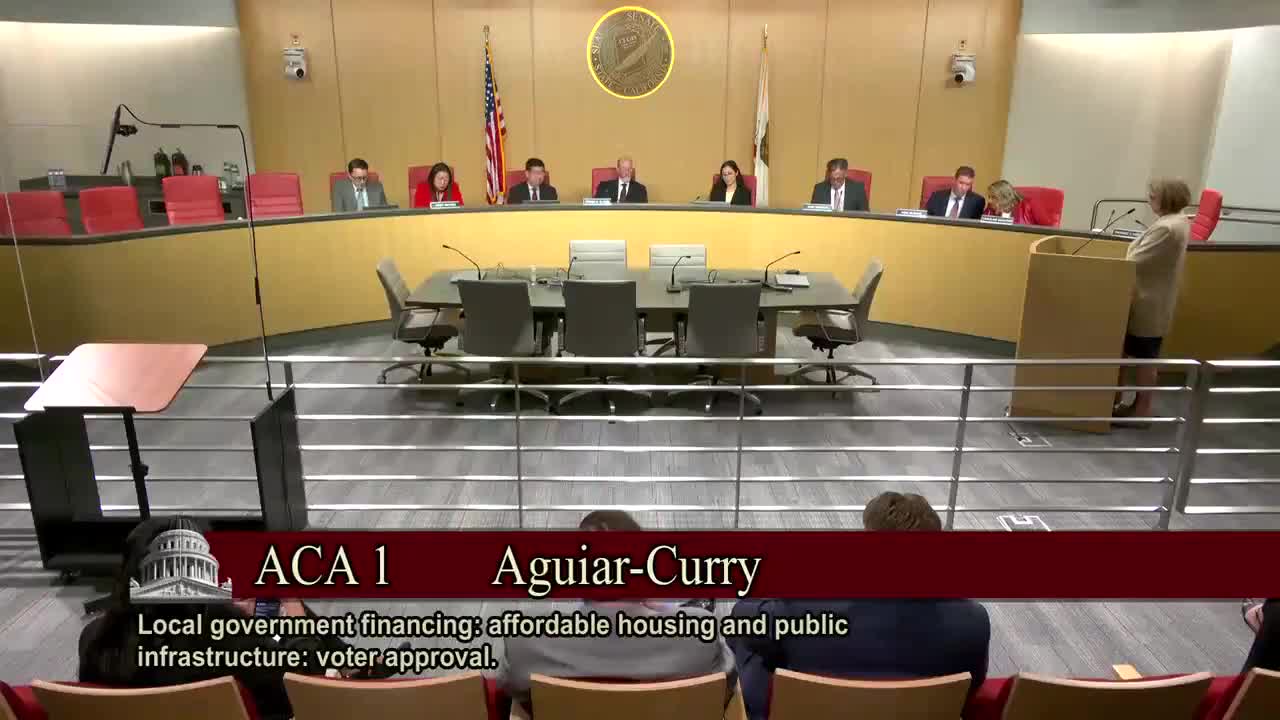 50MIN
Senate Standing Committee on Elections and Constitutional Amendments
 12MIN
Senate Standing Committee on Labor, Public Employment and Retirement
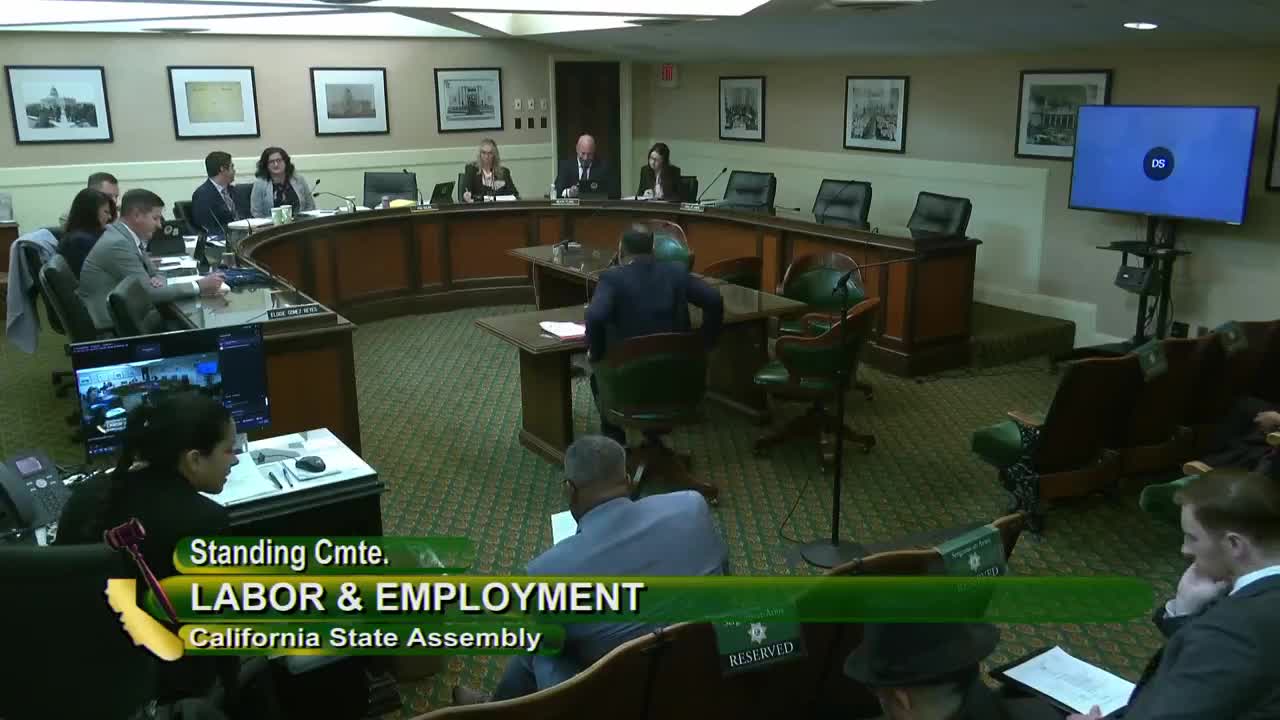 13MIN
Assembly Standing Committee on Labor and Employment
Bill Author

Bill Co-Author(s):