AB 2774: Childcare for Working Families Act.
- Session Year: 2023-2024
- House: Assembly
- Latest Version Date: 2024-06-24
Current Status:
Failed
(2024-08-15: In committee: Held under submission.)
Introduced
In Committee
First Chamber
In Committee
Second Chamber
Enacted
Existing law, the Child Care and Development Services Act, administered by the State Department of Social Services, establishes a system of childcare and development services for children up to 13 years of age.
Existing law establishes the Governors Office of Business and Economic Development (GO-Biz) to serve the Governor as the lead entity for economic strategy and the marketing of California on issues relating to business development, private sector investment, and economic growth. Existing law authorizes the office to recommend to the Governor and the Legislature, among other things, new state policies, programs, and actions, and amendments to existing programs.
This bill, the Childcare for Working Families Act, would establish the Childcare for Working Families Task Force for the purpose of submitting a report to the Legislature and the executive branch administration of the state, as specified, that recommends future comprehensive strategies aimed at addressing challenges faced by working families in accessing flexible, affordable, and quality childcare options. The bill would require the report to be completed by January 1, 2026. The bill would require the office to invite and convene the task force, as specified. The bill would require the office to assist the task force in carrying out its duties to the extent that funding is available. The bill would create the Childcare for Working Families Fund to receive moneys from nongovernment sources to support the implementation of the task force.
This bill would make these provisions inoperative on July 1, 2026, and would repeal them as of January 1, 2027.
Existing law establishes various public social services programs, including, among others, the California Work Opportunity and Responsibility to Kids (CalWORKs) and CalFresh. Existing law states that the purpose of its provisions relating to public social services is to provide protection, care, and assistance to the people of the state in need of them, and to promote the welfare and happiness of all of the people of the state by providing appropriate aid and services to those who are needy and distressed.This bill would make technical, nonsubstantive changes to that provision.Existing law establishes various public social services programs, including, among others, the California Work Opportunity and Responsibility to Kids (CalWORKs) and CalFresh. Existing law states that the purpose of its provisions relating to public social services is to provide protection, care, and assistance to the people of the state in need of them, and to promote the welfare and happiness of all of the people of the state by providing appropriate aid and services to those who are needy and distressed.
This bill would make technical, nonsubstantive changes to that provision.
The Legislature finds and declares all of the following:
(a)Addressing childcare affordability helps build a competitive economy; care investments and new ways of approaching the care crisis are beneficial for California families, vital for California businesses, and critical to the recovery of Californias economy.
(b)Childcare is a policy issue that often cuts across many areas of public interest, including workforce participation, economic mobility, public health, and even energy and infrastructure.
(c)There is a need to change the narrative that childcare is only a social or womens issue because it is an economic imperative for the growth of the state.
(d)There is a need to conduct the needs assessment or find creative and innovative approaches as the state experiences a multiyear budget deficit.
SECTION 1.SEC. 2.(a)It is the intent of the Legislature to address the challenges faced by working families in accessing flexible, affordable, and quality childcare options.
(b)In seeking to address these challenges and support working families with childcare, it is the intent of the Legislature to build on the substantial foundation and progress that has been made in helping California families, especially low-income families, in addressing child poverty in the state, such as increases to the minimum wage, the elimination of the maximum family grant rule in the CalWORKs program, housing and utility support programs, school nutrition programs, the local control funding formula for K12 education, state programs under the federal Workforce Innovation and Opportunity Act, expansion of health care, investments in child development, the California Earned Income Tax Credit, and outreach and assistance with the federal Earned Income Tax Credit.
(c)It is further the intent of the Legislature that the Childcare for Working Families Task Force produce a report that recommends future comprehensive strategies to support working families in accessing flexible, affordable, and quality childcare options.
(d)It is the intent of the Legislature to build upon concurrent work being done by the United States Department of Commerce, United States Chamber of Commerce, and United States Chamber of Commerce Foundation.
SEC. 2.SEC. 3.Article 17 (commencing with Section 12100.180) is added to Chapter 1.6 of Part 2 of Division 3 of Title 2 of the Government Code, to read:17.Access to Childcare12100.180.This article shall be known, and may be cited, as the Childcare for Working Families Act.
12100.181.(a)(1)The Childcare for Working Families Task Force is hereby established for the purpose of recommending future comprehensive strategies aimed at addressing challenges faced by working families in accessing flexible, affordable, and quality childcare options.
(2)To accomplish the purpose specified in paragraph (1), the task force may consider topics including, but not limited to, all of the following:
(A)Economic impact and needs assessment of childcare for working families.
(B)Tax programs for working families, such as tax credits.
(C)Publicprivate partnerships.
(D)Employer-sponsored childcare programs.
(b)The task force shall be invited and convened by the Governors Office of Business and Economic Development (GO-Biz). The office shall ensure that the task force consists of stakeholders that focus on family and child well-being, in furtherance of the goals of supporting working families with childcare options, including all of the following:
(1)Representatives from among the state agencies responsible for health and human services, economic and workforce development, and education.
(2)State and local community organizations that work with and advocate for children and families.
(3)Representatives from labor and business.
(4)Researchers with subject matter and economic development expertise.
(5)A representative from Thriving Families California.
(5)(6)Family childcare home providers.
(6)(7)Nonprofit and private center-based childcare providers.
(7)(8)A representative from the California State Association of Counties.
12100.182.(a)The office shall assist the task force in carrying out its duties to the extent that funding is available. The office may use its existing resources to absorb its costs for implementing this article.
(b)(1)The Childcare for Working Families Fund is hereby created to receive moneys from nongovernment sources to support the implementation of this article. All moneys in the fund are available, upon appropriation, to the office for purposes of this article.
(2)The Department of Finance shall develop a standardized agreement to allow for the voluntary donation to the fund by any person, educational institution, corporation or other business entity, or organization.
12100.183.(a)The task force shall submit a report to the executive branch administration and the Legislature. The report shall be completed by no later than January 1, 2026, and shall include all of the following:
(1)The success achieved over the eight-year period prior to completion of the report for each program and service determined by the task force to be of the highest importance in supporting working families with childcare options and recommendations that may build on that success.
(2)An analysis of existing care gaps and unmet needs among working families for accessing flexible, affordable, and quality childcare options.
(3)A specific set of near-term, intermediate-term, and long-term benchmarks that can be used to measure the states progress toward the goal of supporting working families with childcare options.
(4)Considering the needs and priorities for services, recommendations intended to address challenges faced by working families in accessing flexible, affordable, and quality childcare options.
(b)A report to be submitted to the Legislature pursuant to subdivision (a) shall be submitted in compliance with Section 9795.
12100.184.This article shall become inoperative on July 1, 2026, and, as of January 1, 2027, is repealed.
(a)It is the intent of the Legislature to address the challenges faced by working families in accessing flexible, affordable, and quality childcare options.
(b)In seeking to address these challenges and support working families with childcare, it is the intent of the Legislature to build on the substantial foundation and progress that has been made in helping California families, especially low-income families, in addressing child poverty in the state, such as increases to the minimum wage, the elimination of the maximum family grant rule in the CalWORKs program, housing and utility support programs, school nutrition programs, the local control funding formula for K12 education, state programs under the federal Workforce Innovation and Opportunity Act, expansion of health care, investments in child development, the California Earned Income Tax Credit, and outreach and assistance with the federal Earned Income Tax Credit.
(c)It is further the intent of the Legislature that the Childcare for Working Families Task Force produce a report that recommends future comprehensive strategies to support working families in accessing flexible, affordable, and quality childcare options.
SEC. 2.Article 17 (commencing with Section 12100.180) is added to Chapter 1.6 of Part 2 of Division 3 of Title 2 of the Government Code, to read:17.Access to Childcare12100.180.This article shall be known, and may be cited, as the Childcare for Working Families Act.
12100.181.(a)The Childcare for Working Families Task Force is hereby established for the purpose of recommending future comprehensive strategies aimed at addressing challenges faced by working families in accessing flexible, affordable, and quality childcare options.
(b)The task force shall be invited and convened by the Governors Office of Business and Economic Development (GO-Biz). The office shall ensure that the task force consists of stakeholders that focus on family and child well-being, in furtherance of the goals of supporting working families with childcare options, including all of the following:
(1)Representatives from among the state agencies responsible for health and human services, economic and workforce development, and education.
(2)State and local community organizations that work with and advocate for children and families.
(3)Representatives from labor and business, including representatives from the private and nonprofit childcare sectors. business.
(4)Researchers with subject matter and economic development expertise.
(5)Family childcare home providers.
(6)Nonprofit and private center-based childcare providers.
(6)(7)A representative from the California State Association of Counties.
12100.182.(a)The office shall assist the task force in carrying out its duties to the extent that funding is available. The office may use its existing resources to absorb its costs for implementing this article.
(b)(1)The Childcare for Working Families Fund is hereby created to receive moneys from nongovernment sources to support the implementation of this article. All moneys in the fund are available, upon appropriation, to the office for purposes of this article.
(2)The Department of Finance shall develop a standardized agreement to allow for the voluntary donation to the fund by any person, educational institution, corporation or other business entity, or organization.
12100.183.(a)The task force shall submit a report to the executive branch administration and the Legislature. The report shall be completed by no later than January 1, 2026, and shall include all of the following:
(1)The success achieved over the eight-year period prior to completion of the report for each program and service determined by the task force to be of the highest importance in supporting working families with childcare options and recommendations that may build on that success.
(2)An analysis of existing care gaps and unmet needs among working families for accessing flexible, affordable, and quality childcare options.
(3)A specific set of near-term, intermediate-term, and long-term benchmarks that can be used to measure the states progress toward the goal of supporting working families with childcare options.
(4)Considering the needs and priorities for services, recommendations intended to address challenges faced by working families in accessing flexible, affordable, and quality childcare options.
(b)A report to be submitted to the Legislature pursuant to subdivision (a) shall be submitted in compliance with Section 9795.
12100.184.This article shall become inoperative on July 1, 2026, and, as of January 1, 2027, is repealed.
(a)It is the intent of the Legislature to address the challenges faced by working families in accessing flexible, affordable, and quality childcare options.
(b)In seeking to address these challenges and support working families with childcare, it is the intent of the Legislature to build on the substantial foundation and progress that has been made in helping California families, especially low-income families, in addressing child poverty in the state, such as increases to the minimum wage, the elimination of the maximum family grant rule in the CalWORKs program, housing and utility support programs, school nutrition programs, the local control funding formula for K12 education, state programs under the federal Workforce Innovation and Opportunity Act, expansion of health care, investments in child development, the California Earned Income Tax Credit, and outreach and assistance with the federal Earned Income Tax Credit.
(c)It is further the intent of the Legislature that the Childcare for Working Families Task Force produce a report that recommends future comprehensive strategies to support working families in accessing flexible, affordable, and quality childcare options.
SEC. 2.Article 17 (commencing with Section 12100.180) is added to Chapter 1.6 of Part 2 of Division 3 of Title 2 of the Government Code, to read:17.Access to Childcare12100.180.This article shall be known, and may be cited, as the Childcare for Working Families Act.
12100.181.(a)The Childcare for Working Families Task Force is hereby established for the purpose of recommending future comprehensive strategies aimed at addressing challenges faced by working families in accessing flexible, affordable, and quality childcare options.
(b)The task force shall be invited and convened by the Governors Office of Business and Economic Development (GO-Biz). The office shall ensure that the task force consists of stakeholders that focus on family and child well-being, in furtherance of the goals of supporting working families with childcare options, including all of the following:
(1)Representatives from among the state agencies responsible for health and human services, economic and workforce development, and education.
(2)State and local community organizations that work with and advocate for children and families.
(3)Representatives from labor and business, including representatives from the private and nonprofit childcare sectors.
(4)Researchers with subject matter and economic development expertise.
(5)Family childcare home providers.
(6)A representative from the California State Association of Counties.
12100.182.(a)The office shall assist the task force in carrying out its duties to the extent that funding is available. The office may use its existing resources to absorb its costs for implementing this article.
(b)(1)The Childcare for Working Families Fund is hereby created to receive moneys from nongovernment sources to support the implementation of this article. All moneys in the fund are available, upon appropriation, to the office for purposes of this article.
(2)The Department of Finance shall develop a standardized agreement to allow for the voluntary donation to the fund by any person, educational institution, corporation or other business entity, or organization.
12100.183.(a)The task force shall submit a report to the executive branch administration and the Legislature. The report shall be completed by no later than January 1, 2026, and shall include all of the following:
(1)The success achieved over the eight-year period prior to completion of the report for each program and service determined by the task force to be of the highest importance in supporting working families with childcare options and recommendations that may build on that success.
(2)An analysis of existing care gaps and unmet needs among working families for accessing flexible, affordable, and quality childcare options.
(3)A specific set of near-term, intermediate-term, and long-term benchmarks that can be used to measure the states progress toward the goal of supporting working families with childcare options.
(4)Considering the needs and priorities for services, recommendations intended to address challenges faced by working families in accessing flexible, affordable, and quality childcare options.
(b)A report to be submitted to the Legislature pursuant to subdivision (a) shall be submitted in compliance with Section 9795.
12100.184.This article shall become inoperative on July 1, 2026, and, as of January 1, 2027, is repealed.
(a)It is the intent of the Legislature to address the challenges faced by working families in accessing flexible, affordable, and quality childcare options.
(b)In seeking to address these challenges and support working families with childcare, it is the intent of the Legislature to build on the substantial foundation and progress that has been made in helping California families, especially low-income families, in addressing child poverty in the state, such as increases to the minimum wage, the elimination of the maximum family grant rule in the CalWORKs program, housing and utility support programs, school nutrition programs, the local control funding formula for K12 education, state programs under the federal Workforce Innovation and Opportunity Act, expansion of health care, investments in child development, the California Earned Income Tax Credit, and outreach and assistance with the federal Earned Income Tax Credit.
(c)It is further the intent of the Legislature that the Childcare for Working Families Task Force produce a report that recommends future comprehensive strategies to support working families in accessing flexible, affordable, and quality childcare options.
SEC. 2.Article 17 (commencing with Section 12100.180) is added to Chapter 1.6 of Part 2 of Division 3 of Title 2 of the Government Code, to read:17.Access to Childcare12100.180.This article shall be known, and may be cited, as the Childcare for Working Families Act.
12100.181.(a)The Childcare for Working Families Task Force is hereby established for the purpose of recommending future comprehensive strategies aimed at addressing challenges faced by working families in accessing flexible, affordable, and quality childcare options.
(b)The task force shall be invited and convened by the Governors Office of Business and Economic Development (GO-Biz). The office shall ensure that the task force consists of stakeholders that focus on family and child well-being, in furtherance of the goals of supporting working families with childcare options, including all of the following:
(1)Representatives from among the state agencies responsible for health and human services, economic and workforce development, and education.
(2)State and local community organizations that work with and advocate for children and families.
(3)Representatives from labor and business, including a representative representatives from the private and nonprofit childcare sector. sectors.
(4)Researchers with subject matter and economic development expertise.
(5)Family childcare home providers.
12100.182.(a)The office shall assist the task force in carrying out its duties to the extent that funding is available. The office may use its existing resources to absorb its costs for implementing this article.
(b)(1)The Childcare for Working Families Fund is hereby created to receive moneys from nongovernment sources to support the implementation of this article. All moneys in the fund are available, upon appropriation, to the office for purposes of this article.
(2)The Department of Finance shall develop a standardized agreement to allow for the voluntary donation to the fund by any person, educational institution, corporation or other business entity, or organization.
12100.183.(a)The task force shall submit a report to the executive branch administration and the Legislature. The report shall be completed by no later than January 1, 2026, and shall include all of the following:
(1)The success achieved over the eight-year period prior to completion of the report for each program and service determined by the task force to be of the highest importance in supporting working families with childcare options and recommendations that may build on that success.
(2)An analysis of existing care gaps and unmet needs among working families for accessing flexible, affordable, and quality childcare options.
(3)A specific set of near-term, intermediate-term, and long-term benchmarks that can be used to measure the states progress toward the goal of supporting working families with childcare options.
(4)Considering the needs and priorities for services, recommendations intended to address challenges faced by working families in accessing flexible, affordable, and quality childcare options.
(b)A report to be submitted to the Legislature pursuant to subdivision (a) shall be submitted in compliance with Section 9795.
12100.184.This article shall become inoperative on July 1, 2026, and, as of January 1, 2027, is repealed.
(a)It is the intent of the Legislature to address the challenges faced by working families in accessing flexible, affordable, and quality childcare options.
(b)In seeking to address these challenges and support working families with childcare, it is the intent of the Legislature to build on the substantial foundation and progress that has been made in helping California families, especially low-income families, in addressing child poverty in the state, such as increases to the minimum wage, the elimination of the maximum family grant rule in the CalWORKs program, housing and utility support programs, school nutrition programs, the local control funding formula for K12 education, state programs under the federal Workforce Innovation and Opportunity Act, expansion of health care, investments in child development, the California Earned Income Tax Credit, and outreach and assistance with the federal Earned Income Tax Credit.
(c)It is further the intent of the Legislature that the Childcare for Working Families Task Force produce a report that recommends future comprehensive strategies to support working families in accessing flexible, affordable, and quality childcare options.
SEC. 2.Article 17 (commencing with Section 12100.180) is added to Chapter 1.6 of Part 2 of Division 3 of Title 2 of the Government Code, to read:17.Access to Childcare12100.180.This article shall be known, and may be cited, as the Childcare for Working Families Act.
12100.181.(a)The Childcare for Working Families Task Force is hereby established for the purpose of recommending future comprehensive strategies aimed at addressing challenges faced by working families in accessing flexible, affordable, and quality childcare options.
(b)The task force shall be invited and convened by the Governors Office of Business and Economic Development (GO-Biz). The office shall ensure that the task force consists of stakeholders that focus on family and child well-being, in furtherance of the goals of supporting working families with childcare options, including all of the following:
(1)Representatives from among the state agencies responsible for health and human services, economic and workforce development, and education.
(2)State and local community organizations that work with and advocate for children and families.
(3)Representatives from labor and business, including a representative from the private childcare sector.
(4)Researchers with subject matter and economic development expertise.
12100.182.(a)The office shall assist the task force in carrying out its duties to the extent that funding is available. The office may use its existing resources to absorb its costs for implementing this article.
(b)(1)The Childcare for Working Families Fund is hereby created to receive moneys from nongovernment sources to support the implementation of this article. All moneys in the fund are available, upon appropriation, to the office for purposes of this article.
(2)The Department of Finance shall develop a standardized agreement to allow for the voluntary donation to the fund by any person, educational institution, corporation or other business entity, or organization.
12100.183.(a)The task force shall submit a report to the executive branch administration and the Legislature. The report shall be completed by no later than January 1, 2026, and shall include all of the following:
(1)The success achieved over the eight-year period prior to completion of the report for each program and service determined by the task force to be of the highest importance in supporting working families with childcare options and recommendations that may build on that success.
(2)An analysis of existing care gaps and unmet needs among working families for accessing flexible, affordable, and quality childcare options.
(3)A specific set of near-term, intermediate-term, and long-term benchmarks that can be used to measure the states progress toward the goal of supporting working families with childcare options.
(4)Considering the needs and priorities for services, recommendations intended to address challenges faced by working families in accessing flexible, affordable, and quality childcare options.
(b)A report to be submitted to the Legislature pursuant to subdivision (a) shall be submitted in compliance with Section 9795.
12100.184.This article shall become inoperative on July 1, 2026, and, as of January 1, 2027, is repealed.
SECTION 1.Section 10000 of the Welfare and Institutions Code is amended to read:10000.The purpose of this division is to provide protection, care, and assistance to the people of the state in need of them, and to promote the welfare and happiness of all of the people of the state by providing appropriate aid and services to all of the people of the state who are needy and distressed. It is the intent of the Legislature that aid shall be administered and services provided promptly and humanely, with due regard for the preservation of family life, and without discrimination on account of ancestry, marital status, political affiliation, or any characteristic listed or defined in Section 11135 of the Government Code. That aid shall be administered, and services provided, in that manner to the extent not in conflict with federal law, in order to encourage self-respect, self-reliance, and the desire to be a good citizen, useful to society.The purpose of this division is to provide for protection, care, and assistance to the people of the state in need thereof, of them, and to promote the welfare and happiness of all of the people of the state by providing appropriate aid and services to all of its the people of the state who are needy and distressed. It is the legislative intent intent of the Legislature that aid shall be administered and services provided promptly and humanely, with due regard for the preservation of family life, and without discrimination on account of ancestry, marital status, political affiliation, or any characteristic listed or defined in Section 11135 of the Government Code. That aid shall be so administered and services so provided, administered, and services provided, in that manner to the extent not in conflict with federal law, as in order to encourage self-respect, self-reliance, and the desire to be a good citizen, useful to society.
|
Date
|
Status
|
|---|---|
| Aug 15, 2024 | In committee: Held under submission. |
| Aug 5, 2024 | In committee: Referred to APPR suspense file. |
| Jul 1, 2024 | From committee: Do pass and re-refer to Com. on APPR. (Ayes 13. Noes 0.) (July 1). Re-referred to Com. on APPR. |
| Jun 24, 2024 | From committee chair, with author's amendments: Amend, and re-refer to committee. Read second time, amended, and re-referred to Com. on B., P. & E. D. |
| Jun 18, 2024 | From committee: Do pass and re-refer to Com. on B., P. & E. D. (Ayes 5. Noes 0.) (June 17). Re-referred to Com. on B., P. & E. D. |
| Jun 5, 2024 | Referred to Coms. on HUMAN S. and B., P. & E. D. |
| Jun 5, 2024 | From committee chair, with author's amendments: Amend, and re-refer to committee. Read second time, amended, and re-referred to Com. on HUMAN S. |
| May 23, 2024 | In Senate. Read first time. To Com. on RLS. for assignment. |
| May 22, 2024 | Read third time. Passed. Ordered to the Senate. (Ayes 72. Noes 0. Page 5504.) |
| May 20, 2024 | Read second time. Ordered to third reading. |
| May 16, 2024 | From committee: Do pass. (Ayes 15. Noes 0.) (May 16). |
| May 16, 2024 | Joint Rule 62(a), file notice suspended. (Page 5215.) |
| May 15, 2024 | In committee: Set, first hearing. Referred to APPR. suspense file. |
| Apr 18, 2024 | Re-referred to Com. on APPR. |
| Apr 17, 2024 | Read second time and amended. |
| Apr 16, 2024 | From committee: Amend, and do pass as amended and re-refer to Com. on APPR. (Ayes 7. Noes 0.) (April 16). |
| Apr 15, 2024 | Re-referred to Com. on J., E.D., & E. |
| Apr 11, 2024 | Read second time and amended. |
| Apr 10, 2024 | From committee: Amend, and do pass as amended and re-refer to Com. on J., E.D., & E. (Ayes 6. Noes 0.) (April 9). |
| Apr 1, 2024 | Re-referred to Com. on HUM. S. |
| Mar 21, 2024 | Referred to Coms. on HUM. S. and J., E.D., & E. |
| Mar 21, 2024 | From committee chair, with author's amendments: Amend, and re-refer to Com. on HUM. S. Read second time and amended. |
| Feb 16, 2024 | From printer. May be heard in committee March 17. |
| Feb 15, 2024 | Read first time. To print. |
|
Date
|
Description
|
Location
|
Votes
|
|
|---|---|---|---|---|
| Aug 5, 2024 | Placed on suspense file | Senate Standing Committee on Appropriations |
Passed |
|
| Jul 1, 2024 | Do pass, but first be re-referred to the Committee on [Appropriations] | Senate Standing Committee on Business, Professions and Economic Development |
Passed |
|
| Jun 17, 2024 | Do pass, but first be re-referred to the Committee on [Business, Professions and Economic Development] | Senate Standing Committee on Human Services |
Passed |
|
| May 22, 2024 | AB 2774 Grayson Assembly Third Reading | Assembly Floor |
Passed |
|
| May 16, 2024 | Do pass. | Assembly Standing Committee on Appropriations |
Passed |
|
| Apr 16, 2024 | Do pass as amended and be re-referred to the Committee on [Appropriations] | Assembly Standing Committee on Jobs, Economic Development, and the Economy |
Passed |
|
| Apr 9, 2024 | Do pass as amended and be re-referred to the Committee on [Jobs, Economic Development, and the Economy] | Assembly Standing Committee on Human Services |
Passed |
This list shows positions taken on this bill by organizations on the date displayed, which is linked to the original source.
Positions by individuals are not included.
|
Organization
|
Position
|
Date
|
|---|---|---|
| California State Association Of Counties | ** Support | |
| City of Goleta | ** Support | |
| Clean Earth 4 Kids | * Support | Jun 17, 2024 |
| Early Care And Education Consortium | * Support | Jul 1, 2024 |
| ECO Sustainability | * Support | Jun 17, 2024 |
| NCCCA | * Support | Jun 17, 2024 |
| North Country Equity and Justice Coalition | * Support | Jun 17, 2024 |
| Thriving Families California | ** Support |
SENATE COMMITTEE ON APPROPRIATIONS
Senator Anna Caballero, Chair
2023 - 2024 Regular Session
AB 2774 (Grayson) - Childcare for Working Families Act
Version: June 24, 2024 | Policy Vote: HUMAN S. 5 - 0, B., P. & E.D. 13 - 0 |
Urgency: No | Mandate: No |
Hearing Date: August 5, 2024 | Consultant: Agnes Lee |
Bill Summary:
AB 2774 would establish the Childcare for Working Families Task Force.
Fiscal Impact:
- The Governor’s Office of Business and Economic Development (GO-Biz) estimates the following one-time General Fund costs:
- Staffing resources of $181,000 to manage the task force and $157,000 related to the administration of any nongovernment funds and donations.
- Consulting costs between $500,000 to $600,000 to provide the required report, since GO-Biz does not have related subject matter expertise in this area.
- General Fund costs would be offset to the extent nongovernment funds and donations are made available.
Background:
California’s subsidized child care system is designed to provide assistance for income eligible parents and guardians who are working, in training, seeking employment, incapacitated, or in need of respite. This child care is available through a number of programs. The state’s subsidized child care programs include: General Child Care, which includes contracted centers and family child care homes; the State Preschool Program, which provides developmentally, culturally, and linguistically appropriate curriculum to eligible three- and four-year olds; Alternative Payment Programs, which provide vouchers that can be used to obtain child care in a center, family child care home, or from a license-exempt provider; and CalWORKs child care for parents who receive or have received CalWORKs services.
Current law establishes GO-Biz to serve the Governor as the lead entity for economic strategy and the marketing of California on issues relating to business development, private sector investment, and economic growth. GO-Biz may recommend new state policies, programs, actions, or amendments to existing programs; advance statewide economic goals and respond to emerging economic problems and opportunities; conduct research on the state’s business climate, including research on how the state can remain on the leading edge of innovation; and support small businesses, among other things.
Proposed Law:
Specific provisions of the bill would:
- Establish the Childcare for Working Families Task Force for the purpose of recommending future comprehensive strategies aimed at addressing challenges faced by working families in accessing flexible, affordable, and quality child care options.
- Require the task force to be invited and convened by the GO-Biz, and require the office to ensure that the task force consists of stakeholders, as specified.
- Require the GO-Biz to assist the task force in carrying out its duties to the extent that funding is available and authorize the office to use its existing resources to absorb its costs.
- Create the Childcare for Working Families Fund to receive moneys from nongovernment sources to support implementation and provide that all moneys in the fund are available, upon appropriation, to the office.
- Require the Department of Finance to develop a standardized agreement to allow for the voluntary donation to the fund by any person, educational institution, corporation or other business entity, or organization.
- Require the task force to submit a report to the executive branch administration and the Legislature, as specified.
- Sunset the bill’s provisions on July 1, 2026.
-- END --
SENATE COMMITTEE ON
BUSINESS, PROFESSIONS AND ECONOMIC DEVELOPMENT
Senator Angelique Ashby, Chair
2023 - 2024 Regular
Bill No: AB 2774 Hearing Date: July 1, 2024
Author: | Grayson | ||
Version: |
| ||
Urgency: | Fiscal: | ||
Consultant: | |||
Subject: Childcare for Working Families Act
SUMMARY:
Until July 1, 2026, establishes the Childcare for Working Families Act and requires GO-Biz to establish a Childcare for Working Families Task Force (Task Force) whose purpose is to recommend future comprehensive strategies aimed at addressing challenges faced by working families in accessing flexible, affordable, and quality childcare options.
NOTE: This bill was previously heard in the Senate Committee on Human Services. The bill passed 5-0 on June 17, 2024.
Existing law:
- Establishes GO-Biz within the Governor's office for the purpose of serving as the lead state entity for economic strategy and marketing of California on issues relating to business development, private sector investment and economic growth. (Government Code (GC) §§ 12096 – 12100.69)
- Establishes the Child Care and Development Services Act to provide childcare and development services as part of a coordinated, comprehensive, and cost-effective system serving children from birth to 13 years old and their parents including a full range of supervision, health, and support services through full- and part-time programs. (Welfare and Institutions Code (WIC) § 10207 et seq.)
- Establishes the "California Child Day Care Facilities Act" to provide a comprehensive, quality system for licensing child daycare facilities to ensure that working families have access to healthy and safe childcare providers and that childcare programs contribute positively to a child's emotional, cognitive, and educational development, and are able to respond to, and provide for, the unique characteristics and needs of children. (Health and Safety Code § 1596.70 et seq.)
- Makes legislative findings and declarations that recognize the significance of early childhood education investments and its impact on life outcomes. Further finds that the importance of a competent and diverse workforce and sustainable funding for subsidized access to quality programs. (WIC § 10213(a))
- States legislative intent that all families have access to childcare and development services, through resource and referral where appropriate, and regardless of demographic background or special needs, and that families are provided the opportunity to attain financial stability through employment, while maximizing growth and development of their children and enhancing their parenting skills through participation in childcare and development programs. (WIC § 10207.5)
- Defines “childcare and development services” to mean services designed to meet a wide variety of children's and families' needs while parents and guardians are working, in training, seeking employment, incapacitated, or in need of respite and states that these services may include direct care supervision, instructional activities, resource and referral programs, and alternative payment arrangements. (WIC § 10213.5(j))
- Establishes a 27-member Early Childhood Policy Council (Council) to advise the Governor, the Legislature, and the Department of Social Services (DSS) on statewide early learning and care policy, including the planning for, and the implementation and evaluation of, the state’s Master Plan for Early Learning and Care (Master Plan) and the 2019 California Assembly Blue Ribbon Commission on Early Childhood Education Final Report (Blue Ribbon Commission. Requires the Council to maintain at least two ongoing standing advisory committees: a parent advisory committee and a workforce advisory committee. Requires the Council to meet regularly and provide recommendations on all aspects of the state’s early childhood education system, including, but not limited to, ways the Master Plan and Blue Ribbon Commission report can be updated and improved. (Welfare and Institutions Code (WIC) § 10320)
- Requires DSS to administer a Child Care and Development Infrastructure Grant Program to expand access to child care and development and preschool opportunities for children up to five years of age by providing resources to build new facilities or retrofit, renovate, repair, or expand existing facilities. (WIC § 10310.1)
- Requires the Superintendent of Public Instruction, subject to an appropriation in the annual Budget Act, administer the Early Learning and Care Workforce Development Grants Program to expand the number of qualified early learning and care professionals and increase the educational credentials of existing early learning and care professionals across the state. (WIC § 10311)
This bill:
- Until July 1, 2026, establishes the Childcare for Working Families Act with a Task Force whose purpose is to recommend future comprehensive strategies aimed at addressing challenges faced by working families in accessing flexible, affordable, and quality childcare options.
- Specifies various topics the Task Force may consider and requires the Task Force to submit a report no later than January 1, 2026 that includes all of the following and that recommends future comprehensive strategies to support working families in accessing flexible, affordable, and quality childcare options:
- Successes over the prior eight years for programs and services the Task Force determines are of the highest importance in supporting working families with childcare options and recommendations that may build on that success.
- An analysis of existing care gaps and unmet needs among working families for accessing flexible, affordable, and quality childcare options.
- A specific set of near-term, intermediate-term, and long-term benchmarks that can be used to measure the state's progress toward the goal of supporting working families with childcare options.
- Considering the needs and priorities for services, recommendations intended to address challenges faced by working families in accessing flexible, affordable, and quality childcare options.
- Requires GO-Biz to convene and invite the Task Force and requires GO-Biz to ensure that the task force consists of stakeholders that focus on family and child well-being, in furtherance of the goals of supporting working families with childcare options, including specified representatives.
- Requires GO-Biz to carry out its duties to the extent that funding is available and authorizes GO-Biz to use its existing resources to absorb costs related to the Task Force.
- States findings and declarations about: the role of childcare affordability in building a competitive economy; the importance of investing in care and approaching the care crisis; childcare as a policy issue cuts across many areas of public interest; the need to change the narrative that childcare is only a social or women’s issue because it is an economic imperative for the growth of the state; the need to conduct the needs assessment or find creative and innovative approaches.
- States Legislative intent to address the challenges faced by working families in accessing flexible, affordable, and quality childcare options and to build on the substantial foundation and progress that has been made in helping California families, especially low-income families, in addressing child poverty in the state, such as increases to the minimum wage, the elimination of the maximum family grant rule in the CalWORKs program, housing and utility support programs, school nutrition programs, the local control funding formula for K–12 education, state programs under the federal Workforce Innovation and Opportunity Act, expansion of health care, investments in child development, the California Earned Income Tax Credit, and outreach and assistance with the federal Earned Income Tax Credit.
FISCAL EFFECT:
This bill is keyed fiscal by Legislative Counsel. According to the Assembly Committee on Appropriations, the bill will result in one-time General Fund costs in the hundreds of thousands of dollars for GO-Biz to establish, administer, and staff the task force and submit a report to the Legislature. Go-Biz indicates it does not have existing resources to fund the information requested and would need to hire an external consultant.
COMMENTS:
- Purpose. This bill is sponsored by the Author. According to the Author, “affordable childcare is unfortunately out of reach for many Californians. In fact, California was ranked the least affordable state for center-based infant care in the nation in 2020, and just 14% of the state’s eligible infants and toddlers have access to subsidized childcare. On average, a two-parent household with an infant in California paid 16.7% of income for center-based care. The lack of affordable childcare has also become a barrier to work, especially for mothers, who disproportionately take on caregiving responsibilities when their family cannot find or afford childcare.”
The Author states that California’s children need a safe space to learn and grow while parents are at work, and childcare is an essential component for the livelihood of workers and communities. Although California has made some progress, our state’s childcare system must continue to prioritize investments in order to build a comprehensive, high-quality system that is accessible and affordable to all.
- Background.
GO-Biz. In February 2010, the Little Hoover Commission undertook a review of the state's economic and workforce development programs. In its final report, Making up for Lost Ground: Creating a Governor's Office of Economic Development, it analyzed the status and effectiveness of current programs since the 2003 demise of the Technology, Trade and Commerce Agency and recommended the creation of a new governmental entity to fill the void left by the dismantled agency.
The report called for a single entity that would promote greater economic development, foster job creation, serve as a policy advisor and deliver specific services (i.e., permitting, tax, regulatory, and other information) directly to the California business community. In April 2010, Governor Schwarzenegger issued Executive Order S-05-10 as a means to operationalize the report recommendations including the creation of the Governor's Office of Economic Development (GOED).
In October 2011, the Governor signed AB 29 (John A. Pérez, Chapter 475, Statutes of 2011), which effectively codified GOED and changed its name to GO-Biz. Since its inception, the office has served thousands of businesses, 95 percent of which are small businesses. The most frequent types of assistance include help with permit streamlining, starting a business, relocation and expansion of businesses, and regulatory challenges.
In March 2012, Governor Brown initiated a reorganization process to realign the state's administrative structure. Key changes include dismantling of the Business, Transportation and Housing Agency and the shifting of a number of key programs to GO-Biz including the Small Business Loan Guarantee Program, the California Travel and Tourism Commission, the California Film Commission, the Film California First Program, and the Infrastructure and Economic Development Bank (IBank). Currently, GO-Biz administers the following programs and units:
- Made In California program for the purpose of encouraging consumer product awareness and to foster the purchases of products manufactured in California.
- The California Inclusive Innovation Hub Program (iHub2) to incubate and/or accelerate technology and science-based firms, with a focus on underserved regions and communities.
- The California Competes Tax Credit Program under which “businesses who want to come to California or stay and grow in California” can receive an income tax credit.
- The California Business Investment Services Unit, which provides no-fee, tailored site selection services to employers and others who may be considering California for relocation or expansion.
- The California Business Portal, which provides information to California businesses about common questions, permitting, financial options, and more.
- The California Community Reinvestment Grants Program, which was included in Proposition 64, authorized GO-Biz to award grants to local health departments and certain nonprofit organizations to support communities disproportionately affected by the War on Drugs.
- Office of the Small Business Advocate which provides information and assistance to small businesses.
- The Zero Emission Vehicles (ZEV) Infrastructure Unit which works to accelerate the deployment of ZEV infrastructure.
- The International Affairs and Business Development Unit, which serves as California’s primary point of contact for expanding international trade and investment relations. This unit focuses on foreign direct investment (services for foreign investors, foreign investment technical assistance, and the EB-5 Investor Visa Program), international trade promotion (STEP program, trade missions, export assistance, and the California-China Trade Office), and international agreements.
Federal efforts to support small businesses and child care. Earlier this year, the White House and Small Business Administration (SBA) announced new actions to support small businesses that offer childcare for millions of working families. In the coming months, SBA will make available new funding opportunities to support small businesses in the childcare sector through SBA’s Women Business Center program. The additional funds will support the expansion of childcare delivery systems, increase child care slots, and improve child care access, affordability, and quality. SBA also announced it will make funding available to create a child care business development guide, which would provide resources on starting and running a business throughout the child care business life cycle, including information on accessing capital, licensing requirements, and tax considerations.
SBA is additionally launching a lender campaign to highlight the resources SBA has available to support small, minority-owned, and women-owned businesses, including child care businesses. SBA will engage in stakeholder discussions on the potential for additional reforms to support the growth of childcare capacity across the country, including the expansion of eligibility to nonprofit child care providers under the signature 7(a) loan program, which supports financing to small businesses for working capital and a range of other uses, and the 504 loan program, which provides financing for major fixed asset purchases.
Similar efforts to the Task Force’s proposed work. In 2017, then Assembly Speaker Rendon formed the Assembly Blue Ribbon Commission on Early Childhood Education (Blue Ribbon Commission) to identify strategies to create a more sustainable early learning system and update the state’s funding plan to improve outcomes for California’s children and families. The commissioners consisted of Assemblymembers, representatives from early childhood education advocacy and service organizations, and community members. In 2019, the Blue Ribbon Commission published its final report which included background on the need for early care and education programs and deficits in the state’s system, including racial and socioeconomic inequities, a lack of state and federal funding for programs, low wages for the early care and education workforce, and a lack of access to other supportive services for families, such as home visiting and paid family leave. The final report also included a series of 65 recommendations in the following areas: Governance and Administration, Family Engagement, Access for Children and Families, Workforce, Quality Improvement, Systems and Infrastructure, Facilities and Supply, Coordination and Alignment, and Financing. The recommendations for Access for Children and Families included short- and mid-term goals ensure families have equitable access to affordable early care and education programs.
In 2019, Governor Newsom called for the development of a Master Plan for Early Learning and Care (Master Plan). The purpose of the Master Plan was to build upon previous work and provide a comprehensive roadmap with actionable goals to strengthen California’s early learning and care system. The Master Plan, released in 2020, included four policy goals: unify programs to improve access and equity, enhance educator competencies and provide accessible workforce pathways, adopt a new reimbursement and rate model, and streamline early childhood governance and administration.
The Council was established in 2019 to advise the Governor, the Legislature, and the Superintendent of Public Instruction on statewide early learning and care policy, including the planning for and the implementation and evaluation of the Master Plan and the Blue Ribbon Commission final report. In its 2023 Annual Report, the Council described presentations received at quarterly meetings and at its Parent Advisory Committee and Workforce Advisory Committee meetings. The Council receives updates on childcare issues, including program and policy developments related to early childhood care and education.
- Arguments in Support. The California Association of Counties writes, “the inclusion of a county representative on the Task Force allows for important local input, as counties support and administer various early childhood programs throughout the state.”
According to the Early Care and Education Consortium, “solutions are needed to address the persistent challenge that working families face in accessing
affordable, flexible, quality child care.”
The City of Goleta echoes the Author’s statement that “California’s children need a safe space to learn and grow while parents are at work. California needs to prioritize continue investments in childcare in order to build a comprehensive, high-quality system that is accessible and affordable to all.”
According to Thriving Families California, “Without access to child care, parents—especially women—must cut down on work hours, take pay cuts, or completely leave the workforce in order to care for their children. The taskforce created by AB 2774 can recommend policies that increase access to child care and therefore promote equity for families while strengthening California’s workforce.”
- Policy Comments and Questions.
Task Force composition and direction. The Author’s office indicates that the goal of the Task Force is to view childcare issues through a more economic lens, hence the mandate for Task Force convening by GO-Biz. However, the Task Force includes representatives from named associations, in addition to a number of varied childcare-related entities like community organizations that work with and advocate for children and families and childcare providers, among others. The bill also only provides loose authority for the Task Force to consider various topics such as tax programs for working families and public-private partnerships, to name a few, but the mandated report requires information about “unmet needs among working families for accessing flexible, affordable, and quality childcare options”, for example that may not be gleaned from the Task Force considering topics like undefined public-private partnerships. The Author should continue working to refine the Task Force composition to ensure that the representatives bring expertise in the correct focus areas as the Task Force’s mandatary report is being created.
Why GO-Biz? This bill establishes a new Task Force administered by GO-Biz that appears to build upon existing efforts already being undertaken by entities like the Council. The Task Force’s purpose is “to recommend future comprehensive strategies aimed at addressing challenges faced by working families in accessing flexible, affordable, and quality childcare options.” It is unclear why the efforts outlined in this bill, if a statutory mandate is necessary, could not be undertaken by the Council, nor is it clear that the Council is not already performing this important work, particularly given its duty of providing specific recommendations directly to the Governor, Legislature, and DSS on “all aspects of the state’s early childhood education system”. Government bodies and the Governor can, and do, establish issue-specific working groups like a task force, and the creation of the Task Force in this bill administered by GO-Biz appears be duplicative of existing efforts. If the Author wishes to, for example, connect small businesses to opportunities such as those currently in development at the SBA, or even to California business funding opportunities that GO-Biz may maintain awareness of, the Author should continue working to clarify the actual intent of the Task Force as well as Task Force goals that GO-Biz could more appropriate assist in realizing.
SUPPORT AND OPPOSITION:
Support:
California State Association of Counties
City of Goleta
Early Care and Education Consortium
Thriving Families California
Opposition:
None received
-- END --
SENATE COMMITTEE ON HUMAN SERVICES
Senator Alvarado-Gil, Chair
2023 - 2024 Regular
Bill No: | AB 2774 | ||
Author: | Grayson | ||
Version: | June 5, 2024 | Hearing Date: | June 17, 2024 |
Urgency: | No | Fiscal: | Yes |
Consultant: | Diana Dominguez | ||
Subject: Childcare for Working Families Act
SUMMARY
This bill would establish the Childcare for Working Families Task Force under the Governor’s Office of Business and Economic Development (GO-Biz), composed of specified representatives, and require the task force to submit a report to the Administration and Legislature by January 1, 2026, including specified information, such as successes achieved by various programs in supporting working families with child care options, an analysis of care gaps and unmet needs, benchmarks and recommendations. This bill would require GO-Biz to use existing resources for costs related to this act, and create the Childcare for Working Families Fund to receive funds from nongovernment sources to support implementation of this act.
ABSTRACT
Existing Law:
- Establishes the Governor’s Office of Business and Economic Development, also known as “GO-Biz,” within the Governor’s Office. Requires GO-Biz to serve the Governor as the lead entity for economic strategy and the marketing of California on issues relating to business development, private sector investment, and economic growth. Allows GO-Biz to recommend new state policies, programs, actions, or amendments to existing programs; advance statewide economic goals and respond to emerging economic problems and opportunities; conduct research on the state’s business climate, including research on how the state can remain on the leading edge of innovation; and support small businesses; among other things. (Government Code [GC] 12096.2-12096.3)
- Establishes the “Child Care and Development Services Act” to provide child care and development services as part of a coordinated, comprehensive, and cost-effective system serving children from birth to 13 years old and their parents including a full range of supervision, health, and support services through full- and part-time programs. (WIC 10207 et seq.)
- Establishes the “California Child Day Care Facilities Act” to provide a comprehensive, quality system for licensing child daycare facilities to ensure that working families have access to healthy and safe childcare providers and that childcare programs contribute positively to a child's emotional, cognitive, and educational development, and are able to respond to, and provide for, the unique characteristics and needs of children. (Health and Safety Code [HSC] 1596.70 et seq.)
- Makes legislative findings and declarations that recognize the significance of early childhood education investments and its impact on life outcomes. Further finds that the importance of a competent and diverse workforce and sustainable funding for subsidized access to quality programs. (WIC 10213(a))
- States the legislative intent that all families have access to childcare and development services, through resource and referral where appropriate, and regardless of demographic background or special needs, and that families are provided the opportunity to attain financial stability through employment, while maximizing growth and development of their children and enhancing their parenting skills through participation in childcare and development programs. (WIC 10207.5)
- Defines “childcare and development services” to mean services designed to meet a wide variety of children’s and families’ needs while parents and guardians are working, in training, seeking employment, incapacitated, or in need of respite and states that these services may include direct care supervision, instructional activities, resource and referral programs, and alternative payment arrangements. (WIC 10213.5(j))
This Bill:
- States the intent of the Legislature to address the challenges faced by working families in accessing flexible, affordable, and quality child care options. In seeking to address these challenges and support working families with child care, states the intent of the Legislature to build on the substantial foundation and progress that has been made in helping California families, especially low-income families, in addressing child poverty in the state. States the intent of the Legislature that the Childcare for Working Families Task Force produce a report that recommends future comprehensive strategies to support working families in accessing flexible, affordable, and quality child care options.
- Establishes the Childcare for Working Families Act.
- Establishes the Childcare for Working Families Task Force for the purpose of recommending future comprehensive strategies aimed at addressing challenges faced by working families in accessing flexible, affordable, and quality child care options.
- States the task force shall be invited and convened by GO-Biz, and requires GO-Biz to ensure that the task force consists of stakeholders that focus on family and child well-being, in furtherance of the goals of supporting working families with child care options, including all of the following:
- Representatives from among the state agencies responsible for health and human services, economic and workforce development, and education.
- State and local community organizations that work with and advocate for children and families.
- Representatives from labor and business.
- Researchers with subject matter and economic development expertise.
- Family child care home providers.
- Nonprofit and private center-based child care providers.
- A representative from the California State Association of Counties.
- Requires GO-Biz to assist the task force in carrying out its duties to the extent that funding is available. Allows GO-Biz to use its existing resources to absorb its costs for implementing this Act.
- Creates the Childcare for Working Families Fund to receive moneys from nongovernment sources to support the implementation of this Act. Makes all moneys in the fund available, upon appropriation, to GO-Biz for purposes of this Act.
- Requires the Department of Finance to develop a standardized agreement to allow for the voluntary donation to the fund by any person, educational institution, corporation or other business entity, or organization.
- Requires the task force to submit a report to the executive branch administration and the Legislature. Requires the report to be completed by no later than January 1, 2026, and include all of the following:
- The success achieved over the eight-year period prior to completion of the report for each program and service determined by the task force to be of the highest importance in supporting working families with child care options and recommendations that may build on that success.
- An analysis of existing care gaps and unmet needs among working families for accessing flexible, affordable, and quality child care options.
- A specific set of near-term, intermediate-term, and long-term benchmarks that can be used to measure the state’s progress toward the goal of supporting working families with child care options.
- Considering the needs and priorities for services, recommendations intended to address challenges faced by working families in accessing flexible, affordable, and quality child care options.
- Requires the report to be submitted in compliance with Government Code 9795.
FISCAL IMPACT
According to the Assembly Appropriations Committee, “GO-Biz estimates one-time General Fund costs in the hundreds of thousands of dollars to establish, administer, and staff the task force and submit a report to the Legislature. GO-Biz indicates it does not have existing resources to fund the information requested and would need to hire an external consultant. According to the Legislative Analyst’s Office, the General Fund faces a structural deficit in the tens of billions of dollars over the next several fiscal years.”
BACKGROUND AND DISCUSSION
Purpose of the Bill:
According to the author, “California’s children need a safe space to learn and grow while parents are at work, and childcare is an essential component for the livelihood of workers and economic vitality of communities. Although California has made significant progress in supporting families’ childcare needs – especially those most in need, challenges and barriers to childcare still remain for many working families. AB 2774 will seek to address the challenges that working families face in accessing flexible, affordable, and quality childcare options. Specifically, the bill will establish the Childcare for Working Families Task Force to undertake a more comprehensive assessment of available of childcare options as well as current childcare gaps and recommend comprehensive strategies and solutions that meet the childcare needs and economic realities of California families.”
Subsidized Child Care in California
The cost of child care is often a large portion of a family’s household budget. The United States Department of Health and Human Services (HHS) considers child care affordable for families if it makes up seven percent or less of a family’s income. According to a 2019 article from the Economic Policy Institute, the typical California family spends about 25 percent of their income to obtain center-based care for an infant. A 2020 HHS study found that households with incomes just above the poverty line (100-200 percent of the federal poverty limit) are the most likely to face cost burdens over 20 percent. Seventeen percent of households with incomes just above the poverty line spent over 20 percent of their income on child care, compared to 11 percent of households in the other three income groups (above and below the poverty line).[1]
California’s subsidized child care system is designed to provide assistance for income eligible parents and guardians who are working, in training, seeking employment, incapacitated, or in need of respite. This child care is available through a number of programs. The state’s largest subsidized child care programs are: General Child Care, which includes contracted centers and family child care homes; California State Preschool Program (State Preschool), which provides developmentally, culturally, and linguistically appropriate curriculum to eligible three- and four-year olds; Alternative Payment Programs, which provide vouchers that can be used to obtain child care in a center, family child care home, or from a license-exempt provider; and CalWORKs child care for parents who receive or have received CalWORKs.
Families are considered income eligible for subsidized child care programs if the family’s adjusted monthly income is at or below 85 percent of the State Median Income, adjusted for family size, as calculated by the Department of Finance (WIC 10271.5). This requirement is different for the State Preschool, which requires families to have an adjusted monthly income at or below 100 percent of the State Median Income (Education Code 8213). Transitional Kindergarten, which serves four-year-old children as the first year of a two-year kindergarten program, is typically considered a K-12 early education program and not a child care program, despite serving young children. Transitional Kindergarten is free to families, regardless of income.
According to the Legislative Analyst’s Office[2], the 2023-24 state budget provided $8 billion for child care programs, and $2.5 billion for State Preschool. According to the California Budget and Policy Center[3], in 2022 only 11 percent of children eligible for subsidized child care received services.
Assembly Blue Ribbon Commission on Early Childhood Education
In 2017, Assembly Speaker Rendon formed the Assembly Blue Ribbon Commission on Early Childhood Education (Blue Ribbon Commission) to identify strategies to create a more sustainable early learning system and update the state’s funding plan to improve outcomes for California’s children and families. The commissioners consisted of Assemblymembers, representatives from early childhood education advocacy and service organizations, and community members. In 2019, the Blue Ribbon Commission published its final report.
The final report[4] included background on the need for early care and education programs and deficits in the state’s system, including racial and socioeconomic inequities, a lack of state and federal funding for programs, low wages for the early care and education workforce, and a lack of access to other supportive services for families, such as home visiting and paid family leave. The final report also included a series of 65 recommendations in the following areas: Governance and Administration, Family Engagement, Access for Children and Families, Workforce, Quality Improvement, Systems and Infrastructure, Facilities and Supply, Coordination and Alignment, and Financing. The recommendations for Access for Children and Families included short- and mid-term goals ensure families have equitable access to affordable early care and education programs.
Master Plan for Early Learning and Care
In 2019, Governor Newsom called for the development of a Master Plan for Early Learning and Care (Master Plan). The purpose of the Master Plan was to build upon previous work and provide a comprehensive roadmap with actionable goals to strengthen California’s early learning and care system.
The Master Plan[5], released in 2020, included four policy goals: unify programs to improve access and equity, enhance educator competencies and provide accessible workforce pathways, adopt a new reimbursement and rate model, and streamline early childhood governance and administration.
This bill would require the Childcare for Working Families Task Force to submit a report on specified topics, including an analysis of existing care gaps and unmet needs among working families for accessing child care options; near-term, intermediate-term, and long-term benchmarks toward supporting working families with child care options; and recommendations to address challenges faced by working families in accessing child care options.
Related/Prior Legislation:
AB 131 (Committee on Budget, Chapter 116, Statutes of 2021), a budget trailer bill, required the Master Plan for Early Learning and Care to be designed to support and incorporate relevant components of the Blue Ribbon Commission final report, among other things.
SB 75 (Committee on Budget and Fiscal Review, Chapter 51, Statutes of 2019), a budget trailer bill, established the Early Childhood Policy Council, composed of 27 members, to advise the Governor, Legislature, and Superintendent of Public Instruction on statewide early learning and care policy, including the planning for, and the implementation and evaluation of, the state’s Master Plan for Early Learning and Care and the 2019 Assembly Blue Ribbon Commission on Early Childhood Education Final Report.
COMMENTS
This bill seeks to address the state’s child care crisis by creating a task force to recommend comprehensive strategies to address working families’ challenges in accessing child care. The Legislature and Administration have both demonstrated an interest in improving child care systems, as evidenced by the Assembly Blue Ribbon Commission and subsequent report, Master Plan, and other initiatives, such as the transition of child care and development programs to CDSS, the authorization for family child care providers to unionize and subsequent Memoranda of Understanding between the State and Child Care Providers United union, and ongoing efforts toward an alternative methodology and single reimbursement rate.
This bill seeks to build upon this progress by inviting new perspectives from economic and workforce development agencies and labor and business. The author may wish to consider incorporating language to clarify the purpose and goals of the task force and report to emphasize how this bill’s efforts are additive and complementary, rather than duplicative.
As this bill continues, the author may wish to consider the following: Is GO-Biz the appropriate entity to oversee the task force and report required by this bill?
PRIOR VOTES
Assembly Floor: | 72 - 0 |
Assembly Appropriations Committee: | 15 - 0 |
Assembly Human Services Committee: | 6 - 0 |
POSITIONS
Support:
California State Association of Counties
Early Care and Education Consortium
Thriving Families California
Oppose:
None
-- END --
https://www.acf.hhs.gov/opre/report/2019-nsece-snapshot-child-care-cost-burden-us-households-children-under-age-5 ↑
https://lao.ca.gov/Publications/Report/4817 ↑
https://calbudgetcenter.org/resources/californias-child-care-system-serves-only-a-fraction-of-eligible-children/ ↑
https://a62.asmdc.org/sites/a62.asmdc.org/files/pdf/BRC-Final-Report.pdf ↑
https://cdn-west-prod-chhs-01.dsh.ca.gov/chhs/uploads/2020/12/01104743/Master-Plan-for-Early-Learning-and-Care-Making-California-For-All-Kids-FINAL.pdf ↑
ASSEMBLY THIRD READING
ATR Bill Id:AB 2774
Author:(Grayson)
As Amended Ver:April 17, 2024
Majority vote
SUMMARY
Establishes the Childcare for Working Families Task Force, convened by the Governor's Office of Business and Economic Development (GO-Biz), to recommend strategies addressing challenges in accessing affordable, flexible, quality childcare.
Major Provisions
- Establishes the Childcare for Working Families Task Force for the purpose of recommending future comprehensive strategies aimed at addressing challenges faced by working families in accessing flexible, affordable, and quality childcare options.
- Requires the task force to be invited and convened by GO-Biz. Requires the office to ensure that the task force consists of stakeholders that focus on family and child well-being, in furtherance of the goals of supporting working families with childcare options, including all of the following:
- Representatives from among the state agencies responsible for health and human services, economic and workforce development, and education;
- State and local community organizations that work with and advocate for children and families;
- Representatives from labor and business, including a representative from the private and nonprofit childcare sector;
- Researchers with subject matter and economic development expertise;
- Family childcare home providers; and,
- A representative from the California State Association of Counties.
- Requires the office to assist the task force in carrying out its duties to the extent that funding is available. Permits the office to use its existing resources to absorb its costs for implementing this article.
- Establishes the Childcare for Working Families Fund to receive moneys from nongovernment sources to support the implementation of this article. All moneys in the fund are available, upon appropriation, to the office for purposes of this article.
- Requires the Department of Finance to develop a standardized agreement to allow for the voluntary donation to the fund by any person, educational institution, corporation or other business entity, or organization.
- Requires the task force to submit a report to the Administration and the Legislature. Requires the report to be completed by no later than January 1, 2026, and shall include all of the following:
- The success achieved over the eight-year period prior to completion of the report for each program and service determined by the task force to be of the highest importance in supporting working families with childcare options and recommendations that may build on that success;
- An analysis of existing care gaps and unmet needs among working families for accessing flexible, affordable, and quality childcare options;
- A specific set of near-term, intermediate-term, and long-term benchmarks that can be used to measure the state’s progress toward the goal of supporting working families with childcare options; and,
- Considering the needs and priorities for services, recommendations intended to address challenges faced by working families in accessing flexible, affordable, and quality childcare options.
- Makes this bill inoperative on July 1, 2026, and, repeals the bill on January 1, 2027.
COMMENTS
Background: Inequitable Access to Childcare. Access to affordable, accessible, and quality childcare is essential for millions of families striving to balance work and family responsibilities. Despite its significance, the childcare system faces persistent challenges that deepen disparities and burden families, especially those in underserved communities.
Affordability is a major obstacle, with childcare costs often consuming a substantial portion of a family's budget, particularly for low-income and middle-income households. In California, the cost of center-based infant care ranks as the highest in the nation, placing considerable strain on families. Availability compounds these challenges, with many families encountering limited options due to insufficient childcare facilities, particularly in rural and underserved areas. This scarcity is amplified for children with disabilities who require specialized childcare facilities or facilities with approved fire clearances to enroll these children. Additionally, long waitlists for subsidized childcare programs exacerbate the issue, leaving 1.9 million children without viable options.
Flexibility in childcare arrangements presents another hurdle for families with non-traditional work hours or multiple jobs. The limited availability of childcare during evenings, weekends, and overnight hours poses significant obstacles, forcing parents to seek less reliable alternatives. Moreover, the quality of childcare is a concern, as not all families have access to environments that are safe, nurturing, and developmentally appropriate. Research demonstrates that center-based care generally offers higher quality, but is often more expensive and harder to find, particularly for infants and toddlers. Income disparities exacerbate these discrepancies, with children from higher-income families more likely to access quality care compared to their lower-income peers.
Assembly Blue Ribbon Commission (BRC) on Early Childhood Education was initiated by California Assembly Speaker Anthony Rendon in consultation with stakeholders, and recommended in its April 2019 report that, among other things, California expand early care and education programs that provide care during nontraditional hours and that are responsive to flexible schedules; have families at or below the State Median Income pay no more than 7% of their income on early care and education for children under 6 years of age; and, recognize assets of dual-language learners (DLL), increase language access and cultural competence, remove systemic barriers due to cultural and linguistic bias, and expand investments in professional development opportunities to support all DLL children, among others.
Master Plan for Early Learning and Care which was developed by the California Health and Human Services Agency, in consultation with stakeholders, and recommended in its December 2020 report that, among other things, California remove barriers to service by providing streamlined eligibility, such as extending periods of childcare assistance to high-risk groups, provide streamlined eligibility across programs that share similar eligibility criteria like Medi-Cal, CalWORKs, CalFresh and subsidized childcare, and, allow temporary eligibility while paperwork is in process; and, expand supply for early learning and care facilities, which is challenging due to lack of adequate funding, gaining fire clearance, finding an available site, and finding an architect with experience in designing childcare facilities.
Vulnerable communities, such as low-income families, single-parents, and immigrants often face barriers in accessing high-quality childcare. Lack of access to affordable quality childcare can hinder children's early development and academic success and poses a significant obstacle to employment, particularly for mothers who often bear the disproportionate burden of caregiving responsibilities when childcare is unattainable or unaffordable, perpetuating cycles of inequity and inequality.
This bill seeks to build upon the BRC report and Master Plan by establishing and convening the Childcare for Working Families Task Force.
According to the Author
"California's children need a safe space to learn and grow while parents are at work, and childcare is an essential component for the livelihood of workers and communities. Although California has made some progress, our state's childcare system must continue to prioritize investments in order to build a comprehensive, high-quality system that is accessible and affordable to all.
"[This bill] will seek to address the challenges that working families face in accessing flexible, affordable, and quality childcare options. Specifically, the bill will establish the Childcare for Working Families Task Force to recommend comprehensive strategies and solutions in order to address our state's childcare affordability crisis."
Arguments in Support
No support on file.
Arguments in Opposition
No opposition on file.
FISCAL COMMENTS
According to the Assembly Committee on Appropriations on May 14, 2024, GO-Biz estimates one-time General Fund costs in the hundreds of thousands of dollars to establish, administer, and staff the task force and submit a report to the Legislature. Go-Biz indicates it does not have existing resources to fund the information requested and would need to hire an external consultant.
According to the Legislative Analyst's Office, the General Fund faces a structural deficit in the tens of billions of dollars over the next several fiscal years.
VOTES
ASM HUMAN SERVICES: 6-0-1
YES: Lee, Essayli, Calderon, Gipson, Jackson, Ortega
ABS, ABST OR NV: Mathis
ASM JOBS, ECONOMIC DEVELOPMENT, AND THE ECONOMY: 7-0-0
YES: Villapudua, Hoover, Stephanie Nguyen, Petrie-Norris, Ramos, Soria, Wallis
ASM APPROPRIATIONS: 15-0-0
YES: Wicks, Sanchez, Arambula, Bryan, Calderon, Wendy Carrillo, Dixon, Mike Fong, Grayson, Haney, Hart, Jim Patterson, Pellerin, Ta, Villapudua
UPDATED
VERSION: April 17, 2024
CONSULTANT: Bri-Ann Hernández / HUM. S. / (916) 319-2089 FN: 0003155
Date of Hearing: May 15, 2024
ASSEMBLY COMMITTEE ON APPROPRIATIONS
Buffy Wicks, Chair
ABPCA Bill Id:AB 2774
Author:(Grayson) – As Amended Ver:April 17, 2024
Policy Committee: | Human Services | Vote: | 6 - 0 |
Jobs, Economic Development, and the Economy | 7 - 0 | ||
|
|
Urgency: No State Mandated Local Program: No Reimbursable: No
SUMMARY:
This bill establishes the Childcare for Working Families Task Force, within the Governor’s Office of Business and Economic Development (GO-Biz), to recommend strategies for addressing challenges faced by working families in accessing childcare.
Specifically, this bill:
- Establishes, until July 1, 2026, the Childcare for Working Families Task Force for the purpose of recommending future comprehensive strategies aimed at addressing challenges faced by working families in accessing flexible, affordable, and quality childcare options.
- Requires GO-Biz to invite and convene the task force and to ensure the task force consists of stakeholders that focus on family and child well-being, in furtherance of the goals of supporting working families with childcare options, including all of the following:
- Representatives from among the state agencies responsible for health and human services, economic and workforce development, and education.
- State and local community organizations that work with and advocate for children and families.
- Representatives from labor and business, including a representative from the private childcare sector.
- Researchers with subject matter and economic development expertise.
- Family childcare home providers.
- A representative from the California State Association of Counties.
- Requires GO-Biz to assist the task force in carrying out its duties to the extent that funding is available. Permits GO-Biz to use its existing resources to absorb its costs for implementation.
- Establishes the Childcare for Working Families Fund to receive moneys from nongovernment sources to support the implementation of this bill. Specifies all moneys in the fund are available, upon appropriation, to GO-Biz for purposes of this article.
- Requires the task force to submit a report to the Administration and the Legislature by January 1, 2026, that includes an analysis of existing programs, an unmet needs gap analysis, benchmarks for measuring progress, and recommendations for addressing challenges faced by working families in accessing childcare options.
- Becomes inoperative on July 1, 2026.
FISCAL EFFECT:
GO-Biz estimates one-time General Fund costs in the hundreds of thousands of dollars to establish, administer, and staff the task force and submit a report to the Legislature. Go-Biz indicates it does not have existing resources to fund the information requested and would need to hire an external consultant.
According to the Legislative Analyst’s Office, the General Fund faces a structural deficit in the tens of billions of dollars over the next several fiscal years.
COMMENTS:
- Purpose. According to the author:
California’s children need a safe space to learn and grow while parents are at work, and childcare is an essential component for the livelihood of workers and communities. Although California has made some progress, our state’s childcare system must continue to prioritize investments in order to build a comprehensive, high-quality system that is accessible and affordable to all.
By creating a task force to collectively consider and analyze the existing care gaps and unmet needs among working families for accessing affordable and quality child care options, the state can then better support and uplift our vulnerable populations.
- Background. Research shows that early care and education have a significant effect on children’s emotional, developmental, and academic growth, and promote parental employment and family self-sufficiency. While various options exist for childcare, ranging from daycare centers to family childcare homes, there are notable disparities in affordability, availability, flexibility, and quality across different regions.
Many working families encounter hurdles in securing childcare that aligns with their needs and schedules. Affordability stands as a significant barrier, with childcare costs often representing a substantial portion of a family’s budget, particularly for low-income and middle-income households. The issue of availability compounds the challenges, with many families facing limited options due to insufficient childcare facilities, particularly in rural and underserved areas, and especially for those with non-traditional work hours, irregular schedules, or who work multiple jobs.
According to the author, there is a great need for a new task force to take a comprehensive assessment of the current economic realities of California families, especially in the post-COVID era. This bill establishes the Childcare for Working Families Task Force to develop comprehensive strategies and solutions to address the childcare affordability and accessibility for working families.
Analysis Prepared by: Jennifer Swenson / APPR. / (916) 319-2081
Date of Hearing: April 16, 2024
ASSEMBLY COMMITTEE ON JOBS, ECONOMIC DEVELOPMENT, AND THE ECONOMY
Carlos Villapudua, Chair
ABPCA Bill Id:AB 2774 (
Author:Grayson) – As Amended Ver:March 21, 2024
SUBJECT: Childcare for Working Families Act
SUMMARY: This study bill establishes a Task Force to address challenges in accessing childcare. The Task Force will submit a report to the Legislature and the executive branch by January 1, 2026, outlining strategies for flexible, affordable, and quality childcare. The bill also creates a Childcare for Working Families Fund to support the Task Force's implementation. These provisions are set to expire on July 1, 2026, with repeal on January 1, 2027.
Specifically, this bill:
- Establishes the Childcare for Working Families Task Force for the purpose of submitting a report to the Legislature and the executive branch administration of the state, as specified, that recommends future comprehensive strategies aimed at addressing challenges faced by working families in accessing flexible, affordable, and quality childcare options.
- The task force shall be invited and convened by the Governor’s Office of Business and Economic Development (GO-Biz).
- The office shall ensure that the task force consists of stakeholders that focus on family and child well-being, in furtherance of the goals of supporting working families with childcare options, including all of the following:
(1) Representatives from among the state agencies responsible for health and human services, economic and workforce development, and education.
(2) State and local community organizations that work with and advocate for children and families.
(3) Representatives from labor and business, including a representative from the private and nonprofit childcare sector.
(4) Researchers with subject matter and economic development expertise.
(5) Family childcare home providers.
- Requires the report to be completed by January 1, 2026 and requires the office to invite and convene the task force, as specified including:
1)The success achieved over the eight-year period prior to completion of the report for each program and service determined by the task force to be of the highest importance in supporting working families with childcare options and recommendations that may build on that success.
(2) An analysis of existing care gaps and unmet needs among working families for accessing flexible, affordable, and quality childcare options.
(3) A specific set of near-term, intermediate-term, and long-term benchmarks that can be used to measure the state’s progress toward the goal of supporting working families with childcare options.
(4) Considering the needs and priorities for services, recommendations intended to address challenges faced by working families in accessing flexible, affordable, and quality childcare options.
- Creates the Childcare for Working Families Fund to receive moneys from nongovernment sources to support the implementation of the task force.
.
- This bill would make these provisions inoperative on July 1, 2026, and would repeal them as of January 1, 2027.
EXISTING LAW:
- Existing law, the Child Care and Development Services Act, administered by the State Department of Social Services, establishes a system of childcare and development services for children up to 13 years of age.
- Existing law establishes the Governor’s Office of Business and Economic Development (GO-Biz) to serve the Governor as the lead entity for economic strategy and the marketing of California on issues relating to business development, private sector investment, and economic growth.
- Existing law authorizes the office to recommend to the Governor and the Legislature, among other things, new state policies, programs, and actions, and amendments to existing programs.
FISCAL EFFECT: Unknown
COMMENTS: Note: This bill is double referred from the Assembly Committee on Human Services.
Childcare in California is a critical component of family support, economic success and early childhood education. Childcare plays a critical role in family financial stability.
Affordable childcare is out of reach for many Californians. In 2020, California was ranked the least affordable state for center-based infant care in the nation, and only 14% of the state’s eligible infants and toddlers have access to subsidized childcare. On average, a two-parent household with an infant in California paid 16.7% of their income for center-based care.
The lack of affordable childcare has also become a barrier to work, especially for mothers, who disproportionately take on caregiving responsibilities when their family cannot find or afford childcare.
Per the California Budget & Policy Center, “More than 6 in 10 California children under the age of 12 live in families where all parents are working. For this reason, child care providers are a critical component of the state and nation’s economic infrastructure, ensuring that children have a safe space to learn and grow while parents work.”
According to the author, “childcare is the cornerstone of America’s economy and our communities. By creating a task force to collectively consider and analyze the existing care gaps and unmet needs among working families for accessing affordable and quality child care options, the state can then better support and uplift our vulnerable populations.”
Author Statement: “California’s children need a safe space to learn and grow while parents are at work, and childcare is an essential component for the livelihood of workers and communities. Although California has made some progress, our state’s childcare system must continue to prioritize investments in order to build a comprehensive, high-quality system that is accessible and affordable to all. AB 2774 will seek to address the challenges that working families face in accessing flexible, affordable, and quality childcare options. Specifically, the bill will establish the Childcare for Working Families Task Force to recommend comprehensive strategies and solutions in order to address our state’s childcare affordability crisis.”
REGISTERED SUPPORT / OPPOSITION:
Support
None on file
Opposition
None on file
Analysis Prepared by: Carla Castilla / J., E.D., & E. / (916) 319-2090
Date of Hearing: April 9, 2024
ASSEMBLY COMMITTEE ON HUMAN SERVICES
Alex Lee, Chair
ABPCA Bill Id:AB 2774 (
Author:Grayson) – As Amended Ver:March 21, 2024
SUBJECT: Childcare for Working Families Act
SUMMARY: Establishes the “Childcare for Working Families Task Force”, convened by the Governor’s Office of Business and Economic Development (GO-Biz), to recommend strategies addressing challenges in accessing affordable, flexible, quality childcare. Specifically, this bill:
- Establishes the “Childcare for Working Families Task Force” for the purpose of recommending future comprehensive strategies aimed at addressing challenges faced by working families in accessing flexible, affordable, and quality childcare options.
- Requires the task force to be invited and convened by GO-Biz. Requires the office to ensure that the task force consists of stakeholders that focus on family and child well-being, in furtherance of the goals of supporting working families with childcare options, including all of the following:
- Representatives from among the state agencies responsible for health and human services, economic and workforce development, and education;
- State and local community organizations that work with and advocate for children and families;
- Representatives from labor and business, including a representative from the private childcare sector; and,
- Researchers with subject matter and economic development expertise.
- Requires the office to assist the task force in carrying out its duties to the extent that funding is available. Permits the office to use its existing resources to absorb its costs for implementing this article.
- Establishes the “Childcare for Working Families Fund” to receive moneys from nongovernment sources to support the implementation of this article. All moneys in the fund are available, upon appropriation, to the office for purposes of this article.
- Requires the Department of Finance to develop a standardized agreement to allow for the voluntary donation to the fund by any person, educational institution, corporation or other business entity, or organization.
- Requires the task force to submit a report to the Administration and the Legislature. Requires the report to be completed by no later than January 1, 2026, and shall include all of the following:
- The success achieved over the eight-year period prior to completion of the report for each program and service determined by the task force to be of the highest importance in supporting working families with childcare options and recommendations that may build on that success;
- An analysis of existing care gaps and unmet needs among working families for accessing flexible, affordable, and quality childcare options;
- A specific set of near-term, intermediate-term, and long-term benchmarks that can be used to measure the state’s progress toward the goal of supporting working families with childcare options; and,
- Considering the needs and priorities for services, recommendations intended to address challenges faced by working families in accessing flexible, affordable, and quality childcare options.
- Makes this bill inoperative on July 1, 2026, and, repeals the bill on January 1, 2027.
EXISTING LAW:
- Establishes the “Child Care and Development Services Act” to provide childcare and development services as part of a coordinated, comprehensive, and cost-effective system serving children from birth to 13 years old and their parents including a full range of supervision, health, and support services through full- and part-time programs. (Welfare and Institutions Code [WIC] § 10207 et seq.)
- Establishes the “California Child Day Care Facilities Act” to provide a comprehensive, quality system for licensing child daycare facilities to ensure that working families have access to healthy and safe childcare providers and that childcare programs contribute positively to a child's emotional, cognitive, and educational development, and are able to respond to, and provide for, the unique characteristics and needs of children. (Health and Safety Code [HSC] § 1596.70 et seq.)
- Makes legislative findings and declarations that recognize the significance of early childhood education investments and its impact on life outcomes. Further finds that the importance of a competent and diverse workforce and sustainable funding for subsidized access to quality programs. (WIC § 10213(a))
- States the legislative intent that all families have access to childcare and development services, through resource and referral where appropriate, and regardless of demographic background or special needs, and that families are provided the opportunity to attain financial stability through employment, while maximizing growth and development of their children and enhancing their parenting skills through participation in childcare and development programs. (WIC § 10207.5)
- Defines “childcare and development services” to mean services designed to meet a wide variety of children’s and families’ needs while parents and guardians are working, in training, seeking employment, incapacitated, or in need of respite and states that these services may include direct care supervision, instructional activities, resource and referral programs, and alternative payment arrangements. (WIC § 10213.5(j))
- Requires the Secretary of California Health and Human Services Agency (CalHHS), in concurrence with the executive director of the State Board of Education, and in consultation with the Superintendent of Public Instruction, or each respective designees to enter into a contract with one or more nongovernmental research entities to review existing research and data and to conduct research on priority areas of study to be compiled into a report, or series of reports, released on a continuing basis and to be completed on or before October 1, 2020, as specified. (WIC § 10213(b))
- Requires the report specified in 4) above, formally known as the Master Plan for Early Learning and Care, to be designed to support and incorporate relevant components of the 2019 California Assembly Blue Ribbon Commission (BRC) on Early Childhood Education Final Report, and is intended to be used to develop a master plan to ensure comprehensive, quality and affordable childcare and universal preschool or children from birth to school age. (WIC § 10213(c))
FISCAL EFFECT: Unknown, this bill has not been analyzed by a fiscal committee.
COMMENTS:
Background: Subsidized Childcare. California’s subsidized childcare is made up of a complex system of programs serving children from birth through 13 years of age, funded through a mix of federal and state dollars, and administered through a mixed delivery system by local educational agencies, community-based providers, and family childcare providers. Some of the subsidized childcare programs includes, but is not limited to:
- California Work Opportunity and Responsibility to Kids (CalWORKs), which provides childcare in three “stages” to families receiving CalWORKs benefits, but also to families who are transitioning from or are no longer receiving CalWORKs aid;
- Alternative Payment Program, which provides vouchers to help enroll eligible families for subsidized childcare in licensed centers, family childcare homes, or license-exempt settings and pays for those services directly to the childcare provider selected by the family.
- Migrant Alternative Payment Program, which issues vouchers to eligible migrant families that can be used to purchase childcare and development services throughout California’s Central Valley for children from birth through 12 years of age and for older children with exceptional needs.
- General Child Care and Development, which provide developmentally, culturally, and linguistically appropriate curriculum to children from birth through 12 years of age as well as older children with exceptional needs in centers and family childcare home education networks.
- Family Childcare Home Education Networks (CFCC) provide childcare and development services in family childcare home settings for children from birth through 12 years of age and older children with exceptional needs. CFCC also provides an educational component that is developmentally, culturally, and linguistically appropriate for the children served.
In fiscal year 2022-23, most children enrolled in subsidized childcare and development programs received care through licensed family childcare homes (158,959), centers (124,708), and license-exempt settings (82,704). The total number of children served in a subsidized childcare program in 2022-23 was approximately 250,000 children.
Inequitable Access to Childcare. Research has shown that early care and education have a significant effect on children’s emotional, developmental, and academic growth, and promote parental employment and family self-sufficiency. While various options exist for childcare, ranging from daycare centers to family childcare homes, there are notable disparities in affordability, availability, flexibility, and quality across different regions.
Many working families encounter hurdles in securing childcare that aligns with their needs and schedules. Affordability stands as a significant barrier, with childcare costs often representing a substantial portion of a family’s budget, particularly for low-income and middle-income households. According to a February 2020 report published by Equitable Growth, infant childcare at centers or licensed homes costs an average of $9,000 to $12,000 per year across the United States. In California, a two-parent household with an infant paid 16.7% of income for center-based care and was ranked the least affordable state for center-based infant care in the nation in 2020. These high childcare costs accrue during a period when parents are at the lowest earning years of their careers and when the financing mechanisms of grants and low-interest loans are unavailable. As a result, the high cost of childcare can strain family finances, forcing some parents to make difficult choices between meeting basic needs and accessing quality care for their children.
The issue of availability compounds the challenges, with many families facing limited options due to insufficient childcare facilities, particularly in rural and underserved areas. This is especially pertinent for children with disabilities who need access to specialized childcare facilities or facilities with approved fire clearances necessary to enroll this population of children. Additionally, the prevalence of long waitlists for subsidized childcare programs further exacerbates this issue. A 2024 report titled “California’s Child Care System Serves Only a Fraction of Eligible Children” by the California Budget and Policy Center noted that only one in nine of California’s children eligible for childcare actually received services in 2022. In other words, of the 2,161,000 children eligible for subsidized care, only 231,400 were enrolled, leaving approximately 1.9 million children and their families without viable options, perpetuating inequities in childcare access. Consequently, working parents face the daunting task of balancing employment responsibilities with caregiving duties, which may not always meet safety or developmental standards. Many parents report leaving their jobs, not taking a job, or making significant changes to their jobs due to problems with childcare. While the number of new subsidized childcare spaces has increased – 146,000 new spaces were added since 2021-22 – the number of new slots has not kept pace with the growing demand. The 2024-25 Budget aims to increase the number of funded slots to 200,000 by 2026-27; however, there is no clear plan to fund the remaining 54,000.
Flexibility in childcare arrangements also presents a considerable challenge for working families, especially for those with non-traditional work hours, irregular schedules, or for those who work multiple jobs. Limited availability of childcare during evenings, weekends, and overnight hours can pose significant obstacles for parents who work outside of 9-to-5 schedules, forcing them to seek alternative, often less reliable childcare solutions. Drop-in childcare centers offer an alternate childcare model for children and families who have unpredictable schedules and need last-minute childcare; however, these types of facilities have recently begun requiring parents to submit a physician’s assessment upon the child’s admission. This requirement assumes that working parents have established insurance, the ability to take days off work to obtain the physician’s assessment, and sufficient funds to pay the co-pay, consequently resulting in drop-in daycare centers turning away hundreds of families in need of urgent care per day. AB 772 (Jackson), of the current legislative session, is attempting to rectify accessibility by exempting drop-in daycare centers from the requirement.
Lastly, the quality of childcare options is a concern for many working families. Ensuring that childcare environments are safe, nurturing, and developmentally appropriate is paramount, yet not all families have access to high-quality care that meets these standards. According to a 2019 policy brief published by HealthAffairs, center-based care, on average, tends to provide higher quality care than home-based or informal arrangements. However, it is also more expensive and difficult to find, especially for infants and toddlers. Additionally, children from higher-income families are also more likely to be enrolled in center-based settings, with 57% of children in households at or above the poverty line attending such care, in contrast to 50% of children from households below the federal poverty line. Even when children from lower-income families do attend centers, studies indicate that these facilities typically provide lower-quality care than those attended by their higher-income peers. Differences in income levels are a driver for exacerbating disparities in accessing quality care, leading to unequal opportunities for children even before they enter childcare.
Assembly Blue Ribbon Commission on Early Childhood Education. The California Assembly BRC on Early Childhood Education issued a final report in 2019 laying out broad systemic proposals and detailed recommendations for improving the early care and education system. The report states, “We must build a coherent early care and education administration system that includes inclusive governance structure integrated funding streams and accountable coordination of all programs with effective and linked county or regional level bodies.” One of the seven key areas focuses on access for children and families. Recommendations outlined include, but are not limited to the following:
- Have families at or below the State Median Income pay no more than 7% of their income on early care and education for children under 6 years of age, regardless of whether they have access to subsidized childcare, the state preschool program, or a federally funded program;
- Increase equity and eradicate systemic barriers by prioritizing investments for children and families most at risk;
- Develop a whole family approach, so that our system does not result in one child in a family receiving services while other eligible children in the family do not due to their age or other factors;
- Expand early care and education programs that provide care during nontraditional hours and that are responsive to flexible schedules;
- Recognize assets of dual-language learners (DLL), increase language access and cultural competence, remove systemic barriers due to cultural and linguistic bias, and expand investments in professional development opportunities to support all DLL children;
- Ensure culturally appropriate and fair intake processes referral systems that clearly recognize parental choice, culturally responsible outreach, and inclusion of tribal populations, tribal child care, and tribal communities; and,
- Encourage family friendly workplaces including paid sick leave.
Master Plan for Early Learning and Care. CalHHS released the Master Plan for Early Learning and Care (Master Plan) in December 2020 to create a roadmap and develop recommendations for expanding and improving California’s early learning and care system over the next five to ten years. The Master Plan builds upon the Assembly BRC’s report that access to high-quality early learning and care improves outcomes for all children and families, and helps address racial and economic inequities. Within the Master Plan were recommendations to address accessibility in early learning and care programs. Among the solutions includes, but is not limited to:
- Remove barriers to service by providing streamlined eligibility, such as extending periods of childcare assistance to high-risk groups, provide streamlined eligibility across programs that share similar eligibility criteria like Medi-Cal, CalWORKs, CalFresh and subsidized childcare, and, allow temporary eligibility while paperwork is in process; and,
- Expand supply for early learning and care facilities, which is challenging due to lack of adequate funding, gaining fire clearance, finding an available site, and finding an architect with experience in designing childcare facilities.
This bill builds upon the BRC report and Master Plan by establishing and convening the Childcare for Working Families Task Force, which serves as a focal point for developing comprehensive strategies and solutions to address the childcare affordability and accessibility crisis. The author reports that there has not been a thorough assessment to see if our state’s efforts have moved the needle for working families concerning childcare. The author further reports that there is a great need for a new task force to take a comprehensive assessment of the current economic realities of California families, especially in the post-COVID era.
Comprising representatives from diverse sectors, including government agencies, community organizations, labor, business, and research, the task force is poised to leverage collective expertise and insights to drive meaningful change in early care. This bill also introduces the creation of the “Childcare for Working Families Fund”, designed to receive non-governmental contributions to support the implementation of childcare initiatives. This funding mechanism reflects a recognition of the importance of leveraging public-private partnerships and community resources to bolster the state’s childcare infrastructure and services. Lastly, this bill mandates the development of standardized agreements to facilitate voluntary donations to the fund by nongovernmental entities, such as individuals, educational institutions, corporations, and other business entities.
Author’s Statement: According to the Author, “California’s children need a safe space to learn and grow while parents are at work, and childcare is an essential component for the livelihood of workers and communities. Although California has made some progress, our state’s childcare system must continue to prioritize investments in order to build a comprehensive, high-quality system that is accessible and affordable to all.
“[This bill] will seek to address the challenges that working families face in accessing flexible, affordable, and quality childcare options. Specifically, the bill will establish the Childcare for Working Families Task Force to recommend comprehensive strategies and solutions in order to address our state’s childcare affordability crisis.”
Equity Implications: Vulnerable communities, such as low-income families, single-parents, and immigrants often face barriers in accessing high-quality childcare. Lack of access to affordable quality childcare can hinder children's early development and academic success and poses a significant obstacle to employment, particularly for mothers who often bear the disproportionate burden of caregiving responsibilities when childcare is unattainable or unaffordable, perpetuating cycles of inequity and inequality.
This bill aims to tackle these challenges encountered by working families in accessing affordable, flexible, and quality childcare options by establishing the Childcare for Working Families Task Force to develop comprehensive strategies and solutions that address the affordability and accessibility crisis facing our state's childcare system.
Policy Considerations: This bill requires a task force that addresses challenges faced by working families in accessing flexible, affordable, and quality childcare options. The composition of the taskforce includes representatives from state agencies, community organizations, labor and business, the private childcare sector, and researchers, but does not include representatives from the nonprofit childcare sector or family childcare home providers.
Proposed Committee Amendments: In order to address the above policy considerations, the Committee proposed the author take the following amendments:
On page 3, in lines 32 and 33, strike out “a representative” and insert “representatives”
On page 3, in line 33, after “private” insert “and nonprofit”
On page 3, in line 33, strike out “sector” and insert “sectors”
On page 3, between lines 35 and 36, insert “family childcare homes providers”
Double referral: Should this bill pass out of this Committee, it will be referred to the Assembly Committee on Jobs, Economic Development, and the Economy.
RELATED OR PRIOR LEGISLATION:
AB 2581 (Reyes) of 2020, would have created a the Department of Early Child Development within CalHHS focused on early childhood development and would have established an interagency workgroup to ensure there is no disruption in programming during the transfer of programs to the new department. AB 2581 was referred to the Senate Education Committee but was not set for a hearing.
SB 75 (Committee on Budget and Fiscal Review), Chapter 51, Statutes of 2019, established the “Early Childhood Policy Council” to advise the Governor, the Legislature, and the Superintendent of Public Instruction on statewide early learning and care policy, building on the work of the state’s Master Plan for Early Learning and Care and the 2019 California Blue Ribbon Commission on Early Childhood Education Final Report.
AB 114 (Committee on Budget), Chapter 413, Statutes of 2019, established the “Early Childhood Policy Council” to advise the Governor, the Legislature, and the Superintendent of Public Instruction on statewide early learning and care policy, building on the work of the state’s Master Plan for Early Learning and Care and the 2019 California Blue Ribbon Commission on Early Childhood Education Final Report.
REGISTERED SUPPORT / OPPOSITION:
Support
None on file.
Opposition
None on file.
Analysis Prepared by: Bri-Ann Hernández / HUM. S. / (916) 319-2089
Discussed in Hearing
 32SEC
Senate Standing Committee on Appropriations
 9MIN
Senate Standing Committee on Business, Professions and Economic Development
 8MIN
Senate Standing Committee on Human Services
 1MIN
Assembly Floor
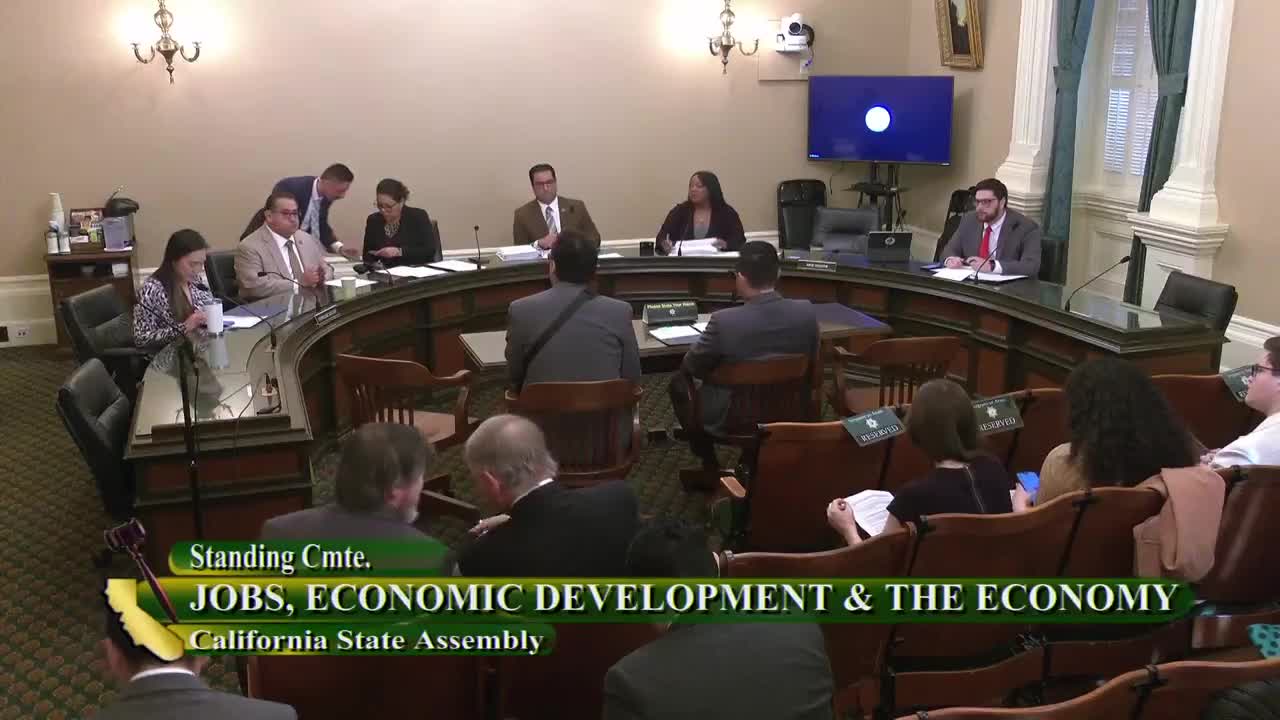 3MIN
Assembly Standing Committee on Jobs, Economic Development, and the Economy
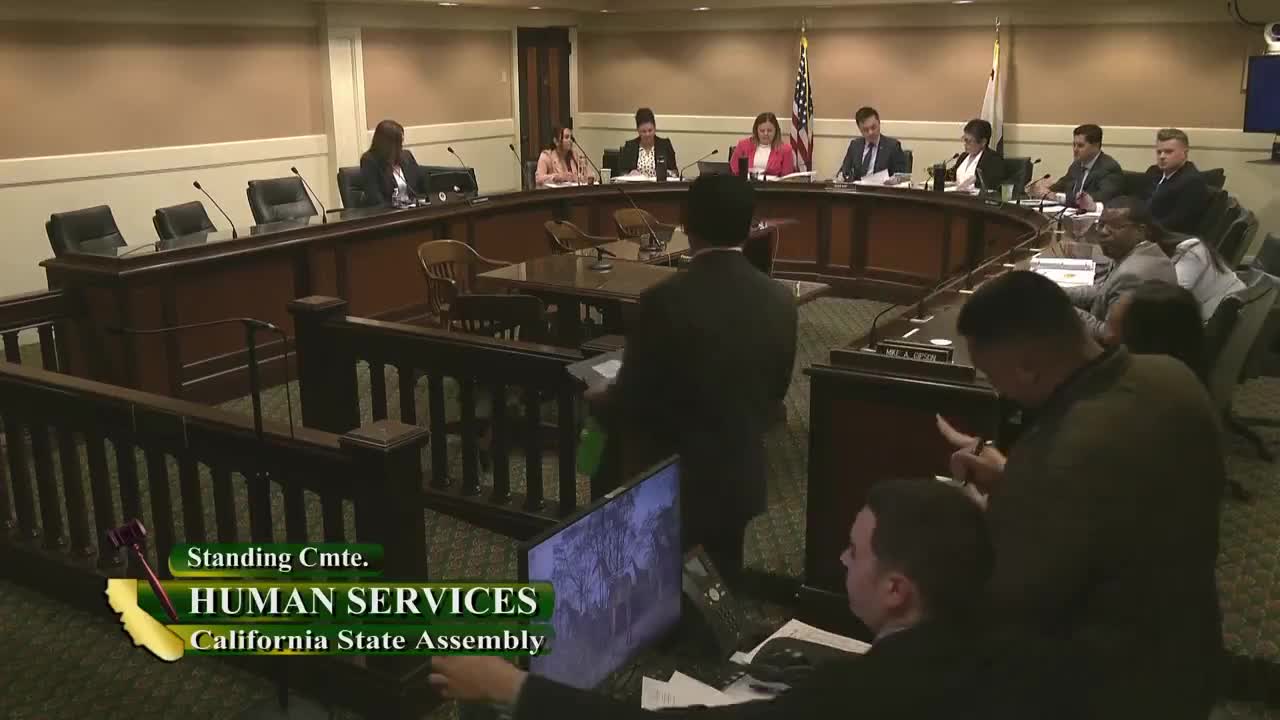 4MIN
Assembly Standing Committee on Human Services
Bill Author

Bill Co-Author(s):