AB 1548: Conservation: the Monterey Bay Area Stewardship Authority.
- Session Year: 2025-2026
- House: Assembly
- Latest Version Date: 2026-04-15
Current Status:
In Progress
(2026-06-10: Referred to Com. on RLS.)
Introduced
In Committee
Awaiting First Chamber Vote
Passed First Chamber
In Committee
Awaiting Second Chamber Vote
Passed Second Chamber
Enacted
Existing law establishes various entities for specified purposes over specific geographic areas of the state, including the San Francisco Bay Restoration Authority and California Tahoe Regional Planning Agency, among others.
This bill would establish the Monterey Bay Area Stewardship Authority, a regional entity with jurisdiction extending throughout the Monterey Bay region, as defined. The bill would provide that the purpose of the authority is to raise and allocate public and private funds for restoring, enhancing, protecting, engaging in long-term stewardship, and improving access for the enjoyment of natural and working lands, as defined, in the Counties of Monterey, San Benito, and Santa Cruz, as specified. The bill would establish a 9-member governing board to govern the authority that consists of county board of supervisors, city officials, and public members of these counties, as specified. The bill would require the board to, among other things, establish policies for the operation of the authority, and convene an advisory committee to assist and advise the board in carrying out its functions. The bill would authorize the authority to award grants to public and private entities for eligible projects, including projects that restore, protect, enhance, or maintain natural, working, or open space lands in the Counties of Monterey, San Benito, and Santa Cruz, as specified. The bill would also authorize the authority to, among other things, levy a benefit assessment, special tax, or property related fee, apply for and receive grants from federal and state agencies, solicit and accept gifts, fees, grants, and allocations from public and private entities, issue revenue bonds, incur general bond indebtedness, and enter into joint powers agreements, as provided.
By imposing additional duties on local governmental agencies relating to the membership of the authoritys governing board, the bill would impose a state-mandated local program.
This bill would make legislative findings and declarations as to the necessity of a special statute for the Counties of Monterey, San Benito, and Santa Cruz.
The California Constitution requires the state to reimburse local agencies and school districts for certain costs mandated by the state. Statutory provisions establish procedures for making that reimbursement.
This bill would provide that, if the Commission on State Mandates determines that the bill contains costs mandated by the state, reimbursement for those costs shall be made pursuant to the statutory provisions noted above.
Existing law establishes various entities for specified purposes over specific geographic areas of the state, including the San Francisco Bay Restoration Authority and California Tahoe Regional Planning Agency, among others.
This bill would establish the Monterey Bay Area Stewardship Authority, a regional entity with jurisdiction extending throughout the Monterey Bay region, as defined. The bill would provide that the purpose of the authority is to raise and allocate public and private funds for restoring, enhancing, protecting, engaging in long term long-term stewardship, and improving access for the enjoyment of natural and working lands, as defined, in the Counties of Monterey, San Benito, and Santa Cruz, as specified. The bill would establish a 9-member governing board to govern the authority that consists of county board of supervisors, city officials, and public members of these counties, as specified. The bill would require the board to, among other things, establish policies for the operation of the authority, and convene an advisory committee to assist and advise the board in carrying out its functions. The bill would authorize the authority to award grants to public and private entities for eligible projects, including projects that restore, protect, enhance, or maintain natural, working, or open space lands in the Counties of Monterey, San Benito, and Santa Cruz, as specified. The bill would also authorize the authority to, among other things, levy a benefit assessment, special tax, or property related fee, apply for and receive grants from federal and state agencies, solicit and accept gifts, fees, grants, and allocations from public and private entities, issue revenue bonds, incur general bond indebtedness, and enter into joint powers agreements, as provided.
By imposing additional duties on local governmental agencies relating to the membership of the authoritys governing board, the bill would impose a state-mandated local program.
This bill would make legislative findings and declarations as to the necessity of a special statute for the Counties of Monterey, San Benito, and Santa Cruz.
The California Constitution requires the state to reimburse local agencies and school districts for certain costs mandated by the state. Statutory provisions establish procedures for making that reimbursement.
This bill would provide that, if the Commission on State Mandates determines that the bill contains costs mandated by the state, reimbursement for those costs shall be made pursuant to the statutory provisions noted above.
Existing law establishes various entities for specified purposes over specific geographic areas of the state, including the San Francisco Bay Restoration Authority and Tahoe Regional Planning Agency, among others.
This bill would establish the Monterey Bay Area Stewardship Authority, a regional entity with jurisdiction extending throughout the Monterey Bay region, as defined. The bill would provide that the purpose of the authority is to raise and allocate public and private funds for restoring, enhancing, protecting, engaging in long term stewardship, and improving access for the enjoyment of natural and working lands, as defined, in the Counties of Monterey, San Benito, and Santa Cruz, as specified. The bill would establish a 9-member governing board to govern the authority that consists of county board of supervisors, city officials, and public members of these counties, as specified. The bill would require the board to, among other things, establish policies for the operation of the authority, and convene an advisory committee to assist and advise the board in carrying out its functions. The bill would authorize the authority to award grants to public and private entities for eligible projects, including projects that restore, protect, enhance, or maintain natural, working, or open space lands in the Counties of Monterey, San Benito, and Santa Cruz, as specified. The bill would also authorize the authority to, among other things, levy a benefit assessment, special tax, or property related fee, apply for and receive grants from federal and state agencies, solicit and accept gifts, fees, grants, and allocations from public and private entities, issue revenue bonds, incur general bond indebtedness, and enter into joint powers agreements, as provided.
By imposing additional duties on local governmental agencies relating to the membership of the authoritys governing board, the bill would impose a state-mandated local program.
This bill would make legislative findings and declarations as to the necessity of a special statute for the Counties of Monterey, San Benito, and Santa Cruz.
The California Constitution requires the state to reimburse local agencies and school districts for certain costs mandated by the state. Statutory provisions establish procedures for making that reimbursement.
This bill would provide that, if the Commission on State Mandates determines that the bill contains costs mandated by the state, reimbursement for those costs shall be made pursuant to the statutory provisions noted above.
This bill would state the intent of the Legislature to enact subsequent legislation that would establish the Monterey Bay Area Stewardship Authority, as specified. The bill would also make related findings and declarations.Existing law establishes various entities for specified purposes over specific geographic areas of the state, including the San Francisco Bay Restoration Authority and Tahoe Regional Planning Agency, among others.
This bill would state the intent of the Legislature to enact subsequent legislation that would establish the Monterey Bay Area Stewardship Authority, as specified. The bill would also make related findings and declarations.
This title shall be known, and may be cited, as the Monterey Bay Area Stewardship Authority Act.
66711.The Legislature finds and declares all of the following:
(a)The Monterey Bay region covers an area of 3,100,000 acres and represents one of Californias most ecologically and culturally significant landscapes. The Monterey Bay region includes some of the states most iconic places, including Big Sur, the beaches bordering the Monterey Bay and the Santa Cruz North Coast, the coastal redwood forests in Big Basin Redwoods State Park and the Forest of Nisene Marks State Park, the verdant and historic Salinas and Pajaro Valleys, the rangelands in the County of San Benito, and Pinnacles National Park. The Monterey Bay region is home to immense biodiversity and vital habitats that support native species such as California condors, steelhead, salmon, endemic plants, and critical wildlife corridors and nesting sites.
(b)Across the Monterey Bay region, California Native American tribes have long led in the stewardship of land and water through cultural practices, governance, and place-based knowledge. Today, as climate impacts accelerate, tribal leadership remains foundational. Agricultural landowners and stewards, conservation organizations, and local governments continue to play vital leadership roles in sustaining the regions natural and working landscapes. Together, these efforts reflect a growing recognition that the regions future depends on strengthened cross-sector collaboration to sustain both working lands and ecological systems through long-term care for land and water.
(c)The Monterey Bay region is shaped by rivers, floodplains, and some of the states largest wetland systems, including the Elkhorn Slough National Estuarine Research Reserve and the Watsonville Slough Ecological Reserve. The regions major rivers include the San Lorenzo River, which drains from the Santa Cruz Mountains; the Pajaro River, which directly links the region; and the Salinas and Carmel Rivers. These waterways, along with the surrounding mountains, valleys, and wetlands of the Santa Cruz Mountains, the Gabilan Range, the Diablo Range, and the Santa Lucia Range, support one of the worlds most diverse and productive agricultural economies, where farmers and ranchers manage millions of acres and play a key role in land stewardship and connectivity that benefits both the regions economy and ecological health. The preservation of agricultural lands in active production is vital to the regions resilience and long-term prosperity.
(d)The Monterey Bay region has maintained its global presence by committing to an economy that sustains abundant open space, agricultural lands, and natural habitats. Many growers in the region have been early adopters of climate-smart practices that improve soil health, conserve water, and enhance resilience, often while keeping land in production and sustaining livelihoods. Together, the agriculture and tourism economies of the region are valued at ten billion five hundred million dollars ($10,500,000,000). The 6,094 square mile Monterey Bay National Marine Sanctuary, which was designated on September 18, 1992, is one of the largest marine sanctuaries in the world, and one of Californias most visited coastal areas, offering residents and visitors alike a vital connection to the ocean. Across the Monterey Bay region, more than two dozen state parks and one state recreational area further contribute to the regions rich landscape, drawing Californians and international visitors year-round.
(e)California Native American tribes, indigenous communities, and indigenous-led organizations are leading efforts, often in partnership with agricultural landowners, public and private landowners, state government, local government, and nongovernmental and conservation organizations to restore culturally significant lands, reintroduce traditional beneficial fire practices, and establish voluntary conservation efforts that support access to, and stewardship of, ancestral homelands. These cultures, and the people who have stewarded them for generations despite documented genocide and forced displacement, are regaining access and stewardship rights to culturally important lands for traditional lifeways and stewardship. Through tribal-led land trusts, comanagement agreements, and community-led planning, indigenous leadership is reshaping conservation models. These efforts reflect a growing recognition of the importance of integrating indigenous knowledge systems and governance into regional conservation and climate solutions.
(f)The Monterey Bay region constitute a region that relies heavily on local water sources, including groundwater and surface water. The region maintains its own water storage reservoirs and distribution facilities with limited reliance on state or federal systems. The region also maintains largely independent flood management systems. State-approved groundwater sustainability plans have been completed throughout the Monterey Bay region.
(g)Recent statewide goals and policies have reinforced the conservation value of landscapes in the Monterey Bay region. In alignment with the states goal of protecting 30 percent of the states lands, the Monterey Bay region has conserved 514,700 acres of land as of 2024. Contracts and easements executed pursuant to the Williamson Act (Chapter 7 (commencing with Section 51200) of Part 1 of Division 1 of Title 5) across farms and rangelands further add to the stewarded landscapes across the Monterey Bay region.
(h)In keeping with the states focus on emissions reductions, the 2024 Monterey Bay Natural and Working Lands Climate Mitigation and Resiliency Study conducted by the Association of Monterey Bay Area Governments identified land stewardship and management strategies across the region that could reduce emissions by up to four hundred thousand (400,000) metric tons in alignment with Californias statewide targets. Stewardship, maintenance, and protection of natural and working lands are central to the states climate strategy.
(i)Underlying all of the communities in the Monterey Bay region is a century-old commitment to maintaining rural landscapes and vibrant economies based on natural lands, including agriculture, hospitality, recreation, and preservation of open space and habitats that link together the iconic landscapes of the region. Farming and ranching are more than economic engines; they reflect a way of life deeply tied to the land and the rural character of the region. Pressures on this landscape exist as the balance of historic commitments to open spaces and working lands run up against housing needs and economic development in the region. Additional pressure and threats arise from the effects of climate change, including drought, catastrophic wildfire, loss of biodiversity due to habitat fragmentation and development pressures, flooding, increased temperatures, and rising sea levels.
(j)The landscapes of the Monterey Bay region provide direct benefits to the people of the state in the form of recreation, food supply, clean air and water, ocean health, public health, and carbon sequestration. The regions natural and working lands are critical to community well-being and climate resilience. However, access to these public benefits is uneven. Rural, agricultural, and indigenous communities across the region have faced longstanding environmental injustices, including contaminated drinking water, pesticide exposure, air pollution, and underinvestment in infrastructure and green spaces. These communities also continue to experience disproportionate climate impacts, including water insecurity, extreme heat, and flooding, alongside limited access to climate adaptation strategies and long-term conservation resources.
(k)The Monterey Bay region seeks to establish regional mechanisms to enable coordination among governmental, tribal, and nongovernmental entities to generate and allocate resources for open space protection, habitat restoration, and the long-term maintenance and stewardship of recreational lands, private working lands, floodplain and watershed lands, and to secure opportunities for the improvement of these lands and waters. These efforts are intended to address longstanding gaps in access to climate adaptation resources, infrastructure, and green space, particularly for rural and indigenous communities. A regional authority can help overcome these barriers by expanding and aligning resources, strengthening partnerships, and supporting coordinated implementation strategies.
(l)In addition to securing the ecological and community benefits of conserved lands over time, the Monterey Bay region has an opportunity to support and expand a local conservation workforce rooted in land stewardship, farming and ranching, science, and ecological restoration. Sustaining and growing jobs in these sectors is a vital outcome of coordinated and effective regional investment.
(m)Effective conservation and climate resilience in the Monterey Bay region relies on the sustained capacity of local, state, and federal governments, agricultural producers and landowners, California Native American tribes, indigenous communities, nongovernmental organizations, and community-based organizations. The Monterey Bay region benefits from decades-long partnerships that have delivered meaningful outcomes across the region. However, the Monterey Bay region could become even more effective by proactively establishing a centralized authority to expand funding opportunities, coordinate responses to state goals and mandates, and reduce reliance on variable state and federal funding cycles. This added stability would strengthen the regions long-term planning and position the region as a more ready and reliable partner for future investment.
(n)It is in the public interest to establish the Monterey Bay Area Stewardship Authority as a regional entity to raise and allocate public and private funds for purposes of restoring, enhancing, protecting, engaging in long-term stewardship, and improving access for the public enjoyment of natural and working lands in the Monterey Bay region and along the regions shoreline.
(o)It is the intent of the Legislature that the Monterey Bay Area Stewardship Authoritys activities complement and not conflict with local housing elements adopted pursuant to Article 10.6 (commencing with Section 65580) of Chapter 3 of Division 1 of Title 7, and support a balanced approach that sustains working and natural lands while recognizing the importance of meeting state and local housing obligations.
2.Definitions66712.For purposes of this title, unless the context requires otherwise, the following definitions apply:
(a)Authority means the Monterey Bay Area Stewardship Authority established pursuant to Section 66713.
(b)Board means the governing board of the Monterey Bay Area Stewardship Authority established pursuant to Section 66715.
(c)Local government means a county, city, special district, or other local or regional governmental entity of the Monterey Bay region.
(d)Monterey Bay region or region means the Counties of Monterey, San Benito, and Santa Cruz.
(e)Natural lands has the same meaning as set forth in Section 9001.5 of the Public Resources Code.
(f)Public member means a board member described in paragraph (7) of subdivision (a) of Section 66715.
(g)Working lands has the same meaning as set forth in Section 9001.5 of the Public Resources Code.
3.Monterey Bay Area Stewardship Authority66713.(a)The Monterey Bay Area Stewardship Authority is hereby established as a regional entity with jurisdiction extending throughout the Monterey Bay region.
(b)The jurisdiction of the authority is not subject to the Cortese-Knox-Hertzberg Local Government Reorganization Act of 2000 established in Division 3 (commencing with Section 56000) of Title 5.
(c)The authoritys purpose is to raise and allocate public and private funds for purposes of restoring, enhancing, protecting, engaging in long-term stewardship, and improving access for the enjoyment of natural and working lands in the Monterey Bay region and along the regions shoreline.
66714.It is the intent of the Legislature that the authority complements existing and future efforts of communities, local governments, and state and federal entities that address the goals of this title.
4.Governing Body66715.(a)The authority shall be governed by a board that consists of nine voting members, as follows:
(1)One supervisor of the Board of Supervisors of the County of Monterey. This member shall be appointed to the board by the Board of Supervisors of the County of Monterey. On or before April 1, 2027, the Board of Supervisors of the County of Monterey shall make the initial appointment.
(2)One supervisor of the Board of Supervisors of the County of Santa Cruz. This member shall be appointed to the board by the Board of Supervisors of the County of Santa Cruz. On or before April 1, 2027, the Board of Supervisors of the County of Santa Cruz shall make the initial appointment.
(3)One supervisor of the Board of Supervisors of the County of San Benito. This member shall be appointed to the board by the Board of Supervisors of the County of San Benito. On or before April 1, 2027, the Board of Supervisors of the County of San Benito shall make the initial appointment.
(4)One elected official of a city in the County of Monterey. This member shall be appointed to the board by the city selection committee for the County of Monterey created pursuant to Section 50270. On or before April 1, 2027, the city selection committee shall make its initial appointment.
(5)One elected official of a city in the County of Santa Cruz. This member shall be appointed to the board by the city selection committee for the County of Santa Cruz created pursuant to Section 50270. On or before April 1, 2027, the city selection committee shall make its initial appointment
(6)One elected official of a city in the County of San Benito. This member shall be appointed to the board by the city selection committee for the County of San Benito created pursuant to Section 50270. On or before April 1, 2027, the city selection committee shall make its initial appointment.
(7)(A)Three members of the general public who reside or work within the jurisdiction of the authority. These public members shall represent an area of expertise and be appointed, as follows:
(i)One public member shall have significant experience working with California Native American tribes and underserved populations, including experience supporting tribal-led stewardship, cultural and ecological restoration, renewal of traditional land care practices, and efforts that expand safe and welcoming access to the outdoors for communities that have historically faced barriers to such access. On or before April 1, 2027, the Board of Supervisors of the County of Monterey shall make the initial appointment for this public member.
(ii)One public member shall have significant experience in working lands, including voluntary and community-based forestry management, timber harvesting, agricultural production or grazing, or both, community based, and professional experience that supports farming forestry, farming, and ranching, such as soil health, water management, erosion control, watershed protection, agricultural conservation easements, long term land stewardship, and other efforts that strengthen both agricultural and forestry sector viability and climate resilience in the Monterey Bay region. On or before April 1, 2027, the Board of Supervisors of the County of Santa Cruz shall make the initial appointment for this public member.
(iii)One public member shall have significant experience in biodiversity and habitat protection, including work that conserves or restores native habitats, protects wildlife movement corridors, improves wetlands and coastal resilience, or strengthens the health of rivers, streams, and headwaters. This may include experience with land stewardship, conservation easements, restoration ecology, or community-based projects that support both ecological integrity and local quality of life across the Monterey Bay region. On or before April 1, 2027, the Board of Supervisors of the County of San Benito shall make the initial appointment for this public member.
(B)After its first meeting, the board shall appoint each succeeding public member upon expiration of that public members term or other vacancy of that public members position on the board. In appointing public members, the board shall seek to ensure reasonable geographic balance across the three counties within the Monterey Bay region.
(b)(1)A board member shall be appointed for a three-year term, except as provided in paragraph (2).
(2)To establish staggered terms to ensure continuity of the boards governance, the initial board members described in paragraphs (3) and (5) of subdivision (a) shall be appointed to an initial two-year term, and all remaining initial board members shall be appointed to a three-year term.
(3)A member may serve multiple terms.
(c)A vacancy on the board shall be filled by the appropriate appointing authority within 90 days from the date that the vacancy occurs.
(d)All members of the board shall serve at the pleasure of their appointing authority.
66716.Members of the board are subject to the Political Reform Act of 1974 established in Title 9 (commencing with Section 81000).
66717.A member of the board shall exercise that members independent judgment on behalf of the interests of residents, property owners, and the public as a whole in furthering the intent and purposes of this title.
66718.The board may provide that members of the board may receive an amount not to exceed one hundred dollars ($100) per day for each attendance at a meeting of the board. The maximum compensation allowable to a board member on any given day shall be one hundred dollars ($100). Board members shall not receive compensation for more than two meetings of the board in a calendar month.
66719.(a)The boards first meeting shall occur at a time and place in the Monterey Bay region determined by the initial board member representing the Board of Supervisors of the County of Monterey after all nine initial board members are appointed. The initial board member of the Board of Supervisors of the County of Monterey shall act as the acting chair at the boards first meeting.
(b)(1)The board shall select a chair and a vice chair of the board at its first meeting and annually thereafter as follows:
(A)(1)The chair shall annually rotate, in alphabetical order by county, among the three county supervisor representatives appointed pursuant to paragraphs (1) to (3), inclusive, of subdivision (a) of Section 66715.
(B)(2)The vice chair shall preside in the absence of the chair.
(C)(3)The terms of the chair and vice chair shall be one year.
(D)(4)If the chair is unable to serve their term, the next board member in the rotation described in subparagraph (A) shall serve as chair for that term.
(c)After its first meeting, the board shall hold meetings at times and places determined by the board.
(d)Meetings of the board are subject to the Ralph M. Brown Act established in Chapter 9 (commencing with Section 54950) of Part 1 of Division 2 of Title 5.
66720.(a)Within six months of the date of the boards first meeting, the board shall convene a Monterey Bay Area Stewardship Advisory Committee to assist and advise the board in carrying out its functions. The advisory committee shall meet on a regular basis.
(b)The advisory committee shall consist of no more than 12 members. The membership of the advisory committee shall be determined by the board based upon criteria that provide a broad representation of interests in the authoritys jurisdiction over the long-term stewardship of the Monterey Bay region. The advisory committees membership may include representatives from any the following:
(1)California Native American tribes that have historical, cultural, and present-day connections to the lands and waters in the Monterey Bay region.
(2)State and federal agencies with expertise or missions related to long term land conservation and stewardship, including, but not limited to, the State Coastal Conservancy, the Wildlife Conservation Board, and the United States Fish and Wildlife Service.
(3)Resource conservation districts, groundwater sustainability agencies, open space districts, regional park districts, other special districts with expertise or missions related to long term land conservation and stewardship, and land trusts that own or operate parcels in the Monterey Bay region.
(4)Community-based organizations and nongovernmental organizations working to advance land and water stewardship, cultural and ecological restoration, biodiversity, agricultural viability, equitable outdoor access, or climate resilience in the Monterey Bay region.
(5)Members of the public from the Monterey Bay region, including individuals with experience in farming or ranching, conservation science, youth stewardship, environmental justice, or local community organizing.
(c)The board shall adopt procedures to provide for per diem expenses for advisory committee members who lack adequate resources to cover their participation in the advisory committees meetings.
66721.(a)The board is the legislative body of the authority and, consistent with this title, shall establish policies for the operation of the authority.
(b)The board may act either by ordinance or resolution to regulate the authority and implement this title.
(c)Five voting members of the board shall constitute a quorum for the purpose of transacting any business of the board. A recorded majority vote of the total voting membership of the board is required on each action.
(d)In carrying out its duties under this title, the board shall ensure that the authoritys policies, funding programs, and decisionmaking processes advance fair treatment and meaningful involvement of rural, agricultural, tribal, underserved, and disadvantaged communities, consistent with the meaning of environmental justice defined in Section 30107.3 of the Public Resources Code.
5.Powers and Duties of the Authority1.General Provisions66722.The authority has, and may exercise, all powers, expressed or implied, that are necessary to carry out the intent and purposes of this title, including, but not limited to, the power to do all of the following:
(a)(1)Levy a benefit assessment, special tax levied pursuant to Article 3.5 (commencing with Section 50075) of Chapter 1 of Part 1 of Division 1 of Title 5, or property-related fee consistent with the requirements of Articles XIII A, XIII C, and XIII D of the California Constitution, including, but not limited to, a benefit assessment levied pursuant to any of the following:
(1)(A)The Improvement Act of 1911 established in Division 7 (commencing with Section 5000) of the Streets and Highways Code.
(2)(B)The Improvement Bond Act of 1915 established in Division 10 (commencing with Section 8500) of the Streets and Highways Code.
(3)(C)The Municipal Improvement Act of 1913 established in Division 12 (commencing with Section 10000) of the Streets and Highways Code.
(4)(D)The Landscaping and Lighting Act of 1972 established in Part 2 (commencing with Section 22500) of Division 15 of the Streets and Highways Code, notwithstanding Section 22501 of the Streets and Highways Code.
(5)(E)Any other statutory authorization.
(2)Before levying an assessment on working lands, the authority may consider the economic impacts on working lands, such as agricultural lands and lands used for timber harvesting.
(3)Any debt, liability, or other obligation incurred by the authority shall not constitute a debt, liability, or other obligation of any county, city, or other local government within the region. The full faith and credit or taxing power of a county or city shall not be pledged to the payment of any debt, liability, or other obligation of the authority unless expressly authorized by that county or city.
(b)Apply for and receive grants from federal and state agencies.
(c)Solicit and accept gifts, fees, grants, and allocations from public and private entities.
(d)Issue revenue bonds for any of the purposes authorized by this title pursuant to the Revenue Bond Law of 1941 established in Chapter 6 (commencing with Section 54300) of Part 1 of Division 2 of Title 5.
(e)Incur general obligation bonded indebtedness for improvement of real property or for funding or refunding of any outstanding indebtedness, subject to the following requirements:
(1)For purposes of incurring general obligation bonded indebtedness pursuant to this subdivision, the authority shall comply with Article 11 (commencing with Section 5790) of Chapter 4 of Division 5 of the Public Resources Code. For purposes of this subdivision, all references in Article 11 (commencing with Section 5790) of Chapter 4 of Division 5 of the Public Resources Code to a board of directors shall mean the board and all references to a district shall mean the authority.
(2)Notwithstanding any other law, the total amount of outstanding bonded indebtedness the authority may incur pursuant to this subdivision and subdivision (d) shall not exceed ____ dollars ($____).
(f)Receive and manage a dedicated revenue source.
(g)Deposit or invest moneys of the authority in banks or financial institutions in the state in accordance with state law.
(h)Sue and be sued, except as otherwise provided by law, in all actions and proceedings, in all courts and tribunals of competent jurisdiction.
(i)Engage counsel and other professional services.
(j)Enter into and perform all necessary contracts and other agreements.
(k)Enter into joint powers agreements pursuant to the Joint Exercise of Powers Act established in Chapter 5 (commencing with Section 6500) of Division 7 of Title 1.
(l)Hire staff, define their qualifications and duties, and provide a schedule of compensation for the performance of their duties.
(m)Use interim or temporary staff that a state agency, or a local government within the Monterey Bay region, agrees to provide. A person who performs duties as interim or temporary staff shall not be considered an employee of the authority.
(n)Award grants to public and private entities for eligible projects performed within the authoritys jurisdiction to implement the purposes of this title. In reviewing and assessing projects for eligibility, the authority shall solicit and consider input from the advisory committee convened pursuant to Section 66720. The authority shall adopt a procedure for evaluating proposals in consultation with the advisory committee.
(o)Provide advance payments to grant recipients when necessary to support participation by underresourced, rural, agricultural, tribal, or community-based organizations, consistent with procedures adopted by the authority.
66723.The authority shall not acquire or own real property. This section does not preclude the authority from awarding grants pursuant to Section 66725 that could be used by the grantee to acquire or own real property.
66724.(a)If the authority proposes a measure pursuant to subdivision (a) or (e) of Section 66722 that will generate revenues, or if the voters within the authoritys jurisdiction qualify an initiative measure for the ballot, the board of supervisors of the county or counties in which the measure is proposed shall call a special election on the measure. The special election shall be consolidated with the next regularly scheduled statewide election that occurs at least 88 days after the special election is called and the measure shall be submitted to the voters in the appropriate counties, consistent with the requirements of Articles XIII A, XIII C, and XIII D of the California Constitution, as applicable.
(b)(1)The authority is a district, as defined in Section 317 of the Elections Code. Except as otherwise provided in this section, a measure proposed by the authority that requires voter approval shall be submitted to the voters of the authority in accordance with the provisions of the Elections Code applicable to districts, including the provisions of Chapter 4 (commencing with Section 9300) of Division 9 of the Elections Code.
(2)Notwithstanding anything to the contrary in Section 9300 of the Elections Code or any other law, the voters of the authority shall have the power to propose and adopt or amend a special tax by initiative petition.
(3)Because the authority has no revenues as of the effective date of this paragraph, the appropriations limit for the authority shall be originally established based on receipts from the initial measure that would generate revenues for the authority pursuant to subdivision (a), and that establishment of an appropriations limit shall not be deemed a change in an appropriations limit for purposes of Section 4 of Article XIII B of the California Constitution.
(c)The authority shall file with the board of supervisors of each county in which the measure shall appear on the ballot a resolution of the authority requesting consolidation, and setting forth the exact form of the ballot question, in accordance with Section 10403 of the Elections Code.
(d)Each county included in the measure shall use the exact ballot question, impartial analysis, and ballot language provided by the authority. If two or more counties included in the measure are required to prepare a translation of ballot materials into the same language other than English, the county that contains the largest population, as determined by the most recent federal decennial census, among those counties that are required to prepare a translation of ballot materials into the same language other than English, shall prepare the translation and that translation shall be used by the other county or counties, as applicable.
(e)Notwithstanding Section 13116 of the Elections Code, if a measure proposed by the authority pursuant to this article is submitted to the voters of the authority in two or more counties, the elections officials of those counties shall mutually agree to use the same letter designation for the measure.
(f)The county elections official of each county shall report the results of the special election to the authority.
(g)(1)Notwithstanding Section 10520 of the Elections Code, for the first election at which either the authority proposes a measure pursuant to subdivision (a) or (e) of Section 66722 that would generate revenues or the voters within the authoritys jurisdiction qualify an initiative measure for the ballot that would generate revenues, the authority shall reimburse each county in which that measure appears on the ballot only for the incremental costs incurred by the county elections official related to submitting the measure to the voters.
(2)For purposes of this subdivision, incremental costs include both of the following:
(A)The cost to prepare a translation of ballot materials into a language other than English by any county, as described in subdivision (d).
(B)The additional costs that exceed the costs incurred for other election races or ballot measures, if any, appearing on the same ballot in each county in which the measure appears on the ballot, including both of the following:
(i)The printing and mailing of ballot materials.
(ii)The canvass of the vote regarding the measure pursuant to Division 15 (commencing with Section 15000) of the Elections Code.
(h)All records prepared, owned, used, or retained by the authority are public records for purposes of the California Public Records Act established in Division 10 (commencing with Section 7920.000) of Title 1.
2.Grant Program66725.(a)(1)The authority may award grants to local governments, tribal entities, nonprofit organizations, and private entities, including, but not limited to, owners of agricultural land, for eligible projects on public and private lands within the Monterey Bay region.
(2)An eligible project shall do one or more of the following:
(A)Restore, protect, enhance, or maintain natural, working, or open space lands, including, but not limited to, rangelands, farms, wetlands, riparian corridors, forests, coastal habitats, and watersheds, to improve ecological function, soil health, water quality, and regional climate resilience.
(B)Implement nature-based or working-lands practices that contribute to greenhouse gas reduction, biodiversity protection, or water and soil resilience, including, but not limited to, riparian, stream, and floodplain restoration, soil health, carbon sequestration, and groundwater recharge, beneficial fire, vegetation, or grazing management that supports wildfire risk reduction and ecosystem health, and habitat connectivity.
(C)Support voluntary and collaborative conservation and land management partnerships among tribes, agricultural landowners, conservation organizations, local governments, the state, and the federal government, including, but not limited to, efforts that sustain long-term coordination, shared planning, and stewardship, strengthen cultural and ecological stewardship, sustain working lands, and advance the regions ecological and economic resilience.
(D)Support long-term stewardship, facilitated access, monitoring, and maintenance necessary to sustain ecological, agricultural, or community benefits, including community education, outreach, or training that strengthens long-term stewardship outcomes.
(3)A grantee shall not use eminent domain to acquire lands to achieve the goals of the project.
(b)In awarding grants pursuant to this section, the authority shall give priority to projects that, to the greatest extent possible, do all of the following:
(1)Demonstrate measurable benefits to climate resilience, biodiversity, water resilience, agricultural viability, equitable outdoor access, and ancestral land return and access, including projects that expand community participation or reduce barriers to engagement in planning and stewardship.
(2)Demonstrate that rural, agricultural, tribal, underserved, or disadvantaged communities were meaningfully engaged in project design, development, and implementation, and that the project delivers measurable benefits to those communities.
(3)Support the growth of the regions stewardship workforce, including training, apprenticeships, internships, tribal youth stewardship programs, agricultural and land management career pathways, and other efforts that build local capacity for long term land and water stewardship, restoration, and climate resilience.
(c)The authority shall consult with the advisory committee convened pursuant to Section 66720 when developing grant evaluation procedures and funding recommendations. The authority shall adopt transparent criteria for evaluating grant proposals pursuant to this section.
(d)Grants awarded pursuant to this section may be used to support all phases of eligible projects, including project design, planning, permitting, construction, implementation, operations, monitoring, maintenance, reporting, administrative requirements, and stewardship, except to the extent that the source of funding for the grant prohibits use of its funding for such use.
(e)The board shall not award a grant for a project on private lands unless it first determines that the project will provide a long term public benefit consistent with the purposes of this title.
(f)The board shall provide for regular audits of the authoritys accounts and records and shall maintain accounting records and shall report accounting transactions in accordance with generally accepted accounting principles adopted by the Government Accounting Standards Board of the Financial Accounting Foundation for both public reporting purposes and for reporting of activities to the Controller.
(g)The board shall provide for annual financial reports. The board shall make copies of the annual financial reports available to the public.
6.Fiscal Provisions66726.The authority shall be funded through the sources specified in subdivisions (a) to (f), inclusive, of Section 66722 and any other lawful source. Funds for the initial establishment and support of activities under this title, including initial administrative costs, may be advanced individually or collectively from the local jurisdictions specified in Section 66715, grants or awards from state or federal agencies, philanthropic funding, or any other lawful source, and may be repaid by the initial proceeds from revenue generated pursuant to this title. A county may, at its discretion, provide staffing, administrative, fiscal, or legal services to the authority pursuant to a written agreement approved by that countys board of supervisors. Any such agreement shall specify the scope of services, cost allocation, reimbursement terms, and termination provisions. Any direct state funding shall be subject to a future appropriation by the Legislature for this purpose.
SEC. 2.The Legislature finds and declares that a special statute is necessary and that a general statute cannot be made applicable within the meaning of Section 16 of Article IV of the California Constitution because of the unique need to establish the Monterey Bay Area Stewardship Authority for purposes of restoring, enhancing, protecting, engaging in long-term stewardship, and improving access to natural and working lands in the Counties of Monterey, San Benito, and Santa Cruz.
SEC. 3.If the Commission on State Mandates determines that this act contains costs mandated by the state, reimbursement to local agencies and school districts for those costs shall be made pursuant to Part 7 (commencing with Section 17500) of Division 4 of Title 2 of the Government Code.
This title shall be known, and may be cited, as the Monterey Bay Area Stewardship Authority Act.
66711.The Legislature finds and declares all of the following:
(a)The Monterey Bay region covers an area of 3,100,000 acres and represents one of Californias most ecologically and culturally significant landscapes. The Monterey Bay region includes some of the states most iconic places, including Big Sur, the beaches bordering the Monterey Bay and the Santa Cruz North Coast, the coastal redwood forests in Big Basin Redwoods State Park and the Forest of Nisene Marks State Park, the verdant and historic Salinas and Pajaro Valleys, the rangelands in the County of San Benito, and Pinnacles National Park. The Monterey Bay region is home to immense biodiversity and vital habitats that support native species such as California condors, steelhead, salmon, endemic plants, and critical wildlife corridors and nesting sites.
(b)Across the Monterey Bay region, California Native American tribes have long led in the stewardship of land and water through cultural practices, governance, and place-based knowledge. Today, as climate impacts accelerate, tribal leadership remains foundational. Agricultural landowners and stewards, conservation organizations, and local governments continue to play vital leadership roles in sustaining the regions natural and working landscapes. Together, these efforts reflect a growing recognition that the regions future depends on strengthened cross-sector collaboration to sustain both working lands and ecological systems through long-term care for land and water.
(c)The Monterey Bay region is shaped by rivers, floodplains, and some of the states largest wetland systems, including the Elkhorn Slough National Estuarine Research Reserve and the Watsonville Slough Ecological Reserve. The regions major rivers include the San Lorenzo River, which drains from the Santa Cruz Mountains; the Pajaro River, which directly links the region; and the Salinas and Carmel Rivers. These waterways, along with the surrounding mountains, valleys, and wetlands of the Santa Cruz Mountains, the Gabilan Range, the Diablo Range, and the Santa Lucia Range, support one of the worlds most diverse and productive agricultural economies, where farmers and ranchers manage millions of acres and play a key role in land stewardship and connectivity that benefits both the regions economy and ecological health. The preservation of agricultural lands in active production is vital to the regions resilience and long-term prosperity.
(d)The Monterey Bay region has maintained its global presence by committing to an economy that sustains abundant open space, agricultural lands, and natural habitats. Many growers in the region have been early adopters of climate-smart practices that improve soil health, conserve water, and enhance resilience, often while keeping land in production and sustaining livelihoods. Together, the agriculture and tourism economies of the region are valued at ten billion five hundred million dollars ($10,500,000,000). The 6,094 square mile Monterey Bay National Marine Sanctuary, which was designated on September 18, 1992, is one of the largest marine sanctuaries in the world, and one of Californias most visited coastal areas, offering residents and visitors alike a vital connection to the ocean. Across the Monterey Bay region, more than two dozen state parks and one state recreational area further contribute to the regions rich landscape, drawing Californians and international visitors year-round.
(e)California Native American tribes, indigenous communities, and indigenous-led organizations are leading efforts, often in partnership with agricultural landowners, public and private landowners, state government, local government, and nongovernmental and conservation organizations to restore culturally significant lands, reintroduce traditional beneficial fire practices, and establish voluntary conservation efforts that support access to, and stewardship of, ancestral homelands. These cultures, and the people who have stewarded them for generations despite documented genocide and forced displacement, are regaining access and stewardship rights to culturally important lands for traditional lifeways and stewardship. Through tribally-led tribal-led land trusts, comanagement agreements, and community-led planning, indigenous leadership is reshaping conservation models. These efforts reflect a growing recognition of the importance of integrating indigenous knowledge systems and governance into regional conservation and climate solutions.
(f)The Monterey Bay region constitute a region that relies heavily on local water sources, including groundwater and surface water. The region maintains its own water storage reservoirs and distribution facilities with limited reliance on state or federal systems. The region also maintains largely independent flood management systems. State-approved groundwater sustainability plans have been completed throughout the Monterey Bay region.
(g)Recent statewide goals and policies have reinforced the conservation value of landscapes in the Monterey Bay region. In alignment with the states goal of protecting 30 percent of the states lands, the Monterey Bay region has conserved 514,700 acres of land as of 2024. Contracts and easements executed pursuant to the Williamson Act (Chapter 7 (commencing with Section 51200) of Part 1 of Division 1 of Title 5) across farms and rangelands further add to the stewarded landscapes across the Monterey Bay region.
(h)In keeping with the states focus on emissions reductions, the 2024 Monterey Bay Natural and Working Lands Climate Mitigation and Resiliency Study conducted by the Association of Monterey Bay Area Governments identified land stewardship and management strategies across the region that could reduce emissions by up to 400,000 thousand four hundred thousand (400,000) metric tons in alignment with Californias statewide targets. Stewardship, maintenance, and protection of natural and working lands are central to the states climate strategy.
(i)Underlying all of the communities in the Monterey Bay region is a century-old commitment to maintaining rural landscapes and vibrant economies based on natural lands, including agriculture, hospitality, recreation, and preservation of open space and habitats that link together the iconic landscapes of the region. Farming and ranching are more than economic engines; they reflect a way of life deeply tied to the land and the rural character of the region. Pressures on this landscape exist as the balance of historic commitments to open spaces and working lands run up against housing needs and economic development in the region. Additional pressure and threats arise from the effects of climate change, including drought, catastrophic wildfire, loss of biodiversity due to habitat fragmentation and development pressures, flooding, increased temperatures, and rising sea levels.
(j)The landscapes of the Monterey Bay region provide direct benefits to the people of the state in the form of recreation, food supply, clean air and water, ocean health, public health, and carbon sequestration. The regions natural and working lands are critical to community well-being and climate resilience. However, access to these public benefits is uneven. Rural, agricultural, and indigenous communities across the region have faced longstanding environmental injustices, including contaminated drinking water, pesticide exposure, air pollution, and underinvestment in infrastructure and green spaces. These communities also continue to experience disproportionate climate impacts, including water insecurity, extreme heat, and flooding, alongside limited access to climate adaptation strategies and long-term conservation resources.
(k)The Monterey Bay region seeks to establish regional mechanisms to enable coordination among governmental, tribal, and nongovernmental entities to generate and allocate resources for open space protection, habitat restoration, and the long-term maintenance and stewardship of recreational lands, private working lands, floodplain and watershed lands, and to secure opportunities for the improvement of these lands and waters. These efforts are intended to address longstanding gaps in access to climate adaptation resources, infrastructure, and green space, particularly for rural and indigenous communities. A regional authority can help overcome these barriers by expanding and aligning resources, strengthening partnerships, and supporting coordinated implementation strategies.
(l)In addition to securing the ecological and community benefits of conserved lands over time, the Monterey Bay region has an opportunity to support and expand a local conservation workforce rooted in land stewardship, farming and ranching, science, and ecological restoration. Sustaining and growing jobs in these sectors is a vital outcome of coordinated and effective regional investment.
(m)Effective conservation and climate resilience in the Monterey Bay region relies on the sustained capacity of local, state, and federal governments, agricultural producers and landowners, California Native American tribes, indigenous communities, nongovernmental organizations, and community based community-based organizations. The Monterey Bay region benefits from decades-long partnerships that have delivered meaningful outcomes across the region. However, the Monterey Bay region could become even more effective by proactively establishing a centralized authority to expand funding opportunities, coordinate responses to state goals and mandates, and reduce reliance on variable state and federal funding cycles. This added stability would strengthen the regions long term long-term planning and position the region as a more ready and reliable partner for future investment.
(n)It is in the public interest to establish the Monterey Bay Area Stewardship Authority as a regional entity to raise and allocate public and private funds for purposes of restoring, enhancing, protecting, engaging in long term long-term stewardship, and improving access for the public enjoyment of natural and working lands in the Monterey Bay region and along the regions shoreline.
(o)It is the intent of the Legislature that the Monterey Bay Area Stewardship Authoritys activities complement and not conflict with local housing elements adopted pursuant to Article 10.6 (commencing with Section 65580) of Chapter 3 of Division 1 of Title 7, and support a balanced approach that sustains working and natural lands while recognizing the importance of meeting state and local housing obligations.
2.Definitions66712.For purposes of this title, unless the context requires otherwise, the following definitions apply:
(a)Authority means the Monterey Bay Area Stewardship Authority established pursuant to Section 66713.
(b)Board means the governing board of the Monterey Bay Area Stewardship Authority established pursuant to Section 66715.
(c)Local government means a county, city, special district, or other local or regional governmental entity of the Monterey Bay region.
(d)Monterey Bay region or region means the Counties of Monterey, San Benito, and Santa Cruz.
(e)Natural lands has the same meaning as set forth in Section 9001.5 of the Public Resources Code.
(f)Public member means a board member described in paragraph (7) of subdivision (a) of Section 66715.
(g)Working lands has the same meaning as set forth in Section 9001.5 of the Public Resources Code.
3.Monterey Bay Area Stewardship Authority66713.(a)The Monterey Bay Area Stewardship Authority is hereby established as a regional entity with jurisdiction extending throughout the Monterey Bay region.
(b)The jurisdiction of the authority is not subject to the Cortese-Knox-Hertzberg Local Government Reorganization Act of 2000 established in Division 3 (commencing with Section 56000) of Title 5.
(c)The authoritys purpose is to raise and allocate public and private funds for purposes of restoring, enhancing, protecting, engaging in long term long-term stewardship, and improving access for the enjoyment of natural and working lands in the Monterey Bay region and along the regions shoreline.
66714.It is the intent of the Legislature that the authority complements existing and future efforts of communities, local governments, and state and federal entities that address the goals of this title.
4.Governing Body66715.(a)The authority shall be governed by a board that consists of nine voting members, as follows:
(1)One supervisor of the Board of Supervisors of the County of Monterey. This member shall be appointed to the board by the Board of Supervisors of the County of Monterey. On or before April 1, 2027, the Board of Supervisors of the County of Monterey shall make the initial appointment.
(2)One supervisor of the Board of Supervisors of the County of Santa Cruz. This member shall be appointed to the board by the Board of Supervisors of the County of Santa Cruz. On or before April 1, 2027, the Board of Supervisors of the County of Santa Cruz shall make the initial appointment.
(3)One supervisor of the Board of Supervisors of the County of San Benito. This member shall be appointed to the board by the Board of Supervisors of the County of San Benito. On or before April 1, 2027, the Board of Supervisors of the County of San Benito shall make the initial appointment.
(4)One elected official of a city in the County of Monterey. This member shall be appointed to the board by the city selection committee for the County of Monterey created pursuant to Section 50270. On or before April 1, 2027, the city selection committee shall make its initial appointment.
(5)One elected official of a city in the County of Santa Cruz. This member shall be appointed to the board by the city selection committee for the County of Santa Cruz created pursuant to Section 50270. On or before April 1, 2027, the city selection committee shall make its initial appointment
(6)One elected official of a city in the County of San Benito. This member shall be appointed to the board by the city selection committee for the County of San Benito created pursuant to Section 50270. On or before April 1, 2027, the city selection committee shall make its initial appointment.
(7)(A)Three members of the general public who reside or work within the jurisdiction of the authority. These public members shall represent one an area of expertise and be appointed, as follows:
(i)One public member shall have significant experience working with California Native American tribes and underserved populations, including experience supporting tribal-led stewardship, cultural and ecological restoration, renewal of traditional land care practices, and efforts that expand safe and welcoming access to the outdoors for communities that have historically faced barriers to such access. This public member shall be appointed by the Board of Supervisors of the County of Monterey. On or before April 1, 2027, the Board of Supervisors of the County of Monterey shall make the initial appointment. appointment for this public member.
(ii)One public member shall have significant experience in working lands, including voluntary and community-based experience that supports farming and ranching, such as soil health, water management, erosion control, watershed protection, agricultural conservation easements, long term land stewardship, and other efforts that strengthen both agricultural viability and climate resilience in the Monterey Bay region. This public member shall be appointed by the Board of Supervisors of the County of Santa Cruz. On or before April 1, 2027, the Board of Supervisors of the County of Santa Cruz shall make the initial appointment. appointment for this public member.
(iii)One public member shall have significant experience in biodiversity and habitat protection, including work that conserves or restores native habitats, protects wildlife movement corridors, improves wetlands and coastal resilience, or strengthens the health of rivers, streams, and headwaters. This may include experience with land stewardship, conservation easements, restoration ecology, or community-based projects that support both ecological integrity and local quality of life across the Monterey Bay region. This public member shall be appointed by the Board of Supervisors of the County of San Benito. On or before April 1, 2027, the Board of Supervisors of the County of San Benito shall make the initial appointment. appointment for this public member.
(B)After its first meeting, the board shall appoint each succeeding public member upon expiration of that public members term or other vacancy of that public members position on the board. In appointing public members, the board shall seek to ensure reasonable geographic balance across the three counties within the Monterey Bay region.
(b)(1)A board member shall be appointed for a three-year term, except as provided in paragraph (2).
(2)To establish staggered terms to ensure continuity of the boards governance, the initial board members described in paragraphs (3) and (5) of subdivision (a) shall be appointed to an initial two-year term, and all remaining initial board members shall be appointed to a three-year term.
(3)A member may serve multiple terms.
(c)A vacancy on the board shall be filled by the appropriate appointing authority within 90 days from the date that the vacancy occurs.
(d)All members of the board shall serve at the pleasure of their appointing authority.
66716.Members of the board are subject to the Political Reform Act of 1974 established in Title 9 (commencing with Section 81000).
66717.A member of the board shall exercise that members independent judgment on behalf of the interests of residents, property owners, and the public as a whole in furthering the intent and purposes of this title.
66718.The board may provide that members of the board may receive an amount not to exceed one hundred dollars ($100) per day for each attendance at a meeting of the board. The maximum compensation allowable to a board member on any given day shall be one hundred dollars ($100). Board members shall not receive compensation for more than two meetings of the board in a calendar month.
66719.(a)The boards first meeting shall occur at a time and place in the Monterey Bay region determined by the initial board member representing the Board of Supervisors of the County of Monterey after all nine initial board members are appointed. The initial board member of the Board of Supervisors of the County of Monterey shall act as the acting chair at the boards first meeting.
(b)(1)The board shall select a chair and a vice chair of the board at its first meeting and annually thereafter as follows:
(A)The chair shall annually rotate, in alphabetical order by county, among the three county supervisor representatives appointed pursuant to paragraphs (1) to (3), inclusive, of subdivision (a) of Section 66715.
(B)The vice chair shall preside in the absence of the chair.
(C)The terms of the chair and vice chair shall be one year.
(D)If the chair is unable to serve their term, the next board member in the rotation described in subparagraph (A) shall serve as chair for that term.
(c)After its first meeting, the board shall hold meetings at times and places determined by the board.
(d)Meetings of the board are subject to the Ralph M. Brown Act established in Chapter 9 (commencing with Section 54950) of Part 1 of Division 2 of Title 5.
66720.(a)Within six months of the date of the boards first meeting, the board shall convene a Monterey Bay Area Stewardship Advisory Committee to assist and advise the board in carrying out its functions. The advisory committee shall meet on a regular basis.
(b)The advisory committee shall consist of no more than 12 members. The membership of the advisory committee shall be determined by the board based upon criteria that provide a broad representation of interests in the authoritys jurisdiction over the long term long-term stewardship of the Monterey Bay region. The advisory committees membership may include representatives from any the following:
(1)California Native American tribes that have historical, cultural, and present day present-day connections to the lands and waters in the Monterey Bay region.
(2)State and federal agencies with expertise or missions related to long term land conservation and stewardship, including, but not limited to, the State Coastal Conservancy, the Wildlife Conservation Board, and the United States Fish and Wildlife Service.
(3)Resource conservation districts, groundwater sustainability agencies, open space districts, regional park districts, other special districts with expertise or missions related to long term land conservation and stewardship, and land trusts that own or operate parcels in the Monterey Bay region.
(4)Community based Community-based organizations and nongovernmental organizations working to advance land and water stewardship, cultural and ecological restoration, biodiversity, agricultural viability, equitable outdoor access, or climate resilience in the Monterey Bay region.
(5)Members of the public from the Monterey Bay region, including individuals with experience in farming or ranching, conservation science, youth stewardship, environmental justice, or local community organizing.
(c)The board shall adopt procedures to provide for per diem expenses for advisory committee members who lack adequate resources to cover their participation in the advisory committees meetings.
66721.(a)The board is the legislative body of the authority and, consistent with this title, shall establish policies for the operation of the authority.
(b)The board may act either by ordinance or resolution to regulate the authority and implement this title.
(c)Five voting members of the board shall constitute a quorum for the purpose of transacting any business of the board. A recorded majority vote of the total voting membership of the board is required on each action.
(d)In carrying out its duties under this title, the board shall ensure that the authoritys policies, funding programs, and decisionmaking processes advance fair treatment and meaningful involvement of rural, agricultural, tribal, underserved, and disadvantaged communities, consistent with the meaning of environmental justice defined in Section 30107.3 of the Public Resources Code.
5.Powers and Duties of the Authority1.General Provisions66722.The authority has, and may exercise, all powers, expressed or implied, that are necessary to carry out the intent and purposes of this title, including, but not limited to, the power to do all of the following:
(a)Levy a benefit assessment, special tax levied pursuant to Article 3.5 (commencing with Section 50075) of Chapter 1 of Part 1 of Division 1 of Title 5, or property-related fee consistent with the requirements of Articles XIII A, XIII C, and XIII D of the California Constitution, including, but not limited to, a benefit assessment levied pursuant to any of the following:
(1)The Improvement Act of 1911 established in Division 7 (commencing with Section 5000) of the Streets and Highways Code.
(2)The Improvement Bond Act of 1915 established in Division 10 (commencing with Section 8500) of the Streets and Highways Code.
(3)The Municipal Improvement Act of 1913 established in Division 12 (commencing with Section 10000) of the Streets and Highways Code.
(4)The Landscaping and Lighting Act of 1972 established in Part 2 (commencing with Section 22500) of Division 15 of the Streets and Highways Code, notwithstanding Section 22501 of the Streets and Highways Code.
(5)Any other statutory authorization.
(b)Apply for and receive grants from federal and state agencies.
(c)Solicit and accept gifts, fees, grants, and allocations from public and private entities.
(d)Issue revenue bonds for any of the purposes authorized by this title pursuant to the Revenue Bond Law of 1941 established in Chapter 6 (commencing with Section 54300) of Part 1 of Division 2 of Title 5.
(e)Incur general obligation bonded indebtedness for improvement of real property or for funding or refunding of any outstanding indebtedness, subject to the following requirements:
(1)For purposes of incurring general obligation bonded indebtedness pursuant to this subdivision, the authority shall comply with Article 11 (commencing with Section 5790) of Chapter 4 of Division 5 of the Public Resources Code. For purposes of this subdivision, all references in Article 11 (commencing with Section 5790) of Chapter 4 of Division 5 of the Public Resources Code to a board of directors shall mean the board and all references to a district shall mean the authority.
(2)Notwithstanding any other law, the total amount of outstanding bonded indebtedness the authority may incur pursuant to this subdivision and subdivision (d) shall not exceed ____ dollars ($____).
(f)Receive and manage a dedicated revenue source.
(g)Deposit or invest moneys of the authority in banks or financial institutions in the state in accordance with state law.
(h)Sue and be sued, except as otherwise provided by law, in all actions and proceedings, in all courts and tribunals of competent jurisdiction.
(i)Engage counsel and other professional services.
(j)Enter into and perform all necessary contracts and other agreements.
(k)Enter into joint powers agreements pursuant to the Joint Exercise of Powers Act established in Chapter 5 (commencing with Section 6500) of Division 7 of Title 1.
(l)Hire staff, define their qualifications and duties, and provide a schedule of compensation for the performance of their duties.
(m)Use interim or temporary staff provided by an appropriate that a state agency in agency, or a local government within the Monterey Bay region. region, agrees to provide. A person who performs duties as interim or temporary staff shall not be considered an employee of the authority.
(n)Award grants to public and private entities for eligible projects performed within the authoritys jurisdiction to implement the purposes of this title. In reviewing and assessing projects for eligibility, the authority shall solicit and consider input from the advisory committee convened pursuant to Section 66720. The authority shall adopt a procedure for evaluating proposals in consultation with the advisory committee.
(o)Provide advance payments to grant recipients when necessary to support participation by underresourced, rural, agricultural, tribal, or community-based organizations, consistent with procedures adopted by the authority.
66723.The authority shall not acquire or own real property. This section does not preclude the authority from awarding grants pursuant to Section 66725 that could be used by the grantee to acquire or own real property.
66724.(a)If the authority proposes a measure pursuant to subdivision (a) or (e) of Section 66722 that will generate revenues, or if the voters within the authoritys jurisdiction qualify an initiative measure for the ballot, the board of supervisors of the county or counties in which the measure is proposed shall call a special election on the measure. The special election shall be consolidated with the next regularly scheduled statewide election that occurs at least 88 days after the special election is called and the measure shall be submitted to the voters in the appropriate counties, consistent with the requirements of Articles XIII A, XIII C, and XIII D of the California Constitution, as applicable.
(b)(1)The authority is a district, as defined in Section 317 of the Elections Code. Except as otherwise provided in this section, a measure proposed by the authority that requires voter approval shall be submitted to the voters of the authority in accordance with the provisions of the Elections Code applicable to districts, including the provisions of Chapter 4 (commencing with Section 9300) of Division 9 of the Elections Code.
(2)Notwithstanding anything to the contrary in Section 9300 of the Elections Code or any other law, the voters of the authority shall have the power to propose and adopt or amend a special tax by initiative petition.
(3)Because the authority has no revenues as of the effective date of this paragraph, the appropriations limit for the authority shall be originally established based on receipts from the initial measure that would generate revenues for the authority pursuant to subdivision (a), and that establishment of an appropriations limit shall not be deemed a change in an appropriations limit for purposes of Section 4 of Article XIII B of the California Constitution.
(c)The authority shall file with the board of supervisors of each county in which the measure shall appear on the ballot a resolution of the authority requesting consolidation, and setting forth the exact form of the ballot question, in accordance with Section 10403 of the Elections Code.
(d)Each county included in the measure shall use the exact ballot question, impartial analysis, and ballot language provided by the authority. If two or more counties included in the measure are required to prepare a translation of ballot materials into the same language other than English, the county that contains the largest population, as determined by the most recent federal decennial census, among those counties that are required to prepare a translation of ballot materials into the same language other than English, shall prepare the translation and that translation shall be used by the other county or counties, as applicable.
(e)Notwithstanding Section 13116 of the Elections Code, if a measure proposed by the authority pursuant to this article is submitted to the voters of the authority in two or more counties, the elections officials of those counties shall mutually agree to use the same letter designation for the measure.
(f)The county clerk elections official of each county shall report the results of the special election to the authority.
(g)(1)Notwithstanding Section 10520 of the Elections Code, for the first election at which either the authority proposes a measure pursuant to subdivision (a) or (e) of Section 66722 that would generate revenues or the voters within the authoritys jurisdiction qualify an initiative measure for the ballot that would generate revenues, the authority shall reimburse each county in which that measure appears on the ballot only for the incremental costs incurred by the county elections official related to submitting the measure to the voters.
(2)For purposes of this subdivision, incremental costs include both of the following:
(A)The cost to prepare a translation of ballot materials into a language other than English by any county, as described in subdivision (d).
(B)The additional costs that exceed the costs incurred for other election races or ballot measures, if any, appearing on the same ballot in each county in which the measure appears on the ballot, including both of the following:
(i)The printing and mailing of ballot materials.
(ii)The canvass of the vote regarding the measure pursuant to Division 15 (commencing with Section 15000) of the Elections Code.
(h)All records prepared, owned, used, or retained by the authority are public records for purposes of the California Public Records Act established in Division 10 (commencing with Section 7920.000) of Title 1.
2.Grant Program66725.(a)(1)The authority may award grants to local governments, tribal entities, nonprofit organizations, and private entities, including, but not limited to, owners of agricultural land, for eligible projects on public and private lands within the Monterey Bay region.
(2)An eligible project shall do one or more of the following:
(A)Restore, protect, enhance, or maintain natural, working, or open space lands, including, but not limited to, rangelands, farms, wetlands, riparian corridors, forests, coastal habitats, and watersheds, to improve ecological function, soil health, water quality, and regional climate resilience.
(B)Implement nature-based or working-lands practices that contribute to greenhouse gas reduction, biodiversity protection, or water and soil resilience, including, but not limited to, riparian, stream, and floodplain restoration, soil health, carbon sequestration, and groundwater recharge, beneficial fire, vegetation, or grazing management that supports wildfire risk reduction and ecosystem health, and habitat connectivity.
(C)Support voluntary and collaborative conservation and land management partnerships among tribes, agricultural landowners, conservation organizations, local governments, the state, and the federal government, including, but not limited to, efforts that support sustain long-term coordination, shared planning, and stewardship, strengthen cultural and ecological stewardship, sustain working lands, and advance the regions ecological and economic resilience.
(D)Support long term long-term stewardship, facilitated access, monitoring, and maintenance necessary to sustain ecological, agricultural, or community benefits, including community education, outreach, or training that strengthens long term long-term stewardship outcomes.
(b)In awarding grants pursuant to this section, the authority shall give priority to projects that, to the greatest extent possible, do all of the following:
(1)Demonstrate measurable benefits to climate resilience, biodiversity, water resilience, agricultural viability, equitable outdoor access, and ancestral land return and access, including projects that expand community participation or reduce barriers to engagement in planning and stewardship.
(2)Demonstrate that rural, agricultural, tribal, underserved, or disadvantaged communities were meaningfully engaged in project design, development, and implementation, and that the project delivers measurable benefits to those communities.
(3)Support the growth of the regions stewardship workforce, including training, apprenticeships, internships, tribal youth stewardship programs, agricultural and land management career pathways, and other efforts that build local capacity for long term land and water stewardship, restoration, and climate resilience.
(c)The authority shall consult with the advisory committee convened pursuant to Section 66720 when developing grant evaluation procedures and funding recommendations. The authority shall adopt transparent criteria for evaluating grant proposals pursuant to this section.
(d)Grants awarded pursuant to this section may be used to support all phases of eligible projects, including project design, planning, permitting, construction, implementation, operations, monitoring, maintenance, reporting, administrative requirements, and stewardship, except to the extent that the source of funding for the grant prohibits use of its funding for such use.
(e)The board shall not award a grant for a project on private lands unless it first determines that the project will provide a long term public benefit consistent with the purposes of this title.
(f)The board shall provide for regular audits of the authoritys accounts and records and shall maintain accounting records and shall report accounting transactions in accordance with generally accepted accounting principles adopted by the Government Accounting Standards Board of the Financial Accounting Foundation for both public reporting purposes and for reporting of activities to the Controller.
(g)The board shall provide for annual financial reports. The board shall make copies of the annual financial reports available to the public.
6.Fiscal Provisions66726.The authority shall be funded through the sources specified in subdivisions (a) to (f), inclusive, of Section 66722 and any other lawful source. Funds for the initial establishment and support of activities under this title, including initial administrative costs, may be advanced individually or collectively from the local jurisdictions specified in Section 66715, grants or awards from state or federal agencies, philanthropic funding, or any other lawful source, and may be repaid by the initial proceeds from revenue generated pursuant to this title. A county may, at its discretion, provide staffing, administrative, fiscal, or legal services to the authority pursuant to a written agreement approved by that countys board of supervisors. Any such agreement shall specify the scope of services, cost allocation, reimbursement terms, and termination provisions. Any direct state funding shall be subject to a future appropriation by the Legislature for this purpose.
SEC. 2.The Legislature finds and declares that a special statute is necessary and that a general statute cannot be made applicable within the meaning of Section 16 of Article IV of the California Constitution because of the unique need to establish the Monterey Bay Area Stewardship Authority for purposes of restoring, enhancing, protecting, engaging in long term long-term stewardship, and improving access to natural and working lands in the Counties of Monterey, San Benito, and Santa Cruz.
SEC. 3.If the Commission on State Mandates determines that this act contains costs mandated by the state, reimbursement to local agencies and school districts for those costs shall be made pursuant to Part 7 (commencing with Section 17500) of Division 4 of Title 2 of the Government Code.
This title shall be known, and may be cited, as the Monterey Bay Area Stewardship Authority Act.
66711.The Legislature finds and declares all of the following:
(a)The Monterey Bay region covers an area of 3,100,000 acres and represents one of Californias most ecologically and culturally significant landscapes. The Monterey Bay region includes some of the states most iconic places, including Big Sur, the beaches bordering the Monterey Bay and the Santa Cruz North Coast, the coastal redwood forests in Big Basin Redwoods State Park and the Forest of Nisene Marks State Park, the verdant and historic Salinas and Pajaro Valleys, the rangelands in the County of San Benito, and Pinnacles National Park. The Monterey Bay region is home to immense biodiversity and vital habitats that support native species such as California condors, steelhead, salmon, endemic plants, and critical wildlife corridors and nesting sites.
(b)Across the Monterey Bay region, California Native American tribes have long led in the stewardship of land and water through cultural practices, governance, and place-based knowledge. Today, as climate impacts accelerate, tribal leadership remains foundational. Agricultural landowners and stewards, conservation organizations, and local governments continue to play vital leadership roles in sustaining the regions natural and working landscapes. Together, these efforts reflect a growing recognition that the regions future depends on strengthened cross-sector collaboration to sustain both working lands and ecological systems through long-term care for land and water.
(c)The Monterey Bay region is shaped by rivers, floodplains, and some of the states largest wetland systems, including the Elkhorn Slough National Estuarine Research Reserve and the Watsonville Slough Ecological Reserve. The regions major rivers include the San Lorenzo River, which drains from the Santa Cruz Mountains; the Pajaro River, which directly links the region; and the Salinas and Carmel Rivers. These waterways, along with the surrounding mountains, valleys, and wetlands of the Santa Cruz Mountains, the Gabilan Range, the Diablo Range, and the Santa Lucia Range, support one of the worlds most diverse and productive agricultural economies, where farmers and ranchers manage millions of acres and play a key role in land stewardship and connectivity that benefits both the regions economy and ecological health. The preservation of agricultural lands in active production is vital to the regions resilience and long-term prosperity.
(d)The Monterey Bay region has maintained its global presence by committing to an economy that sustains abundant open space, agricultural lands, and natural habitats. Many growers in the region have been early adopters of climate-smart practices that improve soil health, conserve water, and enhance resilience, often while keeping land in production and sustaining livelihoods. Together, the agriculture and tourism economies of the region are valued at ten billion five hundred million dollars ($10,500,000,000). The 6,094 square mile Monterey Bay National Marine Sanctuary, which was designated on September 18, 1992, is one of the largest marine sanctuaries in the world, and one of Californias most visited coastal areas, offering residents and visitors alike a vital connection to the ocean. Across the Monterey Bay region, more than two dozen state parks and one state recreational area further contribute to the regions rich landscape, drawing Californians and international visitors year-round.
(e)California Native American tribes, indigenous communities, and indigenous-led organizations are leading efforts, often in partnership with agricultural landowners, public and private landowners, state government, local government, and nongovernmental and conservation organizations to restore culturally significant lands, reintroduce traditional beneficial fire practices, and establish voluntary conservation efforts that support access to, and stewardship of, ancestral homelands. These cultures, and the people who have stewarded them for generations despite documented genocide and forced displacement, are regaining access and stewardship rights to culturally important lands for traditional lifeways and stewardship. Through tribally-led land trusts, comanagement agreements, and community-led planning, indigenous leadership is reshaping conservation models. These efforts reflect a growing recognition of the importance of integrating indigenous knowledge systems and governance into regional conservation and climate solutions.
(f)The Monterey Bay region constitute a region that relies heavily on local water sources, including groundwater and surface water. The region maintains its own water storage reservoirs and distribution facilities with limited reliance on state or federal systems. The region also maintains largely independent flood management systems. State-approved groundwater sustainability plans have been completed throughout the Monterey Bay region.
(g)Recent statewide goals and policies have reinforced the conservation value of landscapes in the Monterey Bay region. In alignment with the states goal of protecting 30 percent of the states lands, the Monterey Bay region has conserved 514,700 acres of land as of 2024. Contracts and easements executed pursuant to the Williamson Act (Chapter 7 (commencing with Section 51200) of Part 1 of Division 1 of Title 5) across farms and rangelands further add to the stewarded landscapes across the Monterey Bay region.
(h)In keeping with the states focus on emissions reductions, the 2024 Monterey Bay Natural and Working Lands Climate Mitigation and Resiliency Study conducted by the Association of Monterey Bay Area Governments identified land stewardship and management strategies across the region that could reduce emissions by up to 400,000 thousand metric tons in alignment with Californias statewide targets. Stewardship, maintenance, and protection of natural and working lands are central to the states climate strategy.
(i)Underlying all of the communities in the Monterey Bay region is a century-old commitment to maintaining rural landscapes and vibrant economies based on natural lands, including agriculture, hospitality, recreation, and preservation of open space and habitats that link together the iconic landscapes of the region. Farming and ranching are more than economic engines; they reflect a way of life deeply tied to the land and the rural character of the region. Pressures on this landscape exist as the balance of historic commitments to open spaces and working lands run up against housing needs and economic development in the region. Additional pressure and threats arise from the effects of climate change, including drought, catastrophic wildfire, loss of biodiversity due to habitat fragmentation and development pressures, flooding, increased temperatures, and rising sea levels.
(j)The landscapes of the Monterey Bay region provide direct benefits to the people of the state in the form of recreation, food supply, clean air and water, ocean health, public health, and carbon sequestration. The regions natural and working lands are critical to community well-being and climate resilience. However, access to these public benefits is uneven. Rural, agricultural, and indigenous communities across the region have faced longstanding environmental injustices, including contaminated drinking water, pesticide exposure, air pollution, and underinvestment in infrastructure and green spaces. These communities also continue to experience disproportionate climate impacts, including water insecurity, extreme heat, and flooding, alongside limited access to climate adaptation strategies and long-term conservation resources.
(k)The Monterey Bay region seeks to establish regional mechanisms to enable coordination among governmental, tribal, and nongovernmental entities to generate and allocate resources for open space protection, habitat restoration, and the long-term maintenance and stewardship of recreational lands, private working lands, floodplain and watershed lands, and to secure opportunities for the improvement of these lands and waters. These efforts are intended to address longstanding gaps in access to climate adaptation resources, infrastructure, and green space, particularly for rural and indigenous communities. A regional authority can help overcome these barriers by expanding and aligning resources, strengthening partnerships, and supporting coordinated implementation strategies.
(l)In addition to securing the ecological and community benefits of conserved lands over time, the Monterey Bay region has an opportunity to support and expand a local conservation workforce rooted in land stewardship, farming and ranching, science, and ecological restoration. Sustaining and growing jobs in these sectors is a vital outcome of coordinated and effective regional investment.
(m)Effective conservation and climate resilience in the Monterey Bay region relies on the sustained capacity of local, state, and federal governments, agricultural producers and landowners, California Native American tribes, indigenous communities, nongovernmental organizations, and community based organizations. The Monterey Bay region benefits from decades-long partnerships that have delivered meaningful outcomes across the region. However, the Monterey Bay region could become even more effective by proactively establishing a centralized authority to expand funding opportunities, coordinate responses to state goals and mandates, and reduce reliance on variable state and federal funding cycles. This added stability would strengthen the regions long term planning and position the region as a more ready and reliable partner for future investment.
(n)It is in the public interest to establish the Monterey Bay Area Stewardship Authority as a regional entity to raise and allocate public and private funds for purposes of restoring, enhancing, protecting, engaging in long term stewardship, and improving access for the public enjoyment of natural and working lands in the Monterey Bay region and along the regions shoreline.
2.Definitions66712.For purposes of this title, unless the context requires otherwise, the following definitions apply:
(a)Authority means the Monterey Bay Area Stewardship Authority established pursuant to Section 66713.
(b)Board means the governing board of the Monterey Bay Area Stewardship Authority established pursuant to Section 66715.
(c)Local government means a county, city, special district, or other local or regional governmental entity of the Monterey Bay region.
(d)Monterey Bay region or region means the Counties of Monterey, San Benito, and Santa Cruz.
(e)Natural lands has the same meaning as set forth in Section 9001.5 of the Public Resources Code.
(f)Public member means a board member described in paragraph (7) of subdivision (a) of Section 66715.
(g)Working lands has the same meaning as set forth in Section 9001.5 of the Public Resources Code.
3.Monterey Bay Area Stewardship Authority66713.(a)The Monterey Bay Area Stewardship Authority is hereby established as a regional entity with jurisdiction extending throughout the Monterey Bay region.
(b)The jurisdiction of the authority is not subject to the Cortese-Knox-Hertzberg Local Government Reorganization Act of 2000 established in Division 3 (commencing with Section 56000) of Title 5.
(c)The authoritys purpose is to raise and allocate public and private funds for purposes of restoring, enhancing, protecting, engaging in long term stewardship, and improving access for the enjoyment of natural and working lands in the Monterey Bay region and along the regions shoreline.
66714.It is the intent of the Legislature that the authority complements existing and future efforts of communities, local governments, and state and federal entities that address the goals of this title.
4.Governing Body66715.(a)The authority shall be governed by a board that consists of nine voting members, as follows:
(1)One supervisor of the Board of Supervisors of the County of Monterey. This member shall be appointed to the board by the Board of Supervisors of the County of Monterey. On or before April 1, 2027, the Board of Supervisors of the County of Monterey shall make the initial appointment.
(2)One supervisor of the Board of Supervisors of the County of Santa Cruz. This member shall be appointed to the board by the Board of Supervisors of the County of Santa Cruz. On or before April 1, 2027, the Board of Supervisors of the County of Santa Cruz shall make the initial appointment.
(3)One supervisor of the Board of Supervisors of the County of San Benito. This member shall be appointed to the board by the Board of Supervisors of the County of San Benito. On or before April 1, 2027, the Board of Supervisors of the County of San Benito shall make the initial appointment.
(4)One elected official of a city in the County of Monterey. This member shall be appointed to the board by the city selection committee for the County of Monterey created pursuant to Section 50270. On or before April 1, 2027, the city selection committee shall make its initial appointment.
(5)One elected official of a city in the County of Santa Cruz. This member shall be appointed to the board by the city selection committee for the County of Santa Cruz created pursuant to Section 50270. On or before April 1, 2027, the city selection committee shall make its initial appointment
(6)One elected official of a city in the County of San Benito. This member shall be appointed to the board by the city selection committee for the County of San Benito created pursuant to Section 50270. On or before April 1, 2027, the city selection committee shall make its initial appointment.
(7)(A)Three members of the general public who reside or work within the jurisdiction of the authority. These public members shall represent one area of expertise and be appointed, as follows:
(i)One public member shall have significant experience working with California Native American tribes and underserved populations, including experience supporting tribal-led stewardship, cultural and ecological restoration, renewal of traditional land care practices, and efforts that expand safe and welcoming access to the outdoors for communities that have historically faced barriers to such access. This public member shall be appointed by the Board of Supervisors of the County of Monterey. On or before April 1, 2027, the Board of Supervisors of the County of Monterey shall make the initial appointment.
(ii)One public member shall have significant experience in working lands, including voluntary and community-based experience that supports farming and ranching, such as soil health, water management, erosion control, watershed protection, agricultural conservation easements, long term land stewardship, and other efforts that strengthen both agricultural viability and climate resilience in the Monterey Bay region. This public member shall be appointed by the Board of Supervisors of the County of Santa Cruz. On or before April 1, 2027, the Board of Supervisors of the County of Santa Cruz shall make the initial appointment.
(iii)One public member shall have significant experience in biodiversity and habitat protection, including work that conserves or restores native habitats, protects wildlife movement corridors, improves wetlands and coastal resilience, or strengthens the health of rivers, streams, and headwaters. This may include experience with land stewardship, conservation easements, restoration ecology, or community-based projects that support both ecological integrity and local quality of life across the Monterey Bay region. This public member shall be appointed by the Board of Supervisors of the County of San Benito. On or before April 1, 2027, the Board of Supervisors of the County of San Benito shall make the initial appointment.
(B)After its first meeting, the board shall appoint each succeeding public member upon expiration of that public members term or other vacancy of that public members position on the board.
(b)(1)A board member shall be appointed for a three-year term, except as provided in paragraph (2).
(2)To establish staggered terms to ensure continuity of the boards governance, the initial board members described in paragraphs (3) and (5) of subdivision (a) shall be appointed to an initial two-year term, and all remaining initial board members shall be appointed to a three-year term.
(3)A member may serve multiple terms.
(c)A vacancy on the board shall be filled by the appropriate appointing authority within 90 days from the date that the vacancy occurs.
(d)All members of the board shall serve at the pleasure of their appointing authority.
66716.Members of the board are subject to the Political Reform Act of 1974 established in Title 9 (commencing with Section 81000).
66717.A member of the board shall exercise that members independent judgment on behalf of the interests of residents, property owners, and the public as a whole in furthering the intent and purposes of this title.
66718.The board may provide that members of the board may receive an amount not to exceed one hundred dollars ($100) per day for each attendance at a meeting of the board. The maximum compensation allowable to a board member on any given day shall be one hundred dollars ($100). Board members shall not receive compensation for more than two meetings of the board in a calendar month.
66719.(a)The boards first meeting shall occur at a time and place in the Monterey Bay region determined by the initial board member representing the Board of Supervisors of the County of Monterey after all nine initial board members are appointed. The initial board member of the Board of Supervisors of the County of Monterey shall act as the acting chair at the boards first meeting.
(b)(1)The board shall select a chair and a vice chair of the board at its first meeting and annually thereafter as follows:
(A)The chair shall annually rotate, in alphabetical order by county, among the three county supervisor representatives appointed pursuant to paragraphs (1) to (3), inclusive, of subdivision (a) of Section 66715.
(B)The vice chair shall preside in the absence of the chair.
(C)The terms of the chair and vice chair shall be one year.
(D)If the chair is unable to serve their term, the next board member in the rotation described in subparagraph (A) shall serve as chair for that term.
(c)After its first meeting, the board shall hold meetings at times and places determined by the board.
(d)Meetings of the board are subject to the Ralph M. Brown Act established in Chapter 9 (commencing with Section 54950) of Part 1 of Division 2 of Title 5.
66720.(a)Within six months of the date of the boards first meeting, the board shall convene a Monterey Bay Area Stewardship Advisory Committee to assist and advise the board in carrying out its functions. The advisory committee shall meet on a regular basis.
(b)The advisory committee shall consist of no more than 12 members. The membership of the advisory committee shall be determined by the board based upon criteria that provide a broad representation of interests in the authoritys jurisdiction over the long term stewardship of the Monterey Bay region. The advisory committees membership may include representatives from any the following:
(1)California Native American tribes that have historical, cultural, and present day connections to the lands and waters in the Monterey Bay region.
(2)State and federal agencies with expertise or missions related to long term land conservation and stewardship, including, but not limited to, the State Coastal Conservancy, the Wildlife Conservation Board, and the United States Fish and Wildlife Service.
(3)Resource conservation districts, groundwater sustainability agencies, open space districts, regional park districts, other special districts with expertise or missions related to long term land conservation and stewardship, and land trusts that own or operate parcels in the Monterey Bay region.
(4)Community based organizations and nongovernmental organizations working to advance land and water stewardship, cultural and ecological restoration, biodiversity, agricultural viability, equitable outdoor access, or climate resilience in the Monterey Bay region.
(5)Members of the public from the Monterey Bay region, including individuals with experience in farming or ranching, conservation science, youth stewardship, environmental justice, or local community organizing.
(c)The board shall adopt procedures to provide for per diem expenses for advisory committee members who lack adequate resources to cover their participation in the advisory committees meetings.
66721.(a)The board is the legislative body of the authority and, consistent with this title, shall establish policies for the operation of the authority.
(b)The board may act either by ordinance or resolution to regulate the authority and implement this title.
(c)Five voting members of the board shall constitute a quorum for the purpose of transacting any business of the board. A recorded majority vote of the total voting membership of the board is required on each action.
(d)In carrying out its duties under this title, the board shall ensure that the authoritys policies, funding programs, and decisionmaking processes advance fair treatment and meaningful involvement of rural, agricultural, tribal, underserved, and disadvantaged communities, consistent with the meaning of environmental justice defined in Section 30107.3 of the Public Resources Code.
5.Powers and Duties of the Authority1.General Provisions66722.The authority has, and may exercise, all powers, expressed or implied, that are necessary to carry out the intent and purposes of this title, including, but not limited to, the power to do all of the following:
(a)Levy a benefit assessment, special tax levied pursuant to Article 3.5 (commencing with Section 50075) of Chapter 1 of Part 1 of Division 1 of Title 5, or property-related fee consistent with the requirements of Articles XIII A, XIII C, and XIII D of the California Constitution, including, but not limited to, a benefit assessment levied pursuant any of the following:
(1)The Improvement Act of 1911 established in Division 7 (commencing with Section 5000) of the Streets and Highways Code.
(2)The Improvement Bond Act of 1915 established in Division 10 (commencing with Section 8500) of the Streets and Highways Code.
(3)The Municipal Improvement Act of 1913 established in Division 12 (commencing with Section 10000) of the Streets and Highways Code.
(4)The Landscaping and Lighting Act of 1972 established in Part 2 (commencing with Section 22500) of Division 15 of the Streets and Highways Code, notwithstanding Section 22501 of the Streets and Highways Code.
(5)Any other statutory authorization.
(b)Apply for and receive grants from federal and state agencies.
(c)Solicit and accept gifts, fees, grants, and allocations from public and private entities.
(d)Issue revenue bonds for any of the purposes authorized by this title pursuant to the Revenue Bond Law of 1941 established in Chapter 6 (commencing with Section 54300) of Part 1 of Division 2 of Title 5.
(e)Incur general obligation bonded indebtedness for improvement of real property or for funding or refunding of any outstanding indebtedness, subject to the following requirements:
(1)For purposes of incurring general obligation bonded indebtedness pursuant to this subdivision, the authority shall comply with Article 11 (commencing with Section 5790) of Chapter 4 of Division 5 of the Public Resources Code. For purposes of this subdivision, all references in Article 11 (commencing with Section 5790) of Chapter 4 of Division 5 of the Public Resources Code to a board of directors shall mean the board and all references to a district shall mean the authority.
(2)Notwithstanding any other law, the total amount of outstanding bonded indebtedness the authority may incur pursuant to this subdivision and subdivision (d) shall not exceed ____ dollars ($____).
(f)Receive and manage a dedicated revenue source.
(g)Deposit or invest moneys of the authority in banks or financial institutions in the state in accordance with state law.
(h)Sue and be sued, except as otherwise provided by law, in all actions and proceedings, in all courts and tribunals of competent jurisdiction.
(i)Engage counsel and other professional services.
(j)Enter into and perform all necessary contracts and other agreements.
(k)Enter into joint powers agreements pursuant to the Joint Exercise of Powers Act established in Chapter 5 (commencing with Section 6500) of Division 7 of Title 1.
(l)Hire staff, define their qualifications and duties, and provide a schedule of compensation for the performance of their duties.
(m)Use interim or temporary staff provided by an appropriate state agency in the Monterey Bay region. A person who performs duties as interim or temporary staff shall not be considered an employee of the authority.
(n)Award grants to public and private entities for eligible projects performed within the authoritys jurisdiction to implement the purposes of this title. In reviewing and assessing projects for eligibility, the authority shall solicit and consider input from the advisory committee convened pursuant to Section 66720. The authority shall adopt a procedure for evaluating proposals in consultation with the advisory committee.
(o)Provide advance payments to grant recipients when necessary to support participation by underresourced, rural, agricultural, tribal, or community-based organizations, consistent with procedures adopted by the authority.
66723.The authority shall not acquire or own real property. This section does not preclude the authority from awarding grants pursuant to Section 66725 that could be used by the grantee to acquire or own real property.
66724.(a)If the authority proposes a measure pursuant to subdivision (a) or (e) of Section 66722 that will generate revenues, or if the voters within the authoritys jurisdiction qualify an initiative measure for the ballot, the board of supervisors of the county or counties in which the measure is proposed shall call a special election on the measure. The special election shall be consolidated with the next regularly scheduled statewide election and the measure shall be submitted to the voters in the appropriate counties, consistent with the requirements of Articles XIII A, XIII C, and XIII D of the California Constitution, as applicable.
(b)(1)The authority is a district, as defined in Section 317 of the Elections Code. Except as otherwise provided in this section, a measure proposed by the authority that requires voter approval shall be submitted to the voters of the authority in accordance with the provisions of the Elections Code applicable to districts, including the provisions of Chapter 4 (commencing with Section 9300) of Division 9 of the Elections Code.
(2)Notwithstanding anything to the contrary in Section 9300 of the Elections Code or any other law, the voters of the authority shall have the power to propose and adopt or amend a special tax by initiative petition.
(3)Because the authority has no revenues as of the effective date of this paragraph, the appropriations limit for the authority shall be originally established based on receipts from the initial measure that would generate revenues for the authority pursuant to subdivision (a), and that establishment of an appropriations limit shall not be deemed a change in an appropriations limit for purposes of Section 4 of Article XIII B of the California Constitution.
(c)The authority shall file with the board of supervisors of each county in which the measure shall appear on the ballot a resolution of the authority requesting consolidation, and setting forth the exact form of the ballot question, in accordance with Section 10403 of the Elections Code.
(d)Each county included in the measure shall use the exact ballot question, impartial analysis, and ballot language provided by the authority. If two or more counties included in the measure are required to prepare a translation of ballot materials into the same language other than English, the county that contains the largest population, as determined by the most recent federal decennial census, among those counties that are required to prepare a translation of ballot materials into the same language other than English, shall prepare the translation and that translation shall be used by the other county or counties, as applicable.
(e)Notwithstanding Section 13116 of the Elections Code, if a measure proposed by the authority pursuant to this article is submitted to the voters of the authority in two or more counties, the elections officials of those counties shall mutually agree to use the same letter designation for the measure.
(f)The county clerk of each county shall report the results of the special election to the authority.
(g)(1)Notwithstanding Section 10520 of the Elections Code, for the first election at which either the authority proposes a measure pursuant to subdivision (a) or (e) of Section 66722 that would generate revenues or the voters within the authoritys jurisdiction qualify an initiative measure for the ballot that would generate revenues, the authority shall reimburse each county in which that measure appears on the ballot only for the incremental costs incurred by the county elections official related to submitting the measure to the voters.
(2)For purposes of this subdivision, incremental costs include both of the following:
(A)The cost to prepare a translation of ballot materials into a language other than English by any county, as described in subdivision (d).
(B)The additional costs that exceed the costs incurred for other election races or ballot measures, if any, appearing on the same ballot in each county in which the measure appears on the ballot, including both of the following:
(i)The printing and mailing of ballot materials.
(ii)The canvass of the vote regarding the measure pursuant to Division 15 (commencing with Section 15000) of the Elections Code.
(h)All records prepared, owned, used, or retained by the authority are public records for purposes of the California Public Records Act established in Division 10 (commencing with Section 7920.000) of Title 1.
2.Grant Program66725.(a)(1)The authority may award grants to local governments, tribal entities, nonprofit organizations, and private entities, including, but not limited to, owners of agricultural land, for eligible projects on public and private lands within the Monterey Bay region.
(2)An eligible project shall do one or more of the following:
(A)Restore, protect, enhance, or maintain natural, working, or open space lands, including, but not limited to, rangelands, farms, wetlands, riparian corridors, forests, coastal habitats, and watersheds, to improve ecological function, soil health, water quality, and regional climate resilience.
(B)Implement nature-based or working-lands practices that contribute to greenhouse gas reduction, biodiversity protection, or water and soil resilience, including, but not limited to, riparian, stream, and floodplain restoration, soil health, carbon sequestration, and groundwater recharge, beneficial fire, vegetation, or grazing management that supports wildfire risk reduction and ecosystem health, and habitat connectivity.
(C)Support voluntary and collaborative conservation and land management partnerships among tribes, agricultural landowners, conservation organizations, local governments, the state, and the federal government, including, but not limited to, efforts that support sustain long-term coordination, shared planning, and stewardship, strengthen cultural and ecological stewardship, sustain working lands, and advance the regions ecological and economic resilience.
(D)Support long term stewardship, facilitated access, monitoring, and maintenance necessary to sustain ecological, agricultural, or community benefits, including community education, outreach, or training that strengthens long term stewardship outcomes.
(b)In awarding grants pursuant to this section, the authority shall give priority to projects that, to the greatest extent possible, do all of the following:
(1)Demonstrate measurable benefits to climate resilience, biodiversity, water resilience, agricultural viability, equitable outdoor access, and ancestral land return and access, including projects that expand community participation or reduce barriers to engagement in planning and stewardship.
(2)Demonstrate that rural, agricultural, tribal, underserved, or disadvantaged communities were meaningfully engaged in project design, development, and implementation, and that the project delivers measurable benefits to those communities.
(3)Support the growth of the regions stewardship workforce, including training, apprenticeships, internships, tribal youth stewardship programs, agricultural and land management career pathways, and other efforts that build local capacity for long term land and water stewardship, restoration, and climate resilience.
(c)The authority shall consult with the advisory committee convened pursuant to Section 66720 when developing grant evaluation procedures and funding recommendations. The authority shall adopt transparent criteria for evaluating grant proposals pursuant to this section.
(d)Grants awarded pursuant to this section may be used to support all phases of eligible projects, including project design, planning, permitting, construction, implementation, operations, monitoring, maintenance, reporting, administrative requirements, and stewardship, except to the extent that the source of funding for the grant prohibits use of its funding for such use.
(e)The board shall not award a grant for a project on private lands unless it first determines that the project will provide a long term public benefit consistent with the purposes of this title.
(f)The board shall provide for regular audits of the authoritys accounts and records and shall maintain accounting records and shall report accounting transactions in accordance with generally accepted accounting principles adopted by the Government Accounting Standards Board of the Financial Accounting Foundation for both public reporting purposes and for reporting of activities to the Controller.
(g)The board shall provide for annual financial reports. The board shall make copies of the annual financial reports available to the public.
6.Fiscal Provisions66726.The authority shall be funded through the sources specified in subdivisions (a) to (f), inclusive, of Section 66722 and any other lawful source. Funds for the initial establishment and support of activities under this title, including initial administrative costs, may be advanced individually or collectively from the local jurisdictions specified in Section 66715, grants or awards from state or federal agencies, philanthropic funding, or any other lawful source, and may be repaid by the initial proceeds from revenue generated pursuant to this title. Any direct state funding shall be subject to a future appropriation by the Legislature for this purpose.
SEC. 2.The Legislature finds and declares that a special statute is necessary and that a general statute cannot be made applicable within the meaning of Section 16 of Article IV of the California Constitution because of the unique need to establish the Monterey Bay Area Stewardship Authority for purposes of restoring, enhancing, protecting, engaging in long term stewardship, and improving access to natural and working lands in the Counties of Monterey, San Benito, and Santa Cruz.
SEC. 3.If the Commission on State Mandates determines that this act contains costs mandated by the state, reimbursement to local agencies and school districts for those costs shall be made pursuant to Part 7 (commencing with Section 17500) of Division 4 of Title 2 of the Government Code.
SECTION 1.The Legislature finds and declares all of the following:(a)The Monterey Bay region encompasses approximately 3,100,000 acres and represents one of Californias most ecologically and culturally significant landscapes, with a longstanding commitment to sustaining abundant open space, agricultural lands, and natural habitats.(b)The regions economy is closely tied to this landscape, with agriculture and tourism together valued at approximately $10,500,000,000 annually.(c)The creation of a regional entity is warranted to secure and allocate funding to enhance land stewardship, restoration, and conservation efforts that address climate adaptation and resilience across the Counties of Monterey, San Benito, and Santa Cruz.SEC. 2.(a)It is the intent of the Legislature to enact subsequent legislation that would establish the Monterey Bay Area Stewardship Authority.(b)It is the intent of the Legislature that the legislation described in subdivision (a) would do both of the following:(1)Fill an existing funding gap for conservation efforts within the Monterey Bay area.(2)Avoid duplication of conservation efforts among other government agencies.The Legislature finds and declares all of the following:
(a)The Monterey Bay region encompasses approximately 3,100,000 acres and represents one of Californias most ecologically and culturally significant landscapes, with a longstanding commitment to sustaining abundant open space, agricultural lands, and natural habitats.
(b)The regions economy is closely tied to this landscape, with agriculture and tourism together valued at approximately $10,500,000,000 annually.
(c)The creation of a regional entity is warranted to secure and allocate funding to enhance land stewardship, restoration, and conservation efforts that address climate adaptation and resilience across the Counties of Monterey, San Benito, and Santa Cruz.
SEC. 2.(a)It is the intent of the Legislature to enact subsequent legislation that would establish the Monterey Bay Area Stewardship Authority.
(b)It is the intent of the Legislature that the legislation described in subdivision (a) would do both of the following:
(1)Fill an existing funding gap for conservation efforts within the Monterey Bay area.
(2)Avoid duplication of conservation efforts among other government agencies.
|
Date
|
Status
|
|---|---|
| Jun 10, 2026 | Referred to Com. on RLS. |
| Jun 1, 2026 | In Senate. Read first time. To Com. on RLS. for assignment. |
| May 28, 2026 | Read third time. Passed. Ordered to the Senate. (Ayes 43. Noes 22.) |
| May 28, 2026 | Read third time. Passed. Ordered to the Senate. (Ayes 43. Noes 22. Page 5523.) |
| May 18, 2026 | Read second time. Ordered to third reading. |
| May 14, 2026 | From committee: Do pass. (Ayes 11. Noes 4.) (May 14). |
| May 6, 2026 | In committee: Set, first hearing. Referred to APPR. suspense file. |
| Apr 23, 2026 | From committee: Do pass and re-refer to Com. on APPR. (Ayes 8. Noes 2.) (April 22). Re-referred to Com. on APPR. |
| Apr 16, 2026 | Re-referred to Com. on L. GOV. |
| Apr 15, 2026 | Read second time and amended. |
| Apr 14, 2026 | From committee: Amend, and do pass as amended and re-refer to Com. on L. GOV. (Ayes 10. Noes 4.) (April 13). |
| Apr 7, 2026 | Re-referred to Com. on NAT. RES. |
| Apr 6, 2026 | From committee chair, with author's amendments: Amend, and re-refer to Com. on NAT. RES. Read second time and amended. |
| Mar 10, 2026 | Re-referred to Com. on NAT. RES. |
| Mar 9, 2026 | Referred to Coms. on NAT. RES. and L. GOV. |
| Mar 9, 2026 | From committee chair, with author's amendments: Amend, and re-refer to Com. on NAT. RES. Read second time and amended. |
| Jan 8, 2026 | From printer. May be heard in committee February 7. |
| Jan 7, 2026 | Read first time. To print. |
|
Date
|
Description
|
Location
|
Votes
|
|
|---|---|---|---|---|
| May 28, 2026 | AB 1548 Pellerin Assembly Third Reading | Assembly Floor |
Passed |
|
| May 14, 2026 | Do pass. | Assembly Standing Committee on Appropriations |
Passed |
|
| Apr 22, 2026 | Do pass and be re-referred to the Committee on [Appropriations] | Assembly Standing Committee on Local Government |
Passed |
|
| Apr 13, 2026 | Do pass as amended and be re-referred to the Committee on [Local Government] | Assembly Standing Committee on Natural Resources |
Passed |
This list shows positions taken on this bill by organizations on the date displayed, which is linked to the original source.
Positions by individuals are not included.
|
Organization
|
Position
|
Date
|
|---|---|---|
| 350 Bay Area Action | ** Support | |
| Amah Mutsun Land Trust | ** Support | |
| Audubon California | ** Support | |
| Big Creek Lumber Company | ** Against | |
| Big Sur Land Trust | ** Support | |
| California Building Industry Association | ** Against | |
| California Forestry Association (unless amended) | ** Against | |
| California Marine Sanctuary Foundation | ** Support | |
| California Outdoor Recreation Partnership | ** Support | |
| Campaign for Organic and Regenerative Agriculture | ** Support | |
| Center For Biological Diversity | ** Support | |
| Ecology Action | ** Support | |
| Ecology Action of Santa Cruz | ** Support | |
| Elkhorn Slough Foundation | ** Support | |
| Esselen Tribe of Monterey County | ** Support | |
| Green Foothills | ** Support | |
| Land Trust Of Santa Cruz County | ** Support | |
| Peninsula Open Space Trust | ** Support | |
| Pesticide Action & Agrocology Network | ** Support | |
| Protect San Benito | ** Support | |
| R.E.A.C.H San Benito Parks Foundation | ** Support | |
| R.E.A.C.H. San Benito Parks Foundation | ** Support | |
| Regional Water Management Foundation | ** Support | |
| Resource Conservation District of Santa Cruz County | ** Support | |
| San Benito Agricultural Land Trust | ** Support | |
| San Benito County | ** Support | |
| San Benito Resource Conservation District | ** Support | |
| Santa Clara Valley Bird Alliance | ** Support | |
| Santa Cruz Mountains Trail Stewardship | ** Support | |
| Save Our Shores | ** Support | |
| save the waves coalition | ** Support | |
| Sempervirens Fund | ** Support | |
| The Climate Center | ** Support | |
| Trout Unlimited | ** Support | |
| Trust for Public Land | ** Support | |
| Ventana Wilderness Alliance | ** Support | |
| Wildlife Conservation Network | ** Support |
ASSEMBLY THIRD READING
ATR Bill Id:AB 1548
Author:(Pellerin)
As Amended Ver:April 15, 2026
Majority vote
SUMMARY
Establishes the Monterey Bay Area Stewardship Authority (Authority), a regional entity with jurisdiction extending throughout the Monterey Bay region, as defined.
Major Provisions
- Establishes the purposes of the Authority to raise and allocate public and private funds for purposes of restoring, enhancing, protecting, engaging in long term stewardship, and improving access for the enjoyment of natural and working lands in the Monterey Bay region and along the region's shoreline.
- Requires the Authority to be governed by a board that consists of nine specified voting members, as specified. Established specified policies and procedures for the board.
- Prohibits the Authority from acquiring or owning real property.
- Establishes rules for calling for a special election for a ballot measure to generate revenues for the Authority.
- Authorizes the Authority to award grants to local governments, tribal entities, nonprofit organizations, and private entities, including, but not limited to, owners of agricultural land, for eligible projects on public and private lands within the Monterey Bay region.
- Establishes criteria for eligible projects.
- Requires the Authority, when awarding grants, to give priority to specified projects.
- Requires the Authority to consult with an advisory committee when developing grant evaluation procedures and funding recommendations.
- Prohibits the board from awarding a grant for a project on private lands unless it first determines that the project will provide a long-term public benefit consistent with the purposes of this bill.
COMMENTS
The Monterey Bay region covers an area of 3.1 million acres and represents one of California's most ecologically and culturally significant landscapes. The Monterey Bay region is home to biodiversity and vital habitats that support native species such as California condors, steelhead, salmon, endemic plants, and critical wildlife corridors and nesting sites.
The 2024 Monterey Bay Natural and Working Lands Climate Mitigation and Resilience Study, conducted by the Association of Monterey Bay Area Governments, identified land stewardship and management strategies across the region that could significantly reduce emissions while strengthening climate resilience. The study also found that maintaining and managing the region's natural and working lands will require sustained regional investment and coordination across jurisdictions. Similarly, the state's Regional Investment Initiative under the Labor and Workforce Development Agency identified natural and working lands as a key sector of the economy and as essential sectors to invest in.
AB 1548 responds to this gap by establishing a regional mechanism to secure and coordinate long-term stewardship funding and to support coordinated investment at the scale the landscape requires
According to the Author
"There is a unique interconnectedness between Santa Cruz, Monterey and San Benito Counties. We share lands, waterways, mountains and valleys. This region represents one of California's most ecologically and culturally significant landscapes. Increasing climate pressures including wildfire risk, coastal erosion, drought, flooding, and watershed degradation are impacting the viability of many of our iconic beaches, wildlife, redwood forests, coastlines, open spaces and rivers. The health of the region's landscapes, farms, forests, wetlands, and coastlines are closely tied to the region's economic and community well-being.
Despite these shared challenges, local governments and community organizations often lack the resources and capacity to compete for and manage the growing number of state and federal climate resilience funding opportunities.
AB 1548 establishes the Monterey Bay Area Stewardship Authority to help the region work together to attract new resources, strengthen coordination, and support long-term stewardship of the lands and waters that sustain local communities and the Central Coast economy."
Arguments in Support
A group of environmental organizations writes, "Our organizations represent a broad cross-section of partners working across Monterey, San Benito, and Santa Cruz counties, including those engaged in land stewardship, agriculture, conservation, community access, and climate resilience. Many of us have been involved in the outreach and development of this effort from its early stages, helping shape a regional approach grounded in local priorities and practical implementation."
Arguments in Opposition
The California Building Industry Association writes, "At a time when California faces a well-documented housing shortage, the state should be removing barriers to housing production – not creating new ones. AB 1548 moves in the wrong direction by empowering a new regional entity to impose additional costs on housing, ultimately making it more difficult and expensive to build the homes California's working families so desperately need. These added costs will inevitably be passed on to renters and homebuyers, further exacerbating affordability challenges and pushing more working families into housing insecurity."
FISCAL COMMENTS
According to the Assembly Appropriations Committee, by requiring the establishment of the Authority, specifying its duties and various requirements related to its formation and governance, and giving the Authority taxing powers and bonding authorities, this bill imposes a state-mandated local program. These local costs – particularly any startup costs – are potentially reimbursable by the state, subject to a determination by the Commission on State Mandates. The magnitude of these costs is unknown but could be potentially significant (General Fund).
While the bill subjects any direct state funding for purposes of this bill to a future appropriation by the Legislature and authorizes the Authority to generate its own revenue, the bill nonetheless creates potential ongoing cost and funding pressures on the state of an unknown amount, likely in excess of $150,000, to support the Authority (General Fund, special funds, bond funds).
VOTES
ASM NATURAL RESOURCES: 10-4-0
YES: Bryan, Connolly, Garcia, Haney, Kalra, Muratsuchi, Pellerin, Schultz, Hart, Zbur
NO: Ellis, Alanis, Hoover, Macedo
ASM LOCAL GOVERNMENT: 8-2-0
YES: Carrillo, Pacheco, Ramos, Ransom, Blanca Rubio, Stefani, Ward, Wilson
NO: Ta, Johnson
ASM APPROPRIATIONS: 11-4-0
YES: Wicks, Aguiar-Curry, Calderon, Caloza, Fong, Mark González, Krell, Pacheco, Pellerin, Sharp-Collins, Solache
NO: Hoover, Dixon, Ta, Tangipa
UPDATED
VERSION: April 15, 2026
CONSULTANT: Paige Brokaw / NAT. RES. / FN: 0002627
Date of Hearing: May 6, 2026
ASSEMBLY COMMITTEE ON APPROPRIATIONS
Buffy Wicks, Chair
ABPCA Bill Id:AB 1548
Author:(Pellerin) – As Amended Ver:April 15, 2026
Policy Committee: | Natural Resources | Vote: | 10 - 4 |
Local Government | 8 - 2 | ||
|
|
Urgency: No State Mandated Local Program: Yes Reimbursable: Yes
SUMMARY:
This bill establishes the Monterey Bay Area Stewardship Authority (Authority), a regional entity with jurisdiction extending throughout the counties of Monterey, San Benito, and Santa Cruz.
Specifically, this bill, among other things:
- Establishes the Authority as a regional entity with jurisdiction extending throughout the Monterey Bay region to raise and allocate public and private funds for purposes of restoring, enhancing, protecting, engaging in long-term stewardship, and improving access for the enjoyment of natural and working lands in the Monterey Bay region and along the region’s shoreline.
- Requires the Authority to be governed by a board that consists of nine voting members, as specified, and establishes various requirements related to the board and board meetings, including that members may receive up to $100 per day for each meeting attendance.
- Requires, within six months of the date of the board’s first meeting, the board to convene a Monterey Bay Area Stewardship Advisory Committee to assist and advise the board in carrying out its functions and specifies various requirements for the advisory committee, including that the board must adopt procedures to provide for per diem expenses for advisory committee members who lack adequate resources to cover their participation in meetings.
- Provides that the Authority has, and may exercise, all powers, expressed or implied, necessary to carry out this bill, including the power to (among many other things) levy a benefit assessment, a special tax, or a property-related fee, as specified; apply for and receive grants from federal and state agencies; solicit and accept gifts, fees, grants, and allocations from public and private entities; issue certain revenue bonds; incur general obligation bonded indebtedness for specified purposes; receive and manage a dedicated revenue source; deposit or invest moneys of the Authority in banks or financial institutions; hire staff; use interim or temporary staff that a state agency, or a local government within the Monterey Bay region, agrees to provide; award grants to public and private entities for eligible projects performed within the Authority’s jurisdiction; and provide advance payments to certain grant recipients.
- Specifies that the Authority shall not acquire or own real property but does not preclude the Authority from awarding grants that could be used by the grantee to acquire or own real property.
- Establishes procedures for the Authority to place revenue-generating measures or voter initiatives on the ballot; authorizes the Authority to award grants to local governments, tribal entities, nonprofit organizations, and private entities for eligible projects on public and private lands within the Monterey Bay region; and specifies numerous requirements for the Authority when awarding grants, for eligible projects, and for grantees.
- Requires the Authority to be funded through specified sources and states that funds for the initial establishment and support of activities under this bill, including initial administrative costs, may be advanced individually or collectively from specified local jurisdictions, grants or awards from state or federal agencies, philanthropic funding, or any other lawful source, and may be repaid by the initial proceeds from revenue generated pursuant to this bill.
- Requires any direct state funding for this bill to be subject to a future appropriation by the Legislature.
FISCAL EFFECT:
By requiring the establishment of the Authority, specifying its duties and various requirements related to its formation and governance, and giving the Authority taxing powers and bonding authorities, this bill imposes a state-mandated local program. These local costs – particularly any startup costs – are potentially reimbursable by the state, subject to a determination by the Commission on State Mandates. The magnitude of these costs is unknown but could be potentially significant (General Fund).
While the bill subjects any direct state funding for purposes of this bill to a future appropriation by the Legislature and authorizes the Authority to generate its own revenue, the bill nonetheless creates potential ongoing cost and funding pressures on the state of an unknown amount, likely in excess of $150,000, to support the Authority (General Fund, special funds, bond funds).
The Legislative Analyst’s Office recently warned of General Fund structural deficits of around $35 billion per year in the 2027-28 fiscal year and ongoing.
COMMENTS:
1) Purpose. According to the author:
There is a unique interconnectedness between Santa Cruz, Monterey and San Benito Counties. We share lands, waterways, mountains and valleys. This region represents one of California’s most ecologically and culturally significant landscapes. Increasing climate pressures including wildfire risk, coastal erosion, drought, flooding, and watershed degradation are impacting the viability of many of our iconic beaches, wildlife, redwood forests, coastlines, open spaces and rivers. The health of the region’s landscapes, farms, forests, wetlands, and coastlines are closely tied to the region's economic and community well-being.
Despite these shared challenges, local governments and community organizations often lack the resources and capacity to compete for and manage the growing number of state and federal climate resilience funding opportunities. AB 1548 establishes the Monterey Bay Area Stewardship Authority to help the region work together to attract new resources, strengthen coordination, and support long-term stewardship of the lands and waters that sustain local communities and the Central Coast economy.
2) Background. The state has 11 dedicated regional conservancies across the state, but according to the Assembly Natural Resources Committee, none have jurisdiction covering the Monterey Bay region. The Association of Monterey Bay Area Governments (AMBAG) provides strategic leadership and services to analyze, plan, and implement regional policies for the benefit of the counties and cities of Monterey, San Benito and Santa Cruz, balancing local control with regional collaboration. AMBAG serves as both a federally designated Metropolitan Planning Organization and a Council of Governments. The goals of the Authority, as defined in this bill, align with the efforts of AMBAG but have a far wider scope.
Supporters of this bill contend the Authority will “function as a strategic granting and stewardship-focused entity, helping the region compete for and manage state, federal, and philanthropic resources that local agencies are often not resourced to pursue alone.” The coalition asserts the Authority is intended to, among other things, support farms, grazing lands, forests, wetlands, rivers, parks, and open spaces through expanded access to stewardship and implementation funding; strengthen partnerships and outcomes among local government, tribes and Indigenous communities, nonprofits, and working lands stewards; and improve long-term coordination across the region to access dedicated funds for meeting state and federal mandates.
Among others in opposition, the California Building Industry Association (CBIA) argues this bill “creates a new unelected regional governmental authority with sweeping power to impose taxes, fees, and assessments – including on the construction of new housing – without sufficient accountability to the communities it would affect.” CBIA argues the region encompassing San Benito, Santa Cruz, and Monterey counties is already among the least affordable in the state, and at a time when California faces a well-documented housing shortage, “the state should be removing barriers to housing production – not creating new ones. AB 1548 moves in the wrong direction by empowering a new regional entity to layer additional costs onto housing.”
Analysis Prepared by: Nikita Koraddi / APPR. / (916) 319-2081
Date of Hearing: April 22, 2026
ASSEMBLY COMMITTEE ON LOCAL GOVERNMENT
Juan Carrillo, Chair
ABPCA Bill Id:AB 1548 (
Author:Pellerin) – As Amended Ver:April 15, 2026
SUBJECT: Conservation: the Monterey Bay Area Stewardship Authority.
SUMMARY: Creates the Monterey Bay Area Stewardship Authority (Authority) Act. Specifically, this bill:
- Defines the following terms:
- “Board” to mean the governing board of the Authority.
- “Local government” to mean a county, city, special district, or other local or regional governmental entity of the Monterey Bay region.
- “Monterey Bay region” or “region” to mean the Counties of Monterey, San Benito, and Santa Cruz.
- “Natural lands” to mean lands consisting of forests, grasslands, deserts, freshwater and riparian systems, wetlands, coastal and estuarine areas, watersheds, wildlands, or wildlife habitat, or lands used for recreational purposes such as parks, urban and community forests, trails, greenbelts, and other similar open-space land. For purposes of this paragraph, “parks” includes, but is not limited to, areas that provide public green space.
- “Public member” to mean a board member described in 6), below.
- “Working lands” to mean lands used for farming, grazing, or the production of forest products.
- Establishes the Authority as a regional entity with jurisdiction extending throughout the Monterey Bay region.
- Specifies that the jurisdiction of the Authority is not subject to local agency formation commission (LAFCO) Law.
- Provides that Authority’s purpose is to raise and allocate public and private funds for purposes of restoring, enhancing, protecting, engaging in long-term stewardship, and improving access for the enjoyment of natural and working lands in the Monterey Bay region and along the region’s shoreline.
- Specifies that it is the intent of the Legislature that the Authority complements existing and future efforts of communities, local governments, and state and federal entities that address the goals of this bill.
- Requires the Authority to be governed by a board that consists of nine voting members as follows:
- One supervisor of the Board of Supervisors of the County of Monterey. This member shall be appointed to the board by the Board of Supervisors of the County of Monterey. On or before April 1, 2027, the Board of Supervisors of the County of Monterey shall make the initial appointment.
- One supervisor of the Board of Supervisors of the County of Santa Cruz. This member shall be appointed to the board by the Board of Supervisors of the County of Santa Cruz. On or before April 1, 2027, the Board of Supervisors of the County of Santa Cruz shall make the initial appointment.
- One supervisor of the Board of Supervisors of the County of San Benito. This member shall be appointed to the board by the Board of Supervisors of the County of San Benito. On or before April 1, 2027, the Board of Supervisors of the County of San Benito shall make the initial appointment.
- One elected official of a city in the County of Monterey. This member shall be appointed to the board by the city selection committee for the County of Monterey created pursuant to existing law. On or before April 1, 2027, the city selection committee shall make its initial appointment.
- One elected official of a city in the County of Santa Cruz. This member shall be appointed to the board by the city selection committee for the County of Santa Cruz created pursuant to existing law. On or before April 1, 2027, the city selection committee shall make its initial appointment.
- One elected official of a city in the County of San Benito. This member shall be appointed to the board by the city selection committee for the County of San Benito created pursuant existing law. On or before April 1, 2027, the city selection committee shall make its initial appointment.
- Three members of the general public who reside or work within the jurisdiction of the Authority. These public members shall represent an area of expertise and be appointed, as follows:
- One public member shall have significant experience working with California Native American tribes and underserved populations, including experience supporting tribal-led stewardship, cultural and ecological restoration, renewal of traditional land care practices, and efforts that expand safe and welcoming access to the outdoors for communities that have historically faced barriers to such access. On or before April 1, 2027, the Board of Supervisors of the County of Monterey shall make the initial appointment for this public member.
- One public member shall have significant experience in working lands, including forestry management, timber harvesting, agricultural production or grazing, or both, community based, and professional experience that supports forestry, farming and ranching, such as soil health, water management, erosion control, watershed protection, agricultural conservation easements, long term land stewardship, and other efforts that strengthen both agricultural and forestry sector viability and climate resilience in the Monterey Bay region. On or before April 1, 2027, the Board of Supervisors of the County of Santa Cruz shall make the initial appointment for this public member.
- One public member shall have significant experience in biodiversity and habitat protection, including work that conserves or restores native habitats, protects wildlife movement corridors, improves wetlands and coastal resilience, or strengthens the health of rivers, streams, and headwaters. This may include experience with land stewardship, conservation easements, restoration ecology, or community-based projects that support both ecological integrity and local quality of life across the Monterey Bay region. On or before April 1, 2027, the Board of Supervisors of the County of San Benito shall make the initial appointment for this public member.
- One public member shall have significant experience working with California Native American tribes and underserved populations, including experience supporting tribal-led stewardship, cultural and ecological restoration, renewal of traditional land care practices, and efforts that expand safe and welcoming access to the outdoors for communities that have historically faced barriers to such access. On or before April 1, 2027, the Board of Supervisors of the County of Monterey shall make the initial appointment for this public member.
- After its first meeting, the board shall appoint each succeeding public member upon expiration of that public member’s term or other vacancy of that public member’s position on the board. In appointing public members, the board shall seek to ensure reasonable geographic balance across the three counties within the Monterey Bay region.
- One supervisor of the Board of Supervisors of the County of Monterey. This member shall be appointed to the board by the Board of Supervisors of the County of Monterey. On or before April 1, 2027, the Board of Supervisors of the County of Monterey shall make the initial appointment.
- Specifies that a board member shall be appointed for a three-year term, except as provided in 8), below.
- Provides that, to establish staggered terms to ensure continuity of the board’s governance, the initial board members described in c) and e) of 6), above, shall be appointed to an initial two-year term, and all remaining initial board members shall be appointed to a three-year term.
- Authorizes a board member to serve multiple terms.
- Requires a vacancy on the board to be filled by the appropriate appointing authority within 90 days from the date that the vacancy occurs.
- Provides that all members of the board shall serve at the pleasure of their appointing authority.
- Specifies that members of the board are subject to the Political Reform Act of 1974.
- Requires a member of the board to exercise that member’s independent judgment on behalf of the interests of residents, property owners, and the public as a whole in furthering the intent and purposes of this bill.
- Authorizes the board to provide that members of the board may receive an amount not to exceed $100 per day for each attendance at a meeting of the board. The maximum compensation allowable to a board member on any given day shall be $100. Board members shall not receive compensation for more than two meetings of the board in a calendar month.
- Requires the board’s first meeting to occur at a time and place in the Monterey Bay region determined by the initial board member representing the Board of Supervisors of the County of Monterey after all nine initial board members are appointed. The initial board member of the Board of Supervisors of the County of Monterey shall act as the acting chair at the board’s first meeting.
- Specifies that the board shall select a chair and vice chair of the board at its first meeting and annually thereafter as follows:
- The chair shall annually rotate, in alphabetical order by county, among the three county supervisor representatives.
- The vice chair shall preside in the absence of the chair.
- The terms of the chair and vice chair shall be one year.
- If the chair is unable to serve their term, the next board member in the rotation described in a), above, shall serve as chair for that term.
- The chair shall annually rotate, in alphabetical order by county, among the three county supervisor representatives.
- Requires, after its first meeting, the board to hold meetings at times and places determined by the board.
- Specifies that meetings of the board are subject to the Ralph M. Brown Act’ open meeting laws.
- Requires, within six months of the date of the board’s first meeting, the board to convene a Monterey Bay Area Stewardship Advisory Committee to assist and advise the board in carrying out its functions. The advisory committee shall meet on a regular basis.
- Specifies that the advisory committee shall consist of no more than 12 members. The membership of the advisory committee shall be determined by the board based upon criteria that provide a broad representation of interests in the Authority’s jurisdiction over the long-term stewardship of the Monterey Bay region. The advisory committee’s membership may include representatives from any the following:
- California Native American tribes that have historical, cultural, and present-day connections to the lands and waters in the Monterey Bay region.
- State and federal agencies with expertise or missions related to long term land conservation and stewardship, including, but not limited to, the State Coastal Conservancy, the Wildlife Conservation Board, and the United States Fish and Wildlife Service.
- Resource conservation districts, groundwater sustainability agencies, open space districts, regional park districts, other special districts with expertise or missions related to long term land conservation and stewardship, and land trusts that own or operate parcels in the Monterey Bay region.
- Community-based organizations and nongovernmental organizations working to advance land and water stewardship, cultural and ecological restoration, biodiversity, agricultural viability, equitable outdoor access, or climate resilience in the Monterey Bay region.
- Members of the public from the Monterey Bay region, including individuals with experience in farming or ranching, conservation science, youth stewardship, environmental justice, or local community organizing.
- California Native American tribes that have historical, cultural, and present-day connections to the lands and waters in the Monterey Bay region.
- Requires the board to adopt procedures to provide for per diem expenses for advisory committee members who lack adequate resources to cover their participation in the advisory committee’s meetings.
- Specifies that the board is the legislative body of the Authority and, consistent with this bill, shall establish policies for the operation of the Authority.
- Authorizes the board to act either by ordinance or resolution to regulate the Authority and implement this bill.
- Provides that five voting members of the board shall constitute a quorum for the purpose of transacting any business of the board. A recorded majority vote of the total voting membership of the board is required on each action.
- Specifies that, in carrying out its duties under this bill, the board shall ensure that the Authority’s policies, funding programs, and decisionmaking processes advance fair treatment and meaningful involvement of rural, agricultural, tribal, underserved, and disadvantaged communities, consistent with the meaning of environmental justice as defined in existing law.
- Provides that the Authority has, and may exercise, all powers, expressed or implied, that are necessary to carry out the intent and purposes of this bill, including, but not limited to, the power to do all of the following:
- Levy a benefit assessment, special tax levied pursuant existing law, or property-related fee consistent with the Constitutional requirements, including, but not limited to, a benefit assessment levied pursuant to any of the following:
- The Improvement Act of 1911.
- The Improvement Bond Act of 1915.
- The Municipal Improvement Act of 1913.
- The Landscaping and Lighting Act of 1972.
- Any other statutory authorization.
- The Improvement Act of 1911.
- Before levying an assessment on working lands, the Authority may consider the economic impacts on working lands, such as agricultural lands and lands used for timber harvesting.
- Any debt, liability, or other obligation incurred by the Authority shall not constitute a debt, liability, or other obligation of any county, city, or other local government within the region. The full faith and credit or taxing power of a county or city shall not be pledged to the payment of any debt, liability, or other obligation of the Authority unless expressly authorized by that county or city.
- Apply for and receive grants from federal and state agencies.
- Solicit and accept gifts, fees, grants, and allocations from public and private entities.
- Issue revenue bonds for any of the purposes authorized by this title pursuant to the Revenue Bond Law of 1941.
- Incur general obligation bonded indebtedness for improvement of real property or for funding or refunding of any outstanding indebtedness, subject to the following requirements:
- For purposes of incurring general obligation bonded indebtedness, the Authority shall comply with existing law, as specified.
- Notwithstanding any other law, the total amount of outstanding bonded indebtedness the Authority may incur shall not exceed an unspecified number of dollars.
- For purposes of incurring general obligation bonded indebtedness, the Authority shall comply with existing law, as specified.
- Receive and manage a dedicated revenue source.
- Deposit or invest moneys of the Authority in banks or financial institutions in the state in accordance with state law.
- Sue and be sued, except as otherwise provided by law, in all actions and proceedings, in all courts and tribunals of competent jurisdiction.
- Engage counsel and other professional services.
- Enter into and perform all necessary contracts and other agreements.
- Enter into joint powers agreements pursuant to the Joint Exercise of Powers Act.
- Hire staff, define their qualifications and duties, and provide a schedule of compensation for the performance of their duties.
- Use interim or temporary staff that a state agency, or a local government within the Monterey Bay region, agrees to provide. A person who performs duties as interim or temporary staff shall not be considered an employee of the Authority.
- Award grants to public and private entities for eligible projects performed within the Authority’s jurisdiction to implement the purposes of this title. In reviewing and assessing projects for eligibility, the Authority shall solicit and consider input from the advisory committee. The Authority shall adopt a procedure for evaluating proposals in consultation with the advisory committee.
- Provide advance payments to grant recipients when necessary to support participation by underresourced, rural, agricultural, tribal, or community-based organizations, consistent with procedures adopted by the Authority.
- Levy a benefit assessment, special tax levied pursuant existing law, or property-related fee consistent with the Constitutional requirements, including, but not limited to, a benefit assessment levied pursuant to any of the following:
- Specifies that the Authority shall not acquire or own real property. This bill does not preclude the Authority from awarding grants that could be used by the grantee to acquire or own real property.
- Provides that, if the Authority proposes a specified measure that will generate revenues, or if the voters within the Authority’s jurisdiction qualify an initiative measure for the ballot, the board of supervisors of the county or counties in which the measure is proposed shall call a special election on the measure. The special election shall be consolidated with the next regularly scheduled statewide election that occurs at least 88 days after the special election is called and the measure shall be submitted to the voters in the appropriate counties, consistent with the California Constitution, as applicable.
- Specifies that the Authority is a district, as defined in existing law. Except as otherwise provided in this section, a measure proposed by the Authority that requires voter approval shall be submitted to the voters of the Authority in accordance with existing law.
- Provides that, notwithstanding any law, the voters of the Authority shall have the power to propose and adopt or amend a special tax by initiative petition.
- Specifies that, because the Authority has no revenues as of the effective date of this bill, the appropriations limit for the Authority shall be originally established based on receipts from the initial measure that would generate revenues for the Authority, and that establishment of an appropriations limit shall not be deemed a change in an appropriations limit for purposes the California Constitution.
- Requires the Authority to file with the board of supervisors of each county in which the measure shall appear on the ballot a resolution of the Authority requesting consolidation, and setting forth the exact form of the ballot question, in accordance with existing law.
- Requires each county included in the measure to use the exact ballot question, impartial analysis, and ballot language provided by the Authority. If two or more counties included in the measure are required to prepare a translation of ballot materials into the same language other than English, the county that contains the largest population, as determined by the most recent federal decennial census, among those counties that are required to prepare a translation of ballot materials into the same language other than English, shall prepare the translation and that translation shall be used by the other county or counties, as applicable.
- Provides that, if a measure proposed by the Authority pursuant to this bill is submitted to the voters of the Authority in two or more counties, the elections officials of those counties shall mutually agree to use the same letter designation for the measure.
- Specifies that the county elections official of each county shall report the results of the special election to the Authority.
- Provides that, for the first election at which either the Authority proposes a specified measure that would generate revenues or the voters within the Authority’s jurisdiction qualify an initiative measure for the ballot that would generate revenues, the Authority shall reimburse each county in which that measure appears on the ballot only for the incremental costs incurred by the county elections official related to submitting the measure to the voters.
- Specifies that, for purposes of 36), above, “incremental costs” include both of the following:
- The cost to prepare a translation of ballot materials into a language other than English by any county.
- The additional costs that exceed the costs incurred for other election races or ballot measures, if any, appearing on the same ballot in each county in which the measure appears on the ballot, including both of the following:
- The printing and mailing of ballot materials.
- The canvass of the vote regarding the measure pursuant to existing law.
- The printing and mailing of ballot materials.
- The cost to prepare a translation of ballot materials into a language other than English by any county.
- Provides that all records prepared, owned, used, or retained by the Authority are public records for purposes of the California Public Records Act.
- Authorizes the Authority to award grants to local governments, tribal entities, nonprofit organizations, and private entities, including, but not limited to, owners of agricultural land, for eligible projects on public and private lands within the Monterey Bay region.
- Specifies that an eligible project shall do one or more of the following:
- Restore, protect, enhance, or maintain natural, working, or open space lands, including, but not limited to, rangelands, farms, wetlands, riparian corridors, forests, coastal habitats, and watersheds, to improve ecological function, soil health, water quality, and regional climate resilience.
- Implement nature-based or working-lands practices that contribute to greenhouse gas reduction, biodiversity protection, or water and soil resilience, including, but not limited to, riparian, stream, and floodplain restoration, soil health, carbon sequestration, and groundwater recharge, beneficial fire, vegetation, or grazing management that supports wildfire risk reduction and ecosystem health, and habitat connectivity.
- Support voluntary and collaborative conservation and land management partnerships among tribes, agricultural landowners, conservation organizations, local governments, the state, and the federal government, including, but not limited to, efforts that sustain long-term coordination, shared planning, and stewardship, strengthen cultural and ecological stewardship, sustain working lands, and advance the region’s ecological and economic resilience.
- Support long-term stewardship, facilitated access, monitoring, and maintenance necessary to sustain ecological, agricultural, or community benefits, including community education, outreach, or training that strengthens long-term stewardship outcomes.
- Restore, protect, enhance, or maintain natural, working, or open space lands, including, but not limited to, rangelands, farms, wetlands, riparian corridors, forests, coastal habitats, and watersheds, to improve ecological function, soil health, water quality, and regional climate resilience.
- Provides that a grantee shall not use eminent domain to acquire lands to achieve the goals of an eligible project.
- Provides that, in awarding grants pursuant to this bill, the Authority shall give priority to projects that, to the greatest extent possible, do all of the following:
- Demonstrate measurable benefits to climate resilience, biodiversity, water resilience, agricultural viability, equitable outdoor access, and ancestral land return and access, including projects that expand community participation or reduce barriers to engagement in planning and stewardship.
- Demonstrate that rural, agricultural, tribal, underserved, or disadvantaged communities were meaningfully engaged in project design, development, and implementation, and that the project delivers measurable benefits to those communities.
- Support the growth of the region’s stewardship workforce, including training, apprenticeships, internships, tribal youth stewardship programs, agricultural and land management career pathways, and other efforts that build local capacity for long term land and water stewardship, restoration, and climate resilience.
- Demonstrate measurable benefits to climate resilience, biodiversity, water resilience, agricultural viability, equitable outdoor access, and ancestral land return and access, including projects that expand community participation or reduce barriers to engagement in planning and stewardship.
- Requires the Authority to consult with the advisory committee when developing grant evaluation procedures and funding recommendations. The Authority shall adopt transparent criteria for evaluating grant proposals.
- Provides that grants awarded pursuant to this bill may be used to support all phases of eligible projects, including project design, planning, permitting, construction, implementation, operations, monitoring, maintenance, reporting, administrative requirements, and stewardship, except to the extent that the source of funding for the grant prohibits use of its funding for such use.
- Specifies that the board shall not award a grant for a project on private lands unless it first determines that the project will provide a long term public benefit consistent with the purposes of this bill.
- Requires the board to provide for regular audits of the Authority’s accounts and records and to maintain accounting records and to report accounting transactions in accordance with generally accepted accounting principles adopted by the Government Accounting Standards Board of the Financial Accounting Foundation for both public reporting purposes and for reporting of activities to the Controller.
- Specifies that the board shall provide for annual financial reports. The board shall make copies of the annual financial reports available to the public.
- Requires the Authority to be funded through specified sources and any other lawful source. Funds for the initial establishment and support of activities under this bill, including initial administrative costs, may be advanced individually or collectively from specified local jurisdictions, grants or awards from state or federal agencies, philanthropic funding, or any other lawful source, and may be repaid by the initial proceeds from revenue generated pursuant to this bill. A county may, at its discretion, provide staffing, administrative, fiscal, or legal services to the Authority pursuant to a written agreement approved by that county’s board of supervisors. Any such agreement shall specify the scope of services, cost allocation, reimbursement terms, and termination provisions. Any direct state funding shall be subject to a future appropriation by the Legislature for this purpose.
- Finds and declares that a special statute is necessary and that a general statute cannot be made applicable because of the unique need to establish the Authority for purposes of restoring, enhancing, protecting, engaging in long-term stewardship, and improving access to natural and working lands in the Counties of Monterey, San Benito, and Santa Cruz.
- Provides that, if the Commission on State Mandates determines that this bill contains costs mandated by the State, reimbursement to local agencies and school districts for those costs shall be made.
- Contains other findings and declarations to support its purposes.
EXISTING LAW:
- Establishes the Natural Resources Agency, which oversees six state departments, 11 conservancies, 17 boards and commissions, three councils, and one urban park in Los Angeles that consists of two museums. [Government Code (GC) § 12805]
- Establishes the San Francisco Bay Restoration Authority as a regional entity to generate and allocate resources for the protection and enhancement of tidal wetlands and other wildlife habitat in and surrounding the San Francisco Bay. (GC §§ 66700 – 66706)
- Establishes the Salton Sea Authority as the joint powers authority comprised of the County of Imperial, the County of Riverside, the Imperial Irrigation District, the Coachella Valley Water District, and the Torres Martinez Desert Cahuilla Indian Tribe. (Fish and Game Code § 2941)
- Establishes the Tahoe Regional Planning Agency to maintain an equilibrium between the regions’ natural endowment and its manmade environment, to preserve the scenic beauty and recreational opportunities of the region, and for the purpose of enhancing the efficiency and governmental effectiveness of the region, and grants the authority to adopt and enforce a regional plan of resource conservation and orderly development, to exercise effective environmental controls, and to perform other essential functions. (GC § 67040)
- Establishes the Sonoma County Regional Climate Protection Authority to perform coordination and implementation activities, within the boundaries of Sonoma County, to assist those agencies in meeting their greenhouse gas emission reduction goals as set forth in resolutions and adopted plans and develop, coordinate, and implement programs and policies to comply with the California Global Warming Solutions Act of 2006 [AB 32 (Núñez), Chapter 488, Statutes of 2006], and other federal or state mandates and programs designed to respond to greenhouse gas emissions and climate change. (Public Utilities Code § 181000)
FISCAL EFFECT: This bill is keyed fiscal and contains a state-mandated local program.
COMMENTS:
- Bill Summary. This bill establishes the Authority to raise and allocate public funds for the purposes of restoring, enhancing, protecting, engaging in long-term stewardship, and improving access for the enjoyment of natural and working lands in the Monterey Bay region. This bill describes the board membership of the Authority and their required duties, including requiring the board to convene a Monterey Bay Area Stewardship Advisory Committee. This bill also enumerates the financing powers of the Authority, election procedures for imposing revenue measures, and authorizes the Authority to award grants.
This bill is sponsored by the Trust for Public Lands.
- Author’s Statement. According to the author, “There is a unique interconnectedness between Santa Cruz, Monterey and San Benito Counties. We share lands, waterways, mountains and valleys. This region represents one of California’s most ecologically and culturally significant landscapes. Increasing climate pressures including wildfire risk, coastal erosion, drought, flooding, and watershed degradation are impacting the viability of many of our iconic beaches, wildlife, redwood forests, coastlines, open spaces and rivers. The health of the region’s landscapes, farms, forests, wetlands, and coastlines are closely tied to the region's economic and community well-being.
“Despite these shared challenges, local governments and community organizations often lack the resources and capacity to compete for and manage the growing number of state and federal climate resilience funding opportunities.
“AB 1548 establishes the Monterey Bay Area Stewardship Authority to help the region work together to attract new resources, strengthen coordination, and support long-term stewardship of the lands and waters that sustain local communities and the Central Coast economy.”
- Monterey Bay region. The Monterey Bay region covers an area of 3.1 million acres and represents one of California’s most ecologically and culturally significant landscapes. The Monterey Bay region is home to biodiversity and vital habitats that support native species such as California condors, steelhead, salmon, endemic plants, and critical wildlife corridors and nesting sites.
The Monterey Bay region is shaped by rivers, floodplains, and some of the state’s largest wetland systems, including the Elkhorn Slough National Estuarine Research Reserve and the Watsonville Slough Ecological Reserve. The region’s major rivers include the San Lorenzo River, which drains from the Santa Cruz Mountains; the Pajaro River, which directly links the region; and the Salinas and Carmel Rivers. These waterways, along with the surrounding mountains, valleys, and wetlands of the Santa Cruz Mountains, the Gabilan Range, the Diablo Range, and the Santa Lucia Range, support one of the world’s most diverse and productive agricultural economies, where farmers and ranchers manage millions of acres and play a key role in land stewardship and connectivity that benefits both the region’s economy and ecological health. The preservation of agricultural lands in active production is vital to the region’s resilience and long-term prosperity.
- Monterey Bay Regional Authority. The 2024 Monterey Bay Natural and Working Lands Climate Mitigation and Resilience Study, conducted by the Association of Monterey Bay Area Governments (AMBAG), identified land stewardship and management strategies across the region that could significantly reduce emissions while strengthening climate resilience. The study also found that maintaining and managing the region’s natural and working lands will require sustained regional investment and coordination across jurisdictions. Similarly, the state’s Regional Investment Initiative under the Labor and Workforce Development Agency identified natural and working lands as a key sector of the economy and as essential sectors to invest in.
- San Francisco Bay Restoration Authority. This bill is largely modeled after the San Francisco Bay Restoration Authority (Bay Authority) that was created by the Legislature in 2008 [AB 2954 (Lieber), Chapter 690, Statutes of 2008] as a regional government agency charged with raising and allocating resources for the restoration, enhancement, protection, and enjoyment of wetlands and wildlife habitat in the San Francisco Bay and along its shoreline.
The Legislature granted the Bay Authority the ability to utilize several financial tools to raise revenue, including levying a benefit assessment, special tax, or property-related fee, subject to constitutional requirements. Proposition 218 (1996) established that a tax levied by a special-purpose authority is a special tax which requires two-thirds voter approval. Additionally, the Bay Authority can issue revenue bonds under the Revenue Bond Law of 1941 and incur bond indebtedness, subject to specified requirements.
As a regional government agency, the Bay Authority spans across nine counties. AB 2103 (Hill), Chapter 373, Statutes of 2010, prescribed the method of how the Bay Authority places a proposal to levy a special tax before the voters. AB 1656 (Fong), Chapter 535, Statutes of 2012, made membership and project eligibility changes, but also contained a provision to extend the sunset date for the Bay Authority from 2029 to 2036. SB 279 (Hancock), Chapter 514, Statutes of 2013, specified procedures for conducting a multi-county election to approve a special tax measure proposed by the Bay Authority. Lastly, AB 746 (Ting), Chapter extended the sunset date from January 1, 2029, to January 1, 2049, for statutes governing the Bay Authority and made other specified changes relating to its finance provisions.
- Arguments in Support. According to the Trust for Public Land, the sponsors of this bill, “Trust for Public Land worked closely with Assemblymember Pellerin and regional partners during the outreach and drafting phase of this legislation. Assemblymember Pellerin and her team took a proactive approach to engaging regional partners early in the process, including site visits across Monterey, San Benito, and Santa Cruz counties to better understand the funding needs associated with long-term stewardship of natural and working lands that this legislation seeks to address. The concept behind MBASA reflects more than a year of conversations with local governments, special districts, land trusts, environmental conservation organizations, agricultural stewards, tribes, and community leaders about the need for a coordinated regional approach to stewardship funding.
“AB 1548 will help local governments and partners across Monterey, San Benito, and Santa Cruz counties work together by unlocking new funding to support long-term stewardship of natural and working lands and strengthen regional climate and water resilience.
“MBASA is intended to function as a strategic granting and stewardship-focused entity, helping the region compete for and manage state, federal, and philanthropic resources that local agencies are often not resourced to pursue alone.
MBASA is intended to:
- Bring additional resources into the area to support the unique landscape-dependent economies of the Monterey Bay region.
- Support farms, ranchlands, forests, wetlands, rivers, parks, and open spaces through expanded access to stewardship and implementation funding
- Strengthen partnerships and outcomes among local government, tribes and Indigenous communities, nonprofits, and working lands stewards.
- Respect and reinforce local decision-making by local governments, while acknowledging the uniqueness of the Monterey Bay region within California and future needs for resilient landscapes.
- Improve long-term coordination across the region to access dedicated funds for meeting state and federal mandates.”
- Arguments in Opposition. According to the California Forestry Association, in an oppose unless amended position, “Unfortunately, despite the recent amendments, our primary concern – the potential for new taxes on working forestlands – remains. As mentioned above, the importance of working lands to the Monterey Bay Region is specifically highlighted in the legislation, and these lands are already being well managed and contribute to the conservation goals outlined in AB 1548. Further, much of the region’s working lands are already zoned to preserve their status and provide protection from development or conversion to other uses. For example, nearly 70,000 acres of forestland in Santa Cruz County are designated as a Timber Production Zone (TPZ), a zoning designation intended to maintain the land for sustainable timber production and to protect those lands from subdivision and rezoning.
“To ensure that commercial timberland owners, most of which are small to medium-sized family-owned operations, and which are primarily concentrated in the Santa Cruz County portion of the Monterey Bay Region, maintain their financial viability, we respectfully request that the bill be amended to specifically exclude land zoned as TPZ from new taxes imposed by the proposed authority. Doing so would not only recognize that these lands are already contributing to the goals of AB 1548 but also ensure that these landowners, many of whose holdings include multiple smaller parcels, are not subject to multiple assessments that would divert scarce resources away from the sustainable management of their lands. Given the relatively small number of acres zoned as TPZ in the region, this exemption would help ensure the fiscal viability of working forests in the region, without substantially impacting the ability of the proposed authority to raise the revenue needed to achieve the goals outlined in the legislation.
“Although Calforests believes that the conservation goals outlined in AB 1548 can best be achieved by leveraging existing resources and directing those resources toward improved stewardship of existing public lands—rather than through the acquisition of new lands that would otherwise provide both conservation and economic benefits—we believe this proposed amendment would strike a fair balance and would remove our opposition to the measure.”
- Double-referral. This bill is double referred to the Natural Resources Committee, where it passed on 10-4 vote on April 13, 2026.
REGISTERED SUPPORT / OPPOSITION:
Support
Trust for Public Land [SPONSOR]
350 Bay Area Action
Amah Mutsun Land Trust
Audubon California
Big Sur Land Trust
Campaign for Organic and Regenerative Agriculture
California Marine Sanctuary Foundation
California Outdoor Recreation Partnership
Center for Biological Diversity
Ecology Action of Santa Cruz
Elkhorn Slough Foundation
Esselen Tribe of Monterey County
Green Foothills
Land Trust of Santa Cruz County
Peninsula Open Space Trust
Pesticide Action & Agrocology Network
Protect San Benito
R.E.A.C.H San Benito Parks Foundation
Regional Water Management Foundation
Resource Conservation District of Santa Cruz County
San Benito Agricultural Land Trust
San Benito County
San Benito Resource Conservation District
Santa Clara Valley Bird Alliance
Santa Cruz Mountains Trail Stewardship
Save Our Shores
Save the Waves Coalition
Sempervirens Fund
The Climate Center
Trout Unlimited
Ventana Wilderness Alliance
Wildlife Conservation Network
Opposition
California Forestry Association (unless amended)
Concerns
Big Creek Lumber Company
Analysis Prepared by: Jimmy MacDonald / L. GOV. / (916) 319-3958
Date of Hearing: April 13, 2026
ASSEMBLY COMMITTEE ON NATURAL RESOURCES
Isaac G. Bryan, Chair
ABPCA Bill Id:AB 1548 (
Author:Pellerin) – As Amended Ver:April 6, 2026
SUBJECT: Conservation: the Monterey Bay Area Stewardship Authority
SUMMARY: Establishes the Monterey Bay Area Stewardship Authority (Authority), a regional entity with jurisdiction extending throughout the Monterey Bay region, as defined.
EXISTING LAW:
- Establishes the Natural Resources Agency, which oversees six state departments, 11 conservancies, 17 boards and commissions, three councils, and one urban park in Los Angeles that consists of two museums. (Government Code (GC) 12805)
- Establishes the San Francisco Bay Restoration Authority as a regional entity to generate and allocate resources for the protection and enhancement of tidal wetlands and other wildlife habitat in and surrounding the San Francisco Bay. (GC 66700 – 66706)
- Establishes the Salton Sea Authority as the joint powers authority comprised of the County of Imperial, the County of Riverside, the Imperial Irrigation District, the Coachella Valley Water District, and the Torres Martinez Desert Cahuilla Indian Tribe. (Fish and Game Code 2941 (d))
- Establishes the Tahoe Regional Planning Agency to maintain an equilibrium between the regions’ natural endowment and its manmade environment, to preserve the scenic beauty and recreational opportunities of the region, and for the purpose of enhancing the efficiency and governmental effectiveness of the region, and grants the authority to adopt and enforce a regional plan of resource conservation and orderly development, to exercise effective environmental controls, and to perform other essential functions. (GC 67040)
- Establishes the Sonoma County Regional Climate Protection Authority to perform coordination and implementation activities, within the boundaries of Sonoma County, to assist those agencies in meeting their greenhouse gas emission reduction goals as set forth in resolutions and adopted plans and develop, coordinate, and implement programs and policies to comply with the California Global Warming Solutions Act of 2006 [AB 32 (Núñez), Chapter 488, Statutes of 2006], and other federal or state mandates and programs designed to respond to greenhouse gas emissions and climate change. (Public Utilities Code 181000)
THIS BILL:
- States that it is in the public interest to establish the Authority as a regional entity to raise and allocate public and private funds for purposes of restoring, enhancing, protecting, engaging in long term stewardship, and improving access for the public enjoyment of natural and working lands in the Monterey Bay region and along the region’s shoreline.
- Establishes the Authority as a regional entity with jurisdiction extending throughout the Monterey Bay region.
- Exempts the jurisdiction of the Authority from the Cortese-Knox-Hertzberg Local Government Reorganization Act of 2000.
- Establishes the purposes of the Authority are to raise and allocate public and private funds for purposes of restoring, enhancing, protecting, engaging in long term stewardship, and improving access for the enjoyment of natural and working lands in the Monterey Bay region and along the region’s shoreline.
- States the intent of the Legislature that the Authority complements existing and future efforts of communities, local governments, and state and federal entities.
- Requires the Authority to be governed by a board that consists of nine specified voting members, as specified. Establishes processes for appointing public members and establishes board member term limits. Establishes procedures for the board to select a chair and vice chair.
- Requires members of the board to be subject to the Political Reform Act of 1974.
- Requires the board’s first meeting to occur at a time and place in the Monterey Bay region after all nine initial board members are appointed. After its first meeting, requires the board to hold meetings at times and places determined by the board.
- Requires meetings of the board to be subject to the Ralph M. Brown Act.
- Requires, within 6 months of the board’s first meeting, the board to convene a Monterey Bay Area Stewardship Advisory Committee (Advisory Committee) of no more than 12 members to assist and advise the board in carrying out its functions. Establishes the membership makeup of the Advisory Committee. Requires procedures for adopting per diem expenses.
- Provides that the board is the legislative body of the authority and requires it to establish policies for the operation of the Authority. Requires the board to ensure that the Authority’s policies, funding programs, and decision-making processes advance fair treatment and meaningful involvement of rural, agricultural, tribal, underserved, and disadvantaged communities, consistent with the meaning of environmental justice.
- Authorizes the Authority to exercise, all powers, expressed or implied, that are necessary to carry out the intent and purposes of the bill, as specified.
- Prohibits the Authority from acquiring or owning real property.
- Establishes rules for calling for a special election for a ballot measure to generate revenues for the Authority.
- Establishes the Authority as a district, as defined in Section 317 of the Elections Code.
- Provides that the appropriations limit for the Authority shall be originally established based on receipts from the initial measure that would generate revenues for the Authority.
- Establishes ballot measure procedures for the Authority and the impacted counties to follow for a special election, including transmission of results and reimbursement for election costs.
- Authorizes the Authority to award grants to local governments, tribal entities, nonprofit organizations, and private entities, including, but not limited to, owners of agricultural land, for eligible projects on public and private lands within the Monterey Bay region.
- Requires an eligible project to do one or more of the following:
- Restore, protect, enhance, or maintain natural, working, or open space lands, including, but not limited to, rangelands, farms, wetlands, riparian corridors, forests, coastal habitats, and watersheds, to improve ecological function, soil health, water quality, and regional climate resilience.
- Implement nature-based or working-lands practices that contribute to greenhouse gas reduction, biodiversity protection, or water and soil resilience, including, but not limited to, riparian, stream, and floodplain restoration, soil health, carbon sequestration, and groundwater recharge, beneficial fire, vegetation, or grazing management that supports wildfire risk reduction and ecosystem health, and habitat connectivity.
- Support voluntary and collaborative conservation and land management partnerships among tribes, agricultural landowners, conservation organizations, local governments, the state, and the federal government, including, but not limited to, efforts that support sustain long-term coordination, shared planning, and stewardship, strengthen cultural and ecological stewardship, sustain working lands, and advance the region’s ecological and economic resilience.
- Support long term stewardship, facilitated access, monitoring, and maintenance necessary to sustain ecological, agricultural, or community benefits, including community education, outreach, or training that strengthens long term stewardship outcomes.
- Requires the Authority, when awarding grants, to give priority to projects that, to the greatest extent possible, do all of the following:
- Demonstrate measurable benefits to climate resilience, biodiversity, water resilience, agricultural viability, equitable outdoor access, and ancestral land return and access, including projects that expand community participation or reduce barriers to engagement in planning and stewardship.
- Demonstrate that rural, agricultural, tribal, underserved, or disadvantaged communities were meaningfully engaged in project design, development, and implementation, and that the project delivers measurable benefits to those communities.
- Support the growth of the region’s stewardship workforce, including training, apprenticeships, internships, tribal youth stewardship programs, agricultural and land management career pathways, and other efforts that build local capacity for long term land and water stewardship, restoration, and climate resilience.
- Requires the Authority to consult with the Advisory Committee when developing grant evaluation procedures and funding recommendations.
- Authorizes grants to be used to support all phases of eligible projects, including project design, planning, permitting, construction, implementation, operations, monitoring, maintenance, reporting, administrative requirements, and stewardship, except to the extent that the source of funding for the grant prohibits use of its funding for such use.
- Prohibits the board from awarding a grant for a project on private lands unless it first determines that the project will provide a long-term public benefit consistent with the purposes of this bill.
- Requires the board to provide for regular audits of the Authority’s accounts and records, maintain accounting records, and report accounting transactions in accordance with generally accepted accounting principles.
- Requires the board to provide for annual financial reports and make them available to the public.
- Requires the Authority to be funded through the sources specified any other lawful source.
- Finds and declares that this is a special statute is necessary and that a general statute cannot be made applicable within the meaning of Section 16 of Article IV of the California Constitution because of the unique need to establish the Monterey Bay Area Stewardship Authority for purposes of restoring, enhancing, protecting, engaging in long term stewardship, and improving access to natural and working lands in the Counties of Monterey, San Benito, and Santa Cruz.
- Requires, if the Commission on State Mandates determines that this bill contains costs mandated by the state, reimbursement to local agencies and school districts for those costs to be made.
FISCAL EFFECT: Unknown
COMMENTS:
- Author’s statement:
There is a unique interconnectedness between Santa Cruz, Monterey and San Benito Counties. We share lands, waterways, mountains and valleys. This region represents one of California’s most ecologically and culturally significant landscapes. Increasing climate pressures including wildfire risk, coastal erosion, drought, flooding, and watershed degradation are impacting the viability of many of our iconic beaches, wildlife, redwood forests, coastlines, open spaces and rivers. The health of the region’s landscapes, farms, forests, wetlands, and coastlines are closely tied to the region's economic and community well-being.
Despite these shared challenges, local governments and community organizations often lack the resources and capacity to compete for and manage the growing number of state and federal climate resilience funding opportunities.
AB 1548 establishes the Monterey Bay Area Stewardship Authority to help the region work together to attract new resources, strengthen coordination, and support long-term stewardship of the lands and waters that sustain local communities and the Central Coast economy.
- Monterey Bay region. The Monterey Bay region covers an area of 3.1 million acres and represents one of California’s most ecologically and culturally significant landscapes. The Monterey Bay region is home to biodiversity and vital habitats that support native species such as California condors, steelhead, salmon, endemic plants, and critical wildlife corridors and nesting sites.
The Monterey Bay region is shaped by rivers, floodplains, and some of the state’s largest wetland systems, including the Elkhorn Slough National Estuarine Research Reserve and the Watsonville Slough Ecological Reserve. The region’s major rivers include the San Lorenzo River, which drains from the Santa Cruz Mountains; the Pajaro River, which directly links the region; and the Salinas and Carmel Rivers. These waterways, along with the surrounding mountains, valleys, and wetlands of the Santa Cruz Mountains, the Gabilan Range, the Diablo Range, and the Santa Lucia Range, support one of the world’s most diverse and productive agricultural economies, where farmers and ranchers manage millions of acres and play a key role in land stewardship and connectivity that benefits both the region’s economy and ecological health. The preservation of agricultural lands in active production is vital to the region’s resilience and long-term prosperity.
- Existing authorities. The state has 11 dedicated regional conservancies across the state, but none have jurisdiction covering the Monterey Bay region.
The Association of Monterey Bay Area Governments (AMBAG) was organized in 1968 for the purpose of regional collaboration and problem solving. The AMBAG region includes Monterey, San Benito and Santa Cruz Counties. AMBAG serves as both a federally designated Metropolitan Planning Organization (MPO) and a Council of Governments (COG). Among its many duties, AMBAG manages the region’s transportation demand model and prepares regional housing, population and employment forecast that are utilized in a variety of regional plans.
In 2016, AMBAG coordinated a Sustainable Communities Strategy Implementation Toolkits with examples of projects and best practices to help achieve regional and local sustainability goals and emission reduction targets through efforts to provide housing, jobs, and services in proximity to one another and to better link them by transit and safe and convenient bicycle and pedestrian access. The goals of the Authority in this bill align with the efforts of AMBAG, but have a far wider scope for the region.
Over the past several decades, according to the author, the region has made meaningful progress protecting land and restoring key landscapes through the work of land trusts, resource conservation districts, local governments, special districts, and state and federal agencies. These partners have the tools and capacity to acquire land and implement conservation projects.
What the region has consistently identified as a challenge is the long-term stewardship of those lands once projects are completed. Climate impacts such as drought, wildfire, flooding, and habitat loss are increasing the complexity and cost of managing landscapes over time. Ongoing management, restoration, monitoring, and workforce capacity require stable and flexible funding that is not consistently available through existing state or federal funding cycles.
- Monterey Bay Regional Authority. The 2024 Monterey Bay Natural and Working Lands Climate Mitigation and Resilience Study, conducted by AMBAG, identified land stewardship and management strategies across the region that could significantly reduce emissions while strengthening climate resilience. The study also found that maintaining and managing the region’s natural and working lands will require sustained regional investment and coordination across jurisdictions. Similarly, the state’s Regional Investment Initiative under the Labor and Workforce Development Agency identified natural and working lands as a key sector of the economy and as essential sectors to invest in.
AB 1548 responds to this gap by establishing a regional mechanism to secure and coordinate long-term stewardship funding and to support coordinated investment at the scale the landscape requires
The bill’s findings and declarations state that the region’s natural and working lands are critical to community well-being and climate resilience. However, access to these public benefits is uneven. Rural, agricultural, and indigenous communities across the region have faced longstanding environmental injustices, including contaminated drinking water, pesticide exposure, air pollution, and underinvestment in infrastructure and green spaces. These communities also continue to experience disproportionate climate impacts, including water insecurity, extreme heat, and flooding, alongside limited access to climate adaptation strategies and long-term conservation resources.
The Monterey Bay region seeks to establish regional mechanisms to enable coordination among governmental, tribal, and nongovernmental entities to generate and allocate resources for open space protection, habitat restoration, and the long-term maintenance and stewardship of recreational lands, private working lands, floodplain and watershed lands, and to secure opportunities for the improvement of these lands and waters. These efforts are intended to address longstanding gaps in access to climate adaptation resources, infrastructure, and green space, particularly for rural and indigenous communities. A regional authority can help overcome these barriers by expanding and aligning resources, strengthening partnerships, and supporting coordinated implementation strategies.
The Authority is intended to function primarily as a regional funding and coordination entity. While the Authority will be vested with powers and duties comparable to a state conservancy, unlike many conservancies, the Authority is not intended to acquire or own real property. Instead, it will award grants and support projects carried out by local governments, tribes, nonprofit organizations, agricultural landowners, and conservation partners. According to the author’s office, this structure allows the Authority to complement the many entities already working in the region by helping sustain the long-term stewardship of lands and waters once they are protected or restored.
Another key distinction between the Authority and a state conservancy is how funding can be generated. Conservancies generally rely on legislative appropriations and statewide bond funding. By contrast, the Authority will provide the region with a mechanism to place a funding measure before voters and generate dedicated regional funding if approved. This structure allows the region to secure more stable and flexible resources for long-term stewardship.
In that sense, the model for the Authority is closer to the San Francisco Bay Restoration Authority, which was created to address a regionally identified funding gap and works alongside the Coastal Conservancy rather than replacing it.
- Working lands. Working lands include lands used for farming, grazing, or the production of forest products, and collectively cover roughly half of the Monterey region. Grazing dominates most of those lands (~80% of working lands are rangeland). Timber production represents 3% of the working lands (307,000 acres) according to a US Forest Service inventory, and accounts for several hundred local jobs. Agricultural production covers 12-17% of the lands across the region and, according to the Monterey Farm Bureau, produces more than 150 crops and contributes an estimated impact greater than $11.7 billion on the local economy.
Big Creek Lumber Company expresses concern that the structural farmwork of the Authority presents unintended risks to timber operations and the broader regional timber supply chain. They specifically note concern about the Authority funding land acquisitions through the use of eminent domain; potential for future taxes or fees being levied on working lands to support the Authority’s budget; and, maintaining working lands as working lands to prevent acreage remove from production.
To provide greater consistency with the bill’s findings and declarations about working lands being critical to the region, the bill could protect these lands from unnecessary taxes and land acquisitions.
- Double referral. This bill is also referred to the Assembly Local Government Committee.
- Committee amendments. The committee may wish to consider amending the bill to prohibit the use of eminent domain for land acquisition and qualify consideration of Authority-levied assessments on working lands.
REGISTERED SUPPORT / OPPOSITION:
Support
350 Bay Area Action
Amah Mutsun Land Trust
Audubon California
Big Sur Land Trust
California Marine Sanctuary Foundation
California Outdoor Recreation Partnership
Ecology Action
Elkhorn Slough Foundation
Esselen Tribe of Monterey County
Green Foothills
Land Trust of Santa Cruz County
Peninsula Open Space Trust
Protect San Benito
R.e.a.c.h. San Benito Parks Foundation
Regional Water Management Foundation
Resource Conservation District of Santa Cruz County
San Benito Agricultural Land Trust
San Benito Resource Conservation District
Santa Clara Valley Bird Alliance
Santa Cruz Mountains Trail Stewardship
Save Our Shores
Sempervirens Fund
The Climate Center
Trout Unlimited
Trust for Public Land
Ventana Wilderness Alliance
Wildlife Conservation Network
Opposition
Big Creek Lumber Company
California Forestry Association
Analysis Prepared by: Paige Brokaw / NAT. RES. /
Discussed in Hearing
 3MIN
Assembly Floor
 13MIN
Assembly Standing Committee on Local Government
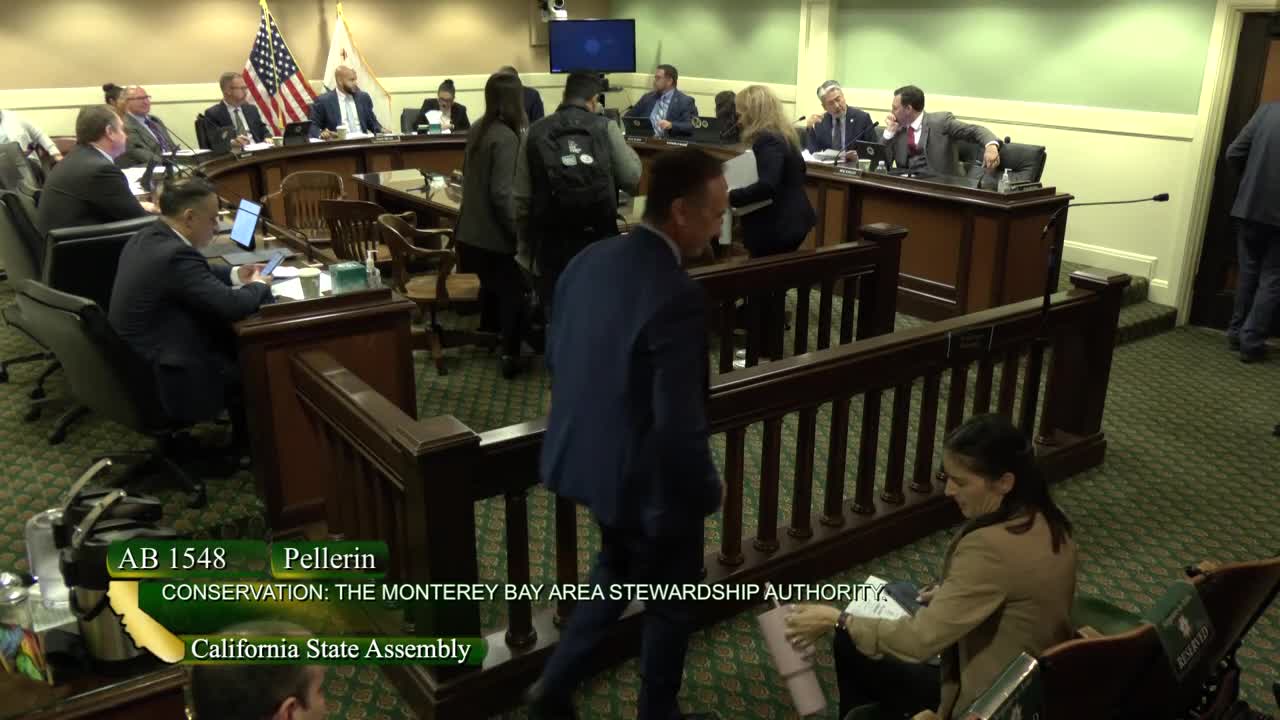 14MIN
Assembly Standing Committee on Natural Resources
Bill Author

Bill Co-Author(s):
